Category Archives: Articles

Are Congressional Republicans Patriotic or Not?

Trump obstructs justice, and his fellow Republicans still stand behind him. At what point, if ever, will Paul Ryan or Mitch McConnell begin defending the Republic?


We’ve already been through a number of explanations for why Jim Comey was fired on Tuesday, beginning with the improbable story that Deputy Attorney General Rod Rosenstein was so incensed by Comey’s unfair treatment of Hillary Clinton (“we do not hold press conferences to release derogatory information about the subject of a declined criminal investigation”) that he wrote a memo that led to Comey’s firing; Trump and Attorney General Sessions took no initiative, they simply rubberstamped Rosenstein’s recommendation.

But by Thursday that narrative had crumbled, and Trump was telling NBC’s Lester Holt he had intended to fire Comey “regardless of recommendation” (making liars out of all his own spokespeople, including Vice President Pence). He went on to describe a very odd and disturbing scene: A week after the inauguration, he had dinner with Comey; Trump saw this as Comey asking to stay on as FBI director. (That in itself would be odd; FBI directors have 10-year terms and only one has ever been fired — an exception that was truly exceptional. In general, FBI directors just stay on after administrations change; they do not need to ask.) During that dinner, Trump asked if he was under investigation and Comey assured him he was “in the clear”.

This came along with other unforced admissions that Lawfare’s Bob Bauer analyzes like this:

The picture that Mr. Trump has managed to create so far consists of the following:

  • The admission that he sought repeated assurances about his legal exposure in an ongoing criminal investigation

  • The pursuit of those reassurances at a time when he was quite actively holding open the possibility that Mr. Comey might not hold onto his job. (Apparently one of these conversations took place over dinner—as it was being served, was the President making it clear that Mr. Comey might have “to sing for his supper”?)

  • The admission that in firing Mr. Comey, he was moved decisively by his frustration over the FBI’s handling of the Russia probe investigation.

  • The President’s repeated very public statements, heard by all, including those charged with investigating the matter, that he views the Russia probe as having no merit.  Responsible for the faithful execution of the laws and the integrity of the system of justice, Mr. Trump has chosen to actively dispute the basis for an ongoing FBI investigation that affects his interests.

  • The repeated adjustments to the story the White House originally told about the circumstances surrounding the decision to dismiss Mr. Comey. As noted in the earlier posting, it is not advantageous to somebody under suspicion to be altering his story—or, in this case, changing it in every material detail.

So that’s not what his enemies accuse him of, that’s what he himself has admitted to. Law professor Laurence Tribe comments:

To say that this does not in itself rise to the level of “obstruction of justice” is to empty that concept of all meaning.

Bauer’s only argument that this behavior might not constitute obstruction is based on Trump’s ignorance of and disrespect for the ordinary limits of a president’s authority:

The President may have landed himself in these difficulties simply because of his insensitivity to the requirements for safeguarding the integrity of the legal process. That is to say, he may not have intended to commit anything like obstruction, or any other crime, but has instead blundered into this position because he does not recognize or respect norms and does not appreciate legal process or institutional boundaries.

Helen Klein Murillo reviews the legal standards for obstruction and concludes not that Trump is innocent, but that he would be hard to prosecute.

Even if [Trump or Attorney General Sessions] had other reasons or goals—including perfectly lawful ones, such as concerns about the public’s perception of the FBI and the Director—if obstructing or impeding the Russia investigation was a goal, that would constitute obstruction of justice. Therefore, inquiries as to whether Trump’s conduct amount to obstruction will center on his motives.

However, the statutory bar is exceedingly high.

Murillo concludes that there is really only one body that can handle this case: Congress, as an impeachment hearing. Tribe agrees.

Some are arguing that we’re not at the point of impeachment yet, because the damage done by Comey’s firing will be minimal if Trump just appoints a replacement with unassailable integrity. Senator Jeff Flake, a Republican who sometimes seems open to questioning Trump, says: “Let’s see who he nominates to replace Comey.”

But Matt Yglesias believes that no replacement can undo the damage already done:

For Senate Republicans, the idea of the Good Comey Replacement serves a critical psychological and political role. It allows them to acknowledge that there was something alarming and suspicious about Comey’s dismissal without committing them to a fight with the Trump administration. They simply need to convince the White House to nominate someone well-qualified and then move on to cutting taxes.

But the Comey firing bell can’t be unrung. The independence of the FBI is now inherently compromised. And faced with a White House that’s willing to violate the norms governing presidential involvement in the investigative process, either there will be the forceful pushback from the legislative branch that most Republicans want to avoid or else oversight of the Trump administration will be woefully lacking. There’s no middle path.

If Congress just OKs a new director — whoever it may be — and moves on, then we are in a new reality: A president can fire anyone who investigates him without any real consequence. That’s never been true in America before, and it would be a big step towards turning us into a Potemkin Republic, like Putin’s Russia, where we maintain all the facades of democracy and the rule of law, but in reality the leader simply does whatever he wants. This goes along with other new realities we’ve seen Congress accept since January 20, like this one: A president no longer bears any responsibility to prove to the public that he is not corrupt, but can openly profit off his presidency — perhaps even taking money directly from foreign governments — while keeping the full extent of that profit secret.

Encroachments like this will continue until Congress draws a line. At root, Trump is a bully, and that is how bullies behave: They stop when someone stops them, not before.

Recall that during the campaign Trump said: “I could stand in the middle of 5th Avenue and shoot somebody and I wouldn’t lose voters.” At the time, that sounded like hyperbole — a joke. A year from now it might not. Because that’s also how bullies behave: They joke about things — and then they do them.

Unfortunately, Congress is controlled by Republicans, who have shown no interest in standing up to Trump no matter what he does. Occasionally a few will shake their heads, or express “concern”. (Senate Intelligence Committee Chair Richard Burr describes himself as “troubled” by the Comey firing. Senator Ben Sasse is “disappointed” by the timing of it.) But they will not demand Trump’s tax returns, or question the legal basis of his attack on Syria, or call for an independent special prosecutor, or do anything else that has the potential to call Trump to account.

We all imagine that there is a line somewhere, a boundary between what will be tolerated and what won’t. But then Trump crosses what we thought was a line, nothing happens, and we start imagining a new line. Nicholas Kristoff writes:

For months, as I’ve reported on the multiple investigations into Trump-Russia connections, I’ve heard that the F.B.I. investigation is by far the most important one, incomparably ahead of the congressional inquiries. I then usually asked: So will Trump fire Comey? And the response would be: Hard to imagine. The uproar would be staggering. Even Republicans would never stand for that.

Alas, my contacts underestimated the myopic partisanship of too many Republicans. Senator Charles Grassley, an Iowa Republican, spoke for many of his colleagues when he scoffed at the furor by saying, “Suck it up and move on.”

Will it be different if Trump defies court orders? If he starts a war against North Korea without consulting Congress? If Jared and Ivanka lead a takeover some major defense contractor? If critical journalists like David Fahrenthold start disappearing or mysteriously dropping dead? If Trump cancels future elections and declares himself President for Life?

You’d like to think there’s a line, a point at which elected Republicans will start to defend the Republic. But is there? Another former Justice Department official who appears to have been fired while investigating the Trump administration, Preet Bharara, writes in today’s Washington Post:

History will judge this moment. It’s not too late to get it right, and justice demands it.

But it’s not at all clear that justice’s demands will be satisfied. By now, I think we have to start questioning the patriotism of people like Mitch McConnell and Paul Ryan. Max Boot, who says he recently left the Republican Party “after a lifetime as a loyal member”, sums it up like this:

Like other conservatives, I care about tax cuts and military spending increases. But I care even more about the rule of law — the only thing that prevents our country from going the way of Venezuela, Russia or Zimbabwe. … While the president has the authority to fire the F.B.I. director, to do so under these circumstances and for these reasons is a gross violation of the trust citizens place in the president to ensure that the laws “be faithfully executed.” If this is not a prima facie case of obstruction of justice — an impeachable offense — it’s hard to know what is. Republicans would understand this and say so if these actions were taken by President Hillary Clinton. But when it comes to President Trump, they have checked their principles at the Oval Office door.

Recalling the three Republican leaders who went to the White House to tell President Nixon it was over, Boot wonders:

Are there even three principled Republicans left who will put their devotion to the Republic above their fealty to the Republican Party?

I fear the answer to that question.

Nicholas Kristof sounds a similar note:

[T]his is the moment of truth for G.O.P. moderates like Senators Susan Collins, Jeff Flake and Bob Corker, who may hold decisive power. Will they align with George Washington’s vision of presidents as servants of the people or with Trump’s specter of His Sacred Majesty, the Big Man of America? Will they stand for justice, or for obstruction of it?

I suspect they will make noises about justice, but in the end not stand up for it, at least not this time. And then, after Trump does something even worse in a month or two, there will be another moment of truth, and then one after that.

At some point will the damage to the Republic be too much for Congressional Republicans to rationalize and ignore? We can only hope they reach that point before Trump starts shooting people on 5th Avenue, and before he gets bold enough to simply ignore Congress altogether.

Much Ado About Religious Liberty

When you back a conman, eventually you get conned.


Long-time readers already know how I feel about the corruption of the terms religious freedom and religious liberty in recent years, which I put bluntly in 2013 in “Religious Freedom means Christian Passive-Aggressive Domination“. In 2015, I explained that bigotry in America has always hidden behind religious justifications in “You Don’t Have to Hate Anybody to be a Bigot“. So if you think your religious reasons to discriminate against people because of their sexuality or their gender identity are substantively different from the reasons people gave to support slavery or Jim Crow, you need to study history more closely.

That’s why I’ve never been moved by the plight of conservative Christian pharmacists forced to provide contraception they disapprove of, or Christian florists who get sued for discriminating against same-sex couples, or Christian employers whose workers might use their health insurance in ways forbidden by the employer’s doctrine.

Non-Christians, or even Christians from unpopular denominations, bump up against this kind of difficulty all the time — and get no sympathy from Baptists or Catholics: The Hindu steakhouse waitress can quit, but she can’t insist on keeping her job without serving cow flesh. A Jehovah’s Witness EMT can’t refuse to give blood transfusions, and a Christian Scientist nurse can’t get away with just praying for her patients.

People from less popular faiths routinely pay taxes to support things they disapprove of: Pacifist Quakers finance wars, vegetarians pay meat inspectors, orthodox Jews provide food stamps so that people can buy bacon, and so on. The most extreme case is that of atheists, who are forced to carry around (and even distribute to others) pieces of paper saying “In God We Trust”. Imagine the outcry if Christians had to use money that proclaimed “God is dead”.

In short, Christian conservatives imagine that they’re persecuted, but in fact they want special rights. They think that the law should give their moral quandaries unique consideration while ignoring everyone else’s comparable concerns. And it’s even OK if their special rights come at the expense of people who don’t share their beliefs: Employees should have to pay for their own contraception, and if they have to search for a drug store that will supply it, too bad for them. Gays shouldn’t be able to participate in the economy like anybody else, but should always have to check whether their business is welcome. Women who have been getting publicly-funded mammograms or Pap smears at a convenient local clinic should have to go somewhere else; not because they have moral objections to Planned Parenthood, but because someone else does — someone whose beliefs get more respect under the law.

So you can imagine how I was dreading the ceremony at the White House Thursday, when Trump would unveil his “Presidential Executive Order Promoting Free Speech and Religious Liberty“. But in spite of previously leaked versions, the final order was surprisingly lightweight. Paul Waldman says it well:

But when the final order was written, it turned out to be a whole lot of nothing. Instead of creating broad exemptions from laws and regulations for conservative Christians who want to discriminate against LGBT people or not follow the law on providing contraception benefits in employee health plans, it merely instructed various departments to enforce current law or issue guidance to other departments.

Waldman finds this to be typical of Trump’s over-hyped executive orders (at least the ones unrelated to immigration):

Over and over, the White House takes some issue that Trump has promised to aggressively act on, and then issues an executive order that studies it, examines it or investigates it but doesn’t actually do anything about it.

If you want to know just how vacuous the order was, consider this: The ACLU decided it’s not worth suing over.

“Today’s executive order signing was an elaborate photo-op with no discernible policy outcome,” ACLU director Anthony Romero said in a statement. “After careful review of the order’s text we have determined that the order does not meaningfully alter the ability of religious institutions or individuals to intervene in the political process.”

And in spite of the smiling faces at the White House, a lot of Trump’s supporters noticed the bait-and-switch he had played on them. National Review called the order “dangerous nothingness“. The Alliance Defending Freedom said the order “recalls” Trump’s campaign promises “but leaves them unfulfilled”.

Strange how that works: When you back a conman, sometimes you get conned. The Little Sisters of the Poor give Trump a great photo op, and he gives them … what, exactly?

Right after the election, I listed a number of things I’d be watching for in a Trump administration. One of them was “taking credit for averting dangers that never existed”. That’s what this is: Maybe you’ve been imagining that Christian preachers are afraid to express their political views because they live in fear of over-zealous persecution by the IRS. (I can barely imagine what Franklin Graham and Pat Robertson have been holding back.) Well, you can stop now, because this order puts an end to that non-existent practice.

Not that I think Trump’s evangelical supporters should have gotten more. They want unfair advantages over the rest of us, so I’m not crying that they didn’t get any on Thursday.

But conservative Christians might well ask what I want out of them. It’s a fair question, and the answer is simple: I want them to state a definition of religious freedom that is not tied to their specific doctrines or issues (like same-sex marriage or abortion); that applies equally to everyone; and that they would be willing to defend not just as it applies to Christians they agree with, but also to Christians they think are heretics, to Muslims, Hindus, New Agers, atheists, and everyone else.

Lincoln said, “As I would not be a slave, so I would not be a master.” That’s the attitude I’m looking for: Don’t just tell me the rights you want for yourself, tell me what rights you are willing to defend for others.

Climate of Propaganda

Bret Stephens’ climate column serves one very important purpose: It illustrates Jason Stanley’s model of propaganda.


Few issues in American politics are as frustrating as climate change. It’s a real concern with potentially catastrophic consequences. The basic scientific description of the problem — burning fossil fuels increases the concentration of greenhouse gases in the atmosphere, which warms the planet by blocking infrared radiation from escaping into space — is solid and hasn’t changed for decades. Every few years, the public seems to be getting energized about the problem, and it looks like we might finally get serious about taking action. But then we don’t.

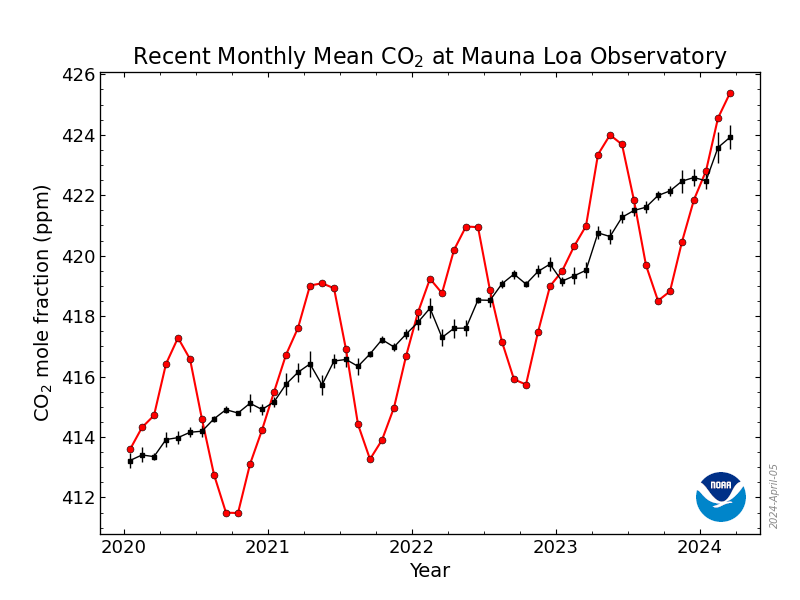
At the moment we’re in one of our hopeless phases, where science-deniers are in power and we have to focus on preserving what little progress we’ve made rather than building on it. Meanwhile, the clock is ticking. The level of carbon dioxide in the atmosphere goes up every year. That’s not a conjecture or the result of some complicated computer model, it’s a measurement that gets made regularly by a NOAA laboratory on a mountaintop in Hawaii.

If the overall situation is frustrating in one way, attempting to change people’s minds about climate change is frustrating in a different way. You can go into an argument feeling that you have facts and logic on your side, and feel the same way afterwards, but at the same time realize that you didn’t convince anybody. Too often, environmentalists come out of a debate with a feeling of “What just happened?”

A good case in point was the discussion sparked ten days ago by Bret Stephens’ introductory NYT column “Climate of Complete Certainty“, which raised the specter of “overweening scientism” — radical environmentalists who claim 100% certainty for their predictions of global catastrophe and are “censoriously asserting [their] moral superiority and treating skeptics as imbeciles and deplorables”. The problem, in Stephens’ presentation, isn’t the scientists doing honest research on the climate, it’s the people pushing “ever harder to pass climate legislation” and “demanding abrupt and expensive changes in public policy”.

In many ways, the column was just another page from the science-denial playbook written in the 1970s by the tobacco industry: Emphasize the uncertainty of scientific findings, and from there argue that any action would be too hasty. We shouldn’t ban tobacco products, or restrict where smokers can light up, or put excessive taxes on cigarettes, or hold tobacco companies liable for public health problems, or even change our own individual smoking habits, because there’s still doubt. Of course we should take action once it’s been proven that tobacco causes cancer, but until the evidence is so conclusive that even the Tobacco Institute is convinced — which it never will be — we should wait and see. [1]

So Stephens isn’t anti-climate-research, he’s just criticizing the people who want to take action based on that research.

Or is he? There’s a puzzling vagueness to the column that made it very hard to argue against. Stephens didn’t name any of the “overweening” people who claim total certainty for uncertain things, or even identify what those claims are. The only specific example in the piece is a lengthy analogy that has no direct connection to the climate: the data-driven managers of Hillary Clinton’s campaign, who believed they were coasting to victory. They were wrong, so maybe the data-driven predictions of unnamed environmentalists are wrong too.

In other words, Stephens’ column is a very good example of that what-just-happened phenomenon. When I first read it, it seemed to be making some larger point that cried out for refutation. But the objectionable point had a vaporous quality; it didn’t seem to be contained in any particular sentence that I could quote and refute. Take this one for example:

Anyone who has read the 2014 report of the Intergovernmental Panel on Climate Change knows that, while the modest (0.85 degrees Celsius, or about 1.5 degrees Fahrenheit) warming of the earth since 1880 is indisputable, as is the human influence on that warming, much else that passes as accepted fact is really a matter of probabilities. That’s especially true of the sophisticated but fallible models and simulations by which scientists attempt to peer into the climate future.

Like a number of other critics, I might argue with the characterization of 1.5 degrees in 130 years as “modest” — until humanity started affecting in the climate, a change like that usually took millennia rather than decades — but overall, the statement is correct: It’s indisputable that we’re changing the climate, but it’s a lot iffier to predict exactly how fast that change will play out or which catastrophic events will happen when. For example, the land-borne ice sheets in Greenland or Antarctica might trickle slowly into the oceans and raise sea level over centuries, or one or more of them might suddenly slide into the water like an ice cube dropped into a glass of Coke. Nobody really knows.

Andrew Revkin, an environmental reporter that Stephens quotes admiringly (but who believes that “uncertainty, informed and bounded by science, is actionable knowledge” [2]), notes that changes in rainfall patterns are hard to predict: Some models show droughts in sub-Saharan Africa, while others foresee rainfall increasing.

I don’t have any trouble acknowledging that kind of uncertainty, and neither do most of the environmental writers I follow. So why do I feel like something Stephens’ column demands an argument?

What we’re seeing here is a masterful example of propaganda, as described in Jason Stanley’s How Propaganda Works, which I reviewed in 2015.

If your target audience has a flawed ideology, then your propaganda doesn’t have to lie to them. The lie, in some sense, has already been embedded and only needs to be activated.

What’s being activated in Stephens’ column is a stereotype that Fox News, talk radio, and other conservative media has been drilling into its audience for years: Liberals don’t respect you. They look down on you, they think you’re stupid, and because they’re educated they think they can fool you with technical mumbo-jumbo that isn’t true.

That’s the point of talking about the Clintons and using words like deplorable. By doing so, Stephens invokes a previously successful application of the stereotype. You know the way you resent and distrust Hillary? You should feel that way about anybody who wants action on climate change.

It’s also the point of offering no other examples, and no examples at all from the environmental movement. Who does the stereotype apply to? Whoever you need it to apply to. If listening to Bill Nye or Bill McKibben makes you feel stupid, apply it to them. Al Gore, sure. Your niece who just got back from college, or that know-it-all at work, absolutely. Even real climate researchers like Jim Hansen and Michael Mann — the kind of scientists Stephens’ column seems explicitly not to criticize — can be lumped in if you need to.

If Stephens actually made a case against any of those people, that attack could be fact-checked and refuted. If he specified some particular prediction as over-the-top doomsaying, that prediction could either be defended or it could be demonstrated that the real leaders of the environmental movement do acknowledge the uncertainties involved. But a charge made with complete vagueness, one left hanging for its target audience to apply as it sees fit, can’t be answered in any logical way.

That’s how propaganda works. And in particular, that’s the way you will see propaganda appear in conservative columns in respectable mainstream outlets like The New York Times, or in public speeches by supposedly respectable politicians. The real dirty work has been done elsewhere. The lies and stereotypes have already been planted: Immigrants are criminals who endanger your family. Muslims want to take over America, not assimilate into it; and they all support terrorism whether they admit it or not. The poor are too lazy to work, but want you to support them anyway. Blacks are inferior and can’t really compete with whites, so they want the government to take your job and give it to them.

Anyone who wants to take advantage of such notions doesn’t have to state them in places where critics might demand evidence or poke holes in the argument. Like Bret Stephens, the propagandist just has to allude to them vaguely. The target audience will receive the message, and will enjoy the spectacle of opponents flailing vainly to refute what was never really said.


[1] The tobacco playbook and how it has been used in all sorts of controversies over the last half century has been described in two books I’ve reviewed here in the past: Merchants of Doubt and Doubt is Their Product.

[2] I wish he’d stated that in less complicated language, because it’s a point that needs more emphasis in the national debate, and doesn’t require any difficult scientific analysis.

In everyday life, we deal with uncertainty in two very different ways, depending on the circumstances. When we don’t know what might happen, sometimes we freeze until we do know. If, for example, you have a peanut allergy and you don’t know whether the salad the waitress brought you includes some peanut-derived ingredient, you don’t just eat it and hope you don’t wind up in the ER. You send the waitress to talk to the chef, and you don’t do anything until she gets back.

But in other situations, we respond to uncertainty by preparing for all plausible outcomes. When your child is born, you have no idea whether she’ll want to go to college or what college will cost in 18 years. But you don’t wait 16 or 17 years until you have a clearer idea of what she’ll need; if you do, it’ll already be too late to start saving. The prudent thing is to start that college fund as soon as you can, even though you can’t be 100% certain it’s necessary.

If you’re not sure whether you left the oven on, you don’t start preparing for the possibility that your house might be about to burn down; you stop everything and go home to check, or have someone else check. But if you’re not sure whether your department is about to have a round of lay-offs, you don’t freeze until you know for sure; you start getting your resume in order and checking the temperature of the job market, just in case.

This isn’t fancy research-scientist talk; this is how ordinary people live. Sometimes uncertainty freezes you; sometimes it springs you into action.

We’ve let the fossil-fuel lobby get away with the argument that on climate change, uncertainty should freeze us. (Nobody can tell us exactly when Miami will be underwater, so let’s not do anything.) But this point didn’t make sense when the tobacco industry used it — you can’t be sure cigarettes will give you cancer, so keep puffing away — and it doesn’t make sense now. Certainly that’s not how the Pentagon or the insurance industry is thinking about climate change; they’re planning to live in the future however it turns out, so they’re preparing for the possibilities.

That’s just common sense. Rising oceans, more violent weather, changes in rainfall patterns — these are more like your daughter’s college fund or the possible lay-off than like the salad dressing that might contain peanut oil: Even if they’re uncertain, they’re significant possibilities that we need to be preparing against. If there were some quick way to find out for sure what’s going to happen — asking the chef, checking the oven — maybe it would make sense to freeze and wait; but nobody’s come up with a way to do that, so our preparations have to move forward without that certainty.

Why cutting rich people’s taxes doesn’t create jobs

You’ll never get a job from a rich person with no customers.


Stop me if you’ve heard this before: A Republican president is proposing to massively cut the taxes paid by rich people. But it’s all good, because they’re “job creators”. So the tax cuts will give them money to create good jobs up and down the line, and result in so much economic growth that the government won’t even lose revenue.

One way to argue against this idea is with history: Cutting taxes always cuts revenue and leads to deficits. Both Ronald Reagan’s and George W. Bush’s tax cuts led to what were then record deficit. In between, Clinton’s tax increases created a huge surplus. This may seem too obvious to bear repeating, but apparently it needs to be said: If you cut taxes you collect less tax. If you raise taxes you collect more.

And the job creation thing only works sometimes: Reagan’s job record is pretty good (though not as good as Clinton’s), but George W. Bush’s is terrible: The economy created only 2.1 million jobs during Bush’s eight years (and was shedding jobs at a record pace as he left office). But during the eight tax-increasing Clinton years, 21.5 million jobs — ten times as many — were created.

What’s more, the purpose of cutting taxes on the wealthy is supposed to be so that they’ll have more cash to create jobs with. But if that worked, we’d have been swimming in jobs for years, because the very rich currently have as large a share of the national income and national wealth as they have since just before the Depression. If the job creators were ever going to create good jobs, it seems like they’d be doing it now, and would have been doing it since the turn of the millennium.

In fact, if you look at that graph, there seems to be an inverse relationship at work: The good old days of American jobs — when a man like my father could get a factory job, support an at-home wife, buy a house, and send two kids to college — were the 1950s and 1960s, when the top 1% was receiving a record low percentage of the national income.

But if you’ve been paying attention to American politics, you know that history — especially the kind of history you need to illustrate with graphs — doesn’t convince everybody. So in spite of hard experience, talking heads on TV are still telling us that making the rich richer will make everybody richer, because the rich create jobs for the rest of us.

You can rage about that. You can complain about how gullible and stupid the American public is, that they’re still falling for this nonsense. Or you can try to understand why: What is it that makes this particular false theory seem so much like common sense that the clear evidence against it doesn’t even register?

The answer to that is that the job-creator myth is supported by a convincing appeal to personal experience: “Do you have a job? Who pays you? Is he richer than you or not?” As the saying goes: I never got a job from a poor person.

So what’s wrong with that? You get a job because a rich person hires you, so if we want the economy to produce a lot of new jobs, we should make sure there are a lot of rich people with a lot of money to hire everybody else.

Why doesn’t that work? I mean, those of us who believe in history and graphs and stuff know it doesn’t, but why not?

The answer is that it takes three characters to create a job, not just one. For the economy to add a job, you need:

  • a worker to do the job
  • a customer to buy what the worker produces
  • an entrepreneur to bring the other two together.

If any one of the three is missing, there’s no job.

At any given moment, in any particular part of the job market, the logjam might be in any of the three factors. It’s possible that entrepreneurs don’t have enough investable cash, and that a tax cut will fix the problem. But it’s also possible that workers don’t have the right skills, so the government ought to be investing in education and training. Or that customers aren’t buying, so the government either needs to subsidize them or to buy things itself on the public account.

What’s wrong with conservative economics is that it always assumes that the lack is of entrepreneurs: If more people were in a position to start or expand a business, they would.

In fact, they won’t, unless they are confident the other two roles will be easy to fill. Imagine, for example, that you run a restaurant, and that a tax cut suddenly gives you a windfall of money you could use to expand. Will you? Not if you’re having trouble filling the tables you have.

That’s what happened during the Great Recession: Rich individuals and big corporations were sitting on huge piles of cash, but they weren’t using it to hire people. Why would they? Nobody is going to spend money to expand their businesses or start new ones if existing businesses are failing for lack of customers. If you cut rich people’s taxes in that situation, they’ll add their new pile of cash to their old pile until the economic outlook gets better.

What the economy was missing in 2008 was the customer. In an atmosphere of widespread fear, we all wanted to hang onto our cash and until we felt more secure. In such a situation, how much money entrepreneurs have to invest doesn’t matter; they won’t invest it until they see unsatisfied customers looking for a product they can spend their money on.

In general, that’s the problem when the distribution of wealth gets too skewed towards the rich: the economy chronically runs short of customers. No matter how extravagantly the rich live, there are limits to what they can consume and how many people can be employed satisfying them. You can’t base a mass-employment economy on yachts and caviar.

Right now, cutting taxes on the rich is exactly the wrong thing to do until the distribution of wealth and income returns to more normal levels. Instead, the government ought to be creating jobs by creating customers — even being the customer if it has to. It ought to be raising taxes on the rich in order to buy things we all need: roads and bridges, health care, clean air and water, education, and a 21st-century energy system that doesn’t wreck the prospects for future prosperity. In an economy already too dominated by the top tenth of a percent, that’s the way to create jobs.

So sure, I’ve never gotten a job from a poor person. But I’ve also never gotten a job from a rich person with no customers.

What’s Our Story?

How do we defend Western values if we no longer believe the story that used to justify them?


I’m not usually a David Brooks fan. Too often his columns remind me of the “big thinks” of Dr. Moreau‘s upgraded ape-man; he seems far too impressed with his own ability to take on such deep subjects, and has far too little of substance to say about them. His column this Friday “The Crisis of Western Civ” raises a typically Brooksian big-think topic, and as usual provides few useful hints of where to go with it. But this time, he has at least spotlighted a question the rest of us would do well to think about: If Western society no longer feels comfortable telling the Greece-to-Rome-to-Europe story (in which progress’ forward march leads to democracy, science, and human rights), what story should we be telling?

Societies, like individuals, motivate themselves with stories. Individuals often have life crises when the stories they’ve been telling stop working: When the save-the-world or rule-the-world ambitions that got you through school become untenable in middle age, you have a mid-life crisis. The death of a child can leave a parent facing not just grief, but also a who-am-I-now question. Hitting retirement can be a crisis for someone whose story has been all about career and organizational success.

Countries and civilizations do the same thing. Soviet Communism, for example, fell for a lot of reasons, but one important one was that its idealistic story (about leading the world’s oppressed masses in a revolution that would achieve the perfect society) stopped being credible. If you couldn’t believe that any more, then the Party was just another ladder to climb to get more privileges. So who would sacrifice for it or stick by it when times got tough?

Brooks points out that western societies, and America in particular, used to have an equally compelling story: Progress. A representative democracy that respects individual rights, a wide-ranging public debate that allows people of many views to speak their minds without violence, the march of science towards an ever-broader objective truth, and a corresponding march of technology that creates an ever-expanding abundance — this was presented as more than just a trend. It was the “end of history“, the goal that humanity had been consciously or unconsciously advancing towards since it split off from the apes.

And we were the vanguard of that capital-P Progress. It was our job, in Europe and the United States, to perfect Progress and teach it to the rest of the world, much of which was still in some primitive state of ignorance.

Like all stories, Progress was true only up to a point, and got pushed well past that point. Our role as the vanguard of Progress turned into the white man’s burden, and justified the abuses of colonialism and slavery. In practice, the story often turned out to mean little more than freedom and abundance for us at the expense of everyone else. The view of the material world as something to master in our quest for abundance, and a corresponding disrespect for the complexity of the natural systems that regulated life on Earth prior to our ascendancy, has led to mass extinctions of non-human species and the looming crisis of climate change.

So the story of Progress’ triumph has, particularly in academia, gotten replaced — or at least supplemented — by the story of Progress’ tragedy. And that has resulted in a generation of well-educated potential leaders who don’t really believe in the root story of the West. Or maybe they just believe in it half-heartedly.

That’s what worries Brooks: Representative democracy, the rule of law, human rights, science, objective truth, and so on — those are still good things, they are under attack, and they need more than a half-hearted defense. As Putin-style nationalist autocracy starts spreading across the world, as fundamentalist Islam abroad and fundamentalist Christianity at home threaten to turn back the clock to less enlightened eras, defenses of Western values are disturbingly tepid. [2]

Now let me push beyond what Brooks says, into my own big-think territory. Simplifying greatly, so far societies have come up with only three basic types of motivating stories:

  • tribalism. Those of us united by blood and soil are in a zero-sum competition with everybody else. Either we dominate them or they’ll dominate us. [1]
  • transcendent religion. We worship the universal God who has told us exactly how he wants human beings to live. By adopting our ways and worshiping our God, anyone can join us.
  • humanism. We stand for universal values that apply to everyone whether they believe in them or not. Truth is objective and can be found by rational methods available to all. But our understanding of Truth is always open to improvement through exploration and the development of new ideas.

The Progress story always had elements of tribalism and religion, but at its core was a humanistic vision. As that vision loses strength, rival stories based in tribalism and religion gain.

Trump’s message, at its core, is tribalist — America first; zero-sum relationships with other nations in which we either win or lose; non-white or non-Christian immigrants may try to join us, but they’ll never be “real Americans”; and so on. Trump’s ongoing flirtation with white supremacists is not a coincidence or a marriage of political convenience; they make sense to each other because they’re both telling a tribalist story.

In The Atlantic, Peter Beinart recently made a related claim about religion: As it loses its transcendent quality, it also reverts to tribalism. The evangelical embrace of Trump — he carried white evangelical Christians by a wider margin than either Romney or McCain — may seem mysterious, given the pasted-on quality of his own Christianity and the total divergence between his agenda and the Sermon on the Mount. But Beinart digs deeper into the numbers: Trump’s earliest and most fervent supporters are evangelicals who don’t go to church.

As Americans have left organized religion, they haven’t stopped viewing politics as a struggle between “us” and “them.” Many have come to define us and them in even more primal and irreconcilable ways.

… Whatever the reason, when cultural conservatives disengage from organized religion, they tend to redraw the boundaries of identity, de-emphasizing morality and religion and emphasizing race and nation. Trump is both a beneficiary and a driver of that shift.

So is the alt-right. … Its leaders like Christendom, an old-fashioned word for the West. But they’re suspicious of Christianity itself, because it crosses boundaries of blood and soil. [3]

What both Brooks and Beinart are pointing to are the limits of deconstruction. When you critique someone’s worldview — show him that the God of his childhood is too simple to be real, or that his “rational” and “universal” values are hypocritical and self-serving — you hope that he’ll progress towards a more advanced vision, towards a more complex and nuanced religion or a more truly universal humanism. But it’s also possible, perhaps even probable, that the opposite will happen: The failure of his story may lead him to fall back to a more primitive one. And the most primitive story of all — me and mine need to protect ourselves against a rapacious “them” — is incredibly resilient. If all other stories fail you, that one never will.

What Brooks seems to want, by the end of his column, is for critics to let up on the West, its dead-white-men literary tradition, and its unfortunate history of oppression. Beinart doesn’t make such a plea, but it’s easy to come out of his article with a feeling that maybe critics should leave churches alone: If we break them by demoralizing their members, what comes after will probably be worse.

But returning to either the Mother Church or the dead-white-male curriculum seems unlikely to solve the problem. No doubt many voices in the Soviet Union similarly called for a return to true Marxist-Leninist idealism, with less attention to the culture of corruption that was growing as revolutionary fervor faded. It didn’t work for them and a similar relaxation of criticism won’t work for us.

The recent devolutionary trends, though, should at the very least put pressure on those of us who believe in Western values to pay more attention to the positive sources of our faith. One of the many things the 2016 election proved is that our most basic assumptions can’t be taken for granted any more. The virtue of universal human rights and the evil of bigotry is no longer an of course. A belief in objective truth and the scientific method does not go without saying. Neither does democracy and the rule of law.

In the Age of Trump, returning criticism for criticism is not enough. We need to understand why we believe what we believe, why our values are worth defending, and why anybody else should agree with us. OK, the West isn’t the vanguard of History, and there is a lot to regret about our past actions. We have never fully lived by the values we profess. But they continue to be great values, and they deserve a story that explains why.


[1] Note the difference between tribal and tribalist. A tribal story is whatever story a tribe tells, and might be based on a worldview as morally sophisticated as any. A tribalist story is one saying that my tribe is the best and deserves to dominate all the others.

[2] A related problem, which Brooks doesn’t touch, is corruption from within. We tolerate unlimited money in our politics, gerrymandering of our legislatures, presidents taking office after losing the popular vote, a justice system that applies the law differently to whites and non-whites, and many other practices that would outrage us if we truly believed in Western democratic values and saw ourselves as the vanguard of Progress.

[3] American Catholic leaders, for example, understand that they represent not just the white ethnic groups Trump is appealing to, but also a large number of Hispanic immigrants, both documented and undocumented.

Racism, Hot and Cold

It’s hard for conservatives to talk about race. Maybe we could make it easier.


Liberal/conservative conversations about race often go like this one that happened on MSNBC at the end of March.

There is an incident (in this case Sean Spicer scolding a black female reporter, April Ryan) that shows lack of respect for a person of color. The liberal (in this case, Jason Johnson) places it in a larger context, a pattern of disrespect, and calls it out as racism. The conservative (Matt Schlapp) takes offense at the accusation and a shouting match ensues, ending any real exchange of ideas.

To an extent, I think this is a calculated tactic on the part of conservative pundits (or, at least, somebody calculated it at one point and others have imitated): There can be no discussion of patterns of disrespect based on race or gender. Any attempt to start such a discussion has to be shouted down.

Accordingly, any individual incident has to be presented as a unique occurrence and explained by the details of that particular situation. (Schlapp explains that Spicer “got feisty” with Ryan because he was under pressure to get through a lot of news that day.) Attempts to put a racial context around the incident have to be shut down. [1]

But whatever Schlapp or other talking heads might have in mind, it’s worthwhile to consider why their conservative viewers approve of this tactic and never see it for what it is: In conservative circles racism has a very specific meaning that usually doesn’t apply to the situation at hand. To conservatives, racism means conscious hatred, an intention to harm or humiliate a person purely because of his or her race. It isn’t that racism doesn’t exist, but it applies only to the KKK or the Nazis.

To Schlapp, then, it is absurd and outrageous to imagine that Sean Spicer is at his podium thinking “I’m tired of black reporters getting uppity with me, so I’m going to slap this one down.” That’s what Schlapp means when he says, “You don’t know what’s in Sean’s heart.”

But of course, Johnson had never claimed to know what was in Spicer’s heart, or to see conscious hatred there. He was pointing to a pattern of behavior both for Spicer and throughout the Trump administration, in which non-whites are shown less respect. There might be all kinds of reasons for such a pattern.

For example, what if Spicer simply sees blacks (or women) differently than he sees whites (or men)? [2] What if it’s his mental habit to interpret black actions more negatively, and to feel that harsher responses are appropriate? In that case, he might have been entirely unaware that he was treating April Ryan differently than a white White House correspondent like Peter Alexander or Jeff Zeleny, because even if Alexander or Zeleny had done the same thing, it would have looked different to him.

To the conservative mind, though, that’s not racism. If there is no conscious hatred involved, then it’s totally unfair to suggest comparisons to the KKK, as they feel racism does.

“So fine, then,” a liberal might say, “give me the word that applies to this situation and we’ll use it.”

But then you hit the root problem: There is no conservative term for the habitual and perhaps unconscious tendency to see people of another race differently, judge them more negatively, and react to them more harshly. In the absence of such a term, there is no way to point out the phenomenon and discuss it. You can’t ask about the elephant in the room, because elephant refers only to mastodons, who died out ages ago. There is no word for the big, gray animal swinging his trunk around, so any attempt to discuss him inevitably veers off in some other direction.

A conservative might respond that I’m describing an esoteric phenomenon of so little consequence that it doesn’t really need a name or a discussion. But that is completely unconvincing after eight years of the Obama administration, during which conservative media outlets repeatedly raised their audience’s outrage when Obama did things white presidents had been doing without incident for decades. I don’t claim to know what was in the hearts of the people who felt that outrage — I doubt that most of them were consciously aware they were applying different standards to Obama — but the pattern of observable behavior was clear and obvious. [3]

Likewise, this is the whole issue behind Black Lives Matter. It isn’t that people become cops because they like to kill blacks. (I mean, some small number probably do, but I doubt it’s typical, and I believe the system tries to weed those guys out.) But white guys can safely carry semi-automatic rifles through Target, while a black guy in Walmart gets gunned down for picking up a toy. Cops just see young black men differently, judge their actions more negatively, and respond more harshly. We can’t have a rational discussion of that issue because conservatives refuse to call it racism, but don’t offer any alternative term for it.

We could give them one.

I know this isn’t a new idea. In liberal circles, there is already a distinction between conscious and unconscious bigotry. We often talk about implicit bias, and there is even a test you can take for it on the internet. But every term I’ve heard smacks of some liberal bastion like psychology or academia. None of them would sound right rolling out of a conservative mouth. A conservative talking about implicit bias would impress his fellow conservatives about as much as a macho man talking to his locker-room buddies about relationships and commitment.

If we want a real discussion to start, what we need isn’t technical jargon appropriate for an academic journal, but some ten-cent words already in everyday use, taking advantage of some metaphor that ordinary people might come up with if they happened across the phenomenon on their own, without ever attending a course in racial studies.

Here’s a common metaphor that might work: Emotions have temperature. Hate and anger are hot. If you feel a vague aversion towards someone, you are cool to them, and if the aversion got stronger you might want to freeze them out.

If we apply that metaphor to racism, then the kind conservatives already acknowledge, the conscious hatred that Emmett Till‘s killers must have felt, is hot racism. When Richard Spencer calls for “ethnic cleansing” to turn American into a “white ethnostate”, that’s also hot racism.

Cold racism, on the other hand, doesn’t actively wish harm on people of color, but simply fails to factor in their interests or to weigh them as heavily as the interests of whites. Those who watched Eric Garner die saying “I can’t breathe” and felt motivated to make excuses for the police choking him — most of them probably weren’t feeling hatred or anger towards Garner, they were just failing to feel compassion for a fellow human being. The problem wasn’t their heat it was their coldness. [4]

The kind of racism that whites can live with and not notice — the kind that simply sees blacks differently and then acts in a way that feels appropriate to that harsher perception, without any awareness of personal animus — could be described as room-temperature racism. The room-temperature racist feels like he is the one acting normally, and doesn’t understand why others are getting upset with him.

That, I believe, describes Sean Spicer. An avowed white nationalist like Richard Spencer knows that race is an issue for him. But Spicer just believes he’s responding appropriately to what he sees. The details of the Holocaust (to bring up another recent example) just don’t stick in his head. Why, he probably wonders, are Jews so bent out of shape about that?

If liberals started consistently applying a temperature gauge to racism, I think most moderates would understand the metaphor without much explanation, and conservatives might eventually get it in spite of themselves. Some talking heads — the ones who are consciously looking to disrupt discussions of race — might keep reacting with outrage to any mention of racism, regardless of temperature. But part of their audience might realize that finding room-temperature racism in the patterns of Spicer’s responses isn’t the same as fitting him for a white hood. They might eventually recognize that there is a consistent phenomenon in the incidents that carry that label.

Elephants, they might come to understand, are not mastodons. Occasionally there is one in the room. Maybe there should be a conversation about it.


[1] Conservatives, in their usual pot-and-kettle way, claim that it is liberals who shut down discussions by bringing up racism. But this is true only if you begin with the premise that racism can never be discussed. Apparently, it is impossible for conservatives to respond to “That’s racist” with a skeptical “How?”.

[2] In this article I’m going to focus specifically on racism, but what I’m saying could apply to any form of bigotry. We could talk about hot and cold sexism, hot and cold nativism, and so on.

[3] In 2014, I documented a long series of examples, but two moments should stand out in everyone’s memory: State of the Union addresses have contained debatable statements for as long as I can remember, but no white president was ever interrupted by “You lie!“. And the entire Birther theory, which as late as last summer was still given credence by a majority of Republicans, demonstrated that a large number of Americans were ready to believe anything negative about Obama, regardless of evidence.

There are comparable examples of baseless conspiracy theories about white presidents — that George W. Bush was complicit in 9-11 or FDR was secretly Jewish. But all of them stayed on the fringes of public debate. None ever caught on like Birtherism or stayed viable in the face of clear evidence and repeated debunking.

Now, does that mean that Joe Wilson was consciously thinking, “I can’t let that nigger get away with saying that”? Am I implying that everyone who doubted Obama’s citizenship is a potential cross-burner? Not at all, but it is part of a long pattern of seeing blacks differently, judging them more negatively, and responding to them more harshly.

[4] When I google “cold racism”, most of the examples are of the form “stone cold racism”, which is a different thing. It’s the hardness of the stone that’s being evoked, not the temperature of the feeling.

Justice and the Police

Inside our nation is a colony of poor, mostly non-white communities whose police are not under their democratic control. Jeff Sessions wants to keep it that way.


Recalling Ferguson. I remember exactly when I came to accept that Darren Wilson should not be prosecuted for killing Michael Brown: when I read the Justice Department’s report on the shooting. Until then, no entity I trusted had been able to examine all the evidence and report its findings to the public.
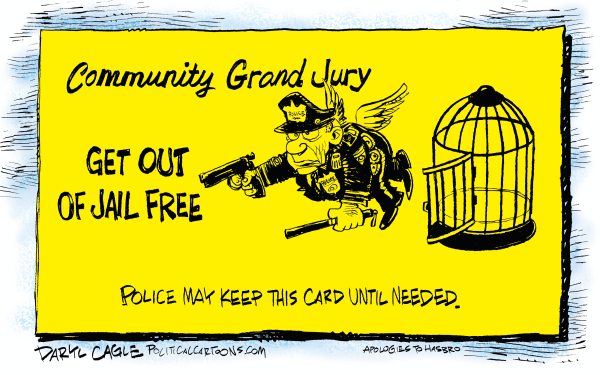
From the beginning, the Ferguson police had shown no interest in uncovering the truth; Wilson was their man, and they wanted him to go free. The local prosecutor, likewise, did not want to get on the wrong side of the police, and even Missouri’s Democratic governor saw the case as too hot a potato to pick up.

Only the Obama administration’s Justice Department was far enough removed from the local power structure to be objective. So its report was what finally convinced me: Wilson’s account of the incident was closer to the evidence than the hands-up-don’t-shoot narrative that had been echoing through Ferguson’s black community.

Even after that report, I still believed that Wilson’s animalistic (and at times even demonic) description of Brown was racist. I will never be convinced that killing Brown was his only option, or that he wouldn’t have found another way to resolve the situation if Brown had been white and middle-class. But even so, I knew that if the case went to trial and I were a juror, I could not vote to convict.

Simultaneously, though, Justice issued a parallel report about the general state of policing in Ferguson. The primary mission of Ferguson’s police, the report found, was not public safety, but generating revenue for the city by citing poor blacks for violations that carried fines. Likewise, the municipal court’s mission was to monetize those violations, and if possible to multiply them by making the court process as difficult as possible to navigate without incurring further fines.

The community’s response to Brown’s killing, the two reports implied, was based not so much on the facts of that particular case as on a hope: Maybe finally the police had done something so egregious that the outside world would have to notice the illegal and unconstitutional abuses Ferguson’s black citizens had to endure every day.

The Justice Department had noticed. It worked out a consent decree with the city to change how its police and court systems operate. It is one of many consent decrees Justice has worked out with cities all over the country.

But it’s not going to do that any more.

From oversee to overlook. This week, the Trump Justice Department, led by Attorney General Jeff Sessions, gave notice that it was getting out of the business of overseeing local police. In a memo to his department heads and to local U.S. attorneys, Sessions wrote:

Local control and local accountability are necessary for effective policing. It is not the responsibility of the federal government to manage non-federal law enforcement agencies. [1] … The Deputy Attorney General and Associate Attorney General are hereby directed to immediately review all Department activities — including … compliance reviews, existing or contemplated consent decrees — … in order to ensure that they fully and effectively promote the principles outlined above.

That memo had immediate effects, though perhaps not entirely the ones Sessions intended. His subordinates tried to torpedo the consent decree that Obama’s Justice Department had worked out with Baltimore just before leaving office. But the presiding judge was having none of it, ruling that

The case is no longer in a phase where any party is unilaterally entitled to reconsider the terms of the settlement; the parties are bound to each other by their prior agreement. The time for negotiating the agreement is over. The only question now is whether the Court needs more time to consider the proposed decree. It does not.

Having received the judge’s blessing, the Baltimore agreement is now in force. However, the outline of an agreement that had been worked out with Chicago is not yet official, and may well go back to the drawing board. Mother Jones paints the larger picture:

A report released in February by Samuel Walker, a police reform expert at the University of Nebraska in Omaha, determined that most consent decrees enforced by the Department of Justice since 1994—when Congress passed legislation granting the DOJ oversight authority over local police agencies—have been successful in achieving long-term reforms. Consent decrees are binding legal agreements, and once signed, they are overseen by a federal judge and an appointed monitor. The DOJ’s ability to interfere with that process is limited, [former Obama Justice official Jonathan] Smith said.

But there are things the DOJ can do to undermine it. It could ignore violations of decrees and stop taking police departments to court because of them. It could also seek to renegotiate the terms of a decree or to have it dropped altogether—though that would be difficult even with the cooperation of a police department, Smith said. “After all, these injunctions are entered to protect the public interest,” Smith said.

Why isn’t local accountability enough? But even if we recognize the damage likely to result from Sessions’ decision to stop overseeing and start overlooking police abuses, we have to admit that the first line I quoted from his memo is quite true:

Local control and local accountability are necessary for effective policing.

The obvious question to ask, then, is why such local accountability doesn’t exist in so many places. The black citizens of Ferguson live in a democracy, after all, and local elections are held on a regular basis. Why did they — or the black citizens of Baltimore or Chicago or dozens of other cities — have to raise the attention of the national media and of Washington in order to get local reform?

The answer to that question is in Chris Hayes’ fortuitously timed A Colony in a Nation, which came out last month.

This book makes a simple argument: that American criminal justice isn’t one system with massive racial disparities but two distinct regimes. One (the Nation) is the kind of policing regime you expect in a democracy; the other (the Colony) is the kind you expect in an occupied land. … If you live in the Nation, the criminal justice system functions like your laptop’s operating system, quietly humming in the background, doing what it needs to do to allow you to be your most efficient, functional self. In the Colony, the system functions like a computer virus: it intrudes constantly, it interrupts your life at the most inconvenient times, and it does this as a matter of course. The disruption itself is normal.

Ferguson and the Founders. Hayes begins, like I just did, in Ferguson, where the goal of policing is not public safety, but revenue enhancement. And he draws a parallel I would not have thought of: to the American colonies in the decade before the revolution.

In high school American History, we were all taught that the revolution was about “taxation without representation”. But in fact, Hayes argues, the colonies had existed under onerous tax-and-tariff laws for a long time. From Britain’s point of view, the purpose of the American colonies had always been to produce raw materials for British industry and markets for its finished goods. From the beginning, the colonies had been barred from trading with rival powers and taxed steeply when they traded with the homeland.

And from the beginning, the colonies had been rife with smugglers, some of whom (like John Hancock) achieved great prestige. Colonial life was largely one big smuggling conspiracy. Ordinary people did their best to interfere with customs agents, and juries often let guilty smugglers go.

What changed after the French and Indian War wasn’t so much the British laws and taxes, but their policing regime: They began trying to collect the taxes the law said were owed.

The British crackdown essentially inaugurated America’s first tough-on-crime era. It was a classic crackdown: more customs officials were granted more expansive powers, while courts were streamlined to produce swift punishment and avoid the maddening jury nullification … After 1763 customs officials no longer looked the other way in exchange for small bribe. Instead, they began operating in ways that looked a lot like what we now call “stop and frisk.” … American colonists were subject to British invasions of their carriages, ships, and homes without the safeguards enjoyed by their English cousins.

It wasn’t the financial burden of taxes that caused the revolution, it was the “insulting and humiliating” policing necessary to collect those taxes.

No wonder places like Ferguson sometimes seem so rebellious now.

Real community policing. Among law-enforcement theorists, community policing means that police maintain relationships with the local community. The image of community policing is the cop walking a beat, recognizing and being recognized by the people he passes.

But Hayes raises the stakes, pointing out what community policing might mean: Not individual cops maintaining relationships, but an entire system of policing — what laws get enforced and how — that is responsive to the community being policed.

That sounds incredibly utopian until Hayes points out that such systems already exist: on college campuses. First he describes the lax enforcement of drug laws he remembers from his student days at Brown. But then he reports the shock to his Ivy League sensibilities when he got a job in Madison, home of the University of Wisconsin.

Nothing I’d seen during my college years quite prepared me for the sheer insanity of a big football program home game. Tens upon tens of thousands of people, of all ages, were shit-faced drunk. Frat row was in a state of debaucherous pandemonium, with dozens of students passed out on lawns and outdoor couches, amid no small amount of vomit, urine, and broken bottles.

He wonders about the role of race.

[W]ould all this (mostly harmless) mayhem meet with such enthusiastic tolerance if it were a hundred thousand drunk-as-hell black folks streaming through downtown Madison? Something tells me, no chance.

The couple I was staying with had season tickets to the games, and while they rolled their eyes a touch at some of the excesses, they were part of a community, and they understood and embraced that this was a community ritual, a norm collectively arrived at.

Compare that mental image to the militarized police rolling down the streets of Ferguson during the Michael Brown demonstrations. Was that display of force also “a norm collectively arrived at”? Or was it control from the outside?

If you took a lot of [student] behavior out of the Nation and put it in the Colony — say, out of Harvard Yard and into a big city housing project — if would provide the material for dozens of articles on the pathologies of poverty that hold back poor people of color. People sleep all day; they engage in loud, frequent relationship dramas while having numerous different sexual partners, and they get into drunken arguments and brawls and consume ungodly amounts of controlled substances.

University police know that their job is to serve the interests of the students they police (and their parents, who pay the bills). No one wants to pay hundreds of thousands to send their children to college, only to have them sent from there to jail, or to come home with a criminal record. So universities are policed in a way that minimizes those outcomes.

No doubt citizens of the black and Hispanic neighborhoods of New York didn’t want to be routinely stopped and frisked, or to see minor confrontations spiral out of control until their fellow citizens were imprisoned or dead. Black citizens of Ferguson didn’t want police to see them as prey, as sheep to be sheared for the benefit of the municipal budget. But they lacked the power to get the policing they wanted through local democratic channels. And now, under the Trump administration, they will also lack the power to go over the heads of local political interests and get a sympathetic hearing from federal officials.

Larger factors. So far, my summary sells Hayes’ book short: It paints a far larger picture, including discussions of white fear, the difference between law and order (and public safety, which is a separate consideration), and the financial value of order to owners of real estate.

But the book will have done an important job if it simply gets its central image into the public discussion: Some parts of the United States are nothing more than colonies run for the benefit of other parts.

To the Colony, Jeff Sessions is like the new governor sent over by George III to maintain control. And the next time there’s a shooting like Michael Brown, we will never really know what happened, because no disinterested party will ever investigate.


[1] Actually, it is the responsibility of the Justice Department. In essence, Sessions is saying that he will not enforce the following paragraph of the Violent Crime Control and Law Enforcement Act of 1994.

§ 14141. Cause of action

(a) Unlawful conduct

It shall be unlawful for any governmental authority, or any agent thereof, or any person acting on behalf of a governmental authority, to engage in a pattern or practice of conduct by law enforcement officers or by officials or employees of any governmental agency with responsibility for the administration of juvenile justice or the incarceration of juveniles that deprives persons of rights, privileges, or immunities secured or protected by the Constitution or laws of the United States.

Where Did That Come From?

The attack on Syria reverses what little we thought we knew about Trump’s foreign policy.


In his campaign and the early days of his administration, Trump did not lay out a detailed vision of foreign policy. But he did have a slogan:

From this day forward, it’s going to be only America first  America first.

No longer would we spend “trillions and trillions of dollars overseas while America’s infrastructure has fallen into disrepair and decay.” We weren’t going to commit our blood and treasure for sentimental reasons, or to uphold abstract global principles, or perhaps not even to defend our allies. Our military would be used to promote our interests, and nobody else’s.

The administration’s early moves followed that course: His proposed budget sharply cuts foreign aid. By some accounts, he presented German’s Angela Merkel with a printed bill for Germany’s share of NATO’s defense expenses.

He particularly applied this view to Syria. Such troops and air strikes as we committed to Syria were to fight ISIS, and not to play any role in helping rebels oust the Assad regime. Not only did he want to reverse President Obama’s commitment to taking in Syrian refugees, he didn’t want anyone at all to come here from there, not even as tourists. Just 11 days ago, UN Ambassador Nikki Haley and Secretary of State Rex Tillerson were saying that we no longer were going to “focus on getting Assad out“.

Then Tuesday came Assad’s gas attack on Khan Sheikhoun, killing dozens of civilians and producing horrifying video. Trump’s initial reaction was to blame Obama for not taking military action against Assad after a previous chemical attack in 2013 — inaction that Trump demanded at the time. Then he made a semi-coherent statement expressing personal horror at the videos, blaming Assad, and praising himself in advance for his “flexibility”, i.e. not being bound by anything he had said in the past.

Thursday, he shot 59 Tomahawk missiles at the airbase the gas attack came from. The attack was mostly symbolic, since the base reportedly was back in operation quickly, and further airstrikes were made against the same rebel-held area, though apparently no chemical attacks.

So what’s the United States’ foreign policy now? No one seems to know.

What should we do? Before I get too far along in criticizing Trump, let me state for the record that I don’t know what to do about Syria either. Neither do you and neither does anybody else.

Revolutions and civil wars can have happy endings when there is a popular will or national identity that the current ruler is thwarting. In such a case, if you just get that ruler out of the way, things can take their natural course. Being conquered did wonders for Japan and Germany (at least in the west) because the people in those countries had a strong notion of what it meant to be Japanese or German. Given a benevolent conqueror, democratic institutions could be established and a popular government elected.

But while democracy can empower a popular consensus, it can’t create one from nothing. That’s what we’ve seen in Iraq. An occupying power can hold elections, but if the winning and losing sides still want to kill each other, the elected government can’t represent them both. When there is no popular will for democracy to bring to power, no consensus notion of what the country is or how it should be run, then there is no obvious happy ending to aim for. Any outside power that intervenes is looking at a menu of dismal outcomes, all of which will leave its people asking: “We killed and died for this?”

That’s Syria. There isn’t a popular resistance, there are a dozen or so of them, none of which gets along with the others.

Talking past each other. If I can’t give a just-do-this answer, I can at least try to disentangle some of the public discussion. A lot of the commentary on Syria consists of people talking past each other, and the main reason seems to be that “caring about Syria” can mean you care about a lot of different things. Here’s an incomplete list of what your concerns might be:

  • the Syrian people
  • the political stability of the region
  • the rivalries of great powers as they express themselves in the region
  • international law, particular as it concerns chemical weapons

For example, many have pointed out that the Syrian people probably don’t much care whether Assad kills them with gas or with explosives. But to others, the limited use of chemical weapons since World War I is one of the great successes of international diplomacy, and it would be a shame for that to fall apart, even if preserving it doesn’t help any Syrians.

Conversely, accepting more Syrian refugees doesn’t address any of the concerns of the international-law folks.

The limited menu. Whoever was president this week would have had the same three immediate military options:

  • Don’t respond. Let the civil war continue with its endless death. And let the world’s malefactors infer that (for practical purposes) chemical weapons are OK now.
  • Launch an attack to bring Assad down. Either we’d take over Syria with our own troops, or we’d cripple Assad’s military so badly from the air that some group of rebels could win. The risks are endless quagmire for our troops, a larger war with Russia and/or Iran, the possibility that the winning anti-Assad faction will be even worse, or that even after Assad is gone, the war between the other factions will continue and be just as bad.
  • Launch a symbolic attack that won’t affect the outcome of the war. Such an attack won’t help the Syrian people, but Russia and Iran will probably accept it, and it will preserve (to some extent) the international stigma on chemical weapons.

Trump made the third choice, which probably is pretty close to what Hillary Clinton would have done.

The question is whether there is any follow-up — Clinton probably would have had something in mind — and so far it appears that the answer is no. On the Sunday talk shows, Nikki Haley said regime change in Syria is “something that we think is going to happen”, but National Security Adviser H. R. McMaster strongly implied the ball was in Russia’s court, not ours.

We are not saying that we are the ones who are going to affect that change [in the Assad regime]. What we are saying is, other countries have to ask themselves some hard questions. Russia should ask themselves, what are we doing here?

So we’re waiting to see what Russia does, and so far they’re not backing away from Assad.

A few more points worth making:

Obama is getting a bad rap. Numerous commentators are giving Trump credit for “doing something”, compared to Obama who “did nothing” after Assad’s chemical attacks in 2013.

That’s only true if “something” has to be a military attack. What Obama did was get Russia to oversee the removal of large stockpiles of chemical weapons from Syria, which resulted in no chemical attacks for the rest of his administration. Given the either bad or negligible consequences of the military choices (which Trump is facing now), finding something off the menu was a pretty good move.

Don’t forget the climate change angle. The “Climate Wars” episode of Years of Living Dangerously features Thomas Friedman in Syria, exploring the role an exceptional drought played in starting the civil war.

What if Trump’s reaction really was spontaneous? One explanation of Trump’s missile attack is that he was so affected by images of the victims of the chemical attack that he felt a spontaneous desire to strike back, even if it contradicted all his previous positions.

Here’s the analogous story that popped into my mind: In 1952, bank robber Willie Sutton was caught because amateur detective Arnold Schuster spotted him on a New York subway. Schuster was then murdered, which was a mysterious development, since Sutton had never been that kind of criminal.

One explanation that eventually came out was that mob boss Albert Anastasia, who had no connection to Sutton and who was getting increasingly unstable as his power grew, saw Schuster tell his story on TV and spontaneously told his men “I can’t stand squealers! Hit that guy!”

An unstable guy with too much power has a violent-but-fleeting reaction to something he sees on TV, and people wind up dead. I think I’d rather believe a conspiracy theory.

Can We Get Real About Opioids?

The problem isn’t in Mexico or on our southern border. It’s here, and it’s us.


All my life I’ve been hearing about the drug problem, but mostly what I’ve heard are attempts to dodge responsibility. Those attempts have taken two main forms:

  • It’s not my problem. The middle-aged, middle-and-upper-class whites who run the country project the problem onto inner-city blacks or white-trash teens, who can be written off. In other words: I don’t need to do anything, they just need to shape up.
  • The solution is to punish somebody else. The problem isn’t the American demand for drugs, it’s the supply chain. If we just extend the death penalty to pushers, or seal the border, or launch para-military operations against drug cartels, or spray enough herbicide on the poppy fields of Afghanistan or the coca fields of Columbia, that’ll fix it.

In recent years, though, that first dodge has been breaking down. The opioid problem has started to climb up the national agenda not just because the overall number of deaths has increased, but because drug abuse has increasingly begun to affect whites, rural and suburban communities, and people who are both over 30 and above the poverty line. In cynical political terms: people who matter.

Let’s review a little: Drug overdoses killed 52,000 Americans in 2015. That’s more than car accidents (35K) or gun deaths (36K). The National Institute of Health estimated that in 2013, 1.9 million Americans were dependent on pain relievers, with another million or so dependent on heroin, sedatives, and tranquilizers.

That’s such a big deal that it’s pushing down the national life-expectancy-at-birth numbers, which in 2015 fell for the first time since 1993, from 78.9 to 78.8. (That’s the National Center for Health Statistics number. For cross-country comparisons, the World Health Organization figures slightly differently. It rates the U.S. at 79.3, well below Japan at 83.7 and culturally similar Canada at 82.2.)

But what makes this a politically serious problem is that it’s hitting white people: The 2015 national life expectancy decline might turn out to be a statistical anomaly, but white life expectancy has barely budged since 2010.

That doesn’t just change the importance of the problem, it changes the rhetoric. If drugs aren’t just a problem for “those people”, then we can’t solve it by telling them to shape up. The rhetoric has to soften, and lean more towards empathy than tough love. During the campaign, Trump said this about the opioid problem:

We’re going to take all of these kids — and people, not just kids — that are totally addicted and they can’t break it. We’re going to work with them, we’re going to spend the money, we’re gonna get that habit broken.

But so far that’s been a shaky promise. The for-now abandoned TrumpCare plan would have eliminated the ObamaCare mandate that insurance policies cover addiction treatment, not to mention the millions of people it would have left without insurance entirely. He claimed to increase funding for addiction prevention and treatment by $500 million, but apparently that was just him taking credit for the 21st Century Cures Act passed under Obama.

But Wednesday was opioid abuse day at the White House, so Trump appointed a commission that will issue a report in October. That’s some real action for you.

While he waits for that report Trump continues to use the second dodge: He’s spinning drugs as a border-protection issue that the Wall will solve. Wednesday, after listening to several people’s stories of addiction that began with prescription drugs, he said:

So it’s been really — it spiked over the last eight to ten years.  Would that have anything to do with the weakening of the borders? Because a lot of it comes from the southern border.

Like so many Trump statements, this presents a thicket of misperceptions that you have to hack your way through. First, the border hasn’t “weakened” in recent years. We’ve had more fences and border agents than ever, and fewer people crossing illegally.

And then we get to the reality of the drug problem: About a third of the 52,000 opioid overdose deaths in 2015 were from prescription drugs, and many of the illegal-drug ODs are simply the end of a story that began with legal drugs. Even if we could shut off all the heroin and fentanyl coming from overseas — it’s mostly from Mexico right now, but that doesn’t mean drug importers would give up if we capped that particular pipe — the problem wouldn’t be solved.

And then there’s the assumption that the Wall would stop Mexican drugs cold. Even granting the shaky assumption that Mexico lags behind in crucial ladder technology, bags of pills or powder are not that hard to throw. Fill a football with them, and any high school quarterback could complete the pass.

In short, the only real way to attack this problem is on the demand side, not the supply side. We have to prevent people getting addicted to prescription opioids, and help current addicts (to both legal and illegal drugs) quit. The Great Wall of Mexico won’t do that.

What would? Three things:

  • Finding ways to manage chronic pain without addictive drugs.
  • Reducing the overall level of despair among people that the 21st-century economy is leaving behind — over-50 folks in rural areas as well as non-white inner-city youth.
  • Funding effective rehab programs for everybody who wants to quit.

None of those is a just-do-it thing. We know how to build walls, but chronic pain and despair and effective rehab are much harder questions. The difference is: They’re the right questions, rather than just new ways to dodge the problem.

Freedom (Comcast’s) vs. Rights (Yours)

Freedom can be a bad thing,
if it’s the freedom of the strong to push the weak around.


In American politics, few words have a more positive ring than freedom. We bill ourselves as “the land of the free“. We send troops to bring freedom to other countries. (Our invasion of Afghanistan, for example, was Operation Enduring Freedom.) In the Cold War, our side was the Free World. When France opposed our invasion of Iraq, congressional cafeterias renamed french fries as freedom fries.

Our economic system also claims freedom as one of its top virtues. Milton Friedman’s defense of unfettered capitalism was Free to Choose. The low-tax, small-government, regulation-cutting group in the House calls itself the Freedom Caucus.

The word is so popular that it’s hard to challenge. (Try to imagine someone running as the anti-freedom candidate.) But it needs to be challenged, because often what gets justified by the prestige of freedom are policies that favor the strong over the weak. In particular, certain kinds of freedom have to be restricted in order to establish another good thing, rights.

I first started talking about this more than year ago in a historical context: During Reconstruction, the rights of the newly freed slaves only existed as long as the Army was nearby to restrain their former masters from re-enslaving them. When the Army was withdrawn from the South in 1877, black rights began to vanish until by the turn of the century Jim Crow was fully established. In the rhetoric of that era’s Southern whites, this was a freedom issue: The oppressive federal troops had to leave so that the Southern states could be free to govern themselves as they saw fit.

I drew this conclusion:

Your freedom just needs the government to get out of your way, but your rights require government involvement.

This week we got a more topical example: Senate Joint Resolution 34, “Disapproving the Federal Communications Commission’s Rule on Privacy of Customers of Broadband Services”, which recently passed the Senate on a straight party-line vote and the House with a few Republican defections. The Electronic Frontier Foundation summarizes:

Should President Donald Trump sign S.J. Res. 34 into law, big Internet providers will be given new powers to harvest your personal information in extraordinarily creepy ways. They will watch your every action online and create highly personalized and sensitive profiles for the highest bidder. All without your consent. This breaks with the decades long legal tradition that your communications provider is never allowed to monetize your personal information without asking for your permission first.

There has been absolutely no public clamor for this. Nobody has been writing their senators to say, “I wish Comcast could spy on everything I do on the internet, so that they could sell whatever they figure out to people I know nothing about.”

Now that Republicans have a majority of FCC commissioners, similar things have been happening on that level: Last month, the FCC stopped a new data-security rule from taking effect. The rule

would have required ISPs and phone companies to take “reasonable” steps to protect customers’ information—such as Social Security numbers, financial and health information, and Web browsing data—from theft and data breaches.

Again, how many Americans want ISPs to be careless with their personal data? Or to shrug and say, “shit happens” if it gets stolen by hackers? And again, this was a partisan thing: The rule came from the old Obama-dominated FCC and it was blocked by the new Trump-dominated FCC.

Why? Two things are going on here: First and most obvious, special-interest politics: The big ISPs spend way more on lobbying and campaign contributions than you do, so their desire for profit wins out over your desire for privacy.

But what makes this a partisan issue? Democrats can be bought too, so why isn’t corporate money swaying them as well? The answer is that philosophically proposals like this fit a Republican freedom agenda, but not Democratic rights agenda. Freedom is about getting government out of the way. In essence it restores what Founding-era philosophers used to call “the State of Nature“. The State of Nature includes all kinds of wonderful freedoms, but one of less wonderful ones is that the strong are free to push the weak around.

Rights, on the other hand, are airy-fairy things until there is some institutional mechanism to enforce them, and the State of Nature knows nothing of such institutions. In the State of Nature, for example, you may claim a God-given right to criticize the local strongman. But if he is also free to burn your house down, your right doesn’t amount to much. In practice, the weak have no rights until some institution like government restricts the freedom of the strong.

That’s the issue here: Without meddlesome FCC regulations, your right to privacy on the internet is an airy-fairy thing that the ISPs are free to ignore.

In short, freedom is not always your friend. The more freedom big corporations have, the more you will be under their thumb.