Category Archives: Articles

Themes of 2015: the Presidential Race

I started 2015 with clear expectations about how I’d cover the campaign. But by Fall, I had to back up and try to answer a more fundamental question than the ones I ‘d been addressing: WTF?


Back in January, I had it all laid out.

I figured that for the first half of the year I’d resist the temptation to speculate about who was and wasn’t running, whether Clinton and Bush were inevitable nominees or not, and what the earliest Iowa polls meant (because they probably didn’t mean anything). Presidential politics has a way of crowding out all other political thought, and I wasn’t going to play that game.

By summer, I’d be looking at the candidates one-by-one, and cutting through the media’s endless horse-race coverage to focus on where each one wanted to take the country. I figured I’d have to sort through all sorts of tax-and-budget schemes, education plans, environmental positions, programs for giving more or fewer undocumented immigrants a path to citizenship, and so forth. I’d have to argue that both global warming and racism are real, tax cuts don’t pay for themselves, privatization doesn’t work, the market isn’t going to fix inequality by itself, and so on. Different faces, different specifics, but basically the same philosophical battle the country has been having for decades.

Instead, we’re talking about throwing 12 million people out of the country, and banning Muslims from coming here at all. We’re discussing what fascist means, and whether one of our front-runners qualifies. A sizable chunk of the country believes that Planned Parenthood has a lucrative business in harvesting fetal organs, and wants to shut down the government (or maybe start shooting people) to put a stop to it.

In short, things didn’t go the way I expected.

The divergence started simply enough: Large numbers of candidates got into the race so early that I had felt I had to start covering them at the end of March, when I wrote my introduction to the Republican primary process. Shortly afterwards, I started my 2016 Stump Speeches series, which was intended to focus on each candidate’s implicit or explicit answer to the question: “Where does America need to go and why am I the person to lead us there?”

In retrospect, that looks ridiculously naive.

Democrats. On the Democratic side, I sort of did what I intended. I confess to ignoring Martin O’Malley, even though I’ve seen him twice and he seems like a competent guy. But he never convinced me that he brought anything special to the race, in policy, in message, or in electability.

Chafee and Webb were gone before they caught my attention. Biden didn’t run. Lawrence Lessig tried to run, and his exclusion from the process is an interesting and disturbing story I’ll get around to telling eventually. That left Clinton and Sanders.

I covered Sanders’ announcement speech and a later speech he gave at the conservative Christian Liberty University. It was easy for me to like Bernie and his message, but less easy to imagine him leading the party to victory. I know the polls don’t detect that problem yet, but I find myself wondering what completely bogus issues the Republicans will be able to throw at him if they start seeing him as something more than just a tool to use against Hillary. (I lived through 1988, when Bush the First was able to completely dumbfound Mike Dukakis by making a serious issue out of the Pledge of Allegiance. You never forget an experience like that.) Coming from the relatively pristine political environment of Vermont, is Bernie ready for that? Can he keep his composure when he’s waist-deep in bullshit? I have serious doubts.

Hillary strongest argument, from my point of view, is that she has endured everything the GOP could throw at her for more than 20 years. (The all-day Benghazi hearing in October was a microcosm of their inability to beat her down.) But what did I think of her as a person and what could I believe about her as a president? Is better-than-a-Republican all I can say about her?

So I did my homework. I pulled three Clinton speeches into one article, and added the insight I got from reading three books by her and two about her. After spending that much time listening to her author’s voice, I kind of get Hillary now, in a way that I don’t think most of her critics on the left do. If God tasked me with picking our next president, I’m sure I could find somebody I liked better. But I’ve gotten to be OK with Hillary. I will probably vote for Bernie in the primary to send a message, but when Clinton is nominated — as I expect her to be — I’ll have no problem with that. Given that we live in a you-can’t-always-get-what-you-want world, Hillary will do fine.

Republicans. With the Republicans, though, my project broke down. I started out diligently analyzing the speeches and proposals of Ted Cruz, Marco Rubio, Rand Paul, Rick Santorum, and even Ben Carson.

And then, suddenly, we were in the Year of Trump, and any hope of a sensible, substantive discussion on the Republican side went away. It wasn’t just Trump; it was also what everyone else thought they had to do to compete with him. There was a chunk of the electorate energized by Trump, and suddenly everyone had to try to reach it.

I characterized one Republican debate as “Three Hours in Bizarro World“, but basically all of them have been that way. Fact-checking them has been pointless, because the distortions, lies, and mis-statements of fact have not been isolated incidents that can be picked out and corrected. The Republican campaign is happening in a completely different reality from the one I live in.

The NYT’s Patrick Healy nailed something important:

One of the most striking takeaways from the first two Republican debates and Tuesday’s first Democratic debate is that the two parties do not just disagree on solutions to domestic and foreign policy issues — they do not even agree on what the issues are.

That’s the root cause of the country’s polarization: People who want to solve a problem can usually find a way to compromise their solutions. But you can’t compromise about whether something’s a problem or not. If one side is discussing climate change while the other is trying to decide how big a wall to build on the Mexican border, what’s the compromise?

Eventually, I stopped trying to explain that Ben Carson’s “tithe” tax plan wouldn’t work, or why Jeb Bush’s claims about his economic record in Florida don’t stand up to scrutiny. I didn’t quite realize it at the time, but by the Fall I was trying to answer a more fundamental question: What the fuck?

Instead of mapping out policy differences, I found myself describing the difference between hucksters (Trump) and crackpots (Carson). I looked at models of fascism, and discussed how the Trump campaign did or didn’t fit them. I tried to figure out what leadership means to me, and what kind of leader we should be looking for. I traced the history of freedom rhetoric, and why it so often runs counter to rights. And whether it qualifies as fascist or not, how the Trump electorate has been building for years, and is the logical culmination of Republican politics.

I end this political year with more humility. I thought I knew what it meant to cover a presidential campaign, and it turns out that this year I didn’t. It’s not about taxes or infrastructure or education or drone strikes any more. Maybe someday it will be again, but for now I’ve still haven’t gotten past “What the fuck?”

I think I’ll be working on that question for a considerable chunk of the year to come.

Small-government Freedom vs. Big-government Rights

The issues of Reconstruction continue to animate today’s political rhetoric.


41wew2qz02l-_sx327_bo1204203200_

One of the central words in conservative rhetoric is freedom. The far-right members of the House are the Freedom Caucus. Nate Silver did the math, and found that the 2012 Republican platform mentioned freedom four times more often than the Democratic platform. At times they even push it to absurd lengths: To chide France for not supporting the invasion of Iraq, House Republicans renamed their cafeteria’s french fries “freedom fries“.

Freedom is so universally cited by conservatives that liberals often satirically suggest the explanation “because freedom” for any conservative proposal that doesn’t add up. (Wonkette: “Ben Carson will defund commie liberal colleges, because freedom.” Josh Marshall has used “Because Freedom” as a satirical headline at least twice.) Freedom, they’re suggesting, is just a buzzword conservatives throw out whenever they have no substantive justification for what they want to do.

Its not that Democrats don’t like freedom, but they tend to talk about particular freedoms (freedom of choice) rather than capital-F Freedom as an abstract entity. They’re more likely to talk about rights: voting rights, abortion rights, civil rights, and so on.

There are, of course, a large number of counter-examples in both directions. (Gun rights, for example, or FDR’s “freedom from want” and “freedom from fear”. [1]) But in general, the parties are talking about two subtly different concepts: Freedom, particularly the way conservatives use it, is inextricably linked to small government: Freedom means the government doesn’t get in your way.

Rights on the other hand, only exist if society provides some method of enforcement. Without a court you can appeal to when your rights are violated, and ultimately, without a police force or army that will enforce that court’s judgments, you don’t have any rights. Black children, for example, didn’t begin to acquire a right to an equal education until President Eisenhower sent the 101st Airborne Division to Little Rock. Rights require some kind of government to enforce them, and if the forces that want to violate your rights are strong, you need a really big government. [2]

A simple example: If you want to be able to buy a little marijuana and smoke it without fear of narcs busting down your door, you want freedom. But if you want to be sure that what you buy really is marijuana, that no toxic or addictive chemicals have been added to it, or that the seller won’t just bash you over the head and take your money without giving you anything, then you’re looking for your rights as a consumer. Your freedom just needs the government to get out of your way, but your rights require government involvement. [3]

The relative value of freedom vs rights depends in large part on how much power you have. If you are wealthy, well-connected, or otherwise privileged, then there are all kinds of things you could do, if government would just stay out of your way. But if you are poor, then the barriers you face have more to do with your lack of resources than with government regulations.

Powerful groups can defend their own prerogatives whether they have government-enforced rights or not. Nobody has to force lunch counters to serve whites; no parent has to go to court to make the local public school offer courses in English; Christian children aren’t pressured to say “under no God” in the Pledge of Allegiance; and men in the workplace don’t have to wonder whether a glass ceiling is holding them down. But the rights of less powerful groups depend on government.

In the course of a typical workday, a woman who makes fries at McDonalds isn’t all that constrained by the government. Sure, taxes are taken out of her paycheck; she has to keep her hair covered while preparing food and wash her hands after using the bathroom; and she faces the threat of jail if she skims from the till, but the whims of her shift manager are a far bigger source of oppression than all the pencil-pushers in Washington.

On the other hand, the guy who owns her McDonalds franchise faces constant assaults on his freedom. He can’t pay his workers the $5 an hour he thinks they deserve, even if they’re so desperate they would have to take it. He can’t demand that they work in unsafe conditions. He can’t extract sexual favors from them. His kitchen has to face health inspectors. He has to make sure the trash is properly disposed of. Zoning keeps him from expanding to the new location he wants. And on and on and on. Everywhere he looks, there’s a regulation or a bureaucrat or a potential lawsuit. Tyranny, that’s what it is.

Several of those restrictions on his freedom are what the government has to do to establish the woman’s rights. She has a right to a basic level of respect and fair treatment from her employer, and (without government) she lacks the power to make him respect those rights.

That’s why American political rhetoric about freedom has such a bizarre history: a lot of it comes from slave owners. “Is life so dear, or peace so sweet, as to be purchased at the price of chains and slavery?” Patrick Henry demanded in the speech that ends with his memorable: “Give me liberty or give me death!” But he died owning 65 slaves. James Madison enshrined freedom of speech and freedom of religion in the Bill or Rights, but owned over 100 slaves. Thomas Jefferson is said to have owned 600 slaves in the course of his life, and a sizable chunk of his surviving descendants were fathered on a slave.

Confederate rhetoric was full of freedom, and the corresponding threat of “tyranny” or “slavery” (for white Southerners) if their cause did not prevail. In the first line of his famous speech “Slavery a Positive Good“, Senator John Calhoun warned that if the South didn’t respond to even the slightest encroachments on the institution of slavery, Southern whites were “prepared to become slaves”. In his inaugural address, Confederate President Jefferson Davis invoked “the consent of the governed” to justify a government that disenfranchised not only all its black subjects, but many poor whites as well. “All we ask is to be left alone,” said Davis. Left alone, that is, to enslave others.

The things powerful people want to be left alone to do have changed over the years: Now they want to be able to pollute rivers, get miners killed, refuse to serve gays and lesbians, use the public schools to promote their religion, put obstacles in front of minorities voting, and so on. But the basic rhetoric has stayed the same: If you just keep the government out of everybody’s way, then we’ll have freedom.

And it’s true: We will have freedom, but we won’t have any rights that more powerful people want to take away.

To see these concepts worked out in the most extreme way, pick up Gregory Downs’ recent book After Appomattox: Military occupation and the ends of war. It tells the story of the post-surrender occupation of the South by the U.S. Army, and the official state of war that continued until the last Confederate state had its representatives seated in Congress in 1871.

As I’ve described several times before, the Reconstruction Era is the unspoken reference behind a lot of the current conservative usage of tyranny, particularly as it relates to tyranny being overthrown by armed civilians. The tyranny in question was the military occupation of the South, which was absolutely necessary to guarantee any rights at all to the newly freed slaves. A terrorist insurgency by Confederate veterans eventually made the occupation more costly than the North could stomach, and black rights all but vanished after the troops were withdrawn, leading to the Jim Crow era.

Downs describes the philosophical shock that many Northerners suffered when they realized that slavery couldn’t be eliminated just by issuing proclamations or passing Constitutional amendments.

Wartime emancipation and the postsurrender struggle against slavery forced Northerners to examine the question of whether people could be free without the intervention of the government.

The law might say one thing, but the facts on the ground said something else.

[S]lavery endured on the ground well after the end of fighting. Of the nearly 4 million slaves in the United States in 1860, the vast majority were still held in bondage as the Confederate armies surrendered.

Slaves only became free when troops were around to prevent the masters re-asserting their ownership.

Ambrose Douglass, held a slave in North Carolina, captured the relationship between emancipation and the soldiers’ presence. In his area, “I guess we musta celebrated ‘mancipation about twelve time … Every time a bunch of No’thern sojers would come through they would tell us we was free and we’d begin celebratin’. Before we would get through somebody else would tell us to go back to work, and we would go.”

Many whites saw the same reality:

Arkansas’ U.S attorney similarly wrote that “he who stands between the late master and the freedmen for their protection, must be backed by the power of the bayonet.”

To the former Confederate, though, “bayonet rule” looked more like this:

Northerners knew they wanted to end slavery, but had no clear notion of what freedom would mean for the ex-slaves.

As freedpeople taught officers about the enduring power of slavery, soldiers and ex-slaves together developed the notion that freedom meant accessible rights. … [E]x-slaves found it easy to invoke rights as the measure of what it meant not to be enslaved. As slaves, they had virtually no rights they could defend in court. Looking to the experience of free people around them, they defined freedom in part as the opportunity to have these basic rights — marriage, control of children, property ownership, travel, and contract — protected by the government. … Instead of a march to freedom, with its connotations of separation from the state, freedpeople and soldiers described a walk toward government.

In particular, black men’s right to vote was established on paper by the 15th Amendment. But in reality, it only existed only where federal troops guarded the polling places. When the troops were withdrawn, Confederate veterans terrorized blacks who tried to vote. Ultimately, new state governments elected almost entirely with white votes disenfranchised blacks almost entirely until the federal government re-inserted itself into the situation in the 1960s through the Voting Rights Act.

Downs draws the conclusion:

[L]ooking at the story after Appomattox forces us to confront the dismaying, necessary fact that our own contemporary freedom and civil rights are in some ways the products of war powers. Even the rights we cherish are often fashioned by coercion.

So bear that in mind the next time you hear a conservative politician wax eloquent for freedom and against big government. How many of your rights will have to go away in order to allow the powerful people he represents the freedom he wants them to have?


[1] The confusion is amplified by two rhetorical back doors. In general “freedom from X” is a roundabout synonym for “the right to not-X”. So “freedom from want” includes a right to a minimum level of food and shelter. Conversely, the “right to be let alone” is a fairly broad description of what I am calling “freedom”.

[2] One popular conservative trope is that our rights come from God, not from the government. Ted Cruz said:

What is the promise of America? The idea that, the revolutionary idea, that this country was founded upon, which was our rights, they don’t come from man. They come from God Almighty. And it’s the purpose of the Constitution … to serve as chains, to bind the mischief of government.

While an appeal to the Declaration of Independence’s soaring rhetoric “All men … are endowed by their Creator with certain inalienable rights” is inspiring, it is also ineffective, because God is notoriously poor at policing rights-violations in a timely manner. His mills, after all, grind slowly.

[3] In this case, as in many others, the two notions are in opposition. What about the seller’s freedom to lie to you, to cheat you, or to bash you over the head? Your rights depend on restricting his freedom.

The Leadership We Need

When Donald Trump’s supporters are asked what they like about him, one phrase that always comes up is “strong leader”, and a contrast is drawn between Trump and President Obama, who is a “weak leader”.

People who think that way must have a very different view of leadership than I do. But this is the kind of thing we don’t talk about much. In our public discussion, leadership is like art: We all think we know it when we see it, so we don’t need to define it.

But I’m thinking we do need to define it, so I’m going to take a few paragraphs to say what I think leadership is, and how our current would-be leaders are succeeding or failing at it.

Here’s what leadership means to me: the ability to see a practical path to a better world, and to convince enough people to join you on the journey that you can actually get there together.

Given that definition, there are several ways that would-be leaders can fall short:

  • Idealists envision a better world, but have no practical plan for getting there.
  • Visionaries get so far ahead of the People that few can follow them.
  • Academics lack the ability to communicate their vision or persuade the People to believe in it.
  • Panderers do not present a vision at all, but simply tell the People what they want to hear.
  • Demagogues take advantage of the People’s ignorance, greed, and fear to gain power for themselves. If they lead anywhere, it is to a harsher, more hate-filled, and more violent world.

This doesn’t correspond directly to a Left/Right spectrum, but there is a broad correlation: Liberals have a weakness for Idealists (of course a book about a “better world” with a view from space on its cover is liberal) and Visionaries, while Conservatives love their Demagogues. All political movements have their Academics and Panderers.

A good way to sum up the Clinton/Sanders argument among Democrats is that Clintonistas see Sanders as a Visionary, while Sanders supporters see Clinton as a Panderer. Sanders’ program sounds great to most Democrats, but the question is whether the larger public is ready for it. And Clinton is saying a lot of progressive things right now, but will she still be saying them in the general election when she has a different audience?

One test of leadership that all the Republican presidential candidates are failing is to tell the American people the truth about climate change: It’s happening, it’s caused by burning fossil fuels, and there will be serious economic, humanitarian, and even military consequences if we don’t take dramatic action. No one on the Right wants to hear that (and people on the Left aren’t wild about it either), so the conservative candidates (most of whom are smart people who probably know better) avoid the problem when they can and openly deny it when it comes up. That’s pandering.

Democrats pander in a more subtle way. Candidates (especially Clinton) are reluctant to face the gap between the size of the country’s problems and the size of their proposed solutions. Raising the minimum wage or re-jiggering student loan programs isn’t going to reverse the country’s polarization into rich and poor. Effective gun control will require more than just background checks and assault-weapon bans. And so on.

There’s a tricky road to walk here: A Leader would be pushing for the small steps s/he can hope to take in the short term, while continuing to build support for actions big enough to make a difference. (One possible role model is how before Pearl Harbor FDR walked the narrow path between Visionary and a Panderer as he coaxed the public towards entering World War II. He didn’t seek a premature declaration of war that Congress would have voted down, but he prepared for war with the nation’s first peacetime draft and an increased defense budget. And by swapping destroyers to Britain and then getting the Lend-Lease program through Congress, he clearly identified the country with the Allies.)

The difference between a Leader and a Demagogue can be hard to see when you get caught up in the passions of the moment, but if you introspect a little you can feel it in your heart. A Leader calls out the best in his or her followers. Under the influence of a Leader, you feel more courageous, more hopeful, more generous, and generally more heroic.

These famous words of JFK’s inaugural address could come from either a Leader or a Demagogue:

Let every nation know, whether it wishes us well or ill, that we shall pay any price, bear any burden, meet any hardship, support any friend, oppose any foe to assure the survival and the success of liberty.

What marks that address as leadership is what so many of the people he inspired went on to do: join the Peace Corps, or go to Mississippi for the Freedom Summer. They took risks and inconvenienced themselves for the benefit of others. Listening to Kennedy made them better people.

But those who listen to Donald Trump (and to a lesser extent several other Republican candidates) become angrier, more fearful, and more self-centered. They want to make their enemies suffer. They want to send other people to fight in the deserts of the Middle East, but they don’t volunteer to go themselves. Trump tells his followers not that they need to sacrifice, but that they’ve sacrificed too much already. It’s time for other people to sacrifice: the Hispanics, the Muslims, the Syrian refugees, the inner-city blacks.

Both Leaders and Demagogues will call on you to be strong, but the Leader will have you focus your strength on the real enemy, and take the risks associated with opposing strength to strength. The Demagogue will offer you scapegoats, weaker people you can beat up on.

Both a Leader and a Demagogue will leave you feeling energized, but if you introspect honestly, you can tell the difference: The Leader calls on you to find virtues you didn’t know you had, to be better than you have ever been. The Demagogue gives you permission to be worse.

You can tell.

How Republicans Trumped Themselves

You can’t complain just because somebody demagogues better than you do.


This week the airwaves were full of Republicans wringing their hands: What can the Party do about the wave of bigotry and hatred that Donald Trump has unleashed on their presidential primary race? How can they avoid a backlash that could wash away their 2016 chances?

That sentiment had been brewing for months, but it came to a head last Monday afternoon, when Trump made his proposal to ban Muslims from entering the United States. So let’s start there: Exactly what did Trump propose?

Keeping Muslims out. His initial announcement wasn’t very specific — Trump’s proposals seldom are — and the first campaign spokesperson who elaborated said that American Muslims who leave the country wouldn’t be able to come back. (“Mr. Trump says ‘everyone’.”) But Trump backed off of that. So fine, Shaq can attend the Rio Olympics if he wants, and Dave Chappelle can do a show in London. They don’t have to quit America for good because of their religion.

But if a businessman from Indonesia wants to come over to negotiate a deal, or his wife wants to shop on Rodeo Drive, or his children want to see Disney World or study engineering at Purdue — no. They can’t come, because they’re Muslims. Now, their passports don’t have MUSLIM stamped on them, so it’s not clear how we’d know to keep them out. (Asking would only keep out the honest Muslims, which kind of misses the point. Maybe the Trump administration could require everybody who goes through customs to spit on a Qu’ran or something.) But let’s not get lost in the details of enforcement. Trump hasn’t thought about them, so why should we?

Trump supporters wave off criticism by pointing out that the ban is supposed to be temporary. But Trump defined the end point as “until our country’s representatives can figure out what is going on”. When CNN’s Don Lemon asked what that meant, Trump replied:

Why is there such hatred and such viciousness? Why is somebody willing to fly airplanes into the World Trade Center? … Where does this hatred come from? Why does it come? We need to figure it out.

In other words, lifting the ban is tied to a question from 14 years ago, one that has been answered many times, but with an answer that Trump and his followers don’t like. Why do they hate us? Because for decades we overthrew their attempts at democratic governments and installed brutal dictators who would sell us oil. Because our troops kicked down their doors and dragged their fathers off to hellholes like Abu Ghraib. Because we send our killer drones wherever we want, and deny that most of the people we kill are innocent. In short, many of the people who hate us have very good reasons that Trump and his supporters have no interest in doing anything about, except possibly adding to them.

So basically, Trump’s ban would stay in place until he’s willing to learn things he doesn’t want to know. That doesn’t sound very temporary to me.

This time he’s done it. The immediate talking-head response to Trump’s proposal was that this time he had finally gone too far: The American people would recoil in horror at the thought of turning away refugees and immigrants and students and tourists because we don’t approve of their religion, a religion shared by millions of loyal American citizens, decorated American soldiers, and two members of Congress.

Well, most of the American people, maybe. Whether or not they are horrified, 57% told an NBC/WSJ poll that they disagree with keeping Muslims out of the country, while only 25% agree. (Count CNBC pundit Larry Kudlow among those who disagree, but only because he wants something more sweeping: “I say seal the borders. … We need a wartime footing if we are going to protect the American homeland.” And Laura Ingraham: “I’d do a pause on all immigration.”)

However, this is a primary campaign, not a general election. And Republican respondents were split: 38% for Trump’s proposal and 39% against. So in a multi-candidate field, the Muslim ban seems to be helping him. His lead in the RCP polling average is as big as it has ever been.

Locking up the racist/fascist vote. The anti-Muslim proposal increased the number of people willing to describe Trump as either a racist or a fascist — a term I discussed two weeks ago. But whatever you think of that usage, the undeniable racists and fascists have started welcoming Trump to their ranks. Former KKK leader David Duke has endorsed Trump, saying that he “understands the real sentiment of America”.

Buzzfeed reports:

Visitors to the website for the Council of Conservative Citizens — a white nationalist group cited by Charleston church shooter Dylan Roof — will find a steady stream of pro-Trump articles.

BF quotes the white supremacist website American Renaissance:

If Mr. Trump loses, this could be the last chance whites have to vote for a president who could actually do something useful for them and for their country.

and neo-Nazi Stormfront radio personality Don Advo:

whether or not Trump wins, his campaign is “gonna give people the ability to come openly out of the shadows and really work very hard for something that will have a lasting effect.”

“This anger, this fire, is not going to go away,” he said. “It’s not going to go away at all. And that has not been noticed by the neocons — or perhaps we should them neo-Cohens — in the Republican Party.”

The Establishment still doesn’t understand. Republican establishment types may not grasp the implications of being “neo-Cohens” yet, but they finally do seem to be getting the message that Trump could be nominated, with catastrophic short-and-long-term effects on the Party. A year ago, it seemed possible that Jeb Bush or Marco Rubio might finesse a campaign that appealed to the Republicans’ Southern white base without being so blatantly bigoted as to drive Hispanics and all other non-whites and non-Christians into a coalition against them. But that option has pretty well vanished. (Second place in national polls and first place in Iowa have been taken by Ted Cruz, who is not that different from Trump.)

What Republicans still don’t seem to grasp, though, is that they did this to themselves. William Greider traces the problem back to the deal between Richard Nixon and Strom Thurmond that created the modern GOP, the “Southern strategy”. All that time, country-club Republicans and racist working-class whites have had little in common, but

Nixon and his successors hid behind ideology and obscured the contradictions by pursuing a strategy I would call “no-fault bigotry.” Every now and then, especially in election seasons, the Republicans played the race card in dog-whistle fashion to smear Democrats, with savage effect. The GOP never attempted to repeal civil-rights legislation but sought cheap ways to undermine enforcement and remind whites, South and North, that the party was on “their” side.

So what caused the current rebellion in the GOP ranks? It finally dawned on loyal foot soldiers in the odd-couple coalition that they were being taken for suckers. Their causes always seemed to get the short end of the stick. The GOP made multiple promises and fervent speeches on the social issues, but, for one reason or another, the party establishment always failed to deliver. … the Republican establishment brought this crisis on itself by cynically manipulating its own rank and file.

Paul Krugman echoes the point:

But there is a strong element of bait-and-switch to this strategy. Whatever dog whistles get sent during the campaign, once in power the G.O.P. has made serving the interests of a small, wealthy economic elite, especially through big tax cuts, its main priority — a priority that remains intact, as you can see if you look at the tax plans of the establishment presidential candidates this cycle.

Sooner or later the angry whites who make up a large fraction, maybe even a majority, of the G.O.P. base were bound to rebel … So along comes Donald Trump, saying bluntly the things establishment candidates try to convey in coded, deniable hints, and sounding as if he really means them.

And Timothy Egan writes:

What [Trump has] done is to give marginalized Americans permission to hate. He doesn’t use dog whistles or code. His bigotry is overt. But the table was set by years of dog whistles and code. The very “un-American” sentiment that Republican elders now claim to despise has been a mainstay of conservative media for at least a decade.

When truth stops mattering. One more point is needed to complete the picture: the Republican embrace of post-truth politics. A party that exploits ridiculous conspiracy theories to energize its base — Birtherism, known falsehoods about Benghazi, Obama is a Muslim, the persecution of American Christians, the “war on cops” — has no defense when a better liar comes along.

Republican Congressman Deven Nunes has only been in office since 2002, but he reports a startling change in his communications from constituents.

“I used to spend ninety per cent of my constituent response time on people who call, e-mail, or send a letter, such as, ‘I really like this bill, H.R. 123,’ and they really believe in it because they heard about it through one of the groups that they belong to, but their view was based on actual legislation,” Nunes said. “Ten per cent were about ‘Chemtrails from airplanes are poisoning me’ to every other conspiracy theory that’s out there. And that has essentially flipped on its head.” The overwhelming majority of his constituent mail is now about the far-out ideas, and only a small portion is “based on something that is mostly true.” He added, “It’s dramatically changed politics and politicians, and what they’re doing.”

This trend may have gotten worse recently, but it isn’t new. David Frum wrote about it in 2011:

Backed by their own wing of the book-publishing industry and supported by think tanks that increasingly function as public-relations agencies, conservatives have built a whole alternative knowledge system, with its own facts, its own history, its own laws of economics. Outside this alternative reality, the United States is a country dominated by a strong Christian religiosity. Within it, Christians are a persecuted minority. Outside the system, President Obama—whatever his policy ­errors—is a figure of imposing intellect and dignity. Within the system, he’s a pitiful nothing, unable to speak without a teleprompter, an affirmative-action ­phony doomed to inevitable defeat. Outside the system, social scientists worry that the U.S. is hardening into one of the most rigid class societies in the Western world, in which the children of the poor have less chance of escape than in France, Germany, or even England. Inside the system, the U.S. remains (to borrow the words of Senator Marco Rubio) “the only place in the world where it doesn’t matter who your parents were or where you came from.”

And AutoStraddle‘s Heather Hogan more recently described the effect on a personal level:

Over the last ten years, everyone I know has lost a friend or family member or mentor to Fox News. Like me, they have watched helplessly as people they love have become part of the conservative punditry herd and, over time, traded their compassion for paranoia; their thoughtful opinions for manufactured outrage; and their empathy for hateful rhetoric.

It seems quaint now that, back in 2008, John McCain corrected a questioner who said that she couldn’t trust Barack Obama because he was “an Arab”. He defended Obama as “a decent family man and citizen that I just happen to have disagreements with on fundamental issues”. (Trump, facing an even more outrageous questioner this September, did nothing of the kind. He later criticized McCain’s response, saying McCain was “harsh” when he “ripped the microphone out of the woman’s hands”. Actually, McCain reached for the microphone while saying, “No, ma’am.”)

But the McCain of 2008 was already a dinosaur in Republican circles. His younger running mate, Sarah Palin, catered to misperceptions of her audience, understanding that anything goes if it whips up your supporters.

Eight years later we have Donald Trump, who doesn’t know or care much about reality, but is really good at whipping up his supporters. Unreality, along with the irrational fears and passions it commands, is a powerful weapon in politics. The problem is that no one can own it. If you use it, you have no safe refuge when someone turns it against you.

The 2016 Campaign: a mid-course assessment

We’re still almost two months away from the Iowa caucuses, but it already seems like the 2016 presidential campaign has been going on forever. Pundits started speculating about it even before all the 2014 races were decided. And although I resisted that temptation as long as I could, I’ve been writing about it since the spring. So I think it’s time to take a step back and assess both how the campaign is going and how I’ve been doing at covering it.

Before I do that, though, I need to set up the proper expectations. I’ve been covering the campaign as a Democrat. (The claim I make is only that The Weekly Sift is honest, not that it’s unbiased or non-partisan.) So my coverage of the Democratic race centers on my own decision as a New Hampshire voter about who I’m going to support in the primary. Conversely, my coverage of the Republican race is sizing up the opposition:  Who are we likely to face in the general election? What forces are brewing in the Republican electorate, and how can we counter them?

With that distinction in mind, I’ll discuss each party individually.

Democrats. Clinton is now leading Sanders 60%-30% nationwide, according to Quinnippiac, up from 53%-35% a month ago. More and more, it looks like the Republicans sealed Clinton’s nomination at the Benghazi hearings.

The silver lining for Sanders is that he performs slightly better in head-to-head match-ups with Republicans: Clinton beats Trump (47%-41%) and Cruz (47%-42%) while Sanders’s leads are larger (49%-41% and 49%-39%).

I’m inclined to discount that Sanders advantage for a simple reason: The Republican attack machine that has been after the Clintons since 1992 hasn’t really taken aim at Sanders yet. So far, Republican anti-Sanders comments have been more-or-less generic attacks on a socialist running for president. They haven’t gone after him personally yet, and they haven’t started making up complete crap about him — which they will if he gets nominated.

If you think Bernie’s upright nature protects him from this, you’re kidding yourself. Anybody can be lied about. (Remember Kitty Dukakis burning the American flag? Or Michelle Obama’s “whitey” speech? George W. Bush — the guy who dodged Vietnam by using political pull to score a cushy stateside National Guard spot — managed to turn John Kerry’s war record against him.) Picture Sanders wanting to talk about the minimum wage or his infrastructure-building jobs plan, but instead having to fend off totally baseless questions about illegitimate children or male prostitutes. How hard would it be to get some Russian emigre to claim he was in the KGB in the 1980s, and Sanders was his agent? I doubt Bernie has the temperament to deal with that kind of stuff, while Hillary clearly does.

I can claim deep insight into exactly one New Hampshire Democrat — me. Here’s what I’ve been thinking: I agree with Sanders’ positions more than Hillary’s, but I think Hillary is the stronger general-election candidate for the reason I just gave: She comes pre-slimed, while we don’t know yet what a slimed Bernie looks like. That leads to this perverse logic: The more convinced I am that Clinton will be nominated, the likelier I am to vote for Sanders.

The scenario I worry about with Hillary is that she’ll make a strategic decision to move to the right for the general election. For example, she picks a red-state Democrat for VP — some white male who is NRA-acceptable, wants a more active war against ISIS, and repeats a lot of Republican talking points about “religious freedom” and “all lives matter” and so on. Not only would that bode ill for a Clinton administration, it’s also the only way I can see her losing — by depressing turnout among the young and non-white parts of the Obama coalition.

So while I want Clinton to be nominated, I also want her to know that the party has a left wing she can’t take for granted. I doubt Elizabeth Warren wants to be VP — I think she likes the job she has — but if not her, I want some other very solidly liberal VP like Sherrod Brown or Al Franken. I want Clinton to run to raise turnout, presenting a strong contrast with the GOP on climate change and guns and income inequality and racism. (Incidentally, raising turnout is also the best way to get the Senate back and narrow the gap in the House.) When the primary rolls around, the best way to send Clinton that message might be for me to vote for Bernie.

Republicans. According to CNN, Trump is solidly atop the Republican field with 36% and Ted Cruz is second at 16%. (Cruz’ showing represents a 12-point surge since the mid-October poll.) Pre-season favorite Jeb Bush is sixth at 3%.

It’s time to start reviewing some of the assertions I’ve made about the Republican field. The boldest one (from July) was that Trump isn’t running a serious campaign, because when the time came to put up real money — in November and December, I thought — he won’t do it.

That’s what happens when the crystal ball shows you a half-truth: Trump hasn’t been putting up serious money: The NBC News pie chart on the right shows him spending just $217,000 on TV ads, compared to Bush’s $28.9 million. (Here in New Hampshire, I still haven’t seen a Trump ad.) What I didn’t foresee was that money would be having so little impact this late in the campaign. Will Trump ever need to put up significant amounts of his own money? If that time arrives, will he do it? We still don’t know.

My comments about Chris Christie look a little better: After seeing a Christie town hall meeting in April, I predicted that his skill in that format would pay off in New Hampshire — maybe not enough to win the primary, but enough to do better than pundits were predicting at that time. That seems to be happening. A recent PPP poll has Christie rising into fourth place in NH with 10%, leading Carson (9%) and Bush (5%).

I discounted Rubio’s chances because he was everybody’s second choice, but didn’t clearly represent any of the GOP’s four factions. That was also in April, when I didn’t foresee that the leading Corporatist candidates (Bush and Walker) would run such terrible campaigns. Today, Rubio looks like the Corporatists’ only chance for an acceptable nominee.

Sticking with the four-faction (Corporatist, Theocrat, Libertarian, and NeoCon) analysis, the big news is in the Theocrat wing, where Huckabee and Santorum have failed to catch fire, and Cruz is starting to edge out Carson. The Libertarian wing of the party has proven to be a non-factor. (Early on, Rand Paul decided he had to transcend his Libertarian base if he was going to win the nomination, and no one has tried to pick it up from him. As a result, both Paul and the Libertarians are nowhere.) What nobody could have foreseen was Trump’s appeal to NeoCon voters: When there’s a terrorist attack, he surges. But Trump seems to be transcending the factions: He also gets considerable Theocrat support, despite having no religious credibility at all.

In March I wrote:

The hardest factor to predict is how well candidates will perform on the campaign trail. … I expect Cruz and Christie to perform well, and Jindal and Paul to perform badly. (Watch Paul’s interview with Rachel Maddow.) The big wild card is Bush, who has never campaigned for national office, or for anything at all since 2002.

Well, now we know about Bush: He’s an absolutely terrible campaigner and debater. All the money in the world can’t save him.

So my four-faction analysis has shrunk to three factions, and at the moment it produces Trump, Rubio, and Cruz as finalists. If you’re wondering why I focus so much on which Democrat can do better in the general election, just say “President Cruz” a few times and I think you’ll understand.

Guns are security blankets, not insurance policies

The famous sci-fi author William Gibson once tweeted:

People who feel safer with a gun than with guaranteed medical insurance don’t yet have a fully adult concept of scary.

That simple observation actually explains quite a bit about the gun-control debate.

If you’ve ever wandered into an argument over guns and gun control, you’ve undoubtedly noticed that the two sides talk past each other. Proponents of gun control quote statistics: how many more shooting deaths we have in America than there are in countries with fewer guns, how many more suicides or police deaths there are in well-armed states, and so on.

Pro-gun advocates are more likely to tell stories, and often those stories are dark what-if fantasies: What if home invaders came to kill you, kidnap your baby, or rape your teen-age daughter? What if you were a hostage in a bank robbery? What if you were at a restaurant or grocery store when terrorists broke in and started killing people? Wouldn’t you wish you had a gun then?

Such stories are easily stretched to indict even the mildest forms of gun control, like limiting magazines to ten shots: Picture your wife hiding in a closet with a handgun. Before she hid, she already gotten off a few shots at the invaders, and now she’s not sure how many shots she has left. Don’t you wish now you’d been able to buy her a gun with a larger magazine?

What we’re seeing here is that there are two very different ways to think about risk and security. In the one Gibson describes as the adult way, you focus on the most likely risks and come up with ways to mitigate them.

Shortly after 9-11, I remember seeing a security expert interviewed on TV. (I wish I could remember enough details to google up a link.) The host asked what Americans could do to be safer, and the expert responded: “Wear seat belts and don’t smoke.” His point was that although spectacular risks like terrorist attacks may plague your imagination and call for spectacular remedies, more mundane risks like car accidents or cancer are far more significant, and there are a number of dull-but-effective things you can do about them. [1] If you’re just trying not to die, that’s the place to focus your efforts.

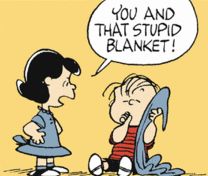
But you can also think about risk the way that children think about monsters in their closets. In that mode of thought, the problem isn’t the real-life probability of danger, it’s that a dark fantasy has gotten into your head and you can’t get it out. If you’ve ever dealt with a frightened child or remember being one, you know that you can’t solve a closet-monster problem by finding statistics to demonstrate how low being-eaten-by-a-closet-monster ranks among childhood death risks. Instead, you need to come up with some talisman or ritual that creates an aura of safety. The child needs a security blanket or a teddy bear, not more accurate information about relative risks. [2]

That’s the need that guns fulfill for most of their owners. [3] They’re security blankets, not insurance policies. The point isn’t that home invasion is a major risk in your life, that you are well-trained enough to win a middle-of-the-night shoot-out if home invaders show up, or even that you have a practical way to get the gun out of its safe-storage location in time to use it at all; it’s that when the home-invasion fantasy plagues you, you can tell yourself, “It’s OK. I have a gun.”


[1] One of those risks is suicide, and owning a gun increases it. Everyone has suicidal thoughts from time to time, and gun-owners have a very convenient and effective way to take action on such thoughts. Statistically, you are far more likely to kill yourself with a gun than to kill a terrorist or a home invader.

[2] Fear of flying is a second example of this pattern: If you’re afraid to fly, statistics about the safety of commercial air travel miss the point. The problem isn’t that you have incorrectly assessed the relative risks of flying vs. driving; it’s that you can imagine being completely helpless while the plane is crashing. What you need is some talisman or ritual that will keep that thought out of your head for a few hours.

[3] Of course, there are people who have real security problems whose solutions involve guns: presidents, for example. That’s why the complaint that it’s hypocrisy for Obama to advocate gun control while armed men protect him and his family is so off-base. Four of our 44 presidents (Lincoln, Garfield, McKinley, and Kennedy) have died by assassination, several others have been shot at, and all frequently receive threats. If you’re president, assassination isn’t a monster in your closet, it’s your most significant risk of dying.

Likewise, if you deal drugs, or regularly transport large quantities of cash to the bank, or have some other risk factor that makes death-by-violence more than just a what-if, your gun might be more than a security blanket. But if so, you are in a small minority of gun owners.

The Political F-word

When and how should we talk about fascism?


Satirical Trump campaign logo.

When Donald Trump started talking about closing American mosques and perhaps even having Muslims register with the government, when he called for a “deportation force” to search out and expel the 11 million Hispanic immigrants estimated to be in the country illegally, and then when he justified his supporters in “roughing up” a protester at his rally, a number of his fellow Republicans began to use the word fascist.

Once you start viewing Trump through that lens, a number of his previous statements — many of which were seen at the time as so outrageous they would doom his campaign — take on a different significance, particularly his xenophobic comments about immigrants and the way his speeches rely more on assertions of his own greatness than on any identifiable policies or political philosophy. (It also wasn’t the first time he had justified the violence of his followers.)

Pundits have reacted to labeling Trump a fascist in three different ways:

None of those reactions is entirely wrong, as we’ll see. But that conclusion just raises a larger question: Would we have a basis for calling any contemporary figure a fascist? Or has the word just become an insult with no identifiable content? What is fascism, anyway?

If you try to answer that question by looking at expert opinion, you’ll find a muddle. Just about any good article on fascism starts by explaining why it’s so hard to define. Here’s how David Neiwert puts it:

In contrast [to communism], hardly anyone can explain what it is that makes fascism, mainly because all we really know about it is the regimes that arose under its banner. There are no extant texts, only a litany of dictatorships and atrocities. When we think of fascism, we think of Hitler and perhaps Mussolini, without even understanding what forces they rode to power.

Communism has a very concise description: public ownership of the means of production under the dictatorship of the proletariat. Liberal democracy is a government elected by the majority but constitutionally restrained from violating minority rights. For fascism, well, we’ve got the example of Hitler. But what was it about Hitler that made him Hitler? [1] Given that we don’t want another Hitler regime, or anything remotely like it, what should we be looking for and trying to avoid?

In his influential essay “Ur-Fascism“, Umberto Eco warns:

It would be so much easier, for us, if there appeared on the world scene somebody saying, “I want to reopen Auschwitz, I want the Black Shirts to parade again in the Italian squares.” Life is not that simple.

You can’t identify fascism by blindly correlating policies. Hitler built the autobahn and Eisenhower built the interstate highway system, but Eisenhower was not a Hitler. Reagan and Hitler both increased military spending, but Reagan was not a Hitler. Fascism also is not a political philosophy. (Eco: “Mussolini did not have any philosophy: he had only rhetoric.”) It’s not an economic theory, and it’s not tied to a particular religion.

In his book In God’s Country (about the American Patriot movement of the 1990s), Neiwert adopts this definition (which he attributes to “historians and sociologists”):

a political movement based in populist ultranationalism and focused on an a core mythic ideal of phoenix-like societal rebirth, attained through a return to “traditional values.”

But Eco, who grew up under Mussolini, avoided all definitions, writing that “fascism had no quintessence”. Instead he tried to find deeper, pre-rational roots: “Fascism was philosophically out of joint, but emotionally it was firmly fastened to some archetypal foundations.” and “behind a regime and its ideology there is always a way of thinking and feeling, a group of cultural habits, of obscure instincts and unfathomable drives.”

He reduced these “unfathomable drives” to 14 traits of what he called Ur-Fascism, upon which any specific form of fascism would be based. These 14, he said, “cannot be organized into a system; many of them contradict each other, and are also typical of other kinds of despotism or fanaticism.” The traits include a cult of tradition, anti-intellectualism [2], equating disagreement with treason, fear of difference, permanent warfare, and contempt for the weak. But the one that I want to focus on is #6:

Ur-Fascism derives from individual or social frustration. That is why one of the most typical features of the historical fascism was the appeal to a frustrated middle class, a class suffering from an economic crisis or feelings of political humiliation, and frightened by the pressure of lower social groups. [italics in the original]

This points to what I see as the real difficulty of defining fascism as a political movement: It’s not fundamentally about politics at all. Fascism is primarily a phenomenon of social psychology. I would summarize it as a dysfunctional attempt of people who feel humiliated and powerless to restore their pride by:

  • styling themselves as the only true and faithful heirs of their nation’s glorious (and possibly mythical) past,
  • identifying with a charismatic leader whose success will become their success,
  • helping that leader achieve power by whatever means necessary, including violence,
  • under his leadership, purifying the nation by restoring its traditional and characteristic virtues (again, through violence if necessary),
  • reawakening and reclaiming the nation’s past glory (by war, if necessary),
  • all of which leads to the main point: humiliating the internal and external enemies they blame for their own humiliation. [3]

Now, I think, we’re in a position to talk about Donald Trump and his relationship to the conservative movement. Trump may or may not harbor fascist ambitions himself, but his campaign targets a segment of the population that is psychologically ready for fascism: working-class white Christian males, who have seen their privileged place in American society erode as blacks, women, gays, non-English-speakers, and non-Christians get closer to equality. What’s more, the good-paying no-college-necessary jobs that allowed their fathers to achieve the American dream have vanished, leaving them incapable of carrying forward their patriarchal legacy.

In his scapegoating of immigrants at home and foreign enemies abroad, and his vague promises to “make America great again” by applying his own greatness to a government that for decades has been run by “losers”, Trump is playing the role of a charismatic fascist leader.

But the audience he is appealing to didn’t pop out of nowhere. Its sense of grievance has been carefully nurtured and cultivated by decades of conservative propaganda, which has diligently pointed its resentment  downward at scapegoat groups like blacks, Muslims, and Hispanic immigrants, rather than upward at the wealthy bosses who profited by shipping jobs overseas.

In their defense, the propagandists probably didn’t intend to create a fascist movement. Instead, from one election to the next, it was easy to split the natural constituency of the Left by appealing to a sense of victimization among the white working class, using xenophobia, racism, and hot-button religious issues to turn them against the non-white working class, against women and gays, and against the liberal politicians who looked out for the interests of the emerging minorities. [4] As Neiwert concluded in 2004 after an analysis of Rush Limbaugh’s rhetoric:

What this exercise reveals is not so much that Limbaugh is a fascist, but rather, that he is making a career out of transmitting the themes and memes upon which fascism feeds to a mainstream conservative audience.

The result is the confusion that Trump has sown inside the Republican establishment. Fascistic themes of wounded pride and affronted identity were supposed to keep working-class white Christian men voting against their economic interests. [5] But nobody was supposed to take things this seriously.

Now that Trump is doing so, establishment Republicans are starting to yell “fascist!” But that won’t work at this late date, because by now “the themes and memes upon which fascism feeds” have been woven too deeply into standard conservative rhetoric. The audience that Trump has found and speaks to are the same people whose support Jeb Bush and Marco Rubio hoped to gain with winks and nods.

You can, if you want, regard that last sentence as a conclusion marking the end of the article. Or you can keep reading as we make a deeper pass through the psychology of fascism and its relationship to mainstream American conservatism.


To grasp fascism and its shape-shifting nature, you need to understand a series of concepts that can manifest differently in different times and places. What follows are some “themes and memes” of fascism, and where you can hear them in conservative rhetoric today.

Volkheit. A fascist believes that his nation has an essence, which does not evolve with the times, but is a fixed and eternal ideal. In German, an ethnic group is ein Volk, and their Volkheit (i.e. folkhood) is whatever makes them what they are.

The United States is a nation of immigrants that hasn’t seen itself as English for a long time, so its volkheit wouldn’t be strictly ethnic. For a time it was defined by the constructed ethnicity “White”, but even that characterization has become obsolete. Consequently, the “essence” that makes an American an American is hard to define.

But that doesn’t mean we don’t have a volkheit. The yearning towards a volkheit can be seen in way that various Americans feel threatened by non-English-speaking citizens, by the equality of non-whites, by multiculturalism, by non-Christian religions, and by any transnational authority like the United Nations or the WTO. Race plays a role in defining the American volk, but other factors weigh in the scale as well.

Whenever someone uses the phrase real Americans to mean something more than the people who live in or are citizens of the United States, they’re talking about our volkheit, particularly if they cite “real Americans” as the upholders of our “traditional values”.

One place you can see this playing out is in the otherwise inexplicable attempts to make President Obama an “other”: the baseless controversy over his birth certificate, the attempt to portray him as a Muslim, the unique sense of outrage when he does things many previous presidents did without anyone noticing or caring. It’s easy to read this as simple racism, but the real point being argued is that Obama doesn’t belong to the American volk. [6]

Herrenvolk. Fascism depends on a belief in the special status of our particular volk. There is a natural hierarchy of peoples, and we are meant to be at the top of it.

Herrenvolk is usually translated as “master race”, but that’s not exactly right. Herr has an aspect of master or lord — the German word for dominance is Herrschaft — but also of a respected head-of-household. (Herr Schmidt is just Mr. Schmidt.) So the herrenvolk doesn’t necessarily hold everyone else on a leash, but in a well-ordered world all the other volk recognize its natural superiority.

The contemporary American form of herrenvolk is American Exceptionalism. When de Toqueville described Americans as “exceptional” in the 1800s, he meant only that a uniquely favorable set of circumstances — like the lack of a competing power on our continent, and the absence of an established class structure and its corresponding centuries-long grudges — had given us a unique opportunity to leave behind Europe’s baggage and make a new start on civilization. That’s why our revolution could succeed, but the revolution in de Toqueville’s France got sidetracked into the Reign of Terror.

But since then, American Exceptionalism has developed into something more than just circumstantial: We are morally exceptional, so things that would be wrong for anybody else are OK for us. Consequently, we can torture people; we can start unprovoked wars; Iran shouldn’t feel threatened by our nuclear arsenal, but we’d be justified in attacking to prevent them acquiring nukes; and so on, because we’re the herrenvolk.

Grievance. Fantasies of belonging to the herrenvolk are like fantasies of secret royalty: If a child is happy with her life and home, she doesn’t need to dream about her real parents coming to claim her. This is why fascism is a product of hard times. When a nation is doing well — its ruling class feels secure, its middle class is confident in its upward mobility, and its lower classes are more docile than desperate — fascism has no place to take root.

But once you start claiming herrenvolk status, you’re left with a conundrum: Why is my life so hard? We’re better than everyone else, so why aren’t we more successful? This is the issue Trump is raising when he complains that “America doesn’t win any more.”

Fascism’s answer is that we have been robbed of our rightful place in the world. Again, fascism’s local variability comes into play. Every fascism has to claim that its volk has been robbed. But who robbed us and how can change in every country.

Neiwert:

Indeed, one of the lessons I’ve gleaned from carefully observing the behavior of the American right over the years is that the best indicator of its agenda can be found in the very things of which it accuses the left.

There is no better example of this than Bill O’Reilly’s characterization of the Left as running a “grievance industry“. O’Reilly’s show is little more than a stream of grievances, of wrongs committed against whites, against Christians, against conservatives, against men, and against Real Americans of all types.

Purity. The strength of a volk is in its purity. Conversely, fascism ties a nation’s problems to its failure to guard its purity.

In Nazism, Jews were the impurity corrupting the German volk. In contemporary America, this impurity worry focuses on non-white, non-Christian, or non-English-speaking immigrants, as well as on American blacks who seem not to be assimilating into the white-dominated society.

Purity is a primal, pre-rational concern, which is why the irritation is not soothed by analyses of the economic benefits from immigration, or the overall good behavior of undocumented Hispanics and refugees, or even the rise in deportations during the Obama administration. Meanwhile, every individual crime by an immigrant sets it off again. The belief that foreigners are corrupting the purity of America is foundational; since this impurity is the cause of all our problems, the simple fact that we still have problems is evidence of its corrosive effect.

Another aspect of impurity is moral. The idealized Real America of the white suburbs and small towns of the 1950s had no place for homosexuals or the transgendered. So their presence — and even acceptance! — in contemporary America is evidence of our impurity. Again, evidence is beside the point. Forget that the gay couple living next door trims the lawn perfectly, or that their daughter is valedictorian. If we have problems — and who can say that we don’t? — the impurities we tolerate all around us must be the cause.

Our glorious past. Fascism looks back to a time before impurity set in, when the volk lived securely in its volkheit. For Mussolini, this was the Roman Empire and il Duce was the new Augustus. American conservatives similarly idealize four golden eras: Philosophically, the Golden Age was the founding era, and the Founders are portrayed as divinely inspired prophets. Economically, the Golden Age was the Gilded Age, when capitalists worked their magic unhindered by regulations. Militarily, it was World War II, when our entire society was mobilized behind the war effort. Culturally, the Golden Age happened in the Ozzie-and-Harriet suburbs and small towns of the 1950s.

The importance of this mythology is why any accurate assessment of American history is so threatening to conservatives that they find it necessary to promote their own pseudo-historians. In his announcement speech, for example, Ben Carson attributed the rise of America to the “can-do attitude” of the “early settlers”. His point comes completely undone if you understand the role of land stolen from the Native Americans and developed by slave labor. Similarly, conservatives can only see World War II as a battle of Freedom against Barbarism; the suggestion that dropping nuclear bombs on civilians is barbaric cannot be entertained.

Any reading of history in which America is a nation like other nations, exemplifying both good and evil, is beyond the pale.

Betrayal. Any myth of a glorious past is vulnerable to the criticism Jack Burden makes in All the King’s Men:

If it was such a God-damned fine, beautiful time, why did it turn into this time which is not so damned fine and beautiful if there wasn’t something in that time which wasn’t fine and beautiful? Answer me that one.

Impurity of the volk is only a partial answer, and the machinations of our enemies can’t be a complete answer either, because they shouldn’t be able to stand against the herrenvolk. No, we are suffering now because we have been betrayed by our leaders and by the culturally influential classes.

For Hitler, this was the famous Dolschstosslegende, the myth that German armies did not lose World War I in the field, but were “stabbed in the back” by traitors in high places at home.

You can hear the current dolschstosslegende in Ted Cruz saying that President Obama “does not wish to defend this country”. Or Michele Bachmann’s description of Obama’s immigration policy:

We have this invasion because a political decision was made by our president to intentionally flaunt the laws of the land and put at risk the American people, our culture, our way of life, our economic standing, and also he’s willing to allow a pandemic of disease to come into our country.

The conservative version of recent American history is full of betrayals: FDR betrayed the cause of freedom at Yalta, JFK surrendered American sovereignty to the UN, the Democratic Congress gave away the victory Nixon had won in Vietnam, and Obama not only gave away Bush’s victory in Iraq, but negotiated a “surrender” to Iran.

What the Republican establishment never expected was that they too would be included among the betrayers. But when John Boehner announced his retirement, no one cheered louder than the Republican base. And who imagined that Eric Cantor would be tarred as a traitor to conservatism? Ben Carson says, “I’ll tell you a secret. The political class comes from both parties and it comes from all over the place.” And Ted Cruz writes:

In 2010, we were told that Republicans would stand and fight if only we had a Republican House. In 2014, we were told that Republicans would stand and fight just as soon as we won a majority in the Senate and retired Harry Reid. In both instances, the American people obliged. Now we’re told that we must wait until 2017 when we have a Republican president.

Trump is just echoing them when he says, “I am more disappointed in the Republicans than the Democrats.”

Cruelty. Psychologically, the key to fascism is the (usually unstated) belief that you can work out your own humiliation by humiliating others. Did you fight bravely in the Great War, only to see your country shamed at Versailles, and your family lose everything in the subsequent inflation and depression? Go beat up a union organizer, or throw rocks through the windows of a Jewish shopkeeper; you’ll feel better.

And maybe you do, for a while, but in the morning you return to the same life you had yesterday. So like any addiction, the temptation is to try more next time. Maybe if you’d killed the organizer or set fire to the shop, the feeling would have lasted.

A similar pattern explains the way Republican presidential candidates seem to glory in their cruelty and heartlessness. Trump mimicked and ridiculed a reporter’s disability (echoing Rush Limbaugh’s mocking of Michael J. Fox), Chris Christie didn’t just call for leaving Syrian refugees to their fate, he specifically said he would refuse entry to “orphans under the age of five”. Several candidates have called for the return of torture, even though it accomplishes little beyond making suspected terrorists suffer. The persistent weakness in the protect-traditional-marriage argument was that its proponents could not identify anybody who would benefit; the point was entirely to make gay and lesbian lives harder. Republican deportation policies will break up families, and no one benefits from sending DREAMers back to a country they don’t remember. But none of that seems to matter.

What does matter is that when a candidate says something that is harsh or offensive, his poll numbers go up. [7] The Republican base is angry and is looking for a candidate who will inflict pain on its enemies. That pain is not a regrettable side-effect of a policy that accomplishes something else; inflicting pain is the accomplishment.

What’s the matter with Kansas today? For decades, the Republican establishment has used fascist themes as a tactic: While their policies destroyed unions, empowered employers, shifted the tax burden from the rich to the middle class, allowed higher education to become unattainably expensive for families not already wealthy, and made it easier to ship blue-collar jobs overseas, they could appeal to working-class whites on a symbolic level, offering them pride rather than paychecks or opportunities.

Now those chickens are coming home to roost: Republicans have set the stage for America to have an actual fascist movement, one that will see them as part of the corruption that needs to be purged. Like the businessmen who funded Hitler as a way to distract workers from communism, they thought they could control this, but they can’t.

Donald Trump is taking advantage of this situation, but he is not the problem. Ted Cruz will happily fill his role if something goes wrong, and if the fascist movement can’t win the Republican nomination or the presidency in 2016, there’s always 2020 or 2024. Who knows who might step forward to claim its leadership?

In the long run, I can only see one way out of this trend: Democrats need to offer a program that will genuinely do something for the working class, in the same way that the New Deal headed off American fascism in the 1930s. Americans who feel frustrated and humiliated by the culture and economy of the 21st century need to know that they can get help fixing their lives; there’s no need to seek relief by making others suffer too.


[1] Jonah Goldberg’s Liberal Fascism is almost comical in its willingness to latch onto Hitler’s superficial traits (like his vegetarianism and support for universal health care) while never zeroing in on his movement’s toxic essence. The Onion could not write a line more ridiculous than this:

The quintessential Liberal Fascist isn’t an SS storm trooper; it is a female grade school teacher with an education degree from Brown or Swarthmore.

[2] The anti-intellectual nature of fascism is one reason it remains undefined. A real fascist is in the streets, not sitting in a library making up theories.

[3] The dysfunctionality of this program is why fascist regimes tend toward short-but-spectacular lives, particularly if the Leader is a true believer, and is not just using the movement to gain power. Humiliating others doesn’t really soothe your own humiliation, so the regime must constantly up the ante to maintain its supporters’ enthusiasm. Ultimately, no conquest and no level of enemy humiliation is enough. The world must fall, and the enemies must be exterminated.

[4] This is the theme of Thomas Frank’s What’s the Matter With Kansas? from 2004.

[5] For example, the struggling whites in Kentucky who just voted to eliminate their own health insurance.

[6] As you might expect, Trump voters believe these stories about Obama at a higher rate than supporters of other candidates.

[7] Josh Marshall has an interesting take on this: He believes that it isn’t Trump’s cruelty that appeals to the Republican base so much as his refusal to apologize for it.

In times of hysteria

Six things ordinary people can do to restore sanity.


One of the most difficult experiences of democracy is to watch your country going crazy, and feel responsible. In a dictatorship you could just zone out: The Powers That Be will do what they do, and your opinion doesn’t matter anyway. Your neighbors, your friends, your co-workers — their opinions don’t matter either, so there’s no point in arguing with them, or even letting them know you disagree. You might as well just binge-watch something light on TV, and wait for the wave to pass.

In a democracy it’s different: We are the wave. Politicians really do respond to certain kinds of public opinion, sometimes to our shame. So, for example, my Democratic governor (Maggie Hassan of New Hampshire, who I have voted for, given money to, and was planning to support for the Senate) called for a halt on admitting Syrian refugees. (She later reduced it to a “pause“, “until intelligence and defense officials can assure that the process for vetting all refugees is as strong as possible to ensure public safety.” But the damage was done: Any governor who wants to come out against refugees can claim bipartisan support.) My representative (Annie Kuster of NH-2, who I have also voted for and given money to) voted Yes on the American Security Against Foreign Enemies Act, which at a minimum would delay any new refugee resettlements by 2 or 3 months, and might snafu the process altogether. [1] (Check your representative’s vote here.)

If my side has been characterized by politicians timidly letting the panic sweep them away, on the other side it’s been bedlam. Ben Carson is openly dehumanizing refugees with metaphors about “rabid dogs”. Donald Trump is talking about closing mosques, because “we’re going to have no choice”. He has advocated forcing American Muslims to register with the government, so that they can be tracked in a database. Marco Rubio expanded Trump’s proposal to call for shutting down “anyplace where radicals are being inspired”. Ted Cruz and Jeb Bush want a religious test for refugees: We should accept Christians, but not Muslims. John Kasich wants to create a government agency to promote “Judeo-Christian values” around the world. [2]

Chris Christie says we shouldn’t even let in little kids. Like, say, this Syrian girl, who mistook the photographer’s camera for a gun and tried to surrender.

And remember this Syrian boy? His photo evoked international compassion a couple months ago, but that never lasts, does it?

When Governor Jay Nixon didn’t try to block Syrian refugees, state Rep. Mike Moon called for a special session of the legislature to stop “the potential Islamization of Missouri“. But the bull goose loony (to borrow Ken Kesey’s phrase) was a Democrat: Roanoke Mayor David Bowers, who justified his refusal to cooperate with resettling refugees by citing FDR’s Japanese internment camps during World War II. That national disgrace is now a precedent. (Who knows? Maybe slavery or the Native American genocide will become precedents too.)

I had never heard of Rep. Moon or Mayor Bowers before, but none of the Republican presidential candidates seemed this insane when they started campaigning. So I suspect they’re just saying what they think will appeal to their voters. They may be pandering to the public fear, attempting to benefit from it, and playing their role in spreading it, but they didn’t start it.

We did that. Ordinary people like us. Our friends, our relatives, our co-workers, the people we know through social media. And so I suspect it’s up to us to stop it.

I have to confess I didn’t see this coming. After the Paris attacks, I expected a push to hit ISIS harder, maybe even to re-invade Iraq and add Syria to the occupation zone. (Jeb Bush recently joined Ben Carson, John Kasich, and Lindsey Graham in calling for ground troops, though he was vague about how many.) I didn’t foresee an Ebola-level panic [3] focused on the refugees who are running from the same people we want to fight, much less the yellow-starring of American citizens who practice an unpopular religion.

But OK, here we are. Our country is going crazy and we are right in the middle of it. What do we do now?

1. Don’t make it worse. In particular, don’t be the guy hysterically running around and yelling at other people not to panic. Sanity begins within. You have to find it in yourself before you can transmit it to other people.

So: calm down. If you need help, seek out other calm voices. The needed attitude is a firm determination to slow this panic down, not a mad urge to turn the mob around and run it in the opposite direction.

Once you start to feel that determination, you’re ready to engage: Participate in conversations (both face-to-face and in social media). Write letters to the editor. Write to your representatives in government.

Don’t yell. Don’t humiliate. Just spread calm, facts, and rationality. When engagement starts to make you crazy, back away. Calm down again. Repeat.

2. Disrupt the spread of rumors. Panics feed on fantasies and rumors. Fantasies tell people that horrible things could happen. Rumors assert that they already are happening.

Social media is the ideal rumor-spreading medium, so it takes a lot of us to slow a rumor down. But you don’t have to be a rhetorical genius to play your part. Simple comments like “I don’t think this is real” or “That’s been debunked” are often sufficient, especially if you have the right link to somebody who has checked it out. The debunking site Snopes.com has tags devoted to Paris attack claims and Syrian refugees.

Here are a couple of the false rumors I’ve run into lately:

Current Syrian refugees resettled in America are not “missing”. I heard this one during a Trump interview with Sean Hannity. Trump refers to “people” who are missing — with the implication that they have gone off the grid and joined some kind of underground. Hannity corrected to “one person … in New Orleans”. (Think about that: It’s gotten so bad that Sean Hannity has to tone stuff down.) But Catholic Charities has debunked that story: They resettled the guy in Louisiana, and then he moved. He’s not missing. (The source of this rumor was probably the desperate David Vitter campaign for governor, which tried to ride the refugee panic to a comeback victory. It didn’t work.)

No, lying to further the cause of Islam is not a thing. Under the doctrine of taqiya, a Muslim may lie about his faith to escape serious persecution or death. Anti-Muslim propagandists have tried to turn this into a sweeping principle that justifies any lie to an unbeliever — and consequently justifies non-Muslims in disbelieving anything Muslims say. But it doesn’t work that way. Now, I’m sure ISIS has undercover operatives (just like we do) and that Muslim leaders lie (just like leaders of other faiths). But there’s no special reason to think Muslims are less truthful than the rest of us.

I won’t try to predict what further rumors will arise. But when you run into one, check Snopes, google around a little, and see if somebody has already done the hard work of checking it out.

As you participate, remember: In social media, you’re not just talking to the person you’re responding to (who might be hopeless), you’re also talking to his or her friends. Some of those friends might have been ready to like or share the rumor until they saw your debunking comment. You’ll never know who they are, but their hesitation is your accomplishment.

3. Make fantasies confront reality. Fearful fantasies work best when they’re vague and open-ended. For example: Terrorists are going to sneak in as refugees and kill us!

Think about that: A terrorist is going to submit to a one-or-two-year screening process, establish a life in this country, and then drop off the grid, strap on a suicide vest, and blow himself up in some crowded place.

Does that scenario make any sense? Wouldn’t it be simpler to come as a tourist? An aspiring terrorist could get in much faster with less scrutiny, spend a few weeks visiting Disney World or hiking the Grand Canyon, and then start killing us, while his fake-refugee brothers-in-arms are still tangled in red tape.

Sometimes the most devastating response to a nightmare fantasy is the simple question: “How does that work, exactly?” If you can get a person to admit “I don’t know”, you’ve restored a little sanity to the world.

4. Call out distractions. The Slacktivist blog makes this point so well that I barely need to elaborate.

As a general rule with very few exceptions, whenever you encounter someone arguing that “We [America] shouldn’t be doing X to help those people over there until we fix Y over here for our own people,” then you have also just encountered someone who doesn’t really give a flying fig about actually doing anything to fix Y over here.

So if somebody says we shouldn’t be taking in Syrian refugees while there are still homeless children or veterans or whatever in this country, the right response is to ask what they’re currently doing to help the people they say are more deserving. Odds are: nothing. Their interest in homeless American vets begins and ends with the vets’ value as a distraction from helping refugees.

Once you grasp this tactic, you’ll see it everywhere. So: “All those resources you want to devote to fighting climate change would be better spent helping the poor.” “OK, then, what’s your plan for using those resources to help the poor? Can I count on your vote when that comes up?” Silence.

When people argue that there’s a limited amount of good in the world, so we shouldn’t waste it on anybody but the most deserving, ultimately they’re going to end up arguing that they should keep the limited amount of good they have, and not use it help anybody but themselves.

5. Make sensible points. If you can capture somebody’s attention long enough to make a point of your own, try to teach them something true, rather than just mirror the kind of bile they’re spreading. This is far from a complete list, but in case you’re stuck I have a few sensible points to suggest:

The process for vetting refugees is already serious. Time explains it here, and Vox has an actual refugee’s account of how she got here.

America needs mosques. Research on terrorism (not to mention common sense) tells us that the people to worry about aren’t the ones who are pillars of their communities. The young men most likely to become terrorists are not those who feel at home in their local houses of worship, but the loners, or the ones have only a handful of equally alienated friends. (That’s not just true for Muslims like the Tsarnaev brothers, but also white Christian terrorists like Dylann Roof.) When you can’t connect face-to-face, that’s when you start looking around online for other radical outcasts you can identify with.

So it would be bad if American mosques just magically went away, as if they had never existed. But it would be infinitely worse for the government to start closing them. What could be more alienating to precisely the young men that ISIS wants to recruit?

Religious institutions aide assimilation. Imagine what would have happened if we had closed Italian Catholic churches to fight the Mafia, or Irish Catholic churches for fear of the IRA, or Southern Baptist churches that had too many KKK members.

The Founders envisioned American religious freedom extending to Muslims. As Ben Franklin wrote:

Even if the Mufti of Constantinople were to send a missionary to preach Mohammedanism to us, he would find a pulpit at his service.

We seldom look back with pride on decisions made in a panic. This is where the Japanese internment precedent should be quoted: That’s the kind of stuff we do when we get caught up in a wave of fear and anger. So should our refusal to take in Jewish refugees from Nazi Germany. The Red Scare is another precedent. More recently: Everybody who jumped from 9-11 to “Invade Iraq!” or “We need to torture people!” — are you proud of that now?

6. Look for unlikely allies, and quote them. Listening to Trump, Cruz, and the rest, it’s easy to imagine that everybody in the conservative base is part of the problem. But that’s not true. Here are a few places you may not realize you have allies.

Christians. I know: The self-serving Christians [4] so dominate the public conversation that sometimes it’s hard to remember the existence of actual American Christians, i.e., people trying to shape their lives around the example and teachings of Jesus. But if you screen out the clamor of “Christians” focused on the competition between their tribe and the rival tribe of Muslims, you will hear people who are trying to figure out what the Good Samaritan would do.

And I’m not just talking about liberal Christians from the mainstream sects. Lots of evangelical Christian churches have been involved in resettling refugees in their local areas. They know exactly how bad it is for refugees, and can put faces on the issue. They’re not happy with the people who are trying to demonize Jamaal and Abeela and their three kids.

The Mormon community retains its collective memory of being outcasts. [5] So Utah stands out as a red state whose governor has not rejected settling Syrian refugees.

Ryan Dueck sums up:

as Christians, there are certain things that we just don’t get to do.

We don’t get to hunt around for excuses for why we don’t need to include “those people” in the category of “neighbour.”

We don’t get to look for justifications for why it’s better to build a wall than open a door.

We don’t get to label people in convenient and self-serving ways in order to convince ourselves that we don’t have to care for them.

We don’t get to speak and act as if fear is a more pragmatic and useful response than love.

We don’t get to complain that other people aren’t doing the things that we don’t want to do.

We don’t get to reduce the gospel of peace and life and hope to a business-as-usual kind of political pragmatism with a bit of individual salvation on top.

We don’t get to ask, as our default question, “How can I protect myself and my way of life?” but “How does the love of Christ constrain and liberate me in this particular situation?”

And all of this is, of course, for the simple reason that as Christians, we are convinced that ultimately evil is not overcome by greater force or mightier weapons or higher walls or more entrenched divisions between “good people” and “bad people,” but by costly, self-sacrificial love. The kind of love that God displayed for his friends and his enemies on a Roman cross.

If you read the comments on that post, or look at this rejoinder from National Review, you’ll see that Dueck’s point of view is not universal among people who think of themselves as Christians. But it’s out there.

Libertarians. Some parts of the libertarian right understand that oppression is unlikely to stop with Muslims. So Wednesday the Cato Institute posted its analysis: “Syrian Refugees Don’t Pose a Serious Security Threat“. Conservatives who won’t believe you or Mother Jones might take Cato more seriously.

Scattered Republican politicans. I don’t want to exaggerate this, but here’s at least one Republican trying to slow the hysteria down: Oklahoma Congressman Steve Russell. He said this on the floor of the House:

America protects her liberty and defends her shores not by punishing those who would be free. She does it by guarding liberty with her life. Americans need to sacrifice and wake up. We must not become them. They win if we give up who we are and even more-so without a fight.

Russell eventually knuckled under to the pressure and voted for the SAFE Act, but says that he got something in return from the Republican leadership: the promise of a seat at the table in the subsequent negotiations with the Senate and the White House. We’ll see if that makes a difference.


These next few days, I think it’s particularly important for sensible people to make their voices heard, and to stand up for the courageous American values that make us proud, rather than the fear and paranoia that quake at the sight of orphan children.

Every time you stick your neck out — even just a little — you make it easier for your neighbor to do the same. Little by little, one person at a time, we can turn this around.


[1] What disturbs me most about the supporters of the SAFE Act is that they’re not calling for any specific changes in the way refugees are screened, they just want more of it. I suspect most of the congresspeople who voted for the act have no idea how refugees are vetted now, much less an idea for improving that process.

As we have seen in the discussion of border security, more is one of those desires that can never be satisfied. If this becomes law and in 2-3 months the administration comes out with its new refugee-screening process, we will once again face the cries of “More!”, along with the same nightmare fantasies about killer refugees.

[2] Actually, the main thing wrong with Kasich’s proposal is that he sticks an inappropriate religious label on the values he wants to promote: “the values of human rights, the values of democracy, freedom of speech, freedom of religion, and freedom of association.” Russian dissident (and former chess champion) Garry Kasparov has a better term for these: modern values.

In the West, these values were championed by Enlightenment philosophers, many of whom were denounced as heretics and atheists by the Christian and Jewish authorities of their era. So no, these are not Judeo-Christian values.

[3] The two panics have a number of similarities, as John McQuaid points out. In each case “a terrifying and poorly-understood risk has stirred up apocalyptic fantasies and brought out the worst in the political system.”

If you want a paradigm for fear-mongering, you can’t beat this Donald Trump quote, which combines the appearance of factuality with no actual content whatsoever:

Some really bad things are happening, and they’re happening fast. I think they’re happening a lot faster than anybody understands.

One similarity between the two panics is noteworthy: Both times Republicans attributed President Obama’s sane and measured response to his lack of loyalty to the United States. During Ebola, Jodi Ernst said Obama hadn’t demonstrated that he cares about the American people, and recently, Ted Cruz said Obama “does not wish to defend this country.”

Strangely, though, over-reacting during a panic seems to carry no political cost, because everyone forgets your excesses while they are forgetting their own. In a sane world, Chris Christie’s over-the-top response to Ebola would disqualify him from further leadership positions — especially since it turned out that the CDC was right and he was wrong. But no one remembers, so he is not discouraged from flipping his wig now as well.

[4] You know who I mean: The ones who find the Bible crystal clear when it justifies their condemnation of somebody they didn’t like anyway, but nearly impenetrable when it tells them to do something inconvenient. So the barely coherent rant of Romans 1 represents God’s complete rejection of any kind of homosexual relationship, but “Sell your possessions and give to the poor” is so profoundly mysterious that it defies interpretation.

[5] My hometown of Quincy, Illinois took in a bunch of them after they were expelled from Missouri in 1838. That event has its own little nook in the local history museum, because generous decisions are the ones descendants are proud of.

BTW, you read that right: The Mormons were expelled from Missouri. Just as pre-Civil-War states could establish slavery, they could also drive out unpopular religious groups. Didn’t hear about that in U.S. History class, did you?

A Meditation on Terrorism

Imagine you’re at one of those old-fashioned, bury-the-hatchet arranged weddings, where the son of your house is marrying the daughter of the enemy house. Picture it in as much detail as you can. The event has all the trappings of joy: A feast is cooking, a band is tuning up. And there’s some real joy in the air too: The long struggle might be over, and everybody present might be a survivor.

But there’s also tension. A few weeks ago, you were trying to kill these people, and they were trying to kill you. Some of them would still like to.

In particular, there’s one guy in the enemy camp who isn’t happy. He doesn’t like the peace, he didn’t like the terms of the treaty, and the war gave his life a sense of meaning that he doesn’t know how to replace.

As the reception starts, with the music and dancing and food, he looks around disgustedly. All of his friends, people he can remember swearing eternal vengeance with, are getting chummy with your friends. There’s got to be a way to put a stop to this.

That’s when he starts trying to pick a fight with you. First with jibes, then with open insults, and finally with shoves and even blows. You know what he’s up to: He’s hoping that once the fight breaks out, everyone will have to pick a side. All the old quarrels will be remembered and the war will start all over again.

What do you do? At first you tried to just ignore him and avoid him, but it’s really hard not to fight somebody who is determined to fight you. You can’t just let him kill you. But you also don’t want to let him write you into his script.

So your choice is not as simple as just fight or don’t fight. You can’t really avoid the fight, but your goal is that when the fight comes, it should stay between you and him, and not turn into a general brawl.

With that in mind, all your words and actions have to be chosen for the benefit of the larger audience. You’re a warrior. So if it were just between the two of you, you would answer insult for insult, and if he hit you, you would hit back harder. That’s how a warrior keeps a fight short: Let the other guy know that the price will higher than he wants to pay.

But that won’t work here, because he’s playing a different game. If he winds up bloodied, but the war restarts, he wins.

So yes, when he insults you, you answer him. But you have to focus on him personally, and not let your anger run away with you. Above all, you don’t want to shout out insults to his whole clan. This isn’t the kind of treachery you always expected from his side; this is just one guy being a jerk. And when you hit back, your blows have to be measured, so that it is clear to everyone which one of you keeps escalating. And you want to be sure you know what you’re hitting, so you can’t blindly throw things that might hit unintended targets.

Your goal is to survive, but your larger goal is for the peace between your peoples to survive. That makes everything more complicated.


I hope my analogy isn’t too hard to interpret: The West and Islam have a violent history that goes back to the Crusades and the fall of Constantinople and the Ottoman threat to Europe. ISIS wants that Clash of Civilizations back, and its leaders want to lead not just a gang of zealots in the desert, but a unified caliphate encompassing the world’s billion-plus Muslims.

The worst thing that could happen to ISIS would be for Muslim nations to assimilate into the world order, for parliamentary democracy to succeed in places like Turkey and Tunisia, and for Muslims in Western countries to be accepted and to think of themselves as French Muslims or Muslim Americans.

Attacks like the ones in Paris are intended to put a stop to all that. Militarily, they don’t amount to much. The civilian deaths are individually tragic, and collectively they strike at the pride of a great nation. But ISIS is not a existential threat to France. France cannot be defeated by attacking concert halls.

The same thing is true of ISIS’ affronts to America. The United States cannot be defeated by chopping off the heads of journalists or tourists. The point of these actions isn’t to destroy us, it’s to rile us up, in hopes that we will hit back harder, collaterally targeting a bunch of otherwise peaceful Muslims in the process.

ISIS needs the wedding reception to turn into a brawl.

The worst thing we could do in this situation is to play the role the terrorists have assigned us. Those politicians and pundits who either imply or proclaim openly that we are at war with Islam, and treat would-be Caliph al-Baghdadi as an existential threat to the West — they are doing al-Baghdadi’s work for him, and granting him a status he could never earn on his own.

That said, it’s too simplistic to jump to the other extreme and say, “Just ignore them.” If this attack doesn’t rile up the West, they’ll start planning a bigger one. It’s not a turn-the-other-cheek situation.

The important thing to remember, though, is which audience we should have in mind when we choose our words and actions. It’s tempting to narrow your focus and just see the person who’s goading you. But the real audience to our response isn’t al-Baghdadi or the jihadis who have already joined his cause, it’s all the world’s Muslims — especially the teen-agers who are trying to decide whether or not their dream of making it in the West or finding a place in the world for their country is really feasible.

If you’re a young Muslim in Paris or London or Berlin or Los Angeles, is there a place for you here? Or are the Christians and Jews and atheists just suckering you into betraying your heritage? If you’re in Cairo or Amman or Mosul, is a future of democracy and human rights worth your devotion? Or is your only hope for justice and self-respect out in the Syrian desert?

When you realize that the real battle is being decided inside the minds of these young people, it changes you. You’re not so quick to declare war on Islam, or to look at every local Muslim or refugee at the border as a potential terrorist. You realize that Islam is a word worth contesting, so you don’t give it away by tagging your enemy as “radical Islam”. (If you’re a Christian, think about how the phrase radical Christianity strikes you. Doesn’t it sound like something you should join? If somebody announces that he’s fighting against the radical Christians, is he your ally or your enemy? Why should a young Muslim feel differently?) And no matter how many terrorists you think are in some region, you don’t just kill everybody and let God sort it out.

Yes, once some group starts killing our civilians, we need to fight them. We need to take them down. But we also need to keep the fight as small as possible. The Clash of Civilizations is part of their plan. It shouldn’t be part of ours.


If you want to see this point of view worked out in more detail, you should read my 2014 post “Terrorist Strategy 101: a review“.

Why are middle-aged whites dying?

I’m doing fine, but my cousin is dead.


Look at this graph:

In 1990, the death rate for American whites aged 45-54 (USW) was within the normal range of similarly aged people in comparable countries, and similar to the death rate for middle-aged American Hispanics (USH). In all the other countries, death rates continued their centuries-long trend of dropping, with USH tracking the United Kingdom rate almost perfectly. But starting in 1998, USW turns up.

A good summary of this new study is in The Atlantic. The upshot is that about half a million American whites are dead who would be alive if USW death rates had followed the downward track of other first-world countries. The effect seems concentrated in the less-educated classes, and the cause is a sudden jump in the rate of what are called “poisonings” — mainly deaths related to alcohol and drugs — as well as an increase in suicides and other causes related to not taking care of yourself. Atlantic concludes that middle-aged whites “are dying of despair”.

This feels personal to me. My father was a high-school-educated white who was an adolescent during the Depression. For most of my childhood, he had a good-paying factory job that allowed him to buy a small farm that he worked on the side. Needless to say, he was a hard-working guy. But he also saw himself as extremely successful: He owned a house nicer than the one he grew up in, sent his kids to college, and after he retired had a winter home in Florida. He lived to be 90.

I took advantage of the opportunities my parents gave me and got a PhD. I also feel successful, and am in excellent health at 59. But what if, rather than reaching for a better life than my father’s, I had tried to duplicate his success? It wouldn’t have worked. The good-paying no-college-needed jobs went away during my lifetime. I probably would have bounced from one low-status job to another, always wondering why I couldn’t live at the level I had thought was normal for people like me. Compared to my father, I would be a failure.

That pretty well describes one of my cousins, who had alcohol problems for most of his adult life and died a little younger than I am now.

What we’re seeing here, I believe, is the end result of privileged distress. It’s still not objectively harder to be white in American than non-white, but the traditional privileges of whiteness have shrunk, particularly for the working class, while visions of how life is supposed to be (for white people) are pegged to the achievements of our parents. Consequently, it gets harder and harder for working-class whites to live up to the expectations they were raised to have. By middle age many feel like failures, and live with a corresponding lack of self-regard.

Is it any wonder they look for scapegoats, like the Hispanic immigrants, and are attracted to anger-channeling politicians like Donald Trump? They cheer when Trump says America is going to start winning again, and they love to identify with him when he calls his opponents “losers” — because looking down on somebody else is very satisfying when you feel like a loser yourself.