Tag Archives: religion

“Religious Freedom” means Christian Passive-Aggressive Domination

In an Orwellian inversion, “freedom” is now a tool for controlling others.

It’s over. Try something else.

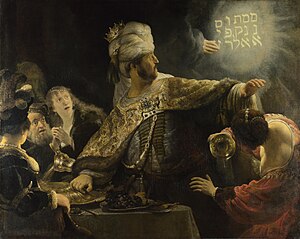
For many anti-gay activists, the recent Supreme Court decisions on DOMA and Proposition 8 were the handwriting on the wall.

It wasn’t just that they didn’t get the result they wanted, but that in DOMA the Court’s majority simply didn’t buy the argument that homosexuality represents a threat to society. Neither does the general public, which supports that decision 56%-41%. (The margin under age 40 is 67%-30%, with 48% approving strongly.) The big post-DOMA public demonstrations expressed joy, not anger.

Just a few years ago anti-marriage-equality referendums were winning in states all over the country, but in 2012 one failed in Minnesota, while referendums legalizing same-sex marriage won at in Washington, Maryland, and Maine. Ten years ago, the first legislatures to make same-sex marriage legal were dragged by their state courts, but this year Delaware, Rhode Island, and Minnesota went there voluntarily, bringing the number of states where same-sex marriage is legal (as of August 1) to 13, plus the District of Columbia. (I’ll guess Oregon and Illinois will go next.)

It’s even clear why this is happening: Because gay millennials are not in the closet, everybody under 30 has gay and lesbian friends who dream about meeting their soulmates just like straight people do. To young Americans, laws blocking that worthy aspiration are pointlessly cruel and ultimately will not stand — not in Alabama, not in Utah, not anywhere.

So the generational tides run against the bigots of the Religious Right. Some still aren’t admitting it, but wiser heads are recognizing that it’s time to switch to Plan B.

The new face of bigotry: “freedom”. Fortunately for them, there’s a well-worked-out back-up plan: religious “freedom”.

Accept the inevitability of gay rights, advises Ross Douthat, but “build in as many protections for religious liberty as possible along the way.” Here’s the idea: If your disapproval of certain kinds of people can be rooted in church doctrine or a handful Biblical proof-texts, then forbidding you to mistreat those people violates the “free exercise” of religion you are promised by the First Amendment.

To make this work, conservative Christians need to divert attention from the people they are mistreating by portraying themselves as the victims. And that requires cultivating a hyper-sensitivity to any form of involvement in activities they disapprove of. So rather than sympathize with the lesbian couple who gets the bakery door slammed in their faces, the public should instead sympathize with the poor wedding-cake baker whose moral purity is besmirched when the labor of his hands is used in a celebration of immorality and perversion.

There’s a name for this tactic: passive aggression. It’s like on Sanford & Son when Fred would clutch his heart and start talking to his dead wife because Lamont planned to do something he disapproved of. Passive aggression is the last resort of people who have neither the power to get their way nor any reasonable argument why they should.

In fact the baker will be fine, as Willamette Week demonstrated by calling two such religious-liberty-defending bakeries and ordering cakes to celebrate a variety of other events conservative Christians disapprove of: a child born out of wedlock, a divorce party, a pagan solstice ritual. The bakers did not object, because their hyper-sensitive moral purity is an invention, a convenient excuse for treating same-sex couples badly.

But Jim DeMint insists that

A photographer in New Mexico, a florist in Washington, and a baker in Colorado have already been victims of such intolerant coercion.

And Matthew Franck is horrified that religious universities will have to provide same-sex married-student housing; religious “schools, universities, hospitals, hospices, and clinics; social service agencies, retirement homes, eldercare and childcare facilities, food pantries, and soup kitchens” who employ “teachers, doctors, nurses, psychologists, counselors and clinicians, caregivers, food-service workers, housekeeping and grounds staff, even pool lifeguards” won’t be able to refuse employment to people with same-sex spouses. Adoption services, marriage counselors, divorce lawyers, artificial insemination clinics etc. will have to deal with gay and lesbian couples … as if they were real human beings or something.

The race parallel. We worked this stuff out during the civil rights movement, because all the same ideas show up with regard to race.

Plenty of people claim a sincere religious belief in white supremacy, and root it in Biblical texts like the Curse of Ham. (This goes way back: American slave-owners found Biblical license for keeping their “property”.) But the law does not honor these claims, and somehow religion in America survives.

Here’s the principle that has served us well: In private life, you can associate with anybody you like and avoid anybody you don’t like. But if you offer goods or services for sale to the public, you don’t get to define who “the public” is. So when you’re making lunch at your house, you can invite anybody you like and snub anybody you don’t like, but if you run a lunch counter you have to serve blacks.

We’ve been living with principle for decades, and (other than Rand Paul) no one worries much about the racists’ loss of freedom.

That should apply to same-sex couples now: If your chapel is reserved for members of your congregation, fine. But if you rent it to the public for wedding ceremonies, same-sex couples are part of the public just like interracial couples are. You don’t get to define them away.

If that makes you reconsider whether you want to be open to the public, well, that’s your decision.

The sky will not fall. We just went through this with the Don’t Ask, Don’t Tell repeal, which supposedly would violate the religious “freedom” of evangelical military chaplains (who apparently had never before needed interact respectfully with people they believed were sinners). The Family Research Council’s Tony Perkins predicted:

You have over 200 sponsoring organizations that may be prevented from sponsoring chaplains because they hold orthodox Christian views that will be in conflict with what the military says is stated policy.

That stated policy was: “All service members will continue to serve with others who may hold different views and beliefs, and they will be expected to treat everyone with respect.”

AP went looking for chaplains who couldn’t live with that and found “perhaps two or three departures of active-duty chaplains linked to the repeal.” A Catholic priest overseeing 50 other chaplains reported “I’ve received no complaints from chaplains raising concerns that their ministries were in any way conflicted or constrained.”

If any of Perkins’ 200 religious organizations has stopped sponsoring chaplains because DADT is gone, I haven’t heard about it. The chaplains’ hyper-sensitivity to openly gay soldiers was imaginary, and went away when the government refused to take it seriously.

The abortion parallels. The reason the Religious Right believes their passive-aggressive “religious freedom” approach will work on same-sex marriage is that the same approach is already working on reproductive rights.

It all started with a reasonable compromise: After the Religious Right lost the battle to keep abortion illegal, laws guaranteed that doctors who believe abortion is murder can’t be forced to perform one. This is similar to letting pacifists be conscientious objectors in war, and I completely support it.

But from there, Religious Right “freedom” has become a weapon to beat down the rights of everyone else. Since 1976, Medicaid has not paid for abortions — at a considerable cost to the government, since birth and child support are far more expensive — because pro-life taxpayers shouldn’t have to fund something they think is immoral. There’s no parallel to this anywhere else: The taxes of pacifist Quakers pay for weapons; the taxes of Jews and Muslims pay the salaries of federal pork inspectors.

Conservatives like to accuse gays and blacks of claiming “special rights”, well this is a special right: The conservative conscience gets considerations that nobody else’s conscience gets.

And conservative special rights keep growing. The argument for defunding Planned Parenthood is that public money not only shouldn’t pay for abortions, it shouldn’t even mix with money that pays for abortions. (“Giving taxpayer funds to abortion businesses that also provide non-abortion services subsidizes abortion,” says one petition.) I had a hard time imagining a parallel, but I finally came up with one: What if Jews were so sensitive to violations of the kosher rules that Food Stamps couldn’t be used (by anyone, for anything) in groceries that sold pork?

That would be absurd, wouldn’t it?

In some states, medical “conscience” laws now protect anyone in the medical system who wants to express their moral condemnation: If the pharmacist disapproves of your contraceptives, he doesn’t have to fill your prescription. One of the examples cited by the model conscience law of Americans United for Life as something that needs to be fixed is “an ambulance driver in Illinois being fired for refusing to take a woman to an abortion clinic”.

Clearly that ambulance driver’s immortal soul was at risk. The hyper-sensitive pro-life conscience needs to be protected from any contact with women making use of their constitutional rights.

Religious “freedom” and contraception. The other front in the religious “freedom” battle is contraception.

The Obama administration has had a lot of trouble finding the proper religious exemption to the contraception provisions of the Affordable Care Act. That’s because it’s hard to find the “right” version of something that shouldn’t exist at all. Contraception coverage does not violate any legitimate notion of religious freedom for any religious organizations, religious affiliated organizations, or religious individual employers. Their claims should be rejected without compromise.

The principle here ought to be simple: The employer isn’t paying for contraception or any other medical procedure; the employer is paying for health insurance. Health insurance is part of a worker’s earnings, just like a paycheck. And just like a paycheck, what the employee chooses to do with that health insurance is none of the employer’s business. If I’m the secretary of an orthodox rabbi, his religious freedom isn’t violated when I cash my paycheck and buy a ham sandwich. Ditto for contraceptives, health insurance, and the secretary of the Archbishop of Boston.

Religious organizations’ hyper-sensitive consciences are pure passive aggression. The classic example here is Wheaton College, which couldn’t join other religious organizations in their suit against the ACA because it discovered that it had inadvertently already covered the contraceptives that the tyrannical ACA was going to force it to cover. This was such a huge moral issue for the college that nobody there had noticed.

Worst of all is the Hobby Lobby lawsuit, which got a favorable ruling on an injunction recently. The Hobby Lobby case is the mating of two bad ideas — corporate personhood and employers’ right to control the medical choices of their employees — to produce something truly monstrous. HL’s case hangs on its claim that it is a “person” with regard to the Religious Freedom Restoration Act of 1993, and so its corporate “religious freedom” allows it to restrict its employees’ access to contraception.

Persecution or Privilege? Here are the kinds of sacrifices I make for my readers: I listened to the full half-hour of James Dobson’s post-DOMA radio show, where Dobson, Perkins, and Bill Becker threw around phrases like “the collapse of Western civilization in one day” and “the whole superstructure … can come down”. They described Christians as “an oppressed minority” and agreed that “persecution is likely in the days to come”.

But what is “persecution” exactly?

Tony Perkins expresses the challenge like this:

Do you believe God’s word is true and therefore you’re going to live your life based upon that truth, or are you going to shrink back in the fear of man and of them calling you bigots.

Whenever Christians discuss their “oppression”, fear of being called bigots plays a central role. According to CNN’s Belief Blog,

[Peter] Sprigg and other evangelicals say changing attitudes toward homosexuality have created a new victim: closeted Christians who believe the Bible condemns homosexuality but will not say so publicly for fear of being labeled a hateful bigot.

In other words: Christians are oppressed unless they can express their moral condemnation of others without being subject to moral condemnation themselves.

Why would anyone imagine the existence of such a one-sided right? Simple: In practical terms, that’s a right they have had until recent years. Not so long ago, the James Dobson types were so intimidating that they could preach any kind of vicious nonsense about gays and face no response.

So what they are experiencing now isn’t persecution, it’s privileged distress, the anxiety a privileged class feels as its privileges fade and it slides towards equality with others. And rather than try to get over their distress and soothe their anxiety, they are intentionally pumping it up in a passive-aggressive attempt to claim victimhood and control the rest of us.

That bubble needs to be popped.

Evolution/Creation for Non-Eggheads

Every year I use Darwin’s birthday (last Tuesday) as an excuse to check in on the creation/evolution issue and the debate over what to teach in public schools. That pot is always simmering, so whenever you choose to pay attention something is bound to be happening somewhere. But it gets dull really quickly, because both sides repeat themselves a lot. Checking once a year is about right.

This year I watched PBS documentary “The Revisionaries” about the battle over curriculum standards in Texas. (You can watch it for free on the PBS web site until Feb. 28.) As always, I was impressed by how well the creationist side pitches its arguments to the general public. “Teach both sides,” they say. “Teach the controversy. Teach the strengths and weaknesses of evolution.” It sounds so fair and reasonable — nothing at all like the stereotype of the crazy fundamentalist radical.

Then the scientists come on, and they look and sound exactly like their stereotype. You can tell they’re trying to be nice and non-threatening, but whatever they’re saying, the main thing that comes through is that they’re smart and they know better than you. It’s hard not to be reminded of all the other “experts” who are constantly explaining why everything you do is completely wrong: You eat wrong, you exercise wrong, you like the wrong kind of music, you watch the wrong kinds of movies and TV shows — everything you do is bad, and you should listen to them to learn how to do it right.

Most of all, you raise your kids wrong. When you let the kids do what they want, that’s wrong, but when you force them to do what you want, that’s wrong too. You talk to them wrong, you discipline them wrong — it goes on and on. And sure, you realize you aren’t the greatest human being who ever lived, but you do OK and your kids seem to be doing OK, so you wonder what you’d see if you walked into the experts’ houses and looked at their kids (if they have any). Are they better, really?

Sure, the evolution scientists are a different kind of expert entirely, but they look and sound exactly the same. You know you shouldn’t judge a book by its cover, but the look-and-feel thing is hard to get past. Watching them, all you can think is: “What do they want really? And why? Can’t they just come out and say that?” But they don’t. So when preachers tell you that the scientists want to destroy religion and convert everybody to atheism — well, at least that’s an answer.

I’ve lived a bunch of my life between the world of scientists and the world of ordinary people. I grew up in a small town in the Midwest and spent a lot of afternoons helping my Dad on the farm. I went to a Lutheran grade school where we memorized Bible passages every night and had to recite them in the morning. (We definitely did not learn evolution. I started picking that up in the public high school.) But I was born with a knack for math and went on to get a bunch of degrees. I’m not an evolutionary biologist, but I can hang with them when they let their hair down and not seem out of place.

Let me see if I can translate how this discussion looks to a university biologist or a high school biology teacher.

Politicians are telling them how to do their job. I’m guessing you can appreciate how that feels. They’ve devoted their lives to studying biology, figuring out how it all fits together, and coming up with ways to teach that knowledge to other people. And then a legislature or a school board or Congress wants to stick a hand up their backsides and turn them into puppets who repeat whatever they’re supposed to say.

You know how you feel when people who don’t know your kids tell you how to raise your kids? Well, people who don’t know their subject are telling them how to teach their subject. It pisses them off.

One of the reasons they so often look phony is that emotional outbursts aren’t valued in scientific discussions. In science, you’re supposed to be reasonable all the time, even when you’re really pissed off. So they can’t let on how they really feel. Instead, all that anger gets channeled into a biting cleverness that can be really, really annoying.

Why evolution is important to them. I’m sure they think they answer this question all the time, but it never comes out in the language ordinary people speak, so let me see if I can explain it better.

Have you ever listened to six-year-old boys describe a movie they’ve just seen? They remember all of it — probably more than you would if you saw it. Their young brains are sponges that soak up detail. But when they talk about it, those details come back out in some stream of consciousness that you can’t possibly understand if you haven’t seen the movie yourself. That’s because they haven’t learned yet what a plot is, or how use a plot to organize a whole bunch of facts into a story that people can understand and think about together.

Well, evolution is the plot of biology. By now, we know so much about cells and animals and environments and so forth that no one could possibly deal with it as a long list of details. You couldn’t learn it, you couldn’t teach it, you couldn’t even think about it, no matter how smart you are. But evolution arranges all that in a structure that people can learn and teach and think about. Even if evolution had turned out not to be true, biologists would still want to learn it as a memory device. It’s that useful.

Now, the obvious question is: Couldn’t creation or design become the plot of biology? It more-or-less was 200 years ago. And sure, we have a lot more details to organize now than we did then, but maybe biologists could make all that new knowledge fit somehow. So rather than saying “Giraffes evolved long necks because being able to eat leaves higher in the canopy gave them a survival advantage”, we could say “God designed giraffes with long necks because he knew they’d need to eat leaves high in the canopy.”

What’s wrong with that?

The first answer you’re likely to get from a biologist is that it wouldn’t work, because of things like your appendix. (It’s hard to make sense of the human appendix from a design point of view, because it doesn’t do anything useful. It makes sense from an evolutionary point of view, though, because similar organs serve a purpose in the digestive systems of animals we’re related to, and evolution works slowly, so it hasn’t been useless long enough to evolve away.)

But the better answer is: Who knows? Maybe there is some way to tie all our biological knowledge together in a design-oriented plot. But nobody has done it. Whether some design-oriented plot for biology could work or not, it doesn’t exist now. It’s like talking about whether solar power could someday supply all our needs. Maybe. But that doesn’t help me if I want to flip on a light now.

So if, today, you want to learn or teach or think about the full range of what we know about biology, evolution is all you’ve got. You either use it or you give up.

Creationist textbooks are facades. Biology teachers know that K-12 students in China, India, Europe, and Japan are learning real science, not fantasies about approaches to science that maybe could work someday (but don’t work now and probably won’t work ever). So they wonder: How are American kids going to compete if we’re wasting their time like that?

Creationists can hide this state of affairs from the general public by writing design-oriented grade school and high school textbooks. But those textbooks are like the facade of Dodge City on the set of Gunsmoke. You’re supposed to think a whole town is back there, but it isn’t. What you can see is pretty much all there is.

Similarly, that creationist high-school textbook looks like the beginning of a complete design-oriented biological education. But in fact students who finish it are pretty close to the end of the line. If they get interested in biology and want to go further, they’ll have to start over in college and learn evolution. That’s not because colleges censor design, it’s because there isn’t much more design-oriented biology to learn.

I know that’s hard to believe, but you don’t have to take my word for it. Go listen to a creationist lecture. I predict they won’t tell you much of anything about creationist biology. Instead, they’ll spend all their time criticizing evolution. That’s because they don’t have anything else to present. Creationists are also using evolution to organize their thinking; they’re just against it rather than for it.

And that’s not going to change anytime soon, because creationists are not even trying to develop their theory. The budgets of creationist think-tanks like the Discovery Institute are almost entirely devoted to politics and public relations, with barely anything for research.

Creationists cheat. If putting up that kind of facade seems like cheating, well, creationists cheat in a lot of other ways too. Many of those reasonable-sounding arguments are just word games designed to confuse people.

Like: “Evolution is a theory, not a fact.” Sounds convincing, doesn’t it? Even scientists talk about “the theory of evolution”, right?

Of course, scientists also talk about “the theory of gravity” and “the theory of the solar system”. The word theory has a specialized meaning in science that has nothing to do with uncertainty. Gravity isn’t doubtful just because we have a theory about it.

That kind of trickery is not exceptional, it’s typical. Creationist arguments are full of untruths, half-truths, and word games — and the arguments keep circulating no matter how many times the fallacies get exposed.

Which is another reason why scientists get tied up in emotional knots at these public hearings. Very often the folks presenting some totally bogus argument are mothers who have an honest religious faith and are very genuinely concerned about their kids’ education. But it’s hard to see how the people who invent and popularize these arguments — the folks at the Discovery Institute, say — can be anything other than con-men who know better.

Scientists don’t know how to deal with that. The whole culture of science (going back to the 1600s) is based on arguing in good faith and assuming that your opponent is doing the same. A scientist who gets caught cheating is finished. There’s no rehabilitation process, you’re just done being a scientist. But dishonest creationist arguments live forever, and the people who invent them are not even embarrassed.

We’ve been through this already. Now let’s talk about what’s wrong with “teaching the controversy”. When biologists refuse to “teach both sides” or “teach the controversy”, it sounds like they’ve made evolution into some kind of unquestionable dogma, like the Trinity or the divine inspiration of the Bible is in some religions.

Everybody knows that scientific theories are wrong sometimes, and history is full of controversies when one theory challenges another. (The most famous one is the Copernican Revolution, when a Sun-centered theory of the planets replaced and Earth-centered theory.) When scientists won’t “teach the controversy” of evolution, they seem to be denying this history and to be hypocrites about the whole process of science.

What most people don’t realize is that there was a creation/evolution controversy in science, but it has been over for a long time. Scientists argued vociferously about evolution in the 1800s. By the 20th century the fact of evolution was widely accepted, but scientists continued to argue over the mechanism (i.e. natural selection) until mid-century, when the modern evolutionary synthesis came together. Just about all the scientific questions raised by creationists today were asked and answered generations ago.

Here’s an example: “Evolution can’t explain a complex organ like the eye.” Evolutionists run into that claim all the time, but in fact the basic framework of how the eye evolved was laid out more than half a century ago. If you’ve got two-and-a-half minutes, here’s the simple version.

If you’ve got an hour, here’s more detail.

The creation/evolution argument continues today not because new evidence raises new questions about evolution, but because people don’t want to believe answers that conflict with their religion. That is a religious controversy, not a scientific one. And if enough people want to impose their religion on the rest of us, they can create a political controversy or a legal controversy. But you can’t create a scientific controversy just by refusing believe something you don’t want to believe.

So by all means let’s teach the creation/evolution controversy in a history of science course, or in a course on religion, politics, or law. But it doesn’t belong in a biology class.

What’s different about evolution? And now we come to the most recent creationist political strategy (the one portrayed in The Revisionists): demanding that textbooks and curricula teach the “strengths and weaknesses” of evolutionary theory.

Again, that is well constructed to make scientists look bad. What kind of dogmatist would refuse to let students learn about the weaknesses of his ideas? What’s he afraid of?

But a better question to ask at this point is: Why are we just talking about evolution? Why do the textbook stickers warn students to have “an open mind” just about evolution? Shouldn’t they also “critically consider” the “strengths and weaknesses“of theories like the solar system? the atom? continental drift?

What’s special about evolution?

Only this: Evolution conflicts with a popular religion. Otherwise, it’s like the germ theory of disease, electrical circuit theory, or any other scientific theory. (The solar system used to conflict with popular religion, but it no longer does.)

So again, this is dressed up like a conversation about science, but it’s really about religion. There’s no scientific reason to pick evolution out for special scrutiny.

What’s wrong with that? Some creationists are very open and honest about wanting to impose their views on the public through the public schools. In a democracy, the religion of the majority tends to become the religion of the government, and public resources are used to promote it.

I think the Founders looked at what had been happening in England since the Reformation — religious factions squabbling to get control of the government — and they wrote the First Amendment specifically to prevent that from happening here.

But that issue takes us into textbook history standards, and a whole other set of things people want or don’t want to believe. Maybe I’ll save that topic for James Madison‘s birthday in March.

Government Theology is Un-American

If Congressman Mourdock wants to interpret the will of God to the People, he should move to a country where government officials do that, and leave my country alone.

This week, Indiana’s Richard Mourdock became the latest Republican candidate to make the political mistake of spelling out the consequences of his ideology: Not only would he make abortion illegal in all ordinary circumstances, but he sees no reason for a rape exception. He wants the government to force women to bear their rapists’ children.

Politics being what it is, a Rapist Procreation Act could never make it through Congress, even as an amendment to a larger Forced Motherhood Act. So euphemisms and rationalizations have to be employed.

Senate candidate Akin. Two months previously, Missouri senate candidate Todd Akin had made headlines by abusing science to support rapist procreation: Rape exceptions are unnecessary, he claimed, because rape pregnancies don’t happen. At least they don’t happen in cases of “legitimate rape”, i.e., the kind where the woman is penetrated by violence. “The female body has ways to try to shut that whole thing down,” he said.

Ignore the fact that no legitimate scientist believes this, so Akin had to search out a phony “expert” who is primarily another anti-abortion extremist. Even giving Akin’s words their most generous interpretation — that he meant to say “violent” rather than imply that the rape itself could be “legitimate” — they’re monstrous. In his view, for example, raped women who are drugged rather than beaten are not worth the law’s notice.

A friend of a friend once met a knife-wielding stranger on a stairwell. He said he wanted to kill her, but she negotiated him down to having sex instead. That also would not be a legitimate rape in Todd Akin’s view, so any possible pregnancy would be the woman’s responsibility, not the knifeman’s.

Or consider this account of an incest pregnancy. Sometimes her father raped her “legitimately” by violence. Sometimes threats were enough, and sometimes she submitted to save her younger sisters. What kind of rape got her pregnant? She doesn’t know.

Akin’s government would punish such men, presumably, but would also make sure that their reproductive strategy succeeds and their DNA is multiplied in the next generation.

Walsh. Illinois Republican Congressman Joe Walsh went a step further than Akin. Not only is a rape exception unnecessary, but a life-of-the-mother exception is unnecessary too — and for the same reason: It never happens. “With modern technology and science,” he said, “you can’t find one instance” of a medically necessary abortion.

Non-ideologues quickly came up with the example of ectopic pregnancy, which killed 876 American women between 1980 and 2007.

Mourdock. Having seen how much heat Akin took for abusing science, Mourdock decided to abuse theology instead. For Mourdock, the magic pregnancy-prevention intervention doesn’t come from the mysteries of female biology, it comes from God. If a woman gets pregnant through rape, that must be “something that God intended to happen.”

Again, let’s give Mourdock’s words their most generous interpretation, the one he begged for the next morning. (Consider the irony: We’re granting Mourdock a morning-after pill, so that his statement doesn’t bear any unwanted fruit.) He didn’t mean to say that God sends rapists to impregnate women. (“I don’t think God wants rape,” he said, in one of the strangest denials ever.) But once the sperm sights the ovum, it is up to God whether or not conception occurs.

This is the traditional God-of-the-gaps theology: Well-understood processes follow scientific cause-and-effect, but anything that happens mysteriously is God’s will. (Lightning strikes, for example, were God’s will until Ben Franklin thwarted God by understanding electricity and inventing the lightning rod.)

Personal vs. public. I find this view of God absurd, but that’s just me. If you want to interpret every unpredictable event as a message from your Creator, don’t let me stop you. If Mourdock’s family were to suffer a rape pregnancy (not that I’m wishing it on them), maybe they really would welcome the rapist’s baby as a “gift from God”. If they went on to raise that boy up to be a far better man than his father, I might even admire them for it.

But here’s where I get off the train: Mourdock the individual and the Mourdock Family should be free to believe what makes sense to them, and to organize their lives accordingly. But Congressman Mourdock and wannabee Senator Mourdock have no business telling the American people what God wants.

That’s not how America works. That is, in fact, what the Founders revolted against.

Old Europe vs. New America. In the old system of European monarchy, the King had a special relationship to God, and so his government stood between God and the People. In the same way that the bishops channeled God’s religious will, the King channeled God’s political will. The People may or may not understand why God wants them to go to war with Spain or pay a higher toll at the bridge, but no matter: The King and God had it all worked out, and it was the People’s duty to obey.

The American system of democracy reversed all that. In America, the People stand between God and the government.

In America, we believe that God pays no attention to rank; God speaks to everyone, and not just to high government officials.

In America, Congress is supposed to interpret the will of the People, not the will of God.

In America, it is up to the People to interpret the will of God for the government. It is not up to the government to interpret the will of God for the People.

Biology vs. Theology. One reason this anti-American tendency on the Right gets so little attention is that they have carefully framed their theological reasoning in biological terms: They claim to be talking about “when human life begins”, which sounds biological.

If you buy into that false framing, their favored answer “human life begins at conception” seems obvious: The fertilized ovum may be a one-celled organism that looks more like an amoeba than a baby, but it is alive and has human DNA, so it’s clearly “human life”.

But this is a strangely materialistic piece of logic that the Religious Right would not accept in any other case. Something makes killing a human being murder, but killing a pig dinner. Is that difference in the DNA somewhere? Can we hope that science will someday identify the “worth gene” that gives humans their incommensurable value?

Of course not. Imagine the outcry if someone claimed to pinpoint such a gene and showed that it was absent in certain birth defects.

Worth is not about DNA, it’s about soul. (If you don’t ordinarily use the word soul, you can take that as a functional definition: Whatever makes a human’s life more valuable than a pig’s is soul. Whether you think of it as a mystical whatever or as a socio-legal convention is, in practice, irrelevant.)

So the question of abortion is not when “human life” begins, it’s when the soul enters the body. (Or, for secularists, it’s when the law decides to take fetuses under its protection.)

All the biological evidence that is usually offered on the abortion question — when a fetus has a heartbeat or brainwaves or reacts in ways that resemble pain — is beside the point. A pig fetus at a similar stage would also have a heartbeat, brainwaves, and a cringing reflex. Paul Ryan might describe the “bean” that he saw on the ultrasound as a “baby”, but if a prankster had rigged the ultrasound to show Ryan the fetus of a pig or chimp, I doubt he’d have known the difference.

The difference between murder and dinner is not physical, it’s metaphysical. It’s a question for theologians, not biologists.

Government humility. And that means the government should stay out of it unless some compelling public interest is involved, which it isn’t. (In a post-apocalyptic world in need of repopulation, for example, the government would have such an interest.)

The ensoulment question has been debated as long as the Judeo-Christian tradition has existed, and the experts have often disagreed. (One frequently taken view was that ensoulment happened around 90 days — coincidentally corresponding to the first trimester when Roe v. Wade allows the fewest restrictions on abortion.) Other religious traditions have their own opinions on the matter. (Many, for example, would find the pig to be of comparable value to the human, and have a different notion of soul entirely. If they can build a majority somewhere, should the law reflect their theology? Or should they simply practice their beliefs without forcing vegetarianism on non-believers?)

In the American system, government takes a humble position in matters of theology: It recognizes that it has no special expertise, so it leaves such questions to the individual.

That’s what should happen here: Each sect should be free to put forward its own view of when a fetus acquires the incommensurable value of a human soul, and its practitioners should be free to practice that view.

That’s the American way.

The Distress of the Privileged

In a memorable scene from the 1998 film Pleasantville (in which two 1998 teen-agers are transported into the black-and-white world of a 1950s TV show), the father of the TV-perfect Parker family returns from work and says the magic words “Honey, I’m home!”, expecting them to conjure up a smiling wife, adorable children, and dinner on the table.

This time, though, it doesn’t work. No wife, no kids, no food. Confused, he repeats the invocation, as if he must have said it wrong. After searching the house, he wanders out into the rain and plaintively questions this strangely malfunctioning Universe: “Where’s my dinner?”

Privileged distress. I’m not bringing this up just to discuss old movies. As the culture evolves, people who benefitted from the old ways invariably see themselves as victims of change. The world used to fit them like a glove, but it no longer does. Increasingly, they find themselves in unfamiliar situations that feel unfair or even unsafe. Their concerns used to take center stage, but now they must compete with the formerly invisible concerns of others.

If you are one of the newly-visible others, this all sounds whiny compared to the problems you face every day. It’s tempting to blast through such privileged resistance with anger and insult.

Tempting, but also, I think, a mistake. The privileged are still privileged enough to foment a counter-revolution, if their frustrated sense of entitlement hardens.

So I think it’s worthwhile to spend a minute or two looking at the world from George Parker’s point of view: He’s a good 1950s TV father. He never set out to be the bad guy. He never meant to stifle his wife’s humanity or enforce a dull conformity on his kids. Nobody ever asked him whether the world should be black-and-white; it just was.

George never demanded a privileged role, he just uncritically accepted the role society assigned him and played it to the best of his ability. And now suddenly that society isn’t working for the people he loves, and they’re blaming him.

It seems so unfair. He doesn’t want anybody to be unhappy. He just wants dinner.

Levels of distress. But even as we accept the reality of George’s privileged-white-male distress, we need to hold on to the understanding that the less privileged citizens of Pleasantville are distressed in an entirely different way. (Margaret Atwood is supposed to have summed up the gender power-differential like this: “Men are afraid women will laugh at them. Women are afraid men will kill them.”)

George deserves compassion, but his until-recently-ideal housewife Betty Parker (and the other characters assigned subservient roles) deserves justice. George and Betty’s claims are not equivalent, and if we treat them the same way, we do Betty an injustice.

Tolerating Dan Cathy. Now let’s look at a more recent case from real life.

One of the best things to come out of July’s Chick-fil-A brouhaha was a series of posts on the Owldolatrous blog, in which a gay man (Wayne Self) did his best to wrangle the distress of the privileged.

The privileged in this case are represented by Chick-fil-A president Dan Cathy, who stirred up a hornet’s nest when he denounced the “prideful, arrogant attitude” of those who support same-sex marriage, saying that they “are inviting God’s judgment on our nation”.

His comments drew attention to the millions that Chick-fil-A’s founding family has contributed to anti-gay organizations, and led to calls for a boycott of their restaurants.

To which his defenders responded: Is tolerance a one-way street? Cathy was just expressing the genuine beliefs of his faith. As an American, he has freedom of speech and freedom of religion. Why can’t gays and their supporters respect that?

“Nothing mutual about it.” Self starts his post by acknowledging Cathy’s distress, but refusing to accept it as equivalent to his own. Cathy is suffering because people are saying bad things about him and refusing to buy his sandwiches. Meanwhile, 29 states (including Self’s home state of Louisiana) let employers fire gays for being gay. There are 75 countries Self and his partner can’t safely visit, because homosexuality is illegal and (in some of them) punishable by death.

The Cathy family has given $5 million to organizations that work to maintain this state of oppression. Self comments:

This isn’t about mutual tolerance because there’s nothing mutual about it. If we agree to disagree on this issue, you walk away a full member of this society and I don’t. There is no “live and let live” on this issue because Dan Cathy is spending millions to very specifically NOT let me live. I’m not trying to do that to him.

Christian push-back. That post got over a million page views and (at last count) 1595 comments, including some push-back from conservative Christians. Self’s follow-up responded to one commenter who wrote that he supported Chick-fil-A as

[a] company with a founder who speaks for what seems to be the minority these days.

In other words, I specifically feel BASHED by the general media and liberal establishment and gay activists for simply being a Bible-believing Christian. From TV shows, movies, mainstream news and music, so much is Intolerance of my conservative beliefs. I am labeled a HOMOPHOBIC and a HATER. … I neither fear nor hate homosexuals.

Self brings in a blog post by Bristol Palin, in which she scoffs at an interviewer’s implication that she might refuse to have a gay partner on “Dancing With the Stars”.

In their simplistic minds, the fact that I’m a Christian, that I believe in God’s plan for marriage, means that I must hate gays and must hate to even be in their presence.  Well, they were right about one thing: there was hate in that media room, but the hate was theirs, not mine.

… To the Left, “tolerance” means agreeing with them on, well, everything.  To me, tolerance means learning to live and work with each other when we don’t agree – and won’t ever agree.

Like Bristol Palin, Self’s commenter sees himself as the victim of bigotry. He isn’t aware of hating anybody. He just wants to preserve the world he grew up in, and can’t be bothered to picture how others suffer in that world.

He wants dinner.

Aesop II. Self answers with a story: a sequel to the Aesop fable of the mouse who saves a lion.

[A story is] the only way I know to address some of these things without resorting to words that hurt or offend, or shut down discussion.

Aesop’s tale ends with the mouse and the lion as friends, but Self notes that they are still not equal: The Lion is King of the Jungle and the Mouse … is a mouse.

In Self’s sequel, the Lion hosts the Kingdom Ball, to which mice are never invited, because they disgust many of the larger animals. Nothing personal, the Lion explains to his friend, it’s just the way things are.

At this point, Self breaks out of the story to explain why (in spite of the fact that his commenter feels “BASHED by the general media and liberal establishment”) he is casting conservative Christians as the Lion and gays as the Mouse: It is not illegal to be a Christian in any state. You can’t be fired for Christianity. Christians may feel bashed by criticism, but gays get literally bashed by hate crimes. Christians may feel like people are trying to silence them, but the Tennessee legislature debated a bill making it illegal to say the word gay in public schools. (The senate passed it.)

There is a vast difference between being told you’re superstitious or old-fashioned and being told you’re an abomination that doesn’t deserve to live. There’s a vast difference between being told you’re acting hateful and being told God hates you.

I’ve been gay and Christian all my life. Trust me: Christian is easier. It’s not even close.

Leonine distress. But does the Lion have reason to be annoyed with the Mouse? Of course. The Mouse is making trouble by asking to go where he’s not wanted. The Mouse is “prideful” for expecting the rules to change to suit him. However, Self admits that the Lion probably doesn’t hate or fear the Mouse.

I don’t think you hate me. I certainly don’t think you’re afraid of me. Neither is Bristol Palin. She probably even has LGBT people she calls friends. She just disagrees with them about whether they should be invited to the party (the party, in this case, being marriage).

But here’s the problem: the basis of that disagreement is her belief that her relationships are intrinsically better than ours. 

There’s a word for this type of statement: supremacist.

Ah, now we get to “words that hurt or offend”. Here’s what he means by it:

Supremacy is the habit of believing or acting as if your life, your love, your culture, your self has more intrinsic worth than those of people who differ from you.

Self sees a supremacist attitude in the commenter’s

sense of comfort with yourself as an appropriate judge of my choices, ideas, or behaviors, … unwillingness to appreciate the inherent inequality in a debate where I have to ask you for equality … [and] unwillingness to acknowledge the stake that you have have in your feeling of superiority rather than blame it on God.

[The third point is one that is not made often enough: A lot of interpretation and selective reading is required to find “God’s plan for marriage” in the Bible. Did that doctrine arise on its own merits, or because it rationalizes heterosexual supremacy? Elsewhere, I made a similar point about right-wing Protestants’ adoption of the bizarre Catholic ensoulment-at-conception doctrine: Anti-abortion politics came first, and theology changed to rationalize it.]

Now let’s finish the fable: Uninvited, the Mouse crashes the party. The shocked guests go silent, the Lion is furious, and the ensuing argument leads to violence: The Lion chucks the Mouse out the window, ending both the party and the friendship.

The lesson: Supremacy itself isn’t hate. You may even have affection for the person you feel superior to. But supremacy contains the seeds of hate.

Supremacy turns to hate when the feeling of innate superiority is openly challenged. … Supremacy is why you and Bristol Palin have more outrage at your own inconvenience than at the legitimate oppression of others.

We can talk about the subjugation of women later, honey. Where’s my dinner?

George Parker’s choices. All his life, George has tried to be a good guy by the lights of his society. But society has changed and he hasn’t, so he isn’t seen as a good guy any more. He feels terrible about that, but what can he do?

One possibility: Maybe he could learn to be a good guy by the lights of this new society. It would be hard. He’d have to give up some of his privileges. He’d have to examine his habits to see which ones embody assumptions of supremacy. He’d have to learn how to see the world through the eyes of others, rather than just assume that they will play their designated social roles. Early on, he would probably make a lot of mistakes and his former inferiors would correct him. It would be embarrassing.

But there is an alternative: counter-revolution. George could decide that his habits, his expectations, and the society they fit are RIGHT, and this new society is WRONG. If he joined with the other fathers (and right-thinking mothers like the one in the poster) of Pleasantville, maybe they could force everyone else back into their traditional roles.

Which choice he makes will depend largely on the other characters. If they aren’t firm in their convictions, the counter-revolution may seem easy. (“There, there, honey. I know you’re upset. But be reasonable.”) But if their resentment is implacable, becoming a good guy in the new world may seem impossible.

Only the middle path — firmness together with understanding — has a chance to tame George and bring him back into society on new terms.

Privileged distress today. Once you grasp the concept of privileged distress, you’ll see it everywhere: the rich feel “punished” by taxes; whites believe they are the real victims of racism; employers’ religious freedom is threatened when they can’t deny contraception to their employees; English-speakers resent bilingualism — it goes on and on.

And what is the Tea Party movement other than a counter-revolution? It comes cloaked in religion and fiscal responsibility, but scratch the surface and you’ll find privileged distress: Change has taken something from us and we want it back.

Confronting this distress is tricky, because neither acceptance nor rejection is quite right. The distress is usually very real, so rejecting it outright just marks you as closed-minded and unsympathetic. It never works to ask others for empathy without offering it back to them.

At the same time, my straight-white-male sunburn can’t be allowed to compete on equal terms with your heart attack. To me, it may seem fair to flip a coin for the first available ambulance, but it really isn’t. Don’t try to tell me my burn doesn’t hurt, but don’t consent to the coin-flip.

The Owldolatrous approach — acknowledging the distress while continuing to point out the difference in scale — is as good as I’ve seen. Ultimately, the privileged need to be won over. Their sense of justice needs to be engaged rather than beaten down. The ones who still want to be good people need to be offered hope that such an outcome is possible in this new world.


Update: I’ve written a number of other things about privilege since this post first appeared, some here, and some on my religious blog Free and Responsible Search.

  • The Web of Privilege” is a talk I gave to a men’s group in Ann Arbor. It reviews some of the material presented above, and then tries to move beyond the privileged/oppressed dichotomy to deal with the notion that we are almost all privileged in some ways while oppressed in others. The “web” metaphor is intended to replace the metaphor of privilege as a wall.
  • Recovery From Privilege” responds to the frequent response (typified by a comment on this post) that the whole point of talking about privilege is to make people feel guilty. Guilt actually isn’t the response I’m looking for, because it’s a dead-end state that does no one any good. Instead, I outline a recovery process.
  • Privilege and the Bubble of Flattery” is my response to the Princeton freshman whose essay in Time says he’ll never apologize for his privilege, as if that’s what anyone wanted.

Five Pretty Lies and the Ugly Truths They Hide

A week after Todd Akin’s “legitimate rape” comment, we should be long past the “OMG — I can’t believe he said that!” stage. It’s time to take a longer view and ask ourselves what the Akin incident says about the larger picture.

You can find takeaways at many levels. First, contrary to Akin’s personal damage control, he didn’t “misspeak“. He really believes that many pregnant women — like maybe this one — make up their rape stories.

At a slightly more general level, and contrary to Republican damage control, you can observe that Akin is typical of the party. Not only is his no-rape-pregnancy lie common, but Paul Ryan agrees with him about redefining rape, and the official party platform calls for banning abortion with no rape exception. (Mitt Romney claims to support such an exception, but as usual, he’s speaking out of both sides of this mouth. Whose delegates are writing this platform? And if he won’t actively oppose a no-exceptions party platform, what makes you think he’ll veto a no-exceptions bill when Congress sends it to him?)

But here’s what I think is the most important Akin takeaway. When confronted with an ugly consequence of his policies — women forced by law to bear their rapists’ babies — Akin papered it over by telling a pretty lie: It doesn’t happen; the female body doesn’t work that way.

Isn’t that pretty? Wouldn’t the world be nicer if no woman who “really” got raped had to worry about pregnancy? Of course it would.

Akin may not have intended to lie; maybe he believes what he said. But does he believe this bogus biology because it makes sense? Of course not. Because an expert told him? The “expert” is someone he sought out precisely for that purpose; real experts would have told him the opposite.

I have a simpler explanation: Akin believes the lie because it’s pretty. The lie tells him that he’s not a monster. It helps him avoid the ugliness of his beliefs.

That thought pattern makes him absolutely typical of the conservative movement today. When implemented, conservative policies cause a lot of ugliness. And when confronted with these ugly consequences, conservatives rarely adopt a more compassionate position. A few brave ones talk about necessary sacrifices and breaking eggs to make omelets, but most just paper over the ugliness with a pretty lie.

“Raped women don’t get pregnant” is just the first lie on my list. Here are four others:

2. The uninsured can get the medical care they need in the ER.

The lie. As he prepared to veto a 2007 bill providing health insurance to children, President Bush said it very clearly:

People have access to health care in America. After all, you just go to an emergency room.

That’s what Governor Rick Perry meant during his presidential campaign when he said:

Everyone in the state of Texas has access to health care, everyone in America has access to health care.

Mississippi Governor Halley Barbour agreed: “there’s nobody in Mississippi who does not have access to health care”

Why it’s pretty. It’s so distressing to hear statistics like 50 million Americans don’t have health insurance. (Texas and Mississippi rank #1 and #2 in percentage of the population uninsured.) But wouldn’t it be nice if that number didn’t really mean anything? if insurance was just a bookkeeping device, and nobody really went without care?

Why you shouldn’t believe it. It’s true that the uninsured can get emergency care. If you’re in a car accident, if you’re having a heart attack, if you’re not breathing when they fish you out of the lake — EMTs and the ER will do their best to save your life even if you can’t pay. But as the Houston Chronicle points out, emergency care can’t replace regular care:

About half of uninsured adults have a chronic disease like cancer, heart disease or diabetes. The lack of regular care for the uninsured is why they have death rates 25 percent higher than those with insurance; more than half of uninsured diabetics go without needed medical care; those with breast and colon cancer have a 35 percent to 50 percent higher chance of dying from their disease; and they are three times more likely to postpone needed care for pregnancy. Clearly, the uninsured don’t get the care they need

What it hides. Lack of health insurance kills people. It kills lots of people — more than car accidents or our recent wars. The technical public-health term is amenable mortality — the number of people who die unnecessarily from treatable conditions. An article in the journal Health Policy says:

If the U.S. had achieved levels of amenable mortality seen in the three best-performing countries—France, Australia, and Italy—84,300 fewer people under age 75 would have died in 2006–2007.

France, Australia, and Italy don’t have smarter doctors or better medical technology, but they do have something conservatives are determined to see that Americans never get: universal health insurance. When a questioner confronted Rick Santorum with these facts, he replied:

I reject that number completely, that people die in America because of lack of health insurance.

Of course he does. If he accepted what the public health statistics say, he’d have to admit that his policies condemn tens of thousands of people to death every year. “Pro-life” indeed.

3. Tax cuts pay for themselves.

The lie. The most recent vintage is from the Wall Street Journal’s defense of the Romney tax plan:

Every major marginal rate income tax cut of the last 50 years — 1964, 1981, 1986 and 2003 — was followed by an unexpectedly large increase in tax revenues

Or you could hear it from Mitch McConnell:

That there’s no evidence whatsoever that the Bush tax cuts actually diminished revenue. They increased revenue, because of the vibrancy of these tax cuts in the economy.

The claim is pretty widespread on the Right: Cutting taxes stimulates the economy so much that the government ends up collecting more revenue even at the lower rates.

Why it’s pretty. Everybody likes a tax cut, but deep down we all know that taxes pay for important things: roads, schools, defending the country, keeping the poor from dying in the streets, and so on. But wouldn’t it be great if we could pay less tax and pretend that money for all those things will appear by magic?

Why you shouldn’t believe it. This has been tried over and over again. It never works. Pointing out that it didn’t work for Bush is shooting fish in a barrel — nothing worked for Bush — but this didn’t even work when Reagan tried it. The Economist’s “Democracy in America” column looked up the numbers:

The federal government’s receipts for 1981-86, in billions of 2005 dollars:

1981    1,251.1
1982    1,202.6
1983    1,113.4
1984    1,173.9
1985    1,250.5
1986    1,277.2

Do you see the “unexpectedly large increase in tax revenues” resulting from the 1981 marginal rate income tax cut? Me neither! It took five years just to get back to par.

What it hides. A huge transfer of wealth to the rich. This lie is the first move in a cruel shell game: First, cut taxes with the promise that it won’t cause a deficit. Then, when it causes a deficit (as it always does), don’t respond “Oh, we were wrong. Let’s raise taxes back to where they were.” Say: “Government spending is out of control! We have to cut food stamps, education, Medicare …”

Stir the two steps together, and you get a cocktail voters would never have swallowed in one gulp: We’re going to cut programs people rely on so that the rich can have more money.

4. Gays can be cured

The lie. Homosexuality is a choice that results in an addiction, but (like alcoholics and drug addicts) gays can learn to choose differently and become ex-gay.

Why it’s pretty. Suppose you think gays are going to Hell, and then your son turns out to be gay. Or suppose you’ve been brought up to believe gays are evil, and then in junior high you start feeling same-sex attractions yourself. Of course you’re going to want to believe that this situation is fixable.

Why you shouldn’t believe it. It’s almost impossible to 100% prove a negative like “Gays can’t be cured”. But if a well-funded movement to teach people to fly had been running for years, and yet no one actually flew, reasonable people would develop a strong conviction that this wasn’t going to work.

That’s the situation with the ex-gay movement. The extreme lack of success has reached the point where the movement itself has started to splinter. The original ex-gay group, Exodus International, now rejects attempts to “cure” gays and instead focuses on “helping Christians who want to reconcile their own particular religious beliefs with sexual feelings they consider an affront to scripture.” This has caused a schism, with the new group, Restored Hope Network, continuing to promote therapies to cure gays.

What it hides. Pure bigotry is the only reason to discriminate against gays.

As discrimination wanes, it becomes obvious that unrepentant gays can find love, form long-term relationships, raise children who are a credit to the community, and (in short) do all the things that are usually thought of as part of a good life. They can also serve in the military, be good teachers, have productive careers in the private sector, pay taxes, do volunteer work — everything that constitutes good citizenship.

To prop up anti-gay discrimination (and even to try to reinstate it in places where it has been torn down), and to do so even though the people discriminated against didn’t choose to be gay and can’t change it — that’s pretty ugly.

5. Obama’s election proves racism is over.

The lie. John Hawkins put it like this:

So, the moment Obama was elected, people started asking the obvious question, “How serious of a problem can racism still be in the United States if a black man can be elected President?” The honest answer to that question is, “Not very.”

Just this summer, Boston Globe columnist Jeff Jacoby reacted the same way to a black man becoming head of the Southern Baptist Convention:

The pervasive racism [Martin Luther King] confronted is primarily a historical memory now, while King himself is in the American pantheon. … America’s racist past is dead and gone.

Why it’s pretty. Pat yourself on the back, white America! You used to have a problem, but you kicked it.

So if any blacks or liberals are still complaining, feel free to ignore them. They just want the government to give them “more free stuff” by taking what you earned, or to use the charge of racism as “their sledgehammer … to keep citizens who don’t share the left’s agenda from participating in the full array of opportunities this nation otherwise affords each of us”. If anybody’s really oppressed these days, it’s whites.

Why you shouldn’t believe it. Barack Obama’s election was definitely a sign of racial progress, just like Jackie Robinson joining the Dodgers in 1947, Jesse Owens’ Olympic gold medal in 1936, or Jack Johnson becoming heavyweight champion in 1908. But racism didn’t end in 2008 any more than it ended in 1908.

Let’s start by debunking the logic: In 2008, a year when everything broke wrong for the Republicans, Obama got 53% of the vote. For the sake of argument, let’s say that’s more-or-less what a white Democrat would have polled. Does that prove racism is over? No, it just proves that Republicans already had the racist vote.

Then we get to evidence that points the other way: Trayvon Martin. (Nobody jumps to the defense of black men who shoot unarmed white teen-agers.) Birtherism. (No white president has faced this kind of persistent, baseless accusation.) The racial dog-whistles in the Romney campaign. The racist anti-Obama pictures and cartoons that circulate in viral emails. (But don’t you get it? These are jokes. Like the “Don’t Re-Nig in 2012” bumper sticker. Clever, huh?) The attempt to legalize anti-Hispanic racial profiling in Arizona and other states. I could go on.

It’s not just that 1 in 3 black men will spend time in jail, it’s that this fact isn’t seen as an emergency that requires outside-the-box solutions. If white men were imprisoned at the same rate (no matter what they were imprisoned for), the number of possible explanations and solutions would skyrocket. But black men … that’s just how they are; what can you do?

(For a longer discussion of racism in the Obama era, see Ta-Nehisi Coates’ article in the current Atlantic.)

What it hides. Indifference to human suffering. At a time when poverty is at a level we haven’t seen in decades, the House has passed bills to gut safety-net programs like Medicaid and food stamps.

That can only happen if the white middle class is convinced that the poor are different and deserve their fate. And the best way to accomplish this is through racial stereotyping: The poor are black, and blacks are lazy. Both statements are false, but they work.

How to respond. This is far from an exhaustive list; I just picked the pretty lies I could document and refute fairly quickly, and I didn’t even touch well-covered lies like “Global warming is a hoax.” or “Abstinence-only sex education works.” But I hope the five I’ve listed are varied enough to establish the pattern.

If you have any conservatives friends, relatives, or co-workers, you probably hear pretty lies all the time. (“The poor have it good in America. They’re the lucky duckies who don’t have to work, because the rest of us are paying for their X-boxes and cable TV.”) Probably you’ve already tried to respond by googling up facts and presenting them, so you understand that this never works.

I sympathize with your frustration.

But it’s important take the next step and ask why presenting the facts doesn’t work. It’s simple: Facts are not the source of the belief. Conservatives aren’t mistaken, they’re hiding something.

What they’re usually hiding is cruelty. Conservative policies are cruel, but individual conservatives usually aren’t, or at least they don’t want to see themselves like that. The only way to square that circle is with a lie.

Once the lie is in place, “facts” will be found to support it. A whole industry is devoted to supplying fake facts. And since fake facts are easier to manufacture than to refute, you will never fight your way through the swarm.

I don’t have a foolproof method for converting conservatives, but I can tell you this much: You don’t understand a pretty lie until you’ve seen all the way through to the ugly truth it’s hiding.

That’s where you should be focusing your energy. Don’t just refute the lie. Expose the truth.

White Right-Wing Christian Terrorist

Tuesday, when CBS News did a segment on the man who killed seven at a Sikh Temple in Wisconsin, one word was conspicuously absent: terrorist. All the pieces to make that judgment were in place: Wade Michael Page had a long history in white supremacist groups. (The album covers of his white-supremacist bands are pictured at the bottom of this article, where you can easily avoid looking at them.) His victims were non-Christian and non-white, and they gathered at a non-Christian temple.

His massacre was violence against civilians, apparently for the political purpose of terrorizing the racial or religious groups they belong to. That’s terrorism.

No white Christian terrorists. But the mainstream media doesn’t often call white Christians terrorists, and even if they express their motives in Christian or white-supremacist terms, you seldom run across the phrase “white Christian terrorist”. Almost by definition, terrorists are Muslims. And conversely, violent Muslims are terrorists.

When someone does tie a terrorist act to Christianity, you can count on seeing a lot of pushback — articles begging for nuance, emphasizing how out of the Christian mainstream the terrorist’s views are, refusing to take seriously a childhood connection to Christianity, and instead demanding specific evidence of a religious motive (which hasn’t shown up yet in Page’s case). Again, these principles don’t apply when the killer has brown skin and a Muslim name.

The white killer also gets portrayed with more sympathy. The CBS report includes pictures of Page as a cute boy, and shows his step-mother describing him as “kind and gentle and loving”.

I’ll bet Khalid Sheik Mohammed was a cute child once, but this is the picture of him I’ve seen over and over.

No right-wing terrorists. You also don’t hear the term “right-wing terrorist” very often. In 2009, a report by the Department of Homeland Security called attention to the problem of right-wing violence, and identified “disgruntled military veterans” as targets for recruitment by right-wing hate groups. It quoted a civil rights organization:

large numbers of potentially violent neo-Nazis, skinheads, and other white supremacists are now learning the art of warfare in the [U.S.] armed forces.

The potential recruits were “a small percentage” of veterans, but a small percentage of a large number can still be disturbingly large.

Page was precisely the kind of veteran the report was talking about. But it’s too late for the report’s author (Daryl Johnson) to get credit in DHS, because he’s long gone. The report raised a furor in the right-wing media, which interpreted it as a slander against both veterans and the rising Tea Party movement.

Michelle Malkin wrote in the Washington Times:

It’s no small coincidence that Ms. Napolitano’s agency disseminated the assessment just a week before the nationwide April 15 Tax Day Tea Party protests.

Her column ended: “We are all right-wing extremists now. Welcome to the club.” That message was echoed by Fox News and Republican leaders: Right-wing terrorism was something the Obama administration dreamed up to slander all conservatives.

DHS responded to the furor by dissolving Johnson’s team, and Johnson himself left DHS a year after the report was published.

What I think is going on. There is an underlying narrative in mainstream culture that People Like You are threatened by People Like Them. If a story fits neatly into that frame, then OK, go with it.

But if the obvious interpretation of an event is that People Like You are the threat, that’s a problem. Nobody wants to hear that. And so Juan Cole’s Top Ten differences between White Terrorists and Others includes:

6. White terrorists are random events, like tornadoes. Other terrorists are long-running conspiracies.

 Atlantic’s Conor Friedersdorf puts it like this:

Watching Oak Creek, that subset of Americans was put in a position to realize that a day prior they’d have identified with the terrorist more than his victims. And so they quickly looked away.

Instead, we want to hear that the Threatening One is really not like us after all. He’s not a member of a group; he’s a loner. He’s not acting on beliefs that we share; he’s crazy. And his action is not a one-sided eruption of our hate onto their innocence; he’s a tortured soul who once had the potential for goodness; the suffering he inflicts arises from his own suffering.

The same thing happens on smaller scales. A couple years ago, the director of my church’s religious education program was describing the articles she’d been reading about bullying. They all discussed how to help your child deal with being bullied. “None of them,” she told me, “addressed the possibility that your child might be the bully.”

But the bully is always someone’s child. And no one wants to hear that.

Reading Humanae Vitae

You may not have noticed, but we are in the middle of Natural Family Planning Awareness Week. Each year, the Catholic Church dedicates this week to educating its members about acceptable and unacceptable methods of birth control.

By its own admission, the Church hasn’t been doing this very well — particularly in America, where Catholics use the pill, condoms, and other unacceptable methods at the same rates everybody else does. Meanwhile, the acceptable method — so-called “natural family planning”, in which couples keep track of the woman’s fertility cycle and only have sex during the infertile periods — is more-or-less ignored. Huffington Post reports:

A 2011 survey shows that just two percent of American Catholic women at risk of unintended pregnancy rely on the method. And an overwhelming majority of U.S. Catholics reject the church’s ban on artificial birth control.

HP then quotes the lamentations of Bishop Rhoades of Indiana:

Sadly, the majority of Catholics still do not know about Church teachings on married love nor understand why the Church considers artificial contraception immoral. This, tragically, is due to inconsistent education and formation since 1968.

There is, of course, another possibility: Maybe American Catholics know and understand the Church’s position perfectly, but the Church is just wrong.

And that is how Bishop Rhoades and I reach a point of agreement: We both think people should study this issue. That’s why I went back read the papal encyclical letter at the root of it all: Humanae Vitae (Of Human Life), written by Pope Paul VI in 1968.

Like Supreme Court opinions, papal encyclicals make much better reading than you might expect. Like the Court, the Vatican knows that it’s far more effective to persuade than to give orders (even if you retain the right to give orders). So pontiffs typically write in a clear voice that does not go over the heads of ordinary people.

Papal encyclicals can also surprise those of us who know the Catholic Church mainly through it’s public image — a point I made seven years ago when I looked at the stunning (to me, at least) economic liberalism of John Paul II’s Laborem Exercens.

So I came to Humanae Vitae willing to be surprised. But I also came with expectations/prior opinions/biases, which I might as well spell out:

  • I’m generally skeptical of anyone’s attempt to speak for God, no matter what institutional roles they play or how well-intentioned they are. To me, the highest marks of divine inspiration are clarity of thought and surprising simplicity. So if your opinion doesn’t make sense no matter how hard I try to understand it, claiming the authority of God isn’t going to impress me.
  • I’m also skeptical of claims that specific cultural practices are “natural”. I don’t reject the theoretical possibility of finding an authentic “human nature” and a culture that is most in tune with it. But people have an unfortunate tendency to believe that the way they grew up is natural, and that subsequent developments are artificial. (Extreme example: Old folks who think it’s natural to make a phone call but unnatural to text or use Facebook.)

Humanae Vitae considers contraception purely in the setting of a married couple, that being the only setting where the Church considers sex permissible.

It starts well, demonstrating that Pope Paul understood what was at issue. The pro-pill position he considers is not a licentious strawman, but something very similar to what I put forward in my defense of abortion. The Pope asks:

could it not be accepted that the intention to have a less prolific but more rationally planned family might transform an action which renders natural processes infertile into a licit and provident control of birth? Could it not be admitted, in other words, that procreative finality applies to the totality of married life rather than to each single act?

That is followed by a discussion of marriage in general. Unlike my wife and I (who decided to be childless), the Pope believes

[marital] love is fecund. It is not confined wholly to the loving interchange of husband and wife; it also contrives to go beyond this to bring new life into being.

It’s fine if married couples turn out to be infertile — they’re still married — but

each and every marital act must of necessity retain its intrinsic relationship to the procreation of human life. … Men rightly observe that a conjugal act imposed on one’s partner without regard to his or her condition or personal and reasonable wishes in the matter, is no true act of love, and therefore offends the moral order in its particular application to the intimate relationship of husband and wife. If they further reflect, they must also recognize that an act of mutual love which impairs the capacity to transmit life which God the Creator, through specific laws, has built into it, frustrates His design which constitutes the norm of marriage, and contradicts the will of the Author of life.

(It’s this metaphor of God as a “partner” in the conjugal act that Stephen Colbert irreverently lampooned as “a divine and ineffably beautiful three-way”.)

Now, you might think from that passage that any attempt to avoid pregnancy was illicit. But Pope Paul provides an out:

married people may then take advantage of the natural cycles immanent in the reproductive system and engage in marital intercourse only during those times that are infertile, thus controlling birth in a way which does not in the least offend the moral principles which We have just explained.

So understanding the human body well enough to predict when a woman is infertile is “natural”, but understanding it well enough to know that metabolizing certain substances will interrupt the menstrual cycle is “unnatural”. And understanding a man’s role in the process well enough to design an effective condom is “unnatural” too.

You lost me.

The birth control pill — like everything science makes — doesn’t work by invoking demons; it depends on our understanding of natural processes. A process isn’t unnatural just because it wasn’t understood in the Middle Ages.

It may seem unnatural, but that seeming depends on the technology you grew up with. If you grew up hunter-gatherer, plowing and planting seems unnatural. (Shouldn’t a plant’s seeds fall where God drops them?)

Having established his point (to his own satisfaction), the Pope then adds secondary arguments like this: Birth control

could open wide the way for marital infidelity and a general lowering of moral standards. Not much experience is needed to be fully aware of human weakness and to understand that human beings—and especially the young, who are so exposed to temptation—need incentives to keep the moral law, and it is an evil thing to make it easy for them to break that law.

Here, though, the problem is not that the Pill is unnatural, but that it works. If “natural” methods worked just as well, they’d cause the same problems.

The problem here is that the Church has strayed off its turf. I can easily imagine putting forward a moral vision of marriage, sex, and procreation that puts more stress on social, community, and spiritual interests and less on individual convenience. But Humanae Vitae doesn’t do that. Instead, it postulates a natural/unnatural distinction that is itself artificial.

Either nothing about civilization is natural — including our ability to count and chart cycles — or all of it is. There is no point in evolution where “natural” happened or stopped happening.

So yes, Catholics, use this week to educate yourself about the Church’s teaching on contraception. You will find it based on shoddy thinking. To attribute these ideas to God is blasphemous.

The Economics of Leviticus

Culture war conversations often end with a verse from Leviticus, the old testament book of laws. After the verse has been quoted, it does no good to point out that the implied solution is impractical or unfair or causes needless suffering. God has given his command and we should be carrying it out, whether it makes sense to us or not.

Strangely, though, the economic parts of Leviticus aren’t quoted with the same air of ultimate authority. If they were, Biblical literalists might have to become radicals rather than reactionaries.

For example, when vulture capitalists ruin towns by closing factories and shipping jobs overseas, someone might quote Leviticus 19:9-10, which clearly denounces business practices that wring out every last dime of profit.

When you reap the harvest of your land, do not reap to the very edges of your field or gather the gleanings of your harvest. Do not go over your vineyard a second time or pick up the grapes that have fallen. Leave them for the poor and the foreigner.

The foreigner? You mean, like, illegal aliens? Could be. Leviticus 19:33-34 says:

When a foreigner resides among you in your land, do not mistreat them. The foreigner residing among you must be treated as your native-born. Love them as yourself, for you were foreigners in Egypt.

It doesn’t say anything about a green card, it just says “resides among you in your land”. (Don’t argue with me, argue with God. I’m just reading literally.)

But by far the most radical part of the book is Leviticus 25, the chapter that institutes the Jubilee Year.

Consecrate the fiftieth year and proclaim liberty throughout the land to all its inhabitants. It shall be a jubilee for you; each of you is to return to your family property and to your own clan. The fiftieth year shall be a jubilee for you; do not sow and do not reap what grows of itself or harvest the untended vines. For it is a jubilee and is to be holy for you; eat only what is taken directly from the fields. In this Year of Jubilee everyone is to return to their own property.

“Their own property” includes anything that has been sold or repossessed:

If one of your fellow Israelites becomes poor and sells some of their property … [and] if they do not acquire the means to repay, what was sold will remain in the possession of the buyer until the Year of Jubilee. It will be returned in the Jubilee, and they can then go back to their property.

Basically, every 50th year all mortgages and foreclosures are cancelled and land goes back to its original owners. Anybody whose debts forced them into slavery is freed.

I know what you’re thinking: “That would never work.” And you’re absolutely right: It would never work with our modern capitalist notion of private property. But guess what? Leviticus has a completely different understanding of property:

The land must not be sold permanently, because the land is mine and you reside in my land as foreigners and strangers. Throughout the land that you hold as a possession, you must provide for the redemption of the land.

So the Earth itself belongs to God, while human deed-holders only own what the land produces.

If you sell land to any of your own people or buy land from them, do not take advantage of each other. You are to buy from your own people on the basis of the number of years since the Jubilee. And they are to sell to you on the basis of the number of years left for harvesting crops. When the years are many, you are to increase the price, and when the years are few, you are to decrease the price, because what is really being sold to you is the number of crops.

Leviticus was talking about an agrarian economy. If you wanted to apply this today, you might generalize to something like this: The Bible does not support private ownership of the means of production. The owner owns the product, not the means of production.

Taking Leviticus 25 seriously would force a sweeping re-visioning of the economic system. That would be a lot of work, and cause a certain amount of distress for the people who own property under our more free-trading definition. Why go to all that trouble? Unless you think this the Word of God or something.

Challenging the Inquisition

In April I linked to a Religious News Service article about the Vatican’s attempt to rein in American nuns. Boiled down, Rome’s Congregation for the Doctrine of the Faith (or, as it was called in its glory days, the Inquisition) complained that the nuns were thinking for themselves rather than letting the bishops think for them, and letting human suffering distract them from fighting the culture wars.

Rome’s solution was to put a man in charge of the Leadership Conference of Women Religious*, which represents 45,000 American nuns. Seattle Archbishop Peter Sartain, will (in his own words) “review, guide and approve, where necessary, the work of the L.C.W.R.”

Picking up the gauntlet. Apparently, LCWR will not take this meekly. After a three-day meeting, LCWR’s board released a statement saying (more or less) that the Inquisitors don’t know what the Hell they’re talking about:

[LCWR] board members raised concerns about both the content of the doctrinal assessment and the process by which it was prepared. Board members concluded that the assessment was based on unsubstantiated accusations and the result of a flawed process that lacked transparency. Moreover, the sanctions imposed were disproportionate to the concerns raised and could compromise their ability to fulfill their mission. The report has furthermore caused scandal and pain throughout the church community, and created greater polarization.

Unsubstantiated accusations, lack of transparency, and a flawed process, leading to disproportionate sanctions that cause scandal and pain … who would expect this from the Inquisition, given its sterling historical reputation?

LCWR’s president and executive director plan to go to Rome on June 12 to “raise and discuss the board’s concerns” with Sartain and his boss, Prefect (or, as the office used to be called, Grand Inquisitor) Cardinal William Levada.

Even after meeting the Grand Inquisitor face-to-face, the LCWR does not promise to obey, but only to “gather its members both in regional meetings and in its August assembly to determine its response”.

Conscience vs. obedience. So far, the Inquisition show no signs of being worried about the nuns’ response. Sartain’s recent article in the Catholic weekly America reads like the kind of flattery you shower on subordinates you expect to have no trouble with. (“That’s a good girl. Daddy’s proud of you.”**) He refers only obliquely and abstractly to his new role and mission, while effusively praising the obedient nuns of the past.

But in spite of having all the institutional power on its side, perhaps the Inquisition should be worried. A responding America article from Fordham University ethics professor Christine Firer Hines (not a nun) paints a more challenging picture:

Catholics sometimes compare the church to a corporation or a military organization, with clergy, religious, and laity answerable to bishops and pope as their top executives and CEO. From this (ecclesiologically dubious) vantagepoint, “wayward” behavior of L.C.W.R. members or their affiliates endangers the church’s discipline, and requires firm correction …

As Vatican II affirms, the episcopal office uniquely serves the revealed truth of the gospel. But that truth resides in and with the whole church. Beholden to military or business organizational models, pundits who deride L.C.W.R. sisters for posturing falsely as a “magisterium of nuns” disrespect the authentic authority not only of religious communities, but of the laity in their various charisms and vocations. Because the official magisterium does not have a monopoly on gospel truth, office-holders must constantly listen for that truth in the whole church …

From this point of view, the Vatican intervention, intended to “assist the L.C.W.R. in implementing necessary reforms” to bring it more fully in line with “an ecclesiology of communion,” cannot be properly understood as a one-way street. The very meaning of “communion” forbids this. … If bridges toward communion are to be strengthened in this process, what John Paul II calls the “dialogue that leads to repentance” must work in both directions.

In addition to implying that Rome’s treatment of women might have left it with something to repent, Hines’ implicit framing (“the magisterium” vs. “the whole church”) invites lay Catholics to interpret the hierarchy’s disrespect for the nuns as disrespect for them as well: Only the conscience of a bishop is valid; all others must simply get in line.

On the blog Catholic Moral Theology, St. John’s University theology professor Christopher Vogt uses similar framing:

It seems to me that one of the questions at the heart of this controversy is whether acting in conscience is primarily about being obedient to authority or about conscientious discernment.

He quotes the Inquisition’s assessment of LCWR:

Some speakers claim that dissent from the doctrine of the Church is justified as an exercise of the prophetic office.  But this is based upon a mistaken understanding of the dynamic of prophecy in the Church: it justifies dissent by positing the possibility of divergence between the Church’s magisterium and a ‘legitimate’ theological intuition of some of the faithful.

The assessment denies that possibility, leading Vogt to comment:

According to this framework, there is no possibility for the bishops ever to learn anything from the laity.  The bishops are never wrong; they don’t need any help.  Such a view collapses the tension we find in the [Second Vatican] Council documents which try to balance an affirmation of the importance and legitimacy of magisterial authority with the recognition that sometimes the Holy Spirit speaks authentically to the faithful in a manner that doesn’t pass through Rome – in the depths of their hearts.

It’s not just lay Catholic intellectuals who have taken up the nuns cause. The NYT reports:

Catholics in more than 50 cities held vigils and more than 52,000 have signed a petition in support of the sisters, organized by the Nun Justice Project, a coalition of liberal Catholic groups. The project is telling Catholics to withhold their donations to Peter’s Pence, a special collection sent to the Vatican, and give the money instead to local nuns’ groups.

Whose religious freedom? This argument comes at a time when the hierarchy is invoking “religious freedom” against the contraception provisions of Obamacare. But they defend an odd kind of religious freedom that America’s Founders would barely recognize: the freedom of religious institutions, a right virtually unrelated to (and sometimes at odds with) the consciences of individuals who are not bishops.

Meanwhile, Sister Carol Keehan, head of the Catholic Health Association — a consortium of organizations more directly affected by the contraception mandate — was happy with the compromise the Obama administration offered:

We are pleased and grateful that the religious liberty and conscience protection needs of so many ministries that serve our country were appreciated enough that an early resolution of this issue was accomplished.

Commonweal, a left-leaning Catholic political journal, described the bishops’ argument as “hyperbolic” and warned:

If defending religious freedom becomes a partisan issue or, worse, an electoral ploy, it will engender enormous cynicism in an electorate in which a significant majority of voters already think religion is too politicized. … In their simplistic rhetoric, the bishops sound more like politicians than pastors.

Catholic Washington Post columnist E. J. Dionne commented: “Many bishops seem to want this fight.” And on the NYT Opinionator blog, Notre Dame philosophy professor Gary Gutting first dissects the bishops’ arguments, then says:

their often demagogic reaction suggests political rather than religious concerns. There is, first, the internal politics of the Church, where the bishops find themselves, especially on matters of sexuality, increasingly isolated from most Church members; they seem desperate to rally at least a fervid core of supporters around their fading authority. But the timing of their outbursts also suggests a grasp for secular political power.

The wider issue. The Commonweal editorial quotes research from sociologists David Campbell and Robert Putnam showing that the politicization of churches is causing young adults to disengage from organized religion, a message similar to the one David Kinnaman (president of the evangelical Protestant research organization the Barna Group) put forward in the 2007 book unChristian

A similar message based on personal experience was in the blog post “How to win a culture war and lose a generation” I linked to two weeks ago, in which Rachel Held Evans described her 20-something generation as “ready to stop waging war and start washing feet”.

This is an issue that crosses denominational lines. In one sense, it is Christianity’s perennial doctrinal purity vs. good works conflict. But it seems to be striking this generation with particular force. More and more young adults want to know not which religion is winning or even which religion is right, but whether any religion does any good.

Through their lives of service, the nuns are showing one way to answer that question. The bishops seem deaf to it.***


* Translation from the Catholic: religious in this context comes from the Latin religata, meaning bound. In other words, these are not just women who have “got religion”, but women bound by their vows to the Church; i.e., nuns.

** Not a direct quote.

*** Probably you’ve already run into the story of Cardinal Dolan’s threat that Catholic organizations will halt their charitable work rather than comply with the contraception mandate. I’m not linking to that claim because I still haven’t found an unedited tape or transcript of enough of Dolan’s remarks to convince me he wasn’t taken out of context.

Jesus Shrugged — why Christianity and Ayn Rand don’t mix

To a sizable number of conservatives, Ayn Rand’s novel Atlas Shrugged is practically scripture. To another sizable number, Christian scripture is a law higher than the Constitution.

If you want to appreciate just how strange that is, consider the passage that gives Atlas Shrugged its title:

“Mr. Rearden,” said Francisco, his voice solemnly calm, “if you saw Atlas, the giant who holds the world on his shoulders, if you saw that he stood, blood running down his chest, his knees buckling, his arms trembling but still trying to hold the world aloft with the last of his strength, and the greater his effort the heavier the world bore down on his shoulders – what would you tell him to do?”

“I … don’t know. What … could he do? What would you tell him?”

“To shrug.”

Both Francisco d’Anconia and Hank Rearden are heroes of the novel. Ultimately, Francisco convinces Hank and many other right-thinking capitalists to vanish and let the success-punishing world economy fend for itself without their genius and productivity. Francisco’s exit is particularly dramatic: He destroys all the assets that he can’t take with him into hiding.

The capitalists are Atlas. They shrug and let the world economy collapse. (Well, Francisco does a bit more than shrug. He didn’t just let those copper mines collapse. But never mind.)

Now imagine entering the novel to ask this question: “Mr. d’Anconia, if you saw Jesus, whipped and with a crown of thorns on his head, his knees buckling, his arms trembling, but still trying to drag his cross down the streets of Jerusalem to Golgotha – what would you tell him to do?”

To shrug?

That impossible image – Jesus shrugging off the cross and returning to Heaven six weeks early – sums up the incompatibility of Randism and Christianity. Rand taught that the powerful bear no obligation to the helpless. Jesus had other ideas.

Rand held private property rights to be absolute. That’s how Francisco can guiltlessly blow up his mines. They’re his. Forget superstitious nonsense like Psalm 24’s “The Earth is the Lord’s and the fullness thereof.” Property is not something you hold in trust for a higher power. Owning property entails no moral responsibility at all. It’s yours. Do whatever you want with it.

Short of pure Orwellian doublethink, there’s no way to square that with Christianity. Rand herself didn’t even try. She found “the inviolate integrity of man’s soul” and “a code of altruism” to be “a great, basic contradiction in the teachings of Jesus”.

This is why men have never succeeded in applying Christianity in practice, while they have preached it in theory for two thousand years. The reason of their failure was not men’s natural depravity or hypocrisy, which is the superficial (and vicious) explanation usually given. The reason is that a contradiction cannot be made to work.

And that brings us to Rep. Paul Ryan’s recent go-round with the Catholic bishops and the Jesuits of Georgetown University.

Ryan is a Randist whose budget plan Francisco d’Anconia would love. As Paul Krugman sums up, “it slashes taxes for corporations and the rich while drastically cutting food and medical aid to the needy”. It deals with the resulting deficit increase by closing unspecified tax loopholes that lobbyists will undoubtedly manage to keep open once they get specified.

But Ryan also claims to be a good Catholic, so now he’s trying to make that work too. Like Peter denying Jesus, Ryan now calls his Randism “an urban legend“. But that trick is hard to pull off in the Age of Google, when everything you’ve been saying for years is easily retrievable. You know who started that urban legend? Paul Ryan.

Unfortunately for Ryan’s attempt to wash his budget in the blood of the lamb, popes have been handing down bleeding-sacred-heart encyclicals on economic policy since Rerum Novarum in 1891. (You can get the general flavor from this week’s Sift quote or  my article on John Paul II’s Laborem Exercens.) Worse, the Church has actual experts who keep track of these things, so you can’t just cherry-pick the Catholic tradition for out-of-context quotes and expect nobody to call you on it.

Ninety members of the Georgetown faculty called Paul Ryan on it:

we would be remiss in our duty to you and our students if we did not challenge your continuing misuse of Catholic teaching to defend a budget plan that decimates food programs for struggling families, radically weakens protections for the elderly and sick, and gives more tax breaks to the wealthiest few. … In short, your budget appears to reflect the values of your favorite philosopher, Ayn Rand, rather than the Gospel of Jesus Christ.

The particular doctrine Ryan misuses is called “subsidiarity” (first enunciated in Rerum Novarum). As theologian Meghan Clark explains it:

According to the principle of subsidiarity, decisions should be made at the lowest level possible and the highest level necessary.

And BeliefNet editor David Gibson elaborates:

[Subsidiarity] argues that lower levels of society (individuals, families, communities) should be allowed to carry out social functions that they can fulfill and larger society (state and federal governments), meanwhile, should provide help (“subsidium,” is the formal Latin term) to cover things the smaller units cannot. … If Washington has to do it, so be it; if Mayberry can do it, all the better. But if Mayberry can’t, then Washington has an obligation to step in.

Conservative policy genuinely based on subsidiarity would work upward from below: As local churches, charities and neighborhood organizations developed plans and raised resources to care for the poor and helpless, local governments could re-purpose their resources on services that the state now provides. States could similarly replace federal programs, and the federal government would shrink because there was less for it to do.

None of that is actually happening in any significant way. Instead, conservatives at all levels cut programs and taxes, using the excuse that problems would be better handled further down the chain. But down-the-chain conservatives are not reaching up to take the responsibilities that up-the-chain conservatives are dropping.

I could sympathize with, say, Ryan’s desire to cut federal services for the poor in his district if conservative Governor Scott Walker were eager to expand Wisconsin’s state programs to take up the slack (and raise state taxes to pay for them) as subsidiarity demands.

But is he? I don’t think so.

If elected at all levels, conservative officials from the president to the councilman would shrug and let responsibility for the poor drop like a stone. That’s not subsidiarity, and it’s not Catholic or any other kind of Christian.

Francisco d’Anconia, though, could probably give a great speech about it.