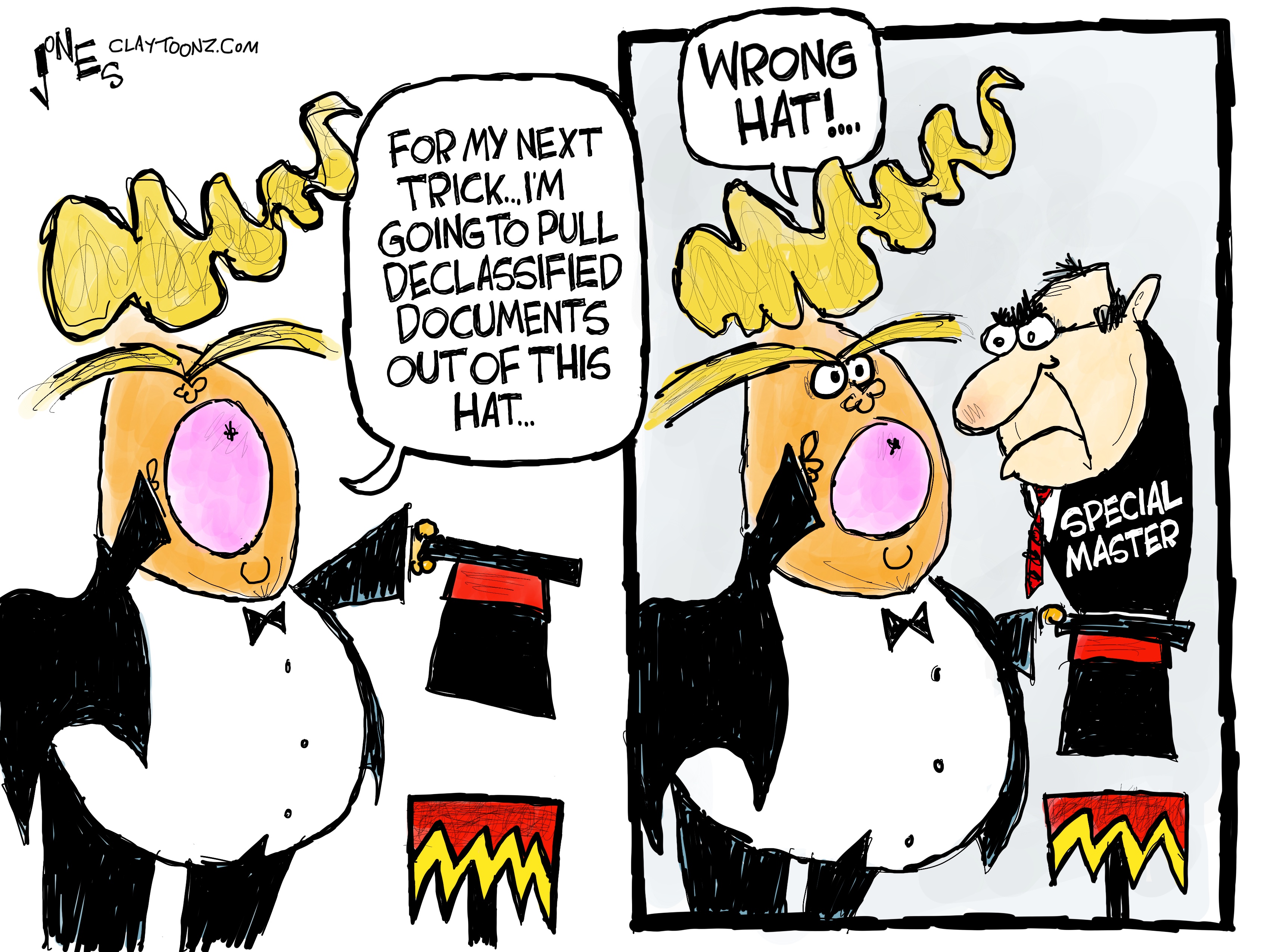
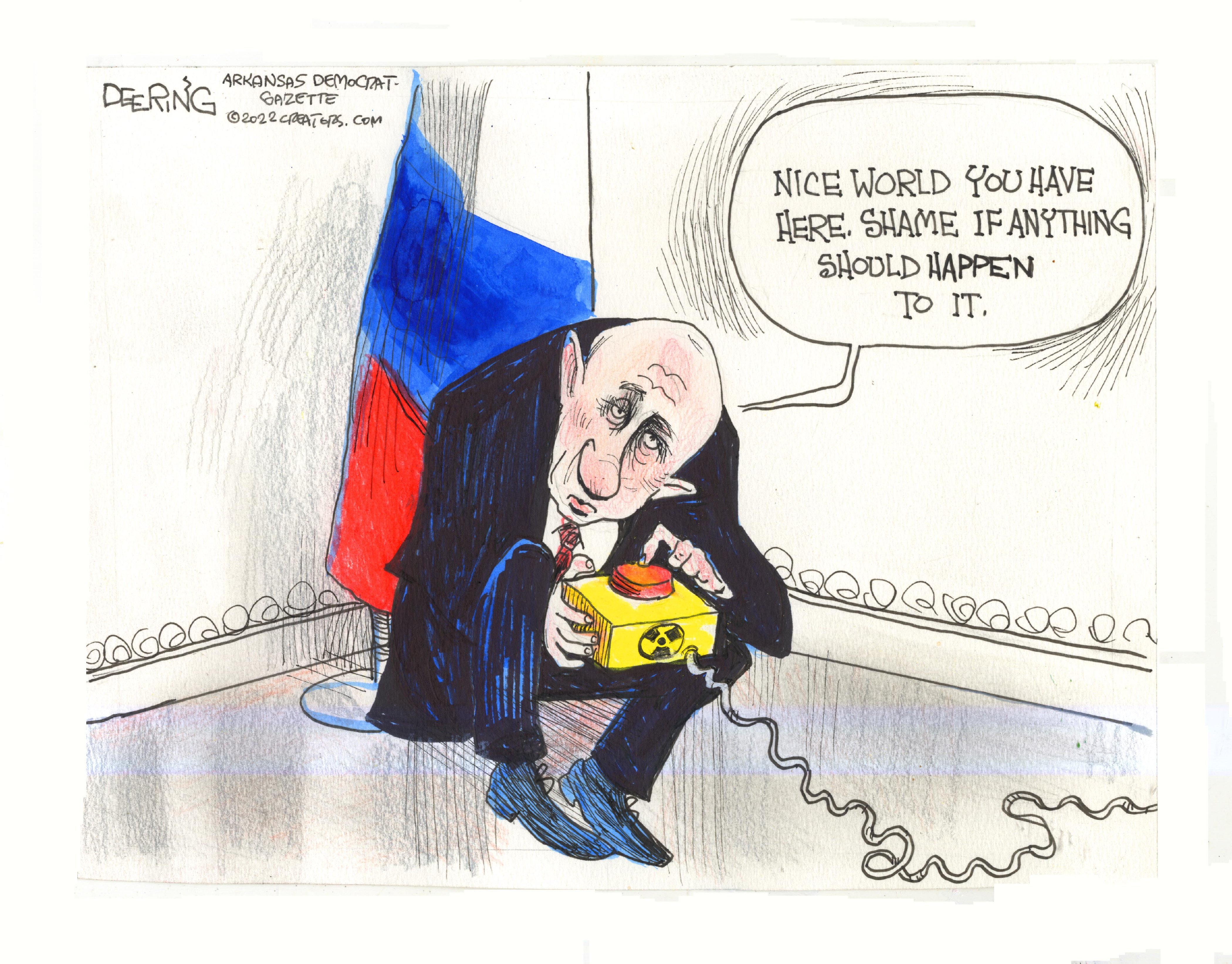
It is unfortunate that the Supreme Court dropped its Dodds decision reversing Roe v Wade on Friday, because it understandably eclipsed a week that was already heavy with important developments.
Two of those developments were other radical Supreme Court decisions: one blowing a hole in the wall between Church and State, and the other tossing out a century-old New York gun law, while casting doubt on just about any other gun regulation. I’ve grouped those three decisions together in “Three Supreme Court decisions with long-term consequences”, which should be out shortly.
Two other news stories would have dominated most weeks. Congress passed (and Biden signed) the first significant new gun-control legislation since the Clinton years. It’s far from what Biden wanted or the country needs, but it is something in an era when we’re used to getting nothing.
And then there were two more January 6 hearings, one detailing the ways Trump pressured everyone from local election officials to state legislatures and secretaries of state to help him stay in power after he lost the election, and one focusing on his attempt to corrupt the Justice Department, and how close it came to succeeding. Both included dramatic testimony (like Georgia election worker Shaye Moss describing how her life was ruined after Trump targeted her by name with false accusations of election fraud) and stunning revelations (like the six Republican congressmen who asked Trump for pardons).
I’ll cover most of that in the weekly summary, but there is one short thing I decided to pull out into a second featured post: I’ve been hearing a lot of pessimism about what the 1-6 hearings are accomplishing, with the assumption that they’re having no effect because Trump’s cultists aren’t watching them. I think that’s backwards, and shows a misperception of how conservatives change their minds. I’ll try to get that out around 10 or 11 EDT. The weekly summary should be out by 1.
Tonight I say this to my Republican colleagues who are defending the indefensible: There will come a day when Donald Trump is gone, but your dishonor will remain.
This week we saw that the Big Lie is alive and well, and screwing up current elections. New Mexico held a primary on June 7, but Otero County refused to certify results for the state to total up.
The all-Republican [county] commission had refused on Monday to certify the results — citing concerns about Dominion voting machines and questions about a handful of individual votes in this month’s primary.
Controversies over Dominion voting machines are perhaps the most thoroughly debunked of all Trump’s election-fraud lies. Not even Fox News and Newsmax make the claim any more. Hand recounts in numerous states have failed to find higher-than-normal discrepancies in final vote totals, ending the controversy for all people who live in the real world.
Republican Rep. James Comer promised an OAN interviewer that when Republicans get control of the House in 2023, they will take revenge by holding “Hunter Biden hearings“. The idea here seems to be that this will make Democrats sorry they investigated 1-6 and demonstrated Trump’s criminality.
Here’s what he doesn’t get: Democrats aren’t a personality cult the way Republicans are.
In particular, we aren’t dedicated to protecting each other from learning the truth about Joe Biden or his family. If it turns out that Hunter Biden really did commit crimes (which I don’t think has been established yet), by all means he should be investigated, prosecuted, convicted, and go to jail. I believe that would make his father sad, but keeping Joe Biden happy is not a high priority for me or for most Democrats, certainly not the way that keeping Donald Trump happy is a priority for Republicans.
and “both sides do it” distractions
Right-wing media and politicians like Marco Rubio have started calling for the Justice Department to take action against a pro-choice “terrorist” group, Jane’s Revenge. You can expect JR to become the new antifa. Night after night, Fox News will cast it as a violent left-wing conspiracy that the authorities supposedly ignore while targeting “patriotic” right-wing groups like the Proud Boys.
A small percentage of the “attacks” on Rubio’s list do involve real or attempted property damage, and those are crimes that should be investigated and punished like comparable property crimes, most of which never get federal attention. But I doubt that his list would impress anybody who has worked at an abortion clinic, where hostile graffiti is just another Tuesday, and people occasionally get killed. (My church suffered an “attack” a few years ago: Our “Black Lives Matter” sign was defaced, as were the signs of at least 50 other churches. We never heard from Rubio.)
None of this “left-wing terrorism” bears any resemblance to right-wing terrorism, which regularly kills people, or to the Proud Boys’ or Oath Keepers’ participation in Trump’s coup attempt.
Just last weekend, 31 members of Patriot Front were arrested on their way to violently disrupt a Pride event in Idaho. Reportedly, the 31 came from 11 states and only one was from Idaho. That’s what an interstate terrorist group looks like.
So far, Senator Rubio hasn’t written to Merrick Garland to complain about them.
Last week a bipartisan group of senators announced they had compromised on a framework for legislation. But it started to come undone this week when they got down to writing a bill.
The major sticking points? Funding for red flag laws and what to do about the “boyfriend loophole.” Both issues present a number of thorny challenges for negotiators, but the “boyfriend loophole” specifically has been cited as a considerable roadblock.
Currently, you can’t buy guns if you’ve been convicted of domestic violence against a spouse, a live-in partner, or the mother of your child. Democrats want to extend that prohibition to less well defined dating relationships. Republicans agreed in principle, but defining the exact bounds of “boyfriend” is giving them heartburn. After all, violent men who like guns are pretty much the core of the Republican Party.
It’s had to argue, though, that extending the loophole wouldn’t have a big effect on mass shootings. Men who commit such crimes usually start out smaller, by abusing either animals or women who are in their power.
Mass killings of children get the most media attention, but apparently no one of any age is safe from the epidemic of gun violence. Thursday evening, a 70-year-old man went to a potluck dinner at an Episcopal church in Alabama and killed three even older diners before being hit with a chair by another man in his 70s.
If I had to choose the American denomination least likely to be either the victims or perpetrators of violence, I might well have picked the Episcopalians. Historically upscale and stereotypically “nice people” (sometimes to a fault), Episcopalians tend to be theologically and politically liberal but ritually conservative. They are closely related to the Church of England, whose niceness comedian Eddie Izzard lampooned in her “Cake or Death” routine, which seems a bit less funny today.
and Juneteenth
By the calendar it was yesterday (June 19); the federal day-off-work is today.
Juneteenth marks the day in 1865 when a Union general announced that the slaves of Texas were free. That makes it a bittersweet holiday, because the Emancipation Proclamation had taken effect on January 1, 1863, more than two years earlier. General Lee had surrendered at Appomattox more than two months before. And even after Juneteenth, the proclaimed “absolute equality of personal rights and rights of property between former masters and slaves” was a long time in coming. Some would say it still hasn’t arrived.
In short, Juneteenth reminds us that there’s a big difference between having rights on paper and having rights that the ruling institutions can or will enforce in practice.
but we’re not paying enough attention to environmental disasters in progress
That’s the topic of the first featured post, about the shrinking of the Great Salt Lake.
The other big recent environmental news story is about too much water rather than too little: the flooding of Yellowstone.
declaring that President Joe Biden “was not legitimately elected” and rebuking Sen. John Cornyn for taking part in bipartisan gun talks. They also voted on a platform that declares homosexuality “an abnormal lifestyle choice” and calls for Texas schoolchildren “to learn about the humanity of the preborn child.”
Here’s hoping Governor Abbott doesn’t duck a debate with Beto O’Rourke, so Beto can ask him about his party’s platform point by point.
If you’re in my generation and want to feel old, meditate on this: Paul McCartney turned 80 this week. “When I’m 64” is but a distant memory for him now. Two days before the big day, he performed at Met Life Stadium in New Jersey, and was joined on stage by New Jersey icons Bruce Springsteen (a mere 72), and young whippersnapper Jon Bon Jovi (60).
French President Macron’s party lost its majority in the lower house of Parliament. It’s still the largest party, but will have to find allies to accomplish anything. France’s government may become as logjammed as the US.
Or “Why I’m not ready to make a hero out of Mike Pence”.
Monday was the second hearing [video, transcript], while the third hearing [videotranscript] was Thursday. Two more hearings are scheduled tomorrow and Thursday at 1 p.m.
The daytime hearings have been fleshing out the case presented in the opening prime-time hearing on June 9th, which I covered last week.
Last Monday’s session focused on all the people within the Trump campaign and Trump administration who told Trump he had lost the 2020 election and debunked his claims of fraud. But Trump dismissed the views of Attorney General Bill Barr, his successor Jeff Rosen, campaign chair Bill Stepien, White House lawyer Eric Herschmann, Deputy Attorney General Richard Donoghue, and others as they refuted very specific claims of fraud — claims Trump would keep repeating.
Instead of accepting what his own experts (who christened themselves Team Normal) told him, Trump sought out less qualified people (Team Crazy) who would tell him what he wanted to hear, like Rudy Giuliani and Sidney Powell.
The hearing also surfaced a new possible criminal charge: fund-raising fraud. The people who kept contributing to Trump after the election were told their contributions would go into an “Official Election Defense Fund”.
[C]ommittee investigator Amanda Wick … disclosed that Trump aides Hanna Allred and Gary Coby said no fund technically existed. She also noted that most of the money went to Trump’s Save America PAC and that very little was used for challenging the election results.
So not only did Trump’s fund-raising pitches rely on lies about election fraud — giving Trump a financial incentive to keep lying — they also lied about where contributors’ money would go.
The third hearing centered on the plot to miscount electoral votes that was designed by lawyer John Eastman. As before, Trump’s advisors within the administration told him the plan was illegal and unworkable, but he sought out Eastman to be told that he could still hang onto power.
The plot centered on constructing slates of phony electors from the states where Biden’s win was clear but not overwhelming. Based on Trump’s false claims of fraud, the false electors would have their ballots delivered to Congress. On January 6, Eastman’s plan had Vice President Pence either accepting their votes as legitimate, or refusing to accept any votes from those states because their legitimacy was “contested”. Either would erase Biden’s Electoral College margin and re-elect Trump. Failing that, Pence could send this phony controversy back to the state legislature to be resolved. This would both delay Biden’s recognition as President-elect, and would shift pressure to Republican majorities in the legislatures to reverse the will of their states’ voters. (We might expect mini-January-6 riots in state capitols.)
Widely respected conservative Judge Michael Luttig testified that not only did this plan have “no basis in the Constitution or laws of the United States at all”, it constituted “a clear and present danger to American democracy”, one that continues as we move towards the 2024 election.
Fortunately, Mike Pence chose not to cooperate with this plan. Pence’s chief counsel Greg Jacobs testified at length about the pressure Trump and Eastman put on Pence, and described what could have happened as “a constitutional jump ball situation, political chaos in Washington, lawsuits, and who knows what happening in the streets”. When White House lawyer Eric Herschmann expressed a similar fear to Eastman — “You’re going to cause riots in the streets.” — he reported Eastman “said words to the effect of there has been violence in the history of our country, Eric, to protect the democracy or protect the republic.”
Pence came off well in Thursday’s hearing, looking like a modern-day Horatius-at-the-bridge defending American democracy against coup and chaos. And while I appreciate how hard it must have been to toss away the benefits he had earned by four years of complete subservience, I have a hard time seeing him as a hero.
I think Mike Pence should have won the 2021 Darth Vader Award for waiting until the last possible moment to do the right thing. Similar to Darth, if Mike had done the right thing sometime sooner, maybe that last possible moment would never have arisen. In particular, what if Pence had stated publicly, weeks in advance, that he did not have and would not try to exercise the power to discard electoral votes that had been certified by the states? What if he had announced that he had consulted with the attorney general and others within the Trump administration, and had determined that the Trump/Pence ticket had lost the election fair and square?
Maybe Trump’s cultists wouldn’t have arrived in DC on January 6 with the expectation that Biden’s election could still be reversed. Maybe the 1-6 violence would never have happened.
I interpret Pence’s drama as a microcosm of what the GOP spent four years doing: All through the Trump presidency, Republicans in his administration and in Congress had hoped that someone else would stop him before he destroyed American democracy. That’s why Pence kept temporizing, not committing to Eastman’s coup plan, but telling Trump he’d continue to study it. Maybe the whole thing would fall through for some other reason, and Pence would never have to stand up to Trump and Trump’s cult of personality.
Just about every major Republican — not just Pence, but Mitch McConnell, Kevin McCarthy, and many, many others — could have gone public before things got out of hand, but they decided not to. It was easier just to humor Trump and hope that his whole attempt to stay in office in spite of the voters would just run of steam somehow.
Mike Pence was the one who wound up with no one to pass the buck to. If he had gone along with Trump on January 6, then there would have been no orderly transfer of power, and Trump would either have been overthrown by violence or become de facto autocrat-for-life.
Pence isn’t a hero; he’s just the Republican who lost the game of hot potato.
If we can’t save one lake, how will we save the planet?
We all think we know why it’s so hard to motivate our fellow Americans to meet the threat of climate change:
The danger seems distant, as if we still had a lot of time to react.
The problem seems abstract: So what if statisticians claim the average day is a degree or two warmer than it would have been a few decades ago? Why is that such a big deal? Maybe the computer models are wrong and the projections of disaster are just scaremongering.
Such disasters as we’re already seeing — hurricanes, droughts, fires, heat waves — don’t come clearly marked “brought to you by climate change”. Similar things have happened in the past, so maybe these would have happened anyway.
Because climate change is global, it’s hard to connect our own actions to the outcome. If we make sacrifices, but the Chinese and Indians don’t, they’ll get an advantage on us and all the bad things will happen anyway. As Marco Rubio put it when he was running for president in 2015: “America is not a planet.“
But what if we faced an environmental disaster where none of those factors came into play? Something entirely within our borders, where the changes were visible to the naked eye, and the looming catastrophe obvious. Something clearly connected to current policies, and addressable by changing those policies.
We’d be all over that, wouldn’t we?
Well, apparently not.
Not quite two weeks ago, the New York Times reported that a combination of climate change, over-population, and profligate water use is killing the Great Salt Lake.
Last summer, the water level in the Great Salt Lake reached its lowest point on record, and it’s likely to fall further this year. The lake’s surface area, which covered about 3,300 square miles in the late 1980s, has since shrunk to less than 1,000, according to the U.S. Geological Survey.
The salt content in the part of the lake closest to Salt Lake City used to fluctuate between 9-12%, according to Bonnie Baxter, a biology professor at Westminster College. But as the water in the lake drops, its salt content has increased. If it reaches 17% — something Baxter says will happen this summer — the algae in the water will struggle, threatening the brine shrimp that consume it.
Algae and brine shrimp are the bottom of a food chain. Migratory birds who rely on the lake as a resting spot in their otherwise perilous desert crossing would go next.
While the ecosystem hasn’t collapsed yet, Baxter said, “we’re at the precipice. It’s terrifying.”
Worse, the exposed former lake bed could soon endanger humans in nearby Salt Lake City:
The lake bed contains high levels of arsenic and as more of it becomes exposed, windstorms carry that arsenic into the lungs of nearby residents, who make up three-quarters of Utah’s population. …
The soil contains arsenic, antimony, copper, zirconium and other dangerous heavy metals, much of it residue from mining activity in the region. Most of the exposed soil is still protected by a hard crust. But as wind erodes the crust over time, those contaminants become airborne.
Part of the problem is climate change, with all the complicating factors I listed above. (More of the mountain snowpack is evaporating rather than melting to feed the rivers that feed the lake.) But another big part of it isn’t: Population growth is diverting water from the rivers before it can reach the lake.
So policy changes at the state and local levels could do a lot to mitigate the problem: Water rates could go up, and future development could be discouraged.
Of major U.S. cities, Salt Lake has among the lowest per-gallon water rates, according to a 2017 federal report. It also consumes more water for residential use than other desert cities — 96 gallons per person per day last year, compared with 78 in Tucson, Arizona, and 77 in Los Angeles. … Homes around Salt Lake boast lush, forest-green lawns, despite the drought. And not always by choice.
In the suburb of Bluffdale, when Elie El kessrwany stopped watering his lawn in response to the drought, his homeowners’ association threatened to fine him. “I was trying to do the right thing for my community,” he said.
State Rep. Robert Spendlove, a Republican, introduced a bill this year that would have blocked communities from requiring homeowners to maintain lawns. He said local governments lobbied against the bill, which failed.
In the state legislative session that ended in March, lawmakers approved other measures that start to address the crisis. They funded a study of water needs, made it easier to buy and sell water rights, and required cities and towns to include water in their long-term planning. But lawmakers rejected proposals that would have had an immediate impact, such as requiring water-efficient sinks and showers in new homes or increasing the price of water.
In short, the legislature did nothing that might ask for sacrifices from individual citizens. If Utahans are still asleep to the problem — even though they can go look at the shrinking lake for themselves — the state’s political leaders are afraid to wake them up.
But they’re bound to notice eventually. The NYT article compares the Great Salt Lake to the cautionary tale of Owens Lake in California, which dried up when water feeding it was diverted to Los Angeles early in the 20th century.
On what used to be the shore of what used to be Owens Lake is what’s left of the town of Keeler. When the lake still existed, Keeler was a boom town. Today it consists of an abandoned school, an abandoned train station, a long-closed general store, a post office that’s open from 10 a.m. to noon, and about 50 remaining residents who value their space, and have lots of it.
Like Paul Krugman, I was surprised the NYT article didn’t mention a much bigger disaster: the Aral Sea in Central Asia, which was once the fourth-largest inland body of water in the world. In the 1960s, the Soviet Union irrigated much of the surrounding area in an attempt to become a major cotton exporter. With so much water evaporating in fields rather than flowing into the sea, the Aral’s ecosystem collapsed.
The Aral Sea has seen the surface area decline by 90%, and had its volume decrease by 85%, an amount equal to Lake Erie and Lake Ontario combined. The sea level has dropped by over 30 m in many places, leaving fishing boats stranded 100 kilometers from any shore. What was once the bottom of the lake has become a new desert, abandoned fishing boats listing in the sand, scoured by toxic dust storms. Ramshackle towns perch on vanished shorelines, while the population languishes in poverty and high rates of cancer, tuberculosis, digestive disorders and anemia. It’s like a scene from a post-apocalyptic movie, yet it is all too depressingly real.
Krugman makes a even more depressing point about the Great Salt Lake:
what I found really scary about the report is what the lack of an effective response to the lake’s crisis says about our ability to respond to the larger, indeed existential, threat of climate change.
The factors that make it hard to marshal the will to fight climate change globally don’t apply here. The retreat of the Great Salt Lake is a visible local problem that could spiral into disaster in the very near future. Action to prevent that disaster could be taken locally, by restricting water usage and new development.
So this should be easy: A threatened region should be accepting modest sacrifices, some barely more than inconveniences, to avert a disaster just around the corner. But it doesn’t seem to be happening.
And if we can’t save the Great Salt Lake, what chance do we have of saving the planet?
A similar pattern is replicating across the West in the face of a multi-year drought.
Again, climate change combined with rapid population growth is the problem, perhaps exacerbated by the illusion created by the 20th century, which was wetter than normal in most of the American West.
The West is where the rubber meets the road in terms of America confronting climate change. The environmental problems are local, visible, and immediate, and local solutions to those problems are available. If it’s not politically feasible to restrict water usage and curb development, the whole region is, as Grant Piper puts it, sleepwalking towards disaster.
This morning’s featured post will shift away from national politics and look at an environmental problem: the shrinking of the Great Salt Lake, which is expected to break records this summer and endanger a larger ecosystem. Longer-term, Salt Lake City could face arsenic storms as the wind picks up poisonous dust from the exposed lake bed.
That’s worth attention in its own right, but even more alarming is what it says about America’s unwillingness to deal with looming climate disasters: So far, state and local governments are barely doing anything to curb development or discourage water use. Unlike global climate change, the shrinking lake is immediate, local, and amenable to simple policy changes, if only the public could muster the will to tackle the problem. “if we can’t save the Great Salt Lake,” Paul Krugman asks, “what chance do we have of saving the planet?”
That post should appear before 10 EDT. The weekly summary has two more 1-6 committee hearings to cover, as well as Juneteenth, the faltering Senate gun compromise, and the right-wing media’s new both-sides-do-it distraction: Jane’s Revenge, a pro-choice “terrorist” group that so far is mostly imaginary. It’s the new antifa, and you can expect to hear it blamed for almost anything in the next few months.
We’ll all need something to laugh at after that, so I’ll close with a completely over-the-top Danish commercial for the bus service. The summary should post noonish.
Prior to these hearings, Republicans tried to claim that tonight was going to be a nothingburger. They were wrong. … It was such a juicy burger that Fox News knew that even their viewers would be tempted to take a bite. Which is why — and this is true — for the first hour of his show opposite the hearings, Tucker Carlson took no commercial breaks. [Neither did Sean Hannity.] Do you understand what that means? Fox News is willing to lose money to keep their viewers from flipping over and accidentally learning information. … But I’m not surprised. That’s the first rule of any cult: Never leave the compound.
If you only get one thing out of these hearings, it should be a response you can give to anybody on social media who thinks Trump really won the 2020 election: “Not even Ivanka believes that.”
I cover the first hearing in the featured post. The second hearing is going on as I write this, but I’m writing rather than watching, so I’ll have to cover it next week.
Russian forces continue to advance slowly into eastern Ukraine, with high casualties on both sides. From the outside, it’s hard to tell who can keep this up longer.
and the pandemic
Two trends are fighting each other, so national case numbers are more-or-less flat, as a continuing decline in the Northeast is canceled out by increases in other regions. Hospitalizations are bending upwards, and deaths have been bouncing around in a 250-400 daily range for nearly two months.
The mass-shooting compromise gives credibility (probably more than they deserve) to Republican talking points about mental health and school vulnerability as causes. Vox summarizes:
The framework itself is heavy on mental health interventions, like setting aside funding for in-school mental health and support services, as well as telehealth services for individuals and families in mental health crisis. It also calls for a national expansion of community mental health services for children and families. … [A]lthough the framework is thin on details, it suggests investing in “programs to help institute safety measures in and around primary and secondary schools, support school violence prevention efforts and provide training to school personnel and students.”
But there is some gun control included as well. One carefully worded part of the framework:
Provides resources to states and tribes to create and administer laws that help ensure deadly weapons are kept out of the hands of individuals whom a court has determined to be a significant danger to themselves or others, consistent with state and federal due process and constitutional protections.
It also may close the “boyfriend loophole” in an existing law that prevents gun ownership by people under restraining orders for domestic violence, and also enhance background checks for gun purchasers under 21 years old.
Everything depends on the final wording, which remains to be worked out. Any of the ten Republicans involved in the negotiations could torpedo a bill, since all ten would be needed to break a filibuster.
According to Susan Collins, the group negotiating to revise the Electoral Count Act
has already drafted language that would make clear that the vice president’s role is ministerial in the process of counting Electoral College votes. The new language also raises the threshold for triggering a challenge to a state’s slate from one member in each chamber to 20% of the members in each body. There would be a majority vote for sustaining an objection.
and you also might be interested in …
The May consumer price index came in higher than expected: Inflation is running at 8.6%. Many economists had been theorizing that the peak inflation rate had been reached in March. But apparently not.
Obviously, this is an issue that drives down Biden’s approval numbers, but it’s not clear what he can do, what he should have done in the past, or what Republicans would do differently. Inflation would probably be lower if the American Rescue Plan hadn’t passed, but unemployment would be considerably higher. I doubt that would be a win for the country.
Some Republicans want to blame Build Back Better or even the Green New Deal for inflation, but it’s hard to see how that’s possible, since neither of them passed Congress.
In view of the attempted right-wing coup being exposed by the 1-6 Committee hearings, the ongoing rash of mass shootings caused by our insane gun culture, and the pandemic that has already killed a million Americans, it makes perfect sense that Republicans would want to focus on … kids going to drag shows.
Yep, that’s this week’s outrage, and public officials like Ron DeSantis are talking about siccing child protective services on parents who allow such a thing.
Because apparently seeing men dress like women will do some kind of permanent damage to a minor. I can’t quite imagine what, but probably my imagination has been stunted by my childhood trauma of seeing Flip Wilson’s Geraldine character, Corporal Klinger in MASH, and various Monty Python men-dressed-as-women skits. An earlier generation of American youth had to recover from seeing Milton Berle in a dress, as well as Tony Curtis and Jack Lemmon in Some Like It Hot.
It’s a miracle the Republic has survived.
A related outrage I forgot to mention last week: Right-thinking folks are boycotting Pizza Hut because the Hut’s Book-It program (to encourage children to read more) endorsed the book Big Wig, about a boy who creates a drag character. I personally favor local pizza places, so I’ve been unofficially boycotting the national chains for many years. But if you find yourself ready to flip a coin between chain pizzerias, you might want to give the Hut an edge.
A question to meditate on: Unless they go bare-chested at the beach, women dressing like men is hardly ever a big moral issue, and a kids’ book about a girl creating a hyper-masculine fantasy character wouldn’t be worth national attention. Why is that? Extra credit if your answer also accounts for the Hebrew Bible (a.k.a. Old Testament), which denounces gay men but doesn’t mention lesbians.
A guy was arrested Wednesday for plotting to assassinate Supreme Court Justice Brett Kavanaugh. It’s kind of a bizarre story: He called 911 on himself, and gave the police his description. He was arrested with multiple weapons. As motive, he cited both the Court’s pending decision to reverse Roe v Wade and the possibility that Kavanaugh might vote to loosen gun laws.
My IRL friend Abby Hafer has published an article fleshing out one of the strongest arguments for abortion rights: The law should not be able to commandeer parts of one person’s body, even to save the life of another person. In “Do pregnant women have fewer rights than the dead?” she points out that not even a corpse can be forced to donate a kidney or liver unless permission was granted before death.
Yet the anti-abortion lobby feels that [a pregnant woman] must donate her entire body, and not for her own good. She is being required to make this sacrifice of her own organs and tissues without her consent, in order to help someone else, even though our society does not require this at any other time, from any other kind of person.
Poland is an example of what can happen when anti-abortion radicals get their way. The NYT tells the story of Izabela Sajbor, who died of sepsis after her water broke prematurely, and doctors refused to intervene for fear of killing her fetus. Shortly before dying, Sajbor wrote something that echoes Abby’s point:
They cannot help as long as the fetus is alive thanks to the anti-abortion law. A woman is like an incubator.
and let’s close with something to make us all feel smarter by comparison
[This article is being written before and possibly during the second hearing, which started at 10 a.m. I will cover that material, together with Wednesday’s and Thursday’s hearings, next week. As I’ve repeated many times, this is not a breaking-news blog.]
The committee kicked off its public hearings Thursday night [videotranscript]. Remembering Bob Mueller’s testimony to Congress about his investigation, I had worried that these hearings would be dull and legalistic, or that they would rehash details that, however damning they might be, had already been widely discussed by people who were open to knowing what happened. Worst of all would have been one of those talkfests where each committee member gets five minutes to audition for national attention.
I should have had more faith. The other committee members were content to let Chair Bennie Thompson and leading Republican member Liz Cheney carry the ball, and they carried it well, particularly Cheney.
The first hour of the hearing consisted of Thompson and Cheney laying out the story that the rest of the evidence will nail down, backing up their claims with short videos of testimony that the public had not seen before — mostly from people in Trump’s inner circle: Bill Barr, Jason Miller, and even Ivanka. In the second hour the committee heard from live witnesses: Capitol Police officer Caroline Edwards (who was injured battling rioters at the barricades) and documentary film-maker Nick Quested (who spent the day following Proud Boys leader Henry Tarrio).
The key points in the Committee’s narrative are:
Trump knew that he had lost the election, and that his claims of fraud were baseless. Trump campaign advisor Jason Miller testified that (as the votes were still being counted) the campaign’s data analyst told Trump that he would not win. Trump lawyer Alex Cannon investigated the election-fraud claims, and already in November had reported to Mark Meadows that “we weren’t finding anything that would be sufficient to change the results in any of the key states”. To which Meadows replied: “So there’s no there there.” Attorney General Bill Barr said he told the President within weeks of the election that his charges of fraud were “bullshit”, and in particular that his claims about Dominion voting machines were “complete nonsense”. Ivanka was shown testifying that she believed Barr.
The attack on the Capitol was planned and organized. This wasn’t a protest that spontaneously spun out of control. In response to Trump’s tweet that 1-6 would “be wild”, the Proud Boys and Oath Keepers made plans to storm the Capitol. Before Trump even began his speech, about 200 Proud Boys had left his rally to scout the Capitol’s defenses. After Trump sent the crowd in their direction, they spearheaded breaching the barriers and leading the mob into the Capitol. (A key question going forward: Were these Trumpist militias just intuiting what their leader wanted, or does some figure — Roger Stone, say — connect them more directly with the White House’s plans?)
The rioters engaged in a bloody battle against law enforcement. If the videos of the attack didn’t make this obvious enough, Officer Edwards’ testimony brought the point home: “I saw friends with blood all over their faces. I was slipping in people’s blood. You know, I — I was catching people as they fell. I — you know, I was — it was carnage. It was chaos. I — I can’t — I can’t even describe what I saw. Never in my wildest dreams did I think that, as a police officer, as a law enforcement officer, I would find myself in the middle of a battle. You know, I — I’m trained to detain, you know, a couple of subjects and — and handle — you know, handle a crowd, but I — I’m not combat trained. And that day, it was just hours of hand-to-hand combat, hours of dealing with things that were way beyond any — any law enforcement officer has ever trained for.” This contrasts with Trump’s characterization of the mob as “loving” and Rep. Andrew Clyde’s comparing the rioters to tourists.
The riot was part of a larger plan to reverse the voters’ decision and return Trump to office for a second term. Cheney quoted conservative Judge Michael Luttig: “If Dr. Eastman and President Trump’s plan had worked, it would have permanently ended the peaceful transition of power, undermining American democracy and the Constitution.” Trump pressured the Justice Department to spread his lies about election fraud. (“Just say the election was corrupt and leave the rest to me and the Republican Congressmen,” Trump told DoJ officials.) He pressured state election officials to commit fraud. (Cheney: “You will hear additional details about President Trump’s call to Georgia officials urging them to ‘find’ 11,780 votes – votes that did not exist, and his efforts to get states to rescind certified electoral slates without factual basis and contrary to law. You will hear new details about the Trump campaign and other Trump associates’ efforts to instruct Republican officials in multiple states to create intentionally false electoral slates, and transmit those slates to Congress, to the Vice President, and the National Archives, falsely certifying that Trump won states he actually lost.”) He pressured Vice President Pence to refuse to count electoral votes certified by the states, based on a theory he had been told was illegal.
Trump cheered the violence and refused to take action to stop it. Cheney: “Not only did President Trump refuse to tell the mob to leave the Capitol, he placed no call to any element of the U.S. government to instruct that the Capitol be defended.” General Milley testified that orders to get soldiers to the Capitol came from Vice President Pence, not from Trump. When told that the rioters were chanting “Hang Mike Pence”, Trump said Pence “deserves” it. (The source of that quote — which Trump denies — has still not been revealed.)
At least a few Republican members of Congress were complicit. This was the evening’s most tantalizing and least-fleshed-out point. Cheney floated this: “Representative Scott Perry, who is also involved in trying to get Clark appointed as Attorney General, has refused to testify here. As you will see, Representative Perry contacted the White House in the weeks after January 6th to seek a Presidential pardon. Multiple other Republican Congressmen also sought Presidential pardons for their roles in attempting to overturn the 2020 election.”
Conservative counter-programming. Almost as interesting as the hearing itself was how Trump and his minions dealt with it.
Fox News went to great lengths to shield their audience from any of the information the committee presented. The network not only refused to air the hearings, but went without commercial breaks for two whole hours, so that none of their viewers would be tempted to check out one of the news channels that was actually covering the news. Comedian Stephen Colbert nailed this:
Do you understand what that means? Fox News is willing to lose money to keep their viewers from flipping over and accidentally learning information. … But I’m not surprised. That’s the first rule of any cult: Never leave the compound.
Robert Reich estimates the lost revenue at around $400K. Chris Hayes describes the next level of technical detail: How Fox made sure none of the videos of Trumpist violence would make it through to their viewers, even as a picture-in-picture with Tucker Carlson talking over it.
Truth Social, Trump’s Twitter-clone, reportedly has been banning users who try to discuss the Committee’s evidence, making a mockery of the free-speech rhetoric it was founded on. This also should not be surprising: Reciprocity is not a fascist value. Fundamentally, fascism is an us-and-them worldview, where the fascists themselves have God-given rights, but their enemies do not.
Trump himself lashed out, calling the hearings a “witch hunt” and the committee members “hacks”. He attacked Bill Barr as “weak”, and said that Ivanka had “checked out” of looking at election claims. (Unaddressed question: Why shouldn’t Trump’s other supporters check out too?) He repeated his long-debunked claims of “an Election that was Rigged and Stolen”, and praised the January 6th rioters as representing “the greatest movement in the history of our Country to Make America Great Again”.
Direct criticism. If the don’t-look-behind-the-curtain defense failed, the next line was to smear the proceedings as “propaganda” or a “show trial” or “kangaroo court”, without addressing any of the evidence presented.
The Lawfare blog will be doing next-day podcasts where people call in questions about the hearings. The final question in Friday’s podcast was whether this criticism has merit. Host Benjamin Wittes answered this himself, and made a few key points:
First, the committee is not a court at all, in that no ruling will be made and no punishment will be assessed. So accusing it of being a kangaroo court conducting a show trial is a category error.
Beyond that is the question of whether the hearings are presenting accurate information, and as far as we can tell at this point, it is.
Finally, and harder to judge, is whether the committee is ignoring or omitting information that would argue against the points the committee is making. Wittes is not aware of any such information.
It’s worth pointing out that if any of the quoted witnesses feel that their testimony has been misrepresented, nothing stops them from saying so. Ivanka still has her Twitter account, for example, but hasn’t posted since May 30. Bill Barr and Mark Milley would have no trouble getting attention if they had comments to make.
Finally, it should go without saying that if what you are presenting is true, you have no responsibility to “balance” it by presenting lies. So Trump’s complaint that the Committee “refuses to talk of the Election Fraud and Irregularities that took place on a massive scale” has no merit. The evidence says not only that Trump’s claims about the election are false, but that they are conscious lies. He has known from the beginning that they are false.
Political impact. About 20 million Americans watched the hearings live, not counting those who watched it later online. Millions more have seen highlights or have heard summaries presented by journalists, comedians, or their friends. A few key facts have probably penetrated MAGA’s darkest sanctums: Not even Ivanka believes Trump’s stolen-election bullshit.
It remains to be seen whether the hearings will fade or pick up momentum. Today’s hearing undoubtedly will get a smaller audience, simply because it’s in the morning rather than prime time. But we’ll see what kind of buzz it generates.
The most effective Republican talking point against the hearings is not that the Committee’s case isn’t true, but that 1-6 is ancient history, and that Americans are much more worried about immediate issues like inflation (which the GOP has presented no plan for stopping).
Democrats have offered Republicans many opportunities to put 1-6 behind them: They could have voted to convict Trump in his second impeachment, and made him ineligible for future political office. They could have supported a bipartisan commission to investigate 1-6 and rallied behind its conclusions. They could still denounce Trump’s insurrection, denounce the Big Lie, and denounce Trump for continuing to promote it.
In short: They could take their party back from the fascist demagogue who has dominated it these last six years.
But they won’t unless public opinion forces them. That’s why these hearings are necessary.
Rumblings. The path of least resistance going forward is for the GOP to do to Trump what they did to their last failed president, George W. Bush. Bush left office in 2009, and by the 2010 election Tea Party candidates were running away from him almost as hard as they were running against Obama. In the early days of the Iraq invasion they had seen Bush as the next face on Mount Rushmore, but by 2010 the Tea Party line was that he had never really been a conservative.
Current Republicans could do something similar to Trump: claim that they are “constitutional conservatives” as opposed to the guy who tried to overthrow the Constitution after he lost the election. If they do, then the midterm elections can be about inflation or critical race theory or immigration or transgender-kids-in-your-daughter’s-locker-room or Biden’s-gonna-take-your-guns or pretty much whatever they want. If they don’t, then Trump and the Democrats will conspire to make the midterms about Trump, which is one of the few ways Republicans can blow this election.
Some conservatives grasp this logic. Fox News may be lining up behind Trump, but the rest of the Murdoch media empire is not so sure. The Wall Street Journal recognizes the basic facts of the Committee’s case, and only defends Trump against criminal liability.
The President spread falsehoods about the election. He invited supporters to Washington on Jan. 6, tweeting on Dec. 19 that it ‘will be wild!’ He riled up the crowd and urged it to march on the Capitol. After violence began, he dawdled instead of sending help. Mr. Trump bears responsibility for the mayhem. But inspiring followers to march is not the same as leading a criminal conspiracy.
Murdoch’s New York Post takes a more purely partisan angle. It shrugs off the broader threat to democracy, but wants to jettison Trump’s 2020 claims so that Republicans can focus on more effective issues and less tainted candidates.
Trump has become a prisoner of his own ego. He can’t admit his tweeting and narcissism turned off millions. He won’t stop insisting that 2020 was “stolen” even though he’s offered no proof that it’s true. … Trump can’t look past 2020. Let him remain there. Look forward! The 2024 field is rich.
Elected Republicans could follow that lead. They could choose to jump off the Trump Titanic before it sinks. But will they?
It’s pretty obvious what this week’s Sift is going to be about: The January 6 hearings. The 1-6 Committee’s public hearings kicked off Thursday in prime time, and it’s clear the Committee is bringing the goods: They have a case to make, and they’re making it clearly and persuasively. I’ll review what they said, how Republicans countered, and where things go from here in this week’s featured post, which should be out by 10 EDT.
That’s also when the second public hearing starts. I’m going to be putting the weekly summary together then, so I’ll stream the hearing this afternoon rather than try to cover it in real time. (As I’ve often said, this isn’t a breaking-news blog.)
The weekly summary will pick up 1-6 odds and ends that didn’t fit into the featured post, cover the continuing Russian push into eastern Ukraine, discuss the ambiguous recent Covid numbers, and poke fun at the Republican outrage-of-the-week. (Kids are going to drag shows! They’ll see men in dresses! How will the Republic survive?) That should be out around noon.
You don’t have to be that gung-ho on trans rights to realize that a world where girls’ genitals need to be inspected before they can play any sport is worse for girls than a world where once in a while there’s a trans girl on a girls’ team.
The Senate is under pressure to “do something”, but if anything gets done, it will be small. Perhaps there will be some expansion of red-flag laws that prevent some criminals and mentally ill people from buying guns, perhaps an expansion of federal background checks that would still leave loopholes. But no universal background checks, no assault weapon ban, nothing remotely on the scale of the problem.
This week’s featured post examines my own history with guns, and concludes that the apparently stable level of gun-ownership in America over the decades has masked a huge increase in the destructive potential of our civilian arsenal.
Yes, I grew up in a gun-owning household. But no, the guns (and the gun culture) of America in the 1960s and 70s bears no resemblance to what we see today.
In discussions of the Second Amendment, gun advocates often ignore the phrase “well regulated Militia”, and gun-control advocates correspondingly call attention to it. But both sides usually forget that the Constitution uses the word “Militia” elsewhere, so the word is not an impenetrable mystery to be interpreted however we see fit. The constitutional context paints a pretty clear idea what the Founders meant a militia to be.
Article I, section 8 gives Congress the power “To provide for calling forth the Militia to execute the Laws of the Union, suppress Insurrections and repel Invasions; To provide for organizing, arming, and disciplining, the Militia, and for governing such Part of them as may be employed in the Service of the United States”
Article II, section 2 says that the President “shall be Commander in Chief of the Army and Navy of the United States, and of the Militia of the several States, when called into the actual Service of the United States”.
So it’s clear that self-appointed groups of guys playing war games in the woods are NOT militias in the constitutional sense. They are not organized, armed, and disciplined by Congress, and they picture themselves BEING the insurrection, not responding to a call from Congress to submit to the command of the President and put down an insurrection.
The only organizations today that fit the constitutional uses of “Militia” are National Guard units.
Michael Fanone, a 20-year DC policeman who testified about the 1-6 riot and now works for CNN, explains why the AR-15 should be banned.
If banning them outright seems like too extreme a solution to be politically palatable, here’s another option: Reclassify semi-automatic rifles as Class 3 firearms.
That would mean that someone wanting to purchase an AR-15 would have to go through a background check, fingerprinting and review by an official from the Bureau of Alcohol, Tobacco, Firearms and Explosives — a process that takes anywhere from 12 to 16 months. And since Class 3 weapons can’t be purchased by anyone younger than 21, it would solve the issue of emotionally unstable 18-year-olds buying them.
A Class 3 firearm reclassification would also make those who are approved to purchase these weapons subject to an annual check that they are complying with federal regulations regarding secure storage of the firearm, and to confirm their licensing and other paperwork is up to date. All of these hoops and hurdles are sure to reduce the civilian demand for these weapons.
Faced with the same confluence of events that we had in 2018, even worse since now we’re reeling from the racist massacre in Buffalo along with the insanity in Texas, all the wings of today’s “stay on message” gun violence prevention lobby, from the youngest to the oldest, are not just singing from the same songbook, they’re following the same theory of change: trying to convert momentary public attention into successful lobbying of legislators, plus calling occasional big marches and walkouts aimed at converting attention into the successful lobbying of legislators. To be followed by the inevitable electioneering for candidates who are almost all Democrats. When media attention fades, as it will, this lobby has no plans to create attention on its own beyond “vote harder.” …
It’s as if we’re living in the 1950s and the only groups leading the charge for civil rights are the NAACP and the Urban League, and the only strategy they’re willing to try is polite protest and lobbying.
The House committee’s televised hearings start Thursday evening. I’m getting disturbed that I’m not hearing more buzz about that. We’re going to see in detail the story of how an American president almost overthrew democracy so that he could stay in power. It’s a big deal.
I can already predict the Republican response: It’s all just a rehash of the second impeachment hearings. But it’s not. Those hearings happened mere weeks after the insurrection, and spent most of their time recounting what happened at the Capitol on 1-6 itself.
The Committee now knows a great deal more about Trump’s conspiracy to overturn his defeat in the 2020 election. They have sources inside the Trump White House, and can trace the plot through the fake electors and the attempt to induce Vice President Pence to break his oath of office. We’ll hear just how many people told Trump explicitly that his stolen-election narrative was bullshit, and that his scheme to disrupt counting the electoral votes was illegal. I expect the hearings to reveal connections between the White House and the right-wing paramilitary groups that planned the Capitol assault. We’ll find out if Republican congressmen were involved. We’ll hear from executive-branch officials who Trump tried to pressure to go along with the plot, and get testimony about how Trump responded as events unfolded on January 6.
One indication that the Committee has the goods on Trump is just how hard his people have tried to obstruct its investigation.
Friday, Trump economic advisor (and proponent of the election-nullifying plot he called “the Green Bay sweep“) Peter Navarro was arrested for contempt of Congress. He’s pretty obviously guilty: He was subpoenaed by the 1-6 committee and just blew them off. He has tried to claim that executive privilege prevents him from testifying. However, it didn’t prevent him from writing about the same topics in his book or discussing them on television. It isn’t the world that’s not supposed to know, just Congress.
“In any event, you must appear to assert any executive privilege objections on a question-by-question basis during the deposition,” the committee wrote.
“Who are these people,” Navarro said. “This is not America. I mean, I was a distinguished public servant for four years and nobody ever questioned my ethics. And they’re treating me in this fashion.”
It actually puts an exclamation point on the fact that we have a two-tiered justice system. If you’re a Republican, you can’t even lie to Congress or lie to an FBI agent or they’re coming after you. They’re gonna bury you. They’re gonna put you in the D.C. jail and terrorize and torture you and not live up to the Constitution there.
you murder one person and suddenly ev’body’s like LAW LAW LAW
Remember: the Benghazi Committee was precisely the kind of partisan witch hunt Republicans claim the 1-6 Committee is. But Hillary Clinton testified to them for 11 hours, because she was confident she had answers for all their questions. Trump and his people, on the other hand, know that they’re guilty, so they want to prevent the American people from finding out what they did.
Can you imagine Trump showing up for hours of testimony under oath? He knows he couldn’t go five minutes without either babbling or committing perjury.
meanwhile, the pandemic continues
The trends of the past few weeks continue: Case numbers are drifting downwards, particularly in the Northeast. (In my Massachusetts county, new cases per day per 100K were running in the high 50s a few weeks ago; it’s 35 now.) Hospitalizations are well below their January peaks and deaths (now around 270 per day) never really did spike during this wave.
According to data collected by the CDC from 2010 to 2020, the agency estimates that the flu has caused 12,000–52,000 deaths annually.
Dividing by 365 gets you to 33-142 deaths per day. So right now Covid deaths are running about double the rate of a bad flu year. (That’s assuming we could maintain this rate for a whole year. If deaths shoot up again in the fall and winter, we’ll be much higher than double a flu death-rate.)
In Atlantic, Yasmin Tayag examines how this wave feels different from previous ones: It’s a much longer but shallower wave.
The recent omicron variants have gotten better at evading the vaccines’ protections against infection, but deaths among the fully vaccinated-and-boosted are still rare. I’ve noticed this in my own social circle, which is almost entirely vaccinated: More people I know have gotten sick lately, but none seriously.
and the Ukraine War
It’s been 100 days since the Russian invasion began. Russian forces occupy about a fifth of the country, mostly in the east. The Russian offensive in the east has turned into a war of attrition, with each side making claims that the battle is turning in its favor.
It gets harder and harder to imagine how this war might end. Neither side is likely to give up, and there is no obvious settlement that both could accept.
Meanwhile, a debate is rising about America’s and NATO’s long-term commitment. The NYT’s Ross Douthat expresses one side of that debate:
[G]iven the state of the war right now, the more likely near-future scenario is one where Russian collapse remains a pleasant fancy, the conflict becomes stalemated and frozen, and we have to put our Ukrainian policy on a sustainable footing without removing Putin’s regime or dismantling the Russian empire. … [I]f Kyiv and Moscow are headed for a multiyear or even multi-decade frozen conflict, we will need to push Ukraine toward its most realistic rather than its most ambitious military strategy.
The West should not aim to offer Putin an off-ramp; our goal, our endgame, should be defeat. In fact, the only solution that offers some hope of long-term stability in Europe is rapid defeat, or even, to borrow Macron’s phrase, humiliation. In truth, the Russian president not only has to stop fighting the war; he has to conclude that the war was a terrible mistake, one that can never be repeated. More to the point, the people around him—leaders of the army, the security services, the business community—have to conclude exactly the same thing.
… Only failure can persuade the Russians themselves to question the sense and purpose of a colonial ideology that has repeatedly impoverished and ruined their own economy and society, as well as those of their neighbors, for decades. Yet another frozen conflict, yet another temporary holding pattern, yet another face-saving compromise will not end the pattern of Russian aggression or bring permanent peace.
and you also might be interested in …
Dr. Oz will be the GOP’s Senate candidate in Pennsylvania, after David McCormick conceded in the photo-finish primary. Oz got just over 31% in a multi-candidate race and won by less than 1,000 votes out of 1.2 million.
The Democratic candidate, John Fetterman, is still recovering from a stroke suffered just before the primary, which appears to have been caused by an underlying heart condition. He is said to be walking several miles a day.
A couple of Republican conspiracy theories blew up this week.
A jury took only six hours to acquit Michael Sussman of lying to the FBI. After three years of investigating the origin of the Trump/Russia investigation, this was Special Counsel John Durham’s first indictment, and it was a pretty flimsy one. The main point of the indictment seems to have been to fan pro-Trump conspiracy theories about the Clintons, not to get a conviction.
Another long-running conspiracy theory has been the “unmasking” of Michael Flynn. WaPo’s Aaron Blake summarizes the theory:
The idea was that Obama administration officials deliberately targeted Donald Trump associates — and particularly Flynn — by requesting the disclosure of their names in intelligence reports before Trump took office, doing so for political purposes. This fed into long-running allegations of the government “spying” on Trump, who chose Flynn as his national security adviser.
The Trump Justice Department investigated that claim and found nothing. BuzzFeed released the previously classified report (by then-US Attorney John Bash) last Monday:
“My review has uncovered no evidence that senior Executive Branch officials sought the disclosure of” the identities of US individuals “in disseminated intelligence reports for political purposes or other inappropriate reasons during the 2016 presidential-election period or the ensuing presidential-transition period,” Bash’s report says.
In particular, unmasking had nothing to do with the scandal that eventually got Flynn convicted of lying to the FBI (which Trump pardoned him for).
A central focus of the probe was the leak showing that Flynn had been in communication with then–Russian ambassador Sergey Kislyak prior to Trump’s inauguration, and whether Flynn’s involvement was revealed through an unmasking request from a government official.
But Bash’s review of unmasked intelligence reports about the calls found that the FBI did not in fact disseminate any that contained Flynn’s information, and that a single unmasked report that did contain Flynn’s information did not describe the calls between him and Kislyak. “For that reason, the public disclosure of the communications could not have resulted from an unmasking request,” Bash’s report concludes.
Both of these attempts to come up with a nefarious origin story for the Trump/Russia investigation ignore the fact that there were perfectly good reasons to investigate, and that the public still has not heard the full story of what went on between the Trump campaign and the Russian government.
Ohio’s legislature has passed the “Save Women’s Sports Act”, which bans transgender girls from playing sports in public schools. Reason summarizes:
So, to be very clear here, no evidence is needed that a particular athlete is trans or not a biological female in order to demand that she prove her sex. The athlete must then go to a physician and either subject herself to a physical inspection of her sexual organs or arrange for hormone or genetic tests. And no, the bill does not fund the costs of such tests. … News 5 in Cleveland notes that there is currently only a single trans female student competing in high school sports in Ohio.
You don’t have to be that gung-ho on trans rights to realize that a world where girls’ genitals need to be inspected before they can play any sport is worse for girls than a world where once in a while there’s a trans girl on a girls’ team.
Brynn Tannehill reports that her friend’s husband is a retired police officer who does police trainings. He finds that young officers are soaked in right-wing propaganda, to the point that they just don’t believe FBI statistics about right-wing domestic terrorism.
Follow up. Spoke with his wife last night. The first responders also didn’t believe that police were attacked on January 6th. Or if they were, it was Antifa. These are the people that will be propping up our post-democracy government. They’re true believers. We’re f****d.
and let’s close with something religious
George Carlin seems to be having a comeback lately, in spite of having been dead since 2008. The streaming channels I subscribe to keep recommending his videos, and he’s been coming up more often on my social media feeds. In addition to just being funny, Carlin generally gave you something to think about, like this attempt to edit the ten commandments down to a more manageable list.
The guns I grew up with wouldn’t have been much use in a massacre.
Comparing the United States to other countries is one of the most powerful arguments for gun control. Recurring mass shootings is a problem unique to the US, and so it requires an equally unique explanation. Other industrialized countries also have mental illness, video games, abortion, secularism, and all the other factors NRA-sponsored politicians and pundits raise to divert attention from guns. But other wealthy countries don’t have America’s mass-shooting problem, or its gun-violence problem in general, because they don’t have America’s guns.
The best attempt I’ve seen to counter this argument is to compare the US not with any other country, but with our own past: The problem can’t be the sheer number of guns in the US, because Americans have always owned a lot of guns.
Gallup has been asking about gun ownership since the 1960s, and the percentage of American households with guns has been fairly stable, perhaps even showing a slight downward trend.
Mass shootings weren’t considered a major problem in 1960, this counter-argument goes, so the cause can’t just be guns. Whatever the X-factor is, it has to be something that has changed in recent decades. That, presumably, is how people come to blame video games, abortion, and secularism, despite their presence in other countries.
The flaw in this logic is that the guns of America’s civilian arsenal have changed a lot in recent decades. Yes, a lot of Americans have always owned guns. But they didn’t own guns like this.
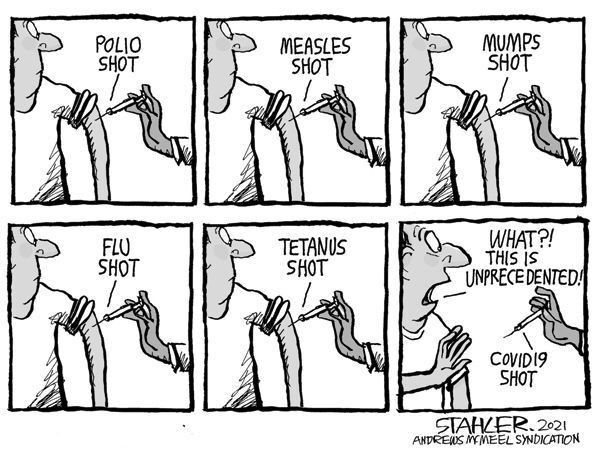
You’ll often see this point made about the guns of the 18th century, the ones the Founders had in mind when they wrote the Second Amendment — as in this cartoon.
What’s not as well appreciated is how much guns have changed in living memory. My memory, for example.
Sometime in my pre-teen years in the late 1960s, my Dad thought it might be a bonding experience for us to go hunting. So he bought a 12-gauge shotgun for himself and a .410 shotgun for me. His held five shells and mine three. Both moved new shells into the firing chamber with a pump action. Pumping could throw off your aim, so without a lot of practice it was just about impossible to shoot even the five or three shells quickly, at least if you wanted to hit anything.
And while reloading wasn’t that hard, once you got onto it, it wasn’t nearly as quick or easy as snapping in a new clip. But it didn’t need to be. The point was to keep firing until your quarry either fell or fled, which would probably happen in a matter of seconds. After that, you were looking at another extended period of stalking — that’s why the sport is called “hunting” rather than “shooting” — so you had plenty of time to dig a few shells out of a pocket and slide them into the shotgun.
Dad also owned a .22 rifle, which typically lived out on our farm, about 15 miles from our house in town. I don’t remember how many bullets it held, but it wasn’t many. I occasionally shot targets with it, but not with any practical goal like hunting or self-defense. (A post on a survivalist message board is blunt about such a rifle’s self-defense limitations: “A .22 round has virtually no ‘stopping power’. It takes a hit directly to vital organs like the heart or brain to ‘stop’ somebody with a .22.”)
That was our whole arsenal. We were, I believe, a more-or-less typical gun-owning family of the era. (At least in the rural Midwest. Perhaps things were already different in the South; I wouldn’t know.) Many of my friends had a similar exposure to guns, which they used (rarely, and under adult supervision) to hunt quail or ducks or rabbits. (I once ate fried squirrels that a neighbor had killed. They did indeed taste like chicken.) I heard about men going on deer-hunting trips, but I don’t remember my friends bragging about hunting deer themselves.
One possible use for our guns never came up: killing people intentionally. Everyone knew, of course, that a shotgun or a rifle of any caliber could kill someone. Occasionally I would hear about hunting accidents, or that someone (though not anyone I knew personally) had committed suicide with a gun. My dentist once surprised burglars at his vacation home, and they shot him with a shotgun they were stealing from him. (At least that’s the story I remember hearing. He lived, but ever after had marks on his face from where the pellets hit. Years later he became the father-in-law of my best friend from elementary school.)
But shooting people was an accident to be avoided, not something we trained to do. For practice we shot at bottles or clay pigeons, not human figures on paper. Dad and I never talked about repelling a home invasion with our shotguns, and I doubt he had such a plan. (Our home would have been pretty easy to invade in the summer, when we often just fastened a screen door with a hook. The shotguns were in the basement and unloaded. Using them quickly would have been difficult. If Dad secretly kept a more convenient gun, I believe I would have found it when I cleaned out the house after he died.) And we certainly never discussed joining a group that might fight against the government.
The guns also were not a part of our identity, either as individuals or as a family. They were sporting equipment, like baseball gloves or basketballs, and had little symbolic significance. So we did not assemble a collection to display with pride, or join a shooting club, or hang around in gun shops. I don’t think I knew what the NRA was.
I had a toy M-16 as a kid, so I knew about such weapons, which soldiers were using in Vietnam. Apparently the civilian semi-automatic version, the AR-15, was already on the market. But it never occurred to me that we might buy one. (Why would we? If you hit a rabbit with a burst from an AR-15, there wouldn’t be much left.)
In short, our gun-owning household didn’t have anything like the destructive capability that millions and millions of American households have today. If I had ever gone on a rampage with our guns, I couldn’t have run up anything like the body counts we’ve seen lately, and most of my victims would probably have lived. Once the police arrived, I couldn’t have held them at bay for long.
I don’t even remember having that fantasy. Owning a shotgun made me an occasional hunter, not a warrior. My warrior fantasies, such as they were, involved joining the military, not going out in a blaze of glory on Main Street.
So no, past America is not comparable to America today in terms of an individual’s ability to commit mass murder. The percentage of gun-owning households may not have changed that much in the past 60 years, but the guns Americans own certainly have.