The week was dominated by the Charlie Hebdo massacre in Paris, the pursuit of the killers, and the wide variety of responses from around the world and all corners of the political spectrum.
My own response will be in the featured post, “Am I Charlie? Should I Be?”, which should come out around 10.
The weekly summary, around noon, will start with other people’s responses to the massacre, then talk about James Fallows’ “The Tragedy of the American Military”, the predictable conservative freak-out when blacks start their own version of Open Carry Texas, and a few other things.
I know that I cannot carry a gun in public and neither can my sons, even if it is a toy. If I lay prone on an open highway and point an assault rifle at a federal agent, my next stop would be federal custody or the nearest county morgue. Open carry laws are not meant for me. The rules are different. It’s what it means to be black in this country.
This week everybody was still talking about the NYPD
The NYPD’s “slowdown” or “virtual work stoppage” (or whatever you want to call it) has become one of the weirder stories in some while. The New York Post says:
NYPD traffic tickets and summonses for minor offenses have dropped off by a staggering 94 percent following the execution of two cops — as officers feel betrayed by the mayor and fear for their safety. … The Post obtained the numbers hours after revealing that cops were turning a blind eye to some minor crimes and making arrests only “when they have to” since the execution-style shootings of Officers Rafael Ramos and Wenjian Liu.
Rolling Stone‘s Matt Taibbi points out the implication: NYPD has been arresting a lot of people it didn’t really have to.
So this police protest, unwittingly, is leading to the exposure of the very policies that anger so many different constituencies about modern law-enforcement tactics.
In New York, as in Ferguson and many other municipalities, police citations are a revenue source, with a sizable amount of that revenue coming from the neighborhoods that get the most policing — poor neighborhoods. The slow-down brings that hidden regressive tax into focus.
Also, the slowdown tests the controversial “broken windows” theory of policing — that you arrest people for minor offenses to establish public order, which in the long run prevents major crimes. If the slowdown doesn’t lead to a major crime wave, then what were all those minor-offense arrests about? The Atlantic‘s Matt Ford:
If the NYPD can safely cut arrests by two-thirds, why haven’t they done it before?
The human implications of this question are immense. Fewer arrests for minor crimes logically means fewer people behind bars for minor crimes. Poorer would-be defendants benefit the most; three-quarters of those sitting in New York jails are only there because they can’t afford bail. Fewer New Yorkers will also be sent to Rikers Island, where endemic brutality against inmates has led to resignations, arrests, and an imminent federal civil-rights intervention over the past six months. A brush with the American criminal-justice system can be toxic for someone’s socioeconomic and physical health.
I don’t think NYPD intended their slow-down as a challenge to the way American police function, but it’s turning out that way.
One aspect of this story is getting new attention: all the times when police confront armed and disorderly white people and somehow manage to hold their fire long enough to resolve the situation peacefully. This white woman, for example, drove around Chattanooga the day after Christmas, wearing body armor and firing a gun out the window.
Eventually, officers stopped and arrested Shields at Cloverdale Drive and Koblan Drive, near the spot where the shootings occurred and just blocks from her house. She pointed her firearm at an officer, but was taken into custody without incident or injury.
The same day in Post Falls, Idaho, two white guys in a Walmart took BB guns off the shelf and started shooting in the store. “The two suspects were taken into custody without incident.”
Contrast what happened to black males John Crawford (who was killed by police because he was casually carrying a BB gun around a Walmart, threatening no one) and Tamir Rice (a 12-year-old killed by police because they thought he was older and believed his toy gun was real). In each of those cases, video shows police firing fatal shots within seconds of sighting what they thought was a gun.
The all-time champion be-understanding-to-armed-whites police incident happened in Kalamazoo back in May.
Police reports and recordings of a sometimes tense 40-minute encounter with a belligerent, rifle-toting man offers insight into how officers tried to defuse a volatile situation without infringing on his right to openly carry the gun on a city street.
If police had spent 40 minutes — or 40 seconds — talking to Crawford or Rice or worrying about their rights, the situations could have been easily defused.
The truth is while I don’t know what she was saying, I do know this: Similar actions by a person of color, specifically a black woman like me, would likely end up with us in jail, in a hospital or who knows—like Eric Garner, on a medical examiner’s table.
I know that I cannot carry a gun in public and neither can my sons, even if it is a toy. If I lay prone on an open highway and point an assault rifle at a federal agent, my next stop would be federal custody or the nearest county morgue. Open carry laws are not meant for me. The rules are different. It’s what it means to be black in this country.
Business as usual at Fox: A local Fox station edited video of a protest so that a chant against “killer cops” became “kill a cop”. When caught, the station apologized for the “error”.
and the relationship between Republicans and racists
New House Majority Whip Steve Scalise has been under fire since a blogger discovered he spoke to a white supremacist group in 2002. In “Will Republicans Ever Have a Sister Souljah Moment?” I center the conversation where I think it belongs: not on whether Scalise or Republicans in general are racists, but whether racists are too big a part of the Republican base for an aspiring politician to offend.
In particular, will Republican candidates ever face the same pressure Democrats do to distance themselves from the more extreme parts of their base? (Digby calls this hippie punching, defined as “how Democrats like to debase the left in order to appeal to so-called Real Americans”.) It seems unimaginable that someday a Scalise might go to a white-supremacist conference and intentionally piss them off (by, say, defending the civil rights of non-whites) in order to establish his centrist cred.
Minnesota Democratic Senator Amy Klobuchar made an excellent point on Meet the Press Sunday. Republicans are rightfully worried that the Scalise flap reinforces the stereotype that Republicans have a racial problem. But the right response isn’t to just denounce racism or David Duke, it’s to use their congressional majority to move on civil rights issues that they claim to support (like fixing the Voting Rights Act), or to just do their jobs (like confirming Loretta Lynch as the new attorney general).
But what I’m more interested in, when always this kind of thing happens, people disown it, they say, “This was wrong,” but what do we do about it?
What are the actions? I’ll give you a few. The Republicans can move along on Loretta Lynch fast. She’s a U.S. attorney. The nominee for attorney general. She’s been vetted before. Get it done in a month. The Justice Department runs the civil rights enforcement in this country. Get the voting rights bill done.
Don’ t just claim you’re for civil rights. Prove it.
and recalling the best of 2014
“TPM is pleased to announce the winners of the Eighth Annual Golden Dukes recognizing the year’s best purveyors of public corruption, outlandish behavior, The Crazy and betrayals of the public trust. The awards are named in honor of former Rep. Randy ‘Duke’ Cunningham, who epitomizes the iconic modern scandal.”
Salon re-published its 10 Best Personal Essays 2014: a woman waiting to have an abortion, an American who doesn’t tell anyone about being Muslim, a college guy experimenting with homosexuality, a woman saving sex for marriage, a man remembering his pederast, an ex-addict who fell in love with a death-row inmate and watched him die, a self-described “fat girl” reflecting on romance, a bomb-squad widow meeting the bomber, a card-playing foursome too poor for pop culture, and a mother who briefly left her son alone in the car.
Media Matters’ “Misinformer of the Year” is George Will, who worked hard all year to deserve this honor.
Some stuff that didn’t happen in 2014: crashing stock market, collapsing economy, unemployment stuck at 8%, gas at $5.45 a gallon. That’s what America was supposed to look like by now if we re-elected the horrible President Obama. The same people are still out there predicting things, and being taken seriously.
but I wish more people were talking about …
The new Republican majority in Congress is about to change the rules of the budgeting game. It’s technical and sounds boring, but “dynamic scoring” is actually something ordinary people should care about.
Here’s what it means. When a tax cut is proposed, the Congressional Budget Office “scores” it, to determine how much revenue the government would forgo. Naively, you might think that cutting a tax 10% would cut the revenue it generates by 10%, but actually the revenue drop is usually somewhat less, because fewer people avoid the tax. (Think about cutting the toll on a bridge. You’d collect less per car, but the number of cars crossing the bridge might go up.)
Current CBO techniques allow for that effect. But they don’t allow for an article of faith within conservative circles: that a big tax cut will increase revenue by stimulating the economy. The CBO doesn’t score that way, because there’s little evidence that such an effect really exists, and no reliable model at all about how big it might be. The CBO is trying to make accurate predictions, not affirm conservative ideology.
That’s what Republicans want to change. If they succeed, future CBO projections will show tax cuts making a much smaller hit on the deficit than will actually turn out to be the case. Worse, the change is one-sided: It would model the stimulative effect of tax cuts, but not of increased government spending. As Edward Kleinbard wrote in the NYT:
The Republicans’ interest in dynamic scoring is not the result of a million-economist march on Washington; it comes from political factions convinced that tax cuts are the panacea for all economic ills. They will use dynamic scoring to justify a tax cut that, under conventional scorekeeping, loses revenue.
When revenues do in fact decline and deficits rise, those same proponents will push for steep cuts in government insurance or investment programs, because they will claim that the models demand it. That is what lies inside the Trojan horse of dynamic scoring.
While we’re on economics, Joseph Stiglitz has been talking about inequality in interviews, as well as his book The Price of Inequality (which I haven’t read). He makes a distinction similar to one I’ve sifted before: You can get rich by producing new products that create new jobs, or you can get rich by owning fixed assets whose price goes up. One way grows the economy for everyone, while the other just gets you a bigger slice of the pie.
What’s destructive in the recent bonanza for the 1% is that it’s largely the unproductive kind of wealth creation, which is why the rising tide isn’t lifting all boats. Stiglitz refers to this as “increased exploitation”.
Maybe the least productive way to get rich is to increase your power over some part of the market, which will raise the price of your stock at the expense of your customers, workers, and the general public. Stiglitz notes that “when you look at the top [of the wealth distribution], it’s monopoly power.”
Vox reminds us of the minority-rule provision built into the Constitution: Because big states and small states get the same number of senators, it turns out that the 46 Democratic senators got 20 million more votes than the 54 Republican senators.
After trouncing Jameis Winston’s Florida State Seminoles 59-20 in the Rose Bowl, thus ending FSU’s winning streak and putting the defending champions out of the running for a second consecutive national championship, some Oregon players taunted FSU and Winston in a unique way: They imitated FSU’s native-American-inspired chant, but chanted “No means no”, a reference to the sexual assault charges that Winston wriggled out of. Watch:
Bad sportsmanship? Absolutely; you don’t taunt somebody you’ve just beaten. But this also looks like some kind of tipping point on the public perception of sexual assault.
First Jeb Bush put a toe into the 2016 water, now Mike Huckabee. Huck was the candidate I was most afraid of in the 2012 cycle, because of his ability to sound reasonable while saying outrageous things. But I wonder if he’s missed his window. Now we’ve got years and years of video of him taking far-out-of-the-mainstream positions. They may not hurt him in GOP primaries, but I don’t think they’ll play well in a general election.
Andy Borowitz is brilliant: “Jeb Bush resigns as George W. Bush’s brother.”
Grist points out why anti-abortion folks should love Obamacare: When the larger up-front cost is covered, more women choose less error-prone methods of contraception, and have fewer unwanted pregnancies, hence fewer abortions. That’s all showing up in the statistics: The abortion rate is down, but the birth rate is not up. Fewer women are getting pregnant.
I don’t expect those facts to convince anyone on the Religious Right, for a simple reason: I believe their opposition to abortion isn’t fundamentally about “baby-killing” at all; it’s rooted in opposition to female promiscuity. Doctrines about zygotes having souls are constructed post hoc to justify a position already held; what’s really wrong with abortion is that it stops pregnancy from controlling promiscuity. So for them a plan that reduces abortions but enables female sexuality is a non-starter.
Now that he’s under duress, Steve Scalise will denounce David Duke. But when it mattered, he courted Duke’s racist voters. Will a Republican ever intentionally offend extremists in the base to gain credibility with the center?
Louisiana Congressman Steve Scalise is the new member of the Republican House leadership, replacing Eric Cantor, who lost his primary to a Koch-brothers candidate. Scalise is supposed to be the link between the leadership and the GOP’s extreme right wing, a role he appears to be good at.
But a funny thing happened: A blogger* (Lamar White Jr.) did some digging and found out that in 2002, then-state-rep Scalise was “an honored guest and speaker at an international conference of white supremacist leaders.” The group was the European-American Unity and Rights Organization (EURO), a hate group established by KKK-Grand-Wizard-turned-Republican-politician David Duke.
Now Scalise says he doesn’t remember the event (which an aide said it was “highly likely” he had attended), and there’s a complicated version of the story in which it’s all a big misunderstanding; he just happened to be speaking at the same hotel at the same time to a lot of the same people. (Under further investigation, this version is falling apart.) Scalise claims he wouldn’t have spoken to EURO if he’d known what they were. He mentions giving hundreds of speeches with just one staffer, implying that the EURO gig just slipped through the cracks somehow.
But that explanation doesn’t pass the smell test. Duke was not an inconsequential figure in Louisiana politics in 2002. In 1991 he had stunned the state Republican Party by out-polling the establishment Republican candidate in the primary and winding up in a run-off for governor. (In the run-off, a national controversy in which Duke’s Klan-leader past was a major issue, he got a majority of the white vote and 39% statewide. If the Voting Rights Act of 1965 hadn’t enfranchised blacks, Duke would have become governor.)
In his early campaigns, Scalise at times consciously courted Duke voters. A Roll Call article from 1999 reported on a congressional race Duke was considering:
Another potential candidate, state Rep. Steve Scalise (R), said he embraces many of the same “conservative” views as Duke, but is far more viable. … “The voters in this district are smart enough to realize that they need to get behind someone who not only believes in the issues they care about, but also can get elected. Duke has proven that he can’t get elected, and that’s the first and most important thing.”
Three years later, Scalise couldn’t have just not noticed that David Duke was leading EURO now, or not known what that meant.
The New Republic‘s Brian Beutler makes the right point: The problem this incident illustrates isn’t that Scalise himself is or was a white supremacist — he probably isn’t and wasn’t. But (especially in the South) white racists have become a key component of the Republican base, one that a canny politician has to court, even if he can’t publicly endorse their ideology.
if in 1999 you said “the first and most important thing” about Duke was merely that he couldn’t get elected, rather than his despicable racism, it says something important about the voters you were trying not to offend. Many of those voters are still alive today.
In Democratic circles, you frequently hear talk about a “Sister Souljah moment“, which has been defined as “a key moment when the candidate takes what at least appears to be a bold stand against certain extremes in their party”. The paradigmic SSM was when candidate Bill Clinton denounced statements by black rapper Sister Souljah, saying “If you took the words ‘white’ and ‘black,’ and you reversed them, you might think David Duke was giving that speech.”
But SSMs only happen on the Left. (The article I took that definition from discussed Mitt Romney’s missed opportunity for an SSM, when he failed to denounce Rush Limbaugh’s grotesque slut-shaming of Sandra Fluke, saying only that slut was “not the language I would have used“. The substance of Limbaugh’s comments was apparently fine with Mitt; only his language was objectionable.) When the national media gets focused on an issue like Scalise’s EURO speech, conservative politicians can be cornered into rejecting an extremist like David Duke or Cliven Bundy — and can’t be cornered into rejecting Rush Limbaugh, no matter he says or does — but no Republican creates such moments to demonstrate his or her reasonableness to the moderate voter.
So no Republican presidential candidate — not even a so-called “moderate” like Jeb Bush or Chris Christie — is going to confront conservative extremists with reasonable positions and intentionally get himself booed.** No one is going to tell CPAC that the party needs to move to the center, or endorse background checks in front of the NRA, or defend church-and-state separation at the Values Voters Summit, or confront the Energy Alliance with the facts of climate science, or tell white racists that he really isn’t interested in their support.
Instead, if candidates don’t feel comfortable endorsing extremist views outright, they will dog-whistle to these groups, as Scalise did to EURO in 2002***, or Ronald Reagan did to white racists in 1980. They’ll present their conservative bona fides to CPAC, defend “constitutional rights” to the NRA, endorse “traditional values” to the values voters, identify with “sound science” in front of the Energy Alliance, and talk to white racists about the deficiencies of “inner city culture”.
Everyone in the room will know what those words mean. The extremists will come out feeling that the candidate agrees with them in his heart, but his agreement will be deniable in front of the general public.
Maybe someday there will be Sister Souljah moment on the Right. But not yet. The crazies are too important a constituency, so all serious Republican candidates have to pander to them.
* Can we finally put to bed the canard popular among mainstream journalists that they do all the investigative reporting, while bloggers just bloviate based on mainstream journalists’ discoveries? Bloggers may not have access to anonymous “highly placed sources” and can’t score interviews with Dick Cheney, but collectively we plow through a lot of original source documents. White apparently rummaged through the online archives of the white-supremacist Stormfront group. I doubt he had to elbow any Washington Post reporters out of the way.
*** According to a contemporary Stormfront account, Scalise didn’t directly endorse white supremacy at the EURO meeting. (But if Scalise thought he was speaking to some other group, that distinction apparently was lost on the Stormfront commenter, whose subject-line says “EURO/New Orleans 2002”.) Instead, he spoke about a topic white supremacists would appreciate: government favoritism to blacks.
Representative Scalise brought into sharp focus the dire circumstances pervasive in many important, under-funded needs of the community at the expense of graft within the Housing and Urban Development Fund, an apparent give-away to a selective group based on race.
The featured post this week is a reaction to the controversy over Steve Scalise having spoken to a white supremacist group in 2002. I’ll skip over points well-covered elsewhere and the opportunity to accuse a member of the House Republican leadership of racism, and go straight to the point I think this incident illustrates: not that Republicans are all racists, but that racists are a big enough part of the Republican base (especially in the South) that a rising politician needs to court them. Scalise foolishly courted them in person rather than through hints made elsewhere, but that was a mis-step in what (for conservatives) is a gray area.
The question this incident raises for me is the title of the article: “Will Republicans Ever Have a Sister Souljah Moment?” In other words, will a major Republican candidate ever intentionally and visibly offend the more extreme parts of his base in order to gain credibility with the center? Liberal Democrats often face the question of whether they should (or why they don’t) stage a Sister Souljah moment with some liberal constituency. But conservative Republicans never do. Instead, they compete to be the “true conservative” in the race.
So by all means, Republican candidates should speak to white supremacist groups — to explain why they support renewing the Voting Rights Act or passing immigration reform — and get themselves booed off the stage. But they won’t.
That post should be out in an hour or two. The weekly summary will talk about the weird implications of NYPD’s “slowdown”, some best-of-2014 stuff I found, interesting economic observations from Joseph Stiglitz, the Ducks’ unique post-Rose-Bowl taunting, and the sky-diving elephants from France. I’m not sure how long that will take to finish, but I’m aiming to post by noon.
Conservatives like Rudy Giuliani blamed the murders on — who else? — President Obama.
We’ve had four months of propaganda, starting with the president, that everybody should hate the police.
Since nobody can find any record of Obama saying anything about hating the police, WaPo’s fact checker awarded this claim four Pinocchios. In fact, no one can come up with any record of the leaders of the black-lives-matter protests calling for violence against police — there is no H. Rap Brown “Burn, baby, burn” quote — but somehow it’s their fault. (There was one group at one protest that chanted for “dead cops”, but no one knows who started the chant, no one endorsed it afterwards, and most protesters never even heard it. This incident has been covered in the right-wing media as if it encapsulated the whole anti-police-brutality movement.)
Media Matters collected the various times when right-wing crazies have killed cops, including the time when they draped the Gadsden flag over the bodies. Oddly, Fox and other right-wing media outlets did not hold conservative leaders responsible for this.
If fingers are going to be pointed anywhere other than at the actual shooter this time, I’d point one at the prosecutors who manipulated the grand juries into not indicting policemen for killing Michael Brown and Eric Garner. As any regular Gotham watcher knows, vigilantes rise when the people lose hope of getting justice through the system.
The worst reaction of all was Bill O’Reilly’s: that Mayor Bill de Blasio is the “true villain” of this story, and should “resign today” because he has “lost the respect” of the NYPD. This call was discussed by other Fox News hosts on their own shows as if it were a sane and reasonable proposal.
It’s not. Treating the police as if they were an equal-or-superior branch of government, rather than employees of the city, flies in the face of American principles that go back to the Founders. In third-world countries that are trying to achieve democracy, you worry about whether the elected government can get along with the army. But such notions should never come up in America.
Nobody elected the NYPD. If public employees don’t feel that they can submit in good conscience to the duly elected officials, they should resign. Remember when Scott Walker was having so much trouble with Wisconsin’s teachers? I don’t recall O’Reilly — or anyone — calling on Walker to resign. The teachers who wanted to be rid of Walker had to work through the democratic system by petitioning for his recall. If NYC police want de Blasio out, they also should have to proceed democratically.
Charles Pierce makes a similar point, and connects it to the CIA torture scandal:
It is very simple. If the CIA is insubordinate to the president, whom the country elected, then it is insubordinate to all of us. If the NYPD runs a slow-motion coup against the freely elected mayor of New York, then it is running a slow-motion coup against all the people of New York. … If we render our torturers superior to the political institutions of the government, and if we render the police superior to the civil power of elected officials, then we essentially have empowered independent standing armies to conduct our wars and enforce our laws, and self-government descends into bloody farce.
But let’s get on with reviewing 2014’s Weekly Sifts.
Themes of the Year
Every year I begin the Yearly Sift with the same caveat: I write the Sift week-to-week, without any larger plan to illustrate themes. But inevitably, I see themes when I look back at the end of the year.
Roots of conservatism. Like a lot of liberals, when I listen to conservative speakers, I often feel like I’m hearing something in code. The leaps of logic, the connections they see between events that look unrelated to me, the refusal to see connections that I consider obvious — there’s something behind it all, some frame, some vision, some unconscious attitude, some set of unstated prior assumptions — true or false — that make sense of it all.
This year I spent a lot of time trying to decrypt conservative thought, looking for its historical roots and hidden assumptions. I didn’t set out to be ungenerous, but I doubt many conservatives approved of the ways I described those roots and assumptions.
In the year’s most popular post, “Not a Tea Party, a Confederate Party“, I traced contemporary conservative ideas back to the Confederacy, arguing that the Tea Party is using the tropes and tactics that won Reconstruction for the South and reversed the apparent outcome of the Civil War. That article became necessary because previous articles “Cliven Bundy and the Klan Komplex” and “Rights Are For People Like Us” were too speculative and needed more supporting research.
After the election, I tried to abstract a the worldview from the Republican messages I had been hearing about immigration, Ebola, moral decline, and the general “otherness” of President Obama. In “Republicans have a story to tell. We’re stuck with facts.” I described that story as: America is a city on a hill with barbarians at the gates. I groped towards a liberal equivalent mythology in “Can We Share the World?”
Privilege — the way life works differently for blacks and whites, men and women, rich and poor — has turned into a continuing background theme of the Sift since 2012’s “The Distress of the Privileged“. This May, Time published a privilege-justifying essay by a Princeton freshman, and I responded to him with “Privilege and the Bubble of Flattery“.
The Donald Sterling incident brought up just about any kind of privilege you can think of. So of course the conservative media decided he was the victim, which I addressed head-on in “No, Donald Sterling Isn’t the Victim“.
Male privilege also came up, most often in the context of violence against women. After the Isla Vista murders I wrote “#YesAllWomen and the Continuum of Aggression” to explain why men and women viewed the events so differently:
Men look at Elliot Rodger and say, “I would never do something like that.” Women look at his victims and say, “That could totally happen to me.”
Law. Making sense of important court rulings is a continuing focus of the Sift. Those legal-analysis posts never get really big readership, but I still believe they’re a public service, since the mainstream media does that job so badly.
If I rewrote the article today, it would have to include some quotes from R. L. Dabny’sA Defense of Virginia and the South from 1867; I’ll be looking for opportunities to tell you more about that, as I see Dabny’s book as the best existing first-person account of the Confederate worldview. (A teaser: The mistake at the root of the North’s misbegotten abolitionism is social contract theory. Once you start thinking that government depends on the consent of the governed, you’ll end up not just freeing the slaves, but giving them the vote. And women too, God forbid!)
Most prescient comment. You may remember that January opened with a polar vortex, provoking the usual round of I’m-cold-so-global-warming-is-a-myth articles. I’m proud of this response on January 13:
Even when 2014 was just a few days old and wind chills were below zero for most of the country, there was a bet you could make that was almost a sure thing. No matter how it started, by its end 2014 will be yet another warm year. And by warm I mean: The global average temperature will wind up well above the 50-year average and the 20-year average.
Final returns aren’t in yet, but 2014 may well be the hottest year on record. If any of your friends believe global warming is a myth, you should offer them the bet that 2015 will be a warm year too — maybe not another record, but clearly above the 20-year average. If instead it’s a cool year (it won’t be) I promise not to sweep that fact under the rug, because belief in global warming is evidence-based, not ideology-based like global-warming denial.
I also feel pretty good about taking a wait-and-see attitude towards the Bridgegate Scandal, which hasn’t delivered Governor Christie the knock-out blow many liberals were hoping for. On February 24, I criticized MSNBC’s saturation coverage, and said:
If you are similarly ignoring MSNBC and/or Bridgegate these days, I’ll let you know when something important happens.
Least prescient comment. As in 2010, I stayed hopeful about Democrats’ prospects in the mid-term elections far longer than I should have. A lot of comments could illustrate this, but I feel worst about something I didn’t say: In June, when I was giving advice about the best Senate candidates to support and where your support would have the most impact, I left out Mark Udall in Colorado, thinking he wasn’t really in that much trouble.
Sorry, Mark. You will be missed.
The best post nobody read. In March, I gave an unfortunate title to “Does Paul Ryan Care About Poverty Now?” I suspect a lot of my regular readers looked at that question, decided the answer was obviously No, and figured they’d already spent enough of their lives reading about Paul Ryan.
I have an excuse: Ryan’s committee had just put out its report, The War on Poverty: 50 Years Later, and it looked like he was laying down a marker that would turn into policy down the road. (I covered the second step down that road in August in “Can Conservatives Solve Poverty?“, which a few more people read. We haven’t heard the last of this.)
But the March article is worth reading because of the way it frames the whole national discussion of poverty, independent of Paul Ryan. Conservatives like to claim that liberals want to give people hand-outs while conservatives want to get them jobs, when in fact everyone would rather see the poor supporting themselves in good jobs. But the get-out-of-poverty-by-working plan might fail for four different reasons — ranging from “there are no jobs” to “I’m too lazy to work” — which I list.
And here’s where it gets interesting: The vast majority of Americans agree about what the government should do for people in each of those four situations. The liberal/conservative debate about poverty in fact revolves around which of those four situations is most common and most deserves our attention.
The numbers
By all measures, the Sift’s readership increased this year, with a significant bump in both occasional and regular readers following August’s “Not a Tea Party, a Confederate Party“.
Last year this section was tricky to write, because I felt like the regular readership was growing, but the most obvious number to measure readers — page views — was down from 240K in 2012 to 215K in 2013. I had to explain that page views are tricky measure of a blog, because so much depends on the irregular timing of a few viral posts. (A little more than half of the blog’s 1 million views since moving to the new format in June, 2011 are for two posts: 342K for “The Distress of the Privileged” from 2012 and 183K for this year’s “Not a Tea Party, a Confederate Party”.)
So I focused more on stats like these: subscriptions tracked by WordPress went up from 504 to 908, and likes for the Sift’s Facebook page went from 183 to 256.
Well, this year had a viral post, so the numbers require much less explaining. Everything is up: Page views ballooned to 412K (with a few days to go), subscriptions to 2,281 (though I’m not completely sure that number measures the same thing as last year’s number), and Facebook likes to 382. Followers of the Sift’s Twitter feed went from 203 to 342.
I also started getting my wish for a commenting community; in the second half of the year it was a rare post that didn’t draw at least a couple non-spam comments. (In the short term I can be thin-skinned — that’s one reason I sometimes don’t respond promptly — but in the longer view I love comments. Even in cases when I feel a commenter completely misunderstands me, the comment helps me see how I’m being misunderstood.)
A typical weekly summary now gets around 300 views on the blog, plus another 250 or so from subscribers. (I’m not sure how WordPress comes up with that number, but I think it knows whether subscribers open the email it sends them.) A year ago those numbers were more like 200 and 100. A featured post that doesn’t catch a viral wave gets 300-600, plus 250.
The purpose of Newspeak was not only to provide a medium of expression for the world-view and mental habits proper to the devotees of Ingsoc, but to make all other modes of thought impossible. … This was done partly by the invention of new words, but chiefly by eliminating undesirable words and by stripping such words as remained of unorthodox meanings, and so far as possible of all secondary meanings whatever.
Thursday, the Sift had its one millionth page view since I redesigned it and moved it to WordPress in June, 2011. (I have no way of figuring out who the millionth viewer was. If you looked at the blog on Thursday, maybe it was you. Thanks.) More than 400K of those views were this year. More about the numbers next week when I do the retrospective Yearly Sift.
This week everybody was talking about Cuba
After the midterm elections, President Obama entered what I’ve started calling the Aw-Fukkit Phase of his presidency, where he’s going to do things that make sense without worrying about polls or politics: first immigration, then smog.
That trend continued Wednesday, when he went as far to normalize relations with Cuba as he can without an act of Congress. He announced restoration of diplomatic relations, which will lead to the opening of a U.S. embassy in Cuba. Removing Cuba from the official State Department list of countries that sponsor terrorism should follow soon. Talks leading to this agreement apparently were brokered by Pope Francis, who seems to have decided to take “blessed are the peacemakers” seriously.
The economic embargo against Cuba is a law that Congress probably won’t repeal. (But administrative decisions might hollow it out a little.) So no Miami/Havana flights and no Cuban cigars in the Mall of America any time soon. Personally, I’d like to see Major League Baseball create a Latin Division with teams in Havana, San Juan, Mexico City, Los Angeles, Houston, and Miami, but I’m a dreamer.
Embargoes like this can sometimes make sense as an attempt to push a shaky new regime off a cliff. But if that’s going to work at all, it usually works in six months or so, not after half a century.
We have normal relations with nearly all our other Cold War adversaries: Russia, China, Vietnam … basically everybody but North Korea, which (see below) is in a league of its own. The only thing special about Cuba is that a Cuban-refuge lobby has extraordinary political influence. The Cuban embargo is to Florida’s presidential politics what ethanol is to Iowa’s.
A few other things make Cuba special, but they push the other way: Cuba used to be an American colony. It’s only 90 miles away. A lot of Americans have relatives they’d like to visit in Cuba, or would vacation on its sunny beaches if they had the chance.
The arguments against Obama’s move all revolve around what I think is a misguided notion: that the U.S. is the world’s Heather #1, so we’re doing less-cool countries a favor when we talk to them. That view is implicit in Ted Cruz’ characterization of the new relationship as “a very, very bad deal”. We agreed to talk to Cuba and didn’t get enough in return for that “concession”.
If they’re willing to talk to us and trade with us, we should be willing to talk to them and trade with them — unless you think the 55th year of an embargo is likely to accomplish something the previous 54 didn’t.
Officially, the North Korean government is not behind this — the threats come from a hacker group calling itself “Guardians of Peace” — but the FBI says they are. (Other experts disagree.)
If this is a North Korean operation, it’s hard to know how to respond. The country is already subject to so many sanctions that it’s virtually cut off from the rest of the world, and its repressive government might be happy about that. It is plagued by famines, but its hungry people seem unable to revolt. The government constantly raises fear about a U.S. invasion — only the cosmic power of the Great Leader keeps the evil Yankees at bay — so an actual attack on something might also play right into the government’s hands.
A Hollywood insider’s view of this story and how it unfolded comes from George Clooney, who circulated a petition supporting Sony and got little support.
This was a dumb comedy that was about to come out. With the First Amendment, you’re never protecting Jefferson; it’s usually protecting some guy who’s burning a flag or doing something stupid. This is a silly comedy, but the truth is, what it now says about us is a whole lot. We have a responsibility to stand up against this.
No one in Hollywood would stand with Sony, Deadline Hollywood says, because they were “fearful to place themselves in the cross hairs of hackers”. And by releasing embarrassing emails before threatening terrorism, the hackers gave an excuse to those who wanted to chicken out rather than make a united front. Clooney says:
Here’s the brilliant thing they did. You embarrass them first, so that no one gets on [their] side. After the Obama joke, no one was going to get on the side of [Sony Pictures executive] Amy [Pascal], and so suddenly, everyone ran for the hills.
and murdered policemen
Saturday, two Brooklyn policemen were murdered in their patrol car, apparently by an African-American man who came to New York from Baltimore specifically to take revenge on the NYPD for the killing of Eric Garner. The man reportedly had a history of mental illness, and killed himself after killing the officers.
There are two opposite ways to react to horrible events like this. If you identify with the victims, you may react tribally: People like you are threatened by people like him, and your tribe needs to protect itself by lashing out at the other tribe. That was the response of NYPD union chief Patrick Lynch, who blamed the attack not on a lone lunatic, but on the anti-police-brutality demonstrations that started after Garner was choked to death by police while saying “I can’t breathe.”
There’s blood on many hands tonight. Those that incited violence on this street under the guise of protest, that tried to tear down what New York City police officers did everyday. We tried to warn it must not go on, it cannot be tolerated. That blood on the hands starts on the steps of city hall in the office of the mayor.
A memo that appeared to come from Lynch (but was later denied) said that NYPD had become a “wartime police department”, and “will act accordingly”.
But it’s also possible to have a universalist response: Having experienced how bad it feels when people like you are killed for no good reason, you want to prevent this experience from happening to anyone else. The murdered cops’ friends and family, Eric Garner’s friends and family, Michael Brown’s friends and family … you don’t have to pick a side. None of them should be going through what they’re going through.
You know how these killings are different that Garner and Brown? So far, the media has shown no interest in combing through the lives of the murdered cops to see whether they “had it coming”. I doubt it would be hard; surely somebody sometime had an unpleasant interaction with one of the cops and would be willing to help the media make a headline out of it. But so far nobody is going for that cheap shot.
Wouldn’t it be great if all victims got this kind of respect?
Before the attack on the policemen, these clueless guys wore “I Can Breathe” shirts, thinking they were making a pro-police statement.
In fact they’re just underlining the point made by the “I Can’t Breathe” shirt (worn here by Lebron James): Of course you can breathe, because you’re white and so police treat you with courtesy. That’s what white privilege means.
You know what would be a powerful demonstration against racism? Pair up white people wearing “I Can Breathe” shirts and black people wearing “I Can’t Breathe” shirts. Let them march together two-by-two.
and still torture
The neocon line from Bill Kristol and others is that what the CIA did wasn’t “real torture” because “you recover” with “no lasting effects at all”. This sounds remarkably similar to the way some men minimize rape.
There’s good reason why, in interrogator slang, getting a prisoner to talk is called “breaking” him. A decade after he was seized and tortured by mistake, German citizen Khalid al Masri is still described as “a broken man”.
He’s abandoned his home. He no longer is part of the lives of his wife or children. Friends can’t find him. His attorneys can’t find him. German foreign intelligence will say only that he’s “somewhere in a western-leaning Arab nation.” When his Ulm attorney and confidant Manfred Gnjidic last saw him, he was broke, unkempt, paranoid and completely alone. He’d been arrested twice and sent once to a psychiatric ward, once to jail.
But that’s all no skin off Bill Kristol’s nose. All the trauma in his privileged existence has healed without a scar, so he thinks that’s how life works.
I am excited to announce I will actively explore the possibility of running for President of the United States
He followed up by saying that in January he would establish a leadership PAC to “help me facilitate conversations with citizens across America to discuss the most critical challenges facing our exceptional nation.”
One of my friends is a self-described “ink-stained wretch” from the Newspaper Era, which happened sometime after the Jurassic. One of his early editors refused to publish articles about press conferences where somebody merely announced he was going to do something, like file a lawsuit, because announcements aren’t news. When the lawsuit actually got filed, that would be news.
Would that politics and political journalism still worked that way. These days, Bush’s announcement that he was going to do something next month to help him actively explore a possible presidential run … he might as well have gone to Concord and filed papers to put his name on the New Hampshire primary ballot. He’s running.
Bush will annoy the base more than he’ll inspire the establishment. He’s not anti-Hispanic enough. He’s not distant enough from his brother, who the base worshiped at the time, but now blame for deficits and bail-outs and all the other bad 2008 stuff they don’t want to think about. He supported the common core curriculum reform, one of those black-helicopter issues the base goes crazy over. He’s in no-man’s-land regarding the theocrats: He’s not really one of them like Santorum or Huckabee, but to anti-theocratic libertarians he’s stained by the Terry Schiavo case; don’t think you’ve heard the last of that. And purely on a surface level, he looks too wonkish. He’s the expert who knows what’s good for you, not the voice rising up from the soul of Real America. Nobody would ever look at Jeb Bush and repeat Barry Goldwater’s slogan: “In your heart, you know he’s right.”
Ultimately, I predict, the Tea Party will unite around Ted Cruz — after a Ben Carson boom-and-bust similar to those of Michele Bachmann and Herman Cain in the 2012 cycle — and he’ll just barely lose to a stop-Ted-Cruz candidate not specifically identified with either wing. I’m not sure who that will be, but it won’t be Bush, Romney, or Christie.
The eventual nominee will embody contradictions, the way “compassionate conservative” George W. Bush did in 2000. He’ll be a tough-love candidate — firm but not mean, unbending but not brittle, devout but not a crusader, a man of both the past and future. Like Ronald Reagan, he’ll put a charming face on heartless policies. A folksier Paul Ryan, a sharper Rick Perry, a less belligerent Scott Walker … several contenders could fill that role if they successfully recast their images, like the “New Nixon” of 1968.
and you also might be interested in …
During the invasion of Crimea, the Republican party line was that Putin had completely outmaneuvered Obama. Putin was the kind of swaggering leader conservatives admire. Rudy Giuliani laid it out:
[Putin] makes a decision and he executes it quickly. Then everybody reacts. That is what you call a leader. President Obama, got to think about it, he’s got to go over it again, he’s got to talk to more people about it.
Well, as the ruble collapses and the Russian central bank raises interest rates from 10.5% to 17% in one day, President Putin may wish he had talked to more people before executing his decisions. Paul Krugman outlines exactly what kind of hole Russia has dug for itself, and Rachel Maddow enjoys replaying clips of the Republican man-crush on “what you call a leader”.
Gordon Klingenschmitt is a Colorado state representative who used to be a Navy chaplain. He knows what we should replace ObamaCare with: prayer.
Father in Heaven, we turn away from the idolatry that so many have in their hearts, that they think government is a better healer than Jesus.
Because no true Christian ever gets sick. Everybody knows that.
So police conduct a no-knock nighttime raid on somebody’s house looking for drugs. The people inside only know that someone is breaking in — and there are no drugs in the house, so they have no reason to suspect why — so they shoot and kill one of the officers. What happens?
Well, if you’re white you can take advantage of the Castle Doctrine, which says you have a right to defend your home against what a reasonable person would interpret as an attack. But if you’re black, that may not work.
and let’s close with some Christmas music … sort of
On Black Friday afternoon I was wandering through the central square of Santa Fe. Musicians were scattered about, warming up for performances connected to that evening’s tree lighting. A lone guitarist played a familiar Christmas tune, but not until I got closer could I make out the lyrics he was singing:
Police got my car.
Police got my car.
I suspect that’s not what he sang in the evening, but a YouTube search traced his song back to Cheech and Chong.
One major theme of George Orwell’s 1984 is the importance of language to oppressive governments. From the beginning of recorded history, crude dictators have punished people for criticizing their rule. But modern, sophisticated dictators change the language itself, so that thoughts undermining the ruling ideology are hard to put into words, and no one would understand what you were saying if you did.
Orwell described this technique in detail in an essay he appended to 1984, “The Principles of Newspeak“.
The purpose of Newspeak was not only to provide a medium of expression for the world-view and mental habits proper to the devotees of Ingsoc, but to make all other modes of thought impossible. … This was done partly by the invention of new words, but chiefly by eliminating undesirable words and by stripping such words as remained of unorthodox meanings, and so far as possible of all secondary meanings whatever.
That’s a fine strategy if you already run a totalitarian government like the one in Orwell’s Oceania. But it completely ignores the problems faced by movements still trying to rise to power, like today’s American conservatives. Despite controlling Congress, they can’t just ban words they don’t like.
All they have besides Congress is a media empire, vast wealth, and an amazing degree of message discipline. What can you accomplish with those resources?
Just by being loud and persistent, you can try to alter common usage to favor your ideology. Sometimes that works (“death tax“) and sometimes it doesn’t (“homicide bomber“). But the real challenge is to disarm a word that works against you or for your enemies.
In Oceania they’d simply remove the word from the dictionary and correct everyone who kept using it. (“It’s not in the dictionary, so it’s not proper Newspeak.”) Or they’d keep the word, but remove all its offending meanings, again correcting the people who persisted in using it incorrectly.
But what if you don’t have that kind of power? American conservatives solved this problem a long time ago: If you can’t ban a word, you apply your resources to break it through misuse.
I’m not sure when this started. (That’s the great thing about breaking a word; eventually everybody stops using it, so it never comes to mind again. Your tracks are covered, because hardly anybody ever asks “How did zimzam become unusable?”) Maybe it was during the Reagan years, when liberal became an insult to throw at people you don’t like. I’m not sure. I wasn’t paying attention to the right things then. None of us were, or we might have tried to defend liberal rather than just stop using it.
I first noticed word-breaking* years later, during the second Bush administration. A lot of nasty stuff was happening then: The U.S. government was torturing people in secret prisons, spying on its own citizens, locking people up indefinitely without trials, and manufacturing bogus reasons to invade a foreign country. The administration was justifying all that by putting forward bizarre new legal interpretations of “the unitary executive” and the nearly unlimited “Article II power” he had whenever he determined that we were at war. Standing previous conservative small-government and fiscal-responsibility rhetoric on its head, the administration was creating huge new programs to buy off key constituencies, and not raising any revenue to pay for them. (Just tack them on to the deficit. No worries.)
As I was reading an Economist article characterizing Bush’s ideology as “big-government conservatism”, I wondered: Why use such a cumbersome phrase, when English already had a perfectly good word for this configuration of ideas and policies — fascism.
The answer was that fascism had become unusable, because misuse had broken it. Just when America needed the word to describe what was going on, conservatives were instead discussing “liberal fascism” and “Islamo-fascism” and so forth. In the conservative media, suddenly anything and everything was fascist, except the kind of militaristic, torturing, secretive, prying, corporatist, big-government conservatism that had been practiced by Mussolini, Hitler, Franco, and Pinochet — and was increasingly being adopted by Bush.
The word fascist could have been a rallying call for the enemies of American conservatism. But conservatives averted that threat by breaking fascist through misuse. As a result, today you are perfectly free to talk about fascism — I just did — but no one will know what you mean. Fascist is nothing but an insult now; it has no real content. If you use it, you aren’t saying anything in particular, you’re just being aggressive and rude.
Terrorism was broken in another way, like a proud wolf who gets turned into an attack dog. Terrorism used to have a clear meaning: threatening or perpetrating violence against civilians for political purposes. It was an ideologically neutral description of a tactic that any political movement might resort to. But after a decade of misuse, terrorism has become any violent act conservatives disapprove of. So the Fort Hood massacre is terrorism, even though it was an attack against a military base. Whatever ISIS does is terrorist, even fielding an army and fighting pitched battles against other soldiers. But hardly anyone (except me) called the Sikh Temple murderer what he was: a white right-wing Christian terrorist. White Christian right-wingers can’t be terrorists any more; it’s an oxymoron.
More recently, religious freedom and religious persecution have been broken. A generation ago those were ACLU words, used by atheists, Jews, and other minority movements that struggled against oppression by the Christian majority.
That oppression hasn’t disappeared; in many ways it’s getting worse. But the words to fight it have been hijacked so that they’re barely usable any more. Today, religious persecution is telling a Christian baker that a gay couple is part of the general public his business serves. Or maybe it’s just saying “Happy Holidays” instead of “Merry Christmas”. Religious freedom means that a Christian employer is “free” to block any part of his employees’ health-care coverage that he doesn’t like, and a Christian pharmacist can freely decide whether he approves of your prescription (and the lifestyle it implies) before he fills it. Separation of church and state — which used to be the hallmark of religious freedom — is now a Communist idea that is part of the conspiracy to persecute Christians.
And that brings us to torture. For the longest time, the primary defense of the Bush torture program was that it didn’t happen. There was no torture, there was just enhanced interrogation, a phrase brazen enough to do Newspeak proud.
But that defense has become untenable now that the Senate report on torture is out. Once the public heard the details, the claim that this wasn’t torture was exposed as ridiculous. (That’s only going to get worse as more details appear.) And although some are trying, the word torture can’t be reclaimed from the dark side. There’s no way to say, “We’re the Torture Party and that’s a good thing.”
But there is an alternative strategy: misuse the word torture until it breaks.
Well, torture, to me, Chuck, is an American citizen on a cell phone making a last call to his four young daughters shortly before he burns to death in the upper levels of the Trade Center in New York City on 9/11.
Todd followed up by asking whether rectal feeding was torture, and Cheney continued his distract-with-shiny-objects strategy.
I’ve told you what meets the definition of torture. It’s what 19 guys armed with airline tickets and box cutters did to 3,000 Americans on 9/11.
The misuse campaign is on. The American Thinker blog reports on the “real torture scandal in America“, which is abortion. General Boykin says “Torture is what we’ve done by having the IRS go after conservative groups.” The Koch-funded American Energy Alliance is calling EPA fossil-fuel regulations “torture”:
Whether it’s the costliest regulation in history or the coal-killing power plant rules (that Obama’s law professor says raise “constitutional questions”), it’s clear that the CIA isn’t the only government agency engaged in torture. At least the CIA isn’t torturing Americans.
The AEA illustrated its point with this cartoon:
Yes, “raising energy costs” and “harassing property owners” are now torture.
Expect to hear a lot more of this. Soon, every inconvenience to a conservative special interest group is going to be “torture”. Anything and everything will be “torture” — except a CIA interrogator looking into the eyes of a helpless (and possibly innocent) prisoner and threatening excruciating pain, trauma, or humiliation unless he talks.
Torture can’t be defended, so the word torture has to become meaningless. If you can’t ban a word, break it.
* I anticipate the question: “What about the ways that liberals try to change the language?” There are a number of words liberals have tried to remove from the language, like nigger or faggot. We discourage men from referring to adult females as girls, and so on. But these efforts have been above-board and transparent. For example, we have largely removed nigger from common usage among whites by openly discussing the reasons whites shouldn’t say nigger. If conservatives want to start a similarly open discussion to convince people to stop saying torture, I invite them to try.
Another week with a lot of stuff to talk about: Cuba, Sony, the murdered NYPD officers, and Jeb Bush’s candidacy, plus a few other things.
But the featured article will look at one particularly malignant way the Right is responding to the torture report: attempting to make the word torture meaningless by misusing it to death. This isn’t the first time conservatives have tried to alter common English usage this way, with the goal of inhibiting the spread of ideas they find unwelcome; and it isn’t as direct and honest as liberal usage-altering efforts like: “We need to stop saying nigger and faggot, or referring to adult female humans as girls.” The article, “Newspeaking About Torture” will describe the break-a-word-through-misuse tactic, relating it to language-manipulation ideas from George Orwell’s 1984. Expect to see it post around 8 EST.
The weekly summary will follow; around 10, I hope. It will discuss the topics listed above, and close with a few songs you can hum to yourself when “Santa Claus is Coming to Town” is starting to drive you crazy, like Cheech and Chong’s “Police Got My Car”.
No exceptional circumstances whatsoever, whether a state of war or a threat of war, internal political instability or any other public emergency, may be invoked as a justification of torture.
Should any American soldier be so base and infamous as to injure any [prisoner] … I do most earnestly enjoin you to bring him to such severe and exemplary punishment as the enormity of the crime may require … for by such conduct they bring shame, disgrace and ruin to themselves and their country.
This week’s featured post is “5 Things to Understand About the Torture Report“. A couple of Sift milestones: I moved the Sift to WordPress and started trying to upgrade it in June, 2011. The WordPress stats inform me that the blog is one recent-average-week away from its 1 millionth page view. Also, the 4,000th comment happened last week.
But the public debate about the report was also illuminating. By coincidence, the report came out in the middle of a cycle of protests against police violence, emphasizing how quickly conservatives can flip-flop on government power. It’s tyranny to do a background check on gun-buyers. It’s tyranny to make people buy health insurance — a step towards the ultimate tyranny of making them eat broccoli. (My Mom was just like Hitler that way.) But when the agents of government power shoot unarmed black men on the street or torture someone in a secret off-shore prison, that’s just dandy.
One of my Facebook friends brought the proper descriptive term to my attention: herrenvolk democracy. Herrenvolk is the German term that usually gets translated “master race”. So herrenvolk democracy is the belief that democratic principles are wonderful as long as you restrict them to the right people. As in: I have the right to carry a gun in public, but it’s fine if police shoot down John Walker. I have habeas corpus and due process rights, but it’s OK to drive Jose Padilla insane by holding him in sensory deprivation for three years without filing charges.
The ultimate American herrenvolk democracy was the Confederacy, whose flag tea partiers love to wave. It zealously defended the democratic rights of white people, including their right to own black people. In today’s vision of herrenvolk democracy, the “right people” aren’t always so clearly defined as white vs. black. But whenever someone starts talking about “real Americans“, that’s what they mean — not everybody who is technically a citizen, but the much smaller group of Americans who ought to have freedom and a voice in government: the Herrenvolk.
and avoiding another government shutdown — for a price
The budget deal that passed Saturday night contained a number of what are called “policy riders” — changes in the law that have nothing to do with the spending and taxing a budget is supposed to be about. This is a prime way for Congress to give special interests unpopular favors, by attaching them at the last minute to a bill that has to pass.
Maybe the worst special-interest rider repeals Section 716 of the Dodd-Frank financial reform package that was passed to keep the 2008 financial catastrophe from happening again. The blog Next New Deal has the details:
Section 716 of Dodd-Frank says that institutions that receive federal insurance through FDIC and the Federal Reserve can’t be dealers in the specialized derivatives market. Banks must instead “push out” these dealers into separate subsidiaries with their own capital that don’t benefit from the government backstop.
In other words, Dodd-Frank used to say that banks couldn’t make big, risky bets, keep the profits if they win, and stick taxpayers with the bill if they lose. Congress just repealed that.
I’m sure Rolling Stone and Sabrina Rubin Erdely meant well. Campus rape is a problem in need of a poster girl, so they provided one: “Jackie” from the University of Virginia, a September freshman who is lured into an upstairs bedroom by her date “Drew”, and then gang-raped in some sort of frat initiation ritual. Her friends discourage her from reporting it. (“She’s gonna be the girl who cried ‘rape,’ and we’ll never be allowed into any frat party again.”) And when she does get around to telling her story to UVA officials at the end of the year, they seem more interested in protecting the school’s image than in seeing justice done. (“Nobody wants to send their daughter to the rape school.”)
That story is the horrifying scaffolding on which Erdely hangs many true and important facts and statistics about campus rape — numbers that by themselves are too lifeless to publish in a glossy magazine, and wouldn’t go viral online like Erdely’s article did. That’s what good stories do: pull dry facts together into something that has emotional punch and demands action.
Personally, I still believe the core of Jackie’s story. But Erdely should have known that this is exactly the kind of situation where memories drift: Jackie bottled up her traumatic story for an entire academic year, then got involved with a rape-survivor group that caused her to retell it many times. In such settings, people have a tendency to remember previous tellings of their stories rather than the actual experiences. (My childhood memories aren’t all that traumatic, but I can tell they’ve drifted. Occasionally I remember some event with HD clarity, then realize the room I’m picturing it in wasn’t built yet.)
So in the end, Erdely succeeded in making Jackie a poster girl, but for the bitches-be-lying chorus. Years from now, women who go public with a campus rape will be confronted with “that Virginia girl who made the whole thing up”.
Thanks, Rolling Stone. Journalism in the wrong hands can do a lot of damage.
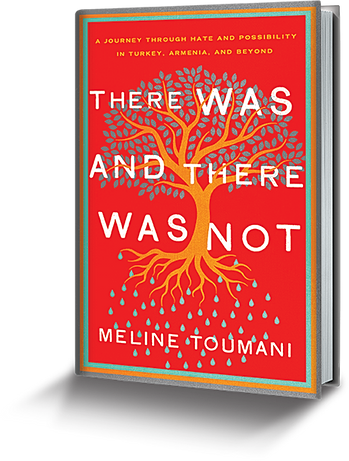
Toumani is an Armenian-American who was born in Iran. Growing up, her identity as an Armenian is shaped around the genocide of 1915, and Turks are villains of near-mythological status. But as a young adult, she begins to wonder whether this focus on Armenians’ historical victimhood is doing them any good. Eventually she hatches a plan: She will go to Turkey, learn Turkish, and see if there isn’t some way everybody can live together in peace. This leads to one of the best opening lines I’ve ever read:
I had never, not for a moment, imagined Turkey as a physical place.
Her two years in Turkey are a lesson in the complexity of ethnic conflict, which is both more and less tractable than she had imagined. The Turks are not monolithic, and she easily relates to the other ethnic minorities: Kurds, Jews, and even the few remaining Armenians. Among the ethnic Turks, some are nationalistic and anti-Armenian, some are open-minded and egalitarian, and most are basically decent people who have never thought very hard about the slanted history they were taught in school (where Armenians are the villains of 1915 and Turks the victims) or the unfair advantages Turkish society gives them over Kurds, Jews, and Armenians.
The countryside is beautiful, Istanbul is exciting, and the culture has many charms. And yet … Toumani is always a second-class resident. Her Armenian-ness hangs in the background of every social interaction as something to be confessed and explained. (She looks more Turkish than American, but speaks with a foreign accent. Where is she from really?) The Turkish attempt at color-blindness (“We are all Turks”) is more obliterating than accepting. And even when the government preserves bits of Armenian history and culture (Armenia was a regional power from antiquity until around 1000 AD) the ethnic adjective Armenian is replaced by the geographical adjective Anatolian, as if some nameless people had occupied this land before the Seljuk conquest.
She sees another side of prejudice when she attends the pan-Armenian games in Yerevan. When the competitive juices get flowing, the anti-Turkish slurs Armenians have repeated since birth are easily brought out and used against the team from Istanbul, even though they belong to the Armenian diaspora as much as the Parisians and Argentinians do.
Toumani realizes it is time to come home to America when she recognizes her own case of Stockholm Syndrome: She has begun to internalize her second-class status. Immersion in Turk-dominated society is making her yearn for the approval of the ethnic Turks and treat them as the masters.
I can’t read this book through Armenian or Turkish eyes, but as a white American I find it worthwhile precisely because I have no dog in this fight. Issues of bias and historic victimhood and systemic privilege are fraught with guilt, anger and other emotional baggage when Americans try to think about them in our own historic context of black and white. Toumani has given us a rare opportunity to watch similar conflicts play out in a context where we can be more objective.
Daniel Sillman interviews Matthew Avery Sutton, author of the new book American Apocalypse. Sutton re-interprets Evangelical Christianity for us outsiders, and claims we’ve grossly underestimated the importance of believing Jesus is coming back any day now. Oversimplifying just a little: Mainstream Christians are liberals because they’re trying to build the Kingdom of God on Earth. Evangelicals are conservatives because they think the Antichrist is about to take over.
[T]he apocalyptic theology that developed in the 1880s and 1890s led radical evangelicals to the conclusion that all nations are going to concede their power in the End Times to a totalitarian political leader who is going to be the Antichrist. If you believe you’re living in the last days and you believe you’re moving towards that event, you’re going to be very suspicious and skeptical of anything that seems to undermine individual rights and individual liberties, and anything that is going to give more power to the state.
Well, except giving government the power to control reproduction. Maybe the full book explains that.
and you also might be interested in …
The Democrats’ problems with the white working class may make more sense that What’s the Matter With Kansas? would have us believe. Thomas Edsell lays out a simple narrative, which I’ll summarize: A generation ago, the unspoken social contract of the white working class was that they would acquiesce to class oppression if they at least got the benefit of racial oppression. By fighting for racial equality while letting class inequality get worse, Democrats broke that agreement. Now the white worker has to compete with non-whites at home and abroad, but is also under his boss’ thumb even more than in the past.
That sense of victimization comes out as resentment of non-whites, which on the surface makes no sense, because whites still have unfair advantages. But the real root isn’t “Those people have it better!”, it’s “We had a deal!”. The terms of that deal are indefensible (because racism is indefensible), so it can’t be argued in public or even consciously acknowledged. But the resentment is still there.
While I’ve been working on a big mythic vision for liberalism, Mark Bittman is taking more of a bottom-up approach: Can we link together all the movements that are getting people into to the streets? How do we see raising the minimum wage, unionizing Walmart, controlling the police, taking the country back from Wall Street, and fighting climate change as one big movement?
Think Progress published a list of 21 non-white or mentally ill people who have been killed by police under questionable circumstances in 2014.
Whenever there’s an unusual weather-related event, people start asking whether climate change “caused” it. Slate‘s Eric Holthaus explains why that’s a dumb question, with the California drought an example.
I’m a sports fan, so I make sports analogies. In 2001, when he was turning 37 and should have been just about over the hill, Barry Bonds hit a record 73 home runs, having never hit more than 46 homers in a season during his prime. The common explanation is steroids. But still: It makes no sense to look at any one of those 73 homers and ask whether steroids caused it. Barry was a power hitter before the steroid era. Maybe this particular home run is one he would have hit anyway.
Ditto with droughts, hurricanes, and the like. Climate change juices up bad weather events. Without it we’d still have some, but not as many and not as bad. Is this particular event one of the extra ones? Until we establish communication with parallel universes, there’s no way to know.
I only know one exception to that rule: If climate change raises sea level by a foot, then it makes any storm surge a foot higher. If you live near a coast, that may determine whether you get flooded or not.
Chris Mooney explains why the price of oil is crashing: Not so much an increase in supply as a slow build-up of supply followed by an expected decrease in demand. Kevin Drum thinks this is very good news for the economy.


 One major theme of George Orwell’s



 The Weekly Sift