The Call Remains

The movement began as a call to end violence. That call remains. … My prayers are with the victims of all violence.

– DeRay McKesson, a Black Lives Matter activist

This week’s featured posts are “A Real Pro-Police Agenda is Liberal” and “Mike Pence. I’ve heard that name before.

Recently everybody has been talking about the police officers killed in Baton Rouge and Dallas

As I often note, a weekly blog is not a good place to cover breaking news. We’re still figuring out what happened yesterday in Baton Rouge, and the first details that come out in such situations often have to be revised later. Watch the Wikipedia page for developments.

In both Baton Rouge and Dallas, though, it looks like the shooters are black veterans of the Iraq or Afghanistan wars. Who knows if this was really their thought process, but it’s not hard to imagine one: If you’ve been trained to solve problems with violence, what are you going to do when you see your people being killed and the system failing to call anyone to account?

The important thing at a moment like this, I believe, is to avoid assessing collective guilt and assigning it to individuals who merely resemble the wrong-doers you feel threatened by. That was one of the two big mistakes Dallas shooter Micah Johnson made: The police he murdered had nothing to do with killing Alton Sterling or Philandro Castile. (The other mistake was taking the law into his own hands.)

Assigning Johnson’s or Gavin Long’s guilt to the entire Black Lives Matter movement would a similar mistake. BLM is not about killing police or killing whites; it never has been. BLM is a response to a society that seems not to value black lives. Police killings are only a piece of that story: Across the board, problems are taken less seriously if they mainly affect blacks. The egregious cases we’ve been seeing, of police killing black men on video and facing no consequences — matching stories that have been told in the black community for decades, but which were discounted by whites because there was no evidence (beyond the testimony of other blacks) — are simply the clearest examples of that larger issue.

Refusing to assign and punish collective guilt, though, doesn’t mean that we have to ignore systemic problems. Individual police around the country are not responsible for killing Alton Sterling, and anyone who attempts to punish them for it is expanding the problem rather than solving it. But there is a systemic problem in the way that American police departments deal with blacks, particularly young black men. There is also a problem with the tendency of police to cover up the wrong-doing of other police rather than uphold high standards.

Pressure to reform the way police departments work from coast to coast should not stop just because two individuals carried out collective vengeance.


The post-Dallas attacks on Black Lives Matter caused me to look back at the various BLM-themed posts I’ve written over the last year. I think they hold up pretty well; or at least I don’t see anything major I want to change. The main BLM-related Sift posts are

  • Samaritan Lives Matter, where the example of Jesus’s most famous parable illustrates why “All lives matter” isn’t the right slogan.
  • Rich Lowry’s False Choice, the false choice being that black communities can either have the current overly violent, racially biased kind of policing, or no policing at all.
  • Why BLM protesters can’t behave, the answer being that the rest of us ignore them when they make their case politely.
  • Justice in Ferguson, about the Justice Department’s report on policing in Ferguson

A post that doesn’t specifically mention BLM, but is still relevant, is “My Racial Blind Spots“.

and the Nice attack

Hard to believe this attack, where 85 people were killed and 303 injured by a man driving a truck, happened on Thursday. So much has happened since.

Am I the only one who sees the similarity between this and Stephen King’s novel Mr. Mercedes?

and Hillary and Bernie

It finally happened on Tuesday in Portsmouth, NH. Senator Sanders didn’t embrace Clinton’s candidacy with the enthusiasm of Elizabeth Warren, but he appeared on a platform with her and said the important words:

I have come here to make it as clear as possible why I am endorsing Hillary Clinton and why she must become our next president. Secretary Clinton has won the Democratic nomination and I congratulate her for that. … I intend to do everything I can to make certain she will be the next president of the United States.

The preliminary schedule for next week’s Democratic Convention has Bernie speaking on Monday.

and reactions to the FBI’s recommendation not to prosecute Hillary Clinton

FBI Director James Comey’s statement about the Clinton email investigation should not have surprised anybody who read my article “About Those Emails” last month. Comey concluded:

In looking back at our investigations into mishandling or removal of classified information, we cannot find a case that would support bringing criminal charges on these facts. All the cases prosecuted involved some combination of: clearly intentional and willful mishandling of classified information; or vast quantities of materials exposed in such a way as to support an inference of intentional misconduct; or indications of disloyalty to the United States; or efforts to obstruct justice. We do not see those things here.

To be clear, this is not to suggest that in similar circumstances, a person who engaged in this activity would face no consequences. To the contrary, those individuals are often subject to security or administrative sanctions. But that is not what we are deciding now.

Since that’s more or less what I predicted — not because I’m so brilliant, but because the experts I’ve been reading had already reached similar conclusions months ago — I am not scrambling to explain how Comey could possibly have made this decision.

However, pundits inside the conservative bubble (and many Sanders supporters who had latched onto conservative-bubble accounts to feed a desperate hope that Clinton might not be nominated) were shocked by this outcome, because they had concluded long ago that Clinton should be in jail and that Comey was exactly the kind of upright investigator to put her there. Unable to say, “I guess I had that wrong”, they came up with a number of creative theories about the corruption of Comey and Attorney General Loretta Lynch and President Obama, or about what other considerations could have motivated Comey’s actions.

This kind of thing has happened before: In the closing weeks of the 2012 election, dwellers inside the conservative bubble decided that the polls were all skewed, and so a Romney victory — nay, a landslide — was at hand. When reality reared its ugly head, conspiratorial explanations were required, like massive vote fraud in multiple swing states (most of which had Republican governors) that somehow produced no evidence other than Obama’s victory.

But instead of stretching to explain the failure of reality to live up to their expectations, surprised people might do better to consider the question raised by Ollie Garky on Daily Kos (later picked up by AlterNet): If events keep surprising me, shouldn’t I change my news sources? Back in 2013, Conor Friedersdorf suggested this criterion for comparing news sources: Who best equipped readers to anticipate the outcome that actually happened?


The Comey announcement does seem to have knocked Clinton down in the polls, so that in some polls the race is even now. (538’s weighted average still has her with a 3.6% lead.) I’m expecting that dip to be temporary, but we’ll see.

and Trump’s upcoming convention

My comments about Mike Pence have been spun off into a separate article.

A related topic is the ill-fated TP logo, which was inserted into the public discussion and then prematurely withdrawn about 24 hours later. Not only does the TP bring toilet paper to mind, but the penetration imagery was a little too suggestive. As she so often does, Samantha Bee took it all the way with an animated breaking-the-mattress GIF.

More seriously, there is the Republican platform, which TPM describes as defining “the party of Kris Kobach“. McCain and Romney tried to soften the hard-right positions of the base in order to make a better appeal to the general electorate, but the Trump campaign has gone all-in on the red-meat issues.

but we should pay more attention to the coup attempt in Turkey

which apparently failed. Most Americans think of Turkey as a country way over there that has little to do with us. But if Islam is going to find a synthesis between its religious traditions and Western secular values of democracy and human rights, Turkey is the most likely place for it to happen. If democracy is not going well there, it’s a very bad sign for the world.

It’s also hard to say whether the failure of the coup is good or bad for Turkish democracy in the long run. President Erdogan has been getting increasingly autocratic, but a military junta might have been worse.

Juan Cole sees both angles: He is encouraged that the people came into the streets to oppose the army, yet he recognizes that “President Erdogan looks at the system as an elective dictatorship.” In a later post he says:

President Tayyip Erdogan is taking advantage of the failed coup against him to purge the judiciary and security forces of anyone who is lukewarm toward or actively critical of him.

and the UK’s assessment of the Iraq War

Unlike us, the United Kingdom decided to take an official look back at its involvement in the Iraq War, assess what went wrong, and see what could be learned. The result is the massive Chilcot Report, which I have not read. The best summary I have run across is in The Guardian. It paints an ugly picture. For example

the intelligence community worked from the start on the misguided assumption that Saddam had WMDs and made no attempt to consider the possibility that he had got rid of them, which he had.

The report finds that there was no imminent threat from Saddam Hussein, and that Prime Minister Tony Blair intentionally exaggerated the evidence that there was. Eight months before the invasion, when there were still many options other than war, Blair promised President Bush “I will be with you, whatever.” The invasion began with essentially no plan for putting Iraq back together.

We can only wonder what a similar investigation into the Bush administration would find. But Congress has been unable to squeeze such a probe into its tightly packed schedule of eight Benghazi investigations.

and one thing Trump said

I know, it seems impossible. The media hangs on his every word, so how could something he said deserve even more attention? But this does. In the aftermath of the Dallas shooting (discussed above) Trump told Fox News’ Bill O’Reilly:

When somebody called for a moment of silence to this maniac that shot the five police, you just see what’s going on. It’s a very, very sad situation.

It wasn’t a slip of the tongue. He repeated the claim at a rally in Indiana:

The other night you had 11 cities potentially in a blow-up stage,” he said. “Marches all over the United States—and tough marches. Anger. Hatred. Hatred! Started by a maniac! And some people ask for a moment of silence for him. For the killer!

Given Trump’s record, it probably won’t shock you to learn that the event he is talking about never happened: No one called for a moment of silence to honor Dallas cop-killer Micah Johnson. But it’s worse than that: No one — including his campaign — can even explain where he got the idea. To all appearances, he just made it up.

Why would somebody do that? And then to imply that the BLM marches were “started by a maniac”, as if Johnson were a central figure in the Black Lives Matter movement, or the post-Dallas marches were intended to carry on his work (when in fact all public statements by march organizers denounced the killings) … why would anybody make up a Big Lie that incendiary?

Josh Marshall comments:

These are the words – the big lies rumbling the ground for some sort of apocalyptic race war – of a dangerous authoritarian personality who is either personally deeply imbued with racist rage or cynically uses that animus and race hatred to achieve political ends. In either case, they are the words of a deeply dangerous individual the likes of whom has seldom been so close to achieving executive power in America.

and you might also be interested in

Ark Encounter, the Kentucky theme park that presents Noah’s flood as a historical event, is back in the news.

The Freedom From Religion Foundation sent letters to a thousand public school districts in nearby states, warning that a class field trip to the Ark would violate separation of church and state by inappropriately proselytizing for a religious sect. (That ought to be obvious, but apparently to some people it isn’t.)

Ken Hamm, who is behind both the Ark and the Creation Museum, struck back by offering reduced admission to public school groups. We’ll see if anybody takes him up on it, and what court cases result.


Paul Ryan had his picture taken with the Republican interns of the House. Did you ever see so many white people in your entire life?


Architect Andrew Tesoro relates his experience of doing business with Donald Trump. It’s a story repeated by many small businessmen — at least 60 by the count of USA Today — who deliver their products and then get bullied into accepting a much smaller payment than the one Trump had agreed to. (Tesoro isn’t one of those 60, because he was intimidated out of filing suit.) “His definition of winning is making sure the other guy loses. … You can’t run a country the way Mr. Trump has run his businesses.”

and let’s close with something awe-inspiring

Time-lapse video of how storms form and move.

A Real Pro-Police Agenda is Liberal

Police are killing and being killed because we keep putting them in impossible situations. Let’s stop.


Americans love to tell stories with well-marked villains. For the last two or three years, my social network of liberal friends has been telling a lot of stories about black men killed by police, and in nearly all of them the police are the villains: They strangled Eric Garner as he gasped “I can’t breathe.” They gunned down 12-year-old Tamir Rice with barely a thought. They shot Alton Sterling at point-blank range, while two officers were holding him down. They killed John Crawford III in a Walmart where he was planning to buy a toy gun.

Conservatives have also been telling police stories, but theirs have different villains. Sometimes they make villains out of the same people who were victims in the liberal stories: Michael Brown was a thug, and Tamir Rice was acting like one. Freddie Gray injured himself to make police look bad.

Sometimes the villains are the civil rights leaders who mobilize a community to protest, the people Bill O’Reilly calls “the grievance industry“.

Sometimes the villains are the Black Lives Matter protesters and their allies — people like me and my liberal friends, who are “anti-police”. When gunmen killed police in Dallas on July 7 and in Baton Rouge yesterday, such story-tellers felt validated: This is what happens when you villainize police. People start killing them.

Occasionally, the villains are fantasy people who exist only in the perverse imaginations of hate-mongers like Donald Trump. When Black Lives Matter protests continued after the Dallas shooting, he made up this lie about people who honor the assassin:

The other night you had 11 cities potentially in a blow-up stage. Marches all over the United States—and tough marches. Anger. Hatred. Hatred! Started by a maniac! And some people ask for a moment of silence for him. For the killer!

Not even his campaign can explain where he got that or what he based it on. But of course he offers no apology. (A more typical BLM response to the shootings came from DeRay McKesson, who had been arrested in the demonstrations immediately after Alton Sterling’s death: “The movement began as a call to end violence. That call remains. … My prayers are with the victims of all violence.”)

Three narratives. In short, what we’ve been seeing in the media are two opposing narratives: the liberal “anti-police” narrative in which police are killing young black men for no good reason, and the conservative “pro-police” narrative in which young black men deserve to be killed, and unscrupulous political leaders get publicity by raising anger against the police, resulting in unstable minds deciding to kill them.

I want to propose a third narrative that supports both the police who are trying to do their jobs without killing or being killed, and also the communities of color that feel constantly harassed by police and in danger of violence from them.

Unfortunately, the villains in my story are most of the rest of us, who are in denial about the true state of our country: We throw police into the gap between our Fourth-of-July fantasies and the unjust society we actually live in. We tell them to make those contradictions work, and when they can’t we go looking for someone to blame: either the police themselves, or the victims of injustice they were supposed to keep under control so that we don’t have to notice them.

Scandinavia and Missouri. When liberals argue that violent police are not necessary, we often point to small Scandinavian countries. In Finland, for example, police handle about a million emergency calls every year. In 2013, they dealt with those million situations while firing exactly six bullets. With 5.4 million people, Finland is small as countries go. But it’s bigger than Chicago, and one Chicago police officer fired 16 shots into Laquan McDonald in 13 seconds.

Or take Iceland, which has had one fatal police shooting in its 71-year history. Sure, it only has about 330,000 people, but it’s bigger than Stockton, California, which had three fatal police shootings in the first five months of 2015.

That sounds bad for American police. But I want to propose a thought experiment: What if those non-trigger-happy Finnish and Icelandic police had been covering Ferguson, Missouri, the St. Louis suburb where Michael Brown was killed? The reason I choose Ferguson for my experiment is that we know a lot about what Ferguson police were asked to do, based on the Justice Department reports that got written after the Michael Brown shooting. Here’s what I think is the key sentence:

Ferguson’s law enforcement practices are shaped by the City’s focus on revenue rather than by public safety needs.

Let me flesh that out a little: Like several other near suburbs of St. Louis, the kind populated by the people who get pushed out of city centers as they gentrify, Ferguson doesn’t have a sufficient tax base to support schools, street repair, and the other services it needs to offer. Neither St. Louis County nor the State of Missouri wants to take responsibility for this situation, so Ferguson and various other towns came up with what probably seemed like the only solution: They’d use the police and the municipal courts to squeeze fines out of poor people.

In other words, the relationship between the police and the mostly black community was designed to be adversarial, a predator/prey arrangement: The purpose of the police was to find violations they could ticket people for, and the purpose of the courts was to make compliance difficult, so that small fines could be multiplied into ongoing revenue streams. (John Oliver did a great job describing how this system works in municipalities across the country.) When citizens found themselves unable to pay their fines, the police would be called on again to bring them to what was essentially a debtor’s prison.

I’m willing to bet that the Finnish and Icelandic police have no experience making a system like this work. Could they do it without ratcheting up their level of violence? I’ve got my doubts.

My point is that if you watched the Ferguson protests unfold and told a story that made either Michael Brown or Darren Wilson the villain, you missed the bigger picture: Both of them were victims (though of course not equally). Michael Brown had to live (and then die) in a hellish community, and Darren Wilson’s job was to enforce that Hell, and keep it from leaking out and bothering the people who live in more privileged communities.

When social services fail. If you Google “mentally ill man killed by police in parents yard”, you don’t just get one story. That’s a generic description of something that happens over and over. The mother of a victim in Denver described her experience: “I told the cops he was mentally ill. He was schizophrenic. I called for help. I didn’t call for them to kill him.”

The ACLU notes the larger pattern:

Many people recognize the names Eric Garner, Michael Brown, and Tamir Rice, African-American men, and a child, killed by the police.

Less well known are the names Milton Hall, James Boyd, Ezell Ford, Kajieme Powell, and Tanisha Anderson.

They are people with psychiatric disabilities – most of them people of color – shot and killed by police. In many cases, police were responding to requests for assistance to get the person mental health care.

Teresa Sheehan’s name might also be included in the list. In 2008, she was shot five times by police after her caseworker sought assistance in getting her to the hospital for treatment. She, unlike the others, survived. And she sued.

Schools increasingly have been using police to handle discipline problems. Cops don’t understand kids any better than teachers — probably less so — but they are empowered to use more force. So they do.

As we cut taxes and cut the government services that they fund, police are left to pick up the slack. If you find yourself in a situation you can’t handle, you call 911 and they send the police. The officers who arrive probably have no more training to deal with the situation than you do, but they have no one to pass the buck to. They are not psychologists or negotiators, and the tools they have been trained to use are guns and tasers. The barked orders that will get compliance from a drug dealer may not work on a psychotic or a bratty middle-school student throwing a fit, but it’s what they know.

Sometimes it goes wrong.

Sentinels of the gated community. In the Ozzie-and-Harriet fantasy of middle class America, police are seldom necessary, and when they do show up, they help find a lost child or support the community in some other way. Citizens in this vision of America comply with laws voluntarily, because the laws were made by and for people like them. If you find injustice, you just tell someone, and eventually the word gets to people who can solve the problem.

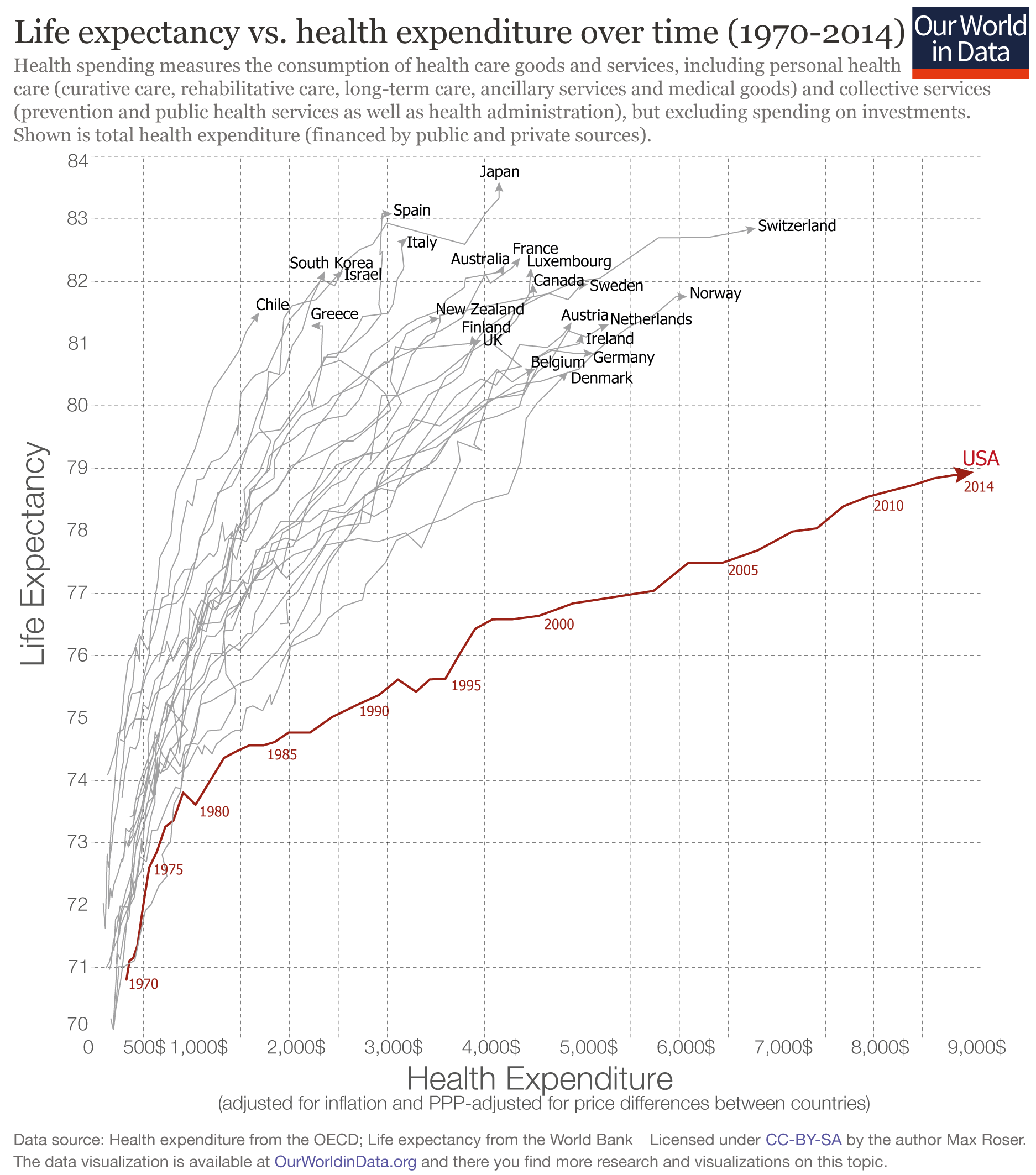
If the United States was ever that country, it isn’t now, and the situation is getting worse. Again, let’s compare to Finland and Iceland: In a list of 34 OECD countries, Iceland had the lowest level of income inequality after taxes and transfers, with a GINI coefficient of .244. Finland was a bit higher at .260. The United States was the second-most-unequal country (after Chile, a country we don’t usually compare ourselves to), with a .380 coefficient.

When 17 of those same countries are compared according to a standard measure of social mobility (the correlation between the wages of fathers and sons), the United States is the fourth most immobile society. Iceland is not listed, but Finland has the third most fluid society, after fellow Scandinavian countries Denmark and Norway.

As our distribution of wealth and income gets more skewed, our restrictions on campaign contributions are being dismantled, with the result that the concerns of middle-class people — much less the poor — draw less and less attention from government officials. A study by two Princeton political scientists concluded:

When a majority of citizens disagrees with economic elites and/or with organized interests, they generally lose. Moreover … even when fairly large majorities of Americans favor policy change, they generally do not get it.

In short, we are becoming a society of haves and have-nots. The lack of social mobility means that if you are born a have-not, you have less and less chance of doing anything about it. And if you can get a lot of have-nots to support changes to make the system fairer … you probably still can’t do anything about it.

In that situation, the case for voluntarily obeying the laws gets less and less compelling. And Sheriff Andy of Mayberry has to get replaced by people who look a lot scarier.

A real pro-police agenda. The phrase “pro-police agenda” conjures up images of bigger budgets, ever more militarized hardware, and decreased accountability when bad things inevitably happen. But that’s “pro-police” only if you believe that police actually want the role we have given them, or that a future as paid thugs for the 1% appeals to them.

But I suspect a lot of American cops envy those Finns who only had to fire six bullets in a million emergency situations, or the Icelanders who only had to kill one person in 71 years.

That’s not some magic of the Northern climate, it’s democratic socialism. It’s the best public school system in the world. It’s mental healthcare integrated into a national healthcare system that interacts with schools and businesses. It’s tuition-free universities. It’s an economy where your parents’ income doesn’t decide your caste. It’s a political system not dominated by money. It’s refusing to segregate poor people into dysfunctional communities.

We could do all that here. And if we did, the United States would be a much easier country to police.

Mike Pence. I’ve heard that name before.

He hasn’t come up often, but the examples are illuminating.


Friday, a few days before the Republican Convention that begins today in Cleveland, Donald Trump announced his vice presidential choice: Governor Mike Pence of Indiana.

This is a liberal blog and I make no secret about rooting for Democrats. After all, my commitment to my readers is to be honest, not unbiased. (I’m skeptical of people who believe they can be totally objective.) Being honest, I confess to this perceptual bias: Whenever the Republicans nominate someone, all his previous actions seem to take on a sinister aspect, and I find myself suddenly realizing that he is the worst human being since Hitler. (“How did I miss that until now?” I wonder.)

So to discipline my thinking, I thought I’d look back and see where Pence has come up in the The Weekly Sift in the past, before I knew he’d be a national candidate. Two kinds of Republicans make frequent appearances in the Sift: decision-making leaders like Paul Ryan and fringe voices like Sarah Palin or Louie Gohmert, who are constantly saying things too crazy to ignore. (Ted Cruz is a bit of a hybrid: a leader of the crazy faction.) So where and when has Pence shown up?

I found two mentions of him by name and a third story I somehow left his name out of, even though he was right in the middle of it. That verified my initial impression that he has been around a while and done a few things, but so far has had little historical significance.

The first mention is just two sentences and falls into the crazy category: In March, 2009, when the economy was still plunging and even conservative economists were talking about a stimulus of some kind, Pence was urging Congress to push demand down further:

Indiana Republican Congressman Mike Pence knows just what to do in these times when nobody but the government is spending: “Freeze federal spending immediately!” I’m speechless.

The second is harder to pigeonhole: During the 2012 campaign, I was reviewing the bait-and-switch by which the Tea Party had focused on the deficit during the 2010 campaign, but then immediately pivoted to a right-wing social agenda once they took office. This 2011 Pence quote demonstrated that pivot:

Our economy is struggling and our national government is awash in a sea of debt. Amidst these struggles, some would have us focus our energies on jobs and spending. … I agree. Let’s start by denying all federal funding for abortion at home and abroad. The largest abortion provider in America should not also be the largest recipient of federal funding under Title X. The time has come to deny any and all federal funding to Planned Parenthood of America.

And my comment was:

Annual Planned Parenthood funding under Title X was about $70 million. Take that, trillion-dollar deficit!

In March, 2015 I didn’t name Governor Pence, but he was right in the middle of Indiana’s Christians-have-a-right-to-discriminate-against-gays law, summed up by this cartoon.

The law is basically identical to the one that Governor Jan Brewer — never known as a defender of gay rights — had just vetoed in Arizona, but Pence signed Indiana’s version. That left me facing the emptiness of my own threats:

How the heck am I going to boycott Indiana, when I was never planning to go there anyway?

(Ultimately, Indiana’s business community pushed the legislature to pass a second law, which mitigated some of the damage. Pence signed it.)

The GOP’s anti-science tendencies often come up in the Sift, but Pence has never been the national face of those issues, so I haven’t written about him in that context. However, I can’t conclude this article without mentioning a number of anti-science positions he has taken:

  • He won’t say whether he personally believes that evolution happened, but he wants public schools to teach the evolution/creation pseudo-controversy (“teach all of the facts about all of these controversial areas, and let our students, let our children and our children’s children, decide”), a back-door position through which tax dollars can be spent promoting scientifically baseless religious theories in science classes. This practice not only encourages the relativistic view that you can believe whatever you want about science, but also wastes classroom time that could be spent teaching actual facts.
  • Pence wrote: “Despite the hysteria from the political class and the media, smoking doesn’t kill.”
  • Pence wrote: “Global warming is a myth … the Earth is actually cooler today than it was about 50 years ago.” (This was not as obviously false when he wrote it in 1998 as it is today, but it was still false. At the time, you could cherry-pick your data (see the second graph in this link), compare an unusually cool 1995 against an unusually warm 1945, and claim they were about the same. But even then you had to know you were playing deceptive games with numbers.) In 2009 he claimed: “In the mainstream media, there is a denial of the growing skepticism in the scientific community on global warming.” (That “scientific” skepticism comes almost entirely from the fossil fuel industry. In the actual scientific community, the consensus is solid and growing in certainty.)

All in all, I have a hard time arguing with Steve Benen’s assessment (which he bases on the DW-nominate system of quantifying congressional voting records on a left/right scale) that Pence is “the most far-right running mate in modern history”.

Let’s put this another way: during his congressional career, Pence wasn’t just more conservative than Paul Ryan. His voting record also put him to the right of Michele Bachmann, Todd Akin, Steve King, and even Louie Gohmert.

So I’m going to restrain myself from speculating about where Pence ranks on the Hitler Scale of human beings. But if we’re looking at the Jan Brewer Scale of right-wing extremist governors, or the Bachmann/Gohmert Scale of crazy congresspeople, he might take it to 11.

The Monday Morning Teaser

The Baton Rouge shooting yesterday upended the post I had been writing about police reform. Posting it would be like: “Too bad about your friends and colleagues dying. Here’s how you’ve all been doing your jobs wrong.” So I’m scrambling a little this morning. What exactly is going to come out when is hard to predict.

One short post should be out soon. I did a search of past Sift posts to see where Mike Pence has come up before and what I said about him. I figured that was a way to keep myself honest, rather than just posting a knee-jerk reaction of “Trump picked him, so he must be pond scum.”

The result is “Mike Pence. I’ve heard that name before.” It should be out between 8 and 8:30 EDT.

I have a huge number of short notes for the weekly summary — I picked an eventful week to go on vacation — so I could just stop with the one short featured post. But it feels cowardly to ignore the issue most of us are churning over: police killing and being killed. So I’m going to wing something difficult. I want to step back to the larger perspective, in which both police and young black men are victimized by an unjust society that pits them against each other. The working title is “A Real Pro-Police Agenda is Liberal”. Wish me luck on that; it’s still all in my head and could fall completely apart before the glue sets.

Then there will be the summary: Republican convention, Turkish coup, Nice attack, Bernie endorses Hillary, reactions to Hillary’s non-indictment, Baton Rouge, Chilcot report on Iraq. Your typical two weeks in the 21st century.

Dogma and Storm

No Sift next week. The next new articles will appear on July 18.

The dogmas of the quiet past are inadequate to the stormy present.

– President Abraham Lincoln (1862)

It is preposterous to suppose that the people of one generation can lay down the best and only rules of government for all who are to come after them.

– President Ulysses Grant (1885)

This week’s featured post is “Are we overdoing the Founding Fathers?

This week everybody was talking about terrorist attacks in the Muslim world

In Saudi Arabia, Iraq, Bangladesh, and Turkey. Note how much less impact these attacks had on the American news cycle than attacks in Europe usually do. That’s a measure of implicit bigotry that I can see in myself: I have to struggle against a shit-happens reaction to human tragedies that don’t involve Americans or Europeans, as if Bangladeshi lives were just a different currency than European lives, with an unfavorable exchange rate.

and two pseudo-scandals that may finally be reaching their conclusions

The House Select Committee on Benghazi finally issued its 800-page report, which not even Chairman Trey Gowdy could pull spin as a revelation:

I simply ask the American people to read this report for themselves, look at the evidence we have collected, and reach their own conclusions.

Vox‘s Jeff Stein accepted that challenge, and concluded that the report would only impress people who came to it with the assumption that the Obama administration must be up to something sinister.

Nothing in it convinced me of a devastating scandal. The scales did not fall from my eyes to expose the secret malevolence of the Obama administration.

In other Clinton-pseudoscandal news, Hillary was finally interviewed by the FBI. The FBI has said all along that her interview would come near the end of the investigation, so maybe that will soon be over as well. I have not seen anything yet that makes me want to revise my opinion from three weeks ago.

Update: FBI says no charges.

and the Supreme Court’s abortion decision

Remember that anti-abortion law Wendy Davis filibustered in the Texas legislature in 2013? It passed in the next session, and now the Supreme Court has invalidated it because it places an “undue burden” on a woman attempting to exercise her right to have an abortion.

ProPublica pulls together the best analyses of the decision. From a layman’s point of view, here’s what I think it means: Legislatures and courts represent equal branches of government, so typically judges make an assumption of good faith when they analyze a law. In other words, judges assume the legislature is trying to do what it says it is trying to do, and they read the law within that frame.

However, there are certain situations where legislatures again and again have passed bad-faith laws. Racial discrimination has been the biggest example; for decades the rationales kept changing, but the results were always that the races stayed separate and minority races drew the short straw. Eventually, the Supreme Court developed the levels-of-scrutiny doctrine that allowed it to reject consistent legislative bad faith.

That doctrine has never applied to abortion laws, but the Texas law in this case is a classic bad-faith law: It purports to be about women’s health, but the actual intent is to impose so many hard-to-satisfy regulations on abortion clinics that most of them would go out of business. Outside the big cities, that would make abortions so hard to get in Texas that women without much support or many resources just wouldn’t be able to get them.

The Court’s decision never uses the phrase bad faith, but that’s what the decision is about. The Court has finally lost patience with bad-faith regulation of abortion clinics. Bad-faith anti-abortion laws all over the country should start coming down.

and Elie Wiesel

who died Saturday.

I’ve been looking for the perfect Elie Wiesel retrospective and not finding it. I never met Wiesel or even saw him speak in person, but he came to symbolize two important things for me.

First, in regard to the dark side of life, we all have a narrow path to walk: To one side is denial, the temptation to say that because the bad things are not happening to me, at least not at the moment, they aren’t real. They won’t happen because they don’t happen and they haven’t happened, even if some people say they did. To the other side is the temptation to dismiss or debunk all higher values, and so give in to cynicism, bitterness, or depression. Wiesel, to me, represents the hope that it is possible to walk that path without sliding off in either direction: We don’t have to whitewash the world to love it, or imagine that people are wonderful in order to have compassion for them.

In terms of religion, to me Wiesel represented a balance between traditional religious values and modern humanism. He often talked about God, but never simplistically or dogmatically. The one clear thing the Holocaust had taught him was that God cannot be counted on to save us. If the world is to avoid spiraling into ever deeper darkness, human beings will have to step up and see to it.


Bernard Avishai’s Wiesel piece in The New Yorker starts well, but ends up focusing on Wiesel’s reluctance to confront Israel about its treatment of the Palestinians. I get where he’s coming from and agree with him on the substance, but I have more of a nobody’s-perfect reaction. I hope for a more generous response when I die, so I feel obligated to extend that generosity to others.

but not enough people are paying attention to this article

Most progressives regret NAFTA, feel an instant antipathy to any action of the WTO, and oppose ratification of the TPP. At the same time, it’s one of those obvious Econ-101 truths that trade is good. Just as no individual can hope to be self-sufficient at a level much above subsistence, no country can truly prosper by cutting itself off from the rest of the world.

So a blanket opposition to any and all trade agreements can’t be the right progressive position. If only someone would lay out some general principles of a positive progressive trade policy. Well, Jared Bernstein is taking a whack at it.

and you might also be interested in

Good environmental news is so rare, you shouldn’t miss it when it happens.

Remember the hole in the ozone layer? Well, three decades after countries started banning the chemicals destroying it, the ozone layer is on the mend, according to a study published Thursday in the journal Science.


Full scale 2016 coverage begins with Nate Silver’s first general election forecasts. He started Hillary Clinton with about an 80% chance of winning, now down to 77%. Nate explains his thinking here.

He offers three different models, one based only on polls, one based on other factors like economic data, and a third projecting what would happen if the election were today. (Look in his left-hand column for the buttons that choose the model.) They allow you to look at different kinds of uncertainty. The if-today model, which he calls the Now-cast, only reflects the uncertainties in polling: If the election were held today, a candidate who has Hillary’s current lead in the polls would win 85.5% of the time. The other two models also reflect uncertainties of events, what we might call the shit-happens factor. Polls in June can only tell you so much about what will happen in November, which is what gets Clinton’s win probability down to 80.3% in polls-only and 73.5% in polls-plus.

The models are constructed in such a way that they will converge by election day.


While we’re on polls, the NYT’s Nate Cohn talks about the different assumptions and corrections that can go into polls, and how they can go wrong. In a separate article, Cohn discusses conspiracy theories about vote fraud:

There are plenty of good reasons for people to think the U.S. election system doesn’t work, even if there are basically zero reasons to think it’s “rigged” or that there’s multistate election fraud.


I’m not sure how I missed “I’m Angry! So I’m Voting For Donald Trump” when it came out three months ago, but it’s still accurate. At the time, Klavan’s eventual conclusion to “vote for someone else, who would be, like, a better president” probably meant some other Republican. (The Daily Wire is a conservative web site, after all.) But it works just as well for Hillary.


TPM’s analysis of Trump’s fund-raising problems is interesting. So far, there’s still no confirmation of his pledge to forgive the loans he has made to the campaign.


The Obama administration has admitted to killing between 64 and 116 civilian bystanders in drone strikes outside war zones. Outside organizations have higher estimates. Long War Journal estimates 158 civilian deaths in Pakistan alone.


A draft of the Democratic Platform is out.


Governor Jerry Brown just signed a slew of new gun-control laws in California. To me the most interesting one is the ban on magazines that hold more than 10 bullets, because it requires gun-owners to do something specific: turn those magazines in or otherwise dispose of them. I wonder how many will comply, and how aggressively California will enforce the law.


George W. Bush was historically unpopular when he left office, but his fans claimed that history would vindicate him. (I argued against that view.) So far, not so much. Noted presidential biographer Jean Edward Smith (whose previous books made the case that Eisenhower and Grant were under-appreciated) has a new book Bush, which ends with this line:

Whether George W. Bush was the worst president in American history will be long debated, but his decision to invade Iraq is easily the worst foreign policy decision ever made by an American president.

That doesn’t sound much like vindication.

and let’s close with something awesome

Earth isn’t the only planet to have an aurora phenomenon. Here, the Hubble space telescope spies one on Jupiter.

Expect gobs of amazing Jupiter photos this week as the Juno probe arrives.

Are we overdoing the Founding Fathers?

When we turn Washington, Jefferson, Madison, and Hamilton into divinely inspired prophets, our political disagreements become religious schisms.


We Americans love our Founding Fathers, especially on the Fourth of July. How did you honor them over the weekend? Did you go out and hear a speaker praise them? Watch 1776 on TV? Listen to the Hamilton soundtrack, or read the best-selling biography it was drawn from? Call up HBO’s John Adams mini-series on demand?

Or maybe this year you did it up right and took the kids to the Washington and Jefferson Monuments near the Capitol, or to Independence Hall in Philadelphia, or even to the Founders’ holiest shrine, Colonial Williamsburg, where Washington, Jefferson, and the other great Virginians still give speeches and answer your questions every day.

Personally, I devoted a chunk of the weekend to a book that asks whether we’ve overdoing it, or maybe just doing it wrong: The Jefferson Rule: how the Founding Fathers became infallible and our politics inflexible by David Sehat. [1]

Looking around our current political landscape, it’s not hard to find examples of people going overboard in ways that embarrass the Founders’ memory. The WWFFD (“What would the Founding Fathers do?“) billboard above comes to us courtesy of fringe congressional candidate Rick Tyler, whose more famous billboard instructs us to “Make America White Again“. As they seized the headquarters of a federal wildlife refuge and held it by force, the Bundy militamen waved tiny booklets of the Constitution — as annotated by right-wing crank W. Cleon Skousen. “What we’re trying to do is teach the true principles of the proper form of government,” Cliven Bundy told the L.A. Times. Apparently America is so far gone from the Founder/Skousen vision that this teaching can only be done by heavily armed men threatening to shoot any officials who come to enforce the law.

Political fundamentalism. If you’ve ever paid attention to debates between fundamentalist sects — be they Christian, Islamic, or whatever — this is what they sound like: One particular interpretation of sacred scripture is projected onto the text, as if it were literal and inescapable. Anyone who reads it differently must be an infidel; to entertain their heretical ideas, even briefly or for the sake of argument, is flirting with damnation.

Voting cannot resolve such conflicts. At some point you either have to let an issue go or resort to violence.

That fundamentalist style in American politics is not just a fringe phenomenon. Even as he constructed justifications for torture and placing the decisions of the unitary executive beyond the reach of Congress, high-ranking Bush-administration legal adviser David Addington carried a well-worn pocket Constitution with him everywhere. In the 2016 Republican presidential primary campaign, one candidate after another cast himself as the pro-Founder, pro-Constitution candidate — as if President Obama led an anti-Founder, anti-Constitution party. Ted Cruz, for example, made “Restore the Constitution” one of the key planks of his campaign, and Donald Trump said, “The Constitution of this country has been absolutely riddled with bullets from the Obama administration.”

To such opponents, President Obama is not a constitutional scholar with different — and discussable — interpretations, he’s an infidel. His actions are not based on a different understanding of the laws, they are “lawless“.

Ironically, such a heresy-avoiding and heresy-denouncing conversation is a far cry from the kind of debate the actual Founders had at the Constitutional Convention, where everything from a new monarchy to the abolition of the states was open for consideration.

Such hero-worship demands that the human and historical flaws of the Founders be papered over. They weren’t slave-owners who made sure the founding documents protected their human property, they “worked tirelessly until slavery was no more in the United States“. If they reserved the vote for white male property owners like themselves, they were right to do so. To the extent that subsequent generations have altered their system — say, by letting the voters rather than the state legislatures elect senators — we should change it back.

America the Exceptional. Those of us who have lived our entire lives in the United States have a hard time recognizing how strange our Founder-worship is. But other democracies don’t talk this way. From time to time French politicians may still invoke the Liberty-Equality-Fraternity ideals of their Revolution, but they don’t feel obligated to explain away the Reign of Terror. Rousseau and Voltaire still get quoted occasionally, but not as holy writ.

The English understand their evolution towards democracy as a long messy process that remains unfinished. King John stumbled his way into the Magna Carta, which was a great advance in its day, but not a timeless capital-T Truth. No one expects a proof-text from Edmund Burke or John Locke to end a debate once and for all. And Germans are more likely to quote their history as a cautionary tale than as Golden Age that needs restoration.

Maybe that’s healthy.

Locating the problem. Sehat’s criticism of the WWFFD approach to contemporary politics has two main parts:

  • It’s false history. The Founders were not a collective consciousness with a single point of view. The Constitution is full of compromises, and its authors began arguing about its meaning almost immediately. [2]
  • It’s destructive. Policy disagreements are hard enough to resolve without turning them into schisms of religious intensity. Republics depend on the ability of conflicting factions to work things out. That’s much harder if you view your opponents as infidels disloyal to the whole idea of America.

What would the Founders do? They’d argue. If the Founders really had formed a solid consensus around a well-worked-out worldview, the Washington administration would have been a time devoid of political tension. After all, the first Congress and the first cabinet didn’t have to ask what the Founders would do; they were the Founders.

In actual history, though, Washington presided over factions intriguing against each other, and many of their disagreements are still with us.

For example, today one of the marks of faithfulness to the Founders’ vision is supposed to be a “strict construction” of the Constitution, limiting the powers of the federal government to the ones very specifically granted in the text. For example, this is the essence of the conservative critique of ObamaCare: The Constitution nowhere mentions a power to force citizens to buy health insurance.

On the surface the strict-construction folks seem to be on firm ground. After all, the very phrase strict construction goes back to one of the holiest of the Founders, Thomas Jefferson. However, Jefferson coined that phrase in an argument with another ranking member of the Founder pantheon: Alexander Hamilton, who had already coined the phrase most often used to oppose strict construction: implied powers.

They were arguing about Hamilton’s proposal to establish the Bank of the United States. Secretary of State Jefferson’s reading of the Constitution did not see any bank-establishing power there. But Treasury Secretary Hamilton argued that the Constitutional Convention — where he had been a delegate and Jefferson hadn’t — had never intended to spell out every detail. In his view, whenever the Constitution gave the federal government responsibility for an area of governance, it also implicitly granted it the powers necessary to fulfill those responsibilities.

Hamilton’s job would have been impossible without such implied powers, and he had already exercised them on numerous occasions. The Constitution had, for example, given Congress the power to impose a tariff; it had done so, and Hamilton was collecting it. But the Constitution never specifically mentioned the power to construct custom houses, hire port inspectors, or deploy a coast guard against smugglers — which he had also done, and without which the taxing power was meaningless. To him, the Bank of the United States was a similarly implied means to assigned ends: managing tax receipts, paying down the national debt, and supervising the currency.

This disagreement got as vicious as anything we see today: Jefferson painted Hamilton as a monarchist seeking to return us to British rule, while Hamilton painted Jefferson as a France-loving Jacobin, ready to unleash the guillotines on unsuspecting Americans.

Jefferson lost on the Bank, but won the larger political struggle: Hamilton died in middle age and his Federalist Party collapsed, while Jefferson and his Virginian successors Madison and Monroe held the presidency from 1801 to 1825. In practice, though, Hamiltonianism survived under the surface: Jefferson and the other Virginians often made use of implied powers of their own, as when Jefferson stretched the treaty-making power to allow the Louisiana Purchase.

It was during this period, in Sehat’s telling of the story, that the history of the Founding Era was rewritten into an orthodoxy: Jeffersonianism represented the one true vision of the Revolution. To this day, politicians who invoke “the Founders” as a unified consciousness are probably invoking the Founders as re-envisioned by Jefferson. [3] The more ambitious government of Hamilton — and the pragmatism of Washington, who often saw Hamilton’s approach as the best way to solve practical problems [4] — has been swept under the rug.

The fundamentalist style in American politics. The bulk of Sehat’s book is a history of how the Founders have been invoked in American politics through the centuries. He portrays the influence of this style of argument as pernicious: It has hardened disagreements and mythologized politics. Rather than discuss the pluses and minuses of available policy options, Americans have instead cast themselves as the true successors of the Founders’ vision and demonized their opponents as treacherous infidels. As a result, it has been easier for each side to overlook the other’s love of country, and harder to reach the compromises necessary to move forward together.

The most extreme example of Founder-fundamentalism hardening a position beyond any compromise was that of the Southern nullifiers and secessionists from Calhoun to Jefferson Davis. On the other side, Lincoln tried it both ways. In 1862 he told Congress “The dogmas of the quiet past are inadequate to the stormy present.” But his Gettysburg Address reclaimed the Founders for “a new birth of freedom”.

In the decades after the Civil War, the Founders lost their central position in political debate, as leaders saw little resemblance between their problems and those of the 18th century. As President Grant wrote in his memoirs:

It is preposterous to suppose that the people of one generation can lay down the best and only rules of government for all who are to come after them.

And Teddy Roosevelt proclaimed in his 1905 inaugural:

Our forefathers faced certain perils which we have outgrown. We now face other perils, the very existence of which it was impossible that they should foresee.

But 20th-century conservatism revived Founder rhetoric. President Harding is credited with coining the term Founding Fathers, and opposition to FDR’s New Deal built its message around the myth of a single founding vision. FDR’s central opponent, the Liberty League — representing the 1% of its day — invented the technique of defending “the Constitution” as a vague unity rather than discussing any particular passages, which might bear divergent interpretations.

The progressive temptation. Another point Sehat makes is that Founder-worship inevitably looks backwards, and so privileges conservative arguments over progressive ones. Progressives are often tempted to enter into WWFFD arguments, because the conservative mythologizing of the Founders so often approaches the ridiculous, and is easily refuted by reference to historical facts. Also, it can be hard to resist harnessing the mythic and symbolic power of the Founders to more worthy causes than the preservation of slavery or the further aggrandizement of the propertied class.

In the short term, this often is very effective, as when Martin Luther King framed the Declaration of Independence’s statement that “All men are created equal” as a “promissory note” that the nation had never redeemed for its black population.

But as much as the idealism of certain individuals from the Founding Era can still inspire, in the long run the ahistorical fusion of “the Founding Fathers” is going to work mischief on contemporary politics. Once welded together, the Founders are a slave-owning propertied class that wants to preserve its privileges, and is suspicious of spreading power to too many people. Any fair reading of the Constitution has to recognize the sheer distance its system places between the People and their government. The People are not supposed to govern themselves; they are supposed to recognize their betters, and choose them to administer the government. [5]

Government of the Living. Americans can rightly be proud of our founding generation. Most revolutions fail, and when time-honored systems are swept aside, they are often replaced by something worse. The first democratic revolution in England produced Cromwell; in France, Napoleon; in Germany, Hitler. The newly created 20th-century nations of Africa again and again saw the pattern of “one man, one vote, once”, as the winner of the first election saw no reason to hold a second.

The United States avoided all that. We have had our turbulent moments, including one of the bloodiest civil wars you’ll find anywhere. We have done terrible things, from the Native American genocide and African slavery through the many vicious and greedy strongmen we inflicted on third-world nations during the Cold War. And from time to time we continue to do terrible things, as global superpowers have always done.

But we have also often been a force for progress in the world or for liberation from tyranny, and our example has inspired progressive change in many other countries. The documents left behind by the Founders, and the example of their conduct, has a lot to do with that.

So absolutely, we should honor them. They deserve to have monuments in our capital, to appear on our money, and to have fireworks and parades in their honor every summer.

But they were men and women, not prophets or gods. The argued with each other, compromised on important issues, and in general did what they could with the problems of their day, just as every generation does. The did not foresee nuclear weapons, or even automatic ones. They had absurd medical theories, primitive notions of macro-economics, and self-serving beliefs about race and culture.

To the extent that their opinions still make sense today, we should quote them. But the fact that they believed something does not obligate us (or our opponents) to agree. Those who disagree with them should be met with evidence and arguments and a willingness to consider that their disagreement might be justified.

A government of the People must always be a government of the Living. If our ancestors would have disagreed with us, so be it. They had their day, and now we have ours.


[1] Ironically, I found the book at the Colonial Williamsburg Visitor’s Center.

[2] This mistake is typical of fundamentalisms. Fundamentalist Christians, for example, picture the early Christian community as a model of the pure doctrine they want to recover and preserve. But if you actually read the documents of the era, they are more theologically diverse than Christian churches are today.

Similarly, Muhammad didn’t have a worked-out theory of governance; he just governed. Sharia was constructed centuries later.

Unified doctrine is usually achieved by some later generation — often through political power or by force — rather than by those who actually heard the gods or prophets speak.

[3] Or possibly as re-re-envisioned by slavery advocate John Calhoun, as I explained in “Not a Tea Party, a Confederate Party“.

[4] In the Hamilton musical, Jefferson and his allies sing, “It must be nice to have Washington on your side.

[5] The most egregious example of this is the Electoral College. The popular vote in presidential elections was not even tabulated until 1824.

The Monday Morning Teaser

Tuesday edition

I’ve never been sure what to do with the Sift on a week with a Monday holiday. This time, given that my weekend plans had me driving all day yesterday, I thought about cancelling. But I already knew I’d be cancelling next week’s Sift because I’ll be on vacation. So rather than cancel two in a row, I thought I’d try the experiment of a Tuesday edition.

Anyway, it was 4th of July weekend, so chances are you either heard a lot about the Founding Fathers or made an intentional decision not to hear a lot about them. (If any of you got in to see Hamilton, I’m envious.) On the Right, it seems like preserve-the-Founder’s-vision rhetoric gets more and more intense every year. And since the Right’s version of the Founders is so disconnected from actual history, it’s hard for progressives not to respond with our own Founders rhetoric. (I mean, if you start quoting Thomas Jefferson in support of a fundamentalist Christian point, or make an ideologue out of George Washington, you clearly don’t know these guys.)

We rarely have a conversation about whether this partisan battle to claim the Founders is healthy for America. So the featured post this week is a discussion of David Sehat’s book The Jefferson Rule: How the Founding Fathers Became Infallible and Our Politics Inflexible. His main point is that once you start invoking the Founders as prophets, you turn political arguments into religious arguments, and cast your enemies as infidels rather than just people with different political philosophies. That’s not good for democracy, and historically it seldom has led to good outcomes. We ought to be debating about what we the living want to do with our country, not what the honored dead wanted us to do with it.

That should be out sometime between 9 and 10 EDT.

The weekly summary has a lot to cover: several terrorist attacks overseas, the last whimper of the Benghazi pseudo-scandal and possibly the home stretch of the Clinton email pseudo-scandal, a stunning victory for abortion rights at the Supreme Court, new gun control laws in California, and the death of Elie Wiesel. And I’ll close with a stunning Hubble telescope photo of a massive aurora on Jupiter. Let’s say that comes out before noon.

No Island is an Island

No man is an island,
Entire of itself,
Every man is a piece of the continent,
A part of the main.
If a clod be washed away by the sea,
Europe is the less.

– John Donne, Meditation XVII, Devotions Upon Emergent Occasions (1624)

The next Sift is on a Tuesday. I’m going to try something new, and adjust to the July 4th holiday by putting the Sift out on Tuesday the 5th. It’s an experiment.

This week’s featured post is “What’s Up With Congressional Democrats?

This week everybody was talking about Brexit

I confess to not giving Brexit the attention it merited, because I just didn’t believe it would happen. Like a lot of people, I expected a replay of the Scottish independence vote of 2014: a lot of angst, followed by, “Well, never mind then.”

But they really did it: Thursday the UK voted to leave the EU. Prime Minister David Cameron had staked his government on the outcome, so Friday morning he announced his resignation, to take effect before the Conservative Party conference in October that will choose his successor. (The British prime minister is sort of a cross between president and speaker of the house. As when Paul Ryan replaced John Boehner as speaker, Conservatives can choose a new prime minister without consulting the voters, because they hold 330 of the 650 seats in Parliament. Elections happen every five years, with the next one set for 2020. One could happen sooner if a vote of no confidence succeeded in Parliament, but that isn’t currently in the works.)

Legally, the Brexit vote was an advisory referendum, so the government has the option to ignore it, though Cameron has said: “for a Prime Minister to ignore the express will of the British people to leave the EU would not just be wrong, it would be undemocratic.”

Officially, nothing happens until the UK informs the EU that it is invoking Article 50 of the Treaty of Lisbon. That sets a two-year clock running: Either the two parties negotiate an official exit agreement or the UK’s membership dissolves automatically when the clock runs out.

Cameron apparently has decided he doesn’t want to be the PM who starts that clock, leaving the Article 50 notification to his still-to-be-chosen successor. So we’re probably looking at an exit date of October, 2018 or later.

Or maybe even never, if this analysis holds: Maybe nobody who promises to invoke Article 50 can replace Cameron as prime minister. Your guess on that is as good as mine.


English Brexit supporters may not have thought they were voting to disunite the United Kingdom. But as we saw in Yugoslavia and the Soviet Union, disintegration has its own momentum: If you don’t want to be a regional minority in a larger superstate, what makes you think the regional minorities in your smaller state will be content to stay?

So other dominoes are starting to fall. In Scotland and Northern Ireland, fairly large majorities voted against the referendum. And now many are wondering if the England-for-the-English movement behind Brexit is going to create a country that the Scots and Irish want to stay in. Scotland’s First Minister Nicola Sturgeon called a new independence referendum “highly likely”.


Then we get to Northern Ireland, where things really get messy. Northern Ireland’s Deputy First Minister Martin McGuinness said:

All of us who believe in Europe and want to be part of Europe will be deeply disappointed that, effectively, English votes have dragged us out of Europe. … I think that our case for a border poll [i.e., a vote to leave the UK and rejoin Ireland] has also strengthened by the outcome of this vote.

McGuinness represents Sinn Féin, the party that wants to unite with Ireland, i.e., the largely Catholic party that used to have links with the IRA. The other major party in Northern Ireland is the largely Protestant Unionists, which First Minister Arlene Foster belongs to. They want to stay in the UK and strongly oppose joining Ireland. She says: “I don’t believe [a border poll] will happen.”

It’s important to remember that people were killing each other over this issue until less than 20 years ago. Fintan O’Toole writes in The Guardian about all the ways Brexit screws up the Good Friday Agreement that brought peace.

I never imagined then that I would ever feel bitter about England again. But I do feel bitter now, because England has done a very bad day’s work for Ireland. It is dragging Irish history along in its triumphal wake, like tin cans tied to a wedding car.

All but a few diehards had learned to live with the partition of the island of Ireland. Why? Because the border between Northern Ireland and the Republic had become so soft as to be barely noticeable. If you crossed it, you had to change currencies, and if you were driving you had to remember that the speed limits were changing from kilometres per hour to miles. But these are just banal details. They do not impinge on the simple, ordinary experience of people sharing an island without having to be deeply conscious of division.

But if the whole point of Brexit is for the UK to control immigration, then the Ireland/Northern Ireland border has to harden, and other provisions of the peace agreement become more tenuous as well.

Northern Ireland desperately needed a generation of relative political boredom, in which ordinary issues such as taxation and the health service – rather than the unanswerable questions of national identity – could become the stuff of partisan debate. Brexit has made that impossible.


Things may get complicated in Gibraltar as well, where Brexit threatens two major local industries with a largely EU customer base: tourism and financial services.


London’s role as a world financial capital is also threatened. That, together with a cosmopolitan culture and a comparatively large non-white population has motivated 100,000 people to sign a petition calling for London’s independence. That seems extremely unlikely, but is a measure of the general upset. London voted against Brexit, about 60%-40%.


Joseph Harker, deputy opinion editor of The Guardian describes how this looks to Britain’s ethnic minorities. The explicit target of the Leave campaign may have been the low-wage workers coming in from poorer EU countries like Poland and Bulgaria, but the implications are larger.

This morning, knowing these despicable tactics have won over the nation, it feels like a “First they came for the Poles” moment. It seems only a matter of time before the intolerance that has been unleashed, reinforced and normalised, looks for the old, easy targets of people who look different. People like me.

“I want my country back,” the leavers said. Right now, I don’t feel part of that country.

and what it implies for American politics

Too many people to list have made the connection between the pro-Brexit voters in the UK and the Trump voters in the US. One of them was Trump. In an email to supporters (I suppose I should tell them I’m not one) he wrote:

Voters in the United Kingdom chose to leave the flawed and failing European Union and reassert control over their borders, politics and economy, taking a brave stand for freedom and independence. … These voters stood up for their nation – they put the United Kingdom first, and they took their country back.  With your help, we’re going to do the exact same thing on Election Day 2016 here in the United States of America.

The comparison works in some ways but not others. Obviously, Trump and Brexit both appeal to the same kind of nativist, anti-globalist, anti-immigrant sentiment. On his MSNBC show Friday, Chris Hayes expressed another parallel: the sense among non-supporters that this just couldn’t happen.

I think a lot of people felt like there was some kind of guard rail on the road. … And the realization was: There’s no guard rail, there’s just the outcome of the election. People say to me at barbecues, “He can’t really win.” No, he could! If he gets enough votes he will be the president.

The main way the Brexit/Trump analogy doesn’t work is that the UK has a much whiter electorate than the US. Also, the mistake a lot of us made about Brexit was ignoring polls that said the referendum was a toss-up. (Republicans made a similar mistake about Trump in the primaries; they were slow to take him seriously even though he led in the polls.) By contrast, the current RCP polling average has Clinton with a solid-but-not-overwhelming 6.8% lead. Republicans would do well to watch their own this-can’t-happen thinking: A new poll has Clinton winning Arizona by 4 points.


While the Brexit vote might inspire Trump supporters, the subsequent chaos might cut the other way: The pound immediately dropped by 9% and stock markets around the world started falling like stones. (That fall has continued this morning.) The uncertainty around Brexit might tip Europe into a recession. I can easily imagine Clinton supporters in October saying, “Don’t do to America what Brexit did to the British.”

A lot of 50-something potential Trump voters just took a big loss in their IRAs while listening to Trump (from his revamped Scottish golf course) tell them what a great thing that was, and how much money he is going to make from the fall of the pound. I doubt that went over well. Politics is all fun and games until you have to start delaying your retirement.


You know which other presidential candidate was thrilled by the Brexit vote? Jill Stein. Her motivation is that the EU is pro-corporate, but to me she seems way too sanguine about making common cause with bigots.


Best response to Trump’s Scotland trip. @DavidStroup tweeted: “We should probably not let Trump back to the U.S. until we figure out what’s going on.”

and the Supreme Court

Every year, the end of the term in June produces a flurry of decisions. This year the Court faced the additional complication of having an empty chair: The Senate has refused to take any action on President Obama’s nomination of Merrick Garland to replace Justice Scalia. That created some 4-4 ties, which makes for weird law: The decision of the lower court stands, and serves as a precedent for any court further down its ladder, but is not a precedent for the country as a whole. So if, say, an appeals court in a different circuit ruled the opposite way, that ruling might stand also, and a law might just mean different things in different parts of the country.

Affirmative action. The Court upheld the University of Texas’ affirmative action program. Justice Kagan didn’t vote, but Justice Kennedy joined the other three liberals for a 4-3 decision. Kennedy wrote for the majority, with Alito penning a dissent about twice as long.

The gist of the argument seems to be that Alito thought he had set a perfect trap for UT, and Kennedy let them out. The Court had previously sent the case back to a lower court to be considered under “strict scrutiny”, in which the good faith of UT could not be assumed. (In other words, this affirmative action plan might be a sinister plot to discriminate against whites, rather than an attempt to create a more diverse educational environment for everyone, as UT claimed.)

Alito’s interpretation of strict scrutiny meant that UT had to quantify just how much diversity its educational environment needs, and how this plan achieves it with as little anti-white discrimination as possible. Of course, that would basically be a quota, which is also illegal. Kennedy brushed off the quantification demand, which is probably the just outcome, though I’m not sure it’s correct legally.

Immigration. Here we see the impact of the Senate’s refusal to consider Merrick Garland. As to whether President Obama’s executive orders allowing about four million undocumented immigrants to stop worrying about deportation are or are not within his constitutional power, the Court said only this:

The judgment is affirmed by an equally divided Court.

In other words, the appellate court’s decision blocking Obama’s order stands, because the Supreme Court can’t agree. Slate‘s Walter Dellinger responded:

Seldom have so many hopes been crushed by so few words.

If a lawsuit gets filed in a different part of the country and gets a different result from a different appellate court, then we really go down the rabbit hole.

Anyway, let’s recap: The Senate passed an immigration reform bill, which the House refused to vote on. President Obama tried to step in and solve part of the problem without new legislation, and the Senate’s refusal to vote on Garland’s nomination means that the Supreme Court deadlocked on the legality of Obama’s action.

So everybody agrees we have an immigration problem, but no action can be taken on it. Conservatives love to invoke the Founders, so let me do the same now: I’m sure this kind of dysfunction isn’t what they had in mind.

and the House sit-in for gun control

I cover this in “What’s Up With Congressional Democrats?

If you want to jump ahead of the current gun-control debate and consider what changes we should hope for, I recommend this Guardian article. It points out that “the gun problem” is actually several different problems — gang violence, domestic violence, suicide, and mass shootings — that require their own solutions.

As long as we’re in the nothing-can-be-done mood, though, this kind of thinking can be counter-productive, because whatever you propose in one area can be criticized for doing little to help in the other areas. “See? This doesn’t address the real problem.”

and the Trump campaign’s finances

The June report the Trump campaign filed with the FEC showed two interesting things: First, the campaign did very little fund-raising in May and entered June with only $1.3 million in the bank, which is a ridiculously low number compared to either the McCain and Romney campaigns or the Clinton campaign, which had over $42 million (similar to what Obama had in 2008).

But the more interesting story was deeper in the FEC report: The whole campaign looked oddly like a money-making scheme. AP reported:

Through the end of May, his campaign had plowed about $6 million back into Trump corporate products and services, a review of federal filings shows. That’s nearly 10 percent of his expenditures.

Trump’s “self financing” had consisted mainly of loaning money to his campaign rather than giving it, opening up the possibility that new donations could go mainly to Trump, both to pay back the loans and for new payments to his companies. The pressure from this story forced Trump to announce that he would forgive $50 million worth of loans to his campaign, effectively donating $50 million that he previously had reserved the right to get back.

I know this sounds cynical, but we’ll have to check the July FEC report to see if he actually did forgive the loans.


In other Trump news, he has found Jesus — just in time to justify Evangelical Christians voting for him. The Lord works in mysterious ways.

and you may also be interested in

I’m becoming more optimistic that there will ultimately be Democratic unity. While I think too much was made of Bernie Sanders’ statement about voting for Clinton “in all likelihood”, which wasn’t anything like an endorsement, the statement he made about the draft Democratic platform, while critical, sounded to me like the kind of targeted, substantive criticism that people make when they want to see a process work. I would be more worried if he were continuing to make general criticisms about the Party not representing working people, rather than pointing to a few specific issues like a moratorium on fracking.


One of the joys of YouTube is that you can be a fly on the wall for conversations you never would have been involved in otherwise. Here, George Will discusses authoritarianism and libertarianism with two guys from Reason magazine. This happened back in March, when Trump’s nomination seemed likely but not inevitable yet. I’m never going to be a fan of either Will or Reason, but I feel like I understand them both better now.

and let’s close with John Oliver

Every international disaster is more enjoyable when John Oliver covers it.

What’s Up With Congressional Democrats?

Extreme tactics draw attention to the real source of our government’s dysfunction.


Few 70-somethings get to relive their youth with as much fanfare as Congressman John Lewis did this week. Back before he was a Freedom Rider or one of the organizers of Freedom Summer, Lewis got his start as an activist in 1960 by participating in the sit-ins against segregated lunch counters in Nashville. And Wednesday, he was sitting in again, not as a 20-year-old student, but as a 76-year-old congressman. Led by Lewis, Democratic congresspeople occupied the well of the House chamber for about 24 hours, when the House adjourned until July 5. About 170 participated at one time or another, while Democratic senators cheered them on, and Elizabeth Warren stopped by with donuts.

In essence this was a continuation in the House of what Chris Murphy started last week in the Senate, when he held the Senate floor for 15 hours while demanding the Senate vote on two gun-control measures: One would have barred people on the terrorist watch list from buying guns, and the other would close the gun-show loophole that allows people to buy guns without the background check they would need to pass if they bought from licensed gun dealers. [1]

Murphy was maneuvering within the complex Senate rules governing filibusters — the only time I can remember a filibuster being used to demand a vote rather than prevent one. But the House is stricter and control of the floor is tightly timed, so the only way to do something similar there was to break the rules. Good thing the Democratic delegation included an experienced rule-breaker. Lewis tweeted:

We got in trouble. We got in the way. Good trouble. Necessary Trouble. By sitting-in, we were really standing up.

So far, the sit-in has not accomplished its goal: Speaker Paul Ryan still has no plans to allow any gun-control votes. But Lewis is not giving up yet. “This is not over,” he says. “We must keep the faith. We must come back here on July 5 more determined than ever before.”

Getting attention. Ryan’s dismissal of the sit-in as a “publicity stunt” demonstrates some basic cluelessness: Sit-ins are always publicity stunts. They are a way for otherwise powerless people to call public attention to the bad behavior of powerful people.

Ryan says: “This is not about a solution to a problem. This is about trying to get attention.” But discussion is stalled and the public is on your side, getting their attention is key to solving the problem.

The famous civil-rights sit-ins, like Greensboro, could not by themselves change any laws or corporate policies. But before the demonstrations began, whites could obliviously use all-white public spaces without thinking about segregation at all, or imagine blacks happily using their own separate-but-equal all-black spaces somewhere else. The civil rights movement’s nonviolent tactics drew publicity to the reality of segregation, and once the nation was paying attention those practices could not stand.

Something similar could happen here: The public staggers from one gun massacre to the next, numbed by the belief that nothing can be done. Politicians call for prayer, and Congress holds moments of silence. Other countries somehow avoid getting 30,000 of their citizens killed by guns each year, and do it without being overrun by criminals or taken over by tyrants. But of course we couldn’t, because … because we just can’t.

The immediate point of Lewis’ sit-in and Murphy’s filibuster is to shake that fatalism and put responsibility where it belongs: There are things to do, but the people in a position to do them refuse to act.

Why this? While generally encouraged by the fact that Democratic congresspeople are finally showing some backbone, lots of liberals are complaining that the headline proposal  — stopping people on the terrorist watch list from buying guns — would be a bad law because of civil-liberty concerns. You can wind up on a terrorist-suspect list for all kinds of reasons, not even realize it until you are told you can’t do something (like get on a plane), and have no good way to face your accusers or clear your name. Worse, the lists are constructed entirely within the executive branch, so the process would be open to abuse by some future tyrannical administration.

That is all true, but it also misses an important point: We’re nowhere near passing a law. I am reminded of something Russian dissident (and former chess champion) Garry Kasparov said about uniting behind a somewhat unsavory challenger to Putin:

You have to work with the people who live here. We’re not trying to win elections yet. It’s all about having elections.

When we’re actually in a position to pass a gun control law, we can worry about whether that law is good policy. Now we’re just trying to vote on gun control. Right now, the no-guns-for-terrorism-suspects proposal polls at ridiculous numbers [2], but not even that proposal can reach the floor of the House. That’s what we have to work with, and the situation we need to expose to public attention.

Right now, we’re trying to turn the perception that nothing can be done into an expectation that Congress will debate and vote on changes to our gun laws. Given where we are, just that much would constitute progress.

The larger implications. If sit-ins are a way for the powerless to call the powerful to public account, the House sit-in contains a powerful meta-message: The class of powerless people now includes members of Congress. 

With bipartisanship dead and the Republican majority living by the Hastert Rule — nothing comes to the floor unless a majority of the Republican caucus supports it — the normal procedures of the House offer Democratic representatives nothing. But that in turn invokes the Bobby McGee principle: There’s no reason to keep living by their rules if they’ve already taken everything away from you.

“This is not a way to bring up legislation,” Ryan scolded. But for House Democrats there is no way to bring up legislation. [3] So why pay any attention to Ryan’s rules, when the only way to win is to circumvent the Republican majority by appealing directly to the public? [4]

When “publicity stunts” work. One progressive complaint about the sit-in is: Why wouldn’t Democrats go to the mat like this for other progressive causes, like single-payer healthcare or free college?

The answer is that appealing to the general public only works if you can be certain of their overwhelming support. That’s just not true for most progressive causes. [5]

Tea Party Republicans ran into the same problem when they threatened to breach the debt ceiling if President Obama wouldn’t agree to massive spending cuts. Since no one really wanted to breach the debt ceiling, the showdown was mainly a publicity stunt, meant to rally public support for lower government spending.

But once the public started paying attention, it was horrified by the risk-to-benefit proposition the Tea Partiers were putting forward. The incident backfired on Republicans because the support for their position was neither as wide nor as deep as they had imagined.

However, there is at least one additional progressive issue where publicity-stunt politics would work: voting rights. Congress refuses to fix the hole that the Supreme Court blasted in the Voting Rights Act. If the public were paying attention to this, it would clearly be on the Democrats’ side.

Who is the obstacle to change? Independent of the issue, the optics of extreme tactics by congressional Democrats draws public attention to a meta-issue: In spite of holding the White House for the last two terms, Democrats are the party of change. The obstacle to change isn’t President Obama, it’s the Republican Congress.

This point is in danger of being lost in the 2016 campaign, as a large segment of the dissatisfied public thinks of change in terms of changing the president. Donald Trump gets credit for being the candidate who would “shake things up”, while Hillary Clinton is said to represent “more of the same” and “Obama’s third term”.

But on issue after issue — climate change, healthcare, voting rights, guns, rebuilding infrastructure, immigration reform, and on and on — Obama has been the one pushing for change and being frustrated by a Congress that does nothing. The way to get change isn’t to replace Obama with somebody very different, it’s to get a president who will keep pushing the way Obama has, and elect a more cooperative Congress. [6]

Republicans have no agenda. If Republicans actually had a change agenda of any sort and Obama were the obstacle to this change, Congress would be passing laws right and left and forcing Obama to veto them.

But that hasn’t happened. Even with Republicans in control of both houses, there has been no attempt to replace ObamaCare with a Republican alternative, no reform of the tax system, no plan for repairing the “bankrupt” systems of Social Security and Medicare, no plan for balancing the budget, or for much of anything else.

President Obama has had to cast only eight vetoes since the current Congress was seated a year and a half ago. None of vetoed bills embodied some grand new conservative solution, and most were attempts to undo some change the Obama administration had implemented: One repealed ObamaCare without replacing it, and most of the rest negated rules issued by the EPA, the NLRB, or the Labor Department. In each case, it was Obama who was trying to change something (like lowering greenhouse gas emissions or preventing financial advisers from cheating their customers), and Republicans who were trying to block change.

The best evidence of Republicans being stuck in the mud is in Speaker Ryan’s series of white papers, the ones that are supposed to promote a Republican agenda for the future. Independent of what they say, their very existence indicts Ryan for a simple reason: Speakers of the House aren’t supposed to write white papers, they’re supposed to write laws.

If Ryan had bills he wanted to pass, his caucus has the power to pass them. And yet, it doesn’t.

The Spirit of 48. Harry Truman faced an even worse version of this situation in 1948. In essence, he was running for FDR’s 5th term. And yet, he did not run as the more-of-the-same candidate. Instead, he ran the give-’em-Hell campaign against the do-nothing Republican Congress. He didn’t just hold on to the presidency, but Democrats regained control of Congress as well.

That should be the blueprint for 2016: Don’t just run against Trump, run against the do-nothing Republican Congress. Make the public realize where the real obstacle to change is. Anybody who wants to shake things up needs to shake up Congress.

It’s tempting to try to tie Republican congressional candidates to Trump, but it’s important to tie him to them as well: Where, specifically, does Trump disagree with Paul Ryan and Mitch McConnell? Aren’t they all climate change deniers who are in the pocket of the NRA? Aren’t they all trying to cut rich people’s taxes and give corporations more power to do as they please? Don’t they all want to repeal campaign finance laws and the Dodd-Frank restrictions on the big banks?

The more attention Democrats can draw to the logjam in Congress, the better. So give ’em Hell, Hillary. Give ’em Hell, John Lewis. The American people need to understand where the real obstacle is.


[1] He got his votes, but lost. A subsequent bipartisan compromise put together by Republican Susan Collins of Maine looks doomed as well.

[2] According to a recent CNN/ORC poll, 85% support barring gun sales to people on the terrorist watch list, while 92% support universal background checks. Anecdotally, the watch-list proposal seems to generate more fervent support than background checks. Picturing someone buying a gun without being checked doesn’t raise as much ire as picturing a terrorist buying a gun.

[3] The clearest example of this is immigration reform. In 2013 a comprehensive immigration reform bill passed the Senate with bipartisan support. Numerous sources estimated that the bill would pass the House if it came to a vote, but since it didn’t have majority support within the Republican caucus, no vote has been held. In fact, in three years no House alternative proposal has come up for a vote either.

[4] I have an off-the-wall suggestion to circumvent the Hastert Rule. Democratic congressmen should all declare themselves Republicans and attend the Republican caucus. If that’s where the important votes happen, why not go there?

I’m sure the Republicans would find a way to prevent this, but it would be another way to dramatize the anti-democratic nature of the House.

[5] The polling on single-payer varies wildly depending on how the question is phrased. In one recent AP poll, 63% had positive feelings about “Medicare-for-all”, while only 44% felt positively about a “single-payer health insurance system”, and a mere 38% supported “socialized medicine”.  They didn’t ask about a “government takeover of the healthcare system”, but I doubt it would be popular.

[6] Those who criticize how little got done during Obama’s first two years not only underestimate how much accomplishment there was, they also usually overestimate the amount of time Obama was free from Republican obstruction.

Al Franken’s election in Minnesota was close enough that Republicans managed to drag a series of vote-counting challenges through the courts. Early on, they might really have thought they could get the outcome reversed, but eventually delay became its own goal:  They kept Franken from taking his seat in the Senate until July 7, 2009.

By then, Ted Kennedy was in the final stages of the cancer that killed him on August 25. (Already by July 9, it was headline news when he came to the Senate to cast a vote. No 60-vote plan could rely on pulling him off his deathbed.) Another legal challenge prevented Kennedy’s temporary replacement, Paul Kirk, from taking office until September 24. And then in the special election on January 19, 2010, Republican Scott Brown won a surprise victory, taking his seat February 4.

So effectively, Obama had a filibuster-proof Democratic Senate majority for slightly more than four months. Since it ended by surprise, no one realized that everything had to be passed at once.

The Monday Morning Teaser

The big news this week was Brexit, which I had barely covered in the Sift because I didn’t expect Leave to win. (If Remain had won, the story would have been “OK, never mind.”) So the consequences of Brexit — the worst of it being the strain it puts on the Northern Ireland peace agreement — take up most of the weekly summary, which also discusses whether Brexit should change our views of the likelihood of a Trump presidency. (I come down with a definitive “yes and no”.)

But the featured post is about the odd and (from my point of view) welcome change of tone among the Democrats in Congress. Suddenly senators are giving 15-hour speeches and representatives are holding sit-ins in the well of the House. If nothing else, such actions are breaking the nothing-to-see-here fatalism of a Congress that can barely keep the government open and can’t hope to accomplish anything positive.

But what’s all that about, why now, and where might it go from here? That’s the topic of a featured post that still needs work and doesn’t even have a title yet. So figure that to appear around 10 or 11 EDT.

Beyond Brexit and the congressional sit-in, the weekly summary discusses the end-of-term barrage of Supreme Court decisions, the odd finances of the Trump campaign, and the continuing signs of a thaw on the Bernie/Hillary front. I’m still looking for a closing, so let’s predict that to appear around noon.