Category Archives: Articles

John McCain Shot Liberty Valance

This week’s eulogies told us more about the hero we need
than the man we’ve lost.


In the classic John Ford western The Man Who Shot Liberty Valance, a senator from an unnamed western state (Ranse Stoddard, played by Jimmy Stewart) is a living legend, and the legend goes like this: Once an idealistic young lawyer from the East, he arrived in the West to discover a town being terrorized by the gunslinger and gangster Liberty Valance. Though he barely knew how to shoot, Stoddard’s refusal to run away landed him in a gunfight with Valance, which he somehow won. Then Valance was dead and his tyranny ended.

Stoddard himself was ashamed to have killed a man in a lawless gunfight, but ever after, he was the Man Who Shot Liberty Valance. On the strength of that reputation, he was chosen for the statehood convention, and then to represent the territory in Washington. When the territory became a state, he served three terms as its first governor, and then went on to the Senate. Now a national figure and a senior statesman, he is in line to be the next vice president.

But the truth about Stoddard is a bit more complicated: He did face Valance, got a shot off, and Valance wound up dead — but not because Stoddard’s shot killed him. Though he never promoted himself as Valance’s killer, he was never in a position to deny it either. So the story grew up around Stoddard and stuck with him because it was the myth that the West needed to tell: The Lawyer had killed the Gunslinger; the rule of law had ended the reign of violence.

Now Stoddard is finally able to tell the true story, because the man who did kill Valance is dead and can’t be tried for murder. But after he is done telling it, the local editor tears up his reporter’s notes and burns them. “This is the West, sir,” he explains. “When the legend becomes fact, print the legend.

This week we celebrated the memory of another legendary western senator, John McCain. And we did it in pretty much the same way: We told the legend of the hero we need. That legend intersects with John McCain’s actual life in a number of ways, but the story of the real man is much more complicated — and in many ways less relevant to those of us who didn’t know him.

So by all means, let us discuss the legend, because it tells us a great deal about the times we live in.

The Trump Era. No president in my lifetime (or maybe ever) has dominated the national conversation the way Donald Trump does. Whether you love him or hate him, whether he fills you with pride or disgust, it’s hard to talk about anything or anybody else for very long.

The Trump style is made up of bombast, rudeness, and above all, divisiveness. Unlike previous presidents, he does not reach out to those who voted against him. [1] When he speaks, he does not talk to the nation, he talks to his base. He lies constantly, and his personal life is a parade of sleaze. [2] Every issue, first and foremost, is about him.

Trump’s story is full of irony. Having run on a pledge to “Make America Great Again”, his character is defined by smallness. There is nothing magnanimous about him, and there seems to be no situation that he is able to rise above. He cannot laugh at himself, and rarely laughs at all. Every personal slight must be answered, every blow returned with double force. Gold Star parents, bereaved widows of soldiers, leaders of our closest allies — it doesn’t matter. No one must be allowed to cast a shadow on Trump’s fragile ego.

Having taken offense at every perceived disrespect for the symbols of America — the flag, the anthem, the police — his own loyalty to the nation is questionable; when the Russians attacked our system of government, his weak and subservient response added to the speculation that he is in league with them. Having pledged to “drain the swamp”, he has flaunted his conflicts of interest and presided over the most corrupt administration in many decades. Having won on the strength of the Evangelical vote, he has governed as the anti-Jesus [3], concentrating his cruelty on “the least of these” and favoring the rich man over Lazarus. Famous for saying “You’re fired!”, he actually has no stomach for face-to-face confrontations, preferring to let John Kelly do the dirty work, or to tweet something nasty after he has left the meeting.

The hero we long for. What kind of hero do we need to celebrate in the Trump Era? One who embodies all the virtues that Trump so conspicuously lacks:

  • higher purpose
  • humility
  • willingness to endure hardship
  • courage
  • magnanimity
  • sense of humor
  • devotion to principle
  • idealistic vision of what America means and stands for
  • respect for opponents and willingness to ally with them on issues of common concern
  • compassion
  • honesty even when the truth is not flattering
  • willingness to confront facts and admit mistakes

It also wouldn’t hurt if that hero had a history of criticizing Russia. And it would be even better if he or she were a Republican, because a principled, virtuous, reasonable Republican Party is the single most conspicuous lack in America today. As a Democrat, I may yearn for a hero who can send the GOP into a long and well-deserved exile from power. But even better, I have to admit, would be to return to an America where the need to win was not so desperate, because Eisenhower-like Republicans could be trusted to preserve the Republic until we had a chance to make our case to the voters again.

McCain the legend. Was John McCain that hero? Sometimes. If we pick and choose properly, his life can bear the story we need to tell about it. [4]

He certainly endured hardship at the Hanoi Hilton, and in his final battle with cancer he showed that his fighter-pilot courage had not left him. President Obama said:

He had been to hell and back and yet somehow never lost his energy or his optimism or his zest for life. So cancer did not scare him.

Every time I heard him speak, at some point or other he stressed the importance of having a purpose higher than self. And it was there again (along with an idealistic vision of America) in his final message to the American people:

To be connected to America’s causes — liberty, equal justice, respect for the dignity of all people — brings happiness more sublime than life’s fleeting pleasures. Our identities and sense of worth are not circumscribed but enlarged by serving good causes bigger than ourselves.

McCain didn’t say it explicitly, but it’s clear that he didn’t envy the guy who lives in a golden penthouse and has sex with porn stars (who he then needs to pay off). “I have often observed that I am the luckiest person on earth,” he wrote.

Humility, sense of humor … I first saw McCain in 1999, when he was running against George W. Bush in the New Hampshire Republican presidential primary. I wasn’t blogging then, so I have no record of what he said beyond my own memory. I recall that he made a point about his campaign’s momentum (he would eventually win that primary) by joking about how unpopular he had been at the outset: “The first poll had me at 2%, and the margin of error was 5%. So I might have been at minus three.”

I was blogging by the time he ran in the 2008 cycle, so I have this:

He answers questions — even hostile questions — patiently and with empathy. (“Meeting adjourned,” he announces in response to the first gotcha. The room erupts in laughter, and then he answers.) He tells corny jokes and at the same time manages to wink at you, as if the real joke is that you have to tell jokes to win the world’s most serious job. He runs himself down, confessing to being fifth from the bottom of his class at the Naval Academy, saying that his candidacy proves that “in America anything is possible.” And yet no one in the room forgets that he is John McCain, and he has survived things that would have destroyed any mere mortal. It is an amazing balancing act.

McCain invited the two men who defeated his presidential campaigns, Bush and Barack Obama, to speak at his service in the National Cathedral on Saturday. (Trump was eventually invited to attend — by Lindsey Graham, with Cindy McCain’s approval — but spent the day playing golf.) Obama noted McCain’s humor, magnanimity, and respect for opponents:

After all, what better way to get a last laugh than to make George and I say nice things about him to a national audience? And most of all, it showed a largeness of spirit, an ability to see past differences in search of common ground.

Lindsey Graham noted the contrast between McCain’s magnanimity and Trump’s churlish response to McCain’s death. (He raised the White House flag back to full staff until public outrage made him lower it again.)

John McCain was a big man, worthy of a big country. Mr. President, you need to be the big man that the presidency requires.

Obama made a similar point more obliquely:

So much of our politics, our public life, our public discourse can seem small and mean and petty, trafficking in bombast and insult and phony controversies and manufactured outrage. It’s a politics that pretends to be brave and tough, but in fact is born of fear. John called on us to be bigger than that. He called on us to be better than that.

And Bush agreed:

To the face of those in authority, John McCain would insist: We are better than this. America is better than this.

Principle and respect for opponents were stressed by another of those opponents: former Vice President Joe Biden.

The way things changed so much in America, they look at him as if John came from another age, lived by a different code, an ancient, antiquated code where honor, courage, integrity, duty, were alive. That was obvious, how John lived his life. The truth is, John’s code was ageless, is ageless. When you talked earlier, Grant [Woods], you talked about values. It wasn’t about politics with John. He could disagree on substance, but the underlying values that animated everything John did, everything he was, come to a different conclusion. He’d part company with you if you lacked the basic values of decency, respect, knowing this project is bigger than yourself.

For Bush, McCain symbolized America, or at least the America we want to be:

Whatever the cause, it was this combination of courage and decency that defined John’s calling, and so closely paralleled the calling of his country. It’s this combination of courage and decency that makes the American military something new in history, an unrivaled power for good. It’s this combination of courage and decency that set America on a journey into the world to liberate death camps, to stand guard against extremism, and to work for the true peace that comes only with freedom.

And Meghan McCain drew the parallel most clearly, in a litany of statements about “the America of John McCain”, that culminated in:

The America of John McCain is generous and welcoming and bold. She is resourceful, confident, secure. She meets her responsibilities. She speaks quietly because she is strong. America does not boast because she has no need to. The America of John McCain has no need to be made great again because America was always great. That fervent faith, that proven devotion, that abiding love, that is what drove my father from the fiery skies above the Red River delta to the brink of the presidency itself.

McCain the man. Unless we are willing to massage their stories and avert our eyes from unfortunate facts, no actual human being is precisely the hero we need. So it is no insult to point out that the actual John McCain was not that hero.

McCain had a temper and could be verbally abusive. His commitment to campaign finance reform arose out of his own scandal. His opposition to torture was never as complete as it seemed. In order to get the Republican nomination in 2008, he embraced the same evangelical preachers he had called “agents of intolerance” in 2000. He famously corrected a supporter who questioned Obama’s citizenship and religion, but he also empowered Sarah Palin to rouse that same rabble.

He vigorously supported the Iraq invasion, and opposed Obama’s withdrawal from that war. In 2013, Mother Jones published a map of all the places McCain had threatened with military intervention.

And despite that one key vote against repealing ObamaCare, McCain was not that big of an anti-Trump rebel; he voted with the president 83% of the time — more than 538’s model of his state’s electorate would predict.

He talked a good game against Trump, but how much did he actually do? He was chair of the Senate Armed Services Committee, which had only one more Republican than Democrat. With the Democrats, he could have led an anti-Trump majority. He had subpoena power; any Trump scandal with a national-security angle was within his purview. He did nothing with that power.

So no, the real John McCain was not the hero the Trump Era calls for. He was not the anti-Trump.

Should we be cynical about him? To a large extent, it was McCain himself who orchestrated this celebration of the anti-Trump hero. He had known he was dying, and gave serious thought to his funeral. He invited Bush and Obama to speak and stipulated that Trump not speak. He wrote an explicitly political last message to America.

He knew his death would be a political weapon, and he very intentionally set out to use it. His death, like his life, would serve a purpose bigger than himself.

As his daughter Meghan acknowledged, no one would have been more cynical about such a display than John himself:

Several of you out there in the pews who crossed swords with him or found yourselves on the receiving end of his famous temper or were at a cross purpose to him on nearly anything, are right at this moment doing your best to stay stone-faced. Don’t. You know full well if John McCain were in your shoes today, he would be using some salty word he learned in the Navy while my mother jabbed him in the arm in embarrassment. He would look back at her and grumble, maybe stop talking, but he would keep grinning.

It is tempting to denounce all this, as voices from both the left and the right have. And yet, I will not.

This era needs an anti-Trump hero. The perfect avatar of that ideal has not emerged yet. In the meantime, we have John McCain, whose life in so many ways can remind us of the thing we long for.

We should celebrate that; neither in ignorance nor in cynicism, but in hope. Someday the Trump Era will end. May that day come soon. And if the Legend of John McCain helps it come sooner, then I say: “Print the legend.”


[1] Liberals and conservatives, respectively, often think of George W. Bush and Barack Obama as divisive presidents. But each tried to appeal to those who voted against him.

Bush worked with Ted Kennedy on education policy. The day after winning re-election in 2004, he directed a  portion of his speech to supporters of John Kerry: “We have one country, one Constitution and one future that binds us. To make this nation stronger and better, I will need your support, and I will work to earn it.” For his part, Kerry recounted his post-election conversation with Bush: “We talked about the danger of division in our country and the need — the desperate need for unity, for finding the common ground, coming together. Today I hope that we can begin the healing.”

Obama hoped to start his presidency with a bipartisan compromise: His stimulus package was smaller than many advisers recommended, and tax cuts made up about a third of the package. (In the end he got no Republican votes in the House and only three in the Senate.) Later in his term, a variety of “grand bargains” with House Speaker John Boehner attempted to address what (at that time) was the Republicans’ central issue: the long-term budget deficit. But Boehner was never able to pull together enough support within his caucus.

Trump, on the other hand, is still tweeting about “Crooked Hillary”, pushing his Justice Department to prosecute her, and promoting conspiracy theories about the investigation that cleared her. I have tried to think of a similar situation in American history, and I have not come up with one.

[2] Think about where the hush-money story has gone. A long series of denials have collapsed, and Trump no longer bothers to argue about whether he had sexual affairs with Stormy Daniels and Karen McDougal during his marriage to Melania. He admits his lawyer Michael Cohen paid each woman six-figure sums so that they wouldn’t tell their stories before the election. The new line of defense is that the payments weren’t illegal, because the money ultimately came from his personal funds and not from the campaign. That’s how deep in the sleaze the President has gotten. I-paid-her-myself is a defense now.

Remember what a presidential scandal looked like during the Obama years? He put his feet up on an Oval Office desk. He ordered a Marine to hold his umbrella. His Christmas cards were too secular. Michelle wore sleeveless dresses.

[3] I’m intentionally not saying “anti-Christ”, because that evokes all the speculative Book of Revelation interpretations that have distracted so many Christians from Jesus’ teachings. I’m not postulating some end-times role for Trump, I’m just noting that it’s impossible to imagine him saying a single line of the Sermon on the Mount. Well, maybe: “Blessed are you when others revile you and persecute you and utter all kinds of evil against you falsely on my account.” But the rest of it — turn the other cheek, love your enemies, blessed are the meek and the poor in spirit, “do not lay up for yourselves treasures on Earth” — no way.

[4] Something similar could be said about Ranse Stoddard, who really did have the virtues the myth assigned him. He didn’t kill Liberty Valance, but the people who thought he did were not disappointed when they met him.

Elizabeth Warren stakes out her message

Two of Warren’s recent proposals could shift the public debate in a positive direction — but only if she’s willing to push them with a presidential campaign.


I have been one of the people predicting that Elizabeth Warren wouldn’t run for president in 2020, or ever. It seemed to me that the door was wide open for her to challenge Hillary from the left in 2016, and that Bernie Sanders only entered the race after realizing that she wouldn’t. Since then, I have believed her claims that she’s happy being a senator and isn’t interested in seeking a promotion.

I’m going to stop doing that.

In the last two weeks she has put forward two major pieces of legislation that won’t go anywhere in Mitch McConnell’s Senate, but which lay out clear themes for a national run. You don’t have to be a presidential candidate to take a big-picture view and lay out your best visions for the country, and actually I wish more senators would. But these two proposals really look to me like a foundation on which to build a presidential platform, so I’m going to stop denying that Warren is interested in the White House.

The proposals are the Accountable Capitalism Act and the Anti-Corruption and Public Integrity Act. Together, they point to a different strategy for reaching those voters who feel that economic growth has passed them by.

The Great Divergence. The reasons Americans might feel discouraged about economic growth are well known, and I’ve covered them in this blog many times. Between the end of World War II and the mid-1970s, wages and productivity increased together; as technology and capital formation led to more efficient ways of producing goods and services, the workers who produced those goods and services benefited. “A rising tide lifts all boats,” the adage went.

But since then, wages and productivity have diverged. Productivity kept increasing while wages stayed flat. The economy kept growing, but the people who made stuff didn’t wind up with more. Instead, just about all the new wealth accumulated at the very top. It went to the people who own companies rather than the people who work at them.

The difference that trend makes from one year to the next doesn’t amount to much compared to the fluctuations of the business cycle; whether or not you can find a job counts for much more than whether or not wages in general are increasing. But over the course of a generation it makes a huge difference. My parents’ generation (born in the 1920s) lived like kings compared to their parents. What had been luxuries when they were young — cars, houses with more rooms than people, meals at restaurants — became commonplace in middle age.

For my generation (born in the 1950s) it’s been more hit-and-miss. If you moved up the educational ladder and got into a more lucrative profession than your parents, you did better than they had. But if you stayed on the same level — say if you tried to follow your Dad into the factories or mines — you did much worse.

The generation born in the 1990s may eventually come out well, but right now things look hard: Unless they were born into at least the upper middle class, a college degree leaves them deep in debt, while not getting a degree leaves them with many fewer options than I would have had. Either way, they enter adulthood with more headaches than my generation had.

Political responses. The Republican message ignores the Great Divergence, and claims that more GDP growth will solve everybody’s problems, as if the rising tide still lifted all boats. But it doesn’t any more. More economic growth might just mean that Jeff Bezos is worth $200 billion instead of $100 billion. In the expanding part of the business cycle (like now) ordinary people may find it easier to get jobs. But they still may not find it easier to get jobs that pay more than their parents made at the same age. A full generation’s worth of growth in the national economy may not have touched them at all.

The Democratic message has mostly been that people need help from government. Depending on where you are on the economic scale, you may need help paying for food and housing, or for health care, or for education. And so there are proposals like Medicare for All, free college, or even a basic income.

But redistributive proposals — taxing the rich and spending the money on everybody else — just mitigate the effects of stagnant wages. They make it easier to live in an economy that channels all of its productivity increases to the rich, but they don’t fundamentally change that economy.

Redistribution of power. Something the Trump campaign understood and took advantage of in 2016 was that Americans are frustrated by something deeper than just the fact that they aren’t winning the game financially. They’re angry about playing a game that they feel is rigged against them. “Make America Great Again” did have all sorts of racist, sexist, homophobic, and xenophobic (in a single word, deplorable) implications, but it also evoked a well-deserved nostalgia for that pre-Divergence world, when the game felt winnable (at least for straight white men).

Just redistributing money doesn’t fix that. If you run a race with weights around your ankles, and somebody who doesn’t carry those weights gets a big head start, giving everybody a participation trophy at the end won’t make you feel much better about losing. No, to really fix the problem we need to redistribute power.

Promoting unions would help some, for reasons Trae Crowder explains in this video.

In this country, you’re not paid for the skills you have. If that were true the Kardashians wouldn’t have a fleet of Maseratis. No, in America you’re paid based on what you can bargain for.

Those factory-and-mining jobs that Trump keeps claiming (mostly falsely) that he’s bringing back — it’s not that they’re inherently good jobs. (In the 19th century they were terrible jobs. They paid starvation wages and you stood a good chance of getting killed.) It’s that unionized miners and factory workers had the power to force the owners to give them a fair share of the industry’s profits.

Warren’s insight is that we don’t just need to give workers better tools to channel power. We also need to weaken the corporations and wealthy individuals that they bargain against.

The corporate/government power loop. In this era of corporate personhood, we take for granted that corporations are immortal sociopaths. As I noted in 2010:

Diagnostic criteria for sociopathy include symptoms like: persistent lying or stealing, apparent lack of remorse or empathy, cruelty to animals, recurring difficulties with the law, disregard for right and wrong, tendency to violate the boundaries and rights of others, irresponsible work behavior, and disregard for safety. [1]

Any of that sound familiar?

We take for granted that (within the law and occasionally outside of it) corporations will do whatever they can to increase their profits. We fault a poor person for taking advantage of a loophole in the Food Stamp program, and Trump rails against desperate immigrants who take advantage of our asylum laws. But if a corporation takes a subsidy or tax cut that was supposed to encourage it to create jobs, and then it destroys jobs instead … well, that’s just how they are; it was our own fault for not negotiating a tighter agreement. If a corporation moves its headquarters to the Cayman Islands to escape taxes, what did you expect? Corporations aren’t patriotic. If a health insurance company finds a loophole that lets it kick sick people to the curb, it’s just doing a good job for its stockholders.

We forget that corporations were not always this way. In the era of the Founders, corporations were rare and were chartered for specific purposes like building a canal or running a college. The Founders themselves recalled the British East India Company as a bad example they didn’t want to recreate.

Corporations are not a natural species that we have discovered and integrated into our society. They are created by law, and they should be what we need them to be. Maybe it doesn’t serve our purposes to give enormous economic and political power to immortal sociopaths. [2]

The obvious answer is to regulate them tightly. President Grover Cleveland — how often does his name come up? — said in his 1888 State of the Union that corporations “should be the carefully restrained creatures of the law and the servants of the people” but that they “are fast becoming the people’s masters.”

Already in Cleveland’s day, the problem was that corporations corrupt the regulating process. Not only do they have the time and money to find the weak points in whatever system we construct, but they also influence how those systems are set up in the first place. Often the laws regulating corporations are written by corporate lobbyists, and then applied by bureaucrats who hope to make a lot of money as corporate lobbyists in the future. And now that the Supreme Court has given the go-ahead to unlimited corporate political spending, a lot of politicians are either afraid to oppose them or unable to beat them.

So there’s a power loop: corporations control the government that is supposed to protect us from corporations. It’s no wonder ordinary people can’t win.

Vox looks back at the seminal Milton Friedman article “The Social Responsibility of Business is to Increase Its Profits” from 1970.

Friedman allows that executives are obligated to follow the law — an important caveat — establishing a conceptual framework in which policy goals should be pursued by the government, while businesses pursue the prime business directive of profitability.

One important real-world complication that Friedman’s article largely neglects is that business lobbying does a great deal to determine what the laws are. It’s all well and good, in other words, to say that businesses should follow the rules and leave worrying about environmental externalities up to the regulators. But in reality, polluting companies invest heavily in making sure that regulators underregulate — and it seems to follow from the doctrine of shareholder supremacy that if lobbying to create bad laws is profitable for shareholders, corporate executives are required to do it.

Warren’s proposals. Taken together, Warren’s two proposals are aimed at attacking that corporate/government power loop from both sides. The Accountable Capitalism Act focuses on the corporate side. Vox explains:

Warren wants to create an Office of United States Corporations inside the Department of Commerce and require any corporation with revenue over $1 billion — only a few thousand companies, but a large share of overall employment and economic activity — to obtain a federal charter of corporate citizenship.

The charter tells company directors to consider the interests of all relevant stakeholders — shareholders, but also customers, employees, and the communities in which the company operates — when making decisions. That could concretely shift the outcome of some shareholder lawsuits but is aimed more broadly at shifting American business culture out of its current shareholders-first framework and back toward something more like the broad ethic of social responsibility that took hold during WWII and continued for several decades.

That sounds kind of idealistic, but there are some very practical enforcement mechanisms: Workers would elect 40% of the corporate board of directors: not enough to give the workers control, but more than enough to settle any internal disputes among the stockholders. And then, the bill would “require corporate political activity to be authorized specifically by both 75 percent of shareholders and 75 percent of board members”.

Think about what that means: The board members elected by the workers could veto any corporate political contributions or lobbying efforts. So if corporate management wants something out of the government that benefits the whole company, it could still fund that. But if it wants government help breaking its union or killing government healthcare programs or generally tilting the economy in a pro-business direction, that’s probably not going to go through.

This is a way to limit corporate political spending that gets around John Roberts’ corporations-have-free-speech notions. They still have free speech, but the process by which they decide what to say has been fuzzed up a little.

The Anti-Corruption and Public Integrity Act hits the government side of the power loop. A different Vox article:

The bill would institute a lifetime ban on the president, vice president, Cabinet members, and congressional lawmakers becoming lobbyists after they leave office. It would give other federal workers restrictions — albeit less severe — on entering lobbying firms. The act would also bar federal judges from owning individual stocks or accepting gifts or payments that could potentially influence the outcome of their rulings.

Warren’s bill would also mandate presidential and vice presidential candidates to, by law, disclose eight years’ worth of tax returns and place any assets that could present a conflict of interest into a blind trust to be sold off (neither of which President Donald Trump has done). Members of Congress would have to do the same with two years of tax returns.

Critics say this law would make it hard to recruit people into government jobs, but it looks to me like it would just weed out people who want government jobs for the wrong reasons. If you want to work for the FDA because you care about public health, you’ll still want to work for the FDA. But if you want to work for the FDA because you hope for a big payday from the drug industry after you leave government, you won’t.

Where this goes. Immediately, it goes nowhere. Mitch McConnell controls what bills come up for a vote, and the GOP has the votes to kill anything its corporate masters don’t like. I don’t even know how many Democratic senators would line up behind this.

What Warren has done, though, is drive a stake into the ground, and say “We need to build something here.” I haven’t read either bill in its entirety, and I suspect there will be considerable room for debate about the details. She may not have them right.

But she has the big picture right. We do need to regulate corporate activity more tightly, especially in the ways that it incestuously influences its own regulation. We need to restrain the power of corporate money in our elections. We need to make it less tempting for politicians and bureaucrats to sell out the public interest.

In the near term, the significance of these proposals is that they can shift a stagnant public debate. The right forum for that debate to get started, though, is the 2020 presidential campaign. Unless some major presidential candidate picks these ideas up and carries them into the televised debates, they’ll fade into the background.

So what do you think, Senator Warren? Will some major candidate pick these ideas up?


[1] Several of those links had rotted in the last 8 years, so I updated them.

[2] I often wonder if all the vampires who show up in our novels, TV shows, and movies are some kind of collective unconscious response to the immortal sociopaths we have to deal with every day. Don’t you ever feel like your cable or credit-card company would like to suck your blood?

The drift towards autocracy continues

In a republic, executive powers are tied to executive responsibilities. In an autocracy, executive powers are personal prerogatives, subject to the whim of whomever the Executive happens to be.


For a lot of reasons, it’s hard to make a victim out of John Brennan.

  • The ex-CIA chief is well known, outspoken, and has lots of influential friends.
  • Government service generally has a nice retirement program, and I suspect MSNBC pays its contributors decently, so he’s probably doing OK financially.
  • The privileges he lost when Trump took away his security clearance are ones that the rest of us get along fine without. Clearances typically lapse after people leave the jobs that require them, but high-ranking intelligence officers like Brennan are an exception to that general rule.
  • Losing his clearance probably does not even inconvenience him much. Brennan says that he’s not currently accessing any classified information. He has been available if the CIA wants to consult with him about anything, but he hasn’t sought briefings from them about current situations.
  • Far from being silenced by Trump’s action, Brennan’s point of view is getting a lot of attention these days. Rachel Maddow did an extended interview with Brennan Friday night, and he had a column in The New York Times on Thursday.

So you might be wondering why you should care about Brennan’s clearance, especially at a time when the Trump administration is carrying out much more egregious injustices. For example, hundreds of the children separated from their parents at the border are still in government custody, including 24 who are younger than 5. The children Trump is damaging and the parents who worry about them are much better targets for your sympathy than John Brennan. Why should you care about him?

Bipartisan protest. Let’s start by noting that a lot of people do care, including many who are not reflexively against everything Trump does. Retired Admiral William McRaven (who headed the Special Operations Command when it planned and carried out the raid that killed Osama bin Laden, and who has not taken any public political stands until now) published an open letter in The Washington Post, telling Trump that

I would consider it an honor if you would revoke my security clearance as well, so I can add my name to the list of men and women who have spoken up against your presidency.

Twelve other retired intelligence officials, including six CIA chiefs going back to William Webster from the Reagan administration, signed a statement of protest:

we all agree that the president’s action regarding John Brennan and the threats of similar action against other former officials has nothing to do with who should and should not hold security clearances – and everything to do with an attempt to stifle free speech. … We have never before seen the approval or removal of security clearances used as a political tool, as was done in this case.

Three others (including Robert Gates, who was not only CIA Chief under Bush the First, but also Secretary of Defense under Bush the Second and Obama) added their names later. An additional 60 CIA officers issued their own statement:

Our signatures below do not necessarily mean that we concur with the opinions expressed by former Director Brennan or the way in which he expressed them. What they do represent, however, is our firm belief that the country will be weakened if there is a political litmus test applied before seasoned experts are allowed to share their views.

So is this really a big deal, or is the Deep State just closing ranks around one of its own?

Presidential power. It’s really a big deal, for a number of reasons. Some of those reasons are specific to the intelligence community, but the more general issue is that Trump is redefining presidential power in a way that is moving us ever closer to a Putin-style autocracy. He has been pushing in that direction almost from the moment he took office, but this is a major new step.

During the last two years, a number of books have come out about how a republic can degrade into an autocracy. Studying the ominous examples of Russia, Hungary, Turkey, and Poland, we see that none of them had a revolution or a coup, and all of them still have elections and parliaments and many other trappings of democracy. Nonetheless, in each of them the essence of republican government is either entirely gone or significantly diminished. How does that happen?

The answer is through the erosion of norms, those underlying principles so basic that constitutions don’t even mention them, or the common-sense practices that enforce those principles. Norms are not written laws and cannot be enforced by courts. They are largely unarticulated traditions that are enforced politically, through public outrage.

Since he took office, Donald Trump has broken a lot of norms. That’s a fancy way of saying that he doesn’t act the way we expect presidents to act. His insult-laden tweet storms, his intertwining of public and private business, his lack of financial transparency, his lack of shame when he denies some obvious fact or contradicts today what he said yesterday (or even a few minutes ago) — it’s all either brand new or on a scale that we’ve never seen before.

But how much of it matters? Breaking a norm might just be a change in personal style, or even a breath of fresh air. Or it might be dangerous. How do we tell the difference?

Here’s a norm that is key to separating a republic from an autocracy: In a republic, executive powers are tied to executive responsibilities. In an autocracy, executive powers are personal prerogatives, subject to the whim of whomever the Executive happens to be.

Revoking John Brennan’s security clearance is the clearest example yet of Trump’s autocratic view of executive power. Presidents have power over security clearances because they are responsible for safeguarding the nation’s secrets. But Brennan, and the other government or ex-government officials whose clearances Trump threatens to revoke next, have not even been accused of endangering classified information. Trump is just taking a swing at people he sees as his enemies.

In other words, he’s treating his power over clearances as a personal prerogative, rather than as a public trust that must account for.

It’s not the only power he’s been using that way.

Pardons. The Constitution grants the president the pardon power (except in cases of treason) and says nothing about how to use it. But traditions going back to Federalist #74 explain its purpose: to correct injustice and show mercy.

The criminal code of every country partakes so much of necessary severity, that without an easy access to exceptions in favor of unfortunate guilt, justice would wear a countenance too sanguinary and cruel.

In other recent administrations, there has been a process that starts with the Pardon Attorney at the Department of Justice. You apply, the Pardon Attorney studies your case, and recommendations wind their way up to the president, who makes the final decision.

Trump, by contrast, views pardons as Get Out of Jail Free cards that he carries in his pocket. There was nothing unjust or cruel in the criminal convictions of Joe Arpaio or Dinesh D’Souza. Arpaio willfully violated a court order, and D’Souza funneled campaign contributions through straw donors. Arpaio was facing at most six months in prison and D’Souza got no prison time at all.

Both were pardoned because they were political allies of the President. Arpaio appeared at Trump campaign rallies in Las Vegas and Phoenix, and spoke at the Republican Convention. D’Souza is paying Trump back for his generosity with a new film that equates Trump with Lincoln and the Democrats with Nazis.

The Office of the Pardon Attorney seems to have played no role in either decision. Trump just wanted to pardon these guys, so he did. He routinely tosses around thoughts of pardoning other people (like Martha Stewart) with no process and for no particular reason. (Possibly Trump thinks pardoning Stewart would strike a blow against James Comey, who prosecuted her.)

Law enforcement. Trump has frequently put forward the point of view that Attorney General Jeff Sessions should be working for him rather than for the United States. Again and again Trump has faulted Sessions for failing to “protect” him from the Russia investigation. Again and again he has complained that the Justice Department should be investigating his enemies, not his friends. “I have absolute right to do what I want to do with the Justice Department,” he told The New York Times.

The most obvious example of Trump doing “what I want” with the Justice Department was the firing of FBI Director James Comey. FBI Directors have 10-year terms precisely to insulate them from political interference. The only other time an FBI Director has been fired was when President Clinton fired William Sessions in 1993. That FBI director had “stubbornly refused to resign despite Justice Department ethics findings that he abused his office”.

The Justice Department report found, among other things, that [William] Sessions had engaged in a sham transaction to avoid paying taxes on his use of an FBI limousine to take him to and from work, that he had billed the government for a security fence around his home that provided no security and that he had arranged business trips to places where he could meet with relatives.

Comey had been accused of misjudgments, but no ethical lapses. He seems to have be fired for his role in the Russia investigation.

Tariffs and Immigration. During the Kennedy administration, the Trade Expansion Act granted the President power to impose tariffs on products “being imported into the United States in such quantities or under such circumstances as to threaten or impair the national security”. Before Trump used it to raise tariffs on steel and aluminum, that power had been dormant since 1982. You could sort of imagine how it might apply to imports from rival powers like China or Russia: What if our ability to build fighter jets depended on getting aluminum from Russia? But Trump put tariffs on Canadian aluminum as well. Seriously? It threatens national security if we become dependent on Canadian aluminum?

Well, no, and Trump has admitted as much in a tweet: “Our Tariffs are in response to [Canada’s] of 270% on dairy!” The dairy industry, I will point out, does not have national-security significance. But the law has given Trump a power, so he uses it as he pleases.

The Muslim Ban is another example. During the campaign, Trump announced:

Donald J. Trump is calling for a total and complete shutdown of Muslims entering the United States until our country’s representatives can figure out what is going on.

Imposing a religious test on people entering the country is completely unconstitutional, and the first two versions of his Muslim Ban were overturned by the courts. But the administration studied to determine how much of a Muslim Ban could be shoe-horned into presidential powers that existed for other reasons. The Supreme Court, to its shame, has let them get away with this. Lawfare’s Susan Hennessy comments:

The President of the United States expresses in his own words that he is motivated by racial and religious animus — so he says, “I am enacting this immigration policy because I want to prevent Muslims from entering the country”. He says that clear as day. He says it multiple times. And then, the Department of Justice offers a different reason for that. They say, “No. This is within the President’s appropriate authority regarding immigration. This has a real security rationale.” And then the President again and again, even after those filings, not only does not disavow his statements, but makes them again and reaffirms them.

[The issue is] whether or not the Court, which traditionally extends deference to the executive branch says, “Well, we’re going to believe what you say. We’re going to examine the facial representation that you’re making about why you’re doing this.”, whether or not they’re allowed to look beyond the pure formal actions, at what the President is saying. So what the Court decided was: No, they are going to continue to extend traditional national security deference to the Executive, even in the face of blatant, open contradiction by the Executive himself.

And so that case really is an example of elevating legal formalism above the plain facts. And that is something where Trump really has been able to quite strategically and shrewdly play institutional commitments to these deeper principles against the very institutions themselves. It’s allowed him to get away with things — and get away with things really brazenly and openly — that I think even three years ago we would have said was impossible.

Security clearances. The security clearance process exists for a reason: to determine who is or isn’t likely to protect classified information.

At various times in a previous career, I held Secret and Top Secret clearances (which have lapsed; I currently have no clearances and don’t need or want any). To get those clearances, I submitted ID information, told the government where I’d lived, listed references of people who knew me there, and gave dates and reasons for every time I’d left the United States. I answered questions about my finances and what drugs I’d used. The themes of the investigations were easy to trace: Am I who I claim to be? Am I generally a responsible person? Am I vulnerable to foreign influence or blackmail?

No one ever asked me who I voted for or whether I supported the current administration. (I got my first clearance during the Reagan administration, which I did not support.) Whether I believed in the American system of government was deemed important, but whether I agreed with the current president wasn’t.

That’s how we do things in America.

But that’s not how Trump does things. The president sits at the top of the executive branch, and consequently he is the ultimate arbiter of every executive process, including the clearance process. So he has the power to grant and revoke security clearances.

I know of no case where any previous president has gotten directly involved in these decisions, but I can imagine how it might become necessary. (In case of a military coup attempt, for example, the president might need to freeze the conspirators out of the government without taking the time to go through any formal process.)

None of the circumstances I can imagine, though, apply to the Brennan situation: No one questions his loyalty to the United States or his discretion in protecting classified information. He is not involved in any emergency that requires quick action, or in some unique circumstance that the ordinary clearance-reviewing processes can’t handle. He’s just somebody the President doesn’t like.

Trump himself explained removing Brennan’s clearance to the Wall Street Journal like this:

I call [the Trump/Russia investigation] the rigged witch hunt, [it] is a sham,” Mr. Trump said in an interview. “And these people led it! So I think it’s something that had to be done.

“These people” include everyone else involved in launching the investigation: James Clapper, James Comey, Michael Hayden, Andrew McCabe, Bruce Ohr, Lisa Page, Susan Rice, and Sally Yates. Press Secretary Sarah Sanders read a presidential statement saying that their clearances are being reviewed as well.

Trump doesn’t like being investigated, and he has power over security clearances, so he’s using that power to strike back at the people he blames for the investigation. This is not some cynical interpretation of Trump’s actions; it’s what he and his people are openly saying. (If you want a cynical interpretation, Rachel Maddow has one: Trump’s targets aren’t just the people who started the investigation, they are also potential witnesses in an impeachment hearing. Without clearances, they will be unable to review their own files from the relevant period before testifying, and so will be less effective witnesses against Trump.)

George W. Bush’s CIA Director Michael Hayden, who also finds himself on Trump’s enemies list, draws an obvious conclusion:

The White House just messaged the entire American intelligence community if you stand up and say things that upset the president or with which he disagrees, he will punish you. And that is a horrible message to be sending to folks who are there to tell you objective truth.

Just as the Republican appointees on the Supreme Court averted their eyes from the improper history of the Muslim Ban, Republicans in Congress are finding excuses to support Trump now. Senator Orrin Hatch, for example, responded by saying “I’m surprised it took him so long. Brennan has not been a friend of the administration at all.” But Hatch knows that under no previous president has being “a friend of the administration” been a factor in whether or not you held a clearance. Until Trump, it would have been scandalous to suggest that it should be.

And Rep. Jim Jordan of the House Autocracy Freedom Caucus fully embraces Trump’s autocratic view of clearances:

I don’t even see frankly why there is a debate. If the commander in chief of the United States thinks these people should have their clearance revoked, I don’t see why they should have their clearance.

No process, no criteria — security clearances are just a matter of the president’s personal whim, and are not related to any presidential responsibility.

Where this goes. It’s easy to go wild on slippery-slope arguments. (That’s what the NRA does with gun control. Any restrictions on assault rifles will inevitably lead to complete public disarmament, leaving us all at the mercy of armed police and criminals.) At the same time, sometimes there are slippery slopes, and each concession you make puts you in a worse position to fight future concessions. Principles make good lines in the sand: Once you start accepting violations of the principles, you lose your most easily defended positions.

The abstract principle here is that presidential powers are not personal prerogatives, they are tied to presidential responsibilities. In this case, the president’s power over security clearances is tied to his responsibility for securing the governments’ secrets. Any security-clearance decision that can’t be justified in those terms is illegitimate, even if it is technically legal.

If we lose this principle, if Trump is allowed not just to occasionally rationalize his way around it, but to openly deny it and pay no price, then I honestly don’t know where this slide towards autocracy stops. Looking at the way Republicans like Hatch and Jordan are defending Trump, and the many other Republicans (like Paul Ryan) who are dodging the question of his autocratic inclinations, it’s hard to argue with Paul Krugman’s vision:

Make no mistake: if Republicans hold both houses of Congress this November, Trump will go full authoritarian, abusing institutions like the I.R.S., trying to jail opponents and journalists on, er, trumped-up charges, and more — and he’ll do it with full support from his party.

Some examples of Trump’s autocracy are complicated. This one isn’t. If Republicans won’t stand up to Trump here, where does it stop?

Anti-immigrant rhetoric is an insult to your ancestors

An anti-immigrant cartoon from 1904. Could those be your people coming over or through the wall?

Dirty, dangerous, diseased, stealing our jobs, and arriving in waves too large to assimilate: Unless your immigrant ancestors were on the Mayflower, they suffered the same abuse.


Wednesday night, Fox News host Laura Ingraham led off her show by quoting Democratic Socialist Alexandria Ocasio-Cortez talking about how the country has changed since the 90s, making fun of her for a while, and then launching into this white-supremacist rant:

In some parts of the country, it does seem like the America that we know and love doesn’t exist anymore. Massive demographic changes have been foisted upon the American people, and they are changes that none of us ever voted for, and most of us don’t like. From Virginia to California, we see stark examples of how radically, in some ways, the country has changed. Now, much of this is related to both illegal, and in some cases legal immigration that, of course, progressives love.

From there she went into a Trump-like cherry-picking of crimes committed by immigrants [1], before coming around again to Ocasio-Cortez and the ultimate threat:

This is exactly what socialists like Ocasio-Cortez want: eventually diluting and overwhelming your vote with the votes of others, who aren’t (let’s face it) too big on Adam Smith and The Federalist Papers. … It’s clear that we need a reset on the entire issue of immigration, illegal and legal.

That segment drew cheers from white supremacists around the country, who recognize their own rhetoric when you repeat it back to them: White Americans are being overwhelming by darker immigrants who will never assimilate, but will instead remake America in their own image. [2]

The timelessness of xenophobia. But there’s a strange thing about that rhetoric: It’s been part of American discourse forever. And most of us here today — including most of the white supremacists — are descended from those darker immigrants who supposedly would never assimilate.

America has always had conflicted feelings about its immigrants. On the one hand, we take pride in being “a nation of immigrants”, a place where people come to be free and find opportunity. When Neil Diamond sang “Everywhere around the world, they’re coming to America” in 1980, that message was celebratory, not ominous. Every well-established ethnic group (except blacks and Native Americans, whose histories are unique, and who even after all these centuries have never completely been accepted as “real” Americans) tells similarly heroic stories about its first generation — people who arrived here with nothing, worked hard, and prospered.

And yet, each new ethnic group faces the same hostile tropes. Unless you arrived on the Mayflower, the white people who were here already probably had the same bad things to say about you and your ilk: You were dirty and carried disease. You brought nothing with you and had little to offer. You ate different food, spoke a different language (or your English was bad and marred by an impenetrable  accent), had different customs, and worshiped at a different church. Your skin (even if your ethnic group is considered white now) was a different shade. Your people brought crime. Having grown up under a different system of government, you were not well suited to American traditions of democracy. You were arriving in numbers too large to absorb, and the prospect of your people assimilating to American ways seemed slight.

Ben Franklin and the Germanization threat. Today, few ethnic groups are as uncontroversial or as seamlessly integrated into the American landscape as mine: Germans. In the 2000 census, we constituted 17% of the population. That makes us the largest group of whites, outnumbering the Irish and English, and puts our numbers about on a par with Hispanics.

My ancestors started coming here in the 1840s, and people who meet me probably don’t even think about Germany; I’m just another white American. I don’t know how to cook any uniquely German dishes. I can barely decipher written German and don’t speak it at all. My European vacation fantasies center on London, not Berlin.

And yet, as Annalisa Merelli pointed out last year on Quartz, if you go back far enough, German immigrants faced the same accusations that Mexican or Muslim immigrants hear today. Ben Franklin in particular worried that Pennsylvania might soon be overrun by them.

Why should Pennsylvania, founded by the English, become a Colony of Aliens, who will shortly be so numerous as to Germanize us instead of our Anglifying them, and will never adopt our Language or Customs, any more than they can acquire our Complexion.

Complexion? Weren’t Germans white, like the English? Apparently not, or at least not yet.

Spaniards, Italians, French, Russians and Swedes, are generally of what we call a swarthy Complexion; as are the Germans also, the Saxons only excepted.

I don’t know my ancestry well enough to tell you whether I’m Saxon, but if Swedes and Russians are “swarthy”, I doubt I pass muster.

Remember how Trump warned that “When Mexico sends its people, they’re not sending their best.“? Ben didn’t believe any country did.

Those who come hither are generally of the most ignorant Stupid Sort of their own Nation.

So think about how that worked out. Ben was proved right, mostly: Those stupid Germans did overrun large parts of his colony, becoming the Pennsylvania Dutch. [3] They polluted English Quaker cuisine with their buttery pies and pastries, and marred the countryside with the demonic hex signs on their barns. You yourself may make potato salad in the German fashion, without even realizing that you are betraying authentic American traditions.

That ridiculous train of thought is why, when I watch well-assimilated whites (the kind of people who think of themselves as “real Americans”) denounce the new immigrants, I play a little game with myself: How long ago, I wonder, were similar charges leveled against their ancestors? How few words to you have to change to turn their attacks into diatribes against their own people?

The Irish, Italians, and other Catholics. Take John Kelly, who said that today’s immigrants aren’t “people that would easily assimilate into the United States, into our modern society.”

They’re overwhelmingly rural people in the countries they come from — fourth-, fifth-, sixth-grade educations are kind of the norm. They don’t speak English; obviously that’s a big thing. They don’t speak English.

The Boston Globe traced Kelly’s great-grandparents: Seven immigrants out of eight. Three from Ireland, four from Italy. Great-grandmother Mary Connelly probably came from Clifden in County Galway, a small town surrounded by farmland. John DeMarco, a fruit peddler,

still didn’t speak English after more than a decade in the country. His wife Crescenza, Kelly’s great-grandmother, lived in the United States for more than 30 years without learning the language.

When Sean Hannity and Newt Gingrich tell us that Muslim immigrants will be bad citizens because Islam is incompatible with American values, I wonder if they realize how closely their rhetoric matches what was said against their own religion (Catholicism) just a few generations ago. In 2010, Gingrich warned:

America is experiencing an Islamist cultural-political offensive designed to undermine and destroy our civilization.

How far is that from what Protestant minister (and best-selling author) Norman Vincent Peale said about the prospect of electing a Catholic president in 1960? “Our American culture is at stake,” he worried.

The Founders saw Catholicism as “popery”, a dangerous authoritarian system utterly at odds with the values of the American Republic. Future Chief Justice John Jay (co-author of those same Federalist Papers that Ingraham — another Catholic — worries new immigrants “aren’t too big on”) wrote to the British people on behalf of the Continental Congress, protesting against the toleration of Catholicism in Quebec:

Nor can we suppress our astonishment that a British Parliament should ever consent to establish in that country a religion that has deluged your island in blood, and dispersed impiety, bigotry, persecution, murder, and rebellion through every part of the world.

Hannity has called Islamic law, sharia, “the antithesis of our Constitutional republic”. John Adams held similar opinions about the canon law of the Catholic Church’s “Romish clergy”:

All these opinions they were enabled to spread and rivet among the people by reducing their minds to a state of sordid ignorance and staring timidity, and by infusing into them a religious horror of letters and knowledge. Thus was human nature chained fast for ages in a cruel, shameful, and deplorable servitude to [the Pope], and his subordinate tyrants.

I can hardly wait to hear Rudy Giuliani repeat Trump’s rhetoric about Hispanic crime and MS-13, since it is almost a word-for-word reprise of 20th-century denunciations of Italians and the Mafia.

The elasticity of Americanism. At every point in our history, the idea of American has stretched far enough to include past waves of immigrants, while still balking at the more recent ones. At every point, there has been a clear line between Them and Us, and every time the issues seemed totally different than what we had seen before: Once we were an English culture, then a Northern European culture, then a more generally European one (with a possible debt to Africa for jazz and a few other things), and now even that is open to challenge. Once we were a Protestant country, then a Christian country, then Judeo-Christian.

Who knows where this is headed? A few decades from now Muslims may have assimilated, while rising oceans bring waves of immigrants from the vast Indian subcontinent. Maybe then we’ll be a monotheistic or Abrahamic country, and include Muslims in a larger Americanism that still must stand fast against Hindu paganism. Maybe we’ll start to recognize Spanish and Portuguese as European languages and accept Hispanics and Latinos as allies against the new threat, whatever it is.

We have always worried about the newcomers. We’ve always thought there were too many of them, and we usually haven’t treated them well for a generation or two. But eventually we adjust to each other, and the assimilation goes both ways. (The Latinos for Trump leader who warned against a future with “taco trucks on every corner” probably doesn’t even notice that there are already pizza places on every corner. I doubt George Washington ever ate a pizza, or even knew what a pizza was.) America always changes. It changes noticeably from one decade to the next, and pretty extremely with each new generation.

It always has. If your ancestors had wanted to keep living exactly the same way their ancestors did, they probably would have stayed in the Old Country. From the English and Germans to the Guatemalans and Somalians, immigration has always given America a bias towards the New. And that has worked well for us, century after century.

In the end, elasticity has been the most enduring trait of American culture. Massive demographic change is as American as apple pie — which has this tasty Pennsylvania Dutch variant.


[1] This rhetorical trick is in the toolbox of all bigots: Take a common human failing, focus only on how it occurs inside your target group, and then propose solving the problem by discriminating against the people you hate anyway.

I first noticed this back in the late 70s, when anti-gay crusaders argued that gays shouldn’t be allowed to be teachers, and cited cases where gay teachers had sex with their students — as if that were some special gay problem unrelated to all the straight teachers who have sex with their students.

This time, the common failing is crime: Any large-enough group of people is going to have criminals in it. So of course there are criminal undocumented immigrants and horror stories about their crimes, none of which would have happened if only we’d cracked down on all undocumented immigrants a long time ago.

Such arguments can sound very convincing until you imagine one aimed at you. For example, there are probably enough people named Doug in the US to include some murderers and rapists. What if somebody like Ingraham devoted an entire show to telling totally true stories of Doug-committed crimes and the horrible suffering endured by their — I mean our — innocent victims? All that pain could have been avoided if only the law had let police lock up all the Dougs a long time ago.

[2] After seeing the huge backlash her comments had leashed, Ingraham led off the next night’s show by denying that “massive demographic changes” have anything to do with race. Instead, she claimed to have talked about “secure borders” and “families who have suffered the tragic results of illegal immigration”, as if she had never mentioned legal immigrants (and their votes) at all.

This is the dance the Party of Trump does these days: They’re not Nazis, they just re-tweet them and tell America what fine people Nazis are. The day when whites become a minority in America is an approaching apocalypse, but that’s because of “Adam Smith and The Federalist Papers” or something, not race. Republicans are not anti-black or anti-brown, they’re pro-white, like Rep. Steve King who asked: “Where did any other subgroup of people contribute more to civilization?”

[3] Dutch in this case doesn’t have anything to do with Holland. It derives from Deutsch, meaning German.

What changed in Helsinki

Questions that sounded paranoid a week ago now have to be taken seriously: Is the President betraying the country?


It’s a very odd experience to watch your worst-case scenario play out. It isn’t that you never imagined anything this bad. (Many of us did, that’s what a worst-case scenario is.) But imagining is not the same as expecting. You can still feel shocked and surprised, even as you tell yourself that you should have seen this coming.

What we saw last Monday in Helsinki was an American president completely in thrall to a Russian autocrat.

The Helsinki news conference. It was more than just one statement that might have been a slip of the tongue or a senior moment.

The single event that got the most attention was when Trump was asked about Russian interference in the 2016 election that made him president. He weighed the conclusions of the entire US intelligence establishment (singling out his own Director of National Intelligence by name) against the unsupported word of Vladimir Putin, and favored Putin.

My people came to me, Dan Coats came to me and some others, they said they think it’s Russia. I have President Putin; he just said it’s not Russia. I will say this: I don’t see any reason why it would be. … I have great confidence in my intelligence people, but I will tell you that President Putin was extremely strong and powerful in his denial today. [1]

[All quotes are from the Washington Post transcript.]

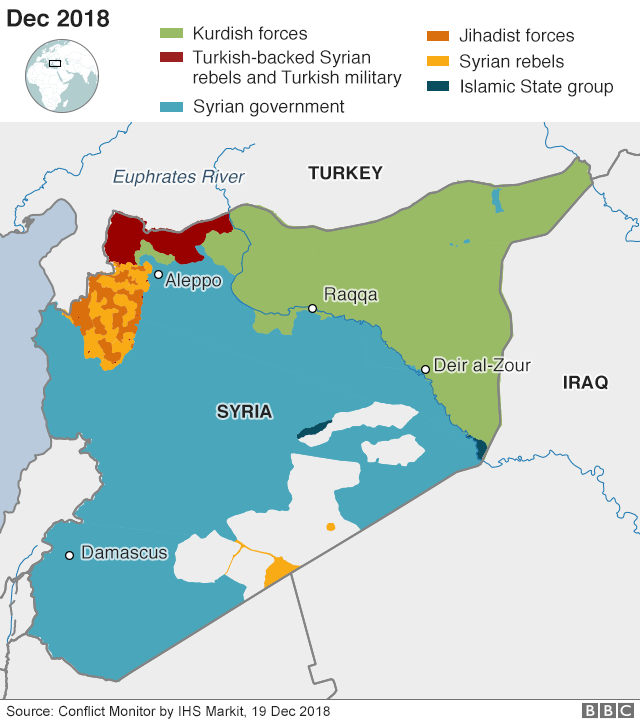
But it isn’t just that Trump has a blind spot about the 2016 election or wants to squelch any suspicions about the legitimacy of his presidency. Putting election-meddling aside, John King listed all the other things Trump decided not to make a big deal out of: Putin’s proxy war against Ukraine (including the direct annexation of Crimea into Russia), the nerve-agent attacks in the United Kingdom, and shooting down the MH-17 airliner. Also, he allowed Putin to pose as a humanitarian interested in helping the Syrian people, when Russia’s ruthless intervention in Syria is a primary cause of their suffering.

He had plenty of opportunities to confront Putin. Asked whether he held Russia “at all accountable for anything in particular”, Trump identified nothing Putin has done wrong and blamed “both countries” for the difficult state of US/Russian relations.

I think that the United States has been foolish. I think we’ve all been foolish. We should’ve had this dialogue a long time ago; a long time, frankly, before I got to office. And I think we’re all to blame. [2]

He couldn’t tell us enough about how reasonable Putin was being. A Putin proposal that the Senate denounced 98-0 was “an incredible offer”. [3]

Trump keeps endorsing Putin’s worldview. Even after he left Putin’s charismatic presence, the effect continued. Julia Ioffe described it best in The Washington Post: “Vladimir Putin has his own version of reality. And President Trump believes it.”

For example, when Tucker Carlson asked Trump “Why should my son go to [NATO’s newest member] Montenegro to defend it from attack?” Trump replied with a mysterious view that he surely did not get from his own national security team:

I’ve asked the same question. Montenegro is a tiny country with very strong people. … They are very aggressive people, they may get aggressive, and congratulations, you are in World War III.

Seriously? The rest of the Balkan countries are trembling in fear over the aggression of Montenegro? And this strange notion is worth mentioning rather than Russia’s attempt to foment a coup. Everybody’s best guess is that Putin is the source of Trump’s view of Montenegro, which he repeats as fact. Ioffe explains where that kind of gullibility goes:

If America is at fault for everything that’s gone wrong in its relationship with Russia, as Trump seems to agree, then why do we impose sanctions on Russian officials and companies? This has been Russia’s position all along.

Secrets kept from us, not from Russia. And then we come to the strangest thing of all: The two hours Trump spent with Putin without any Americans present other than a translator. [4] Days later, DNI Coats told MSNBC’s Andrea Mitchell that he had no idea what was said. The rest of the government seems not to know either, though the Russians have been claiming that various agreements were made. [5]

For example, Putin claims he discussed with Trump a plan for a referendum to decide whether rebellious parts of eastern Ukraine will join Russia.

Vladimir Putin told Russian diplomats that he made a proposal to Donald Trump at their summit this week to hold a referendum to help resolve the conflict in eastern Ukraine, but agreed not to disclose the plan publicly so the U.S. president could consider it, according to two people who attended Putin’s closed-door speech on Thursday.

Presumably, this would be similar to the referendum in Crimea, and once you accept the one you’d have no basis for refusing to accept the other, or for maintaining any sanctions that were imposed in response.

During Mitchell’s interview with Coats, the White House announced that Putin was being invited to the White House in the fall. Coats was clearly dumbfounded by this.

The White House then portrayed Coats as having “gone rogue“. But more and more it looks like Trump has gone rogue from the rest of the government, even the parts he appointed himself. [6]

The changing landscape. Here’s the main thing that has changed this week: Eight days ago, the view that Trump was actively working for Russia’s interests was a fringe position. Responsible journalists and pundits try not get ahead of the established facts and hate to be seen as alarmists, so they were actively minimizing the implications of what we’ve been seeing. Writing two weeks ago, Jonathan Chait expressed this view in an evocative metaphor:

The unfolding of the Russia scandal has been like walking into a dark cavern. Every step reveals that the cave runs deeper than we thought, and after each one, as we wonder how far it goes, our imaginations are circumscribed by the steps we have already taken. The cavern might go just a little farther, we presume, but probably not much farther.

He went on to wonder “What if we’re still standing closer to the mouth of the cave than the end?” and to boldly outline what a worst-case scenario would look like: Trump visits Moscow in 1987, and from that point forward is drawn ever deeper into a Russian orbit, relying on Russian money to save his business empire in the 1990s, and taking a favorable view of Russia into his presidential campaign from the beginning.

Each of Trump’s apparent pro-Russia moves left room for some alternative explanation: He was just bragging when he revealed sensitive intelligence the Russian ambassador in the Oval Office. His ego won’t let him admit he needed illicit help to win the presidency. He admires “strong” autocrats and has a distaste for the compromises democratic leaders have to make. Hiring a Putin operative like Manafort to be his campaign chair was just a coincidence. And so on. But at some point, the individual sky-is-not-falling explanations collectively require more gullibility than the One Big Explanation.

Two weeks ago, that assertion was daring. It no longer is.


[1] More than a day later, after a firestorm of criticism from Republicans as well as Democrats — even Newt Gingrich and some Fox News hosts were unhappy — Trump tried to walk this back, saying that he meant to say “wouldn’t” instead of “would”.

As unlikely as this claim seems, give Trump the benefit of the doubt for a moment and edit the quote to match his after-the-fact intention: Does it make any significant difference? Now maybe you can interpret him as leaning towards US intelligence over Putin, but it’s still a he-said/she-said thing. US intelligence just “thinks” it’s Russia; it’s not like they know anything. The main thrust of Trump’s statement remains the same: There’s really no way to choose between them, so why make a big deal out of it?

And even as Trump was throwing a bone to Coats and the rest of his national-security team, allowing the possibility that collectively they might be somewhat more trustworthy than Putin, he also undercut that message by indicating that he still doesn’t believe what they’re telling him:

“I accept our intelligence community’s conclusion that meddling took place,” Trump told reporters in brief remarks before a meeting with members of Congress. Yet he immediately contradicted both his own statement and that community’s findings, saying, “Could have been other people also. There’s a lot of people out there.”

The consensus of American intelligence agencies, Trump’s own top advisors, and the Republican-controlled House and Senate Intelligence Committees, is that it was Russia, not that it “could have been other people”. Trump still wouldn’t admit that.

By Sunday, he was back to full denial.

So President Obama knew about Russia before the Election. Why didn’t he do something about it? Why didn’t he tell our campaign? Because it is all a big hoax, that’s why, and he thought Crooked Hillary was going to win!!!

[2] This might be a good place to mention how much heat President Obama took for his so-called “apology tour”. The Heritage Foundation published a report on it.

The Obama Administration’s strategy of unconditional engagement with America’s enemies combined with a relentless penchant for apology-making is a dangerous recipe for failure.

The “apologies” in question are statements like “We have not been perfect.” and “We went off course.” I’m not sure what less he could have said about the Bush administration’s policy of torturing people, but Heritage judged that such statements “humiliated a superpower”.

[3] Putin proposed to let Robert Mueller come to Russia to question the 12 Russian intelligence officers indicted for hacking Democrats’ computers, in exchange for his own people getting similar privileges with Americans named in some tax-evasion conspiracy theory centered on Bill Browder (the guy who spearheaded the fight for the Magnitsky Act).

When Russia sent the full list of people it wanted to interrogate, it included former US Ambassador Mike McFaul. The entire US foreign policy establishment, Republican and Democrat alike, was horrified. Still, Trump considered this incredible offer for an entire day before saying no. Even in rejecting it, Press Secretary Sarah Sanders said the offer had been “made in sincerity by President Putin.”

[4] Democrats in Congress have proposed subpoenaing the translator to find out what was said, but Republicans have blocked them. My own feeling is that this is precisely the kind of thing that executive privilege ought to cover. I picture Obama, or some future president I like, trying to have a private conversation with a foreign leader without the suspicious circumstances of this meeting. Would I want the other party to be able to force the translator to testify? Worse, would I want our president to rely on the other country’s translator precisely to keep the conversation private?

Still, it should be up to the administration to claim executive privilege. Congress should go ahead with the subpoena.

[5] Susan Glasser wrote in The New Yorker:

Days after the Helsinki summit, Trump’s advisers have offered no information—literally zero—about any such agreements. His own government apparently remains unaware of any deals that Trump made with Putin, or any plans for a second meeting, and public briefings from the State Department and Pentagon have offered no elaboration except to make clear that they are embarrassingly uninformed days after the summit.

This morning, finally, Trump tweeted.

I gave up NOTHING, we merely talked about future benefits for both countries.

Trump blamed the “Corrupt Media” for spreading the idea that Putin got concessions from him. In fact, though, the media was just reporting what Putin and his government have been saying. Trump should blame Putin for the misunderstanding, if it was a misunderstanding. But that would mean contradicting Putin, which Trump can’t do.

[6] Trump’s chosen FBI director, Christopher Wray, told NBC’s Lester Holt:

I do not believe special counsel Mueller is on a witch hunt. I think it’s a professional investigation conducted by a man that I’ve known to be a straight shooter in all my interactions with him.

Undersecretary of Defense John Rood said “Russia is the larger near term threat” than even China. Saturday, the Associated Press gave us the inside scoop on Trump’s would/wouldn’t walkback.

Vice President Mike Pence, national security advisor John Bolton and Chief of Staff John F. Kelly stood united in the West Wing on Tuesday in their contention that Trump had some cleanup to do. They brought with them words of alarm from Defense Secretary James N. Mattis and Secretary of State Michael R. Pompeo, as well as from a host of congressional leaders and supporters of the president for whom Trump’s public praise of Putin proved to be a bridge too far.

What kind of justice would Brett Kavanaugh be?

Monday night, Trump named his second Supreme Court nominee: Brett Kavanaugh.

Immediately, legal and political pundits began speculating on how Kavanaugh’s appointment, if the Senate approves it, would affect abortion rights. Will Kavanaugh be the fifth vote to reverse Roe v Wade, allowing either states or the federal government to make abortion illegal? Or could he perhaps gut Roe while leaving it technically valid, perhaps by letting states regulate abortion in ways that make it practically unavailable, even if still theoretically legal? Or does he really believe in the principal of stare decisis, in which the Court leaves a precedent in place unless it proves unworkable?

Important as that issue is, it would be a shame if it sucked all the oxygen out of the room, leaving no space for discussion of the other implications of Kavanaugh joining the Court. Let’s look at a few of those issues.

Partisanship. One of the worst developments for the Supreme Court as an institution over the last two decades is the loss of its non-partisan image. Beginning with Bush v Gore in 2000, and going on through Citizens United (which destroyed campaign finance controls) and Shelby County (which gutted the Voting Rights Act), the public has gotten used to the idea that judges represent the party that appointed them. What the laws or the Constitution says is less important than which party a decision would benefit.

Kavanaugh is not going to improve that image. He first came to public attention as a main author of the Starr Report. While ostensibly non-partisan, the investigation into President Clinton lead by Kenneth Starr was transparently political. (Anyone who thinks the Mueller investigation is a “partisan witch hunt” has amnesia. Unlike the Mueller probe, Starr’s investigators regularly leaked damaging information to the press and timed their official announcements for maximum political effect. The Starr Report was written to be as sexually scurrilous as possible. Impeachment was a dim fantasy at that point, but at least the report could do political damage to the Clinton administration and embarrass Clinton personally.)

He subsequently was a lawyer for the Bush campaign during Bush v Gore, and then worked for Bush’s White House Counsel Alberto Gonzalez. His wife has worked for the George W. Bush Library Foundation.

If you wanted to give him the benefit of the doubt, you could imagine that he was sprinkled with non-partisan fairy dust when he became a judge. However, you have to wonder about one of the first things out of his mouth after Trump appointed him.

No president has ever consulted more widely, or talked with more people from more backgrounds, to seek input about a Supreme Court nomination

This claim is transparently, outrageously false: Trump limited himself to a list of judges given to him by Federalist Society Executive-Vice-President-on-leave Leonard Leo. By some accounts, appointing Kavanaugh was part of the deal that got Justice Kennedy to retire. There’s no reason to believe that anyone other than Leo, Kennedy, and Trump had anything to do with this decision. Quite likely, then, no president has ever consulted so narrowly or sought less input from fewer people about a Supreme Court nomination.

So Kavanaugh’s very first claim after being nominated was a pants-on-fire lie to flatter the president who appointed him. Former Senator Al Franken was blunt:

It’s just a totally made-up assertion that is exactly the opposite of the truth, flowing out of the mouth of a committed partisan who doesn’t care that it’s false…. [I]t’s critical to recognize that the very first thing he did as a Supreme Court nominee was to parrot a false, partisan talking point. Of course that’s what he did. Advancing the goals of the Republican Party and the conservative movement is what he’s there to do.

Workers and corporations. In the Confined Space blog, Jordan Barab examines Kavanaugh’s cavalier approach to worker safety, citing his dissent in a case in which OSHA fined Sea World for neglecting safety issues in a way that led to a trainer’s dismemberment by a killer whale.

Kavanaugh’s dissent drips with hostility toward OSHA and a basic misunderstanding of the act and the principles — and law — behind it. … Kavanaugh’s idea of making America great again apparently hearkens back to a time before the Workers Compensation laws and the Occupational Safety and Health Act were passed. Back then employers who maimed or killed workers often escaped legal responsibility by arguing that the employee had “assumed” the risk when he or she took the job and the employer therefore had no responsibility to make the job safer.

The Atlantic’s Ronald Brownstein focuses on Kavanaugh’s pro-corporate views.

While Kavanaugh’s record offers few clues about his view on the 1973 Roe v. Wade decision that legalized abortion nationwide, he has demonstrated an unequivocal skepticism about federal regulation of business. Jennifer Mascott, a former Kavanaugh law clerk and an assistant professor at George Mason University’s law school, recently wrote that, “Even during this era of generous judicial deference to administrative agencies, Judge Kavanaugh has written 40 opinions finding agency action to be unlawful and joined majority opinions reversing agency action in at least 35 additional cases.”

Brownstein pictures a return to the Lochner Era, when the Court routinely invalidated state and federal laws that tried to establish a minimum wage or a limited work-week or workplace-safety rules. (A sharper name might be the Triangle Shirtwaist Era.)

Executive power. From his attitude towards regulation, you might imagine that Kavanaugh has a libertarian streak and is likely to oppose government power across the board. But not so: He takes a very expansive view of presidential war powers. Remember, he was part of the Bush administration when it claimed the power to jail American citizens without charges and torture prisoners. (I don’t know of any point where he publicly expressed an opinion about those issues, but he clearly had no problem continuing to serve.)

Steven Vladeck of the Just Security blog writes in The Washington Post about Kavanaugh’s deference to presidential power:

Kavanaugh’s many opinions concerning Guantanamo and related matters make it crystal clear that his confirmation would make the court far more deferential to the president’s exercise of aggressive war powers, would diminish the long – standing role of international law as a means of shaping executive authority and understanding congressional authorizations , and would more generally weaken the role of the courts as a check on the political branches in this profoundly important area of law.

Like Bush, Kavanaugh believes in the unitary executive theory, that all executive functions of the government should be under direct presidential control. In particular, Congress should not be able to establish semi-independent entities like the Consumer Financial Protection Bureau, whose director can only be fired for cause. If Congress would attempt to insulate Special Counsel Robert Mueller from Trump’s interference, Kavanaugh would probably find that unconstitutional.

Legal theory. The Mascott’s blog post Brownstein quoted is worth reading in full, as it spells out what a Kavanaugh protege admires about him. She talks a great deal about Kavanaugh’s “deeply rooted interpretive philosophy built on interpreting law in accordance with the statutory text and the meaning of the text of the Constitution”, a position which she traces back to Justice Scalia.

I usually dismiss this kind of talk as meaningless rhetoric, because it’s based on a straw man fallacy: Who exactly are these judges who advocate ignoring the text of the laws and the Constitution? I have never heard a judge at any level say “The law says X but I believe Y, so I’m going to rule Y.” The dispute is never about whether to read the text of the law, but how.

(For contrast, look at Justice Souter’s 2010 Harvard commencement speech. Mere textual interpretation is insufficient, Souter said, because the Constitution’s “language grants and guarantees many good things, and good things that compete with each other and can never all be realized, all together, all at once.” Cases where the text is clear and just needs to be applied “do not usually come to court, or at least the Supreme Court.” Moreover, often concepts from other centuries can only be applied today by doing some kind of interpretation-after-the-fact: How, for example, should the word “arms” in the Second Amendment be applied to weapons radically different from anything that existed in the 18th century? James Madison surely was not picturing a shoulder-fired missile capable of taking down an airliner.)

But Mascott’s account does underline one thing for me: Like the Court’s other conservative justices, Kavanaugh will ignore precedent when it suits him, as, for example, Justice Scalia did when he invented an individual right to bear arms in his Heller decision. The process is simple, given Scalia’s (and Kavanaugh’s) text-interpretation method: You go back to the original text with a period-of-authorship dictionary, as if previous courts had never considered what the text-as-a-whole means. Decompose sentences into their constituent words, interpret them one-by-one, and then reassemble them into a meaning that no previous court has seen, and that the original authors quite possibly never imagined.

Unenumerated rights. Mascott quotes a Kavanaugh article (that none of her links go to and I haven’t been able to google up) agreeing with Justice Scalia’s interpretive theory:

In constitutional disputes, Justice Scalia recognized that the courts have an essential role in aggressively protecting the individual rights actually spelled out in the Constitution. … But on the flip side, courts have no legitimate role, Justice Scalia would say, in creating new rights not spelled out in the Constitution. On those issues, he believed in complete deference to the political branches and the states.

(Except for corporate rights, of course, which are not mentioned anywhere in the Constitution, but were consistently upheld by Scalia and presumably will be by Kavanaugh as well.)

In particular, Kavanaugh seems likely to demand a clear text stating any individual rights he doesn’t approve of, like the right to privacy that Roe is based on. In a speech to the American Enterprise Institute last September, he praised Justice Rehnquist’s dissent in Roe v Wade, and his attitude towards “unenumerated rights” in general:

Rehnquist’s dissenting opinion did not suggest that the Constitution protected no rights other than those enumerated in the text of the Bill of Rights. But he stated that under the Court’s precedents, any such unenumerated right had to be rooted in the traditions [and] conscience of our people. Given the prevalence of abortion regulations both historically and at the time, Rehnquist said he could not reach such a conclusion about abortion.

Given that view, it’s hard to see how Kavanaugh could not reverse Roe, or the Obergfell decision finding a right for same-sex couples to marry. If people at the time were not applying their principles to such issues, how can we apply them now, even if they clearly do apply?

You have to wonder how far back Kavanaugh is willing to take that objection. I doubt, for example, that most of the congressmen and state legislators who voted for the 14th Amendment believed that “the equal protection of the laws” mandated racially integrated schools, as the Supreme Court unanimously ruled in Brown v Board of Education in 1954. Given the prevalence of segregated schools “both historically and at the time” of the 14th Amendment, Brown would be hard to justify.

Trump doesn’t want skilled immigrants either

Last week I pointed out the fallacy that Trump only objects to illegal immigration, and is just trying to uphold US laws. (Not only is he separating families that have legally applied for asylum, he’s also going after legal immigrants who are trying to gain citizenship by volunteering for the military, and looking for excuses to void the citizenship of naturalized citizens.)

This week I want to expose another fallacy: Trump just wants a better class of immigrants, people with skills rather than the uneducated and desperate poor, who will just come here and go on welfare. In a speech to Congress a month after he took office, he said:

Nations around the world, like Canada, Australia and many others, have a merit-based immigration system. It’s a basic principle that those seeking to enter a country ought to be able to support themselves financially. Yet, in America, we do not enforce this rule, straining the very public resources that our poorest citizens rely upon. According to the National Academy of Sciences, our current immigration system costs American taxpayers many billions of dollars a year. [1]

But no, he doesn’t want skilled immigrants either, even if they are brought here by a company that wants to employ them. The RAISE Act, which the administration supported, would have favored immigrants its point system defined as meritorious, but would also have cut legal immigration in half. It’s arguable whether a high-merit immigrant is more or less likely to get in under those rules. But other rules are unambiguously negative for such people.

Jennifer Minear is a lawyer who consults with companies trying to bring in skilled workers on H-1B visas. In this interview, she describes how the US Citizenship and Immigration Services has changed its rules to harass and discourage such workers, as well as foreign students, whose tuition supports some of our top universities and who sometimes go on to found successful American companies that employ native-born citizens. According to new regulations, she says:

USCIS will issue a Notice to Appear on its own initiative and thereby place individuals in removal proceedings upon denial of an application or petition for immigration benefits if the person is deemed removable at the time of the denial. … Previously, if an application or petition for immigration benefits were to be denied, the foreign national might be able to depart the U.S. relatively quickly and either remain abroad or obtain approval for another visa that would enable him or her to return to the U.S. However, once an individual is issued a Notice to Appear, he or she is legally obligated to remain in the U.S. and appear before an immigration judge. … For most people, being placed in proceedings is a legal limbo where you are not lawfully present, yet not able to leave without triggering a bar on re-entry, and not able to work legally.

So suppose you’re a software designer from India who has an H-1B visa to work at, say, Google, and you apply for an extension. The backlog at USCIS might prevent the extension from going through before your visa expires. If your application is denied (more and more are, under Trump), you get an NTA. Now you’re in limbo until your deportation hearing: You can’t work, you can’t leave, and if you’re deported it will be harder for you to ever get a visa to come back.

If you’re a foreign student, your visa might get cancelled because your school screws up its paperwork. [2] An NTA might be your first notice that something is wrong. So you also wind up in limbo.

Minear concludes that many talented foreigners will hear horror stories like these and conclude that they don’t want to risk coming to the United States at all.

I think this policy memo represents another piece of a well-organized and systematic effort by the current administration to make the process of legal immigration to the United States as difficult as possible for both immigrants and the employers who sponsor them. … I fear that this policy, combined with others previously announced, will discourage the best and brightest minds from around the world from wanting to come to our country and contribute to our economy and culture. Indeed, that appears to be the intent of these policies – to frustrate and frighten people enough that they will not even attempt to navigate the process of coming here legally.

Other countries, especially developing countries, have long complained of a “brain drain” as their best minds pursue opportunities in the US. But under Trump, it appears we are planning to put a stopper in that drain ourselves. USCIS has also proposed

to rescind the final rule published in the Federal Register on January 17, 2017. The final rule established a program that would allow for consideration of parole into the United States, on case-by-case basis, of certain inventors, researchers, and entrepreneurs who had established a U.S. start-up entity, and who had been awarded substantial U.S. investor financing or otherwise hold the promise of innovation and job creation through the development of new technologies or the pursuit of cutting edge research.

So even if you are in the middle of starting a job-creating company here, you can’t come. The same document proposes a change that Stuart Anderson (who was the interviewer in the Minear article) describes like this:

Another more direct worry is the Trump administration has published its intention to restrict the ability of international students to work after graduation on Optional Practical Training (OPT), which allows for 12 months of work for students. OPT in science, technology, engineering and math (STEM) fields allows for an additional 24 months of work. Educators say OPT makes a U.S. education more practical and “real world.”

Anderson notes that international students have already started to avoid the US. There was a 4% drop in international enrollment between 2016 and 2017, with a 6% drop in graduate students in science and engineering, and a 21% drop in graduate students in science and engineering from India. This is a problem for US students and universities, not just foreigners, because foreign students are often cash cows that allow universities to provide more services to Americans.

About 90% of U.S. universities have a majority of international students among full-time enrollees in graduate level computer science and electrical engineering. If the number of international students in those fields declines significantly, then there will be fewer such programs available for U.S. students. Moreover, professors who rely on graduate students to conduct research are likely to relinquish their positions and pursue employment at companies, reducing the role of U.S. universities as a center of basic research.

So economically, the new Trump policies are probably destroying more opportunities for native-born Americans than they create. What’s the point of them, then? Perhaps it has something to do with what Trump claimed about European immigration this week in an interview with the English newspaper The Sun:

I think what has happened to Europe is a shame. Allowing the immigration to take place in Europe is a shame. I think it changed the fabric of Europe and, unless you act very quickly, it’s never going to be what it was and I don’t mean that in a positive way. So I think allowing millions and millions of people to come into Europe is very, very sad. I think you are losing your culture. Look around. You go through certain areas that didn’t exist ten or 15 years ago.

WaPo’s Philip Bump points out that “culture” is white nationalist code for race.

That argument — that immigration changes existing “culture” for the worse — is a staple of white nationalist rhetoric in the United States. Trump has never explicitly argued that immigration is a threat to white Americans, but he’s made numerous comments in the past that tiptoe around that point.

I don’t usually use the same cartoon two weeks in a row, but this one is perhaps even more on-point this week than it was last week.


[1] The EconoFact web site disputes this claim:

The evidence does not suggest that current immigrant flows cost native-born taxpayers money over the long-run nor does it provide support for the notion that lowering immigration quotas or stepping up enforcement of existing immigration laws would generate savings to existing taxpayers.

NPR’s Joel Rose looked up the study that Trump seemed to be quoting, and noted that it doesn’t really support his claim either.

Trump appears to be referring to this study published last year by the National Academy of Sciences. It found that “the impact of immigration on the wages of native-born workers overall is very small.” The study also found that first-generation immigrants are more costly to state and local governments. But the children of immigrants, on the other hand, are among the “strongest economic and fiscal contributors in the U.S. population, contributing more in taxes than either their parents or the rest of the native-born population.”

[2] Former INS associate commission Paul Virtue explains:

The key difference between the new policy and that established in September 1997 [in a memo Virtue wrote] is that under the new policy the date on which a person begins to accrue unlawful presence is not tied to an official determination. Therefore, an individual may learn only after the fact that he or she has already accrued months of unlawful presence and is left with no recourse for avoiding the 3- and 10-year bars to admission.

“America First!” means China wins

China either is already the world’s largest economy or soon will be. In order to compete for world leadership in the coming decades, the US will need to represent a community of like-minded nations, not go it alone.


America First. The foreign policy Donald Trump ran on came down to two words: “America First!”

He never spelled out exactly what policy agenda that slogan entailed — Trump 2016 was never the kind of campaign that constructed 12-point plans or posted white papers on its web site — but the attitude it expressed was clear: Both economically and militarily, the United States is the world’s 800-pound gorilla, and we need to start acting like it.

According to Trump’s populist critique, past administrations of both parties worried too much about principles like free trade and human rights, and invested too much of their hopes in multinational organizations like the UN, the WTO, and NATO. The Bushes and Clintons and Obama — and basically every president since Truman — tried to create a world of rules and mutual commitments, and failed to recognize something Trump finds obvious: Rules protect the weak. A world without rules is governed by the Law of the Jungle, and under that law the 800-pound gorilla always wins. That’s why he felt confident promising us “so much winning“.

To Trump and his followers, it makes no sense that the US has been trying to lead the world by setting a good example, rather than dominate it by telling other countries how things are going to work. It’s been crazy to keep our markets open when other countries close theirs, respect their intellectual property when they don’t respect ours, or extend our military shield over allies who don’t invest in their own armed forces the way we do. Our strength ought to get us a better deal, but it doesn’t because we keep volunteering to take a worse one.

So if it meant anything, “America First!” meant that it was high time we stopped volunteering to take the short end of the stick. Stop trying to create a world of rules that apply equally to everyone and stop averting our eyes when other countries cut corners. Instead, deal with every country one-on-one, a situation where our superior power will let us tell them what’s what. And what we will tell them is: “You need us more than we need you. So we win, you lose.”

During the campaign, examples of how Trump pictured this working would occasionally pop out: If we were going to liberate the Iraqi people from Saddam Hussein’s tyranny, we should have taken their oil to make it worth our while. If our military is going to keep defending Europe, they should pay us. Shortly after taking office he told the CIA the principle we ought to live by: “To the victor belong the spoils.

Short-term and long-term. A year and a half into the Trump administration, we’re still waiting for those white papers and 12-point plans. (An anonymous staffer recently summed up the Trump Doctrine by expanding “America First!” from a two-word to a three-word slogan: “We’re America, bitch!“) But the outlines of a Trump foreign policy are starting to become clear: no TPP; no Paris Climate Accord; no Iran denuclearization deal; no UN Human Rights Council. We move our embassy to Jerusalem because we’ve taken Israel’s side, and aren’t trying to broker peace any more. We don’t accept other countries’ refugees. We insult our allies and leave them in the dark about our intentions. We can act like that because we’re America, bitch.

Once the Trump administration gets outside the restrictions of multinational agreements and into bilateral negotiations, it makes big demands and waits for other nations to back down, threatening terrible consequences if they don’t. Strangely, these tactics have yet to work anywhere. Mexico still isn’t paying for the wall and just elected a government more resistant to American pressure than ever. No one — not China, not Canada, not the EU — is knuckling under to our trade demands. North Korea gave us some pretty words, but doesn’t seem inclined to abandon its nukes.

Those problems, the administration assures us, are just short-term. As soon as other countries understand that we’re serious, they’ll realize who has the upper hand. Thursday night, Trump told a rally in Montana: “We’re going to win [the trade war with China] because we have all the cards.”

So far, that hasn’t been true: We hit them, they hit back — as if we were equals or something. But who knows? Maybe in the medium term Trump’s strategy works out. Maybe over the next year or so Canada and Mexico will decide that they do need to renegotiate NAFTA so that it tilts more in our favor. Maybe China and the EU will drop their reprisal tariffs and be content to let us buy less from them. Maybe we’ll get a new Iran deal that restricts their nuclear program for longer than Obama’s deal did, or adds provisions about ballistic missiles or exporting terrorism. Maybe the North Korea denuclearization agreement will turn into more than a handshake and a photo op.

I’d be surprised, but what do I know? Stranger things have happened.

But now let’s expand our time horizon and recognize one obvious fact: In the long run, it’s China who will be the world’s 800-pound gorilla. If the world is running according to the Law of the Jungle in 2030 or 2050, they win, not us.

How the US and China stack up. At the moment, China has around 1.4 billion people, about 1/6th of the world’s population and four times America’s. Per capita, it’s still a much poorer country than we are, but the national totals are starting to even out.

Depending on how you measure, China either has already overtaken us as the world’s largest economy or soon will. [1] It’s more-or-less inevitable: As Japan and South Korea and Singapore have shown, it’s much easier to bring your people up to a standard that some other nation has already achieved than to create an entirely new standard of wealth. So China’s GDP grows over 6% in a bad year, while ours grows 3% in a good year. [2]Over time that adds up. If China ever manages to achieve a per capita income that is just half of ours, its total economy will be twice as large. That will give it a leading role on the world stage.

Already China is flexing its muscles in terms of soft power. Its Belt and Road Initiative is a multi-trillion-dollar plan to rebuild Eurasia’s infrastructure around China-centered trade routes and financial institutions.

Think about what this means diplomatically. China can approach Pakistan with its plan for a Pakistan-China Economic Corridor. What’s our vision for Pakistan? China foresees a high-speed-rail network that connects Shanghai to Singapore and Bangkok. What do we foresee?

It may not happen right away, but over time you have to expect China to exert the kind of world influence that comes with being the world’s largest economy. They will have the tax base to outstrip us in military spending eventually, if they choose to. Someday Shanghai or Hong Kong might replace New York as the world financial capital. Already, China can challenge us as a regional military power in Asia. Eventually it will have the resources, if it wants, to challenge us around world — at least if we are foolish enough to take them on by ourselves.

We need allies. We need institutions. In short, this is a uniquely bad time for the US to set up the world to be dominated by an 800-pound gorilla. Because before much longer, that gorilla won’t be us.

For the United States to continue to be the world’s most influential nation, we’re going to have to rely on two factors that Trump wants to turn his back on.

  • We represent values that the world admires, not just our own money and power.
  • We lead a community of nations who share those values.

If those two things are true, then America is the leading member of a coalition China won’t be able to bully for a very long time, or maybe ever: ourselves, the EU, Japan, the English-speaking parts of the British Commonwealth, South Korea, Taiwan, and maybe a few other countries. As India, Brazil, and other nations achieve relative economic equality with the countries in that coalition, there’s reason to hope that they will find it a club worth joining.

Whatever you may think of how the Trans-Pacific Partnership turned out in its final form, this was the geo-political vision that got it started: We would not negotiate trade with China by ourselves, but would get together with a large number of like-minded nations to write rules of the road. Long-term, we hoped that China might someday accept our rules in order to get the benefits of belonging to our club. There are many reasonable arguments against the TPP as it eventually was negotiated, but to scrap it and replace it with nothing will eventually prove to be a huge missed opportunity. (Pulling out of the WTO, which Trump is reported to be considering, would be even worse.)

Going forward, we want to live in a world of multinational institutions, because in a world of bilateral agreements, more and more it will be China who tells other nations how things are going to be.

The benefits of being a benign superpower. Since the end of World War II, the United States has been the chief promoter and protector of the international financial system. Trump and his followers see only the costs of this role and ignore all the ways that it has enhanced American power.

In the world today, the dollar is the international currency. National banks of almost all countries hold large reserves of dollars, and international trade is denominated in dollars. Just about any international transfer of money at some point passes through the US banking system.

What this means is that the market for dollars goes well beyond the needs of the US economy. The Federal Reserve creates dollars at zero cost, by entering numbers into its database. Many of those dollars go overseas eventually, and we get real goods in return: cars, iPhones, oil, steel, and Ivanka Trump’s fashion line. This is the seldom-discussed flip side of our trade deficit: We get away with running that deficit — consuming more than we produce — because the international economy needs a currency, and the dollar plays that role. The dollar is our chief export.

Similarly, US Treasury bills are the world’s default investment. This has allowed us to finance our budget deficit year after year, without suffering any of the ill effects that budget hawks are constantly predicting: Our national debt hasn’t caused inflation. The dollar’s value hasn’t collapsed. We don’t have to offer higher and higher interest rates to get investors to loan us money.

Short of military attack, the most potent weapon we can aim at an adversary is to cut them off from the US banking system. When fully enforced, that sanction can reduce another nation’s international trade to barter, and induce it to invent elaborate and expensive money-laundering schemes. The sanction that hurts Putin’s oligarchs most is the Magnitsky Act, which prevents sanctioned individuals from using the US banking system. The Atlantic explains:

What made Russian officialdom so mad about the Magnitsky Act is that it was the first time that there was some kind of roadblock to getting stolen money to safety. In Russia, after all, officers and bureaucrats could steal it again, the same way they had stolen it in the first place: a raid, an extortion racket, a crooked court case with forged documents—the possibilities are endless. Protecting the money meant getting it out of Russia. But what happens if you get it out of Russia and it’s frozen by Western authorities? What’s the point of stealing all that money if you can’t enjoy the Miami condo it bought you? What’s the point if you can’t use it to travel to the Côte d’Azur in luxury?

Once your wealth is expressed in dollars and recognized by the US banking system, you can take it anywhere and do anything you want with it. But otherwise, it’s barely money at all.

In a lot of ways, our banking power is better than military power. Unlike tanks or even nuclear missiles, our enemies have no answer for it. What are they going to threaten in return — to cut us off from the Russian or North Korean or Iranian banking system? Why would we care?

You might ask: How did we get power like this? Why do other nations let us keep it?

And the answer is that we have been entrusted with this kind of power because (for the most part) we have used it benignly. In theory, the other nations of the world could cut us out of the picture by deciding to use the yen or the Euro instead, or by getting together and creating a truly international currency and a truly international banking system to go with it. But the new currency would be like the Euro on a larger scale: negotiating and managing that new monetary system would be a huge headache, and who knows what holes and glitches it might develop? It’s just much more convenient for everybody to stick with the dollar and the US banking system, because our occasional abuses of that power have stayed within reasonable bounds.

In short, we have been fairly faithful stewards of other nations’ trust.

Or, translating the same idea into Trump-speak: We’ve been suckers. We haven’t put America first. We haven’t used every tool at our disposal to drive other nations to the wall and make them do what we want.

But that’s why other nations trusted us in the first place. And over time, we have benefited a great deal from that trust.

Bad timing. During this era, when we can see China gaining on us in the race for power (and in some areas already beginning to pass us), it’s tempting to try to squeeze all the juice we can out of our superpower status before we lose it. It’s also the worst strategic decision we could possibly make. At best, such a policy might produce a brief flare of American brilliance before our power winks out completely.

Now more than ever, the United States needs an international system based on principles and enforced by international institutions supported by multilateral agreements that all parties can live with and see benefit from. We need a system that isolates rogue nations and draws them into the rules-based community. We need to stand for universally attractive ideals like democracy, human rights, and opportunity for all. If China wants to compete with us for leadership, let it compete to lead the ideals-based coalition we have assembled. Let it compete to be a more admirable nation or a better steward of the world’s trust.

On the other hand, over the next five or ten years there might be some gains to cash in by becoming a rogue nation ourselves, flouting the principles we previously tried to establish, undercutting international cooperation on issues like global warming, and imposing win/lose agreements on weaker countries. The international institutions we helped design would likely wither, and to the extent they survived they would become alliances against our abuses of power. As we turned inward, other nations would as well, and the world as a whole would become a less prosperous place.

None of this would thwart China’s rise. And as the American Era ended, our legacy would not be an international system of mutually beneficial principles, rules, and institutions, but a Law-of-the-Jungle world, where the 800-pound gorilla always wins.

Unfortunately, that 800-pound gorilla would be China. China would owe us a great debt of gratitude for establishing a world system that allowed it to throw its weight around, dominating smaller nations (including us). However, I suspect China would never feel obligated to offer us anything to settle that debt. After all, gratitude is for suckers.


[1] If you google “countries ranked by GDP“, you’ll see lists from various international organizations that make it look like we still have a wide lead. For example: $19.4 trillion to $12.2 trillion in the World Bank list for 2017.

However lists like that are suspect for the following reason: They usually start by estimating a country’s annual GDP in the local currency, and then convert that estimate to dollars using the current exchange rates. But it’s widely suspected that China’s currency is undervalued; that’s what gives it such a big advantage in trade. Once you adjust for that undervaluation, you get very different numbers.

Economists argue about how to make that adjustment. One complex tool called “purchasing power index” says that the Chinese GDP really represents $21.4 trillion of purchasing power.

That’s calculation is hard for a non-economist to follow, but one quick-and-dirty (not to mention amusing) method for comparing the value of products across currencies is to use the Big Mac Index: Express all prices in units of locally produced Big Macs, which are assumed to be more-or-less identical around the world. (Example: If an iPhone 8 costs about $700 and a Big Mac sells for $3.50, an iPhone 8 costs 200 Big Macs.) At current exchange rates, you can buy 1.8 Chinese Big Macs for the price of 1 US Big Mac. So (adjusting everything by a factor of 1.8) annual Chinese GDP represents a number of Big Macs that would sell for around $22 trillion in the United States.

[2] In his 2012 campaign, Mitt Romney made the wildly optimistic prediction that his economic policies would lead to 4% growth. If Chinese growth got down to 4%, it would be a national emergency.

Giving up is a prerogative of privilege.

There’s no point trying to sugarcoat it: This was an ugly week.

The biggest disappointments came from the Supreme Court, where the conservative majority does not seem to grasp the challenge Trump — and the larger pattern of minority rule I described in the previous post — pose to American democracy. It also has more or less abandoned one of the core principles of American jurisprudence: stare decisis, the doctrine that the current Court must work within the precedents of past Courts, unless and until they prove to be unworkable. This Court will do whatever it wants, regardless of precedent.

The Court’s spring term always ends in late June with a flurry of decisions, which are usually a mixed bag of good and bad. This batch was uniformly bad. The Court ruled that:

  • Trump’s ban on accepting visitors or immigrants from certain Muslim-majority countries deserves the benefit of the Court’s doubt, and should not be interpreted in light of the unconstitutional Muslim Ban he campaigned on and sought to implement in two previous executive orders. Neither should the Court examine too closely the flimsy national-security justifications the administration offers. Justice Sotomayor’s dissent reviews Trump’s anti-Islam statements both before and after taking office, and concludes: “In sum, none of the features of the Proclamation high­lighted by the majority supports the Government’s claim that the Proclamation is genuinely and primarily rooted in a legitimate national-security interest. What the unrebutted evidence actually shows is that a reasonable observer would conclude, quite easily, that the primary purpose and function of the Proclamation is to disfavor Islam by ban­ning Muslims from entering our country.” She contrasts the Court’s unwillingness to consider Trump’s anti-Islam statements with the seriousness it ascribed to Colorado officials’ lack of respect for the baker’s Christian beliefs in the Masterpiece Cakeshop case. But those were Christians and these are Muslims. As I have pointed out many times in the past, this Court grants Christians special rights.
  • Public-sector unions (which account for nearly half of the total union membership in the US) can’t insist that the workers they represent pay dues, as had been ruled constitutional by the Supreme Court in 1977. A worker who wants the benefits of the union-negotiated contract without contributing anything to the union is now free to make that choice. How unions of teachers and firefighters will survive is now an open question. Justice Kagan’s dissent points out that nothing (other than the personal beliefs of the justices) has changed to make the 1977 decision unworkable. “The majority … has overruled Abood because it wanted to.” This decision follows another in May that sharply limits the ability of workers to file class-action suits against their employers.
  • The Texas legislature’s gerrymander to maximize white power will stand, except for one state-legislature district. Justice Sotomayor dissents: “This disregard of both precedent and fact comes at serious costs to our democracy. It means that, after years of litigation and undeniable proof of intentional discrimination, minority voters in Texas—despite constituting a majority of the population within the State—will continue to be underrepresented in the political process.” This decision follows a ruling earlier in June upholding Ohio’s voter-suppression scheme.
  • A California law requiring licensed family-planning centers to inform patients about their abortion options and unlicensed facilities to state clearly that they are unlicensed is likely unconstitutional, so an injunction against enforcing the law is warranted while court challenges proceed. The Court’s conservative majority finds that such a disclosure law violates the free-speech rights of centers that oppose abortion, but stands by previous opinions that centers performing abortions are obligated to inform patients about their adoption options. Justice Breyer’s dissent notes the implicit contradiction, and claims that the foggy reasoning necessary to justify it casts doubt on all public-disclosure laws.
  • The Court once again found a way not to defend the rights of same-sex couples against discrimination in the marketplace.

But that bad news was topped by the subsequent announcement that Justice Kennedy is retiring, allowing Trump to replace the swing vote on the Court. Many of us had hoped that Kennedy would look at Trump’s appointment of Neil Gorsuch and realize that retiring now would undermine his entire legal legacy. But apparently not. Adding another Gorsuch to the Court will undoubtedly lead to the reversal of Roe v Wade and undermine same-sex couples right to marry. But Kennedy appears not to care.

It was, of course, foolish to hope that Mitch McConnell would follow the principles he laid out in 2016 and refuse to hold hearings on such an important appointment without letting the voters weigh in. McConnell isn’t about principle, he’s about power. In 2016 he could claim power for his side by refusing to hold hearings or vote on Obama’s nominee; now he can claim power by approving Trump’s nominee as quickly as possible. He is, in this respect, perfectly consistent. Trump is expected to name his choice next Monday, and McConnell predicts approval in time for the Court to begin its fall term in October.

Quite likely, then, Trump is picking someone who will rule on his own legal issues: whether he can be subpoenaed or indicted, what payments the Constitution’s emolument clause forbids, whether he can pardon himself, when a pattern of self-serving pardons or other presidential prerogatives constitutes obstruction of justice, and so on.

And then, you know, we’re still holding children who we’ve taken away from their parents. Apparently, nobody thought about how to give them back.

So yeah, it was a bad week.

If you’re having a awfukkitt reaction, I hear you. This democracy thing just doesn’t seem to be working out. You vote, you demonstrate, you give money, you campaign, and what does it get you? Not only haven’t we made things better, we haven’t even stopped them from getting worse. Looking ahead, they’re likely to keep on getting worse at least until we get a new Congress, and who knows if we’ll even be able to do that? (See the previous post for more details.)

I don’t want to stop people who feel beaten down from taking care of themselves. If you need to take a step back to regain your sanity, if you feel your urge to engage coming from a shrill, wounded place that has never led you to do anything healthy or anything that turned out well, then by all means do what you need to do. Rest, re-center, get back in touch with your best self, and return to the fray stronger somewhere down the road.

But there’s also another awfukkitt reaction that I can see in myself and I want to speak out against: one that is rooted in my sense of privilege and seeks to protect my fragile sense of self-importance.

One of the speakers at the Keep-Families-Together rally I went to Saturday (in Nashua, NH, about a mile from where I live) was a minister who described himself as “the least discriminated-against person in America”. I could probably challenge him for that title: I’m white, male, educated, native-born, English-speaking, financially secure, straight, married, comfortable in the gender society assigned to me, free of any obvious disabilities, and so on.

People like me are not used to the idea of injustice. It isn’t something we run into every day. Life doesn’t force it on us. We volunteer for the fight against injustice, and we can’t help knowing at some level that we could always un-volunteer and go home to our un-discriminated-against lives.

Detective-novel fans know that there are two major types: the British detective novel (think Sherlock Holmes or Miss Marple) where a puzzle needs to be solved, but once the truth is known things will turn out right, and the American detective novel (think Phillip Marlowe or Sam Spade) where lots of people have known the truth for a long time, and the problem is getting them to do anything about it.

People like me live in a British-detective-novel world. We think that if we have a good case and tell enough people about it, of course the right thing will be done eventually. We are accustomed to being listened to. We expect our concerns to be taken seriously. It shocks us to confront the American-detective-novel world, where injustice has been around for a long time and could be around a lot longer. Making people see it isn’t the problem; making them do something about it is.

Our lives have not trained us for the situation we are in now. We usually don’t need moral stamina; we just need to understand what’s wrong and explain it to the right people. Then, taking care of it will be somebody’s else’s job. We’re weekend athletes. The first mile of the marathon was really energizing, but shouldn’t it be over by now? My side hurts. Can’t I quit?

And the scary thing is: Yes, yes I could. Nobody is going to break up my family. Nobody’s looking for some ancient infraction that will let them pull my green card. They’re not combing through my citizenship application from decades ago, looking for an error that will let them deport me. They’re not making it harder for me to vote. They’re not forcing a gender on me, or making me hide some important part of my identity. I don’t have to flinch when I see police. They don’t look at me like a criminal; they’re not going to be threatened if put my hand in my pocket; they’re not going to gun me down and ask questions later.

My health care might get more expensive, but I’ll manage. I don’t count on the minimum wage. Social security will be nice, but I won’t have to eat cat food if it goes away. Deregulation means I deal with more monopolies; corporations are more arrogant and probably their monopoly power costs me money, but I’m getting by. It’s a shame kids in Flint and a bunch of other places are getting lead poisoning, but I’m not.

I can’t un-know all that stuff. The temptation to be a “good German” and let the fascists do their thing will always be with me.

But I also can’t let myself rationalize what it means. There’s a moral death in that direction. Once you start not looking, not seeing, not worrying about things that don’t affect you, the part of the world you have to ignore keeps growing. Eventually, you have to start ignoring more or less everything.

So I don’t get to shrug and say, “Well, I tried. It just didn’t work.” The world is full of countries in much worse shape politically than the United States. The United States is full of people in much less hopeful positions than I am. Should they all give up too?

They can’t, because injustice doesn’t wait for them to notice it and decide they care about it. It gets in their faces and won’t leave them alone.

So OK: I explained the problem and nobody listened to me. I voted, I marched, I contributed, and things still got worse. That’s an unusual experience for me. My life hasn’t trained me for stamina. I’m used to races that are over by now. A voice in my head is saying, “This isn’t fair. I don’t want to play this game any more. Things shouldn’t be this way.”

But they are this way. I may not have trained for this race, but it’s the race I find myself in. I need to keep going.

Minority Rule Snowballs

When I did my annual end-of-the-year review in 2013, “the biggest single theme” I picked out was Minority Rule:

Republicans have given up on the idea of persuading a majority to agree with them. Instead, conservatives plan to rule from the minority.

I listed a number of the tactics they had been using: voter suppression, gerrymandering, and judicial activism among them. I didn’t expect these tactics to work nearly so well as they have. Consider:

  • In 2016, Mitch McConnell led a Senate majority that represented far fewer Americans than the Democratic minority. [1]
  • He used that minority-rule majority to radically change the way the Senate considers presidential appointments, blocking President Obama (who had defeated Mitt Romney 51%-47% in the 2012 election) from appointing a new swing vote on the Supreme Court. Instead, McConnell delivered that appointment to Donald Trump (who, even with the assistance of a hostile foreign power, lost the popular vote in 2016 to Hillary Clinton 46%-48%).
  • Trump’s appointee, Neil Gorsuch, was approved by the Senate 53-46. The senators voting for him represented far fewer Americans than the senators voting against him. [2]
  • Thanks largely to gerrymandering, Republicans in the House have a larger majority of seats than they have of voters. In 2012, Republicans won a 33-seat majority even while losing the popular vote. This year, as Democrats run considerably ahead in generic-ballot polls, political scientists argue over how big the Democratic voting margin needs to be to take control of the House. Is 5% enough? Seven percent? Eleven? One very likely outcome from this fall’s elections is that Democrats win a clear majority of voters, while Republicans win a clear majority of seats.
  • At the state level, things are often worse. Last year in Virginia, Democrats failed to gain a majority in the House of Delegates, despite a landslide 53%-44% victory in the popular vote. In North Carolina, the population is split relatively evenly between the two parties; Trump won the state with just under 50% of the vote compared to Clinton’s 46%, but the Democratic candidate won the governor’s race 49.0%-48.8%, despite one of the country’s most outrageous attempts at voter suppression. Meanwhile, gerrymandering gives the Republicans a 74-46 supermajority in the General Assembly, making Governor Cooper (and hence, the voters who elected him) virtually powerless.
  • Since Gorsuch joined the Court, several partisan gerrymandering cases have come up. The Court has not taken a stand. Gorsuch apparently does not even have a problem with racial gerrymandering.
  • Gorsuch was also the deciding vote in a 5-4 decision allowing purges of the voting roles in a manner than is likely to disenfranchise many legitimate voters while preventing virtually zero illegal votes.

In summary, minority rulers in Congress, the White House, and state capitals keep changing the rules to make it possible to rule with ever-smaller minorities. And a minority-appointed Supreme Court is fine with that.

A certain amount of minority rule was built into the Constitution in institutions like the Senate and the Electoral College, but I don’t think the Founders envisioned even those mechanisms becoming as skewed as they are today. [3] The Founders hoped the United States could avoid splitting into political parties, so they certainly never envisioned the vicious cycle of minority-rule entrenchment we’re seeing now: A political party centered in the small states that the Constitution favors (and representing the interests of the very rich) has used that extra boost of power to make the system increasingly more anti-democratic, giving themselves legislative and executive sway well beyond their voting numbers, making it increasingly difficult for the majority to vote them out, disenfranchising many citizens who might vote against them in the future, tearing down any limits on the use of money in politics, and packing the courts with judges who will rubber-stamp their power-grab.

With Justice Kennedy’s retirement, the minority-rule president and minority-rule Senate have a chance to appoint another Supreme Court justice, tipping the Court’s balance further in their favor for many years to come.  Jonathan Chait notes:

Democrats have won the national vote in six of the last seven presidential elections, which, with the retirement of Anthony Kennedy, will have resulted in the appointment of eight of the Supreme Court’s nine justices. And yet four of those justices will have been appointed by presidents who took office despite having fewer votes than their opponent.

We can expect this new justice to make it virtually impossible for the Court to limit or mitigate the techniques of minority rule. [4]

Increasingly, that minority-appointed and minority-approved Court majority has become nakedly partisan. Justice Kennedy’s opinion-of-the-Court in Citizens United is a flight of fantasy in which unlimited corporate money improves the public debate prior to an election, because money (even money from profit-making corporations seeking government favors) is speech, and “There is no such thing as too much speech.” Chief Justice Roberts’ gutting of the Voting Right Act contains very little legal reasoning beyond his vague assertion that “things have changed dramatically” since the first version of the VRA in 1965.

It is no longer necessary to understand the laws or the Constitution to guess which side the Court will favor: Whatever improves Republican chances in the next election is good law. The Constitution’s guarantee of “a republican form of government” increasingly leans on the word form; if the formal process of an election is carried out, it doesn’t matter whether the sovereignty of the People is respected.

We know where this process can go: The end result is plainly apparent in Putin’s Russia, where Potemkin elections are held on a regular basis. The path is laid out by authoritarian “democracies” in Hungary and Poland, whose rulers have not yet achieved Putin’s level of security against the People, but are on their way.

None of that is inevitable, but it gets harder to turn things around the further we go. If the Supreme Court won’t protect democracy, then we will have to count on elected officials to do it. If it takes a 7% margin to control the House, we need to get that 7% margin. If winning the popular vote by three million votes isn’t enough to elect a president, then we need to win by four million votes. Gerrymander-ending laws that can’t get through gerrymandered legislatures need to be passed by referendum.

If a majority ever regains power, it shouldn’t be shy about using it: We need a constitutional amendment that controls corporate political spending. Voting rights need protection, and gerrymandering has to be stopped — by legislation if the Supreme Court will allow it, and by amendment if it won’t. The Electoral College has to be abolished. Citizens without representation in Congress need to get it: Puerto Rico needs to be offered statehood, and the District of Columbia needs representation. Breaking up the big states needs to be on the table.

The sovereignty of the People is a principle that runs deep in the DNA of American voters, even those who might favor conservative social policies. We need to make them understand the trade-off they’ve been making: An American Putin would do many things they’d like, but is it worth surrendering the Republic?

If we’re going to pull this out, we need to have all hands on deck. Apathetic citizens need to be convinced to care and to vote. The canards that “it doesn’t really matter” and “both sides are the same” need to be rejected. For the next few cycles, and maybe for the rest of our lifetimes, democracy itself is going to be the most important thing on the ballot. It’s going to be on the ballot in every election from president to school board. It needs to win.


[1] I couldn’t find a source to reference, so I calculated for myself. (You can check me if you want.) From a list of the senators by state, I determined that in 2016, 20 states had two Republican senators and 16 states had two Democratic senators (counting Bernie Sanders and Angus King as Democrats), accounting for an 8-seat Republican majority (54-46). I then went to the 2010 census and added up: The 20 two-Republican states had a total population of 99,576,045 and the 16 two-Democrat states totaled 126,215,202. I had not expected the margin to be quite so wide.

[2] By the same methods as above, 22 states had two senators voting for Gorsuch and one (Georgia) had one for and one not voting, so I’ll count Georgia’s population for Gorsuch. Those states total 108,613,347. Eighteen states totaling 135,574,383 people had two senators voting against Gorsuch. The other states had one senator for and one against, which I’ll regard as canceling out.

[3] The first census, in 1790, showed that the most populous state was Virginia, with 454,983 free inhabitants. The least populated state was Delaware, with 50,207, a ratio of about 9-to-1. In the 2010 census, California had over 37 million people and Wyoming 568,300, a 66-to-1 ratio. If you combine the populations of the seven states with less than a million people — Alaska, Delaware, Montana, North Dakota, South Dakota, Vermont, and Wyoming — you have 5.3 million people represented by 14 senators. That’s 1/7th the population of California with 7 times the senators.

The situation gets worse when you consider the Americans not represented in the Senate at all: 3.4 million in Puerto Rico and 700K in the District of Columbia. Puerto Rico’s population almost exactly matches that of Alaska, the Dakotas, Vermont, and Wyoming put together; those states have 10 senators.

The situation is somewhat better in the Electoral College, but still considerably less fair than in 1790. The first census gave Virginia 21 electoral votes and Delaware 3; 9 times the population produced 7 times the electoral votes. But today California has 55 electoral votes to Wyoming’s 3; 66 times the population produces 18 times the electoral votes.

It’s also clear what the Founders’ solution would be: Break up large states. In their time, Kentucky was created from land claimed by Virginia, and Vermont from land New Hampshire and New York were arguing over.

[4] Trump’s legal situation creates yet another problem: Probably, the Supreme Court is going to have to make some serious rulings about whether the president can be subpoenaed, when a corrupt pattern of pardons constitutes obstruction of justice, and even whether the president can pardon himself. Trump may well be deciding those issues himself right now, by choosing a justice who will rule in his favor.