Rather than tell his side of the story, Trump attacks anyone who wants to know what happened on January 6.
This week, the House Select Committee wrapped up its work with an 800-page final report that fleshed out with many details (supported by testimony and documents) the story it started telling in its first public hearing in June.
Before the 2020 election was even held, Donald Trump was plotting to retain power after losing:
He would encourage his voters to vote in person (rather than early or by mail) so that their votes (in many key states) would be counted first, giving him an early lead.
He would prematurely declare victory and promote the false belief that his eventual defeat was due to fraud. He would suborn government institutions (like the Justice Department) to give his big lie false credibility.
By pressuring Republican election officials, legislatures, and judges, he would try to prevent key states from certifying their results and appointing Biden electors to the Electoral College.
He would encourage local Republican Party organizations to assemble false slates of electors with forged certificates, and to send their votes for Trump to Congress as if they were legitimate electoral votes.
He would pressure Republican legislatures, Vice President Pence, and Republicans in Congress either to recognize his false electors, or to rule that states Biden won were “disputed” so the legitimate Biden electoral votes should not be counted.
He would assemble his violent supporters on January 6, and send them to the Capitol for the purpose of intimidating the Congress, disrupting its meeting, and preventing its certification of Biden’s victory.
I think this is a good time to re-emphasize a point I first made in July: Trump has never presented an alternate story in anything but the most general terms: He won the election and it was stolen from him. January 6 was a protest by patriotic Americans legitimately angered by a stolen election, perhaps egged on by an Antifa false-flag operation.
Trump has consistently fought against any attempt to flesh out that account with checkable details. Any stolen-election theory is as good as any other; he has never denied even the most outrageous ones. All his January 6 supporters were patriots; he has never denounced any of them. (In the video message where he finally asked the rioters to go home — after letting the riot play out for three hours, during which more than 100 Capitol police were injured — he said “We love you. You’re very special.“) No members or leaders of the Antifa false-flag operation have been identified. (Antifa itself may not even exist, at least not as a national organization capable of pulling off large-scale operations.)
It’s easy for both the media and members of the general public to miss the significance of this, or even to overlook it entirely. We are used to framing our political discussions in terms of two sides each trying to tell their own stories. (Climate change, for example, is either a looming catastrophe that requires radical reorganization of our economy, or a dubious projection of climate models whose “solutions” are far more expensive than what they would prevent. Racism is either a continuing structural problem in our society, or a historical artifact that was never central to America’s identity.)
But this political debate is different: On one side we have the January 6 Committee trying to tell a story as thoroughly as possible, and on the other we have Trump trying to prevent a story from being told at all.
Nothing illuminates that distinction better than a bit of gaslighting Trump posted to his Truth Social account about a week after the Committee’s first public hearing:
I have sooo many witnesses to everything good, but the highly partisan and one sided Unselect Committee of political hacks has not interest in hearing or seeing them. This Witch Hunt could all be ended quickly if they did!
Six months later, we still have no idea who these “sooo many witnesses” might be, or what they would say. We do know who they aren’t:
Steve Bannon, who is currently appealing his four-month prison sentence for defying the Committee’s subpoena.
Peter Navarro, whose trial for the same offense will start in January.
Mark Meadows, who has also defied a subpoena and been cited for contempt of Congress, but has not been indicted for it by the Department of Justice. So far, though, Meadows is losing his battle not to testify to the Fulton County grand jury that is investigating Trump’s attempt to overturn his 2020 loss in Georgia.
Pat Cipollone, who eventually submitted to a subpoena, but invoked executive privilege to avoid discussing his conversations with Trump. (He did, however, corroborate “almost everything that we’ve learned from the prior hearings”.) Cipollone also lost his battle to avoid testifying to the Fulton County grand jury.
Bill Barr, who testified that he told Trump his election-fraud claims were “bullshit“.
First daughter Ivanka Trump, who told the Committee that she believed Barr.
Barr’s successor Jeffrey Rosen and his second-in-command Richard Donoghue (both Trump appointees) who characterized some of the election-fraud claims as “pure insanity“. They blocked an effort to use the Justice Department to pressure the Georgia legislature only by threatening mass resignations across the Department.
So who, then?
Not Trump himself, who seems incapable of discussing any part of the January 6 story in terms of facts and evidence. Instead, he issues judgments (“partisan”, “one-sided”, his “perfect” phone call to Brad Raffensperger), calls names (“political hacks”, “Witch Hunt”), and makes claims (“the greatest fraud in the history of our country“). When his claims are debunked (as they always are if he includes enough detail to make them checkable), he neither accepts the evidence nor argues with it, but just makes new claims. (The Raffensperger phone call was a classic example. Raffensperger knew that there were no “suitcases of votes”? Never mind, dead people voted. No? Dominion voting machines flipped votes. On and on, culminating in a threat to prosecute Raffensperger. “You can’t let that happen. That’s a big risk to you.”)
Again and again, Trump has claimed that some bit of testimony was false. (He didn’t grab the steering wheel after the Secret Service refused to drive him to the Capitol on January 6. He didn’t throw food against the wall in the White House.) But he never follows up with an account of what did happen. (What did he think his crowd would do after he sent them to the Capitol? What was he doing during the three hours before he asked the rioters to go home? Did he know what was happening? Talk to anyone on the phone?) After Cassidy Hutchinson spoke to the Committee, anonymous sources told reporters that Secret Service agents were going to dispute her testimony — but they never came forward.
Trump’s “sooo many witnesses” never do. On one side, you have people (most of them Republicans or even Trump appointees) testifying under oath to details that support the Committee’s narrative. On the other, you have people refusing to testify, sometimes to the point of going to jail rather than be disloyal to Trump by telling the public what they know about him.
One final objection a Trump defender might make is that Trump’s witnesses don’t want to hand their testimony to this “one-sided” committee, which might edit it to Trump’s disadvantage. But that doesn’t explain why they don’t come forward at all.
Trump’s post says that with his witnesses’ testimony “This Witch Hunt could all be ended quickly”. So end it, then. The Committee doesn’t have a monopoly on public attention. For two years, the full apparatus of right-wing media has been ready to publicize Trump’s side of the story, if he would only tell one. Trump has raised hundreds of millions of dollars from his supporters, most of whom probably imagined it being used for precisely this purpose.
But Trump has no story to tell. Any account more specific than “They stole the election from me” would quickly fall apart, because it’s just not true. Any witness — including Trump himself — who added supporting detail to that story would risk perjury.
It seems weird to say that one mass shooting is more disturbing than another. Whatever the details, people are dead for reasons that have little to do with the lives they thought they were leading. They didn’t do anything wrong or take foolish risks. They just happened to be in the way when someone started shooting.
Instinctively, we want to draw lessons from other people’s misfortunes, hoping to find some rule to protect us from similar harm. But mass shootings defy that impulse, because (on a personal level) there’s little to learn from them short of “Stay home and barricade the door.”
The six victims who died in the Chesapeake shooting Tuesday were just people who showed up for work. The three University of Virginia football players killed two weeks ago were on a class bus trip coming back from a play, and one of them was asleep. The five killed in Colorado Springs nine days ago were out at a club. There’s no cautionary tale to tell about them. Their deaths just remind us that we could die too, suddenly, without any prior awareness that we were walking into that kind of story.
So how could one such event be any more disturbing than another (in any way other than quantitatively — more dead, more wounded)? When I mentioned Club Q last week, one commenter wasn’t interested in whether or not it was a hate crime, because that distinction could hardly make it worse. Mass shootings are “wrong on so many levels, finding out why the perpetrator thought they needed to do this heinous thing is at the absolute bottom of my list of questions.”
I get that. And yet, I find myself ruminating over the Club Q shooting more than the others. This shooting seems different to me, because it looks so repeatable.
But even that observation doesn’t quite capture it, because in a sense every mass shootings is a repeat of all the previous ones. The stories have different details, but only a handful of plots: Someone feels insignificant, and believes that killing others will make him consequential. Or feels insulted or threatened or picked on, and wants to act out revenge on the largest possible scale. Or becomes convinced that some grievous wrong is happening in the world, one that they must fix themselves through violence. Or something similar.
Our country is awash in weapons of war. Our culture glorifies violence. We are constantly exposed to conspiracy theories that claim to expose great wrongs and the villains who perpetrate them. So we seldom go more than a week or two without a mass shooting, and sometimes they cluster, so that a new one happens before the news cycle of the previous one has played out.
We know the pattern is going to repeat. Next week, two weeks from now, there will be another shooting, another shooter, another list of dead people, another town that is probably not your town, but probably not so different.
But the Club Q shooting is repeatable in a much more specific way. Conspiracy theories about LGBTQ people, especially trans people, are circulating widely and are no longer just on the fringe: They’re being pushed by leaders in conservative media and politics. Among the theories regularly touted on the right, you will find:
Violence is often suggested as a proper response to these “assaults” on children. In April, Tucker Carlson said:
I don’t understand where the men are. Like where are the dads? You know, some teacher’s pushing sex values on your third grader. Why don’t you go in and thrash the teacher?
And then there’s Club Q: Someone kills five and wounds 19 others at an LGBTQ club in Colorado Springs on the eve of the Transgender Day of Remembrance, when an all-ages drag show was scheduled.
No doubt the shooter has some unique story, but this was not in any sense a lone-wolf attack. An entire political movement has been plowing the ground and planting the seeds for something like this to happen. And they’re not stopping. On only his second show after the Club Q shooting, Tucker Carlson repeated the tropes I listed above, and interviewed anti-trans activist Jaimee Michell, who said:
Saying that “groomer” is an anti-LGBTQ slur, that is doing irreparable damage to us as a whole, and it’s putting a really large target on our backs. And unfortunately, you know, the tragedy that happened in Colorado Springs the other night, it was expected and predictable. Sadly I don’t think it’s going to stop until we end this evil agenda that is attacking children.
I don’t know how to interpret that in any other way than “They had it coming.”
Usually, opinion leaders who campaign against a group are at least momentarily silenced when that group is violently attacked. They may not take any responsibility or make any long-term change in their rhetoric, but they do at least go silent for a while. When the El Paso shooter targeted Hispanics in a WalMart, for example, President Trump did not immediately double down on the “invasion” frame that the shooter had taken literally. He came back to it later, but not right away.
But this time is different. People like Carlson and Michell did double down. They may not have explicitly called for more violence, but they repeated the distorted chain of logic that led to that violence.
The way to start a pogrom against a group of people has been understood for centuries: You tell such a vicious lie about them that, to those who believe your lie, anything done in response seems fair. Anti-Jewish pogroms were started by the blood libel: Jews needed the blood of a Christian child to consecrate their matzohs for Passover. So any child who went missing at the wrong time of year might have been murdered by Jews. “When will these outrages stop?” Christians asked each other, and before long a mob would be in the Jewish quarter bashing heads and burning homes.
That looks to be what’s going on here. In actual fact,
Trans people and drag queens pose no threats to your children.
No men-claiming-to-be-women are waiting in public bathrooms to attack your daughters.
No teachers, counselors, therapists, or doctors are plotting to convince your children to change their genders.
Seeing a same-sex couple, either in person or on TV, is no more “sexual” than seeing an opposite-sex couple.
Diversity curricula in schools are not grooming your children for pedophiles.
Those are all blood libels. Their purpose is to start a pogrom. And it might be working.
I’m of two minds about this line of thought. On the one hand, no segment of the electorate should be taken for granted, so the complaints that Democrats are offering Hispanic voters “noble rhetoric but never a seat at the table” deserve serious attention.
On the other, the whole emerging Democratic majority argument now seems wrong-headed, for reasons that Yascha Mounk spells out in the The Great Experiment: Why diverse democracies fall apart and how they can endure.
Mounk is deeply worried about the possible future in which we have a White Party and a People of Color Party. If the major-party identities get fixed in such a tribal way, he has a hard time seeing how democracy in America avoids devolving into civil strife, as it has in, say, Lebanon. Democracy should be about voters who are open to changing their minds when the other party presents a compelling vision, not about rival blocs you are born into and never leave. In a racially-defined two-party system, neither party can hope to convince the other’s voters, so they will end up competing in less positive ways.
To the extent that the parties themselves believe in demographic inevitability, they start to take their own demographic groups for granted and cast the other party’s demographic groups as enemies. You can see this happening already among MAGA Republicans, who see the coming non-White majority as a “Great Replacement” of White people, and try to head off that threat by rigging the system so that the dawning non-White majority never achieves power: stop non-White immigration, stop non-White immigrants from becoming citizens, make it hard for non-White citizens to vote, herd them into gerrymandered districts that minimize their political strength, and so on. Some on the right are ready to jettison democracy entirely rather than face a future where Whites lose power.
Many Democrats, on the other hand, fail to see why they need to win Hispanic votes. I mean, they’re Hispanics. What’s wrong with them if they can’t see which party they’re supposed to support? Conversely, White Evangelicals get written off, and they shouldn’t be. There are good Christian reasons to support liberal policies, and that argument needs to be made.
But Mounk is an optimist in that he believes the melting pot is still bubbling, at least for some groups. The original ethnic majority in the US was English, then Northern European (minus the Irish), and then grew to include Eastern and Southern Europeans (plus the Irish). (Jews, I think, are a special case — assimilated in some ways but not others, and still a political identity in a sense that Italians and Poles no longer are. Jews are separate enough that Doug Mastriano would try to make an issue of Josh Shapiro’s religion in the 2022 Pennsylvania governor’s race. But they’re accepted enough that he failed by a wide margin.) So why couldn’t it also absorb Hispanics, Asians, and Muslims? He thinks that’s starting to happen, and sees it as a good thing: There should be no need for either a White Party or a People of Color Party.
When their race or religion stops being a defining characteristic, Hispanic, Asian, and Muslim political views may come to more closely resemble the rest of the country. Hispanic businessmen, for example, may start to vote like other businessmen, Hispanic Catholics like other Catholics, and Asian or Muslim professionals like other professionals. If Republicans stop casting non-Whites and non-Christians as enemies, people of any race or religion may decide that they prefer lower taxes, less regulation, and other traditionally Republican policies.
Mounk glides over what this means for Black people, whose path into the mainstream has always been more difficult. (To an extent, non-Blackness has been the unifying principle of America’s ever-expanding “White” majority.) Mounk doesn’t explain why this will change, which I think is a major hole in his argument. But I believe this much of his thesis is sound: It’s a mistake to think that people will or won’t vote for you purely because they belong to this race or that religion. There’s nothing inevitable about Democratic dominance in a post-White-majority America — and that’s a good thing for democracy. Both parties would do well to recognize that fact and compete to win the allegiance of the new voters.
Rushkoff describes himself in the introduction as a “Marxist media theorist” and “a humanist who writes about the impact of digital technology on our lives”. So he is “often mistaken for a futurist” and often finds himself at the same futuristic conferences as tech billionaires. One time he was paid to fly out to a desert compound, and discovered that the small conference he thought he would address was actually a handful billionaires who wanted advice on where to site their apocalyptic refuges and how to keep control of their mercenaries after the legal system collapses.
His book describes a fundamental change in capitalism and the capitalist mindset. Originally, the point of establishing some income-producing enterprise — a shop, a farm, a factory, or whatever — was to create something that could be passed down through the generations like a medieval fiefdom. (This is my interpretation of Rushkoff’s point, and the examples that follow are mine rather than his.) For example, I imagine Henry Ford would have been thrilled to glimpse a future in which the Ford Motor Company still existed 75 years after his death and was still a major source of wealth for his descendants. Some small-scale capitalist — let’s call him Jack — might well have a similar fantasy of a great-grandchild still owning and operating Jack’s Bar & Grill a century hence.
But recently, particularly in the tech world, the prevailing fantasy has shifted to one where you cash out. Elon Musk‘s original fortune, for example, came from co-founding Zip2 and then selling it to Compaq for $300 million. He then co-founded an online bank, which merged into PayPal, which was eventually bought by eBay.
These days, that’s what a tech entrepreneur hopes to do: turn an idea into a business that works, then sell that business and move on to the next idea. It’s as if, rather than open a Mom & Pop grocery and hope to pass it down to your kids someday, you started M&P Grocery Franchises with the idea of selling it to Walmart or Kroger in a few years.
The old model softened capitalism somewhat by connecting the capitalist to the community, because the community was the arena in which success would ultimately play out. Your shop might become a landmark, or your factory could make you a pillar of the community. Some rich families were easily identified with their cities, like the Pillsburys in Minneapolis or the Buschs in St. Louis.
The new model, though, is about transcending the community. You build a team to implement your idea. You hire workers to provide your service or build your product. And once all those relationships are established, you sell and move on.
Rushkoff refers to this as “The Mindset”, and he thinks it explains the wealthy’s disinterest in preventing possible future dystopias: My ultimate fantasy doesn’t rely on the world not going to hell, but on transcending Earth-bound society by colonizing Mars, or uploading my consciousness to the Cloud, or building my Bond-villain bunker in the wilds of Alaska (assuming I can figure out how to control my mercenaries after the legal system collapses).
[T]hese people once showered the world with madly optimistic business plans for how technology might benefit human society. Now they’ve reduced technological progress to a video game that one of them wins by finding the escape hatch.
Maybe soon. Trump-related stories were all over the news this week, but they point towards a future where Trump may not matter.
I didn’t want to write another Trump post this week, but the convergence of headlines was hard to ignore. This week:
Trump announced his 2024 candidacy.
Republicans and conservative media were surprisingly cool about a Trump candidacy.
Merrick Garland named a special prosecutor to investigate/prosecute Trump.
Elon Musk restored Trump’s Twitter account.
So I guess I have to pay attention.
Has he finally jumped the shark? Last week I was skeptical that the GOP was finally getting over Trump. Sure, he endorsed a string of bad candidates who lost winnable races, and a statistical analysis indicated that MAGA Republican candidates for Congress ran about five points behind non-MAGA Republican candidates. And yes, Ron DeSantis’ surprisingly large victory margin in Florida supported the idea that he is a winner while Trump is a loser. So it wasn’t all that surprising that a few GOP leaders and conservative pundits began inching away from the Former Guy.
A week ago, I wasn’t buying it. Republicans have tried to move away from Trump before — most recently after he incited a mob to attack Congress in an effort to hang onto power after losing the 2020 election. But it never lasts. After January 6, it took about three weeks for Kevin McCarthy to go from wanting Trump to resign to making a Mar-a-Lago pilgrimage. Why should this time be different?
But this week, maybe I am buying it. I’m at least examining the possibility. Trump announced his 2024 candidacy Tuesday, and the response was not what either he or I expected. No major network carried the whole speech live: Fox and CNN started to, but then cut away as Trump rambled. The Fox coverage was particularly Orwellian: As Trump droned on, the network’s talking heads enthused about the greatness of the event they had stopped broadcasting. “This was an absolutely brilliant speech,” Mike Huckabee proclaimed, using the past tense to describe something that was still happening, “the best I have heard him give in a long time.”
Most news outlets ran articles on the speech, but they were more skeptical than thrilled or horrified. The snarkiest was Rupert Murdoch’s New York Post, whose cover said “Florida Man Makes Announcement, page 26”. Trump had probably pictured his fans cheering and his enemies trembling in fear or outrage. But I don’t think he expected so many people to laugh.
The Democratic response is also telling. Democrats worry about whether Biden is up for another run, about who could replace him if he isn’t, and about whether younger Trumpists like DeSantis or Youngkin might be harder to demonize than the Mar-a-Loser. Beating Trump, on the other hand, is a familiar challenge. We did it before, we’ll do it again.
Et tu, pastor? Apparently even Evangelical leaders are jumping off Trump’s sinking yacht.
“He used us to win the White House. We had to close our mouths and eyes when he said things that horrified us,” [televangelist Mike] Evans wrote. “I cannot do that anymore.”
Had to? The supposed heirs to the tradition of the Prophet Nathan and John the Baptisthad to bow down to Trump. And the spark causing Evans to turn away is not some new outrage that he just can’t stomach — or even a straw that finally broke his back — but Trump’s loss of power and influence.
What might be happening. Here’s my theory: The hard-core Trump cultist worries about being a loser, but in his mind he becomes a winner by identifying with the ultimate winner, Donald Trump. As the classic children’s hymn “Jesus Loves Me” puts it: “They are weak, but He is strong.” Trump is fighting the same dark forces that the cultist blames for his own disappointments, but Trump is going to defeat them.
Trump constantly stokes this identification, claiming that people who attack him are really attacking his followers, as if his followers had been assaulting women, taking money from foreign governments, or stealing classified documents.
But what if Trump starts to look like a loser himself? He rolled through the 2016 primaries, then in November unexpectedly won in the Electoral College in spite of losing the popular vote by millions. When he lost bigly to Biden in 2020, he said he really won, and his cult agreed to believe that story. But in 2022, Trump’s candidates lost all over the country. (And this is where the Trump cult’s anti-Biden and anti-Democrat propaganda boomerangs: How could all those MAGA Republicans possibly have lost? Biden is senile. Fetterman is a vegetable after his stroke. Everybody hates Gretchen Whitmer because of her Covid tyranny. How did they win? How did they beat Trump?)
So you lose once and claim the other guy cheated. OK, maybe. But you can’t go to that well over and over. The message has to be: “The other guy cheated me, and I’m going to make him pay.” If you can’t make him pay, if you get cheated again and again — then you’re just like the rest of the losers.
What happens then? I don’t expect Trump’s followers to turn on him because he has stopped winning. But I do think their enthusiasm starts to fade, because he’s not delivering the ego boost they need any more. So maybe they just quietly drift away.
Establishment Republicans hope someone like DeSantis can excite the base without reproducing Trump’s embarrassing transgressions, but I don’t that’s going to work. Trump’s trangressiveness is an irreplaceable part of his appeal. He does whatever he wants. He calls Mexicans rapists, cheats the taxman, taunts his opponents with playground nicknames, grabs women by the pussy — and gets away with it all. That’s what being a “winner” means to Trump’s base.
Telling it like it isn’t.The Atlantic’s David Graham made another good observation about the difference between Trump 2024 and Trump 2016. In spite of all his exaggerations and lies, Trump 2016’s appeal
was built on his willingness to speak the supposedly obvious facts that other politicians would not. He would tell voters that the political system was rigged toward donors. He would say that free-trade policies had harmed many Americans. If they were racist or xenophobic, he’d speak their truths, too. The central appeal was common sense, even when it was neither common nor sensical.
But Trump 2024 asks his followers to disbelieve things they can see and misremember events they lived through.
Consider this account of his presidency from the announcement speech: “Two years ago when I left office, the United States stood ready for its golden age. Our nation was at the pinnacle of power, prosperity, and prestige, towering above all rivals, vanquishing all enemies, and striding into the future confident and so strong … There was never a time like this … When the virus hit our shores, I took decisive action and saved lives and the U.S. economy.”
Some people might want to remember 2020 that way, but few will be able to manage it.
The special counsel. Friday, Attorney General Merrick Garland appointed Jack Smith as special counsel to investigate events related to January 6, and also to the classified documents and presidential records found at Mar-a-Lago. In his press conference, Garland said:
Based on recent developments, including Trump’s announcement that he is a candidate for president in the next election, and the current president’s intention to be a candidate in the next election, I have concluded it is in the public interest to appoint a special counsel.
This announcement has both optimistic and pessimistic interpretations for people who want to see Trump held accountable for his crimes. The pessimistic interpretation is that Merrick Garland is adding his name to the list of people who couldn’t manage to nail Trump. James Comey couldn’t do it. Bob Mueller. The first and second sets of impeachment managers. The January 6 Committee. And now Merrick Garland. He passes the baton to Jack Smith — and why should Smith do any better than the previous investigators?
The new Special Counsel, unlike Special Counsel Mueller, WILL be able to indict Trump as he is no longer POTUS and WILL NOT have to worry about being fired from one day to the next by sitting POTUS. And he inherits a large amount of evidence and a team that is in place already. The new Special Counsel also will not have to overcome, as Special Counsel Mueller did, Trump’s dangling presidential pardons to thwart cooperation with the investigation. Or using DOJ to stymie and misrepresent the investigation.
New York magazine’s Intelligencer column presents a more balanced view: However it unfolds, this process is still going to take a long time. The big timing decision for Smith to make is whether to indict Trump quickly for the Mar-a-Lago documents — a fairly simple case that is nearly ready to go — or to wait until a more complex January 6 investigation is complete and charge everything at once.
Trump and Twitter. And speaking of sinking yachts, Elon Musk arbitrarily announced the reactivation of Trump’s Twitter account Saturday evening. Trump had been banned from Twitter because he misused it to foment violence on January 6, and seemed like to misuse it again. To me, that logic still holds, but apparently not to Musk. He had previously said that the no major reinstatements would happen until he could convene “a content moderation council with widely diverse viewpoints”. But never mind. Musk posted a poll Thursday and announced the result Saturday.
Anyway, at the moment all this means is that Trump’s old tweets are available again. Trump has not tweeted anything new yet, and his agreement with Truth Social (which he at least partially owns) puts restrictions on what he can post on other social-media platforms. So we’ll see what happens.
He may be worried about returning to Twitter only to see it quickly declare bankruptcy, which Musk has floated as a possibility. There’s a limit to how much failure his public image can stand to be associated with.
Saturday night, when Nevada had counted enough votes to declare Catherine Cortez Masto re-elected, we learned that the Democrats would hold onto the Senate. They may even gain a seat, if Raphael Warnock can win the December 6 run-off in Georgia.
As of this morning, almost a week after election day, Republicans are leading in the House, but still have not nailed down a majority. 212 races have been called for Republican candidates, 204 for Democrats. 218 are needed for a majority. NBC is estimating that when all the counting is complete, the GOP will have a slim 219-216 majority. (So assuming Lauren Boebert hangs on to her current slim lead, Speaker McCarthy will lose any vote in which he can’t get Boebert, Matt Gaetz, and Marjorie Taylor Green’s support.)
In the states, Florida went very red, but both Michigan and Minnesota very blue. Democrats flipped governorships in Massachusetts and Maryland, Republicans in Nevada. Arizona is still undecided.
There’s probably a lot to learn from these results that I haven’t deciphered yet. But here are a few conclusions that seem obvious.
During the 2020 election, it was secretaries of state — both Democrats and Republicans — who stood up to efforts by Mr. Trump and his allies to overturn the results. State election officials certified vote tallies over Republican objections, protected election workers from aggressive partisan poll watchers and, in at least one case, refused a personal entreaty from the president.
The next spring, several candidates pushing the false narrative that the 2020 election had been stolen announced their intention to run to be the top election officials in critical states.
Republican candidates for secretary of state in places like Arizona, Nevada, Colorado, and New Mexico claimed the 2020 election had been stolen from Donald Trump, without basing that belief on the slightest bit of evidence. In Pennsylvania the secretary of state is appointed by the governor, and gubernatorial candidate Doug Mastriano was running as a rabid election denier (in addition to being a Christian nationalist and a barely-in-the-closet antisemite). In Georgia, incumbent Republican Brad Raffensperger had beaten back an election-denier challenge in the primary.
Victories by election-denying candidates would have opened the possibility that in 2024, MAGA secretaries of state might refuse to recognize a Democrat’s victory. If they needed no evidence beyond Trump’s say-so to declare fraud in 2020, why wouldn’t they do the same in 2024?
Fortunately, all those candidates lost. Some of the races were disturbingly close — though Mastriano got soundly thrashed — but they lost. Only Indiana chose an election-denying secretary of state. That could be a problem locally, but it’s unlikely to affect a national election, since a Democratic presidential candidate could only carry Indiana in a national landslide. (Barack Obama barely did in 2008.)
Sweeping abortion bans are unpopular. A lot of Americans have conflicted views about abortion, so the wording of a proposal matters. But if you put a broad abortion ban in front of the voters, they’ll reject it even in some pretty conservative states.
We saw that already in August, when Kansas (which Trump carried 56%-42% in 2020) held a referendum that would have given the legislature the power to ban abortion. (The state’s supreme court had found a Roe-like right to abortion in the state’s constitution. This proposed amendment would have removed that right.) The legislature scheduled the vote to coincide with a primary election that was likely to draw more Republicans than Democrats, but it didn’t matter: Turnout was huge and the proposal failed 59%-41%.
Tuesday, proposals to protect reproductive rights were on the ballot in Vermont, California, and Michigan, while voters had a chance to restrict abortion rights in Kentucky and Montana. The pro-choice side won all five.
The abortion issue is also getting credit for the Democrats avoiding the typical midterm-election-collapse of a party in power. It’s hard to say precisely why voters decide to show up and lean one way or another, but the turnout of young voters was high and heavily Democratic, and Democrats won 68%-31% among single women. Chances are that abortion had something to do with that.
[BTW, it has been hilarious to watch conservative pundits struggle not to grasp that single women don’t want the Republic of Gilead controlling their bodies and making major life decisions for them. Fox News’ Jesse Watters noted that married women tend to vote Republican, so he had a solution: “We need these ladies to get married. And it’s time to fall in love and just settle down. Guys, go put a ring on it.” One America News’ Addison Smith went even further down the patriarchal rabbit hole: “Secular progressivism has turned people into masochists. … 68% of single women voted for people who vowed to let them legally murder their children and continue on living miserable single lives without purpose, without responsibility or meaning.” Attention single women: After a quick search, I wasn’t able to determine whether Addison Smith is married, so he might still be available to bring purpose and meaning to your otherwise pointless life.]
Trump is hurting the Republican Party. He wasn’t losing any races himself this time, but he screwed up the GOP in two other ways. First, the unqualified and too extreme candidates he pushed to victory in the Republican primaries went on to lose winnable elections.
New Hampshire is a good example. Republican Governor Chris Sununu, who kept his distance from Trump, cruised to a 57%-42% victory. But Trump-endorsed election-denying Don Bolduc lost to incumbent Senator Maggie Hassan 54%-44%. Those two results are from the same voters on the same day, so about 1 NH voter in 8 must have voted a Sununu/Hassan split ticket.
The second way Trump undercut the GOP was to divert attention towards himself, his petty grievances, and his backward-looking complaints about 2020, and away from issues like inflation that were working for Republicans. He doesn’t seem to realize that if the 2020 election were run again, he would get his butt kicked again. Most unpopular presidents see their images improve in hindsight, but not Trump. 54% of the public still views him unfavorably.
Conservative power brokers like Rupert Murdoch and mainstream Republican politicians like Paul Ryan see what’s going on and would like to free the party from Trump’s destructive influence, but I’m betting against them. There’s a lot of Trump-blaming in conservative media right now, but that just means it’s January 7 again. Before long, the would-be rebels will be crawling to Mar-a-Lago to kiss the ring, as they did only weeks after January 6. The NYT’s Jamelle Bouie agrees with me:
The idea that Republican elites could simply swap Trump for another candidate without incurring any serious damage rests on two assumptions: First, that Trump’s supporters are more committed to the Republican Party than they are to him, and second, that Trump himself will give up the fight if he isn’t able to win the party’s nomination.
I think these assumptions show a fundamental misunderstanding of the world Republican elites brought into being when they finally bent the knee to Trump in the summer and fall of 2016.
But Jonathan Chait disagrees. It’s different this time, he says, because Ron DeSantis provides a real alternative.
Either way, it’s going to be ugly. Trump has already shown that he will try to burn down a democracy that won’t re-elect him. No one should be surprised if he burns down a party that won’t re-nominate him.
Compare Michigan to Wisconsin, which is still heavily gerrymandered in Republicans’ favor. Democratic Governor Tony Evers was re-elected with 51% of the vote, and Republican Senator Ron Johnson was re-elected with just over 50%, suggesting an evenly divided electorate. But Democrats narrowly avoided a veto-proof Republican supermajority in both houses of the legislature, which would have made Governor Evers virtually powerless.
Both parties gerrymander when they can, because it’s political suicide to let the other side play by different rules. (Though no Democratic-controlled state mirrors Michigan, with an entrenched Democratic legislature thwarting a Republican majority in the electorate.) But Democrats want to end this game: An anti-gerrymandering provision was part of the For the People Act, which has passed the House in 2019, 2020, and 2021, only to be blocked by Republican filibusters in the Senate. A scaled-down proposal, the Freedom to Vote Act, was put together by Senators Manchin and Klobuchar. But it also was blocked by a filibuster.
The stuff Biden did is way more popular than Biden himself. The pundits predicting a red wave were fooled by Biden’s low approval rating: 41.5% in the latest 538 average, barely higher than Trump’s 39.9%. Normally, a president with numbers like that sees his party get clobbered in the midterm elections.
But Friday, Chris Hayes made an interesting comparison to 2010, when there really was a red wave. In 2010, the Democratic Congress had just passed ObamaCare, and it was very unpopular. (Since it hadn’t taken effect yet, Republicans could claim anything they wanted about it, and they did.) The way Republicans ran against Democratic incumbents that year was simply to point to that vote.
Nothing in this cycle played that same role of connecting Biden’s unpopularity to specific votes in Congress. If Democrats got criticized for voting for the Inflation Reduction Act, they could say, “Yes, I lowered your prescription drug costs, invested in renewable energy, and created jobs for American workers.” The bipartisan infrastructure bill? “Yes, I voted to rebuild America’s roads and bridges, bring broadband internet to rural areas, and replace lead water pipes that have been poisoning our children.” American Rescue Plan? “I voted to get Americans vaccinated, send money to people who couldn’t work during the pandemic, and give loans to businesses so they wouldn’t have to fire people.”
And so on.
So sure, Americans are frustrated with inflation, and Republicans were able to fan people’s fears about rising crime and a few other issues. But how could challengers pin those problems on the incumbent senators or representatives they were trying to replace? And while 2010 Republicans could promise to repeal ObamaCare, what exactly were 2022 Republicans proposing to do about inflation, crime, or anything else?
Take the Georgia Senate race, for example. 538’s final pre-election analysis said that Herschel Walker had a 63% chance of winning, with a predicted margin of 1.2%. But now that the votes have been counted, Warnock holds a .9% lead. (Warnock is still short of 50%, so a run-off is happening December 6.)
So Nate Silver’s prediction was off by 2.1%. You can’t really expect pre-election polling to be more accurate than that.
At best, a poll is a snapshot of where the electorate was a day or two before the election, accurate to within some margin of error. Averaging a bunch of polls (as 538 does) should shrink that margin, but not to zero. And as for people who decide at the last minute to vote (or not vote), or who change their minds in the booth — there’s really no accounting for them.
In short, the right response to the Georgia outcome is not “538 was wrong to say Walker would get more votes, because Warnock did”, but “538 said the race was going to be close and it was.”
That’s why the model said “63% chance”. Just for reference, NBA star Giannis Antetokounmpo is currently hitting 65% of his free throws (well below the league average of around 78%). That’s better than a coin flip, but when he steps to the line, Bucks fans are holding their breath rather than counting the points.
Is a more accurate system possible? Well, maybe, but you won’t like it. I suspect that somewhere in the basement of Meta headquarters, somebody has developed an algorithm that predicts how each of Facebook’s tens of millions of users will vote. (For most of us, it wouldn’t be that hard.) Facebook users may not be absolutely typical of the electorate, but the differences are probably not difficult to model and compensate for after you review the data from a few election cycles. And on election day, if the app on your phone is tracking your location, it knows whether you went to the polls.
Facebook’s huge sample base would eliminate nearly all the statistical error. Since it’s a spying algorithm rather than a request for information, you couldn’t just refuse to answer, eliminating another source of polling error. And in order to lie to the algorithm, you’d have to change your whole online behavior, which hardly anybody is going to do. The algorithm’s estimates would always be up to the minute, and in the end it would know a lot about who voted.
I’ll bet that system could be pretty accurate.
Expert speculation, on the other hand, isn’t worth the attention it gets. All that talk of a “red wave” didn’t come from the polls. 538’s generic-ballot polling average finished with a Republican advantage of 1.2%, which would lead a person to expect a Republican Congress, but not a sweeping rejection of Nancy Pelosi’s Democrats. (Compare that margin to true wave elections: In 2010, Republican House candidates got 6.8% more votes than Democratic candidates. In 2018, Democrats did 8.6% better than Republicans.)
The red-wave speculation came from pundits, both too-optimistic Republicans and too-pessimistic Democrats.
The right lesson to draw is that we spend way too much time listening to people speculate about stuff they don’t really know. Psychologically, it’s understandable: We get anxious leading up to an election or some other big event, so we want to believe that someone can tell us what’s going to happen. Even hearing that things are going to go badly can be more comforting than facing life’s real uncertainty.
It’s also understandable from the networks’ point of view: Actual reporting is hard and can be expensive, but gathering a panel of talking heads in the studio is easy and cheap. (A lot of them have a book to sell, a candidate to push, or some other reason they want to be on your show. So you may not have to pay them at all.) By air time, an investigative reporter may or may not have cracked whatever story she/he/they has been working on, but a pundit can be guaranteed to have a speculation ready on demand.
Unfortunately, those speculations aren’t worth much. If listening to them makes you feel better, fine. But don’t kid yourself that you’re receiving valuable information. Life really is terrifyingly uncertain.
So in the end, I wind up agreeing with the conclusion of the editorial I linked to about the polls being wrong again, if you change “study polls” to “try to prognosticate”:
Voters would do well to study the issues more than they [try to prognosticate], and media would do well to provide valuable issue-oriented reporting instead of reporting on a horse race that can change minute to minute.
[BTW: If political predictions were intended to be accurate, networks would keep detailed statistics on which pundits were right or wrong, and there would be bidding wars over the ones with the best records. That doesn’t happen, does it? The red-wave predictors aren’t going to lose their jobs, and somebody who got it right isn’t going to suddenly vault to the top of the profession the way a market-beating hedge-fund manager would.]
They’ve given us a lot of reasons to be skeptical. But we’re surrendering to hopelessness if we assume bad faith.
A week ago Friday, the NYT published an essay I’m still puzzling over: Bret Stephens — a Times columnist whose hiring I have always attributed to the newspaper’s affirmative-action-for-conservatives policy — wrote “Yes, Greenland’s Ice is Melting, But …“. Reading it raised a question in my mind: “Yes, conservative minds are changing, but … can they ever change enough to make them real allies?”
Anybody who has been watching this topic has seen the pattern. Over the last decade or so, conservatives who aren’t willing to deny reality completely have staged a retreat worthy of a great general, slowly falling back from one line of defense to the next. The major defense lines, as I remember them (and still run into them from time to time), look like this:
The predictions of catastrophe might be accurate if we do nothing, but technology will save us. We don’t need to make any major changes to society or the economy, we just need to fund research and keep the economy growing so that future generations will have the resources to implement the solutions that researchers will find.
Most frustrating of all are the people who shift back and forth from between defensive positions. One day they’re admitting greenhouse gas emissions are changing the climate, and the next day it’s all a hoax again. But whatever line of defense they choose, the conclusion is always the same: Do nothing. It’s the wrong time, or the wrong tactic, or we’ll never get China and India to cooperate, or something. There’s always something.
So it’s easy to get cynical, and to assume that any conservative who briefly seems to be talking sense about the climate is doing so in bad faith. Their new understanding, whatever it is, is just the next line of defense against doing anything substantive to avert the looming disaster.
But here’s the problem with that cynicism.The people who are already convinced drastic action is necessary aren’t a big enough voting bloc to carry out drastic action.
Occasionally I’ll see polls that indicate otherwise, but those numbers are deceiving: Many will tell a pollster they support climate-change action, but then will be protesting in the streets as soon as a carbon tax makes gas prices rise or their heating bills go up. (See, for example, the “yellow vests” in France.)
So if we’re actually going to tackle this problem, we need converts — real ones who understand that sacrifices need to be made if we’re going to save future generations from much worse prospects. From there it follows that we need to welcome converts, rather than give them the third degree to make sure they’re serious enough.
What’s more, lots of people aren’t going to change their minds all at once. Road-to-Damascus conversions do happen, but they’re rare. Many who come to see the reality of the climate challenge are going to see it in stages. So while that bulleted list above may be a line of successive defenses for bad-faith pseudo-converts, it can also be a road of progress for good-faith real converts. Is your it’s-all-a-hoax cousin now admitting that temperatures are going up? Rejoice! It’s a step.
I understand that it’s frustrating as hell to stand on the deck of the Titanic and try to stay calm while people tell you it’s not time to lower the life boats yet. But if you’re not able to lower the lifeboats by yourself, what else can you do? You need to meet these people where they are and coax them into doing the right thing. That may be time-consuming and time may be short, but if there’s not a more direct path …
And that brings me back to Bret Stephens. There are lots of reasons to be cynical here. “Yes, Greenland’s Ice is Melting, But …” is laid out like a new line of defense, with the “but” seeming to lead to “we still shouldn’t do anything”. And that’s kinda-sorta where most of the essay goes. His argument is structured as a series of buts: Yes, Greenland’s ice is melting,
but we need to recognize clean energy’s limitations
but we’ve gotten better at mitigating climate disasters
but we need to accept economic growth as a benefit
but we need solutions that align with human nature
but we need to avoid alarmist activism
but the market, not the state, will solve the problem
Sounds terrible, right? I mean, alarmist is one of those right-wing boogyman words, like woke or socialist. It doesn’t have any objective definition, it’s just a pejorative that conservatives throw at people who say things they don’t want to hear. Human nature is another much-abused term, strongly related to the idea that anything I object to is “unnatural”. And greenhouse-gas emission, like all pollution, is a classic example of a market externality, a cost the market can’t see because it’s primarily borne by someone other than buyers and sellers. Markets won’t address externalities unless government restructures transactions to make the cost visible (say, by creating an artificial cost through taxation). So even a “market” solution will not be the market acting instead of the state, it will be the market acting in concert with the state.
But even after all that, Stephens concludes with a point that’s not a “but” at all.
The conservative movement needs to set an example for its children and prepare for the future.
A problem for the future is, by its very nature, a moral one. A conservative movement that claims to care about what we owe the future has the twin responsibility of setting an example for its children and at the same time preparing for that future. The same prudential logic that applies to personal finances, business decisions, Social Security, the federal debt or other risks to financial solvency should dictate thoughtful policies when it comes to climate.
So in other words, Stephens writes a litany of but-this and but-that, but comes around to the conclusion that we have to do something.
That conclusion made me reevaluate who all the yes-buts were for. What if they’re there not to provide further lines of defense against action, but to reassure conservatives that he’s still one of them? As in: I still believe in markets and growth, and I still look skeptically at big government programs, but I also think we have to do something about climate change. I haven’t drunk the woke liberal new-world-order kool-aid, but I think we have to do something about climate change.
Stephens is writing largely for folks who have bought that propaganda, so he can’t just announce that he’s become one of Them now. If he’s going to bring any part of this fan-base with him, he has to write something like this essay — as if facing reality about the climate without going insane is some brand-new position he just discovered, and you can join him there without also joining AOC, who presumably is off on some other island out there somewhere.
So what can he teach me? Respect. As I said above, I don’t think Stephens’ essay was written with me in mind, so a lot of his points don’t say much to me. But I do learn a few things.
The first noteworthy nugget is how this whole adventure started: Back in 2017, Stephens wrote a climate-change-skeptical column, which a lot of scientists denounced. One of them was oceanographer John Englander of the Rising Seas Institute.
Two years later, on a visit to New York, he wrote me out of the blue and asked to meet. Unlike most of my detractors, his note was so cordial that it seemed churlish to say no. We met the next day.
Englander is a trim, affable and eloquent man of 72 who once ran the Cousteau Society and reminds me of a bearded Patrick Stewart, albeit with an American accent. His pitch was simple: The coastline we have taken for granted for thousands of years of human history changed rapidly in the past on account of natural forces — and would soon be changing rapidly and disastrously by man-made ones. A trip to Greenland, which holds one-eighth of the world’s ice on land (most of the rest is in Antarctica) would show me just how drastic those changes have been. Would I join him?
Again, it seemed churlish to say no (though the pandemic would delay my trip by two years). More to the point, if my main objection to the climate activists was my impression of their overweening certitude, didn’t it behoove me to check my own? Where — except in the risk of changing my mind — was the harm in testing my views?
In other words, Englander made an assumption of good faith. He reached out not with insults or claims of authority, but simply said “Come and see for yourself.”
Now, most of us are not in a position to take people to Greenland. But we can approach them in a manner that offers them an opportunity to be their best selves.
That approach defuses precisely the propaganda I pointed to above. If you and I are real people, then we might have a discussion where real ideas get exchanged. But if we’re two caricatures, that’s not going to happen. So it’s important to break the frame in both directions: I’m not casting a negative image on the other person from the outset, and (because I’m aware of the caricature in their head) I’m not invoking their negative image of people like me.
Lesson 2: risk. The conservative caricature of a climate-change activist is “alarmist” — someone running around saying “We’re all gonna die!” And yes, there are a few such people; drawing undue attention to them is one way that Fox News supports the caricature. Stephens ends up restating the risk for himself:
Talk of an imminent climate catastrophe is probably misleading, at least in the way most people understand “imminent.” A continual drumbeat of alarm may do more to exhaust voters than it will to rouse them. A more accurate description of the challenge might be a “potentially imminent tipping point,” meaning the worst consequences of climate change can still be far off but the end of our ability to reverse them is drawing near. Again, the metaphor of cancer — never safe to ignore and always better to deal with at Stage 2 than at Stage 4 — can be helpful.
I’m not sure who he thinks will find this description new — certainly not most climate scientists. And how is it inappropriate to sound the alarm about a “potentially imminent tipping point” or a stage-2 cancer?
But the key point here is to recognize that people are bad at thinking about distant but high-impact risks. Stephens addresses this problem by consulting the kind of risk-assessor conservatives respect: a hedge-fund manager. That’s not where I would have gone, but he ends up getting good advice.
“If you face something that is potentially existential,” he explained, “existential for nations, even for life as we know it, even if you thought the risk is, say, 5 percent, you’d want to hedge against it.”
How?
“One thing we try to do,” he said, “is we buy protection when it’s really inexpensive, even when we think we may well not need it.” The forces contributing to climate change, he noted, echoing Englander, “might be irreversible sooner than the damage from climate change has become fully apparent. You can’t say it’s far off and wait when, if you had acted sooner, you might have dealt with it better and at less cost. We have to act now.”
Lesson 3: Purity. When you frame something as a moral problem, one temptation is to “Go and sin no more.” In other words, we’ve been harming the environment, so from this day forward we should fight against anything that harms the environment.
But there’s a problem with that: Any form of drastic climate action is going to have environmental side-effects, not all of them good. One example Stephens cites is mining: If we’re going to switch to electric cars, we’re going to need a lot more rare-earth minerals for batteries. All that mining is going to have some negative consequences, especially local ones in the mining communities.
Similarly, hydro-electric dams produce power without carbon emissions, but they also change the eco-systems of the dammed rivers. Nuclear power plants produce zero-carbon power, but leave us with a thousands-of-years waste-management problem. If regulated properly to minimize methane leaks, fracking can produce a fuel that still emits carbon, but less of it than coal.
None of those are sin-no-more solutions. They’re paths into the future that trade some environmental damages off against other environmental damages.
And this is where conservatives who actually want to solve the problem can play a role. Because while markets suck at sinning no more, if they’re properly regulated they can be good at trading some kinds of risks and harms off against others.
Purity makes for good slogans. But actual solutions are going to involve trade-offs. We’re going to have to make judgments about how much pain the public is willing to accept at any given moment, and to work as efficiently as possible within that pain-budget.
So is he serious? Maybe, maybe not. But I think we have to hope that he is, and that he is blazing a trail for some larger number of conservatives who don’t want their grandchildren to remember them as villains. The kind of action we want requires a bigger consensus than we have. So we need to gather converts wherever we can find them.
With a refreshing lack of bombast, President Biden and the Democratic Congress have gotten a lot done.
People who believe the media has a liberal bias should consider two phenomena:
How easy it is to make people forget the disasters that Democratic presidents inherit from their Republican predecessors.
How quickly Democratic accomplishments pass out of the public’s attention, as if they never happened.
So any account of Joe Biden’s accomplishments has to start by recalling where we were on Inauguration Day, a memory that has somehow grown rosy in some people’s minds. (President Obama had to deal with a similar amnesia, as many people forgot Bush had handed him the worst economic disaster since the Great Depression.)
Unemployment was at 6.3%, compared to 3.5% last month.
12-month GDP was $22.22 trillion, barely more than the February 2020 level of $21.92, and well below August 2022’s $25.80 trillion.
American troops were still in Afghanistan, having accomplished virtually nothing after 20 years of nation-building that Trump pledged to end, but didn’t.
The federal budget deficit for FY 2020 (October, 2019 through September 2020, Trump’s last full year in office) was $3.1 trillion. The FY 2022 deficit was $1.4 trillion. We are currently in FY 2023, whose deficit is projected to be $1.2 trillion.
So let’s start there. Under Biden, we have significantly lower unemployment, higher GDP, fewer Covid deaths, a lower deficit, and our troops are out of Afghanistan.
The economy. In 2019, when unemployment spent most of the year in the 3.5-3.7% range, Trump declared it “the greatest economy in history“. Then the pandemic hit, the economy collapsed, and unemployment skyrocketed to 14.8% in April, 2020.
Both Trump and Biden fought to keep the economy going with emergency stimulus measures, including direct payments to individuals. As a result, the March-September period of this year once again saw unemployment in the 3.5-3.7% range. Jobs are once again plentiful, wages are rising, and many businesses complain about not being able to find enough workers.
The cost of this impressive economic performance in challenging circumstances has been inflation, which peaked at 9.1% (year-over-year) in June and has since been trending downward, though it remains an uncomfortably high 8.2%. (The war in Ukraine also factors into rising energy and food prices.) However, the US is doing relatively well in comparison with similar economies. Inflation is running at 10% in the 19-country eurozone and 10.1% in the United Kingdom.
It is hard to see how any of this will improve if Republicans reclaim either house of Congress. Looking forward to 2024, it will be in Republicans’ interest to block whatever Biden tries to do, especially if it would help the economy. In particular, we can expect a Republican-controlled house of Congress to return to the ransom-demanding practices the GOP used against President Obama. Expect another debt-ceiling crisis, and perhaps this time they’ll push the country into default.
Covid. In spite of his overall mismanagement of the Covid crisis, Trump deserves credit for funding the “warp speed” plan to develop a vaccine quickly. The first vaccines were approved in December 2020, leaving Biden to figure out how to get shots into Americans’ arms.
That was a key part of the American Rescue Plan that Biden got through Congress and signed less than two months after taking office. Remember how, under Trump, states competed with each other for resources to fight the pandemic? That hasn’t happened under Biden. Vaccines have been distributed fairly and for free. (Pfizer recently announced its intention to charge $110-130 per dose when government funding runs out. Imagine if we’d had to pay that from the beginning.)
Republicans could have given Trump credit for the vaccines and made vaccinating the country a bipartisan goal, but instead decided to go the other way. Together with conservative media, they ran a disinformation campaign about vaccines, masks, and everything else Covid-related. As a result, blue Massachusetts has an 82% vaccination rate; red Alabama 52%. Nonetheless, Biden still managed to get 68% of Americans fully vaccinated, including 93% of those over 65.
One cost of Republican disinformation, it’s worth pointing out, has been paid by their voters.
Average excess death rates in Florida and Ohio were 76% higher among Republicans than Democrats from March 2020 to December 2021, according to a working paper released last month by the National Bureau of Economic Research.
Believing what Republican politicians and Fox News hosts tell you can endanger your health.
Biden’s reassembly of the alliance has been masterful. NATO has stood together in helping Ukraine resist the Russian invasion, and has even drawn Sweden and Finland into the alliance. Putin, who dominated Trump, has been completely outplayed by Biden. (Trump has continued to be in thrall to the Russian dictator. Shortly after the Ukraine invasion began, Trump described Putin’s move as “genius“.)
The US exit from Afghanistan was ugly, but necessary. To his credit, Biden was willing to swallow the medicine that three previous presidents had passed on to their successors. Trump had entered office promising to end the Afghan war, and repeatedly said he was doing so (including ordering an abrupt withdrawal after the 2020 election, which was not carried out). But he didn’t. Biden did.
After 20 years of nation building, including countless billions spent training and equipping the Afghan army, the Afghan government couldn’t even hang on long enough for us to get out of the country. Sad as those events were to witness, they demonstrated conclusively that our presence, and the continuing sacrifices of our troops, were accomplishing nothing.
The legislation will put $110 billion into roads, bridges and other major projects. It will invest $66 billion in freight and passenger rail, including potential upgrades to Amtrak. It will direct $39 billion into public transit systems.
The plan will put $65 billion into expanding broadband, a priority after the coronavirus pandemic left millions of Americans at home without effective internet access. It will also put $55 billion into improving water systems and replacing lead pipes.
That bill didn’t just start the long-delayed rebuilding of America, it also proved that the two parties can still work together. 19 Republican senators and 13 representatives voted to pass it.
Biden’s third major piece of legislation was the Inflation Reduction Act, which he signed in August. This is the first major piece of legislation to fight climate change, and is projected to result in the US’s greenhouse gas emissions in 2030 being 40% below 2005 levels. It also cuts the deficit and reduces prescription drug prices.
Will women make their own decisions, or will government decide for them?
For decades, abortion has been a get-out-the-vote issue for Republicans, but not so much for Democrats. After all, as long as the Supreme Court was there to protect your rights, what practical difference could an anti-abortion legislature or Congress make?
But now that Trump’s three appointees have taken their seats on the Court, women’s rights (and privacy rights of all kinds) are up for grabs again. If you want to defend those rights, you have to vote.
The two parties’ positions. Last June’s Dobbs decision has allowed states to pass some truly horrible laws that not only deny women’s bodily autonomy, but even put their lives in danger. Initially, Republicans claimed the Court had simply returned the abortion question to the states, implicitly promising that women in blue states would keep the rights they had before Dobbs. But now many are pushing for a national abortion ban.
If history is any guide, Republicans who haven’t publicly supported such a ban — and perhaps even some who have taken a stand against one — will get in line once it comes up for a vote. Few GOP congresspeople have the backbone to stand up against the anti-abortion movement, and even fewer have shown a willingness to buck Donald Trump. So if a bill is on the floor and Trump is pushing them to support it, what do you think they will do?
“Why haven’t they already passed it?” is a fair question. Such a law has passed the House, but fell one vote short of a majority in the Senate. Two Democratic senators haven’t been willing to create an exception to the filibuster that would allow a majority to pass the law. But if Democrats gain two seats in the Senate — say, if John Fetterman replaces Pat Toomey in Pennsylvania and Mandela Barnes replaces Ron Johnson in Wisconsin — the law will pass and President Biden will sign it.
What’s wrong with the state abortion bans? The best argument against the various state abortion bans is to look at specific examples of what they’ve done.
But while they may appear comforting, the exceptions in state abortion bans often provide little protection in practice. The ban in Texas, for example, includes an exception to protect a pregnant woman’s life. But when Amanda Zurawski found out that her fetus was not viable and that continuing to carry it was dangerous, all she could do was wait. The fetus wasn’t dead yet, and she wasn’t dying yet, so under the law, nothing could be done. She describes her experience like this:
People have asked why we didn’t get on a plane or in our car to go to a state where the laws aren’t so restrictive. But we live in the middle of Texas, and the nearest “sanctuary” state is at least an 8-hour drive. Developing sepsis—which can kill quickly—in a car in the middle of the West Texas desert, or 30,000 feet above the ground, is a death sentence, and it’s not a choice we should have had to even consider. But we did, albeit briefly.
Instead, it took three days at home until I became sick “enough” that the ethics board at our hospital agreed we could legally begin medical treatment; three days until my life was considered at-risk “enough” for the inevitable premature delivery of my daughter to be performed; three days until the doctors, nurses, and other healthcare professionals were allowed to do their jobs.
By the time I was permitted to deliver, a rapidly spreading infection had already claimed my daughter’s life and was in the process of claiming mine.
I developed a raging fever and dangerously low blood pressure and was rushed to the ICU with sepsis. Tests found both my blood and my placenta teeming with bacteria that had multiplied, probably as a result of the wait. I would stay in the ICU for three more days as medical professionals battled to save my life.
Mylissa Farmer tells a similar story. Her fetus was dying and her own life was in danger, but she wasn’t quite sick enough yet for doctors in Missouri to help her. She had to travel to Illinois for treatment.
Since their ordeal, Farmer has lost trust. While she still feels her obstetrician at Freeman Hospital in Joplin is a good doctor, she’s worried about whether medical professionals in Missouri will be able to offer patients necessary care.
“I haven’t lost trust in care, but I’ve lost trust (doctors) will be allowed to make the medical decisions they need to make,” she said.
She’s lost trust in the politicians who represent her, as well.
Despite reaching out to various legislators, she has yet to receive an answer that satisfies her: Why is this law written this way? If it’s to protect women, why did she have to be in danger before she could get care in-state? Why is it such a binary law?
“The world is too nuanced to put such strict rules in place,” Farmer said.
Farmer’s story is not unique. According to the American College of Obstetricians and Gynecologists, preterm premature rupture of membranes happens in 2% to 3% of pregnancies in the United States, and leads to preterm birth in one out of four cases.
Imagine if a similar law were in place nationally. Where would women like Farmer go then?
The new laws treat other health dilemmas with similar disdain. Imagine discovering, shortly after you miss your first period, or perhaps during a prenatal physical, that you have cancer. Chemo-therapy and radiation can seriously harm or even kill a fetus. So what’s the alternative? Wait until the baby is born, and hope that your cancer is still treatable by then? If you’re not facing immediate death, that could be the only legal option. No wonder an article in the journal Demography concludes:
Overall, denying all wanted induced abortions in the United States would increase pregnancy-related mortality substantially, even if the rate of unsafe abortion did not increase.
Who decides? Pro-life rhetoric tends to gloss over such complexities. Pregnancies are problem-free, loving families are lined up to adopt even the most damaged newborns, and so the right thing to do is obvious. All we need is a law to make women do it.
But once you admit that there are any valid exceptions, then someone has to decide which individual cases are exceptional enough to qualify. Republicans believe that those decisions should be made by legislatures, or perhaps by hospital lawyers trying to avoid liability under laws the legislature left vague.
Democrats believe those decisions are best made by the people involved: the pregnant woman, advised by her family, her trusted friends, and the best medical and moral advisors she can find. This is especially true when there are significant risk-tradeoffs to weigh. Take the cancer example: Some women may feel so committed to the life growing inside them that they don’t hesitate to risk their own lives. That decision could be heroic, but the law should not force heroism on people.
And I can easily imagine a husband protesting against heroism: “I’m not ready to sign up for a future where you die and I’m left to raise a child by myself.” Those kinds of discussions need to happen inside families, not in Congress or in front of a hospital ethics board.
Religion. Most abortion decisions are not driven by health considerations, but by how a woman pictures her life proceeding with or without a child, and how she frames the moral questions abortion raises.
Different individuals and different religions see those questions differently. Some (but not all) Christian sects believe that a fertilized ovum already has a human soul, and that killing it is murder. Some (but not all) Jewish sects believe that the soul enters the body much later, perhaps not until the first breath. (See the creation of Adam in Genesis 2:7.) Other religions and non-religious people’s opinions are all over the map. Most Americans appear to believe that the moral status of a fetus starts low and increases as it develops, which is why few people worry much about fertilized ova frozen in fertility clinics.
Whose opinion should control? Consider that if you ate a hamburger yesterday, a Hindu might tell you that the steer it came from had a soul every bit as significant as your own, one that may have inhabited a human body in a previous incarnation. Should this Hindu theology limit what you can eat?
Democrats believe that disputed religious questions should be decided by individuals, and that, unless the government has a secular reason to intervene, your behavior should be governed by your own beliefs (or lack thereof). Republicans believe that conservative Christian theology should control everyone’s behavior, a position they sometimes call “freedom”.
Late-term abortions. Anti-abortion activists believe late-term abortions are their trump card. In one typical attack, the National Republican Senatorial Committee claims “Radical John Fetterman Supports Abortion Up Until the Moment of Birth“. The headline conjures up an image of Fetterman (or any Democrat) actively supporting abortion, as if he recommends that women get abortions and tries to persuade them to do so.
But nothing remotely like that is actually happening.
What most (not all) Democrats believe is what I said in the previous section: The decision whether or not to have an abortion can be difficult, and is best made by the people involved rather than by the government. Republicans, on the other hand, believe in some absolute cut-off: After some number of weeks, the government’s judgment automatically becomes better than the family’s. Your case is exceptional if the government says it’s exceptional.
In fact, late abortions are precisely the situations where the government’s arbitrary rules have the least to offer. Such abortions are rare (about 1% of all abortions take place after 21 weeks, and far fewer after 24 weeks), and almost every one is a unique story in which something has unexpectedly gone wrong with a wanted pregnancy. (Though many abortions near the deadline take place because jumping through anti-abortion hoops can delay a poor woman, who may have trouble assembling the resources she needs to travel to a distant city and stay there through a waiting period.)
For those who believe these babies are unwanted, Matt says: “You’re not going to wait until halfway through your pregnancy to finally have an abortion.”
I can think of no better closing than to repeat what Mylissa Farmer said:
The world is too nuanced to put such strict rules in place.
One of the two parties in these elections has stopped believing in elections. You should vote for the one that still does believe.
The last time a Republican was president, he did one of the worst things any American president has ever done: He tried to stay in power after losing an election.
His schemes were thwarted only when elected Republicans and his own appointees refused to do his bidding: Mike Pence, Brad Raffensperger, Aaron Van Langevelde, Jeffrey Rosen, Mike Shirkey, Rusty Bowers, and many others at all levels of government. If not for them, he might have succeeded in overthrowing our Constitution or sparking a civil war.
Afterwards, some Republicans in Congress tried to hold the would-be usurper accountable for his actions and reaffirm their party’s commitment to our system of government: Liz Cheney, Adam Kinzinger, Peter Meijer, and several others.
You could imagine a Republican Party in which all those people are heroes: They did their jobs, fulfilled their oaths, and saved American democracy. But that party doesn’t exist. Instead, almost all the Republicans who resisted the coup attempt have been drummed out of office. (Raffensperger, who survived a primary challenge, is a lonely exception. Whether Pence will ever again win a Republican primary is an open question.)
Across the country, Republicans who still refuse to recognize their candidate’s loss in 2020 are running to oversee the 2024 elections, while his Supreme Court appointees consider whether to re-interpret the Constitution to allow state legislatures to ignore both their state constitutions and the will of their voters. Republicans running for governor in swing states — Kari Lake in Arizona, Doug Mastriano in Pennsylvania — have said they wouldn’t have certified Biden’s 2020 victory, without citing any evidence to justify such a move (because there is none). Some Republican candidates — Ron Johnson in Wisconsin — were active participants in illegal 2020 plots.
Worse, many MAGA Republicans are following Trump’s example by undermining elections in general: If they lose, they claim fraud without any evidence. Others are openly attacking democracy, like Utah Senator Mike Lee, who said: “We want the human condition to flourish. Rank democracy can thwart that.” Like their leader, many Republicans flirt with racism and anti-semitism, and some don’t even try to hide it.
Even a liberal like me can see that America needs a viable conservative party. It’s healthy that our national conversation include voices saying that government should do less, that traditions should change slowly, and that free enterprise plays an important role in our prosperity. Even as I support the consensus of scientific opinion on subjects like climate change or vaccination, I recognize that those views should not go unchallenged. Every party, even one that I support, needs someone looking over its shoulder.
But the conservative party America needs would be loyal to our Constitution rather than to one man. It would support the institutions of democracy and defend the People’s right to elect someone else.
The current GOP is not that party, and it will not become that party until voters have disciplined it for supporting illegal and violent attempts to seize power. It is the insurrectionists who need to be run out of town, not the people who stopped the insurrection plot from succeeding.
That discipline needs to start in these elections. You may agree or disagree with me about inflation, government spending, regulations, taxes, how to balance women’s rights against fetal rights, and many other issues. But we can have those arguments later. Because in the long run, if we lose our democracy, it won’t matter which of us makes the better case.
If we knew our history, we’d realize that the country is more resilient than we think.
Unprecedented. Every year, dictionary publisher Merriam-Webster announces a “word of the year“: a single term that in some way tells you what the year was about. Typically, it’s not a new coinage, but a common word suddenly getting more use. 2021’s word of the year was vaccine (though insurrection was a competitor), and 2020’s was pandemic. 2019’s word was an old pronoun being used in a new way: the singular they.
I don’t know what Merriam-Webster has in mind for 2022, but if it were up to me, the word of 2022 would be unprecedented. I seldom go a day without running across it somewhere.
All kinds of recent events are being cast as unprecedented. Just this week, Delta Airlines described a surge in fall air traffic as “unprecedented”. An ergonomic research group claimed recent strains on industrial workers are “unprecedented”. Tennessee Governor Bill Lee pitched an anti-crime proposal with a twofer: “Unprecedented times call for unprecedented measures.”
But what makes unprecedented the word of 2022 is its eruption into American political news and discussions about the state of our democracy. No matter which side of the partisan divide you’re on, you see the other side doing unprecedented things that pose an unprecedented threat.
Day after day, we are being told that the current threat to American democracy is unlike anything that has ever happened before.
It’s a discouraging, dispiriting message, because it implies that we are on our own. History has nothing to teach us and offers no reassurances. If American democracy is Patient Zero of an previously unknown disease, who can advise us or make any predictions about our survival?
But what if our current predicament isn’t unprecedented? What if American democracy has faced crises before and muddled through them?
Historic blind spots. This is a point where the patriotic version of US history that most of us learned in high school fails us. We know about the Civil War, of course, and the Native American genocide (which used to be known as “how the West was won”). We know that Jim Crow walled Black Americans out of democracy in the South, and that women didn’t get the vote until 1920. Various consensual sexual acts were illegal for much of our history, and same-sex couples couldn’t marry until fairly recently.
But still.
The history I learned in school embedded those failings in a narrative of progress, in which democracy and human rights were constantly expanding. We made mistakes, but we fixed them. The villainies of our past are simply backstory for the heroic saga that followed.
It was the American Revolution that caused people to question slavery. No one had questioned it before we decided as Americans that we are endowed by our Creator with unalienable rights and that we are all created equal.
So (in this telling) when Thomas Jefferson enslaved hundreds of human beings, took sexual advantage of at least one of them, and then raised his own children as slaves, he was foreshadowing abolition. His vision of human equality wasn’t hypocritical, it was prophetic.
While that onward-and-upward story may fill at least some Americans with a warm glow, it fails us in moments like these, when democracy itself is in trouble and human rights may be starting to contract. How can we cope with such unprecedented challenges?
But what if they aren’t unprecedented?
This week I spent some time examining two of the darker eras of American politics: I listened to the opening episodes of Rachel Maddow’s new podcast “Ultra“, about a fascist plot to overthrow FDR. And I read the new book by Smithsonian curator Jon Grinspan about the hyper-partisan politics of late 1800s, which he has dubbed The Age of Acrimony.
This is a story about politics at the edge. A violent, ultra-right authoritarian movement, weirdly infatuated with foreign dictatorships. Support for that movement among serving members of Congress who prove willing and able to use their share of American political power to defend the extremists, to protect themselves, to throw off the investigation. Violence against government targets. Plots to overthrow the United States government by force of arms. And a criminal justice system trying, trying, but ill-suited to thwart this kind of danger. …
This is a story of treachery, deceit and almost unfathomable actions on the part of people who are elected to defend the constitution, but who instead got themselves implicated in a plot to undermine it. A plot to end it. …
Perhaps most importantly, this is also the story of the Americans— mostly now lost to history— who picked up the slack in this fight, who worked themselves to expose what was going on, to investigate it, to report on it, ultimately to stop it.
And there’s a reason to know this history now. Because calculated efforts to undermine democracy, to foment a coup, to spread disinformation across the country, overt actions involving not just a radical band of insurrectionists, but actual serving members of congress working alongside them, that sort of thing is… that’s a lot of things. It’s terrible. But it is not unprecedented.
We are not the first generation of Americans to have to contend with such a fundamental threat. Lucky for us, the largely forgotten Americans who fought these fights before us, they have stories to tell.
“Ultra” begins with a mysterious 1940 plane crash that killed Minnesota Senator Ernest Lundeen, along with several government agents who had begun to shadow him. Lundeen was on his way to deliver a Labor Day speech that not only urged America to stay out of the war in Europe (where Hitler had already taken over France and was threatening Britain), it was openly pro-German, and “had been ghost-written for Senator Lundeen … by a senior, paid agent of Hitler’s government operating in America”.
There was a time when I considered myself a World War II buff. But I had never heard of Senator Lundeen, or of the insurrection plot described in Episode 2, for which 18 members of the Christian Front were arrested.
The participants in that plot were never convicted, largely because of the popularity of their cause.
Prosecutors were blamed for not appreciating— not factoring in to their jury presentation— just how favorably the Christian Front was viewed in the community where the trial was held. The local press affectionately nicknamed them “The Brooklyn Boys.” The local Catholic Church supported them loudly. Nobody who was Jewish was allowed to sit on the jury. There was a local Catholic priest who was advising the Christian Front, who had been leading rallies to support them, who was close to [Father Charles] Coughlin [who coined the term “Christian Front”]. His first cousin was picked as the foreman of the jury.
And yet democracy was not overthrown by fascism, not in 1940 and not since. We’ll have to wait for future episodes (Episode 3 just posted this morning) to find out what Rachel thinks we can learn from democracy’s survival.
The Age of Acrimony. Eight years ago, in the most popular Sift post ever, I first pointed to the biggest hole in my US history education: Reconstruction.
In my high school history class, Reconstruction was a mysterious blank period between Lincoln’s assassination and Edison’s light bulb. Congress impeached Andrew Johnson for some reason, the transcontinental railroad got built, corruption scandals engulfed the Grant administration, and Custer lost at Little Big Horn. But none of it seemed to have much to do with present-day events.
And oh, those blacks Lincoln emancipated? Except for Booker T. Washington and George Washington Carver, they vanished like the Lost Tribes of Israel. They wouldn’t re-enter history until the 1950s, when for some reason they still weren’t free.
Reconstruction and much of the Gilded Age get skipped over because (in every area but technological advancement and GDP growth) they don’t fit very well into the ever-upward narrative of American progress. As Grinspan tells the story:
Americans claim that we are more divided than we have been since the Civil War, but forget that the lifetime after the Civil War saw the loudest, roughest political campaigns in our history. From the 1860s through the early 1900s, presidential elections drew the highest turnouts ever reached, were decided by the closest margins, and witnessed the most political violence. Racist terrorism during Reconstruction, political machines that often operated as organized crime syndicates, and the brutal suppression of labor movements made this the deadliest era in American political history. The nation experienced one impeachment, two presidential elections “won” by the loser of the popular vote, and three presidential assassinations. Control of Congress rocketed back and forth, but neither party seemed capable of tackling the systemic issues disrupting Americans’ lives. Driving it all, a tribal partisanship captivated the public, folding racial, ethnic, and religious identities into two warring hosts.
In hindsight, it’s hard to cast either Democrats or Republicans as the heroes of late 19th-century politics. Democrats were the proud descendants of the Confederacy in the South, combined with the corrupt big-city political machines of the North. On the other side, Republicans soon abandoned the ideals of Reconstruction and 15th Amendment’s new Black voters in favor of the vast business empires of the Rockefellers and Morgans.
More and more of the country was being herded into an impoverished urban proletariat that neither party truly represented. Republicans were on the opposite side entirely, while Democrats would “help” by distributing patronage jobs to loyal party members. Neither party saw a structural problem requiring the kinds of solutions that wouldn’t appear until the 20th century: a minimum wage, workplace safety laws, bans on child labor, unemployment insurance, an old-age pension, and protection for union organizers.
The “Wide Awakes” marching for Lincoln in 1860.
What political campaigns lacked in substance, they made up in noise. Both parties had militaristic marching clubs not entirely unlike the Nazi storm troopers of the 20th century, and torchlight parades were common demonstrations of political strength. Neighborhood political centers were typically saloons where glad-handing ward bosses would pour free drinks in exchange for votes.
The spoils system, in which the victorious party handed out government jobs to those who worked hardest on the campaign, was not a dirty secret, but rather an orderly process that people counted on. President Garfield was assassinated not by an ideological terrorist or a lunatic looking for fame, but by a disgruntled member of his own party who felt his electioneering efforts should have earned him a plum appointment.
The result of all this was a widespread belief that democracy had failed. In 1878, one of the era’s top American historians, Francis Parkman, wrote “The Failure of Universal Suffrage“.
When a man has not sense to comprehend the questions at issue, know a bad candidate from a good one, or see his own true interests — when he cares not a farthing for the general good, and will sell his vote for a dollar — when, by a native instinct, he throws up his cap at the claptrap declamation of some lying knave, and turns with indifference or dislike from the voice of honesty and reason — then his vote becomes a public pest. Somebody uses him, and profits by him.
Rule by the majority, it seemed, meant rule by the ignorant and the easily manipulated. No one appeared to know what to do about it. Parkman, for example, didn’t want a king, and thought any attempt to restrict the vote would be impractical: The People would never give up their power voluntarily, no matter how little good it was doing them. And politicians would never agree to change the system that had put them in power.
Journalist Lincoln Steffens examined seven large political machines, and assembled his conclusions in magazine articles that were reprinted in his 1904 book The Shame of the Cities.
When I set out on my travels, an honest New Yorker told me honestly that I would find that the Irish, the Catholic Irish, were at the bottom of it all everywhere. The first city I went to was St. Louis, a German city. The next was Minneapolis, a Scandinavian city, with a leadership of New Englanders. Then came Pittsburg, Scotch Presbyterian, and that was what my New York friend was. “Ah, but they are all foreign populations,” I heard. The next city was Philadelphia, the purest American community of all, and the most hopeless.
The problem, Steffens concluded, wasn’t any specific group, and it wasn’t the politicians. It was the people in general. Hoping that electing businessmen would improve the system (a perennial claim of businessmen) was pointless, because the politicians were already businessmen. They supplied what the electoral market wanted: corruption.
If we would vote in mass on the more promising ticket, or, if the two are equally bad, would throw out the party that is in, and wait till the next election and then throw out the other party that is in—then, I say, the commercial politician would feel a demand for good government and he would supply it.
But the electorate wouldn’t do that, leading Steffens to this conclusion:
The misgovernment of the American people is misgovernment by the American people.
And yet, somehow, things began to turn around. They had, in fact, already started their long slow turn when Steffens was making his tour.
Solutions? One aspect of Grinspan’s book that is alternately annoying and satisfying is that he has no concise explanation of how change happened. He’s very clear that it didn’t happen all at once, and there was no obvious turning point. Neither party took on the job of reform, and no Gilded Age Solon designed an improved political system.
The change seems to have been primarily cultural rather than political or legal. Systemic changes were the result, not the cause.
It is tempting to tell this story solely as an evolution of law, of amendments ratified granting wider and wider access. But the driving force behind our changing system has been America’s popular culture, the way we use politics.
The widespread conviction by people of both parties that the current system was distasteful and embarrassing led, over time, to a long series of changes, no one of which stands out as the pivot point.
Secret ballots.Believe it or not: “Before the final years of the 19th century, partisan newspapers printed filled-out ballots which party workers distributed on election day so voters could drop them directly into the boxes.” Between 1885 and 1891, all the states (acting on their own) switched to more-or-less the current system: An official ballot is printed by the government and given to voters at the polling place, where they fill it out in secret.
Civil service. The Pendleton Act was passed in 1883, establishing a merit system for jobs in the federal bureaucracy. State governments soon began passing their own versions.
Mass-market advertising. The new business model of newspapers and magazines aimed at offering advertisers near-universal distribution, rather than niche-marketing to a partisan audience. (Why would Coca-Cola want to be known as a Republican or Democratic drink?) This paved the way for standards of objectivity. Mass media has never truly been objective, and there’s some debate whether that idea even makes sense. But prior to, say, 1920, objectivity was not even an aspiration for most newspapers.
Parties changed their campaign styles. The torchlight parades and saloon headquarters became unfashionable, too reminiscent of the fat-cat politicians skewered by the newspaper cartoonists. Campaigns started focusing more on platforms, pamphlets, and buttons — things that you read or wore rather than things that you did.
Reformers began learning the nuts-and-bolts of politics and getting their hands dirty. In the post-Civil-War era, politics was considered a odious profession, unbecoming to a gentleman. One positive point in Parkman’s essay is a plea for idealistic and well-educated people to run for office. Over the next few decades many did.
States provided tools for direct democracy. The referendum and recall processes come from this era.
Political energy shifted away from the two major parties and into causes. Rather than crusading as a Republican or Democrat, you might instead devote yourself to temperance or free coinage of silver or women’s suffrage.
Very little of this was decided in elections. For example, neither party was visibly for or against the secret ballot. it didn’t take hold in one part of the country but not another.
Not all the changes were positive: This was also the era when Jim Crow was being established in the South, and the Chinese Exclusion Act passed.
And some of the beneficial developments had dark sides that we have since forgotten. A printed ballot listing all candidates also served as voter suppression: Illiterate or drunk voters might not be able to recognize candidates’ names. Southern Democrats supported the Pendleton Act because the spoils system kept allowing Republican presidents to give good jobs to their Black supporters. Temperance was a way of shutting down the saloons and taverns where working people might gather and plan.
Today, saying that a change requires a constitution amendment is equivalent to admitting that it can’t be done. But four constitutional amendments passed between 1913 and 1920: the federal income tax, direct election of senators, prohibition, and women’s suffrage.
Perhaps the oddest story of the change concerns women’s suffrage. The proposal was going nowhere in the 1880s, because politics was so obviously masculine. Who wanted his wife or daughter marching with a partisan militia, and possibly brawling with a similar group from the other party? Or hanging around in saloons getting men drunk and asking for their votes?
In a weird way, women’s inability to vote or run for office stimulated the push towards causes. Women were largely immune to the hoopla that gave men their political identities, and often diverted them away from their real interests. Undistracted by party politics, a woman might instead devote her energy to crusading for temperance or against lynching. She might organize a union or co-found the NAACP.
Giving women the vote in 1920 isn’t what changed politics. It was only because politics had changed that men could imagine including women in it.
What can we learn? Neither the 1940s nor the Gilded Age is exactly like the present era, and neither provides a blueprint for democracy’s survival. But both, I think, provide a context that give us reasons to hope.
A rose-colored view of our history, one that tells our story as one of continuous progress towards freedom and inclusion, can make us feel uniquely beset today. But in many ways democracy has always been a struggle, and the battle is never completely won.
But knowing about our past struggles may allow us to hope that American democracy is more resilient than we have been thinking. Reforms that seem impossible in one decade can become obvious in the next. The pivotal moments of history are hard to spot, because they’re probably happening inside the culture rather than in Congress.
Things may have already started to turn, and we just don’t see it yet.

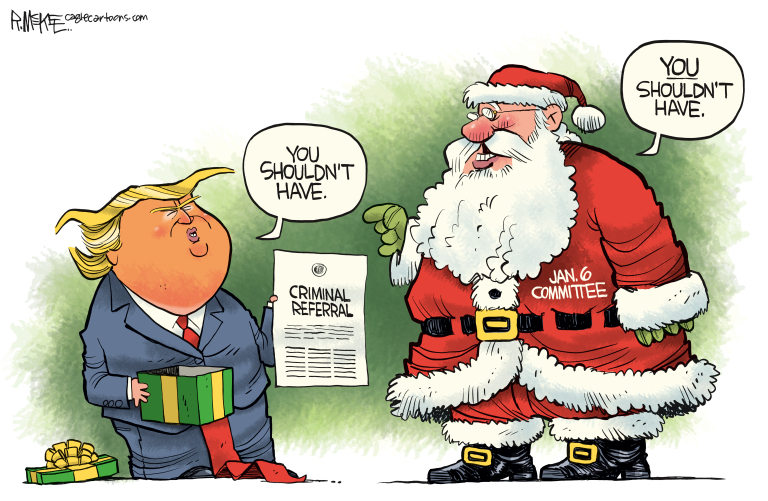
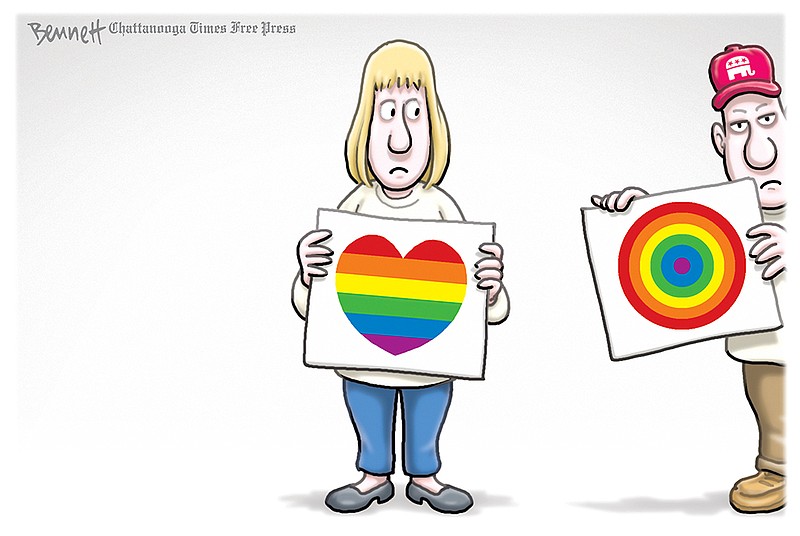

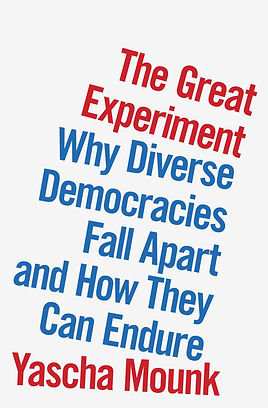




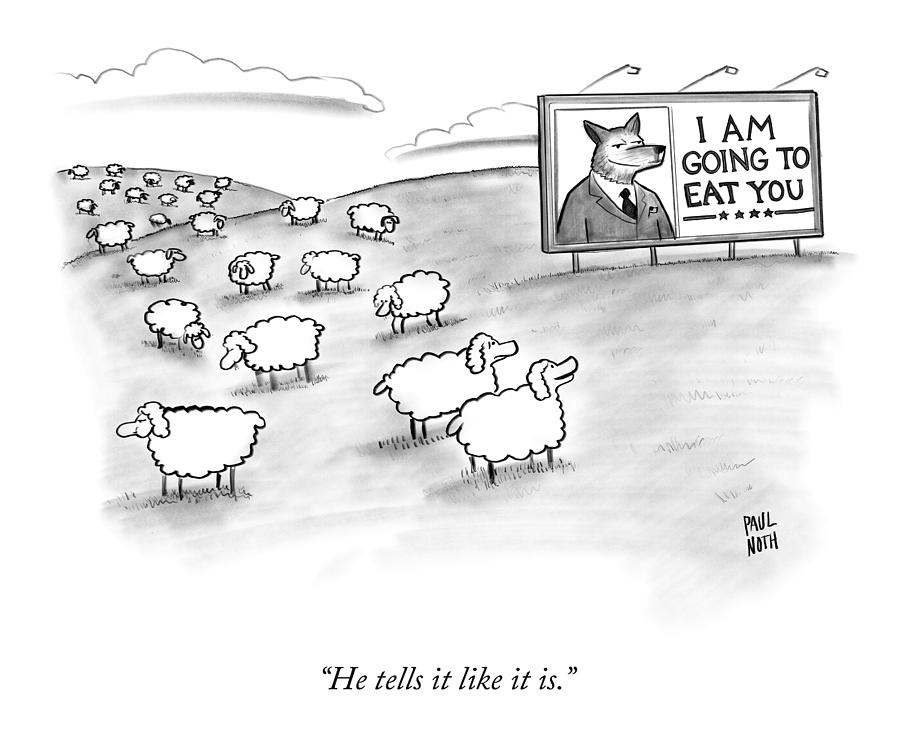
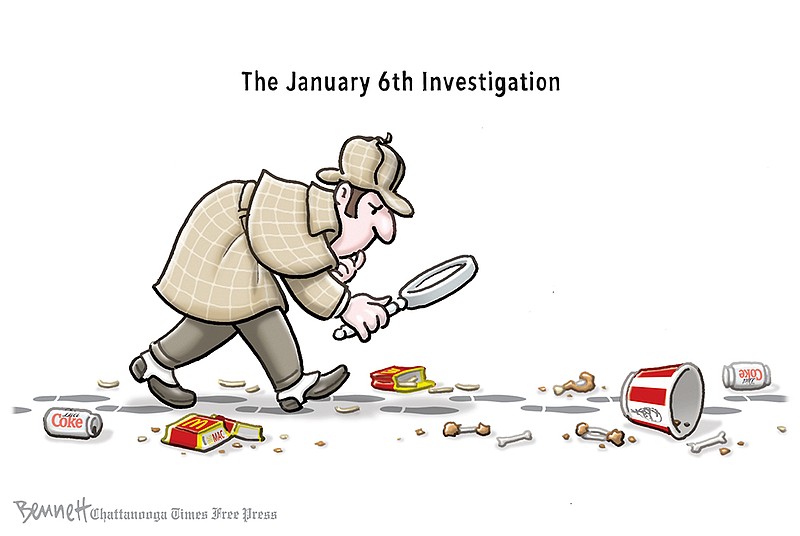
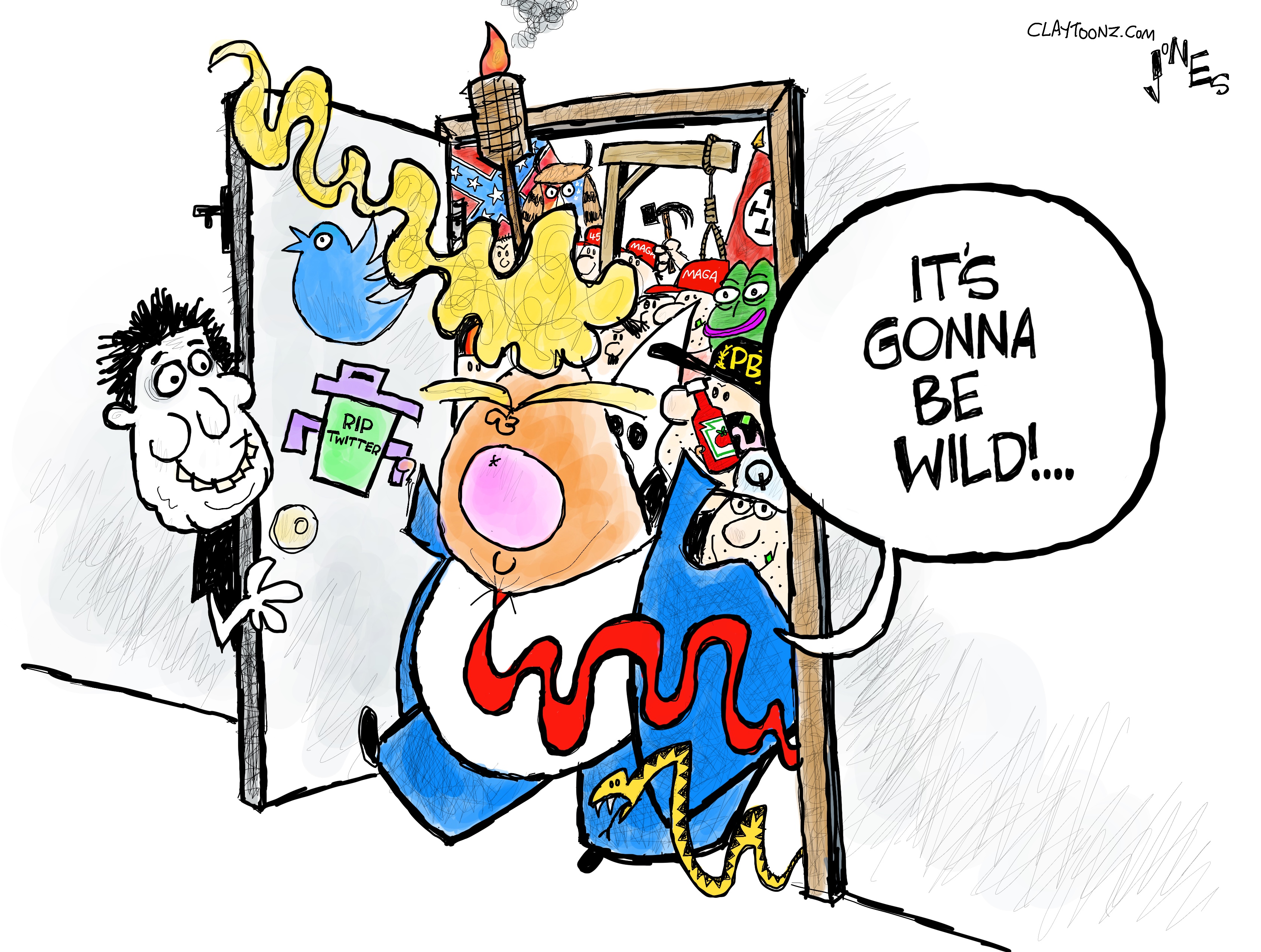



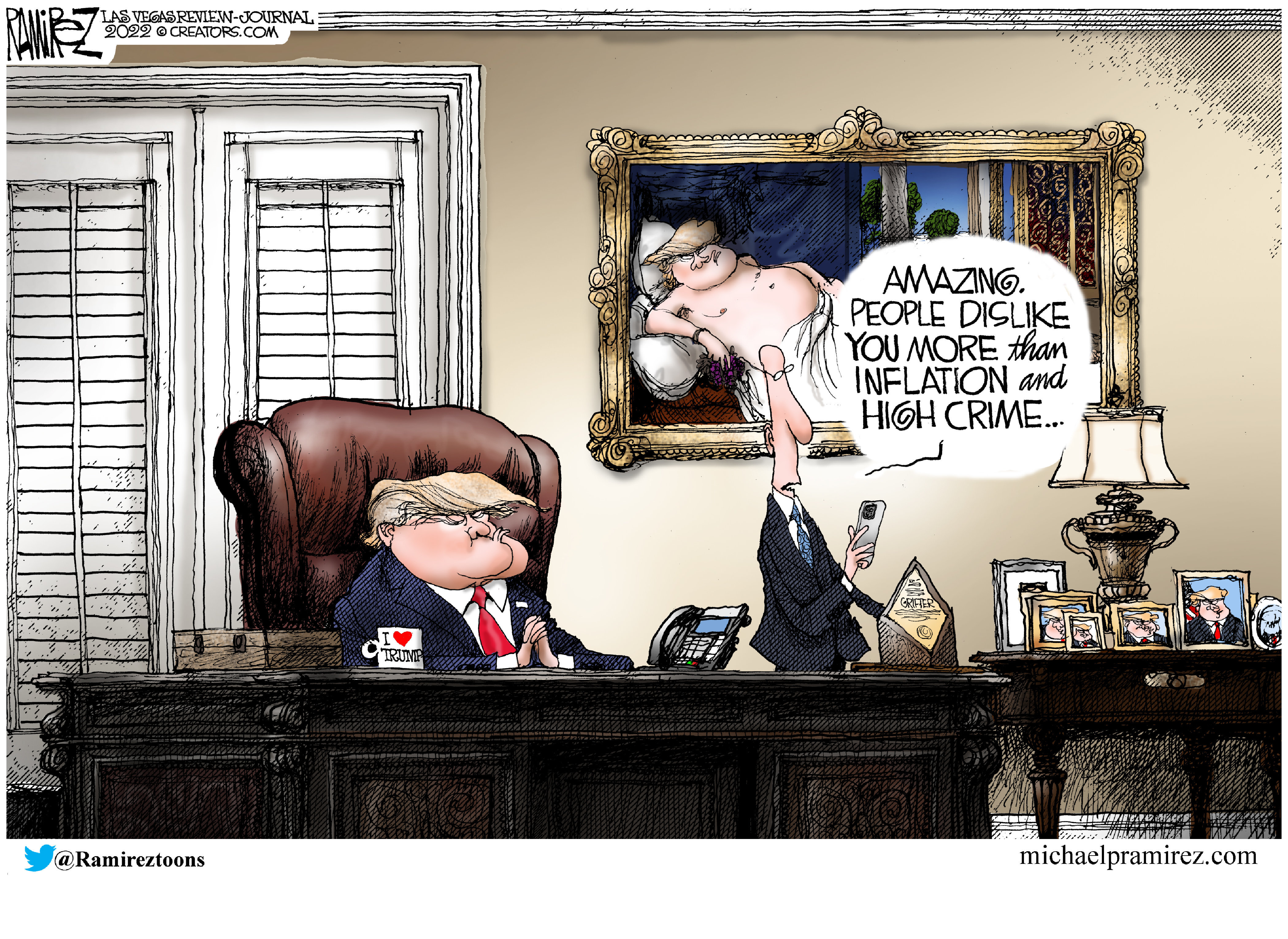

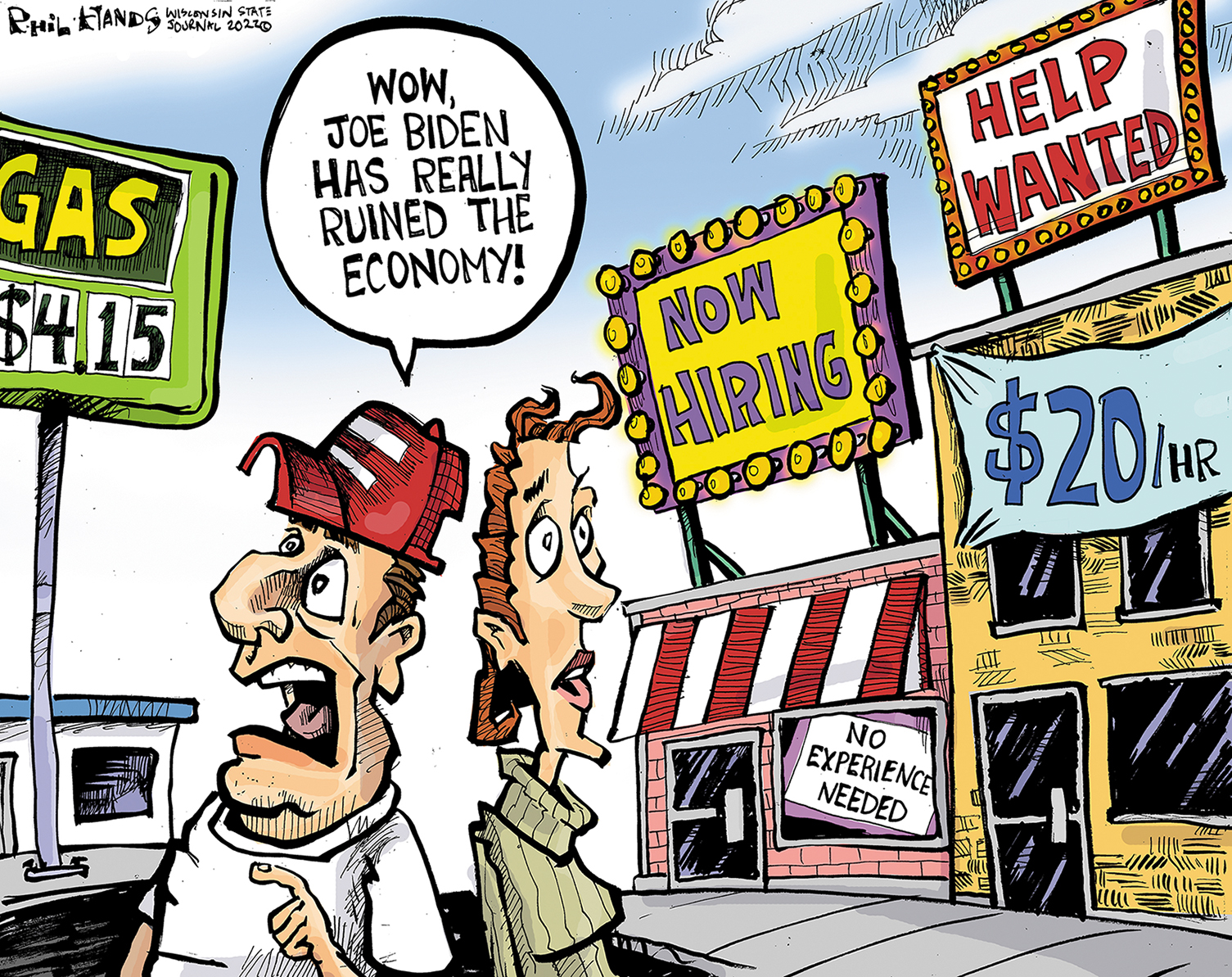
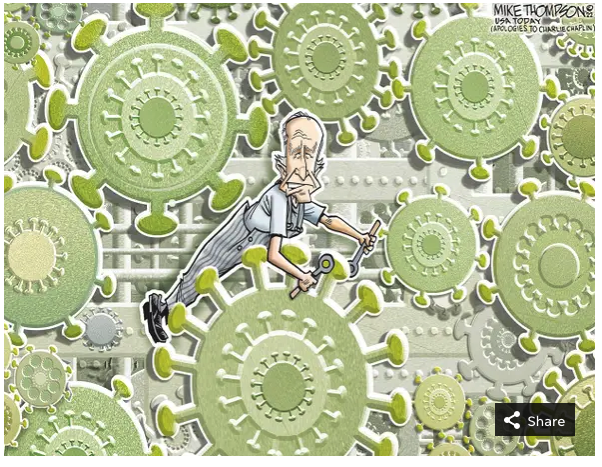


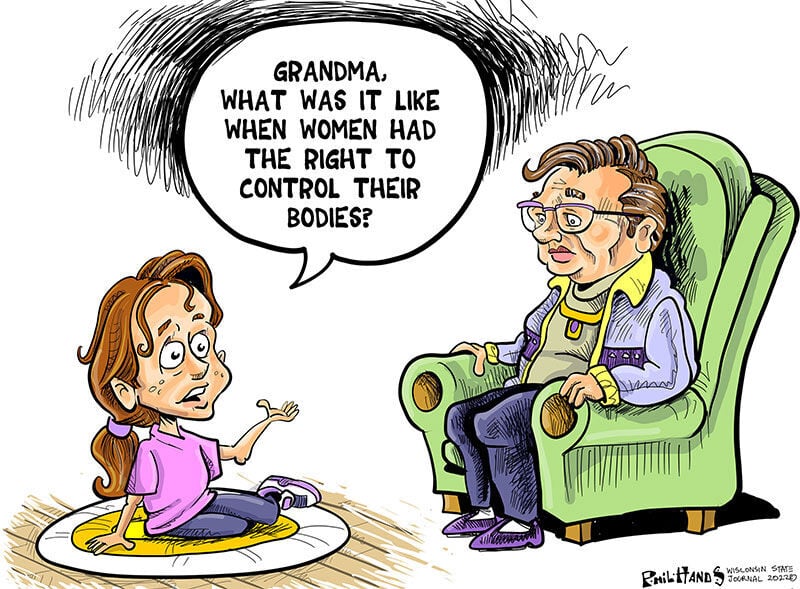
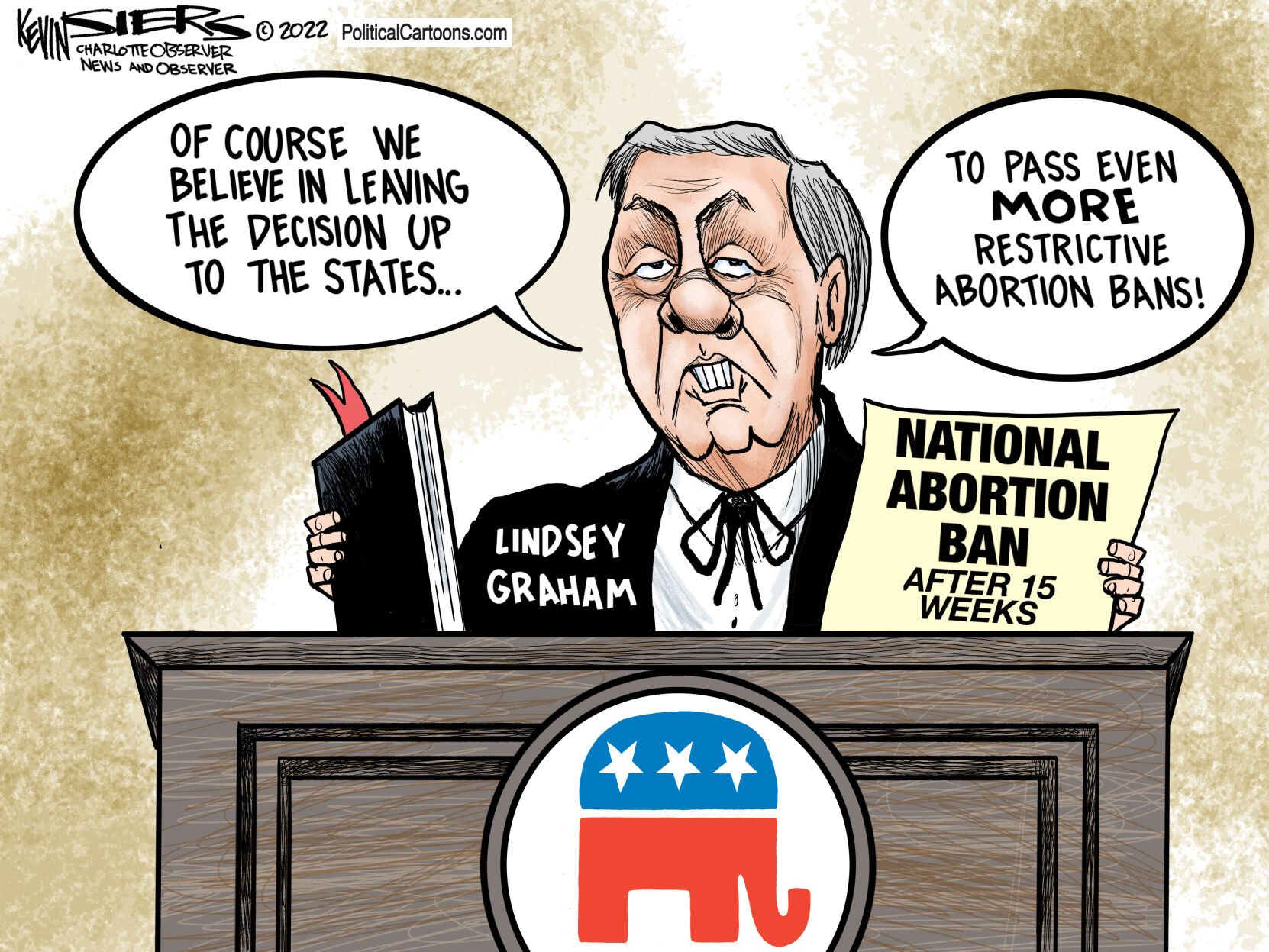
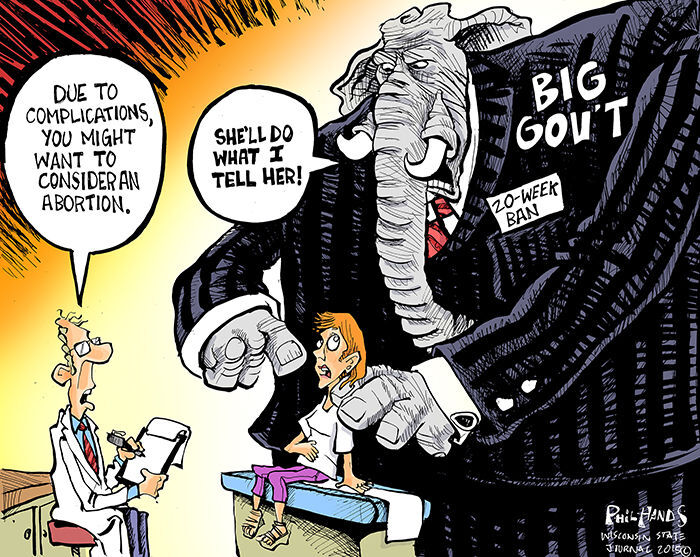
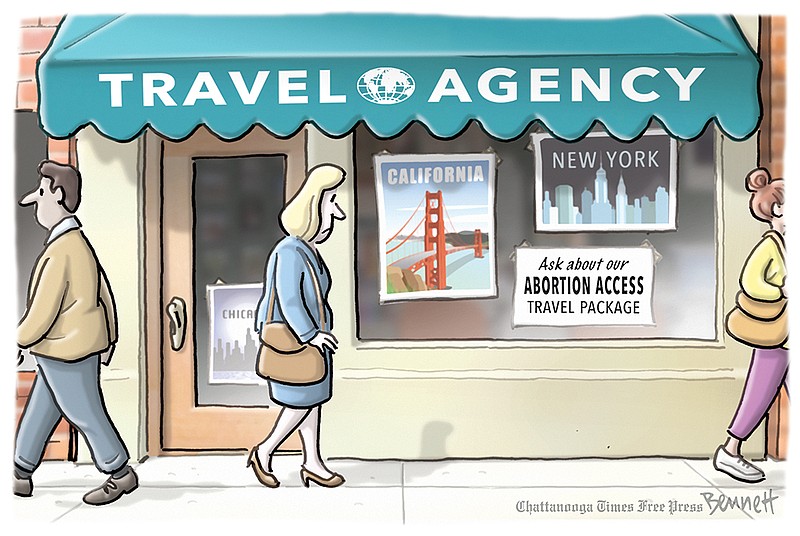
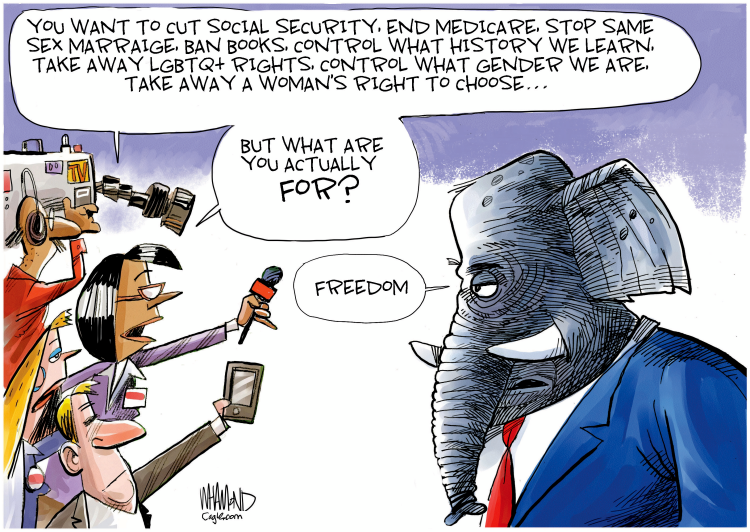


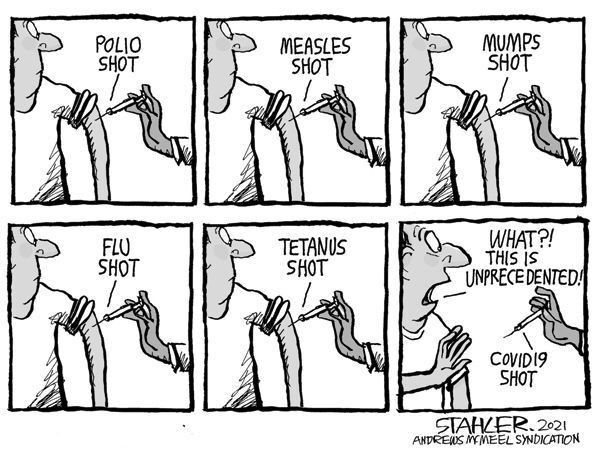
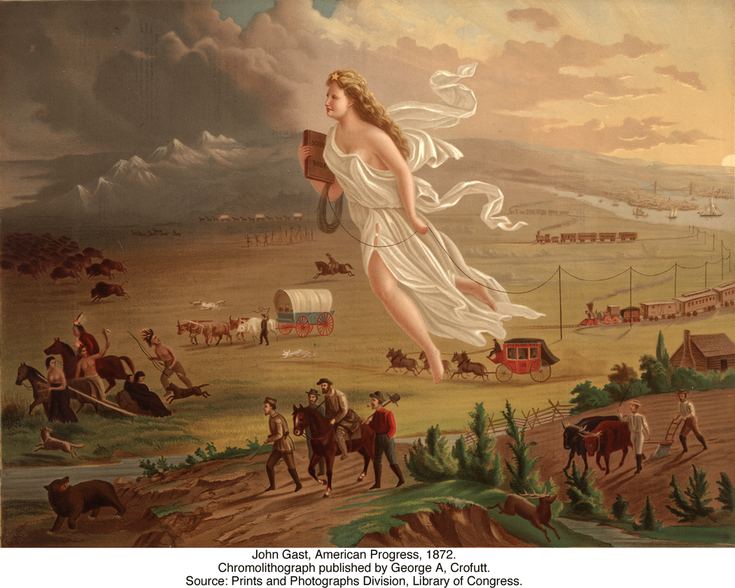


 The Weekly Sift