Monthly Archives: December 2014

The Yearly Sift: 2014

Hindsight is always 50-50.

— NFL quarterback Cam Newton

review all the Sift quotes of 2014

look at “The Yearly Sift: 2013

This week everybody was still talking about …

last week’s murder of the NYPD’s Wenjian Liu and Rafael Ramos.

Conservatives like Rudy Giuliani blamed the murders on — who else? — President Obama.

We’ve had four months of propaganda, starting with the president, that everybody should hate the police.

Since nobody can find any record of Obama saying anything about hating the police, WaPo’s fact checker awarded this claim four Pinocchios. In fact, no one can come up with any record of the leaders of the black-lives-matter protests calling for violence against police — there is no H. Rap Brown “Burn, baby, burn” quote — but somehow it’s their fault. (There was one group at one protest that chanted for “dead cops”, but no one knows who started the chant, no one endorsed it afterwards, and most protesters never even heard it. This incident has been covered in the right-wing media as if it encapsulated the whole anti-police-brutality movement.)

Media Matters collected the various times when right-wing crazies have killed cops, including the time when they draped the Gadsden flag over the bodies. Oddly, Fox and other right-wing media outlets did not hold conservative leaders responsible for this.

If fingers are going to be pointed anywhere other than at the actual shooter this time, I’d point one at the prosecutors who manipulated the grand juries into not indicting policemen for killing Michael Brown and Eric Garner. As any regular Gotham watcher knows, vigilantes rise when the people lose hope of getting justice through the system.

The worst reaction of all was Bill O’Reilly’s: that Mayor Bill de Blasio is the “true villain” of this story, and should “resign today” because he has “lost the respect” of the NYPD. This call was discussed by other Fox News hosts on their own shows as if it were a sane and reasonable proposal.

It’s not. Treating the police as if they were an equal-or-superior branch of government, rather than employees of the city, flies in the face of American principles that go back to the Founders. In third-world countries that are trying to achieve democracy, you worry about whether the elected government can get along with the army. But such notions should never come up in America.

Nobody elected the NYPD. If public employees don’t feel that they can submit in good conscience to the duly elected officials, they should resign. Remember when Scott Walker was having so much trouble with Wisconsin’s teachers? I don’t recall O’Reilly — or anyone — calling on Walker to resign. The teachers who wanted to be rid of Walker had to work through the democratic system by petitioning for his recall. If NYC police want de Blasio out, they also should have to proceed democratically.

Charles Pierce makes a similar point, and connects it to the CIA torture scandal:

It is very simple. If the CIA is insubordinate to the president, whom the country elected, then it is insubordinate to all of us. If the NYPD runs a slow-motion coup against the freely elected mayor of New York, then it is running a slow-motion coup against all the people of New York. … If we render our torturers superior to the political institutions of the government, and if we render the police superior to the civil power of elected officials, then we essentially have empowered independent standing armies to conduct our wars and enforce our laws, and self-government descends into bloody farce.

But let’s get on with reviewing 2014’s Weekly Sifts.

Themes of the Year

Every year I begin the Yearly Sift with the same caveat: I write the Sift week-to-week, without any larger plan to illustrate themes. But inevitably, I see themes when I look back at the end of the year.

Roots of conservatism. Like a lot of liberals, when I listen to conservative speakers, I often feel like I’m hearing something in code. The leaps of logic, the connections they see between events that look unrelated to me, the refusal to see connections that I consider obvious — there’s something behind it all, some frame, some vision, some unconscious attitude, some set of unstated prior assumptions — true or false — that make sense of it all.

This year I spent a lot of time trying to decrypt conservative thought, looking for its historical roots and hidden assumptions. I didn’t set out to be ungenerous, but I doubt many conservatives approved of the ways I described those roots and assumptions.

In the year’s most popular post, “Not a Tea Party, a Confederate Party“, I traced contemporary conservative ideas back to the Confederacy, arguing that the Tea Party is using the tropes and tactics that won Reconstruction for the South and reversed the apparent outcome of the Civil War. That article became necessary because previous articles “Cliven Bundy and the Klan Komplex” and “Rights Are For People Like Us” were too speculative and needed more supporting research.

After the election, I tried to abstract a the worldview from the Republican messages I had been hearing about immigration, Ebola, moral decline, and the general “otherness” of President Obama. In “Republicans have a story to tell. We’re stuck with facts.” I described that story as: America is a city on a hill with barbarians at the gates. I groped towards a liberal equivalent mythology in “Can We Share the World?

A more light-hearted — at least I thought it was light-hearted — look at the conservative worldview was “A Conservative Lexicon With English Translation“, which resulted in so many good suggestions from commenters that I put out a second edition. Commenters on that post said that I should have combined the two into one post, which I have finally done in a page that I hope to update from time to time.

Privilege — the way life works differently for blacks and whites, men and women, rich and poor — has turned into a continuing background theme of the Sift since 2012’s “The Distress of the Privileged“. This May, Time published a privilege-justifying essay by a Princeton freshman, and I responded to him with “Privilege and the Bubble of Flattery“.

Specific varieties of privilege also got my attention. “Not a Tea Party” was the culmination of a race-and-history thread going back to 2012’s “A Short History of White Racism in the Two-Party System“, “Slavery Lasted Until Pearl Harbor“, “Ta-Nehisi Coates Goes There: Reparations“, and “Are You Sure You’re White?“. The most popular post from the first half of the year was “What Should ‘Racism’ Mean?“, a discussion of implicit and unconscious racism, using reactions to the Obamas occupying the White House as examples.

Ferguson and its related issues of race, police violence, and the biases in our legal system became an event-driven theme of its own. The best post in this series was “What Your Fox-Watching Uncle Doesn’t Get About Ferguson“. But (in addition to being discussed in many weekly summaries) Ferguson also figured in “The Ferguson Test“, “Infrastructure, Suburbs, and the Long Descent to Ferguson“, “Five Lessons to Remember as Ferguson Fades into History“, and “This Time Will the Outrage Matter?“.

The Donald Sterling incident brought up just about any kind of privilege you can think of. So of course the conservative media decided he was the victim, which I addressed head-on in “No, Donald Sterling Isn’t the Victim“.

Male privilege also came up, most often in the context of violence against women. After the Isla Vista murders I wrote “#YesAllWomen and the Continuum of Aggression” to explain why men and women viewed the events so differently:

Men look at Elliot Rodger and say, “I would never do something like that.” Women look at his victims and say, “That could totally happen to me.”

That piece later got picked up by UU World magazine. Male entitlement was the focus of my review of Angry White Men. Domestic violence was the subject of “Is Ray Rice’s Video a Game-Changer?

Law. Making sense of important court rulings is a continuing focus of the Sift. Those legal-analysis posts never get really big readership, but I still believe they’re a public service, since the mainstream media does that job so badly.

This year I explained the Supreme Court’s Hobby Lobby decision, the Schuette decision about affirmative action, and the McCutcheon decision on campaign finance, plus lower-court decisions involving net neutrality and a series of same-sex marriage decisions that I covered throughout the year, and then collected in October’s “Is the Battle for Same-Sex Marriage Nearly Over?” (Not yet; the Supreme Court is going to have to take the case.)

The Books

This year the Sift had fewer book reviews, but more posts that were the result of long reading projects.

“Not a Tea Party” could have used a bibliography, as it rested on Jefferson Davis: American by William J. Cooper, Douglas Blackmon’s Slavery By Another Name (which had gotten its own review in March), Thomas Dixon’s novel The Clansman: a historical romance of the Ku Klux Klan, Margaret Mitchell’s Gone With the Wind, the two Douglas Egerton histories Year of Meteors and The Wars of Reconstruction, W.E.B. DuBois’ Black Reconstruction, and Eric Foner’s Reconstruction: America’s Unfinished Revolution, 1863-1877, and a few other books not specifically named, like Away Down South by James Cobb and John C. Calhoun and the Price of Union by John Niven.

If I rewrote the article today, it would have to include some quotes from R. L. Dabny’s A Defense of Virginia and the South from 1867; I’ll be looking for opportunities to tell you more about that, as I see Dabny’s book as the best existing first-person account of the Confederate worldview. (A teaser: The mistake at the root of the North’s misbegotten abolitionism is social contract theory. Once you start thinking that government depends on the consent of the governed, you’ll end up not just freeing the slaves, but giving them the vote. And women too, God forbid!)

One book review that did get a lot of attention this year was of Michael Kimmel’s Angry White Men.Republicans have a story to tell. We’re stuck with facts.” was at least partially a review of Narrative Politics by Frederick Mayer. Justice John Paul Stevens Six Amendments got reviewed in “Restoring the Constitution is Now a Liberal Issue“.

Two reviews that fit in with the year’s deep-history theme were Aviva Chomsky’s Undocumented: how immigration became illegal, and Daniel Sharfstein’s The Invisible Line, a marvelous biography of three mixed-race American families that (over generations), migrated from black to white.

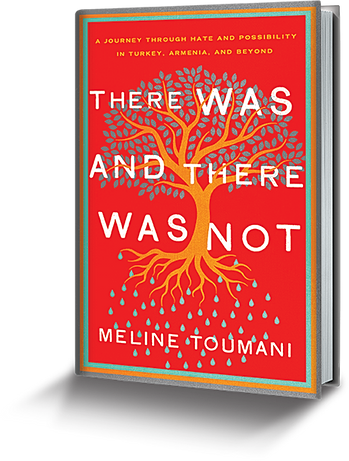
A mini-review of Meline Toumani’s There Was and Was Not made it into a weekly summary.

The Mosts

Most prescient comment. You may remember that January opened with a polar vortex, provoking the usual round of I’m-cold-so-global-warming-is-a-myth articles. I’m proud of this response on January 13:

Even when 2014 was just a few days old and wind chills were below zero for most of the country, there was a bet you could make that was almost a sure thing. No matter how it started, by its end 2014 will be yet another warm year. And by warm I mean: The global average temperature will wind up well above the 50-year average and the 20-year average.

Final returns aren’t in yet, but 2014 may well be the hottest year on record. If any of your friends believe global warming is a myth, you should offer them the bet that 2015 will be a warm year too — maybe not another record, but clearly above the 20-year average. If instead it’s a cool year (it won’t be) I promise not to sweep that fact under the rug, because belief in global warming is evidence-based, not ideology-based like global-warming denial.

I also feel pretty good about taking a wait-and-see attitude towards the Bridgegate Scandal, which hasn’t delivered Governor Christie the knock-out blow many liberals were hoping for. On February 24, I criticized MSNBC’s saturation coverage, and said:

If you are similarly ignoring MSNBC and/or Bridgegate these days, I’ll let you know when something important happens.

Least prescient comment. As in 2010, I stayed hopeful about Democrats’ prospects in the mid-term elections far longer than I should have. A lot of comments could illustrate this, but I feel worst about something I didn’t say: In June, when I was giving advice about the best Senate candidates to support and where your support would have the most impact, I left out Mark Udall in Colorado, thinking he wasn’t really in that much trouble.

Sorry, Mark. You will be missed.

The best post nobody read. In March, I gave an unfortunate title to “Does Paul Ryan Care About Poverty Now?” I suspect a lot of my regular readers looked at that question, decided the answer was obviously No, and figured they’d already spent enough of their lives reading about Paul Ryan.

I have an excuse: Ryan’s committee had just put out its report, The War on Poverty: 50 Years Later, and it looked like he was laying down a marker that would turn into policy down the road. (I covered the second step down that road in August in “Can Conservatives Solve Poverty?“, which a few more people read. We haven’t heard the last of this.)

But the March article is worth reading because of the way it frames the whole national discussion of poverty, independent of Paul Ryan. Conservatives like to claim that liberals want to give people hand-outs while conservatives want to get them jobs, when in fact everyone would rather see the poor supporting themselves in good jobs. But the get-out-of-poverty-by-working plan might fail for four different reasons — ranging from “there are no jobs” to “I’m too lazy to work” — which I list.

And here’s where it gets interesting: The vast majority of Americans agree about what the government should do for people in each of those four situations. The liberal/conservative debate about poverty in fact revolves around which of those four situations is most common and most deserves our attention.

The numbers

By all measures, the Sift’s readership increased this year, with a significant bump in both occasional and regular readers following August’s “Not a Tea Party, a Confederate Party“.

Last year this section was tricky to write, because I felt like the regular readership was growing, but the most obvious number to measure readers — page views — was down from 240K in 2012 to 215K in 2013. I had to explain that page views are tricky measure of a blog, because so much depends on the irregular timing of a few viral posts. (A little more than half of the blog’s 1 million views since moving to the new format in June, 2011 are for two posts: 342K for “The Distress of the Privileged” from 2012 and 183K for this year’s “Not a Tea Party, a Confederate Party”.)

So I focused more on stats like these: subscriptions tracked by WordPress went up from 504 to 908, and likes for the Sift’s Facebook page went from 183 to 256.

Well, this year had a viral post, so the numbers require much less explaining. Everything is up: Page views ballooned to 412K (with a few days to go), subscriptions to 2,281 (though I’m not completely sure that number measures the same thing as last year’s number), and Facebook likes to 382. Followers of the Sift’s Twitter feed went from 203 to 342.

I also started getting my wish for a commenting community; in the second half of the year it was a rare post that didn’t draw at least a couple non-spam comments. (In the short term I can be thin-skinned — that’s one reason I sometimes don’t respond promptly — but in the longer view I love comments. Even in cases when I feel a commenter completely misunderstands me, the comment helps me see how I’m being misunderstood.)

Obviously, “Not a Tea Party” was the most-viewed post of the year, followed by “Distress”, which garnered another 36,000 views in its third year. Then came “What Should Racism Mean?” with 32K, followed by 2012’s “A Short History of White Racism in the Two-Party System” (which had a renaissance because of its connection to “Not a Tea Party”) at 12K, “What Your Fox-Watching Uncle Doesn’t Get About Ferguson” at 9K, and “#YesAllWomen and the Continuum of Aggression” and “The Sifted Bookshelf: Angry White Men” at 5.4K each.

A typical weekly summary now gets around 300 views on the blog, plus another 250 or so from subscribers. (I’m not sure how WordPress comes up with that number, but I think it knows whether subscribers open the email it sends them.) A year ago those numbers were more like 200 and 100. A featured post that doesn’t catch a viral wave gets 300-600, plus 250.

The Monday Morning Teaser

It’s the end of the year, time to sift the Sifts of 2014. The Yearly Sift should be out in an hour or two.

Unspeakable Acts

The purpose of Newspeak was not only to provide a medium of expression for the world-view and mental habits proper to the devotees of Ingsoc, but to make all other modes of thought impossible. … This was done partly by the invention of new words, but chiefly by eliminating undesirable words and by stripping such words as remained of unorthodox meanings, and so far as possible of all secondary meanings whatever.

— George Orwell “The Principles of Newspeak” (1949)

This week’s featured post is “Newspeaking About Torture“.

Thursday, the Sift had its one millionth page view since I redesigned it and moved it to WordPress in June, 2011. (I have no way of figuring out who the millionth viewer was. If you looked at the blog on Thursday, maybe it was you. Thanks.) More than 400K of those views were this year. More about the numbers next week when I do the retrospective Yearly Sift.

This week everybody was talking about Cuba

After the midterm elections, President Obama entered what I’ve started calling the Aw-Fukkit Phase of his presidency, where he’s going to do things that make sense without worrying about polls or politics: first immigration, then smog.

That trend continued Wednesday, when he went as far to normalize relations with Cuba as he can without an act of Congress. He announced restoration of diplomatic relations, which will lead to the opening of a U.S. embassy in Cuba. Removing Cuba from the official State Department list of countries that sponsor terrorism should follow soon. Talks leading to this agreement apparently were brokered by Pope Francis, who seems to have decided to take “blessed are the peacemakers” seriously.

The economic embargo against Cuba is a law that Congress probably won’t repeal. (But administrative decisions might hollow it out a little.) So no Miami/Havana flights and no Cuban cigars in the Mall of America any time soon. Personally, I’d like to see Major League Baseball create a Latin Division with teams in Havana, San Juan, Mexico City, Los Angeles, Houston, and Miami, but I’m a dreamer.

Embargoes like this can sometimes make sense as an attempt to push a shaky new regime off a cliff. But if that’s going to work at all, it usually works in six months or so, not after half a century.

We have normal relations with nearly all our other Cold War adversaries: Russia, China, Vietnam … basically everybody but North Korea, which (see below) is in a league of its own. The only thing special about Cuba is that a Cuban-refuge lobby has extraordinary political influence. The Cuban embargo is to Florida’s presidential politics what ethanol is to Iowa’s.

A few other things make Cuba special, but they push the other way: Cuba used to be an American colony. It’s only 90 miles away. A lot of Americans have relatives they’d like to visit in Cuba, or would vacation on its sunny beaches if they had the chance.

The arguments against Obama’s move all revolve around what I think is a misguided notion: that the U.S. is the world’s Heather #1, so we’re doing less-cool countries a favor when we talk to them. That view is implicit in Ted Cruz’ characterization of the new relationship as “a very, very bad deal”. We agreed to talk to Cuba and didn’t get enough in return for that “concession”.

In view of the fact that the 1962 Missile Crisis threat never came to fruition, Cuba has never actually done anything to us, except in fantasy movies like Red Dawn. They have more reason to be angry at us than vice versa — not just because of other ancient history like the Bay of Pigs invasion, colonialism, and mucking about in their pre-Castro politics, but the present-day fact that we keep a military base on their territory, where we do dirty work that we don’t want to happen on the mainland.

The Castro government is harsh, but its dismal Freedom House score (6.5 out of 7) is the same as China’s, and still better than ten other countries, including U.S. ally Saudi Arabia and several other places where we have embassies.

If they’re willing to talk to us and trade with us, we should be willing to talk to them and trade with them — unless you think the 55th year of an embargo is likely to accomplish something the previous 54 didn’t.

and Sony/North Korea

Sony’s decision not to release “The Interview”, a Seth Rogan comedy about an attempt to assassinate North Korean leader Kim Jong Un, is still a mystery to me. Reportedly this costs Sony $100 million, and the threats to attack U.S. theaters that show the movie are the kind of impotent bluster North Korea is famous for.

Officially, the North Korean government is not behind this — the threats come from a hacker group calling itself “Guardians of Peace” — but the FBI says they are. (Other experts disagree.)

If this is a North Korean operation, it’s hard to know how to respond. The country is already subject to so many sanctions that it’s virtually cut off from the rest of the world, and its repressive government might be happy about that. It is plagued by famines, but its hungry people seem unable to revolt. The government constantly raises fear about a U.S. invasion — only the cosmic power of the Great Leader keeps the evil Yankees at bay — so an actual attack on something might also play right into the government’s hands.

A Hollywood insider’s view of this story and how it unfolded comes from George Clooney, who circulated a petition supporting Sony and got little support.

This was a dumb comedy that was about to come out. With the First Amendment, you’re never protecting Jefferson; it’s usually protecting some guy who’s burning a flag or doing something stupid. This is a silly comedy, but the truth is, what it now says about us is a whole lot. We have a responsibility to stand up against this.

No one in Hollywood would stand with Sony, Deadline Hollywood says, because they were “fearful to place themselves in the cross hairs of hackers”. And by releasing embarrassing emails before threatening terrorism, the hackers gave an excuse to those who wanted to chicken out rather than make a united front. Clooney says:

Here’s the brilliant thing they did. You embarrass them first, so that no one gets on [their] side. After the Obama joke, no one was going to get on the side of [Sony Pictures executive] Amy [Pascal], and so suddenly, everyone ran for the hills.

and murdered policemen

Saturday, two Brooklyn policemen were murdered in their patrol car, apparently by an African-American man who came to New York from Baltimore specifically to take revenge on the NYPD for the killing of Eric Garner. The man reportedly had a history of mental illness, and killed himself after killing the officers.

There are two opposite ways to react to horrible events like this. If you identify with the victims, you may react tribally: People like you are threatened by people like him, and your tribe needs to protect itself by lashing out at the other tribe. That was the response of NYPD union chief Patrick Lynch, who blamed the attack not on a lone lunatic, but on the anti-police-brutality demonstrations that started after Garner was choked to death by police while saying “I can’t breathe.”

There’s blood on many hands tonight. Those that incited violence on this street under the guise of protest, that tried to tear down what New York City police officers did everyday. We tried to warn it must not go on, it cannot be tolerated. That blood on the hands starts on the steps of city hall in the office of the mayor.

A memo that appeared to come from Lynch (but was later denied) said that NYPD had become a “wartime police department”, and “will act accordingly”.

But it’s also possible to have a universalist response: Having experienced how bad it feels when people like you are killed for no good reason, you want to prevent this experience from happening to anyone else. The murdered cops’ friends and family, Eric Garner’s friends and family, Michael Brown’s friends and family … you don’t have to pick a side. None of them should be going through what they’re going through.


You know how these killings are different that Garner and Brown? So far, the media has shown no interest in combing through the lives of the murdered cops to see whether they “had it coming”. I doubt it would be hard; surely somebody sometime had an unpleasant interaction with one of the cops and would be willing to help the media make a headline out of it. But so far nobody is going for that cheap shot.

Wouldn’t it be great if all victims got this kind of respect?


Before the attack on the policemen, these clueless guys wore “I Can Breathe” shirts, thinking they were making a pro-police statement.

In fact they’re just underlining the point made by the “I Can’t Breathe” shirt (worn here by Lebron James): Of course you can breathe, because you’re white and so police treat you with courtesy. That’s what white privilege means.

You know what would be a powerful demonstration against racism? Pair up white people wearing “I Can Breathe” shirts and black people wearing “I Can’t Breathe” shirts. Let them march together two-by-two.

and still torture

The neocon line from Bill Kristol and others is that what the CIA did wasn’t “real torture” because “you recover” with “no lasting effects at all”.  This sounds remarkably similar to the way some men minimize rape.

There’s good reason why, in interrogator slang, getting a prisoner to talk is called “breaking” him. A decade after he was seized and tortured by mistake, German citizen Khalid al Masri is still described as “a broken man”.

He’s abandoned his home. He no longer is part of the lives of his wife or children. Friends can’t find him. His attorneys can’t find him. German foreign intelligence will say only that he’s “somewhere in a western-leaning Arab nation.” When his Ulm attorney and confidant Manfred Gnjidic last saw him, he was broke, unkempt, paranoid and completely alone. He’d been arrested twice and sent once to a psychiatric ward, once to jail.

Al-Masri has not even gotten an apology from the CIA, and his lawsuit for damages was thrown out of court because a judge ruled that a trial would necessarily reveal state secrets.

But that’s all no skin off Bill Kristol’s nose. All the trauma in his privileged existence has healed without a scar, so he thinks that’s how life works.


I discussed the larger conservative reaction to the torture report in “Newspeaking About Torture“.

and Jeb Bush

Tuesday, the former Florida governor tweeted:

I am excited to announce I will actively explore the possibility of running for President of the United States

He followed up by saying that in January he would establish a leadership PAC to “help me facilitate conversations with citizens across America to discuss the most critical challenges facing our exceptional nation.”

One of my friends is a self-described “ink-stained wretch” from the Newspaper Era, which happened sometime after the Jurassic. One of his early editors refused to publish articles about press conferences where somebody merely announced he was going to do something, like file a lawsuit, because announcements aren’t news. When the lawsuit actually got filed, that would be news.

Would that politics and political journalism still worked that way. These days, Bush’s announcement that he was going to do something next month to help him actively explore a possible presidential run … he might as well have gone to Concord and filed papers to put his name on the New Hampshire primary ballot. He’s running.

Together with Chris Christie, Jeb is the best hope of the establishment wing of the Republican Party (which still fantasizes about Mitt Romney, because that worked so well last time) to keep the nomination away from the Tea Party. Over the last few cycles, I’ve done better predicting Republican presidential politics than Democratic (maybe because I have more perspective). So I’ll venture this: It won’t work.

Bush will annoy the base more than he’ll inspire the establishment. He’s not anti-Hispanic enough. He’s not distant enough from his brother, who the base worshiped at the time, but now blame for deficits and bail-outs and all the other bad 2008 stuff they don’t want to think about. He supported the common core curriculum reform, one of those black-helicopter issues the base goes crazy over. He’s in no-man’s-land regarding the theocrats: He’s not really one of them like Santorum or Huckabee, but to anti-theocratic libertarians he’s stained by the Terry Schiavo case; don’t think you’ve heard the last of that. And purely on a surface level, he looks too wonkish. He’s the expert who knows what’s good for you, not the voice rising up from the soul of Real America. Nobody would ever look at Jeb Bush and repeat Barry Goldwater’s slogan: “In your heart, you know he’s right.”

Ultimately, I predict, the Tea Party will unite around Ted Cruz — after a Ben Carson boom-and-bust similar to those of Michele Bachmann and Herman Cain in the 2012 cycle — and he’ll just barely lose to a stop-Ted-Cruz candidate not specifically identified with either wing. I’m not sure who that will be, but it won’t be Bush, Romney, or Christie.

The eventual nominee will embody contradictions, the way “compassionate conservative” George W. Bush did in 2000. He’ll be a tough-love candidate — firm but not mean, unbending but not brittle, devout but not a crusader, a man of both the past and future. Like Ronald Reagan, he’ll put a charming face on heartless policies. A folksier Paul Ryan, a sharper Rick Perry, a less belligerent Scott Walker … several contenders could fill that role if they successfully recast their images, like the “New Nixon” of 1968.

and you also might be interested in …

During the invasion of Crimea, the Republican party line was that Putin had completely outmaneuvered Obama. Putin was the kind of swaggering leader conservatives admire. Rudy Giuliani laid it out:

[Putin] makes a decision and he executes it quickly. Then everybody reacts. That is what you call a leader. President Obama, got to think about it, he’s got to go over it again, he’s got to talk to more people about it.

Well, as the ruble collapses and the Russian central bank raises interest rates from 10.5% to 17% in one day, President Putin may wish he had talked to more people before executing his decisions. Paul Krugman outlines exactly what kind of hole Russia has dug for itself, and Rachel Maddow enjoys replaying clips of the Republican man-crush on “what you call a leader”.


Gordon Klingenschmitt is a Colorado state representative who used to be a Navy chaplain. He knows what we should replace ObamaCare with: prayer.

Father in Heaven, we turn away from the idolatry that so many have in their hearts, that they think government is a better healer than Jesus.

Because no true Christian ever gets sick. Everybody knows that.


So police conduct a no-knock nighttime raid on somebody’s house looking for drugs. The people inside only know that someone is breaking in — and there are no drugs in the house, so they have no reason to suspect why — so they shoot and kill one of the officers. What happens?

Well, if you’re white you can take advantage of the Castle Doctrine, which says you have a right to defend your home against what a reasonable person would interpret as an attack. But if you’re black, that may not work.

and let’s close with some Christmas music … sort of

On Black Friday afternoon I was wandering through the central square of Santa Fe. Musicians were scattered about, warming up for performances connected to that evening’s tree lighting. A lone guitarist played a familiar Christmas tune, but not until I got closer could I make out the lyrics he was singing:

Police got my car.
Police got my car.

I suspect that’s not what he sang in the evening, but a YouTube search traced his song back to Cheech and Chong.

Now, whenever the ambient Christmas music starts to become overwhelming, I sing “Police Got My Car” to myself, and I feel better. And if that doesn’t work, there’s always “I Found the Brains of Santa Claus” or Grist’s climate-apocalypse carols.

Newspeaking About Torture

If you can’t ban a word, break it.


One major theme of George Orwell’s 1984 is the importance of language to oppressive governments. From the beginning of recorded history, crude dictators have punished people for criticizing their rule. But modern, sophisticated dictators change the language itself, so that thoughts undermining the ruling ideology are hard to put into words, and no one would understand what you were saying if you did.

Orwell described this technique in detail in an essay he appended to 1984, “The Principles of Newspeak“.

The purpose of Newspeak was not only to provide a medium of expression for the world-view and mental habits proper to the devotees of Ingsoc, but to make all other modes of thought impossible. … This was done partly by the invention of new words, but chiefly by eliminating undesirable words and by stripping such words as remained of unorthodox meanings, and so far as possible of all secondary meanings whatever.

That’s a fine strategy if you already run a totalitarian government like the one in Orwell’s Oceania. But it completely ignores the problems faced by movements still trying to rise to power, like today’s American conservatives. Despite controlling Congress, they can’t just ban words they don’t like.

All they have besides Congress is a media empire, vast wealth, and an amazing degree of message discipline. What can you accomplish with those resources?

Just by being loud and persistent, you can try to alter common usage to favor your ideology. Sometimes that works (“death tax“) and sometimes it doesn’t (“homicide bomber“). But the real challenge is to disarm a word that works against you or for your enemies.

In Oceania they’d simply remove the word from the dictionary and correct everyone who kept using it. (“It’s not in the dictionary, so it’s not proper Newspeak.”) Or they’d keep the word, but remove all its offending meanings, again correcting the people who persisted in using it incorrectly.

But what if you don’t have that kind of power? American conservatives solved this problem a long time ago: If you can’t ban a word, you apply your resources to break it through misuse.

I’m not sure when this started. (That’s the great thing about breaking a word; eventually everybody stops using it, so it never comes to mind again. Your tracks are covered, because hardly anybody ever asks “How did zimzam become unusable?”) Maybe it was during the Reagan years, when liberal became an insult to throw at people you don’t like. I’m not sure. I wasn’t paying attention to the right things then. None of us were, or we might have tried to defend liberal rather than just stop using it.

I first noticed word-breaking* years later, during the second Bush administration. A lot of nasty stuff was happening then: The U.S. government was torturing people in secret prisons, spying on its own citizens, locking people up indefinitely without trials, and manufacturing bogus reasons to invade a foreign country. The administration was justifying all that by putting forward bizarre new legal interpretations of “the unitary executive” and the nearly unlimited “Article II power” he had whenever he determined that we were at war. Standing previous conservative small-government and fiscal-responsibility rhetoric on its head, the administration was creating huge new programs to buy off key constituencies, and not raising any revenue to pay for them. (Just tack them on to the deficit. No worries.)

As I was reading an Economist article characterizing Bush’s ideology as “big-government conservatism”, I wondered: Why use such a cumbersome phrase, when English already had a perfectly good word for this configuration of ideas and policies — fascism.

The answer was that fascism had become unusable, because misuse had broken it. Just when America needed the word to describe what was going on, conservatives were instead discussing “liberal fascism” and “Islamo-fascism” and so forth. In the conservative media, suddenly anything and everything was fascist, except the kind of militaristic, torturing, secretive, prying, corporatist, big-government conservatism that had been practiced by Mussolini, Hitler, Franco, and Pinochet — and was increasingly being adopted by Bush.

The word fascist could have been a rallying call for the enemies of American conservatism. But conservatives averted that threat by breaking fascist through misuse. As a result, today you are perfectly free to talk about fascism — I just did — but no one will know what you mean. Fascist is nothing but an insult now; it has no real content. If you use it, you aren’t saying anything in particular, you’re just being aggressive and rude.

Terrorism was broken in another way, like a proud wolf who gets turned into an attack dog. Terrorism used to have a clear meaning: threatening or perpetrating violence against civilians for political purposes. It was an ideologically neutral description of a tactic that any political movement might resort to. But after a decade of misuse, terrorism has become any violent act conservatives disapprove of. So the Fort Hood massacre is terrorism, even though it was an attack against a military base. Whatever ISIS does is terrorist, even fielding an army and fighting pitched battles against other soldiers. But hardly anyone (except me) called the Sikh Temple murderer what he was: a white right-wing Christian terrorist. White Christian right-wingers can’t be terrorists any more; it’s an oxymoron.

More recently, religious freedom and religious persecution have been broken. A generation ago those were ACLU words, used by atheists, Jews, and other minority movements that struggled against oppression by the Christian majority.

That oppression hasn’t disappeared; in many ways it’s getting worse. But the words to fight it have been hijacked so that they’re barely usable any more. Today, religious persecution is telling a Christian baker that a gay couple is part of the general public his business serves. Or maybe it’s just saying “Happy Holidays” instead of “Merry Christmas”. Religious freedom means that a Christian employer is “free” to block any part of his employees’ health-care coverage that he doesn’t like, and a Christian pharmacist can freely decide whether he approves of your prescription (and the lifestyle it implies) before he fills it. Separation of church and state — which used to be the hallmark of religious freedom — is now a Communist idea that is part of the conspiracy to persecute Christians.

So now, when Kennesaw, Georgia won’t let a Muslim group rent space to worship in their town, or a parole officer forces an atheist to attend a religious program under threat of returning to jail, there are no words to describe what’s happening. Calling it “religious persecution” just confuses people.

And that brings us to torture. For the longest time, the primary defense of the Bush torture program was that it didn’t happen. There was no torture, there was just enhanced interrogation, a phrase brazen enough to do Newspeak proud.

But that defense has become untenable now that the Senate report on torture is out. Once the public heard the details, the claim that this wasn’t torture was exposed as ridiculous. (That’s only going to get worse as more details appear.) And although some are trying, the word torture can’t be reclaimed from the dark side. There’s no way to say, “We’re the Torture Party and that’s a good thing.”

But there is an alternative strategy: misuse the word torture until it breaks.

Dick Cheney pointed the way during his Meet the Press interview with Chuck Todd. When Todd asked how Cheney defined torture, Cheney deflected with this:

Well, torture, to me, Chuck, is an American citizen on a cell phone making a last call to his four young daughters shortly before he burns to death in the upper levels of the Trade Center in New York City on 9/11.

Todd followed up by asking whether rectal feeding was torture, and Cheney continued his distract-with-shiny-objects strategy.

I’ve told you what meets the definition of torture. It’s what 19 guys armed with airline tickets and box cutters did to 3,000 Americans on 9/11.

The misuse campaign is on. The American Thinker blog reports on the “real torture scandal in America“, which is abortion. General Boykin says “Torture is what we’ve done by having the IRS go after conservative groups.” The Koch-funded American Energy Alliance is calling EPA fossil-fuel regulations “torture”:

Whether it’s the costliest regulation in history or the coal-killing power plant rules (that Obama’s law professor says raise “constitutional questions”), it’s clear that the CIA isn’t the only government agency engaged in torture. At least the CIA isn’t torturing Americans.

The AEA illustrated its point with this cartoon:

Yes, “raising energy costs” and “harassing property owners” are now torture.

Expect to hear a lot more of this. Soon, every inconvenience to a conservative special interest group is going to be “torture”. Anything and everything will be “torture” — except a CIA interrogator looking into the eyes of a helpless (and possibly innocent) prisoner and threatening excruciating pain, trauma, or humiliation unless he talks.

Torture can’t be defended, so the word torture has to become meaningless. If you can’t ban a word, break it.


* I anticipate the question: “What about the ways that liberals try to change the language?” There are a number of words liberals have tried to remove from the language, like nigger or faggot. We discourage men from referring to adult females as girls, and so on. But these efforts have been above-board and transparent. For example, we have largely removed nigger from common usage among whites by openly discussing the reasons whites shouldn’t say nigger. If conservatives want to start a similarly open discussion to convince people to stop saying torture, I invite them to try.

The Monday Morning Teaser

Another week with a lot of stuff to talk about: Cuba, Sony, the murdered NYPD officers, and Jeb Bush’s candidacy, plus a few other things.

But the featured article will look at one particularly malignant way the Right is responding to the torture report: attempting to make the word torture meaningless by misusing it to death. This isn’t the first time conservatives have tried to alter common English usage this way, with the goal of inhibiting the spread of ideas they find unwelcome; and it isn’t as direct and honest as liberal usage-altering efforts like: “We need to stop saying nigger and faggot, or referring to adult female humans as girls.” The article, “Newspeaking About Torture” will describe the break-a-word-through-misuse tactic, relating it to language-manipulation ideas from George Orwell’s 1984. Expect to see it post around 8 EST.

The weekly summary will follow; around 10, I hope. It will discuss the topics listed above, and close with a few songs you can hum to yourself when “Santa Claus is Coming to Town” is starting to drive you crazy, like Cheech and Chong’s “Police Got My Car”.

Legal Bother

If the moral calculation is simply, “Did the ends justify the means?” it’s hard to see why we even bother with laws in the first place.

Chris Hayes (Wednesday)

No exceptional circumstances whatsoever, whether a state of war or a threat of war, internal political instability or any other public emergency, may be invoked as a justification of torture.

The United Nations Convention Against Torture (1984)

Should any American soldier be so base and infamous as to injure any [prisoner] … I do most earnestly enjoin you to bring him to such severe and exemplary punishment as the enormity of the crime may require … for by such conduct they bring shame, disgrace and ruin to themselves and their country.

George Washington (1775)

This week’s featured post is “5 Things to Understand About the Torture Report“. A couple of Sift milestones: I moved the Sift to WordPress and started trying to upgrade it in June, 2011. The WordPress stats inform me that the blog is one recent-average-week away from its 1 millionth page view. Also, the 4,000th comment happened last week.

This week everybody was talking about torture

My comments on the Senate’s torture report are in “5 Things to Understand About the Torture Report“.

But the public debate about the report was also illuminating. By coincidence, the report came out in the middle of a cycle of protests against police violence, emphasizing how quickly conservatives can flip-flop on government power. It’s tyranny to do a background check on gun-buyers. It’s tyranny to make people buy health insurance — a step towards the ultimate tyranny of making them eat broccoli. (My Mom was just like Hitler that way.) But when the agents of government power shoot unarmed black men on the street or torture someone in a secret off-shore prison, that’s just dandy.

One of my Facebook friends brought the proper descriptive term to my attention: herrenvolk democracy. Herrenvolk is the German term that usually gets translated “master race”. So herrenvolk democracy is the belief that democratic principles are wonderful as long as you restrict them to the right people. As in: I have the right to carry a gun in public, but it’s fine if police shoot down John Walker. I have habeas corpus and due process rights, but it’s OK to drive Jose Padilla insane by holding him in sensory deprivation for three years without filing charges.

The ultimate American herrenvolk democracy was the Confederacy, whose flag tea partiers love to wave. It zealously defended the democratic rights of white people, including their right to own black people. In today’s vision of herrenvolk democracy, the “right people” aren’t always so clearly defined as white vs. black. But whenever someone starts talking about “real Americans“, that’s what they mean — not everybody who is technically a citizen, but the much smaller group of Americans who ought to have freedom and a voice in government: the Herrenvolk.

and avoiding another government shutdown — for a price

True to their word, Mitch McConnell and John Boehner didn’t shut down the government again. But they did extract some ransom on behalf of their clients on Wall Street.

The budget deal that passed Saturday night contained a number of what are called “policy riders” — changes in the law that have nothing to do with the spending and taxing a budget is supposed to be about. This is a prime way for Congress to give special interests unpopular favors, by attaching them at the last minute to a bill that has to pass.

Maybe the worst special-interest rider repeals Section 716 of the Dodd-Frank financial reform package that was passed to keep the 2008 financial catastrophe from happening again. The blog Next New Deal has the details:

Section 716 of Dodd-Frank says that institutions that receive federal insurance through FDIC and the Federal Reserve can’t be dealers in the specialized derivatives market. Banks must instead “push out” these dealers into separate subsidiaries with their own capital that don’t benefit from the government backstop.

In other words, Dodd-Frank used to say that banks couldn’t make big, risky bets, keep the profits if they win, and stick taxpayers with the bill if they lose. Congress just repealed that.

Who would draft such a law? Citicorp.

and the University of Virginia rape story

I’m sure Rolling Stone and Sabrina Rubin Erdely meant well. Campus rape is a problem in need of a poster girl, so they provided one: “Jackie” from the University of Virginia, a September freshman who is lured into an upstairs bedroom by her date “Drew”, and then gang-raped in some sort of frat initiation ritual. Her friends discourage her from reporting it. (“She’s gonna be the girl who cried ‘rape,’ and we’ll never be allowed into any frat party again.”) And when she does get around to telling her story to UVA officials at the end of the year, they seem more interested in protecting the school’s image than in seeing justice done. (“Nobody wants to send their daughter to the rape school.”)

That story is the horrifying scaffolding on which Erdely hangs many true and important facts and statistics about campus rape — numbers that by themselves are too lifeless to publish in a glossy magazine, and wouldn’t go viral online like Erdely’s article did. That’s what good stories do: pull dry facts together into something that has emotional punch and demands action.

The problem? The writer and editors didn’t do basic fact-checking on Jackie’s story. When The Washington Post did, a bunch of details didn’t hang together. That started a backlash, in which one slimeball released what he says is Jackie’s real name.

Personally, I still believe the core of Jackie’s story. But Erdely should have known that this is exactly the kind of situation where memories drift: Jackie bottled up her traumatic story for an entire academic year, then got involved with a rape-survivor group that caused her to retell it many times. In such settings, people have a tendency to remember previous tellings of their stories rather than the actual experiences. (My childhood memories aren’t all that traumatic, but I can tell they’ve drifted. Occasionally I remember some event with HD clarity, then realize the room I’m picturing it in wasn’t built yet.)

So in the end, Erdely succeeded in making Jackie a poster girl, but for the bitches-be-lying chorus. Years from now, women who go public with a campus rape will be confronted with “that Virginia girl who made the whole thing up”.

Thanks, Rolling Stone. Journalism in the wrong hands can do a lot of damage.

but let’s talk about books

I just finished reading a new book that could be a good basis for discussion about race and prejudice and privilege: There Was and There Was Not by Meline Toumani.

Toumani is an Armenian-American who was born in Iran. Growing up, her identity as an Armenian is shaped around the genocide of 1915, and Turks are villains of near-mythological status. But as a young adult, she begins to wonder whether this focus on Armenians’ historical victimhood is doing them any good. Eventually she hatches a plan: She will go to Turkey, learn Turkish, and see if there isn’t some way everybody can live together in peace. This leads to one of the best opening lines I’ve ever read:

I had never, not for a moment, imagined Turkey as a physical place.

Her two years in Turkey are a lesson in the complexity of ethnic conflict, which is both more and less tractable than she had imagined. The Turks are not monolithic, and she easily relates to the other ethnic minorities: Kurds, Jews, and even the few remaining Armenians. Among the ethnic Turks, some are nationalistic and anti-Armenian, some are open-minded and egalitarian, and most are basically decent people who have never thought very hard about the slanted history they were taught in school (where Armenians are the villains of 1915 and Turks the victims) or the unfair advantages Turkish society gives them over Kurds, Jews, and Armenians.

The countryside is beautiful, Istanbul is exciting, and the culture has many charms. And yet … Toumani is always a second-class resident. Her Armenian-ness hangs in the background of every social interaction as something to be confessed and explained. (She looks more Turkish than American, but speaks with a foreign accent. Where is she from really?) The Turkish attempt at color-blindness (“We are all Turks”) is more obliterating than accepting. And even when the government preserves bits of Armenian history and culture (Armenia was a regional power from antiquity until around 1000 AD) the ethnic adjective Armenian is replaced by the geographical adjective Anatolian, as if some nameless people had occupied this land before the Seljuk conquest.

She sees another side of prejudice when she attends the pan-Armenian games in Yerevan. When the competitive juices get flowing, the anti-Turkish slurs Armenians have repeated since birth are easily brought out and used against the team from Istanbul, even though they belong to the Armenian diaspora as much as the Parisians and Argentinians do.

Toumani realizes it is time to come home to America when she recognizes her own case of Stockholm Syndrome: She has begun to internalize her second-class status. Immersion in Turk-dominated society is making her yearn for the approval of the ethnic Turks and treat them as the masters.

I can’t read this book through Armenian or Turkish eyes, but as a white American I find it worthwhile precisely because I have no dog in this fight. Issues of bias and historic victimhood and systemic privilege are fraught with guilt, anger and other emotional baggage when Americans try to think about them in our own historic context of black and white. Toumani has given us a rare opportunity to watch similar conflicts play out in a context where we can be more objective.


Daniel Sillman interviews Matthew Avery Sutton, author of the new book American Apocalypse. Sutton re-interprets Evangelical Christianity for us outsiders, and claims we’ve grossly underestimated the importance of believing Jesus is coming back any day now. Oversimplifying just a little: Mainstream Christians are liberals because they’re trying to build the Kingdom of God on Earth. Evangelicals are conservatives because they think the Antichrist is about to take over.

[T]he apocalyptic theology that developed in the 1880s and 1890s led radical evangelicals to the conclusion that all nations are going to concede their power in the End Times to a totalitarian political leader who is going to be the Antichrist. If you believe you’re living in the last days and you believe you’re moving towards that event, you’re going to be very suspicious and skeptical of anything that seems to undermine individual rights and individual liberties, and anything that is going to give more power to the state.

Well, except giving government the power to control reproduction. Maybe the full book explains that.

and you also might be interested in …

The Democrats’ problems with the white working class may make more sense that What’s the Matter With Kansas? would have us believe. Thomas Edsell lays out a simple narrative, which I’ll summarize: A generation ago, the unspoken social contract of the white working class was that they would acquiesce to class oppression if they at least got the benefit of racial oppression. By fighting for racial equality while letting class inequality get worse, Democrats broke that agreement. Now the white worker has to compete with non-whites at home and abroad, but is also under his boss’ thumb even more than in the past.

That sense of victimization comes out as resentment of non-whites, which on the surface makes no sense, because whites still have unfair advantages. But the real root isn’t “Those people have it better!”, it’s “We had a deal!”. The terms of that deal are indefensible (because racism is indefensible), so it can’t be argued in public or even consciously acknowledged. But the resentment is still there.


While I’ve been working on a big mythic vision for liberalism, Mark Bittman is taking more of a bottom-up approach: Can we link together all the movements that are getting people into to the streets? How do we see raising the minimum wage, unionizing Walmart, controlling the police, taking the country back from Wall Street, and fighting climate change as one big movement?


Think Progress published a list of 21 non-white or mentally ill people who have been killed by police under questionable circumstances in 2014.

It’s worthwhile to remember that police don’t have to shoot down even people who are armed and uncooperative … if they’re white.


Whenever there’s an unusual weather-related event, people start asking whether climate change “caused” it. Slate‘s Eric Holthaus explains why that’s a dumb question, with the California drought an example.

I’m a sports fan, so I make sports analogies. In 2001, when he was turning 37 and should have been just about over the hill, Barry Bonds hit a record 73 home runs, having never hit more than 46 homers in a season during his prime. The common explanation is steroids. But still: It makes no sense to look at any one of those 73 homers and ask whether steroids caused it. Barry was a power hitter before the steroid era. Maybe this particular home run is one he would have hit anyway.

Ditto with droughts, hurricanes, and the like. Climate change juices up bad weather events. Without it we’d still have some, but not as many and not as bad. Is this particular event one of the extra ones? Until we establish communication with parallel universes, there’s no way to know.

I only know one exception to that rule: If climate change raises sea level by a foot, then it makes any storm surge a foot higher. If you live near a coast, that may determine whether you get flooded or not.


Chris Mooney explains why the price of oil is crashing: Not so much an increase in supply as a slow build-up of supply followed by an expected decrease in demand. Kevin Drum thinks this is very good news for the economy.

and let’s close with something silly

5 Things to Understand About the Torture Report

You don’t have to read the full 525-page executive summary of the “torture report” — officially the Senate Select Committee on Intelligence’s Committee Study of the Central Intelligence Agency’s Detention and Interrogation Program — to get the gist. The 19-page “Findings and Conclusions” section begins right after Senator Feinstein’s six-page introduction and is very readable.

When something this long and detailed comes out and says things a lot of people don’t want to hear, it’s easy to get drawn off into arguments that miss the point. So here are my “findings”, the main things that I think the average American needs to understand:

  1. We tortured people.
  2. A lot of people.
  3. We gained virtually nothing from it.
  4. It was illegal.
  5. No one has been held accountable for it.

1. We tortured people. Past public discussions of torture focused primarily on waterboarding, but this report makes it clear that “enhanced interrogation” also included beatings, sleep deprivation (“up to 180 hours, usually standing or in stress positions”), ice water baths (at least one detainee died of exposure), threats against detainee’s families (“threats to harm the children of a detainee, threats to sexually abuse the mother of a detainee, and a threat to “cut [a detainee’s] mother’s throat”), and “rectal feeding without documented medical necessity”.

In addition, inexperienced and poorly trained interrogators sometimes made up their own unauthorized torture techniques, and were not punished for doing so.

Compare this to the definition in Article 1 of the United Nations Convention Against Torture, which President Reagan signed in 1988 and the Senate ratified in 1994,* making it “the supreme Law of the Land” according to Article VI of the Constitution:

For the purposes of this Convention, the term “torture” means any act by which severe pain or suffering, whether physical or mental, is intentionally inflicted on a person for such purposes as obtaining from him or a third person information or a confession, punishing him for an act he or a third person has committed or is suspected of having committed, or intimidating or coercing him or a third person, or for any reason based on discrimination of any kind, when such pain or suffering is inflicted by or at the instigation of or with the consent or acquiescence of a public official or other person acting in an official capacity.

If you are having any doubt about whether the acts described in the report are torture, imagine a foreign government doing them to an American. John McCain doesn’t have to imagine this, he can remember it, so he has no trouble calling the CIA’s program torture.

2. A lot of people. The public arguments about waterboarding usually led to the claim that we had only done it to three very bad people. But the report says the CIA applied “enhanced interrogation” to 119 people, many of whom didn’t meet the program’s own standards for inclusion.

These included an “intellectually challenged” man whose CIA detention was used solely as leverage to get a family member to provide information … and two individuals whom the CIA assessed to be connected to al-Qa’ida based solely on information fabricated by a CIA detainee subject to the the CIA’s enhanced interrogation techniques.

And remember: that’s just the CIA. It doesn’t count all the prisoners abused by the Army at Abu Ghraib and elsewhere. For an account of that torture, I recommend Fear Up Harsh by former Army interrogator Tony Lagouranis, who wrote:

Once introduced into war, torture will inevitably spread, because ticking bombs are everywhere. Each and every prisoner, without exception, has the potential to be the one that provides the information that will save American lives. So if you accept the logic that we have to perform torture to prevent deaths, each and every prisoner is deserving of torture.

3. We gained virtually nothing from it. Torture’s effectiveness in getting information out of people has been hotly debated all along. Dick Cheney and others claimed it was invaluable, while the sources Jane Mayer and Phillippe Sands talked to said otherwise. After reviewing the CIA’s records, the Senate Intelligence Committee began its findings by calling BS on torture advocates’ effectiveness claims.

#1: The CIA’s use of its enhanced interrogation techniques was not an effective means of acquiring intelligence or gaining cooperation from detainees.

The shocking thing you learn as you get into the history of the program is that there was never any real reason to think it would be effective. The program was not designed by experienced interrogators, but by a consulting psychologist with no experience, based not on techniques that had gotten information out of prisoners in the past, but on a program we ran to teach our own soldiers how to resist torture. In other word, “enhanced interrogation” was designed to be torture, not to get information.

The repeated claims that torture “saved American lives” were based on several types of deception: giving torture credit for everything a tortured detainee told us, even if he told us before he was tortured; giving torture credit for thwarting “plots” that were never more than a few terrorist wannabees talking big to each other; and picking out rare nuggets of truth from a spew of lies and nonsense after we’d gotten the same information some other way.

People under torture will start saying things to make it stop. If there’s a story you want to hear, they will tell it to you; that’s why torture is so good at forcing false confessions out of people. But it doesn’t seem to be a good way to get them to tell you the truth.

In addition to gaining us nothing, the torture program cost the United States a great deal, not just in money, but in our moral standing around the world, and our international relations. The report describes how U. S. ambassadors to various countries were not cleared to know about the secret prisons the CIA had arranged to build in those countries. We can only imagine how the rulers laughed when their U.S. ambassadors pressed them to be more transparent about human rights.

4. It was illegal. The memos written by the Bush administration’s Office of Legal Counsel were already bizarre distortions of the applicable law, ignoring the clear statements of Article 2.2 of the Convention Against Torture:

No exceptional circumstances whatsoever, whether a state of war or a threat of war, internal political instability or any other public emergency, may be invoked as a justification of torture.

and the Eighth Amendment:

Excessive bail shall not be required, nor excessive fines imposed, nor cruel and unusual punishments inflicted.

These OLC torture memos have been repudiated by President Obama.

But the Senate report now informs us that the CIA was not telling the Bush OLC what their program was really doing, and was lying about its effectiveness.

OLC memoranda signed on May 30, 2005, and July 20, 2007, relied on these representations, determining that the techniques were legal in part because they produced “specific, actionable intelligence” and “substantial quantities of otherwise unavailable intelligence” that saved lives. … The CIA’s representations to the OLC about the techniques were also inconsistent with how the techniques would later be applied.

So the CIA lied to the OLC about what it was doing and whether it was working, and the OLC lied to the President about whether the program (as the CIA had described it) was legal. This was a frequent pattern in the Bush administration, which also turned up in the “evidence” that Saddam had an active WMD program: Some low-level analyst would shade his conclusions to correspond to what his boss wanted to hear; his boss would shade them further for his boss; and so on up the ladder.

What we don’t know for sure is whether Bush, Cheney, or other top officials wanted it this way. Were their underlings out of control and deceiving them about it? Or was this a wink-and-nod arrangement that gave the higher-ups deniability?

5. No one has been held accountable for it. In the early months of his administration, President Obama pledged that he would not prosecute the torturers at the CIA, justifying his position like this:

It is our intention to assure those who carried out their duties relying in good faith upon legal advice from the Department of Justice, that they will not be subject to prosecution.

That sort of made sense: Maybe you realize what you’re doing is dicey under the law, but you’re not a lawyer and the lawyers say you’re OK. It shouldn’t be a crime to trust them.

But now the Senate report makes it clear that at least some people at the CIA were manipulating the Department of Justice’s Office of Legal Counsel, feeding it false information about the nature and success of their program, and then doing more than the OLC torture memos authorized. Nevertheless, Obama has shown no signs of changing his position.

Subsequent to his boss’ declaration, Obama’s chief of staff elaborated that the policy-makers who OK’d torture and the lawyers who invented bogus justifications for it would also not be prosecuted. He didn’t explain, but simply said, “That’s not the place that we go.” So the Obama administration ratified what law professor Jonathan Turley had dubbed “Mukasey’s Paradox” in honor of Bush attorney general Michael Mukasey:

Under Mukasey’s Paradox, lawyers cannot commit crimes when they act under the orders of a president — and a president cannot commit a crime when he acts under advice of lawyers.

In other words, if a president orders his OLC lawyers to find a way to justify him doing whatever, they all get off scot free.

But then there’s that pesky Convention Against Torture again, and that whole constitutional thing about treaties being the supreme law of the land. Countries that sign the CAT — like the United States — are obligated to investigate and prosecute cases of torture within their jurisdiction. Republicans love to call President Obama “lawless” and accuse him of failing to “faithfully execute the laws” as the Constitution mandates. I’ve argued in the past that those claims are bogus, but in this case — a case where nearly all Republicans agree with him — Obama really is failing to execute the laws.

University of Chicago law professor Eric Posner offers this argument against prosecution:

When the president takes actions that he sincerely believes advance national security, and officials throughout the government participate for the same reason, then an effort to punish the behavior—unavoidably, a massive effort that could result in trials of hundreds of people—poses a real risk to democratic governance.

Obama’s problem is that if he can prosecute Republican officeholders for authorizing torture, then the next Republican president can prosecute Obama and his subordinates for the many questionable legal actions of the Obama administration—say, the drone strike that killed Anwar al-Awlaki and three other American citizens.

In practice, this honor-among-thieves argument comes dangerously close to Nixon’s adage that “when the President does it, that means that it is not illegal.” Nobody is willing to follow it as far as it would go. A president might order genocide out of a sincere belief that the targeted race constitutes a risk to national security, and underlings might carry out those orders for the same reason. (I suspect most of the world’s genocides can be made to fit that pattern.) Should they get off?

I want to stand Posner’s argument on its head: What endangers democratic governance is the tacit agreement that neither party will prosecute its predecessors (except for Blagojevich-style personal corruption) no matter what laws they break. I’m a Democrat who voted for Obama twice, but I would welcome an investigation of the legality of the drone program. If it’s a war crime, then people should stand trial, up to and including President Obama himself.

Posner may be right that no jury would convict a CIA torturer, or someone like Bush or Cheney — or Obama for that matter. But that’s a jury’s decision to make, and not anyone else’s.

So what about ticking bombs? In the ticking-bomb scenario torture defenders love to cite, you are absolutely certain that

  • a hidden nuclear bomb is about to destroy some city like New York, killing millions
  • a guy you are holding knows where it is and how to disarm it
  • he’ll tell you if you torture him, but not otherwise

It’s worth noting that this was not the case for any of the 119 detainees the CIA tortured. So we’re weighing a made-for-TV movie scenario against 119 real people.

In any real situation, you wouldn’t know any of this. You’d have unconfirmed reports about a bomb, which might or might not work, set to go off sometime. You’d suspect this guy was part of the plot. You’d hope he had the information you need. And maybe torture would get it out of him, or maybe it would just solidify his resolve — which otherwise might have melted at the last minute as the enormity of the crime became real to him. So you’d be acting on a hunch, with the possibility that maybe you want torture this guy out of frustration with your own helplessness rather than because it would accomplish anything.

But suppose you’re convinced that torture will make the difference here and save New York. What should happen? I think you save New York, but then you turn yourself in and throw yourself on the mercy of a jury (hopefully a jury of New Yorkers). If you’re not willing to take that risk, then you’re no hero. You’re willing to make somebody else suffer to save lives, but not willing to risk suffering yourself.

There should never be a process that can give prior approval to torture, or hide it after the fact. Everybody who decides to torture in America’s name should have to face his fellow citizens.

Truth and reconciliation. One suggestion to preserve at least some of the integrity of our legal system is that President Obama could offer formal pardons to the Americans involved in torture, from President Bush on down to the guys who poured the water during waterboarding. ACLU Executive Director Anthony Romero explains:

The spectacle of the president’s granting pardons to torturers still makes my stomach turn. But doing so may be the only way to ensure that the American government never tortures again. Pardons would make clear that crimes were committed; that the individuals who authorized and committed torture were indeed criminals; and that future architects and perpetrators of torture should beware. Prosecutions would be preferable, but pardons may be the only viable and lasting way to close the Pandora’s box of torture once and for all.

Jonathan Bernstein agrees, hoping that generous pardons would take the partisanship out of torture, and allow Republicans to condemn it. But he adds:

A final step has to be a truth and reconciliation commission to detail what happened and how counterproductive it was. … The only way to get the truth, in other words, is to make it clear that a commission will treat the people involved generously, even if its investigation shows the horrors of what they did.

Truth and reconciliation commissions have been used in many countries — notably South Africa — to move on after a national moral catastrophe. I have my doubts it would work here (and so does Bernstein). But if the alternative is to do nothing …


* The Convention Against Torture was ratified with official reservations. But none of the reservations mention Article 1 or Article 2.2.

The Monday Morning Teaser

It’s another week where there’s one obvious thing to talk about: torture. So this week’s featured post will be “5 Things to Understand about the Torture Report”. It should be out maybe 10ish. I will take the radical position that laws should be enforced and people who break them should stand trial, including people on my side if it comes to that.

The weekly summary begins with one aspect of the public response to the torture report: the people who are zealously against Big Government and its abuses of power — except when it’s abusing people they don’t like, either by torturing suspected terrorists or gunning down young black men. The technical term for this democracy-for-me/tyranny-for-thee position is herrenvolk democracy, which I’ll explain.

In other news, Congress avoided another government shutdown, but Wall Street had to be paid off first.

I almost covered the University of Virginia rape story when it first came out, but I ran out of space. That stroke of luck kept me from needing to correct the embarrassing comments I would have made, now that the story has blown up. But the villain here isn’t the woman whose memory of a traumatic night two years ago has holes in it, it’s Rolling Stone, which has done incalculable damage to rape victims everywhere by making a big splash with a sensational story it never checked out.

I’ll also review a wonderful book by an Armenian-American woman who lived in Turkey for two years, where she learned a lot about the complexity of ethnic conflict. And I’ll link to somebody else’s review of a book I hope to read soon, about the importance of the apocalypse in evangelical thinking.

Plus a bunch of other stuff and a typically silly closing.

Insufficient Evidence

There’s never enough evidence to convict a white man of a crime against a Negro.

— Aaron Henry, a black businessman
interviewed in the CBS News report “The Search in Mississippi” (1964)

We have caused a thorough search to be made by the most competent authority in Richmond; and while many indictments are found against black men for rape of white women, none exist, in the history of our jurisprudence, against white men for rape of black women. And this, not because there would have been any difficulty in making the indictment lie: but because, as the most experienced lawyers testify, the crime is unheard of on the part of white men amongst us.

— R. L. Dabny, A Defense of Virginia and the South (1867)

This week’s featured post is “Can We Share the World?

This week everybody was still talking about police killing black people

because it keeps happening with no one called to account. On the heels of the Michael Brown non-indictment, we have the Eric Garner non-indictment and the killings of Tamir Rice and Rumain Brisbon. Unlike the Brown killing, the choke-hold strangling of Garner and the roll-up-with-guns-blazing shooting of Rice were caught on video.

I’m reminded of the effect of television on the Civil Rights movement in the Sixties. The cops and white mobs in Mississippi and Alabama and Arkansas were just doing what they’d been doing for decades. But now the whole country watching from their living rooms. When you watch those video clips today, it’s clear the abusive whites didn’t understand what the TV cameras meant.

Now we’re in the era of ubiquitous video, and cops don’t seem to understand what that means either. You can look at any one case and imagine that there might be some mitigating explanation, some off-camera circumstances you can’t see. But the sheer number of these cases wears a person down. This isn’t just a Lemony-Snicket-style series of unfortunate events. Something is systemically wrong.


The grand jury in the Garner case hasn’t released voluminous records like the Ferguson grand jury did, but the same kind of rigged process I talked about last week seemed to be at work. Grand juries misfire when the prosecutor wants to defend the suspect rather than prosecute, as often happens when police are involved. The biggest flaw in the Garner grand jury process was that the prosecutor didn’t tell the jury about the lightest charge they could have brought: reckless endangerment. So when they gave Officer Pantaleo the benefit of the doubt on various forms of murder, their only remaining option was to let him walk.

President Obama has proposed putting body cameras on police, but clearly that’s only part of the solution. Unlike in Ferguson, we have video in this case, and the cop still doesn’t have to face a trial. In addition to cameras, we also need changes in process: an independent investigation and a special prosecutor when police are suspects. A recent Wisconsin law — passed after police killed the son of a white retired Air Force officer — is a step in the right direction.


Digby underlined a point that unites most of these cases: Police escalated the conflict when they didn’t have to. Michael Brown wasn’t going to flee to Costa Rica. Eric Garner was surrounded by six cops and not endangering any of them. There was no risk in giving Garner a few minutes to grasp that he was going to be arrested one way or the other.

Or check out this video of a traffic stop New Mexico, where luckily no one was killed. The driver obviously handles the situation badly, but at some point the police forget that they’re dealing with a woman and her kids, not Murder Incorporated. By the 12:30 mark the family has barricaded itself inside their van. Two back-up units arrive, guns drawn, and an officer bashes in a passenger window. The panicked Mom then starts driving away — the three police cars having neglected to block that possibility — and the police start shooting.

By contrast, in 2011 German police shot exactly 85 bullets in the line of duty. That’s all year, in the whole country. Seventy years ago, who could have imagined that someday we’d be envying Germany for its police?


Albert Burneko offers the interpretation that “The American Justice System is Not Broken“. Police are supposed to kill young black men from time to time, and they’re supposed to get away with it. That’s how the system functions, not how it malfunctions.


Wonkette wonders tongue-in-cheek why gun-rights advocates aren’t demanding justice for Tamir Rice and John Crawford, both of whom were killed by police who mistook their toy guns for real ones. If merely appearing to carry a gun justifies your summary execution, doesn’t that invalidate our Second Amendment rights? If Randy Weaver and David Koresh can be martyrs for the cause, why not Rice and Crawford?

The obvious implication, the dots whose connection Wonkette leaves to the reader, is that the gun-rights movement is for white people. When have you ever heard the NRA respond to a public tragedy by suggesting that black people arm themselves? I mean, wouldn’t Trayvon still be alive if he’d been packing heat?

Maybe, though, there’s another explanation: Gun-rights people could just be applying the color-blind constitutional doctrine of originalism. When the Second Amendment was ratified in 1791, who could have imagined that someday blacks would be citizens and seek to defend themselves with guns? Only through the liberal notion of an evolving Constitution does the black-people-with-guns conundrum arise at all.


While I was researching that point about coverage of the Civil Rights movement, I ran across “The Search in Mississippi” — an hour-long CBS News Special Report hosted by Walter Cronkite and aired on June 25, 1964 about the then-current Mississippi Burning case and Freedom Summer movement. It’s even more fascinating than the movies and documentaries that have been made since.

and jobs

The November jobs report came out, and it was the best one we’ve seen in a long time, fueling hope that the steady-but-uninspiring recovery from the Great Recession of 2008 might finally be picking up steam. It was hardly a Happy-Days-Are-Here-Again report, but it pointed in that direction.

A jobs report is a mass of numbers justified by a lot of statistic wizardry, so it’s always open to interpretation. (If you need to put a downward spin on it, CNBC has one for you. Almost everybody else was more upbeat.) But basically you look for four things:

  • total number of jobs. In November, that number went up by 321,000, the most in a month since January, 2012. A rule of thumb is that 100K new jobs per month just keeps pace with the increase in population. Beyond that, you’re starting to make some headway in employing the unemployed. This number bounces around a lot from month to month, so you want to look at the longer-term trend. USA Today comments on the chart below: “Labor market gains have been consistently strong this year despite a mixed economy, averaging almost 241,000 additional jobs a month, up from 194,000 in 2013. Employers have added at least 200,000 jobs for 10 straight months, the best stretch since the mid-1990s.”
  • unemployment rate. This held steady at 5.8%, a number well below the 10% we saw in 2009 or 7% early last year, but not nearly as good as the 3% at the end of the Clinton administration. At first glance, this lack of improvement contradicts what I just said about employing the unemployed, but one of the first things an improving job market does is inspire discouraged workers to start looking for work again. The official unemployment rate is always well below the number of workers who wish they had jobs; the “extra” 221K jobs took up some of that slack.
  • hours worked. Up slightly, from an average of 34.5 per week per worker to 34.6. Employers don’t like to hire and fire, so when business is bad they’ll cut back hours before they start letting workers go. On the upside, they’ll work their current staff harder before they start hiring new people. So an increase in hours worked is a good sign in two ways: Directly, it puts more money in workers’ pockets. Indirectly, it points to more hiring in the future.
  • wages. Up slightly, from an average of $24.57 per hour to $24.66. Employers don’t raise wages out of the goodness of their hearts, they do it because finding new workers or hanging on to the ones they have is becoming a problem. So an increase in the average wage isn’t just good in itself, it’s a good sign for the job market.

None of those individual numbers really knock your socks off. But we’ve gotten used to ambiguous job reports, where the four big indicators point in different directions, suggesting that whichever one impressed you was just a statistical blip that will even out next month. Not so this month.

and Hillary

I was traveling this week, and as I sat by the gate in airports, I kept hearing CNN speculate about when Hillary Clinton would announce her candidacy. Now that the midterm elections are over, the pundits figure, what’s the hold up?

The logic here is really simple, even if it doesn’t make for exciting TV discussions: The shorter the campaign, the better for Hillary. Why would she want to get the campaign started if nobody is out there campaigning against her?

Think about it: If we all woke up tomorrow morning to discover that there was a national Democratic presidential primary happening, Hillary would win easily, because at the moment nobody else has the name recognition or the organized support to challenge her. Even if it turned out that most Democrats didn’t want her to be the candidate, she’d get maybe 40% and there’d be a bunch of 5% and 10% people. Elizabeth Warren might get 20-25%, but nobody’s sure she even wants the job.

The longer everybody waits to start the campaign, the closer we get to that surprise-election scenario, and the better for Hillary. In general, if you’re the front-runner, only bad things can happen during a campaign: You can screw up, or somebody else can catch fire. Why would you stretch that process out and run a longer gauntlet than you absolutely had to?

So if another Democrat starts actively campaigning against her, Hillary will announce a week or two later. Or if Republican candidates make her the focus of their rhetoric and start driving up her negatives, she may need to get out there to make her own headlines. (On the other hand, if Republicans are out-doing each other in competing for the right-wing-crazy vote, why take the spotlight off them?) Otherwise, she’d be smart to wait until late summer, then do a coronation tour of the early primary states just to show she’s not taking them for granted.


OTOH, I was talking to my favorite 20-something, who verified what Bonnie Kristian was saying in The Week: Young voters are not excited about a 90s-re-run Clinton presidency. Imagining a 1992-ish Clinton/Bush match-up, Kristian says: “If the kids don’t want broccoli, show ’em how good it looks compared to Brussels sprouts.”

No, I don’t think Clinton would lose the youth vote to Bush or Cruz or Paul — MF20S would vote for her — but turn-out might be a problem.

and religious freedom

The next time you hear someone claim that Christians are persecuted because a baker has to sell a wedding cake to two men, give them some perspective on what oppression really looks like and who the oppressors are. Here’s Pastor Steven Anderson of the Faithful Word Baptist Church in Tempe, Arizona:

Turn to Leviticus 20:13, because I actually discovered the cure for AIDS: “If a man also lie with mankind, as he lieth with a woman, both of them have committed an abomination: they shall surely be put to death. Their blood shall be upon them.” And that, my friend, is the cure for AIDS. It was right there in the Bible all along — and they’re out spending billions of dollars in research and testing. It’s curable — right there. Because if you executed the homos like God recommends, you wouldn’t have all this AIDS running rampant.

As far as I know, no gay-rights activists are demanding that Christian fundamentalists be put to death. And no, refusing to let Christians carry out Leviticus 20:13 is not a violation of their religious freedom.

With that in mind, though, I read the text of the Michigan Religious Freedom Restoration Act, recently passed by the Michigan House and on its way to the Senate. The purpose of the act is “to provide a claim or defense to persons whose religious exercise is substantially burdened by government.” It defines an “exercise of religion” as “an act or refusal to act, that is substantially motivated by a sincerely held religious belief.”

So refusing to sell a wedding cake to a gay couple is an “expression of religion” rather than an indulgence of bigotry with Biblical cover. But so is stoning gays (or loose women; see Deuteronomy 22:20-21). Fortunately, the law still allows government to restrict such acts if it can prove it has a “compelling interest”. We can only hope judges will decide the Michigan government has a compelling interest in keeping gays and loose women alive.


BTW, some Sunday Pastor Anderson might have his flock turn to David’s lament after the death of Jonathan, in II Samuel 1:26:

I grieve for you, Jonathan my brother; you were very dear to me. Your love for me was wonderful, more wonderful than that of women.

If we’re going to read the Bible literally, let’s read it literally. The whole thing.


Atheists also face non-imaginary religious discrimination. An article in yesterday’s NYT discusses the effort to get bans on atheists holding office out of state constitutions. Those provisions have been unenforceable since a 1961 Supreme Court decision, but Todd Stiefel of Openly Secular comments:

If it was on the books that Jews couldn’t hold public office, or that African-Americans or women couldn’t vote, that would be a no-brainer. You’d have politicians falling all over themselves to try to get it repealed. Even if it was still unenforceable, it would still be disgraceful and be removed. So why are we different?


And Muslims face real religious freedom issues: The Kennesaw, Georgia city council refused a Muslim congregation’s request to rent worship space in a strip mall, breaking precedents established for Christian groups. An anti-Muslim protester said: “To me [the mosque] is a threat to my freedom, my liberties, and everything I own.”

and you also might be interested in …

It’s time for that annual assault on my self-image as a cultured, well-read person: The New York Times 100 Notable Books of 2014. I’ve read exactly one of the novels (The Magician’s Land) and about a quarter of one of the non-fiction books (The Invisible Bridge). A somewhat less intimidating list is “The 10 Best Books of 2014“, of which I have read none.


Chris Rock has a movie coming out, so he’s been doing interviews, notably in Rolling Stone and with Frank Rich at Vulture. Here’s the money quote from the Rich interview:

When we talk about race relations in America or racial progress, it’s all nonsense. There are no race relations. White people were crazy. Now they’re not as crazy. To say that black people have made progress would be to say they deserve what happened to them before. … If you saw Tina Turner and Ike having a lovely breakfast over there, would you say their relationship’s improved? Some people would. But a smart person would go, “Oh, he stopped punching her in the face.” It’s not up to her. Ike and Tina Turner’s relationship has nothing to do with Tina Turner. Nothing. It just doesn’t.

The question is, you know, my kids are smart, educated, beautiful, polite children. There have been smart, educated, beautiful, polite black children for hundreds of years. The advantage that my children have is that my children are encountering the nicest white people that America has ever produced. Let’s hope America keeps producing nicer white people.

It’s been a heavy week, so let’s close with something cute

like a toddler in a snow suit discovering ice.

Can We Share the World?

a rambling attempt to get to the heart of the progressive vision


After the mid-term elections I lamented that “Republicans have a story to tell. We’re stuck with facts.” While Democrats had a lot of specific issues to sell to segments of the electorate — increase the minimum wage, protect access to health care, pay women the same as men, fix the immigration system, preserve access to abortion and contraception, subsidize renewable energy, and so on — it didn’t add up to a mythic vision on the scale of the conservative vision, which I summed up as: America is a city on a hill with barbarians at the gates.

Conservative zeal comes from a deep, almost mystical, sense of destiny thwarted, purity corrupted, and one last chance to set things right. In that vision, every tiny issue becomes a symbol of the larger struggle. When you hear about a 12-year-old Guatemalan girl fleeing the gang warfare in her country and showing up at our border, you instantly grasp her role in the cosmic threat to everything you hold dear. If somebody somewhere is scamming Food Stamps to avoid working, that’s not a fraction of a cent on your tax bill, to be weighed against all the genuinely needy people the program helps, it’s an invitation to God’s judgment against our nation.

To them, every race for every office is part of one big apocalyptic battle. That’s why their voters show up at mid-term elections and ours don’t.

But I don’t believe conservatism is inherently mythic and liberalism inherently pedestrian. I just think we’ve lost touch with the heart of our own vision and so lost our ability to tell the story of what we’re trying to do. At the end of that post, I pledged to spend my time in the metaphorical wilderness trying to get those things back.

The purpose of this post is to catch you up on what I’ve been thinking. I realize it’s less polished than the usual Weekly Sift post, but rather than wait for everything to come into perfect focus, I thought I’d toss the raw ideas out there in hopes of starting a productive discussion.

Roots of myth. I believe that the truly mythic ideas — the ones that just feel right, independent of current evidence — go way, way back. I’m agnostic about whether they have biological roots, but I think they’re older than civilization and are already present in some form in hunter-gatherer cultures.

In particular, as I meditate on my own deepest political intuitions, I find three hunter-gatherer notions at the root of both my liberal and my conservative impulses. The three don’t fit together cleanly in the modern world, which is why I’m vulnerable to framing: If an issue arises in the context of one of the notions, I might have a liberal response; but if you describe the same issue in terms of a different notion, my snap reaction my be conservative. The three notions are:

  • Nature belongs to everyone.
  • We’re all in this together.
  • The tribe has to defend its territory.

Nature belongs to everyone. In hunter-gatherer society, the forest, the lake, and the field are all there for you. If you’re hungry, go hunt, go fish, go gather. There’s no gatekeeper, no owner whose permission is required. There’s no such thing as an unemployed hunter-gatherer, because nobody has to hire you and nobody can fire you.

In the modern world, this notion cuts in both liberal and conservative directions. When Marx talks about public ownership of the means of production, or Pope John Paul II frames the ideal economy as a “Great Workbench“, or liberals want the government to be the “employer of last resort” they’re trying to preserve or restore this direct relationship to the Earth’s productive potential: If you’re able and willing to work productively, no one should be able to stand in your way.

In today’s economy, though, someone does stand in your way. Not just the forests, lakes, and fields, but also the factories, mines, malls, offices, and laboratories are all owned by someone. If you aren’t one of the owners and you want to work, someone with better access to the means of production has to hire you — and (depending on market conditions) may take a substantial cut of what you produce. If no one does hire you, you’re cut off from the productive economy in a way that no hunter-gatherer ever could be. [I explored these ideas in more depth in “Who Owns the World?“.]

That’s the liberal side of this notion. The conservative side arises when you either ignore the owner/gatekeeper role or assume that the hurdle it constructs is trivial: “You want something? Go work for it.”

We’re all in this together. A conservative take on the first notion might justify you gorging on a deer you’ve killed while less successful hunters look on in hunger. “There’s a forest out there,” you could tell them, “go get your own.”

But actual hunter-gatherers rarely act this way. Generosity gains you friendship and respect — social goods that don’t spoil like deer meat. In a world without money, banks, or privately owned land, honor among your tribesmen is the best kind of wealth you can accumulate. Some day you’ll be the hunter without a catch. Some day you’ll be the one with the bad ankle or the concussion, who needs help to get home. Having tribesmen around who owe you favors is a very valuable asset.

Today, this is the spirit behind social insurance and social goods of all sorts. Maybe today I’m the one with a job and money and health insurance. Maybe today my family is healthy and I’m still in my prime. Maybe I don’t have kids, or my kids are grown. Why should I pay for other people’s unemployment compensation and Social Security and Food Stamps and public schools? Because although there’s a lot of skill and hard work involved in success, there’s a lot of luck too, and nobody’s luck lasts forever. A society where we all look out for each other isn’t just friendlier, it’s also more secure.

Today, you are in a position to be generous. Tomorrow, someone else might be, and you might need generosity.

The tribe has to defend its territory. Hunter-gatherers usually aren’t humanists, they’re tribalists. The “everyone” in the first notion and the “we” in the second isn’t humankind, it’s the tribe. And “Nature” isn’t the whole world, it’s the tribe’s territory. Our forest, our lake, our field, our people. The tribe needs to command the resources necessary to provide its people with a good life.

Outside the tribe’s territory are strangers without number. They come and go, and they think differently. You can’t reach the kind of understandings with them that you can reach with your tribesmen. In some situations you may take pity on them and help them, but in others you may see them as wolves who want to kill our game and leave us with nothing, or as locusts or rats who will multiply to eat up any surplus we might generate.

This configuration of images and ideas also survives in the modern world, even though it’s not so clear exactly who our “tribe” is. But whoever we identify with — country, race, language group, social class, religion, neighborhood, family — it’s tempting to restrict our vision of the good life to people “like us”. We have to hang on to what we need to have a good life. What happens out there — outside the tribe, over the wall, beyond the oceans — is not our problem unless the outsiders try to take what’s ours. The world outside the tribe is full of greedy predators and teeming masses who carry strange diseases and can’t be reasoned with.

This idea is inherently conservative — it’s the root of the City-on-a-Hill-with-Barbarians-at-the-Gates vision. Under its influence, expansive notions of Nature belonging to everyone and all of us being in this together seem naive. Scarcity is the fundamental fact of economics. There is not enough for everybody, so the good life can only happen within walls, within fences, within borders. The Gospel of Malthus says that the poor will multiply to consume any surplus, so the privileged classes have to control their soft-hearted generosity. If no one is starving, then the good life that we enjoy is not secure.

If you focus on the third notion, the possibility of universal justice — justice outside the tribe — goes away. Some tribe will seize the best resources and live the good life, while pushing all the others into poverty. Will that be our tribe our some other? In the words of Humpty Dumpty: “The question is which is to be master — that’s all.”

In the context of global capitalism, this means that some comparatively small group of people will control the world’s oil, its drinkable water, its productive land. Some group will own the Great Workbench, and anyone who wants a seat there must buy it or inherit it or occupy it as a vassal for some lord. Some group of people will have their hands on the valves that control the flow of the world’s production, and can turn it on or cut it off according to its interests. Will that be our tribe, or somebody else’s?

One of the best expressions of the conservative horror of sharing the world comes from a minor character in Atlas Shrugged, a tramp who survived the fall of the once-great 20th Century Motor Company, which disastrously turned itself into a socialist enterprise. How awful it would be, he thinks, if such socialist ideas took hold on a worldwide scale.

Do you care to imagine what it would be like, if you had to live and to work, when you’re tied to all the disasters and all the malingering of the globe? To work — and whenever any men failed anywhere, it’s you who would have to make up for it. To work — with no chance to rise, with your meals and your clothes and your home and your pleasure depending on any swindle, any famine, any pestilence anywhere on Earth. To work — with no chance for an extra ration, till the Cambodians have been fed and the Patagonians sent through college.

In this vision, the needs of the outside world are infinite and will never be satisfied. What’s more, the benefits of investing in those people will never come back to you. It will never be the well-fed Cambodians who pick up the slack, and no college-educated Patagonian will ever be your doctor or invent a product you need. To see yourself as a tribesman of the World, rather than a defender of a territory sufficient to sustain your small group of people, is to be sentenced to endless labor with no hope of reward.

The small world. Today, we know some things the hunter-gatherers — and previous eras of civilization — didn’t know. We know the world is finite and has a finite number of people in it. We know that Malthus was wrong: As women become more educated and more confident that their children will survive, they have fewer of them, not more. We know that the Earth is one big productive system, and that the garbage we throw over the wall or let the waters and winds carry away isn’t really gone.

The world outside the walls isn’t vast and incalculable any more. In fact, it’s actually kind of a small world. It’s so small that the world inside the walls can’t really be managed without accounting for what’s outside.

Can we share the world? As I’m coming to see it, the liberal challenge — I’m calling it a challenge rather than a vision because I don’t think we have it that worked out yet — is to ask whether we can come to view humanity as one tribe with the Earth as its territory.

It’s tempting to jump forward right away and say, “Why yes, of course we can. In fact we have to.” But it’s a real challenge: Can we square some vision of the Good Life with what the Earth can provide for everyone? Because if not, then the City on a Hill dominating the teeming masses around it is the only good life we can hope for. If the choice is to live in hopeless squalor or to be part of the Master Race, then a sizable chunk of people in every generation are going to choose to be fascists. And who’s to say that they’re wrong?

Just as obviously, we can’t simply declare Universal Justice starting tomorrow. That really is naive. Because the world economy isn’t just a distribution system, it’s a production system, and the two are interdependent. Adding up global GDP and sending everybody a check for the average amount would be like carving a factory into pieces and sending one home with each worker.

And there really are predators in the world, and good people separated by such large and ancient walls of misunderstanding that they can’t possibly trust one another. What happens to them?

But still: One tribe with the world as its territory, offering each person a chance to work for the good life, and providing some kind of safety net for those who fail. Is there a way to make sense of that? Is there a way to get from here to there?

Don’t just say, “Yes. Of course.” If you take it seriously, you’ll see that it’s a real question, and the answer might be No.