The Monday Morning Teaser

This week’s Sift is dominated by my attempt to meet white conservatives where they are on racial issues, “Sadly, the national conversation on race has to start here”.

I read the in-your-face conservative responses to President Obama’s call for a conversation, ignored the barbs and insults and slanted facts, pieced together the worldview that seems to lie behind most of them, and answered as if I were talking to a misguided-but-well-intentioned cousin or uncle or friend from the old neighborhood.

It’s a long piece — largely because I think it’s necessary to establish that I really get the conservative view I’m responding to before I respond — but I think it’s worth it. I hope it gets forwarded to a lot of people’s cousins and uncles and friends from the old neighborhood.

That doesn’t leave much space in the Weekly Summary for talking about the cracks forming in Republican solidarity as they plan a last-ditch defense against the looming success of ObamaCare. And no space at all for the week’s biggest story — the royal baby. Not that I’d have given it space anyway.

Just Us

Only white people think the opposite of racism is “race-blind.”

– Jack Cheng, Trying Not to See Race Means Closing Your Eyes to Reality

How could I make her conscious of the racialization process to which her own Euro-American community had subjected her? I invented the Race Game and invited her to play it. For the next seven days, she must use the descriptive term white whenever she mentioned the name of one of her Euro-American cohorts. She must say, for example, “My white husband Phil,” or “my white friend Julie,” or “my lovely white child Jackie.” I guaranteed her that if she did this and then met me for lunch, I could answer her question. We never had lunch together again.

— Thandeka, Learning to be White (1999)

This week everybody was talking about topics that spin out of the Zimmerman case

like race

The most-discussed statement came from President Obama.

Obama did a subtle piece of framing here that is key in understanding the way the conversation has been going. The initial reactions to the verdict were to re-argue the evidence and the law, claiming that the jury got it wrong or that the prosecution or the judge botched the case. Obama doesn’t do that, and neither have most of the other commenters after the first day or two.

Later commenters have moved past that, largely because it’s a done deal. Like arguing umpire calls in baseball, it’s not going to change anything. Instead, they want to argue the justice issue rather than the legal issue. Forget whether the verdict is correct in a narrow legal sense; is it just? Is this what we want our laws to say and how we want our system to work?

Conservatives went both ways on Obama’s remarks, some polite, others not so much.

I channel-scanned through this large-panel discussion on Sean Hannity’s show (where Sean did his best to frame the discussion away from the justice issue) and felt like I was in some parallel universe. There is an odd notion on the Right that America’s race problem is created by people talking about America’s race problem. The last word in this segment goes to talk-radio’s Monica Crowley:

What [the race hustlers] have done is what the Left has done for decades, which is that they need the division. They have divided us by race, class, gender, ethnic group, age. They continue to do it because they need the divisions in order to divide and conquer. It isn’t about bringing America together, it’s about dividing us.

To me, the most striking thing about the pro-Zimmerman commentary (and Anderson Cooper’s interview with a juror) is how easily whites enter Zimmerman’s point of view and repeat his claims as facts (rather than treating them with the suspicion due someone trying to justify killing an unarmed teen), while Martin remains an Other; his point of view is not imagined and everything about him is open to suspicious interpretation, if not outright misrepresentation.

By contrast, the most effective liberal commentary brought Martin’s point of view back into the case. The New Yorker’s Amy Davidson wrote “I still don’t understand what Trayvon Martin was supposed to do.”

MSNBC’s Melissa Harris Perry raised the point of view of black parents: Where is a safe place to raise your kids? You leave the majority-black inner city to escape crime, but in the supposedly safe white suburbs your kids are under constant suspicion that can turn violent.

And the NYT’s Charles Blow raised another parental question:

We used to say not to run in public because that might be seen as suspicious, like they’d stolen something. But according to Zimmerman, Martin drew his suspicion at least in part because he was walking too slowly.

So what do I tell my boys now? At what precise pace should a black man walk to avoid suspicion?

And lest you think that black people had all the good insights, listen to 13emcha explain why she’s not Trayvon Martin.

and stand-your-ground laws

It’s nutty: With lax concealed-carry laws, you never know who might be armed, so it’s reasonable to be afraid of almost everybody. If you’re afraid enough of somebody, shooting him is self-defense. Which means the other guy has reason to be afraid of you and shoot first.

President Obama was pointing in that direction with these comments:

I’d just ask people to consider, if Trayvon Martin was of age and armed, could he have stood his ground on that sidewalk?  And do we actually think that he would have been justified in shooting Mr. Zimmerman who had followed him in a car because he felt threatened?  And if the answer to that question is at least ambiguous, then it seems to me that we might want to examine those kinds of laws.

Mark Fiore made a biting animation about Stand Your Ground, the Daily Show’s John Oliver blasted Florida for having it, and The New Yorker’s Adam Gopnik wrote a fascinating piece on its deep roots in American culture, going back to dueling and a speech about armed violence that Abraham Lincoln gave near the beginning of his career; we tolerate vigilante and other outside-the-law violence

because the symbolic identity that guns provide matters more than the rational calculation of the harm that they do. When, Lincoln wondered, would Americans outgrow this feeling? In 1838, he thought it would happen soon. And here we are, still wondering.

I think irrational laws of any kind give more power to prejudice, because they rationalize multiple outcomes. In Stand Your Ground cases, for example, a jury could interpret the law strictly (giving the prosecution the impossible job to prove beyond reasonable doubt that the shooter wasn’t afraid for his life) and not convict, or it could fall back on the common sense that the law violates: “Come on! He provoked a confrontation with an unarmed teen and then shot him. Of course he’s guilty.” Either position can seem rational, but which one your mind drifts to depends largely on the prejudices you start with.

That’s why George Zimmerman is free and Marissa Alexander got 20 years.

and profiling

Atlantic’s Conor Friedersdorf points to the most disturbing thing about President Obama nominating Ray Kelly to head the Homeland Security Department: He’s an open proponent and practitioner of racial, ethnic, and religious profiling. If profiling is bad when George Zimmerman does it, why is it OK when the NYPD does it?

But also non-Zimmerman issues like the filibuster

Senate Democrats agreed (for now) not to eliminate the filibuster on executive appointments, while Republicans agreed to allow confirmation votes on seven Obama appointees. Republicans had been using the filibuster in an unprecedented way: to hobble agencies they don’t like rather than object to individual appointees. As a result of the agreement, the National Labor Relations Board will not have to shut down in August and the Consumer Financial Protection Bureau will get its first confirmed head.

But if you’re thinking Congress might be getting its act together to govern rather than just block everything Obama proposes, there’s still the House. Sunday Speaker Boehner brushed off the current session’s lack of accomplishments: “We should not be judged on how many new laws we create. We ought to be judged on how many laws we repeal.”

and Detroit’s possible bankruptcy

Atlantic has it covered. Salon points out that a Detroit bankruptcy will raise borrowing costs for all cities.

There are two main angles to consider this from: First, an accounting angle that identifies the specific bad decisions or mismanagement got the city in trouble. The final straw is a revision in the formula for computing pension liabilities, which could bite a lot of city and state governments.

Second, the larger story of the local economy’s death-spiral. The population is down 26% since 2000 and is less than half of its size in 1950. And there aren’t jobs for the people who are stayed: Detroit has an 18% unemployment rate. Even if you could install brilliant, impeccable management, it’s hard to know what to do with a city that was built for a larger, richer population.

and yet another example of conservative pundit profiteering

Erick Erickson is the latest to get caught, show no shame, and pay no price. I review the history and some of the logic behind it in Keeping the Con in Conservatism.

and you also might be interested in …

The Koch brothers are spending a lot of money airing an ad to raise fear, uncertainty, and doubt about ObamaCare. Dr. Sanjeev Sriram — a real pediatrician, not an actor — goes through it point by point.

In general, you should be suspicious of any political ad that just raises questions. If you’ve got the resources to make an ad and put it on TV, couldn’t you have found some answers for us? If some particular person or agency has specific answers but is refusing to release them (like some of the Justice Department memos that justify drone strikes on countries where we aren’t at war), an honest ad will say that in so many words. But this kind of ad — one that implies questions aren’t being answered without actually saying that — is almost always dishonest.


At the height of the crack-cocaine epidemic in 1989, doctors in Philadelphia started a long-term study on the effects of cocaine on fetal development, expecting the so-called “crack babies” to have developmental and emotional problems that would follow them through the course of their lives.

Results are in now, and the kids did have problems. But it turns out that the control group — babies born in the same hospitals in the same time period to women of similar socio-economic profiles who tested negative for cocaine use — had almost all the same problems.

At age 4, for instance, the average IQ of the cocaine-exposed children was 79.0 and the average IQ for the nonexposed children was 81.9. Both numbers are well below the average of 90 to 109 for U.S. children in the same age group. When it came to school readiness at age 6, about 25 percent of children in each group scored in the abnormal range on tests for math and letter and word recognition.

The similarities persisted through adolescence and into early adulthood. Explanation:

The years of tracking kids have led [Dr. Hallam] Hurt to a conclusion she didn’t see coming.

“Poverty is a more powerful influence on the outcome of inner-city children than gestational exposure to cocaine,” Hurt said at her May lecture.

This points to a larger problem: American society’s state of denial about the effects of poverty makes us cast blame all sorts of places where it doesn’t belong — for example, on our schools and our teachers.


Having passed a ban on abortion at 20 weeks, Texas Republicans are now going for six weeks, which is claimed to be the earliest point at which a fetal heartbeat can be detected. 20 weeks was supposedly when fetus begin showing signs of pain, though that is disputed.

The Right focuses on these thresholds-of-unacceptability because they can’t convince people that a single-celled organism with human DNA has the moral heft of a human being. Neither of these thresholds impresses me because we ignore them in animals: Cows feel pain and have heartbeats, but nobody’s proposing to ban steak.

Here’s a threshold that seems more meaningful: the point at which an ordinary person can look at a fetal ultrasound and reliably tell the difference between human and chimp. I have no idea when that would be, but I’ll bet it’s quite a bit later than six weeks. (The Elephant Fetus Project was fooling pro-lifers at 11 weeks. Elephants.)


While we’re on the absurdities of pro-lifers, Alternet’s Adam Lee notes that the Bible says nothing about abortion directly, in spite of the fact that ancient folklore is full of miscarriage-inducing practices. And when the Old Testament legal code does discuss miscarriages, it clearly is not attributing to the fetus the full value of a human being.

If you want to be Biblical about it, the soul enters the body with the first breath, not at conception. Genesis 2:7. “And the LORD God formed man of the dust of the ground, and breathed into his nostrils the breath of life; and man became a living soul.” That’s not where I would draw the line, but if you really want to follow the Bible that’s where it should be.


A Tennessee high school had a pro-abstinence assembly, which was filled (as these things usually are) with scary misinformation about sex, STDs, and contraception. What was even more disturbing, though, was the principal’s lack of concern when the inaccuracies were brought to his attention:

Fortunately, I believe the Hillsboro High School kids are smart enough to separate fact from fiction and that some of the opinions and scare tactics used in the presentation they will know are incorrect.

Know how? By trial and error? Locker room rumor? What’s the point of having schools at all, when we could just let kids “separate fact from fiction” for themselves? Anyway, Martha Kempner debunks.

What if we applied abstinence-only logic to the other kinds of trouble kids might get into?


Slate wonders “Why Don’t Farmers Believe in Climate Change?” and never comes up with an answer, but decides it doesn’t matter because farmers are cutting their fossil fuel use for other reasons.

Having just sold a 160-acre Illinois farm for almost 50 times what my grandfather paid in the 1920s, I think I can answer: Like most of the Midwest, Illinois had a major heat wave and drought last summer. If that’s just weather, no big deal. But if it’s a sign of things to come, then the land isn’t worth its current price and farmers who borrowed to expand (i.e. most of them) are going to be in trouble. That’s plenty of motive for denial.


Elizabeth Warren went on CNBC to promote her 21st-Century Glass-Steagal Act. Predictably, the hosts went after her, and she totally ate their lunch.

and let’s end with something fun

A long time ago we used to be friends, but I hadn’t thought of you lately at all … until Friday.

Keeping the Con in Conservatism

This week RedState.com founder and Fox News pundit Erick Erickson had an embarrassing plagiarism scandal. No, he didn’t steal somebody else’s attack on ObamaCare or their analysis of immigration reform. On Tuesday Erickson emailed his subscribers a 600-word endorsement of an investment newsletter. He didn’t just forward a link, he wrote in the first person with feeling, and signed his name:

[Mark Skousen] is the most brilliant and accomplished financial advisor I know. … Let’s face it: Making money in Obama’s America is tough — and keeping it, harder still. So we can all use as much trustworthy financial advice as we can get. The best investment advice I know of, bar none, can be found in Mark Skousen’s Forecasts & Strategies — and I urge you to give it a try.

Such sincerity. Clearly, if you trust Erickson’s view of the political world, you should trust Skousen’s view of the financial world.

It sounded just as sincere in 2009 when Ann Coulter sent a virtually identical email out to her subscribers.

Ericson’s defense is also striking: He denies he made money. He’s just “happy to support a friend”. Alex Parene points out the problem here:

If, as Erickson claims, he did not get paid for this endorsement (or, rather, if he wasn’t paid to have his name affixed to this boilerplate get-rich-quick scam email), then his claim to moral purity is that he sold out his readers for free.

If you follow the links, you wind up listening to a video explaining “the elite SS-4 income stream” that “can make you America’s next millionaire” which you’ll learn more about if you subscribe for a mere $99 for the first year.  (BTW, Mark is a nephew of Glenn Beck’s hero W. Cleon Skousen.)

There are, of course, people whose business it is to track the recommendations of investment newsletters and rate how they do. That opinion on Skousen is far less glowing. But what do those people know with their “facts” and “data”? Those are the same kind of people who couldn’t see how the polls were skewed to favor Obama, when actually Mitt Romney was cruising to a win — which he totally would have had if not for voter fraud (that nobody can find any evidence of other than the fact that Romney lost).

The dirty secret of the conservative movement is that this stuff happens all the time, as Chris Hayes pointed out in this tweet:

Now why would he say something so rude? Maybe he remembers Glenn Beck pushing his viewers to buy gold while not mentioning that he was a paid pitchman for Goldline, a less-than-upright gold-selling company. Or that Freedom Works paid Beck and Rush Limbaugh to say nice things about them. And Americans for Prosperity paid talk-radio host Mark Levin. Politico writes:

The increased willingness of non-profits to write big checks for such radio endorsements – which appears to have started in 2008, when Heritage paid $1.2 million to sponsor the talk shows hosted by Hannity and Laura Ingraham – seems to be a primarily, if not entirely, a conservative phenomenon.

Former Fox News pundit Dick Morris came up with a great money-making idea. He sent out fund-raising emails for SuperPAC for America, which spent a pile of that money renting Morris’ email list. So money Morris’ followers sent in “for America” just cycled back into Morris’ pocket. (Similarly, Sarah Palin spent PAC money to promote her book, and even to buy copies of it to give away.) Republican candidates also spent money renting Morris’ list, and (totally coincidentally), Morris praised them on Fox.

And then there was the time the Malaysian government paid American conservative bloggers under-the-table to trash the democratic opposition.

You just don’t see this kind of stuff on the Left, where the standards are simply higher. For example, Fox News host Sean Hannity regularly speaks at fundraisers for Republican organizations and Republican candidates, but MSNBC suspended Keith Olbermann just for writing a check to Democratic candidates. In 2010, Fox News was a nice place for Republican politicians to draw a paycheck while they decided whether to run for president. I will be truly shocked if Hillary Clinton or any other Democratic hopeful gets hired by MSNBC. (Eliot Spitzer is the exception that proves this rule. When MSNBC hired him, who imagined he could ever again have a political career?)

So why is this? Rick Perlstein got into the issue a little deeper a few months ago in a Baffler article The Long Con. He signed up for the email lists of conservative sites like Townhall and NewsMax, and started getting a completely different kind of spam: Not just appeals for candidates and charities, which liberals get too, but get-rich-quick schemes and miracle cures. (He quotes Ann Coulter’s Skousen endorsement, not realizing we hadn’t seen the last of it.)

What Perlstein noticed is that the right/left difference isn’t just in conflict-of-interest standards at the top. It’s a cultural difference that goes all the way down. Conservatism is built out of subcultures like multi-level marketing (i.e. Amway), pyramid schemes, televangelist networks, conspiracy-theory groups (i.e., the John Birch Society), and so forth. (The self-promoting conflict-of-interest stuff goes way back too: The one thing I remember from reading the classic None Dare Call It Conspiracy in high school is that the solution is to expose the conspiracy by buying a bunch of copies of None Dare Call It Conspiracy and giving them to your friends.)

The subject matter may be different, but the thought-patterns are the same. If you believe that evolution is a conspiracy of atheist biologists, then why wouldn’t you believe that global warming is a conspiracy of socialist climatologists? And if a secret cabal can launch a decades-long plan like faking Barack Obama’s birth annoucements and grooming him for the presidency, of course those people would have secret investment strategies that keep them rich without effort. If Cleon Skousen can show you the hidden patterns of history, why couldn’t Mark Skousen reveal the hidden patterns of finance?

Across the board, there is a resentment-of-expertise theme, combined with the myth of the Turncoat Expert, who can let you see behind the facade … for a small fee, of course.


[Little did I know when I started writing this that Salon’s Alex Seitz-Wald was coming out with something on the same topic the same day.]

The Monday Morning Teaser

The national conversation this week was still being dominated by the reaction to the Zimmerman verdict that came out a week ago Saturday. On Friday, President Obama made a surprise appearance at the daily White House press briefing to comment about what the Trayvon Martin case means to the black community and to him personally. So then we had another round of commentary on what the President had said.

I still haven’t decided whether some part of the Zimmerman/Martin commentary comes together into a theme that belongs in a separate article, or if I just have a lot of short notes for the weekly summary.

Race is one of those issues that is always present in America but is seldom news, so everybody has a lot of pent-up things to say about it. Those things came out this week. Some are very insightful and others amazingly clueless. I’ll link to examples of both. Stand Your Ground laws and racial profiling also got a lot of discussion.

Some other important things were also happening. Detroit tried to go bankrupt and a court stopped it. The Senate reached a compromise that maintained the filibuster but broke the logjam on presidential appointments.

And a particularly clumsy bit of marketing by Fox pundit Erick Erickson gave me a hook to look at a continuing issue: the porous boundary between right-wing advocacy and money-making cons. There’s nothing like it on the left, and it’s interesting to consider why.

Probably posts will come out a little later than usual today, but I’ll try to have everything up by noon.

License to Kill

Carrying a deadly weapon in public should carry unique responsibilities. In most cases someone with a gun should not be able to escape culpability if he initiates a conflict with someone unarmed and the other party ends up getting shot and killed. Under the current law in many states, people threatened by armed people have few good options, because fighting back might create a license to kill.

Scott Lemieux

This week everybody was talking about the Zimmerman verdict

Back when I was refusing to pay attention to the trial, I wrote that everyone who doesn’t have a personal stake in trials “should just wait to see how they come out.”

Well, it came out. Zimmerman was acquitted. Slate’s Emily Bazelon, the trial-watcher whose reaction is closest to mine, finds fault with Florida’s legal code:

Maybe people like George Zimmerman should be held responsible for provoking the fight that they then fear they’ll lose. … But you can see the box the jurors might have felt they were in. Even if they didn’t like George Zimmerman—even if they believed only part of what he told the police—they didn’t have a charge under Florida law that was a clear fit for what he did that night.

Here’s what seems clearest to me about the killing: George Zimmerman was looking for trouble that night and Trayvon Martin wasn’t. I’m not sure exactly how the law should account for that, but I have a hard time believing that if Martin had killed somebody under similar circumstances, he wouldn’t be convicted of something. Various cases have been proposed as analogs, like this one.

Weaponry and the law. At the American Prospect, Scott Lemieux points out widespread concealed-carry of weapons combines very badly with stand-your-ground laws. A person with a concealed weapon should bear a special responsibility to avoid violent confrontations, knowing that such a confrontation may well lead to someone’s death.

Race. A year ago, Frontline ran some numbers about homicides. Juries are more likely to believe white-on-black killings are justified, particularly in stand-your-ground states.

[As much as I suspect the overall impression created by the graph is correct — background story here — the mathematician in me has to point out that the white-on-black color breakdown can’t be right. The “All” percentage ought to be somewhere between the SYG and non-SYG percentages, not lower than both.]

Zimmerman’s future. Zimmerman’s attorney is pushing the notion that his client has suffered a great wrong, and faces a difficult future.

Seriously? If he wants to, Zimmerman can have a lucrative career as a symbol for the NRA and other conservative groups. I’d be amazed if a book wasn’t already being ghost-written for him. I wonder who will play Zimmerman in the movie of his persecution by scary black people.

Fearmongering. Again and again, right-wing pundits have raised the specter of a violent black response, but Trayvon Martin continues to be the only casualty here. Post-verdict demonstrations across the country were peaceful, with the lone exception of Oakland, where some windows were broken but no one hurt.

I noted the same pattern in the weeks after the killing: Conservative sites like Glenn Beck’s The Blaze devoted article after article to speculation about black violence, while showing little empathy for the only person who actually died.

In short, the conservative media has presented the killing of a black teen-ager primarily as a reason for whites to be afraid.

but I wrote about zombie voters and how to change conventional wisdom

or, more accurately, The Myth of the Zombie Voter and To Succeed, Fail Boldly.

and you also might be interested in

Last week I denounced the Religious Right misusing “religious freedom” as an excuse to control other people. Well, this week there’s more.

The House has attached a Religious Liberty amendment to the annual National Defense Authorization Act, one of those omnibus bills that has to go through somehow. It extends protection of soldiers religious “beliefs” to “beliefs, actions, and speech” and restricts commanding officers’ options for avoiding religious conflicts within their units.

Chris Rodda sums up:

No longer will name-calling and harassment be prohibited if these “sticks and stones” merely pose a threat to good order and discipline; they will have to result in actual harm to good order and discipline. In other words, a commander will no longer be able to head off a potential breach of good order and discipline in their unit … they will have to wait until such name-calling escalates to a point where … the unit cannot function efficiently.


The foreign press continues to spank the American press for its lapdog coverage of the NSA scandal. Germany’s Spiegel throws a spotlight on a false Walter Pincus column that embarrassed the Washington Post.


Here’s why you need to have a woman in the room when important decisions are being made: The seven guys on the Iowa Supreme Court ruled that it wasn’t gender discrimination when a dentist fired his assistant for being so irresistibly attractive that his wife got jealous. (The link includes video of an interview. She’s cute, but give me a break. Men need to be able to function in the presence of cuteness.)

The 32-page opinion is full of legal precedents and so forth, and without a whole more study I can’t offer an opinion on whether the judges got the law right. (The outcome is unjust, but maybe the law is unjust and the Court’s hands are tied. As Oliver Wendall Holmes is supposed to have said: “This is a court of law, young man, not a court of justice.”) But wouldn’t this decision be a whole lot more credible if there were at least one woman on the Court?

Here’s something I can say without further study: The dentist is a jerk. Not only did he fire this 10-year employee without warning for no fault of her own, but he gave her only one month’s severance, which even the Court called “rather ungenerous”.


A bipartisan coalition of senators have introduced “The 21st Century Glass Steagall Act”. It would restore the New Deal’s separation between commercial banks (which ordinary people count on to store their money safely) and investment banks (which can deal in complex derivatives that nobody really understands). “Banking should be boring,” Elizabeth Warren explains.

Coming out of the Great Depression, Congress passed the Glass Steagall Act to separate risky investment banking from ordinary commercial banking. And for half a century, the banking system was stable and our middle class grew stronger. As our economy grew, the memory of the regular financial crises we experienced before Glass-Steagall faded away.

But in the 1980s, the federal regulators started reinterpreting the laws to break down the divide between regular banking and Wall Street risk-taking, and in 1999, Congress repealed Glass Steagall altogether. Wall Street had spent 66 years and millions of dollars lobbying for repeal, and, eventually, the big banks won.

Our new 21st Century Glass Steagall Act once again separates traditional banks from riskier financial services.

The symbol of Glass Steagall’s success was the separation of the Morgan Bank (now J. P. Morgan Chase) from the Morgan-Stanley Investment Bank in 1935. But today J. P. Morgan Chase owns Bear Stearns, and Bank of America owns Merrill Lynch, just to name two obvious examples.


Of all the bad abortion bills going through state legislatures lately, Ohio’s takes the cake. It doesn’t just humiliate women seeking an abortion and impose restrictions that will close abortion clinics. It also cuts funds for contraception services in family-planning clinics that merely inform women about abortions. And welfare cuts will make it harder for poor women to keep the babies that the state is making them give birth to. What gets more funding? Services that encourage pregnant women to give their babies up for adoption. Slate’s Amanda Marcotte pulls it together:

Taken together, the cuts to contraception funding, the cuts to welfare, the restrictions on abortion, and the money flowing to crisis pregnancy centers paint a very grim view of how Ohio Republicans see women—and low-income women especially: as baby factories that need to dramatically increase production. You can call that “pro-life” if you want, but it’s increasingly clear that it’s just anti-woman.


Why oh why do Ron and Rand Paul keep running into these problems with their Neo-Confederate and white supremacist associations? Josh Marshall has an irreverent answer.

and let’s end with something fun

Everybody knows that different parts of the country speak have different words for things and pronounce them differently, but it’s fun to see where the boundaries are. So how come St. Louis and Milwaukee are little islands of red in this map, but nearby Chicago and Des Moines aren’t?

To Succeed, Fail Boldly

Five doomed proposals for changing the national conversation


From one point of view, it all came to nothing.

Two weeks ago, liberals around the country thrilled to the story of Wendy Davis’ filibuster. With a few minutes of help from a raucous gallery of protesters, Texas State Senator Davis’ 11-hour speech ran out the clock on the special session of the legislature that Governor Rick Perry had called to pass a draconian anti-abortion bill.

Victory!

For two weeks, anyway. But Perry was still governor, so he called yet another special session. And the Republicans still had majorities in the legislature, so Friday the same bill passed the Senate and was on its way to Perry’s desk. In spite of massive protests, in spite of a viral video that made another new heroine out of Sarah Slamen, the legislative result is the same as if everyone had just stayed home.

Soon we’ll probably be able say the same thing about Moral Mondays in North Carolina. The Republicans have a supermajority in the legislature and they’re not afraid to use it, so they’re going to pass whatever they want, no matter how many religious leaders protest, no matter how many Carolinians they have to arrest.

So it’s pointless, right?

In the long term, no, it’s not pointless. This is the only way things change.

Losing my shrug. Let’s start with the obvious, even if it doesn’t seem all that consequential. A few months ago I’d have shrugged if you told me Texas and North Carolina were about to pass a series of laws that would impose real hardships on women and the poor. “The South,” I’d probably have said, “what can you expect?”

Well, Wendy Davis and William Barber have taken away my shrug. Like lots of other blue-state folks, I have been reminded not to write off Texas and North Carolina. Red states are not monolithic blocks of small-minded people. Progressive forces may be losing there right now, but they’re fighting. And people who keep fighting just might win someday.

If you don’t believe that, recall how the Religious Right and the Tea Party got where they are today. For decades, right-wing extremists rallied for proposals they couldn’t hope to pass into law, and mostly still haven’t: human life amendments, balanced budget amendments, the gold standard, defunding the U.N., and so forth. They failed and they failed again. And sometimes they succeeded when no one had given them a chance. (When the Equal Rights Amendment passed the Senate 84-8 in 1972, its ratification seemed a foregone conclusion.) But today their point of view has to be dealt with, and in some states is dominant.

Before you can win, you have to change the conversation. And the only way to do that is to fight battles the conventional wisdom says you can’t win. You’ll lose most of them. For a while you’ll lose all of them, because the conventional wisdom isn’t stupid. But that’s how things change.

The only way to change the direction of the wind is to keep spitting into it.

How conventional wisdom shifts. I have written in more detail elsewhere about how conservatives manipulate the supposedly liberal media. Journalism is not a conspiracy, but there is an unconscious group process that decides what news is, what can be stated as a simple fact, and what has be covered as controversial. Partisan groups can pressure that process and get their desired response, independent of whether most individual journalists agree or disagree with their views.

In that article I focused on how outside pressure can make known facts seem controversial. So, for example, global warming is almost always covered as if it were in dispute, when in a scientific sense it is well established. But powerful voices will argue with journalists who say global warming is a fact, so instead they write he-said/she-said articles, or leave the global-warming angle out of a story entirely.

Today I want to focus on the opposite side of that same unconscious media groupthink: Anything that is stated forcefully by one side and not contested by the other will be covered as if it were a fact.

So: Texans are all conservatives. Only people on the right care about “morality” or “the family”. “Moral issues” are the ones about sex — abortion, contraception, homosexuality — and the moral position is the conservative position. Feeding the hungry, caring for the sick, making sure workers get a fair wage — all that sermon-on-the-mount stuff — those aren’t “moral” issues.

If you don’t regularly and loudly contest those notions, they’ll get reported as facts. They’ll provide the background assumptions that frame the coverage of everything else.

Wolf Blitzer’s evangelism. The clearest recent example of this principle was Wolf Blitzer’s embarrassing interview with an atheist mother after the tornado in Moore, Oklahoma in May. Blitzer badgered the woman to “thank the Lord” for her and her child’s survival until she finally had to confess her atheism.

So is Blitzer is an evangelical Christian trying to push his religion on CNN? Nope. Wikipedia says Blitzer is a Jew, the son of Holocaust survivors. I can’t say from that precisely what he believes about God, but he was almost certainly not pressuring this woman to proclaim her Judaism.

Instead, Blitzer was applying two seldom-contested stereotypes:

  • Oklahoma is in the so-called Bible Belt, so everybody must be some kind of conservative Christian.
  • There are no atheists in the foxholes. When life and death hang in the balance, everybody becomes religious.

Probably Wolf had been hearing loud proclamations of Christian faith all day, and no voices on the other side. (This is another kind of groupthink. It’s not considered rude to thank Jesus in these circumstances — even in the presence of people whose loved ones Jesus apparently chose not to save. But conservative Christians would take offense if you said, “Stuff like this just shows that everything’s random and you can’t take it personally.”) So it became a background “fact” of his reporting that the people of Moore were having an evangelical Christian response to their survival.

Candle-lighting vs. darkness-cursing. We can wish for harder-working more-objective journalists who will seek out the truth and cover it fairly, regardless of the power dynamics. But in the meantime journalism is what it is, and we’re just being stupid if we let conservatives manipulate it and don’t fight back.

The facts on the ground today are that the media will challenge a pro-choice Catholic to reconcile the contradiction between his politics and his faith, but not an Evangelical who votes to cut Food Stamps or reject Obamacare’s Medicaid expansion. (Matthew 25:35-36: “For I was hungry and you fed me. … I was sick and you cared for me.”) Want to change that? Join the Moral Mondays protests in Raleigh, or start something similar in your own state capital.

In the short term, you may not change any votes in the legislature. But if enough people contest the previously uncontested “facts”, those “facts” leave (what Jay Rosen and Daniel Hallin call) “the Sphere of Consensus” and enter “the Sphere of Legitimate Controversy”. The conventional wisdom changes.

From defense to offense. So far the big progressive protests have been efforts to resist conservative aggression: rollbacks of women’s rights in Texas, unemployment insurance in North Carolina, workers’ rights in Michigan and Ohio.

It’s time to go on offense. In addition to resisting the regressive agenda of the right and timidly putting forward small proposals like universal background checks for gun buyers, progressives need a blue-sky positive agenda that we keep making people notice. Just because we can’t pass it in this term of Congress doesn’t make it impractical. (When have conservatives ever been constrained by that?) You have to keep proposing it until people get used to hearing it; only then will they look at it seriously.

So here are five bold proposals that are “doomed” according to the conventional wisdom. Their complete impracticality is a “fact” and will continue to be so until loud voices move them into the Sphere of Controversy, from which they can get serious consideraton.

  • The Equal Rights Amendment. The ERA passed Congress in 1972 and fell three states short of ratification when the ratification deadline passed in 1982. Supporters of the three-state strategy claim the deadline doesn’t count and in 2011 got ratification through one house of the Virginia legislature. But the ERA gets re-introduced in every session of Congress, most recently in March. Only the fact that the conventional wisdom says it can’t pass, protects politicians from explaining why they disagree with “Equality of rights under the law shall not be denied or abridged by the United States or by any state on account of sex.”
  • Single-payer health care. Of all the existing plans to help the 50 million Americans who lack health insurance, Obamacare is the most conservative. (It’s Romneycare, after all.) Conservatives opposing Obamacare have offered no plan to fulfill the “replace” part of their “repeal and replace” slogan. And yet, if you watch Sunday morning political shows on TV, Obamacare is the “liberal” position. It’s better than the status quo, and I support it on those terms. But single-payer is what gives Europe, Japan, and the industrialized parts of the British Commonwealth lower costs and higher life expectancies than we currently have. It would do the same for the United States.
  • End corporate personhood. Few actual humans defend the idea that corporations should be people with full constitutional rights. A variety of constitutional amendments have been proposed to reverse this piece of conservative judicial activism (which in particular has no basis whatsoever in the originalist constitutional interpretation conservatives claim to favor). Bernie Sanders’ Saving American Democracy Amendment says: “The rights protected by the Constitution of the United States are the rights of natural persons and do not extend to for-profit corporations.” Everybody who runs for office should be challenged to state a position on that.
  • A federal Reproductive Rights Act. The current reproductive-rights situation in states like Texas resembles Jim Crow: Women’s constitutional rights are not repealed directly, but are made impractical by a series of restrictions transparently introduced for that purpose. In the same way that the Voting Rights Act protected minorities’ right to vote (until recently), a federal Reproductive Rights Act should impose federal oversight on states that have a history of infringing women’s rights.
  • Replace the Second Amendment. The overall situation of weapons and society has changed so much since 1787 that it’s hard to attach any meaning at all to the full text of the Second Amendment. I don’t have a revised text in mind yet, but I think the amendment should defend the right of individuals to procure appropriate tools to defend their homes, while giving Congress the power to control military hardware.

The Myth of the Zombie Voter

If you ever argue with conservative friends about voter-ID laws, invariably they will bring up the threat of “zombie voters” — fraudulent votes cast in the name of people who were already dead on election day.

In truth, zombie voters are as much of a myth as zombies in general. But you’ll never convince your friends of that, because they’ve seen countless segments on Fox News in which some Republican official announces — in terms that seem too specific to be made up — that dead people have voted. It’s a very convincing technique that goes back to Joe McCarthy’s list of 205 known Communists in the State Department in 1950. (If he’d just said generally that there were some Communists in the State Department, people might have thought he was exaggerating for effect. But a list of 205 of them! He couldn’t make that up, could he?)

The story always goes like this: A computer search produces a list of possible zombie voters, and the right-wing media goes wild with calls for voter ID laws (always conveniently designed to make voting harder for Democratic-leaning blocs of marginal voters like college students, the disabled, and the urban poor). If anybody investigates further, though, a few months later they’ll have discovered that none of the cases pan out. No actual zombies are found. But because that outcome is boring, nobody covers it — least of all Fox.

The most recent example of this pattern comes from South Carolina. In January of 2012, SC Attorney General Alan Wilson was making the tour of conservative media outlets, saying stuff like this:

we found out that there were over 900 people who died and then subsequently voted. That number could be even higher than that, Bill. So this is just an example.

and this:

We know for a fact that there are deceased people whose identities are being used in elections in South Carolina.

More specifically, the state DMV had compared its death data against the voting records for the previous six years and found “953 ballots cast by voters listed as dead“!

At least that was the story until they started showing those 953 names to people who actually know something about elections. Testifying to the legislature, State Elections Commissioner Marci Andino explained the six names she had seen from one county:

one had cast an absentee ballot before dying; another was the result of a poll worker mistakenly marking the voter as his deceased father; two were clerical errors resulting from stray marks on voter registration lists detected by a scanner; and two others resulted from poll managers incorrectly marking the name of the voter in question instead of the voter above or below on the list.

This kind of stuff happens all the time — poll workers are mostly volunteers, after all — and explains why the zombie-voter story is itself impossible to kill: You could do a similar records search after any election anywhere, and come up with a similar list of possible zombie voters. The existence of such a list sounds horrifying, but it says nothing about the integrity of the election.

So OK, 953 is an exaggeration. But if you went through all the names, you’d find some zombie voters, right? By April, the State Election Commission had gone through all 207 cases from the 2010 election and had explained all but 10 of them, with no clear zombie-voter evidence even in those 10. State police later whittled those 10 down to 3, and recommended no further investigation.

I expect we’ll wait a long time for Fox to bring Alan Wilson back to comment on this, but fortunately Columbia, S.C.’s weekly Free Times stuck with the story and made an open-records request to get the South Carolina Law Enforcement Division’s final 500-page report on the 953 zombie voters. On July 3, FT reported:

a state police investigation found no indication that anyone purposefully cast a ballot using the name of a dead person in South Carolina. … SLED found no indication of voter fraud.

That result probably didn’t surprise election expert Richard Hasan, who told Bill Moyers last September:

It’s no surprise that the numbers [of prosecutions] are so low, because voter impersonation fraud is an exceedingly dumb way to try to steal an election.

Why is it dumb? You have to steal votes one-by-one, in a time-consuming way, and you face the constant possibility that you might be caught by a poll worker who knew the person you’re claiming to be, or saw the obituary in the local newspaper. To swing an election that way, you’d need a large conspiracy. Somebody would get caught, and somebody would talk. It’s not worth the risk.

So has anybody ever successfully voted more than once by impersonating a dead person? Maybe, somewhere. It’s not impossible. But does anyone organize such efforts to produce enough zombie votes to sway an election (even a very close election)? Pretty conclusively, the answer is no.

Just look at South Carolina in 2010. Around 1.3 million votes were cast in a moderately close governor’s race that year, which Nikki Haley won by 60,000. How many of those votes came from dead-person impersonators? Possibly zero, but after extensive investigation we can be sure that there were no more than 3.

The Monday Morning Teaser

Welcome to any new readers who are checking out the Sift because they liked last week’s featured post “Religious Freedom” means Christian Passive-Aggressive Domination, which is now the sixth most popular post since the blog moved to weeklysift.com two years ago. Posts appear on this blog every Monday between mid-morning and early afternoon (New Hampshire time).

This week will have two featured posts: “If You Want to Succeed, Start Failing” begins with the women’s-rights protests in Texas and Moral Monday protests in North Carolina — neither of which can prevail in the short term over Republican majorities in the legislature — and explains why this kind of spitting-into-the-prevailing-wind is the only way the wind ever changes. I’ll close by listing some doomed proposals that progressives should put more energy into.

“The Myth of the Zombie Voter” is one to email to your conservative friends who are sure dead people are voting, because they’ve heard reputable-sounding state officials tell them so on Fox News. Eighteen months ago, the South Carolina attorney general was making the tour of conservative media outlets with a claim that he had found 953 zombie voters in his state. But Columbia, S.C.’s Free Times did the follow-up Fox never does, and got hold of the state police investigation of that list. Let’s just say it returned the zombies to their graves.

This week’s summary post will discuss the Zimmerman verdict and the riots-that-didn’t-happen in response, that strange Iowa case where the state supreme court affirmed an employer’s right to fire a woman for being too attractive, the increasing dysfunction of the House Republican majority and the renewed effort for filibuster reform in the Senate, and yet another push by the Religious Right to use “religious freedom” as an offensive weapon.

“Zombie Voters” is almost ready to go and should be out shortly.

Turning Pages

The first change that takes place is in your mind. You have to change your mind before you change the way you live and the way you move. So when we said that the revolution would not be televised, we were saying that the thing that’s going to change people is something that nobody will ever be able to capture on film. It’ll just be something that you see, and then all of a sudden you realize “I’m on the wrong page.”

Gil Scott Heron

This week everybody was talking about Egypt

and nobody knew what to think. Was it a revolution? A coup? The start of a civil war? Should we be happy because a popular movement for democracy succeeded in getting rid of an unresponsive government, or is that mob rule? Unhappy because the trash-canned government had been elected and was not replaced by constitutional means? Happy/unhappy because we fear/like the Muslim Brotherhood that won the election that formed the government? Unhappy/happy because we distrust/trust the Egyptian military that is setting up the provisional government? At times it’s best just to admit that you don’t understand and keep watching.

and the San Francisco plane crash

which is the kind of breaking news the Sift doesn’t cover very well. Turn on your TV.

and the 4th of July

Some patriotic videos never get old. I enjoy this 2002 celebration of the Declaration of Independence by Morgan Freeman and an all-star cast.

and a lot of stuff I’m studiously not paying attention to

like the Zimmerman trial and the chase after Snowden. I explained why last week.

because other stuff deserves a lot more attention than it’s getting

Some establishment liberals haven’t been taking the NSA leaks seriously, because who is this Snowden guy and why did he leak through Glenn Greenwald, who isn’t a “serious” journalist anyway. Well, the NYT’s Pulitzer-winning Eric Lichtblau has a new set of revelations. Listening yet?

Lichtblau has gotten access to classified documents from the secret FISA Court, and finds that it’s doing a lot more than just signing search warrants. It’s issuing sweeping legal opinions about the meaning of the Fourth Amendment (which protects us from “unreasonable searches and seizures”). Those opinions come out of a star-chamber process which only hears the government’s side of a case. The judges themselves are appointed by Chief Justice Roberts, and almost all were originally appointed to the judiciary by Republican presidents.

The FISA Court’s opinions have the force of law for the people who are cleared to read them — mostly the NSA, CIA, and others who would like to know what you’re doing. Its interpretation of the Fourth Amendment could be overruled by the Supreme Court, but since the unrepresented non-government side never finds out that it lost, who is going to appeal the case?

So in summary, your constitutional rights are at the mercy of a secret court that is far more authoritarian than the American judiciary as a whole. And you have no right to know what that court is doing to your rights, because Catch-22 says they don’t have to tell you what Catch-22 says.


Meanwhile, House Republicans are working on their ransom letter for the fall, when they once again plan to take the full-faith-and-credit of the United States hostage by provoking a debt-ceiling crisis. (“Nice country you’ve got there. It’d be a shame if something happened to it.”) The National Journal says they’re willing to extend the debt ceiling for the rest of Obama’s term in exchange for, say, privatizing Medicare — a highly unpopular concession they could never get through any legitimate democratic process.

The debt ceiling, you may recall, didn’t exist until 1917, and while extending it has often been an occasion for the out-of-power party to make pious speeches about fiscal responsibility, never in history had it been used to extract concessions until 2011. Until the Tea Party, nobody was so committed to an unpopular agenda that it was willing to threaten that much damage to the country.

and I wrote about the misuse of “religious freedom”

in “Religious Freedom” Means Christian Passive-Aggressive Domination.

and you also might be interested in …

Bill Keller explains why liberals should be happy with the Senate immigration bill. Not that it matters, because that bill has washed up on the rocky shore of the House.

In related news: Remember November, when Republicans had learned the importance of the Hispanic vote and figured they had to do something to appeal to it? Never mind about that. The new line coming out of conservatives is that they just need to do a better job appealing to whites.


At some point, the Republican efforts to sabotage ObamaCare turn into active disloyalty. For example, interfering with the administration’s efforts to tell the public how to use the new program. Democrats didn’t like Bush’s Medicare Part D, or the strong-arm tactics used to pass it, but they didn’t try to make it not work.


More debunking of the IRS “scandal”.


What if gun rights were treated the way abortion rights are?

Or if we thought about mass shootings the way we think about terrorist attacks?


Here’s another great visual of Republican men signing away women’s rights. After all, why should there be any women in the room?


I don’t know whether this guy scares the government or not, but he scares me.

And I guess it really shouldn’t be surprising that the KKK has a show for (white) kids.

or that Colorado preachers are blaming local wildfires on abortion, civil unions, and women’s breasts.


Student loan interest rates doubled on July 1. But don’t worry. Congress will get to it sometime. It’s not like the issue affects people’s lives or anything..


Now that there’s practically no competition, Amazon isn’t discounting books like it used to. Who could have foreseen that? I wonder what will happen when all of retail comes down to Amazon or WalMart?


Gil Scott Heron explains what “The revolution will not be televised” meant.


And something fun to end with:

If you’ve ever envied those fantasy worlds where place-names actually mean something, take a look at this real-world map, which traces current names back to their linguistic roots, like “Navel of the Moon” and “Abundance of Fish”.

“Religious Freedom” means Christian Passive-Aggressive Domination

In an Orwellian inversion, “freedom” is now a tool for controlling others.
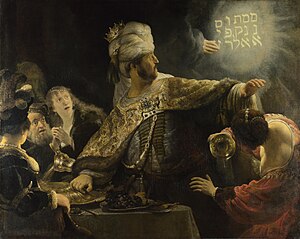

It’s over. Try something else.

For many anti-gay activists, the recent Supreme Court decisions on DOMA and Proposition 8 were the handwriting on the wall.

It wasn’t just that they didn’t get the result they wanted, but that in DOMA the Court’s majority simply didn’t buy the argument that homosexuality represents a threat to society. Neither does the general public, which supports that decision 56%-41%. (The margin under age 40 is 67%-30%, with 48% approving strongly.) The big post-DOMA public demonstrations expressed joy, not anger.

Just a few years ago anti-marriage-equality referendums were winning in states all over the country, but in 2012 one failed in Minnesota, while referendums legalizing same-sex marriage won at in Washington, Maryland, and Maine. Ten years ago, the first legislatures to make same-sex marriage legal were dragged by their state courts, but this year Delaware, Rhode Island, and Minnesota went there voluntarily, bringing the number of states where same-sex marriage is legal (as of August 1) to 13, plus the District of Columbia. (I’ll guess Oregon and Illinois will go next.)

It’s even clear why this is happening: Because gay millennials are not in the closet, everybody under 30 has gay and lesbian friends who dream about meeting their soulmates just like straight people do. To young Americans, laws blocking that worthy aspiration are pointlessly cruel and ultimately will not stand — not in Alabama, not in Utah, not anywhere.

So the generational tides run against the bigots of the Religious Right. Some still aren’t admitting it, but wiser heads are recognizing that it’s time to switch to Plan B.

The new face of bigotry: “freedom”. Fortunately for them, there’s a well-worked-out back-up plan: religious “freedom”.

Accept the inevitability of gay rights, advises Ross Douthat, but “build in as many protections for religious liberty as possible along the way.” Here’s the idea: If your disapproval of certain kinds of people can be rooted in church doctrine or a handful Biblical proof-texts, then forbidding you to mistreat those people violates the “free exercise” of religion you are promised by the First Amendment.

To make this work, conservative Christians need to divert attention from the people they are mistreating by portraying themselves as the victims. And that requires cultivating a hyper-sensitivity to any form of involvement in activities they disapprove of. So rather than sympathize with the lesbian couple who gets the bakery door slammed in their faces, the public should instead sympathize with the poor wedding-cake baker whose moral purity is besmirched when the labor of his hands is used in a celebration of immorality and perversion.

There’s a name for this tactic: passive aggression. It’s like on Sanford & Son when Fred would clutch his heart and start talking to his dead wife because Lamont planned to do something he disapproved of. Passive aggression is the last resort of people who have neither the power to get their way nor any reasonable argument why they should.

In fact the baker will be fine, as Willamette Week demonstrated by calling two such religious-liberty-defending bakeries and ordering cakes to celebrate a variety of other events conservative Christians disapprove of: a child born out of wedlock, a divorce party, a pagan solstice ritual. The bakers did not object, because their hyper-sensitive moral purity is an invention, a convenient excuse for treating same-sex couples badly.

But Jim DeMint insists that

A photographer in New Mexico, a florist in Washington, and a baker in Colorado have already been victims of such intolerant coercion.

And Matthew Franck is horrified that religious universities will have to provide same-sex married-student housing; religious “schools, universities, hospitals, hospices, and clinics; social service agencies, retirement homes, eldercare and childcare facilities, food pantries, and soup kitchens” who employ “teachers, doctors, nurses, psychologists, counselors and clinicians, caregivers, food-service workers, housekeeping and grounds staff, even pool lifeguards” won’t be able to refuse employment to people with same-sex spouses. Adoption services, marriage counselors, divorce lawyers, artificial insemination clinics etc. will have to deal with gay and lesbian couples … as if they were real human beings or something.

The race parallel. We worked this stuff out during the civil rights movement, because all the same ideas show up with regard to race.

Plenty of people claim a sincere religious belief in white supremacy, and root it in Biblical texts like the Curse of Ham. (This goes way back: American slave-owners found Biblical license for keeping their “property”.) But the law does not honor these claims, and somehow religion in America survives.

Here’s the principle that has served us well: In private life, you can associate with anybody you like and avoid anybody you don’t like. But if you offer goods or services for sale to the public, you don’t get to define who “the public” is. So when you’re making lunch at your house, you can invite anybody you like and snub anybody you don’t like, but if you run a lunch counter you have to serve blacks.

We’ve been living with principle for decades, and (other than Rand Paul) no one worries much about the racists’ loss of freedom.

That should apply to same-sex couples now: If your chapel is reserved for members of your congregation, fine. But if you rent it to the public for wedding ceremonies, same-sex couples are part of the public just like interracial couples are. You don’t get to define them away.

If that makes you reconsider whether you want to be open to the public, well, that’s your decision.

The sky will not fall. We just went through this with the Don’t Ask, Don’t Tell repeal, which supposedly would violate the religious “freedom” of evangelical military chaplains (who apparently had never before needed interact respectfully with people they believed were sinners). The Family Research Council’s Tony Perkins predicted:

You have over 200 sponsoring organizations that may be prevented from sponsoring chaplains because they hold orthodox Christian views that will be in conflict with what the military says is stated policy.

That stated policy was: “All service members will continue to serve with others who may hold different views and beliefs, and they will be expected to treat everyone with respect.”

AP went looking for chaplains who couldn’t live with that and found “perhaps two or three departures of active-duty chaplains linked to the repeal.” A Catholic priest overseeing 50 other chaplains reported “I’ve received no complaints from chaplains raising concerns that their ministries were in any way conflicted or constrained.”

If any of Perkins’ 200 religious organizations has stopped sponsoring chaplains because DADT is gone, I haven’t heard about it. The chaplains’ hyper-sensitivity to openly gay soldiers was imaginary, and went away when the government refused to take it seriously.

The abortion parallels. The reason the Religious Right believes their passive-aggressive “religious freedom” approach will work on same-sex marriage is that the same approach is already working on reproductive rights.

It all started with a reasonable compromise: After the Religious Right lost the battle to keep abortion illegal, laws guaranteed that doctors who believe abortion is murder can’t be forced to perform one. This is similar to letting pacifists be conscientious objectors in war, and I completely support it.

But from there, Religious Right “freedom” has become a weapon to beat down the rights of everyone else. Since 1976, Medicaid has not paid for abortions — at a considerable cost to the government, since birth and child support are far more expensive — because pro-life taxpayers shouldn’t have to fund something they think is immoral. There’s no parallel to this anywhere else: The taxes of pacifist Quakers pay for weapons; the taxes of Jews and Muslims pay the salaries of federal pork inspectors.

Conservatives like to accuse gays and blacks of claiming “special rights”, well this is a special right: The conservative conscience gets considerations that nobody else’s conscience gets.

And conservative special rights keep growing. The argument for defunding Planned Parenthood is that public money not only shouldn’t pay for abortions, it shouldn’t even mix with money that pays for abortions. (“Giving taxpayer funds to abortion businesses that also provide non-abortion services subsidizes abortion,” says one petition.) I had a hard time imagining a parallel, but I finally came up with one: What if Jews were so sensitive to violations of the kosher rules that Food Stamps couldn’t be used (by anyone, for anything) in groceries that sold pork?

That would be absurd, wouldn’t it?

In some states, medical “conscience” laws now protect anyone in the medical system who wants to express their moral condemnation: If the pharmacist disapproves of your contraceptives, he doesn’t have to fill your prescription. One of the examples cited by the model conscience law of Americans United for Life as something that needs to be fixed is “an ambulance driver in Illinois being fired for refusing to take a woman to an abortion clinic”.

Clearly that ambulance driver’s immortal soul was at risk. The hyper-sensitive pro-life conscience needs to be protected from any contact with women making use of their constitutional rights.

Religious “freedom” and contraception. The other front in the religious “freedom” battle is contraception.

The Obama administration has had a lot of trouble finding the proper religious exemption to the contraception provisions of the Affordable Care Act. That’s because it’s hard to find the “right” version of something that shouldn’t exist at all. Contraception coverage does not violate any legitimate notion of religious freedom for any religious organizations, religious affiliated organizations, or religious individual employers. Their claims should be rejected without compromise.

The principle here ought to be simple: The employer isn’t paying for contraception or any other medical procedure; the employer is paying for health insurance. Health insurance is part of a worker’s earnings, just like a paycheck. And just like a paycheck, what the employee chooses to do with that health insurance is none of the employer’s business. If I’m the secretary of an orthodox rabbi, his religious freedom isn’t violated when I cash my paycheck and buy a ham sandwich. Ditto for contraceptives, health insurance, and the secretary of the Archbishop of Boston.

Religious organizations’ hyper-sensitive consciences are pure passive aggression. The classic example here is Wheaton College, which couldn’t join other religious organizations in their suit against the ACA because it discovered that it had inadvertently already covered the contraceptives that the tyrannical ACA was going to force it to cover. This was such a huge moral issue for the college that nobody there had noticed.

Worst of all is the Hobby Lobby lawsuit, which got a favorable ruling on an injunction recently. The Hobby Lobby case is the mating of two bad ideas — corporate personhood and employers’ right to control the medical choices of their employees — to produce something truly monstrous. HL’s case hangs on its claim that it is a “person” with regard to the Religious Freedom Restoration Act of 1993, and so its corporate “religious freedom” allows it to restrict its employees’ access to contraception.

Persecution or Privilege? Here are the kinds of sacrifices I make for my readers: I listened to the full half-hour of James Dobson’s post-DOMA radio show, where Dobson, Perkins, and Bill Becker threw around phrases like “the collapse of Western civilization in one day” and “the whole superstructure … can come down”. They described Christians as “an oppressed minority” and agreed that “persecution is likely in the days to come”.

But what is “persecution” exactly?

Tony Perkins expresses the challenge like this:

Do you believe God’s word is true and therefore you’re going to live your life based upon that truth, or are you going to shrink back in the fear of man and of them calling you bigots.

Whenever Christians discuss their “oppression”, fear of being called bigots plays a central role. According to CNN’s Belief Blog,

[Peter] Sprigg and other evangelicals say changing attitudes toward homosexuality have created a new victim: closeted Christians who believe the Bible condemns homosexuality but will not say so publicly for fear of being labeled a hateful bigot.

In other words: Christians are oppressed unless they can express their moral condemnation of others without being subject to moral condemnation themselves.

Why would anyone imagine the existence of such a one-sided right? Simple: In practical terms, that’s a right they have had until recent years. Not so long ago, the James Dobson types were so intimidating that they could preach any kind of vicious nonsense about gays and face no response.

So what they are experiencing now isn’t persecution, it’s privileged distress, the anxiety a privileged class feels as its privileges fade and it slides towards equality with others. And rather than try to get over their distress and soothe their anxiety, they are intentionally pumping it up in a passive-aggressive attempt to claim victimhood and control the rest of us.

That bubble needs to be popped.