A lot of the books I recommend on this blog are depressing, or at least have depressing themes or titles. One recent example was How Democracies Die, which I reviewed three weeks ago. How cheery. Even if the conclusion is that the United States still has time to reverse the recent decline in democratic norms and values, the fact that we have to consider the issue at all is a bit dismal.
This week, though, I’m looking at an optimistic book: This is an Uprising by Mark and Paul Engler. It’s also, I think, a very important book: a primer on the theory and practice of nonviolent action. By considering what went right and wrong in all sorts of movements from the Montgomery Bus Boycott to the Arab Spring, it argues against the idea that big protest movements “just happen” when the time is right, “spontaneously”.
Politics as usual is full of depressing compromises with the powers that be. Activists are constantly warned to be “reasonable”, and to seek goals that are “possible” rather than to push for a radical transformation of society. And yet, more and more often we are confronted by problems — like climate change — where what is “possible” most likely won’t get the job done.
What the Englers remind us in this book is that there are moments — whirlwinds, they call them — when what is politically possible drastically changes: the British leave India, the Berlin Wall is torn down, same-sex marriage is accepted by the majority. Whirlwind moments, they claim, don’t just happen. There is a craft to sparking and exploiting them.
I’ve written a fairly lengthy summary of the book. It should be out before 10 EDT.
The weekly summary will discuss the Korea negotiations, the barrage of Trump scandals, the new lynching memorial, Bill Cosby, Incels, and a few other things before closing with Food & Wine’s guide to the best coffee in every state. Let’s figure that for 11 or so.
— Jake Tapper, responding to the revelation
that Michael Cohen’s mysterious third client is Sean Hannity
This week’s featured posts are “Comey’s Book” (For a guy who has spent most of his life chasing criminals, James Comey is an excellent writer.) and “Flipping the Script on Fossil Fuels“. (As sustainable-energy technologies improve, it’s now the fossil-fuel defenders who stand against economic progress.)
This week everybody was talking about North Korea
In anticipation of the Trump/Kim summit that is supposed to happen sometime in May or June, the North Korean government made some encouraging announcements:
These included a declaration that North Korea was satisfied with its existing nuclear warhead designs, and that it had discontinued all nuclear and intercontinental-range ballistic missile (ICBM) tests and closed its nuclear test site at Punggye Ri. Kim also announced that North Korea would suspend nuclear testing, and reiterated his commitment not to use nuclear weapons “unless there is [a] nuclear threat,” and to stop the proliferation of nuclear technology.
While Kim did say that Pyongyang supported the vision of “global disarmament,” this is a common trope in North Korean propaganda and suggests that North Korea will soon call for tit-for-tat arms control with the United States.
In other words, if Trump asks Kim to give up all his nuclear weapons, the answer may be: “I will if you will.” From North Korea’s point of view, the point of this summit meeting is to showcase Kim and Trump as equals. Kim isn’t going to submit to an unequal deal.
There are a number of ways around the pledges Kim just made, some of which North Korea has used to dodge past agreements. So while the recent announcements should be seen as a good sign, they shouldn’t be read as more than that.
the United States cannot accept these measures as a victory—they’re a starting point for forging a verifiable cap on Pyongyang’s arsenal. A hard cap can keep America and its allies safer while Trump negotiates a more comprehensive agreement—something that can only happen if the president does not give in to overconfidence and optimism.
and kids protesting against guns
One of the hardest tasks in political organizing is to turn a protest into a protest movement. Something happens and people want to express themselves, so a bunch of them show up for a demonstration. But what happens then? How does that momentary outrage turn into the kind of persistent force that politicians have to recognize and respond to? (More on that next week.)
That’s the challenge faced by the students who became gun-control activists after the Parkland school shooting on Valentine’s Day. They promoted a national school walkout to mark the one-month anniversary on March 14, and then held the massive March for Our Lives rally in Washington, DC (with mirror rallies around the country) on March 24.
Friday was another school walkout, this time to mark the anniversary of the Columbine shooting. I haven’t found any estimate of how the number of students participating compared to the March 14 walkout, but the amount of media attention definitely seemed down. This summer, I think, will be key. Will they keep their momentum, or will this all be a memory by the time schools starts again in the fall?
A man wearing only a green jacket shot three people dead at a Waffle House. One person later died at a hospital where two others are being treated for injuries. Police say the suspect fled on foot, and is still on the loose.
The reason more people aren’t dead is that an unarmed bystander — a good guy without a gun — took action.
When the shooting momentarily stopped, a Waffle House customer took advantage of the moment. James Shaw Jr. told reporters, “At that time I made up my mind … that he was going to have to work to kill me. When the gun jammed or whatever happened, I hit him with the swivel door.” Shaw then wrestled the gun away, and threw it behind the counter — prompting the gunman to leave.
There’s a perverse effect through which every mass-shooting story causes more people to say, “I need a gun to protect myself.” It’s hard to figure out how to counter that, because (even though violent crime of all sorts has been falling for decades), you never read a story saying “Everybody in Our Town was Safe Today”.
Except this one: The 75th precinct in East New York “regularly logged more than 100 murders a year” during the 1990s. Last year there were 11, and none so far in 2018.
Sometimes such turnarounds happen because the underlying population changes. The neighborhood suddenly becomes fashionable and a bunch of rich people move in, pushing the previous residents out. But that doesn’t seem to be the case here.
those kinds of changes have been slow to reach more distant places like East New York, a predominantly black and Latino neighborhood that still struggles with severe poverty and leads the city in robberies this year.
and Barbara Bush
Barbara Bush died Tuesday at the age of 92. She was the matriarch of the Bush clan, wife of the first President Bush and mother of the second. She was First Lady from 1989 to 1993.
Most of the respect and attention her life received this week was due to its own merits. The Wife-and-Mother-of-Presidents Club, after all, includes only Barbara Bush and Abigail Adams. (If you happen across a little girl named, say, Cynthia Collins, you might want to keep an eye on her.) But I think it also reflects nostalgia for an era not so long ago, when public life had a dignity it now conspicuously lacks, and when we expected our leaders to exemplify values we aspire to.
Barbara and George were married for 73 years, and have now been parted in the way their vows anticipated, by death. To a large extent, it’s impossible to see inside other people’s marriages, even those of your close friends. Marriages of public figures may be very different than they appear from the outside. But everything we do know about the Bushes points to a relationship of deep mutual respect.
The Bush marriage was a traditional one. Barbara left Smith College when she became a wife, and never developed a resume of her own, or sought a career outside the home as George rose through a series of ever-more-impressive jobs. Not everyone wants such a life today, and one huge virtue of our era is that women who don’t want to walk that path are not forced onto it. (My own marriage of 34 years is quite different, and I would not trade it.) But nonetheless I find it inspiring to see that the path can be walked. Every successfully concluded life should give us hope.
and James Comey
His book A Higher Loyalty appeared in bookstores Tuesday. One featured post is my response after reading it.
The really striking thing in all this speculating, though, is the number of Trump supporters who seem genuinely worried that Cohen will flip on Trump. The Atlantic’s David Graham draws the obvious conclusion: Even Trump’s friends believe he’s guilty of something.
these people are at least aspirationally standing up for Trump, and yet their comments have a clear subtext of guilt. They all start with the premise that Trump has something to hide. You can’t flip on someone unless you’ve got something to offer prosecutors. Usually, the defenders of suspects in prosecutors’ cross-hairs loudly proclaim their innocence, and insist that the investigation will ultimately vindicate them. But Trump’s chorus is singing from a different hymnal.
Attorney-client privilege is one issue that might keep federal investigators from examining some of the stuff seized in the raid on Michael Cohen’s offices. But whether that applies at all depends in part on how much law Cohen actually practices. (The privilege only applies to conversations that are genuinely about legal work that the attorney is doing for the client. The mere fact that somebody is a lawyer doesn’t mean that whatever you say to him or her is privileged.) The government has claimed Cohen doesn’t really practice much law, and so the judge wanted to know who Cohen’s clients are. There was Trump, and another rich Republican who tried to cover up an affair with a Playboy playmate, and somebody Cohen didn’t want to name.
Last Monday, the unnamed client was revealed: Fox News host Sean Hannity, who had been constantly denouncing the raid on Cohen’s office without revealing to his audience that he might have a personal interest in the story.
On a legitimate news network, Hannity would have been in big trouble, and probably would have been fired. (Journalists aren’t supposed to report on stories they are involved in. At a bare minimum, Hannity should have disclosed his relationship to Cohen and let his viewers judge for themselves whether to trust his objectivity.) On Fox, not so much. The network announced he has its “full support“.
Quartz chided journalists who claimed to be “stunned” by Fox’ lack of ethical discipline.
Really? Stunned? Let’s be clear: Fox News is not, and never has been, a news organization. And while Hannity is an influential person on television—and one many listen to—he is not a journalist. That some media observers saw Fox’s non-response to the Hannity debacle as anything other than a sad inevitability shows that we still have a ways to go to normalize those two facts.
By far the best response to the Hannity revelation came from CNN’s Jake Tapper: “Go home, 2018. You’re drunk.”
and whether Trump will fire either Mueller or Rosenstein
Rumors continue to swirl that Trump is about to fire either Special Counsel Robert Mueller or Deputy Attorney General Rod Rosenstein, who appointed Mueller and oversees his investigation. At the same time, it doesn’t actually happen, so I wonder if we’re getting de-sensitized to Trump’s threats. (For comparison: I almost forgot that today is supposed to be the Rapture. People keep predicting it and it keeps not happening, so it’s hard to raise any excitement about it. Even the embarrassment of people who take such prophecies seriously has become old news.)
Democrats in Congress have been worrying about this all along, and several have promoted legislation that would give Mueller some protection against arbitrary firing. But only a handful of Republicans have been willing to go along, until recently. This week the Senate Judiciary Committee is expected to vote on a bipartisan proposal put together by Republican Thom Tillis and Democrat Chris Coons. It might well pass, and then things get interesting.
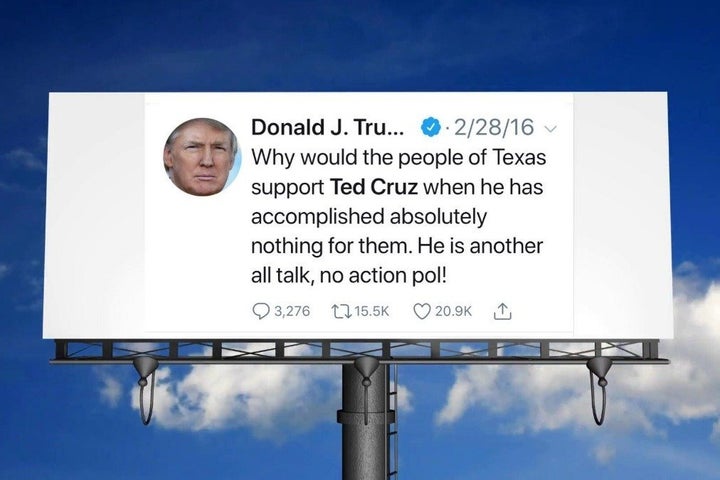
Majority Leader Mitch McConnell has been adamant that he will not bring the bill to the floor of the Senate. Like Paul Ryan in the House, McConnell claims legislation isn’t necessary, because Trump isn’t going to fire Mueller anyway. (But that could also be an argument for passing the bill: It puts no real restriction on Trump, because he wasn’t going to fire Mueller anyway.) But I’m not sure how anyone can read tweets like this one from Friday and have that kind of confidence.
Sometimes McConnell points out that the effort is doomed anyway, because Trump will veto the bill even if Congress passes it. That’s probably true, but Congress’ position would be on the record: Don’t fire Mueller. Let the investigation take its course. The same logic explains why the Senate should pass it even if the House won’t: at least the Senate’s position will be on the record, and Trump will have been warned.
But even ignoring his bogus arguments, I think I understand McConnell’s thinking: This is a no-win vote for Republicans facing re-election. If they vote against it, they’re spineless partisan hacks bowing down to Trump. If they vote for it, they tick off base voters that they’ll need in November. Much better to just say it isn’t going to happen.
Unless it happens, of course. That would be a true disaster for Republicans facing the voters, and the no-win decision would come back to them in spades: Trump has put himself above the law. Are you going to do something about it or not?
Other people might respond also: The Washingon Post claims that Attorney General Sessions has told White House Counsel Don McGahn that he might resign if Rosenstein gets fired.
That threat lends some credence to a claim James Comey made in an interview with Rachel Maddow Tuesday: The only way Trump could shut down the Russia investigation is to fire the whole Justice Department and the whole FBI.
And that brings up an important question: What are you going to do if Trump fires Mueller or Rosenstein? Nobody Is Above the Law rallies are planned all over the country, to be triggered either by a firing or by Trump pardoning key people who could be witnesses against him. If the triggering event happens before 2 p.m. the rallies start at 5 p.m. local time. If after 2 p.m., the rallies start at noon the next day.
Check for a rally in your area here. I’m planning to go to Veteran’s Park in Manchester. I’ll be the guy in the blue hat that says “Are We Great Again Yet?”
and corruption
There’s an everyday aspect to Trump’s corruption of the presidency that it’s easy to lose sight of. Here and here, for example, he turns the visit of Japanese Prime Minister Shinzo Abe into glittering advertisements for his Mar-a-Lago club, which you can join if you’re willing to hand him $200,000. (Chris Hayes has dubbed Mar-a-Lago “the de facto bribery palace”. For just a few hundred thousand “you can personally lobby the president on whatever you want”.)
The videos end with the symbol of the White House, so I assume they were made with public funds. Each has had more than a million views. I have to wonder what advertisements of similar reach would have cost Trump, if they didn’t come as a perk of his job.
Gail Collins quotes Trump speaking to the press with Abe, and then asks:
People, which part of this makes you most unnerved? The fact that the president doesn’t make any sense when he talks or the fact that he devoted a large part of a press conference with the head of one of our most important allies to promoting his resort?
Neither the press-conference testimonial nor the promotional videos Trump made on the White House’s dime tells us how much Prime Minister Abe’s visit cost the two governments, or how much of that money wound up in Trump’s pocket. This was Abe’s second visit to Mar-a-Lago. (The picture above is from the first.) By contrast, President Obama last met Abe in a pair of joint appearances: at Hiroshima and Pearl Harbor. He did not personally profit from either one.
and you also might be interested in …
The Senate is considering a number of Trump nominees. Mike Pompeo is expected to lose a committee vote today, but be approved by the Senate anyway. Gina Haspel as head of the CIA and Ronny Jackson as VA chief will come up in early May.
Long article in Politico about Trump’s relationship with Christian TV networks., which is even more incestuous than his relationship with Fox News. TBN and CBN don’t even have to pretend to be objective.
Jeff Sessions’s attempt to keep federal funds away from so-called “sanctuary cities” is not legal. Three judges appointed by Republicans unanimously ruled against the Trump policy on Thursday.
“The Attorney General in this case used the sword of federal funding to conscript state and local authorities to aid in federal civil immigration enforcement. But the power of the purse rests with Congress, which authorized the federal funds at issue and did not impose any immigration enforcement conditions on the receipt of such funds,” [Judge Ilana] Rovner wrote, in an opinion joined by Judge William Bauer. “It falls to us, the judiciary, as the remaining branch of the government, to act as a check on such usurpation of power.”
The rule of law is tricky that way. If you want other people to obey the law, you have to obey it yourself.
While we’re on that topic, Trump’s tweets hit a new low on Wednesday:
There is a Revolution going on in California. Soooo many Sanctuary areas want OUT of this ridiculous, crime infested & breeding concept.
In church yesterday, I found myself sitting one seat away from the woman my congregation is currently sheltering against deportation. I have not interacted with her much myself, but by all accounts she’s a lovely woman who is the mother of American citizens. (One of the kids is old enough to look after the others while Mom is away, but it’s far from an ideal situation.) She’s been living in a small apartment in our church for four months now, as the appeal of her deportation order churns through the system. (That’s the point of the sanctuary movement: to keep ICE from spiriting people away before their cases are heard. DACA recipient Juan Manuel Montes, for example, “had left his wallet in a friend’s car, so he couldn’t produce his ID or proof of his DACA status and was told by agents he couldn’t retrieve them. Within three hours, he was back in Mexico, becoming the first undocumented immigrant with active DACA status deported by the Trump administration’s stepped-up deportation policy.”)
The whole point of Trump’s rhetoric is that people like Maria or Juan aren’t really human — they infest America and breed — so the rest of us shouldn’t care what the government does to them any more than we care about termites.
One widely shared Barbara Bush quote said that she couldn’t understand how women could vote for Trump. She was talking about the way he had insulted Megyn Kelly, but this week we saw a more policy-driven reason for skepticism. Under Trump, the US delegation to the UN Commission on the Status of Women has been turned over to the most zealous culture warriors ever. Official US positions, BuzzFeed reports, are more conservative than even Russia or the Arab countries.
“They were against the whole concept of sexuality education,” the UN official said, adding that the US also opposed the phrase “harm reduction,” which in the context of CSW means “accepting the fact that young people have sex and trying to teach them how to do it safely rather than just abstinence only,” the official explained. The US wanted “no mention of sexuality at all,” the official said.
US representative Valerie Huber would allow no mention of contraception, abortion, or sex education in the consensus statement. She pushed for abstinence education and teaching women “refusal skills”.
“She spoke of ‘trying to get women to make better choices in the future,’ which is that terrifying and outmoded idea that women make bad sexual choices and that what happens to them is their fault,” one of the delegates who attended the meeting told BuzzFeed News.
Ever notice how conservatives talk about “law and order” while liberals talk about “justice”? That’s because laws protect the established order, which is often unjust.
A fluid mechanics course at Lamar University came up with a fun way to demonstrate the properties of non-Newtonian fluids. It’s a simple formula — two parts corn starch to one part water, with some food coloring mixed for the sake of appearance — but it behaves in a weird way. It resists sudden motions, behaving like a solid when you jump on it or beat it. But it’s a liquid, so if you stay still you will sink into it.
Middle-class climate deniers may think they’re running with the predators. But they’re really prey.
Last Monday, Paul Krugman’s column “Earth, Wind, and Liars” took an interesting tack in talking about climate change and fossil fuels. Up until recently, a typical anti-fossil-fuels argument has been moral: We should stop burning coal and oil because the accumulation of CO2 in the atmosphere is wrecking the climate for future generations.
To the extent environmental defenders have made an economic argument, it usually has been based on comparing long-term interests to short-term interests: We should ignore the artificial cheapness of, say, burning coal in power plants, because the future damage done will have long-term costs that the current price doesn’t account for. People who make this argument talk about externalities (real costs of a transaction that get pushed off on someone other than the buyer or seller), and advocate policies like a carbon tax to re-insert those externalized costs back into the market. Again, though, the argument is fundamentally moral: Shoving the costs of your present-day consumption off onto future refugees and hurricane victims is a nasty thing to do.
The pro-fossil-fuels interests, though, are well defended against moral arguments. They’ve done their best to undermine public confidence that we can predict the future at all — science being part of the global socialist conspiracy, after all — so all those suffering people in the future (or in distant countries or in social classes the media ignores) can be dismissed as imaginary. And even if their reality is admitted, today’s conservatism has a bad-boy aesthetic that glories in its own hard-heartedness: We live in a dog-eat-dog world where you’re either the predator or the prey. Bleeding-heart liberals are weak, and would let Those People (foreign, non-white, non-Christian) take advantage of People Like Us.
But Krugman’s column makes a different argument. He’s far from the first one to do so, but his point has not yet broken through to the general public.
Not that long ago, calls for a move to wind and solar power were widely perceived as impractical if not hippie-dippy silly. Some of that contempt lingers; my sense is that many politicians and some businesspeople still think of renewable energy as marginal, still imagine that real men burn stuff and serious people focus on good old-fashioned fossil fuels.
But the truth is nearly the opposite, certainly when it comes to electricity generation. Believers in the primacy of fossil fuels, coal in particular, are now technological dead-enders; they, not foolish leftists, are our modern Luddites. … [T]here is no longer any reason to believe that it would be hard to drastically “decarbonize” the economy. Indeed, there is no reason to believe that doing so would impose any significant economic cost.
… The fossil fuel sector may represent a technological dead end, but it still has a lot of money and power. Lately it has been putting almost all of that money and power behind Republicans. … What the industry got in return for that money wasn’t just a president who talks nonsense about bringing back coal jobs and an administration that rejects the science of climate change. It got an Environmental Protection Agency head who’s trying to suppress evidence on the damage pollution causes, and a secretary of energy who tried, unsuccessfully so far, to force natural gas and renewables to subsidize coal and nuclear plants.
In the long run, these tactics probably won’t stop the transition to renewable energy, and even the villains of this story probably realize that. Their goal is, instead, to slow things down, so they can extract as much profit as possible from their existing investments.
In other words, non-plutocrat Republicans (the vast majority, in other words) are kidding themselves when they imagine they’re running with the predators. They’re the prey. The predators are the coal and oil barons who have bought their party and who fund the propaganda they listen to. The prey will be stuck not just with the damage from hurricanes, droughts, and wildfires (that they can argue might have happened anyway), and not just with diminished prospects for their children and grandchildren (which — with ever increasing difficulty — they can still deny for a few more years), but with higher bills and an antiquated electrical system. That’s going to happen not decades hence, and not just according to some computer model built by those nefarious scientists, but in the fairly near future.
It’s an autobiography, not an anti-Trump screed. And it’s surprisingly well written.
A Higher Loyalty became available to the general public Tuesday. (Last weekend already, news outlets had started reviewing pre-publication copies.) If you’ve been following the media coverage of the book and are trying to decide whether to read it yourself, there are two things you should know.
For somebody whose day jobs have been in a different field, Comey is a surprisingly good writer. I found his book to be a quick and pleasant read; finishing it in time to write this post was not a chore. You might wonder if this means a ghost writer was involved, but I doubt it. The book contains a number of sparkling phrases that I don’t think a ghost would put in somebody else’s mouth.
It’s more of an autobiography than the anti-Trump screed the media is making it out to be.
Comey begins by describing the early experiences that he believes led him to choose a career in law enforcement (including a home invasion when he and his little brother expected to be killed). He describes the authority figures who shaped his view of good leadership. (His first job at a grocery figures prominently. When Comey made a foolish mistake that results in spilling many gallons of milk, what his boss wanted to know first is whether he learned anything. Comey said he did, and then the boss simply replied: “Clean it up.”)
His career in public service includes several noteworthy scenes before Trump shows up, like prosecuting Martha Stewart, or the famous showdown in John Ashcroft’s hospital room, where Bush’s White House Counsel (Alberto Gonzales, later attorney general) tried to bully a weakened Ashcroft into re-approving a highly classified surveillance program that Justice Department lawyers had decided was unconstitutional. (Comey, who was deputy attorney general at the time, recounts some amusing stories from his subordinates, who raced to the hospital to support him and Ashcroft without knowing what was going on. One came in such a hurry that he forgot where he parked his car, couldn’t find it afterwards, and couldn’t even explain to his wife what he had been doing when he lost it. “Someday I may be able to tell you,” he said.)
Because he had been a Bush appointee, Comey was surprised that Obama wanted him to be FBI director. He clearly was impressed by his personal interactions with Obama. Obama knew what he was talking about, knew how to listen, and encouraged subordinates to tell him unpleasant truths. He also knew the importance of keeping White House politics away from Justice Department law enforcement. (Just before officially nominating him, Obama invited Comey to the White House for a wide-ranging chat because “Once you’re director, we won’t be able to talk like this.”)
He describes his decisions around the Hillary Clinton email investigation. His conclusions are pretty similar to the ones I outlined a month before he gave his report: Some classified information got mishandled, but without some evidence of criminal intent — which the FBI never found — prosecuting would have been a waste of time.
He justifies his decision to describe the investigation in public, and to re-open it two weeks before the election when new emails turned up. I still don’t agree with his reasoning, but I can at least understand it: Second only to finding the truth about Clinton, his major concern was maintaining the “reservoir of trust” that the public has in the FBI in particular and law enforcement in general. As events played out, his public announcements were unfortunate. (While he doesn’t admit that, he also doesn’t deny it.) But at the time he was also worrying about other scenarios that he thought would have been even more damaging to that trust. Like: What if he said nothing, Clinton got elected, and then the new emails displayed the criminal intent that he hadn’t found in the first batch?
Trump comes off badly in Comey’s descriptions, particularly in contrast to Obama. He talks constantly, and seems to interpret Comey’s inability to get a word in edgewise as agreement. (Here, Comey uncorks a metaphor that I envy as a writer. A Trump monologue is “conversation-as-jigsaw-puzzle, with pieces picked up, then discarded, then returned to”. I will never be able to listen to Trump again without remembering that.) His concerns are all self-centered; he never showed the slightest interest in what Russia’s influence on the election meant for the nation, or what could be done to prevent future interference. He is constantly spinning “a cocoon of alternative reality” (another great metaphor) around himself and his people. His White House reminds Comey of a Mafia family; it runs on loyalty to the leader, rather than respect for truth, the rule of law, and the norms that keep the reality-based parts of the government independent from the politics-based parts.
Comey stops short of claiming Trump obstructed justice by firing him. As with Clinton, Trump’s action is criminal only if he had a corrupt intent, which Comey is not in a position to know. (But Mueller might be.)
Comparing the memos Comey wrote immediately after his conversations with Trump to what he told Congress, what he wrote in the book, and what he has said this week in interviews, it becomes clear that Comey has been giving the same account all along. That doesn’t necessarily mean it’s true. He could have misinterpreted his conversations with Trump as they happened, or perhaps (if you want to cast him in a truly sinister light) he was already plotting against Trump before he was fired. But Comey’s consistency is a marked contrast with Trump, whose stories change from one day to the next, and are often provably false.
Two intertwined themes lie behind all the stories Comey tells: respect for the truth and what good leadership consists of. In Comey’s world the truth is both supremely important and hard to learn, particularly if you’re in charge and rely on other people to be your eyes and ears. Given that situation, a leader’s most important job is to convince his subordinates that s/he really wants to know the truth, and to create an environment where truth-telling is safe.
The book’s title implies some questions: a loyalty to what that is higher than what? And Comey’s answer is: Far above your loyalty to the boss who can fire you, you have to be loyal to the truth, to the nation, and to the principles the nation and its institutions are founded on.
It’s not hard to see why he and Trump didn’t get along.
The news shows this week were dominated by speculation about Donald Trump’s legal troubles: Will Michael Cohen be indicted? If he is, will he flip and testify against Trump? If he does, what does he know? Will Trump fire Robert Mueller or Rob Rosenstein? Will Congress try to prevent that? Or if not, will it react after the firing happens? How?
If you watched TV news for more than a few minutes, it was easy to forget the most accurate answer to all these questions: We don’t know. The questions are all important, but at the moment there’s not a lot publicly available information about them. All week, it’s been hard to keep straight whether or not anything was actually happening.
One thing that did happen was that James Comey’s book A Higher Loyalty appeared in bookstores Tuesday. It turns to be a well-written and interesting book. You’d never figure this out from the coverage it’s been getting, but most of the book has nothing to do with Trump. It’s Comey’s story of his life in law enforcement, and the lessons about leadership that he draws from it. It turns out he’s been involved in lots of interesting events over the years, like putting Martha Stewart in jail or facing down Alberto Gonzalez over John Ashcroft’s hospital bed. It’s a good read.
So I’ll review that. The post should come out around 10 EDT.
That’s short, and the weekly summary will be correspondingly long: North Korea, anti-gun protests, Barbara Bush — and yes, Michael Cohen, Sean Hannity, the Mueller investigation and all that. I use Prime Minister Shinzo Abe’s visit to Mar-a-Lago as an example of the everyday corruption of the Trump White House, point out the promising twist Paul Krugman has put on an old climate-change argument, and discuss a few other recent developments before finishing with a video of engineering students walking on water. I’ll try to get that out by noon.
A little over a week ago, the rebel-held Syrian town of Douma was hit with a chemical-weapons attack. Suspicion immediately fell on the Assad government, which has done stuff like this before. Assad’s ally Russia vetoed a US resolution in the UN Security Council that would establish a commission to investigate and assess responsibility for the attack.
Early Saturday morning (local time), the US, UK, and France launched missile strikes against what they described as chemical-weapons facilities in Syria. The point, apparently, was not to move the balance-of-power in Syria’s civil war, which Assad (with help from Russia and Iran) is winning. The point was to punish Assad for breaking the international convention against chemical weapons. The attacks were over in a few hours, but the coalition is ready to strike again if Assad uses chemical weapons again. At the moment, Russia appears unlikely to counter-attack.
There are a bunch of issues to unravel here, and I don’t have all the answers.
Did Assad use chemical weapons? Russia says no, but their credibility with me is not very high right now. In the US a number of voices — mainly on the right but also a few on the left — are skeptical. But none of the alternative stories — fraud, false flag operation — make a lot of sense. I think the Trump administration wishes the whole Middle East would go away, so I don’t see a motive to fake an attack.
Will missile strikes deter future chemical weapons use, or is there some better way? I totally agree with the idea that chemical weapon attacks shouldn’t be tolerated. But is this really the most effective response? Obama threatened an attack, and then tried to negotiate Assad’s weapons away (with Russia as guarantor). That didn’t work. Trump punished Assad with a missile strike last year, and that didn’t work. Why do we think incrementally more punishment is going to work now? Both presidents — Fareed Zakaria points out how similar they are on this issue — tried to calibrate their responses perfectly, so that Assad is deterred, but we don’t wind up more deeply involved in Syria. Is that even possible? I don’t have a better idea, but I have to wonder if we’re working within the wrong frame. Or maybe this attack is more for our own satisfaction — we did something! — than to accomplish a real purpose.
Is Trump wagging the dog? As a steadfast Trump critic, I don’t think so. Or if that is what he intended — to divert attention from the Mueller investigation and other scandals — it’s not working. In the absence of further strikes, headlines are already shifting back to Comey’s book and what the feds got by raiding Michael Cohen. (Trump didn’t even manage to distract himself for long.) And if this turns into a longer bombing campaign, Trump’s base will hate it as much or more than I do. They like chest-thumping, but not endless wars with no obvious goal.
Do we have some strategy in Syria, or are we just reacting to events as they happen? Compare to Russia: If Russians ask why their government is involved in Syria, they can get some simple answers: to secure an air and naval base in the Mediterranean; to support an allied government that’s fighting Islamic terrorism; to prevent the United States imposing its will on the region; to show the world that Russia is a player again on the international stage. As an American, I can’t think of any similar answers for our involvement. We’re usually just told that worse things would happen if we disengaged.
Are attacks like this even legal? The Constitution assigns the war-making power to Congress, which hasn’t passed any substantive authorization since right after 9-11 and just before the Iraq invasion. It’s hard to claim that either of those applies here, since Saddam is long dead and Assad had no connection to 9-11. So Congress is AWOL. It could write a new authorization for intervention in places like Syria, or it could object to presidential overreach. But it’s doing neither. It should at least debate a resolution. Constitutional checks and balances only work when the branches of government compete for influence. When one branch decides it just doesn’t want to be blamed for whatever happens next, the whole system falls apart.
Trump’s announcement of the attack on Syria was the first time I can recall him calling out Russia specifically. Not sure what it means: The WaPo also reports today on how angry Trump was when he realized he was expelling more Russian diplomats than our European allies were.
Thomas Friedman worries about a different aspect of the chaos in Syria: Iran and Israel are starting to shoot at each other. Prior to the US/French/British missile raid, this week the Israelis hit an Iranian base in Syria. They claim it was because an Iranian drone flew from that base in February with the intention of attacking Israel. The claim is hard to evaluate, because the drone was shot down before it could do any damage.
Israel and Iran are now a hair-trigger away from going to the next level — and if that happens, the U.S. and Russia may find it difficult to stay out.
and Paul Ryan
I never get used to the way big stories collide during the Trump Era. It’s like a play whose actors keep stepping on each other’s lines. Wednesday, the Speaker of the House announced his retirement, and it was a one-day wonder.
But let’s go back to Wednesday: The Speaker of the House is retiring in January. He’s the second Speaker to walk away from the job in the last three years. That didn’t used to happen. Sam Rayburn lasted for 17 years, and Tip O’Neil for nearly a decade. O’Neil was 74 when he retired and Rayburn died in office at 79. Ryan is 48 and Boehner was 65 when he retired.
Lots of people have a theory about why. I’ve paid a lot of attention to Ryan over the last six or seven years, so I offer my take in one of the featured posts.
and Michael Cohen
The New Yorker’s Adam Davidson thinks the raid on Michael Cohen’s office marks “the end stages of the Trump Presidency”.
This doesn’t feel like a prophecy; it feels like a simple statement of the apparent truth. I know dozens of reporters and other investigators who have studied Donald Trump and his business and political ties. Some have been skeptical of the idea that President Trump himself knowingly colluded with Russian officials. It seems not at all Trumpian to participate in a complex plan with a long-term, uncertain payoff. Collusion is an imprecise word, but it does seem close to certain that his son Donald, Jr., and several people who worked for him colluded with people close to the Kremlin; it is up to prosecutors and then the courts to figure out if this was illegal or merely deceitful. We may have a hard time finding out what President Trump himself knew and approved.
However, I am unaware of anybody who has taken a serious look at Trump’s business who doesn’t believe that there is a high likelihood of rampant criminality.
Michael Cohen is right in the middle of all that, and has been for decades. Another New Yorker article sums up:
Cohen was directly involved in the Trump Organization’s pursuit of international deals in the years leading up to Trump’s Presidential campaign. During this period, the Trump Organization did business with corrupt politicians, sanctions violators, and money launderers. A key question, which carries significant legal ramifications, is how much the company knew about these partners’ records and reputations. Michael Cohen can answer this question.
Trump and Cohen are claiming that the information seized by the US attorney for the Southern District of New York (not Robert Mueller; this is the job that Chuck Rhodes has on the TV show Billions) is protected by attorney-client privilege and so is inadmissible in court. Right now, the judge does not seem to be buying that claim, but it’s interesting to consider what happens if evidence of criminality is ruled inadmissible, but somehow gets out anyway: Will we tolerate having a criminal president if the evidence proving his criminality can’t be used in court? Would an impeachment hearing in Congress be bound by those rules?
but I took a closer look at my taxes
After I got done with my taxes (within a few days of the deadline, as usual), I refigured what they’d be if I had the same income, but got it all in the form of wages rather than as more investment income than wages. The answer: “My taxes are half what they’d be if I just made wages“. If you’re expecting me to defend the tax system that gives me that kind of advantage, don’t.
The graph below is a little hard to parse, but it captures some really interesting and important information. The full explanation is at Vox.
The authors (Max Roser and Stefan Thewissen) are trying to capture the notion of “inclusive growth”. In other words, an economy that grows without increasing inequality. What they’re plotting is the inflation-adjusted income that puts you at the 90th percentile versus the inflation-adjusted income that puts you in the 10th percentile. Countries higher up the scale have less equality. If your economy grows equally for everybody, your path should be diagonal. More upward slopes indicate increasing inequality, while more horizontal slopes indicate decreasing inequality. The paths start with the data from 1979.
Two things are striking: Early in the Thatcher years, the UK’s path goes straight up, as virtually all the growth goes to the wealthy. And the US’s path is unlike all the other countries’: We’re zig-zagging upwards as our inequality increases over the long term.
The point to learn from the US path is that our inequality problem is unique. You can’t blame it on some global cause like technology or globalization. We’ve been doing something different in this country since roughly the time of Ronald Reagan, and it’s not good.
There’s one thing I’d like to add to their study: As has been pointed out numerous times, things only get more out of hand in the US if you look at the 99th percentile or the 99.9th percentile. I’m curious how the graphs would change if those percentiles were looked at rather than the 90th.
OK Donald, I’m not going to publish my tax returns either, but I do want to reveal enough information about them to make a point.
Over the last few years, my wife and I have eased towards retirement, which means that an ever-higher percentage of our income comes from investments (interest, dividends, and capital gains) rather than wages. And I’ve watched our taxes go down accordingly, because the tax code is stacked against people who get their money by working. (I’ve been complaining about this at least since 2005. I made a related complaint about estate taxes after I settled my father’s estate in 2015. As a worker I paid one rate; as an investor I have paid a much lower rate, and as an heir I paid essentially nothing.)
I think 2017 was the first year (or maybe the first since that lucky investing year of 2004 that made my tax return look so shocking to me in 2005) that wages have been less than half of our income. And that made me wonder: If I refigured our federal income tax with the assumption that we had the same income, but it was all wages, what would that do to the tax we pay?
Answer: More than double it. A couple who had our same income, same deductions, and so on, but got all their income by working, would pay twice as much tax as we paid, and then a little more. (If you had a lot of wages and want to do my experiment in reverse, go to page 44 of the 1040 Instructions and fill out the Qualified Dividends and Capital Gains Tax Worksheet under the assumption that your whole income consists of capital gains. If you’re willing to share, you can post in the comments the percentage decrease you see.)
You might wonder how that is possible, since capital gains are supposedly taxed at 15%: low, but more than half the rate most wage-earners pay. The answer is that your first chunk of capital gains isn’t taxed at all.
Taxpayers in the 10 and 15 percent tax brackets pay no tax on long-term gains on most assets; taxpayers in the 25-, 28-, 33-, or 35- percent income tax brackets face a 15 percent rate on long-term capital gains. For those in the top 39.6 percent bracket for ordinary income, the rate is 20 percent.
If you don’t have a lot of wages, you only start paying those 15-20% rates after you’ve maxxed out the untaxed chunk.
A response you’ll sometimes hear from conservatives is: “Well, if that bothers you, you should make a voluntary contribution to the Treasury.” And that entirely misses the point. If the problem were my personal sense of guilt over being allowed to pull less than my weight, a contribution to the Treasury would deal with part of it. (I still would have the privilege of deciding for myself what my fair share is, though. That still would put me in a different class from people who have to either pay what they owe or go to jail.)
But my complaint isn’t that I lack some proper method to flagellate myself for having income. The guilt shouldn’t reside with those of us who fill out our tax returns honestly and arrive at the ridiculously low number the law intends us to pay. It’s with the politicians who write these rules, and (even moreso) with the people who use the outsized influence their wealth gives them to induce politicians to write such unfair rules in the first place.
Our tax system is unjust, and every person who earns wages should feel insulted and abused by it. Me sending an extra check to the Treasury would do absolutely nothing to change that.
The problem is structural, so the solution needs to be structural: All forms of income — wages, interest, dividends, capital gains — should be taxed the same. (That’s not a flat tax. Once you total up your income, the tax tables could still be progressive, with rich people paying a higher rate than poor people.) Not only would that change make our tax system fairer and more just, it would achieve goals conservatives are always claiming they support: Figuring out what you owe would be simpler, and the tax code would distort our economy less, since there would be no need for the shenanigans wealthy people pull to make their wages look like capital gains.
Looking through this blog’s archives, I see I’ve actually written quite a bit about Ryan. In 2012 when he was Mitt Romney’s VP candidate, I did a Ryan triology:
The next week I decided everybody had over-focused on Ryan’s economic ideas and missed his social conservatism, so I wrote “Paul Ryan: Veteran of the War on Women“.
And then (having been through an Ayn Rand phase myself as a teen-ager) I decided I couldn’t ignore what Ryan’s Randism told us about his character, so I wrote “Ayn, Paul, and Me“.
Later, I covered some of the reports he issued as chair of the House Budget Committee: In 2014, his proposals to replace the Great Society anti-poverty programs led to “Does Paul Ryan Care About Poverty Now?” and “Can Conservatives Solve Poverty?” (In both cases, my answer was no. Ryan’s approach to poverty is doomed by his ideological blinders: Capitalism is perfect, the market is fair, and the rich deserve everything they have, so the only causes of poverty he can recognize are the moral failings of poor people and the disincentives created by government anti-poverty programs.)
By now, justifiably or not, I sort of feel like I get Paul Ryan. Based on that, and on no inside information whatsoever, here’s my take on why he’s leaving Congress: First off, the explanation he gave — that with the passage of the Tax Reform Bill “I have accomplished much of what I came here to do” — is nonsense. Ryan’s main focus has always been on the spending side of the equation, not the taxing side. What he “came here to do” was to reform entitlements and reduce government spending’s slice of the economy. He didn’t come to Washington to do what he has, in fact, done: increase defense spending, leave entitlements largely untouched, and create a huge deficit by cutting taxes.
So what is the reason? Ryan looks ahead and sees that leading the House Republican caucus for the next few years, either as Speaker or as Minority Leader, would be the end of his career. He would have to marshal Republican support behind budgets with trillion-dollar deficits, and decide how far he’s willing to go to protect his party’s president as the investigators circle in and Trump’s behavior becomes increasingly indefensible. Either choice — going down with the ship, or trying to pick exactly the right moment to turn on Trump — would be political suicide. Whatever he did, half the Party would think he’s a toady, and the other half would regard him as a back-stabber.
A related issue is that there is no Republican legislative agenda right now. After Trump was elected, repealing ObamaCare was the central focus. When they finally gave up on a full repeal, the focus shifted to tax cuts. The tax cut bill was signed right before Christmas, and what has Congress been working on since? There was an omnibus spending bill that nobody liked, with a big deficit, no clear focus, and no resolution to a lot of controversial issues like DACA or the Great Wall. And what’s next on the do-big-things agenda: Immigration? Infrastructure? Entitlement reform? Even within the Republican caucus, there’s no consensus on any of those issues. So there will be no legislation.
Now picture being a Republican running for Congress this fall. What’s your message? Keep us in power so that we can do … what exactly? That’s why they’ve shifted to a negative focus: We’ll stop the Democrats from impeaching Trump.
Is that a legacy that will hold up going forward? Ryan is still only 48, and he’s undoubtedly looking forward to 2024 or 2028, by which time he hopes the dust will have settled from whatever happens to Trump. Being remembered as the shield that kept Trump in office as long as possible is not going to play well by then.
On the other side, a few Trump critics speculate that Ryan wants to be in a position to challenge Trump in 2020. But that’s wishful thinking. Fighting a civil war to take the Party back is a fool’s mission; even if he succeeded, the defeated Trumpists would never forgive him. Also, it’s very un-Ryanlike; he’s not the kind of guy who puts down a big bet and rolls the dice. No, Ryan’s time will come after the Party of Trump has crashed and burned on its own. Then, he imagines, he can step forward as the savior who will lead the GOP back to sanity. Better yet, the Party will come to him and beg him to become it’s savior, the way it begged him to become Speaker.
For the next few years, the right place for an ambitious Republican to be is off stage, so that’s where Ryan is going. The only thing I think he might regret is that he may already have waited too long. Leaving in January may not be soon enough to avoid the stain of either sticking by Trump or turning on him.
The other thing I noticed while looking back is that one person has consistently been even harder on Ryan than me: Paul Krugman. And he’s not stopping now. In Friday’s column, he reprised the greatest hits of his Ryan criticism: Ryan was never the “serious policy wonk and fiscal hawk” he played on television. In fact, “the single animating principle of everything Ryan did and proposed was to comfort the comfortable while afflicting the afflicted”. His long-term budget proposals always relied on the “magic asterisks” of unspecified future spending cuts, plus added revenue from closing unspecified future tax loopholes. So the deficit reductions he touted were always “frauds”.
His reputation was based on the “motivated gullibility” and “ideological affirmative action” of pundits who needed to make a show of being even-handed.
Yet the reality of 21st-century U.S. politics is one of asymmetric polarization in many dimensions. One of these dimensions is intellectual: While there are some serious, honest conservative thinkers, they have no influence on the modern Republican Party. What’s a centrist to do? … The narrative required that the character Ryan played exist, so everyone pretended that he was the genuine article.
Ryan hasn’t criticized Trump’s excesses because … why would he? “Principled conservative” was just another mask he wore.
[I]f you ask why Ryan never took a stand against Trumpian corruption, why he never showed any concern about Trump’s authoritarian tendencies, what ever made you think he would take such a stand? Again, if you look at Ryan’s actions, not the character he played to gullible audiences, he has never shown himself willing to sacrifice anything he wants — not one dime — on behalf of his professed principles. Why on earth would you expect him to stick his neck out to defend the rule of law?
If Michael Cohen really is the key to bringing down Trump, you have to figure that when the musical version gets made, Mueller’s pitch to flip Cohen will deserve its own song. Here’s my suggestion, which is sung to the tune of “Cabaret“.
What good is taking the rap for some clown?
You’re hooked and I hold the reel.
Life is the art of deals, my friend.
Come in and make a deal.
Forget about pardon, you know it won’t come.
His loyalty’s not real.
I’ve heard there’s an art of deals, you know.
Come in and make a deal.
Tell what you’ve seen.
Tell what you know.
Go wear a wire and get him talking.
Come tomorrow you’ll be walking.
What good is pining away in a cell
Waiting on your appeal?
Life can be one big deal, my friend.
Come in and make that deal.
I used to know a mobster, name of Gotti.
The Teflon Don, he could be rather naughty.
He wasn’t satisfied with vice and looting.
He took out the top bosses with a shooting.
He thought that he could never be convicted
With witnesses and jurors so conflicted.
But when we made his chief lieutenant sing
The case became a very lovely thing.
I think of Gotti to this very day.
That’s how you put the guy on top away.
I said, “Come on, Sammy, you’ve got one last chance.
“There’s no better time to squeal.”
Life is the art of deals, my friend.
He came in and made a deal.
And as for you,
And as for you,
You can help me bring down the hammer
Or spend your best years in the slammer.
You know that he never would go down for you.
He doesn’t care how you feel.
Life is the art of deals, he says.
He’s the Crown Prince of Deals, he says.
But I love to make a deal.
It’s been the kind of week where the retirement of the Speaker of the House can get lost in the shuffle: The US attacked Syria, Michael Cohen’s office was raided, Jim Comey’s book leaked ahead of its publication date, the inspector general’s report on Andrew McCabe came out … and probably some other important stuff I’m forgetting.
I’m going to start today by having some fun. I love to write song and poem parodies — during the Trump administration I’ve already chronicled the failure of ObamaCare repeal in the form of “Casey at the Bat” and re-imagined “If” as Trump’s advice to his sons. This week, I present the musical version of Robert Mueller trying to persuade Michael Cohen to testify against Trump (and reminiscing about Sammy the Bull flipping on John Gotti). It’s “Make a Deal” to the tune of “Cabaret”. That should post soon.
The second featured article is my take on what Paul Ryan is thinking. At some point this week I realized that I have written thousands and thousands of words about Ryan during the last six years, and read tens of thousands more by or about Ryan. I kind of feel like I get him by now, so I suspect my version of his thoughts is as good as anybody else’s. That should post before 10 EDT.
The weekly summary will also raise some questions about the Syria raid. (Do we have a strategy? Is the attack even legal?) I have few answers. Also, some thoughts about Michael Cohen, and a few reflections on how my taxes would be different if I had different kinds of income (as an illustration of how the tax code is stacked against working people). (I’m still debating whether to spin that off into its own article.) I didn’t have the connections to get a pre-release copy of Comey’s book, which comes out tomorrow, so I’ll probably have more to say about that next week. The summary should be out before noon.