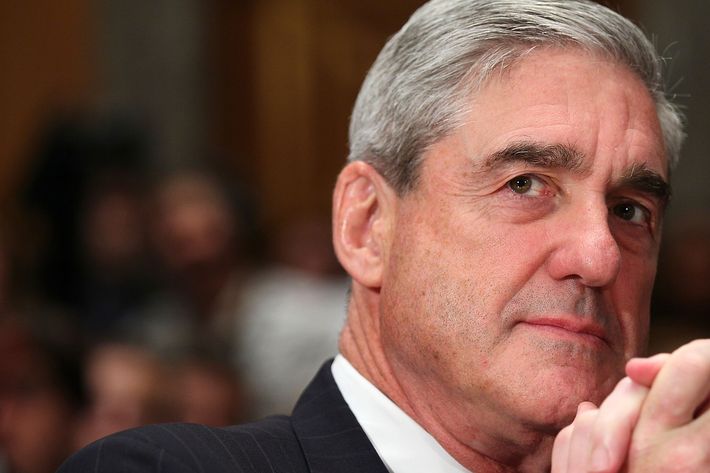
Comey’s Book

It’s an autobiography, not an anti-Trump screed. And it’s surprisingly well written.


A Higher Loyalty became available to the general public Tuesday. (Last weekend already, news outlets had started reviewing pre-publication copies.) If you’ve been following the media coverage of the book and are trying to decide whether to read it yourself, there are two things you should know.

  • For somebody whose day jobs have been in a different field, Comey is a surprisingly good writer. I found his book to be a quick and pleasant read; finishing it in time to write this post was not a chore. You might wonder if this means a ghost writer was involved, but I doubt it. The book contains a number of sparkling phrases that I don’t think a ghost would put in somebody else’s mouth.
  • It’s more of an autobiography than the anti-Trump screed the media is making it out to be.

Comey begins by describing the early experiences that he believes led him to choose a career in law enforcement (including a home invasion when he and his little brother expected to be killed). He describes the authority figures who shaped his view of good leadership. (His first job at a grocery figures prominently. When Comey made a foolish mistake that results in spilling many gallons of milk, what his boss wanted to know first is whether he learned anything. Comey said he did, and then the boss simply replied: “Clean it up.”)

His career in public service includes several noteworthy scenes before Trump shows up, like prosecuting Martha Stewart, or the famous showdown in John Ashcroft’s hospital room, where Bush’s White House Counsel (Alberto Gonzales, later attorney general) tried to bully a weakened Ashcroft into re-approving a highly classified surveillance program that Justice Department lawyers had decided was unconstitutional. (Comey, who was deputy attorney general at the time, recounts some amusing stories from his subordinates, who raced to the hospital to support him and Ashcroft without knowing what was going on. One came in such a hurry that he forgot where he parked his car, couldn’t find it afterwards, and couldn’t even explain to his wife what he had been doing when he lost it. “Someday I may be able to tell you,” he said.)

Because he had been a Bush appointee, Comey was surprised that Obama wanted him to be FBI director. He clearly was impressed by his personal interactions with Obama. Obama knew what he was talking about, knew how to listen, and encouraged subordinates to tell him unpleasant truths. He also knew the importance of keeping White House politics away from Justice Department law enforcement. (Just before officially nominating him, Obama invited Comey to the White House for a wide-ranging chat because “Once you’re director, we won’t be able to talk like this.”)

He describes his decisions around the Hillary Clinton email investigation. His conclusions are pretty similar to the ones I outlined a month before he gave his report: Some classified information got mishandled, but without some evidence of criminal intent — which the FBI never found — prosecuting would have been a waste of time.

He justifies his decision to describe the investigation in public, and to re-open it two weeks before the election when new emails turned up. I still don’t agree with his reasoning, but I can at least understand it: Second only to finding the truth about Clinton, his major concern was maintaining the “reservoir of trust” that the public has in the FBI in particular and law enforcement in general. As events played out, his public announcements were unfortunate. (While he doesn’t admit that, he also doesn’t deny it.) But at the time he was also worrying about other scenarios that he thought would have been even more damaging to that trust. Like: What if he said nothing, Clinton got elected, and then the new emails displayed the criminal intent that he hadn’t found in the first batch?

Trump comes off badly in Comey’s descriptions, particularly in contrast to Obama. He talks constantly, and seems to interpret Comey’s inability to get a word in edgewise as agreement. (Here, Comey uncorks a metaphor that I envy as a writer. A Trump monologue is “conversation-as-jigsaw-puzzle, with pieces picked up, then discarded, then returned to”. I will never be able to listen to Trump again without remembering that.) His concerns are all self-centered; he never showed the slightest interest in what Russia’s influence on the election meant for the nation, or what could be done to prevent future interference. He is constantly spinning “a cocoon of alternative reality” (another great metaphor) around himself and his people. His White House reminds Comey of a Mafia family; it runs on loyalty to the leader, rather than respect for truth, the rule of law, and the norms that keep the reality-based parts of the government independent from the politics-based parts.

Comey stops short of claiming Trump obstructed justice by firing him. As with Clinton, Trump’s action is criminal only if he had a corrupt intent, which Comey is not in a position to know. (But Mueller might be.)

Comparing the memos Comey wrote immediately after his conversations with Trump to what he told Congress, what he wrote in the book, and what he has said this week in interviews, it becomes clear that Comey has been giving the same account all along. That doesn’t necessarily mean it’s true. He could have misinterpreted his conversations with Trump as they happened, or perhaps (if you want to cast him in a truly sinister light) he was already plotting against Trump before he was fired. But Comey’s consistency is a marked contrast with Trump, whose stories change from one day to the next, and are often provably false.

Two intertwined themes lie behind all the stories Comey tells: respect for the truth and what good leadership consists of. In Comey’s world the truth is both supremely important and hard to learn, particularly if you’re in charge and rely on other people to be your eyes and ears. Given that situation, a leader’s most important job is to convince his subordinates that s/he really wants to know the truth, and to create an environment where truth-telling is safe.

The book’s title implies some questions: a loyalty to what that is higher than what? And Comey’s answer is: Far above your loyalty to the boss who can fire you, you have to be loyal to the truth, to the nation, and to the principles the nation and its institutions are founded on.

It’s not hard to see why he and Trump didn’t get along.

The Monday Morning Teaser

The news shows this week were dominated by speculation about Donald Trump’s legal troubles: Will Michael Cohen be indicted? If he is, will he flip and testify against Trump? If he does, what does he know? Will Trump fire Robert Mueller or Rob Rosenstein? Will Congress try to prevent that? Or if not, will it react after the firing happens? How?

If you watched TV news for more than a few minutes, it was easy to forget the most accurate answer to all these questions: We don’t know. The questions are all important, but at the moment there’s not a lot publicly available information about them. All week, it’s been hard to keep straight whether or not anything was actually happening.

One thing that did happen was that James Comey’s book A Higher Loyalty appeared in bookstores Tuesday. It turns to be a well-written and interesting book. You’d never figure this out from the coverage it’s been getting, but most of the book has nothing to do with Trump. It’s Comey’s story of his life in law enforcement, and the lessons about leadership that he draws from it. It turns out he’s been involved in lots of interesting events over the years, like putting Martha Stewart in jail or facing down Alberto Gonzalez over John Ashcroft’s hospital bed. It’s a good read.

So I’ll review that. The post should come out around 10 EDT.

That’s short, and the weekly summary will be correspondingly long: North Korea, anti-gun protests, Barbara Bush — and yes, Michael Cohen, Sean Hannity, the Mueller investigation and all that. I use Prime Minister Shinzo Abe’s visit to Mar-a-Lago as an example of the everyday corruption of the Trump White House, point out the promising twist Paul Krugman has put on an old climate-change argument, and discuss a few other recent developments before finishing with a video of engineering students walking on water. I’ll try to get that out by noon.

To Investigate or Not?

At a certain point you’re either for an independent and impartial investigation, or you’re not.

– Ambassador Nikki Haley (4-10-2018)
She was talking about Russia’s approach to Syria’s chemical weapons.
What did you think she was talking about?

This week I have a lot of featured posts that are shorter than usual: “‘Make a Deal’: My Contribution to the Trump/Mueller Musical“, “Can I Stop Writing About Paul Ryan Now?“, and “My taxes are half what I’d pay if I just made wages“.

This week everybody was talking about Syria

A little over a week ago, the rebel-held Syrian town of Douma was hit with a chemical-weapons attack. Suspicion immediately fell on the Assad government, which has done stuff like this before. Assad’s ally Russia vetoed a US resolution in the UN Security Council that would establish a commission to investigate and assess responsibility for the attack.

Early Saturday morning (local time), the US, UK, and France launched missile strikes against what they described as chemical-weapons facilities in Syria. The point, apparently, was not to move the balance-of-power in Syria’s civil war, which Assad (with help from Russia and Iran) is winning. The point was to punish Assad for breaking the international convention against chemical weapons. The attacks were over in a few hours, but the coalition is ready to strike again if Assad uses chemical weapons again. At the moment, Russia appears unlikely to counter-attack.

There are a bunch of issues to unravel here, and I don’t have all the answers.

  • Did Assad use chemical weapons? Russia says no, but their credibility with me is not very high right now. In the US a number of voices — mainly on the right but also a few on the left — are skeptical. But none of the alternative stories — fraud, false flag operation — make a lot of sense. I think the Trump administration wishes the whole Middle East would go away, so I don’t see a motive to fake an attack.
  • Will missile strikes deter future chemical weapons use, or is there some better way? I totally agree with the idea that chemical weapon attacks shouldn’t be tolerated. But is this really the most effective response? Obama threatened an attack, and then tried to negotiate Assad’s weapons away (with Russia as guarantor). That didn’t work. Trump punished Assad with a missile strike last year, and that didn’t work. Why do we think incrementally more punishment is going to work now? Both presidents — Fareed Zakaria points out how similar they are on this issue — tried to calibrate their responses perfectly, so that Assad is deterred, but we don’t wind up more deeply involved in Syria. Is that even possible? I don’t have a better idea, but I have to wonder if we’re working within the wrong frame. Or maybe this attack is more for our own satisfaction — we did something! — than to accomplish a real purpose.
  • Is Trump wagging the dog? As a steadfast Trump critic, I don’t think so. Or if that is what he intended — to divert attention from the Mueller investigation and other scandals — it’s not working. In the absence of further strikes, headlines are already shifting back to Comey’s book and what the feds got by raiding Michael Cohen. (Trump didn’t even manage to distract himself for long.) And if this turns into a longer bombing campaign, Trump’s base will hate it as much or more than I do. They like chest-thumping, but not endless wars with no obvious goal.
  • Do we have some strategy in Syria, or are we just reacting to events as they happen? Compare to Russia: If Russians ask why their government is involved in Syria, they can get some simple answers: to secure an air and naval base in the Mediterranean; to support an allied government that’s fighting Islamic terrorism; to prevent the United States imposing its will on the region; to show the world that Russia is a player again on the international stage. As an American, I can’t think of any similar answers for our involvement. We’re usually just told that worse things would happen if we disengaged.
  • Are attacks like this even legal? The Constitution assigns the war-making power to Congress, which hasn’t passed any substantive authorization since right after 9-11 and just before the Iraq invasion. It’s hard to claim that either of those applies here, since Saddam is long dead and Assad had no connection to 9-11. So Congress is AWOL. It could write a new authorization for intervention in places like Syria, or it could object to presidential overreach. But it’s doing neither. It should at least debate a resolution. Constitutional checks and balances only work when the branches of government compete for influence. When one branch decides it just doesn’t want to be blamed for whatever happens next, the whole system falls apart.

Trump’s announcement of the attack on Syria was the first time I can recall him calling out Russia specifically. Not sure what it means: The WaPo also reports today on how angry Trump was when he realized he was expelling more Russian diplomats than our European allies were.


Thomas Friedman worries about a different aspect of the chaos in Syria: Iran and Israel are starting to shoot at each other. Prior to the US/French/British missile raid, this week the Israelis hit an Iranian base in Syria. They claim it was because an Iranian drone flew from that base in February with the intention of attacking Israel. The claim is hard to evaluate, because the drone was shot down before it could do any damage.

Israel and Iran are now a hair-trigger away from going to the next level — and if that happens, the U.S. and Russia may find it difficult to stay out.

and Paul Ryan

I never get used to the way big stories collide during the Trump Era. It’s like a play whose actors keep stepping on each other’s lines. Wednesday, the Speaker of the House announced his retirement, and it was a one-day wonder.

That’s because Thursday evening the first excerpts of James Comey’s new book appeared, and rumors came out of the White House that Trump was about to fire Rod Rosenstein to rein in the Mueller investigation. Friday we found out that the raid on Michael Cohen’s office may have netted tapes of his conversations with Trump, and then in the evening Trump went on TV to announce an attack on Syria. Oh, and he pardoned the guy who obstructed justice and lied to investigators to protect Dick Cheney during the Valerie Plame scandal, apparently just to remind everybody that obstruction of justice and lying to federal investigators are pardonable offenses. (Wink, wink.)

But let’s go back to Wednesday: The Speaker of the House is retiring in January. He’s the second Speaker to walk away from the job in the last three years. That didn’t used to happen. Sam Rayburn lasted for 17 years, and Tip O’Neil for nearly a decade. O’Neil was 74 when he retired and Rayburn died in office at 79. Ryan is 48 and Boehner was 65 when he retired.

Lots of people have a theory about why. I’ve paid a lot of attention to Ryan over the last six or seven years, so I offer my take in one of the featured posts.

and Michael Cohen

The New Yorker’s Adam Davidson thinks the raid on Michael Cohen’s office marks “the end stages of the Trump Presidency”.

This doesn’t feel like a prophecy; it feels like a simple statement of the apparent truth. I know dozens of reporters and other investigators who have studied Donald Trump and his business and political ties. Some have been skeptical of the idea that President Trump himself knowingly colluded with Russian officials. It seems not at all Trumpian to participate in a complex plan with a long-term, uncertain payoff. Collusion is an imprecise word, but it does seem close to certain that his son Donald, Jr., and several people who worked for him colluded with people close to the Kremlin; it is up to prosecutors and then the courts to figure out if this was illegal or merely deceitful. We may have a hard time finding out what President Trump himself knew and approved.

However, I am unaware of anybody who has taken a serious look at Trump’s business who doesn’t believe that there is a high likelihood of rampant criminality.

Michael Cohen is right in the middle of all that, and has been for decades. Another New Yorker article sums up:

Cohen was directly involved in the Trump Organization’s pursuit of international deals in the years leading up to Trump’s Presidential campaign. During this period, the Trump Organization did business with corrupt politicians, sanctions violators, and money launderers. A key question, which carries significant legal ramifications, is how much the company knew about these partners’ records and reputations. Michael Cohen can answer this question.

He apparently taped phone calls, possibly with Trump or his children. He could be facing jail for his role in the Stormy Daniels pay-off, and possibly other similar incidents. If so, he might have reason to testify against Trump about anything else he knows — testimony that would be admissible if his advice had been used to plan a crime.

Trump and Cohen are claiming that the information seized by the US attorney for the Southern District of New York (not Robert Mueller; this is the job that Chuck Rhodes has on the TV show Billions) is protected by attorney-client privilege and so is inadmissible in court. Right now, the judge does not seem to be buying that claim, but it’s interesting to consider what happens if evidence of criminality is ruled inadmissible, but somehow gets out anyway: Will we tolerate having a criminal president if the evidence proving his criminality can’t be used in court? Would an impeachment hearing in Congress be bound by those rules?

but I took a closer look at my taxes

After I got done with my taxes (within a few days of the deadline, as usual), I refigured what they’d be if I had the same income, but got it all in the form of wages rather than as more investment income than wages. The answer: “My taxes are half what they’d be if I just made wages“. If you’re expecting me to defend the tax system that gives me that kind of advantage, don’t.


BTW, Elizabeth Warren has a bill that would have the IRS send you a tax return, which you could either accept or answer by filing your own. Other countries do this already.

and you also might be interested in …

James Comey’s book appears in stores tomorrow.


The graph below is a little hard to parse, but it captures some really interesting and important information. The full explanation is at Vox.

The authors (Max Roser and Stefan Thewissen) are trying to capture the notion of “inclusive growth”. In other words, an economy that grows without increasing inequality. What they’re plotting is the inflation-adjusted income that puts you at the 90th percentile versus the inflation-adjusted income that puts you in the 10th percentile. Countries higher up the scale have less equality. If your economy grows equally for everybody, your path should be diagonal. More upward slopes indicate increasing inequality, while more horizontal slopes indicate decreasing inequality. The paths start with the data from 1979.

Two things are striking: Early in the Thatcher years, the UK’s path goes straight up, as virtually all the growth goes to the wealthy. And the US’s path is unlike all the other countries’: We’re zig-zagging upwards as our inequality increases over the long term.

The point to learn from the US path is that our inequality problem is unique. You can’t blame it on some global cause like technology or globalization. We’ve been doing something different in this country since roughly the time of Ronald Reagan, and it’s not good.

There’s one thing I’d like to add to their study: As has been pointed out numerous times, things only get more out of hand in the US if you look at the 99th percentile or the 99.9th percentile. I’m curious how the graphs would change if those percentiles were looked at rather than the 90th.


Just another day under the most openly corrupt administration of my lifetime:

An Austin lawyer who dropped the state of Texas’ investigation of Trump University in 2010 may get a lifetime post as a federal judge.

Trump made the payoff nomination Tuesday. It’s up to the Senate now.

“Drain the swamp,” he says.

and let’s close with something fascinating

Bats actually don’t fly like birds. They’re doing something different with their wings.

My taxes are half what I’d pay if I just made wages

OK Donald, I’m not going to publish my tax returns either, but I do want to reveal enough information about them to make a point.

Over the last few years, my wife and I have eased towards retirement, which means that an ever-higher percentage of our income comes from investments (interest, dividends, and capital gains) rather than wages. And I’ve watched our taxes go down accordingly, because the tax code is stacked against people who get their money by working. (I’ve been complaining about this at least since 2005. I made a related complaint about estate taxes after I settled my father’s estate in 2015. As a worker I paid one rate; as an investor I have paid a much lower rate, and as an heir I paid essentially nothing.)

I think 2017 was the first year (or maybe the first since that lucky investing year of 2004 that made my tax return look so shocking to me in 2005) that wages have been less than half of our income. And that made me wonder: If I refigured our federal income tax with the assumption that we had the same income, but it was all wages, what would that do to the tax we pay?

Answer: More than double it. A couple who had our same income, same deductions, and so on, but got all their income by working, would pay twice as much tax as we paid, and then a little more. (If you had a lot of wages and want to do my experiment in reverse, go to page 44 of the 1040 Instructions and fill out the Qualified Dividends and Capital Gains Tax Worksheet under the assumption that your whole income consists of capital gains. If you’re willing to share, you can post in the comments the percentage decrease you see.)

You might wonder how that is possible, since capital gains are supposedly taxed at 15%: low, but more than half the rate most wage-earners pay. The answer is that your first chunk of capital gains isn’t taxed at all.

Taxpayers in the 10 and 15 percent tax brackets pay no tax on long-term gains on most assets; taxpayers in the 25-, 28-, 33-, or 35- percent income tax brackets face a 15 percent rate on long-term capital gains. For those in the top 39.6 percent bracket for ordinary income, the rate is 20 percent.

If you don’t have a lot of wages, you only start paying those 15-20% rates after you’ve maxxed out the untaxed chunk.

A response you’ll sometimes hear from conservatives is: “Well, if that bothers you, you should make a voluntary contribution to the Treasury.” And that entirely misses the point. If the problem were my personal sense of guilt over being allowed to pull less than my weight, a contribution to the Treasury would deal with part of it. (I still would have the privilege of deciding for myself what my fair share is, though. That still would put me in a different class from people who have to either pay what they owe or go to jail.)

But my complaint isn’t that I lack some proper method to flagellate myself for having income. The guilt shouldn’t reside with those of us who fill out our tax returns honestly and arrive at the ridiculously low number the law intends us to pay. It’s with the politicians who write these rules, and (even moreso) with the people who use the outsized influence their wealth gives them to induce politicians to write such unfair rules in the first place.

Our tax system is unjust, and every person who earns wages should feel insulted and abused by it. Me sending an extra check to the Treasury would do absolutely nothing to change that.

The problem is structural, so the solution needs to be structural: All forms of income — wages, interest, dividends, capital gains — should be taxed the same. (That’s not a flat tax. Once you total up your income, the tax tables could still be progressive, with rich people paying a higher rate than poor people.) Not only would that change make our tax system fairer and more just, it would achieve goals conservatives are always claiming they support: Figuring out what you owe would be simpler, and the tax code would distort our economy less, since there would be no need for the shenanigans wealthy people pull to make their wages look like capital gains.

Can I Stop Writing About Paul Ryan Now?

I was going to quote a bunch of long-time Ryan-watchers. But then I realized I am one.


In case you’ve been living in a cave this week: House Speaker Paul Ryan announced that he will not run for re-election this fall, and will leave Congress when his term runs out in January.

Looking through this blog’s archives, I see I’ve actually written quite a bit about Ryan. In 2012 when he was Mitt Romney’s VP candidate, I did a Ryan triology:

A few months prior, I had examined a critique of Ryan’s budget proposals from bishops and theologians out of his own Catholic tradition in “Jesus Shrugged: Why Christianity and Ayn Rand Don’t Mix“.

Later, I covered some of the reports he issued as chair of the House Budget Committee: In 2014, his proposals to replace the Great Society anti-poverty programs led to “Does Paul Ryan Care About Poverty Now?” and “Can Conservatives Solve Poverty?” (In both cases, my answer was no. Ryan’s approach to poverty is doomed by his ideological blinders: Capitalism is perfect, the market is fair, and the rich deserve everything they have, so the only causes of poverty he can recognize are the moral failings of poor people and the disincentives created by government anti-poverty programs.)

By now, justifiably or not, I sort of feel like I get Paul Ryan. Based on that, and on no inside information whatsoever, here’s my take on why he’s leaving Congress: First off, the explanation he gave — that with the passage of the Tax Reform Bill “I have accomplished much of what I came here to do” — is nonsense. Ryan’s main focus has always been on the spending side of the equation, not the taxing side. What he “came here to do” was to reform entitlements and reduce government spending’s slice of the economy. He didn’t come to Washington to do what he has, in fact, done: increase defense spending, leave entitlements largely untouched, and create a huge deficit by cutting taxes.

So what is the reason? Ryan looks ahead and sees that leading the House Republican caucus for the next few years, either as Speaker or as Minority Leader, would be the end of his career. He would have to marshal Republican support behind budgets with trillion-dollar deficits, and decide how far he’s willing to go to protect his party’s president as the investigators circle in and Trump’s behavior becomes increasingly indefensible. Either choice — going down with the ship, or trying to pick exactly the right moment to turn on Trump — would be political suicide. Whatever he did, half the Party would think he’s a toady, and the other half would regard him as a back-stabber.

A related issue is that there is no Republican legislative agenda right now. After Trump was elected, repealing ObamaCare was the central focus. When they finally gave up on a full repeal, the focus shifted to tax cuts. The tax cut bill was signed right before Christmas, and what has Congress been working on since? There was an omnibus spending bill that nobody liked, with a big deficit, no clear focus, and no resolution to a lot of controversial issues like DACA or the Great Wall. And what’s next on the do-big-things agenda: Immigration? Infrastructure? Entitlement reform? Even within the Republican caucus, there’s no consensus on any of those issues. So there will be no legislation.

Now picture being a Republican running for Congress this fall. What’s your message? Keep us in power so that we can do … what exactly? That’s why they’ve shifted to a negative focus: We’ll stop the Democrats from impeaching Trump.

Is that a legacy that will hold up going forward? Ryan is still only 48, and he’s undoubtedly looking forward to 2024 or 2028, by which time he hopes the dust will have settled from whatever happens to Trump. Being remembered as the shield that kept Trump in office as long as possible is not going to play well by then.

On the other side, a few Trump critics speculate that Ryan wants to be in a position to challenge Trump in 2020. But that’s wishful thinking. Fighting a civil war to take the Party back is a fool’s mission; even if he succeeded, the defeated Trumpists would never forgive him. Also, it’s very un-Ryanlike; he’s not the kind of guy who puts down a big bet and rolls the dice. No, Ryan’s time will come after the Party of Trump has crashed and burned on its own. Then, he imagines, he can step forward as the savior who will lead the GOP back to sanity. Better yet, the Party will come to him and beg him to become it’s savior, the way it begged him to become Speaker.

For the next few years, the right place for an ambitious Republican to be is off stage, so that’s where Ryan is going. The only thing I think he might regret is that he may already have waited too long. Leaving in January may not be soon enough to avoid the stain of either sticking by Trump or turning on him.


The other thing I noticed while looking back is that one person has consistently been even harder on Ryan than me: Paul Krugman. And he’s not stopping now. In Friday’s column, he reprised the greatest hits of his Ryan criticism: Ryan was never the “serious policy wonk and fiscal hawk” he played on television. In fact, “the single animating principle of everything Ryan did and proposed was to comfort the comfortable while afflicting the afflicted”. His long-term budget proposals always relied on the “magic asterisks” of unspecified future spending cuts, plus added revenue from closing unspecified future tax loopholes. So the deficit reductions he touted were always “frauds”.

His reputation was based on the “motivated gullibility” and “ideological affirmative action” of pundits who needed to make a show of being even-handed.

Yet the reality of 21st-century U.S. politics is one of asymmetric polarization in many dimensions. One of these dimensions is intellectual: While there are some serious, honest conservative thinkers, they have no influence on the modern Republican Party. What’s a centrist to do? … The narrative required that the character Ryan played exist, so everyone pretended that he was the genuine article.

Ryan hasn’t criticized Trump’s excesses because … why would he? “Principled conservative” was just another mask he wore.

[I]f you ask why Ryan never took a stand against Trumpian corruption, why he never showed any concern about Trump’s authoritarian tendencies, what ever made you think he would take such a stand? Again, if you look at Ryan’s actions, not the character he played to gullible audiences, he has never shown himself willing to sacrifice anything he wants — not one dime — on behalf of his professed principles. Why on earth would you expect him to stick his neck out to defend the rule of law?

“Make a Deal”: My Contribution to the Trump/Mueller Musical

If Michael Cohen really is the key to bringing down Trump, you have to figure that when the musical version gets made, Mueller’s pitch to flip Cohen will deserve its own song. Here’s my suggestion, which is sung to the tune of “Cabaret“.

What good is taking the rap for some clown?
You’re hooked and I hold the reel.
Life is the art of deals, my friend.
Come in and make a deal.

Forget about pardon, you know it won’t come.
His loyalty’s not real.
I’ve heard there’s an art of deals, you know.
Come in and make a deal.

Tell what you’ve seen.
Tell what you know.
Go wear a wire and get him talking.
Come tomorrow you’ll be walking.

What good is pining away in a cell
Waiting on your appeal?
Life can be one big deal, my friend.
Come in and make that deal.

I used to know a mobster, name of Gotti.
The Teflon Don, he could be rather naughty.
He wasn’t satisfied with vice and looting.
He took out the top bosses with a shooting.

He thought that he could never be convicted
With witnesses and jurors so conflicted.
But when we made his chief lieutenant sing
The case became a very lovely thing.

I think of Gotti to this very day.
That’s how you put the guy on top away.

I said, “Come on, Sammy, you’ve got one last chance.
“There’s no better time to squeal.”
Life is the art of deals, my friend.
He came in and made a deal.

And as for you,
And as for you,
You can help me bring down the hammer
Or spend your best years in the slammer.

You know that he never would go down for you.
He doesn’t care how you feel.
Life is the art of deals, he says.
He’s the Crown Prince of Deals, he says.
But I love to make a deal.

The Monday Morning Teaser

It’s been the kind of week where the retirement of the Speaker of the House can get lost in the shuffle: The US attacked Syria, Michael Cohen’s office was raided, Jim Comey’s book leaked ahead of its publication date, the inspector general’s report on Andrew McCabe came out … and probably some other important stuff I’m forgetting.

I’m going to start today by having some fun. I love to write song and poem parodies — during the Trump administration I’ve already chronicled the failure of ObamaCare repeal in the form of “Casey at the Bat” and re-imagined “If” as Trump’s advice to his sons. This week, I present the musical version of Robert Mueller trying to persuade Michael Cohen to testify against Trump (and reminiscing about Sammy the Bull flipping on John Gotti). It’s “Make a Deal” to the tune of “Cabaret”. That should post soon.

The second featured article is my take on what Paul Ryan is thinking. At some point this week I realized that I have written thousands and thousands of words about Ryan during the last six years, and read tens of thousands more by or about Ryan. I kind of feel like I get him by now, so I suspect my version of his thoughts is as good as anybody else’s. That should post before 10 EDT.

The weekly summary will also raise some questions about the Syria raid. (Do we have a strategy? Is the attack even legal?) I have few answers. Also, some thoughts about Michael Cohen, and a few reflections on how my taxes would be different if I had different kinds of income (as an illustration of how the tax code is stacked against working people). (I’m still debating whether to spin that off into its own article.) I didn’t have the connections to get a pre-release copy of Comey’s book, which comes out tomorrow, so I’ll probably have more to say about that next week. The summary should be out before noon.

Scoping the Issues

Assault weapons and large-capacity magazines are not within the scope of the personal right to “bear arms” under the Second Amendment.

Judge William G. Young, U.S. District of Massachusetts

This week’s featured post is “Trump’s long-term effect on American democracy: How worried should we be?

This week everybody was talking about trade

The stock market has been see-sawing several hundred points a day, as investors try to figure out where Trump’s trade dispute with China will go. Are both sides exchanging bluff and bluster in preparation for negotiating some agreement? Or is the recent back-and-forth of tariff announcements exactly what it appears to be?

The really worrisome thought is that the ignorant things Trump (and his Commerce Secretary Wilbur Ross and trade advisor Peter Navarro) says represent the true depth of the administration’s policy. Matt Yglesias spells out what Ross and Navarro seems to believe: that the equation

GDP = Government spending + Consumer spending + Business investment – Trade Deficit

is more than just an accounting definition. He and Trump seem to believe that if you cut the trade deficit, GDP will automatically rise.

Here’s a quick way to tell that something has gone wrong with the Ross-Navarro argument. Last year, the United States imported $180 billion worth of petroleum products — oil and such.

According to Ross and Navarro, if the United States made it illegal to import oil, thus wiping $180 billion off the trade deficit, our GDP would rise by $180 billion. With labor constituting 44 percent of GDP, that would mean about $80 billion worth of higher wages for American workers. So why doesn’t Congress take this simple, easy step to boost growth and create jobs?

Well, because it’s ridiculous.

What would actually happen is that gasoline would become much more expensive, consumers would need to cut back spending on non-gasoline items, businesses would face a higher cost structure, and the overall economy would slow down with inflation-adjusted incomes falling. Modeling the precise impact of a total shutdown of oil imports is hard (hence the computer models). But we know from experience that the directional impact of sharp disruptions in the supply of imported oil, and it’s not at all what Ross and Navarro say it would be.

Trump seems to believe something similar about trade with China: that getting rid of that $500 billion trade deficit would automatically increase GDP. That’s why he tweets “When you’re already $500 Billion DOWN, you can’t lose!”

and chemical weapons

There’s been another major chemical weapons attack in Syria, and once again the Assad regime looks like the attacker.

When this happened under President Obama, he negotiated Assad giving up his chemical weapons stockpile in a deal guaranteed by Assad’s ally Russia. When it happened again in the early days of the Trump administration, Trump ordered a missile strike against a Syrian airbase.

This time, Trump has tweeted:

President Putin, Russia and Iran are responsible for backing Animal Assad. Big price to pay.

Whatever that means.

and Scott Pruitt

Since taking over the EPA, Scott Pruitt has had the mission of reversing his agency’s mission: It’s now supposed to protect polluters from regulations rather than use regulations to protect the environment from polluters.

He’s been good at that job. He’s reversed Obama’s Clean Power Plan for lowering carbon emissions from power plants, and is in the process of undoing the higher CAFE standards for cars’ gas mileage. He’s doing his best to muzzle EPA’s scientists.

That industry-pleasing performance is why he’s managed (so far) to weather revelations of corruption that would have sunk any cabinet secretary in any previous administration. Pundits continue to predict that his days are numbered, and even a few Republican senators are saying he has to go. But only one opinion matters, and Trump thinks he is doing a great job.

but here’s somebody you should meet

Trump’s attempt to ban transgender soldiers may seem abstract, unless you know one. Here’s one.

and you also might be interested in …

The indications of a 2018 blue wave are holding. Wisconsin elected a liberal supreme court judge by a wide margin.


Andrew McCabe’s wife says all the stuff she couldn’t say when her husband worked at the FBI.

I have spent countless hours trying to understand how the president and so many others can share such destructive lies about me. Ultimately I believe it somehow never occurred to them that I could be a serious, independent-minded physician who wanted to run for office for legitimate reasons. They rapidly jumped to the conclusion that I must be corrupt, as part of what I believe to be an effort to vilify us to suit their needs.


A federal judge in Massachusetts has rejected a claim that Massachusett’s assault-weapons ban infringes Second Amendment rights. The Massachusetts law more-or-less duplicates the federal assault-weapons ban that was in place from 1994-2004. The opinion, which quotes Justice Scalia’s Heller opinion at length, argues that the AR-15 is fundamentally a military weapon, and that there is no constitutional right for civilians to own military weapons.

This ruling mirrors an appeals court ruling on a similar Maryland law, which the Supreme Court refused to review.


HuffPost has a good article on the roots of the teacher revolts in Oklahoma and Kentucky. Meanwhile, Kansas approved a big increase in education spending, in response to its Supreme Court ruling that the previous budget did not meet the state’s obligations under the Kansas constitution.


Health insurance in Iowa has just gotten more precarious. The state has undercut the ObamaCare market by approving new plans that it says aren’t really insurance, and so don’t have to meet the standards in the ACA. In other words, it’s back to the junk insurance the ACA got rid of. The policies are intended for basically healthy people, and will work for them only as long as they stay basically healthy.

The inevitable result will be a lot of healthy people leaving the ObamaCare system for the cheaper, junkier plans. So insurers will have to raise rates, which will cause more people to leave, and so on.


The Trump administration’s zeal to deport anyone they can now extends to at least one honorably discharged veteran:

Xilong Zhu, 27, who came from China in 2009 to attend college in the United States, enlisted in the Army and was caught in an immigration dragnet involving a fake university set up by the Department of Homeland Security to catch brokers of fraudulent student visas.

Zhu paid tuition to the University of Northern New Jersey, created by DHS to appear as a real school, long enough to ship to basic training using the legal status gained from a student visa issued to attend that school.

Then ICE found him and asked the Army to release him for alleged visa fraud. He left Fort Benning, Ga., on Nov. 16, 2016, in handcuffs as an honorably discharged veteran.

Zhu is a native speaker of Mandarin, a skill the Army values. He had enlisted “through a program designed to trade fast-tracked citizenship for medical and language skills”.


I was going to link to this article last week, but it somehow got lost in the shuffle. The Atlantic raises the question: “Is It Time for the Jews to Leave Europe?” One side effect of the increased Muslim presence in European countries is that many of these immigrants are strongly anti-Semitic. At the same time, the generation of Europeans that felt responsible for the Holocaust is dying off.

There’s a weird counter-productivity going on: The Muslims largely act out against their local Jews because they hate Israel. But if the European Jews leave, many will probably go to Israel, making Israel stronger.


More than half a year after Hurricane Maria, some Puerto Ricans still don’t have power. The image shows how slowly the grid was coming back in the first two weeks. It’s still not all the way back, and the next hurricane season starts June 1.


The Dutch news-comedy show Zondag net Lubach (Sunday with Lubach) tells its viewers about the “devastating humanitarian crisis” afflicting the United States: Nonsensical Rifle Addiction.

and let’s close with something classically funny

I could use a laugh about now, so here are a few Buster Keaton clips.

Trump’s long-term effect on American democracy: How worried should we be?

If you have been paying attention to the current administration with any sense of skepticism at all, you probably worry about whether President Trump is a threat to American democracy as we have known it. Briefly:

In January, as he marked the first complete year of the Trump administration, Benjamin Wittes characterized this as “banana-republic-type stuff” and commented

His aspirations are as profoundly undemocratic and hostile to the institutions of democratic governance as they have ever been. He announces as much in interview after interview, in tweet after tweet.

And yet, Wittes judged that during Trump’s first year, the response of the rest of the government was “ultimately encouraging”.

Trump simply cannot look back on the last year and be satisfied with the success of his war on the Deep State. His battle to remake it in his image has been largely unavailing—and has come at far greater cost to his presidency than to the institutions he is trying to undermine.

And that is very good news.

So how bad is it really? In other words, the rest of the government has largely remained true to American ideals, and has blocked Trump’s most authoritarian efforts. The courts remain independent, and have struck down several of his most egregious orders. The media has refused to be intimidated, and continues to hold him accountable. Law enforcement has largely — but not entirely — held steadfast against his encroachments on its integrity; so the Mueller investigation continues, and there have been no show trials of high-profile Trump enemies. The military has pushed back against his improper orders, and the intelligence services refuse to simply tell him what he wants to hear, help him subvert the justice system, or propagandize the American people. Even the Republican Congress, while often a lapdog, has occasionally growled: High-profile Republicans have protected Jeff Sessions, and threatened unspecified consequences if Robert Mueller is fired.

So how disturbed should we be? Is Trump simply a bad cold that American democracy will eventually throw off and return to good health? Or is his administration a cancer that our country might fight for a while, but will eventually succumb to? How do we even think rationally about such questions, rather than alternately give in to rosy denial or black despair as the mood strikes us?
Comparable challenges. If we were going to try to think about this like reasonable people, the first question to ask is: When have democracies faced challenges like this before? How did that go? How does our situation compare to theirs?

Trump, after all, is not the first demagogue with authoritarian tendencies to gain popularity in a democratic nation. Sometimes the fever passes, sometimes the nation falls into tyranny (Putin in Russia, Erdogan in Turkey), and some cases look bad but might still be salvageable (Orban in Hungary, Duda in Poland).

He’s not even the first American president to stress our democracy, or to be feared by the opposition as a rising dictator. Just about all our major wartime presidents fit that description: Much of what Lincoln did, including the Emancipation Proclamation, was constitutionally suspect, relying on implicit “war powers” that had never been precisely spelled out before. Wilson jailed Eugene Debs during the World War I, and approved the Palmer Raids against leftists in the postwar red scare. FDR broke the two-term tradition, tried to pack the Supreme Court with allies, and approved the Japanese internment.

We don’t usually think of those presidents as potential autocrats, because in each case subsequent administrations (sometimes under pressure from Congress) pulled back from autocracy, returning to what Wilson’s successor Harding called “normalcy“. Lincoln, Wilson, and Roosevelt all left American government changed, but in each case the expansion of executive power was eventually controlled, sometimes by codifying it in law and sometimes by setting new limits to keep it from happening again.

Nixon was another president who stretched and abused executive power. But he was forced to resign and voters gave the opposition party an overwhelming majority in Congress. Congress then passed the War Powers Act, wrote new campaign finance laws, and increased its oversight of the intelligence services. His presidency became a warning sign rather than a precedent; no subsequent president has justified his actions by claiming Nixon as his example.

So how does that all work? When does a democracy slide into dictatorship and when does it pull itself back from the brink? If that sounds like a major research project, you don’t have to take it on yourself: Steven Levitsky and Daniel Ziblatt already did in the recent book How Democracies Die. (If Ziblatt’s name is familiar, that might be because in December I tried to infer the lessons How Democracies Die makes explicit from his previous book, Conservative Parties and the Birth of Democracy.)

The importance of norms. Levitsky and Ziblatt’s first point is that the U. S. Constitution contains no magic formula that prevents democracy from failing here. Whatever “American exceptionalism” might mean, it doesn’t give us some kind of immunity from the diseases other democracies are prone to. Numerous countries have modeled their constitutions on ours, and seen democracy fail anyway.

Institutions alone are not enough to rein in elected autocrats. Constitutions must be defended — by political parties and organized citizens, but also by democratic norms. Without robust norms, constitutional checks and balances do not serve as the bulwarks of democracy we imagine them to be.

(Longtime Sift readers will recognize this as a theme I’ve been harping on for years in posts like “Countdown to Augustus” and “Tick, Tick, Tick … the Augustus Countdown Continues“.)

Much of our problem today predates the Trump administration, and stems from the fact that our norms have been sliding for decades. The Senate’s refusal to recognize President Obama’s appointment of Merrick Garland to the Supreme Court, or to respond to it with hearings and a vote, for example, was not explicitly unconstitutional, but was unheard of in all previous American history. Ditto for brinksmanship with the debt ceiling, or the decades-long evolution of the filibuster from a rarely used break-glass-in-case-of-emergency practice to an automatic tactic of minority obstruction. The other branches of government have changed their own norms to deal with Congress’ dysfunction: Presidents issue more sweeping executive orders (like Obama’s DACA), and the Supreme Court reinterprets mis-stated laws (like the Affordable Care Act) that it would once have sent back to Congress for correction.

If you go back to the bulleted list at the top of this post, you’ll notice that hardly any of my complaints about Trump are explicitly constitutional. The Constitution never says that the President can’t order the FBI to investigate the candidate he just defeated, that he can’t tell big whopping lies on a regular basis, or that he has to give the public enough information to judge whether or not he is corrupt. Those aren’t rules, they’re just good practices. That’s how we do things here in America.

Or how we used to do them.

The root norms. It would be easy to fill pages with the norms that Trump is breaking. Our system, for example, has a tradition of decorum. (“Will the distinguished gentleman from Oklahoma yield the floor for a question?”) No previous president has publicly talked about political rivals in such consistently belittling terms as Lyin’ Ted, Crooked Hillary, or Pocahontas.

But rather than list hundreds of specific norms, Levitsky and Ziblatt boil democracy’s essential norms down to two:

  • mutual toleration, “the understanding that competing parties accept one another as legitimate rivals”
  • forbearance, “the idea that politicians should exercise restraint in deploying their institutional prerogatives”

All the others stem from these. American government works well when the parties regard each other as rivals rather than enemies, and exercise their powers according to the Constitution’s underlying spirit, rather than wringing every conceivable advantage out of its words. Democracy is in trouble whenever one party regards the other as fundamentally treasonous, and then uses that opinion to justify pushing the powers of whatever offices it holds to their constitutional limits.

Much of what I’ve been doing in my “Augustus” series is chronicling the tit-for-tat loss of restraint between the parties. Most Americans have no appreciation of how far this could go, so I’ll provide an example: The 12th Amendment specifies that the sealed votes of the Electoral College are sent to the President of the Senate, who counts them “in the presence of the Senate and House of Representatives.” What if the President of the Senate, with the connivance of majorities in both houses, simply miscounted the votes and proclaimed someone else to be president?

There’s no provision for dealing with that scenario — and with innumerable similar situations — because the Founders never anticipated that our political leaders would go that far. And they wouldn’t. Or would they?

The 21st century road to dictatorship. The old model of democratic breakdown was the coup: Caesar illegally taking his army across the Rubicon, seizing Rome, and proclaiming himself Dictator for Life. That was the path of many 20th century dictators like Muammar Gaddafi in Libya or Saddam Hussein in Iraq. But 21st century autocrats have realized the usefulness of maintaining the trappings of democracy.

Vladimir Putin’s Russia, for example, still has elections, rival political parties, and dissident newspapers. Popular opposition leaders, however, have a way of finding themselves in prison or in exile or dead. Ditto for troublesome journalists. When the media empire of oligarch Boris Berezovsky became unreliable, he was forced to leave it behind him and flee the country. After a few years in exile, he was found hanged. When Mikhail Khodorkovsky, once the richest man in Russia, began financing dissident politicians, he went to prison.

It was all legal, of course. (Well, not the assassinations, but no investigator would dare trace them back to Putin.) The men who went to jail were convicted of real crimes (and maybe even committed some of them; it’s hard to reach the top of a corrupt system without breaking a law sometime). Similar stories could be told about Turkey or Hungary or Venezuela. The system resembles the quip variously attributed to either Mark Twain or Emma Goldman: “If voting could change anything, they’d make it illegal.”

Levitsky and Ziblatt use a soccer analogy to map out the steps by which an elected president becomes an autocrat:

  • Capture the referees. In other words, get your people in charge of the judiciary, law enforcement, and intelligence, tax, and regulatory agencies. Anyone who used to be a neutral arbiter must become your partisan. You can do this in the judiciary, for example, by expanding the size of the Supreme Court and appointing your people to the new positions (as Roosevelt tried to do), or by impeaching judges who rule against you (as the Republican-controlled legislature is trying to do in Pennsylvania). (In North Carolina, the gerrymandered Republican majority in the legislature has done court-packing in reverse: It shrunk the size of the State Court of Appeals to prevent the new Democratic governor from filling the open seats.)
  • Sideline star players on the other side. “Opposition politicians, business leaders who finance the opposition, major media outlets, and … religious or other cultural figures” are “sidelined, hobbled, or bribed into throwing the game.” With the referees already in your pocket, the carrots of government contracts and positions, or the sticks of ruinous regulations, taxes, and prosecutions can hollow out the institutions that otherwise might channel public opinion against you.
  • Rewrite the rules in your favor. We were already seeing a lot of rule-rewriting on the state level prior to Trump: Gerrymandering and voter suppression have locked in large Republican majorities in states (like North Carolina) where the voters are more-or-less evenly split between the parties. In last November’s election in Virginia, Democratic candidates for the House of Delegates won the popular vote 53%-44%, but Republicans maintained a 51-49 majority. Combining a biased legal system with a lifetime ban on felon voting (as in Florida, where the Sentencing Project estimates that 20% of adult blacks can’t vote) can sideline a large chunk of the opposition electorate. In countries like Russia, field-tilting rules make it difficult for new parties to form, for genuine opposition candidates to get on the ballot, or for opposition voices to get their message out.

Once the right measures are in place, an aspiring autocrat doesn’t need the traditional trappings of tyranny — gulags, thought crimes, children informing on their parents, secret police breaking down doors in the middle of the night — to act with impunity and stay secure in his job.

Resistance. Unlike a coup, though, the subversion of a once-democratic system takes time. While you are corrupting some of the referees, suborning some opposition leaders, and rewriting some rules, the still-intact parts of the system can rise against you — if enough people recognize what is going on and transcend their previous differences. Putin, you may remember, did not become a dictator overnight.

Also, if a country is lucky — and I think the U.S. might have gotten “lucky” in this way with Trump — the would-be autocrat may not be particularly adept. Margaret Drabble’s metaphor of babies eating their mothers’ manuscripts might apply: “The damage was not, in fact, as great as it appeared at first sight to be, for babies, though persistent, are not thorough.” Trump may be persistent in his aggressions against democracy, but he lacks the discipline to be as effective as he otherwise might.

The rosy path. It’s easy to imagine that someday Trump will leave office peacefully — by choice or otherwise — and afterwards there will be a bipartisan effort to shore up the norms he violated.

Such a thing has happened before. For example, after FDR violated the unwritten rule that presidents should retire after two terms, Congress codified that limit in the 22nd Amendment. As a result, FDR’s four terms didn’t lead to a series of presidents-for-life. As I mentioned before, Nixon’s excesses led to a large Democratic majority in Congress that passed a number of executive-restraining laws.

Something similar could happen after Trump: Congress could mandate good practices that previously were taken for granted, forcing presidents to release their tax returns or hold their assets in blind trusts. Laws could spell out in detail which payments are constitutionally-banned “emoluments”. The wall separating the presidency from the investigative branches of the Justice Department could be strengthened.

Other changes wouldn’t require new laws: Voters could begin insisting again on virtues that Trump lacks, like experience, expertise, and honesty. They could once again value respectful and respectable behavior. Congress could begin taking its oversight role more seriously, rather than abusing or neglecting it depending on whether or not the presidency and Congress are controlled by the same party.

If that’s what happens, then the Trump administration will be like that time you drove home after a few drinks and arrived safely without incident. Yeah, it wasn’t a good idea and you shouldn’t make a habit of it, but ultimately no harm was done.

The dystopian possibility. So far, democracy has been protected by two main forces: The so-called “Deep State” (i.e., career government officials who are more committed to the missions of their organizations than to the orders they receive from the White House) and Trump’s overall unpopularity.

So, for example, career prosecutors — even if they are Republicans — have not been willing to sacrifice their integrity by manufacturing a case against Hillary Clinton, or ignoring evidence against Trump himself, just because he tweets that they should. Career EPA officials are refusing to become pawns of the fossil fuel industry no matter how much Scott Pruitt wants them to. Career economists at the Treasury didn’t concoct a bogus tax-cuts-pay-themselves analysis just because Steve Mnunchin promised they would.

That’s the Deep State in action: It’s not a conspiracy masterminded by some shadowy cabal. It’s the professional integrity of people who believe that their jobs mean more than just a paycheck or their bosses’ approval. (That’s true even in some cases where I disagree with them. I think a lot of CIA and Pentagon people really believe in America’s imperial mission, and in the disasters that will happen if they let down their guard. In their own minds, they are patriots.)

That’s both its strength and its weakness. You can’t kill the Deep State just by finding its leader and bribing, threatening, or imprisoning him or her. But conversely, it has no sense of strategy. It is made up of individuals, and individuals can be worn down. The Deep State has held its own for a little over a year, but can it hold for four years or eight?

If, God forbid, Trump got to replace one or two of the liberals on the Supreme Court, the courts might suddenly become pliable.

Trump’s unpopularity has shored up many institutions of democracy. The media has remained critical, rather than giving in the way it did to George W. Bush after 9-11. Republicans in Congress haven’t expressed much criticism, but they also haven’t cooperated with Trump’s desire to rewrite the rules. (The Senate keeps ignoring his plea to abolish the filibuster, and the idea of changing civil service laws to enable an executive-branch purge, or libel laws to muzzle the press, are non-starters.) Congressional Democrats have stayed unified rather than finding excuses to strike individual compromises. Federal judges have not been afraid to stick their necks out.

All that might change if Trump’s approval rating hovered around 60% rather than 40%, or if it were Democrats who were worrying about losing their jobs this fall rather than Republicans.

Levitsky and Ziblatt review cases where democracy held for a while, and then started to crumble, like Fujimori‘s Peru. It’s not hard to imagine how that could happen here: The predicted Democratic wave fails to materialize in the fall. The economy stays strong, the country avoids any new shooting wars or trade wars, and Trump’s victims — immigrants, Muslims, LGBT people, etc. — remain isolated. Much of the country then starts to say, “What was all that alarmism about?” When Jim Comey or Andrew McCabe winds up in jail, it seems like a one-off case rather than an assault on law enforcement.

Conversely, suppose Democrats overcome gerrymandering and regain control of the House. (It will take at least an 8% margin in the popular vote to do so.) Then laws will not change in Trump’s favor, Congress will investigate and expose excesses, and if Bob Mueller turns up evidence of impeachable offenses, the impeachment process will begin. We’ll be on our way to getting rid of Trump in 2020 (if not sooner), and starting to rebuild what has been torn down.

The crucial year, and the long-term challenge. Levitsky and Ziblatt don’t end with specific predictions, but my impression after reading their book is that 2018 is crucial. Neither complacency about American democracy’s resilience nor hopelessness about turning things around is warranted. The outcome is still undetermined.

In each party, there is a question: Will Democrats put aside their differences in the face of the larger threat, or will they let their factions be played off against each other? In the recent successful campaigns (Lamb in Pennsylvania, Jones in Alabama), they stayed united and won, but the divisions of 2016 are still not healed.

For Republicans, the question is whether their various factions will continue to let themselves be bought off — evangelicals by court appointments, business leaders by tax cuts and deregulation, and so on — or will enough of them come to understand what is really at stake? If they will not join the resistance, will they at least stay on the sidelines?

Long term, both parties need to figure out how to strengthen the norms of forbearance and tolerance, which were in trouble long before Trump arrived on the scene. Unless we can re-establish them, getting past Trump will not solve our problems. His failure, if it happens, might simply be a training example for new and better demagogues.

The Monday Morning Teaser

You see a lot of warnings that American democracy is in trouble in the Trump Era. (You see some of those warnings on this blog.) But how serious is the situation really? Are the comparisons to Mussolini or Putin overblown, or are the people who think so in denial? Will we bounce back and repair the damage as soon as Trump is gone, or has the country been put on a new track that may take us places we never imagined America could go? Or have we already been on that track for a while, and that’s how we got Trump in the first place? Can we get off it, or is already too late?

If only there were some way to set the current challenges in some kind of international or historical perspective and think about them like reasonable people, rather than swinging back and forth between optimism and despair according to whatever mood strikes us.

That’s why the featured article this week traces the discussion in the new book How Democracies Die by Steven Levitsky and Daniel Ziblatt. They’ve done the research in a comprehensive way, rather than just seeking out whatever parallel proves some predetermined point. That should be out between 9 and 10 EDT.

In the weekly summary, I will do my best not to be blasé about the usual mix of corruption, foreign disasters, shootings, and rumblings of trade war. I picture that posting around noon.