Category Archives: Articles

Can Ethical People Work in the Trump Administration?

This week seven federal prosecutors resigned rather than follow unethical orders from their bosses in Trump administration. This case raises a more general question: Given Trump’s disrespect for ethical norms intended to insulate certain key government functions from inappropriate political interference, will there be space in the Trump administration for ethical government employees to do their work?


The Guardian provides the shortest possible summary of the current situation:

[S]even prosecutors – including the acting US attorney in southern district of New York, the head of the criminal division and the head of the public integrity section – resigned in protest rather than dismiss the case [against New York Mayor Eric Adams] for political reasons.

Now let’s back up and review this story from the beginning, following a timeline compiled by ABC News: After an investigation that had been going on for at least a year, last September federal prosecutors at the Southern District of New York (SDNY) sought and received a grand jury indictment of Mayor Adams.

At the time, the Adams indictment was used in arguments that the Biden Justice Department had not been politicized or “weaponized”, as Trump frequently claimed. Yes, a special prosecutor appointed by Attorney General Merrick Garland had indicted Trump, but that was because Trump had broken numerous laws. DoJ also went after Democratic lawbreakers like Adams and New Jersey Senator Robert Menendez.

The indictment, which is unsealed the next day, alleges Adams accepted illegal gifts, including plane upgrades and hotel stays, from Turkish businessmen and officials in exchange for preferential treatment when he was Brooklyn borough president and later as mayor. The indictment also alleges Adams received illegal campaign straw donations from Turkish nationals.

Adams denied the charges, refused to resign, and pleaded not guilty. [1] A trial was scheduled to begin in April. During the transition period after Trump’s election win in November, Adams met with Trump at Mar-a-Lago and with Trump’s border czar Tom Homan. Adams attended Trump’s inauguration. The next day, Adams began claiming that his indictment was retribution for criticizing President Biden’s immigration policies (even though the timeline on that doesn’t work). On February 10, after additional meetings between Adams, his attorneys, and Trump officials, Deputy Attorney General Emil Bove sent a letter instructing SDNY to dismiss charges against Adams “without prejudice”, meaning that the charges could be refiled in the future.

Danielle Sassoon. Dismissing a federal indictment is not an automatic thing. The prosecutor’s office has to file a motion with the court asking for the dismissal. The motion typically contains some justification for the dismissal, which the judge then must rule on. And that brings Danielle Sassoon, the acting U.S. Attorney for SDNY, into the picture.

Sassoon is not anybody’s idea of a liberal Democrat. She clerked for the late Supreme Court Justice Anton Scalia, a legendary figure in conservative legal circles. Trump had appointed her as acting US attorney just three weeks before. Sassoon responded to Bove’s instructions by writing an eight-page letter to his boss, Attorney General Pam Bondi. [2]

Mr. Bove rightly has never called into question that the case team conducted this investigation with integrity and that the charges against Adams are serious and supported by fact and law. Mr. Bove’s memo, however, which directs me to dismiss an indictment returned by a duly constituted grand jury for reasons having nothing to do with the strength of the case, raises serious concerns that render the contemplated dismissal inconsistent with my ability and duty to prosecute federal crimes without fear or favor and to advance good-faith arguments before the courts. … I cannot fulfill my obligations, effectively lead my office in carrying out the Department’s priorities, or credibly represent the Government before the courts, if I seek to dismiss the Adams case on this record.

Sassoon went on to recount the Bove’s justifications for dismissing charges, the first of which she finds unethical

First, Mr. Bove proposes dismissing the charges against Adams in return for his assistance in enforcing the federal immigration laws, analogizing to the prisoner exchange in which the United States freed notorious Russian arms dealer Victor Bout in return for an American prisoner in Russia. … Adams has argued in substance and Mr. Bove appears prepared to concede that Adams should receive leniency for
federal crimes solely because he occupies an important public position and can use that position to assist in the Administration’s policy priorities.

and the second unbelievable.

Second, Mr. Bove states that dismissal is warranted because of the conduct ofthis office’s former U.S. Attorney, Damian Williams, which, according to Mr. Bove’s memo, constituted weaponization of government as defined by the relevant orders of the President and the Department. The generalized concerns expressed by Mr. Bove are not a basis to dismiss an indictment returned by a duly constituted grand jury, at least where, as here, the Government has no doubt in its evidence or the integrity of its investigation. … In short, because there is in fact nothing about this prosecution that meaningfully differs from other cases that generate substantial pretrial publicity, a court is likely to view the weaponization rationale as pretextual. [3]

The first consideration is the disturbing one, because it suggests a truly dystopian role for the Department of Justice: If elected officials refuse to play ball with the Trump administration, Trump could use a Justice Department investigation to get something on them, then hold that potential prosecution over their heads until they do what he wants.

In a footnote, Sassoon lays it out:

I attended a meeting on January 31, 2025, with Mr. Bove, Adams’s counsel, and members of my office. Adams’s attorneys repeatedly urged what amounted to a quid pro quo, indicating that Adams would be in a position to assist with the Department’s enforcement priorities only if the indictment were dismissed. Mr. Bove admonished a member of my team who took notes during that meeting and directed the collection of those notes at the meeting’s conclusion. [4]

In her letter, Sassoon asked AG Bondi for a meeting, and offered her resignation if Bondi did not want to further justify or reconsider DoJ’s position. Her resignation was accepted.

Public Integrity. The obvious next option for Bove would have been to ask SDNY’s second-in-command to file the motion to dismiss the charges, but (perhaps seeing Sassoon’s resistance as an SDNY independence issue), he pulled the case back to DoJ’s aptly named Public Integrity Section in Washington, which often handles political corruption cases. ABC reports:

However, as soon the Public Integrity Section was informed it would be taking over, John Keller, the acting head of the unit, and his boss, Kevin Driscoll, the most senior career official in the criminal division, resigned along with three other members of the unit, according to multiple sources.

The case soon claimed a seventh scalp, SDNY’s Assistant US Attorney Hagan Scotten, another prosecutor with impeccable conservative credentials, having clerked for Brett Kavanaugh and John Roberts. He expressed no hostility to the policy goals of the Trump administration, but strongly implied that someone needs to explain legal ethics to the President.

There is a tradition in public service of resigning in a last-ditch effort to head off a serious mistake. Some will view the mistake you are committing here in the light of their generally negative views of the new Administration. I do not share those views. I can even understand how a Chief Executive whose background is in business and politics might see the contemplated dismissal-with-leverage as a good, if distasteful, deal. But any assistant U.S. attorney would know that our laws and traditions do not allow using the prosecutorial power to influence other citizens, much less elected officials, in this way. If no lawyer within earshot of the President is willing to give him that advice, then I expect you will eventually find someone who is enough of a fool, or enough of a coward, to file your motion. But it was never going to be me.

Friday night, the motion did get filed, though apparently with great reluctance.

The roughly hour-long meeting, where the public integrity section weighed whether to resign en masse after agreeing that the dismissal of the Adams case was improper, culminated with [Edward] Sullivan, a veteran career prosecutor, agreeing to take the fall for his colleagues, according to two people familiar with the matter.

The judge. The judge in the case, Biden appointee Dale Ho, appears to have little choice but to ultimately accept a motion to dismiss. After all, a judge can’t also prosecute the case if the government is unwilling to do so.

However, Ho would be within his rights to hold a hearing into the circumstances of the dismissal motion. Sassoon had warned about this in her resignation letter:

Seeking leave of court to dismiss a properly returned indictment based on Mr. Bove’s stated rationales is also likely to backfire by inviting skepticism and scrutiny from the court that will ultimately hinder the
Department of Justice’s interests. In particular, the court is unlikely to acquiesce in using the criminal process to control the behavior of a political figure.

One option I can imagine (though I don’t fully understand the law here) is that Ho could give DoJ a choice: proceed with the prosecution or accept a motion to dismiss with prejudice, meaning that DoJ would lose the option to refile the charges if Adams wasn’t cooperating completely enough with Trump’s political goals. That change would take away Trump’s leverage over Adams going forward.

Larger considerations. Benjamin Wittes (founder of the Lawfare web site) takes a step back to

  • describe the inherent conflict between the way politicians behave as a matter of course (horse-trading, partisan maneuvering) and the ethical behavior we expect from prosecutors,
  • discuss the Justice Department norms intended to insulate prosecutors from politics,
  • explain how Trump has undone those norms.

Then he concludes:

There is a deep problem here and it goes way beyond the Adams case: Having ripped apart the only system that allows prosecutors to function ethically, we no longer have a mechanism by which federal prosecutors can function ethically. We have a rule in which the president can reach down to the assistant U.S. attorney level and order political favors for his friends in exchange for other remunerations. And we have ethical expectations of prosecutors that they will not entertain such demands.

The result? We have resignations. And we’re going to have more. Because if the president or his minions care about the case you’re working on, there is no place in government for an ethical prosecutor any more. …

As long as a prosecutor can do good work, my plea is to stay in place. But at this point, all federal prosecutors need to be prepared to resign. They are all one phone call away from being put in the position of facing a demand to behave unethically, one phone call away from a demand that is fundamentally political in character, not about justice. And when that call comes, it is imperative that prosecutors do as these ones did—resign publicly, showing their work along the way.

Wittes is talking specifically about prosecutors, but similar considerations apply throughout the government. Every profession within the government has its own ethical standards that protect against inappropriate political interference, and it’s not hard to imagine situations where Trump might circumvent those standards to pursue his goals. (Paul Krugman warns against buying inflation-protected TIPS bonds, precisely because Trump might make himself look good by pressuring government statisticians to minimize the rate of inflation.)

So the admonition Wittes gives to prosecutors needs to apply to federal employees across the board: As long as you can do your job ethically, keep doing it. Don’t resign and give Trump an opportunity to appoint someone more loyal to him than to the nation or to the mission of your agency. But if at some point you’re faced with a choice between your job and your soul, defend your soul and resign.

And if you can make a lot of noise on your way out the door, so much the better.


[1] New York’s state constitution gives Governor Hochul the power to remove Adams. While his case was playing out in court, it made some sense for Hochul to keep her distance. But now that the fix is in, her lack of action is mysterious.

[2] It’s worth pointing out that both Bondi and Bove had been defense lawyers for Trump before being appointed to head DoJ. They are literally Trump’s lawyers, not lawyers for the United States.

[3] A similar statement could be made about dismissing the classified-documents indictment against Trump.

[4] Not wanting anyone to take notes indicates what lawyers call “consciousness of guilt“.

How Do Things Change?

a tentative start to a historical investigation


Last week I argued that mere election tactics — a more attractive candidate, some new slogans, a better framing of the issues — will not be enough to overcome the MAGA movement in the long run. (We defeated them soundly in the elections of 2018 and 2020, but MAGA showed amazing resilience.) MAGA itself is not just an unfortunate convergence of political forces, it is a cultural movement of some depth. Defeating it will require a counter-movement.

The 2024 campaign showed that the counter-movement can’t just be a reversion to some prior status quo. My assessment of how the Harris campaign failed is that Trump managed to tag Harris as the candidate of the status quo and present himself as the candidate who will shake things up. [1]

Harris’ problem was that (as a whole) the status quo is not working for many Americans. I listed a number of ways that things are not working, but fundamentally they boil down to this: It gets harder and harder to plan for a successful life with any confidence that your plan will succeed. Far too many Americans feel that the system is stacked against them, and that simply trying harder is not the answer.

Rather than present any coherent program, Trump has responded to the public’s justified anxiety with scapegoating and nostalgia: Immigrants, foreigners, minorities, and people who rebel against their assigned gender roles are the problem, and we should look to the greatness of America’s past — now, apparently, the high tariffs of the 1890s — for our salvation. To the extent that he has a plan — like ignoring climate change and reverting to the fossil-fuel economy of the 20th century — it is likely to be counterproductive.

But “don’t do that” has turned out to be an unpersuasive message for the Democrats. It worked when Trump was in office, actively doing unpopular things. But as soon as he was defeated, nostalgia renewed its charms. To a large extent, Trump’s 2024 message was that electing him would make it 2019 again, and all the disruption of the Covid pandemic (including the parts he brought on himself) would be behind us.

But realizing that we need a deeper movement is not the same as having one, or even knowing what it would be or how it might come together.

With that question in mind, I’ve been looking at history. Despite recently being idealized as the new “again” in Make America Great Again, the late 1800s were a low point in American history, dominated by the robber barons of the Gilded Age. Industry after industry was reorganizing as a monopolistic trust with the power to maximally exploit both workers and consumers. It was a hard time both for urban factory workers and rural small farmers.

Somehow, things got better: Antitrust laws got passed. Governments began to regulate working conditions, product safety, and child labor. Standard Oil was broken up. Unions began to win a few battles. And the gap between rich and poor narrowed. The New Deal was unthinkable in 1880, but by the 1930s it was popular. This was a profound change in what David Graeber referred to as “political common sense“. How did it happen?

A friend recommended a place to start: The Populist Moment by Lawrence Goodwyn. The book was published in 1978, so to the extent that it says something about the present day, either about MAGA or how a democratic movement might oppose it, that message arises naturally from the history, and not from some pro- or anti-Trump bias of the author. [2]

What was Populism? These days, MAGA and similar neo-fascist movements in other countries are often described as “populist”, but the version in the late 1800s was quite different. There is a surface similarity — in each case, large numbers of working class people found themselves resisting their era’s educated consensus — but from there things diverge fairly quickly.

In the 19th century, farming was still the largest American occupation, employing over half the labor force as late as 1880. But the system was stacked against small farmers in two ways: First, farmers with no capital beyond their land found themselves at the mercy of “furnishing merchants”, who would lend money for them to plant a crop (and survive through the growing season) in exchange for a contract on the harvest. Once he had contracted with a furnishing merchant, the farmer was stuck with that merchant, and would typically end up both paying high prices for his supplies and receiving a low price for his crop. [3]

But second, that long-term situation was made much worse by post-Civil-War monetary policy. The Civil War had been financed in part by printing paper currency, known as “greenbacks“. That had caused inflation during the war, and the prevailing economic wisdom of the time was that the dollar needed to be made “sound” again. In other words, the greenbacks had to be withdrawn from circulation, so that all US money could be redeemable for gold again. (Greenbacks became fully convertible to gold in 1878.)

In modern terms, the government’s policy was to shrink the money supply. If expanding the money supply had caused inflation, shrinking it could be counted on to achieve deflation; i.e., prices would come back down.

if you think like a consumer, deflation sound great. (Just last fall, that’s what Trump was promising his voters: “Prices will come down. You just watch: They’ll come down, and they’ll come down fast.”) But now imagine being a farmer who is counting on selling his wheat or cotton at the end of the season: You bought and borrowed when prices were high, and now you have to sell when prices are lower. The result was that large numbers of farmers were failing to clear their debts. Every year, many would lose their land and wind up as sharecroppers or worse.

The conventional wisdom of the time was that, sure, times were hard. But the “sound dollar” had to be restored, so farmers would just have to become more efficient. If some had to go broke in the process, well, that’s capitalism for you. Creative destruction and all that.

At some point, though, farmers began to realize that this wasn’t a story of individual failure, but of a badly structured system. And some postulated a solution: Farmers could cooperate rather than compete. They could form “farmer alliances” to pool their resources, negotiate for common supplies, and market their crops collectively.

Through the 1870s and 1880s, farmer alliances played a game of escalating pressure with the merchants and banks. Initial co-op successes would lead to new merchant strategies to freeze the co-ops out of the market, resulting in some larger co-op plan. The ultimate trump card was played by the system’s last line of defense, the bankers: Banks would take mortgages on individual farms (the old model), but they would loan nothing to a co-op backed by the land of its members.

Watching the more prosperous classes act in concert to thwart their plans radicalized the farmers and made them turn to politics. They created the People’s Party, whose presidential candidate carried four western states in the 1892 election. The party was organized around a platform, some of which was achieved decades later, but much of which might still be considered radical today. It wanted a revision of the banking system that would orient it toward the interests of “the producing classes” rather than “the money trust”. It wanted a flexible money supply (which we have today) rather than a gold standard. And it wanted government ownership of the railroads and other essential utilities that could be manipulated against working people by monopolies and trusts.

Ultimately, the People’s Party supported the Democratic candidate, William Jennings Bryan, in 1896, and then faded into insignificance.

So Populism was a failure in the sense that it never achieved power. But David Graeber once said that “one of the chief aims of revolutionary activity is to transform political common sense”. By that standard, Populism was more successful. [4]

Partisanship. The People’s Party ran into partisan loyalties that were left over from the Civil War and generally had more to do with identity than with life experience. If you were a White Southern Protestant or a Northern urban Catholic, then you were a Democrat. But if you were a Northern Protestant or a Southern Negro, you were Republican. Those loyalties were hard to break, and each party charged that the Populists were really agents of the other party. “Patriotism” meant faithfulness to the team your people played on during the War.

How movements happen. Goodwyn has a lot to say about this, and argues against the view that protest movements arise naturally during “hard times”. History, he says, does not support this.

“The masses” do not rebel in instinctive response to hard times and exploitation because they have been culturally organized by their societies not to rebel. They have, instead, been instructed in deference.

He points to parallel ways this worked in his own day on both sides of the Iron Curtain. (This is 1978, remember.)

The retreat of the Russian populace represents a simple acknowledgment of ruthless state power. Deference is an essential ingredient of personal survival. In America, on the other hand, mass resignation represents a public manifestation of a private loss, a decline in what people think they have a political right to aspire to — in essence, a decline of individual political self-respect on the part of millions of people.

He then asks the billion-dollar question:

How does mass protest happen at all then?

Which he then proceeds to answer: There are four stages:

  • forming: the creation of an autonomous institution where new interpretations can materialize that run counter to those of prevailing authority
  • recruiting: the creation of a tactical means to attract masses of people
  • educating: the achievement of a heretofore culturally unsanctioned level of social analysis
  • politicizing: the creation of an institutional means whereby the new ideas, shared now by the rank and file of the mass movement, can be expressed in an autonomous political way.

And he notes that “Imposing cultural roadblocks stand in the way of a democratic movement at every stage of this sequential project.”

For the populist movement, the first stage was the creation of farmers’ alliances. After years of experimenting, the farmers alliances came up with a mass recruitment model: large-scale cooperatives that farmers could join in hopes of getting cheaper supplies, better crop prices, and various other benefits. Then the co-ops themselves became educating institutions that taught farmers how the monetary system tilted the playing field against them, and how an alternative system might work. And finally the People’s Party itself provided an electoral outlet.

How well the People’s Party did in various states corresponded to how well the previous stages had taken hold.

In the 20th century, labor unions played a similar role to the co-ops: Masses of workers would join a union in hope of getting better pay and improved working conditions. And the union would then educate them in the issues relevant to their situation. [5]

MAGA. It’s worth considering how Goodwyn’s model applies to MAGA. You wouldn’t expect it to fit perfectly, because fundamentally MAGA isn’t a democratic movement. There has always been big money behind it, and the grassroots aspects, while genuine in some sense, also include quite a bit of astroturf. [6]

However, there are a number of parallels. The initial hurdle MAGA faced was getting its working-class foot-soldiers to believe in themselves rather than be intimidated by experts like economists, climate scientists, and medical researchers. The internet has undoubtedly made this easier, but the validation of “doing your own research” was also key.

And what was the recruiting institution that could attract masses of people and educate them in the new way of looking at the world? Evangelical churches. People came to them for the variety of reasons that always attract people to churches, and usually not for political indoctrination. But once there, they could be taught that elite scientists (like those promoting anti-Genesis ideas of evolution) were agents of the Devil. Their sense of grievance could be raised and sharpened, and the whole idea of a fact-based or reason-based worldview could be undermined. You might join because you enjoyed singing in the choir, but after a few years you were ready to believe that DEI was an anti-White conspiracy, or that economic malaise was God’s punishment for tolerating gay marriage and trans rights. You were ready to march for Trump.

Counter-movement. The lack of an obvious recruiting-and-educating institution is an obvious hole in the formation of an anti-MAGA counter-movement. Conservatives seem well aware of possible avenues — like the universities, a revitalized union movement, or even charitable activities like refugee resettlement or soup kitchens — and are committed to shutting them down.

Conversely, this is why a number of left-leaning voices (Perry Bacon, for one) are encouraging their listeners to connect with institutions where they can meet with like-minded folks.

I find the historical pattern evocative, even if I can’t immediately see how to implement it: The recruiting-and-educating institutions offer a very simple practical advantage: higher wages, say, or better crop prices. But by engaging in the institution’s core activity, people begin to see the oppressive forces arrayed against them, and begin to radicalize.


[1] And indeed, he is shaking things up. In my opinion, however, the parts of the status quo he is attacking are the best parts: the rule of law, the separation of powers, and the independence of federal institutions like the Department of Justice and the military, just to name a few.

Trump’s attacks on what he calls “the Deep State” are telling. If you know any federal employees, you probably understand that there is a Deep State, but it’s not the monster Trump paints it as.

The Deep State consists of federal workers who are more committed to the mission of their agencies than they are to the current administration. So career EPA officials will resist a president who wants to harm the environment, career prosecutors will drag their feet about harassing the current administration’s political enemies, career public health officials will do their best to support best practices against pressure from above, and so on. To the extent that the agencies are well set up and well motivated, their employees’ loyalty to the agency mission is a good thing, not a bad thing.

[2] Populism is literally just a place to start. I’m going to be delving into other aspects of the 1870-1941 period in future posts.

[3] Something similar happened to miners and factory workers who were paid in vouchers that could only be redeemed at company-approved merchants, who used that monopoly power to drive workers ever deeper into debt. As 16 tons puts it “I owe my soul to the company store.”

[4] Another movement that benefits from Graeber’s political-common-sense standard is the French Revolution. It is frequently judged a failure (especially by comparison to the American Revolution) because it didn’t achieve a lasting Republic, but instead devolved into the Reign of Terror and the dictatorship of Napoleon. However, the French Revolution changed political history. Before the revolution, absolute monarchy was still seen as a valid and plausible form of government. Afterwards, it wasn’t. The Czars of Russia might hang on for another century or so, but the writing was on the wall.

[5] It is unfortunate that farmers alliances and labor unions didn’t peak at the same time. Combined, they might have achieved significant political power.

[6] MAGA precursors, like the John Birch Society and the Tea Party, always had wealthy donors. You can see the pattern in present-day groups like Moms for Liberty. While there are indeed concerned moms in Moms For Liberty, the group’s expansion has been greased by professional consulting and seed money from wealthy establishment groups like the Heritage Foundation.

Campaign or Movement?

Does the Trump resistance need a rival candidate, or a cultural turnaround?


This week, two very different articles caught my eye. In one, The Washington Post ranked “The 12 Democrats who make the most sense for 2028“, starting with Tim Walz at #12 and concluding with Josh Shapiro at #1. In the other, Rolling Stone picked “The 100 Best Protest Songs of All Time“, reminding us of moments when history was moved not so much by politicians as by songs (or perhaps, going further back, by novels like Uncle Tom’s Cabin or pamphlets like Common Sense).

Three years out from the 2028 campaign — assuming elections are still meaningful in three years — should we be uniting behind a candidate or promoting a broader cultural movement?

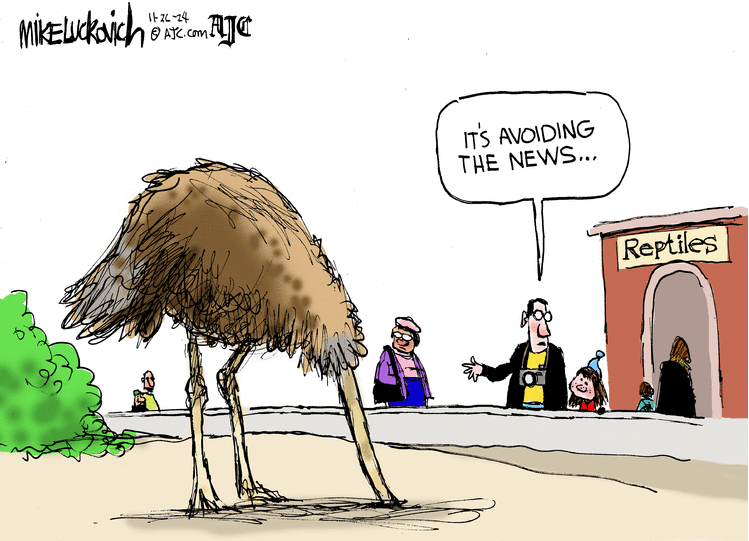
Maybe it’s the people I hang around with, but the anxieties of my friends keep manifesting in two opposite ways: Many are just refusing to watch the news at all. And the others are obsessed with campaign-and-candidate analysis: What states do Democrats need to flip? What demographic groups might be persuadable? What policy positions should our messaging emphasize? And most of all: Who can lead us to that promised land?

I’ve been pretty useless in those conversations, because (while I am watching the news) anything about candidates and strategy leaves me cold right now. I think they play into an unhealthy framing: politics as game. We lost the last game, so how are we going to win the next one?

What I think we need to reestablish in America is that politics is about something, and the things it is about are important. Our politics should be about the People banding together to make systems work for us rather than grind us into the dust.

And that’s what the list of protest songs symbolizes for me. Not candidates and campaigns, but ending wars, establishing justice, and liberating people from oppression.

What MAGA does. MAGA, of course, is both a candidate and movement. It’s a cult of personality, full of images of Trump as a superhero or God’s chosen one. But it’s also a culture of grievance revolving around the message that favored groups in America — Whites, men, Christians, etc. — are actually victims of some vast Satanic force. And America itself — the richest most powerful country on Earth — is the most aggrieved nation of all, battling a world system that is unfairly stacked against it.

In 2024, Trump often played the role of a typical American presidential candidate: He raised money, held rallies, won primaries, made TV commercials, and toured swing states. But it was the MAGA cultural movement that lifted him out of situations that would have doomed any previous candidate. Elected Republicans were ready to be done with Trump after the 2020 loss and his failed coup on January 6. But the movement would not hear of it, and party “leaders” were forced to come around.

If we could unstring the MAGA movement by winning an election, 2020 would have done it. But instead, being rejected by the voters was just one more grievance to add to its list. Getting past the MAGA moment in our politics will have to involve a change in the larger culture, not just a winning campaign.

What happened in 2024? Everyone has their own theory about what went wrong in 2024, and just about any of them can be justified if you slice and dice the exit polls with that conclusion in mind. Harris should have run further to the left or the center, said more or less about the economy, defended trans youth or thrown them under the bus, defended Biden better or denounced him. Maybe she should have picked a different VP, or maybe Harris herself was the problem and we should have run a White man. Maybe Biden should have gotten out of the way sooner. On and on.

But OK, I get it. Without some reasonable explanation, people begin to think that the currents of History are against us, or the Universe is, or God. Without a plan (or even a fantasy) of what we might do next, despair can seem overwhelming.

So let’s briefly talk the language of analysis. After considering the various theories, I’ve come down here: Trump won because he managed to cast himself as the candidate of change and Harris as the candidate of the status quo. The problematic part of Trump’s candidacy, which Harris tried to point out but never made stick in the minds of low-information voters, is that Trump was specifically running against the best parts of the status quo: the rule of law, the separation of powers, democratic process, and even the existence of Truth itself. What we’re seeing in the early days of the Trump administration is that he has no program for change beyond aggrandizing himself: His supporters are good and should be rewarded; his detractors are bad and should be punished.

But try as he might, it will be hard for Trump to avoid responsibility for the status quo going forward. So in my mind, the fundamental question for Democrats to answer in 2026 and 2028 is: What’s wrong with the status quo?

That was a hard question for Democrats to message in 2024, because the Biden/Harris administration really did have accomplishments it deserved credit for (but never got). It managed the post-Covid economic rebound well, resulting in spectacular job creation with inflation no worse than the rest of the world. It made investments for the future, ended the long fruitless war in Afghanistan, and began taking action against climate change. Biden left office with excellent economic statistics: GDP rising, unemployment low and steady, inflation under control.

But claiming credit for all that sounds a lot like claiming responsibility for the status quo, and arguing that it’s not so bad. (And it honestly wasn’t as bad as Trump kept making it sound. There never was an immigrant crime wave, for example. Or a crime wave of any kind.)

So let’s start here: What’s not to like about the status quo? Plenty, as it turns out. Put aside the statistics, and consider how life looks to a large number of Americans.

  • It’s hard to get out of college without a lot of debt.
  • Once you get out, it’s hard to get a career started.
  • If you do get a career started, it’s hard to find a house you can afford in a town with good schools.
  • If you’re not in a town with good schools, it’s hard to pay for private schools for your children.
  • If your children have any special problems — physical handicaps, learning disabilities, neuro-diversity, etc. — you’re on your own.
  • At any moment, you might fall through one of the cracks in our healthcare system and be bankrupted.
  • At every moment, you’re vulnerable to the risks of a market economy: Your good job may vanish. To get employed again, you may have to move away from your town with good schools.
  • Even if the difficulties of your own life work out, you may have to take care of your parents and deal with a nursing-home industry that can eat life savings of almost any size.
  • It’s hard to get your children through college without burdening them with a lot of debt.

In short, America may be a rich country statistically, but most Americans don’t feel rich. Life looks like a labyrinth with lots of dead ends.

Now, all those difficulties have been building for decades, so there’s no particular reason voters should have blamed them on Joe Biden or his party. (Republicans have held the presidency for 6 of the last 11 terms, and none of those situations improved during Trump’s first term.) But the Democrats did not tell a convincing story of how they were going to take on these problems.

To be fair, neither did Trump. It’s hard to look at any of the hardships on that list and paint a plausible picture of Trump solving that issue, or even helping you deal with it. Much of what he has proposed — eliminating ObamaCare, say, or defunding the Department of Education — will probably make some of them worse.

But Trump did do something politically clever. He told unhappy voters who to blame: immigrants who are stealing your opportunities; women who don’t know their place; rebels against the God-given order, where there are only two genders and you mate with the opposite one; people who worship the wrong God, or none at all; so-called “experts” who make you feel stupid by quoting “facts”; Chinese scientists who engineered the Covid bio-weapon, a.k.a. the Kung Flu; environmentalists who care more about fish or birds than about you or your children; and (most of all) liberals who enable all the other villains by putting the government on their side rather than yours.

What was going to solve these problems was not any particular Trump plan, but rather the abstract “greatness” of America, or perhaps of Trump himself. Or alternately, the greatness of God, who will once again shower His blessings on America once the atheists and Satanists are removed from power.

It’s not a rational story, but it is a story.

Prospects for 2026 and 2028. My thinking going forward is based on the assumption that Trump will provide his followers with entertainment and satisfying spectacles (like immigrant children in cages or FBI agents on trial), but he won’t actually improve anyone’s life. (He didn’t in his first term either, though he was able to take credit for the economic momentum established in Obama’s second term.) We can see that already in the skyrocketing price of eggs. Somehow, neither Trump’s inherent greatness nor his Day-One executive order is bringing prices down, and he has never had any actual plan to fall back on.

So if the labyrinth of American life looks difficult now, it’s not going to look any better in 2026 or 2028. Trump will likely have consolidated his influence over most major media platforms (both broadcast and social), but there are limits to propaganda’s effectiveness when it tells you that you ought to be happy when you’re not.

Consequently, I expect there to be considerable discontent with Trump in 2026 and 2028, just as there was in 2018 and 2020. (Now, it’s entirely possible that by then he has made elections irrelevant. I don’t expect that, but it’s a possibility. In that case, though, this whole discussion is moot; neither a candidate nor a movement has any hope.)

If that’s the lay of the land, how do we want to be positioned? In my mind, this is where the candidate-centered vision falls short — unless your candidate is a genuinely mythic figure whose mere presence will give the electorate hope. Unfortunately, I don’t see any of those on the horizon. If I’m, say, a 20-something worried about my future, I don’t think “Gretchen Whitmer will save me” goes very far. Nothing against Gretch — I’ll be happy to vote for her against the MAGA candidate in 2028 if it comes to that — but there’s nothing messianic about her or Gavin Newsom or anybody else on the Post’s list of 12. Plus, I expect the failure of salvation-by-Trump to discredit the whole idea of individual saviors.

Instead, I picture just about any Democratic candidate having a message like this:

  • I know many of you are facing a difficult path into the future.
  • Our explanation of who you should blame is better than MAGA’s. The oligarchs are to blame. While the American economy remains productive, the benefits of that economy keep getting channeled towards a smaller and smaller group of people, who keep exchanging wealth-for-power and power-for-wealth, with a profit on every transaction. (This point comes from the playbook of the Bernie/AOC left, but there’s no reason a centrist can’t use it too.) If Elon is still around (doubtful, I think), he can be the poster boy for the corrupt interplay between corporate and government power.
  • We have specific ideas that can help you, but the general idea is simple: The productivity of America needs to be redirected towards making people’s lives better, rather than further enriching the oligarchs.

The protest songs almost write themselves. America has a long tradition of songs about people being cheated out of the fruits of the economy they built. Here’s one from the Depression:

Once I built a railroad, I made it run, 
Made it race against time. 
Once I built a railroad; now it’s done. 
Brother, can you spare a dime? 

What about now? It’s important to recognize that Democrats currently have no national power base, so demanding that they “do something” is unrealistic. They can’t bring legislation to a vote. They can’t launch investigations or subpoena witnesses. They can vote No on things that do come up for a vote, but if all (or nearly all) Republicans vote Yes, those things will pass anyway.

The urge to do something is misplaced for another reason: Trump is the one who needs to show quick results right now. He has a unleashed a flurry of activity, and that will carry him for a while. But without some actual progress, the public disgust with the game of politics will rebound against him. All his activity will look (in MacBeth’s words) like “sound and fury signifying nothing”.

Some liberal pundits are calling for the kind of resistance shown in 2017, with millions of marchers and other displays of energy. But demonstrations that are simply anti-Trump harden people into their current stances. We just had an election about Trump, and we lost. Demonstrations will come into play again, I imagine, and probably soon. But it’s important that the demonstrations be about something more than Trump. Heather Cox Richardson puts it like this:

This is the time for the American people to say “Hang on just a red hot minute here. It’s my country. Those are my tax dollars. And this is what I want the government to do.” And to reshape the way we approach this moment from saying “I gotta stop this. I gotta stop this. I’m afraid of this.” to say “I care deeply about cancer research, something Trump has stopped money for.” [Lists other things you might care about.] Those things are ways to define America in this moment as something other than what Trump is trying to kill. Because that takes the initiative away from him, and away from his people, and gives it back to us.

The important thing to ask about any political activity is “Will this persuade anybody who wasn’t already on our side?”

Unfortunately, protests that are about something more than Trump require waiting for things to play out a little. There need to be visible results worth protesting, not just possibilities.

Similarly, Democratic votes in Congress will start to mean something again as we approach March 14, the date when the government runs out of money. If Speaker Johnson can’t muster unanimity among his troops — something he has never done in the past — then Trump and Johnson will need Democrats. Then there will be leverage to make demands.

More importantly, March 14 is when Trump’s vague promises and intentions have to resolve into actual numbers and legislation.

In the meantime, the only arena currently open for struggle is the courts, and they are being used. State-level Democrats have filed lawsuits to block illegal Trump actions, and so have organizations like the ACLU. Legal action means delay, and delay works in our favor.

These last two weeks have felt like an assault, as Trump tries to panic and stampede us. It’s a time to endure, to remember your core values, and wait for the wind to blow itself out. And if you can learn the guitar while you’re waiting, that would be good too.

Week One

Trump is president now, and that fact has consequences. But he’s not all-powerful. We need to educate ourselves about how to oppose him most effectively.


Last Monday, while I was taking some time off, the second Trump administration began. During the campaign, Trump made a great deal of noise about what he would do on Day One, including be a dictator. (So far, that seems not to have happened.)

So let’s look at what did happen. Day One (or Week One) is shorthand for two things: his inaugural address and his first executive orders.

The Inaugural Address. Inaugural addresses have no force of law behind them, but they provide a motivating vision for the new administration. They are typically occasions for soaring rhetoric, like “Ask not what your country can do for you; ask what you can do for your country” or “the only thing we have to fear is fear itself” or “The mystic chords of memory, stretching from every battlefield and patriot grave to every living heart and hearthstone all over this broad land, will yet swell the chorus of the Union, when again touched, as surely they will be, by the better angels of our nature.”

But Trump does not soar, he markets. In particular he markets himself: “I was saved by God to make America great again.” (FDR survived an assassination attempt just a month before his first inaugural; he didn’t consider it worth mentioning.) And he makes salesman-like promises about his effect on the nation.

From this day forward, our country will flourish and be respected again all over the world. We will be the envy of every nation, and we will not allow ourselves to be taken advantage of any longer. … America will soon be greater, stronger, and far more exceptional than ever before. I return to the presidency confident and optimistic that we are at the start of a thrilling new era of national success. A tide of change is sweeping the country, sunlight is pouring over the entire world, and America has the chance to seize this opportunity like never before.

Elon Musk sounded a similar note in his inauguration day speech (and then gave a Nazi salute).

This was no ordinary victory. This was a fork in the road for human civilization. … It is thanks to you that the future of civilization is assured.

The whole world will benefit from this surge in American power.

Our power will stop all wars and bring a new spirit of unity to a world that has been angry, violent, and totally unpredictable.

However, the clock has already run out on Trump’s promise to end the Ukraine War in 24 hours. So far, Putin seems unimpressed by his threat of sanctions and tariffs — as if the Biden administration had never considered putting economic pressure on Russia.

And that leads to the other thing I draw from this address: Truth will continue to place no restrictions on what Trump says. His 49.8% plurality is “a mandate to completely and totally reverse a horrible betrayal and all of these many betrayals that have taken place”. It demonstrates that “the entire nation is rapidly unifying behind our agenda. … National unity is now returning to America, and confidence and pride is soaring like never before.”

We will be a rich nation “again”. (The Biden economy’s post-Covid recovery has been the envy of the world.) “America will be a manufacturing nation once again”. (200K manufacturing jobs were lost during the first Trump administration, while 775K manufacturing jobs were added during Biden’s four years.) His government will wave a magic wand to roll back recent price increases:

I will direct all members of my cabinet to marshal the vast powers at their disposal to defeat what was record inflation and rapidly bring down costs and prices.

And he will achieve these results by reinstating the 20th century economy, based on oil and gas, the “liquid gold under our feet”. He will “drill baby drill”. (American oil production is already at an all time high, easily surpassing Russia and Saudi Arabia. Given how expensive the world’s remaining oil is to find and produce, it’s not clear how much lower oil prices can possibly go in the long term.) He will end the nonexistent “electric car mandate” and let Americans “buy the car of your choice” (which I just did by buying a hybrid in September; pure EVs currently account for just 8% of sales and no one is forced to buy one).

The speech doubled down on many of the lies of the fall campaign: “millions of criminal aliens” come here “from prisons and mental institutions” and belong to “foreign gangs and criminal networks”. They bring “devastating crime to U.S. soil, including our cities and inner cities”. (Violent crime has been dropping nationally, and in nearly all American cities. Trump has never provided the slightest evidence for his “prisons and mental institutions” claim. The vast majority of undocumented people keep their heads down, work hard for very little money, and do jobs it would be hard to fill without them.)

New tariffs will bring in vast new revenues from “foreign sources”.

Instead of taxing our citizens to enrich other countries, we will tariff and tax foreign countries to enrich our citizens.

(Tariffs are paid by American importers, not foreign exporters, and ultimately the money comes from American consumers.) China is running the Panama Canal (it isn’t), and “American ships are being severely overcharged and not treated fairly” (not true).

Rhetorically, Trump’s speech evoked a lot of 19th-century imagery, including the phrase “manifest destiny”. He talked about the “untamed wilderness” and winning “the Wild West” (as if the continent had been empty and Native American civilizations had never existed). Ominously, he envisioned once again becoming “a growing nation” that “expands our territory”.

Three kinds of executive orders. I agree with Jay Kuo in dividing Trump’s executive orders into three classes. My reframing of those classes goes like this:

  • legitimate orders that exercise recognized presidential powers. They may not be moral or wise, but yes, a president can do that.
  • speculative orders that test what the courts or Congress will let him get away with. It sure looks like laws or the Constitution forbid this, but who’s going to tell him?
  • fanciful orders intended to excite his base and/or troll his opponents. Like when King Canute ordered the tide not to come in. He’s just trying to upset you, so don’t fall for it.

Legitimate orders. Presidential pardon power is essentially unchecked, so Trump’s pardon of all 1250+ January 6 criminals is a done deal. That includes the people convicted of seditious conspiracy, as well as the folks who sent more than 100 police to the hospital.

Similarly, Trump and the Republican Senate majority have the power to turn the Defense Department over to an inexperienced misogynistic guy with a drinking problem. There’s no recourse; it’s done. Fortunately, all Senate Democrats voted against the nomination, so when the inevitable Hegseth scandal arises, they’ll be in prime I-told-you-so position.

Presidents have broad latitude over programs concerning refugees, so Trump’s order suspending the refugee resettlement program looks sound. Remember: These are not people sneaking over the border. These are people from countries with recognized problems that previous administrations have given refuge to. They have applied via a legal process, been vetted, and may have waited a long time. Some are victims of natural disasters. Others are people we owe something to, like the Afghans who helped our soldiers.

He really can pull the US out of the Paris Climate Accords, but not immediately. He can impose tariffs, which will backfire on him, because they will raise prices on US consumers.

Since these cases are just Trump using the powers the voters (unwisely) gave him in the election, all we can do in response is register our disapproval, publicize the unfortunate results as they appear, and hold Trump-supporting officials responsible in future elections. In some cases, protests or civil disobedience might be appropriate.

David Litt has some good advice about messaging on these issues: Fight big lies with small truths.

Everyone will have different ways of winning the ideas war over the next four years and beyond. For right now, if a total stranger asked me to sum up this week, I’d say something like this:

“There’s a guy named Daniel Rodriguez. On January 5th, 2021, he texted his friends ‘There will be blood.’ On January 6th, when he stormed the Capitol, he grabbed a police officer and shocked him repeatedly in the neck with a stun gun. A jury of peers sentenced him to twelve years in prison for his violent crime. And less than 24 hours after taking office, Trump let Daniel Rodriguez back out on the street.”

I could say more, of course. But that’s the most important thing: a story about one person, who isn’t Donald Trump – and one action Trump took which just about everyone can agree makes us less safe.

In other words, don’t hit your Trumpist friends and relatives with big rhetoric about ending democracy and establishing dictatorship, because they’ll just write you off. Come at them with small stories about people Trump has wronged, and specific ways that he is making all our lives harder.

Speculative orders. These are the most dangerous ones, because if the courts and Congress don’t step up to oppose them, Trump will amass dictatorial power. And if public opinion doesn’t rise against them, Trump may decide that his “mandate” extends to defying the other branches of government.

The most egregious of his speculative orders was the one ending birthright citizenship, i.e., the full citizenship of anyone born in the United States. What’s dangerous about this is that it violates the clear text of the 14th Amendment.

All persons born or naturalized in the United States, and subject to the jurisdiction thereof, are citizens of the United States and of the State wherein they reside.

The order attempts to wriggle through a loophole created by “subject to the jurisdiction thereof”, which until now has chiefly been interpreted to mean people the US government has to deal with through some other government, like diplomats and their families. But Trump wants to reinterpret it like this:

the privilege of United States citizenship does not automatically extend to persons born in the United States: (1) when that person’s mother was unlawfully present in the United States and the father was not a United States citizen or lawful permanent resident at the time of said person’s birth, or (2) when that person’s mother’s presence in the United States at the time of said person’s birth was lawful but temporary (such as, but not limited to, visiting the United States under the auspices of the Visa Waiver Program or visiting on a student, work, or tourist visa) and the father was not a United States citizen or lawful permanent resident at the time of said person’s birth.

U.S. District Judge John C. Coughenour, a Reagan appointee, was having none of it. He quickly issued a 14-day restraining order, pending a hearing on whether to extend his order to a permanent injunction.

“I’ve been on the bench for four decades, I can’t remember another case where the question presented is as clear as this one is,” Coughenour said, describing Trump’s order as “blatantly unconstitutional.”

Undocumented immigrants are subject to US courts and can be arrested by the police without consulting any other country’s government. Clearly the US claims jurisdiction over them.

I wish I could remember who pointed out an unintended consequence of nixing birthright citizenship: Disputes over citizenship become open-ended. Previously, if someone doubted your citizenship, you could produce your birth certificate and be done. But under Trump’s interpretation, your birth certificate just pushes the question back a generation: What about your parents’ citizenship status? And their parents? Where does it end?

Coughenour’s common-sense reading of the Constitution should stand at least until the case reaches the Supreme Court, which may or may not side with the Constitution against Trump.

Other speculative orders include his attempts to redefine the civil service, creating the kind of political machine the Civil Service Reform Act of 1883 was intended to outlaw. Federal employee unions are suing over that.

It’s also not clear how much of Trump’s attempt to define two genders will be upheld. A trans woman in federal prison is already suing, claiming that her pending transfer to an all-male facility will expose her to rape. An aside: The order is laughably wrong about science:

“Female” means a person belonging, at conception, to the sex that produces the large reproductive cell.

Since male characteristics don’t develop until 6 or 7 weeks into gestation, the order literally means that everyone is female.

Speculative orders are subject to the same public-opinion responses as legitimate orders, but the main battleground will be in the courts. So you’ll want to stay informed through some reliable legal news source. (I recommend Law Dork.) Also, contribute to the ACLU. If you’re in a blue state, encourage your attorney general to sue the Trump administration. Ditto for any union you belong to.

Fanciful orders. A lot of what Trump does or announces is intended just to make headlines and get people arguing with each other. So the Gulf of Mexico is now the Gulf of America? Just laugh. Or when he ordered his underlings to stop inflation, i.e., “to deliver emergency price relief, consistent with applicable law, to the American people and increase the prosperity of the American worker”? Laugh.

Every time you get upset about something like this, you’re distracting yourself from an issue where you might actually do some good.

Hopefulness. Frankly, I expected worse from Trump’s first week, so I’m modestly encouraged.

If you read novels an memoirs from the Nazi era in Germany, one thing that stands out is how artful the Nazis could be at pushing people into compliance. There is a boiling-the-frog aspect to many of these stories, and many people were left thinking, “If this is as bad as it gets, maybe I can deal with it.” Of course, it always got worse, but somehow it never seemed like the right moment to take a stand. The result was that many people missed their chance to oppose Hitler, and then later missed their chance to get out of Germany.

What I was most afraid of going into the second Trump administration was that Trumpists would display a similar kind of deftness. Extreme things would happen, but always with hint that maybe it won’t be so bad.

But Week One makes it clear that these people are not deft. They are not clever. They aren’t even unified. The Mad King is in charge, and none of his advisors is in a position to make him face reality. That will lead to mistakes, and mistakes can be exploited.

A Disastrous Development in Our Response to Disasters

All my life, America’s leaders have encouraged us to unite in the face of disasters.
But now Trump is using them to tear us apart.


This week, if you wanted to pay attention something other than Jimmy Carter’s funeral, you had two choices: the L.A. wildfires or Donald Trump’s wild statements about taking over Greenland, the Panama Canal, and even Canada. Both of those stories will get attention in this week’s summary (the next post), but what interested me more than either was something in the intersection: Trump’s wild statements about the wildfires, and the disturbing approach he is taking to public disasters in general.

When a community faces a catastrophe, it can respond in one of two opposite ways:

  • Survivors can bond together to mourn the dead, care for the injured, and rebuild. Shared pain can create new bonds across former social divisions. People untouched by the disaster may realize that only circumstance separates them from the victims, and may develop a new empathy not just for recent victims, but for the less fortunate in general. A post-disaster attitude of “We’re all in this together” has a chance to grow and spread.
  • The community can damage itself further by finger-pointing, scapegoating, and other forms of turning against itself.

History provides examples of both responses. On the positive side, political partisanship in the United States all but vanished after Pearl Harbor, and lapsed at least temporarily after 9-11. But on the negative side, persecution of Jews sharply increased during the Black Death in Europe, as unfounded rumors of Jews poisoning wells spread widely. All through history, disasters without an easily grasped cause have led people to seek scapegoats. Sophocles’ play “Oedipus Rex” begins with a report from the Oracle of Delphi that one person’s crime has brought a plague to the city. In the Biblical story of Jonah, sailors cast lots to decide who to blame for the storm that threatens to sink them.

Sometimes a community goes both ways simultaneously: At the same time the US was uniting to fight World War II, it was rounding up Japanese Americans and putting them in camps. After 9-11, President Bush put considerable effort into talking Americans out of blaming the attack on Muslims in general, though some did anyway.

Bush’s rhetoric was an example of responsible leadership, which does its best to turn the community response towards positive rather than negative responses. (Using 9-11 to promote an invasion of Iraq, on the other hand, was irresponsible leadership.) Responsible post-catastrophe leadership also has several other identifiable traits:

  • Unfounded rumors spread wildly after disasters, so responsible leaders set up reliable systems of information. They speak calmly and stick to facts in order to calm public panic.
  • They call attention to heroes rather than villains, promoting the notion that community members should help and trust each other.
  • They promote trust in the institutions set up to deal with the catastrophe, and pledge that those institutions will get the backing they need to resolve the situation.

Now look at how President-elect Trump and the right-wing media that takes its cues from him have responded to the Los Angeles wildfires. Wednesday, he posted:

One of the best and most beautiful parts of the United States of America is burning down to the ground. It’s ashes, and Gavin Newscum should resign. This is all his fault!!!

And he followed up with

Governor Gavin Newscum refused to sign the water restoration declaration put before him that would have allowed millions of gallons of water, from excess rain and snow melt from the North, to flow daily into many parts of California, including the areas that are currently burning in a virtually apocalyptic way. He wanted to protect an essentially worthless fish called a smelt, by giving it less water (it didn’t work!), but didn’t care about the people of California. Now the ultimate price is being paid. I will demand that this incompetent governor allow beautiful, clean, fresh water to FLOW INTO CALIFORNIA! He is the blame for this. On top of it all, no water for fire hydrants, not firefighting planes. A true disaster!

and

NO WATER IN THE FIRE HYDRANTS, NO MONEY IN FEMA. THIS IS WHAT JOE BIDEN IS LEAVING ME. THANKS JOE!

Just about every sentence in these posts is false. The December bill that appropriated money to keep the government open added $29 billion to FEMA, and FEMA told CNN Wednesday that it had a $27 billion balance in its accounts.

That sum may well prove inadequate to meet the needs created by every disaster that ends up happening this year, but it’s not “no money.”

There were indeed some dry hydrants, but that had nothing to do with any general lack of water in Southern California, or some mythical “water restoration declaration” Newsom refused to sign. Most of the problem was a more specific lack: of water that had been pumped into tanks in the hills above LA. This created a lack of water pressure in key places, but not a regional lack of water. Shifting more water resources from Northern to Southern California would not have helped.

Firefighting planes were grounded by hurricane-level winds, not by some action of Governor Newsom.

In short, Trump spread lies in order to scapegoat Gavin Newsom, a prominent Democrat who might be his opponent when he runs for an unconstitutional third term in 2028.

Other voices on right-wing media were quick to blame DEI or whatever else they don’t like.

This is all of a piece with the right-wing response to the New Orleans terrorist attack on New Years. Long after it was known that the suspect was a US citizen born in Houston, MAGA supporters were still spreading the rumor that he had crossed the border illegally two days before. This allowed them to smear undocumented immigrants while simultaneously pinning responsibility on President Biden’s immigration policies.

Our media occasionally combats this scapegoating on a small scale, by fact-checking clear lies. But the larger story is going almost completely uncovered: Responsible leadership in times of crisis is a thing of the past. We can no longer expect that our leaders will take care to learn the facts before they speak, pass on reliable information, or try to prevent panic. Instead, they will tell lies that turn public fear and anger against their political enemies. Rather than use a crisis to bring people together, they will use it to create scapegoats and turn different groups of Americans against each other.

In the long run, that reversal of policy may be more destructive than fire.

A meditation on American Greatness

One counterproductive argument I keep hearing goes something like this: A Trump supporter says “Make America Great Again”, and a Trump resister responds “When was America great? During slavery? When women couldn’t vote? The Native American genocide? Jim Crow?”

The problem with this argument is that it typically ends with each side hardened into its position. The resister goes away believing the supporter wants to return to an era when White male Christians reigned supreme and everyone else was second-class or worse. The supporter goes away believing that the resister resents anyone who has pride in America, and that liberals want Americans to feel ashamed of their country. But the supporter is never going to give up patriotic pride, and the resister is never going to voluntarily go back to times of oppression and domination. Both are immovable.

Imagining any kind of compromise within this frame is impossible. Is the Trump resister going to give ground and admit that a little bit of racism and sexism might be beneficial? Will the Trump supporter agree to be a little bit ashamed of his country? Not likely.

I want to claim that the root of the problem here is the frame, not the participants or their points of view. The problem is that the issue has been framed as being not doing.

If you start talking about doing, the logjam resolves: All through its history, the United States has done both great and terrible things.

As a liberal and a Trump resister, I have no trouble admitting that America and Americans have done great things over the decades. Like these:

  • The US played a key role in defeating both Nazi Germany and Soviet Communism.
  • After World War II, we helped rebuild Europe (including Germany) through the Marshall Plan rather than keep potential economic rivals down.
  • All through our history, we have created opportunity for people who were destitute in other countries (like the survivors of the Irish Potato Famine).
  • The example of our revolution and our constitution inspired the expansion of human rights around the world.

I could go on. If you’re searching for reasons to take pride in America, there are lots of them.

But here’s the key point: I can acknowledge those facts without forgetting that they all had downsides. We have never entirely lived up to the ideals of our revolution. The opportunities we offered immigrants weren’t available to everyone. Our fight against fascism in World War II also included the Japanese internment. During the Cold War we supported many oppressive right-wing regimes in the Third World, and also fought a ruinous war in Vietnam.

The problem with framing “greatness” as a state of being and pinning it to America in some past era is that those downsides either go away or become insignificant. Worse, saying America was great then, but is not great now, implicitly promotes the idea of going back. And none of those eras is a time we should want to go back to. Jim Crow America is nothing to be nostalgic about, even if that’s who we were on D-Day.

Idealizing past greatness also makes an unfair connection between our great and terrible deeds. We created unprecedented economic growth in spite of our social injustices, not because of them. Forcing gays back into the closet or women back into the kitchen won’t end inflation or bring back well-paid working class jobs.

But has America done great things? Of course it has. It’s important to recognize those achievements and take inspiration from them, because looking ahead, we need to do great things again. Converting our economy so that it no longer relies on cheap fossil fuels, for example, will be a huge undertaking. But the nation that put a man on the Moon and built the interstate highway system should be up to the task.

In fact it is the Left, not the Right, that most needs to believe in our ability to do great things. At the root of MAGA fascism lies a zero-sum view of the world: There is a limited amount of goodness to be had, so we — native-born White male Christians, or whoever “we” refers to in some particular context — have to seize all of it. There is a limited amount of freedom in the World, so any gain for women or gays or people of color must be a loss for everyone else.

Believing that the goodness in the world is a limited pile of pirate treasure, and then seizing more than your share of it, is a very shallow conception of greatness. Our greatness needs to be greater than that.

In short, it’s a mistake to get baited into arguing that America was never great. You’ll never win that argument and you shouldn’t want to. Great things still need to be done, and Americans need to see ourselves as the kind of people who can take on those challenges.

Cracks in the MAGA Coalition

Fractures are already showing in the MAGA coalition,
and they haven’t even taken power yet.


When a party out of power suddenly finds itself on the verge of taking control of the White House and both houses of Congress, you’d expect to find them coasting on a wave of good feeling. Victory salves all wounds, so everybody should be ready to dance with everybody else at the inaugural balls.

Strangely, though, MAGAWorld is full of conflict these days. One Trump-supporting fascist (Steve Bannon) is calling another Trump-supporting fascist (Elon Musk) a “toddler” who needs a “wellness check” from Child Protective Services. And American workers, says Vivek Ramaswamy, can’t compete with immigrants because they suffer from our “culture”, which venerates mediocrity over excellence.

But wait: Isn’t the whole point of Trumpism that “real” (i.e. White Christian) Americans are victims of the liberal Deep State that wants to “replace” them with brown-skinned Third Worlders? What’s going on?

First skirmish: Foreign investment. Trump owes his election to two groups whose interests don’t match up: White working class voters and ultra-rich technology barons like Elon Musk. During the campaign, Trump could keep his plans vague enough that both were satisfied, and many low-wage workers could imagine that the richest man in the world was their friend.

But now that the election is over, the question keeps coming up: Who’s the real president, Trump or Elon? At first I interpreted such comments as Democratic trolling, trying to stir up trouble in MAGAWorld by taking advantage of Trump’s ego. (I remember in his first term how similar questions about Mike Pence riled him. Speculation at the time was that Trump would bask in the glory of the presidency, leaving Pence to do the actual work of governing.)

But more and more, there seems to be something to the murmurs. The move to reject a compromise and risk a government shutdown last week started with Musk, and Trump eventually got on board. Musk was the leader and Trump the follower.

Support for the stopgap spending bill then collapsed, forcing [House Speaker Mike] Johnson and his leadership team to scramble to find an alternative path forward. As they did, Musk celebrated, proclaiming that “the voice of the people has triumphed”.

It may be more accurate, however, to say that it was Musk’s voice that triumphed.

In the end, Congress passed a continuing resolution that still included the most important extras Democrats wanted: rebuilding the Key Bridge in Baltimore and disaster relief. And it kept government spending at basically the levels set before Republicans took control of the House two years ago.

Trump did not get the extra he wanted: suspending or eliminating the debt limit. But Musk did get what he wanted: The original proposal included an “outbound investment” provision limiting how American companies could invest in China.

We have heard for years about the problem of manufacturing businesses shipping jobs overseas to China, with its low worker wages and low environmental standards. China typically forces businesses wanting to locate factories in its country to transfer their technology and intellectual property to Chinese firms, which can then use that to undercut competitors in global markets, with state support.

Congress has been working itself into a lather about China for years now, and they finally came up with a way to deal with this issue. Sens. John Cornyn (R-TX) and Bob Casey (D-PA) have the flagship bill, which would either prohibit U.S. companies from investing in “sensitive technologies” in China, including semiconductors and artificial intelligence, or set up a broad notification regime around it.

One corporation that would be affected by this is Musk’s Tesla.

Elon Musk’s car company has a significant amount of, well, outbound investment. A Tesla Gigafactory in Shanghai opened in 2019; maybe a quarter of the company’s revenue comes from China. Musk has endorsed building a second Tesla factory in China, where his grip on the electric-vehicle market has completely loosened amid domestic competition. He is working with the Chinese government to bring “Full Self-Driving” technology to China, in other words, importing a technology that may be seen as sensitive. Musk has battery and solar panel factories that are not yet in China, but he may want them there in the future.

Lo and behold: The outbound investment provision vanished from the final version of the continuing resolution. In other words, Republicans in Congress spent their negotiating chips getting what Musk wanted, not what Trump wanted.

Second skirmish: H-1B visas. A second conflict is still playing out: One of the most important issues for the MAGA base is immigration, and in particular protecting the jobs of American citizens from immigrant competition. “They’re taking American jobs” is one of the most effective attacks on immigrants at all levels, even the ones working jobs hardly any Americans want, like picking crops by hand or watching rich people’s kids for practically no pay.

However, American corporations have a different agenda: They want to hire the best people in the world and pay them as little as possible. This is not new. America has been draining the brains of the world at least since the 1930s, when Jews and other anti-fascists escaped from Hitler’s Germany and Mussolini’s Italy. We may sympathize with the American physicists who suddenly had to compete with the likes of Albert Einstein and Enrico Fermi, or American actresses who lost roles to Marlene Dietrich or Hedy Lamarr, but in retrospect it’s hard to feel bad about letting those people into our country.

Similarly today, the US tech industry employs foreign-born workers in jobs many Americans would undoubtedly like to have. The legal vehicle that allows this is the H-1B visa. Employers can sponsor foreign nationals with at least a bachelors degree to apply for H-1B visas that allow them to live and work in the US for three years, with a possible renewal to six years. Currently, 85,000 such visas can be issued each year. 84% of them go to people from India or China. Maybe a handful of those immigrants really are exceptional Einstein-like talents we’d be foolish to turn away, but probably not all 85,000 of them.

The employer has to affirm that the worker will be appropriately paid and that his or her (mostly his) employment won’t negatively impact similar American workers. In practice, though, these provisions are hard to monitor or enforce. Critics charge that H-1B workers are easily abused, because (if no other employers are waiting in the wings) the employer can expel a worker from the US just by withdrawing sponsorship. So H-1B workers can become cheap-but-highly-trained labor that corporations may prefer to American workers that the company doesn’t hold as much leverage over.

Obviously, the tech barons want to be free to import as many cheap engineers and programmers as they want, while Americans with comparable credentials want H-1B visas limited or eliminated. This conflict goes to the heart of what “America First” really means: Should we be strengthening Team America by bringing in talent wherever we can find it, or should we be defending the livelihoods of individual Americans? (An analogy to bring this home: Imagine you’re a young outfielder for the New York Mets, and that you’ve been struggling for playing time so you can prove yourself. How do you feel about the team signing Juan Soto? Your team is better, so your odds of going to the World Series have improved. But your individual prospects have taken a hit.) TPM:

The two sides began to argue on Sunday, after Donald Trump appointed Sriram Krishan, a partner at Andreesen Horowitz, as a White House policy adviser on Artificial Intelligence to work with Sacks, the Trump administration’s crypto and AI czar.

This may seem like a relatively minor White House appointment. However, Krishan has also been a proponent of removing country caps on green cards and H1-B visas, which allow American companies to hire foreign workers for certain specializations.

Nativists like Laura Loomer (who not so long ago was rumored to be having an affair with Trump) found this appointment “deeply disturbing“. Musk and Ramaswamy replied by attacking American workers, with Musk approvingly retweeting a post that described American workers as “retarded”.

Then Musk was attacked back, and responded by taking away privileges on X from people who criticized him. (Remember when Elon was a “free speech absolutist“? It turns out that just applies to Nazis.)

I think Paul Krugman has put his finger on what’s at stake here:

Every political movement is a coalition made up of factions with different goals and priorities. Normally what holds these factions together is realism and a willingness to compromise: Each faction is willing to give the other factions part of what they want in return for part of what it wants.

What’s different about MAGA is that I’m pretty sure that almost all of the movement’s activists (as opposed to the low-information voters who put Trump over the top) knew that he was a con man, without even concepts of a plan to reduce prices. But each faction believed that he was their con man, putting something over on everyone else.

But now the two most important factions — what we might call original MAGA, motivated largely by hostility to immigrants, and tech bro MAGA, seeking a free hand for scams low taxes and deregulation — have gone to war, each apparently fearing that they may themselves have been marks rather than in on the con.

The ball is in Trump’s court

Democrats can’t resist Trump until he starts doing things.


In a Perry Bacon article I linked to two weeks ago, he cautioned against “turning into an amateur political strategist”. It’s a tough temptation to resist, and I’ve been in several conversations recently that veered into who the Democrats’ 2028 nominee should be, what groups of voters we should be trying to win over, how our message needs to change, and so on.

If you find your mind heading in that direction, all I can say is “Slow down.” The election of 2028 or even 2026 will be fought on a battlefield that doesn’t exist yet.

I think the place for political thinking to start is with one obvious fact: The Trumpists won in 2024. They got the White House and both houses of Congress. They control the Supreme Court to an extent that no partisan faction has in my lifetime. And I draw one major conclusion from those facts: The ball is in their court. We can’t know precisely what they’ll do with it until they start doing things. The things they do and the consequences of those actions will shape the landscape of 2026 and 2028.

Trump has raised many hopes and expectations among the people who voted for him. Specifically:

  • The economy is going to be fabulous. Not only will inflation stop, but prices will go back down to what they were the last time Trump was president. The trade deficit will vanish: Americans will get good jobs making the products we no longer import, but other Americans won’t lose their jobs making products for export. Increased oil and gas production will make energy much cheaper, lowering the price of everything. But we won’t have to worry about increased disasters from climate change.
  • Trump will wield unchecked power without abusing it. Neither Congress nor the courts nor the states will be able to stand in his way. But he won’t be petty and go after political opponents who broke no laws. He won’t make Americans afraid to criticize him. He won’t govern for his own profit. He won’t alter the rules to make future Democratic victories impossible. And he won’t ignore the Constitution to seek a third term.
  • The government is going to get drastically smaller. Spending will go way down without cutting Social Security or Medicare or defense. Regulations will be slashed without unleashing bad behavior from predatory corporations. Taxes will go down, but the budget deficit will vanish. Corruption will disappear. Private companies and the free market will serve Americans’ interests better and more efficiently than big government programs like ObamaCare or Medicare for All.
  • American strength will make the world safer. Wars in Ukraine and the Middle East will end on terms favorable to US interests. Terrorism will stop. Tariffs will be an unanswerable weapon that makes other countries do what we want.
  • The immigration problem will be solved. The Army will round up 10-20 million undocumented nonwhite people living here, without terrorizing the rest of us. They will be held in camps until they can be deported to other countries, who will accept them for fear of American tariffs. That roundup and detention power will be wielded without abuse, and only the bad, criminal immigrants will be affected. The good Latinos will stay and the bad ones will get kicked out. American industries (like agriculture) won’t be affected by the sudden departure of their work force.
  • Normal (i.e., White, Christian, straight) Americans will matter again. Small towns and rural areas will make a comeback. Working people will get a fair shake and won’t be exploited by giant unregulated corporations, so unions and consumer-protection agencies won’t be needed.

And more. Now, I think the picture I just painted is a fairy tale, because many of those goals are contradictory and most of the rest are unlikely. But just for a moment, let’s imagine Trump fulfills all of it. The people who voted for him look at the results and say, “That’s what I voted for.” The people who didn’t vote for him have to admit (if we are honest) that our fears were groundless. How do the Democrats surge in 2026 and 2028 to regain power?

It’s simple: They don’t. And more than that, they shouldn’t. If the MAGA movement can do all that, it will deserve to stay in power. Gavin Newsom (or whoever you’re picturing) won’t be able to run against it. No “message” you can come up with will win over Hispanics or suburban women or demoralized nonvoters or whichever other group you attribute our 2024 loss to.

What that means in practice is that, while we continue to espouse our own values, and oppose nominees and proposals that look wrong to us, it’s way too soon to start shaping any sort of campaign. A large chunk of the 2026 and 2028 campaigns will necessarily be reactive. Trump will disappoint many of the people who voted for him, either by not doing what he said he would do (“build the wall” from his first administration) or by doing it and having it turn out differently than he said it would. Future Democratic campaigns will center on exploiting that disappointment.

But we can’t design those campaigns until we see who he disappoints and how.

So what does that mean Democrats should be doing now? Laying the groundwork for the Trump-disappointed-you campaign, whatever it turns out to be. We need to constantly call attention to the ways Trump tries to move the goalposts. (Bringing prices down, we now learn from him, is very hard.) We need to highlight those people who are being harmed by his policies, once those policies start to take shape.

The upcoming leadership battle in the House will be the first substantive thing to look at. For the first time in decades, all committee chairs will be White men.

The budget will be a target-rich environment, because Republican math just doesn’t work. Either their cuts won’t total up the way they anticipated, or they will cut things they said they wouldn’t. Probably both. And if there’s a deficit, they own it.

I know that vision is not nearly as inspiring as a ten-point-plan to elect AOC. But this is the reality we have arrived in: The voters have given MAGA a chance to prove itself. We won’t know how to run against them until we see how they fail that test.

The Power of “Again”

Honest journalists can debunk false news stories.
But the responses those false stories raise linger as if they were true.


Something I’ve been struggling with since the election is: Why didn’t Kamala Harris’ message get through?

The majority of Harris-campaign criticism I’ve read is of the form “She should have talked about X instead of Y.” Kitchen-table issues instead of trans rights, centrist issues instead of far-left issues, and so forth. And typically, if you look at the actual content of her speeches and ads, the answer is: “She did, but nobody paid attention.”

Which raises the question: Why not?

One answer (which commenters have repeatedly criticized me for not highlighting) is that she’s a Black woman, so it’s easy for our sexist and racist culture to discount whatever she says. And that’s true up to a point, but I doubt it hits the heart of the matter, because I was already noticing the same problem with the Biden campaign: He never got credit for the jobs created by his infrastructure bill, for example, or for lowering the cost of prescription drugs. You can say, “He should have talked about that.” But when he did, no one listened.

I also think the racism/sexism interpretation suggests a too-easy solution: We can just nominate a White guy like Gavin Newsom next time, and we’ll be fine. But I doubt that’s true.

A related problem is why Trump could tell obvious lies, get debunked, and keep telling those lies with positive effects. Even people who knew the truth continued believe the point the lie was making. I think we need to understand how that works.

The critical relative. I want to propose a theory based on scaling up something you may have observed in your personal life.

Imagine you have a relative who for many years has criticized you in some unfair way: You’re stupid, you’re ugly, you’re selfish, or something like that. Picture a parent, a sibling, or an annoying older cousin who’s been putting you down since you were both kids.

So you go to a family gathering, and as you walk in you hear that relative saying things that sound just like the unfair criticism. Somebody is being stupid, ugly, selfish — and you’re sure it’s you.

But as you walk up ready to give that relative a piece of your mind, something in the conversation makes you realize they’re not talking about you at all. So if you enter the conversation and cut loose, you’ll just make a fool of yourself.

Now think about how you feel: You have no cause for offense. Nobody has insulted you. But do your emotions stand down?

Probably not. Even though the goad that raised those emotions was a complete misperception, nonetheless they have been raised. Most likely, you’ll be spoiling for a fight the rest of the day.

I think that’s what happened in the campaign.

Preexisting narratives. The most powerful propaganda message is “This thing you already know about is happening again.”

What’s insidious about this message is that it’s almost impossible to debunk. Ostensibly it’s a news story: Something supposedly has just happened. So an objective news source might try to debunk it by demonstrating that the “something” in question didn’t happen.

But that doesn’t work because it doesn’t address what’s really being communicated. The “things you already know about” that the news story brought to mind are not explicitly in the story, so they’re not touched by the debunking.

I think this requires an example: the Haitian immigrants who were supposedly “eating the dogs … eating the cats” in Springfield, Ohio. It just flat out wasn’t true, and every piece of “evidence” supporting the story was either made up or repurposed from some other event. (The photo that supposedly showed a Haitian carrying off a dead goose wasn’t of a Haitian, it wasn’t from Springfield, and the guy was clearing roadkill, not returning from a successful goose-hunt.)

So as a news story, eating-dogs-and-cats was completely debunkable. But the debunking didn’t stick: Trump and Vance continued to refer to it long after it had been proven false.

But why didn’t the debunking stick? In this case, the “thing you already know” — at least in TrumpWorld — is that illegal immigrants are threatening your way of life. Haitians eating people’s pets isn’t the beginning of this issue, it’s just more of it. If you’ve been paying attention to Fox News or Truth Social or right-wing podcasts, you’ve heard hundreds of examples of how illegal immigrants are threatening your way of life. This one isn’t strictly true? So what?

To truly debunk the story in the minds of its target audience, you would have to identify what they think they already know and the incidents they think establish their knowledge — and debunk all of them. Obviously, that can’t be done, both because the assignment itself is impossible, and because even if you succeeded, nobody would have the attention span to process everything you’d need to tell them.

Second example: The “trans” Olympic boxer who was beating up women in the Olympics. Again, completely false. The boxer was from Algeria, a Muslim-majority country where trans isn’t recognized as a thing. Imane Khelif’s birth certificate identifies her as a woman, and she’s never been anything else. An Algerian with a male birth certificate who was claiming to be female would most likely be in prison, not on the Olympic team.

All those facts were easily available to anybody who wanted to check.

But so what? You are already supposed to know that men claim to be women so they can cheat in sporting events, and men posing as women put real women in physical danger. Again, the people who believe these things also believe that they’ve seen dozens and dozens of examples — the great majority of which are probably also either objectively false or wildly exaggerated. But what can you, the objective mainstream journalist, do about that? You weren’t there when this base of misleading examples was laid down, and you’re not going to reverse it with one news story.

So even after the claim was known to be false, Trump went on making it, presumably because he believed it was working for him.

The impact of “it’s happening again” is to bring back to mind people’s general impression that this kind of thing happens all the time. And that impression continues to feel fresh even after the particular story turns out to be false.

Or remember when President Biden said Trump voters are “garbage”? He was clearly trying to say that the Trump campaign’s racist rhetoric was garbage, but — surprise! — things Biden tries to say often come out wrong. But never mind that — instantly this became a scandal for Harris, who hadn’t said anything remotely similar.

Think about why: Trump voters already think they know that elite Democrats look down on them. And here it was, happening again. It brought back Hillary’s deplorables remark (which also wasn’t as bad as you probably remember) and countless other moments when Fox News has told them that Democrats were insulting them.

Ambient informaton. The it’s-happening-again phenomenon is related to the problem of ambient information that I talked about three weeks ago.

The communications researcher Pablo Boczkowski has noted that people increasingly take in news by incidental encounter—they are “rubbed by the news”—rather than by seeking it out. Trump has maximized his influence over networks that people rub against, and has filled them with information that, true or not, seems all of a coherent piece.

The upshot is that when many people hear some meme like “eating the dogs”, they don’t make a serious attempt to figure out whether or not it refers to something that actually happened. Instead, they’re thinking about whether it “sounds right”. How well does it fit into a pattern with all the other news they’ve rubbed up against?

You can say that people just shouldn’t think this way, but in the meantime we have to deal with a world where many do.

And that seems to require a completely different form of campaigning and a different form of journalism.

In traditional political and journalistic thinking, ethical campaigning and objective journalism go hand-in-hand: Your candidate is right on the issues, you collect the facts and examples that show your candidate is right, the media gives that information preference over conflicting information based on lies, and the public eventually gets the message.

But if things ever really worked that way, they don’t any more, at least not for a number of voters large enough to decide close elections.

And if Democrats can’t figure out how to address this problem, I don’t think nominating a White man or targeting Latinos with more effective ads is going to do the trick.

Resisting, eventually

Recovering from the disillusionment of the election is taking longer than I expected.


Many articles are being written about how best to resist the incoming Trump administration and its expected assault on democracy and human rights. I had planned to write a post curating those articles for you, picking out the best ones and summarizing their advice. Unfortunately, I’ve bookmarked more of them than I’ve read, and I haven’t given the ones I’ve read enough serious thought.

That lack of motivation has forced me to admit something about myself: I’m not ready to resist yet. I hope I will be soon.

Everybody’s absorbing the reality of the election at their own pace and in their own way, I suppose. Prior to the election, I advised my readers over and over again not to speculate about what would happen. Like many advice-givers, I almost listened to myself. I refused to anticipate and dwell on either the thrill of victory or the agony of defeat. (I’m dating myself: When I was growing up, “the thrill of victory and the agony of defeat” was the well-known catch-phrase of ABC’s Wide World of Sports.) And yet, deep down, I stubbornly refused to believe the American people would do this. Even at the lowest points, like after Biden’s disastrous debate, I would think about a second Trump administration and think, “No. That can’t happen.”

In retrospect, my faith in the good judgment of the American electorate looks like the faith of a wife who is certain that her husband won’t ever cheat on her, or a child who is sure Dad will never go back to drinking, because it led to so much pain the first time.

But here we are.

I had imagined I was living in an early British detective novel, where Sherlock Holmes or Miss Marple would eventually figure everything out and justice would triumph. Instead, I woke up in an American detective novel by Dashiell Hammit or Raymond Chandler, where the Powers That Be have known all along who the murderer is, but see no reason to do anything about it.

Here we are.

Many of my friends have reported periods of anger, which I haven’t experienced yet. Maybe that’s still coming or maybe I’m just not built that way. Instead, I’ve been living with a deep sense of disappointment. I don’t anticipate any satisfaction coming when Trump voters lose their health insurance or see his tariffs reignite inflation in their grocery stores. When Trump-supporting Hispanics have their naturalization revoked or see their birthright citizenship denied, I don’t expect “I told you so” to taste delicious in my mouth. It will be a sad day, even if they did it to themselves. They are my countrymen, even if my country tells me otherwise.

But I’m still not ready to construct my resistance strategy. I hope I will be soon. Andrea Pitzer is right about this much: Most countries that experienced a fascist takeover didn’t enjoy the luxury of three months to plan. But one of those months is gone already. The clock is ticking.

I can tell I’ll eventually come around. One weird aspect of my psychology is that I’m aware of a subconscious personality who communicates with me — and occasionally critiques my behavior — through my brain’s musical soundtrack. (I noticed it my senior year in college, when I was trying to keep a relationship from getting too serious because I anticipated it ending with graduation. All spring I unaccountably found myself humming “Frosty the Snowman”.)

Lately it’s been playing a song I haven’t heard in years, maybe decades: Graham Nash’s “Chicago“, which he wrote in response to the Chicago 7 trial. It’s aimed at someone Nash wants to “come to Chicago” to protest, and hopes that the listener isn’t like Jack, who won’t help “cause he’ll turn the other ear”. And he envisions this:

We can change the world.
Rearrange the world.
It’s dying to get better.

I wonder.

In my uninspired wanderings through resistance articles, I have noticed a few things, which I’ll pass on in lieu of a better post in some future week.

The simplest advice has been repeated by many people, so you’ve probably heard it already: Timothy Snyder says “Don’t obey in advance.” In their formation phase, authoritarian regimes wonder what they can get away with. When people anticipate the regime’s demands and comply before they’re asked, they teach the government what it can do. We’ve seen simple examples already: When the Washington Post and LA Times owners torpedoed their editorial departments’ Harris endorsements, they signaled to Trump that he can control the press through the government’s influence on the owners’ other businesses. Seth Moulton — my congressman, sadly — has already offered that many Democrats are willing to surrender trans rights without a fight.

Other examples are more local, like libraries that remove LGBTQ memoirs or non-White fiction before anyone demands it, or sociology departments that voluntarily pare back their programs to avoid discussing White supremacy.

The other thing I’ve been struck by is the importance of perception. The power of an authoritarian regime rests more on belief than on institutional power or even guns. No one resists because everyone believes that (in the words of Star Trek’s Borg Collective) “resistance is futile”. But if enough people believe resistance isn’t futile, then it’s not.

That’s why Trump and his people are working so hard to assert that his sub-50% showing in the election is a “mandate” or even a “landslide“. But if you voted for someone other than Trump, you belong to the majority. And there’s certainly no mandate for implementing Project 2025 policies, which he explicitly denied during the campaign.

Similarly, we can expect a Day One shock-and-awe campaign, where it will seem as everything is happening at once: mass deportation, attacks on abortion rights and trans rights, tariffs, oil drilling on public lands, rolling back environmental regulations, firing civil-service workers, and so on. Trump and his people will make it sound as if these are all done deals — it’s happened already, get over it.

But in fact it won’t have happened. Most of his Day One moves will be challenged in court or require agreement from Congress, either of which will (at a minimum) take time, and may result in significant revisions or even reversal. Every delay means that less gets done, and the secret to saving American democracy is making sure that Trump doesn’t finish it off before the next elections.

So one of the worst things we can do is be defeatist, and claim that democracy is already lost. That does Trump’s work for him.

A George Orwell quote from 1946 is relevant here:

Power worship blurs political judgement because it leads, almost unavoidably, to the belief that present trends will continue. Whoever is winning at the moment will always seem to be invincible. If the Japanese have conquered south Asia, then they will keep south Asia for ever, if the Germans have captured Tobruk, they will infallibly capture Cairo; if the Russians are in Berlin, it will not be long before they are in London: and so on. This habit of mind leads also to the belief that things will happen more quickly, completely, and catastrophically than they ever do in practice. The rise and fall of empires, the disappearance of cultures and religions, are expected to happen with earthquake suddenness, and processes which have barely started are talked about as though they were already at an end.

Trump’s overthrow of democracy has barely started. We can’t let him pretend that it has already succeeded.


Perry Bacon‘s list of things to do or avoid doing is well chosen. The gist: Get involved in something beyond electoral politics, like union, a local issue-oriented group, or a politically committed liberal church. (After initial skepticism, Perry is a UU now. Welcome!) Don’t obsess over political news or Democratic strategy.