Category Archives: Articles

Don’t just connect the dots

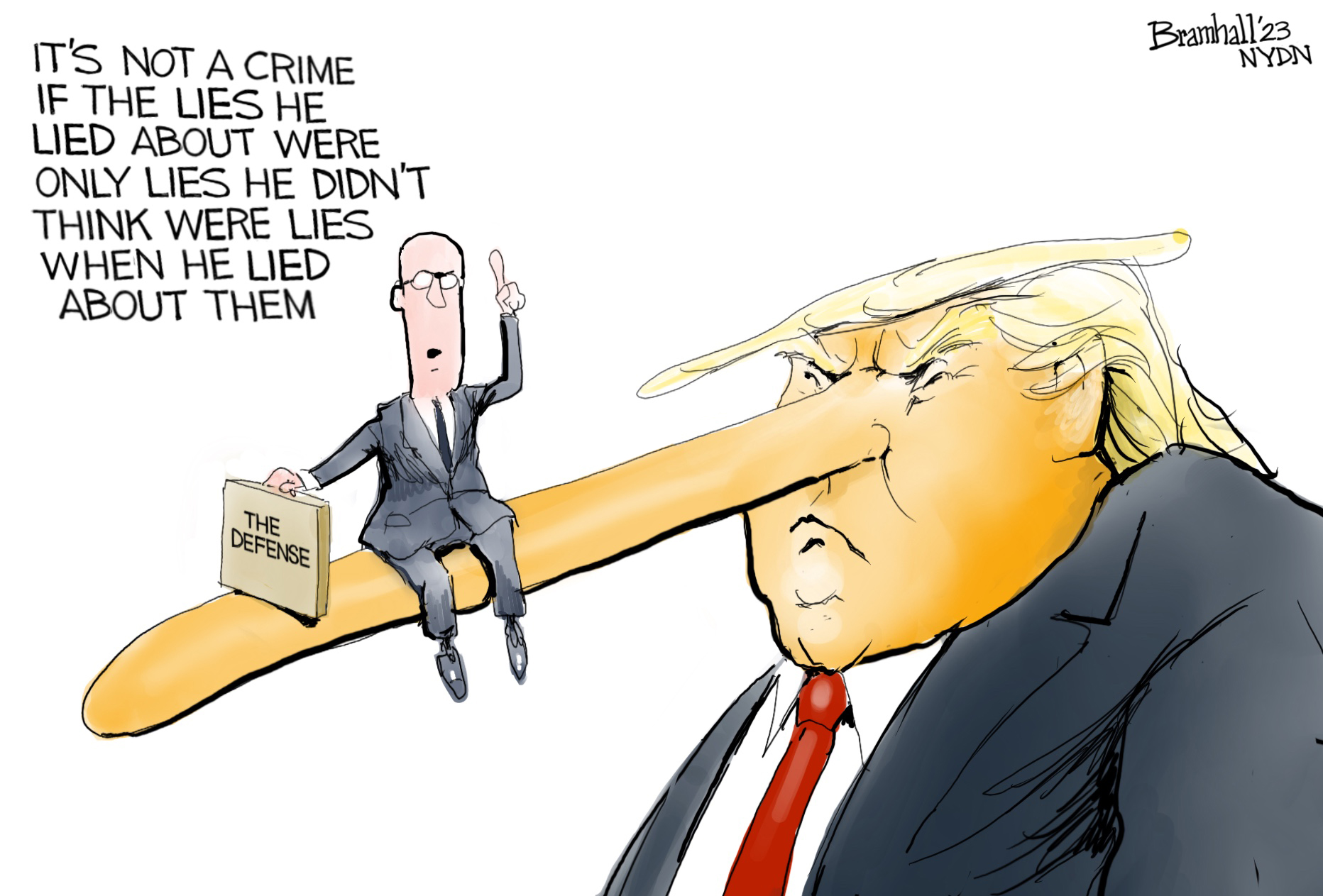
Connecting the dots is meaningless if you’ve never established that the dots really happened.


I remember, almost to the minute, when I became a Democrat. As a teen-ager, I had libertarian leanings that I don’t like to talk about now. In my 20s and 30s, I was a left-leaning independent, but it wasn’t hard for a moderate Republican to charm me. I spent one afternoon of 1980 on a Chicago street corner, handing out pamphlets for John Anderson. In the early 90s, I was comfortable with William Weld as my governor.

And then in 1998-99 the Clinton impeachment happened.

I watched just about every minute of the televised trial in the Senate. I had voted for Clinton twice, and had been rooting for him all through the Lewinsky scandal. But still I watched the case against him unfold, because … what if the Republican impeachment managers had something? They seemed so sure that they did.

There were two counts. The first was perjury, and what it boiled down to was a he-said/she-said conflict over precisely which sex acts Bill and Monica had performed. Was Bill telling the truth? Maybe, maybe not. But in any case it seemed like a thin reed to hang an impeachment on.

The second count was obstruction of justice, and it hinged on why Monica Lewinsky had lied to the grand jury investigating Clinton’s harassment of Paula Jones. Monica had denied that she was having an affair with Bill, which everyone now agreed was perjury. But why?

There were a number of plausible explanations. Maybe she was embarrassed to have her sex life become a matter of public record. Maybe she still had some affection for Bill and wanted to protect him from a political scandal.

But there was a more nefarious explanation: Maybe Bill had asked her to lie, and had offered to find her a good job in exchange. Quid pro quo. Conspiracy to obstruct justice.

And this much was clearly true: One of Clinton’s top advisors, Vernon Jordan, was a director of the Revlon Corporation. Jordan got Lewinsky an interview at Revlon, which then hired her.

But the theory that this was a quid-pro-quo had a problem: Everyone up and down the line denied it, even the people who had no motive to lie. Clinton denied it, of course, and so did Jordan. Jordan claimed he often helped out White House interns, and Clinton would not be the first powerful man to do a favor for a young woman after an affair. So you didn’t have to assume obstruction to make the story work.

Lewinsky denied it, even though she had immunity, and so the only way she could get in trouble now was if she lied again. And the folks at Revlon denied that Jordan had put any undue pressure on them; he just sent Lewinsky over, and she got the job on merit.

What the Republican prosecutors did in their presentation was establish a timeline: They very meticulously proved that all the people who would have needed to conspire did indeed have communication with each other during the time period when the conspiracy would have needed to take place.

In other words, they connected the dots. They firmly established that the obstruction-of-justice scenario could have happened. They presented not a shred of evidence that it actually did happen. But it could have.

That was enough for 50 Republican senators to vote to remove the President of the United States.

I’ve been a Democrat ever since.

Conspiracy theorizing. Here’s what I didn’t realize at the time: The Lewinsky obstruction presentation was a preview of the conspiracy-theory culture of the 21st century.

Just before Biden’s inauguration, the NYT published a profile of QAnon “meme queen” and “digital soldier” Valerie Gilbert. It was supposedly a moment of crisis for the movement, because none of their predictions of a Trump victory or a “storm” of arrests of high-ranking Democrats and leading celebrities had come to pass. Trump really had lost the presidency, and Biden was about to take over. Q himself had gone silent.

But Ms. Gilbert isn’t worried. For her, QAnon was always less about Q and more about the crowdsourced search for truth. She loves assembling her own reality in real time, patching together shards of information and connecting them to the core narrative. (She once spent several minutes explaining how a domino-shaped ornament on the White House Christmas tree proved that Mr. Trump was sending coded messages about QAnon, because the domino had 17 dots, and Q is the 17th letter of the alphabet.)

When she solves a new piece of the puzzle, she posts it to Facebook, where her QAnon friends post heart emojis and congratulate her.

This collaborative element, which some have likened to a massively multiplayer online video game, is a big part of what drew Ms. Gilbert to QAnon and keeps her there now.

“I am really good at putting symbols together,” she said.

But think about what she’s not doing, which is any of the traditional work of investigation. She’s not finding and interviewing witnesses to key events. She’s not checking their stories against the kind of facts that can be nailed down. She’s not tailing suspects to see where they go and who they meet.

Instead, she’s connecting the dots. She’s coming up with ever more satisfying (to her QAnon online community) stories that pull together the high points of events that they assume happened. Did they happen? Hardly anyone seems to be working on that. The dots are the dots. What’s important is weaving them into a story.

Real investigating. Real investigations are laborious and involve large chunks of time devoted to tedious activities. TV dramas tend to skip that part. You learn, say, that the police have traced an earring found at the crime scene to the shop that sold it, and you don’t see the dozens or hundreds of conversations with shops that didn’t sell it. You don’t see all the interviews with neighbors who slept through the break-in and didn’t hear the gunshot.

Investigators endure that tedium because real investigations work from the bottom up. They establish tiny little factoids, in the hope that eventually those atoms of truth will start to fit together like Lego blocks. You may have your suspicions about what the eventual answer will be, but you hold them lightly as you wait to see whether the facts will take you there.

Connecting the dots turns that process upside down. The “dots” are a collection of plot points that your audience either already believes or wants to believe. A real investigator would first drill down on those dots to make sure they’re actually true. (Like, is that really a “suitcase of illegal ballots” in the Georgia video? Turns out it isn’t.)

But a dot-connector works the other way around: Assuming the dots are real, what story can you tell to weave them together? In the end, it is the overall appeal of the story that validates the dots. That’s why dots keep coming back no matter how many times they’re debunked: They work so well in the larger narrative.

That’s also why it’s so hard to argue with a dot-connector: They have a good story to tell, and all you have are the messy details. Here’s a bit of Trump’s recent Meet the Press interview:

FMR. PRES. DONALD TRUMP:

We have thousands of essentially motion pictures of people stuffing the ballot boxes. Tens of thousands.

 KRISTEN WELKER:

But, Mr. President, they’re not stuffing the ballot boxes. And you’ve been told that by your top law enforcement officials. But let’s stay on track, because we have so much ground to cover. We have policy ground to cover, Mr. President. 

 FMR. PRES. DONALD TRUMP:

You have people that went and voted in one place, another place, another place, as many as, I understand, 28 different places in one day with seven, eight, nine ballots apiece. They can’t do it anymore, because it would look too phony. These were professional people. They were stuffing the ballot boxes. It’s there. 

 KRISTEN WELKER:

Mr. President — 

 FMR. PRES. DONALD TRUMP:

I mean, it’s there to see. A lot of people don’t like looking at it.

 KRISTEN WELKER:

 — you took your case to court in 60 different cases all across the country. You lost that. But let’s stay on track because we have so many —

 FMR. PRES. DONALD TRUMP:

We lost because the judges didn’t want to hear them.

 KRISTEN WELKER:

Mr. President, we have so many topics to cover.

Doing any actual debunking of Trump’s claims would involve going into those tedious details, and Welker doesn’t have time for that. Viewers would tune out. So she has to let the lies stand and move on to other topics.

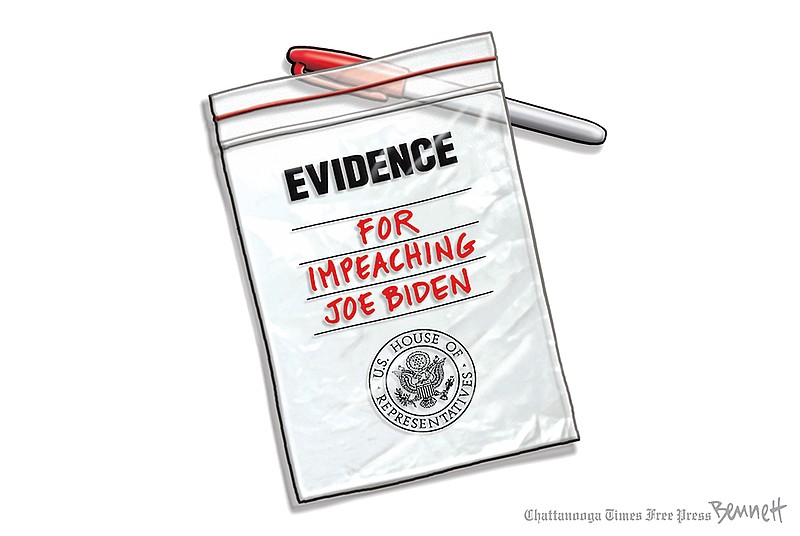
Connecting the Biden impeachment dots. The Biden impeachment investigators in the House have little evidence, but they have a good story to tell: Biden used his political power to protect his son Hunter, and Hunter in turn used his businesses to collect bribes for his father Joe. Put it all together, and throw in Joe’s brother James, and you have “the Biden crime family”.

The problem is that no piece of that story holds up to scrutiny, except that Hunter leveraged his name to make business connections that were almost certainly unethical, though probably not illegal (and nowhere near as corrupt or lucrative as Jared Kushner’s $2 billion from the Saudi sovereign investment fund). Some of the dots were debunked years ago, while others just lack any supporting evidence.

But if you want to believe that story — and a lot of people do — then the story itself validates the dots, even the ones that have repeatedly been shown to be false. That’s what reality-oriented people will be up against in the coming months.

We’re all in law school now

Simply following the news is teaching the public more about law
than most of us ever wanted to know.


Star Wars movies are famous for building up to climaxes with three centers of simultaneous action. The decisive scenes of Return of the Jedi, for example, jump from the battle on the Planet Endor to the raid on the second Death Star to the Luke/Vader/Emperor showdown. Maintaining three centers of narrative action, it seems, optimizes something having to do with human attention: The tension builds as focus shifts from one center to the next, and viewers can keep track of all three without saying “Oh, I forgot about him” or “Where are we now?”

Sadly, though, the Trump trials have now gone well past the Lucas point, and have reached the you-can’t-tell-the-players-without-a-program stage.

This week’s run-down. Currently, four Trump indictments are pending in four different jurisdictions, two state and two federal. In New York and D.C., he is indicted by himself. In Florida he has two indicted co-conspirators, and in Georgia he has 18. The total number of counts is just under a hundred.

Worse than the sheer number of venues, defendants, and charges, the action in each jurisdiction has a way of spreading: This week, for example, the most significant developments in the Fulton County indictment were happening in federal rather than state court, and Fulton County DA Fani Willis was fending off attempted interference from Republicans in Congress. We also found out the names of 30 conspirators Willis decided not to indict, in spite of the recommendations of the special grand jury.

Two of the 19 Fulton County RICO defendants filed for a speedy trial, but neither wanted to share a trial with the other. The judge had good news and bad news for them: Your trial starts October 23, but you’re each stuck sitting next to that other loser.

In addition to the criminal cases, there are civil lawsuits. The NY attorney general’s $250 million fraud lawsuit against the Trump Organization will go to trial on October 2, assuming neither side gets the summary judgment it’s asking for. And Wednesday, E. Jean Carroll won a second defamation decision against Trump: The judge ruled that since the statements in question were so similar to ones a jury already had found defamatory, no trial was needed, other than to establish damages. Trump is already on the hook for $5 million pending appeal, and his mouth is still running.

And lest we forget: There is the open legal question of whether Trump is even eligible to be president again, given the disqualification clause of the 14th Amendment.

Then there are the criminal cases of related defendants: The trials of the January 6 rioters are not quite done yet. Tuesday, Proud Boys leader Enrique Tarrio was sentenced to 22 years in prison for his role in planning the assault on the Capitol. Commenters on the Fox News article about the sentence were incensed: “22 years and he wasn’t even there”. But if you plan a crime and recruit people to carry it out, you don’t have to be there. You could be, say, watching TV at a White House dining table and still be guilty.

And John Eastman may be a Fulton County RICO defendant, but he also had to testify at his disbarment hearing in California this week. He “doesn’t recall” making statements that Vice President Pence’s chief of staff has testified under oath that he made.

Oh, and Peter Navarro — I really had forgotten about him — was found guilty of contempt of Congress. Remember? He blew off subpoenas from the House select committee investigating January 6. (Remember them?) It turns out that ignoring subpoenas can get you into trouble. Who knew? Navarro certainly seemed shocked to discover that “Trump told me to” isn’t a universally recognized defense, particularly if Trump didn’t put those instructions in writing.

Steve Bannon (another blast from the past) was convicted of the same charge last summer and sentenced to four months. But he’s still out pending an appeal that will be heard in October. His fraud trial (for misappropriating money raised to build Trump’s wall) is scheduled for next May.

Got all that?

Federal removal law. The upside of this complexity is that (if you manage to keep paying attention) you’re getting an excellent layman’s education in law. This week’s best lesson was US District Judge Steve Jones’ ruling that denied Mark Meadows motion to move his RICO case from Georgia state court to federal court. His decision didn’t just say no; it gave an very clear explanation of the federal removal statute, what it’s for, and how it functions.

The point of the law is to keep states from interfering with federal officers enforcing federal law. For example, occasionally you’ll hear talk among Second Amendment enthusiasts about how local sheriffs should arrest federal officials who show up trying to enforce federal gun laws. If state courts then heard those cases, local police and judges could work together to effectively screw up federal law enforcement.

So instead, any federal official who gets arrested in the course of carrying out his or her duties can get the case moved to federal court. (That’s what Meadows was trying to do, and what Trump would undoubtedly try to do if Meadows succeeded.) On the other hand, just being a federal official isn’t enough. If, say, an FBI agent gets arrested for robbing a bank, his case is no different from anybody else’s.

If you keep that pair of examples in mind, the law makes perfect sense.

So Meadows had to argue that his case was more like the ATF agent than like the bank robber. In other words, Fani Willis had indicted him for carrying out his duties as White House chief of staff. And that was not a completely crazy argument, because some of the specific actions alleged in the indictment are Meadows arranging phone calls and sitting in on meetings, as any White House chief of staff would do.

But Meadows’ problem, as Jones points out, is that that acts cited in the indictment are not the crimes he’s been charged with. The crime is participating in a conspiracy to change the results of Georgia’s 2020 presidential election. The specific actions cited in the indictment simply illustrate that involvement.

So the relevant question is whether White House chiefs of staff have a legitimate role to play in overseeing how states count their votes and allocate their electors. If so, then Meadows (and Trump) might have been playing that role when, say, they pressured Brad Raffensperger to “find” more votes for Trump. It would then be up to a federal court to decide whether Meadows had been carrying out those duties within the law.

But Jones ruled that Meadow had no legitimate role to play as chief of staff: Running elections is a state matter. And under the Constitution, any federal oversight role belongs to Congress, not the president or his staff.

Jones’ ruling has two important consequences:

  • If removal had been granted, Meadows’ had already filed a motion to dismiss the charges, for basically the same reason: He was simply carrying out his federal duties. That motion is now moot.
  • While the judge explicitly wrote that he was not prejudging the claims of any other defendants (like Trump), the logic of his argument will be hard to overcome: Trump and all of his co-conspirators were meddling in something that was none of the president’s official business. None of them have a good argument for moving to federal court or having the charges dismissed.

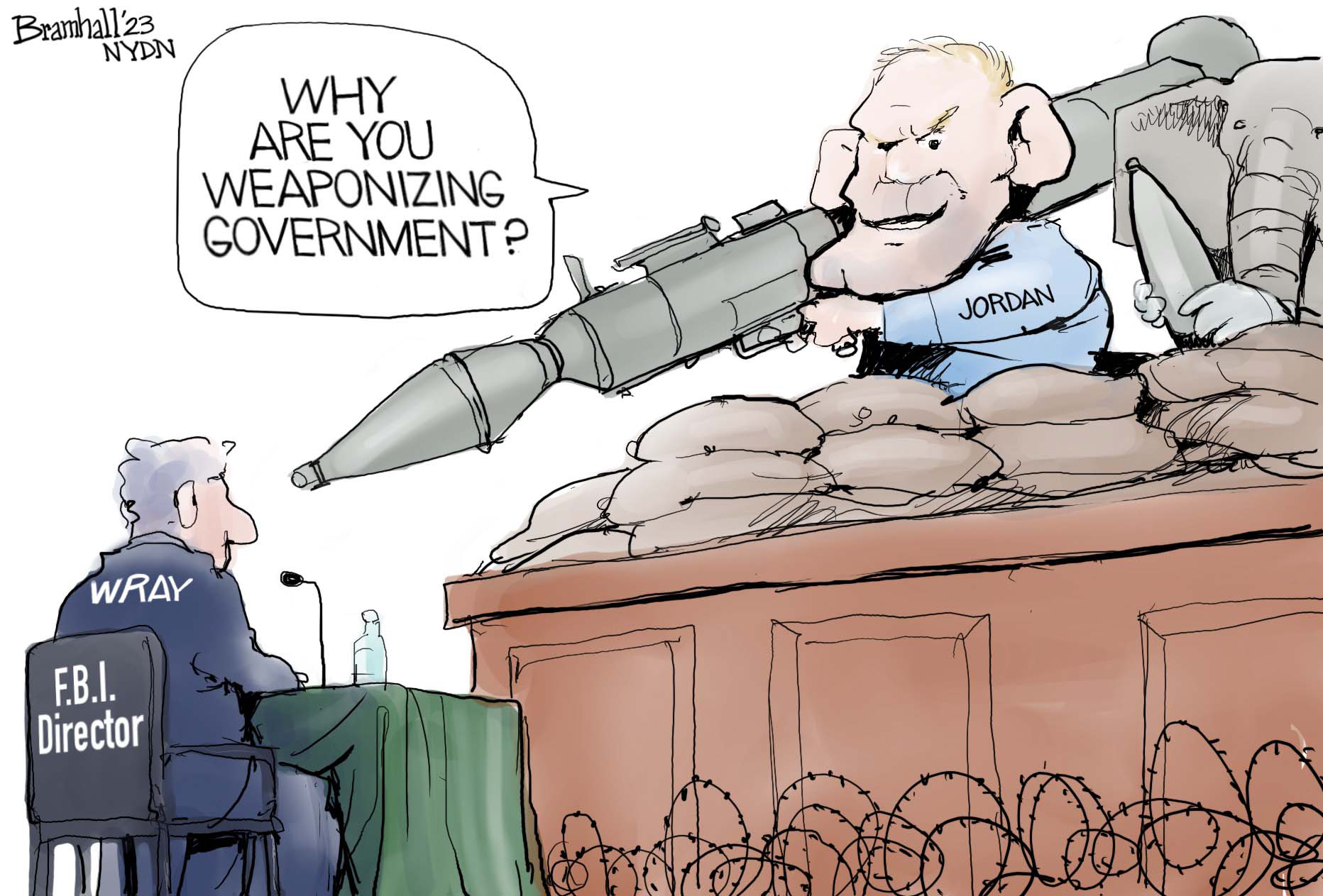
Willis v Jordan. I think Jim Jordan was trying to intimidate Fani Willis, but it doesn’t seem to have worked. On August 24, Jordan wrote a letter to Willis under the House Judiciary Committee letterhead, saying:

Congress may probe whether former Presidents are being subjected to politically motivated state investigations and prosecutions due to the policies they advanced as President, and, if so, what legislative remedies may be appropriate.

After mentioning his subcommittee’s subpoena power, he demanded she produce by September 7 (Thursday) documents related to her investigation of former president Trump, and especially any communications with Jack Smith or other federal officials.

On Thursday, Willis responded with none of the requested documents, but a letter of her own.

Your letter makes clear that you lack a basic understanding of the law, its practice, and the ethical obligations of attorneys generally and prosecutors specifically.

She goes on to school Jordan, explaining (with detailed legal references) all the reasons that his demands are unconstitutional: They cross the line between state and federal sovereignty, as well as the line separating legislative and executive functions. They interfere with the administration of criminal justice, and violate the form of executive privilege that protects a prosecutor’s deliberative process.

Given all that, she could in good conscience ignore the arguments Jordan made.

While settled constitutional law clearly permits me to ignore your unjustified and illegal intrusion into an open state criminal prosecution, I will take a moment to voluntarily respond to parts of your letter.

Her main piece of advice is that Jordan learn to “deal with reality”, in particular the reality that Donald Trump is a citizen with no special rights.

Here is another reality you must face: Those who wish to avoid felony charges in Fulton County, Georgia — including violations of Georgia RICO law — should not commit felonies in Fulton County, Georgia. In this jurisdiction, every person is subject to the same laws and the same process, because every person is entitled to the same dignity and is held to the same standard of responsibility. Persons’ socioeconomic status, race, gender, sexual orientation, or political prominence does not entitle them to an exemption from that basic standard.

She schools Jordan on how Trump’s rights are properly defended.

[O]bjections to a criminal investigation or prosecution are properly raised—at least in the first instance—at courts with lawful jurisdiction, not through partisan legislative inquiries. The courts in the State of Georgia are fully up to the task of adjudicating the rights of all parties at issue.

Finally, in response to his implicit threats to any federal funding her office receives, she concludes with a series of suggestions for useful work Jordan’s committee might do, such as increasing federal funding for worthwhile purposes like paying witness advocates, processing rape kits, helping at-risk children avoid the criminal justice system, and upgrading state crime labs generally.

The lesson I draw from this exchange is that if you want to mess with Fani Willis, you’d better be a lot sharper than Jim Jordan.

Does the 14th Amendment disqualify Trump? This idea has been rattling around for a few weeks now, and was explained in some detail by J. Michael Luttig and Lawrence Tribe in the August Atlantic. (And in a lot of detail by a law journal article I haven’t read.) But it’s mostly been theoretical until Tuesday, when Citizens for Responsibility and Ethics in Washington (a real organization that’s been around for a while, not something put together for this purpose) filed a lawsuit in Colorado. The suit seeks an injunction forcing the Colorado Secretary of State to leave Trump’s name off the state’s Republican primary ballot, for reasons that would also apply to a general election ballot.

Presumably, this case will work its way up through the Colorado state courts and will eventually be appealed to the Supreme Court, whose ruling would then apply to all states.

Truthfully, I had never paid much attention to the 14th Amendment‘s third section. The first section is one of the most quoted parts of the Constitution: It guarantees citizenship to anyone born in the United States, as well as “due process of law” and “equal protection of the laws”. Courts are constantly arguing about precisely what those phrases mean.

But Section 3? Not so much. Here’s what it says:

No person shall be a Senator or Representative in Congress, or elector of President and Vice President, or hold any office, civil or military, under the United States, or under any state, who, having previously taken an oath, as a member of Congress, or as an officer of the United States, or as a member of any state legislature, or as an executive or judicial officer of any state, to support the Constitution of the United States, shall have engaged in insurrection or rebellion against the same, or given aid or comfort to the enemies thereof. But Congress may by a vote of two-thirds of each House, remove such disability.

Just about everybody’s initial reaction to this is that Trump would have to be convicted of some crime relating to “insurrection or rebellion” before he’d be disqualified from being president again. And since an conviction is unlikely to become final before the 2024 election, Section 3 wouldn’t apply.

But Luttig and Tribe point out that qualifications don’t work that way. No one has a right to be president, so this isn’t a matter of taking Trump’s rights away. So the criminal proof-beyond-reasonable-doubt standard shouldn’t apply.

Instead, it’s up to the individual states to determine how their presidential electors will be chosen and what candidates are qualified to receive their votes. If a secretary of state in a place like Colorado determines that Trump is ineligible to be president because he supported an insurrection, that’s no different than determining that a candidate isn’t 35 years old or hasn’t already served two terms. The question is about the fact of insurrection, not whether or not there’s been a conviction.

Now, Section 3 has never been tested, so no one knows precisely what phrases like “insurrection or rebellion” or “aid and comfort to the enemies” should mean in practice. So somebody’s going to have to hold some evidentiary hearings, and then the courts will have to make some interpretations. Somebody will have to have the last word, and that will probably be the Supreme Court.

Another objection is to say “let the voters decide”. But if that’s how we do things, why are there constitutional qualifications at all? What if the voters want to elect an 18-year-old president? Or give Obama a third term? For constitutional qualifications to mean anything at all, they have to supersede what the voters want.

Whether disqualifying Trump is politically wise is another question entirely. But legally that’s beside the point. It may not always be politically wise to protect an unpopular religion’s freedom to worship, or to enforce many of the other rights our Constitution guarantees. The point of having a constitution is that some principles have to override the politics of the moment.

Personally, I don’t have a dog in this fight. What I’d really like to see is for Trump to be rejected by the voters, either in the primaries or in the general election. If he’s allowed to run, I think that will happen, current polls notwithstanding. But disqualification is a serious question, and our legal system owes the country a serious answer.

What an innocent Trump should do

If the charges against him are all political shenanigans engineered by Biden, Trump should seek speedy trials leading to a series of jury acquittals before the election. So why is he doing the exact opposite?


For several years now, Rachel Maddow has been repeating: “Watch what they do, not what they say.” This week Rep. Eric Swalwell invited us to apply that maxim to the particular case of Trump’s indictments:

Weird. You’re telling me the guy who says he is being corruptly prosecuted has no interest in the right to speedily contest the charges?

Trump’s people are saying the charges against him are bogus, that it’s all politics waged by overzealous partisan prosecutors. It’s “election interference” whose purpose is to promote slanders against Trump during the campaign. And it’s all being coordinated behind the scenes by Joe Biden. (Biden, meanwhile, is supposedly senile. So how he manages to stay on top of his sprawling conspiracy to weaponize law enforcement seems like a hole in the plot.)

But if that’s what’s going on, then Trump’s lawyers should be chomping at the bit to get into a courtroom, where they can tell the real story, introduce the “complete” and “irrefutable” evidence that clears Trump, cross-examine the witnesses arrayed against him (who are mostly members of his own party and his own administration — probably including his vice president), and generally poke holes in the prosecutors’ narrative.

After all, we’ve already seen what happens when a politicized prosecution goes to trial: Twice, John Durham brought charges based on his Clinton-conspiracy theory of the Trump/Russia investigation. Both times, juries were not fooled and voted quickly and unanimously for acquittal.

So if all Trump’s indictments are nothing but “weaponization of the justice system“, that’s what he should want: Bring in 12 ordinary Americans who are not part of the vast Biden conspiracy, let them examine all the evidence, and then see what they think. In particular, Trump should want to get as many vindicating verdicts as possible on the record before the election, so that voters could put aside all doubts about his guilt. What’s more, a string of unanimous juries voting quickly for acquittal would expose Biden’s nefarious plotting, and turn the whole issue in Trump’s favor. The momentum from those not-guilty verdicts would probably propel Trump back into the White House.

But if you look at what Trump, his lawyers, and his cultists are doing, they seem scared to death of him facing a jury. His legal strategy revolves around endless delay, especially delay beyond Election Day. It’s as if he believes that maintaining the uncertainty about his guilt is good for him, and resolving the issue would be bad.

He constantly points not to exculpatory evidence, but to his “absolute immunity“, or some other magic get-out-of-jail-free card exempting him from prosecution. He calls on his allies in Congress to harass, defund, or remove from office the prosecutors who have sought his indictment. He tries to intimidate Democrats with threats of reprisal. He retweets supporters’ calls for violence — even “civil war” — if Trump’s trials go forward.

Anything to avoid a jury.

The American way to deal with outrageous charges is to say “See you in court.” But apparently that’s not Trump’s way, at least not in these cases.

You can make your own judgment, but here’s how I resolve the contradiction between what Trump and his people say and what they do: They’re lying. They know that the indictments are legitimate, and that he in fact is guilty. They are desperate to avoid a trial, because if 12 ordinary Americans see the evidence against Trump, they will send him to prison.

Republicans think they’ve found a way to pitch abortion bans

Abortion bans are unpopular, unless their advocates can demonize the opposing position and distract voters from what they really want.


Since the Dobbs decision last year, abortion has been a winning issue for Democrats. Whenever the issue of abortion has been put in front of the voters, the abortion-rights side has won, even in red states like Kansas, Kentucky, and (most recently) Ohio. Abortion was clearly a factor in liberals gaining the swing vote on the Wisconsin Supreme Court, and in Democrats seizing complete control of state government in Michigan.

Pre-election polling by the Epic-MRA pollster Bernie Porn also highlighted how this year’s abortion rights initiative benefited Dems. Asked what single issue was motivating them to vote, 43% of respondents said abortion, which topped inflation by about 14 points.

“Abortion, abortion, abortion,” Porn said. “This proposal drove women and younger voters to the polls … and if Democrats in other states have a mechanism to put an abortion ballot proposal on the ballot in 2024, then they should consider that.”

A pragmatic Republican politician, then, should want to play this issue down. The no-abortion-at-all, life-begins-at-conception position is the Republican equivalent of defund-the-police: A segment of the base is strongly committed to it, but it’s an almost certain loser if you put it in front of the general electorate.

Democratic candidates, for the most part, have handled defund-the-police like this: They express sympathy for the concerns of the activists (i.e., police violence against people of color), but change the subject whenever specific proposals come up, and run away completely if they are asked to say “defund the police” in public.

So far, though, Republicans have not been able to do anything similar with abortion. Their anti-abortion base is too large and feels too entitled to primacy. Taking over the Supreme Court was the work of decades, and now that the Court no longer stands in their way, they want action. At the state level, they’re getting it, at least in red states that leave legislating to their gerrymandered legislatures and keep abortion propositions off the ballot. But those new laws are producing horror stories that motivate women around the country to vote for Democrats.

What to do?

This week’s Republican presidential debate gave us a look at the current state of play. Everyone on the stage identified themselves, in one way or another, as “pro-life”. But no one volunteered their support for the kind of complete-ban proposals that used to be at the center of the anti-abortion movement.

The one who came closest was Mike Pence, who called out abortion as a “moral issue” and pledged to be a “champion of life” in the White House. But even he could only offer that “A 15-week ban is an idea whose time has come”. [1]

North Dakota Governor Doug Burgum (who signed a 6-week ban in his state) held out for leaving the issue to the states. And I can’t find a debate quote from Chris Christie, but elsewhere he also has also said abortion should be a state matter. But everyone else coalesced behind a federal 15-week-ban, with some hand-waving in the direction of exceptions for rape, incest, and (possibly) maternal health. [2]

N weeks. The basic framing is rarely stated explicitly, but it goes like this: There is some point in every pregnancy where the government’s judgment becomes better than that of the people who are actually involved. So while (up to some point) the government may allow women to consult with the people they trust and decide whether or not to go forward with a pregnancy, beyond that point the government’s decision prevails. Ditto for doctors: Up to some deadline, a doctor may decide whether or not the best thing to do for a patient is to perform the abortion she is asking for, but past that point the decision belongs to the government.

Once you accept that framing, the only decision to make is when the government takes control. There’s going to be an N-week ban, except for a few special situations the government recognizes. So the only issues left to discuss are what N should be and what exceptions should be allowed.

Under the Roe v Wade framework, women had a complete right to choose abortion during the first trimester of pregnancy. In the second trimester, states could impose restrictions narrowly tailored to protect the woman’s health. In the third trimester, the potential viability of the fetus outside the womb allowed states to impose more-or-less complete bans. The Casey decision of 1992 mostly reaffirmed Roe, but shifted the focus more to viability: When could a fetus survive outside the womb? The viability standard depends on a number of factors, including the progress of technology, but generally it set N at around 24 weeks.

So in proposing a 15-week federal ban, the Republican candidates are framing themselves as moderates willing to compromise (at least until they have more power): Their base would like N to be zero, but they’re willing to settle on 15. The real radicals, they claim, are those who reject the N-week model altogether: They support “abortion up to the moment of birth”, a phrase that seems to have been well tested in focus groups.

Ron DeSantis (who signed a 6-week ban shortly after he was reelected and didn’t have to defend it to Florida voters) laid it out like this:

What the Democrats are trying to do on this issue is wrong: to allow abortion all the way up to the moment of birth. … We’re better than what the Democrats are selling. We are not going to allow abortion all the way up till birth and we will hold them accountable for their extremism.

Martha McCallum, a debate moderator, teed up a similar question for Burgum:

What do you say about the states, there’s about five of them, including New Jersey, I think a few others, that allow abortion up until the time of birth. Now if you were president, would you be able to abide that?

Tim Scott also invoked the phrase:

We cannot let states like California, New York, and Illinois have abortions on demand up until the day of birth. That is immoral. It is unethical, it is wrong. We must have a President of the United States who will advocate and fight for at the minimum a 15-week limit.

And Nikki Haley went on offense: Democrats who don’t like 15 should be pushed to specify what number they do support.

What I would love is for someone to ask Biden and Kamala Harris: Are they for 38 weeks? Are they for 39 weeks? Are they for 40 weeks? Because that’s what the media needs to be asking.

Jen Psaki summed it up:

This wasn’t just some throw-away line for applause on the debate stage. This is a talking point.

The demonized image. It’s not hard to see why “abortions on demand up to the day of birth” polls so badly. It invokes the image of a healthy woman who carries a healthy fetus for nearly nine months, and then, on a whim, decides to kill her baby rather than let it be born and given to some deserving childless couple eager to provide a loving home. By refusing to stop her from performing such a heinous act, you and I and the nation as a whole are “allowing” it to happen.

But once you draw that scenario into the foreground of your awareness, it should be obvious that it literally never happens, not in New Jersey, California, New York, or anywhere else. Abortions after 21 weeks (still well before birth) were already rare, even under Roe. [3] They get rarer with each week of gestation.

Nearly every one is a special case of some sort. That stands to reason: Who is going to endure months and months of pregnancy if they plan not to have a baby? Women who get late abortions are almost all women who decided not to get early abortions. Overwhelmingly, they wanted to have a child, and then something unexpected happened. Maybe the woman has cancer, and doesn’t dare wait until after the birth to start chemotherapy. Maybe the fetus has failed to develop in some way that dooms it to a short and pain-filled life. Maybe the fetus is already dead.

A million things can go wrong in the final months of pregnancy. Good luck anticipating all of them and writing all the appropriate exceptions into a law, much less making sure that law is applied compassionately in emergency situations.

So while Mike Pence is right that abortion is “a moral issue”, it is the height of arrogance to imagine that we, while sitting on our sofas watching a debate, can decide those complex moral issues better than the people who are actually there and know all the special circumstances.

State governments that opt out of the N-week framework are not “allowing” heartless moms to kill healthy babies about to be born. Instead, they are yielding to the judgment of people who are in a better position to weigh the complicated moral questions a late-term abortion invariably involves.

Restoring the rights protected by Roe. So OK, I have just defended a position that a hostile adversary could smear as “allowing abortion up to the moment of birth”. But a second point is worth making: Despite what the debaters repeatedly claimed, I’m an outlier. The vast majority of elected Democrats aren’t willing to go that far.

The best evidence of what most Democrats want is the bill they tried to pass last year: the Women’s Health Protection Act of 2022. That bill passed the then-Democratic House before getting derailed by a Republican filibuster in the Senate. It had President Biden’s support. The WHPA eliminated prohibitions on abortion “at any point or points in time prior to fetal viability”, and also prohibitions “after fetal viability when, in the good-faith medical judgment of the treating health care provider, continuation of the pregnancy would pose a risk to the pregnant patient’s life or health”.

In other words, it put the law back more or less to where it had been before Roe was reversed last summer. Nothing in it allowed “abortions on demand up until the day of birth”.

Polls. In every poll or election where it has been tested, restoring the pre-Dobbs configuration of reproductive rights is an extremely popular position. So anti-abortion advocates are trying very hard to pretend that this option doesn’t exist. If you watched the debate, you would never have guessed that anyone, much less President Biden, wants to restore precisely the rights the Supreme Court took away.

Mike Pence claimed at one point that a 15-week ban is “supported by 70% of the American people”. When challenged on this, his staff pointed to a poll conducted on behalf of an anti-abortion group, Susan B. Anthony Pro-Life America.

In fact, Pence understated the poll’s result: 77% wanted either a 15-week ban or something even more restrictive. But here is the question the respondents were asked:

Which of the following best describes your position on the abortion issue?

  • Abortion should be prohibited throughout pregnancy, with exception for the life of the mother, rape, and incest. (26%)
  • Abortion should be prohibited after a baby’s heartbeat can be detected at 6 weeks of pregnancy, with exception for the life of the mother, rape, and incest. (20%)
  • Abortion should be prohibited after a baby can feel pain at 15 weeks of pregnancy, with exception for the life of the mother, rape, and incest. (31%)
  • Abortion should be allowed throughout all 9 months of pregnancy, without any restrictions. (15%)
  • I’m totally unsure. (8%)

There’s so much wrong with this question I don’t know where to start. First off, respondents are asked to respond to “facts” that are not facts. Embryos (not babies) don’t have a heartbeat at 6 weeks. And the idea that fetuses (also not babies) can feel pain at 15 (or even 20 or 25) weeks is highly speculative and not the current medical consensus. [4]

But perhaps worse than the biased wording is that no option corresponds to the rights women had 15 months ago. If you aren’t for banning abortion at 15 weeks or earlier, the only other choice is essentially “abortions on demand up until the day of birth”.

A similar poll was conducted by Cygnal, with a headline result that “Majority support abortion ban”, fleshed out in the press release to “56% of voters support a federal abortion limit of 15 weeks (23% oppose; 21% unsure), including a plurality of Democrats.”

How did they come up with that? The same way Susan B. Anthony Pro-Life America did, but with even fewer options. The question they asked respondents was:

Do you support a federal 15-week ban on abortions with an exception for rape, incest, and life of the month or support allowing abortion up until the point of birth?

Can Republicans “go on offense”? That’s the advice from Kellyanne (“Alternative Facts“) Conway in a WaPo column the morning after the debate. “If they want to win, Republicans need to go on offense on abortion“.

If you probe into the column, “go on offense” means what it usually does with Conway: bury voters in bullshit. She repeats the 6-week-heartbeat and 15-week-pain canards, and claims

Democrats are making a radical push for abortion on demand throughout pregnancy and will try to put some version of that question on the ballot in the coming election.

An obvious way to back this point up would be to point to some abortion-until-birth ballot proposal Democrats are gathering signatures for in some state or another. But Conway doesn’t, because there is none.

She quotes the Cygnal poll (whose biased question I just quoted) claiming that a majority support a 15-week ban. She advocates pushing Democrats the way Nikki Haley did, with “Is there any abortion they find objectionable?”, as if refusing to usurp a woman’s decision is the same as agreeing with every decision a woman could conceivably make (even if no women are actually choosing whatever hideous option Republicans might imagine).

So that’s what’s coming: an avalanche of anti-abortion bullshit. Get your wading boots ready for it.


[1] Pence rooted his position in his religion:

After I gave my life to Jesus Christ as my Lord and Savior, I opened up the book and I read, “Before I formed you in the womb, I knew you” and “See, I set before you life and death, blessings and curses. Now choose life.” And I knew from that moment on the cause of life had to be my cause.

Here Pence demonstrates the back-flips you have to do if you want to claim that the Bible denounces abortion: He takes two quotes out of context and smushes them together so that they seem to say something neither one says.

The two verses are Jeremiah 1:5 and Deuteronomy 30:19. In Jeremiah 1, God tells Jeremiah about his longstanding plan that Jeremiah be “a prophet to the nations”. The focus is on God’s foresight and Jeremiah’s special destiny. The text says nothing at all about any fetus in a womb today.

Deuteronomy 30 centers on those “blessings and curses”: God promises to make a great people of the Israelites if they obey the laws he has just given them, but threatens to wipe them out otherwise. (Moses had to talk God out of such a genocide in Exodus 32 after the golden calf incident. After some coaxing, God was satisfied with three thousand deaths rather than the whole nation.) Read in its proper context, “choose life” means “Don’t disobey and make me kill you.” Again, it’s got nothing to do with abortion.

Invariably, when I make a point like this, someone will object that we shouldn’t argue Biblical interpretation in a political arena, because the Bible plays no legal role in governing the United States. And that’s true: The US Constitution is an entirely secular document. The Founders were almost all Christians of one stripe or another, but they were well aware of the wars of religion that had plagued England and wanted to avoid anything similar happening here.

That said, though, I think that when a politician or a party makes an argument that is invalid in its own terms, it’s worth calling out — even if those terms have no legal standing. So when I see it, I call out bad religion in the same way that I call out bad science.

And politically, I don’t want to see the abortion issue framed as Christians vs. non-Christians or Bible-believers vs. everyone else. Anti-abortion is unrelated to the Bible, except through speculative interpretations that no one would put much stock in if they read the text without prior convictions.

[2] As we’ve seen in the states, these exceptions often are not all they’re cracked up to be. Even if your case seems to fit an exception, you still may not be allowed an abortion.

[3] In 2019, the CDC counted 4,882 abortions after 21 weeks in the whole country, or slightly less than 1% of all abortions. Normalizing for the handful of states that didn’t report, I’ve seen estimates that the number of post-21-week abortions could be as high as 6,000 a year.

[4] The short version of the argument against pain-at-15-weeks is that the nerve clusters that would report pain are not yet hooked up to the brain centers that would recognize it.

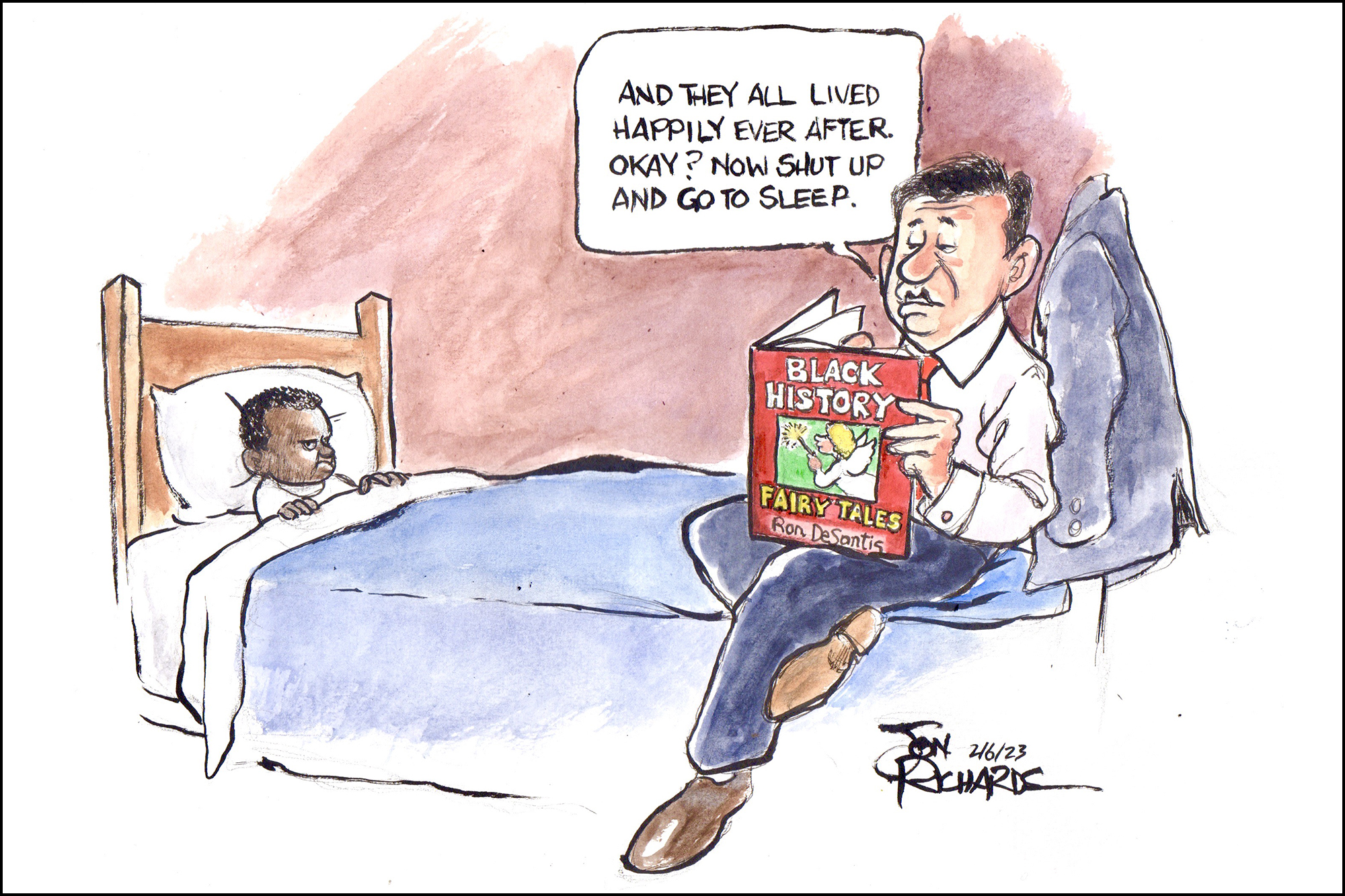
How did Frederick Douglass become a conservative spokesman?

History gets a remake in Florida schools.


As Ron DeSantis’ Florida continues its descent into authoritarianism, you may have missed one of the summer’s developments: In late July, Florida approved PragerU Kids videos for use in Florida public schools.

What is PragerU? You can be forgiven for not knowing what PragerU Kids is. Prager University is well known among conservatives, but nearly invisible to the rest of us (until recently). Like the fraudulent and now defunct Trump University, it is not actually a university, as its FAQ admits:

No, PragerU is not an accredited university, nor do we claim to be. We do not offer degrees. However, we are the most accessible and influential online resource for explaining the concepts that have made America great.

That right there is a clue to the Prager style: It creates misperceptions, but takes no responsibility for them: We’re not a university, we just call ourselves one. If you jumped to the conclusion that we’re a reputable academic institution, that’s on you.

Elsewhere, it describes itself more explicitly:

As a 501(c)(3) nonprofit, Prager University Foundation (“PragerU”) offers a free alternative to the dominant left-wing ideology in culture, media, and education.

It spends about $20 million a year, and its funding comes from a variety of sources, including a long list of conservative family foundations, like the Bradley Foundation ($1.6 million), Dunn Foundation ($315K), Chillemi Charitable Fund ($316K), Leven Family Foundation ($300K), Mitchell Foundation ($1.2 million), Morgan Family Foundation ($470K), Thirteen Foundation ($3.25 million), and so on. It also gets money from other conservative groups like Turning Point USA ($500K) and National Christian Foundation ($1.7 million). Several millions come via organizations supervising what are called donor-advised funds (which are basically foundations for people who can’t afford the legal overhead of foundations — I have one myself) like Fidelity Charitable Gift Funds ($4.3 million).

In short, while Prager U has some big donors, it also has a fairly wide appeal among conservatives. Its pitch is that “left-wing ideology” is so “dominant” that an alternative conservative voice is needed. It’s pro-fossil-fuel, anti-anti-racist, pro-Christian-exceptionalist, and promotes a number of myths about American history, like soft-pedaling America’s role in the history of slavery. (Soft-pedaling slavery, as we’ll see, is a persistent theme. This is probably a big reason it appeals to DeSantis’ people.)

In short, if you’re arguing the conservative side of just about any culture-war issue, you can add some intellectual trappings to your case by citing a PragerU video. Your friends and family will probably be fooled into taking the “university” thing seriously. (But that’s their fault, not Prager’s.)

PragerU Kids, as the name suggests, is the same thing aimed at children. If you’re a conservative home-schooling your kids, or an explicitly conservative private school, you probably use a lot of these videos. They’re propaganda, but like all the best propaganda, they usually don’t explicitly lie. PragerU Kids videos cherry-pick sources, conveniently overlook events that don’t fit their chosen narrative, and frame facts in deceptive ways, but they’re usually based on something. (If pressed, I suspect most PragerU folks would claim that they’re just using the same deceptive tactics liberals use.)

Just to be clear where I’m coming from, I think PragerU has every right to do what it does, and anybody who wants to view their videos (or show them to their kids) should be allowed to do so. I could even see a public-school system making some of these videos available to older children in a multi-viewpoint class that has the time and resources to provide and discuss the videos’ missing context. But for a public school teacher to show third-graders one of these videos and then send them home (as I imagine will frequently happen in Florida) is educational malpractice. It is precisely the kind of indoctrination that Governor DeSantis claims to oppose.

How does Frederick Douglass get into this? Two of PragerU Kids’ most popular characters are Leo and Layla, a brother and sister who somehow have a time-travel app on their phone. To a certain extent the app has a mind of its own, so when the kids are wondering about something in the present, they frequently get zapped back in time so that some famous historical figure can teach them the proper conservative culture-war lesson.

In one video, they are watching the news on TV, and seeing events that are clearly meant to evoke the demonstrations that followed George Floyd’s murder by a Minneapolis policeman. The murder, however, is one of those inconvenient details best omitted, so the kids see only TV commentators making excuses for “violence and destruction by some of our angrier activists” who want to “abolish the police” and “want the US system torn down” for no apparent reason.

Wondering what “abolish” even means, the kids go back in time to explore abolitionists, and meet Frederick Douglass in 1852.

Now, you might wonder why a conservative organization would want kids to talk to Douglass, who said some pretty radical things. For example, when asked to speak at a Fourth of July celebration in Rochester, New York in that very year of 1852, he questioned whether the holiday should mean anything at all to a Black man.

Fellow-citizens, pardon me, allow me to ask, why am I called upon to speak here to-day? What have I, or those I represent, to do with your national independence? Are the great principles of political freedom and of natural justice, embodied in that Declaration of Independence, extended to us? and am I, therefore, called upon to bring our humble offering to the national altar, and to confess the benefits and express devout gratitude for the blessings resulting from your independence to us?

Would to God, both for your sakes and ours, that an affirmative answer could be truthfully returned to these questions! Then would my task be light, and my burden easy and delightful. For who is there so cold, that a nation’s sympathy could not warm him? Who so obdurate and dead to the claims of gratitude, that would not thankfully acknowledge such priceless benefits? Who so stolid and selfish, that would not give his voice to swell the hallelujahs of a nation’s jubilee, when the chains of servitude had been torn from his limbs? I am not that man. In a case like that, the dumb might eloquently speak, and the ‘lame man leap as an hart.’

But such is not the state of the case. I say it with a sad sense of the disparity between us. I am not included within the pale of glorious anniversary! Your high independence only reveals the immeasurable distance between us. The blessings in which you, this day, rejoice, are not enjoyed in common. The rich inheritance of justice, liberty, prosperity and independence, bequeathed by your fathers, is shared by you, not by me. The sunlight that brought light and healing to you, has brought stripes and death to me. This Fourth July is yours, not mine. You may rejoice, I must mourn.

The Frederick Douglass who made that speech fits right into a class Florida would ban as “critical race theory”.

But that’s not what he says to Leo and Layla. The reason 1852 matters is that Douglass split with his former mentor, White abolitionist William Lloyd Garrison, in 1851. So in this video, Garrison (who is briefly portrayed when Douglass talks about him, but doesn’t get a speaking role) represents the violent extremists and Douglass the activists who patiently work within the system.

So Prager-Douglass opposes slavery, but repeats the soft-pedaling line that Prager and DeSantis favor: “The sad fact is that slavery has existed everywhere in the world for thousands of years.” (In a different video, Christopher Columbus tells the kids that “Slavery is as old as time, and has taken place in every corner of the world.”) In fine PragerU fashion, Douglass says something misleading that is carefully worded enough to be arguably true: “There was no real movement anywhere in the world to abolish slavery before the American founding. Slavery was part of life all over the world.”

Of course, France would abolish slavery in 1794 and the British Empire in 1831. Mexico’s version of the Emancipation Proclamation came in 1829, and was a major reason Texans sought independence. (The Texas Revolution was a fight for slavery, not freedom.) So the video’s assertion about 1787 (when the Constitution was adopted) might pass muster, assuming that you don’t consider the English Quakers a “real” movement. But waiting until 1865 to renounce slavery put the US near the end of the abolition process, not the beginning. Brazil would be the last major country to abolish slavery in 1888.

Prager-Douglass goes on: “Our founding fathers knew that slavery was evil and wrong” and “They wanted it to end. But their first priority was getting all 13 colonies to unite as one country.” So they tolerated slavery as “a compromise to achieve something great. … Our founders created a system they thought would have slavery end gradually.” And yes, slavery still hadn’t ended by 1852, but “complicated problems take time to solve.”

And that brings us to Prager-Douglass’ disagreement with Garrison. He says that Garrison “refuses all compromises, demands immediate change, and if he doesn’t get what he wants, he likes to set things on fire.” (What Garrison set on fire was a copy of the Constitution, which you can recognize in the video if you already know that story. If you jumped to the conclusion that he did actual property damage, like the violent demonstrators the kids had seen on TV, that’s on you, not Prager.) Prager-Douglass says he wants to work within the American system, but that Garrison wants to overturn it.

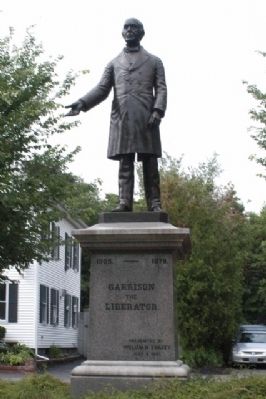
Layla tells Douglass that his way is definitely better, and says that in our time Douglass is an American hero “and that other guy isn’t really known”. (The picture shows Garrison’s statue in Newburyport, Massachusetts.) The kids are triumphalist about the present-day US: All Americans have equal voting rights, and a Black man was even elected president! (There is, of course, no point in mentioning that his administration was followed by a racist backlash, or that people might still be protesting about racial grievances.)

Prager-Douglass asks if we still have the same Constitution, and then says “I knew the US Constitution would survive and allow for positive change.” Prager-Douglass closes by advising the kids to seek change within the system, and to avoid “radicals” like Garrison (and presumably Black Lives Matter).

Who is this guy? You may have a hard time recognizing the PragerU cartoon character as the Frederick Douglass you know from history. After all, by late 1860, Douglass was promoting far more than just gradual change within the system. Speaking on the first anniversary of John Brown’s execution, he endorsed violence: “We need not only to appeal to the moral sense of these slaveholders; we have need, and a right, to appeal to their fears.”

I rejoice in every uprising at the South. Although the men may be shot down, they may be butchered upon the spot, the blow tells, notwithstanding, and cannot but tell. Slaveholders sleep more uneasily than they used to. They are more careful to know that the doors are locked than they formerly were. They are more careful to know that their bowie-knives are sharp; they are more careful to know that their pistols are loaded. This element will play its part in the abolition of slavery.

And his endorsement of the Union was conditional.

My opinion is that if we only had an abolition President to hold these men in the Union and execute the declared provisions of the Constitution, execute that part of the Constitution which is in favor of liberty, as well as put upon those passages which have been construed in favor of slavery, a construction different from that and more in harmony with the principles of eternal justice that lie at the foundation of the government — if we could have such a government, a government that would force the South to behave herself, under those circumstances I should be for the continuance of the Union. If, on the contrary — no if about it — we have what we have, I shall be glad of the news, come when it will, that the slave States are an independent government, and that you are no longer called upon to deliver fugitive slaves to their masters, and that you are no longer called upon to shoulder your arms and guard with your swords those States — no longer called to go into them to put down John Brown, or anybody else who may strike for liberty there.

That doesn’t sound at all like the PragerU cartoon character. So are they lying to the kids?

Not exactly. The PragerU Douglass seems to be based on a particular aspect of Douglass’ thinking during a particular point in his life. During the 1850s, Douglass and Garrison had a very public argument that centered on whether to give up on the American experiment in democracy.

Garrison saw little hope for it. Slavery, in his view, was part and parcel of the Union from Day 1. The word slave may not appear in the Constitution, but the shadow of slavery darkens many of its provisions, from the 3/5ths compromise to the requirement that states return those who were “held to Service or Labor” in another state. The Constitution, in his view, was a “covenant with death” and “an agreement with Hell”. Consequently, he refused to participate in electoral politics and wanted free states to secede. “No Union with Slaveholders” was his slogan.

Douglass explained his contrary view in a speech he gave in Scotland.

I, on the other hand, deny that the Constitution guarantees the right to hold property in man, and believe that the way to abolish slavery in America is to vote such men into power as well use their powers for the abolition of slavery.

Douglass held that the Constitution had been given a pro-slavery interpretation, and the US government had implemented pro-slavery policies, but he denied that the Constitution itself was at fault. In the Scotland speech, (given in March, 1860, a mere seven months before the John Brown speech I quoted earlier), he insisted that free states should stay in the Union precisely so that they could fight against slavery.

This is why today Douglass can be turned to the service of conservatives, particularly the ones like DeSantis, who want to deny that racism played (and continues to play) a structural role in the US. By cherry-picking, Douglass’ words can be put to use in much the same way that Martin Luther King’s famous quote that people “not be judged by the color of their skin but by the content of their character” is regularly trotted out in opposition to affirmative action (which King supported).

Restoring the context. The video would have you believe that history has proven Douglass right and Garrison wrong, because the Constitution and the Union have both survived, but slavery hasn’t.

However, that result didn’t happen through ordinary Constitutional processes, i.e., by convincing voters and electing abolitionist candidates, as Douglass envisioned. Instead, change came about through violence: The Southern states seceded, the North conquered them, and then in the aftermath of the war, the North imposed abolition, essentially ratifying the 13th Amendment at gunpoint.

The election of Lincoln, which precipitated the crisis, was more the result of slaveholder miscalculation than a groundswell of abolitionist feeling among American voters. As historian Douglas Egerton described the unlikely outcome of 1860 election in his book Year of Meteors, the Democratic coalition of slaveholders and Northern industrialists that had controlled the White House in 1852 and 1856 was well set up to do it again in 1860. But pro-secession Southerners revolted against nominating Northerner Stephen Douglas, split the party, and virtually guaranteed Lincoln’s victory with 40% of the popular vote in a four-candidate field.

If abolition had waited for an anti-slavery voting majority, we might still be waiting.

So history proved neither Douglass nor Garrison right, because neither of their strategies worked. In the end, the slaveholders were not outplayed by their opponents; they simply overreached and lost everything.

If you can find a Black-Lives-Matter lesson in this, you’re cleverer than I am.

Conclusion. So I, an adult with a college education and the time and interest to pursue the matter, was able to find the kernel of truth behind the PragerU Kids video and put it in some proper context. But can we really expect kids Leo’s age — the target audience of the Leo & Layla videos — to do the same?

Florida either thinks we can, or it’s content to let its children be indoctrinated.

The Evidence Against Trump is Unchallenged

Trump and his followers have said a lot about his indictments.
But their arguments have little to do with whether he’s guilty.


Since his legal troubles started, Donald Trump, his lawyers, and various conservative commentators who repeat his talking points have commented at length on his various indictments. But very few of those comments present arguments his lawyers could credibly present in court. Instead, most of what you’ll hear on Fox News are arguments intended either to move public opinion, or to intimidate witnesses, prosecutors, judges, and potential jurors.

It seems clear to me that Trump’s defenders want the public focused on anything other than the central questions the indictments raise: Is he guilty? Did he do the things he’s accused of? And if he did commit these crimes, should he be above the law?

Rather than refute the prosecutors’ evidence or offer exculpatory evidence of their own, “defenses” against Trump’s indictments mostly fall into a few other categories.

Threats. A threat is not an argument. Trump has issued many of them.

The most explicit threat came shortly after the magistrate judge warned Trump that “it is a crime to intimidate a witness or retaliate against anyone for providing information about your case to the prosecution, or otherwise obstruct justice”. He then went to Truth Social and posted “IF YOU GO AFTER ME, I’M COMING AFTER YOU!

But this extreme example is far from unique. Trump supporters have threatened prosecutors and FBI agents involved in cases against him. One Trump supporter was killed after attacking an FBI office. Jack Smith (as well as his wife) is a frequent target of Trump’s vitriol. Shortly before his indictment in New York, Trump posted a picture of himself wielding a baseball bat next to a head shot of Manhattan DA Alvin Bragg.

Attacking witnesses. Saturday it was Mike Pence’s turn, leading Jack Smith to seek a protective order controlling what Trump can do with information he learns through discovery.

Joyce Vance explains why that’s a big deal:

Some of the discovery contains personal identifying information for witnesses. If publicly disclosed, that could put them at risk of doxxing, identity theft or other harm. There is also grand jury testimony from witnesses, who might be put at risk if they find themselves suddenly in the public spotlight.

A hearing on the government’s motion is scheduled for this afternoon, but it’s hard to imagine Trump changing his behavior in response to a mere warning. At some point, Judge Tanya Chutkan will have to demonstrate to Trump that he is not in control of this process. Personally, I’d give the stern warning, along with threatening a temporary revocation of his bail should he violate her order.

Very little gets through to Trump, but I think he would find a night in jail very instructive. Putting him in jail for any length of time would give him a political issue, but one night might be an effective warning shot.

Whataboutism. What about Hillary’s emails? What about Hunter Biden’s laptop? What about these pictures of Hunter’s penis? None of this has anything to do with whether Trump is guilty of the charges against him. I doubt Judge Chutkan will allow any such arguments to be made in front of the jury.

It’s all political. Assembling evidence that Trump committed felonies is “election interference“. Indicting him for his crimes makes the US a “banana republic” — because real democracies let candidates and former presidents commit crimes with impunity, apparently. (Actually not.) Again, I doubt the judge will allow the jury to hear any discussion of the political impact of either convicting or acquitting Trump. The trial will focus on whether or not he committed the crimes he’s accused of.

Ad hominem attacks. Jack Smith is “deranged“. Alvin Bragg is “a degenerate sociopath that truely hates the USA.” Fani Willis is “racist“. Countless people are “Trump haters”. Adam Schiff is a “pencil neck” and “sick”. Bill Barr is a “gutless pig“. But if Smith, Bragg, and Willis have the goods on Trump, their personal qualities won’t matter in court.

In addition to these obviously irrelevant arguments, Trump and his people make several arguments that may sound as if they are based in law, but actually aren’t. If Trump’s lawyers make these arguments in motions, judges will dismiss those motions out of hand, and juries will never hear these points.

Such as:

Trump has been indicted for exercising his First Amendment rights. Nope. This claim should not fool a first-year law student, much less a federal judge.

Trump has been indicted for, among other things, fraud. Fraud involves deception, and deception often takes the form of spoken lies. But lies that contribute to fraud are not “free speech”.

For example: If I falsely tell you the painting on my wall is an original Picasso worth millions of dollars, that’s just bragging, which I have every right to do. But if I then sell the painting to you for millions of dollars, that package of speech-plus-action is fraud.

Here’s how that “gutless pig” Bill Barr explains it:

As the indictment says, they’re not attacking his First Amendment right. He can say whatever he wants. He can even lie. He can tell people that the election was stolen when he knew better. But that does not protect you from entering into a conspiracy.

BTW: This next point may be as legally irrelevant as the things Trump is saying, but take a step back and recognize how breathtakingly unique his argument is. I’m sure Trump won’t be the first politician to claim in court that he has a First Amendment right to lie to the American public. But I doubt anyone has ever asserted that right while actively campaigning for office and expecting people to believe the things he’s saying now.

Trump didn’t lie, because he believed what he was saying. This is only relevant if Trump is planning an insanity defense, because he had no rational basis for such beliefs. The law doesn’t recognize absurd beliefs, no matter how fervently you hold them. (“Your honor, I thought pointing a gun at a teller was the normal process for making a withdrawal.”)

Trump’s own attorney general (and that AG’s successor) told him that his stolen-election claims were baseless. So did his White House counsel, the head of his cyber-security agency, the Republican secretaries of contested states like Georgia, and numerous people inside his campaign. On the other side of this question were clowns like Sidney Powell and the My Pillow guy. (As Philip Dick wrote in Valis: “Certainly it constitutes bad news if the people who agree with you are buggier than batshit.”)

This argument also runs into the two-wrongs-don’t-make-a-right principle. Former Assistant US Attorney Randall Eliason explains:

Even if he sincerely believed there was fraud [in Biden’s victory], that wouldn’t mean he could use illegal methods to overturn the result. If I honestly believe a bank had cheated me and owes me money, that doesn’t mean I can rob the bank to get my money back.

Trump just took bad legal advice. Bill Barr rephrased this point more accurately:

He would search for a lawyer who would give him the advice he wanted.

Trump was not simply a victim of what Mike Pence has called “crackpot lawyers“. He was an eager customer of crackpot lawyers.

Again, why didn’t he take more seriously the opinions of his own White House counsel and his own Justice Department? And when it came to the fake-elector scheme, any fool should have seen that it was illegal: Having people sign fake certificates attesting to something false, and then passing those certificates off as real in hopes of gaining something of value (like the presidency) — that’s textbook fraud.

He can’t get a fair trial. We’ve been listening to Trump for eight years now, so certain elements of Trumpspeak are easy to translate: “Fair” means grossly biased in his favor. He’s “treated fairly” only when everyone agrees to let him win.

So this is what the Trump camp has been saying lately about “fairness”:

  • He can’t get a fair trial in D.C., because the jury pool has too many Democrats. (And Black people: I can’t think of any other way to read Marjorie Taylor Greene’s claim that D.C. residents are “not his peers”. Trump is a private citizen. Why would any American not be his peer?) He also can’t get a fair trial in New York.

    What would be a fairer venue? West Virginia, because its three-percent Black population makes it “much more diverse“. Trump won West Virginia in 2020 by 40%. But if Trump wanted to be tried in West Virginia, he should have committed his crimes there.
  • He can’t get a fair trial from this judge, because she was appointed by Obama, ruled against him in a previous case (where he was wrong; her ruling was upheld on appeal), and has given harsh sentences to January 6 rioters. Way back in 2016, he couldn’t possibly get a fair trial in the Trump University fraud case because the judge was Mexican. He has also denounced “Obama judges” in general when they ruled against him.

However, Trump and his lawyers never mention the biggest reason he can’t get a fair trial on these charges: He’s guilty. Juries have an explicable bias against guilty people.

What does this mean? Jack Smith’s latest indictment — like the previous Trump indictments — presents compelling evidence that Trump committed several crimes. In spite of talking and posting constantly about that indictment,Trump has not challenged that evidence in any material way or offered countervailing evidence of his innocence. I draw two obvious conclusions from this:

  • Trump is guilty of the charges against him.
  • He isn’t really trying to win in court. His strategy is to delay his trials until after the election, win the election, and then use his presidential power to obstruct justice.

The Party of False Equivalence

The No Labels target voter is a moderate Democrat who watches too much Fox News.


Over the weekend, former Maryland Governor Larry Hogan appeared on a number of interview shows, where he denied he would run for president as a Republican, but hinted at being available for a third party. Friday, he tweeted something that sounded a lot like an endorsement of the No Labels view:

We have two very unpopular potential nominees, and both of them potentially face very serious legal troubles.

The word potentially does a lot of work here. Donald Trump is facing multiple felony indictments, and probably will be charged with several more in the next week or two. Meanwhile, it would be a huge shock if the special prosecutor investigating the classified documents Biden voluntarily returned to the government recommended charges. Beyond that, House Republicans have floated a number of conspiracy theories about Biden’s alleged crimes, but their evidence has a way of going poof when they try to back those claims up.

Practically the same thing, right? Two men with “very serious legal troubles”. Potentially.

You often run into these sorts of false equivalencies when you listen to No Labels people. Last Monday, Joe Manchin and Jon Huntsman made a joint appearance to tout the new “Common Sense” platform of the No Labels Party. (The two are widely expected to form a No Labels presidential ticket in 2024, though which would be on top is still undetermined.)

It’s easy to write off No Labels as a spoiler that could allow Donald Trump to regain the presidency with minority support, or to criticize its dark money support from people with unknowable intentions. But it has a story to tell that many Americans find appealing: Most of our country’s problems have simple common-sense solutions that can’t be implemented because the two parties are controlled by their extremist wings. We need a bipartisan coalition of moderates to break through the logjam.

So I decided to take No Labels seriously enough to read the “Common Sense” booklet that Manchine and Huntsman were touting. What exactly are these “common sense solutions” that only a third party can implement?

What I found, with only a few exceptions, are moderate Democratic positions that few if any Republicans in Congress would vote for. A handful of No Labels positions would give progressive Democrats heartburn, but might get a lot of Democratic support if paired with enough of the Democratic ideas in the booklet. My guess is that if the substantive proposals in the booklet were sent to Congress for an up-or-down vote, it would narrowly fail, getting the support of maybe 3/4ths of Democrats and a handful of Republicans.

This is what makes No Labels dangerous on the 2024 ballot: Trump voters will reject them out of hand, but a slice of Biden voters won’t.

The Biden voters who could be peeled off, in my view, are those (predominantly older) ones who watch a little too much Fox News and so have a collection of false ideas: that Biden is senile or “faces very serious legal troubles”, that election security is a real problem that voter ID laws can solve, that the Twitter files showed a serious government effort to silence its critics, that Biden will take away their guns, and so on.

Why aren’t there more moderate coalitions? Before I get into any of that, though, a history lesson: The reason moderate coalitions in Congress don’t come together to forge compromise solutions is that recent examples are cautionary tales, particularly for Republicans.

In 2013, four Republican and four Democratic senators formed the “Gang of Eight” to work out a compromise on one of the country’s most contentious issues: immigration. And in short run, they succeeded. They wrote a bill that passed the Senate 68-32.

Impressive as it was, though, that 68-vote bipartisan consensus contained the seeds of the bill’s eventual demise: It wasn’t really a down-the-middle vote. Instead, 14 Republicans joined all the Democrats. So when the bill got to the House, it was viewed not as a common-sense compromise, but as a Democratic bill that 14 Republican traitors had supported. So Speaker John Boehner, a Republican, never brought it up for a vote. In the 2016 Republican presidential primaries, one of the bill’s provisions — a path to citizenship for undocumented immigrants — was labeled “amnesty” and became such a hot-button issue that Gang-of-Eight member Marco Rubio had to denounce his own bill.

Comprehensive immigration reform has been dead ever since.

That outcome is typical, because bipartisanship is not a bipartisan value: Democrats recognize the need to compromise to make progress (as they did numerous times to get the bipartisan infrastructure bill passed). But Republicans don’t. The reason a handful of Republican extremists were able to hold Kevin McCarthy hostage during the election of the speaker was that making a deal with Democrats to get the last few votes he needed was unthinkable. Democrats have cooties. Working with them is dangerous for Republicans.

So No Labels is right in that we do need more bipartisan compromises. But the two parties are not equally to blame. Democrats are willing to compromise, but Republicans aren’t.

No Labels positions that are suicidal for Republicans. No Labels wants to bring the federal budget gradually into balance. (So does Biden.) The Common Sense booklet (CS) envisions something like the solution proposed by the Simpson-Bowles Commission of 2010, which it describes as a “mix of modest spending cuts and revenue increases”. Of course, Simpson-Bowles failed largely because most Republicans in Congress had signed a pledge against any tax increases, no matter how many spending cuts they were paired with. So no compromise with them was possible. I’m not sure anything has changed.

The CS immigration position resembles the Gang of Eight compromise: more legal immigration, more judges to process asylum applications faster, and a path to citizenship for the Dreamers.

On healthcare: Let Medicare negotiate with drug companies.

On gun control: No gun purchases by people under 21. Close the loopholes in the background check system.

On defense and foreign policy: a globalist foreign policy that values our allies in NATO and elsewhere. Some Republicans would agree, but not the America-first faction.

On culture wars: CS supports access to abortion, but not late-term abortions. It refuses to draw a firm line where restrictions might start. Trans rights are affirmed, along with more parental control over what children are taught about gender issues, whatever that means.

CS positions that Democrats won’t like, but could accept as part of a package. The biggest headache CS would give Democrats is on energy, where it prioritizes keeping energy costs low over replacing fossil fuels, and pushes for more nuclear power. Favoring clean energy is good, but keep developing fossil-fuel resources as well.

On Social Security, CS wants to means-test benefits for people who are currently in their 40s or younger. Whether tax increases are part of making Social Security solvent long-term is left vague.

The healthcare proposals nibble at the problem rather than going big in a Medicare-for-All fashion. Reforming the malpractice tort system is one proposal, which would offend a major Democratic constituency (lawyers) without accomplishing a whole lot.

The one piece of immigration reform Democrats would have trouble swallowing is reinstating the remain-in-Mexico plan for asylum seekers.

The education plan calls for more charter schools.

Voter ID laws, but with an emphasis on government responsibility for making IDs free and easy to get. (I have a hard time imagining what such a proposal would look like. Literally every voter-ID law I’ve seen has been a voter-suppression law.)

False equivalence. So as you can see, there are things to like and not like for both parties. But the two are not equal. A Democrat like Manchin could run on this package in a red state like West Virginia. Most other Democrats wouldn’t campaign for him, but he probably wouldn’t (and won’t) face a primary challenge.

Conversely, no Republican could run on this package without being thrown out of the party. Even in a blue state like Massachusetts (where I am now), it would be political suicide.

On the presidential level, No Labels is running in Biden’s lane. People who voted for Biden expecting him to be just a little more conservative may find them appealing. But on the flip side, I don’t think they’ll peel away any voters from Trump. Some never-Trump Republicans (like Huntsman and Hogan) may vote No Labels rather than stay home or leave the presidential line blank. But they were never going to support Trump in 2024.

The DeSantis-approved version of American racial history

Our story of slavery, Jim Crow, and continuing racism yields many heroes but no villains.


Wednesday, the Florida State Board of Education approved its new standards for teaching social studies, as required by last year’s Stop WOKE Act. The standards document is 216 pages, but the part that sparked immediate controversy was the African American History strand, contained in pages 3-21.

Most of the controversy centered on just two lines. “Instruction includes how slaves developed skills which, in some instances, could be applied for their personal benefit” on page 6, and “Instruction includes acts of violence perpetrated against and by African Americans but is not limited to 1906 Atlanta Race Riot, 1919 Washington, D.C. Race Riot, 1920 Ocoee Massacre, 1921 Tulsa Massacre and the 1923 Rosewood Massacre” on page 17.

Critics objected to the page 6 reference because it perpetuates a trope that goes all the way back to the slavery era itself: that slaves benefited from their enslavement. The problem with the page 17 reference is the “against and by” phrase, which frames attacks by Whites against Blacks as battles between Whites and Blacks.

Those criticisms are valid, but after reading the standards as a whole, I have larger objections.

Nonetheless, let me start by giving the Devil his due: If kids come out of Florida schools knowing everything in the standards, they’ll have had a better education on race than my generation did growing up in the 1960s and 70s. (Though that isn’t saying much. For example, I had never heard of the Harlem Renaissance or Ida B. Wells until I visited the Smithsonian’s African American History and Culture Museum a few years ago. My high school texts grudgingly noticed Booker T. Washington and George Washington Carver, but that was about it for Black contributions to American history and culture.) That’s due to progress generally, not just in Florida.

But having acknowledged that, here’s the central problem with the standards: Florida wants to tell a story about race in America that has heroes but no villains. This is in line with the demands of DeSantis’ Stop WOKE Act, which requires that students be indoctrinated with an upbeat narrative:

American history … shall be defined as the creation of a new nation based largely on the universal principles stated in the Declaration of Independence.

To tell that story, the standards identify a lot of high-achieving Black Americans, as well as many admirable Whites who were abolitionists or allies of the civil rights movement. But slavery itself just sort of happened; it emerged out of vague historical and economic forces. Ditto for Jim Crow. So Thaddeus Stevens and Harriet Tubman get shout-outs, but John Calhoun and Nathan Bedford Forrest — particularly Calhoun’s explicit rejection of the universal principles in the Declaration of Independence — are never mentioned.

Instruction includes how whites who supported Reconstruction policies for freed blacks after the Civil War (white southerners being called scalawags and white northerners being called carpetbaggers) were targeted.

But nothing about who targeted them. Heather Cox Richardson examines the standards’ use of the passive voice in more detail, but the gist is that identified people did good things, while bad things were done. So there’s nothing about the Lost Cause mythology that venerated the Confederacy, or the Dunning historical interpretation that painted Reconstruction as a benighted period (dominated by scalawags and carpetbaggers) from which the South needed to be “redeemed” by Jim Crow.

There’s also a bizarre highlighting of relatively minor Black conservatives like Thomas Sowell and Shelby Steele, who really don’t belong on a list (with several presidents and John Lewis) of “political figures who shaped the modern Civil Rights efforts”. And I think it’s fine that Clarence Thomas is listed among “African American pioneers in their field”, but where is the man he replaced on the Supreme Court, Thurgood Marshall?

Omissions are harder to catch than misplaced inclusions, and I suspect better historians than me will find some howlers. But I noticed a big one: The standards don’t mention Bacon’s Rebellion of 1677. Bacon’s Rebellion united Black slaves and White indentured servants against Virginia’s White upper class, and is often described as the motive for the Slave Codes of 1705 (also not mentioned), which solidified racial divisions in Virginia law (in hopes that the White and Black underclasses would never again find common causes).

And of course, the standards highlight any nascent abolitionism among the Founders, while turning a blind eye to their contradictory actions.

Instruction includes examples of how the members of the Continental Congress made attempts to end or limit slavery (e.g., the first draft of the Declaration of Independence that blamed King George III for sustaining the slave trade in the colonies, the calls of the Continental Congress for the end of involvement in the international slave trade, the Constitutional provision allowing for congressional action in 1808).

But no mention of why the Continental Congress’ attempts to limit slavery failed, why that first draft got edited, or who led the countervailing effort. No mention of George Washington’s slaves, or the Black descendants of Thomas Jefferson and the enslaved Sally Hemings.

In short, the Florida standards describe an America inexplicably beset by the dark impersonal forces of slavery and discrimination, against which heroic individuals of all races fought a centuries-long and ultimately successful battle.

Why tell this slanted story? Because Stop WOKE demands it:

An individual should not be made to feel discomfort, guilt, anguish, or any other form of psychological distress on account of his or her race.

So the State Board has rewritten American racial history to avoid all “psychological distress” (other than perhaps cognitive dissonance). Florida’s children should feel pride in their ancestors, no matter who they were, because previous generations of Americans were all heroes. There’s no need to ask Grandpa if he ever lynched anybody, or if Grandma was one of the people throwing rotten fruit at the first Black children trying to integrate a public school. Because although such things were done, nobody actually did them.

This summer’s weather is a turning point

You don’t have to be a statistician to notice that something is off in this year’s weather. That could change the whole national debate.


It’s been a tough few weeks for weather, as Atlantic’s Jacob Stern summarizes:

It’s getting hard to keep track of all the overlapping climate disasters. In Phoenix, Arizona, the temperature has broken 110 degrees for nearly two weeks running. The waters off the Florida coast are approaching hot-tub hot, and before long, marine heat waves may cover half the world’s oceans. Up north, Canada’s worst wildfire season on record burns on and continues to suffocate American cities with sporadic smoke, which may not clear for good until October. In the Northeast, floods have put towns underwater, erased entire roadways, and left train tracks eerily suspended 100 feet in the air. Also, the sea ice in Antarctica—which should be expanding rapidly right now, because, remember, it’s winter down there—may be losing mass.

Over the last ten or twenty years, we’ve gotten used to a certain pattern of debate about problematic weather.

For most people, the significance of these blips of bad news is hard to sort out, because both sides have ways of fitting such events into their favored narrative: Either “The clock is continuing to tick down towards a climate apocalypse”, or “Environmentalists keep trying to scare us, but life goes on.”

Trying to break through that endless back-and-forth leads scientifically-minded people to apply statistics: Yes, there have always been natural disasters, but not this often. For example, what used to be a hundred-year flood now comes once a decade, or maybe even sooner.

But statistics can’t solve the public-perception problem, because the people who need to be convinced are precisely the not-scientifically-minded folks, the ones who distrust “experts” and especially distrust mathematical models and other ways of measuring things that they couldn’t have come up with on their own.

In general, non-scientists are only impressed by a statistic if they were already paying attention to it before the latest event. You can see this phenomenon in non-political arenas like sports. In 1998, for example, baseball fans everywhere were fixated on Mark McGwire and Sammy Sosa’s chase after the Ruth/Maris single-season home run record. That’s because every baseball fan already knew that Babe Ruth had hit 60 home runs in 1927 and Roger Maris hit 61 playing a longer season in 1961. McGwire and Sosa were racing towards a finish line that had been marked out for decades.

By contrast, look at the season Aaron Judge had last year: By some accounts, it may be the best season a hitter has ever had. But to make that claim, you have to cite advanced statistical measures that most fans have never heard of and could not calculate for themselves: WAR, OPS+, RV+ and so on. So while every fan recognizes that Judge’s 2022 was a really good year — his 62 home runs surpassed Maris’ 61, which was still the record for the American League — it lacked the drama of 1998, and the best-ever arguments feel like something cooked up after the fact.

Same thing for global average temperature, which looks headed for a new record this year, breaking the one set in 2016 and nearly equaled in 2020. Ordinary people can put thermometers on their porches and measure temperature here and now, but they can’t measure and can’t check global average temperature, which is compiled through a complex statistical process. Sure, somebody like NOAA or NASA may claim it’s setting a record, but other people claim those numbers are cooked up, and that NOAA is “just another deep state bureaucracy with a political agenda“, so who’s to say?

The result is that American public opinion on climate change displays the same left/right split that you’ll see on more values-based issues like abortion or affirmative action. As the chart below (from Pew Research) shows, the US is unusual in this regard. In South Korea, climate change is barely a partisan issue at all, and a right-leaning voter in the UK is three times more likely to consider climate change a “major threat” than his American cousin. (If you can explain what’s going on in Israel, where left-leaning voters worry about the climate less than anywhere else in the world, leave a comment.)

This summer’s combination of disasters is an opportunity to break out of this left/right pattern. When one disaster starts before the previous one ends, and record-setting heat in Florida and Texas competes for headlines with unprecedented floods in Vermont and Pennsylvania, we’re in new territory. You don’t need any statistics or expert analysis to recognize that the weather never used to do stuff like this. “Bad things didn’t used to happen this often” is a statistical claim. But “Bad things didn’t used to happen all at once” is something ordinary people can verify through our own experience.

Whatever their political loyalties, just about all Americans must know in their hearts that something is seriously wrong, and that the kinds of predictions that got labeled as “alarmist” or “fear-mongering” a few years ago are starting to come true. We’re no longer talking about projections of problems our grandchildren will face. We’re looking at what’s happening here and now.

Environmental activists and their allied politicians (who are almost all Democrats) need to run with that perception. In the past, the burden has been on them to use expert analysis to explain away the average American’s impression that life was continuing more-or-less normally. But going forward, the tables will have turned: It will be climate deniers who will need to make complicated arguments to explain away the public’s perceived reality.

Going forward, the role of long-term climate models will also change. The point won’t be to make apathetic people worry about the future. Instead, the models will explain to people who are already worried that things are only going to get worse until we make major changes.

Americans also know in their hearts that in the long run it’s more cost effective to prevent disasters than to clean up after them. Yes, it will require substantial investment to convert our economy to renewable energy, to modernize the electrical grid, and shift our consumption patterns away from fossil-fuel intensive products. But those investments will not only create jobs in the present, they’ll save money overall.

And the long-term models will also play another role: As sweeping changes get proposed, we’ll need expert analysis telling the public “This can work.” The models that have been carrying messages of despair could also carry messages of hope.

DoJ, the FBI, and the Biden-crime-family conspiracy theory

No, lifelong Republicans have not established a liberal Deep State at the FBI.


In 2021, I raised the question “What makes a good conspiracy theory?” People obviously do conspire to do bad things from time to time, so we shouldn’t reject out of hand every claim that some group of malefactors is conspiring. But can we at least limit ourselves to good conspiracy theories, i.e., ones that at least have a chance to be true?

In that post I identified one clear marker of a bad conspiracy theory: The size of the conspiracy has to keep increasing as more facts come out. The deeper people dig, the larger the conspiracy has to grow to account for all the pieces that don’t fit the original theory. (Really good conspiracy theories, on the other hand, tend to shrink. The better you understand how things work, the more you realize that a few well-placed conspirators really could pull this off.)

With that principle in mind, every time a conspiracy theorist says “They must be in on it too”, you should reevaluate the whole conspiracy. If you would have rejected a massive they’re-all-in-on-it claim at the start, you shouldn’t let yourself drift into accepting one without a good reason.

Lately we’ve been seeing a lot of expansion in the Right’s Biden-crime-family conspiracy theory. Consider David Weiss, the Trump-appointed US attorney that Trump-appointed Attorney General Bill Barr assigned to run the Hunter Biden investigation. Weiss was one of the few Trump US attorneys Biden left in place, probably because it would have looked bad to pick his own guy to investigate his son.

Weiss filed some tax charges and a firearms charge against Hunter, and negotiated a plea deal that most experts say is not out of line with what any defendant in a similar situation could get: repay the taxes and accept two years probation, but don’t go to jail.

The conspiracy theorists’ initial reaction was that Merrick Garland must have blocked Weiss from filing the real charges (i.e., massive bribery schemes that implicated his father). But Weiss himself has been going out of his way to deny that this happened. So Weiss must be in on it.

Same thing for Trump-appointed FBI Director Chris Wray, who was grilled by the House Judiciary Committee on Wednesday. “Are you protecting the Bidens?” Rep. Matt Gaetz demanded. Republicans also accused Wray of persecuting Donald Trump, the January 6 rioters, and conservatives in general.

“If you are a Trump, you will be prosecuted. If you are a Biden, you will be protected,” said Rep. Wesley Hunt, claiming a double standard in the justice system.

Wray seemed to have a hard time taking such claims seriously.

“The idea that I’m biased against conservatives seems somewhat insane to me given my own personal background,” said Wray, a Republican who served in President George W. Bush’s Justice Department.

Equally insane is the idea that the FBI (in Sean Hannity‘s words) “has now sadly been transformed into nothing short of an arm of the Democratic Party.”

As I’ve explained in the past, there really is a Deep State — an entrenched bureaucracy that resists certain kinds of top-down change — but it arises in a fairly natural way: The reason young people decide to join an organization and commit themselves to it (the way you have to to rise in the ranks) is that the organization’s mission harmonizes with their values.

So if direction from on high conflicts with an organization’s perceived mission, people up and down the chain of command will resist: Items will fall off the agenda, orders will be carried out in ineffective ways, and so on. Probably the resisters don’t even need to conspire, because people at all levels just know that “that’s not how we do things here”.

Top-down pressure can change the culture of an organization, but it requires either consistent attention over a very long time or a large-scale purge of the rank-and-file employees. (Trump is planning such a purge if he gets another term: “MAGA Republicans believe that they will be able to enact their programme only if they first defang the deep state by making tens of thousands of top civil servants sackable. Around 50,000 officials would be newly subject to being fired at will, under a proposed scheme known as Schedule F.”)

You could see that Deep State resistance happening in the Trump EPA. Trump appointed directors who wanted to give industry more freedom to pollute, and that’s not why people chose to make a career at the EPA. Similarly, the Pentagon resisted Trump’s efforts to draw its troops into domestic politics.

Now think about why idealistic young people make a career at the FBI: They want to catch the bad guys. Fundamentally, it’s a rules-and-punishments mindset, which tends to appeal to conservatives. (Stereotypically, liberals are more driven to understand the bad guys, and to figure out why they don’t find places in lawful society.) That’s why law enforcement in general tends to be a bastion of conservatism. (Think about it: When you meet someone and find out that they’re a cop, what expectations do you have about their opinions?)

So yes, there would naturally be a Deep State in the FBI: a conservative Deep State. The fantasy of a liberal Deep State at the FBI, led by lifelong Republicans like Chris Wray and James Comey, is truly nutty.

So what’s the FBI been up to as it investigates Donald Trump? Not persecuting conservatives, but catching the bad guy.