One counterproductive argument I keep hearing goes something like this: A Trump supporter says “Make America Great Again”, and a Trump resister responds “When was America great? During slavery? When women couldn’t vote? The Native American genocide? Jim Crow?”
The problem with this argument is that it typically ends with each side hardened into its position. The resister goes away believing the supporter wants to return to an era when White male Christians reigned supreme and everyone else was second-class or worse. The supporter goes away believing that the resister resents anyone who has pride in America, and that liberals want Americans to feel ashamed of their country. But the supporter is never going to give up patriotic pride, and the resister is never going to voluntarily go back to times of oppression and domination. Both are immovable.
Imagining any kind of compromise within this frame is impossible. Is the Trump resister going to give ground and admit that a little bit of racism and sexism might be beneficial? Will the Trump supporter agree to be a little bit ashamed of his country? Not likely.
I want to claim that the root of the problem here is the frame, not the participants or their points of view. The problem is that the issue has been framed as being not doing.
If you start talking about doing, the logjam resolves: All through its history, the United States has done both great and terrible things.
As a liberal and a Trump resister, I have no trouble admitting that America and Americans have done great things over the decades. Like these:
The US played a key role in defeating both Nazi Germany and Soviet Communism.
After World War II, we helped rebuild Europe (including Germany) through the Marshall Plan rather than keep potential economic rivals down.
All through our history, we have created opportunity for people who were destitute in other countries (like the survivors of the Irish Potato Famine).
The example of our revolution and our constitution inspired the expansion of human rights around the world.
I could go on. If you’re searching for reasons to take pride in America, there are lots of them.
But here’s the key point: I can acknowledge those facts without forgetting that they all had downsides. We have never entirely lived up to the ideals of our revolution. The opportunities we offered immigrants weren’t available to everyone. Our fight against fascism in World War II also included the Japanese internment. During the Cold War we supported many oppressive right-wing regimes in the Third World, and also fought a ruinous war in Vietnam.
The problem with framing “greatness” as a state of being and pinning it to America in some past era is that those downsides either go away or become insignificant. Worse, saying America was great then, but is not great now, implicitly promotes the idea of going back. And none of those eras is a time we should want to go back to. Jim Crow America is nothing to be nostalgic about, even if that’s who we were on D-Day.
Idealizing past greatness also makes an unfair connection between our great and terrible deeds. We created unprecedented economic growth in spite of our social injustices, not because of them. Forcing gays back into the closet or women back into the kitchen won’t end inflation or bring back well-paid working class jobs.
But has America done great things? Of course it has. It’s important to recognize those achievements and take inspiration from them, because looking ahead, we need to do great things again. Converting our economy so that it no longer relies on cheap fossil fuels, for example, will be a huge undertaking. But the nation that put a man on the Moon and built the interstate highway system should be up to the task.
In fact it is the Left, not the Right, that most needs to believe in our ability to do great things. At the root of MAGA fascism lies a zero-sum view of the world: There is a limited amount of goodness to be had, so we — native-born White male Christians, or whoever “we” refers to in some particular context — have to seize all of it. There is a limited amount of freedom in the World, so any gain for women or gays or people of color must be a loss for everyone else.
Believing that the goodness in the world is a limited pile of pirate treasure, and then seizing more than your share of it, is a very shallow conception of greatness. Our greatness needs to be greater than that.
In short, it’s a mistake to get baited into arguing that America was never great. You’ll never win that argument and you shouldn’t want to. Great things still need to be done, and Americans need to see ourselves as the kind of people who can take on those challenges.
Honest journalists can debunk false news stories. But the responses those false stories raise linger as if they were true.
Something I’ve been struggling with since the election is: Why didn’t Kamala Harris’ message get through?
The majority of Harris-campaign criticism I’ve read is of the form “She should have talked about X instead of Y.” Kitchen-table issues instead of trans rights, centrist issues instead of far-left issues, and so forth. And typically, if you look at the actual content of her speeches and ads, the answer is: “She did, but nobody paid attention.”
Which raises the question: Why not?
One answer (which commenters have repeatedly criticized me for not highlighting) is that she’s a Black woman, so it’s easy for our sexist and racist culture to discount whatever she says. And that’s true up to a point, but I doubt it hits the heart of the matter, because I was already noticing the same problem with the Biden campaign: He never got credit for the jobs created by his infrastructure bill, for example, or for lowering the cost of prescription drugs. You can say, “He should have talked about that.” But when he did, no one listened.
I also think the racism/sexism interpretation suggests a too-easy solution: We can just nominate a White guy like Gavin Newsom next time, and we’ll be fine. But I doubt that’s true.
A related problem is why Trump could tell obvious lies, get debunked, and keep telling those lies with positive effects. Even people who knew the truth continued believe the point the lie was making. I think we need to understand how that works.
The critical relative. I want to propose a theory based on scaling up something you may have observed in your personal life.
Imagine you have a relative who for many years has criticized you in some unfair way: You’re stupid, you’re ugly, you’re selfish, or something like that. Picture a parent, a sibling, or an annoying older cousin who’s been putting you down since you were both kids.
So you go to a family gathering, and as you walk in you hear that relative saying things that sound just like the unfair criticism. Somebody is being stupid, ugly, selfish — and you’re sure it’s you.
But as you walk up ready to give that relative a piece of your mind, something in the conversation makes you realize they’re not talking about you at all. So if you enter the conversation and cut loose, you’ll just make a fool of yourself.
Now think about how you feel: You have no cause for offense. Nobody has insulted you. But do your emotions stand down?
Probably not. Even though the goad that raised those emotions was a complete misperception, nonetheless they have been raised. Most likely, you’ll be spoiling for a fight the rest of the day.
I think that’s what happened in the campaign.
Preexisting narratives. The most powerful propaganda message is “This thing you already know about is happening again.”
What’s insidious about this message is that it’s almost impossible to debunk. Ostensibly it’s a news story: Something supposedly has just happened. So an objective news source might try to debunk it by demonstrating that the “something” in question didn’t happen.
But that doesn’t work because it doesn’t address what’s really being communicated. The “things you already know about” that the news story brought to mind are not explicitly in the story, so they’re not touched by the debunking.
I think this requires an example: the Haitian immigrants who were supposedly “eating the dogs … eating the cats” in Springfield, Ohio. It just flat out wasn’t true, and every piece of “evidence” supporting the story was either made up or repurposed from some other event. (The photo that supposedly showed a Haitian carrying off a dead goose wasn’t of a Haitian, it wasn’t from Springfield, and the guy was clearing roadkill, not returning from a successful goose-hunt.)
But why didn’t the debunking stick? In this case, the “thing you already know” — at least in TrumpWorld — is that illegal immigrants are threatening your way of life. Haitians eating people’s pets isn’t the beginning of this issue, it’s just more of it. If you’ve been paying attention to Fox News or Truth Social or right-wing podcasts, you’ve heard hundreds of examples of how illegal immigrants are threatening your way of life. This one isn’t strictly true? So what?
To truly debunk the story in the minds of its target audience, you would have to identify what they think they already know and the incidents they think establish their knowledge — and debunk all of them. Obviously, that can’t be done, both because the assignment itself is impossible, and because even if you succeeded, nobody would have the attention span to process everything you’d need to tell them.
Second example: The “trans” Olympic boxer who was beating up women in the Olympics. Again, completely false. The boxer was from Algeria, a Muslim-majority country where trans isn’t recognized as a thing. Imane Khelif’s birth certificate identifies her as a woman, and she’s never been anything else. An Algerian with a male birth certificate who was claiming to be female would most likely be in prison, not on the Olympic team.
All those facts were easily available to anybody who wanted to check.
But so what? You are already supposed to know that men claim to be women so they can cheat in sporting events, and men posing as women put real women in physical danger. Again, the people who believe these things also believe that they’ve seen dozens and dozens of examples — the great majority of which are probably also either objectively false or wildly exaggerated. But what can you, the objective mainstream journalist, do about that? You weren’t there when this base of misleading examples was laid down, and you’re not going to reverse it with one news story.
So even after the claim was known to be false, Trump went on making it, presumably because he believed it was working for him.
The impact of “it’s happening again” is to bring back to mind people’s general impression that this kind of thing happens all the time. And that impression continues to feel fresh even after the particular story turns out to be false.
Or remember when President Biden said Trump voters are “garbage”? He was clearly trying to say that the Trump campaign’s racist rhetoric was garbage, but — surprise! — things Biden tries to say often come out wrong. But never mind that — instantly this became a scandal for Harris, who hadn’t said anything remotely similar.
Think about why: Trump voters already think they know that elite Democrats look down on them. And here it was, happening again. It brought back Hillary’s deplorables remark (which also wasn’t as bad as you probably remember) and countless other moments when Fox News has told them that Democrats were insulting them.
Ambient informaton. The it’s-happening-again phenomenon is related to the problem of ambient information that I talked about three weeks ago.
The communications researcher Pablo Boczkowski has noted that people increasingly take in news by incidental encounter—they are “rubbed by the news”—rather than by seeking it out. Trump has maximized his influence over networks that people rub against, and has filled them with information that, true or not, seems all of a coherent piece.
The upshot is that when many people hear some meme like “eating the dogs”, they don’t make a serious attempt to figure out whether or not it refers to something that actually happened. Instead, they’re thinking about whether it “sounds right”. How well does it fit into a pattern with all the other news they’ve rubbed up against?
You can say that people just shouldn’t think this way, but in the meantime we have to deal with a world where many do.
And that seems to require a completely different form of campaigning and a different form of journalism.
In traditional political and journalistic thinking, ethical campaigning and objective journalism go hand-in-hand: Your candidate is right on the issues, you collect the facts and examples that show your candidate is right, the media gives that information preference over conflicting information based on lies, and the public eventually gets the message.
But if things ever really worked that way, they don’t any more, at least not for a number of voters large enough to decide close elections.
And if Democrats can’t figure out how to address this problem, I don’t think nominating a White man or targeting Latinos with more effective ads is going to do the trick.
With a near-perfect convention in Chicago, Democrats stole themes Republicans have been running on for decades: freedom, opportunity, tradition, patriotism, family, manliness, small-town values, and who the “real Americans” are.
When they left Milwaukee, Republicans were happy with their convention. True, Trump’s acceptance speech had failed to stick the landing, and many were still uncertain that J. D. Vance had been the best (or even a good) choice for VP, but those seemed like quibbles. For four days — right up to the last hour of Trump’s 90-minute speech — the party had been united, put on a good show, and looked poised to do well in November against a Democratic ticket headed by Joe Biden.
And then Biden did something beyond Donald Trump’s imagination: He sacrificed his own ambitions for the sake of his party and the country. Republicans still resist grasping what Biden did: With occasional help from the NYT, they describe his voluntary withdrawal as a “coup” (as if January 6 hadn’t shown us what a coup really looks like) and keep portraying Biden as bitter and angry. Weeks later, Trump was still fantasizing that Biden would make a scene at the convention.
What are the chances that Crooked Joe Biden, the WORST President in the history of the U.S., whose Presidency was Unconstitutionally STOLEN from him by Kamabla, Barrack HUSSEIN Obama, Crazy Nancy Pelosi, Shifty Adam Schiff, Cryin’ Chuck Schumer, and others on the Lunatic Left, CRASHES the Democrat National Convention and tries to take back the Nomination, beginning with challenging me to another DEBATE. He feels that he made a historically tragic mistake by handing over the U.S. Presidency, a COUP, to the people in the World he most hates, and he wants it back, NOW!!!
But Monday night, as in all his public appearances, Biden was gracious and generous towards Kamala Harris and the entire Democratic Party. If this was all an act, it was an act far beyond Trump’s abilities. Under no circumstances could Trump have contained his disappointments and resentments in front of a national audience for 50 minutes. And yet somehow, he imagined that “senile” Joe Biden could be such a brilliant performer. But Trump can hold those two thoughts together in his mind — Biden is senile and Biden can make an Oscar-worthy presentation — more easily than he can imagine the truth:
It’s been the honor of my lifetime to serve as your president. I love the job, but I love my country more.
Biden’s speech was just the beginning of a four-day master class in how to run a convention. All week, I felt like the Democrats were teaching Republicans how it’s done: You had Kid Rock and Jason Aldean? OK, we’ve got Stevie Wonder, John Legend, and Pink. We see your celebrity Hulk Hogan and raise you Oprah Winfrey. Your people waved signs saying “Mass Deportation Now!”, but we prefer “Freedom” and “USA”. Your rising talent was Marjorie Taylor Greene and Matt Gaetz, but we could showcase people who are authentically gifted speakers: Pete Buttigieg, Josh Shapiro, AOC, Gretchen Whitmer, and Wes Moore.
I’ve got a message for the Republicans and the justices of the US Supreme Court: You can pry this wedding band from my cold, dead, gay hand.
Turning old Republican tropes upside-down became a repeating motif of the Democratic Convention. Republicans used to be the party that wanted to “defend marriage”, but now it is Republicans like the corrupt Supreme Court Justice Clarence Thomas who threaten marriage, and Democrats like Nessel who pledge to defend it to the death.
But marriage was just one of the concepts that Democrats took back from a Republican Party that had owned them for too long.
Freedom. Republicans used to style themselves as the party of freedom, but Tim Walz yanked that word away from them:
When Republicans use the word “freedom”, they mean that the government should be free to invade your doctor’s office. Corporations, free to pollute your air and water. And banks, free to take advantage of customers. But when we Democrats talk about freedom, we mean the freedom to make a better life for yourself and the people that you love. Freedom to make your own health care decisions. And yeah, your kids’ freedom to go to school without worrying about being shot dead in the hall.
Josh Shapiro tied it to Trump’s efforts to stay in power through fraud and force after losing the 2020 election:
It’s not freedom to tell our children what books they’re allowed to read. And it’s not freedom to tell women what they can do with their bodies. It sure as hell isn’t freedom to say, “You can go vote, but he gets to pick the winner.” That’s not freedom.
Family. When Ronald Reagan ran on “family values” with the support of Jerry Falwell’s Moral Majority, Republicans meant the (implicitly White and Christian) Mom-Dad-and-2.1-perfect-children families of 1950s sit-coms. But this week the DNC showcased and celebrated American families as they actually are.
It started with the candidates. On the surface, no family’s story could be more Reagan-era normal than the Walzes: Two White Midwestern high school teachers fall in love and are still together decades later, having raised a boy and a girl. But they are open about relying on fertility treatments to accomplish that feat, and they don’t keep their neuro-divergent son hidden at home. (More about him later.)
And then there’s the blended Emhoff-Harris family: A Jewish lawyer was married for 16 years and had two children (again, a boy and a girl). But then he got divorced, and five years later he went on a blind date with the Afro-Asian-American attorney general of California, who was herself the child of divorced parents. They got married and remain on good terms with his first wife (who produced a video for the convention). Doug Emhoff has always supported Kamala’s ambitions, and Ella Emhoff had tears in her eyes as the convention cheered for her apparently-not-wicked stepmother.
Family was everywhere in the convention speeches, with speaker after speaker quoting wisdom instilled in them by a parent, mentor, teacher, or coach. (You will search Donald Trump’s speeches in vain to find a comparable passage. In his stories, he has always known everything.) Harris presented her own it-takes-a-village childhood like this:
My mother worked long hours. And, like many working parents, she leaned on a trusted circle to help raise us. Mrs. Shelton, who ran the daycare below us and became a second mother. Uncle Sherman. Aunt Mary. Uncle Freddy. And Auntie Chris. None of them, family by blood. And all of them, family by love.
Family who taught us how to make gumbo. How to play chess. And sometimes even let us win. Family who loved us. Believed in us. And told us we could be anything. Do anything. They instilled in us the values they personified. Community. Faith. And the importance of treating others as you would want to be treated. With kindness. Respect. And compassion.
In the Democratic world, as in America, family is defined by love rather than blood. Your family is made up of the people you can count on when you need them, and not just the people who share your DNA.
Masculinity. The Republican Convention was nothing if not masculine. Trump entered the hall on Day 3 to James Brown’s “It’s a Man’s Man’s Man’s World“. And prior to the candidate’s acceptance speech the next night, Hulk Hogan tore off his shirt and lumped together Trump’s fraud convictions, his lost civil trials, and his assassination attempt as the work of a mysterious “they” who need to be punished.
When I look out and I see all the real Americans, I think about how Donald Trump, his family was compromised. When I look out there and I see Donald Trump, I think about how his business was compromised. But what happened last week when they took a shot at my hero and they tried to kill the next President of the United States, enough was enough. I said, “Let Trump-a-mania run wild, brother! Let Trump-a-mania rule again. Let Trump-a-mania, make America great again.” …
You know, guys, over my career, I’ve been in the ring with some of the biggest, some of the baddest dudes on the planet, and I’ve squared off against warriors, ooh, yeah, savages, and I’ve even, like I said, body slammed giants in the middle of the ring. I know tough guys but let me tell you something, brother, Donald Trump is the toughest of them all. …
This November, guys, we can save the American dream for everyone, and Donald Trump is the president who will get the job done. All you criminals, all you lowlifes, all you scumbags, all you drug dealers, and all you crooked politicians need to answer one question, brother. Whatchya gonna do when Donald Trump and all the Trump-a-maniacs run wild on you, brother?
But the DNC presented a different model of masculinity, whose manliness is unlikely to “run wild” on anyone: Tim Walz — coach, teacher, soldier, mentor, neighbor, father. I’ve heard a new phrase used to describe Walz: tonic masculinity rather than the toxic masculinity of dominance and violence. Ben Ingman, who remembered Walz as his geography teacher and 7th-grade track coach, started his speech with this:
Tim Walz is the kind of guy you can count on to push you out of a snowbank. I know this because Tim Walz has pushed me out of a snowbank.
Ingman invited members of Walz’ state-championship-winning football team up onto the stage, and they cheered for their former coach.
He described Walz’ coaching style, which also took the track team to a state championship:
Coach Walz got us excited about what we might achieve together. He believed in us, and he helped us believe in each other.
It was important to have a person who was so well-liked on campus, a football coach who had served in the military. Having Tim Walz as the adviser of the gay-straight alliance made me feel safe coming to school.
Over the last several years there’s been this kind of perversion that has taken place, which is to suggest that the measure of the strength of a leader is based on who you beat down, when what we know is the real and true measure of the strength of a leader is based on who you lift up.
To the best of my knowledge, Tim Walz has never body-slammed anybody in the style of Hulk Hogan. But he has consistently lifted people up. And occasionally he has pushed them out of snowbanks.
Walz was only one of many examples of tonic masculinity at the DNC. Another was Astronaut/Senator Mark Kelly, who wordlessly walked his wife Gabby Giffords onto the stage and literally served as her right hand, managing the iPad that contained her speech so that she could gesture with her left hand, the one that still functions. He filled his role so egolessly that I did not even realize what he was doing until I watched the video a second time. (You can bet that if Melania ever needs that kind of help, Trump will move on to Wife #4.)
And then there was Biden himself, sacrificing personal ambitions so that the country he loves will not slide into autocracy. I was reminded of the ending of Lev Grossman’s The Magician King (the middle book of his Magicians trilogy). After plans have succeeded and the day has been saved, the god Ember appears to enforce the rules that have been broken along the way: Quentin (the trilogy’s main character) is to be banished from Fillory, the magical realm he has loved since childhood, when he thought it was fictional.
Quentin protests that he deserves better, because he has been the hero of this story, and “the hero gets the reward.” “No Quentin,” the god replies. “The hero pays the price.”
If American democracy is saved again in 2024, it will be because Joe Biden was willing to pay the price. That’s what a real man does.
That video went viral, but drew ridicule from Trumpists. Former conservative talk-show host Charlie Sykes described it as “the definitive Rorschach Test for the world’s worst human beings”. One of those human beings, Ann Coulter, posted a picture of Gus crying with the comment “Talk about weird …” Former congressman Mike Crispi called Gus “Tim Walz’s stupid crying son” and a “puffy beta male”. He also tweeted “Barron Trump is the future. Tim Walz’s children are nobody’s going nowhere.” And conservative radio host Jay Weber tweeted:
Sorry, but this is embarrassing for both father and son. If the Walzs represent today’s American man, this country is screwed: “Meet my son Gus. He’s a blubbering bitch boy. His mother and I are very proud.”
But Tim Walz is man enough to endure disdain from the Jay Webers of this world, if that’s what it takes for his son to share important moments with him. Personally, I have two reactions: First, you can fake almost anything in politics, but you can’t fake a reaction like Gus had. And second, I imagine most fathers saw Gus and thought: “I wonder if my children feel that way about me.” Pete Buttigieg’s husband Chasten tweeted:
I hope to inspire my kids so much that when they see me speak of the dreams and passion I have for my country they are moved to tears like Gus Walz was. @Tim_Walz has dedicated his life to service and has clearly exceeded in being an excellent, supportive, and loving father every step of the way. We should all be so lucky to know a love like that.
Religious writer John Pavolitz traced the roots of the Republican urge to bully those who don’t fit their cookie-cutter view of the world:
This week has reminded us how morally poisoned our collective bloodstream is.
And the sad part of all of this is, we all know how we got here.
We are witnessing in real-time, the cost of elevating someone like Donald Trump to power: of normalizing his ignorant name-calling, his exploiting of differences, his bullying of those who are vulnerable or different, his hatred of expressions of love that he is incapable of.
This pattern was on display nine years ago when he mocked a disabled reporter and what should have been a campaign-killing moment became the first in an expansive and still-growing resume of filth.
Tradition. Republican rhetoric is full of respect for tradition, from “originalist” legal theory to “that old time religion”. But the current Republican Party is trapped in the present by its worship of Trump. The Republican Convention honored no pre-Trump Republican tradition, and at times gave the impression that the GOP had not existed until Trump came down his escalator in 2015.
By contrast, some of the finest and most emotional moments in the Democratic Convention centered on what the Party owes to the heroes of its recent past. Joe Biden, of course, is not past yet, since he is still president. But he has stood for his last election, so the long ovation he got Monday night and the chants of “Thank you, Joe” that could erupt at any moment constituted a profoundly sentimental send-off.
The Obamas gave a pair of top-flight speeches, with many observers suggesting history will remember Michelle’s as one of the best convention speeches ever. No one could fail to note the appropriateness of Hillary Clinton addressing a convention trying once again to elect the first woman president. (In one reaction shot during Hillary’s speech, Gwen Walz was in tears.) Her mention of Trump’s felony convictions inspired a “Lock him up” chant, which Hillary handled perfectly: She neither encouraged it nor cut it off as she tried to suppress a smile.
But any Republican legacy had vanished down the memory hole: Mitt Romney? The Bushes? Dick Cheney? Paul Ryan? Kevin McCarthy? John Boehner? Mike Pence? They have all become unpeople, because there is no room for them in the Trump personality cult.
Who is really American? I’m not sure which politician coined the phrase real Americans, which I just quoted Hulk Hogan using. I first registered it in 2008, when Sarah Palin kept identifying the rural White counties where she was popular as “real America”. The phrase almost never gets defined, but we all know generally who it points to: White straight native-born Christians who speak English at home and have no obvious mental or physical dysfunctions.
A lot of the legitimacy of Trump’s claim to have won the 2020 election rests on this vague sense that some Americans are more real than others. Even people who understand the absurdity of Trump’s fantasies that vote totals were changed overseas or large numbers of non-citizens voted or mail-in votes were faked or some other less specific claim — even many of them feel in their hearts that Trump should have won, because so many of Biden’s votes came from Blacks, or naturalized Hispanic or Asian citizens, or gays, or Jews, or others whose American-ness is questionable. Real Americans, the people whose votes should count, overwhelmingly supported Trump.
A related question is what an immigrant has to do, beyond the formal naturalization process, to really be American. Melania Trump is a White Christian immigrant, and Usha Vance is a Hindu born in America to Indian immigrants. Presumably they are both OK, so it must be possible.
In a column for The Washington Post, Matt Bai examined how the two VP candidates articulated conflicting visions of what makes someone an American. Vance denied that “America is an idea” and postulated instead that “a group of people with a shared history and a common future”.
Of course there’s room for immigration and racial diversity in Vance’s worldview; his own wife is of Indian descent. But in his view of America, the outsider becomes American by adopting a set of cultural norms — living here “on our terms,” as he put it in his speech. In this way, he sees America as no different, really, from France or Russia or any other country with common ethnic heritage. The price of admission is cultural conformity.
But Walz presented a different view.
In the America Walz described in his convention speech, it doesn’t matter what language you speak at home or what god (if any) you worship, or whether you have kids (naturally or otherwise). Because as long as you believe in the American promise of liberty and adhere to its laws, you’re just as American as anyone else, and anybody who doesn’t like it should “mind their own damn business.”
Community, in Walz’s telling, isn’t defined by somebody’s idea of cultural norms, but rather by your connection to your neighbors. If you’re willing to help out with a stranded car or a bake sale, then he doesn’t care if you’re an atheist or a cat-owner (or, God forbid, both).
Walz’ view, to me, seems very appropriate for a high school teacher: America is neither an abstract idea nor an ethno-cultural nation like France. America is a project. If you pitch in, you belong.
How was this possible? Democrats were able to take these themes (and several others) away from Republicans because the GOP has spent years giving them little more than lip service. When Ron DeSantis began banning books and threatening teachers who taught inconvenient facts about American history, those actions raised no debate about freedom within the Republican Party. There has been no controversy about nominating a philandering, twice-divorced, pussy grabber to lead the party of family values. When one jury of ordinary Americans found Trump responsible for sexual assault, another ruled beyond a reasonable doubt that he had committed fraud, and he avoided his other felony indictments through delaying tactics rather than by challenging the evidence against him, members of the law-and-order party attacked the justice system rather than question their allegiance to a criminal.
The convention speech that brought this all home was by former Republican congressman Adam Kinzinger:
I’ve learned something about my party too, something I couldn’t ignore: The Republican Party is no longer conservative. It has switched its allegiance from the principles that gave it purpose to a man whose only purpose is himself.
Donald Trump is a weak man pretending to be strong. He is a small man pretending to be big. He’s a faithless man pretending to be righteous. He’s a perpetrator who can’t stop playing the victim. He puts on—listen—he puts on quite a show, but there is no real strength there.
As a conservative and a veteran, I believe true strength lies in defending the vulnerable. It’s in protecting your family. It’s in standing up for our Constitution and our democracy. That—that is the soul of being a conservative. It used to be the soul of being a Republican. But Donald Trump has suffocated the soul of the Republican Party. His fundamental weakness has coursed through my party like an illness, sapping our strength, softening our spine, whipping us into a fever that has untethered us from our values.
Whatever they may have meant to past generations, in 2024 Republican values have become a “show” with “no real strength” behind them. That’s why Democrats were able to take them back this week.
Biden’s State of the Union wasn’t pretty. But it probably accomplished more than any SOTU in my lifetime.
This year’s State of the Union was a lesson in the difference between strategy and tactics. President Obama’s SOTUs, like all his speeches, were tactically outstanding. Watching him deliver them was like watching a gifted athlete in his prime. His voice perfectly pitched, his phrases perfectly timed, Obama raised emotion, evoked idealism, and occasionally managed to communicate an idea that was supposed to be too nuanced for this medium. If you had supported him, or even just identified with him as your president after he was elected, you felt pride: This is the man who leads my country.
Joe Biden will never be able to do that. Having struggled his whole life to overcome a childhood stutter, he will always look on a major speech as something to get through rather than an opportunity to shine. After more than half a century in politics, he still sometimes stumbles over his written text, puts emphasis on the wrong words, and races through sentences he ought to drive home.
But that cloud’s silver lining is an aura of authenticity: Biden must be telling it like it is, because he doesn’t have the artistry to lead us astray. Trump is glib and audacious enough to pitch any kind of snake oil, but Biden would never be able to get those words out. It’s already hard enough for him to tell you something he thinks is true.
Tuesday’s speech was vintage Biden. It was too long. His voice was not engaging. And I could easily picture his speechwriter grimacing as the President ruined well-crafted lines that must have looked so good on the computer screen.
And yet, Biden knew his audience, knew his opponents in the room, and delivered a speech that was strategically brilliant. He occupied a strong defensive position and invited his opponents to attack him there, knowing that they would be unable to resist. As Sun Tzu put it:
If your opponent is of choleric temper, seek to irritate him. Pretend to be weak, that he may grow arrogant.
The sound base of Biden’s speech is that he had a good story to tell: record low unemployment, lower drug prices, bipartisan support to rebuild America in ways Trump had promised but never delivered, bringing manufacturing jobs back, the first new gun regulations in decades, NATO reunited against Russian aggression, bipartisan support for research that helps our technology companies compete with China, and a minimum tax to prevent trillion-dollar corporations from paying nothing. He even had good news to tell about the negative parts of the picture: Inflation, the deficit, and Covid are all trending in the right direction.
But rather than unleash a Trump-style brag about his “yuge” accomplishments, Biden was more than willing to share the credit with Republicans.
Folks, as you all know, we used to be number one in the world in infrastructure. We’ve sunk to 13th in the world. The United States of America — 13th in the world in infrastructure, modern infrastructure.
But now we’re coming back because we came together and passed the Bipartisan Infrastructure Law — the largest investment in infrastructure since President Eisenhower’s Interstate Highway System. …
And I mean this sincerely: I want to thank my Republican friends who voted for the law. And my Republican friends who voted against it as well — but I’m still — I still get asked to fund the projects in those districts as well, but don’t worry. I promised I’d be a President for all Americans. We’ll fund these projects. And I’ll see you at the groundbreaking.
He then looked forward, with plans to address everyday problems large numbers of Americans face: protect Social Security and Medicare, end junk fees and surprise medical bills, restore the child tax credit, help seniors stay in their homes, reduce student debt, and move forward in ways that unite us rather than divide us. Here’s how he presented the often-divisive issue of police reform:
We all want the same thing: neighborhoods free of violence, law enforcement who earns the community’s trust. Just as every cop, when they pin on that badge in the morning, has a right to be able to go home at night, so does everybody else out there. Our children have a right to come home safely.
But getting back to Sun Tzu: It’s one thing to occupy a position you can easily defend. The real trick, though, is to get your opponent to attack you there. Biden managed that by pointing to a true fact most Republicans would like American people to ignore: Rick Scott’s proposal to sunset all government programs every five years, which he presented in a glossy brochure last year when he was chair of the National Republican Senatorial Committee. Biden pointed out an obvious consequence of Scott’s plan:
Instead of making the wealthy pay their fair share, some Republicans — some Republicans want Medicare and Social Security to sunset.
That set off a storm of protest from the Republican side, which Biden accepted at face value and made sure the American people took note of: In spite of what they’ve said many times in the past, Republicans don’t want to cut Social Security and Medicare.
Folks — so, folks, as we all apparently agree, Social Security and Medicare is off the — off the books now, right? They’re not to be touched?
All right. All right. We got unanimity! Social Security and Medicare are a lifeline for millions of seniors. Americans have to pay into them from the very first paycheck they’ve started.
So, tonight, let’s all agree — and we apparently are — let’s stand up for seniors. Stand up and show them we will not cut Social Security. We will not cut Medicare.
Popular as that position might be, though, it’s still impossible to square with a goal most Republicans are unwilling to give up on: They can’t achieve a balanced budget without tax increases if entitlement programs are off the table. [1]
But no matter how they protested on national TV Tuesday night, apparently some of them still do want to make cuts. Here’s Senator Mike Round (R-SD) on CNN yesterday. (I’m quoting at length to be as fair to him as possible.)
I kind of look at Social Security the way I would at the Department of Defense and our defense spending. We’re never going to not fund defense. But at the same time, every single year we look at how we can make it better. And think it’s about time that we start talking about Social Security and making it better. We’ve got 11 years before we actually see cuts start to happen to people that are on Social Security. It can be very responsible for us to do everything we can to make those funding programs now and the plans right now so that we don’t run out of money in Social Security, and that it continues to provide all the benefits that it does today. Simply looking away from it and pretending like there’s no problem with Social Security is not an appropriate or responsible thing to do. So I guess my preference would be: Let’s start managing it.
That is the line I expect to hear more often as the budget/debt-ceiling battle heats up: It’s completely impossible to make even the richest Americans pay more tax (as Biden proposes), so the trust funds will have to run out of money. [See note 1 again.] When that happens, benefit cuts are coming whether anyone wants them or not. Let’s accept, then, that cuts are inevitable and make it better by managing those cuts — so that billionaires can go on paying lower tax rates than truck drivers and nurses. (They won’t say that last part out loud.)
So that’s the significant policy achievement of Biden’s speech: He got Republicans to paint themselves into a corner on an issue the voters care about.
But there was also a significant political achievement: Biden stage-managed a bit of theater that framed his administration and his Republican opposition in the terms he wants.
Throughout the speech, Biden himself was calm and even generous. He thanked Republicans for their contribution to the bipartisan bills passed these last two years. [2] And he invited further cooperation
To my Republican friends, if we could work together in the last Congress, there’s no reason we can’t work together and find consensus on important things in this Congress as well.
I think — folks, you all are just as informed as I am, but I think the people sent us a clear message: Fighting for the sake of fighting, power for the sake of power, conflict for the sake of conflict gets us nowhere.
That’s always been my vision of our country, and I know it’s many of yours: to restore the soul of this nation; to rebuild the backbone of America, America’s middle class; and to unite the country.
When Republicans responded to parts of his speech with catcalls and angry yells of “Liar!”, Biden took it in stride: They were enraged, he was not. And if they no longer held the views he had just (correctly, and with documentation) attributed to some of them, then he was happy to accept their agreement: “I enjoy conversion,” he said. [3]
The theatrical aspect of the SOTU made something clear to the American people: If there’s a problem with incivility and extremism in Washington, it’s a one-sided problem. Marjorie Taylor Greene and the rest of the shouters made a mockery of the Republican SOTU response, in which new Arkansas governor and former Trump press secretary Sarah Huckabee Sanders said:
The choice is between normal or crazy.
Anybody who had been watching what happened in the House chamber had no doubt that this is true. But Sanders has clearly chosen Team Crazy, not Team Normal. And while Biden hoped for unity with “my Republican friends”, Sanders fanned division and doubled down on Trump-style trolling.
President Biden and I don’t have a lot in common. I’m for freedom. He’s for government control. At 40, I’m the youngest governor in the country. At 80, he’s the oldest president in American history. I’m the first woman to lead my state. He’s the first man to surrender his presidency to a woke mob that can’t even tell you what a woman is.
And she painted conservatives as the innocent victims of that “woke mob”.
We are under attack in a left-wing culture war we didn’t start and never wanted to fight. Every day, we are told that we must partake in their rituals, salute their flags, and worship their false idols…all while big government colludes with Big Tech to strip away the most American thing there is—your freedom of speech.
Definitely, if I’m ever offered 15 minutes of national TV time, I’m going to use it to complain that I don’t have freedom of speech.
What has happened here is that President Biden has stolen a trick from Trump, but implemented it in a cleverer way. Whenever the news cycle is going against Trump, he picks a fight with someone his base is inclined to hate: the Squad, or Colin Kaepernick, or LeBron James. The content of the fight doesn’t matter, and it doesn’t matter that Trump’s attack is usually unprovoked. Trump just knows that a fight between him and AOC plays well to his base. (Ron DeSantis is doing the same thing now: It doesn’t matter that he’s totally in the wrong about Black history or banning LGBTQ books. DeSantis vs. Black or gay or trans activists is a good look for him as he gets ready for the 2024 Republican primaries.)
So Biden comes out of the SOTU with Marjorie Taylor Greene yelling “Liar!” at him for saying something true and reasonable that she didn’t like. It’s a good look for him — not just in front of the progressive base, but in front of the American people.
[1] A point sometimes made by this blog’s commenters is that Social Security and Medicare have their own taxes and trust funds, and so are not technically part of the deficit. However, current estimates say that the Social Security trust fund runs out of money in 2035, and Medicare runs dry in 2028. If there are no tax increases by then — something Republicans always assume — either benefits are cut at that point or money to pay for them has to come out of the general fund.
Budget bills are only binding on the current year, but they typically project ten years ahead. A perennial Republican goal is to pass a budget bill that sees the annual deficit go away in the final year the 10-year window. So while the problem with Social Security is still over Congress’ horizon, the projected Medicare shortfall is relevant.
[2] There’s actually quite a list.
You know, we’re often told that Democrats and Republicans can’t work together. But over the past two years, we proved the cynics and naysayers wrong.
Yes, we disagreed plenty. And yes, there were times when Democrats went alone.
But time and again, Democrats and Republicans came together. Came together to defend a stronger and safer Europe. You came together to pass one in a once-in-a-generation infrastructure law building bridges connecting our nation and our people. We came together to pass one the most significant laws ever helping victims exposed to toxic burn pits.
And in fact, I signed over 300 bipartisan pieces of legislation since becoming President, from reauthorizing the Violence Against Women Act to the Electoral Count Reform Act, the Respect for Marriage Act that protects the right to marry the person you love.
[3] An aside: This back-and-forth, where Biden interacted with his opponents off-the-cuff — and ate their lunch in the process — should permanently put to rest all the nonsensical claims that Biden has dementia and is just reading words off a screen.
Post-Dobbs, voters are imagining very different abortion scenarios than the ones the pro-life movement has been pushing for years. That’s an advantage Democrats need to hold onto as the fall elections get closer.
In Michigan, Republicans on the Board of Canvassers are using technicalities to block a referendum that would write the Roe protections into the state constitution. It’s not hard to see why: Not only would that referendum pass, but it would raise Democratic turnout for the state’s other races. Better for Republicans that voters not be offered the choice.
That’s not how the conventional wisdom used to work: Culture-war issues used to be seen as a way to boost Republican turnout. Democrats used to be confident the Supreme Court would protect their reproductive freedom and other personal rights, but now they have to protect their own rights by voting.
Efforts of those who have taken the position that forced birth is somehow pleasant and rewarding, even for America’s 10-year-old rape victims, have backfired spectacularly, as have their claims that abortion rights advocates are lying about new dangers that abortion bans pose to patients with high-risk pregnancies or who are experiencing a miscarriage.
For the last six weeks, Republicans have touted their vision of a post-Roe America. It is a place in which rapists get to choose the mother of their children, even if she is 10 years old; in which patients must be dying of sepsis before they can terminate a failing pregnancy; in which doctors who follow their duty of care to perform a life-saving abortion must persuade prosecutors of their proper judgment at risk of incarceration; and in which pharmacists refuse to provide women with autoimmune treatment because they suspect it could be used for an illicit abortion. This reality unfolded in under a month, because it’s the fondest dream of a small minority of uncompromising extremists.
In under a month, even Americans who call themselves abortion opponents have come to see that when abortion is criminal, every uterus is a potential crime scene.
Those situations aren’t the ones anti-abortion activists want voters to imagine. They’d rather voters thought about foolishly promiscuous women who selfishly want to escape the consequences of their actions, not women who are being re-victimized by the law after men and circumstances have already victimized them once.
All over the country, Republican candidates are being caught between their extreme anti-abortion base, whose support has been necessary to get through Republican primaries, and the majority of general-election voters, whose views are far more moderate and nuanced.
The fall pivot. But could they turn this situation around, and make Democrats own the “extreme” views on their side? Marjorie Dannenfelser of Susan B. Anthony Pro-Life America thinks so:
[Pat] Ryan avoided specifics, couching his position in well-worn, vague terms such as “freedom to choose” and “controlling women’s bodies.” A sharp offense could have punctured this obvious vulnerability, challenging the Democrat to explain exactly what policies he wants and whether there is a single limit on abortion he would support: when the child’s heartbeat can be detected? If not then, what about a first-trimester limit, which two-thirds of Americans support? Or 15 weeks, when some new evidence indicates unborn children can feel pain — a limit 72 percent of Americans support and that sits within the European mainstream? Or like Biden and almost every congressional Democrat, does he advocate legislation that allows abortion throughout all nine months of pregnancy as long as a doctor will say it’s for the woman’s health? Only 10 percent of Americans believe abortion should be legal that late, and this broad loophole means the bill is far more radical than Democrats would have you believe.
The advantage of fantasy. What Dannenfelser is trying to regain might be called the advantage of fantasy. Whoever gets to construct the hypothetical case under discussion can imagine a favorable one, even if that situation is rare or even non-existent. Should a raped 10-year-old be forced to carry the baby to term? Should a pregnant woman with breast cancer be forced to wait months to begin treatments that would harm her fetus? An overwhelming majority of people would approve an abortion in those cases, and reject a law (or a legislator) who wouldn’t allow one.
But what if a perfectly healthy woman with a perfectly healthy 8-month fetus decides on a whim that she no longer wants to be a mother? In a matter of weeks, her pregnancy could come to a successful conclusion, an infertile couple could have a beautiful baby to raise, and the woman could get on with her life. But she chooses an abortion instead. Do you approve of that choice? Should the law allow it?
Are there such cases? It’s not clear. But if a voter can imagine it, the reality may not matter.
How to respond. If the discussion goes there, a poorly prepared Democrat could be in trouble. On the one hand, the fantasy is ugly, and a pro-reproductive-rights candidate could lose support by owning that ugliness. On the other, nuanced line-drawing is tedious and uninspiring. Why here and not there? [1] And if you draw the line based on polls, as Dannenfelser seems to suggest, your position looks calculated rather than principled. [2]
But what should a well-prepared Democrat say?
First, I think you have to acknowledge the ugliness of the fantasy and disapprove of it, as the vast majority of voters do. If that perfectly healthy pregnant woman came to me asking for my approval of her whimsical decision, I couldn’t give it. [3] My sympathies would be more with the childless couple and the possibilities the healthy 8-month fetus represents.
Very quickly, though, you have to draw the line between your personal approval and the law. The law is not a tool for making every situation come out the way you want. If a friend came to me with his plan to cheat on his wife, I would disapprove and urge him to reconsider. But that doesn’t mean I would support a law against adultery.
Third, point out that the law is a blunt instrument. You can’t just pass a law against this case. A law would necessarily identify a larger set of cases, and would impose a rule on them. In each individual case, the government’s decision would overrule the judgment of the people involved: the woman, her doctor, her family, and all the other friends and moral advisors whose opinions she might seek.
The introduction of a broader class allows you to bring reality back into the discussion, and to take back the advantage of fantasy: If we include this woman in a class, and for the entire class substitute the government’s blanket decision for the judgment of the people who are actually present, what new ugly situations have we created? More than we resolved, maybe?
And if we’re going to substitute our own judgment for theirs, don’t we have to be sure we’re right in the overwhelming majority of cases? Just more-often-that-not shouldn’t be good enough, if we’re usurping people’s most important personal decisions.
Do you believe, at any point in pregnancy … that there should be any limit on a woman’s right to have an abortion?
But Pete refused to take the bait.
I think the dialogue has gotten so caught up on where you draw the line, that we’ve gotten away from the fundamental question of, who gets to draw the line? I trust women to draw the line when it’s their own health.
Wallace tried again, framing the issue as personal approval of a hypothetical situation:
Just to be clear, you’re saying you’d be okay with a woman well into the third trimester deciding to abort her pregnancy?
And Pete protested,
These hypotheticals are usually set up in order to provoke a strong emotional [response].
When Wallace cut that answer off, saying that late-term abortions actually happen, he appeared not to realize that he had wandered back onto Pete’s turf: reality. There are about 6,000 late-term abortions each year, representing less than 1% of abortions. And now that they were talking about 6,000 real women, Pete could grab control of the audience’s imagination by painting a more realistic picture.
Let’s put ourselves in the shoes of a woman in that situation. If it’s that late in your pregnancy, that means almost by definition, you’ve been expecting to carry it to term. We’re talking about women who have perhaps chosen a name, who have purchased a crib. Families that then get the most devastating medical news of their lifetime. Something about the health or life of the mother that forces them to make an impossible, unthinkable choice… As horrible as that choice is, that woman, that family, may seek spiritual guidance, they may seek medical guidance, but that decision is not going to be made any better, medically or morally, because the government is dictating how that decision should be made.
So if you’d been picturing a flighty woman late in a problem-free pregnancy, Pete pushed you to think again. Late-term abortion decisions are full of one-of-a-kind complications. A cookie-cutter decision laid out by armchair moralists, or state legislatures guided by armchair moralists, isn’t usually going to weigh those factors as well as the people in the room will. Maybe never, and certainly not in the overwhelming majority of cases we’d need in order to justify a ban.
How to judge who’s winning. As we go into the fall, both sides are going to try to frame their opponents as captive to their party’s extreme wing. But it’s going to be important to point out that the “extremes” are not mirror images of one another: Republican extremists are extremely interested in making your reproductive decisions for you, and Democratic “extremists” are insisting that you retain those rights across the board.
If the Republican is winning that debate, the Democrat will seem licentious and morally slippery. (“I don’t care. Do whatever you want.”) If the Democrat is winning, the Republican will seem arrogant. (“It doesn’t matter what you decide. I know better.”)
[1] Disputing Dannenfelser’s dubious claims takes the debate down a rabbit hole. Anti-abortion activists are famously dishonest about where such lines actually fall. Religious Americans often imagine that someone who claims to represent a church or a religious movement wouldn’t just lie to them about scientific facts. But in fact, anti-abortion activists are some of the most shameless liars in American politics. Apparently, if you believe you are fighting to prevent millions of “murders”, a lie seems like a very small sin.
[2] Republicans drawing lines based on polls also look calculating.
[3] It’s important to understand how far into fantasyland we are here: That woman doesn’t exist, and wouldn’t seek my approval if she did. Very few people other than me care that much about my approval.
fail to define what they’re talking about, making me wonder if “cancel culture” is really a thing at all,
use a bunch of imaginary examples that fall apart as soon as you look at them, like the “cancellation” of Mr. Potato Head or Dr. Seuss. [1]
Mostly this is a debate between the Right and the Left, with conservatives prophesying the fall of civilization and liberals wondering what the problem is. But a segment of the mainstream commentariat has tried to stake out a middle position, recognizing that Green Eggs and Ham is in no danger and Pepe Le Pew should have disappeared a long time ago, but still repeating right-wing talking points about the Jacobin nature of the “woke mob”.
Bai and Hennessey. Case in point: Matt Bai, warning in Friday’s Washington Post about the dangers of the ongoing “cultural revolution” (and admitting that he’s invoking Mao intentionally). He brushes off the Fox News freakout about Mr. Potato Head, but then takes aim at people like me. [2]
the overwhelming leftist response to Republican hysteria has been to say that there is no such thing as “cancel culture,” no actual threat to free expression. It’s all just a lot of Trumpian nonsense, propagated by racists and sexists.
This isn’t true, and it isn’t helpful.
You know what would be helpful? If folks like Bai would define their terms and offer actual examples that can be be analyzed and compared, so readers don’t just have to take his word for what is or isn’t true. But instead, he makes this sweeping but totally unsupported claim:
A culture of self-censorship pervades media and the arts — a fear that using the wrong word or recommending the wrong book can derail a career.
We are, in fact, witnessing the most direct assault on free expression in my lifetime, mainly because a loud segment of younger activists view free expression as a convenient excuse for perpetuating oppression.
Despite the once-in-a-lifetime gravity of this situation, Bai does not find it necessary to identify a single career that has actually been derailed for “using the wrong word or recommending the wrong book”.
So what exactly is he talking about? If I don’t already know, he’s not going to tell me.
Most sensible liberals I talk to — in politics, news, entertainment or academia — understand this. But there’s a palpable fear of getting on the wrong side of the woke mob, and it doesn’t seem worth the risk.
Who is in this “woke mob”? He doesn’t say, beyond “younger activists” (which, sad to say, leaves me out as I research my Medicare options). But apparently my advanced age has not made me “sensible”, because I have no idea what he means.
Bai is not an isolated example. One of my unimpeachably liberal Facebook friends linked approvingly to this New York Post article by Matthew Hennessey, which tries to rally Gen-Xers against cancel culture’s “millennial Maoists”. (What is it about Mao?) Predictably, Hennessey also doesn’t define “cancel culture”, and (unlike Bai) recites the right-wing litany of imaginary examples. (The article’s illustrations include images from The Cat in the Hat and Gone With the Wind, both of which remain readily available.) And he perversely advocates fighting back against cancel culture by canceling anti-racists:
We will have to engage in a thousand tiny battles every day and it will be terribly uncomfortable. It’ll be hard standing up to school administrators pushing an ‘anti-racist’ curriculum on your kids.
Yeah, how dare the still-unidentified “woke mob” try to teach your children about slavery or structural racism? You absolutely need to protect freedom of speech by censoring that curriculum before the kids ever learn anything from it.
OK, I’ve got that out of my system now. Let’s see if it’s possible to find something here we can think about with some amount of rigor.
Outlines of a reasonable discussion. I suspect the term “cancel culture” is now poisoned beyond recovery. But let’s see if we can tease some kernel of legitimate concern out of the mass of nonsense. Let’s begin with some ground rules.
The phenomenon we end up discussing can’t have political bias built into it, as “cancel culture” currently does. I’m not willing to adopt a frame in which, by definition, only conservatives can have a grievance. If Gina Carano is a victim of whatever-it-is, then so are Colin Kaepernick and the Dixie Chicks.
Whatever-it-is has something to do with the proper limits of free speech. And that discussion needs to start by acknowledging that some limits, both legal and cultural, are necessary and proper. For example, there is room to argue about whether Trump’s January 6 speech should qualify as an illegal “incitement to riot”. But if he had openly said, “Now go to the Capitol and do whatever you need to do to stop Congress from counting the electoral votes”, he should go to jail. Freedom of speech can’t be absolute.
As for cultural limits, consider the example of an announcer’s I-didn’t-know-the-mic-was-live moment at a girls high-school basketball game in Oklahoma Thursday night. (When some of the student athletes knelt during the national anthem, he commented: “Fucking niggers.” [3]) I don’t think you have to be a Maoist to believe he should be fired for that. Not jailed, not lynched — but there should be consequences when somebody goes that far over the line.
And finally, there’s a difference between tolerating someone’s right to say something and providing them a platform so they can say it again. That’s another aspect of the basketball-announcer example. If a guy sitting in a bar makes the same comment to the TV screen, the people who hear it should give him strange looks, and that might well be the end of it. But should a network keep giving this guy a microphone?
To give another example, The Birth of a Nation is a racist movie from 1915, which you can watch in its entirety on YouTube. I’m fine with that, and I’d also be fine with Google (which owns YouTube) deciding not to host it. I would oppose a law that made distributing or watching the movie illegal.
But providing a public venue to screen the movie is a more complex discussion. If I were part of a university community — as either faculty or student — I’d be fine with an on-campus group showing it as part of a larger conversation about racism in film, one that allowed for discussion of the ways it misrepresents the Reconstruction Era. But I would protest if the movie were brought to campus without any context, in a hey-you-might-like-this way, or in any other way that used the university as a platform to promote the film’s racist point of view. [4]
So: It would be valuable for American culture to have a broad conversation about the proper limits of free speech and the proper ways of responding to offensive speech. A worthy goal would be to develop impartial standards that balance what I can do against what can be done to me, regardless of whether I am liberal or conservative.
Another valuable conversation would involve how we want to look at our history. How should we judge people who lived in other eras, when cultural values were different? What points of view have been systematically excluded from our history, and how does the story change when we let those points of view in?
I’ve heard a lot of people claim that eventually we’ll be renaming the Washington Monument, but I’ve never heard anybody seriously propose that. As in the previous discussion: What are the proper limits? Acknowledging someone’s historical significance is not the same as continuing to celebrate that person. We can leave people in the history books without naming schools after them.
Is anybody having that discussion? Maybe, a little. I’ll point you to a couple of worthwhile recent contributions.
First, Scott Illing’s interview with Jeffrey Sachs at Vox. Sachs has recently written an article at ARC on the bills state legislatures are considering (and even passing) that suppress critical race theory. In the interview, he contrasts the left-wing and right-wing threats to free expression.
I’m not comfortable either saying that one side is more dangerous than the other. What I will say is that the threats from the left tend to involve informal mechanisms of sanction, and they are no less censorious for that informality. They can do enormous damage, and it’s a significant problem that can be addressed if more college and university administrators grow a backbone and stand up to that kind of behavior.
Whereas the censorious instinct on the right is largely coming from off campus, and it involves much quieter tools that escape the notice of many commentators.
“Quieter” mainly because the national media doesn’t cover small-state legislatures like South Dakota, where a bill under consideration would
prohibit the use of any material designed to promote an ideological view of history, but simultaneously Gov. Kristi Noem has proposed or has requested $900,000 to overhaul the state’s history curriculum in order to promote the idea that “the United States of America is the most special nation in the history of the world.”
I hope Sachs eventually tells us specifically about the “enormous damage” to colleges and universities that he sees the Left doing. But the distinction — the Left operating mainly on campus and using social pressure, while the Right uses its political power in red-state legislatures — is useful.
Another worthwhile article is “Cancel Culture is Not a Movement” by Benjamin Wallace-Wells in the New Yorker. Wallace-Wells looks at particular cases and questions whether the “woke mob” operates more as a fear-inducing mirage than as a political force.
To Dr. Seuss Enterprises, it might have seemed possible that a progressive mob was waiting, ready to turn on “McElligot’s Pool” and “Mulberry Street.” But it is also possible—to me, it seems likely—that there was no such consensus at all. …
The college president, the city-council subcommittee, the panel of experts: these figures are often described by their political opponents as if they were as coherent and determined as a closed fist—that there is something cohesive that could be called cancel culture. My own sense is that something close to the opposite is true. The claims of racial justice have upended liberal élites in interesting and profound ways, and left them deeply uncertain: about how much history should be revised, about what kinds of retributive steps should be taken, and, above all, about how many people, really, want radical change.
Just about everyone left of center recognizes that white supremacy persists and is unjust, but “white supremacy” isn’t just a law that can be repealed or a corporate policy the board can change at its next meeting. So the desire to be on the right side of history often runs up against practical uncertainties: What can someone in my position actually do? And how much political capital does the will to change actually have? Will the apparent support for organizational change evaporate if I ask people to commit serious resources or accept significant change in their own lives?
The result can be bold announcements that lack bold follow-through, like Minneapolis City Council members vowing to “end policing as we know it”, but not allowing a police-defunding proposal to go to the voters. Or symbolic actions of little real impact, like San Francisco renaming its schools, or Speaker Pelosi wearing a kente-cloth stole to a demonstration.
College administrators can fire the people at the center of incidents, and sometimes do so too quickly and without due process, because they feel a need to demonstrate that they take the incidents seriously. Tech companies like Facebook and Twitter can boot people off their platforms, but the algorithms that identify such people are often no better than the algorithms that show us so many off-base advertisements. Publishers can decide not to publish objectionable books, either before or after someone objects to them. Stores can pull products off their shelves. Individuals can carry signs at Black Lives Matter demonstrations. Such actions display concern, but how well thought-out are they, and what next steps do they lead to?
The sum total of these actions can create the impression of a vast conspiracy reaching out to change every aspect of our lives, when the reality is quite different: A small group of activists has identified a problem that a much larger group of sympathizers recognizes as legitimate. But the larger group is fumbling to decide both what it can do about it, and how much it is willing to do.
[1] Jeff Tiedrich expressed this point with a little more vigor than I usually do.
[2] I would be amazed if Bai has ever heard of me or this blog, but he’s aiming directly at the arguments I’ve been making here. It’s hard not to take it personally.
[3] It’s always a question whether to quote exactly what someone said or alter it in some way, like “f**king ni**ers” or “effing N-words”, or to refer vaguely to “a racial slur”. When I’m tempted to do one of those things, I always ask myself, “Who would I be protecting?” In this case, I think I’d be protecting the announcer, by making his words sound less serious than they actually were, so I repeated the offending phrase as he said it.
This policy is open for discussion. The one caution I would give is: Don’t try to speak for other people. I want to know what offends you, not what you think would offend someone else.
[4] In giving these examples, I’m modeling the kind of conversation I’d like to see. In particular, they make the conversation real in a way that the Bai and Hennessey articles are unreal.
If the only message you have is to stoke your base’s grievances, occasionally you have to make some up.
This week contained a lot of important news, so you might imagine that conservative news networks would have a lot to talk about. You might even say they had work cut out for them.
President Biden’s $1.9 trillion (with a T) spending bill was being debated in Congress, and the opposition message wasn’t getting through to the American people. In one poll, the proposal won support from 68% of Americans, including 37% of Republicans.
The battle against the Covid pandemic had major developments: Biden announced that enough vaccine for all adult Americans would be available by the end of May, two months earlier than previously thought. Meanwhile, Republican governors in Texas and Mississippi were removing mask mandates and other pandemic-related restrictions from their economies, and others were thinking of following suit — despite the fact that daily case-numbers and death-totals are either worse or not much different than when those restrictions were announced.
The Senate has been holding hearings on the January 6 insurrection, including testimony from the FBI director.
A big-state Democratic governor is battling scandal.
The Senate still has Biden nominees to confirm. Surely one or more of them has done something worth getting upset about.
Biden is planning another trillion-with-a-T infrastructure bill to rebuild America in ways that Trump promised but never delivered on.
Serious stuff. Worth calling viewers’ attention to. Some of it even invites a conservative spin.
But instead, right-wing hosts like Tucker Carlson and Sean Hannity filled entire segments of their shows with Mr. Potato Head and Dr. Seuss, two purported examples of “cancel culture” that (1) are trivial by comparison to several of the issues I just listed, and (2) don’t stand up to even a small amount of scrutiny.
Let’s examine the reality at the root of these controversies.
Mr. Potato Head. Not quite two weeks ago, Hasbro announced that it was changing how it markets its Mr. Potato Head toys:
Hasbro is officially renaming the MR. POTATO HEAD brand to POTATO HEAD to better reflect the full line.
In other words, Hasbro is de-centering masculinity: Instead of being an “accessory” to her husband, Mrs. Potato Head is now an equal member of the family. Horrors! Your daughter might get the idea that she can find her own place in the world, and doesn’t need a man to define her. And then the Hasbro announcement got even more sinister:
Launching this Fall, the CREATE YOUR POTATO HEAD FAMILY is a celebration of the many faces of families allowing kids to imagine and create their own Potato Head family with 2 large potato bodies, 1 small potato body, and 42 accessories. The possibilities to create your own families are endless with mixing and mashing all the parts and pieces.
So the toy is no longer hetero-normative. If they want, children can build a family with two Mommies or two Daddies. The branding no longer fights that. (Like that matters. I mean, you never cross-dressed Barbie and G. I. Joe, right? Sure. Me neither.) Of course, if you want a Potato Head Family with a Mommy, a Daddy, and a Tater Tot of your own gender, that still works too. (And you can still remove Daddy’s mouth, so he can’t yell at the Tot.) As best I can see, there are no losers here.
In 1993 she founded Dr. Seuss Enterprises, whose stated mission was to “protect the integrity of the Dr. Seuss books while expanding beyond books into ancillary areas.”
Dr. Seuss — who died in 1991 — was one of the top-earning dead celebrities of 2020, with $33 million in total earnings, according to Forbes. That’s up from $9.5 million in 2015. His estate actually earned more than any late celebrity except for Michael Jackson, whose estate earned $48 million.
So maybe they know their business, and their judgement deserves the benefit of the doubt. Tuesday, Dr. Seuss Enterprises announced that six of its more obscure titles would no longer be published.
Dr. Seuss Enterprises, working with a panel of experts, including educators, reviewed our catalog of titles and made the decision last year to cease publication and licensing of the following titles: And to Think That I Saw It on Mulberry Street, If I Ran the Zoo, McElligot’s Pool, On Beyond Zebra!, Scrambled Eggs Super!, and The Cat’s Quizzer. These books portray people in ways that are hurtful and wrong.
“And to Think That I Saw It on Mulberry Street,” one of the six books pulled by the estate, sold about 5,000 copies last year, according to BookScan. “McElligot’s Pool” and “The Cat’s Quizzer” haven’t sold in years through the retailers BookScan tracks.
For comparison, DSE sold over half a million of Oh, the Places You’ll Go!.
So what about these particular six books is “hurtful and wrong”? Unless you have copies lying around — and most people don’t, that’s what it means to be unpopular — it’s hard to judge for yourself. In situations like this, mainstream publications don’t want to call your attention to something just to demonstrate how hurtful it is. (And nether do I, so I’ll provide links you can chase if you’re curious rather than post the images themselves.)
The problem isn’t with the text of the books so much as the illustrations. None of them that I have seen is aggressively racist, like Nazi caricatures of Jews often were, but they contain demeaning stereotypes of Africans and Asians. (The anti-Japanese cartoons Geisel drew after Pearl Harbor, though, are aggressively racist, as many cartoons of the era were. None of them are currently being published by DSE.) You’re not supposed to hate these books’ non-white characters so much as find them different and strange. (The theme of Mulberry Street is that you don’t have to go far to see bizarre things, like “a Chinaman who eats with sticks“.) And a lack of diversity doesn’t help: The monkey-like African natives in If I Ran the Zoo would be less problematic (though still far from acceptable) if they weren’t the book’s only black characters.
(For what it’s worth, I’ll tell a story on myself: When I was three, I had pneumonia and my parents took me to the hospital. In the waiting room, I saw a Black family, maybe the first real-life Black people I had ever noticed. Dark skin was something I only knew from cartoons, when characters fell into mud puddles or got blown up with dynamite. “Mommy!” I announced (or so I’ve been told). “Those people are dirty.”)
If you’ve watched many old Disney or Warner Brothers cartoons — a lot of which have quietly been taken out of circulation — you know that none of this is unusual for the era. Explicitly non-white characters were rare, and the ones that do show up represent something “other”; you’re supposed to react to them, not identify with them. So the problem isn’t that Dr. Seuss was a bad man in the context of his time — in many ways his books were more progressive than their competitors — but that some of his work has aged badly.
What should be done about that depends on what you want Dr. Seuss to be in 2021. If he’s to be a historical figure — a leading children’s-book author of the mid-to-late 20th century — then his work should speak for itself. Leave it alone, and organize a conversation around it, as HBO Max did when it briefly withdrew and then re-launchedGone With the Wind. (GWTW is a spectacular example of 1930s movie-making, as well as a valuable artifact in the history of America’s attitudes towards race. So I encourage you to watch it. Just don’t imagine that its Lost Cause mythology is an accurate depiction of the Old South or the Reconstruction Era.)
But if Theodore Geisel’s legacy is supposed to be timeless — Audrey’s vision — if his work is supposed to live through our era and beyond, then it needs to be curated. Parents and grandparents should be able to trust the Dr. Seuss brand. When you sit down to read to your four-year-old, you should be able to pick up a Dr. Seuss book without worrying that you might put something bad into a developing mind.
That curation is precisely what Dr. Seuss Enterprises was doing when it removed these six books from its catalog. By taking this action, DSE is making it more likely that kids will still be reading The Cat in the Hat or How the Grinch Stole Christmas in 2050.
The conservative policy vacuum. To understand the overblown response to the Potato Head and Dr. Seuss news, think back for a moment to Reagan Era conservatism. Whether you loved it or hated it — and even if you believed some ulterior motive was hiding in its background — you knew its defining principles:
Bold foreign policy that maintains America’s military strength and isn’t afraid to use it.
Free trade.
Less regulation, lower federal spending, and lower taxes.
Local self-determination with less central control from Washington.
That all went out the window with Trump. He liked to spend a lot of money on weapons, brag about American military strength, and occasionally threaten other nations with “fire and fury”. But he also pulled back from wars in Iraq, Afghanistan, and Syria; distanced the US from allies like NATO, Japan, and South Korea; and let Vladimir Putin do whatever he wanted wherever he wanted to do it. Mao was probably wrong when he referred to the US of his era as a “paper tiger“, but Trump’s America really was one.
Free trade was replaced by tariffs and trade wars. Some regulations went away — particularly those protecting the environment — but others he stretched to interfere more aggressively in the decisions of US and foreign corporations. Big spending (and big deficits) weren’t worth mentioning any more. And no president in my lifetime did quite so much to impose federal policy on cities and states that didn’t want it. (Last summer, only resistance from the Pentagon kept him from invoking the Insurrection Act and sending active-duty troops into American cities.)
As a result of this reversal, and the absence of any new guiding principles to explain it, today’s Republican Party no longer has a policy agenda. The 2020 Republican platform was to support Trump — period. When the GOP controlled the White House and both houses of Congress, it couldn’t decide what to do with that power, other than pass one big tax cut for rich people. It couldn’t even fulfill its promise to repeal ObamaCare, because that would leave a void that it had no idea how to fill. “Complain all you want that the covid-19 relief bill has been packed with all sorts of unrelated stuff from the Democratic wish list,” Megan McArdle wrote yesterday. “At least the Democrats have a wish list. What’s the Republican equivalent?”
Conservatism today is defined not by principles or programs, but by a Leader, an identity, and (most of all) an attitude: Conservatives are mad as hell and aren’t going to take it any more. Mad at “Them” — the libs, the Deep State, Big Tech, the blood-drinking pedophiles — who keep threatening and insulting them.
But the Biden administration is policy-centered, so to the extent that Biden is driving the national conversation, Republicans have little to say. If they wanted to oppose Biden on substance, they’d need to have a Covid relief proposal of their own. (Ten GOP senators did make a laughably low-ball offer that they knew Biden couldn’t accept, but even they only represented themselves. The Republican leadership offered no proposal at all.) Or a coherent response to January 6 and the larger problem of domestic terrorism. Or an infrastructure plan. Or an immigration plan. Or something.
With no ideas to offer, they can only keep their base riled by promoting a never-ending string of “outrages”. Otherwise they’ve got nothing.
The cancel-culture freak-out. The essence of Trump’s message to his base (a message no other Republican is in a position to compete with) is grievance: Somebody is trying to take something from you, so you need a strong authoritarian leader to fight for you.
Some of these threats may be exaggerated, but they have at least a foothold in reality. Many Democrats really would like to take away assault rifles and other military-grade weaponry, or at least stop Americans from buying more. But the number proposing to “disarm” the country entirely is vanishingly small. Many Americans do compete for jobs with foreigners abroad and immigrants at home, though trade and immigration also create jobs and the balance is debatable.
This week’s Seuss/Potato story has made this technique really obvious, because the frame fits so badly. Nothing is being taken away from anybody. Whatever you had hoped to do with Mr. Potato Head, you can still do. No one is coming for your Dr. Seuss books. And if you want more, you can buy more, except for a few books you probably had forgotten even existed. What’s more, the rights to those books never belonged to you anyway; if Dr. Seuss Enterprises thinks its brand is healthier without them, that’s up to them.
Conservative rabble-rousers did their best to pretend something else was happening. “They are banning Dr. Seuss books,” said Glenn Beck. They. Not the legal owners of the copyrights, or the organization created by Seuss’ widow to protect his legacy, but a nebulous “panel of ‘educators’ and ‘experts’.”
How much more do you need to see before all of America wakes up and goes “This is fascism!”? This is fascism. You don’t destroy books. What is wrong with us, America? Go out and buy those books today. Find out if you can get them. Buy Mr. and Mrs. Potato Head, because it’s the end of an era. It is the end of freedom in America.
Beck is so strongly attached to these six books — none of which are being destroyed — that he gets some of their names wrong.
He wasn’t alone. On Fox & Friends, Donald Trump Jr. also warned about the sinister “they”, and seemed to imply The Cat in the Hat had been canceled.
There’s no place that they won’t go. This week alone, they canceled Mr. Potato Head, they canceled the Muppets. They’re canceling Dr. Seuss from reading programs. … I literally know The Cat in the Hat by heart without the book there because I read it so many times to my children.
Kevin McCarthy similarly implied that the most beloved Dr. Seuss books were being canceled — not by the organization charged with maintaining his brand, but by people who don’t like Dr. Seuss. He tweeted “I still like Dr. Seuss” and then read Green Eggs and Ham on Twitter. Why didn’t he read If I Ran the Zoo and show us the primitive African natives?
Tuesday morning, as Christopher Wray verified that white supremacist groups were involved in the Capitol insurrection and Antifa wasn’t, Ted Johnson noticed a subtle difference in what news networks were covering.
Over the course of the past week, Fox News has spent 4 hours and 38 minutes on Dr. Seuss, Mr. Potato Head and Biden’s comments about Neanderthals, according to a tally by the liberal watchdog Media Matters for America. That compared to 42 minutes from CNN and 39 minutes from MSNBC on those topics.
Fox News on Tuesday alone devoted an hour and nine minutes to Dr. Seuss — more than the combined amount it spent on the coronavirus vaccine and FBI testimony about the Jan. 6 insurrection.
So this is what conservative media has come to: If you have nothing to say to America, and yet you need to keep your base riled up, then you need to rile them up about nothing.
It’s not just that conservatives define terms differently. Sometimes their relationship to words defies definition entirely.
If you’re like most liberals, you probably from time to time take a walk on the other side of the line. Maybe you channel-scan through Fox News or even Newsmax. Or click on some of the links your Trump-adoring relatives send you. Or listen to a speech by some politician you can’t stand. Maybe you go so far as to read entire books written by people like Tucker Carlson or Newt Gingrich, or by academic types who are probably liberals themselves, but have spent years studying Trump supporters in rural Louisiana or in Evangelical churches.
The cancel-culture example. The usual liberal response when we run into one of these one-sided pejorative terms, terms that apply to us but never to them, is to charge hypocrisy. From the way the term applies to us, we intuit a definition, then ask why conservatives don’t apply that definition consistently. [1]
Wil Wilkinson, formerly a vice president at the liberal Niskanen Center, is sometimes pointed out as an ironic victim of “cancel culture”, because he recently lost his job after making an unfortunate joke on Twitter. [2] The irony comes from the fact that Wilkinson has been a critic of the whole cancel-culture conversation. To some conservatives, Wilkinson getting “canceled” is like the moment in a horror movie when the monster attacks the guy who’s been claiming there’s no monster.
I also tend to believe that terms that successfully pick out real things in the real world — terms that aren’t merely vehicles for yay! / boo! sentiments — can usually be given a definition that allows us to get at least a rough handle on what’s included and excluded from the category. But I’ve yet to encounter a definition of “cancel culture” that overcomes my suspicion of sloganized epithets.
Wilkinson quotes L.D. Burnett: “There is no such thing as ‘cancel culture’. There is only culture.” In other words, societies have norms, and violating those norms leads to consequences. If you behave in ways your community considers unacceptable, people will shun you in an attempt to shame you into compliance.
In the Burnett/Wilkinson model, the examples of so-called cancel culture are just situations where norms are changing. Actions that used to be acceptable (like a male executive referring to his female secretary as “my girl”) have become unacceptable, and actions that used to be forgivable examples of bad taste (like making racist or sexist jokes at the expense of a co-worker) are now firing offenses.
If you still believe in the old norms, then the consequences that follow from violating the new norms are extreme over-reactions. But instead of openly debating the old norms versus the new norms, old-norm advocates simply apply a pejorative label to the new-norm consequences.
Slogans like “cancel culture” and “political correctness” are used again and again to short-circuit debate, avoid the underlying substantive controversy, and shift the entire burden of justification onto advocates of the rival position. … That’s why “cancel culture” tends to strike me as more of an evasive maneuver than a coherent idea with determinate content.
I was glad to see Wilkinson bring in “political correctness”, because that is an important example of the same phenomenon: Groups that used to be politically and culturally powerless, or even invisible, (like non-whites, women in the workplace, gays and lesbians, or Hindus) can now demand to be treated respectfully. If you show the kind of disrespect that used to be common, you will face consequences.
Instead of debating that norm-change openly, though, people who refuse to adjust to the new norms apply the pejorative label “political correctness” to the consequences. Like “cancel culture”, the term has no definition.
Let’s go meta. Burnett points out that labeling some action as “cancel culture” is itself an attempt to induce shame. In other words, it tries to enforce what the shamer sees as a norm.
Wilkinson’s article is also trying to enforce an unstated norm, one about how people are supposed to think and argue: Words are supposed to have definitions, and not be “merely vehicles for yay! / boo! sentiments”. Arguments are supposed to appeal to universal principles that go beyond just “my side is right and your side is wrong”. People who violate those norms should be ashamed of themselves, and the rest of us should refuse to take their arguments seriously until they change.
In academic circles, those standards go without saying. No one in any field would write in a journal article: “I’ve decided to leave ‘the elite’ undefined, so that I can apply the term pejoratively to my enemies but not my friends.” From the academy, similar norms have trickled down to the educated classes — who don’t always respect or observe them, but nonetheless accept that they ought to respect and observe them.
We sometimes forget, though, that not everyone thinks this way. In fact, there was a time when no one thought that way. Entire civilizations have functioned without definitions or universal principles.
Definition versus usage. If you’re a physicist, the word “red” has a very precise definition for you: light with a wavelength between 620 and 720 nanometers. For the rest of us, not so much. I’ve been using “red” for as long as I can remember, and I didn’t know that definition until I just looked it up.
It’s not that I have some other definition of “red”. I don’t have one at all, and yet I never feel the lack of it. I have a very clear idea what “red” means. I just can’t express it in words.
I don’t remember learning “red”, but I suspect it was the same way I’ve seen parents teach it to their children: Somebody pointed at red things and said “red”. When I tried to imitate them, they corrected my mistakes and cheered when I got it right. Eventually my performance became flawless.
Sometimes an undefined term has a paradigmatic example. At the paint store, “red” is specified by a color card: If something resembles the color card, it’s red. Similarly, “sweet” is the taste of sugar. To the extent that a taste resembles sugar, it’s sweet.
You could live your whole life without ever learning the dictionary definition of anything. Your community would train you in the proper usage of words, and when people disagreed, some paradigmatic example could resolve the dispute. The idea that you’re supposed to be able to define your words in terms of other words would just go right past you.
That’s what’s going on with “cancel culture”, “political correctness”, and the conservative phrases I listed above. They don’t have definitions, they have usages. People learn how to use these terms by hearing other people use them, then doing trial-and-error until their usage matches the rest of the conservative community.
So why isn’t Colin Kaepernick an example of cancel culture? Because it’s not used that way. If someone pointed at a dandelion or a banana and said “red”, I would just know that they’re wrong. I couldn’t explain why they’re wrong; they just are. “Red” isn’t used that way.
What does “America is a republic, not a democracy” mean? Nothing, actually. The phrase has a usage, not a meaning. Conservatives say it when liberals object to some minority-rule tactic like gerrymandering or the Electoral College or giving Wyoming the same number of senators as California, but DC and Puerto Rico none at all. If you’re hoping for some definition of “republic” that turns that usage into a meaning, though, you’re not going to get one.
Oral culture versus literate culture. If you want to see a society just beginning to grasp how to use the definitions and principles of logical thought, go read one of Plato’s dialogues. Most of them follow the same formula: Socrates is talking to somebody who uses a word, like “courage” (Laches) or “temperance” (Charmides) or “justice” (Republic). Socrates asks them what the word means, and they give him an example of its proper usage. So Laches says: “He is a man of courage who does not run away, but remains at his post and fights against the enemy.” Socrates points out that an example isn’t a definition, and they go round and round from there.
What becomes clear in these dialogues is that in Golden Age Greece, definitions were kind of a new thing, and the idea that you ought to be able to define the terms you use was novel, even a bit weird. Literate culture was still being invented, and it was trying to replace an oral culture where words had proper usages, but not definitions. Folks like Laches clearly expected a process like this: If two people aren’t sure they mean the same thing by a word, they trade examples (“Fire trucks are red.” “Ripe strawberries and tomatoes are red.”) until the agreement is clear.
Universal principles were similar innovations of literate culture. In the previous oral culture, traditional wisdom consisted of stories, and of aphorisms that might be the morals of stories. Aphorisms typically are not even trying to be universally true, like principles, but often come in contradictory pairs. So “Always look before you leap” contradicts “He who hesitates is lost”. Oral-culture discernment revolves around understanding the story you happen to be in. Is the current situation part of a look-before-leaping story or a hesitate-and-lose story? A stop-and-smell-the-roses story, or a make-hay-while-the-sun-shines story? [3]
Discernment is primarily a community process that depends heavily on tradition and authority. That gives it a resilience and stability, but also makes it prone to perpetuating a community’s bigotry and justifying the self-serving pronouncements of corrupt authorities. (It’s way too tempting to discern that we’re in a you-have-to-yield-to-me story.) Literate culture’s logic aimed at replacing discernment with more individual and algorithmic processes like measurement, calculation, and deduction.
In spite of its books and intellectuals, Evangelical Christianity is fundamentally an oral culture. Trumpist conservatism is built on top of it. One of the challenges conservative Christians have faced since pledging their allegiance to Trump is how to justify supporting a man who has literally no Christian virtues, and who appears to understand nothing about the Christian religion.
The answer they found was a story: the end of the Babylonian Captivity and the refounding of the Temple in Jerusalem. A key player in that story is Cyrus the Great of Persia, who was not a follower of Jehovah, but nonetheless was used by Israel’s God to fulfill His promise to Jeremiah and the Jewish people.
For believers who subscribe to this account, Cyrus is a perfect historical antecedent to explain Trump’s presidency: a nonbeliever who nevertheless served as a vessel for divine interest. For these leaders, the biblical account of Cyrus allows them to develop a “vessel theology” around Donald Trump, one that allows them to reconcile his personal history of womanizing and alleged sexual assault with what they see as his divinely ordained purpose to restore a Christian America.
That’s how oral culture works: This is the story we’re in, so we should do these things. No principles of action are being proposed, so you can’t argue about it in a Socratic sense. It arises from a process of community discernment, not a process of logical thought.
If you push further on Trump’s transgressions, you’re likely to hear that Christians believe in forgiveness. A text from the Bible will be quoted to prove it. Of course, they didn’t believe in forgiving Bill Clinton, but that also is Biblical, because the Bible contains both harsh and forgiving verses. Clinton was a harsh-verse situation, and Trump is a forgiving-verse situation. [4] If you can’t see that, you’re not part of the community. [5]
For her, QAnon was always less about Q and more about the crowdsourced search for truth. She loves assembling her own reality in real time, patching together shards of information and connecting them to the core narrative. (She once spent several minutes explaining how a domino-shaped ornament on the White House Christmas tree proved that Mr. Trump was sending coded messages about QAnon, because the domino had 17 dots, and Q is the 17th letter of the alphabet.)
When she solves a new piece of the puzzle, she posts it to Facebook, where her QAnon friends post heart emojis and congratulate her.
This collaborative element, which some have likened to a massively multiplayer online video game, is a big part of what drew Ms. Gilbert to QAnon and keeps her there now.
“I am really good at putting symbols together,” she said.
Q has identified the story we are living inside [6], and the community now attempts to discern how current events fit into that narrative.
How should we respond? I wish I had a better answer. The main advice I have is to recognize what’s happening and stop doing things that don’t work, even if you think they should work.
The factor you have the most control over is your own thinking. So: Don’t read meaning into things that don’t have any meaning. And don’t respond as if they meant the things you think they ought to mean. “Cancel culture” and “political correctness”, for example, are a sticks-and-stones situation. If they meant something negative, and that meaning applied to something you were doing, then you should probably feel bad about it. But they don’t mean anything; they’re just words that are said in particular settings.
Rather than answer based on the meaning you imagine a phrase has, question it. If the person you’re talking to thinks a term has a meaning, let them explain it. Chances are that they can’t. Let them be frustrated rather than you. (WWSD. What would Socrates do?)
When dealing with people you know well, consider the possibility that they don’t know (or have forgotten) that literate culture and logical thought are even possible. Providing an example of a different way of thought will probably not produce sudden results. But over time it might be significant.
[1] A few conservatives also interpret this behavior as hypocrisy. Robby Soave of Reason wrote:
If you only criticize cancel culture when it’s your side being canceled, then you aren’t really attacking the concept—you’re just playing defense for your team.
[2] “If Biden really wanted unity,” Wilkinson tweeted, “he’d lynch Mike Pence.” The joke — that if Biden did lynch Pence, he’d be carrying out an ambition of radical Trumpists, thereby promoting unity — was lost on his bosses, who focused on the apparent call for violence. They don’t let conservatives get by with the it’s-a-joke excuse for endorsing violence, so they didn’t accept that excuse from one of their own either.
[3] Eric Havelock’s Preface to Plato is all about life on the boundary between oral culture and literate culture. The reason Plato was so hostile to poets, in Havelock’s telling, was that poetry was the source of the aphorisms that competed with principles. As long as people revered the poets as fonts of muse-inspired wisdom, logical thought would never take hold.
[4] “The Christian’s Bible is a drug store. Its contents remain the same, but the medical practice changes.” – Mark Twain, Europe and Elsewhere, “Bible Teaching and Religious Practice”
[5] An example of how the same narrative can be either positive or negative: Compare the Biblical characters of Esther and Jezebel. Both are women who marry foreign kings, and use their influence to make the king more accepting of the religion of their homeland.
Esther is one of the Old Testament’s great heroines, and Jezebel one of its villainesses. The difference is almost entirely a my-team/their-team thing: Esther is a Jewish queen of Persia who uses her influence to save Jews from persecution. Jezebel is Phoenician queen of Israel who induces King Ahab to open Israel to the religion of Baal. (Trumpist pastors have begun calling Kamala Harris “Jezebel”. It appears to mean nothing more than that she’s a powerful woman they don’t like.)
[6] The story is that “elites” at the top of the media and the Democratic Party (but also some Republicans) are Satan worshipers who practice pedophilia and drink human blood. Donald Trump is the hero who is going to bring them down. The exposure and punishment of these crimes, leading to mass arrests and executions, is always just around the corner.
There is a substantial national consensus and someone needs to speak for it.
Unfortunately, our current President can’t.
The bullhorn speech. The highest presidential approval Gallup ever reported was published on September 24, 2001. Just ten months before, George W. Bush had lost the popular vote to Al Gore, resulting in a bitter dispute over Florida, and a widespread belief among Democrats that his presidency was illegitimate. In the poll published on September 10, Bush’s approval rating had been a lackluster 51%, barely higher than the 48% who had voted for him in November. But now, suddenly, 90% of Americans approved of his job performance.
Bush was the same man he had been two weeks before, but something historic had happened in the meantime: On September 11, the United States suffered a humiliating and horrifying attack. In New York, the twin towers of the World Trade Center fell, killing almost 3,000. In Washington, the Pentagon had been damaged. A fourth hijacked airliner, rumored to have been targeted at the Capitol, had been brought down by a self-sacrificing passenger uprising.
The president, who had been in office less than eight months, grabbed a bullhorn and started thanking the fire fighters and other first responders at the scene, telling them that they were in the country’s prayers. Someone in the crowd shouted that he couldn’t hear the president, and Bush replied with the words that made history.
“I can hear you!” he declared. “The rest of the world hears you! And the people – and the people who knocked these buildings down will hear all of us soon.” The crowd reacted with loud, prolonged chants of “USA! USA!”
In this electric moment, Bush captured the mood of the country, delivering just what the American people wanted a combination of gratitude for the rescue workers’ bravery and diligence, defiance toward the terrorists, and resolve to bring the evil doers to justice.
Rally round the flag. Other peaks of presidential approval reflect similar moments of national unity. In 1991 and 1945, the common emotion was pride and relief at the successful conclusion of a war. The first President Bush garnered 89% approval after the surprisingly one-sided victory over Saddam Hussein in the First Gulf War. President Truman reached 87% approval after the surrender of Nazi Germany. Perhaps the moment that most resembled 9/11 was Pearl Harbor, when a similar sense of national determination pushed FDR’s approval up to 84%.
Crisis has a way of uniting Americans around their president. Past mistakes and doubts are put aside. Had W ignored the terrorist threat before 9/11? Had his father’s uncertain policy led Saddam to believe he could get away with invading Kuwait? December 7, 1941 was not just a “date that will live in infamy”, it was also a shocking defeat for the Navy that Roosevelt commanded, and was soon followed by the defeat of American ground forces in the Philippines.
So if you had wanted to disapprove of any of those presidents, you could justify it. But somehow none of that mattered. The nation yearned to be united, and there was only one president to unite around. Lingering disagreements and disappointments would have to be transcended until the current challenge had been met and overcome.
Over time, this pattern has baked itself into the American psyche so deeply that it has a name: the rally-round-the-flag effect.
What about now? Right now, we’re in another national crisis of historic proportions. More than 50,000 Americans have died of Covid-19, almost all of them in the last month. Hundreds of thousands are sick, and nearly every American has felt the impact of stay-at-home orders intended to “flatten the curve” and blunt the upward trajectory of death.
We’re mourning, we’re hurting, we’re frightened, and we’re angry. So why isn’t the rally-round-the-flag effect working for President Trump?
One theory is that the country’s partisan divide has gotten so wide that it’s impossible to cross over and support a leader of the opposite party. But that doesn’t explain why the effect is still working at the state level, for governors of both parties: Democrat Andrew Cuomo of New York, whose televised briefings have made him a national figure, scored an 87% approval rating in late March. And Larry Hogan of Maryland and Ohio’s Mike DeWine are Republican governors with similarly stratospheric ratings: 84% and 83%, respectively.
All those states (especially New York) have been hard-hit by the virus, and you could easily imagine people deciding to blame the governor rather than support him. But that’s not what’s happening. Past disputes are being forgotten. Past oversights are being forgiven. New Yorkers, Marylanders, and Ohioans want to be united, and they only have one governor to unite around. So that’s what they’re doing.
Trump’s problem isn’t us, it’s him. We’re still capable of uniting; he’s just not capable of leading us.
The country tried to unite around Trump. In early April, when he had finally stopped trying to happy-talk the virus into vanishing “like a miracle”, and proclaimed himself a “wartime president”, his disapproval fell below 50% for the first time since early 2017, and his approval rose near 46%, an all-time high.
Democrats were beginning to get seriously depressed about the fall election. In a true rally-round-the-flag moment, it wouldn’t matter that he had been consistently wrong about the seriousness of the virus, or that he had failed to prepare either the government or the public for the battle we are now in. It wouldn’t matter that the economy, which Trump had counted on to be his ticket to a second term, had collapsed. We’d all be in this struggle together, and he’d be leading us.
But that trend fell apart pretty quickly. By this week, Trump’s 538 polling average was back in familiar territory: 52.4% disapproval, 43.4% approval — with the trend line decidedly negative.
Why?
How it works. Sometimes we talk about the RRtF effect as if it were a knee-jerk reflex: There’s a crisis, so I’ll support the president. But it’s actually a more complex process than that.
The first thing to notice is that ordinary politics is divisive, while crisis politics is unifying. Ordinarily, our national political conversation is about issues we disagree on: Should abortions be easier or harder to get? Should government do more to help people, or just get out of their way? Do refugees and immigrants continually revitalize our nation, or do they steal opportunities from the native born? Do whites and men have unfair privileges they need to relinquish, or have they yielded too much already?
We’re a two-party system, so we tend to divide into relatively equal sides.
But when a crisis hits, most of us suddenly find ourselves on the same side. When the planes hit the World Trade Center, everybody became a New Yorker. When Nazi Germany surrendered, parties broke out all over America.
Being on the same side, a lot of us find ourselves thinking the same things. After 9/11, a huge majority of Americans were all thinking: “We can’t just let something like this happen to us. We have to find who did it and stop them. We have to make sure nothing like this happens again.”
But at the same time, a crisis makes us feel small in our individuality. It was paralyzing to imagine being in the WTC when the planes hit. What could you have done? And if people on the other side of the world were plotting similar attacks right now, what could you do about it?
That combination of factors creates an opportunity for a leader: When Bush picked up that bullhorn, he spoke for us, and spoke with the strength that we had together rather than the weakness we felt as individuals. (There’s a long conversation to be had about how he misused that strength, but that’s a different topic.) He didn’t say, “Listen to me!” He said “I hear you!” and he promised to channel our unified will into powerful action.
That’s what 90% of America approved of.
The consensus today. If you listen to cable news shows or watch the President’s coronavirus briefings, you might imagine that the virus is an ordinary-politics divisive topic. But it really isn’t. Pretty much everybody is thinking and feeling and wanting the same things.
We’re afraid of getting sick and dying, or of passing the virus on to our more vulnerable loved ones and watching them die.
We wish we could do something.
We’re bored and frustrated with staying at home, but we’re willing to keep doing it if it actually helps.
We sympathize with people who have lost relatives or friends without being able to visit them in the hospital or hold their hands.
We’re worried about our financial future.
We’re rooting for our doctors and scientists to figure out how to beat this thing.
We concerned about the long-term effects on our communities. (Will our local shops and bars and restaurants and theaters and stadiums ever reopen? Will they be recognizable when they do?)
We miss the lives we used to have.
We worry that people will do stupid things to make it all worse.
We admire the people who are risking their lives to take care of others, and we feel responsible for the people (grocery workers, meat-plant processors, delivery people) whose jobs require them to take risks on our behalf.
I could go on, but you can probably extend that list yourself.
The arguments we’re having on social media (or that other people are having for us on TV) are mostly artificial. When we talk about reopening businesses, my worry that stupid people will make it all worse may conflict with your desire to get out of the house and your worry that we’ve been wrecking our financial future, but we share all those concerns. Literally everybody wants to restore normal life safely, but none of us know exactly how to do that. We all wish we did.
That consensus creates the opportunity that many governors are using to raise their popularity: They hear us. They’re speaking for us. And they speak with the power we have together rather than the weakness and fragility we feel as individuals.
Why not Trump? The singular virtue that made Trump’s political career is that he has the best-defined personal brand of anyone who has ever run for president. People sometimes say, “You know what he thinks” or “You know where he stands”, but neither of those is actually true. (In reality, he likes nothing better than to get on both sides of an issue and then claim victory no matter how it comes out. Last week I pointed out how he was doing that in regard to reopening the economy, but you can see the same pattern many places. Like China, for example: He’s an anti-China trade warrior, but he also brags about his great relationship with President Xi.)
The real underlying truth is “You know who he is, and he never changes.”
“Who he is” is a divider, not a uniter. The heart of his 2016 campaign was to channel the resentment and anger of rural whites who feel like America has slipped away from them. His whole public persona (and I suspect his personality) is based on resentment. Wherever he goes, he has to define enemies: the Deep State, the fake-news media, Crooked Hillary, Shifty Schiff … it never ends. He recognizes no loyal opposition; those who are against him (or just not for him ardently enough, like Jeff Sessions) are “horrible people”. He couldn’t forgive John McCain, even in death.
Unifying politicians have a way of co-opting their enemies — the way W co-opted the so-called liberal media in the run-up to the Iraq War — but Trump must defeat his. They must visibly surrender and pay tribute to his victory. President Obama found diplomatic roles for George W. Bush to play, as Bush in turn had made use of Bill Clinton. But it’s impossible to imagine Trump asking Obama’s help — despite (or perhaps because of) all the countries where Obama continues to be popular. Obama would have to bend the knee and beg first, and even then Trump would probably refuse (as during the transition, he accepted Mitt Romney’s submission, but refused to offer him a post).
So even trying to speak for the country’s consensus would break Trump’s brand. Who would the enemy be? How could he hold a press conference without demonizing the reporters? How could he be smarter than everyone if he agreed with everyone?
On a deeper level, it would also run counter to his psychology. Look again at Bush’s bullhorn speech. “I hear you,” requires a fluidity of ego that Trump does not have. He is himself, and he is right, and he is better than everybody else. Speaking for the consensus requires putting yourself to the side. Trump will never, ever be able to do that.
Instead, we have the spectacle of his daily briefings, where the reporters are enemies and the doctors are rivals whose loyalty he must constantly assess. The dead are not individuals to mourn and the bereaved are not objects of sympathy or empathy. They are possible sources of blame, and so they must be removed from the spotlight as quickly as possible. There is only one spotlight, and only one person it should illuminate. The opinions that are validated must be his opinions, which he came to first, before anyone else. They can’t be yours or mine or anybody’s but his.
The people who run the global financial system are beginning to recognize that “the stability of the Earth system is a prerequisite for financial and price stability”.
Bankers are easy to demonize. They are generally more interested in money than in people, and when they do show interest in people, it’s usually not the ones who are poorest and most in need of concern. On the contrary, they often align with large corporate interests that squeeze profits out of anyone they can victimize.
In short, if you approach the world from a moral perspective, you will often find bankers on the wrong side of the issues you care about. (At least in their role as bankers. In private life some may, for all I know, vote Green and write checks to the Sierra Club.)
But no matter how often they side with the dark angels, bankers are not themselves demonic. They are not into evil-for-evil’s-sake, and (unlike certain religious sects) they would rather not hasten the apocalypse. They just look at the world through a particular lens, and moral concerns have to bounce off several distant mirrors before hitting that lens.
Stability. One thing bankers do value is stability. Morally, that is sometimes a bad thing; it’s why they can be friendly to tyrants and skeptical of even the most justified revolutions. (In the lead-up to the Civil War, for example, few bankers were abolitionists, even in the North. Slaves represented a huge amount of capital, which collectively collateralized loans of enormous dollar-value. What would happen to the economy if all those people suddenly belonged to themselves, rather than to the owners who had borrowed against their value?) But stability is also a mirror in which they can see the threat of climate change: What could be more unstable than a world going through a climate catastrophe?
This week the Bank of International Settlements (described by the NYT as “an umbrella organization for the world’s central banks”) put out a report: The Green Swan: central banking and financial stability in the age of climate change. A lot of that report is full of banker-speak and is hard for non-bankers to read. But nonetheless I think environmentalists would do well to pay attention, because central banks could become allies in certain fights if environmentalists learn how to talk to them and recruit them. (The same might be said of generals, because the Pentagon also recognizes the dangers of climate change).
Perhaps more importantly, a lot of powerful people who don’t trust environmentalists or care about polar bears do trust bankers and care about the risk of financial collapse. Quoting the BIS (or the subsequent reports I hope to see from the Federal Reserve or the European Central Bank) will carry more weight with such people than quoting Bill McKibben or a report from the Environmental Defense Fund. Learning the language financial people use to express their climate concerns could help mobilize a larger coalition.
Background: black swans. One thing you need to understand about serious central bankers and macro-economists is that the Great Recession shook their confidence. A lot of them look back on the 2007-2008 collapse and think “Who knew that could happen?” Risks that they had been modeling as independent variables turned out to be correlated in ways nobody expected. So when the dominoes started to fall, the chain reaction went much further than anyone would have predicted.
That experience has led to interest in what have become known as “black swan events“. Black swans are an old metaphor for a simple fallacy: If you see a large number of things that look very similar (white swans), you start to assume that something radically different (a black swan) is impossible. But in fact black swans do exist. The term was popularized in financial circles by Nassim Nicholas Taleb, who had the good timing to publish The Black Swan: the impact of the highly improbable in 2007.
The simple version of the black swan fallacy is that just because you’ve seen a lot doesn’t mean you’ve seen it all. You may feel confident because your data goes back 50 years, but what if there are catastrophic events that only happen every 100 years or 500 years?
The more complex version of the black swan fallacy is that statistical analysis often assumes that risk variables obey a normal distribution when the distribution actually isn’t known. That mistake can make extreme events seem far more improbable than they actually are. (When you hear statisticians talk about “long tails”, that’s what they mean.) Maybe something you’ve modeled as a once-in-500-years event is actually a once-in-40-years event that is overdue to happen.
Worse, there is a difference between risk and uncertainty. A risk is something that can be known and modeled. (A insurance company is taking a risk when it sells me life insurance, because I might die before I pay enough premiums to make them a profit. But the odds of a man my age dying in some particular future year are well understood.) Uncertainty is something you just don’t know. (Will Trump wind up in a war with Iran? How could you attach a number to that possibility?) Modeling something as a risk when it is actually uncertain can fool you into thinking you understand things much better than you do.
Green swans. One big problem climate-change activists have is that they are predicting things no living person has seen before. So rather than sober risk-managers, they can sound like religious fanatics. After all, somebody is always predicting the end of the world, and yet here we are.
We’ve seen a lot, so we think we’ve seen it all. And we’ve never seen Iowa turn into a desert or Miami get swallowed by the sea. (Until recently, though, we’d never seen Australia on fire either.) A very natural human response to such predictions is to say “That never happens.”
So the first challenge the BIS report has to overcome is its readers’ temptation to write the whole thing off as Chicken Littleism. That’s the point of its key image: the green swan. Green swans, like black swans, are unprecedented and largely unpredictable shocks to the system. But they don’t just surprise us because we’ve mis-estimated their probability; rather, they surprise us because we’ve entered new territory that we don’t really understand.
A green swan … is a new type of systemic risk that involves interacting, nonlinear, fundamentally unpredictable, environmental, social, economic and geopolitical dynamics, which are irreversibly transformed by the growing concentration of greenhouse gases in the atmosphere. Climate-related risks are not simply black swans, i.e. tail risk events. With the complex chain reactions between degraded ecological conditions and unpredictable social, economic and political responses, with the risk of triggering tipping points, climate change represents a colossal and potentially irreversible risk of staggering complexity.
Two kinds of shocks to the system. Green swan events are of two major types: physical shocks and transition shocks. A physical shock is something that happens in the natural world: fire, drought, flood. Normally such things happen on a local scale that local systems can more-or-less take care of. But climate change could cause much larger physical shocks; for example, if a major ice sheet slid into the ocean all at once, raising sea levels suddenly rather than gradually. Think about this not from a human perspective, but from a central-bank perspective: Port facilities around the world all get wrecked at the same time; all the beachfront property in the world has suddenly dropped in value; banks that hold mortgages on that property are insolvent, as are insurance companies. As in the Great Recession, the financial dominoes start falling; you can’t pay me, so I can’t pay the other guy, and bankruptcies cascade to people and businesses nowhere near the ocean.
A transition shock is the market’s sudden revaluation of some class of assets, maybe because of a new government policy (like a carbon tax) or because some herd instinct causes investors to all change their minds at the same time. Dealing with climate change is going to involve revaluing a lot of assets. The biggest example is the value of fossil fuels still in the ground. Energy companies carry those assets on their books and value them at trillions of dollars. But if the world gets serious about climate change, most of those fuels will never be burned, so they’re not worth much at all. What happens to the world financial system if trillions of dollars of assets are suddenly worthless?
The two kinds of shocks trade off against each other: If we transition to a low-carbon economy quickly, we’ll see fewer physical shocks, but more transition shocks. If we move slowly, there won’t be so many transition shocks, but bigger physical shocks are coming.
The tragedy of the horizon. This is another bit of econo-speak that environmentalists can use. Every economist understands the “tragedy of the commons”, when a shared asset gets ruined because each individual can profit by overusing it.
So like “green swan”, the “tragedy of the horizon” plays off a well-understood concept. This time, the tragedy is that typical financial analysis happens on a timescale that minimizes climate effects. This is a “tragedy” because there’s no villain; financial analysis just isn’t trustworthy over long timescales, so practical people have learned to ignore it. (Example: Estimates of next year’s US federal budget deficit are usually pretty good, but nobody believes the ten-year estimate.)
This is what Mark Carney (2015) referred to as “the tragedy of the horizon”: while the physical impacts of climate change will be felt over a long-term horizon, with massive costs and possible civilisational impacts on future generations, the time horizon in which financial, economic and political players plan and act is much shorter. For instance, the time horizon of rating agencies to assess credit risks, and of central banks to conduct stress tests, is typically around three to five years.
One challenge the BIS report sets for the financial community, but does not solve itself, is how to overcome that tragedy. To appreciate the full scope of climate change, you have to look 50 or 100 years into the future. A climate plan that just tells us how to get by for the next ten years is all but useless. But how can that kind of thinking interact with models of inflation or unemployment or GDP that are pure fantasy at those timescales?
Epistemological breaks. A lot of the subtext of the report is that bankers are going to have to get used to living with uncertainty. Climate change is a large-scale multi-disciplinary problem that doesn’t lend itself to the kind of precise econometric modeling a central banker would like to see. (An unpredictable drought may cause an unpredictable migration of refugees and an unpredictable glut in the labor market of the sanctuary country.)
The term the report uses for this is the “epistemological break”. In other words: the way you’ve been thinking about things just doesn’t work any more. The kind of “knowledge” you’re looking for doesn’t exist.
The report calls for two epistemological breaks: First, to place less importance on predictive analysis based on past data (i.e., next year’s earnings estimates), and instead to stress-test against a variety of forward-looking scenarios (i.e., how would this bank do in case of a sudden jump in the cost of carbon emissions?).
[T]raditional approaches to risk management consisting in extrapolating historical data based on assumptions of normal distributions are largely irrelevant to assess future climate-related risks. Indeed, both physical and transition risks are characterised by deep uncertainty, nonlinearity and fat-tailed distributions. As such, assessing climate-related risks requires an “epistemological break” (Bachelard (1938)) with regard to risk management. In fact, such a break has started to take place in the financial community, with the development of forward-looking, scenario-based risk management methodologies.
And second, to be proactive in pushing both governments and the private sector to implement carbon-limiting policies.
Whereas they cannot and should not replace policymakers, [central bankers] also cannot sit still, since this could place them in the untenable situation of climate rescuer of last resort
Central bankers like to portray themselves as “above politics”, but they certainly express opinions about taxes and deficits; they should do so about climate policy as well. (The report regards some form of carbon tax or carbon pricing as a no-brainer. Governments should do at least that much.)
So what’s a central banker to do? Typical central banking picks up the pieces after disasters happen. That’s what banks and governments did after the Great Recession: bought up troubled assets and created a lot of new money to get economies rolling again.
The report says that won’t work as a green-swan policy, because of the “limited substitutability between natural capital and other forms of capital”. In other words, if the Earth stops producing the stuff humans need to survive, giving people money won’t help. In a limited disaster, money allows the people affected to import resources from elsewhere. But in a global disaster, there is no elsewhere.
Central banks’ main power is in creating money and setting interest rates, but they also regulate the banking system, which in turn influences the companies the banks deal with.
The ways in which accounting norms incorporate (or not) environmental dimensions remains critical: accounting norms reflect broader worldviews of what is valued in a society (Jourdain (2019)), at both the microeconomic and macroeconomic level. From a financial stability perspective, it therefore remains critical to integrate biophysical indicators into existing accounting frameworks to ensure that policymakers and firm managers systematically include them in their risk management practices over different time horizons
The report (in some of its more technical passages, which may have gone over my head) proposes a number of ways central banks might use this power to change the economy as a whole. By defining new measures of sustainability and demanding that client banks report those measures, a central bank can alter the overall financial culture, with the result that “climate-related risks become integrated into financial stability monitoring and prudential supervision”.
[A] systematic integration of climate-related risks by financial institutions could act as a form of shadow pricing on carbon, and therefore help shift financial flows towards green assets. That is, if investors integrate climate-related risks into their risk assessment, then polluting assets will become more costly. This would trigger more investment in green assets, helping propel the transition to a low carbon economy (Pereira da Silva (2019a)) and break the tragedy of the horizon by better integrating long-term risks
Adding up to this:
Faced with these daunting challenges, a key contribution of central banks and supervisors may simply be to adequately frame the debate. In particular, they can play this role by: (i) providing a scientifically uncompromising picture of the risks ahead, assuming a limited substitutability between natural capital and other forms of capital; (ii) calling for bolder actions from public and private sectors aimed at preserving the resilience of Earth’s complex socio-ecological systems; and (iii) contributing, to the extent possible and within the remit of the evolving mandates provided by society, to managing these risks
What’s it mean for us? The direction of the world seldom changes all at once, and different sectors catch on at different rates. As different segments of society change their minds, it’s important to let them do so, and to encourage them. Each will have its own language for talking about its new ideas, and they can’t be expected to learn our language just because we got there first.
During the transition period, people whose worldview comes from that sector will have both the new frame and the old frame in their minds simultaneously, and either can be activated depending on how you approach them. (This is similar to what George Lakoff says about swing voters. It isn’t that they have a well-worked-out in-the-middle worldview; it’s that their minds contain both a liberal frame and a conservative frame. Depending on how they are approached, one frame or the other will be activated.) If you want to get such people on your side, it helps if you learn the language of their new frame and bypass obsolete arguments, rather than sticking with the old terminology and insisting on winning those arguments.



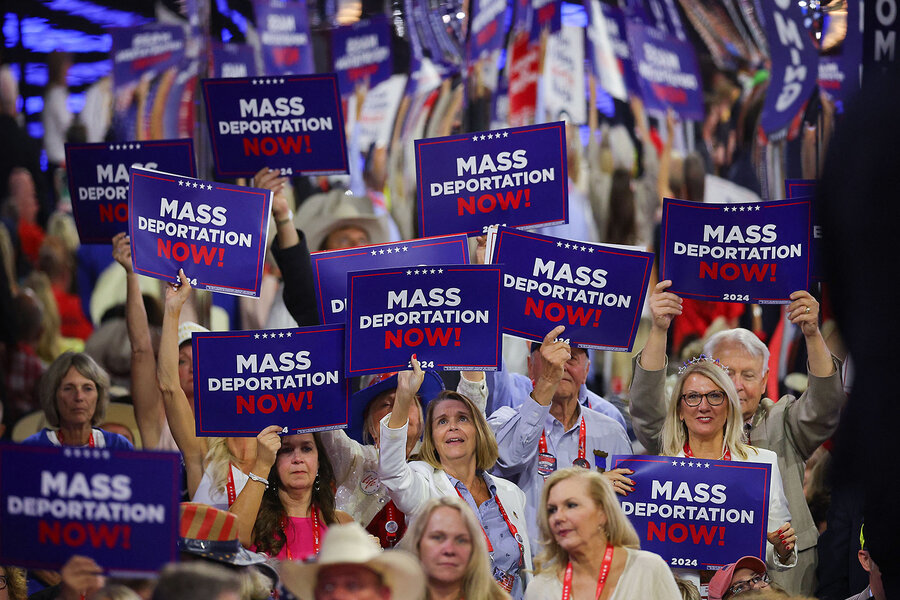

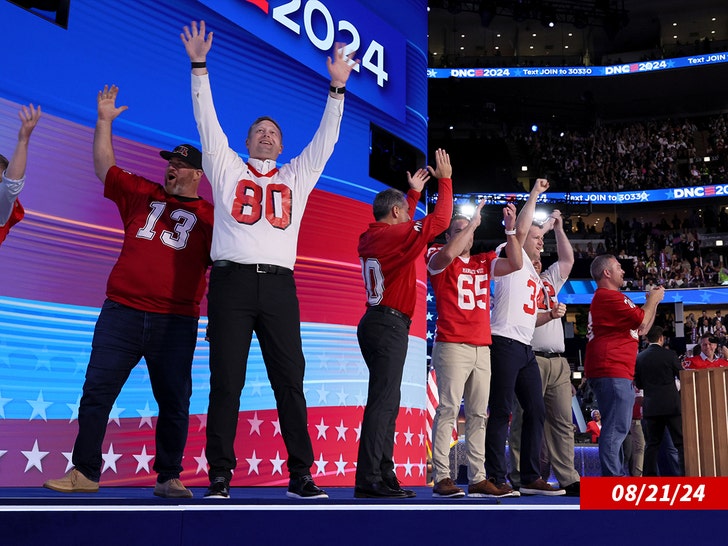
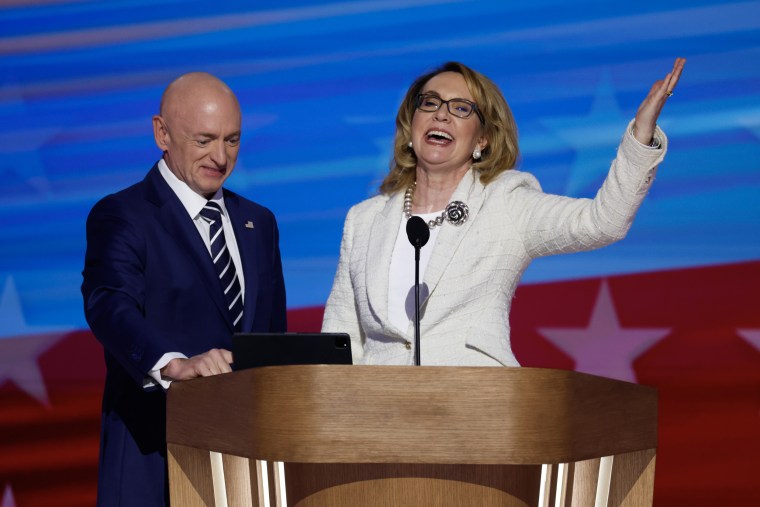
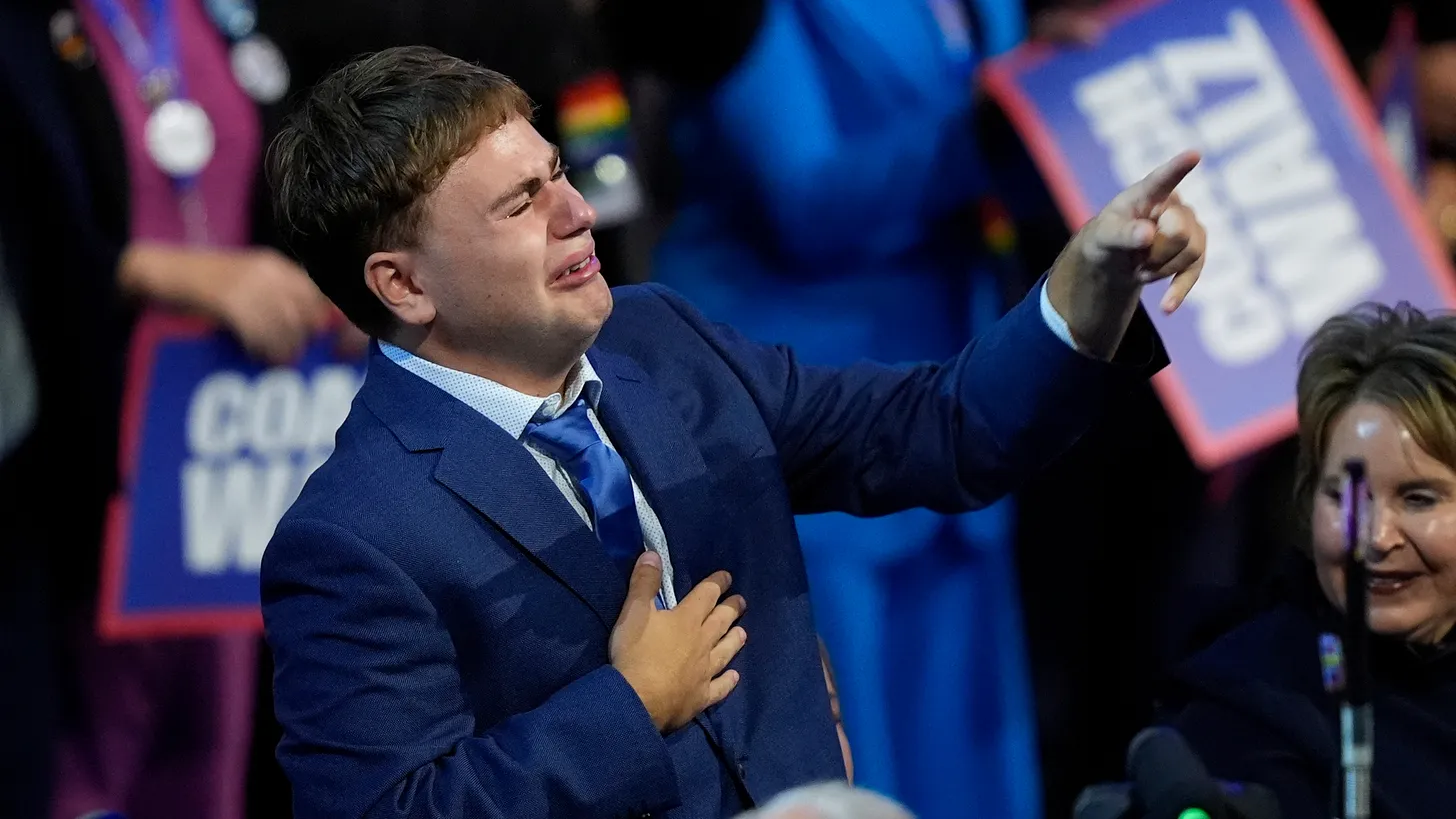


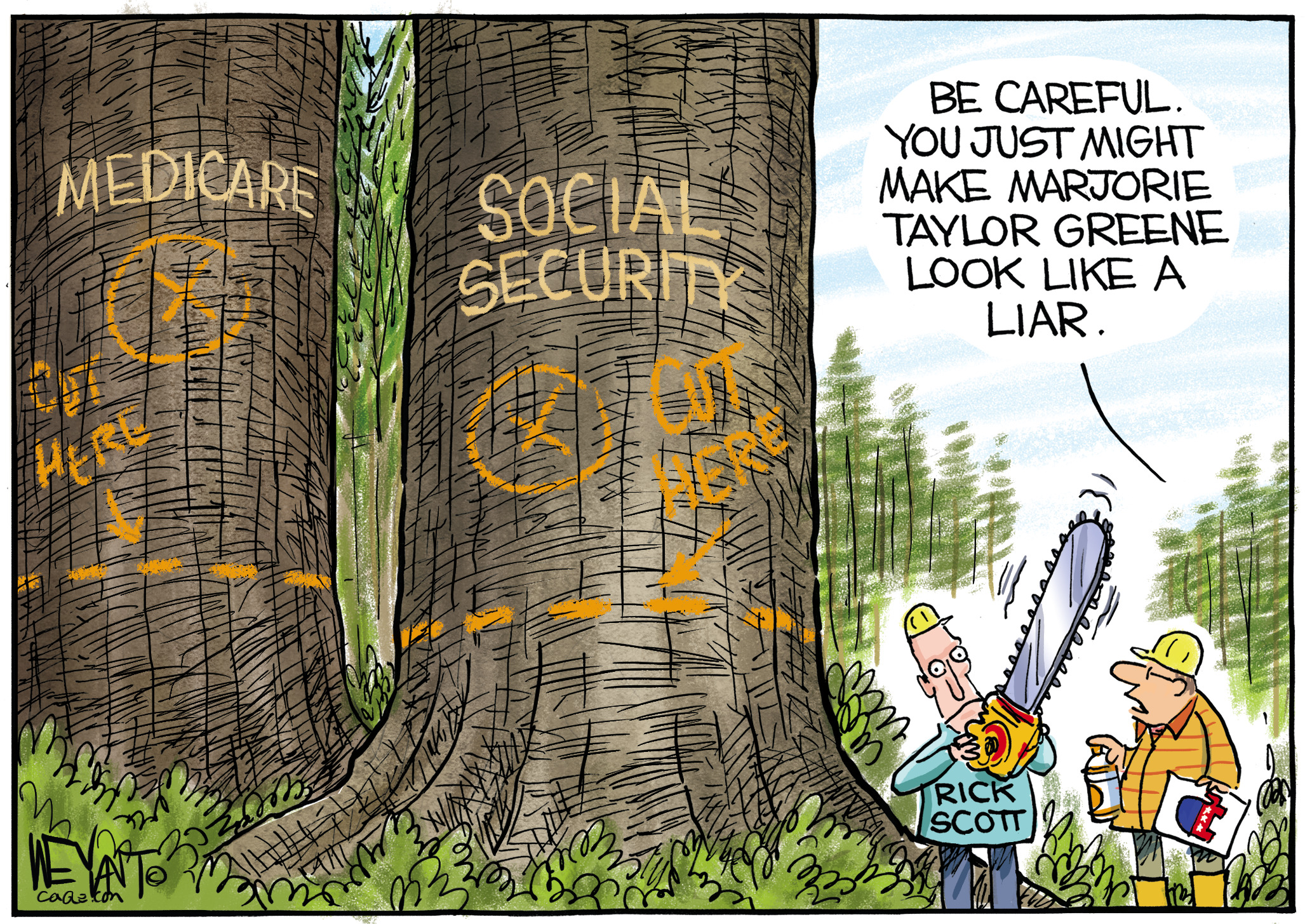
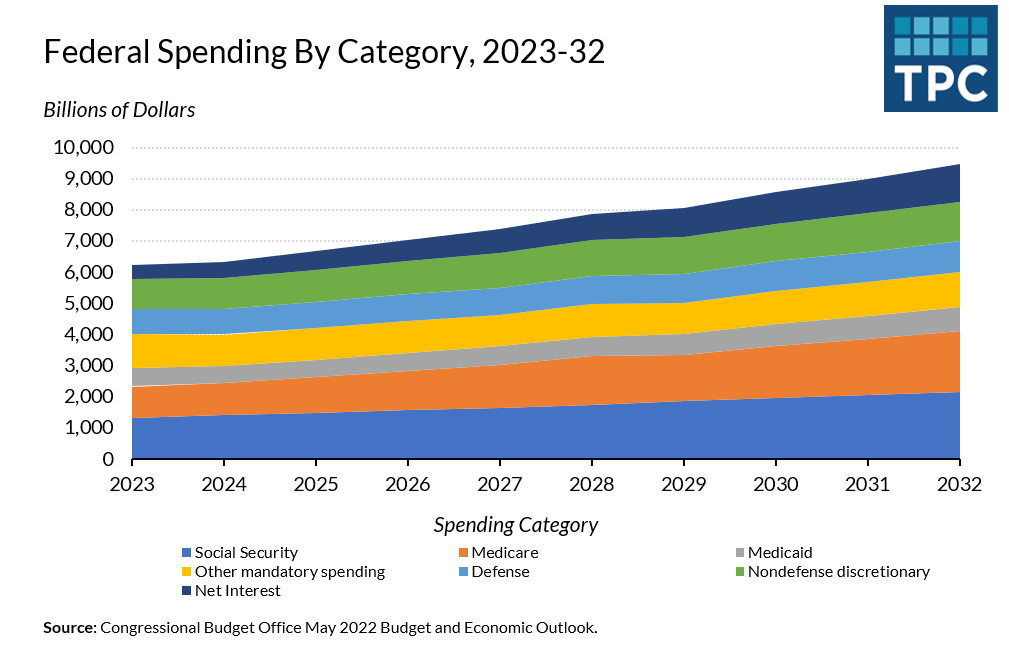
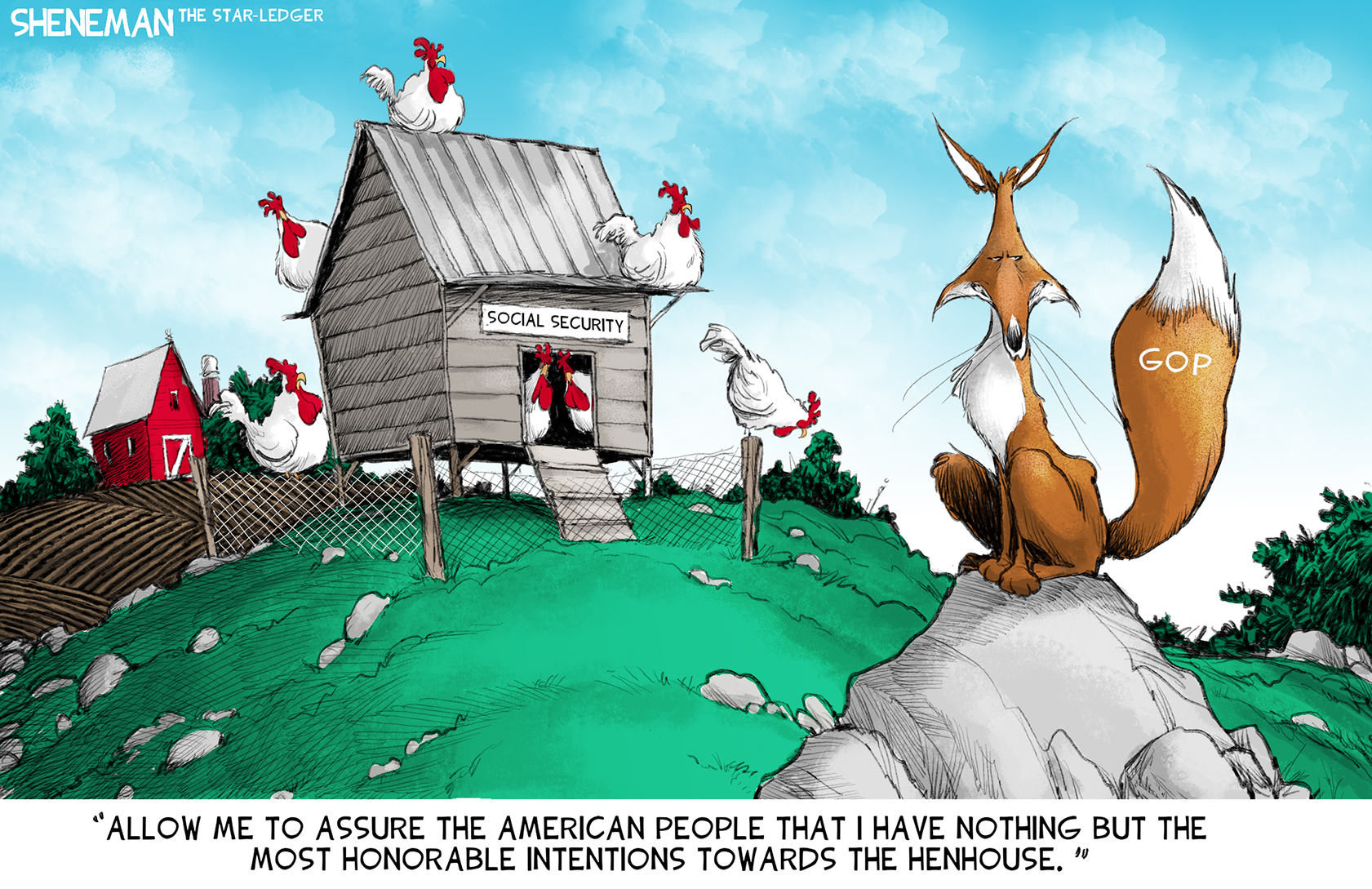

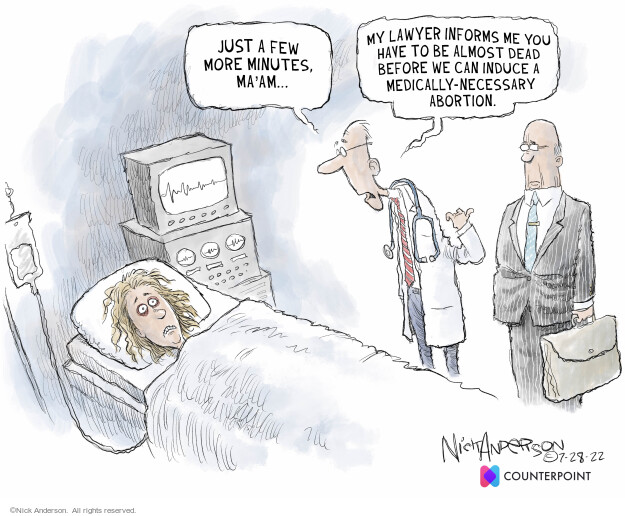


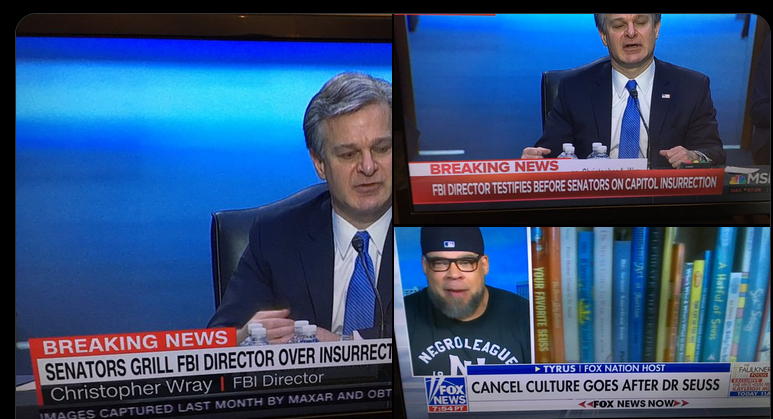



 The Weekly Sift