Tag Archives: Democrats

Vote. It’s not nearly enough, but it’s something.

If you’ve got friends who think they’re “protesting” by not voting, send them this from the Young Turks:

And while we’re on the subject, let’s address the “Both parties are owned by Wall Street” or “neither party represents me” argument: It’s true. There’s lots of stuff I want out of government that neither party is even proposing: single-payer health care, ending the perpetual war, reining in the NSA, enforcing the antitrust laws,  … I could go on.

What that proves isn’t that voting doesn’t matter, but that voting is not enough. In addition to voting, we need to be educating ourselves and our friends, challenging cultural assumptions, mobilizing support around an agenda for more radical change, launching primary challenges to get better Democrats on the ballot, pushing better forms of voting (like instant runoff) and more.

We need to use the political process, and we need a movement like Occupy … plus whatever else you can think of. Not one or the other. Both.

Not voting isn’t a protest, it’s a retreat. Not voting means abandoning the small amount of power the system allots you.

You have a choice tomorrow. There’s one party with a way-too-small response to global warming, and another that that says climate scientists are part of a global conspiracy; one party that keeps the perpetual war simmering reluctantly, and another that would eagerly boil it over; one party that sells out to Wall Street on certain key issues, and another that is 100% owned and operated by Wall Street and the fossil fuel industry; one party with a half-hearted response to economic inequality, and another working to increase inequality; one party that won’t stand up to the theocrats, and another that stands with them. In the near term, one or the other is going to control the government. Which should it be?

Would I like a different choice? Sure I would. But in the meantime I’m going to make the choice I have. Because this one’s simple: Do you want more Ruth Bader Ginsburgs on the Supreme Court or more Anthony Scalias? That decision is going to be made by voters. So don’t you want to be a voter?

Vote. It’s not nearly enough. But it’s something.

A Short History of White Racism in the Two-Party System

If you’ve seen the Lincoln movie, maybe you’re still walking around with this bit of cognitive dissonance: In 1864, the Democrats are the party of slavery and the Republicans the party of emancipation and racial justice. What’s up with that? How did we get from there to here?

The story is doubly worth telling because Republicans like Ann Coulter and Jonah Goldberg have been misrepresenting it so grossly.

A good place to start is the presidential election of 1860, which brings Lincoln to power and convinces Southern whites (the only people who can vote in the South in 1860) that secession is their best chance to maintain slavery*.

Lincoln gets only 40% of the vote, but in a four-way race (the Democratic Convention split over whether the platform should endorse the Supreme Court’s Dred Scott decision) that’s enough to win. In terms of the popular vote, his closest competition is Illinois Democrat Stephen Douglas (30%), but in electoral votes another Democrat, sitting Vice President John Breckenridge of Kentucky, finishes second with 72 EVs to Lincoln’s 180.

Douglas fails because he is a national candidate representing continued compromise over slavery, while Breckenridge and Lincoln are sectional candidates with clear pro- and anti-slavery positions. So Douglas gets 15% in Alabama (to Lincoln’s 0%) and 43% in Wisconsin (to Breckenridge’s 0.5%), but only manages to carry Missouri and New Jersey, giving him 12 EVs and fourth place behind John Bell’s 39.

During Reconstruction, Southern whites still blame Lincoln’s party for their humiliation in “the War of Northern Aggression“, but the new black vote makes Southern Republicans competitive — particularly in South Carolina, where blacks have long outnumbered whites. So the 1876 map looks like this:

1876 electoral map

But by 1896 the Jim Crow laws have disenfranchised Southern blacks, and Southern whites still remember how Lincoln destroyed their society, so Southern Republicans go extinct. Mississippi, for example, gives Democrat William Jennings Bryan a 91% majority. The 1896 map is almost a negative of the 2012 map — Democratic in the South and Mountain West, Republican in the Northeast, Midwest, and Far West.

1896 electoral map

1896 electoral map

2012 electoral map

2012 electoral map

The “solid South” stays Democratic through 1944, when FDR carries Mississippi with 94% of the vote.

1944 electoral map

So until 1944, there is no doubt that the Democrats are the party of Jim Crow. National figures like FDR may not be actively racist — and blacks benefit from the general anti-poverty provisions of the New Deal — but Democrats are not going to rock the boat of Southern white supremacy. Republicans, on the other hand, have nothing to defend in the old Confederacy, so it costs them nothing to champion civil rights. Their 1944 platform does them credit:

Racial and Religious Intolerance

We unreservedly condemn the injection into American life of appeals to racial or religious prejudice.

We pledge an immediate Congressional inquiry to ascertain the extent to which mistreatment, segregation and discrimination against Negroes who are in our armed forces are impairing morale and efficiency, and the adoption of corrective legislation.

We pledge the establishment by Federal legislation of a permanent Fair Employment Practice Commission.

 Anti-Poll Tax

The payment of any poll tax should not be a condition of voting in Federal elections and we favor immediate submission of a Constitutional amendment for its abolition.

Anti-Lynching

We favor legislation against lynching and pledge our sincere efforts in behalf of its early enactment.

But outside the South, Democrats are also changing. In 1941 Roosevelt bans racial discrimination in defense industries.

At the 1948 Democratic Convention, a young Hubert Humphrey leads a Northern liberal bloc that adds this Civil Rights plank to the platform:

We again state our belief that racial and religious minorities must have the right to live, the right to work, the right to vote, the full and equal protection of the laws, on a basis of equality with all citizens as guaranteed by the Constitution.

We highly commend President Harry S. Truman for his courageous stand on the issue of civil rights.

We call upon the Congress to support our President in guaranteeing these basic and fundamental American Principles:

(1) the right of full and equal political participation;
(2) the right to equal opportunity of employment;
(3) the right of security of person;
(4) and the right of equal treatment in the service and defense of our nation.

Southern delegates respond by walking out of the convention and establishing the States’ Rights Democratic Party, a.k.a. the Dixiecrats, who nominate South Carolina’s Democratic Governor Strom Thurmond for president and endorse “the segregation of the races and the racial integrity of each race”. In spite of later efforts to sugarcoat his memory, Thurmond is a racist running an openly racist campaign. He tells one rally:

There’s not enough troops in the army to force the Southern people to break down segregation and admit the nigger** race into our theaters, into our swimming pools, into our homes, and into our churches.

After the Dixiecrat walkout, President Truman decides the die is cast and desegregates the military.

The 1948 electoral map looks like this:

1948 electoral map

So Democrats and Dixiecrats split the South, with still no Southern Republicans worth mentioning. Tom Dewey gets only 3% of the vote in Mississippi and 4% in South Carolina.

1948-1980 is a transitional period. On the state level, the South is still solidly Democratic. Republicans often don’t even bother to field candidates, as in Alabama in 1962, where George Wallace wins the governor’s race with 96% of the vote. (Wallace previously ran in 1958 with the endorsement of the NAACP and without support from the KKK. After losing the Democratic primary to a more openly racist candidate, he said, “I was out-niggered by John Patterson. And I’ll tell you here and now, I will never be out-niggered again.”)

The great civil rights face-offs of the 50s and 60s are between Southern Democratic governors and presidents of either party. In 1957, Republican President Dwight Eisenhower sends troops to Little Rock when Democratic Governor Orval Faubus refuses to integrate Central High School. But Democratic President John Kennedy does exactly the same thing in 1962 when Democratic Governor Ross Barnett refuses to integrate the University of Mississippi, and in 1963 when Governor Wallace refuses to integrate the University of Alabama.

With Eisenhower’s invasion of Little Rock still rankling, 1960 is the second-to-last hurrah of the Democratic South. Putting Texan Lyndon Johnson on the ticket holds most of the South for Kennedy, but the Democrats’ hold is slipping: 15 Southern electoral votes go to Virginia Senator Harry Byrd, and Nixon is competitive in places Republicans never were before; he gets 49% in South Carolina, far more than Dewey’s 4% just three elections ago.

1960 electoral map

After JFK’s assassination, Johnson pushes the Civil Rights Act of 1964 through Congress with bipartisan support. 18 Southern Democrats and one Republican filibuster in the Senate — a rare occurrence in those days — but the bill ultimately passes with 46 Democratic votes and 27 Republicans. As he signs the bill, Johnson comments, “We have lost the South for a generation.

But will the Republicans pick the South up, or will spurned Dixiecrats be a regional party whose support no one wants? Through the 60s, moderate Republicans like Nelson Rockefeller and George Romney push to uphold the Lincoln-Dewey-Eisenhower civil-rights tradition and compete for black votes. But they lose. The 1964 Republican nominee against Johnson is Barry Goldwater, one of the few non-Southern senators who voted against the Civil Right Act.

Goldwater marks the beginning of I’m-not-a-racist-but Republicanism. His stated reasons for opposing the Civil Right bill have nothing to do with race. (He thought it was unconstitutional.) And the 1964 Republican platform stands by the Party’s pro-civil-rights record:

[W]e pledge: …

—full implementation and faithful execution of the Civil Rights Act of 1964, and all other civil rights statutes, to assure equal rights and opportunities guaranteed by the Constitution to every citizen;

—improvements of civil rights statutes adequate to changing needs of our times;

—such additional administrative or legislative actions as may be required to end the denial, for whatever unlawful reason, of the right to vote;

—immigration legislation seeking to re-unite families and continuation of the “Fair Share” Refugee Program;

—continued opposition to discrimination based on race, creed, national origin or sex. We recognize that the elimination of any such discrimination is a matter of heart, conscience, and education, as well as of equal rights under law.

But it also gives white racists reason to hope.

[The Johnson] Administration has failed to apply Republican-initiated retraining programs where most needed particularly where they could afford new economic opportunities to Negro citizens. It has preferred, instead, divisive political proposals.

i.e. the Civil Rights Act and what becomes the Voting Rights Act of 1965. The platform also denounces “inverse discrimination” and “the abandonment of neighborhood schools, for reasons of race”. So Goldwater is against a public school saying “no niggers”, but if a neighborhood (just by pure chance, of course) happens to be all-white, its all-white school is just fine. His party also pledges

to open avenues of peaceful progress in solving racial controversies while discouraging lawlessness and violence.

Note the change: Dewey was worried about lynchings — white-on-black violence. In 1964 lynching are still happening, the Watts riots are still in the future, and Martin Luther King’s campaign of non-violent civil disobedience is being met with murders like the infamous Mississippi Burning case. But Goldwater’s platform lumps civil disobedience (“lawlessness”) together with “violence”, and pledges to “discourage” it.

So if you’re a Southern white supremacist who worries about civil rights agitators stirring up trouble in your town, Goldwater is your guy, just like he’s Strom Thurmond’s guy. Goldwater carries the South (and his home state of Arizona) as the rest of the country soundly rejects him.

1964 electoral map

Re-elected, LBJ passes the Voting Rights Act of 1965, also with bipartisan support. LBJ addresses a joint session of Congress, in a speech that still makes me misty-eyed:

It is not just Negroes, but really it is all of us, who must overcome the crippling legacy of bigotry and injustice. And we shall overcome.

Thurmond the Dixiecrat-turned-Republican is the only Republican senator who votes No. Republicans field a candidate for governor in South Carolina in 1966 for the first time since Reconstruction. He loses 58%-42%, but erosion of support for the national Democratic Party is reaching the state level.

Goldwater’s landslide loss hardly establishes a new normal for Republicans, who still flirt with Rockefeller and Romney before settling on Nixon, whose civil-rights position is fuzzy. While few Dixiecrats are ready to follow Thurmond into the new tribe of Southern Republicans, they also can’t vote for the hated Hubert Humphrey. So in 1968 they give the regional-party thing another try with George Wallace.

1968 electoral map

But Nixon understands that Republicans have to pick up what the Democrats have dropped. His “Southern Strategy” (with Thurmond’s endorsement) captures the upper South in 1968, which is his victory margin in a close election. His long-term vision is for Republicans to absorb the Wallace vote into an unbeatable conservative coalition that Nixon strategist Kevin Phillips calls The Emerging Republican Majority.

https://i0.wp.com/ecx.images-amazon.com/images/I/51N4bKDcioL._SL500_AA300_.jpgPhillips writes:

The more Negroes who register as Democrats in the South, the sooner the Negrophobe whites will quit the Democrats and become Republicans. That’s where the votes are. Without that prodding from the blacks, the whites will backslide into their old comfortable arrangement with the local Democrats.

The Nixon re-election landslide of 1972 sweeps the South, but it’s hard to read much into that, since he takes every state but Massachusetts, and Georgia’s Jimmy Carter manages to pull the Democratic South together one last time in 1976.

But 1980 is the re-alignment election that has been brewing since 1964.

Ronald Reagan’s first speech as the Republican nominee is in the symbolic location of Neshoba County, Mississippi, site of the Mississippi Burning murders of 1964. So: symbolic time, symbolic place — what’s he say? Nothing about race at all. Just this:

I believe in state’s rights; I believe in people doing as much as they can for themselves at the community level and at the private level. And I believe that we’ve distorted the balance of our government today by giving powers that were never intended in the constitution to that federal establishment. And if I do get the job I’m looking for, I’m going to devote myself to trying to reorder those priorities and to restore to the states and local communities those functions which properly belong there.

States rights, local control — just what Orval Faubus and Ross Barnett and George Wallace wanted when they refused to enforce federal court orders to integrate their schools. Just what Eisenhower and Kennedy didn’t allow when they sent federal troops.

It’s the beginning of the dog-whistle era. After the election, Reagan strategist Lee Atwater lays it out:

You start out in 1954 by saying, “Nigger, nigger, nigger.” By 1968 you can’t say “nigger”—that hurts you, backfires. So you say stuff like, uh, “forced busing”, “states’ rights”, and all that stuff, and you’re getting so abstract. Now, you’re talking about cutting taxes, and all these things you’re talking about are totally economic things and a byproduct of them is, blacks get hurt worse than whites.… “We want to cut this,” is much more abstract than even the busing thing, uh, and a hell of a lot more abstract than “Nigger, nigger.”

So Reagan isn’t trying to “out-nigger” anybody, because people up North will hear him and think he’s evil. He’ll just say “states rights” — like Strom Thurmond and Jefferson Davis before him — and hope “Negrophobe whites” get the message that they are welcome in his coalition.

They get the message.

1980 electoral map

They get it not just nationally, but on the state level. Alabama and Georgia elect Republican senators for the first time since Reconstruction.

In case anybody has forgotten that message by 1988, George H. W. Bush reminds them: If you vote for Democrats, Willie Horton will rape your wife.

Locally, the transition from the “old comfortable arrangement” is gradual. Most Dixiecrat/Democrat politicians don’t follow Strom Thurmond’s path to the Republican Party, though during the 70s and 80s they often combine with Republicans in Congress to form the conservative majority Phillips predicted. But as they retire, they are replaced by Republicans like Trent Lott and Newt Gingrich. (Lott, interestingly, was endorsed for Congress by his retiring Democratic predecessor.)

The chart on the right shows a generational turnover, not a walk-out. Southern Democrats in Congress today tend to be blacks representing majority-black districts, like South Carolina’s Jim Clyburn.

Today, the old white Confederacy is solidly Republican. Nationally, Romney had a clear majority of white voters: 59%. But in Mississippi, a whopping 89% of whites voted for Romney.

How did he lock up the Mississippi white vote? Not by saying “nigger, nigger”. Republicans never did that, because they didn’t exist in Mississippi when that was a winning strategy. Instead, they are the party of traditional values in a state where “tradition” means the stars-and-bars and Colonel Reb. They are the party of property rights and business in a state where property and business overwhelmingly belong to whites. They are the party of small government in a state where only massive federal intervention gave blacks the right to vote or to attend the state university.
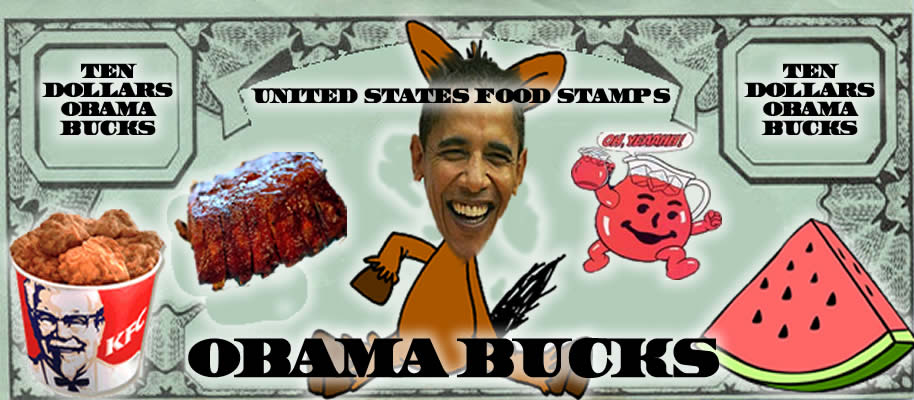
Republicans don’t have to say “nigger, nigger”. Everybody gets it. They aren’t the Racist Party, but they are the party where white racists are welcome, where “Barack the Magic Negro” is funny, and people email each other photos of Obama with a bone through his nose or put his image on fantasy food stamps with ribs and watermelon. Just as Republicans aren’t anti-Hispanic, they just think police should stop people who look like they might be illegal immigrants. They aren’t even anti-Muslim, they just don’t think freedom of religion includes the right to build a mosque.

That’s the Party of Lincoln today. And now you know how they got here.


*A longstanding argument claims that secession was about “state’s rights” and not about slavery. Mostly you’ll hear this from people who have affection for the Confederacy but find slavery embarrassing. Actual Confederates did not suffer this embarrassment, and were very open about why they were seceding. South Carolina’s declaration of secession is clear:

A geographical line has been drawn across the Union, and all the States north of that line have united in the election of a man to the high office of President of the United States, whose opinions and purposes are hostile to slavery. … On the 4th day of March next, this party will take possession of the Government. It has announced that the South shall be excluded from the common territory, that the judicial tribunals shall be made sectional, and that a war must be waged against slavery until it shall cease throughout the United States.

We, therefore, the People of South Carolina, by our delegates in Convention assembled, appealing to the Supreme Judge of the world for the rectitude of our intentions, have solemnly declared that the Union heretofore existing between this State and the other States of North America, is dissolved.

** When this recording came up in a different context a few months ago, I gave Thurmond the benefit of the doubt, that he might have said “negro” very fast and slurred. You can listen and judge for yourself.

Your 2012 Deep Background Briefing

2012 is an unusual election year. Some elections revolve around a single issue: 1860 was about slavery, 1932 about the Depression. 2002 (and to a lesser extent 2004) was about terrorism. 2006 was about the Iraq War. 2010 was about rising government spending and debt.

Some elections, particularly re-elections of incumbent presidents, are ratifications of a general direction, like Reagan’s “Morning in America” campaign from 1984 or the Democratic landslides of 1964 and 1936.

There’s always a chance that an emergency will take over an election.  No matter what anybody had planned in 2008, everything changed when the economy started collapsing in late September. Obama probably would have won anyway, but the election turned into a landslide because the country wanted a calm voice and a steady hand. McCain’s “maverick” image was suddenly exactly wrong.

Barring an emergency, 2012 is about a mood: anxiety.

Obviously, President Obama can’t run a ratification campaign in a year when there is a large and growing sense that the country is on the wrong track. But at the same time, this isn’t an issue election. Unemployment, inequality, debt, corruption, national security, health care, climate change, moral decay, and so on are all serious concerns for many voters, but in 2012 they are mainly screens onto which to project a much more diffuse fear that our country is broken — that whatever the issue, we are no longer capable even of grappling with it, much less solving it.

By its nature, anxiety is full of contradictory impulses: Any program that isn’t radical seems like re-arranging the Titanic’s deck chairs, but any particular radical change seems like jumping out of the frying pan into the fire. We want a hero to ride in and save us, and yet we are cynical about heroes on horseback. We look back fondly to a brighter, more confident era, and yet we resonate with Jack Burden’s cynical challenge to a nostalgic Anne Stanton in the classic political novel All the King’s Men:

What you mean is that it was a fine, beautiful time back then, but I mean that if it was such a God-damned fine, beautiful time, why did it turn into this time which is not so damned fine and beautiful if there wasn’t something in that time which wasn’t fine and beautiful? Answer that one.

Parties. An anxiety election is an opportunity for the party out of power, but which party is that?

A Democrat is president, but Republicans control the House and have the Senate blocked up with filibusters. An activist Republican majority on the Supreme Court keeps inventing new rights for corporations. Several swing states went Republican in 2010, and the radical programs of the new governors are wildly unpopular.

What makes Americans most anxious is that no one seems to have power. We spent the summer agonizing about the debt ceiling and how to lower the deficit, but in the end that issue got punted to the so-called supercommittee, which deadlocked. Neither party can force its view on the other, yet attempts to compromise also fail.

The Republican presidential opportunity. The challenger has an advantage in an anxiety election, but seizing that advantage requires threading a needle. You have to be on both sides of several contradictions: You are an outsider, but you are experienced; you’re a scrapper who will do whatever it takes to win, but you don’t fight dirty; you’re uncompromising but not rigid; principled but pragmatic; radical but not dangerous; able to get something done in Washington, but not willing to play the old game.

A Republican wins the presidency in November if he (we’ll ignore Michele Bachmann) represents Do Something Different and makes Obama represent Keep Doing What We’re Doing. That vague referendum would be a landslide for Do Something Different.

So the ideal Republican message would create the illusion of specificity without actually being specific. It could embrace a subtly self-contradictory slogan (like Bush’s “compassionate conservatism” from 2000) and embody vague themes (like the Hope and Change of Obama’s 2008 campaign). The perfect message would resemble Nixon’s in 1968: He confidently claimed to have a plan to get us out of Vietnam, but had reasons for not revealing its details.

That’s basically what worked in 2010: Republicans promised to “cut spending” without saying which spending. They implied that the federal budget was full of bridges-to-nowhere that could be eliminated without hurting anybody, but didn’t have to identify them.

Unfortunately for Republican candidates, that perfect November message flops completely in the primaries. The party is firmly in the hands of its radical base, to whom even the Republican establishment represents Keep Doing What We’re Doing.

The base is afraid of compromise and wants to nail candidates down on specifics. So it’s not enough to endorse a theme like traditional American values; a candidate has to oppose same-sex marriage and gays in the military. He can’t just be religious, he has to be a strong Christian who wants kids in the public schools to pray and learn creationism. Environmental pragmatism and balancing short-term economic interests against long-term environmental harm — that’s not good enough. The candidate must promise to abolish the EPA and agree that climate change is a scam.

Social Security and Medicare are so complicated that they are perfect for a Nixonian I-have-a-plan claim, but even Mitt Romney has been driven to endorse Paul Ryan’s voucher system for Medicare.

The Republican base is showing its own symptoms of anxiety. Again and again they have jumped at the vague idea of a hero on horseback, but then been disappointed when they tore into the details of the person and the plan. As long as Rick Perry was “the Jobs Governor” or Herman Cain was an inspirational biography plus a 9-9-9 plan, they rode high. Closer inspection has been fatal to both.

How Obama Can Win. Obama’s calm manner is well suited to an anxiety election, but it won’t be enough, even if his opponent looks scary. Even a radical challenger (like Reagan) could win in a year with a big wrong-path majority (like 1980).

Usually, though, an incumbent president facing a big wrong-path majority also faces a damaging primary campaign, like Carter’s against Ted Kennedy in 1980 or Johnson’s against Gene McCarthy in 1968. But not this year. The Left hasn’t been happy with Obama (see my own Barack, Can We Talk?), but after seeing the Tea Party governors like Scott Walker, few liberals are willing to risk helping the Republicans win the presidency.

Ditto for liberal third-party challengers like Nader in 2000 or Henry Wallace in 1948. Even those of us who lament the corrupting influence of Goldman Sachs or how many War-on-Terror abuses Obama has ratified — we can’t claim that it makes no difference which party wins.

So even if the Left is not happy, it will be united and even motivated in the fall.

Assuming a less-than-perfect Republican challenger, Obama’s winning message has these pieces.

1. I’ve done more than you think. The model here is an op-ed in Tuesday’s LA Times, in which a woman apologizes to President Obama for turning against him.

I’m sorry I didn’t do enough of my own research to find out what promises the president has made good on. I’m sorry I didn’t realize that he really has stood up for me and my family, and for so many others like us.

The reason? She was diagnosed with breast cancer and discovered that the Affordable Care Act makes it possible for her to get health insurance. Pre-ACA, she would have been uninsurable and might well have lost everything.

For decades, health care has been like the weather — everybody talked about it, but nobody succeeded in doing anything. You could wish for more or better than the ACA, but against the alternative of continuing to do nothing (and all the Republican proposals amount to doing nothing), ObamaCare looks pretty good. Voters may have hated the horse-trading process of passing the ACA, but they will love the personal stories of the people it is already helping.

In foreign policy, Obama ended our combat mission in Iraq and finally nailed Osama bin Laden. He helped the Libyans overthrow Gaddafi on their own and didn’t involve us in another Iraq-style mess. The trump card of Bush defenders was always to say, “He kept us safe” after 9-11. Well, we’ve been equally safe under Obama.

Obama gets his lowest marks on the economy, but even there he looks good if you remember just how bad things were when he took office. Expect to see more of this graph:

2. I’m on your side. Preventing big cuts in Social Security and Medicare, wanting to raise taxes on millionaires — people support that stuff. It’s going to help a lot that swing states like Ohio, Michigan, Wisconsin, and Florida have seen how Republican governors grind down the working class and favor the wealthy.

3. You like me. Even surveys that show a low job-approval rating show that people like Obama personally. The Republican base — the folks who forward emails about his Kenyan birth and his Muslim faith — want to see red-meat attacks against him. But swing voters don’t.

4. I’m running against Congress. This was the Truman strategy in 1948. Obama’s approval ratings hover in the 40s, but Congress’ are in the teens. And if voters blame Congressional Republicans for the gridlock in Washington, then Obama becomes the do-something-different candidate.

5. My plans are better than their plans. This is where the Republican’s nomination battle is going to work against them. If Obama can make the Republican candidate stand for the specific policies he endorsed to get nominated, rather than Do Something Different, he’ll win.

A lot of moderates who aren’t usually single-issue voters will discover that certain Republican positions are deal-breakers. Can you really vote for a candidate who wants to do nothing about global warming? Or roll back gay rights that already exist and don’t seem to be hurting anybody? Or take away collective bargaining rights? Undo child labor laws? Automatically treat Hispanics or Muslims like suspects? Define a fertilized ovum as a person, which turns a doctor-patient discussion of abortion into a murder conspiracy? Or privatize Social Security and replace Medicare with a voucher program?

How far do they go? A lot hinges on how long the Republican nomination stays in doubt, and how far right the nominee has to go. Their ideal winning scenario — that an early consensus would form around a candidate with an ambiguous record like Romney’s — is already not happening.  If candidates are still competing for Tea Party votes in April and May, they’ll have a hard time coming back to get moderate votes in November.

Barack, Can We Talk?

It’s me. I’m here in the Democratic base. It’s been a little testy between your people and my people lately, and I’m concerned that things might get out of hand. Worse, I worry that you don’t understand why.

It’s not that we don’t understand how government works, or that democracy runs on compromise. And it’s not that we thought you were some kind of messiah, who could turn the country around just by pointing in a new direction. (That slam on us was originally a Republican talking point, remember?)

Let me try to explain how it looks from our point of view.

You know I wouldn’t use George W. Bush as an example unless I were desperate, right? Well, in 2005 Bush went all out promoting his Social Security privatization plan. Bankruptcy, personal accounts, blah, blah, blah.

The country hated it. So what did Bush do next? He could have decided that (having put so much effort into raising the issue) he had to “get something done”. That would require Democratic support, so he could have adopted a Democratic idea, like extending Social Security taxes to all wages rather than just the first $100K or so.

And then he could have sold the “compromise” package to the public by adopting Democratic rhetoric — maybe by pointing out how well the wealthiest Americans had done over the past 20 years, and how this bill was just asking them to “give something back” for all the benefits the American economy had given them.

Can’t picture it, can you? Me either — and that’s the point. Dumb as he was, President Bush understood two important things:

  • The Republican Party stands for something. You can’t take any old idea and call it “Republican” without screwing up the brand.
  • The political struggle isn’t just about writing laws, it’s about defining reality. Republican success rests on a collection of public misconceptions and faulty frames. As long as the public believes that stuff, they win.

Brands. Every Republican candidate starts every campaign with an advantage: All he has to do is say “Joe Shmoe, conservative Republican” and everybody knows who he is and what he stands for. Low taxes, less regulation, militarism, traditional social values — love that image or hate it, we all recognize it.

Democrats, on the other hand, have to establish themselves. That takes time and money, and it makes us vulnerable to mud-slinging and swift-boating.

Branding has to start at the top, and Democratic leaders haven’t been up to the job for decades now. Every time a Democratic president sounds like he’s making up his mind on the fly, we’re that much further away from having an effective Democratic brand.

Reality. Listen to the Republican presidential candidates: Global warming isn’t real. Spending cuts create jobs. Rich people are job creators. The unemployed are lazy. Unions hurt working people. Government can’t create jobs. All government spending is waste. The minimum wage is too high. The stimulus failed. Protecting the environment is a luxury we can’t afford. Roads, schools, and parks are luxuries we can’t afford. Medical care for the old and poor is a luxury we can’t afford.

That’s the sound of reality being defined. When we take on issues one at a time, we fight on a terrain Republicans have been shaping for decades. That’s why Bush never adopted Democratic rhetoric, and why it kills us when Republican rhetoric comes out of your mouth.

What we need from our Democratic president isn’t just a few more dollars for infrastructure or the unemployed, we need a defense of reality.

Compromising without fighting. Sure, Congress needs to pass budgets, and you have to compromise with Republicans to do that. But again and again, the Republicans remain faithful to their vision and you come out of the compromise owning the package. If the result turns out to be inadequate in some way, the public thinks the alternative is to do what the Republicans wanted.

Look at health care: Every real Democrat knows that the right answer is single-payer. It works in Europe. It’s cheaper and delivers better care. Sure, you couldn’t have gotten that through Congress. I know. I understand. But because you never proposed it, Democrats had no platform for talking about it. The compromise that came out of Congress is now ObamaCare (even though it’s based on the Mitt Romney/Heritage Foundation plan in Massachusetts), and the only alternative the public knows about is the Republican do-nothing plan.

Look at the stimulus. Liberal economists said it needed to be bigger and have less tax cuts. But because you never proposed that, the compromise that came out of Congress is the Obama stimulus. Here’s what Paul Krugman predicted in March, 2009:

It’s September 2009, the unemployment rate has passed 9 percent, and despite the early round of stimulus spending it’s still headed up. Mr. Obama finally concedes that a bigger stimulus is needed.

But he can’t get his new plan through Congress because approval for his economic policies has plummeted, partly because his policies are seen to have failed, partly because job-creation policies are conflated in the public mind with deeply unpopular bank bailouts. And as a result, the recession rages on, unchecked.

The problem is not that you compromise, it’s that you compromise without fighting. The public never sees the liberal alternative, so whatever passes becomes the leftmost edge of the possible.

Repeating false rhetoric. The reality-battlefield that we’re losing worst on is economics.

To you and me, it’s obvious that the economy has a demand problem: Businesses aren’t hiring because they have no customers. Give them a tax break, let them endanger their workers or dump more chemicals in the groundwater — and they still won’t have any customers, so they still won’t hire.

In these situations, government needs to create demand by spending. We have unemployed people, work that needs doing (bridges to rebuild, an electric grid that badly needs an upgrade), and investors willing to lend the government money at interest rates lower than inflation. It’s a no-brainer: Borrow the money to hire the people to do the work.

You know why we can’t mobilize public support behind that program? Because conservatives have convinced large chunks of the public to frame the problem wrong. The worst frame out there is the government/family analogy: Families have to cut back in hard times, so government should have to cut back too.

You know that’s nutty. Just like Joseph told Pharaoh, government has to save when everyone else is spending and spend when everyone else is saving. So why do you say things like this?

Families across this country understand what it takes to manage a budget. Well, it’s time Washington acted as responsibly as our families do.

And why did you frame the debt-ceiling negotiations purely in deficit-reduction terms, as if job-creation wasn’t an issue?

Another false Republican frame is that businesses aren’t hiring because they lack “confidence”. They then link doubt to debt, and so justify the crazy idea that we can create jobs by cutting spending. This kind of nonsense needs to be called out at every turn.

Instead, a White House spokesman

repeatedly said that deficit-reduction was crucial in generating economic confidence. Confidence—he repeated this word many times.

What Democrats need from you. We need you to be a reality warrior. We need you and your whole administration to resist false Republican frames and never to lose sight of Democratic ideals, even when there is no clear path to implementing them.

If you have to compromise for the good of the country, compromise. But Republicans can’t make you adopt their rhetoric, no matter how many seats they have in Congress. Hold them responsible for their part of every compromise — by refusing to stop talking about what you would do if they would let you.

Don’t embrace the compromises, because that lets Republicans make their trade-offs for free: Every bit of deficit reduction costs jobs. Make them own that.

Talk about this: Full employment. Single-payer health care. Clean energy. Racial justice. Carbon reduction. Smart electric grid. Efficient mass transit. Education and opportunity for everyone.

Maybe we don’t see how to implement it all right now, but we should never lose sight of it. If not this year, next year. If not this decade, next decade. Don’t tell us we can’t.

Yes we can.