Voting Rights one month after Shelby

A little over a month ago, the Supreme Court threw out Section 4 of the Voting Rights Act. That was the part that forced the former Jim Crow states to clear with the federal government any changes in voting rules. Now that those states were off the federal leash, no one knew exactly what would happen next. But there were several possibilities:

The Jim Crow states could have proved Chief Justice Roberts right. “Nearly fifty years [after the original Voting Rights Act was passed],” the Chief Justice wrote, “things have changed dramatically.” In this scenario it would become clear that the South no longer needed federal oversight. States would adjust their voting practices occasionally as circumstances demanded, but not renew the effort to disenfranchise nonwhites.

In her dissenting opinion, Justice Ginsburg disagreed.

Jurisdictions covered by the preclearance requirement continued to submit, in large numbers, proposed changes to voting laws that the Attorney General declined to ap­prove, auguring that barriers to minority voting would quickly resurface were the preclearance remedy elimi­nated.

Score one for Ginsburg. As soon as the VRA decision rolled out of the printers, states started whittling away at voting rights. The current champion is North Carolina, which on July 25 passed an omnibus voter suppression law that the governor has pledged to sign soon, despite seeming to know little about it. Salon sums up:

They have, in essence, included in this bill every conceivable voter suppression tactic that has ever been dreamed up over the past decade by the Republican Party — and then some.

Raleigh’s WRAL has a detailed list, but every way you can imagine to restrict voting (short of just suspending elections entirely) is there: photo ID (not accepting student IDs, because students trend Democratic), less early voting, shorter polling hours, no provisional ballots, no same-day registration, restrictions on registration drives …

As in other Republican-dominated states that have passed such measures (but usually piecemeal), there is no evidence at all of voter impersonation — the only kind of fraud photo IDs hinder — in North Carolina. (Last month I described how an extensive South Carolina investigation of in-person voter fraud failed to find any.) NC has some history of absentee-ballot fraud, which this law does not address. (Why discourage absentee voting when it trends Republican?)

Photo-ID requirements essentially target voters who don’t drive — mainly the poor, the disabled, and big-city singles, all of whom trend Democratic. Democracy North Carolina estimates that blacks are 23% of the state’s registered voters, but 34% of the registered voters without acceptable photo IDs. (Slicing those numbers a different way: 3.8% of registered white voters lack an ID, while 7.4% of registered blacks do.)

Reduced early voting and short polling hours target people who have a hard time getting off work or making transportation connections — mainly the working poor and (again) non-drivers. Black voters make up 29% of early voters and 34% of those who register on election day.

Congress could update Section 4 of the VRA to meet the Court’s guidelines. This option was always going to be tricky, because Justice Roberts didn’t really say what would make him happy. (That was my main complaint in This Court Sucks.) But still, the 2006 re-authorization of the VRA passed the Senate 98-0 and the House 390-33, and a lot of those people are still around. So you’d think Congress would be motivated to make the law work again.

No luck there either. The House subcommittee holding hearings on the VRA is chaired by Trent Franks, who was one of the 33 voting against renewing the VRA in 2006. The witnesses the subcommittee’s Republican majority called had a unified message: Don’t bother; there’s no problem that needs fixing.

When you consider that the states covered by Section 4 are overwhelmingly represented by Republicans (strange coincidence there, don’t you think?) and Republicans control the House, the prospects for a reasonable revision seem remote.

The Justice Department could get a federal court to re-instate preclearance on specific states for specific reasons. OK, Section 4 is most likely gone for good, so Section 5 (preclearance) doesn’t function automatically. But there’s still Section 3c, containing what for some reason is called the “pocket trigger”. Translating from the legalese: If the Attorney General wins a voting-rights case in federal court against some state, the court can do more than just reverse whatever discriminatory practice the state had instituted; it can also “retain jurisdiction” over that state’s voting laws “for such period as it may deem appropriate”.

In short, what the Jim Crow states were doing fifty years ago can no longer justify preclearance. But if a court finds a state is doing something bad right now, and if it believes that new bad things are likely to keep happening in that state, it can re-institute preclearance for that state.

On July 25, Attorney General Holder announced he would take this path, and his test case is Texas, where there is an ongoing lawsuit about redistricting and alleged attempts to gerrymander Hispanics out of their fair representation in the legislature. Holder also plans to challenge the Texas photo-ID law, which the Justice Department had blocked under the now-inapplicable Section 5. (Texas’ photo-ID law is particularly insidious. Yes, you can get a free state ID card if you don’t already have a drivers’ license; but in the heavily-Hispanic parts of the state, you might have to get somebody to drive you 100 miles to the nearest office that can issue such an ID. The Justice Department charges that 1.5 million eligible Texas voters lack photo IDs, while Texas counters that “only” 795,000 do. And a gun permit is considered adequate ID for voting, but a University of Texas student ID isn’t.)

Eventually, one such case is going to get back to the Supreme Court, and then we’ll find out something about our five conservative justices: Do they just dislike Section 4 of the Voting Rights Act? Or do they dislike the voting rights Section 4 protected?

The Monday Morning Teaser

Two featured articles this week: One about the chaos currently reigning in Congress (mainly that the House Republican majority seems unable to turn their Ryan budget into any actual appropriations, raising the possibility that the government might shut down in October not by intentional obstruction, but by simple inability to pull anything together) and the other a one-month-later look at voting rights since the Supreme Court invalidated Section 4 of the Voting Right Act. (The voting-rights issue produces this week’s lead quote, from dissenting Justice Ruth Bader Ginsburg: “I didn’t want to be right, but sadly I am.”)

The weekly summary collects some video continuing the national conversation on race, including a great TED talk by Peggy McIntosh and Jay Smooth’s reply to Don Lemon. In the “you may also be interested” section, a wonderful candidacy-rollout by the Democrat challenging Mitch McConnell (complete with grandmothers); Fox’s awful Reza Aslan interview; and a graph showing just how Republican-slanted the coverage of the IRS pseudo-scandal has been.

And we close with the cutest video ever — a clan of bears each trying to scratch itself on the same tree.

The voting-rights article will come out first, then Congress, then the weekly summary.

Real questions

They approach me in a half-hesitant sort of way, eye me curiously or compassionately, and then, instead of saying directly, How does it feel to be a problem? they say, I know an excellent colored man in my town; or I fought at Mechanicsville; or, Do not these Southern outrages make your blood boil? At these I smile, or am interested, or reduce the boiling to a simmer, as the occasion may require. To the real question, How does it feel to be a problem? I answer seldom a word.

— W. E. B. Du Bois, The Souls of Black Folk (1903)

This week everybody was talking about the royal baby, Anthony Weiner’s sexting, and other stuff I don’t care about

I don’t really get the monarchy, and (like the NYT editorial board) I’m wishing Weiner would just go away. I blame Weiner for the fact that Steely Dan’s “Do it Again” was in my head all week. But Slate’s sexting pseudonym generator was fun. It dealt me “Bernardo Death”, a name that’s yours if you want it, since I don’t plan to use it anytime soon.

Speaking of over-sharing online, everybody was also talking about Geraldo Rivera’s almost-naked tweet, accompanied by the comment “70 is the new 50.” The most charitable response came from the ever-upbeat Chris Hayes:

I am on Team Geraldo on this one. I mean, if I look like this at 70, I will be sure as heck tweeting out shirtless selfies every single day. That’s a promise America.

Chris will turn 70 on February 28, 2049, in case that affects your plans.

and maneuvering in anticipation of this Fall’s apocalyptic budget battle

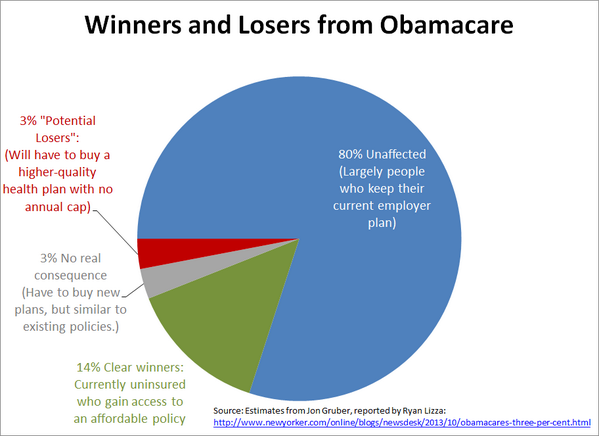
ObamaCare is about to go into full operation, and so far the indications are that it’s going to work fine — low premiums, few unintended effects — making liars out of all the death-panel panic-mongers. That looming disaster (for them, not for the country) has Republicans planning a last-ditch defense: Shut the government down if Democrats won’t agree to defund the program.

Even a lot of Republicans (i.e., Tom Coburn) think that’s a losing confrontation, so it will be interesting to see if the Tea Party radicals can push it through the House. Liberals seem to be looking forward to the fight.

An interesting bit of word-watch: More and more people are using the word sabotage to describe Republican anti-Obamacare tactics. What they’re doing is unprecedented and way past any notion of a loyal opposition.

but I tried to further the national conversation on race

This week’s featured article is Sadly, the national conversation about race has to start here. A number of conservatives had an in-your-face response to President Obama’s call for dialog. But they did lay out a point of view that probably sounds sensible to a lot of their white-conservative audience. If we want to move those people, I think we have to start where they are.

and you also might be interested in …

Remember ALEC, the corporate shadow government that authored so many of the state laws on union busting and voter suppression? Well, they’ve also got a set of proposals to replace public schools with for-profit schools. It’s all well designed to look like it benefits kids and parents, but the real plums go to the corporations that fund ALEC.


Whatever it is that’s killing bees may be more complicated than we thought.

and let’s close with something awe-inspiring

Sadly, the national conversation on race has to start here

a liberal attempt to meet conservatives where they are


This week a number of conservative opinion-leaders took up President Obama’s challenge to have a national conversation on race. “You want a conversation, you got it,” Bill O’Reilly retorted combatively, denouncing “race hustlers and the grievance industry” and arguing that President Obama “has no clue at all about how to solve problems within the black community.”

That may not have been the response liberals were hoping for, but it’s the one we got. So OK, let’s start there: not just with O’Reilly, but also Rush Limbaugh, Washington Post columnist Jennifer Rubin, and the National Review’s Victor Hanson. Together, those four represent a significant and diverse audience on the Right, not just one guy popping off.

And they paint a unified picture, which I will call the Response. I suspect most of my liberal readers won’t get far into those links before tripping some rhetorical land mine that makes it impossible to keep paying attention calmly, so let me abstract the Response’s main points:

  • Slavery ended a century and a half ago. Back in the 1960s, we got rid of Jim Crow, and made explicit discrimination against blacks illegal. So that’s all ancient history and isn’t relevant to today’s problems. O’Reilly: “you cannot … design effective public policy that solves present problems by dwelling on the sins of the past.” Rubin: We should “not be held prisoners forever in a past that most Americans have never personally experienced.”
  • The ongoing problems of the black community are its own fault and can only be solved by blacks making better individual choices: getting off drugs, renouncing violence, and forming traditional families that take responsibility for their children. O’Reilly: “The reason there is so much violence and chaos in the black precincts is the disintegration of the African-American family. Right now about 73 percent of all black babies are born out of wedlock. … White people don’t force black people to have babies out of wedlock. That’s a personal decision; a decision that has devastated millions of children and led to disaster both socially and economically. So raised without much structure, young black men often reject education and gravitate towards the street culture, drugs, hustling, gangs. Nobody forces them to do that; again, it is a personal decision.”
  • Young black men are racially profiled by police and private citizens like George Zimmerman, not because of racism, but because they commit more crimes. Hanson: “The president knows that if it is true that African-American males are viewed suspiciously, it is probably because statistically they commit a disproportionate amount of violent crime.”
  • Blacks would rather blame whites for their problems than accept their own responsibility. Liberal politicians and black community leaders pander to this denial and stir up black anger against whites to further their own careers. Rubin: “I think it is time to stop using this both as a crutch and as a method for stirring up [Obama’s] base. … I thought we had gotten to the point where whites, blacks, Republicans, Democrats realized that there are certain problems in the African-American community that need to be addressed, but that at this point — however we got here — we’re here and we should start working on them: start having policies that are family-friendly, start having policies that if not reward at least encourage young men to take responsibility for the children they create. And instead, no, he’s there telling them it’s slavery or Jim Crow or something else. It’s really a horrible message.” O’Reilly: “Race hustlers and the grievance industry have intimidated the so-called ‘conversation’, turning any valid criticism of African-American culture into charges of racial bias. … It is now time for the African-American leadership, including President Obama to stop the nonsense. Walk away from the world of victimization and grievance and lead the way out of this mess.”
  • The same politicians and leaders show no interest in the victims (even black victims) of crimes committed by blacks. Hanson: “The world will long remember Trayvon Martin, but few people — and certainly not Barack Obama or Eric Holder, who have a bad habit, in an increasingly multiracial country, of claiming solidarity on the basis of race — will care that Khin Min and Lina Lim were torn to pieces by bullets and a knife. Few will care that they died in a vicious assault that had nothing to do with stereotyping, Stand Your Ground self-defense, weak gun laws, insufficient federal civil-rights legislation, or any of the other causes of interracial violence falsely advanced by the attorney general — but quite a lot to do with an urban culture that for unspoken reasons has spawned an epidemic of disproportionate violent crime on the part of young African-American males.”
  • Liberals want whites to feel guilty about racism, but the vast majority of today’s whites have nothing to feel guilty about. Limbaugh: “It’s time for all this white guilt to end. … White guilt is doing nothing for anybody, and white guilt is not solving anything. And besides that, a little history lesson for you: If any race of people should not have guilt about slavery, it’s Caucasians.”

I’ve done my best to make a fair summary; if you hear something else in those links, think I have taken the quotes out of context, or believe I’ve constructed straw men that don’t really represent what conservatives think, please comment.

How to answer? First, let me say that I’m not surprised that a number of liberals reacted with anger. As I said, the four pieces (and many others) are filled with barbs that seem designed to shut down the conversation rather than move it forward. The in-your-face tone is most obvious if you watch O’Reilly; the topic seems to call for sorrow, but by the end of the segment he has worked himself up into a rage.

One advantage I get from being white is that it’s easier not to take those barbs or that anger personally. If my everyday experience included racial slights that sometimes progressed into unforgettably ugly incidents, I probably couldn’t listen as sympathetically to the conservative view.

But I’ve chosen not to return insult for insult and anger for anger because I’m not focusing on O’Reilly, Limbaugh, Rubin, and Hanson themselves, but on the audience of more-or-less well-meaning whites — some of whom I grew up with — who hear the Response and think: “That makes a lot of sense.” Angry blasts from the Left, I know, just harden them in that point of view.

First reply: Who are you arguing with? It’s tempting to jump into details of the Response and start disputing facts. But the most poisonous parts of the Response are the unstated assumptions behind it, not the particular details. If I argue facts and leave those assumptions unchallenged, new facts can be found (or stretched) to fill the gap.

What assumptions? Well, listening to the Response, you get the impression that someone — maybe Obama or “race hustlers” like Jesse Jackson — is arguing the opposite side: Someone is telling blacks to blame whites for all their problems, look to the government for salvation, and not accept any responsibility themselves.

That’s just not true. In reality, no one is making that case.

That may be hard to believe if you’re a white conservative who only sees black activists in the clips Fox News decides to air. But last summer, for example, Jesse Jackson said this:

Each year … about 7,000 African Americans are murdered, more than nine times out of 10 by other African Americans. … If a foreign foe took these lives, we would mobilize armies and armadas to stop them. But here, because much of this violence is contained in racially concentrated neighborhoods, there is too much resignation and too little outrage.

It wasn’t an off-the-cuff remark. Jackson was announcing marches in 20 cities to draw attention to the violence problem. After the Justice-for-Trayvon marches conservatives asked: Why don’t black leaders organize marches against black-on-black violence? Well, they do. Fox just doesn’t cover it.

And did you know that Barack Obama said this?

You and I know … that more than half of all black children live in single-parent households, a number that has doubled — doubled — since we were children. We know the statistics — that children who grow up without a father are five times more likely to live in poverty and commit crime; nine times more likely to drop out of schools and 20 times more likely to end up in prison. They are more likely to have behavioral problems, or run away from home or become teenage parents themselves. And the foundations of our community are weaker because of it.

That was in 2008 when he was a candidate. He has stuck with that message as president. In a commencement address to all-male, historically black Morehouse College this May, Obama again pushed graduates to take personal responsibility rather than use racism as an excuse:

We know that too many young men in our community continue to make bad choices. And I have to say, growing up, I made quite a few myself. Sometimes I wrote off my own failings as just another example of the world trying to keep a black man down. I had a tendency sometimes to make excuses for me not doing the right thing. But one of the things that all of you have learned over the last four years is there’s no longer any room for excuses.

When they address black audiences, the President and the First Lady have held so steady on that personal-responsibility theme that other blacks sometimes criticize their “finger-wagging tone“.

So if you’re white and get your racial information from conservative sources — especially if you live in a suburb or rural area far removed from the inner city — let me (and Tim Wise) suggest that you are being fooled. Black leaders who speak out against racism are not making the whitey-caused-all-our-problems argument.

It’s not an either/or. Believing that white racism is still a problem doesn’t mean that you think blacks are helpless victims who can only plead for whites to change or wait for the government to save them.

In short, there is no “grievance industry”.

Does the Response have any constructive point? My fellow white liberal Tim Wise calls the Response “white deflection”, because it doesn’t lead to any positive action. White opinion-leaders telling their white audiences that blacks are to blame for their own problems — that’s an excuse for turning the whole discussion off rather than solving anything.

Republicans control one house of Congress and the entire governments of the states that contain Philadelphia, Detroit, Houston, and Milwaukee. If they are in fact deeply concerned about the disintegration of the black family or inner city unemployment or black-on-black violence — if those issues are more than just excuses for whites to ignore racism — what constructive proposals have they put forward?

Bill O’Reilly is the exception that proves the rule: He followed up the piece I quoted with his plan for solving inner-city violence: “the feds should criminalize all gun crimes and impose strict mandatory sentences upon conviction” — as if this punish-them-harder idea is brand new and not what we’ve been doing for decades.

OK, maybe conservative office-holders aren’t proposing anything because they don’t believe in government solutions. Fine, but what about private efforts to discourage violence or promote education or help families in poor urban neighborhoods? Conservative media voices could be telling you which ones work and where you could effectively volunteer or send money. But they seldom do, because they are just raising these issues to shut off an uncomfortable conversation, not turn it in a more constructive direction. Conservative pundits will stop talking about black problems as soon as the Trayvon Martin controversy fades, because all they really want is for the topic to go away.

Black-on-nonblack crime. In the Asian-American murders Hanson discusses, he knows the perpetrator was black because the man was caught and charged without any public outcry. No one needed to march or protest, because the system was working fine.

To make Hanson’s case similar to Zimmerman/Martin, you’d have to assume that police found an armed black man standing next to the bodies, believed his story, didn’t immediately secure the area as a crime scene or canvass for witnesses, and let the man go until protests and bad publicity forced them to arrest him.

But of course that didn’t happen. It never would.

White-on-white? Yes, 93% of ten murdered blacks are killed by other blacks. But the same Justice Department report says (on page 13) 84% of murdered whites are killed by whites. This is why The Guardian’s style guide bans the term black-on-black violence:

imagine the police saying they were “investigating an incident of white-on-white violence”.

Again, that would never happen.

Racism in the justice system is real. Once you get past all the distracting noise, you’re left to deal with the facts of racism in the justice system. And I’m not just talking about the fact that blacks are more likely than whites to be in prison. (Those statistics cut both ways; they can be used to claim that blacks commit more crimes than whites.)

No, I’m talking about facts that are much harder to explain away:

  • Black murderers are more likely to be executed than white murderers. A report by the Death Penalty Information Center said: “The researchers found that, even after controlling for case differences, blacks in Philadelphia were substantially more likely to get the death penalty than other defendants who committed similar murders. Black defendants faced odds of receiving a death sentence that were 3.9 times higher than other similarly situated defendants.”
  • Juries are less likely to believe black self-defense claims. Anecdotally, many are contrasting George Zimmerman’s successful self-defense plea with John White’s unsuccessful plea in a black-on-white killing and Marissa Alexander’s unsuccessful stand-your-ground claim in a black-on-black case. Statistics tell the same story: Juries are most likely to accept self-defense claims when whites kill blacks, least likely when blacks kill whites.
  • Blacks and whites use marijuana at similar rates, but blacks are four times more likely to be arrested for it. And communities that decriminalize marijuana tend to have small black populations; apparently, smoking pot is less serious when whites do it.
  • Crimes mostly committed by blacks are likely to carry far higher punishments than similar crimes mostly committed by whites. The most famous example is crack cocaine (popular among blacks) vs powder cocaine (popular among whites). For years, getting caught with 99 grams of powder would get you a lower sentence than 1 gram of crack. In 2011, the 100-to-1 ratio was reduced to 18-to-1.

That final point can be pushed a lot further if you’re willing to look at crimes that are harder to compare: Street crime carries far higher penalties than white-collar crime. A black pickpocket who steals your wallet is a lot more likely to go to jail than a white banker who illegally forecloses on your house. In fact, the number of crimes committed by corporations and the over-representation of whites in corporate management casts doubt on the claim that blacks commit more (or more serious) crimes than whites.

Group guilt. I still haven’t touched Limbaugh’s comments on white guilt. Actually (ignoring his trolling about slavery) I agree with a big chunk of what he said: Whites sitting around feeling guilty doesn’t help anybody.

But who’s asking us to? If you think the point of the Martin protests is for you to feel guilty for something your ancestors — or maybe just people who superficially resemble you — did a long time ago, I don’t think you’re getting an accurate account.

Here’s the actual point the Martin case has raised: Blacks still suffer unfairly from racial stereotypes. Those stereotypes have deep roots in slavery and Jim Crow, but the damage is here and now. Because of those stereotypes, whites are way too quick to assume that blacks are up to no good, that blacks deserve any misfortune they get, and that the best way to deal with black people’s problems is to punish them harder. Whites are too slow to consider a black person’s point of view and too slow to take seriously any problem that mainly affects blacks.

Here’s what you’re being asked to do about it: Personally, introspect to see how those stereotypes live and function in your own mind. (Here’s a place I notice it: When some jerk cuts me off in traffic, I get a bigger surge of anger if it’s a black jerk, like that’s some separate category entirely.) When you have to make a decision about a black person — whether you’re on a jury or a hiring committee — notice your tendency to jump to unfair race-based conclusions and try to resist it.

Politically, join the fight for justice. Help us roll back unfair laws and change processes that produce unfairly skewed results. Help us create the equality of opportunity that American ideals demand. And if you think an underlying obstacle to opportunity is drugs or bad parenting or whatever, find some constructive way to work on that, rather than use it as an excuse to do nothing.

And finally, if it makes you mad that someone might hold you responsible for things other white people did, use that resentment to understand how blacks feel when they are racially profiled. Unlike the largely imaginary white guilt, profiling has real effects. As you read these words, innocent young blacks are being stopped and frisked for weapons by New York police, not on suspicion of any specific crime, but because people who superficially resemble them have done bad things in the past.

You reject racial guilt in your own life. Take a principled stand and help other people fight it too.

The Monday Morning Teaser

This week’s Sift is dominated by my attempt to meet white conservatives where they are on racial issues, “Sadly, the national conversation on race has to start here”.

I read the in-your-face conservative responses to President Obama’s call for a conversation, ignored the barbs and insults and slanted facts, pieced together the worldview that seems to lie behind most of them, and answered as if I were talking to a misguided-but-well-intentioned cousin or uncle or friend from the old neighborhood.

It’s a long piece — largely because I think it’s necessary to establish that I really get the conservative view I’m responding to before I respond — but I think it’s worth it. I hope it gets forwarded to a lot of people’s cousins and uncles and friends from the old neighborhood.

That doesn’t leave much space in the Weekly Summary for talking about the cracks forming in Republican solidarity as they plan a last-ditch defense against the looming success of ObamaCare. And no space at all for the week’s biggest story — the royal baby. Not that I’d have given it space anyway.

Just Us

Only white people think the opposite of racism is “race-blind.”

– Jack Cheng, Trying Not to See Race Means Closing Your Eyes to Reality

How could I make her conscious of the racialization process to which her own Euro-American community had subjected her? I invented the Race Game and invited her to play it. For the next seven days, she must use the descriptive term white whenever she mentioned the name of one of her Euro-American cohorts. She must say, for example, “My white husband Phil,” or “my white friend Julie,” or “my lovely white child Jackie.” I guaranteed her that if she did this and then met me for lunch, I could answer her question. We never had lunch together again.

— Thandeka, Learning to be White (1999)

This week everybody was talking about topics that spin out of the Zimmerman case

like race

The most-discussed statement came from President Obama.

Obama did a subtle piece of framing here that is key in understanding the way the conversation has been going. The initial reactions to the verdict were to re-argue the evidence and the law, claiming that the jury got it wrong or that the prosecution or the judge botched the case. Obama doesn’t do that, and neither have most of the other commenters after the first day or two.

Later commenters have moved past that, largely because it’s a done deal. Like arguing umpire calls in baseball, it’s not going to change anything. Instead, they want to argue the justice issue rather than the legal issue. Forget whether the verdict is correct in a narrow legal sense; is it just? Is this what we want our laws to say and how we want our system to work?

Conservatives went both ways on Obama’s remarks, some polite, others not so much.

I channel-scanned through this large-panel discussion on Sean Hannity’s show (where Sean did his best to frame the discussion away from the justice issue) and felt like I was in some parallel universe. There is an odd notion on the Right that America’s race problem is created by people talking about America’s race problem. The last word in this segment goes to talk-radio’s Monica Crowley:

What [the race hustlers] have done is what the Left has done for decades, which is that they need the division. They have divided us by race, class, gender, ethnic group, age. They continue to do it because they need the divisions in order to divide and conquer. It isn’t about bringing America together, it’s about dividing us.

To me, the most striking thing about the pro-Zimmerman commentary (and Anderson Cooper’s interview with a juror) is how easily whites enter Zimmerman’s point of view and repeat his claims as facts (rather than treating them with the suspicion due someone trying to justify killing an unarmed teen), while Martin remains an Other; his point of view is not imagined and everything about him is open to suspicious interpretation, if not outright misrepresentation.

By contrast, the most effective liberal commentary brought Martin’s point of view back into the case. The New Yorker’s Amy Davidson wrote “I still don’t understand what Trayvon Martin was supposed to do.”

MSNBC’s Melissa Harris Perry raised the point of view of black parents: Where is a safe place to raise your kids? You leave the majority-black inner city to escape crime, but in the supposedly safe white suburbs your kids are under constant suspicion that can turn violent.

And the NYT’s Charles Blow raised another parental question:

We used to say not to run in public because that might be seen as suspicious, like they’d stolen something. But according to Zimmerman, Martin drew his suspicion at least in part because he was walking too slowly.

So what do I tell my boys now? At what precise pace should a black man walk to avoid suspicion?

And lest you think that black people had all the good insights, listen to 13emcha explain why she’s not Trayvon Martin.

and stand-your-ground laws

It’s nutty: With lax concealed-carry laws, you never know who might be armed, so it’s reasonable to be afraid of almost everybody. If you’re afraid enough of somebody, shooting him is self-defense. Which means the other guy has reason to be afraid of you and shoot first.

President Obama was pointing in that direction with these comments:

I’d just ask people to consider, if Trayvon Martin was of age and armed, could he have stood his ground on that sidewalk?  And do we actually think that he would have been justified in shooting Mr. Zimmerman who had followed him in a car because he felt threatened?  And if the answer to that question is at least ambiguous, then it seems to me that we might want to examine those kinds of laws.

Mark Fiore made a biting animation about Stand Your Ground, the Daily Show’s John Oliver blasted Florida for having it, and The New Yorker’s Adam Gopnik wrote a fascinating piece on its deep roots in American culture, going back to dueling and a speech about armed violence that Abraham Lincoln gave near the beginning of his career; we tolerate vigilante and other outside-the-law violence

because the symbolic identity that guns provide matters more than the rational calculation of the harm that they do. When, Lincoln wondered, would Americans outgrow this feeling? In 1838, he thought it would happen soon. And here we are, still wondering.

I think irrational laws of any kind give more power to prejudice, because they rationalize multiple outcomes. In Stand Your Ground cases, for example, a jury could interpret the law strictly (giving the prosecution the impossible job to prove beyond reasonable doubt that the shooter wasn’t afraid for his life) and not convict, or it could fall back on the common sense that the law violates: “Come on! He provoked a confrontation with an unarmed teen and then shot him. Of course he’s guilty.” Either position can seem rational, but which one your mind drifts to depends largely on the prejudices you start with.

That’s why George Zimmerman is free and Marissa Alexander got 20 years.

and profiling

Atlantic’s Conor Friedersdorf points to the most disturbing thing about President Obama nominating Ray Kelly to head the Homeland Security Department: He’s an open proponent and practitioner of racial, ethnic, and religious profiling. If profiling is bad when George Zimmerman does it, why is it OK when the NYPD does it?

But also non-Zimmerman issues like the filibuster

Senate Democrats agreed (for now) not to eliminate the filibuster on executive appointments, while Republicans agreed to allow confirmation votes on seven Obama appointees. Republicans had been using the filibuster in an unprecedented way: to hobble agencies they don’t like rather than object to individual appointees. As a result of the agreement, the National Labor Relations Board will not have to shut down in August and the Consumer Financial Protection Bureau will get its first confirmed head.

But if you’re thinking Congress might be getting its act together to govern rather than just block everything Obama proposes, there’s still the House. Sunday Speaker Boehner brushed off the current session’s lack of accomplishments: “We should not be judged on how many new laws we create. We ought to be judged on how many laws we repeal.”

and Detroit’s possible bankruptcy

Atlantic has it covered. Salon points out that a Detroit bankruptcy will raise borrowing costs for all cities.

There are two main angles to consider this from: First, an accounting angle that identifies the specific bad decisions or mismanagement got the city in trouble. The final straw is a revision in the formula for computing pension liabilities, which could bite a lot of city and state governments.

Second, the larger story of the local economy’s death-spiral. The population is down 26% since 2000 and is less than half of its size in 1950. And there aren’t jobs for the people who are stayed: Detroit has an 18% unemployment rate. Even if you could install brilliant, impeccable management, it’s hard to know what to do with a city that was built for a larger, richer population.

and yet another example of conservative pundit profiteering

Erick Erickson is the latest to get caught, show no shame, and pay no price. I review the history and some of the logic behind it in Keeping the Con in Conservatism.

and you also might be interested in …

The Koch brothers are spending a lot of money airing an ad to raise fear, uncertainty, and doubt about ObamaCare. Dr. Sanjeev Sriram — a real pediatrician, not an actor — goes through it point by point.

In general, you should be suspicious of any political ad that just raises questions. If you’ve got the resources to make an ad and put it on TV, couldn’t you have found some answers for us? If some particular person or agency has specific answers but is refusing to release them (like some of the Justice Department memos that justify drone strikes on countries where we aren’t at war), an honest ad will say that in so many words. But this kind of ad — one that implies questions aren’t being answered without actually saying that — is almost always dishonest.


At the height of the crack-cocaine epidemic in 1989, doctors in Philadelphia started a long-term study on the effects of cocaine on fetal development, expecting the so-called “crack babies” to have developmental and emotional problems that would follow them through the course of their lives.

Results are in now, and the kids did have problems. But it turns out that the control group — babies born in the same hospitals in the same time period to women of similar socio-economic profiles who tested negative for cocaine use — had almost all the same problems.

At age 4, for instance, the average IQ of the cocaine-exposed children was 79.0 and the average IQ for the nonexposed children was 81.9. Both numbers are well below the average of 90 to 109 for U.S. children in the same age group. When it came to school readiness at age 6, about 25 percent of children in each group scored in the abnormal range on tests for math and letter and word recognition.

The similarities persisted through adolescence and into early adulthood. Explanation:

The years of tracking kids have led [Dr. Hallam] Hurt to a conclusion she didn’t see coming.

“Poverty is a more powerful influence on the outcome of inner-city children than gestational exposure to cocaine,” Hurt said at her May lecture.

This points to a larger problem: American society’s state of denial about the effects of poverty makes us cast blame all sorts of places where it doesn’t belong — for example, on our schools and our teachers.


Having passed a ban on abortion at 20 weeks, Texas Republicans are now going for six weeks, which is claimed to be the earliest point at which a fetal heartbeat can be detected. 20 weeks was supposedly when fetus begin showing signs of pain, though that is disputed.

The Right focuses on these thresholds-of-unacceptability because they can’t convince people that a single-celled organism with human DNA has the moral heft of a human being. Neither of these thresholds impresses me because we ignore them in animals: Cows feel pain and have heartbeats, but nobody’s proposing to ban steak.

Here’s a threshold that seems more meaningful: the point at which an ordinary person can look at a fetal ultrasound and reliably tell the difference between human and chimp. I have no idea when that would be, but I’ll bet it’s quite a bit later than six weeks. (The Elephant Fetus Project was fooling pro-lifers at 11 weeks. Elephants.)


While we’re on the absurdities of pro-lifers, Alternet’s Adam Lee notes that the Bible says nothing about abortion directly, in spite of the fact that ancient folklore is full of miscarriage-inducing practices. And when the Old Testament legal code does discuss miscarriages, it clearly is not attributing to the fetus the full value of a human being.

If you want to be Biblical about it, the soul enters the body with the first breath, not at conception. Genesis 2:7. “And the LORD God formed man of the dust of the ground, and breathed into his nostrils the breath of life; and man became a living soul.” That’s not where I would draw the line, but if you really want to follow the Bible that’s where it should be.


A Tennessee high school had a pro-abstinence assembly, which was filled (as these things usually are) with scary misinformation about sex, STDs, and contraception. What was even more disturbing, though, was the principal’s lack of concern when the inaccuracies were brought to his attention:

Fortunately, I believe the Hillsboro High School kids are smart enough to separate fact from fiction and that some of the opinions and scare tactics used in the presentation they will know are incorrect.

Know how? By trial and error? Locker room rumor? What’s the point of having schools at all, when we could just let kids “separate fact from fiction” for themselves? Anyway, Martha Kempner debunks.

What if we applied abstinence-only logic to the other kinds of trouble kids might get into?


Slate wonders “Why Don’t Farmers Believe in Climate Change?” and never comes up with an answer, but decides it doesn’t matter because farmers are cutting their fossil fuel use for other reasons.

Having just sold a 160-acre Illinois farm for almost 50 times what my grandfather paid in the 1920s, I think I can answer: Like most of the Midwest, Illinois had a major heat wave and drought last summer. If that’s just weather, no big deal. But if it’s a sign of things to come, then the land isn’t worth its current price and farmers who borrowed to expand (i.e. most of them) are going to be in trouble. That’s plenty of motive for denial.


Elizabeth Warren went on CNBC to promote her 21st-Century Glass-Steagal Act. Predictably, the hosts went after her, and she totally ate their lunch.

and let’s end with something fun

A long time ago we used to be friends, but I hadn’t thought of you lately at all … until Friday.

Keeping the Con in Conservatism

This week RedState.com founder and Fox News pundit Erick Erickson had an embarrassing plagiarism scandal. No, he didn’t steal somebody else’s attack on ObamaCare or their analysis of immigration reform. On Tuesday Erickson emailed his subscribers a 600-word endorsement of an investment newsletter. He didn’t just forward a link, he wrote in the first person with feeling, and signed his name:

[Mark Skousen] is the most brilliant and accomplished financial advisor I know. … Let’s face it: Making money in Obama’s America is tough — and keeping it, harder still. So we can all use as much trustworthy financial advice as we can get. The best investment advice I know of, bar none, can be found in Mark Skousen’s Forecasts & Strategies — and I urge you to give it a try.

Such sincerity. Clearly, if you trust Erickson’s view of the political world, you should trust Skousen’s view of the financial world.

It sounded just as sincere in 2009 when Ann Coulter sent a virtually identical email out to her subscribers.

Ericson’s defense is also striking: He denies he made money. He’s just “happy to support a friend”. Alex Parene points out the problem here:

If, as Erickson claims, he did not get paid for this endorsement (or, rather, if he wasn’t paid to have his name affixed to this boilerplate get-rich-quick scam email), then his claim to moral purity is that he sold out his readers for free.

If you follow the links, you wind up listening to a video explaining “the elite SS-4 income stream” that “can make you America’s next millionaire” which you’ll learn more about if you subscribe for a mere $99 for the first year.  (BTW, Mark is a nephew of Glenn Beck’s hero W. Cleon Skousen.)

There are, of course, people whose business it is to track the recommendations of investment newsletters and rate how they do. That opinion on Skousen is far less glowing. But what do those people know with their “facts” and “data”? Those are the same kind of people who couldn’t see how the polls were skewed to favor Obama, when actually Mitt Romney was cruising to a win — which he totally would have had if not for voter fraud (that nobody can find any evidence of other than the fact that Romney lost).

The dirty secret of the conservative movement is that this stuff happens all the time, as Chris Hayes pointed out in this tweet:

Now why would he say something so rude? Maybe he remembers Glenn Beck pushing his viewers to buy gold while not mentioning that he was a paid pitchman for Goldline, a less-than-upright gold-selling company. Or that Freedom Works paid Beck and Rush Limbaugh to say nice things about them. And Americans for Prosperity paid talk-radio host Mark Levin. Politico writes:

The increased willingness of non-profits to write big checks for such radio endorsements – which appears to have started in 2008, when Heritage paid $1.2 million to sponsor the talk shows hosted by Hannity and Laura Ingraham – seems to be a primarily, if not entirely, a conservative phenomenon.

Former Fox News pundit Dick Morris came up with a great money-making idea. He sent out fund-raising emails for SuperPAC for America, which spent a pile of that money renting Morris’ email list. So money Morris’ followers sent in “for America” just cycled back into Morris’ pocket. (Similarly, Sarah Palin spent PAC money to promote her book, and even to buy copies of it to give away.) Republican candidates also spent money renting Morris’ list, and (totally coincidentally), Morris praised them on Fox.

And then there was the time the Malaysian government paid American conservative bloggers under-the-table to trash the democratic opposition.

You just don’t see this kind of stuff on the Left, where the standards are simply higher. For example, Fox News host Sean Hannity regularly speaks at fundraisers for Republican organizations and Republican candidates, but MSNBC suspended Keith Olbermann just for writing a check to Democratic candidates. In 2010, Fox News was a nice place for Republican politicians to draw a paycheck while they decided whether to run for president. I will be truly shocked if Hillary Clinton or any other Democratic hopeful gets hired by MSNBC. (Eliot Spitzer is the exception that proves this rule. When MSNBC hired him, who imagined he could ever again have a political career?)

So why is this? Rick Perlstein got into the issue a little deeper a few months ago in a Baffler article The Long Con. He signed up for the email lists of conservative sites like Townhall and NewsMax, and started getting a completely different kind of spam: Not just appeals for candidates and charities, which liberals get too, but get-rich-quick schemes and miracle cures. (He quotes Ann Coulter’s Skousen endorsement, not realizing we hadn’t seen the last of it.)

What Perlstein noticed is that the right/left difference isn’t just in conflict-of-interest standards at the top. It’s a cultural difference that goes all the way down. Conservatism is built out of subcultures like multi-level marketing (i.e. Amway), pyramid schemes, televangelist networks, conspiracy-theory groups (i.e., the John Birch Society), and so forth. (The self-promoting conflict-of-interest stuff goes way back too: The one thing I remember from reading the classic None Dare Call It Conspiracy in high school is that the solution is to expose the conspiracy by buying a bunch of copies of None Dare Call It Conspiracy and giving them to your friends.)

The subject matter may be different, but the thought-patterns are the same. If you believe that evolution is a conspiracy of atheist biologists, then why wouldn’t you believe that global warming is a conspiracy of socialist climatologists? And if a secret cabal can launch a decades-long plan like faking Barack Obama’s birth annoucements and grooming him for the presidency, of course those people would have secret investment strategies that keep them rich without effort. If Cleon Skousen can show you the hidden patterns of history, why couldn’t Mark Skousen reveal the hidden patterns of finance?

Across the board, there is a resentment-of-expertise theme, combined with the myth of the Turncoat Expert, who can let you see behind the facade … for a small fee, of course.


[Little did I know when I started writing this that Salon’s Alex Seitz-Wald was coming out with something on the same topic the same day.]

The Monday Morning Teaser

The national conversation this week was still being dominated by the reaction to the Zimmerman verdict that came out a week ago Saturday. On Friday, President Obama made a surprise appearance at the daily White House press briefing to comment about what the Trayvon Martin case means to the black community and to him personally. So then we had another round of commentary on what the President had said.

I still haven’t decided whether some part of the Zimmerman/Martin commentary comes together into a theme that belongs in a separate article, or if I just have a lot of short notes for the weekly summary.

Race is one of those issues that is always present in America but is seldom news, so everybody has a lot of pent-up things to say about it. Those things came out this week. Some are very insightful and others amazingly clueless. I’ll link to examples of both. Stand Your Ground laws and racial profiling also got a lot of discussion.

Some other important things were also happening. Detroit tried to go bankrupt and a court stopped it. The Senate reached a compromise that maintained the filibuster but broke the logjam on presidential appointments.

And a particularly clumsy bit of marketing by Fox pundit Erick Erickson gave me a hook to look at a continuing issue: the porous boundary between right-wing advocacy and money-making cons. There’s nothing like it on the left, and it’s interesting to consider why.

Probably posts will come out a little later than usual today, but I’ll try to have everything up by noon.

License to Kill

Carrying a deadly weapon in public should carry unique responsibilities. In most cases someone with a gun should not be able to escape culpability if he initiates a conflict with someone unarmed and the other party ends up getting shot and killed. Under the current law in many states, people threatened by armed people have few good options, because fighting back might create a license to kill.

Scott Lemieux

This week everybody was talking about the Zimmerman verdict

Back when I was refusing to pay attention to the trial, I wrote that everyone who doesn’t have a personal stake in trials “should just wait to see how they come out.”

Well, it came out. Zimmerman was acquitted. Slate’s Emily Bazelon, the trial-watcher whose reaction is closest to mine, finds fault with Florida’s legal code:

Maybe people like George Zimmerman should be held responsible for provoking the fight that they then fear they’ll lose. … But you can see the box the jurors might have felt they were in. Even if they didn’t like George Zimmerman—even if they believed only part of what he told the police—they didn’t have a charge under Florida law that was a clear fit for what he did that night.

Here’s what seems clearest to me about the killing: George Zimmerman was looking for trouble that night and Trayvon Martin wasn’t. I’m not sure exactly how the law should account for that, but I have a hard time believing that if Martin had killed somebody under similar circumstances, he wouldn’t be convicted of something. Various cases have been proposed as analogs, like this one.

Weaponry and the law. At the American Prospect, Scott Lemieux points out widespread concealed-carry of weapons combines very badly with stand-your-ground laws. A person with a concealed weapon should bear a special responsibility to avoid violent confrontations, knowing that such a confrontation may well lead to someone’s death.

Race. A year ago, Frontline ran some numbers about homicides. Juries are more likely to believe white-on-black killings are justified, particularly in stand-your-ground states.

[As much as I suspect the overall impression created by the graph is correct — background story here — the mathematician in me has to point out that the white-on-black color breakdown can’t be right. The “All” percentage ought to be somewhere between the SYG and non-SYG percentages, not lower than both.]

Zimmerman’s future. Zimmerman’s attorney is pushing the notion that his client has suffered a great wrong, and faces a difficult future.

Seriously? If he wants to, Zimmerman can have a lucrative career as a symbol for the NRA and other conservative groups. I’d be amazed if a book wasn’t already being ghost-written for him. I wonder who will play Zimmerman in the movie of his persecution by scary black people.

Fearmongering. Again and again, right-wing pundits have raised the specter of a violent black response, but Trayvon Martin continues to be the only casualty here. Post-verdict demonstrations across the country were peaceful, with the lone exception of Oakland, where some windows were broken but no one hurt.

I noted the same pattern in the weeks after the killing: Conservative sites like Glenn Beck’s The Blaze devoted article after article to speculation about black violence, while showing little empathy for the only person who actually died.

In short, the conservative media has presented the killing of a black teen-ager primarily as a reason for whites to be afraid.

but I wrote about zombie voters and how to change conventional wisdom

or, more accurately, The Myth of the Zombie Voter and To Succeed, Fail Boldly.

and you also might be interested in

Last week I denounced the Religious Right misusing “religious freedom” as an excuse to control other people. Well, this week there’s more.

The House has attached a Religious Liberty amendment to the annual National Defense Authorization Act, one of those omnibus bills that has to go through somehow. It extends protection of soldiers religious “beliefs” to “beliefs, actions, and speech” and restricts commanding officers’ options for avoiding religious conflicts within their units.

Chris Rodda sums up:

No longer will name-calling and harassment be prohibited if these “sticks and stones” merely pose a threat to good order and discipline; they will have to result in actual harm to good order and discipline. In other words, a commander will no longer be able to head off a potential breach of good order and discipline in their unit … they will have to wait until such name-calling escalates to a point where … the unit cannot function efficiently.


The foreign press continues to spank the American press for its lapdog coverage of the NSA scandal. Germany’s Spiegel throws a spotlight on a false Walter Pincus column that embarrassed the Washington Post.


Here’s why you need to have a woman in the room when important decisions are being made: The seven guys on the Iowa Supreme Court ruled that it wasn’t gender discrimination when a dentist fired his assistant for being so irresistibly attractive that his wife got jealous. (The link includes video of an interview. She’s cute, but give me a break. Men need to be able to function in the presence of cuteness.)

The 32-page opinion is full of legal precedents and so forth, and without a whole more study I can’t offer an opinion on whether the judges got the law right. (The outcome is unjust, but maybe the law is unjust and the Court’s hands are tied. As Oliver Wendall Holmes is supposed to have said: “This is a court of law, young man, not a court of justice.”) But wouldn’t this decision be a whole lot more credible if there were at least one woman on the Court?

Here’s something I can say without further study: The dentist is a jerk. Not only did he fire this 10-year employee without warning for no fault of her own, but he gave her only one month’s severance, which even the Court called “rather ungenerous”.


A bipartisan coalition of senators have introduced “The 21st Century Glass Steagall Act”. It would restore the New Deal’s separation between commercial banks (which ordinary people count on to store their money safely) and investment banks (which can deal in complex derivatives that nobody really understands). “Banking should be boring,” Elizabeth Warren explains.

Coming out of the Great Depression, Congress passed the Glass Steagall Act to separate risky investment banking from ordinary commercial banking. And for half a century, the banking system was stable and our middle class grew stronger. As our economy grew, the memory of the regular financial crises we experienced before Glass-Steagall faded away.

But in the 1980s, the federal regulators started reinterpreting the laws to break down the divide between regular banking and Wall Street risk-taking, and in 1999, Congress repealed Glass Steagall altogether. Wall Street had spent 66 years and millions of dollars lobbying for repeal, and, eventually, the big banks won.

Our new 21st Century Glass Steagall Act once again separates traditional banks from riskier financial services.

The symbol of Glass Steagall’s success was the separation of the Morgan Bank (now J. P. Morgan Chase) from the Morgan-Stanley Investment Bank in 1935. But today J. P. Morgan Chase owns Bear Stearns, and Bank of America owns Merrill Lynch, just to name two obvious examples.


Of all the bad abortion bills going through state legislatures lately, Ohio’s takes the cake. It doesn’t just humiliate women seeking an abortion and impose restrictions that will close abortion clinics. It also cuts funds for contraception services in family-planning clinics that merely inform women about abortions. And welfare cuts will make it harder for poor women to keep the babies that the state is making them give birth to. What gets more funding? Services that encourage pregnant women to give their babies up for adoption. Slate’s Amanda Marcotte pulls it together:

Taken together, the cuts to contraception funding, the cuts to welfare, the restrictions on abortion, and the money flowing to crisis pregnancy centers paint a very grim view of how Ohio Republicans see women—and low-income women especially: as baby factories that need to dramatically increase production. You can call that “pro-life” if you want, but it’s increasingly clear that it’s just anti-woman.


Why oh why do Ron and Rand Paul keep running into these problems with their Neo-Confederate and white supremacist associations? Josh Marshall has an irreverent answer.

and let’s end with something fun

Everybody knows that different parts of the country speak have different words for things and pronounce them differently, but it’s fun to see where the boundaries are. So how come St. Louis and Milwaukee are little islands of red in this map, but nearby Chicago and Des Moines aren’t?

To Succeed, Fail Boldly

Five doomed proposals for changing the national conversation


From one point of view, it all came to nothing.

Two weeks ago, liberals around the country thrilled to the story of Wendy Davis’ filibuster. With a few minutes of help from a raucous gallery of protesters, Texas State Senator Davis’ 11-hour speech ran out the clock on the special session of the legislature that Governor Rick Perry had called to pass a draconian anti-abortion bill.

Victory!

For two weeks, anyway. But Perry was still governor, so he called yet another special session. And the Republicans still had majorities in the legislature, so Friday the same bill passed the Senate and was on its way to Perry’s desk. In spite of massive protests, in spite of a viral video that made another new heroine out of Sarah Slamen, the legislative result is the same as if everyone had just stayed home.

Soon we’ll probably be able say the same thing about Moral Mondays in North Carolina. The Republicans have a supermajority in the legislature and they’re not afraid to use it, so they’re going to pass whatever they want, no matter how many religious leaders protest, no matter how many Carolinians they have to arrest.

So it’s pointless, right?

In the long term, no, it’s not pointless. This is the only way things change.

Losing my shrug. Let’s start with the obvious, even if it doesn’t seem all that consequential. A few months ago I’d have shrugged if you told me Texas and North Carolina were about to pass a series of laws that would impose real hardships on women and the poor. “The South,” I’d probably have said, “what can you expect?”

Well, Wendy Davis and William Barber have taken away my shrug. Like lots of other blue-state folks, I have been reminded not to write off Texas and North Carolina. Red states are not monolithic blocks of small-minded people. Progressive forces may be losing there right now, but they’re fighting. And people who keep fighting just might win someday.

If you don’t believe that, recall how the Religious Right and the Tea Party got where they are today. For decades, right-wing extremists rallied for proposals they couldn’t hope to pass into law, and mostly still haven’t: human life amendments, balanced budget amendments, the gold standard, defunding the U.N., and so forth. They failed and they failed again. And sometimes they succeeded when no one had given them a chance. (When the Equal Rights Amendment passed the Senate 84-8 in 1972, its ratification seemed a foregone conclusion.) But today their point of view has to be dealt with, and in some states is dominant.

Before you can win, you have to change the conversation. And the only way to do that is to fight battles the conventional wisdom says you can’t win. You’ll lose most of them. For a while you’ll lose all of them, because the conventional wisdom isn’t stupid. But that’s how things change.

The only way to change the direction of the wind is to keep spitting into it.

How conventional wisdom shifts. I have written in more detail elsewhere about how conservatives manipulate the supposedly liberal media. Journalism is not a conspiracy, but there is an unconscious group process that decides what news is, what can be stated as a simple fact, and what has be covered as controversial. Partisan groups can pressure that process and get their desired response, independent of whether most individual journalists agree or disagree with their views.

In that article I focused on how outside pressure can make known facts seem controversial. So, for example, global warming is almost always covered as if it were in dispute, when in a scientific sense it is well established. But powerful voices will argue with journalists who say global warming is a fact, so instead they write he-said/she-said articles, or leave the global-warming angle out of a story entirely.

Today I want to focus on the opposite side of that same unconscious media groupthink: Anything that is stated forcefully by one side and not contested by the other will be covered as if it were a fact.

So: Texans are all conservatives. Only people on the right care about “morality” or “the family”. “Moral issues” are the ones about sex — abortion, contraception, homosexuality — and the moral position is the conservative position. Feeding the hungry, caring for the sick, making sure workers get a fair wage — all that sermon-on-the-mount stuff — those aren’t “moral” issues.

If you don’t regularly and loudly contest those notions, they’ll get reported as facts. They’ll provide the background assumptions that frame the coverage of everything else.

Wolf Blitzer’s evangelism. The clearest recent example of this principle was Wolf Blitzer’s embarrassing interview with an atheist mother after the tornado in Moore, Oklahoma in May. Blitzer badgered the woman to “thank the Lord” for her and her child’s survival until she finally had to confess her atheism.

So is Blitzer is an evangelical Christian trying to push his religion on CNN? Nope. Wikipedia says Blitzer is a Jew, the son of Holocaust survivors. I can’t say from that precisely what he believes about God, but he was almost certainly not pressuring this woman to proclaim her Judaism.

Instead, Blitzer was applying two seldom-contested stereotypes:

  • Oklahoma is in the so-called Bible Belt, so everybody must be some kind of conservative Christian.
  • There are no atheists in the foxholes. When life and death hang in the balance, everybody becomes religious.

Probably Wolf had been hearing loud proclamations of Christian faith all day, and no voices on the other side. (This is another kind of groupthink. It’s not considered rude to thank Jesus in these circumstances — even in the presence of people whose loved ones Jesus apparently chose not to save. But conservative Christians would take offense if you said, “Stuff like this just shows that everything’s random and you can’t take it personally.”) So it became a background “fact” of his reporting that the people of Moore were having an evangelical Christian response to their survival.

Candle-lighting vs. darkness-cursing. We can wish for harder-working more-objective journalists who will seek out the truth and cover it fairly, regardless of the power dynamics. But in the meantime journalism is what it is, and we’re just being stupid if we let conservatives manipulate it and don’t fight back.

The facts on the ground today are that the media will challenge a pro-choice Catholic to reconcile the contradiction between his politics and his faith, but not an Evangelical who votes to cut Food Stamps or reject Obamacare’s Medicaid expansion. (Matthew 25:35-36: “For I was hungry and you fed me. … I was sick and you cared for me.”) Want to change that? Join the Moral Mondays protests in Raleigh, or start something similar in your own state capital.

In the short term, you may not change any votes in the legislature. But if enough people contest the previously uncontested “facts”, those “facts” leave (what Jay Rosen and Daniel Hallin call) “the Sphere of Consensus” and enter “the Sphere of Legitimate Controversy”. The conventional wisdom changes.

From defense to offense. So far the big progressive protests have been efforts to resist conservative aggression: rollbacks of women’s rights in Texas, unemployment insurance in North Carolina, workers’ rights in Michigan and Ohio.

It’s time to go on offense. In addition to resisting the regressive agenda of the right and timidly putting forward small proposals like universal background checks for gun buyers, progressives need a blue-sky positive agenda that we keep making people notice. Just because we can’t pass it in this term of Congress doesn’t make it impractical. (When have conservatives ever been constrained by that?) You have to keep proposing it until people get used to hearing it; only then will they look at it seriously.

So here are five bold proposals that are “doomed” according to the conventional wisdom. Their complete impracticality is a “fact” and will continue to be so until loud voices move them into the Sphere of Controversy, from which they can get serious consideraton.

  • The Equal Rights Amendment. The ERA passed Congress in 1972 and fell three states short of ratification when the ratification deadline passed in 1982. Supporters of the three-state strategy claim the deadline doesn’t count and in 2011 got ratification through one house of the Virginia legislature. But the ERA gets re-introduced in every session of Congress, most recently in March. Only the fact that the conventional wisdom says it can’t pass, protects politicians from explaining why they disagree with “Equality of rights under the law shall not be denied or abridged by the United States or by any state on account of sex.”
  • Single-payer health care. Of all the existing plans to help the 50 million Americans who lack health insurance, Obamacare is the most conservative. (It’s Romneycare, after all.) Conservatives opposing Obamacare have offered no plan to fulfill the “replace” part of their “repeal and replace” slogan. And yet, if you watch Sunday morning political shows on TV, Obamacare is the “liberal” position. It’s better than the status quo, and I support it on those terms. But single-payer is what gives Europe, Japan, and the industrialized parts of the British Commonwealth lower costs and higher life expectancies than we currently have. It would do the same for the United States.
  • End corporate personhood. Few actual humans defend the idea that corporations should be people with full constitutional rights. A variety of constitutional amendments have been proposed to reverse this piece of conservative judicial activism (which in particular has no basis whatsoever in the originalist constitutional interpretation conservatives claim to favor). Bernie Sanders’ Saving American Democracy Amendment says: “The rights protected by the Constitution of the United States are the rights of natural persons and do not extend to for-profit corporations.” Everybody who runs for office should be challenged to state a position on that.
  • A federal Reproductive Rights Act. The current reproductive-rights situation in states like Texas resembles Jim Crow: Women’s constitutional rights are not repealed directly, but are made impractical by a series of restrictions transparently introduced for that purpose. In the same way that the Voting Rights Act protected minorities’ right to vote (until recently), a federal Reproductive Rights Act should impose federal oversight on states that have a history of infringing women’s rights.
  • Replace the Second Amendment. The overall situation of weapons and society has changed so much since 1787 that it’s hard to attach any meaning at all to the full text of the Second Amendment. I don’t have a revised text in mind yet, but I think the amendment should defend the right of individuals to procure appropriate tools to defend their homes, while giving Congress the power to control military hardware.