Changing presidents or even changing minds isn’t enough. A real revolution has to change a lot of people’s political identities.
Some years ago, I was at a restaurant a couple blocks from my apartment when that cycle’s Democratic congressional candidate (Katrina Swett, which would make the year 2002) came in to campaign. It was late enough that most of the lunch traffic had left already, so shaking every hand in the room didn’t take her very long.
After the candidate left, our waitress — a pleasant young woman who had been doing a perfectly fine job as far as I and my friend were concerned — came over with an inquisitive look on her face. I thought she was going to ask us whether we knew anything about Swett, and whether she would be a good person to represent us in Washington. Instead, she asked whether we knew anything about Congress. “Is it, like, important or something?”
I’m not particularly good at answering a fundamental question when I was expecting a specific one, so let’s just say that I doubt my pearls of wisdom changed her life, or even that she remembers me at all. But I’ve remembered her ever since.
By telling this story, I don’t mean to denigrate the political sophistication of young adults or the working class or women or any other category that this waitress coincidentally belonged to. But to me, she represents a group that pundits and armchair political strategists often forget: people who just don’t care about politics. They aren’t stupid or any more self-centered than the rest of us, and they aren’t discouraged or embittered or angry. They just look at politics the way other people might look at football or fashion or Game of Thrones: They have never bothered to pay attention to it, and they don’t see that they’re missing out on anything.
It’s hard to say exactly how many such people there are. But certainly they could constitute a significant voting bloc, if they saw any point in it.
The truly silent majority. In a typical presidential election, voter turnout is somewhere between half and two-thirds of the voting-age population. Mid-term congressional elections usually draw less than half of the electorate, and less than a third bother to participate in some state and local elections. (A shade over 30% voted in Kentucky’s recent gubernatorial election, yielding a surprise Republican win.) As you can see from this graph of the turnout in every presidential election since 1824, this phenomenon is nothing new; to see significantly larger turnout, you have to go back to 1900.
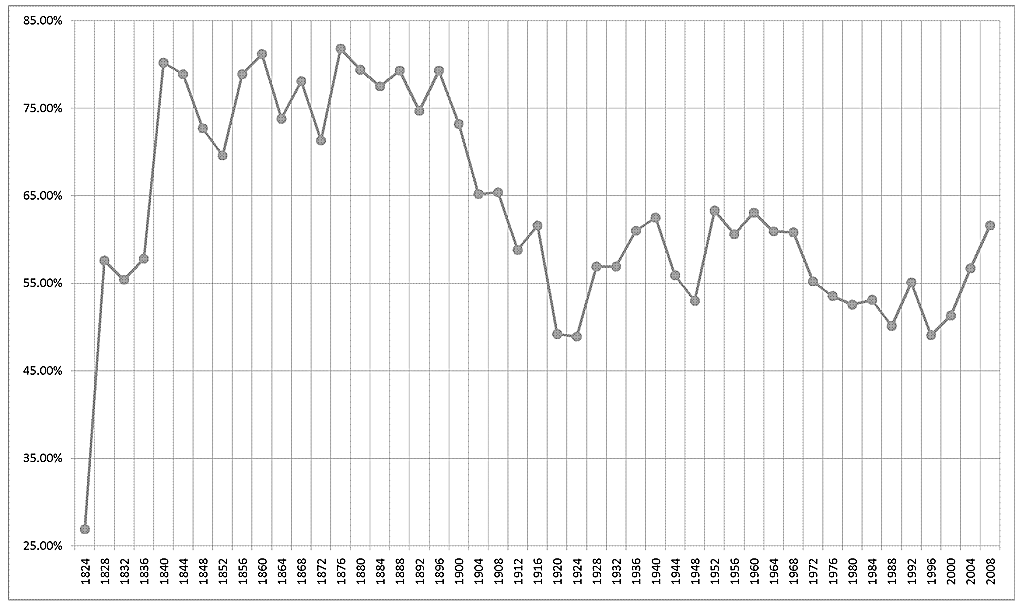
So in virtually every contested election in the entire country for the last century, the margin of victory has been less than the number of people who didn’t vote. That massive lack of participation provides a blank wall onto which many people can project their conflicting fantasies.
Like Ted Cruz:
The last election, 2012, 54 million evangelicals stayed home. Fifty-four million. Is it any wonder the federal government is waging a war on life, on marriage, on religious liberty, when Christians are staying home and our leaders are being elected by nonbelievers?
“Imagine instead,” he told the students at Liberty University, “millions of people of faith all across America coming out to the polls and voting our values.”
Real Clear Politics’ election analyst Sean Trende attributed Mitt Romney’s 2012 loss to “the missing white voters“, and argued that the GOP wouldn’t have to work so hard at appealing to Hispanics if it could just raise white turnout.
Wherever you stand on the political spectrum, you can imagine that the apathetic masses only appear not to care about public affairs. Actually, they just haven’t heard the right motivating message: your message. As soon as they do, then everything will start to change.
Heck, some version of this thought pattern occurs even in the fringiest, most radical circles. The armed yahoos who took over that wildlife refuge in Oregon didn’t figure on overpowering the federal government by themselves. They imagined a nation full of anti-government patriots, ready to take up arms as soon as someone was brave enough to sound the clarion call.
When they sounded that call and only a few dozen wackos showed up, I imagine they were pretty surprised.
The discouraged liberal majority. In spite of the daydreams of militiamen and social conservatives, the statistics say that marginal voters trend Democratic. That’s why relatively high-turnout elections like Obama’s first presidential race in 2008 (57.1% of voting-age citizens participated; that would be a low turnout in a lot of other democracies) are good for Democrats, while low-turnout elections, like the midterms in 2010 (41%) and 2014 (36%), strongly favor Republicans. That’s also why Republicans like to make voters jump through hoops: They believe the ones who won’t bother will mostly be Democrats.

Those numbers justify the Great Democratic Turnout Fantasy: If everybody voted, Democrats would win every election, everywhere. The Democratic advantage would be so insurmountable that the Party wouldn’t have to compromise on wedge issues like abortion or gay rights or gun control. Democrats wouldn’t have to pander to powerful interests or rich individuals. They could put the unalloyed New Deal/Great Society message out there and wait for the votes to roll in.
In particular, what if all the young people voted? What if all the women voted? What if all the low-wage workers voted? But we’re zeroing in on my waitress, and that should make us all stop and think: Who are the people who don’t vote, and what level of participation can we reasonably expect out of them?
Levels of engagement. People relate to politics in all sorts of different ways, and devote different levels of energy to it. Here’s a rough categorization, varying according to the depth and quantity of the thought and effort involved.
- Apostles. These are people who have a political worldview and can lay out their political philosophy — liberal, conservative, anarchist, communist, white supremacist, or whatever. They can state their principles and apply them to whatever issues come up, without any outside guidance.
- Activists. Some cause — anything from the environment or abortion to something as local as establishing a new park or putting a stoplight on a dangerous corner — got them interested in politics. Their interest in that issue placed them on one side or the other of our deep political polarization, so they have come to identify with other activists on a wide range of issues.
- Players. Like a sports team, a political party can be part of a personal identity; issues are just opportunities to argue that your team should win. For example: From the end of Reconstruction to the New Deal, the South was solidly Democratic. That wasn’t because the Democratic Party represented a philosophy universally accepted by Southerners. Rather, the Republicans were the party of Yankee invaders (and disenfranchised Negroes), so the Democrats were the home team.
- Fans. Left to their own devices, many people wouldn’t care about elections. But personal identity connects them to people who do care. When election day gets close, they look to a family member, a minister, a union leader, or some admired public figure to tell them who the good guys are.
- Impulse voters. These citizens have only a tangential connection to politics. They might not vote, or they might vote for some whimsical reason: They like or dislike a candidate’s face (or, more ominously, race or gender). Or they heard a story that made him/her look good or bad. Or a slogan appealed to them; maybe “Yes We Can” in one election and “Taxed Enough Already” in the next.
- The alienated. Disinterest in politics can also be part of a personal identity. Politics is some stupid thing that people yell at each other about. Politicians are like televangelists or get-rich-quick swindlers: They’re in it for themselves, and if you pay any attention to them at all you’re just being a sucker.
Most public discussion of politics comes from apostles or activists, and tends to project that level of interest onto non-voters: People don’t vote because the major parties aren’t addressing their issues or speaking to their philosophy. If only we changed our platform or the emphasis of our rhetoric, they’d flock to us.
But I don’t think my waitress had a political agenda in mind, or was turned off when Candidate Swett didn’t speak to it. I believe she was in the low-engagement impulse/alienated region, and honestly had no idea why she should care who went to Congress.
Paradoxes. When you picture non-voters as disgruntled apostles and activists, the world seems full of mysteries: What’s the matter with Kansas? Why do so many working-class whites vote against their economic interests? Why do so many Catholic Hispanics vote for pro-choice Democrats? How can the country whipsaw from a Democratic landslide in 2008 to a Republican landslide in 2010, and then re-elect Obama in 2012?
But while some apostles and activists don’t vote (holding out for a candidate with the proper Chomskyan or Hayekian analysis, I suppose), I believe that the vast majority of non-voters are in the low-engagement categories. You can’t understand turnout without accounting for them.
What’s the matter with the working-class whites? Thomas Frank’s book tells you, if you read carefully: As union membership declined, players and fans who used to identify with their unions (and vote that way) started identifying with their fundamentalist churches (and voting the other way).
Why does the immigration issue worry the Republican establishment so much that they want to pull against their base? Because they see Hispanics developing a team identity and deciding that the Democrats are on their side. If that happens, a lot of impulse and alienated Hispanics (and Asians and Muslims, for similar reasons) will become reliable Democratic players and fans, regardless of other issues.
What happened between 2008 and 2010? Liberal apostles and activists will tell you that Obama betrayed their high ideals. He failed to be the transformational FDR-like leader they had hoped for, and so the excitement they generated in 2008 was gone by 2010. But that should lead to another question: Why didn’t 2010 see a progressive wave similar to the Trump/Cruz/Carson rebellion we’re seeing on the right this year? Why didn’t all the disappointed liberals of 2008 send a more liberal Congress to Washington in 2010, one that would force Obama to come through on the hopes he had raised in 2008?
My answer is that the 2008 wave wasn’t primarily ideological or issue-based. While he presented well-defined positions on major issues and had the support of many thoughtful people, Obama also brought a lot of impulse and alienated voters to the polls on the strength of his personal charm, the Bush administration’s failures, and a message that resonated at a level not much deeper than “Hope and Change”. In 2008, Obama represented not just national health care and ending the Iraq War, but something he could not possibly have delivered: a “new tone in Washington” where politicians would start working together rather than yelling at each other.
Do I wish Obama had pushed harder on progressive issues (the way he started doing after 2014, when he had no more elections to face)? Yes, I do. But do I think he could have turned the 2008 coalition into a permanent electoral force that would have transformed American politics the way FDR did? No. I think that reading of recent political history is unrealistic, because the transformation Obama was supposed to catalyze depended on alienated and impulse voters suddenly deciding to change their personal identities and see themselves progressive activists and apostles.
Why would they have done that?
The kind of political revolution we won’t have. My rough categorization has fluid boundaries. At any given moment, people are migrating in both directions across the border between the alienated and impulse voters. Fans are getting energized and becoming players, while players are getting burned by their experiences and retreating back into fandom. Disengaged people are running into some issue that hits them on a deep level and makes them dig into politics in a way they never thought they would.
But (absent some huge crisis I don’t want to wish for) big changes in the personal identities of large groups of people don’t happen overnight. In particular, they don’t happen in one election cycle. So the vision of “political revolution” that I’m hearing from a lot of Sanders supporters (though Bernie’s own use of the phrase seems a little more cautious, if a bit vague) is not going to happen: We’re not going to sweep Bernie into office and then hold that majority together as a pressure group that will either make Congress pass his agenda, or toss them out of office in 2018 if they don’t. If we get a 2008-like progressive vote in 2016, a lot of that total will be low-engagement voters who will already have lost interest by Inauguration Day.
Change in America has never happened in a single election, through the election of a radical leader. The abolition movement, for example, didn’t start by sweeping Abraham Lincoln into office. It was a long, hard grind that began decades before Lincoln’s campaign. [1]
How big changes happen. When you look at American politics on a larger timescale, though, it does include a few big changes and re-alignments: the 1776 Revolution, abolition, the turn-of-the-century Progressive movement, the New Deal, civil rights, and the conservative counter-revolution we’ve been living in since the Reagan administration.
But none of those turnarounds happened quickly. Take civil rights: The Democratic Convention of 1948 split over civil rights, and Truman won without the break-away Dixiecrats. But the Voting Rights Act didn’t pass until 1965.
Ronald Reagan made it to the White House in 1980 on his third attempt, after failing to get the Republican nomination in 1968 and 1976. Republicans didn’t get control of the House until the Gingrich wave of 1994.
Between 1968 and 1994, a lot happened outside of electoral politics: Starting in the 1970s, billionaires and big corporations pooled their resources to create the intellectual infrastructure to make conservatism respectable. [2] Economic conservatives made common cause with religious fundamentalists; combined with union-busting, that instituted a shift in the way Americans found their political teams. Spin doctors developed ways to appeal to white racism covertly, without setting off a backlash. [3] Conservatives developed talk radio, then Fox News and a whole media counter-culture, with its own celebrities and cult identity. [4]
The next turning point. By now, the Reagan counter-revolution has gotten long in the tooth, and its plutocratic nature gets harder and harder to deny. If you look at inequality graphs, things started going wrong for the middle class after the Democrats lost seats in the midterm elections of 1978, which pushed them towards deregulation and letting unions fend for themselves. [5] Reagan’s tax cuts accelerated that process, and by now the ascendancy of the rich — and the plight of the average American — should be obvious to everyone.
 The outsized influence of money on our political process has also become obvious, to the point that majority opinion influences government action only when it happens to coincide with the opinion of the wealthy. To a large extent even before Citizens United, and much more boldly and obviously after, large corporations and wealthy individuals buy the laws they want.
It’s not hard to make the connection between these odious results and the conservative principles that have dominated our politics since Reagan: low taxes on the rich, loose regulations on corporations and banks, and a Supreme Court that believes money is speech and corporations are people.
So the Reagan paradigm should be vulnerable.
What is success? In The Democracy Project, David Graeber measures the success of a revolution not by whether it seizes and holds power, but by whether it changes “political common sense”. By that measure, he judges the French Revolution a success: It may have ended up giving power to Napoleon rather than the People, but afterwards the divine right of kings was dead as a political principle, while “Liberty, Equality, Fraternity” lived on.
Conversely in America, changing the party in power does not always (or even usually) start a new era. The Republican presidencies of Dwight Eisenhower and Richard Nixon did not end the New Deal/Great Society era of liberalism, and the Democratic presidencies of Bill Clinton and Barack Obama did not end the conservative Reagan era. Here at the end of the Obama administration, political common sense has not changed much in decades: The basic assumptions of what government does, what problems it should and shouldn’t address, and the range of possible solutions that can be debated are more or less what they were in 1995 or 1982. To the extent those things have shifted, they’ve flowed ever further to the right.
So a real political revolution will not happen just because we elect a new president, not even one whose agenda is as transformational as Bernie Sanders’. It’s not hard to imagine conservatives repeating against President Sanders the game plan that worked against Obama: Obstruct everything he tries to do, then present him as a failure and a disappointment in the 2018 midterm elections. If Sanders’ 2016 victory has depended on impulse voters liking the sound of him (but not changing their political identities), that plan should work again. By 2018 they will have lost interest, and Republicans will sweep a low-turnout midterm.
What would a real political revolution look like? We can’t start a new progressive era in American politics by getting low-engagement voters to show up once. The revolution does have to have an electoral component, but it also needs to proceed on two other levels.
Most simply, our appeal to impulse and alienated voters needs to be more sustainable. [6] 2008’s “Hope and Change” and “Yes We Can” were inherently single-use slogans. In 2010, it was impossible to pivot from “Yes We Can” to “We Would Have If Those Bastards Hadn’t Stopped Us”. (Contrast those single-use slogans with Reagan-era memes that are still with us: small government, strong defense, family values.) Here, things are improving: Bernie Sanders’ focus on “the rigged economy” is something that progressives can keep coming back to until we get it fixed. We need more such phrases.
At an even more fundamental level, though, we need to change the ways that people identify with politics. We need more Democratic players and fans, who stay loyal from one cycle to the next, so that we aren’t depending on unreliable impulse voters to put us over the top.
This level of social engineering is beyond my competence, but it’s not impossible.
The old-school method, which I believe still works, is to build on our initial success by connecting the changes we’ve achieved to positive change in people’s lives. My own family is an example: I don’t know what political identity the Muders had in the 1920s, but a story I heard again and again growing up was how in the 1930s my grandfather managed to stall the bank from repossessing the family farm until the New Deal’s farm loan program started. That saved the farm and we’ve been Democrats for four generations now.
But that snowballing sense of progress is exactly what Republican obstruction has tried to deny us these last seven years, with considerable success. The only major advance we’ve seen recently is ObamaCare, which is why — even as we push for a single-payer system — we need to stop running it down. It’s saving lives. If the saved people realize that and tell their family and friends, we’ll have a lot more reliable votes. Maybe soon all the minimum-wage workers who get a raise will join them.
But while snowballing progress is the fastest way to change political identities, it’s not the only way. An alternative is to create and support and grow local institutions that create liberal community, as the Reagan conservatives did with fundamentalist churches. Unions would be ideal, but if that clock can’t be turned back, there are other possibilities: What if instead of relating to politics through her fundamentalist church, a housewife started getting her political identity from her co-op grocery or a local environmental group? Even something that isn’t overtly political — say, a folk music cafe — can liberalize the identities of the people who feel part of a community there.
The wild card in this process — which I hesitate to speculate on because I’m such a novice myself — is social media and the various forms on online community. What can we create that people can belong to, that will reinforce their identities as progressives?
When people decide to vote or not vote, or when they stand in the voting booth deciding which oval to darken or which lever to pull, they shouldn’t feel alone. They should feel part of a community that is interested in what they are doing and why. Which community that is will determine elections for decades to come.
When you change that, you’ve made a revolution.
What about that waitress? I never became a regular at that restaurant, and young waitresses switch jobs often anyway, so I didn’t keep track of her. For all I know, by now she might have changed and become deeply political. Who can say what might have caused it? Maybe she had children and started wondering who regulates the corporations who make the processed food she’d been feeding them. Maybe she got to know the Hispanic workers in the kitchen, and realized they can’t be what’s wrong with America. Maybe she found Jesus and became an anti-abortion crusader. When you’re talking about individuals, anything can happen.
But whether she has changed or not, America still has lots of impulse voters and citizens alienated from the political process completely. You can win a single election by convincing a bunch of them that you are sufficiently different that they should take a chunk out of a single day to come vote for you. But you can’t make a revolution that way.
To make a revolution, you need to get a large number of them to change their political identities and become players or fans of your team. You need to inspire fans of the other team to get their political identities from a different part of their lives, some part that will connect them to your team instead.
That’s a lot more complicated than just getting out the vote, and it takes a lot longer. But that’s what needs to happen, if you want a revolution.
[1] Lincoln’s success, in fact, depended on finding the right compromise position on slavery — one a bit less radical than that of Seward, the early Republican front-runner.
[2] That story is told in Jane Mayer’s recent book Dark Money.
[3] See Ian Haney Lopez’ book Dog Whistle Politics, which I summarized in “What Should Racism Mean?“.
[4] Part of the credit for the Ted Cruz victory in the Iowa Caucuses has to go to the endorsement of Duck Dynasty‘s Phil Robertson, who appeared with Cruz in an ad.
[5] That interpretation was already apparent by 1984 when Thomas Edsall wrote The New Politics of Inequality.
[6] At an even more basic level, we need to recognize the existence of low-engagement voters, and stop being ashamed of appealing to them. Idealistic liberals look askance at Madison Avenue tactics. But phrases that speak to low-engagement voters — like Sanders’ “rigged economy” — need not be empty. If we’re communicating something real to voters — something we can back up with data and policy for anyone inspired to dive into the details — rather than just trying to trick them into voting for our candidates by taking advantage of their ignorance, we have nothing to be ashamed of.

 It is true that there have not been a lot of election-year Supreme Court vacancies. (I assume justices see an election year as an inconvenient time to retire, though I don’t really know.) The closest recent example is the vacancy filled by Justice Kennedy: Justice Lewis Powell retired in June, 1987, and Kennedy was not confirmed until February, 1988 — President Reagan’s last year in office. (The delay was caused by the Senate’s refusal to confirm Robert Bork, and then by the withdrawal of Reagan’s second nominee.)
 There is also no unwritten rule saying that a new justice should fill the same ideological role as the justice s/he replaces. Arch-conservative Clarence Thomas, for example, replaced one of the Court’s most liberal judges, Thurgood Marshall.
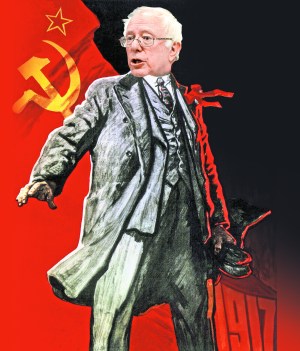
 What reasons? Let’s assume for the moment that there is no legitimate scandal in Bernie’s past, nothing that would give pause to an objective, well-informed voter. Let’s go further and assume that he hasn’t had allies or acquaintances who can be demonized, like
  Going back a little further,
  Looking at the weakness of the case, you might be tempted to laugh it off. But swift-boating John Kerry was absurd too, and it worked. With money, media power, and a significant slice of the population ready to repeat whatever nonsense they’re told, the Right can go places with a narrative like this — especially against a candidate most of the country doesn’t know.
 That may sound crazy, but the campaign you get is often not the one you thought you were signing up for. Mike Dukakis knew he’d have to defend his ideas about creating jobs, but he never expected to become the Guy Who Hates the Pledge of Allegiance or the


 The Weekly Sift