Category Archives: Articles

This Week in Corruption

Even by the standards of a historically corrupt administration, this week stood out.


Corruption is an ongoing story in the Trump administration, dating way back to Trump’s refusal to release his tax returns or distance himself from his business empire. The Trump International Hotel, whose building is rented from the federal government, places Trump in the position of being both the renter and the landlord. His cabinet has been riddled with scandal and conflicts of interest. His impeachment by the House was essentially a corruption story, as he tried to extort a personal favor from Ukraine in exchange for doing his duty as president. And as the Senate considered his fate, he raised millions of dollars to re-elect the Republican senators standing in judgement over him.

This week, though, at least three serious corruption stories were current at the same time:

  • The Justice Department dropped its prosecution of former national security adviser Michael Flynn, who had pleaded guilty to lying to the FBI.
  • The recently-deposed director of BARDA (Biomedical Advanced Research and Development Authority) filed a whistleblower complaint alleging “cronyism” and political pressure to ignore the scientific merit of proposals — including (but not exclusively) proposals related to the current pandemic.
  • Tomorrow the Supreme Court will hear Trump’s claim of “temporary absolute immunity” that shields him and his business empire and business associates from any form of investigation.

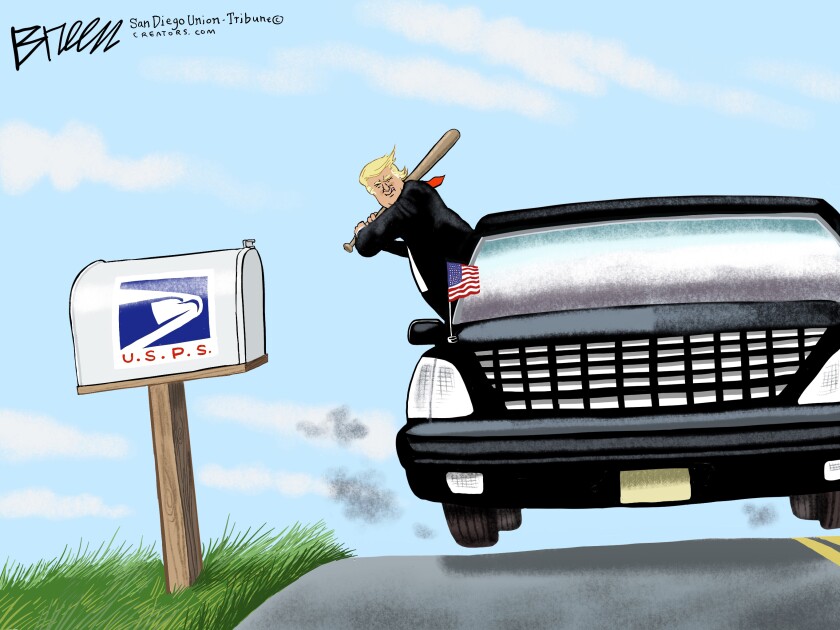
But at the same time we can’t lose sight of the constant low-level corruption we’ve gotten used to. Like this tweet, in which Trump uses the same Twitter account in which he sometimes announces major government policy changes or personnel moves to promote the re-opening of his Los Angeles golf club. Or putting a crony in charge of the Post Office, which he has long been trying to pressure into raising rates on Amazon, as a way to strike back at Jeff Bezos for owning the Washington Post, which Trump feels mistreats him. Stuff like that happens almost every week.

Flynn. For months we’ve been expecting Trump to pardon Michael Flynn, his first National Security Adviser, who lasted only two weeks in the job before resigning; he had lied to Vice President Pence and to the FBI’s counter-intelligence investigation about his conversations with the Russian ambassador. Flynn pleaded guilty to the charge, and also acknowledged being an unregistered foreign agent while he was working as an adviser to Trump’s 2016 campaign. (Flynn famously led a chant of “Lock her up!” at the Republican Convention.) He later sought to withdraw his guilty plea and attack the Mueller investigation that indicted him. The judge had not yet ruled on that motion.

Pardoning Flynn would tie up one of the remaining loose ends in Trump’s obstruction of justice in the Mueller probe. But now Trump may not have to commit that particular impeachable offense, because Attorney General Bill Barr is trying to accomplish the same thing: Thursday the Justice Department has asked the judge to drop the indictment of Flynn, despite his guilty plea. Former Solicitor General Neal Katyal and fellow Georgetown law professor Joshua Geltzer write:

The Justice Department’s new position isn’t that Mr. Flynn didn’t lie — that couldn’t be its position, because he did lie, and he admitted in federal court that he lied. Instead, the new filing argues that it was wrong for the F.B.I. to interview him in the first place. Look carefully at who the villain becomes in that narrative: not Mr. Flynn for lying, but the F.B.I. for asking the questions to which he lied in response.

Barr’s move is worse than a pardon, as Jeffrey Toobin explains in the New Yorker:

A pardon would have been outrageous but within Presidential prerogative. Instead, the Justice Department manufactured a phony pretext to pretend that Flynn’s guilty plea was illegitimate.

The pretext is based on the recently released documents concerning the FBI’s preparation for the interview in which Flynn lied, which it claims shows the agents planning to entrap Flynn. Further, it claims that the investigation under which Flynn was interviewed — the FBI’s counter-intelligence investigation into possible collusion between the Russian government and the Trump campaign — had already concluded. The closing communication had been written, but not yet approved.

Consequently, the Justice Department motion holds

Mr. Flynn pleaded guilty to making false statements that were not “material” to any investigation.

This contention was disputed in the NYT Sunday by Mary McCord, who had been acting assistant attorney general for national security at the time. The Justice Department’s motion is in part based on an interview with her. She claims it has “twisted my words”.

But the report of my interview is no support for Mr. Barr’s dismissal of the Flynn case. It does not suggest that the F.B.I. had no counterintelligence reason for investigating Mr. Flynn. It does not suggest that the F.B.I.’s interview of Mr. Flynn — which led to the false-statements charge — was unlawful or unjustified. It does not support that Mr. Flynn’s false statements were not material. And it does not support the Justice Department’s assertion that the continued prosecution of the case against Mr. Flynn, who pleaded guilty to knowingly making material false statements to the FBI, “would not serve the interests of justice.”

Trying to dismiss the Flynn indictment echoes Barr’s previous corrupt move: his interference a few months ago in the sentencing of another obstruction-of-justice loose end, Roger Stone. (Interim US attorney for D.C. Timothy Shea signed off on both.)

The case was thrown into disarray last week when Attorney General William P. Barr overruled a sentencing recommendation by four career prosecutors, who then quit the case in protest. Mr. Barr said he decided on his own that the prosecutors’ request for a prison term of seven to nine years was too harsh. But his move coincided with Mr. Trump’s public complaints about the prosecutors’ recommendation and elicited widespread criticism that he had bent to the president’s will.

Similarly here, lead prosecutor Brandon Van Grack withdrew from the case Thursday, apparently so that he would not have to submit the request to withdraw Flynn’s indictment.

What happens next in the Flynn case is not clear. It’s up to the judge whether or not to accept Barr’s motion to dismiss, but ultimately what else can he do? If he allows Flynn to withdraw his guilty plea, then there would have to be a trial. But he can’t force the Justice Department to mount a prosecution.

The judge could hold a hearing on the dismissal motion, including asking Van Grack why he withdrew rather than present it. That might embarrass the government, but wouldn’t convict Flynn. He could dismiss the indictment “without prejudice”, which could allow a Biden Justice Department to pursue the case next year. Barr is asking for a dismissal “with prejudice”, which would prevent any future Justice Department from restarting the case.

Meanwhile, both Trump and Barr are hinting that reprisals are coming against the people who investigated the Trump/Russia connection. Barr said:

I mean, it’s not going to be the end of it. We’re going to get to the bottom of what happened. … We also are seeing if there are people who violated the law and should be brought to justice, and that’s what we have our eye on

and Trump said:

I wouldn’t be surprised if you see a lot of things happen over the next number of weeks. This is just one piece of a very dishonest puzzle. … [Flynn] was targeted in order to try and take down a president. I hope a big price is going to be paid. A big price should be paid. … It’s treason.

Now, Trump says a lot of things that never go anywhere, they just sound good to him in the moment. But he could also be planning some kind of show trial against someone like James Comey.

I’ll give the last word to Steven Hall, the retired CIA Chief of Russian Operations:

I’m no lawyer, so I won’t comment on Flynn from that perspective. But I was an intel officer, and I can tell you there are serious counterintelligence issues. Flynn should never have a clearance again.

And another thing: I’ve met with many foreign intel chiefs, most of whom at one point or another expressed admiration for American rule of law. Some begrudgingly. It’s going to be much harder now to make the case for that, and as a result, the US has been weakened.

Dr. Bright’s complaint. The part of Dr. Rick Bright’s whistleblower complaint that got headlines was the conflict over hydroxychloroquine that seems to have been the immediate cause of Bright losing his directorship. But the complaint is worth reading in full as a horror story. The part that I found most agonizing happened in January, as Bright tried to get his superiors (Trump political appointees) interested in procuring more N-95 masks.

Secretary Azar and Dr. Kadlec responded with surprise at Dr. Bright’s dire predictions and urgency, and asserted that the United States would be able to contain the virus and keep it out of the United States. Secretary Azar further indicated that the CDC would look at the issue of travel bans to keep the virus contained. Dr. Bright responded that virus “might already be here. We just don’t have the tests to know one way or the other.” Dr. Bright’s comments were met with skepticism and were clearly not welcome. … As a result of the critical concerns raised by Dr. Bright in the January 23, 2020, meeting with Secretary Azar, HHS leadership excluded him from the next COVID-19 meeting, even though the agenda listed Dr. Bright as a participant.

He had similar frustrations over Covid-19 tests, swabs, reagents, syringes, and just about everything else that we now wish the government had prepared better. But the administration had bet all its chips on keeping the virus out of the country, and didn’t want to draw attention to the possibility that it might get in.

There is, of course, nothing inherently corrupt about lack of foresight and bad decisions, even if those bad decisions get many people killed or infect healthcare workers with a deadly virus. But Bright also tells a series of stories in which some drug company employs John Cherici as a consultant, and then Clerici deals directly with Assistant Secretary for Preparedness and Response Kadlec, who puts pressure on BARDA to ignore the recommendations of its scientists.

from approximately the spring of 2017 through the date of his involuntary removal as Director of BARDA, HHS leadership pressured Dr. Bright and BARDA to ignore expert recommendations and instead to award lucrative contracts based on political connections and cronyism. Dr. Bright repeatedly clashed with Dr. Kadlec and other HHS leaders about the outsized role played by John Clerici, an industry consultant to pharmaceutical companies with a longstanding connection to Dr. Kadlec, in the award of government contracts.

Bright’s complaint does not explain exactly what the deal with hydroxychloroquine was: Did somebody stand to make a lot of money, or was Trump’s prestige the thing at stake? (Bright may not know.) But for whatever reason, Bright was under pressure to sign off on a protocol that would make hydroxychloroquine “available for the treatment of COVID-19 outside a hospital setting and without close physician supervision” — despite the lack of scientific evidence of the drug’s effectiveness and concerns about its safety.

Absolute immunity. Remember Stormy Daniels? That whole scandal seems almost quaint now, being about nothing more serious than illicit sex and campaign finance laws. No deaths, no undermining of US foreign policy or the rule of law, no hundreds of millions of dollars, no Russians choosing our president for us. But Michael Cohen is in jail, in part because his pay-off of Daniels on Trump’s behalf constituted an illegal campaign contribution.

An issue that was never resolved in Cohen’s trial is whether the Trump Organization reimbursed Cohen for those illegal campaign contributions, and how it reported those expenses on its tax filings. The Manhattan District Attorney Cyrus Vance Jr., a county official, appears to be investigating whether any New York state laws were violated. In the course of his investigation, he subpoenaed eight years of Trump’s personal and corporate tax returns. The subpoena was issued not to Trump, but to his accountants.

Trump has sued to block that subpoena, arguing not only that he is personally immune from indictment under state as well as federal laws, but that he cannot be investigated either. Law professors Claire O. Finkelstein and Richard W. Painter explain in the New York Times:

Mr. Trump claims that a president has “temporary absolute immunity,” meaning he cannot be criminally investigated while in office. Indeed, in oral argument before the U.S. Court of Appeals for the Second Circuit in New York, his lawyers said that if the president were to shoot someone on Fifth Avenue, he could not be investigated or indicted until after he left office.

Apparently, this immunity also extends to any underlings at the Trump Organization who might have fudged the business records, as well as to his accountants.

Finkelstein and Painter do a pretty good job laying out how Trump’s claims contradict what the Supreme Court held in the Nixon tapes case and in the Paul Jones case. George Conway (Kellyanne’s husband) wrote of the briefs in the Paula Jones case. He explains that while a President may have a variety of immunities when he is acting in his official capacity, what he does as a private individual — like pay off troublesome porn stars before taking office — is not protected.

The law seems clear, so the corruption question moves to the Supreme Court, which begins hearing the case tomorrow: Will its five partisan Republican justices enforce the law against a Republican president? Or will they find some way to twist the law to give him what he wants? If they do, Finkelstein and Painter warn, the Republic is in real trouble.

If the justices endorse this extreme view, they will make it impossible to hold this president, and all future presidents, answerable in courts for their actions.

Conway seems confident that the Court will “teach the lesson” that the President is not above the law. But even if it doesn’t, I’m not that worried about future presidents, at least not if they’re Democrats. The five Republican justices are perfectly capable of reversing themselves once a Democrat takes office.

What’s Up With the Stock Market?

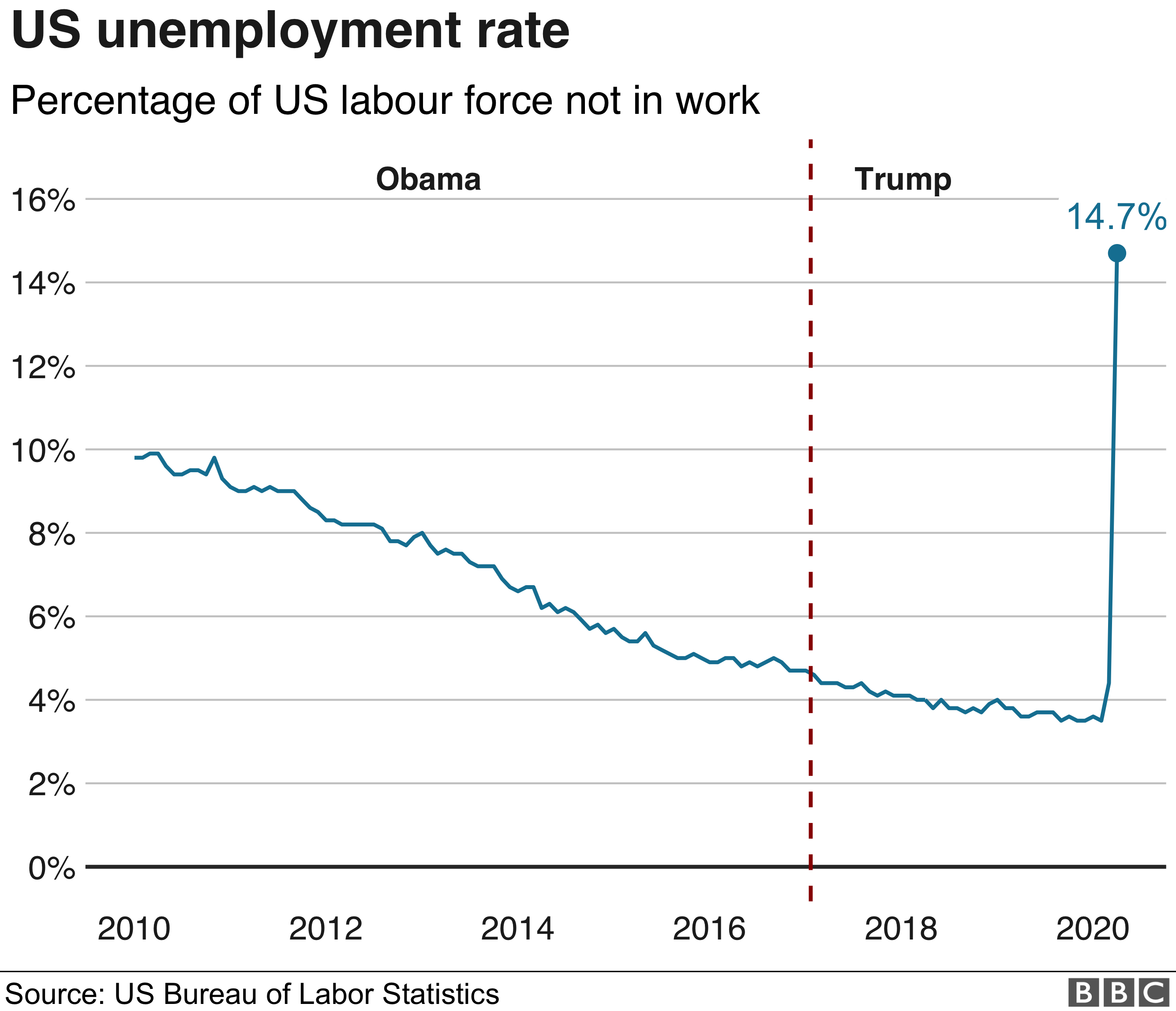
Unemployment has hit levels not seen since the Great Depression. More than 10,000 Americans are dying every week with no end in sight. And the Dow is up 33% since March 23.


Friday morning, the April jobs report came out, and it was horrific: The economy lost 20.5 million jobs in April, and the unemployment rate soared to 14.5% — territory not seen since the Great Depression. And there’s no reason to think it won’t go higher. (If you can’t read the graph below, click on it to go to the CNN article where I found it.)

So naturally, the Dow Jones average proceeded to go up 455 points. That jump was weirdly typical of how the market has been behaving lately. In March, when the economy was being shut down, the Dow plunged in a way that seemed appropriate to the unfolding disaster: from its all-time high of 29,568 on February 12 down to 18,213 on March 23. But since then the market has had a nice rally, making up more than half its losses and getting back to 24,331.

Another way to look at it is in time rather than dollars: Friday the Dow closed 1,000 points higher than it was at the start of 2019. Can you remember back 16 months or so? Unemployment was 3.7% then, not 14.5%. Did that strike you as a less promising time than right now? Did you have more confidence in the economy? Less uncertainty and fear?

Among people who don’t study investing, facts like these are usually taken as signs of collective insanity, or maybe evidence of a vast market-manipulating conspiracy of the super-wealthy. And while collective insanity has been known to strike the market from time to time, and I’ve never regarded the super-wealthy as entirely trustworthy, there are some reasons why the market is where it is. Several recent articles (Emily Stewart’s in Vox is my current favorite) review those reasons, which I will try to summarize in my own way.

Forward-looking? I need to start by debunking a bad explanation. One old saw you will hear repeated at moments like this is: “The market is forward-looking.” In other words, things may look bad right now, but the market is looking ahead to conditions six months or a year down the road, when the situation will be much better.

Really? If that’s what investors are thinking as they bid prices up to this level, then I’m thrust back into the collective-insanity explanation. It’s definitely possible that some of our current uncertainty will resolve in a positive way over the coming months: Maybe phase-two vaccine trials will look promising. Maybe remdesivir or some other anti-viral drug will turn out to be an effective treatment, or just limit the lethality of the disease. Maybe curve-flattening will keep working even as we start to open more businesses, so that we hit some sweet spot of a better economy without a worse public-health situation.

None of that is unreasonable to hope for. But it’s also not assured. So far, the death numbers have stayed stubbornly high, and a lot of states’ opening-up plans have lacked the care and thoughtfulness many of us expected. (The Trump administration decided not to publish the CDC’s guidelines for opening various kinds of businesses safely. My guess is that Trump’s people thought they would be too discouraging. If that’s what it takes to open safely, lots of businesses might just stay closed. Much better, the Trumpists think, just to go ahead and encourage them to open unsafely.) The virus appears to be making the transition from urban areas to rural areas. If there is a weather effect, and infection numbers go down in the summer, they might snap back in the fall. There’s still no good plan for re-opening the schools, and how are you going to get parents back to work until their kids have somewhere to go?

In short, pessimism has its case too. And in addition to the epidemiological pessimism, you might also have economic pessimism: There could be a vaccine tomorrow, and the economy still might not recover right away. As we saw in years after the 2008 collapse, economies are like that. If something causes a depression, the depression doesn’t automatically go away once the cause is removed.

So no, the market is not predicting that something wonderful will happen between now and the fall or winter. Maybe it will, but maybe it won’t.

So what are the real reasons the market is so high?

Publicly traded businesses are not typical of the economy. It’s not hard to think of publicly traded companies that are doing badly right now. The big retailers are almost all close to bankruptcy. The real-estate trusts that own the malls are in bad shape. So are the cruise lines, and the hotel chains, and the movie theaters. Even as its new streaming-subscription service is booming, Disney suffers under the twin blows of closed parks and movies it can’t release. And whenever other businesses do badly, banks suffer, because a lot of loans may never be repaid.

But it’s an ill wind that blows no one to good. Lots of businesses are doing OK during the plague, maybe better than ever. Zoom is benefiting from the boom in online meetings. Gilead could have a blockbuster drug in remdesivir. Quest and LabCorp have developed home Covid-19 tests. What’s bad for the gyms is great for Peloton, which pulls isolated stationary-bike riders together into classes or even communities. The money people aren’t spending on restaurants is going to grocery chains like Kroger. What’s killing Macy’s is boosting Amazon. The business models of Google and Facebook are unaffected by the virus. Netflix is well positioned. Stocks like that are up for good reasons.

More ominously, in the long run the big chains stand to benefit if their smaller competitors get wiped out. The family that runs your local diner might go bankrupt, but Denny’s will probably survive. Your barber might lose his shop, but Supercuts will make it. Who knows what will happen to your friendly neighborhood coffee shop, but Starbucks isn’t going anywhere.

The local coffee shop is not on the New York Stock Exchange, but Starbucks is. A lot of the economic pain in the country is happening outside the view of the NYSE. And the demise of businesses off the stock exchange is raising the prospects of the businesses on it.

The Fed Put. For several years, the United States’ single biggest exporter has been Boeing. The aircraft manufacturer employs 161,000 people. The company was already under stress before the pandemic, due to the safety problems of its 737 MAX airliners, which have been grounded for more than a year. And now its main customers, the airlines, can’t fill the planes they have. The maps below — again, click to find a more legible version — show the decline in air traffic between March and April.

But there’s more to that story: “We’re not letting Boeing go out of business,” Trump told Fox News on March 24. The CARES Act included $17 billion that could have been loaned to Boeing.  As it turned out, the company didn’t take the money, choosing instead to float a $25 billion bond issue. But that also might turn out to be government money in a more roundabout way. The bond market is so cooperative because the Federal Reserve, fearing a liquidity crunch, has announced its intention to buy huge quantities of corporate bonds.

And even if Boeing’s money doesn’t come directly from the Fed, wouldn’t you feel more confident owning its bonds, now that you know Trump won’t let the business fail?

I pick out Boeing just for clarity, but it illustrates a wider phenomenon. The Fed has been creating money at a fierce rate, both to cover the federal budget deficit and to prevent a credit crunch or a collapse in demand. Inevitably, some large chunk of that money eventually flows into the investment markets, driving up prices, or at least keeping them from collapsing. Among traders, this is known as “the Fed put” — the belief that the downside risk in the stock market is limited because the Federal Reserve will intervene if things start to collapse.

Interest rates and stock prices (1). But the biggest reason stock prices are as high as they are is interest rates, which are historically low right now. (Again, due to the intervention of the Fed.) It’s practically axiomatic that low interest rates lead to high stock prices.

There are two ways to see that. The first is just simple comparison shopping. Imagine that you’re a big investor. Say you manage the investments of a big pension fund. The model under which your pot of money funds the pensions it’s supposed to cover says that you have to make a certain average return year after year. Let’s make up a number and say it’s 4%. If you average 4% over the next 20 years, the teachers (or whoever) get their pensions and everybody’s happy.

Now imagine interest rates are such that you can buy well-rated 20-year bonds that pay 6%. You’re done. Just buy them and you’ll exceed your goal.

But if you’re in an environment like we see today, a 20-year bond won’t pay much over 1% unless it’s pretty risky. So if you’re going to make your goal, you’re probably going to have to invest in stocks and hope for growth.

When a lot of investors come to that conclusion at the same time, they bid up the price of stocks.

Interest rates and stock prices (2). The second way to see how interest rates affect stocks is more theoretical. In theory, what a stock is worth is the present value of the sum total of all the future earnings per share. The “present value” of $1 of earnings in 2050 — what somebody should be willing to pay today to get $1 in 2050 — is usually quite a bit less than $1. But how much less is determined by the long-term interest rate. What an interest rate is, in essence, is a measure of how the value of money changes through time.  If the long-term interest rate were 0%, that would mean that $1 in 2050 is worth $1 today. At higher rates, that future dollar might only be worth fifty cents today or twenty-five cents or ten cents.

So when interest rates go down, the fundamental value of a stock goes up — even if the economic prospects of the company have not improved.

What investors are thinking. It sometimes comes up on this blog that I buy and sell stocks. I’m far from a tycoon, but my wife and I do have a retirement nest egg that needs to be invested somewhere. So while I don’t operate on the scale of someone who manages a big pension fund or hedge fund, I do go through some of the same thought processes.

And yes, that thinking has to start with the recognition that the economy is historically terrible right now. People disagree about what kind of recovery we can expect over the next year or two, but I expect it to be slow. If the states roll back their lockdown restrictions in a sensible way, we should eventually get to an economy that is just very, very bad rather than apocalyptic. (I think it was Matt Yglesias who imagined a recovery where 80% of the population does 80% of what they used to do. That would still constitute a huge drop in GDP.) If they do it badly (and I think some are), the virus could spike again and start a new lockdown.

At the same time, there will be winners in that world, and we’re all competing to figure out who they will be. For example, I’m betting that most people will continue to pay their phone bills, and that many of them will want to up their data plans. So I own stock in Verizon.

Assuming that you’ve picked a company that will weather the storm, you then have to decide what you think their stock is worth. Is the current price a bargain? Or is it so overvalued that you should sell the stock you own?

And that’s where the question of competing investments comes in. If I sell, what do I do with the money I get? If I leave it in a money market account, it will earn near zero interest. Lots of stocks pay dividends that don’t sound like much by our previous standards, but that look pretty good compared to zero. (Apple currently pays about 1%. Coca-Cola pays 3.5%.) Maybe I wouldn’t buy them if I could get 4% from a CD at my credit union. But I can’t.

On the other hand, maybe the economy’s prospects are even worse than my fellow investors think. (There’s a good chance of that. Investors tend to be professional-class folks or higher up the pyramid. They’re likely to know a lot of people who can work from home and think of the lockdown as an inconvenience. They likely don’t know many people who can’t work and are defaulting on their rent or mortgage. They probably underestimate how many such people there are.) Maybe as we get into summer, the real state of things will filter into the statistics they pay attention to, and we’ll see another crash. In that scenario, I would be happy that I had kept money sitting in a fund paying .01%. Then I could swoop in and buy Apple and Coke at much lower prices (and higher dividend rates).

But back on the first hand, the Fed has created a lot of money, and so have the central banks in other countries. Wherever that money starts out — like the federal government borrowing a bunch of it to send people those $1,200 payments — eventually it’s going to pool up somewhere. And whoever owns that pool is going to want to invest it somewhere. Wouldn’t it make sense to be in the market now, before all that extra money arrives and bids prices up higher?

It’s a conundrum. But on the whole, the lack of competing investments and the fear of missing out pushes me into the market, the same way it pushes a lot of other people. I hold back a little, and I try to be careful about what I buy, but I’m not sitting out.

And that’s why the market is so high.

Things We’re Finding Out about the Pandemic

So far, Covid-19 has been characterized more by what we don’t know than what we do. That has allowed reporters to write either scary or reassuring articles, depending on what they assume about the unknown. This week I went looking for articles that give the unknown its due respect, and explain a lot of the artifacts in the data that might look like trends, but aren’t.

A good place to start is Ed Yong’s “Why the Coronavirus is So Confusing” in The Atlantic.

Terminology: “SARS-CoV-2 is the virus. COVID-19 is the disease that it causes.” It’s like HIV and AIDS. The epidemic — how the disease develops in a community — is yet a third thing.

The fatality rate isn’t a property of the virus. The reason the death rate (or case-fatality rate or CFR) is so hard to pin down is that it only becomes an objective quantity — number of deaths divided by number of cases — in retrospect. The CFR describes how the epidemic unfolded in a particular place; it’s not some inherent property of the virus.

The CFR’s denominator—total cases—depends on how thoroughly a country tests its population. Its numerator—total deaths—depends on the spread of ages within that population, the prevalence of preexisting illnesses, how far people live from hospitals, and how well staffed or well equipped those hospitals are. These factors vary among countries, states, and cities, and the CFR will, too.

We’re not really sure how the virus causes the symptoms of the disease. We know what a human body looks like after Covid-19 has attacked it. We’re not sure how to separate that into (1) damage the virus does, (2) collateral damage the immune system’s response causes, and (3) side effects of treatment.

The disease seems to wreak havoc not only on lungs and airways, but also on hearts, blood vessels, kidneys, guts, and nervous systems. It’s not clear if the virus is directly attacking these organs, if the damage stems from a bodywide overreaction of the immune system, if other organs are suffering from the side effects of treatments, or if they are failing due to prolonged stays on ventilators.

Others viruses might also have more wide-ranging effects than we know, but we just haven’t seen enough cases to notice them.

“Is COVID-19 fundamentally different to other diseases, or is it just that you have a lot of cases at once?” asks Vinay Prasad, a hematologist and an oncologist at Oregon Health and Science University.

Science doesn’t go straight to the right answer. The back-and-forth nature of the early scientific debate (asymptomatic people can’t spread the disease; yes they can) throws a lot of people, but it’s not that unusual.

This is how science actually works. It’s less the parade of decisive blockbuster discoveries that the press often portrays, and more a slow, erratic stumble toward ever less uncertainty. “Our understanding oscillates at first, but converges on an answer,” says Natalie Dean, a statistician at the University of Florida. “That’s the normal scientific process, but it looks jarring to people who aren’t used to it.”

The upshot is that if your whole view of the virus depends on one study by one lab, you should maybe take a wider look.

Uncertainty is a strength, not a weakness. In politics, the guy who is loudest and most sure of himself tends to win the argument. But expertise doesn’t work that way; real experts understand just how far their expertise goes, and recognize past some point, other kinds of expertise become more important.

The idea that there are no experts is overly glib. The issue is that modern expertise tends to be deep, but narrow. Even within epidemiology, someone who studies infectious diseases knows more about epidemics than, say, someone who studies nutrition. But pandemics demand both depth and breadth of expertise. To work out if widespread testing is crucial for controlling the pandemic, listen to public-health experts; to work out if widespread testing is possible, listen to supply-chain experts. To determine if antibody tests can tell people if they’re immune to the coronavirus, listen to immunologists; to determine if such testing is actually a good idea, listen to ethicists, anthropologists, and historians of science. No one knows it all, and those who claim to should not be trusted.

In a pandemic, the strongest attractor of trust shouldn’t be confidence, but the recognition of one’s limits, the tendency to point at expertise beyond one’s own, and the willingness to work as part of a whole.

The flu comparison is even less appropriate than the numbers make it sound. In Scientific American, Dr. Jeremy Samuel Faust concludes that the comparisons we hear about flu deaths vs. Covid-19 deaths are misguided.

When reports about the novel coronavirus SARS-CoV-2 began circulating earlier this year and questions were being raised about how the illness it causes, COVID-19, compared to the flu, it occurred to me that, in four years of emergency medicine residency and over three and a half years as an attending physician, I had almost never seen anyone die of the flu. I could only remember one tragic pediatric case.

He began asking other emergency-medicine doctors, and found that their memories match his. They remember lots of opioid deaths, gun deaths, and traffic-accident deaths — which are supposed to happen in similar numbers — but not flu deaths. Flu death totals, he came to understand, are not counted deaths — deaths of particular people whose doctors write “influenza” on their death certificates — they’re extrapolations based on models. The models assume that many people die of the flu outside of hospitals, and aren’t officially counted.

In the last six flu seasons, the CDC’s reported number of actual confirmed flu deaths—that is, counting flu deaths the way we are currently counting deaths from the coronavirus—has ranged from 3,448 to 15,620, which [is] far lower than the numbers commonly repeated by public officials and even public health experts.

In other words, (and I’m commenting here, not quoting or summarizing Dr. Faust) the flu death totals we usually hear are more comparable to the Covid-19 death totals we’re starting to get from excess-death demographic models — which show much higher numbers than the 65,000+ you commonly see reported. But if we compare counted Covid-19 deaths during the second week of April to counted flu deaths during the worst week of an outbreak “we find that the novel coronavirus killed between 9.5 and 44 times more people than seasonal flu”.

What happened in Belgium? If you study those country-by-country death totals, the one that always stands out is Belgium, which has 677 deaths per million compared the US’s 204 or Italy’s 475. What horrible lesson, you might wonder, should we learn from Belgium’s disastrous handling of the epidemic?

Maybe none.

Belgium’s high numbers have less to do with the spread of the disease and more to do with the way it counts fatalities. Its figures include all the deaths in the country’s more than 1,500 nursing homes, even those untested for the virus. These numbers add up to more than half of the overall figure.

The curve has flattened, but hasn’t turned downward much yet. Check out the Washington Post’s graphs of deaths and new cases per day. The peak in deaths was 2,874 on April 21 (assuming we ignore April 14, when New York City created a blip by reclassifying 3,700  previous deaths). But deaths have been in the neighborhood of 2,000 a day for the last two weeks. Trends are harder to detect due to a Sunday/Monday effect, when deaths are lower for some reason I don’t understand. (Sunday April 26 had “only” 1,087 deaths, but yesterday had 1,558.)

The numbers also depend to a certain extent on how they’re being collected. The WaPo numbers come from Johns Hopkins, and list 2,461 on Wednesday, 2,097 on Thursday, and 1,723 on Friday. But the WHO has a different way of collecting deaths and assigning them to days. They announced that 2,909 people died in the US on Thursday, a new high.

If you look at things Monday-to-Monday, as I do, there is a downward trend. 68K today, 55K last week, 40K and 22K the weeks before. So new deaths per week have gone from 18K to 15K to 13K.

As for where the numbers might be going next, 538 collects the projections of a variety of models about how many deaths we’ll see in the next three weeks. From the 65K deaths already recorded by May 1, some models predict as few as 72K deaths by May 23, others as many as 103K deaths. But if social distancing is abandoned too quickly and a second wave starts, all those projections go out the window.

When (and even whether) a vaccine shows up is anybody’s guess. A good summary here is Stuart Thompson’s article in Thursday’s NYT. If the normal vaccine-development timetable holds, a vaccine is years away, or maybe even decades. (There’s still no HIV vaccine, for example, after more than 30 years of looking for one.) But lots of things are being done to speed up the normal timetable, and maybe they’ll work.

There is a process to finding and producing a vaccine, but not one that can be easily predicted.

Clinical trials almost never succeed. We’ve never released a coronavirus vaccine for humans before. Our record for developing an entirely new vaccine is at least four years — more time than the public or the economy can tolerate social-distancing orders.

But if there was any time to fast-track a vaccine, it is now.

The main way you speed things up is that you do everything at once. Rather than take the most likely vaccine candidate, test it, and then test the next one after the first one fails, 95 different vaccines are being worked on at the same time. Some of them are probably very bad ideas.

What if a promising vaccine actually makes it easier to catch the virus, or makes the disease worse after someone’s infected? That’s been the case for a few H.I.V. drugs and vaccines for dengue fever, because of a process called vaccine-induced enhancement, in which the body reacts unexpectedly and makes the disease more dangerous.

That’s why you don’t just dream up a formula and start injecting it into the general public. Normally, there are three phases of testing, with time in between for analysis. But for Covid-19, you might start one phase before the previous one finishes. You also might start prepping a factory for production before you’re sure a vaccine works.

If you do all that and you get lucky, you might have a vaccine in mass production by August 2021.

The most aggressive timetable has been put forward by a group at Oxford, which is talking about availability in September, 2020. That would be a million doses, not the billions ultimately needed. But a lot has to go right before that happens. Human trials started this week. Right now all we know is that it works in rhesus macaques.

Whatever we’re returning to, it’s not “normal”. Another Atlantic article, Uri Friedman’s “I Have Seen the Future—And It’s Not the Life We Knew“, looks at the early signs of post-lockdown life in countries that are ahead of the US: China, South Korea, Denmark, and a few others. The very resemblance to normal enhances the strangeness of it.

In China, Friedman reports, reactions bifurcate as everyone anticipates the possibility of a second wave or a new plague. Some remain constantly on their guard, while others take a live-now approach: You’d better do whatever you can while you can, because it might all be taken away tomorrow. In general, the Chinese are saving more and spending less, frustrating planners who hope for a quick economic recovery.

Denmark seems to have the opposite problem: When the government reopened daycare centers and schools, many Danes took it as an all-clear signal. “[Just] because the schools open, doesn’t mean you should stop washing your hands,” says a University of Copenhagen professor.

Temperature screening at City Hall in Seoul

The NYT has a similar article:

In Hong Kong, tables at restaurants must be spaced at least five feet apart and customers are given bags to store their face masks during dining.

In China, students face temperature checks before they can enter schools, while cafeteria tables are outfitted with plastic dividers.

In South Korea, baseball games are devoid of fans and players can’t spit on the field.

… Libraries in Hong Kong are reopening, but visitors are allowed to be inside for only an hour at a time.

Hair salons in Sydney, some of which had closed because of the virus or financial pressures, are back in business with abundant supplies of masks and hand sanitizer. At some, magazines are no longer handed out to customers.

… In Sydney, schools are reopening in phases, holding classes one day a week for a quarter of the students from each grade and gradually expanding until the end of June.

We can hope that our opportunities increase over the coming months. But normal? Well, not exactly.

Trump Is Still Eating Souls

I really don’t want to talk about injecting Clorox, but I kind of have to.


To start with: Don’t do it. Disinfectants work by killing living things. You are a living thing. Complete the syllogism.

With that out of the way, the thing to focus on here isn’t that Trump said something monumentally stupid Thursday. He does that; it’s usually not quite this bad, but he says stupid things fairly regularly. On the whole, I think I’d rather have him saying incredibly, ridiculously stupid things rather than run-of-the-stupid-mill things — like that you should take dangerous drugs that haven’t been tested yet — because fewer people are likely to believe him and do harmful things to themselves or others. (Though apparently some did believe him this time too.)

No, the really scary thing about the inject-disinfectant story is what happened next. DHS Undersecretary William Bryan (who had just talked about the effectiveness of sunlight and bleach in killing coronavirus on surfaces — not inside the body) was still standing near the podium, and Dr. Deborah Birx was sitting a few feet away, and neither jumped in to protect public health by telling people not to do what the President just suggested.

Within a minute or two, Bryan was asked a question by a reporter, and he didn’t backtrack to tell people not to inject themselves with bleach. Even later, when a reporter specifically asked “But I — just, can I ask about — the President mentioned the idea of cleaners, like bleach and isopropyl alcohol you mentioned. There’s no scenario that that could be injected into a person, is there? I mean —”, Bryan said “no” in a deflecting way, not calling it out.

No, I’m here to talk about the findings that we had in the study. We won’t do that within that lab and our lab.

In other words: “No, that’s not my department”, not “No, that’s a really bad idea.” Later, on Fox News, Birx did this bit of spin.

When [President Trump] gets new information, he likes to talk that through out loud and really have that dialogue and so that’s what dialogue he was having. I think he just saw the information at the time immediately just before the press conference and he was still digesting that information

Assume that’s true for a second: It’s still political malpractice. Imagine any previous president “digesting information” about a crisis on national TV in real time. Picture George W. Bush — not my favorite president — digesting what his generals are saying about Iraq and spitballing whatever crosses his mind. “Couldn’t we just nuke them? We’re going to wargame that, right?”

I can only assume that both Bryan and Birx have made the same calculation: Protecting public health is less important than protecting the President’s fragile ego. Admitting that Trump said something stupid is a good way to get fired — and then maybe no one in the administration would care about public health.

And so Bryan and Birx have been corrupted by the soul-eating process James Comey described a year ago: First you don’t interrupt when Trump lies about trivial things like his inauguration crowd. Then you give in to peer pressure and flatter him in public.

Next comes Mr. Trump attacking institutions and values you hold dear — things you have always said must be protected and which you criticized past leaders for not supporting strongly enough. …

It bothers you, at least to some extent. But his outrageous conduct convinces you that you simply must stay, to preserve and protect the people and institutions and values you hold dear. Along with Republican members of Congress, you tell yourself you are too important for this nation to lose, especially now. … Of course, to stay, you must be seen as on his team, so you make further compromises. You use his language, praise his leadership, tout his commitment to values.

And then you are lost. He has eaten your soul.

Why the Country Isn’t Rallying Around Trump’s Flag

There is a substantial national consensus and someone needs to speak for it.
Unfortunately, our current President can’t.


The bullhorn speech. The highest presidential approval Gallup ever reported was published on September 24, 2001. Just ten months before, George W. Bush had lost the popular vote to Al Gore, resulting in a bitter dispute over Florida, and a widespread belief among Democrats that his presidency was illegitimate. In the poll published on September 10, Bush’s approval rating had been a lackluster 51%, barely higher than the 48% who had voted for him in November. But now, suddenly, 90% of Americans approved of his job performance.

Bush was the same man he had been two weeks before, but something historic had happened in the meantime: On September 11, the United States suffered a humiliating and horrifying attack. In New York, the twin towers of the World Trade Center fell, killing almost 3,000. In Washington, the Pentagon had been damaged. A fourth hijacked airliner, rumored to have been targeted at the Capitol, had been brought down by a self-sacrificing passenger uprising.

Three days later, Bush stood in the WTC rubble.

The president, who had been in office less than eight months, grabbed a bullhorn and started thanking the fire fighters and other first responders at the scene, telling them that they were in the country’s prayers. Someone in the crowd shouted that he couldn’t hear the president, and Bush replied with the words that made history.

“I can hear you!” he declared. “The rest of the world hears you! And the people – and the people who knocked these buildings down will hear all of us soon.” The crowd reacted with loud, prolonged chants of “USA! USA!”

In this electric moment, Bush captured the mood of the country, delivering just what the American people wanted a combination of gratitude for the rescue workers’ bravery and diligence, defiance toward the terrorists, and resolve to bring the evil doers to justice.

Rally round the flag. Other peaks of presidential approval reflect similar moments of national unity. In 1991 and 1945, the common emotion was pride and relief at the successful conclusion of a war. The first President Bush garnered 89% approval after the surprisingly one-sided victory over Saddam Hussein in the First Gulf War. President Truman reached 87% approval after the surrender of Nazi Germany. Perhaps the moment that most resembled 9/11 was Pearl Harbor, when a similar sense of national determination pushed FDR’s approval up to 84%.

Crisis has a way of uniting Americans around their president. Past mistakes and doubts are put aside. Had W ignored the terrorist threat before 9/11? Had his father’s uncertain policy led Saddam to believe he could get away with invading Kuwait? December 7, 1941 was not just a “date that will live in infamy”, it was also a shocking defeat for the Navy that Roosevelt commanded, and was soon followed by the defeat of American ground forces in the Philippines.

So if you had wanted to disapprove of any of those presidents, you could justify it. But somehow none of that mattered. The nation yearned to be united, and there was only one president to unite around. Lingering disagreements and disappointments would have to be transcended until the current challenge had been met and overcome.

Over time, this pattern has baked itself into the American psyche so deeply that it has a name: the rally-round-the-flag effect.

What about now? Right now, we’re in another national crisis of historic proportions. More than 50,000 Americans have died of Covid-19, almost all of them in the last month. Hundreds of thousands are sick, and nearly every American has felt the impact of stay-at-home orders intended to “flatten the curve” and blunt the upward trajectory of death.

We’re mourning, we’re hurting, we’re frightened, and we’re angry. So why isn’t the rally-round-the-flag effect working for President Trump?

One theory is that the country’s partisan divide has gotten so wide that it’s impossible to cross over and support a leader of the opposite party. But that doesn’t explain why the effect is still working at the state level, for governors of both parties: Democrat Andrew Cuomo of New York, whose televised briefings have made him a national figure, scored an 87% approval rating in late March. And Larry Hogan of Maryland and Ohio’s Mike DeWine are Republican governors with similarly stratospheric ratings: 84% and 83%, respectively.

All those states (especially New York) have been hard-hit by the virus, and you could easily imagine people deciding to blame the governor rather than support him. But that’s not what’s happening. Past disputes are being forgotten. Past oversights are being forgiven. New Yorkers, Marylanders, and Ohioans want to be united, and they only have one governor to unite around. So that’s what they’re doing.

Trump’s problem isn’t us, it’s him. We’re still capable of uniting; he’s just not capable of leading us.

The country tried to unite around Trump. In early April, when he had finally stopped trying to happy-talk the virus into vanishing “like a miracle”, and proclaimed himself a “wartime president”, his disapproval fell below 50% for the first time since early 2017, and his approval rose near 46%, an all-time high.

Democrats were beginning to get seriously depressed about the fall election. In a true rally-round-the-flag moment, it wouldn’t matter that he had been consistently wrong about the seriousness of the virus, or that he had failed to prepare either the government or the public for the battle we are now in. It wouldn’t matter that the economy, which Trump had counted on to be his ticket to a second term, had collapsed. We’d all be in this struggle together, and he’d be leading us.

But that trend fell apart pretty quickly. By this week, Trump’s 538 polling average was back in familiar territory: 52.4% disapproval, 43.4% approval — with the trend line decidedly negative.

Why?

How it works. Sometimes we talk about the RRtF effect as if it were a knee-jerk reflex: There’s a crisis, so I’ll support the president. But it’s actually a more complex process than that.

The first thing to notice is that ordinary politics is divisive, while crisis politics is unifying. Ordinarily, our national political conversation is about issues we disagree on: Should abortions be easier or harder to get? Should government do more to help people, or just get out of their way? Do refugees and immigrants continually revitalize our nation, or do they steal opportunities from the native born? Do whites and men have unfair privileges they need to relinquish, or have they yielded too much already?

We’re a two-party system, so we tend to divide into relatively equal sides.

But when a crisis hits, most of us suddenly find ourselves on the same side. When the planes hit the World Trade Center, everybody became a New Yorker. When Nazi Germany surrendered, parties broke out all over America.

Being on the same side, a lot of us find ourselves thinking the same things. After 9/11, a huge majority of Americans were all thinking: “We can’t just let something like this happen to us. We have to find who did it and stop them. We have to make sure nothing like this happens again.”

But at the same time, a crisis makes us feel small in our individuality. It was paralyzing to imagine being in the WTC when the planes hit. What could you have done? And if people on the other side of the world were plotting similar attacks right now, what could you do about it?

That combination of factors creates an opportunity for a leader: When Bush picked up that bullhorn, he spoke for us, and spoke with the strength that we had together rather than the weakness we felt as individuals. (There’s a long conversation to be had about how he misused that strength, but that’s a different topic.) He didn’t say, “Listen to me!” He said “I hear you!” and he promised to channel our unified will into powerful action.

That’s what 90% of America approved of.

The consensus today. If you listen to cable news shows or watch the President’s coronavirus briefings, you might imagine that the virus is an ordinary-politics divisive topic. But it really isn’t. Pretty much everybody is thinking and feeling and wanting the same things.

  • We’re afraid of getting sick and dying, or of passing the virus on to our more vulnerable loved ones and watching them die.
  • We wish we could do something.
  • We’re bored and frustrated with staying at home, but we’re willing to keep doing it if it actually helps.
  • We sympathize with people who have lost relatives or friends without being able to visit them in the hospital or hold their hands.
  • We’re worried about our financial future.
  • We’re rooting for our doctors and scientists to figure out how to beat this thing.
  • We concerned about the long-term effects on our communities. (Will our local shops and bars and restaurants and theaters and stadiums ever reopen? Will they be recognizable when they do?)
  • We miss the lives we used to have.
  • We worry that people will do stupid things to make it all worse.
  • We admire the people who are risking their lives to take care of others, and we feel responsible for the people (grocery workers, meat-plant processors, delivery people) whose jobs require them to take risks on our behalf.

I could go on, but you can probably extend that list yourself.

The arguments we’re having on social media (or that other people are having for us on TV) are mostly artificial. When we talk about reopening businesses, my worry that stupid people will make it all worse may conflict with your desire to get out of the house and your worry that we’ve been wrecking our financial future, but we share all those concerns. Literally everybody wants to restore normal life safely, but none of us know exactly how to do that. We all wish we did.

That consensus creates the opportunity that many governors are using to raise their popularity: They hear us. They’re speaking for us. And they speak with the power we have together rather than the weakness and fragility we feel as individuals.

Why not Trump? The singular virtue that made Trump’s political career is that he has the best-defined personal brand of anyone who has ever run for president. People sometimes say, “You know what he thinks” or “You know where he stands”, but neither of those is actually true. (In reality, he likes nothing better than to get on both sides of an issue and then claim victory no matter how it comes out. Last week I pointed out how he was doing that in regard to reopening the economy, but you can see the same pattern many places. Like China, for example: He’s an anti-China trade warrior, but he also brags about his great relationship with President Xi.)

The real underlying truth is “You know who he is, and he never changes.”

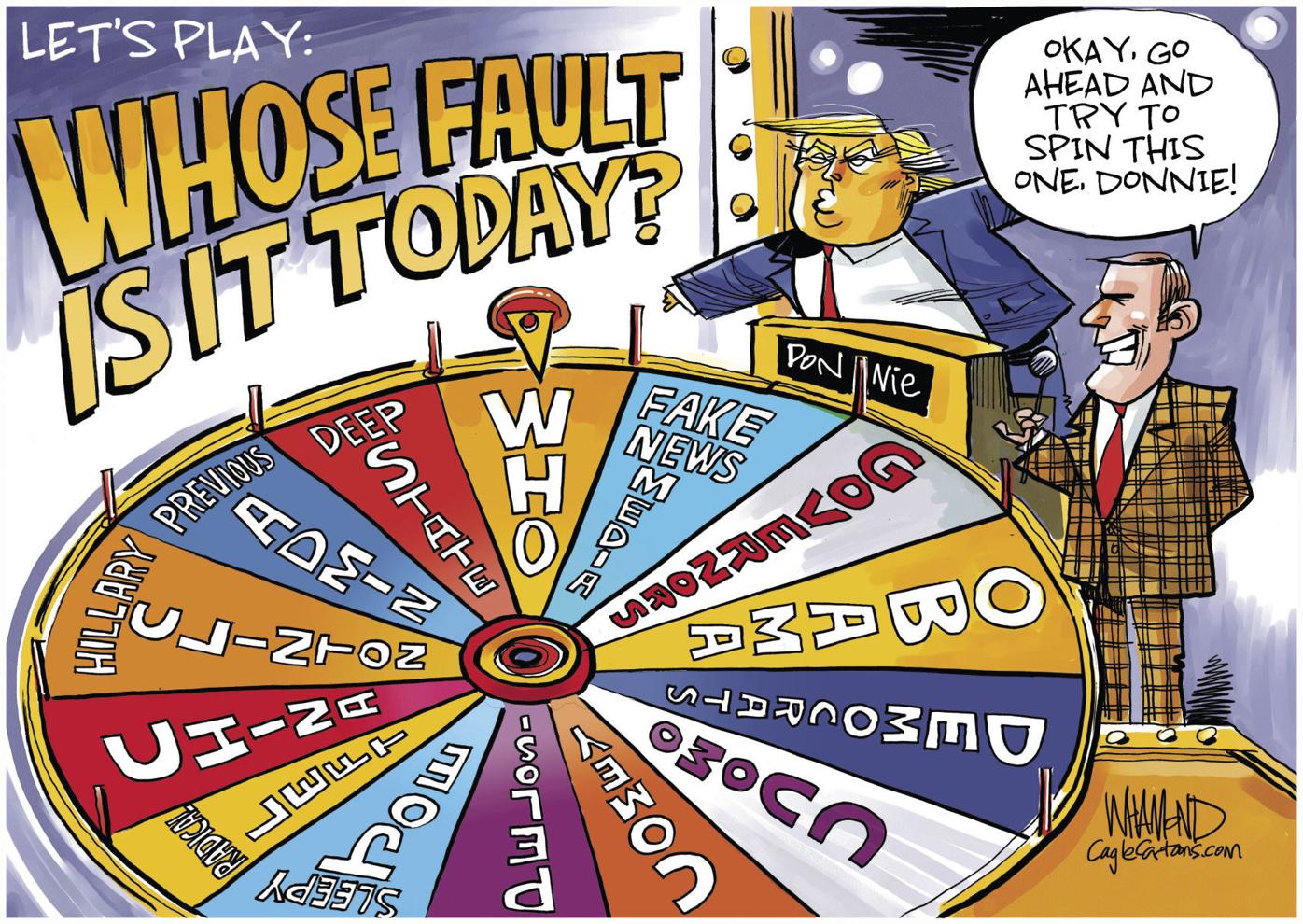
“Who he is” is a divider, not a uniter. The heart of his 2016 campaign was to channel the resentment and anger of rural whites who feel like America has slipped away from them. His whole public persona (and I suspect his personality) is based on resentment. Wherever he goes, he has to define enemies: the Deep State, the fake-news media, Crooked Hillary, Shifty Schiff … it never ends. He recognizes no loyal opposition; those who are against him (or just not for him ardently enough, like Jeff Sessions) are “horrible people”. He couldn’t forgive John McCain, even in death.

Unifying politicians have a way of co-opting their enemies — the way W co-opted the so-called liberal media in the run-up to the Iraq War — but Trump must defeat his. They must visibly surrender and pay tribute to his victory. President Obama found diplomatic roles for George W. Bush to play, as Bush in turn had made use of Bill Clinton. But it’s impossible to imagine Trump asking Obama’s help — despite (or perhaps because of) all the countries where Obama continues to be popular. Obama would have to bend the knee and beg first, and even then Trump would probably refuse (as during the transition, he accepted Mitt Romney’s submission, but refused to offer him a post).

So even trying to speak for the country’s consensus would break Trump’s brand. Who would the enemy be? How could he hold a press conference without demonizing the reporters? How could he be smarter than everyone if he agreed with everyone?

On a deeper level, it would also run counter to his psychology. Look again at Bush’s bullhorn speech. “I hear you,” requires a fluidity of ego that Trump does not have. He is himself, and he is right, and he is better than everybody else. Speaking for the consensus requires putting yourself to the side. Trump will never, ever be able to do that.

Instead, we have the spectacle of his daily briefings, where the reporters are enemies and the doctors are rivals whose loyalty he must constantly assess. The dead are not individuals to mourn and the bereaved are not objects of sympathy or empathy. They are possible sources of blame, and so they must be removed from the spotlight as quickly as possible. There is only one spotlight, and only one person it should illuminate. The opinions that are validated must be his opinions, which he came to first, before anyone else. They can’t be yours or mine or anybody’s but his.

Trump’s Guidelines Aren’t What He Says They Are

Trump’s rhetoric is quite different from what his “Opening Up America Again” plan actually says. The confusion he’s creating doesn’t help fight the virus or boost the economy. (Quite the opposite.) But it will allow him to claim credit for good outcomes while avoiding responsibility for bad ones.


Thursday, the White House released the long-awaited guidelines Opening Up America Again. It was rolled out in a quintessentially Trumpian way, one that will allow him to claim credit for any successes and blame someone else for any failures. This sleight-of-hand is achieved by a simple trick: What the document says is very different from what Trump says about it.

He says it’s a plan by which parts of the country can start relaxing stay-at-home orders almost immediately — even before his previously stated goal of May 1. But if you read the document (and how many MAGA-hatters will bother?) it lists a set of criteria not much different from those put forward by public-health experts all over the world — or by Joe Biden a week ago: a downward trend in cases, a rebuilt stockpile of medical equipment, extensive testing even of those with no symptoms, and exhaustive contact-tracing of those who test positive.

Since no state is anywhere near achieving those criteria, none can use these guidelines to justify opening up anytime in the near future.

You might expect all this open-up/stay-closed confusion to hinder both the economy and the fight against the virus — and you’d be right — but jobs and lives are not the point. The primary goal is to allow Trump to claim vindication no matter what happens.

  • If a state reopens its economy soon and everything works fine, then Trump takes credit for all the jobs gained, because he told them to reopen. Even better, he overruled both Democrats and scientists, who were wrong when he was right. The stable genius wins again!
  • If a state relaxes its lockdown rules, sees a spike in infections and deaths, and has to lock down again, it’s not Trump’s fault that the governor misapplied what was clearly written down in the guidelines. Blame that loser, even if he’s been a loyal Trumpist like Ron DeSantis or Greg Abbott.
  • If a state doesn’t reopen soon, then any economic or psychological distress caused by the continued lockdown is also the governor’s fault, and Trump is the champion of the suffering people trapped in their homes. Liberate Michigan!

It’s a neat trick. Let’s look a little deeper at how it works.

What he says. First off, here’s what Trump is saying:

I think 29 states are in that ballgame, not open enough for opening, but I think they’ll be able to open relatively soon.

Of course “not open enough for opening” is already a big enough loophole to excuse whatever happens. But when asked, he also wouldn’t name any of the 29 states. So no rigorous fact-checking is possible. If you point to, say, South Dakota, which appeared to be in good shape until a sudden explosion of cases this week, he can easily absolve himself with something like: “I didn’t say South Dakota.”

And when is “relatively soon”? Well, on a phone call to the governors, he said:

Some of you are in very, very good shape to open quickly and, if you’d like, according to the guidelines, you could open before the date of May 1.

Once again, though, he didn’t say who “some of you” are. So if any of you open up and it goes badly, you’re not the ones he meant.

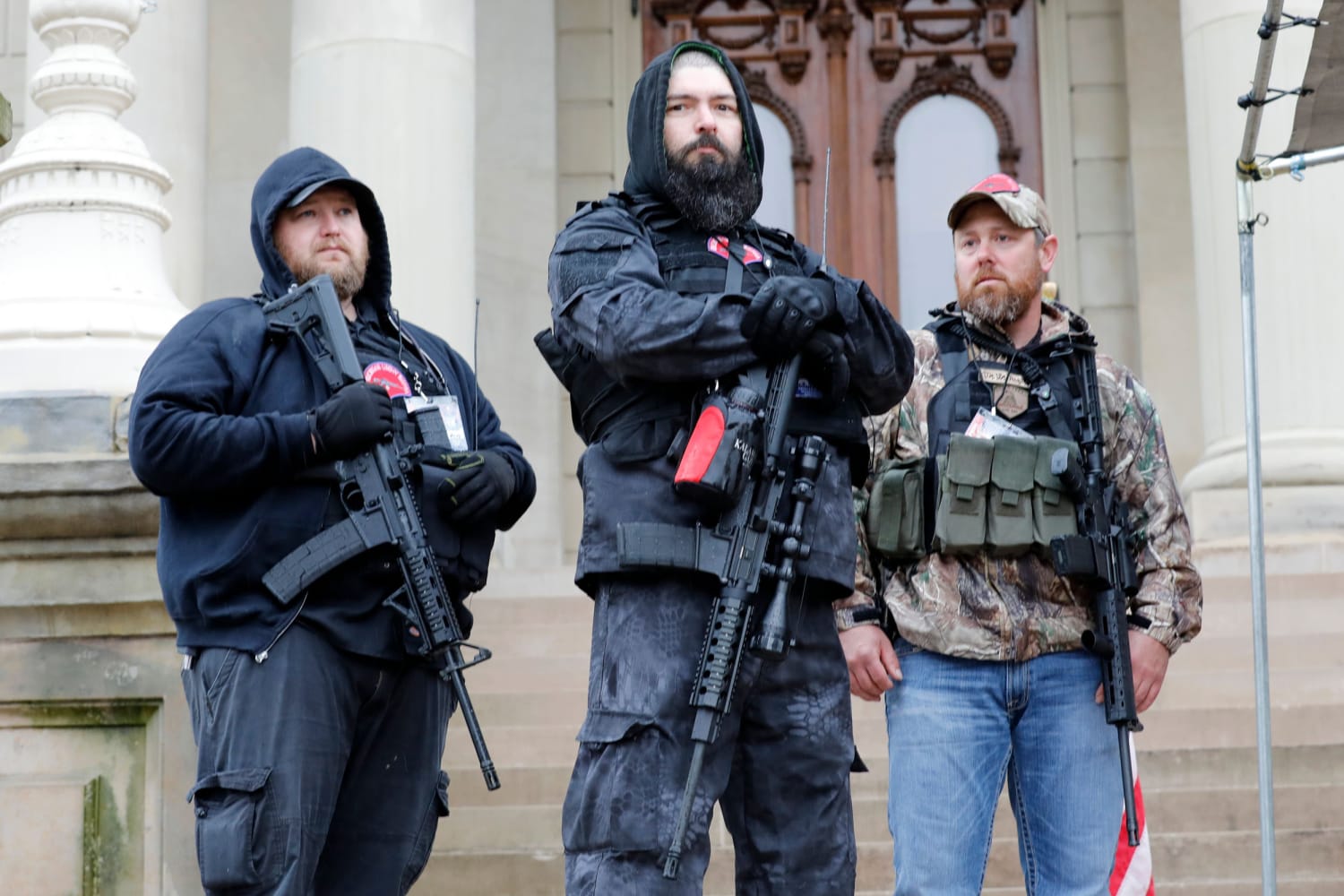
And who’s standing in the way of people getting their jobs back, going to the church potluck dinner, or starting the baseball season? Why Democratic governors, of course. Organizations allied with Trump have sponsored anti-lockdown rallies (where some protesters openly carry rifles), and Trump has endorsed them, tweeting “LIBERATE MICHIGAN!“, “LIBERATE MINNESOTA!“, and “LIBERATE VIRGINIA, and save your great 2nd Amendment. It is under siege!“. [1]

In Lansing, gun-toting white male Trumpists raise the patriarchy’s battle cry against women in power: “Lock her up!”

So if you’re facing real hardship during this crisis — or if you’re just bored and resent that you can’t get your hair cut — Trump wants you to know that he’s on your side. If it were up to him, the economy would be booming again. People would be gathering in bars, flying coast-to-coast, and buying standing-room-only tickets for country music festivals. [2]

And the virus? Oh, never mind all that. Trump’s propaganda network is telling his base that the virus is no big deal — pulling false statistics out of their butts, and using the merely 60 thousand deaths predictions of the most optimistic if-we-lock-down models to argue that we don’t need to lock down. [3]

What the guidelines say. In contrast to what Trump himself implies, or the things said explicitly by his mouthpieces at Fox News, the administration’s guidelines take the virus seriously. They set criteria for opening that no state can currently meet, and which probably won’t be achievable for some while.

The guidelines have three phases. To enter Phase 1 (or to progress from one phase to the next), a state has to meet (and then maintain) these criteria:


SYMPTOMS

Downward trajectory of influenza-like illnesses (ILI) reported within a 14-day period

AND

Downward trajectory of covid-like syndromic cases reported within a 14-day period

CASES

Downward trajectory of documented cases within a 14-day period

OR

Downward trajectory of positive tests as a percent of total tests within a 14-day period (flat or increasing volume of tests)

HOSPITALS

Treat all patients without crisis care

AND

Robust testing program in place for at-risk healthcare workers, including emerging antibody testing


In other words, the virus has to have been in retreat for two weeks, and you have to be prepared for the possibility that loosening restrictions will lead to a new outbreak. But that’s not all. The “Core State Preparedness Responsibilities” section assigns key responsibilities to the states. This is, in essence, a second set of criteria. If you can’t do these things — and no state currently can — you’ve got no business opening up.


TESTING & CONTACT TRACING

  • Ability to quickly set up safe and efficient screening and testing sites for symptomatic individuals and trace contacts of COVID+ results
  • Ability to test Syndromic/ILI-indicated persons for COVID and trace contacts of COVID+ results
  • Ensure sentinel surveillance sites are screening for asymptomatic cases and contacts for COVID+ results are traced (sites operate at locations that serve older individuals, lower-income Americans, racial minorities, and Native Americans)

HEALTHCARE SYSTEM CAPACITY

  • Ability to quickly and independently supply sufficient Personal Protective Equipment and critical medical equipment to handle dramatic surge in need
  • Ability to surge ICU capacity

PLANS

  • Protect the health and safety of workers in critical industries
  • Protect the health and safety of those living and working in high-risk facilities (e.g., senior care facilities)
  • Protect employees and users of mass transit
  • Advise citizens regarding protocols for social distancing and face coverings
  • Monitor conditions and immediately take steps to limit and mitigate any rebounds or outbreaks by restarting a phase or returning to an earlier phase, depending on severity

In short, Opening Up America Again says exactly what nearly all the experts (and Biden) have been saying: We need to be doing lots more testing (about triple what we’re doing now, according to one Harvard report), including testing people without symptoms, so that we can figure out who has the virus and spot new outbreaks quickly. Healthcare workers and nursing home workers need antibody testing that is only just now becoming available, and may not be available in the needed quantities for some time. We need to be set up to do extensive contact-tracing, so that we track down everybody who might be infected (again, whether they have symptoms or not).

The healthcare system needs to have slack capacity and rebuilt stockpiles of protective equipment. Key systems like public transportation need to be reconfigured for safe use. Industrial plants (like the meat-packing plant that triggered the South Dakota outbreak) need to be reconfigured to protect workers.

The guidelines also say that public behavior can’t return to normal; you still need to keep away from people when you can and wear masks when you can’t. Keep washing your hands constantly, and self-quarantine if you feel sick.

Businesses that want to reopen need to keep limiting business travel, and shut down or regularly disinfect common areas where workers might otherwise congregate. The guidelines recommend temperature checks at the door for workers and perhaps customers as well.

Does any of that sound like the vision Trump has been putting forward in public? No, of course not. But if states loosen up their stay-at-home orders and something goes wrong, you can bet Trump will point to these Biden-like guidelines as what he really proposed, and completely forget all his contrary statements. “I never told you to do that,” he’ll say. And Fox News and right-wing talk radio will back him up: “None of us ever said to do that.”

And if that butt-covering action requires throwing some Republican governors under the bus — I’m looking at you, Ron DeSantis of Florida — Trump will be more than willing to do it. Whether in business or politics, backing Trump’s play has always been a risky strategy.

The phases. A state needs two weeks of good testing to start Phase 1, then two more weeks to get to Phase 2, then two more to get to Phase 3. So if nothing at all goes wrong, no state can get back to anything resembling normal for six weeks.

In Phase 1, lots of stuff stays closed: schools, day-care centers, camps, bars. Nursing homes and hospitals are locked down against visitors. Gyms, churches, and arenas can open only if “strict physical distancing protocols” are maintained. (Picture a stadium or theater with about 1/10th of the seats occupied and no concession stand.) Out-patient elective surgeries are OK, but not ones that require hospitalization. Businesses should still encourage telework, and redesign their on-site processes for social distancing. As for individuals, you shouldn’t socialize in groups of 10 or more, and keep your distance from people even then. Avoid non-essential travel. Vulnerable people should stay home, and if you live with vulnerable people you need to be able to isolate yourself from them.

In Phase 2, schools can reopen, the limit on social gatherings rises to 50, and you get to travel non-essentially again. Common areas at work should still be closed, and telework continued. Elective surgery with hospitalization is OK. You still can’t visit Mom at the nursing home. Bars can reopen “with diminished standing-room occupancy”, whatever that means. Social distancing protocols for large venues can now be “moderate” rather than “strict”. Vulnerable people should still stay home.

In Phase 3, vulnerable people can come out if they’re careful, and everybody else should minimize time in crowds when not avoiding them altogether. Workplaces can resume “unrestricted staffing”. Bars and gyms can go back to more-or-less normal, but large venues should still maintain “limited” social-distancing practices. You can visit Mom again, if you’re “diligent regarding hygiene” (which Mom always nagged you about anyway).

States are on their own. By listing those “Core State Preparedness Responsibilities”, the Trump administration is denying any responsibility for its failure to create the prerequisites for reopening. Testing, contact tracing, building up PPE stockpiles — those are state responsibilities. So the states shouldn’t count on the federal government to help them get ready to reopen.

But some governors made it clear they are not ready to break out the roadmap, saying they badly need help from Washington in expanding testing.

[New York Governor Andrew] Cuomo, whose state is the most lethal hot spot in the nation and is still seeing over 600 deaths a day, accused the federal government of “passing the buck without passing the bucks.”

“The federal government cannot wipe its hands of this and say, `Oh, the states are responsible for testing.′ We cannot do it. We cannot do it without federal help,” the governor said.

However, Trump will incite citizens to demand — perhaps violently — that their states reopen whether they are ready or not. [4]

Governors out on a limb. In spite of the fact that no state fulfills the prerequisites for Phase 1, several states are announcing some kind of reopening.

Despite Florida hitting a new high for new Covid-19 cases Friday, beaches in Jacksonville, Florida reopened for limited hours. (“This is really a crazy bad idea,” said one resident.) CNN did not see much social distancing. The NY Post reported: “Aerial photos show hundreds of people packing the sand to swim, stroll, surf and fish. Many were without masks.”

Texas Governor Greg Abbott appears to see the trap Trump has laid for him, and so far is doing the same thing Trump is doing: talking in favor of aggressive reopening, but not yet committing himself to anything specific.

Instead of kicking off a full restart, the Texas governor announced that a group of medical and economic experts will guide him through a series of incremental steps aimed at slowly reopening the state’s economy. The group’s aggressive name, the “Strike Force to Open Texas,” belies Abbott’s surprisingly cautious framework. Plans to restart business won’t come until April 27, and Abbott stressed they will be determined by “data and by doctors.”

But unlike Trump, Abbott has no one to pass the buck to. And his base, which belongs more to Trump than to him, is getting restless.

Through the week, as Abbott’s public messaging made it sound less likely that he would announce a grand reopening, he began taking fire from members of his own party who say he’s moved too slowly to reinvigorate the economy and has been overly deferential to public health experts. On Thursday for example, Don Huffines, a former Texas Republican state senator who represented Dallas County, wrote a blistering op-ed for the Austin American-Statesman, excoriated Abbott for his handling of the coronavirus crisis.

Some Republican governors — Mike DeWine in Ohio for one — are standing by their lockdown decisions without waffling. And they are not immune to the Trump-inspired protests, as this Pulitzer-worthy photo from Columbus makes clear.

Attack of the MAGA zombies in Columbus. The woman on the left is a Republican candidate for the Ohio state senate.

But they also must know that Trump will shamelessly throw them under the bus if reopening leads to a new wave of deaths. He has already laid the groundwork to do just that.


[1] If any of this leads to actual violence, of course, that’s not Trump’s fault either. It never is.

Trump advisor Stephen Moore calls these protesters “modern-day Rosa Parks“, because staying home and watching Netflix for a month is exactly like living your whole life under Jim Crow.

And one more thing: None of these demonstrations around the country were more than a few hundred people. Would a similar number of liberals demonstrating for a liberal cause get this much attention? I doubt it.

[2] This vision, of course, is a complete fantasy. The economy can’t recover if we don’t beat the virus.

It’s worth noting that no one has locked down the airlines, but traffic has drastically dropped off anyway, because people very sensibly don’t want to spend hours trapped in a small space with possible carriers of the virus. Iowa has been one of the slower states to respond to the virus, and is not usually considered a hub of liberal hysteria, but The Des Moines Register reports:

Facing a 95% reduction in passenger traffic, Des Moines International Airport officials have closed a terminal, shut down services and delayed projects — including a planned Allegiant Air crew base — to save money during the coronavirus pandemic.

The unprecedented decrease in travelers while Iowans are practicing social distancing follows three years of record-breaking traffic at the state’s largest airport.

Bill Gates makes the point like this:

It’s very tough to say to people, “Hey, keep going to restaurants, go buy new houses, ignore that pile of bodies over in the corner. We want you to keep spending because there’s maybe a politician who thinks GDP growth is what really counts.”

And Thursday morning I heard CNBC’s Jim Cramer say:

You don’t want to think, “If I go to the movies, I might die.” We’ve got to take dying off the table.

[3] Bill Bennett and Seth Leibsohn write:

The Institute for Health Metrics and Evaluation in Washington state is now projecting 68,841 potential deaths in America. It is also estimating lower ranges than that. The flu season of 2017-2018 took 61,099 American lives. For this we have scared the hell out of the American people, shut down the economy, ended over 17 million jobs, taken trillions of dollars out of the economy, closed places of worship, and massively disrupted civic life as we know it.

But National Review’s Rich Lowry (not usually one of my favorite writers) notes that the lockdown might have had something to do with keeping the death toll down to where it is, and then elaborates:

Consider the perversity of [Bennett and Leibsohn’s] reasoning a different way. If we had shut down the country a month sooner and there had been, say, only 2,000 deaths, then on their terms they’d have an even stronger argument, i.e., “We did all this, and there were only a couple of thousand fatalities?”

In other words, the more effective a lockdown would have been, the more opposed Bennett and Leibsohn would be to it.

[4] Brazil’s President Jair Bolsonaro, who is often likened to Trump, is taking one more step: He’s appearing at anti-lockdown demonstrations that openly call for a return to military rule.

Political observers say the protesters were right-wing Bolsonaro supporters who called for military intervention on behalf of the president because they view the country’s supreme court and legislature as obstacles to his campaign against pandemic lockdown measures, despite the fact that the country has more than 35,000 confirmed cases and over 2,300 deaths as of April 19.

“Now it is the people in power. It’s more than your right — it’s your obligation to fight for your country,” Bolsonaro said, standing on a pickup truck outside the Army headquarters. “We don’t want to negotiate anything. We want action for Brazil.”

The Republican Shenanigans in Wisconsin

How much are Republicans willing to disrupt democracy to maintain their power? We’re starting to find out.


This week, partisan majorities in the Wisconsin legislature, Wisconsin Supreme Court, and US Supreme Court combined their power to rig Tuesday’s election, with the goal of safeguarding the Republican majority on the Wisconsin Supreme Court against possible interference by the voters. The cost of this exercise of raw power was both the disenfranchisement of large numbers of Wisconsin citizens and an increase in the spread of Covid-19 in the state. As a result, both votes and lives will be lost.

Wisconsin’s pre-existing condition: an ailing democracy. Before we get into the details of how Tuesday played out, it’s worth noting that Wisconsin’s claim to have a democratic form of government was already shaky. Elections are still held, but the state has been gerrymandered to the point that large Republican majorities in both houses of the legislature are just about impervious to the will of the People. Republicans have power because they have power, not because the voters of Wisconsin want them.

2018 election results in Wisconsin.

The election of 2018 proved that point: Democrats won all the statewide offices, including the governorship. Together, Democratic candidates for the lower house of the legislature — where all the seats were up for election — got 200,000 more votes than Republicans. And yet Republicans won not just a majority of the seats, but close to a supermajority: 63 out of 99.

That advantage comes on top of the unfair advantage Republicans get from voter suppression. They lost among the people who managed to vote by 200K. If voting were easier, they probably would have lost by much more.

How do they get away with that? Well, one reason is that the Wisconsin Supreme Court doesn’t protect the right of Wisconsin voters to control their government, at least not when that government is Republican.

But Supreme Court justices are elected in Wisconsin, so if Wisconsinites want their democracy back, they can vote out the Republican judges who stand in their way. At least in theory. That theory was being tested Tuesday.

What the election was going to be about. Outside of Wisconsin, Tuesday’s election mainly had been getting attention as a presidential primary. Joe Biden held a substantial delegate lead, but Bernie Sanders was still running, and Sanders had beaten Hillary Clinton soundly in Wisconsin in 2016. The recent polls weren’t looking good for Sanders this time, but if he could pull off a result similar to his 2016 victory, things might yet get interesting.

Inside the state, though, the election was about judgeships, particularly a seat on the state’s highest court. Politico explains:

The high court has played a pivotal role in upholding major pieces of GOP legislation including Act 10 in 2011, which limited public employee collective bargaining rights. The court, which now has a 5-to-2 conservative majority, also shut down a long-running investigation into the campaign of former Governor Scott Walker for campaign finance violations, and upheld the GOP Legislature’s move to limit the powers of incoming Democratic Governor Tony Evers after his defeat of Walker. The court will also play a decisive role in the upcoming fight over redistricting as well as a host of hot-button social issues such as abortion and religious liberty.

Also at stake: “three seats on the Wisconsin Court of Appeals, over 100 other judgeships, over 500 school board seats, and several thousand other positions”.

The judicial elections happening simultaneously with the primary seemed like a misfortune to Republicans, though, because (since Trump is running unopposed) more Democrats seemed likely to turn out than Republicans. If only there were some way to keep turnout down across the board …

The coronavirus election. Then coronavirus happened. Showing up to vote is a risky thing during an epidemic, especially if you have to wait in long lines with other people, some of whom are bound to be carrying the virus. Other states have recognized this problem and so a series of primaries have been postponed. In all 16 states have delayed their primaries.

Democratic Governor Tony Evers thought Wisconsin should do the same. He already had issued a stay-at-home order on March 24, and reasoned that it made little sense to tell people both to stay home and to go out and vote. On April 3 he called the legislature into special session to delay the primary. Evers wanted to convert the primary to a vote-by-mail format, and allow voters to return their ballots anytime until late May.

That, of course, would raise turnout, which is seen as a partisan issue in Wisconsin, and across the country. (If you want a lot of people to vote, you must be a Democrat.) But the gerrymandered Republican legislature could have proposed its own plan to postpone the primary, and Evers would have found himself under considerable pressure to go along with it.

Instead, the legislature came up with the best voter-suppression plan of all: Let’s make people risk their lives in order to vote! The leaders of both houses issued a joint statement: “Our Republic must continue to function.” The primary would go on as scheduled.

This looked like a trainwreck-in-the-making to Governor Evers, whose main job these days is to convince his citizens to stay home and not spread the virus. So the day before the primary — right after the legislature adjourned his special session without acting — he issued an order delaying the primary until June 9, noting the risk not just to the voters, but even moreso to the poll workers who “come into close proximity with dozens, if not hundreds, of voters”.

Wisconsin House Speaker Robin Vos and state Senate Majority Leader Scott Fitzgerald immediately challenged that order in the Wisconsin Supreme Court, which — surprise! — supported them 4-2. Vos and Fitzgerald rejoiced:

We continue to believe that citizens should be able to exercise their right to vote at the polls on Election Day, should they choose to do so … this election will proceed as planned.

What about voting absentee? OK, there’s an election. But that doesn’t mean you have to go to the polls to vote. The decision that the show must go on produced a predictable avalanche of absentee-ballot requests. Last year, when there was a spring election but not a presidential primary, 167,832 absentee ballots were requested. For the 2016 general election there were 595,914 requests. This year? 1,293,288. About 200,000 of those ballots were not returned in time to count, compared to just 30,000 in the 2016 general election.

The office that distributes absentee ballots wasn’t set up to deal with such a deluge of last-minute requests, so it soon became apparent that some number of legitimate Wisconsin voters wouldn’t get their ballots before election day.

A collection of (mostly Democratic) voters and groups sued to get an extension for absentee voters to return their ballots. A federal district court ruled in their favor, extending the deadline from election day to today, nearly a week later. The election commission was also enjoined from releasing results until then.

That ruling was overturned by the Supreme Court’s Republican* majority: Votes could continue to be counted until today, but they had to be postmarked by election day. That decision is unsigned. It mentions the problem that voters may not have received their ballots (which the lower court held was an unconstitutional burden on the right to vote), but then completely ignores it, comparing the situation to normal elections where people who request a ballot at the last minute may not have much time to fill it out and mail it. (It’s worth pointing out that the undelivered-ballot question is not just theoretical. “Three tubs of ballots for Oshkosh and Appleton have been discovered at a mail processing center in Milwaukee, according to the Wisconsin Elections Commission and a state senator.”)

Justice Ginsburg’s dissent asks a simple question:

If a voter already in line by the poll’s closing time can still vote, why should Wisconsin’s absentee voters, already in line to receive ballots, be denied the franchise?

The majority opinion doesn’t answer that question, because there is no answer.

Election day. The NYT’s Linda Greenhouse, in a column blasting the Supreme Court’s Republican majority, (and in particular skewering the majority’s use of the word “ordinarily”, as if anything about this situation were ordinary) summarized the election-day conditions.

Milwaukee voters are not ordinarily reduced to using only five polling places. Typically, 180 are open.

In a stunt that probably wasn’t as effective as he planned, Speaker Vos himself worked as an election inspector. Covered in protective equipment, he assured the public that “You are incredibly safe to go out.

Implications for future elections. In the back of everyone’s mind is the question: What if Covid-19 turns out to have a seasonal factor? It almost certainly won’t go away completely in the summer — it’s summer all year round in Florida, and they’ve had nearly 20,000 infections — but what if it diminishes, and then comes roaring back in the fall? Or what if we re-open the economy too quickly and get a fall resurgence that way?

In either case, it’s not impossible to imagine that the general election in November could take place under very similar conditions to the ones in Wisconsin on Tuesday. Wouldn’t it be nice to make a plan for that now, rather than go through last-minute drama and see large numbers of Americans disenfranchised?

You know who has a plan for that? Elizabeth Warren. Her plan calls for online voter registration, a vote-by-mail option, and at least 30 days of early voting. Radical stuff like that.

The problem with all those ideas, of course, is that they encourage people to vote. Or at least Republicans see that as a problem. They talk a lot about fraud, which is their usual excuse for voter suppression, but that’s not their real issue. (Washington state votes entirely by mail and has for years. Voting by mail is the standard thing for our overseas military. Fraud has not been a problem.) Their issue is that if you make voting easy, more people will vote. Marginal voters tend to vote Democratic, so it’s important to make voting as hard as possible.


* Typically, the media refers to the Court’s “conservative” majority, but that characterization has not been accurate for some while. More and more often, dating back to Bush v Gore, Citizens United, and John Roberts’ evisceration of the Voting Rights Act, the Court has been making decisions that can’t be explained by legal philosophy. The point is that Republicans should win, not that some theory of constitutional interpretation is better than another. So henceforth I’ll be refusing to play along with the ruse that their rulings have something to do with limited government or the Founders’ original intent.

My Coronavirus Test

Update: My test came back negative. I don’t have the virus.

Drive-through virus testing at Holy Family Hospital in Haverhill, Mass.

Let me begin this post by saying that, as best I can tell, I’m doing fine. I’ve quarantined myself since Tuesday, but so far my symptoms are somewhere between minor and imaginary. Nonetheless, I got tested Friday, and I should hear results Tuesday or Wednesday.

OK, let’s go back and tell the story from the beginning: My wife has a large number of risk factors, so we are terrified of what would happen should she catch Covid-19. Both of us are in our 60s. She had a lung collapse during surgery several years ago, and it never fully reinflated, so essentially she gets by on one-and-a-half lungs. A different medical problem resulted in half her liver being removed. And she takes a drug that drags on her immune system (though I don’t think it’s that bad; she throws off colds fairly well).

So our household is hyper-vigilant. That gets tricky, because I have a number of conditions that mimic coronavirus symptoms: An allergy causes me to wake up congested every morning and spend my first waking hour coughing and blowing my nose. If I sleep in the wrong position, I’ll have a muscle ache when I do that coughing. As for aches and pains in general, I already mentioned that I’m over 60. In short, most of the early-warning symptoms of Covid-19 are normal for me.

That leaves me focused on the one symptom I don’t ordinarily have, which is fever. Quite the opposite, in fact: My body typically runs cool. A normal morning temperature for me is below 98, and can run as low as 97.4. It tends to rise through the day, but hardly ever hits 98.6.

Anyway, first thing Tuesday, I’m having my morning cough and feeling a little more discomfort in it than usual. I take my temperature and it’s 98.3 — fine for anybody else; not fine for me. And I think “Probably nothing, but …”. And then I think “If you wait until you’re sure, you’ll have waited too long.”

So I call over to my wife, tell her to keep her distance, and explain what’s happening. She grabs some stuff, and goes to occupy a room on the second floor. (While our new apartment is under construction, we’re living on the top floor of a friend’s three-story Victorian. It was bought years ago for a family with five boys, and only two of them are still here.) Except for one trip I’ll describe later on, I’ve been up here by myself ever since. My housemates prepare plates of food and leave them on the steps; I retrieve them like a caged animal. Thank God there’s a bathroom up here.

I expected the temperature thing to resolve itself by Tuesday afternoon, but it didn’t. I kept getting readings that would top out at 99 or 99.1 in the mid-afternoons. (Again, no emergency for anybody else.) Friday afternoon, the digital ear-thermometer I was using went completely wild — I couldn’t get the same reading twice — raising the possibility that the whole episode is an equipment malfunction. By the time I got hold of an old-style mercury thermometer, I was showing more normal temperature patterns, which have continued for the last few days. What to think?

Anyway, Thursday afternoon I emailed my doctor, who did a Zoom-meeting with me Friday morning. She agreed with me that (1) these are pretty sketchy symptoms, and (2) I’m in a situation where I should pay attention to sketchy symptoms. Apparently, though, tests are now plentiful enough to justify getting me one. I suspect that wouldn’t have been true a week before.

There is a drive-through testing site at Holy Family Hospital in Haverhill, Massachusetts, about a 40-minute drive away. (I should add, though, that you can’t just drive up unannounced. They require a physician order.) I went downstairs for the first time in days, was careful to touch nothing until I reached my car, and drove myself to Haverhill.

The picture above is one I took through the windshield. I had to wait in line behind two or maybe three other cars. A young woman swathed in protective garb talked to me through my open window, had me sign a form (with a pen she refused to take back), and stuck a long Q-tip-like thing up each of my nostrils. It was fast, and while I would never do it for fun, it wasn’t that bad. She told me to expect results Tuesday or Wednesday. (Those 15-minute tests you’ve been hearing about apparently aren’t in wide use yet.) Results would go to my doctor, and I shouldn’t call Holy Family. Meanwhile, she said, I should consider myself quarantined for 14 days or until I get a no-infection result.

So now I wait. And in truth, I’m not even sure what I’m rooting for. No infection would be nice, but in some ways the best result of all would be to get away with a minor-symptom case and then have some kind of immunity. On the other hand, I also have heard stories of minor symptoms that suddenly turn bad, so I get anxious every time I start to feel tired. It would be nice to have that over with.

I’ll update this post when my results come in.

The Speech a Great President Would Give Now

If we’re ever going to have great presidents again, we need to hold a space in our imaginations that a great president could occupy.


Ever since Donald Trump made his famous descent down the escalator to announce his candidacy (and assert that Mexicans crossing the border are rapists), we’ve been lowering our standards to his level. Once in a great while he does something so outrageous that his opponents try (and usually fail) to draw a line in the sand. But for the most part we’ve just accepted that he will do the kinds of things he does: ignore obvious facts, insult large swathes of people who have done nothing to deserve it, funnel public money into his own businesses, deny that he said what he said, respond to his critics with schoolyard taunts, and so on. We’ve come to expect him to politicize everything, admit no mistakes, fire anyone who reveals inconvenient truths, and confront everyone who comes into his presence with the choice to flatter him or face his wrath.

At times I’ve been as guilty of this normalization as anyone. Given a choice between letting a lie or injustice go unremarked, and distracting my readers from what I saw as more important issues, I’ve often just shrugged off norm-violations that would have been major scandals in any previous American administration.

Still, every now and then I think it’s worthwhile to ask ourselves: “What would a real leader do in this situation?” Not because I imagine Trump will listen to our answer, slap his forehead, and say, “That’s a good idea!”, but just to maintain our own sense of what is good and right. If we’re ever going to have great presidents again, we need to hold a space in our imaginations that a great president could occupy.

So I have written a speech for a great president to deliver in the midst of the current crisis. There’s no reason Trump couldn’t deliver it, and I hope he does. For obvious reasons, he won’t. I accept that, but I’m still going to put the vision out there.

My fellow Americans:

Every president faces crises and makes decisions that could either save or cost lives. I have already faced my share: military conflicts in various parts of the world; hurricanes in Texas, Florida and Puerto Rico, as well as floods and tornadoes and the full run of other natural disasters. An economic crisis may not take as many lives as war or disease, but it can ruin lives, as people lose their jobs and homes and dreams for the future.

The current crisis, the one brought on by the coronavirus pandemic, is on a scale most presidents never need to confront. Thousands of Americans are dead, and some estimate that the eventual toll could be in the hundreds of thousands, or even millions. Hundreds of thousands of Americans are already sick. Tens of thousands of businesses hang in the balance, and millions of Americans have lost their jobs. Tens of millions are sheltering in their homes.

This is not only the greatest crisis of the four-year term I was elected to in 2016, but most likely it will overshadow the crises of the next four years as well. So whether I serve four years or eight, I believe I have already met the defining challenge of my presidency, the one for which history will judge me.

Public-health experts I trust tell me that we will go through the peak of this crisis in the next month or two. No one can guarantee what will happen after that, but I think it is safe to say that the most important chapters in the story of this pandemic will be written between now and the inauguration in 2021.

It is desperately important that we get this right. The decisions that are made between now and November or January — here in the White House, in Congress, throughout government at every level, and in homes all over this country — could save or cost the lives of countless human beings, and save or cost the livelihoods of countless more. When the stakes are this high, we can’t let politics interfere with doing the right thing.

And yet, how can it not, as we move towards the 2020 election? Already, both my supporters and my critics interpret everything I do in the light of that election. I deserve credit for this, blame for that — no I don’t, yes I do — it goes on and on. But none of those arguments save anyone. They just make it harder for America to move forward in unity.

When this is all over, there will be plenty of time to distribute credit and blame. There are undoubtedly many lessons to learn — both good and bad — from what we have done so far. But trying to do that analysis in the middle of the crisis, and absorbing that discussion into what was already a poisonous partisan environment before Covid-19 emerged, does not serve this country. Partisanship can only decrease the likelihood that we will judge correctly, or learn the lessons that might save us from the next plague.

Right now, there are many things I wish I could do for this country, but they are beyond my powers. I can’t banish the disease by executive order. I can’t decree a vaccine or effective treatment into existence here and now. I can’t speed time up so that we jump past the peak of the crisis and skip all the suffering Americans will have to endure in the coming weeks and months.

But there is one thing I can do: To a large extent, I can take partisan politics out of this struggle, and I’m going to do that right now with this announcement: I will not be a candidate for re-election in November, nor will I endorse any candidate in that election. Instead, I will lead the battle against this disease until my term ends in January.

The election will still happen, and I’m sure the candidates who vie to replace me will debate their views and their plans with all the vigor we expect from a presidential campaign. But I will take no part in it. If any members of my administration want to participate in that election, God bless them, but I will ask them to step away from whatever active roles they might be playing in managing our country’s response to the virus.

I cannot insist that others follow my example. But I can ask political leaders at all levels to do what they can to take partisan politics out of this effort. Most of us tell ourselves that we entered politics to do something important. Let me suggest that nothing you might do in future years from future offices will be quite so important as what you do these next few months. Lives and livelihoods are at stake.

Going forward, there are many choices to make, and I expect to hear much argument about what should happen next. A healthy democracy always has room for disagreement. But let those discussions center on the health and well-being of our citizens, not on the November elections, and especially not on me. My political future is already set: I will finish my term and then return to the private sector to await history’s judgement on my actions. I pray history will be able to say that I rallied a unified nation to take decisive and successful action.

God bless you all, and God bless the United States of America.

How the Economy Restarts

It’s not going to happen soon or fast, but maybe the process begins by June.


Sadly, any serious article about restarting the economy has to begin by brushing aside the misinformation coming from the White House.

Disclaimers. The economy cannot be restarted safely any time soon.

It won’t happen on Easter (as the President was envisioning Tuesday, but has since backed off of). We won’t even reach the peak daily death total by Easter (as he predicted yesterday). If we’re lucky, we might see the daily new-cases totals peak by then, but deaths trail diagnoses by at least a week. (Italy’s new-cases peak was March 21. Deaths might or might not be peaking now.)

Public health experts agree that certain conditions and capabilities need to be in place before it will be safe to relax social distancing practices, open non-essential businesses, or allow people to start congregating. Those conditions and capabilities aren’t in place now and won’t be for at least several weeks, and probably longer. Trump’s notion that the country will be “well on our way to recovery” by June 1 seems wildly optimistic.

The talking point that shutting down the economy to stop the virus is “worse than the problem itself” (which Trump tweeted a week ago yesterday) is nonsense. COVID-19, unchecked, could kill millions of Americans (which Trump finally admitted yesterday: “Think of the number: 2.2 million people, potentially, if we did nothing.”) The idea that the economy might putter along normally while people are dying in those numbers is just absurd. (I think of this as the Masque of the Red Death theory.)

The supporting talking point that “You are going to lose a number of people to the flu [i.e., coronavirus], but you are going to lose more people by putting a country into a massive recession or depression” is likewise nonsense. Not only won’t a depression kill millions of Americans, the effect usually goes the other way: Lower economic activity means fewer overall deaths, mostly because traffic deaths and heart attacks go down.

We find that in areas where the unemployment rate is growing faster, mortality rates decline faster. So during the Great Recession in the U.S., we saw increases in the unemployment rate of about 4-5 percentage points, so that translates to about 50,000 to 60,000 fewer deaths per year

Smithsonian magazine looked further back and found that “The Great Depression had little effect on death rates.”

Prerequisites. OK, now that the decks have been cleared of some widely distributed bad information, we can start talking sensibly about how the economy restarts

Let’s start with the prerequisite conditions. Dr. Thomas Inglesby of Johns Hopkins listed five:

  • The number of new cases starts going down over time.
  • The health system can quickly and reliably test people who may have been exposed to the virus, even if their symptoms are minor or non-existent.
  • Caretakers have a sufficient supply of masks and other protective equipment.
  • Hospitals have sufficient resources: ventilators, ICU beds, etc.
  • Systems are in place to trace the contacts of any new cases.

These five conditions are consistent with what Anthony Fauci and other public-health experts have been saying. Together, they paint a picture of a South-Korea-like containment: The virus hasn’t been eliminated, but the public health system has identified and isolated almost everyone in a region who is infected. As new outbreaks happen, they can be quickly found and traced, so that the newly infected can also be identified and isolated. Moreover, public health workers have the means to protect themselves, so that a new virus outbreak won’t break the system.

It should be obvious that those conditions don’t exist now. Even in New Rochelle and Seattle, early hotspots that took early action, the optimistic story is that the rate of increase in cases is down, not that the number of cases has actually peaked. (The curve is being bent sideways rather than bent down.) Some parts of the country, particularly rural areas, have not seen large numbers of cases yet. But their numbers are increasing and none of them have the virus contained in the way the experts envision. Tests are not as rare as they were a week or two ago, but the number needed has grown to stay ahead of the number provided, so they still are not plentiful. Better and quicker tests have been developed, but are still not widely available.

Perhaps the best evidence that ventilators and masks are scarce is that Trump has stopped denying it and started finding other people to blame for it.

It’s worth pointing out what’s not on this list: a vaccine or a magic anti-viral treatment that changes the whole nature of the struggle. Such advances will happen eventually, but almost certainly not in the next few months, and maybe not for a year or more.

First steps. So it’s not happening tomorrow or next week, but you don’t have to wear rose-colored glasses to imagine a time when the prerequisites have been fulfilled. No matter how bad the pandemic gets, the number of cases has to peak eventually. Tests exist and are being manufactured in ever larger numbers. Ditto for hospital equipment. Infection-tracking systems work in other countries and could work here.

So it’s anybody’s guess how long it will take to get there, but we will get there. And what happens then?

Ezekiel Emmanuel envisions how a restarting process might go. He pictures a nationwide shelter-in-place policy lasting until about June (except in places — are there any? — with so few cases that public-health officials can already track them all), during which he imagines achieving more-or-less the same things Dr. Inglesby described:

State and local health departments then need to deploy thousands of teams to trace contacts of all new Covid-19 cases using cellphone data, social media data, and data from thermometer tests and the like. We also need to get infected people to inform their own contacts. It would be easier to lift the national quarantine if we isolate new cases, find and test all their contacts, and isolate any of them who may be infected.

The national quarantine would give hospitals time to stock up on supplies and equipment, find more beds and room to treat people, get better organized and give clinical staff a respite to recuperate for the next onslaught of Covid-19 care. Without these measures, any Covid-19 resurgence would be far harsher, and economically damaging.

Whether all that happens by June or not is debatable. But even with those capabilities in place, the restart happens gradually. Nobody flips a switch or makes an all-clear announcement.

The first people Emmanuel would send back to work are those who have recovered from the virus and provably have anti-bodies to resist reinfection. And even they would need some rigorous training in safe working procedures: frequent hand-washing, avoiding unnecessary contact with others, etc.

Next, low-risk parts of the population could be allowed to congregate, while higher-risk people continue to shelter in place: Colleges might be allowed to hold in-person summer sessions. Summer school, camp, and daycare for K-12 children could be attempted — with ubiquitous testing to spot any viral resurgence.

If that works — it might not, and then retreats would have to happen — public venues could slowly start returning to almost-normal: Offices, libraries and museums, and bars and restaurants could re-open, but with reduced occupancy limits. (I heard a Starbucks executive interviewed on CNBC. He described the gradual reopening of Starbucks outlets in China: First take-out only, then dine-in with one person per table, then dine-in with at most two people per table.)

This is hardly a let-it-rip vision, and I think that it ultimately relies on some kind of treatment or vaccine developing: The economy isn’t completely closed down, but limps along for a year or so until medical developments rescue it.

Herd immunity. Thomas Friedman has tried to popularize a more ambitious opening envisioned by David Katz, who IMO gives way too much credence to the economic-contraction-will-cost-lives theory. The argument here is to focus on protecting the vulnerable (mainly the elderly), while letting the less-vulnerable behave more-or-less normally.

Even here, though, the same ideas show up: A period of lockdown, during which ubiquitous testing and research give us a much better idea of who has the virus, how it spreads, and who the vulnerable really are. (Some young people are dying too.) There is, I think, too much optimism about how quickly this period could be brought to a close. (Katz proposed two weeks, which is already about to expire without the kind of testing availability his plan needs.)

Once the vulnerable are sequestered — how you keep vulnerable parents away from their virus-exposed children and grandchildren is never specified — the virus spreads more-or-less harmlessly among the rest of the population, resulting in ever more recoveries with corresponding immunity. (We’re not totally positive immunity happens or how long it lasts, but it’s a reasonable theory.) The ultimate result is a general population with enough herd immunity that the virus no longer spreads like wildfire. As time goes by, then, more and more of the vulnerable can return to society.

Science Alert’s Gideon Meyerowitz-Katz dissents on this view: Herd immunity requires something like 90% of the population to be immune, and 20% of COVID-19 infections are serious enough to require hospitalization. So if you picture even the minimal overlap, about 10% of the population winds up being hospitalized. That will break the health-care system, even if it manages to save almost everybody — which it probably won’t.

So again, I think some kind of treatment or vaccine has to appear before the economy gets back to hitting on all cylinders.

Summing up. In every re-opening vision I’ve seen, conditions more-or-less like Dr. Inglesby’s have to be met first, and it’s hard to picture that happening much before June. By then, the $1,200 checks the government is sending out will have been used up long ago, so another trillion or two or three will have to be spent, both to keep people eating and to supply the public-health system with what it needs to get through the crisis.

And there’s not going to be an everybody-come-out-now announcement. Re-opening will happen slowly, and probably in fits and starts. Some things will reopen too quickly, start a new outbreak, and have to close again. Some new habits will have to continue for a long time, and maybe we will never go back to washing (or not washing) our hands the way we used to. Cubicle-farm offices may never reopen with the same density. Business travel may never recover. Working from home may become permanent for many jobs, or working-from-home augmented by rare trips to the home office.

When will we be able to pack into stadiums again? Or elbow-fight for armrest-space in theaters? That will probably have to wait for a vaccine, which is at least a year away.