Runs on two banks raise questions about the stability of the whole system.
If you had money in Silicon Valley or Signature Banks — both of which have gone under since Friday — you still have it, even if your account was larger than $250,000 and technically shouldn’t be insured by the FDIC. On the other hand, if you owned stock in either bank, your money is gone. If you were a senior manager at either bank, you have lost your job. If the banks’ remaining assets won’t cover the above-$250K accounts, the extra money will come from a special assessment on surviving banks, not from the taxpayers.
That’s the upshot of a joint statement released yesterday evening by the Federal Reserve, the Department of the Treasury, and the FDIC. It’s a very different resolution than the 2008-2009 banking crisis, when failing banks were bailed out in their entirety, with management still in place.
What remains to be seen is whether yesterday’s government intervention ended the crisis. Bankruptcies have a way of cascading like dominoes; if I can’t pay you, maybe you can’t pay your creditors either, even though your business looked sound yesterday. And if I have to close my doors and lay off my workers, the businesses that count on my workers to be their customers could also be in trouble. That’s how depressions start.
Idiosyncratic or systemic? Sometimes a big financial failure is an isolated incident. This bank or that brokerage house might go under due to fraud or a few idiosyncratic bad decisions that say nothing about the larger economy. But sometimes it’s a signal that a systemic problem is worse than anybody thought. When Lehman Brothers collapsed in 2008, it demonstrated that the subprime lending problem was not limited to a few foolish lenders, and before long all financial institutions were in trouble.
So the big question that faces the markets and the government this week is: Which kind of failure is this? There are indications in both directions.
For each of the failed banks, you can tell a story that makes their problems unique: Silicon Valley’s customers were largely start-up companies that had future prospects but no current earnings. Such companies saw a big influx of investor cash when interest rates were near zero. But as rates rose, market sentiment shifted towards safer investments, so start-ups began to burn through their cash rather than raise more of it. So Silicon Valley’s deposits began to shrink rather than grow. Signature had lent to companies associated with crypto-assets. So the recent slide in the market value of cryptocurrencies hurt them.
But both banks, once they started to run into problems, had an issue that they share with just about all other banks: Their “safe” money, the money they were counting on to be there if they needed it, was invested in long-term government bonds. Those bonds are indeed safe, in the sense that the government is good for the money when the bonds come due (assuming House Republicans don’t create a debt-ceiling crisis later this year). But if you can’t wait until the bond comes due to get your money, you have to sell the bond on the open market — and that has been a problem lately. As interest rates go up, the market value of such bonds goes down. (It’s common sense: Why should I buy your bond yielding 1% when new bonds are coming out yielding more than 4%? Of course you’re going to have to take less than face value for your bond.)
So at each bank, the need to raise cash forced them to sell bonds at a loss, which ate into their capital. When word gets out that capital is low, big depositors — the ones with way more than the $250,000 FDIC insurance limit — start to worry. Then the bank becomes vulnerable to a run, when all the depositors want their money at the same time. That’s what happened to Silicon Valley late last week: It faced withdrawals of $42 billion on Thursday alone. On Friday, it closed its doors.
Once a run starts at one bank, depositors at other banks start to worry whether their money is safe. So Signature, facing its own capital problem, saw a run begin on Friday and threaten to become overwhelming by today. That’s why the government shut it down. We’ll see today and tomorrow whether runs start at other banks, or whether the announced government intervention has plugged the hole in the dam.
Both banks were unusually vulnerable to a run: At both banks, a large percentage of deposits were in large, uninsured accounts where depositors would be unusually skittish. At Silicon Valley, a large number of them knew each other: Many of the start-up companies had connections with the same venture capitalists. So once it became known that a few key depositors were pulling their money out, the race was on.
At the same time, both banks share problems with the rest of the banking system. Rising interest rates have hit the whole economy, so just about all banks are looking at large unrealized losses in their bond portfolios. And the run on Silicon Valley demonstrated just how quickly a bank run can happen in this new era of electronic banking.
Our classic image of a bank run comes from the Depression: Long lines of depositors trying to get into a bank to withdraw their money. During the bank run in It’s a Wonderful Life, George Bailey gets to remonstrate with the customers one by one: Faith in his S&L means having faith in each other and in the community. A bank run could take all day or even several days. In the meantime, maybe a banker could sell some assets or get a loan from some other bank.
But a 21st-century bank run can happen without any personal contact at all, and it can bleed a bank dry in minutes.
Liquidity or solvency? In the Wonderful Life bank run, George’s savings and loan has a liquidity crisis, not a solvency crisis. That’s what he’s trying to explain to the panicking depositors: Your money isn’t in the vault, but it’s invested in your neighbor’s house. If you trust your neighbors to pay their bills, you can trust the S&L. So if everybody is patient, nobody has to lose money.
But a solvency crisis is different: The bank owes its depositors more than its assets are worth, so somebody is going to lose money. The question is who, and that will be determined by how fast everybody can act. If you’re the first in line to close your account, you’ll be fine, but if you snooze, you lose.
A bank run can turn a liquidity crisis into a solvency crisis, by making banks sell assets quickly at bad prices. (As an analogy, imagine that you had to pay off your mortgage by the end of the day. Probably you’d end up selling your house for less than it’s worth, just to get cash.) So there’s a vicious cycle: Worries about a solvency crisis can lead to a bank run that creates a solvency crisis.
The 20th-century bank reforms were aimed at stopping bank runs and solving liquidity problems. The Federal Reserve was created to be a lender-of-last-resort, so that a bank facing a liquidity crisis could get a loan to keep it afloat long enough to realize the value of its assets. Government inspection of bank balance sheets was supposed to spot problem banks early, and to give the public confidence in the solidity of banks that stayed open. FDIC insurance guaranteed middle-class depositors that their money would not vanish.
At its root, though, 2008 was a solvency crisis. Banks had loaned money to people who were never going to be able to pay it back, based on collateral that was overvalued precisely because banks had loaned money to bid the prices up. From there, complex financial derivatives magnified the problem; essentially people were placing bets on the value of valueless assets, creating more valueless assets. So a lot of the “assets” on bank balance sheets weren’t real. That’s what made the problem so difficult to solve: Floating some loans would just delay the day of judgment. New money had to come from somewhere, so it came from the government.
Right now, the role of the non-performing subprime loans is being played by low-interest-rate government bonds whose market value has fallen below their face value. That lost value is not as crazy and negligent as 2008’s subprime mortgages (or the derivatives based on them), but nonetheless the value has been lost. The question is what this does to bank balance sheets: If losses are within the margins of error, banks are still solvent.
Moral hazard. The worst mistake the government made during the 2008 crisis was to bail out the banks more-or-less without consequences. Most of the executives kept their jobs and the shareholders were not wiped out. Some bank stocks have never regained their 2006 highs, but others are more valuable than ever. (As you can see in the chart below, Citigroup stock never recovered, but JP Morgan Chase has done well.) Many banks that were too-big-to-fail then are even bigger now.
Anger over that outcome was a big piece of the populist wave that has been roiling our politics ever since. If you lost your home or your job, but your bank got bailed out, you’re not going to forget that. Worse, many bankers who “earned” big bonuses by booking phony profits got to keep that money after the “assets” they built turned out to be worthless. The idea that cheaters profit while the government protects them from consequences is corrosive. It eats away at public trust and makes it harder for government to deal with non-financial problems like climate change or the Covid pandemic.
At the same time, though, banking really is a unique industry that should get special consideration, because bank failures can have repercussions that travel well beyond the banks.
That’s what’s behind the remaining anti-populist element of Sunday’s intervention: Depositors with accounts larger than $250K were never insured by the FDIC, but their money is being guaranteed anyway. This is just as much of a bailout as, say, canceling student loans, and the beneficiaries are much richer. But it’s happening just like that, without any public debate.
The argument for covering those large deposits revolves around stopping two kinds of contagions:
Not covering them might make large depositors at other banks nervous, and start bank runs elsewhere.
The depositors themselves are businesses that might go under if they lose their money. They, in turn, might start a wave of cascading bankruptcies.
For liberals the poster children of depositors are the solar-power start-ups, many of which are Silicon Bank customers. If you want to save them, you’ll have to save a lot of rich people as well.
* Disclosure: Slightly less than 1% of my retirement portfolio is invested in bank stocks: JP Morgan Chase and Citicorp.
In red states, a barrage of new laws are diminishing freedom, violating parents’ rights, and mandating that schools teach conservative dogma. It’s not clear what real problems these laws are attempting to solve, but it is clear who’s being hurt.
This week, Tennessee passed a law banning drag shows in public spaces, or anywhere else they might be seen by children, and NBC reports that 15 states are considering similar laws. The state also passed a law banning gender-affirming medical care for minors, and permitting minors to sue their parents if the parents authorized such treatment. The Williams Institute at the UCLA School of Law says 15 states have either already passed similar laws or are considering them.
One proposed Florida bill goes even further: It legalizes a parent kidnapping a child from another state and bringing the child to Florida in order to “protect” the child from gender-affirming care, and orders Florida courts to ignore any other state’s child-custody rulings in such cases. [1]
A court may not treat a parent′s removal of a child from another parent or from another state as unjustifiable conduct or child abuse if the removal was for the purpose of protecting the child from one or more of the prescriptions or procedures referenced in paragraph (a) and if there is reason to believe that the child was at risk of or was being subjected to the provision of such prescriptions or procedures. … A court of this state has jurisdiction to vacate, stay, or modify a child custody determination of a court of another state to protect the child from the risk of being subjected to the provision of sex-reassignment prescriptions or procedures as defined in s. 456.001. The court must vacate, stay, or modify the child custody determination to the extent necessary to protect the child from the provision of such prescriptions or procedures.
Last year, Florida’s legislature began an effort to turn its schools into indoctrination centers with the Parental Rights in Educationt Act (a.k.a. Don’t Say Gay) and STOP WOKE Act that banned the teaching of specific lists of ideas and caused entire counties to remove books from their classrooms. [2] Several states have passed similar laws, and a national Don’t Say Gay bill (the Stop the Sexualization of Children Act) has been introduced in the House. A new bill in Florida would expand the restrictions of Don’t Say Gay from third grade to eighth grade. [3] Another new bill would expand Governor DeSantis’ power to give ideological marching orders to the state universities.
In an administrative move, Alaska’s State Commission for Human Rights has downgraded “sexual identity and gender orientation” from the list of always-illegal bases for discrimination to the list of discrimination that is illegal “in some instances”. According to Pro Publica and The Anchorage Daily News
it began refusing to investigate complaints. Only employment-related complaints would now be accepted, and investigators dropped any non-employment LGBTQ civil rights cases they had been working on.
The onslaught of such legislation is so intense that I’m sure I’ve missed something important. But let’s take a closer look at a couple of these bills.
Controlling Florida’s universities. This year the top-down effort to control what is discussed in Florida’s K-12 classrooms is being extended into the state universities. (To a certain extent it was already there in STOP WOKE.) Governor DeSantis has used his administrative power to appoint a new board to govern New College in Sarasota, with the expressed goal of turning it into an academic center of right-wing ideology similar to Hillsdale College in Michigan, which is privately funded and explicitly Christian. [4]
A bill currently in the legislature would impose similar controls on the state university system as a whole: It adds a new mission to the university system “the education for citizenship of the constitutional republic”. [5] It instructs each “constituent university to examine its programs for the inclusion of any specified major or minor in critical race theory, gender studies, or intersectionality or any derivative major of these belief systems, that is, any major that engenders beliefs in those concepts defined in [STOP WOKE]” and to submit documentation of “the university’s process to remove from its course catalogues any specified major or minor” in the same subjects.
Each university’s board is empowered to review the tenure of any faculty member at any time, and power to appoint new faculty members is centered in the board, which is explicitly “not bound by recommendations or opinions of faculty or other individuals or groups”. No money — not even private donations — can be used for any programs that “that espouse diversity, equity, and inclusion or critical race theory rhetoric”.
Previously established programs at University of Florida and Florida State are now expanded into “colleges” that can hire faculty and enroll students. These colleges appear to have a Hillsdale-like purpose resembling the ideological mission DeSantis has given New College.
This bill so far has just been filed and the legislature has taken no action, but it looks serious. Similar bills are filed in both the House and Senate, and it seems like a fulfillment of DeSantis’ previous statements. Inside Higher Education says:
The bill mirrors much of the governor’s recent rhetoric and revisits draft legislation from DeSantis that never made it into the 2022 legislative session.
Tennessee’s anti-drag law. This one leaves me (and, I suspect, a lot of other people) shaking my head. Men dressing as women is a comic trope that goes back more-or-less forever. Shakespeare is full of gender-switching roles, and if you go back far enough, every female role was played in drag, as putting women on the stage was considered inappropriate.
But if that’s true, his critics argue, then why is a new law necessary? Tennessee already has laws against obscenity and public indecency. So what is it about cross-dressing that should bring additional rules into play? If an act is too pornographic for male or female impersonators to perform in front of children, does it become OK if the performers wear gender-appropriate costumes instead? Conversely, if a dance routine is acceptable for, say, the Tennessee Titan cheerleaders (who I assume are women) would it suddenly become obscene if it were performed by a man wearing the same outfit?
Like the Florida education laws, the anti-drag law takes advantage of vagueness. In the key phrase “male or female impersonators who provide entertainment that appeals to a prurient interest”, the term “prurient interest” is never defined, and is largely in the eye of the beholder. (Do the Titan cheerleaders “appeal to a prurient interest”? Sometimes, I guess, maybe. I’m not sure.) The upshot of that vagueness is that promoters will be afraid to schedule drag shows, no matter how benign their content might be. Similarly, Florida teachers and professors are afraid to say anything about race or gender. Nobody wants to be sued, even if they believe they would ultimately win.
Conversely, vagueness gives conservatives cover: Ron DeSantis can deny that he told any teacher or librarian to ban any particular book. All he did was sign a law that might get them fired or sued if they leave the wrong books on the shelf.
The issue of “obscene, sexualized” drag shows also demonstrates a common propaganda technique: Something widely considered unsavory or disreputable becomes a special problem requiring special action when an out-of-favor group does it. The classic example is how the Nazi newspaper Völkischer Beobachter focused on the issue of “Jewish crime”. Jews are people and people commit crimes, so the VB didn’t have to invent Jewish crimes (though it probably exaggerated a few). The propaganda element was the implication that “Jewish crime” was a special problem that needed a special solution, as opposed to just better law enforcement generally.
In the 1980s, there was a national panic about gay high-school teachers seducing their students, as if this problem had nothing to do with straight high-school teachers seducing their students. More recently, the Trump administration ran the Nazi play almost move-for-move when it established the Victims Of Immigration Crime Engagement Office (VOICE), as if the victims of crimes by undocumented immigrants were somehow different from other crime victims.
This shouldn’t need to be said, but clearly it does: It is not a crime for a man to cross-dress. And an otherwise legal action should not become a crime if a cross-dressing man does it. So there is no need for a special law.
Why now? To my knowledge, there has been no drag-queen crime wave. So why do legislators in 15 states find it necessary to pass anti-drag laws their states never needed before? The answer has more to do with changes in Republican politics than changes in American society.
The elections that have followed Donald Trump’s yuge 2020 defeat [6] have given Republicans a lot to think about, both positive and negative.
Negatively, they have learned that a pure backward-looking Trumpism weighs down their candidates; it only works in places where a more traditional Republican would win easily. In New Hampshire, for example, a Reagan/Bush Republican like Chris Sununu won the governor’s race by over 15%, while MAGA Republican Don Bolduc lost the Senate race by over 9%. Arizona’s 2022 Republican candidates were all-in on election denial, and got swept by the Democrats. Candidates closely identified with Trump lost winnable Senate races in Pennsylvania (Dr. Oz) and Georgia (Herschel Walker). And while J. D. Vance did win in Ohio, he ran well behind the far less Trumpy Republican Governor Mike DeWine, who cruised with a 25% victory margin.
More positively, in 2022 crime and inflation were issues Republicans could win congressional races on. But that’s a lesson with a limited shelf life, given that Republicans have no policies to address either one, and inflation is likely to fade on its own by 2024.
But Republican wins in two governors’ elections stand out as possibly repeatable examples: Glenn Youngkin’s 2021 victory in Virginia and Ron DeSantis’ 2022 Florida landslide. Both largely ignored typical kitchen-table issues like jobs or health care to focus on a much vaguer anxiety about our changing society. Both talked a lot about education, but not in the usual sense of raising test scores or creating opportunity. The next generation needs protection, they claim, but not against observable threats like mass shootings or scientifically predictable threats like the looming catastrophes of climate change. Instead, the villains of this narrative are undefinable boogeymen like “critical race theory” and “wokeism”.
In essence, CRT and Wokeism, like “cancel culture” and “political correctness” before them, are Rorschach tests: If you are afraid of some societal trend, you see it those shapeless blobs.
And if you poke at any of that too hard, you have to invent conspiracy theories with improbable villains: Teachers are conspiring to turn your kids gay or make them hate America. Parents are pushing gender changes onto their children, who go along because everybody else is doing it. Rich Jews are convincing Guatemalans to leave perfectly fine lives so that they can steal jobs from all the good Americans who want to clean our toilets and pick our tomatoes.
Why drag queens? Back in 2015, when famous Olympic champion Bruce Jenner came out as trans and announced a new name, Caitlyn, I introspected and got philosophical about my own discomfort. (In hindsight, that article is clumsy in a lot of ways, because I still had a lot to learn. But I stand by the flow of ideas.) In essence, I decided, I was responding to my own insecurity and denial. The human mind can’t handle the task of conceiving the Universe as it is, so we collect real objects into categories and treat similarly categorized objects as if they had a unity they don’t actually have. Hence man/woman, Christian/Muslim/Jew, gay/straight, rich/poor, Black/White/Asian/Hispanic and so on. But all those categories are just arbitrary markings on a continuum. Deep down we know we’re telling ourselves a story, and that knowledge makes us anxious.
If you think seriously about how flawed the fundamental building blocks of our thinking are, it’s scary. At any moment, some part of the Universe you’ve been assuming away could come back to bite you. That’s the human condition.
That’s why we get such an oogy feeling whenever we see an example of something we were raised to think didn’t exist: an effeminate man, two women kissing, a child with dark brown skin and frizzy red hair. It’s a reminder that we don’t really grasp the Universe; we just apply kludgy notions that more-or-less work most of the time.
… At its root, social conservatism is a way to deny that fear and transmute it into anger. Conservatism reassures us that the categories in our heads are real. We didn’t make them up; God created them. They’re natural.
Drag is specifically designed to get into the boundarylands where our usual categories fail. The illusion is designed to be imperfect. A man who managed to be indistinguishable from Liza Minnelli might as well be Liza Minnelli; he wouldn’t be doing drag any more.
That lingering in the boundrylands is precisely what many people find scary about drag: It points out that while your sexual organs are real, your gender is a performance that could fall anywhere on a continuum from he-man to girly-girl. The people you meet are not necessarily one thing or the other. The world is more complicated than you usually allow yourself to realize.
But that boundaryland experience is also why some parents want to take their children to drag shows. (And why it’s a violation of freedom for Tennessee to tell them they can’t.) Some children may want to be told what their roles in society are, so that they can get on with learning to play them. But others experience the most common roles as oppressive. Seeing someone smash through those roles demonstrates that life holds more possibilities than just the obvious ones. It’s liberating.
[1] I often warn people not to get upset about bills that have no chance to become law. This bill might be in that category, but I can’t tell yet: It has only one sponsor, who introduced it this week. No committee has heard it or voted on it. Even if the bill passes, I suspect there are constitutional issues here having to do with the Full Faith and Credit Clause.
[3] Think about what that means. By eighth grade, students often know (or at least strongly suspect) who in their class is gay or trans or contemplating a gender transition, and bullying is already well underway. Under the proposed bill, it would be illegal for teachers or administrators to recognize potential problems or take steps to deal with them through classroom instruction. Any effort to teach 14-year-olds to accept or tolerate one another’s gender identities or sexual preferences would be illegal.
The same bill would also declare — as a matter of state law — that “it is false to ascribe to a person a pronoun that does not correspond to such person’s sex” which is “an immutable biological trait”.
We will be shutting down low-performing, ideologically-captured academic departments and hiring new faculty. The student body will be recomposed over time: some current students will self-select out, others will graduate; we’ll recruit new students who are mission-aligned.
I went to a state university (Michigan State) in the 1970s. Michigan had a Republican governor at that time, but I don’t recall ever having to worry that I might not be “aligned” with his “mission” for the university, or that any member of the university’s governing board was hoping I might “self-select out” because of my political views. This kind of ideological repression is new in America.
[5] That mission may sound benign until you realize how it’s going to be defined and interpreted. “Performance metrics and standards” for achieving such goals are to be part of a strategic plan the law instructs the DeSantis-appointed Board of Governors to write. Previously, the missions of the university system were apolitical ones, like “the academic success of its students”.
[6] Even reality-respecting Republicans who don’t claim massive fraud in 2020 often falsely portray the 2020 election as close. But it wasn’t. In terms of raw vote totals, Trump came within 500 votes of breaking Herbert Hoover’s record for the biggest loss ever by an incumbent president. Trump was 7,059,526 votes behind Joe Biden, while Hoover lost to Franklin Roosevelt in 1932 by 7,060,023 votes.
If we don’t want a “national divorce”, we need to start discussing ideas rather than trolling each other.
During my week off from writing the Sift, I preached a sermon about democracy to the Unitarian Universalist church I attend, First Parish in Bedford Massachusetts. My theme was that ultimately democracy rests not so much on processes and laws as on a shared spirit among the People: a desire to be united as equals, and to work together to govern ourselves. If a People has that spirit, it will come up with sound democratic processes for choosing leaders and making laws. But if it doesn’t, the best processes in the world will ultimately turn into empty rituals.
In the course of that talk, several ideas came up that aren’t relevant to what I want to say in this post. But I closed with a plea to try to overcome polarization: Democracy rests on an assumption that your fellow citizens are (not totally, but to a considerable extent) rational beings, capable of listening to each other and changing their minds. If you come to the conclusion that they’re not, then democracy stops making sense: Why go through all this public discussion if nobody’s listening? Why protect your opponents’ freedom of speech if nothing they might say could possibly make a difference?
In that part of the talk, I was echoing themes from Anand Giridharadas’ recent book The Persuaders. In the long run, democracy can’t survive just by each side rabble-rousing its base to get a big turnout, while rejecting as heretics anybody who isn’t in 100% agreement. That’s a path towards civil war, not democracy. Real democracy is a messy process of coalition-building: I may not agree with you on everything (or even like you much), but I can work with you on this and compromise up to here. “Politics makes strange bedfellows,” says the proverb.
Since I was talking to UUs, I could invoke the Universalist side of our heritage. Universalism centers on the doctrine of universal salvation: God is not going to give up on any of God’s creatures by condemning them to eternal damnation. [1] Today, Universalism typically gets a more secular interpretation: No one is ever beyond hope; even the most unlikely people can turn their lives around. The final line of my talk expresses a Universalist faith applied to politics:
No matter how stubborn they are or how many times they have been hoodwinked, no one is completely incapable of seeing Truth.
MTG’s divorce. As luck would have it, my faith was tested almost immediately: The next day, Marjorie Taylor Greene started tweeting about a “national divorce“.
We need a national divorce. We need to separate by red states and blue states and shrink the federal government. Everyone I talk to says this. From the sick and disgusting woke culture issues shoved down our throats to the Democrat’s traitorous America Last policies, we are done.
For obvious reasons, most people interpreted this tweet as a call for secession — more or less what the confederate states did in 1861. Mitt Romney, for example, responded like this:
I think Abraham Lincoln dealt with that kind of insanity. We’re not going to divide the country. It’s united we stand and divided we fall.
Fox News host Laura Ingraham also protested: Ronald Reagan came from California and Donald Trump from New York, so conservatives should be careful about exiling those states to a different union.
But taking people seriously as potential partners in democracy means letting them clarify their views. If your goal is to turn people against each other, you jump on any poorly worded statements your opponents make and go off to the races, spinning them into something monstrous (as Fox News often does with unfortunate liberal slogans like “defund the police” [2]). But if your goal is to move forward as a self-governing people, you welcome the possibility that your opponents’ statements are actually not as horrible as they may sound at first. [3]
So on Tuesday, MTG posted a 13-tweet storm that elaborated on her “national divorce” idea. In this version, it’s clearly not a Confederate-style secession, but more like a return to the Articles of Confederation that the Constitution replaced: It’s a federalism where the role of the national government is drastically reduced and the sovereignty of the states correspondingly increased. She emphasizes the rhetorical differences between red and blue states, but nothing in her plan makes a formal division of the union into two camps. Rather, every state is divorced from every other state, forming a loose confederation rather than a nation. “Red” and “blue” would be tendencies rather than separate countries.
The main part of the “divorce” model that stays in the restatement is the justification:
irreconcilable differences: inability to agree on most things or on important things
Liberals and conservatives look at the world so differently, she claims, that they can’t come to any mutually acceptable compromises at the national level. So let’s remove those issues from the federal government and push them down to the states.
I have no idea how serious she is about this, but I imagine this vision appeals to a significant minority of the country. (As I said in my sermon: “Leaders may act in bad faith, but many follow them in good faith, believing what they have been told.”) So I think it calls for a reasoned response [4], which I’ll make in a series of small points that lead up to my main reason for opposing the idea.
This is not going to happen anytime soon, so everybody should calm down. This kind of reorganization would require a sweeping constitutional amendment, which would need to be ratified by 38 states. So any bloc of 13 could prevent such a thing from happening. According to one measure, the 13th most liberal state in the country is New Jersey. So here’s a rule of thumb: If you can’t picture some conservative amendment being ratified in New Jersey, it’s not going to happen.
With that in mind, MTG’s proposal should not be treated as an imminent threat. As Jamelle Bouie puts it, she “has a dream”. For comparison, Bernie Sanders dreams of an America that looks more like Denmark. We should be able to talk about such visions without losing our minds.
Most states aren’t any more monolithic than the US as a whole. As Bouie points out, Americans don’t split neatly into red states and blue states, so it’s far from obvious that you can dodge partisan discord by pushing decisions down to the states. [5]
And if it makes sense to push decisions down to the states, why not further — to the cities or towns or counties? If it’s wrong for the United States to shove liberal ideas “down our throats” in red Georgia, isn’t it also wrong for red Georgia to shove conservative ideas down the throats of blue Atlantans? The same question would apply to Texas/Houston, Tennessee/Nashville, Missouri/St. Louis, and so on.
A national divorce would be an economic disaster for the red states. Most conservatives understand (and disapprove of the fact) that the government taxes high-income individuals to pay benefits to low-income individuals. But they seldom connect the dots and realize that in the aggregate, government taxes people in high-income states to pay benefits to people in low-income states.
In general, red states are low-income states, and are being subsidized by higher-income blue states. If you list states by per capita income, the richest red state, Alaska, doesn’t show up until #14. If you look at the list in the other order, blue New Mexico is #47. Then you find some Biden-supporting purple states near the middle: Georgia (#32), Nevada (#29), and Michigan (#26). Otherwise, the bottom half of the list is entirely red. [6]
According to SmartAsset.com, the states most dependent on the federal government economically are West Virginia, New Mexico, Mississippi, Alabama, and Alaska. The least dependent is Connecticut.
The federal government is big because that’s what the American people want. A decades-old paradox in American polling is that Americans will tell you they want the federal government to spend less, but when you ask specifically about the programs the government spends almost all its money on — Social Security, Medicare, Medicaid, defense — they’re all popular. People like to imagine that trillions of dollars can be slashed from the budget without taking away anyone’s healthcare or job or pension, but it’s just not true.
One way Greene shrinks the federal government is by sharply reducing America’s role in the world:
The federal government would have to maintain the Department of Defense but it would need to return to it’s original purpose. The United States border and our national security would be the border the DoD would defend.
Periodically, isolationism becomes popular, but it always eventually gets outweighed by a stronger national trait: Americans hate bullies. Support for Ukrainians is high right now because Russia is trying to bully them. But suppose that support fades and we pull back from all our foreign entanglements, as MTG wants. I’ll make a prediction: As soon as refugees start arriving from Chinese-occupied Taiwan and Russian-occupied Poland, Americans be asking why our leaders let that happen.
Nobody likes this divorce proposal better than America’s enemies do. Splitting the United States into fifty pieces with an isolationist foreign policy would be a dream come true for China, Russia, Iran, and a bunch of other bad actors around the world.
Her glowing vision of red states’ post-divorce future is not based in reality.
Think about the inherent contradictions in this sentence:
Red states would likely ban all gender lies and confusing theories, Drag Queen story times, and LGBTQ indoctrinating teachers, and China’s money and influence in our education while blue states could have government controlled gender transition schools.
Red states will ban all sorts of things. There will be an official state ideology about gender, and speaking out against it will be branded as “lies” or “indoctrination”. [7] If parents have other ideas and try to raise their children accordingly, they may be cited for “child abuse” and risk having their children taken away by the state. Banned theories don’t even have to be false, just “confusing”. (If that’s the criterion, I propose banning quantum mechanics from state universities.) Free performances freely attended will be outlawed if state bureaucrats disapprove.
And yet, it’s the blue states that will have “government control”.
But MTG’s vision of crime and safety is where she goes furthest into fantasy.
Crime rates would be very low. Red state citizens would be safe. Criminals would be locked away swiftly when they broke the law. Justice would be served.
Policing is mostly under state and local control now, so we can look at actual results rather than into our imaginations. The states with the highest murder rates are all red states: Mississippi, Louisiana, Alabama, Missouri, Arkansas, South Carolina, Tennessee. When USA Today ranked states by violent crime, red Alaska was the most dangerous state. Six of the seven red states listed above — not Mississippi, interestingly enough — were also in the top 10, which was filled out by blue New Mexico and purple Nevada and Arizona.
The least dangerous states were in the Northeast: Maine, Vermont, and New Hampshire. New York was 25th, right in the middle, and less dangerous than Florida (21st).
And if you’re worried about you or your children getting killed with a gun, you’ll want to seek out states with sensible gun laws: Massachusetts, New York, New Jersey, Hawaii, Rhode Island. Stay away from Alaska, Alabama, Louisiana, Mississippi, and Oklahoma.
Police officers would be well trained, paid, equipped, and seen as heroes once again, not portrayed as racists thugs.
Remember that economic disaster I warned about? Under the divorce settlement, red states would almost all have severe budget problems, which would probably lead to cuts in police pay and equipment. As for police being “portrayed as racist thugs”, that’s not being pushed down from Washington, it’s bubbling up from the outraged Black citizens of cities like Memphis and Louisville. (If you remember, the George Floyd protests happened while Trump was president, so the national government was not pushing them.)
Maybe red states will be able to quell that outrage with the kind of top-down thought control they’re already starting to practice: If nobody is allowed to learn about racism or discuss anything in racial terms, maybe nobody will notice that cops keep killing Black people for flimsy reasons. But achieving that kind of result will require a lot of repression. Banning a few textbooks won’t get it done.
Her vision is a response to the Right’s failure to convince the majority of Americans. If you want to drastically shrink the federal government and shift responsibilities to the states, the easiest way to do it is to rewrite to the federal budget and change the laws. Greene is in Congress, so she can propose such a thing any time she wants.
But it wouldn’t pass, because that’s not what the American people want. That’s why Republican fantasies of a much-smaller federal government revolve around terrorist tactics like threatening to push the United States into default. (As a gangster might put it, “Do what we want or the world economy gets it.”)
If their ideas were popular, they could have run on another “Contract With America” last fall. They could have publicized a detailed and drastically reduced budget proposal, swept into office with large majorities in both houses, and dared President Biden to veto a plan the American people had just endorsed.
But in fact Republicans still have not specified the cuts they want, even vaguely, because they know that the more specific they get, the less popular their proposal will be.
MTG knows the electorate is against her, so she wants to change the electorate. Her ideas can’t win on the national level, so she wants to shift the playing field to the states — but not to the cities, where (again) she would lose. She’s not expressing a principled position, she’s venue shopping.
The real reason I don’t like this? I’m an American. So far, I have the feeling that I’ve just been nibbling around the edges of the divorce proposal. Practicalities aside, what really engages my emotions here is the symbolism: What Greene is arguing, at its most basic level, is that we should all go back to identifying with our separate states rather than with the United States.
This was a popular view before the Civil War, when people started seeing “the United States” as singular rather than plural. (Before the War, an American was likely to say, “The United States are …”. After, popular usage changed to “The United States is …”.)
Because of his reputation as one of the finest officers in the United States Army, Abraham Lincoln offered Lee the command of the Federal forces in April 1861. Lee declined and tendered his resignation from the army when the state of Virginia seceded on April 17, arguing that he could not fight against his own people.
Lee’s “people” were Virginians, not Americans. That’s what Greene wants to go back to: fifty sovereign entities loosely amalgamated for defense and a handful of other purposes. Ex uno, plures.
That’s not how I feel. In my lifetime, I’ve lived in four states: Illinois, Michigan (for college), back to Illinois (grad school), Massachusetts, New Hampshire, and then back to Massachusetts. But none of those moves felt like a change of identity, because all along I’ve been an American.
I still carry with me a hodge-podge of local loyalties: I root for Michigan State’s sports teams, and still have a soft spot for Chicago’s Bears and Cubs, even though the Patriots and Red Sox long ago captured my primary affections. (Inexplicably, I was always a Celtic fan, back to the days of Bill Russell and John Havlicek. Michael Jordan arrived in Chicago just as I was leaving.) I have friends all over the country, and can’t imagine thinking of them as foreigners. When I go to the national parks, I don’t feel like a tourist: The Grand Canyon, Yellowstone — they’re mine, because I’m an American.
Boston has a great old state house, but it will never spark the feelings I get from the US Capitol. Ask me who my governor was on some date in the past, and I’ll probably have to look it up. But I know all the presidents. (When I was Eurailing across the continent in the 1980s with a friend and my future wife, we tried to list them and came up one short. A few cars down, we found a tour group of American teachers, who remembered Rutherford B. Hayes.) What states do the US Olympic athletes come from? I have no idea and little interest in finding out. They’re Americans, like me.
Maybe Marjorie Taylor Greene is tired of being an American and wants to identify as a Georgian instead (at least until Georgia finishes turning blue). But I don’t even know what you call somebody from Massachusetts. (Moving.com suggests “Massachusettsans”, which is a mouthful. When I lived in New Hampshire, we called them “Massholes”.)
In short, it’s important to me to keep being an American. No matter how annoyed I sometimes get with Greene and her MAGA allies, or how mystified, embarrassed, and occasionally horrified I am by what’s been going on lately in red-state legislatures, I’m not interested in a divorce.
Maybe we should try counseling. I’ll bet a counselor would recommend that we stop trolling each other.
[1] Back in the 3rd century, the Christian theologian Origen taught that even the devils in Hell would eventually see the light and be brought back into unity with God. Personally, I don’t believe in literal devils or a literal Hell, but I see an awe-inspiring beauty in Origen’s vision.
[2] Rolling Stone explains defunding the police like this:
When cities start investing in community services, they reduce the need to call police in instances when police officers’ specific skill set isn’t required. “If someone is dealing with a mental health crisis, or someone has a substance abuse disorder, we are calling other entities that are better equipped to help these folks,”[Lynda] Garcia [from the Leadership Conference on Civil and Human Rights] says.
Virtually no one who says “defund the police” means that they want to let violent criminals run wild. So if that’s the position you’re arguing against, you’re avoiding the real issues.
[3] President Biden was practicing this attitude during the State of the Union, when he accepted Republicans’ outcry that they didn’t intend to cut Social Security. “So folks,” he said, “as we all apparently agree, Social Security, Medicare is off the books now, right? All right, we got unanimity.”
Similarly, Transportation Secretary Pete Buttigieg allowed former President Trump to claim that he had nothing to do with rolling back safety regulations on trains, which may have contributed to the rail disaster at East Palestine. Rather than accuse Trump of lying, Buttigieg graciously invited bipartisan unity: “So if he had nothing to do with it, and they did it in his administration against his will, maybe he could come out and say that he supports us moving in a different direction.”
Of course, you can interpret this kind of talk as some sort of political judo, using your opponents’ own momentum to wrong-foot them. But whatever the motive, if both sides practiced such judo, they would stumble towards agreement rather than dig in for trench warfare.
[4] A lot of the tweetstorm looks like trolling to me, and in the spirit of democracy I refuse to troll back, though I will use this note to parry unfair attacks. Her expectations of what blue states will do are almost all based on some demonic fantasy about what liberals want. For example:
In a National Divorce, the left could achieve their dreams of total and complete lawlessness.
Really? Somehow liberals are both tyrannical and lawless. We plan to institute a police state as soon as we get done abolishing the police.
And blue states would be free to allow illegal aliens from all over the world to vote freely and frequently in their elections like the DC city council wants. Dead people could still vote. Criminals in jail could vote that is if blue states even have jails or prisons anymore. Maybe blue states would let kids vote too. I mean why not, if the left says children can chop off their genitals or breasts, surely the left would let them make permanent important adult decisions like voting.
Again, I’m not sure who says “children can chop off their genitals or breasts”, and I suspect she’s just making that up. (A vanishingly small number of minors — under 18 but definitely not “children” any more — are having gender-related surgeries after their parents have had extensive consultations with psychologists and medical professionals. I suspect this is like the vanishingly small number of third-term abortions: Each individual case has unique circumstances that might evoke your empathy if you knew them.)
Non-citizens are not voting in our elections. As I first noted in 2013, dead people voting is a zombie myth that never dies no matter how often it gets debunked. And there’s probably somebody somewhere who would substantially lower the voting age, but I’m not sure who they are.
blue states would likely eliminate the anthem and pledge all together and replace them with anthems and pledges to identity ideologies like the Trans flag and BLM. Perhaps some blue states would even likely have government funded Antifa communists training schools. I mean elected Democrats already support Antifa, so why not.
Most Democrats I know doubt that Antifa really exists, at least in the form conservatives imagine. I have not heard a single elected Democrat say “I support Antifa”, and I doubt MTG has either. If there’s a flag specific to trans people (rather than a rainbow flag that represents everyone) or a pledge of allegiance to BLM, I don’t know about them.
[A commenter has pointed out that there is a trans flag, which (as I said) I didn’t know about. It looks like this:
But nobody has ever suggested that I pledge allegiance to it.]
I will confess that she has me pegged in one way: I think “The Star Spangled Banner” sucks as a national anthem. I’d happily replace it with “America the Beautiful”, which is not only singable but is also about our country rather than about a piece of cloth. But that’s a personal gripe, and I don’t know how many other liberals agree with me.
Anyway, I interpret this kind of trolling as an effort to turn Americans against each other rather than solve problems. I have parried a few unfair attacks, but I refuse to strike back with, say, a Handmaid’s Tale vision of the dystopia MTG might prefer. Both sides should try to deal with what their opponents actually say before launching hyperbolic attacks.
[5] Kansas, for example, is about as red as any state. But last summer a referendum to give the legislature power to ban abortion failed by a wide margin.
[6] People who believe that conservative government promotes economic growth need to account for Mississippi: A Democrat has been governor of Mississippi for exactly 4 of the last 31 years, and yet that state has been near the bottom of just about all economic rankings that whole time.
[7] This is already happening in Florida, and is being widely imitated in other red states. Florida’s Don’t-Say-Gay and Anti-WOKE laws contain lists of banned ideas that teachers can be fined or even imprisoned for telling their students about. No blue state has laws anything like this. Liberals also have been known to object to certain books, but only conservatives want to imprison librarians.
Biden’s State of the Union wasn’t pretty. But it probably accomplished more than any SOTU in my lifetime.
This year’s State of the Union was a lesson in the difference between strategy and tactics. President Obama’s SOTUs, like all his speeches, were tactically outstanding. Watching him deliver them was like watching a gifted athlete in his prime. His voice perfectly pitched, his phrases perfectly timed, Obama raised emotion, evoked idealism, and occasionally managed to communicate an idea that was supposed to be too nuanced for this medium. If you had supported him, or even just identified with him as your president after he was elected, you felt pride: This is the man who leads my country.
Joe Biden will never be able to do that. Having struggled his whole life to overcome a childhood stutter, he will always look on a major speech as something to get through rather than an opportunity to shine. After more than half a century in politics, he still sometimes stumbles over his written text, puts emphasis on the wrong words, and races through sentences he ought to drive home.
But that cloud’s silver lining is an aura of authenticity: Biden must be telling it like it is, because he doesn’t have the artistry to lead us astray. Trump is glib and audacious enough to pitch any kind of snake oil, but Biden would never be able to get those words out. It’s already hard enough for him to tell you something he thinks is true.
Tuesday’s speech was vintage Biden. It was too long. His voice was not engaging. And I could easily picture his speechwriter grimacing as the President ruined well-crafted lines that must have looked so good on the computer screen.
And yet, Biden knew his audience, knew his opponents in the room, and delivered a speech that was strategically brilliant. He occupied a strong defensive position and invited his opponents to attack him there, knowing that they would be unable to resist. As Sun Tzu put it:
If your opponent is of choleric temper, seek to irritate him. Pretend to be weak, that he may grow arrogant.
The sound base of Biden’s speech is that he had a good story to tell: record low unemployment, lower drug prices, bipartisan support to rebuild America in ways Trump had promised but never delivered, bringing manufacturing jobs back, the first new gun regulations in decades, NATO reunited against Russian aggression, bipartisan support for research that helps our technology companies compete with China, and a minimum tax to prevent trillion-dollar corporations from paying nothing. He even had good news to tell about the negative parts of the picture: Inflation, the deficit, and Covid are all trending in the right direction.
But rather than unleash a Trump-style brag about his “yuge” accomplishments, Biden was more than willing to share the credit with Republicans.
Folks, as you all know, we used to be number one in the world in infrastructure. We’ve sunk to 13th in the world. The United States of America — 13th in the world in infrastructure, modern infrastructure.
But now we’re coming back because we came together and passed the Bipartisan Infrastructure Law — the largest investment in infrastructure since President Eisenhower’s Interstate Highway System. …
And I mean this sincerely: I want to thank my Republican friends who voted for the law. And my Republican friends who voted against it as well — but I’m still — I still get asked to fund the projects in those districts as well, but don’t worry. I promised I’d be a President for all Americans. We’ll fund these projects. And I’ll see you at the groundbreaking.
He then looked forward, with plans to address everyday problems large numbers of Americans face: protect Social Security and Medicare, end junk fees and surprise medical bills, restore the child tax credit, help seniors stay in their homes, reduce student debt, and move forward in ways that unite us rather than divide us. Here’s how he presented the often-divisive issue of police reform:
We all want the same thing: neighborhoods free of violence, law enforcement who earns the community’s trust. Just as every cop, when they pin on that badge in the morning, has a right to be able to go home at night, so does everybody else out there. Our children have a right to come home safely.
But getting back to Sun Tzu: It’s one thing to occupy a position you can easily defend. The real trick, though, is to get your opponent to attack you there. Biden managed that by pointing to a true fact most Republicans would like American people to ignore: Rick Scott’s proposal to sunset all government programs every five years, which he presented in a glossy brochure last year when he was chair of the National Republican Senatorial Committee. Biden pointed out an obvious consequence of Scott’s plan:
Instead of making the wealthy pay their fair share, some Republicans — some Republicans want Medicare and Social Security to sunset.
That set off a storm of protest from the Republican side, which Biden accepted at face value and made sure the American people took note of: In spite of what they’ve said many times in the past, Republicans don’t want to cut Social Security and Medicare.
Folks — so, folks, as we all apparently agree, Social Security and Medicare is off the — off the books now, right? They’re not to be touched?
All right. All right. We got unanimity! Social Security and Medicare are a lifeline for millions of seniors. Americans have to pay into them from the very first paycheck they’ve started.
So, tonight, let’s all agree — and we apparently are — let’s stand up for seniors. Stand up and show them we will not cut Social Security. We will not cut Medicare.
Popular as that position might be, though, it’s still impossible to square with a goal most Republicans are unwilling to give up on: They can’t achieve a balanced budget without tax increases if entitlement programs are off the table. [1]
But no matter how they protested on national TV Tuesday night, apparently some of them still do want to make cuts. Here’s Senator Mike Round (R-SD) on CNN yesterday. (I’m quoting at length to be as fair to him as possible.)
I kind of look at Social Security the way I would at the Department of Defense and our defense spending. We’re never going to not fund defense. But at the same time, every single year we look at how we can make it better. And think it’s about time that we start talking about Social Security and making it better. We’ve got 11 years before we actually see cuts start to happen to people that are on Social Security. It can be very responsible for us to do everything we can to make those funding programs now and the plans right now so that we don’t run out of money in Social Security, and that it continues to provide all the benefits that it does today. Simply looking away from it and pretending like there’s no problem with Social Security is not an appropriate or responsible thing to do. So I guess my preference would be: Let’s start managing it.
That is the line I expect to hear more often as the budget/debt-ceiling battle heats up: It’s completely impossible to make even the richest Americans pay more tax (as Biden proposes), so the trust funds will have to run out of money. [See note 1 again.] When that happens, benefit cuts are coming whether anyone wants them or not. Let’s accept, then, that cuts are inevitable and make it better by managing those cuts — so that billionaires can go on paying lower tax rates than truck drivers and nurses. (They won’t say that last part out loud.)
So that’s the significant policy achievement of Biden’s speech: He got Republicans to paint themselves into a corner on an issue the voters care about.
But there was also a significant political achievement: Biden stage-managed a bit of theater that framed his administration and his Republican opposition in the terms he wants.
Throughout the speech, Biden himself was calm and even generous. He thanked Republicans for their contribution to the bipartisan bills passed these last two years. [2] And he invited further cooperation
To my Republican friends, if we could work together in the last Congress, there’s no reason we can’t work together and find consensus on important things in this Congress as well.
I think — folks, you all are just as informed as I am, but I think the people sent us a clear message: Fighting for the sake of fighting, power for the sake of power, conflict for the sake of conflict gets us nowhere.
That’s always been my vision of our country, and I know it’s many of yours: to restore the soul of this nation; to rebuild the backbone of America, America’s middle class; and to unite the country.
When Republicans responded to parts of his speech with catcalls and angry yells of “Liar!”, Biden took it in stride: They were enraged, he was not. And if they no longer held the views he had just (correctly, and with documentation) attributed to some of them, then he was happy to accept their agreement: “I enjoy conversion,” he said. [3]
The theatrical aspect of the SOTU made something clear to the American people: If there’s a problem with incivility and extremism in Washington, it’s a one-sided problem. Marjorie Taylor Greene and the rest of the shouters made a mockery of the Republican SOTU response, in which new Arkansas governor and former Trump press secretary Sarah Huckabee Sanders said:
The choice is between normal or crazy.
Anybody who had been watching what happened in the House chamber had no doubt that this is true. But Sanders has clearly chosen Team Crazy, not Team Normal. And while Biden hoped for unity with “my Republican friends”, Sanders fanned division and doubled down on Trump-style trolling.
President Biden and I don’t have a lot in common. I’m for freedom. He’s for government control. At 40, I’m the youngest governor in the country. At 80, he’s the oldest president in American history. I’m the first woman to lead my state. He’s the first man to surrender his presidency to a woke mob that can’t even tell you what a woman is.
And she painted conservatives as the innocent victims of that “woke mob”.
We are under attack in a left-wing culture war we didn’t start and never wanted to fight. Every day, we are told that we must partake in their rituals, salute their flags, and worship their false idols…all while big government colludes with Big Tech to strip away the most American thing there is—your freedom of speech.
Definitely, if I’m ever offered 15 minutes of national TV time, I’m going to use it to complain that I don’t have freedom of speech.
What has happened here is that President Biden has stolen a trick from Trump, but implemented it in a cleverer way. Whenever the news cycle is going against Trump, he picks a fight with someone his base is inclined to hate: the Squad, or Colin Kaepernick, or LeBron James. The content of the fight doesn’t matter, and it doesn’t matter that Trump’s attack is usually unprovoked. Trump just knows that a fight between him and AOC plays well to his base. (Ron DeSantis is doing the same thing now: It doesn’t matter that he’s totally in the wrong about Black history or banning LGBTQ books. DeSantis vs. Black or gay or trans activists is a good look for him as he gets ready for the 2024 Republican primaries.)
So Biden comes out of the SOTU with Marjorie Taylor Greene yelling “Liar!” at him for saying something true and reasonable that she didn’t like. It’s a good look for him — not just in front of the progressive base, but in front of the American people.
[1] A point sometimes made by this blog’s commenters is that Social Security and Medicare have their own taxes and trust funds, and so are not technically part of the deficit. However, current estimates say that the Social Security trust fund runs out of money in 2035, and Medicare runs dry in 2028. If there are no tax increases by then — something Republicans always assume — either benefits are cut at that point or money to pay for them has to come out of the general fund.
Budget bills are only binding on the current year, but they typically project ten years ahead. A perennial Republican goal is to pass a budget bill that sees the annual deficit go away in the final year the 10-year window. So while the problem with Social Security is still over Congress’ horizon, the projected Medicare shortfall is relevant.
[2] There’s actually quite a list.
You know, we’re often told that Democrats and Republicans can’t work together. But over the past two years, we proved the cynics and naysayers wrong.
Yes, we disagreed plenty. And yes, there were times when Democrats went alone.
But time and again, Democrats and Republicans came together. Came together to defend a stronger and safer Europe. You came together to pass one in a once-in-a-generation infrastructure law building bridges connecting our nation and our people. We came together to pass one the most significant laws ever helping victims exposed to toxic burn pits.
And in fact, I signed over 300 bipartisan pieces of legislation since becoming President, from reauthorizing the Violence Against Women Act to the Electoral Count Reform Act, the Respect for Marriage Act that protects the right to marry the person you love.
[3] An aside: This back-and-forth, where Biden interacted with his opponents off-the-cuff — and ate their lunch in the process — should permanently put to rest all the nonsensical claims that Biden has dementia and is just reading words off a screen.
Your high school teachers probably didn’t tell you how big a role the national debt has played in American history.
President Biden and Speaker McCarthy met Wednesday to begin talking about next year’s budget, future policies on taxing and spending, and raising the ceiling on the national debt — which Treasury Secretary Janet Yellen says has already been reached and will become a crisis in a few months, probably by June.
Biden and McCarthy each framed their meeting differently. McCarthy presented it as the beginning of a negotiation over raising the debt ceiling, while Biden insists that (while he is eager to discuss the other issues), he will not pay ransom to House Republicans to avoid sending the United States into default.
President Biden made clear that, as every other leader in both parties in Congress has affirmed, it is their shared duty not to allow an unprecedented and economically catastrophic default. The United States Constitution is explicit about this obligation, and the American people expect Congress to meet it in the same way all of his predecessors have. It is not negotiable or conditional.
We probably haven’t heard the last of this issue, so I think it’s worth spending some time to get past the slogans and talking points. Four weeks ago I explained what the debt ceiling is, and came to the conclusion that it shouldn’t exist at all. The US and Denmark are the only countries that have a formal debt ceiling, and Denmark doesn’t play politics with its ceiling the way we do. In essence, the debt ceiling is a self-destruct button built into our government. Pushing the button would benefit no one, except possibly our enemies (though I doubt even China wants to see us default on the bonds it holds). But politicians can threaten to push the button (as McCarthy and his caucus are threatening now) to try to extract concessions. In essence, McCarthy is like the terrorist who hijacks an airliner and threatens to blow up the plane he is on unless his demands are met.
There is also good reason to believe that the Republicans are not acting in good faith, as I have regularly suggested in weekly summaries. They painted the national debt as an existential threat to America’s future during the Obama administration, and then conveniently forgot about it for four years under Trump. Now that Democrats have the White House again, debt is back to the top of their agenda.
But even after we recognize the bad faith and illegitimate tactics, we shouldn’t just ignore the issues Republicans are raising. (Once in a while, the airline terrorist might have a legitimate point, and his demands might be worth considering after the plane and its passengers are safe.) The strength of the Republican position politically is the American people’s intuition that this can’t go on forever. We can’t keep piling up trillions of new debt every few years. Or can we? What would go wrong if we did? And what warning signs should we be looking for, to know if or when we’ve pushed the debt too high?
I don’t want to obsess over this topic, but if Janet Yellen is right we have a few months to think about it before the crisis hits in June. So I have a series of articles planned, which will come out sporadically between now and then. The first was the debt-ceiling post I already mentioned. In this second post, I’ll look at the history of the national debt, which plays a bigger role in America’s story than your high school teachers probably led you to believe. (In general, high school history is bad at weaving economic history into its larger narrative.)
In later posts, I’ll talk about the various impacts people expect the national debt to have, and whether any of their predictions have manifested or show signs of manifesting anytime soon. And finally I’ll discuss what we might do if we were actually serious about getting the debt under control.
So let’s look at history:
English debt and colonial taxes. Prior to the Great Depression, just about all economists believed that government debt should be temporary. Once in a while, it was inevitable that some extraordinary event (like a war) would require more spending than a government could reasonably collect in taxes, and then it made sense to borrow. But once peacetime came, that debt should be repaid to quickly as possible. Big powers did not always do this, but that was a bad practice symptomatic of a failing state.
As we’ll see, it’s almost impossible to separate ideas about government debt from ideas about what money is. In the era of the American colonies, and for some while afterwards, money was gold or other precious metals. So when England took on debt to pay for the Seven Years War (1756-63, a conflict which included the French and Indian War in North America), the King was borrowing physical gold from people who owned it. (Today, we often forget the consequences of gold’s physicality. For example, rebuilding San Francisco after the earthquake of 1906 involved American and British insurance companies paying enormous claims. Gold had to physically move from London and New York to the West Coast, creating monetary shortages that led to the financial panic of 1907. The US created the Federal Reserve in 1913 largely to avoid similar monetary problems in the future.) (I’ll bet your high school American History class never connected the Fed to the San Francisco Earthquake.)
England’s attempt to repay its war debt led to the Stamp Act of 1765 and other taxes on the American colonies. This was part of the “taxation without representation” that brought on another war, the American Revolution.
As the American Revolution was happening, Adam Smith was revolutionizing economic thought, particularly the idea that national wealth meant the accumulation of gold. If gold were truly wealth, then the richest country in the world would be Spain, which had extracted huge amounts of precious metals from its American colonies. But instead, it had been England that prospered. A large chapter of The Wealth of Nations was devoted to urging England to rethink its colonial policy, particularly with regard to India. What if, rather than trying to extract goods, England managed India with the goal of creating a vibrant economy?
The ten-dollar founding father. One of the United States’ first political battles was over how to handle the debts of the Revolutionary War. Alexander Hamilton, the first secretary of the Treasury, had a fairly modern vision of the role government bonds could play in a banking system, as well as an expectation of the role foreign investment would play in developing the resources of the American continent. So he wanted the state war debts consolidated into a national debt, which he would be in no hurry to pay off, beyond keeping up interest payments.
Thomas Jefferson, whose battle with personal debt lasted his entire life (and was one of his excuses for why he couldn’t free his slaves), took a more traditional view:
Hamilton’s plan was highly criticized, most notably by Thomas Jefferson, who wrote to Washington in 1792 complaining about Hamilton’s ideology, “I would wish the debt paid tomorrow; he wishes it never to be paid, but always to be a thing where with to corrupt & manage the legislature.”
War debts. Jefferson’s successor James Madison pulled the plug on Hamilton’s Bank of the United States in 1811. But then the War of 1812 drove the national debt to the previously unimaginable sum of more than $100 million. Managing that debt led to the creation the Second Bank of the United States in 1816. Andrew Jackson liquidated the second bank in 1836, and used the proceeds to pay down the national debt (the last time the US has been virtually debt-free). That move created a sudden contraction in the money supply, leading to the Panic of 1837 and a subsequent depression. (The panic, in turn boosted American emigration to the new Republic of Texas. Southerners who had borrowed to buy land and slaves, and now could not repay those debts, could let the banks reclaim their land, but take their slaves to Texas where creditors could not follow them.)
Repaying debt as soon as feasible was still the conventional wisdom during and after the American Civil War. The war cost the United States about $5.2 billion, an awesome sum in those days. That cost was financed partly by borrowing; the national debt rose from $65 million to $2.6 billion. In addition, the government issued about $400 million in paper money not backed by gold or other precious metals, known as “greenbacks”.
This was widely seen at the time as a bad practice that only an emergency could justify, so after the war the government began gradually paying down the debt (to $2.4 billion by 1870 and $2.1 billion by 1900) and (more quickly) withdrawing the greenbacks from circulation. Once again, the result was a deflationary contraction that centered on the Panic of 1873, but continued for several years after — basically, a preview of the Great Depression. (Lots of events that show up in high school US History textbooks stem from this national trauma. One reason Reconstruction ended in the 1870s was that economic problems closer to home caused Northern Whites to lose interest in Southern Blacks. Subsequent fights over currency and coinage led to the Free Silver movement and William Jennings Bryan’s famous “Cross of Gold” speech in 1896.)
The debt leapt again during World War I, reaching $27 billion, but decreasing to $17 billion by the start of the Great Depression. (The numbers from my various references don’t match exactly, but do agree on general trends. I’m not sure why.)
Keynes and the Fed. After the Depression and World War II, when the debt exploded to $270 billion, John Maynard Keynes formulated a new theory of how governments should handle debt, focusing his attention on the business cycle rather than the war/peace cycle. Keynes saw capitalist economies as plagued by boom-and-bust cycles caused more by human behavior than by external forces like flood or famine. Government spending, in Keynes’ view, should be a counterweight to those cycles: In bust times, when everyone is hoarding their resources against an uncertain future, the government should borrow and spend to keep the economy moving. In boom times, when people are spending freely and borrowing against anticipated income that may never appear, the government should slow things down by running surpluses and paying off debt.
The Federal Reserve plays a similar role by managing the money supply through the banking system. It expands the money supply and lowers interest rates during busts and does the opposite during booms. (One fed chair said his job was to “order the punch bowl removed just as the party was really warming up”.)
The Fed era, and the abandonment of the gold standard in 1971, led to a new understanding of what money is. Today, dollars are no longer based on anything in particular. You can exchange a dollar for some other currency, but if you want gold or silver (or bitcoin), you’ll have to pay the market price, which varies wildly. Nixon is widely believed to have said “We are Keynesians now.” He could just have accurately have observed that all dollars are now greenbacks.
Today, dollars are little more than the way the international monetary system keeps score, and the Fed can create dollars simply by changing the numbers in its spreadsheet. This is why it is nonsense to talk about the US “going bankrupt” in any other way but Congress refusing to allow the Treasury to pay its bills (i.e., what McCarthy is now threatening). The US owes dollars, and dollars are whatever the Fed says they are. Worrying about the Fed running out of dollars to buy bonds from the Treasury is like worrying about the scoreboard at the Super Bowl running out of points.
The ultimate threat of fiscal irresponsibility (which we’ll get into in the next post in this series) is not national bankruptcy, but inflation combined with the much vaguer threat of people and countries and corporations choosing to drop out of the dollar-denominated economic system.
Similarly, Japan is not going bankrupt, because it owes yen that are defined by the Bank of Japan. Things are a bit more complicated for members of the European Union, because the individual members owe euros, which are defined by the European Central Bank, controlled by EU as a whole. (That’s how Greece got into trouble during the Great Recession. The ECB could have loaned Greece any number of euros, but chose not to.)
It has always been politically easier to increase spending and cut taxes than to cut spending and increase taxes, so in practice Keynesianism resulted in a slow-but-steady increase in the national debt, from $255 billion in 1951 to $475 billion in 1974. The Ford/Carter “stagflation” years pushed the debt up to $900 billion by 1980. Then came the Reagan-Bush years, when supply-side economists like Arthur Laffer promoted the (false) theory that tax cuts would pay for themselves by stimulating economic growth. (Laffer is still around and still preaching nonsense. There is a theoretical level at which high taxes so totally stifle an economy that cutting them would produce more revenue in the long run. But there’s no evidence American taxes are anywhere near that level, which is why tax cuts keep leading to deficits.)
The Clinton surplus. Because cutting taxes actually decreases revenue (duh), by the time Clinton took office in 1993, the debt was over $4 trillion and increasing rapidly. (Bush’s last budget, FY 1993, showed a $255 billion deficit, down from a then-record of $290 the previous year.) Bill Clinton and Republican House Speaker Newt Gingrich both saw the deficit as a problem, so a combination of restrained spending and increased taxes lowered the deficit every year, until FY 2000 showed a $236 million surplus. Clinton’s last budget, FY 2001, had a $128 billion surplus, and no annual federal budget has been in surplus since. (The Clinton/Gingrich plan refutes the Republican mantra that raising taxes can’t be part of deficit reduction, because Congress will just spend the new revenue. A combination of higher taxes and spending restraint is the only method that has ever successfully brought the budget into balance.)
Partly the Clinton surplus disappeared for Keynesian reasons, in response to the dot-com-bust recession of 2001. But also supply-side economics was back, and Bush II viewed tax cuts as a universal remedy for any economic ill. So the deficits did not disappear as the economy recovered, setting a new record of $413 billion in FY 2004, and still at $161 billion in FY 2007.
Trillion-dollar deficits. So a large structural deficit was already built in to the federal budget when the Great Recession started late in 2007. The FY 2009 budget deficit was already projected at over $1 trillion when Barack Obama took office in January of 2009, and his Keynesian stimulus package pushed it up to $1.4 trillion. Obama’s trillion-plus deficits of FY 2010 and 2011 were similarly justifiable in Keynesian terms, and they began to decline after the recession ended, getting down to $442 billion by 2015. The increases of the final Obama years were less justifiable, but Obama handed President Trump a growing economy and a $665 billion deficit in FY 2017.
Once again, though, tax cuts were supposed to pay for themselves and didn’t, so Trump proposed (and his Republican allies in Congress voted for) large and growing deficits in boom times, reaching $984 billion by FY 2019, the budget year that ended in September 2019, four months before the Covid pandemic hit the US.
When Covid shut down much of the economy, massive government spending prevented the cascading bankruptcies that characterized the “panics” of the pre-Keynes era. So Trump should be cut some slack for the $3.1 trillion deficit of FY 2020 and Trump/Biden should similarly catch a break for the $2.8 trillion deficit of FY 2021. Biden then cut the deficit to $1.4 trillion in FY 2022, and the current year, FY 2023 (ending September 30), is projected to have a $1.2 trillion deficit.
And that’s how the national debt arrived at the current debt ceiling of $31.4 trillion in January.
What harm does the national debt do? Intuitively, it seems like owing money can’t be good, and the bigger the debt, the worse it should be. But most people’s intuition is based on their experience of household finance, which differs from the US government’s situation in important ways (like that the government controls the currency it owes). So over the decades, repeated predictions of debt-induced apocalypse have not been fulfilled, to the point that it becomes hard to take them seriously.
I’m sure that if we could go back to, say, 1990, and tell economists then that the national debt would be $31.4 trillion in 2023, (rather than the $4 trillion they owed then), many would refuse to believe us. Surely the sky would fall long before the debt reached that level. And if it hasn’t fallen yet, what makes us think it ever will?
At the same time, though, people who model things have learned to be wary of infinity. The universe is full of patterns that work up to some point, but then stop. In aerodynamics, things change as you get close to the sound barrier. Air friction doesn’t seem like a big deal when you run, but if you fall from space it might burn you up. In physics, laws that seem perfectly sound in everyday life start failing near the speed of light. Maybe there’s something like that in economics, so that debt does no harm until some point X, and then things start to go wrong.
But where would X be? Measured in what units? And can we get any more specific about the “things” that might start to go wrong?
Those questions are where the next post in this series will begin.
Not so long ago, Democrats got big majorities in the cities, which Republicans balanced by carrying the suburbs, small towns, and rural areas by narrower margins. More recently, Democrats have continued dominating the cities, but MAGA policies and incivility have made the suburbs more competitive (especially by alienating educated women). Now Republicans make up the gap with big majorities in rural areas and small towns.
The anger and resentment felt by rural voters toward the Democratic Party are driving a regional realignment similar to the upheaval in the white South after Democrats, led by President Lyndon Johnson, won approval of the Civil Rights Act of 1964.
Edsall presents Wisconsin as a prime example. Senator Ron Johnson is pro-insurrection, believes climate change is “bullshit”, and wants to make cutting Social Security and Medicare easier by shifting those programs from “mandatory” to “discretionary” spending. If you’re an urban or suburban voter, you might think those positions would make him an easy target. But in fact he narrowly won reelection in 2022 by running up huge margins in rural counties. Clearly, people think differently there.
Edsall cites the book The Politics of Resentment by University of Wisconsin Professor Katherine Cramer, who attributes the rural conservative surge to three factors.
(1) a belief that rural areas are ignored by decision makers, including policymakers, (2) a perception that rural areas do not get their fair share of resources and (3) a sense that rural folks have fundamentally distinct values and lifestyles, which are misunderstood and disrespected by city folks.
So a straightforward approach to winning rural areas back would be for Democrats to stop doing those things. But Paul Krugman points out a serious problem with that strategy: Strictly speaking, none of those three beliefs are true. There are many government policies (farm subsidies, special programs to support rural housing, rural utilities, etc.) that focus on rural areas; the federal government spends far more on rural areas than it gets back in taxes; and the respect gap runs mostly in the other direction: Democratic politicians hardly ever denigrate small towns or denounce rural values the way that Republicans target New York City or San Francisco.
It’s a problem that Democrats face across the board: How do you convince people that you’ve stopped doing things you’ve never actually done? How do you respond to parents upset about public schools teaching critical race theory or grooming children to be gay or trans, when public schools don’t actually do those things? How do you stop discrimination against Christians when in fact there is no discrimination against Christians? (Examples to the contrary are nearly always cases where Christians are not getting the special rights they feel entitled to.)
Given that level of misperception, it’s hard to even approach the problem without thinking in a paternalistic way that any Democratic constituency would resent: Consider about how justifiably upset the Black or Hispanic communities get when White “experts” ignore their policy preferences and instead tell them what they “should” want.
I come from the kind of community Edsall and Krugman are talking about: Illinois’ Adams County voted for Trump nearly 3-to-1 in both 2016 and 2020. It’s in the IL-15 congressional district, where a MAGA congressional candidate tallied 71% last fall.
And in some sense I represent the root problem: I grew up there, got an education, saw no attractive opportunities, and moved away to have a successful career in the suburbs of Boston. At my high-school reunions, the primary divide is between those who left and those who stayed. (It’s no wonder being “left behind” plays such a large role the Evangelical mythology popular in rural areas. The fantasy of being raptured to Heaven while unbelievers suffer the tribulations must be a very satisfying turnabout.)
The problems of rural America are very real and deserve national attention, so it’s completely understandable that rural Americans would channel their discontent into a political party. Sadly, though, they’ve united around a party that wants to feed them myths and flatter them rather than do anything that might help.
I know I overuse Weimar analogies (which come easily to mind as I’ve been binging Babylon Berlin and reading Philip Kerr novels) but it’s hard to ignore the parallels: Germany really had lost a war, its economy suffered badly in the dislocations of the 1920s, and what opportunities still existed were centered in the cosmopolitan cities rather than the nativist countryside. But the defeat-excusing stab-in-the-back myth was not true, Jews and libertine urban culture weren’t the real problems, and fascism was not the answer.
Likewise today, fascism won’t provide an answer to the real challenges rural and small-town America faces. But I’m not sure how to help rural and small-town voters figure that out.
Don’t worry about your Social Security, medical care, or bodily autonomy. Instead, focus your attention on gas stoves, light bulbs, X-boxes, M&Ms, and the Democrats’ quest to achieve “Soviet America”.
After narrowly winning a House majority by running against inflation and crime (and paying the price whenever they ran a candidate focused on election denial and other MAGA issues), the GOP has begun laying out its agenda for the 118th Congress: not inflation and crime. Instead, it’s gearing up to force a debt-ceiling crisis in order to extort long-term cuts in Social Security and Medicare out of President Biden and Senate Democrats. In addition, it’s getting revenge on Democrats and on government officials who investigated the crimes of President Trump.
When a party defies public opinion like this, they need to wave around a lot of shiny objects to keep their voters distracted.
Gas stoves do cause some problems. They’ve been linked to increased incidence of asthma, especially in children. (This conclusion is debatable, but I believe it because I started noticing some mild bronchial irritation after I moved to an apartment with a gas stove — which I otherwise like. So for the last few months I’ve been wearing a mask when I cook, running the exhaust fan at higher levels, and making smaller dishes in the electric toaster oven. It seems to help.)
And then there’s climate change. Long term, the best plan for minimizing carbon emissions is to electrify everything and then generate as much electricity as possible without burning fossil fuels. Fortunately, new induction cooktops and ranges have a lot of advantages, so switching from gas to electric doesn’t have to be a hardship. (That said, while I might try out a portable induction burner, I’m not buying new stove any time soon. The path of least resistance is to make do with what’s already here.)
In short, there are good long-term reasons for America as a whole to shift away from gas stoves. But are the Kitchen Police coming to rip your (or my) gas stove out of the wall? No. No one has even been proposing that they should.
What really happened. January 9, in an interview with Bloomberg News (behind a paywall), Richard Trumka Jr, who is one of the commissioners on the Consumer Product Safety Commission, noted the hazards associated with gas stoves and suggested strengthening safety regulations on new stoves.
This is not a new or strange idea. In December, a letter 20 Democratic members of Congress wrote to the CPSC suggested several such regulations, such as mandating range hoods with exhaust fans, and tightening standards on methane leakage when the stove is off. Notably, they did not suggest a ban.
In his Bloomberg interview, Trumka considered the possibility that if yet-to-be-done research proves that yet-to-be-written safety regulations are insufficient, new gas stoves could be taken off the market: “Products that can’t be made safe can be banned.” In a responsible article, a statement like would be qualified by noting where the CPSC is in its process. Back in December Trumka said CPSC was about to start looking at gas-stove regulations.
Richard Trumka Jr., a commissioner on the Consumer Product Safety Commission (CPSC), said during a virtual webinar on Wednesday that the commission will put out a formal request by March for information on hazards associated with gas stoves and possible solutions.
“This public request for information is the first step in what could be a long journey toward regulating gas stoves,” he said.
News that the Biden administration may soon ban gas stoves set off Twitter on Monday.
Manufacturing outrage. Republican politicians were quick to jump into the telephone game. Remember: These aren’t just random internet trolls. These are public officials with staff that could fact-check things if their bosses wanted them to.
“Don’t tread on Florida, and don’t mess with gas stoves!” tweeted Florida Gov. Ron DeSantis (R) last week in response to comments from a member of the federal Consumer Product Safety Commission (CPSC) that a ban might one day be possible given health concerns about the stoves.“God. Guns. Gas stoves,” tweeted Rep. Jim Jordan (R-Ohio), while Sen. Ted Cruz (R-Texas) listed banning gas stoves as being among policies that he described as “Democrat authoritarian impulses.”
I’ll NEVER give up my gas stove. If the maniacs in the White House come for my stove, they can pry it from my cold dead hands. COME AND TAKE IT!!
And because its viewers presumably weren’t steamed enough yet, Fox informed them that stoves are just the beginning.
“There’s bad news for almost every room in the house,” Ben Lieberman, a senior fellow at the Competitive Enterprise Institute, told Fox News Digital in an interview. … “If advanced appliances make sense for consumers, they would sell themselves without mandates,” Lieberman told Fox News Digital. “I think that’s a good rule of thumb with very, very few exceptions.
That’s because the broader interests of society never conflict with motives on the individual level, at least in the conservative fantasyland.
Then someone found a 2020 photo of Jill Biden sauteing spinach over a gas stove. Hypocrisy! (Because the Bidens should have remodeled their kitchen in anticipation of CPSC starting to look into regulating new gas stoves 2 1/2 years later.)
The Washington Free Beacon then found eight additional Democrats who have “used a kitchen appliance they want to ban you from owning”. (When they get to John Fetterman, they note that “Exposure to carbon monoxide can put otherwise healthy adults at an increased risk of stroke”. So, you know, he had it coming.)
“Rules for me but not for thee,” Ted Cruz tweeted. He probably cribbed that line from Ron DeSantis’ communications aide Christina Pushaw, who had tweeted the same photo a few hours earlier:
Biden will ban gas stoves for normal people. Not for elites. This is Soviet America: Rules for thee, not for me.
So this is how far ahead of the facts Republicans got: Still unformulated safety regulations for new gas stoves became a looming ban on all gas stoves (plus other appliances), which will be implemented unfairly. Because — you know — Democrats are like that.
Setting the record straight is “caving”. Biden administration officials (including Biden himself) then clarified: There isn’t (and never was) a proposal to ban gas stoves. The CSPC chair issued a statement denying a ban was in the works and reiterating the timetable for starting the regulatory process:
Research indicates that emissions from gas stoves can be hazardous, and the CPSC is looking for ways to reduce related indoor air quality hazards. But to be clear, I am not looking to ban gas stoves and the CPSC has no proceeding to do so. … [L]ater this spring, we will be asking the public to provide us with information about gas stove emissions and potential solutions for reducing any associated risks.
In typical fashion, Fox News could not possibly admit that it had gotten its viewers outraged about nothing, so instead it framed the clarification by saying that the Biden administration had “reversed course” and “caved” to public outrage.
It’s kind of like when dogs bark at passing cars, and then feel good about themselves for chasing the cars away.
Subsequent outrages. You know what else conservatives are upset about? X-boxes. Microsoft is making them “the first carbon-aware consoles“, via software updates that would allow users to schedule future updates at times when the most sustainable electricity is available, or to change settings to use less energy in general. Fox News Radio host Jimmy Failla explained Microsoft’s sinister motive:
We understand what this is. It’s not that it’s actually going to offset emissions, okay—the level of reduction is infinitesimal. But they’re trying to recruit your kids into climate politics at an earlier age; make them climate conscious now.
And Fox & Friends host Ainsley Earhardt agreed. “You’re right. They’re going after the children.”
But it isn’t all outrage at Fox. There is at least some cause for celebration: Tucker Carlson has won his war against the M&M spokescandies. The Mars Wrigley Corporation announced its surrender last Monday.
The freedom narrative. The Hill explains the larger Republican strategy:
“It’s your stove, it’s your lightbulb, and those are consumer issues and economic issues, they’re also culture war issues,” said Republican strategist Doug Heye, referring to another flashpoint in incandescent versus LED bulbs.
“It’s part of how Republicans feel that Democrats are targeting parts of Americans’ everyday lives,” Heye added. …
[Republican strategist Keith Naughton] said he doesn’t think any individual issue is “Earth-shaking,” but pieced together they can form a larger narrative, namely that Democrats are “never going to stop until there’s somebody in your home monitoring everything you do.”
But Amanda Marcotte points out that the freedom/control narrative may work better if you reverse the parties.
Republicans do face a real conundrum. On one hand, conservatism is fundamentally a puritanical ideology. On the other hand, being a bunch of joy-killers tends to be unpopular. So they’re always looking for chances to flip the script, to pretend that it’s the left that is out to destroy your good time. So we get these fake culture war controversies in which the right pretends to be under assault by a “nanny state.”
Of course, when you look past all the hand-waving about “freedom,” it becomes clear that very little of what they wish to protect is actually fun at all. Indoor smoking, being a Nazi on Twitter, and dying of COVID-19 because you wouldn’t get vaccinated are all technically freedoms, but only in the most pathetic sense. They don’t resemble the actual freedoms most people want, such as the right to read what you want or have sex the way you like, which are under assault from Republicans.
So if you want your child to get advanced-placement credit in African-American studies, too bad for you: The content of the course violates the official ideology of Commissar DeSantis, so the “Free State of Florida” won’t allow it. Ditto for wanting to encourage your kid to read: In order to comply with new state laws, Manatee County has ordered teachers to remove all books from their classrooms until they can be “vetted” for compliance. (Compliance doesn’t sound like a freedom-word to me.) Because, as we all know, unvetted books are dangerous. Better ten children should grow up illiterate than one child read about the existence of gay people, or that Black people have not always been treated well in America. And if you’re a corporation or baseball team that wants to take a position contrary to the DeSantis regime, well, you better watch out.
In another free state, Oklahoma, you are free to run over protesters with your car, but if you want to be free to protest without getting run over, that’s dicier. (The law says nobody can run over you intentionally, but in practice intent is hard to prove.)
The Thomas More Society, a conservative legal organization, is drafting model legislation for state lawmakers that would allow private citizens to sue anyone who helps a resident of a state that has banned abortion from terminating a pregnancy outside of that state. The draft language will borrow from the novel legal strategy behind a Texas abortion ban enacted last year in which private citizens were empowered to enforce the law through civil litigation.
In short, which party represents “freedom” to you very much depends on the kinds of things you want to do.
The debunking dilemma. When the point of raising an issue is distraction, it’s hard to know how to respond. If you take time to debunk the nonsense (as I just did and tempted you into spending time on), aren’t you just taking the bait?
It’s a conundrum. President Trump may have been a dim bulb in a lot of ways, but he was brilliant at manipulating public attention. One of his favorite tricks, whenever the news cycle was turning against him, was to pick a fight with some Black celebrity like LeBron James. (Legendary NBA coach Gregg Popovich was actually a much more outspoken Trump critic. But he’s White, so arguing with him wouldn’t serve Trump’s purposes.) The more outrageous and/or racist he got, the better at seizing attention and directing it back to the Trump-against-uppity-Black-people frame that plays well to his base.
Ron DeSantis’s AP African American Studies ban is basically the same trick. It puts him back in the headlines and fills the airwaves with Black people criticizing him. In some sense it barely matters that he deserves the criticism: Arguing with Black (or gay or trans) people is a good look for him as he seeks the Republican nomination in 2024.
So how do you cover that? Call attention to it, which DeSantis wants, or ignore it and let an injustice pass without comment?
My compromise, as you can deduce from this post, is to dip into these dark wells occasionally without letting them dominate my attention. And when I do, I try not to lose sight of what I’m being distracted from.
We don’t know anything all that bad yet. But there’s still a lot we don’t know. Let’s wait and see.
So far, I’ve seen very few people frame this story properly. The popular choices seem to be: it’s a nothingburger, or it’s just like Trump’s documents scandal. In my mind, the proper framing is that we don’t know how bad this is yet, but it’s being investigated, and before long we will know.
Obviously, there are major differences between Biden’s document problem and Trump’s. The main one is that Biden’s people immediately turned the documents in and seem to have cooperated with the investigation in every way. Probably Biden never would have been caught otherwise. Trump, on the other hand, has done everything he could to deny and obstruct, including having his lawyer sign a false statement of subpoena compliance affirming that all classified material had been turned over, when in fact it hadn’t been.
Here the facts-as-we-know-them so far: Something like 20-30 classified documents have been found in two locations: the office Biden used during the Trump administration at the Penn Biden Center for Diplomacy in D.C., and Biden’s home in Delaware. The Penn documents were found on November 2, and the ones at the Biden home on various days between December 2 and January 20. The original documents were found by Biden’s own people, and the most recent ones were found by an FBI search that Biden agreed to voluntarily. Assuming the FBI search was thorough, they’ve probably recovered all the documents now.
The response of Biden and his people suggests the mishandling of documents is due to innocent carelessness, but there’s still a lot we (and the special prosecutor) don’t know:
how the documents got there,
whether Biden himself mishandled the documents or people working for him did,
what’s in the documents,
whether the mishandling resulted in classified information leaking to enemies of the United States,
whether any pattern in the documents suggests that Biden kept them intentionally.
Nothing we know so far suggests that these questions have sinister answers, but we don’t know for sure yet. They should be investigated, and they are being investigated.
The general public has a poor understanding of the rules about handling classified documents and how violations are typically handled. (This became an issue during the Hillary Clinton email investigation, which I wrote about at length at the time. Everything I said then has held up pretty well.)
I’ll pass along my experience from working at a defense contractor and having a top-secret clearance back in the 80s and early 90s. First, the government and the contractors do take this stuff very seriously, but given that millions of people are handling millions of classified documents, violations are happening all the time. Most of them are simple and harmless, like somebody leaving a secret document in a desk drawer overnight rather than locking it up in a safe, like you’re supposed to do.
Not every violation is a federal case. I was never cited for a violation myself, but I heard about people who were. Typically, a careless violation would get you an unpleasant meeting with your boss and somebody from the security department, as well as a note in your file that would speak badly the next time you were considered for a promotion or a raise.
A series of careless violations might get you fired — nobody I knew personally ever was — but people would only be charged with a crime if they were intentionally stealing documents. (That’s why the apparent differences in the Trump and Biden situations matter.)
The Trump and Biden incidents may be linked politically, but they are not at all linked legally. Assuming the Biden investigation doesn’t turn up anything more than carelessness (which, I emphasize again, we don’t know yet) it would be completely reasonable if Trump gets charged with multiple crimes and Biden doesn’t.
Let me make an analogy: Suppose an object in my apartment turns out to have been taken in some burglary. I might have gotten this item innocently; maybe I bought it at a second-hand store. Or I might have some level of guilt; maybe I bought from somebody I knew was shady, or maybe I was involved in the burglary myself. Police should investigate and charge or not charge me accordingly.
Meanwhile, police in a different state find something from an unrelated burglary in somebody else’s home. They also will investigate and charge or not charge the other guy. But those charging decisions are not linked in any way.
That’s how it should be here. The two special prosecutors should do their jobs independently, and the decisions they make should depend on the facts they find in their own particular investigations, without reference to the other investigation. That’s what the rule of law demands, and what I will expect until I get some indication otherwise.
People who assume that this will not happen — say, that Trump can’t be charged now that Biden has an incident with a surface similarity — are implicitly buying Trump’s claim that the investigations into his possible crimes are fundamentally political. Personally, I don’t buy that claim, and I think that reporters and pundits who do base their analysis on such an assumption should say so openly.
There is one important sense in which the cases are not similarly politically: Biden is a politician, while Trump is the leader of a personality cult.
That’s why I can be so calm about a special prosecutor investigating Biden: If he did something wrong, he should face appropriate consequences. I’m fine with that. If the special prosecutor does does unexpectedly turn up something sinister, I’m sure Kamala Harris will be a fine president.
For a large number of Republicans, on the other hand, Trump is not just someone they voted for. He’s their lord and savior, and seeing him in jail would be an unimaginable horror.
Finally, the press coverage of Biden’s documents has been abysmal. In his “Breaking the News” blog (which I subscribe to, but I think you’ll be able to follow the link even if you don’t), James Fallows talks about a variety of recent framing issues, including the Biden documents.
But as a matter of journalistic practice, I think our colleagues need to recognize our enormous responsibility and “agency” about what becomes an issue or controversy. “Raises questions,” “suggests a narrative,” “creates obstacles”—these aren’t like tornados or wildfires, things that occur on their own and we just report on. They are judgments reporters and editors make, “frames” they choose to present. And can choose not to.
The chaos surrounding the Speaker vote may be a preview of a far more consequential vote this summer.
As the House of Representatives endured round after round of voting for a new speaker, most of America probably didn’t take the turmoil all that seriously. It was just Congress being dysfunctional again, and we knew already that the next speaker would be a Republican. Obviously, Kevin McCarthy cared which Republican it would be. But why should we care?
The answer to that question is simple: The battle for the speakership probably doesn’t matter much in itself, but it’s a preview of future votes that will matter. Electing a speaker was the first of a handful of must-do items every Congress faces. The others — appropriating money to keep the government functioning and giving the Treasury permission to borrow money to pay the country’s bills — have very real consequences.
If the speakership was this difficult to decide, what’s going to happen when the other must-do items come up?
In each of those cases, the House is one of the three powers that need to agree; the Senate and the President are the others. So over the next two years, Kevin McCarthy, Chuck Schumer, and Joe Biden will occasionally have to go into a room and come out with an agreement they all support. That agreement will then need to get majorities in both the House and Senate.
Otherwise bad things will happen.
McCarthy’s precarious hold on the speakership makes him a difficult negotiating partner: If he recognizes that he represents only 1/3 of the power in the room and makes realistic compromises, he might well be deposed when he takes that agreement back to the Republican caucus that elected him. And whatever he agrees to, he may not be able to deliver the votes to pass it.
The upshot is that the other must-do items on Congress’ agenda may not get done, or may face lengthy delays. The two possible consequences of that inaction are a government shutdown and a debt-ceiling crisis.
Government shutdowns are a nuisance. Hitting the debt ceiling would be a disaster. There have been a number of government shutdowns over the years, including a 35-day shutdown just four years ago (when President Trump backed out of an agreement that didn’t include funding for his border wall). So most Americans have at least a vague understanding of what happens: The mail still gets delivered and Social Security checks go out, but hundreds of thousands of other government workers go home, creating work-backlogs that ultimately cost billions to resolve.
It’s a nuisance and a waste, but the country survives it.
But Americans have a much shakier understanding of a debt-ceiling violation, which has never happened. Twice — in 2011 and 2013 — a Republican Congress played chicken with President Obama over the debt ceiling, but disaster was avoided both times. (The debt ceiling was increased three times under President Trump, including once in 2019 after Democrats took control of the House.)
The main thing you need to understand about hitting the debt ceiling is that it would be a much bigger deal than a government shutdown, and would create havoc in both the US and the world economy.
What the debt ceiling is. The debt ceiling (or debt limit) is a legal cap on the amount of money the United States can borrow. It was established in 1917, and is a relic from an era when Congress didn’t have a budgeting process anything like the current one.
The current process is that Congress passes a budget with spending and revenue targets, and then passes individual appropriation bills within that framework. You might think that passing a budget with a deficit would automatically authorize borrowing to fill the gap, but it doesn’t. Having passed those bills, Congress can then refuse to raise the debt limit, creating a contradiction in the laws.
Other countries don’t do this. Only the US and Denmark have a debt ceiling, and Denmark’s political parties never play chicken with it.
Fundamentally, the US debt limit is just a dumb idea. Remember the various Star Trek episodes where the Enterprise’s self-destruct option played a role? The captain (and maybe some other officers) would have to go through a detailed authorization process to start the clock counting down. Our debt ceiling is like a self-destruct process that works the other way: Self-destruct will engage automatically unless the officers regularly go through some complicated process to stop it.
Arguably, Democrats should have abolished the debt limit while they had control of Congress, or at least raised it far enough to keep the issue at bay for another two years. The recent omnibus spending bill would have been the place to do it, but it was hard enough getting Mitch McConnell’s cooperation as it was.
The politics of the debt ceiling. For almost a century, debt ceiling debates were political theater without any real drama. It was an opportunity for the party out of power to bemoan the country’s fiscal health, and members of each house would cast symbolic votes against raising the ceiling. (Senator Barack Obama made such a speech and cast such a vote in 2006.) But everybody knew the bill had to pass, and it always did.
Occasionally other measures would get tacked onto a bill to raise the debt ceiling. In the 1980s and 1990s, a series of reforms to Congress’ budgeting process were added, like the Budget Reform Act of 1990. These were process bills (with bipartisan support) that made it more difficult to pass unbalanced budgets in the future. They did not directly raise taxes or cut spending.
That changed after the Tea Party wave election of 2010. In both 2011 and 2013, Republicans used the threat of breaching the debt ceiling to try to extort severe spending cuts out of President Obama.
Where is the debt ceiling now? The current ceiling (set in December, 2021) is a little less than $31.4 trillion, and the current debt is getting close to that number. There are certain accounting games (which I don’t understand) that the Treasury can play around the margins, but the best guesses are that if nothing is done, the limit will be reached sometime this summer.
What that means is that the Treasury will only be able to sell new bonds as old bonds come due. It will not be legal to sell bonds to pay for the government’s new financial obligations, like interest payments or salaries or Social Security benefits.
Recent annual deficits have been running at around $1 trillion (after peaking at $3.1 trillion in fiscal 2020, the last full year of the Trump administration). So assuming the economy perked along nicely in every other way, a post-debt-ceiling government would have to find $80-100 billion in cuts every month — and probably a lot more than that, because the economy would NOT perk along nicely, resulting in decreased revenues and increased obligations.
Think about the position that would put the Biden administration in: US law limits the revenue it can collect and obligates it to make certain payments (like Social Security benefits, salaries for our soldiers, and interest payments to bond holders). But if those numbers don’t balance and it is forbidden to borrow, there is no legal path for the administration to take. The laws contradict each other, so whatever he does, President Biden will be violating his constitutional duty to “take care that the Laws be faithfully executed”.
The US Treasury will be like a family that has to decide which bills to pay after they cash a paycheck. (“Is the WalMart payroll tax payment in yet? Oh, good, we can reimburse a few of those hospitals that have been taking care of Medicare patients.”)
The main effect on the world economy would result from no one knowing what US Treasury bonds are really worth. (Will the interest be paid? What happens when the principal comes due?) Banks around the world keep their reserves in US bonds, so many of them could become insolvent, starting a banking crisis. No one can predict how far that effect would snowball, as a bankruptcy here makes somebody else insolvent, leading to a new bankruptcy there.
Would Biden have any legal options? Maybe. Many possibilities were discussed in 2011 and 2013, but they’re all of the play-stupid-games, win-stupid-prizes variety. (Paul Krugman expressed this sentiment in more sophisticated Princeton-professor terms: “Outrageous behavior demands extraordinary responses.”)
One proposal that sounds like a joke, but was seriously discussed in 2013 was the trillion-dollar-coin. Apparently, a loophole in the law allows the Treasury to create platinum coins of any value.
The Secretary may mint and issue platinum bullion coins and proof platinum coins in accordance with such specifications, designs, varieties, quantities, denominations, and inscriptions as the Secretary, in the Secretary’s discretion, may prescribe from time to time.
The intent was to allow the Treasury to make occasional commemorative coins for collectors. But desperate times …
So in this scenario, the Treasury mints a single trillion-dollar coin, which it then takes to a Federal Reserve bank and deposits in the government’s account. Presto! There is now money to meet the government’s obligations.
The general opinion of both the Obama and Biden administrations was/is that such a scheme is beneath the dignity of the United States. But you never know.
“But if that’s what it takes …” There’s a school of thought that says hitting the debt ceiling is the lesser evil: Our steadily increasing debt is unsustainable, and if a crash into the debt ceiling forces the government to only spend what it takes in, that’s all to the good.
The reason a balanced budget doesn’t happen is that the voters don’t really want it to. Balanced budget is a phrase that polls well, but when you get down to the details, people don’t want to pay higher taxes or give up their health insurance to make it happen. And while it’s not hard to find the occasional $600 hammer or bridge-to-nowhere in the federal budget, you’re not going to find a trillion dollars of that stuff, year after year.
Also, it’s hard to take Republican deficit hawks seriously when they ignored the deficit completely during the Trump years, and instead passed a budget-busting tax cut for corporations and the rich. (One thing I can guarantee you: If there’s a debt-ceiling or government-shutdown crisis sometime in the next two years, Republicans will say that tax increases are off the table.)
But suppose you are the rare good-faith Republican deficit hawk who is not just trying to create an artificial crisis for a Democratic president. What should you do? Convince the voters. You should try to build a popular majority around the idea of a balanced budget — a real balanced budget, with numbers backed by actual taxing and spending policies, and not just the words “balanced budget”. Then your popular majority could elect a House, Senate, and president to implement your balanced budget (which Republicans definitely did not do the last time they controlled all the levers of power).
What you shouldn’t do is stand over the self-destruct button and threaten to press it unless you get your way. That’s not democracy. That’s hostage-taking. It’s terrorism.
Hostage-taking? Terrorism? Really?Hostage-taking and terrorism are pejorative terms that are nothing more than insults if they’re not defined. So here’s what I mean by them: hostage-taking is a negotiating tactic based on threats rather than positive offers; in particular, the hostage-taker threatens to do something that does not benefit him or her, and usually claims that s/he does not want to do it.
So when a kidnapper asks for ransom to give your daughter back, at some level that looks like a trade: money for your daughter. But it’s not a positive offer, because the kidnapper is only offering to restore what he took away. The proposed final deal is that the kidnapper gets money, and (at best) you get back to square one, minus the money.
The alternative to the ransom is that the kidnapper will kill your daughter, which he claims he doesn’t want to do. (“I’m not a monster. I don’t enjoy killing little girls.”) So neither of you wants the kill-the-girl option, but the kidnapper is counting on the fact that you are so desperate to avoid it that you’ll do anything else instead.
Terrorism is a political tactic: the attempt to gain a political advantage through threats of destruction.
In the case of the debt ceiling, it’s instructive to read Republican speeches from previous debt-ceiling crises. In 2013, for example, John Boehner acknowledged that the US was on the path to defaulting on its debt if the ceiling wasn’t raised, and acknowledged on another occasion that “Yes, allowing America to default would be irresponsible.” But Republicans didn’t frame this looming disaster as a common peril that they and President Obama should work together to avoid. Instead, Obama should pay for their cooperation by making concessions without getting anything in return. According to Ted Cruz:
Republicans were looking for three things before raising the debt ceiling: a significant structural plan to reduce government spending, no new taxes, and measures to “mitigate the harm from Obamacare.”
So Obama should scrap his signature program while agreeing to spending cuts Republicans wanted, with no indication of any priority Republicans might compromise on. The upshot was just: “Do what we want, or the country gets it.”
Next summer’s crisis. A new hostage-taking crisis was in the background of this week’s speaker election. Nearly all the 20 Republican holdouts who blocked Kevin McCarthy’s election for 14 ballots were also supporters of the January 6 insurrection, and are now gearing up for debt-ceiling battle. They were terrorists two years ago, and they’re terrorists now.
McCarthy critic Rep. Ralph Norman (R-S.C.) said he wanted McCarthy to devise a debt-limit deal suitable to fiscal conservatives. “Is he willing to shut the government down rather than raise the debt ceiling? That’s a non-negotiable item.”
We can only hope that Norman and other Republican congressmen understand the difference between a government shutdown and a debt default, or that they will pay attention when someone explains it to them.
CNN reported being told by anti-McCarthy holdout Scott Perry that he had gotten a promise from McCarthy that he would oppose a clean debt-ceiling increase, i.e., one with no ransom demands. The procedural concessions McCarthy has made mean that he can be recalled as speaker if he doesn’t negotiate a high enough ransom. Jonathan Chait doubts that any amount of ransom will be enough.
Imagine a Republican Speaker — any Republican Speaker — figuring out a ransom that almost the entire caucus could agree on. The intraparty dynamics virtually guarantee that anything a Republican leader could agree to would immediately be seen on the far right as too little. All is to say that even if you think Biden ought to negotiate a debt-ceiling-ransom demand, it’s now a practical impossibility.
What the government spends money on. Like balanced budget, the phrase spending cuts tends to poll well in the abstract. There’s a widespread feeling — especially on the right, but also in the electorate at large — that the government spends too much money.
The problem is that most people who feel that way don’t have a clear notion of what the government spends money on. They imagine a budget full of foreign aid, welfare payments to people who don’t want to work, and boondoggle projects that don’t serve any purpose.
If you look at where the money actually goes, though, it’s clear that you can’t make a sizeable dent in federal spending without cutting health care, pensions, or defense. As the population ages, an ever-increasing amount of money will get spent on Social Security and Medicare.
When you understand the reality of federal spending, you see that any serious balance-the-budget deal that doesn’t include major tax increases will have to make significant cuts in Social Security and Medicare. And the Republicans have never run on that platform. “Cut Social Security and Medicare so that the rich can keep the Trump tax cuts” is an absolutely suicidal political platform. That’s why the only way to implement it is through terrorism. They’ll never get there through the democratic process.
The best-case scenario. The main power of the Speaker is to control what comes up for a vote in the House. But there is a way around it: a discharge petition. If a majority of the House members sign a petition to bring a bill to the floor, the Speaker has to allow a vote on it.
Republican Rep. Brian Fitzpatrick suggested that a discharge petition might be how the debt ceiling gets raised. It would only take five Republicans and all the Democrats to make that happen.
The problem, though, is similar to the problem of impeaching Trump a few years ago: The Republicans who signed such a petition would be marked for primary challenges and probably voted out.
Are there still five Republicans in Congress with that kind of courage? We may find out.
2022 included a lot of suffering and loss. But if recent trends continue, we might look back on it as a turning point.
In his six-volume history of World War II, Winston Churchill named the fourth volume — the one that covered 1942 — The Hinge of Fate. To the people living through 1942, I doubt it looked all that wonderful. But from the perspective of the Allies’ eventual victory, it was the year when everything turned around.
There’s reason to hope we might look back on 2022 that way, someday.
2022 was a year when the bottom did not fall out. It tempted us to imagine many horrible outcomes, which then did not come to pass. It was a year of dodged bullets.
That’s what a hinge year looks like.
At the end of 1941, it would have been easy to imagine a total Axis victory. Hitler had overwhelmed Western Europe and conquered the Balkans. Now German troops were just outside Moscow, and he seemed on the verge of driving the British out of Egypt. Japan had crippled the US Navy at Pearl Harbor, and its troops were advancing throughout Southeast Asia. Both Singapore and the Philippines would fall in the first half of 1942.
But 1942 began with Russia’s winter campaign inflicting enormous casualties on the Nazi forces. In May and June the US Navy had defensive victories in the Coral Sea and at Midway. In July, the British stopped Rommel’s advance at El Alamein. By the end of 1942 the battle of Stalingrad, which the Soviets would win decisively in early 1943, had begun.
On New Years Day in 1943, I doubt a lot of Americans believed they were on a glide path to victory. If we had lost the battles of Coral Sea and Midway, Australia and Hawaii might have fallen. Stalingrad was still in doubt. Rommel might regroup and start advancing again. Only in retrospect, when the dodged bullets of 1942 led to a string of victories in 1943-45, did 1942 look like a hinge year. But that’s how historians think of it now.
Now think about 2022. A year ago, Russian troops were massing around Ukraine, Covid had developed its new Omicron variant, and pundits were predicting a 2010/1994-style red wave in the fall elections. Worse than the simple prospect of a Republican Congress, backers of Trump’s big lie were running for secretary of state in all the purple states, setting up the possibility of a better-organized coup in 2024. Trump himself had survived the brief spasm of Republican conscience after January 6, and was firmly in control of the party again. A House committee was investigating January 6, but no one knew what it was finding. By the time it told the public anything, would people still care? And even if it uncovered evidence against Trump, did Merrick Garland have the balls to do anything about it? Like Trump, Jair Bolsonaro was running for a second term in Brazil. As we know from the previous examples of Hungary and India, the second term is when fascism consolidates.
Democracy, both at home and overseas, was losing.
Ukraine. In February, Russia opened a full invasion of Ukraine, with the announced intention of ending the fiction of Ukrainian statehood. The Ukrainians seemed outmanned and outgunned. This vision seemed very plausible:
Consider the following scenario: the front lines are in shambles, the army has been defeated, the road to Kyiv is clear, and the West imposes more sanctions but refuses to go to war. In Ukraine’s capital city, riots erupt in large numbers. Protesters call on the government to step down. Armed groups storm government buildings throughout the country as riots swiftly turn violent. President Zelensky, along with a portion of the pro-Western elite, resigns and departs the country. A transitional administration is built around a simple agenda: sign an immediate ceasefire with Russia (or with whomever Russia chooses, such as the Donetsk or Luhansk People’s Republic) under any circumstances, and organize a constituent assembly election.
President Biden wanted to help the Ukrainians, but would NATO follow his lead? NATO’s unity of purpose and trust in American leadership had decayed badly during the Trump years, when the American president had openly wondered whether newer NATO members like Montenegro were worth defending, and seemed to hold Vladimir Putin in much higher regard than any democratic leader.
So where would NATO be, after Ukraine fell? Perhaps it would splinter, leaving its more exposed members (like the Baltic republics) open to Russia bullying.
Miss Ukraine Universe, “Warrior of Light”
None of that happened.
Instead, national independence turned out to mean a great deal to Ukrainians, who rallied around President Zelenskyy as a Churchillian figure. President Biden did a masterful job reuniting NATO around its original purpose of stopping Russian aggression. Finland and Sweden have applied for NATO membership.
The Russian military proved not to be the efficient machine everyone had imagined. It suffered from weak morale, bad planning, and poor equipment. In the north, its forces have been thrown back completely. In the west and south, they have been retreating since summer.
But hinge years are not victorious romps. All this has come at tremendous cost.
For the US, that cost has been almost entirely financial: In 2022 we spent $23 billion on military aid for Ukraine and an additional $25 billion in non-military aid. The recently passed FY 2023 omnibus spending bill included an additional $45 billion. Sanctions on Russian oil and gas undoubtedly have contributed to our inflation, but US troops are not dying and missiles are not falling on American cities.
The direct suffering is being borne by Ukrainians. Casualty estimates are unreliable, but both civilian and military deaths are likely in the tens of thousands. Nearly 8 million Ukrainians (out of a pre-war 41 million, not counting Crimea) are estimated to have fled the country. As of September, one independent estimate of damage to Ukraine’s infrastructure was $127 billion. The same group claimed GDP had fallen by 45%. (Numbers like these came to mind when I read a tweet from Fox News contributor Tomi Lahren objecting to the Ukraine aid in the omnibus bill: “No more money to Ukraine!!! We can’t fight this war for you for eternity!!!”) Our complaints about gas prices must amuse Ukrainian civilians, who — even if they aren’t currently hearing explosions — frequently lose electric power and have trouble staying warm.
But, as the cliche goes, you should see the other guy. Official Russian casualty numbers are either nonexistent or inaccurate, but BBC/Mediazona have compiled a list (by name) of 10,000 Russians soldiers who have died. A complete death list would undoubtedly be much larger, with the CIA estimating 15,000 Russian deaths already by last summer. Joint Chiefs Chairman Mark Milley recently estimated Russia had suffered over 100,000 soldiers either killed or wounded. Other sources claim the loss of 3000 tanks, hundreds of planes and helicopters, and 16 boats and ships, including the flagship of its Black Sea fleet, the Moskva.
The blow to Russian prestige has been enormous, and Putin’s ability to intimidate other countries — including the other former Soviet republics — has diminished considerably. Whether all this losing has weakened Putin’s grip on power in Russia itself is hard to judge from the outside. But one indication of internal dissension is the incredible number of oligarchs who have died mysteriously since the war began. Hundreds of thousands of Russians have left the country, either to avoid military service, escape political repression, or perhaps just because they don’t like how things are going more generally.
The 1-6 Committee. On January 7, 2021, and for a week or two afterward, American political leaders of both parties were united in their horror over January 6: Watching Trump supporters violently attack the Capitol, threaten to hang Vice President Pence, and search House offices looking for Speaker Pelosi was too much to stomach, even for Republicans.
But then they saw their base standing by Trump, so they came around. By the time of the impeachment vote in February — which could have disqualified Trump from holding any future office — Mitch McConnell was trying to have it both ways: Trump was “practically and morally responsible” for January 6, but McConnell wouldn’t vote to convict.
The Department of Justice also seemed inclined to let it go. While pursing hundreds of cases against the individuals who invaded the Capitol, DoJ was showing little interest in the planners, or the larger coup plot the riot was part of.
Since the Committee’s hearings began in June, many Democrats have lamented their inability to break through to the Trump base: If you thought at the time that the riot was an appropriate response to a stolen election, you probably still do.
But the hearings kept the issue alive for the other 2/3rds of the country, including a small but decisive slice of the Republican vote in November that supported establishment Republicans like Gov. Chris Sununu in New Hampshire, but couldn’t vote for a Trumpist election-denier like Don Bolduc in the Senate race. Across the country, pro-coup governor and secretary of state candidates went down to defeat, often in states that elected other Republicans.
In the lame-duck session after the election, Congress passed a reform of the Electoral Count Act, to make Trump’s shenanigans harder next time. Merrick Garland named a special prosecutor to pursue Trump’s legal liability.
It’s not justice — yet. But running out the clock has not worked for Trump. No one who wants him to face a jury feels threatened by the questions “Why are you still hanging onto that? Why can’t you just move on?” That’s what the 1-6 Committee accomplished.
Additionally, the midterm voters weakened the entire MAGA movement. Post-election analysis identified a “Trump tax” that might have cost MAGA candidates as much as 7% of the vote. The 2024 Republican nomination now looks likely to be a donnybrook. (Anyone who thinks a MAGA-without-Trump candidate like Ron DeSantis is the only alternative should consult with President Rick Perry. A lot can still happen.)
Making democracy work. In his first year, President Biden managed to get two important bills through Congress: the American Rescue Plan (to tackle the Covid crisis) and a bipartisan infrastructure bill. Those were both major accomplishments, given the Democrats’ slim House majority and a 50-50 Senate that included recalcitrant Democrats like Joe Manchin and Kyrsten Sinema.
But surely in a midterm election year, Congress would grind to a halt. We’ve been accustomed to gridlock for many years, even in Congresses with far larger majorities. Of course it would be back.
It wasn’t. In addition to the aforementioned reform of the Electoral Count Act, Congress passed its first significant anti-climate-change bill, the Inflation Reduction Act. Also, the bipartisan CHIPS Act (which invests in the American semiconductor industry), the Respect for Marriage Act (protecting same-sex and interracial marriages against future Supreme Court decisions), and the first gun control legislation in decades.
One explanation for November’s disappearing red wave is that Democrats in Congress had a popular record to run on. The public wants our government to work. (Another explanation is that voters rallied against the Supreme Court, which took away American women’s right to bodily autonomy. As in Ukraine, big costs have been paid.)
As we enter 2023, expert speculation expects apocalyptic showdowns between the new Republican majority in the House and the Democratic Senate and White House, with major unnecessary crises and no substantive legislation. We’ll see if that happens, and if it does, we’ll see how the public reacts. The American people want this all to work.
The world. On Sunday, Brazil had a peaceful transfer of power, with Lula replacing Bolsonaro. The voters of Brazil (narrowly) decided they didn’t want fascism, and the much-rumored Bolsonaro coup never came to pass.
The world did not decisively reject authoritarianism and fascism in 2022. (The right-wing coalition that returned Netanyahu to power in Israel is worrisome.) But the global drift away from democracy was checked. Around the world, bullets are being dodged.
A hinge year depends on what happens next. 1942 was “the hinge of fate” in World War II because of what happened the next three years. On New Years 1943, it wasn’t obvious that the Soviets would win at Stalingrad, or that Axis advances elsewhere wouldn’t resume at any moment.
The same thing holds for 2022. We might someday look back on it as the year when everything turned around. But will we? That depends on 2023 and 2024.




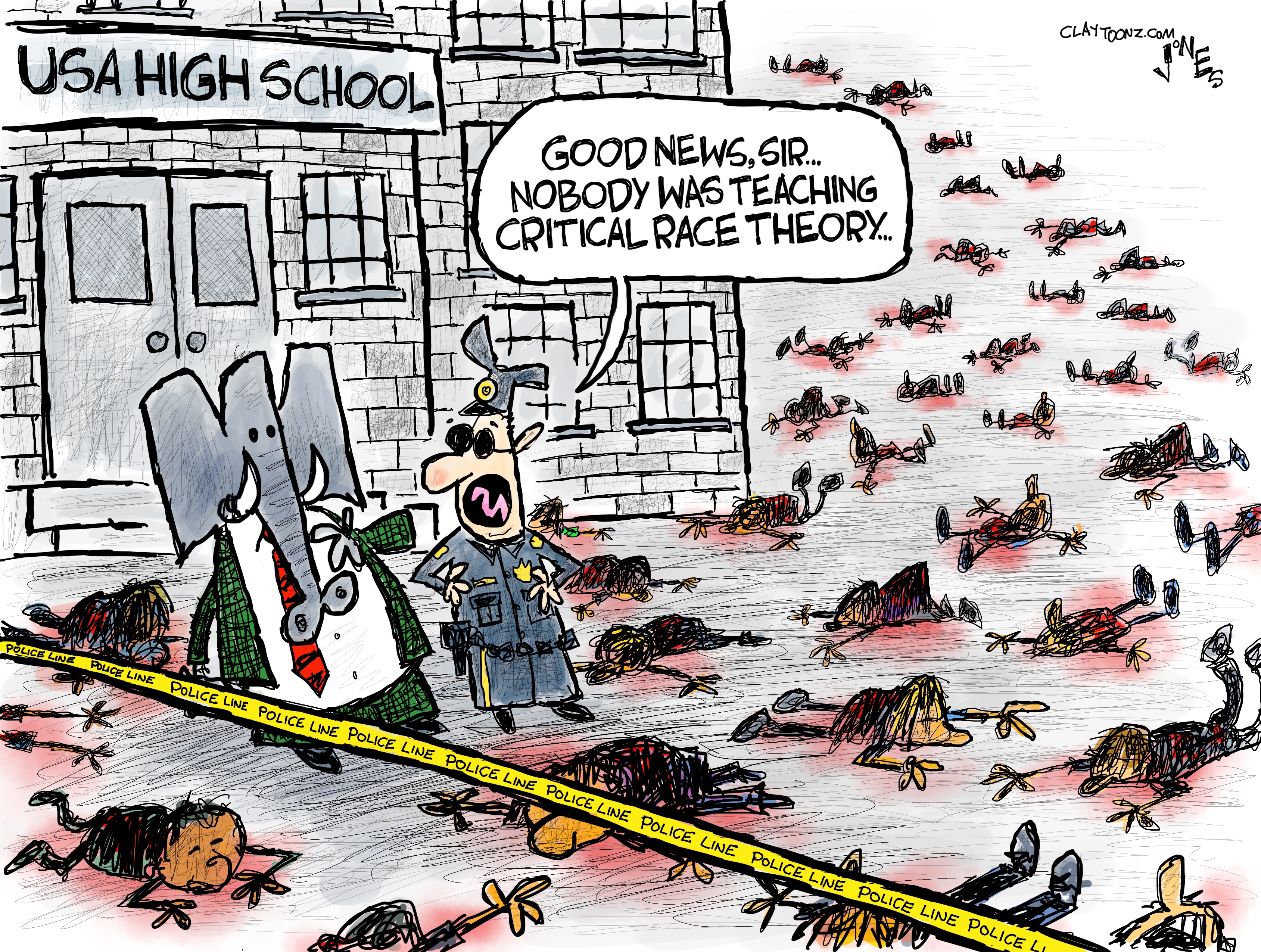
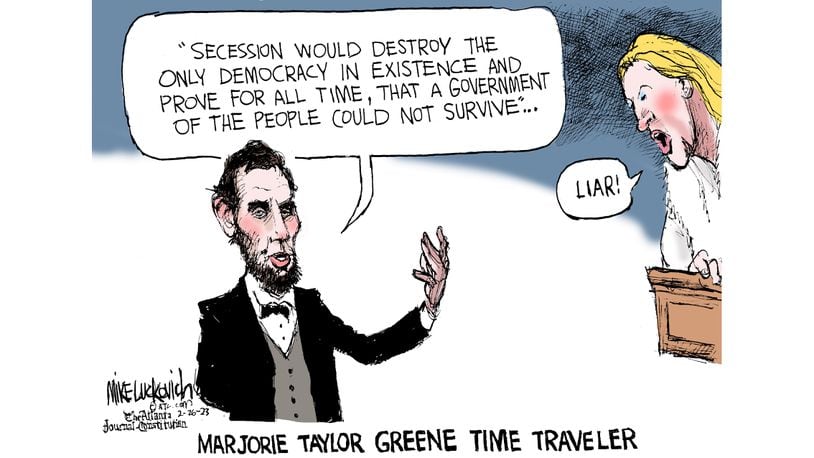





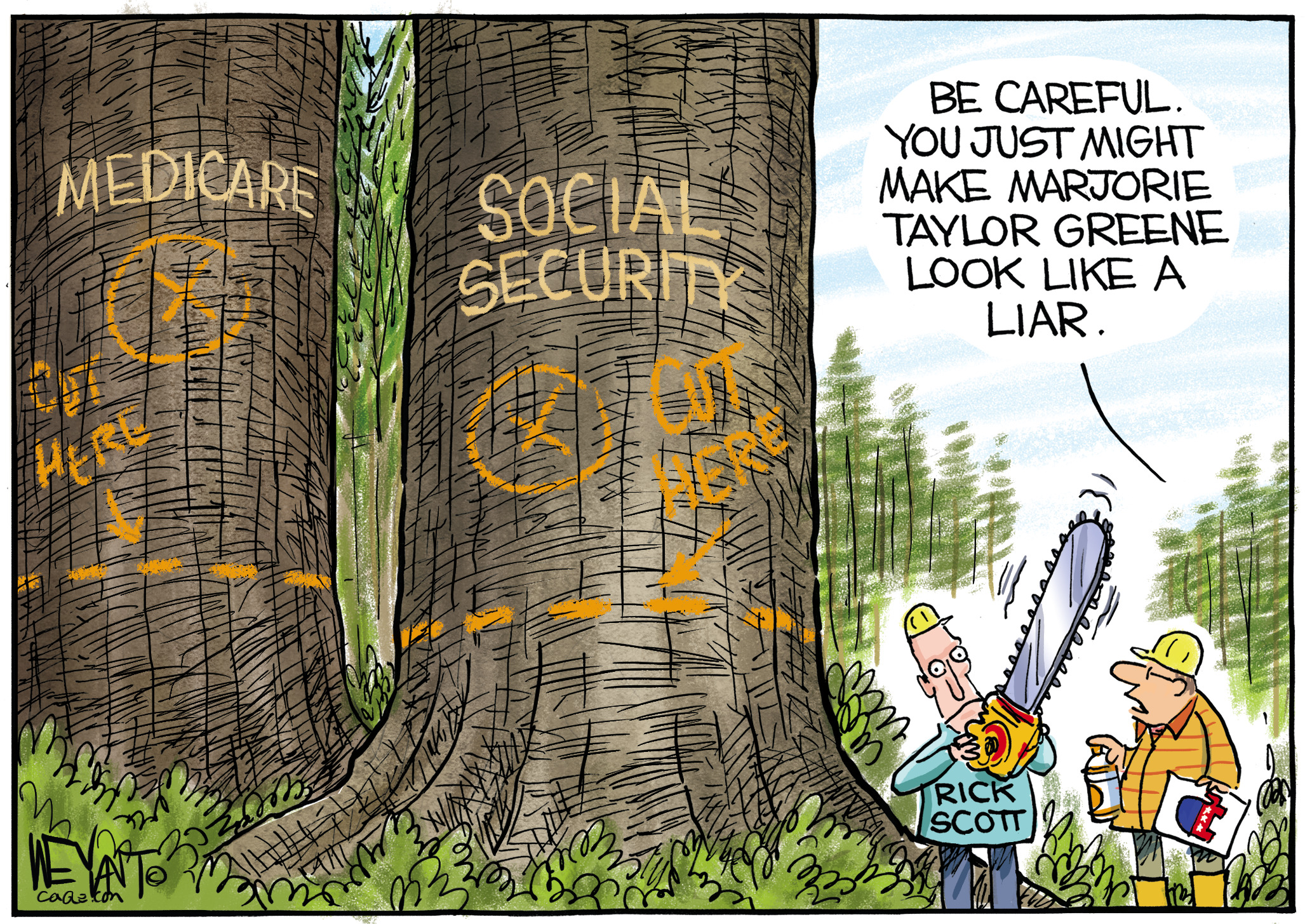
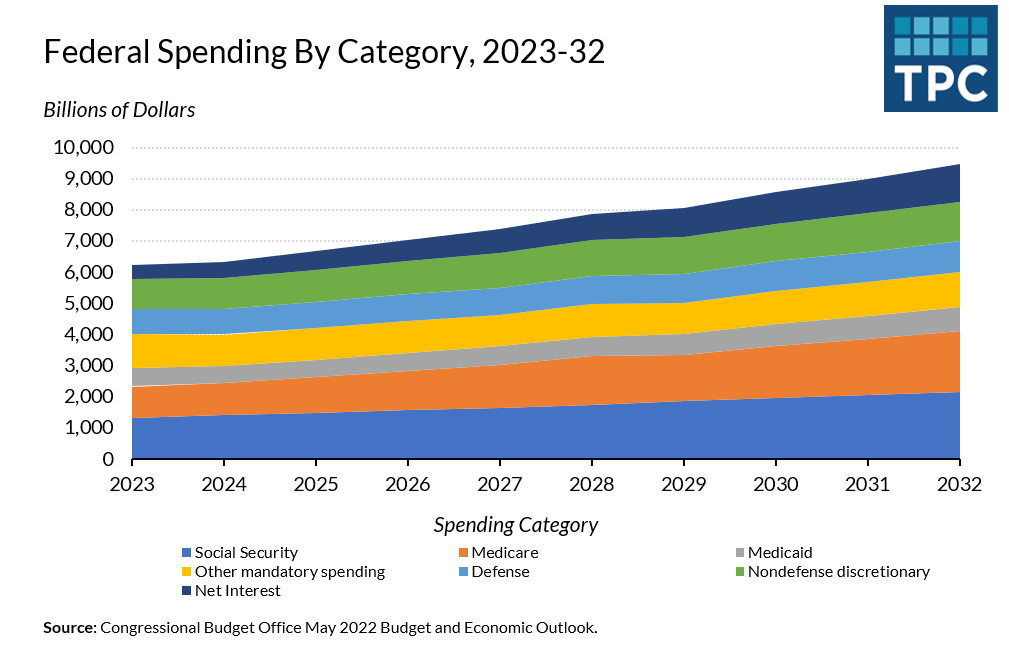






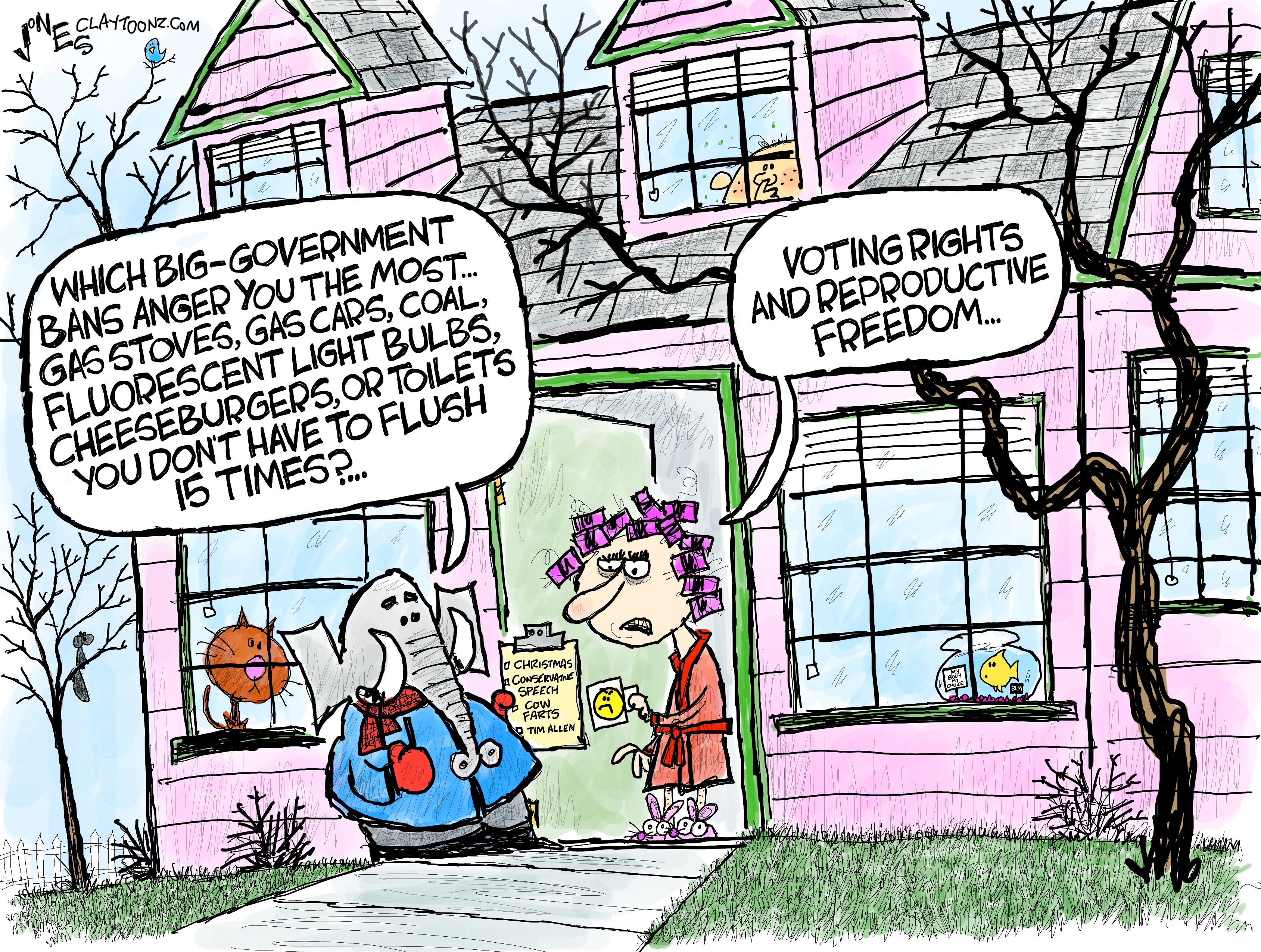




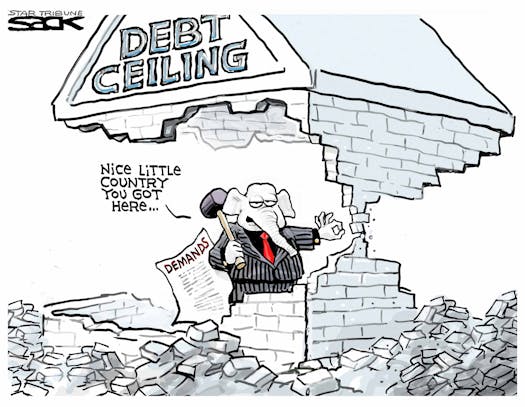
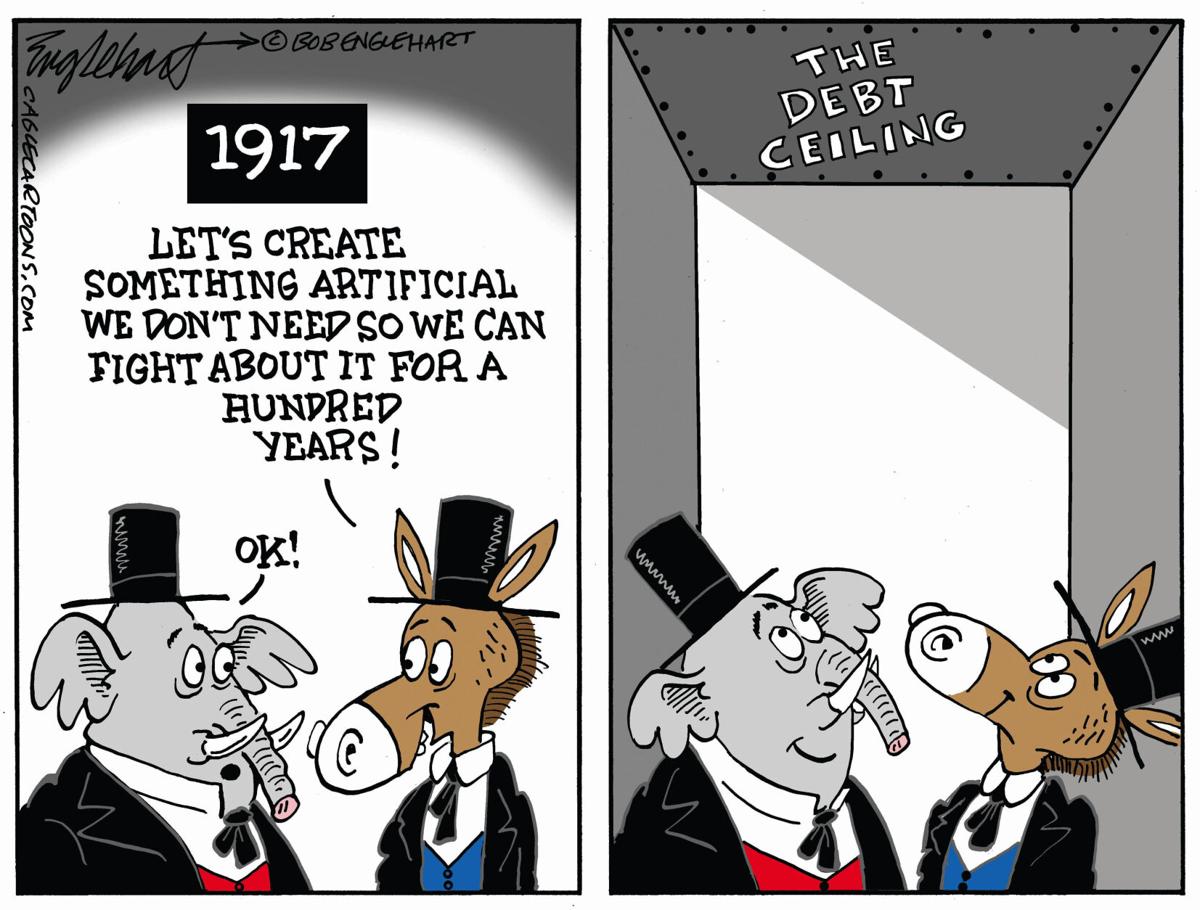
:format(webp)/cdn.vox-cdn.com/uploads/chorus_image/image/69965216/8349514053_afdd89e0b8_o.0.jpg)




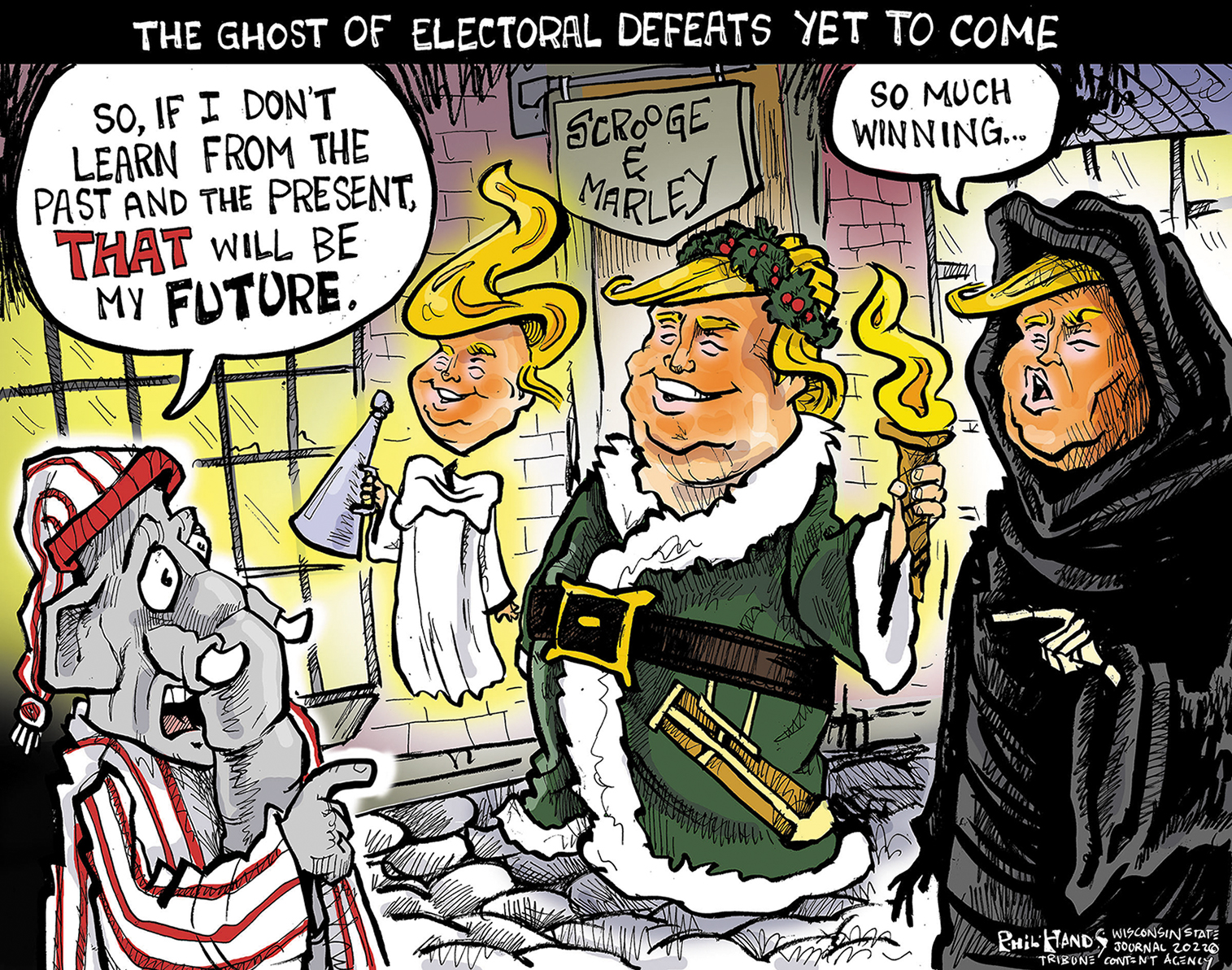
 The Weekly Sift