If governments cannot be led to understand the ideas presented here, then their citizens may be denied vital health, education, and other benefits because they appear to be unaffordable, when in fact they are not.
This week everybody was talking about the sequester …
… which I admit has gotten tedious. We’ve had so many of these artificial crises.
Oversimplifying only slightly, let’s review: Since the summer of 2011, Snidely Whiplash (the Republican majority in the House) has been trying to provoke the final showdown with Dudley Do-Right (President Obama) by tying Nell (the American economy) to the railroad tracks. Dudley showed up, but the fight keeps taking longer than either expected. So they keep agreeing to move Nell further and further down the tracks to give themselves more time.
At the end of each episode, they’re still fighting, the train is coming, Nell is struggling … but it gets harder and harder to take the whole melodrama seriously.
What the Republicans have been demanding since Episode 1 is spending cuts. OK, the sequester delivers spending cuts. But they’re really stupid spending cuts, so the Republicans are trying to convince everybody that it’s all President Obama’s fault. For some reason, few people are buying that line.
You might wonder why we need to keep having these artificial crises. Simple: so far the deficit isn’t causing any real problems. For four years now, Obama’s critics have been predicting inflation, high interest rates, a crash in the dollar, and “bankruptcy” because nobody would buy our bonds any more. If any of that were happening, nobody would have to gin up an artificial crisis.
Second, people who want to cut spending keep running into Truth #1 from my Six True Things Politicians Can’t Say: Most government money is well spent. For decades they’ve been building the myth that the government budget is this vast rat hole that consumes money and helps nobody. That makes for great rhetoric, but runs you into trouble when somebody wants you to cut some real waste, because the waste just isn’t there: Even the politically disastrous Ryan Budget had a whole bunch of blank spaces in it where the real cuts happened.
So instead we’ve wound up with across-the-board cuts. The idea is that if the CDC is spending billions of dollars, there must be waste in there somewhere. And the best alternative the Republicans have come up with is to give President Obama the power to specify the cuts instead.
Republicans giving Obama more power? Anything is better than having to take responsibility for foolish cuts.
but I wrote about Baumol’s cost disease
In a very interesting book, elderly economist William Baumol explains why long-term increases in government spending may not be the problem everyone seems to think it is. My review of his book is in What if there’s no spending problem?
The Cruz/McCarthy comparison started because of Cruz’s innuendo-laden attacks on Defense Secretary nominee Chuck Hagel. National Review delivered a characteristically mature I’m-not-but-what-are-you response:
Senator Cruz has ably and aggressively executed his duty as a United States senator to advise on and consent to a nominee to the momentous post of civilian head of the United States military. He has not, as Senator McCarthy was reputed to have done, slandered an honorable man by cavalierly associating him with an odious and politically radioactive “ism.” But we can think of some Senate Democrats and cable-TV hosts who have.
[Notice the “reputed to have done”. These days it’s controversial on the Right whether McCarthyism is anything to be ashamed of. Maybe Tailgunner Joe was just a maligned patriot.]
Jane Mayer of the New Yorker then pointed out that it’s not just this one incident. Cruz has a history of McCarthyism, most overtly in a 2010 speech he gave to the Koch-funded Americans for Prosperity, when he claimed that 12 members of the Harvard Law School faculty “would say they were Marxists who believed in the Communists overthrowing the United States government.” Like McCarthy’s 57 Communists in the State Department, Cruz’s 12 seemed to be a number plucked out of the air, based on nothing.
Rachel Maddow covered this extensively Friday, and did something conservatives practically never do when they throw words like Marxist, socialist, and communist at President Obama — she defined her terms.
McCarthyism isn’t just a generic term for boorish behavior, for boorish right-wing behavior even. McCarthyism is a particular thing. It is making outlandish scandalous allegations against people in public life, and distracting from the fact that you have no evidence to back up those allegations by making the allegations really specific, which makes it seem like they must be coming from some factual basis, when in fact you are just making it up. After making the allegation publicly in a big showboaty way, you then demand that the person against whom you have made this allegation clear his name.
It’s not name-calling when you define the term in a precise and historically appropriate way, and then establish that it applies. At that point it’s just categorization: Cruz practices McCarthyism.
A Cruz spokeswoman answered Mayer’s article — not to Mayer, of course, or to Maddow, but to Glenn Beck’s The Blaze (which sees McCarthyism only as “a reference to Sen. Joseph McCarthy’s notorious and aggressive pursuit of Communists in the 1950s.” As if the problem was that Cruz is pursuing Harvard Law School communists too aggressively.)
Senator Cruz’s substantive point was absolutely correct: in the mid-1990s, the Harvard Law School faculty included numerous self-described proponents of ‘critical legal studies’ — a school of thought explicitly derived from Marxism – and they far outnumbered Republicans.
So they had ideas “derived from Marxism”. But what about “the Communists overthrowing the United States government”? The Blaze makes this excuse for Cruz:
It’s not clear precisely what kind of Communist “overthrow” Cruz said the professors supported — an actual physical takeover or, given the academic setting, a kind of intellectual one with an emphasis on ideas.
So HLS professors had legal theories that reminded Cruz of Marx, and they were hoping those ideas would be adopted if enough people in our democracy came to support them. And so Cruz was totally justified in saying that they were “Marxists who believed in the Communists overthrowing the United States government.”
It’s hard to know what to do with the level of crazy that slithers just below the surface of the gun debate. It’s wild enough that the NRA’s Wayne LaPierre can’t talk about universal background checks (which the NRA used to support) without jumping straight to gun confiscation, which no one seems to be proposing, as best I can tell. (I haven’t even run into liberals fantasizing behind the scenes about gun confiscation. As best I can tell, there is no constituency for it.)
But then you run into discussions like this one on the Talk to Solomon Show on the Conservative Political Network. Here, gun confiscation is just the first step in a long series of speculations that seem to be based on nothing, leading up to a race war. The confiscation order is supposed to turn gun-owning white patriots into criminals who can then be killed in a series of Ruby-Ridge-like incidents. And here’s the ultimate phase of Obama’s fiendish plan:
I believe they will put together a racial force to go against an opposite race resistance, basically a black force to go against a white resistance, and then they will claim anyone resisting the black force they are doing it because they are racist.
A federal force of armed blacks is coming for your guns, and you’ll be called a racist if you resist. And you’re imagining this because … why, exactly?
This is a real challenge for democracy, I think. What can you do when one side just refuses to debate anything that’s actually being proposed?
The same people who will tell you that separation-of-church-and-state is bogus will also tell you that teaching kids yoga violates separation-of-church-and-state.
The Onion explains a great mystery: Chinese hackers have been been vandalizing the Drudge Report for 15 years.
“They make the whole site look like garbage, they publish all this incendiary trash, and meanwhile I have to sit here with my name on this thing—it kills me,” said the popular blogger
I would have made sure this report got out in time for Valentine’s Day:
Bottlenose dolphins call out the specific names of loved ones when they become separated, a study finds.
In These Times calls attention to the perennial problem of wage theft: What if your employer just doesn’t pay your wages?
One of the ways that we’ve been cutting “wasteful government spending” and “job-killing regulation” in recent decades is to severely cut back — or even eliminate entirely — the government offices a short-changed worker can complain to. Whatever you may think about President Obama’s proposal to raise the minimum wage, it’s not going to mean much if an employer can just refuse to pay.
Conservative blogs often post a graph more-or-less like the one below, which I got from the blog of Keith Hennessy, who is currently at the Stanford Business School and used to be Director of the National Economic Council under George W. Bush. (So: not somebody I usually agree with, but probably not a dummy either.) He claims that the numbers were computed for him by Bush’s Office of Management and Budget in 2007. (So: probably not a fabrication.)
It looks bad. Taxes as a percentage of GDP have stayed in a relatively narrow band since World War II, only occasionally peaking over 20%. But starting in about 2016, spending as a percentage of GDP starts to take off, reaching the incredible level of 40% by 2080 with no end in sight.
The typical liberal response to this, which I have given myself, is not that graphs like this are wrong, but that they hide the real problem: Government spending goes out of control because healthcare costs go out of control. But just capping what the government spends on Medicare and Medicaid (i.e., the Ryan plan) doesn’t fix anything. If healthcare costs are unsustainable, then what does it matter whether we’re paying those costs through government, through private insurance, or out of our pockets? Personally, it’s all the same to me whether I go broke paying taxes, paying health insurance premiums, or paying my doctor.
So a liberal would rather imitate the countries who already get better healthcare for less money than we do and increase the government’s role, ideally with a single-payer system.
Summing up: Liberals and conservatives agree that we have a long-term problem, but they argue about what kind of problem: a government spending problem or a healthcare cost problem.
Recently I ran into a potentially game-changing question: What if there is no problem? In other words, instead of being trapped in the dismal liberal/conservative argument about which apocalypse we’re headed towards, what if we’re actually not headed towards an apocalypse at all?
Baumol is an economist who is most famous for identifying Baumol’s Cost Disease in the 1960s. His observation is that although the economy as a whole becomes more productive with the advance of technology, not all sectors progress equally, and some don’t improve their productivity at all. For example, a 21st-century farmer feeds far more people than a 19th-century farmer. Likewise, a worker at a modern shoe factory makes more shoes than a 19th-century cobbler. But it still takes four talented musicians to perform a Beethoven string quartet, and they don’t do it any faster than they did in Beethoven’s day. String quartets have not seen a productivity increase.
The economic consensus of the 1960s said that wages were tied to productivity. If that were true, then classical musicians would have seen their incomes crash relative to farmers and shoemakers, who would by now be vastly wealthier than the lowly performers of the New York Philharmonic or the Boston Pops.
In fact that didn’t happen, because in the long run the labor market has a supply side as well as a demand side, the result being that every profession has to pay enough to induce talented people to make whatever sacrifices are necessary to enter that profession. But something has to give somewhere, so we see the productivity difference as inflation: The price of a New York Philharmonic ticket is going to rise much faster than the cost of a loaf of bread or a pair of shoes.
So Baumol’s observation is that industries with a large component of personal service are not going to increase their productivity as fast as the rest of the economy, and as a result those industries are going to see higher inflation than the economy as a whole. Year-by-year those higher inflation rates might just be a nuisance, but over time exponential growth works its dark magic: If two products each cost $1 today, but one is subject to a 2% inflation rate and the other 10%, in 100 years the low-inflation product costs $7.25 and the high-inflation product costs $13,781.
Health care. Health care has a high component of personal service. It does not have high productivity growth.
Now this part gets a little tricky, because we all know how much medical technology has improved over the decades. But the improvement is almost entirely on the outcome side rather than the productivity side. Adrian Peterson could tear up his knee and be better than ever the next season, where half a century before Gale Sayers was never the same. But the amount of attention patients need from doctors and nurses has not gone down. Health professionals are doing better for their patients, but they are not processing more of them faster.
And most of us wouldn’t want them to. If you heard that one local hospital had one nurse for every five patients and another “more productive” hospital had one nurse for every 50, which would you choose for your surgery? If one doctor sees 30 patients in an hour of clinic time and another doctor only six, which would you pick as your PCP?
So back in the 1960s, Baumol looked at this situation and concluded that medical inflation was here to stay. Not because doctors are greedy or health insurance companies are evil or socialized medicine is inefficient, but just from the nature of health care. While other factors undoubtedly matter, the exponential growth would happen anyway.
This is borne out by the inability of any country to tame medical inflation. France, for example, is often held up as a model healthcare system. But its costs are also rising exponentially.
Government spending. And it isn’t just health care. Government services in general tend to be in what Baumol calls “the stagnant sector” — not due to bureaucratic waste or the power of public-sector unions, but because the services themselves require one-on-one attention.
In education, we call productivity by another name: students per teacher. But nobody wants his third-grader in a 150-student lecture hall. Everybody’s happy when an hour of labor builds more cars or mines more copper. But it’s not necessarily a good thing if social workers, public defenders, parole officers, or cops on the beat handle more cases faster.
So Baumol predicts that over time government spending will rise as a percentage of the economy.
But we can afford it. So far this is just a different spin on Hennessy’s graph. But here’s the difference: In Baumol’s model, government spending isn’t crowding out everything else. As a society, we aren’t doing without manufactured goods because health care is soaking up all our money; we’re just using less of our labor to produce the manufactured goods we want.
Despite their ever increasing costs, stagnant-sector services will never become unaffordable to society. This is because the economy’s constantly growing productivity simultaneously increases the community’s overall purchasing power. … If governments cannot be led to understand the ideas presented here, then their citizens may be denied vital health, education, and other benefits because they appear to be unaffordable, when in fact they are not.
In other words, even though orchestra tickets cost more now than in the 1800s, it’s ridiculous to claim that past societies could afford orchestras and our far richer society can’t.
Think about food. America’s Farmers estimates that an American farmer today feeds 155 people. By contrast, in colonial times a farm family barely did more than feed itself. Imagine going back to colonial times and telling people that by 2013 the non-farm part of the economy would grow so much that it would force a single farmer to feed 155 people! They would undoubtedly picture some cancerous expansion in the non-farm economy that could only be checked by mass starvation.
But that’s not what happened. The non-farm economy came to dominate GDP, but we’re not starving. That 1 farmer is providing his 155 eaters with too many calories, not too few.
This conclusion — that our descendants will likely be able to afford more health care and education as well as more of all the other goods and services they consume — may seem strikingly implausible … if health-care costs continue to increase by the rate they have in the recent past, they will rise from 15 percent of the average person’s total income in 2005 to 62 percent by 2105. This is surely mind-boggling. It means that our great-grandchildren in the year 2105 will have only a little less than forty cents out of every dollar they earn or otherwise receive to spend on everything besides health care — food, clothing, vacations, entertainment, and even education! Yet as this book will show, this prospect is not nearly as bad as it sounds.
There are many possible objections to Baumol’s argument. (I wonder how it’s affected by the way that wages in general have come unstuck from productivity.) But here’s the message that I take from his book: When someone presents a graph like Hennessy’s and acts like the conclusion is obvious — say, that government spending can’t reach 40% of GDP by 2080, and so some catastrophe will have to intervene before that point — don’t buy it without a more compelling explanation.
The economy of 2080 or 2105 will be different from today’s in many, many ways. Maybe current trends will persist until then or maybe they won’t. But you can’t conclude anything from the mere fact that some statistic from the far future looks implausible.
The far future is going to look implausible to us, if we manage to survive long enough to see it. That’s the one prediction I have complete confidence in.
This week’s featured article will be a look at William Baumol’s recent book The Cost Disease, which presents a unique point of view on the country’s long-term fiscal problem: It may not be a problem.
In other words, what if the exponential growth in medical expenses that drives the long-term exponential growth in government spending is just the ordinary course of affairs in an economy with growing productivity? What if medical spending isn’t squeezing out other consumption, but instead our ability to make everything else with less labor is leaving more space in our economy for health care?
Also worth attention this week: The resemblance between Ted Cruz and Joe McCarthy might be more than just a trick of the camera angle. Why there’s no White History Month. Fascinating new stuff about dolphin communication. The NRA thinks it has found a wedge issue. And you have no idea just how far out there the discussions on right-wing talk radio are getting.
This week everybody was talking about the State of the Union
It was a good speech (text and video here) that has been well covered elsewhere. Immigration reform and gun control were already on the national agenda, but President Obama also made some new proposals:
Do something about climate change. Ideally, Congress would pass something like the old McCain-Lieberman cap-and-trade bill. “But if Congress won’t act soon to protect future generations, I will.” Grist suggests that threat/promise is empty, but David Roberts lists things Obama could do.
Preschool available to all. The research behind early education is impressive. In the Perry Preschool study, “123 African Americans born in poverty and at high risk of failing in school” were randomly divided into two groups; one got an intensive pre-kindergarten program at ages 3 and 4, and the other didn’t. The groups have been followed (so far) until age 40.
(More details in this Chris Hayes segment.) If that’s any measure of what can be accomplished, then making the program available to anybody who wants it — especially at-risk kids from poor families — is a no-brainer. Independent of any improvements to the kids’ life experience, the government might ultimately save money by spending less on them (for prisons, welfare, unemployment …) over their lifetimes.
Raise the minimum wage from $7.25 to $9 and index it to inflation. Obama framed this as a moral issue:
a family with two kids that earns the minimum wage still lives below the poverty line. That’s wrong.
Republicans mostly responded with economic arguments: Raising the minimum wage would kill jobs and cause inflation. The inflation claim effect isn’t that worrisome, because minimum-wage work is a vanishingly small part of the cost of production of most products, and the price of many products has little to do with the cost of production anyway.
Whether the proposal would kill jobs depends on why people are making minimum wage. If it’s because an hour of their labor adds only $7.25 to their employer’s output, then employers will fire them rather raise them to $9. On the other hand, if they produce more than $9 of value, but they make $7.25 because they are powerless people competing against a large pool of other powerless people for whatever jobs they can get, then businesses will just suck it up and pay them more.
A nonpartisan commission to improve the voting experience in America. This was either a too-timid response to a serious problem or an attack on the sovereignty of the states (who have a God-given right to make people in minority neighborhoods wait as long they want) depending on who you listen to.
and the unresponsive responses …
Tea Party Republican Marco Rubio gave the Republican response (text, video), and Tea Party Republican Rand Paul gave the Tea Party response (text, video). The main thing I learned was that Republican still live in a bubble.
Instead of responding to the President’s actual speech, Rubio and Paul continued the Clint Eastwood tradition of debating an Obama only Republicans can see. Apparently, the invisible President Obama denounced the free enterprise system and called for government to take over the economy, so Republicans were proud of Rubio’s and Paul’s able defense of the American way of life. But if you live outside the Republican bubble and watched the visible President, you had to wonder what the hell they were talking about.
Marco, I can’t let this lie pass:
In fact, a major cause of our recent downturn was a housing crisis created by reckless government policies.
In actual fact, no, unless you mean reckless de-regulation of Wall Street, which I think is the opposite of what you’re trying to imply. The Barney-Frank-did-it version of the financial collapse is some of that “math you do as a Republican to make yourself feel better.” No one can stop Republicans from blaming regulation for a crisis brought on by de-regulation, but they can’t make it true no matter how many times they repeat it.
And that’s what’s really wrong in GOP-land: They’ve never come to terms with the failures of the Bush administration. (Also they haven’t understood the young voter or embraced 21st-century technology, as Robert Draper pointed out in the NYT Magazine this week.)
When Democrats got clobbered in 1980, 1984, and 1988, they did some genuine soul-searching and decided they had to overcome the big-government mindset of LBJ’s Great Society. They had to own up to the stagflation of the Carter years and get past the Vietnam Syndrome that made the electorate unwilling to trust a Democrat as commander-in-chief. The result was President Clinton’s move to the center in the 1990s, his announcement that “the era of big government is over“, welfare reform, fiscal seriousness that eventually led to a budget surplus, and Senators Kerry, Clinton, and Biden voting to authorize the Iraq War.
Whether you agree with that shift or not, it was real and had consequences. So far, GOP reform isn’t and doesn’t. Nothing in Rubio’s speech (or Romney’s campaign) would have been out of place in the Bush administration. Hell, Republicans still listen to Dick Cheney.
Voters can’t forgive them if they won’t repent.
but I want to talk about evolution …
In honor of Charles Darwin’s birthday (last Tuesday), I thought I’d address the swing voters to whom creationist arguments sound sort of reasonable. Evolution/Creation for Non-Eggheads.
and food …
Fascinating Supreme Court case about Monsanto’s ability to control its seeds. Legally, genetically engineered seeds are treated like software. They’re sold with a licensing agreement that prevents farmers from using their harvest for next year’s seeds. Growing one seed into many seeds — as farmers have done since dawn of agriculture — is like making your own copies of copyrighted software.
But Monsanto’s Roundup-ready soybeans now dominate the market to such an extent that if you buy a random truckload of soybeans from a grain elevator, chances are most of them are Roundup-ready. A 300-acre farmer did that, and planted the beans he bought. Monsanto is suing him.
As I’ve occasionally pointed out before, our food system has gotten really crazy. A new book Foodopoly describes it as an hourglass: lots of farmers at one end and lots of eaters at the other, but between them a narrow bottleneck controlled by a few big corporations. Increasingly, corporations make the major decisions and people are powerless.
Genetic engineering is a good case in point. Chances are you never decided to start eating Monsanto’s genetically engineered grains; maybe you don’t even realize you do. But most corn seed is Monsanto’s now, which means most high-fructose corn syrup is GE. And HFCS is in everything.
Farmers are controlled on one side by seed corporations, who are closing off all other ways to get seeds. On the other side, the market for farm crops is controlled by big suppliers who serve big retailers like WalMart and McDonalds. They impose their standards on the farmers, who have no alternative buyers. This is a detailed example of the general monopsony problem described in Barry Lynn’s Cornered.
This kind of thing was just what I was hoping for when Elizabeth Warren ran for the Senate. She’s not rude or abusive. She’s not a Joe McCarthy-like bully. But she’s got a good question to ask and she’s going to stick with it.
You’ve got to wonder if the NRA is even trying to win elections any more. Maybe the whole point is to pander to the tiny slice of the population that buys lots and lots of guns. In an op-ed for the Daily Caller (fact-checked by Joe Nocera), Wayne LaPierre presents a personal arsenal as the only rational response to the looming collapse of America into post-apocalyptic barbarism.
Nobody knows if or when the fiscal collapse will come, but if the country is broke, there likely won’t be enough money to pay for police protection. And the American people know it.
Hurricanes. Tornadoes. Riots. Terrorists. Gangs. Lone criminals. These are perils we are sure to face—not just maybe. It’s not paranoia to buy a gun. It’s survival.
Don’t forget the zombies, Wayne.
Slate explains why pro-gun people keep saying that bats and hammers kill more people than guns (as a Georgia congressman did after the State of the Union). A long time ago someone made the true point that in America bats and hammers kill more people than AK-47s. (That would probably change if every Little Leaguer carried an AK-47 or they became a standard part of every home toolkit, but never mind.) Exaggeration took over from there, and since fact-checking is a liberal conspiracy, this absurd claim is now a permanent part of the public discussion.
The folks at Saturday Morning Breakfast Comics understand that S&M might be a little different after you’ve had ten years to figure out what really tortures your spouse.
During Winter Storm Nemo, Brian Maffitt pointed a movie projector out the window and projected “The Lorax” onto the falling snow. He added music and got something that isn’t recognizable as Dr. Seuss, but it’s beautiful and peaceful in that log-burning-in-the-fireplace way.
Every year I use Darwin’s birthday (last Tuesday) as an excuse to check in on the creation/evolution issue and the debate over what to teach in public schools. That pot is always simmering, so whenever you choose to pay attention something is bound to be happening somewhere. But it gets dull really quickly, because both sides repeat themselves a lot. Checking once a year is about right.
This year I watched PBS documentary “The Revisionaries” about the battle over curriculum standards in Texas. (You can watch it for free on the PBS web site until Feb. 28.) As always, I was impressed by how well the creationist side pitches its arguments to the general public. “Teach both sides,” they say. “Teach the controversy. Teach the strengths and weaknesses of evolution.” It sounds so fair and reasonable — nothing at all like the stereotype of the crazy fundamentalist radical.
Then the scientists come on, and they look and sound exactly like their stereotype. You can tell they’re trying to be nice and non-threatening, but whatever they’re saying, the main thing that comes through is that they’re smart and they know better than you. It’s hard not to be reminded of all the other “experts” who are constantly explaining why everything you do is completely wrong: You eat wrong, you exercise wrong, you like the wrong kind of music, you watch the wrong kinds of movies and TV shows — everything you do is bad, and you should listen to them to learn how to do it right.
Most of all, you raise your kids wrong. When you let the kids do what they want, that’s wrong, but when you force them to do what you want, that’s wrong too. You talk to them wrong, you discipline them wrong — it goes on and on. And sure, you realize you aren’t the greatest human being who ever lived, but you do OK and your kids seem to be doing OK, so you wonder what you’d see if you walked into the experts’ houses and looked at their kids (if they have any). Are they better, really?
Sure, the evolution scientists are a different kind of expert entirely, but they look and sound exactly the same. You know you shouldn’t judge a book by its cover, but the look-and-feel thing is hard to get past. Watching them, all you can think is: “What do they want really? And why? Can’t they just come out and say that?” But they don’t. So when preachers tell you that the scientists want to destroy religion and convert everybody to atheism — well, at least that’s an answer.
I’ve lived a bunch of my life between the world of scientists and the world of ordinary people. I grew up in a small town in the Midwest and spent a lot of afternoons helping my Dad on the farm. I went to a Lutheran grade school where we memorized Bible passages every night and had to recite them in the morning. (We definitely did not learn evolution. I started picking that up in the public high school.) But I was born with a knack for math and went on to get a bunch of degrees. I’m not an evolutionary biologist, but I can hang with them when they let their hair down and not seem out of place.
Let me see if I can translate how this discussion looks to a university biologist or a high school biology teacher.
Politicians are telling them how to do their job. I’m guessing you can appreciate how that feels. They’ve devoted their lives to studying biology, figuring out how it all fits together, and coming up with ways to teach that knowledge to other people. And then a legislature or a school board or Congress wants to stick a hand up their backsides and turn them into puppets who repeat whatever they’re supposed to say.
You know how you feel when people who don’t know your kids tell you how to raise your kids? Well, people who don’t know their subject are telling them how to teach their subject. It pisses them off.
One of the reasons they so often look phony is that emotional outbursts aren’t valued in scientific discussions. In science, you’re supposed to be reasonable all the time, even when you’re really pissed off. So they can’t let on how they really feel. Instead, all that anger gets channeled into a biting cleverness that can be really, really annoying.
Why evolution is important to them. I’m sure they think they answer this question all the time, but it never comes out in the language ordinary people speak, so let me see if I can explain it better.
Have you ever listened to six-year-old boys describe a movie they’ve just seen? They remember all of it — probably more than you would if you saw it. Their young brains are sponges that soak up detail. But when they talk about it, those details come back out in some stream of consciousness that you can’t possibly understand if you haven’t seen the movie yourself. That’s because they haven’t learned yet what a plot is, or how use a plot to organize a whole bunch of facts into a story that people can understand and think about together.
Well, evolution is the plot of biology. By now, we know so much about cells and animals and environments and so forth that no one could possibly deal with it as a long list of details. You couldn’t learn it, you couldn’t teach it, you couldn’t even think about it, no matter how smart you are. But evolution arranges all that in a structure that people can learn and teach and think about. Even if evolution had turned out not to be true, biologists would still want to learn it as a memory device. It’s that useful.
Now, the obvious question is: Couldn’t creation or design become the plot of biology? It more-or-less was 200 years ago. And sure, we have a lot more details to organize now than we did then, but maybe biologists could make all that new knowledge fit somehow. So rather than saying “Giraffes evolved long necks because being able to eat leaves higher in the canopy gave them a survival advantage”, we could say “God designed giraffes with long necks because he knew they’d need to eat leaves high in the canopy.”
What’s wrong with that?
The first answer you’re likely to get from a biologist is that it wouldn’t work, because of things like your appendix. (It’s hard to make sense of the human appendix from a design point of view, because it doesn’t do anything useful. It makes sense from an evolutionary point of view, though, because similar organs serve a purpose in the digestive systems of animals we’re related to, and evolution works slowly, so it hasn’t been useless long enough to evolve away.)
But the better answer is: Who knows? Maybe there is some way to tie all our biological knowledge together in a design-oriented plot. But nobody has done it. Whether some design-oriented plot for biology could work or not, it doesn’t exist now. It’s like talking about whether solar power could someday supply all our needs. Maybe. But that doesn’t help me if I want to flip on a light now.
So if, today, you want to learn or teach or think about the full range of what we know about biology, evolution is all you’ve got. You either use it or you give up.
Creationist textbooks are facades. Biology teachers know that K-12 students in China, India, Europe, and Japan are learning real science, not fantasies about approaches to science that maybe could work someday (but don’t work now and probably won’t work ever). So they wonder: How are American kids going to compete if we’re wasting their time like that?
Creationists can hide this state of affairs from the general public by writing design-oriented grade school and high school textbooks. But those textbooks are like the facade of Dodge City on the set of Gunsmoke. You’re supposed to think a whole town is back there, but it isn’t. What you can see is pretty much all there is.
Similarly, that creationist high-school textbook looks like the beginning of a complete design-oriented biological education. But in fact students who finish it are pretty close to the end of the line. If they get interested in biology and want to go further, they’ll have to start over in college and learn evolution. That’s not because colleges censor design, it’s because there isn’t much more design-oriented biology to learn.
I know that’s hard to believe, but you don’t have to take my word for it. Go listen to a creationist lecture. I predict they won’t tell you much of anything about creationist biology. Instead, they’ll spend all their time criticizing evolution. That’s because they don’t have anything else to present. Creationists are also using evolution to organize their thinking; they’re just against it rather than for it.
And that’s not going to change anytime soon, because creationists are not even trying to develop their theory. The budgets of creationist think-tanks like the Discovery Institute are almost entirely devoted to politics and public relations, with barely anything for research.
Creationists cheat. If putting up that kind of facade seems like cheating, well, creationists cheat in a lot of other ways too. Many of those reasonable-sounding arguments are just word games designed to confuse people.
Like: “Evolution is a theory, not a fact.” Sounds convincing, doesn’t it? Even scientists talk about “the theory of evolution”, right?
Of course, scientists also talk about “the theory of gravity” and “the theory of the solar system”. The word theory has a specialized meaning in science that has nothing to do with uncertainty. Gravity isn’t doubtful just because we have a theory about it.
That kind of trickery is not exceptional, it’s typical. Creationist arguments are full of untruths, half-truths, and word games — and the arguments keep circulating no matter how many times the fallacies get exposed.
Which is another reason why scientists get tied up in emotional knots at these public hearings. Very often the folks presenting some totally bogus argument are mothers who have an honest religious faith and are very genuinely concerned about their kids’ education. But it’s hard to see how the people who invent and popularize these arguments — the folks at the Discovery Institute, say — can be anything other than con-men who know better.
Scientists don’t know how to deal with that. The whole culture of science (going back to the 1600s) is based on arguing in good faith and assuming that your opponent is doing the same. A scientist who gets caught cheating is finished. There’s no rehabilitation process, you’re just done being a scientist. But dishonest creationist arguments live forever, and the people who invent them are not even embarrassed.
We’ve been through this already. Now let’s talk about what’s wrong with “teaching the controversy”. When biologists refuse to “teach both sides” or “teach the controversy”, it sounds like they’ve made evolution into some kind of unquestionable dogma, like the Trinity or the divine inspiration of the Bible is in some religions.
Everybody knows that scientific theories are wrong sometimes, and history is full of controversies when one theory challenges another. (The most famous one is the Copernican Revolution, when a Sun-centered theory of the planets replaced and Earth-centered theory.) When scientists won’t “teach the controversy” of evolution, they seem to be denying this history and to be hypocrites about the whole process of science.
What most people don’t realize is that there was a creation/evolution controversy in science, but it has been over for a long time. Scientists argued vociferously about evolution in the 1800s. By the 20th century the fact of evolution was widely accepted, but scientists continued to argue over the mechanism (i.e. natural selection) until mid-century, when the modern evolutionary synthesis came together. Just about all the scientific questions raised by creationists today were asked and answered generations ago.
Here’s an example: “Evolution can’t explain a complex organ like the eye.” Evolutionists run into that claim all the time, but in fact the basic framework of how the eye evolved was laid out more than half a century ago. If you’ve got two-and-a-half minutes, here’s the simple version.
The creation/evolution argument continues today not because new evidence raises new questions about evolution, but because people don’t want to believe answers that conflict with their religion. That is a religious controversy, not a scientific one. And if enough people want to impose their religion on the rest of us, they can create a political controversy or a legal controversy. But you can’t create a scientific controversy just by refusing believe something you don’t want to believe.
So by all means let’s teach the creation/evolution controversy in a history of science course, or in a course on religion, politics, or law. But it doesn’t belong in a biology class.
What’s different about evolution? And now we come to the most recent creationist political strategy (the one portrayed in The Revisionists): demanding that textbooks and curricula teach the “strengths and weaknesses” of evolutionary theory.
Again, that is well constructed to make scientists look bad. What kind of dogmatist would refuse to let students learn about the weaknesses of his ideas? What’s he afraid of?
But a better question to ask at this point is: Why are we just talking about evolution? Why do the textbook stickers warn students to have “an open mind” just about evolution? Shouldn’t they also “critically consider” the “strengths and weaknesses“of theories like the solar system? the atom? continental drift?
What’s special about evolution?
Only this: Evolution conflicts with a popular religion. Otherwise, it’s like the germ theory of disease, electrical circuit theory, or any other scientific theory. (The solar system used to conflict with popular religion, but it no longer does.)
So again, this is dressed up like a conversation about science, but it’s really about religion. There’s no scientific reason to pick evolution out for special scrutiny.
What’s wrong with that? Some creationists are very open and honest about wanting to impose their views on the public through the public schools. In a democracy, the religion of the majority tends to become the religion of the government, and public resources are used to promote it.
I think the Founders looked at what had been happening in England since the Reformation — religious factions squabbling to get control of the government — and they wrote the First Amendment specifically to prevent that from happening here.
But that issue takes us into textbook history standards, and a whole other set of things people want or don’t want to believe. Maybe I’ll save that topic for James Madison‘s birthday in March.
This week’s featured article is an attempt to take on the creation/evolution debate in a non-eggheady way. (Happy birthday, Chuck Darwin. I hope I’ll still be relevant when I’m 204, but I kind of doubt it.) The weekly summary will focus on the new stuff in the State of the Union, the complete unresponsiveness of the Rubio/Paul SOTU responses, and a new book about the food mega-corporations. Plus: Is it great to have Elizabeth Warren in the Senate or what?
I’m battling a cold today, so when this will all appear depends on my nap schedule.
Even in using the word doublethink it is necessary to exercise doublethink. For by using the word one admits that one is tampering with reality; by a fresh act of doublethink one erases this knowledge; and so on indefinitely, with the lie always one leap ahead of the truth.
Catch-22 states that agents enforcing Catch-22 need not prove that Catch-22 actually contains whatever provision the accused violator is accused of violating.
This week everybody was talking about targeted killings
In particular: When can a president send a drone or a strike team to kill an American citizen he thinks (or says) is a terrorist? How can we square the war-fighting power the Constitution grants a president with a citizen’s constitutional right to due process of law? When does traitorous-death-in-battle shade over into execution-without-trial?
And the answer is: It’s a secret. Maybe if you discovered the conditions under which the government could kill you, the government would have to kill you.
OK, that was flip. Here’s what’s actually true: The memo that explains the Obama administration’s reasoning process on killing Americans has not been released to the public. It hasn’t even been released to Congress, though by Friday the Senate Intelligence Committee had received a copy, and the parallel House committee has been promised one. The rest of Congress will remain in the dark.
Like most liberal bloggers, I was all over this kind of thing when President Bush was doing it. A few (notably Glenn Greenwald and Marcy Wheeler) stayed on it when Obama continued (or sometimes even expanded) Bush’s policies. I came back to the topic now and then (Execution Without Trial when Anwar al-Awlaki was killed in 2011, and again last June in Who Can Obama Kill?), but never gave it the week-in-week-out attention that I had in the Bush years.
This week, the hearings to confirm John Brennan as CIA Director brought it all back to center stage. Reading and watching the coverage, I think it’s important to keep the right issues in mind. Don’t get distracted by the technology of drones, because this isn’t a technological issue. And while you should definitely pay attention to the who-can-Obama-kill issue, there’s something even more important to keep your eye on, because it concerns one of the deepest and oldest principles of democracy and the rule of law: The law should never be secret.
The NRA says we don’t need new gun laws, we just need to enforce the laws we have. But it also lobbies to undermine the enforcement of gun laws at every turn, both by underfunding the ATF and by tying ATF agents up in red tape. USA Today has the details.
Republicans still live in their own universe. PPP asked 508 Republican primary voters “What do you think is a bigger safety threat in America: guns or violent video games?” [It comes late in the survey. If you follow the link, scroll way down.]
Guns 14%
Video games 67%
Not sure 19%
Steve Benen, God bless him, responds as if evidence and logic matter.
Gaming is a huge cultural phenomenon in countries like South Korea, England, Japan, and Canada — and they’re all playing many of the same games Americans enjoy — and yet, none of these countries comes close to the U.S. when it comes to deadly shootings. … [S]ocieties with fewer guns have less gun violence, whether they’re playing “Halo” or not.
Being more cynical, I question whether any Republicans believe video games are more threatening than guns, or if ideology just obligates them to say so. If there are two open seats on the subway — one next to a stranger with a gun, the other next to a stranger with a video game — do two-out-of-three of Republicans really feel safer taking the seat next to the gunman?
My father was a white farmer (well, ethnically European farmer — the exposed parts of his face and arms got pretty brown by August) who drove a tractor and a pick-up truck, so I was touched by the Dodge Ram Super Bowl commercial based on the Paul Harvey prose-poem “So God Made a Farmer”.
I like that response. It expresses no hostility towards white farmers or Paul Harvey or even Dodge. It just rights the balance.
And TV critic David Hinckley provided what Paul Harvey used to call “the rest of the story”.
[F]or almost a century America has been driving the person Harvey and this ad are celebrating, the family farmer, out of business. … [The ad] felt a little like erecting a beautiful statue to a species we are hunting into extinction.
This week in hypocrisy. Ron Paul is using the machinery of world government against his fans.
For years now, RonPaul.com has been a Ron Paul fan site, promoting Paul’s ideas, books, candidacy etc., but not owned or run by Paul himself. It’s been an active site, with numerous postings getting thousands of comments.
Now Paul has decided he wants to own the URL. The current owners have offered him RonPaul.org (which they also own) for free, but they want $250,000 for RonPaul.com — and they’ll throw in their 170,000-name mailing list, which they claim is worth the quarter million on its own.
“Ron Paul,” his filing claims, “enjoys a national reputation in the United States as premier advocate for liberty in American politics today.” Or at least he used to.
Dick Cheney, the mastermind behind the Iraq War, criticized President Obama for appointing “second-rate people” like John Kerry and Chuck Hagel to key national security posts.
My current supply of snark is insufficient to generate a proper response.
Slate’s Mark Joseph Stern keeps it real: The pro-gun “Sandy Hook father” isn’t really a Sandy Hook father. And the actual anti-gun Sandy Hook father didn’t really get “heckled”.
If nobody is dancing at your Occupy/Tea Party Unity party, cue this up.
Perversely, I wish that the War on Terror would give us a poster child, some cute and innocent victim of government over-reach whose picture we could put on placards and wave as we march through the streets. But for nearly 12 years, under both Bush and Obama, the government has been either too smart or too lucky to provide us with one.
Bad posters.Jose Padilla was an American citizen arrested at O’Hare Airport. Before he was charged with any crime, he spent more than three years in solitary confinement, including sensory deprivation and sleep deprivation. Quite likely he had been driven insane by the time he faced trial. But he was a brown-skinned Chicago street thug who, even if he never actually did any acts of terror (and may never have done anything), was a big talker. And they did eventually manage to convict him on a vague conspiracy charge (after he was mentally unable to either defend himself or trust any lawyer), so he doesn’t generate a lot of public sympathy.
Maher Arar was a Canadian/Syrian dual citizen who didn’t officially enter the U.S. at all. We arrested him during a layover at JFK Airport, held him for two weeks, and then shipped him off to be tortured in Syria for nearly a year. Both Syria and Canada say he was innocent, and he was eventually released. Canada awarded him millions in damages, but the U.S. government so far has avoided avoided any legal repercussions by claiming that it can’t defend against Arar’s lawsuit without revealing state secrets. (The torture happened during the Bush years, but the Obama administration is continuing the state-secrets claim.) But Arar isn’t a good poster child either, because he looks foreign, isn’t an American citizen, and wants to forget his whole ordeal.
Anwar al-Awlaki was an American citizen who was targeted and killed by an American drone attack in 2011 in Yemen, a country where we are not officially at war. What label to put on his death — casualty, assassination, execution — is debatable. But it is not debatable that he was charged with nothing and never had a trial. He’s also a bad poster child, though, because he supported Al Qaeda and counseled people like the Fort Hood shooter. The government claims he planned terrorist attacks, but no evidence supporting that claim has ever been made public.
These cases show that something is deeply screwed up. But without a sympathetic face to put on a procedural abuse, it’s hard to get anybody excited. If the government could torture Jose Padilla or kill Anwar al-Awlaki without any legal process, it could do same to you or me. Since we refuse to identify with people like Padilla and Awlaki, though, we don’t feel personally threatened.
Martin Niemöller’s “First they came for …” is one of the most widely abused quotes in current American political discourse, but this is the setting where it makes sense: When you let the government violate the rights of people you don’t like or don’t care about, you lose the principle. Someday you may be unpopular too, and then how will you defend yourself?
Secret laws under Bush. One of the worst abuses of the Bush administration didn’t even produce bad poster children, because it was abstract: They used secret legal opinions to justify their other power grabs.
When it took office, the Obama administration seemed to be rejecting that course by releasing nine secret memos from the Office of Legal Counsel. The memos explained why it was legal for the President to violate treaties, wiretap without warrants, and do just about anything he thought national security required. Jack Balkin summed it up like this:
The President, because he is President, may do whatever he thinks is necessary, even in the domestic context, if he acts for military and national security reasons in his capacity as Commander in Chief.
To understand the power of these memos, you need understand the role of the OLC: It’s essentially the executive branch’s version of the Supreme Court. If you work for any department or agency of the federal government and you wonder whether something you’re doing is legal, you ask your office’s lawyers. If they kick the question upstairs, and then the upstairs lawyers kick it further upstairs, eventually it winds up at the Office of Legal Counsel in the Justice Department. Somebody at the OLC writes a memo, and that memo is then the official interpretation of the law for the whole federal government — at least until somebody sues and the judicial branch starts weighing in.
So if you as a government official believe that the policy you’re implementing is unconstitutional, that’s not for you to say. If the OLC has blessed it, they’re the experts.
That’s a fine system as long as the OLC does its job in good faith and is accountable for its mistakes. But the Bush OLC wrote opinions to justify whatever the administration wanted to do, regardless of the law or the Constitution; and it avoided accountability by keeping its most egregious memos secret, so that non-administration legal experts could not tell the public (or Congress) how absurd they were. I commented at the time:
You never need to classify the fact that 2+2=4. But if you want the government to operate under the assumption that 2+2=5, then you do have to classify it
There is a role for secrecy at the OLC, but only in so far as the facts of the situation are classified. So, for example, if the Pentagon wanted to know whether a proposed weapons system would violate a treaty, a memo answering that specific question might necessarily include classified facts about the system. But a purely abstract memo explaining how the OLC interprets the language of the treaty — there’s no excuse for classifying stuff like that.
In fact, this kind of secrecy violates the oldest, most basic principle of the rule of law: The law must be public. If, behind the scenes, you can interpret the law away or even reverse it completely, then we don’t have the rule of law.
Targeted killing. The hard questions of law happen when two constitutional principles conflict. For example: I have freedom of the press, but my right to publish can be limited by Congress’ power to establish copyrights. I have freedom of speech, but some speech is libel or treason or fraud or pornography. Questions about where the boundaries fall are why we need people on the Supreme Court rather than machines.
The Constitution gives lots of rights to American citizens accused of crimes. The Sixth Amendment says:
In all criminal prosecutions, the accused shall enjoy the right to a speedy and public trial, by an impartial jury of the State and district wherein the crime shall have been committed, which district shall have been previously ascertained by law, and to be informed of the nature and cause of the accusation; to be confronted with the witnesses against him; to have compulsory process for obtaining witnesses in his favor, and to have the Assistance of Counsel for his defence.
And the Fourteenth says that this is not a narrow right:
nor shall any State deprive any person of life, liberty, or property, without due process of law
This clause has been interpreted as applying to the federal government as well as the states.
On the other hand, the Constitution also gives the government the power to make war. It doesn’t define war, but it’s hard to imagine any definition that wouldn’t include the power to kill people without trials. When an American citizen enters a battlefield wearing enemy colors — as many did during the Civil War — the government’s power to make war trumps the citizen’s right to a trial or any other kind of due process. That’s never been controversial.
But the War on Terror has fuzzed everything up. The enemy isn’t a country or government. Its soldiers don’t wear uniforms. The conflict often does not take the form of “battles” fought on “battlefields”. No one knows when the war might be over or what conditions could end it.
So the boundary between war-making powers and Sixth-Amendment rights is not so clear any more. If the government thinks you might be a terrorist in league with Al Qaeda, when can it kill you as if you were an enemy soldier on a battlefield, and when does it have to prove its case to a jury?
This ties in with a bunch of your other constitutional rights. Are you free to hang around with people the government thinks are terrorists or to communicate with them frequently? Can you work with them on projects that you believe are unrelated to terrorism? Can you put forward ideas that are not themselves treason, but are congenial to people who might be enemies?
And finally: What’s your protection against being killed by a rogue government official who just doesn’t like you? Can he invent a charge of terrorism against you, or exaggerate your real-but-harmless connections to terrorists?
As unsympathetic as he was in many ways, Anwar al-Awlaki exemplified all those issues. He wasn’t on a traditional battlefield when we blew up his car, and while he undoubtedly had some relationship to Al Qaeda, the government never had to back up its claims that he had an operational role in terrorism. Here’s what I wrote at the time of his death:
Al-Awlaki is dead because the President signed a piece of paper saying that he was a bad man. I suspect he probably was a bad man, so it’s hard to be all that broken up about his death. But in theory, the President (or some future president) could sign a piece of paper saying that I’m a bad man too. Wouldn’t it be nice to have some due process about that?
Secret laws under Obama. You know what the answer to that question is? It’s a secret. There’s an OLC memo describing when the president can order a hit on an American citizen, but it hasn’t been released to the public, or even to Congress. The House and Senate Intelligence Committees just got it, after asking for years.
So that’s the state of transparency on this issue: The boundary between the government’s war-making power and the citizen’s right to trial is secret.
I believe that every American has the right to know when the government believes it has the right to kill them.
The Obama administration disagrees. Wyden has raised another question I hadn’t even considered: Does the government owe a citizen the right to surrender?
Think about it. The process that puts names onto the kill list is secret, so you might not know you’re on it until you se the drones circling. What if you want to turn yourself in? What if you think this is all a big mistake and you want to clear your name? If you’re not actually pointing a weapon at someone at the moment, aren’t you due that much process?
These are not questions about weapons systems or the identities of secret agents. They are abstract questions of law, that could and should be debated in public. If the administration has any reason for dodging that discussion — beyond simple embarrassment at the flimsiness of its justifications — it isn’t telling anybody.
The John Brennan confirmation hearings have shamed me into recognizing that a lot of the stuff I hated in the Bush administration has continued under Obama. Not that I didn’t know that, and I even wrote about it from time to time, but I had lost my sense of urgency about it.
It’s the same problem Republicans had during the Bush years: Yes, these powers invite abuse, but I trust Obama not to do the worst possible things with them. So I’m against the powers, but I’ve had a hard time maintaining my outrage. During the campaign, no Democrat challenged Obama, and no Republican — other than Ron Paul, who I don’t trust and can’t accept for a lot of other reasons — recognized these issues at all. So what was the point of bringing it all up?
That’s the wrong way to think about it. This is supposed a government of laws, not of men. Whatever powers we allow Obama to wield will still be there for the next president, and the one after that. Eventually something really bad is going to happen. So the featured article this week will be “Secret Law II: It’s just as bad when Obama does it”. It still needs work, so it may not appear until almost noon.
The weekly summary will be worth looking at just for the opening quotes. There’s also a great snow photo from Nemo, a few more links on guns, an infectious British bar song that both Occupiers and Tea Partiers should be able to dance to, one more reason not to trust Ron Paul, Bill Maher’s hilarious reprisal in an argument Donald Trump really should have left alone, great responses to that Super Bowl ad about farmers, and more.
It’s easy sometimes for the [immigration] discussion to take on a feeling of us versus them. And when that happens, a lot of folks forget that most of us used to be them.
The early part of a new presidential term is a magic moment for discussing the country’s real problems and what might be done about them. At the beginning of Obama’s first term we talked about how to stimulate the economy and expand access to healthcare. This time we’re talking about guns, immigration, and (maybe soon) climate change.
There’s no guarantee anything will get done, but isn’t it wonderful to be talking about something real? “Why can’t we do this all the time?” you wonder, and I have no answers.
So this week a bipartisan group of senators presented their immigration framework and President Obama responded by presenting his. (A bipartisan group in the House is still working on its plan.) Each has four parts, and the parts are remarkably similar: border security, a path to citizenship for people currently in the country illegally, and stopping undocumented workers from getting jobs are mentioned in both. Obama talks about “streamlining our legal immigration system” while the senators’ proposal seems a little more specifically business-focused: “admitting future workers to serve our nation’s workforce needs” — but those goals seem compatible.
At this point, both proposals are just lists of principles; there is no actual immigration bill yet. So a lot can still go wrong. Maybe the details will be hard to hash out, or maybe the two sides aren’t as serious as they look. We’ll see.
Republicans and the Hispanic vote. The one lesson Republicans seem to have learned from November is that they need more Hispanic votes. But opinions on how to get them vary.
Some think it will be enough to showcase more Hispanic names and faces. Put Marco Rubio or maybe Ted Cruz on the 2016 ticket, they think, and the Hispanic problem goes away. (The same people thought Sarah Palin would bring Hillary Clinton’s female supporters to John McCain. It didn’t work out.)
Another school believes Republicans just have to change their rhetoric. Stop talking about “sending them all back” or “anchor babies”, stop taking public stands against immigration reform, and presto!
While many [Hispanics] are in business for themselves, they express hostile attitudes toward free enterprise in polls. They are disproportionately low-income and disproportionately likely to receive some form of government support. More than half of Hispanic births are out of wedlock. Take away the Spanish surname and Latino voters look a great deal like many other Democratic constituencies. Low-income households headed by single mothers and dependent upon some form of welfare are not looking for an excuse to join forces with Paul Ryan and Pat Toomey. Given the growing size of the Hispanic vote, it would help Republicans significantly to lose it by smaller margins than they have recently. But the idea that an amnesty is going to put Latinos squarely in the GOP tent is a fantasy.
Finally, somewhere inside the GOP may lie a faction that genuinely wants to represent Hispanic Americans and solve the nation’s immigration problem. Maybe they will succeed, or maybe the party will be happy just to have a plausible way to blame the Democrats when immigration reform fails yet again. We’ll see.
Guest workers. Most pundits are focusing on border security, but I think the detail most likely to sink the whole plan is how to handle “guest workers” — people we allow to enter the country to do a job, and then send back home without any chance for permanent residency or citizenship.
Guest workers make sense in two circumstances: if our need for workers is genuinely temporary (as it was when so many of our citizens were overseas fighting World War II), or if the workers themselves have no interest in staying. (A young Mexican might want to come north for the tomato harvest or to work in a kitchen for a year or so, and then go home with a little spending money.) But if we’re bringing in workers to fill a long-term need, then it should be up to them whether they want to stay and pursue citizenship. Otherwise we’re just giving the business community an exploitable working class that can’t vote.
The labor market. I am sick of hearing about “jobs Americans won’t do”. This is the only kind of market failure conservatives believe in. I believe that there are many jobs Americans won’t do for a Mexican wage, but there is a market-clearing wage that will get those jobs done in America by Americans.
People who believe in jobs-Americans-won’t-do point to the experience of Georgia and Alabama, where anti-immigrant laws resulted in crops rotting in the fields. To me, this is what would happen in any import-dominated market if imports (in this case, imported workers) were suddenly cut off. If we banned imports of, say, laptop computers, there would be a shortage in the stores until the domestic manufacturers tooled up. But that wouldn’t imply that “there are products American companies won’t make”.
What we found out in Georgia and Alabama is that low-skill work like harvesting vegetables isn’t no-skill work. You can’t take random people out of the unemployment line and expect them to have the required skill and stamina. Again, if you are paying an illegal-immigrant wage and people aren’t sure whether the immigrants will come back or not, native Alabamans and Georgians are not going to invest a lot of effort in improving their harvesting.
If growers had to pay an American wage to get their vegetables harvested, a lot of current arrangements wouldn’t make sense, and it would take a while for the market to adjust. (Maybe there are some crops that it doesn’t make sense to grow in America, or maybe consumers will have to get used to paying higher prices.) But many industries suffer cost shocks of one sort or another, and the market works it out eventually.
That’s exactly what markets are good at, as conservatives ought to know.
If we discover that we are generally short of workers after the market settles on an American wage for jobs currently being done by undocumented immigrants, then we need more documented immigrants who have the option of seeking citizenship, not guest workers.
… and we’re still talking about guns
which is kind of amazing when you think about it. Six weeks after Sandy Hook, the NRA still hasn’t managed to shut this down.
This doesn’t work all over the country yet, but it doesn’t have to. In recent years, the NRA’s agenda has gotten support from representatives whose constituents lean the other way, just because there has been no perceived price to giving in to the powerful gun lobby. Now there is.
Billing itself as the nation’s “oldest civil rights organization,” the NRA still claims to represent the interests of marksmen, hunters and responsible gun owners. But over the past decade and a half, the NRA has morphed into a front group for the firearms industry, whose profits are increasingly dependent on the sale of military-bred weapons like the assault rifles used in the massacres at Newtown and Aurora, Colorado.
On paper the NRA is governed by its members, but member-power is hard to exercise. NRA members did not, for example, elect their most visible spokesman, CEO Wayne LaPierre, who has served since 1991. He was chosen by a 76-member board. One-third of that board comes up for election each year, when members who have been paying dues for at least five years are presented with a slate of candidates chosen by a 10-member nominating committee (which I think is also chosen by the board). Theoretically it would be possible for the members to change leadership by electing write-in candidates, but in practice it’s hard to imagine. One charismatic reformer in one election couldn’t do it. A reform movement would have to field a slate of candidates over several years, and by the second year gun-industry money would pour into the incumbent campaigns.
Dickinson lays out the money trail, estimating that corporate donors like Ruger, Beretta, Browning, and Remington have given the NRA $52 million in recent years.
Much like elite funders of a major political party, these Golden Ringers enjoy top access to decision-makers at the NRA. Their interests, not the interest of the $35-a-year member, rule the roost. “They’ve got this base of true believers that they mail their magazines out to,” says policy analyst Diaz. “But the NRA is really about serving this elite.”
It’s one thing for a politician to point to an A-grade from the NRA as support from America’s sportsmen. It’ll be a different matter entirely if the public comes to see it as evidence that s/he has been bought by the firearms industry.
This kind of thing — turning an organization’s support into a negative — has happened before: Conservatives did it to the ACLU, most notably in the Dukakis/Bush race of 1988. ACORN was driven out of existence entirely. They’re trying — unsuccessfully, so far — to do the same to Planned Parenthood.
I can’t remember liberals ever pulling this trick off against a conservative organization. But it deserves to happen to anybody, it deserves to happen to the NRA.
Stephen King has written a very interesting piece called “Guns”. It’s available as a Kindle single for 99 cents, or Amazon Prime members can borrow it for free.
The most interesting section is when King discusses his own role in school shootings and what he did about it. As a teen-ager, he wrote a school-shooting novel called Rage. More than one school shooter, King discovered years later, had been reading Rage.
He does not apologize for writing it, because he believes it expresses a certain truth about the teen-boy experience. And he doesn’t believe that his novel “broke” the shooters; rather “they found something in my book that spoke to them because they were already broken.”
Nonetheless he did take Rage off the market, because it’s an “accelerant”, as he puts it.
I didn’t pull Rage from publication because the law demanded it; I was protected under the First Amendment, and the law couldn’t demand it. I pulled it because in my judgment it was hurting people, and that made it the responsible thing to do.
Ultimately, King’s proposals are similar to President Obama’s: background checks, assault weapon ban, ban on large magazine clips, and so on. But what’s most interesting is how he imagines these changes coming about: Gun owners (like him) need to demand them — in spite of the NRA — because it’s the responsible thing to do.
The Atlantic takes on the argument that the Second Amendment is a defense against tyranny. When people make that claim, they’re usually picturing the Minutemen, who really were a “well-organized militia” accountable to the community. (They also didn’t have much to do with winning the Revolutionary War.) But self-selected gangs of armed civilians are only effective defenders of democracy in fantasies like Red Dawn.
The right parallel in American history isn’t Lexington and Concord in 1776, it’s Bleeding Kansas in 1856-58, when pro- and anti-slavery gunmen traded atrocities.
a citizen uprising at any point in the foreseeable future would probably not involve like-minded constitutionalists taking up arms to defend democracy and liberty. It would more likely be a matter of one aggrieved social group attacking another. And for the most criminal and vicious members of society, the rationale of “protecting” their own rights would be a convenient justification for straight-up looting, robbery, and bloodshed.
The week’s stupidest controversy happened after the New Republic asked President Obama “Have you ever fired a gun?” and Obama replied “Up at Camp David, we do skeet shooting all the time.”
Since this off-hand remark was apparently the most important thing happening in America, conservatives from Fox News to Congress to CNN’s Erin Burnett demanded proof. Even the WaPo’s fact-check column weighed in, as if this were a claim about Saddam’s weapons of mass destruction or something.
“If he is a skeet shooter, why have we not heard of this?” asked Congresswoman Marsha Blackburn. “Why have we not seen photos?” — a question that Jon Stewart rephrased as: “Why won’t the black man half the country lives in fear of release a picture of himself with a gun?”
Maybe they were hoping for another Dukakis-in-a-tank photo. But Obama doesn’t look too bad. BagNews (a blog focused on analyzing political imagery) comments:
the critics and conservatives have short-sightedly forced Obama into releasing one of the most advantageous photos of his presidency.
Are they happy now? Or can we expect Donald Trump and Sheriff Arpaio to declare the picture a fake? StoptheACLU.com notes that the photo was posted “after all the uproar” and says that in spite of the White House’s claims “When this photo was taken is anybody’s guess.” Why didn’t I think of that? Obama must have flown someplace where the leaves are still green so that he could fake a photo to end this damaging “uproar”.
You’ll sometimes see a smaller number — something in the $525 billion range — but that’s just “core” defense spending. It leaves out the cost of the wars we’re fighting, plus defense-oriented spending that appears in the intelligence or energy budgets. Columbia Journalism Review lays out the range of numbers that have some claim to measure “defense spending”. Even the $711 billion pictured above leaves out stuff like military pensions.
If you watched the Super Bowl, maybe you saw an ad for SodaStream, the company that wants you to save money and the environment by carbonating your own water, adding flavorings yourself, and reusing the same bottles many times.
But you didn’t see this cute ad, because CBS censored it, apparently because it directly makes fun of Coke and Pepsi, who are much bigger CBS advertisers.
It was OK for Pepsi to make fun of Coke in past Super Bowl ads, but that’s Goliath-on-Goliath action. In the “free” market (where CBS is “free” to censor ads it doesn’t want to show), Davids have to play by different rules. If you want a marketplace where everybody plays by the same rules … that requires government regulation. And (as we all know) regulation kills “freedom”.
It wasn’t enough for Pastor Alois Bell to cross out the 18% automatic tip that Applebee’s computer generates for large parties. (The $34.93 is Bell’s part of a split check, not the total.) It wasn’t even enough to add “I give God 10%. Why do you get 18?” and append “Pastor” to her signature.
When a photo of the ticket went viral on Reddit and the story was picked up by news sites all over the country, Bell had a chance to turn the other cheek, or maybe even treat the waitress to a Triple Chocolate Meltdown and see if they can’t laugh about this together now that it’s in the past. I mean, WWJD?
[OK, Jesus probably wouldn’t stiff a waitress and then brag about tithing in the first place, but WWJD is supposed to apply to all kinds of situations Jesus would never get into.]
We all picture Jesus in our own ways, but I doubt he would call Applebee’s and demand that everyone responsible for the embarrassment be fired, as Bell did. So the $3.50-an-hour waitress who photographed and posted the check (not the stiffed waitress, at least) is out on the street. I’m sure that will solve Bell’s public relations problem.
Fortunately for Pastor Bell, her God is more merciful than she is. A less forgiving deity might demand that everyone responsible for His embarrassment be “fired”.
I don’t watch HBO’s Girls. I tried in Season 1, but I’m not young enough, female enough, or New Yorky enough to get into it.
But Season 2 has sparked some fascinating discussion of Lena Dunham’s nude scenes. Now, naked women on HBO is old news. (Game of Thrones rarely makes it through half an episode without somebody’s breasts getting into the picture somehow.) But unlike the babes of Westeros, Dunham doesn’t have the kind of body you see in the Sports Illustrated swimsuit issue. She looks … the way the rest of American 20-somethings look without their clothes.
there’s something progressive – almost revolutionary, in fact – about the approach to nudity in Girls. Rather than being sexualised flesh, designed to titillate, this is matter-of-fact flesh; uninhibited flesh that owns its own sexuality, and reminds us that there can be other reasons for nudity other than satisfying the male gaze.
one of the most democratic – and everyhuman – depictions of sex to ever exist in pop culture. The more I thought about this, the more important it became to me.
This head-slapping video demonstrates that we’ve all been using Chinese take-out containers wrong.
For Christians in America, religious privilege means boarding an airplane while holding their Bibles in plain view without incurring suspicion. The same isn’t true for people who “look like” Muslims in our country.
Privilege is seldom the kind of thing that makes you strut around thinking, “Damn, I’m privileged.” Usually it’s the stuff that you can do without thinking about it at all — and other people have to be very careful about.
Since I’m unlikely to make it to Kamchatka myself, AirPano watches the erupting volcanoes for me.
Given that volcano experts don’t believe that the four volcanoes are being fed from the same magma source, the parallel eruptions would seem to be the geological equivalent of winning the lottery.

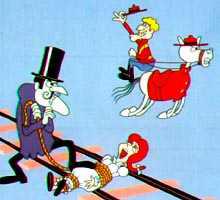 Oversimplifying only slightly, let’s review: Since the summer of 2011, Snidely Whiplash (the Republican majority in the House) has been trying to provoke the final showdown with Dudley Do-Right (President Obama) by tying Nell (the American economy) to the railroad tracks. Dudley showed up, but the fight keeps taking longer than either expected. So they keep agreeing to move Nell further and further down the tracks to give themselves more time.


 As I’ve occasionally pointed out


 The Weekly Sift
