
Four years ago, Jonathan Chait made the kind of prognosticating mistake people don’t let you forget: He picked Tim Pawlenty as the 2012 Republican nominee.
To be fair, Pawlenty wasn’t as ridiculous a choice as hindsight makes him look, and Chait wasn’t the only one forecasting great things for him: Pawlenty was Mitt Romney without the baggage of Mormonism and RomneyCare. He was conservative enough to be acceptable to the Party’s various factions, while sounding moderate enough not to scare off the national electorate.
In other words: If this were still the GOP of 1920, Pawlenty was exactly the kind of Warren-Harding-ish compromise candidate the smoke-filled room above the convention hall would have settled on after ten or twenty ballots. But since Pawlenty was nobody’s first choice in 2012, he never broke out of single digits in the polls and was out of the race before a single vote was cast.
The lesson of Chait/Pawlenty is that the modern Republican presidential process has two distinct phases: First a qualifying phase, where a few candidates break out of the pack to eliminate everyone else, and then a decision phase, where the party picks one of the qualifiers to unify around. Pawlenty is an example of a good decision-phase candidate who never made it out of the qualifying round.
To make it out of the qualifying phase, you need to be the first choice of one of the Party’s factions. But what are those factions?
The Four Factions. I still believe in the model from “The Four Flavors of Republican“, which boils down to this diagram:
 The four groups overlap, which is how the GOP stays together. But each speaks a subtly different language and focuses on a different set of issues. In 2012, each faction had a favorite son: Mitt Romney (Corporatist), Newt Gingrich (NeoCon), Rick Santorum (Theocrat), and Ron Paul (Libertarian). Those candidates made it through the qualifying phase, with Romney substantially in the lead. The decision-phase question was then whether Romney could convince the NeoCons, Theocrats, and Libertarians not to divide the party — and so insure Obama’s re-election — by rejecting him.
That model, I believe, will hold again in 2016. To make in through the qualifying phase, a candidate will need to convince one of the four factions that he is their guy. To survive the decision phase and get the nomination, a qualifier has to convince each of the other three factions not to veto him.
So let’s look at the factions one-by-one. Each faction has its favorite sons, and a second category I call “fluent speakers” — candidates who aren’t necessarily identified with the faction, but who can go into a room of activists and speak their language. If a faction comes to believe that its favorite sons can’t be nominated, its members might throw their early support to a fluent speaker. On the flip side, a faction might identify some candidate as an enemy: somebody whose nomination could be a reason to bolt the party. In 2012, for example, many Theocrats had a hard time stomaching the Mormon Romney.
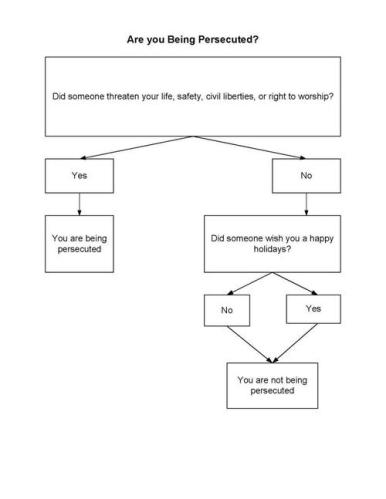
Theocrats. If a candidate denounces gay marriage, compares abortion to the Holocaust, talks about the Constitution as if it were a scripture God revealed to the Founders, and takes seriously the idea that Christians are persecuted in this country, he’s trying to win over the Theocrats.
The favorite sons are Mike Huckabee and Rick Santorum. (Sarah Palin could be favorite daughter if she actually ran and wasn’t looking increasingly loony. But I don’t think she has any interest in the hard work necessary to run a serious campaign. She floats her name to stay in the headlines, and she’ll tease her supporters as long she can. But she won’t run.) Ted Cruz, Rick Perry, and Bobby Jindal are fluent speakers of the Theocrat language. Scott Walker has the background and record to be a fluent speaker, but after watching his Iowa Freedom Summit speech, I’m still not sure he can really preach in Theocrat. (Questions like that are why we have campaigns.) Chris Christie might be an enemy.
Jeb Bush can speak the language, but fails key litmus tests. Theocrats worry about government-imposed secularism, and so are suspicious of any federal role in education. Bush was an early proponent of the Common Core standard, not realizing it would turn into a “vast network of conspiracy theories“. (To a Corporatist, Common Core is not a liberal conspiracy, it’s a corporate plan to skim more profits off of public education. That kind of conspiracy is OK.) A lot of Theocrats are also Nativists, so Bush’s sympathy for Hispanic immigrants also makes him suspect. One of the key issues of the decision phase will be whether Huckabee/Santorum can paint Bush as an enemy, or whether Bush can use his mastery of the language to convince Theocrats (who liked his brother in spite of No Child Left Behind) that he’s harmless.
In recent years, Iowa has picked the Theocrat qualifier: Santorum in 2012, Huckabee in 2008. Both are interested this year. Ted Cruz’ decision to announce his candidacy at Liberty University says that he’s pitching for the Theocrat vote as well.
NeoCons. This is the John McCain/Dick Cheney wing of the party. A candidate who identifies with Israel, denounces Islam by name, hates Obama’s move to end the Cuba embargo, and views war with Iran as more-or-less inevitable is appealing to the NeoCons.
The purest NeoCon candidates are John Bolton and Lindsay Graham, but it’s not clear that either of them is ever going to be taken seriously. Ted Cruz, Marco Rubio, Jeb Bush, Rick Perry, and a lot of other people are fluent speakers. Rand Paul is an enemy, while Scott Walker’s complete lack of military or foreign-policy experience makes him suspect.
The early primary with the strongest NeoCon flavor is South Carolina, and the kingmaker of the NeoCons is billionaire Sheldon Adelson; when he starts writing big checks, we’ll know who the NeoCon candidate is.
Corporatists. Articles about the “donor class” or the “Republican establishment” focus on the Corporatists. Corporatists value managerial experience, so they favor business executives and governors. They hate unions, want to privatize anything government does, and dislike government interference (but aren’t above taking a special tax break or a bail-out). They want to cut the taxes that affect rich people and corporations, but they also worry about “the 47%” who don’t pay federal income tax. So raising taxes on poor people is a winning issue here, if you come up with some euphemism (“broaden the tax base“) that doesn’t sound like “raising taxes”.
Moral issues are just tactical for the Corporatists; they used gay marriage to boost Republican turn-out in 2004, but are just as happy to drop it now that the wind has changed. However immigration reform works out, they don’t want to lose access to cheap labor.
Corporatists are well-connected in the media, so their candidates usually appear to be stronger than they actually are. (That’s why Romney seemed “inevitable” in the 2012 cycle, but had so much trouble nailing the nomination down.) As candidates from other factions emerge, the media will be shocked and say that they “came from nowhere”.
Jeb Bush, Chris Christie, and Scott Walker are the Corporatist favorite sons. Corporatists don’t usually have to accept a fluent speaker, but Rick Perry might be acceptable and most candidates speak pretty good Corporatist. Mike Huckabee is an enemy, and many Corporatists find Ted Cruz’ populist side scary.
The Koch Brothers are an interesting case. They present themselves as Libertarians, but much of their money goes to Corporatists. Koch-Corporate may just be a rival branch of the Corporatist faction, one that wants to support its own candidates rather than established ones like Bush. If so, Marco Rubio or Scott Walker might be its favorite son.
Libertarians. Libertarian Republicans are already united behind Rand Paul, just as they were behind Ron Paul in 2012. But they are probably the smallest faction of the party, and the question is whether Paul can pull support from other factions, or whether some fluent speaker might get their support if Paul embarrasses himself in the debates. (I think that’s a real possibility; Rand is just not as sharp as his Dad was.)
The key event to look for is whether Paul can get support from the Kochs. (I don’t think he will.) Paul was invited to the Koch Brothers’ candidate forum (where he clashed with Cruz and Rubio over foreign policy), but Rubio came out ahead in the straw poll.
What the numbers say. 538’s Harry Enten looked at recent nominees and came up with this theory about early polls: At this stage of the campaign, you can be on your way to the nomination if you’re known and liked by your party (as Bush was in 1999), or if you’re not liked because you’re still unknown (like Dukakis in 1987). But it’s death to be known and not liked. No recent nominee has had both high name recognition and low net favorability at this stage of the process.
If you buy that theory, then Christie and Palin are hopeless, while Perry and Bush have work to do, and Jindal is on life support. Huckabee, Paul, Carson, and Walker are about where they ought to be, with Cruz and Rubio doing OK.

Other factors. A lot of unpredictable or hard-to-measure factors will turn out to be important, including:
The Money Primary. Whoever wins the first primary gets a boost, but the first primary isn’t Iowa or New Hampshire: It’s the Money Primary, where the “electorate” are the big donors. A Corporatist almost always wins: Bush in 2000, Romney in 2012.
In a few days we’ll start hearing fund-raising totals from the first quarter, and they will make it clear that Jeb Bush is decisively winning the Money Primary. That will shape the race in three ways:
- It anoints Bush as the Corporatist qualifier, unless and until he screws up. It all but sinks Chris Christie, and tells Scott Walker he needs a more Theocratic image.
- It will ignite the Jeb-is-inevitable talk, which will continue until a Theocrat “comes from nowhere” and wins Iowa. (If Jeb wins Iowa, then he probably is inevitable.) That will open up the possibility of a Libertarian or NeoCon winning New Hampshire and a NeoCon winning South Carolina.
- Money gives a candidate resilience. If you have a lot of it banked, you can absorb a loss and regroup in the next state. In 2012, Romney lost South Carolina to Gingrich, then outspent him 4-to-1 to win Florida.
Identity politics. There’s a strong I-know-you-are-but-what-am-I aspect to Republican politics. In the Obama years, that helped non-white candidates like Herman Cain, Ben Carson, and Bobby Jindal, who let Republicans say, “See, we’re not racists; you’re the racists.” But as the Democratic mantle shifts from Obama to (presumably) Hillary, I expect Republicans to lose interest in non-whites. If there were a viable woman in the race — Palin isn’t, and Carly Fiorina has yet to emerge from obscurity — she might get a similar boost. Another female VP candidate is a real possibility.
Performance. The hardest factor to predict is how well candidates will perform on the campaign trail. In 2007, who knew Obama would be that good a campaigner or a strategist? And you can never guess when somebody is going to self-destruct in a debate, like Rick Perry did in 2011. (His excuse is that he was recovering from back pain and was over-medicated then, but he’s better now. I thought his Iowa Freedom Summit performance was impressive, but we won’t know until the debates start. Certainly any little flub he makes will get a lot of coverage.)
I expect Cruz and Christie to perform well, and Jindal and Paul to perform badly. (Watch Paul’s interview with Rachel Maddow.) The big wild card is Bush, who has never campaigned for national office, or for anything at all since 2002.
I don’t think we give Mitt Romney enough credit for how good a primary campaign he ran in 2012. He was the target in every debate, and nobody wounded him. Can Bush walk that gauntlet? It’s harder than Romney made it look.
Luck. If 2008’s October surprise had been an Iranian nuclear test rather than a financial crisis, John McCain might be president. You never know when Fate will serve up some issue that lets a candidate say, “I’ve been right about this all along.” Conversely, you have to wonder if the story Rick Perry wants to tell about the Texas economy will fall apart now that oil is under $50 a barrel. All the governors are tied to the events in their states. More bond downgrades for New Jersey could sink Christie, and the sluggish economy of Wisconsin could be trouble for Walker. The outbreak of an unpopular war could turn Rand Paul into the peace candidate.
What I Expect. Paul is the only Libertarian running; unless he self-destructs, he’s a qualifier. Similarly, unless some gaffe makes him a laughing stock, Bush will be the Corporatist qualifier. Iowa will anoint the Theocrat qualfier (or eliminate Theocrats if none of them can win it). Ditto for South Carolina and the NeoCons. Then the two qualifiers who are polling best against the Democrat — Hillary unless somebody else emerges soon — will have a shot at putting a coalition together.


 What that proves isn’t that voting doesn’t matter, but that voting is not enough. In addition to voting, we need to be educating ourselves and our friends, challenging cultural assumptions, mobilizing support around an agenda for more radical change, launching primary challenges to get better Democrats on the ballot, pushing better forms of voting (like



 The Weekly Sift