Will the University of Austin promote “the often uncomfortable search for truth”, or create a new safe space for traditional biases?
Last Monday, the former president of another educational institution announced that he and a collection of intellectuals who feel unwelcome or uncomfortable in academia (as it is currently constituted) were forming a new University of Austin in Texas. “We can’t wait for universities to fix themselves,” wrote Pano Kanelos, the former head of St. John’s College in Annapolis, “so we’re starting a new one.”
His essay is dotted with high-minded phrases like “the fearless pursuit of truth”, “freedom of inquiry and civil discourse”, and “the right to think the unthinkable, discuss the unmentionable, and challenge the unchallengeable.” It includes stirring rhetoric like: “We can no longer wait for the cavalry. And so we must be the cavalry.”
Many of his criticisms of existing universities are hard to argue with: “At our most prestigious schools, the primary incentive is to function as finishing school for the national and global elite.” Four in every ten students who enter a college or university leave without graduating. The soaring cost of higher education has left students with $1.7 trillion of debt — much of it owed by that 40% that didn’t even manage to buy a marketable credential. “[A]n increasing proportion of tuition dollars are spent on administration rather than instruction.” Those who do graduate learn “ever-more-inaccessible theories while often just blocks away their neighbors figure out how to scratch out a living”.
Kanelos’ conclusion that “something fundamental is broken” is not one I’m inclined to dispute. Too many college classes, particularly introductory ones, belong in a credential-producing factory, not a successor to Plato’s Academy. Like Kanelos, I feel the romance of a school “where there is no fundamental distinction between those who teach and those who learn, beyond the extent of their knowledge and wisdom”.
But beyond the educational theory and his nostalgia for Golden Age Greece, Kanelos’ truly motivating concern seems to be the “illiberalism” that “has become a pervasive feature of campus life”. One factor unites the truly impressive list of names Kanelos gives us: original co-founders Niall Ferguson, Bari Weiss, Heather Heying, Joe Lonsdale, and Arthur Brooks, later joined by “university presidents: Robert Zimmer, Larry Summers, John Nunes, and Gordon Gee, and leading academics, such as Steven Pinker, Deirdre McCloskey, Leon Kass, Jonathan Haidt, Glenn Loury, Joshua Katz, Vickie Sullivan, Geoffrey Stone, Bill McClay, and Tyler Cowen” not to mention “journalists, artists, philanthropists, researchers, and public intellectuals, including Lex Fridman, Andrew Sullivan, Rob Henderson, Caitlin Flanagan, David Mamet, Ayaan Hirsi Ali, Sohrab Ahmari, Stacy Hock, Jonathan Rauch, and Nadine Strossen.” They’ve almost all been critics or self-styled victims of “cancel culture”. [1]
That’s the context through which I read Kanelos stated goal: producing “a resilient (or ‘antifragile’) cohort with exceptional capacity to think fearlessly, nimbly, and inventively.” Today’s university students, with their trigger warnings and safe spaces and whatnot, Kanelos seems to imply, are snowflakes. Austin U won’t cater to such whimps, but will forge tough-minded students who can take the rough-and-tumble of real debate.
That vision is undercut, though, by one of the surveys Kanelos quotes to bolster his argument about the current campus illiberalism. He summarizes a survey by Heterodox Academy as saying that “62% of sampled college students agreed that the climate on their campus prevented students from saying things they believe”. However, if you dig into that survey, you’ll find the main reason students give for suppressing their opinions is that “other students would criticize my views as offensive”. In other words, I keep quiet because other students might respond to my free expression with their own free expression. [2]
So who’s the snowflake?
Which makes me wonder: Will Austin U really have more “free inquiry and discourse”, or will it just be a safe space for those who like to say things that are racist, sexist, transphobic, or otherwise offensive to people who didn’t previously complain because they didn’t previously have a voice? Kanelos’ essay may criticize institutions that “prioritize emotional comfort over the often-uncomfortable pursuit of truth”, but looking at his list of participants, I have to ask if the University of Austin will just prioritize the emotional comfort of a different set of people. [3]
The more I think about “free inquiry” the more I’m reminded of “free markets”. We may imagine that such freedom occurs naturally whenever authority gets out of the way. But in reality, neither discussions nor markets can be “free” without a substantial structure of rules and values and habits and institutions. The “natural” freedom idealized by pre-revolutionary philosophers like Locke and Rousseau happens in the wilderness. Bringing freedom into society requires structure.
There are questions a community can’t discuss without undermining the discussion itself. At German universities in the early 1930s, for example, Jewish students and professors (before they were banned completely) had to face discussions of “the Jewish question“, or even “the Jewish problem” — whether or not they should have a place in German society at all. How freely could they discuss that topic, or whatever topics might follow?
Or suppose I freely state my opinion, and the next person uses his freedom to suggest that people who think like me should be killed — and, by the way, here’s Doug’s home address for anybody whose plans might require that information. How long will that discussion stay free?
We need to understand that freedom inside society can never be pure or absolute. We can only be free in certain ways, and only because we accept limitations on certain other aspects of our freedom. My freedom to drive across the country depends on giving up my freedom to drive on the left side of the highway.
In particular, the kind of “free inquiry” Kanelos champions can only happen if all the participants retain their safety and dignity. This is easy to grasp when your own safety or dignity is threatened — as Austin U’s prospective faculty apparently believes theirs has been. But it is more difficult to appreciate how your own freedom may need to be reined in to accommodate others. Maybe an American university should discourage debate over the genetic inferiority of its Black students, or whether its gay and lesbian students are sick and need to be cured. Maybe women on campus can’t be kept safe from harassment and rape without men yielding some of the benefit-of-the-doubt they have historically been granted. Maybe respecting the dignity of trans students requires using their chosen pronouns, rather than insisting that you know more about their gender than they do.
And so on.
An age-old adage says that your freedom to swing your fist ends at my nose. Until recent decades, though, large classes of people understood that they just needed to keep their noses out of the way, because other people’s fists had to remain free.
That has changed — not everywhere and not completely, but moreso on college campuses than most places — and if you belong to one of the previously dominant classes you may feel disoriented. What a repressive world it suddenly seems to be, when you have to look all around before you start swinging your arms! How can you still be free, when the people you have been offending for years acquire their own freedom to respond?
There actually is intellectual work to be done here: I don’t think anyone perfectly understands yet exactly where the boundaries ought to be. Perfectly free discussion and inquiry is a myth; as long as we live in society, we will have to live within rules. But what rules, values, practices, and institutions do the best job of creating the environment we want for our universities, one where people of all descriptions can come closest to achieving the Socratic ideal?
That seems to me to be exactly the kind of question that universities ought to work on. And if they do that thinking well, they may become models for the rest of society.
So if the founders and supporters of the University of Austin truly have something positive to contribute to that discussion, I wish their experiment success. But if they just want to turn the clock back to a time when they felt more personally comfortable, I doubt they’ll do much good, even for themselves.
[1] I’d say “all” rather than “almost all”, but I’m not willing to do the research necessary to back that up. I recognize many of the names from various controversies and anti-cancel-culture manifestos.
MSNBC’s Katelyn Burns describes the U of A backers as “a group of self-described ‘heterodox’ academics and journalists (who all happen to have the same opinions on the the two topics they collectively discuss most often, trans rights and racism)”.
[2] A question worth asking: How many conservative students’ fears are justified, and how many have been manufactured by Fox News’ anti-cancel-culture propaganda?
[3] The Intelligencer’s Sarah Jones compares U of A to conservative Christian universities like Jerry Falwell’s Liberty U.
Falwell was no outlier. The right has long dreamed of alternatives to traditional higher education. The televangelist Pat Robertson founded Regent University for similar reasons. Michael Farris, the founder of the Homeschool Legal Defense Association, founded Patrick Henry College in 2000 to shelter homeschool graduates and funnel them into Republican politics. Hillsdale College has assumed a sharply right-wing political identity over time, and rejects federal funding “as a matter of principle.” (A Hillsdale professor sits on the University of Austin’s board of advisers.) These schools exist as laboratories for right-wing thought; they are committed not to free expression but to indoctrination. The University of Austin will be no different.
I will add that Fox News’ founding rhetoric sometimes sounded as idealistic as University of Austin’s: It would be the “fair and balanced” alternative to the “liberal bias” of the mainstream media.
Steve Bannon got indicted this week. The legal battle over Trump’s ex-presidential executive privilege continued. The Kyle Rittenhouse and Ahmaud Arbery murder trials raised questions about white privilege in the legal system. The New York Times finally recognized the Republican Party’s growing acceptance of political violence. The Glasgow climate conference came to a less-than-ringing conclusion. New Covid cases turned up again. And SNL gave us an episode of “Ted Cruz Street”, which appears on NewsMax Kids as a lead-in to “White Power Rangers”.
I’ll cover all that in the weekly summary, which I’ll try to get out between noon and one EST.
I might spin the Republican-violence note out into its own article, but there definitely will be a featured article about a more tangential concern: The announcement of the new University of Austin by a collection of anti-cancel-culture intellectuals. U of A President Pano Kanelos touched a lot of my educational sympathies with the rhetoric in his announcement essay, but I can’t shake my impression that his new institution will wind up being a safe space for traditional biases that the other universities are finally confronting. A lot of things are wrong with currently popular models of higher education, but giving previously oppressed groups the freedom to talk back isn’t one of them.
“Does America Need an Anti-Cancel-Culture University?” should be out before 10.
If we will not endure a king as a political power we should not endure a king over the production, transportation, and sale of any of the necessaries of life. If we would not submit to an emperor we should not submit to an autocrat of trade, with power to prevent competition and to fix the price of any commodity.
– Senator John Sherman, author of the Sherman Antitrust Act of 1890
which finally passed Friday. The bill passed the Senate back in August, but it had been stuck in the House while negotiations on the parallel Build Back Better bill continued. BBB is still stuck, but Tuesday’s disappointing election results convinced Democrats that they needed to ring up an accomplishment quickly.
The $1.2 trillion bill really is a BFD for Biden, and it’s important that the bill not get overshadowed by what’s not in it. Trump talked endlessly about what a great builder he is, but he couldn’t get this done and Biden did.
We also shouldn’t let the bill fall victim to what Jay Rosen has dubbed the “cult of savviness” in the mainstream media. The important thing is not the play-by-play of the congressional process, it’s what the bill does. The short version: fixing run-down roads and bridges, bringing broadband internet to rural areas, upgrading public transit and cross-country rail, improving ports and airports, modernizing the electrical grid, and upgrading water systems by, for example, getting the lead out of water pipes.
and the pandemic
US case numbers had been going down since mid-September, but that trend has flattened at around 72K cases per day, or 22 per 100K people. Deaths continue to fall, but we’re still losing about 1200 people a day.
Something I find ominous is the way high-case counties are clustered in the far north, like Coos County, NH (125 cases per 100K), Baraga County, MI (122), Blaine County, MT (135), and the whole state of Alaska (82). Even Vermont, which until now has consistently had low case-counts and high vaccination rates, is up to 49. All are low-population areas where it doesn’t take many cases to push the numbers up, but they also all have borders with Canada. Which makes me wonder: Is this a seasonal outbreak that will drift south in the coming weeks?
Pfizer announced a new anti-Covid drug, Paxlovid, that it claims cuts deaths by 89%. Like Merck’s recently announced Molnupiravir, Pfizer’s drug is a pill that can be taken at home.
I have zero sympathy for police who refuse to get vaccinated or police unions that fight against vaccine mandates. The simple reality is that you aren’t allowed to socially distance from the police, if they decide to get in your face. That puts the responsibility on them to minimize the risks they bring to the job.
I completely agree with John Oliver, including the expletives:
This all sums up the American police problem in miniature. The constant refrain we hear from cops every time they kill an unarmed, Black person is, “They should have complied with commands.” Because as long as you comply, things will supposedly go well. But that only seems to work one way. Because when officers are asked to follow simple rules or face consequences, a not insignificant amount of them flip their shit.
So if an officer wants to quit over this, fucking let them. Let the individuals who clearly don’t care about public safety stop being in charge of public safety. It is really that simple.
There is a viral disease where most infections are mild, asymptomatic. With a very low fatality rate. And large age gradient: kids are even lower risk than adults. And less than 1% of kids have any serious complications at all.
Yup. Polio. And we vaccinate against it
but I want to talk about a book
Senator Amy Klobuchar has written a much meatier book than you typically get from a politician: Antitrust: Taking on Monopoly Power From the Gilded Age to the Digital Age. (That’s where I got the Sherman quote at the top of the page.) It is as engagingly written as a book with this many footnotes can be, and does two things: tells the story of American antitrust law, and advocates for updating the laws to handle the particular problems of monopoly and monopsony in the current era.
Klobuchar turns out to have an antitrust background. Early in her career as a lawyer, she represented MCI as it tried to break into the telephone market then dominated by AT&T. Today, she is on the Senate Commerce Committee.
In addition to her specific proposals — the book has many of them — Klobuchar wants to take the anti-monopoly movement back from the lawyers (even though she is one). Antitrust has become a complex legal specialty that in many ways is far removed from the popular movement that spawned it in the 19th century. Leaving it to the lawyers might be fine if the laws on the books solved the problem and only needed enforcement. But monopolistic practices keep evolving while the law stands still — or even backtracks, as our big-business-friendly Supreme Court interprets antitrust laws in ways that make them ever harder to apply.
That situation will only change if there is political pressure. And since the big money is lined up against such change, the only place it can come from is people.
and you also might be interested in …
I am a former fan of Green Bay Packer quarterback Aaron Rodgers, who has broken NFL Covid protocols and deceived the public about his vaccination status. When asked by reporters weeks ago, Rodgers said he had been “immunized”, which to him meant something different from vaccinated.
The public found out about the deception this week when he tested positive for Covid. The NFL requires unvaccinated players to isolate from their teams for ten days after a positive test, and they finally decided to enforce the rules on the league MVP, causing him to miss Sunday’s loss to Kansas City.
AP summarizes the NFL protocols and who is responsible for enforcing them. The Atlantic’s Jamele Hill provides commentary.
But the stunning news of Rodgers’s COVID-19 diagnosis has been compounded by what else it revealed: Rodgers had lied about his vaccination status, and his team had likely provided cover for his deception. Both the Packers and the league itself have stood idly by as the reigning NFL MVP apparently violated safety protocols and jeopardized the health of others around him.
Throughout the season, Rodgers has been seen maskless many times at indoor press conferences. Per the NFL’s coronavirus protocols, unvaccinated players are required to wear masks at all times inside club facilities, submit to daily PCR testing, and avoid being within six feet of other unvaccinated players while traveling or eating meals. … Rodgers has put the NFL’s credibility in jeopardy. The situation raises the obvious question of whether other teams have been covering for unvaccinated key players.
It got worse from there. Rather than apologize, Rodgers lashed out at the “woke mob” and “cancel culture” in an interview where he
rattled off a Bingo card’s worth of anti-vaxx catchphrases: Ivermectin, “politicized,” “my own research,” a Martin Luther King Jr. quote applied wildly out of context (“You have a moral obligation to object to unjust rules”), “monoclonals,” “sterility,” and more.
“I’m not some sort of anti-vaxx flat-earther. I am somebody who’s a critical thinker. I march to the beat of my own drum. I believe strongly in bodily autonomy, and the ability to make choices for your body, not to have to acquiesce to some woke culture or crazed group of individuals who say you have to do something.”
That “crazed group of individuals” includes his employer, who has paid him $263 million during his 17-year career.
A state might, for example, ban the sale of firearms for home protection, contra District of Columbia v. Heller, or prohibit independent corporate campaign advertising, contra Citizens United v. FEC, and deputize its citizens to seek large bounties for each sale or advertisement. Those statutes, too, would plainly violate the Constitution as interpreted by this court. But under Texas’ theory, they could be enforced without prior judicial review — and, by creating an enforcement scheme sufficiently lopsided and punitive, the state could deter the exercise of the target right altogether.
To the disappointment of Q-Anon faithful who gathered on Dallas’ famous grassy knoll Tuesday, JFK Jr. did not return from his apparent death (faked 20 years ago, according to the theory) to become the VP of a restored Trump administration. So it’s on to the next crazy prediction.
and let’s close with a love story
Hubert and Kalissa were a bonded pair of lions described as “inseparable” by the Los Angeles Zoo curator of animals. Both 21 years old, they had far outlived a typical lion lifespan of 14-17 years. Suffering from a variety of age-related infirmities that had “diminished their quality of life”, the two were euthanized together so that neither would have to be alone.
The couple met at Seattle’s Woodland Park Zoo, and in 2014 were transferred to Los Angeles where “They quickly became favorites among LA Zoo guests and staff and were known for their frequent cuddles and nuzzles.”
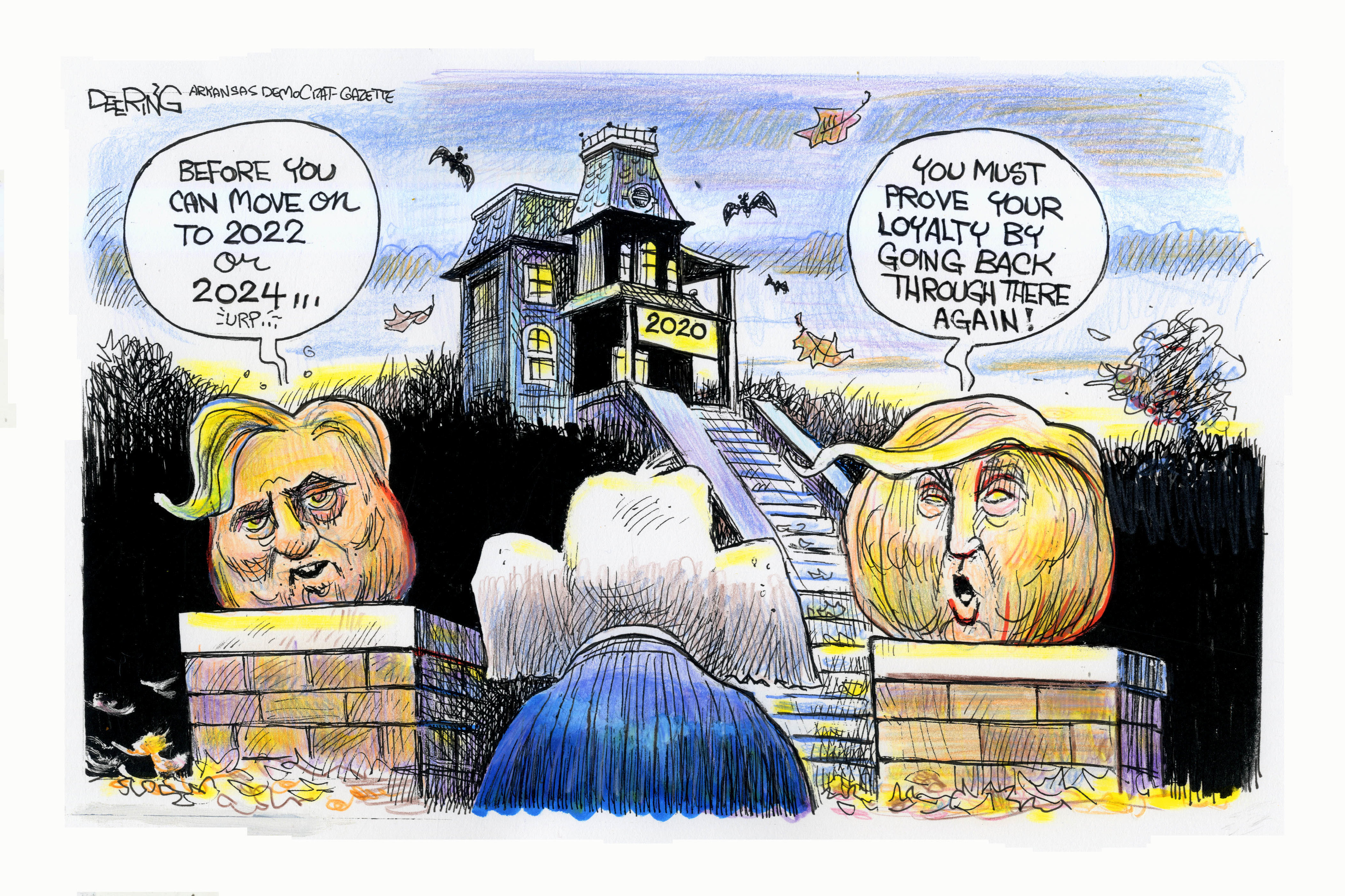
The Democratic candidates for governor lost in Virginia and barely won in New Jersey, two states that have been reliably blue in recent years. What does that say about 2022 and 2024?
Tuesday, Republican candidate Glenn Youngkin won the governorship of Virginia, a state Joe Biden carried in 2020. Youngkin won by 2%, a 12.1% improvement over Donald Trump’s 10.1% loss. Meanwhile in New Jersey, a state Biden carried by 16.2%, incumbent Democratic Governor Phil Murphy could only manage a 2.6% margin, a 13.6% fall-off from 2020.
Those results, along with a comparable decline in Biden’s approval numbers (currently underwater with 7.5% more people disapproving than approving), have Democrats panicking about their prospects for the 2022 and 2024 elections, and pointing fingers at each other to assign blame. The parallel in everyone’s mind is 2009, President Obama’s first year, when poor performances in the same two governor’s races did indeed predict a massive 2010 loss.
Democrats look at 2009 as the alarm that went unanswered, and are determined not to make the same mistake this time around. That leads to two big questions: What exactly happened in 2009? And what comparable mistakes do we need to fix now? Hence the finger-pointing.
Is it 2009 again? Will next year be 2010? Let’s start by examining the basic premise: How much does the current situation resemble 2009? There are a number of similarities:
A Democratic president elected by a wide margin (9.5 million Obama, 7 million Biden) is much less popular a year later.Biden’s approval/disapproval was +17% on Inauguration Day and -7.5% now. Obama’s (by a different measure) was a whopping +54% at inauguration and down to +10% by November, 2009.
The president’s ambitious agenda is stuck in Congress. Both Obama and Biden had early legislative victories with a stimulus plan. But ObamaCare wouldn’t pass until March, 2010, and his climate bill never did pass. Biden’s bipartisan infrastructure bill passed Friday night (too late for the 2021 elections), and his Build Back Better plan is still in limbo.
The economy is improving, but still not good. In 2009, GDP bottomed out in the first quarter of 2009, but the improvement still wasn’t showing up in October’s unemployment rate: 10% (the peak), compared to 7.3% the previous December (the numbers available on Inauguration Day). This year, Biden has already seen improvement in both GDP (up 9.2% in the last year) and unemployment (4.6% in October compared to 6.7% last December), but inflation (up 5.4% in the last 12 months) is worrisome and the economy still doesn’t feel normal.
While granting the similarities, I want to call your attention to two points against doomsaying:
2009 was worse. Obama won Virginia by 6.3% in 2008, but Republican Bob McDonnell (whose 2014 corruption conviction was overturned by the Supreme Court in 2016; he’s currently a professor at Pat Robertson’s Regents University, where all Republican sins are forgiven) won the governorship by 17.3% in 2009, a 23.6% reversal for the Democrats. Obama won New Jersey by 15.5% in 2008, but Chris Christie was elected to his first term as governor in 2009 by 3.6%, a turnaround of 19.1%.
While 2009 did presage a 2010 congressional wipeout, Obama got re-elected in 2012.2010 really was the “shellacking” Obama said it was. Democrats lost 6 Senate seats, 63 House seats, and 6 governorships. But in 2012 Obama beat Mitt Romney by 3.9% or 5 million votes.
An additional nebulous factor is that the benefits of ObamaCare phased in slowly; you couldn’t get coverage from the ObamaCare exchanges or use a ObamaCare subsidy until 2014. So in 2010, Republicans had free rein to demonize imaginary “death panels” and the “government takeover of health care“. ObamaCare’s favorability rating turned negative in 2010 and didn’t turn positive again until 2017.
Biden’s bills should be much harder to smear with dark fantasies: His infrastructure plan may not have new bridges open by next November, but work will be underway and people will be getting jobs. We still don’t know what (if anything) will be in the BBB bill if and when it eventually passes, but we can hope for immediately popular items like reducing the price of prescription drugs or a child tax credit. Even the bill’s increased taxes are popular, if they really do focus on the wealthy.
In short, there are definite resemblances, but 2021 is not 2009, and 2022 doesn’t have to be 2010 unless we let that happen.
What exactly happened in Virginia? Our political dialog goes wrong when people decide what they want the story to be before they look at the facts. So before we start assessing blame and breaking glass for the emergency, let’s get straight what really happened.
538 does a good job analyzing the polling, and by “good job” I mean that they are appropriately humble about what can and can’t be deduced from what we know. As always, Democrats were strong in Virginia’s cities, and Republicans in the rural areas, while the suburbs were a battleground. The interesting question, though, is not the parties’ absolute strength, but where votes shifted to erode Biden’s 2020 margin. The answer is the suburbs.
According to exit poll data, Youngkin won 53 percent of these voters across the state, which is roughly the opposite of what happened in 2020, when exit polls suggest President Joe Biden carried voters in those areas with a similar share of the vote.
From that data, it’s tempting to jump to the conclusion that McAuliffe lost the kind of people we associate with the suburbs: educated professionals. But no. Youngkin’s gains on Trump were mostly among non-college whites.
Interestingly, though, it doesn’t look like white college-educated voters, often disproportionately associated with the suburbs, necessarily drove Youngkin’s victory. The polarization of white voters by educational attainment has been a developing trend in recent years, and the Virginia result shows an even more substantial split, thanks mainly to Youngkin gaining among white voters without a college degree. Remember, plenty of white voters without a four-year degree live in suburban places, too.
538 finds it hard to assess the impact of Youngkin’s critical race theory message, for reasons that I’ll illustrate with an example: If I run for office promising to stop the Martian invasion, exit polls will undoubtedly show that I won among voters who were worried about the Martian invasion. But did they vote for me because of that issue, or were they my voters first, and just repeated my anti-Mars rhetoric when a pollster asked? Voters who, say, watch a lot of Fox News, are upset about CRT and voted for Youngkin. But what caused what? As Vox’s Zack Beauchamp put it:
partisans who would have voted for their party anyway often parrot whatever message they heard from the campaign or allied media.
A lot of Youngkin voters said they cared about education, but probably not in the usual sense of wanting better funding and higher test scores. In addition to his race-related issues
Exit polling found that voters who believe parents should have “a lot” of say in what their child’s school teaches overwhelmingly supported Youngkin over McAuliffe (77 percent to 22 percent). … Youngkin also made appeals to parents fed up with more than a year of remote learning and other COVID-19-related school policies, like requiring masks in schools. But all of this falls under the category of “education,” which makes it incredibly hard to disentangle which issue had a bigger impact on voters.
Ordinarily, you would expect an education-focused parents-rights campaign to overperform among parents, but that didn’t happen either. Youngkin won White parents, but not by a margin larger than Republicans typically do.
538 wound up concluding that
disappointment with Biden’s presidency is what ultimately drove support for Youngkin.
Most interestingly, opinions about Biden had more impact than opinions about Trump.
almost twice the share of people who had an unfavorable view of Trump backed Youngkin (17 percent) than the share who disapproved of Biden and backed McAuliffe (10 percent).
The election returns from Virginia show a uniform swing against McAuliffe, not an especially strong backlash in areas where CRT was an especially prominent issue. In New Jersey’s gubernatorial race, there was a similarly sized swing against Democrats despite CRT not being a major part of the campaign.
A broader look at election night on November 2 tells a different and more familiar story: McAuliffe lost because of a nationalized backlash against an unpopular incumbent president.
The red and blue theories of government. In general, Democrats and Republicans campaign differently because their voters are looking for different things from the government. Democrats believe that government can improve people’s lives. As Abraham Lincoln (in an era when the Republicans were the activist party) put it:
The legitimate object of government is to do for a community of people whatever they need to have done, but cannot do at all, or cannot so well do, for themselves, in their separate and individual capacities.
So, for example, I can take public transportation, but I can’t build it. I can sign up for broadband internet, if the big internet providers feel like offering it in my community. But if they don’t, I need government to push them. I can hope that new drugs have been tested before the pharmaceutical corporations put them on the market, but I can’t do it myself. I can’t manage the money supply for full employment, or test for lead in my drinking water, or prevent climate change, or do any of a thousand other things government does (or could do) for me.
Republicans, on the other hand, see government more as an obstacle and a source of interference. In their worldview, individuals should mostly fend for themselves, and to the extent they need to organize, the market will organize them. All the things government can usefully do are already being done (and then some), and happen more or less automatically.
So Republican campaigns aren’t about what government can do to improve your life. You don’t vote for a Republican hoping to stop a pandemic or get health insurance or pay for college. Instead, you vote Republican so that someone will use the bully pulpit of government to speak for you. Republican officials don’t do much to help their voters, but they stop other people from doing things their voters disapprove of, like getting abortions or changing their pronouns or kneeling during the national anthem. What Trump voters loved most about him was not any particular government action, but that he forcefully agreed with them and viciously insulted people they resent.
This is also why Republicans can invent issues out of nothing and Democrats can’t. Free community college isn’t an issue unless real people want to attend community college. But critical race theory can be an issue whether it actually exists or not, because it’s about other people, and who knows what devilry they might be up to?
As far back as 1988, Bush the First was making a issue out of the pledge of allegiance. He wasn’t promising to do anything about the pledge of allegiance, but somewhere out there people were refusing to say the pledge, and Mike Dukakis had defended them. After Bush won, the words pledge and allegiance didn’t appear in his 1989 inaugural address, because the pledge had nothing to do with his plans to govern. Nobody had expected that it would.
Thirty-three years later, Democrats still haven’t solved that problem. Terry McAuliffe was flummoxed by critical race theory just as Dukakis was by the pledge issue. Because how do you fight something that isn’t real?
Democrats need results. In short, pretty much every election hinges on whether the public focuses on symbolic issues or real-life issues. Death panels or the War on Christmas presages a Republican victory; the minimum wage or affordable health care a Democratic win.
Real issues tend not to be as click-baity as symbolic issues; wealth inequality is tedious compared to canceling Dr. Seuss. So voters looking for entertainment will trend Republican. (That’s the other thing Trump’s fans love about him: He’s never dull.) But why shouldn’t voters reduce politics to entertainment if it’s all hot air anyway? If neither Medicare for All nor JFK Jr.’s return is ever going to happen, why not choose the more engaging fantasy and follow Q rather than Bernie?
That’s why Democrats need results. People need to see that politics leads to something, and isn’t just an identity or an excuse for tribes to battle each other. Biden was popular those first few months because he seemed to be doing what he had talked about. He said he would beat the pandemic with vaccines, then he signed a bill to fund vaccine distribution, and sure enough: vaccines started rolling out. By June, the pandemic seemed to be over, the economy was coming back, and Biden had moved on to talk about fixing bridges and bringing broadband to rural America.
Politics works! So Biden (and Democrats) are popular.
Then the Delta variant hit, vaccine resistance became a thing, the economic recovery paused, and Biden’s further proposals bogged down in Congress. So politics doesn’t work; it’s just a bunch of people yelling at each other. Suddenly Biden’s popularity crashes and Democrats underperform in elections.
Pointing fingers. Several well-known commentators were quick to assign blame for Tuesday’s disappointing results, and their voices were amplified by the majority of the beltway press, particularly in The New York Times. Probably the voice that got the most attention was James Carville, who denounced “stupid wokeness”. NYT columnist Maureen Dowd quoted Carville, and went on to attack the Biden agenda.
Biden has pursued his two bills with Captain Ahab-like zeal; he pines to be F.D.R. and eclipse Barack Obama, who pushed him aside for Hillary.
Chuck Schumer and Nancy Pelosi hail the bills as transformational. But what are you transforming into? The election cratering showed that such overweening efforts are putting off many voters who are still struggling just to get by, as they move beyond the degradation wrought by Trump and Covid.
Outside the editorial page, The Times’ post-election analysis gave plenty of space to similar complaints.
More pointedly, [Virginia Rep. Abigail] Spanberger said Mr. Biden must not forget that, for many voters, his mandate was quite limited: to remove former President Donald J. Trump from their television screens and to make American life ordinary again.
“Nobody elected him to be F.D.R., they elected him to be normal and stop the chaos,” she said, alluding to the sweeping agenda the president is seeking to enact with the thinnest of legislative majorities.
Tuesday’s results are a sign that significant parts of the electorate are feeling leery of a sharp leftward push in the party, including on priorities like Build Back Better, which have some strong provisions and some discretionary ones driving up the price tag. The concerns of more centrist Americans about a rush to spend taxpayer money, a rush to grow the government, should not be dismissed.
Swing voters in two blue-leaning states just sent a resounding wake-up call to the Biden administration: If Democrats remain on their current course and keep coddling and catering to progressives, they could lose as many as 50 seats and control of the House in the 2022 midterm elections. There is a way forward now for President Biden and the Democratic Party: Friday’s passage of the bipartisan physical infrastructure bill is a first step, but only a broader course correction to the center will give Democrats a fighting chance in 2022 and to hold on to the presidency in 2024.
This kind of beltway common sense apparently needs no supporting evidence. Only Penn and Stein quote poll results, and they rely exclusively on Penn’s own poll, which is obviously skewed. (Example: Only 62% of the respondents say they have “gotten the vaccine”. But according to the CDC, 70% of Americans over 18 are fully vaccinated, and 80% have gotten at least one dose. Penn and Stein call attention to the 58% who oppose the “$1.5 to $2 trillion dollar social spending bill” if it would be “financed by increasing the deficit and tax increases”, which is phrased to imply that the respondents’ own taxes would go up. But 66% of even Penn’s skewed sample supports a 15% corporate minimum tax and 59% favor a wealth tax on billionaires. Throughout the survey, Penn’s questions frame issues as Republicans frame them. “Do you think the schools should promote the idea that people are victims and oppressors based on their race or should they teach children to ignore race in all decisions to judge people by their character?” But who exactly is teaching students not to judge people by their character? Unsurprisingly, 63% oppose such teaching.)
Let me repeat a point I made above: When pollsters (other than Mark Penn) tell Americans what’s in the two bills, they like it — and that was when the reconciliation bill was $3.5 trillion. When they’re told rich people’s taxes will go up to pay for it, they like it even more.
The problem isn’t that the Biden agenda is too big or too expensive or too left-wing. The problem is that Democrats have been talking about it for a long time and it’s not done. (Or at least it wasn’t done when voters cast their ballots on Tuesday. Jennifer Rubin wonders if we might have seen a different result after all the good news that came out Friday.) As long as it’s just a set of proposals in Congress that change every few days, the American people aren’t going to take it seriously. That’s not action, that’s a bunch of people arguing about stuff that may never happen — precisely what Americans hate most about politics.
So why isn’t it done? The answer to this question is really simple, and it’s the complete opposite of what the beltway-press echo chamber is saying: The bills weren’t done in time to help Terry McAuliffe because Joe Manchin and Kyrsten Sinema slow-rolled them.
I am not saying that there is anything illegitimate about either moderate or progressive Democrats pushing their views and trying to get the best deal they can. Personally, I think the current Manchinized $1.7 trillion reconciliation bill is considerably less good than the original $3.5 trillion proposal. (The Washington Post’s editorial board agrees with me, for reasons that go beyond the spending total.) But that’s not my point. Manchin and Sinema are senators, and the bill can’t pass without them. There’s no reason why they (or anyone else) should have to vote for a bill they don’t believe in.
But let’s assume that some kind of BBB bill is eventually acceptable to both factions of the party — maybe the current $1.7 trillion version, or something with even more concessions to the two rightmost Democrats.
Why couldn’t that same bill have passed in July?
The answer to that question has nothing to do with Rep. Pramila Jayapal, the progressive caucus, Nancy Pelosi, Chuck Schumer, or Joe Biden. Some version of the reconciliation bill didn’t pass months ago because Manchin and Sinema have stalled and are still stalling. When all the other Democrats were ready to get on with serious negotiating, Manchinema were hard to pin down. They expressed vague qualms without making counter-proposals. That’s what has taken so long.
So if Terry McAuliffe wants to blame somebody, that’s where I’d look.
What’s the real lesson of Tuesday’s elections? Get stuff done, especially popular stuff that people can see happening. Certain phrases, like “defund the police” and “critical race theory” are unpopular, so Democrats shouldn’t run on them — but no major candidate was doing that before Tuesday.
When you do get stuff done, make sure people know about it.
If you can’t get stuff done, make sure the public understands that Republicans are the obstacle, not other Democrats. As much as possible, Democrats should do their within-the-party negotiating behind closed doors. The House should pass some nice, simple, one-popular-issue bills, like resolving the Dreamers’ immigration status or protecting voting rights or eliminating obviously corrupt billionaire tax breaks. And then Chuck Schumer should make as big a show as he can out of Republicans blocking those bills in the Senate. (The 2022 attack ad writes itself: “Billionaire hedge fund managers can thank Ron Johnson for saving their giant tax break. Given how much dark money is pouring into Wisconsin to support Johnson’s re-election effort, maybe they already have.”)
A final note about “wokeness”. Black Americans started telling each other to “stay woke” long before I noticed the phrase. A 1938 Leadbelly song says “I advise everybody, be a little careful when they go along through there – best stay woke, keep their eyes open.” The term showed up in a 1962 NYT article on Black slang. More recently, a 2008 Erykah Badu song and then a Childish Gambino song popularized it. Zaron Burnett III defines its original meaning as “an earnest expression that Black people need to stay conscious of the agendas operating against us”.
Becoming (as opposed to staying) woke was a consciousness-raising experience similar to what feminists used to express with the word “click“. A feminist click-moment was when some switch flipped in your head, and you suddenly saw familiar situations in a new way. For a while, White allies in the anti-racist movement used woke that way.
More recently, though, conservatives have made pejorative term out of woke. In particular, it has become a racist dog whistle: Some person or movement or proposal is “too woke” if it’s too Black. Burnett says:
Woke is now a funhouse mirror version of itself. It no longer refers to being aware of the agendas that operate against Black people, nor does it mean to stay conscious and present, or even skeptical. It’s been mockingly weaponized so that it can be an expression of winking anti-Blackness by someone like [Senator Josh] Hawley.
… “Wokeness” in this context is also an update of the tired, more obvious dog whistles like “thug,” “inner-city youth” and “urban contemporary.” They’re all just polite ways to say (or whisper) Black. And so, for the modern tech-savvy racist, to be against woke culture is a casual, more acceptable form of anti-Blackness (i.e., no white hood necessary).
One of the things I thought we had learned from George Lakoff’s framing articles in the early 2000s was not to use opponents’ frames. Using the vocabulary of the Right strengthens the Right, and using the vocabulary of racists strengthens racism.
So Democrats and liberals (especially White Democrats and liberals) should never, ever use the pejorative form of woke. (They should be careful with the positive sense too, because it seems to have timed out.) Whatever you’re trying to say, find some other way to say it. Because when you talk about “stupid wokeness”, you’re telling the White supremacists that you’re on their side.
There’s no getting around it: Tuesday’s election results were discouraging. A Democratic candidate for governor lost in Virginia and nearly lost in New Jersey, two states Joe Biden carried handily just a year ago. Beltway pundits, especially in The New York Times, were quick to assign blame to progressives and to Biden’s ambitious agenda, which they say needs to be scaled down and moved towards the “center”, wherever that is.
This week’s featured post examines those elections and that conclusion, and proposes a way forward. “How Ominous Were Tuesday’s Elections?” (which includes an aside on the history and usage of the word woke) should be out a little after 9 EST.
The weekly summary will discuss the bipartisan infrastructure bill Congress passed Friday night, Amy Klobuchar’s new book on antitrust, the Aaron Rodgers fiasco, some good economic news, and a few other things, before closing with a touching leonine love story. (Who knew elderly lions could look so cute together?) That should be out around noon.
In the days and hours leading up to the counting of the electoral votes in Congress, a cadre of outside lawyers to the President spun a web of lies and disinformation, to him and to the public, for the purpose of pressuring the Vice President to betray his oath to uphold our laws and the Constitution of the United States. … There is no room in the legal profession for Grima Wormtongues who counsel their clients with half-truths and deceptive presentations made in pursuit of a personal agenda.
– Greg Jacob Chief Counsel to Vice President Mike Pence January, 2021
Thursday, President Biden announced a slimmed-down version of his Build Back Better plan: $1.75 trillion versus the previous $3.5 trillion. Senators Manchin and Sinema have not endorsed the plan, but they also haven’t rejected it. Josh Marshall observes that “The number of outstanding issues has dropped precipitously.”
So maybe we’re almost there. Vox has a summary of what Biden’s framework (it’s still not a bill) contains, but I’m trying not to get too excited one way or another until we know that it’s really going to happen.
and the Virginia governor’s race
Tomorrow is election day in Virginia. It comes at a bad time for the Democrat, Terry McAuliffe. The Democrats’ struggle to pass some version of Biden’s agenda makes them look ineffective right now, even if it might result in significant action soon. The latest Covid surge is fading, but the back-to-normal promise of last spring is still unfulfilled. Inflation and supply-chain issues are global, but Biden is being blamed for them.
In addition, Republicans are trying out their 2022 strategy. Biden beat Trump by more than seven million votes in 2020 for two main reasons:
Huge Black turnout.
Previously Republican suburban voters, especially educated women, turned against Trump.
Voter suppression is hard to do in Virginia, which currently has a Democratic governor and legislature. But the Republican gubernatorial candidate, Glenn Youngkin, is all-in for the phony issue. Paul Waldman puts it like this:
Imagine it’s January 2023, and Gov. Youngkin gathers his staff for a meeting to celebrate the end of his first year in office. “I want to congratulate all of you,” he says. “We’ve done just what we said we would: For the last year, all of you have worked tirelessly, day in and day out, to make sure no critical race theory is taught in any school in the state.”
That scene is preposterous to the point of parody. The idea that what Youngkin would do as governor has even a remote relationship to what he is running on is absurd.
Recent polls are close, but show Youngkin with a very small lead and momentum. If he wins, Republicans will feel their 2022 strategy is good to go nationally.
and the climate summit
World leaders are currently meeting in Glasgow to attempt to hammer out a successor to the Paris Agreement of 2015, which Trump withdrew the United States from.
President Biden would like to be a leader in forging a significant agreement, but his position has been undercut by the changes Senator Manchin of coal-mining West Virginia has forced on his Build Back Better plan.
If Mr. Biden lacks a reliable plan for the United States to significantly cut its emissions this decade, it would “send a signal” to other major emitters that America is still not serious, [Lia Nicholson, a senior adviser to the Alliance of Small Island States] said. And it would be difficult for Mr. Biden to urge other countries to take more meaningful steps away from fossil fuels, others said.
Biden went to Glasgow from the G-20 meeting in Rome, which endorsed a 15% minimum corporate tax. Up to now, corporations have been able to play countries off against one another, creating a race to the bottom on corporate tax rates. If the G-20 nations follow through, that race would stop.
and the pandemic
Tuesday, an advisory committee for the FDA recommended approving Covid vaccinations for children ages 5-11. Vaccines are already approved for everyone 12 and up. The vaccines for younger children are still not available and there’s considerable disagreement about how many families will want them.
Case numbers are not falling as fast as in recent weeks. The US is averaging about 73K new cases per day, which is about the same as last week. Deaths are down to an average of 1346 a day, down from over 1400 last week. The NYT is reporting that unvaccinated people are dying at about 12 times the rate of fully vaccinated people.
This is a shadow docket case asking for emergency relief, so no majority opinion was published. Justice Gorsuch did write a dissent, which Justices Alito and Thomas signed on to. Justices Barrett and Kavanaugh published a one-paragraph concurrence on largely technical grounds: The shadow docket shouldn’t be used to force the court to rule on a case that otherwise was unlikely to reach them.
Briefly, the reason for Gorsuch’s dissent is that healthcare workers can get an exemption for medical reasons, but not for religious reasons. His argument builds on previous ridiculous opinions from 2020-21 that elevate the most tenuous religious claims to the highest level — if they’re based on popular Christian (especially Catholic) beliefs. Gorsuch also quotes the 2018 Masterpiece Cakeshop case, which similarly granted conservative Christian beliefs about marriage a level of consideration no non-Christian belief will ever get from this Court.
The plaintiffs’ religious objection in this case is
that the Johnson & Johnson vaccine required the use of abortion-related materials in its production, and that Moderna and Pfizer relied on aborted fetal cell lines to develop their vaccines.
Note how far we have gotten, both in time and in the causal chain, from any actual abortion. I’m not sure what the J&J issue is, but for Pfizer and Moderna we’re talking about a cell line developed from an abortion in 1973, with no suggestion that the research value of the cells played any role in the abortion decision. This is the kind of thing I was talking about in 2013 when I described conservative “religious freedom” as passive aggression. People are arbitrarily extending their moral concerns for the purpose of tripping up other people.
If a policy Gorsuch liked were at stake, would he give similar weight to a Hindu whose scruple is based on a sacred cow killed in 1973, none of whose original cells are present? What if someone’s religious objection had a similarly long causal chain related to climate change? (The implementation of just about any policy involves fossil fuels at some point.)
Those cases would be laughed out of court. But three justices want to approve this one, because Gorsuch et al grant special rights to people who share their religious beliefs.
Fox News anchor Neil Cavuto tested positive for Covid, which is a big deal for a guy whose lungs were involved in a previous bout with cancer. He believes that being vaccinated has saved his life, and said so on the air, while urging his viewers to get vaccinated. “Then came the death threats,” NPR reports.
I’m not going to repost the graph (because it has tiny print and displays really badly), but you should look at Duke sociology Professor Kieran Healy’s “The Polarization of Death“. He groups US counties into deciles, based on Trump’s percentage of the 2020 vote, and then plots the cumulative Covid death rates per 100K people through time. This results in “an ecological picture of the relationship between deaths and political polarization”.
The bluest decile starts out with the most deaths. (Recall how the first wave hammered New York City, the Northeast, and big cities in general.) But last year’s Thanksgiving-to-New-Years holiday surge primarily targeted the reddest counties, and by now the deciles are in almost-perfect order, from the 90-100% Trump counties averaging over 300 deaths per 100K to the 10-20% counties a hair above 200. (The 0-10% counties are slightly higher than the 10-20% counties. That’s the only out-of-sequence result.)
You can imagine a lot of explanations for this, including that Trump counties tend to have more old people than Biden counties. But the Trumpist resistance to public health measures of all sorts has to play an important role.
and Halloween
which was yesterday. For some reason, what caught my attention this year was the funny stuff rather than the creepy or scary stuff.
And candy corn had enough PR problems before someone noticed its resemblance to a former president.
I loved this tweet from (currently suspended) @leahtriss:
I’m going as a Former Gifted Kid for Hallowe’en. The whole costume is just going to be people asking “What are you supposed to be?” and me saying, “I was supposed to be a lot of things.”
And finally: Ruth Vader Ginsburg wielding her light gavel.
This week we found out about an article Mike Pence’s chief counsel Greg Jacobs drafted but decided not to publish after January 6. The most striking quote is at the top of this page.
The ‘siege’ is because YOU and your boss did not do what was necessary to allow this to be aired in a public way so that the American people can see for themselves what happened
Rolling Stone has a long article about Trump officials and Republican members of Congress who helped plan the January 6 demonstrations. To me, the key point is whether the people at those planning sessions knew or should have known that the event would turn violent. If January 6 had just been a Trump rally, followed by a march to surround the Capitol and yell a lot, that would have been a legitimate use of the right to assemble. If I were somebody involved in January 6 planning, I’d claim the violence was a complete surprise to me.
and more book restrictions in Texas
Following up on “Reading While Texan” from two weeks ago: The Texas Tribune reports that a Republican state representative (who is running for attorney general) is opening an official legislative “inquiry into Texas school district content”. So far that mainly means that he has sent a list of 850 books to the districts, asking them how many copies they have of each, where they shelve them, and how much they spent acquiring them.
books or content … that address or contain the following topics: human sexuality, sexually transmitted diseases, or human immunodeficiency virus (HIV) or acquired immune deficiency syndrome (AIDS), sexually explicit images, graphic presentations of sexual behavior that is in violation of the law, or contain material that might make students feel discomfort, guilt, anguish, or any other form of psychological distress because of their race or sex or convey that a student, by virtue of their race or sex, is inherently racist, sexist, or oppressive, whether consciously or unconsciously.
By focusing on how content “might make students feel”, the inquiry liberates itself from any objective criteria. (Ever notice how fuck-your-feelings conservatives turn into bleeding hearts as soon as White people are upset?) It also risks misidentifying the root cause of those feelings. Being well informed is not always comfortable. (“The more knowledge, the more grief,” says Ecclesiastes.) So if reading Me and White Supremacy causes “discomfort”, maybe the problem is white supremacy, not the book.
The legislator’s list includes highly regarded titles like The New Jim Crow, Caste, Between the World and Me, and just about any other book you can think of that suggests America might have a race problem. (New Kid, which I talked about two weeks ago, is on the list.) It includes novels, graphic novels, memoirs, history books, and books about the physical changes teens might be noticing in their bodies. Oddly, the graphic novel version of Margaret Atwood’s The Handmaid’s Tale is on the list, but the original is not. And I’m not totally sure why V For Vendetta is listed.
It’s not a censorship list (yet), but the fact that these books are the subject of an “inquiry” is bound to have the kind of chilling effect on teachers and librarians that I talked about two weeks ago.
A counterpoint is Maia Kobabe’s op-ed in the Washington Post about the banning (in multiple school districts) of her graphic (in the words-plus-drawings sense) book Gender Queer: a memoir.
Queer youth are often forced to look outside their own homes, and outside the education system, to find information on who they are. Removing or restricting queer books in libraries and schools is like cutting a lifeline for queer youth, who might not yet even know what terms to ask Google to find out more about their own identities, bodies and health.
and you also might be interested in …
Paul Krugman on the current inflation/supply-chain problems:
The most important point, however, may be not to overreact to current events. The fact that shortages and inflation are happening around the world is actually an indication that national policies aren’t the main cause of the problems. They are, instead, largely inevitable as economies try to restart after the epic disruptions caused by Covid-19. It will take time to sort things out — more time than most people, myself included, expected. But a frantic attempt to restore the status quo on inflation would do more harm than good.
The migrant families who had their children stolen away by the Trump administration may get compensation from the Biden administration.
A case that initially seemed to validate the conservative dark fantasy about trans people and bathrooms turns out not to be as it first appeared.
Kyle Rittenhouse, the teen-ager who killed two people during anti-police demonstrations in Racine, and who has become a hero on the Right, seems to have lucked into a biased judge. The defense can refer to the people he killed as “looters” and “rioters”, but the prosecution is not allowed to call them “victims”.
When liberals complain about the growing violence of the Right, the usual response is to point to the sporadic clashes between liberal demonstrators and police during the George Floyd protests. The Rittenhouse-is-a-hero phenomenon, though, has no parallel on the Left. Ditto for Ashley-Babbitt-is-a-martyr.
You’ll never guess who’s been getting the biggest paychecks in the NFL: the commissioner, Roger Goodell. He was paid $128 million over the last two years. The highest-paid player, Patrick Mahommes, makes a measly $45 million a year.
That comparison of executive and athlete salaries reminds me of what Babe Ruth is supposed to have said during the Depression, when somebody pointed out that his $80,000 salary was more than President Hoover was making: “I had a better year than he did.”
Slate posted an article “Historians Are Fighting” about the within-the-profession battles touched off by The 1619 Project, which posits the preservation of slavery as a major motivation for the American Revolution. It seems to me that there’s room for a middle ground about the Founders: We can celebrate their revolution as a generally positive step in the global march towards democracy and human rights, while correcting past scholarship that air-brushed their failings and made them into gods. Liberty-for-White-Christian-males was a glass-partly-full in a world of mostly empty glasses.
Vulture’s Roxana Hadadi looks at what she calls the “desert problem” of Dune, both in the new movie and in Frank Herbert’s original book. One thing that has changed since the novel’s debut in 1968 is the attention we pay to cultural appropriation, or what Edward Said labeled “orientalism” in his 1978 book.
Senator Richard Burr (R-NC) is being investigated by the SEC for insider trading. Burr sold $1.6 million in stocks in January and February of 2020, shortly before the market reacted to the Covid pandemic by dropping sharply. Burr’s brother-in-law also unloaded stock around the same time, shortly after a phone conversation with Burr.
Burr was cleared by the Trump Justice Department (which more and more looks like it bore the same resemblance to justice that Trump University did to universities) on Trump’s last day in office, but the SEC has continued to investigate.
Rand Paul reported — 16 months past the legal deadline — that his wife bought stock in Gilead Sciences, the maker of anti-Covid drug remdesivir, on February 26, 2020. That would be after a committee Paul sits on had been briefed about the approaching global pandemic, but before the danger was appreciated by the general public.
There are a couple of reasons why this isn’t the torches-and-pitchforks scandal that Burr’s might be: Gilead stock in fact didn’t take off. (The article says Paul’s wife is slightly underwater on the investment.) And the investment was less than $15K.
Still, I think Chris Hayes has the right take on this:
Let’s imagine how @RandPaul would react to this news if it were about Fauci.
To me, all the questions about whether congresspeople were trading on inside information raises a more basic question: Why are they allowed to trade stocks at all? They’re paid a nice salary, have a good pension plan, and usually have good job prospects if they leave or lose their seats without disgracing themselves. Would it be such a hardship to lock their investments in an index fund while they’re in office?
University of Florida has ordered three of its professors not to testify as expert witnesses against the state’s voter suppression law. The university characterized the expert-witness gig as “outside paid work that is adverse to the university’s interests as a state of Florida institution”.
Actually, though, the lawsuit the wants the professors’ testimony is just adverse to the De Santis administration and the Republican Party, not the state of Florida. If UF has been threatened with repercussions if its professors testify, that’s a significant violation of American political traditions, and probably the law. Josh Marshall comments:
One of the features of American democracy is a fairly sharp line between political activity, the electoral activity of parties and the functions of the state. A state governor has budgets and powers to run the state. But he or she can’t use them to run for reelection. Ignoring these distinctions was one of the most defining features of Trump’s presidency. I am the state, as it were. We can see now that that approach increasingly suffuses the whole GOP.
and let’s close with something brilliant
Financial Times identifies twenty of the most “brilliant” bookstores in the world. Several are in the US, but none of the American shops look quite as awesome as the Dujiangyan Zhongshuge Bookstore in Sichuan, China, which was profiled in more detail in Architectural Digest. I’m not sure how you get to all those shelves, though.
From the ancients to the Founders, a “free” citizen was one who had a voice in making the laws, not one the laws left alone.
Today, the words freedom and liberty are trademarks of the Right. In Congress, the House Freedom Caucus includes only the most right-wing members. Liberty University is where religious right-wingers send their children. FreedomWorks is an arm of the Koch octopus.
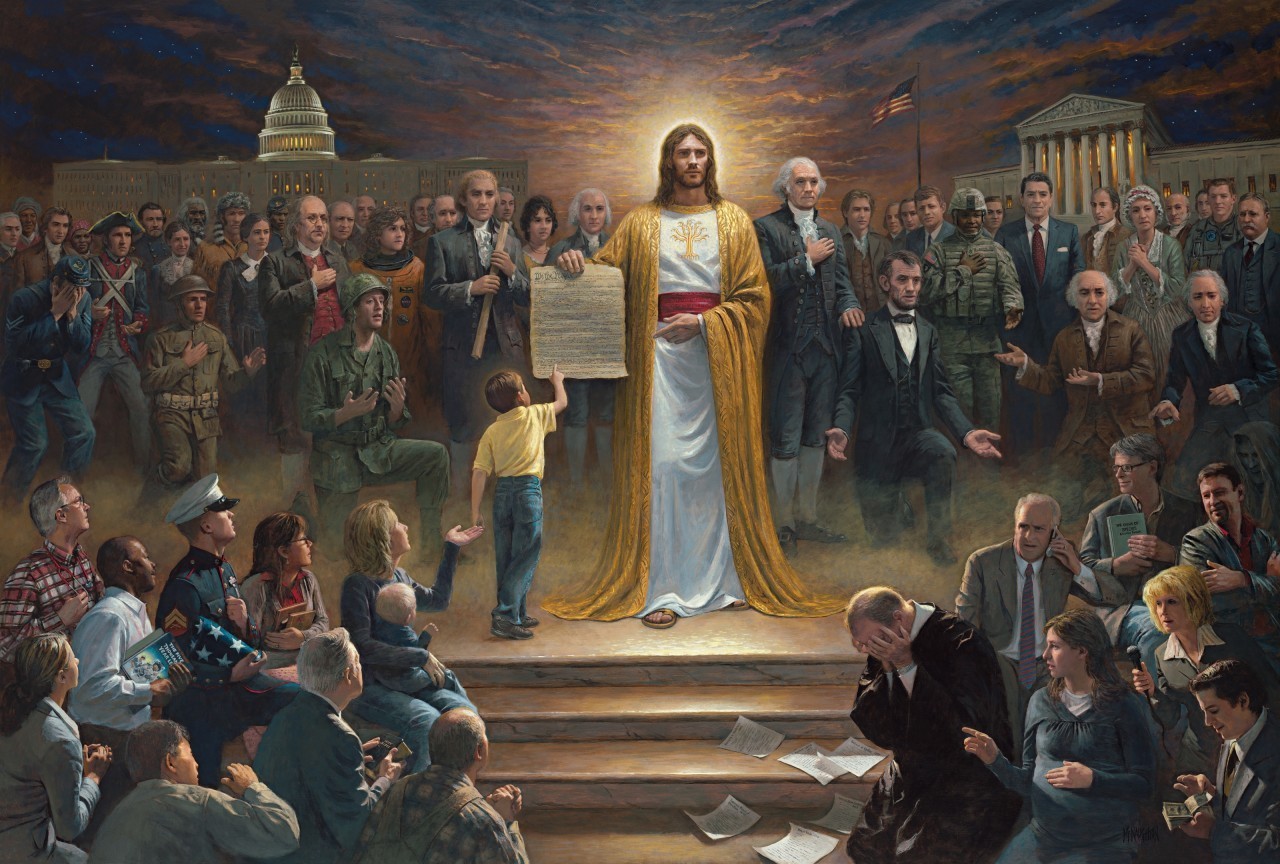
The same groups espouse a faith in the Founders that is virtually religious, and sometimes literally so. James Madison, Thomas Jefferson, George Washington … if not for monotheism these men would have ascended to godhood by now. A well-known painting by conservative artist Jon McNaughton (reproduced below) shows Jesus standing between Jefferson and Washington with the Constitution in his hands. Madison stands behind the Constitution, while a representative politician, professor, journalist, and Supreme Court justice tremble at the left hand of God in the company of Satan.
The same conservative movement has become very skeptical of democracy and elections. You’ll frequently hear conservatives explain that the Founders made us “a republic, not a democracy”. Elections are only valid if they win, and if not, perhaps it’s time for second amendment remedies to right the ship, or even another civil war. People who rioted in an attempt to usurp the 2020 election are “patriots“, while the president elected with a seven-million vote majority is a “tyrant“.
In any era, it’s tempting to think that words have always meant what they mean now. So quotes from the Founders about freedom and liberty are often co-opted into these arguments.
But is that really what the Founders meant when they they used those words? Did they mean tax cuts, deregulation, and the other standard conservative positions? Would they have been appalled by vaccine mandates and similar expressions of government power, if such power were being exercised by a government of the People, in accordance with the majority will?
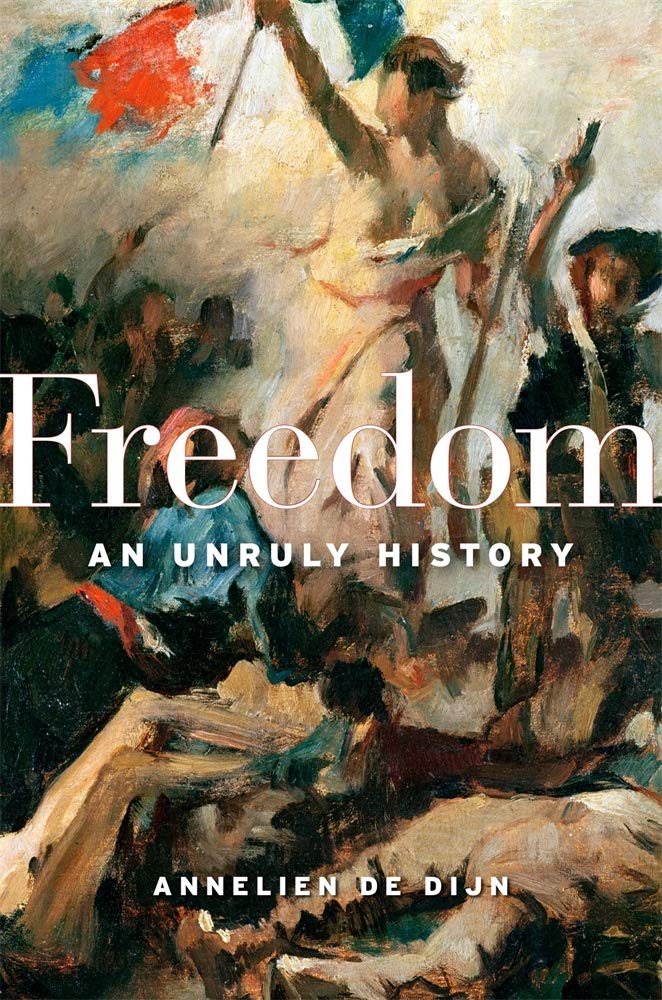
The recent book Freedom: an unruly history by Annelien de Dijn offers an alternative view.
In general, I love these history-of-an-idea books, especially if they’re surprising in some way, as this one is. De Dijn tells the story of how freedom started out meaning one thing and then changed to mean something else, and how this change got erased from popular memory.
The two kinds of freedom have been called different things at different times, but I think of them as “public freedom” and “private freedom”. Both kinds of freedom are about self-determination, but at different scales. Private freedom is the right to live your life with minimal interference from outside powers like the government — how today’s conservatives use the word. Public freedom is your right to have a voice in making the laws that govern you.
You could imagine having either kind of freedom without the other: You might live under a dictator who chooses to leave you alone, or under a democracy whose laws constantly get in the way of what you want to do.
De Dijn makes a good case that in ancient times, freedom meant public freedom. Herodotus, for example, contrasted the “free” Greeks against the “enslaved” Persians — not because the Persian laws were significantly more invasive, but because Greek city-states made their own laws rather than receiving them from an emperor. A Greek citizen (especially, but not uniquely, an Athenian) could criticize a law in the assembly and try to convince his neighbors to change it, while a Persian subject dared not. Similarly, Cicero opposed Caesar not because Caesar’s government did terrible things — on the whole, Caesar was a fairly good lawmaker, certainly no worse than the republican consuls who preceded him — but because Caesar issued decrees under his own authority, without consulting the Senate or the popular assembly.
It’s not that classical thinkers didn’t value living their lives without interference, but they regarded public freedom as a long-term precondition for private freedom: If people like you have no voice in making the laws, sooner or later the laws will oppress you.
But when the Roman emperors turned Christian, Christian leaders like St. Augustine abandoned the classical notion of liberty, and taught instead that imperial authority was sanctioned by God. This view persisted through the later Middle Ages, to the point that Dante placed Caesar’s assassins (Brutus and Cassius) next to Judas in the lowest pit of Hell. It survived into the Founding Era as the divine right of kings, which Jefferson’s Declaration of Independence rejected.
When the Renaissance humanists rediscovered classical authors, though, they also revived the classical notion of freedom, i.e., public freedom. This developed into the Enlightenment notion of the social contract, which was the basis not just of the American Revolution, but of a series of revolutions throughout Europe and the former European colonies in the New World. Again, the problem with George III’s government of the American colonies wasn’t that everyday life was oppressive, it was that he denied Americans a voice in making their own laws. The issue wasn’t high taxes, but “taxation without representation”.
The currently popular notion of freedom as purely private freedom, being left alone, is comparatively recent. It developed in the backlash after the French Revolution, and was promoted by the same aristocrats who had opposed democracy all along. This view has also consistently opposed any expansion of democracy, on the grounds that democracy is merely a means to an end (good government) and not a human right. Why, for example, do women need to vote if their husbands treat them well? Haven’t men of property been making better laws for the landless workers than such foolish and poorly educated men would make for themselves?
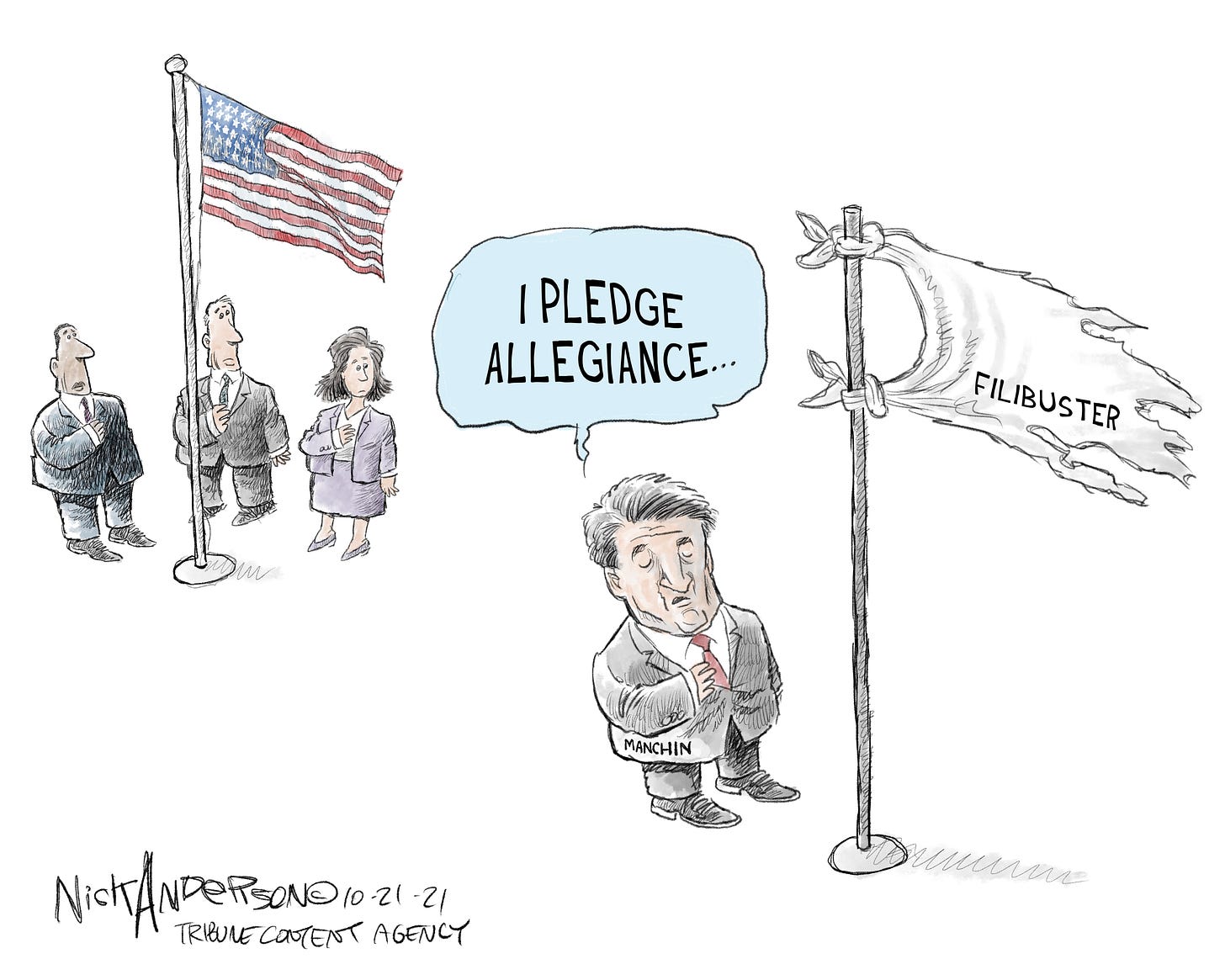
Along the way, de Dijn answers a question I have occasionally raised in this blog: What is the origin of the currently popular conservative distinction between a republic and a democracy, which the Right uses to justify anti-democratic fossils like the Electoral College, the Senate, and the filibuster?
[C]alls to abolish or circumvent the Electoral College in the selection of our chief executive represent the most visible sign of this democratic antipathy to our republican institutions.
Another symptom Heritage finds worrisome is “the increased dissatisfaction with the efficiency and responsiveness of our deliberative political institutions”, i.e., calls to end the filibuster. Ranked-choice voting is on a list of notions that are suspect because they represent “more effective and immediate ways to express the will of the majority”. (Notice, however, how this conservative critique of majority rule goes away when the local majority wants to ban abortion or outlaw critical race theory.)
Conservatives will tell you the republic/democracy distinction comes from the Founders, particularly James Madison in Federalist 10. If you read that essay, though, you’ll find a purely formal distinction between the two, not the anti-popular-sovereignty sentiment right-wingers now project onto it. Madison defines a democracy as “a society consisting of a small number of citizens, who assemble and administer the government in person” and a republic as “a government in which the scheme of representation takes place”. Nothing in his essay argues that a republic’s popular majority is not entitled to elect a majority of representatives, or that this legislative majority should be thwarted in passing popular laws. Madison sees representative government as a temporary buffer against volatile public moods, not a a way to permanently obstruct the will of the People, as the filibuster currently does on any number of issues.
So where does the a-republic-not-a-democracy idea really come from? From the Gilded Age of the late 1800s, not the Founding Era a century before. De Dijn traces it to a Yale professor named William Graham Sumner, who was highly influential in his day, but is now largely forgotten.
[Sumner] believed that liberty could survive only if popular power was checked by strong countermajoritarian institutions. Indeed, he explicitly rejected democratic government, arguing in favor of “republics” instead. By making this distinction, Sumner gave an entirely new meaning to the word “republican.” During the American Revolution and its immediate aftermath, “republic” had been more or less synonymous with popular government.
One final warning: By the time you check Freedom: an unruly history off your reading list, you will have a longer list. Names that were little more than placeholders in your history textbooks will suddenly seem like major holes in your education. (How did I make it this far into life without reading either Edmund Burke’s Reflections on the Revolution in France or Richard Price’s sermon “A Discourse on the Love our Our Country” that Burke was arguing against?)
It’s been a busy week for news. Democrats seem to be getting close to a deal on the reconciliation bill, which would also unlock the bipartisan infrastructure bill — but who can really be sure until the votes are cast? The low ebb of the party’s popularity may sink their candidate in Virginia’s governor’s race tomorrow. The world’s leaders are at a climate conference in Glasgow. Texas officials continue to try to limit the books school children are exposed to. The Supreme Court is about to take up a case that could reverse Roe v Wade. We continue to find out more about Trump’s coup attempt.
As I often do when I can’t choose a single story to focus on, I’m going to talk about something else entirely: the history of the word freedom. I love the new book Freedom: an unruly history, and I want to tell you about it. (Teaser: Who came up with the idea that “We’re a republic, not a democracy”? It wasn’t Madison or any other Founder.)
So the featured post is “Freedom Isn’t What It Used To Be”, and it should be out by 10 EDT.
The weekly summary will cover the stuff I mentioned above, plus pointing you to some fun Halloween images I ran into this week, and closing with a bookshop in China that is somehow both futuristic and magical. If Hogwarts is still around in the Star Trek era, its library might look like this. That should be out by noon.
The negotiations over Biden’s Build Back Better plan seem to be inching towards a finish line, though we won’t really know until there’s a complete agreement. It sounds like the top-line figure will be in the $1.5 trillion to $2 trillion range, in addition to the $1-1.2 trillion in the bipartisan infrastructure bill. There are still probably a billion details to work out, but I think Democrats realize they can’t go into 2022 without more legislative accomplishments than they have now.
Once there’s an actual agreement, with a list of what’s in and what’s out, I’m going to try hard to look at it fresh, without comparing it to what I thought or hoped might be in it at some earlier stage. I think the right comparison is: What was I expecting on January 5, right after Ossoff and Warnock won the Georgia run-offs and gave Democrats their zero-vote majority?
The political style here is the opposite of what Obama did with the ACA. Then, Obama didn’t indulge much blank-slate dreaming. Single-payer was out from Day 1, and the variations of the bill debated were in a fairly narrow range. Biden has allowed a much wider range of visions to flourish, while knowing that most of them would fail to manifest. It’ll be interesting to see how those strategies contrast after Democrats have run the 2022 campaign.
I was glad to see the House take the January 6 Committee’s job seriously and recommend Steve Bannon be prosecuted for blowing off a subpoena. The case is now in Merrick Garland’s in-box. Garland has to realize that if he doesn’t prosecute, congressional oversight of the executive branch is pretty much over.
On November 4, a federal court is due to consider Trump’s suit to stop the National Archives from turning documents from his administration over to the January 6 Committee. It’s not clear the judge’s ruling will even matter, since the point of the suit is to run the clock out.
John Eastman, the lawyer whose memo laid out the plan for Trump to overturn the 2020 election results, now claims the point of his plan was to stop Trump from doing something worse. Trump wanted Vice President Pence to simply declare him the winner on January 6. But under Eastman’s plan, Pence would give states with Republican legislatures more time to replace their Biden electors with Trump electors.
Either way, the point was for Trump to stay in power after losing the election. If Eastman’s plan had worked, American democracy would have ended by now.
Cases per day in the US continue to drop at the rate of about 20-25% every two weeks, which works out to falling in half about every 5-6 weeks. The current daily average is 72,644, down 25% in the last two weeks. That’s about half what it was on September 18, five weeks and two days ago. Five weeks from now is just after Thanksgiving, which last year was the beginning of a holiday surge that continued through New Years.
The frustrating thing to me personally is that cases are falling just about everywhere but here in the Northeast. The region where I live had the lowest new-case rates in the country during the late-summer surge, but now our trends are flat while the rest of the country is improving to meet us.
The daily-new-cases-per-100K rate in my county (Middlesex, Massachusetts) has been stuck in the 14-18 range for months. Meanwhile, a county I watch because friends live there (Manatee, Florida) had bounced up over 120, but has now fallen below 10. I’m not wishing anything bad for the rest of America, I just want to share in the improvement.
The Atlantic published a disturbing article written by James Heathers, a “forensic peer reviewer” of scientific research. He’s begins by talking about ivermectin as a Covid treatment (which it isn’t), and finds that the problem isn’t entirely with YouTube videos and gullible retweeters: Enough published scientific studies said positive things about ivermectin that
The problem is that a bunch of those studies are really low quality, or even fraudulent.
In our opinion, a bare minimum of five ivermectin papers are either misconceived, inaccurate, or otherwise based on studies that cannot exist as described. One study has already been withdrawn on the basis of our work; the other four very much should be. …
Most problematic, the studies we are certain are unreliable happen to be the same ones that show ivermectin as most effective. In general, we’ve found that many of the inconclusive trials appear to have been adequately conducted. Those of reasonable size with spectacular results, implying the miraculous effects that have garnered so much public attention and digital notoriety, have not.
Worse, the sorry state of ivermectin/Covid research may not be that unusual. In Heathers’ opinion, a lot of unreliable medical research gets published. In normal times, doctors ignore it
because it either looks “off” or is published in the wrong place. A huge gray literature exists in parallel to reliable clinical research, including work published in low-quality or outright predatory journals that will publish almost anything for money.
[This reminds me of when my wife (who is still doing fine, thank you for wondering) was taking a new drug to combat an unusual variety of cancer. Occasionally the oncologist would answer one of my questions by saying that a paper pointed in such-and-such direction, but he didn’t trust it yet. I remember one disparaging comment about “Italian journals”, which I never followed up on.]
But during a pandemic, apparent “cures” from the gray literature can slip past the skepticism of the medical community and go straight to a more responsive public.
In a pandemic, when the stakes are highest, the somewhat porous boundary between these publication worlds has all but disappeared. There is no gray literature now: Everything is a magnet for immediate attention and misunderstanding. An unbelievable, inaccurate study no longer has to linger in obscurity; it may bubble over into the public consciousness as soon as it appears online, and get passed around the internet like a lost kitten in a preschool.
[An aside: I wish I’d written that lost-kitten metaphor.]
and you also might be interested in …
Ross Douthat’s column “How I Became a Sick Person” is a reminder that underneath our divergent politics, we’re all human. Douthat describes a series of scary symptoms that his doctors couldn’t explain, culminating in a controlled but chronic illness. Feel better, Ross. I’ll be rooting for you.
So the choice has become clear: Democrats can’t preserve both the filibuster and voting rights.
The last time a voting rights bill came up, Joe Manchin claimed that it was too sweeping, and that a more targeted plan could get the ten Republican votes needed to overcome a filibuster. Manchin worked on crafting a narrower bill, which Republicans filibustered Wednesday. No Republicans at all voted to overcome the filibuster. I haven’t even heard one of them make a counterproposal. Up and down the line, Republicans are against any attempt to protect voting rights.
In light of the vote, key Democrats said they would regroup and try again to persuade Mr. Manchin and other Senate Democrats reluctant to undermine the filibuster that an overhaul of the chamber’s signature procedural tactic was the only way to protect ballot access around the country.
I’m not optimistic, but I also can’t guess how Manchin will justify himself now.
Two Republicans, former state treasurer Josh Mandel and J. D. (Hillbilly Elegy) Vance, have turned their Ohio Senate primary race into a who’s-the-craziest contest. Mandel is currently winning with tweets like this:
Maximize family time and keep working hard. Keep the freezer stocked and firearms at the ready. Buy #bitcoin and avoid debt. We will outlast these monsters and we will thrive for generations to come after God brings them down.
Vance will have to counter somehow, or risk surrendering the key doomsday-prepper voting bloc to Mandel.
On the Democratic side, Congressman Tim Ryan is also hoping to replace retiring Senator Rob Portman. His campaign website says:
Tim will fight to raise wages, make healthcare more affordable, invest in education, rebuild our public infrastructure, and revitalize manufacturing so we can make things in Ohio again.
Sure, Tim, but what about the issues Ohio voters really care about? What are you going to do about the monsters? What role do you see yourself playing when God starts bringing them down?
We can only hope that some significant segment of former Republican voters will be disturbed by the absolute insanity that Trump has unleashed in their party. (See previous note.) But if they’re not, maybe they’ll notice the insanity Trump has unleashed in something they care more about: their churches.
Peter Wehner has just published “The Evangelical Church is Breaking Apart” in The Atlantic. He talks to 15 Evangelical pastors who either have left the ministry or are thinking hard about it because of the right-wing political zealotry that is tearing up their congregations.
The root of the discord lies in the fact that many Christians have embraced the worst aspects of our culture and our politics. When the Christian faith is politicized, churches become repositories not of grace but of grievances, places where tribal identities are reinforced, where fears are nurtured, and where aggression and nastiness are sacralized. The result is not only wounding the nation; it’s having a devastating impact on the Christian faith.
The problem is not just that Trump’s deranged rants have replaced the Sermon on the Mount as the center of many Evangelicals’ religion. It’s also that Trump’s anything-goes truth-be-damned style has corrupted how Evangelicals handle disagreements with each other.
[McLean Bible Church pastor David] Platt said church members had been misled, having been told, among other things, that the three individuals nominated to be elders would advocate selling the church building to Muslims, who would convert it into a mosque. In a second vote on July 18, all three nominees cleared the threshold [for election]. But that hardly resolved the conflict. Members of the church filed a lawsuit, claiming that the conduct of the election violated the church’s constitution.
Platt, who is theologically conservative, had been accused in the months before the vote by a small but zealous group within his church of “wokeness” and being “left of center,” of pushing a “social justice” agenda and promoting critical race theory, and of attempting to “purge conservative members.” A Facebook page and a right-wing website have targeted Platt and his leadership. For his part, Platt, speaking to his congregation, described an email that was circulated claiming, “MBC is no longer McLean Bible Church, that it’s now Melanin Bible Church.”
BTW, clicking that right-wing website link, and then other links from there, is eye-opening. You’ll find yourself in a scary mirror world where a diabolical “woke” politics is taking over everything, including Evangelical institutions. And notice in the quote above how “social justice” has become a bad thing, something you don’t want to be accused of.
Speaking of insanity, check out Joy Pullmann’s “For Christians, Dying From Covid (or Anything Else) Is a Good Thing” over at The Federalist. Her main point is that churches should hold services and the faithful should attend them, independent of anything we know about how diseases spread.
Christians believe that life and death belong entirely to God. There is nothing we can do to make our days on earth one second longer or shorter: “all the days ordained for me were written in your book before one of them came to be,” says the Psalmist.
I have to wonder if this is her position in general, or an ad hoc view she takes purely with respect to Covid. For example, does she stop her children when they start to wander into traffic? If she does, what does she think she’s accomplishing?
On the other hand, maybe her article isn’t insanity. Maybe it’s just bullshit.
Back in November, Texas Lieutenant Governor Dan Patrick announced a reward for evidence leading to convictions for voter fraud in the 2020 election: He had $1 million of campaign money to offer, and would give a minimum of $25K to each whistleblower.
He was, of course, trying to put meat on the bones of Trump’s bogus claims of fraud. But that isn’t how it has worked out: He awarded his first $25K to a Pennsylvania poll worker who caught a Republican trying to vote twice for Trump. This guy is one of five voter fraud cases being prosecuted in Pennsylvania, four against Republicans.
Nevada also charged a Republican with voter fraud this week: A guy appears to have mailed in his dead wife’s ballot in addition to his own. Four people have been charged in Wisconsin, though we don’t know who they were trying to vote for. (At least one of them seems to have made an honest mistake: He was a felon who was out of jail but hadn’t finished his probation yet. He apparently thought he could vote legally.)
So:
Nationwide, very few cases of 2020 voter fraud have been found.
The handful of fraudsters who have been identified by party are mostly Republicans.
Neither of those results should surprise anybody. In spite of the claims Republicans keep making, study after study has shown that voter fraud is extremely rare. But Republicans like Dan Patrick have convinced their supporters that millions of Democrats get away with voting fraudulently every year — so it must be easy! Of course a few are going to try to “get even” by voting fraudulently themselves.
Oh, and what about dead voters? Pretty much the same story: Either the claim is false or the case involved people trying to scrounge an extra vote for Trump.
NYT columnist Michelle Goldberg reflects on Angela Merkel’s decision to let a million refugees from Syria and Africa settle in Germany in 2015.
But six years later, the catastrophes predicted by Merkel’s critics haven’t come to pass.
In the recent German election, refugees were barely an issue, and the [anti-immigrant party Alliance for Germany] lost ground. “The sense is that there has been comparatively little Islamic extremism or extremist crime resulting from this immigration, and that on the whole, the largest number of these immigrants have been successfully integrated into the German work force and into German society overall,” said Constanze Stelzenmüller, an expert on Germany and trans-Atlantic relations at the Brookings Institution.
“With the passage of time,” Marton told me, Merkel “turned out to have chosen the absolutely right course for not only Germany but for the world.”
and let’s close with something tasty
Lately I’ve been cooking more, which Facebook somehow knows. So I’m being shown more videos about food. I was fascinated by this account of really authentic parmesan cheese.
The research I do for this blog occasionally garners me some unexpected spam email. Last week, the Heritage Foundation decided I might be the target audience for its free e-pamphlet (they call it an e-book, but at 20 pages, that’s an exaggeration) “Critical Race Theory: Knowing it when you see it and fighting it when you can”. (You can request your own free copy here.)
In some sense, they weren’t wrong: I did request the pamphlet and read it, heedless of whatever future spam that might lead to. I was curious, not because I’m afraid of CRT corrupting children at my local schools, but because I have been totally puzzled by the conservative usage of the term. Whenever I hear that somebody is supposedly “teaching CRT in the public schools”, those words turn out not to mean what they would ordinarily mean.
For example, if I told you someone is teaching the Pythagorean Theorem in public schools, I would mean that there is a class (Geometry) whose textbook has a “Pythagorean Theorem” chapter, which the teacher will at some point cover. But nobody’s high school textbook has a “Critical Race Theory” chapter. If you have attended a class that was accused of teaching critical race theory, almost certainly you did not hear the phrase “critical race theory”.
Ditto for teacher training classes. Teachers might be trained on managing racial diversity in their classrooms, or creating an environment more conducive to the success of students of color. But at no point would the instructor say, “Now we’re going to learn critical race theory.” You might hear the phrase “critical race theory” if you study law, because it was coined in the 1970s to describe the idea that “formally colorblind laws can still have racially discriminatory outcomes.” But that’s not going to happen in anything related to K-12 teaching.
In short, CRT in the public schools (or the workplace or the military) is almost invariably a label that some disapproving person applies from the outside. A teacher or teacher-trainer says something, and then somebody else says “That’s critical race theory.”
Labels. So let’s talk about applying negative labels from the outside, which people of all political persuasions do, and which isn’t necessarily bad. For example, if someone is calling for a dictatorship of the proletariat to seize the means of production, I might be doing a public service if I correctly identify that person as a “communist”, whether he uses that word himself or not.
Similarly, John Gruden doesn’t call himself a “racist”, and in fact denies that he is one. But when it came out that he had written in an email that a black representative of the NFL players had “lips the size of Michelin tires”, other people characterized his statement as racist.
I don’t see anything wrong with outside-labeling in general, because people can’t be trusted choose their own labels without external criticism. If I call myself “pro-choice” and somebody else calls himself “pro-life”, it’s just part of normal political debate if we label each other “pro-abortion” and “anti-women’s-rights”.
That said, there are responsible and irresponsible ways to negatively label someone from the outside. The responsible way has several features:
The label is defined rather than hurled like an insult. So Michael Flynn is called a “confessed felon” because he pleaded guilty to a felony. But AOC is called a “bitch” because … well, just because.
The definition actually fits the labeled person. Too often, a negative label gets attached to somebody based on what other people say about them rather than anything they’ve said or done themselves. Sometimes an authentic quote that was harmless in its original context gets run through a game of telephone until it’s unrecognizably outrageous.
The definition also applies to the people typically associated with the label, and captures the essence of what is blameworthy about such people. That was the problem with Jonah Goldberg’s book Liberal Fascism: To the extent Goldberg defined “fascist” at all, it was a synonym for a particular sense of “totalitarian” that he confessed could also be described as “holistic”: Liberals are “fascist” because they “see no realm of human life that is beyond political significance, from what you eat to what you smoke to what you say”. So if you want to ban sugary sodas, regulate vaping, and boycott speakers who traffic in racial slurs, Goldberg lumps you in with other “holistic” figures like Hitler and Mussolini.
The definition justifies the emotional baggage the label is being used to carry. In some conversations, it might be reasonable to use “communist” to mean nothing more than someone who wants to redistribute wealth. But if that’s the definition you verify, you’re not entitled to also invoke the emotional resonance of being America’s enemy in the Cold War.
Sometimes it’s hard to tell whether a label is being applied responsibly or irresponsibly. For example, if someone calls Donald Trump a “fascist”, they could be hurling an insult at him the way they might hurl eggs at a detested speaker. Or they could have a reasonable definition of fascism that fits Trump like a glove, as well as capturing key traits that made Hitler and Mussolini what they were.
The CRT label. OK, now let’s talk specifically about critical race theory. Until recently, I’ve been assuming the CRT label was being applied irresponsibly for the first reason: The people throwing the term around were sure it was bad, but hardly any of them could say what it meant or why it was bad. Now though, at long last, the Heritage Foundation, a think tank full of the highest-level conservative intellectuals, was going to fix all that by spelling out how to recognize CRT.
Sadly, the pamphlet does not actually define CRT, but I give it credit for providing the next best thing: a list of characteristics. And here they are:
Systemic racism. “Critical race theory’s key assertion is that racism is not the result of individual, conscious racist actions or thoughts. Racism is ‘systemic’ and ‘structural.’ It is embedded in America’s legal system, institutions, and free-enterprise system, and imposes ‘whiteness’ as the societal norm.”
Race drives beliefs and behaviors. I didn’t make much sense out of that phrase until I read the longer explanation: “American culture is a conspiracy to perpetuate white supremacy by imposing white concepts on people of other races.”
White privilege. Critical race theorists “say that white people are born with unearned privilege that other Americans are denied. … Any curricula or diversity, equity, and inclusion (DEI) program that compels students or employees to accept their white privilege and/or work to abandon it are part of CRT.”
Meritocracy is a myth, because the system won’t let non-whites succeed. “Any curriculum or training program that says color blindness is a myth and advocates for eliminating standard measurements of success, including standardized testing for university admissions for reasons of racial equity, are part of CRT.”
Equity replaces equality. “‘Equality’ means equal treatment of all Americans under the law. CRT’s ‘equity’ demands race-based discrimination. Because systemic racism has produced disparities between the races and because the system will only deepen these disparities by rewarding the ‘wrong’ criteria, government must treat individual Americans unequally according to skin color to forcibly produce equal outcomes.”
That’s it — the whole list. Notice what’s missing: the long litany of teachings that are banned in the numerous anti-CRT state laws that have passed red-state legislatures in the last few months. Here’s Tennessee’s:
a. One (1) race or sex is inherently superior to another race or sex; b. An individual, by virtue of the individual’s race or sex, is inherently privileged, racist, sexist, or oppressive, whether consciously or subconsciously; c. An individual should be discriminated against or receive adverse treatment because of the individual’s race or sex; d. An individual’s moral character is determined by the individual’s race or sex; e. An individual, by virtue of the individual’s race or sex, bears responsibility for actions committed in the past by other members of the same race or sex; f. An individual should feel discomfort, guilt, anguish, or another form of psychological distress solely because of the individual’s race or sex; g. A meritocracy is inherently racist or sexist, or designed by a particular race or sex to oppress members of another race or sex; h. This state or the United States is fundamentally or irredeemably racist or sexist; i. Promoting or advocating the violent overthrow of the United States government; j. Promoting division between, or resentment of, a race, sex, religion, creed, nonviolent political affiliation, social class, or class of people; k. Ascribing character traits, values, moral or ethical codes, privileges, or beliefs to a race or sex, or to an individual because of the individual’s race or sex; l. The rule of law does not exist, but instead is series of power relationships and struggles among racial or other groups; m. All Americans are not created equal and are not endowed by their Creator with certain unalienable rights, including, life, liberty, and the pursuit of happiness; or n. Governments should deny to any person within the government’s jurisdiction the equal protection of the laws.
You can find exaggerated versions of Heritage’s characteristics in this list (b, for example, resembles Heritage’s “white privilege”) but the really outrageous parts don’t show up in Heritage’s pamphlet. Heritage doesn’t claim CRT teaches “One race is inherently superior to another race” or “An individual should feel discomfort, guilt, anguish, or another form of psychological distress solely because of the individual’s race or sex” or “All Americans are not created equal and are not endowed by their Creator with certain unalienable rights, including, life, liberty, and the pursuit of happiness”, much less that it promotes “violent overthrow of the United States government”.
By limiting its list of characteristics, Heritage is all but admitting that if you look for CRT in your community, you’re not going to find the teachings listed in anti-CRT laws (which mainly exist for propaganda purposes). You’re not even going to find people claiming that the “the United States is irredeemably racist”, because promoting anti-racism would be pointless if that were true.
What you might find, though, are people teaching about systemic racism, cultural imperialism, white privilege, and racially biased measures of merit, while calling for an America where the gaps between races go away in reality rather than just on paper.
Is there something wrong with that?
Before reading the Heritage pamphlet, I thought anti-CRT rhetoric failed my first test (no definition). Now that I’ve read it, I think it fails my last test (a definition that won’t carry the label’s emotional baggage).
Let’s take a look at the ideas that Heritage says CRT is really about.
Photography as paradigm. I grew up using beige-pink crayons that were labeled “Flesh”, which is pretty much the definition of “imposing whiteness as the societal norm”. My skin wasn’t exactly that color, but it was close enough to mark me as “normal” — unlike people of other races, whose flesh had some color totally different from “Flesh”.
Later I found out that my crayon was just the tip of an iceberg: Kodak’s color film (the industry standard) had been engineered to reproduce “flesh tones”, i.e. Caucasian flesh tones, with particular accuracy. Black people, on the other hand, often showed up on a color photo as white eyes and teeth in the middle of a dark blob. Black parents saw the problem immediately, but it wasn’t fixed until decades later, when furniture and chocolate makers complained that they couldn’t accurately represent their brown products in advertisements.
Aside from the dispiriting effect that dark-blob class photos must have had on black children, racially biased photography necessarily had a negative impact on entire generations of black professionals: models, photographers, TV journalists, athletes hoping to endorse products, and any other dark-skinned people who needed their images to reproduce in an attractive way. Even a movie director completely without racial bias might be reluctant to work with black actors, simply because of the technical problems involved. If you wanted a face whose subtle emotions would show up on the big screen, a white face was the better choice.
So even if bias wasn’t in individuals, it was in the system.
BTW, this is not ancient history: Facial recognition software still works better for light-skinned people than dark-skinned people.
The team that [MIT researcher Joy] Buolamwini assembled to work on the project was ethnically diverse, but the researchers found that, when it came time to present the [facial analysis] device in public, they had to rely on one of the lighter-skinned team members to demonstrate it. The system just didn’t seem to work reliably with darker-skinned users.
Curious, Buolamwini, who is black, began submitting photos of herself to commercial facial-recognition programs. In several cases, the programs failed to recognize the photos as featuring a human face at all. When they did, they consistently misclassified Buolamwini’s gender.
To me, this is the paradigm of systemic racism. Nobody at Kodak or Google was out to get black people; they just had other priorities. If photographic systems didn’t work well for dark skin, that was a shame. But, well, so what?
Now multiply that through the whole of society. System after system was designed for (and usually tested by) white people (and men and English speakers and cisgender people and neurotypical people and … and … and …). If it also happened to work for non-whites, great. But if not, who really cared?
So, in spite of the Heritage pamphlet’s claim that CRT is “a philosophy founded by law professors who used Marxist analysis”, systemic racism isn’t some invention of a Marxist propagandist; it’s a simple reality. The Heritage Foundation wants us to hide that reality from school children.
Privilege. If you’re white, like I am, it’s easy to overlook examples of your own privilege, because privilege is most obviously present when something doesn’t happen: I drive somewhere, and cops don’t pull me over for no reason. (Republican Senator Tim Scott, by comparison, says he has been pulled over 18 times for “driving while black”. I have to wonder how many of the encounters that result in police killing black men or women would not occur at all but for race.) I walk down a city street, and nobody stops and frisks me, or asks for my ID. Security people don’t shadow me in department stores. In one situation after another, I just go about my business undisturbed, never noticing that I’m enjoying a racial privilege.
Some longer-term aspects of privilege are related to systemic racism: My parents were part of the expansion of the middle class that happened during the GI generation, largely because of government action. My grandfather’s farm was saved by a New Deal farm loan program (and multiplied in value many times before I sold it). After World War II, the government subsidized home ownership and higher education. It smoothed the path of unionization, which raised the wages of factory jobs like my father’s.
Some of those wealth-creating New Deal and post-war programs also worked for non-white families, but many did not. As a result, our whiteness was a factor in creating the family prosperity that allowed me to get an advanced degree without running up student debt.
In short, white privilege isn’t some sinister notion promoted to increase white guilt. (And I actually don’t feel personal guilt about this, but instead recognize a responsibility to seek a more just system.) It’s a description of how life works in America.
This aspect of American life is also something Heritage wants us to hide from children.
“Equality” without equity implies inferiority. The Heritage pamphlet makes superficial equality under the law the be-all-and-end-all of racial justice. In its response to CRT’s claim of systemic racism, the pamphlet says:
Racial discrimination is illegal in America. In the Civil Rights Act of 1964, the government rejected racial discrimination and made it illegal in all public aspects of our lives. Likewise, the civil rights movement affirmed that prejudice has no place in American life. There are racists in America, as in all other countries, but the vast majority of Americans we work and worship with, live and learn alongside, embrace the equal rights and dignity of all.
So that settles that, I guess. The laws on paper say we don’t discriminate, so never mind that we continue to see large racial gaps in income, wealth, incarceration, infant mortality, life expectancy, and just about every other aspect of life. Asking for these gaps to close is demanding “equity” — equal outcomes — which (in Heritage’s world) marks you as a critical race theorist.
But think about what the persistence of these gaps implies, if (as Heritage claims) no widespread discrimination or systemic racism actually exists. If black people can’t keep up in America, and yet there is nothing wrong with America, then there must be something wrong with black people.
There’s no getting around that logic. The Heritage Foundation may not want to put it in print or say it in polite company, but I see no way to embrace their pamphlet as truth without also believing that black people are inherently inferior to white people.
What’s more, I think school children (of all races) are smart enough to draw that conclusion for themselves: If the game is fair, and yet the same people always win, then the winners must just be better than the losers.
In short, if we label all alternative explanations of racial gaps as “critical race theory” and ban schools from teaching them, then by process of elimination we’re really teaching the only remaining explanation: white superiority. The Heritage pamphlet may claim it wants to “ensure school curriculums uphold the intrinsic equality of all humans”. But in fact they’re guaranteeing that children will learn the exact opposite.
Heritage’s white-comforting fantasy world. If I restate the Heritage pamphlet’s underlying message in my own words, it amounts to this: “We had a nice fantasy going until these damned teachers started telling kids how the world really works.”
In the Heritage fantasy world, America outlawed racism back in the 1960s, so any advantages or disadvantages people have accumulated since then are purely due to their individual talent and hard work, or lack of talent and laziness.
If two people are given the same opportunity, but only one takes advantage of it, they will naturally have different outcomes. The only way government can try to produce equal outcomes for them is by taking away the result from the first person, or unfairly giving the unearned benefit to the second. Attempts by government officials to take the fruits of your achievements and give them to those who did not earn it will hurt those whose rewards are diminished as well the intended beneficiaries. This betrays the idea that the American dream belongs to all of us, and everyone should have the same opportunity to pursue success.
America isn’t dominated by “white culture”, but by “universal values” (which white people happened to discover first because of their innate superiority, but don’t say that part out loud).
American culture is based on a timeless understanding of rights rooted in the inherent value and nature of the human race. People of all colors and national backgrounds come here and flourish because our culture embraces common humanity and dignity.
And while it may be true that white people are doing better in America (in just about every measurable way) than black people, that can only mean that white people are enjoying “the fruits of your achievement”, which should not be taken away and given to “those who did not earn it”.
The real way to deal with racial disparities is just not to measure them, because that’s (as the Tennessee law puts it) “promoting division between, or resentment of, a race”. The ideal society is a colorblind society, where nobody notices that the people on top are mostly white and the people on the bottom are mostly black. As soon as you start noticing stuff like that, you’re “dividing America“, which was perfectly united in its color blindness until social justice warriors started quoting statistics.
Or at least it would be nice to think so, if you’re white.
2022. Republican candidates are hoping to use their anti-CRT campaign to regain ground that Trump lost in the white suburbs by being too explicitly racist. (The test case is next month’s Virginia governor’s race.) CRT is supposed to threaten precisely those white parents who were disturbed by Charlottesville. It’s supposed to remind them that Democrats are too pro-black, without pushing an explicitly anti-black message that might ring alarm bells.
That tactic might work, because critical race theory really does constitute a threat to prosperous white people. It threatens to torpedo the very comfortable fantasy that the game they’re winning is perfectly fair.


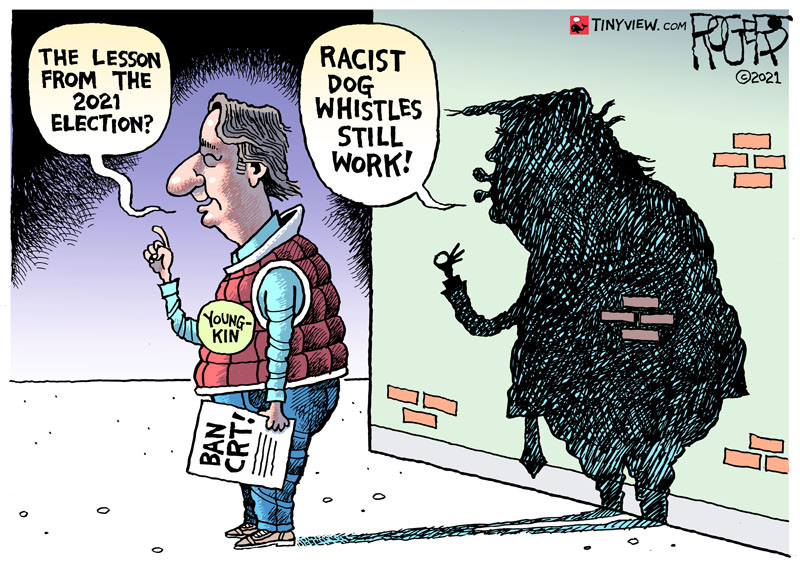

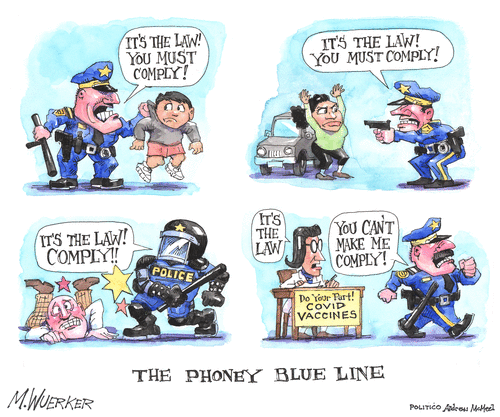


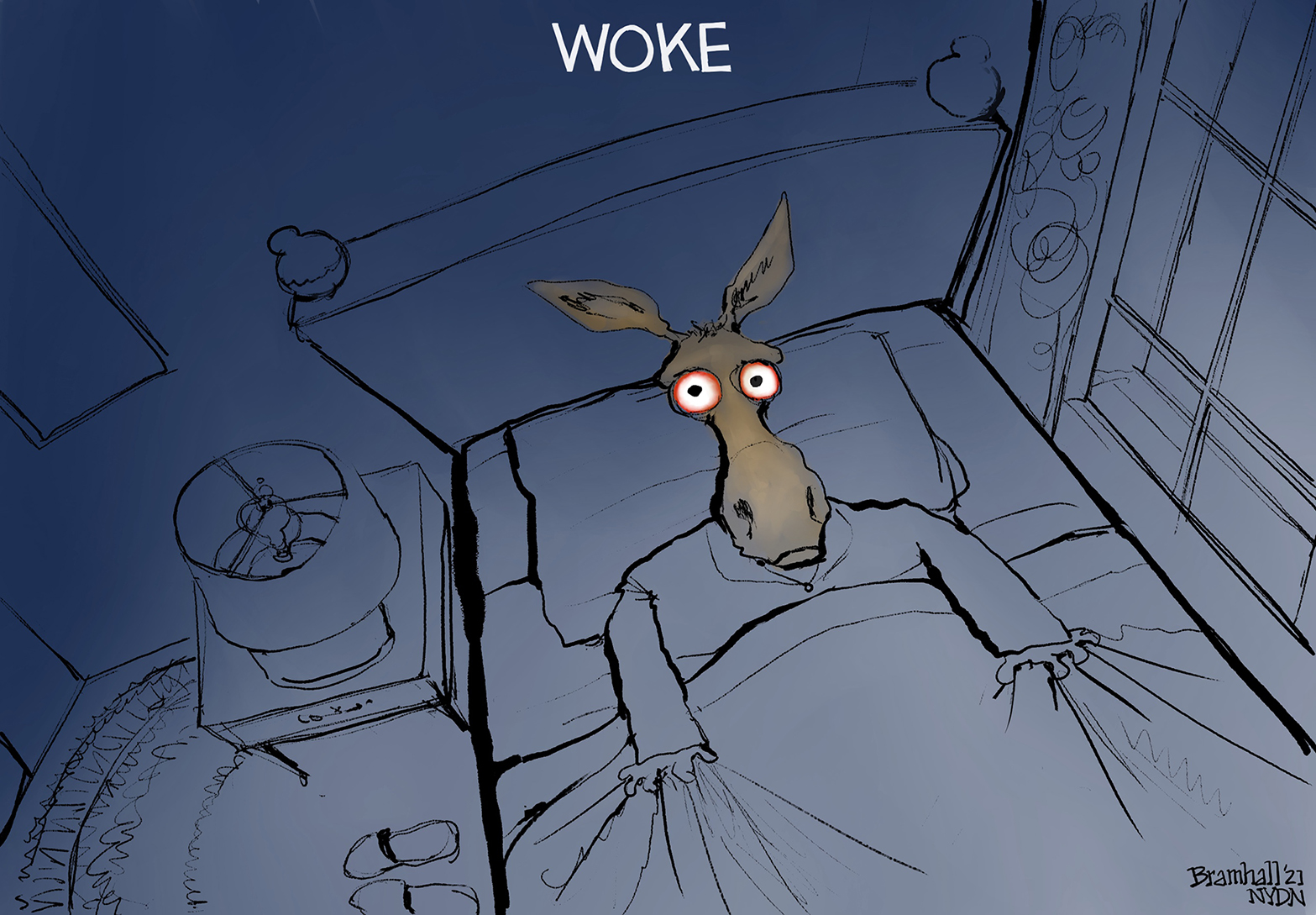
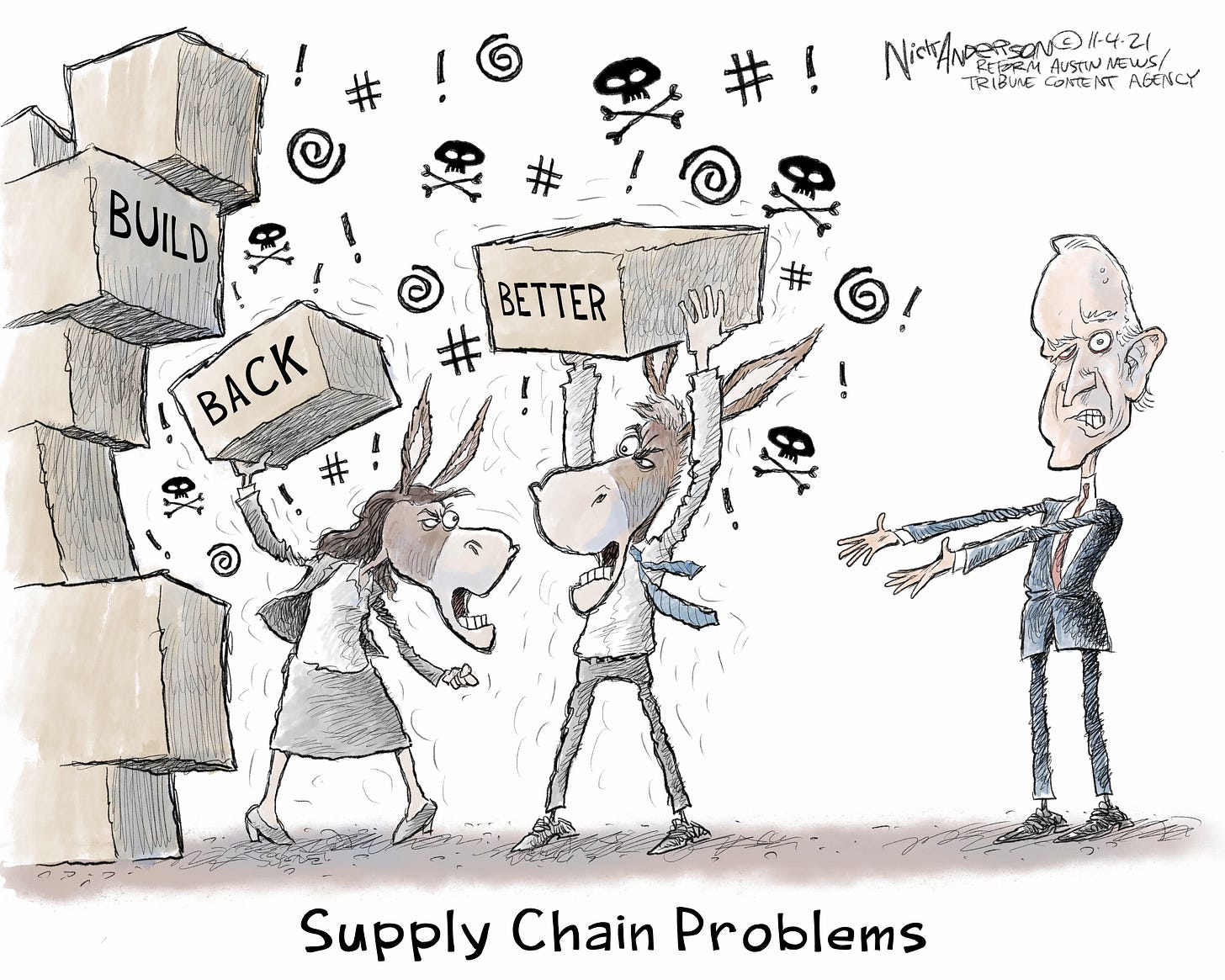


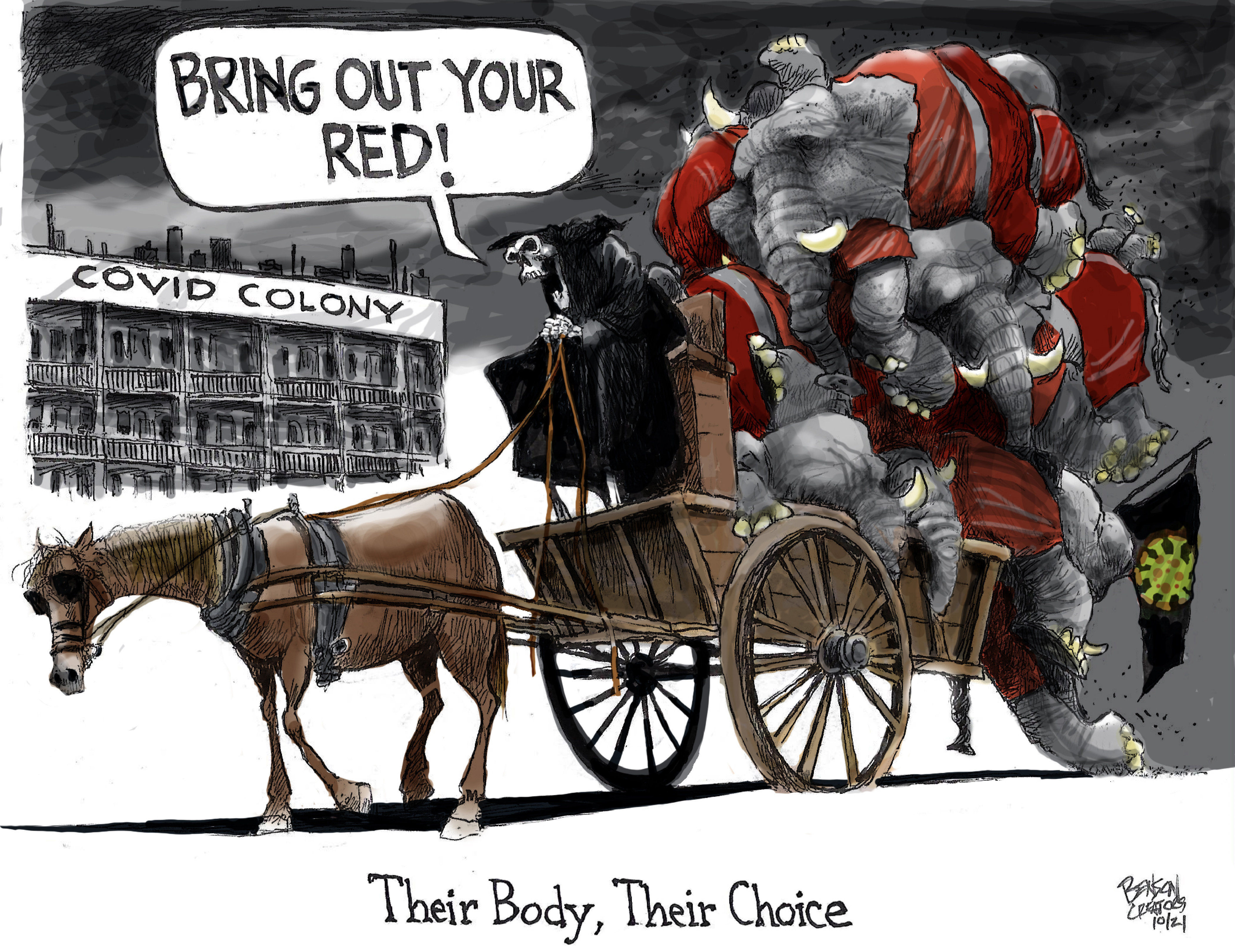



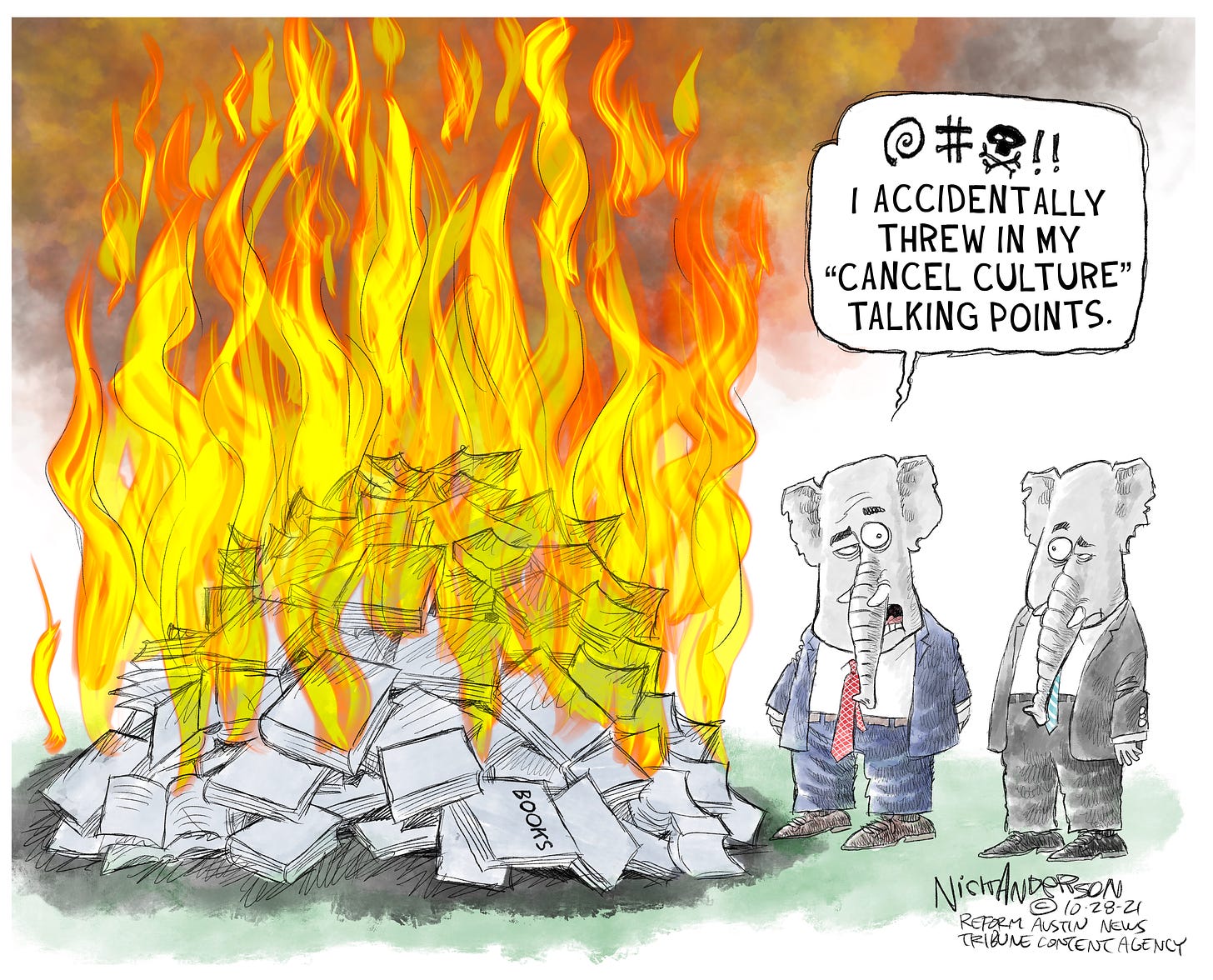

.jpg)