The Once and Future Coup

https://www.theitem.com/stories/editorial-cartoon-wednesday-jan-6-2021,357112

Trump’s minions had a coherent plan to keep him in power,
and next time it might work.


Last November, the few days after the election were tense. On election night itself, Trump was clearly doing better than the polls had predicted, but how much better was hard to guess. He won Florida and North Carolina, which the polls had said leaned towards Biden. Ohio and Iowa, which were supposed to be close, weren’t. He had leads in Michigan, Wisconsin, and Pennsylvania, but there were still a lot of Democratic votes to count. Like Hillary Clinton, Biden had clearly gotten more votes than Trump, but the Electoral College left the final outcome in doubt.

Wednesday, as more of the mail-in ballots got counted, Biden’s chances improved. Thursday, he looked like the winner, but it wasn’t conclusive yet. The major news organizations declared his victory on Saturday.

The Gang That Couldn’t Shoot Straight. Then the focus shifted to Trump’s effort to have the voters’ decision overturned by any means necessary. His lawyers, and various others working on his behalf, filed dozens and dozens of lawsuits, each one a little crazier than the last. Some were based on bizarre conspiracy theories about computers in other countries, others on piles of affidavits described by one judge as “notable only in demonstrating no firsthand knowledge by any Plaintiff of any election fraud, misconduct, or malfeasance”. Some made claims (mainly about the rules around mail-in ballots) that might have been reasonable to raise — and were raised — before the election, but which in no way justified ignoring millions of votes cast in good faith.

I, like many other Democrats, felt uneasy about these suits, but not because of the strength of Trump’s arguments. We worried instead about all the right-wing judges Trump had appointed, including three on the Supreme Court. Maybe they would repay him by ignoring law and precedent to overthrow American democracy. [1]

But when even Trump-appointed judges threw these cases out, often with sharp criticism, the whole thing began to seem comical. Trump’s lawyers were the Gang That Couldn’t Shoot Straight. The whole effort was summed up by Rudy Giuliani in the parking lot of Four Seasons Total Landscaping, hair dye running down his face. [2] I began to look forward to court rulings, wondering what insults the next judge would come up with.

The violent insurrection on January 6 wasn’t at all funny, but was just as misguided. The riot might have turned out a whole lot worse (and nearly did), but it was never going to keep Trump in the White House. After it failed to intimidate Congress out of fulfilling its constitutional duty to count the electoral votes, QAnon kept anticipating a move by the military. But the generals had always felt uneasy about someone as ignorant and unstable as Trump being commander in chief. They certainly weren’t going to violate their oaths to keep him in power.

By Inauguration Day, I was laughing at myself for having worried so much. For four years, we had watched the Trump administration fail to organize infrastructure week. How had I imagined that they might mastermind a successful coup?

This week, though, we discovered that there actually was a coherent plan. And with just a bit more corruption at the top of the Justice Department, it might have worked.

The corruption of Justice from Sessions to Barr. When Trump appointed Jeff Sessions as his first attorney general, alarm bells went off. Sessions had been state AG in Alabama, and seemed likely to bring Alabama’s racial practices to Washington. And sure enough: The effort to control racism in local police departments went out the window. DOJ’s Civil Rights Division got retasked to focus on discrimination against Christians.

But Sessions had one saving grace none of us appreciated at the time: He actually wanted to be attorney general, and not just operate as a Trump puppet. [3] In spite of endless abuse from his boss, for example, he followed the rules and recused himself from the Russia investigation. His views on the nature of justice may have been reprehensible, but he understood that the Department of Justice needed to keep its distance from the politics of the White House.

After Sessions’ independence got him forced out, the Senate believed that Bill Barr, who had been AG before under the first President Bush, would maintain that standard. But instead he became the most political AG since Nixon’s John Mitchell (who went to jail). He undermined the Mueller Report. He fed Trump’s conspiracy theories (and intimidated future investigations) by launching an investigation of the Russia investigation. He intervened to sabotage cases against Trump cronies. Trump had always said he wanted a Roy Cohn as attorney general, and now he seemed to have one.

In the end, though, even Barr’s corruption had its limits. Before the election, Barr had obediently (and falsely) cast doubt on the trustworthiness of mail-in ballots. Immediately after the election, he instructed US attorneys to investigate election fraud allegations, ignoring the usual standard of probable cause, and seemingly validating Trump’s claim that there was something substantial to investigate. But when Trump wanted Barr to falsely announce that those investigations were finding real violations, that was a bridge too far. On December 1, Barr was interviewed by an AP reporter, who then wrote:

Disputing Donald Trump’s persistent baseless claims, Attorney General William Barr declared Tuesday the U.S. Justice Department had uncovered no evidence of widespread voter fraud that could change the outcome of the 2020 election.

By Christmas, Barr was no longer attorney general. With no time for a Senate confirmation, Jeff Rosen became acting AG.

Endgame. By Christmas, it was clear that the courts were not going to keep Trump in power. Giuliani’s and Trump’s efforts to corrupt Republican election officials, or to convince state legislatures to appoint Trump electors directly, had also not succeeded: The elections had been certified, the electors appointed, and the Electoral College had voted. Sealed envelopes from each state were due to be opened in Congress on January 6.

But there was still one more card to play: badger the temporary Justice Department officials to make the kinds of claims that Barr wouldn’t, and then use the manufactured “uncertainty” of the election outcome to justify Republican state legislatures usurping the power of the voters.

The key player here was Jeffrey Clark, a minor DOJ lawyer who got elevated to head the Civil Division.

On December 27, Trump called to pressure Acting AG Rosen, and Acting Deputy AG Richard Donoghue took notes. [4]

“Understand that the DOJ can’t + won’t snap its fingers + change the outcome of the election, doesn’t work that way,” said Rosen, according to the notes.

“Don’t expect you to do that, just say that the election was corrupt + leave the rest to me and the R. Congressmen,” Trump replied, per the notes.

At another point in the call, the notes showed Rosen and Donoghue trying to convince Trump that his allegations of voter fraud were false.

“Sir we have done dozens of investig., hundreds of interviews, major allegations are not supported by evid. developed,” Donoghue told Trump, per the notes. “We are doing our job. Much of the info you’re getting is false.”

Trump however would not be swayed.

“We have an obligation to tell people that this was an illegal, corrupt election,” he said, according to the notes.

How they were supposed to “say the election was corrupt” became clear the next day, when Clark drafted a letter for Rosen and Donoghue to sign. The letter we have was addressed to Georgia’s governor, speaker of the house, and president pro tem of the senate, but similar letters were prepared for all six states Trump lost but wanted to subvert: Georgia, Arizona, Nevada, Pennsylvania, Michigan, and Wisconsin.

The Department of Justice is investigating various irregularities in the 2020 election for President of the United States. The Department will update you as we are able on investigatory progress, but at this time we have identified significant concerns that may have impacted the outcome of the election in multiple States, including the State of Georgia.

The letter contains no specific facts that the Georgia officials might evaluate or try to check. It just raises doubt about “significant concerns”. [5] It then goes on to tell the officials what to do about this uncertainty.

In light of these developments, the Department recommends that the Georgia General Assembly should convene in special session so that it’s legislators are in a position to take additional testimony, receive new evidence, and deliberate on the matter consistent with its duties under the U.S. Constitution. [6]

If the governor doesn’t see fit to call the legislature into session, the letter opines that the U.S. Constitution justifies the legislature calling itself into session for this particular purpose. It presents a speculative constitutional argument that state legislatures can do whatever they want with regard to electors.

The Georgia General Assembly accordingly must have inherent authority granted by the U.S. Constitution to come into session to appoint Electors, regardless of any time limit imposed by the state constitution or state statute requiring the governor’s approval. [7]

Rosen and Donoghue refused to sign. (“There is no chance that I would sign this letter or anything remotely like this,” Donoghue replied in email.) The New York Times reported that Clark met with Trump on January 3 to discuss a plan where Clark would replace Rosen as attorney general, and presumably provide the kind of DOJ support Trump wanted prior to Congress’ debate January 6 on accepting the electoral vote totals. Reportedly, this plan was only headed off by the threat of mass resignations at DOJ, which would have undermined the effectiveness of Clark’s claims.
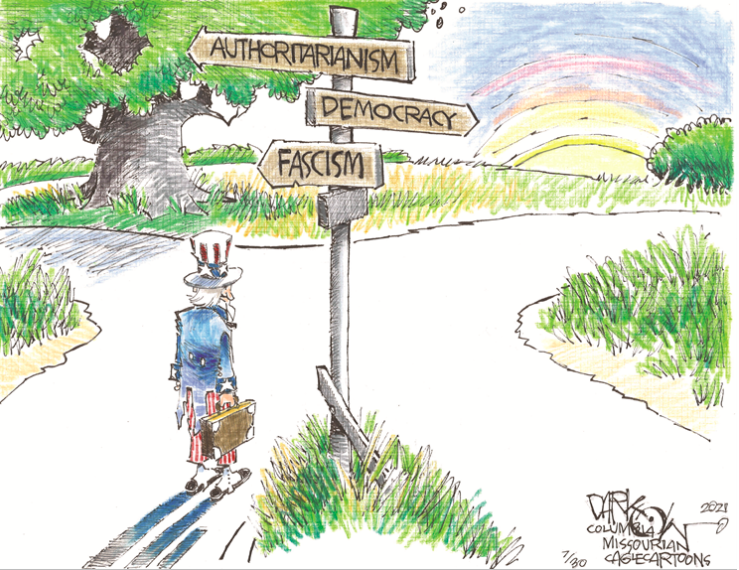
https://theweek.com/political-satire/1003214/the-road-not-taken

Alternate history. No one can say what would have happened had Trump succeeded in bullying Rosen (or Barr) or replacing him with Clark. At numerous points in the process, Republican election officials did their jobs honorably rather than try to subvert the will of the voters. (Georgia’s Republican Secretary of State Brad Raffensperger is one example, Michigan Board of Canvassers member Aaron Van Langevelde another.) It would be pleasant to believe that patriotic, pro-democracy Republicans existed in sufficient numbers to keep state legislatures from responding to the Clark letter by holding hearings on the election-fraud conspiracy theories, and then attempting to replace their Biden electors (who had already voted by this point) with Trump electors. Or that even if one or two legislatures caved to Trump, he would not get the three states he needed to win in the Electoral College.

But who knows? And if states attempted that maneuver without their governors’ approval, in violation of the Electoral Count Act of 1887, but consistent with Trump’s self-serving interpretation of the Constitution, would Congress have accepted those ballots? Would the Supreme Court have to weigh in? What would they have said?

At the very least, the suspense would not have ended on January 6, or perhaps not even on January 20. Even if Biden had ultimately prevailed, significant damage would have been done. From then on, Americans would all know that our elections are just the first shot in a much longer drama whose ultimate outcome might have nothing to do with how we voted.

The next coup. Joe Biden won the popular vote by a margin of just over 7 million. With the exception of George W. Bush’ re-election in 2004, no Republican has won the popular vote since Bush’ father in 1988.

In the normal course of two-party politics, this persistent failure would send Republicans scrambling to reinvent themselves. Presidential hopefuls would be marketing themselves as “New Republicans”, and looking for new ways to reach out to a majority of Americans. That was Karl Rove’s “permanent majority” vision already in 2004: Jettison the racism that Richard Nixon’s “southern strategy” had brought into the party, and court the rapidly-growing bloc of socially conservative Hispanics. (Bush got 44% of the Latino vote in 2004. Trump got 32% in 2020.)

Instead, the GOP’s post-election focus has been on how to take or keep power without the backing of a majority. They aren’t pushing bright new faces, or looking for candidates who can flip Democratic voters. [8] They have unveiled no new programs or policies or even messaging strategies. But they hope to get the House back in 2022 by gerrymandering better this time and making voting even harder for pro-Democratic groups. (When was the last time you saw reports of people waiting for hours to vote in majority-Republican precincts?)

The most worrisome thing about the Republican response to their 2020 defeat is their focus on controlling how elections are run, how votes are counted, and whether the voters’ choice will matter at all. [9] The Georgia voter-suppression law that got baseball’s All-Star Game moved out of Atlanta contained one particularly ominous provision: The Republican-controlled legislature can take over the management of elections in Democratic counties. Wasting no time, the legislature has already started the process that would let it take over Fulton County, where Atlanta is.

Not only has the Arizona Senate sponsored the partisan circus of the Cyber Ninjas election “audit”, but a law proposed by a Arizona state Rep. Shawnna Bolick of Phoenix would allow the legislature to ignore the voters entirely next time, and award Arizona’s electoral votes to whomever it wants. The law did not pass, but now Bolick is running for secretary of state, with “securing our elections” as her top priority. In 2024, Arizonans’ votes may be counted by someone who doesn’t believe their votes should count at all.

All the Republican officials who stayed loyal to American democracy rather than Trump have been punished. Aaron Van Langevelde was not renominated to the Board of Canvassers. Brad Raffensperger has been put on Trump’s revenge list, and is unlikely to win his primary next year. Liz Cheney and Adam Kinzinger are facing primary challenges for daring to investigate the January 6 insurrection.

So if 2024 is a close election, we can’t count on honest Republicans to once again do their jobs with integrity. Anyone who finds himself in that situation will know that integrity is a career-killer in the GOP. And the legislatures-can-do-whatever theory of the Electoral College won’t be sprung on the states at the last minute, after a loss, as it was in 2020. Republicans in swing states will see that coming, and will have a plan for winning even if the voters have other ideas.

And finally, what happens in Congress on January 6, 2024? If Republicans do win back the House, if Kevin McCarthy is Speaker and election-respecting Republicans like Cheney and Kinzinger have been purged from the caucus, can a Democratic victory be recognized at all?


[1] There’s an old joke about a baseball game between Heaven and Hell. “You can’t possibly win,” Saint Peter boasts. “We’ve got the greatest players of all time.”

“Maybe so,” Satan replies, “but I’ve got all the umpires.”

[2] Those were actually two different fiascos, but they have merged in my memory, and, I suspect, in most other people’s memories as well.

[3] Sessions came into office with a rather quaint view of his relationship to Trump. Trump considered every appointment a favor that the appointee had to repay with unquestioning loyalty. But Sessions had been the first senator to endorse Trump, giving his candidacy legitimacy that it very much needed at the time. So Sessions thought he was becoming attorney general because Trump owed him. He did not understand that Trump collects debts, but does not pay them.

[4] Not only was the whole conversation inappropriate — presidents are not supposed to tell the Justice Department what to investigate — but notice how backwards this conversation is. Ordinarily, the lower-level people who have actually investigated something would be telling their boss what they discovered, and the boss would make decisions based on those facts. (Rosen and Donoghue try to play that role.) But Trump isn’t interested in what facts DOJ’s investigations have uncovered, or what theories they have debunked. He is going to define the truth for them, based on his own needs.

[5] The letter couldn’t allude to any specific “concerns”, because by this point all Trump’s fraud theories were absurd and easily debunked. A few days later he would parade them during his infamous phone call to Georgia Secretary of State Brad Raffensperger, who batted them aside as quickly as Trump offered them up.

[6] Even if it really had uncovered evidence that cast doubt on Georgia’s election, DOJ has no business making such specific recommendations to a state. As Donoghue wrote: “I do not think the Department’s role should include making recommendations to a State legislature about how they should meet their Constitutional obligation to appoint Electors.”

[7] The governors of Pennsylvania, Michigan, and Wisconsin are Democrats, and Georgia’s Governor Kemp had already expressed skepticism about Trump’s Big Lie, so the governors have to be taken out of the picture. Also, this is the only legal argument I can recall that claims a legislature needn’t be bound by the constitution that created it.

[8] Monday, Chris Hayes noted the remarkable extent to which this is not happening. Florida’s Governor Ron DeSantis is considered the Republican 2024 front-runner if Trump doesn’t run. He has botched his Covid response pretty badly, with numbers that are getting worse all the time. Meanwhile, Republican Governor Phil Scott of Vermont has one of the best Covid record in the nation, and in November won a third term with 68% of the vote in a blue state.

Literally no one considers Scott to be a likely Republican presidential nominee, because what Republican wants to attract Democratic votes? Instead, DeSantis is looking over his shoulder at an even Trumpier governor with an even worse record on Covid, Kristy Noem of South Dakota. In spite of being far enough off the beaten track to miss the first Covid wave entirely, South Dakota has been hit harder than just about any other state: It’s third-worst in cases per capita and tenth in deaths per capita. (Vermont is the second-best state behind Hawaii in both measures, without the benefit of being an island.)

Hayes: “In any sane political culture, Phil Scott would obviously be a top-tier candidate for higher office. … But not only is that not the case, it’s literally the opposite of the case. The fact that Phil Scott managed the pandemic so well is disqualifying.”

[9] Returning to the joke in [1], Republicans have doubled down on the strategy of recruiting more umpires rather than better players.

The Monday Morning Teaser

The big story this week was the series of revelations that came out about Trump’s interactions with the Justice Department prior to January 6. After Rudy Giuliani’s dripping hair dye and the clown show at Four Seasons Total Landscaping, a lot of us began thinking of Trump’s attempt to hang on to power as a dark comedy. But it now looks like his coup attempt got further than we thought. With just a little more corruption in DOJ, he might have pulled it off.

Those discoveries, together with Republican attempts to make a coup easier next time, are the subject of this week’s featured post “The Once and Future Coup”. It should be out shortly.

The weekly summary will cover the infrastructure bill creeping towards passage in the Senate, the endgame of Governor Cuomo’s harassment scandal, the continuing surge of Covid cases, Tucker’s homage to the EU’s most authoritarian government, the end of an odd Olympics, Rudy’s resemblance to an Underdog villain, and a few other things. I’m still looking for a closing. That should be out before noon, EDT.

Beautiful Times

If it was such a God-damned fine, beautiful time, why did it turn into this time which is not so damned fine and beautiful if there wasn’t something in that time which wasn’t fine and beautiful?

– Robert Penn Warren, All the King’s Men (1946)

The wealthy business elite never took to Obama, even though he didn’t castigate or prosecute those who had caused the financial crisis. The military and foreign policy establishment never fully took to Obama, even though he refrained from exorcising all of the demons (and people) who led us into Iraq or participated in the use of torture. America’s oil-rich allies in the Gulf never took to Obama, even though he continued to sell them weapons. The Republican Party relentlessly attacked and sought to undermine Obama, even though he came into office determined to work with them. Eight years later we got Trump, a reality star playing a billionaire, committed to cutting taxes for the wealthy, wrapping himself in the trappings of the military, rewarding the oil-rich allies, and tapping the darkest veins of the Republican Party’s racism and jingoism through his brand of white identity politics. Don’t tell me Trump isn’t the establishment.

– Ben Rhodes, After the Fall (2021)

This week’s featured posts are “After the Fall” and “Simone Biles vs. Sports Culture’s Toxic Masculinity

This week everybody was talking about the 1-6 Committee

Tuesday four police officers, two from the Capitol Police and two from DC Police, testified to the 1-6 Select Committee about their experiences fighting the rioters. It was a moving kick-off to the hearings, and served as an antidote to the gaslighting Republicans have been doing these last six months.

The officers said the rioters they fought against were terrorists. Woven into the stories about how they and their colleagues were attacked — and in some cases badly injured — the officers expressed outrage that the violence launched by pro-Trump supporters was being ignored by the very lawmakers they protected that day.

Trump has called the rioters a “loving crowd“, and suggested that they were welcomed by police.

They were ushered in by the police. I mean, in all fairness — the Capitol Police were ushering people in. The Capitol Police were very friendly. You know, they were hugging and kissing.

Other Republicans have compared the insurrectionists to tourists, and praised them as “people that love this country, that truly respect law enforcement, would never do anything to break the law”.

The four policemen reintroduced reality into the discussion. They were verbally assaulted with racial slurs. They were beaten and badly injured. They feared for their lives. Capitol Police Officer Harry Dunn urged the committee to find the real cause of the riot.

If a hit man is hired and he kills somebody, the hitman goes to jail. But not only does the hitman go to jail, but the person who hired them does. It was an attack carried out on Jan. 6 and a hitman sent them. I want you to get to the bottom of that.

Predictably, conservative media decided “Back the Blue” didn’t apply here. Based on nothing but the inconvenience of his testimony, Tucker Carlson all but denied that Dunn was a cop.

Dunn has very little in common with your average cop. Dunn is an angry left-wing political activist.

If that were true, it should have been easy to find a Capitol policeman to say so. But, of course, Carlson produced no such witness. Laura Ingraham said the officers deserved “acting awards”, but likewise did no journalism to contradict their testimony.


Before the hearings started, I had wondered what role the two Republicans, Liz Cheney and Adam Kinzinger, both of whom were appointed to the committee by Speaker Pelosi, would play. Would they just be window dressing that allowed the committee to claim to be bipartisan? Or would they be more active?

They’re going to be active. This is from Cheney’s opening statement:

America is great because we preserve our democratic institutions at all costs. Until January 6th, we were proof positive for the world that a nation conceived in liberty could long endure. But now, January 6th threatens our most sacred legacy. The question for every one of us who serves in Congress, for every elected official across this great nation, indeed, for every American is this: Will we adhere to the rule of law? Will we respect the rulings of our courts? Will we preserve the peaceful transition of power? Or will we be so blinded by partisanship that we throw away the miracle of America? Do we hate our political adversaries more than we love our country and revere our Constitution? I pray that that is not the case.

It would not surprise me if Cheney becomes the star of these proceedings. She clearly wants the role and Democrats seem happy to let her have it.


The next order of business seems to be sending out subpoenas. The Department of Justice has formally waived executive privilege claims, instructing former officials “to provide information you learned” while serving under the former president.

The NYT summarizes DOJ’s logic:

The department reasoned that congressional investigators were examining potential wrongdoing by a sitting president, an extraordinary circumstance, according to letters sent to the former officials. Because executive privilege is meant to benefit the country, rather than the president as an individual, invoking it over Mr. Trump’s efforts to push his personal agenda would be inappropriate, the department concluded.

But

But the committee may have a harder time securing testimony from Trump and aides such as former White House chief of staff Mark Meadows, as well as House Minority Leader Kevin McCarthy and GOP Reps. Jim Jordan of Ohio and Mo Brooks of Alabama. Even if the Biden administration doesn’t intervene, Trump could still try to go to court to stop the select committee from obtaining documents and testimony from the Trump White House by attempting to assert privilege, an effort that could delay the probe.

I have to think that will be a bad look for them, and delaying the investigation just pushes it closer to the 2022 elections.


The Justice Department also released handwritten notes from an aide to Trump’s Acting Attorney General Jeffrey Rosen, detailing one of many phone conversations in which Trump tried to enlist the Justice Department in his attempt to stay in power after losing the election. Deputy AG Richard Donoghue noted that Trump pushed election-fraud theories at himself and Rosen, but that Donohue pushed back.

“Much of the info you’re getting is false,” Mr. Donoghue said, adding that the department had conducted “dozens of investigations, hundreds of interviews” and had not found evidence to support his claims. “We look at allegations but they don’t pan out,” the officials told Mr. Trump, according to the notes.

When told the DOJ had no power to change the outcome of the election, Trump replied that they should “Just say that the election was corrupt and leave the rest to me and Republicans in Congress.”

I doubt Trump himself will ever consent or be forced to testify. (He’s not Hillary Clinton, after all. There’s no way he could give coherent answers for 11 hours, much less avoid perjury.) But if he ever faces questioning, I would like to see him confronted with a list of all the people who investigated and told him his fraud theories were bunk: Rosen and Donohue, Bill Barr, Brad Raffensperger, and probably many others. He either knew he lost the election or he is completely insane.

and infrastructure

The long-anticipated bipartisan infrastructure bill finally exists. The Senate could vote on it as early as this week, and at the moment it looks likely to pass. What happens next is anybody’s guess. Ideally, Senate Democrats go on to pass their larger infrastructure package via reconciliation, and the House passes both bills simultaneously. If the Senate is slow, or if the reconciliation bill fails because either Joe Manchin or Kyrsten Sinema (and all Republicans) vote against it, then we’ll see whether House progressives go through with their threat to torpedo this bill. That would be a bold move, and could mean that nothing gets passed.

and the pandemic

Things continued to get worse, and the CDC changed its guidance to say that even vaccinated people should wear masks indoors if they are in an area with substantial or high levels of transmission. New studies of the Delta variant show that vaccinated people can spread the disease, which previously seemed unlikely.

Here’s a clear explanation of how vaccinated people can catch and spread Delta without getting seriously ill themselves:

The Delta variant seems to flourish in the nose, the main port of entry for the virus. The vaccines are injected into muscle, and the antibodies produced in response mostly remain in the blood. Some antibodies may make their way to the nose but not enough to block it.

“The vaccines — they’re beautiful, they work, they’re amazing,” said Frances Lund, a viral immunologist at the University of Alabama at Birmingham. “But they’re not going to give you that local immunity.”

When the virus tries to snake down into the lungs, immune cells in vaccinated people ramp up and rapidly clear the infection before it wreaks much havoc. That means vaccinated people should be infected and contagious for a much shorter period of time than unvaccinated people, Dr. Lund said.

“But that doesn’t mean that in those first couple of days, when they’re infected, they can’t transmit it to somebody else,” she added.

As for the numbers, new cases per day in the US is approaching 80K, up from around 50K a week ago. Deaths are averaging 350 per day, up from 269 a week ago, but still well below the 3,300 we were seeing in mid-January.

The center of the new wave is moving to Florida, where new cases per day is just under 16K, or right about where it was at the January peak. Louisiana has over 4K new cases per day, a new high. Deaths in each state are at about 1/4th their January high.


As the country contemplates the possibility of new mask mandates or even a return to shutting down theaters and restaurants, the public mood is turning against the unvaccinated. In the beginning, just about all the talking heads advocated patience: Give the unvaccinated time, address their concerns, and don’t be judgmental.

This week, patience went out the window. “Vaccinated America has had enough,” David Frum wrote in The Atlantic. NBC News reports on the “scorn, resentment” the unvaccinated are triggering.


From Kevin McShane:


Occasionally I channel-scan through Tucker Carlson’s show and find him “asking questions” about the safety or effectiveness of Covid vaccines. Like Wednesday, when he quoted Dr. Fauci explaining about vaccinated people carrying the virus in their nasal passages (see above), and said “What? What does that even mean? We’re not even going to speculate as to what that means.”

OK, everybody understands that Tucker’s show isn’t news, it’s entertainment for red-hatters. But even so, he’s on an effing news channel. When he has questions, he could interview somebody who knows answers. Why doesn’t he? That’s the question I want to raise.

Why would you raise questions and stop there, when you have the resources to get answers?

and Simone Biles

See one of the featured posts. Late-breaking news: She’s coming back for tomorrow’s balance-beam competition.

and (still) the 2020 election

The “forensic audit” of the 2020 presidential election in Maricopa County has now finished its work, but it’s still not clear when the report will come out. The audit was started with $150,000 from the Arizona Senate, but was obviously costing more than that. We now know they raised $5.7 million from “political groups run by prominent Trump supporters including Michael Flynn, Sidney Powell, Patrick Byrne and correspondents from One America News Network”.

Trump complained on election night that the ballots were taking too long to count, but his “auditors” have been working since April 22. I have little doubt they will come up with some reason to claim that Trump really won Arizona. That was their mission, and no other outcome would be acceptable to their sponsors. The reason this has taken so long, in my opinion, is that the ballots themselves don’t support that conclusion. If there were clear evidence of election-stealing fraud, they’d have reported it months ago.


Along the same lines, the My Pillow guy is planning a three-day event August 10-12 in Sioux Falls, where he will present in detail the “cyberforensics” that prove Trump won.

Last January—on the 9th, he says carefully, placing the date after the 6th—a group of still-unidentified concerned citizens brought him some computer data. These were, allegedly, packet captures, intercepted data proving that the Chinese Communist Party altered electoral results … in all 50 states. This is a conspiracy theory more elaborate than the purported Venezuelan manipulation of voting machines, more improbable than the allegation that millions of supposedly fake ballots were mailed in, more baroque than the belief that thousands of dead people voted. This one has potentially profound geopolitical implications.

That’s why Lindell has spent money—a lot of it, “tens of millions,” he told me—“validating” the packets, and it’s why he is planning to spend a lot more.

He claims that after his evidence is made public, the Supreme Court will vote 9-0 to reinstate Trump. (Where exactly does the Constitution make provision for such a thing?)

It’s hard to tell whether Lindell himself is grifting, or if he’s a victim of the grifters who are “validating” the packets.

He will not, on August 10, find that “the experts” agree with him. Some have already provided careful explanations as to why the “packet captures” can’t be what he says they are. Others think that the whole discussion is pointless. When I called Chris Krebs, the Trump administration’s director of the Cybersecurity and Infrastructure Security Agency, he refused even to get into the question of whether Lindell has authentic data, because the whole proposal is absurd. The heavy use of paper ballots, plus all of the postelection audits and recounts, mean that any issues with mechanized voting systems would have been quickly revealed. “It’s all part of the grift,” Krebs told me. “They’re exploiting the aggrieved audience’s confirmation bias and using scary yet unintelligible imagery to keep the Big Lie alive, despite the absence of any legitimate evidence.”


One of the most ominous parts of Georgia’s new election law was that it created a process by which the Republican legislature could take over the management of local elections. In essence, a non-partisan process would be taken over by a partisan group.

Now the legislature has taken the first move in that process: It has requested a performance review of election officials in heavily Democratic Fulton County, which includes Atlanta. Republicans blame their loss of the presidential election in Georgia and both of Georgia’s senate seats on the fact that a lot of Black people voted in Fulton County. Now they’re moving into a position to do something about that.

and the eviction moratorium

The Covid-related eviction moratorium ran out at the end of July.

The moratorium, put in place by the Centers for Disease Control and Prevention (CDC) in September, helped keep 2 million people in their homes as the pandemic battered the economy, according to the Princeton University’s Eviction Lab.

Eviction moratoriums will remain in place in New York, New Jersey, Maryland, Illinois, California and Washington DC, until they expire later this year.

Elsewhere, evictions could begin on Monday, leading to a years’ worth of evictions over several weeks and ushering in the worst housing crisis since the last major recession, in 2008.

NPR (referencing the Census Bureau) says that 7 million households are behind on their rent. The NYT says 6 million, and provides a map showing where they are.

The expiration is the result of a multi-player screw-up. After the CDC established the moratorium, the Covid relief packages passed in December and March together allocated $45 billion to rental assistance. But only $3 billion has been distributed, for a number of reasons.

Confusion at the federal level about how to distribute that amount of money, and which of numerous programs would handle distribution, has also slowed getting the aid out. As Vox’s Jerusalem Demsas has reported, many renters in need of aid simply did not know that they were eligible for rent relief, and if they did, some were unable to provide the necessary paperwork because of their turbulent living circumstances, lack of formal documentation of their work, or nontraditional rental agreements.

The Biden administration would have liked to extend the ban on evictions at least until the relief money gets distributed. (It would suck to be thrown out on the street when Congress had already appropriated money to keep you in your home.) But although the Supreme Court refused to order an end to the moratorium in June, one of the five votes in the 5-4 majority was Brett Kavanaugh, who made it clear in his concurring opinion that he only let the moratorium continue because it was scheduled to expire soon. He felt that waiting for the intended expiration would result a “more orderly” process than just cutting it off.

From that, the administration concluded that the Court would throw out any attempt at an extension by executive order, so Congress had to act. But for reasons that aren’t entirely clear, it didn’t make this announcement and ask for Congress to address the issue until this week.

Congress has been unable to respond in time. No one knows whether the Senate could have overcome a filibuster, because a moratorium-extending bill has not made it through the House. Progressive and moderate Democrats in the House weren’t able to come to agreement, and of course they got no help from Republicans. A last-ditch attempt to extend the ban just until October required (for reasons I don’t understand) unanimous consent, but Republican Congressman Patrick McHenry objected.

The House is now in recess, but members have been warned of a possible 24-hour recall if an infrastructure bill gets through the Senate. Possibly something might be done then.

Two weeks ago I pointed to Congress’ inability to resolve the Dreamers’ immigration status as an example of broken democracy. This is another example. Hardly anyone thinks it’s a good idea to evict large numbers of people from their homes right now, but that seems to be what’s going to happen.

and you also might be interested in …

I try not to do too many a-Republican-said-something-outrageous notes, because (1) I could fill the whole Sift with them every week, and (2) it’s not good for me to spend so much of my time being outraged. But this one takes the cake: Elise Stefanik, you might remember, became the third-ranking Republican in the House after Liz Cheney was ousted for being insufficiently subservient to Donald Trump. Friday she tweeted:

Today’s Anniversary of Medicare & Medicaid reminds us to reflect on the critical role these programs have played to protect the healthcare of millions of families. To safeguard our future, we must reject Socialist healthcare schemes.

But Medicare and Medicaid are socialist healthcare schemes. Republicans have been telling us that for more than half a century. In 1961, Ronald Reagan recorded an entire LP making the case that Medicare would lead first to a complete government takeover of healthcare, and then to a socialist dictatorship. If Medicare passed, Reagan warned,

you and I are going to spend our sunset years telling our children, and our children’s children, what it once was like in America when men were free.

So if you believe that Medicare and Medicaid play a “critical role” in protecting “the healthcare of millions of families”, the obvious conclusion to draw is that socialist healthcare schemes work.

AOC retweeted Stefanik, and then drove the point home:

Totally agree. In fact, to further protect Medicare from socialism, let’s strengthen it to include dental, vision, hearing, & mental healthcare and then allow all Americans to enjoy its benefits. Trust me, Medicare for All is the #1 thing you can do to own the socialists.


You can get a virtual zoo membership. Check out what’s going on in the zoo habitats whenever you want. Participate in Zoom meetings with animal experts.

and let’s close with something hyperbolic

If you’ve never read the book Hyperbole and a Half by Allie Brosh, you’ve missed out. Using a combination of text and fairly artless cartoons, Brosh tells the kinds of stories you shouldn’t tell about your childhood, or maybe anybody’s childhood.

Fortunately, you don’t have to buy a book to decide what you think. Brosh publishes similar cartoons (and sometimes whole book chapters) on her blog.

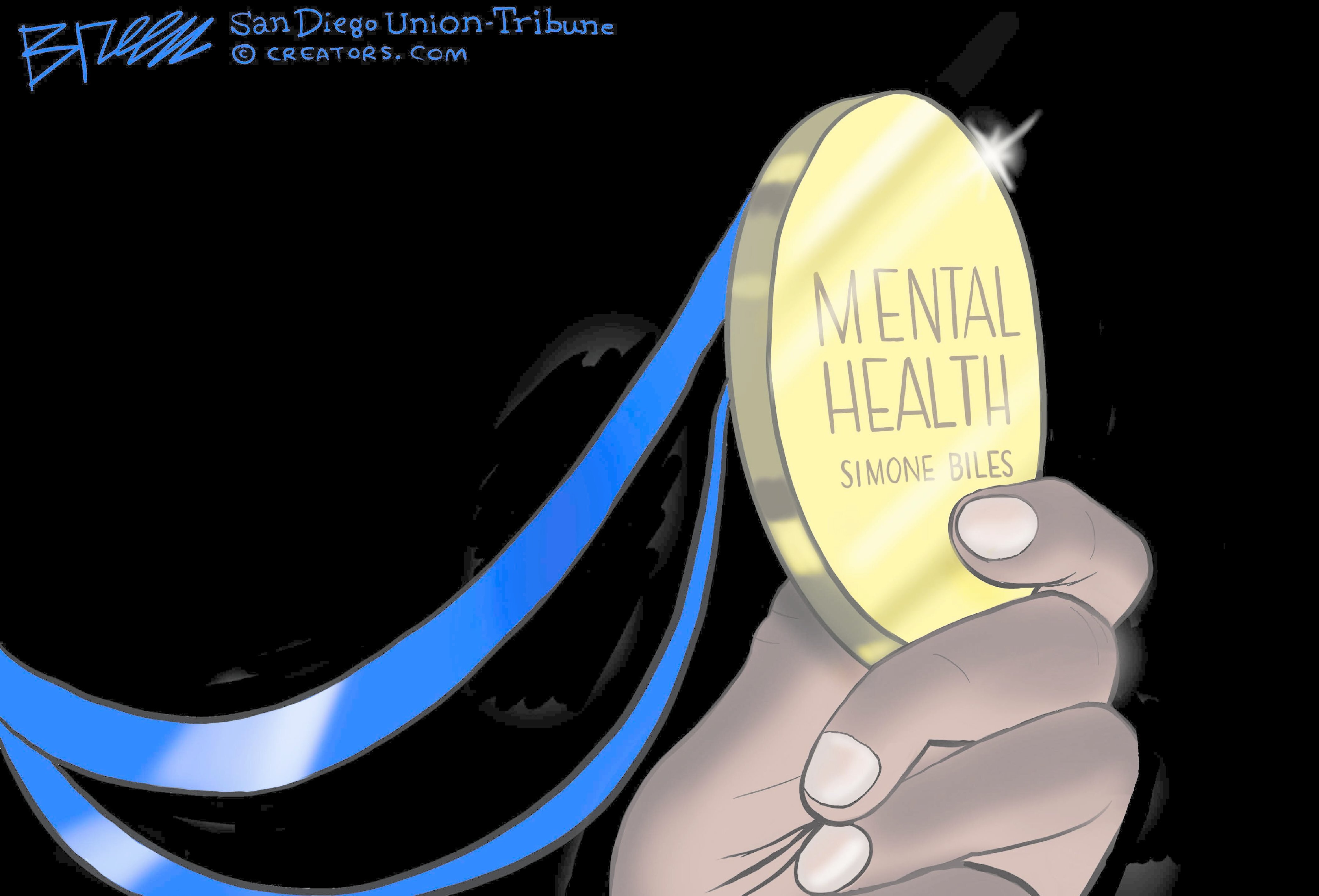
Simone Biles vs. Sports Culture’s Toxic Masculinity

https://theweek.com/political-satire/1003145/still-the-goat

Real athletes aren’t supposed to have mental blocks, or yield to physical injuries. They’re also supposed to be men.


Simone Biles is widely acknowledged as the greatest female gymnast in the world, maybe the greatest ever. She entered the Olympics as the favorite to win gold medals in several different events, to go along with the Olympic medals she already has. Instead, she pulled out of the team competition on Tuesday, and then from subsequent events as they became imminent.

Biles has explained that she is suffering from what gymnasts call “the twisties”, an unpredictable (and usually temporary) loss of “air sense”.

The twisties are a mysterious phenomenon — suddenly a gymnast is no longer able to do a twisting skill she’s done thousands of times before. Your body just won’t cooperate, your brain loses track of where you are in the air. You find out where the ground is when you slam into it.

Nobody knows whether the twisties are physical, psychological, or some combination of the two. All the gymnast knows is that some unconscious process she had relied on has stopped functioning.

Similar mind/brain failures happen in other sports, and not just to world-class athletes. Several years ago, I was playing a pick-up basketball game when the unconscious fine-tuning process that usually targets my jump shot went poof. I would leap, twist in the air to sight the basket, and then wonder “What am I doing up here?” as if I had never shot a basketball before. The next time I played, the unconscious process was back. Was it a mini-stroke? Something I ate? An emotional issue? I never figured it out.

In golf, this is known as “the yips“. One famous baseball case is the pitcher Rick Ankiel, who had started a promising career when suddenly he lost the ability to target his pitches. It never came back (but he did work his way back up to the major leagues as a hitter).

In most sports, the main risk of continuing on in spite the yips (or whatever you call them) is the embarrassment of failure. Golfer Ernie Els once six-putted from three feet out. I ended up flinging the ball at the basket with my conscious mind and hoping it would go in. The result was pretty much what you would expect from someone who had not spent hours and hours practicing shooting until it became unconscious.

But I can barely imagine the terror of a gymnast, upside down in the middle of a flip, when the unconscious process fails and she thinks “What am I doing up here?” That’s a life-threatening situation.

So Biles was absolutely right to pull out of the competition and face all the resulting disappointment and criticism. In some ways, that took more courage than just going out and hurting herself. I wonder how many other gymnasts would have invented some invisible physical injury — a groin pull, say — rather than be honest and deal with what Biles has been subjected to this week.

Reaction to Biles’ decision was not, strictly speaking, political, but it did tend to break along liberal/conservative lines.

Following superstar gymnast Simone Biles citing concerns of mental health after shockingly pulling out of the women’s team competition, a number of conservative media figures and pundits attacked her on Tuesday for supposedly being a “quitter” and “selfish sociopath” who had brought “shame on her country.”

Conservatives do love to attack Black athletes — going after LeBron James, Steph Curry, Colin Kaepernick, etc. was a go-to move whenever Trump wanted to rally his base — and they also have problems with strong women. (There’s a reason why Kamala Harris gets targeted more viciously than Joe Biden.) But I think this particular case is less about racism and sexism than hyper-masculinity, which holds that will-power and “character” are supposed to blast through mental difficulties and even physical injuries. (See Curt Schilling’s “bloody sock game“.)

The idea that you’re supposed to play hurt and risk more serious injury is one important piece of football’s concussion problem.

Unfortunately, due to [toxic masculinity], many concussions go unreported, or mishandled as a result of the athlete playing it down, pretending it didn’t happen, or simply not knowing that they actually have a concussion.

White male NFL quarterback Andrew Luck took a lot of grief for retiring young, in spite of this clear explanation.

For the last four years or so, I’ve been in this cycle of injury, pain, rehab, injury, pain, rehab, and it’s been unceasing, unrelenting, both in-season and offseason. And I felt stuck in it, and the only way I see out is to no longer play football. It’s taken my joy of this game away.

Lacking a race or gender stereotype to beat Luck up with, Fox Sports’ Doug Gottlieb chose a generational smear:

Retiring cause rehabbing is “too hard” is the most millennial thing ever #AndrewLuck

Gottlieb has also criticized Biles, but resents CNN characterizing him as a “white male talking head”. He has claimed not to be a Trump supporter, but googling “Doug Gottlieb politics” led me to a series of conservative-leaning opinions.

Toxic masculinity is not a purely conservative problem, but there is a high correlation. (One much-admired Trump trait is his “strength”, which mainly manifests as a stubborn refusal to admit any mistakes.)

Biles’ decision was more-or-less the opposite of toxic masculinity. She faced reality, and admitted that she is not always as she would like to be. In the world of sports, that was a heresy of high order.

So like any heretic, she had to be denounced. If you happened to be conservative, the opportunity to dis a strong Black woman was just a bonus.

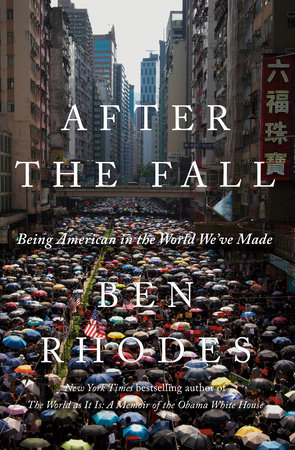
After the Fall

Ben Rhodes raises a hard question: How did America get from the pinnacle of our Cold War victory to this sorry place?


The Berlin Wall fell on November 9, 1989, five days before Ben Rhodes‘ 12th birthday. The wall’s demise was the culmination of a series of large and (mostly) bloodless revolutions that brought down nearly all the Soviet-imposed governments of Eastern Europe. The Soviet Union itself was looking shaky, and would officially dissolve into its constituent republics in 1991.

Rhodes’ teen years were a period of undisputed American triumph. Not only were we the sole surviving superpower, but our political vision (representative democracy with constitutionally protected human rights) and economic vision (market economies gradually merging into a global free-trade zone) had also triumphed to such an extent that a US-style political economy was seriously put forward as the end-point of history.

The distant origins of the present volume lie in an article entitled “The End of History?” which I wrote for the journal The National Interest in the summer of 1989. In it, I argued that a remarkable consensus concerning the legitimacy of liberal democracy as a system of government had emerged throughout the world over the past few years, as it conquered rival ideologies like hereditary monarchy, fascism, and most recently communism. More than that, however, I argued that liberal democracy may constitute the “end point of mankind’s ideological evolution” and the “final form of human government,” and as such constituted the “end of history.”

… The most remarkable development of the last quarter of the twentieth century has been the revelation of enormous weaknesses at the core of the world’s seemingly strong dictatorships, whether they be of the military-authoritarian Right, or the communist-totalitarian Left. From Latin America to Eastern Europe, from the Soviet Union to the Middle East and Asia, strong governments have been failing over the last two decades. And while they have not given way in all cases to stable liberal democracies, liberal democracy remains the only coherent political aspiration that spans different regions and cultures around the globe. In addition, liberal principles in economics – the “free market” – have spread, and have succeeded in producing unprecedented levels of material prosperity, both in industrially developed countries and in countries that had been, at the close of World War II, part of the impoverished Third World. A liberal revolution in economic thinking has sometimes preceded, sometimes followed, the move toward political freedom around the globe.

Today, though, liberal democracy seems to be in retreat around the world, to the point that America itself has a flourishing fascist movement. Last winter, Donald Trump attempted to stay in power after losing the election, and even instigated a riot in an attempt to intimidate Congress away from recognizing Joe Biden’s victory. For a moment it appeared that he had finally gone too far, and that his own party would now turn against him. But within weeks, he had reasserted control of the GOP, which is now working to craft tools for a better coup against democracy in 2024.

But it’s not just us. Russia appeared to be democratizing in the 1990s, only to become the model of the new fascism under Vladimir Putin. Similar nativist authoritarians have since taken power in Hungary, India, Brazil, and several other countries.

China’s communist leaders once looked like dead-enders. By suppressing their own democracy movement at Tiananmen Square in 1989, China appeared to have staked out a position on the wrong side of history. Both Bill Clinton and the two Presidents Bush believed that opening up trade with China would increase the pressure on its leaders to democratize. A growing Chinese middle class, Americans of both parties agreed, would soon insist on political rights commensurate with its prosperity. Hong Kong, which Britain yielded to China in 1997, looked like a Trojan Horse. Surely the freedom and prosperity of Hong Kong would change China more than China changed Hong Kong.

Today, President Xi has more power than any Chinese leader since Mao, hundreds of thousands of Uyghurs are held in camps that could be a model for a new dystopia, Hong Kong is being brought to heel, and Chinese influence is spreading not just in Asia, but in Africa as well. Worse, numerous studies indicate that the Chinese middle class fears political change that might rock the boat of Chinese prosperity.

After the Fall. In his new book After the Fall: Being American in the World We’ve Made, Rhodes discusses the state of democracy around the world, and how we got here. He recounts his conversations with democracy activists in places where authoritarianism is ascendant: Hungary, Russia, and Hong Kong. Always in the background is the ghost of his younger self, who visited these places in happier times, and proudly imagined that his own democratic America was the model all other countries aspired to imitate.

Another ghost is the idealistic Rhodes who wrote speeches for Obama and believed that the 2008 landslide marked a sea change in US politics and governance. Present-day Rhodes is constantly confronted with how his work has been undone, turned around, or made meaningless.

In the final section, Rhodes humbly comes back to the US to analyze where we went wrong and what those foreign activists might have to teach us about democracy.

One thing Rhodes does well is to look past the bright shiny object that is Donald Trump. He has no illusions about what Trump represents or what a disaster his administration was for democracy and for America’s place in the world. But the anti-democracy movement in the US is part of a global anti-democracy trend that Trump did not start.

From our post-Cold-War apex, when democracy seemed to be a lesson the whole world wanted to learn, how did we get to a point where a Trump presidency was even possible?

First mistake: failing the fledgling post-Soviet democracies. Vladimir Putin did not come out of nowhere. He rose to power because the Yeltsin government in Russia was inept and corrupt. Privatizing the Soviet government’s assets and creating a capitalist economy was supposed to bring prosperity. Instead, it created a class of billionaire oligarchs and impoverished the general population. Democracy was supposed to give the people a voice in government, but instead the oligarchs bought the major media and spent lavishly to re-elect Boris Yeltsin in 1996. The legitimacy of Russia’s 1996 election was widely doubted.

These events produced a cynicism about democracy, markets, and America that is now deeply embedded in the Russian consciousness. The Yeltsin disaster didn’t just happen, it had American fingerprints all over it. American economists were everywhere in Russia in the 1990s, pushing privatization. American political consultants helped shape Yeltsin’s 1996 campaign, and President Clinton was clearly rooting for Yeltsin to prevail. At the same time, when the world price of oil collapsed and took Russia’s economy with it, the US and other Western democracies were stingy with aid.

US government and non-government advisors were so entranced by the vision of Russia joining the global market economy that we didn’t pay much attention to how it happened, or whether it was good for the Russian people.

We set the stage for Putin to raise Russian identity politics and restore national pride. And if he also turned out to be corrupt, his message that all governments are corrupt is very plausible. His elections are unfair, but no democracy plays fair. He provides order and protects Russia from foreign dominance. What more could the people expect?

Russia and the other post-Soviet republics were part of a larger pattern: Again and again, the vision of a borderless world economy trumped democratic ideals. China in particular did not have to raise its human-rights standards to get into the world economic club. There was money to be made from China’s billion-person market and its bottomless well of cheap labor, so we could overlook a few transgressions against human rights. Surely that would all get fixed after China became prosperous.

Second mistake: abandoning our principles after 9-11. America’s message abroad has always been two-sided. On the one hand, we promote democracy and human rights as universal values. On the other, we have often supported cruel dictators like the Shah of Iran or Saddam Hussein (until he invaded Kuwait).

But after 9-11, the Bush administration took the attitude that national security justified anything. We could invade any country we wanted, and launch attacks anywhere we believed the terrorists were hiding. We could ignore the Geneva Conventions and hold prisoners in legal limbo in Guantanamo, where they were protected by neither the laws of war nor American jurisprudence. American citizens could be declared “enemy combatants” and vanish into military prisons. Intelligence services could scoop up Americans’ private communications and sift them for terror-related keywords. We could even torture people if we thought they could tell us about terrorist plots.

In its post-9-11 zeal, the Bush administration created a rhetorical template for authoritarian governments around the world. If their opponents could be labeled “terrorists”, then any action against them was justifiable. Is China herding Uyghurs into concentration camps? Doesn’t matter, they’re terrorists.

Third mistake: the 2008 banking collapse and its aftermath. From the beginning, globalization had winners and losers. Opening a national economy to foreign trade both created jobs and destroyed them. Immigration simultaneously added vigor to an economy and increased competition for low-level jobs. Financial deregulation both created wealth and increased risk. The argument was that the gain outweighed the pain.

That argument was always a tough sell among working-class people, who benefited little from a rising stock market, but saw their once-secure jobs move overseas. They could buy cheap manufactured goods at Wal-Mart, but could never hope to be employed making them.

2008 underlined a problem: The gain-over-pain argument held in theory if everyone followed the same rules. But if there was one set of rules for the rich and another for everyone else, the wealth at the top would never trickle down. If bankers can profit when risky investments succeed, but get bailed out by the government when they fail, then the whole system is rigged.

Outside America, 2008 showed that globalization made local economies vulnerable to mistakes and corruption abroad, particularly in the US.

No one was ever brought to justice for the corruption behind the banking collapse. That never sat right with working-class people both in America and abroad. “I lost my job and my home,” people told each other. “What did Bank of America lose?”

Fourth mistake: Trump. The election of Donald Trump was both a cause in its own right and an effect of the previous three causes. He followed the Putin model of combining cynicism with nationalism and nativism: He was a liar and a conman, but (in his view) so was everyone else. If the system was already rigged, why not elect someone who promised to rig it in your favor?

Within the US, Trump dismantled the rules and traditions that protect democracy against authoritarianism and government corruption. He ignored the Constitution’s emoluments clause by running businesses and dues-collecting clubs that anyone seeking a favor could patronize. He bulldozed the barriers that kept the Justice Department from becoming a political weapon. His emergency declarations usurped Congress’ power of the purse. He pardoned his co-conspirators in exchange for their silence. His failure to stay in power after losing the 2020 election was more frightening than reassuring, and his supporters in state legislatures have been paving the road to make a 2024 coup proceed more smoothly.

Outside the US, Trump destroyed the idea that America is a reliable ally or a champion of democracy. He undermined NATO. He invented reasons to impose tariffs on Canada. He put the world on notice that the US would not cooperate to fight climate change. He praised dictators and denigrated democratically elected leaders. Human rights played no part in his foreign policy. If China wanted his favor, it should buy more soybeans, not allow Hong Kong the independence promised in China’s treaty with the United Kingdom.

Worse, he raised the fear (both here and abroad) that America might simply go crazy. However reasonable Joe Biden might sound today, who knows what some future president might do? Foreign leaders would be foolish to follow America’s lead or put much stock in American promises.

We’re not alone. None of the activists Rhodes talked to has yet succeeded: Putin and Orlov are still in power, and Hong Kong continues to lose its freedom. So he doesn’t conclude with a five-steps-to-restore-democracy chapter. Perhaps the central thing Rhodes learns is that the struggle against autocracy is so similar in such disparate places.

He ends up thinking we need to internationalize that struggle: Hong Kongers, for example, are not protesting for their rights; they’re protesting for human rights. We in American should take inspiration from the fact that they’re not giving up, in spite of facing oppression far beyond what we currently have to deal with. I’m reminded of an idea I’ve seen attributed to Jesse Jackson (but can’t quote from memory): You shouldn’t be fighting just to make sure that your people aren’t forced to the back of the bus. You should fight to make sure that nobody is forced to the back of the bus.

Rhodes wants to rehabilitate the notion (debased by hollow post-9-11 rhetoric) that democracy and human rights are universal values. It’s fine that Hungarians want to achieve Hungarian democracy and Americans want American democracy. But it would be so much better if, as human beings, we wanted democracy for everyone.

He closes with the idea that America might still have a key role to play. In spite of Trumpist rhetoric, there are no “real Americans”. We are a collection of peoples gathered from all corners of the Earth. If we can overcome nativism and white supremacy here, we might finally become the beacon of hope we used to believe we were.

The Monday Morning Teaser

This is a tough week to cover, because so much of what happened requires an explanation. The House select committee investigating the Capitol insurrection kicked off its hearings with moving accounts from four police officers, and there are also tea leaves to read in Liz Cheney’s behavior and the Republican response to the police testimony. (Hint: Blue lives don’t matter any more.) The Delta variant looks even scarier than we had thought, and mask mandates may be coming back. A chain of screw-ups has made millions of American renters vulnerable to eviction. The long-awaited bipartisan Senate infrastructure bill actually has a text now, and could be voted on soon. Georgia’s Republican legislature is laying the groundwork to take authority over elections in the state’s most Democratic county. The Simone Biles controversy erupted. (What are “the twisties” anyway?)

None of that is stuff where I feel comfortable just saying “this happened” and providing a link.

But I also want to take a longer view than just this week. I recently read Ben Rhodes new book After the Fall, which raises a provocative question: What happened to America, and to democracy in general, these last 30 years? After the Soviet Union fell, the United States seemed all-powerful, and progress towards democracy around the world seemed inevitable. How did we screw that up?

So one featured post will be my commentary on After the Fall. That should be out around 10 EDT. I may or may not split off my Simone Biles commentary as its own post a bit later. If not, it will be part of the weekly summary that should show up around 1.

Unfair Treatment

We’re going to end up locked down again, for another miserable season or two, because we’re trapped in a country with a bunch of morons. And while that is happening, the morons will be incessantly whining about how unfairly they’re treated.

David Roberts

This week’s featured post is “The Cleveland Indians/Guardians: a teachable moment?“.

This week everybody was talking about the 1-6 investigating committee

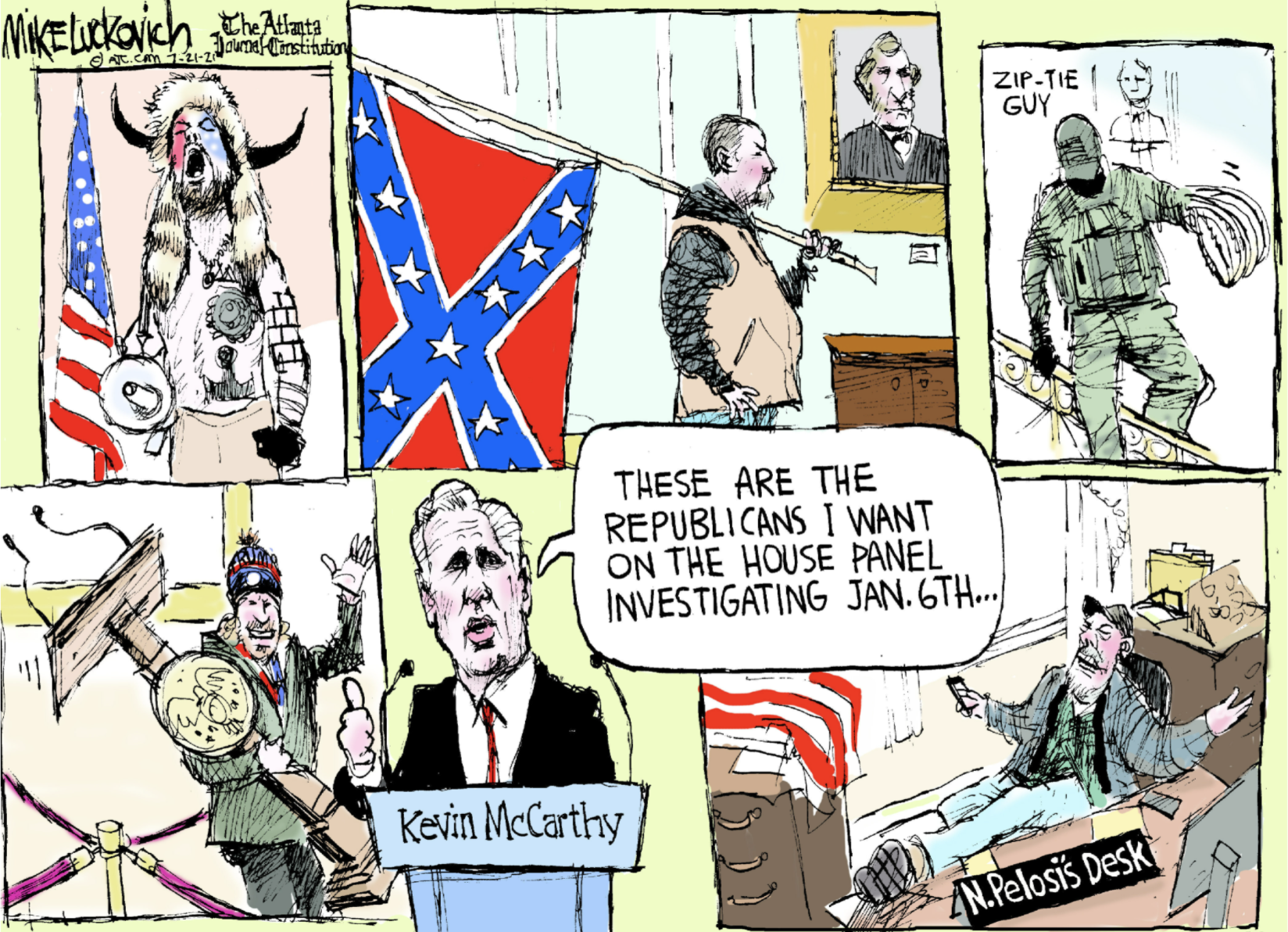
https://theweek.com/political-satire/1002847/mccarthy-picks

At the end of what Ed Kilgore describes as a “chess game” between Speaker Nancy Pelosi and Minority Leader Kevin McCarthy, the membership of the House Select Committee to investigate the January 6 insurrection is set now, and hearings will begin tomorrow.

The I-move/you-move part of the metaphor works:

  • Pelosi advanced the idea of a bipartisan commission to investigate January 6.
  • McCarthy sent Rep. Katko to negotiate ground rules, setting the goal of near-perfect equality of power between the two parties, which he was sure Pelosi would never accept.
  • But Pelosi accepted.
  • McCarthy couldn’t go against Trump’s desire to have no investigation, so he had to turn against Katko’s successfully negotiated deal, which was ultimately blocked in the Senate by Mitch McConnell’s filibuster.
  • Pelosi proposed that House create a select committee to conduct an investigation. She would name eight members of and McCarthy five, subject to her approval.
  • McCarthy opposed the select committee, but it passed anyway.
  • Pelosi named seven Democrats and Liz Cheney.
  • McCarthy warned Cheney not to accept.
  • Cheney accepted.
  • McCarthy delayed naming his five members, then included Jim Jordan and Jim Banks, both of whom indicated they rejected the very premise of investigating the attack on the Capitol. (Two middle-aged white guys named Jim is what passes for diversity in the Republican caucus.)
  • Pelosi refused to accept Jordan and Banks.
  • McCarthy then threatened to retract all five of his nominees, saying “Unless Speaker Pelosi reverses course and seats all five Republican nominees, Republicans will not be party to their sham process and will instead pursue our own investigation of the facts.”
  • Pelosi didn’t budge. But she did add Republican Adam Kinzinger.

So now here we are with an investigating committee of seven Democrats, Cheney, and Kinzinger.

I dispute the chess part of the metaphor, though, because to me this looks like poker: Pelosi had the better hand and she played it.

Beltway pundits who continue to worship at the altar of bipartisanship, like CNN’s Chris Cillizza, disagree. They think Pelosi’s decision to exclude Jordan and Banks “dooms even the possibility of the committee being perceived as bipartisan or its eventual findings being seen as independent.”

And I wonder: “perceived” and “seen” by who? The MAGA faithful were never going to be convinced Trump did anything wrong, no matter who signed the report. Think about it: We’re already in a scenario where Liz Effing Cheney is a RINO! If the whole select committee were made up of Jim Jordans, but it somehow did a legitimate investigation and put out an factual report about Trump’s culpability, they would all be RINOs too.

No committee that investigates Trump honestly will be “perceived” or “seen” by the Trump personality cult as bipartisan or independent. That was never a possibility.

As for reasonable people, particularly political independents, the proof will be in the pudding: If hearings consist of Democrats giving political speeches, independents will be turned off. But if the committee members fade into the background and let the witnesses and the evidence tell the story (as I think they will), nobody will care that none of Trump’s puppets are in the room. The fact that Jordan et al won’t be there, in fact, will make the investigation more credible, because there will be less political grandstanding and more attention to the evidence.

As for McCarthy’s threat to “pursue his own investigation” … Go for it, Kevin. I dare you.


Jonathan Chait puts his finger on the problem:

[T]he entire political context for the investigation has changed. The insurrection was briefly considered an event akin to 9/11: an outside attack, which in its horror would unite the parties.

Now Republicans see the insurrection as an action by their political allies. Some of them are embarrassed by the insurrection and wish to avoid discussing it, while others see its members as noble martyrs. But almost none of them actually have the stomach to denounce the rioters any more.

… The scrambling and confusion [over filling the Republican slots on the committee] is the result of the fact that the January 6 commission was conceived in a political context that no longer exists. Congress never would have had a “9/11-style commission” if the hijackers had been supporters of, and had received support from, one of the political parties.

and the Covid surge

https://www.washingtonpost.com/opinions/2021/07/16/adrift-sea-trouble/

Case numbers continue to ramp up. Average new cases per day is now over 50K, after bottoming at 11K a few weeks ago. Last summer’s peak, which seemed apocalyptic at the time, was just over 70K, but paled before January’s 300K.

Deaths (270 per day) are also above their early-July low (209), but seem to be flattening. Last summer deaths got over 1100 per day. In January they got over 3000. The difference is almost certainly that the most vulnerable people are now vaccinated.

Cases are increasing everywhere, even in places that had seemed to have the virus almost beaten. In my county (Middlesex in Massachusetts) we are at 4.7 new cases per day, which is tiny compared to counties like Baxter in Arkansas (126), but a few weeks ago we were averaging less than 1 new case per day.

Meanwhile, Republicans around the country are still acting like public health officials are the more urgent threat. Missouri’s attorney general announced he will file suit to stop St. Louis from re-imposing a mask mandate. Numerous legislatures have passed or are working on bills to curb state and local governments’ powers during a health emergency.


Tennessee seems to be back from its brief trip to the Dark Ages.

Health Commissioner Dr. Lisa Piercey said the Tennessee Department of Health will restart outreach efforts recommending vaccines for children and once again hold events on school property offering the COVID-19 vaccine, including some next week. Department staff are no longer instructed to strip the agency logo from public-facing vaccine information, she said.

“Nothing has been stopped permanently,” Piercey said during a press briefing. “We put a pause on many things, and then we have resumed all of those.”


https://theweek.com/cartoons/837540/political-cartoon-fox-news-toilet

A few Republican politicians and/or media personalities seem to be changing their tune about vaccinations, or at least toning down their anti-vaccine disinformation.

After banning “vaccine passports” in May, Alabama Governor Kate Ivey lashed out at unvaccinated Alabamans Thursday. “it’s time to start blaming the unvaccinated folks, not the regular folks. It’s the unvaccinated folks that are letting us down.”

Alabama currently has the lowest vaccination rate (34% of the population fully vaccinated) in the country, and is in the top ten of states with the most new cases per capita. So, according to Gov. Ivey, the majority of Alabamans are not “regular folks”.

I can barely imagine the freak-out conservative media would be having if a Democratic official had said something like that.


The origin of Covid-19 is highly politicized topic. Then-President Trump jumped on the lab-origin possibility when the evidence seemed against it, because it gave him someone else to blame and helped him divert attention from his own bungling. Later, when scientists said the lab-leak theory had not gotten enough attention, he claimed vindication.

The evidence is still not conclusive, but more recent information points back towards the virus jumping from animals to humans at a Wuhan market.

Whenever this topic comes up, it’s worth reiterating two points:

  • Leaking out of a lab is not the same as being artificially engineered. (The lab might have been studying a naturally occurring virus, rather than creating a new one.) Scientists looked at this possibility and concluded that the virus itself does not show signs of human engineering.
  • The conspiracy theory that China released the virus intentionally is bizarre. Not only is there little evidence behind it, but it makes no sense. If China wanted to unleash a plague on the world, why would it release it in one of its own interior cities? And if this “bio-weapon” was aimed at the US, how did the Chinese know that the Trump administration would botch the American response so badly?

and the Olympics

The games started this week in Tokyo, after being postponed last summer. It’s an odd Olympics, without cheering crowds.

Trump and his fans are rooting against the US Women’s soccer team in the Olympics, because only Trump supporters are real Americans. Aaron Rupar comments:

If Joe Biden goaded people into booing a US Olympics team, Hannity would cut in for special Fox News coverage that would last until armageddon.

and you also might be interested in …

Negotiations on the bipartisan infrastructure bill, which Majority Leader Schumer hopes to pass before the Senate’s August recess, are coming down to the wire.

Democrats are simultaneously working on a larger package that they hope to pass through the filibuster-avoiding reconciliation procedure.


When Brett Kavanaugh’s nomination to the Supreme Court was nearly derailed by Christine Blasey Ford’s sexual assault accusation in 2018, wavering Republicans agreed to delay the confirmation vote, giving the FBI a week to investigate further. Senator Sheldon Whitehouse (D-RI) has been trying for three years to find out what that investigation consisted of. The answer seems to be: not much.

For example, the FBI set up a tip line, which received 4,500 responses. (I’m trying not to read much into the size of that number, just as I give little weight to the sheer number of affidavits Rudy Giuliani has about election fraud. The question is what they say and whether they’re trustworthy.) The FBI sent the most “relevant” tips to the White House Counsel’s office, which, unsurprisingly, did not ask the FBI to pursue any of them.

Slate’s Dahlia Lithwick sums up:

It is, in a sense, hard to be horrified by the explicit confirmation from the FBI that this was indeed a sham investigation, simply because much of this was known at the time and more has emerged since. The sham occurred in plain view, as did the decision to dismiss all of the 83 judicial ethics complaints lodged against Kavanaugh at the time, because Supreme Court justices are not bound by the judicial ethics regime tasked with investigating them. In a sense, then, because the shamming always happened openly, the revelation that it was shamatory feels underwhelming. We have become so inured to all the shamming in plain sight that having it confirmed years later barely even feel like news.


Trump friend and fund-raiser Tom Barrack was arrested Tuesday for “violating foreign lobbying laws, obstructing justice and making false statements”. The indictment says that he was secretly using his influence in the Trump administration for the United Arab Emirates. (Given that Michael Flynn was working for Turkey and Paul Manafort was passing information to a Russian intelligence agent, I have to wonder how many people in the “America First” administration were actually working for the United States.)

Barrack didn’t just work for UAE, he accomplished things for them.

Others in Trump’s orbit may have influenced the president’s decisions on Middle East policy. But what is clear from the indictment is that Barrack and the other indictees claim credit for virtually every interchange between Trump and the UAE, whose government quickly became a Trump favorite.

Barrack’s biggest success was in getting the Trump administration to side publicly with UAE and Saudi Arabia against another US ally in the region, Qatar.


The outing of Catholic Monsignor Jeffrey Burrill (as a user of the Grindr gay hook-up app and a patron of gay nightclubs) has a number of disturbing angles. The Judas in this story was his own phone, which tracked his location, and Grindr, which sells data about its users (as many apps do).

In theory, commercially packaged app data doesn’t track identifiable individuals, but as the NYT showed in 2018, the protections are flimsy.

One path … leaves a house in upstate New York at 7 a.m. and travels to a middle school 14 miles away, staying until late afternoon each school day. Only one person makes that trip: Lisa Magrin, a 46-year-old math teacher. Her smartphone goes with her.

More recently, the NYT was able to identify January 6 rioters from commercially available app data.

The Burrill story was broken by The Pillar, whose reporters made similar deductions from Grindr data. The Pillar was founded by journalists previously at the Catholic News Agency, apparently so that they could cover the Catholic Church with more independence. The WaPo article portrays them as right-leaning journalists who might have an anti-gay agenda. This line of their article struck me as suspicious:

There is no evidence to suggest that Burrill was in contact with minors through his use of Grindr. But any use of the app by the priest could be seen to present a conflict with his role in developing and overseeing national child protection policies

Really? Why? It later quotes psychotherapist and former Benedictine monk Richard Sipe:

“Sooner or later it will become broadly obvious that there is a systemic connection between the sexual activity by, among and between clerics in positions of authority and control, and the abuse of children.”

A common belief, which is not true, is that gay men are more likely that straights to be pedophiles. The Pillar seems to be exploiting that belief without stating it openly.

There are also ethical issues around journalists using invasive methods to out people who are committing no crime. The Pillar founders/reporters claim the Burrill case is different because it is “serial and consistent, immoral behavior on the part of a public figure charged with addressing public morality”. But if they had found that Burrill had a female mistress, would that be a story?

On liberal social media, much was made of the connection between Burrill and last month’s USCCB statment that seemed headed towards denying communion to President Biden and other pro-choice Catholic politicians. Burrill was the general secretary of the USCCB at the time, and presumably played some role, but he does not seem to have been a ring-leader of that movement. When I went back and read news stories from June, I couldn’t find mention of him.


The featured post discusses the Cleveland Indians becoming the Cleveland Guardians. I’ll briefly add: Whether it rolls off your tongue or not, the Cleveland Guardians is certainly no worse than the names teams have bizarrely kept when they moved away from cities where they were appropriate, like the Los Angeles Lakers (who moved from Minneapolis to a place where the rivers dry up in the summer) or the Utah Jazz (from New Orleans). We’re used to those names by now, but they make no more sense than if Miami’s NFL team moved west and became the Phoenix Dolphins.

Mostly, I think Chris Hayes has this right:

A thing I’ve said to many parents in the process of naming their child: Whatever the name is, you will love it because you love the child. Literally no one ever wakes up one day with an eight-year-old named Max and says “WHY DID WE NAME HIM MAX?!?!?!”

The Washington Football Team also needs to pick a name, now that they’re no longer the Redskins. Sadly for them, the most obvious Washington names are associated with failure: the Senators were perennial losers in baseball, and the Washington Generals is the team that tours with (and is constantly humiliated by) the Harlem Globetrotters.

One of my social-media friends had suggested the WFT could keep the Redskins name, if they changed their logo and mascot to a russet potato. “Oddly,” he writes, the team “never got back to me.” It could have worked: Go Spuds!

Personally, I’m rooting for the WFT to become the Deep State. That should strike fear into their opponents


Michael Wolff, author of three Trump administration books, is sure Trump will run again in 2024.

and let’s close with something honest

Thinking about going back to the movies now that you’re vaccinated? (I’m not ready yet, but I’m told afternoon shows are almost empty.) Don’t pick a film based on a trailer that combines all the best bits into a few minutes and creates the illusion that it’s all that good. No, insist on Honest Trailers. Like this one for Black Widow.

The Cleveland Indians/Guardians: a teachable moment?

One of the eight Guardians of Traffic on Cleveland’s Hope Bridge

Systemic racism might be easier to grasp in a setting that doesn’t threaten anybody’s safety or livelihood.


Next year, the Cleveland major league baseball team will begin calling itself the Guardians rather than the Indians. This is the culmination of a long process of protest and negotiation, and unsurprisingly, not everyone is happy about it. But whether you love or hate the change, it pulls many of the issues surrounding systemic racism together into one easy-to-grasp package.

Unlike more fraught battlegrounds like policing or affirmative action, changing the name of a baseball team does not affect anyone’s safety or livelihood. No one will die because Cleveland calls its team the Guardians, or would have died if they had continued as the Indians. Feelings on both sides may be heartfelt, but they are clearly feelings rather than material interests. To steal a phrase from Thomas Jefferson, the logo on Shane Bieber’s jersey “neither picks my pocket nor breaks my leg”.

That said, the next thing to acknowledge is that the feelings on both sides are easy to understand and even sympathize with.

This is especially true of the Native Americans who dislike being turned into mascots. Native Americans were minding their own business in 1915 when a newspaper contest picked Indians as the new name for the Cleveland Naps, who had just traded their defining player, Nap Lajoie, to Philadelphia.

Imagine being a Native American parent who is trying to instill a sense of cultural pride in your children. Now picture White people running around in headdresses and warpaint while they root for a team that (in most seasons) has no actual Native American players. Let’s just say it doesn’t help. After your kids see random people at the mall wearing the stereotyped Chief Wahoo logo, it’s going to be hard to convince them that their heritage is serious and worthy of respect.

Admittedly, this constant low-level ridicule isn’t the worst thing that ever happened to Native Americans. It’s not on the same scale as, say, genocide or having the continent taken from them by force. But like those injuries, it’s an imposition from the outside; they did nothing to invite it or deserve it.

https://ftw.usatoday.com/2016/10/cleveland-indians-fans-dressing-up-as-chief-wahoo-world-series-racist

Once you’ve pictured that point of view, you may be tempted to declare Native Americans the good guys and those who love the Indians the bad guys. But that oversimplifies the situation.

Instead, try stretching your empathy to encompass Indians fans without pulling away from Native Americans. Being a fan may not be as central or immutable as a racial identity, but after more than a century, it also is a heritage. To the team’s fans, the Indians are Tris Speaker and Bob Feller and going to extra innings with the Cubs in Game 7 of the 2016 World Series. The Indians may be one of the few enduring connections you made with your Dad, something you can still talk about when you visit him in the nursing home. Maybe what you remember when you think of the Indians is being 10 years old, and sneaking a radio under your covers to listen to a west coast night game after you were supposed to be asleep.

And racism? The Indians became the first American League team to integrate when Larry Doby joined the team only months after Jackie Robinson became a Dodger. Doby and Satchell Paige were key players in the Indians’ last championship in 1948.

But now, it seems, people are trying to make you remember all that with shame rather than nostalgia.

https://theathletic.com/875177/2019/04/04/top-25-moments-in-progressive-fields-25-year-history/

Back in 1915, making a mascot out of Native American heritage was a sin of obliviousness, not malice. It wasn’t about insulting any actual tribes, it was letting yourself forget that the tribes still existed or might care.

What’s more, probably no one who participated in that newspaper poll is still alive. Everyone who feels attached to the Indians today came to love a team already in progress. Many developed that attachment when they were too young to understand stereotypes or racism. The Indians were the family team; Chief Wahoo was their symbol. That’s all.

Nobody consulted you about it. You never made a decision to root for the team with the racist trappings. You rooted for the team that your parents or big brother or friends at school rooted for. Years later, people started telling you that it was a disrespectful misappropriation of somebody else’s cultural heritage. But that’s never what it meant to you. So why do people want you to feel guilty about it?

Welcome to systemic racism.

The main thing to understand about systemic racism is that trying to assign individual fault and guilt misses the point. Saying that a problem is systemic means that it doesn’t reduce to good guys and bad guys. Something in the structure of institutions pits well-meaning people against each other, and there’s no way to resolve the issue without hurting somebody.

Good guys vs. bad guys is dramatic. Systemic racism is tragic.

So: A long time ago, things got set up so that the civic pride of Cleveland would conflict with the ancestral pride of Native Americans. That conflict is entirely artificial: There’s no inherent reason why saying “Yay, Cleveland!” has to carry a sense of “Boo, Native Americans!” Things just wound up that way. And while we could go round and round about the intentions of the people who started it all, that’s just a distraction, because they’re dead. We’re not a jury discussing their punishment; we’re heirs trying to sort out their legacy.

That legacy, though, is not dead and buried like the people who created it: It causes an ongoing injury. The most obvious ongoing injury is to Native Americans, but there is also an injury to Cleveland and its baseball fans. Those five-year-olds who love their Chief Wahoo caps and jerseys will one day be 15-year-olds who look back and say, “Wow, that’s really racist.” What should be purely warm memories of childhood and family will instead be tainted.

It doesn’t have to be that way.

And that’s a key lesson to learn about anti-racist activism: The point isn’t to assess blame or demand that people feel guilty or apologize. The point is to make the injustice stop. Change the structure of things so that well-meaning people are no longer drafted into an artificial conflict. [1]

So: Keep your fond memories of Sam McDowell’s unhittable fastball, or the incredible 1995 lineup of Albert Belle, Jim Thome, Eddie Murray, and Manny Ramirez, or even (if you go back that far) the amazing pitching rotation of Bob Feller, Bob Lemon, Early Wynn, and Mike Garcia. Nobody needs you to feel bad about any of that.

The activists who campaigned to change the Indians name don’t benefit from your shame. They just want to make the ongoing injury stop. And renaming the Indians achieves that goal, both for Native Americans and for Cleveland. Native Americans get back a chunk of their heritage. And the five-year-olds who receive Guardians jerseys next year won’t ever have to reassess what they mean.


[1] I am not trying to say here that all racial conflicts are artificial. Clearly, some people actively seek the benefits that come from white supremacy, and a smaller number glory in pushing other races down, even when they get no benefit from it. But we will have come a long way if we can eliminate the purely systemic racial conflicts, which individuals are often surprised to discover they participate in.

What makes the Cleveland situation a good example is that it is so purely artificial. Attachment to the Indians has very little to do with hostility to Native Americans.

In many other examples, teasing legacy systemic racism away from active malicious racism can be tricky. Take the response to President Obama, for example. Americans had never seen a Black president before, so no matter what he did, it looked “unpresidential” to a lot of people, even if his White predecessors had done exactly the same thing. The lack of any prior images of Black presidents is a systemic problem, but at the same time, malicious political operatives were doing their best to stoke the unconscious reaction that there was something vaguely wrong about Obama being president, like maybe he wasn’t really born in America or something.

Ordinarily, systemic racism is hard to separate from the active individual racism that builds up around it. But with the Indians, it’s not so difficult.

The Monday Morning Teaser

The announcement that the Cleveland Indians will become the Cleveland Guardians next season may not be the most significant thing that happened this week, but it struck me as a good opening to explain what systemic racism is and what anti-racists want.

People who hate the change are saying all the usual stuff: cancel culture, erasing history, they want us to feel guilty about everything, and so on. But the point is simple: There is no necessary connection between rooting for Cleveland’s baseball team and insulting Native Americans, but things have worked out that way because of decisions that got made more than a century ago. Nobody currently alive is responsible for that decision, but the injustice got embedded in an institution, with the result that people end up participating in it today even if they bear no malice. That’s what it means for the problem to be systemic.

Anti-racists don’t care whether or not Indians fans feel guilty; fan guilt doesn’t help them. They also aren’t troubled by your happy memories of famous players and pleasant days at the ballpark with family and friends. Continue to cherish them if you want. What anti-racists want — and what they’re getting from the name change — is for the ongoing harm to stop. That’s all.

So: Going forward, rooting for Cleveland’s baseball team won’t involve dissing Native Americans. Yay, Cleveland!

That post is more-or-less done, so it should be out shortly. The weekly summary will discuss the 1-6 investigating committee, the continuing Covid surge, the sham Kavanaugh investigation, Tom Barrick’s arrest, and a few other things. It should be out around noon.

Plagues

A second flood, a simple famine, plagues of locusts everywhere
Or a cataclysmic earthquake, I’d accept with some despair.
But no, you sent us Congress.
Good God, sir, was that fair?

– “Piddle, Twiddle, and Resolve
sung by John Adams in “1776”

This week’s featured post is “DACA: One More Example of Broken Democracy“.

This week everybody was talking about voting rights

https://claytoonz.com/2021/07/13/texas-libre/

This week’s political drama was provided by Democratic legislators from Texas, who came to Washington Monday. By leaving, they denied the Texas House the quorum it needs to pass new voter-suppression laws. By arriving, they drew attention back to federal voting-rights legislation, which seems stalled in the face of a Republican filibuster.

Yes, it’s a stunt. But Rosa Parks refusing to give up her seat was a stunt. Susan B. Anthony voting in 1872 was a stunt. Half of politics is constructing stunts that galvanize public opinion.

Scanning conservative media, I’ve been struck by the amount of time spent attacking or ridiculing the Texas Democrats, when I would have expected no coverage at all. I think Fox et al are afraid this might work.

I wish I felt that way. I’m more in line with the WaPo’s Dan Balz, who pointed out the disconnect between making headlines and making laws.

Democrats have produced the biggest headlines recently on the charged issue of voting rights. What they’ve yet to produce is an effective strategy to counteract the work Republican state legislators are doing to limit access and inject partisanship into the election process.

Some of those headlines came from President Biden’s speech on Wednesday, when he said that the US faces “the most significant test of our democracy since the Civil War”.

I wonder what President Lincoln would have done if a Senate filibuster had blocked his effort to preserve the Union. Whatever that option might have been, Biden did not mention it.

Senator Manchin met with Texas Democrats on Thursday, and came out talking about the importance of voting rights. But is protecting them important enough to circumvent the filibuster? No. He continues to fantasize about a compromise that could draw 10 Republican votes in the Senate, despite all appearances to the contrary.


Meanwhile, the partisan “forensic audit” of Maricopa County’s ballots in the 2020 presidential election is generating bogus claims, as it was designed to do.

and the pandemic

https://www.latinorebels.com/2020/04/20/pepitocreatorsimage/

New deaths have begun to rise for the first time since January. Covid deaths in the US had been down to an average of 206 per day on July 6, but are back up to 274 per day. New cases, which had bottomed out at just over 11K per day in mid-June, have risen to just under 32K. Both numbers are still well below the peaks (3347 and 248K) reached in mid-January, just after holiday socializing and before vaccinations had ramped up. They’re also below their level a year ago, near the mid-summer peak (66K and 519). But the trends are now going in the wrong direction.

Worldwide, infections are up 32% in the last two weeks, and are now over half a million a day.

The saddest thing about the increase in deaths is that nearly all Covid deaths are preventable now. Not only do vaccinated people catch Covid less often, but their cases are less serious.

More than 99 percent of recent deaths were among the unvaccinated, infectious disease expert Dr. Anthony Fauci said earlier this month on NBC’s Meet the Press, while Walensky noted on Friday that unvaccinated people accounted for over 97 percent of hospitalizations.

If those numbers are still holding, then maybe 2 vaccinated Americans are dying each day, along with 272 unvaccinated Americans. Approximately half the country, and 60% of adults, are now vaccinated. So if the entire country were vaccinated, we’d be seeing daily death totals in the single digits rather than the hundreds. In addition, Covid would spread more slowly in a totally vaccinated population, so even those single-digit death tolls might soon go away.

But conservative media is still doing its best to discourage people from getting vaccinated.

It also discourages all other efforts to slow the spread, like masking or shutting down high-density indoor events.

And as for the numbers, well, who trusts numbers? The Washington Post has a reporter in Springfield, Missouri:

Deep skepticism about the latest outbreak was on display outside the Bass Pro Shops complex that draws customers from around the region to buy fishing supplies and guns in a sprawling store that has zoo-like enclosures with alligators and turtles.

Several shoppers, who declined to give their names, described the reports about the delta variant outbreak as “overblown,” “exaggerated” and a “crock of s—.” One woman said that her daughter was hospitalized in an intensive care unit with covid-19 but that she thinks the numbers are exaggerated.

The NYT talked to three unvaccinated women between 62 and 74 in a Covid ward in north-central Arkansas.

Mrs. Billigmeier said the scariest part was that “you can’t breathe.” For 10 days, Ms. Johnson had relied on supplemental oxygen being fed to her lungs through nasal tubes.

Ms. Marion said that at one point, she felt so sick and frightened that she wanted to give up. “It was just terrible,” she said. “I felt like I couldn’t take it.”

Yet despite their ordeals, none of them changed their minds about getting vaccinated. “It’s just too new,” Mrs. Billigmeier said. “It is like an experiment.”

This resembles a pattern I pointed to two weeks ago in climate-change denial: In the beginning, populists told us to trust own experience and common sense rather than the statistical projections of the so-called experts in universities and government agencies. (“The weather’s fine. It gets hot and cold the same way it always has.”) But now that the evidence is all around us, the faithful are told to ignore what they see and feel, and instead believe what Fox News and the other conservative media outlets tell them.

And they do. That poor woman in Springfield has a daughter in the ICU, and still she doubts the seriousness of the pandemic.

Similarly, the WaPo reports on rural Oregon people who are endangered by a wildfire spreading through their drought-stricken area:

The West has been beset by historic drought and heat waves this year exacerbated by climate change, but among the small towns that have been threatened by the Bootleg Fire — Sprague River, Beatty, Bly — there is little talk of global warming. …

“Global warming?” Lawrence said as he sat drinking coffee with three friends on Wednesday morning around a table at the back of the Sycan Store in Bly.

“Yeah, right,” one of the others muttered.

Populists used to tell us to stop being sheep who believe whatever the expert elites say. But now that message has turned around: Ignore what you can see and experience, and trust instead in the “populist” leaders and pundits. Don’t be their sheep, be our sheep.

The monster can come right to your doorstep, but if Tucker Carlson says it’s not there …

and DACA

Nine years after President Obama created DACA, the courts still haven’t figured out what to do with it. The featured post discusses the latest injunction, but mainly focuses on Congress’ nine years of inaction.

and new Trump books

A raft of books about Trump’s final days in office have come out recently. From them we learned many disturbing things, including:

Trump, of course, denies all of this. But some of his denials are revealing: About the coup, he says, “if I was going to do a coup, one of the last people I would want to do it with is General Mark Milley”. This sounds remarkably like all the times he claimed that the women who accused him of sexual misconduct were too ugly to assault.


Back in 2015, I wrote an article examining why it made sense to use the word fascist when discussing Trump, and how his candidacy was the result of fascistic themes mainstream Republicans had been flirting with for decades. During the Obama years, Republicanism was a mixture of Mitt Romney corporatism, Paul Ryan libertarianism, and Tea Party fascism, which Trump remade as a more purely fascist movement.

In the years since that article, I have often referred to Trump as a fascist. This is not a mere insult; it is a word with meaning, and I use it in a meaningful sense. (In contrast to Mitch Daniels, I think refusing to describe Trump as a fascist robs the word of meaning. I would challenge Daniels to identify when Hitler became a fascist. 1933? 1936? 1939? When the Final Solution launched in 1941? How late in the Nazi Era could Hitler’s fascism be minimized the way Daniels minimizes Trump’s fascism?)

Influenced by writers like Timothy Snyder and Jason Stanley, I’ve since sharpened my view of fascism, so these seem like the key elements:

  • Identification of one segment of the population as the sole authentic citizens. (i.e., “real Americans”, meaning conservative White Christians)
  • Nostalgia for a mythic past when the authentic citizens ruled and the nation was great.
  • A myth of entitlement and victimization: The authentic group was betrayed and humiliated by a scapegoat group or groups (immigrants, Blacks, Muslims, “the liberal elite”), which bear responsibility for the nation’s decline.
  • Contempt for laws that treat authentic citizens and scapegoats the same, and for democracy that counts their votes equally.
  • Worship of a leader who will restore the mythic era. (Make America or Germany great again.)
  • Contempt for sources of truth or authority independent of the leader. (“Fake news”)
  • Blatant lying; shamelessness when the lies are exposed.
  • Justification of the leader taking and consolidating power by whatever means necessary, including violence.
  • Celebration of cruelty against the scapegoats. Even if the leader does little to help his followers, he takes vengeance on their enemies.

The recognition that Trump is a fascist is becoming more mainstream. This week David Frum posted “There’s a Word for What Trumpism is Becoming” on the Atlantic website. One fascinating connection: Frum very aptly connects Trump’s attempt to make Ashli Babbitt a martyr with the Brownshirt martyr Horst Wessel.

https://www.theatlantic.com/ideas/archive/2021/07/theres-word-what-trumpism-becoming/619418/

If you remember, the mainstream media had a similar debate over whether news articles should use the word lie to describe Trump’s most blatant falsehoods. (After all, a “lie” springs out of conscious intention to deceive, and what reporter could get far enough into Trump’s head to know that for a fact?) But eventually such hair-splitting became ludicrous; if you weren’t calling out Trump’s lies, you were helping him spread them.

I expect something similar to happen with fascist. (“Gee, Trump is telling enormous lies in order to encourage his white-supremacist followers to overturn democratic elections by any means necessary. What should we call that?”)


Speaking of political books: It’s not new any more, but I just read Grounded by Montana Democratic Senator Jon Tester. It came out in September of 2020, and I suspect Tester started writing it in case a liberal Democratic presidential nominee wanted to balance the ticket by choosing him as VP.

It’s an enjoyable read. Tester is an engaging character — he continues to grow organic grains and beans on his 1,800-acre farm, planting and harvesting during the spring and fall Senate recesses — and the book is written with wit and charm. Tester apparently believes that any mistake you survive becomes funny, so he spends much of the book laughing at himself.

The subtitle “a senator’s lessons on winning back rural America” is a little overstated; the suggestions in the epilogue aren’t a magic formula. But Tester has won three Senate races in a red state, including the 2018 race where Trump picked him out as a special target, so he must know something.

Tester’s main message to Democrats is that rural America isn’t unreachable. He doesn’t deny that rural voters can be racist and xenophobic, but fundamental Democratic themes like fairness still work there. He also focuses on serving his constituents; he has done well by two large subgroups of Montana voters: veterans and Native Americans.

That said, the stories he tells of each campaign revolve around his opponents’ misjudgments, leaving the impression that he was beatable all three times. But maybe he’s just displaying the modesty and lack of ego that Montanans appreciate.

and you also might be interested in …

Week after week, I start writing about how to reconnect with the sane portion of the Trump electorate, and end up not finishing. The fundamental debate is summed up in two recent articles by other people: “Biden’s Invisible Ideology” by Adam Gropnik and “Democrats Can’t Win the Culture War With Silence” by Ed Kilgore.

On the one hand, Trumpism is an extremist movement that thrives on division — exactly the kind of thing I wrote about in 2004 in “Terrorist Strategy 101“. Participating in round after round of attack-and-reprisal helps them. As Gropnik writes: “You get people out of a cult not by offering them a better cult but by helping them see why they don’t need a cult.”

Trumpists like Marjorie Taylor Greene rise on the opposition they draw, and more reasonable right-wingers like J. D. Vance can’t keep up, because they don’t troll liberals nearly as well.

On the other hand, the Right/Left struggle is real, and the Left needs to win. Republicans are going to draw attention to issues they think work in their favor, and even if those issues are total BS, Democrats need to have answers.


Biden’s child tax credits started arriving.


This week’s floods in Europe are yet another sign of climate change.


The infrastructure negotiations continue, both between parties and among Democrats.


Rodney Pierce was North Carolina’s 2019 Social Studies teacher of the year. Now he’s a target of the anti-critical-race-theory crackdown.


I haven’t commented on the whole billionaires-in-space thing, because I don’t have much to say. Critics point to the amount of good that money could do if it were spent in some better way. But on the other hand, they could be buying enormous yachts that don’t even stimulate the public imagination.

I mainly see the convergence of two trends: the vast accumulation of wealth at the top, and the unwillingness of governments to attempt big things. So if space travel is going to happen, billionaires have to do it.

and let’s close with something arresting

Between the music, the musicians, and the scenery, Gioli and Assia will take your mind off of whatever.