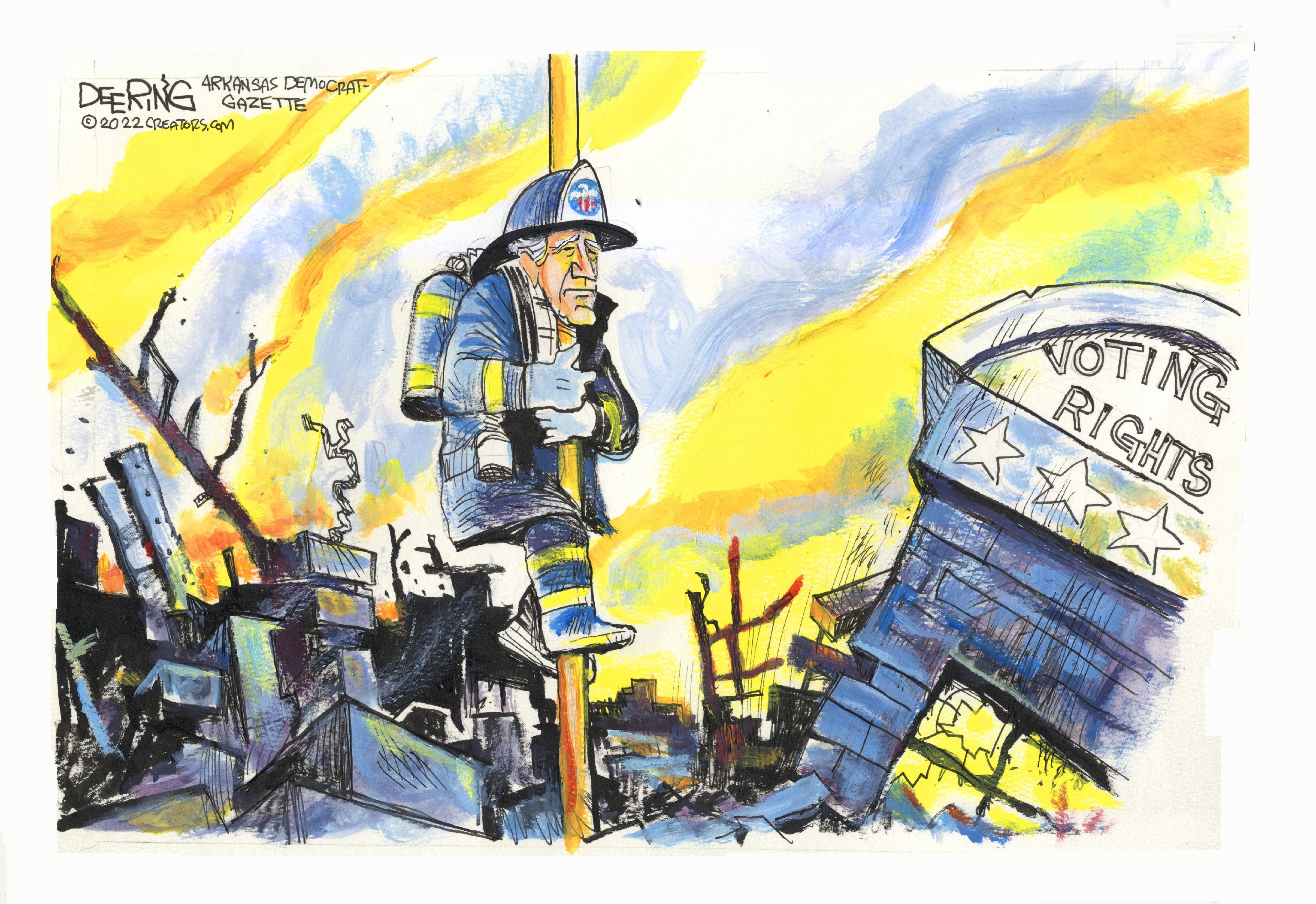
Who Should You Back in the Midterm Elections?

Deciding what to do with your time and money is the rare instance where speculating about the political horse race makes sense.


One of things I criticize most about American media’s coverage of politics is the endless horse-race speculation: Who’s going to run? Who can win? What issues will the voters respond to, and what positions will they support? What do the polls say about elections that won’t be held until after a whole lot of things have changed?

Speculating about the future is engaging and easy. It fills airtime cheaply, and nobody ever suffers for being wrong.

Endless conversation about things that might never happen is an entertaining way to cover sports, where fans love to argue about who should be traded for who, or where some hot free agent will land. But sports are fundamentally about entertainment; politics shouldn’t be. For the most part, the time we spend speculating about the future draws our attention away from what is happening here and now, and what our leaders are doing about it.

There is one exception, though, and I’m about to invoke it. In every election cycle, people who want to affect the direction of the country have to decide who they’re going to support with their time and/or money. You can’t work for everybody and you can’t give to everybody, so you have to make choices.

One way to choose is to follow your heart; if some candidate inspires you, devote your resources to helping them. Another strategy is to take a pragmatic approach more like triage: There are inspiring candidates who are going to win with or without the help of people like you. (AOC has gotten over 75% of the vote in both of her races.) Other races are lost causes. (It would be great to beat Republican Speaker-in-waiting Kevin McCarthy, but he won by nearly 25 points in 2020, and every prognosticating outlet rates his seat as safe.) So you want to give a push to candidates who might or might not win, depending on whether people like you rally around them.

Most of us do something in between. We’d like to simultaneously feel good about our candidates and make a difference in the outcome. That means looking at races that could go either way and seeing how we feel about the candidates involved.

Figuring out which races those are requires speculation. So that’s what we’ll do this week. (But I’ll try not to make a habit of it.)

The overall climate. Conventional wisdom says that 2022 is going to be a bad year for Democrats, for a number of reasons:

  • Off-year elections usually go badly for the party in power.
  • The marginal voters Democrats depend on are less likely to show up in non-presidential cycles.
  • Biden’s popularity is low.

The current generic-ballot polls (would you rather vote for a Republican or a Democrat?) have the GOP ahead by 3.3%. If that holds up, gerrymandering produces a substantial Republican majority in the House. Generally, Democrats have to win nationally by at least 3% to break even. In 2020, they won nationally by 3.1%, which netted them a narrow 9-vote House majority. By contrast, a 1.1% Republican win in 2016 produced a 47-seat majority. (So Republicans are right when they say the system is rigged. It’s rigged in their favor.)

And who knows, things might play out that way. But November is still 9 months off, and there are other factors that could turn the situation around.

  • The Republican primaries may fracture the party, producing damaged candidates either too Trumpy to win or not Trumpy enough to mobilize the base. Nominating bad candidates lost the Republicans Senate seats they should have won in Missouri in 2012 and in Alabama in 2017, just to name the two most obvious cases.
  • The GOP has no agenda, which should become more apparent as election day approaches. In general, Democrats are running to do good things, while Republicans are running to stop bad things. Republicans only win if the public is in a sour mood, which it currently is, but may not be in a few months.
  • A lot of that sour mood is the public’s frustration with Covid, which might not be as big a factor by November.
  • By November, inflation should be slowing down, but Biden’s job growth numbers will still be something to brag about. Moody Analytics Chief Economist Mark Zandi writes: “The hair-on-fire discourse over high inflation is understandable, but it’s overdone.”
  • The Democratic base could get energized if the Supreme Court reverses Roe in June, as it seems they will.
  • As the legal net closes around Donald Trump, he may decide to take the GOP down with him.

Summary: As you go into the midterm elections, be realistic but not fatalistic. The future isn’t written yet.

The Senate. The current Senate has 50 Democrats and 50 Republicans. 34 seats are up for election in 2022; 14 held by Democrats and 20 held by Republicans. Wikipedia has a table of how four different well-regarded sites rate the elections. They don’t all agree, but most tilt slightly towards Republican control. The most pessimistic is Inside Elections, which favors Republicans in all their current seats, but thinks three Democratic seats are toss-ups: Catherine Cortez Masto in Nevada, Raphael Warnock in Georgia, and Mark Kelly in Arizona. Maggie Hassan in New Hampshire also faces a tight race, though she’s currently favored to win.

All these predictions are subject to the same possible turns of the tide that I listed above. Raphael Warnock’s seat in Georgia is a good example. Current polling has Trump-endorsed Republican candidate Herschel Walker ahead of Warnock by 1%. But other than his name recognition from winning the Heisman playing football at University of Georgia in 1982, Walker is a terrible candidate. He’s not very articulate (especially if you put him on a stage next to Warnock, who is extraordinary), he has no political philosophy to speak of beyond loyalty to Trump, and he has a history of violence, domestic abuse, and mental illness. (No wonder Trump likes him.)

And finally, let’s be honest: A lot of the White racist voters Republicans need are going to lose interest in a contest between two Black guys. Republicans have a history of fantasizing about Black candidates like Colin Powell, Herman Cain, and Ben Carson, but changing their minds sometime before election day. Right now, when all most voters know about Walker is his name and his football career, is probably Walker’s peak.

But anyway, if you’re inclined to play defense, look at Warnock, Kelly, Cortez Masto, and Hassan to see who you feel best about. Warnock would be my choice, though I have supported Hassan in the past when I lived in New Hampshire.

If you expect Democrats’ fortunes to improve and want to play offense, the states to look at are Wisconsin (Ron Johnson), Pennsylvania (Pat Toomey is retiring), and North Carolina (Richard Burr is retiring). Of these, the most satisfying outcome would be to boot Covid-misinforming, coup-sympathizing Ron Johnson out of the Senate. The problem is that the Democratic challenger won’t be chosen until the August 9 primary. The current front-runner is Lieutenant Governor Mandela Barnes. I worry a little about the rural Republican base getting energized to fight a Black candidate from Milwaukee, but my quick look at Barnes suggested an Obama-like charm that might protect him. He did win statewide office as Tony Evers’ running mate in 2018.

Pennsylvania’s primary won’t be until May, and there is still a large field. But to me the promising candidate is Lieutenant Governor John Fetterman. He’s a little off-the-wall, but in a folksy way that should make him hard to demonize. (“John and Gisele have chosen not to settle in the Lt. Governor’s Mansion, instead opening up the pool in the official residence to children who typically wouldn’t have access to one. They live with their three children Karl, 12, Gracie, 10, and August, 7, in a restored car dealership in Braddock with the family dog, Levi.”) But if you hold the run-a-moderate-in-swing-states theory, Rep. Conor Lamb is probably your best bet.

In North Carolina, the field is wide and the primary is in May. The current favorite is Cheri Beasley, who was the first Black woman to be chief justice of the state supreme court. She narrowly lost a re-election campaign in 2020.

If you’re really ambitious, you might hope to knock off Marco Rubio in Florida. You’ve got a strong candidate to work with: Rep. Val Demings, who was on the short list to be Biden’s vice president.

The House. House races don’t get as much national attention as Senate races, so finding one you want to get involved in is harder (unless you happen to live a swing district with a good candidate). On the other hand, you’re more likely to have an influence on a smaller race.

In general, the people you would feel best about beating — Marjorie Taylor Green, Matt Gaetz, Jim Jordan, Paul Gosar, etc. — are in very safe Republican districts. (That’s why they can be as extreme as they are.) I keep getting email from a Democratic guy running for MTG’s seat, and I definitely feel the temptation, but I keep reminding myself that there are more effective things to do than tilt at that particular windmill.

If you don’t have a good local candidate to support, take a look at the 16 crossover districts identified by Sabato’s Crystal Ball. These are House districts that elected a representative from one party, but voted for the other presidential nominee. In other words, they seem like races that could go either way, and so are obvious places to attack or defend.

In Maine-2, for example, Democrat Jared Golden was re-elected by 6.1% in 2020, while Biden was losing the district by 7.4%. In New York-24, Republican John Katko won by 10.2% while Biden was winning by 9.1%.

Sadly, the crossover Republicans tend to be the most reasonable people in their conference, so beating them won’t be all that satisfying. Katko, for example, voted to impeach Trump and negotiated the deal for a bipartisan January 6 commission that the rest of his party rejected. Possibly seeing the handwriting on the wall from both left and right, he’s retiring.

Likewise, if you’re on the leftward wing of the Democratic Party, the crossover Democrats aren’t likely to make your heart beat faster. Ron Kind is retiring, and of the remaining six, only Matt Cartwright of Pennsylvania-8 has a 2020 GovTrack ideology rating more liberal than Nancy Pelosi; he was the 58th most conservative of 237 House Democrats while Pelosi was 48th.

Other seats rated as toss-ups are CA-22, CA-27, CA-45, CO-8, IL-17, IA-3, KS-3, MI-3, MI-7, MI-8, NM-2, NY-11, VA-2, and WA-8.

Governorships and other state offices. At this distance from November, it’s hard to guess which governor’s races will be competitive. For what it’s worth, the races that look close to outside experts are: Arizona, Georgia, Kansas, Michigan, Nevada, Pennsylvania, and Wisconsin.

Other than Kansas, those are precisely the Biden states Trump tried to steal, so having a Democratic governor in place in 2024 might be pretty important. Other than Arizona, where Gov. Ducey has been term-limited out, they all have Democratic governors now. Republican primary candidates are competing to see who can take the most extreme positions about the 2020 election, with most saying they would not have certified the results. (In Arizona, Trump-endorsed Kari Lake has pushed it even further: She said “I agree” when a crowd of her supporters chanted “Lock her up” about Democratic Secretary of State Katie Hobbs.)

For similar reasons, you might want to support Democratic candidates in purple-state Secretary of State races that you’ve never cared about before. Republican candidates are basically promising to cheat, if that’s what it takes to put their favorite fascist back in the White House.

Two gubernatorial races that seem like long shots would be very satisfying to win: booting out Ron DeSantis in Florida and Greg Abbott in Texas. Abbott’s approval ratings are negative, but it remains to be seen whether Beto O’Rourke can cash in on that. DeSantis seems to be in better shape.

Local races. As we’ve seen in recent weeks, state legislatures and local school boards make important decisions. And as the Supreme Court whittles away at the power of the federal government (at least until Republicans can get back in control), that trend will only increase.

Local races are often the most satisfying to work on. You’re shoulder-to-shoulder with the candidate and working with your neighbors. And who knows? Once you get involved in local politics, you might find yourself running for office yourself someday.
The Monday Morning Teaser

This is an I-do-your-homework week. If you want to make a difference in the November mid-term elections, who should you be sending money to or volunteering for? I’ll go through Senate races, House races, and governorships, while reminding you not to lose sight of state legislatures and school boards.

That should be out maybe around 10 EST.

The weekly summary covers the Canadian “Freedom” Convoy, the latest Trump revelations, Omicron’s continuing fade, Super Bowl commercials, and a few other things. That should be out maybe noonish.

Plantation Economics

In certain critical ways, the NFL is racially segregated and is managed much like a plantation. Its 32 owners — none of whom are Black — profit substantially from the labor of NFL players, 70% of whom are Black.

Brian Flores’ lawsuit against the NFL

This week’s featured post is “Racism in the NFL“. It gives some long-term historical background on the dearth of Black NFL coaches, which Brian Flores lawsuit made topical this week.

This week everybody was talking about censorship

When I wrote about the Maus controversy last week, I was inclined to interpret the school board’s actions as generously as reason allowed, a position several of the commenters disagreed with. Sadness for McMinn County’s 8th-graders was my main reaction, rather than anger at the small-minded board members.

The censorship stories in the news this week, though, are worse. McMinn County, after all, was just preventing teachers from assigning a book; they weren’t doing anything to stop kids from reading it if they want to. (And if that’s what they intended, their action backfired spectacularly. Maus is selling out all over the country.)

In Texas, though, conservative politicians and parents are removing books about sex and gender from school libraries.

Hundreds of titles have been pulled from libraries across the state for review, sometimes over the objections of school librarians, several of whom told NBC News they face increasingly hostile work environments and mounting pressure to pre-emptively pull books that might draw complaints. 

Records requests to nearly 100 school districts in the Houston, Dallas, San Antonio and Austin regions — a small sampling of the state’s 1,250 public school systems — revealed 75 formal requests by parents or community members to ban books from libraries during the first four months of this school year. In comparison, only one library book challenge was filed at those districts during the same time period a year earlier, records show. A handful of the districts reported more challenges this year than in the past two decades combined.

Books related to race are another target, including one absurd request to remove a children’s biography of Michelle Obama because “it promotes ‘reverse racism’ against white people”.

It’s one thing to object to books the school tries to make your child read, but it’s something else entirely when you try to control the books made available to other people’s children.

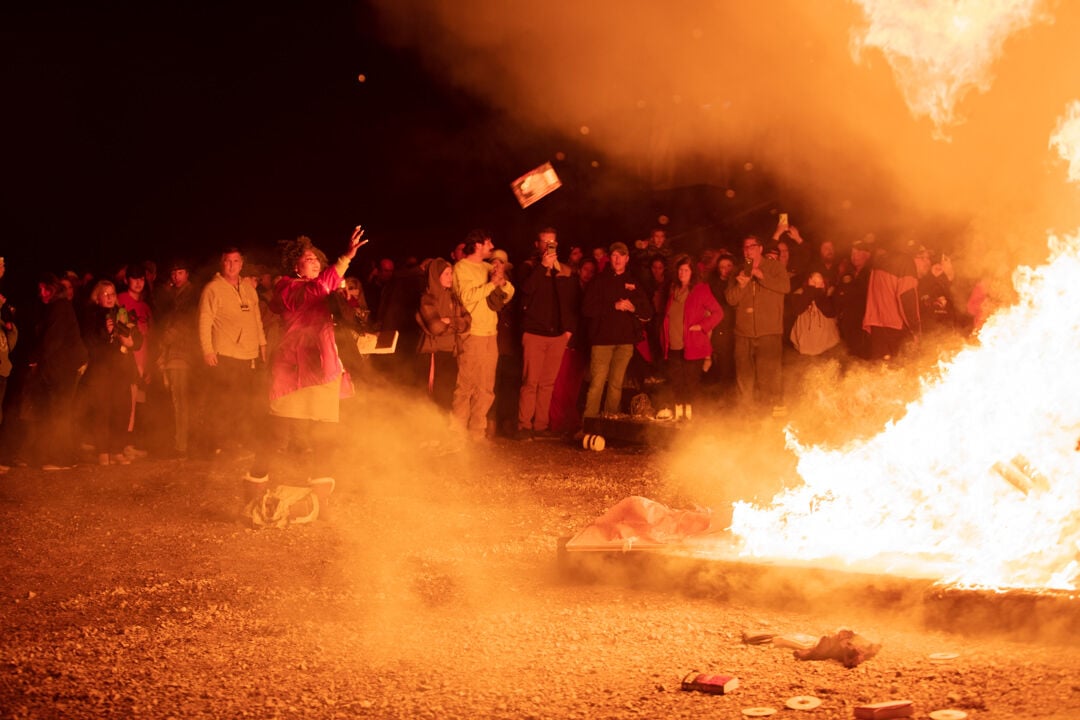
Back in Tennessee, a church in the Nashville ex-urb of Mount Juliet took things one step further with an honest-to-Hitler book burning on Wednesday. The tinder included young-adult series the church deems “demonic”, like Harry Potter and Twilight, as well as anything related to Masonry.

I’m having trouble wrapping my mind around this plan, because to me re-enacting Nazi rituals seems like a good way to raise demons, not fight them. But I guess my ceremonial magick training was just different from theirs.

I think if I were one of the authors whose books are being burned, I’d put out a statement saying that I did indeed embed demons in my books, but I designed the spell so that the demons are released by fire. (So you just possessed your own church, you idiots. Pay me if you want the banishing spell.) Burning the book works like Obi-Wan explained to Darth Vader:

If you strike me down, I shall become more powerful than you can possibly imagine.

But back in the world of practical politics, I have to wonder when the civic establishments in these places are going to realize how much damage these stories are doing to their public image. Say I’m an educated professional with school-age kids and I’m on the job market. The absolute last place I’m going to move is somewhere that puts my kids’ education under the thumbs of Christian Taliban yahoos. Similarly, if I’m a business that needs to attract an educated work force, I’m not going to locate anywhere near such towns.

and the pandemic

Omicron case totals are going down as fast as they went up. The current daily average just crossed under 300K, down 57% in two weeks. As always, hospitalizations and deaths lag a few weeks behind. Hospitalizations are down only 23% in two weeks, and deaths-per-day are still increasing by that measure, though on a shorter time scale, it looks like they peaked at 2632 on Thursday.


Apparently white-tailed deer also get Covid. My first thought was not to worry, because I seldom find myself sharing an elevator with a deer. But today’s NYT speculates on the possibility that the virus might mutate in the deer population and then come back to us.


Chris Hayes:

I keep coming back to the dumb, crushingly obvious point that everything about Covid in the US would be better if we were 80% vaccinated and 60% boosted (like Denmark)


Karl Rove wrote a Wall Street Journal column in response to the death of his sister from Covid. I think of Karl as one of the villains of American politics in recent decades, but that doesn’t matter in a situation like this. Today, I hope he finds comfort.

and January 6

The Republican National Committee went full fascist Friday. If they want to censure Republican congresspeople, that’s their business, but their censure resolution against Liz Cheney and Adam Kinzinger gave these reasons:

WHEREAS, Representatives Cheney and Kinzinger are participating in a Democrat-led persecution of ordinary citizens engaged in legitimate political discourse, and they are both utilizing their past professed political affiliation to mask Democrat abuse of prosecutorial power for partisan purposes …

Nothing in the resolution draws a line between good and bad participants in the January 6 riot, so the clear implication is that the whole event was “legitimate political discourse”. Beating up Capitol police and breaking into the Capitol building to prevent Congress from overseeing a peaceful transfer of power — that’s just how Republicans do politics these days. Attempting to figure out what happened that day and why (which is all the January 6 Committee can do; they have no “prosecutorial power”) is “persecution”.

The rest of the resolution is full of conspiracy-theory thinking and Orwellian gaslighting. Among other things, Republicans need to get the House majority back in order to stop the Democrats’ “systematic effort … to create record inflation designed to steal the American dream from our children and grandchildren”. So inflation — which nowhere near 1979’s record of 13%, but never mind that — isn’t an unfortunate byproduct of (successful) policies to get the economy moving again; it’s an intentional plot with nefarious purposes!


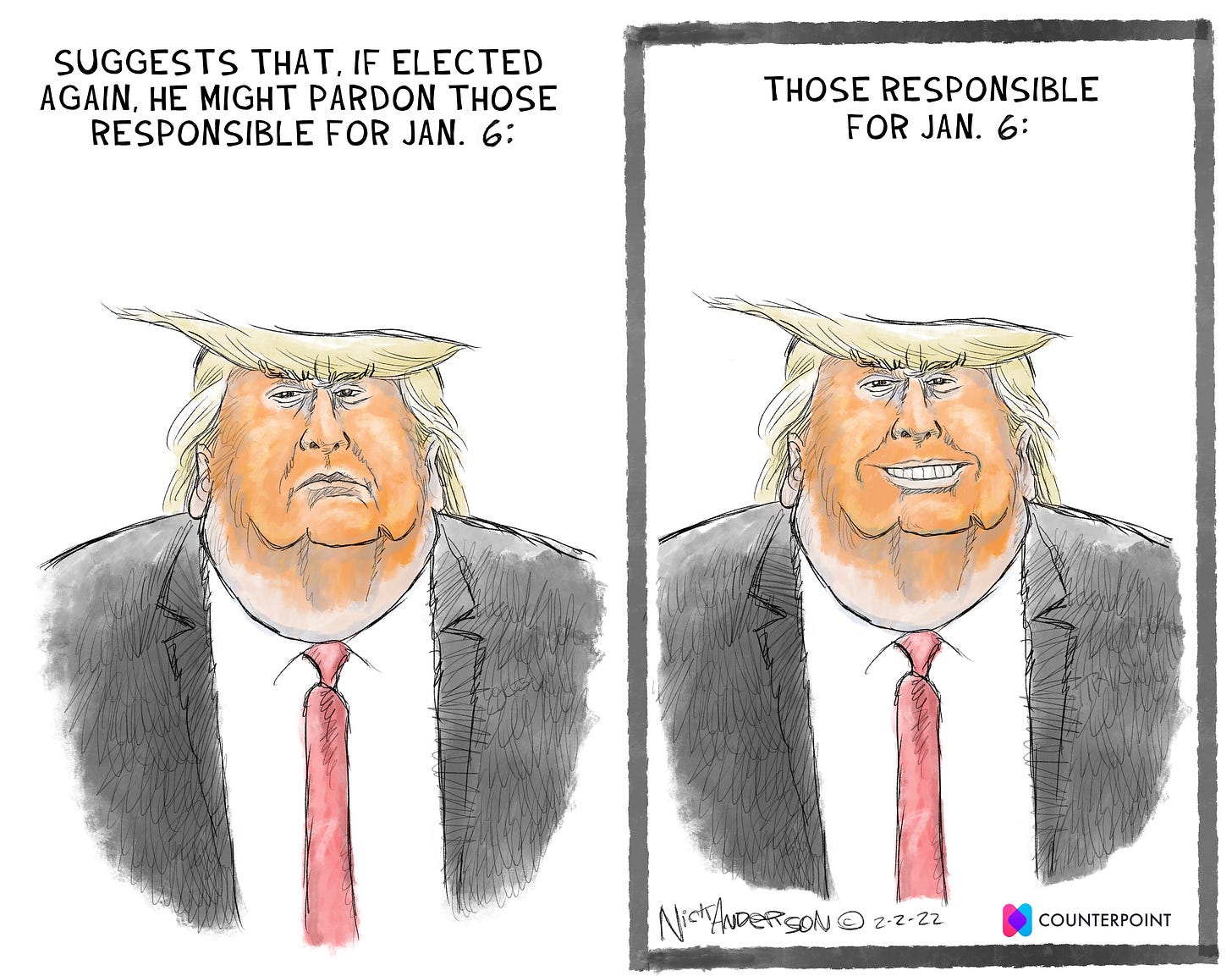
Meanwhile, the defeated ex-president is excusing and encouraging political violence in his own ways. At a rally in Texas January 29, Trump suggested pardons for the January 6 rioters.

If I run and if I win [in 2024], we will treat those people from January 6 fairly. We will treat them fairly. And if it requires pardons, we will give them pardons. Because they are being treated so unfairly.

https://nickanderson.substack.com/p/dangling-pardons

Two things to note about that: First, he’s attempting to influence witnesses who might be able to pin responsibility for the riot back on him. That’s illegal. And second, he’s encouraging people to use violence on behalf of his 2024 run: Don’t worry about it; if we win I’ve got you covered.

Trump has a record of making good on pardon-for-silence deals: Mike Flynn, Roger Stone, and Paul Manafort successfully obstructed the Mueller investigation by refusing to talk. All have been pardoned.

Trump also threatened that his supporters would take action if he gets indicted, as he might in any of several venues:

If these radical, vicious, racist prosecutors do anything wrong or corrupt, we are going to have in this country the biggest protests we have ever had in Washington, D.C., in New York, in Atlanta and elsewhere.

And if one of those protests turns into a violent attempt to intimidate public officials, no worries — he can pardon the terrorists after he’s back in office.


Witness tampering leads us to the Vindman lawsuit. In his role as the National Security Council’s Director for Eastern European Affairs, Lt. Col. Alexander Vindman was on the infamous 2019 call in which then-President Trump made delivery of military aid to Ukraine (that Congress had already appropriated) contingent on Ukraine participating in Trump’s attempt to smear his most-feared challenger, Joe Biden.

Recognizing that Trump’s linking of US aid to his personal political interests was “improper, if not unlawful, and risked national security”, Vindman properly reported his concerns to NSC Legal Counsel John Eisenberg. After someone else with knowledge of the call made a whistle-blowing complaint to Congress, Vindman was subpoenaed to testify at Trump’s first impeachment hearing. Later, Trump retaliated by firing both Vindman and his brother (who had no role in the impeachment) from the NSC. Trump also attempted to prevent Vindman’s promotion to full colonel, and Vindman subsequently retired from the Army.

Wednesday, Vindman filed suit in federal court against Donald Trump Jr., Rudy Giuliani, and two Trump White House staffers: Deputy White House Communications Director Julia Hahn, and Deputy Chief of Staff Dan Scavino. Vindman’s complaint charges that they participated in

in an intentional, concerted campaign of unlawful intimidation and retaliation against a sitting Director of the National Security Council and decorated military officer, Lieutenant Colonel Alexander Vindman, to prevent him from and then punish him for testifying truthfully before Congress during impeachment proceedings against President Trump. …

The attacks on Lt. Col. Vindman did not simply happen by accident or coincidence, nor were they the result of normal politics or modern newscycles. Rather, the coordinated campaign was the result of a common understanding and agreement among and between President Trump, Defendants, and others comprising a close group of aides and associates inside and outside of the White House, to target Lt. Col. Vindman in a specific way for the specific purpose of intimidation and retaliation. The coordination and agreement on purpose and strategy is exactly what made this unlawful campaign against Lt. Col. Vindman so damaging.

This is a civil lawsuit. Vindman is seeking compensation for the “significant financial, emotional, and reputational harm” he suffered as a result of this illegal conspiracy.

But the suit is not just about financial damage: Witness intimidation and retaliation against witnesses are crimes. Reading the lawsuit makes me realize all over again how extensively Trump has worn down the nation’s conscience. We’ve gotten used to the idea that of course he and his people break the law; they do it constantly.


Speaking of ignoring the law, Trump regularly tore up documents that crossed his desk, even after being informed that he was breaking the Presidential Records Act. He also illegally took boxes of documents with him to Mar-a-Lago.

“He didn’t want a record of anything,” a former senior Trump official said.“ He never stopped ripping things up. Do you really think Trump is going to care about the records act? Come on.”

Do innocent people act like that?


We also learned this week that the Trump White House plan to seize voting machines got a lot closer to implementation than we had previously realized.


It’s hard to tell yet how seriously we should take the recent Republican gestures pushing back against Trump, his coup, and his encouragement of political violence.

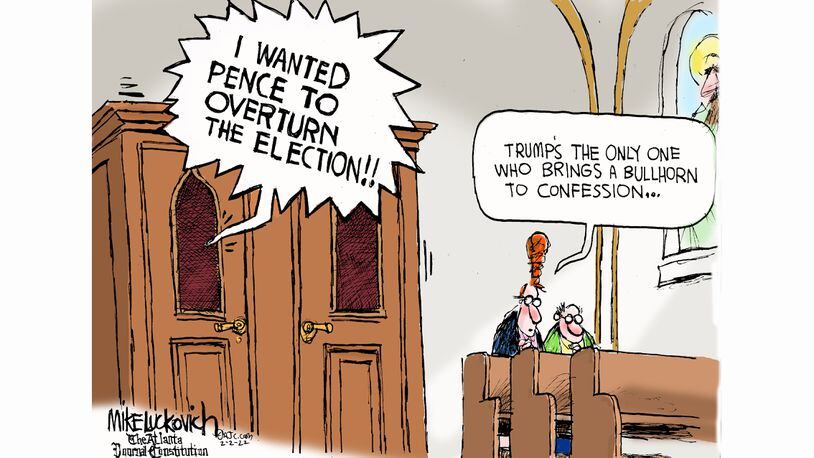
Friday, former VP Mike Pence uttered the unthinkable phrase “President Trump is wrong.” Pence was denying that he could “overturn the election”, as Trump had wanted him to do when he presided over the counting of electoral votes on January 6. He added:

Frankly, there is almost no idea more un-American than the notion that any one person could choose the American president.

And Lindsey Graham on January 30 disagreed with Trump about January 6 pardons: “I don’t want to send any signal that it was OK to defile the Capitol.” How weird is it that this is a courageous statement in today’s GOP?

https://www.ajc.com/opinion/mike-luckovich-blog/22-mike-luckovich/2LAIGNR4B5DWLL2UBDKGEATN4E/

and you also might be interested in …

The Ukraine tension continues, and I continue not to know what to make of it.


Friday’s January jobs report was surprisingly good. Analysts had expected the Omicron surge to slow the economy down, but instead there were 467K new jobs. In addition, the November and December estimates were revised upward, each by hundreds of thousands of jobs.

One of the more bizarre media clips circulating this week is of the Fox & Friends hosts gleefully anticipating a bad report that they could use in their Biden-is-a-failure narrative, only to be disappointed by the good news for American workers.

As I’ve been saying for months, inflation stories and jobs stories should be melded together, because they result from the same policies. Inflation is the price of getting the post-Covid-shutdown economy going again.


Mississippi Today describes an actual Critical Race Theory class at the University of Mississippi Law School. It doesn’t resemble the Republican propaganda about CRT.


https://jensorensen.com/2017/11/14/patriotism-vs-nationalism-cartoon/

and let’s close with something a little bit creepy

Before the advent of tape recorders, Soviet music-lovers discovered they could make samizdat recordings of banned Western music on used X-ray film, which they could grab (illegally) out of hospital garbage. The result became known as “bone music“.

Racism in the NFL

https://theweek.com/political-satire/1009806/dont-look-behind-the-shield

The lack of coaching opportunities for Blacks in the NFL is more than just the usual it’s-hard-to-break-into-management problem, and a new lawsuit explores why.


As far back as 1908, when Jack Johnson won the heavyweight boxing championship, sports have been a prime setting for America to work out its racial issues. Blacks might have been barred from most opportunities to excel, and what they managed to accomplish in spite of racial barriers could usually be minimized. But sporting events have objective outcomes. In the 1930s, for example, Whites who wanted to downplay Black achievements could claim that jazz wasn’t really music. But they couldn’t claim that Jesse Owens wasn’t really fast.

In sports, the 20th century was a long story of racial barriers falling and Black athletes succeeding. In 1947, Jackie Robinson was the only Black player in the major leagues. But he became the rookie of the year that season, and by 1949 he was the National League’s most valuable player. Willie Mays entered the league in 1951, and Hank Aaron in 1954. By 1981, the major leagues were 18.7% Black, but then percentages began to fall, possibly because Black athletes drifted into other sports. In 2016, major league baseball players were 63.7% White, 27.4% Hispanic, 6.7% Black, and 2.1% Asian.

Basketball is the sport most dominated by Black players: In 2020, about 3/4 of NBA players were Black, a number that has been relatively stable for some while. The change from majority White to majority Black happened fairly quickly: The first three Black players entered the league in 1950. By 1957, Bill Russell was the most important player in a Celtic dynasty that would win 11 championships in the next 13 years. Whether White owners and executives continued to have racist beliefs or not, there was no arguing with that kind of success.

The story of race in the National Football League has always been more complicated. The NFL had a handful of Black players when it was getting started in the 1920s, but instituted an informal color barrier from 1933 to 1946. That barrier was broken not through the efforts a crusading White general manager like baseball’s Branch Rickey, but out of legal necessity: When the Cleveland Rams moved to Los Angeles in 1946, they played in the publicly-owned Los Angeles Coliseum. Public accommodations couldn’t be segregated even in that era, so the Rams needed at least one Black player. The Washington Redskins became the last team to integrate in 1962, when the Kennedy administration similarly threatened not to let them play in a stadium on federally-controlled land.

The quarterback mystique. But even as Black athletes in many sports succeeded in blowing up the myth of White superiority, racism established a fallback position: Some Blacks might possess a raw animal physicality, but only Whites had the intellectual and moral virtues that made athletes truly admirable.

And so an article about base-stealing baseball players might emphasize a Black player’s blazing speed, but a White player’s painstaking analysis of pitchers and their moves. Black basketball players might be imposing Goliaths like Wilt Chamberlain, but (as the sports magazines of my youth told the story) White players compensated through smarts, hard work, and an indomitable will to succeed. That racial distinction was rarely spelled in so many words, but whenever I heard an athlete described as “crafty” or “scrappy”, I could be pretty sure he was White.

Baseball and basketball are inherently egalitarian sports — everybody bats, anybody can shoot — so this pro-White image-making had limited effects. But football is more corporate and specialized. In particular, a racial mystique developed around the quarterback position: Of course arm strength and other physical gifts mattered, but intangible (White) qualities like leadership and courage were more important, and quarterbacks needed the (White) mental capacity to analyze defenses and make sound decisions under pressure.

As a result, it took decades for football’s conventional wisdom to recognize that Black athletes could be good quarterbacks. The prophecy was self-fulfilling: High school and college coaches didn’t want to “waste their time” training unsuitable Black players to be quarterbacks, so by the time the quarterback pipeline reached the NFL, it contained mostly White players. As that pipeline combined with NFL coaches’ own racial preconceptions, Black NFL quarterbacks remained exceptional and usually had short careers until Warren Moon and Randall Cunningham became stars in the 1980s.

Naturally, if Black athletes lacked the cerebral and moral virtues needed to be good quarterbacks, it followed that they couldn’t be good coaches either. All sports have had racial barriers to management positions, as the larger society still does in many fields. (Bill Russell once explained the dominance of Black players in the NBA by semi-seriously observing that young Black men weren’t distracted by their opportunities in banking.) But no other sport has such a wide gap between its majority of Black players and its tiny number of Black coaches: 69% of players are Black, but only one of the 32 head coaches (Mike Tomlin of the Pittsburgh Steelers). With only a slightly higher percentage of Black players, the NBA has seven Black head coaches.

Until a few weeks ago, Brian Flores of the Miami Dolphins had been a second Black head coach. But he was fired at the end of the season, a move that seemed mysterious: In 2019, Flores had joined a team mired in mediocrity. The Dolphins had managed only one winning season out of the previous ten. His first season had been even worse: 5-11. But then he turned the team around, going 10-6 in 2020 and 9-8 in 2021. 2021 had seemed like two different seasons: The team had started 1-7 (and if Flores had been fired then, it would made some sense), but then finished 8-1. Teams that finish with that kind of spurt usually have high hopes for the next season. They don’t usually fire the head coach. So Miami’s Channel 4 seemed a bit puzzled:

During a Monday morning news conference, the primary issues [team owner Stephen] Ross cited for the decision to fire Flores seemed to have little to do with the on-field product and more with communication within the team’s braintrust — though there were no specific examples offered of how the team determined Flores wasn’t the right fit in those regards.

Anyway, life in the NFL. Flores moved on to apply for other coaching vacancies. And then, for a minute, it seemed like he had found something. The Patriots’ Bill Belichick — Flores had been his defensive coordinator during the Super Bowl winning 2018 season — sent Flores a text congratulating him on landing the New York Giants head coaching job.

The weird thing was, Flores hadn’t heard anything and hadn’t even interviewed for the job yet. That was supposed to happen in a few days. After a quick back-and-forth it turned out that Belichick had gotten the wrong Brian: The Giants had decided to hire Brian Daboll, a White coach who had also been a Belichick assistant at one point.

But even though they were telling people like Belichick that the decision was made, the Giants didn’t inform Flores. They went ahead with his interview, then announced that Daboll was their new coach.

Why they would do that has a simple answer: the Rooney Rule.

Rooney Rule. Named after former Pittsburgh Steeler owner Dan Rooney, the Rooney Rule says that NFL teams have to interview non-White candidates for coaching and management jobs. It puts no quota on hiring, but Black candidates at least have to get in the door.

It was established in 2003 after a similar controversy: Tampa Bay had just fired coach Tony Dungy (who would later win a Super Bowl in Indianapolis), and Minnesota had sacked Dennis Green (after his first losing season in ten years). A study showed that Black NFL coaches had, on average, better records than White coaches, but were less likely to be hired and more likely to be fired.

Clearly, the rule didn’t solve the problem. Nearly 20 years later, the NFL is down to one Black coach again. Instead, the rule has become a box-checking exercise, in which Black coaching candidates are put through charade interviews without being seriously considered.

They have long suspected this, but the Belichick text was the first time it could be established in a particular case.

The Flores lawsuit. Tuesday, Flores filed a lawsuit in federal court in New York (where the NFL is headquartered). It’s a class-action suit on behalf of

All Black Head Coach, Offensive and Defensive Coordinators and Quarterbacks Coaches, as well as General Managers, and Black candidates for those positions during the applicable statute of limitations period

The suit asks the court to declare the league in violation of several non-discrimination laws, to award monetary damages (both compensatory and punitive), and for

injunctive relief necessary to cure Defendants’ discriminatory policies and practices

And that’s where it gets interesting. What would a court have to do to “cure” the NFL of racism?

The problem is that each team hires only one head coach at a time, and those decision depend on subjective judgements: How well does this coach’s management style fit the team’s vision and the talent on the field?

So far this year, five of the nine coaching vacancies have been filled (all by White coaches), but it’s hard to pick out any one of them as a racist decision. The Jaguars, for example, just hired Doug Pederson, who in his last job won the Super Bowl with a back-up quarterback.

The fact that a coin comes up heads once doesn’t prove it’s rigged. But if it keeps coming up heads again and again, it probably is.

What Flores claims. Several of the specific charges in Flores’ lawsuit have gotten attention from the media, but not enough attention has been paid to the suit’s larger narrative.

For example, the accusation that Dolphins’ owner Ross offered Flores a bonus for losing games so that the team could get a better draft pick (an officially denied practice known as “tanking”), has been widely reported. But the larger implication is that hiring Flores in the first place was a sham: He wasn’t hired to succeed; he was hired to be the fall guy for losing seasons that would build a team that some other coach (presumably White) could lead to victory in the future.

Another former Black coach (Hue Jackson of the Cleveland Browns) has told a confusing story that supports Flores up to a point: At first he seemed to imply that he also was offered money to tank, but later backed off to claim only that the management above him was trying to lose.

I told [the Browns’ owner] that what he was doing was very destructive, to not do this because it’s going to hurt my career and every other coach that worked with me and every player on the team. And I told him that it would hurt every Black coach that would follow me. And I have the documents to prove this.

The Miami tanking scheme (which Flores obviously did not implement), also throws a different light on the official explanation of poor “communication within the team’s braintrust” as a reason to get rid of him.

In other words, the NFL’s problem is even bigger than the numbers suggest: Of the few Black coaches hired, how many were hired to take the blame for an intentional failure?

Prospects. The Federalist Society, which wouldn’t be able to find racism in a Confederate plantation, outlines the difficulties Flores’ suit will run into in the hardball world of anti-discrimination law.

What the lawsuit doesn’t contain, however, is actual proof that the NFL is a systemically racist organization and needs to be punished for discriminatory behavior.

Most of Flores’ allegations don’t come close to proving legally actionable systemic discrimination, which must involve finding racist intent or internal statistical “patterns” of inequity. He points out that the NFL currently employs only one black head coach (and three minority head coaches, counting Ron Rivera and Robert Saleh) in Mike Tomlin of the Pittsburgh Steelers. But judging an organization by one year of results is not actionable.

I agree with their analysis this far: Flores can’t win purely on the evidence that he cites in his complaint. But the class-action lawsuit is an open invitation for other Black coaches and coaching candidate to join his class. Hue Jackson is telling his story. How many others will chime in?

Informally, there’s a lot of sympathy with Flores. I’ve heard ESPN analysts quote unnamed Black coaches saying “I’ve been on that interview” where Rooney-rule boxes are checked without any real chance at a job. But does that mean they’ll come forward?

https://claytoonz.com/2022/02/02/nfl-racism/

At some point, it’s not just about the law. The NFL needs public support. The racist blackballing of Colin Kaepernick is already a stain on the league, and so is the race-norming in the original concussion settlement. (Until a new settlement in June, Black players had a harder time claiming cognitive impairment, because the assumed baseline for cognitive function was lower for Blacks. In laymen’s terms: The league assumed Black players had less brainpower to lose.) Independent of what a judge might say, the NFL just can’t have a parade of Black players and coaches testifying about its racism.

And finally, there’s the discovery process. If Flores can get a look at NFL teams’ internal communications, who knows what he’ll find? The NFL is run by billionaires, and billionaires often assume the rules don’t apply to them.

The Monday Morning Teaser

Probably there was more important news than football this week, but to me the Brian Flores lawsuit against the NFL was a shiny object I couldn’t put down. It’s been common knowledge for years that Black coaching candidates face an uphill struggle in the NFL, a league where 69% of the players are Black. But an “oops” text message from Bill Belichick provided Flores with a smoking gun, and now he has a viable discrimination case.

I decided to give the story what I think of as “the Rachel Maddow treatment”. (It might also be called “the Heather Cox Richardson treatment”.) In other words, I’m going to take a long historical perspective and talk about the role of sports in America’s racial debate, going back to Jack Johnson’s heavyweight boxing championship in 1908.

Short version: NFL coaching isn’t just the usual hard-to-break-into-management problem. When Black athletes like Jesse Owens and Joe Louis started proving that Whites aren’t a superior race, racism retreated into a fallback position: Some Blacks might be gifted with awesome animal physicality, but Whites compensate with superior intellect and character.

In the NFL, this created the Blacks-can’t-be-quarterbacks myth that persisted into the 1980s. The continuing prejudice against Black coaches is the current battle line.

Anyway, I’ll try to get that article out by 10 EST.

That leaves a lot for the weekly summary: censorship, more 1-6 revelations (and pushback from Trump and the GOP), the retreat of the Omicron surge, more good economic news, Ukraine, and so forth. That should appear a little after noon.

Such Stories

It would take many books, my life. And no one wants anyway to hear such stories.

– Holocaust survivor Vladek Spiegelman,
quoted by his son Art in Maus

This week’s featured post is “McMinn County’s Maus Problem“.

This week everybody was talking about Ukraine

https://www.washingtonpost.com/opinions/2022/01/25/revisionist-history/

Often in this blog, I encourage people to trust the experts. Unless you have some really solid reason not to, listen to the CDC about Covid, and to the climate scientists about global warming. If a bipartisan election commission certifies your state’s results, believe them. And so on.

Defense and foreign policy, though, is one place where I get skeptical. I don’t usually characterize national-security-state insiders as villains, but I also don’t always believe what they say. I remember how they misled us into the Iraq invasion, and how victory in our 20-year Afghan War was always just a few months away. I also remember how easily respected news platforms like The New York Times and The Washington Post let themselves be used to spread Iraq-invasion propaganda.

So now the experts are warning us that Russia might invade Ukraine at any moment, and they could be right. I certainly have no reason to think Putin is on the side of the angels, or that he was satisfied by the chunks of Ukraine he stole away in 2014.

But still. This is one of the hidden costs of the Iraq deception: The Pentagon and the State Department have lost a lot of credibility with Americans like me. It’s going to take a long time to win it back, if in fact they deserve to win it back — which they might not.

So who do we believe in all this?

The most convincing thing I read this week was written by Ukrainians. The gist is that Putin does threaten Ukraine, but not as immediately as Western sources make it sound.

According to our estimates, supported by many of the indicators below, a large-scale general military operation can’t take place for at least the next two or three weeks. As of Jan. 23, we do not observe the required formation of several hundred thousand troops, not only on the border with Ukraine, but also on Russian territory behind the front line.

They’re not seeing behind-the-lines mobilizations necessary for a major invasion, like medical infrastructure for handling mass casualties. Overall troop deployments, they say, haven’t changed since April.

Russia could mobilize for an invasion — that’s where the “two or three weeks” comes from — but the Ukrainian writers don’t think it’s likely.

Overall, a large-scale offensive operation with an attempt to hold large occupied territories is a gamble that has no chance of a positive outcome for Russia. It is impossible to calculate the course of such an operation, and when implemented, it will quickly move to an uncontrollable point. 

When we add non-military components to this formula, such as international isolation and sanctions, then the result of an invasion will be politically suicidal for the Kremlin. We believe that, if Putin and his team have not lost their ability to think rationally, they will not go for such a scenario. 

More likely, they say, is a multi-faceted pressure campaign aimed at “destabilization and demoralization of the population”. The troops on the border are part of that, but so are

cyberattacks, which are already taking place, … psychological operations, such as active disinformation, mass bomb threats at schools, subway systems, administrative offices, and other facilities, along with the spread of disinformation and other methods.


A Putin talking point that I’ve seen repeated on both the Left and the Right is that NATO promised Russia in 1991 that it would stop expanding. This seems not to be true.


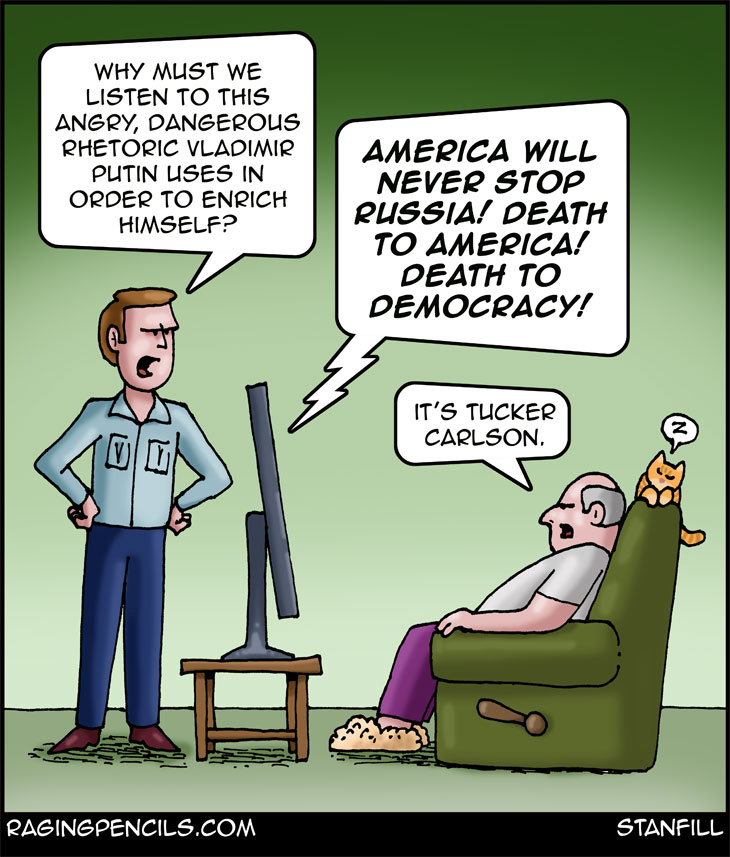
One striking thing about the media debate in America is how quickly the MAGA-right repeats Putin’s propaganda. Peter Navarro parrots Putin’s line that “Ukraine is not really a country.” Tucker Carlson on multiple occasions has wondered why the US would side with Ukraine rather than Russia. The distinctions between aggressor and target, or between democracy and authoritarianism, seem to elude him.

Meanwhile, Tucker’s identification with the authoritarian nationalist government of Hungary gets ever more explicit. The new “documentary” Hungary vs. Soros: The Fight for Civilization that Carlson has made for the subscriber channel Fox Nation supports Hungarian strongman Viktor Orban’s Nazi-themed tropes: Jewish money is behind Hungary’s troubles.

https://ragingpencils.com/2022/1-28-22-death-to-democracy.html

and the Supreme Court

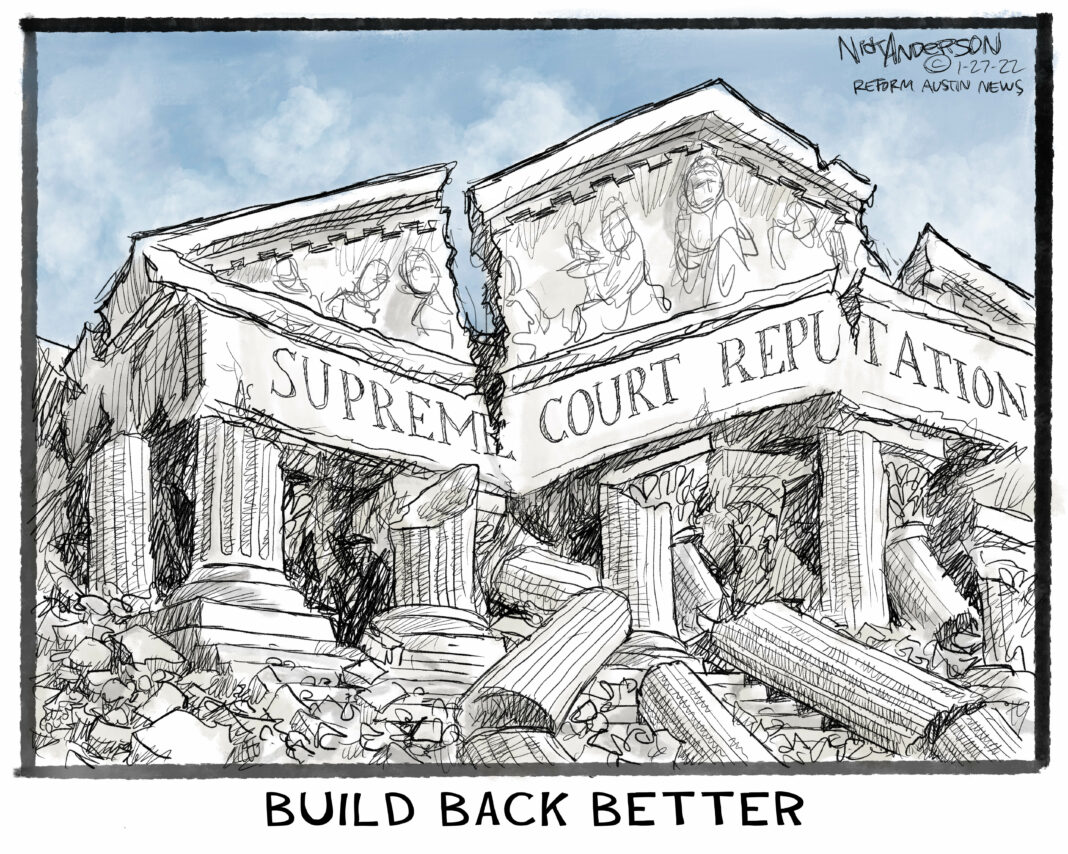
https://www.reformaustin.org/political-cartoons/supremely-partisan/

Supreme Court Justice Stephen Breyer, one of the three liberals remaining, announced his retirement Thursday, kicking off what is sure to be an epic battle over his replacement.

President Biden had promised during the campaign that he would nominate the first Black woman to the Court, and he appears ready to make good on that promise. There are many worthy candidates, as you would suspect from the fact that previous presidents haven’t used up any of the good choices.

Senator Roger Wicker of Mississippi characterized Biden’s unnamed nominee as “a beneficiary of affirmative action”, and without knowing any more about her than her race and gender, predicted that “this new justice will probably not get a single Republican vote”.

I will point out that Jackie Robinson was an “affirmative action” pick in exactly the same sense: Branch Rickey went looking for a Black player to sign, because he saw the Negro Leagues as an untapped source of talent for the Dodgers.

and the pandemic

The Omicron wave is now clearly receding in most the country, particularly in the Northeast. But case-numbers are still high: 519K new cases per day in the US, down 35% in two weeks. Hospitalizations seem to have peaked also — 144K, down 8% in two weeks — but have not yet begun to fall sharply. Deaths still haven’t peaked: 2524 per day, up 28%.

Weirdly, at this moment when deaths are higher than they’ve been in about a year, we’re seeing a lot of calls to end special Covid precautions entirely and go “back to normal”. You know how when you get an infection, the doctor tells you to finish the antibiotic prescription even if you start feeling better? It’s like that. Historian John Barry, author of The Great Influenza, explains what we can learn from that pandemic.

Nearly all cities in the United States imposed restrictions during the pandemic’s virulent second wave, which peaked in the fall of 1918. That winter, some cities reimposed controls when a third, though less deadly wave struck. But virtually no city responded in 1920. People were weary of influenza, and so were public officials. Newspapers were filled with frightening news about the virus, but no one cared. People at the time ignored this fourth wave; so did historians. The virus mutated into ordinary seasonal influenza in 1921, but the world had moved on well before.

We should not repeat that mistake. …

As in 1920, people are tired of taking precautions.

This is ceding control to the virus. The result has been that even though Omicron appears to be less virulent, the seven-day average for daily Covid-19 deaths in the United States has now surpassed the Delta peak in late September.

Worse, the virus may not be finished with us.

https://theweek.com/political-satire/1009480/covid-is-over

The FDA is withdrawing monoclonal antibody treatments that were based on antibodies to previous versions of the virus and that provably don’t work on Omicron. But Ron DeSantis and other anti-public-health conservatives have embraced monoclonal antibodies as the one Covid-fighting method they can support, and they’re having trouble backing away from it.

Rand Paul has gone so far as to put forward a conspiracy theory: The FDA is taking away an effective treatment in order to “punish” conservative states like Florida.


A new low in Fox News’ deadly Covid-disinformation project: Tucker Carlson listens attentively while his invited guest Alex Berenson says:

The mRNA COVID vaccines need to be withdrawn from the market. No one should get them. No one should get boosted. No one should get double boosted. They are a dangerous and ineffective product at this point.


I don’t usually link to those gloating look-who-died-of-Covid stories, but I’m going to make an exception for Robert LaMay, a former Washington state trooper who in October made a viral video out of his decision to lose his job rather than comply with Governor Inslee’s vaccine mandate for state employees. “Jay Inslee can kiss my ass,” he broadcast from his patrol car. The video was clearly a planned stunt, because the dispatcher was prepared to respond with a list of LaMay’s accomplishments.

LaMay went on talk shows “non-stop” for a day or two afterward, including Laura Ingraham’s show on Fox News. “What’s next for you?” Ingraham asked. “Other than being a celebrity.”

I’ll bet that Ingraham won’t do a follow-up, now that her question has an answer: LaMay died of Covid on Friday, about three months after he made his video and appeared on her show. At least he wasn’t able to use his status as a state patrolman to infect members of the general public, who aren’t allowed to socially distance themselves from the police. Thank you, Jay Inslee.

BTW: Fox News itself has a vaccine mandate, which it doesn’t like to talk about. Tucker Carlson, in spite of spreading misinformation about vaccines night after night, always refuses to say whether he has been vaccinated. If he himself were the kind of anti-vax hero he frequently praises, don’t you think he’d say so?

and censorship

The featured post delves into a Tennessee school board’s decision to cancel an 8th-grade reading module based on the Holocaust-survivor graphic novel Maus.


Newly inaugurated Virginia Governor Glenn Youngkin has set up an email address for concerned parents to report teachers who engage in “divisive practices” like teaching critical race theory. Because that’s what freedom-loving people do: They snitch on each other to the government.

He appears not to have thought this out very well, though, because a very predictable thing happened: The account has been deluged with prank reports like “Albus Dumbeldore was teaching that full blooded wizards discriminated against mudbloods!”

For shame, people! You should definitely NOT send prank emails to

helpeducation@governor.virginia.gov

https://thenib.com/sensitive-snowflakes/

and you also might be interested in …

The most nerve-wracking part of the James Webb telescope mission has passed. The million-and-one things that had to go right for the Webb telescope to wind up fully unfolded and positioned at L2 have gone right. Now comes a few months of aligning and calibrating.


Meanwhile, Fox News has uncovered a major new Biden administration scandal: ice cream. It’s even worse than Obama’s tan suit. Criticizing Biden for doing something frivolous lines up with the effort to gaslight us about how hard Trump worked. “My father sat there 24 hours a day,” Eric lied.


I don’t pretend to know whether Bitcoin and its relatives will rebound from the latest slump. But the recent 50% drop reinforces the reasons I’ve stayed away from it. First, when the market started worrying about inflation, crypto-currencies behaved like speculative investments, not like the inflation hedges they’re supposed to be. And second, because I don’t see what you tell yourself to avoid panicking when it starts to crash. Any investment can fall, but when the value of your house crashes, you can just keep living in it. If the dollar falls, the US government will still let you pay your taxes with dollars. When a blue-chip stock slumps, you keep collecting the dividend. When the market turns against your stock in some speculative company, you can reassure yourself that the long-term trends are in place. (Businesses are still buying robots and moving their IT to the cloud.) But cryptocurrencies have no underlying fundamentals. When they fall, they just fall.


Despite devoting an indefensible amount of my time to watching sports, I usually don’t discuss sports on this blog. I’ll make an exception for this week’s vote on the Baseball Hall of Fame, in which Barry Bonds and Roger Clemens failed to get in on their final year of eligibility.

Fans have strong opinions both ways about this, and here’s mine: It’s not a Hall of Virtue, it’s a Hall of Fame. The point of going to Cooperstown isn’t to worship role models, but to revisit your memories of being a fan, and to imagine what it was like to be a fan in the distant past.

If you were a baseball fan in the 1990s and early 2000s, most of your memories are of Bonds, Clemens, Sammy Sosa, Mark McGwire, and a bunch of other guys who are not in Cooperstown because of suspicion of steroid use. Maybe you loved those players and maybe you hated them, but you can’t remember the era without them. The story of baseball in those years was their story, but the Hall has decided to pretend none of that happened.

I’d extend amnesty to to other eras as well. Joe Jackson should be in the Hall, and Pete Rose. Gaylord Perry threw an illegal spitball most of his career, but he got in, and I’m fine with that. These guys aren’t supposed to be heroes, just baseball players.


Apropos of nothing in particular:

https://jensorensen.com/2022/01/26/acceleration-change-disruption-cartoon/

and let’s close with some white-on-white crime

In a move that looks oddly romantic, a white rabbit nibbles a snowman’s carrot nose.

McMinn County’s Maus Problem

https://www.timesfreepress.com/cartoons/2022/jan/28/maus/5265/

The decision was made January 10, but it didn’t go viral until Thursday, which also happened to be Holocaust Remembrance Day: The Board of Education of McMinn County, Tennessee had voted 10-0 to ban Art Spiegelman’s Pulitzer-winning graphic novel Maus, which tells the story of his father’s experiences during the Holocaust.

If you clicked the links and read the longer versions of the story, though, “banned” wasn’t exactly the right word. The county’s 8th-grade reading program for the year had been split into four modules, each with a theme and an “anchor text”. The theme of the third module was the Holocaust, and the anchor text was supposed to be Maus. The kids would spend a quarter of the year discussing Maus while they also read supporting texts that gave them the context to understand what was going on in Maus.

The motion that passed 10-0 was to “remove this book from the reading series and challenge our instructional staff to come with an alternative method of teaching The Holocaust.” The motion doesn’t, say, take Maus out of the school libraries or do anything to stop kids who want to read the book on their own. But it won’t be assigned to 8th-graders.

Why not? The module was ready to go. The teachers were ready to teach it. Why did the school board feel that it needed to step in?

What they said. We don’t need to speculate about this as much as you might think, because the minutes of the meeting are publicly available. This was not some decision made thoughtlessly at the end of a long evening spent hashing out other issues. The meeting appears to have been called for this single purpose, and the discussion goes on for 20 pages.

County Director of Schools Lee Parkinson begins by saying that “two or three” school board members had come to his office to discuss “rough, objectionable language” in the book. He recommends redacting it “to get rid of the eight curse words and the picture of the woman that was objected to”.

But the Board immediately turns the conversation in a different direction: “Is there a substitute for this book?” One of the teachers the director had invited to the meeting says no and offers to explain why:

If you would like, I have some stuff I can run through with you that explains what our curriculum is and how it works and walk you through how this book fits into the bigger picture of what our kids are studying.

It quickly becomes clear, though, that the eight words and the picture are not really what the Board members are worried about:

we don’t need to enable or somewhat promote this stuff. It shows people hanging, it shows them killing kids, why does the educational system promote this kind of stuff, it is not wise or healthy.

Another teacher explains why a text about the Holocaust might get ugly:

I can talk of the history, I was a history teacher and there is nothing pretty about the Holocaust and for me this was a great way to depict a horrific time in history.

The Board goes on to table the discussion for a later date, then reverses itself, considers the motion to remove Maus from the curriculum, and unanimously approves it.

But why?

What is McMinn County’s Maus problem? The official explanation of an action isn’t always true, but it’s usually a good place to start. The Board of Education says on the county schools web site:

The McMinn County Board of Education voted to remove the graphic novel Maus from McMinn County Schools because of its unnecessary use of profanity and nudity and its depiction of violence and suicide. Taken as a whole, the Board felt this work was simply too adult-oriented for use in our schools.

If you’ve never read Maus — and I hadn’t until this weekend [1] — that explanation sounds sensible. I mean: nudity — some parents have a real problem with that. One of the Board members mentioned in the meeting that Spiegelman “used to do the graphics for Playboy” while another says:

My problem is, all the way through this literature we expose these kids to nakedness, we expose them to vulgarity. You go all the way back to first grade, second grade and they are reading books that have a picture of a naked man riding a bull. It’s not vulgar, it’s something you would see in an art gallery, but it’s unnecessary. So, teachers have gone back and put tape over the guys butts so the kids aren’t exposed to it. So, my problem is, it looks like the entire curriculum is developed to normalize sexuality, normalize nudity and normalize vulgar language. If I was trying to indoctrinate somebody’s kids, this is how I would do it. You put this stuff just enough on the edges, so the parents don’t catch it but the kids, they soak it in. I think we need to relook at the entire curriculum.

If you’ve never paged through Maus, you might imagine at this point that it’s downright pornographic, with the kind of drawings you might look for in Playboy. But if you have, this whole discussion seems ridiculous. The “nude” scene is a corner of one panel on page 100 of the first volume. The author’s mother has committed suicide and her body is in the bathtub. You see the back of her head, a single curved line representing not-particularly-large breasts, and a dot indicating a nipple.

So the “Playboy” artist has given us a single nude image in a setting that is not at all sexual. The drawing lacks detail and is not the least bit arousing. Any 8th-grader looking for a sexy picture could probably draw a better one for himself. [2] The “profanity” is similarly unimpressive. Remember: Director Parkinson wanted to white out eight words in a book of 295 pages. And that solution was not deemed acceptable.

The idea that Maus is not appropriate for 8th-graders might be believable if people making that claim had gone on to suggest moving the Holocaust module to the 9th or 10th grade curriculum. But no one did. The people who wanted to take Maus out of the 8th-grade curriculum didn’t suggest any age group that should read it.

So the Board’s official explanation doesn’t pass the laugh test. Clearly, they decided they didn’t like the book, and then went looking for explanations they could defend, at least to people who haven’t seen the book.

So what’s the real reason? During the Obama years, a lot of people didn’t like the president. If they had reality-based reasons for not liking him — they were conservative and he was liberal; he moved too fast or slow to end the wars or the economic disaster he inherited; Obamacare led to too much or too little government involvement in healthcare — I usually took those reasons seriously. No president gets 100% approval; there are always reasons.

But when people explained their dislike of Obama by spouting nonsense — he wasn’t born in America; he was secretly Muslim or Communist; he did objectionable things (that previous presidents had done without controversy) like putting his feet up on the Resolute desk in the Oval Office — then I had to wonder if the real reason was something they didn’t want to admit, like racism. Often, I think, anti-Obama racism was unconscious. People didn’t like him because they genuinely believed wild things him on flimsy evidence. But they wouldn’t have believed those things about a White president.

Something similar could be happening here. Because the Board’s explanation doesn’t make sense, we have to consider motives they’d be ashamed to admit, like Holocaust denial or antisemitism. Lots of people went there. Author Neil Gaiman, for example, tweeted:

There’s only one kind of people who would vote to ban Maus, whatever they are calling themselves these days.

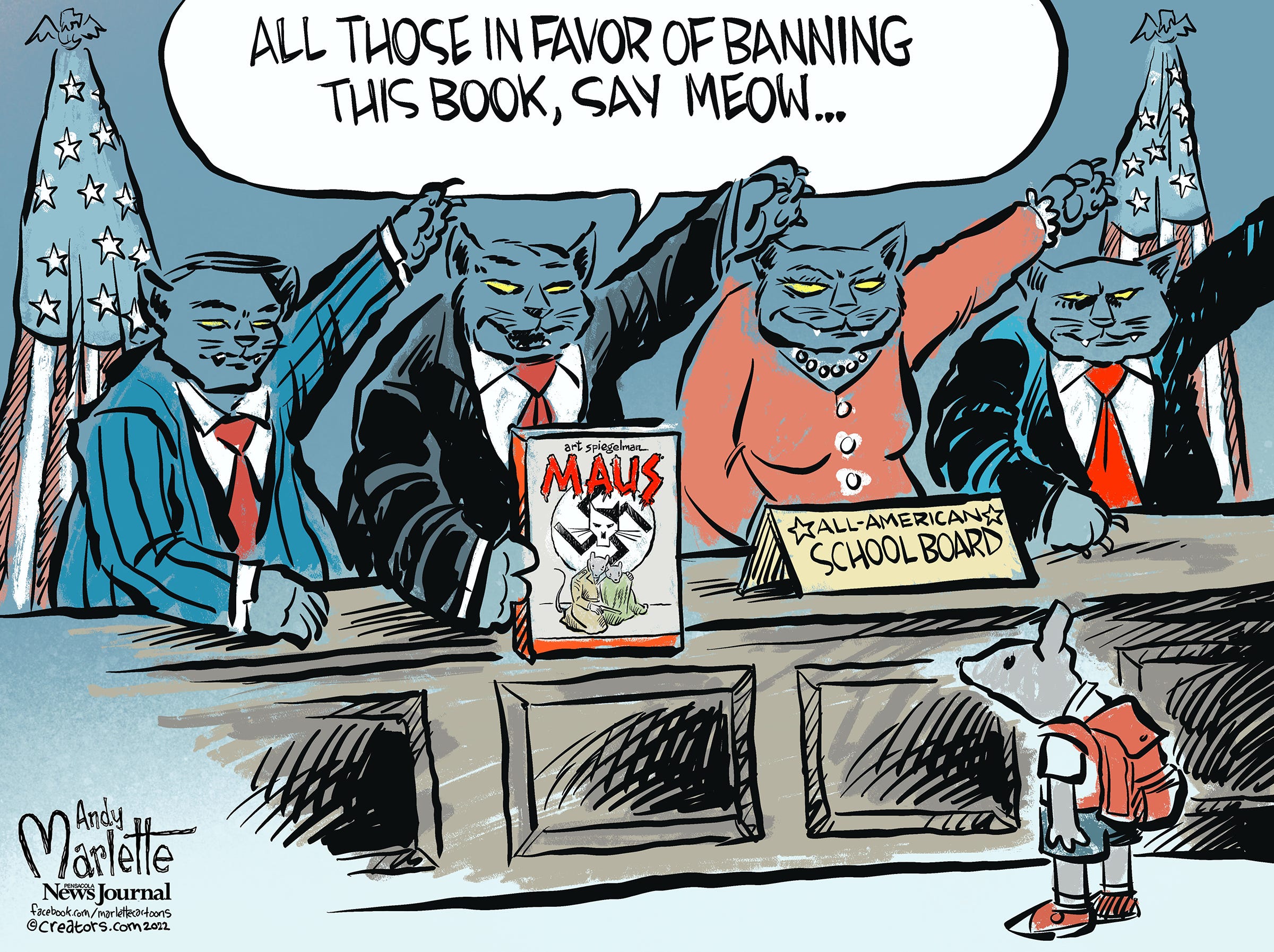
The following cartoon makes the same point by casting Board members as cats (which is how Nazis are portrayed in Maus).

https://www.pnj.com/story/opinion/2022/01/29/marlette-cartoon-all-american-book-banmarlette-cartoon-all-american-book-ban/9255940002/

It’s possible that McMinn County has a Nazi problem, but I don’t think we need to go that far. I’m speculating here (which is all you can do once you reject people’s stated motives), but I lean towards less conscious explanations: Something about Maus bothered the Board members (or the constituents who complained to them), and they went casting about for some way to justify their visceral reaction. They bought the absurd “vulgarity and profanity” explanation the way so many Obama-haters latched on to doubts about his birth certificate: Finding the real reason required too much uncomfortable introspection, so they grabbed the first justification they could find.

So what might the real cause of their discomfort be?

Matthew Parker (crediting the insights of the @JustSayXtian) approaches the question by listing the less “adult oriented” Holocaust books that Board members might have had in mind when they suggested replacing Maus: The Diary of Anne Frank, Number the Stars, The Book Thief, or The Boy in the Striped Pajamas. There’s nothing actually wrong with any of those books, Parker says, but they do something different.

Maus is a story centered on Jews, told in a Jewish way, in which there is horrible violence and no [Good Gentiles Doing Good Things] to save the day. There is no redemption, there is no salvation, there is only a story so terrible it has to be told and a need to remember.

People like this school board are perfectly comfortable teaching the Holocaust as long as it isn’t too violent, too sad, or too Jew-y. Because to them it isn’t a lesson about (largely if by no means exclusively) Jewish trauma, it’s a lesson about Good Gentiles Doing Good Things. The rest–our story, our tragedy, our people and families–are just set dressings for the moral and often explicitly religious lessons they want to take from the Shoah. [3]

Is it really about the children? Children, particularly in their aspect as “innocent” or “naive” children, are often used as screens for adult projection. If someone tells you a book is too disturbing for 8th-graders, they might well be saying that it is too disturbing for them.

The Holocaust, after all, is one of the most disturbing episodes in human history. If you can think about the Holocaust and not be disturbed, you probably don’t get it.

Maus captures that. Horrible things happen to Spiegelman’s father, and even more horrible things to people he knows and cares about. A few people help him, up to a point, but most don’t, and the few who do are mostly looking for payment or some other kind of advantage. Fellow Jews sometimes collaborate with the Nazis, and even family members can’t always be trusted. Vladek Spiegelman himself is a survivor, not a hero, and the scenes in the present illustrate the ways he was scarred by his experiences. Art Spiegelman can try to understand why his father is the way he is, but that doesn’t make him any easier to deal with.

So: People did and suffered horrible things; God didn’t rescue the victims; and if any good at all came out of all that suffering and death, it wasn’t worth it.

That irredeemable truth, in my opinion, is what the Board of Education doesn’t want to face. They’re not trying to protect teens from those ideas. They’re trying to protect themselves.

The Holocaust module. A part of my background that rarely comes up in this blog is all the education theory I read years ago. I went to an experimental public high school. We hosted an education conference every year, and I used to cover it for the student newspaper I edited. I did my homework before listening to the speakers.

One of the stories I remember reading (God knows where, after all these years) was about parents being told by their son’s grade-school teachers that his poor performance in reading was due to a learning disability; he belonged in a special class. What the parents knew that the teachers didn’t was that the boy was doing quite well in the Hebrew-reading class at their synagogue.

The difference, the author claimed, was that the Hebrew class was learning to read the Torah, which the teachers themselves thought was important. But the boy’s grade school was teaching him to read trivial stories that adults would never waste their time on. Reading Hebrew was worth his effort; reading English seemed not to be.

There is a widespread belief among children that school consists of meaningless hoops that adults expect them to jump through for reasons of their own. Even a lot of kids who do well in school believe this: If they’re forced to play this game, they might as well win. But that doesn’t mean they think education matters in any real sense.

The thing every true educator hopes for is to see the lights go on inside a student’s mind. There are magic moments in education, when a kid realizes that school isn’t just a waste of time, or even a way to compete with other kids for adult approval or success in some distant future. Instead, they surprise even themselves by thinking “I want to know this stuff.” Knowledge, they suddenly realize, is power. And all along, their good teachers have been hoping to empower them.

Often it’s one single book that sparks the change. “To Kill a Mockingbird made me a lawyer,” wrote Shami Chakrabarti. I remember reading Plato’s “Apology” as a 9th-grader (not in school; I found it randomly on a shelf), and realizing that a deeper kind of thought was possible. In a later generation, lots of kids didn’t see the point of reading until Harry Potter came out.

When the educators tell the McMinn Board what the English Language Arts curriculum is trying to do, it’s obvious those lights-on moments are what they’re shooting for.

When we were in school, we would hop from one book to the next. We would study one book a few days, do a test then move on to the next book. I want to tell you why curriculum is important and how the pieces of it are designed and how we have an opportunity to teach more than standards.

… The curriculum that we use is called EL, what does that stand for? I see some teachers here, what does that stand for? Expeditionary Learning. So, the whole idea is that students go on these expeditions, and they will spend two months or so on these different expeditions, and that’s their modules. In eighth grade that is four things. We do Latin America, we learn about food, The Holocaust and Japanese Internment.

… There are many lessons that can be learned through this book about how we treat others, how we speak, things that we say, how we act and how to persevere. I just wanted you to get an idea of why these lessons are structured like they are and how this text is just surrounded by excerpts and articles and the things we do to build that background knowledge and the opportunity we have to make a difference in our students lives.

This is the module that a Board member suspects was “developed to normalize sexuality, normalize nudity and normalize vulgar language.”

I listen to the descriptions of what the teachers are trying to accomplish and think, “Wow. I wish I’d had the opportunity to take a class like that.” This is the point that I think is getting lost in the news coverage: Simply defending Maus against charges of vulgarity and profanity makes it sound like the book clears a low bar. In fact, studying Maus, particularly in the in-depth way the module plans, could have been an amazing educational experience.

In the end, though, I’ve got no reason to be jealous of McMinn County 8th-graders, because they won’t get to take such a class either. The Board of Education has made sure of that. Maybe the students will get to study the Holocaust, sort of. But not in a way that might disturb them, or disturb their parents or their classmates’ parents. And not in a way that is too violent, too sad, or too Jew-y.

The Board wants another appropriate hoop for their kids to jump through. Study the Holocaust? Yeah, we checked that box.

Who is the victim here? Most of the coverage I’ve seen has made Art Spiegelman the victim, but I don’t think that’s quite right. Spiegelman’s name is in the headlines, his book is back on the best-seller lists, and Amazon seems to be sold out. People are reading Maus who would never had heard of it otherwise.

Another way of telling the story makes Jews-in-general the victims, and I can kind of see that. Especially in the current climate, when actual fascism is raising its head in America, and Nazi propaganda tropes about manipulative Jewish moneymen are showing up again in mainstream media, this incident is one more reminder that the lessons of the Holocaust have not really been learned. If I were Jewish, I think my anxiety level would have gone up a little this week.

The people I have the most sympathy for, though, are the 8th-graders of McMinn County. They had a chance to do something really amazing in school. Maybe that module, that chance to study something that really matters in some degree of depth, would have lit a fire under a few of them. Maybe they would have realized that school can be more than just busywork.

But that won’t happen, because powerful grown-ups (who have no idea what education is) have screwed that chance up for them. As grown-ups so often do.


[1] PDFs of both volume 1 and volume 2 are available online. I’m not sure how legal these reproductions are, so I intend to buy a copy when local bookstores have it in stock again.

[2] I truly feel sorry for kids who are picking up Maus now because they’ve heard it has nudity.

[3] Saturday’s NYT had an article about Poland’s attempt to shift the emphasis in Holocaust memorials to heroic Poles who attempted to help the Jews. The article does not mention Maus, but corroborates Spiegelman’s account of Poles profiteering off Jews rather than helping out of sympathy or kindness.

It’s also worth mentioning that slavery and the Civil Rights movement are often similarly reduced to stories of Good Whites Doing Good Things. We have a hard time facing up to the unrelenting grimness of American racism, so we tell these uplifting stories as if they were typical.

Is there any town in America that doesn’t have some connection to the Underground Railroad? With all those good folks working on the problem, it seems like the slaves should have been drained out of the South long before the Civil War.

The Monday Morning Teaser

A week ago, I did not anticipate that I would spend so much of this week thinking about the Holocaust. Sure, Thursday was Holocaust Remembrance Day, but that usually comes and goes without me paying much attention. This year, though, a Tennessee school board’s decision to take the Pulizer-winning Holocaust-themed graphic novel Maus out of their curriculum went viral, and for a couple days that was all anybody on my social media feeds wanted to talk about.

A lot of people jumped to one conclusion or another, but it turned out that you didn’t need to speculate that much about what was going on: The minutes of the board’s meeting were available online, and so were PDFs of Maus. I do my best to sort it all out in “McMinn County’s Maus Problem”, which should be out by 10 EST.

Not that the week lacked for other news: Justice Breyer announced his retirement from the Supreme Court, so the partisan wrangling over his replacement has already begun. Every day brings new speculations about whether the Russians are about to invade Ukraine. The Omicron wave of Covid began to recede. A blizzard hit the Northeast. GDP and inflation numbers came out.

So the weekly summary has a lot of ground to cover. I’ll try to have that out by noon.

Capricious Processes

No Sift next week. New articles will appear on January 31.

As these decisions show, the Court’s future hinges less on the text of federal law and the Constitution than on the capricious process by which conservatives define what it means to be one of them.

– Adam Serwer
The Culture War Has Warped the Supreme Court’s Judgment

This week’s featured posts are “Merrick Garland Starts Getting Serious” and “The Court and the Vaccine Mandates“.

This week everybody was talking about voting rights

https://theweek.com/political-satire/1009018/the-fireman

Ever since Georgia passed its new voter-suppression law last March, Democrats at the federal level have been talking about protecting voting rights. But with a zero-vote margin in the Senate, and voting rights not fitting into any of the existing holes in the filibuster, talking is about all they’ve managed to do.

The conversation started with the For the People Act, which Senator Manchin said he couldn’t support. But then he seemed to do the responsible thing: He spelled out what he could support, and what he claimed enough Republicans would support to overcome a filibuster. A compromise Freedom to Vote Act was worked out, which Stacey Abrams — the avatar of voting rights — endorsed.

Unfortunately, Manchin was wrong; Republicans unanimously reject his bill too, and none of them came forward with a plausible counterproposal. They also successfully filibustered the John Lewis Voting Rights Act, with Lisa Murkowski the only Republican voting yes. So the question boiled down to the filibuster: If the filibuster lives, federal protection of voting rights dies.

Manchin and fellow right-leaning Democrat (I’m refusing to use the much-abused media label “moderate“) Kyrsten Sinema have been saying all year that they didn’t want to change the filibuster. But as with Biden’s Build Back Better bill, many Democrats continued to insist their minds could be changed.

They couldn’t. Sinema in particular has laid out her thinking on the topic, in an argument that doesn’t make a whole lot of sense: Democrats will need the filibuster when Republicans get back into power. Jonathan Chait responds:

But how many times did the filibuster stop [Trump] from carrying out an abuse of power? Not one. You can go through a long list of Trump’s norm-shattering behavior without finding a successful filibuster. Sometimes he appointed unqualified or pliant cronies to executive-branch positions, but those votes already have a 50-vote threshold. Other times, he ignored norms or laws, but he didn’t need Senate approval to do that. In theory, Trump needed Senate approval to build a border wall in the South, but in practice, he just did it anyway through executive action.

The Senate plans to debate both the Freedom to Vote and the John Lewis bills tomorrow, but both seem doomed.

https://www.reformaustin.org/political-cartoons/save-the-filibuster/

and the Capitol Insurrection

New developments in the case this week are discussed in one of the featured posts: 11 OathKeepers were indicted for seditious conspiracy, and the multi-state plot to produce fraudulent Electoral College votes started coming to light.

Asha Rangappa explains the current vision of how Trump’s coup was supposed to work.

Just so we don’t lose our sense of humor completely, Randy Rainbow already had a song ready a year ago.

and the Supreme Court

The other featured post covers the Court’s contradictory opinions on vaccine mandates. It’s hard to find any coherent legal reasoning here, but John Roberts’ political patterns explain everything.

In other legal news: The Ohio Supreme Court struck down a pro-GOP redistricting map. The Court believes Ohio voters actually meant what they said when they passed an anti-gerrymandering ballot proposition in 2018.

We reject the notion that Ohio voters rallied so strongly behind an anti-gerrymandering amendment to the Ohio Constitution yet believed at the time that the amendment was toothless

And Ted Cruz’ effort to take down an anti-corruption law is going to the Supreme Court.

and the pandemic

The Omicron wave seems to be peaking. Or rather, the peak has passed in the Northeast, while the rest of the country is still on the up-slope. Currently, the US is averaging 802K new cases per day, up 98% in two weeks, but down fractionally from 807K on Friday. Hospitalizations are at 156K, up 61%, and deaths are at 1964, up 57%. The West has now passed the Northeast as the region with the most per capita new cases.

Bob Wachter provides a useful tweetstorm explaining what will and won’t change over the next month, and why he believes we’ll face less Covid risk then.

and you also might be interested in …

MLK Day should be our annual reminder not to turn Martin Luther King into a moderate. Conservatives would reduce him to that one “content of their character” quote and claim he supported the superficial kind of color-blindness where people pretend not to notice what race anybody is. There was much more to King than that, and most of it was pretty radical in its day. A lot of it still is.


I haven’t said much about the Russia/NATO/Ukraine thing because I don’t understand it. It’s hard for me to tell what is a bluff, what is overreaction, and what is real.


A Brooklyn junior is one of the few American high school students who has taken an actual class in Critical Race Theory.

When we discussed CRT in our short workshop, we were taught the basic premise of critical race theory — that the underlying cause of racism within our country is institutional oppression built into American government and law. This structural racism shows up in systems such as the electoral college, which allowed slaveholding states disproportionate representation, and the prison-industrial complex, which upholds forced labor to this day.

But he wasn’t taught to hate White people, to hate the United States, or any of the other things CRT opponents denounce.


Talking Points Memo reader JS is a lawyer-turned-teacher who explains why the pandemic experience is going to hurt teacher morale and retention for years to come.

Maybe we should just say, well, if waitstaff at restaurants and everyone else can be forced to show up, then so can we, and I think there’s something to that. But if you want to destroy the morale of an entire class of people, point out that [their] biggest anxiety is well founded: in other words, you are basically like a fast food employee despite what we say about your education and training and your job requirements. 

A lot of the trends in education of late are to deprofessionalize the job and make teaching into commodity work. The low pay tickles that anxiety. We have as many units as an MBA or an MFT just to get credentialed. We have the student loan debt to match, but it can seem like it’s all a lie. We’re really just babysitters.


Novak Djokovic left Australia Sunday, concluding the long back-and-forth about whether the unvaccinated tennis star could play in the Australian Open, which starts today.


I’ve never cared about the British royal family, to the extent that I had to look up which prince Andrew is. (He’s the Queen’s second son.) But the Jeffrey Epstein scandal is taking him down too. He hasn’t been convicted of anything, but he has lost his royal titles and faces a lawsuit from a woman who claims Epstein forced her to have sex with Andrew when she was 17.

and let’s close with something musical

Have you ever listened to a new popular song and felt like you’d heard it before? Sir Mashalot went further than that: He proved it by remixing six popular country songs into one seamless whole.

Merrick Garland Starts Getting Serious

https://billypenn.com/2021/01/08/malcolm-nance-capitol-insurrection-trump-paramilitary-insurgency-philadelphia/

The misdemeanor part of his January 6 investigation seems to be over.
But will he get all the way to the top?


In a speech on January 5, Merrick Garland described his strategy for investigating the insurrection. Lawfare summarized it:

Seemingly in response to criticism that mostly smaller fry defendants have been charged to date while those behind the planning of the insurrection have not, Garland described the department’s approach as consistent with “well-worn prosecutorial practices.” Large investigations, he explained, start with the more junior people and the more easily proved cases. The public at first sees short sentences (or no jail time at all) handed out, and an absence of the more notorious figures being charged. Garland strongly implied that more significant actions are coming down the pike. Junior people flip on more senior people. And perpetrators who were not directly involved in violence but played planning or other behind-the-scenes roles must be reached with more time-consuming and complex investigations.

This week, we began to see what he was talking about.

On Thursday, federal prosecutors charged Oath Keepers leader Stewart Rhodes and 10 others with seditious conspiracy for their role in the January 6 attacks on the US Capitol. That charge — the most serious yet to come out of the investigation — is one of several in the indictment unsealed Thursday, which alleges Rhodes and his co-defendants brought small arms to the Washington, DC, area; engaged in combat training to prepare for the attacks; and made plans to stage quick-reaction forces to support insurrectionists.

… The new indictments are a significant step up from previous charges in the case, which range in seriousness from disorderly conduct to obstructing an official proceeding before Congress, and have so far resulted in sentences up to 41 months in prison. In comparison, seditious conspiracy carries a potential sentence of 20 years in prison.

The new indictment lays out a plan that goes far beyond the mob.

While certain Oath Keepers members and affiliates inside of Washington, D.C., breached the Capitol grounds and building, others remained stationed just outside the city in [quick-reaction force] teams. The QRF teams were prepared to rapidly transport arms into Washington, D.C., in support of operations aimed at using force to stop the lawful transfer of presidential power.

So the plan was to overwhelm the Capitol with numbers, then bring in the guns to hold it.

The obvious question is whether the people plotting Trump’s January 6 strategy (the so-called “Green Bay sweep“) knew about this or were complicit in its planning. GB Sweep plotter Peter Navarro claims not, but his plan seems to have had a big hole in it, which an armed militia occupying the Capitol might have filled: A Capitol occupation might have pushed the election certification past Inauguration Day, opening up a huge can of worms could justify authoritarian action.

And Roger Stone is connected to both groups. Maybe that’s why he pleaded the Fifth rather than tell the January 6 committee what he knows.

https://www.nytimes.com/2021/11/09/us/politics/jan-6-subpoena.html

All of which leads to this week’s second development: Electoral College fraud.

When I first ran across the Eastman memo, the game plan for Trump’s attempt to steal the election he lost by seven million votes, this part made me scratch my head:

When [Vice President Pence] gets to Arizona [in the state-by-state electoral vote count], he announces that he has multiple slates of electors, and so is going to defer decision on that until finishing the other States. … At the end, he announces that because of the ongoing disputes in the 7 States, there are no electors that can be deemed validly appointed in those States.

Multiple slates of electors? Where did that come from? There have been rare cases in American history where rival slates of electors were named by rival sources of certifying authority. In 1876, for example, Florida’s Republican-dominated Board of Canvassers declared Rutherford B. Hayes the winner and certified his electors. And then the newly elected Democratic governor appointed a new Board of Canvassers that certified Tilden’s electors. So both sets submitted their credentials to Congress.

But the Electoral Count Act of 1887 was supposed to straighten all that out. Each state prepares a certificate of ascertainment signed by the governor (an example is to the right), listing the state’s electors. I could imagine a state legislature deciding that the ECA was unconstitutional and submitting a rival slate, or a state’s supreme court declaring that the governor’s signature was illegal in some way, but I hadn’t heard of anything like that happening. So: what “multiple slates of electors”?

Now we know. In seven states that Trump lost, his defeated candidates for the Electoral College signed fraudulent documents declaring themselves to be “duly elected and qualified Electors”. The fake certificates are all similar, suggesting that somebody — Mark Meadows? — distributed a template. And they didn’t do this just for personal satisfaction. They sent the fake certificates to the National Archives and to Congress as if they were real.

Given how much trouble ordinary Americans would be in if we, say, printed our own drivers licenses, I have to wonder if this forgery is illegal. George Conway, Kellyanne’s lawyer husband, tweeted:

Anyone who prepared or submitted, or aided, abetted or conspired in the preparation or submission of, false electoral-vote certificates, would presumably be guilty of a host of federal and state criminal offenses. False electoral certificates ought to be easy pickings for prosecutors.

Michigan Attorney General Dana Nessel agrees:

Under state law, I think clearly you have forgery of a public record, which is a 14-year offense, and election law forgery, which is a five-year offense.

Since this is a multi-state election fraud case, she thinks the federal Department of Justice should take the lead, and has referred the matter to them. (To their credit, Fox News reported this story. It’s enlightening to read the comments as Fox viewers try hard not to understand what Fox has just explained to them. I’m reminded of what Oliver Wendell Holmes said about a closed mind: It’s “like the pupil of the eye. The more light you shine on it, the more it will contract.”)

So that ball is in Merrick Garland’s court too. He hasn’t said what he intends to do with it.

The fake electors themselves clearly know they’re in trouble. (They should ask Michael Cohen what happens to people who go along with Trump’s schemes.) Arizona State Representative Jake Hoffman was asked by a local reporter what authority he was acting under, and (after Hoffman dodged that question) how he knew to show up for the fake ceremony where Trump’s fraudulent electors cast their ballots. Hoffman said the reporter should ask the state party chair. The follow-up questions “Do you not know how you arrived at the place? Do you really not know how you got a call?” led Hoffman to walk away.

So this where we are: We finally know that Garland intends to move beyond the pawns in Trump’s mob. Now he’s at the knight-and-bishop level. But will he get all the way to the King? Does he plan to? So far there’s no sign of that.