This week lacked one single dominating story. So in the featured post I’ll take a step back and explain “The Other Reason I’m Optimistic” about the fall elections. Short version: Trump has gotten rid of anybody (including Ivanka) who can tell him he’s had a bad idea. That’s a recipe for disaster, and we’re already starting to see it play out. That post should appear shortly.
The weekly summary has a few things to choose from. Fani Willis got reprimanded and her ex-lover had to leave the prosecution team, but the case will go forward. Ron DeSantis suffered some major defeats in his war on woke. The House passed a TikTok ban. And Russia had what it called an election. There was a big flap over Trump’s “bloodbath” prediction, which I’ll unravel as best I can.
One other thing: One of my favorite observers of the tech scene, Cory Doctorow, has both a novel and a nonfiction book out. They’re worth a look.
I’ll try to get the weekly summary posted by noon EDT.
I know I may not look like it, but I’ve been around a while. When you get to be my age, certain things become clearer than ever. I know the American story. … My lifetime has taught me to embrace freedom and democracy, a future based on core values that have defined America — honesty, decency, dignity, and equality — ; to respect everyone; to give everyone a fair shot; to give hate no safe harbor.
This week everybody was talking about the State of the Union
They were also talking about Katie Britt’s disastrous Republican response. The featured post covers both.
and Super Tuesday
As expected, Trump locked up the Republican nomination and Nikki Haley withdrew. She didn’t immediately endorse Trump, but I have to believe that’s coming. She sees what he is, but she’s going to bend the knee to him anyway.
On the Democratic side, Biden was not seriously challenged. In fact, Biden has done quite well in the primaries: His vote totals compare favorably with the percentages Obama got when he ran for reelection in 2012.
So here we are: a Biden/Trump rematch in the fall. It’s time for everybody to stop fantasizing that they’ll get some other choice and decide whether they want a democratic future or a fascist one.
Jay Kuo points out an aspect of Super Tuesday that hasn’t gotten much coverage: Polls appear to have a pro-Trump bias. Kuo means “bias” in the statistical sense, not the conspiracy-theory sense. In every state but North Carolina, Trump’s margin of victory was smaller than the polls predicted. Kuo doesn’t accuse pollsters of trying to promote Trump, but apparently something in their technique makes them more likely to include Trump voters in their samples. Kuo links to University of Michigan Professor Justin Wolfers:
By my count Trump’s actual margin in the primaries has underperformed that predicted by the polls by: 0-5%: AL, IA, TX
If the national polls are overestimating Trump’s strength at anywhere near the levels that the primary polls did, then Biden would be leading Trump in all of them.
Super Tuesday also included downballot candidates. North Carolina nominated right-wing crank Mark Robinson for governor, giving Democrats a serious chance to hang onto that office as Governor Roy Cooper term-limits out.
In another widely watched race, Democrat Adam Schiff and Republican Steve Garvey (the baseball player) advanced to the November election for Senate in California.
and the NYT
For weeks I’ve been harping on the NYT’s coverage of Biden: Whatever he says or does, the story is about his age, and no good news about Biden can be presented without “balancing” it with negative possibilities. Biden regularly gets a higher percentage of primary votes than Trump does, but Trump is portrayed as romping to victory while Biden’s results are ominous.
Well, this week the chorus of NYT-critical voices swelled. Salon columnist Lucian Truscott wrote “There’s something wrong at The New York Times”.
I don’t want to bring up but her emails, but for crying out loud, why is the New York Times so clearly making the same mistakes of bias and emphasis they made in 2016 covering Hillary Clinton all over again? …
There are no scandals with the name Biden attached to them, unless you consider the lies Russian spies supplied the so-called impeachment committee with. So The New York Times has apparently devoted half a floor in its Eighth Avenue headquarters to a search for bad news about Biden, and then they reserve a space nearly every day above the fold on the front page for whatever grain of grim shit the Biden hunters have managed to come up with. They’re probably working on a story on how Biden is losing the pro-choice vote as we speak, while pointing out the wild success of Trump’s “move to the middle” on abortion with “centrist” voters.
Dan Froomkin critiqued an interview with NYT’s publisher, and “translated” the underlying message to the NYT’s reporters and editors:
One: You will earn my displeasure if you warn people too forcefully about the possible end to democracy at the hands of a deranged insurrectionist.
And two: You prove your value to me by trolling our liberal readers.
That explains a lot of the Times’s aberrant behavior, doesn’t it?
And you can always count on Andy Borowitz to get to the heart of the issue:
POLL: A majority of Americans now believe that The New York Times, which was founded 172 years ago, is too old to be an effective newspaper.
After pleading to the judge that the bond he needed to post was too high, Trump posted the $91 million on Friday, secured by an insurance subsidiary of the Chubb Group. Chubb chairman Evan Greenberg had been on an advisory committee during Trump’s administration. The bond was required in order for him to proceed to appeal the verdict.
Now he needs to come up with $454 million by March 25 to appeal his civil fraud case.
Where exactly Trump gets this money should be a political issue, because we probably won’t know where it came from or what promises Trump made to get it. I suspect, though, that these questions won’t get the attention they deserve.
Last week I talked about the Nazi tactic of dehumanizing a group by treating their crimes as special, and in particular, how that tactic is being used against undocumented immigrants by presenting the Laken Riley murder as something uniquely horrible.
Gary Andover makes that point more sharply than I did:
Republicans are very concerned about one woman who was killed by a migrant. If she had been killed in a mass shooting by an American citizen with an AR-15 they wouldn’t give a shit. Their response would be to loosen up gun laws even more.
And Fred Guttenberg, father of Jaime Guttenberg who was murdered in the Parkland school shooting, makes it personal:
To all MAGAT’s using Laken Riley, where were you when my daughter was killed by a teenage American male? Where were you when Trump lied about the Parkland murder? You don’t give two f-cks about Laken or her parents, just as you don’t about victims of gun violence by Americans.
He’s a non-controversial figure because he says, “This is the way it’s going to be,” and that’s the end of it. Right? He’s the boss.
One of the ways Orbán has achieved this lack of controversy is that his government and its political allies now own all the major news outlets, and he has stacked the judiciary so that it’s useless to take him to court. He has reorganized the legislature into gerrymandered districts that his party can easily control with a minority of voter support.
I am filled with curiosity about Wilson’s new airless basketball, which is 3D-printed and designed to have the exact weight and bounce of an NBA ball. Unfortunately, the prototype currently goes for around $2500, so I think I won’t get my hands on one for a long time.
But Marques Brownlee did get to play with one, and here’s what he reports.
In his State of the Union address, President Biden claimed credit for his accomplishments, drew the contrast with “my predecessor”, announced goals for his second administration, and demonstrated a mental stamina and dexterity that he’s not supposed to have. By contrast, Senator Britt’s Republican response was creepy, dishonest, and insubstantial.
Where was that addled, feeble old man I’ve been hearing so much about?
If that’s who you were expecting to see at the State of the Union, you got a shock: While President Biden did occasionally stumble over his prepared text (the way he has since the beginning of his career), he was focused, coherent, and energetic. After standing and speaking for an hour, he was still smartly getting the best of his Republican hecklers (just as he did last year).
It’s hard to overstate how important that demonstration of mental acuity was. For years, Fox News has been selectively editing Biden to make him look confused (and ignoring all the comparable Trump moments). Fox talking heads (like Britt Hume) have been claiming — based on neither personal interactions nor expert medical analysis — that Biden is senile. And Trump has been telling his crowds that Biden “barely knows he’s alive“. More recently, the NYT and other mainstream sources have been echoing lesser versions that talking point, looking for every opportunity to highlight Biden’s verbal stumbles and emphasize Democrats’ anxiety over an issue that they themselves had been fanning.
Biden has had a hard time breaking through this negative narrative, because every story becomes a story about his age — similar to the way that every Hillary Clinton story became a story about her bogus email scandal in 2016.
Finally, though, the American people got a chance to see Biden in his entirety, rather than edited to fit some preconceived frame. They saw Joe Biden as he has always been: a politician not terribly skilled in oratory, but possessing a clear mind, a straightforward manner, a record of practical accomplishments, and a basic decency that contrasts well with the self-centered dishonesty of his general election opponent (a contrast Senator Britt’s response unintentionally emphasized with an outright lie).
As important as the optics of the speech were, it also had significant content, both in how it discussed issues of the present as well as an appealing vision of the future.
So let’s talk about that content, before going on to discuss the unintentionally revealing response given by Alabama Senator Katie Britt. (Like the speech itself, the summary is lengthy. Feel free to skip ahead.)
What he talked about. The early part of Biden’s speech was devoted to issues where large majorities of the American people agree with him, but Trump and congressional Republicans don’t: Ukraine, January 6, and reproductive rights. He linked the three as “freedom and democracy”, which are “under attack at home and overseas”.
Ukraine was the “overseas” part. Biden took credit for making NATO “stronger than ever”, and said that the aid Ukraine needs to defend itself from Russia’s invasion was being “blocked by those who want to walk away from our world leadership”.
I say this to Congress: We have to stand up to Putin. Send me a bipartisan national security bill. History is literally watching. History is watching. If the United States walks away, it will put Ukraine at risk. Europe is at risk. The free world will be at risk, emboldening others to do what they wish to do us harm.
January 6 was democracy under attack at home. He accused “my predecessor” (in the entire speech he never said Trump’s name) and “some of you here” of “seeking to bury the truth about January 6”. Here, he didn’t call for legislation, but for a more subtle kind of bipartisan action.
Many of you were here on that darkest of days. We all saw with our own eyes the insurrectionists were not patriots. They had come to stop the peaceful transfer of power, to overturn the will of the people. … I ask all of you, without regard to party, to join together and defend democracy. Remember your oath of office to defend against all threats foreign and domestic. Respect free and fair elections, restore trust in our institutions, and make clear political violence has absolutely no place — no place in America.
The rollback of reproductive rights Biden framed as “another assault on freedom”, and he challenged Republicans to guarantee access to in vitro fertilization. (A bill to do that is being blocked by Republicans in the Senate.) He pointed to state bills banning abortion and to Republican proposals for a national ban after some number of weeks.
My God, what freedom else [see footnote 1] would you take away? … If you, the American people, send me a Congress that supports the right to choose, I promise you I will restore Roe v. Wade as the law of the land again.
The second chunk of the speech was Biden’s telling of the story of his administration, beginning with what a shambles the country was when Trump left office. [2]
Four years ago next week, before I came to office, the country was hit by the worst pandemic and the worst economic crisis in a century. Remember the fear, record losses? Remember the spikes in crime and the murder rate? A raging virus that took more than 1 million American lives of loved ones, millions left behind. A mental health crisis of isolation and loneliness.
He described the comeback from those lows as “the greatest story never told”.
Folks, I inherited an economy that was on the brink. Now, our economy is literally the envy of the world. [3]
He listed his administration’s economic accomplishments:
15 million jobs created
unemployment at 50-year lows
16 million new small businesses
800,000 new manufacturing jobs
more Americans have health insurance than ever before
the smallest racial wealth gap in 20 years
billions of private-sector investment in high-tech manufacturing and clean energy
rebuilding infrastructure around the country (repairing roads and bridges, replacing lead pipes, extending rural broadband, …)
He segued from the past to the future by talking about prescription drug costs: Insulin now costs Medicare patients at most $35 per month, down from as much as $400. Medicare has started to negotiate down the prices of several drugs, a number that will rise to 500 drugs over the next ten years. He has capped total prescription drug costs at $2,000 per person under Medicare, and wants to extend that cap to everyone. He has outlawed a number of hidden fees and wants to get rid of more of them.
He proposed a number of plans to lower housing costs, both for buyer and renters; also education costs and the burden of student loans.
Biden recognizes that none of that is possible without the wealthy and corporations “paying their fair share” of taxes. He pointed to Trump’s budget-busting tax cut, and to Republican plans to give the wealthy more tax breaks. [4] The current tax rate on the nation’s 1,000 billionaires, he claimed, is 8.2%, “far less than the vast majority of Americans pay”. He proposed a minimum billionaire tax rate of 25% that he said would raise $500 billion over the next ten years, and invited America to imagine what could be done with that money: affordable childcare, paid leave to take care of family members, home care that keeps the elderly and disabled out of nursing homes.
Then he got to Republicans’ favorite issue, the border.
In November, my team began serious negotiations with a bipartisan group of senators. The result was a bipartisan bill with the toughest set of border security reforms we’ve ever seen.
This, of course, is the bill Republicans asked for, supported, and then turned against when Trump told them that he would rather run on the border problem than let Biden do something to improve the situation. Biden listed what the bill would have provided:
That bipartisan bill would hire 1,500 more security agents and officers, 100 more immigration judges to help tackle the backload of 2 million cases, 4,300 more asylum officers, and new policies so they can resolve cases in six months instead of six years now. [To catcalling Republicans] What are you against?
One hundred more high-tech drug detection machines to significantly increase the ability to screen and stop vehicles smuggling fentanyl into America that’s killing thousands of children.
This bill would save lives and bring order to the border. It would also give me and any new president new emergency authority to temporarily shut down the border when the number of migrants at the border is overwhelming. [5]
When Biden began to explain how Trump instructed Republicans in Congress to tank the bill, Marjorie Taylor Greene (apparently seeing the effectiveness of the point Biden was making) broke in with a yell of “Say her name” about Georgia nursing student Laken Riley, who allegedly was murdered by an undocumented immigrant. Biden took the challenge, but pronounced her name wrong before pointing out that thousands are killed by people who are here legally. [6] He went on to explain that making our system for evaluating asylum claims more efficient (as the proposed bill would do) would lower the incentives for people without legitimate claims to cross the border in the first place.
Biden challenged Trump to join him in urging passage of the law, but then drew a contrast.
I will not demonize immigrants, saying they are “poison in the blood of our country.” I will not separate families. I will not ban people because of their faith. … Look, folks, we have a simple choice: We can fight about fixing the border or we can fix it. I’m ready to fix it. Send me the border bill now.
Like most SOTU’s the end of the speech was full of a list of proposals too long to go into here, leading up to this conclusion:
I see a future where [we’re] defending democracy, you don’t diminish it. I see a future where we restore the right to choose and protect our freedoms, not take them away. I see a future where the middle class has — finally has a fair shot and the wealthy have to pay their fair share in taxes. I see a future where we save the planet from the climate crisis and our country from gun violence.
Above all, I see a future for all Americans. I see a country for all Americans. And I will always be President for all Americans because I believe in America. I believe in you, the American people. You’re the reason we’ve never been more optimistic about our future than I am now.
So, let’s build the future together. Let’s remember who we are. We are the United States of America. And there is nothing — nothing beyond our capacity when we act together.
Senator Britt’s response. Republicans choose 42-year-old freshman Senator Katie Britt of Alabama to make their official response. [video, transcript] I’m sure this seemed brilliant to them in a high-concept way: Britt is young and female, while Biden, Trump, and most of the Republican base are old and male. They want to paint Biden as a creature of Washington out of touch with American families, so it made sense to choose a newcomer to Congress who has no previous national profile, and to place her at a typical-family’s kitchen table.
But then she opened her mouth and it all fell apart. As with Biden’s speech, it’s possible to comment at length about either the form or the substance. The form has gotten a lot of criticism elsewhere, most notably from SNL’s cold open, where Biden cuts his remarks short because “I caught a glimpse of the Republican senator’s response to my speech, and I think she’s going to help me more than anything else I can say here.” Then Scarlett Johansson does a spot-on Britt impersonation, saying “tonight I’m going to be auditioning for the part of Scary Mom”.
Lots of people saw Britt’s performance as scary, including Kat Abu, who closed her weekly stories-you-missed-on-Fox summary with
I hope all of you stay safe, and when you go to sleep, make sure to check under your bed for the Alabama junior senator.
Others described her as a Stepford wife, and many women took offense at Republicans placing a female United States senator in a kitchen, as if to say that’s where women really belong, regardless of their accomplishments. You can find lots of such criticism if you look for it.
But I’d like to focus on the content of her remarks, because it epitomizes something basic about Republican politics: She emphasized identity and emotion without any hint of how Republican policies might help the people she supposed cares so much about.
For example, she said:
We strongly support continued nationwide access to in vitro fertilization.
But she did not address the fact that Republican-appointed judges are the ones who put IVF in jeopardy, and a Republican senator is blocking consideration of a bill to guarantee IVF access. So what does the GOP’s “support” mean in any practical sense?
Or consider this guy:
I’ll never forget stopping at a gas station in Chilton County one evening. The gentleman working the counter told me that after retiring, he had to pick up that job in his 70s so he didn’t have to choose between going hungry or going without his medication. He said, “I did everything right, everything I was told to do — I worked hard, I saved, I was responsible.”
Much of Britt’s response focused on the border. I’ll let Rachel Maddow provide the proper context:
She was one of the senators who was involved in the negotiations to create a border bill. She helped create the bill. And then voted against it when Trump called on Republicans to pull the plug on the bill that they themselves negotiated
So again: Britt appears to care deeply about the situation at the border. She just doesn’t want to do anything about it. And then she tossed the Republican base some red meat with an egregiously dishonest anecdote that the WaPo fact-checker rated as a four-Pinocchio lie:
She told the story of a woman who “had been sex trafficked by the cartels starting at age 12”. Britt made it sound like her deal was a consequence of “Joe Biden’s border crisis”, a phrase that she used both before and after the story.
The woman is real enough (her name is Karla Jacinto Romero) and there’s no reason to doubt that she was trafficked and repeatedly raped. But those events had nothing to do with Biden or US border policies: They happened in Mexico during the Bush administration.
WaPo goes on to explain that Britt’s lie is part of a bigger lie:
When Donald Trump was president, he regularly decried human trafficking that he claimed was happening at the border, including that “thousands of young girls and women” were being smuggled across the border for prostitution. In 2019, we investigated that claim and found no evidence to support it. Most human trafficking prosecutions generally involve legal border crossings, visa fraud and travel into the United States on airplanes. Victim organizations say there are relatively few cases that involve forced kidnapping across the border. This might be one reason Britt regularly cites a case that happened long ago and did not involve crossing the border.
In other words, while the problem might be real at some level, building a wall or shutting down the border would have no effect on it.
Britt closed with a message for “my fellow moms”:
We see you, we hear you, and we stand with you.
But apparently we’re not going to do a damn thing for you. Because that’s not how Republicans see Congress: It’s a place to strike poses and make outrageous statements that you hope will go viral and get mentioned on Fox News. It’s not for passing legislation that might help Americans deal with real problems.
[1] “what freedom else” is typical of a number of small manglings in this speech, and demonstrates the kind of verbal mistakes Biden has been prone to his entire career. I guarantee you “what freedom else” never appeared on a speechwriter’s computer screen.
As someone who occasionally speaks in public from a prepared text, I recognize this type of mistake, because I make a lot of them during my rehearsals. (I’m a little better than Biden at getting words out, so I’ve usually ironed these glitches out before the public presentation.) Mistakes on this level are not evidence of some larger cognitive decline, as Biden’s critics would have you believe.
[2] Trump and his supporters like to forget 2020 happened at all. For example, Tim Scott bragged about Trump’s economic record by quoting 2019 unemployment statistics.
[3] “Envy of the world” is a phrase we’ll hear a lot during this campaign, because while US economic situation is not perfect, the problems our economy faces are global problems that America is handling better than just about any other country.
Every country’s economy tanked during the pandemic, and every government (including the US under Trump) spent massively so that people who couldn’t go to work wouldn’t starve, and businesses that had to close their doors temporarily would have the resources to reopen. When the vaccine did allow economies to reopen, prices rose everywhere, and every central bank raised interest rates to try to rein inflation in.
But the US is virtually alone in pulling off a “soft landing”: getting inflation down while continuing to create jobs. It’s a major accomplishment and Biden is right to take pride in it.
[4] This provoked exactly the kind of protests from Republicans that Biden was probably counting on, and allowed him to ad lib the way he did last year on Social Security and Medicare cuts.
We have two ways to go. Republicans can cut Social Security and give more tax breaks to the wealthy. I will — [shouts from the audience]
That’s the proposal. Oh, no? You guys don’t want another $2 trillion tax cut? I kind of thought that’s what your plan was. Well, that’s good to hear. You’re not going to cut another $2 trillion for the super-wealthy? That’s good to hear.
[5] This led to another back-and-forth with Republicans.
Oh, you don’t think so? Oh, you don’t like that bill — huh? — that conservatives got together and said was a good bill? I’ll be darned. That’s amazing.
One of the most satisfying clips from the speech was Senator James Lankford of Oklahoma, the lead Republican senator negotiating the bill, saying “That’s true” as Biden listed the bill’s virtues. To his credit, Lankford didn’t deny it afterward.
Trump’s decision to tank the border bill was a major blunder that gives Biden a way out of an issue that otherwise worked against him. Now he can say something like: “I tried to solve the problem, but my opponent had his Republican allies in Congress block me. They would rather have a talking point than any real progress.”
[6] The larger point is that while the undocumented (like every other segment of the population) do occasionally commit crimes, on the whole there is no discernible “migrant crime problem”. Cities with a large population of undocumented immigrants do not have more crime than other comparable cities.
I’m still running a little behind from the time change yesterday.
The big news this week was Biden’s State of the Union address, which I saw as a major victory for the President. His oratory will never be studied and copied like Obama’s, but it was an extremely effective speech that (in addition to its content) belied all the claims that Biden’s age won’t let him to do the job. Far from the addled old man of Republican imagination, Biden was master of the situation. He didn’t just read somebody else’s words from a teleprompter, but bantered with Republican hecklers and largely got the better of them for more than an hour.
What’s more, the speech demonstrated Biden’s major advantage going into the general election campaign: He has a good story to tell, full of clear accomplishments, and a better vision for the future than Trump can offer.
So the featured post will discuss that speech, as well as the embarrassing and dishonest response from Republican Senator Katie Britt of Alabama. That post should appear between 10 and 11 EDT.
The weekly summary will talk about the beginning of the Biden/Trump campaign, the state of the Trump trials, the growing Democratic disgust with the NYT’s campaign coverage, an appeals court’s slap at DeSantis’ STOP-woke law, anti-Semitism in America, the crazy guy Republicans nominated to be North Carolina’s governor, and a few other things. I’ll try to get that out by noon.
In some ways, all this is no surprise. Trump the businessman and politician is to a great degree a creation of the American judiciary. Early in his career, he figured out that the legal system was acutely vulnerable to someone with money and total shamelessness. He learned that if he categorically refused to admit defeat, clogging up the proceedings with endless motions and filings, he could rip off his contractors, repeatedly default on his debts, seemingly cheat the IRS out of millions in inheritance taxes, and get away with it just about every time. If you’re a star, they let you do it.
This week everybody was talking about the Supreme Court helping Trump
It would be easy to write at length about this, but I refuse to do it. I would just rant, and plenty of people are rantingalready.
Here’s the gist: Wednesday, the Supreme Court put its thumb on the scale in Donald Trump’s favor, virtually guaranteeing that the most significant case against him — the federal case in DC arising from his plot to stay in office after losing the 2020 election — will not reach a verdict by election day.
Their vehicle for aiding Trump is his absurd claim that ex-presidents are immune to prosecution for any actions they took in office, unless they’ve first been impeached by the House and convicted by the Senate. Basically, this means that a president who retains the support of 34 senators can break any law without fear of facing consequences (including consequences from the voters, because he can break any law to make sure he stays in office). During the oral arguments before the appellate court, Trump’s lawyers had no answer when asked if a president could have the military assassinate his rivals.
If such immunity exists, the trial against Trump cannot progress. So everything has been on hold. Judge Chutkan’s original calendar called for the DC trial to begin today. But Trump’s lawyers filed their immunity claim back in October, and Judge Chutkan rejected it on December 1. When Trump appealed, Special Prosecutor Jack Smith asked the Supreme Court to take that appeal immediately and decide it quickly. The Court refused.
So there was an appellate hearing, resulting in a unanimous ruling rejecting Trump’s claims on February 6. Trump appealed again, but because the appellate ruling was complete and unanimous, many observers felt there was nothing for the Supreme Court to resolve. It could have refused the case and let a trial start in May or June.
Nonetheless, the Court sat on Trump’s motion for seven weeks, and then Wednesday announced that it will hear arguments April 22, which presumably will lead to a ruling near the end of their term in June.
Judge Chutkan’s schedule still has about three months for pretrial activities, so if the Supremes take as long as they appear to be doing, the earliest jury selection could begin is the end of September. From there, it would be no trick for Trump’s lawyers to delay the verdict until after the election.
No one thinks the Court will agree that Trump is immune from prosecution, which continues to be an absurd idea, rejected by every judge who has considered it. But they don’t need to. Trump’s strategy has never been to argue his innocence in court, because the evidence clearly says he’s guilty. Instead, he hopes to delay, get reelected, and then tell his Justice Department to withdraw from the case. Even if there is a verdict against him in November or December, he can appeal. And if the Justice Department refuses to fight the appeal, the case dies.
Wednesday, the Supreme Court signed on to Trump’s strategy. It did this because it is even more corrupt and partisan than I had previously suspected.
But I refuse to rant.
Just this morning, the Court released its opinion on the 14th Amendment case to disqualify Trump. It sided with Trump, ruling that states do not have the power to invoke the Amendment’s insurrection clause. The decision reserves that power to Congress.
I haven’t had time to analyze the decision yet, but it’s worth noting that no justice addressed Colorado’s conclusion that Trump did indeed engage in insurrection against the United States.
The other 2020 election case, the state RICO case in Georgia, is also on hold while the judge decides whether Fani Willis should be disqualified as prosecutor. Disqualification would almost certainly delay the trial until after the election, and could scuttle the case completely.
Hearing on that matter concluded Friday, with the judge saying he should rule in two weeks. Unquestionably, Willis’ affair with another prosecutor looks bad, but the question is whether the issue reaches the rights of the defendants: Did Willis have some conflict of interest that compromises the defendants’ rights to a fair trial? I think not, but we’ll see.
The Trump-appointed judge in the Mar-a-Lago case continues to favor Trump in any way possible. Friday she denied Jack Smith’s request for a July trial date, which she called “unrealistic”. When the trial will actually happen is anybody’s guess.
The only case that is on track to produce a verdict before election day is the NY state false-business-records case. According to the indictment, Trump Organization business records were falsified to hide Trump’s reimbursement of Michael Cohen for paying off Stormy Daniels, so that voters would not learn about his affair with Daniels before the 2016 election.
The trial date is March 25, and the heart of the matter — whether the records are false — is pretty much uncontested so far. So if the case reaches a jury, Trump will probably be convicted. The way he could get off is through technicalities: If the crime should have been charged as misdemeanor falsification rather than felony falsification, then the statute of limitations has expired.
Meanwhile, we’re all wondering about Trump’s finances. He says he’s appealing both the $83.3 million judgment against him in the second E. Jean Carroll case and the $454 million judgment in the NY civil fraud case. The rules around appeals require that he post some bond to guarantee that the people who won the judgments will get paid if his appeals fail. Appeal, in other words, is not a way to hang onto money longer.
Judgment in the E. Jean Carroll case was finalized on February 8 and in the NY civil fraud case on February 23. So if I count 30 days right, Trump needs to guarantee the $83 million on Saturday and the $454 million on March 24. (That’s a Sunday, so I might be a day off. AP says NY Attorney General Letitia James could seek enforcement — like seizing property, for example — on March 25.)
In spite of his frequent boasting about his wealth, Trump doesn’t have that kind of money available. So he’s been treating the judgments against him as if they were negotiable: The court has made its claim, then he makes a counteroffer, and so on. (You should try this the next time you get a traffic ticket. “I know the ticket says $50, but how about I give you $15 and we call it even?”) In the Carroll case, he offered that the court should just take his word that he’s good for the money. (Carroll’s responding court filing described his offer as “the court filing equivalent of a paper napkin signed by the least trustworthy of borrowers”.) And in the fraud case he offered $100 million. Both motions were denied by the judges.
I guess we’ll see what happens by next Monday.
and Mitch McConnell
The Mitch McConnell Era in the Senate will end this November. Most liberal commentary on McConnell’s retirement has balanced two thoughts:
McConnell has done terrible damage to the Senate, the judiciary, democracy, and the country as a whole.
Whoever replaces him as leader of the Senate’s Republicans will probably be worse.
Josh Marshall (I’m trying out a feature that allows me to share a members-only article; I hope it works) attempts to give the Devil his due like this: “McConnell was great at doing political evil.”
Mitch McConnell’s great legacy is the thorough institutionalization of minority rule in U.S. politics, especially at the federal level. … These days you often hear reporters and commentators saying matter of factly that legislation requires 60 votes in the Senate. This is truly McConnell’s greatest accomplishment. People say this like it’s in the Constitution, like the two-thirds requirement for conviction at impeachment or to approve a treaty. But it is a novel development and it has radically altered U.S. politics. It transforms the federal Senate into a genuinely Calhounian body in which minority factions exercise a de facto and permanent veto over the majority.
It’s what creates gridlock, the breeding ground of political disaffection and extremism. It also lays the groundwork for McConnell’s other great accomplishment, the corrupted federal judiciary and especially the corrupt Supreme Court.
DailyKos staffer Joan McCarter lists “The 17 worst things Mitch McConnell did to destroy democracy“. She recalls his refusal to hold hearings on Merrick Garland’s Supreme Court nomination (because it was months away from the 2016 election) combined with his steamrolling Amy Coney Barrett’s nomination through (mere weeks before the 2020 election); his unwillingness to regulate either guns on the streets or money in politics; turning the debt ceiling into a permanent political hostage; and his vote to acquit Trump despite admitting that he was guilty.
That last was McConnell’s biggest miscalculation: He thought Trump was finished after January 6, and figured he didn’t need to tick off Trump’s supporters by convicting him. And so he surrendered the old Reagan Republican Party to the new MAGA fascists.
Maybe the deepest critique of McConnell comes from a 2018 NY Review of Books essay by Holocaust scholar Christopher Browning (which is behind a paywall). Browning compared McConnell to the Weimar Republic’s conservative president Paul von Hindenburg, who paved the road Hitler walked to power. Similar to the way Hindenburg hoped for a restored monarchy but wound up with Hitler, McConnell envisioned a plutocratic conservative ascendancy, but wound up enabling populist authoritarianism.
To me, McConnell is a villain who in the end was not quite villainous enough to win out.
and Gaza
Despite continuing rumors that a ceasefire agreement may be immanent, there’s still no agreement. Naturally, each side blames the intransigence of the other.
Israeli troops fired on a crowd of Palestinians racing to pull food off an aid convoy in Gaza City on Thursday, witnesses said. More than 100 people were killed in the chaos, bringing the death toll since the start of the Israel-Hamas war to more than 30,000, according to health officials.
Israel said many of the dead were trampled in a chaotic stampede for the food aid and that its troops only fired when they felt endangered by the crowd.
It’s telling, I think, that the Israeli account says that the situation in a part of Gaza its troops control has become so dire that people are trampling each other to get food. Also, the US has begun airdropping food aid into Gaza. To me, that points to an extreme level of frustration with the border crossings. Airdropping aid is well-known to be extremely inefficient.
The NYT’s Megan Stack wrote an article about children without food in Gaza, but I bet she didn’t choose the headline: “Starvation is Stalking Gaza’s Children“, as if “starvation” were an abstract force that no one is responsible for.
+972 Magazine (a Palestinian/Israeli journalistic consortium named for an area code) reports that Israeli settlers have begun reoccupying Gaza. The first “symbolic” settlement is unauthorized by the government, but soldiers did not interfere.
Israelis are protesting for a variety of reasons: Police broke up a fairly large anti-Netanyahu demonstration Saturday. But other protesters are trying to block convoys of food, water, and medicine from reaching Gaza.
and the continuing IVF fallout
The Alabama legislature is working on bills to get the state’s IVF clinics open again. The state senate passed a bill whose official summary says:
This bill would provide civil and criminal immunity to persons providing goods and services related to in vitro fertilization except acts or ommission [sic] that are intentional and not arising from or related to IVF services.
The house is working on a similar bill, and presumably they’ll work something out. If this gets passed, the official position of the State of Alabama will be that a frozen embryo is a human being and disposing of an embryo is murder, but murder is OK in this particular circumstance.
This is the kind of thing that happens when religious zealots get control of a state.
The majority of Louisiana’s fertility clinics have been shipping patients’ embryos out of state for years, with some ending up in Florida and others as far away as Nevada. The time-consuming and costly process is a result of a 1986 state law that banned the destruction of embryos created during IVF.
a constraint upon a service used primarily by wealthy White couples — IVF treatments run between $15,000-$20,000 for a single cycle — went too far. The logic of the judicial decision — if life begins at conception, embryos must be people — fails against the logic of Christian nationalism — that White people need to reproduce to avoid being replaced.
So if your fundamental mindset is racist, you love IVF because it makes more White babies. But if your fundamental mindset is sexist, you hate IVF because it gives women more control over their lives. If you’re racist and sexist in equal measures, your head explodes.
and the polls
This week a poll showed Trump leading Biden by 5% among registered voters and 4% among likely voters. OK, that’s a real thing that happened. But for some reason, the NYT put this poll at the top of its online news page for more than 24 hours, and fleshed it out with articles about how concerned Democrats are about Biden and how many people think he’s too old.
The SECOND those polls reverse, they will, I promise you, stop talking about them.
Some of the crosstabs of the Times-hyped poll look weird, to use a technical poll-watching term. They says the race is even among women, Trump leads among Hispanics, and that he’s getting around 1/4th of the Black vote — about double what any Republican has gotten in a general election since Gerald Ford got 16% in 1976. There are two ways to analyze this:
Biden is in trouble among core Democratic constituencies.
I have an in-between interpretation: The issues in the headlines right now — Gaza and the border — are ones that split Democrats. Everybody to my left is absolutely horrified that Biden is letting/helping Israel do what it’s doing in Gaza, and that Biden backs a border bill that gives Trumpists a lot of what they want (even if they refuse to take it). Consequently, many liberals are not willing to tell a pollster that they will vote for Biden.
However, I think a lot of these voters will come home in November. They may not have gotten any happier with a few Biden policies, but they’ll look at the choice and realize that even on those issues a second Trump administration would be infinitely worse. (How much do you think Trump cares about children starving in Gaza?) And then there are the issues of democracy and climate change, which Trump links like this: “You know why I wanted to be a dictator? Because I want a wall, and I want to drill, drill, drill.”
The first campaign I have clear memories of was 1968. That year, liberals opposed the Johnson administration’s policies in Vietnam and were also angry about how they had been treated at the Democratic Convention. In August, polls showed Richard Nixon beating Johnson VP Hubert Humphrey in a landslide, with margins as high as 16%. But most of those voters came home, and the November election wound up being one of the closest in history.
A lot of people on social media are calling attention to Trump saying this in Richmond on Sunday. But it’s barely been mentioned in major media.
And I will not give one penny to any school that has a vaccine mandate or a mask mandate.
Critics point out that every state, including Virginia, has vaccine mandates. But I haven’t seen enough context to know if he really meant ALL vaccines, or just the Covid vaccine. That’s the benefit Trump gets from his sloppy way of speaking. There’s always room for supporters to say: “He didn’t really mean that.” (Usually right after they claim “He tells it like it is.”) And he never does an interview with a journalist persistent enough to pin him down.
The Institute on Taxation and Economic Policy analyzed the results of the Trump Tax Cuts. Their study covered “the largest profitable corporations from 2018 through 2022”, 342 of them in all. Ostensibly, the law lowered the corporate tax rate from 35% to 21%, but in fact the average company studied paid only 14.1%. One out of four paid a single-digit tax rate, and 23 paid no tax at all “in spite of being profitable every single year”.
Companies paying less than 5 percent include T-Mobile, DISH Network, Netflix, General Motors, AT&T, Bank of America, Citigroup, FedEx, Molson Coors, Nike, and many others.
Sometimes (not today) I think the weather in New England is bad. But we never get buried in tumbleweeds, as some towns in Utah have been lately. And here’s something I didn’t know: Tumbleweeds may be icons of the Western countryside, but they’re an invasive species — the Russian thistle.
Adam Rubenstein writes about having been a conservative editor at the NYT. Mainly he’s telling the sad tale of how the higher-ups scapegoated him when the NYT faced a serious backlash for publishing a Tom Cotton op-ed (calling for Trump to send the military into US cities to put down the sometimes violent protests after police murdered George Floyd). Scapegoating is something I can sympathize with, but Rubenstein is hoping for a more general stranger-in-a-strange-land kind of sympathy, which I can’t offer him.
Rather than create sympathy, his essay underlines exactly why conservative points of view are shunned in many reputable newspapers: because they’re based on bullshit, and you can’t publish them without promoting bullshit. Like this:
I often found myself asking questions like “Doesn’t all of this talk of ‘voter suppression’ on the left sound similar to charges of ‘voter fraud’ on the right?” only to realize how unwelcome such questions were.
Well, maybe such questions are “unwelcome” because Republicans’ incessant claims of voter fraud are never backed up by any evidence, while voter suppression smacks you in the face. (Can you name a rural White community where people have to stand in line for hours to vote? Or an acceptable form of voter ID that non-Whites are more likely to have than Whites?) Or think about climate change: Can you publish a conservative view without giving a platform to bullshit? It would be quite a trick.
Riley was indeed murdered; that much is true. What’s false is the “migrant crime wave” invented by Donald Trump and echoed ad infinitum by Fox News.
An NBC News review of available 2024 crime data from the cities targeted by Texas’ “Operation Lone Star,” which buses or flies migrants from the border to major cities in the interior — shows overall crime levels dropping in those cities that have received the most migrants.
“This is a public perception problem. It’s always based upon these kinds of flashpoint events where an immigrant commits a crime,” explains Graham Ousey, a professor at the College of William & Mary and the co-author of “Immigration and Crime: Taking Stock.” “There’s no evidence for there being any relationship between somebody’s immigrant status and their involvement in crime.”
Trump and Fox are using an old Nazi tactic that can dehumanize any group. The Nazi newspaper Der Sturmer loved to publish articles about sensational Jewish crimes. Some of the crimes the paper made up or exaggerated, but probably not all of them. After all, Jews are people, and people occasionally commit crimes. If your ideology calls for making “Jewish crime” a special thing, you can.
Same thing here. Migrants are people, and people occasionally commit crimes, including murder. That doesn’t mean “migrant crime” is a significant issue.
The Atlantic’s Ian Bogost says TV resolution has gotten out of hand: HDTV was a noticeable improvement over the previous standard. But you won’t sit close enough to your 4K TV to tell the difference from an HDTV. And now 8K is coming!
and let’s close with something edifying
I suspect that the difference between good science education and bad science education is bigger than just about any other educational field. Bad science education quickly becomes tedious, while good science education has a mind-blowing oh-wow effect.
Take a look at the videos at Branch Education, where I’ve been having a number of oh-wow experiences lately. Some are explanations of fundamental scientific devices, like How Do Electron Microscopes Work?, while others undo some popular misconception or answer a question you’ll wonder why you never thought to ask.
In the popular misconception category: We all understand the inaccuracy of the sound effects in movie battles between starships, because you wouldn’t actually hear explosions in space. Sound is a wave traveling through a medium. And deep space is a vacuum, so it should be totally silent. Except when it’s not.
I’m restraining myself from writing a post about the Supreme Court’s decision to delay Trump’s January 6 trial for another few months. I’m sufficiently angry at them that I doubt my comments would add much to my readers’ understanding of the situation. I’m also annoyed at myself for underestimating the extent to which the Court has been corrupted by partisanship. Plenty of other people are ranting about this, and I’ll link to some of them.
At the same time, focusing on something else this week seemed silly, so I won’t have a featured post.
I will cover the Court’s decision in the weekly summary, because it’s news. I’ll do my best to stick to the facts, acknowledging my personal opinion, but not belaboring it. I’ll also review where Trump’s other criminal cases stand. Short version: The least significant one is the only one that’s on track. (It’s weird to think that there’s a “least significant” criminal case against an apparent major-party nominee, or that people can (unfairly) dismiss the Stormy Daniels case as “just about sex”, but that’s the world we live in now.) Also, I continue to wonder where Trump will get the money to cover his NY civil judgments.
Another confession: I have to force myself to look at Gaza. I really don’t want to believe what’s happening there. That’s why my comments on the situation tend to be terse.
Other stuff the summary covers: Mitch McConnell is retiring so that somebody worse can get that job. People are still reacting to the Alabama IVF decision. The NYT decided that a favorable poll for Trump was the most important thing happening in the world that day. “Migrant crime” is the latest conservative bogus issue, replacing voter fraud and critical race theory.
I almost used Utah tumbleweed inundation as a closing, but I eventually decided that — as funny as it may seem when you’re 2000 miles away — it’s actually news. So instead the closing will introduce you to an amazing set of explanatory science videos.
This week everybody was talking about IVF in Alabama
The Alabama Supreme Court’s ruling that frozen embryos are children for the purposes of wrongful death lawsuits is covered in the featured post.
Just after I pushed the Post button, I saw that Jay Kuo had written about his personal IVF story. His IVF child is currently in a surrogate mother’s womb. (Since I subscribed to Kuo’s substack blog, I’ve been linking to it almost every week.) He includes a photo of a frozen embryo, so we know what we’re talking about.
The bottom line is that the GOP can’t support IVF and support the idea that an embryo is a “person” entitled to full protection under our laws. Supporting IVF means understanding how it actually works and being comfortable with the idea that intended parents must create more embryos than we ultimately need. And clinics cannot be on the hook for murder should anything happen to them. No clinic coul survive with that threat hanging over it.
Neither of those two principles can be truly supported by Republicans so long as their party adheres dogmatically to the “life begins at conception” notion. Politicians who claim to support IVF must repudiate these kinds of fetal personhood laws, or their public backing of IVF means exactly nothing.
In my post, I tried not to treat the Alabama court’s position with all the contempt it deserves, so I resisted the temptation to include the “Every Sperm is Sacred” scene from Monty Python’s The Meaning of Life.
In other religious-right news: The campaign to overturn the Obergefell same-sex marriage decision begins in Tennessee, with a law allowing state officials to refuse to solemnize same-sex marriages.
This law wouldn’t block same-sex marriages, because same-sex couples could still get a marriage license and find somebody other than a judge or other government official to play the celebrant role. But it does relegate them to a second-class status, which this Supreme Court will probably think is fine. This is exactly the kind of chipping-away that states did on Roe v Wade until it was reversed.
Personally, I judge these things by applying a racial analogy: What if a judge refused to marry an interracial couple to express his personal disapproval? Of course, Justice Alito is unmoved by this analogy. Recently he wrote that his dissent in Obergefell was prescient in foreseeing
that Americans who do not hide their adherence to traditional religious beliefs about homosexual conduct will be ‘labeled as bigots and treated as such’ by the government.
Of course, if you want to deny the full rights of citizenship to people your religion disapproves of, and you believe that government officials should be able to treat them with official disrespect, you are a bigot. Conservative political correctness may not let people say so, but it’s not even a close call.
and Russia, Russia, Russia
Last week we learned that the Biden impeachment case — which had always been flimsy — had fallen completely apart: The star witness for the bribery story Republicans wanted to tell, Alexander Smirnov, had been indicted for making the whole thing up and lying to the FBI. Another prospective witness, Gal Luft, had been indicted last summer for arms trafficking and being an unregistered Chinese agent.
This week we found out it’s worse than that: Smirnov now says he got his anti-Biden stories from Russian intelligence.
Jay Kuo (him again) lays out the pipeline by which Russian disinformation found its way to the Trump Justice Department and from there to Republicans in Congress (Jim Jordan, James Comer, Chuck Grassley) who pushed it out to the country.
These GOP leaders are at best hapless dupes. They should have known and understood the games Russia was playing with them. But we shouldn’t discount the possibility that they were well aware that the Smirnov claims were false and may have originated from Russian intelligence… and then went along with them anyway.
Indeed, we should now actively investigate this possibility.
Donald Trump and his MAGA legions have spent years shock-training reporters not to bring up anything else about Russian disinformation programs aimed at helping Donald Trump. But they’re real. They’re continuing. They’re actually working. And that remains the case no matter how many times Donald Trump says “RUSSIA RUSSIA RUSSIA” on Truth Social. Reporters have been conditioned to ignore the clear implications of what we’re learning.
So what does he think the real story is?
[W]e now see that almost all of 2023 was dominated by a legal/political story that was not only bogus but — according to prosecutors’ filings and the discredited source’s own admission to federal authorities — was a plant by the Russian intelligence services. That’s real. That requires an explanation as to how that was ever allowed to happen.
… The story here isn’t that the “Biden Crime Family” nonsense didn’t pan out. That was always transparently bogus. The story here is how the U.S. again got bamboozled by transparent foreign manipulation and how the U.S. political press bought into it pretty much whole hog. That doesn’t mean they accepted all the claims. But they treated it as reasonable, worthy of a presumption of seriousness, a serious story to be covered as such. Even with the veritable forest of red flags.
and the Trump trials
Judge Engoron officially filed his judgment against Trump Friday, with the disgorgement-plus-interest standing at $454 million. This sets the clock running: Trump has 30 days to appeal. But appealing doesn’t mean he gets to delay coming up with a substantial amount of money.
Trump has two options to meet the state’s demand: to pay the amount in full, or secure a $35m bond against his assets, which might include the Fifth Avenue Trump Tower, 40 Wall Street, his Mar-a-Lago estate, or a number of golf courses in the US.
“If the guy can give phony financial statements, he can give phony information to the bonding company,” [attorney Mark C.] Zauderer said, referring to Engoron’s finding in the case that the Trump Organization submitted false information to banks to obtain loans. “A bonding company who is going to put up several hundred million dollars here is not, in my opinion, going to do it easily.”
Those Carroll and NY state totals face very different prospects on appeal. The Carroll money is mostly punitive damages, which was a judgment call made by the jury; an appeals court might make its own judgment and find that excessive. But the NY State money is based on disgorgement of specific ill-gotten gains. To reduce them, an appeals court would need to rejudge Engoron’s conclusions: It would have to find either that Trump did not commit fraud, or that the fraud was not connected to these particular gains.
I’m not going to put a lot of effort into making fun of Trump’s branded sneakers, because it’s shooting fish in a barrel. But I will pass on one nickname they have picked up: Aryan Jordans. And one suggested slogan I heard: “Fast. Faster. Fascist.”
and media malpractice
I already mentioned Josh Marshall’s doubts that the mainstream media is up to covering the Smirnov story. But that’s just part of a much larger failing.
basically, Bill or Hillary would do something that every other politician in the entire history of the world does — something as simple as holding a fundraiser, or giving a speech — and the press would report it in hushed tones and describe it as if it were some new kind of dastardly scandal.
Well, the same thing is happening with Biden: Whatever he does — even if every other politician in the world does it — is evidence that he’s too old. Tiedrich links to The Daily Mail, which has discovered the latest evidence of Biden’s senility: He uses note cards!
Mark Jacobs raises a significant question about the NYT: “Is the New York Times neutral on the future of democracy?” He calls out all the doubts I have about whether the Times deserves my subscription: They regularly give a platform to known liars. They cover politics as “an amusing game”, analyzing everything as strategy without discussing the consequences. They write headlines that hide horrible things Republicans say (like when Trump’s “vermin” comment was simply “a very different direction” for a Veterans Day speech). And they find “balance” for every terrible thing Republicans do. (Trump is facing criminal charges? He encourages Putin to invade our allies? Yeah, but Biden is old. Biden’s age is filling the same “balancing” role that Hillary’s emails played in 2016.)
The Times’ best work is very, very good. But I continue to wonder whether it’s a net positive or negative for American journalism. One change you may have noticed on this blog: I used to subtly encourage my readers to subscribe, but I no longer do. So I’m only linking to NYT articles if there is something unique about them. If I can get the same information from The Guardian or CNN, I will.
Given the fact that Trump and Biden have 91 felony counts between them, it’s no wonder that so many Americans are considering voting third party.
Last week I linked to Ezra Klein’s call for Biden not to run, and for the Democrats to hold an open convention. This week many people pushed back on that idea. Lindsay Beyerstein called attention to Biden’s success at unifying the divergent wings of the Democratic Party, and predicted that party unity would dissolve in an open convention.
In 2024, a contested convention would become an arena to settle every score from Gaza to Medicare for All. A free-for-all would shatter the fragile Democratic coalition that Joe Biden so carefully knit together.
Several pundits made the same observation: No alternative candidate is doing better than Biden in the polls against Trump. (Current polls show the race more-or-less even.) You can claim that’s a name-recognition problem and they’ll do better after they’re nominated, but that’s a leap of faith.
The right answer to anyone making these kinds of open-ended statements of concern is to say, tell me specifically what course of action you’re advocating and, if it’s switching to a new candidate, how you get there in the next few weeks? … Klein’s argument really amounts to a highly pessimistic but not unreasonable analysis of the present situation which he resolves with what amounts to a deus ex machina plot twist. That’s not a plan. It’s a recipe for paralysis.
and the wars
As Israel prepares its ground operation against Rafah (the southern-Gaza town where refugees have gathered), it still has no goal beyond the vague and unachievable “destroy Hamas”. For an analysis of how everything arrived at this state, I recommend Zack Beauchamp’s Vox article “How Israel’s War Went Wrong“.
In The New Yorker, a Palestinian who escaped to Egypt describes how the relatives he left behind are scrambling for food.
Biden continues to back away from Netanyahu very, very slowly. Friday, the administration restored a legal finding the Trump administration had reversed, saying that the West Bank settlements are against international law.
Tomorrow’s Michigan primary will be a test of how much Biden’s Israel policy is costing him, as Palestinian activists are campaigning for Democrats to vote “uncommitted” rather than for Biden.
We just passed the two-year anniversary of Russia’s invasion of Ukraine. PBS Newshour gathered some experts to summarize.
My two-years-in observation is about the politics of the Ukraine War in the US: It resembles the politics of January 6. At the beginning, Americans responded the way human beings would. They sympathized with a country trying to get out of the orbit of Putin’s fascist Russia when Putin’s forces invaded to pull them back in. (I’ve since read all kinds of explanations about how either Ukraine or the West provoked Russia, and I just don’t see it. There was never a threat to invade Russia through Ukraine. Anything less is a problem for diplomacy, not justification for an invasion. The typical answer to that point is to bring up the US invasion of Iraq, which was also unprovoked. But I have no trouble admitting that the Iraq invasion was wrong too.)
That initial gut response wasn’t controversial in America. In the early days of the war, everybody, regardless of political party, was rooting for the underdog Ukrainians and wondering what we could do to help. That’s how the situation was similar to January 6: In the beginning, everybody who wasn’t actively involved in the coup reacted with horror to Trump’s brownshirts attacking the Capitol to try to keep him in power by force. Kevin McCarthy, Mitch McConnell, and just about the whole GOP establishment united with Democrats in their initial rejection of what Trump had done.
But then the MAGA media machine and the MAGA social-media conspiracy theorists got to work on reversing the natural human instincts of the people under their sway, and today both Ukraine and January 6 are partisan issues.
and the dysfunctional House of Representatives
Ukraine aid isn’t the only thing House Republicans are stalling. Speaker Johnson has recessed the House until Wednesday, with a partial government shutdown looming Friday and the rest of the government running out of money a week later. The WaPo reports that “talks have slowed” on a compromise to prevent a shutdown.
The four appropriations bills set to expire Friday — agriculture; military construction-VA; energy and water and transportation; housing and urban development — are the easier ones. On March 8, funding runs out for more controversial bills for which the far right is demanding even more explosive policy riders around abortion, LGBTQ rights and border security.
and you also might be interested in …
South Carolina’s Republican primary was Saturday, and Trump won over Haley, 59%-39%. How you read that result depends on the question you’re asking. If you’re focused on whether Trump will be nominated, this is a very solid positive result. If Haley is 20 points down in her home state, she really has no chance.
But if your question is whether Trump will be able to unite the Republican voters in the fall, this is a weak showing. Voters went in knowing Trump was the almost certain nominee, but 39% refused to get in line behind him.
Democracy is returning to Wisconsin. For many years, the Wisconsin legislature has been gerrymandered to guarantee Republican control, independent of the will of the voters. AP reports that Democrats have won 14 of the last 17 statewide elections, but somehow those same elections have yielded a Republican supermajority (22-10) in the state senate and a near supermajority (64-35) in the state assembly.
Nonetheless, the voters of Wisconsin still had access to a few levers of power. Last April, Janet Protasiewicz won a 55%-44% victory to gain a seat on the state supreme court, flipping the court to liberal control. In December, the court ruled 4-3 to throw out the Republican-drawn legislative maps. Forced to negotiate with Democratic Governor Tony Evers (another winner of a statewide election), the Republican legislature produced a relatively fair map, which Evers signed into law last Monday.
Under the new state Assembly map, the districts are more evenly split. The new map has 46 districts that lean Republican and 45 districts that lean Democratic. The eight districts left are likely to be a toss-up between Democratic and Republican candidates. …
Under the new state Senate map, 14 out of 33 districts are Democratic-leaning, while 15 are Republican-leaning. Four districts are competitive, where either party has a fair chance of winning them.
However, the Wisconsin congressional maps are still gerrymandered, and Republicans hold six of the eight seats. Democratic voters are packed into the other two districts (containing Madison and Milwaukee), which they won by 19 and 25 points.
The NYT reports on “The Crisis in Teaching Constitutional Law“. What’s the crisis? The clearly partisan nature of the current conservative supermajority on the Supreme Court. The older generation of professors once shared a faith that interpreting the Constitution is a meaningful activity transcending politics. Justices might have philosophical differences that lead to diverse conclusions, but fundamentally they are all making a good-faith attempt to understand what the law means. Recent Supreme Court decisions — like the Bruen gun control decision — have shaken that faith, to the point that law professors don’t know what to teach their students.
Whatever rationale or methodology the justices apply in a given case, the result virtually always aligns with the policy priorities of the modern Republican Party. …
Stanford’s Professor McConnell recalled a recent exchange in one of his classes. “I said something to the effect of, ‘It’s important to assume that the people you disagree with are speaking in good faith.’ And a student raises his hand and he asks, ‘Why? Why should we assume that people on the other side are acting in good faith?’ This was not a crazy person; this was a perfectly sober-minded, rational student. And I think the question was sincere. And I think that’s kind of shocking. I do think that some of the underlying assumptions of how a civil society operates can no longer be assumed.”
I don’t know how many times I’ve heard that “the stock market always goes up in the long run”. Well, sometimes the long run is a very long time indeed. If you bought Japanese stocks at their peak in 1989, you finally turned a profit this week.
and let’s close with some musical training
I’ve heard lots of versions of Pachebel’s Canon, but never before one based on train whistles.
With its ruling affirming the rights of “extrauterine children” and invoking “the wrath of a holy God”, the Alabama Supreme Court takes a giant step towards theocracy.
Given all the bad press Alabama has gotten this week for its supreme court’s ruling that frozen embryos are “extrauterine children” covered by the state’s Wrongful Death of a Minor Act, you might imagine that the media is just piling on. You might be thinking, “It’s probably not really that bad.” Maybe if you took the time to read the full 131-page decision, you’d understand and even respect where the justices were coming from, even if you still didn’t agree.
Let me shoot that generous notion down: I read the decision. It’s even worse than it looks in the news reports. I started reading newsworthy court opinions with the 2003 Massachusetts same-sex marriage decision, and since then I’ve easily read 100 or so. I’ve never seen one this flat-out insane or this scary in its implications.
It’s tempting to go off on a rant. But instead, let me back up and give you the context.
IVF. The reason anybody freezes embryos in the first place is for in vitro fertilization (IVF), a medical procedure that helps otherwise infertile couples have their own biological children rather than adopt. It’s been going on since 1978 and it’s popular: CNN estimates that about 2% of babies born in the United States are conceived through IVF. Chances are that you know someone who conceived or was conceived through IVF. (I know I do.)
Leaving out a bunch of details, it works like this: Ova are removed from a woman’s ovaries, and then they are fertilized in a laboratory with sperm from that woman’s chosen partner (or maybe a sperm bank). The cells start dividing, and after a few days they are ready to implant in a uterus (either the woman’s own or, if the whole point is to overcome some medical problem there, the uterus of some other willing woman). This is a hit-or-miss process that may require several attempts, so typically a number of ova are fertilized simultaneously, and the embryos not used are frozen in case they are needed later.
Many of the frozen embryos will never be implanted in a uterus, where they might develop into fetuses and eventually babies. Perhaps they are defective in some way. (For example, it’s possible to test the embryos for some heritable genetic issues the parents want to avoid passing on.) Or perhaps the woman succeeds in having all the children she wants before all the embryos are used. The remainder are usually destroyed in one way or another, though they can stay frozen more-or-less indefinitely (“several decade, if not longer” according to the court’s majority opinion).
Bad theology. So far, so good, but then IVF runs into a dogma invented by Catholic and/or Evangelical theologians: At the moment of conception, the fertilized egg becomes a full human being for all moral purposes. (As I’ve explained before, this notion is not just against common sense, it’s also ahistorical and non-Biblical. Among Protestants, virtually no one believed this until after abortion became a conservative political issue in the 1970s.) If this dogma is true, then destroying these clumps of cells means murdering human beings. So unless women can be convinced (or forced) to gestate the extra embryos (even the defective ones), the only moral choice is to grant them a peculiar sort of immortality in a freezer.
An unfortunate accident in Alabama. I’ll let Justice Jay Mitchell, who wrote the Alabama supreme court’s majority opinion, sum up the incident that started the recent case:
The plaintiffs’ IVF treatments led to the creation of several embryos, some of which were implanted and resulted in the births of healthy babies. The plaintiffs contracted to have their remaining embryos kept in the Center’s cryogenic nursery. … [I]n December 2020, a patient at the Hospital managed to wander into the Center’s fertility clinic through an unsecured doorway. The patient then entered the cryogenic nursery and removed several embryos. The subzero temperatures at which the embryos had been stored freeze-burned the patient’s hand, causing the patient to drop the embryos on the floor, killing them.
So there are obvious grounds for a lawsuit: The clinic should have kept the embryos safer and the wandering patient shouldn’t have mucked with them, with the result that something the plaintiffs valued was destroyed. But rather than (or in addition to) suing under the kinds of tort laws that would apply to accidentally destroyed property, they sued under the Wrongful Death of a Minor Act, a law that would apply if, say, someone had run over their six-year-old.
The trial court didn’t buy it.
In each of its judgments, the trial court explained its view that “[t]he cryopreserved, in vitro embryos involved in this case do not fit within the definition of a ‘person’ ” or ” ‘child,’ ” and it therefore held that their loss could not give rise to a wrongful-death claim.
But then the Alabama Supreme Court got involved.
Strange coinages. Conservatives love to make fun of the “politically correct” ways that liberals use words, saying things like “enslaved person” rather than “slave” or “pregnant person” rather than “pregnant woman”. Well, I invite them to read this decision.
You’ve already run into one of the strange coinages: The embryos were stored in a “cryogenic nursery” rather than a “freezer”. (I wonder whether the freezer technicians are listed as “cryogenic nurses”.) Worse, Justice Mitchell frames the case’s main issue like this:
whether the [Wrongful Death of a Minor] Act contains an unwritten exception to that rule for extrauterine children
That’s right: “extrauterine children”. (I bet you have never thought of yourself as a “uterine child”.) And perish the thought that the authors of the 1872 act, writing more than a century before the first IVF baby was born and only two decades after the first commercial ice-making machine, weren’t thinking about frozen embryos when they said “child”, or that we shouldn’t try to guess what their opinions would have been, if some science fiction author could have explained the concept to them. No: We can stretch the notion of “child” to include frozen embryos, and the 1872 law doesn’t explicitly tell us not to. So there you are.
The stretching of “child” happens in two steps. First to “unborn children”, which Mitchell explains was always included in the notion of a “child”.
the ordinary meaning of “child” includes children who have not yet been born.
He gives two arguments for this, neither of which is particularly convincing: Long before 1872, people said that a pregnant woman was “with child”, clearly meaning that her fetus was already a child. (Of course, they also said that she was “expecting” a child, indicating that the child exists in the future, not the present. Mitchell’s cherry-picking technique does not require him to explain this.) Mitchell then misconstrues Blackstone’s 17th-century classic Commentaries on the Laws of England, which Chief Justice Tom Parker’s concurring opinion quotes more precisely: life “begins in contemplation of law as soon as an infant is able to stir in the mother’s womb.” With that larger context, Blackstone was plainly drawing a boundary at quickening, not conception.
But once you take as established law that the boundary of childhood is conception, then why should it matter whether the conception happened in a womb or in a test tube? Of course the law must protect “extrauterine children”. The law, he writes, “applies to all unborn children, regardless of their location”.
He goes on to fret over the possible unforeseen consequences of limiting the law’s protection to uterine children: What will happen in the future, when laboratories remove women from the gestation process completely?
one latent implication of the defendants’ position — though not one that the defendants seem to have anticipated — is that, under the defendants’ test, even a full-term infant or toddler conceived through IVF and gestated to term in an in vitro environment would not qualify as a “child” or “person,” … [and] then their lives would be unprotected by Alabama law.
God forbid the legislature should have to write a new law for this situation. And speaking of God …
The Chief Justice’s theological treatise. Bonkers as it is, Mitchell’s opinion sounds downright reasonable once you read the concurrence by Chief Justice Parker, a 23-page lesson in Christian theology that begins on page 26.
You see, the Alabama Constitution, which was rewritten in 2022, affirms “the sanctity of unborn life”. Parker feels compelled to interpret this “sanctity” as a uniquely Christian notion, stemming from “the creation of man ‘in the image of God.’ Genesis 1:27 (King James)”. He quotes at length from a 17th-century Protestant theological treatise on the significance of creation in God’s image, which he says accords with the opinions of Catholic saints Thomas Aquinas (13th century) and Augustine (5th century). He then says:
Man’s creation in God’s image is the basis of the general prohibition on the intentional taking of human life.
This would seem to imply that no culture outside the Judeo-Christian tradition cares about murder. Parker also gives attention to John Calvin’s writings on the subject before concluding:
In summary, the theologically based view of the sanctity of life adopted by the People of Alabama encompasses the following: (1) God made every person in His image; (2) each person therefore has a value that far exceeds the ability of human beings to calculate; and (3) human life cannot be wrongfully destroyed without incurring the wrath of a holy God, who views the destruction of His image as an affront to Himself. Section 36.06 [of Alabama’s constitution] recognizes that this is true of unborn human life no less than it is of all other human life — that even before birth, all human beings bear the image of God, and their lives cannot be destroyed without effacing his glory.
No doubt you have heard about judges threatening some malefactor with jail or fines or injunctions, but when was the last time a judge invoked “the wrath of a holy God” against those who would “efface his glory”?
Effects. The immediate legal effect of the ruling is not that big: It sends the case back to the court that had dismissed it, with instructions to apply the Wrongful Death Act.
But fear of the ruling’s implications has thrown Alabama’s IVF facilities into chaos. At least three have suspended operation, worrying not just about the embryos in their own freezers, but also about the possibility that the ideas expressed in this civil case might seep over into criminal law. Vox quotes Stephen Stetson, the director of Planned Parenthood Alabama.
I can appreciate the desire of lawyers who are advising fertility clinics to be conservative. No one wants to be on the hook for any legal liability or risk of criminal prosecution if some district attorney gets the wrong idea.
And then there are the Alabama women who have invested a considerable amount of money, inconvenience, and hope for the future in IVF. They are just out of luck, it seems.
Possibly the Republican-controlled state government will try to help them. A state senator has announced his intention “to introduce legislation that would clarify that embryos are not viable unless they are implanted in a uterus”. Governor Ivey has endorsed this effort.
[Senator Tim] Melson, who is also a medical doctor, says his proposal would make clear that “a human egg that is fertilized in vitro shall be considered a potential life,” but should not be legally considered a human life until it is implanted in a uterus.”
In other words, the state would be saying that ensoulment-at-conception theology is wrong. I wonder how many legislators will be willing to do that, even given how popular IVF is across party lines. (Both Mike Pence and Democratic Senator Tammy Duckworth have children conceived via IVF.)
I also wonder if legislation would be enough. Chief Justice Parker based his opinion on the state constitution and the will of God, so a mere law probably wouldn’t move him. It’s hard to say what the other justices would do. The ruling had an 8-1 majority, but several of the concurrences read like dissents. They reject the majority opinion’s reasoning (sometimes for the very reasons I’ve given above), but reach the same conclusion by a different path.
Beyond Alabama. Arizona, Missouri, and Georgia have fetal personhood laws similar to Alabama’s, though Arizona’s is currently blocked by the courts. Similar laws have been proposed in 12 other states (though the laws are unlikely to pass in some of them, like Massachusetts and New York).
Any of those states could be the site of the next IVF case. Further, a number of birth control options are technically murder, if ensoulment happens at conception. An IUD, for example, primarily works by preventing conception, but it also can prevent a fertilized ovum from implanting in the uterus, effectively killing it.
Marching towards Gilead.Amanda Marcotte examines the deeper implications of the extremist faction that wants to ban IVF. On the surface, she says, their opposition to IVF seems puzzling.
A lot of people are understandably shocked to learn that the anti-abortion movement also hates IVF. After all, the movement claims to be all about motherhood. One would think the people who are always yammering on about how a woman’s greatest purpose is giving birth would celebrate those who endure IVF, which is both painful and expensive, just so they can have a baby.
But she sees an underlying motive:
It’s important to understand that what the Christian right really wants is not motherhood, per se, but a social order where women are second class citizens. They take a dim view of not just abortion and contraception, but all reproductive technologies that make it easier for women to exercise autonomy over their lives.
It also must bug them that many lesbians use IVF to conceive.
Michael Shermer, the publisher of Skeptic Magazine, reposted a Heritage Foundation post from May which proposes to “end recreational sex”. It includes a video in which a woman proposes to “restore consequentiality” to sex by ending birth control. Chris Rufo, the conservative theorist behind the Critical Race Theory panic, replied with
“Recreational sex” is a large part of the reason we have so many single-mother households, which drives poverty, crime, and dysfunction. The point of sex is to create children—this is natural, normal, and good.
So if you’re one of those couples that has been using sex to express your love for each other rather than to conceive children (a path my wife and I have been following for nearly 40 years), Chris Rufo thinks you’re doing it wrong.
It’s important not to paint this issue with too broad a brush: Most people who call themselves Republicans, and even most people who would tell a pollster they support Trump, don’t agree with this extreme anti-sex, anti-choice position. But in the Trump era, the most radical voices consistently prevail in the GOP. Reasonable moderates, to the extent that any still exist, have been consistently unwilling to stand up to ideologues on their right flank. Will they this time? That’s not a bet I’d want to cover.
This week we got an example of just how far things can go once religious zealots get power in a state: The Alabama Supreme Court found that frozen embryos in an IVF clinic count as children under the state’s Wrongful Death of a Minor Act.
If you’re a generous-minded sort, you may have seen all the headlines and suspected that the media was piling on: Probably, you think, the actual decision is not quite as bad as all that.
I have some bad news for you: I read the full 131-page decision, and it’s worse than the headlines make it sound. One highlight is the state’s Chief Justice invoking “the wrath of a holy God” — a phrase I never thought I’d see in a legal opinion. I’ll summarize what I found in this week’s featured post, “Sweet Home, Gilead”. That should appear between 9 and 10 EST.
That leaves a lot for the weekly summary to cover: The Biden impeachment case now looks like a phenomenally successful Russian disinformation operation. Where is Trump going to get the half-billion dollars he needs in order to file his appeals? There’s a weird anti-Biden bias in the mainstream media, reminiscent of the “Hillary’s emails” delusion of 2016. Speaker Johnson is still blocking Ukraine aid on the second anniversary of Russia’s unprovoked invasion. And the week’s major good news: Wisconsin is about to become a democracy again.
I’ll try to get that out by noon, but I’m feeling slow today.
This week everybody was talking about the Trump trials
$355 million, Fani Willis testifying, a trial date for the Stormy Daniels case, presidential immunity goes to the Supremes, and more: It was hard to keep track of which case any particular news story applied to. I sort it out in the featured post.
and Putin’s Republican sympathizers
Putin critic and political rival Alexei Navalny died in an arctic prison on Friday. Navalny is an inspirational fighter for democracy who Putin has tried to kill before. Prison authorities attributed the death first to “sudden death syndrome” and then to a pulmonary embolism.
The New Yorker’s Masha Gessen (my favorite Russia-watcher) pulls a number of themes together:
Putin appears to be feeling optimistic about his own future. As he sees it, Donald Trump is poised to become the next President of the U.S. and to give Putin free rein in Ukraine and beyond. Even before the U.S. Presidential election, American aid to Ukraine is stalled, and Ukraine’s Army is starved for troops and nearing a supply crisis. Last week, Putin got to lecture millions of Americans by granting an interview to Tucker Carlson. At the end of the interview, Carlson asked Putin if he would release Evan Gershkovich, a Wall Street Journal reporter held on espionage charges in Russia. Putin proposed that Gershkovich could be traded for “a person, who out of patriotic sentiments liquidated a bandit in one of the European capitals.” It was a reference to Vadim Krasikov, probably the only Russian assassin who has been caught and convicted in the West; he is held in Germany. A week after the interview aired, Russia has shown the world what can happen to a person in a Russian prison. It’s also significant that Navalny was killed on the first day of the Munich conference. In 2007, Putin chose the conference as his stage for declaring what would become his war against the West. Now, with this war in full swing, Putin has been excluded from the conference, but the actions of his regime—the murders committed by his regime—dominate the proceedings.
Meanwhile, Ukraine withdrew from the city of Avdiivka in Donetsk. AP attributes the withdrawal to lack of artillery.
One reason for that lack is Speaker Mike Johnson, who still refuses to bring Ukraine aid to a vote (because it would pass). Johnson says he won’t be “rushed” into voting on aid that President Biden asked for in September. Russian forces may be gaining ground and Ukrainian soldiers may be dying, but what’s the hurry?
The elephant in the room here is Trump, who won a narrow victory in 2016 with Putin’s help, and has been in Putin’s pocket ever since. (Hillary Clinton correctly observed in a 2016 debate that Trump would be Putin’s puppet, to which Trump made a typical playground response: “No. You’re the puppet.”) Trump single-handedly torpedoed the Ukraine/Israel/border bill that the Senate had negotiated a few weeks ago, and was just about the last political figure in the US to make any comment on Navalny. As usual, Trump did not criticize Putin, and instead made his comment mainly about himself.
“The sudden death of Alexei Navalny has made me more and more aware of what is happening in our Country,” Trump posted, and then the rest is about himself and his troubles.
I’m sure both the beleaguered people of Ukrainian and Navalny’s grieving widow take great comfort from that.
While we’re talking about Tucker, he followed his Putin interview by going to a Moscow supermarket to show his viewers how great conditions are in Russia.
Lots of people pointed out that things usually are cheap in poor countries, which Russia is at this point in spite of its vast natural resources and educated population. In 2021, Tass reported that sixty percent of Russian citizens spent at least half their income on food. For context, in 2022 Americans spent about 11.3% of their income on food, and the poorest quintile of American society spent 31.2% of its income.
But The Atlantic’s Graeme Wood has travelled in Russia and went deeper. Yes, there are some things that are better in Moscow than in New York.
Carlson’s videos never quite say what precisely he thinks Russia gets right. Moscow is in many ways superior to New York. But Paris has a good subway system too. Japan and Thailand have fine grocery stores, and I wonder, when I enter them, why entering my neighborhood Stop & Shop in America is such a depressing experience by comparison. Carlson’s stated preference for Putin’s leadership over Joe Biden’s suggests that the affection is not for fine food or working public transit but for firm autocratic rule—which, as French, Thais, and Japanese will attest, is not a precondition for high-quality goods and services. And in an authoritarian state, those goods and services can serve to prolong the regime.
One lesson from the election appears to be the mistake House Republicans made by giving in to Trump and scrapping a bipartisan compromise on the border. Suozzi was able to flip the script on the GOP in this race: Democrats tried to do something about the immigration problem, but Republicans blocked them.
The election followed a long string of recent Democratic victories since the Supreme Court ditched Roe v Wade. The great political mystery of recent months has been how polls show Democrats in trouble, but then Democrats win elections anyway.
You might think that another Democratic victory would be good news for other Democrats, like Joe Biden, but you wouldn’t guess it from reading the New York Times. In the Times, nothing is good news for Biden.
This is a regular theme in the humorous Twitter account New York Times PItchbot, which suggests how the Times should frame various stories. Tuesday afternoon before the polls closed the Pitchbot tweeted:
If Democrats win today’s special election in NY-3, it’s further proof that special elections don’t mean anything. But if they lose, it’s very bad news for Biden in November.
And that turned out to be more-or-less exactly what the NYT’s Nate Cohn wrote Wednesday morning.
As we’ve written recently, it’s hard to glean much from special elections. … If anything, one could advance the idea that the results were slightly underwhelming for Democrats, given all of the aforementioned advantages than Mr. Suozzi seemed to possess. Either way, a single special election result like this one is entirely consistent with polls showing Mr. Biden and Democrats in a close race heading into 2024.
While we’re talking about Biden and his prospects in November: In this 25-minute podcast, Ezra Klein makes the most convincing Biden-shouldn’t-run argument I’ve heard yet. Last week, I wrote about my strong belief that the Biden-is-too-old-to-be-president argument is misguided, and how his occasional use of the wrong word should not raise worries that he isn’t up to the job. I still believe all that.
But Klein makes a subtly different argument. He acknowledges that Biden has been an excellent president, and says that everyone he talks to who has observed Biden’s performance in decision-making meetings agrees that he is still quite sharp. But Klein points out that running for president is different from being president. Yes, the Republic would be in good hands if Biden were president for an additional four years. But is the Democratic Party in good hands with Biden at the top of the ticket in 2024?
Klein thinks not, and says that the kinds of people who run campaigns — unlike the kinds of people who run governments — are deeply worried about Biden’s reelection.
In the final section of the podcast, he paints an upbeat picture of an open convention choosing candidates the way old-time conventions did: Imagine younger Democrats like Gretchen Whitmer, Kamala Harris, and Gavin Newsom giving speeches that actually mattered, as they tried to convince delegates to pick them. Maybe there could even be a boom for a dark horse like Andy Beshear, who has managed to convince red Kentucky to elect and reelect him as governor. Contrast that with MAGA lackeys kissing up to Donald Trump in the Republican Convention.
I will need to consider that convention fantasy, which could also go wrong in any number of ways. And I’m not sure I’m ready to change my mind, but Klein’s podcast definitely gives me a lot to think about.
and two right-wing conspiracy theories collapsed
For years, Fox News talking heads like Sean Hannity have been talking about “the Biden crime family”, and House Oversight Committee Chair James Comer has been implying that he had evidence of a bribery scheme where money flowed through Hunter Biden to his Dad, who then did something-or-other in a quid-pro-quo sort of way. This has been the basis of House Republicans’ so-far-unsuccessful effort to impeach President Biden.
The evidence for this story was always kind of thin, and depended heavily on the testimony of one guy, Alexander Smirnov, who Hannity and Comer touted as a “trusted FBI informant”. But in fact the FBI didn’t trust this informant or his story, which is why the investigation never went anywhere, even during the Trump administration.
This week we found out just how much DoJ doesn’t trust Smirnov: The special prosecutor handling the Hunter Biden investigation just indicted Smirnov for making up his story, including inventing meetings with people who were provably somewhere else at the time. Jay Kuo has a good summary.
If the Republican effort to impeach Biden were based on anything more substantive than seeking revenge for Trump’s well-deserved impeachments, it would fold now. But I bet it won’t.
If election-deniers still show up in your social media feeds, you are bound to have heard about Dinesh D’Souza’s 2022 film 2000 Mules, which presents a conspiracy theory about
unnamed nonprofit organizations supposedly associated with the Democratic Party [who] paid “mules” to illegally collect and deposit ballots into drop boxes in the swing states of Arizona, Georgia, Michigan, Pennsylvania, and Wisconsin during the 2020 presidential election.
The film’s methodology and conclusions have been widely debunked ever since it came out nearly two years ago. But if you really want to believe that Democrats stole Donald Trump’s “landslide”, you can ignore all that.
The movie … uses research from the Texas-based nonprofit True the Vote, which has spent months lobbying states to use its findings to change voting laws.
The group filed claims with Georgia’s secretary of state’s office, which then launched its own investigation into ballot-harvesting. You’d think that would be the whole point of filing complaints, but True the Vote was strangely uncooperative and refused to give Georgia the evidence it said it had collected. Eventually, Georgia officials lost patience and got a court order.
A Fulton County Superior Court judge in Atlanta signed an order last year requiring True the Vote to provide evidence it had collected, including the names of people who were sources of information, to state elections officials who were frustrated by the group’s refusal to share evidence with investigators.
This week, True the Vote reported to the judge: It has nothing.
This has been the pattern for all of Trump’s Big Lie claims, going back to the court cases it filed immediately after the election: Tell the rubes who believe Trump that they have bountiful evidence of election fraud, and then, when challenged in court, produce nothing.
and the Super Bowl parade shooting
At the parade celebrating the Kansas City Chiefs Super Bowl win, 23 people were shot, including 11 children. One person died.
If you’re just talking about deaths or even injuries, this event doesn’t rank high on the list of recent mass shootings. But I think it will have a huge impact on the national psyche. Like the 4th of July shooting in Highland Park in 2022 and the 2017 shooting at a Las Vegas music festival, it reinforces the idea that in America, it’s not safe to be outdoors in a crowd — not unless the area has been locked down by police and you had to go through security to get in (like at an inauguration). If you do go to a big outdoor event, you’ll have a hard time not wondering whether the people around you are armed, or looking for snipers in the tall buildings.
Being armed yourself is no answer. In Kansas City, there were 800 armed police assigned to the parade area. All those “good guys with guns” couldn’t stop this from happening.
Other countries are not like this. The NRA rhetoric about guns “protecting our freedom” has it exactly backwards. We are less free than the citizens of other countries because we live under the tyranny of guns.
Remember those pro-Jesus He-Gets-Us Super Bowl ads? We now have a better understanding of what that’s about, thanks to Kristen Thomason at Baptist News. The effort is funded by shadowy conservative political groups that are trying to get churches to partner with them, helping churches with their outreach to local people looking for a church. The political goal is to gather enough information to make personal profiles of people who might be persuadable (through targeted marketing) to support conservative causes.
Former President Donald J. Trump has told advisers and allies that he likes the idea of a 16-week national abortion ban with three exceptions, in cases of rape or incest, or to save the life of the mother, according to two people with direct knowledge of Mr. Trump’s deliberations.
Other Republicans have tried to run on this “moderate” position recently, but without much success. That’s probably because it doesn’t satisfy the anti-abortion zealots, but it still has the logic flaw that the stricter abortion bans have: When you allow any exceptions, you’re admitting that the issue is not simple. Even after N weeks, there are still hard cases where difficult decisions need to be made. And then you’re assigning those decisions to the government rather than to the people who are actually involved and understand the details of the situation. It doesn’t make a lot of sense.
Here’s a scenario every ban-supporter ought to run through their exception protocols: A pregnant woman past the ban deadline discovers a cancerous tumor that is currently small but of a very aggressive type. Statistics indicate that if she has an abortion immediately and goes straight into chemotherapy, she has a 90% chance of survival. But if she waits a few months, delivers the baby, and then goes into chemotherapy, she has only 40% chance of survival. She and her husband decide to seek an exception because they really want her to live, and figure they can try again to have a baby later. What happens? Do they get the exception or not?
Can you imagine being in such a situation knowing that somebody else was making that decision for you?
Late to the party: I just noticed this episode of NYT’s “The Daily” podcast from December. If you have no idea what the whole phenomenon of Taylor Swift and Taylor Swift fandom is about, this would be a half-hour well spent.
Trump has a new explanation for why he repeatedly said “Nikki Haley” when he was talking about Nancy Pelosi: He meant to do that. He was being “sarcastic”. (I don’t think he actually understands what that word means.)
As I’ve said often before, we all knew people like Trump when we were six years old: They were never wrong. Anything they did was something they meant to do. Any game they didn’t win was rigged, and anybody who beat them cheated.
Maintaining such childish character traits into his late 70s is far scarier than saying the wrong name occasionally.
Vox explains the rush in several states to ban lab-grown meat, which barely exists yet, and is nowhere near being a marketable product. The associated politicians may give all kinds of reasons, but what this effort comes down to is protecting the meat industry as it currently exists.
The proposed bans are part of a longtime strategy by the politically powerful agribusiness lobby and its allies in Congress and statehouses to further entrench factory farming as America’s dominant source of protein. …
The cell-cultivated meat bans and the plant-based labeling restrictions represent one side of agribusiness’s policy coin: proactive measures to weaken upstarts that could one day threaten its bottom line. The other side of that coin is sweeping deregulation that has made meat abundant and cheap, but at terrible cost to the environment, workers, and animals.
Agriculture is exempt from the federal Animal Welfare Act, and most farms are exempt from the Clean Water Act and Clean Air Act, loopholes that have resulted in awful conditions for animals and widespread pollution.
Family farmers (like my Dad once was) are the poster children of this effort, but the money and political clout comes from the giant corporations that are pushing family farms into extinction.
I imagine that someday we’ll get lab-grown meat figured out, and some future generation will be able to enjoy all our favorite dishes without slaughtering sentient creatures. Probably they’ll look back on this era the way we look back on slavery, and be appalled that so many people worked so hard to hang on to their gory practices.
Speaking of animal welfare: One of the week’s stranger stories concerns plans for a 200-acre “mini-city of monkeys” in Georgia. The proposed breeding facility would house up to 30,000 long-tailed macaques for use in medical research. The plan faces protests from two sides: Residents of nearby Bainbridge (human population 14,000) are afraid the macaques will be bad neighbors, and animal rights activists oppose the cruelty of using such intelligent creatures for research.
Medical researchers argue back that they need primates precisely because they are so similar to humans. Without primate research, the first round of human tests of some possible medical advance would be far more dangerous.
About 70,000 monkeys a year are still used across the US in tests for treatments to infectious diseases, ageing and neurological conditions such as Parkinson’s, with researchers warning that the US is running low on available primates for tests.
I am reminded of some hard-won wisdom from a friend who studied psychology in graduate school: If a lemur gets loose and finds its way into a suspended ceiling, it’s almost impossible to catch.
and let’s close with a question
Usually, my closings are little amusing snippets, and if you’re looking for one, the story above about the “city of monkeys” is pretty close.
[W]atching the frenzy over President Biden’s age, I am, for the first time, profoundly concerned about the nation’s future. It now seems entirely possible that within the next year, American democracy could be irretrievably altered.
And the final blow won’t be the rise of political extremism — that rise certainly created the preconditions for disaster, but it has been part of the landscape for some time now. No, what may turn this menace into catastrophe is the way the hand-wringing over Biden’s age has overshadowed the real stakes in the 2024 election.
I’ve talked before about why I think Biden will beat Trump in the fall, but like Krugman (and like most of you, I suspect), I have moments when I just can’t believe where the national conversation has gotten to, and I get a vertiginous feeling in my stomach that says I don’t really know what can happen.
There’s something paralyzing about that fear, and I think we need to talk openly about it so that we can support each other these next several months. And even if we’re not paralyzed, actions taken out of fear are usually not effective. We’re going to do a better job saving the country if we have faced our fears and found our courage.
So here’s my question: If you have those moments of paralyzing or reactive fear, what do you do? Does it help? Do you have any insight in how to push through fear and come out the other side?



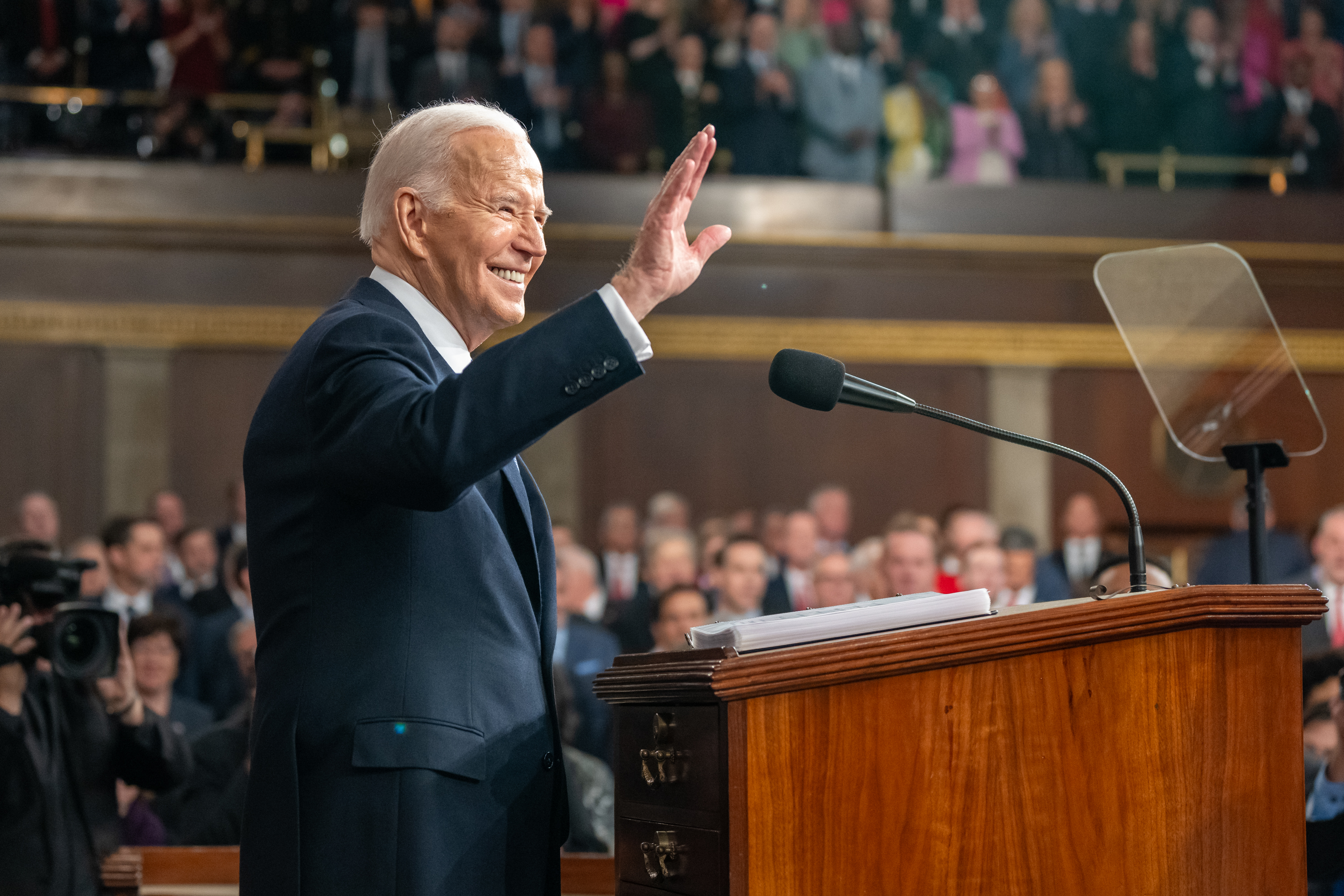


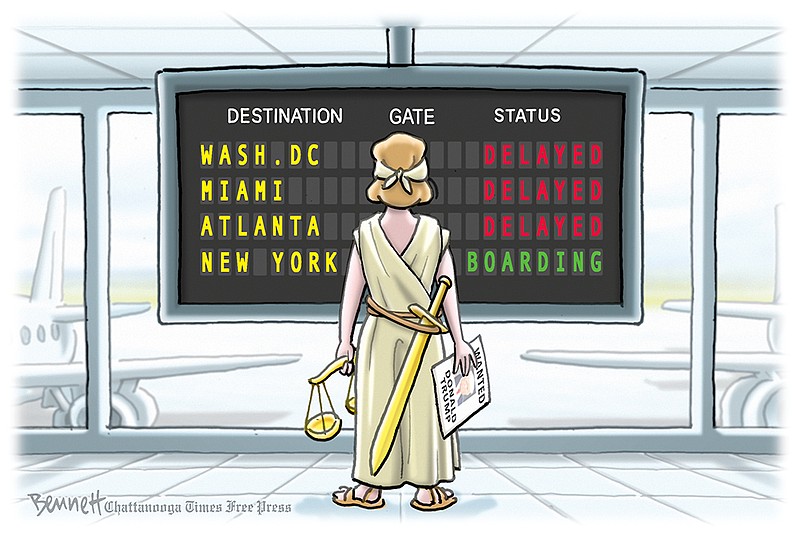
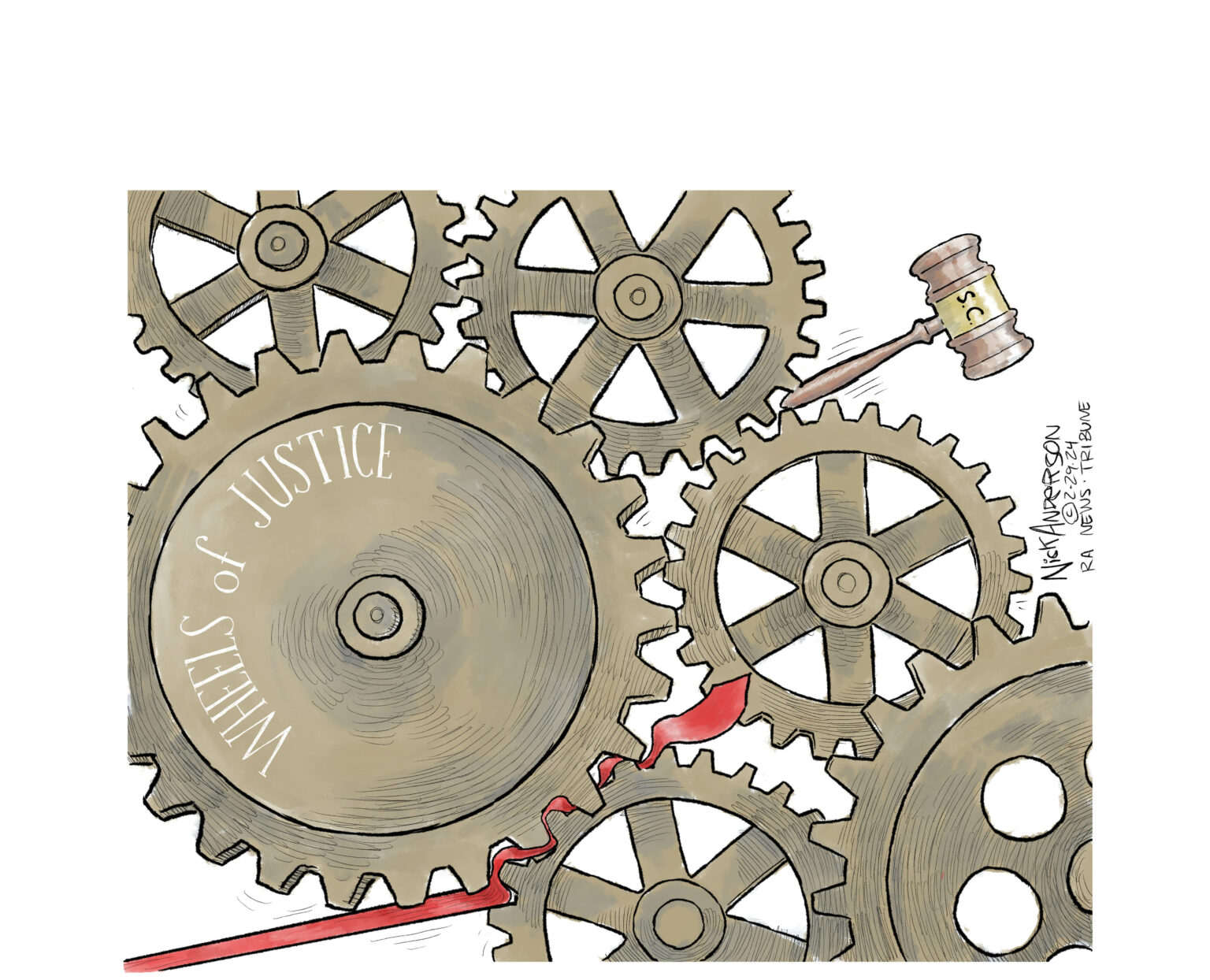




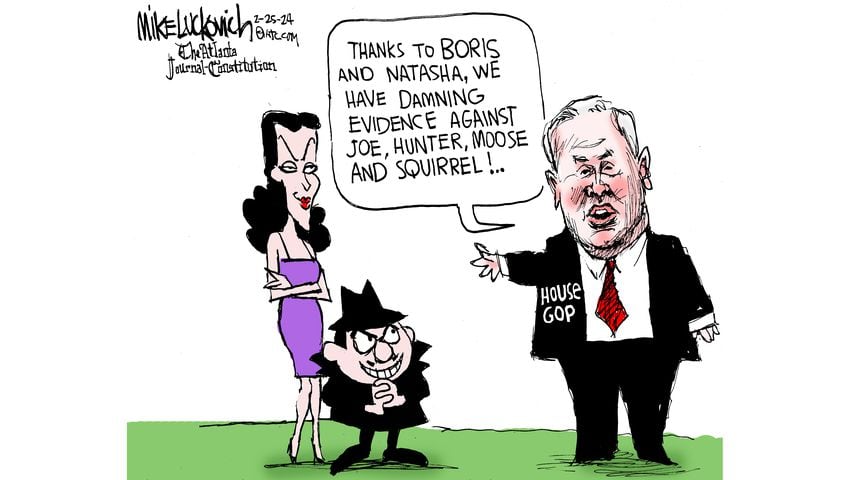


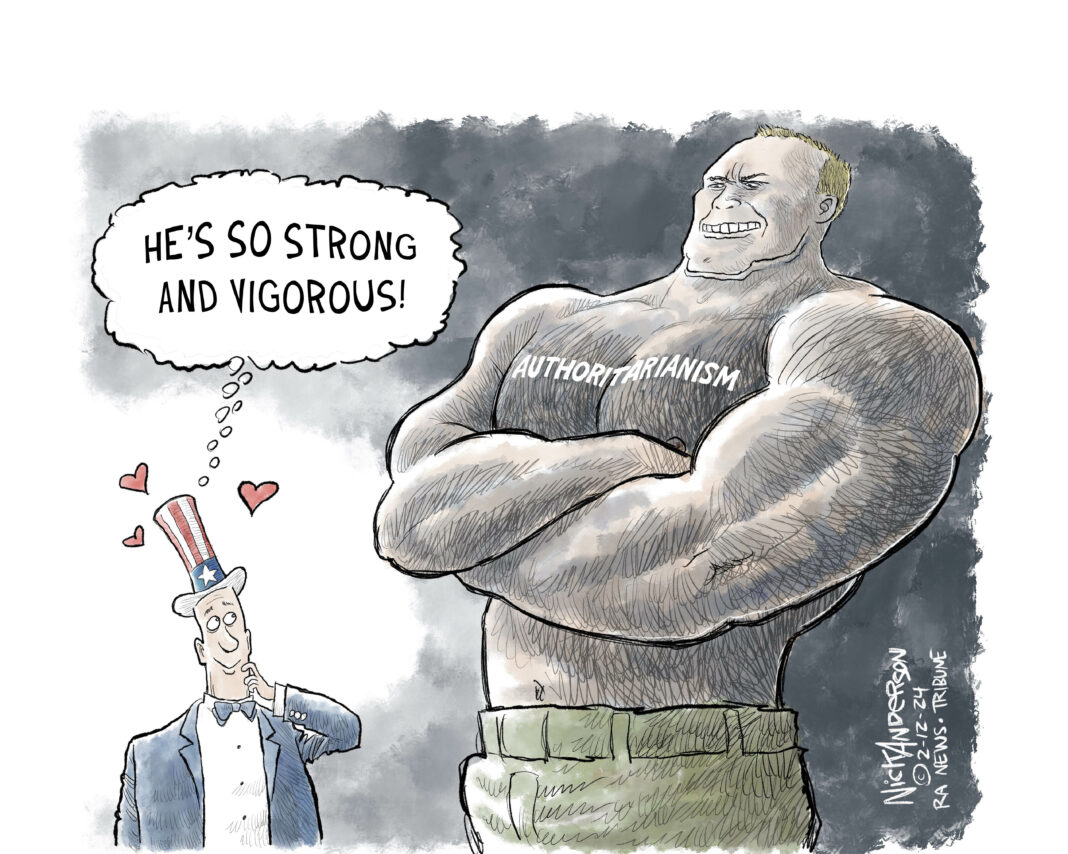

 The Weekly Sift