Good news will wait, and bad news will refuse to leave.
– Tevye, Fiddler on the Roof
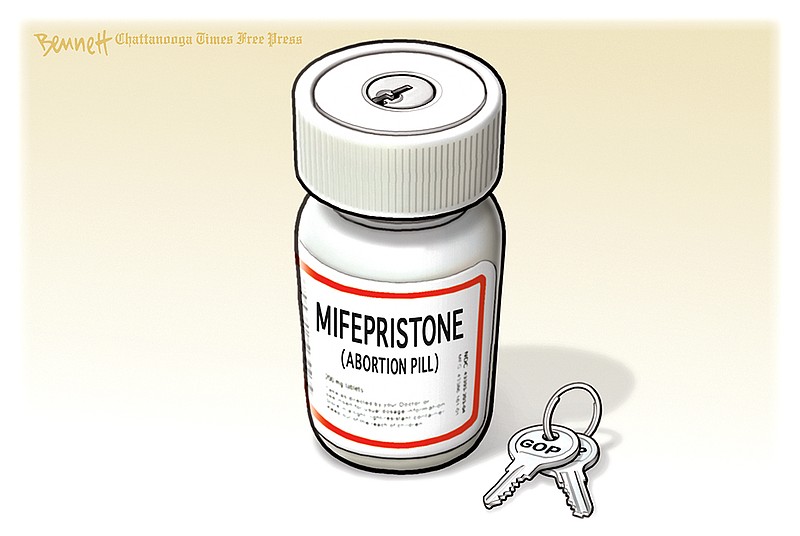
This week’s featured posts are “Mifepristone, round 2” and “Trump’s Weird Week“.
This week I refused to pay attention to polls and speculation
I can’t help learning from headlines that the race is still close, and how much more do I need to know? I know who I’m voting for, and I’ve already written my check to the Harris campaign. I could spend all day fretting about whether the likelihood of Harris winning is 55% or 45%, but what’s the point?
Here’s something I learned years and years ago when my wife was being treated for breast cancer: For the first month or two, I combed through all the statistics I could find, trying to find the numbers that fit her exact situation. Eventually, though, it dawned on me that survival and death were both possibilities too likely to ignore. No matter what study I found next, I wasn’t going to be able to tell myself “That’s not going to happen”, and we would also have to keep making long-range plans for our life together. (She lived, and those plans have served us well.)
That was as much as the statistics could tell me, and trying to get a more precise answer out of them was pointless.
Same thing here. On this Election Night “the thrill of victory and the agony of defeat” (to use the old Wide World of Sports tagline) will both be legitimate possibilities. You’re going to have to prepare yourself emotionally to face either one. No poll or expert analysis is going to tell you anything more than that.
but I couldn’t help noticing Trump’s weird week
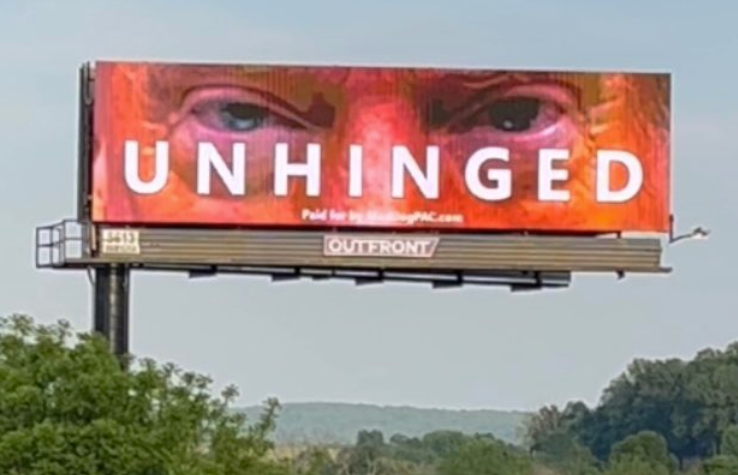
One featured post covers this point, but a few noteworthy odds and ends got left out, like this photo of a Trump makeup fail.
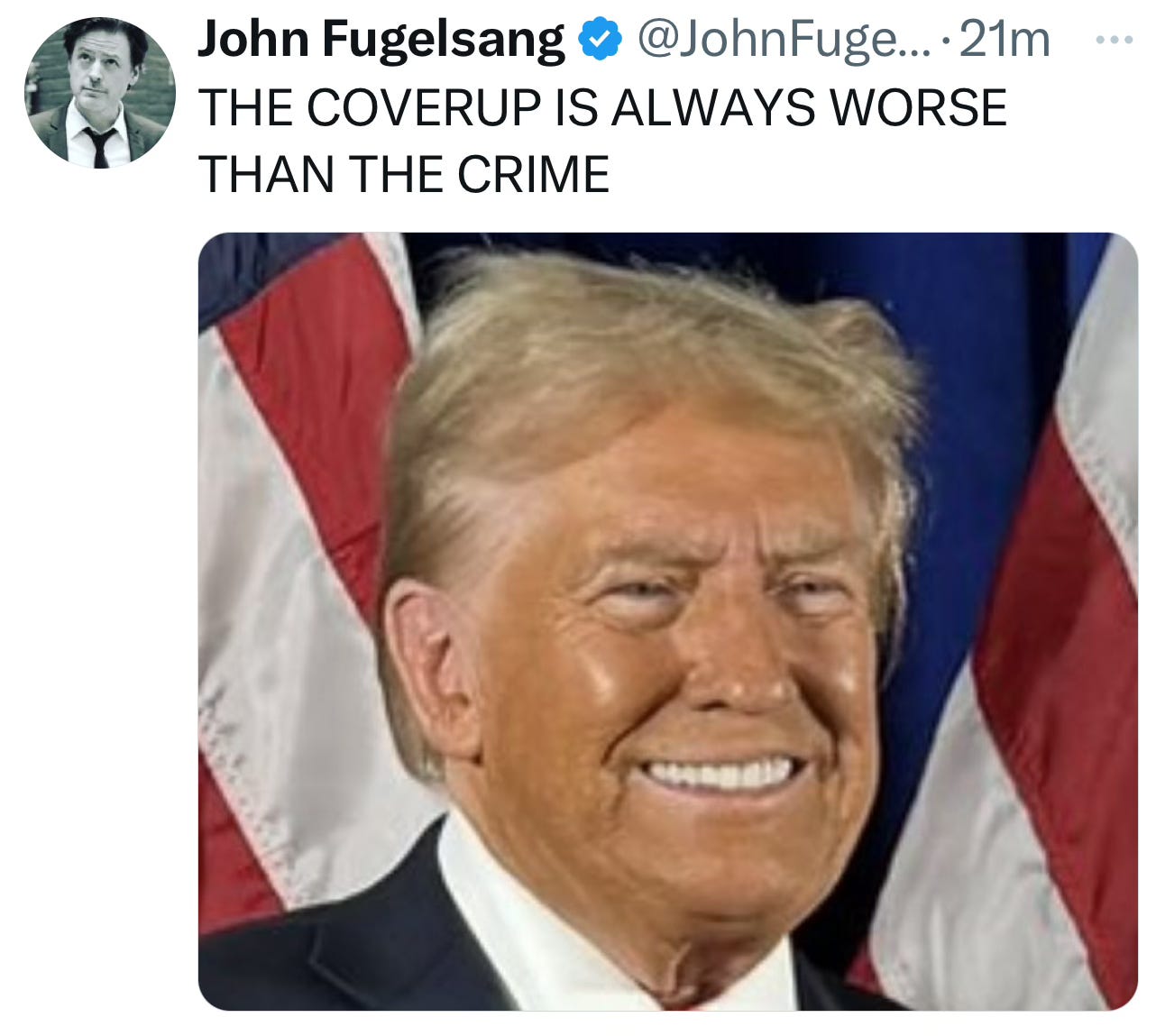
Sure, the photo makes Trump look ridiculous, but that’s not why I call it to your attention. It’s also evidence of a more serious problem: He’s surrounded by people who are afraid to tell him he looks ridiculous. That’s why the prospect of his second term is scarier than his first term was: In his first term, he was hemmed in by people — Don McGahn, John Kelly, Jeff Sessions, etc. — who would tell him that what he wanted to do was illegal. Those people are gone now, and they’ve been replaced by yes-men.
My article also overlooked the fact that the mainstream press (like the NYT, the Boston Globe, and AP) is finally beginning to cover Trump’s deterioration, after obsessing endlessly about Biden’s age issues.
Dave Bautista, former pro wrestler and Marvel’s Drax the Destroyer, gets real about “tough guy” Donald Trump. There’s not a joke in here anywhere, but it’s funny because it’s true.
and Elon’s campaign shenanigans

In the 2020 cycle, Trump and his people told bald-faced lies about Dominion voting machines stealing his votes. The lies were so transparent that Fox News had to pay $787 million to Dominion to settle a defamation suit. (Think about that: Defamation suits are hard to win, especially against news organizations, especially big ones who can afford the best lawyers. Trump threatens to sue news organizations all the time, but he hasn’t collected a dime.)
But why not do it again? Both MTG and Elon were out spreading crap about Dominion this week, and the MAGA sheep are probably swallowing it. You know who’s also doing it: Rasmussen Reports, a supposedly neutral polling organization whose polls always wind up favoring Trump — and get included in many polling averages as if they were legit.
Elon’s money is funding a lot of shady election tactics. Chris Hayes reports on how Muslim voters in Michigan are being micro-targeted with borderline antisemitic ads saying that Harris is all-in for Israel because she is controlled by her Jewish husband, while Jewish voters in Michigan are being micro-targeted with ads saying that Harris “panders to Palestine”. The ads are all from the same group.
Another Elon project is the fake pro-Harris “Progress 2028”.
They have set up fake sites impersonating the Harris campaign using fake policy positions and then sending out text messages also impersonating the campaign which aim to drive voters to the fake site.
Josh Marshall thinks the fake web site is probably legal, but the texts might not be. Matt Yglesias makes a good point:
It tells you something that they literally made up from scratch a fake version of Kamala Harris to run against.
This should be a bigger story: The richest guy in the world, who could make billions more from the right government contracts, is funding ethically dubious projects to get a fellow billionaire into the White House. Working-class voters who believe Trump is their champion might want to think about that.

and mifepristone, round 2
When the Supreme Court tossed an anti-mifepristone lawsuit on technical grounds, you knew that couldn’t be the end of the story. The other featured post details some of the creepy ideas the new lawsuit raises, like states being upset that their teen birthrate is too low. (When I saw that claim on social media, I didn’t believe it. So I read the 199-page lawsuit and discovered that it’s true.)
and here’s another story that deserves more attention
Capitalism does some things well, but it should be kept far away from other things, like running hospitals.
Thursday, the WaPo published a column summarizing a report Senator Ed Markey put out in September about the collapse of the Steward Health Care hospital chain.
The 34-hospital chain was formed in 2010 by a private equity group, Cerberus, which acquired the hospitals as investments. The WaPo article gives the firm credit for initially having benign intentions: ObamaCare had just passed, so maybe there would be a surge of new patients able to afford health care. Running the hospitals as hospitals looked likely to be a money-maker for Cerberus.
For various reasons that turned out not to be the case. But Cerberus had to produce profits for its investors anyway, so it turned to financial engineering. It formed a real estate investment trust, Medical Properties Trust, which bought the land under Steward hospitals and leased it back to the hospitals. Rather than simply owning the land, the hospitals now had to rent it, increasing annual costs. But the transaction created both a pile of money that Steward could distribute to Cerberus shareholders, as well as a regular income stream Cerberus could collect through MPT.
The downside of this transaction was diminishing the underlying viability of the hospitals, which now struggled to cover their increased costs. In May, the chain declared bankruptcy, and state governments are now spending many millions to keep at-risk communities from losing their hospitals.
In total, Cerberus has said it made roughly $800 million on its investment in Steward, more than tripling its original investment, even as the hospitals themselves were hemorrhaging cash.

As best I can tell, none of this is illegal. It’s just one more example of capitalists taking risks where the profits will be private but the losses can be socialized.
Similar stories can be told about private equity’s role in the destruction of America’s newspapers, especially local ones: Take over a challenged but surviving paper, borrow massively against its assets to pay inflated “management fees” to the investment company, then declare bankruptcy. It’s a slow-motion version of what Tony’s mob does to a local business in the “Bust Out” episode of The Sopranos.
In mythology, Cerberus is the name of Hades’ three-headed dog, who guards the gate to the Land of the Dead. It’s a rather macabre name for a firm that owns hospitals.
and you also might be interested in …

From the UK, The Economist notices something a lot of American media misses: The US economy is “The Envy of the World“.
Israel announced the death of Hamas leader Yahya Sinwar, the likely mastermind behind the October 7 attacks. Under a different administration, Israel might use this event to declare victory and start moving towards peace.
Maybe you don’t have the time to read the full 900-page Project 2025 plan. But how about a few comics explaining the worst of it?
And if you want to understand the related movement of White Christian Nationalism, Kat Abu has an hour-long video explaining it.
Doug Balloon puts aside his satirical NYT Pitchbot persona to opine about WHY the NYT has covered the campaign as badly as it has, and in particular why it has consistently sanewashed Trump. He decides against any cynical argument about financial advantage and instead attributes the Times’ behavior to simple incompetence and laziness: “their system isn’t built to deal with a narcissistic sociopath” and they don’t want to change. The company is run by a “nepo baby” who is the son of a nepo baby, and he has hired high-level people who aren’t very good at their jobs.
Not to say there aren’t lots and lots of great journalists and editors at the Times. It pays well and it’s tough to get good jobs in journalism, so they can certainly hire lots of great people. But I suspect that on the really big decisions, ones where Sulzberger himself or people near him weigh in, the fact neither Sulzberger or the people near him are very smart or competent plays a big role.
A commenter recently pointed me to this Lancet article, claiming that the actual number of deaths caused by the war in Gaza is probably much higher than the official estimate. Wars, the article points out, commonly produce “indirect deaths” well beyond the number of people who directly die by violence. These deaths are from disease, malnutrition, and various other causes, and they may occur even after the violence ends. Looking at past conflicts, the article claims the total death toll could be between 3 and 15 times the official count of around 42,000.
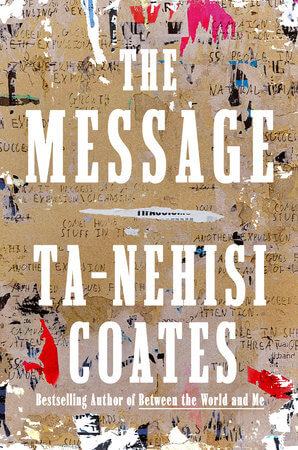
I always come back from a driving trip with a new podcast to recommend. This time I listened to Trevor Noah’s “What Now?”. In particular, Noah’s interview with Ta-Nehisi Coates is amazing. In the final essay in his new book The Message, Coates compared the Israeli occupation of the West Bank to South Africa’s apartheid. Noah grew up in South Africa, and was 10 when apartheid ended. They have a lot of interesting things to say.
and let’s close with something tiny
Ever since Anton van Leeuwenhoek began to popularize the microscope in the early 1600s, people have been amazed by what ordinary objects look like under extreme magnification. In this article Scientist assembles beautiful and surprising images of extremely small things, like this close-up of a sugar found in Coca-Cola.