The Monday Morning Teaser

This week begins the long, vague project I proposed last week: coming up with the Story of America that liberals should be telling, one that justifies our worldview and mobilizes our voters.

But unlike the City on a Hill/Barbarians at the Gates story that plays that role for conservatives, I’d like our story to be as true as such a story can be. I want its history to correspond to what really happened, and its projections to be based on the way the world really works. Like any story, it will emphasize some things and leave out others, but I want it to illuminate rather than deceive.

In short, I don’t want to just throw all our current commitments together and spin some yarn that rationalizes them. Too many of the arguments we make today are corrupted by other people’s myths. Sometimes we’ve inadvertently accepted the ideological inventions of our opponents, and sometimes we’ve just given in to what Americans want to believe about themselves. Sometimes we’ve set our goals too timidly, so we end up promoting policies (like raising the minimum wage) that are fine ideas as far as they go, but don’t credibly solve the problem we say we’re working on.

So over the next several months (or maybe longer) I want to re-examine issues from scratch, and root my understanding of them in true history, rather than the stories commonly bandied about today. This week I start with immigration, and with Aviva Chomsky’s recent book Undocumented: How Immigration Became Illegal. That piece is just about ready to go, and should be out shortly.

The weekly summary will open with a quote that could be the motto of the first phase of this whole vague project: “It is better to know less than to know so much that ain’t so.” (And it turns out not to be a Mark Twain or Will Rogers line, no matter what the internet says. That ain’t so.) Then I’ll go on to talk about President Obama’s new boldness on net neutrality, climate change, and (maybe soon) immigration; the comet landing; the Rashomon-ish way the media covered the second-year ObamaCare premiums; and whatever else comes up. And I’ll close with a video proving that although you may have to pay your dues to sing the blues, you don’t have to be old enough to talk.

Broken Pieces of Truth

A good story is always more dazzling than a broken piece of truth.

— Diane Setterfield, The Thirteenth Tale

This week’s featured post is “Republicans have a story to tell. We’re stuck with facts.

This week everybody was wondering how that happened

The Republicans not only took control of the Senate — either 52-48 or 53-47, depending on the Louisiana run-off — but they re-elected some of the worst governors in the country: Sam Brownback in Kansas, Paul LePage in Maine, Rick Scott in Florida, Rick Snyder in Michigan, and Scott Walker in Wisconsin. And they nearly knocked off Senator Mark Warner in Virginia, a result that would have surprised both parties.

Good people lost. The best, in my opinion, being Mark Udall in Colorado. And some absolute loons are going to the Senate, the worst being Joni Ernst of Iowa. You’ll hear a lot more from her in the next six years, because she will be at the forefront of every act of right-wing craziness. And since conservatism has its own perverse form of affirmative action, I suspect she’s going to wind up on the short list for Republican VPs next year.

So how did that happen? As in the Republican sweep of 2010, they didn’t do it by changing people’s minds; they did it because the Democrats’ target audience didn’t vote.

Comparing yesterday’s exit polls to those of 2012, the first thing that jumps out at you is a big shift in age demographics: under-30 voters dropped from 19 percent of the electorate in 2012 to 13 percent in 2014, while over-65 voters climbed from 16 percent in 2012 to 22 percent in 2014. That’s quite close to the age demographics of 2010.

In terms of race and ethnicity, the white share of the electorate increased modestly from 72 percent in 2012 to 75 percent this year, not quite back up to the 77 percent whites represented in 2010. And interestingly enough, Republican performance among white voters didn’t change at all from the 59/39 margin achieved by Mitt Romney.

There are two possible responses to this. One asks, “What’s wrong with those people?” What’s wrong with young people and non-whites, that they’re letting Republicans they disagree with take over the country? The other asks, “What’s wrong with the Democrats’ message, that it’s not motivating their voters to get out and vote?” I take the second approach in “Republicans have a story to tell. We’re stuck with facts.

and what will happen next

Back in the waning days of the Soviet Union, leading up to Gorbachev, a series of short-lived old men filled the top chair: Andropov, Chernenko, and some other geezers even I don’t remember. Every time a new one took over, the same story would get leaked to the Western press: The new boss only appeared to be a faceless party functionary; actually he had been a behind-the-scenes force for liberalization and better relations with the West. It was never true, but feeding people’s fantasies like that was good PR.

Well, this week we heard that Mitch McConnell wants to fix the broken Senate and get things done. He swore off the brinksmanship of the past: “There will be no government shutdowns and no default on the national debt.” It’s as if the filibuster-everything McConnell never existed, and the Ted Cruz wing of the party didn’t control enough votes to leave McConnell without a working majority. It’s good PR.

In the short term, what will happen is that the Senate will have one more session before the new Republican majority arrives in January. Harry Reid will try to approve as many Obama nominees as possible, maybe including Loretta Lynch to replace Attorney General Holder. Republicans will claim that this use of the Senate’s constitutional power is illegitimate, because they only venerate the Constitution when it suits them.

Longer term, the interesting question isn’t whether the Republican agenda and the Obama agenda will intersect enough to get some laws passed and signed, but whether there will be a Republican agenda at all. What unites Republicans is hatred of Obama, not loyalty to their own leaders or to any particular plan of action. Again and again since he became Speaker four years ago, John Boehner has tried to negotiate with Obama, only to discover that he didn’t have the votes to pass what he offered. (I love Steve Benen’s summary: “the right hand doesn’t know what the far-right hand is doing.”) Now Mitch McConnell can join those games.

Case in point: ObamaCare. “Repeal and replace” makes a good slogan, and occasionally someone on the Republican side releases a sketch of a replacement. But any attempt to fill in the details always starts an argument that goes nowhere, and no actual replacement law ever gets voted on.

The argument about whether to pass laws or to continue monkey-wrenching everything to create issues for a 2016 presidential nominee has already started. House Majority Leader Kevin McCarthy says Republicans need to “prove we could govern“, while National Review warns about “the governing trap“: Any attempt to find common ground with President Obama or Democrats in Congress should be avoided in favor of maneuvering for 2016.

not much progress is possible until we have a better president. Getting one ought to be conservatism’s main political goal over the next two years.

Here’s the only reason for optimism: Mitch finally has the job he wants, and maybe he’ll want to keep it. The 2016 Senate map look as bad for Republicans as 2014’s did for Democrats. To hold the majority, McConnell will need to defend blue-state Republican senators like Kelly Ayotte in New Hampshire and Mark Kirk in Illinois. If he wants to help his party win the White House in 2016, he won’t want to create jobs or do anything else that the outgoing Democratic administration can take credit for. But if he wants Ayotte and Kirk and the rest of his 24 incumbents to have some accomplishments to run on, he will.

OK, one more reason: Boehner’s larger majority in the House means that he has a little room for error. He no longer needs the vote of every last Tea Party lunatic, every Louie Gohmert and Steve King, to pass a bill. So there’s a chance he could actually deliver on a deal with Obama. Maybe.


The best thing I can hope for from President Obama these next two years is that he’ll take an aw-fuck-it attitude and just do what he thinks is right, without worrying how the Republicans or the commentariat will react. His net neutrality statement seems like a good start.

and talking about the Supreme Court

Marriage equality is going to the Supreme Court sooner rather than later. That became inevitable Thursday when the Sixth Circuit Court of Appeals bucked the consensus of the other appellate courts and upheld several state bans on same-sex marriages.

You may remember that I have been consistently critical of Justice Kennedy’s majority opinion in Windsor, which came out in 2013. It produced the immediate results I wanted, but its legal reasoning was mushy; it didn’t lay out clear principles that lower courts could follow in future cases. But since then — until Thursday — lower courts all over the country had ruled in favor of marriage equality for gay and lesbian couples, finding that although Windsor didn’t establish such a right, it left marriage equality’s opponents without a place to stand.

As long as all the appellate courts agreed with that assessment, the Supremes could avoid the issue. But now, same-sex marriage bans violate equal-protection and due-process rights in some states, but are fine in others. There could be a ruling by the end of the term in June.

The disagreement between Sixth Circuit Judges Jeffrey Sutton (for the 2-1 majority) and Martha Daughtrey (dissenting) is stark. Sutton’s opinion has a general air of condescension, like an elder uncle explaining something you kids are too young to understand: that courts are not legislatures, so they shouldn’t be changing the “traditional definition of marriage”. (Already there, you can tell he’s going nowhere good, because there is no “traditional definition of marriage”. Marriage has meant something different in every generation. In 1765, for example, it meant, “the very being or legal existence of the woman is suspended during the marriage”.)

Sutton’s opinion revolves around the question “who should decide” whether and how “the traditional definition of marriage” should change. He concludes that such social engineering is not his job, so he leaves state same-sex marriage bans in place. Daughtrey reminds Sutton that actually they both have a different job: American citizens have come to court asking for their rights, and the judges owe them an answer.

the majority treats both the issues and the litigants here as mere abstractions. Instead of recognizing the plaintiffs as persons, suffering actual harm as a result of being denied the right to marry where they reside or the right to have their valid marriages recognized there, my colleagues view the plaintiffs as social activists who have somehow stumbled into federal court, inadvisably, when they should be out campaigning to win “the hearts and minds” of Michigan, Ohio, Kentucky, and Tennessee voters to their cause. But these plaintiffs are not political zealots trying to push reform on their fellow citizens; they are committed same-sex couples, many of them heading up de facto families, who want to achieve equal status — de jure status, if you will — with their married neighbors, friends, and coworkers, to be accepted as contributing members of their social and religious communities, and to be welcomed as fully legitimate parents at their children’s schools. They seek to do this by virtue of exercising a civil right that most of us take for granted — the right to marry.

ObamaCare. The Court will hear King v Burwell, the case that claims ObamaCare subsidies don’t apply in the 36 states that left the federal government to set up the state exchanges. The case hangs on a quirk of wording in the Affordable Care Act. Traditionally, the Court has given the executive branch wide latitude to interpret a law in a way that succeeds in fulfilling Congress’ intention in passing a law, rather than in a way that fails. And neither the record of congressional debate nor anything ACA sponsors have said afterwards lends credence to the idea that Congress intended to limit the subsidies in this way.

But no matter. When the Court first considered the ACA, it embraced an interpretation of the Commerce Clause that Congress never considered because it did not exist when the ACA was passed, and only a clever application of the Taxing Clause by Chief Justice Roberts saved the law. Four justices, it seems, will do whatever it takes to scuttle ObamaCare. The question is whether they can get a fifth.

Vox summarizes the situation here, and Balkinization provides a theory of what might be going on behind the scenes.

and you also might be interested in …

The Ebola scare in Dallas is over. Friday, “the last person being monitored for symptoms of Ebola in Dallas was cleared by officials”.

Nationally, the U.S. has had nine Ebola cases. One died, seven recovered, and one is still in treatment — Dr. Craig Spencer, who returned to New York from Guinea and is in NYC’s Bellevue Hospital. He is said to be improving and is listed in stable condition.


According to an exit poll, 63% of American voters believe that our economic system favors the rich. I wonder what the rest believe, and what color they think the sky is.


The voter-suppression group True the Vote distributed a smart-phone app to its members before the election, to help them document the massive “voter fraud” the organization ostensibly exists to fight. If anything, they documented the exact opposite.

and let’s close with a warning from Ned Stark

With the Halloween line breached, nothing can stop it. Its carols and jingles are already echoing throughout the land.

Republicans have a story to tell. We’re stuck with facts.

In his recent Senate campaign in my state, Scott Brown talked a lot about securing the border. That’s the southern border, the one with Mexico, the one that’s over 2,000 miles away from New Hampshire. He connected the border issue to both terrorism and Ebola, neither of which we have here. And it almost worked. As a carpetbagger from Massachusetts, running against a likeable woman we’ve been electing governor or senator since 1996, in a state Obama won twice, Brown nearly pulled it off, losing 51.6% to 48.3%.

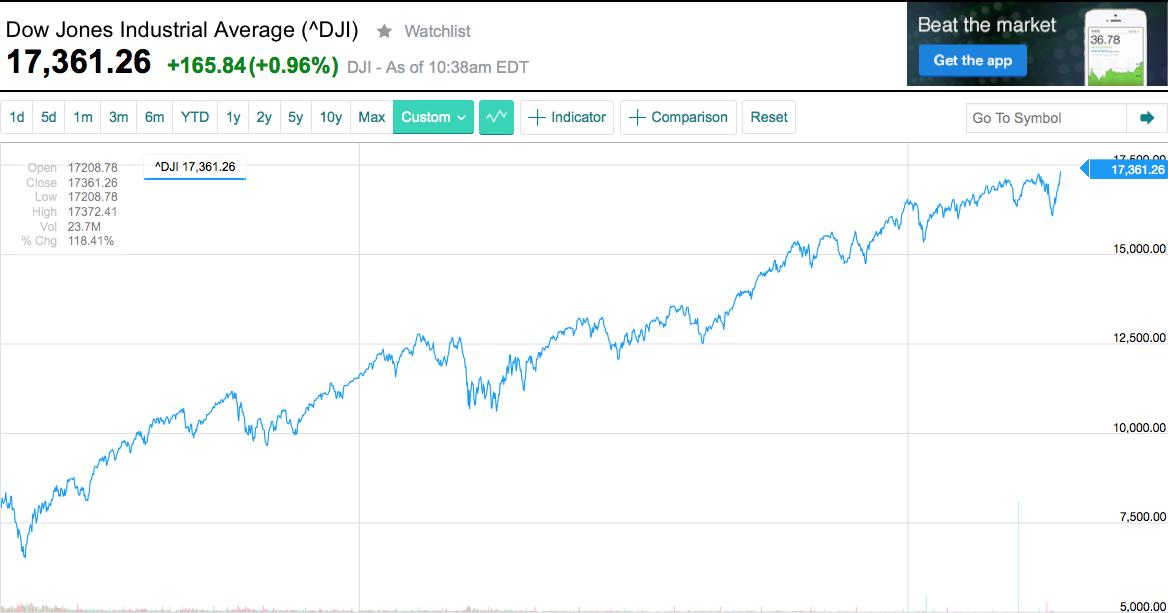
This happens at a point in the economic cycle when things are looking reasonably good: Unemployment, GDP growth, and the federal budget deficit have all escaped from the scary territory they were stuck in for so long after the housing bubble popped, and all are trending in the right direction. The stock market is at an all-time high. American combat troops are almost out of Afghanistan and Iraq, and the country is as close to peace as it has been since 9-11. And while Fox News has managed to create a series of faux scandals to excite its viewers, by the very real measure of indictments and convictions, the Obama administration has been the cleanest one we’ve seen in a long time, comparing very favorably with, say, the Reagan administration.

Compounding the mystery, Brown’s near-miss is a rare failure in the national Republican trend. Their victory doesn’t just bring control of the Senate, but sweeps into office some pretty radical folks, like Joni Ernst in Iowa, another state Obama won twice. Sam Brownback, whose tax-cutting mania has pretty well wrecked the fiscal health of the state of Kansas without providing any of the private-sector economic boost he promised, got re-elected governor.

Meanwhile, voters were making some liberal choices on ballot measures: Oregon, Alaska, and D.C. all legalized marijuana; Arkansas, Alaska, Nebraska, and South Dakota raised the minimum wage; Washington tightened gun control; and Colorado defeated a personhood amendment to limit abortion. And the national brand of the Republican Party, as Rand Paul put it, “sucks”. A pre-election poll by NBC and the Wall Street Journal showed the party’s favorable/unfavorable rating far underwater: 29%/47%, as opposed to the Democrats’ narrower 36%/43% split.

So there’s no real evidence that the public is getting more conservative, or seeing Republicans in a better light, but still they’re electing more and wackier Republicans. What’s up with that?

The City on a Hill. I was home sick on Wednesday, so I spent the day reading a short new book called Narrative Politics by Frederick Mayer. Mayer is a professor at Duke and the book is published by Oxford University Press, so it’s more academic than popular. But it is readable and has a clear point: Political scientists like to talk about voters who rationally weigh their interests, and tug-of-war struggles between institutional powers like unions or the Chamber of Commerce or the NRA. Meanwhile, pundits and campaign consultants like to talk tactics: ad buys and gaffes and moving the conversation away from your opponent’s issues and towards yours. But they all underestimate the power of stories to evoke a public response and channel that response into actions like contributing and campaigning and voting.

Mayer begins and then later concludes with the story-telling in Martin Luther King’s “I Have a Dream” speech. King never comes out and says, “I have a story to tell”, but his speech revolves around an implicit story I might retell like this:

From the beginning, the reality of America has been trying to catch up with the dream of America. From Jefferson, who wrote that “all men are created equal” but continued to own slaves; to Lincoln, who won a war to end slavery, but could not deliver full freedom; to the civil rights movement of King’s own day, which had its victories, but still left much to achieve; to the future that King could see in his dream, and would later see from “the mountaintop“, in which the promise of equality would be fulfilled.

The story of America was the story of progress towards an ideal. That story connected to a great past, was continuing right there in Washington where King was speaking, and would carry forward to a successful conclusion in the future. It was mythic, it was inspiring, it was motivating. And today’s Democrats have nothing like it.

Republicans do. Like King, they don’t say outright, “Once upon a time …” and start telling their story explicitly. But it’s always there in the background. It can be hard to pick up on, because most speakers just allude to the story rather than re-tell it, assuming that their supporters and potential supporters already know it. I’d tell it like this:

American is and always has been the “shining city on a hill” that Ronald Reagan talked about.* Its Constitution gave the world a model of liberty. Its free society gave opportunity to immigrants whose path to success had been blocked by the class system of Europe. Its capitalist economy and the industrious virtue of its citizens gave the world a new model of productivity and prosperity. The heroism of its soldiers and the determination of its statesmen saved civilization from both fascism and communism.

But now, the City on the Hill is threatened by barbarians at the gates. If the City were focused and united, no horde could stand against it. But the virtue that still exists in many of its citizens is mixed with corruption. Many have lost sight of the golden vision of the Founders and have forgotten the glorious history that followed. Many have lost the virtues of industry and self-reliance, and have no ambition beyond soaking up the productivity of others. Many do not understand the uniqueness of the City and why its values must be defended.

The City needs a renewal within and a crusade without, led by those who understand the world-historic significance of the City and its ideals. Without such a renewal and such a crusade, it will fall, and the light it brought to the world will be extinguished. But with such a renewal, its virtues can be restored, its enemies can be routed, and its golden past can live again.

[* I’ve described before how Reagan altered the city-on-a-hill image that goes back to the Mayflower.]

It’s easy to poke holes in this story, but before we do, let’s take a moment to appreciate its sheer diabolical beauty. For example, the story itself contains no prejudice other than nationalism, but it easily adapts to whatever bigotry a listener brings. Those lazy citizens who expect someone else to support them, do they have a certain complexion? The threatening barbarians, is that Arabic they’re speaking? Spanish? The corrupt citizens, might they be gay? Or atheists? Or Jews?

Maybe. Maybe not. Bigotry is harnessed, but deniable.

Similarly, the story can unite people who disagree, because the renewal it calls for can be anything. Does the lost vision the Founders include a fundamentalist style of Christianity? Or a robber-baron style of capitalism? Or what the League of the South calls “Anglo-Celtic culture“? Maybe some of that lost virtue is sexual: Men are having sex with other men, and women don’t know their place any more. They want to be free to have sex with whomever — barbarians, even — and escape the consequences of their sin through birth control or abortion.

No wonder the City is in danger.

What it explains. It’s only in the context of the City/Barbarians story that you can really understand the intensity rank-and-file conservatives feel about issues that (at first glance) have nothing to do with their lives. Why should straight people care so much about whether gay people get married? Or New Englanders fear Guatemalan children? Why do so many people have an opinion about academic theories like American exceptionalism? Why should well-fed families begrudge a poor family its Food Stamps? Why do people without young children feel such strong hostility towards public schools and their teachers? Why are those ISIS beheadings so much more horrifying than the beheadings that are normal Saudi executions? Why did the Ebola panic get so out of hand?

These things are not issues in the usual political sense. They are signs of the corruption of the City, omens of the barbarians’ arrival, and warnings of the havoc they’ll unleash if they get here.

The story also explains the bizarre animus people feel towards President Obama, and their willingness to believe absolutely anything about him: He’s Kenyan, he’s Muslim, he’s gay, he pals around with terrorists, he’s Marxist, he wants to kill your grandmother, and on and on. Obama’s fundamental sin is that he’s not one of us. He wants to open the gates and invite the barbarians in. Fox News’ “psychologist” Keith Ablow laid it out:

[Obama’s] affinities, his affiliations are with them. Not us. That’s what people seem unwilling to accept. He’s their leader … we don’t have a president. … We don’t have a president who has the American people as his primary interest.

Sure, you can go all academic-historian and explain why the story isn’t true. You can explain that the City was always corrupt, that its prosperity depended as much on slavery and genocide as on virtue and Godliness. You can point to the virtues of the people the City wants to exclude, or the ways they have been exploited, and the debts to them that a just city would want to honor. And it won’t matter. Because a story like this doesn’t have to be true, it just has to feel true.

And if you come from a certain segment of American society  — the one I came from, for example — it does.

The lost age of upward mobility. I grew up in that segment of the white working class that expected to move up. Our expectation rested on a bunch of things that don’t exist any more.

To start with, there was my father’s job. He worked in a locally owned factory that wasn’t unionized, but had to compete for workers with factories that were. So a man who worked there (they were nearly all men in those days) could support a family and have a little money left over. Education wasn’t required; Dad had a high-school diploma, but others didn’t. And yet his job was secure in a way that is hard to imagine now. The factory itself was stable from one decade to the next — no thought of robots or China, or a junk-bond deal to liquidate its assets. So if you were reliable and worked hard you could do what Dad did: keep that job until you were ready to retire.

At every stage in my young life, I knew that if I was successful, the next stage would open up. If I did well in high school, I could go to college. It didn’t require luck or massive family savings or big loans. Community college was practically free, and the state university system was barely more expensive. You could just about work your way through college with a part-time job during the academic year and a full-time job in the summer. At worst, you might have to take a year off to work and save (at a working-class job that paid enough to let you save). So if college was part of your plan, money wasn’t going to stop you.

Once you got to college, if you chose a reasonable major and did well, you’d get a job when you graduated. Not delivering pizzas or telemarketing, but a real white-collar job with a career path. Or maybe you’d go on to graduate school and train for a higher profession. In a lot of fields, you could again work your way through. (I got a math Ph.D. by teaching calculus and getting a fellowship from the NSF. I came out debt free.) Or maybe you’d take on some debt to become a doctor or get an MBA, but that was an investment; it would pay off in no time. Once again, if you did well, there were jobs. The economy moved slowly enough that the job you’d pictured when you started grad school would still exist when you finished. And you could imagine (falsely, as it turned out) that it would still be there when you retired.

Life had what the stock-market analysts call visibility (“the extent to which future projections are probable”). You could make a plan and carry it out.

Undoubtedly, things were less certain if you weren’t white or spoke with a foreign accent. And women were just entering a lot of professions in those days, so they had no idea what to expect. But for a native-born white man, the good life was there for the taking. Nobody was exactly giving it to us — at each stage we had to work and succeed, and some of us fell by the wayside. But if you did succeed, the prize would be there. You could count on it.

None of that is true any more.

Today. As I write this I’m in my late 50s, watching my friends limp towards the end of their careers. A lot of them are one re-organization or one leveraged buyout away from unemployment, with no guarantee anyone would hire them at this age.

And their kids … I have no idea what to tell them. Even the most brilliant and energetic can’t predict where they’ll be in a few years. States have gotten out of the business of providing inexpensive high-quality higher education. There are no “safe” majors any more, no degrees that will guarantee a good first job, or even just one that will cover student loan payments. And the jobs themselves … even if you get one and everything seems fine, it can vanish like smoke. Maybe the office will move to Bangalore, or your whole profession will be replaced by an iPhone app. It doesn’t matter how smart or hard-working or well qualified you are. You could be scrambling for survival by this time next week.

Exactly whose fault this is … that’s a complicated question. Maybe the 1%, or the politicians, or technology, or globalization, or just the faceless forces of History. When the average person tries to figure it out, he just throws up his hands. Why? He doesn’t know why. But he knows this: It just feels wrong. And it didn’t used to be this way.

We used to be safe in a City on a Hill, but now there are barbarians at the gates. …

It feels true. That deep anxiety that never quite goes away. The sense that everything you’ve relied on could go “pop!” at any moment. That’s just how you’d feel in a city that was about to fall.

Nothing in the Democratic message addresses that.

What Democrats lack. Everything the Democrats support is on the wrong scale: We want to raise the minimum wage, and subsidize your health insurance, and pay women the same as men, and cut back the war on minor drugs, and create jobs building infrastructure, and put a little less carbon in the air. All good stuff. If you can get it isolated in a ballot question, it will probably pass. But none of it says, “Those are the people I want running things. I’m going to go out and take action to see that they do.”

George Lakoff summarizes the current Democratic strategy like this:

Use demographic categories to segment the electorate, categories from the census (race, gender, ethnicity, age, marital status, income, zip code), as well as publicly available party registration. … Poll on which issues are “most important,” e.g., for women (or single women), for each minority group, for young people, and so on. This separates the issues from one another and creates “issue silos.” … Assume that people vote on the basis of material self-interest and design different messages to appeal to different demographic groups.

What that misses is precisely the caring-about-things-that-don’t-directly-affect-you that the Republican story inspires. If you make minimum wage, then vote Democrat, because we’ll give you a raise. If you’re a poor woman who might get pregnant, we’ll defend your access to abortion. If you’re gay, we’ll support your right to fair treatment. If you’re Hispanic, we might not deport your nephew. If you’re young, we’ll help you deal with your student loans. But if you’re none of those things — or if you are, but not identifying strongly with your categories today — why should you care? What binds all those people together with all the other Democrats and offers them a role in the drama of history?

That’s the kernel of truth behind the charge that Democrats want to “divide America“, or that they try to win by offering “free stuff“. In one sense, those charges are laughable; it’s Republicans who have the big Us-against-Them story, and they are no less willing to offer free stuff to their constituencies. But Democratic strategy and messaging atomizes America. We may have a message for you as a unique combination of demographic categories. But we don’t have an identity to offer you as an American.

Even Lakoff’s proposal doesn’t really fix that problem. He offers a more unified set of principles and ways to advocate them, but the narrative element and the connection to our underlying anxiety is still missing. You can’t fight a story with principles, any more than you can fight it with facts or debunking or appeals to demographic interests.

You fight a story by telling a better story, one that does a better job of ringing true both factually and emotionally, one that draws people in and makes them want to tell that story to others. At the moment, we don’t have a better story. We’ve just got facts.

After you lose, you ought to spend some time in the wilderness, rethinking how you got here. During my time in the wilderness, these are the questions I’m going to be thinking about:

  • What is the real story of America? the one that’s based on actual history rather than fantasy?
  • How is that story playing out here and now, in the lives of everybody?
  • How do we want that story to come out?
  • What would it mean to be on the right side of that story, playing a role you’ll be proud to remember in your old age?
  • How can we offer Americans that kind of role?

The Monday Morning Teaser

So what was that all about? Why, for the second midterm in a row, did the Democrats lose all the close races and yield control of another house of Congress?

The falling unemployment rate and deficit didn’t matter, the coming demographic wave didn’t matter, Big Data didn’t matter, the unpopularity of the Republican Party and their complete lack of solutions didn’t matter. They now control the Senate, and they kept control of governorships in both red states and a few blue ones.

And yes, all that dark money played a role, voter suppression played a role, racism played a role … but I’m left with the feeling that there’s much more to it than that. I’ll try to capture the bigger picture later this morning in “Republicans have a story to tell. We’re stuck with facts.” I’m not sure exactly how long it’s going to take to get that out.

In the weekly summary, “Broken Pieces of Truth”, I’ll walk through some of the explanations of what happened, and the speculation about what happens next. Plus I’ll summarize why the Supreme Court is finally going to have to rule on marriage equality, and what the new ObamaCare case is about. And I’ll close with a warning from Ned Stark.

Little by Little

Human felicity is produced not so much by great pieces of good fortune that seldom happen, as by little advantages that occur every day.

— Benjamin Franklin

This week’s featured posts are “Vote. It’s not nearly enough, but it’s something.” and “The Case for Voting Democrat“.

And this is what I did during my week off.

This week everybody has been talking about the election

In case the non-stop TV ads haven’t gotten through to you, the election is tomorrow. In many states you can vote today. Control of the Senate is up for grabs, there are a lot of cliff-hanging governor’s races, and everybody has a House race. My case for voting is in “Vote. It’s not nearly enough. But it’s something.” My more detailed case for voting for Democrats is in “The Case for Voting Democrat“.

Normally, I do a viewer’s guide for watching the election returns. But this year has so many weird Senate races that are close for their own unique reasons that I have no idea what’s going to happen. The Democrats need an upset somewhere to hold the Senate, but there are a lot of places where that upset could happen. If the election had been held two weeks ago, when the nation was suffering a mysterious epidemic of fear, I think Republicans would have won easily. Since then, the stock market has recovered to a new high, ISIS has mostly been out of the headlines, and the news about Ebola has been more good than bad. So I think fear has receded and we’re back in anything-can-happen territory.

Anyway, here’s Daily Kos’ map of poll-closing times.


and Ebola

The big story this week was the symptom-free nurse in Maine fighting Governor  LePage’s effort to quarantine her in her home. A court sided with the nurse. An NBC/WSJ poll says that 71% support quarantining health-care workers who come back from Ebola-afflicted areas. There’s no reason to think such a quarantine is medically necessary, and it will intimidate American doctors and nurses who might otherwise take a month or two to go to Africa and fight this virus on the front lines. But people like to respond with decisive action when they’re scared.

and you also might be interested in …

The Sift’s claim that Rand Paul had called for cuts in the CDC budget back in 2011 drew the attention of Politifact. (That’s the first time my name has appeared in that column.) They judged the claim to be True. So I guess I can tell people that my Politifact score is 100%.


One of the stranger Tumblr pages is “Women Against Feminism“. In the manner of “We Are the 99%“, it consists of pictures of (mostly) young women holding up pieces of paper explaining why they don’t need feminism. The fact that some young women feel that way isn’t what’s weird; it’s a big country, a few people are bound to think almost anything. But here’s the weird thing: Many of their self-described philosophies could be definitions of the feminism they say they don’t need. Like:

I don’t need feminism or masculism because the only thing that should determine my life is my own potential, not my gender (or race). We are all human and we should all be equal.

If you replace “I don’t need feminism or masculism because” with “I am a feminist because”, the quote makes perfect sense. I read this whole page not as a comment on feminism, but as a measure of just how successful the Right has been at tarring the word feminist. Women who by any reasonable definition are feminists have been convinced that they’re anti-feminists, because feminism is … some other damn thing.

The best counter I’ve heard — not specifically to this Tumblr, but to similar stuff from celebrities like Shailene Woodley — is this YouTube by marinashutup.


In what Jonathan Chait says may be “the craziest idea ever proposed by a Fox News personality”, Fox’ resident psychologist Dr. Keith Ablow called for “an American jihad“. Because our constitution is a “sacred document” and our nation’s founding is a “miracle”, we have a “manifest destiny not only to preserve our borders and safety and national character at home, but to spread around the world our love of individual freedom and insist on its reflection in every government.” That might mean fighting a bunch of wars, but they’d be justified, “Because wherever leaders and movements appear that seek to trample upon the human spirit, we have a God-given right to intervene — because we have been to the mountaintop of freedom, and we have seen the Promised Land spanning the globe.”

Liberals have been saying for a while that the Right — especially the Religious Right — resembles the Taliban. But now at least one of them seems to be embracing that comparison himself.


The only possible thing I can follow that with is satirist Andy Borowitz:

President Obama is coming under increasing pressure to apologize for a controversial remark that he made on Tuesday, in which he said that the nation’s Ebola policy should be based on facts rather than fear.

and let’s close with some wonderful Halloween costumes

The Case For Voting Democrat

I live in New Hampshire’s 2nd Congressional district, so most of the political ads I see are negative. Maybe that’s true everywhere, but it’s very obvious here: I’m told not to vote for Senator Shaheen or Rep. Kuster because they support President Obama too much. I’m told not to vote for their opponents because Marilinda Garcia is “too extreme” and Scott Brown is “working for the Big Guys, not New Hampshire“.

And while I recognize that it’s important to lay out the stakes of increasing the power of Republicans in Congress — do you like what they’ve been doing? they’ll do more of it if they have more power — I also think it’s important to close a campaign positively: Forget the other guy (or gal), why should people vote for you?

Allow me to explain by looking at the major issues: the economy, climate change, inequality, immigration, protecting our rights, ObamaCare, and war.

The economy. Under Democratic leadership, the economy has been getting slowly but steadily better in just about every way. Since Inauguration Day, 2009: Unemployment is down.

Screenshot 2014-11-01 08.07.16

GDP is up.

Screenshot 2014-10-31 10.54.28

The budget deficit is moving towards balance.

Screenshot 2014-10-31 10.32.26

The stock market is up.

Screenshot 2014-10-31 10.39.17

And inflation has stayed low.

No one denies that the recovery has been slow. That’s the difference between the old-style inventory-correction recessions and the bubble-popping recessions we’ve seen lately, as I explained in 2011. (Short version: In an inventory correction, the business cycle can return to its previous high as soon as retailers work through their excess inventory. But when a bubble pops, the previous high was based on a fantasy.) The 2008 housing-bubble downturn is the third consecutive bubble-popping recession, after the savings-and-loan bubble in 1990 and the dot-com bubble in 2000. All three led to what were described at the time as “jobless recoveries”. The 2008 bubble was bigger and and the corresponding recession deeper than the other two, so it has taken even longer to come out of.

All through the Obama years, the economic argument has been between Democrats who wanted more stimulus — maybe by doing something about our crumbling infrastructure or upgrading our antiquated electrical grid — and Republicans who wanted to cut spending. The result has been moderate stimulus — not nearly what economists were calling for.

What would have happened if we’d gone the Republican route? History doesn’t allow do-overs, so it’s impossible to say for sure. But one comparison says a lot: Europe and the UK suffered the same recession we did, and implemented the austerity program that Republicans wanted here. It didn’t go well. (The graph below was the best one I could find, but it only goes to 2012. The U.S. advantage only grows after that. In the most recent quarter, the American economy grew 3.5%, compared to 3.2% in the UK, and growth in the European Union has been stuck below 1%.)

Climate change. The environment used to be a bipartisan issue. Republican President Teddy Roosevelt was a proud environmentalist; Richard Nixon established the EPA; and as recently as late in 2007, conservatives like John McCain were campaigning on environmental issues. “Climate change is real,” he said at a New Hampshire rally I attended, and he proudly described the McCain-Lieberman cap-and-trade plan to cut carbon emissions.

But today, climate change is a party-line issue. If you agree with the scientists who study the topic that climate change is happening, is caused by burning fossil fuels, and that something should be done about it — in other words, if you hold the 2007 McCain position or anything stronger — you should be a Democrat. Otherwise, you’re with these guys:

Cap-and-trade passed the House when Nancy Pelosi was speaker, but fell to the threat of a Republican Senate filibuster in 2010. (McCain had turned against his own idea by then.) When Republicans took control of the House in 2011, the possibility of passing anything through Congress ended. Because there is no Republican climate-change plan that Democrats could compromise with or even surrender to. The Republican position is that climate change is just not a problem.

The only Republicans willing to talk about climate change at all are the ones claiming it’s a hoax created by a conspiracy of liberal scientists. Sarah Palin says: “More people are waking up to the global warming con” and goes on to compare concern about climate change (“hysteria”) to eugenics. You might say Palin doesn’t matter, because she isn’t in office. But the Republican chair of the House Committee on Science and Technology recently sounded similar in an op-ed in the Washington Post. Its final paragraph begins:

Instead of pursuing heavy-handed regulations that imperil U.S. jobs and send jobs (and their emissions) overseas, we should take a step back from the unfounded claims of impending catastrophe

That leaves the executive branch to take action on its own, which is always going to be a second-best option. We’re still a nation of laws, so if you can’t change the laws your hands are tied. Nonetheless President Obama and the EPA have taken a few small steps towards mitigating the very real disaster we keep marching towards. (2014 is looking like it will unseat 2010 as the hottest year on record.) Fuel economy standards on cars and carbon-emission standards for power plants have been raised.

But Mitch McConnell is promising to undo Obama’s executive actions if he becomes majority leader of the Senate. So we’ll be back to doing nothing.

Inequality. The old slogan was “A rising tide lifts all boats.” In other words, if the economy became more productive, rich, poor, and middle class would all benefit alike.

That stopped being true right about the time of the Reagan Revolution. Since then, we’ve cut taxes on the rich and on corporations, raised payroll taxes for Social Security and Medicare, made it all but impossible to start a new union, drastically limited the enforcement of antitrust laws, and made students pay for more and more of the cost of a college education. The results have been predictable.

I wish I could say Democrats were fighting to reverse all that, but they’re mostly just trying to keep it from getting worse. ObamaCare was a step in the right direction, and so was the tepid increase in the top tax rate in 2013. Meanwhile, Republicans are full steam ahead: even lower top tax rates, less regulation, less support for education, and more union busting.

Immigration. The Senate immigration reform bill is one of the rare examples of bipartisanship in the Obama era, but Republicans in the House blocked it without passing any alternative, or even bringing one to a vote. The House passed the DREAM Act back in 2010 when the Democrats were in control, but it died in a Republican Senate filibuster.

Like climate change, immigration is another issue where President Obama — recognizing that Congress is stuck — has tried to do what he can without new law. He has moved DREAMers to the bottom of the deportation priority list, and has implied that he will do more after the election. Republicans have threatened to impeach him if he does.

In the 2014 cycle, immigration has been a prime focus of Republican demagoguery. “Secure the border” is the refrain, and it connects to whatever fear-object is currently available: ISIS, Ebola, or unemployment. Meanwhile, they provide few details about what a secure border would look like or how it might be achieved. More and more, “our Mexican border is insecure” looks like one of those permanent ideological fixations that needs no supporting facts — similar to “we need to cut spending” or “voter fraud is rampant”. It will always be true, no matter how many walls we build or border agents we hire. And it will always be a reason to do nothing about immigration.

Protecting our rights. Both parties think the other side is attacking basic American rights. However, they disagree on which rights are in danger.

Democrats are trying to defend these rights: The right to vote without paying a de facto poll tax or jumping through partisan hoops. The right to marry the person you love. The right to decide for yourself whether to carry a pregnancy to term. The right to be treated fairly by police, even if you are poor or non-white. The right to equal pay, regardless of gender. The right of women to have their health problems taken as seriously by insurance as men’s health problems.

Republicans are worried about these rights: The right to carry a loaded rifle through the aisles of Target. The right of businessmen to refuse service to people they don’t like. The right of employers to decide what health coverage their employees can have. The right of Christian pharmacists and health-care workers to put their religious beliefs above your care. The right of corporations and billionaires to spend as much money as they want on political campaigns — and to do it anonymously.

Which set of rights you think are really important and actually in danger should tell you something about which party to vote for.

War. In the last year of the Bush presidency, 314 American troops died in Iraq. So far in 2014, there have been two. In Afghanistan, the total went from 155 in 2008 to a high of 499 in 2010, and this year is down to 49. Meanwhile, President Obama has resisted calls to put troops on the ground in Syria or return combat troops to Iraq, and continues to resist pressure to attack Iran. Like every president since Truman, Obama has failed to resolve the Israel/Palestine problem, if you want to criticize him for that.

ObamaCare and public health. There was a time when Republicans were planning to make this election a referendum on ObamaCare. But they dropped that plan, because more and more obviously all the time, ObamaCare is working: The number of uninsured people is down everywhere, but especially in states that accepted Medicaid expansion. Healthcare inflation is down. None of the sky-is-falling Republican predictions have come true. (They’re still predicting disaster, but more and more they resemble a religious cult predicting the End of the World: It’s coming, but the date keeps sliding for some reason.)

As I explained in more detail last week, public health in general is a Democratic issue. It’s fundamentally a we’re-all-in-this-together issue rather than an every-man-for-himself issue. In a genuine epidemic like the 1918 flu, your neighbor or your nanny or the janitor at your office getting sick is a problem for you; you want them to be diagnosed and treated as efficiently as possible. You don’t want them staying out of the system because they don’t have health insurance, or because they don’t have papers and are afraid of being deported.

The Ebola panic has pointed out something else as well: Public officials should keep their heads in a crisis, and not play on people’s fears for political gain. The Obama administration and Democrats generally have provided the calm, fact-based, science-based leadership this country needs.


That’s true across the board. If you want leadership that is based on facts, on science, and on the way reality actually works, you should vote for Democrats.

Vote. It’s not nearly enough, but it’s something.

If you’ve got friends who think they’re “protesting” by not voting, send them this from the Young Turks:

And while we’re on the subject, let’s address the “Both parties are owned by Wall Street” or “neither party represents me” argument: It’s true. There’s lots of stuff I want out of government that neither party is even proposing: single-payer health care, ending the perpetual war, reining in the NSA, enforcing the antitrust laws,  … I could go on.

What that proves isn’t that voting doesn’t matter, but that voting is not enough. In addition to voting, we need to be educating ourselves and our friends, challenging cultural assumptions, mobilizing support around an agenda for more radical change, launching primary challenges to get better Democrats on the ballot, pushing better forms of voting (like instant runoff) and more.

We need to use the political process, and we need a movement like Occupy … plus whatever else you can think of. Not one or the other. Both.

Not voting isn’t a protest, it’s a retreat. Not voting means abandoning the small amount of power the system allots you.

You have a choice tomorrow. There’s one party with a way-too-small response to global warming, and another that that says climate scientists are part of a global conspiracy; one party that keeps the perpetual war simmering reluctantly, and another that would eagerly boil it over; one party that sells out to Wall Street on certain key issues, and another that is 100% owned and operated by Wall Street and the fossil fuel industry; one party with a half-hearted response to economic inequality, and another working to increase inequality; one party that won’t stand up to the theocrats, and another that stands with them. In the near term, one or the other is going to control the government. Which should it be?

Would I like a different choice? Sure I would. But in the meantime I’m going to make the choice I have. Because this one’s simple: Do you want more Ruth Bader Ginsburgs on the Supreme Court or more Anthony Scalias? That decision is going to be made by voters. So don’t you want to be a voter?

Vote. It’s not nearly enough. But it’s something.

The Monday Morning Teaser

Tomorrow is Election Day, so that’s what I’m focused on. The Sift never claims to be non-partisan*, but least of all today: I want the Democrats to hold the Senate.

So this week has two featured posts. The first is my encouragement to vote: “Vote. It’s Not Nearly Enough. But It’s Something.” I’m arguing against the people who think they’re protesting by not voting. I admit that the two-party system doesn’t give us the choices we wish we had. But all that says to me is that voting isn’t enough; we also need Occupy-like efforts to change the political conversation and change the larger culture.

I also think that the choice the two-party system does give us is clear, and I argue that in detail in the second featured post, “The Case for Voting Democrat”.

“Vote” should be out shortly, and “Democrat” later in the morning. A short weekly summary should appear before noon.


* All I claim is that I’m honest. I’ll try to convince you, but only by telling you things that I believe are really true.


Witch Problems

As there is no evidence that voter impersonation fraud is a problem, how can the fact that a legislature says it’s a problem turn it into one? If the Wisconsin legislature says witches are a problem, shall Wisconsin courts be permitted to conduct witch trials?

Judge Richard Posner

No Sift next week. The next articles will appear November 3, which is election eve.

This week’s featured article is “7 Liberal Lessons of Ebola“.

This week everybody was still talking about Ebola

It’s hard to know what to do when panic hits like this, except just keep repeating facts.

Here are the new developments this week: a second nurse at the Dallas hospital that treated Thomas Duncan has tested positive for the disease. She flew from Dallas to Cleveland and back during a period when she might have been contagious. So far no one she was in contact with has tested positive, though several schools closed because either students or parents had some connection to one of those flights; that response seems completely over-the-top.

There was a brief scare surrounding a Yale student who got sick after returning from Liberia, but tests showed she did not have Ebola. Another scare concerned a cruise ship passenger, who also tested negative.

Meanwhile, there still appears to be zero contagion from the three Ebola cases (Americans who caught the disease in Africa, then came home for treatment) treated at Emory University. Two have been treated and released. The third is expected to be released soon. A fourth case treated at the Nebraska Medical Center Biocontainment Unit is reported to be recovering, and likewise, seems not to have infected anyone else.

There’s been a serious attempt by conservatives to re-interpret “airborne contagion” so that it can apply to Ebola, which does not propagate through the air. The most egregious case of this was George Will, who reinterpreted “airborne” to mean fluid projected through the air. So yes, if you are on a plane with an Ebola-infected person, you might catch the disease if that person sneezed or spit or vomited directly on you. But if that’s “airborne contagion”, then blunt force trauma is also an airborne contagion, because I can throw a brick through the air.

and voting rights


It was a mixed week for the right to vote. It was bad in Texas, where a new voter-suppression law will go into effect, the Supreme Court having failed to block it. But Wisconsin’s law will not be in force for the fall elections.

It’s been a good week for dissenting opinions, though. Justice Ginsberg and Appellate Judge Richard Posner (a conservative Reagan appointee who has been called “the most widely cited legal scholar of the 20th century” ) each took apart the justifications for these kinds of laws.

and the Catholic Church’s Synod on the Family

A question everybody was asking after Francis became Pope was: “He says things that sound good, but is he actually going to change anything?” That picture is starting to come into focus. He hasn’t been changing doctrine. In other words, women still can’t be priests, birth control is still wrong, and so forth. But he’s been trying to change emphasis — making poverty and justice higher-priority issues than sex — with mixed results.

Witness the recent Synod on the Family, which assembled many Catholic bishops in Rome. Draft reports that were proposed for the Synod’s approval did not change the Church’s vision of the ideal family: a man and woman marrying one for life, staying together, and raising children. But it tempered the Church’s approach to households that differed from that vision. It leaned towards meeting people where they are — divorced, living in sin, or refusing to have children — but appreciating what they are doing and trying to do with their lives, and then showing them the value of the church’s vision, rather than just condemning their inability or refusal to measure up to the church’s standards.

Following the expansive gaze of Christ, whose light illuminates every man (cf. Jn 1,9; cf. Gaudium et Spes, 22), the Church turns respectfully to those who participate in her life in an incomplete and imperfect way, appreciating the positive values they contain rather than their limitations and shortcomings.

Similarly for same-sex couples, the document did not approve or endorse their relationships, but recognized that they express many of the same characteristics that the Church admires in its ideal marriages. The draft raised the question of how to welcome gays and lesbians while remaining true to Church teachings.

None of those paragraphs garnered the 2/3s support necessary to make it into the final document, which has been interpreted as a defeat for Francis. But the conversation has been changed, and the momentum will be with Francis, who, after all, is responsible for appointing new bishops and cardinals. If he stays in office long enough, the hierarchy will slowly turn in his direction, even if he doesn’t announce new infallible doctrine.

While Francis may not have personally picked the more moderate Archbishop Joseph Kurtz to replace outspoken culture-warrior Timothy Dolan as the head of the U. S. Council of Bishops (the bishops elected him themselves), his election was clearly a move by the U.S. bishops to get in line with their Pope. Friday we got confirmation that the Pope has replaced another conservative American: Cardinal Raymond Burke, who has been the head of the Vatican’s highest court.

This isn’t over.

and you also might be interested in …

2014 is on track to be the hottest year on record. So much for the claims that global warming ended in 1998, which should never have continued past 2005 and 2010.


Salon collects links from John Oliver, Jon Stewart, and Stephen Colbert poking fun at the clueless ads aimed at getting women or young people to vote Republican.


As someone who has attended the Keene Pumpkin Festival — which I recall as a quaint, family-oriented event — two or three years ago, I’m embarrassed that it devolved into “destructive and raucous behavior” Saturday and resulted in police using tear gas. Interesting tongue-in-cheek response from TPM’s Josh Marshall:

White culture of violence on harrowing display as New Hampshire college pumpkin festival degenerates into violence, mayhem and arrests.

That kind of captures white privilege right there. It never occurs to us that we might be called to answer for “white culture”, but if a majority-black event goes awry … well, what can you expect from those people?

Raw Story captures a lot of snarky tweets related Keene to Ferguson, with the obvious difference: None of the white kids defying the police had to pay with their lives.


Meanwhile, it’s not over in Ferguson.


The NYT wrote a major report on the injuries U. S. soldiers in Iraq received from chemical weapons that the Saddam regime had either lost or disposed of improperly. Some Bush apologists jumped on it to claim vindication on Bush’s WMD claims, but Vox explains why they’re wrong.

Rather, today’s story reveals only that Iraq was sprinkled with aging, forgotten, and long-discarded warheads from Saddam’s shuttered 1980s chemical weapons program — and that the Bush and Obama administrations have systematically covered up discoveries of those warheads, including the wounds they’ve caused American soldiers.


Paul Krugman wrote “In Defense of Obama” for Rolling Stone.

Obama has emerged as one of the most consequential and, yes, successful presidents in American history. His health reform is imperfect but still a huge step forward – and it’s working better than anyone expected. Financial reform fell far short of what should have happened, but it’s much more effective than you’d think. Economic management has been half-crippled by Republican obstruction, but has nonetheless been much better than in other advanced countries. And environmental policy is starting to look like it could be a major legacy.

As you can tell from that paragraph, a positive view of Obama depends on judging him compared to what was possible or what other presidents have done, rather than holding him up to an ideal or comparing him to your own Inauguration Day fantasies.

and let’s close with something inspiring

There are a bunch of great stories told on public radio — way more than you hear on any one public radio station — and most of the them eventually show up on the Public Radio Exchange web site. Here’s a piece, “3rd Grade Audio” from the PRX series HowSound.

Who but 3rd-grade reporters can explain the three ways to get a magnet back out, after you’ve stuck it up your nose?

Afterthought: My sister (who taught elementary grades in the Chattanooga public schools) points out that this wonderful class is happening at a private school where tuition is well over $20K per kid per year. I guess when the rich choose a school for their own kids, they don’t insist on the data-driven, teach-to-the-test model that billionaires like Bill Gates and Sam Walton’s heirs want to impose on the public schools. I wonder why not.

7 Liberal Lessons of Ebola

Disease should make us think like a species, not like rugged individualists.

One perverse aspect of the public reaction to Ebola is the way it seems to be playing politically, at least in the short run. Ebola is making people afraid, and pushing them towards the party whose central narrative is about fear and anger: the Republicans.

Republican politicians are certainly playing up this angle: exaggerating the threat, and calling for xenophobic actions to combat it — cut off contact with Africa, seal the border against … well it’s not clear against who. Candidates have been amalgamating all the current fear-objects into one nightmare narrative: ISIS terrorists are going to infect themselves with Ebola, then sneak across our southern border to spread it here.

Senator Ron Johnson and Rep. Joe Wilson have put it most bluntly, but Republican Senate candidates around the country — Scott Brown, Thom Tillis, Cory Gardner — have been highlighting the pieces of this dark fantasy and hoping voters will assemble it for themselves: Ebola, ISIS, southern border.

Like most nightmares, this one evaporates as soon as you look at it by daylight: Ebola sucks as a bio-weapon, because it’s so hard to spread, and by the time the carriers were contagious they’d mostly just want to sleep; they certainly wouldn’t be able to swim the Rio Grande or hike the Arizona desert. Except in fantasy, no one has found any links between ISIS and Mexico. And unlike Texas, Mexico has no Ebola cases so far; if anybody should want to seal the border, it should be them, not us.

But nightmares — even very, very unlikely ones — raise fear, and fear makes people vote Republican. Or at least that’s what Republicans believe.

A rational person, though, ought to become more liberal when they think about Ebola, not more conservative. Here’s why.

1. Ebola points out why we need government. Libertarian rhetoric about sovereign individuals has a lot of superficial charm. But biology knows nothing about that; humanity is a species, and sometimes we have to act as a species. We do this through government.

If you want to get some distance on these issues, I recommend reading John Barry’s The Great Influenza, about the 1918-19 epidemic that killed as many as 100 million people around the world. The cities that did well with that plague were the ones whose governments were most draconian about it. As you read, try to imagine a plague hitting Galt’s Gulch, where each sovereign ubermensch would do his own research and make up his own mind about the disease and how to handle it. I don’t think they’d do very well.

There’s a lot of thankless, profitless work involved in controlling Ebola. For example, tracking down all the people who have been in contact with an infected person, and testing or quarantining them. It’s hard to imagine a free-market system that would do this well. The most obvious libertarian system would make individuals responsible for tracking their own exposure, and if some more complicated system created a profit motive for controlling a small outbreak, waiting until it’s a larger outbreak would be even more profitable.

2. Ebola points out why we need a fully funded government. When there’s no immediate threat of disease, government agencies like the CDC look like bureaucratic waste. When Rand Paul put out a “Tea Party budget” in 2011, it included a big cut in the CDC, and virtually no explanation as to how this would affect its mission. As I explained at the time:

sometimes you don’t get even that much justification, and the cut seems to be based on little more than an ideological assumption that waste must be in there somewhere. Take the CDC again. It’s our front line against plagues and epidemics, the folks we depend on to helicopter down in astronaut suits if SARS or ebola breaks out or drug-resistant tuberculosis gets out of hand. It has a total budget of $6.342 billion in 2011, so $1.165 billion represents a 28% cut for the final 2/3 of the year (assuming Paul’s bill could be passed immediately).

How should the CDC fulfill its mission with 28% less money? Given how disastrous a mistake could be, you might hope for some kind of expert justification, maybe a new strategy based on a medical study or two. Nope. The overview just suggests “focusing on domestic priorities rather than spending billions on overseas initiatives.” So basically, the CDC should stop worrying about plagues in other countries, and wait until they show up here. In Rand Paul’s world, that kind of thinking saves money.

I quote from my 2011 article to make this point: Hindsight wasn’t necessary to grasp how misguided this was.

NIH Director Francis Collins has speculated that we’d have an Ebola vaccine by now if not for the budget cuts that did get made: The $37 million we spent on Ebola vaccine research in 2010 was down to $18 million by 2014. Various other people have pushed back against that speculation. (And then Mike the Mad Biologist pushed forward again.) But the bottom line is simple: If you could reach back in time and reverse those cuts, wouldn’t you?

Now ask yourself: How many other cuts are like that? How many other agencies not currently in the headlines are we looking at as “wasteful spending” when it’s just that we don’t personally need them right now? And is it possible that events might make us wish we’d spent more before the emergency hit?

3. Ebola points out why we need a fully staffed government. Wouldn’t it be nice to have a surgeon general about now? (Just as it would have been nice to have had an ambassador to Russia when the Ukraine thing broke out or a Turkish ambassador as we were trying to get Turkey’s cooperation in opposing ISIS.) As former Surgeon General Regina Benjamin put it:

The surgeon general is America’s doctor. Delivering information to the American people in a language they can understand. Not having one right now, you don’t have that face and that person that the American people can identify with as their doctor who’s looking out for them on a large scale.

But we don’t have one because of the NRA. President Obama nominated Dr. Vivek Murthy back in March. But it turned out that Murthy views gun violence as a public health problem. (So does the AMA.) That makes him unacceptable to the NRA, so the Senate has been unable to confirm him (and a recent Supreme Court ruling prevents Obama from installing him as a recess appointment).

It wasn’t so long ago that the Senate believed in staffing the government, without making every appointment into a political football. But today’s Republicans have blocked Obama’s appointments on principle, even when they have no issue with the nominee. If they get control of the Senate in the upcoming election, expect the government to remain understaffed at least until the next administration.

If you’ve ever worked in an understaffed department, you know what that means: Stuff falls through the cracks. When that inevitably happens, Republicans will blame “government” rather than the true culprit: understaffed government.

4. Ebola demonstrates why we need to fund foreign aid. Foreign aid is one of the most unpopular parts of the federal budget (possibly because Americans grossly overestimate how much we spend on it). But viruses point out that the world is more interconnected than our political systems account for.

Bush administration officials used to tell us that we had to fight terrorism “over there” or else we’d eventually have to fight it over here. That’s debatable when it comes to terrorism, but it’s absolutely the fact when you talk about contagious diseases.

Ebola is controllable — previous outbreaks have been controlled, and the world has gone entire years without new cases. But ultimately it has to be controlled at the source, in west Africa.

Now widen your view a little: Anyplace in the world where people are living in unhealthy and unhygienic conditions, the next super-bug might be evolving. Any population that is “off the grid” of the global medical establishment might where a pandemic gets rolling before anyone notices.

5. The specter of a deadly infection demonstrates why we need universal health care. Conservative rhetoric revolves around individuals, and in particular how wrong it is to “give” individuals benefits — like health care — that they haven’t “earned”. Such individuals become “dependent on government” and take money away from “job creators”. It’s even worse if some of those benefits reach people who entered the country illegally or stayed past the expiration of their visas.

But when an infection gets loose, you want everybody who might be sick to seek treatment. You don’t want them to stay away from doctors because they can’t pay, or avoid the emergency room for fear of being deported, or not tell anybody about that undocumented cousin they might have infected.

I’m still not terribly worried about the spread of Ebola in the United States. (The number of cases and the likelihood of spreading the infection are both low.) But we might not be so lucky with the next disease. That’s why we should all be tremendously grateful that (so far) ObamaCare has gotten health insurance to ten million more people, and we should be working to plug the holes in that system rather than tear it down.

If a real epidemic got rolling, where would you rather be? In Massachusetts, where the model for ObamaCare, RomneyCare, became law in 2006, and only 1.2% of the population lacks health insurance? Or in a conservative wonderland like Texas, where 24.8% — probably including the Hispanics who clean your office or work in the kitchen at your favorite restaurant — are uninsured?

6. The Ebola panic demonstrates the danger of legitimizing conspiracy theories. During a plague, you need affected people to cooperate with the containment plan — seek treatment, accept quarantine, and report all their contacts truthfully — while unaffected people stay calm rather than doing panicky, stupid things. That’s when it’s important that the country trust its scientific establishment and its government.

Now of course it is important that the media and the political process police the trustworthiness of both those institutions. On those rare occasions when scientists fake data, they should be exposed. When the government lies, the media should investigate and seek the truth.

But what we’ve been seeing inside the conservative news bubble during these last six years goes way beyond that. Political opportunism has been seeking every opportunity to tear down public trust, even when — maybe especially when — the accusations are baseless.

And so, much of the public believes that the scientific community is involved in an elaborate conspiracy to promote a climate change “hoax”, or to destroy the Christian religion via the theory of evolution. So how can we believe what the doctors are telling us about Ebola?

And the Obama administration? If President Obama faked his birth certificate to hide the fact that he’s not really eligible to be president, if he’s been plotting to destroy the U.S. since he was a student, if he has a gun-confiscation plan that’s always just a month or two from implementation, if he is funding “death panels” that will decide whether your life is worth saving, if he has a “Kenyan, anti-colonial” worldview, if he “hates white people” or “has a deep-seated hatred of white people or the white culture” … why would his administration tell us the truth about Ebola? Fox News’ resident psychologist Keith Ablow lays it out:

[Obama’s] affinities, his affiliations are with [Africans]. Not us. That’s what people seem unwilling to accept. He’s their leader … we don’t have a president. We don’t have a president who has the American people as his primary interest.

This is irresponsibility on a grand scale. Every era has a lunatic fringe with paranoid notions. But this kind of stuff comes from governors, members of Congress, a news network, and lots of other folks who seem to be part of a trustworthy establishment. And major national leaders — I’m looking at you, John Boehner and Mitch McConnell — sit at the same table and humor the purveyors of this destructive nonsense.

So it’s no wonder we’re seeing all kinds of weird behavior out there: Like the school in Maine that suspended a teacher for 21 days (the incubation period of Ebola) because she’s been to Dallas. Her hotel was less than ten miles from the hospital where two nurses got infected, so how can we have her in the same room with our children? (The local news report on this mentions a local parent who believes the government has “downplayed risk factors”. I wonder where he gets his news.) Thursday, several entire schools closed in Texas and Ohio because of Ebola contagion fears.

What would happen if we were having a real epidemic? I think mobs would be roaming the streets, burning down the houses of suspected carriers — all because the conservative movement and the Republican Party have prioritized destroying Obama over maintaining public trust in trustworthy institutions.

Pandering to people’s worst instincts may seem like a political freebie. But it isn’t. There’s a big social cost to this kind of stuff. But “social cost” is one of those things that conservatives are trained not to see. And that’s a 7th reason why you should be a liberal.