So Bob Mueller testified, and neither side was totally happy with what he said. He repeated key findings from his report, directly contradicting Trump’s claims on many points. But he did not make the impression on public opinion that Democrats wanted. He spoke in precise legal terms rather than viral sound bites. He looked old, tired, and at times confused. On the subject of impeachment, probably not many minds were changed.
Where does that leave us? Lots of debates had been put on hold while we waited for Mueller, and he didn’t resolve them for us. I’ll discuss where we are now in “Reset: Impeachment Post Mueller”. That still needs a lot of work, but I hope to have it out before noon EDT.
In the meantime, you can look at “A New ICE Policy Endangers Everyone”, which should be out shortly. The Trump administration has broadened “expedited removal” to include not just people captured crossing the border, but anyone who can’t prove they’ve been in the country for at least two years. Now a much larger class of people can be deported purely on the say-so of DHS officials, without any judicial oversight.
This brings me back to an old topic from the Bush administration: Whenever you define a process in which some group of people have no right to a hearing, you create a hole in the system that anyone could fall through. (In the Bush days, the hole was labeled “enemy combatant”.) ICE makes mistakes — sometimes really horrible mistakes. And if it classes you with the people who have no right to a hearing, there’s no way for you to fix that mistake before you wind up on a plane to Guatemala.
I’ll try to have the weekly summary out by 1. It includes Trump’s latest racist distraction (attacking Baltimore), what the new GDP numbers mean, the European heat wave, and a few other things.
This week everybody was talking about Trump’s racism
In an email exchange, my friend and former editor Tom Stites summed up the pattern:
Trump makes blatantly racist statements. The responsible press and responsible leaders use racist in describing it. Trump’s confederate supporters think, See? All those elitists are calling me a racist! This pushes their victim buttons, and turns their anger on the responsible press and leaders.
Then Trump repeats that he’s about the least racist person you’ll ever meet, and he calls the Squad racists who hate Israel and the U.S. Trump’s racist supporters feel vindicated by their hero.
More of the press becomes confident using the word racist. Trump turns up the volume a bit and repeats his pot-stirring trick. The confederates respond.
Wash, rinse, repeat.
He’s a twisted genius at manipulation.
I’m sure you already know the basics: Last Sunday morning, Trump tweeted that the four members of “the Squad” — Democratic Congresswomen Alexandria Ocasio-Cortez (NY), Ilhan Omar (MN), Rashida Tlaib (MI), and Ayanna Pressley (MA) — should “go back and help fix the totally broken and crime infested places from which they came.” (Three of them were born in America, and the fourth — Omar — was naturalized as a teen-ager.) A few days later he watched in satisfaction as a rally crowd in Greenville, North Carolina chanted “Send her back” about Rep. Omar.
I’ve given my emotional reaction to this state of affairs in one of the featured posts. Now I’ll do the factual side.
Trump’s case against the Squad in general and Rep. Omar in particular is built on lies. There is simply no reason to believe that they “hate this country”. They criticize America, but so did Trump when he based his 2016 campaign on the claim that America isn’t great any more and that “The American dream is dead.”
If and when actual violence breaks out, Trump will claim innocence, as he did when a guy who agreed with his characterization of the “invasion” by migrant caravans gunned down 11 people in a Jewish synagogue.
Trump and his defenders have tried to claim that his tweets weren’t racist. However, federal guidelines specifically mention “Go back to where you came from” as an example of racial abuse.
AOC, Tlaib, and Pressley were born in the United States, so they’re doing exactly what Trump says they should: speaking out against the corrupt government of the country they come from.
Unlike Trump, each of the four congresswomen received a majority of the vote. Omar, in particular, got 78% of the vote in her district, or 267,703 votes in total. Does Trump want to “send back” those quarter-million Minnesotans too?
The Republican Party has decided to own Trump’s racism. National Review’s David French writes: “The near-total silence (at least so far) from GOP leaders is deeply dispiriting.” In a House vote to condemn the tweets, only four Republicans voted Yes. (One is retiring, and another probably will also.) Even most of the Republicans who criticized the tweets and the chant (Mitt Romney for example) were too intimidated to use the word racist.
As usual, Trump is creating a cloud of misdirection around himself. He responded to criticism of “Send her back” by lying, falsely claiming that he tried to stop the chant. But he then praised the chanters as “incredible patriots“.
Robert Kagan and David Brooks wrote remarkably similar columns pointing out how unworthy of the Founders Trump’s nativism is. The Founders believed they were basing their government on universal human principles, not on ethnicity or religion.
BTW, even if you think AOC’s policy proposals are too liberal, you’ve got to admit that she is an all-star at questioning financial big-wigs. Jared Bernstein points out how she got Fed Chair Jerome Powell to admit that the Fed may have been wrong all these years about the “natural” rate of unemployment.
The major sin that Rep. Omar and the rest of the Squad is supposed to have committed is anti-Semitism. Talia Lavin deconstructs that charge in an excellent GQ article “When Non-Jews Wield Anti-Semitism as a Political Shield“. She picks out Montana Senator Steve Daines, who wrote:
Montanans are sick and tired of listening to anti-American, anti-Semite, radical Democrats trash our country and our ideals. This is America. We’re the greatest country in the world. I stand with @realdonaldtrump.
Lavin notes just how unusual it is for Daines to stand up for Jews.
Daines has never made mention on his Twitter account of the anti-Semitic people and events in his home state—including [neo-Nazi] Richard Spencer, whose hometown is Whitefish, Montana, nor Andrew Anglin, who released a troll storm so vile on a Jewish woman living in Whitefish that a court awarded her $14 million in damages this week. Daines declined to tweet out a statement of solidarity after a white nationalist gunned down eleven Jews in a synagogue in Pittsburgh; Daines was silent after another white nationalist attack on a synagogue in Poway, just outside San Diego, earlier this year. But when an issue was made of the President’s naked racism, Daines rode up with a cargo of Jews—imaginary Jews, silent Jews, the easiest kind of Jews to employ—to defend him.
She also recalls Liz Cheney and Meghan McCain objecting on behalf of Holocaust survivors when border internment camps were called “concentration camps”.
Jews are not trees, not animals, not mute props to use as cudgels in a war of escalating rhetoric. We do not need to be spoken for, we who have been here since before this country was a country, and want to remain, and know no other home
Instead she pointed to Jewish protesters chanting “Never again is now”, who
defied those who would use Jews’ bloody history to deny present atrocities; those who would utilize Jews as weapons to silence anti-racists
Michelle Goldberg had more up-is-down examples, like Sebastian Gorka, who belongs to the pro-fascist Hungarian group Vitezi Rend, charging Jewish social-justice activist Max Berger with anti-Semitism. She concludes:
“When they start asking people to go back where they came from, that’s the first line of attack on the Jewish people over centuries,” said [J-Street President Jeremy] Ben-Ami. It’s terrifying enough to have a president who says such things. It’s an almost incalculable insult for Trump and his enablers to act as if he’s helping the Jews when he adopts the language of the pogrom.
The kernel of substance behind the charge is that the Squad has been critical of the Netanyahu government in Israel, and of Trump’s knee-jerk support for whatever Netanyahu wants. They have opposed an unconstitutional law restricting boycotts against Israel. Goldberg comments:
What we’re seeing is the absurd but logical endpoint of efforts to conflate anti-Semitism with anti-Zionism, and anti-Zionism with opposition to Israel’s right-wing government. Only if these concepts are interchangeable can Jewish critics of Israel be the perpetrators of anti-Semitism and gentiles who play footsie with fascism be allies of the Jewish people.
In addition, Omar got into trouble when one tweet (“It’s all about the Benjamins”) got too close to a classic anti-Semitic trope, implying that Jewish money determines US policy. When this was pointed out, she apologized. It was a real apology, not one of those phony I’m-sorry-if-you-took-offense apologies:
Anti-Semitism is real and I am grateful for Jewish allies and colleagues who are educating me on the painful history of anti-Semitic tropes. My intention is never to offend my constituents or Jewish Americans as a whole.
Meanwhile, Republicans repeat anti-Semitic tropes, don’t apologize, and none of the Republicans who got so upset about Omar’s tweet seem to care. Tuesday, for example, Senator Josh Hawley of Missouri railed against “the cosmopolitan elite”.
Gavriela Geller, the executive director of the Jewish Community Relations Bureau-American Jewish Committee, explained the troubling origins of Hawley’s rhetoric to the Kansas City Star.
“[References to a] shadowy elite class destroying the country from within, loyal only to ‘the global community,’ sound to many in the Jewish community eerily reminiscent of speeches from Germany in the 1930s,” she told the paper.
This is much like the infamous closing ad of the 2016 Trump campaign, in which Hillary Clinton was portrayed as conspiring with “global special interests … that have robbed our working class”. The people identified as Clinton’s co-conspirators were all Jews: financier George Soros, Fed chief Janet Yellen, and Goldman Sachs CEO Lloyd Blankfein.
and Iran
War is still not inevitable, but it seems to get closer week by week. This week’s crisis has to do with Iran’s seizure of a British tanker, in retaliation for Britain seizing an Iranian tanker.
Remember: Obama had an agreement with Iran, which Trump pulled out of and instead applied crippling sanctions. That’s how the current round of back-and-forth provocations started. If we wind up in a war, the cause-and-effect will trace back to Trump’s decision.
and the Moon landing
Yesterday was the 50th anniversary of the first manned landing on the Moon. At the time, science fiction authors confidently foresaw people landing on Mars sometime in the 1980s and going on from there. Arthur Clarke’s 2001 includes a Moon base, an excavation on one of Jupiter’s moons, and a mission to Saturn.
At the time, that didn’t seem particularly far-fetched. 12-year-old me would have been very disappointed to hear that the six planned landings would be the end of line, or that people in 2022 would mark the 50th anniversary of the last manned landing on the Moon.
Robert Mueller is going to testify Wednesday. I doubt he’ll say anything that isn’t already in his report, but since Trump and Barr did such a good job of distorting what the report said, much of the country may find his testimony shocking. The public reaction to this hearing will likely determine whether an impeachment inquiry happens.
Meanwhile, on Wednesday an impeachment resolution failed in the House 364-58. I know Speaker Pelosi doesn’t want to get out in front of the public on this issue, but her position hangs on the point that regular House oversight activities can assemble evidence for impeachment just as fast (or as slowly) as an impeachment inquiry would. That dam is going to break if Democrats don’t go to court soon to enforce subpoenas against people like Don McGahn and Hope Hicks.
Despite being confined to the embassy while seeking safe passage to Ecuador, Assange met with Russians and world-class hackers at critical moments, frequently for hours at a time. He also acquired powerful new computing and network hardware to facilitate data transfers just weeks before WikiLeaks received hacked materials from Russian operatives.
We still don’t know the extent to which the Trump campaign colluded with WikiLeaks, which now looks like a Russian middleman.
In previous weeks, I’ve talked at some length about how concentration camps evolve, and compared our current border camps to Abu Ghraib. A border patrol agent made a similar analogy in an interview with Pro Publica:
It’s kind of like torture in the army. It starts out with just sleep deprivation, then the next guys come in and sleep deprivation is normal, so they ramp it up. Then the next guys ramp it up some more, and then the next guys, until you have full blown torture going on. That becomes the new normal.
When NYPD kills a black man in New York, it’s just not that big a deal. The Justice Department announced that no charges will be filed against the officer whose banned chokehold killed Eric Garner in 2014. Meanwhile, the NYT wondered why the officer hasn’t been fired.
He chose to escalate an encounter, involving several officers, with an unarmed man over a minor violation, then used a dangerous and banned maneuver.
But, you know, it’s not like Garner was white or something. That would be serious.
This is what the “Black lives matter” slogan is all about, and why responses like “All lives matter” or “White lives matter too” or “Blue lives matter” miss the point: Again and again, we see incidents in which black lives seem not to matter.
A line-item veto by Alaska’s governor has cut state funding for higher education by 41%. Gov. Dunleavy is imposing the cut (along with many other budget cuts) so that he can keep a campaign promise to increase the dividend Alaska pays to its citizens. The state university might lose accreditation, but a short-term bonus to the citizens is apparently more important than that.
If you’re waiting for Tea Party types to start wringing their hands about the looming trillion-dollar deficits, you can stop. Rush Limbaugh now admits that concern about the deficit was all fake.
Nobody is a fiscal conservative anymore. All this talk about concern for the deficit and the budget has been bogus for as long as it’s been around.
Pardon me if I’m not impressed in any way by Rand Paul’s fiscal responsibility virtue signaling. Rand Paul presented tissue paper avoidance of the $1.5 trillion tax cut that added hundreds of billions of dollars to our deficit, and now he stands up at the last minute, after 15 years of blood, sweat, and tears from the 9/11 community to say that it’s all over now and now we’re going to balance the budget on the backs of the 9/11 first responder community.
Trump is using the same tactics that failed so badly in 2018. It’s not some stroke of genius. It’s all he knows.
I know. I felt it too.
When that crowd in North Carolina started chanting “Send her back. Send her back.”, it was like watching the videos of the Nazi book-burnings, when the flames shot into the sky, and people kept tossing more books onto the pile with a look of revelry on their faces.
The world just goes crazy sometimes. And once it starts, why should it stop? Why won’t that wave of insanity just sweep away everything in its path, leaving behind a country forever changed into something dark and unrecognizable?
Don’t panic.
The news coverage didn’t help. Pundits of the left and right alike were telling us that Trump had seized control of the narrative, and so the 2020 election won’t be about health care or climate change or anything Democrats want to talk about. It will be Trump against “radical”, “socialist” women of color. You may want to discuss democracy and corruption and the rule of law, but the only response you will get is to be asked why you hate America so much.
Don’t panic.
This isn’t some masterstroke of political genius. It’s a one-trick pony performing his one trick.
It’s frustrating, because there’s no immediate way to prove to ourselves that this appeal to America’s darkest impulses won’t work. It’s tempting to want to lash back somehow, but the election won’t happen for another 16 months, and that’s the response that really matters.
There are immediate things we can do, of course: Write a check to candidates with a healthier vision for America, or to organizations that do good work on issues we care about, or to any group that makes us feel hopeful. Volunteer. Organize. March. We can show our courage in public. (My hat is off to the 150 or so constituents who greeted Rep. Ilhan Omar, the target of the chants, at the Minneapolis airport. “Welcome home,” they chanted.)
I grant you: None of that will strike the decisive blow immediately. But what we need isn’t to lash out. It’s to be determined. Figure out what kind of determined mindset you can hold for the next 16 months, and get there as soon as you can. Battles like this aren’t won with flashes of anger. They’re won with day-in, day-out effort.
And don’t forget: We’ve seen this before and it didn’t work. In the lead-up to the 2018 elections, Trump similarly seized control of the narrative. He turned the focus of the news towards immigrant caravans that were “invading” America, and painted the Democrats as the party of MS-13 and open borders. The result was the most decisive popular-vote total in a long time: Nancy Pelosi’s Democrats won 53%-45% nationwide. (Only gerrymandering stopped the Democrats from having the largest House majority in decades.)
2018 proved that Trump’s one trick could firm up his support among his base. That’s probably why Democrats lost Senate seats in North Dakota, Missouri, and Indiana. But it’s also probably why they won in Arizona. Trump’s base is not a majority of the country. It’s not even the 46% who voted for him in 2016. Chants of “Send her back” won’t just bring Trump’s followers to the polls, it will bring the marginal voters Democrats need in states like Michigan and Wisconsin.
We’ll get through this, as long as we don’t panic, don’t get intimidated, and don’t lash out. Channel your anger into determination.
You can’t explain “white privilege” without first acknowledging that “privilege” used to mean something else.
A little over a week ago, Kirsten Gillibrand was confronted on the campaign trail by a woman who challenged what “so-called white privilege” could possibly mean in a place like Youngstown, Ohio. Youngtown has lost its factories and is ground zero of the opioid crisis. White people there are suffering. So how can they be “privileged”?
Gillibrand’s answer got applause from the room, was described by Vox as “spot on”, and was widely shared on social media: She acknowledged the distress of Youngstown’s whites, clearly stated that it’s “not acceptable and not OK”, but then segued to institutional racism, which she characterized as “a different issue”.
While in general I agree with what Gillibrand said, I wonder if the woman who asked the question really heard her yes-but answer. Gillibrand allowed that “no one in that circumstance [i.e., unemployed in Youngstown] is privileged on any level”, but then went on to talk about their privilege anyway. I wonder how many struggling whites will dismiss her response as confusing double-talk.
I think a proper answer to the Youngstown woman’s question has to start by recognizing that we use the word privilege differently than we used to. When that woman was growing up (or when I was), privilege was a kind of abnormality: Being privileged meant that you didn’t have the same worries as ordinary people. Privileged teens didn’t have to sweat about their grades or test scores, because of course they’d get into the same Ivy League college Dad and Grandpa went to. If they had trouble finding a first job, an uncle would invite them into the family business. If they had an idea for a business of their own, start-up capital would be available. And if that business failed, there would be more capital for a second or third try.
Privilege in that sense — which the Youngstown woman has probably never had — was summed up in the Barry Switzer line that Ann Richards applied to George Bush: He was born on third base and thinks he hit a triple.
But white privilege (like male privilege and straight privilege and all the other privileges we talk about these days) is fundamentally different: It’s the privilege of being seen* as normal. You still have to follow the rules, do the work, pay the bills, and so on, but whoever set the system up had people like you in mind. So the effort you put in has a chance to succeed. You weren’t born on third base; you had to hit the ball and run like all the other players. But nobody challenged your right to have a turn at bat.
Take me, for example. As the son of a factory worker and a secretary, I never got the kind of exceptional treatment a Bush or a Kennedy could expect. But all my life I have had the advantage of being classified as normal in a variety of beneficial ways: Police see me as a citizen to protect rather than a malefactor to control. Neither I nor anyone else ever had to wonder whether “people like me” can succeed in my chosen profession. Doctors take my complaints seriously. When I walk into a store, clerks think about what I might buy rather than what I might steal. The public has never debated whether people like me should be allowed to join the military or get married. No one stares when my wife and I walk down the street together. I can find a restaurant on Yelp and have confidence that the front door will be accessible to me, the staff will speak my language, the menu will include food I can eat, and no one will object if I use the bathroom.
None of that is anything like having a spot reserved at Harvard or a corner office waiting for me when I get out. But these days we call those things “privileges” in order to recognize that not everybody gets them. In some sense, my “privilege” has been to be treated the way everybody should be treated. But everybody isn’t treated that way in 21st-century America. And that’s the point we’re making when we talk about “white privilege” or any similar privileges.
* It’s important to understand something about normal: It’s not about what you are, it’s about how systems treat you. If some system works for you the way it’s supposed to, without anybody needing to step in and make some special exception, then for the purposes of that system you are normal. You may have purple skin and three heads, but if a bus picks you up and takes you where you’re going without incident, that bus has normalized you.
This was one of those weeks when you had to take the bait, even if you knew Trump was creating a controversy intentionally to troll you. The go-back-where-they-came-from tweets against American congresswomen, the send-her-back chant against Rep. Ilhan Omar — it was just too much. This kind of blatant racism can’t be treated as normal, even for a president whose political career began with the racism of the birther smear.
I’ll cover the various factual angles of that outrage in the weekly summary, but first I want to say a few words about our emotions: I think a lot of us, when we heard the chant, felt a sinking feeling, as if this moment were a long-suppressed nightmare breaking into reality: “This is how he wins,” we thought. “This is how the American experiment ends.”
It’s not. It’s frustrating that we’ll have to wait 16 months to see, but this is not a genius political move. It’s a one-trick pony doing his one trick. He tried it in 2018 — remember the “invasion” of the caravans? — and it didn’t work. I’ll talk that through in a fairly short post called “Don’t Panic”. It should be out before 10 EDT.
Before that, I want to toss out another short post, which is my response to the question Kirsten Gillibrand faced about white privilege. Gillibrand’s answer was widely lauded among people who already get the point she was making, and I don’t disagree with what she said. But I wonder if the white woman who asked the question — or the millions that I think she represents — really heard what Gillibrand said, or understood it well enough that they could repeat it to their friends. I’ll take my shot in “The Privilege of Being Normal”, which should be out shortly.
Please, everybody, don’t let this story go away. I know it’s easy to think “I already protested/wrote to my representatives in Congress/wrote a letter to the editor/gave money last week. This week I’ll move on to something else.”
But the camps are still there. Kids are still being separated from their parents. Abuse is still happening out of the public’s view. If you’ve ever wondered how Germans in the Nazi era ever let things get as bad as they did, this is how. They had other stuff to do. It didn’t seem to be their business. Maybe they even said something once and then let it go.
ICE has a new tactic for threatening immigrants who have taken refuge in churches. (An immigrant is living in my church, for example.) There’s no legal principle that stops ICE from taking immigrants out of churches, but so far they seem to believe that the bad publicity wouldn’t be worth it.
According to the letter from ICE, provided to ABC News, Espinal-Moreno is being fined $497,777, because she “willfully” refused to leave the country or comply with ICE orders. … “I think they want to push the envelope to see what they can get away with. If they can levy a $500,000 fine against a destitute mother who’s been sitting in a church a year and a half and they can get away with that, then what’s going to stop them from breaking down the door and dragging her out?” [Attorney David] Bennion said.
When Democrats like AOC started calling the border internment centers “concentration camps”, gentile conservatives like Liz Cheney dusted off their imaginary menorahs and objected on behalf of Jews everywhere: It disrespected the memory of the Holocaust to use that term in any other context. Like Babe Ruth’s #3, “concentration camp” should be retired for all time to avoid unworthy comparisons.
No doubt there are a number of actual Jews who feel that way, but another large number believe that they honor the memory of the Holocaust best by responding before a situation reaches Auschwitz proportions. This week, the Jewish group Never Again Action demonstrated in a number of cities around the country. More than 100 were arrested. The young woman in the picture was arrested a week ago yesterday in New Jersey. (Among the policeman’s many tattoos, the radical gun-rights slogan Molan Labe is clearly visible.)
If you’ve been wondering what kind of person works for the border patrol under these conditions, we’re finding out. Pro Publica uncovered a “secret Facebook group for current and former Border Patrol agents”. The group has about 9,500 members. (Currently, the Border Patrol has about 20,000 agents.)
Posts viewed by Pro Publica included “jokes” about migrants who died in custody, as well as “vile and sexist” posts about Congresswomen Veronica Escobar and Alexandra Ocasio-Cortez, who were scheduled to tour a Border Patrol facility.
“These comments and memes are extremely troubling,” said Daniel Martinez, a sociologist at the University of Arizona in Tucson who studies the border. “They’re clearly xenophobic and sexist.”
The postings, in his view, reflect what “seems to be a pervasive culture of cruelty aimed at immigrants within CBP. This isn’t just a few rogue agents or ‘bad apples.’”
This culture of cruelty isn’t going to get better on its own, or under Trump’s supervision. Let me repurpose Trump’s statement about Mexican immigrants: Some Border Patrol agents, I assume, are good people.
But how long can that last? Already, the Border Patrol is a sadist’s dream job, while agents with consciences have to be wondering how much longer they can do this. That’s the typical life cycle of concentration-camp systems, and why they have an inescapable tendency to spiral downward unless outside forces intervene.
and post-debate polls
Everyone expected the post-debate polls to show a tightening of the Democratic presidential race — the immediate consensus was that Kamala Harris and Elizabeth Warren had done well and Joe Biden badly — but it was impossible to guess how big the change would be. It’s still hard to say, as the various polls have a wide range.
All the polls I’ve seen still show Biden in the lead, but that’s about all they agree on. In the Harvard-Harris poll, Biden is leading Bernie Sanders 34%-15%, with Warren at 11% and Harris at 9%. But Quinnipiac tells a completely different story: Biden 22%, Harris 20%, Warren 14%, and Sanders 13%. If you’d rather see Warren in second place, look at the Economist/YouGov poll: Biden 23%, Warren 19%, Harris 15%, and Sanders 9%.
To me, this suggests there’s more randomness at work than the usual margin-of-error calculations account for. Margin-of-error is an estimate of “sampling error”: Maybe just by luck, a poll interviewed too many (or too few) Biden supporters. In addition to that, though, it looks like there’s some randomness in the voters themselves: Somebody who tells you they’re for Biden in the morning might tell another poll they’re for Sanders in the afternoon or Harris in the evening.
The main thing this tightening means, though, is that Biden can’t coast to the nomination. When he was leading the field by 30 points, Biden could stay aloof from debates over issues: Let’s not bicker among ourselves, and focus instead on uniting behind me and beating Trump in the general election.
In a tighter race, though, Biden will have to actively defend his positions against the party’s progressive wing. He’ll need to explain why he thinks it’s better to add a public option to ObamaCare than to replace the private health insurance industry entirely. He’ll have to put forward a more specific immigration proposal (perhaps along the lines Obama’s DHS Secretary Jeh Johnson outlined yesterday). And so on. All those cases can be made — centrist candidates like Bennet and Delaney were making them in the debate — and might even be persuasive. But Biden has to start doing that persuading himself. In a closer race, he needs to argue that his way forward is best; he can’t just be the likeable Uncle Joe.
The risk is that the party will come out of the convention divided, and that Trump will be able to build on the criticisms raised against the eventual nominee, whoever that might be. The upside is that every part of the party will feel heard.
and the Fourth of July
Trump’s self-glorifying extravaganza wasn’t as bad as many of us feared. He did not make an overtly partisan speech, insult his rivals, brag about his accomplishments, or start the crowd chanting campaign slogans. So in general, he seemed to stay within the letter of the law about using public funds to pay for campaign rallies. (I know that’s a low bar for a POTUS, but as long as I keep expressing my low expectations for this president, I feel obligated to acknowledge when he exceeds those expectations.)
I did not watch his 45-minute speech (life is too short for that) but I did read the transcript on the White House web site. It was largely vacuous, and I found myself agreeing with David Frum:
The speech existed only to provide a reason why he needed to stand in one place long enough for five waves of warplanes to cross the sky.
I also have to agree with Frum’s deeper assessment:
Yet it’s a strange thing about words. Talk long enough, and sooner or later you will say something. Consciously or not, Trump did say things that evening.
As Trump retold the story of the Pacific War, he said this: “Nobody could beat us. Nobody could come close.” When he paid tribute to the Air Force, he said this: “As President Roosevelt said, the Nazis built a fortress around Europe, ‘but forgot to put a roof on it.’ So we crushed them all from the air.” He added: “No enemy has attacked our people without being met by a roar of thunder, and the awesome might of those who bid farewell to Earth, and soar into the wild blue yonder.” Bringing the story to more recent times: “The Army brought America’s righteous fury down to al-Qaeda in Afghanistan and cleared the bloodthirsty killers from their caves.”
Were these wars right or just? Why were they fought? What were their outcomes? Except for the mentions of “freedoms” sprinkled randomly through the text, those questions went unconsidered. Instead, Trump would periodically ad-lib “What a great country!” after this or that mention of power and violence. America is great because it crushes all before it.
Altering for circumstances, it was a speech that could have been given by Kaiser Wilhelm or Napoleon or Julius Caesar or the Assyrian Emperor Sennacherib. … No non-American could watch that spectacle at the Lincoln Memorial and feel that America stood for anything good or right or universal. Power worshipped power, for its own sake.
I usually ignore discussions that have no point beyond “Trump is stupid.” However, his praise for how the Continental Army “took over the airports” elicited so much creative ridicule I have to mention it. Check out #RevolutionaryWarAirportStories.
Naturally, Trump didn’t acknowledge making a mistake or laugh at himself. It’s the teleprompter’s fault. Remember when Republicans used to ridicule President Obama for using a teleprompter at all? It was a way to deny that this black man could be as intelligent and articulate as he appeared. Now the teleprompter takes the blame for a president who has no idea what’s coming out of his mouth.
While we’re talking about creative ridicule, I have to mention the #UnwantedIvanka series. Ivanka’s inappropriate attendance at the G-20 meetings in Japan, as if she were herself a world leader rather than just a world leader’s daughter, inspired Photoshop mavens to insert Ivanka into images from Yalta (above) to the Last Supper.
I will not take the cheap shot. I will not take the cheap shot. I will not … oh, hell, here it is.
Finally, while we’re honoring our military, I want to raise a dissenting view. “America’s Indefensible Defense Budget” by Jessica Matthews in the New York Review of Books.
These days, increasing defense spending seems to be a goal in itself, disconnected from any strategy detailing what our military is supposed to accomplish or any assessment of the risks our nation faces.
Are we actually as threatened as our lopsided spending suggests? Or are we achieving, through a rapidly growing military, valued international aims that are otherwise unattainable? If funds were tight or we were really concerned about deficits—that is, if we were forced to make tradeoffs—could we achieve equal or better security for much less money? In short, do we need to or want to devote three fifths of the government’s discretionary funds to defense? There are no widely agreed-upon answers because the questions aren’t being asked.
and the census
So here’s how things have shaken out: The administration argued that the Supreme Court had to decide by July 1 whether or not the census could have a citizenship question, because otherwise there wouldn’t be time to print the surveys. Then the Court ruled that the reason Secretary Ross had given for including the question was a pretext, which is a fancy legal term for “lie”. The Supreme Court ruling seemed to leave room for the administration to come back with a better reason for adding the citizenship question, but there appeared to be no time.
The government’s lawyers admitted defeat in court, and Secretary Ross announced that the census would be printed without the question. But then Trump tweeted that all that was fake news, and that the administration would go forward with the question somehow. In other words, there is now time for a new legal process to consider a new pretext. (No one really doubts the real reason Trump wants to include the question: It will intimidate Hispanics into ignoring the census. The resulting undercount will raise the political power of white non-Hispanic voters.)
Wednesday’s transcript of the conference call with Judge George Jarrad Hazel, from the lower court where the case started, is amazing to read. Basically, the Justice Department is saying that it has no idea what position it is supposed to be representing, given that the President’s tweets contradict what they had just told the judge. The judge responds:
If you were Facebook and an attorney for Facebook told me one thing, and then I read a press release from Mark Zuckerberg telling me something else, I would be demanding that Mark Zuckerberg appear in court with you the next time because I would be saying I don’t think you speak for your client any more.
The embarrassment of the DoJ lawyer is evident.
I want to back up just a step and say that I’ve been with the United States Department of Justice for 16 years, through multiple Administrations, and I’ve always endeavored to be as candid as possible with the Court. What I told the Court yesterday was absolutely my best understanding of the state of affairs and, apparently, also the Commerce Department’s state of affairs, because you probably saw Secretary Ross issued a statement very similar to what I told the Court.
The tweet this morning was the first I had heard of the President’s position on this issue, just like the plaintiffs and Your Honor. I do not have a deeper understanding of what that means at this juncture other than what the President has tweeted. But, obviously, as you can imagine, I am doing my absolute best to figure out what’s going on.
Sunday, the Justice Department announced it was replacing its legal team on this case. The NYT speculates that the previous team just couldn’t take it any more.
“There is no reason they would be taken off that case unless they saw what was coming down the road and said, ‘I won’t sign my name to that,’” Justin Levitt, a former senior official in the Justice Department under President Barack Obama, said on Sunday.
Two points to make about intimidation and the census:
It isn’t just the undocumented who will avoid responding to the census, it’s any household that includes someone who isn’t documented. (What if Dad is undocumented, but Mom has a green card, and the kids are citizens?)
You will hear it claimed that people shouldn’t be intimidated, because the law doesn’t allow census responses to be used for law enforcement. That’s true as far as it goes. But anybody who is confident that this administration will obey that law hasn’t been paying attention. Trump has proclaimed our laws protecting asylum-seekers to be “loopholes” and violates them regularly. The laws protecting census responses could become “loopholes” also.
but I have a book to recommend
A year and a half ago I told you about Cory Doctorow’s novel Walkaway. This week I read his new short story collection Radicalized. There are four stories in Radicalized, and you could read any one of them during an afternoon at the beach. They all have something interesting to say about the social/technological trends we’re in the middle of and where they might go.
The best story is the title piece, “Radicalized”, which follows the evolution of a social media group for men whose loved ones have cancer. First it evolves towards an angry focus: Why my wife? Why my daughter? Then the anger intensifies and focuses on insurance companies that deny treatment. Finally, the group has narrowed down to bereaved men who feel that they have already lost everything, and who blame the insurance companies and the politicians who protect them. And then the suicide bombings start.
To me, the most horrifying horror stories are the ones that make me understand how I could do horrible things.
“Model Minority” is in essence a Superman story, though Doctorow calls his hero “American Eagle” for copyright reasons. (But the Eagle has a girlfriend Lois and a colleague/friend Bruce, so Doctorow’s intentions are clear.) The model minority in the title is the Eagle himself, the last of his kind, who one day finds himself stopping some New York City police from beating up an innocent black man. Suddenly, and for the first time in his century-long career, he is on the wrong side of the system. The story is essentially about white allyship, and the fantasy that your own power and privilege should be able to fix longstanding systemic problems — ones the powerless have been struggling with for decades — as soon as you figure out how to apply it properly. Let’s just say things don’t work out so easily.
“Unauthorized Bread” imagines a near future in which the inkjet-printer model gets applied to all household gadgets. Your computerized toaster makes perfect toast, but it will only function if you’re using authorized bread, which (like HP Ink cartridges) is unjustifiably expensive. Your dishwasher never leaves a spot, but it will only run if it detects authorized dishes. And so on. The story is a meditation on how the technology that was supposed to free us from drudgery has started controlling us.
In “The Masque of the Red Death” a rich guy foresees the collapse of civilization and builds a redoubt in Arizona for himself and 30 friends. His Social Darwinist views about what it takes to survive turn out to be misguided. When it all comes down, maybe being part of a productive community will be more important than hoarding scarce resources.
I’ve been seeing a lot of articles like this lately:
Every few days I am appalled by some Never-Trump Republican who thinks he or she should be allowed to pick the Democratic nominee. I’m sorry you lost your party, folks, but that doesn’t mean you get to take over mine. And I don’t want to be rude, but if any of you were as smart as you think you are, you would never have lost your party to begin with.
While my book focuses on all back-row (all races in all places), I did run across a fair number of Obama to Trump voters & voters who voted for Obama then sat 16 out. What they shared in common, politically, was a deep frustration with the status quo. Or with centrist politics! …
In short, @BretStephensNYT Op-ed imagined Obama – Trump voters & their reaction to Dem debates. I spent a lot of last 5 yrs talking to Obama-Trump voters in their own counties (not via polls, or surveys). They don’t want what he says they want. They just want dramatic change.
The pattern: A lone-wolf Republican criticizes Trump, and then decides he must leave either Congress or the Republican Party. Jeff Flake, Lamar Alexander, and now Justin Amash.
The Republican Party has become the Party of Trump, and has no place for anyone else. If you vote for ANY Republican (I’m looking at you, Susan Collins), you’re voting for Trump. It really is that simple.
The difference between this year’s crops and last year’s is visible from space. Here are two images a year apart, from 2018 and 2019. That east-west white line is I-72, connecting Springfield and Decatur in Illinois.
Sift readers are sometimes surprised to discover that I belong to a church and write for a religious magazine. Then there are stories like this one from Jacksonville, Florida. A public library was going to hold a “Storybook Pride Prom for LGBT teens” when conservative Christians organized a protest to “express your disgust that this perversion is taking place in a taxpayer funded library!” The protests forced the library to cancel “amid fears for the teens’ safety”.
But then the local Unitarian Universalists jumped in and had the event at their church.
“It was the right thing to do,” Grace Repass, the church’s past president, said in a statement to The Washington Post. “The LGBTQIA+ youth in our community deserve to have their prom and we wanted to support them.”
Repass said the decision to host the prom was swift and unanimously supported by the church’s board, and she said the event featured “happy teens, grateful parents, and a lot of community support.”
“We see our church as a safe place for people who are figuring out who they are,” she said. “Our Unitarian Universalist values call us to respect the inherent worth and dignity of every person. So, it’s a matter of integrity — to act in alignment with who we say we are.”
Those are my people.
A new kind of cancer therapy has worked in mice. It’s two ideas put together: Scientists already knew how to make “nanobodies”, antibody-like entities that mask the proteins that signal the immune system not to attack cancer cells. Get a nanobody attached to a cancer cell, and then the immune system should take care of it.
The problem is to target the nanobodies so that they invade tumors, rather than spread throughout the body and cause the immune system to attack all kinds of things it shouldn’t. Well, it turns out that certain kinds of bacteria hide inside tumors, precisely to avoid the immune system.
Putting those two ideas together, tumor-seeking bacteria were re-engineered to become nanobody factories. The bacteria seek out the tumors, then explode into a swarm of nanobodies.
Of course, if you follow this kind of research, “it works in mice” is a phrase you’ve heard many times. (I’m amazed any mouse ever dies of cancer, given all the viable treatment options.) Application to humans is probably years away, if indeed it works for us.
If you don’t live in California, you may have missed the saga of Rep. Duncan Hunter, who is accused of misusing $250K of campaign money for such purposes as pursuing affairs with five different women. Hunter’s wife has pleaded guilty to one count of conspiring with him, and is planning to testify against him. (Congress really needs a Corruption 101 class for its members. “Never piss off your co-conspirators” should be a basic principle.)
Hunter remains in Congress, but the LA Times is urging him to resign “to spend more time with his lawyers”. So far he’s resisting such calls; I assume because Congress needs all the morally upright defenders of family values it can get.
Seriously, guys, stop trying to appeal to our conscience. We have none. Any semblance of something resembling goodwill to our fellow man was snuffed out when we accused the families who lost loved ones in the Sandy Hook massacre of creating an elaborate hoax and then terrorized them for the past, oh, six years. Or maybe it was when we lost our shit because black players kneeled. Honestly, there have been so many moments for us to have a crisis of conscience, and we just keep consistently plowing straight on through to not giving a shit.
… For a bunch of Ivy League-educated smartypants, you guys are really bad at reading between the lines.
Lots to cover this week: Trump’s oddly anti-climactic 4th of July extravaganza, the continuing protests against his concentration camps, the post-debate polls of the race for the Democratic nomination, the increasingly bizarre saga of the census citizenship-question case, and a few other things. I have a book to recommend, and I’ll close with the national anthem played by the Device Orchestra on seven credit card machines.
None of those stories seemed to demand its own article, though, so everything is in the weekly summary this week. It should appear around 11 EDT.
This Court’s one-person, one-vote cases recognize that each person is entitled to an equal say in the election of representatives. It hardly follows from that principle that a person is entitled to have his political party achieve representation commensurate to its share of statewide support. Vote dilution in the one-person, one-vote cases refers to the idea that each vote must carry equal weight. That requirement does not extend to political parties; it does not mean that each party must be influential in proportion to the number of its supporters.
Of all times to abandon the Court’s duty to declare the law, this was not the one. The practices challenged in these cases imperil our system of government. Part of the Court’s role in that system is to defend its foundations. None is more important than free and fair elections.
The Weekly Sift’s Facebook page just reached 1,000 likes. If you haven’t liked it yet, think about it.
This week everybody was talking about the Supreme Court
The term ended this week, and as usual the Court saved the toughest cases for the end. I’ve already discussed the gerrymandering case in one of the featured posts. But there was also the census case. Here, Chief Justice Roberts sided with the four liberal judges to slap back the administration’s effort to put a citizenship question on the 2020 census.
Whatever Commerce Secretary Wilbur Ross might say, the purpose of a citizenship question has been obvious from the beginning: Intimidate non-citizens out of responding to the census, so that areas with lots of non-citizens will be undercounted. That will mean their states get fewer representatives in Congress and fewer electoral votes. In general, this will raise the (already substantial) structural advantage of rural whites, who tend to vote Republican.
Unfortunately, the fact that Ross and Trump are trying to undermine democracy is not a winning legal argument, because the law setting up the census is written so broadly that they could say openly “We’re trying to undermine democracy” and that would be fine.
What Ross did wrong, though, was to construct a fake reason for the citizenship question and stand by it in court. In general, this is not all that different from what the administration did in the Muslim ban case: Give a bogus explanation and count on the Court to defer to the judgment of the Executive Branch. The problem is, this explanation was so bogus that Chief Justice Roberts was embarrassed to rubber-stamp it. Dahlia Lithwick and Mark Stern summarize:
If there could be a one-sentence summary of his majority opinion in the term’s census case—in which the chief joined the court’s liberals to refuse to allow Donald Trump’s commerce secretary, Wilbur Ross, to add a citizenship question to the 2020 census—it would be this: “Go ahead and lie to me, but at least do it with gravitas.” Ross and his crew of Keystone Cops had attempted to add the citizenship question that would depress Hispanic response rates and boost white voting power in future redistricting, using pretextual reasons about which the secretary lied But his goals did not offend John Roberts’ politics; that much is clear from his opinion, which accepts the premise that Ross has the right to do what he did so long as he gives a better reason next time. They offended his sense of dignity and politesse with their sloppiness. Lie better next time. That’s the real holding of this case, and it tells you what you need to know about the chief.
One striking thing is that the four conservative justices all dissented from this opinion. As long as the Trump administration goes through the proper motions, Thomas, Alito, Gorsuch, and Kavanaugh really don’t care whether what they’re being told is true or even credible.
We’ll get a good chance to see those four blow with the partisan winds if and when any of the House Democrats’ subpoena cases reaches them. There, the Court really has no business delving into Congress’ reasons for wanting to see what it wants to see. But I’m sure they’ll find a way to forego deference to an equal branch of government when that branch is controlled by Democrats.
and the human rights atrocities on our border
The mistreatment of refugees on our southern border continued to get attention this week. The photo of a father and daughter drowned in the Rio Grande was hard to ignore and hard to explain away.
Congress managed to respond, passing a bill to fund the agencies dealing with the immigrants just before leaving for the Fourth of July recess. The Senate passed a bipartisan bill which progressives in the House didn’t like, because it included more money for enforcement as well as humanitarian aid. But House Democrats couldn’t stay together and ended up adopting the Senate bill.
The detention facility at Homestead had the misfortune to be close to the Democratic debates, making it an obvious camp to criticize. For its part, the private for-profit company running the camp put out a defensive press release. Among the “fictions” the company disputes is that “Homestead is a ‘prison-like’ facility.” That’s setting the bar high.
One of my favorite quotes is from Brazilian Archbishop Dom Helder Camara: “When I give food to the poor, they call me a saint. When I ask why the poor have no food, they call me a communist.” Same thing here: Even among the people who have sympathy for the migrants showing up from Central America, too few are asking what went wrong to make them refugees in the first place.
Let me recommend an article from 2016, before this became a Trump-centered issue: “How US policy in Honduras set the stage for today’s migration“. Some people ask why this is our problem to deal with. Well, there are reasons. In general, the US has favored the Honduran military over more democratic institutions, and has pushed free-market ideas that have served Honduras’ poor badly. Now, they have little power, little money, and no place to go but here.
Consider that we all have different perspectives stemming from things like age, ethnicity, or level of racism.
Make sure any protests are peaceful, silent, and completely out of sight of anyone who could actually affect government policy.
Avoid painting with a broad brush. Not everyone in favor of zero-tolerance immigration wants to see children in cages—it’s more likely that they just don’t care.
Trump spent most of his time chumming with the other members of the Autocrats Club: Putin, Xi, Erdogan, and Mohammed bin Salman, with a side trip to see Kim Jong Un.
Mr. Trump promised to hold off on his threat to slap new 25 percent tariffs on $300 billion in Chinese imports, and he agreed to lift some restrictions on Huawei, the Chinese technology giant at the center of a dispute between the nations. In exchange, he said, China agreed to buy a “tremendous amount” of American food and agricultural products. “We will give them a list of things we want them to buy,” he said.
We’ll see if that amounts to anything or not. The Huawei issue is very disturbing, because the Chinese tech giant either is or isn’t a national security threat. If it isn’t, then imposing the restrictions in the first place was using national security a pretext to get trade concessions. If it is, then relaxing the restrictions to get trade talks restarted makes no sense. Either way, I am left with the impression that Trump just doesn’t take security seriously.
Early indications are that the stock market will have a big rally today because of optimism about US/China trade. I’m not qualified to give investment advice, but that doesn’t always stop me: If there’s some stock you’ve been thinking about selling, this might be a good moment.
Trump and Kim met in the DMZ between the two Koreas on Sunday. Photos were taken, but it’s not clear that anything was accomplished. It’s not clear that any of the three Trump/Kim meetings have accomplished anything.
Ivanka’s presence as a diplomat was its own side issue. My favorite Facebook comment: “Apparently Trump thought it was Bring Your Daughter to the G-20 Day.”
“Kamala Harris is implying she is descended from American Black Slaves,” Mr. Alexander wrote during the second night of the Democratic debates. “She’s not. She comes from Jamaican Slave Owners. That’s fine. She’s not an American Black. Period.”
Mr. Trump shared the message, asking his more than three million followers, “Is this true? Wow.”
I’m sure this is a tactic you’ll see whenever a Democrat starts to break out of the pack: imply that there is something suspicious or inauthentic about her or him. The insinuation against Harris resembles the baseless claim (pushed by Trump personally) that Barack Obama wasn’t really an American.
Kamala Harris with her great-grandmother.
The facts: Harris’ father came from Jamaica and her mother from India. She grew up in Oakland, where I’m sure that whatever asterisk Alexander or Trump Jr. want to put on her blackness made no difference whatsoever. When Harris said “As the only black person on this stage …” she spoke the literal truth. (Cory Booker had debated the previous night.)
These troll-fueled racist attacks on Senator @KamalaHarris are unacceptable. We are better than this (Russia is not) and stand united against this type of vile behavior.
Trump Jr. has deleted the tweet and his spokesman claims his intent was “misconstrued”. If you’ve ever been targeted with some kind of smear — whether based on your race, sex, class, appearance or some other possible sensitivity — you have undoubtedly run into this tactic before. “Oh, I didn’t mean that.” The onus is always on you to see the attacker’s pure intentions, never on him to see the obvious implications of his words and actions. But let’s be blunt: If Trump Jr. really didn’t know how his tweet would be construed, then he’s a moron.
and let’s close with something you probably didn’t know
TV Guide claims there’s been a TV show set in every state. Sure, we all knew about Northern Exposure in Alaska and Hawaii Five-O, but what’s the most popular TV show set in Nebraska?
If you’re a Republican, the demographic trends look bleak: Each cycle, your party’s core voters (white Evangelicals) become a smaller portion of the overall electorate. Worse, your positions on social issues (like gay rights) are turning off young voters, even if they’re straight and white, and your leaders target the fastest growing demographic (Hispanics) with vitriol almost every day.
You could try to change all that by shifting your positions. That’s what an RNC report recommended after Mitt Romney’s 2012 loss. But the party decided to go another way: Figure out ways to stay in power with fewer votes.
Minority rule. In certain ways, the US system already favors a Republican minority: Small red states like Wyoming or the Dakotas have just as many senators as liberal California, and the Electoral College tilts towards small states. But that natural advantage can be expanded: Voter suppression in Georgia allowed Republicans to keep the governorship there. And, of course, unlimited campaign spending helps Republican candidates win elections they otherwise might not.
But the real pillar of minority rule is gerrymandering. If you draw the districts properly, you can remain in power even if most voters are against you. And if you’re in a state where you have a small majority of voters, you can get a supermajority of seats in the legislature, allowing you to twist the system to your advantage in all sorts of ways.
Take Virginia for example. In 2017, Democrats overwhelmingly won the popular vote in House of Delegate elections, 53%-44%. All the seats were up for election, so you’d think they’d get control, wouldn’t you?
Such a quaint notion! In fact, Virginia delegate districts are gerrymandered all to hell, with the result that Republicans stayed in power: 51 seats to the Democrats’ 49. Apparently, Democrats would have to win by at least double digits to break the Republican dominance.
Same thing in Michigan. In the 2018 elections for the Michigan House, Democrats won the popular vote 52%-47%, but Republicans kept a six-seat majority, 58-52.
On the other hand, you have North Carolina. In 2016, Republicans won the popular vote in the NC House elections, 52%-47%, similar to the Democrats’ Michigan margin in 2018. But with a different result: Republicans got an overwhelming 74-46 majority of the seats. The Republican legislative supermajority was what allowed it to change the rules when a Democrat won the governorship. Maybe the voters still can give statewide offices to Democrats, but gerrymandering lets the legislature strip power away from those offices once Democrats win them.
That’s the essence of gerrymandering today: You don’t really need a majority of voters to keep power, and even a small majority will give you a constitution-amending supermajority, along with the ability to override the vetoes of any governor that the voters manage to elect over your opposition.
Best of all, it’s self-reinforcing: If the other party can’t break your hold on the legislature, then you get to improve your gerrymander every time there’s a new census!
The minority-rule Supreme Court. The Republican minority-rule majority in the Senate allowed Mitch McConnell to block President Obama’s last nominee to the Supreme Court, and to hold the seat open until President Trump (elected with only 46% of the vote) could fill it, as well as name a second justice after Anthony Kennedy retired. So the Court has a 5-4 conservative majority rather than the 6-3 liberal majority it would have if American voters had actually gotten their way.
So when a gerrymandering case came to the Court this term, it gave the five conservative judges a moral challenge: Defend democracy, or defend the partisan minority that appointed you?
None of them rose to that challenge.
The case. Ostensibly, the case was non-partisan, because it paired a Republican gerrymander in North Carolina with a Democratic gerrymander in Maryland. Both concerned districts for the federal House of Representatives.
But in the larger context the case was very partisan, because nationwide, the Republican Party has embraced gerrymandering whole-heartedly, while Democrats have hung back. When Democrats took over the House of Representatives in January, the first thing it passed was H.R. 1, which banned gerrymandering of congressional districts. (It’s not clear whether Congress has any power over gerrymandering of state elections.) But of course, that bill has never come up for a vote in Mitch McConnell’s minority-rule Senate.
John Roberts’ opinion. There was never any doubt that Justices Thomas, Alito, Gorsuch, and Kavanaugh would take a partisan Republican position. The question mark was Chief Justice Roberts, who ended up writing the majority opinion.
The gist of his opinion is that while of course he personally finds partisan gerrymandering to be a despicable practice, he can only wring his hands, because the law does not allow him to do anything to stop it.
Chief Justice Marshall famously wrote that it is “the province and duty of the judicial department to say what the law is.” Sometimes, however, “the law is that the judicial department has no business entertaining the claim of unlawfulness—because the question is entrusted to one of the political branches or involves no judicially enforceable rights.” In such a case the claim is said to present a “political question” and to be nonjusticiable—outside the courts’ competence and therefore beyond the courts’ jurisdiction. Among the political question cases the Court has identified are those that lack “judicially discoverable and manageable standards for resolving [them].” …
We conclude that partisan gerrymandering claims present political questions beyond the reach of the federal courts. Federal judges have no license to reallocate political power between the two major political parties, with no plausible grant of authority in the Constitution, and no legal standards to limit and direct their decisions.
The picture he paints is that if the Court interfered at all, then it would be forced to come up with its own answers to questions that ought to be decided by the political branches of government: How should districts be designed? What does it mean for an election to have a “fair” outcome? And so on.
He points out that gerrymandering happened in the era of the Founders, and that their solution to it was to balance state legislatures’ decisions against the check of the federal Congress, not the courts. He points out all the ways that political forces inside the states might defeat gerrymandering without court intervention:
Indeed, numerous other States are restricting partisan considerations in districting through legislation. One way they are doing so is by placing power to draw electoral districts in the hands of independent commissions. For example, in November 2018, voters in Colorado and Michigan approved constitutional amendments creating multimember commissions that will be responsible in whole or in part for creating and approving district maps for congressional and state legislative districts. Missouri is trying a different tack. Voters there overwhelmingly approved the creation of a new position—state demographer—to draw state legislative district lines.
Kagan’s dissent. Justice Elena Kagan acknowledges Roberts’ points, and gives a “close, but no cigar” response to each.
Yes, the Founders knew about gerrymandering, the same way that they knew about firearms. (My analogy, not hers.) But the modern version is a different animal entirely.
Yes, partisan gerrymandering goes back to the Republic’s earliest days. (As does vociferous opposition to it.) But big data and modern technology—of just the kind that the mapmakers in North Carolina and Maryland used—make today’s gerrymandering altogether different from the crude linedrawing of the past. Old-time efforts, based on little more than guesses,sometimes led to so-called dummymanders—gerrymanders that went spectacularly wrong. Not likely in today’s world.
And the thing Roberts said was impossible — judging that the gerrymanders in question were unacceptable without imposing your own vision of fair design and fair outcomes — was exactly what the lower courts had done.
The approach—which also has recently been used in Michigan and Ohio litigation—begins by using advanced computing technology to randomly generate a large collection of districting plans that incorporate the State’s physical and political geography and meet its declared districting criteria, except for partisan gain. For each of those maps, the method then uses actual precinct-level votes from past elections to determine a partisan outcome (i.e., the number of Democratic and Republican seats that map produces). Suppose we now have 1,000 maps, each with a partisan outcome attached to it. We can line up those maps on a continuum—the most favorable to Republicans on one end, the most favorable to Democrats on the other. We can then find the median outcome—that is, the outcome smack dab in the center—in a world with no partisan manipulation. And we can see where the State’s actual plan falls on the spectrum—at or near the median or way out on one of the tails? The further out on the tail, the more extreme the partisan distortion and the more significant the vote dilution.
The North Carolina plaintiffs randomly produced 3,000 districting maps that meet the legal criteria. All of them were more favorable to Democrats than the one the legislature adopted.
Under [the lower courts’] approach, in other words, the State selected its own fairness baseline in the form of its other districting criteria. All the courts did was determine how far the State had gone off that track because of its politicians’ effort to entrench themselves in office. …
The plaintiffs asked only that the courts bar politicians from entrenching themselves in power by diluting the votes of their rivals’ supporters. And the courts, using neutral and manageable—and eminently legal—standards, provided that (and only that) relief. This Court should have cheered, not overturned, that restoration of the people’s power to vote.
And finally, Kagan examined Roberts’ faith that the political system would fix this problem on its own.
The majority disagrees, concluding its opinion with a paean to congressional bills limiting partisan gerrymanders. “Dozens of [those] bills have been introduced,” the majority says. One was “introduced in 2005 and has been reintroduced in every Congress since.” And might be reintroduced until the end of time. Because what all these bills have in common is that they are not laws. The politicians who benefit from partisan gerrymandering are unlikely to change partisan gerrymandering. And because those politicians maintain themselves in office through partisan gerrymandering, the chances for legislative reform are slight.
No worries, the majority says; it has another idea. The majority notes that voters themselves have recently approved ballot initiatives to put power over districting in the hands of independent commissions or other non-partisan actors. Some Members of the majority, of course, once thought such initiatives unconstitutional. But put that aside. Fewer than half the States offer voters an opportunity to put initiatives to direct vote; in all the rest (including North Carolina and Maryland), voters are dependent on legislators to make electoral changes (which for all the reasons already given, they are unlikely to do). And even when voters have a mechanism they can work themselves, legislators often fight their efforts tooth and nail. Look at Missouri. There, the majority touts a voter-approved proposal to turn districting over to a state demographer. But before the demographer had drawn a single line, Members of the state legislature had introduced a bill to start undoing the change. I’d put better odds on that bill’s passage than on all the congressional proposals the majority cites.
She concludes:
Of all times to abandon the Court’s duty to declare the law, this was not the one. The practices challenged in these cases imperil our system of government. Part of the Court’s role in that system is to defend its foundations. None is more important than free and fair elections.
Potemkin democracy. My interpretation of these opinions is that Roberts (and the minority-rule court majority he leads) has no interest in actual democracy, just Potemkin democracy. As long as we have “elections” in which people vote and votes are tabulated, he’s satisfied. If the system has been rigged so that the same people win all the time, well, that’s just politics. And the Roberts Court is above politics.
What I think we should never lose sight of is how all these minority-rule actions build on each other, and then wrap around to cycle through again. A minority-rule Senate and a minority-rule President have given us a minority-rule Court. The Court now is returning the favor, helping the ever-shrinking conservative minority to maintain its hold on power into the indefinite future.
This week, 20 Democratic presidential candidates participated in nationally televised debates in Miami: ten on Wednesday and ten on Thursday. In all, the candidates were on stage for four hours. Watch/read for yourself: Night 1 video, Night 1 transcript, Night 2 video, Night 2 transcript.
The Democratic Party was the real winner.Ratings were excellent. With occasional exceptions, the candidates were all well-spoken and their remarks had substance [1], though they did talk over each other too much on Thursday. They also all stayed within shouting distance of the truth. The AP fact-checking column on the first night sounds like quibbling: Beto O’Rourke, for example, said the Trump tax cut will cost $2 trillion, when the official estimate is only $1.5 trillion. The checker admitted that the debate featured “a smattering of missteps … but no whoppers”. CNN’s fact-check of the second night covered just about all the claims that sounded suspicious; a great many of them produced the comment “This is true.”
By contrast, any five minutes of a Trump speech will include several whoppers.
Some pundits criticized the candidates for not going after Trump more (especially on the first night), but I liked that. Trump tries to paint Democrats as just Trump-haters, rather than as thoughtful people with a different (i.e. morally defensible) vision of what America is and where it should go. The first round of debates didn’t fit inside that frame. Trump tweeted “BORING!” during the first night, probably because the conversation was about America rather than about him.
What I was looking for. Pollsters like to raise the question: “Which is more important, finding a candidate who agrees with you or one who can beat Trump?” To me, at this point, that seems like a false choice, because we don’t know who can beat Trump yet.
The conventional wisdom says that Trump has abandoned a lot of traditional Republican values, so there should be a large bucket of moderate Republican and Independent voters who Democrats could flip with the right candidate and policies. (David Brooks claims to be one.) The 2018 results seemed to confirm that, as moderate Democratic candidates flipped House seats in a lot of suburban districts. (538 calls these the Romney/Clinton districts.) Presumably they got votes from educated professionals (often women) who used to consider themselves Republicans.
If we were sitting here in 2007 saying let’s find somebody so electable, so palatable, so easy for swing voters to get comfortable with that he can carry Indiana for Democrats. I’m not sure people would have said Obama.
But Obama did carry Indiana, which Al Gore, John Kerry, and Hillary Clinton never managed to do. So I think it’s easy to imagine that we know more than we actually do about how 2020 will play out. People will tell you that Democrats are surrendering Ohio or Iowa or somesuch state if they nominate a progressive like Warren or a non-white like Harris or Castro. But who really knows?
There are polls, of course. One recent poll had Biden beating Trump by 13 points, Sanders winning by 9, Harris 8, Warren 7, and Buttigieg 5. But all that could change really fast. (Just a month before the election, Hillary was ahead of Trump by 14 points in one head-to-head poll.) Most Americans have never thought seriously about a Buttigieg/Trump or Harris/Trump match-up, so why should we believe that the opinions they express now mean anything?
That’s why I watched the debates thinking about more than just who I agree with. I was also trying to figure out who is good at this game. Who can handle the back-and-forth of debating? Which candidates can make people listen to them and take them seriously? Who has a vision that, if people do listen to it, they’ll find compelling?
Nothing in Obama’s 2007 resume picked him out as the guy who could carry Indiana or come within a whisker of taking North Carolina. But if you saw him speak to a crowd or debate his rivals, it was obvious that he could play this game.
What the candidates needed to do. Going into the debates, candidates fell into three general categories:
ones you know well: Biden, Sanders, and (to a lesser extent) Warren
ones you’ve heard of if you’ve been paying attention: Harris, Buttigieg, Booker, Klobuchar, O’Rourke, and maybe a few others
ones whose names you might recognize in print (maybe), but you probably couldn’t come up with if you saw their pictures.
Success meant different things in each category.
Category 3 candidates just needed to get on the map. They’re racing to become relevant before their seed money runs out. If they said something that made you google them, they succeeded.
Category 2 candidates needed to prove they belong on stage with the well-known candidates. A category-2 candidate can play a somewhat longer game than a category-3 candidate. If you came away thinking “I could see that person as President”, that was a successful performance.
Category 1 candidates had a chance to complete the sale. If you were already leaning towards one of them, a good performance could cement your support, and possibly upgrade you from a silent supporter to a donor or volunteer. They needed to reinforce your prior ideas about their virtues, avoid a major gaffe, and put your doubts to rest.
Several candidates “won”. When you look at things that way, you realize that it was possible for many people to “win” the debate simultaneously. [2] My impression was that among the category-3 candidates, the big winner was Julián Castro. People were definitely not talking about him before the debate, and afterward they were. I think Tulsi Gabbard made her rep by taking out Tim Ryan on Afghanistan. [3] (I think Ryan is toast.) I thought Eric Swalwell’s pass-the-torch theme fell flat. (As Marco Rubio discovered in 2016, you don’t get credit for your youth if you don’t have any new ideas. And “We need new ideas” is not a new idea.) None the moderate candidates really broke out, but some (Bennet, say) might have positioned themselves to claim the center lane if Biden collapses.
I feel like Amy Klobuchar and Pete Buttigieg lived to fight another day. Neither was a star, but both looked like substantial candidates. (Buttigieg had an issue to face — the police shooting in South Bend — and he did it forthrightly.) Beto O’Rourke, on the other hand, amplified people’s doubts rather than quelling them.
I hesitate to comment at all on Kirsten Gillibrand, because watching her evokes a sexist response that I can’t seem to turn off. She may be saying something perfectly presidential, but she always looks and sounds like a lightweight to me. I don’t know if it’s the dumb-blond stereotype or what, but I have to keep reminding myself to listen to her and judge her fairly. (None of the other female candidates strike me this way, and I have no idea whether other men share this reaction to Gillibrand.)
In category 1, Biden had to have lost ground. He avoided any fatal gaffes, and I wouldn’t be surprised if he is still the leader in the next round of polls (which should appear in a few days), but if you had doubts about him before, you have more doubts now. Meanwhile, Bernie was Bernie. If you liked him before, you still like him now, but I doubt he convinced many new people.
Elizabeth Warren hadn’t been seen on this kind of stage before, so she had the most to prove; and I think she did. She still needs to learn some debate-craft (like look at the camera — not the moderator — when the question is being read). But she was poised and well-spoken. Her signature virtues of commitment and authenticity came through well. If you went in thinking “I like Warren’s ideas, but I don’t know … ” she might have made a believer out of you.
Here’s some snap-polling from 538 and Morning Consult. The interviews were done immediately after the debate, so I don’t think they captured the full effect, which doesn’t hit until people start comparing notes with each other.
Black candidates and black voters. A similar dynamic is playing out for both Harris and Booker, who are the black candidates in the race. One of the big questions is where the black electorate — which makes up a substantial portion of the Democratic primary electorate, and is an actual majority of Democrats in most southern states — is going to settle.
Historically, blacks have been “conservative” voters in the sense that they are slow to change their loyalties. If they feel that they have a relationship with a candidate, they tend to stick by him or her rather than go for the fresh face making big promises. (Unsurprisingly, Mayor Pete has essentially zero black support so far.) Everyone remembers how much black support Barack Obama eventually had, but forgets that most of those supporters arrived fairly late — mainly after his Iowa victory proved that white people would vote for him.
At this point in 2007, Hillary Clinton was getting a lot of black support in the polls, just as Joe Biden is now. Bernie Sanders couldn’t pry that support away from her, and blacks in South Carolina and the subsequent southern primaries saved Clinton’s candidacy after Sanders’ early win in New Hampshire.
Prior to this week’s debates, an Economist/YouGov poll (Question 46) had Biden with 39% of the black vote, compared to Harris with 5% and Booker with 4%. Clearly, black voters weren’t just looking to see if there was a black candidate in the race. I suspect they are paying special attention to Harris and Booker, but they’ll have to be convinced to move away from Biden.
I’ll be watching the next set of polls to see if the debate convinced them. In particular, Harris’ jab — that Biden was opposing busing at a time when Harris herself was being bused — looked very effective. (Of course, I’m a white guy judging this from the outside.) Biden’s response — that he only opposed busing imposed by the federal government, not community-generated plans like the one Harris benefited from — was unconvincing to anybody who knows the history. Federal intervention was necessary precisely because so many communities resisted school integration. Many communities integrated “voluntarily” only out of fear that the federal government might take the decision out of their hands.
Who can play this game? Which of these people can I picture doing well in a campaign against Trump? [4] The candidates that impressed me in those terms were Harris [5] and Warren. I think either one would look good next to Trump: Warren is a truth-teller where Trump is a bullshitter. Harris is a bulldog prosecutor who will make her points and won’t be distracted. Both of them have an authentic toughness that will show up Trump’s phony bluster.
In a purely physical sense, I think Cory Booker would look good against Trump. At 6’2″, Booker is shorter than Trump’s claimed height (6’3″) but taller than Trump is in reality. (I see something symbolic in that.) Booker is younger and fitter than Trump, and makes a more imposing physical presence. (Trump would not stalk Booker on the debate stage the way he stalked Clinton, lest Booker turn and face him. It’s a simian thing.) He also radiates a dignity that would contrast well with Trump’s sleaziness.
That said, everyone should remember that it’s still early. Recall the 2012 Republican race: Mitt Romney was the early front-runner, but a series of candidates-of-the-week had their moments and briefly passed him: Rick Perry, Herman Cain, Newt Gingrich, and Rick Santorum. But Romney ultimately was nominated. The same thing could happen with Biden this year.
[1] Author Marianne Williamson stood out as the least “presidential” in the field, making a number of statements that sounded more New-Agey than Democratic. Like this from her closing statement:
So, Mr. President, if you’re listening, I want you to hear me please. You have harnessed fear for political purposes and only love can cast that out. So, I sir, I have a feeling you know what you’re doing. I’m going to harness love for political purposes. I will meet you on that field and, sir, love will win.
But even she had some important things to say about policy. For example, she identified one reason why Americans spend so much on health care: the unhealthy diet pushed on us by Big Agriculture and subsidized by the US government.
What we need to talk about is why so many Americans have unnecessary chronic illnesses so many more compared to other countries and that gets back into not just the big Pharma, not just health insurance companies, it has to do with chemical policies, it has to do with environmental policies, it has to do with food policies, it has to do with drug policies.
If you want that message in more traditional academic terms, check out this report from the Union of Concerned Scientists.
[2] Friday, Rachel Maddow made the case that each of the 20 candidates had some particular moment they could point to with pride and build on going forward. Not sure I would go that far.
[3] During the debate I kept asking myself: “Wait. Why don’t I like Tulsi Gabbard?” Then I did some googling and remembered: She’s Putin’s favorite Democrat, probably because she likes to downplay the significance of Russia’s interference in the 2016 election.
Since Gabbard announced her intention to run on Jan. 11, there have been at least 20 Gabbard stories on three major Moscow-based English-language websites affiliated with or supportive of the Russian government: RT, the Russian-owned TV outlet; Sputnik News, a radio outlet; and Russia Insider, a blog that experts say closely follows the Kremlin line. The CIA has called RT and Sputnik part of “Russia’s state-run propaganda machine.” …
Coverage of other Democratic presidential hopefuls in pro-Kremlin media has been for the most part perfunctory, limited to candidates’ announcements or summaries of their relative prospects.
A Truthdig article defending her against the Putin’s-favorite charge included this paragraph:
[4] People are way too quick to jump to the question: “How will he or she do in a debate against Trump?” I wouldn’t be at all surprised if Trump decided not to debate. He’d have some BS reason for chickening out — like his reasons for not talking to Bob Mueller (even though he claimed he wanted to) — and his followers would take whatever-it-was as The Truth.
[5] Prior to the debate, I hadn’t been impressed with Harris, despite all the political insiders who seemed very impressed. In her CNN town hall in April, she seemed tentative. Way too many questions got a non-commital answer like “We need to have that conversation.” At the time, she didn’t look like the right candidate to rally the country against Trump.
This week she did look like that candidate. We’ll see if that transformation holds.


 Yesterday was the 50th anniversary of the



 I usually ignore discussions that have no point beyond “Trump is stupid.” However, his praise for how the Continental Army “took over the airports” elicited
  While we’re talking about creative ridicule, I have to mention the

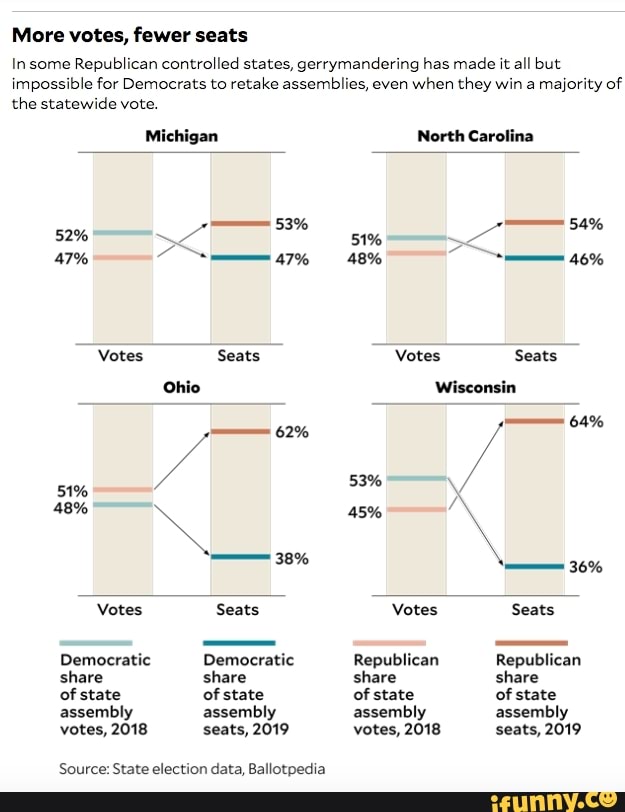





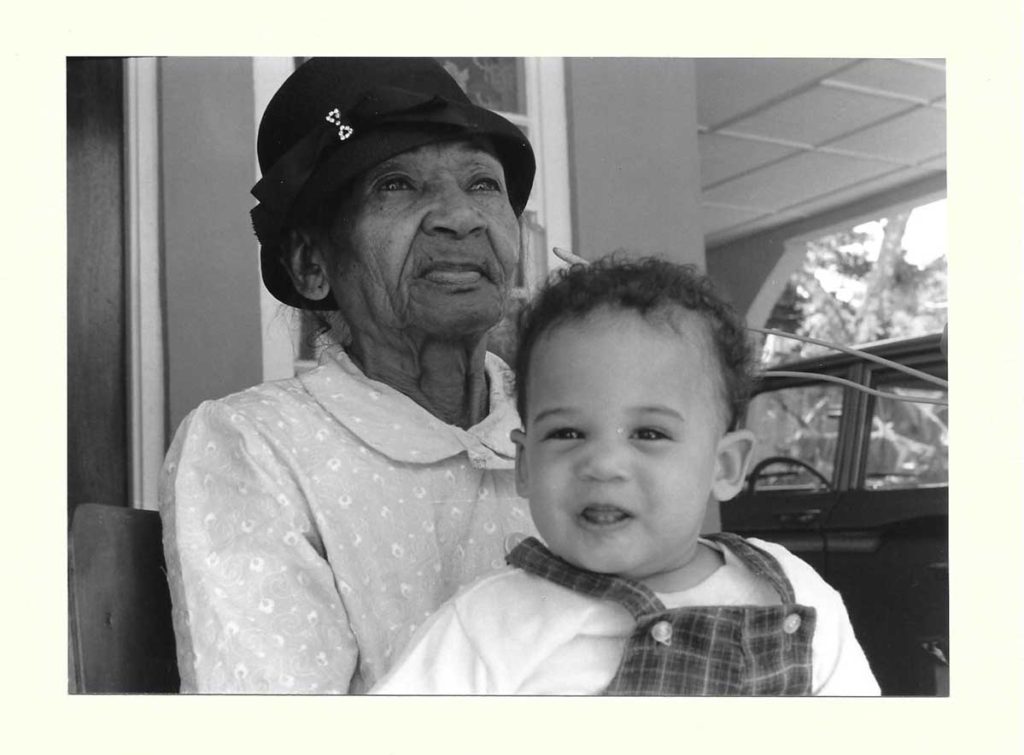


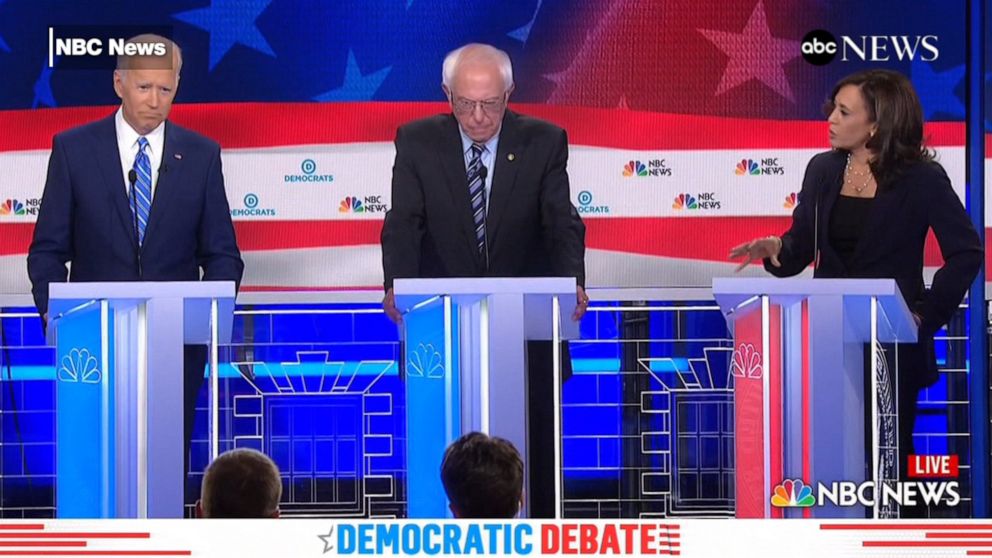

 The Weekly Sift

