To save Jesus from those claiming to be his heirs, we must wrench him from the hands of those who use him as a façade from which to hide their phobias — their fear of blacks, their fear of the undocumented, their fear of Muslims, their fear of everything queer.
This week everybody was talking about the end of the shutdown
One of the featured posts discusses this in more detail. One additional thing about the related immigration debate: Something you often hear European-Americans say is: “I’m not against immigrants. I just think they should come in the right way, like my ancestors did.”
Three points on that: First, when my German ancestors came to America in the 1840s and 1850s, there was no wrong way, because there were no rules. America didn’t start limiting immigration until the Chinese Exclusion Act of 1882. From the beginning, it’s always been about race.
Second, immigrating to this country legally, i.e., becoming a legal permanent resident, isn’t the simple thing that “why don’t they just …” statements imply. People come here without a green card because they see no chance of getting one, not because they want to flaunt our laws. MTV’s Franchesca Ramsey explains:
Finally, Trump’s latest proposal (which further tightens legal immigration) will just make this worse. So the statement boils down to “Why don’t they do something we’re not going to let them do?”
and the Mueller investigation
Thursday, The New York Times reported that Trump ordered the Justice Department to fire Special Counsel Robert Mueller last June, after it became clear Mueller was investigating Trump for obstruction of justice. Reportedly, White House Counsel Don McGahn threatened to resign rather than deliver the message to Justice, and Trump backed down.
For what it’s worth, Trump called the report “fake news” and “a typical New York Times fake story”. Joe Scarborough’s response to Sean Hannity’s attempt to first deny and then distract from this story is hilarious.
Ty Cobb, the White House lawyer leading the response to the investigation, said Mr. Trump was speaking hurriedly and intended only to say that he was willing to meet.
If anybody expects to see Trump under oath without (or even with) an order from the Supreme Court, let me remind you of all the times he has said he would release his tax returns. All this just underlines the Jay Rosen quote I mentioned last week, about the pointlessness of interviewing Trump:
In an interview situation, [Trump is] just saying what — at the moment — makes him feel like the best, the biggest, the greatest, the brightest, the richest, the most potent. He’s just saying whatever comes to his mind as the most spectacular boast he can think of. It doesn’t necessarily mean anything about his policies.
Speaking of interviewing Trump, Matt Yglesias comes to a similar conclusion about an interview Trump did with CNBC’s Joe Kernen:
Listening to him talk is interesting from an entertainment perspective (he did once host a popular television show), but it conveys no information about the world, the American government, or the Trump administration’s policies. If Kernen wanted to help his viewers understand what’s going on, he’d have been better off interviewing someone else.
Trump is also trying to get the Justice Department to release a memo written by Rep. Devin Nunes. It seems to be a summary of the conspiracy-theory view of the Mueller investigation. It’s based on classified information, and career DoJ people think its release would be “extremely reckless”.
He has also recently said things that make it look like he doesn’t understand what obstruction of justice means.
On Wednesday, speaking briefly to reporters, Trump defended his actions in the probe as “fighting back” against unfair allegations. “Oh, well, ‘Did he fight back?’ ” Trump said. “You fight back, ‘Oh, it’s obstruction.’ ”
If you’re the president of the United States and the Justice Department is investigating you, using your official powers to “fight back” is exactly what obstruction of justice means. It’s illegal for good reason.
but I to push back on Trump’s claims about his first year
I can’t bring myself to watch the State of the Union address tomorrow night, but I’ll probably read the transcript. No doubt it will be full of claims about how the economy is growing and creating jobs.
The truth is that Obama left Trump an economy trending in the right direction, and it has continued to do so. The GDP growth graph looks like this:
This is about what I would expect, because the Trump tax cut has yet to take effect, and there has been no Trump budget — everything is still running on continuing resolutions based on Obama’s last budget. If there’s a boom next year, that might belong to Trump.
If congressional districts weren’t gerrymandered, what should they look like? 538 looks at the different things you might want to optimize, and the maps they lead to.
A video made by the War Department in 1947 is going around on social media. Its message — that we shouldn’t let rabble-rousers turn us against Americans who look different than we do — still resonates. “Remember when you hear this kind of talk: Somebody is going to get something out of it, and it isn’t going to be you.”
Mother Jones chronicles the rise and fall of ECOT, the Electronic Classroom of Tomorrow, an Ohio charter school that made its founder rich, cost taxpayers millions, produced poor results, and now has collapsed, leaving many of its students in the lurch.
Multiple warning signs got ignored, because ECOT fit the Republican privatization ideal so well that it got tangled up in the partisan politics of the Ohio legislature. Former Democratic Governor Ted Strickland explains:
“I don’t think all political contributions are efforts to do something nefarious,” Strickland told me. “But in this case, I think it was so obvious that these schools were so bad and were failing and had such lax oversight. I cannot give the Republican Legislature the benefit of the doubt and say that they did not know.
“When you have a situation where public moneys are used to enrich individuals,” he added, “who then in turn support the politicians that support the policies that enrich them—it may not be illegal, but I think that fits the definition of corruption.”
Statewide, ECOT got “more than $1 billion in public funding, much of it diverted from better performing Ohio schools … at least 15 percent of that money—about $150 million—was paid to [founder William] Lager’s private companies”.
Yesterday [January 18], after 17 years of operation, the school came to a spectacular end. … Despite years of critics raising similar concerns, the school’s demise happened quickly, after two Ohio Department of Education reviews from 2016 and 2017 found that ECOT had overbilled taxpayers by $80 million for thousands of students it couldn’t show were meeting the department’s enrollment standards. As a result, last summer the state ordered the school to begin paying back almost $4 million per month in school funds, which ECOT claimed it was unable to do.
David Roberts writes about the role of climate change in our national strategy: It’s been taken out of the new version of the National Security Strategy, but the Pentagon continues to take it seriously in a lot of ways.
James Stavridis, a retired Navy admiral now serving as dean of the Fletcher School of Law and Diplomacy at Tufts University, succinctly lays out the reasons the military can’t ignore climate change in this piece. Scarcity of water and other resources will drive dislocation and conflict, he writes. Coastal Naval bases are in danger of being inundated by rising seas; the Arctic is melting and opening new areas of geopolitical conflict; the rising cost of climate impacts will squeeze the military budget; and responding to severe weather events will reduce military readiness.
However, the military can’t make up for climate denial in the rest of the government, because the military’s focus (appropriately, Roberts says) is to respond to climate change, not prevent it. And that could lead to this dystopian future:
As things get worse, those who can afford to protect themselves — move their military bases, build sea walls and desalination plants, claim newly navigable land in the Arctic — will pull farther and farther away from those who can’t (the global poor, who did so little to cause the problem). The US might come out on top in a more violent, chaotic world, but in the end, we do not stand apart. We will sink with it.
Dr. Larry Nassar got sentenced to 40-175 years in prison for molesting young women and girls who came to him for treatment. He’s 54 and already has a 60-year sentence to serve, so he’s never getting out.
In addition to Nassar himself, two institutions are in trouble for enabling Nassar and ignoring his accusers: USA Gymnastics and my alma mater, Michigan State, where Nassar was on the faculty.
The report states students told investigators that Michigan State athletes “have a reputation for engaging in sexual harassment and sexual assault and not being punished for it, because athletes are held in such high regard at the university.” It also states that athletes received more training on sexual harassment and sexual assault than other students but noted possible mixed messages. It cites a program called “Branded a Spartan” about upholding the Spartan name. Some male athletes told investigators that “making a report about sexual assault might tarnish the Spartan brand,” and at least one said he might not report an incident involving a fellow athlete to the Title IX office, according to the report.
For a little over a month, Taco Bell has been trolling conspiracy theorists with its “Belluminati” ad campaign, like this commercial:
And guess what? It’s working. The Vigilant Citizen blog says this is “the Illuminati flaunting in plain sight”. The Unseen Encyclopedia warns that “the jokes on you … it’s always hidden in plain sight”.
And now Taco Bell is upping ante with this “Web of Fries” movie trailer.
Leaving the subject of Taco Bell, let’s talk about dietary fiber. Everybody knows it’s good for you, but nobody is sure exactly what it does for you. Now there’s an interesting theory that seems to prove out in mice: It’s good for the bacteria in your intestines.
and let’s close with something amazing
Somehow, my scientific education never covered the Leidenfrost Effect, which causes drops of water to float on a vapor layer above a metal surface heated to 500 degrees or so, and sometimes to climb up and over tiny grooves that can be formed into a ladder of sorts. It’s fun to watch.
“Troubles” are the things that bother people in their lives, that they talk about at night over the kitchen table, the things that they are actively worried about. “Issues” is what the political system does to run elections. … When Issues don’t speak to Troubles, and Troubles don’t connect to Issues, you have a crisis in democracy.
This week everybody was talking about a government shutdown
First, the simple facts: The shutdown became official at midnight Saturday morning. The Friday-night vote that made it final was 50-49 in the Senate. (John McCain, who is battling cancer, was the senator not voting.) The funding proposal fell well short of the 60 votes it needed to pass.
A continuing resolution to fund the government for four weeks had passed the House, but the 50 votes in the Senate were not enough to break a filibuster. The votes in both houses were mostly along party lines. In the House, Republicans voted 224-11 for the CR, and Democrats 186-6 against. In the Senate, Republicans voted for it 45-5 and Democrats against 44-5. The senators crossing party lines were five Democrats (Donnelly, Jones, Heitkamp, Manchin, McCaskill) and five Republicans (Flake, Graham, Lee, McConnell, Paul — I suspect there’s some procedural reason why McConnell voted against it once he knew it wasn’t going to pass).
The two main sticking points in the negotiations leading up to the shutdown were preventing the deportation of the Dreamers and health insurance for children. (The CHIP program expired at the end of September. The states have kept it going anyway, but some will start running out of money soon.) The CR that failed funded CHIP for six years, but did nothing about the Dreamers, who will lose legal status in March because Trump killed President Obama’s DACA program.
It is bizarre that these are the issues Congress is stuck on, because both are popular with the voters, and would pass if they came to the floor as individual measures. Probably the only reason CHIP wasn’t reauthorized a long time ago was precisely so that Republicans could use it as a bargaining chip now. (In other words: We want to do the right thing, but only if we get something for it.) Paul Ryan is grandstanding about CHIP now, but Dylan Matthews points out all the opportunities he had to handle this problem without making it part of a shutdown vote. (In particular: Why isn’t CHIP an entitlement like Medicare, rather than a program that comes up for a vote every few years?)
For weeks, optimists have expected a DACA-like program to be part of a deal that included tighter immigration rules and more funding for border security, possibly even allowing Trump to claim that he had succeeded in getting money (from Congress and not from Mexico) to build his wall. The White House meeting that dissolved into the shithole-countries debacle was about precisely such a bipartisan deal that Senators Graham and Durbin had worked out. Since then, the main obstacle to a deal has been that Mitch McConnell didn’t want to get stuck championing something that Trump wouldn’t sign. All week he had been dropping ever-more-pointed hints that Trump should tell McConnell what he wants.
“I’m looking for something that President Trump supports, and he has not yet indicated what measure he is willing to sign,” McConnell said. “As soon as we figure out what he is for, then I would be convinced that we were not just spinning our wheels.”
Consequently: Nothing about DACA was in the deal voted on Friday night.
So here we are: Nobody really wants a government shutdown. Almost nobody wants children to lose health insurance. Only the most radical anti-immigration minority in Congress (and Stephen Miller in the White House) wants to deport the Dreamers. And yet, these are the things we’re fighting about.
There’s currently a vote scheduled in the Senate later today. This could all resolve quickly, or not.
In general, nobody-wins situations like this happen because each side has its own view of how the disaster will play out. (Labor strikes are similar: Each side thinks the other will have to fold first, so they push to the crisis.) So a large part of how this comes out depends on how the public reacts. Republicans clearly think the public will frame the issue as the Democrats standing up for illegal immigrants over the American people. (Part of that is code, as I’ve explained before: The “American people” are white Christians.) Democrats think that the Republicans in charge of everything will bear the blame, and also have the argument that they’re just trying to get Trump to do something he has often claimed he wants to do anyway. If one side is wrong, that side will eventually have to give in.
and a lie about immigrants and terrorism
That’s the subject of the featured post, “Lies, Damned Lies, and Trump Administration Terrorism Statistics“. To their collective shame, Homeland Security and the Department of Justice assembled a report to back up a lie Trump told to Congress: “The vast majority of individuals convicted of terrorism and terrorism-related offenses since 9/11 came here from outside of our country.” The report is a textbook lesson on how to abuse statistics.
While we’re talking immigration, this meme has been going around:
and the Trump/Russia connection
This still looks speculative to me, but a bombshell story from McClatchy claimed that the FBI is investigating whether money from a Russian oligarch was funneled through the National Rifle Association to help elect Trump.
Investigating, of course, doesn’t always mean that they’ve found anything, or even that there’s anything to find. The purely factual part of the story is that the NRA spent way more money supporting Trump ($30 million) than they have on Romney or previous Republican presidential candidates. The NRA/Russia link is supposed to be “Alexander Torshin, the deputy governor of Russia’s central bank who is known for his close relationships with both Russian President Vladimir Putin and the NRA.” It’s illegal to use foreign money to influence a U.S. election, so if this pans out, it’s a crime.
My usual test for stories like this is whether I’d believe them if the parties were flipped. If I had heard that the FBI was investigating whether Chinese money had flowed through the Sierra Club to help Hillary Clinton, would I believe there was fire under that smoke? At this point, probably not. I plan to wait and see.
Another transcript related to the Steele dossier came out this week: Glenn Simpson, a co-founder of Fusion GPS, the research firm that hired Christopher Steele to investigate Trump’s relationship with Russia and Russian oligarchs, testified before the House Intelligence Committee in November. The committee released that transcript, with a few redactions, Thursday.
I haven’t completed reading either this transcript or the comparable one from the Senate Judiciary Committee, but Simpson seems impressive in what I’ve read of both. His investigation sounds nothing like the conspiracy theories Republicans are spreading about it. And he tells a coherent Trump/Russia narrative that may not be proven yet, but does fit a lot of the known facts: During a period when the Trump Organization wasn’t considered credit-worthy, a lot of suspicious Russian money flowed into Trump projects in a way that looks like money laundering. This was the beginning of a Trump/Russia relationship that blossomed during the campaign, resulting in a significant effort by Russian intelligence to get Trump elected.
Simpson does a good job of stating what he knows and not overstating it. Like this:
“Evidence”, I think, is a strong word. I think we saw patterns of buying and selling that we thought were suggestive of money laundering. … You know, fast turnover deals and deals where there seemed to have been efforts to disguise the identity of the buyer.
Fusion GPS couldn’t get “evidence” because they didn’t have subpoena power to get bank records. But congressional committees do. Rep. Adam Schiff asked who they should subpoena, and Simpson laid it out:
I would go for the clearing banks in New York that cleared the transactions, you know. And there’s—again, it’s these sort of intermediary entities that have no real interest in protecting the information, and all you have to do is ask for it and they just sort of produced by rote. So we’ve done a lot of money laundering investigations where we go to the trust companies and the clearing entities. And so, you know, all dollar transactions are generally cleared through New York. So, you know, the main thing you have to do is identify the banks that were used.
Atlantic’s David Graham followed up by asking Schiff whether the committee will follow this course. It’s not happening, Schiff told him “because Republican members are not interested”.
One of the arguments about the Democratic message for 2018 is whether or not they should come out for Trump’s impeachment. I hope they don’t go that far, because the hard evidence isn’t there yet. (Evidence is a strong word.) Instead, I would argue that the public needs Democrats to take over Congress so that we can find out what happened. Republicans are blocking investigations, and Democrats will go wherever the facts lead. Maybe that will be impeachment and maybe it won’t. We need to know the facts before we can say, and we’ll never know them if Republicans stay in control.
and the end of Trump’s first year
I was hoping to do my own wrap-up this week, but the article didn’t come together, so I’ll push it off to next week. One of the things I plan to do is examine whether, going into this administration, I was afraid of the right things. In particular, I’ll look back at “The Trump Administration: What I’m Watching For“, which I wrote two weeks after the election.
In particular, I said was watching to see if Trump would be doing any of these seven things.
taking credit for Obama’s accomplishments
taking credit for averting dangers that never existed
profiteering
changing the electorate
winking at right-wing paramilitary groups
subverting government agencies for political advantage
The pending rule would establish a new Conscience and Religious Freedom Division of the HHS civil rights office that would conduct compliance reviews, audits and other enforcement actions to ensure that health care providers are allowing workers to opt out of procedures when they have religious or moral objections.
The new office “would be empowered to further shield these workers and punish organizations that don’t allow them to express their religious and moral objections”.
Since it’s impossible to make allowance for everything that someone might claim is part of their religion — what if a Jehovah’s Witness EMT doesn’t want to participate in blood transfusions? what if a pharmacist has a religious objection to insulin manufactured through genetic engineering? or to any drug whose testing process involved killing animals? — there is literally no way to implement such a policy without favoring some religions over others. In practice, the moral objections of Baptists and Catholics will be seen as serious and reasonable, while those of less popular religions will get consideration only to the extent that popular religions share them. The moral objections of atheists will be ignored completely, since they’re not “religious”.
In short, having a religion (especially a popular one) gets you special rights.
In any other administration, it would be a major scandal if the president paid off a porn star not to talk about their affair. For Trump, it barely registers. I look at religious-right Trump supporters like Rev. Robert Jeffress and wonder what they’d be saying if The Wall Street Journal had written the exact same story about Obama.
BTW: I think it’s a low blow to point out the resemblance between Stormy Daniels and Ivanka. Probably they both look like a younger version of Ivanka’s mom, who Trump marrried. There’s a quote in Daniels’ article in In Touch that can be spun in an incestuous way, but it’s not obvious Trump meant it like that, even assuming he actually said it.
I never put a lot of stock in the Trump-has-dementia narrative, and to the extent I ever did, I’m going to stop talking about it. To me it’s like the Bush-is-stupid narrative that popped up so often during W’s administration. Bush was not stupid, he just had no interest in most of the topics we expect presidents to stay on top of. Probably if you talked to him about baseball, you’d be surprised how much he knows.
I suspect something similar about Trump: He has an unfocused mind, like a lot of people do. It’s hard for him to dig deeply into any subject, and the only topic that really interests him is himself. He indulges in wishful thinking, and refuses to let facts or expert opinions change his mind. These are all serious deficiencies in a president, but there’s no reason to think they point to a medical problem. His faults get more pronounced as he gets older, but that also is not unusual. Your uncle who was cantankerous at 50 is probably even more cantankerous at 70; that’s not a sign of insanity, it’s just how people age.
Earlier this month, Josh Marshall got this issue right: The important thing is what Trump does, not why.
All the diagnosis of a mental illness could tell us is that Trump might be prone to act in ways that we literally see him acting in every day: impulsive, erratic, driven by petty aggressions and paranoia, showing poor impulsive control, an inability to moderate self-destructive behavior.
There’s no need to argue about hidden causes when the effects are more important and so plain to see.
This interview with psychiatrist Allen Frances is well worth reading. He discusses both Trump (who he describes as bad rather than mad) and the people who support him. He advocates more political action from the public, rather than hoping that some cabal within the administration will use a psychological diagnosis to invoke the 25th amendment.
One 2015 study from Mexico’s National Institute of Statistics and Geography reveals that a stunning91.2 percent of Americans in the country don’t have their papers in order.
One my favorite news-media observers is Jay Rosen from NYU. His summary of how the news media has responded to Trump’s first year is the first half of this episode of the Recode podcast. He was interviewed on Recode last year, and made a number of observations that other news people eventually came around to — like that there was really no point in interviewing Kellyanne Conway, since it was impossible either for the journalist or the readers/viewers to pull any trustworthy information out of the mass of disinformation you would get from her.
In this interview, he talks about the press’s loyalty to “rituals” that no longer serve a purpose in the Trump era. The press continues to fight for access to the White House “because that’s what the White House press corps does”. But even scoring the ultimate access — an interview with the President himself — does practically nothing to keep readers/viewers informed.
The whole purpose of interviewing a sitting president is that you can find out about their thinking, you can illuminate their policy choices, you can dig a little deeper into what they plan to do. That assumes that the president has policy ideas.
In an interview situation, [Trump is] just saying what — at the moment — makes him feel like the best, the biggest, the greatest, the brightest, the richest, the most potent. He’s just saying whatever comes to his mind as the most spectacular boast he can think of. It doesn’t necessarily mean anything about his policies.
He criticized the press for continuing to project normality onto Trump, for example, by talking about his “foreign policy” as if there were such a thing.
One of the more interesting parts of the interview was when the interviewer (Peter Kafka) brought up Rosen’s previous statements that the press should “listen” to the American people more. Kafka related it to the various articles we have seen in which reporters go interview Trump voters in rural areas they don’t usually cover. Rosen agreed that some good journalism came out of that effort, but said it wasn’t what he had meant. He backed up to talk about a distinction (attributed to sociologist C. Wright Mills) between “troubles” and “issues”.
“Troubles” are the things that bother people in their lives, that they talk about at night over the kitchen table, the things that they are actively worried about. “Issues” is what the political system does to run elections and win coalitions. And his point is that when Issues don’t speak to Troubles, and Troubles don’t connect to Issues, you have a crisis in democracy.
So my point was not that journalists should just go out and listen to the Trump voters because they got the election wrong. It was that if journalists could somehow listen to people’s Troubles in a new and more potent way, then they would be in a position to represent those people better than the political system does when it fashions them into Issues. Now that’s a deeper and more ambitious project than “Let’s check in with Trump voters in Pennsylvania and West Virginia to see if they still support Donald Trump.”
I think we saw a lot of that kind of parachuting into Trump Country, which is sort of an anthropological — or some people said “zoological” — exercise. We saw a lot of that. But what I was talking about was trying to kind of recover authority by understanding the Troubles that led to the results that we saw in 2016.
and let’s close with something adorable
The world’s smallest cat lives in Sri Lanka and when fully grown, weighs about a kilogram.
The immigration debate has always carried with it an undertone of racism. I’m not attributing this to everyone who holds the position, but there’s a sense in which [opposition to] immigration is driven by a deep anxiety about the browning of America. That “how will we stem the tide?”, that “this is no longer a white nation.” … What Trump did yesterday was to make explicit the racist undertone of this debate.
– Eddie Glaude, speaking on MSNBC’s “Morning Joe” (1-12-2018).
On MLK Day, I always like to link to a piece I wrote in 2013 to warn conservatives against cherrypicking King’s quotes. The real Martin Luther King was a radical: “MLK: Sanitized for Their Protection“.
This week everybody was talking about shithole countries
Trump made the remarks Thursday during a meeting with lawmakers in the Oval Office in which they discussed protecting immigrants from Haiti, El Salvador and African countries as part of a bipartisan deal on the status of undocumented young U.S. immigrants, The Washington Post reported.
“Why are we having all these people from shithole countries come here?” Trump said, according to people in the room, including Sen. Richard J. Durbin (D-Ill.). Trump then reportedly suggested that the United States instead should bring in more immigrants from countries such as Norway.
The most appalling thing here is not Trump — at least not any more; it’s not news that he’s a racist, or that he expresses himself crudely, or that his presidency is a constant embarrassment to the United States of America — it’s how few conservative or Republican voices speak out against him, even when he is so clearly in the wrong. For example, most members of his council of evangelical advisors made no comment, and the ones who did were supportive, like Baptist mega-church pastor Robert Jeffress:
“I support his views 100 percent, even though as a pastor I can’t use that language.” The United States, Jeffress said, has every right to restrict immigration according to whatever criteria it establishes, including race or other qualifications. “The country has the right to establish what would benefit our nation the most,” he said. “I don’t think there’s anything racist about it at all.”
You read that right: Explicitly screening immigrants according to race would not be racist. What rabbit hole have we gone down here?
Jeffress was not alone in seeing a problem of bad language rather than evil intentions. Others saw only Trump’s style, which is just different from what previous presidents have led us to expect. Fox News’ Jesse Watters:
This is how the forgotten men and women in America talk at the bar. This is how Trump relates to people.
There’s a core of truth there, but Watters is leaving out something important: This is how racists talk at the bar, and how Trump relates to racists.
James Fallows imagines if previous presidents had acted like Trump.
Suppose, contrary to known (to me) fact, Eisenhower had said to Senators in WH meeting during Little Rock school deseg controversy, “why are these n****s so pushy and demanding?” Suppose that legislators meeting JFK, LBJ, or even Nixon at WH during nonstop 1960s civil-rights tensions had heard a sitting president refer to black neighborhoods as shitholes or used code word ‘Nigra.’ Those comments would *certainly* have “connected with the base” in states that were fighting de-segregation. They would have reflected what “a lot of people were thinking.”
But I don’t think you’d have found (or would find, if you went back and looked) *mainstream* news outlets that would explain away, from a sitting president, outright racist language. This kind of “connecting with the base” rationalization is a new thing, and bad. Every civilization has ugly elements, which leaders are supposed to help their society rise above rather than egg on.
The one positive thing to come out of this: The mainstream media debate over whether it is proper to describe Trump’s remarks or Trump himself as “racist” seems to be over: They are and he is.
At first the White House didn’t even deny Trump’s comment. Its initial statement said that “Certain Washington politicians choose to fight for foreign countries, but President Trump will always fight for the American people.” Eventually, Trump got around to denying it sort of, and a few of the Republicans in the room backed him up. The striking thing to me, though, is that most of the people in the room were Republicans, and only a handful of them defended their president. Lindsey Graham didn’t specifically quote Trump, but more-or-less backed up the published accounts of the meeting.
I’ll give the last word on this to the Nazi website, The Daily Stormer, as quoted by The Hill:
This is encouraging and refreshing, as it indicates Trump is more or less on the same page as us with regards to race and immigration.
and the Hawaiian false alarm
I can’t decide whether the explanation is totally believable or totally unbelievable:
Around 8:05 a.m., the Hawaii emergency employee initiated the internal test, according to a timeline released by the state. From a drop-down menu on a computer program, he saw two options: “Test missile alert” and “Missile alert.” He was supposed to choose the former; as much of the world now knows, he chose the latter, an initiation of a real-life missile alert.
Couldn’t somebody have designed in one of those “Are you sure you want to do this?” boxes? If there’s a Doomsday Device somewhere, I hope its user interface is more forgiving.
Anyway, cellphones all over the state got a text: “BALLISTIC MISSILE THREAT INBOUND TO HAWAII. SEEK IMMEDIATE SHELTER. THIS IS NOT A DRILL.”
A more detailed message scrolled across television screens in Hawaii, suggesting, “If you are indoors, stay indoors. If you are outdoors, seek immediate shelter in a building. Remain indoors well away from windows. If you are driving, pull safely to the side of the road and seek shelter in a building or lay on the floor.”
The false warning sparked a wave of panic as thousands of people, many assuming they had only minutes to live, scrambled to seek shelter and say their final goodbyes to loved ones. The situation was exacerbated by a 38-minute gap between the initial alert and a subsequent wireless alert stating the missile warning was a mistake.
and DACA
The “shithole countries” remark came during a meeting in which Dick Durbin and Lindsey Graham were presenting a bipartisan compromise to avoid deporting the Dreamers, now that the program through which President Obama had protected them (DACA) has been ended by President Trump. Trump rejected their proposal, but so far there isn’t any other plausible plan out there.
DACA is one of many issues in a larger negotiation aimed at avoiding a government shutdown, which is otherwise is scheduled for Friday. The “shithole” meeting came two days after a televised meeting with lawmakers of both parties, in which Trump at various times put forward all possible positions.
538’s Perry Bacon thinks he knows what the ultimate compromise has to look like:
Even with the divides in both parties, the potential outlines of a bipartisan deal on immigration are obvious: some kind of permanent legal status and path to citizenship for Dreamers but with limits on their ability to sponsor relatives who also want legal status; an expansion of the physical barriers between the United States and Mexico; and the hiring of some additional border agents and other immigration enforcement personnel.
Meanwhile a court delayed the end of DACA by ordering the administration to keep renewing permits while the court rules on the legality of Trump’s order.
and Oprah 2020
Oprah’s speech at the Golden Globes, which I also linked to last week, started speculation about whether she wants to be president. That, in turn, sparked much pro-and-con arguing among Democrats. Some Democrats like the idea of challenging Trump with a better outsider: more famous, more accomplished, smarter, more articulate, more in touch with ordinary Americans, and just generally a better human being. Others hate the idea of nominating an inexperienced celebrity: Government is a serious profession, and calls for people who know what they’re doing; the fact that the Republican electorate decided to be irresponsible in 2016 is no reason for us to be irresponsible too.
Count me in the middle here. I get the attraction of Oprah 2020. If I could custom-design a Democratic candidate to run against Trump, I think a charismatic black woman who already has a following among whites might be a good start. I’m surprised that there might be one available.
The question is how much we should be willing to give up to get those features. I’m willing to give up a little, but not a lot. Specifically, I would run Candidate Oprah through the same tests as any other candidate. She’ll have to articulate a vision, show mastery of the issues, and lay out some detailed programs before I’d consider voting for her. (In 2016, Trump did have a vision — a reprehensible one — but he never demonstrated an understanding of issues or programs. He still hasn’t.)
Her lack of government experience is a factor, but not a decisive one for me. Over the centuries, the Presidency has grown to be such a big job that in fact no one is qualified for it, not even someone as smart and experienced as Hillary Clinton. Our system requires us to vote for an individual, but in practical terms we are always electing a team. While it’s true that Trump doesn’t know what he’s doing, the larger problem is that Team Trump also doesn’t know what it’s doing, and even when it does, Trump won’t leave his subordinates alone to do what they know how to do. (That’s a big piece of the lesson from Fire and Fury.) That’s why, for example, the administration keeps putting out executive orders that the courts overturn, and issuing directives that the generals refuse to implement. It’s also why there still is no Trump healthcare plan.
So Oprah’s inexperience would cause me to look more skeptically at Team Oprah, but I’m willing to be convinced if collectively they stand for something I can support and demonstrate varieties of expertise that Oprah lacks as an individual.
A lot of the anti-Oprah writers point to the pseudoscience that her TV show frequently promoted. Again, I see that as an issue, but not an insurmountable one: Her TV show was intended to engage people’s interest with ideas they weren’t seeing elsewhere, not to establish government policy. So I would be watching her campaign to see if similar tendencies emerged. Candidate Oprah would of course be asked about politically relevant science issues, and her answers should be critically examined. But if the answers she gives as a candidate stand up to scrutiny, if (unlike Trump) she shows appropriate humility and appreciates that she needs to lean on expert advice, I wouldn’t hold against her the stuff she promoted as an entertainer.
but you should pay attention to gerrymandering
A variety of cases are making their way up the ladder of federal courts. TPM has a good explanation of where they are and what they mean. The Texas case is about racial gerrymandering to limit the influence of Hispanic voters. But the North Carolina case opens a new front by directly confronting partisan gerrymanders, whether they are racially motivated or not. (As we increasingly have a party for whites and a party for non-whites, it’s hard to tell the difference.)
In 2012, Republicans won just 49 percent of the statewide vote but snagged nine of 13 House seats. Two years later, with 54 percent of the vote, they won 10 of 13 seats.
and you also might be interested in …
Trump continues to threaten to pull out of President Obama’s nuclear deal with Iran, but not to do it. Our side of the deal involves waiving sanctions against Iran, which the President needs to do every 120 days. Trump waived the sanctions again, but warned that this is the last time.
He continues to promise his base that he will get a new deal that is tougher on Iran. But no one else seems to think this is likely. In fact, Obama’s deal does important stuff:
Under the agreement, Iran agreed to eliminate its stockpile of medium-enriched uranium, cut its stockpile of low-enriched uranium by 98%, and reduce by about two-thirds the number of its gas centrifuges for 13 years. For the next 15 years, Iran will only enrich uranium up to 3.67%. Iran also agreed not to build any new heavy-water facilities for the same period of time. Uranium-enrichment activities will be limited to a single facility using first-generation centrifuges for 10 years. Other facilities will be converted to avoid proliferation risks.
None of our allies involved in the deal have expressed an interest in pulling out. The European Union’s chief foreign affairs representative, Federica Mogherini, said on Thursday:
The deal is working, it is delivering on its main goal which means keeping the Iranian nuclear program in check and under close surveillance. Iran is fully complying with the commitments made under the agreement.
Fascinating case in New Hampshire: The Border Patrol found marijuana by conducting no-probable-cause searches that would be illegal under New Hampshire law, and would also be illegal under federal law anyplace that wasn’t within 100 miles of a border. They turned the weed over to local police in Woodstock, NH, who charged the possessors with a crime. A state court now has to determine whether the evidence is admissible.
At stake is the possibility that American freedoms might seriously erode within a 100-mile band around the border. Already the Border Patrol can set up random checkpoints anywhere in that 100-mile band and ask for your ID. (I know a naturalized U.S. citizen from the U.K. who was stopped on an interstate highway in Vermont. He wasn’t driving, so he didn’t think he needed to be carrying his driver’s license. But his British accent created a problem that took some time to clear up.) It’s one thing to be asked to ID yourself and answer some questions when you cross the border. But if you just live near a border, you can be going about your everyday business and suddenly find yourself under search. If anything they find can be turned over to local police for prosecution … that doesn’t sound much like America, does it?
Not only would Trump not be president, almost everyone in the campaign agreed, he should probably not be. Conveniently, the former conviction meant nobody had to deal with the latter issue.
This week everybody was talking about Fire and Fury
Michael Wolff’s book shipped Friday, days after excerpts appeared in New York magazine and Wolff’s account of writing the book came out in Hollywood Reporter. I like Masha Gessen’s summary of what the book tells us:
The President of the United States is a deranged liar who surrounds himself with sycophants. He is also functionally illiterate and intellectually unsound. He is manifestly unfit for the job. Who knew? Everybody did.
I’m about 1/4 of the way through Wolff’s book, and I feel a consistent cognitive dissonance as I read it: It’s simultaneously shocking and unsurprising. If not these exact incidents, many similar ones have been reported over and over again. We all knew. We didn’t even have to rely on reporting; Trump’s tweets are not the work of a sound and capable mind, much less the “stable genius” he tells us he is. (What actually stable genius would say such a thing?) Read them yourself.
James Fallows points out that Trump’s unfitness for the presidency was already “an open secret”.
Who is also in on this open secret? Virtually everyone in a position to do something about it, which at the moment means members of the Republican majority in Congress.
They know what is wrong with Donald Trump. They know why it’s dangerous. They understand—or most of them do—the damage he can do to a system of governance that relies to a surprising degree on norms rather than rules, and whose vulnerability has been newly exposed. They know—or should—about the ways Trump’s vanity and avarice are harming American interests relative to competitors like Russia and China, and partners and allies in North America, Europe, and the Pacific.
They know. They could do something: hearings, investigations, demands for financial or health documents, subpoenas. Even the tool they used against the 42nd president, for failings one percent as grave as those of the 45th: impeachment.
We are now back on to the feverish debate about whether or not Donald Trump is mentally ill or suffering from the onset of dementia. The most important thing to know about this debate is that it simply doesn’t matter. … All the diagnosis of a mental illness could tell us is that Trump might be prone to act in ways that we literally see him acting in every day: impulsive, erratic, driven by petty aggressions and paranoia, showing poor impulsive control, an inability to moderate self-destructive behavior. He is frequently either frighteningly out of touch with reality or sufficiently pathological in his lying that it is impossible to tell.
Trump fired back by threatening to sue both the publisher and Steve Bannon, which reinforces my belief that he gets bad legal advice. David Graham at The Atlantic explains why a suit is a bad idea. First, suing the publisher is likely to do accomplish nothing more than to increase the book’s sales.
In order to win, Trump would likely have to prove that Wolff and the publisher printed information that they knew was false. In the United States, it’s very hard to win a libel suit against a publisher or media outlet—as Trump knows well, since he has repeatedly complained that libel laws need to be loosened for plaintiffs. Many of the most damaging quotes to emerge from the book so far, like Bannon’s description of the June 2016 Trump campaign meeting with a Russian lawyer as “treasonous,” or aides repeated assessments of the president as unintelligent and distracted, are matters of opinion and not fact, and therefore not subject to libel laws.
Take, for example, the quote where Bannon says Ivanka is “dumb as a brick”. In order to sue Wolff for that, Trump would have to prove not that his daughter is smarter than a brick, but that Bannon didn’t say the quote.
Whether Bannon is vulnerable depends on how sweeping his non-disclosure agreement with Trump is. But even if it’s iron-clad and Bannon’s statements to Wolff violate it, Trump would be foolish to go to court.
If a lawsuit did go forward, however, Trump would open himself up to defense lawyers poring through all sorts of information he probably doesn’t want made public. Presidents are largely immune to litigation while in office, but if Trump initiated a suit, he’d open himself up to discovery.
“It would be an opposition researcher’s dream,” Abrams said. “The sort of discovery which would result from a challenge to this book, which deals with issues as broad as the president’s intelligence, would allow enormous discovery. His college grades! It’s very hard to minimize the potentially relevant areas that discovery could go into.”
Trump tried such a suit once before, in 2007 against the author of the book Trump Nation. It didn’t go well. While being deposed under oath, he was forced to recant 30 public lies.
Stephen Miller creeps me out, so I have not watched his CNN interview, the one Jake Tapper ended early, resulting in Miller needing to be escorted out of the studio. Maybe your stomach is stronger than mine. If I were casting a movie and needed somebody to play a fascist toady, Miller would be hard to top.
and the investigations of Trump
There have been a number of recent developments. The NYT reported Thursday on Trump’s attempts to dissuade Jeff Sessions from recusing himself from the Russia investigation. Anonymous sources say Trump sent White House Counsel Don McGahn to lobby Sessions against recusal, and quote him saying that it was Sessions’ job to “protect” him from the investigation. Trump also talked positively about AGs “protecting” their presidents in an on-the-record interview with the NYT in late December.
Sessions, in turn, reportedly tried to dig up dirt against then-FBI-Director James Comey, presumably to undermine the FBI’s investigation of Trump. Also, notes taken by then-Chief-of-Staff Reince Preibus apparently back up some of Comey’s claims about his interactions with Trump.
All of this supports the theory that Comey’s firing was part of a larger effort to obstruct justice.
The Republican conspiracy theory focused on Fusion GPS and the Steele dossier largely unraveled. The heart of that theory was that the original FBI investigation of the Trump campaign’s possible collusion with Russia was based on the Steele dossier, which was partially paid for with money from the Clinton campaign. If that were true, it would point to a dangerous politicization of the FBI.
But it’s not true. Another NYT scoop says the FBI investigation began with a tip from Australian intelligence: Trump campaign advisor George Papadopoulos (who has already pleaded guilty and is cooperating with Mueller) bragged to an Australian diplomat at a London bar that Russia had dirt on Hillary Clinton. The diplomat initially thought nothing of it, but when such dirt started to come out, he reported the meeting.
Meanwhile, the founders of Fusion GPS published an op-ed saying that Congress already knows better than some of the conspiracy theories that Republican congressmen have been trafficking in, because they have already testified extensively under oath.
Yes, we hired Mr. Steele, a highly respected Russia expert. But we did so without informing him whom we were working for and gave him no specific marching orders beyond this basic question: Why did Mr. Trump repeatedly seek to do deals in a notoriously corrupt police state that most serious investors shun?
What came back shocked us. Mr. Steele’s sources in Russia (who were not paid) reported on an extensive — and now confirmed — effort by the Kremlin to help elect Mr. Trump president. Mr. Steele saw this as a crime in progress and decided he needed to report it to the F.B.I.
We did not discuss that decision with our clients, or anyone else.
They request that Chairman Grassley of the Senate Judiciary Committee release the transcript of their sworn testimony, but Grassley has refused to do so.
Meanwhile, Republicans in Congress seem more interested in punishing the whistle-blowers than in understanding how Russia interfered in the 2016 election and trying to prevent future interference. Senators Grassley and Graham made the criminal referral resulting from the Judiciary Committee’s investigation — against Christopher Steele, the author of the dossier whose contents were leaked to the public a year ago. The only bank records Congress has subpoenaed are those of Fusion GPS, Steele’s employers.
Meanwhile, the Justice Department has become less resistant to political pressure from Republicans. Investigations into the Clinton Foundation and Hillary Clinton’s emails have re-opened. It would be one thing if these investigations were based on some new information, but so far that seems not to be the case. It looks like Benghazi all over again: If the last investigation didn’t find anything criminal, it must be time to launch a new investigation. There appears to be no way to clear the Clintons.
We can’t lose sight of the larger irrelevance of these issues: Bill and Hillary Clinton are private citizens now. If there’s some legitimate reason to investigate or prosecute them, fine. But none of that has any political significance any more, and nothing that might be uncovered about the Clintons would justify ignoring Trump’s law-breaking.
For too long, women have not been heard or believed if they dared to speak their truth to the power of those men. But their time is up.
Other people are wondering if Oprah’s time is arriving. It’s hard to picture anybody better equipped to channel anti-Trump outrage.
It’s amazing how fast Trump nuclear-button tweet got knocked out of the headlines by other outrageous stuff. The best response to it was Stephen Colbert’s Viagrageddon commercial:
When Susan Collins voted for Trump’s no-billionaire-left-behind tax cut that also repealed ObamaCare’s individual mandate, she insisted that she hadn’t just caved, she had made a savvy deal: In exchange for her vote, she was promised that Congress would pass other legislation to keep the ObamaCare marketplaces from collapsing. Many observers (including me) concluded that she’d been rolled. In fact that additional legislation would never pass; or if it ever did, it would only be as part of a larger package requiring new concessions. Her vote had bought nothing.
“I cannot believe that the press would have treated another senator with 20 years of experience as they have treated me,” she told reporters. “They’ve ignored everything that I’ve gotten and written story after story about how I’m duped.”
But maybe people wrote that because she was duped. TPM reports:
When Sen. Susan Collins (R-ME) first announced she would support the GOP tax bill that killed Obamacare’s individual mandate, she insisted that three separate health care measures to prop up the Affordable Care Act and protect Medicare recipients be passed before she cast her vote. She then amended her demand, saying the bills had to pass before the tax bill came back from the House-Senate conference committee. She then insisted — after voting for the tax bill — that the policies pass by the end of 2017. When it became clear that wasn’t possible in the face of staunch opposition from House conservatives, she expressed confidence they would become law in January.
Now, Collins is moving the goalposts yet again.
In an interview with Inside Health Policy published Thursday, Collins said she hopes the policies she proposed will pass and be implemented before 2019, when the repeal of the individual mandate is expected to shrink the individual insurance market by several million people and drive up premiums by at least 10 percent.
Drug policy has long been the most obvious place where Republicans abandon their states-rights rhetoric. Drugs are bad, and so laws against them are good, even if they are federal laws that trump more permissive state laws.
In recent years, states like Colorado have relaxed their marijuana laws, to the point that their are retail marijuana shops like Local Product in Denver. At the New Year, marijuana laws changed in California and a few other states. The Obama administration had turned a blind eye to states legalizing marijuana. Federal law still banned it, but the Obama Justice Department decided it had better things to do than fight with states about weed.
The result has been something that Republicans ordinarily would applaud: Entrepreneurs started new businesses and created new jobs. What’s more, legally grown local marijuana keeps dollars in the country and lowers our real balance of payments deficit. (This may not show up in the official stats, because importing marijuana has always been off the books.) MarketWatch — a news site targeted at investors rather than potheads — projects that U.S. marijuana could be a $50-billion-a-year industry by 2026.
But this week Jeff Sessions announced that the oppressive hand of job-killing big-government regulation is coming back. He did not go so far as to order U.S. attorneys to crack down on those who grow or sell or use marijuana, but he rescinded Obama-era hands-off guidelines and instructed them to use their own judgment.
This policy change is expected to crimp the expansion of the legal marijuana industry, making bankers and other investors more skittish about risking their money. It will also give U.S. attorneys, who often go on seek higher office, a new temptation for corruption: Hey, Mr. Marijuana Mogul: Do you want to contribute to my campaign for governor, or should I arrest you?
Speaking of job-killing regulations, Slate points out that some jobs ought to be killed: the ones based on fleecing the public. The article points to the now-reversed regulation requiring financial advisors to act in their clients’ best interests.
Yes, these rules and regulations might technically kill jobs. But which jobs, and in order to accomplish what? Protections of this sort chase dodgy sellers out of the marketplace. If that’s job killing, good riddance.
Deregulation, in turn, paves the way for the return of these jobs for financial snake oil salesman.
Deregulation also spawns the need for regulatory sherpas—self-anointed “experts” hired by frightened members of the public who lack the time and sophistication to test the quality of (newly deregulated) drinking water, food, or prescription drugs.
Does the country really need a cottage industry of private testers and verifiers to help Americans get through the day? These are not jobs we need, nor ones we should want.
Israel’s response to Trump’s announcement that the American embassy will move to Jerusalem is to move further in the direction of annexing the territory it conquered in 1967. The NYT quotes Public Security Minister Gilad Erdan:
We are telling the world that it doesn’t matter what the nations of the world say. The time has come to express our biblical right to the land.
Whenever the Israel/Palestine conflict comes up, it’s worth remembering that there are only four long-term solutions:
two sovereign states
one democratic state in which all Jews and Palestinians are voting citizens
one undemocratic state in which half of the population rules the other half
ethnic cleansing
If you’re not for option 1, you’re implicitly for one of the other three.
Remember the commission that Trump established to prove his claim that 3-5 million people voted fraudulently in 2016, so he might have won the popular vote after all? Never mind. Trump disbanded the commission Wednesday. In the tweet announcing his decision, he continued to assert “substantial evidence of voter fraud”, though he has never produced any evidence for that claim.
One of the key worries of never-Trump Republicans is coming true: College Republican groups are losing traditional Republicans and being taken over by Trumpists. That’s a trend that could affect the GOP for decades to come.
and let’s close with something remarkable
As any home-owner will tell you, construction projects take forever. Maybe they don’t have to: This house assembles itself in 10 minutes.
“What shall it profit a man,” Jesus asked, “if he gain the whole world and suffer the loss of his own soul?” The current Republican Party seems to not understand that question.
Through no doing of my own, it turns out that the next two Mondays are Christmas and New Years. I’ve interpreted that as a sign from the Calendar Gods that I should take a two-week break (something I haven’t done in years). I reserve the right, though, to put out a special edition if something happens that I can’t stop myself from commenting on.
This week everybody was talking about Roy Moore’s defeat
When Trump appointed Jeff Sessions attorney general, I don’t think anybody at the RNC was worried about hanging on to his Alabama Senate seat, and I doubt anybody at the DNC imagined waging anything more than a nuisance campaign. And yet, here we are: Doug Jones is going to be the next senator from Alabama, the first Democrat since Richard Shelby won in 1992 and then switched parties.
Pundits and operatives of all persuasions are trying to discern the lessons of the Jones/Moore race. To a certain extent that’s foolish, because so much of this race isn’t repeatable. I mean, wasn’t Jones clever to run against a molester of 14-year-olds who is nostalgic about slavery? Democrats should try that nationwide!
Still, there is at least one thing worth noting: Always field a candidate, because you never know what might happen.Sessions ran unopposed in 2014. (A write-in candidate spent $4500 and got less than 3% of the vote.) If no Democrat had gotten onto the ballot this time, Moore would have won no matter what voters found out about him.
A second lesson is just an extension of the first: Run hard, even if victory seems unlikely. That big turnout in the black community didn’t just happen. A combination of star power (Cory Booker, NBA great Charles Barkley, and a robocall from President Obama) and hard work by many, many volunteers made the difference.
One mistake I’m seeing in the Democratic discussion is the tendency to interpret Jones’ victory in light of the interminable Bernie/Hillary debate. It shows the importance of turning out the Democratic base, say Bernie folks, while Hillaryites note the importance of fielding a moderate candidate who didn’t rile up Republican partisanship.
In my mind, there is still a debate to be had about the 2018 campaign, but it’s not primarily a progressive/pragmatic debate. It’s a national/local debate. Should Democrats nationalize the 2018 campaign around progressive proposals like single-payer healthcare and a $15 minimum wage? Or should each candidate target his own state and district with a message that’s in the local mainstream?
In a special election, going local is the obvious choice, which is what Jones did. (I know some progressives believe their message would sell in a red state like Alabama, but I’m still waiting to see an example.) But whether 2018 should be a bunch of local elections or a national one like 1994’s Contract With America is still debatable.
This, however, is just foolish: Because Jones hasn’t endorsed single-payer healthcare or a $15 minimum wage or free college, he’s “a terrible candidate”.
Come election day, Alabamians will have the sacred honor of participating in the democratic process by voting for either a child rapist or a weak-kneed white blob in a suit to go work on Capitol Hill for some unknown corporate donor. Personally, I can’t say that I will be taking part.
Thank God 671K Alabama voters didn’t agree.
Every election asks voters a question. It may not be the question you wanted to be asked, but it’s the only question you’re going to get in that cycle. Answer it.
Naturally, Jones’ victory has produced conspiracy theories about out-of-state ringers being bused in. (It was the same story last year in New Hampshire, where both Clinton and Maggie Hassan won narrow victories.) John Rogers, co-creator of the thieves-working-for-the-greater-good TV show Leverage, addressed the theory, because “very few things piss me off like sloppy heist plotting”.
He points out all the logistics that would be required to engineer a 20,000-vote upset, when no one could be sure a week ahead of time that the election would even be that close. Somebody, he observes, would have to recruit tens of thousands of ringers, rent hundreds of buses (with drivers) to transport them, provide them with registered identities to claim and ID to verify those identities (all of which the conspiracy had in reserve just in case the GOP nominated somebody beatable like Moore), and then drive them to polling places in a state with a hostile Secretary of State — all with nobody noticing.
Nobody leaks. Nobody tells a friend. Not a single slip-up. That is some fucking OPSEC.
“Who drove the buses?” asked William Galvin, the Massachusetts secretary of state, who does not believe the voter fraud theories. “Who owns the buses? Where did the buses leave from? Who paid to rent the buses? You give us some specifics and we’ll investigate it.”
That rational critique didn’t dissuade anybody from trotting the theory out again in Alabama, and I’m sure it will keep resurfacing every time a Democrat wins a close election.
BTW: The theory specifically says that black people were bused in to cast illegal votes; that explains the unusually high black turnout. Apparently it doesn’t make sense to Republicans that blacks might vote in large numbers against a candidate who expresses nostalgia for the days of slavery.
and tax reform
Thursday, it briefly looked like the package might be in trouble. But Friday, both Marco Rubio and Bob Corker announced they would vote for it, so it looks likely to pass this week. Corker’s support is particularly dismaying. He didn’t vote for the tax reform package the first time around in the Senate because (by every serious analysis) it would increase the national debt by more than $1 trillion dollars. Nothing has changed to fix that, but Corker appears to have decided that it just doesn’t matter; his lifetime as a deficit hawk was a lie.
Of course, it is only a matter of time before Republicans declare the debt to be an existential crisis again, and demand cuts in safety-net programs to deal with it. Paul Ryan is already talking about it.
Assuming this tax bill passes, I hope Democrats treat it the way Republicans have treated ObamaCare: It has to be repealed, no matter how long it takes.
The combination of tax reform and Doug Jones gives 2018 a particularly clear storyline. Republicans are unlikely to pass any other major legislation, so they will go into the midterm elections exactly one achievement: a tax bill that borrows a bunch of money to benefit the rich.
Remember how this was supposed to simplify taxes to the point where you could just send the IRS a postcard rather than fill out a complicated return? Well, never mind. That didn’t happen.
It continues to be an open question whether Trump will allow himself to be investigated, and whether congressional Republicans will back him if he decides to place himself above the law.
I believe the President wants all of this shut down. The rumor on the Hill when I left yesterday was that the president was going to make a significant speech at the end of next week. And on Dec. 22, when we are out of D.C., he was going to fire Robert Mueller.
White House lawyer Ty Cobb denied the rumor (though I’ve often suspected that Trump doesn’t tell everything). It’s hard to tell if this is a somebody-slipped-me-inside-information rumor, or a that’s-what-I’d-do-if-I-were-wannabee-tyrant rumor.
Most importantly, there is no serious suggestion that any step taken by Mueller’s shop is unjustified. The Mueller investigation will ultimately be measured by its work product, not by the text messages or campaign contributions of its staffers from before the investigation even existed.
A bunch of the Republican criticisms of the FBI go back to the Clinton email investigation. It’s part of their dogma that Hillary did something horribly wrong, so the fact that the FBI didn’t find it brings the whole organization into suspicion, rather than causing Republicans to doubt their conspiracy theory.
Anybody who kept a close eye on the publicly available information could have predicted that Clinton wouldn’t be charged with anything, as I did in June, 2016.
Saturday, Trump lawyers charged that Mueller had illegally gotten thousands of the emails of the Trump transition team. The claim looks baseless. In particular, the point of raising the charge publicly seems to be to get political mileage out of a claim that won’t fly in court. The WaPo quotes a GWU law professor:
if Trump’s team had a valid legal claim, there is a standard avenue to pursue — they would file a sealed motion to the judge supervising the grand jury and ask the judge to rule the emails were improperly seized and provide a remedy, like requiring Mueller’s team to return the emails or excluding their use in the investigation.
“You go to the judge and complain,” he said. “You don’t issue a press release or go to Congress. It appears from the outside that this is part of a pattern of trying to undermine Mueller’s investigation.”
All along during the Russia investigation, the most compelling reason to think Trump and his people did something wrong has been their own behavior. They have consistently lied about their contacts with Russians, and now, as Mueller’s investigation begins to close in on them, they try to destroy public trust in it.
and net neutrality
The FCC made it official: Net neutrality is dead. Fred Benenson paints a clear picture of what that will mean by 2020:
Negotiating internet access will feel a lot like negotiating your television cable or cellphone bill. You’ll be forced to untangle various packages relating to different sites and services you might use, pay for ISP-branded content you probably don’t care about, and get that sinking feeling at the beginning of every month that, one way or another, you’re overpaying.
Instead of simply worrying about how much internet you use or how fast you need it to be, you’re going to have to worry about what kind of internet you use. Premium sites like Netflix and YouTube will likely cost more, you’ll be nickel-and-dimed for the use of free apps like iMessage and FaceTime, and unfettered access to the full internet will be more expensive.
Start-ups, facing even higher barriers of entry, will be forced to spend money partnering with telecom companies. Fewer of them will survive. And the start-ups that do survive will spend an unnecessarily high amount of their income paying to survive. This is great news for established companies like Facebook and Google that will always be able to afford internet tolls. They will cement their already dominant position against newer but better sites and services.
The result is without obvious parallel in U.S. history, a situation in which the personal insecurities of the president — and his refusal to accept what even many in his administration regard as objective reality — have impaired the government’s response to a national security threat. The repercussions radiate across the government.
Whatever conservatives fantasize that liberals are doing, it seems, they will do in reality when they get power. This, for example, really is an example of political correctness trumping freedom of speech and thought.
An important article by Amy Sullivan in the NYT about “Fox Evangelicals” — people for whom “Evangelical” is a tribal identity rather than a theology.
She quotes a study by Lifeway Research, comparing the number of people who call themselves Evangelicals to the number who hold four theological beliefs commonly thought to define Evangelicalism: the authority of the Bible, importance of evangelism, Jesus’ death as payment for sin, and Jesus as the only path to salvation. Only about half of self-identified Evangelicals strongly agreed with all four.
One significant difference between Fox and Biblical Evangelicalism is the attitude toward fear. Fox Evangelicals are driven by fear of outsiders, and see a corresponding need for weapons. The Bible, by contrast, calls for welcoming the stranger and says to “Be not afraid.”
That disconnect underscores the challenge many pastors face in trying to shepherd congregants who are increasingly alienated from traditional Gospel teachings. “A pastor has about 30 to 40 minutes each week to teach about Scripture,” said Jonathan Martin, an Oklahoma pastor and popular evangelical writer. “They’ve been exposed to Fox News potentially three to four hours a day.”
Martin points to a key difference between second-generation leaders like Franklin Graham and Jerry Fallwell Jr. and their famous fathers.
There was a lot I didn’t agree with him on, but I’m confident that it was important to [Jerry Falwell] Senior that he grounded his beliefs in Scripture. Now the Bible’s increasingly irrelevant. It’s just “us versus them.”
My comment: To the extent that Evangelicalism has become an identity masquerading as a religion, it will dovetail with fascism, which is an identity masquerading as an ideology. In both cases, beliefs are merely instrumental; the important thing is that my people stay on top.
I passed through Richmond this week, and saw the Confederate statues on Monument Avenue. When you see them close up, the argument that this is about “history” is hard to swallow. They’re there to celebrate the defenders of slavery. I mean, where’s the General Grant statue? He reclaimed Richmond for the United States. Isn’t that history?
As young girls, we feel like maybe now is a good time to just throw something out there. See if it sticks. A PSA to all grown men on the face of the Earth: We do not want to have sex with you. … If you remember where you were on 9/11, you’re too old for us. Did just thinking about that make you feel old? That’s because you’re old. You’re all a thousand to us. Your faces make us sad.
If you’ve ever wondered what I talk about at churches, here’s a video of a talk I gave on “Foundational Faith and Visionary Faith” at First Parish in Bedford, MA in November. If you want to skip the hymns and other churchy stuff, start around the 16 minute mark for the readings, and then go to 25:55 for the sermon. (A week before, I did roughly the same talk at the Unitarian Church of Quincy, IL. They posted the text.)
This week everybody was talking about men resigning from Congress
Democrats Al Franken and John Conyers resigned from Congress after accusations of sexual misconduct. Republican Trent Franks resigned for a somewhat stranger reason, which I’ll discuss below. Donald Trump remains in office in spite of evidence far more compelling than anything we’ve seen against Franken. Blake Farenthold stays in Congress pending an investigation of why taxpayers spent $84K to settle a sexual harassment claim against him, and Roy Moore seems likely to win a seat in the Senate tomorrow, even though evidence is piling up against his denials of sexual misconduct.
Franks’ (not Franken’s) case appears to be The Handmaid’s Tale playing out in real life. Franks and his wife have failed to conceive, and so (according to AP), Franks offered a female staffer $5 million to be a surrogate mother. That seems a bit excessive, because Surrogacy America says:
Typically a surrogate mother’s fee will range from $35,000 to $40,000 plus expenses, depending on experience.
The sources said Franks approached two female staffers about acting as a potential surrogate for him and his wife, who has struggled with fertility issues for years. But the aides were concerned that Franks was asking to have sexual relations with them. It was not clear to the women whether he was asking about impregnating the women through sexual intercourse or in vitro fertilization. Franks opposes abortion rights as well as procedures that discard embryos.
Allow me to read between the lines: The typical in vitro process involves fertilizing multiple ova in a laboratory, letting the embryos develop a little, and then discarding all but the most viable ones. BioEdge reports:
It appears that of every 100 eggs fertilised in an IVF laboratory, only 5 will become live births. In other words, 95% of all IVF embryos are discarded, perish in the Petri dish or die in the womb.
That 95% slaughter of what the pro-life movement calls “unborn babies” must be a horror to someone like Franks, who founded the Arizona Family Research Institute. Hence the temptation to go the way of Abraham and Jacob, who fathered children on female servants.
Dahlia Lithwick writes a thoughtful essay on an issue I’m still struggling with: We’re at a moment in public discourse where no standards of purity will protect liberals from charges of hypocrisy, because conservatives make those charges in bad faith to create false equivalence.
For example, now that Franken and Conyers have resigned, will Republicans acknowledge that Democrats are serious about this issue, and decide that they need to get serious too to protect their public image? Will they start demanding explanations from Moore and Trump, or taking action against them?
Don’t be silly. Of course not. New examples of liberal “hypocrisy” will be found, and will become new subjects for the whataboutism that derails any criticism of conservatives’ vanishing moral standards.
Who knows why the GOP has lost its last ethical moorings? But this is a perfectly transactional moment in governance, and what we get in exchange for being good and moral right now is nothing. I’m not saying we should hit pause on #MeToo, or direct any less fury at sexual predators in their every manifestation. But we should understand that while we know that our good faith and reasonableness are virtues, we currently live in a world where it’s also a handicap.
In an ideal Senate, Al Franken would probably have to leave. But sacrificing Franken won’t give us an ideal Senate, especially once Republicans seat Roy Moore — as they undoubtedly will, despite occasional rumblings to the contrary.
Michigan’s Republican Governor Rick Snyder has delayed the election to replace Conyers until August, which effectively keeps a Democratic district unrepresented for nearly a year. What if, in the meantime, some anti-woman measure passes the House by one vote?
What if that’s not the end of the story? What if dozens of Congressmen are accused in the next few months, with the precedent that Democrats resign immediately and Republicans hang on as long as they can (except for truly bizarre cases like Franks)? What then happens in Congress? It’s hard to find the right balance between idealism and pragmatism.
Moore’s sexual issues are only one of many reasons why he shouldn’t be allowed anywhere near the Senate. In September, the LA Times reported on a Moore rally:
In response to a question from one of the only African Americans in the audience — who asked when Moore thought America was last “great” — Moore acknowledged the nation’s history of racial divisions, but said: “I think it was great at the time when families were united — even though we had slavery — they cared for one another…. Our families were strong, our country had a direction.”
It’s hard to express just how horrible this is. Some of those “strong families” of the slavery era consisted of women and the children they conceived after being raped by their masters. Other families were broken up when its members were sold to new masters hundreds of miles apart.
BuzzFeed’s Grace Wyler, covering Trump’s pro-Moore rally just outside Alabama:”This sort of sums up the general feeling on sexual harassment allegations at the Pensacola Bay Center tonight.”
In case you can’t make it out, the red t-shirts have a picture of Trump on the back. The front is a parody of the Nike Michael Jordan logo, with the silhouette of Trump reaching for a pussy cat and the Nike “Just do it” slogan replaced by “Just grab it”.
and the wedding cake case
I’ve already explained why the Masterpiece Cakeshop case is an easy call under the law: The same-sex couple should win and the baker should lose, because the baker refused to consider making them the exact same cake he would make for an opposite-sex couple. That makes it a pure discrimination case; all the free-speech and free-exercise-of-religion arguments are irrelevant. This is how all the lower courts have ruled.
But that simple clarity doesn’t mean that the Supreme Court will see it that way, because the Hobby Lobby case was also an easy call under the law: The owners had a legal responsibility to offer health insurance, and what the employees chose to do with their insurance was none of the owners’ business. So the owners’ religious beliefs about birth control were irrelevant.
Hobby Lobby’s owners won anyway. The problem is that the Court’s conservative bloc is not controlled by the law. Contrary to the Constitution, it sees no problem in granting special rights to people who hold popular Christian beliefs. That’s what Hobby Lobby was really about, and what this case is about too.
If the baker’s religious convictions caused him to refuse service to blacks or Jews, we wouldn’t be having this conversation — not because nobody’s religion would go that way, but because those views would be unpopular, even among most Christians. If he were a religious pacifist whose convictions required him to refuse service to members of the military, we wouldn’t be having this conversation. Similarly, if Hobby Lobby had been a Hindu business trying to stop its employees from eating meat rather than using birth control, that case would have come out differently.
But the Supreme Court may choose to treat religious bias against gays as if it were a completely different animal from religious bias against blacks, just as it regards abortion and birth control as fundamentally more serious moral issues than pacifism or vegetarianism. That’s because the conservative justices believe that Catholics and popular types of conservative Protestants should have special rights; the law should give their issues a level of respect that the issues of Quakers or Hindus (or religious white supremacists) don’t deserve.
Like so many other controversial cases, this one is likely to come down to Justice Kennedy’s opinion. As long-time readers know, I don’t have a lot of respect for Kennedy as a judge. Even though he has often decided cases the way I want, he writes mushy opinions that (while they may be full of quotable rhetoric) consistently fail to define clear principles that lower courts can apply to new cases. (Justice Roberts sometimes does the same thing, as in his Voting Rights decision a few years ago. But I suspect him of conscious obfuscation rather than mushy thinking.)
That’s what I expect here, with the majority opinion being written by Kennedy if the gay couple wins or by Roberts or Alito if the baker wins. (Gorsuch and Thomas will file principled but off-the-wall opinions in the baker’s favor. Ginsburg will analyze the case clearly and correctly.) Whatever the decision, it will not illuminate the intersection of anti-discrimination laws, religious freedom, and freedom of speech. This murky outcome will inspire more people to file lawsuits, and, finding no clear guidance in Masterpiece Cakeshop, lower-court judges will decide those future cases in divergent ways. So the underlying issues will keep coming back to the Supreme Court for resolution.
In my view, it’s inaccurate to attribute the baker’s refusal to his “Christian beliefs”.
Traditional forms of bigotry and the practices that maintain them are often attributed to a traditional religion, even if they are purely cultural practices tangential to the religion. One example is the practice of “honor killings”, in which families kill daughters who “dishonor” the family by having sexual relations with men the families won’t accept as husbands. These killings are often attributed to Islam, both by Muslims who kill their daughters and by outsiders who cite this practice as evidence of Islam’s moral backwardness.
In fact, honor killings are not mandated by Islam, and they happen predominantly in regions of the world where such killings were part of the culture before Islam. So the cause-and-effect works backwards from the way most people think: It’s not that families kill their daughters because of Islam; rather, Muslims who believe in honor killings for cultural reasons interpret Islam in a way that justifies them.
Something similar is happening with Christianity and same-sex marriage. There are a small number of Bible verses that can be interpreted to condemn same-sex marriage. But no one who sat down to read the Bible with an open mind would come to the conclusion that this is the defining moral crisis of our era, or that homosexuality even compares as a moral issue with poverty or violence. (The same could be said about abortion, which existed in Biblical times, but barely seemed worth mentioning.)
In America today, prejudice against gays and lesbians is primarily cultural, not religious. Anti-gay Christians look to the Bible to justify their bigotry, but that’s not where they learned it.
and Jerusalem
I thought I was going to have to write my own article (it was going to be part of the Misunderstandings series) about why Trump’s decision to move the U.S. embassy in Israel from Tel Aviv to Jerusalem is such a big deal. It has been easy to find articles about all the outrage the decision is provoking, but hard to find a start-from-scratch explanation of why anyone considers it outrageous. Pro-Palestinian talking heads on TV have exacerbated the problem: For the most part they have jumped straight into venting their outrage, and have skipped the educational prologue that most Americans need. So I could easily picture a low-information voter (and maybe even a not-so-low-information voter) asking: “Don’t we usually put our embassy in the city that the host nation tells us is their capital?”
Saturday, the New York Times did the article I had been looking for: “The Jerusalem Issue, Explained“. The explanation has two main pieces, one having to do with Jerusalem itself, and the other with the United States’ complicated and conflicted role regarding the whole Palestine/Israel issue. As for Jerusalem:
The city’s status has been disputed, at least officially, since the 1948 Arab-Israeli War. Before that, the United Nations had designated Jerusalem as a special international zone. During the war, Israel seized the city’s western half. It seized the eastern half during the next Arab-Israeli war, in 1967.
In most two-state-solution models, West Jerusalem winds up being the capital of Israel and East Jerusalem the capital of Palestine. But prior to any peace agreement, most countries — including our NATO allies — regard the status of the entire city as an unsettled issue. (A satirical article makes this point by claiming that the Palestinian Authority is about to recognize Texas as part of Mexico and will move its Mexican consulate to Houston. President Abbas expresses his hope that this decision “will help ease the tension between the two countries over security and immigration.”) Meanwhile, Israel regards Jerusalem as its historic capital since days of King David, and refuses to give up a single block of it.
What makes such a move particularly controversial for the United States is that we have two very different roles in the conflict: We’re Israel’s closest ally, and we’re also the global superpower who is trying to broker peace in the region. Previous administrations have tried to juggle those two contradictory roles, but increasingly it looks like Trump has decided to stop juggling: We are Israel’s ally and not a broker of peace. That means that no one is a broker of peace.
U.S. credibility with the Arab and Muslim worlds is also undermined by the fact that Trump has assigned the Israel/Palestine issue to Jared Kushner, who is both a diplomatic novice and an American Jew whose family foundation (at a time when he was a director) has financially supported the Israeli settlement movement. Trump’s Special Representative for International Negotiations, Jason Greenblatt, is also Jewish. So Palestinians might see little difference between negotiating with Americans and negotiating with Israelis.
The Palestinians would get a state of their own but only noncontiguous parts of the West Bank and only limited sovereignty over their own territory. The vast majority of Israeli settlements in the West Bank, which most of the world considers illegal, would remain. The Palestinians would not be given East Jerusalem as their capital and there would be no right of return for Palestinian refugees and their descendants.
Both the U.S. and Saudi Arabia deny officially that any such plan is in the works. But it remains to be seen whether Palestinians will be offered anything they could regard as justice, or whether the U.S. and Saudi Arabia will join Israel in insisting that they recognize the reality that they are powerless and have to accept whatever Israel is willing to offer them.
You might wonder why Salman would do this. The explanation (again, not confirmed by the Saudis) is that the Palestinians have become expendable. Saudi Arabia is more concerned with possibility of a Muslim civil war between the Sunnis (led by Saudi Arabia) and the Shia (led by Iran). Abandoning the Palestinians might be a small price to pay if it leads to U.S. and Israeli cooperation in that larger struggle.
The embassy is not moving immediately. According to CNN: “It will take years for the US to build the new embassy.”
This is yet another example of Trump following Putin’s lead. Russia recognized Jerusalem as Israel’s capital in April. But if the Sunni/Shia conflict does move to the center stage, it might recreate a Cold War situation, with Russia backing Iran.
and tax reform
It should be obvious that writing a tax reform bill isn’t like writing a freshman term paper: You can’t make a bunch of edits just before it’s due and expect things to go well. The Senate, though, didn’t see it that way, and so they made a tiny $289 billion mistake in the way they brought the corporate alternate minimum tax (AMT) back into the bill at the last minute. The move was supposed to raise $40 billion; it actually raises $329 billion. Oops.
The conference committee between the House and Senate (which starts meeting Saturday) will fix that, of course. But there is one consequence: If something goes wrong in the Senate, and it can’t pass the bill that comes out of the conference committee, one alternative would have been for the House to pass the Senate bill as written. (Democrats did something similar to pass ObamaCare after they lost their 60-vote majority in the Senate.) Now that can’t happen, because the Senate bill is so screwed up.
There are a number of other issues for the committee to work out, and things could still go wrong (or right, depending on your point of view). One thing that seems clear: Paul Ryan and House Republicans in general feel no commitment to the deal Susan Collins made with Mitch McConnell to stabilize the health insurance markets. When she gets stiffed, will she still support the bill?
House Republicans from high-state-tax states like California and New York may yet revolt against eliminating the deduction for state and local taxes. It’s going to be hard for them to run on a “tax-cut” bill that actually raises taxes on many of their constituents. And everything that gets taken out of the bill requires something else to be added in, so that the deficit totals work out. Every add-on creates a new issue for somebody.
and natural disasters
Not a movie special effect: I-405 in Los Angeles. I’ve been to the Getty Center, so I may have driven this road.
The number of deaths in Puerto Rico that have been attributed to Hurricane Maria and its aftermath is 62. But somehow, the number of excess deaths since Maria hit — deaths beyond what totals from recent years would tell you to expect — is 1052. I have to believe that if something similar were happening to white people on the mainland, it would get a lot more attention and action.
but here’s something more people should pay attention to
Congress responded to the financial crisis of 2007-2008 by passing Dodd-Frank. One of the things that law did was establish within the Treasury Department the Financial Stability Oversight Council, which is supposed to keep an eye on excessive risks to the U.S. financial system — things like the explosive growth of derivative investments that turned a slump in the U.S. real-estate market into a global catastrophe. (As the Wikipedia article on the 2007-2008 crisis points out, complex financial instruments “enabled a theoretically infinite amount to be wagered on the finite value of housing loans outstanding”. As a result, when people began to default on their mortgages, the losses at the big financial institutions far exceeded the total value of the defaulted loans.)
Working for the FSOC is the Office of Financial Research, which collects and analyzes data from the banks and other big financial players, looking for early warning signs of a flaw in the system that could lead to a crash. Washington Monthly called it “the most important agency you’ve never heard of” and explained its creation like this:
The idea for the OFR took root in early 2009 during the fallout from the financial crisis. Regulators struggled to make decisions during the height of the meltdown in part because they lacked real-time information about which banks were connected through financial relationships, and how. The crisis also exposed how little federal regulators knew about the world of “shadow banking,” such as the vast market for credit default swaps, collateralized debt obligations, and other complex securities that played a role in the meltdown. Regulators had no idea how much money was at risk in these activities, let alone who was involved or what the results would be if there were massive defaults.
OFR employs a little more than 200 people and has a budget around $100 million, so each year it costs about 30 cents for each American. So if OFR saved us from a financial crisis once every thousand years or so, it would be well worth the cost. But in fact, you don’t even pay your 30 cents, because OFR is funded by fees on banks.
The downside is that banks hate paying fees and hate having the government looking over their shoulders. And their point-of-view is the one that matters, so naturally the Trump administration is proposing big cuts at OFR. Matt Yglesias points out that this is part of a pattern:
From a short-term point of view, you can almost always make or save money by taking on more risk: Drop the insurance you carry on your health or house or car, and you’ll have more change in your pocket, at least for a little while. Put all your savings in the stock market rather than holding any government-insured investments like bank CDs, and most years you’ll do well. Better yet, borrow back all the equity in your house and put that money into the market too. Most years you’ll make money.
Most years. If you’d done that in 2008, though, it wouldn’t have worked out so well. Ygelsias explains the analogy to the larger economy.
The nature of a banking crisis is you probably won’t have one in any given year, regardless of how shoddy your regulatory framework is. As long as asset prices are trending upward, it just doesn’t matter. In fact, as long as asset prices are trending upward, a poorly regulated banking sector will be more profitable than a well-regulated one.
It’s all good. Unless things blow up. But if your bad policymaking takes us from a one-in-500 chance of a blow-up in any given year to a one-in-20 chance, you’re still in a world where things will probably be fine across even an entire eight-year span in office. Probably.
That’s been Trump’s way of doing business his whole life: Take big risks, and hope that somebody else is holding the bag when it all goes bust.
The new law expands on earlier legislation that provided equality to same-sex couples in areas like government benefits, employment and taxes, and it changes the definition of marriage from “the union of a man and a woman” to “the union of two people.” It automatically recognizes same-sex marriages from other countries.
Police getting away with murder is not just a black issue any more. After a police officer was acquitted of second-degree murder and reckless manslaughter in Mesa, Arizona on Thursday, the judge released the officer’s body-cam video. It’s horrific, so I’ll link to it rather than embed it. A white man, Daniel Shaver, is clearly scared witless and doing his best to obey the shouted commands of the officer as he lies on the floor of the hall outside his motel room. But he fails and the officer kills him.
It gets worse when you know the backstory. Shaver was a traveling pest control worker who was drinking in his room with two people he had met in the elevator. They asked him about a pellet gun he had. While showing it to them, he pointed it out the window; somebody in the motel’s hot tub noticed and called the police. Shaver was drunk, but not at all belligerent, when six police officers showed up. The police were in complete control of the situation right up to the moment one of them killed him.
Pointing the pellet gun out the window was dumb, but everything else Shaver did is easy to empathize with. He’s away from home and bored, so he gets drunk in his room. He’s confused when the police show up, but he tries his best to comply with their commands. He has no weapons other than the pellet gun, which is still in the room when he’s on the floor in the hall. He winds up dead.
The officer made the usual claim: He was afraid that Shaver was going for a gun. (The more likely explanation is that Shaver’s shorts were starting to fall down as he obeyed the command to crawl towards the officer, so he reached back to tug on the waistband.) Various experts testified that the officer was acting in accordance with his training, and maybe he was. And I don’t know what instructions the judge gave the jurors, so it’s hard to say what I would have done in their shoes. (It’s a lot to ask of jurors that they reverse the result of a bad system. I’m reminded of the mock trial in Salem, where you get to vote on whether to indict a woman for witchcraft. If you put yourself in the mindset of the times, if you respect the opinions of the established church’s witchcraft experts, and respect the law as the judge explains it to you, there’s really no honest way to let her go.)
But if this really is what we train police officers to do, something is very, very wrong. And if you imagine that this is somebody else’s problem, that it can’t possibly touch you, you need to think again.
NBA star Steph Curry is serious about supporting the NFL players anthem protests, and about supporting veterans. There’s no contradiction there.
From the beginning, it was obvious that the Ireland/Northern Ireland border was going to be a problem when Brexit got implemented. Northern Ireland as a whole voted against Brexit, and wants to keep its easy-going border with Ireland. PM May thought she had a deal to do that, but an anti-Irish-unification party is part of her coalition, and wouldn’t support it.
Remember a year ago, when President-elect Trump negotiated something that was supposed to save all those manufacturing jobs in Indiana? Trump and the TV cameras are elsewhere now, and things aren’t going so well.
Trump caused a lot of speculation when he ended his statement on Jerusalem Wednesday by slurring several words. To me and a bunch of other people, it looked and sounded like a denture starting to slip, which the White House denied. But a brain specialist has a different opinion:
In turning my attention to the president, I see worrisome symptoms that fall into three main categories: problems with language and executive function; problems with social cognition and behavior; and problems with memory, attention, and concentration. None of these are symptoms of being a bad or mean person. Nor do they require spelunking into the depths of his psyche to understand. Instead, they raise concern for a neurocognitive disease process in the same sense that wheezing raises the alarm for asthma.
Trump’s Pensacola rally Friday included a bunch of bold, blatant lies. Not spin, not stuff that you can justify if you parse every word just so. Lies about simple, checkable things. For example: “Black homeownership just hit the highest level it has ever been in the history of our country.” Nope. It was 42% in the third quarter, down from 42.7% in the first quarter, and well below the peak of 49.7% in 2004.
Also: “Factories are pouring back into our country.” Not at all. AP says:
Spending on the construction of factories has dropped 14 percent over the past 12 months. There has been a steady decline in spending on factory construction since the middle of 2015
Trump claimed wages are going up “for the first time in 20 years”.
The latest jobs report shows average hourly earnings up 2.5 percent over the past 12 months, roughly the same pace of growth as the year before, when Barack Obama was president. Wages were rising faster in December 2016, up by 2.9 percent.
What it all boils down to is that racism – white racial grievance, immigration restriction, generalized bashing of basically any political or cultural assertion by African-Americans – is the only consistent and persistent line connecting the campaign to the presidency. This is not quite the same as saying that that’s the only real bottom line for his supporters – though there’s a lot of truth to that. But for Trump, that’s clearly the only thing that isn’t opportunistic and situational. Those all fall away. The only thing that doesn’t is the ethno-nationalism and racism. It’s the real him.
Last week we knew that Flynn’s lawyers had stopped cooperating with the President’s lawyers, so many speculated that Flynn was about to make a deal with Robert Mueller’s investigation. This week it happened: Flynn pleaded guilty to one count of lying to the FBI, and is cooperating with Mueller. This isn’t a trivial crime, in that it could lead to as much as five years in jail. But it’s also far less than Mueller could have gone for, and Flynn’s son has not been charged with anything.
It is easy to start speculating about what Flynn might know and be willing to share. The particular crime in his guilty plea seems chosen to reveal as little as possible. Trump supporters have jumped on this to imply Mueller has nothing, but those familiar with how plea deals work are pointing in another direction. Vox asked 9 legal experts for their reactions, and got stuff like this:
The fact that Flynn was charged with, and is pleading guilty to, such a minor crime suggests a bombshell of a deal with prosecutors. Flynn was facing serious criminal liability for a variety of alleged missteps, including his failure to register as an agent of a foreign power. If this is the entirety of the plea deal, the best explanation for why Mueller would agree to it is that Flynn has something very valuable to offer in exchange: damaging testimony on someone else.
In general, prosecutors use small fish to catch big fish. Flynn was Trump’s National Security Adviser, so there aren’t a lot of bigger fish Mueller could be using him against.
That could explain why Trump has been so wiggy lately, even by his own standards.
He’s denying the Access Hollywood tape is real. He’s back to saying Barack Obama wasn’t born in the United States. Then publicly he retweeted those anti-Muslim hate group videos from the UK. Yesterday we heard he’s telling advisors a government shutdown would be good for him. He’s gotten more aggressive attacking other politicians accused of sexual misconduct while more aggressively backing Roy Moore, notwithstanding the copious list of accusations against him. All of it together amounts to acting out.
Legal experts said this could be used as evidence that the president was trying to obstruct justice when he allegedly asked James Comey to take it easy on Flynn and then, when he didn’t, fired him as FBI director.
The ongoing mystery of Flynn’s lies to the FBI is how he could be that stupid. As a former head of the Defense Intelligence Agency, Flynn had to know that conversations with the Russian ambassador were monitored, and that he would be caught in his lie if anybody bothered to check. So why do it?
Josh Marshall, who is working from publicly available information and knows nothing more than the rest of us do, has put some thought into this and has as good a working theory as I’ve seen. The short version is that Flynn wanted to get a new Russia policy installed before revelations of Russia’s campaign meddling made that impossible. So it was important to be doing groundwork during the transition period, when he had no authority to do it, and to hide that groundwork as long as possible from both the still-in-power Obama administration and the people within the intelligence services who would fight against the new policy. The new Russia relationship
had to become a fait accompli before the full story emerged. Indeed, if the Trump Team could get in place before most of the information was revealed it might never become known at all since they would take over the key agencies doing the investigating.
ABC initially reported that Flynn reached out to the Russians on Trump’s behalf before the election, but has withdrawn the report and suspended the reporter.
These last few weeks, I’ve been struggling with how to express my own complicity in the culture’s objectification of women without presenting myself as either better or worse than I’ve actually been.
In “7 Reasons So Many Guys Don’t Understand Sexual Consent” David Wong does a great job writing the kind of article I haven’t been able to produce. In particular, he captures the shame so many of us felt about failing to achieve the truly fucked-up vision of manliness we were taught to admire: the James Bond kind of man, who can force himself on women and make them like it.
I never, in any of my public school years, had a lesson saying you needed to wait for verbal consent before touching a woman. I saw the quarterback of the football team slap girls on the butt, I saw guys reach around and grab girls’ boobs as a prank, I saw mistletoe hung over doorways and was told if you and a girl stood under it, she had to kiss you. One time when we were playing volleyball at the beach, Dr. Dre ran up and unhooked a girl’s bikini top.
Again, I never did any of those things. Not because I thought they were wrong, but because I was too nervous.
And I fucking hated myself for it.
Have I mentioned that yet? How much shame I felt at the time for not being a “real man”?
By my 20s, I think I had developed a reasonably healthy respect for women as human beings, but in high school and earlier I remember “pranks” and “jokes” (like the ones Wong mentions) as fairly common. There was a “game” going on between the two sexes: Boys were supposed to try to get away with stuff and girls were supposed to try to stop them. Our collective mythology said it was all in good fun, even if a few spoilsports didn’t get it.
At the time, I think we’d have laughed at anyone who suggested that we were training to be rapists (which I don’t recall that anyone did suggest). But in retrospect, of course we were.
[R]idding guys of toxic attitudes toward women is a monumental task. I’ve spent two solid decades trying to deprogram myself, to get on board with something that, in retrospect, should be patently obvious to any decent person. Changing actions is the easy part; changing urges takes years and years. It’s the difference between going on a diet and training your body to not get hungry at all.
In the meantime, to act like it’s crazy that a particular guy doesn’t see the clear line between consent and assault is misguided. The culture has intentionally blurred those lines and trained that man to feel shame for erring on either side.
meanwhile, Roy Moore is probably going to the Senate
The RCP polling average was in Doug Jones’ favor for about ten days, but Moore caught up on November 27 and appears to be surging ahead. This is not because there has been any good news for Moore. Alabamans have just gotten used to the idea that they’re going to elect a child molester, because he’s the Christian candidate.
It also looks like the Senate will let him take his seat. Sunday, Mitch McConnell said “We’re going to let the people of Alabama decide, a week from Tuesday, who they want to send to the Senate.”
Last Monday, The Washington Post revealed an attempted sting by Project Veritas, the James O’Keefe group responsible for a number of deceptively edited videos to smear liberal groups, including ACORN (his original, successful operation, which forced the organization to close, even if O’Keefe himself did end up paying a $100K settlement).
In a series of interviews over two weeks, the woman shared a dramatic story about an alleged sexual relationship with Moore in 1992 that led to an abortion when she was 15.
But rather than jumping on the chance to besmirch Moore, the Post became increasingly suspicious of the woman’s story, and eventually tracked her back to Project Veritas.
We can only guess what would have happened if the Post had been less careful and the sting had worked, but I assume it would have been used to undermine the credibility not just of the Post, but of all of Moore’s accusers.
While commenting on the strange announcement of Kellyanne Conway as the White House’s point person on opioids, The Atlanticsummarizes the opioid effort as a whole:
The Trump administration has no opioid policy, beyond just continuing to arrest people who violate the (lax) existing drug laws. Throughout, Trump has treated the opioid tragedy as a messaging challenge, not a real-world disaster that calls for a real-world response: pretend to care while doing nothing, because the administration lacks the competence and capacity to do something. The idea that it would seek to appoint as head of the Office of National Drug Control the single member of the House of Representatives who did most to worsen the opioid crisis had a beautiful fitness to it.
So maybe after all Kellyanne Conway would be the right person for the “opioid czar” job. Trump’s concern for opioids is a cruelly deceptive fiction. And who propagates cruelly deceptive fictions more persistently and brazenly than Conway?
BTW, that “single member of the House of Representatives who did the most to worsen the opioid crisis” is Tom Marino. After 60 Minutes exposed his function as a tool of Big Pharma, he withdrew from consideration as drug czar. He continues to represent Pennsylvania’s 10th district.
Filmmaker Sierra Pettengil:
I was struck by the way the word “history” was blankly lobbed as a defense of the [Confederate] monuments. Take Trump’s reaction, for one: “They’re trying to take away our history.” My instinct was, “Okay, then: Let’s look at the history.”
In particular, her short film Graven Image looks at the Stone Mountain monument in Georgia, where a gigantic carving of Robert E. Lee, Jefferson Davis, and Stonewall Jackson is known as “the South’s Mount Rushmore”. The film recalls Stone Mountain as the site of the KKK’s rebirth in 1915, and chronicles how progress on the monument paralleled Georgia’s resistance to civil rights.
Inmy film, a voiceover from a 1972 Stone Mountain promotional film says, “Remember how it used to be? It’s still that way for you to enjoy at Stone Mountain Park.” I want this film to make us remember how it actuallyused to be.
and let’s close with something magical
“The magician is the most honest of professionals,” said Karl Germain. “He promises to deceive you, and then he does.” Here, a guy I’ve known since he was a baby (and his partner in crime, who I didn’t meet until last spring) fulfills that promise. And in the finest magical tradition, they do it with mirrors.
I’ve been saying all along, for the past few years, as I talk about sexual harassment, that when it comes down to it and when all the facts are brought out and into play, that we are going to have make some very tough decisions about people who we otherwise admire. And I think this is really something that we haven’t come to terms with.
This week everybody was talking about sexual abuse
I have long admired Al Franken. Giant of the Senate is a fabulous book. I was rooting for Hillary to pick him as VP, and was looking forward to seeing him in 2020 presidential debates.
Shit, Al.
A bunch of the debate these last two weeks has been about the accusations against Franken, which he has at least partially confessed to or admitted the possibility of. And the question has been: Should he resign? Since then, stuff has come out about Rep. John Conyers, who so far is keeping his House seat, but stepping down from an important committee assignment.
I still haven’t figured out what I think about all this. On one side, it would be simple and idealistic for the Democratic Party to pitch itself as the party with zero tolerance for any behavior that disrespects women. On the other, I don’t think it is going to be that simple, no matter what Franken and Conyers do. If them resigning meant that the Democratic role in the scandal would be over, and we could move forward as the Party of Righteousness, it would probably be worth it. But I don’t think that’s the choice.
I suspect we’re a lot closer to the beginning of this scandal than the end. If everything were known about everybody, we might not just be talking about Franken and Conyers and Roy Moore and Donald Trump, we might be talking about hundreds of men with various degrees of political power, from Congress to the administration to state governments. If the Democrats all resign and the Republicans don’t, the short-term balance of power could shift in an anti-woman direction.
I expect those charges to appear in all degrees of seriousness and credibility. In general, I imagine three levels of seriousness:
negligible
forgivable, requiring an apology and the acceptance of some kind of public penalty or humiliation,
unforgivable, requiring resignation.
and three levels of credibility
unlikely claims
credible claims
claims so well supported that a denial is not credible.
Wherever you think the boundaries between those levels should go, there’s going to be some case that challenges it. We need to think this through both well and fast, a combination that very seldom happens.
Roy Moore is pretty close to denial-is-not-credible territory. Slate’s William Saletan does the details, but the gist is that on one issue after another, Moore’s accusers have provided supporting evidence or testimony, while Moore hasn’t (or has put forward objections that turn out to be false, such as claiming the restaurant where he was supposed to have met one of the accusers didn’t exist at the time). Moore’s denials are often not quite denials, and he hasn’t been willing to submit to follow-up questions from anyone this side of Sean Hannity.
The idea that all these girls, their mothers, their sisters, and their friends began coordinating a massive lie decades ago—and somehow conspired to keep it quiet through Moore’s many previous political campaigns, saving it for a special Senate election in 2017—is completely preposterous.
I could imagine the truth being shifted somewhat from accusers’ version: maybe he was marginally more deferential and less grabby than they remember him, for example. But the overall picture of a creepy 30-something guy trying to get it on with girls half his age — that’s looking pretty solid.
and tax reform
The House has passed its version and the Senate is still working on its own. As with ObamaCare, it will take three Republican defections to kill a bill. This time, it looks like Lisa Murkowski won’t be one of them. But there might be a defection from deficit hawks like Jeff Flake or Bob Corker. (The CBO expects the package to add $1.4 trillion to the national debt over 10 years, even after taking growth effects into account.)
The claims that the tax cuts will unleash massive economic growth are not catching on outside partisan Republican circles. A University of Chicago survey of 42 top economists found only 1 who believed that GDP would be substantially higher a decade after passing the tax cut than it would have been under the status quo.
One bit of sleight-of-hand in the Senate bill: They get around the limits on how much revenue the plan can lose by time-limiting the tax breaks on individuals, while writing the business benefits as permanent. The argument is that future Congresses won’t really let those time limits expire, so they both count and don’t count, depending on the scenario. Paul Krugman refers to this as “Schroedinger’s Tax Hike“. The graph takes the Republican bill as written, without assuming that a future Congress will amend it.
Remember the sanctions-against-Russia bill that Congress passed and Trump signed in August? Trump didn’t like it, but there was no point in vetoing it because it passed by such huge margins. So instead the administration has been slow-rolling it. There was an October 1 deadline for releasing guidance on how it would implement the sanctions. That was ignored, and guidance finally came out 26 days later. Now new deadlines are looming, and Congress is wondering whether they’ll be met or not, and what they can do about it if Trump just decides to ignore the law he signed.
Another Russia-related news story is that we finally have details about that May 10 meeting Trump had with the Russian ambassador in the Oval Office, the one where he gave away sensitive intelligence we had gotten from the Israelis. But it wasn’t like nobody could have seen this coming:
It was against this reassuring backdrop of recent successes and shared history, an Israeli source told Vanity Fair, that a small group of Mossad officers and other Israeli intelligence officials took their seats in a Langley conference room on a January morning just weeks before the inauguration of Donald Trump. The meeting proceeded uneventfully; updates on a variety of ongoing classified operations were dutifully shared. It was only as the meeting was about to break up that an American spymaster solemnly announced there was one more thing: American intelligence agencies had come to believe that Russian president Vladimir Putin had “leverages of pressure” over Trump, he declared without offering further specifics, according to a report in the Israeli press. Israel, the American officials continued, should “be careful” after January 20—the date of Trump’s inauguration. It was possible that sensitive information shared with the White House and the National Security Council could be leaked to the Russians.
It’s almost like Trump doesn’t know where his real loyalties lie.
During the 2016 election, the directions from the Kremlin were less subtle than usual. “Me and my colleagues, we were given a clear instruction: to show Donald Trump in a positive way, and his opponent, Hillary Clinton, in a negative way,” he said in his speech. In a later interview, he explained to me how the instructions were relayed. “Sometimes it was a phone call. Sometimes it was a conversation,” he told me. “If Donald Trump has a successful press conference, we broadcast it for sure. And if something goes wrong with Clinton, we underline it.”
“The Kremlin is of course very proud of this whole Russian interference story. It shows they are not just a group of old K.G.B. guys with no understanding of digital but an almighty force from a James Bond saga,” Mr. Volkov said in a telephone interview. “This image is very bad for us. Putin is not a master geopolitical genius.”
but other ominous things are happening with less fanfare
The Trump administration is blocking one corporate consolidation: the AT&T/Time Warner merger. This is very out of character, and “a major shift in antitrust policy from previous administrations”, so you have to wonder if getting back at CNN (a Time Warner property) figures in this somewhere. If so, that would have very ominous implications for media freedom to criticize the administration.
Those estimates of how fast sea level will rise are based on a model of how the big glaciers will melt. But what if their internal dynamics causes pieces to break off and melt much faster?
After the 2010 census, Republicans advanced the art of gerrymandering to new levels, creating a situation where Democrats have to win by 7-8% nationally in order to have a chance to have a House majority. In some state legislatures, the Republican advantage is even larger.
But this time, Trump seems to be planning to build an unfair advantage into the census itself. It’s hard to know what else to make of his pick for the #2 spot at the Census Bureau, who is both unqualified and has said ominous things. He is one of the few people who will publicly defend gerrymandering, and has written a book subtitled “Why Competitive Elections are Bad for America.”
The appointment is even trickier than it looks: There is no head of the Census Bureau, so the new guy would be running things. And he’d be running things without having gone through Senate confirmation, as a new director would have to do.
As for the kinds of tricks that might be in store:
For instance, there are concerns that Trump may issue an executive order requiring the 2020 Census to include a question about citizenship, which could result in fewer responses from minority and immigration populations, ultimately leading to their underrepresentation in the Census.
and you also might be interested in …
The Supreme Court will hear arguments on the Masterpiece Cakeshop case (in which a baker refused to sell a same-sex couple a wedding cake) on December 5. I’ve previously given my opinion on this case: I think the baker should lose, because it’s a discrimination case, not a free-speech case. The baker didn’t object to some symbol or message the couple wanted him to put on the cake, he objected to selling any wedding cake to a same-sex couple, even one indistinguishable from a cake he would sell to an opposite-sex couple.
If the Court would decide in the baker’s favor (as no lower court has), the majority opinion would have to argue that anti-gay discrimination is fundamentally different from, say, anti-black or anti-Jewish discrimination, which some religion might also mandate. Otherwise it would insert a religious loophole into all anti-discrimination laws. An ACLU attorney points out:
There’s nothing in the theories that are being presented by the bakery in this case, or other parties in other cases, that would limit these arguments to LGBT couples in this very context.
Two presidential Thanksgiving messages make “a painful contrast“, says Matt Yglesias. Obama tweets a charming picture of his family, and wishes you a day “full of joy and gratitude”. Trump brags about his dubious accomplishments, because that’s what he does on any occasion.
One of the silliest things to grab headlines this week was Trump’s tweet-war with Lavar Ball, father of one of the UCLA basketball players recently arrested for shoplifting in China (and then released). Greg Sargent nailed it:
Trump’s rage-tweets about LaVar Ball are part of a pattern. Trump regularly attacks high-profile African Americans to feed his supporters’ belief that the system is rigged for minorities.
Trump has often gone after black athletes: Colin Kaepernick, Steph Curry, Marshawn Lynch, and others. It isn’t just that they said bad things about him first. San Antonio Spurs Coach Gregg Popovich has said worse things about Trump without inciting him, and he’s done it more than once. So has Golden State Warriors Coach Steve Kerr. But they’re white guys; going to war with them wouldn’t rile up Trump’s base.
And it’s not just sports. Trump didn’t just go after a gold-star family and a war widow, he went after a Muslim gold-star family and a black war widow. It may seem like all the usual norms of presidential behavior are out the window, but not if you’re a white guy. For the most part, white guys still get the respect all citizens deserve.
While we’re on this subject, the stereotype of the ungrateful Negro (which Trump has invoked both against Ball and against the black football players protesting during the national anthem) has a long history. In the Slavery Era, blacks were supposed to be grateful that whites had civilized them and brought them to Christianity. And then whites died to free blacks from the slavery that whites had condemned them to. Post-slavery, whites provided low-paying, dangerous jobs for blacks, and generously treated some of them like human beings (as long as they behaved themselves). Since the Great Society, white taxes have paid the lion’s share of various forms of government assistance that help blacks survive in an economic system rigged against them. So why aren’t they grateful?
On Thanksgiving, Trump lamented on Twitter that in the NFL “The Commissioner has lost control of the hemorrhaging league. Players are the boss!” And Marc Faletti summed up how I feel about that: “If the league were ever actually owned by the people who give their bodies and brains to the sport, that would be maybe the first true justice in American sports history.” When the major sports leagues were starting out, owners were actual entrepreneurs and promoters. Today, however, they are just parasites. The players are the sport.
This week everybody was talking about the Democrats’ wins
(Well, except Fox News. Elections? Were there elections Tuesday?) The big race was Ralph Northam beating Ed Gillespie for the governorship in Virginia, which I discuss in one of the featured posts.
But it wasn’t just the governor’s race: Democrats took the other major statewide offices and gained substantially in the Virginia House of Delegates, making it close enough that control depends on recounts. But it’s a measure of the power of gerrymandering that the seats split almost evenly, despite the total Democratic vote crushing the total Republican vote 53%-44%. Anyone who believes in democracy has to be deeply disturbed that 44% of the vote might be enough for Republicans to maintain control.
And it wasn’t just Virginia: Democrat Phil Murphy replaced Chris Christie as governor of New Jersey, beating Christie’s lieutenant governor 56%-42%. By a wide margin, Maine voted to expand Medicaid.
and Roy Moore
I talked about this in the other featured post. In particular, adult men pursuing girls in their mid-teens isn’t just a quirk of Roy Moore. It’s something that happens in an extremely conservative Christian subculture.
One thing I didn’t put into that article: I’m not the least bit shocked that there’s something icky in Moore’s past. When you style yourself as “the Ten Commandments Judge“, you’re compensating for something. Most Christians don’t need to install 5000-pound granite monuments to prove how upright they are.
and Veterans Day
As I watched all the ways veterans were honored this weekend, it reinforced my impression that America has a strangely bifurcated relationship with its military. On the one hand, military service has never been more distant from the lives of most Americans. Soldiers serve and are in danger all over the globe, in places (like Niger) that most of us couldn’t find on a map. We fight wars (like Iraq or Afghanistan) without any of the impacts on everyday life that previous generations took for granted: no rationing, no tax increases, no products missing from the shelves. If you didn’t follow the news you might not even know it was happening.
Simultaneously, we also mythologize our military and its personnel more than I can ever remember. At sporting events, we have them stand up to be applauded. We stick pro-military slogans to our bumpers. Those who don’t stand for the national anthem are condemned not for disrespecting our country, but for disrespecting our veterans. Politicians constantly tell us our soldiers are the best in the world, or the best among us.
And yet again, we only sort of care whether they’re treated right. It’s a scandal from time to time how badly the VA takes care of their medical needs, but it goes away, and most of us don’t bother to find out whether anything was done. When our attention is drawn to veterans issues, we demand the best for them. But we don’t follow through. We’re embarrassed when we realize that we haven’t done well by them, but we don’t really care.
and tax reform
The Senate came out with its tax-reform bill, which differs from the House bill in a number of ways, but keeps many of the features that make it a bonanza for rich people: big cuts in corporate taxes, getting rid of the alternative minimum tax, and cutting taxes on income from pass-through business entities (such as most of Donald Trump’s investments). (One report says that the rich don’t get the biggest cuts in percentage terms, but they’re not taking into account where the business tax breaks end up.) Like the House bill, it adds $1.5 trillion to the national debt over ten years. It differs mainly in which deductions it preserves or eliminates, but that’s barely worth talking about for one big reason: This still isn’t the bill they intend to pass.
Senate Finance Committee aides said they planned to make adjustments to the legislation because it probably does not comply with the rules for a special Senate procedure they hope to use to pass the bill with 50 votes, rather than the 60 votes typically needed to beat a filibuster.
The big problem is that it will continue increasing the deficit after ten years, which reconciliation rules don’t allow. This isn’t just a frill that can be cut away without affecting the big picture; it comes from the revenue cuts that are what the bill is all about. So fixing it will require a lot more than mere “adjustments”.
So this is where we are: The plan is still for the House to pass its bill by Thanksgiving, and for the House and Senate to agree on something they can deliver to Trump’s desk by Christmas. But they still haven’t told us what that will be, and both the House and the Senate know that the bill they are currently discussing can’t be it. In other words, it’s all still playing out like I predicted two weeks ago.
Tuesday, on a phone conference with 12 Democratic senators, Trump made this outrageous claim:
My accountant called me and said “you’re going to get killed in this bill”.
Not only is there not much in this bill that would presumably hurt the president, but it kind of seems like it’s specifically designed to help him.
Of course, Trump could lay this debate to rest by releasing his tax returns, which (unlike every president since Nixon) he refuses to do. In the one year where we have some Trump tax information (2005), Trump paid $38 million in taxes on $150 million in income, about 25%. But $31 million of that total was due to the alternative minimum tax (AMT), which current proposals eliminate. Without the AMT, he would have paid less than 5%.
but Trump’s Russia comments are very disturbing
Saturday, Trump called former leaders of America’s intelligence agencies (James Clapper, John Brennan, and James Comey) “political hacks”, and insisted that he believes Vladimir Putin’s assurances that he didn’t meddle in the 2016 U.S. elections. The whole controversy, he claimed, “was set up by Democrats.”
Former Bush speechwriter David Frum commented that although we don’t yet have proof that Trump conspired with the Russian interference at the time,
What is becoming ever-more undeniable is Trump’s complicity in the attack after the fact—and his willingness to smash the intelligence and counter-intelligence agencies in order to protect Putin, Russia, and evidently himself. …
A year after the 2016 election, the Trump administration has done nothing to harden U.S. election systems against future interference. It refuses to implement the sanctions voted by Congress to punish Russia for election meddling. The president fired the director of the FBI, confessedly to halt an investigation into Russia’s actions—and his allies in Congress and the media malign the special counsel appointed to continue the investigation.
These are not the actions of an innocent man, however vain, stubborn, or uniformed.
“Beyond a reasonable doubt” is the standard for criminal justice. It’s not the standard for counter-intelligence determinations. The preponderance of the evidence ever-more clearly indicates: In ways we cannot yet fully reckon—but can no longer safely deny—the man in the Oval Office has a guilty connection to the Russian government. That connection would bar him from literally any other job in national security except that of head of the executive branch and commander- in-chief of the armed forces of the United States.
There’s nothing ‘America First’ about taking the word of a KGB colonel over that of the American intelligence community. There’s no ‘principled realism’ in cooperating with Russia to prop up the murderous Assad regime, which remains the greatest obstacle to a political solution that would bring an end to the bloodshed in Syria. Vladimir Putin does not have America’s interests at heart. To believe otherwise is not only naive but also places our national security at risk.
Demonstrators with faces covered chanted “Pure Poland, white Poland!” and “Refugees get out!”. A banner hung over a bridge that read: “Pray for Islamic Holocaust.”
In the Roy Moore post I mentioned Jim Ziegler invoking Joseph and Mary to justify an adult man’s pursuit of a teen-age girl. But that wasn’t the week’s worst piece of theology: Rev. Hans Fiene of River of Life Lutheran Church in Channahon, Illinois (part of the Missouri Synod that I was raised in) takes that prize for this observation about the Sutherland Springs church shooting.
For those with little understanding of and less regard for the Christian faith, there may be no greater image of prayer’s futility than Christians being gunned down mid-supplication. But for those familiar with the Bible’s promises concerning prayer and violence, nothing could be further from the truth. When those saints of First Baptist Church were murdered yesterday, God wasn’t ignoring their prayers. He was answering them.
You see, when Christians ask God to “deliver us from evil” in the Lord’s Prayer, they are asking to be delivered from evil not just in the here and now, but eternally.
So when a madman with a rifle sought to persecute the faithful at First Baptist Church on Sunday morning, he failed. Just like those who put Christ to death, and just like those who have brought violence to believers in every generation, this man only succeeded in being the means through which God delivered his children from this evil world into an eternity of righteousness and peace.
So remember that, the next time a minister asks you to join in reciting the Lord’s Prayer. Unless you’re prepared for gunmen to burst through the doors and mow down your whole family, you might want to opt out.
Fiene’s essay is based on the romantic view of persecution that causes so many Christians to imagine they are being persecuted for their religion when they’re really not. The Sutherland Springs Baptists suffered exactly the same persecution as Sikhs in Wisconsin, country music fans in Las Vegas, and gay night-clubbers in Orlando: the persecution that we all risk by living in a gun-crazy society.
American Christians, who dominate this country only a little less completely than they used to, indulge in persecution fantasies the way that teen-agers safe in their parents’ basements indulge in horror movies. Someone might try to force me to sell a gay couple the same cake I would sell a straight couple! Or to provide health insurance for my employees! It’s just exactly like the stoning of Stephen, or facing the lions in Rome.
Oh, crap. We’re losing Louis C. K. to the rolling sexual abuse scandal. At least he owned up to the accusations, rather than trying to convince us that his accusers are lying. But we’ve got to stop tolerating this kind of stuff.
There is this small group of people who are not equally subject to the laws as the rest of us, and that’s on purpose. … It won’t be lost on wealth managers and those in the offshore industry that we are reaching sort of French Revolution levels of inequality and injustice.
This week’s featured post is “Rigged?“, my reaction to that Donna Brazile book excerpt.
This week everybody was talking about indictments
Eight days ago, all we knew was that somebody was going to be indicted. Last Monday, we found out it was Paul Manafort and Rick Gates, who are accused of a long list of crimes, mostly involving money-laundering and schemes to either avoid taxes or defraud banks. The striking thing about the indictment is that it rests entirely on documents like vendor receipts, tax returns, and records of wire transfers. It will be hard to fight in court because it doesn’t depend on witnesses that a jury might be induced to distrust.
Also, some of the contents of the receipts would probably disgust a jury, even if the purchases are quite legal in themselves. For example, Manafort used wire transfers from foreign banks (which he didn’t report as income) to pay for more than $800K of purchases at a “men’s clothing store in New York” and another $500K at a similar store in Beverly Hills. I can imagine a middle-class juror wondering why anybody needs to dress that well.
A few hours later, Mueller released a sealed plea agreement with a Trump campaign foreign-policy adviser, George Papadopoulos, in which Papadopoulos pleads guilty to lying to the FBI. Papadopoulos was arrested July 27, and may have been working with the Mueller investigation since then. Some speculation has him wearing a wire. In the plea agreement, Papadopoulos admits to trying to arrange meetings between Russian officials and the Trump campaign, so that the campaign could obtain “dirt” on Hillary Clinton.
In other developments, House Democrats released a few of the 3000 targeted social-media ads through which Russian bots and trolls tried to influence the election.
Trump defenders rightfully pointed out that the Manafort/Gates indictment is about their own shenanigans and didn’t directly implicate the Trump campaign (though it does say something about Trump’s judgment in hiring a crook to run his campaign). So it’s worth considering exactly where we are in the investigation.
At this point it’s pretty clear that the Russians were working to help Trump win. They hacked the Democrats and released damaging emails. They used social media to get around election-law restrictions against foreign campaign ads. They created and promoted fake news stories to help Trump and damage Clinton. No one can say precisely how effective all this was, but given Trump’s razor-thin margin, it’s not unreasonable to speculate that Putin made the difference in the election.
Russia wanted to get involved with the Trump campaign directly, and made at least two overtures promising “dirt” on Clinton. At least some members of the campaign were interested, but we don’t know yet whether or to what extent the Trump campaign actively cooperated with the Russian interference or even knew the scope of it.
Members of the Trump campaign and administration, including Trump himself, have repeatedly lied about Russia, the Russia investigation, and the campaign’s contacts with Russia. (Papadopoulos places Trump and Sessions at a meeting where he talked about his Russian contacts and their desire for a meeting. Both have denied knowing that the campaign had any contact with Russians.) Those lies do not by themselves prove that Trump or his people did anything wrong (other than lie), but it’s reasonable to assume that they lied for some reason.
The question in the minds of a lot of people now is: What about Mike Flynn? Flynn is another top Trump advisor who would be easy to indict. Is that indictment coming? Does the fact that it hasn’t come indicate that Flynn is working with the investigation? Those questions have got to be keeping a lot of Trump aides awake at night.
The apparent killer is white and no one has found a Muslim connection yet, so he is a “loner” whose violent tendencies don’t imply anything about our society or its problems. President Trump made sure we all realize that this isn’t a gun problem. Quite the opposite:
We have a lot of mental health problems in our country, as do other countries, but this isn’t a “guns” situation. I mean we could go into it, but it’s a little bit soon to go into it but fortunately, somebody else had a gun that was shooting in the opposite direction, it would have been as bad as it was, it would have been much worse.
Back in those simpler times of the Las Vegas shooting, it was disrespectful to the families of the dead to “politicize” the tragedy by discussing gun control only a day or two afterward. But after the NYC attack, Trump started talking about immigration and “political correctness” within three-and-a-half hours. Within 13 hours, he had blamed the attack on Chuck Schumer and Democrats in general. After 29 hours, he called for the death penalty against the presumed perpetrator. Previously, he had said he would consider sending him to Guantanamo and denounced the U.S. justice system:
We need quick justice and we need strong justice — much quicker and much stronger than we have right now. Because what we have right now is a joke and it’s a laughingstock.
It’s kind of amusing, in a macabre way, to look back at the things conservatives wrote after Las Vegas, like this Marc Thiessen column:
Imagine for a moment what would have happened if, in his Monday statement on the Las Vegas shooting, President Donald Trump had praised the police who ran toward the gunfire and saved so many lives, and then said: “And for all those who have been taking a knee to protest the police, shame on you. On Sunday, you slander them, but then on Monday, you need them. The police deserve our respect every day.”
Heads would have exploded — and rightly so. His critics would have pointed out that workers still had not removed all the bodies from the crime scene, and yet he was already injecting politics into this tragedy. The president’s job is to unite the country, they would have said, not divide us.
Of course, Trump did not say anything of the sort.
No, he was just waiting for a better opportunity.
Wednesday, another white guy in Colorado killed three three people at a Wal-Mart for no apparent reason. His apartment contained “a stack of Bibles and virtually no furniture”. If they’d been Qurans, it might have been a terrorism story. But Bibles? Never mind.
and the Republican tax proposal
It was supposed to come out Wednesday, but they couldn’t get it together in time, so it came out Thursday, sort of. Vox summarizes the provisions, and lists the winners: corporations, the ultra-wealthy, people making high-six-figure incomes, pass-through companies like the Trump Organization, and heirs to large fortunes. (I lack the gumption to read the whole 429-page bill. But have at it, if you’ve got the cycles to spare.)
But to me the most interesting part of the Vox article is the “Where the Bill Goes from Here” section near the end. In order to qualify for reconciliation in the Senate (i.e., avoiding a Democratic filibuster), the bill can’t increase the long-term deficit.
it’s hard to imagine the bill not raising the deficit after 10 years. Some provisions phase out, presumably to lower the long-run deficit effects for scoring purposes, but that’s unlikely to be enough. And so long as the legislation still increases the long-run deficit, it’s a nonstarter in the Senate.
What’s likely, then, is that this is an opening entry designed to pass the House and then be worked over, and shrunk in scale, in the Senate.
In other words, this is the kind of process I predicted: We still haven’t seen the real bill, the one they hope becomes law. That will probably come out at the last possible minute, when the CBO can’t analyze it in time for the vote, and the public can’t mobilize its opposition. As I wrote last week:
The strange process we keep seeing in Congress is an effort to stay inside the [conservative] fantasy bubble until the last possible minute, then to sprint across the open ground between fantasy-world debates and real-world decisions as fast as possible.
The bill also has some other culture-war poison pills that I suspect will have to come out before the Senate can apply reconciliation. For example, it partially repeals the Johnson amendment that prevents churches from endorsing candidates.
There are two versions of Johnson-amendment repeal. One seems fairly narrowly tailored to prevent a church from losing its tax-exempt status because of political statements made from the pulpit, and the other abandons all limits on church-sponsored political activity. This seems like the narrowly-tailored one (see page 427 of the 429-page bill), which is mostly just unnecessary, since ministers ignore the restriction now and the IRS doesn’t enforce it.
The broader version of Johnson-amendment repeal would be a disaster, since it would turn every American church into a potential pathway for tax-deductible anonymous contributions to enter a political campaign. Some critics are reporting that’s the version in the tax bill, but I don’t think it is.
529 accounts, tax-favored savings accounts through which families save for their children’s education, can begin while the child is in utero. It is the first use of the pro-life-movement term unborn child in the tax code.
immigrant parents without citizenship or green cards will lose access to the refundable tax credit for their children, even if those children are citizens. This affects about three million children.
One of the most outrageous tax loopholes — the “carried interest” break that allows hedge fund managers to report their fees as capital gains, saving one billionaire as much as $100 million a year — is untouched. #BillionairesFirst
and the Democrats
Donna Brazile’s new book is ripping the band-aid off the 2016 Democratic primary wound. I talked about this in the featured post.
and the Civil War
I hesitate to comment on John Kelly’s Civil-War opinions, because it looks to me like an intentional political maneuver. Many members of the Trump base, particularly in the South, are attached to a false account of the Civil War. They feel persecuted by anybody who tries to make them face reality, and insulted by experts who make them feel stupid for believing false things. By inducing the same people to attack him in the same way, Kelly gets the base to identify with him, and reassures them that he’s on their side.
His treatment of Rep. Frederica Wilson — lying about her and then refusing to acknowledge the lie or apologize for it, even after he’s been caught red-handed — is similar. The Trump base is full of folks who have insulted black people at one time or another, but they don’t want to apologize for it either. In standing by his lie, Kelly is standing up for all of them.
So anyway, Kelly sat for an interview with Fox News’ Laura Ingraham on Monday evening, hours after the Mueller investigation unsealed its first indictments against officials of the Trump campaign. Shifting the narrative to the Civil War probably seemed like a good idea, and maybe it even was. It’s worth pointing out that Ingraham set up Kelly’s comments (beginning at the 18:20 mark) with a misleading premise:
A prominent church in Alexandria, Virginia, where George Washington worshiped — it’s historic, of course, and Robert E. Lee — they decided to pull the plaques memorializing both George Washington and Robert E. Lee because they want the church to be “inclusive” and be considered more tolerant. What is your reaction to that type of attempt to pull down little markers of history?
During Kelly’s answer, she injects: “They’ll be pulling down the Washington Monument at some point, or renaming it.” And Kelly jokes that it will be renamed after some “cult hero … Andy Warhol or someone like that”.
Actually, the church decided to move the plaques (which currently flank each side of the altar). But, according to the rector,
the plaques will remain in place until a new location for them is identified some time next year. A committee will be formed to deliberate on a new place of “respectful prominence.”
In other words, Washington and Lee are not being denied or hidden by the church, but it wants to be defined by Jesus rather than by Washington and Lee. (I can also imagine fans of Washington not wanting him to see him equated with Lee.) So Ingraham’s whole political-correctness-vs.-history angle is bogus.
Anyway, Kelly goes on to lecture about the inappropriateness of applying current standards of right-and-wrong to historical figures (which is valid in the abstract, up to a point), and brings up Columbus (who is maybe not the best example). He goes on to praise Lee as an “honorable man” and to repeat the Lost Cause narrative of the war:
The lack of an ability to compromise led to the Civil War, and men and women of good faith on both sides made their stand where their consciences had them make their stand.
So let’s not bicker about trivia like who enslaved who. Whether your ancestors were slaves, slave-drivers, or liberators of slaves — let’s just agree that they were all good people doing the best they could.
I guess I do have to comment: It’s one thing to look back at some relatively peaceful time, when social practices that we abhor today were barely challenged, and fault individuals for not rising above their community and its worldview. It’s hard to be significantly better than your era. I can imagine, for example, that a century from now everyone will be vegetarian. But it will wrong, I believe, for those people to dismiss some great person of our era by saying, “he was a barbaric animal-eater”.
It’s something else entirely, though, to give people a pass for taking a stand against changing abhorrent practices, at a time when those practices were up for decision. In the 1790s, a Southern slave-owner might just have accepted slavery as the way things are, maybe vaguely wishing things could be different in the way that so many of us today wish poverty would go away. But by 1861, when everyone is picking sides in a war whose fundamental issue is slavery, deciding to lead the defenders of slavery is not something you get a pass for. That’s not just hindsight. Robert E. Lee’s era raised a moral question, and he got it wrong.
It is the punishment of the South that its Robert Lees and Jefferson Davises will always be tall, handsome and well-born. That their courage will be physical and not moral. That their leadership will be weak compliance with public opinion and never costly and unswerving revolt for justice and right.
but be sure to pay attention to the Paradise Papers
Remember the Panama Papers? Well, there’s more: The same group (International Consortium of Investigative Journalists) has released another massive trove of leaked documents it calls the Paradise Papers. The international press hasn’t had time to absorb it all yet, but here’s the NYT’s description:
The core of the leak, totaling more than 13.4 million documents, focuses on the Bermudan law firm Appleby, a 119-year old company that caters to blue chip corporations and very wealthy people. Appleby helps clients reduce their tax burden; obscure their ownership of assets like companies, private aircraft, real estate and yachts; and set up huge offshore trusts that in some cases hold billions of dollars.
The files relate to a number of tax-haven islands (i.e. paradises, hence the name) where assets can change hands without government attention. The sheer number of scandals that will spin out of this is hard to estimate at this point, but here’s one:
After becoming commerce secretary, Wilbur L. Ross Jr. retained investments in a shipping firm he once controlled that has significant business ties to a Russian oligarch subject to American sanctions and President Vladimir V. Putin’s son-in-law, according to newly disclosed documents.
The shipper, Navigator Holdings, earns millions of dollars a year transporting gas for one of its top clients, a giant Russian energy company called Sibur, whose owners include the oligarch and Mr. Putin’s family member. …
In the wake of reports of Russian interference in the United States presidential election, multiple investigations have explored potential business ties between Russia and members of the Trump administration. While several Trump campaign and business associates have come under scrutiny, until now no business connections have been reported between senior administration officials and members of Mr. Putin’s family or inner circle.
and there are elections tomorrow — don’t forget about them
Governorships in Virginia and New Jersey are the headliners, but lots local issues will be on the ballot as well. (Here in Nashua, NH, we’re deciding whether to build a performing arts center.)
and you also might be interested in …
The presidential commission headed by Chris Christie has released its report on the opioid problem. Voxsummarizes its recommendations, which have an all-of-the-above flavor: they range from making treatment more accessible to changing doctors’ prescribing habits to law enforcement to a media campaign.
It looks like the commission took its job seriously, but it didn’t put price tags on its recommendations. It’s still unclear whether anyone will put up real money to deal with the problem.
The Pentagon just disappointed anybody who wanted to hear that a quick-and-easy series of air strikes could knock out North Korea’s nuclear capability. In response to questions from two Democratic congressmen, Ted Lieu of California and Ruben Gallego of Arizona, Rear Admiral Michael J. Dumont, the vice director of the Pentagon’s Joint Staff, wrote a letter whose full text has not been released. But apparently the congressmen have shared parts of it with The Washington Post.
The only way to locate and secure all of North Korea’s nuclear weapons sites “with complete certainty” is through an invasion of ground forces, and in the event of conflict, Pyongyang could use biological and chemical weapons, the Pentagon told lawmakers in a new, blunt assessment of what war on the Korean Peninsula might look like.
Given Trump’s statement last month that “only one thing will work” in dealing with North Korea — we all assumed he meant force, but who really knows what Trump ever means? — I have to wonder if the Pentagon is telling him the same thing, and if he’s listening.
Maybe it would: The Alex Jones Show is telling its listeners that Hitler is still alive — at age 128. [After an objection in the comments, I feel obligated to add this: The guest-host on Alex Jones does say “The JFK files being declassified, Hitler still alive. All the history textbooks lied to us. I was lied to my entire life about JFK, knowingly, by my government. I was lied to my entire life about Hitler, knowingly, by my government.” But the kernel of truth in there comes from an actual story about the CIA investigating reports that Hitler was still alive in the 1950s.]
I’m going to defend a conservative judge: The Senate just confirmed Amy Coney Barrett’s nomination to the 7th Circuit Court of Appeals. She’s not someone I want to see on the bench, but some of the attacks on her are unfair. Most are based on a report by Alliance for Justice, which says:
As a judge, Barrett could be expected to put her personal beliefs ahead of the law. She wrote specifically about the duty of judges to put their faith above the law in an article entitled “Catholic Judges in Capital Cases.” Among other things, she strongly criticized Justice William Brennan’s statement about faith, in which he said that he took an oath to uphold the law, and that “there isn’t any obligation of our faith superior” to that oath. In response, Barrett wrote: “We do not defend this position as the proper response for a Catholic judge to take with respect to abortion or the death penalty.”
That sounds terrible, doesn’t it? But if you actually read “Catholic Judges in Capital Cases“, it’s not what you think. She doesn’t say that a judge should rule based on her faith, even if the law says something different.
The article is about circumstances where a correct interpretation of the law requires a judge to give an order that a Catholic judge like Barrett might consider immoral: for example, to order the execution of a convicted murderer when church doctrine opposes the death penalty. If a judge applied Brennan’s opinion, she’d ignore her faith and order the execution anyway. But Barrett argues that if the conflict between the law and religious doctrine is really irresolvable — she puts some thought into ways it might be resolved, allowing the judge to sign the order with a clear conscience — the judge should recuse herself. In other words: Don’t put faith over the law, just get out of the conflicted situation.
I imagine that any judge with a moral code occasionally imagines laws he or she wouldn’t be willing to enforce. Recusal seems like the honorable choice.
There might have been all kinds of good reasons to oppose Barrett’s nomination, but in my mind this wasn’t one of them.
and let’s close with a guilty pleasure
Papa John’s pizza was in the news this week, because Papa himself blamed the chain’s falling sales on kneeling football players. The logic goes like this: Papa John’s strongly identifies itself with the NFL. (Peyton Manning is its most recognizable endorser.) So the Trump-invoked ambivalent feelings that eaters-of-mass-market-pizza are having about the NFL is causing them to buy less Papa John’s.
The Atlantic targets itself more at the haute cuisine crowd, people who would only enter a Papa John’s wearing sunglasses and a hat pulled low to hide their faces. But, in the same spirit of inquiry that sometimes motivated the Mythbusters to get drunk for science, the Atlantic staff decided that “investigative journalism” required them to explore the most likely alternate explanation: “that Papa John’s … is simply not very good.” In other words, they had to consume mass quantities of cheese and tomato sauce at the magazine’s expense — purely in the interest of the People’s right to know, of course.
Jeffrey Goldberg, The Atlantic’s editor-in-chief, walked by the kitchen as the taste-test was going on. He looked upon his gathered employees, congratulated them on their dogged commitment to truth, gave a rousing speech about pizza and the American idea, told them that Ralph Waldo Emerson would be proud. The editor was offered a piece of pizza; he declined; he was informed that the spinach Alfredo pizza wasn’t actually as gross as it looked; he backed away.
What bad reviews are all about, and why people love to read them, is art of the Victorian insult: launching barbs at inferior beings without compromising your own superior dignity. The Atlantic does pretty well.




/arc-anglerfish-arc2-prod-sltrib.s3.amazonaws.com/public/4MZOPWMMF5ETDLMZIIUKJE7OO4.jpg)

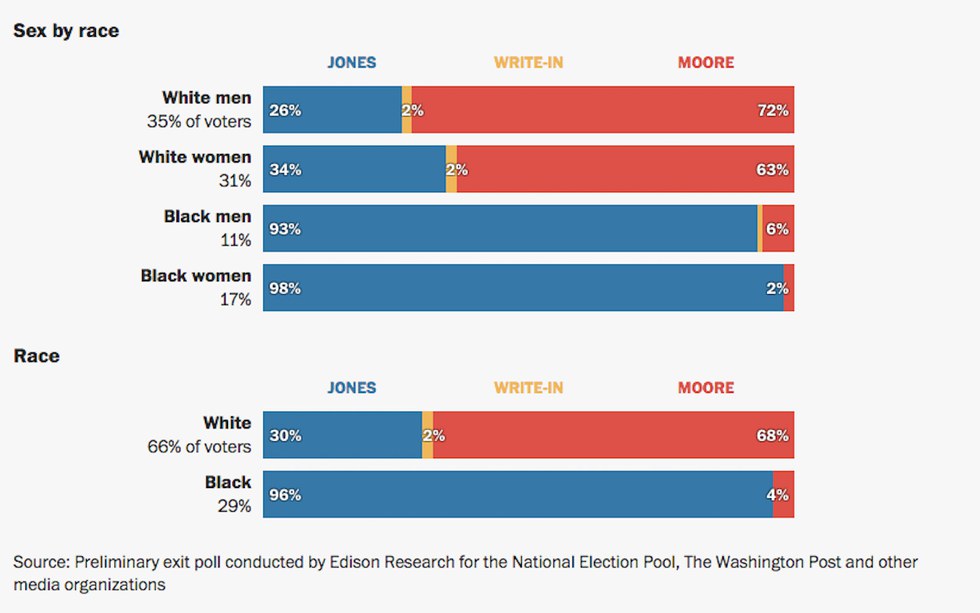

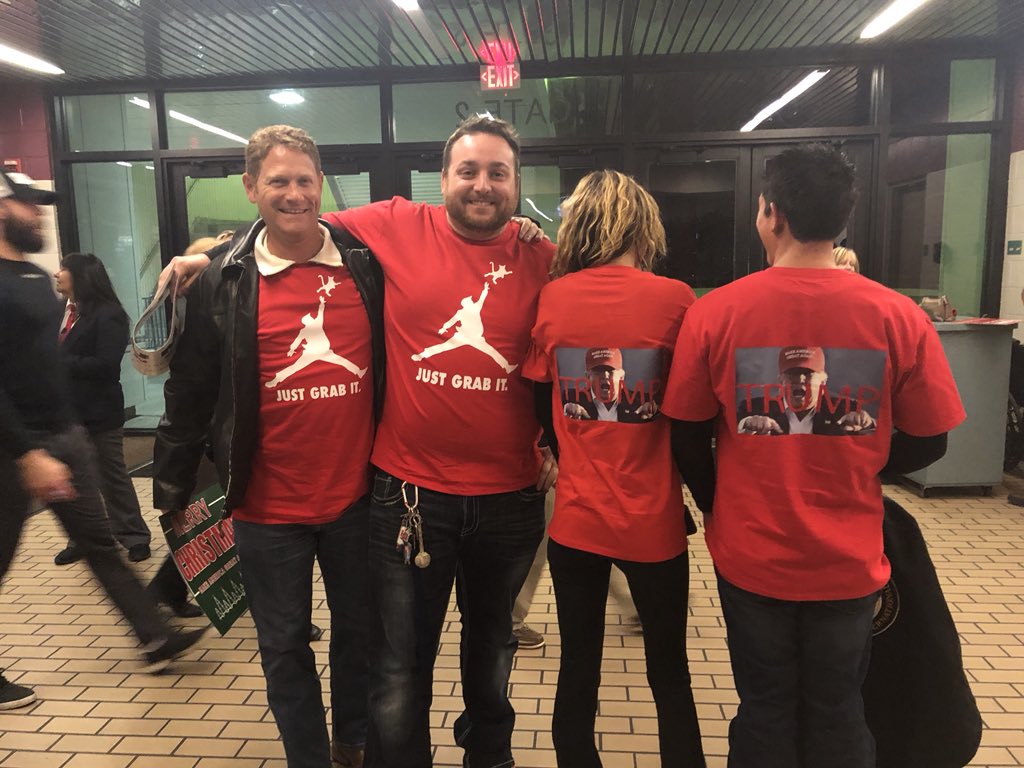



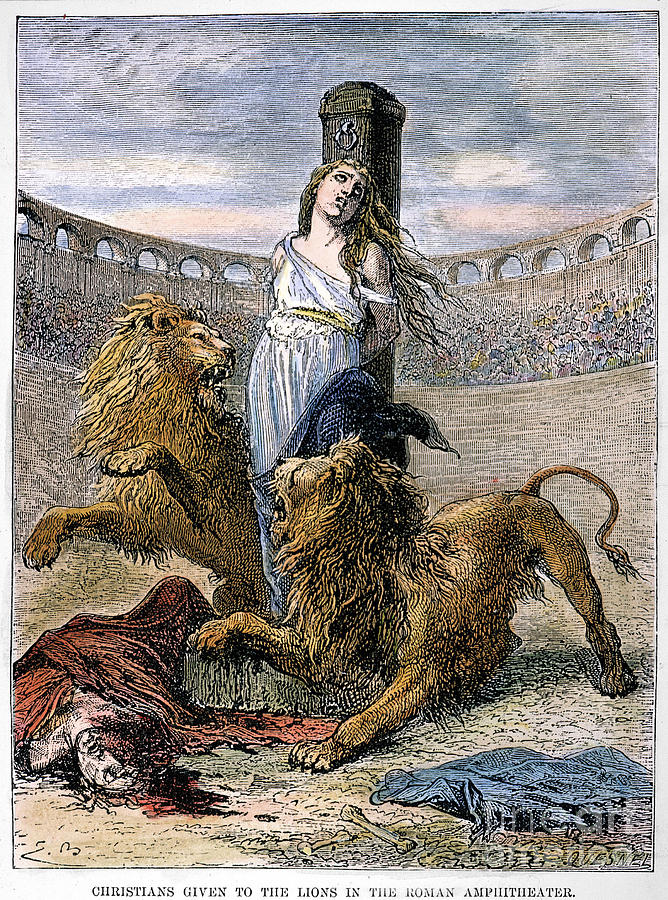


 The Weekly Sift