During my two weeks off, I drove cross-country and saw a lot of my old friends plus a few like-minded relatives. I was struck by how depressed so many of them are with the current political situation. Again and again, I had to be the voice of optimism in the room. For the sake of depressed Sift readers I didn’t see during my travels, maybe I should explain why.
Partly, I feel optimistic because I got my pessimism out of the way early. After Trump’s inauguration, I think a lot of people were expecting a second Trump administration a lot like the first. We got through that, they thought, so we’ll probably get through this too.
I was much more negative. Everything and everybody who had restrained Trump’s worst impulses during his first administration was gone now, so it seemed obvious he would make a play to become a dictator. It was also clear how that would play out: He would keep pushing until either Congress or the Supreme Court tried to stop him. Then there would be a crisis and we’d see who won.
We seem to be reaching that crisis point now, as the Supreme Court is going to have to decide whether to call Trump out on his flouting of their Abrego Garcia ruling. (To be clear, the administration is denying that it’s ignoring the Court’s order, but it’s interpreting that order in an absurd way that makes it meaningless.) So now we see whether the Court has the courage to stand up to Trump, whether Trump will decide that the Court has no power over him, and whether (if he does) Congress will just stand by and let him do it.
In addition, courts up-and-down the line have been restraining Trump’s illegal actions. And surprisingly often, Trump officials are obeying. Rümeysa Öztürk, the Turkish Tufts student masked DHS agents snatched off the streets, is now free on bail and walking the streets of Somerville rather than rotting in a Louisiana detention camp. She seems likely to prevail in her attempts to complete her degree in the US. Another detained student, Mohsen Mahdawi, is also free.
This is the point we have been headed towards ever since Trump was elected last November. What I feel good about is that we’re hitting this point in much better shape than I thought we would. For several reasons:
Trump is unpopular. Imagine if he had just taken credit for the good Biden economy rather than starting all this tariff nonsense. Imagine if Musk had focused on actual government waste and could point to real accomplishments.
He has visibly declined. Falling asleep at Pope Francis’ funeral (while wearing an inappropriate blue suit) is just the most obvious example. (Imagine if Biden had done that.) And while he’s always had moments of incoherence, it’s now unusual when he appears coherent.
The administration has multiple competing factions. You can see this in the persistent leaks saying Trump as about to reverse his position on something. That’s an internal faction trying to nudge him to reverse a position backed by a different faction.
His promises are failing. Trump has always been good at declaring victory and making his followers believe him. But he made some very definite promises that are obviously not being fulfilled: Prices did not start dropping “on Day 1”. He didn’t solve the Ukraine War in 24 hours. And so on.
Popular opposition is rising. Early in the administration, I kept hearing anti-Trump people express their sense of isolation. No more.
Congress is wavering. You can see this in the floundering negotiations over the FY 2026 budget. More and more Republican congresspeople are realizing that they can’t get reelected on Trump’s endorsement alone.
All these factors add up to give the Supreme Court a little more spine, and to make Trump and his minions waver about open defiance. If Trump were riding high in the polls, at the peak of his powers, leading a united administration, facing little public protest, and backed by a solid Republican majority in Congress, standing up to him would be far more difficult, even for somebody like John Roberts who has an independent constitutional mandate.
That’s not to say that everything is going to go smoothly. There still might be rough waters ahead, and a Trump dictatorship is not impossible. But trends are going our way, and we’re in better shape than we were on Inauguration Day.
In its 250th year, New England’s revolutionary history has become relevant again.
Here in Massachusetts, April is the month of patriotism, centering on the April 19 anniversary of the battles of Lexington and Concord.
I live in Bedford, a town that sits between Lexington and Concord, and so has an understandable sense of inferiority (though Bedford’s Minutemen joined several other nearby community militias in mustering to defend Concord Bridge). Longfellow never wrote a poem about us, but we do have our own April revolutionary celebration: Pole Capping Day, on which people dress in colonial-era costumes, Minutemen march and fire muskets, and speeches are given. The center of the ritual is the erection of a pole, which some agile person climbs and adorns with a liberty cap, symbolizing Bedford’s rebellion against King George and the English monarchy.
Saturday, hundreds of people braved drizzle and sleet to celebrate. This year’s pole capping had an extra flavor, as autocratic rule no longer seems like a historical curiosity. For some while, townspeople have been decorating their yards with ambiguously historical/political signs: “No King”, “Resisting Tyranny Since 1775”, and so on. If anyone objects to these “partisan” messages, they have so far stayed quiet for fear of confessing their pro-dictatorial aspirations.
My church’s retired minister John Gibbons is the chaplain of the local Minuteman corps, and annually officiates in his colonial-parson costume. This year’s homily was cribbed from the Declaration of Independence, but seemed like a denunciation of the Trump administration’s current deeds and near-term ambitions. Consider these accusations against King George:
He has excited domestic insurrections amongst us.
He has endeavoured to prevent the population of these States; for that purpose obstructing the Laws for Naturalization of Foreigners; refusing to pass others to encourage their migrations hither
He has combined with others to subject us to a jurisdiction foreign to our constitution, and unacknowledged by our laws; giving his Assent to their Acts of pretended Legislation:
For cutting off our Trade with all parts of the world:
For imposing Taxes on us without our Consent:
For depriving us in many cases, of the benefits of Trial by Jury:
For transporting us beyond Seas to be tried for pretended offences
Back in 2009, conservatives (and various other people upset to find themselves living in a country with a Black president) misappropriated New England’s revolutionary tradition and called themselves the Tea Party. As I pointed out in 2014, in one of the Sift’s most viral posts, they were actually a Confederate party, and drew much more from John Calhoun than John Adams.
Over the next 15 months, a lot of 250th anniversaries are going to roll around. I hope we use them to reclaim the true spirit of American patriotism from the fascist posers who so often usurp that legacy. Let us rededicate “our Lives, our Fortunes and our sacred Honor” to the cause of the inalienable rights of all people, and resist all attempts to impose one-man rule on these hallowed shores.
Trump’s protectionist overreach shouldn’t send Democrats back to neo-liberalism and free trade.
I’m guessing you know the basics of this story, because it’s gotten blanket coverage in the media: Trump announced wild and ridiculous tariffs, global markets crashed, and then he partially backed off, leading to a partial recovery. (If you want a more complete review, it’s in footnote [1].)
Of course Trump never admits a mistake, so the party line is that he meant to do this all along; the whole fiasco is a negotiating tactic straight out of The Art of the Deal. And the Trump-worshiping chorus immediately fell into line: “an absolutely brilliant move“, “brilliantly executed“.
But anybody with their eyes open saw this episode for what it was: a colossal blunder that is far from fixed even now. Jay Kuo summarized: “Trump screwed up bigly on tariffs, and he knows it.” [more critiques, including mine, in footnote 3]
The best such article I found was Ross Douthat’s interview with Oren Cass (author of the “Stop Freaking Out” article). I’m not usually a big Ross Douthat fan, but here he asked the right questions and got significant nuance out of Cass.
Cass begins with a critique of the globalization era, arguing that while GDP has increased just as economic theory says it should, GDP doesn’t tell the full story.
when we’re looking at the actual well-being and flourishing of the typical working family and their ability to achieve middle-class security, we’ve seen real decay. And I think that explains why somebody like Donald Trump has become as successful politically as he has.
The bottom line is: If the economy and the government were working the way it should for most Americans, a guy like Donald Trump and a movement like Trumpism would not have been possible.
Cass notes the bifurcation between types of working people.
When you’re looking at these household income numbers, it’s important to notice how much they rely upon the household having two earners and how much more reliant they find themselves on government programs than in the past. … I think we have a problem, particularly for the right of center that sold this idea of a rising-tide-lifts-all-ships model and we all march forward together into the brave new future. What people are seeing instead is that some people got to march ahead into the brave new future and a lot of folks did not. … Research at very optimistic groups like the American Enterprise Institute shows that young men ages 25 to 29 are earning the same or less than they would’ve been 50 years ago. And I think it’s hard to sell that as a successful economy or one that’s likely to produce a flourishing society.
The conversation shifts to trade, and the corresponding loss of manufacturing jobs. Douthat asks the right question: What’s so special about manufacturing jobs? If the pay is the same, why should we care whether people work in a Ford plant or in a bank?
Cass has a set of answers:
Manufacturing jobs tend to be scattered throughout the country, while service jobs cluster around big financial centers. So loss of manufacturing has impoverished large sections of the country, particularly small towns in otherwise rural areas.
An economy with both manufacturing and service jobs has employment opportunities for a broader talent pool than a pure service economy has.
Our country is more secure militarily if we manufacture the products we need to defend ourselves (rather than depend on, say, Taiwan for our advanced computer chips; depending on a potential enemy like China is even worse). But it’s hard to preserve those industries in isolation, rather than as part of a diverse and robust manufacturing sector. “If you actually want to be an industrial power, you need the actual materials themselves. You need to know how to make the tools that make the materials, things like machine tooling, the actual excellence in engineering that’s going to lead to efficient production.”
His prescription is more nuanced than either Trump’s or the free traders’.
the equilibrium you’re headed toward is not one where we shut off trade. It’s one in which there’s more friction in trade, so that there’s a preference for domestic manufacturing
So he favors the across-the-board 10% tariff. That’s not high enough to bring back low-productivity manufacturing jobs, which is probably not a worthy goal anyway. If a t-shirt made in Indonesia now imports wholesale for $2.20 rather than $2, you’re not going to start making them in Mississippi. And because trade continues, that 10% tariff does raise revenue, but not enough to replace the income tax. It’s friction, not a locked door.
Higher country-specific tariffs might be used as negotiating tools against countries that have truly unfair trading practices. But the mere existence of a trade deficit doesn’t imply unfair practices.
And finally, he sees China as a special case. Because it is our main rival for global power, we can’t let ourselves depend on them for anything really important. So higher tariffs on Chinese imports make sense, but in concert with our allies, rather than fighting a one-on-one trade war.
we want to have a large, U.S.-centered economic and security alliance. We want to have very low tariffs within that group, obviously Mexico and Canada, obviously other core allies.
But unlike in the past, we have some demands. We want to see balanced trade within that group so that we reshore and reindustrialize significantly in this country, and we want to see a common commitment among all these countries to decoupling from China.
That’s the substance of his proposals, but he also makes an important point about how they would be implemented. The purpose of tariffs is to change long-term behavior, not to create short-term shocks to the system that might drive the world economy into recession or worse. It’s more important that corporations, governments, and other key decision-makers know what tariffs will be two and three years down the line than that significant change happen right away.
That means:
gradually phasing in higher tariffs over time
justifying those tariffs as part of a coherent strategy
building a consensus around that strategy — in particular getting them passed into law by Congress — so that decision-makers will know they won’t change every time the political winds shift
What we have instead — sudden tariff shocks based on the whims of one man, who might change his mind tomorrow — is all cost and little benefit.
Cass represents American Compass, a conservative think tank. But the substance of his proposals is not far away from the ideas of the Democratic left. To me, this suggests the possibility of bipartisan consensus on policy — if we could get Trump out of the way.
[1] A somewhat longer version of the story: Trump announced massive tariffs on April 2. World stock markets [2, a footnote to a footnote] spent a week crashing (with a temporary rally on April 8 when it was rumored he would back off), and then on April 9 he announced he would delay enforcing most of the tariffs for 90 days to allow the targeted countries to negotiate. However,
Trump said he would raise the tariff on Chinese imports to 125% from the 104% level that took effect at midnight, further escalating a high-stakes confrontation between the world’s two largest economies. The two countries have traded tit-for-tat tariff hikes repeatedly over the past week.
Trump’s reversal on the country-specific tariffs is not absolute. A 10% blanket duty on almost all U.S. imports will remain in effect, the White House said. The announcement also does not appear to affect duties on autos, steel and aluminum that are already in place.
The 90-day freeze also does not apply to duties paid by Canada and Mexico, because their goods are still subject to 25% fentanyl-related tariffs if they do not comply with the U.S.-Mexico-Canada trade agreement’s rules of origin. Those duties remain in place for the moment, with an indefinite exemption for USMCA-compliant goods.
On Friday night, the US president handed Apple a major victory, exempting many popular consumer electronics. That includes iPhones, iPads, Macs, Apple Watches and AirTags. Another win: The 10% tariff on goods imported from other countries has been dropped for those products.
The partial reversal on tariffs led to a partial stock-market recovery: The S&P 500 was at 5670 when the tariffs were announced, fell to just under 5000 at its low on Tuesday, and bounced back to 5363 by the end of the week, a net fall of about 5.4%
[2] If you want to get into the weeds, apparently the crash in the bond market had more influence on Trump. The Atlantic’s Rogé Karma explains why this was so unnerving:
Yesterday morning, the U.S. economy appeared to be on the verge of catastrophe. The stock market had already shrunk by trillions of dollars in just a few days. Usually, when the stock market falls, investors flock to the safest of all safe assets, U.S. Treasury bonds. This in turn causes interest rates to fall. (When more people want to buy your debt, you don’t have to offer as high a return.) But that didn’t happen this time. Instead, investors started pulling their money out of Treasury bonds en masse, causing interest rates to spike in just a few hours.
Suddenly the entire global financial system appeared to be at risk. If U.S. Treasuries were no longer considered safe—perhaps because the country that issues them had recently shown its willingness to tank its own economy in pursuit of incomprehensible objectives—then no other asset could be considered safe either. The next step might be a rush to liquidate assets, the equivalent of a bank run on the entire global financial system.
[3] Jay Kuo also provided this chart showing just how high the average tariffs are, even after Wednesday’s walk-back.
I wanted to put up a quick response to yesterday’s sudden move to exempt electronics. What you need to know is that it does not represent a move toward sanity. On the contrary, the Trump tariffs just got even worse.
Import Chinese battery: 145% tariff Import Chinese battery inside Chinese laptop: 20% tariff Import Chinese battery inside Vietnamese laptop: 0% tariff
I’m putting my own critique of Trump’s tariffs in this footnote, because I’ve posted it before and don’t want to get repetitive. Basically, Trump touts his tariffs as accomplishing three contradictory purposes:
To provide a revenue stream that can replace other taxes, the tariffs have to last for years and the US has to continue importing tariffed products. But to the extent that manufactured products and their supply chains move to the US, imports of tariffed products will fall, lowering revenue from the tariff.
In order to move manufacturing and its supply chains back to the US, the tariffs again have to last for years. Corporations will only move their factories if they expect the tariffs to remain in place into the distant future. But if the tariffs are a bargaining chip to be negotiated away, they won’t last. To the extent that corporations expect trade negotiations to succeed, they’ll leave their factories overseas.
Worse, the on-again/off-again nature of Trump’s tariffs, at least so far, discourages businesses from making plans that rely on those tariffs. So even if they last far into the future, they may not bring jobs back to the US. In many ways, the erratic policy we have seen the worst of all worlds.
He pitched the tariffs as “reciprocal”, i.e., matching our tariffs on imports to the tariffs other nations have put on our exports. However, no one can find nations whose tariffs are anything like the ones Trump is imposing in return. In his announcement, Trump also referred to “non-tariff barriers” to American exports. He framed any trade deficit as the result of some form of unfairness to American exports, which the new tariffs attempt to equalize.
As a result, when people finally figured out how the tariffs were being calculated, the tariff rate was simply half of the trade deficit with that country as a percentage of that country’s total exports to the US. So it’s a function of that country’s trade surplus/deficit with the US, not any specific unfairness in its tariffs or laws.
That’s how the highest tariff rate wound up falling on Lesotho, a tiny poor country surrounded by South Africa. Lesotho makes denim for jeans and also exports diamonds and a few other commodities. Few Lesothans can afford imported goods from the US.
The administration has made three cases for its tariffs, which The Atlantic’s Derek Thompson points out contradict each other. The tariffs are supposed to
Raise $6 trillion in revenue (if you believe Trump aide Peter Navarro).
Restore free trade by incentivizing other nations to negotiate away their trade barriers against us (if you believe Palmer Luckey).
Bring manufacturing jobs back to the US (if you believe Stephen Miran, the chair of the Council of Economic Advisers).
In order to raise revenue and increase US manufacturing, the tariffs have to last for many years, which they can’t do if they are a negotiating ploy to lower other country’s tariffs and trade barriers. Similarly, no tariff is going to restore coffee production to the US, because our climate doesn’t lend itself to coffee production.
Global stock markets reacted to the tariffs by collapsing. If you’re an investor yourself, you may not realize how unusual this is. A market truism is “Buy on rumor, sell on news.” In other words, you make your moves in anticipation of events, not in reaction to them. Once a thing is announced, you close the position you based on it and look for the next thing you think is going to happen.
So the widespread expectation, as the world awaited the tariff announcement, was that the stock market would get a small bounce out of it. Rumors of tariffs had been depressing stock prices for months, but once the news was out, investor attention would shift to something else. But the actual tariffs turned out to be far worse than anything investors had anticipated, so the reaction was down instead of up.
So if the market isn’t anticipating tariffs any more, what is it anticipating? The recession these tariffs are expected to cause. J. P. Morgan is one of many forecasters now predicting a recession. Morgan economists anticipate the unemployment rate rising to 5.3%.
But no one knows how far the predicted downturn will go, because recession fears can be self-validating. People afraid of losing their jobs tend not to spend as much, which in turn causes other people to lose their jobs. Businesses expecting a downturn will cancel expansion plans and emphasize cost-cutting.
The administration’s response to these fears has been a no-pain/no-gain message that was totally absent from Trump’s 2024 campaign. On the campaign trail, Trump kept talking about positive change that would happen “very quickly” or “on Day One“.
But now, Treasury Secretary Scott Bessant is talking about a “detox period” where the economy breaks its addiction to government spending.
The right-wing news bubble is doing its best to help push the administration’s story, or just to distract its viewers from the bad news. When the market started crashing Thursday morning, I channel-scanned and observed the same thing The Daily Show saw:
CNN: Stock market plummets MSNBC: Stock market craters Highlights for Children: Stock market down big FOX News: New info about alleged cover-up of Biden’s decline
So the 30% or so of the country that is die-hard Trump is likely to keep drinking the kool-aid. But the additional 20% that won the election for him is experiencing considerable cognitive dissonance and even buyers’ remorse. To them, Trump was a great businessman who would handle the economy better than Biden did. That image is hard to sustain as you worry about your job, watch prices of foreign-produced goods rise, and see your 401(k) investments sink.
The scenario where American democracy survives Trump got a little more credible this week.
Consider the events of this week, all of which will be described in more detail in the weekly summary I’ll post later this morning:
Monday, Cory Booker began his record-setting 25-hour speech in the Senate, making the case that “the country is in crisis”. At its peak, the livestream of this speech was being watched to 300,000 viewers.
Thursday and Friday, investors around the world reacted to Trump’s tariffs by selling their stocks. The S&P 500 lost 10% of its value in just two days. By Friday evening it was 17% below its February high. The panic is continuing this morning.
Saturday, “Hands Off” protest rallies happened in 1400 locations across the country. 800K people had signed up for the protests, making credible the organizers’ claim that millions participated.
It’s tricky to evaluate the significance of all this. If you look at it all pessimistically, Booker’s speech was a stunt that produced no direct congressional action, off-year elections are notoriously bad predictors of subsequent elections, Trump has announced and withdrawn tariff plans before that whipsawed the markets, and massive protests in his first term seemed to have little consequence. A month or two from now, none of this may look all that important.
But.
Six weeks ago, I posted “How Things Stand“, a summary of how Trump was threatening American democracy and where things might go from there.
So now we’ve seen Trump’s opening moves: a blizzard of executive orders claiming unprecedented powers that can be found nowhere in the Constitution. That was all predictable.
What wasn’t predictable, and is still unknown, is how the other American power centers would respond. I’m talking about Congress, the courts, the state governments, and the People. That’s all still very hard to predict, because each of those power centers will influence the behavior of the others.
It’s important for us to be neither complacent about all this nor resigned to our fate.
I projected a scenario that avoided the establishment of a lasting Trump autocracy, emphasizing that it was just a scenario, not a prediction. My point was that a way out of this was still possible. The first steps were:
Trump continues losing popularity. He never had much, but his brand becomes politically toxic.
That lack of voter support makes support from congressional Republicans waver. They may not openly defy Trump, but the slim Republican majorities (especially in the House) lose their cohesion, making it impossible to pass legislation without at least some Democratic support.
I had hoped that the looming government shutdown of March 14 would be the time when congressional support would waver, and that Republicans wouldn’t be able to pass a continuing resolution without negotiating a deal with the Democrats. That didn’t happen. Mike Johnson was able to hold his small majority together to pass the CR on a nearly party-line vote. Then Chuck Schumer folded in the Senate (for reasons I found plausible but not necessarily convincing), ending the threat of a Democratic filibuster. So the government is funded through September.
However, the events of this week show that we’re still on the path I laid out. Again, I’m not saying that success is certain, just that there is still a way out of this through political processes, without widespread riots or civil war.
There is no legal or political mechanism that directly links public opinion, market crashes, or elections for relatively minor offices to the kinds of legal or congressional action that will halt the Trump/Musk coup or lead to the restoration of American democracy. However, autocratic movements rely on a sense of inevitability and self-confidence, with each usurpation of power emboldening its leaders and foot-soldiers to dare the next one. Autocrats depend on a sense of public helplessness that demoralizes opposition and makes each successive victim feel alone and unsupported.
The narrative of Trump’s inevitability and his opposition’s powerlessness ran aground this week. He remains in office and retains his grip on the levers of executive power. But his true supporters have never been more than about 1/3 of the American public, and many in Congress, the courts, the media, the business community, and elsewhere have lined up behind him more from intimidation or a lack of attractive alternatives than real conviction.
The momentum that has swept Trump forward can turn, with each act of opposition emboldening the next. All along, there has been a scenario in which his seizure of unconstitutional power fails. That scenario is still intact, and is more credible today than it was a week ago.
By now you’ve undoubtedly heard the basics: Last Monday, Atlantic editor Jeffrey Goldberg reported that for several days (March 11-15) he had a connection with Trump’s National Security Adviser Mike Waltz over the private messaging service Signal.
On March 11 Goldberg received a Signal connection request from Waltz. He was puzzled and doubted its authenticity, but he accepted.
On March 13 he was invited to join the “Houthi PC small group”, a chat that eventually included Vice President Vance, several members of the Trump cabinet, and a variety of other high-ranking members of the administration. Waltz described the group as a “principles [sic] group for coordination on Houthis, particularly for over the next 72 hours”. (Goldberg explains: “The term principals committee generally refers to a group of the senior-most national-security officials, including the secretaries of defense, state, and the treasury, as well as the director of the CIA.”)
On March 14, members of the group (who had apparently received a classified communication Goldberg did not get) began discussing whether to attack the Houthi rebels in Yemen, who have been shooting missiles at ships in the Red Sea. Vance wanted to delay the attack for a month, Defense Secretary Hegseth was for launching it immediately, and some others ambivalent. Vance yields, texting to Hegseth: “if you think we should do it let’s go”. (Strangely, President Trump was not on the chat and apparently did not make the final decision to launch the attack.)
On March 15, Hegseth began giving the group a play-by-play of the attack as it was carried out, beginning two hours before the bombs fell. Goldberg summarizes: “the Hegseth post contained operational details of forthcoming strikes on Yemen, including information about targets, weapons the U.S. would be deploying, and attack sequencing.”
Up until he received news reports of explosions in Yemen, Goldberg had not completely believed the chat group was genuine. The previous day,
I was still concerned that this could be a disinformation operation, or a simulation of some sort. And I remained mystified that no one in the group seemed to have noticed my presence. But if it was a hoax, the quality of mimicry and the level of foreign-policy insight were impressive.
After becoming convinced that he had been overhearing an actual Principals meeting discussing highly classified information, Goldberg left the group.
So much is wrong with this series of events that the subsequent public discussion has often gotten confused, starting off talking about one issue before veering off onto another one. So let’s start by listing the various wrongnesses I’ve heard about or noticed.
The chat group shouldn’t exist at all. The Signal message chain in question was set up to be deleted after four weeks. This violates the Presidential Records Act and Federal Records Act, which require that require records to be kept of all communication involving official government business.
Signal is not an approved channel for discussing classified information. By law and policy, classified information can only be sent over very specific government systems.
Signal exchanges can be hacked. The security rules being broken here exist for good reasons, and are not just cumbersome or outdated regulations. The encryption feature in Signal is believed to be crackable by intelligence services of hostile foreign governments like Russia and possibly others. And even if an adversary has not hacked Signal, the cell phones or laptops several participants seem to have used could be compromised by malware.
Hegseth’s posts violate the Espionage Act. Apologists for the Trump administration have played legal/verbal games with the term “classified information”. Because Hegseth himself is the classifying authority for information like attack plans, they claim, he was implicitly declassifying it by posting it on Signal. But The Hill reports: “the Espionage Act … doesn’t rely on classification. Instead, it allows prosecution of those who share national defense information, whether intentionally or inadvertently. ‘While you can argue that it wasn’t classified — probably in bad faith — you cannot argue that it was not national defense information,’ said Kel McClanahan, executive director of National Security Counselors, a nonprofit law firm.” Whatever word-games you play, information about an imminent or ongoing attack is precisely the kind of thing the classification system was designed to protect.
No one on the chat objected. Back in the days when I had a Top Secret clearance myself, I was occasionally in conversations where an issue was alluded to, and then someone would say: “But we can’t talk about that here.” Everyone on the chat had an obligation to say that, and no one did. (The implication here is that this situation is not unusual. Possibly, highly-classified Signal chats are a regular occurrence in the Trump administration. I have not heard any Trump official address this precise point.)
Goldberg should not have been invited to the chat. People tend to focus on this part of the wrongness, but look how far we’ve gotten without mentioning it. The Russians could have been listening, and could have tipped off the Houthis to counter our attack or move what we were targeting. Goldberg is an inconsequential risk by comparison.
Hegseth had an obligation to verify that everyone on the chat had appropriate clearances to receive the information he was sending, but he did not. This is a problem even if you overlook the fundamental insecurity of Signal. Even if everyone on the chat had been gathered in a secure location like the Situation Room, attack plans shouldn’t have been shared when an uncleared person (i.e., Goldberg) was present. Protecting defense secrets is Hegseth’s job, not Goldberg’s, so the fault lies with him.
Waltz endangered intelligence sources in his after-action report. “The first target – their top missile guy – we had positive ID of him walking into his girlfriend’s building and it’s now collapsed.” So the Houthis know that somebody with a view of the building that day was an American agent. Undoubtedly they are trying to find and kill this person.
The attack’s “success” is no excuse.Attorney General Bondi was one of many administration officials making this point: “what we should be talking about is it was a very successful mission”. The best analogy I’ve heard is to drunk driving: The fact that you made it home safely doesn’t excuse it, or justify doing something similar in the future. If you take enough unnecessary risks, you will pay eventually. (BTW: Was the attack a success? Killing people and blowing things up is not an end in itself. The point of the attack was to either incapacitate or intimidate the Houthis so that they’ll stop shooting at ships. We don’t know yet whether the raid achieved that purpose. “The Signal chat reveals no suggestion of a strategic framework — or even the concept of a plan — into which the attack clearly fit.”)
So this is the kind of multi-layer screw-up that is hard to wrap your mind around. (An analogy: Imagine that your 15-year-old daughter is threatening suicide because her uncle has broken off their incestuous relationship after discovering that she’s pregnant. What aspect of the situation do you react to first? What’s the core problem here?)
Responses. One of the adages I heard while growing up was “It takes a big man to admit he’s wrong.” By that standard, there are no big men (or women) in the Trump administration. Across the board, everyone involved or implicated in the meeting has deflected, pointed elsewhere, or outright lied in order to deny responsibility.
Goldberg’s first article was circumspect about what he revealed. He wrote in generalities, like the quote above about “targets, weapons, … and attack sequencing”. Not wanting to damage national security himself, he didn’t spell out any details.
I’ve heard how it was characterized. Nobody was texting war plans. And that’s all I have to say about that.
White House apologists took up the “no classified information” talking point. Director of National Intellligence Tulsi Gabbard told the Senate Intelligence Committee
There was no classified material that was shared in that Signal group.
Press Secretary Karoline Leavitt tried to make the whole incident a he-said/she-said issue.
Do you trust the secretary of defense — who was nominated for this role, voted by the United States Senate into this role, who has served in combat, honorably served our nation in uniform — or do you trust Jeffrey Goldberg?
Goldberg’s response was basically: Don’t trust me; trust your eyes and your common sense.
The statements by Hegseth, Gabbard, Ratcliffe, and Trump—combined with the assertions made by numerous administration officials that we are lying about the content of the Signal texts—have led us to believe that people should see the texts in order to reach their own conclusions.
Since there was “no classified information” involved, he had no reason not to publish chunks of the transcript of the chat. Goldberg summarized one section:
This Signal message shows that the U.S. secretary of defense texted a group that included a phone number unknown to him—Goldberg’s cellphone—at 11:44 a.m. This was 31 minutes before the first U.S. warplanes launched, and two hours and one minute before the beginning of a period in which a primary target, the Houthi “Target Terrorist,” was expected to be killed by these American aircraft. If this text had been received by someone hostile to American interests—or someone merely indiscreet, and with access to social media—the Houthis would have had time to prepare for what was meant to be a surprise attack on their strongholds. The consequences for American pilots could have been catastrophic.
The release of the transcript should (but won’t) put an end to the attempts to dodge responsibility by vilifying Goldberg. (Leavitt: “arguably no one in the media who loves manufacturing and pushing hoaxes more than Jeffrey Goldberg.” Trump: “The guy is a total sleazebag.” Hegseth: “a deceitful and highly discredited so-called journalist who’s made a profession of peddling hoaxes time and time again”.) Goldberg’s transcript is either accurate or it’s not. If it’s not, other participants can release their own records. But they haven’t. So we can assume Goldberg’s reporting here is accurate, independent of what you think of the rest of his career. (Personally, I respect him as a journalist.)
How did this happen? The larger wrong — discussing an ongoing attack on an insecure platform — happened because the Trump administration is full of people who don’t take security seriously. Many of them — Hegseth in particular — are totally unqualified for their jobs. (Whenever the administration talks about “merit” as opposed to DEI, I think of Hegseth. Only a White man could ever get such an important job with such a flimsy resume and so many red flags in his personal life. Hegseth is a walking advertisement for why DEI is necessary.)
But none of that explains how Goldberg wound up on the chat. If we believe Goldberg’s account, it was a two-part process. First Mike Waltz (or somebody with access to Waltz’ Signal account) made a connection with Goldberg. Then two days later Goldberg was invited to join the Houthi PC small group. So it’s not just somebody hitting Goldberg’s number by fat-fingering a list. (That explanation would be more convincing if some “Johnny Goldsmith” should have been in the group and wasn’t. But I have heard no suggestion of who that person might be. And doesn’t anybody double-check lists with national security implications?)
The explanation (offered by Waltz) that Goldberg may have hacked his way onto the chat group is not only unlikely, but is damning in a different way. It’s bad enough to think that Trump officials are relying on an app that Russian or Chinese intelligence agencies might hack. But magazine editors?
Lacking any other explanation, I’m driven to a conspiracy theory formulated by former West Point history professor Terrence Goggin: “a highly effective cell operating deep in the Pentagon and National Security Council” that Goggin dubs “Deep Throat 2.0”. (Waltz denied this: “A staffer wasn’t responsible.”)
Goggin connects the Signal story with another leak that embarrassed the Trump defense establishment: The NYT finding out that Elon Musk was about to get a briefing on the Pentagon’s plans for a war with China.
Someone contacted the New York Times with a copy of a written order to brief Musk on the Operational Plan to oppose a massive invasion of Taiwan by the People’s Liberation Army Navy (“PLAN”). … Someone transmitted the written order instructing the Joint Chiefs to brief Musk to the New York Times, 12 hours before the briefing was to take place, in order for this to reach its 10 million digital subscribers worldwide. … The leak was timed for a last minute shock without warning, for maximum public damage and embarrassment. This was not an accident, but a deadly strike.
Adding Goldberg to the Houthi PC small group was similarly “not a mistake” but “a well planed clandestine operation”.
Clearly rattled, President Trump declared today that the uproar is a “Witch Hunt”. Actually he may be right. But the witches are His Own Men! It is a planned and organized operation to destroy his ability to govern with unqualified and deficient officials using and exposing his Administration’s own national security mistakes to do so.
Imagine that you’re a career staffer at the Pentagon. You’ve seen people live and die by the book, and now a bunch of yahoos who can’t be bothered to take even minimal security precautions are in charge. You’ve tried to impress on them the reasons for doing things in the standard way, but they always think they know better.
What better way to get your point across than to let the public see what’s happening?
What happens to democracy when directing and misdirecting public attention becomes more important than convincing voters to agree with you?
Chris Hayes’ recent book The Sirens’ Call is worth reading in its entirety, but there is one particular aspect of it that I want to highlight. Once you’ve had this thought, it’s perfectly obvious, but I’ve never seen it spelled out so clearly before: Getting attention and holding attention are two very different problems. Getting attention is easy; holding attention is hard.
If you’re in a roomful of people and you want to get their attention, you have a lot of options: Drop something breakable, start yelling obscenities, run through the room naked or covered in blood, fire a gun in the air. The possibilities are endless.
But now imagine that you want to hold people’s attention long enough to explain something to them or convince them of something. That’s much harder. If the waiter who just dropped a tray of glasses starts trying to tell you about the dangers of climate change or rising government debt, you’re probably going to tune him out pretty quickly.
Traditionally, politics has been all about holding people’s attention long enough to change their minds about something or motivate them to do something. Politically active people might want to convince you that abortion is wrong or gays are people too or the rich have too much money or government regulations stifle economic growth, just to name a few possibilities. Yes, they need to get your attention. But more than that, they need to hold your attention long enough to present their case, maybe even long enough to overcome your initial resistance.
Hayes flashes back to something that seems unimaginable now: the Lincoln-Douglas debates. Back in 1858, people in Illinois more or less agreed that the biggest issue the nation faced was slavery and what to do about it. So that year’s two Senate candidates, Abraham Lincoln and Stephen Douglas, toured the state together, debating the slavery issue for three hours at a time. (My home town, Quincy, hosted one of the debates.) That format gave each man a chance to explain some fairly complex and subtle ideas.
Admittedly, that’s unusual. For well over a century, most American politics has revolved around slogans: “Equal pay for equal work”, “No third term”, “Remember the Maine”, and many others. A slogan boils a political message down to its absolute minimum. You still have to hold attention, but you don’t have to hold it very long. Sometime a slogan is just a placeholder that your supporters will flesh out later; it makes people curious to find out what the slogan means. In 2024, “Make America great again” and “Democracy is on the ballot” were both like that. If you didn’t have at least a little background, both were so vague as to be meaningless.
But Hayes describes a way of managing attention that skips the difficult hold-attention step completely. It has been pioneered by the social-media platforms and has now been adapted to politics: If you want to keep somebody on your platform for hours at a time, you don’t need to produce an epic like Lord of the Rings or Lawrence of Arabia — content capable of holding a person’s attention that long. Instead, you just grab somebody’s attention, then grab it again, and grab it again. Keep doing that for hours. That’s the secret of the infinite scroll. Hardly anybody sits down thinking they’re going to devote the next two hours to TikTok or Facebook. They just look up and realize they’re late for something.
Now apply that idea to politics. What if I’m not trying to explain anything at all, even at the slogan level? What if I’m just trying to grab your attention in a particular way and prevent my opponent from grabbing it some other way?
This is something the Trump campaign seemed to understand much better than the Harris campaign. If a voter went into the voting booth thinking about inflation, immigration, or trans athletes, probably that vote would go to Trump. But a voter thinking about democracy, climate change, racism, or healthcare probably would probably choose Harris. It almost didn’t matter what a voter thought about any of those issues. Just direct their attention and you command their vote.
That was the method behind the madness of the Trump campaign. As far back as 2015, Trump has been saying things that were supposed to be political suicide. When he said that immigrants were “animals” or spouted “facts” about them that were obviously false, it didn’t matter if he looked like an ignorant asshole, because he made you think about immigration. If he grossly overstated the price of bacon and was proven wrong the next day, so what? He made you think about inflation — and the debunking article the next morning made you think about it again.
Harris could never catch up. I kept reading columns by pundits frustrated that Harris didn’t just say X — and those columns frustrated me, because I knew that Harris DID say X, but nobody paid attention.
The big thing I got wrong about the election was that I expected voters to get serious at the end of the campaign; low-interest and low-information voters who had been checked out all summer would check back in long enough to decide who to vote for. It never happened. Right up to the last day, Trump dominated the news cycle with his look-here, look-there, look-at-this-other-thing tactics. He had no message to speak of, just the idea that things were bad and he would somehow make them better.
What we’ve been seeing these last two months is the new attention-politics as a governing strategy. In traditional politics, an incoming administration tried to focus on a few simple themes, with the idea of raising enough public support to push one or two big ideas through Congress. So George W. Bush came in promoting his tax cut. Barack Obama was focused on his stimulus plan and then healthcare. (I remember the frustration many environmentalists felt when a carbon tax and other items from a climate-change agenda were sidelined so as not to interfere with the healthcare push.)
Trump hasn’t been doing anything like that. Instead, he’s doing a million things at once, including many that circumvent Congress in a way that is flatly illegal. By ignoring Congress and relying on executive actions, he avoids the need to marshal public opinion. Quite the reverse: It’s the opposition that needs to marshal public opinion to stop him. And that’s difficult, because what opposition leader or opposition agenda can get attention when Trump grabs all the attention in the room with a new outrage every day? (Invade Greenland! Annex Canada! Brief Musk about China war plans! Defy court orders! Fire the people who keep track of nuclear weapons! Turn Gaza into a seaside resort!)
I’m frankly unsure what I ought to be rooting for. Eventually, assuming Trump doesn’t establish his own version of the Thousand-Year Reich, some Democrat will figure out how to master the new attention politics and become president. But how good is that outcome really? The new politics lends itself to autocracy. Probably a Democratic autocrat would do more things I like than Trump is doing. But I’m not sure what would take us back in the direction of democracy.
Can a legal permanent resident be deported for expressing views the President disagrees with?
A long-standing debate runs through American history: Does the Bill of Rights enumerate human rights, i.e., something that anyone can claim by virtue of being human, or privileges of citizenship that our government can ignore when it deals with non-citizens?
The Declaration of Independence uses theistic language to promote a human-rights view: Human beings (or at least “all men”) have been “endowed” with rights “by their Creator”. To say that a man lacks rights is tantamount to claiming that he was not created by God. But in the Dred Scott decision of 1857, the Supreme Court took the opposite view: Rights derive from the social contract embodied in the Constitution. Africans residing in the United States, the Court held, were not party to that contract, and thus they “had no rights which the white man was bound to respect”.
Dred Scott has long been in the dustbin of history, and is widely viewed as one of the Court’s worst decisions. Currently binding Supreme Court precedents take an in-between view that leans towards human rights. Basically, the Court interprets the Constitution and the laws to mean exactly what they say: If lawmakers had intended a provision to apply only to citizens, they would have used the word “citizen” rather than some more general term like “person”. For example, the 14th Amendment uses both words:
No State shall make or enforce any law which shall abridge the privileges or immunities of citizens of the United States; nor shall any State deprive any person of life, liberty, or property, without due process of law; nor deny to any person within its jurisdiction the equal protection of the laws.
So there are privileges that apply only to citizens (the right to vote, for example), but due process and equal protection are not among them.
The Trump administration shows every sign of wanting to move that line. Just how far it wants to go is not clear. But the first case in point is Mahmoud Khalil.
Who is Mahmoud Khalil? Two weeks ago, Khalil (an Algerian citizen born in a Palestinian refugee camp in Syria) had the next layer of privileges short of American citizenship: He came here originally on a student visa, but became a legal permanent resident, a “green card holder”. He is married to an American citizen, who is eight months pregnant. If nothing goes wrong, in another month he’ll be the father of an American citizen.
He is also a pro-Palestine activist. Last spring, he participated in demonstrations at Columbia University, where he was a student at the time. (He has since finished his degree.) Wikipedia describes his views like this:
Following the start of the Gaza war in 2023, Khalil became involved in pro-Palestinian activism. He served as a negotiator for students associated with Columbia University Apartheid Divest (CUAD) when they were bargaining with Columbia University officials. In a 2024 interview, Khalil said, “As a Palestinian student, I believe that the liberation of the Palestinian people and the Jewish people are intertwined and go hand by hand, and you cannot achieve one without the other.” He characterized the movement as one “for social justice and freedom and equality for everyone”. Of concerns about antisemitism, Khalil said, “There is, of course, no place for antisemitism. What we are witnessing is anti-Palestinian sentiment that’s taking different forms, and antisemitism, Islamophobia, racism [are] some of these forms.”
The Trump administration describes him differently, claiming that he “led activities aligned to Hamas” and “engaged in pro-terrorist, anti-Semitic, anti-American activity“. But it has produced no specifics to back those claims up, and the language itself is slippery. What does it mean that an activity is “aligned with Hamas”? Aligned in whose view? Similarly, unless Khalil himself endorsed terrorism or attacked Jews or America in so many words — and if he had, I’d expect his critics to have produced specific quotes — “pro-terrorist, anti-Semitic, anti-American” is an opinion, not a fact.
Khalil’s arrest. A week ago yesterday, agents from the Homeland Security department arrested Khalil at his home in New York. Khalil’s wife Noor Abdalla recorded the event on her phone while simultaneously talking to Khalil’s lawyer on his phone. It isn’t exactly a classic police-state arrest — Khalil is not roughed up, for example — but it still has a lot of disturbing aspects. When Khalil’s wife asks for the names of the arresting agents, she is told “We don’t give our names.” They also refuse to say which agency they represent. All they’re willing to tell her is where Khalil is being taken: Immigration Custody at 26 Federal Plaza. They refuse to talk to Khalil’s lawyer, who is on the phone. “They’re literally running away from me,” Noor reports to the lawyer.
When Noor tried to visit Khalil at a detention center in New Jersey, she was told he was no longer there. It took some time for his lawyer to determine that Khalil had been moved to a facility in Louisiana, where at first he was not allowed to consult privately with lawyers. An immigration hearing to have him deported was scheduled for March 27.
Last Monday, a federal judge in New York ordered that Khalil not be removed from the US until a hearing in his court can determine whether deporting him violates constitutional rights.
The Just Security blog analyzes the legalities: No one in the executive branch can unilaterally revoke a green card.
To obtain authority to deport a green card holder, the government must charge (or accuse, as this is not a criminal matter) them with a condition under the immigration laws that in some way makes them “deportable.” “Deportable” is a term of art under the immigration laws. It refers to conduct defined in a set of provisions—most though not all involving criminal activity—codified at 8 U.S.C. 1227(a).
To prove that an [legal permanent resident] is deportable, the government must convene a “removal hearing” before an immigration judge. At that hearing, government attorneys must prove deportability by “clear and convincing” evidence.
Notably, the Trump administration has not accused Khalil of committing crimes, or of committing fraud in his green-card application (another deportability condition). Instead, it points to a condition that has never been used in this way before:
the government has invoked a rarely used “foreign policy” ground of deportation. That provision, located in section 237(a)(4)(C) of the Immigration and Nationality Act, makes deportable any “alien whose presence or activities in the United States the Secretary of State has reasonable ground to believe would have potentially serious adverse foreign policy consequences for the United States” (emphasis added).
The statute contains a (freedom of speech and association) safe harbor, incorporated by reference to the inadmissibility provisions, prohibiting deportation “because of the alien’s past, current, or expected beliefs, statements, or associations, if such beliefs, statements, or associations would be lawful within the United States,” but then contains an exception for the safe harbor: “unless the Secretary of State personally determines that the alien’s [presence] would compromise a compelling United States foreign policy interest” (emphasis added).
It’s worth pointing out that much of what the administration claims about Khalil (even if true) consists of “beliefs, statements, or associations would be lawful within the United States”. The First Amendment would protect an American saying “I support what Hamas did on October 7”, even if most other Americans would find that statement reprehensible. (Again, Khalil seems not to have said anything like that.)
The foreign-policy justification is pretty obviously absurd: Khalil is up for deportation because Trump promised to deport pro-Palestinian campus demonstrators. There is no “compelling US foreign policy interest” involved. What the administration will probably argue, though, is that identifying US foreign policy interests is a judgment call that belongs to the executive branch, not the judiciary.
The case, then, will turn on whether an immigration judge feels empowered to use common sense, which says that the foreign policy interest here is a pretext, not a reason.
Protests calling for Khalil’s release were held in several cities this weekend. The most striking was organized by Jewish Voice for Peace. Thursday, over 100 demonstrators were arrested for occupying Trump Tower in New York.
In truth, the administration seems to be fighting freedom of speech, not antisemitism. The Khalil case shows the lengths it will go in order to find legal pretexts to punish people it disagrees with. That should worry all of us, no matter what we think about Palestine or Israel.
It’s clear that Trump loves tariffs. It’s not clear why.
LIstening to President Trump talk about tariffs is like listening to a teen-age boy talk about the object of his crush. Tariffs have every conceivable virtue and no drawbacks. The Daily Show runs together a series of Trump tariff quotes:
Tariffs are easy. They’re fast. They’re efficient. And they bring fairness. … We’re going to bring so many things back to our country, and the thing that’s going to get us there is tariffs. … We’ll take in hundreds of billions of dollars in tariffs. And we’re going to make our country so strong and so rich. It will never be so rich. … Tariffs. It’s a beautiful word, isn’t it?
Maria! Say it loud and there’s music playing. Say it soft and it’s almost like praying. Maria! I’ll never stop saying “Maria”.
To hear Trump tell it:
The threat of tariffs will make other countries do what he wants.
Tariffs are essentially free money. They will provide a dependable stream of government revenue that comes from foreigners rather than Americans.
In order to avoid tariffs, corporations will move production facilities from other countries to the United States, creating good jobs here.
What’s not to like? But strangely, most economists don’t like tariffs, and the stock market tanks whenever it looks like Trump is getting serious about imposing them. So what’s going on?
Well, to start with, those justifications contradict each other. If tariffs are going to raise money and cause corporations to change their production patterns and supply chains, they need to be imposed for the long term. (Ford isn’t going to move a Mexican factory back to the US unless they expect a tariff to be in place for years.) But if a tariff is supposed to change a country’s behavior, it has to come off as soon as the behavior changes. (Tariffs won’t make Mexico crack down on fentanyl-smuggling cartels unless the Mexican government expects the tariffs to end when it does.)
So which is it? Does he want long-term tariffs to raise money and move supply chains, or short-term tariffs to threaten other countries with?
And even if you pick one or the other, it doesn’t really work. Using a tariff to change a country’s behavior might (or might not) work once, acting like a threat from a protection racket. (“Nice economy you got there. It’d be a shame if something happened to it.”) But national leaders are smart enough to know that extortionists never go away after they’re paid. If a country gives Trump some concession to avoid a tariff, and then he comes back and threatens it again, they going to figure out that he intends to bleed them dry. Resisting being pushed around by the US is always a good look for a foreign politician, so they’re going to dig in their heels. Some already are.
A tariff can raise money, but that money will come from Americans, not foreigners. The American importer pays the tax, and probably passes it on to its customers. In the end, a big broad-based tariff will act like a national sales tax, which raises money by raising the cost of whatever is sold. Worse, that money tends to come from poorer Americans, who have to spend nearly all the money they get their hands on. (Meanwhile, the rich can pile up savings and pay nothing.) All those working-class Trump voters have essentially voted to shift the tax burden onto themselves.
Tariffs can work to change production and investment decisions — that’s their traditional use. (Typically, a developing country tariffs imported goods to encourage local manufacturers to replace the import. That was how the US used them in the 1800s, and how nations like South Korea used them more recently.) But in order to have that influence, a tariff needs to be predictable. And that’s a problem for Trump:
February 1: Trump orders 25% tariffs on Mexico and Canada.
February 3: He pauses the Mexico and Canada tariffs for a month.
February 27: He announces that the 25% Mexico/Canada tariffs will be back on when the month runs out.
March 4: The 25% tariffs go into effect.
March 5: The tariffs related to the auto industry are paused for a month.
March 6: Tariffs on goods covered by the USMCA (a trade agreement Trump signed in his first term) are paused for a month. (That covers about half of Mexican imports and 38% of Canadian imports.)
So OK, imagine you’re a CEO trying to decide where to invest your company’s capital. How do you plan for that?
Conspiracy theories. When the reasons a leader gives for his actions don’t make sense, inevitably people start trying to imagine what the real reason is. The most prominent conspiracy theories about the tariffs that I’ve heard are
It’s a shakedown. Your tariffs go up until you figure out who to bribe. The Big Picture blog quotes a study describing what happened during the trade war with China in Trump’s first term: “Politically connected companies were far more likely to receive valuable tariff exemptions than those that were not connected to Trump or Republicans. Specifically, the authors found that companies that had invested substantially into the GOP before or at the start of Trump 1.0 were more likely to win exemptions to Trump’s tariffs than those that had not.”
It’s a market manipulation. The market crashes whenever Trump announces a tariff. So if you know when he’ wa’s going to do that, you can make a killing by selling short, and then covering your short after he reverses himself. So Trump jerking the markets around is a way for well-connected insiders to make money.
Trump hates Canada.
The Canada-hating theory requires a little explanation. Trump’s original reason for both the Canada and Mexico tariffs was to defend the border from illegal immigrants and fentanyl smuggling. So in order to avoid the tariffs, Canada would have to address those problems and show real results. But there’s a catch: There is no problem to address in Canada. Take fentanyl, for example. According to the Council on Foreign Relations:
Canada plays virtually no role in the U.S. fentanyl influx, especially compared to the other countries. The country contributes less than 1 percent to its southern neighbor’s street fentanyl supply, as both the Canadian government and data from the DEA report.
[R]emember that Canada can’t concede to U.S. demands, even if it were in a mood to do so (which it very much isn’t) because there aren’t any coherent U.S. demands; Canada has done nothing wrong!
But hey, truth has never been a problem for a Trump administration. Sunday, the White House sent National Economic Council Director Kevin Hassett (and maybe some other people I didn’t notice) out to lie on the talk shows.
I can tell you that in the situation room I’ve seen photographs of fentanyl labs in Canada that the law enforcement folks were leaving alone. Canada’s got a big drug problem.
Yes, Hassett has seen photographs he can’t show you. I haven’t heard such convincing evidence since Bush and Cheney were getting ready to invade Iraq.
They mistake our modesty for meekness, our kindness for consent, our nation for another star on their flag and our love of a hot cheesy poutine with their love of a hot cheesy Putin. … We are not the 51st anything. We are the first to unite in the crisis, the first to build bridges – not walls – and the first to stand on guard for thee.
So whatever Trump is trying to do to Canada, I don’t think it’s working. But what is he trying to do? That question is just as mysterious as the tariffs themselves. Krugman’s theory goes like this:
In any case, efforts to find some kind of economic justification for Trump’s Canada-hatred have the feeling of desperate efforts to avoid the obvious. Canada is a pretty decent place, as nations go. And Trump, whom nobody would describe as a decent person, dislikes and maybe even fears people who are.
Let me put a less psychological spin on this: Trump is building a hellscape, an America where people hate each other, let each other go hungry or die without healthcare, where diseases once eradicated come back, where corrupt oligarchs pillage the government and corporations are free to despoil the environment and treat workers like slaves. And then there’s Canada, right across the border, ready to demonstrate that life doesn’t have to be this way.
Sure, countries like Denmark or New Zealand also prove that point, but they’re far enough away that nobody in Trump’s base needs to notice them. Your cousin from Des Moines probably isn’t going to come home raving about Copenhagen or Christchurch. But Toronto, Vancouver — maybe. So Canada needs to be slandered in advance, painted as an enemy country full of propaganda that can’t be trusted. Say something about Canada and MAGA types will roll their eyes as if you’d just quoted something you heard on MSNBC.
And as for the tariffs, I’ll explain them like this: Tariffs are a power that Congress has yielded almost entirely to the President. So they’re a model for what Trump wants the country to be. He can announce a tariff without anybody wondering whether he has the votes for it. He says “tariffs” and there are tariffs. A day later he can say “no tariffs” and they go away. And every time he does, there are headlines and big moves in the stock market and people getting upset. Trump loves that stuff. He’ll never learn how to use his tariff power constructively, because it’s a toy that is just too tempting to leave on the shelf. For as long as he’s president, he’ll feel compelled to take that toy down and play with it.
The struggle to preserve American democracy is still undecided. Neither despair nor complacency is warranted.
I keep having the same conversation with my friends, who are anxious and/or depressed about the Trump/Musk attempt to establish an autocracy, and wonder how I stay so sanguine. There are three reasons, one of which is personal and won’t help anybody else. But the other two might.
The personal reason is that my wife died in December. So from my point of view, nothing worse is going to happen anytime soon. I realize that’s a very self-centered point of view, but it is what it is.
The other two reasons, though, are generalizable and linked:
Nothing about the current struggle should be all that surprising.
The events that will tell us how it plays out haven’t happened yet.
I didn’t read all 900+ pages of Project 2025, but I did see enough of it to realize that the first few months of a second Trump administration would constitute an all-out assault on American democracy. I can’t claim that I foresaw the details of the current mess — Elon’s role in particular surprised me — but the general outline was all there. And I know Trump denied Project 2025 was his plan, but nobody should have taken that denial seriously.
So now we’ve seen Trump’s opening moves: a blizzard of executive orders claiming unprecedented powers that can be found nowhere in the Constitution. That was all predictable.
What wasn’t predictable, and is still unknown, is how the other American power centers would respond. I’m talking about Congress, the courts, the state governments, and the People. That’s all still very hard to predict, because each of those power centers will influence the behavior of the others.
It’s important for us to be neither complacent about all this nor resigned to our fate. Things really are still up in the air. Let’s look at the possible resistance centers one by one.
The People. Let’s start with the People, who elected Trump in November with 49.8% of the vote — hardly the “mandate” he likes to claim. Historically, voters have rewarded election winners with a give-the-guy-a-chance response that pundits sometimes refer to this as a president’s “honeymoon”. So, for example, Barack Obama got 52.9% of the vote in the 2008 election, but his post-inauguration approval rating bounced up to 69% (the highest it ever got).
By contrast, Trump’s post-inauguration approval (as estimated by 538’s polling average) was almost identical to his vote total: 49.7%, with disapproval at 41.5% (indicating that some Americans who voted for Harris or someone else were now neutral. By contrast, Obama’s post-inaugural disapproval was a mere 13%.) Trump’s most recent split is still positive, 48.5%-47.0%, but just barely. Some recent polls have turned sharply negative, like Ipsos, which has gone from a post-inaugural 47%-41% to a recent 44%-51%.
Polls that focus more specifically on what Trump is doing look worse for him. A WaPo/Ipsos poll showed 57% of Americans believe that Trump has overstepped his authority. 54% disapprove of his management of the federal government. Elon Musk’s approval is 15 points underwater with 49% disapproving and only 34% approving.
Short version: As people see what Trump is doing, they’re turning against him. I expect this to continue as more and more Americans notice that Trump’s “temporary” actions aren’t temporary, and aren’t solving any of the problems he campaigned on. (Bought any eggs lately?) I anticipate worse polls for Trump and a lot more demonstrations like the one I participated in February 14 in Boston.
Congress. Republicans hold slim majorities in both houses, so Democratic responses are necessarily limited: Democrats on their own cannot pass legislation, hold hearings, or subpoena witnesses. They can make speeches and create photo ops, but that’s about it. And the press, knowing Democrats can’t do much, don’t pay much attention to them. (I often hear comments like “Why don’t the Democrats say or do X?” Chances are some of them have, but you didn’t hear about it.)
But will they do anything to rein Trump in? The real test happens when the government runs out of money on March 14. It’s easy to be for or against things until somebody puts price tags on them and adds them all up. In order to get the bill he wants, Trump will need support from almost all of the Republicans in the House. If Democrats stay united and only two Republicans vote against a spending deal, it fails.
If that happens, that’s when congressional Democrats begin to have negotiating leverage.
State and local governments. Contrasting with decades of Republican rhetoric idealizing government close to the people and villainizing know-it-alls who meddle from distant Washington, Trump is trying to use federal power to overwhelm the states and cities.
All in all, Democratic officials at the state and local level are standing firm against federal usurpation. Democratic attorneys general are leading a number of the lawsuits against the Trump administration’s overreach. How well they succeed, though, largely depends on the courts.
The courts. Many of the things Trump is doing are illegal or unconstitutional. His attempt to undo birthright citizenship is a blatant contradiction of the 14th Amendment. His refusal to spend money already appropriated by Congress violates both the Constitution’s assignment of spending power to Congress and the Impoundment Act of 1974. He has no authority to disband agencies created by Congress, like USAID or the Consumer Financial Protection Bureau. His treatment of federal employees violates the laws establishing the civil service, as well as union contracts signed by previous administrations.
But laws do not enforce themselves if lawbreakers are determined to ignore them. Victims of the law-breaking have to go to court. Judges have to rule in accordance with the law in spite of executive pressure against them. Court orders can be appealed, so the process can take a long time.
So far, the lower courts are following the law and the Constitution, so Trump is losing most of the cases.
This is all leading up to two questions:
Will the Supreme Court invent new interpretations of our laws to back Trump up, essentially ending the rule of law as we have known it?
If the Court does rule against Trump, will he defy the Court’s orders?
In theory, Supreme Court decisions take place in an abstract world of law. In practice, though, public opinion will play an important role. If Trump’s excesses are popular, the Court will be more likely to jump on the fascist bandwagon. But if his poll numbers keep spiraling down the drain, the Court may not want to go down with him.
Similar considerations apply to the defiance option: If the public is solidly behind Trump and sees the Court as blocking him for no good reason, he will be more likely to ignore the Court’s orders. On the other hand, if the public is turning against him, the thought that even this Supreme Court thinks he’s wrong may increase the slide.
The first of the cases has already reached the Supreme Court, briefly, sort of. Hampton Dellinger was the head of the Office of the Special Counsel, and independent agency established by Congress to do things like protect whistleblowers in the government. He was appointed by President Biden and confirmed by the Senate to a five-year term. The statute establishing the position makes provision for the President to fire the special counsel “only for inefficiency, neglect of duty, or malfeasance.” But on February 7 Trump fired Dellinger without claiming any of those things. A district reinstated Dellinger temporarily, and the Trump administration appealed, losing 2-1 at the appellate level. From there they went to the Supreme Court.
The Court also declined to overturn the district court’s order, but it’s hard to read much into that decision, because essentially it is just giving time for the lower court to complete its work. The restraining order runs out Wednesday, when the district court has a hearing scheduled.
The issues here get to the heart of the separation of powers, because it’s hard to see how the OSC can do its job if the head of it can be fired on a presidential whim. Presidents typically dislike whistleblowers, so the OSC won’t be much of a protector if it has no independence from the President. If it finds for Trump, the Court will be saying that the goal the Congress had in mind can’t be achieved.
The good scenario. Obviously, Trump is going to do a lot of harm no matter what anybody else does. The USAID freeze is already killing people in Africa, and no one knows how much damage American medical research will suffer from having its funding stream interrupted or perhaps cut off altogether. A lot of the near-term impact of the research-funding freeze will depend on unpredictable events like whether some future mutation of bird flu enables human-to-human transmission. Trump’s almost vandal-like approach to Biden’s climate change initiatives is going to make it that much harder to deal with long-term challenges that already threaten catastrophe. In short, the voters made an enormous mistake in November, and that mistake will have consequences.
But in my mind those consequences pale compared to the establishment of a lasting autocracy in the United States — and that outcome is still avoidable. The scenario that avoids it goes like this:
Trump continues losing popularity. He never had much, but his brand becomes politically toxic.
That lack of voter support makes support from congressional Republicans waver. They may not openly defy Trump, but the slim Republican majorities (especially in the House) lose their cohesion, making it impossible to pass legislation without at least some Democratic support. The lack of legislative accomplishments feeds back into public opinion: Maybe Trump isn’t such a strong leader.
The Supreme Court, at least partly influenced by public opinion, refuses to invent new legal principles to justify Trump’s seizures of power.
The refusal of congressional Republicans and Trump’s own appointees on the Supreme Court to go along with his wishes feeds back into public opinion: If even his would-be minions can’t fully support him, maybe his critics are right.
Facing an extreme lack of public support as well as dissension in his own ranks, Trump reluctantly obeys court orders. Or, if he doesn’t, the military refuses orders to crack down on mass public protests.
Republicans get soundly defeated in the November, 2025 Virginia elections, sending Republican elected officials into a panic.
Democrats win back control of the House in 2026, putting them in a position to block future usurpations.
Trump is dissuaded from trying to hang onto power in 2028. The MAGA movement splinters into its component factions — tech bros, racists, burn-it-down nihilists, etc. — none of which is able to win the national election.
That scenario is far from a sure thing, but the way is still open. We’ll learn a lot from future polls, from how Congress handles the possible March 14 government shutdown, and from what the Supreme Court does as cases arrive on its doorstep.



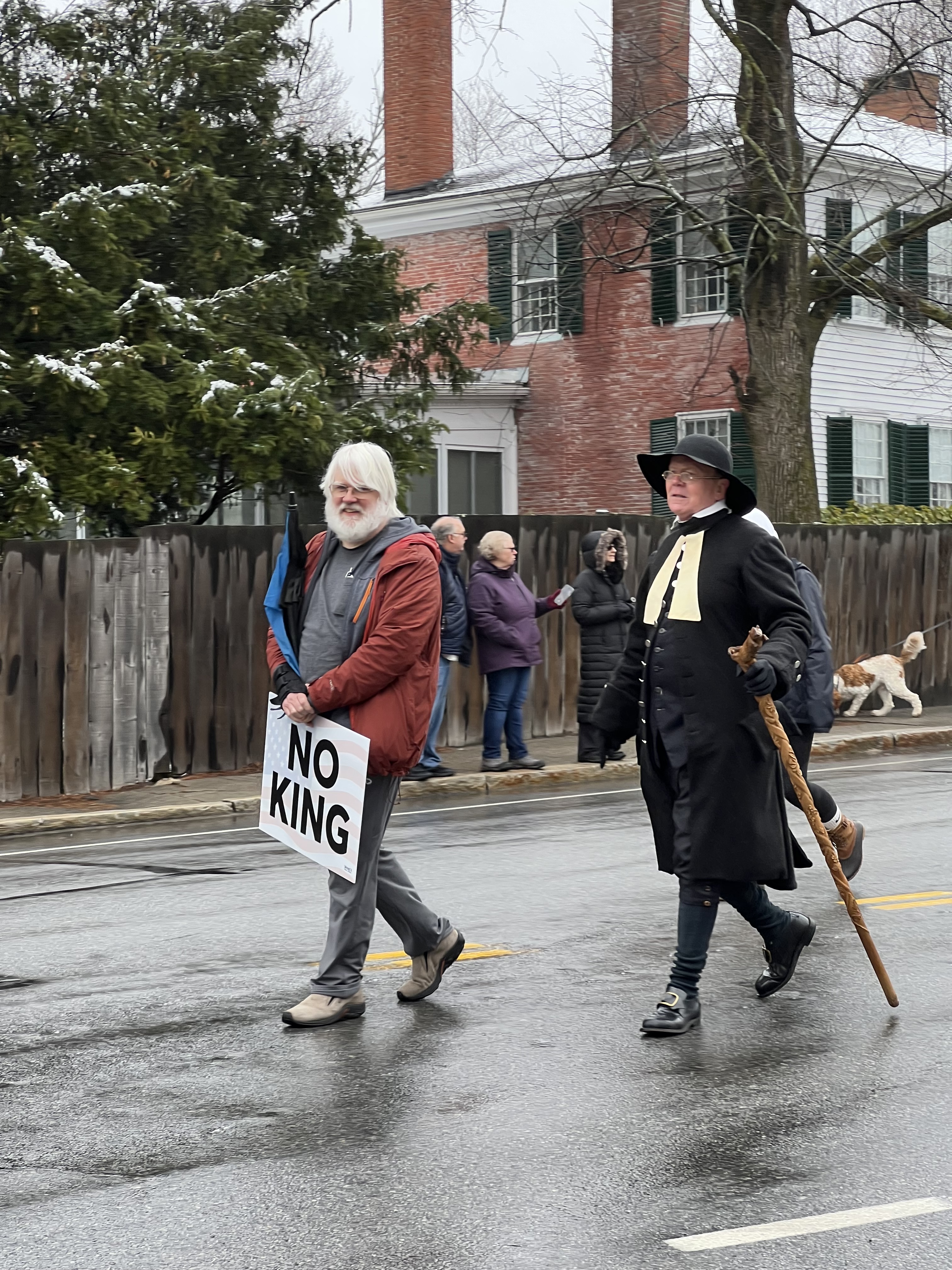


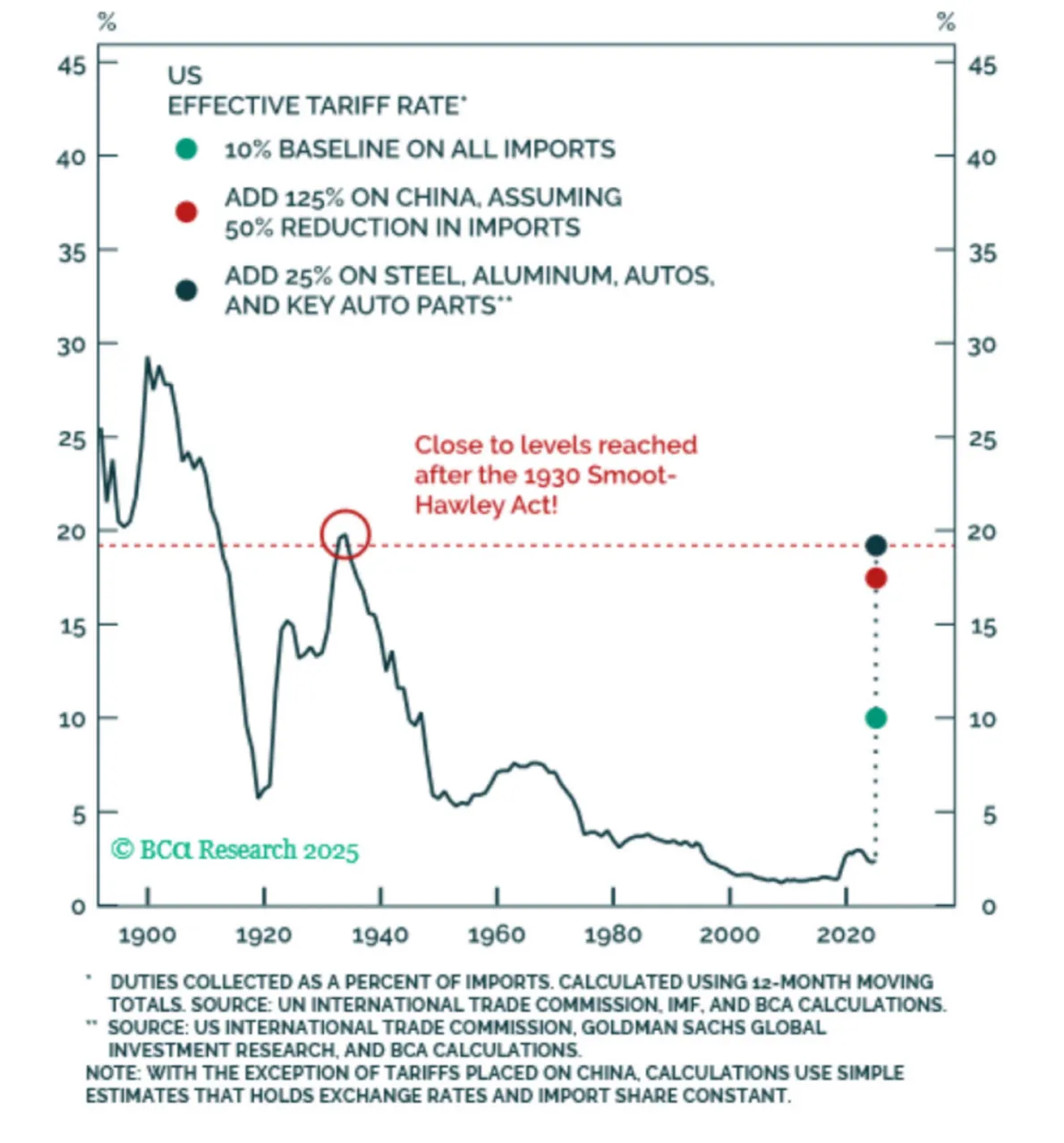


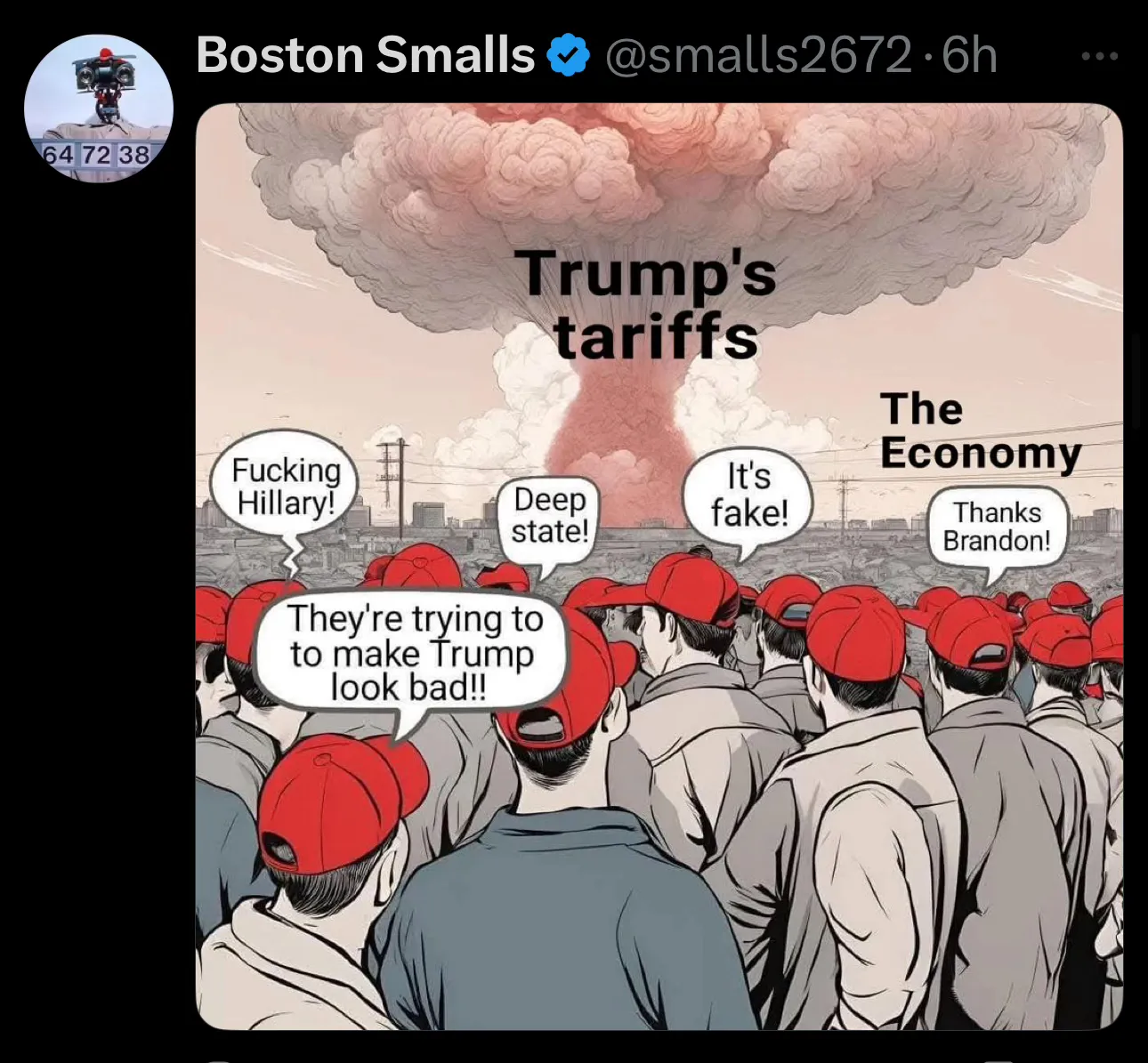


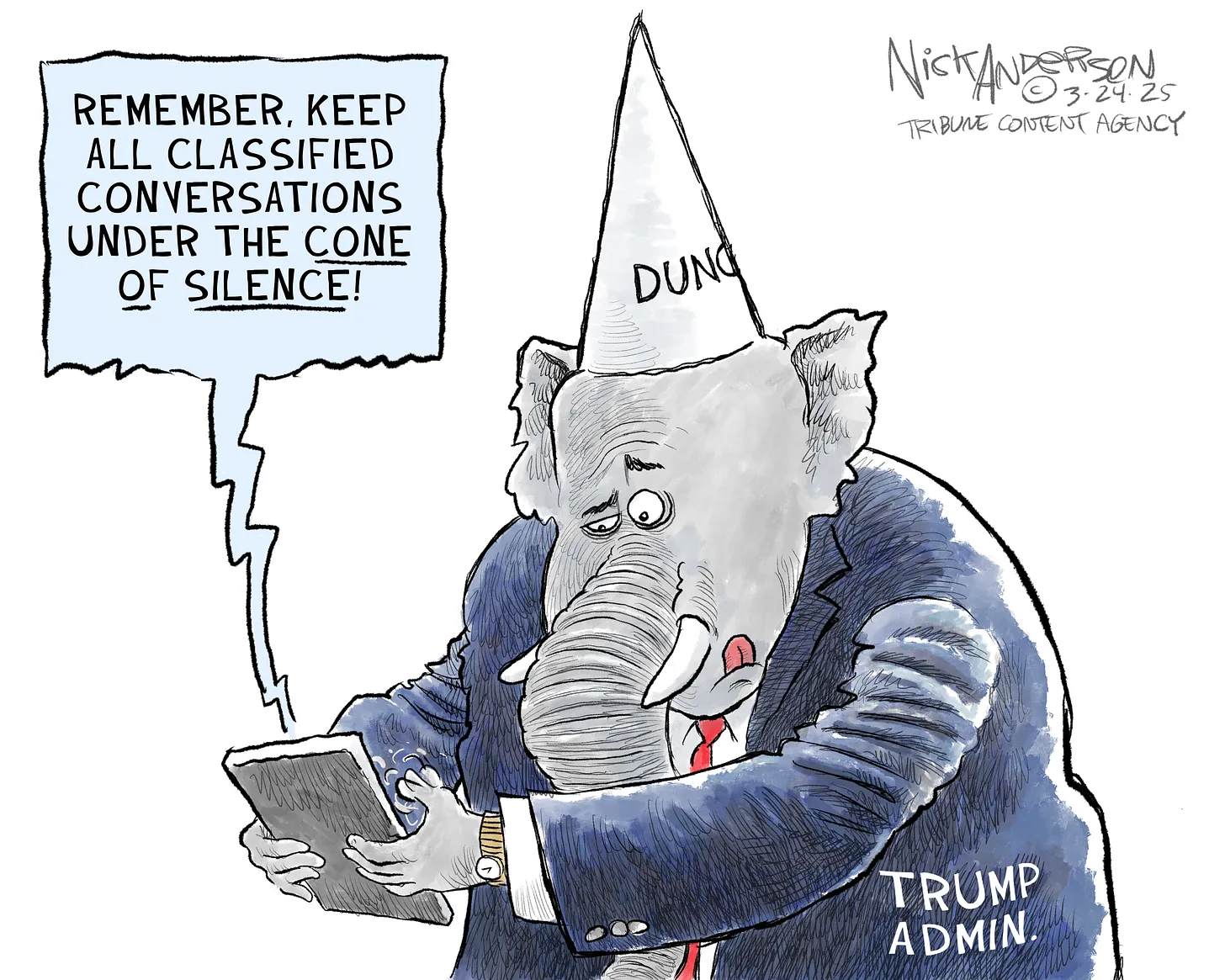
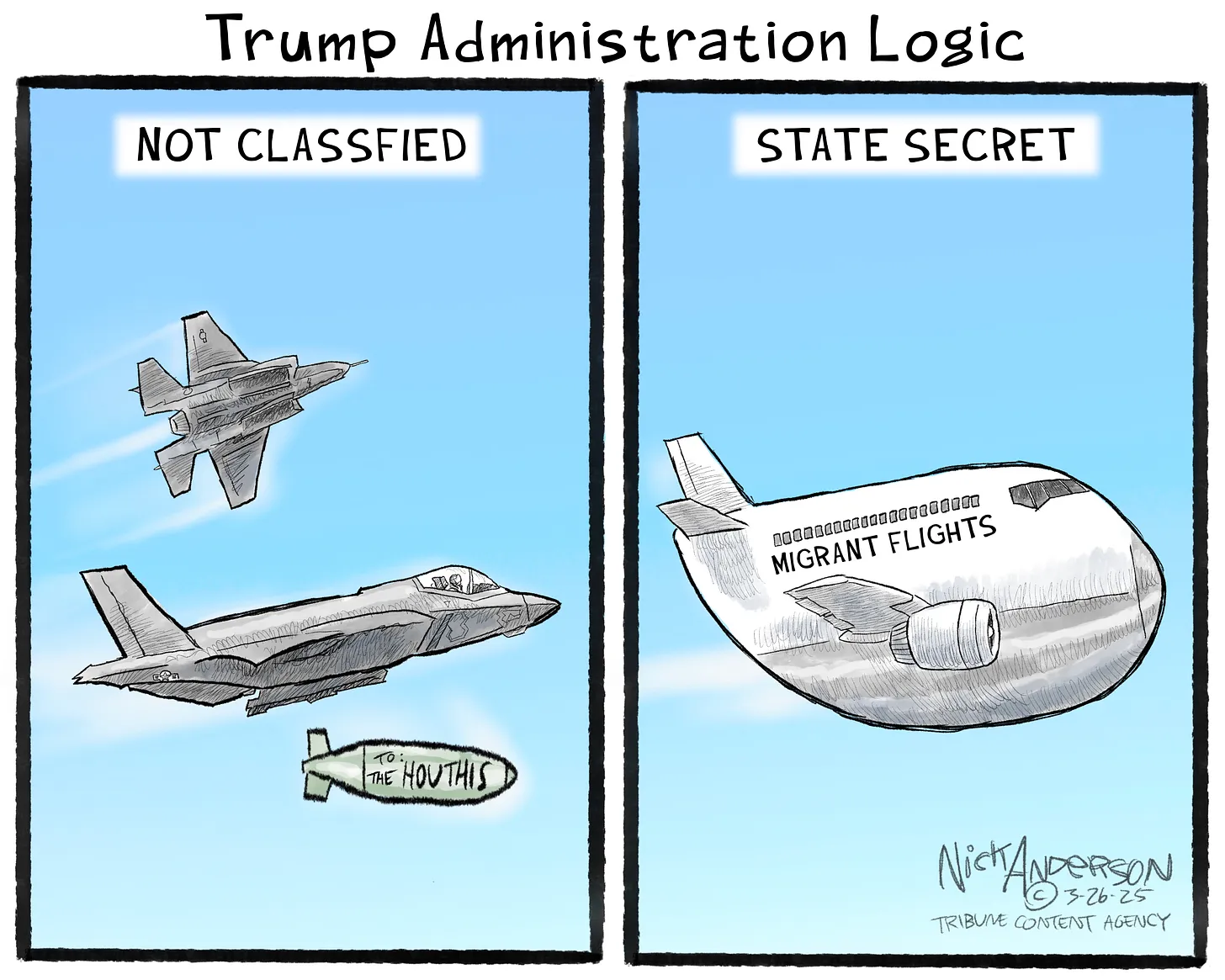

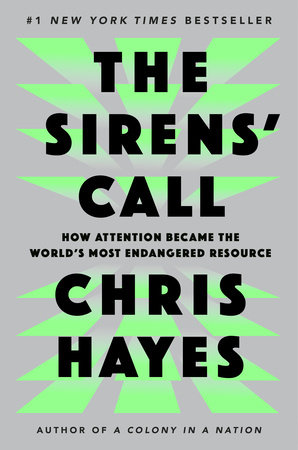
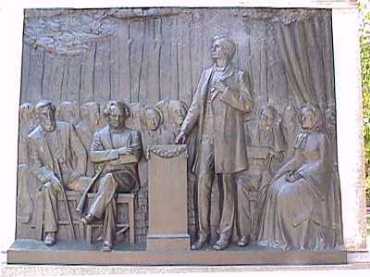
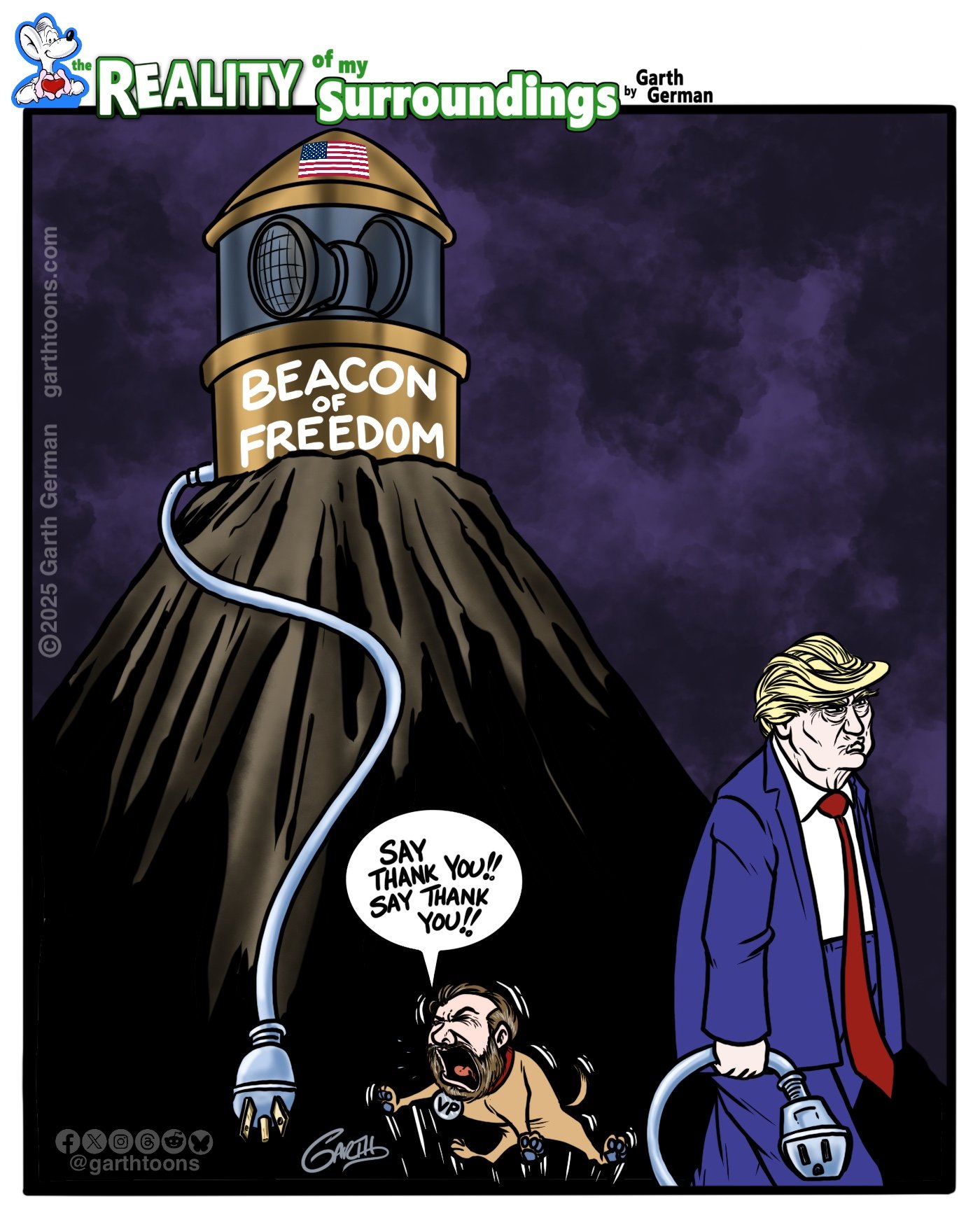
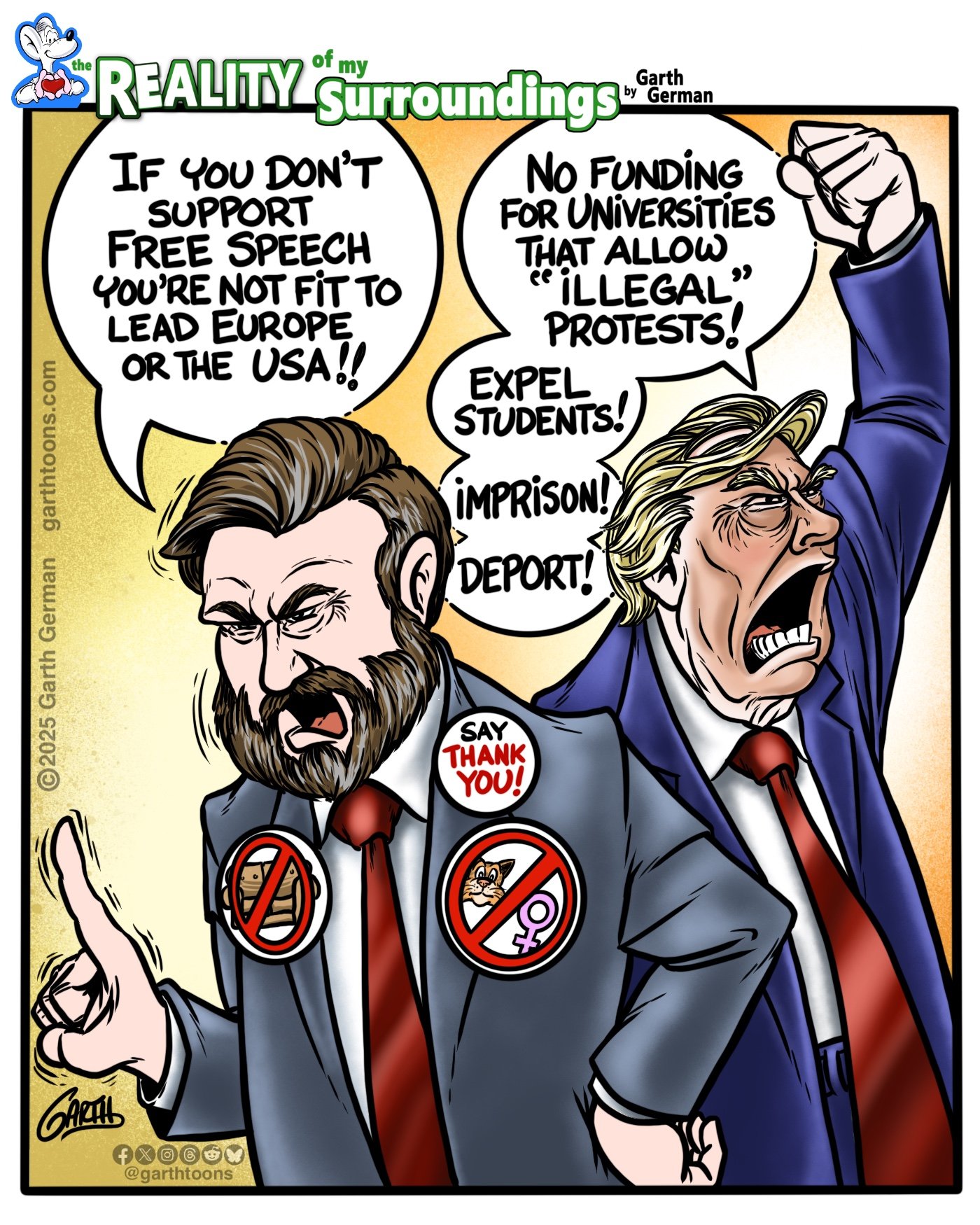


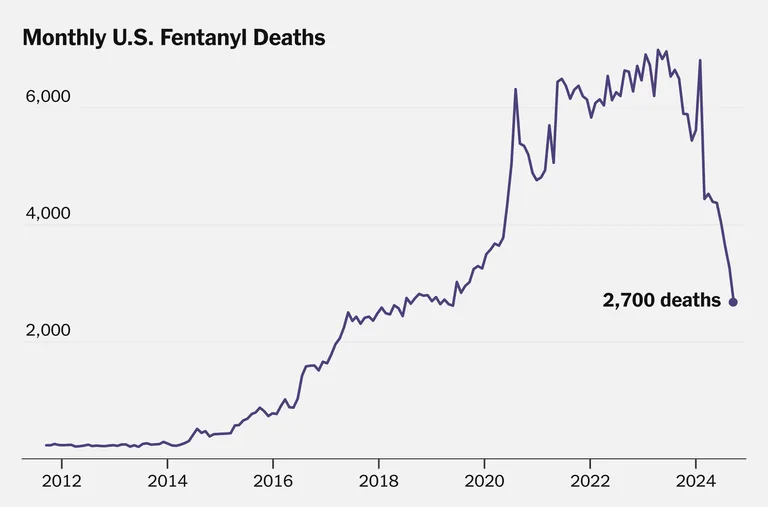
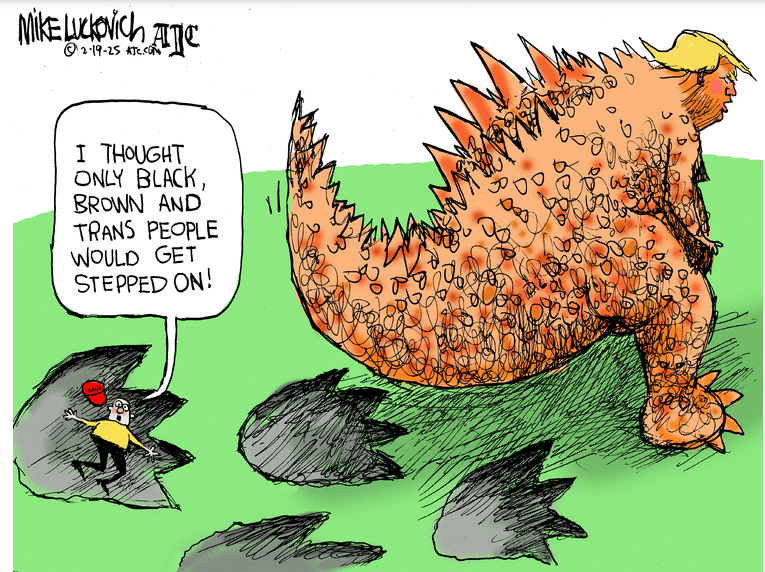

 The Weekly Sift