If you want to understand the 21st century, take a wide-angle view of the 20th.
During the 1800s, the technological underpinnings of the 20th century economy gradually arose and got implemented on a large scale. The steamboat and then the railroad revolutionized transportation. The telegraph, telephone, and mass-market newspapers revolutionized communication, creating new possibilities for democracy, but also for advertising and propaganda. Eli Whitney’s interchangeable parts allowed low-skill factory workers to mass produce goods that formerly required highly skilled craftspeople. The limited liability corporation and developments in banking and security trading enabled a unified management to wield quantities of capital far beyond what any individual entrepreneur could raise.
Each of those developments was of historical significance on its own, and many people recognized that they were living in an age of wonders. The introduction to Lilaquat Ahamed’s recent book 1873 calls attention to three enormous infrastructure projects that all were completed in 1869-70: the American transcontinental railroad, the Suez Canal, and the rail link from Bombay to Calcutta.
One French paper even hazarded a guess that these three critical links in the global transportation chain would now enable a traveler to go around the world in fewer than eighty days.
What was harder to see than the individual wonders, though, was what they added up to: Large chunks of humanity, tens of millions of people, were becoming economically, socially, and culturally integrated in a way the world had not previously seen.
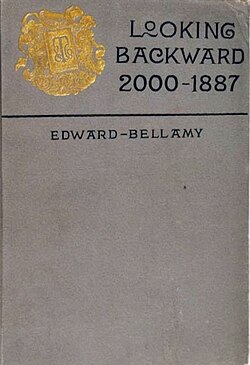
The first large-scale demonstration of the new possibilities came during the American Civil War, when the North mobilized the Union states into a vast war-production machine, fielding a well-equipped army far larger than Napoleon had used to invade Russia just half a century before. (Unlike Napoleon, the Union managed to keep its army supplied.) That integrated productive machine was largely allowed to dissolve once the war was won, but its example raised a question that first got a full expression in Edward Bellamy’s 1888 utopian time-travel novel Looking Backward: 2000-1887: What if a similar nationwide integration could be directed towards peaceful goals? Could a war-style mobilization provide everyone with enough to eat and clothes to wear and decent housing to live in?
While Bellamy’s vision and others like it may have been politically inspiring, no mobilize-for-peace movement gained power in the United States. But private-sector visionaries like J. P. Morgan and John D. Rockefeller were grasping the business possibilities of large-scale integration. All (or nearly all) of the oil wells in the country could become Standard Oil. All the steel mills could become U. S. Steel. With Morgan’s capital and guiding hand, industry after industry united into trusts that could monopolize their particular markets. Rather than a dozen or more competing entities risking the over-production that regularly crashed prices in a boom-and-bust fashion, a nation-spanning monopoly corporation could manage production and keep prices consistently high. Simultaneously, the lack of competition for labor could keep wages low. Concentrated wealth enabled political manipulation that kept the laws friendly and insured streams of government contracts for railroads and other infrastructure projects.
The result was the Gilded Age. Rockefeller became the world’s first billionaire, but he was just the apex of a wealthy class that became a kind of shadow government. The epitome of the new organization was the company town: a small city dominated by a single mine or factory, whose owner also owned the houses workers lived in and the stores where they had to shop. The town might even have its own money: Workers could be paid in company scrip that could only be redeemed in company shops. The spirit of the times is captured retrospectively in the 20th-century song 16 Tons about a worker in a coal-mining town:
St. Peter don’t you call me, cause I can’t go. I owe my soul to the company store.
Eventually, the progressive political movement pushed back against the excesses of the Gilded Age oligarchs: Antitrust laws were passed, unions eventually were protected rather than broken by police, and government regulation limited corporate power. The process took decades, but Standard Oil was broken up into smaller companies that became known as the Seven Sisters. Morgan’s dominance of banking was replaced by the Federal Reserve, which at least nominally had a responsibility to the public.
Over the same time period, Europe was developing similar technological infrastructure, and in World War I the major European powers shared the American experience of full-scale mobilization: An entire nation could become one big engine powered by a single purpose. By the end of the war, people all over Europe were (in a variety of partial or limited ways) asking Bellamy’s question: Large-scale economic integration made a new level of production possible. What could or should be done with it?
That question raised additional questions: Who would manage this engine? And manage it for whose benefit? One way to read the turmoil of the 20th century (from the end of World War I through the Cold War) is as a battle between different answers to those questions.
- Fascism took society’s power structure as it found it and integrated the pieces into a corporate state with a single leader. Industries would still be dominated by huge corporations like Krupp in steel or I. G. Farben in chemicals. But the ruling political party would take over the media and the educational system so that it could mold public opinion to its liking. The Leader would have a cult of personality, and the frustrations of the working classes would be channeled to target scapegoats like Jews or foreigners. Gleichschaltung, an engineering term related to synchronization, was a system of political, economic, and social pressure — ultimately backed by the police and the concentration camps — to bring individual opinions (or at least public expressions of individual opinions) into line with the state’s official ideology.
- Communism upended the existing power structure and replaced it with institutions created by the state. Like fascism, it controlled media, education, and the police. But it demolished private-sector institutions entirely: Individual farms were gathered into collective farms. Leaders of the various industries were government officials without even nominal independence. Centralized authority attempted to script economic development in five-year plans.
- Liberal democracy roughly followed the model of the Progressive Era United States: Private-sector corporations continued to exist and were allowed to manage themselves within bounds established by an elected government. Wealthy individuals and corporations would, of course, try to influence the electorate or corrupt the government, and would sometimes succeed. But when public misery reached extreme levels — as it did during the Great Depression — a political revolution like the New Deal became possible.
Each of these systems had its moments of success. Fascism took Germany from desperation to a continent-bestriding empire in eight short years, creating the autobahn and other large-scale infrastructure projects. Soviet Russia became one of the world’s two superpowers, with nuclear weapons and the first artificial satellite. Though the quantity and quality of Soviet goods never caught up with the West, Russian consumers who remembered the deprivations of the 1930s felt very fortunate indeed by the 1960s.

But the winner of the 20th-century competition was liberal democracy, with a victory so clear that in 1992 Francis Fukuyama heralded “the end of history“. To be fair, Fukuyama did not mean to say that history was over, but that — on this question at least — it had reached an answer.
the end-point of mankind’s ideological evolution and the universalization of Western liberal democracy as the final form of human government.
You might expect a trend created by technology to be disrupted by subsequent technologies. But the pull of integration was only reinforced by the major developments of the 20th century: radio, television, the electrical grid, automobiles, highways, chain stores, and eventually computers and the internet.
The propaganda industry of World War I inspired a post-war advertising revolution that did not simply announce products but shaped public opinion, creating markets rather than simply responding to them. (See Walter Lippman’s 1922 classic Public Opinion and Edward Bernays’ 1928 Propaganda. By 1967 John Kenneth Galbraith had put it all together in The New Industrial State. Focusing on the Ford Motor Corporation, Galbraith concluded that the market-defining power it shared with GM and Chrysler made it an altogether new kind of entity that Adam Smith would not recognize as a firm.)
It’s important to realize that no major nation refused to integrate. The possibilities of increased production and wealth were just too tempting, both to leaders and to the general public. Much was lost in the transition to the new integrated society: The pressure to conform restricted individuality. Physical and social mobility disrupted families and communities. Materialism challenged religion. By the mid-20th century, we had a new word, totalitarianism, to express the new level of intrusion and oppression that an integrated society made possible. But eventually, ordinary people (most clearly in liberal democracies, but also in fascist and communist countries) came to experience a level of luxury their ancestors could not have imagined. Refusing, or going back, was never really an option.
What the 20th century example means to us. So now let’s talk about the 21st century. It has become a commonplace observation that cheap personal computers and the internet are revolutionary in the way that the printing press was in the 15th century. But the early manifestations of that revolution were fairly trivial: You could order and start reading an e-book without leaving your bedroom, or download a real-time satellite image of the current weather system, or carry your entire music collection on a device in your pocket. Those who didn’t live through this period may have a hard time imagining how marvelous it all seemed. It was indeed an age of wonders. And yet, society was still society. If you wanted to go on living your life as if nothing were changing, you could.
But consider what has happened since, not as a series of individual developments, but as a whole:
- Surveillance capitalism. The services and devices we all use give each of us an enormous data trail. Your phone knows where you’ve carried it. Your car knows where you’ve driven. Your TV knows what you’ve watched. Your voice-activated Siri or Alexa can listen to your conversations. Your supermarket tracks your purchases. Your smart house knows what hours you keep and what rooms you like to use. Your internet browser knows what you’ve shown an interest in. All those entities are owned by companies that can and do sell the information they collect.
- Social media algorithms. TikTok, Instagram, Facebook, and YouTube don’t just show you what you look for, they also make models of your interests and suggest what you might look at next. The algorithms that do this are not designed for your benefit. Instead, they exploit addictive patterns in the human mind, hooking you with anger or fear, and then drawing you ever further down various rabbit holes. Their goal is to hold your attention longer so that they can sell the advertising they can show you. In addition, Elon Musk’s X has a clear propagandistic purpose. It privileges Musk’s own neo-Nazi posts, and possibly similar voices. In short, the algorithms don’t just reflect your interests, they can and do change your interests, and perhaps your personality as well.
- Artificial intelligence. The tech giants are building out a massive computing infrastructure that can process data on scales never before imagined.
The weakness of 20th-century totalitarian surveillance was simple: Who was going to listen to all those recordings or watch all those camera feeds? Who was going to assemble the clues you inadvertently left to figure out what you intended to do? Maybe if you were a world leader or a suspect in some important investigation, the KGB or FBI or some similar organization might assign you enough watchers and analysts to make sense of it all. But the vast majority of us just aren’t worth that kind of attention.
We aren’t worth that kind of human attention. But maybe going forward we will be worth that kind of AI attention.
Similarly, 20th-century marketing and propaganda was based on statistical models. What were most people thinking? How would an average person respond to this message or that one? But 21st-century attempts to influence consumers and voters are increasingly personalized: What message would motivate you to do what the messenger wants?
20th-century corporations used mass-market advertising to create and alter large-scale trends. (How could Proctor and Gamble turn bad breath or body odor into embarrassing social problems that required its mouthwash or deodorant?) But a 21st-century marketer has the time and energy to analyze you as an individual. (Are you ready to buy a new car? What would cause you to choose this one rather than that one?) 21st-century politicians can target a message at you individually, whether the purpose is to change your vote, or just to make you give up on the possibility of figuring out what is true or what you should do about it.
Put it together: Just by living your life, you create an enormous data stream. The capability to analyze that data stream either exists or soon will exist. That analysis might produce a pretty good picture of what you know, what you believe, and how you think. Knowing that, the algorithms that decide what information comes to your attention might know just what to show you to make you do what their clients want you to do — buy a product, vote for a candidate, join a movement, or whatever.
It’s easy to make a dystopia out of this, but hold off on that thought for a second. What this all points to is that a deeper level of social/economic/cultural integration is now possible. That power could be used for good or ill, just as the power created by the previous integration was.
In a dystopia, AI might analyze your data trail, figure out exactly what conspiracy theory might hook you, and at a key moment send you just the right upsetting pseudo-fact that pushes you towards mass-murder or suicide bombing.
In a utopia, the algorithms might cheer you up when you’re depressed, nudge you to make that career change you’ve been thinking about, or even search out (or create) a place in the economy for someone with your exact combination of talents and disabilities.
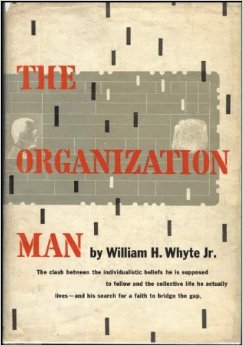
The near-universal psychological trauma of 20th-century was the thought that the system is indifferent to us, that we don’t fit and there is no place for us. In order to survive, we need to hide our inner selves and become organization men or men in grey flannel suits who are made of ticky-tacky and all look just the same.
In a utopia, the system would not be indifferent. It would try to meet us halfway and find roles we could fill with our authentic selves.
And maybe along the way, we could have another productivity bump, similar to the last one. Maybe in a few decades that increased integration will have ordinary people living in what would seem like unimaginable luxury now, albeit with the loss of some cultural values that seem important today.
Which way things will go depends on the same questions as last time: Who is going to manage this integrated society, and for whose benefit?
Right now, we’re on the Gilded Age track. Musk, Bezos, et al. are managing the transition for their own benefit, just like Rockefeller and Morgan did. They’re collaborating with a corrupt government and using their increased power to squeeze the rest of us ever tighter. We may end up in the online equivalent of the company town, owing our souls to the owners.
But look for each of the three 20th-century competitors to make their cases again. The fascism of the Trump regime is not particularly well-founded in the new possibilities, and is being derailed by Trump’s own greed and ignorance. But the last two years do point out how eagerly Gilded Age oligarchs will line up behind a fascist leader.
Communism may also get a second chance. One reason Soviet Communism failed was the sheer impracticality of central planning in a large modern economy. A market in essence is a distributed-processing system for managing production and consumption. The market-oriented liberal democracies simply had more processing power and greater flexibility and creativity than any Soviet central planner could apply to the job. But a 21st-century central planner’s capabilities may may be better suited.
If we are lucky, liberal democracy will also get a second chance. But for that to happen, some significant number of people need to grasp what’s happening and apply our creativity to doing something about it. Certainly we’ll have to revive the 20th-century progressive tools of antitrust and unions. But we also have to hope that the new possibilities include new tools for fighting back against oligarchy and escaping the company town.
It may seem impossible, but the first Gilded Age seemed unassailable too. As George Orwell put it, “Whoever is winning at the moment will always seem to be invincible.”