Author Archives: weeklysift

Doug Muder is a former mathematician who now writes about politics and religion. He is a frequent contributor to UU World.

Conclusions

One of the main conclusions of 2022 is that unpunished evil returns with even greater evil.

Kira Rudik, member of the Ukrainian Parliament

This week’s featured post is “Partying Like It’s 1942“.

This week everybody was talking about 2022

In the featured post, I raise a possibility (not a certainty) that I find intriguing: Hinge years, when bad trends turn around, look a lot like 2022. They’re scary to live through, because horrible possibilities are constantly looming. But again and again, the worst doesn’t happen.

In 2022 we dodged a lot of bullets: Ukraine didn’t fall, NATO didn’t collapse, and MAGA candidates didn’t sweep the midterms. Early in the year, a lot of people imagined it might end with Trump triumphant: in firm control of the GOP, 1-6 in the rearview mirror, the 2024 nomination his for the taking, and election-denying secretaries of state ready to hand him a victory whether the voters want him or not.

Before good things can start happening, bad things need to stop happening. A lot of bad things didn’t happen in 2022.


TPM awarded its annual Golden Dukes, which celebrate the cartoonishly corrupt and incompetent in American politics. This year’s winners:

Best Scandal, General Interest: Donald Trump, for the Mar-a-Lago documents

Best Scandal, Local Venue: the Patriot Front, for delivering themselves to the cops in a UHaul

Meritorious Achievement in the Crazy: Herschel Walker, for his vampire vs. werewolf speech

Most Cringe Campaign Ad/Meme: Dr. Oz, for his crudités

Most Convoluted Conspiracy Theory: Marjorie Taylor Greene, for Jewish space lasers*

Soon-to-be-forgotten Hero: Madison Cawthorne.

*I know: Jewish space lasers started in 2018, but she did have some tiff about it this year as well. And Lauren Boebert brought it up again. But really Italygate should have won in this category.

and Title 42

Title 42 is a 1944 law that lets the government to keep people from entering the US during a public health emergency. The Trump administration invoked it in March, 2020 to expel migrants at the southern border. The Biden administration has been trying to end the policy since May, but has been blocked by the courts. This week, the Supreme Court issued a stay, keeping Title 42 in effect until it can rule on a case it won’t even hear until February, and probably won’t rule on until June.

What’s embarrassing and infuriating about this whole story is the bad faith. Trump invoked this Covid emergency at a time when he was denying the seriousness of the pandemic in every other way. The point wasn’t to protect the country from Covid, which was already here and wasn’t any more prevalent among immigrants than among any other group. The pandemic was just a pretext for keeping immigrants out of the country.

Similarly today, the states that are trying to enter this case are the ones that have had the fewest Covid restrictions. They’re not trying to protect public health; they just don’t want immigrants.

And the Court’s majority is acting in bad faith as well, as Ian Millhiser explains on Vox. When the conservative majority likes the current administration’s policy (as it usually did when Trump was president), it acts swiftly to remove obstacles in the lower courts. When it doesn’t (as in the current case), it drags its feet and leaves obstacles in place.

In 2021, Trump-appointed Justice Amy Coney Barrett delivered a speech at the University of Louisville’s McConnell Center (named for Senate Republican leader Mitch McConnell), in which she announced that her goal was “to convince you that this court is not comprised of a bunch of partisan hacks.” But if that is truly her goal, she and her colleagues might want to consider applying the same scheduling rules to cases brought by Republicans that her Court applies to cases brought by Democrats.

and 1-6 Committee Transcripts

This week was characterized by document dumps bigger than any one person could possibly process. Let us agree to forgive each other for not reading all the 1-6 Committee’s interview transcripts or six years of Trump’s tax returns.

The main thing that has come through for me is that the Committee was very selective about what it included in its public hearings. If it had just wanted to tell outrageous stories, it had plenty that it didn’t use: Mark Meadows burning documents, for example.

and Trump’s taxes

I continue to be of two minds about this. Obviously, Trump should have released his taxes voluntarily long ago, as all other presidential candidates have since Nixon, and as he often promised to do. It is now clear that his excuses for not releasing them were lies.

I’m still not comfortable with a House committee releasing these documents on a party-line vote. As DoJ (I hope) gets ready to indict Trump, I want to be able to argue that everything done against him has been done in the public interest, and not for political advantage. In spite of the protests of MAGA Republicans, I believe the January 6 Committee’s actions can be defended on those grounds. Ditto for the FBI’s search of Mar-a-Lago.

Here, though, I’m not sure. The political point-scoring is obvious: He claims to be rich and a genius businessman, but he reported huge losses to the IRS that in many years resulted in him paying less tax than you did. Taxpayers who can’t afford complicated tax-avoidance schemes should be angry. Also: His income has come mainly from selling off properties inherited from his father; his own ventures have usually resulted in losses. He looks more like a clueless rich kid than like a brilliant businessman.

There is a public-interest angle, but it’s more subtle. Clearly the IRS has dropped the ball on auditing him, even though they are supposed to audit the president’s taxes every year. Exactly one auditor was assigned to his complicated return, and none of the audits have been completed. Somebody needs to figure out the IRS just lacks resources, or if it was succumbing to political interference.

A lot of things in his returns look suspicious, but they need to be investigated by someone who can demand to see receipts. We in the general public can just shake our heads and wonder.

and you also might be interested in …

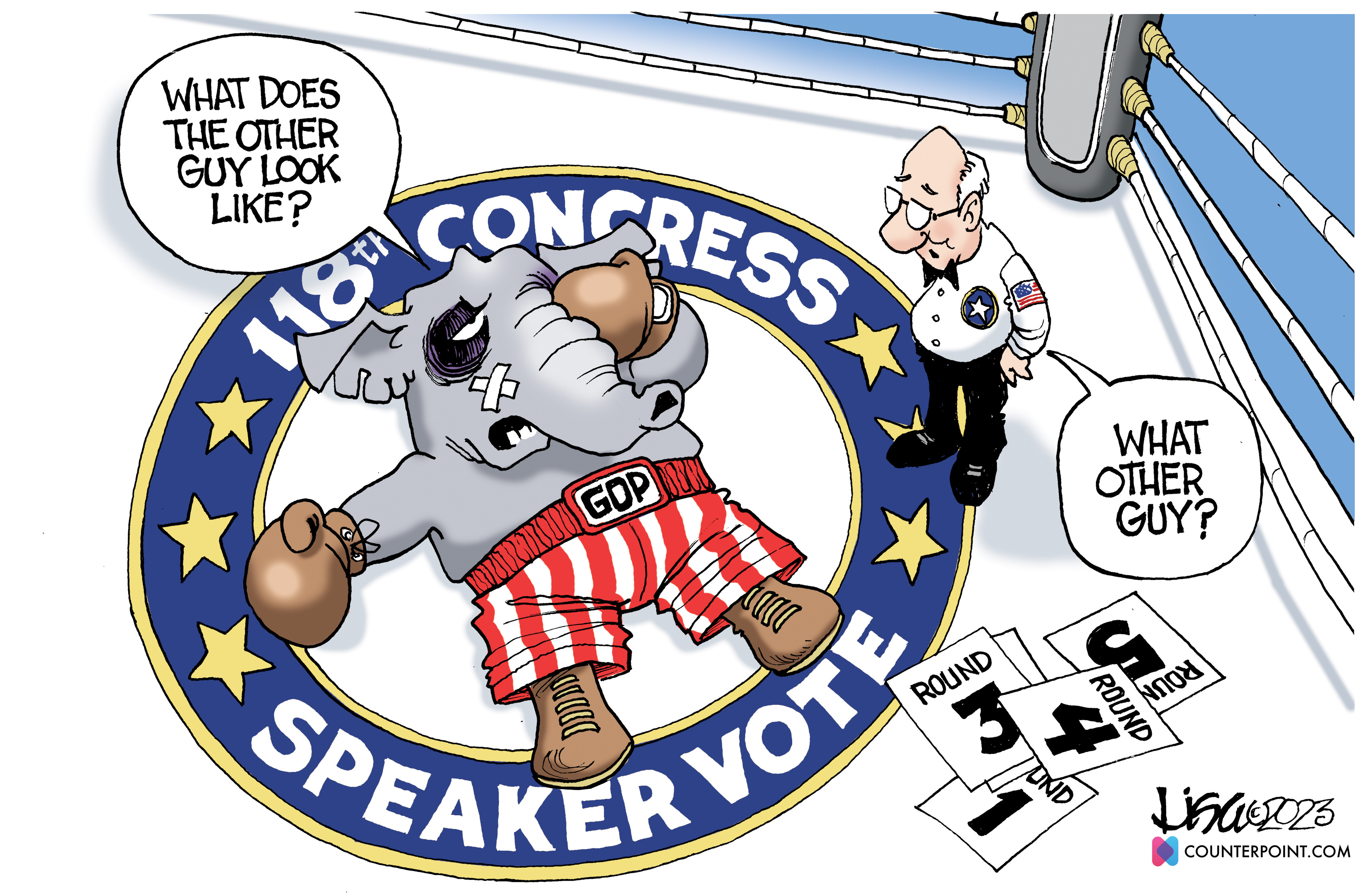
Tomorrow we’ll find out whether Kevin McCarthy has the votes to become speaker. If he doesn’t, we’re in the land of political novels, because there hasn’t been a multi-ballot speaker election since 1923. Maybe that’s something we need to do every hundred years.

George Mason Professor Steven Pearlstein suggests that a bipartisan coalition pick a compromise speaker from outside the House. It’s part of a wonderful fantasy in which centrists depolarize Congress and try to do things the voters want done. I don’t believe in it for a second, but I enjoy picturing it.


Deaths this week: Pelé, Pope Benedict, and Barbara Walters. They were too late to make the annual Sgt. Pepper tribute to people lost during the year by Chris Barker.


The best account I’ve seen of Southwest Airlines’ recent problems is in the Seat 31B blog. Basically, Southwest tries to keep fares low and profits high by using its assets “efficiently”, which means that there’s no slack if anything goes wrong. It also has an antiquated IT system.

The only real way they have to [handle this situation] (because of the way they operate and their limited IT capabilities) is to stop for an entire day and set to work inventorying their assets and crews and then build out entirely new trips for everyone.


When I watch Republicans in Congress defend Trump, I often wonder whether they really believe what they’re saying. Elise Stefanik clearly doesn’t. The NYT has a fascinating piece about her “conversion” from a young moderate to self-described “ultra MAGA” member of the House GOP leadership. She made a career move, not an ideological reassessment; it’s actually not clear whether she has any political philosophy at all. I can’t remember who I heard describe her as a “House of Cards” character, but it fits.


I’ve been enjoying the images that my Facebook friends create using the new AI art tools. But I’ve also been wondering about the dark possibilities.

Cartoonist Sarah Anderson describes how disturbing it is to see strangers easily hijack your style and use it for purposes you would never approve. Her cartoons are on the internet, so they were included in AI training sets (for which she received no compensation). Now you can start making an imitation Sarah Anderson cartoon — expressing your views, not hers — by using her name as a prompt.


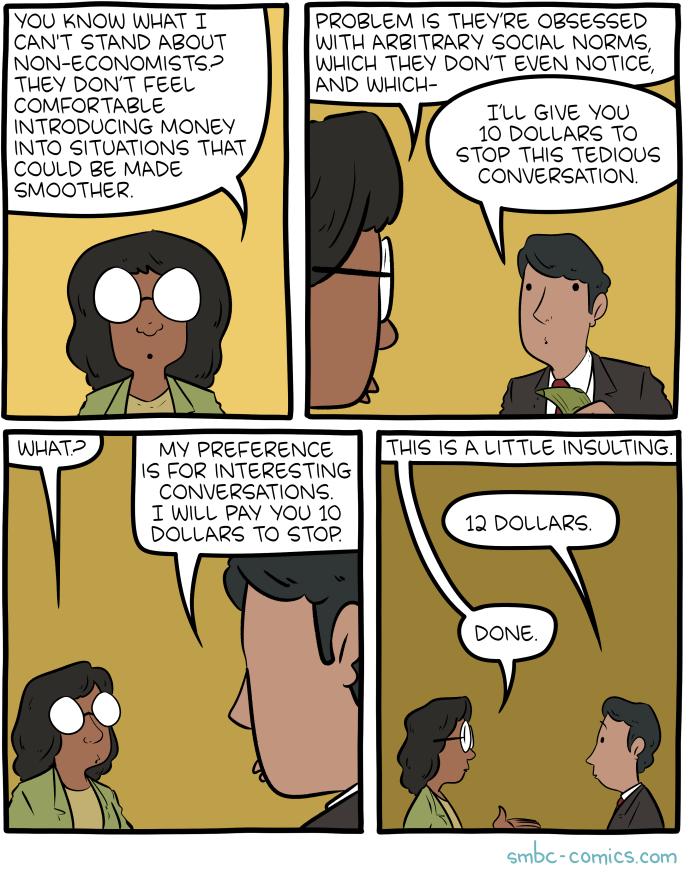
Speaking of online cartoons, have you read SMBC by Zach Weinersmith?


Paul Krugman has been analyzing Tesla, whose stock fell 65% in 2022 and is still selling at a lofty 35 times earnings. In his first column, he sticks with financial prospects, arguing that Tesla stock never deserved its high growth premium, because it lacks the “network externalities” of successful past tech growth stocks like Microsoft or Apple.

Decoding that: As Microsoft and Apple products became more popular, users got locked in. So if you have a bunch of iPhone apps, your next phone is probably also going to be an iPhone, even if you’re replacing your phone during a period when competing phones are better or cheaper or cooler. Ditto for your company’s Microsoft software.

That’s why, once they hit it big, Microsoft and Apple became profit-generating machines that justified the high prices their stocks had traded at in earlier years: Their products stay on top even through periods where they don’t deserve to, and the difficulty of switching induces users to pay near-monopoly prices.

But Tesla has nothing like that going for it. Maybe Tesla cars are better/cooler right now, so maybe you’ll buy one if you can afford it. But that kind of advantage is fleeting, and once it’s gone, nothing will stop you from buying something else the next time you need a car. So Tesla stock should be valued more according to its current or near-future earnings than by projected far-future earnings that may or may not manifest.

In his second Tesla column, Krugman looks at the likely effects of Elon Musk’s recent behavior. Using a variety of indirect measurements, he argues that Teslas are bought mainly by Democrats. (Counties with large Trump majorities, for example, have very few Tesla registrations.) Consequently,

Musk’s public embrace of MAGA conspiracy theories is an almost inconceivably bad marketing move, practically designed to alienate his main buyers.

Speaking purely for myself, I am considering buying an electric car in the next year or two, and Tesla used to be an attractive possibility. Now, a Tesla would have to be much, much better than competing alternatives to overcome the Musk stigma.


An NYT article on the failure of election-denier secretary-of-state candidates pointed to a difference in money:

A significant factor in the imbalance was Mr. Trump, who vocally promoted election denier candidates in Republican secretary of state primaries but put almost none of his money where his mouth was. Save America PAC, his leadership PAC, spent only $10,000 of its $100 million-plus war chest on secretary of state candidates who made it into the general election. A spinoff super PAC, MAGA, Inc., chose to spend money on races for Senate instead.

But even the spending on Senate races was a small percentage of his full war chest.

Here’s what I suspect: Trump has sucked up a significant portion of Republican fund-raising, but as a grift. Even money that his PACs apparently spend on candidates somehow finds its way back to the Trump Organization. (Quartz noticed this pattern back in 2015.) That creates friction for GOP candidates across the board.


It’s not new, but The New Yorker just pointed me to a 2018 article in which Molly Ringwald looks back at her breakout hits Pretty in Pink and The Breakfast Club.

I imagine that everyone in my generation (60-something) has had the experience of re-watching something we loved when we were younger and reflecting on how horrible parts of it are by current standards. I’m sure it’s even more complicated when you helped make the thing in question.

Ringwald does a good job of giving the past its due without excusing its flaws, and recognizing that the good and bad do not cancel each other out. That’s a complex attitude that we would all do well to master, particularly as we look back on American history.

Ringwald is focusing on adolescents and especially girls, but she describes a pattern that applies to Blacks, gays, and all sorts of groups that have had to struggle for recognition: First you’re invisible, then you’re a token, then you’re a stereotype, and then (maybe, eventually) you start to be seen as a person. With all its problems, each stage is an advance over the previous stage.

and let’s close with a countdown

As a teen-ager, I used to listen to AM radio on New Years Eve as they counted down the top songs of the year. What would be #1? I’ve been hooked on countdowns ever since (though I don’t do song-countdowns any more because I wouldn’t recognize most of them).

I still appreciate good humor and satire, though. So here’s McSweeney’s countdown of its most-read articles of 2022. My favorite is #4: “Selected Negative Teaching Evaluations of Jesus Christ“, which includes the comment: “Only got the job because his dad is important.”

Partying like it’s 1942

2022 included a lot of suffering and loss.
But if recent trends continue, we might look back on it as a turning point.


In his six-volume history of World War II, Winston Churchill named the fourth volume — the one that covered 1942 — The Hinge of Fate. To the people living through 1942, I doubt it looked all that wonderful. But from the perspective of the Allies’ eventual victory, it was the year when everything turned around.

There’s reason to hope we might look back on 2022 that way, someday.

2022 was a year when the bottom did not fall out. It tempted us to imagine many horrible outcomes, which then did not come to pass. It was a year of dodged bullets.

That’s what a hinge year looks like.

At the end of 1941, it would have been easy to imagine a total Axis victory. Hitler had overwhelmed Western Europe and conquered the Balkans. Now German troops were just outside Moscow, and he seemed on the verge of driving the British out of Egypt. Japan had crippled the US Navy at Pearl Harbor, and its troops were advancing throughout Southeast Asia. Both Singapore and the Philippines would fall in the first half of 1942.

But 1942 began with Russia’s winter campaign inflicting enormous casualties on the Nazi forces. In May and June the US Navy had defensive victories in the Coral Sea and at Midway. In July, the British stopped Rommel’s advance at El Alamein. By the end of 1942 the battle of Stalingrad, which the Soviets would win decisively in early 1943, had begun.

On New Years Day in 1943, I doubt a lot of Americans believed they were on a glide path to victory. If we had lost the battles of Coral Sea and Midway, Australia and Hawaii might have fallen. Stalingrad was still in doubt. Rommel might regroup and start advancing again. Only in retrospect, when the dodged bullets of 1942 led to a string of victories in 1943-45, did 1942 look like a hinge year. But that’s how historians think of it now.

Now think about 2022. A year ago, Russian troops were massing around Ukraine, Covid had developed its new Omicron variant, and pundits were predicting a 2010/1994-style red wave in the fall elections. Worse than the simple prospect of a Republican Congress, backers of Trump’s big lie were running for secretary of state in all the purple states, setting up the possibility of a better-organized coup in 2024. Trump himself had survived the brief spasm of Republican conscience after January 6, and was firmly in control of the party again. A House committee was investigating January 6, but no one knew what it was finding. By the time it told the public anything, would people still care? And even if it uncovered evidence against Trump, did Merrick Garland have the balls to do anything about it? Like Trump, Jair Bolsonaro was running for a second term in Brazil. As we know from the previous examples of Hungary and India, the second term is when fascism consolidates.

Democracy, both at home and overseas, was losing.

Ukraine. In February, Russia opened a full invasion of Ukraine, with the announced intention of ending the fiction of Ukrainian statehood. The Ukrainians seemed outmanned and outgunned. This vision seemed very plausible:

Consider the following scenario: the front lines are in shambles, the army has been defeated, the road to Kyiv is clear, and the West imposes more sanctions but refuses to go to war. In Ukraine’s capital city, riots erupt in large numbers. Protesters call on the government to step down. Armed groups storm government buildings throughout the country as riots swiftly turn violent. President Zelensky, along with a portion of the pro-Western elite, resigns and departs the country. A transitional administration is built around a simple agenda: sign an immediate ceasefire with Russia (or with whomever Russia chooses, such as the Donetsk or Luhansk People’s Republic) under any circumstances, and organize a constituent assembly election.

President Biden wanted to help the Ukrainians, but would NATO follow his lead? NATO’s unity of purpose and trust in American leadership had decayed badly during the Trump years, when the American president had openly wondered whether newer NATO members like Montenegro were worth defending, and seemed to hold Vladimir Putin in much higher regard than any democratic leader.

So where would NATO be, after Ukraine fell? Perhaps it would splinter, leaving its more exposed members (like the Baltic republics) open to Russia bullying.

Miss Ukraine Universe, “Warrior of Light”

None of that happened.

Instead, national independence turned out to mean a great deal to Ukrainians, who rallied around President Zelenskyy as a Churchillian figure. President Biden did a masterful job reuniting NATO around its original purpose of stopping Russian aggression. Finland and Sweden have applied for NATO membership.

The Russian military proved not to be the efficient machine everyone had imagined. It suffered from weak morale, bad planning, and poor equipment. In the north, its forces have been thrown back completely. In the west and south, they have been retreating since summer.

But hinge years are not victorious romps. All this has come at tremendous cost.

For the US, that cost has been almost entirely financial: In 2022 we spent $23 billion on military aid for Ukraine and an additional $25 billion in non-military aid. The recently passed FY 2023 omnibus spending bill included an additional $45 billion. Sanctions on Russian oil and gas undoubtedly have contributed to our inflation, but US troops are not dying and missiles are not falling on American cities.

The direct suffering is being borne by Ukrainians. Casualty estimates are unreliable, but both civilian and military deaths are likely in the tens of thousands. Nearly 8 million Ukrainians (out of a pre-war 41 million, not counting Crimea) are estimated to have fled the country. As of September, one independent estimate of damage to Ukraine’s infrastructure was $127 billion. The same group claimed GDP had fallen by 45%. (Numbers like these came to mind when I read a tweet from Fox News contributor Tomi Lahren objecting to the Ukraine aid in the omnibus bill: “No more money to Ukraine!!! We can’t fight this war for you for eternity!!!”) Our complaints about gas prices must amuse Ukrainian civilians, who — even if they aren’t currently hearing explosions — frequently lose electric power and have trouble staying warm.

But, as the cliche goes, you should see the other guy. Official Russian casualty numbers are either nonexistent or inaccurate, but BBC/Mediazona have compiled a list (by name) of 10,000 Russians soldiers who have died. A complete death list would undoubtedly be much larger, with the CIA estimating 15,000 Russian deaths already by last summer. Joint Chiefs Chairman Mark Milley recently estimated Russia had suffered over 100,000 soldiers either killed or wounded. Other sources claim the loss of 3000 tanks, hundreds of planes and helicopters, and 16 boats and ships, including the flagship of its Black Sea fleet, the Moskva.

The blow to Russian prestige has been enormous, and Putin’s ability to intimidate other countries — including the other former Soviet republics — has diminished considerably. Whether all this losing has weakened Putin’s grip on power in Russia itself is hard to judge from the outside. But one indication of internal dissension is the incredible number of oligarchs who have died mysteriously since the war began. Hundreds of thousands of Russians have left the country, either to avoid military service, escape political repression, or perhaps just because they don’t like how things are going more generally.

The 1-6 Committee. On January 7, 2021, and for a week or two afterward, American political leaders of both parties were united in their horror over January 6: Watching Trump supporters violently attack the Capitol, threaten to hang Vice President Pence, and search House offices looking for Speaker Pelosi was too much to stomach, even for Republicans.

But then they saw their base standing by Trump, so they came around. By the time of the impeachment vote in February — which could have disqualified Trump from holding any future office — Mitch McConnell was trying to have it both ways: Trump was “practically and morally responsible” for January 6, but McConnell wouldn’t vote to convict.

Before long, Trump was firmly back in control of the Republican Party, and the official position of the GOP was that nothing about January 6 needed investigating. They blocked a bipartisan commission, tried to bluff Nancy Pelosi into accepting co-conspirator Jim Jordan on the House Select Committee, and boycotted the committee after Pelosi refused.

Nothing to see, just let it go.

The Department of Justice also seemed inclined to let it go. While pursing hundreds of cases against the individuals who invaded the Capitol, DoJ was showing little interest in the planners, or the larger coup plot the riot was part of.

Since the Committee’s hearings began in June, many Democrats have lamented their inability to break through to the Trump base: If you thought at the time that the riot was an appropriate response to a stolen election, you probably still do.

But the hearings kept the issue alive for the other 2/3rds of the country, including a small but decisive slice of the Republican vote in November that supported establishment Republicans like Gov. Chris Sununu in New Hampshire, but couldn’t vote for a Trumpist election-denier like Don Bolduc in the Senate race. Across the country, pro-coup governor and secretary of state candidates went down to defeat, often in states that elected other Republicans.

In the lame-duck session after the election, Congress passed a reform of the Electoral Count Act, to make Trump’s shenanigans harder next time. Merrick Garland named a special prosecutor to pursue Trump’s legal liability.

It’s not justice — yet. But running out the clock has not worked for Trump. No one who wants him to face a jury feels threatened by the questions “Why are you still hanging onto that? Why can’t you just move on?” That’s what the 1-6 Committee accomplished.

Additionally, the midterm voters weakened the entire MAGA movement. Post-election analysis identified a “Trump tax” that might have cost MAGA candidates as much as 7% of the vote. The 2024 Republican nomination now looks likely to be a donnybrook. (Anyone who thinks a MAGA-without-Trump candidate like Ron DeSantis is the only alternative should consult with President Rick Perry. A lot can still happen.)

Making democracy work. In his first year, President Biden managed to get two important bills through Congress: the American Rescue Plan (to tackle the Covid crisis) and a bipartisan infrastructure bill. Those were both major accomplishments, given the Democrats’ slim House majority and a 50-50 Senate that included recalcitrant Democrats like Joe Manchin and Kyrsten Sinema.

But surely in a midterm election year, Congress would grind to a halt. We’ve been accustomed to gridlock for many years, even in Congresses with far larger majorities. Of course it would be back.

It wasn’t. In addition to the aforementioned reform of the Electoral Count Act, Congress passed its first significant anti-climate-change bill, the Inflation Reduction Act. Also, the bipartisan CHIPS Act (which invests in the American semiconductor industry), the Respect for Marriage Act (protecting same-sex and interracial marriages against future Supreme Court decisions), and the first gun control legislation in decades.

One explanation for November’s disappearing red wave is that Democrats in Congress had a popular record to run on. The public wants our government to work. (Another explanation is that voters rallied against the Supreme Court, which took away American women’s right to bodily autonomy. As in Ukraine, big costs have been paid.)

As we enter 2023, expert speculation expects apocalyptic showdowns between the new Republican majority in the House and the Democratic Senate and White House, with major unnecessary crises and no substantive legislation. We’ll see if that happens, and if it does, we’ll see how the public reacts. The American people want this all to work.

The world. On Sunday, Brazil had a peaceful transfer of power, with Lula replacing Bolsonaro. The voters of Brazil (narrowly) decided they didn’t want fascism, and the much-rumored Bolsonaro coup never came to pass.

Elsewhere, it’s the authoritarian governments that seem to be facing the most unrest. Protests continue in Iran, despite a government crackdown that includes executions. The Chinese government backed down on its zero-Covid policies in the face of protests. Putin is increasingly isolated in Russia.

The world did not decisively reject authoritarianism and fascism in 2022. (The right-wing coalition that returned Netanyahu to power in Israel is worrisome.) But the global drift away from democracy was checked. Around the world, bullets are being dodged.

A hinge year depends on what happens next. 1942 was “the hinge of fate” in World War II because of what happened the next three years. On New Years 1943, it wasn’t obvious that the Soviets would win at Stalingrad, or that Axis advances elsewhere wouldn’t resume at any moment.

The same thing holds for 2022. We might someday look back on it as the year when everything turned around. But will we? That depends on 2023 and 2024.

The Monday Morning Teaser

Happy New Year, everybody. This week, news outlets of all kinds focused on what kind of year 2022 was and what we might expect for 2023.

As you know, I am skeptical about the value of pundit speculation. I believe our political discussions spend way too much time predicting what might happen next, and most of us are not all that good at it. So my comments on the future are usually of the open-ended variety: More things can happen than we currently imagine.

But I do have an opinion on what kind of year 2022 was, or at least, how we might eventually look back on it. 2022 was a year that invited us to imagine horrible outcomes, and then to rejoice that the worst of them didn’t happen: Putin didn’t conquer Ukraine, NATO didn’t fracture, Congress didn’t logjam, Republicans didn’t sweep the midterms, January 6 wasn’t forgotten, Trump’s election-deniers won’t be overseeing the 2024 elections, and Trump himself is going to have a hard time getting nominated in 2024, much less elected.

In short, 2022 was a year of dodged bullets. If 2022 was a good year, it wasn’t an I-won-a-pony kind of good. It was more like finding out that you don’t have cancer.

But here’s the thing about dodged-bullet years: If the next few years are good, someday everyone will look back on the dodged bullets as the moments when it all turned around.

One case in point is 1942. I suspect 1942 was kind of a grim year to live through. 1940-41 had been terrible years for the Allies in World War II, and 1942 presented all kinds of possibilities for everything to go down the drain. But all year, the worst kept not happening. The Great Defeat was always looming, but it never arrived. By the end of the year, the Axis advances had been checked on all fronts, setting up the sweeping rollbacks of 1943-45.

So in retrospect, to historians who know how it all came out, 1942 was a very good year indeed, the year when it all turned around.

2022 could be like that, eventually. We just need to make some good things happen in 2023 and 2024.

I’ll spell that out in more detail in the featured post, “Partying Like It’s 1942”, which should be out shortly. That will be followed by the weekly summary, which will link to other people’s 2022 assessments (and pay little attention to their predictions). I’ll also discuss the Title 42 mess at the border and in the Supreme Court, notable recent deaths, the barrage of information from the 1-6 Committee, Trump’s taxes, and a few other things, closing with the most popular articles of the year from the humor magazine McSweeney’s. Some of those notes are still kind of rough, so the summary probably won’t get out before noon.

Ringleaders and Foot Soldiers

Ours is not a system of justice where foot soldiers go to jail and the masterminds and ringleaders get a free pass.

Rep. Jamie Raskin

This week’s featured post is “Trump still has no counter-narrative“.

This week everybody was talking about Trump’s crimes

Last Monday, the 1-6 Committee held its last public hearing. The executive summary of its final report was released Monday, and the 800-page full report on Thursday

The committee also announced that it had made criminal referrals to the Justice Department.

The committee’s historic referral says there is sufficient evidence to refer Trump for four crimes: obstructing an official proceeding, conspiracy to defraud the government, making knowingly and willfully materially false statements to the federal government, and inciting or assisting an insurrection.

I summarize Committee’s version of the January 6 plot (and Trump’s lack of any credible response) in the featured post. Briefly, the Committee sees January 6 not as a one-day event, but as the unsuccessful culmination of Trump’s months-long scheme to remain in power after losing the 2020 election. In their telling, Trump knew he had lost the election, knew that his fraud claims were false, knew that his false-elector scheme was illegal, knew that the Constitution did not give Vice President Pence the powers Trump pressured him to exercise, and knew that his January 6 speech would incite violence.

Trump responds with ad hominem attacks on the Committee and its witnesses, and he encourages his people not to testify or provide documents. I don’t believe this is how innocent people behave.

In my view, the one part of this narrative where the evidence is not iron-clad (yet) is in Trump’s connection to those who organized the violence. Those arrangements appear to have gone through Trump’s consigliere Mark Meadows, and then through Roger Stone and Mike Flynn. None of those three have answered questions about this. Meadows has been cited for contempt of Congress for refusing to testify. Stone and Flynn testified, but repeatedly invoked the Fifth Amendment.

There is reason to hope that the Department of Justice will have better luck getting at least a little cooperation from one or more of them, most likely Meadows.


I am largely in agreement with David Frum, who observes how the responsibility for calling Trump to account for his crimes keeps getting passed from one body to another.

Robert Mueller believed he had no power to indict Trump for obstructing his investigation of Russian influence on the 2016 election. When Trump then tried to extort Ukrainian President Zelenskyy into investigating Biden, the House impeached him, but to his defenders in the Senate

Holding Trump to account should be somebody else’s job: in this case, the voters.

When the voters accepted that responsibility and voted to remove Trump from office (by seven million votes), he tried to overturn the election by fraud and ultimately by force. When those actions led to a second impeachment that could have banned him from holding any future office, Mitch McConnell admitted

There is no question that President Trump is practically and morally responsible for provoking the events of [January 6].

But he decided that accountability and consequences were still somebody’s else’s job.

We have a criminal justice system in this country. We have civil litigation. And former Presidents are not immune from being held accountable by either one.

Now, once again, Trump has been investigated by a body that had no power to indict him. The January 6 Committee could only make a referral to the Justice Department, which it has done.

That leaves nobody for DoJ to pass the buck to. The final decision rests with Jack Smith and Merrick Garland. If they choose not to indict Trump, that will be the end of any consequences. Trump will have proven he is above the law.

There has been some debate about whether the 1-6 Committee should have bothered with criminal referrals, given that the Justice Department has no obligation to follow up on them. I think the referrals are important from the point of view of history and narrative.

Every time some official body investigates Trump and then declines to do something, his supporters take that inaction as vindication. The same thing would have happened here, as in “The Committee made a bunch of noise, but in the end even they didn’t claim Trump had committed any specific crimes.”

And if the Justice Department would decline to indict Trump — for what it’s worth, I believe it will indict him, that I’m not sure what the charges will be — the historical record wouldn’t have any explicit claims against him beyond the second impeachment, which had to be put together quickly and missed the full breadth of the conspiracy to overturn the 2020 election.


One sidelight of the report is an account of how Cassidy Hutchinson’s original TrumpWorld lawyer tried to influence her testimony.

Hutchinson stressed that he “never told me to lie,” but did say Passantino instructed her to say “I do not recall” and encouraged her to “use that response as much as you deem necessary.”

“I said, ‘But if I do remember things but not every detail, and I say I don’t recall, wouldn’t I be perjuring myself?'” Hutchinson asked Passantino, she told the committee. “Stefan said something to the effect of, ‘The committee doesn’t know what you can and can’t recall, so we want to be able to use that as much as we can unless you really, really remember something very clearly.”

… In a later conversation with Passantino on March 1, Hutchinson said he told her, “We’re gonna get you a really good job in Trump world,” and “We want to keep you in the family.”

The interview transcript also reveals Ben Williamson, another White House aide who was close to Meadows, told Hutchinson the night before her second deposition in March that “Mark wants me to let you know that he knows you’re loyal, and he knows you’ll do the right thing tomorrow and that you’re going to protect him and the boss.”

Hutchinson got a new lawyer before her second appearance before the Committee.


It was fascinating to watch how Fox News’ web site covered the criminal referrals. The news article disappeared from their front page quickly; it mentioned the four crimes by name, but gave no hint of the evidence behind the charges. The only person quoted was a spokesman for Rep. Jim Jordan, who characterized the referrals as “just another partisan and political stunt”.

The news article was quickly followed by an analysis article, which did not even list the charges. Instead, the article emphasized that a congressional referral “holds no official legal weight”, is just “theater”, and will be “ignored” by DoJ because it will be a “prosecutorial liability”.

Keep this in mind if you find yourself arguing with someone who mainly follows Fox News and other conservative media: The evidence against Trump has been systematically hidden from them.


The House Ways and Means Committee has voted to reveal six years Trump’s tax returns, as well as tax returns for eight of his businesses.

These returns are the outcome of a three-year court battle to enforce a fairly clear law, passed in 1924 after the Teapot Dome scandal, that allows certain committees of Congress to request individual tax returns from the IRS. Trump Treasury Secretary Steven Mnuchin refused to obey that law, and the case had to go all the way to the Supreme Court.

I am not sure why the returns had to be released to the public (though it’s worth noting that all major presidential candidate since Nixon have released their returns voluntarily, so it’s not like Trump has suffered some unprecedented injury). The New Yorker interviewed Ways and Means Chair Richard Neal about that.

Apparently, the failure to give Trump’s returns to Congress was not the only obligation that Trump’s IRS ignored. IRS policy requires that tax returns of presidents and vice presidents be audited annually, but audits of Trump’s taxes didn’t begin until after Neal requested the returns be released to his committee. (Audits of both Obama and Biden have been performed on schedule.) None of the Trump audits have been completed.

Neal phrases his responses carefully, but he clearly intends to leave the impression that it is necessary to release the returns so that the public can do the kind of auditing that the IRS hasn’t done. I have no idea whether that makes sense.

and President Zelenskyy’s visit to Washington

The Ukrainian president made a surprise visit to D.C. just before Christmas, and spoke to a joint session of Congress on Wednesday. He spoke in English and invoked iconic moments in America’s past struggles to achieve or defend freedom: Saratoga and the Battle of the Bulge. He thanked America for its support in both weapons and money, and asked for more.

Your money is not charity. It’s an investment in the global security and democracy that we handle in the most responsible way.

The MAGA right erupted in outrage. Matt Walsh tweeted “Get this grifting leech out of our country please”. Tomi Lahren tweeted: “No more money to Ukraine!!! We can’t fight this war for you for eternity!!!” (I’m puzzled how anyone could look at Ukraine’s bombed-out cities or consider its thousands of war dead and conclude that we are fighting this war for them. We’re helping to bankroll a war they are fighting for themselves with great courage. This is not like Afghanistan, where officials couldn’t surrender or leave the country fast enough as soon as we started turning off the money.) Tucker Carlson seemed deeply offended that Zelenskyy addressed Congress in his combat sweater (clearly the worst offense against America since President Obama’s tan suit).

The point was to fawn over the Ukrainian strip club manager and hand him billions more dollars from our own crumbling economy. It is hard, in fact, it may be impossible to imagine a more humiliating scenario for the greatest country on Earth.

As he so often does (and will if he becomes speaker), Kevin McCarthy seemed not to know what to do with himself.

Lawmakers rose to applaud. McCarthy, who vows to probe Ukraine’s use of U.S. funds, froze in his chair before eventually lumbering to his feet. … McCarthy’s unease was understandable. Zelensky’s joint-session address celebrated U.S. support for Ukraine’s defenses against Russian invaders, and many in McCarthy’s Republican caucus (whose votes McCarthy needs to become speaker) want to cut off U.S. aid. Most GOP lawmakers skipped the speech entirely, and a few in attendance — Lauren Boebert, Matt Gaetz, Tim Burchett — sat through it sulking. Other Republicans trashed Zelensky, calling him “the Ukrainian lobbyist” (Rep. Thomas Massie), “the shadow president” (Rep. Marjorie Taylor Greene) and a “welfare queen” (Donald Trump Jr.).

Trump and his cultists decided many years ago to side with Russia. It must be very frustrating that Putin has joined Hershel Walker, Keri Lake, and the Atlantic City Taj Mahal in the long list of slow horses Trump has bet on. Putin was supposed to be the prototype fascist strongman. The fact that he turns out to be surprisingly weak and ineffective is deeply embarrassing to fascists everywhere.

and the closing days of a sane Congress

The new Congress, with a Republican House majority, will take office on January 3. Meanwhile, the current Congress passed the bill that it had to pass to prevent a government shutdown. The $1.7 trillion bill will keep the military and a variety of other programs funded through the end of FY2023, i.e. September 30.

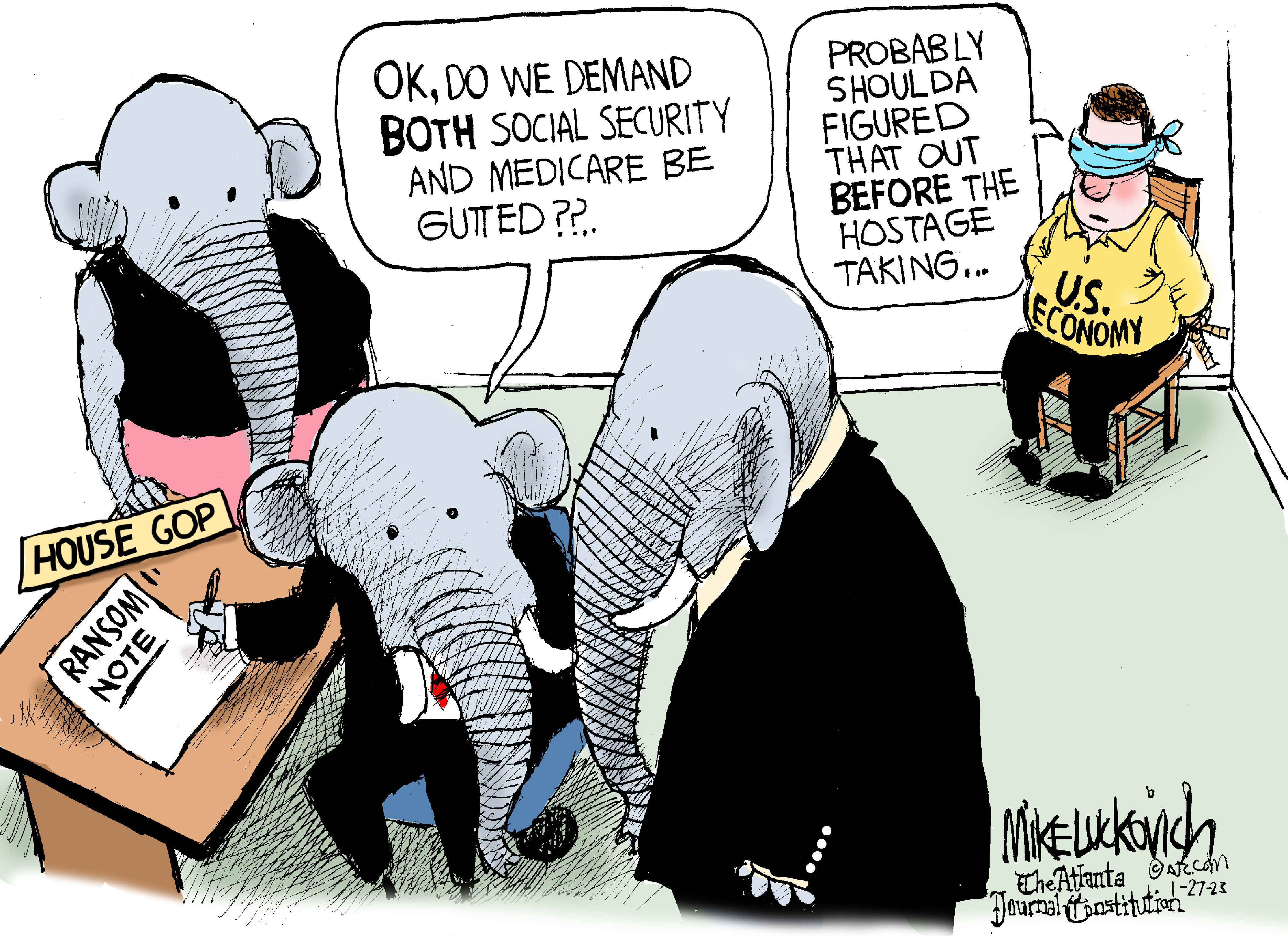
This is probably the last time between now and 2025 that the government will be funded without a hostage-taking drama.


One provision that made it into the bill was a revision of the Electoral Count Act. The revision makes clear the vice president’s role in counting electoral votes, eliminating any ambiguity that some future Trump might try to take advantage of. It also resets the threshold for challenging a state’s electoral votes. Previously, one member of each house was enough to start a debate about a state’s electoral votes. Now it will require 1/5th of each house.


Kevin McCarthy still doesn’t have the votes to become speaker. It’s hard to guess what kind of deal he can make with the five Freedom Caucus members who have pledged not to vote for him, because (unlike progressives that Nancy Pelosi had to negotiate with in past Congresses), they don’t seem to want anything in particular out of government, or even for the government to function at all.


One of the new Republican congressmen is George Santos of New York, who apparently isn’t who he says he is. In the simplest sense his name does appear to be George Santos, but beyond that, just about everything he told voters was a lie. He didn’t graduate from the college he claimed or work and the investment bank he claimed. One company he did work at is being investigated by the SEC for being a Ponzi scheme.

Santos is a Brazilian immigrant with a criminal record who was evicted from apartments in 2015 and 2017, but now somehow has enough money to contribute $700K to his own campaign. No one knows where his money comes from.

Kevin McCarthy appears to be standing by Santos, because his Republican majority is tiny and he needs every vote if he’s going to become speaker. As Adam Kinzinger said in his farewell speech to the House on December 15, today’s Republican Party has “embraced lies and deceit“.

and you also might be interested in …

Does Texas Governor Gregg Abbott know the true meaning of Christmas or what? His latest migrant-busing stunt resulted in three busloads of asylum seekers (not illegal immigrants; seeking asylum is recognized in US law) being deposited outside Vice President Kamala Harris’ residence at the Naval Observatory. (A private aid agency took the migrants to a local church. I don’t know what happened to them from there.)

“Governor Abbott abandoned children on the side of the road in below freezing temperatures on Christmas Eve without coordinating with any Federal or local authorities,” White House assistant press secretary Abdullah Hasan said in a statement. “This was a cruel, dangerous, and shameful stunt.”

Up to a point, I can sympathize with border states who feel that the burden of our immigration problem falls disproportionately on them. Wanting to slough that burden off on other states or the federal government is understandable. What I can’t sympathize with is Governor Abbott’s callous indifference towards the individuals involved. They may not be white and they may not speak English, but they are people.

Eric Swalwell tweeted:

Guess we know how Greg Abbott, a “practicing” Roman Catholic, would have treated Jesus, Mary & Joseph.


It’s also worth pointing out that Republican Thom Tillis and Democrat-turned-Independent Kyrsten Sinema worked out a bipartisan compromise proposal to that would cut the number of asylum-seekers in the US by putting more resources into the asylum-court process — smaller case backlog, faster decisions, fewer people waiting around for their cases to be heard. The proposal would in addition have given legal status to the “Dreamers” — children brought into the US illegally who have grown up here, most of whom know no other home.

The proposal died, largely because of a no-compromise attitude on the part of conservatives. It will not be revisited in the new Congress, because Kevin McCarthy has vowed not to consider any immigration reform compromise.

Amnesty is a nonstarter. It won’t be taken up by a House Republican majority.


Keri Lake’s lawsuit to overturn her election defeat in Arizona was thrown out. She lost.


Republicans lost the majority in the Pennsylvania House in the fall elections, but they could maneuver to hold the speakership. Power matters; the will of the voters doesn’t.


Maybe the problem of tall trucks should be handled the way we handle our gun problem.


This week I learned that chicken tikka masala is not a traditional Indian dish. One of the people credited with inventing it was a Pakistani immigrant who opened a restaurant in Glasgow in the 1960s. The NYT published his obituary Friday.


By this point in the season I get cynical about Christmas songs. I think “Last Christmas” is a jealousy ploy, and I doubt that “someone special” is a real person. I also don’t trust Mariah Carey: If she got me, she’d soon remember all the other stuff she wants for Christmas.

and let’s close with something cranky

Mark Woodley is a sports reporter for KWWL in Waterloo, Iowa, but when a blizzard hit he got drafted into storm coverage. He wasn’t happy about it.

Trump still has no counter-narrative

Rather than tell his side of the story, Trump attacks anyone who wants to know what happened on January 6.


This week, the House Select Committee wrapped up its work with an 800-page final report that fleshed out with many details (supported by testimony and documents) the story it started telling in its first public hearing in June.

Before the 2020 election was even held, Donald Trump was plotting to retain power after losing:

  • He would encourage his voters to vote in person (rather than early or by mail) so that their votes (in many key states) would be counted first, giving him an early lead.
  • He would prematurely declare victory and promote the false belief that his eventual defeat was due to fraud. He would suborn government institutions (like the Justice Department) to give his big lie false credibility.
  • By pressuring Republican election officials, legislatures, and judges, he would try to prevent key states from certifying their results and appointing Biden electors to the Electoral College.
  • He would encourage local Republican Party organizations to assemble false slates of electors with forged certificates, and to send their votes for Trump to Congress as if they were legitimate electoral votes.
  • He would pressure Republican legislatures, Vice President Pence, and Republicans in Congress either to recognize his false electors, or to rule that states Biden won were “disputed” so the legitimate Biden electoral votes should not be counted.
  • He would assemble his violent supporters on January 6, and send them to the Capitol for the purpose of intimidating the Congress, disrupting its meeting, and preventing its certification of Biden’s victory.

I think this is a good time to re-emphasize a point I first made in July: Trump has never presented an alternate story in anything but the most general terms: He won the election and it was stolen from him. January 6 was a protest by patriotic Americans legitimately angered by a stolen election, perhaps egged on by an Antifa false-flag operation.

Trump has consistently fought against any attempt to flesh out that account with checkable details. Any stolen-election theory is as good as any other; he has never denied even the most outrageous ones. All his January 6 supporters were patriots; he has never denounced any of them. (In the video message where he finally asked the rioters to go home — after letting the riot play out for three hours, during which more than 100 Capitol police were injured — he said “We love you. You’re very special.“) No members or leaders of the Antifa false-flag operation have been identified. (Antifa itself may not even exist, at least not as a national organization capable of pulling off large-scale operations.)

It’s easy for both the media and members of the general public to miss the significance of this, or even to overlook it entirely. We are used to framing our political discussions in terms of two sides each trying to tell their own stories. (Climate change, for example, is either a looming catastrophe that requires radical reorganization of our economy, or a dubious projection of climate models whose “solutions” are far more expensive than what they would prevent. Racism is either a continuing structural problem in our society, or a historical artifact that was never central to America’s identity.)

But this political debate is different: On one side we have the January 6 Committee trying to tell a story as thoroughly as possible, and on the other we have Trump trying to prevent a story from being told at all.

Nothing illuminates that distinction better than a bit of gaslighting Trump posted to his Truth Social account about a week after the Committee’s first public hearing:

I have sooo many witnesses to everything good, but the highly partisan and one sided Unselect Committee of political hacks has not interest in hearing or seeing them. This Witch Hunt could all be ended quickly if they did!

Six months later, we still have no idea who these “sooo many witnesses” might be, or what they would say. We do know who they aren’t:

  • Steve Bannon, who is currently appealing his four-month prison sentence for defying the Committee’s subpoena.
  • Peter Navarro, whose trial for the same offense will start in January.
  • Mark Meadows, who has also defied a subpoena and been cited for contempt of Congress, but has not been indicted for it by the Department of Justice. So far, though, Meadows is losing his battle not to testify to the Fulton County grand jury that is investigating Trump’s attempt to overturn his 2020 loss in Georgia.
  • Pat Cipollone, who eventually submitted to a subpoena, but invoked executive privilege to avoid discussing his conversations with Trump. (He did, however, corroborate “almost everything that we’ve learned from the prior hearings”.) Cipollone also lost his battle to avoid testifying to the Fulton County grand jury.
  • Michael Flynn, John Eastman, Jeffrey Clark, and Roger Stone, who did testify, but dodged questions by repeatedly invoking the Fifth Amendment. (Flynn even took the Fifth when Liz Cheney asked whether he believed in the peaceful transfer of power.)
  • Bill Barr, who testified that he told Trump his election-fraud claims were “bullshit“.
  • First daughter Ivanka Trump, who told the Committee that she believed Barr.
  • Barr’s successor Jeffrey Rosen and his second-in-command Richard Donoghue (both Trump appointees) who characterized some of the election-fraud claims as “pure insanity“. They blocked an effort to use the Justice Department to pressure the Georgia legislature only by threatening mass resignations across the Department.

So who, then?

Not Trump himself, who seems incapable of discussing any part of the January 6 story in terms of facts and evidence. Instead, he issues judgments (“partisan”, “one-sided”, his “perfect” phone call to Brad Raffensperger), calls names (“political hacks”, “Witch Hunt”), and makes claims (“the greatest fraud in the history of our country“). When his claims are debunked (as they always are if he includes enough detail to make them checkable), he neither accepts the evidence nor argues with it, but just makes new claims. (The Raffensperger phone call was a classic example. Raffensperger knew that there were no “suitcases of votes”? Never mind, dead people voted. No? Dominion voting machines flipped votes. On and on, culminating in a threat to prosecute Raffensperger. “You can’t let that happen. That’s a big risk to you.”)

Again and again, Trump has claimed that some bit of testimony was false. (He didn’t grab the steering wheel after the Secret Service refused to drive him to the Capitol on January 6. He didn’t throw food against the wall in the White House.) But he never follows up with an account of what did happen. (What did he think his crowd would do after he sent them to the Capitol? What was he doing during the three hours before he asked the rioters to go home? Did he know what was happening? Talk to anyone on the phone?) After Cassidy Hutchinson spoke to the Committee, anonymous sources told reporters that Secret Service agents were going to dispute her testimony — but they never came forward.

Trump’s “sooo many witnesses” never do. On one side, you have people (most of them Republicans or even Trump appointees) testifying under oath to details that support the Committee’s narrative. On the other, you have people refusing to testify, sometimes to the point of going to jail rather than be disloyal to Trump by telling the public what they know about him.

One final objection a Trump defender might make is that Trump’s witnesses don’t want to hand their testimony to this “one-sided” committee, which might edit it to Trump’s disadvantage. But that doesn’t explain why they don’t come forward at all.

Trump’s post says that with his witnesses’ testimony “This Witch Hunt could all be ended quickly”. So end it, then. The Committee doesn’t have a monopoly on public attention. For two years, the full apparatus of right-wing media has been ready to publicize Trump’s side of the story, if he would only tell one. Trump has raised hundreds of millions of dollars from his supporters, most of whom probably imagined it being used for precisely this purpose.

But Trump has no story to tell. Any account more specific than “They stole the election from me” would quickly fall apart, because it’s just not true. Any witness — including Trump himself — who added supporting detail to that story would risk perjury.

The Monday Morning Teaser

I tested negative for Covid on Christmas Eve, and have recovered enough energy to do a Sift this week.

The big event this week was the release of the January 6 Committee’s final report, which I admit I have not read completely. It appears to be a fleshing out of the basic narrative they’ve been building since their first public hearings this summer: January 6 was not a one-day event, but the unsuccessful culmination of Trump’s months-long plot to hold onto power in spite of losing the 2020 election.

This week’s featured post revisits a point I focused on after the Committee’s early public hearings, which I think hasn’t gotten nearly enough attention: Trump doesn’t have a story to tell. His entire effort has been to block the Committee from assembling evidence to support its story, not to build a narrative of his own.

In the summer he claimed to have “sooo many witnesses” that would end “this Witch Hunt” “quickly” if only the Committee would talk to them. But that’s the last we heard of those witnesses. Instead, Trump’s people have defied subpoenas, claimed executive privilege, and invoked the Fifth Amendment to avoid answering questions. Those who have answered questions — willingly or unwillingly — have provided evidence that supported the Committee’s narrative.

Anyway, that post will be out soon. The weekly summary has a few other important events to cover: President Zelenskyy spoke to Congress. Congress’ waning Democratic majority (with Mitch McConnell’s connivance) got the government funded through September, when the new Republican House majority will undoubtedly force some kind of crisis. Kevin McCarthy still hasn’t corralled the last few votes he needs to become speaker. And a few other things.

That will probably be out between noon and one EST.

Why the Sift is minimal this week

The main reason is that I’m still recovering from Covid. It’s a fairly mild case, but it has sapped my ambition. Saturday I realized I hadn’t gotten started yet, and asked, “Am I willing to put on a big push to catch up?” The answer was no.

A second reason is that this week’s news isn’t inspiring me. A lot of articles and news-show segments have been speculating about what the January 6 Committee will report, in particular whether it will make criminal referrals against Donald Trump for this or that crime. I admit that’s an intriguing topic, but if we can just hang on for a few more hours, the committee will tell us this afternoon. The full report will be available on Wednesday. So if you’re having fun speculating, don’t let me discourage you. But it’s not an efficient use of energy, particularly if you’re running short this week.

Or we could speculate about whether Kevin McCarthy will find the votes to become speaker, and what will happen if he doesn’t. Again, if you’re enjoying yourself, have at it. But hardly anybody who’s writing about this knows anything for sure. Here’s what I think I know: Nothing tells voters that you’re “ready to govern” like having a big internal conflict on Day 1, especially if it’s mostly about egos and has nothing to do with the voters’ lives.

Other big news stories have involved people who are intentionally trolling us. So Elon Musk tweets “My pronouns are Prosecute/Fauci.” And MTG told New York’s Young Republicans that if she and Steven Bannon had organized January 6, the Capitol invaders would have been armed, and “We would have won.” She then said she was joking, which was probably at least partly true. Fascists are famous for their sense of humor; I suspect many Nazis were laughing uproariously on Kristallnacht as they broke windows and burned Jewish shops.

The ambitious post that I didn’t have the energy to pursue asked the question: So how should we respond to such trolling? People say this stuff because they want to be the center of an outrage-storm, so if we get outraged we’re just playing the role they’ve assigned us. Since the trolls are not interested in an exchange of ideas, a detailed debunking is probably useless. Pointing out that these are horrible people is more wasted effort, because I suspect most of their fans already know that they’re horrible people.

When trolls are powerless to do anything more than get your goat, ignoring them is the right answer. But ignoring a soon-to-be-important member of the new House majority and the world’s second-richest man (who has turned a significant chunk of the public square into his personal fiefdom) is probably also a mistake.

So what, then? I have thoughts, but nothing resembling a complete answer. Feel free to contribute your thoughts in the comments. Maybe you’ll influence what I eventually do write.

A talk I’ve been working on for January — I’ll link to a full text after I give it — has me recalling how the Sift got started. Originally, it was just a list of links that I called “What impressed me this week”. I posted the list on Monday mornings as an easy product that would get my week off to a good start. (Over time, the tail came to wag the dog, and now my week is organized around getting the Sift out.)

So what follows is a throwback: With minimal comment, these are the links that caught my eye this week.

I’m not usually a Thomas Friedman fan, but his column “What in the World is Happening in Israel?” is worth your time.

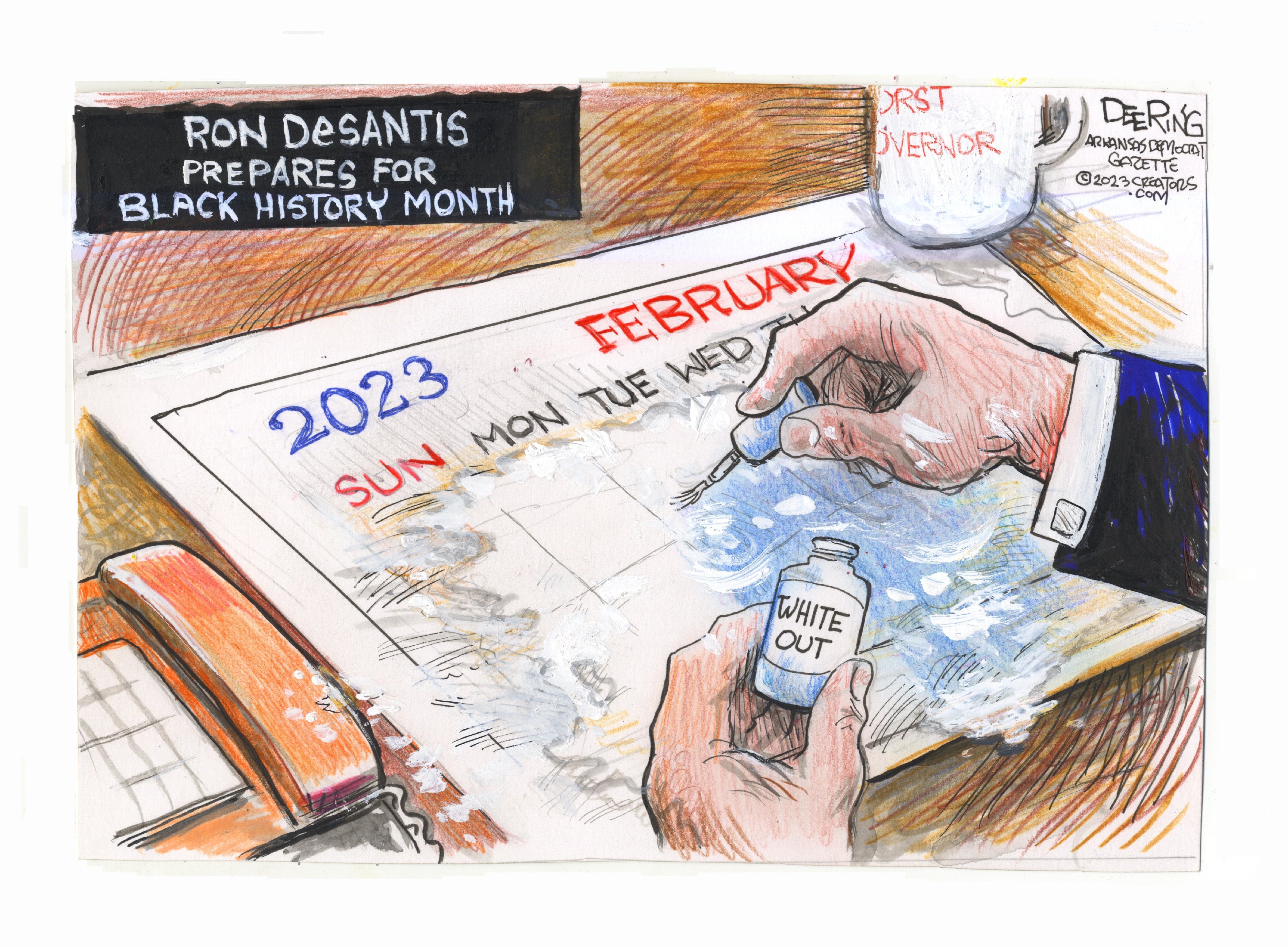
Ron DeSantis wants a grand jury to investigate the pharmaceutical companies who produce and distribute Covid vaccines. He also is establishing a Florida “public health integrity committee” to second-guess the CDC. Chris Hayes points out that DeSantis is attempting to get between Trump (who wants credit for funding Operation Warp Speed) and his base (who believe all sorts of anti-vax conspiracy theories). Ironically, it’s Trump’s one clear life-saving accomplishment that makes him vulnerable. Lesson for future conservative presidents: Never do anything good, because other conservatives will use it against you.

Do I really need to comment on the Trump NFTs? Sad. Maybe the saddest thing ever produced in our Country.

Cory Doctorow summarizes Joseph Stiglitz’s report on the current inflation: It wasn’t caused by excess demand, so raising interest rates is the wrong way to solve it — and might make it worse. I have a yes-but reaction: Raising interest rates may not solve inflation, or might solve it but create too much collateral damage. But rates had been unreasonably low since the start of Covid, and needed to go up to more typical levels eventually.

The one development that tempted me to sift this week was TPM’s series exposing the texts Republican congresspeople sent to Trump Chief of Staff Mark Meadows just before and after January 6. Both Rep. Marjorie Taylor Greene and Rep. Ralph Norman urged Meadows to urge Trump to declare “Marshall Law” which is not really a thing. (Martial law is literally the “law of Mars”, i.e., rule by the military.)

Vanity Fair’s Bess Levin explains that Greene and Norman asked for Marshall Law “because they’re both f–king idiots”, but I prefer to think that they intended to invoke the hero of this 1980s comic book.

The House Oversight Committee had a hearing about anti-LGBTQ violence and the Club Q shooting. If you’re a Republican, the problem can’t be guns and it can’t be right-wing eliminationist rhetoric against drag queens and transfolk, so how do you spin this? It’s about defunding the police, which no one anywhere near Club Q actually did.

The recent Musk/Twitter developments have made it clear that free speech was never the issue. Now that one of their own has control, right-wingers are fine with Twitter banning whoever Musk feels like banning, for whatever reasons he wants. This is a general trait on the right: Freedom means freedom for them. They will never, ever defend freedom for everybody.

Over on Mastodon, Simon Weiss makes a good point about the @ElonJet controversy:

There are many legitimate reasons to track Elon Musk’s flight coordinates, for example to offer him ads more relevant to his interests

Amanda Marcotte argues that the right-wing “cancel culture” and “woke mobs” rhetoric is psychological projection:

In reality, it’s left wing ideas that are suppressed out of a genuine fear of their persuasiveness. Books are banned from schools so kids won’t learn that LGBTQ people are normal or that racism is wrong. Musk openly argues that the “woke mind virus” must be “defeated,” which is to say that threateningly convincing ideas about human equality must be banished from the discourse, lest they win people over.

Until next week: Have a great Christmas, Solstice, Hanukah, or whatever you celebrate. Have fun, stay safe, and try to stay (or get) healthy.

Standards of Living

Part of the scam is to define basic bedrock standards of decency as “left” & then, lo, you find “left bias” everywhere you look. But that’s not bias, fellas. That’s just people trying to live in a society together.

David Roberts

So this week I have some first-hand experience of Covid to report. Shortly after Thanksgiving, I started a cold. So I took a home test for Covid and it was negative. Then a bit later, my wife seemed to catch my cold, but her Covid test was positive. So I took the more accurate PCR test, which was also negative. A few days later, my cold symptoms stopped fading and began to intensify, so I took another test: positive this time.

Anyway, I have good news and bad news about my experience. The bad news is that Covid is even easier to catch than I thought; my wife and I have been very careful and seem to have gotten it anyway. The good news is that, having had every possible booster and being generally in good health, my symptoms are pretty mild.

This week everybody was talking about the Georgia runoff

I expected more Republicans to stay home rather than vote for such an embarrassing candidate, so I had anticipated Warnock winning by a larger margin than 2.8% — something more like 55%-45%. (538 anticipated a smaller margin of 1.9%, which was not far off.) But one way or another, Rafael Warnock defeated Herschel Walker and won reelection, giving Democrats a net gain of one Senate seat in the 2022 midterms, and a 51-49 overall majority.

Watching the TV coverage was an odd experience: Before the polls closed, commentators explained how the vote had arrived in November: Early voting was counted first, and it favored Democrats. Then the smaller rural counties counted their same-day vote, which favored Republicans. Finally, the big counties around Atlanta reported their same-day vote, which again favored Democrats.

Combined with polls showing Warnock slightly ahead, that established pattern led to this expectation: a big Warnock lead early, possibly a small Walker lead in the middle, and then a Warnock surge to victory at the end. And that’s exactly what happened.

But after giving that analysis, the TV people mostly forgot about it and covered the incoming vote as if they were calling a horse race: “Warnock opens a lead, Walker comes charging back along the rail, now it’s Warnock, Walker, Warnock, Walker, and Warnock surges at the tape to win.”

Josh Marshall has a good point: Don’t watch TV on Election Night. The drama of a lead see-sawing back and forth was almost entirely an illusion.

We went into the night thinking the probable election outcome was X. The very first results supported the eventual outcome of X but were too limited to confirm it. As the results came in they continued to point to X with a mounting likelihood. With more and more data that mounting likelihood of X moved toward relative certainty. The point, as I noted, is that there was no drama as the statewide results lead sloshed back and forth between the two candidates.

Marshall recommends following the returns through the livefeeds of political pros, as he did. If you did that, you’d have gone into the evening kinda/sorta expecting Warnock to win, and then watching that likelihood slowly grow into a certainty.

Or you could do something else with your evening and check for results the next morning.


In total, Democrats lost nine House seats (and the majority) in the midterms, which probably cripples the Biden agenda going forward. But they also gained two governorships and four houses of state legislatures. So it was a mixed bag, rather than the “shellacking” President Obama took in his first midterm.

Walker’s loss puts the capstone on the other major story of the midterms, which is that Trump’s hand-picked candidates lost winnable elections all over the country.

Walker had been Trump’s personal choice as a Senate candidate in Georgia and turned out to be the only Republican statewide candidate to lose in the Peach State in 2022. … In other swing states, Trump-backed Senate candidates suffered embarrassing losses, including Blake Masters in Arizona and Mehmet Oz in Pennsylvania, along with a host of other candidates who embraced the former president’s lies about the 2020 presidential election.

In both Georgia and New Hampshire, governors who kept their distance from Trump easily won reelection, while Trumpy senate candidates lost. In Ohio, Trump’s senate candidate J. D. Vance won by 6.1%, but significantly trailed the rest of the Republican ticket. (Goverrnor DeWine, for example, won by 25%.) So maybe the argument that beats Trump in the 2024 Republican primaries is to let him blather, and then say: “Yeah, but we want to win this time.”

It’ll be interesting to see where Georgia goes in the coming years. In some ways, Warnock’s reelection resembles Claire McCaskill’s in Missouri in 2012: She faced a terrible opponent and won in a mostly red state. Six years later, the Missouri GOP had learned its lesson and ran a less obviously unsuitable candidate (Josh Hawley), who beat her.

The difference, though, is that Missouri was trending increasingly red in those years, while Georgia is trending blue now. A better Republican candidate could probably have beaten Warnock this time, but Georgia might look very different by 2028.


I’m not sure what to make of Kyrsten Sinema’s announcement that she is now an independent. She’s been pretty independent before this, and intends to caucus with the Democrats, so I’m not sure it makes much difference in the Senate.

She’s up for reelection in 2024 and seemed likely to lose a Democratic primary, so she’s probably trying to bluff the Democrats out of running a candidate against her, for fear of handing the seat to some MAGA Republican like Kari Lake. How credible that bluff is will depend on the polls: Will Sinema’s move garner enough support from independent Arizona voters to make her a credible general election candidate? If it doesn’t, I can’t believe she’d endure the embarrassment of a spoiler campaign where she got 6% of the vote. But we’ll see.


The next time you’re thinking about not voting because “What difference does it make?”, remember Kristin Kassner. The first count of the vote in her race for the Massachusetts House had her behind a five-term Republican by ten votes. That triggered a recount, which concluded that she actually won by one vote.

and Kevin McCarthy’s struggles

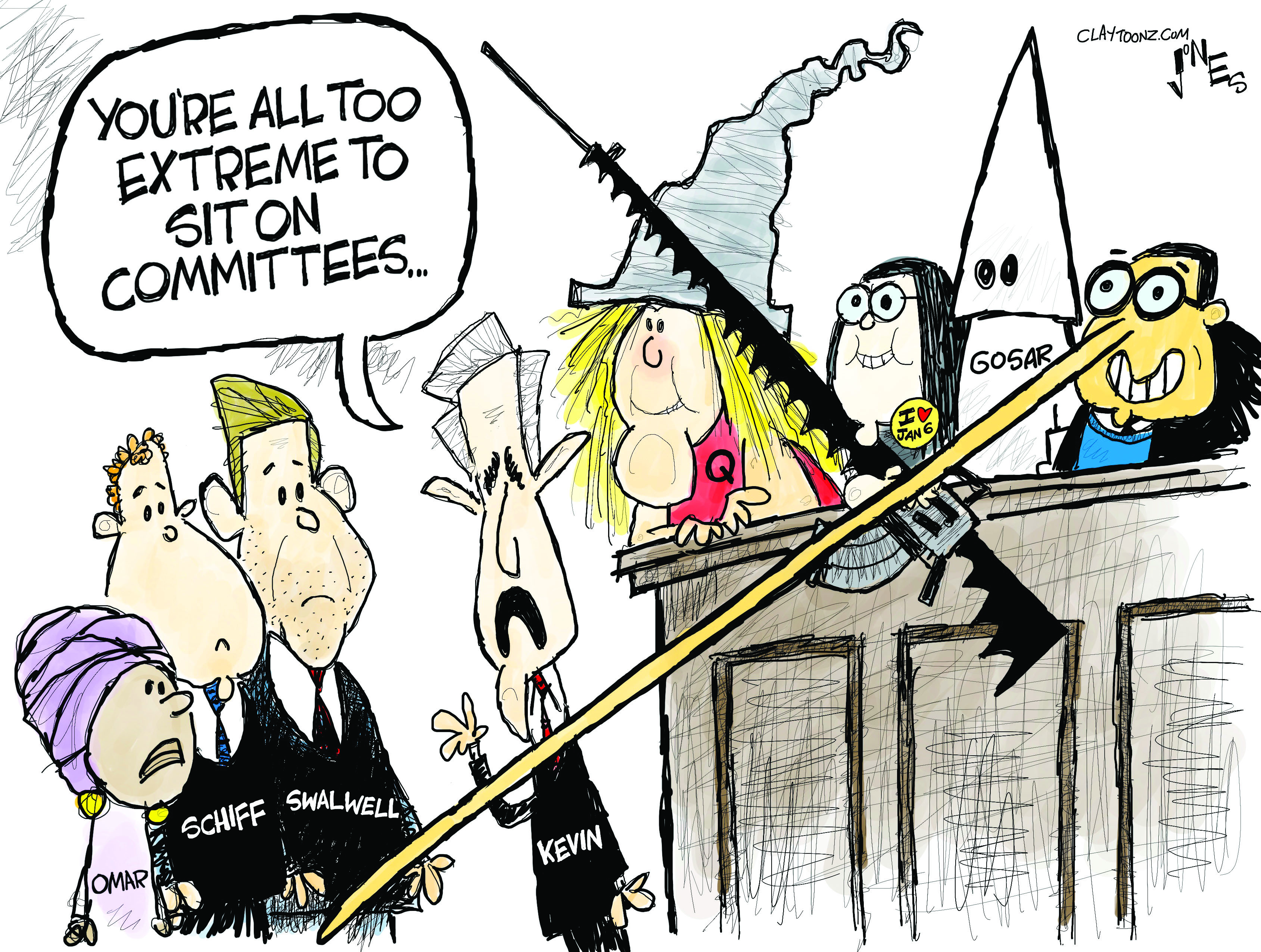
The Republicans’ 222-213 margin in the House means that any five GOP representatives can torpedo Kevin McCarthy’s election as speaker, which is still uncertain. (The vote is scheduled for January 3, when the new Congress opens.) Nancy Pelosi has been running the House quite effectively with a similar margin, but (to speak bluntly) she’s good at this and Kevin McCarthy isn’t.

Also, the Democrats’ progressive wing and the Republicans’ fascist wing are not mirror images of each other. The progressives want positive things that Pelosi could include in legislation. So, for example, enough pieces of the Green New Deal showed up in the Inflation Reduction Act to win progressive votes. But the MTGs and Paul Gosars don’t have a comparable agenda that McCarthy can write into a compromise. They want to burn it all down.

There’s still a chance that GOP moderates will refuse to let the extreme right wing call the tune, and will instead work out a deal with the Democrats to organize the House around some compromise speaker. But I’m not betting on that.

and Brittney Griner’s release

The deal to trade Russian black-market arms dealer Viktor Bout for American WNBA star Brittney Griner was announced Thursday. Griner arrived in the US Friday morning.

The press has speculated at length about why the deal happened now, but (without any inside knowledge) I ask this question: Can it really be a coincidence that it happened two days after the Warnock/Walker runoff, which marked the end of the US midterm elections? Griner’s return is the fulfillment of a promise from President Biden, and would have helped Democrats politically if it had happened sooner. I think the timing shows that Putin still knows which American party he’s rooting for.


Former US marine Paul Whelan remains in Russian prison. A Biden administration spokesperson said that Russia classifies him as a spy (which the US denies) and wanted Russian spies in return for him, a trade the US has been unwilling to make. “The choice was Brittney or no one at all.”

Conservative American media could not celebrate the return of Griner, who is Black, liberal, and married to another woman, so it focused instead on Whelan. Tucker Carlson said, “Paul Whelan’s case would be a priority for any American government”, ignoring the fact that President Trump also failed to secure his release, and was “not particularly interested” in his case, according to Fiona Hill, a Russia expert in the Trump administration.

Trump also didn’t own up to his own record, calling Griner “a basketball player who openly hates our Country”, and gaslighting us with the claim that Paul Whelan “would have been let out for the asking”. (So why didn’t you ask when you were president, Don?)

The “hates our country” charge against Griner, which has been widely repeated on the right, is based on something she said after George Floyd was murdered by a White Minneapolis policeman. She asked the WNBA to protest racism by not playing the national anthem before games. (Personally, I’d like to see all sports leagues stop playing the anthem, because there’s nothing patriotic about sporting events. We don’t play the anthem in movie theaters, so why sports arenas?)

Like many conservatives, Trump elevates the symbols of patriotism over the substance. He’ll posture about the flag or the anthem, but he won’t obey the laws, respect the Constitution, or pay his taxes. I’ll take Brittney Griner’s kind of patriotism over Trump’s any day.

and the Trump Organization’s tax fraud

Last week brought the seditious conspiracy verdict against the leader of the Oath Keepers. This week the Trump Organization was convicted of criminal tax fraud. It was not the first Trump entity found to be engaged in dishonesty: In 2018, the Trump Foundation was dissolved by the State of New York, and in the same year Trump paid $25 million to settle civil fraud claims related to Trump University.

Predictably, Trump labeled the tax-fraud verdict as a “the Greatest Political Witch Hunt in the History of our Country“, blamed the crimes on his loyal CFO Allen Weisselberg, and said he would appeal.

I suspect Trump’s claim that his legal troubles are just politics is starting to wear thin among all but his most rabid supporters. As we know from the Durham investigation and Benghazi, political partisanship can start an investigation and maybe even muster an indictment or two. But getting a jury to convict requires enunciating a clear charge and proving it beyond a reasonable doubt to 12 ordinary people. The government did that in this case.

That’s more than just politics.

and the Supreme Court

The Court heard arguments this week in two cases with ominous implications. It’s always chancy to predict outcomes based on the questions the justices ask, but the Court seems likely to do the ominous thing in one case but maybe not the other.

In 303 Creative LLC v. Elenis , the Court’s conservative majority appears likely to gut anti-discrimination laws in favor of special rights for conservative Christians. The weirdest thing about this case is why it’s a case at all, much less what it’s doing at the Supreme Court. Ostensibly, it’s yet another case about a business owner who doesn’t want to serve same-sex couples, but there is no same-sex couple, and the business is mostly hypothetical.

There is only one face in this case—Lorie Smith, the web designer who has never made a wedding website for anyone, much less withheld a proposed wedding website from anyone due to their sexuality. (She just already knows that she will want to do that. Really!)

Fear of the Colorado Anti-Discrimination Act (CADA) is inhibiting her from offering wedding-website-design services, though, so she wants the part of it that would apply to her declared unconstitutional. Supposedly, this is a free-speech case. CADA wants to force her to create something that supports same-sex marriage, which is against her religious principles. Website design — even if it’s just a template whose content is filled in by the couple — is “speech”, so the law violates her free-speech rights.

I question a whole bunch of things in this case:

  • Whether Smith genuinely intends to create wedding websites, or if this entire case has been constructed to undermine anti-discrimination laws.
  • What part of the Bible says that Christians can’t create wedding websites for same-sex couples. (I think this case, like Masterpiece Cakeshop before it, arises from conservative spite over losing the battle to keep same-sex marriage illegal. It has nothing at all to do with Christian principles.)
  • Whether this broad interpretation of free-speech rights will ever apply to non-Christians “speaking” in favor of positions conservative Christians don’t share.
  • Whether any anti-discrimination laws at all can stand if Christians want to discriminate. (Remember, the judge who found in favor of Virginia’s interracial marriage ban — and was subsequently overruled — cloaked his racist argument in a Christian guise. “Almighty God created the races white, black, yellow, malay and red, and he placed them on separate continents. … The fact that he separated the races shows that he did not intend for the races to mix.”)

In oral arguments, the conservative justices mostly just refused to engage any of the case’s substantive issues, and instead just yucked it up, as you can do when all the harms you are threatening to cause are hypothetical.

So today’s hearing at the highest court in the land was about levity and mockery, and all the trivial examples of imaginary harms that will never come to pass. This is not just erasure of LGBTQ interests; interests which the state has an important and established interest in protecting. This is about mocking the obvious implications of creating a carveout from antidiscrimination laws with fatuous slippery slopes and petty humor.


The Court also heard arguments in Moore v Harper, which the Brennan Center sums up like this:

In Moore v. Harper, the Supreme Court will decide whether the North Carolina Supreme Court has the power to strike down the legislature’s illegally gerrymandered congressional map for violating the North Carolina Constitution. The legislators have argued that a debunked interpretation of the U.S. Constitution — known as the “independent state legislature theory” — renders the state courts and state constitution powerless in matters relating to federal elections.

ISL is a very weird theory, because it implies that with regard to federal elections, a state legislature is not bound by the state constitution that defines it and by whose authority it governs. Consequently, the state’s supreme court has no role to play in gerrymandering cases.

Extreme versions of ISL would allow state legislatures to ignore presidential election results and appoint their own slate of electors, which is what Trump urged Republican legislatures to do in 2020. This case does not ask the Court to make such a ruling, so the decision will almost certainly not go that far. But in the same way that the arguments in Dobbs set up future challenges to interracial marriage and other unenumerated constitutional rights, arguments in this decision could set up a Trumpian constitutional crisis in the future.

Justice Barrett and Chief Justice Roberts seem reluctant to back an extreme ISL, which is the good news. But Just Security’s Kate Shaw worries that even a compromise ruling could get ISL’s foot in the door.

and you also might be interested in …

There was really only one choice for 2022’s Person of the Year. Before 2022, Volodymyr Zelenskyy was just the guy being extorted on Trump’s “perfect” phone call. Now he’s the symbol of his nation’s heroic resistance to the Russian invasion.


The Respect for Marriage Act, which repeals the parts of the Defense of Marriage Act that (before the Supreme Court’s Obergefell decision) allowed states to refuse to recognize same-sex marriages performed in other states, passed the House and should be signed by President Biden soon.

During the House debate, Rep. Vicky Hartzler (R-Mo) tearfully urged the House not to pass the bill.

I’ll tell you my priorities: Protect religious liberty, protect people of faith and protect Americans who believe in a true meaning of marriage. I hope and pray that my colleagues find the courage to join me in opposing this misguided and this dangerous bill.

After Hartzler’s speech went viral on right-wing outlets, she was answered by her nephew Andrew Hartzler, a gay man who had to endure Christian “conversion therapy” as a teen-ager. He had come out to his aunt in February, but “I guess she’s still as much of a homophobe.”

You want the power to force your religious beliefs onto everyone else. And because you don’t have that power, you feel like you’re being silenced. But you’re not. You’re just going to have to learn to coexist with all of us.


Wednesday, Germany arrested 25 people plotting a right-wing coup. The group involved, Reichsbürger, has been compared to QAnon, and so the plot has similar fantasy-world components that make it hard to take seriously. But Germany is taking it very seriously. Vox’ Zack Beauchamp interviews someone who’s been tracking the movement:

It sounds like something out of a novel: a cell of heavily armed German extremists plotting to overthrow the elected government and elevate a man called Prince Heinrich XIII to the throne of a new Teutonic monarchy.

On Wednesday, German police arrested 25 people attempting to do exactly that — including a former member of parliament from Alternatives for Deutschland (AfD), a far-right anti-immigrant faction.

The plot originated out of a movement called the Reichsbürger — literally, “Reich citizens.” They believe that every German state since World War I has been illegitimate, a corporation rather than an authentic government, and thus feel entitled to ignore its laws.

There’s a similar the-government-became-a-corporation conspiracy theory in the US, which was involved in several of QAnon’s Trump-restoration theories.


That wasn’t even the only coup attempt on Wednesday. In Peru, a president facing impeachment announced that he was dissolving Congress and instituting an “emergency government”. Fortunately, nobody bought it. The Constitutional Court refused to recognize the dissolution order, the Army didn’t back the emergency government, Congress went ahead with its impeachment, and the president was arrested on his way to seek asylum at the Mexican embassy.

That’s what they do in other countries: They arrest presidents who try to stay in office illegitimately.


Like Trump, Elon Musk is a bright shiny object that would be easy to obsess over. This week, I’ll limit myself to one link.

the Twitter Files are best understood as an egregious example of the very phenomenon it purports to condemn — that of social-media managers leveraging their platforms for partisan ends. … The Twitter Files provide limited evidence that the social-media platform’s former management sometimes enforced its terms of service in inconsistent and politically biased ways. The project offers overwhelming evidence that Twitter’s current management is using the platform to promote tendentious, partisan narratives and conservative misinformation. In that sense, Taibbi and Weiss have performed revelatory journalism.

The full article (by Eric Levitz) does an in-depth takedown of Parts I (Matt Taibbi) and II (Bari Weiss) of the Twitter Files.

Well, OK, one more link. Josh Marshall:

[It’s] remarkable to me that literally with access to everything, even things ethically they shouldn’t have access to, they’ve surfaced basically nothing. one guy didn’t get boosted? libs of tiktok actually got special treatment? blowing the shit wide open guys.


Back in 1960, when Air Force Captain Joseph Kittinger proposed a parachute jump from 19 miles above the New Mexico desert, probably some worried friends warned him he would die.

Well, Friday they were proven right. Lung cancer got him at the age of 94. Kittinger retired as a colonel, and his record stood until 2012.


The Keystone Pipeline, which moves about 600K barrels of oil a day from Canada to Oklahoma, has spilled about 14K barrels into a creek in Kansas, about 150 miles from Kansas City.

Concerns that spills could pollute waterways spurred opposition to plans by TC Energy to build another crude oil pipeline in the Keystone system, the 1,200-mile Keystone XL, which would have cut across Montana, South Dakota and Nebraska.

President Biden revoked a construction permit shortly after taking office, and TC Energy cancelled the XL.


The Atlantic’s Adam Serwer points out the inconsistencies in conservatives’ “free speech” arguments:

In Citizens United, the Republican-appointed justices feared that restrictions on corporate electioneering amounted to state control of civic discourse, “muzzl[ing] the principal agents of the modern free economy.” But when the justices wrote that decision, they were thinking of corporations as allies of the conservative movement. The moment that perception changed, conservative views on corporate speech changed too. Last year, Republican Senate Minority Leader Mitch McConnell, a longtime champion of corporate electioneering, warned of state retaliation if private firms did not “stay out of politics,” by which he meant stop opposing Republican interests. It is wrong to “muzzle” the “principal agents of the modern free economy,” unless they do something Republicans don’t like. Then it’s fine.

and let’s close with something custom made

If you’ve heard of the late Bill Lishman, it’s probably because of the 1996 movie Fly Away Home, where he trained geese to imprint on his ultralight airplane and helped them learn a new migration route.

Bill died in 2017, but his widow is still living in the unique house the family designed and built in the countryside outside of Toronto. They cut the top off of a hill, built a series of interconnected igloo-like domes, and then rebuilt the hill over them, leaving just the skylights exposed to the weather. The round rooms mean that everything in them had to be custom-built, but Bill was a universally talented craftsman, so why not?

The Monday Morning Teaser

I’m continuing to plead illness as I allow myself another week without a featured post. This week a Covid test came back positive, so who knows whether that’s a new development, this is a false positive, or previous tests were false negatives. I don’t have a fever and my energy is good, so I’ll put out a weekly summary.

It was another newsy week: Warnock beat Walker. (Was that really this week? It already seems like a long time ago.) Krysten Sinema declared her independence. Kevin McCarthy kept trying to corral enough votes from the GOP’s fascist wing to become speaker. Germany and Peru broke up right-wing coup plots. Brittney Griner came home, but as a Black lesbian who wants to protest during the national anthem, she’s not American enough for conservatives to be happy she’s free. The Respect for Marriage Act passed. The Trump Organization was convicted of tax fraud. President Zelenskyy (who else?) is Time’s Person of the Year. The Supreme Court heard arguments in two major cases. Elon Musk kept releasing “Twitter Files”, which are supposed to prove something but mostly don’t.

Expect the summary to appear between 10 and 11 EST, at which time I’ll drink another cup of tea with honey and probably go back to bed.

The Meaning of Woke

it would be the belief there are systemic injustices in American society and the need to address them.

Florida General Counsel Ryan Newman,
explaining what “woke” means to the DeSantis administration
(He thinks it’s a bad thing.)

There’s no featured post this week.

I’ve been battling a cold (or a minor case of Covid, the tests have been ambiguous, and either way I’ve almost recovered), which is my excuse for a number of failings:

  • the mental glitch that caused me to turn Douglas Rushkoff into Douglas Coupland halfway through last week’s “Two Glimpses into the Future“. Douglas Coupland is also an author, but how his name got into my head, I have no idea. He had nothing to do with Rushkoff’s Survival of the Richest.
  • not paying attention to comments, which meant that a comment by Neo on the weekly summary sat in limbo for several days. (That comment takes me to task for complimenting Alaska’s ranked-choice voting system, when STAR voting has several advantages.) I should explain this wrinkle in the WordPress software: When a comment has some number of links (Neo’s had four), WordPress kicks it into my “moderation” queue. I think this is supposed to be a spam-control feature, but it happens seldom enough that I forget to check the queue.
  • not getting enough research done to have a featured article this week.

This week everybody was talking about the Georgia runoff

In a runoff, turnout is everything. Early voting has set records (particularly in Democratic counties), and Election Day is tomorrow. I can easily imagine how in November, people who showed up at the polls to vote for Governor Kemp and the rest of the Republican slate might also vote for Herschel Walker. But I have a much harder time imagining Republicans going to the polls for the exclusive purpose of voting for Walker. He is, as this Warnock ad points out, an embarrassing candidate.

I’ve often said that speculation is a waste of both my time and yours, but I’m hopeful for a Warnock victory.

Shortly after the November election, I sent Warnock a contribution. So every time I hear Republicans complain that they’re being outspent, I’m like “That’s me, you losers!” I’m getting a lot of satisfaction for the amount of money I sent, especially if Warnock wins.

As you probably already know, Democrats will retain control of the Senate either way — either 51-49 or 50-50 plus VP Harris’ vote. The difference that makes is technical, but significant. Currently, all Senate committees are evenly split between the two parties. But if Warnock wins, Democrats will get a one-vote advantage on all committees. That matters for things like launching investigations and issuing subpoenas.

A Warnock victory would also mean that no single senator can veto what the rest of the Democratic caucus wants to do. Though probably anything Manchin or Sinema would object to is already doomed in the Republican House.

and a complete non-story about talks with Putin

Thursday, President Biden and President Macron of France held a joint press conference. The last question asked about the possibility of talking to Putin concerning Ukraine. Biden answered:

I have no immediate plans to contact Mr. Putin. Mr. Putin is — let me choose my words very carefully — I’m prepared to speak with Mr. Putin if in fact there is an interest in him deciding he’s looking for a way to end the war. He hasn’t done that yet. If that’s the case, in consultation with my French and my NATO friends, I’ll be happy to sit down with Putin to see what he wants — has in mind. He hasn’t done that yet.

So Biden didn’t bring up talking to Putin, his first response was that he has no plans to, and that he’ll only do so after Putin does something he hasn’t done yet. Even then, he’ll meet after consulting with France and our other NATO allies. Minutes before, the French president had said:

we will never urge the Ukrainians to make a compromise which will not be acceptable for them … If we want a sustainable peace, we have to respect the Ukrainians to decide the moment and the conditions in which they will negotiate about their territory and their future.

President Zelenskyy, meanwhile, has insisted that Ukraine won’t give up any territory.

There is only one condition for the negotiations: Russia must leave all captured territories.

So what is Biden supposed to say about talking to Putin? (Maybe something diplomatic, like: “Screw that guy. I’m not talking to him.”) He says he’ll talk to Putin if “he’s looking for a way to end the war”.

For some reason, Reuters interpreted this as a “trial balloon”. Russia then said it’s open to negotiations if the West “accepts its demands”, i.e., recognizes Russia’s ownership not just of Crimea, but also of the other Ukrainian provinces it has annexed (which its retreating forces don’t even fully occupy). Then Fox News’ wrote the headline: “Putin open to Ukraine talks after Biden signals willingness if Russia serious about ending war“.

Basically, each side has said that it’s willing to accept the other’s complete surrender. That’s not news.

and another bad week for Trump (and associated traitors)

Tuesday, two members of the right-wing paramilitary group Oath Keepers, including its founder Stewart Rhodes, were convicted of seditious conspiracy for their role in the January 6 riot, plus several other charges. Seditious conspiracy by itself carries a sentence of up to 20 years, and convictions for it are rare; this is the first guilty verdict since 1995.

The jury appears to have done its job carefully. There were five defendants and a list of charges, with each defendant guilty of some and not guilty of others. The deliberations took three days. So it’s hard to paint this jury as radical Trump-haters or a rubber stamp for the Justice Department. It sure looks like they went through the charge/defendant matrix cell by cell and asked “Did the government prove this charge against this defendant?”

To me, the main significance of this verdict is what it implies about future cases, including a possible charge against Donald Trump. In the Oath Keepers case, the Justice Department proved to a jury (beyond a reasonable doubt) that there actually was a conspiracy behind January 6; the attack on the Capitol wasn’t just a Trump rally that spiraled out of control. It also proved that the intention of the conspirators was seditious; the conspirators weren’t patriots, and they weren’t trying to protect democracy against a stolen election. Quite the opposite, they were trying to overthrow democracy.

What can be proved to one jury can be proved to others. Both the Oath Keepers and the Proud Boys (whose seditious conspiracy trial begins later this month) must realize they are facing serious jail time. So it must be very tempting to make a deal with the government, perhaps delivering the goods on people closer to Trump, like Roger Stone or Mark Meadows.

The verdict has political as well as legal importance. Since the insurrection, most Republican politicians and conservative pundits have tried to claimed January 6 was no big deal. Maybe Democrats on the January 6 committee were trying to make something out of it, but that was just politics.

Well, a guilty verdict is more than politics. This is a jury of ordinary Americans unanimously saying that January 6 was a very serious matter. The guilty parties weren’t just some people trespassing on government property: The attack was planned, and the planners intended to subvert the orderly transfer of power.

For contrast, look at the Durham investigation, which really was just politics. It produced only minor charges against minor characters — and never persuaded a jury that the “conspiracy” it was investigating existed at all. (Kevin McCarthy is planning a similar investigation of the January 6 committee, for all the good that will do. Bring it, Kevin.)


Ever since Trump-appointed Judge Aileen Cannon interfered in the Mar-a-Lago case (by appointing a special master to review the documents seized from Trump under a legal search warrant), I and a lot of other people have been yelling about favoritism and corruption: Cannon was clearly repaying her debt to Trump by bending the the law in his favor.

Well, it looks like the appeals court agrees. Thursday, a three-judge panel from the 11th Circuit Court of Appeals (two of whom were also appointed by Trump, but seem loyal to the law anyway) vacated Cannon’s order, and sent the case back to Cannon with instructions to dismiss Trump’s lawsuit.

The law is clear. We cannot write a rule that allows any subject of a search warrant to block government investigations after the execution of the warrant. Nor can we write a rule that allows only former presidents to do so. Either approach would be a radical reordering of our caselaw limiting the federal courts’ involvement in criminal investigations. And both would violate bedrock separation-of-powers limitations. Accordingly, we agree with the government that the district court improperly exercised equitable jurisdiction, and that dismissal of the entire proceeding is required.

Trump will undoubtedly appeal to the Supreme Court, but I don’t think they’ll take long to deny his motion. (They didn’t take long to reject his claim with regard to the classified documents seized in the search.) The law here really is clear, and the Constitution does not define any special rights for former presidents.

Presumably, the Mar-a-Lago investigation can soon proceed the way any other criminal investigation would.


Mark Meadows lost his case at the South Carolina Supreme Court, which refused to protect him from a subpoena to testify to the Fulton County grand jury investigating Trump’s attempt to overturn the result of the 2020 presidential election in Georgia. (Meadows is currently living in South Carolina.)

Because of a previous adverse ruling on his executive privilege claim, Trump’s White House Counsel Pat Cipollone testified to a Washington, D.C. grand jury Friday.

News stories on these kinds of cases leave out the obvious: Trump’s people fight so hard against subpoenas because they don’t want the full truth to come out. Deduce from that what you will. Personally, I believe that if they knew something that would exonerate Trump, they’d be begging to testify.


One sign that Trump has jumped the shark is that he keeps trolling the country harder and harder, in a vain attempt to regain the edginess he had in 2015. After seven years of watching his act, we’re not shocked any more if he calls Mexicans rapists or says that John McCain wasn’t a hero. So he’s got to turn it up to 11.

Last week we found out he had a pre-Thanksgiving dinner with a White supremacist, Nick Fuentes. (I was going to mention it in last week’s Sift, but it slipped my mind.) And then Saturday he called for “the termination of all rules, regulations, and articles, even those found in the Constitution” if that’s what’s necessary to undo the 2020 election and install him as president again.

What’s next? Maybe he’ll suggest genocide against the people who didn’t vote for him. Whatever.

Meanwhile, most Republicans in the House and Senate — stalwart defenders of the Constitution that they are — aren’t commenting. One or two are condemning the remarks, but Rep. Dave Joyce isn’t one of them.

Joyce, the chair of the influential Republican Governance Group in the House, was asked by ABC “This Week” anchor George Stephanopoulos to respond to Trump’s post on Saturday on his Truth Social platform.

Joyce initially declined to do so, saying the public wasn’t “interested in looking backwards.” But Stephanopoulos followed up and Joyce ultimately said that Trump’s comment shouldn’t be taken seriously but that it wouldn’t lead him to pull potential support for Trump’s 2024 comeback bid.

“I will support whoever the Republican nominee is,” Joyce said while noting he didn’t think Trump would manage to win the 2024 Republican presidential nomination.

“That’s a remarkable statement,” Stephanopoulos said. “You just said you’d support a candidate who’s come out for suspending the Constitution.”

“Well, you know, he says a lot of things,” Joyce said. “I can’t be really chasing every one of these crazy statements that come out about from any of these candidates at the moment.”

It doesn’t seem to have occurred to Joyce that the GOP could find candidates who don’t constantly make “crazy statements”.


Former prosecutor Dwight Holton imagines how this Trump statement might play in his own seditious conspiracy trial.

Now the defendant wants you to think that this is all a misunderstanding – that he never meant to subvert the Constitution when he urged his armed followers to go to Capitol Hill to “stop the steal.” “I’d never subvert the Constitution!” the defendant wants you to believe.

But we know that is not true – the evidence makes that crystal clear. We know that subverting the Constitution is right in this defendant’s wheelhouse. And you don’t have to take my word for it. We know he is ready to subvert the Constitution BECAUSE OF HIS OWN WORDS.

and the Twitter/Hunter flap

Twitter continues to go down the tubes under Elon Musk’s visionary leadership, but he has learned a trick from his new right-wing allies: Play the Hunter Biden card.

So at a time when the big Twitter-related stories are falling advertising revenue, Nazis getting their accounts back, and Musk deplatforming Ye (i.e. Kanye West, who is also starting to sound like a Nazi), Musk turned some internal Twitter correspondence over to Matt Taibbi, showing times when the 2020 Biden campaign asked Twitter to take down certain tweets about Hunter Biden based on material allegedly hacked from his famous laptop.

This is being hyped as yet another great Hunter scandal, but (unless there’s a lot more that hasn’t been revealed yet) it seems to fall apart pretty quickly: The tweets in question posted dick pics, which probably would have been taken down for anybody. Tim Miller explains.

A related concern is why the New York Post’s pre-2020-election story on Hunter’s laptop wasn’t the beginning of a big media firestorm. Philip Bump explains that: The authenticity of the laptop and its files was just sketchy enough to remind everyone of the 2016 DNC-emails story, which was based on Russian hacking for the purpose of getting Trump elected. The American media had been played once before, and was wary of getting played again.


The other thing the Hunter story proves is that people like Musk and Tucker Carlson either don’t understand the First Amendment or don’t want you to understand it. Nothing in the Hunter/Twitter story concerns the First Amendment. The Atlantic’s David French elaborates:

In October 2020, when the laptop story broke, Joe Biden was not president. The Democratic National Committee (which also asked for Twitter to review tweets) is not an arm of the government. It’s a private political party. Twitter is not an arm of the government; it is a private company.

This matters for a simple but profoundly important reason. The First Amendment regulates government conduct. It does not regulate private actors. …

This means the First Amendment protects Twitter, the Biden campaign team, and the Democratic National Committee. The “TWITTER FILES” released so far do not describe a violation of the First Amendment. Instead, they detail the exercise of First Amendment rights by independent, private actors.

Even when the government does get involved, it’s not a First Amendment violation unless some kind of coercion is involved. (An example French doesn’t give, but could: Police may ask media outlets not to publicize certain aspects of a murder case. As long as that’s just a request, it’s not a First Amendment issue.)

But there’s no evidence of any such coercion (at least so far) in the Hunter Biden story, and unless and until there is, the story of Hunter Biden’s laptop is the story of private individuals making decisions they were entitled to make. It is not the story of a government run amok.

Similarly, when Twitter decides to block the account of somebody (like Ye, for example), it’s not a First Amendment issue, any more than it’s a First Amendment issue when The New York Times decides not to print your letter.

A related concern is that the major social-media companies — Twitter, Meta, Google — have too much influence over our national conversation. But that’s an antitrust problem, not a First Amendment problem.

and you also might be interested in …

Both Iran and China seem to have yielded (at least a little) in response to public protests. Iran may be abolishing its morality police, and China is backing off of its zero-Covid policies.

What China does next is tricky, because its population is much more vulnerable to Covid than, say America’s. Fewer people have immunity from previous infections, and China’s vaccine is much less effective, particularly against Omicron variants.

Looking at the results achieved in countries around the world, hindsight makes the right strategy obvious: Lock down hard to limit the spread of the disease until an effective vaccine can be developed, then vaccinate everybody as quickly as you can and reopen.

An authoritarian government like China’s should have an advantage in dealing with a pandemic, and during the lockdown phase it did: China has had fewer deaths per capita than almost any other country. But it should have recognized the superiority of the MRNA vaccines and imported them. Then it could have used its authoritarian power to vaccinate everybody, and reopened its economy with comparatively little damage.


Tuesday, the Senate passed the Respect for Marriage Act. The House is expected to pass it this week, and President Biden is expected to sign it.

The bill is intended as a backstop in case the Supreme Court overturns its ruling in the Obergefell case, which mandates that same-sex marriages be performed in all 50 states. As Clarence Thomas pointed out in his concurring opinion in Dobbs, the logic the Court used to overturn abortion rights would also overturn same-sex marriage rights.

But this bill stops short of forcing states to perform same-sex marriages. Instead, it says that all states and the federal government must recognize marriages performed in other states. The Clinton-era Defense of Marriage Act allowed states not to recognize same-sex marriages from other states. (To me, that always looked like a violation of the Constitution’s Full Faith and Credit clause, but that’s a different argument.) That would once again be the law if this bill doesn’t pass and the Court overturns Obergefell.


According to the UK’s Office of National Statistics:

For the first time in a census of England and Wales, less than half of the population (46.2%, 27.5 million people) described themselves as “Christian”, a 13.1 percentage point decrease from 59.3% (33.3 million) in 2011; despite this decrease, “Christian” remained the most common response to the religion question.

“No religion” was the second most common response, increasing by 12.0 percentage points to 37.2% (22.2 million) from 25.2% (14.1 million) in 2011.


Back in August, Florida Governor Ron DeSantis suspended Hillsborough County State Attorney Andrew Warren (who was elected, not appointed) because Warren said he would not enforce the state’s 15-week abortion ban, and signed a statement supporting prosecutors in other states who refuse to enforce laws against gender-affirming care.

DeSantis summed up his objection by calling Warren a “woke ideologue”. “Woke” has been a buzzword for DeSantis, as it has been for much of the right. But does it mean anything, or is it just pejorative?

Warren challenged his suspension in court, and the trial was held this week, though there is no decision yet. During the trial DeSantis aides were asked what “woke” meant to them. I found DeSantis’ General Counsel Ryan Newman’s answer astounding.

Asked what “woke” means more generally, Newman said “it would be the belief there are systemic injustices in American society and the need to address them.”

Newman added that DeSantis doesn’t believe there are systemic injustices in the U.S.

If you had asked me what conservatives mean by “woke”, I would have given more-or-less the same answer. But I’m viewing them as a hostile outsider. I never imagined they would put it that way themselves.


While we’re on the subject, the NYT’s Jamelle Bouie has some interesting observations about the “woke capitalism” DeSantis objects to. Bouie thinks DeSantis should have read more Karl Marx. Then he would understand that capitalism inevitably upends established social relations and prejudices. You can have traditional values or you can have unfettered capitalism, but not both.

Conservatives, if their policy priorities are any indication, want to both unleash the free market and reserve a space for hierarchy and domination. But this will not happen on its own. The state must be brought to bear, not to restrain capital per se but to make it as subordinate as possible to the political right’s preferred social agenda.


The WaPo’s Ruth Marcus savages the judicial philosophy of originalism. Two criticisms seem particularly on-target to me:

  • Originalism encourages how-many-angels-can-dance-on-a-pinhead arguments about unknowable questions, like exactly what people in other eras thought some particular word meant. They may not have had a coherent view, and may have chosen a vague word precisely because they couldn’t agree on anything more specific.
  • Conservative judges apply originalism opportunistically to get the results they want. (The Founders’ hostility to corporations like the British East India Company, for example, goes out the window whenever the Court considers corporate rights.)

and let’s close with something family oriented

John Wilhelm has some very cute and expressive kids, a camera, and photo-manipulation skills. The three come together in imaginative ways. He calls this one “Catch It Like a Dog”.