Author Archives: weeklysift

Doug Muder is a former mathematician who now writes about politics and religion. He is a frequent contributor to UU World.

Unwelcome Advice

I can even understand how a Chief Executive whose background is in business and politics might see the contemplated dismissal-with-leverage as a good, if distasteful, deal. But any assistant U.S. attorney would know that our laws and traditions do not allow using the prosecutorial power to influence other citizens, much less elected officials, in this way. If no lawyer within earshot of the President is willing to give him that advice, then I expect you will eventually find someone who is enough of a fool, or enough of a coward, to file your motion. But it was never going to be me.

SDNY Assistant US Attorney Hagan Scotten
writing to resign after a DoJ order
to dismiss charges against NY Mayor Eric Adams

This week’s featured post is “Can Ethical People Work in the Trump Administration?

This week everybody was talking about the DoJ resignations

The resignation of seven federal prosecutors is covered in the featured post.

and Elon Musk’s growing power

The Guardian summed up the state of things on Sunday:

Musk and his allies in the “department of government efficiency” (Doge), the unofficial committee acting as the operations arm of his cost-cutting efforts, have targeted a range of major government departments. They have moved to close the United States Agency for International Development, slashed the Department of Education and taken over the General Services Administration that controls federal IT structures. Doge staffers have also gained access to the treasury department, as well as set their sights on the Department of Defense, energy department, Environmental Protection Agency and at least a dozen others.

It’s worth pointing out that Musk’s authority is entirely delegated from President Trump, and the Constitution does not give Trump the power to do many of these things without Congress. But Congress has played no role in any of DOGE’s actions. It never established DOGE as a government department, and Musk’s appointment has never been confirmed by the Senate. Agencies like USAID and the Department of Education were set up and funded by Congress, so the President (and hence Musk) has no legal authority to close them or block the money Congress has appropriated to fund them.

The Guardian goes on to point out how Musk is benefiting personally from much of what he does.

As companies seek to benefit from Doge’s reshaping of the government, Musk also has extensive contracts worth billions of dollars through his own companies like SpaceX that are potentially set to expand under the new administration. … Musk’s influence in the White House also puts in peril the numerous federal investigations against his companies for a range of alleged wrongdoings that includes violating federal labor and securities laws. Trump has already dissolved one watchdog agency investigating Tesla. Government accountability groups have warned that Musk’s myriad of potential ethical conflicts and a lack of transparency around his actions in government carry the risk that he will use his power for political corruption.

“You don’t need to be any kind of ethics expert to to appreciate the massive problem there is with a billionaire who helped fund the president’s campaign and has government contracts of his own being given the power to root around in agency systems that impact how and when government contractors are paid,” said Donald Sherman, executive director of the Citizens for Responsibility and Ethics in Washington (Crew), a watchdog organization.

To justify himself, Trump has quoted the Emperor Napoleon: “He who saves his Country does not violate any Law.” (“Saving the country” is in the eye of the beholder. So had he succeeded, would-be assassin Thomas Matthew Crooks might have used the same justification.)


The slipshod nature of DOGE’s actions was underlined this week when it came out that DOGE had fired more than 300 employees of the Nuclear National Security Administration, the people who watch over our nuclear weapons stockpile.

Some of the fired employees included NNSA staff who are on the ground at facilities where nuclear weapons are built. These staff oversee the contractors who build nuclear weapons, and they inspect these weapons. It also included employees at NNSA headquarters who write requirements and guidelines for contractors who build nuclear weapons. A source told CNN they believe these individuals were fired because “no one has taken anytime to understand what we do and the importance of our work to the nation’s national security.”

When people who do understand what NNSA does got involved, the government tried to rescind the firings. However, the fired employees had lost access to their work email accounts, so no one immediately knew how to contact them.

Keep this in mind when you hear pronouncements about “waste” from Musk or other DOGE people: Everything looks like waste when you don’t understand it.


Another blow to the “genius” image of Musk and his minions came when it turned out that the Doge.gov web site had security problems.


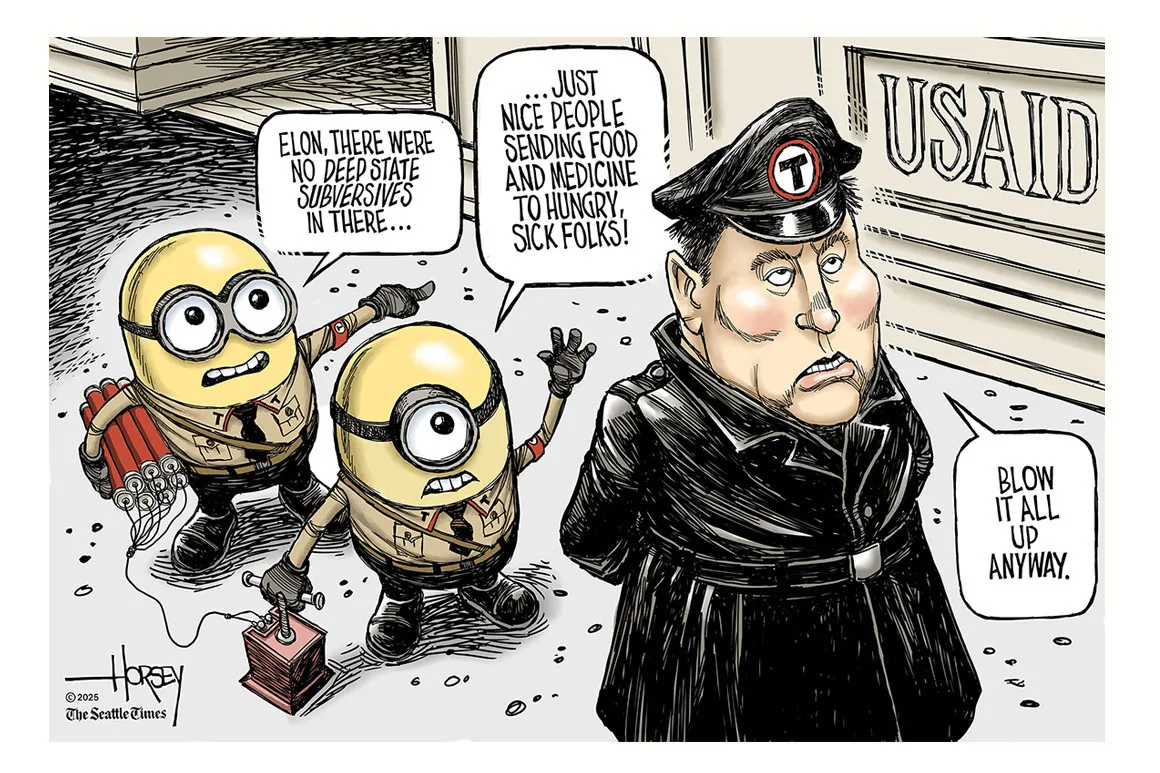
Did you hear about the $50 million in condoms USAID sent to Hamas? Or the 150-year-olds collecting Social Security? Or that USAID is a criminal organization, in league with money-laundering Lutheran charities?

Complete bullshit, to use a technical term coined by philosopher Harry Frankfurt. Nothing Musk says should be believed until he provides evidence.

and the law

Proclamations of Napoleon have no legal weight in the United States, so many of Musk’s actions are being challenged in court. So far the Trump administration is losing most of those cases.

However, last year Trump also lost on his presidential-immunity argument all the way up the line until the partisan Republican Supreme Court got the case. Lower courts are obliged to follow previous precedents (though occasionally a judge goes rogue). But the Supreme Court is free to make up law as it sees fit, as it did in the immunity case.

Same thing here. A simple reading of the Constitution (in the birthright citizenship cases) or the law (in the freezing-federal-funding cases) forces a judge to rule against Trump. But the basic argument Trump is making across the board is that any law limiting his power is unconstitutional. (For example: The Impoundment Control Act of 1974 says that a president has to spend money as Congress has appropriated it. Previous Supreme Courts have upheld the Act’s constitutionality, and those precedents tie the hands of lower-court judges.)

That is an absurd argument ungrounded in the history of American law. But so was sweeping presidential immunity. During the Biden administration, the Court’s six conservative justices frequently limited the executive branch’s ability to act without authorization by Congress. But Biden was a Democrat, and in the Roberts Era the law changes depending on which party has power.

But will it change this far? We may be about to find out. Here’s the background: The US Office of the Special Counsel is an independent agency established by Congress.

OSC’s primary mission is to safeguard the merit system by protecting federal employees and applicants from prohibited personnel practices (PPPs), especially reprisal for whistleblowing.

LawDork elaborates:

The limits state that the Special Counsel is nominated by the president, subject to Senate confirmation, for a five-year term and can only be removed by the president “for inefficiency, neglect of duty, or malfeasance in office.”

This set-up makes perfect sense, because OSC can’t do its job if the same authority that wants to go after whistleblowers, i.e., the President, can also fire the Special Counsel if he gets in the way. However, Trump did fire Special Counsel Hampton Dellinger without cause. Dellinger went to court, and was granted a temporary restraining order preventing Trump from firing him. An appeals court refused the administration’s appeal 2-1, but the dissenting judge (a Trump appointee) objected that “Congress cannot constitutionally restrict the President’s power to remove the Special Counsel.”

Yesterday, the administration took its appeal to the Supreme Court, hoping that its Trump-cannot-be-bound (even though Biden could) argument prevails there. If it does, I suspect that few of the current lower-court rulings against Trump will stand.

and Ukraine

Tomorrow, a US delegation headed by Secretary of State Marco Rubio will meet with Russian counterparts to discuss ending the war in Ukraine. Notice who will not be there: a Ukrainian delegation or anyone representing our European allies.

Prior to these talks, the Trump administration already seems to have conceded much of what Russia wants. At a NATO meeting in Brussels last week, Defense Secretary Pete Hegseth said Ukraine will not restore its pre-invasion borders, and he distanced the US from any guarantees for Ukraine’s future. He called Ukraine’s desire for NATO membership “unrealistic”.

In sweeping remarks to NATO allies eager to hear how much support Washington intends to provide to the Ukrainian government, Hegseth indicated that Trump is determined to get Europe to assume most of the financial and military responsibilities for Ukraine’s defense, including a possible peacekeeping force that would not include U.S. troops.

Worse, any European troops deployed to Ukraine would not be covered by the NATO mutual-defense agreement. If Putin would decide to attack them, they would be on their own.

Afterwards, Hegseth was asked a fairly obvious question:

You have focused on what Ukraine is giving up. What concessions will Putin be asked to make?

The true answer here would be “none”, but instead Hegseth went off on a tangent about how Putin responds to “strength”, so he invaded Crimea during the Obama administration and attacked the rest of Ukraine during the Biden administration, but did not launch any new invasions during Trump’s first term.

On the one hand it’s interesting that Hegseth didn’t answer the question asked. But it’s also worth trying to figure out what question he answered instead. I postulate this one: “Should we be worried that Trump is in Putin’s pocket?”

BTW, I think his answer to that question is misleading as well. During the first Trump administration, Putin knew that time was on his side, because Trump was dismantling NATO from within. After Biden started putting NATO back together, Putin attacked because he saw his window for action shrinking.

Plus, it is absurd to characterize an American president willing to concede virtually everything Putin wants before negotiations even begin as “strong”.

and Gaza

I don’t take seriously the part of Trump’s plan for Gaza where the US claims ownership of the land and turns it into a Mediterranean resort. I think he announced that just to troll us.

However, the part of the plan where Israel ethnically cleanses Gaza, while the US pressures Arab nations to take in Gazan refugees — that seems completely serious. Saudi Arabia, Egypt, Jordan, Qatar and the United Arab Emirates will meet in Riyadh Thursday to formulate an alternative, which they will hope to take to the larger Arab League meeting in Cairo next week.

I want to make two points about this. First, unlike the West Bank, Israel does not have any historical claim on Gaza. Even in Biblical times, Gaza was a Philistine city.

Second, I want to address the comparison being made to the population transfers that happened in 1946-48 when the former British Raj was partitioned into India and Pakistan. This argument has been put forward by WSJ columnist Sadanand Dhume, and echoes a claim often made by opponents of a Palestinian state: There are already nearly two dozen Arab countries, so why does there need to be another one?

Dhume glosses over what a disaster the partition of India was.

By 1948, as the great migration drew to a close, more than fifteen million people had been uprooted, and between one and two million were dead.

Also, proponents of the Palestinians-are-just-Arabs vision are projecting a Jewish notion of identity onto Arabs. Arabs have never had a unified ethnic identity. While it’s true that many Palestinians did not identify as Palestinians until comparatively recently, prior to that they identified primarily with their local communities, not with some larger Arab nation. Palestinian identity comes up from below, not down from above.

Dhume paints the international refusal to support an ethnic cleansing in Gaza as “the world’s double standard towards Israel”. Actually, it is a single-standard reaction to the horror of the post-World-War-II population transfers.


I have not yet read Peter Beinart’s new book “Being Jewish After the Destruction of Gaza“. However, this interview with The New Yorker is worth a look.

and you also might be interested in …
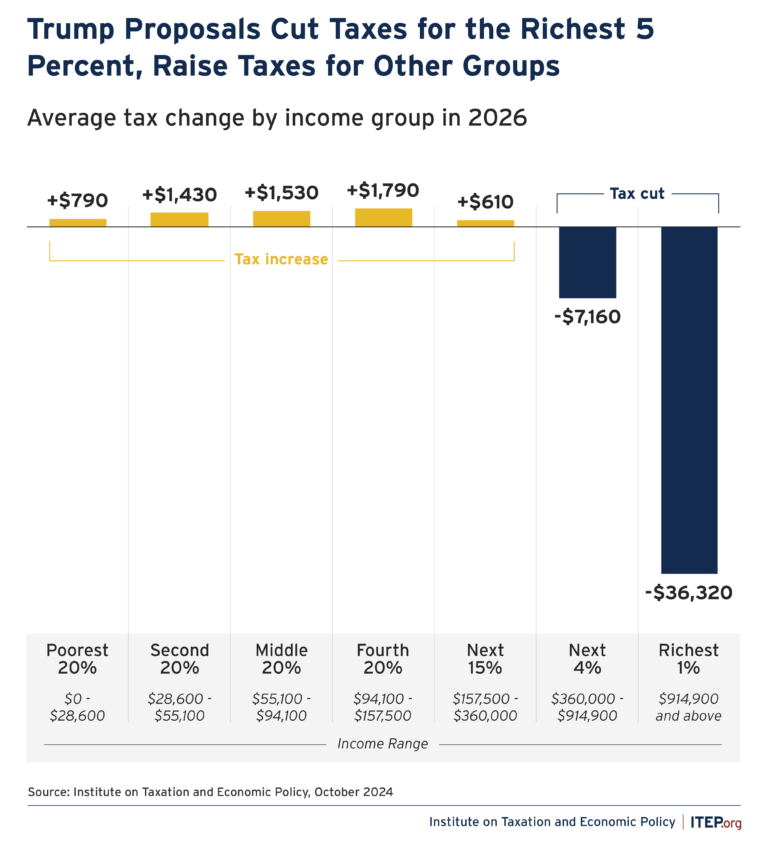
Politics is all fun and games until you have to write a budget. House Republicans took their first step in that direction by passing a budget resolution out of committee and sending it to the full house. It cuts rich people’s taxes, lines up cuts in Medicaid and food stamps, and allows $3.3 trillion more debt to accumulate in the next ten years. It’s already in trouble as Republican congresspeople reckon with the number of Medicaid recipients in their districts.


The WaPo:

[D]espite the rapid infusion of resources, U.S. Immigration and Customs Enforcement is struggling to arrest higher numbers of immigrants and falling far short of the administration’s goals.

Simple reason: The invasion of criminals that Trump talked so much about during his campaign was never real. He talked a lot about unleashing local law enforcement to deport the criminal migrants because “they already know who they are”. And maybe that was true for a handful of people, but there were never “millions” of migrant criminals to deport.


The WaPo’s Catherine Rampell:

What Trump has done for US farmers so far:
-frozen their foreign aid program (and left their food to rot)
-encouraged EU to ban their products
-frozen legally-owed reimbursements for their energy efficiency upgrades etc.
-threatened to deport half their workforce
-suppressed research on bird flu


Paul Krugman explains why everything Trump is proposing — tariffs, deporting low-wage workers … — will make inflation worse. But he warns against buying inflation-protected Treasury bonds (TIPS), because they’ll only protect you against “future inflation that the U.S. government admits is happening“. Once Trump appointees start reporting the numbers Trump wants to hear, officially recognized inflation will plummet, no matter what is happening to your groceries.


The Daily Show explains how to Un-DEI your office.


Illinois Governor J. B. Pritzker has made a series of announcements: (1) Lake Michigan has been renamed Lake Illinois, (2) Illinois is annexing Green Bay for security purposes, and (3) stay tuned for an announcement regarding the Mississippi River next week.

and let’s close with something musical

Back in 2020, the pandemic forced choirs to figure out how to synchronize without being in the same room. The Unitarian Universalist General Assembly went virtual that year, and this choral performance was created for it. I find “Let the wave wash over me” to be a particularly comforting thought these days.

Can Ethical People Work in the Trump Administration?

This week seven federal prosecutors resigned rather than follow unethical orders from their bosses in Trump administration. This case raises a more general question: Given Trump’s disrespect for ethical norms intended to insulate certain key government functions from inappropriate political interference, will there be space in the Trump administration for ethical government employees to do their work?


The Guardian provides the shortest possible summary of the current situation:

[S]even prosecutors – including the acting US attorney in southern district of New York, the head of the criminal division and the head of the public integrity section – resigned in protest rather than dismiss the case [against New York Mayor Eric Adams] for political reasons.

Now let’s back up and review this story from the beginning, following a timeline compiled by ABC News: After an investigation that had been going on for at least a year, last September federal prosecutors at the Southern District of New York (SDNY) sought and received a grand jury indictment of Mayor Adams.

At the time, the Adams indictment was used in arguments that the Biden Justice Department had not been politicized or “weaponized”, as Trump frequently claimed. Yes, a special prosecutor appointed by Attorney General Merrick Garland had indicted Trump, but that was because Trump had broken numerous laws. DoJ also went after Democratic lawbreakers like Adams and New Jersey Senator Robert Menendez.

The indictment, which is unsealed the next day, alleges Adams accepted illegal gifts, including plane upgrades and hotel stays, from Turkish businessmen and officials in exchange for preferential treatment when he was Brooklyn borough president and later as mayor. The indictment also alleges Adams received illegal campaign straw donations from Turkish nationals.

Adams denied the charges, refused to resign, and pleaded not guilty. [1] A trial was scheduled to begin in April. During the transition period after Trump’s election win in November, Adams met with Trump at Mar-a-Lago and with Trump’s border czar Tom Homan. Adams attended Trump’s inauguration. The next day, Adams began claiming that his indictment was retribution for criticizing President Biden’s immigration policies (even though the timeline on that doesn’t work). On February 10, after additional meetings between Adams, his attorneys, and Trump officials, Deputy Attorney General Emil Bove sent a letter instructing SDNY to dismiss charges against Adams “without prejudice”, meaning that the charges could be refiled in the future.

Danielle Sassoon. Dismissing a federal indictment is not an automatic thing. The prosecutor’s office has to file a motion with the court asking for the dismissal. The motion typically contains some justification for the dismissal, which the judge then must rule on. And that brings Danielle Sassoon, the acting U.S. Attorney for SDNY, into the picture.

Sassoon is not anybody’s idea of a liberal Democrat. She clerked for the late Supreme Court Justice Anton Scalia, a legendary figure in conservative legal circles. Trump had appointed her as acting US attorney just three weeks before. Sassoon responded to Bove’s instructions by writing an eight-page letter to his boss, Attorney General Pam Bondi. [2]

Mr. Bove rightly has never called into question that the case team conducted this investigation with integrity and that the charges against Adams are serious and supported by fact and law. Mr. Bove’s memo, however, which directs me to dismiss an indictment returned by a duly constituted grand jury for reasons having nothing to do with the strength of the case, raises serious concerns that render the contemplated dismissal inconsistent with my ability and duty to prosecute federal crimes without fear or favor and to advance good-faith arguments before the courts. … I cannot fulfill my obligations, effectively lead my office in carrying out the Department’s priorities, or credibly represent the Government before the courts, if I seek to dismiss the Adams case on this record.

Sassoon went on to recount the Bove’s justifications for dismissing charges, the first of which she finds unethical

First, Mr. Bove proposes dismissing the charges against Adams in return for his assistance in enforcing the federal immigration laws, analogizing to the prisoner exchange in which the United States freed notorious Russian arms dealer Victor Bout in return for an American prisoner in Russia. … Adams has argued in substance and Mr. Bove appears prepared to concede that Adams should receive leniency for
federal crimes solely because he occupies an important public position and can use that position to assist in the Administration’s policy priorities.

and the second unbelievable.

Second, Mr. Bove states that dismissal is warranted because of the conduct ofthis office’s former U.S. Attorney, Damian Williams, which, according to Mr. Bove’s memo, constituted weaponization of government as defined by the relevant orders of the President and the Department. The generalized concerns expressed by Mr. Bove are not a basis to dismiss an indictment returned by a duly constituted grand jury, at least where, as here, the Government has no doubt in its evidence or the integrity of its investigation. … In short, because there is in fact nothing about this prosecution that meaningfully differs from other cases that generate substantial pretrial publicity, a court is likely to view the weaponization rationale as pretextual. [3]

The first consideration is the disturbing one, because it suggests a truly dystopian role for the Department of Justice: If elected officials refuse to play ball with the Trump administration, Trump could use a Justice Department investigation to get something on them, then hold that potential prosecution over their heads until they do what he wants.

In a footnote, Sassoon lays it out:

I attended a meeting on January 31, 2025, with Mr. Bove, Adams’s counsel, and members of my office. Adams’s attorneys repeatedly urged what amounted to a quid pro quo, indicating that Adams would be in a position to assist with the Department’s enforcement priorities only if the indictment were dismissed. Mr. Bove admonished a member of my team who took notes during that meeting and directed the collection of those notes at the meeting’s conclusion. [4]

In her letter, Sassoon asked AG Bondi for a meeting, and offered her resignation if Bondi did not want to further justify or reconsider DoJ’s position. Her resignation was accepted.

Public Integrity. The obvious next option for Bove would have been to ask SDNY’s second-in-command to file the motion to dismiss the charges, but (perhaps seeing Sassoon’s resistance as an SDNY independence issue), he pulled the case back to DoJ’s aptly named Public Integrity Section in Washington, which often handles political corruption cases. ABC reports:

However, as soon the Public Integrity Section was informed it would be taking over, John Keller, the acting head of the unit, and his boss, Kevin Driscoll, the most senior career official in the criminal division, resigned along with three other members of the unit, according to multiple sources.

The case soon claimed a seventh scalp, SDNY’s Assistant US Attorney Hagan Scotten, another prosecutor with impeccable conservative credentials, having clerked for Brett Kavanaugh and John Roberts. He expressed no hostility to the policy goals of the Trump administration, but strongly implied that someone needs to explain legal ethics to the President.

There is a tradition in public service of resigning in a last-ditch effort to head off a serious mistake. Some will view the mistake you are committing here in the light of their generally negative views of the new Administration. I do not share those views. I can even understand how a Chief Executive whose background is in business and politics might see the contemplated dismissal-with-leverage as a good, if distasteful, deal. But any assistant U.S. attorney would know that our laws and traditions do not allow using the prosecutorial power to influence other citizens, much less elected officials, in this way. If no lawyer within earshot of the President is willing to give him that advice, then I expect you will eventually find someone who is enough of a fool, or enough of a coward, to file your motion. But it was never going to be me.

Friday night, the motion did get filed, though apparently with great reluctance.

The roughly hour-long meeting, where the public integrity section weighed whether to resign en masse after agreeing that the dismissal of the Adams case was improper, culminated with [Edward] Sullivan, a veteran career prosecutor, agreeing to take the fall for his colleagues, according to two people familiar with the matter.

The judge. The judge in the case, Biden appointee Dale Ho, appears to have little choice but to ultimately accept a motion to dismiss. After all, a judge can’t also prosecute the case if the government is unwilling to do so.

However, Ho would be within his rights to hold a hearing into the circumstances of the dismissal motion. Sassoon had warned about this in her resignation letter:

Seeking leave of court to dismiss a properly returned indictment based on Mr. Bove’s stated rationales is also likely to backfire by inviting skepticism and scrutiny from the court that will ultimately hinder the
Department of Justice’s interests. In particular, the court is unlikely to acquiesce in using the criminal process to control the behavior of a political figure.

One option I can imagine (though I don’t fully understand the law here) is that Ho could give DoJ a choice: proceed with the prosecution or accept a motion to dismiss with prejudice, meaning that DoJ would lose the option to refile the charges if Adams wasn’t cooperating completely enough with Trump’s political goals. That change would take away Trump’s leverage over Adams going forward.

Larger considerations. Benjamin Wittes (founder of the Lawfare web site) takes a step back to

  • describe the inherent conflict between the way politicians behave as a matter of course (horse-trading, partisan maneuvering) and the ethical behavior we expect from prosecutors,
  • discuss the Justice Department norms intended to insulate prosecutors from politics,
  • explain how Trump has undone those norms.

Then he concludes:

There is a deep problem here and it goes way beyond the Adams case: Having ripped apart the only system that allows prosecutors to function ethically, we no longer have a mechanism by which federal prosecutors can function ethically. We have a rule in which the president can reach down to the assistant U.S. attorney level and order political favors for his friends in exchange for other remunerations. And we have ethical expectations of prosecutors that they will not entertain such demands.

The result? We have resignations. And we’re going to have more. Because if the president or his minions care about the case you’re working on, there is no place in government for an ethical prosecutor any more. …

As long as a prosecutor can do good work, my plea is to stay in place. But at this point, all federal prosecutors need to be prepared to resign. They are all one phone call away from being put in the position of facing a demand to behave unethically, one phone call away from a demand that is fundamentally political in character, not about justice. And when that call comes, it is imperative that prosecutors do as these ones did—resign publicly, showing their work along the way.

Wittes is talking specifically about prosecutors, but similar considerations apply throughout the government. Every profession within the government has its own ethical standards that protect against inappropriate political interference, and it’s not hard to imagine situations where Trump might circumvent those standards to pursue his goals. (Paul Krugman warns against buying inflation-protected TIPS bonds, precisely because Trump might make himself look good by pressuring government statisticians to minimize the rate of inflation.)

So the admonition Wittes gives to prosecutors needs to apply to federal employees across the board: As long as you can do your job ethically, keep doing it. Don’t resign and give Trump an opportunity to appoint someone more loyal to him than to the nation or to the mission of your agency. But if at some point you’re faced with a choice between your job and your soul, defend your soul and resign.

And if you can make a lot of noise on your way out the door, so much the better.


[1] New York’s state constitution gives Governor Hochul the power to remove Adams. While his case was playing out in court, it made some sense for Hochul to keep her distance. But now that the fix is in, her lack of action is mysterious.

[2] It’s worth pointing out that both Bondi and Bove had been defense lawyers for Trump before being appointed to head DoJ. They are literally Trump’s lawyers, not lawyers for the United States.

[3] A similar statement could be made about dismissing the classified-documents indictment against Trump.

[4] Not wanting anyone to take notes indicates what lawyers call “consciousness of guilt“.

The Monday Morning Teaser

As much as I would like to write about something other than the Trump administration, I have to go where the news is.

This week, the new administration ran into its first authentic scandal, as seven Justice Department prosecutors resigned rather than sign on to the corrupt deal Trump worked out with New York Mayor Eric Adams. The gist of the quid pro quo is that DoJ will drop well-founded indictments of Adams in exchange for his cooperation with Trump’s immigration enforcement policies. Such a deal skewers the nonpartisan identity of DoJ, and is as abhorrent to conservative prosecutors as liberal ones. Prosecution is supposed to be about enforcing the law, not manipulating policy outcomes.

This case points out the larger disregard Trump hold for ethical norms, and opens up a question I’ll address in the featured post “Can Ethical People Work in the Trump Administration?” That should be out before 10 EST.

Meanwhile, Elon Musk’s assault on democracy continues. Attempts to block the illegal Trump/Musk actions continue to work their way through the courts, with the first challenge lined up to hit the Supreme Court. Whatever happens there will have sweeping consequences.

Two new foreign-policy positions also deserve attention: on Ukraine and on Gaza.

Popular resistance to Trump is rising. A few weeks ago I cautioned against demonstrating prematurely, because protesting against Trump himself was unlikely to sway anyone who voted for him. However, now that there are clear actions to protest, it’s time to get out there. (“This is wrong” is a very different message than “Trump is bad”.) I went to my first post-election demonstration in Boston Friday.

I’ll try to get the weekly summary out by noon, but it’s hard to gauge.

Insurgency

Insurgent movements are not the product of hard times. They are the product of insurgent cultures.

– Lawrence Goodwyn, The Populist Moment

This week’s featured post is “How Do Things Change?

This week everybody was talking about the pushback against Trump and Musk

This week, a number of federal judges stepped in with orders to halt some of the administration’s illegal actions. Just Security keeps a continuously-updated litigation tracker to help the rest of us stay current. Here are some highlights:

Wednesday, a federal judge in Maryland granted a preliminary nationwide injunction blocking the Trump administration from enforcing its executive order ending birthright citizenship.

The Executive Order interprets the Citizenship Clause of the Fourteenth Amendment in a manner that the Supreme Court has resoundingly rejected and no court in the country has ever endorsed

The next day a judge in Washington granted a similar injunction.

Ultimately, the government’s position is unavailing and untenable. It does not have the text or precedent to support its interpretation of the Citizenship Clause. And it rehashes losing arguments from over a century ago. … The President cannot change, limit, or qualify this Constitution right via an executive order.


Yesterday, a federal judge in New Mexico blocked the administration from sending to Guantanamo three Venezuelan men currently in ICE custody. The order applies only to those three.


Thursday, a D. C. federal judge approved an order limiting DOGE access to the Treasury payments system to read-only access for two “special employees”, one of who is Marko Elez, the Musk staffer dismissed and then rehired after his racist social media posts became public. This order is at least partially superseded by the order of a New York federal judge who temporarily banned “special government employees” such as DOGE has from accessing “any Treasury Department payment record, payment systems, or any other data systems maintained by the Treasury Department containing personally identifiable information and/or confidential financial information of payees”.


Thursday, a Massachusetts federal judge paused the administration’s deferred-resignation plan until a hearing can be held today.


Last Monday, a D. C. federal judge blocked the Office of Management and Budget from enforcing its proposed funding freeze.


Friday, a D.C. federal judge blocked USAID from putting employees on administrative leave or removing them from the countries where they are stationed.


Judges in D. C. and Massachusetts blocked the transfer of transwomen inmates to federal men’s prisons.


Thursday, a D. C. judge approved an order preventing the government from releasing a list of FBI agents involved in investigating President Trump.


Many other lawsuits are pending, but have not been ruled on. It remains to be seen whether temporary orders will become permanent, or whether Trump will decide to defy some of them, a possibility J. D. Vance floated yesterday.

and leopards unexpectedly eating the wrong faces

I take for granted that Trump doesn’t care that he is upsetting people like me. “Owning the libs” is one of the goals of MAGA, not something to be avoided. But this week a number of MAGA-sympathetic groups noticed that Trump’s actions were hurting them, in a leopards-are-eating-my-face way.

The first were Christian charities that receive USAID grants.

The controversy began late Saturday evening, when Michael Flynn, a Catholic and retired Army general who previously served as an adviser to President Donald Trump, published a post on X alongside screenshots of a spreadsheet detailing federal funding disbursed to Lutheran groups in the last two years. The spreadsheet — which also included organizations that were not Lutheran — listed groups such as Lutheran Immigration and Refugee Service (now Global Refuge), one of several organizations that partner with the federal government to resettle refugees; Lutheran colleges such as Pacific Lutheran University; and various local chapters of Lutheran Social Services.

Without citing evidence, Flynn accused the groups — who have longstanding funding agreements with the government — of “money laundering,” a federal crime. He also insisted the numbers amounted to “billions” of American taxpayer dollars, a claim not supported by the attached spreadsheet.

Musk, who describes himself as a “cultural Christian,” quote-posted Flynn’s claims, saying, “the (Department of Government Efficiency) team is rapidly shutting down these illegal payments.”

Christianity Today reports:

Most of USAID’s budget goes to grants for specific development projects, including at Samaritan’s Purse, World Vision, World Relief, Catholic Relief Services, and many other faith-based groups. It supports local Christian health clinics in Malawi and groups providing orphan care.

In Kenya, PCEA Chogoria Hospital, a historic mission hospital now run by Kenyan churches, provides comprehensive health care to HIV patients through support from USAID. On January 24 the hospital received a stop-work order for that care and has had no indication of a return of funding despite Rubio’s promises that life-saving HIV care could continue.

The hospital has 3,162 HIV patients in that USAID-funded program, and 42 staff members caring for those patients.

I have to wonder whether hearing the administration lie about their own programs will cause Christians around the country to wonder about Trump’s and Musk’s truthfulness in general. In many communities, the ax is falling on local charities doing things like refugee resettlement, not distant organizations with projects in Africa.


Another group suffering from Musk’s actions are American farmers.

Farmers report missing millions of dollars of funding they were promised by the U.S. Agriculture Department, despite promises from the Trump administration that a federal funding freeze would not apply to projects directly benefiting individuals. … Farmers who signed contracts with the Agriculture Department under those programs paid up front to build fencing, plant new crops and install renewable energy systems with guarantees that the federal government would issue grants and loan guarantees to cover at least part of their costs. Now, with that money frozen, they’re on the hook.

Kansas Senator Jerry Moran, a Republican, has noticed that USAID food programs benefit Kansas farmers.

The World Food Programme estimated $340 million in U.S. food aid was idled at domestic ports by order of the Trump administration. In total, $566 million in U.S.-grown commodities designated for humanitarian purposes was locked down in warehouses throughout the world.

“Time is running out before this lifesaving aid perishes,” Moran said. “Food stability is essential to political stability, and our food aid programs help feed the hungry, bolster our national security and provide an important market for our farmers, especially when commodity prices are low.”


And another Republican Senator, Katie Britt of Alabama, is concerned about the medical research done in her home state.

While the administration works to achieve this goal at NIH, a smart, targeted approach is needed in order to not hinder life-saving, groundbreaking research at high-achieving institutions like those in Alabama.

Again, if Musk is targeting “ground-breaking research” in Alabama, maybe medical research programs in other states are being hit unfairly.


Trust McSweeney’s to find humor in the grimmest situations. Tom Ellison writes the column Elon Musk would write if he were honest: “Here at DOGE, we’ve streamlined every aspect of America’s collapse”.

did you know that before DOGE came along, government spending was influenced by an ad hoc network of billionaires behind campaign contributions, dark money groups, and shadowy think tanks? It’s far more efficient to reduce redundancy by placing the entire US Treasury under the centralized control of just one billionaire private citizen (me).

and you also might be interested in …

For a moment, it seemed like this administration might still be — just a little — vulnerable to shame. One of Musk’s young DOGE acolytes, Marko Elez, was outed for posting racist statements to social media within the last year. Elez then resigned.

Sadly, though, that wasn’t the end of the story. Elon posted a poll on X asking

Bring back @DOGE staffer who made inappropriate statements via a now deleted pseudonym?

J. D. Vance endorsed a Yes vote, arguing against the idea that “stupid social media activity should ruin a kid’s life”. The X community being what it is these days — non-racists have largely decamped to BlueSky — 78% voted for reinstatement, which apparently has now happened.

Vox points out what a sham the Musk/Trump administration’s “free speech” idealism is: Free speech is for people who agree with them about things like, say, racism; or for people who offer Nazi salutes in public. But if you are a foreign student who participated in protests of Israel’s genocide in Gaza, Trump promises to deport you.

This is not merely a case of the typical hypocrisy we expect from politicians. It is a coherent worldview coming into form: The Trump administration has been making clear that while it has plenty of tolerance for not just radical ideas but outright racist words and gestures, it has no room whatsoever for dissent or disagreement.


While we’re talking about racism and Gaza, Tuesday Trump openly endorsed ethnically cleansing Gaza so that it could become “the Riviera of the Middle East”. I mean, why should annoying Arabs get to occupy prime waterfront property just because their ancestors have lived there for centuries? They should want to leave.

I don’t think people should be going back to Gaza. I heard that Gaza has been very unlucky for them. They live like hell. They live like they’re living in hell. Gaza is not a place for people to be living, and the only reason they want to go back, and I believe this strongly, is because they have no alternative.

In Trump’s telling, the suffering of Gazans is just “unlucky”, and not the predictable result of decisions made by the US and its Israeli allies. The place just happened to turn to rubble, and it’s nobody’s fault that support from agencies like USAID is drying up.

OK, that’s the ranting of an evil man. But I’m not giving this story its own headline for a simple reason: You need to recognize when you’re being trolled. Trump is not going to occupy Gaza with US troops any more than he’s going to invade Greenland, make Canada a US state, or do a bunch of the other crazy stuff he talks about. The whole point of envisioning a US “ownership position” in Gaza was to change the news cycle, which was starting to focus too much on Musk’s illegal seizures of power.

Keep your eye on the ball.


New DNC Vice Chair David Hogg has begun posting daily updates “What Democrats Did Today“.


Global surface temperature is a combination of a long-term global warming trend and year-by-year circumstances like an El Nino. (That’s why each year isn’t always hotter than its predecessor.) But the month-by-month records for the hottest months on record have all happened since July of 2023. January 2025 set a record for reasons climate scientists haven’t completely puzzled out yet.


Trump is about to issue an executive order bringing back plastic straws. Because: priorities. Human convenience trumps animal suffering.


Somewhat to my surprise, the Gaza truce has still not collapsed.

and let’s close with an excuse to buy more books

I have a personal rule about local bookshops: If the reason I know I want a book is because I saw it in a bookstore, I have to buy it at that bookstore, even if I could get it cheaper from Amazon.

But while that works for physical books, what about e-books, which is how I read most things these days? If you’re rebelling against Amazon’s dominance of e-books, getting your books from Apple or even Kobo isn’t that much of a protest.

A new option is Bookshop.org, where profits on e-books can be directed to a local bookstore near you.

How Do Things Change?

a tentative start to a historical investigation


Last week I argued that mere election tactics — a more attractive candidate, some new slogans, a better framing of the issues — will not be enough to overcome the MAGA movement in the long run. (We defeated them soundly in the elections of 2018 and 2020, but MAGA showed amazing resilience.) MAGA itself is not just an unfortunate convergence of political forces, it is a cultural movement of some depth. Defeating it will require a counter-movement.

The 2024 campaign showed that the counter-movement can’t just be a reversion to some prior status quo. My assessment of how the Harris campaign failed is that Trump managed to tag Harris as the candidate of the status quo and present himself as the candidate who will shake things up. [1]

Harris’ problem was that (as a whole) the status quo is not working for many Americans. I listed a number of ways that things are not working, but fundamentally they boil down to this: It gets harder and harder to plan for a successful life with any confidence that your plan will succeed. Far too many Americans feel that the system is stacked against them, and that simply trying harder is not the answer.

Rather than present any coherent program, Trump has responded to the public’s justified anxiety with scapegoating and nostalgia: Immigrants, foreigners, minorities, and people who rebel against their assigned gender roles are the problem, and we should look to the greatness of America’s past — now, apparently, the high tariffs of the 1890s — for our salvation. To the extent that he has a plan — like ignoring climate change and reverting to the fossil-fuel economy of the 20th century — it is likely to be counterproductive.

But “don’t do that” has turned out to be an unpersuasive message for the Democrats. It worked when Trump was in office, actively doing unpopular things. But as soon as he was defeated, nostalgia renewed its charms. To a large extent, Trump’s 2024 message was that electing him would make it 2019 again, and all the disruption of the Covid pandemic (including the parts he brought on himself) would be behind us.

But realizing that we need a deeper movement is not the same as having one, or even knowing what it would be or how it might come together.

With that question in mind, I’ve been looking at history. Despite recently being idealized as the new “again” in Make America Great Again, the late 1800s were a low point in American history, dominated by the robber barons of the Gilded Age. Industry after industry was reorganizing as a monopolistic trust with the power to maximally exploit both workers and consumers. It was a hard time both for urban factory workers and rural small farmers.

Somehow, things got better: Antitrust laws got passed. Governments began to regulate working conditions, product safety, and child labor. Standard Oil was broken up. Unions began to win a few battles. And the gap between rich and poor narrowed. The New Deal was unthinkable in 1880, but by the 1930s it was popular. This was a profound change in what David Graeber referred to as “political common sense“. How did it happen?

A friend recommended a place to start: The Populist Moment by Lawrence Goodwyn. The book was published in 1978, so to the extent that it says something about the present day, either about MAGA or how a democratic movement might oppose it, that message arises naturally from the history, and not from some pro- or anti-Trump bias of the author. [2]

What was Populism? These days, MAGA and similar neo-fascist movements in other countries are often described as “populist”, but the version in the late 1800s was quite different. There is a surface similarity — in each case, large numbers of working class people found themselves resisting their era’s educated consensus — but from there things diverge fairly quickly.

In the 19th century, farming was still the largest American occupation, employing over half the labor force as late as 1880. But the system was stacked against small farmers in two ways: First, farmers with no capital beyond their land found themselves at the mercy of “furnishing merchants”, who would lend money for them to plant a crop (and survive through the growing season) in exchange for a contract on the harvest. Once he had contracted with a furnishing merchant, the farmer was stuck with that merchant, and would typically end up both paying high prices for his supplies and receiving a low price for his crop. [3]

But second, that long-term situation was made much worse by post-Civil-War monetary policy. The Civil War had been financed in part by printing paper currency, known as “greenbacks“. That had caused inflation during the war, and the prevailing economic wisdom of the time was that the dollar needed to be made “sound” again. In other words, the greenbacks had to be withdrawn from circulation, so that all US money could be redeemable for gold again. (Greenbacks became fully convertible to gold in 1878.)

In modern terms, the government’s policy was to shrink the money supply. If expanding the money supply had caused inflation, shrinking it could be counted on to achieve deflation; i.e., prices would come back down.

if you think like a consumer, deflation sound great. (Just last fall, that’s what Trump was promising his voters: “Prices will come down. You just watch: They’ll come down, and they’ll come down fast.”) But now imagine being a farmer who is counting on selling his wheat or cotton at the end of the season: You bought and borrowed when prices were high, and now you have to sell when prices are lower. The result was that large numbers of farmers were failing to clear their debts. Every year, many would lose their land and wind up as sharecroppers or worse.

The conventional wisdom of the time was that, sure, times were hard. But the “sound dollar” had to be restored, so farmers would just have to become more efficient. If some had to go broke in the process, well, that’s capitalism for you. Creative destruction and all that.

At some point, though, farmers began to realize that this wasn’t a story of individual failure, but of a badly structured system. And some postulated a solution: Farmers could cooperate rather than compete. They could form “farmer alliances” to pool their resources, negotiate for common supplies, and market their crops collectively.

Through the 1870s and 1880s, farmer alliances played a game of escalating pressure with the merchants and banks. Initial co-op successes would lead to new merchant strategies to freeze the co-ops out of the market, resulting in some larger co-op plan. The ultimate trump card was played by the system’s last line of defense, the bankers: Banks would take mortgages on individual farms (the old model), but they would loan nothing to a co-op backed by the land of its members.

Watching the more prosperous classes act in concert to thwart their plans radicalized the farmers and made them turn to politics. They created the People’s Party, whose presidential candidate carried four western states in the 1892 election. The party was organized around a platform, some of which was achieved decades later, but much of which might still be considered radical today. It wanted a revision of the banking system that would orient it toward the interests of “the producing classes” rather than “the money trust”. It wanted a flexible money supply (which we have today) rather than a gold standard. And it wanted government ownership of the railroads and other essential utilities that could be manipulated against working people by monopolies and trusts.

Ultimately, the People’s Party supported the Democratic candidate, William Jennings Bryan, in 1896, and then faded into insignificance.

So Populism was a failure in the sense that it never achieved power. But David Graeber once said that “one of the chief aims of revolutionary activity is to transform political common sense”. By that standard, Populism was more successful. [4]

Partisanship. The People’s Party ran into partisan loyalties that were left over from the Civil War and generally had more to do with identity than with life experience. If you were a White Southern Protestant or a Northern urban Catholic, then you were a Democrat. But if you were a Northern Protestant or a Southern Negro, you were Republican. Those loyalties were hard to break, and each party charged that the Populists were really agents of the other party. “Patriotism” meant faithfulness to the team your people played on during the War.

How movements happen. Goodwyn has a lot to say about this, and argues against the view that protest movements arise naturally during “hard times”. History, he says, does not support this.

“The masses” do not rebel in instinctive response to hard times and exploitation because they have been culturally organized by their societies not to rebel. They have, instead, been instructed in deference.

He points to parallel ways this worked in his own day on both sides of the Iron Curtain. (This is 1978, remember.)

The retreat of the Russian populace represents a simple acknowledgment of ruthless state power. Deference is an essential ingredient of personal survival. In America, on the other hand, mass resignation represents a public manifestation of a private loss, a decline in what people think they have a political right to aspire to — in essence, a decline of individual political self-respect on the part of millions of people.

He then asks the billion-dollar question:

How does mass protest happen at all then?

Which he then proceeds to answer: There are four stages:

  • forming: the creation of an autonomous institution where new interpretations can materialize that run counter to those of prevailing authority
  • recruiting: the creation of a tactical means to attract masses of people
  • educating: the achievement of a heretofore culturally unsanctioned level of social analysis
  • politicizing: the creation of an institutional means whereby the new ideas, shared now by the rank and file of the mass movement, can be expressed in an autonomous political way.

And he notes that “Imposing cultural roadblocks stand in the way of a democratic movement at every stage of this sequential project.”

For the populist movement, the first stage was the creation of farmers’ alliances. After years of experimenting, the farmers alliances came up with a mass recruitment model: large-scale cooperatives that farmers could join in hopes of getting cheaper supplies, better crop prices, and various other benefits. Then the co-ops themselves became educating institutions that taught farmers how the monetary system tilted the playing field against them, and how an alternative system might work. And finally the People’s Party itself provided an electoral outlet.

How well the People’s Party did in various states corresponded to how well the previous stages had taken hold.

In the 20th century, labor unions played a similar role to the co-ops: Masses of workers would join a union in hope of getting better pay and improved working conditions. And the union would then educate them in the issues relevant to their situation. [5]

MAGA. It’s worth considering how Goodwyn’s model applies to MAGA. You wouldn’t expect it to fit perfectly, because fundamentally MAGA isn’t a democratic movement. There has always been big money behind it, and the grassroots aspects, while genuine in some sense, also include quite a bit of astroturf. [6]

However, there are a number of parallels. The initial hurdle MAGA faced was getting its working-class foot-soldiers to believe in themselves rather than be intimidated by experts like economists, climate scientists, and medical researchers. The internet has undoubtedly made this easier, but the validation of “doing your own research” was also key.

And what was the recruiting institution that could attract masses of people and educate them in the new way of looking at the world? Evangelical churches. People came to them for the variety of reasons that always attract people to churches, and usually not for political indoctrination. But once there, they could be taught that elite scientists (like those promoting anti-Genesis ideas of evolution) were agents of the Devil. Their sense of grievance could be raised and sharpened, and the whole idea of a fact-based or reason-based worldview could be undermined. You might join because you enjoyed singing in the choir, but after a few years you were ready to believe that DEI was an anti-White conspiracy, or that economic malaise was God’s punishment for tolerating gay marriage and trans rights. You were ready to march for Trump.

Counter-movement. The lack of an obvious recruiting-and-educating institution is an obvious hole in the formation of an anti-MAGA counter-movement. Conservatives seem well aware of possible avenues — like the universities, a revitalized union movement, or even charitable activities like refugee resettlement or soup kitchens — and are committed to shutting them down.

Conversely, this is why a number of left-leaning voices (Perry Bacon, for one) are encouraging their listeners to connect with institutions where they can meet with like-minded folks.

I find the historical pattern evocative, even if I can’t immediately see how to implement it: The recruiting-and-educating institutions offer a very simple practical advantage: higher wages, say, or better crop prices. But by engaging in the institution’s core activity, people begin to see the oppressive forces arrayed against them, and begin to radicalize.


[1] And indeed, he is shaking things up. In my opinion, however, the parts of the status quo he is attacking are the best parts: the rule of law, the separation of powers, and the independence of federal institutions like the Department of Justice and the military, just to name a few.

Trump’s attacks on what he calls “the Deep State” are telling. If you know any federal employees, you probably understand that there is a Deep State, but it’s not the monster Trump paints it as.

The Deep State consists of federal workers who are more committed to the mission of their agencies than they are to the current administration. So career EPA officials will resist a president who wants to harm the environment, career prosecutors will drag their feet about harassing the current administration’s political enemies, career public health officials will do their best to support best practices against pressure from above, and so on. To the extent that the agencies are well set up and well motivated, their employees’ loyalty to the agency mission is a good thing, not a bad thing.

[2] Populism is literally just a place to start. I’m going to be delving into other aspects of the 1870-1941 period in future posts.

[3] Something similar happened to miners and factory workers who were paid in vouchers that could only be redeemed at company-approved merchants, who used that monopoly power to drive workers ever deeper into debt. As 16 tons puts it “I owe my soul to the company store.”

[4] Another movement that benefits from Graeber’s political-common-sense standard is the French Revolution. It is frequently judged a failure (especially by comparison to the American Revolution) because it didn’t achieve a lasting Republic, but instead devolved into the Reign of Terror and the dictatorship of Napoleon. However, the French Revolution changed political history. Before the revolution, absolute monarchy was still seen as a valid and plausible form of government. Afterwards, it wasn’t. The Czars of Russia might hang on for another century or so, but the writing was on the wall.

[5] It is unfortunate that farmers alliances and labor unions didn’t peak at the same time. Combined, they might have achieved significant political power.

[6] MAGA precursors, like the John Birch Society and the Tea Party, always had wealthy donors. You can see the pattern in present-day groups like Moms for Liberty. While there are indeed concerned moms in Moms For Liberty, the group’s expansion has been greased by professional consulting and seed money from wealthy establishment groups like the Heritage Foundation.

The Monday Morning Teaser

This week resistance to illegal Trump/Musk actions began to surface: Judges issued orders to halt a number of unconstitutional practices, while Republican-leaning groups noticed that federal funding freezes hurt them as well — and they heard Musk lie about their own activities, not just those of distant liberals. A few Republican senators began to stand up for their affected constituents, while still not connecting the dots about how the Trump/Musk actions are hurting Americans in general.

I’ll cover that in the weekly summary. The featured post is a look back into a poorly understood episode of American history: the Populist movement of the late 1800s. In general, I’m trying to understand how America got from the Gilded Age and the robber barons to antitrust laws and the New Deal. It wasn’t just the Depression, it involved a larger change in what David Graeber called “political common sense”. How did that happen? Late-1800s Populism is a piece of that puzzle, and it tells us something not just about what we need to do next, but illuminates how the MAGA movement became what it is.

That post should come out between 10 and 11 EST. I’ll try to get the summary done by noon.

Dark Matryoshka

Like a Russian nesting doll of fuck-ups

Jeremy Konyndyk, former USAID official
on Trump’s foreign-aid freeze

This week’s featured post is “Campaign or Movement?

This week everybody was talking about tariffs

After long threatening tariffs against Canada, Mexico, and China, Trump ordered tariffs on Saturday: 10% tariffs on China and energy imports from Canada, 25% tariffs on Mexico and non-energy imports from Canada. The tariffs take effect tomorrow.

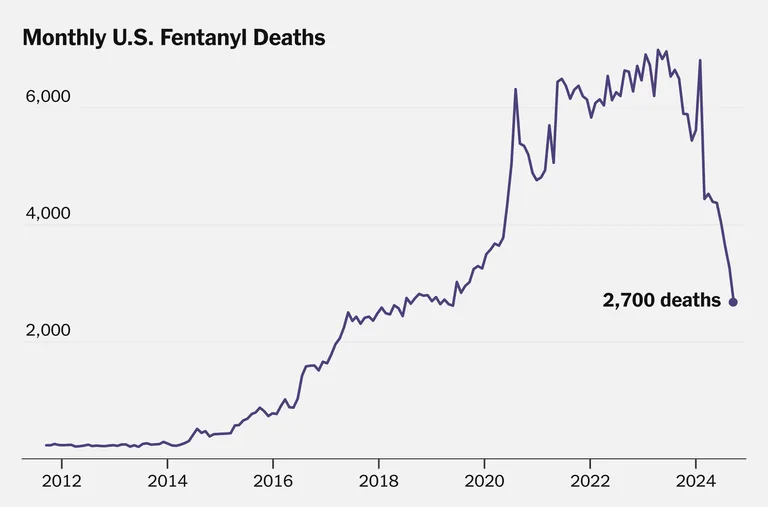
It’s always hard to know what Trump’s true intentions are, so it’s possible some deal to avoid the tariffs might be worked out before they take effect. Ostensibly, the reason for the tariffs is that the three countries aren’t doing enough to prevent fentanyl from being smuggled into the US. So if there’s even a fig leaf’s worth of progress on that issue, Trump could cancel the order and declare victory. [Sure enough: The Mexican tariffs have already been paused for a month.]

If not, Canada has already announced its reprisals. Mexico has pledged to retaliate, but so far I haven’t seen specifics.

and Musk’s takeover of government systems

Much of Trump’s first two weeks has consisted of the new administration puffing up to look bigger and more powerful than it actually is under the law. For example, Trump confidently cancelled the 14th Amendment’s guarantee of birthright citizenship without having any authority to do so. His government spending “freeze” was promptly unfrozen by two federal judges — again, because it is not based on any legal authority. (Once Congress has appropriated money, the executive branch has a responsibility to spend it as directed.)

But simultaneously, important things are happening in the shadows, with even members of Congress puzzled about what is going on. It’s hard to get clear information, but it seems that private-sector employees of Elon Musk’s companies have been inducted into his DOGE department, and have been taking over major government computer systems. Wired reported Wednesday on Musk’s takeover of the computer systems at the Office of Personnel Management (OPM), the federal government’s HR department. Other Musk loyalists have taken control of the payment system at the Treasury’s Bureau of Fiscal Service. BFS writes $6 trillion of checks each year. Still others have captured the General Services Administration.

It’s not clear what kinds of abuse Musk intends, but using the BFS payments system he could do his own version of impoundment: simply kill the checks paying for any program he disapproves of. Conversely, Matt Yglesias suggests a different use:

— Appropriations lapse in March, government shutdown
— But DOGE just illegally keeps paying the bills Trump believes should be paid

A fourth agency Musk has taken over is USAID, which oversees foreign aid grants. Musk has declared USAID “beyond repair” and says he intends to shut it down. His legal authority to do this is, well, zero.

DOGE was established by executive order two weeks ago, and given the mission to modernize “Federal technology and software to maximize governmental efficiency and productivity”. I don’t see how you get from there to shutting down an agency established by Congress. USAID’s security officers tried to prevent DOGE employees from getting access to systems with sensitive and perhaps classified information, but those officials were then put on administrative leave.


On his blog Doomsday Scenario, Garrett Graf imagines how our press would cover this if it were happening in a Third World country “Musk’s Junta Establishes Him as Head of Government“.

What started Thursday as a political purge of the internal security services accelerated Friday into a full-blown coup, as elite technical units aligned with media oligarch Elon Musk moved to seize key systems at the national treasury, block outside access to federal personnel records, and take offline governmental communication networks.

With rapidity that has stunned even longtime political observers, forces loyal to Musk’s junta have established him as the all-but undisputed unelected head of government in just a matter of days, unwinding the longtime democracy’s constitutional system and its proud nearly 250-year-old tradition of the rule of law. … The G-7 country’s newly installed president, a mid-level oligarch named Donald Trump, appeared amid Musk’s moves to be increasingly merely a figurehead head of state.


The freeze on money for states was set aside by two judges, but the freeze on foreign aid grants apparently stands, with potentially deadly results.

Some of these grants fund NGOs in third-world countries where a little money can mean the difference between life and death.

Among the programs that remain grounded as of Friday: emergency medical care for displaced Palestinians and Yemenis fleeing war, heat and electricity for Ukrainian refugees and HIV treatment and mpox surveillance in Africa.

Meanwhile, The Guardian reports on two other programs on hold. One is working on malaria vaccines, and the other studies drugs for HIV prevention.

Some products, such as injectable HIV prevention drugs, are not yet available outside research settings, he said, leaving participants with no alternative source to continue treatment.

If the level of drugs in a participant’s body falls to nonprotective levels, it not only puts them at risk of infection, but means their infection is more likely to develop drug resistance. That makes their treatment more complicated, and if they then infect someone else, the resistance will spread.

Ostensibly, the freeze is just 90 days, so that the programs can be reviewed by Trump appointees. But there appears to be no mechanism for a review to take place.


One example of abuse is in the all-government emails that have been coming from OPM. One (I know somebody who got it, and then saw it reported) announced a “mandate” that all federal employees return to the office five days a week. It offered a “deferred resignation” option for people who didn’t want to come in: Simply by replying to the email with “resign”, an employee could continue to be paid until September, when the resignation would take effect. Major media falsely characterized this as a “buyout” offer.

From top to bottom, this email had no legal authority behind it. Work-from-home options are written into several ongoing union contracts, which nameless minions inside the Trump administration — or even Trump himself — have no power to cancel. So there is no legal across-the-board return-to-the-office mandate.

There also is no “buyout” offer. The OPM email doesn’t say the resigning workers get to stop working, only that they won’t have to come into the office. It doesn’t say they can’t be fired before September. And the money to pay them has not been authorized. (The whole government is only funded through March 14.)

So the memo basically has no legal content. It makes an unauthorized threat and offers an unauthorized escape from that threat.

and plane crashes

Wednesday, an Army helicopter and an American Eagle jetliner collided over the Potomac River near Reagan National Airport in D.C. Trump promptly repeated the pattern I pointed out three weeks ago: Despite the fact that he knew nothing about the actual causes of the crash, he blamed it on his political enemies. Rather than turn tragedy into a unifying national experience of sorrow and grief, he turned it into a divisive experience of finger-pointing and misinformation.

This time the culprit was DEI: Diversity, Equity, and Inclusion. His implication was that somebody somewhere in this tragedy wasn’t a White man, and that it all could have been prevented if that particular position had been filled by a White man.

All the Trump acolytes — J. D. Vance, Pete Hegseth, etc. — echoed his sentiments, with Trump Jr. bragging that the new administration puts “merit ahead of skin color”. What’s really laughable about this is that no merit-based system would produce a Vice President Vance or Defense Secretary Hegseth. Both of these men are completely unqualified for the jobs they hold, and it’s impossible to imagine a woman or a person of color being chosen with so little relevant experience.

and you also might be interested in …

Another Trump order that is being challenged in court relates to his order insisting there are only two sexes. One consequence of this order is that transwomen in federal prison have to be reclassified as men and moved to a men’s facility. The danger of rape and other brutalization should be obvious.

One such prisoner has succeeded in getting a court to block her transfer, and rights organizations have filed a second case covering three women.

and let’s close with some getaways

Can’t manage a vacation right now? Check out “The 20 Most Beautiful Places on Planet Earth” in this video.

Campaign or Movement?

Does the Trump resistance need a rival candidate, or a cultural turnaround?


This week, two very different articles caught my eye. In one, The Washington Post ranked “The 12 Democrats who make the most sense for 2028“, starting with Tim Walz at #12 and concluding with Josh Shapiro at #1. In the other, Rolling Stone picked “The 100 Best Protest Songs of All Time“, reminding us of moments when history was moved not so much by politicians as by songs (or perhaps, going further back, by novels like Uncle Tom’s Cabin or pamphlets like Common Sense).

Three years out from the 2028 campaign — assuming elections are still meaningful in three years — should we be uniting behind a candidate or promoting a broader cultural movement?

Maybe it’s the people I hang around with, but the anxieties of my friends keep manifesting in two opposite ways: Many are just refusing to watch the news at all. And the others are obsessed with campaign-and-candidate analysis: What states do Democrats need to flip? What demographic groups might be persuadable? What policy positions should our messaging emphasize? And most of all: Who can lead us to that promised land?

I’ve been pretty useless in those conversations, because (while I am watching the news) anything about candidates and strategy leaves me cold right now. I think they play into an unhealthy framing: politics as game. We lost the last game, so how are we going to win the next one?

What I think we need to reestablish in America is that politics is about something, and the things it is about are important. Our politics should be about the People banding together to make systems work for us rather than grind us into the dust.

And that’s what the list of protest songs symbolizes for me. Not candidates and campaigns, but ending wars, establishing justice, and liberating people from oppression.

What MAGA does. MAGA, of course, is both a candidate and movement. It’s a cult of personality, full of images of Trump as a superhero or God’s chosen one. But it’s also a culture of grievance revolving around the message that favored groups in America — Whites, men, Christians, etc. — are actually victims of some vast Satanic force. And America itself — the richest most powerful country on Earth — is the most aggrieved nation of all, battling a world system that is unfairly stacked against it.

In 2024, Trump often played the role of a typical American presidential candidate: He raised money, held rallies, won primaries, made TV commercials, and toured swing states. But it was the MAGA cultural movement that lifted him out of situations that would have doomed any previous candidate. Elected Republicans were ready to be done with Trump after the 2020 loss and his failed coup on January 6. But the movement would not hear of it, and party “leaders” were forced to come around.

If we could unstring the MAGA movement by winning an election, 2020 would have done it. But instead, being rejected by the voters was just one more grievance to add to its list. Getting past the MAGA moment in our politics will have to involve a change in the larger culture, not just a winning campaign.

What happened in 2024? Everyone has their own theory about what went wrong in 2024, and just about any of them can be justified if you slice and dice the exit polls with that conclusion in mind. Harris should have run further to the left or the center, said more or less about the economy, defended trans youth or thrown them under the bus, defended Biden better or denounced him. Maybe she should have picked a different VP, or maybe Harris herself was the problem and we should have run a White man. Maybe Biden should have gotten out of the way sooner. On and on.

But OK, I get it. Without some reasonable explanation, people begin to think that the currents of History are against us, or the Universe is, or God. Without a plan (or even a fantasy) of what we might do next, despair can seem overwhelming.

So let’s briefly talk the language of analysis. After considering the various theories, I’ve come down here: Trump won because he managed to cast himself as the candidate of change and Harris as the candidate of the status quo. The problematic part of Trump’s candidacy, which Harris tried to point out but never made stick in the minds of low-information voters, is that Trump was specifically running against the best parts of the status quo: the rule of law, the separation of powers, democratic process, and even the existence of Truth itself. What we’re seeing in the early days of the Trump administration is that he has no program for change beyond aggrandizing himself: His supporters are good and should be rewarded; his detractors are bad and should be punished.

But try as he might, it will be hard for Trump to avoid responsibility for the status quo going forward. So in my mind, the fundamental question for Democrats to answer in 2026 and 2028 is: What’s wrong with the status quo?

That was a hard question for Democrats to message in 2024, because the Biden/Harris administration really did have accomplishments it deserved credit for (but never got). It managed the post-Covid economic rebound well, resulting in spectacular job creation with inflation no worse than the rest of the world. It made investments for the future, ended the long fruitless war in Afghanistan, and began taking action against climate change. Biden left office with excellent economic statistics: GDP rising, unemployment low and steady, inflation under control.

But claiming credit for all that sounds a lot like claiming responsibility for the status quo, and arguing that it’s not so bad. (And it honestly wasn’t as bad as Trump kept making it sound. There never was an immigrant crime wave, for example. Or a crime wave of any kind.)

So let’s start here: What’s not to like about the status quo? Plenty, as it turns out. Put aside the statistics, and consider how life looks to a large number of Americans.

  • It’s hard to get out of college without a lot of debt.
  • Once you get out, it’s hard to get a career started.
  • If you do get a career started, it’s hard to find a house you can afford in a town with good schools.
  • If you’re not in a town with good schools, it’s hard to pay for private schools for your children.
  • If your children have any special problems — physical handicaps, learning disabilities, neuro-diversity, etc. — you’re on your own.
  • At any moment, you might fall through one of the cracks in our healthcare system and be bankrupted.
  • At every moment, you’re vulnerable to the risks of a market economy: Your good job may vanish. To get employed again, you may have to move away from your town with good schools.
  • Even if the difficulties of your own life work out, you may have to take care of your parents and deal with a nursing-home industry that can eat life savings of almost any size.
  • It’s hard to get your children through college without burdening them with a lot of debt.

In short, America may be a rich country statistically, but most Americans don’t feel rich. Life looks like a labyrinth with lots of dead ends.

Now, all those difficulties have been building for decades, so there’s no particular reason voters should have blamed them on Joe Biden or his party. (Republicans have held the presidency for 6 of the last 11 terms, and none of those situations improved during Trump’s first term.) But the Democrats did not tell a convincing story of how they were going to take on these problems.

To be fair, neither did Trump. It’s hard to look at any of the hardships on that list and paint a plausible picture of Trump solving that issue, or even helping you deal with it. Much of what he has proposed — eliminating ObamaCare, say, or defunding the Department of Education — will probably make some of them worse.

But Trump did do something politically clever. He told unhappy voters who to blame: immigrants who are stealing your opportunities; women who don’t know their place; rebels against the God-given order, where there are only two genders and you mate with the opposite one; people who worship the wrong God, or none at all; so-called “experts” who make you feel stupid by quoting “facts”; Chinese scientists who engineered the Covid bio-weapon, a.k.a. the Kung Flu; environmentalists who care more about fish or birds than about you or your children; and (most of all) liberals who enable all the other villains by putting the government on their side rather than yours.

What was going to solve these problems was not any particular Trump plan, but rather the abstract “greatness” of America, or perhaps of Trump himself. Or alternately, the greatness of God, who will once again shower His blessings on America once the atheists and Satanists are removed from power.

It’s not a rational story, but it is a story.

Prospects for 2026 and 2028. My thinking going forward is based on the assumption that Trump will provide his followers with entertainment and satisfying spectacles (like immigrant children in cages or FBI agents on trial), but he won’t actually improve anyone’s life. (He didn’t in his first term either, though he was able to take credit for the economic momentum established in Obama’s second term.) We can see that already in the skyrocketing price of eggs. Somehow, neither Trump’s inherent greatness nor his Day-One executive order is bringing prices down, and he has never had any actual plan to fall back on.

So if the labyrinth of American life looks difficult now, it’s not going to look any better in 2026 or 2028. Trump will likely have consolidated his influence over most major media platforms (both broadcast and social), but there are limits to propaganda’s effectiveness when it tells you that you ought to be happy when you’re not.

Consequently, I expect there to be considerable discontent with Trump in 2026 and 2028, just as there was in 2018 and 2020. (Now, it’s entirely possible that by then he has made elections irrelevant. I don’t expect that, but it’s a possibility. In that case, though, this whole discussion is moot; neither a candidate nor a movement has any hope.)

If that’s the lay of the land, how do we want to be positioned? In my mind, this is where the candidate-centered vision falls short — unless your candidate is a genuinely mythic figure whose mere presence will give the electorate hope. Unfortunately, I don’t see any of those on the horizon. If I’m, say, a 20-something worried about my future, I don’t think “Gretchen Whitmer will save me” goes very far. Nothing against Gretch — I’ll be happy to vote for her against the MAGA candidate in 2028 if it comes to that — but there’s nothing messianic about her or Gavin Newsom or anybody else on the Post’s list of 12. Plus, I expect the failure of salvation-by-Trump to discredit the whole idea of individual saviors.

Instead, I picture just about any Democratic candidate having a message like this:

  • I know many of you are facing a difficult path into the future.
  • Our explanation of who you should blame is better than MAGA’s. The oligarchs are to blame. While the American economy remains productive, the benefits of that economy keep getting channeled towards a smaller and smaller group of people, who keep exchanging wealth-for-power and power-for-wealth, with a profit on every transaction. (This point comes from the playbook of the Bernie/AOC left, but there’s no reason a centrist can’t use it too.) If Elon is still around (doubtful, I think), he can be the poster boy for the corrupt interplay between corporate and government power.
  • We have specific ideas that can help you, but the general idea is simple: The productivity of America needs to be redirected towards making people’s lives better, rather than further enriching the oligarchs.

The protest songs almost write themselves. America has a long tradition of songs about people being cheated out of the fruits of the economy they built. Here’s one from the Depression:

Once I built a railroad, I made it run, 
Made it race against time. 
Once I built a railroad; now it’s done. 
Brother, can you spare a dime? 

What about now? It’s important to recognize that Democrats currently have no national power base, so demanding that they “do something” is unrealistic. They can’t bring legislation to a vote. They can’t launch investigations or subpoena witnesses. They can vote No on things that do come up for a vote, but if all (or nearly all) Republicans vote Yes, those things will pass anyway.

The urge to do something is misplaced for another reason: Trump is the one who needs to show quick results right now. He has a unleashed a flurry of activity, and that will carry him for a while. But without some actual progress, the public disgust with the game of politics will rebound against him. All his activity will look (in MacBeth’s words) like “sound and fury signifying nothing”.

Some liberal pundits are calling for the kind of resistance shown in 2017, with millions of marchers and other displays of energy. But demonstrations that are simply anti-Trump harden people into their current stances. We just had an election about Trump, and we lost. Demonstrations will come into play again, I imagine, and probably soon. But it’s important that the demonstrations be about something more than Trump. Heather Cox Richardson puts it like this:

This is the time for the American people to say “Hang on just a red hot minute here. It’s my country. Those are my tax dollars. And this is what I want the government to do.” And to reshape the way we approach this moment from saying “I gotta stop this. I gotta stop this. I’m afraid of this.” to say “I care deeply about cancer research, something Trump has stopped money for.” [Lists other things you might care about.] Those things are ways to define America in this moment as something other than what Trump is trying to kill. Because that takes the initiative away from him, and away from his people, and gives it back to us.

The important thing to ask about any political activity is “Will this persuade anybody who wasn’t already on our side?”

Unfortunately, protests that are about something more than Trump require waiting for things to play out a little. There need to be visible results worth protesting, not just possibilities.

Similarly, Democratic votes in Congress will start to mean something again as we approach March 14, the date when the government runs out of money. If Speaker Johnson can’t muster unanimity among his troops — something he has never done in the past — then Trump and Johnson will need Democrats. Then there will be leverage to make demands.

More importantly, March 14 is when Trump’s vague promises and intentions have to resolve into actual numbers and legislation.

In the meantime, the only arena currently open for struggle is the courts, and they are being used. State-level Democrats have filed lawsuits to block illegal Trump actions, and so have organizations like the ACLU. Legal action means delay, and delay works in our favor.

These last two weeks have felt like an assault, as Trump tries to panic and stampede us. It’s a time to endure, to remember your core values, and wait for the wind to blow itself out. And if you can learn the guitar while you’re waiting, that would be good too.

The Monday Morning Teaser

As the deluge of probably illegal executive orders continued into Trump’s second week, I kept finding myself in conversations about 2028 candidates and campaigns that I had no interest in. So I figured I should explain why. That’s the subject of the featured post “Campaign or Movement?”, which should be out around 9 EST or so. The gist of the post’s message is that I don’t want to be trapped in a game-player mentality, where the focus is on replaying the 2024 campaign, but winning this time.

Instead, I think we need to fight the politics-as-game framework, and focus more on what our politics is about — which should be more than just winning. Fighting MAGA is going to require a movement, not just a campaign.

The weekly summary also has a lot of week-two notes: tariffs, Elon’s takeover of government computer systems, and a few other things. It should be out between noon and one.

Four Lights

There are four lights.

Captain Jean-Luc Picard,
refusing to let his Cardassian torturer define reality

This week’s featured post is Week One.

This week everybody was talking about Trump

If you’re sick of hearing about him, forgive me, because it’s Week One of his new administration. The featured post is all Trump, and so is most of this weekly summary.

I continue not to take seriously his threats against Greenland and Denmark (or Canada). But Trump himself does seem to take his threats seriously. Saturday, the Financial Times reported on a pre-inauguration call between Trump and Danish Prime Minister Marie Frederiksen. The Guardian (not behind a paywall) summarizes:

Trump, then still president-elect, spoke with Frederiksen for 45 minutes last week, during which he was described to be aggressive and confrontational about Frederiksen’s refusal to sell Greenland to the US.

The Financial Times reports that according to five current and former senior European officials who were briefed on the call, the conversation “was horrendous”. One person said: “He was very firm. It was a cold shower. Before, it was hard to take it seriously. But I do think it is serious and potentially very dangerous.”

He threatened tariffs targeted against Danish imports, which likely would result in reprisals from the entire European Union. The EU undoubtedly wants to avoid a trade war with the US, but a territorial threat against a member nation is bound to galvanize the whole union.

Also from The Guardian:

Speaking onboard Air Force One on Saturday, Trump said: “I think we’re going to have it,” and claimed that the Arctic island’s 57,000 residents “want to be with us”.

But Greenland’s Prime Minister Múte Egede says:

We are Greenlanders. We don’t want to be Americans. We don’t want to be Danish either. Greenland’s future will be decided by Greenland.

And why would they want to be Americans? Unlike the US, Denmark at least offers the full services of a prosperous socialist nation, like free health care. The whole Greenland situation raises an important question: Does the second Trump administration include anyone willing to tell the boss that he’s out of his mind?

and the bishop’s rebuke

The MAGA movement depends on a couple of head-scratching beliefs:

  • The richest man in the world (and a bunch of other multi-billionaires) is on the side of ordinary working people.
  • Christianity requires political positions that are incompatible with the teachings of Jesus.

The second problem got exposed Tuesday when Episcopal Bishop Mariann Edgar Budde, whose home church is the National Cathedral, led the traditional post-inaugural church service. Her sermon, which was grounded across-the-board in the teachings of Jesus, called for honoring the dignity of all people, being honest, and practicing humility. Speaking directly to Trump, she asked for mercy on those who are frightened, including LGBTQ people and refugees. She reminded him that

[T]he vast majority of immigrants are not criminals. They pay taxes, and are good neighbors. They are faithful members of our churches, mosques and synagogues, gurdwara, and temples.

Trump was furious, and repeated a bunch of easily debunked lies. (My links in the quote below.)

The so-called Bishop who spoke at the National Prayer Service on Tuesday morning was a Radical Left hard line Trump hater. She brought her church into the World of politics in a very ungracious way. She was nasty in tone, and not compelling or smart. She failed to mention the large number of illegal migrants that came into our Country and killed people. Many were deposited from jails and mental institutions. It is a giant crime wave that is taking place in the USA. Apart from her inappropriate statements, the service was a very boring and uninspiring one. She is not very good at her job! She and her church owe the public an apology! t

Of course Trump’s yes-men had to join in.

Rep. Mike Collins (R-Ga.) said Budde, born in New Jersey, “should be added to the deportation list.” 

Others’ attacks were more personal. 

Fox News’s Sean Hannity said Budde, whom he described as a “so-called bishop,” “made the service about her very own deranged political beliefs with a disgraceful prayer full of fearmongering and division.” Matt Walsh of The Daily Wire, a conservative media company, said Budde is a “fake bishop” and mocked her appearance. 

“Who knew Satan wore granny glasses and stole his haircut from John Denver?” Fox News personality Greg Gutfeld said.

This is what happens when MAGA World is confronted with actual Christianity, rather than the corrupted version Trump’s followers preach.

and Musk’s Nazi salute

In the post-inauguration rally at the Capitol One Arena in DC, Elon Musk gave a speech, during which he offered the crowd a Nazi salute, pictured above. (It’s not any better in the context of the full video.)

Of course, Musk and his fellow Trumpers deny that he did any such thing. The idea that Musk’s gesture is a Nazi salute is “legacy media propaganda” and a “dirty tricks campaign” by liberals. (Because who among us hasn’t accidentally done a Sieg Heil in a moment of exuberance? Happens all the time.)

Frankly, they need better dirty tricks. The ‘everyone is Hitler’ attack is sooo tired.

A lot has been made of the fact that Trump’s people have learned from his first administration and will be more focused and effective this time around. But Trump’s opponents have learned too. Here’s Josh Marshall’s response:

Back in the first Trump presidency, Trump’s critics spent an inordinate amount of time trying to get Trumpers to admit they’d done this or that, to apologize, whatever. This was always a mistake. I don’t need anyone to validate what I saw. I saw it. I don’t care what the explanation is.

This is the right reaction. Don’t be trolled. Don’t be gaslit. Of course Elon, Trump, and his various minions are going to send increasingly blatant signals of support to their fascist allies. Of course they’re going to deny doing so. They will acknowledge no shame and make no apologies.

The point of asking for an acknowledgment and/or apology is to support a notion of shared reality: This is what we require before we’re willing to admit someone back into the consensus. But as we saw in Trump’s first term, that ship has sailed. The Trumpers have no interest in sharing our reality. They want to overwhelm us with their claims until we don’t know what is true any more. Asking them to acknowledge truth simply puts the ball in their court; it gives them the power to say “no”.

Given that consensus is no longer a possibility, the important thing is to hold onto our own sense of reality. We saw what we saw, and we’re not going to let an authoritarian political movement push us into a mindset where maybe we didn’t see what we saw.

“There are four lights.”

and you also might be interested in …

Remember when egg prices were too high and Biden was to blame? Well, they’re even higher now, and the problem is a public health issue: Bird flu is killing chickens, and entire flocks are being sacrificed to stop the spread of the disease. The lesson here is that presidents, even a chosen-by-God president like Trump, don’t have magic wands to wave over such problems. There’s a real world out there, with real cause-and-effect mechanisms.


The accusations against author Neil Gaiman have gotten very detailed and compelling.


Friday night, Trump fired inspectors general from more than a dozen federal agencies. Inspectors general are supposed to provide oversight, and to be Congress’ eyes and ears in the executive branch, so if you wanted your underlings to break the law, getting rid of the IGs is a good first move. However, firing them without warning or justification is illegal.

The WaPo covered this in a typically Trump-normalizing way, saying only that the firing “appeared” to be illegal. The sun appears bright this morning and the sky appears to be blue, but who can really say?


Trump’s attempt to eliminate all Diversity, Equity, and Inclusion (DEI) programs from the government added a McCarthyite touch. A memo went out to all government employees — I have a friend who got one — instructing them to report any DEI programs that might have changed their names lately or otherwise attempted to fly under the radar. Failure to rat out your colleagues could result in “adverse consequences”.

and let’s close with a rationalization

I can stop buying books any time I want. Cartoonist Tom Gauld understands me.