Monthly Archives: January 2019

Against the Wall

He’s changed his demand from time to time and he’s changed the amount of money he’s asking for dramatically from 2 billion to 5 billion to 11 billion to 25 billion even to 70 billion dollars. And when we asked for specifics, how are you going to spend this money? What are you going to do with it? He basically says we’ll shut down the government till you agree on it.

Senator Dick Durbin

This week’s featured post is “Are powerful women likable?

This week everybody was talking about the new Congress

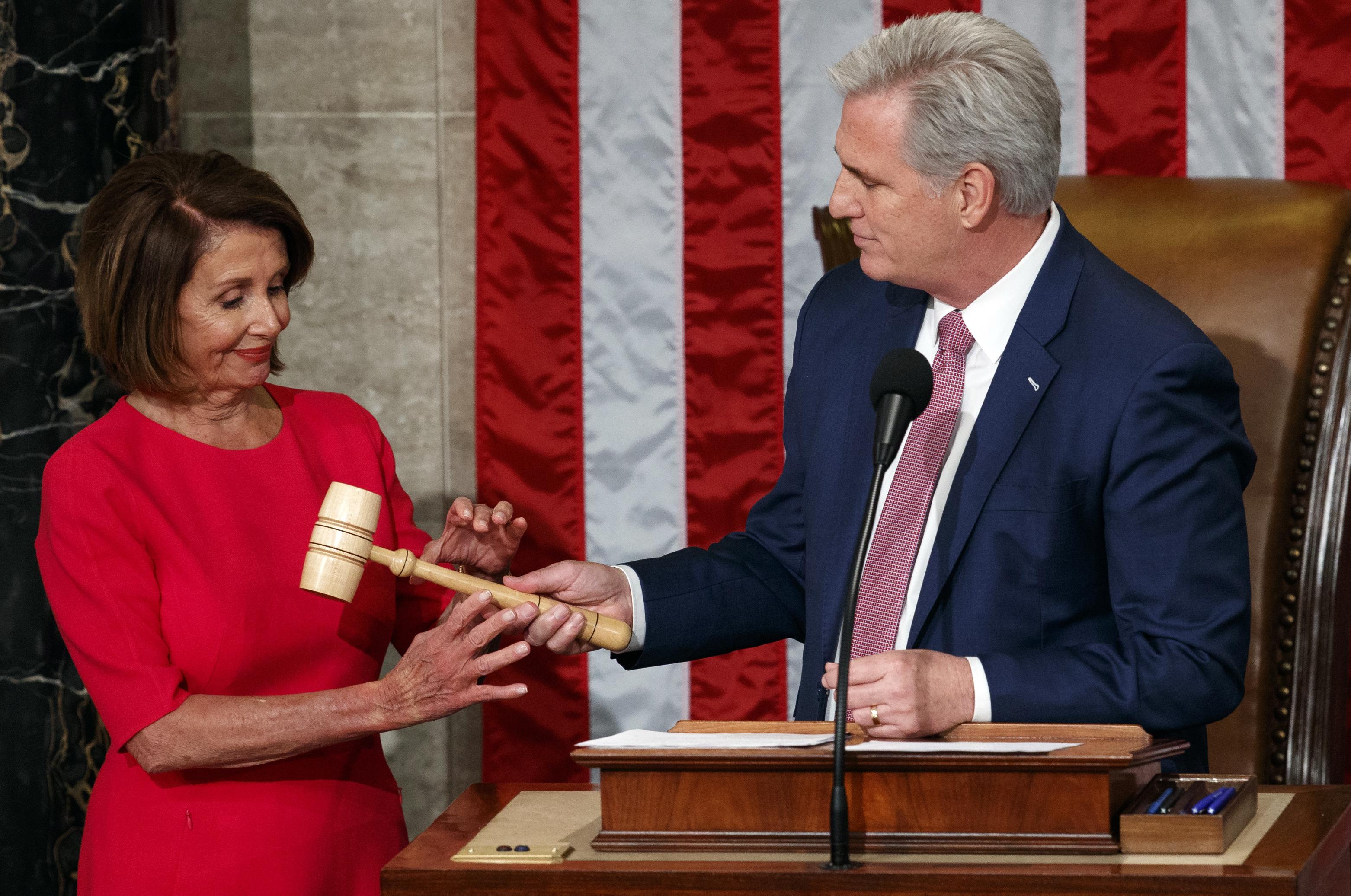
The Congress that we elected in November took office on Thursday. This Congress isn’t just philosophically different from the previous one, it’s visually different. Here, the gavel passes from a blue suit to a red dress.
And Mike Pence swears in new Arizona Senator Kyrsten Sinema.

At her request, she is being sworn on a law book that contains the Constitution, rather than on a religious text. (President John Quincy Adams did the same thing in 1825.) She’s the first openly bisexual member of the Senate, and she’s exercising her right to bare arms. Meanwhile, Rashida Tlaib, who (along with Ilhan Omar) is the first Muslim women to enter Congress, was sworn in on Thomas Jefferson’s Quran, provoking sputtering rage from Christian bigots.

Who can forget this photo of the Republican interns of the last Congress.

There is a woman of color back there somewhere, but finding her is a where’s-Waldo exercise. Meanwhile, here’s just a part of the class photo for the House’s entering freshman members this year. Not interns, members.
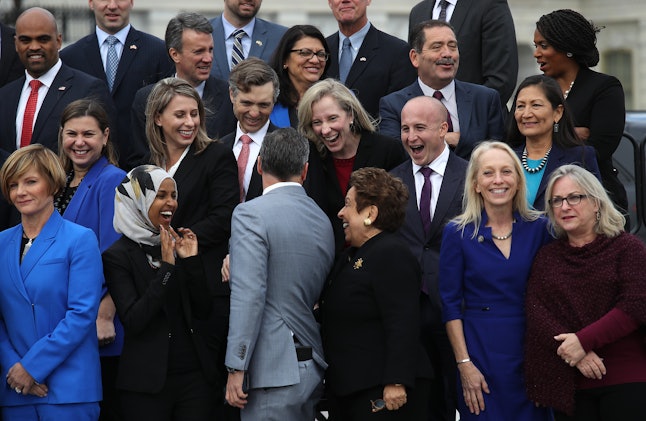
The new Congress makes the country’s political situation clear at a glance: There is one party that wants to preserve the white Christian patriarchy, and another party for everybody else. The Everybody Else Party just came to power in the House.


In addition to voting to reopen the government, House Democrats introduced HR 1, an anti-corruption bill. Its three planks address campaign finance (including a 6-to-1 government matching for small donations to candidates who agree not to take large donations and a requirement that SuperPACS disclose their donors), government ethics (including requiring presidential candidates to disclose their last ten years of tax returns), and voting rights (opt-out voter registration, election day becomes a holiday, plus anti-gerrymandering, and anti-voter suppression measures).

For contrast, think about just how badly Trump has done with his promise to “drain the swamp”: The Secretary of Defense is from Boeing. The Treasury Secretary is from Goldman Sachs. The Attorney General ran a dark-money operation. The Interior Secretary is an oil lobbyist. The Commerce Secretary “could rank among the biggest grifters in American history“. The Labor Secretary arranged a sweetheart plea deal to keep a rich child predator out of jail. The HHS Secretary is from Eli Lilly. The HUD Secretary spent lavishly on his office furniture and hasn’t done much else. The Education Secretary is a champion of for-profit colleges and has invested in student-debt collection companies. The EPA Director is a coal lobbyist.


BTW, Rashida Tlaib also made headlines by telling a group of Move On supporters that “Bullies don’t win” because “we’re going to impeach the motherfucker.”

Conservatives were apoplectic about this violation of political decorum, to which I reply, “Oh, now you have standards.”

But my my policy on this blog is that until Robert Mueller provides clear evidence that Trump had carnal relations with his mother, calling him a motherfucker is premature. I will restrain myself.

and the shutdown and the Wall

On its first day, the House passed bills to fund the government through the end of the fiscal year, except for the Department of Homeland Security, which got a continuing resolution through Feb. 8, with no funding for Trump’s Wall. The funding is on the same terms that the Senate passed by acclamation before Christmas, but now Mitch McConnell is refusing to bring it up for a vote.

What this makes clear is that, under McConnell and Trump, the Senate is no longer an independent institution. The Republican majority is under Trump’s thumb, so as long as he’s not happy, the Senate won’t pass anything. McConnell isn’t even involved in trying to negotiate a solution.

For his part, Trump continues to lie about the Wall and why Democrats might oppose it. No, it’s not because we want open borders and it’s not because we want to deny him a “win”. It’s because the Wall is a stupid idea, as congressmen who have represented border areas know. Democrat Beto O’Rourke tweeted this video. Republican Rep. Will Hurd said, “Building a 30 foot high concrete structure from sea to shining sea is the most expensive and least effective way to do border security.” He also described the $5 billion Trump wants for the Wall as “a random number”.

A 2000-mile border wall didn’t arise in border-security circles, it was just a line that made Trump’s crowds cheer. It’s still not much more than that, which is why Trump can change the height or material from one tweet to the next. Nobody would ever appropriate billions for “a dam” or “a highway” without any more detail than that, but taxpayers are supposed to pony up $5.6 billion as a downpayment on “a wall” whose future costs are unknowable.

In late December, Chief of Staff John Kelly said:

The president still says ‘wall’ — oftentimes, frankly, he’ll say ‘barrier’ or ‘fencing.’ Now he’s tended toward steel slats. But we left a solid concrete wall early on in the administration when we asked people what they needed and where they needed it.

In other words, they discovered that real border-security people had no use for the make-crowds-cheer idea. Lindsey Graham has described the Wall as “a metaphor for border security”. Does that sound like a plan to you? Would you vote to spend billions on a bridge, knowing that it might just be “a metaphor for crossing water”?


BTW, with so few details about how the wall money would be spent, what assurance do we have that a chunk of it won’t wind up in Trump’s pocket?


Many pundits are predicting that a Wall-for-DACA deal is what will end the shutdown. But Trump turned such a deal last year and isn’t offering it now.

Trump doesn’t appear to be offering Democrats much of anything, preferring to pile on threats. (Mainly, he’s offering to mitigate some of the suffering he has caused at the border, as if partially undoing a negative were a positive.) Recently he’s been claiming he can declare a national emergency and build the wall without congressional appropriations. If he tries, that actually would be a national emergency: a tyrannical abuse of power.

Last June, I wrote down my thinking about impeachment, precisely to avoid the temptation to reshape my interpretation of “impeachable offense” to match whatever Trump did or Mueller found. My fourth justification for impeachment was “Congress has no other way to protect itself or the judiciary from presidential encroachment.” That would be the case here: If Trump tries to build his wall without Congress, in my mind that would be an impeachable offense.

I still don’t see how this shutdown ends, unless Republicans in the Senate start defecting. That could take months, during which people will get evicted from government-subsidized housing, unpaid TSA employees will stop showing up to work, and the IRS will stop issuing tax refunds.

and Mitt Romney

The commentariat got very excited by Mitt Romney’s op-ed in Wednesday’s Washington Post. Just before entering the Senate, Mitt actually criticized President Trump. He followed up with an interview with CNN’s Jake Tapper.

To a great degree, a presidency shapes the public character of the nation. A president should unite us and inspire us to follow “our better angels.” A president should demonstrate the essential qualities of honesty and integrity, and elevate the national discourse with comity and mutual respect. As a nation, we have been blessed with presidents who have called on the greatness of the American spirit. With the nation so divided, resentful and angry, presidential leadership in qualities of character is indispensable. And it is in this province where the incumbent’s shortfall has been most glaring.

Well, good for him, but I’m not too excited yet. It’s good to know that all Republican criticism of Trump in the Senate didn’t end when Bob Corker and Jeff Flake left. But while they might occasionally speak out, Corker and Flake seldom did much to get in Trump’s way. Will Romney? It’s not clear.

If the Mueller Report ends up containing as much evidence of impeachable offenses as I suspect it will, most likely Trump will act out somehow and we’ll find ourselves in a constitutional crisis. The question then will be whether Republicans in Congress stand up the way that Barry Goldwater stood up to President Nixon in 1974. Does Romney have that in him? History will want to know.

but you should pay attention to …

In The Atlantic, Elizabeth Goitein examines the various emergency powers Congress has granted the President over the years, and how a president with authoritarian tendencies might take advantage of them. It’s a scary list of stuff, and the article ends with a fantasy of how Trump could use emergency powers to hang on to the presidency. Ultimately, the only defense against this kind of action is if key actors up and down the line refuse to cooperate.

and you also might be interested in …

Climate change can be mapped in a variety of ways. The tropical zone is advancing 30 miles a decade. The boundary between the humid Eastern U.S. and the dry Western U.S. has shifted 140 miles to the east since 1980. Plant hardiness zones in the U.S. are moving north at more than a mile a year.


The Guardian has a worthwhile article on exercise. The basic problem is that humans evolved to have active lives, but in modern society most of us have inactive lives. Sit-all-day-and-then-go-to-the-gym is better than just sitting all day, but it’s not a perfect fix either.

In my conversation with [longevity researcher Gianni] Pes, he repeatedly stressed that while diet and environment are important components of longevity, being sedentary is the enemy, and sustained, low-level activity is the key that research by him and others has uncovered: not the intense kinds of activity we tend to associate with exercise, but energy expended throughout the day. The supercentenarians [110-year-olds] he has worked with all walked several miles each day throughout their working lives. They never spent much time, if any, seated at desks.

And it’s not just the sitting:

He discovered one group of women who had spent their working lives seated, but nonetheless reached a great age. They had been working treadles (pedal-powered sewing machines), which meant they had regularly burned sufficient calories to derive the longevity benefits of remaining active.

What we really need is to make our daily lives active.

What is needed are the kinds of strategies that would make exercise unnecessary. Urban planning that better addresses the outdoor experience and encourages movement would be a key part of this change. But on an individual level, we can think about returning a little of the friction that technology has so subtly smoothed out for us, and make it easy to get things done. Exercise becomes physical activity when it is part of your daily life.

and let’s close with something incongruous

Sadly, video of Claire Foy’s performance of “Rapper’s Delight” on Jimmy Fallon’s show is no longer available. But Sandra Bullock’s version from 2013 is still up.

Are powerful women likable?

OK, a lot of people found Hillary Clinton hard to like. But three more women gained the spotlight this week, and guess what? They’re unlikable too. Maybe there’s a problem here we need to look at.


Maybe there really was some unique I-can’t-put-my-finger-on-it thing about Hillary Clinton that put people off. Sure, she was whip-smart, had a boatload of executive and legislative experience, could stand up to 11 hours of hostile questioning, and had put forward an impressive collection of policies she wanted to implement if she got elected, but … you know. There was just something about her that made voters uncomfortable.

Maybe it was her voice, or her hair, or the way she dressed. She was just too … something. If that many people had said that many bad things about her over the years, there must have been some fire under all that smoke, right? And behind closed doors, she was supposed to have a temper. I know, John McCain’s temper was part of his charm — he was fiery and passionate sometimes, you know — but Hillary’s temper was so … we can’t say bitchy any more, can we? But you know what I mean. It was different.

OK, let’s give people a mulligan for Hillary. And let’s give another mulligan to the people who couldn’t possibly be racist, but some ineffable something about Barack Obama just felt wrong to them. He just wasn’t like the rest of us — not because he was black, of course. Lots of people are black. But … you know. And if he claimed to be an American-born Christian, didn’t that seem kind of fishy somehow? How could we trust somebody like … well, like that, whatever “that” means.

Honestly, I’m starting to get my own ideas about what sounds fishy here, but let’s not dwell on the past. Let’s talk about now. Let’s talk about Elizabeth Warren and Nancy Pelosi and Alexandria Ocasio-Cortez. All three of them have been making news lately, and they’ve all been running into unusual levels of hostility. Each of them, in her own way, has some indescribable quality that raises a lot of people’s ire.

What could it possibly be?

It’s not incompetence. Nancy Pelosi is the most talented legislator of our time. She has no real competition for that title.

When she was Speaker before, the House got stuff done. Appropriations bills got passed on time. She not only saved ObamaCare, but passed a bunch of Obama’s other progressive proposals (most of which died in the Senate).

As soon as the Democrats lost their majority in the House, everybody suddenly realized that the Speakership is a hard job. Even if you lead a partisan majority, holding it together well enough to pass an agenda takes real skill. John Boehner couldn’t do it. Paul Ryan couldn’t go it. Again and again, they would fail to get a proposal to the floor, or miscount votes and see a bill fail unexpectedly. (To this day, a Republican healthcare bill with positive content hasn’t even been drafted, much less voted on or passed.) Deals they thought they had negotiated fell apart at the last minute. Boehner just barely avoided pushing the United States into a self-inflicted financial disaster.

The Speakership is hard, unless you do it backwards and in heels like Pelosi does. Then it looks easy.

When LBJ and Sam Rayburn were the masters of Congress, their skills were appreciated even by many who disagreed with their goals. Phrases like “wheeler-dealer” and “arm-twister” got used with a certain amount of admiration. But it’s hard to imagine applying descriptors like that to a woman. Instead, she (and not Chuck Schumer) was the villain of GOP campaign ads across the country. Her own party seriously discussed not letting her be Speaker again if they regained the majority. (Schumer, meanwhile, lost seats in the Senate and was not challenged.)

It’s not inauthenticity. One complaint about Hillary Clinton was that she just wanted to be president and didn’t stand for anything. But Elizabeth Warren’s political career has a definite theme: Capitalism needs to be regulated to keep big corporations from running over ordinary people.

After the crash of 2008, Warren left a cushy position at Harvard Law School and entered public life because she wanted to protect consumers from the predations of the big banks. She ran for the Senate in 2012 because Republican opposition in the Senate made it impossible to get the job she had wanted: head of the Consumer Financial Protection Bureau (whose creation she had overseen). In the Senate, she has been a leading voice against the concentration of corporate power.

She has the working-class biography to back up her sympathies with ordinary people. Rather than being tracked for high positions early in life (like, say, Brett Kavanaugh), she came from a working-class family and her career developed slowly: She left college to get married, then followed her husband as his career took him to Houston and New Jersey. She finished a bachelor’s degree in speech pathology and  taught public-school children with learning disabilities. She interrupted that career to be an at-home mother, then later went back to school in law. She started out doing legal services from her home, then started teaching, and rose in academic ranks as an expert in laws related to bankruptcy. Eventually she got to the top of the academic heap: tenure at Harvard.

When Clinton, a centrist woman, seemed like the inevitable nominee in 2016, there was a groundswell among progressives for Warren to challenge her. Only after she refused to run did Bernie Sanders get into the race and lead progressive Democrats.

So announcing her presidential candidacy for the 2020 nomination raises one obvious question of substance: Just how much regulation does capitalism need? If you’d rather talk politics, you still have a number of interesting questions to choose from: Can she recover the support of the progressives who turned to Sanders in 2016? Can the Sanders/Warren wing of the party win this time? Can she get more support from blacks and centrists than Bernie got in 2016? And so on.

Instead, Politico raised this question:

How does Warren avoid a Clinton redux — written off as too unlikable before her campaign gets off the ground?

Politically, it’s hard to see much resemblance between Warren and Clinton, except for this: Both of them are women who saw their unfavorability ratings spike when they started to look like serious candidates. Clinton herself explained it this way:

It’s always amusing to me that when I have a job, I have really high approval ratings; when I’m actually doing the work, I get reelected with 67 percent of the vote running for reelection in the Senate. When I’m secretary of state, I have [a] 66 percent approval rating. And then I seek a job, I run for a job, and all of the discredited negativity comes out again, and all of these arguments and attacks start up.

It’s not a lack of passion and vitality. Another criticism of Clinton (which sometimes also gets said about Warren, though I don’t understand why) was that she seemed cold. But if you want a politician who is the opposite of cold, I’ve got one for you: new Congresswoman Alexandria Ocasio-Cortez. But strangely, she also has been a target of public ire.

Since upsetting a member of the House Democratic leadership in a primary and then winning his seat in the general election, Ocasio-Cortez has been targeted both for being too poor and for not being as poor as she’s supposed to be. Predictably, the too-rich criticism was based on her clothes: “That jacket and coat don’t look like a girl who struggles.”

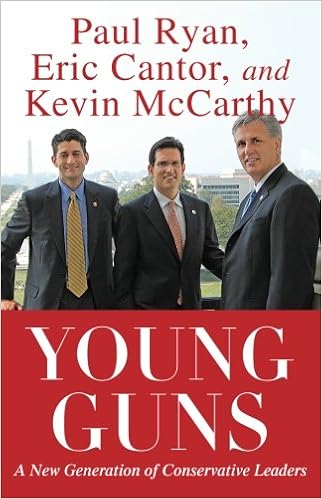
When Paul Ryan came to Congress, he was a “young gun”; his youth was evidence of how extraordinary he must be, to get so far so fast. But AOC’s youth just points to her being a lightweight, because there’s no female equivalent of a “young gun”.

This week, we learned of a new AOC outrage: She and her friends made a dance video in college. Unlike, say, Melania Trump or Scott Brown, she kept her clothes on, but still the video is supposed to be embarrassing for some reason. My main reaction is that this video is a trivial thing that shouldn’t evoke anything more than a trivial response; mine is that college-age Alexandria looks like somebody college-age me would have wanted to go out with (assuming away the time-travel problem). But you can judge for yourself.

Somehow, though, conservatives looked at that video and saw something scandalous. I think this tells us more about them than about AOC. As Paul Krugman put it: “The mere thought of having a young, articulate, telegenic nonwhite woman serve is driving many on the right mad.”

If just being young and nonwhite were the problem, that would be one thing. But in the context of Clinton, Pelosi, and Warren, we see that being older and white doesn’t protect a woman either. The specifics of a woman’s life and character may shape how she gets disparaged, but her unique characteristics are not why she gets disparaged.

People are starting to notice. Robby Mook may have exaggerated a little about the reaction to Warren’s announcement video, but he wasn’t exactly making this up, either.

Last 24 hours shows Trump’s 2020 path to victory:
-Dem candidate releases video that explains her background, values, vision and policies
-it never mentions Trump;
-Trump responds with childish insult;
-Media only covers insult.
All process, all on Trump’s terms. No Dem message.

Maybe Trump and the press will do that with every Democratic candidate. But I also think it works better, and the media is more complicit, against women.

Peter Beinart, I think, has this right: The facts that an article cites about Warren may be true, but still contribute to a false narrative.

Mentioning the right’s attacks on Warren plus her low approval ratings while citing her “very liberal record” and the controversy surrounding her alleged Native American heritage implies a causal relationship between these facts. Warren is a lefty who has made controversial ancestral claims. Ergo, Republicans attack her, and many Americans don’t like her very much. But that equation is misleading. …

There’s nothing wrong with journalists discussing public perceptions of a candidate. The problem is that when journalists ignore what academic research and recent history teach us about gender’s role in shaping those perceptions, they imply—whether they mean to or not—that Warren’s unpopularity can be explained by factors unique to her. They start with the puzzle of her low approval ratings and then, working backward, end up suggesting that her policy views or (pseudo) scandals explain them.

… Journalists shouldn’t ignore electability. Elizabeth Warren’s comparatively low approval ratings are a legitimate news story. But the bigger story is that Americans still judge women politicians far more harshly than they judge their male competitors. Unless journalists name that unfairness, they risk perpetuating it.

“I would have voted for the woman who isn’t running.” As the 2020 campaign proceeds, other women are likely to emerge as serious candidates. (Kamala Harris and Amy Klobuchar, perhaps.) We can hope that the sheer multiplicity of targets will disperse the misogynistic fire. But here’s a wild guess on my part: Whichever one is polling last will get the most favorable coverage. In 2004, when she wasn’t running, many voices pined for Hillary Clinton, only to turn against her in 2008 and 2016, when she was actually on the ballot. Likewise in 2016, people who were voting against Clinton often claimed they could have supported Warren, if only she had run. But where are they now?

The Republican Party has a similar dynamic around blacks. At some point in the process, there’s a boomlet for a black candidate like Colin Powell, Herman Cain, or Ben Carson. But these waves always fade before any votes get cast. Having given cover to people who will never actually vote for a black, the candidacies have served their purpose.

We can’t let that happen in 2020. “I would have voted for a woman” isn’t an excuse any more. Do or don’t, but what you would have done in some alternate reality doesn’t matter.

For the most part, this kind of prejudice is structural and unconscious. “Woman politician” has become a category in people’s heads; it seems natural to treat them differently than male politicians, as if a political office changes when a woman holds it. (There has been a similar phenomenon in sports: For a long time “black quarterback” seemed to be a category of its own. Any new black quarterback would invariably draw comparisons to previous black quarterbacks, and be judged accordingly. Cam Newton came into the NFL as a tall, strong quarterback with speed and a powerful arm, but somehow John Elway was never the comparison that popped into commentators’ minds.)

As Pelosi’s speakership, Ocasio-Cortez’ congressional service, and the 2020 campaign continue, we’re going to have to monitor this constantly, both in the media and in our own minds.

The Monday Morning Teaser

Before his political career crashed and burned, John Edwards used to talk about “two Americas”: one rich and one poor. This week, though, we’ve been seeing a different two Americas: One America is reality-based. But in the other, illegal immigration is a national security emergency, a sea-to-sea wall will fix it, and this wall is so important that it’s worth burning down the country to get it built.

So we have a government shutdown in its third week, with no end in sight. Also, we have a new Democratic House of Representatives, and lots of interesting new members. And the race for the 2020 Democratic presidential nomination is getting started. I’ll talk about all that in the weekly summary.

The featured post, though, focuses on something related but slightly different: The Speaker of that new House, one of its most interesting new members, and the first major presidential candidate out of the gate all have two things in common: They’re women, and they all face an unusual level of vilification.

Coincidence? That explanation is starting to wear thin. I can sort of imagine that Hillary Clinton had some unique nebulous personal quality that made her unlikable to a large number of people (though I liked her myself). But it seems odd that the next three women to gain the spotlight all have some similar quality. I think we need to talk about that. So the featured post is “Are powerful women likable?”

I’m running late today, so it may not be out before 11 EST. Expect the weekly summary between noon and 1.