Monthly Archives: November 2018

An hour-by-hour guide to Election Night 2018

[A general overview of the elections is in the previous post.]
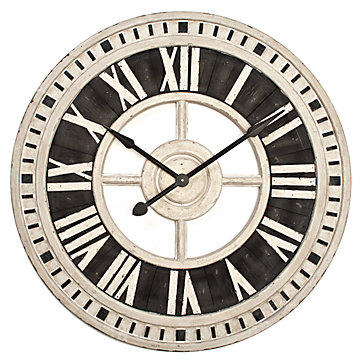
Because states close their polls at different times and count the votes at different rates, Election Night always produces the illusion of a horse race. You could just go to bed early tomorrow night and find out Wednesday what happened. The information that trickles out minute-by-minute is not actually useful to you.

But lots of us love a good horse race, and many of the rest of us won’t be able to sleep well until we know how the important races come out. So I’m going to a returns-watching party, and I suspect many of you will be glued to your TV sets as well. Here’s what to look for hour by hour.

Before 7 p.m.

[All times are Eastern Standard. You can do the math to adjust for where you live.]

No polls close before 6, and no entire state closes its polls before 7. So by common agreement, none of the networks will report their exit polls or project any races before 7. The only point in turning on your TV before 6 is if you’re just too anxious to do anything else.

If you do tune in, though, you can sometimes glean a little information indirectly. The commentators have been getting exit poll results all day, and while they can’t tell you what those results say, they aren’t obligated to say anything that will make them look stupid when the results start coming out. So if they’re having a what-if conversation, like “What if young voters do (or don’t) turn out in record numbers?” chances are that will turn out to mean something. Commentators will be trying to lay down some themes that they expect the election results to fill out.

You will also hear some “party officials are worrying about X” comments. (One of the first signs things were going badly for Democrats in 2016 was when I heard a Democrats-are-worried-about-black-turnout-in-Cleveland conversation.) Officials are worried because they’ve seen something to worry about.

At 6 EST, the first results will come in from the eastern-time-zone parts of Kentucky and Indiana. Maybe you’ll find out something about the Indiana Senate race, which supposedly is leaning towards Democrat Joe Donnelly. But unless you know a lot about Indiana, those early returns won’t tell you too much, because exit polls can’t be released until the central-time-zone parts of those states close their polls at 7.

7 p.m.

Polls close in Indiana, Kentucky, Georgia, South Carolina, Vermont, and Virginia.

There’s no chance that control of Congress will be decided before California closes its polls at 11, and if there are a lot of close races it may take much longer. So in general, what you’re looking for in the early results is the unexpected: A close race that wasn’t supposed to be close, or an surprisingly easy win somewhere. Early elections are linked in some probabilistic way to later elections, so a surprise that favors one party or the other is a sign that surprises might keep favoring that party for the rest of the evening.

You’re also looking for trends in the state exit polls that might turn out to be national trends: Did young people vote? Are Hispanics turning out? Are women outvoting men?

The only really close Senate race in this bunch is in Indiana. Probably it won’t be clear for hours who won, but if it is, the winning party is off to a good start.

Virginia has two toss-up House races: Brat vs. Spanberger in VA-7 and Riggleman vs. Cockburn in VA-5. Those could be bellwethers for the country. In VA-10, Democrat Jennifer Wexton is expected to knock off incumbent Republican Barabara Comstock. That might be the first good news of the evening.

Kentucky-6, Andy Barr against Amy McGrath, is also rated a toss-up. As I explained in the previous post, Democrats can take the House (barely) without winning any toss-ups. But this would be a nice one to get. Georgia-6, where Republican Karen Handel won a close special election last year, is also a toss-up.

One of the most interesting governor races in the country is Abrams vs. Kemp in Georgia. That race has been all about race, so the election hinges on who actually votes. Big turnout, especially big turnout among blacks, favors Abrams.

7:30 p.m.

Polls close in North Carolina, Ohio, and West Virginia.

It’s interesting that a swing state like Ohio has no toss-up House races, a sign that districts are drawn badly. West Virginia’s three districts are all predicted to go for Republicans. North Carolina-9, Harris vs. McCready, is a toss-up.

In the West Virginia, Joe Manchin is expected to hang on to one of the Democrats’ most improbable Senate seats. If he doesn’t, the slim hopes of Democrats winning a Senate majority are pretty much finished.

Ohio has a competitive governor’s race, with just the slightest of edges to Democrat Richard Cordray.

8 p.m.

This is when things get serious. Polls close in Alabama, Connecticut, Delaware, D.C., Illinois, Maine, Maryland, Massachusetts, Michigan, Mississippi, Missouri, New Hampshire, New Jersey, Oklahoma, Pennsylvania, Rhode Island, and Tennessee.

Claire McCaskill’s Senate seat in Missouri is one the Democrats need if they’re going to have any chance of a Senate majority. Democratic wins in the Mississippi or Tennessee Senate races would be upsets, but Democrats need an upset somewhere. New Jersey is a solidly blue state this year, but Senator Bob Menendez has had a long series of near-misses with corruption scandals. He’s expected to win, but the race will be much closer than it should be.

Several interesting House races are in this batch. Maine-2 has been an expensive battle that seems to be leaning to Democrat Jared Golden. A court-ordered redistricting has partially ungerrymandered Pennsylvania, giving Democrats several chances to pick up Republican seats. The toss-up is PA-1, with polls giving a slight advantage to the Republican. In PA-17, Conor Lamb, who won a special election last year, is up against another incumbent, Keith Rothfus. Lamb is expected to win.

IL-6, MI-7 are toss-ups.

8:30 p.m.

Arkansas closes its polls. The four House seats and the governorship are all expected to go to Republicans. No Senate race.

9 p.m.

Polls close in Arizona, Colorado, Kansas, Louisiana, Michigan, Minnesota, Nebraska, New Mexico, South Dakota, Texas, Wisconsin, and Wyoming.

By now the shape of the evening should be coming into focus. Either there’s a Democratic rout going on in the House and the Senate is a nail-biter for Republicans, or it’s pretty clear Republicans will hang onto the Senate and the House is going to go down to the wire.

The close Senate races are in Arizona and Texas. Beto upsetting Ted Cruz is considered unlikely, but if it happens it’s the story of the night. Kansas and Wisconsin have close governors’ races.

MN-1, NEB-2, NM-2, and TX-7 are toss-up House races.

10 p.m.

Iowa, Montana, Nevada, Utah.

Montana’s and Nevada’s Senate races are ones the Democrats need to have. In Iowa-4, Congress’ closest thing to an open white nationalist, Steve King, is expected to be re-elected. But he’s gotten bad publicity late, so you never know.

11 p.m.

North Dakota, California, Hawaii, Idaho, Oregon, Washington.

If it’s a good night for Democrats and the Senate is still in play, it probably comes down to Heidi Heitkamp’s seat in North Dakota.

If Republicans are doing better than expected, control of the House will probably hinge on CA-39 and CA-48. California has a lot of mail-in ballots that only need to be postmarked by Election Day, so these races could be in doubt into next week.

1 a.m.

Alaska.

If Don Young’s seat in Alaska is in doubt, odds are the Democrats have already nailed down the House.

Past 1 a.m.

At this point all the votes have been cast and all the exit polls published. We just have to wait for the counting. Probably either the House or the Senate (but probably not both) will be in doubt well into the wee hours.

How the Midterm Elections Look With One Day to Go

The most important figure in tomorrow’s election is actually not on the ballot. No matter what happens, Wednesday morning Trump will still be president. This election isn’t about getting rid of Trump, it’s about controlling him. If Democrats get the majority in  one or both houses of Congress, the country will finally get some of the checks-and-balances that the Founders thought they had written into our Constitution.

Getting rid of Trump will still depend either on the 2020 elections, or on turning up evidence of impeachable offenses so compelling that more than a dozen Republican senators will be convinced.

The Senate

Republicans currently have a 51-49 majority. Tomorrow 35 seats are up for election, so on the surface you’d think it wouldn’t be that hard for Democrats to flip two seats and take control. (They need two, because Vice President Pence casts the deciding vote in a 50-50 Senate.)

However, 26 of the contested seats already belong to Democrats, so even if they hold all those, they have to flip 2 of the 9 Republican seats. It’s a tall order. (“Why did things shake out that way?” you might wonder. That’s because 2006 — when the public finally turned against the Iraq War — was a huge Democratic year, when Democrats like Claire McCaskill in Missouri and Jon Tester in Montana won seats in very red states. 2012 was Obama’s re-election year, so they managed to hold onto those seats. 2010 and 2014, by contrast, were strong years for Republicans.)

538 gives Democrats only a 1 in 6 chance of pulling this off. Here’s how it rates the individual races:

  • 18 are solid for Democrats, meaning the Democrat has at least a 95% chance to win.
  • 4 (Smith in Minnesota, Tester in Montana, Menendez in New Jersey, Manchin in West Virginia) are likely Democratic wins, with a win likelihood over 75%.
  • 3 (Nelson in Florida, Donnelly in Indiana, McCaskill in Missouri) lean Democratic, with a 60% or better win probability.
  • 2 (Sinema in Arizona, Rosen in Nevada) are toss-ups, though in each case the Democrat has a slight edge.

Already, winning all of those at the same time seems unlikely. If each race were independent of the others, for example, winning all four of the “likely” seats would only be about a 2 out of 3 bet. All three leaning seats together would be less than 1 in 3, and the two toss-ups together would be 1 in 4. (Actual combined probabilities are quite a bit higher than that, because the races are not independent rolls of the dice. As we saw with Trump’s victory in 2016, the party that wins close races in one state is more likely to win close races in another.)

Worse, all those seats together add up to just 27. In order to take control of the Senate, Democrats would need an upset in the only lean-Republican seat: North Dakota, where incumbent Democrat Heidi Heitkamp has only a 25% chance of hanging on. If she can’t pull that off, Democrats need one of the likely-Republican seats:

  • Beto O’Rourke in Texas (23%)
  • Phil Bredesen in Tennessee (20%)
  • Mike Espy in Mississippi (12%)

Unless at least one of those longshots comes in, Republicans hold control of the Senate. (Again, the races aren’t independent, which is how the odds for a Democratic majority can be as high as 1 in 6.)

The House

Democrats gaining control of the House is a much more doable job. All 435 seats in the House of Representatives are in play. Republicans currently have a 235-193 majority, with 7 seats vacant. Of the vacancies, two were formerly Democratic and five Republican. So you will sometimes hear that in order to gain a majority Democrats need to pick up 23 seats (if you count two of the vacancies as Democratic seats) or 25 seats (if you don’t).

In order to get a majority (218 out of 435), Democrats need only win the seats 538 rates as leaning their way:

  • 193 solid Democratic
  • 17 likely
  • 10 leaning

That adds up to 220. In addition, there are 18 toss-ups and 13 lean-Republican seats within range. Overall, that gives Democrats a 7 in 8 chance of winning the House. If everything breaks in their favor, they could have as large a majority as the Republicans have now.

House races, though, are unlikely to all go according to script. First, there are just so many of them that some longshot candidate is going to win somewhere. And second, House races aren’t polled as aggressively as Senate races, so some last-minute local factors could be overlooked. Somewhere, a district the media stopped paying attention to months ago is going to produce an upset.

As I’ll discuss in the hour-by-hour guide (the next post), you want to watch for toss-up or leaning seats in states where the polls close early. That will give the first indication of whether this is going to be a nail-biter or an easy Democratic win.

Governorships and state legislatures

If Democrats gain some governorships and control of some state legislatures, they’ll have a chance to undo the extreme gerrymandering that allows Republicans to maintain minority rule. (Last year, Democrats outpolled Republicans by 9% in the elections for the Virginia House of Delegates. But Republicans kept control.)

State government becomes more important as the federal government stops protecting civil rights and the environment. And if the now-more-conservative-than-ever Supreme Court overturns Roe v Wade, whether a woman can get an abortion may be up to the states.

Governors are being elected in 36 states, and at least some legislators are being elected in every state. 538 expects Republicans to win slightly more states (winding up with 26 governorships), but Democrats to wind up governing a larger percentage of the population (62%).

The closest races are in Iowa, Nevada, Ohio, Georgia, and Kansas. The two most interesting races, to me anyway, are Georgia and Florida, where Stacey Abrams and Andrew Gillum have a chance to be their states’ first black governors. (Abrams would be the first black woman governor in any state.) Abrams’ race is leaning towards her opponent, while 538 gives Gillum a 76% chance to win. Personally, I will find it very satisfying if Wisconsin finally boots out Koch puppet Scott Walker, which is the way the race is leaning.

As for state legislatures, I don’t know what to tell you, since there are very few published polls.

Ballot propositions

538 has a good rundown of the most important ones.

In general, ballot propositions cause more problems than they solve. There’s a reason we elect representatives who can focus on the issues full-time, rather settle everything by direct democracy. But in states that are heavily gerrymandered, or where running for office requires the kind of money you can only get from special interests, a ballot proposition might be the only way for the majority to make its will felt.

Michigan is one of those heavily-gerrymandered states.

Last year, Michigan Democrats won more overall votes for state House than Republicans. It was by a whisper, about half of one percentage point. But Democrats got walloped in the race that counts, as the GOP swept 63 of 110 seats.

Proposition 2 would create a non-partisan commission to draw districts for both the legislature and Michigan’s congressional districts. The commission would be given strict criteria to meet. Other anti-gerrymandering proposals are on the ballot in Colorado, Utah, and Missouri.

Given the racial biases in our justice system and the correspondingly high incarceration rate for non-whites, one way to make sure whites hold onto political power as long as possible is to keep felons from voting, even after they have served their sentences. Florida is one of the worst states for this form of voter suppression, with 10% of the voting-age population disenfranchised. Amendment 4 would give felons back their voting rights after their sentences end, except for murderers and sex offenders. (Yes, that is the proposition John Oliver was telling you about.)

Nevada, Maryland, and Michigan have propositions that would make it easier to register to vote, while Arkansas and North Carolina would make it harder to vote by requiring a photo ID.

A California proposition would repeal a number of gas taxes. A Washington proposition would create a carbon tax. Arizona’s Prop 127 would force utilities to get half their power from renewable energy by 2030.

Idaho, Nebraska, and Utah all have propositions to expand Medicaid.

Here in Massachusetts, the proposition I care most about is #3, which would protect transgender rights. I’m for it.

Why I’m Voting Straight Democratic

I’m definitely voting. But if you’re willing to run under the banner of today’s Republican Party, I can’t vote for you.


I didn’t used to be like this.

Only a few years ago, I was a meticulous voter. I’d examine each race and think hard about the individual candidates, looking for the best combination of personal character and positions on the important issues. There was a time when if I didn’t know anything about the candidates for some down-ballot office, I might leave that line blank, figuring that better-informed people should make the choice.

I don’t do that any more. Tomorrow I’m going to vote a straight Democratic ticket, including voting for and against candidates I’ve never heard of. If not for the ballot questions — I’m still meticulous about them — I’d be in and out of the voting booth in seconds.

It’s not that I think the Democratic Party is perfect. I expect that most of the Democrats I vote for will be good public servants, and will mostly promote policies I agree with. But some of the rest, I’m sure, will simply be the lesser evil. I’ve made my peace with that. I just know that they are the best hope to defeat Republicans, and Republicans need to be defeated. I can’t vote for Republicans any more.

That wasn’t always true. In my first presidential election, 1976, voting for Jerry Ford over Jimmy Carter was a real option, because I expected the country to be in decent hands no matter who won. (I dithered between the two before eventually picking a third party candidate.) Decades ago, when I was living in Massachusetts the first time, I voted for Bill Weld to be governor. He seemed like a straightforward, honest, intelligent guy. Eventually I even developed the rule-of-thumb that I would default to the Republican if I didn’t know who to vote for, figuring that only a really good Republican could win in my liberal district. When I moved to more conservative New Hampshire, I flipped that reasoning and defaulted to Democrats.

But now that I’m back in liberal Massachusetts, I’m not voting Republican for any office, no matter how trivial. In any state in the Union, I would do the same.

Have I changed? Not nearly so much as the Republican Party has. Today’s Republicans are not like the Republicans of the past, even the recent past. Today, the GOP is the party of climate change denial, discrimination against gays, gerrymandering, and baseless conspiracy theories. It’s the party that opposes the minimum wage, the party that cuts rich people’s taxes and then goes after middle-class Medicare when their tax cut creates an artificial budget crisis. (The middle-class tax cut Trump promised last week is vaporware: There is no such proposal, and once the election is over you will never hear about it again, except possibly as a cover story for another handout to the rich.)

Even worse, today’s Republican Party is a comfortable home for white supremacist fellow travelers like Rep. Steve King of Iowa. Open racists like David Duke or Richard Spencer endorse Republicans. White supremacist groups campaign for Republicans. If you want to spread anti-Semitic conspiracy theories, you go to the networks and web sites that Republicans frequent. If you’re an abuser of women, Democrats will probably throw you out, but Republicans will circle the wagons around you. If you favor something as offensive to human compassion as the death penalty for gays, Republicans will embrace you.

If you are happy carrying that party’s banner, I can’t vote for you.

And then there’s Trump. (I covered in detail what I think of Trump last week.) Back in 1990, They Might Be Giants recorded a song that starts like this:

This is where the party ends.
I can’t stand here listening to you
And your racist friend.

To me, racist is a stand-in for all sorts of bigoted positions: anti-immigrant, anti-Hispanic, sexist, homophobic, anti-Muslim, and just generally anti-everybody-who’s-not-a-white-straight-Evangelical-Christian. For every Republican candidate in the country, Trump is the bigoted friend that they can tolerate, but I can’t. For me, that’s where the party ends.

Your local Republican candidate might sound fairly reasonable from time to time. Lots of Republicans do: Paul Ryan occasionally tut-tuts when Trump says something particularly ridiculous or odious. Jeff Flake and Bob Corker have spoken up now and then. (And both retired from the Senate when they realized that even their minimal criticisms had excommunicated them from the Trump personality cult the GOP has turned into. As Flake put it: “There may not be a place for a Republican like me in the current Republican climate or the current Republican Party.”)

But in practical terms, what has any Republican official done to stand in Trump’s way? 538 models how often you’d expect a senator to vote with Trump, given Trump’s electoral margin in his or her state. Flake was actually considerably more likely to vote with Trump than the model predicted, and Susan Collins even moreso. What have any of them done to fight back, and reclaim their party for reasonable conservatism?

When push comes to shove, elected Republicans have all gotten in line behind Trump. Sometimes they’ve made a big public show of how hard the decision was (like Susan Collins supporting Trump’s tax cut, or Collins and Flake voting to elevate Brett Kavanaugh to the Supreme Court), but they’ve gotten in line. They’ve blocked congressional investigations of collusion with Russia or any other administration wrongdoing, and they’ve harassed any Justice Department investigations that Trump found inconvenient. Cabinet-level malefactors like Ryan Zinke rest easy knowing that Republicans in both houses of Congress have their back.

Rather than stand up for the principles they used to claim, Republicans who ought to know better have drunk the Kool-Aid. Ted Cruz is now embracing the man who insulted his wife and accused his father of conspiring to assassinate JFK. Lindsey Graham once understood that Trump is a “race-baiting xenophobic religious bigot”. Now he’s the most rabid of Trumpists, frothing at the mouth to defend Brett Kavanaugh and offering unconstitutional legislation to back Trump’s plan to end birthright citizenship.

I’ll just sit here wondering how you
can stand by your racist friend.

The only conservatives who have consistently held their ground against Trump are writers rather than politicians: Michael Gerson, George Will, Max Boot. All of them have urged their readers to vote for Democrats this time around. Boot writes:

Some Republicans in suburban districts may claim they aren’t for Trump. Don’t believe them. Whatever their private qualms, no Republicans have consistently held Trump to account. They are too scared that doing so will hurt their chances of reelection.

Friday, Jennifer Rubin wrote:

The midterm elections have therefore become all about Trump, about whether he’s “winning” or “paying a price” for his descent into rancor, racism and misogyny. Suddenly the real “values voters” are those who care deeply about values such as kindness, democracy, rationality and respect. If they show up and vote their values, Republicans are in big trouble.

Finally, you can see the difference between the parties in the closing arguments they are making as the election approaches: Democrats are talking about making your health insurance more secure, particularly if you’re on Medicare or have a pre-existing condition. They’re talking about student debt, climate change, voting rights, and protecting the civil rights of those whose rights are actually in question: women, racial minorities, and the LGBTQ community.

Republicans, by contrast, are closing with an issue that is almost entirely imaginary: the “threat” posed by several thousand migrants fleeing the violence of Honduras. Many of the caravaners are women and children, and the Pentagon believes most of them will never get here. Far from an “invasion”, the expressed intention of the much-hyped caravan is to surrender to US officials and ask for the asylum hearings that both international and American law promise them. (Instead, Trump is offering them a glittering symbol of the new MAGA Republic: “Barbed wire used properly,” he assures his cultists, “can be a beautiful sight.”)

There is no military issue whatsoever, so Trump’s dispatch of 5,000 (or is it 15,000?) troops to the border is pure theater — theater that will waste soldiers’ time and could cost taxpayers hundreds of millions of dollars. The conspiracy theories that Trump is using to justify this stunt have already inspired domestic terrorists like the MAGA mail bomber and the Pittsburgh synagogue shooter.

If that’s what you like — imaginary crises, conspiracy theories, money flowing from the middle class to the rich, race-baiting, voter suppression, abuse of women, and an ever more vigorous and violent white-supremacist movement — then vote Republican. You’re sure to get more of it.

But if that’s not what you want out of government, then the Republican Party as it stands today must fall. Voters need to reject it root and branch.

The Monday Morning Teaser

So the midterm elections are tomorrow. I’m sure you won’t be surprised to learn that this week’s Sift is going to focus on them.

It starts with what I’m going to do personally: “Why I’m Voting Straight Democratic” will be out before 9 EST. The short version: What the Republican Party stands for has become so toxic that if you’re comfortable running as a Republican, I can’t vote for you.

Next will come two posts that I hope you’ll find useful tomorrow night, assuming you decide to watch the election returns. The first is “How the Midterm Elections Look With One Day to Go”. It goes through the polling, what Democrats need to accomplish to get either a House or Senate majority, some of the important governor’s races, and a few of the more interesting ballot questions. That should be out before 11.

The second is “An hour-by-hour Guide to the Midterm Elections”. I’ll go through Tuesday night hour-by-hour with an eye to what polls close when and which races to focus on to see how the evening is going. Think of it as the program for your Tuesday night return-watching party. I’m hoping to get that out by noon.

The weekly summary will be short this week. It should be out by 1.