Heller begins with an observation I keep banging my head against: All those accounts where Harris lost because she didn’t do something — almost invariably she did do the thing they’re claiming she didn’t do. She talked about kitchen-table issues, she had detailed policy proposals, she gave interviews, she reached out to every kind of voter, and so on. She raised money, she advertised, she had a great ground game. But for some reason the things she said and did didn’t register with some large chunk of the electorate.
This seems to me like the central problem for Democrats to wrestle with. Sure, work on the Party’s message, work on the outreach to Latino men, come up with more popular policies. But none of that is going to matter if your great message describing your great policies goes in one ear and out the other.
But why would it do that?
On the other hand, Trump seemed to do everything wrong. His campaign speeches were boring and largely unwatchable. He didn’t have a ground game to speak of. Any policy ideas — there weren’t many of them — were vague. (Does he want a 10% tariff or 20%? It seems like that should matter.)
Trump’s speeches at rallies, many people noticed, had a curious background-music quality: they went on forever, aimlessly, and people would come and go at will. The actual speeches didn’t seem to matter; they existed simply to set a vibe and keep certain broad suggestions (immigration big problem! Biden Administration so corrupt!) drifting into the ether. … Planting ideas this way isn’t argument, and it’s not emotional persuasion. It’s about seeding the ambience of information, throwing facts and fake facts alike into an environment of low attention, with the confidence that, like minnows released individually into a pond, they will eventually school and spawn. Notions must add up to a unified vision but also be able to travel on their own, because that’s how information moves in a viral age.
… The communications researcher Pablo Boczkowski has noted that people increasingly take in news by incidental encounter—they are “rubbed by the news”—rather than by seeking it out. Trump has maximized his influence over networks that people rub against, and has filled them with information that, true or not, seems all of a coherent piece. This is the opposite of micro-targeting. The goal is for voters to meet ideas coming and going so often that those notions seem like common sense.
So when Harris described policies (or even Biden administration accomplishments) that benefit the working class, it didn’t register, because people “know” (from having run into the notion over and over again) that Democrats are elitists who look down on the working class. They didn’t listen, because they “knew” that Harris wasn’t talking to people like them.
Conversely, when Trump said immigrants were “eating the dogs … eating the cats”, maybe people eventually heard that this story was false. (Or maybe they didn’t.) But the idea that immigrants are causing problems all over the country was seeded. When you heard it again, you’d heard it before.
That’s how you wind up with a result like this: Harris won handily among people who were paying attention, but got clobbered among voters who just “knew things” without checking them out.
Heller points out that if you’re trying to seed the world with ambient information, it helps to have your own dedicated media organizations like Fox News, Truth Social, and ultimately X/Twitter, where your factoids can be repeated endlessly without contradiction. Democrats have the so-called “liberal” media, but the message discipline just isn’t there. As often as not, “liberal” outlets like the New York Times and Washington Post would pass along Trump-oriented ambience: Biden’s too old, the economy feels bad, Harris’ campaign doesn’t have enough substance, and so on.
In the old days, campaigns imagined that even fairly uninformed voters had an issue checklist: abortion, inflation, immigration, climate change, education, and so on. Just before the election, they’d find out which candidate agreed with them on those issues, and then vote for that candidate.
Tuesday was traumatic. How do we recover, as individuals and as a country?
There’s a lot for all of us to process here. About the outside world, the emotions roiling around inside, what we need to be preparing for, and so on. This post is a very quick and incomplete response.
One important thing I’ll say up front: This is a secure-your-own-mask-first situation. We’ve all been knocked off balance, and we need to get our balance back before we go charging out into the world. So do what you need to do and don’t feel guilty about it: gather friends around you, sit in a dark room alone, make art, play solitaire, binge on some silly TV show, whatever. Things are happening deep down, and we need to let those processes do their work. Whatever you decide to do next will benefit if you take care of yourself now.
Me. The hardest thing for me right now is re-envisioning my country. It’s been many years since I have seen America as a “city upon a hill” or the “last best hope of Earth“. But still, I’ve gone on believing that the great majority of Americans aspire to be better and do better. A lot of my commitment to writing has come from my belief that if I work to understand things and explain them clearly, then other people will understand those things too, and most of them will do the right thing, or at least do better than they otherwise would have.
This election demonstrates how naive that belief is. Some Americans were fooled by Trump’s lies about the economy or crime or history or whatever, but many weren’t. They saw exactly what Trump is, and they chose him. Many of the people who believed him weren’t fooled into doing it. They chose to believe, because his lies justified something they wanted to do.
Oddly, though, I am continuing to write, as you can see.
I am reminded of a Zen story: A man meditated in a cave for twenty years, believing that if he could achieve enlightenment, he would rise to a higher state of being and attain mystical powers. One day a great teacher passed through a nearby village, so the man left his cave to seek the sage’s advice. “I wish you had asked me sooner,” the great teacher said sadly, “because there is no higher state of being. There are no mystical powers.”
Crestfallen, the man sat down in the dust and remained there for some while after the sage had continued on his way. As the sun went down, he got up and went back to his cave. Not knowing what else to do with himself, he began his evening meditations. And then he became enlightened.
So far, no enlightenment. But I’ll let you know.
Something similar happens in Elie Wiesel’s recounting of a trial of God he witnessed as a boy in a Nazi concentration camp. (I haven’t recently read either his account or the play it inspired, so I might not have the story exactly right.) After a lengthy and spirited argument, this makeshift Jewish court finds God guilty of violating his covenant and forsaking the Jewish people. And then they move on to their evening prayers.
Election night. Despite everything I’ve said in this blog about avoiding speculation and being prepared for whatever happens, by Election Day I had become fairly optimistic. That all went south very quickly.
I had made myself a list of early indicators, beginning with how Trump Media stock performed that day. (It was way up, a bad sign.) Next came how easily Trump carried Florida. (It was called almost immediately, another bad sign.) Things just got worse from there. I briefly held out some hope for the Blue Wall states (Wisconsin, Michigan, Pennsylvania) until early reports showed Harris underperforming Biden’s 2020 results (when Biden just barely won those states). So I was in bed by 11 and never got up in the night to see if some amazing comeback had started.
I had expected to be deeply depressed if Harris lost, but in fact I haven’t been. I’m disappointed, but I’ve been oddly serene.
No doubt part of my serenity is ignoble. Due to a variety of privileges — I’m White, male, heterosexual, cis, English-speaking, native-born, Christian enough to fake it, and financially secure — I am not in MAGA’s direct line of fire. So whatever trouble I get into will probably come from risks I choose to take rather than brownshirts pounding on my door. Many people are not in my situation, and I am not going to tell them they should be serene.
But there’s also another factor — I hope a larger factor — in how I feel, and I had to search my quote file until I found something that expressed it. In Cry, the Beloved CountryAlan Paton wrote:
Sorrow is better than fear. Fear is a journey, a terrible journey, but sorrow is at least an arrival. When the storm threatens, a man is afraid for his house. But when the house is destroyed, there is something to do. About a storm he can do nothing, but he can rebuild a house.
It’s not a perfect metaphor, because we could in fact vote or contribute or volunteer to influence the election. But the scale of the election dwarfed individual action. The closer it got, the more it seemed like a storm. In spite of my propensity to latch onto hopeful signs, in the days and months leading up to the election, I was filled with a very painful dread.
That dread is gone. The hammer has fallen. My faith in the American people was misplaced, so I can now get on with reconstructing that important piece of my worldview.
What happened. As always, we should start with the undeniable facts before making a case for this or that interpretation.
Trump won. He carried the Electoral College 312-226, and also won the popular vote by around 3 1/2 million votes, which is not quite the margin that Obama had over Romney (5 million), and well below the margin Biden had over Trump (7 million) or Obama had over McCain (9 1/2 million).
So it was not a historic landslide, but it was a clear win. Trump had appeared to be ready to try to steal the election if he didn’t win it, but that turned out not to be necessary. Coincidentally, all online talk of “voter fraud” evaporated as it became clear Trump was winning legitimately. The whole point of the GOP’s “election integrity” issue was to provide an excuse not to certify a Harris victory. But with Trump winning, fraud was no longer a concern.
Republicans also won the Senate. Ted Cruz and Rick Scott retained their seats, and no seats flipped from Republicans to Democrats. Democrats lost Joe Manchin’s West Virginia seat, something everyone expected as soon as Manchin announced he wouldn’t run. In addition, Democratic incumbents Sherrod Brown in Ohio, Bob Casey in Pennsylvania, and Jon Tester in Montana were defeated. The new Senate looks to have a 53-47 Republican majority. (Casey is still holding out hope that uncounted provisional ballots will overcome McCormick’s lead. But few think that’s likely.)
How did it happen? At the simplest level, it happened because too many people voted for Trump and not enough for Harris. Because the US has secret ballots, there’s no way to know for sure who those people were. But we do have exit polls.
It’s important to phrase things correctly here, because it’s way too easy to scapegoat groups of people unfairly. For example, you’ll hear that Trump won because of the Latino vote (which is true in a sense that we’ll get in a minute). But if you look at the news-consortium exit poll, Harris won the Hispanic/Latino vote 52%-46%, while Trump won the White Evangelical/Born-Again vote 82%-17%. So if you’re looking for someone to blame, look at Evangelicals, not Latinos.
However, most analysts are using the 2020 election as a baseline: Harris lost because she didn’t do as well as Biden did in 2020. And that brings a second exit poll into the conversation. Biden won the Hispanic/Latino vote 65%-32% in 2020, and lost the White Evangelical/Born-Again vote 24%-76%. So if you’re looking for Democratic slippage from 2020 to 2024, you’ll find it in both groups, but the Hispanic/Latino vote stands out; the Democratic margin among Latinos dropped from 33% to 6%.
The Latino vote also stands out because it’s puzzling, at least to non-Latinos like me. Trump ran largely on hostility to non-White immigrants and a promise to deport millions of people, many of whom are Latino. Again, it’s important to nuance this correctly: Latino voters are citizens — non-citizen voting was one of Trump’s lies — and Trump’s prospective deportees are not. Many Latino voters are solidly middle class, speak English with an accent that is more regional than foreign-born, and are well along the immigrant path traveled in the 20th century by Italians and Greeks. It shouldn’t be surprising, then, that as Latinos assimilate into America, they begin to vote more and more like other Americans. After all, Polish Americans may still value their Polish heritage, but they typically don’t base their votes on an agenda of Polish issues.
Still, I have a hard time believing that MAGA racism will respect legal, social, or economic boundaries. Puerto Ricans have been citizens since 1917, and they are still fair game for racist insults. Native Americans are sometimes told to “Go back where you came from”, which is probably Siberia many thousands of years ago. When the racial profiling starts, your skin color and family name may matter more than your legal status. Also, I would suspect that Latino citizens are much more likely than Anglos to know somebody at risk of deportation. I don’t understand why that wasn’t a bigger consideration.
There was also slippage — not much, but some — among Blacks. Biden won the Black vote 87%-12%, while Harris won it 85%-13%. Harris actually improved slightly on Biden’s performance among Black women (91% to 90%), but did worse among Black men (77% to 79%). (I assume that round-off errors account for the math anomaly in those numbers.)
Meanwhile, the White vote barely changed: Harris and Biden each got 41%.
Finally, there’s turnout. Total voter turnout was 65% in 2024 compared to 67% in 2020. However, by American historical standards 65% is high, not low. You have to go back to 1908 (66%) to find another election with turnout this high. The 2020 adjustments to the Covid pandemic made it easier to vote then than at any other time in US history. So it’s unfair to fault the Harris campaign for not matching that turnout.
Why did it happen? I want to urge caution here. After any political disaster, you’ll hear a bunch of voices saying basically the same thing: “This proves I was right all along” or “This wouldn’t have happened if only people had listened to me.”
So Bernie Sanders thinks this election proved Democrats need a more progressive agenda to win back the working class. Joe Manchin says Democrats ignored “the power of the middle”, which implies the party should move right, not left. Others blame the liberal cultural agenda — trans rights, Latinx-like language, defund the police — for turning off working-class voters. Or maybe Harris’ outreach to Nikki Haley conservatives wasn’t convincing enough, and the problem was all the progressive positions she espoused in her 2020 campaign. Josh Barro suggests the problem is that blue states and cities are not being governed well.
The gap between Democrats’ promise of better living through better government and their failure to actually deliver better government has been a national political problem. So when Republicans made a pitch for change from all this (or even burn-it-all-down), it didn’t fall flat.
Basically, whatever you believe, you can find somebody telling you that you are right, and Harris would have won if she had done what you wanted.
I want to encourage you to resist that message — and I’m going to try to resist it myself — because none of us will learn anything if we just insist we’ve been right from Day 1. We should all bear in mind that the US is a very big, very diverse country, and (whoever you are) most voters are not like you. It’s easy for me to imagine positions or messages or candidates that would have made me more enthusiastic about voting Democratic. But we need to be looking for an approach that inspires a broader coalition than showed up for Harris last week. That coalition is going to have to include people you don’t understand, the way I don’t understand the Latinos who voted for mass deportation, the women who voted to give away their own rights, or the young people who voted to make climate change worse.
This is exactly the wrong time for I-was-right-all-along thinking. Back in 1973, Eric Hoffer wrote:
In a time of drastic change it is the learners who inherit the future. The learned usually find themselves equipped to live in a world that no longer exists.
So much of what passes for “obvious” or “common sense” right now only sounds that way because it is well grounded in a worldview that no longer applies. This is a truth that is easy to see in other people, but hard to see in ourselves.
We’re going to be in a weird position for the foreseeable future: Trump is going to try to run over a lot of legal, cultural, and political boundaries, and we need to be prepared to resist. It would be great to be able to resist from a place of rock-solid certainty. But if we’re going to turn this around in the long term, we also need to be humble and flexible in our thinking. Fairly often, we’re going to have to think thoughts like: “I don’t really don’t understand a lot of what’s happening, but I’m pretty sure I need to put my body here.”
Explanations we can eliminate. You don’t have to have the right explanation to recognize wrong ones.
Harris ran a bad campaign.Josh Marshall puts his finger on the statistic that debunks this.
In the seven swing states, the swing to Trump from 2020 to 2024 was 3.1 percentage points. In the other 43 states and Washington, DC the swing was 6.7 points.
Both candidates focused their ads, their messaging, and their personal appearances on the swing states. If the Trump campaign had been running rings around the Harris campaign, this arrow would have pointed in the other direction. In short: If you were a 2020 Biden voter, the more you saw of Harris and Trump, the more likely you were to vote for Harris.
I live in a typically liberal Boston suburb. Massachusetts is about as far from a swing state as you can get, so no national figures ever showed up here. Occasionally we’d see some ads aimed at New Hampshire, but we didn’t get nearly the blitz that Pennsylvanians got. And guess what? Harris slipped behind Biden’s performance here too.
Harris should have picked Josh Shapiro as her VP. This would be a good argument if Harris had won the national popular vote, but failed in the Electoral College because she lost Pennsylvania. But she also lost Wisconsin, where Walz probably helped her.
Also, Harris won the Jewish vote by a wide margin: 78%-22%. So Shapiro’s Judaism probably wouldn’t have helped the ticket.
Harris should have moved further left. We can never say what would have happened if a candidate had delivered a completely different message from the beginning. But I think it’s pretty clear that simply shifting left down the stretch, i.e., emphasizing the more liberal parts of Harris’ message and record, wouldn’t have helped.
The best evidence here comes from comparing Harris to Democratic Senate candidates. Candidates who are perceived as more liberal, like Bernie Sanders and Elizabeth Warren, generally did slightly worse than Harris in their states, while candidates perceived as more conservative (Tim Kaine and Bob Casey, say) did somewhat better.
I’m ignoring a bunch of the Senate races because I don’t see much to be gleaned from them. Jon Tester ran to Harris’ right in Montana and did 7% better, but Harris was never going to be conservative enough to win Montana — and as it turned out, Tester wasn’t either. Maryland’s Angela Alsobrooks ran almost 8% behind Harris (and won anyway), but that’s more a reflection on her opponent, former governor Larry Hogan, one of the few non-MAGA Republican candidates. (It suggests that a moderate Republican could have won a landslide on the scale of Nixon in 1972 or LBJ in 1964.)
If you saw much election advertising, you know that Republicans worked hard to paint Harris as part of the “radical left”. I don’t think they’d have done that if they thought moving left would help her.
Things I think I know. I don’t have a sweeping theory, but I’ll offer a few tentative pieces of a theory.
We lost the information war. The aspect of this campaign I found most personally frustrating was how much of the pro-Trump argument centered on things that simply aren’t true. Our cities are not hellholes. There is no migrant crime wave. Crime in general is not rising. Most of the countries that compete with us would love to have our economy. Inflation is just about beaten. America was far from “great” when Trump left office in 2021. Trump has no magic plan for peace in Ukraine and Gaza. The justice system has favored Trump, not persecuted him.
I hate to say this, but it’s true: Ignorance won. And it will keep winning until we realize that we can’t win by playing politics as usual. This isn’t the same world. Knocking 100 doors is a personal connection that might win a small race — I don’t know that it can change the larger races. Trump’s folks weren’t knocking doors. They were lying to the masses through an extreme right-wing reality that most of us can’t conceive.
This is the year in which it became obvious that the right-wing media has more power than the mainstream media. It’s not just that it’s bigger. It’s that it speaks with one voice, and that voice says Democrats and liberals are treasonous elitists who hate you, and Republicans and conservatives love God and country and are your last line of defense against your son coming home from school your daughter. And that is why Donald Trump won.
It’s hard to know how important the pervasive misperception of facts really was. Did people believe Trump’s nonsense because it was actually convincing? Or did they want to support Trump for some other reason and latched onto whatever pro-Trump “facts” they could find? (Birtherism was like that. People who didn’t want to admit that a Black president scared or angered them instead claimed to be convinced that Obama was born in Kenya, despite clear evidence to the contrary.)
Past presidential campaigns have included some misinformation, but they revolved much more around philosophical disagreements not easily reduced to facts, like the significance of the national debt, or how to balance the public and private sectors.
One of the big questions going forward is whether Democrats want to continue being the reality-based party. I hope we do, just for the sake of my conscience. But if so, how do we make that work in the current information environment?
Harris had a steep hill to climb. Around the world, countries went through a period of inflation as their economies reopened after the pandemic. And around the world, the governments in power got thrown out. Here’s how Matt Yglesias put it just before the election:
The presumption is that Kamala Harris is — or at least might be — blowing it, either by being too liberal or too centrist, too welcoming of the Liz Cheneys of the world or not welcoming enough or that there is something fundamentally off-kilter about the American electorate or American society.
Consider, though, that on Oct. 27, Japan’s long-ruling conservative Liberal Democratic Party suffered one of its worst electoral results. In late September, Austria’s center-right People’s Party saw an 11-percentage-point decline in vote share and lost 20 of its 71 seats in Parliament. Over the summer, after being in power for 14 years, Britain’s Conservative Party collapsed in a landslide defeat, and France’s ruling centrist alliance lost over a third of its parliamentary seats.
… It is not a left-right thing. Examples show that each country has unique circumstances. Center-left governments from Sweden to Finland to New Zealand have lost, but so have center-right governments in Australia and Belgium. This year the center-left governing coalition in Portugal got tossed out. Last year the People’s Party for Freedom and Democracy, the incumbent center-right governing party in the Netherlands, finished third in an election dominated by far-right parties.
I’m reluctant to give this explanation too much credit, because it says this election was a one-off and there’s nothing really to learn, other than to avoid being in power at the end of a pandemic. So in that sense it’s too easy. But it’s also a real thing that is an important part of the picture.
Harris’ outreach to Republican women came up empty. I’m not going to say it was a bad idea, but it didn’t work. I haven’t seen an exit poll that specifically breaks out Republican women, but the overall slippage among women in general makes it unlikely that many Liz Cheney Republicans crossed over.
After Trump’s 2016 win, big-city journalists trying to figure out Trump voters made countless trips to small-town diners. This time, I’d like to see them hang out in upscale suburban coffee shops and talk to women in business suits. Why did so many of them stay loyal to their party’s anti-woman candidate?
Democrats need a utopian vision. If Democrats had complete control and could remake America however we wanted, what would that look like? I honestly don’t know.
It’s not like Democrats don’t stand for anything. I can list a bunch of things an unconstrained Democratic administration would do, like make sure everyone gets the health care they need, raise taxes on billionaires, ban assault weapons, cut fossil fuel emissions, and make states out of D. C. and Puerto Rico. Maybe it would also reform the food system and break up the tech monopolies, though the details on those two are fuzzy.
But a list of policies doesn’t add up to a vision.
Whatever you think of it, libertarianism provided pre-MAGA conservatives with a utopian vision for decades. Republicans didn’t usually run on an explicitly libertarian platform, but libertarian rhetoric and libertarian philosophy was always in the background. (Reagan in his first inaugural address: “Government is not the solution to our problem; government is the problem.”) Trump mostly turned away from that, and slogans like “America First” and “Make America Great Again” may be vague, but they also evoke something sweeping.
I can’t think of anything comparable on the left. The communist vision collapsed with the Soviet Union, and I don’t know anybody who wants to revive it. But in the absence of a political vision, we’re left with a technocracy: Do what the experts think will work best.
This is a problem a new face won’t solve. Gavin Newsom or Gretchen Whitmer or even AOC is not a vision.
What happens next? It’s Trump’s move. We don’t know yet who he’s going to appoint to high office or what the agenda of the new Congress will be. Establishing authoritarian government is work, and he may not have the energy for it. Maybe he’ll get so distracted by seeking his revenge against individuals that he won’t get around to systematically destroying democracy. We’ll see.
I’m reminded of a story Ursula le Guin told decades ago, repeating something from another woman’s novel: A female character discovers her baby eating a manuscript.
The damage was not, in fact, as great as it appeared at first sight to be, for babies, though persistent, are not thorough.
Trump has many babyish traits. We can hope that he won’t be thorough enough to do as much damage as we now fear.
This Adam Gurri article is full of good advice, but I especially appreciate this:
The biggest weakness of The Women’s March was its lack of strategic objective or timing. It simply demonstrated mass dissatisfaction with the Trump administration the day after it began. The best use of mass protest is in response to something specific. It does not even need to be an action, it can be as simple as some specific thing that Trump or a member of his administration says. But it has to have some substance, some specific area of concern. Perhaps it is about prosecuting his enemies. Perhaps it is about mass deportations. No one doubts there will be a steady supply of choices to latch onto. Those seeking to mobilize protests need to make sure they do pick something specific to latch onto, and be disciplined in making opposition to it the loudest rhetoric of the protest.
This time around, I don’t expect protesting against Trump himself to get very far. His followers expect it; they will just roll their eyes and talk about “Trump Derangement Syndrome”. But protesting something Trump does will at least draw attention to that thing. We have to wait for him to do something objectionable. Unfortunately, it probably won’t be a long wait.
In the meantime, prepare. Take care of yourself. Regain your balance.
What the Washington Post and Los Angeles Times aren’t saying speaks volumes.
Newspaper endorsements seldom garner much attention. (The New York Times endorsed Harris almost a month ago. Did you notice?) It’s debatable whether such endorsements move many votes, though I think they used to. As a 12-year-old in 1968, one of my first political actions was to stand near my hometown’s central square, where Lincoln once debated Douglas, and hand out copies of the Times’ editorial endorsing Hubert Humphrey. Clearly the Humphrey campaign thought the newspaper’s voice might have some influence, even a thousand miles from Manhattan.
The problem here isn’t that newspapers are obligated to make endorsements. Whether news organizations should endorse candidates or show a public face of neutrality is a question journalists can debate in good faith. Earlier in their history, both the WaPo and the LAT had periods where they didn’t endorse presidential candidates. Rival news organizations CNN and NPR still don’t. I’m on the editorial committee of the hyperlocal Bedford Citizen, which serves the 14 thousand people of Bedford, Massachusetts. We don’t endorse candidates, or even take positions on controversial local issues (despite the fact that members of the editorial committee are often fairly unified in our opinions).
Changing policies is also not the problem. Individual news organizations should be free to change their endorsement policies (whatever they are) whenever they want, or to decide in some election cycle that neither candidate deserves their support. But both the process and the timing of these particular decisions augur badly for the future of American democracy.
WaPo’s Publisher Lewis put a principled spin on the paper’s non-endorsement, framing it
as a statement in support of our readers’ ability to make up their own minds on this, the most consequential of American decisions — whom to vote for as the next president.
However, both the LAT and the WaPo have endorsed senate candidates this year, so the principle here escapes me. And if readers can make up their own minds, why have an editorial page at all? If you have an editorial department and a decision process for making endorsements, why not trust it? And after your editorial department comes to a decision, what valuable new insight does an owner bring to the table?
That last question is what makes these non-endorsements so disturbing: The owner brings a business point of view. An owner can see how a new administration, particularly a corrupt and vengeful new administration, might use the power of government to attack either the paper itself or the owner’s unrelated businesses. Conversely, such an administration might also rain benefits on a supportive media-company-owner’s businesses, like Bezos’ Blue Origin or Elon Musk’s Starlink. (LAT owner Patrick Soon-Shiong has a variety of business interests in pharmaceuticals, energy, and biotech. I could not easily guess which carrots or sticks a second Trump administration might use to influence him. Compared to Bezos or Musk he is a mere pauper, with a net worth just over $7 billion.)
During the first Trump administration, Bezos (whose much larger business is Amazon) saw what can happen when his newspaper becomes too annoying.
In 2019, Trump found his lever. Amazon was due to receive a $10 billion cloud-computing contract from the Pentagon. The Pentagon suddenly shifted course and denied Amazon the contract. A former speechwriter for Defense Secretary James Mattis reported that Trump had directed Mattis to “screw Amazon.”
This is the context in which the Post’s decision to spike its planned endorsement of Kamala Harris should be considered.
In other words, the owners of one (or maybe two) major American newspapers appear to be giving in to intimidation/bribery. Their actions (or non-actions) are teaching Donald Trump that intimidation/bribery works. So if he is elected next week, they will see more.
The WaPo’s and LAT’s silence illustrates what fascism expert Jason Stanley calls “anticipatory obedience“, a primary pattern in democracies that surrender to autocrats: Don’t wait for the lash to fall. Anticipate what the autocrat will require of you and obey in advance. (Stanley himself makes the connection with the newspaper non-endorsements here.)
Roots are important, of course. As recently as the 1970s, The Post did not endorse a candidate for president. As recently as centuries ago, there was no Post and the country had a king! Go even further back, and the entire continent of North America was totally uninhabitable, and we were all spineless creatures who lived in the ocean, and certainly there were no Post subscribers.
But if I were the paper, I would be a little embarrassed that it has fallen to me, the humor columnist, to make our presidential endorsement. I will spare you the suspense: I am endorsing Kamala Harris for president, because I like elections and want to keep having them.
A friend who works for #WaPo marketing dept says there’s a #WaPoMeltDown in their business unit following the news as digital subscriptions cancellations have hit 60k barely 8 hrs after decision not to endorse. Cancellation rate is unprecedented and we’re barely 24 hours into it.
But as damaging as this might be to the WaPo business model, it’s hard to imagine it having a noticeable impact on Bezos-scale wealth.
The impact Bezos’ decision is having on American democracy is easier to see. Norman Rockwell famously illustrated Freedom of Speech by painting a man wearing working-class clothes standing up at a public meeting. All eyes are on him, and he seems to be about to speak his mind. His own eyes tilt upward, as if he were being inspired by a high ideal. Maybe he what he says will change minds and convince his fellow citizens to take some worthy action.
But picture, for a moment, a different way that scene might play out: Some rich employer or local political boss might shoot him a dirty look, causing the man to think better of speaking and sit back down. His refusal to speak also would have an influence on fellow citizens, but a less positive one.
That’s what has happened here.
The Post’s slogan is “Democracy Dies in Darkness”. But democracy also dies in silence, particularly if those moments of silence happen when everyone is looking at you and waiting for you to speak.
If you can’t see any sense in the pro-Trump case, you’re looking at the wrong level.
“How can this election be close?”
It’s a cry of frustration I hear almost every day in one way or another, not just from Substack bloggers and TV talking heads, but also on social media and from personal friends.
Sure, there are about as many Republicans as Democrats in the country, and as many conservatives as liberals. But one of the two candidates is Donald Trump. I could easily imagine someone like Nikki Haley winning. But the case against Trump should be both obvious and compelling.
How is this election close? How is it still possible that he could win? Is half the country as far gone as Ruben Bolling’s version of Snoopy?
If you feel this frustration, imagine what it’s like for bloggers like me. Day after day, I motivate myself with this myth: If I could only explain things clearly enough, people would understand; and once they understood, the great majority of them would do the right thing. So the prospect of another Trump presidency doesn’t just make me fear for my country, it undermines my identity.
More and more it becomes apparent that the problem isn’t that half the country doesn’t understand. Many of them actively want a fascist government that will implement the cruelty they feel in their hearts. Many who aren’t openly rooting for that cruelty refuse to understand what Trump is, and no one can make them understand against their will. They will accept any excuse for his behavior, even excuses that shift from month to month and contradict the previous excuses.
Thank you for letting me get that out of my system. Now I can try to go back to being calm and reasonable.
A few weeks ago I took a long, leisurely driving trip from my home in Massachusetts out to west-central Illinois, where I grew up. I led a church service there, and then took a long, leisurely drive back. Along the way, I saw the lawn signs in neighborhoods very different from mine, and I heard campaign ads not just for the national race, but for a variety of close Senate races.
I think I understand something now.
Fantasies of crime. In the northwest neck of Pennsylvania, road closures threw me off of I-90 and sent me through a small town that sits between Cleveland and Buffalo, but is outside the orbit of either city. In a peaceful middle-class neighborhood I saw numerous yard signs that said
Trump safety Kamala crime
I doubt the people who live in those houses are recent victims of crime or live in any realistic state of fear. I also doubt that they have looked very deeply into the crime problem nationally. If they had, they would know that crime has been dropping for decades, and was no better under Trump than under Biden and Harris. Crime briefly blipped upward during both the Trump and Biden years of the Covid pandemic, but in recent years the long-term decline has resumed.
Unlike many of the fantasy problems Trump presents in his speeches, he at least has proposed fantasy solutions to this one: deport all those brown people with criminality in their DNA, and stop making the police follow rules.
The trans “threat”. Trans people figure prominently in several of the ads I saw. One purported to compare the Trump military to the “woke” Harris military. The scenes representing Trump were of a drill sergeant screaming abuse at recruits. The ones representing Harris showed dancers of indeterminate gender. We are supposed to draw the “obvious” conclusions that these images are typical of Trump and Harris military policies, and that the abused recruits will perform better on the battlefield than the gender-fluid recruits.
An attack ad directed at Sherrod Brown said that he voted to allow men to compete in women’s sports. An anti-Harris ad said she supported paying for the sex-change operations of criminals in prison. It concluded “Kamala is for they/them. Trump is for you.” During the Olympics, Trump falsely said that a gold-medal-winning female boxer was a man who had “transitioned”, and implied that women competing against her were in danger. Republicans often attack the inclusion of transwomen in women’s sports by invoking the image of men beating up on women.
Again, these ads seem directed at people whose lives are not affected by the issues being raised. The Algerian boxer Trump attacked was not trans. The actual number of transwomen athletes in school sports is tiny — about 40 out of 500,000 NCAA athletes, according to one report — and no women’s league in any sport in the country is dominated by trans stars. The real stars of women’s sports — Caitlin Clark, for example, or Serena Williams — were identified as female at birth. Transwomen who have taken puberty-blocking drugs have only minor advantages over other high-school or college-age women. The problem of transwomen beating down “real” women is itself not real.
Similarly, the number of trans soldiers in our military or trans inmates in our prisons is tiny. Kicking out the one or making the other pay for their own surgery is not going to perceptibly improve the daily lives of MAGA voters.
Immigrants “destroying our country”. The third major argument, which I hear more from Trump himself than in TV ads, is that immigrants are “destroying our country“. The examples Trump offers are horrifying: In Springfield, Ohio “They’re eating the dogs. They’re eating the cats.” Aurora, Colorado is a “war zone”, occupied by “an army of illegal alien gang members and migrant criminals from the dungeons of the third world”.
But none of that is true, and even local Republican officials push back against Trump’s false claims. Such lies can’t be aimed at winning votes in the communities he’s talking about, because local people can simply open their eyes and see that the world he’s describing isn’t real.
So the target audience must be elsewhere.
Something similar is going on in Trump’s rhetoric about American cities, especially major cities in key swing states: Milwaukee is “horrible”. Philadelphia is “ravaged by bloodshed and crime”. If Harris is elected, he claims, “the whole country will end up being like Detroit.” (Harris and Detroit struck back with this ad, about how the city has rebuilt itself: America will be like Detroit? “He should be so god damn lucky.”)
“These cities,” Trump said in a 2020 town hall. “It’s like living in hell.”
Those comments aren’t intended to earn votes in Milwaukee, Philadelphia, and Detroit — Democratic strongholds where people can simply open their eyes and see that on the whole life is not particularly hellish. Rather, they’re aimed at suburban and rural voters who never go to the cities because they believe terrible things about them.
What’s going on? I set out to explain how this election can be close, and so far I haven’t. If you think of politics as being about problems and solutions, none of the arguments Trump and other MAGA Republicans are making add up. They are offering to solve problems their voters don’t have, and to protect them from people who do them no harm. (Trans people, for example, have issues with their own genders, not yours. Crime in Atlanta hurts Atlantans, not people in Marjorie Taylor Green’s district, where the largest city, Rome, has 37,000 people. If undocumented immigrants affect your life, it’s probably by picking the vegetables you eat or washing the dishes in your favorite restaurant.)
So how do all these arguments work? Why doesn’t it matter that so many of them are easily debunked? And how do they coalesce into a coherent whole? Fortunately, we don’t have to figure this out for ourselves, because we can call in a MAGA expert: Tucker Carlson. Speaking at a Trump rally in Georgia Wednesday, Tucker pulled it all together:
If you allow people to get away with things that are completely over the top and outrageous, if you allow your 2-year-old to smear the contents of his diapers on the wall of your living room and you do nothing about it, if you allow your 14-year-old to light a joint at the breakfast table, if you allow your hormone-addled 15-year-old daughter to, like, slam the door of her bedroom and give you the finger, you’re going to get more of it, and those kids are going to wind up in rehab. It’s not good for you and it’s not good for them.
No. There has to be a point at which Dad comes home. [loud cheering] Yeah, that’s right. Dad comes home, and he’s pissed. Dad is pissed. He’s not vengeful; he loves his children. Disobedient as they may be, he loves them, because they’re his children, they live in his house. But he’s very disappointed in their behavior, and he’s going to have to let them know: “Get to your room right now and think about what you did.”
And when Dad gets home, you know what he says? “You’ve been a bad girl. You’ve been a bad little girl and you’re getting a vigorous spanking, right now. And no, it’s not going to hurt me more than it hurts you. No, it’s not. I’m not going to lie. It’s going to hurt you a lot more than it hurts me. And you earned this. You’re getting a vigorous spanking because you’ve been a bad girl. And it has to be this way. It has to be this way, because it’s true. And you’re only going to get better when you take responsibility for what you did.”
That’s not said in the spirit of hate. It’s not said in the spirit of vengeance or bigotry. Far from it. It’s said in the spirit of justice, which is the purest and best thing there is. And without it, things fall apart. …
Not only do I think Donald Trump’s going to win, I think that the vibe shift has been so profound. … What you smell around you is the return of freedom, it’s the return of the country you grew up in. …
[The Democrats] need to lose. And at the end of all that, when they tell you they’ve won: No! You can look them straight in the face and say, “I’m sorry. Dad’s home. And he’s pissed.” [1]
How does that pull it all together? Most of us don’t parent teen-age girls we wish we could spank, so how does this little vignette capture why we should vote for Trump?
Let me explain: If you’re looking for the problems of ordinary American life, you’re looking in the wrong place. Trump is not talking about how you’re going to pay for college or find a job or afford a house or get healthcare or retire without starving. The problem his campaign is all about is on a different level altogether: You feel dislocated in today’s world.
What we found is that, whether they’re 30 or 70 years old, the typical RNC attendee thinks America was “great” when they were kids. They believe America lost its way coincidentally right at the time they were maturing into adulthood.
For whatever reason, they now find themselves living in a world very different from “the country you grew up in”. Maybe it’s all the people chattering in languages they don’t understand. Maybe it’s being told that it’s racist or sexist to talk the way they’ve always talked. Maybe it’s having to deal with people who don’t look like either men or women to them, and being told that they’re the problem when they can’t keep track of which name or pronoun to use. Maybe it’s not being able to assume that everybody’s Christian or heterosexual, or not knowing what’s funny now, or hearing music that doesn’t sound like music. Maybe it’s not being able to get a real person on the phone, or receiving 100 pieces of junk mail for every letter they actually want, or dealing with women who earn more than men. Maybe it’s not recognizing half the countries on the globe or being reminded about George Washington’s slaves or hearing “land acknowledgements” about the Native Americans who once occupied the property where they live.
The core MAGA message is that all these problems are really one problem: The world feels wrong now, because people don’t know how to behave.
All the apparent problems Trump talks about are just symbols, just ways to get his hands around this larger, more ineffable problem. Illegal immigrants, terrorists, criminals, transsexuals, women who get abortions — they’re all just people who don’t know how to behave. And that’s why it doesn’t matter if he’s making up his facts or that some particular thing never really happened. People don’t know how to behave, and they make the whole world feel weird and scary That’s real.
Similarly, all the solutions he talks about are really just symbols of one solution: We need to put somebody in charge who will be strong enough to make people behave.
That’s what Tucker spelled out: Dad needs to come home, the old-fashioned kind of Dad who yells and judges and punishes. He’ll tell the bad kids they’re bad, and he’ll keep spanking them hard until they learn to be good.
And then America will be great again, like it was when all of us were children.
[1] This clip got a lot of play on social media and elsewhere, but most of the response focused on the spanking-little-girls aspect and ignored the fascist threat at the end: Even if Kamala Harris wins, MAGA will try to install its strongman.
In the final weeks before an election, a candidate is supposed to focus like a laser on some closing message that sums up why he or she should be elected rather than the opponent. Whether by mysterious design or simple inability, Donald Trump is doing something else.
But OK, you might think, that was two months out from the election. When you get down the final weeks, though, candidates start to focus on their closing arguments and the particular voters they think are persuadable. Kamala Harris, for example, is zeroing in on wavering Republicans, and gathering endorsements from former Trump administration officials. She’s centering that pitch on a Trump-is-unfit attack, and she’s also seeking working-class voters by promising to raise rather than cut billionaire taxes.
But we’re in the home stretch now, and Trump is still all over the place, doing weird and crazy stuff almost every day. Maybe this is some four-dimensional strategy only a stable genius can understand, or maybe the stress of the campaign is aggravating his dementia, so that he simply can’t focus or control himself.
In the last eight days, Trump has
threatened to use the military against political opponents like Adam Schiff and Nancy Pelosi, who he described as “the enemy within” [1]
praised legendary golfer Arnold Palmer by telling a lengthy anecdote about his penis size [2]
ended the Q&A portion of an appearance early and spent the final 40 minutes playing his Spotify playlist and doing some kind of old-man dance [3]
“answered” a question about breaking up Google by ranting about a Justice Department suit to stop Virginia from purging its voter rolls, then attacked the interviewer for asking questions he can’t answer about how his proposals would run up the national debt [4]
warned his audience about hydrogen cars (which most of us wouldn’t even know how to buy) blowing up and leaving your unidentifiable corpse hanging in a tree [5]
told Univision’s Latino viewers that January 6 was “a day of love” [6]
expressed his amazement that “Harvey Weinstein got schlonged”, as if Harvey were the victim in his story [7]
staged a fake media event at a closed McDonalds, where he served preselected supporters through the drive-up window [8]
I’ve relegated the details of these incidents to the footnotes, because I want you to appreciate the larger view: This guy has come unhinged.
This is a point that I think is worth making to the maybe-Trump voters you know, the people who may have voted for him before and don’t see why they shouldn’t do it again: He’s getting worse.
You can look at any of the incidents above and say, “Trump’s always said and done things other politicians wouldn’t. That’s part of his charm.” But not like this, not every day. You may have liked him in 2016 or even 2020, but he’s not that man any more. [9]
Father Time is undefeated, and he gets us all eventually. What we’re seeing here is exactly how dementia works: It takes our little quirks and exaggerates them until they become serious dysfunctions.
Look at Trump’s deterioration from 2015 to today and project it forward four more years. Now think about 2028 Trump wielding all the power of the President of the United States.
[1] A week ago Sunday, in an interview with Fox News’ Maria Bartiromo, Trump started talking about “the enemy within”, who he defined vaguely as “radical left lunatics”. He suggested they be “handled by, if necessary, by National Guard, or if really necessary, by the military.”
Later in the interview, Trump said the “enemy from within” is “more dangerous than China, Russia, and all these countries,” declaring, “The thing that’s tougher to handle are these lunatics that we have inside, like Adam Schiff.” Schiff, of course, is a prominent California Democrat running for Senate, who served as the lead prosecutor in Trump’s first impeachment trial and has therefore been attacked by Trump for years.
[2] Saturday, Trump spoke at the Arnold Palmer Airport in Latrobe, PA, where the late great golfer was born. Like any politician would, Trump decided to say something nice about the local hero. So he rambled about Palmer for 12 minutes, leading up to praising Palmer’s penis.
Arnold Palmer was all man. I mean no disrespect to women, I love women, but he was all man. And I refuse to say it, but when he took showers with the other pros they came out of there saying ‘Oh my God. That’s unbelievable.’ I had to say it. I had to say it. I had to tell you the shower part because it’s true. … He was really something special.
In response, there’s something I have to say: One dementia symptom is called “disinhibition“. It’s when you start saying and doing things your mind would have stopped you from saying and doing, if it were still working properly.
South Dakota Governor Kristi Noem wound up in that embarrassing position where sycophants in authoritarian systems (like North Korea or the Republican Party) often find themselves: She had to pretend that what Trump was doing made sense. So she spent 40 minutes up there in front of the crowd, imitating his dance moves and spelling out YMCA.
[4] Tuesday at the Economic Club of Chicago Trump was asked whether the Justice Department should break up Google. Apparently, the phrase “Justice Department” set off something in his brain, and he went into a totally irrelevant rant against DoJ filing suit to stop Virginia from purging its voter rolls so close to an election. (DoJ is right in this suit, BTW. Late purges are a prime voter-suppression tactic that violates the National Voter Registration Act.) After the questioner, Bloomberg editor John Micklethwait, reminded him that the question was about Google, Trump aired his personal grievances with Google and said he would “do something” to the company without ever pointing to a genuine antitrust issue.
Later, when Micklethwait asked whether his policy proposals would drive up the national debt (they would), Trump went on a personal tirade: “You’re wrong. You’ve been wrong. You’ve been wrong all your life on this stuff.”
[5] The hydrogen car rant also happened Tuesday. Here’s how Vox’ Zack Beauchamp covered it:
[6] This was Wednesday. He not only gaslit Latino voters at a Univision event, claiming that January 6 was a “day of love”, but also dodged a question about what will happen to food prices after he deports the majority of our farm workers.
[8] Sunday he staged a weird media event: He went to a closed McDonalds, put on an apron, and served food through the drive-up window to pre-selected supporters who pretended to be customers. (If you somehow got the impression that he actually worked a shift at a McDonalds, even for a few minutes, you’ve been fooled.)
[9] Don’t believe me? Look at this clip from 2015. He’s answering questions from the crowd, and one comes from Maria Butina (who later turned out to be a Russian agent). Butina asks about how he’ll deal with Russia after he becomes president. Trump listens to her question, puts it in a broader context, and then answers it. That never happens any more.
Maybe you loved 2015 Trump or maybe you hated him, but it doesn’t matter, because he’s not that man any more.
The press often complains that Kamala Harris doesn’t answer enough questions. Here are some unanswered questions for Donald Trump.
Kamala Harris faces frequent criticism from from news media sites like The New York Times and CNN for not doing more interviews or providing more details about the plans she would pursue if she becomes president. This week, she released a 82-page economic plan and gave a 24-minute interview to MSNBC’s Stephanie Ruhle, but her critics were not satisfied.
The NYT’s Reid Epstein, for example, dismissed Ruhle (the host of MSNBC’s nightly The 11th Hour) as a “friendly interviewer” and compared the interview to Trump talking to Fox News’ Sean Hannity. [1] He wrote that Ruhle
avoided posing tricky questions about positions Ms. Harris supported during her 2020 presidential campaign or what, if anything, she knew about Mr. Biden’s physical condition or mental acuity as his own campaign deteriorated. [2]
and said that “A hard-hitting interview is yet to come.” [3]
Most of the specific questions Epstein accused Harris of “evading” are questions no politician ever answers, like why her opponent out-polls her on certain issues, or how she will pursue her plans if Democrats lose the Senate. (When was the last time you heard a candidate give a forthright answer to “What if your party loses?”) And as for the more general criticism, how are voters served by “tricky” questions that aim to “hit hard” rather than elicit information?
Yesterday the NYT pounded again on its Harris-needs-to-answer-questions theme by publishing Ashley Etienne’s essay. Etienne asserted that Harris needs to explain why she wants to be president (as if every previous campaign had communicated some unique and memorable reason). In general, people run for president because they think they can do a good job for the country. Why does Harris need a better reason?
I have written before about how the corporate media’s approach to this campaign fails to serve voters. CNN’s Jake Tapper often equates doing press interviews with “answer[ing] some of the questions that voters have about her policies”, but such questions are plainly not what interviewers ask. Dana Bash’s interview with Harris and Walz mostly confronted them with Trump-campaign talking points. In June, while he was still a candidate, Joe Biden sat with ABC’s George Stephanopoulos for 22 minutes, most of which Stephanopoulos spent trying to get Biden to describe the circumstances under which he would withdraw from the race (another question no politician has ever answered). I sincerely doubt that an undecided voter would have wasted the President’s time like that.
It seems clear to me that the demand for “hard-hitting interviews” is not about getting voters the information they need. Instead, critics seek the theater of an interviewer fencing with Harris and trying to trap her with “tricky questions”.
With that distinction in mind, I pose a challenge for the talking heads complaining that Harris isn’t sitting down with them: Tell us what questions you think Harris still needs to answer. If the point is to get voters the information they need, why does it matter that you (or someone from your organization) be in the room when it happens?
The double standard. I have also often complained that the press wants to hold Harris (like Biden before her) to a standard that they don’t apply to Trump. For example, whenever Biden would say the wrong word or call someone by the wrong name, the press would largely ignore whatever he had been trying to say (even if it was perfectly clear) and instead write a story highlighting the mistake and using it to question the President’s mental capacity. But Trump often makes similar mistakes, and regularly goes off on incoherent rambles that are arguably insane. Subsequent press reports do not highlight these moments, and Trump’s mental acuity is rarely questioned. Instead, reporters do their best to read sense into Trump’s words and report what they divine he meant rather than what he said.
Trump also gets credit for being more accessible to the press than Harris, even if he does not actually answer their questions, or answers with a transparent lie. Often, Trump responds to a “hard-hitting” or “tricky” question — or even just a question he has no good answer for — by calling the questioner “nasty” or accusing him or her of representing “fake news“. This vitriol has trained many reporters not to ask Trump difficult questions.
How well do you think that tactic would work for Harris?
Taking my own advice. So what I’m going to do below is follow the advice I’ve just given: I’m going to list the questions that I believe Trump still needs to answer. In my opinion, these are all questions voters might wonder about, and nothing in them is the least bit “tricky”. I have not tried to frame them in a hostile manner. Whenever possible, I have quoted Trump directly rather than put my own interpretation on his words. I have provided references for any facts that I claim, and in several of them I ask him to point to sources he considers more trustworthy. I have tried to focus my questions on positions he holds now, without comparison to differing positions he may have taken many years ago.
I believe that Trump has not given adequate answers to any of these questions. (If you know that he has, please leave a comment with a link referencing his answer.) Further, I don’t care how Trump provides this information, as long as it results in actual answers. To satisfy me, he doesn’t have to sit down with an interviewer I like or trust. If he wants to work his answers into speeches without being interviewed at all, or even without acknowledging that anyone has asked, that would be fine too.
Unlike The New York Times, I am looking for information, not theater.
Questions about the economy. Trump’s economic proposals can be summed up as tariffs, tax cuts, and increased fossil fuel production. Since energy is an input into almost every other product, Trump is counting on increased oil production from his “drill baby drill” policy to drive down prices across the board. Meanwhile tariffs are supposed to simultaneously protect American industries from foreign competition while generating “trillions” in revenue that will bring down the deficit and pay for income tax cuts as well as some undetermined number of additional programs (like childcare, apparently). But he has provided very few specifics that can be tested and analyzed.
So here are my questions:
You have described tariffs as “a tax on another country“, even though the money is actually collected from the American importer, not the foreign exporter. What convinces you that the tax will ultimately be paid by foreign exporters (who would have to compensate by cutting their prices) rather than American consumers (who would have to pay higher prices)? Can you point to an economic analysis that supports your view?
If tariffs result in American companies facing less price competition from imports, won’t they just raise their prices? Does anything in your plan prevent this?
In some speeches you have suggested across-the-board tariffs of 10%, but in others it’s 20%, with rates up to 200% on specific products like electric cars. Can you be more specific about your tariff rates and how much revenue you expect to collect?
Many American industries depend on exports. What will you do if other countries retaliate with tariffs against American products?
Questions about the environment. During his four years in office, Trump rolled back regulations designed to protect the environment, pulled out of the Paris Accords , and repeatedly minimized the effects of climate change.
Do you believe that warmer ocean temperatures contribute to destructive storms like Hurricane Helene?
Should the federal government be doing anything to decrease the use of fossil fuels in the US?
Questions about foreign policy. Trump’s first answer to questions about almost any foreign policy problem is that the problem wouldn’t exist if he were still president: Putin wouldn’t have invaded Ukraine, Hamas wouldn’t have attack Israel on October 7, and so on. Whatever you think of those claims, such answers are not adequate. The 47th president will have to deal with the situations that currently exist, independent of what might have happened in some alternate timeline.
In 2020, you proposed a modified two-state peace plan for Israel and Palestine, in which the Palestinian state would be fragmented and considerably smaller than territory Israel acquired in the 1967 war. But this year, you said that achieving two-state solution of any sort would be “very, very tough“. Do you currently have a vision of a future peace in that region? What long-term goals should US policy be working toward?
You have said you could end the Ukraine War in one day by talking to Presidents Putin and Zelenskyy, but you haven’t said what you would try to get them to agree to. J. D. Vance has described the process like this:
Trump sits down, says to the Russians, Ukrainians, and Europeans: ‘You guys need to figure out what does a peaceful settlement look like.’ And what it probably looks like is something like the current line of demarcation between Russia and Ukraine. That becomes like a demilitarized zone. It is heavily fortified so that Russians don’t invade again. Ukraine retains its independent sovereignty. Russia gets a guarantee of neutrality from Ukraine. It doesn’t join NATO. It doesn’t join some of these allied institutions.
Is that accurate?
Should the United States try to promote democracy in other countries?
You have said that Russia can do “whatever the hell they want” to NATO countries that don’t spend enough on their own defense. Which NATO nations does that currently leave vulnerable?
Questions about immigration. The issue Trump talks about most often and most passionately is immigration. But there is still much he hasn’t told us.
Earlier this year, Republican Senator James Lankford negotiated a bill to increase border security. Mitch McConnell said it didn’t pass because “our nominee for president didn’t seem to want us to do anything at all”. Is that an accurate description of what happened? Why did you oppose the bill?
You have proposed “mass deportation” of all undocumented immigrants, and have estimated that 20 million or more such people are currently in the United States. Could you describe in detail how that deportation operation would be carried out? How long do you expect this operation to take, and how much do you expect it to cost?
Given that many American citizens and legal residents have brown skin, common Hispanic names, and speak Spanish as their first language how will you protect them from being swept up in the mass deportation operation by mistake?
The US Chamber of Commerce claims we already have a labor shortage, with 8.2 million job openings but only 7.2 million job seekers. If we deport millions of workers, how will the US economy replace them? In particular, won’t deporting low-wage workers increase inflation?
Should the United States continue to honor its treaty obligations to offer asylum to refugees who face persecution in their home countries?
Is Christianity just one religion among many in America, or should the government treat Christians differently? For example, should Christian immigrants be favored over immigrants who practice Islam or some other religion?
Questions about social issues.
You have said that crime is “rampant and out of control“, and that the FBI statistics that show crime falling are “fake numbers“. Why do you base these claims on? Why is your source (whatever it is) more credible than the FBI?
You have said you would not sign a national abortion ban, and that you want the issue left to the states. But some abortion issues necessarily are made at the federal level. The drug mifepristone, used in about half of all abortions, is subject to FDA approval, which it currently has. You said in June that your FDA would not revoke access to the drug, but a subsequent comment in August was less clear. [4] Can you state a definite position on mifepristone?
In February, you told the NRA that “nothing happened” on gun control during your administration, and emphasized “We did nothing.” Can you offer any hope to Americans who worry about mass shootings?
Questions about his indictments. In the summer of 2022, Trump complained that the January 6 Committee hearings were “one-sided“. But with regard to the claims made in the indictments against him, we don’t know Trump’s side of the story because he has never told it. Instead, he has refused to let himself be pinned down to any one account, and has thrown up multiple contradictory defenses, or simply claimed “I did nothing wrong” with no further details.
Sometimes, for example, he blames Antifa for the January 6 violence, sometimes he denies or minimizes the violence, and at other times he valorizes the violence by claiming that the convicted rioters are “warriors“, “hostages“, or “patriots“. Similarly, he has never explained exactly why he took classified documents to Mar-a-Lago or what he intended to do with them.
The press has simply accepted that he’s not going to provide these answers and has stopped asking the questions. That’s wrong. Voters deserve to know this information. Trump’s legal maneuvers have prevented the answers from coming out in court, but not even the Supreme Court can grant him immunity from the press or the voters. He should be asked the following questions, and criticized if he evades them.
When you asked the crowd to go to the Capitol on January 6, what did you expect them to do there? If you had gone to the Capitol yourself, as you told the crowd you would do, what did you intend to do?
The people who fought with police (and injured more than a hundred of them) on January 6 — were they your supporters?
At what point (if any) do you think the January 6th march to the Capitol started to go wrong? When did you become aware that the marchers had turned violent? Why didn’t you ask the crowd to go home at that point?
When people from your own campaign (like Bill Stepian) or your own administration (like Attorney General Bill Barr and CISA Director Chris Krebs) told you that you had lost the 2020 election and there was no significant fraud, why didn’t you believe them?
If you still believe the 2020 election was decided by fraud, how do you think the fraud was carried out? Please be specific.
Were any of the documents you brought to Mar-a-Lago after your presidency still classified? If not, when and how were they declassified?
On many occasions you have said that the Presidential Records Act gave you the right to possess the classified documents. I have looked for a legal expert who shares your interpretation of the PRA and I have not found one. Who is advising you on this? Is there a particular section in the law that you think gives you this right?
Did you understand that Mar-a-Lago had not been approved as a secure site for storing classified documents, and that you no longer had a security clearance?
Why were you interested in keeping those particular documents? What did you intend to do with them?
Why didn’t you return the documents when the National Archives asked for them?
When your lawyers told the government that all classified documents had been returned, were they carrying out your instructions? Did you believe that claim to be true?
When the FBI’s search discovered classified documents at Mar-a-Lago, were you surprised, or did you already know the documents were there? Some of your supporters believe the FBI planted the documents. Do you?
Were you aware that your employees at Mar-a-Lago were moving boxes of documents from room to room? Did you instruct them to do so? Was the purpose to hide the documents from someone?
Conclusion. The New York Times and corporate media in general are fond of “both sides” framing, a tendency the Pitchbot often parodies:
Whether it’s Kamala Harris celebrating Diwali or Donald Trump celebrating one really rough and nasty day of police violence, both candidates have embraced controversial holidays.
But on the unanswered-questions theme, coverage has been bizarrely one-sided: Only Harris needs to answer more questions or provide more information, and only Harris is criticized for “evasion” if her answers are unsatisfactory.
I hope the list above has made obvious that Trump also has a lot of questions to answer. The fact that the press has stopped asking does not mean that he has answered.
[1] The Ruhle/Hannity comparison is a false equivalence.
After the 2020 election, Hannity (like several other Fox News hosts) said one thing to his viewers about Trump’s allegations of voting-machine fraud, but said something quite different to colleagues in text messages. He was not the whole problem, but he certainly played a role in Fox needing to pay $787 million to settle Dominion’s defamation lawsuit. Ruhle has not been associated with any comparable journalistic wrongdoing. Hannity has repeatedly participated in Republican fund-raising, including for Trump’s 2020 campaign. Such partisan activity is a firing offense at MSNBC — and virtually any news organization other than Fox.
We know how [Stephanie Ruhle is] going to vote—she has told us, and explained why. But she is not like Sean Hannity—nor Fox’s Jesse Watters or the now-exiled Tucker Carlson. She differs in that she respects the boundaries of established fact and won’t lie or pander to help “her side.” (If you disagree: Please send me an example of her doing so.)
[2] Harris has made it clear that she believes President Biden retains the physical and mental capacity to do his job, so there is no further question for her to answer. Prior to Biden withdrawing his candidacy, worries within the Democratic Party centered on whether Biden could turn the presidential race around and govern effectively until January, 2029 — not whether he could govern effectively until January, 2025.
[3] It’s striking how perfectly the satirical New York Times Pitchbot anticipated Epstein’s commentary:
Kamala Harris gave an interview, but not the right kind of interview.
[4] “Less clear” is kind. TNR described Trump’s answer as “gibberish“.
Are any of Trump’s distractions worth chasing? How do we decide which ones?
Midway through his debate with Kamala Harris, Donald Trump had to have known he was losing. Trump’s debate technique relies on rattling his opponent, and Harris was clearly not rattled. She was systematically hitting the points she had set out to make, while he was allowing her to bait him into wasting his time on things voters don’t care about, like his crowd sizes or how he really didn’t lose the 2020 election. And the moderators, in contrast to his debate with Biden, were not letting him lie with impunity.
He had been insisting on — and getting — the last word on virtually every topic, which normally ought to mean that he was winning. But all he had to do was look at his opponent to realize that he wasn’t. She wanted him to keep talking, and he couldn’t stop. It wasn’t hard to imagine what the next day’s headlines would be: “Trump Loses Debate: ‘stable genius’ gets humiliated by woman ‘dumb as a rock’.” That could set the narrative of the campaign for weeks.
He couldn’t let that happen. So he used a tried and true Trump technique: He said something outrageous.That won’t be the narrative, I imagine him thinking, this will be.
Look at what’s happening to the towns all over the United States. And a lot of towns don’t want to talk — not going to be Aurora or Springfield. A lot of towns don’t want to talk about it because they’re so embarrassed by it. In Springfield, they’re eating the dogs. The people that came in. They’re eating the cats. They’re eating — they’re eating the pets of the people that live there.
And it worked, mostly. I mean, the media did notice that Harris humiliated Trump in their mano-a-womano confrontation. But that narrative didn’t stay in the headlines long. The audacity of Trump’s lie; the fact that even Republican local officials, like the mayor of Springfield and the governor of Ohio, wouldn’t back him up; the immediate destructive consequences for the town he claimed to be defending — it demanded attention. (BTW: His reference to Aurora, which he had also talked prior to the debate, was based on a false story about immigrants as well.)
The conundrum. I can’t point fingers here, because last week I also devoted a post to the Trump/Vance Springfield libel. (That post got more page views than last week’s other featured post, which analyzed what recent polls predict about Electoral College totals.) So I understand the difficult choice editors face: If you just let the libel pass, the public may imagine that there’s some kernel of truth behind it, and real people could suffer from that misperception. But if you give it a thorough debunking, you have helped Trump shift the narrative from his debate humiliation to immigration, an issue that he thinks plays in his favor.
So as a distraction, the Haitian Fright was less like the golden apples Melanion dropped in Atalanta’s path, and more like the escape tactics supervillains have used since the early days of comics: Hide a few gas bombs in a crowded area, and Batman will have more to worry about than where the Joker is vanishing to. If we all refused to take Trump’s bait, innocent people would pay the price.
Post-shame politics. Under the standards of a mere decade-or so ago, Trump’s tactic wouldn’t have worked: Being caught in an obvious and hateful lie used to shame a candidate, and his supporters as well. Headlines like “Candidate X Lies Again About Y” would sink a campaign, because voters wouldn’t want to associate themselves with the liar, or find themselves in a position where they had to defend the lie in front of their friends. Whatever advantage a candidate might gain by changing the subject would be swamped by the moral outrage his lie would call down.
But the innovation of Trump and his MAGA movement has been to transcend shame. “Grab them by the pussy” didn’t sink his 2016 campaign. “Good people on both sides” didn’t derail his administration. Probably hundreds of thousands of Americans died unnecessarily because Trump happy-talked his way through the opening months of the Covid pandemic. (“The Covid Crisis Group concluded that ‘Trump was a co-morbidity’ with Covid. Comorbidity is a medical term meaning that a patient suffers from two or more chronic diseases simultaneously.”) Yet Trump could say during the debate
We did a phenomenal job with the pandemic. … Nobody’s ever seen anything like it. We made ventilators for the entire world. We got gowns. We got masks. We did things that nobody thought possible.
The standards of truth-telling have so eroded around Trump that this blatant rewriting of recent history mostly went unnoticed.
But many of us (myself included) are having a hard time adjusting to this new world. We had always been taught that truth endures, while lies are ephemeral. But Trump has flipped that axiom of philosophy on its head: He can keep repeating a lie until fact-checkers get bored and truth-tellers collapse from exhaustion. All the while, his supporters will stand by him, reveling in the reflected glory of his victory over reality.
And yet we hope — and this is what the future of American democracy will ultimately hang on — that truth still matters somewhere around the edges of the MAGA movement. Perhaps a few percent of independents or swing voters continue to care about it. Perhaps even a handful of Republicans chafe at constantly repeating lies. (I’m looking at you, Governor DeWine. You resist the lie, but support the liar. How long can you hold that contorted position?) Maybe, in a close election, truth could still make a difference.
And yet, recent history shows that truth by itself is not enough. The American people already know Trump is a liar, just as they know many other negative things about him: He is a felon, an abuser of women, the perpetrator of numerous frauds (a fraudulent university, fraudulent foundation, fraudulent business), a racist, and much else. He has so far avoided going to trial for three of the four indictments against him, but the evidence in those indictments remains unrefuted.
Once, the fact that Trump is provably a bad man would have been enough to defeat him. But today, it no longer is.
This week’s squirrels. As the election approaches, the number of outrageous stories is mushrooming. As David Roberts put it:
It is getting very difficult to determine which MAGA fiasco is supposed to be a distraction from the other MAGA fiascos.
Just in the past eight days:
Trump tweeted “I HATE TAYLOR SWIFT!” on Truth Social. I can’t find anything to compare this to. Has any presidential candidate ever announced his HATE for a pop-culture megastar who has done nothing more objectionable than endorse his opponent?
Blame the Jews. Thursday, at an event that was supposed to be against antisemitism, Trump demonstrated how antisemitism works. If he loses, Trump said, “the Jewish people would have a lot to do with a loss”. No doubt the Proud Boys and other violent January 6 extremists are listening and will remember. Pogroms have been started for less.
Mark Robinson is a “black NAZI!”. Also Thursday, CNN outed Trump’s handpicked candidate for governor of North Carolina for posting wildly over-the-top stuff on a porn website’s message board back in the early 2010s. Trump has remained silent about the reports, after previously giving Robinson a speaking slot at the Convention and calling him “Martin Luther King on steroids“.
Legal is illegal. J. D. Vance has been calling the Haitians in Springfield “illegal aliens” even though he knows they’ve got temporary protected status under the law. Wednesday, he acknowledged that, but said he’s going to keep calling them “illegal” anyway. This is all part of keeping the cat-eating lie going. (Oh, and this is trivia, but it sticks in my craw: Vance said “Haitia” (HAY-sha) instead of “Haiti”. Imagine if Biden had done that.)
And I still feel like I’m missing something. It would be easy to spend the week talking about nothing else.
What we’re being distracted from. I hear lots of frustration from Harris supporters (but not from Harris or Walz) about how anyone can still be on the fence in this election. How can anyone with sense and a conscience even consider voting for this guy, or even staying home on election day?
But let’s put that frustration aside and face the fact: Something like 5-10% of people either still haven’t made up their minds or aren’t willing to tell pollsters what they’ve decided. The key to winning this election, for either side, lies with convincing those people or making their support firm enough to get them out to vote.
Getting frustrated at them isn’t likely to move them in our direction. Also, the fact that Donald Trump is a vile person has been well covered. As I’ve already noted, he’s a felon, a fraudster, a scam artist, a race baiter, an abuser of women, and all sorts of other things. MAGA types deny all that, but I don’t think they’re fooling a lot of people outside their bubble. People know, they just don’t care. Hitting that point harder also isn’t going to move them.
Here’s how I picture the maybe-Trump voter: They’re mainly motivated by pre-pandemic nostalgia. They knew in 2019 that Trump was a vile person, but it didn’t seem to matter. They were doing fine and felt like the country was doing fine. If electing him again would bring that back, that sounds good.
Meanwhile, a lot of bad stuff has happened since 2019. Yeah, a bunch of that stuff happened in 2020 under Trump, but it’s easy to overlook that. Life has been disrupted, and the most visible disruption is that there was a lot of inflation in from 2021 to 2023. It’s largely over now, but the cumulative effect is still with us.
The economy. The argument against that view is a little complicated, and is hard to get people to pay attention to: The pandemic had two main effects around the world: a surge in unemployment before vaccines were available (under Trump), and a surge of inflation afterward (under Biden) as the money governments created to keep people fed, housed, and out of bankruptcy hit the reopening post-vaccine economy.
Trump doesn’t usually get blamed for the job losses, but Biden does get blamed for the inflation. Neither should be: Those two tidal waves hit the whole world, not just the US, and the US has surfed those waves better than any other economy. No other country has gotten its jobs back and tamed the post-vaccine inflation as quickly as we have.
It’s a tricky message to communicate: The economy still isn’t wonderful, but the Biden/Harris administration has done a great job managing it through a difficult stretch.
That message needs to be coupled with a simpler message: Everything Trump is proposing will make the economy worse. His high tariffs will raise prices not just on everything we import, but on American products that compete with imported products. Deporting millions of people will make it hard for businesses to find workers, which will also raise prices, as well as constrict the economy in other ways.
In short, putting Trump back in the White House won’t make it 2019 again. The pandemic really happened, and the effects will still be here.
Non-economic messages. Trump is relying on the complexity of the economic situation to keep voters bamboozled, but the squirrels are supposed to keep them from noticing more obvious things
Women are dying because of the abortion bans he made possible. ProPublica recently put names on two of the corpses Trump is responsible for: Amber Nicole Thurman and Candi Miller. Harris supports legislation to restore the pre-Dobbs status quo. If your 2019 nostalgia extends to how abortion was handled, Harris will bring that back
A second Trump administration will be far more autocratic than the first. Project 2025 (which Trump denied responsibility for after it became unpopular) outlines the plans in detail. But even if you don’t believe Trump will follow that plan, the general outlines are clear: His first administration started out staffed by generic Republicans who were constantly telling him that he couldn’t do illegal things. By the end of his term, he had gotten rid of most of those people, which is how the January 6 insurrection happened. His second administration will be staffed by people like Kash Patel, who will do whatever he tells them. And he will enter a second term with a Supreme Court guarantee of immunity from subsequent prosecution, so if a staffer does have the temerity to tell him his orders are illegal, he can tell them to jump in a lake.
Harris believes in democracy and the rule of law, but Trump does not. Trump believes in the rule of Trump. Harris will obey laws and court orders. She will accept the results of elections, even if she doesn’t like them.
Harris believes in science. Trump believes in whatever is convenient. The worst of Covid is behind us, but we’re in an era where pandemics are becoming more frequent. If another one hits in the next four years, we’ll be better off with Harris in the White House, because she will face reality rather than try to happy-talk through it.
Harris will continue fighting climate change. Trump will undo everything Biden has done to fight climate change. “Drill, baby, drill” is a recipe for stronger hurricanes, bigger wildfires, and unlivable temperatures in much of the United States. Climate change around the world will bring more refugees to our borders. Trying to hang on to the dying fossil fuel economy will put us behind the rest of the world, especially China.
Dictators are not our friends. Trump admires and wants to be like Vladimir Putin and Kim Jong Un. He would give Ukraine to Putin and endanger NATO allies like Poland.
Handling the squirrels. Before you react, ask yourself if there are real victims, like the Haitains of Springfield. If there aren’t, make sure you don’t get too distracted from the points above.
In general, we should notice the squirrels, bookmark them, and be ready to show them to people who need to see them, like undecided Swifties and Jews who think Trump’s support of Israel cancels out his overall antisemitism. But let’s not pound on them. As a lead argument, Trump-is-vile won’t persuade the people we need to be persuading.
The conventions and probably the only Harris/Trump debate are behind us now. Can we say who’s winning?
The story so far. Last September, President Joe Biden started falling behind former President Donald Trump in the polls , and then their debate in June made the situation worse. As of July 19, The Hill’s polling average had Trump ahead by 3.3% — not a certain loss for Biden, but hardly an encouraging situation. Then on July 21, Biden withdrew from the race in favor of his vice president, Kamala Harris.
Many observers, including me, had predicted that replacing Biden would produce chaos, possibly turning a difficult race into an impossible one. That prediction looks silly now. (My own failures are one reason why I discourage taking speculation seriously.) In fact, no other major Democrat showed an interest in contesting for the nomination, and the Democratic Party quickly united behind Harris.
Everything has gone well for Harris since then. Her ascension to the top of the ticket produced a huge wave of excitement and a corresponding outpouring of both volunteer commitments and financial contributions. Her choice of Tim Walz as VP has been popular. To Trump’s consternation, the Democratic Convention was watched by more people than his Republican Convention, and Harris’ well-constructed and well-delivered acceptance speech contrasted favorably with his record-long 92-minute ramble. Tuesday, Harris dominated Trump in a one-on-one debate. (More on the debate in the following post.)
After all that, you might imagine she would be far ahead, but not so. In The Hill’s polling average, she has almost exactly the same lead Trump had over Biden: 3.4%. 538 has the race even closer: 2.7%.
The Electoral College. If all Harris had to do was win the popular vote, things would be looking pretty good for her. But due to the Constitutional Convention, whose motives are still hotly debated, the United States elects its president through an electoral college in which every state gets at least three votes, with more depending on population. That has always produced a bias towards the small states, and in the current era it gives Republicans a consistent advantage. In 2000 and 2016 that advantage was decisive, as Republicans won the presidency with fewer votes than their Democratic opponents. These Republican victories have had consequences: the Iraq War, a long delay in our government recognizing climate change, and the 6-3 partisan majority on the Supreme Court, just to name the most obvious ones.
In 2016, Hillary Clinton won the popular vote by 2.1% and lost; in 2020 Joe Biden got 4.5% more votes and won. But an across-the-board shift of .63% in Trump’s favor would have flipped Arizona, Georgia, and Wisconsin, producing a 269-269 tie in the Electoral College. (.63% was the margin in Wisconsin, the other two were closer.) The election would have gone to the House, where each state gets one vote and Republicans held a 26-23-1 advantage. In short, if Biden had only won the popular vote by 3.8%, Trump would be president.
In 2016, a .77% shift towards Hillary would have flipped Wisconsin, Michigan, and Pennsylvania, giving her the election. So a Clinton 2.9% victory would have been enough.
So it’s a reasonable guess that a 2.5% Harris victory wouldn’t be enough, but a 4% victory would.
State polls. Almost everyone believes that a Trump victory is secure in 23 states with 187 electoral votes, while a Harris win is reliable in 17 states (actually 16 plus DC) with 203 electoral votes. That leaves 11 with uncertain results, plus singleton electoral votes in Maine and Nebraska, which allocate a vote to each of their congressional districts.
Some of those “uncertain” states have a definite lean, and would only go the other way in a national rout. So an average of recent polls has Harris up 6.7% in New Hampshire and 8.0% in Virginia, while every recent poll of New Mexico has Harris up at least 5%. Trump is up 4.3% in Florida, which is hardly insurmountable, but still significant. If you allocate those votes, Harris is ahead 225-217.
That leaves the generally accepted list of “battleground” states: Arizona, Georgia, Michigan, Nevada, North Carolina, Pennsylvania, and Wisconsin, plus the two singletons. Polling is unreliable for the singletons, but Harris is leading in both, so let’s go to 227-217, while making a note to be suspicious of a conclusion that has Harris winning by 2 EVs or less. Here are the 538 polling averages in the remaining states:
Winning Wisconsin, Michigan, and Pennsylvania gives Harris 271, so she would need at least one of the singletons. A shift of 0.8% in her direction and she sweeps the battleground states. A shift of 0.7% against her and Trump becomes president again.
Now you have some idea how close things really are.
Campaign strategies. The two campaigns are not approaching the battleground states equally. The Trump campaign is focusing its spending on a narrow path to 270 (or perhaps only 269), believing it mainly needs to win Georgia and Pennsylvania. (So far, they do not seem to take seriously the possibility of losing North Carolina.)
Meanwhile the Harris campaign understands that its most direct path to victory consists of Wisconsin, Michigan, and Pennsylvania. But they are also putting significant resources into Georgia, Arizona, and North Carolina.
Intangibles. Now we’re into speculation, which I’ve already discouraged you from doing. Going forward, I believe Democrats have an intangible advantage in this campaign based on a simple fact: We have better candidates. I mean this in terms of basic political skills. Day-in, day-out from here to Election Day, I think that Harris and Walz will give better speeches, do better interviews, connect better face-to-face, and make better commercials than Trump and Vance. We saw that in the debate, and I think it will continue.
Also, Harris is reality-based and Trump is not. Trump’s people are afraid to tell him unpleasant facts, and this will cause him to make bad decisions down the stretch. The Harris campaign will consistently get more out of its resources, because the Trump campaign has always been at least partially a grift, holding events at Trump properties and booking ads through Trump-favored firms.
In all recent cycles we’ve seen election-day surprises, as the vote totals failed to match the polls. In 2016 and 2020, those polling errors favored Republicans, but in 2022 they favored Democrats. This year, it may all come down to voters who make up their minds in the voting booth. And here, I think the diminishing enthusiasm for Trump will take its toll. In 2016 he was the exciting candidate. (Wouldn’t it be a hoot to see him as president?) But in 2024 he’s the boring candidate, the one who talks endlessly about his own grievances and grudges. His constant appeals to anger and hate are exhausting.
My hunch — based on nothing but my own intuition, which has failed before — is that large numbers of Americans will go into the voting booth and think “This could all be over.”
Many Americans are ready to believe and pass on any horrifying rumor they hear about non-White immigrants, without checking their sources or looking too hard at the evidence. Trump, Vance, and other Republican politicians have been eager to exploit this gullibility.
The Simpsons is set in Springfield because there are 35 Springfields in various states, including five in Wisconsin alone. So wherever you live, the Simpson house might be just down the road. Given this near-universality, it shouldn’t be surprising that the Trump/Vance lies about the Springfield in Ohio have grabbed public attention on both sides of our political divide. If immigrants really are stealing and eating pets in Springfield, your pets may be in danger too. Conversely, if Trump can tell such a baseless and vicious lie about Springfield, he could just as easily lie about your town, your neighbors, or even you.
It’s important to be clear from the beginning: He is lying. Everybody from the local police to the city manager to the Republican governor of Ohio has denied this pernicious internet rumor, which is a lesson in how easy it is to create “evidence” for anything. (Here’s a photo that purports to show a Haitian in Springfield carrying off two geese, presumably to eat. Actually it’s a non-Haitian in Columbus, removing two road-kill geese from the pavement.)
Lots of articles trace the rumor through right-wing sources that invented it, so I’ll cover that history only briefly: The influx of legal Haitian immigrants in recent years had created discomfort among some White Springfield citizens. During Covid, city services got stretched — as services did nearly everywhere — and some locals blamed the Haitians. In any large group, somebody will eventually do something wrong; last year, an unlicensed Haitian driver killed an 11-year-old boy (whose parents have begged the public not to use their son’s death to fan hatred). That created an exploitable opportunity for neo-Nazi groups like Blood Pride, which began targeting Springfield with negative disinformation about the immigrants. From there, stories multiplied until the eating-dogs-and-cats rumor got started. It spread mainly online, and not so much by word-of-mouth in Springfield itself. Then J. D. Vance picked it up, from which it got to Trump.
If you want more detail, I can recommend a post on Justin Ling’s blog Bug-Eyed and Shameless, which relates the story to the Irish Fright of 1688, when tens of thousands of panicked Englishmen barricaded bridges and crossroads to stop the advance of marauding Irish troops, who in fact did not exist.
The Irish Fright didn’t make it into my high-school history texts, but maybe it should have. There’s a lot to learn from what what 19th-century historian Charles Mackay famously dubbed “extraordinary popular delusions“.
How racism manifests. To begin with, the Haitian Fright of 2024 provides a teaching opportunity about racism. I am constantly seeing accounts from White people online and on television, who believe they are not racist because they don’t internally experience what they imagine racism to be: a blind and senseless hatred of other races. “I don’t hate anyone,” they claim, and believe that they are telling the truth.
But the Haitian Fright points out a more subtle and widespread kind of racism: a propensity to believe (and even pass on) negative stories about other races without requiring evidence. A sudden influx of Scots or Danes could have put just as big a strain Springfield’s schools and hospitals, but I doubt we’d be hearing stories about them eating cats.
A similar lesson can be drawn from the Birther controversy of the Obama years (where Trump also was a major player). Many Whites were eager to believe that Barack Obama wasn’t a legitimate president, so they credited any justification for that belief, no matter how flimsy. The birther story served to mediate their racism: They could deny that they disapproved of Obama’s presidency because he was Black, and instead disapprove because he wasn’t really an American. But they believed that evidence-free claim because he was Black.
Myths about immigration. Similarly, many Americans claim that they don’t object to immigrants per se, but only to illegal immigrants. If people would only come to America “the right way, like my ancestors did”, they would be welcomed.
Personally, my ancestors arrived in the United States from Germany in the mid-1800s. And yes, they did come “the right way”, but at the time there was no wrong way. Other than occasional quarantines for health reasons, the US had few restrictions on immigration prior to the openly racist Chinese Exclusion Act of 1882.
You know who else is here the right way? The Haitians in Springfield. They qualify for a program known as “temporary protected status“, which provides legal status to people from countries which (because of either natural disaster or political unrest) are not safe to return to. Others came “as part of a parole program that allows citizens and lawful residents to apply to have their family members from Haiti come to the United States”.
Here’s what we do know, though. What we know is that the Haitians who are in Springfield are legal. They came to Springfield to work. Ohio is on the move, and Springfield has really made a great resurgence with a lot of companies coming in. The Haitians came in to work for these companies. What the companies tell us is that they are very good workers. They’re happy to have them there. And frankly, that has helped the economy.
This matches an observation Deborah and James Fallows made in their book Our Towns, about their travels across America, particularly in the section about Dodge City, Kansas: One key difference between small towns that are dying and those that are thriving is that the thriving towns are welcoming immigrants rather than discouraging them.
Governor DeWine had previously mentioned his own trips to Haiti and observed:
[I]n Haiti education is prized. So when you look at all of these things, people who want to work, people who value their kids, who value education, you know, these are positive influences on our community in Springfield, and any comment about that otherwise, I think, is hurtful and is not helpful to the city of Springfield and the people of Springfield.
In short, whatever you may think you want out of immigrants — legal status, work ethic, family values … anything other than white skin and speaking English since birth — the Haitians of Springfield have it.
Another complaint I’ve run into is that the Biden administration “sent” the Haitians to Springfield. Here’s J. D. Vance:
Kamala Harris dropped 20,000 Haitian migrants into a small Ohio town and chaos has ensued.
But like any person with legal status in the US, the Haitians can go where they like. They weren’t “sent” or “dropped”, they came to Springfield looking for work and a low cost of living.
Thousands of new jobs had been created [in Springfield], thanks to a successful effort by the city’s leadership and Chamber of Commerce to attract new business to Springfield, which sits between Columbus and Dayton. Once a manufacturing hub, Springfield saw its economy shrink after factories closed and jobs migrated overseas. By about 2015, its population had dwindled to under 60,000, from about 80,000 in the late 1960s and early 1970s.
Companies that set up shop, however, confronted a dire labor shortage.
Haitians in Florida, Haiti and South America heard from friends and family about Springfield and its need for workers. They began arriving to take jobs in warehouses, manufacturing and the service sector, and employers urged the new workers to encourage other Haitians to join them.
We often hear how jarring it must be for a town of 60,000 to accommodate 15,000-or-so new residents. But few note that the immigrants are simply restoring Springfield to its historic size. They are making Springfield great again.
Consequences. History teaches that lies can lead to violence, particularly when they make a group of people seem monstrous or subhuman. The pet-eating lie has been likened to the blood libel against Jews, which often circulated prior to pogroms. According to the libel, Jews needed the blood of Christian children to ritually prepare matzah for Passover. So any child who went missing prior to Passover could spark a bloody attack on a town’s Jews.
The pet-eating lie has not yet led to any murders in Springfield. But a series of bomb threats followed Trump’s outburst at Tuesday’s debate. City hall had to be shut down on Thursday. Friday, a middle school closed and two elementary schools had to be evacuated. Saturday, two hospitals went into lockdown. Two local colleges have temporarily shut down in-person classes. I can only imagine the bullying that Haitian children are experiencing in schools all over the country.
Thank you, Mr. Trump.
Trump has expressed no remorse and repeated the lie Friday in California, long after it had been widely debunked. On talk shows Sunday, J. D. Vance simultaneously acknowledged that the stories are false while justifying his own role in continuing to spread them.
On Sunday, Ohio’s junior senator was pressed by journalists as to why the Trump campaign was spreading a claim it could provide no evidence for beyond the anecdotal “I heard it on television” excuse Trump himself gave during the debate.
On CNN, he seemingly admitted that his claims were lies, then continued by saying that he would keep spreading such tales, even knowing them to be untrue, if they resulted in the media talking about issues he claimed were still just as real despite the deception.
“If I have to create stories so that the American media actually pays attention to the suffering of the American people, then that’s what I’m going to do,” said the senator.
It is worth pointing out that even though non-citizens can’t vote, anyone legally in the State of Ohio is Vance’s constituent. (That’s why congressional districts are distributed according to total population rather than the number of citizens, a provision Republicans are trying to overturn.) He has a responsibility to them whether he recognizes it or not.
Vance’s interviews point out something else: He and Trump are often accused of “falling for” the pet-eating lie, as if the problem were simply their gullibility in the face of an internet conspiracy theory. But they haven’t fallen for anything. They looked for a hateful lie they could tell about immigrants, and they found one.
What is a joke? The internet is now full of cat-and-dog-eating memes, most of which are intended to be humorous. Both sides are spreading them with very different motives. For Democrats, the lie is so unbelievable that people who are taken in by it deserve to be laughed at. That’s why many of my liberal friends have shared The Kiffness’ musical version of Trump’s debate lines. The song doesn’t explicitly criticize Trump, but does make him seem ridiculous.
Meanwhile, Republicans are indulging in bully-humor, as they so often do. By posting a cat-eating meme with three laugh-till-I-cry emojis, Ted Cruz can promote cruelty towards immigrants while hiding behind a veneer of comedy. When challenged, he is undoubtedly saying, “It’s a joke! Doesn’t anybody have a sense of humor any more?”
The problem, of course, is that not everyone agrees that it’s a joke. Many on the internet still take the Haitian Fright seriously, and virtually no Republicans are condemning Trump for promoting it. (Even Governor DeWine has stopped short of faulting Trump or specifically asking him to stop.) And even if they did agree, jokes can still be cruel.
While Phillips said she doesn’t begrudge people “having fun online,” she warned that liberals who think they’re cutting Trump down to size risk giving oxygen to a trope that ultimately plays into his hands — and endangers the Haitians who were its original targets.
“When you’re making a joke using the frame” of immigrants as cultural invaders, she said, even if you’re pushing back on it, “the frame is still amplified.”
The transgender thing is incredible. Think about it, your kid goes to school and comes home a few days later with an operation. The school decides what’s going to happen with your child, and many of these children, 15 years later, say “What the hell happened? Who did this to me?”
Incredible? Absolutely, and rightfully so: What Trump is telling us is literally beyond credibility, because it bears no resemblance to reality. Schools aren’t performing unauthorized gender-changing operations, or operations of any kind (beyond possibly the school nurse pulling a splinter out of a child’s finger). Not even the wildest radical is proposing that they should. And nobody is looking back on some surgery-at-school that happened 15 years ago.
This goes way beyond any political lying we’ve seen in the past. Trump isn’t exaggerating a statistic, cherry-picking a quote, or spinning some actual incident to his advantage. He’s not implying something nasty about an opponent that can’t be proved either way, or making some bizarre prediction that may not come to pass. Instead, he’s inviting us to come live in a completely delusional world of his construction.
Harris’ housing ideas are relatively straightforward policies amenable to ordinary political and economic analysis: tax cuts to stimulate construction of affordable housing and a $25K benefit targeted at first-time home buyers. Trump’s “housing” idea is a side-effect of his insane proposal for “mass deportation”: If millions of undocumented people are forced to leave the country or herded into detention camps, the couches they’ve been sleeping on will become available to American citizens.
Nothing monstrous here. Just a normal presidential candidate’s policy idea, whose effectiveness economists might “doubt”. Former NYT public editor Margaret Sullivan quotes former NYT reporter (and Pulitzer-prize winner) James Risen: “At first, I thought this was a parody.”
Speaking of economists, Thursday Trump appeared before the Economic Club of New York. A woman asked him what specific legislation he would propose to make childcare more affordable. Here was his answer:
Well, I would do that, and we’re sitting down. You know, I was somebody — we had, Senator Marco Rubio, and my daughter Ivanka, was so impactful on that issue. It’s a very important issue. But I think when you talk about the kind of numbers that I’m talking about — that, because look, child care is child care, couldn’t — you know, there’s something — you have to have it in this country. You have to have it. But when you talk about those numbers, compared to the kind of numbers that I’m talking about by taxing foreign nations at levels that they’re not used to. But they’ll get used to it very quickly. And it’s not going to stop them from doing business with us. But they’ll have a very substantial tax when they send product into our country. Those numbers are so much bigger than any numbers that we’re talking about, including child care, that it’s going to take care. We’re going to have — I look forward to having no deficits within a fairly short period of time, coupled with the reductions that I told you about on waste and fraud and all of the other things that are going on in our country. Because I have to stay with child care. I want to stay with child care. But those numbers are small relative to the kind of economic numbers that I’m talking about, including growth, but growth also headed up by what the plan is that I just — that I just told you about. We’re going to be taking in trillions of dollars. And as much as child care is talked about as being expensive, it’s, relatively speaking, not very expensive compared to the kind of numbers will be taking in. We’re going to make this into an incredible country that can afford to take care of its people. And then we’ll worry about the rest of the world. Let’s help other people. But we’re going to take care of our country first. This is about America first. It’s about make America great again. We have to do it because right now, we’re a failing nation. So we’ll take care of it. Thank you. Very good question. Thank you.
Got that? The NYT looked at that answer and divined a policy proposal: tariffs. It disapproved of Trump’s proposal, saying that it was a 19th century proposal for a 21st century country. “Trump Praises Tariffs, and William McKinley, to Power Brokers“. [1] But the fact that he was asked a serious question and responded with an incoherent ramble about something else — that wasn’t news.
The Washington Post thought the most significant thing Trump did Thursday was deepen his alliance with Elon Musk. Deep, deep in that article it summarized the childcare back-and-forth like this:
Trump made several other promises during his speech at the Economic Club of New York. … When asked about how he’d make child care more affordable, Trump suggested that he would help pay for it by placing taxes on foreign governments. “We’re going to be taking in trillions of dollars, and as much as child care is talked about as being expensive, it’s relatively speaking not very expensive compared to the kinds of numbers we’re going to be taking in,” he said. He did not provide details or specifics about how this would work; experts have warned imposing tariffs on such a scale would risk triggering an international trade war.
Just a normal candidate explaining a normal policy amenable to normal critique. The word “suggested” does a lot of work here: It means that Trump’s words inspired WaPo’s three byline reporters to imagine a coherent proposal in which tariff revenue pays for childcare.
Oh, and Trump has an explanation for his rambles: It’s an art. He calls it “the weave”.
You know what the weave is? I’ll talk about like nine different things, and they all come back brilliantly together, and it’s like, friends of mine that are, like, English professors, they say, “It’s the most brilliant thing I’ve ever seen.”
It might be fair to see that explanation itself as evidence of insanity. But the NYT wrote an article taking it seriously. “Meandering? Off-Script? Trump Insists His ‘Weave’ Is Oratorical Genius.” It compared Trump’s verbal stylings to Shakespeare, William Faulkner, and James Joyce. Seriously. [2]
Just two months ago, the press took a very different attitude towards the mental processes of an aging candidate. On July 11, President Biden held a news conference to talk about the recently concluded NATO summit. He was asked questions on a variety of foreign-policy topics and answered them all in considerable detail, demonstrating an impressive mastery of a number of complex situations. Reuters’ headline captured none of that, because Biden had also occasionally misnamed people, like saying “Putin” when he meant “Zelensky”. “Biden makes a series of verbal gaffes at NATO summit“. The Hill also found Biden’s flub newsworthy: “Zelensky dismissed Biden accidentally calling him Putin as a ‘mistake’“.
If Biden made a verbal error, that became the headline. It eclipsed whatever else he had been trying to say.
Why isn’t Trump being covered the same way? When Trump says something insane or incoherent that should be the news. It’s not just smoke that a reporter needs to blow away to reveal some underlying policy point that may or may not actually exist. The nominee of a major party regularly says things that are insane or incoherent. That’s what’s significant. That — and not whatever policy a reporter can interpret from his ravings — is the news in these Trump events.
Blogs like this one have been making this point for months. But that understanding is beginning to creep closer to the mainstream. It is being aided by the existence of a term that perfectly describes what the NYT and its ilk have been doing: sanewashing.
Apparently the term goes back at least to 2020 and has been popularized more recently by Aaron Rupar, whose X/Twitter feed I often quote. But I hadn’t noticed sanewashing until this week, when suddenly it exploded into public consciousness and usage. TNR’s Parker Malloy defines it like this: “reframing Trump’s incoherent and often dangerous rhetoric as conventional political discourse”. Her article gives many examples I have not mentioned here.
With dizzying regularity, Trump lies. He says toxic, antidemocratic things over and over again. And he still gets treated like a normal candidate. It’s often the case that the media, presented with another one of his addled rants, will dive in, scoop, and separate enough words to make it seem like he’s got enough actual gray matter gooping around in his skull to form a complete sentence, and present their director’s cut of his wandering mind for public consumption.
His link is to a Jason Linkin tweet, which calls this phenomenon “coherency bias”. But sanewash is the term that seems to be winning out. Thursday, James Fallows asked his followers on X/Twitter whether they can
think of an example of main media “sane-washing” Biden the way they are even today doing w Trump?
A phenomenon with a widely-used name is harder to ignore, and harder to make excuses for, than some vague intuition that a lot of us share. Perhaps now we can hope that Trump’s delusions and incoherent rambles will themselves become news, just as Biden’s word-substitutions did.
Greg Sargent, who wrote The Plum Line blog for the WaPo until 2023 and now writes for TNR, described what that would mean:
Trump’s mental fitness for the presidency deserves sustained journalistic scrutiny as a stand-alone topic with its own intrinsic importance and newsworthiness. Real journalistic resources should be put into meaningfully covering it from multiple angles, as often happens with other big national stories of great consequence.
He illustrated the point by rewriting actual headlines about Biden as they might apply Trump.
Are these headlines really stretches, based on all we’ve seen? I submit that they are not. Note that all of these treat signs of the subject’s questionable mental fitness for the presidency—and the politics surrounding them—as themselves being the real news. How often do you see headlines like this? Why don’t we see more of them?
Why indeed?
[1] It’s worth pointing out that even if you give Trump the benefit of the doubt and interpret his nonsense as having something to do with tariffs, he still isn’t making sense. A tariff does not “tax foreign nations”. A tariff is a tax paid by an American importer, not a foreign exporter. If that importer isn’t going to go broke, it needs to raise the prices its American customers pay. So a tariff is ultimately a tax on American consumers, not on foreigners.
This has been well understood for a long time. Back in 1828, a tariff very nearly started the Civil War decades early, because it taxed British goods Southerners needed in order to benefit Northern industries that otherwise couldn’t compete with British imports. Southerners like John Calhoun labeled the proposal “the Tariff of Abominations“, because they grasped that the British weren’t paying the tax, they were.
So calling a tariff a “tax on foreign nations”, like talking about schools performing surgeries on unsuspecting students, is delusional.
[2] I am reminded of a possibly apocryphal story (recounted without reference in the Illuminatus! trilogy) of a conversation between James Joyce and Carl Jung. Joyce excuses his schizophrenic daughter’s ravings by comparing them to similar to passages in his own writing. “You are diving,” Jung supposedly replies, “but she is sinking.”

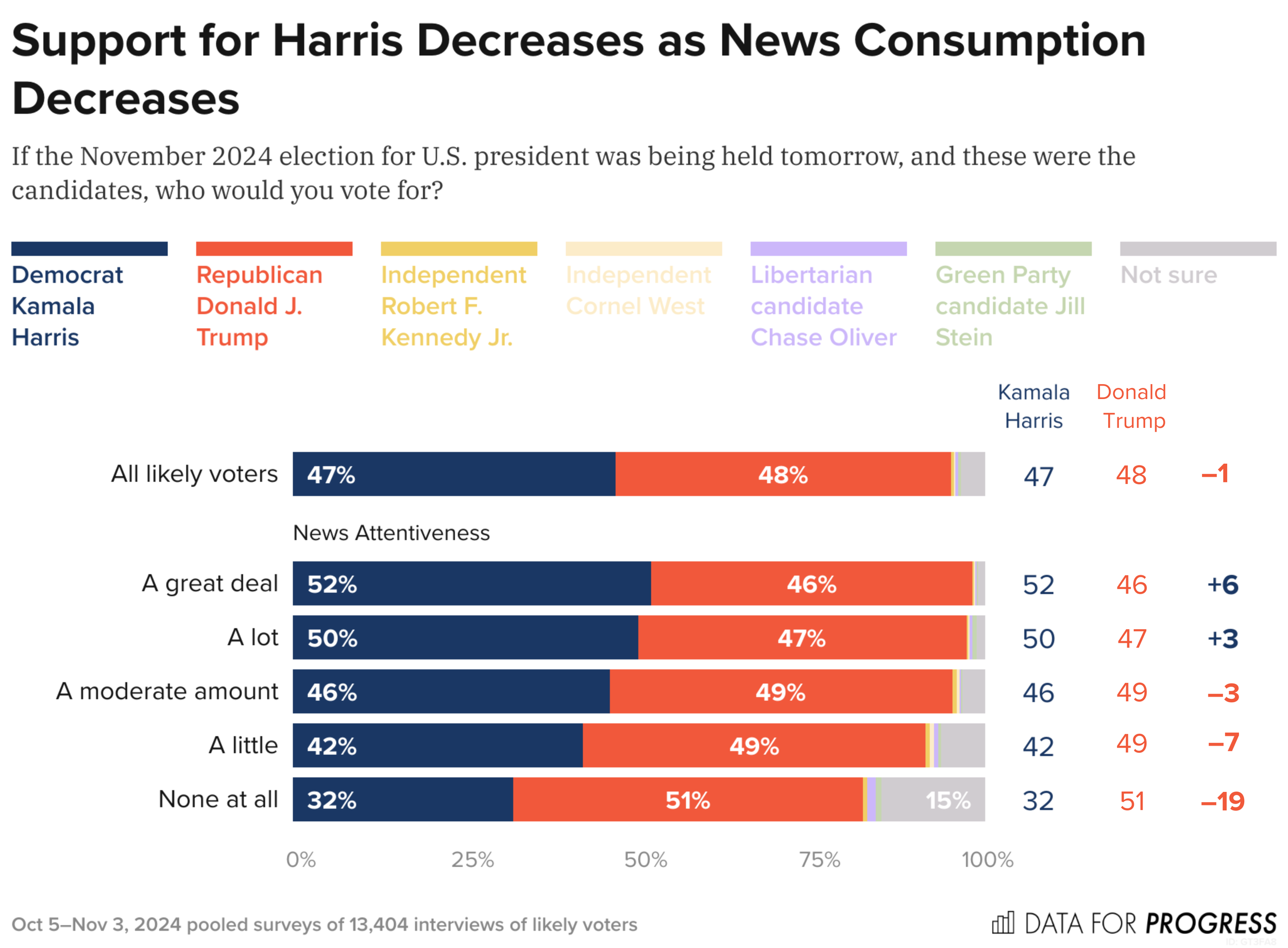

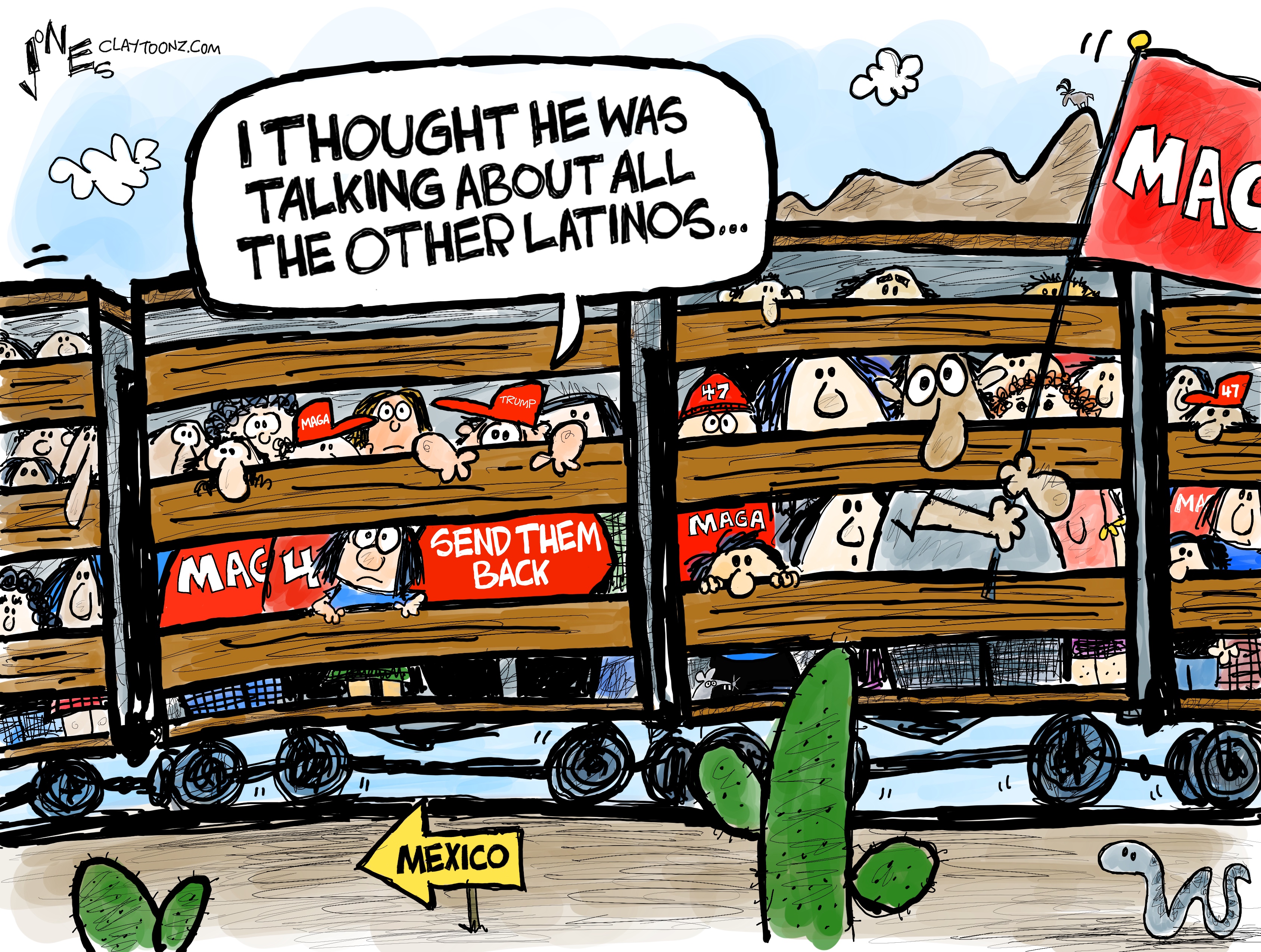
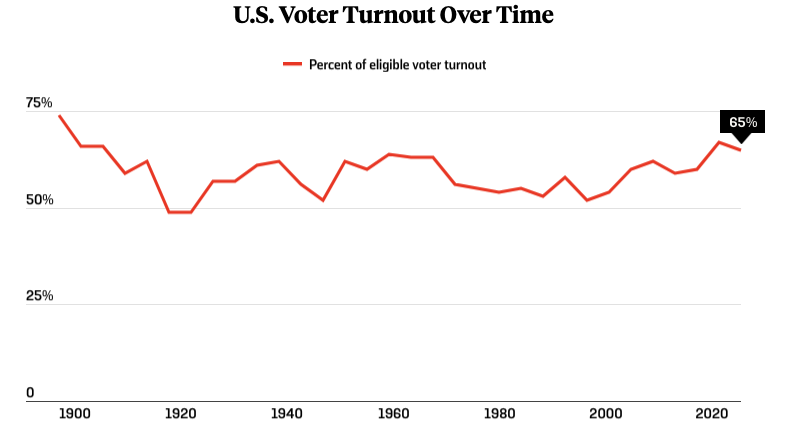


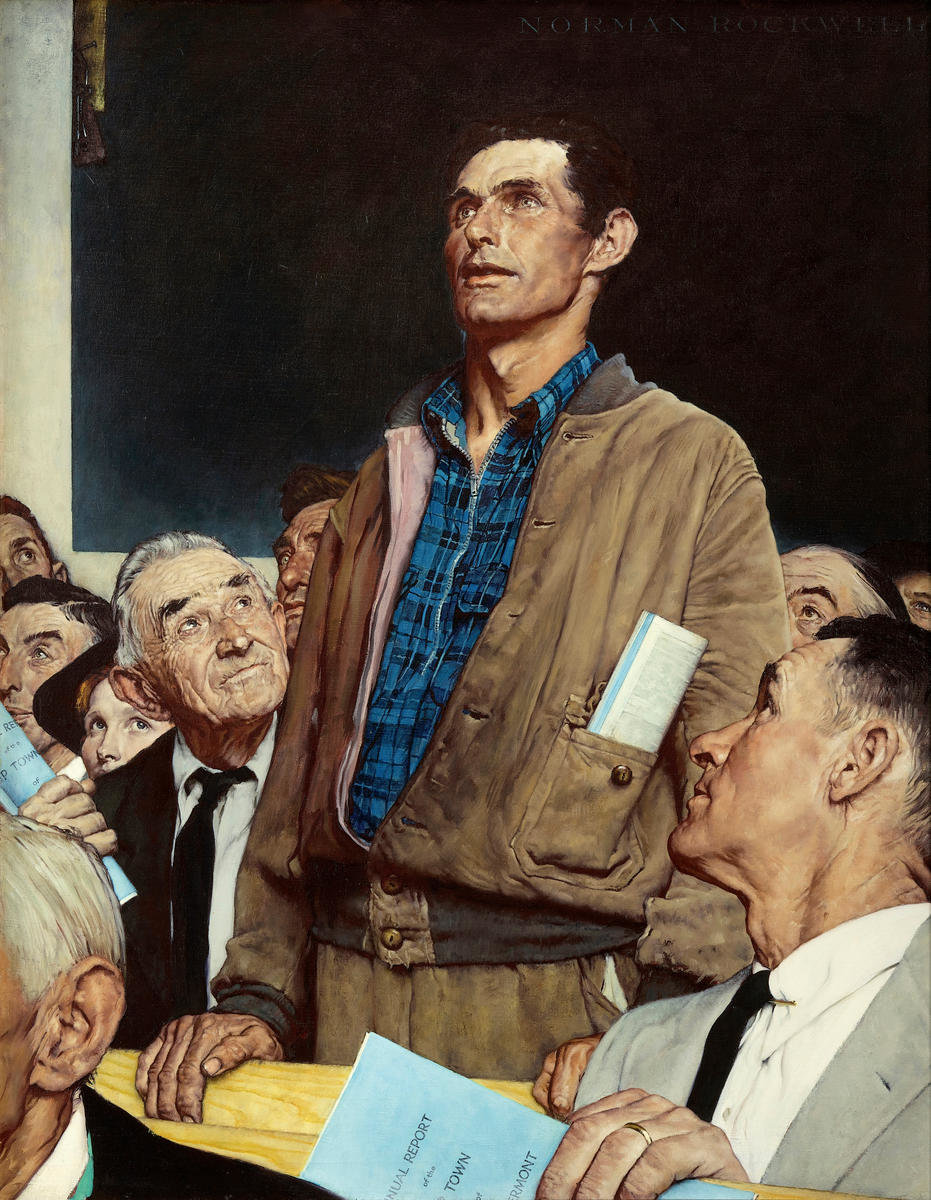



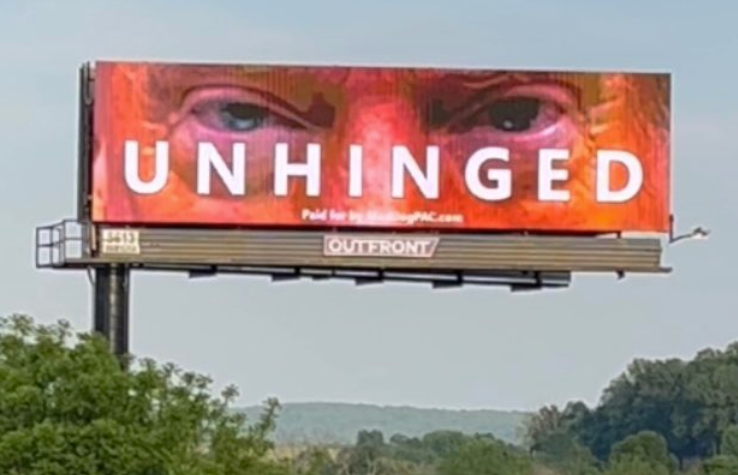
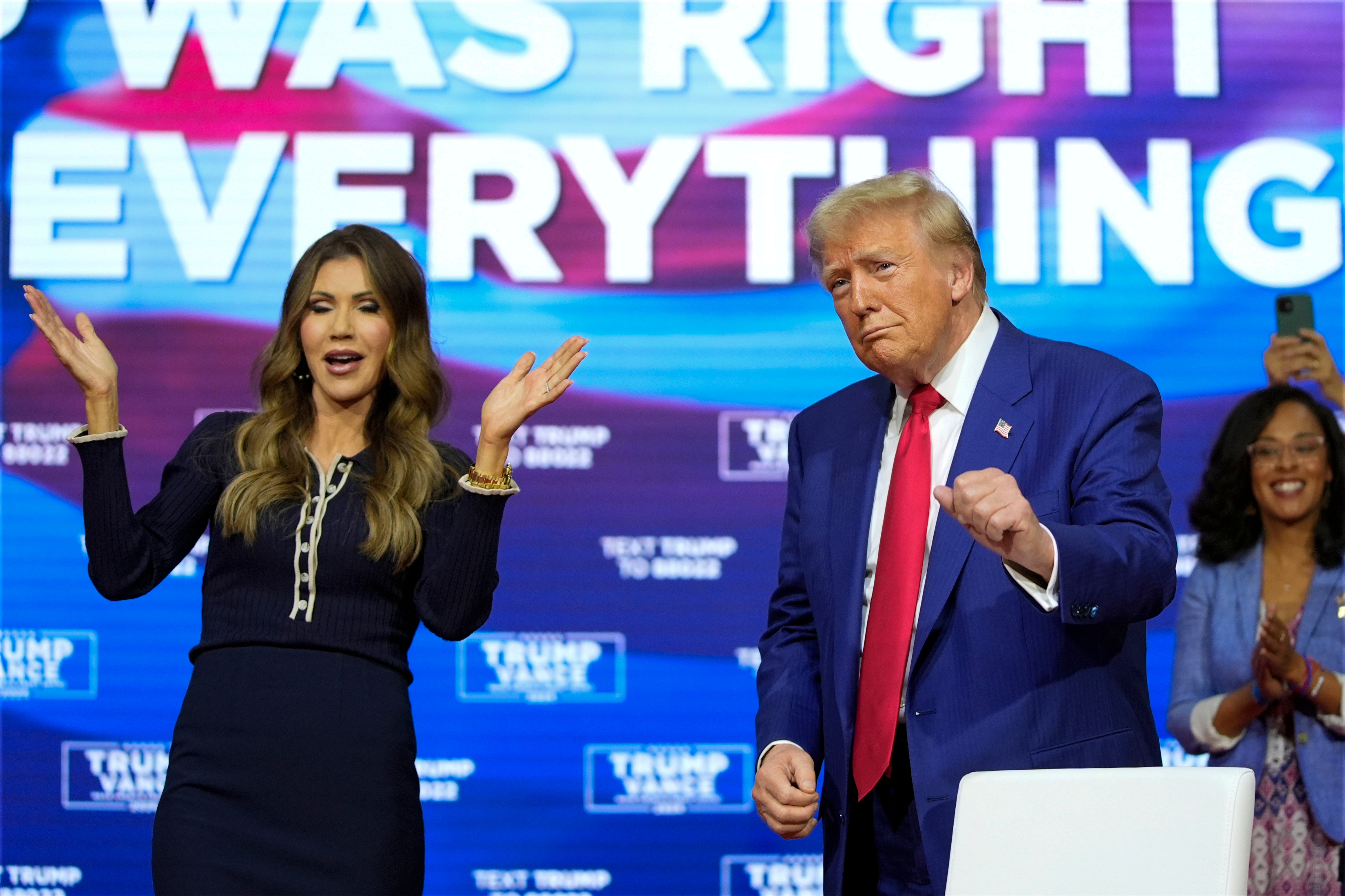


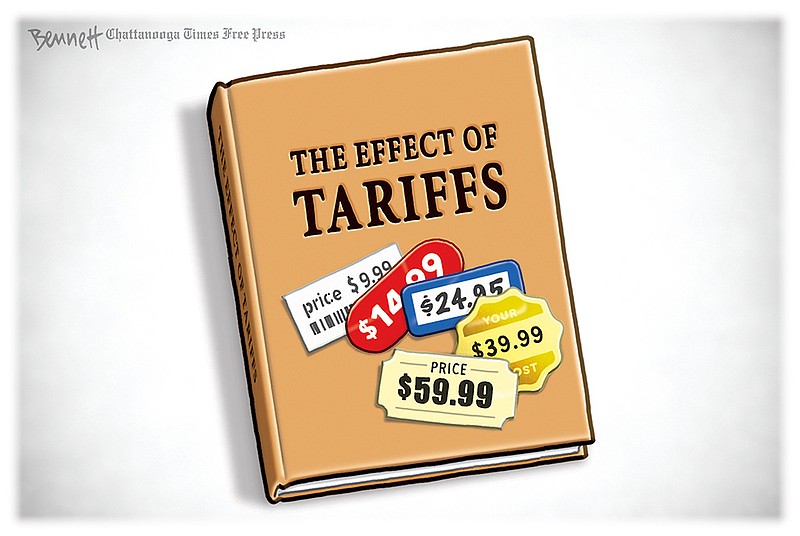
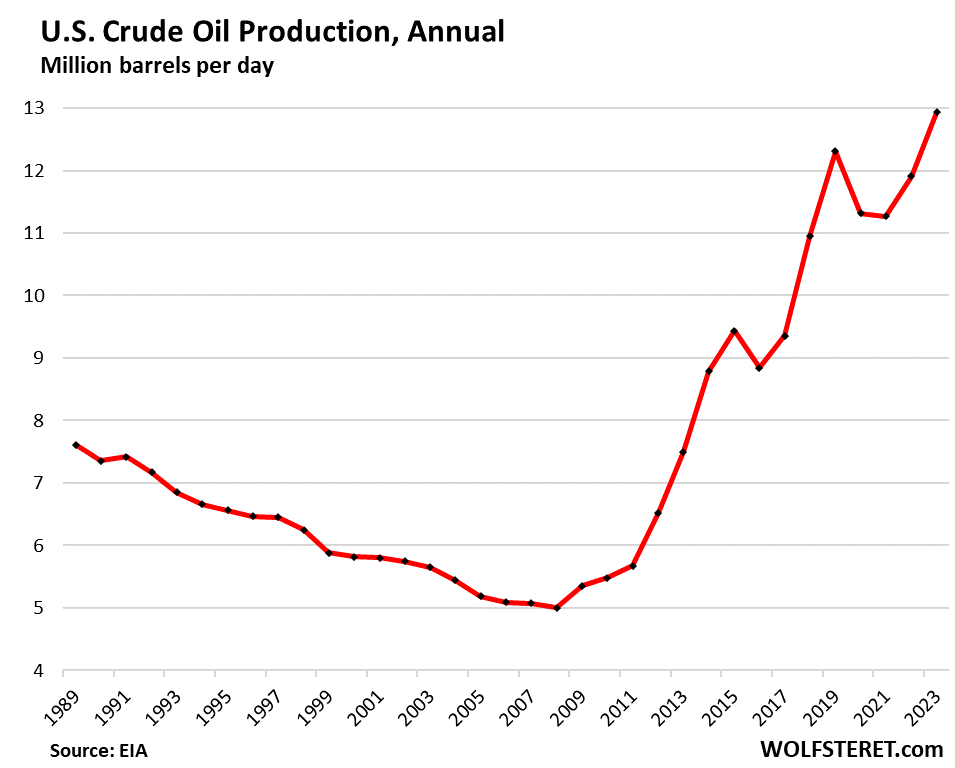
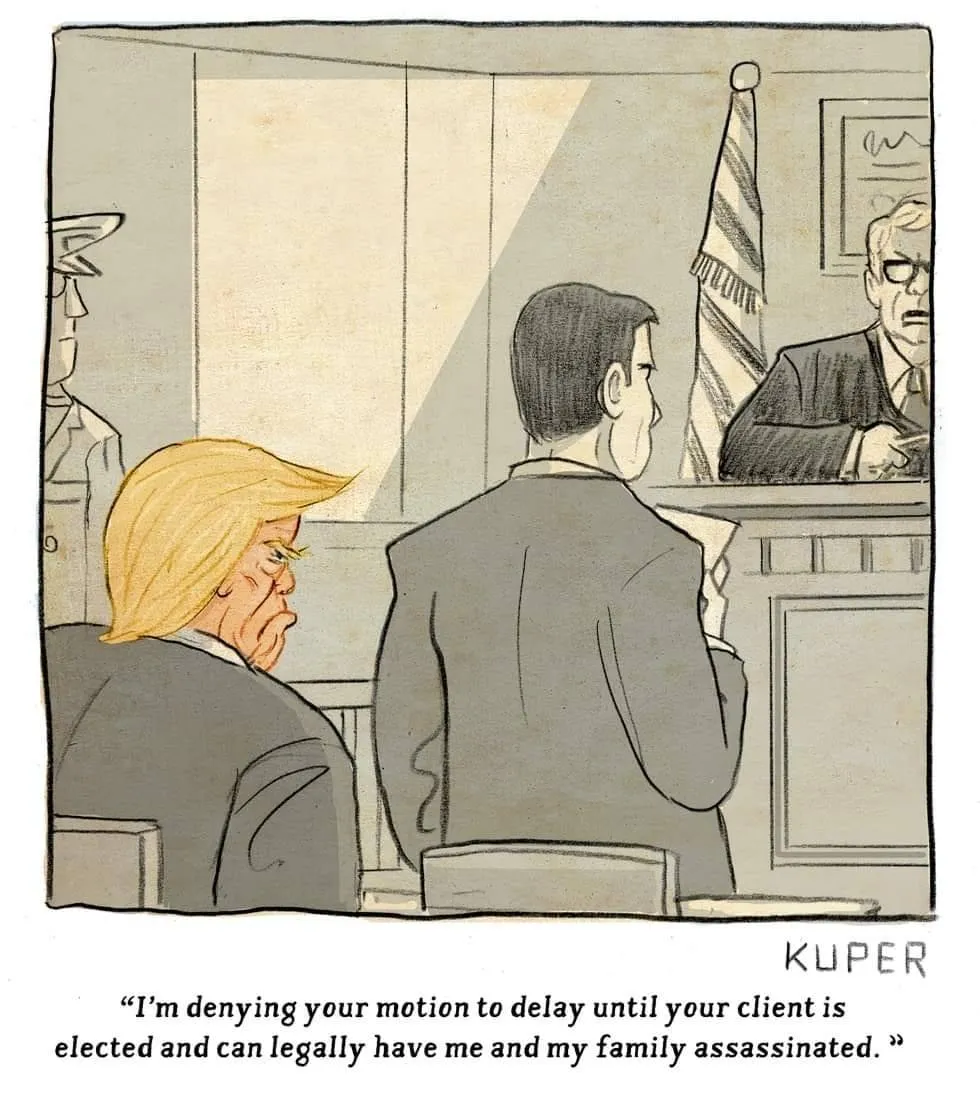
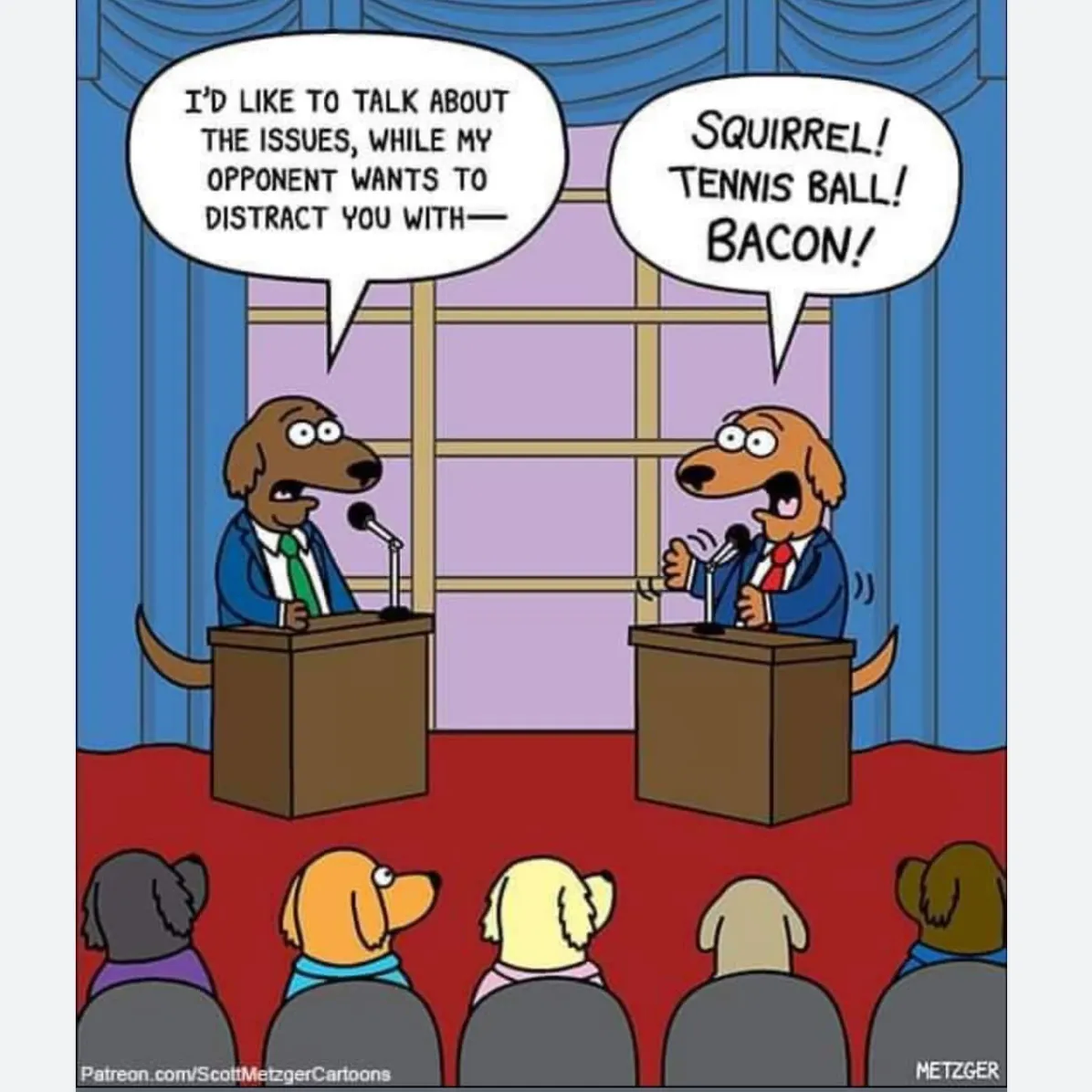
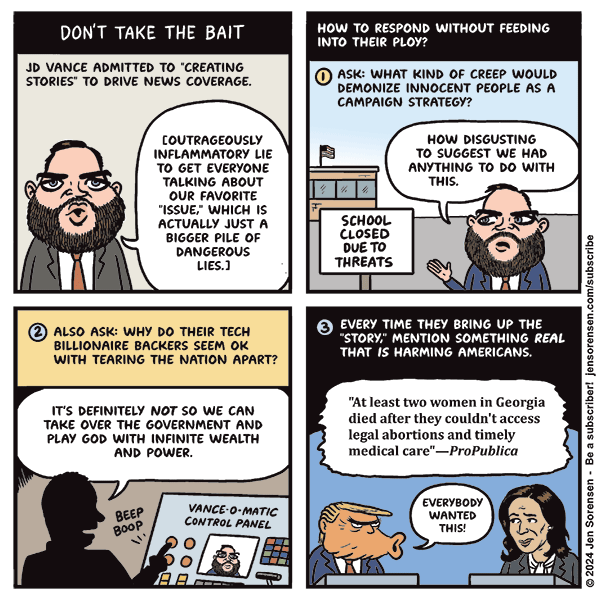
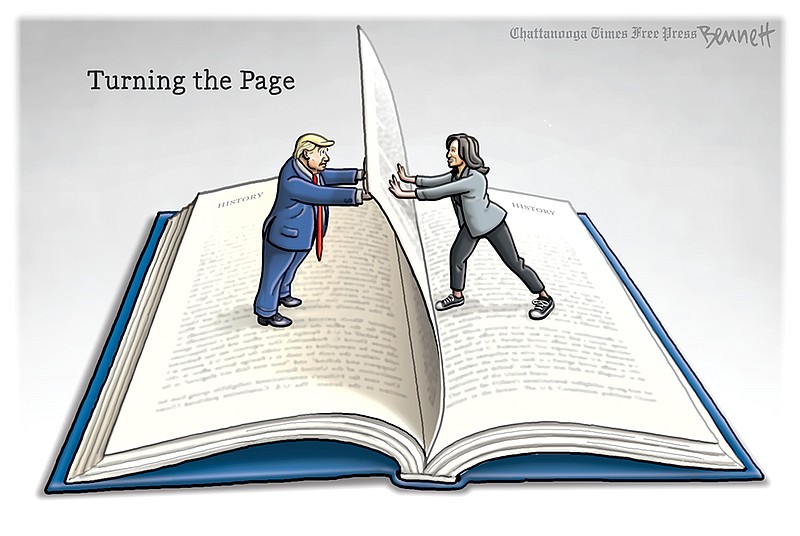
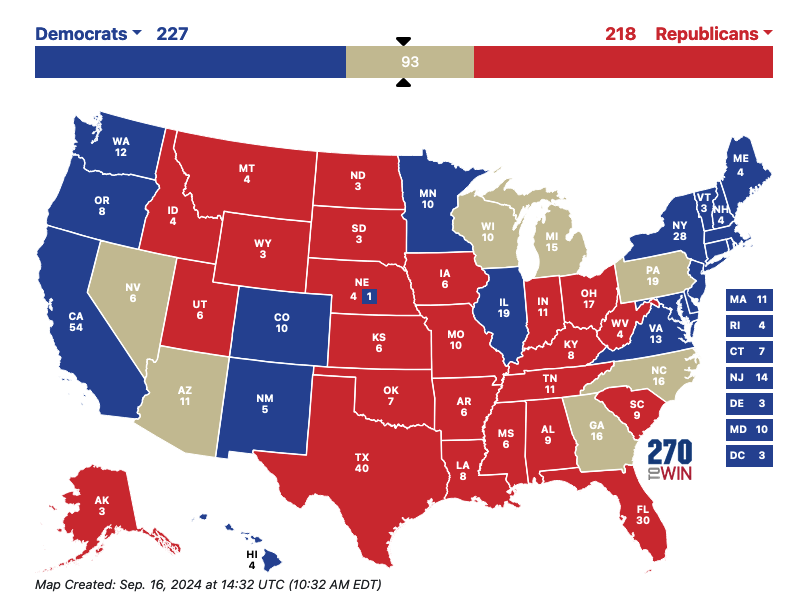
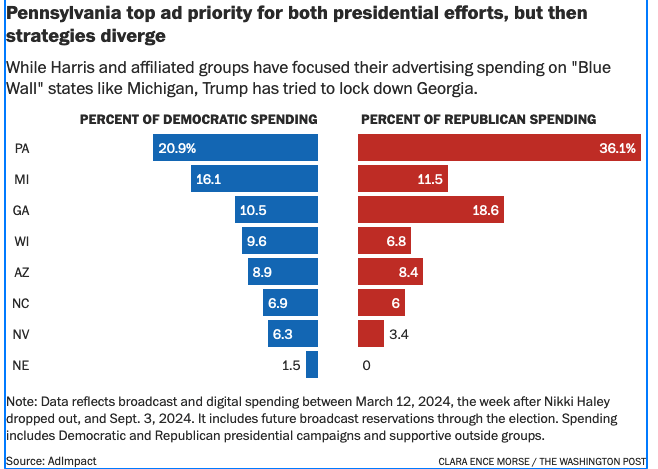



 The Weekly Sift