My Coronavirus Test

Update: My test came back negative. I don’t have the virus.

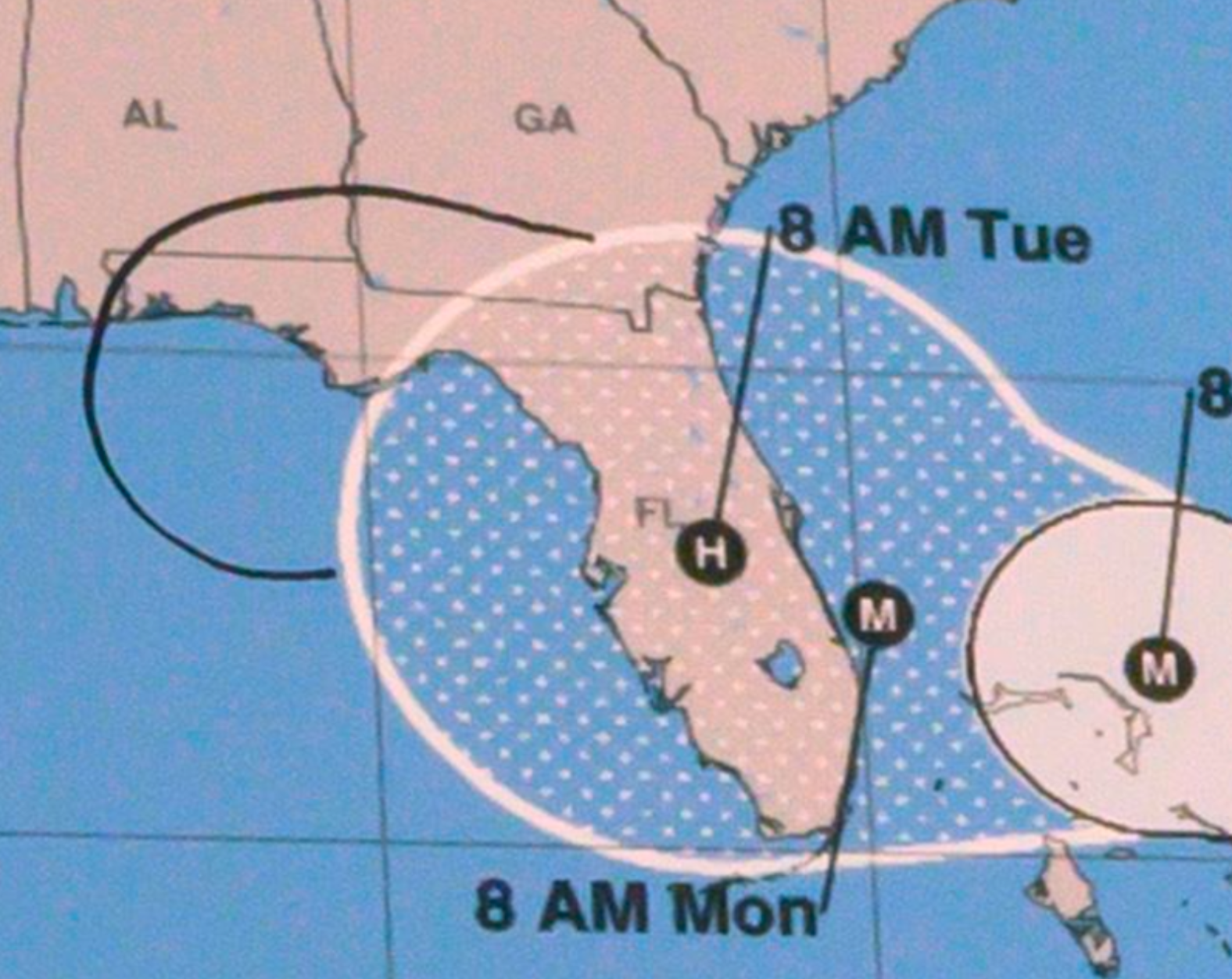
Drive-through virus testing at Holy Family Hospital in Haverhill, Mass.

Let me begin this post by saying that, as best I can tell, I’m doing fine. I’ve quarantined myself since Tuesday, but so far my symptoms are somewhere between minor and imaginary. Nonetheless, I got tested Friday, and I should hear results Tuesday or Wednesday.

OK, let’s go back and tell the story from the beginning: My wife has a large number of risk factors, so we are terrified of what would happen should she catch Covid-19. Both of us are in our 60s. She had a lung collapse during surgery several years ago, and it never fully reinflated, so essentially she gets by on one-and-a-half lungs. A different medical problem resulted in half her liver being removed. And she takes a drug that drags on her immune system (though I don’t think it’s that bad; she throws off colds fairly well).

So our household is hyper-vigilant. That gets tricky, because I have a number of conditions that mimic coronavirus symptoms: An allergy causes me to wake up congested every morning and spend my first waking hour coughing and blowing my nose. If I sleep in the wrong position, I’ll have a muscle ache when I do that coughing. As for aches and pains in general, I already mentioned that I’m over 60. In short, most of the early-warning symptoms of Covid-19 are normal for me.

That leaves me focused on the one symptom I don’t ordinarily have, which is fever. Quite the opposite, in fact: My body typically runs cool. A normal morning temperature for me is below 98, and can run as low as 97.4. It tends to rise through the day, but hardly ever hits 98.6.

Anyway, first thing Tuesday, I’m having my morning cough and feeling a little more discomfort in it than usual. I take my temperature and it’s 98.3 — fine for anybody else; not fine for me. And I think “Probably nothing, but …”. And then I think “If you wait until you’re sure, you’ll have waited too long.”

So I call over to my wife, tell her to keep her distance, and explain what’s happening. She grabs some stuff, and goes to occupy a room on the second floor. (While our new apartment is under construction, we’re living on the top floor of a friend’s three-story Victorian. It was bought years ago for a family with five boys, and only two of them are still here.) Except for one trip I’ll describe later on, I’ve been up here by myself ever since. My housemates prepare plates of food and leave them on the steps; I retrieve them like a caged animal. Thank God there’s a bathroom up here.

I expected the temperature thing to resolve itself by Tuesday afternoon, but it didn’t. I kept getting readings that would top out at 99 or 99.1 in the mid-afternoons. (Again, no emergency for anybody else.) Friday afternoon, the digital ear-thermometer I was using went completely wild — I couldn’t get the same reading twice — raising the possibility that the whole episode is an equipment malfunction. By the time I got hold of an old-style mercury thermometer, I was showing more normal temperature patterns, which have continued for the last few days. What to think?

Anyway, Thursday afternoon I emailed my doctor, who did a Zoom-meeting with me Friday morning. She agreed with me that (1) these are pretty sketchy symptoms, and (2) I’m in a situation where I should pay attention to sketchy symptoms. Apparently, though, tests are now plentiful enough to justify getting me one. I suspect that wouldn’t have been true a week before.

There is a drive-through testing site at Holy Family Hospital in Haverhill, Massachusetts, about a 40-minute drive away. (I should add, though, that you can’t just drive up unannounced. They require a physician order.) I went downstairs for the first time in days, was careful to touch nothing until I reached my car, and drove myself to Haverhill.

The picture above is one I took through the windshield. I had to wait in line behind two or maybe three other cars. A young woman swathed in protective garb talked to me through my open window, had me sign a form (with a pen she refused to take back), and stuck a long Q-tip-like thing up each of my nostrils. It was fast, and while I would never do it for fun, it wasn’t that bad. She told me to expect results Tuesday or Wednesday. (Those 15-minute tests you’ve been hearing about apparently aren’t in wide use yet.) Results would go to my doctor, and I shouldn’t call Holy Family. Meanwhile, she said, I should consider myself quarantined for 14 days or until I get a no-infection result.

So now I wait. And in truth, I’m not even sure what I’m rooting for. No infection would be nice, but in some ways the best result of all would be to get away with a minor-symptom case and then have some kind of immunity. On the other hand, I also have heard stories of minor symptoms that suddenly turn bad, so I get anxious every time I start to feel tired. It would be nice to have that over with.

I’ll update this post when my results come in.

The Speech a Great President Would Give Now

If we’re ever going to have great presidents again, we need to hold a space in our imaginations that a great president could occupy.


Ever since Donald Trump made his famous descent down the escalator to announce his candidacy (and assert that Mexicans crossing the border are rapists), we’ve been lowering our standards to his level. Once in a great while he does something so outrageous that his opponents try (and usually fail) to draw a line in the sand. But for the most part we’ve just accepted that he will do the kinds of things he does: ignore obvious facts, insult large swathes of people who have done nothing to deserve it, funnel public money into his own businesses, deny that he said what he said, respond to his critics with schoolyard taunts, and so on. We’ve come to expect him to politicize everything, admit no mistakes, fire anyone who reveals inconvenient truths, and confront everyone who comes into his presence with the choice to flatter him or face his wrath.

At times I’ve been as guilty of this normalization as anyone. Given a choice between letting a lie or injustice go unremarked, and distracting my readers from what I saw as more important issues, I’ve often just shrugged off norm-violations that would have been major scandals in any previous American administration.

Still, every now and then I think it’s worthwhile to ask ourselves: “What would a real leader do in this situation?” Not because I imagine Trump will listen to our answer, slap his forehead, and say, “That’s a good idea!”, but just to maintain our own sense of what is good and right. If we’re ever going to have great presidents again, we need to hold a space in our imaginations that a great president could occupy.

So I have written a speech for a great president to deliver in the midst of the current crisis. There’s no reason Trump couldn’t deliver it, and I hope he does. For obvious reasons, he won’t. I accept that, but I’m still going to put the vision out there.

My fellow Americans:

Every president faces crises and makes decisions that could either save or cost lives. I have already faced my share: military conflicts in various parts of the world; hurricanes in Texas, Florida and Puerto Rico, as well as floods and tornadoes and the full run of other natural disasters. An economic crisis may not take as many lives as war or disease, but it can ruin lives, as people lose their jobs and homes and dreams for the future.

The current crisis, the one brought on by the coronavirus pandemic, is on a scale most presidents never need to confront. Thousands of Americans are dead, and some estimate that the eventual toll could be in the hundreds of thousands, or even millions. Hundreds of thousands of Americans are already sick. Tens of thousands of businesses hang in the balance, and millions of Americans have lost their jobs. Tens of millions are sheltering in their homes.

This is not only the greatest crisis of the four-year term I was elected to in 2016, but most likely it will overshadow the crises of the next four years as well. So whether I serve four years or eight, I believe I have already met the defining challenge of my presidency, the one for which history will judge me.

Public-health experts I trust tell me that we will go through the peak of this crisis in the next month or two. No one can guarantee what will happen after that, but I think it is safe to say that the most important chapters in the story of this pandemic will be written between now and the inauguration in 2021.

It is desperately important that we get this right. The decisions that are made between now and November or January — here in the White House, in Congress, throughout government at every level, and in homes all over this country — could save or cost the lives of countless human beings, and save or cost the livelihoods of countless more. When the stakes are this high, we can’t let politics interfere with doing the right thing.

And yet, how can it not, as we move towards the 2020 election? Already, both my supporters and my critics interpret everything I do in the light of that election. I deserve credit for this, blame for that — no I don’t, yes I do — it goes on and on. But none of those arguments save anyone. They just make it harder for America to move forward in unity.

When this is all over, there will be plenty of time to distribute credit and blame. There are undoubtedly many lessons to learn — both good and bad — from what we have done so far. But trying to do that analysis in the middle of the crisis, and absorbing that discussion into what was already a poisonous partisan environment before Covid-19 emerged, does not serve this country. Partisanship can only decrease the likelihood that we will judge correctly, or learn the lessons that might save us from the next plague.

Right now, there are many things I wish I could do for this country, but they are beyond my powers. I can’t banish the disease by executive order. I can’t decree a vaccine or effective treatment into existence here and now. I can’t speed time up so that we jump past the peak of the crisis and skip all the suffering Americans will have to endure in the coming weeks and months.

But there is one thing I can do: To a large extent, I can take partisan politics out of this struggle, and I’m going to do that right now with this announcement: I will not be a candidate for re-election in November, nor will I endorse any candidate in that election. Instead, I will lead the battle against this disease until my term ends in January.

The election will still happen, and I’m sure the candidates who vie to replace me will debate their views and their plans with all the vigor we expect from a presidential campaign. But I will take no part in it. If any members of my administration want to participate in that election, God bless them, but I will ask them to step away from whatever active roles they might be playing in managing our country’s response to the virus.

I cannot insist that others follow my example. But I can ask political leaders at all levels to do what they can to take partisan politics out of this effort. Most of us tell ourselves that we entered politics to do something important. Let me suggest that nothing you might do in future years from future offices will be quite so important as what you do these next few months. Lives and livelihoods are at stake.

Going forward, there are many choices to make, and I expect to hear much argument about what should happen next. A healthy democracy always has room for disagreement. But let those discussions center on the health and well-being of our citizens, not on the November elections, and especially not on me. My political future is already set: I will finish my term and then return to the private sector to await history’s judgement on my actions. I pray history will be able to say that I rallied a unified nation to take decisive and successful action.

God bless you all, and God bless the United States of America.

The Monday Morning Teaser

You know what I’m going to talk about this week, right? There’s a historic crisis happening, and I can’t justify focusing on anything else.

So this week’s two featured posts will look at it from two very different altitudes. On an extremely personal scale, the most important thing that happened this week is that I got a Covid-19 test. But you really shouldn’t worry about me. So far I’ve got either a very mild case or a hyperactive imagination. (My current bet is on the latter.) But I also have a wife with a number of risk factors, so I’ve been quarantining myself since Tuesday. I should hear results in another day or two.

I’m writing about it because I think my personal experience has some news value: At least in the part of the country where I live, people with fairly minor symptoms are getting tested now. Those 15-minute tests you read about are still science fiction, and I think we’re still a long way from the kind of widespread testing we need if we’re going to reopen the country. But a result in 3-5 days is lots better than never.

That’s the small scale. On the large scale, I asked myself what great president would say to the country right now. I know we don’t have a great president, or even an average one. But far too often, we have let our expectations of the presidency shrink to fit the tiny man who currently occupies that office. If we’re ever going to have a great president again, we need to hold a space in our imaginations that a great president could fill.

So that’s what I did. “The Speech a Great President Would Give Now” will be out soon, and contains a shocking announcement. I don’t expect Trump to give this speech, but if he does, he doesn’t even need to give me credit. Hearing the speech would be satisfaction enough.

“My Coronavirus Test” isn’t written yet, but it shouldn’t be that hard to pull out of memory, so I expect it to post between 10 and 11 EDT. Expect an abbreviated weekly summary around noon.

Reality and Public Relations

Reality must take precedence over public relations, for Nature cannot be fooled

– Nobel-prize winning physicist Richard Feynman
Personal observations on the reliability of the Shuttle” (1986)
Appendix F. Report of the Rogers Commission

When you have a political movement almost entirely built around assertions that any expert can tell you are false, you have to cultivate an attitude of disdain toward expertise, one that spills over into everything. Once you dismiss people who look at evidence on the effects of tax cuts and the effects of greenhouse gas emissions, you’re already primed to dismiss people who look at evidence on disease transmission.

– Nobel-prize winning economist Paul Krugman
Covid-19 Brings Out All the Usual Zombies” (3-28-2020)

This week’s featured post is “How the Economy Restarts“.

This week everybody was talking about spending $2 trillion

After some difficult negotiations, the bill passed the Senate 96-0 and the House by voice vote. It was a striking example of bipartisanship, and yet Trump only invited Republicans to be present for the signing ceremony that officially made it a law.

When a bill is this big and complex, it’s hard to know exactly what’s in it. ABC lists a few of the more prominent measures:

  • Individuals making less that $75K (or couples below $150K) get $1,200 ($2,400), with $500 extra per child.
  • Unemployment benefits are increased, last longer, and apply to more classes of workers.
  • Small businesses who pledge not to lay off workers can get emergency loans, which are forgiven if the workers do indeed keep their jobs.
  • Hospitals and health systems get $100 billion.
  • $500 billion is set aside for loans to big businesses, including $75 billion for airlines and hotels.

I’m sure we’ll find out over the next several months that all kinds of special-interest provisions got inserted.


Former Obama advisor Ben Rhodes makes the obvious comment:

So weird how the Tea Party isn’t rising up in opposition to all this government spending.

Obama’s stimulus proposal was about 1/3 the size of Trump’s, but it had right-wingers talking about revolution. Now they’re silent. It’s almost enough to make you think they had some other reason for not liking Obama.

There was also little bipartisan support then, despite Republican economists virtually all calling for a major stimulus. No Republican House members and only three Republican senators voted for the bill.


Thanks, Malacandra:

“My country and its economy aren’t working for the people.” Tech Support: “Have you tried turning it off and back on again?”

and the virus

First, the numbers: As of this morning, the US had 140,393 cases (compared to 33,018 a week ago) and 2,437 deaths (428 a week ago). We now have more cases than any other country in the world, though our death totals are still behind Italy (10,779), Spain, China, Iran, and France.

Dr. Anthony Fauci is now talking about between 100,000 and 200,000 deaths eventually. In his Sunday briefing, President Trump seemed to accept those numbers and move the goalposts to make them a measure of success. He quoted an estimate of “2.2 million … if we did nothing”, implying that he would take credit for any total less than that.


Wired sorts out the rumor that people shouldn’t take ibuprofen to deal with possible coronavirus fevers.

The ibuprofen furor left researchers and physicians exasperated over the distress it caused people already frightened by the virus, and also for the apparent lack of evidence. … When they’re being cautious about associating phenomena and diseases, epidemiologists will say something represents “correlation, not causation.” In other words, just because two things occurred at the same time doesn’t mean that they’re linked. But to this point, the connection between ibuprofen and severe Covid-19 may not even be a correlation, since no statistical relationship has been found.


One of the mysteries of the pandemic is why different countries have such different death rates.

In Italy, 9.5 percent of the people who have tested positive for the virus have succumbed to covid-19, according to data compiled at Johns Hopkins University. In France, the rate is 4.3 percent. But in Germany, it’s 0.4 percent.

In the US, the fatality rate is around 1.3%. Those numbers would make sense if the Germans had discovered some magic treatment that they wouldn’t share with anybody else, especially the Italians. But that seems not to be the case; nobody has come up with any treatment better than to give people lots of fluids, keep their temperatures down, and help them breathe. Germans also aren’t all that different from other Europeans, either genetically or in lifestyle.

But think about what the fatality rate is: a fraction. It’s the number of deaths divided by the number of cases. The difference seems to be in the denominator, not the numerator: Germany has done a better job than any other country of identifying all the people who are infected.

The biggest reason for the difference, infectious disease experts say, is Germany’s work in the early days of its outbreak to track, test and contain infection clusters. That means Germany has a truer picture of the size of its outbreak than places that test only the obviously symptomatic, most seriously ill or highest-risk patients.

Now consider the implications: If the death rate in the US is really the same as Germany’s, it means that we have three times as many cases as we think we have.


OK, after that thought you deserve some amusement: the Coronavirus Rhapsody.


In the same way that the record of Trump clueless tweets continues to exist, tweets exist that show his “nobody saw this coming” excuse is false. Here’s Senator Murphy (D-CT) on February 5:

Just left the Administration briefing on Coronavirus. Bottom line: they aren’t taking this seriously enough. Notably, no request for ANY emergency funding, which is a big mistake. Local health systems need supplies, training, screening staff etc. And they need it now.


Last week I told you about an ad that assembles a number of quotes of Trump minimizing the virus. Now the Trump campaign is threatening TV stations that run the ad.

[Y]our failure to remove this deceptive ad … could put your station’s license in jeopardy.

This is how authoritarianism snowballs: What might (in another administration) be a controversial-but-toothless cease-and-desist letter from a campaign is now far more ominous, because Trump freely uses the power of his office for personal benefit. A station owner has to worry that there may be no distance between the Trump campaign and the FCC.


Another example of how authoritarian regimes work: Trump tells governors that they should “be appreciative” of the great job he’s doing, and implies that his administration may stop cooperating with the ones who aren’t.

[Vice President Mike Pence] calls all the governors. I tell him — I mean, I’m a different type of person — I tell him “Don’t call the governor of Washington. You’re wasting your time with him. Don’t call the woman in Michigan. … You know what I say? If they don’t treat you right, I don’t call.

The phrase “wasting your time” tells you what Trump thinks his administration should be trying to achieve: “appreciation” for the President. If he’s not going to get that appreciation, then what’s the point of doing his job and saving American lives?

Similarly, the Sunday briefing began with executives from a variety of corporations describing how they’re contributing to the virus-fighting effort — after doing North-Korean-style tributes to the “great leadership” of the President. I get tired of pointing this out, but we can’t let ourselves lose sight of it: This kind of ego-stroking has never happened in any previous administration of either party. Obama would have thrown people out of the room for trying to butter him up so blatantly, but Trump requires it.

and sacrificing lives for the economy

Tuesday, Trump floated the idea of re-opening the economy by Easter, envisioning “packed churches”, though yesterday he backed off and extended the social-distance guidelines until April 30. (More about all that in the featured post.)

His argument at the time was that shutting down the economy was a cure worse than the disease. A number of Trump supporters then came out and said the part Trump merely implied: A higher death toll is a price worth paying for a higher GDP. In an interview with Fox News host Tucker Carlson, Texas Lieutenant Governor Dan Patrick put it like this:

No one reached out to me and said, as a senior citizen, are you willing to take a chance for your survival in exchange for keeping the America that all America loves for your children and grandchildren? And if that’s the exchange, I’m all in. … I just think there are lots of grandparents out there in this country like me — I have 6 grandchildren — that, what we all care about, and what we love more than anything are those children. And I want to live smart and see through this but I don’t want the whole country to be sacrificed.

What’s really perverse about this is that Patrick is also a climate-change denier. So he’s willing to risk death to make a better future for his grandchildren, but not willing to limit fossil fuels. I’ll resolve this paradox with a wild guess: Patrick’s grandchildren are just a rhetorical device here; his true loyalty is to big business.

Eventually, you’d think Republicans would learn: You don’t want to be out in front of Trump, because he’s likely to switch directions and leave you hanging. I’m sure we’ll soon hear that Trump never suggested risking lives to save the economy.


OK, another amusement break: “Stay the F**k At Home” by Bob E. Kelley. (NSFW – duh):


While we’re talking about packed churches: Most of the time, I think we should respect other people’s prerogative to believe whatever they believe, even if it seems like nonsense to us. This wine has become the blood of your god? All the languages of humanity derive from the Tower of Babel? Fine, whatever. As Thomas Jefferson put it: “It does me no injury for my neighbour to say there are twenty gods, or no god. It neither picks my pocket nor breaks my leg.”

But during a public health emergency, religion can be dangerous. This happened a week ago yesterday in Louisiana:

The Life Tabernacle Church hosted 1,825 people at their Sunday morning service. 26 buses were used to pick people up from around the Baton Rouge area and transport them to Sunday service. … Throughout the service parishioners could be seen touching each other and closely gathering, very few wearing masks or gloves. [Pastor Tony] Spell says if anyone in his congregation contracts covid-19 he will heal them through God.

Another megachurch in Tampa is doing something similar, and likewise promising divine healing. And I’m sure lots of otherwise sensible Christians will find it hard to stay home on Easter Sunday.

Some people look at this from an individualistic point of view and think, “It’s their choice to make. If they’re wrong, they’ll be the ones to suffer from it.” But they won’t be the ONLY ones. As they spread the disease, their friends and family and neighbors and caregivers are also at risk. And when they show up at the ICU, they’ll compete for scarce resources with people who were more careful.

If someone in your life is making the God-will-protect-me argument, remind them of the temptation of Jesus in Luke 4 verses 9-12:

The devil led him to Jerusalem and had him stand on the highest point of the temple. “If you are the Son of God,” he said, “throw yourself down from here. For it is written: ‘He will command his angels concerning you to guard you carefully; they will lift you up in their hands, so that you will not strike your foot against a stone.’”

Jesus answered, “It is said: ‘Do not put the Lord your God to the test.'”

I interpret this to mean: It is fine to call on God when you have no way to save yourself. But don’t show off by taking unnecessary risks and creating situations where God needs to save you.


In the same way that Trump is shifting the blame for his own blunders to China, Florida Governor Ron DeSantis is shifting blame to New York: Ignore the bad decisions he has made; focus on New York.

Josh Marshall:

The future is FLA Gov. DeSantis today. The governor who left the beaches and almost all commerce open as the virus spread like wildfire across the country is now blaming his state’s outbreak on New York and New Yorkers fleeing to Florida. This is the new political message.


Trump’s briefing yesterday was a festival of blame-shifting and excuse making: He doesn’t admit that the US has the most coronavirus cases, because China is lying. There’s no shortage of ventilators, hospitals are hoarding them. There are plenty of masks available, but someone is stealing them.

And as I noted above, he’s also moving the goalposts: 2.2 million Americans would die if the government did nothing, so 200K deaths would be evidence that he has done a great job!

Watch: If anybody at all is still alive by November, Trump will expect them to thank him.


Friday, Alabama Governor Kay Ivey denied the need to issue a shelter-in-place order, saying:

We are not Louisiana, we are not New York state, we are not California. And right now is not the time to order people to shelter in place.

Next door in Mississippi, Governor Tate Reeves’s executive order undid any local order that interfered with

airports, medical and healthcare facilities, retail shopping including grocery and department stores, offices, factories and other manufacturing facilities or any Essential Business or Operation as determined by and identified below.

The Jackson Free Press reports:

One of the immediate consequences of Reeves’ order is the formal declaration that most of Mississippi’s businesses qualify under it as “essential,” and thus are exempt from restrictions on public gatherings. As of press time, the Jackson Free Press has received reports from businesses in the Jackson area that have, as of today’s executive order, scuttled plans for work-from-home and ordered their employees back to work on-site.

Also included among essential services in the executive order were religious facilities, just days after the Mississippi State Department of Health told Mississippians to skip churches, weddings and funerals to help slow the spread of COVID-19.

Up until now, it’s been possible for Trump’s base to imagine that COVID-19 is a Blue America problem: New York, California, Washington, and other liberal places. When a red state like Louisiana does get hit, the epicenter is a cosmopolitan city like New Orleans.

So if you’ve been sitting in Little Town, USA and watching Fox News, the whole crisis probably seems overblown. I think that’s about to change. Viruses are a lot like fashions; they hit the big cities first, but they make it everywhere eventually. States and towns that wait to take action until the problem is local and serious will regret the delay.

and you also might be interested in …

I keep hearing people ask where Joe Biden is. And physically the answer is that he’s at home in Wilmington, doing what we all should be doing.

Of course, what people are really asking is why he isn’t on their TVs, providing a counterpoint to Trump’s incessant nonsense. And the answer to that is that he’s giving interviews and telling people what a real president would do in this situation, but it’s almost impossible for him to break into the news cycle.

Think about it: He doesn’t have any current office, so he can’t announce an action, like Governor Cuomo does nearly every day. Primaries keep getting cancelled, so he can’t win them. He can’t hold rallies. Just about anything he says from Wilmington leads editors and producers to ask “Why is this news?”

Now, of course, if Trump were in this position, he would have no trouble making news. He’d do it by being an ignorant asshole: crudely insulting someone who did nothing to deserve it, saying something provably wrong or bigoted, or violating political norms in some other way. And the same thing could work for Biden as well — he could call Mike Pence a faggot or something; that would make news — but it would also break the brand he’s running on.


Lots of people (including me) have been wondering how to safely bring home food that has been handled by other people, either in the grocery or at a take-out restaurant. Here’s one healthcare professional’s response.


Interesting lecture Heather Cox Richardson gave in 2018 on “How the Gilded Age Created the Progressive Era“.

It looks for all intents and purposes in 1890, 1893, 1894 that the Gilded Age is here to stay, that a few rich guys are going to run everything. They have gamed the system. They’ve stolen a presidential seat. They’ve changed the mechanics so that you can’t possibly ever take the Senate again. They’ve gamed the census, so that they’re doing all the counting. And then when even still it looks bad, they’ve packed the Supreme Court for eternity. And the Supreme Court is handing down idiotic decisions, all of which have been either overturned or modified since then. …

So it looks like it’s time for everyone to pack up and go home.

And yet things changed. And it’s somewhat embarrassing for a non-violent history professor to admit how big a role assassinating President McKinley played.


Curly Neal, arguably the greatest dribbler in basketball history, died this week at 77. The Harlem Globetrotters assembled this collection of highlights in honor of his 74th birthday.

and let’s close with some suggestions for the housebound

Oddly relevant again is the Statler Brothers’ “Flowers on the Wall” from 1966. Don’t tell me I’ve nothing to do.

How the Economy Restarts

It’s not going to happen soon or fast, but maybe the process begins by June.


Sadly, any serious article about restarting the economy has to begin by brushing aside the misinformation coming from the White House.

Disclaimers. The economy cannot be restarted safely any time soon.

It won’t happen on Easter (as the President was envisioning Tuesday, but has since backed off of). We won’t even reach the peak daily death total by Easter (as he predicted yesterday). If we’re lucky, we might see the daily new-cases totals peak by then, but deaths trail diagnoses by at least a week. (Italy’s new-cases peak was March 21. Deaths might or might not be peaking now.)

Public health experts agree that certain conditions and capabilities need to be in place before it will be safe to relax social distancing practices, open non-essential businesses, or allow people to start congregating. Those conditions and capabilities aren’t in place now and won’t be for at least several weeks, and probably longer. Trump’s notion that the country will be “well on our way to recovery” by June 1 seems wildly optimistic.

The talking point that shutting down the economy to stop the virus is “worse than the problem itself” (which Trump tweeted a week ago yesterday) is nonsense. COVID-19, unchecked, could kill millions of Americans (which Trump finally admitted yesterday: “Think of the number: 2.2 million people, potentially, if we did nothing.”) The idea that the economy might putter along normally while people are dying in those numbers is just absurd. (I think of this as the Masque of the Red Death theory.)

The supporting talking point that “You are going to lose a number of people to the flu [i.e., coronavirus], but you are going to lose more people by putting a country into a massive recession or depression” is likewise nonsense. Not only won’t a depression kill millions of Americans, the effect usually goes the other way: Lower economic activity means fewer overall deaths, mostly because traffic deaths and heart attacks go down.

We find that in areas where the unemployment rate is growing faster, mortality rates decline faster. So during the Great Recession in the U.S., we saw increases in the unemployment rate of about 4-5 percentage points, so that translates to about 50,000 to 60,000 fewer deaths per year

Smithsonian magazine looked further back and found that “The Great Depression had little effect on death rates.”

Prerequisites. OK, now that the decks have been cleared of some widely distributed bad information, we can start talking sensibly about how the economy restarts

Let’s start with the prerequisite conditions. Dr. Thomas Inglesby of Johns Hopkins listed five:

  • The number of new cases starts going down over time.
  • The health system can quickly and reliably test people who may have been exposed to the virus, even if their symptoms are minor or non-existent.
  • Caretakers have a sufficient supply of masks and other protective equipment.
  • Hospitals have sufficient resources: ventilators, ICU beds, etc.
  • Systems are in place to trace the contacts of any new cases.

These five conditions are consistent with what Anthony Fauci and other public-health experts have been saying. Together, they paint a picture of a South-Korea-like containment: The virus hasn’t been eliminated, but the public health system has identified and isolated almost everyone in a region who is infected. As new outbreaks happen, they can be quickly found and traced, so that the newly infected can also be identified and isolated. Moreover, public health workers have the means to protect themselves, so that a new virus outbreak won’t break the system.

It should be obvious that those conditions don’t exist now. Even in New Rochelle and Seattle, early hotspots that took early action, the optimistic story is that the rate of increase in cases is down, not that the number of cases has actually peaked. (The curve is being bent sideways rather than bent down.) Some parts of the country, particularly rural areas, have not seen large numbers of cases yet. But their numbers are increasing and none of them have the virus contained in the way the experts envision. Tests are not as rare as they were a week or two ago, but the number needed has grown to stay ahead of the number provided, so they still are not plentiful. Better and quicker tests have been developed, but are still not widely available.

Perhaps the best evidence that ventilators and masks are scarce is that Trump has stopped denying it and started finding other people to blame for it.

It’s worth pointing out what’s not on this list: a vaccine or a magic anti-viral treatment that changes the whole nature of the struggle. Such advances will happen eventually, but almost certainly not in the next few months, and maybe not for a year or more.

First steps. So it’s not happening tomorrow or next week, but you don’t have to wear rose-colored glasses to imagine a time when the prerequisites have been fulfilled. No matter how bad the pandemic gets, the number of cases has to peak eventually. Tests exist and are being manufactured in ever larger numbers. Ditto for hospital equipment. Infection-tracking systems work in other countries and could work here.

So it’s anybody’s guess how long it will take to get there, but we will get there. And what happens then?

Ezekiel Emmanuel envisions how a restarting process might go. He pictures a nationwide shelter-in-place policy lasting until about June (except in places — are there any? — with so few cases that public-health officials can already track them all), during which he imagines achieving more-or-less the same things Dr. Inglesby described:

State and local health departments then need to deploy thousands of teams to trace contacts of all new Covid-19 cases using cellphone data, social media data, and data from thermometer tests and the like. We also need to get infected people to inform their own contacts. It would be easier to lift the national quarantine if we isolate new cases, find and test all their contacts, and isolate any of them who may be infected.

The national quarantine would give hospitals time to stock up on supplies and equipment, find more beds and room to treat people, get better organized and give clinical staff a respite to recuperate for the next onslaught of Covid-19 care. Without these measures, any Covid-19 resurgence would be far harsher, and economically damaging.

Whether all that happens by June or not is debatable. But even with those capabilities in place, the restart happens gradually. Nobody flips a switch or makes an all-clear announcement.

The first people Emmanuel would send back to work are those who have recovered from the virus and provably have anti-bodies to resist reinfection. And even they would need some rigorous training in safe working procedures: frequent hand-washing, avoiding unnecessary contact with others, etc.

Next, low-risk parts of the population could be allowed to congregate, while higher-risk people continue to shelter in place: Colleges might be allowed to hold in-person summer sessions. Summer school, camp, and daycare for K-12 children could be attempted — with ubiquitous testing to spot any viral resurgence.

If that works — it might not, and then retreats would have to happen — public venues could slowly start returning to almost-normal: Offices, libraries and museums, and bars and restaurants could re-open, but with reduced occupancy limits. (I heard a Starbucks executive interviewed on CNBC. He described the gradual reopening of Starbucks outlets in China: First take-out only, then dine-in with one person per table, then dine-in with at most two people per table.)

This is hardly a let-it-rip vision, and I think that it ultimately relies on some kind of treatment or vaccine developing: The economy isn’t completely closed down, but limps along for a year or so until medical developments rescue it.

Herd immunity. Thomas Friedman has tried to popularize a more ambitious opening envisioned by David Katz, who IMO gives way too much credence to the economic-contraction-will-cost-lives theory. The argument here is to focus on protecting the vulnerable (mainly the elderly), while letting the less-vulnerable behave more-or-less normally.

Even here, though, the same ideas show up: A period of lockdown, during which ubiquitous testing and research give us a much better idea of who has the virus, how it spreads, and who the vulnerable really are. (Some young people are dying too.) There is, I think, too much optimism about how quickly this period could be brought to a close. (Katz proposed two weeks, which is already about to expire without the kind of testing availability his plan needs.)

Once the vulnerable are sequestered — how you keep vulnerable parents away from their virus-exposed children and grandchildren is never specified — the virus spreads more-or-less harmlessly among the rest of the population, resulting in ever more recoveries with corresponding immunity. (We’re not totally positive immunity happens or how long it lasts, but it’s a reasonable theory.) The ultimate result is a general population with enough herd immunity that the virus no longer spreads like wildfire. As time goes by, then, more and more of the vulnerable can return to society.

Science Alert’s Gideon Meyerowitz-Katz dissents on this view: Herd immunity requires something like 90% of the population to be immune, and 20% of COVID-19 infections are serious enough to require hospitalization. So if you picture even the minimal overlap, about 10% of the population winds up being hospitalized. That will break the health-care system, even if it manages to save almost everybody — which it probably won’t.

So again, I think some kind of treatment or vaccine has to appear before the economy gets back to hitting on all cylinders.

Summing up. In every re-opening vision I’ve seen, conditions more-or-less like Dr. Inglesby’s have to be met first, and it’s hard to picture that happening much before June. By then, the $1,200 checks the government is sending out will have been used up long ago, so another trillion or two or three will have to be spent, both to keep people eating and to supply the public-health system with what it needs to get through the crisis.

And there’s not going to be an everybody-come-out-now announcement. Re-opening will happen slowly, and probably in fits and starts. Some things will reopen too quickly, start a new outbreak, and have to close again. Some new habits will have to continue for a long time, and maybe we will never go back to washing (or not washing) our hands the way we used to. Cubicle-farm offices may never reopen with the same density. Business travel may never recover. Working from home may become permanent for many jobs, or working-from-home augmented by rare trips to the home office.

When will we be able to pack into stadiums again? Or elbow-fight for armrest-space in theaters? That will probably have to wait for a vaccine, which is at least a year away.

The Monday Morning Teaser

Following up on last week’s explanation of why some massive government intervention in the economy was necessary, this week I’ll look at how the economy restarts and when that might become possible. Unfortunately, Trump has polluted that conversation with so much misinformation that it’s hard to discuss it properly without doing a long debunk first. So I’ll start there, then go on to list prerequisites for relaxing the lockdown, and from there how a restart might go.

That post will be called “How the Economy Restarts”. It should be out around 10 EDT or so.

The weekly summary again has to be dominated by virus news. (People ask why they never see Joe Biden, and the answer is that without any official role in the virus response, he can’t break into the news cycle.) There’s $2.2 trillion of new government money to discuss, the weekly infection-and-death numbers, the mega-churches that are still gathering their flocks together, and so on. I’ll try to mix in some other things. (If you’re looking for something edifying and hopeful, I’ll link to a Heather Cox Richardson lecture on why the Gilded Age didn’t last forever. In addition to the education, it’s amusing to watch her skate around the role that assassinating McKinley played.)

And whenever the actual news gets too grim, I’ll declare an amusement break and link to a creatively funny virus-response video. The closing is a Statler brothers song from the 60s that suggests activities for people sheltering in place. That should appear sometime around noon.

Days Are Numbers

Days are numbers, watch the stars.
We can only see so far.
Someday, you’ll know where you are.

– The Alan Parsons Project, “The Traveller

This week’s featured post is “Economies Aren’t Built to Stop and Restart“.

This week everybody was talking about life at home

Like much of the country, lately I’ve been much more housebound than I’m used to. I’m not in any kind of strict quarantine, because everybody I live with seems healthy. (Thank you for asking.) But like the hunters of old, these days I mainly go out to acquire food. (Is it my imagination, or are there more men in the supermarkets than there used to be? Maybe the viral threat makes shopping feel manlier than it used to.)

I also walk the dog in the morning, though I’m starting to feel guilty about it. Allergies I’ve had for years leave me congested in the mornings, so I spend much of my morning walk coughing and clearing my throat. This didn’t used to be a concern, but now I feel sorry for anyone within earshot. (“Authorized distributor of the Fear of God [TM]. Enjoy your free sample!”)

Another thing I’ve noticed: Having all my regular activities canceled makes it hard to keep track of what day it is. For example, Wednesday was our 36th wedding anniversary, but neither my wife nor I figured that out until the afternoon. That experience reminded me of the Alan Parsons song that gives this post its title. When you’re traveling, sometimes you get into a state where it’s not Thursday, it’s the tenth day of the trip, or the second day in Savannah, or the third day before you go home. Days become numbers; someone says “Tuesday” and you have to think for a few seconds about what that means.

Strangely, not being able to travel at all is making me feel the same way. So if some week the Sift doesn’t appear on schedule, don’t jump to the conclusion that something has happened to me. I may just have forgotten that it’s Monday.


Sadly, though, not everyone is getting into the spirit of social distancing. Wednesday evening I went to our favorite local bar/restaurant to pick up take-out — anniversary celebration! — hoping that they’ll get enough business to still be there when we start eating out again. A group of people in running gear were having a tailgate party in the parking lot. Basically, they were just moving the bar scene outdoors. They were in the prime of life and looked very healthy, so they probably believe their risk is low.

And maybe it is. (Maybe.) But the paradox of social distancing is that it’s not about each of us as individuals, it’s about trying to do right by the other people in our lives, and right by the human herd in general. We stay away from others because we care about them.

and the continued spread of the virus

As of this morning, there were 33,018 confirmed COVID-19 cases in the United States (compared to 3602 last Monday and 564 two weeks ago) and 428 deaths (compared to 66 and 22).

It’s hard to know what to make of these numbers. Part of the rise undoubtedly reflects the spread of the disease, but part is due to the fact that we’re finally testing people in large numbers; we’re finding new cases, but we’re also discovering cases that were hidden last week. And since we’re still rolling out social distancing, it won’t bend the curve for at least another week or two.

So perversely, things may actually be starting to get better at a time when our numbers are looking worse. I’ll bet that social distancing actually works. It’s not going to fix everything, but the real curve will start to bend away from exponential growth by next week or the week after. The apparent curve will probably still be exponential next week, because of the increase in testing.


Thursday, Italy passed China for having the most COVID-19 deaths. Currently, we’re on the Italy track, about a week or two behind. We’re also about four times the size of Italy. So if the curve doesn’t bend soon, it’s possible that eventually the country with the most deaths will be the United States.


Here’s the coolest thing I heard this week:

Earlier this month, a group of more than 300 engineers, designers, doctors, nurses and others came together on Facebook to work on the Open Source Ventilator project.

In seven days they came up with a prototype for a ventilator that can be assembled from bio-plastics and manufactured with 3-D printers. The Irish engineer Colin Keogh says that Ireland’s Health Services will review the prototype next week with the goal of making it available to coronavirus patients.

Or maybe it was this: Engineers at the University of Minnesota are going “full-on MacGyver” against the ventilator shortage. In a feasibility test, a prototype made from $150 of parts, a motor ripped out of something else, and a red toolbox base kept a pig alive for an hour.


Friday, the FDA approved a new test that can detect coronavirus in as little as 45 minutes. This opens the possibility of quickly sorting the COVID-19 sick from the ordinary sick, who could safely go home and recover in the usual way.

Speaking as someone cooped up with four other people, the terror is in not knowing. If one of us spikes a fever, we will suffer simultaneous urges to take care of each other and stay away from each other. What a relief it would be to determine quickly that this was just a cold or the ordinary flu.

We’ll see how quickly this can be deployed.


Those of us going through our first plague might have some things to learn from the gay community.

This video was made by Kenneth, who I know through Unitarian Universalist circles. It appeared on his YouTube channel Common Hawthorn, which focuses on his interest in Tarot. But this particular piece is only tangentially about Tarot; it primarily discusses (in a very matter-of-fact way) the reality of death and the need for people to care for each other.

Before this pandemic is over, we’re all going to know someone who died from it, and possibly far more than one. We may, at some point, fear for our own lives. Those are difficult ideas to wrap your mind around, but gay men who lived through the 1980s had to get used to them.


and the government’s public-health response

This week the strain on the hospitals began to show, particularly in New York and Washington state. At the state and local level, we keep hearing about shortages of ventilators, hospital beds, and protective gear for healthcare workers. At the federal level, we hear a lot of happy talk about how well things are going.

and its economic response

I discuss this in the featured post. Minutes ago, Vox’ Dylan Matthews outlined the five major disagreements that are holding up the stimulus/bailout bill.

and we need to think yet again about how to handle Trump

Rachel Maddow gave examples of happy announcements Trump has made at recent press conferences, which then turned out not to be true:

  • A malaria drug has been shown to be effective against COVID-19 and will be available “almost immediately”.
  • The virus is “well contained” and “under control” and “is going to disappear”.
  • 1.4 million tests would be available this week.
  • Google is developing a web site to help people decide whether they needed testing and where to get it — it will be “quickly done”.
  • The Navy is deploying two medical ships to virus-hit coasts in the next week or so.
  • The government has massive amounts of ventilators.
  • The government has ordered 500 million N95 masks.

All false, or so grossly misleading that they would be better ignored than believed. (The order for 500 million masks is real, but will take 18 months to fill, something Trump neglected to mention. Any health professionals who are counting on receiving those masks in time to make a difference have been misled.) She concluded:

There is a clear pattern here in this crisis, of the President promising stuff that he knows America would love to hear, but it’s not true. … We should inoculate ourselves against the harmful impact of these ongoing false promises and false statements by the President by recognizing that when he is talking about the coronavirus epidemic, more often than not, he is lying. … I would stop putting those briefings on live TV. Not out of spite, but because it’s misinformation. If the President does end up saying anything true, you can run it as tape. But if he keeps lying like he has been every day on stuff this important, we should (all of us) stop broadcasting it. Honestly, it’s going to cost lives.

Washington Post columnists Margaret Sullivan and Michael Gerson agree. Sullivan reviews the same false claims as Maddow, then concludes:

The news media, at this dangerous and unprecedented moment in world history, must put the highest priority on getting truthful information to the public.

Taking Trump’s press conferences as a live feed works against that core purpose.

Gerson is a never-Trump Republican, who waxes wistful about the missed chance to impeach Trump. That would have given us President Pence, who “is no Franklin D. Roosevelt, but … possesses the type of qualities one might find in an effective governor facing a hurricane.”

The point here is not simply to condemn Trump, which has limited usefulness in the midst of a national crisis. At this point it is perhaps better to ignore him, which is precisely what governors and mayors across the country are doing to good effect.


Jay Rosen offers a sample emergency declaration for a news organization:

On everything that involves the coronavirus Donald Trump’s public statements have been unreliable. And that is why today we announce that we are shifting our coverage of the President to an emergency setting. … Switching to emergency mode means our coverage will look different and work in a different way, as we try to prevent the President from misinforming you through us. …

Refusing to go with live coverage. Suspending normal relations with his White House. Always asking: is this something we should amplify? A focus on what he’s doing, not on what he’s saying. The truth sandwich when we feel we have to highlight his false claims. This is what you can expect now that our coverage has been switched to an emergency setting.


American Bridge 21st Century uses Trump’s false claims in a damaging ad:


This brings up something I’ve been scratching my head over for a while: Some of Trump’s thought processes make sense to me, but the aspect I can never grasp is his extreme short-sightedness.

If I were President of the United States right now, I hope I would worry primarily about saving lives, with my political future a distant second. But even when I thought about politics, what would grab my attention would not be the day-to-day gyrations of the stock market, or the unemployment numbers, or even the daily numbers of cases or deaths. What would scare me politically is the possibility of presiding over the country with the most total COVID-19 deaths. If that happens, it will happen well before November, and there will be no way to spin it.

So even when I was being totally self-centered and partisan, I’d keep asking one question: How many Americans will die by November? Purely for my own political survival, that’s the number I would be trying to keep down.

But Trump seems not to be focused on that number, and I can’t grasp why not.

and the Democratic primary race

Last week I started saying that it’s over. After this week’s primaries, it clearly is. Biden now leads Sanders in the delegate race 1201-896, with 1991 needed to have a majority at the Democratic Convention. The RealClearPolitics polling average now shows Biden ahead of Sanders nationally 55.5%-36.2%.

At this point, Sanders needs to start thinking about the role he will play in the general-election campaign, and what he can do to make sure Trump is not re-elected. He certainly has the right to stay in the race, get as many delegates as he can, and try to influence the platform Biden will run on, if that’s what he thinks is best. But any negative campaigning against Biden needs to stop. He’s going to be the nominee, and smearing him is Trump’s job now.


Tulsi Gabbard dropped out of the race Thursday morning, leaving Biden and Sanders as the only active Democratic candidates. She said this about Joe Biden:

I know Vice President Biden and his wife and am grateful to have called his son Beau a friend who also served in the National Guard. Although I may not agree with the Vice President on every issue, I know that he has a good heart and is motivated by his love for our country and the American people. I’m confident that he will lead our country guided by the spirit of aloha — respect and compassion — and thus help heal the divisiveness that has been tearing our country apart.

So today, I’m suspending my presidential campaign, and offering my full support to Vice President Joe Biden in his quest to bring our country together.

All the speculation (including my own) that Gabbard was planning to run a third-party spoiler campaign in the fall was clearly off base. I still think Hillary Clinton was not wrong that the Russians were hoping she would, and I believe that Russia is probably still hoping to boost a candidate to split the anti-Trump vote. But whatever Putin might have in mind, Gabbard is clearly not in on it.

and you also might be interested in …

In normal times, I could imagine the Senate’s insider-trading scandal being the week’s top story. The center of the story is Senator Richard Burr of North Carolina, the chair of the Senate Intelligence Committee. On February 7, Burr was upbeat about the country’s ability to deal with coronavirus:

No matter the outbreak or threat, Congress and the federal government have been vigilant in identifying gaps in its readiness efforts and improving its response capabilities.

The public health preparedness and response framework that Congress has put in place and that the Trump Administration is actively implementing today is helping to protect Americans. Over the years, this framework has been designed to be flexible and innovative so that we are not only ready to face the coronavirus today but new public health threats in the future.

But a few weeks later, on February 27, without warning the general public that he had been too optimistic, he painted a much more dire picture to his donors. He compared COVID-19 to the 1918 influenza, and predicted school closures and the need for military hospital ships and field hospitals to supplement the local health infrastructure.

And he was selling stock.

Soon after he offered public assurances that the government was ready to battle the coronavirus, the powerful chairman of the Senate Intelligence Committee, Richard Burr, sold off a significant percentage of his stocks, unloading between $628,000 and $1.72 million of his holdings on Feb. 13 in 33 separate transactions. … A week after Burr’s sales, the stock market began a sharp decline and has lost about 30% since.

… His biggest sales included companies that are among the most vulnerable to an economic slowdown. He dumped up to $150,000 worth of shares of Wyndham Hotels and Resorts, a chain based in the United States that has lost two-thirds of its value. And he sold up to $100,000 of shares of Extended Stay America, an economy hospitality chain. Shares of that company are now worth less than half of what they did at the time Burr sold.

Four other senators have since come under similar scrutiny.

Burr should hardly be singled out. Sen. Kelly Loeffler of Georgia, Sen. James Inhofe of Oklahoma, Sen. Ron Johnson of Wisconsin, and Sen. Dianne Feinstein of California have also sold significant amounts of stocks in recent months.

However, some of those transactions are less troubling than others. Loeffler’s case seems the most serious.

For Loeffler, the sell-off of between $1.3 million and $3.1 million worth of stock she owned with her husband came starting on January 24, the same day the Senate Health Committee hosted an all-members briefing on the coronavirus (Loeffler sits on the committee). Loeffler’s husband, Jeffrey Sprecher, is the chair of the New York Stock Exchange.

She also bought shares in Citrix, a teleworking company likely to do well in the new environment.

Lachlan Markay, the Daily Beast reporter who broke the Loeffler story, is less disturbed by the other senators’ transactions: Inhofe started selling before he got a private coronavirus briefing. Johnson “sold a $5M-25M stake in his brother’s privately held company on March 2, well after the general public was aware of COVID-19.” And Feinstein’s sale “is clearly innocuous as well. In fact, her husband’s $1M-5M sale of shares in biopharma company Allogene actually came at a low-point in its stock value, as noted by Barron’s a few weeks ago.”


Israeli Prime Minister Benjamin Netanyahu is using the public health emergency to stay in power, using maneuvers that some have called a “coup”.

A new Parliament was sworn in last week, but among the key votes Mr. Edelstein [a Netanyahu ally] has prevented is one on replacing him as speaker. … Though his right-wing-religious alliance narrowly lost this month’s election, the prime minister is reluctant to give up his bloc’s control of Parliament.

But Israel’s highest court has ordered the vote to proceed by Wednesday, a move which Netanyahu’s supporters have called a coup by the court.

Meanwhile, the Justice Minister appointed by Netanyahu has postponed Netanyahu’s trial on three corruption charges. The postponement is for two months, and is also an “emergency” measure that is supposed to prevent the spread of the virus.

and let’s close with some history

Back in 2013, Pentatonix performed “The Evolution of Music“.

More recently, the Y-Studs a cappella group did their own version of “The Evolution of Jewish Music“.

Economies Aren’t Built to Stop and Restart

As of this morning, Republicans and Democrats in Congress still hadn’t agreed on a stimulus/bailout package for the economy. (Global markets are once again plunging this morning.) The parties agree on the need for extra government money, and even seem to agree on the size ($1.8 trillion). The remaining issues are who gets the money and what kinds of strings should be attached to it.

It’s far too easy to jump straight into the partisan back-and-forth of the issue — and we’ll get to that — but first I’d like to review why government intervention is needed in the first place.

It starts with a simple truth: Modern capitalist economies are supposed to be perpetual-motion machines. They’re never supposed to stop, and so there is no obvious way to restart them.

Right now, though, we’re in a situation where much of the US (and global) economy needs to stop. To prevent (or perhaps just slow) the spread of the COVID-19 virus, people need to stay home and stay away from all but a handful of other people. So industries that depend on gathering people together (sports, bars and restaurants, live entertainment, conventions, schools, retail malls) need to come to a halt. Industries that depend on travel (airlines, hotels, tourism) need to stop as well. If a factory employs a large number of people at the same location and and has them touch a lot of the same objects, it has to stop. Services in which practitioners touch their clients (barber shops, beauty salons, massage therapists) or enter people’s homes (cleaners, dog-walkers) or invite people to enter their homes (music teachers) have to stop.

How long? We’re not sure. Probably until summer. Maybe longer.

Then what?

There are basically two problems, or rather one problem relating to two kinds of entities: people and businesses. How do they survive until things start up again?

Our models for thinking about economic dislocations like this are natural disasters like hurricanes, floods, or earthquakes. But none of those models quite fit, because the economic infrastructure hasn’t been damaged. There are still plenty of places to live in America and plenty of foods to eat. The fields, mines and factories are still there. Nothing needs rebuilding, we just need to survive until the virus is gone and then restart. But how?

People. Long before COVID-19 got started, studies had revealed that about half of American households live paycheck-to-paycheck. Around 40% would have had trouble coming up with $400 to cover some surprise expense. Now that the economy is pulling back to just food and healthcare, large numbers of those people will be without paychecks until summer (or maybe fall).

They don’t make it without some kind of help. Some of them could rely on family or friends, but many couldn’t. And what if those families and friends are financially stressed at the same time? After all, American society is economically stratified: Rich people tend to know rich people, and people on the edge tend to know people on the edge.

The problem, as I said above, isn’t a shortage of stuff. It’s that people can’t earn money to pay for the stuff they need. Somebody needs to collect or create enough money to get them through and figure out a way to distribute it. The federal government is really the only institution set up to do that.

Businesses. If you’re a minimum-wage worker, the business that employs you — whether it’s a corner restaurant or a giant manufacturer like Boeing — seems incredibly rich. And it probably is, as long as the perpetual-motion machine of the economy keeps running. But American business, large and small, runs on debt. Debt requires interest, but in normal times a successful business generates plenty of revenue to cover that interest.

Very few businesses, though, are set up to survive without revenue for even a fairly short amount of time. Nobody has a plan for that, because it wasn’t supposed to happen. Economies don’t just stop.

But now large chunks of the economy are stopping. The problem shows up first in businesses that have a lot of debt and are supposed to generate a lot of revenue. Airlines, for example, borrow to buy their planes. (And banks or bond investors are happy to lend them the money, because an airliner is good collateral — as long as airlines go bankrupt one at a time and aren’t all looking to sell off their planes simultaneously.) On a smaller scale, restaurants rent their space, and may rent their fixtures as well.

Both Delta and Joe’s Diner have employees — pilots and cooks, respectively — they really can’t afford to lose. Restarting will be tricky if they have to go out and find new ones quickly. So even if you don’t have anything for them to do in the meantime, you really want to maintain their employment somehow.

Add all that up — rent, interest, and some kind of salary to essential employees — and a business runs out of capital in a hurry. I’ve seen an estimate that the airlines will all be bankrupt by May, and Boeing is likely to go down with them. That’s likely just the beginning. The auto companies can’t operate their factories. And if enough large and small businesses can’t repay their loans, banks will go under. We saw in 2008 how far the ripples of a banking collapse can spread.

So this crisis may have started as a health crisis, but it quickly turns into a financial crisis. And we know from 2008 how hard those are to solve.

Preserving business preserves inequality. Imagine that we get to October and COVID-19 is gone — there’s a treatment of some sort, or maybe the infection has just run its course. The government has pumped out enough money to keep everybody eating and living somewhere, so the 99% of the population that survives is ready to go back to work.

But where do they go? A few companies — Amazon, maybe, and possibly the big grocery chains and internet providers — have actually prospered. Others (Apple, for example) had big cash hoards that kept them going. But the majority of business have gone belly-up. Eventually, the market would probably sort that out. New businesses would arise to fill the demand for air travel or hotel rooms or meals out or whatever. But it could be a long painful process.

The alternative is that the government could keep businesses going the same way that it kept people going. It could float big low-interest loans or buy stock or just write checks. So all the businesses survive, and are ready to rehire people at the same time that people are ready to go back to work.

There are two problems with that scenario. First, it’s an awesome amount of money, and (since we don’t know when the pandemic ends) nobody has a good estimate how much we’re talking about. And second, the government would not just be preserving the workplaces of workers, it might also be preserving the fortunes of rich people. There’s good reason to want the economy to be in a position to restart, but why does it have to restart in the same place?

That was what was so unpopular about the bailouts of 2008-2009. Government money didn’t just save the financial system, it saved the banks and the bankers who arguably had crashed everything to begin with.

This time around, you can already see the problem with the first bailout candidates: the airlines and Boeing. The airlines go into the crisis short of cash because they spent it all on stock buybacks. Robert Reich isn’t having it:

The biggest U.S. airlines spent 96% of free cash flow over the last decade to buy back shares of their own stock in order to boost executive bonuses and please wealthy investors. Now, they expect taxpayers to bail them out to the tune of $50 billion. It’s the same old story.

Boeing entered the crisis in a weakened state because of safety problems with the 737 Max. The company cut corners and airplanes crashed. If they’d won that gamble, the profits would have stayed with the company and its shareholders. But they lost it, and now they need to be bailed out with public money.

And those are just the companies that need help right away. Once we establish the pattern of bailing out big companies hurt by the virus, how do we say no to the companies that run out of money in June or August? How much will that take?

There’s also a too-big-to-fail problem again. The main proposal for helping small business is via government loans. The proprietor of a dog-walking service in Philadelphia doesn’t see the sense of that:

We have no idea what sort of landscape we will return to when this is all over. Will we come back to 90% of our previous business if this ends in two months? If this goes on for four months, will 50% of our clients be laid off themselves and unable to rehire us? If this goes for a year, will we have any clients or employees left? Will we have to start from scratch with nothing but our reputation?

Two weeks ago, a bank would not underwrite a loan without a clear business plan. Right now, none of us can do any sort of business forecasting for what our revenue is going to look after this Covid-19 pandemic recedes, but we’re being told to take out loans. That is not sound business advice. It’s the government passing the buck to the very job creators that employ millions of Americans.

But a major employer like Boeing will probably get free money, not just a loan.

The corruption problem. The most efficient way to distribute whatever cash the government sets aside for bailouts is to have a simple process overseen by a single person. In the current proposal, that person would be Treasury Secretary Steve Mnuchin.

The problem, though, is that a streamlined process is open to corruption. Maybe WalMart gets bailout money because its owners support conservative causes, and Amazon doesn’t because Jeff Bezos owns the Washington Post. Or maybe Amazon does get money, but not until after the Post starts covering the Trump more favorably. (That’s a bad example, because neither WalMart nor Amazon is likely to need bailing out, but you see the point.)

That would be a disturbing possibility in the best of times, but it’s particularly troublesome with the current administration and its history of self-dealing. The gist of the Ukraine scandal was that Trump is willing to use the powers of his office to gain unfair political advantages. How can he (or a Treasury Secretary who has shown no ability to say no to him) be trusted to dole out large sums of money?

And while we’re at it: If the hotel industry ultimately gets a bailout, won’t a chunk of that money go straight to the Trump Organization? How can we trust the Trump administration to judge fairly the amount of public subsidy the President’s business needs?

The Warren principles. That’s why Senator Warren has put forward eight principles that would control bailouts:

  • Companies must maintain payrolls and use federal funds to keep people working.
  • Businesses must provide $15 an hour minimum wage quickly but no later than a year from the end
  • Companies would be permanently banned from engaging in stock buybacks.
  • Companies would be barred from paying out dividends or executive bonuses while they receive federal funds and the ban would be in place for three years.
  • Businesses would have to provide at least one seat to workers on their board of directors, though it could be more depending on size of the rescue package.
  • Collective bargaining agreements must remain in place.
  • Corporate boards must get shareholder approval for all political spending.
  • CEOs must certify their companies are complying with the rules and face criminal penalties for violating them.

The legislation Majority Leader McConnell is trying to push through the Senate doesn’t fulfill those conditions. In particular, it includes $500 billion for Secretary Mnuchin to distribute with very few strings attached. Paul Krugman had already criticized such a proposal in advance:

as Congress allocates money to reduce the economic pain from Covid-19, it shouldn’t give Trump any discretion over how the money is spent. For example, while it may be necessary to provide funds for some business bailouts, Congress must specify the rules for who gets those funds and under what conditions. Otherwise you know what will happen: Trump will abuse any discretion to reward his friends and punish his enemies. That’s just who he is.

According to Politico:

the language drafted by Senate Republicans also allows Mnuchin to withhold the names of the companies that receive federal money and how much they get for up to six months if he so decides.

So if he were to simply hand a few billion to the Trump Organization in mid-May, no one need hear about it until after the election.

The Monday Morning Teaser

It’s been another week of exponential growth in confirmed COVID-19 cases, as ramped-up testing reveals both new and previously existing cases, and social distancing has not yet bent the curve.

Politically, there are two issues: whether the federal government is doing everything it could or should be doing to fight the virus and support the healthcare system, and what kind of aid is necessary to keep people and businesses afloat until normal economic activity can resume. The first issue centers on the executive branch and the second on Congress, which had hoped (but so far has failed) to come to agreement on a $1.8 trillion stimulus/bailout package.

This week’s featured article is going to be about the economic issue. I don’t have a solution to present, but I thought I’d set up how to think about the question. That post is called “Economies Aren’t Built to Stop and Restart”. I still have a lot of work to do on that, so it probably won’t be out until 10 or 11 EDT.

The weekly summary will start with some personal observations about the life of social distance, then go on to give the numbers about the spread of the virus and dive into the political issues. It’s kind of amazing how many stories that would ordinarily lead the Sift are down in the weeds somewhere: the Democratic primary race, the senators accused of insider trading, what some are calling Netanyahu’s “coup” in Israel, and so on. And once again we need a light-hearted closing, so I’ll pass on videos of two excursions through the history of music. That should be out by 1.

Frank and Bold

This is preeminently the time to speak the truth, the whole truth, frankly and boldly. Nor need we shrink from honestly facing conditions in our country today.

– President Franklin Roosevelt
First Inaugural Address (3-4-1933)

This week’s featured post is “Interesting (but not necessarily important) Questions and Answers about the Pandemic“.

This week everybody was talking about the continued spread of COVID-19

Last Monday, I reported that the US had 564 confirmed coronavirus cases and had suffered 22 deaths. Today, the latest numbers I can find are 3602 cases and 66 deaths. If you just look at those raw numbers and imagine that everything stops here, it wouldn’t be a crisis worth the response it’s getting. But if you look at the trajectory — deaths tripling in a week and cases up more than six times — you begin to understand.


But since we have a continuing shortage of testing kits, the number of cases is suspect. Everyone believes the number is higher, and some experts believe it is MUCH higher.

Like Ohio Department of Health Director Amy Acton:

“Just the fact of community spread, says that at least 1 percent, at the very least, 1 percent of our population is carrying this virus in Ohio today,” Acton said. “We have 11.7 million people. So the math is over 100,000.”

And Johns Hopkins Professor Marty Makary:

“Don’t believe the numbers when you see, even on our Johns Hopkins website, that 1,600 Americans have the virus,” he said. “No, that means 1,600 got the test, tested positive. There are probably 25 to 50 people who have the virus for every one person who is confirmed.”

He added: “I think we have between 50,000 and half a million cases right now walking around in the United States.”


As he has been doing regularly for some time now, Vice President Pence promised yesterday that millions of test kits are going to be available very soon. Tests from WHO were available by the end of February, but the US decided not to use them. So the virus got a 2-3 week head start.


The public discussion of COVID-19 sounds very different if your immune system isn’t in good shape.

When news of COVID-19 started to spread, there were two popular responses. The first was to rush to the store, buying N95 masks and hand sanitizer until shelves were bare. The second was to shrug and comfort the masses because mostly immunocompromised people—people like me—would die.


Trump officially declared a state of emergency on Friday, but he continues to lag behind the pace of the virus. Sunday, New York Governor Andrew Cuomo called on Trump to make a national policy for closing businesses.

When one state unilaterally closes businesses, people typically cross state lines to look for open businesses elsewhere. If the purpose is to keep our citizens home and out of crowded spaces, such inconsistency in state policies is counterproductive. There should be a uniform federal standard for when cities and states should shut down commerce and schools, or cancel events.

And he asked for the Army to help outfit temporary hospitals that will be necessary when our current hospitals are full.

States cannot build more hospitals, acquire ventilators or modify facilities quickly enough. At this point, our best hope is to utilize the Army Corps of Engineers to leverage its expertise, equipment and people power to retrofit and equip existing facilities — like military bases or college dormitories — to serve as temporary medical centers. Then we can designate existing hospital beds for the acutely ill.

Additional hospital beds aren’t necessary yet. But if we wait until they are, it will be too late.

and canceling everything

A week ago social distancing was an idea that some of us were starting to take seriously and some of us weren’t. This week the places you might have been planning to go began to close: first the NBA, and then March Madness and just about all the other sporting events. Then Broadway theaters, conferences, meetings of more than X people, schools, and so on.

Yesterday, the governor of my state, Massachusetts, closed the schools, stopped restaurants from serving anything but take-out, and banned gatherings of more than 25 people. Similar orders were given by governors of several states, like Ohio and Illinois.


My church “met” virtually over the internet yesterday. When my town held an election Saturday, the monitors sat behind two tables rather than one and pointed to a ballot rather than handing it to me. People waiting to vote were instructed to stay six feet apart.


Nothing symbolizes France more than the cafes. But Prime Minister Édouard Philippe just closed them all. BBC reports:

In Spain, people are banned from leaving home except for buying essential supplies and medicines, or for work. … Italy, which has recorded more than 1,440 deaths, began a nationwide lockdown [last] Monday.


CNBC’s Jim Cramer pointed out an important difference between how the pandemic is hitting factory workers and professionals: “You can’t build an airliner at home.”


An article from August that is even more relevant now: Andy Borowitz displayed a picture of Donald Trump under the headline “Unskilled Man Fears He Will Lose Job in Recession“.

and the Democratic nomination

The big question after Biden’s wins Tuesday in Michigan, Missouri, Mississippi, and Idaho was: Is it over?

Yeah, it kind of is. 538’s model now rates Biden’s chances of being nominated above 99%. His delegate lead is not prohibitive in itself. (NPR’s delegate tracker shows Biden with 890 to Sanders’ 736, with 1991 needed.) But he also leads in the four large states voting tomorrow.

Biden has a 38 percentage-point advantage over Sanders in Florida — at 65 percent to 27 percent — according to a Gravis Marketing survey released last Friday. … Biden also leads Sanders in Illinois by 21 percentage points, according to an Emerson poll; by 22 points in Ohio, according to an Emerson survey; and by 17 points in Arizona, according to a Univision/ASU poll.

With California already in the books, it’s hard to see where Sanders turns this around. He needed a knock-out in the one-on-one debate last night, and he did not appear to get one.


For what it’s worth, my take on the debate was that both candidates showed a command of the situation far beyond our current president. Biden’s headline-making pledge to select a woman as VP left me with a well-duh response. Of course a male Democratic nominee will need a female VP.

The Sanders supporters who keep implying Biden suffers from dementia need to stop. He fumbled some words (as did Sanders), but looked plenty sharp Sunday night.

and the economic fallout

When I watched Trump’s press conference Friday, the Fed had just announced it was cutting interest rates to zero. Trump thought this was fabulous news. (“I think people in the market should be very happy.”) I thought it looked like panic. Somebody at the Fed must have just seen some truly scary projections about economic activity.

Apparently, I’m a more typical investor than Trump is. This morning the Dow is down around 2000 points, wiping out all the gains from Friday.


One of the things I find most puzzling in Trump’s thought process is how short-term it is. He really cares about the hour-to-hour swings in the market, and tries to influence them. But if he says something misleading that gets a rise on Friday, by Monday everybody knows and the market goes the other way. So what was accomplished?

Ditto for the way he’s been slow-walking the news about the virus. If all this were happening in late October, I could see the sense (but not the morality) of trying to happy-talk people past the election. But by November we’ll all know how this came out. Some number of people will be dead, and we’ll all know what that number is. What’s the point of trying to massage our expectations?

This isn’t a partisan thing; it’s Trump. All other presidents of either party have asked themselves “How do I make things come out right?” Trump asks: “How do I keep my illusions going for a little longer?”


I don’t take responsibility at all” was said in response to a very specific issue (the delay in virus-testing), but it’s going to be the epitaph of the entire Trump administration. When the definitive history of this period is written, that will be the title.


The House and Secretary Mnuchin agreed on an aid package to help people who are victims of either the coronavirus or of the economic contraction it is causing. The Senate will take up the bill this week, after taking a long weekend off. The Senate’s lack of urgency is a bit disturbing.

Sen. Ron Johnson (R-Wis.) said in a statement that he hopes the Senate “will approach this with a level head and pass a bill that does more good than harm — or, if it won’t, pass nothing at all.”


Let it never be said that I will turn down a good idea just because it comes from Ted Cruz:

If you can buy a gift certificate from a local small business—a restaurant or a toy store or a hair salon—now is a good time to do so. Small acts of kindness, of love in our communities, repeated a million times over, that’s how we will make it through together.

and you also might be interested in …

The world doesn’t stop just because we’re preoccupied with something else.

Putin in January unveiled a major shake-up of Russian politics and a constitutional overhaul, which the Kremlin billed as a redistribution of power from the presidency to parliament.

But Putin, 67, who has dominated Russia’s political landscape for two decades as either president or prime minister, made a dramatic appearance in parliament on Tuesday to back a new amendment that would allow him to ignore a current constitutional ban on him running again in 2024.


Speaking of Putin, Trump says he’s “strongly considering” pardoning Michael Flynn. Pardons are the final stage in Trump’s obstruction of justice regarding his Russia connection. The two big questions in my mind at the start of the Mueller investigation were (1) Why did so many Trump campaign people have so many interactions with Russians? and (2) Why did they all lie when they were asked about it?

We never got answers.

and let’s close with something adorable

There appears to be an empty bucket right over there, but all six puppies want to be in the same bucket. Be sure to watch all the way to the big finish.