Looking Towards November

Democracy without honest information creates the illusion of popular consent, while enhancing the power of the state and the privileged interests protected by it. — Bill Moyers, speaking Saturday to the National Conference for Media Reform in Minneapolis

In This Week’s Sift:

Two Eventful Weeks. Since my last Sift, the primaries ended and Barack Obama became the presumptive nominee of the Democratic Party. Where the race is now, the best links for keeping track of it, and best guesses about what the Clinton supporters will do.

They Lied. Not so long ago, saying “Bush lied” marked you as a resident of the Far Left. Now the Senate Intelligence Committee has come very close to saying it, with the support of two of its Republican members.

The Media Helped Them Lie. Scott McClellan says the media was “too deferential to the White House” when the Iraq War was being sold. ABC’s Charles Gibson protests, but the facts don’t back him up.

Political Summer Reading.
A few books that aren’t exactly beach reading, but are worth a look if you have some time this summer.

I’m running over my voluntary 3,000-word limit this week, so I’ll do without a Short Notes section. In the meantime, check out the most recent “Unearthed News” feature by Robert F. Kennedy Jr. and Brendan DeMelle on Huffington Post. Short Notes will be back next week.

Two Eventful Weeks

I’m going to assume that you do not live in a cave, and so you already know the basics of what happened in politics these last two weeks. It started a week ago Saturday when the Democrats came up with a compromise to resolve the Florida-and-Michigan issue. Not everybody liked it. The final primaries were held on Tuesday, and superdelegates finally started declaring themselves in large numbers. By Tuesday night, Obama had the support of a majority of delegates to the Democratic Convention in August, so he declared victory in a very good speech in the same arena in Minnesota where the Republican Convention will be held. Clinton gave a speech that night that did not include a concession, for which she was roundly criticized.

McCain also spoke that day, lamely enough that the contrast with Obama scared Republicans. The snarkiest response to his speech came not from some upstart liberal blog, but from the Economist, which noticed a resemblance to Batman’s arch-villain the Joker in McCain’s “terrifying death rictus grin-and-snicker after every joke line. I don’t know whether Americans are ready to vote for Mr McCain, but I am prepared to pay him one million dollars not to release deadly Smilex gas over the New Year’s Eve crowd at midnight.”

Wednesday a conference call with her supporters in Congress convinced Clinton that the campaign was over and it was time to endorse Obama. On Saturday she that did just that. It was an emotional scene, and she handled it marvelously. I had grown increasingly suspicious of Clinton as the campaign wore on, so I watched closely for some hint that would undercut the main message; I didn’t see one. She put her full effort into the speech and did her best to convince her supporters to get behind Obama.

Where Are We Now? According to the polls, McCain and Obama are more-or-less tied, with perhaps a slight advantage to Obama in both the popular vote and the electoral college. The conventional wisdom is a little more definite in predicting an Obama win.

The best place to watch the numbers is the 538 blog. (538 is the total number of electoral votes, with 270 making a majority.) 538 is to polling what Bill James is to baseball statistics. During the primaries, 538 (also known as the blogger Poblano) was uncanny at cutting through the pre-election fog — figuring out who would actually vote, how the undecideds would break, and so on. 538 doesn’t conduct polls, it just reanalyzes everybody else’s data and tosses in everything else that seems relevant: a state’s demographic profile, results from similar demographics in other states, how Bush and Kerry did in 2004, fund-raising numbers, and so on. It works.

538’s current if-the-election-were-held-today guess is a 273-265 electoral college win for Obama.

The best place to watch the conventional wisdom is through the predictive markets. These resemble stock markets, but the shares correspond to candidates. A share of Obama will pay $100 if Obama wins, and people bid to determine what that share is worth today. Right now, Obama is trading at $61.80 compared to $35.90 for McCain. Originally, the wisdom-of-crowds folks believed that predictive markets might have uncanny prognosticating ability, but so far they seem to react to events more than predict them. (Last November-December, for example, shares of Huckabee went up more or less in tandem with his Iowa poll numbers.) It is a good way to quantify what people are expecting at the moment, though. Follow them through Slate’s continuing “Why Vote When You Can Bet?” feature.

What’s Obama’s Advantage? If the polls are nearly even, you might wonder why the conventional wisdom is favoring Obama. I can’t speak for all the conventionally wise, but here’s why I expect him to win: I think the final days of the divisive primary campaign were a low point for Obama. The country is leaning towards the Democrats at all other levels, and as November approaches I expect the presidential level to align with that trend. In other words, there’s a big pool of voters who support Democrats generally and Democratic positions on the major issues, but who right now are either undecided or leaning towards McCain. I think Obama will eventually get most of their votes.

In particular, I expect Obama to eventually win over two types of voters: moderates who mistakenly think that McCain is a moderate, and some Clinton fans who are supporting McCain out of spite.

Finally, McCain is pushing the same experience theme that failed Clinton in January. Experience works as an issue only until the public can see the candidates side-by-side. At that point, the experience difference has to be visible in their performance — McCain needs to look like he knows what he’s talking about while Obama doesn’t. If the experience advantage is invisible — and I think it will be — the issue goes away. That’s what happened in Kennedy vs. Nixon.

Moderates. Most politicians have a boom-bust cycle with the media. Obama, for example, got a lot of good coverage when he was emerging in December-January, and then March was 24/7 Jeremiah Wright. Through last summer and fall, Clinton benefited from the media message that she was inevitable. But immediately after Iowa pundits focused entirely on her failures, and then in the spring they exaggerated her chances of winning after Obama had built an insurmountable lead. Build-up-tear-down is the normal pattern.

For some reason, McCain has no cycle. Since he emerged on the national scene in 1999, he has received relentlessly positive coverage. As a result, people tend to believe that McCain agrees with them, even when he doesn’t. Many pro-choice voters, for example, somehow have gotten the impression that McCain is pro-choice, when he actually takes a fairly extreme pro-life position. That’s typical. McCain is a doctrinaire conservative. He’s even more hawkish than Bush. He thinks the magic of the marketplace will solve our healthcare problems. He supports the Bush tax cuts and wants to focus new tax cuts on corporations, while balancing the budget through “entitlement reform” — cutting Social Security and Medicare benefits.

Now, I understand that some people will never catch on. But more and more voters will start paying attention as the election gets closer, and many will be shocked by what they find.

Clintonites. There’s a lot of anger among Clinton supporters right now, especially older women who see Obama as all the undeserving young men who ever got promoted over them. Until Saturday, Clinton did her best to fan that anger. The whole point of all the Florida-and-Michigan stuff was to create a narrative of injustice and paint Obama’s victory as illegitimate. (If you buy this narrative, try to imagine it with the names switched: What if Obama tried to count a primary that he had won because Clinton’s name wasn’t on the ballot, and where many voters had stayed home because the Democratic Party had told them their primary was meaningless? Which way does the injustice go then?)

Lots of people have written about this group lately: Michelle Goldberg at The New Republic, Carol Lundergan at TPM Cafe, and Jane Hamsher at the Huffington Post, just to name a few. The BloggingHeads discussion between Jane Hamsher and Brink Lindsey is pretty insightful: Jane separates the Clinton-loyal women into two groups: politically active feminists and previously apolitical women who identify with Hillary personally. The first group will come home to the Democrats, she says, but the second may not. For them, it’s not about abortion or the Supreme Court or the economy or the war; it’s about Hillary. No Hillary, no vote.

That matches what I see on the blogs. As the campaign wore on, Democratic blogs became more and more segregated into pro-Obama blogs (like DailyKos) and pro-Clinton blogs (like MyDD). Neither completely eliminated its minority supporting the other candidate, but life was difficult for them. Already on Wednesday, though, peace started breaking out. The harsh feelings on either side are not entirely gone, but people who care about politics and progressive values realize what’s at stake in this election. They aren’t going to dwell on their disappointments or let personal animosity screw things up.

On the blogs specifically set up to support Clinton’s candidacy, though, it’s a different story. The outstanding example here is HillaryIs44 (a reference to the 44th president, the next one). These bloggers feel wronged by Obama and the Democratic Party, and they’re out to take down anybody involved in denying Hillary the nomination, including Obama-supporting superdelegates like John Kerry. Clinton’s concession speech made no difference to them, and many hang on to the fantasy that some Obama scandal will still break out and cause the superdelegates to change their minds. The key acronym here is PUMA (Party Unity My Ass).

These are the people McCain was pandering to at the beginning of his Tuesday speech, when he congratulated Clinton at length and said, “Pundits and party elders have declared that Senator Obama will be my opponent.” He was implicitly pushing the message that Obama stole the nomination from the rightful victor, Hillary Clinton.

Nobody knows exactly how many HillaryIs44-type people there are, or if McCain can really keep their support. The measure to watch is not the tone of HillaryIs44 (which will never change), but its traffic level. Will this community of resentment hold together, or will its members defect one-by-one as November approaches?

Will Clinton Be VP? No. Forget all the arguments for and against, it comes down to this: Clinton said McCain would be a better commander-in-chief than Obama. If she’s on the ticket, Republicans will run that video 24/7.

They Lied.

More people have changed their minds about George W. Bush than about any president in American history. Over the last seven years, his approval rating has done a falcon-dive from its historic high in the 90s after 9-11 to a Nixon-like 25% today. In the course of that long re-assessment, two events stand out: his administration’s bumbling response to Hurricane Katrina, and its failure to find WMDs in Iraq. We didn’t save New Orleans, and we didn’t save the hypothetical cities that Bin Laden was going to destroy with Saddam’s weapons.

No matter how messy, bloody, and expensive the Iraq War turned out to be, Americans would still support it if we thought it had prevented al Qaida from blowing up Atlanta or unleashing an anthrax plague on Chicago. That was the war President Bush sold us. If it had just turned out to cost more than he led us to believe, we’d have forgiven him.

But there were no WMDs. American cities faced no danger from Saddam. And if Bin Laden still has plans to destroy them, our troops in Iraq do not stand in his way.

Katrina was just incompetence, but Iraq has long carried an odor of deception. Did Bush and his people just get it wrong? Were they themselves fooled by incompetent intelligence services? Or did they lie to us?

The new report of the Senate Intelligence Committee adds weight to the case that they lied. The Senate report examines the public statements of Bush, Cheney, Rice, Rumsfeld, and Powell during the lead-up to the war, and compares them to the intelligence reports the administration was receiving. Conclusion: In regard to WMDs, evidence supporting their position existed, but they ignored contrary evidence and dissenting interpretations in the intelligence community. In regard to the relationship between Saddam and Bin Laden, they just made stuff up. The intelligence community had debunked the Saddam/Osama relationship, but the administration pushed it anyway. All of the committee’s Democrats and two Republicans — Chuck Hagel and Olympia Snowe — approved the report.

The Media Helped Them Lie.

Almost simultaneously, Scott McCellan’s new book What Happened was describing the Iraq deception from the inside, using the word propaganda to describe what the administration did.

In addition to the obvious conflict with the administration, McClellan’s book touched off a discussion about the role of the press. A lot of the mainstream journalists — NBC’s David Gregory, for example — took offense at McClellan’s charge that the press was “too deferential to the White House.”

NBC’s Today morning show coincidentally had the three major network anchors on — Katie Couric, Brian Williams, and Charles Gibson — and asked them about it. Couric described the pressure the networks were under — how the administration threatened to freeze CBS out of war coverage if they didn’t change their tone. But Gibson claimed the right questions were asked and “there was a lot of skepticism” about Colin Powell’s speech.

Unfortunately for Gibson, we have Google and YouTube now and can check his memory. Glenn Greenwald did the research, and discovered that in fact Gibson displayed precious little skepticism after Powell’s speech.

“It is not our job to debate [the administration],” Gibson told the Today audience, “It is our job to ask the questions.” Glenn goes on to nail this as the Stenographic Model of Journalism:

Real reporting is about uncovering facts that the political elite try to conceal, not ones they willingly broadcast. It’s about investigating and exposing — not mindlessly amplifying — the falsehoods and deceit of government claims. But our modern “journalists” (with some noble exceptions) don’t do that not only because they can’t do it, but also because they don’t think it’s their job.

His post contains many links worth following, to discussions of how Phil Donahue’s show got canceled despite its ratings, the firing of Ashleigh Banfield, and CNN correspondent Jessica Yellin’s assertion that “the press corps was under enormous pressure from corporate executives, frankly, to make sure that this was a war that was presented in a way that was consistent with the patriotic fever in the nation and the president’s high approval ratings.”

Political Summer Reading List

Imagine that you’re a what-the-hell kind of guy who loves foreign languages and cultures. You’ve been bopping through life with no discernible plan when in June, 2001 you get this amazingly brilliant idea: If you join the Army, they’ll pay you to learn Arabic. Fast forward a couple of years, and life is not turning out exactly the way you planned. You’re an interrogator at Abu Ghraib.

That’s what happened to Tony Lagouranis. He begins his memoir Fear Up Harsh with one of the great opening lines: “I should never be mistaken for a hero.” And then he goes on to tell a fascinating story of corruption and slippery slopes. It has a moral:

Once introduced into war, torture will inevitably spread, because ticking bombs are everywhere. Each and every prisoner, without exception, has the potential to be the one that provides the information that will save American lives. So if you accept the logic that we have to perform torture to prevent deaths, each and every prisoner is deserving of torture. … We should be very concerned about this steady progression and where it will lead, because the essence of torture — tyrannical control over the will of another — is everything that a free and democratic society is supposed to stand against. We should be very skeptical of the idea that our use of torture overseas will never come home.


Martha Nussbaum is a philosopher whose new book Liberty of Conscience explores the boundary between philosophy, American history, and constitutional law with regard to the issue of religious freedom and the relationship between church and state. If that description sounds dense, academic, and unreadable, I’ve done her an injustice. Her book has a very simple point: Defenders of religious liberty screw up when they present separation-of-church-and-state as an end in itself. Separation is better understood as a means to this end: Every American should come to the public square as an equal, without hierarchies created by ranking one religion over another. Mixing church with state inevitably implies that some beliefs make you more (or less) American, and therefore they entitle you to a higher (or lower) level of respect from your government.

Nussbaum retells the history of religious freedom and oppression in America — including the shameful parts — from Roger Williams leaving the Massachusetts Bay Colony to present controversies about displaying the Ten Commandments, reciting “under God” in the Pledge of Allegiance, and same-sex marriage. Her ultimate conclusions resemble down-the-line ACLUism. But her arguments are founded on values that really are common to the vast majority of Americans, rather than values that we merely wish were common.


Have you ever noticed how the war party is full of people who dodged military service? The anti-gay party has an inordinate number of closeted gays? The family values party has a hard time finding candidates who can hold their first marriage together long enough to raise a child? (And do any of them have a daughter as pride-worthy as Chelsea Clinton?)

Glenn Greenwald thinks that’s not just a series of unfortunate coincidences. In Great American Hypocrites, he makes the case that the true core value of the conservative movement is hypocrisy. And in a brilliant move, he takes his history-of-conservative-hypocrisy all the way back to the icon: John Wayne. I can’t count the number of times I’ve heard somebody say that the Republicans are the John Wayne party. Well, Glenn agrees: Wayne ducked military service during World War II, when other actors of his era (Jimmy Stewart, Clark Gable — even Jane Fonda’s dad Henry, for God’s sake) enlisted. He philandered. He was married three times. He got hooked on prescription drugs. And all the while he strutted around like the epitome of male virtue. Yep, he’s the model for the Republican party.

Like most of Glenn’s stuff, this book repeats itself and could have been a lot shorter. But it’s a fun rant, and will provide plenty of ammunition for arguments with conservative friends and relatives.


Every few months the blogosphere lights up with reports of some inspirational talk given by Bill Moyers. Well, now you can read them all in a book, Moyers on Democracy. Except for the talk he gave at the National Conference for Media Reform in Minneapolis Saturday. That one you’ll just have to watch on YouTube. You can also watch the hilarious way Moyers turns the tables on an ambush interviewer sent by Bill O’Reilly. It takes nine minutes to play out, but it’s worth it.


I haven’t finished Drew Westen’s The Political Brain yet, but I’ve seen enough to recommend it. His main point is that Democrats approach a campaign like a high school debate, while Republicans approach it like marketing. That’s why Republicans win even when the Democrats’ positions are more popular. He discusses how emotions and imagery influence political decision-making, and dissects political advertisements to explain why they do or don’t work.

No Sift This Week

The Weekly Sift will return on June 9.

Political Soap Opera

Whoever is winning at the moment will always seem to be invincible. — George Orwell


In This Week’s Sift:

The Clintons, Season 17. Why is so much political coverage focused on a candidate who no longer has a chance to win?

The Scariest Thing I Read This Week. Radar’s article about a program called Main Core is all based on anonymous sources. But it’s a pretty frightening story all the same.

McCain Watch. Nobody is paying attention, but the media actually is starting to scrutinize John McCain.

Short Notes.
Playing fetch in Iraq, Joe vs. Joe, Sistani’s new fatwa, and a bold way to handle the border patrol.

The Clintons, Season 17

Politics and government are actually not very popular in America, so it’s not unusual for our political coverage to be taken over by some other art form. That happened this week, as the media focused its attention not on the future governance of the United States, but on the ongoing soap opera of The Clintons. Will the sexist media force Hillary out of the race? Will she destroy the Democratic Party? Will we finally discover that Barack is the secret love child of Bill Clinton and Tina Turner? Stay tuned.

Let’s get political reality out of the way as fast as possible: Obama now has the majority of the elected delegates. The superdelegates continue to trend towards him. In spite of the claims of the Clinton campaign, the polls show no statistically significant difference between how Obama and Clinton compete against McCain. There is no credible scenario where Clinton gets the nomination, or credible argument that she should get it, and even the incredible scenarios leave the Democratic Party so shattered that McCain wins.

Enough of that. It’s boring. On to the juicy stuff.

Did She Really Say That? No, not really. She did bring up Bobby Kennedy’s assassination while answering a question about why she was staying in the race, but the people who think she was hinting that someone might shoot Obama are being unfair. (Keith Olbermann, who I ordinarily admire a lot, kind of wigged out on this one.) The first time I saw the video, I interpreted it the same way she eventually explained it: the RFK assassination is something lots of people remember from a primary campaign that stretched into June. Bringing it up was misguided for a bunch of other reasons — 1968 is not a campaign today’s Democrats should be imitating — but I didn’t hear any invitation to violence. (An invitation to violence looks like this.) The most complete telling of the story is here.

As past readers of this blog should know, I’m down on this whole somebody-said-a-bad-thing style of politics. I didn’t like it when the media was going crazy about Obama’s “bitter” comment, and I don’t like it now. Obama is being gracious and writing the whole thing off to the stress of a long campaign causing words to come out wrong. Let’s leave it at that.

What’s She Doing? I wish I could figure it out. There’s nothing inherently wrong with a candidate continuing to run long after any real chance at the nomination is gone. Mike Huckabee did it, and nobody holds it against him.

But Clinton is doing something Huckabee didn’t: working hard to raise resentment against her party’s near-certain nominee. Her Florida-and-Michigan rhetoric tries to make Obama’s victory seem illegitimate. The why-are-they-trying-to-force-me-out stuff is salting the wounds of her supporters. Just before making the RFK comparison she complained “People have been trying to push me out of this ever since Iowa.” Why? “I don’t know. I don’t know. I find it curious. Because it’s unprecedented in history.” In reality, Obama’s been handling her with kid gloves, but she’s doing her best to sound like a victim.

Hillary Clinton is on a very destructive path. I can’t figure out where it’s going or what she hopes to gain from it.

Mulitiple frames. From the beginning of Hillary’s campaign, many older women — who experienced overt discrimination that younger women have trouble imagining — have framed this campaign as The Only Chance In Our Lifetime To Elect a Woman President. Some of them seem to have a hard time imagining that other people frame the campaign differently, so they can only attribute Clinton’s loss to sexism. Any other explanation is just an excuse.

By contrast, thirty-somethings, male and female alike, find the Clinton-is-all-women notion puzzling. To them, Clinton’s gender is an important part of her biography, but not the all-encompassing theme of 2008.

A lot of Democrats of all ages have framed this campaign around the war: Clinton voted to authorize it and has never really admitted that vote was a mistake, or explained how she will avoid similar mistakes in the future. When the war was popular, she positioned herself so that its possible success wouldn’t ruin her candidacy. Now that it’s unpopular, she talks forcefully about ending it. In 2006 the late Molly Ivins wrote: “Sen. Clinton is apparently incapable of taking a clear stand on the war in Iraq, and that alone is enough to disqualify her.” Is that an excuse for sexism?

For liberal activists, 2008 is the culmination of the Dean revolution of 2004. The Clinton-era move-to-the-right tactics that killed us in 2002 and 2004 are finally being rejected. Hillary made the mistake of picking the wrong side: She’s the establishment candidate in a revolutionary year. Should we ignore that because she’s a woman?

Is She the Last Hope? Marie Cocco writes: “The record suggests that if Clinton is not the nominee, no woman will seriously contend for the White House for another generation.” Of course, after Colin Powell ruined his future by being the mouthpiece for the Bush administration’s lies to the UN, the prospects for a black president looked pretty dim too. Who saw Obama coming in 2003?

Let’s back up and take a wider view of how sexism works at this level. Lots of people, male and female, are talented enough to make a serious run for president. What most of them lack are a jumping-off point and a story. Sexism has made it harder for women to get either one.

Credible presidential candidates are almost always either governors or senators or vice presidents. You need that jumping-off point. (Congressmen like Dennis Kucinich or Tom Tancredo just prove the rule. How far did they get?) So as long as there weren’t many female governors or senators, the chances for a female president were slim. But that’s changing. The Center for American Women and Politics lists eight current female governors, including two — Janet Napolitano of Arizona and Kathleen Sebelius of Kansas — who are widely mentioned as Obama VP possibilities. There are 16 female senators. Not half, but not zero either. Then there’s Nancy Pelosi. The more women who stand at jumping-off points, the more likely that one will be in the right place when opportunity beckons.

But that’s not the complete accounting of sexism in presidential politics. A candidate also needs to be the protagonist of a story of leadership, and men have a bunch of such stories to choose from. John McCain can run as a war hero, because war-hero-becomes-political-leader is a story as old as Caesar. When Obama runs as a charismatic young Turk, people say, “Oh, yeah — JFK. I know this story.”

Right now neither of those stories works for women. (I think that’s a big piece of the feminist resentment of Obama.) Only two leadership stories do: The Deserving Ladder-Climber, who pays all her dues, fulfills all the prerequisites, does all the homework, and is ready. And the Heir, who carries on the political legacy of her father or husband. (Think Indira Gandhi, Benazir Bhutto, Evita Peron.) Hillary Clinton’s story is a combination of the two: She paid her dues in her husband’s administration.

Both stories have disadvantages. By the time a Deserving Ladder-Climber makes it to a jumping-off point, she might be too old to go further, like Diane Feinstein (but not Sebelius or Napolitano) today. And since legacy-producing leaders are rare, plausible Heirs are always going to be rare too.

The main reason I think we’ll see a female president much sooner than a generation is because more leadership stories are going to open up for women. The manufactured Jessica Lynch story took off because the country is ready to see a woman as a war hero. A genuine female war hero may yet come out of Iraq or Afghanistan and start moving up. I’d love to see a 40-something woman try the Charismatic Young Turk story — that might be ready to start working too. As we see more female CEOs, the Non-Political Business Wizard story — Ross Perot, Lee Iaccoca — might open up as well.

We’ll really know that women have made it in American politics when we see a uniquely female leadership story, one that builds on traditionally feminine archetypes. That might take a generation. But some other story will work first.

The Scariest Thing I Read This Week

Like digby and emptywheel, I don’t know what to do with articles like this one from Radar magazine. It’s frightening. It sounds plausible. But it’s totally based on anonymous sources, so maybe it’s just one reporter’s paranoid fantasy. Should we be scared or not? Beats me.

Here’s the main idea: Deep inside some part of the Homeland Security Department, probably FEMA, is a plan to deal with the ultimate emergency — something that unleashes chaos on the land and threatens the continuity of government. The plan descends from those Cold War plans to keep the country going after nuclear attack, and it contains the option of martial law.

Scary, but not too scary yet. Just about everybody who’s thought much about the possibility of apocalyptic disaster assumes there’s a plan like that somewhere. But it gets scarier if this plan is not just a wad of paper in a filing cabinet in some underground bunker, but is instead an active program interconnected with all the Bush administration’s illegal spying programs. That’s the thesis of this article: All the illegal wiretapping and data mining is feeding a database called Main Core, which has records on eight million suspicious Americans, and which will be used to figure out who the government needs to round up and detain at the outset of the national emergency.

It is, of course, appropriate for any government to plan for the worst. But when COG [continuity of government] plans are shrouded in extreme secrecy, effectively unregulated by Congress or the courts, and married to an overreaching surveillance state—as seems to be the case with Main Core—even sober observers must weigh whether the protections put in place by the federal government are becoming more dangerous to America than any outside threat.

Like any good conspiracy theories, this one pulls a lot of threads together. No one has ever explained the real issues behind the dramatic Ashcroft hospital-room scene. Why has the Department of Homeland Security expanded its capacity for large-scale temporary detention? Administration testimony about warrantless wiretapping has always carefully bracketed “this program” without commenting on what other secret programs might be doing. DHS is a likely home for such a program, because it lacks the Congressional oversight and legal restrictions of the CIA, FBI, NSA, or other intelligence agencies. FEMA’s feeble performance against natural disasters might be the result of its re-orientation towards political emergencies. And why did the Military Commissions Act of 2006 expand the domestic role of the military?

The right answer to these questions is not to jump to conclusions, but for Congress to soberly investigate. Of course, that would mean avoiding the executive privilege roadblock that has allowed the administration to prevent any serious oversight so far. That’s not going to happen until Congress either threatens impeachment or starts putting people in jail under its power of inherent contempt. And so far it isn’t ready to go there.

McCain Watch

Fasincating piece in the NYT a week ago Sunday: The McCain Doctrines by Matt Bai. Bai compares the military-policy views of four Vietnam-veteran senators — McCain, Kerry, Hagel, and Webb — and makes an insightful point: By spending 1967-1973 as a POW, McCain missed the common experience of the war that the others were having.

During those years, McCain did not share the disillusioning and morally jarring experiences of soldiers like Kerry, Webb and Hagel, who found themselves unable to recognize their enemy in the confusion of the jungle; he never underwent the conversion that caused Kerry, for one, to toss away some of his war decorations during a protest at the Capitol. Whatever anger McCain felt remained focused on his captors, not on his own superiors back in Washington.

McCain compensated for this hole in his experience by studying the Vietnam War after-the-fact at the National War College. There he was taught that we arrived at the right anti-insurgent strategy in Vietnam too late, and that Congress pulled the plug on an effort that was starting to work. That’s the lesson he’s applying to Iraq.


It briefly looked as if McCain had taken an in-between position on Telecom Amnesty: Give the telecom companies retroactive immunity only after Congress had held rigorous hearings to figure out what they did. Alas, it was an illusion. The McCain campaign has issued a correction: McCain completely supports the Bush administration policy of no-strings amnesty for the telecoms who helped the government illegally spy on their customers.


Slate’s Robert Gordon explains why McCain is wrong on health care. When the federal government started allowing interstate banking, all the card companies moved their credit card operations to South Dakota, which gives consumers the fewest rights. McCain’s proposal for interstate health insurance would have the same result.


The Washington Post determines that the saving McCain expects to make by limiting earmarks just doesn’t add up.

Short Notes

In Iraq, Ayatollah Sistani is turning against us. That’s pretty important.


Public Eye magazine discusses the emerging links between the religious right and anti-immigrant groups. The article traces the fault lines in a political coalition that wants to include both working-class whites (who feel threatened by the growth of the American Latino population) and the Catholic Church (which represents most of that population and depends on it for future growth).


Phillip Carter’s Intel Dump blog pointed me in the direction of one of his favorite soldier blogs: Kaboom: A Soldier’s War Journal and this story about an American platoon in Iraq adopting a stray dog. Small things can be very touching sometimes, like a game of fetch just before dawn in a place that seems abnormal in every other way.


RFK Jr. and Brandon Demelle remind us of all the important stuff that happened this week that the major media never got around to covering. Think of it as a Short Notes inside Short Notes.


A pair of Joes — Lieberman and Biden — went back and forth on the editorial page of the Wall Street Journal this week.

Lieberman charges that the Democratic Party has abandoned the strong foreign policy that it stood for under Truman and Kennedy, that after Vietnam it slid into believing “the Cold War was mostly America’s fault” — a position that was reversed under Clinton and now has been reversed back. After 9/11 “I felt strongly that Democrats should embrace the basic framework the president had advanced for the war on terror as our own, because it was our own. But that was not the choice most Democratic leaders made.”

Biden points out that there is not a single part of the world where the Lieberman-Bush-McCain foreign policy is working. “On George Bush’s watch, Iran, not freedom, has been on the march.” He describes 9/11 as a historic opportunity “to unite Americans and the world in common cause” — an opportunity that the administration blew through policies that “divided Americans from each other and from the world.” He concludes: “The Bush-McCain saber rattling is the most self-defeating policy imaginable. It achieves nothing. But it forces Iranians who despise the regime to rally behind their leaders.”

I’m sure you’re in suspense about which case I find more convincing. Do I favor torture, the surrender of our civil liberties, and pre-emptive war based on false intelligence? Or should we try to represent the democratic values of the world and deserve the good-guy mantle that Bush wants to claim through rhetoric alone? Hmmm. Let me think.


Glenn Greenwald follows the money as the telecoms try to get Congress to let them off the hook for breaking the law. The Electronic Frontier Foundation, one of the groups whose lawsuits will be dropped if telecom immunity passes, reports: “AT&T’s spending for three months on lobbying alone is significantly more than the entire EFF budget for a whole year.”


Now even the Pentagon is admitting that contractors in Iraq were mismanaged.


In case you missed any part of it, SlateV has a seven-minute summary of everything that’s happened in the race for the Democratic nomination.


I don’t think I’d have the guts to handle a border-patrol checkpoint like this.

FUD-Slinging

This is preeminently the time to speak the truth, the whole truth, frankly and boldly. Nor need we shrink from honestly facing conditions in our country today. This great Nation will endure as it has endured, will revive and will prosper. So, first of all, let me assert my firm belief that the only thing we have to fear is fear itself—nameless, unreasoning, unjustified terror which paralyzes needed efforts to convert retreat into advance.Franklin Roosevelt
I am tired of being afraid. … I am so tired of fear, and I don’t want my girls to live in a country, in a world, based on fear.Michelle Obama

In This Week’s Sift:

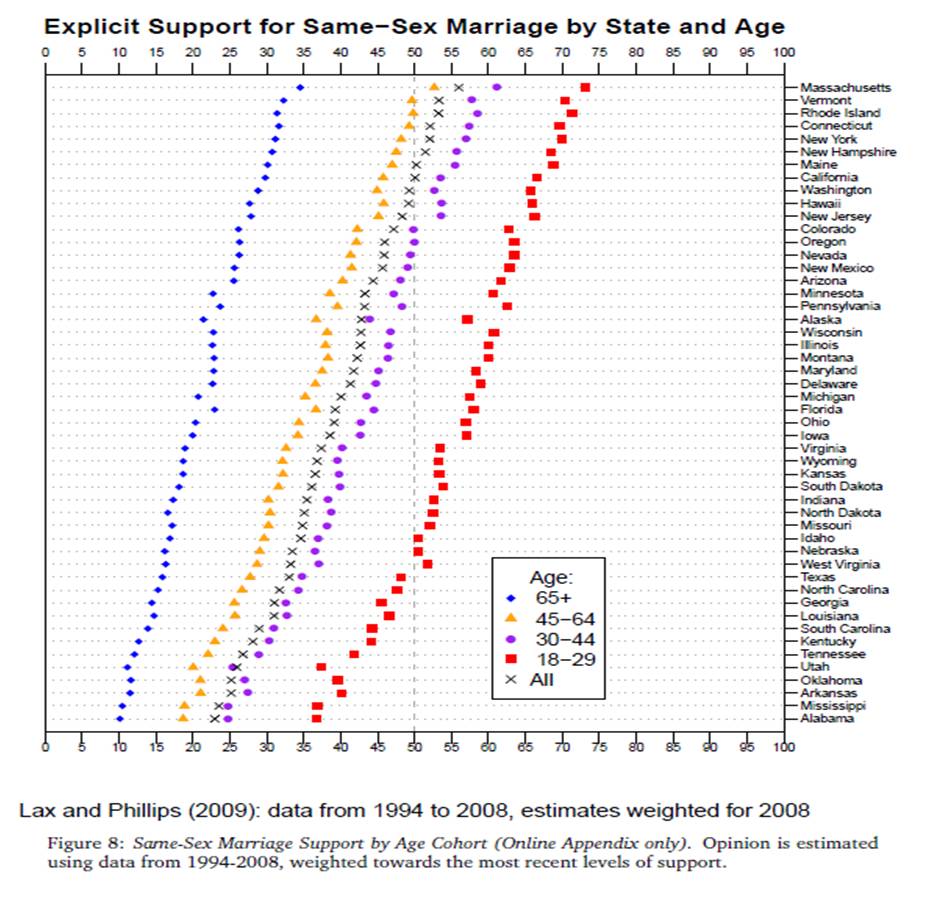
Marriage Equality in California. The more same-sex marriages there are, the stranger the objections to it sound.

Targeting Obama. It’s no longer acceptable to say “Don’t vote for the black guy.” But that doesn’t mean racism’s gone.

The Voter-Fraud Fraud. A phony voter-fraud issue lets the Republicans squeeze out marginal voters.

Short Notes. The Olbermann-O’Reilly feud escalates to GE vs. News Corp. Mad Pride. And John King’s close encounter.

One of the great discoveries in the history of marketing is known by the acronym FUD: fear, uncertainty, and doubt. If you represent the status quo, you don’t have to make any verifiable charges against your upstart rivals. Instead, you just have to raise FUD. Get people thinking that if they change, something — you don’t have to be clear about what — might go wrong. In fact, the less clear you are the better. Any specific fear might be confronted and dealt with, but how can your rivals fight people’s vague sense that something they haven’t considered might come back to bite them?

The weakness of a FUD campaign is that, lacking substance, its effectiveness tends to dissipate all at once, like a fog blown away by the wind.

Marriage Equality in California

No issue in recent years has had a higher FUD-factor than same-sex marriage. Some unnameable thing is going to go horribly wrong if gays and lesbians are allowed to marry. “Barring a miracle,” James Dobson wrote in 2004 as the first same-sex marriages were happening in Massachusetts, “the family as it has been known for more than five millennia will crumble, presaging the fall of Western civilization itself.”

You can almost imagine believing that kind of hyperbole when same-sex marriage is some strange theoretical concept. But then you move in next door to Bob and Jim, who have rose bushes make a great peach cobbler, and the idea that they’re bringing down Western civilization suddenly seems pretty wacky. The more Bobs and Jims there are, and the more people who live next door to them, the harder it is to raise credible FUD against gay marriage. The fog blows away.

I live about four miles from Massachusetts, which legalized same-sex marriage in 2004. I’m not sure what kind of noise the fall of Western Civilization is supposed to make, but I’m sure I would have heard it. As far as I know, civilization has also not yet collapsed in the Netherlands, which started performing same-sex marriages in 2001. Nor in Spain, Canada, Belgium, or South Africa. Civil unions of one sort or another are currently recognized right here in New Hampshire, as well as in California, Connecticut, Hawaii, Maine, New Jersey, Oregon, Vermont, and the District of Columbia. Denmark has been doing them since 1989. The list of other civil-union-recognizing countries is longer than I want to type — Wikipedia has it — but includes such avant-garde places as Uruguay and Croatia.

If government-sanctioned homosexual relationships can’t even bring down civilization in Uruguay, how bad can they be?

Thursday the California Supreme Court ruled 4-3 that the state’s separate-but-almost-equal domestic partnership arrangement isn’t good enough. According to their interpretation of the state constitution and its equal-protection clause, California has to have one institution, not separate ones for opposite-sex and same-sex couples. The court leaves the legislature to decide whether that institution will be called “marriage” or “domestic partnership” or something else, but it has to be the same for everybody.

It’s been fascinating watching reactions from the usual FUD-slingers, who don’t seem to realize that their talking points are becoming increasingly irrelevant. They still talk about unelected judges imposing their liberal vision on the rest of us through judicial activism — totally ignoring the role of elected officials in bringing this case to trial, as well as the fact that 3 of the 4 judges in the majority were appointed by Republican governors.

History. The California judges outline the history of the case, beginning on page 12 of the decision. In February 2004, the mayor of San Francisco started a process that led to the city issuing marriage licenses to about 4000 same-sex couples. Conservatives went to the courts to stop this, and got this same California Supreme Court to tell San Francisco to knock it off and to nullify the licenses already issued. The city then filed suit claiming that the statute the court had based its ruling on (Proposition 22, passed by voter initiative in 2000) was unconstitutional, a subject the court had not ruled on. That suit was joined by a number of same-sex couples, and then wound its way up the state court system, winning in superior court and losing in appellate court before landing back in the lap of the supremes.

In the meantime, in 2005 and again in 2007, the state legislature passed a same-sex marriage bill, which Governor Schwarzenegger vetoed each time for procedural reasons. (On pages 29-32 of the decision, the court agreed with Schwarzenegger.)

Eventually, this whole thing is going to end up back with the voters anyway. A constitutional amendment against same-sex marriage is likely to be a ballot soon. (Is it just me, or is it crazy to have a system where a simple majority can amend the constitution? I think if I were a California citizen, I’d be gathering signatures on an initiative petition amending the constitution to require a 2/3 vote to amend the constitution.) Prop. 22 got 61% of the vote in 2000, but that was before civilization failed to collapse in Massachusetts, and before the California Domestic Partner Act of 2003 also failed to herald the Apocalypse. It will be much more difficult to raise a significant FUD cloud this time.

Legal reasoning. Legally, all the same-sex marriage decisions look a lot the same. Whenever the government treats some group of people differently from another, it needs to have a reason. How good that reason needs to be depends on how inherently suspect the discrimination is.

For example, where I vote, people whose names begin with A-L stand in a different line from the M-Z people. Nobody suspects that the election officials have anything against either group, and neither line has any particular advantage over the other, so the officials don’t have to have much of a reason. “Convenience” is good enough. But now imagine that blacks had a special line that went much slower. “Convenience” wouldn’t be nearly good enough to explain that arrangement to a court, because racial discrimination is inherently suspect in a way that alphabetical discrimination isn’t.

So all the same-sex marriage cases hang on two questions: How inherently suspect is it to discriminate based on sexual orientation? And how good a reason does the government have for marriage discrimination? Does the government just need to have just a rational reason to discriminate against gay and lesbian couples (a reasonable connection between the discrimination and some legitimate government goal), or a compelling reason (there’s just no other way to do whatever it is they’re doing). For example, if a town had evidence that its students would learn better in separate boys and girls high schools, it would have a rational reason for creating such schools, but not a compelling reason. But the government has a compelling reason to discriminate against murderers, because society falls apart if you don’t.

In California, the appellate court had ruled that the state only needed a rational reason for marriage discrimination, and it had one. The Supreme Court overturned that by ruling that the state needed a compelling reason, and it didn’t have one. In Massachusetts, the court had ruled that marriage discrimination lacked even a rational justification. I agree with Massachusetts.

What about the children? When pressed to produce some rational reason for the state to discriminate against same-sex couples, the traditional-values types always claim to represent the best interests of the children. The traditional father-mother family, they say, is the best environment for raising children, and that’s why the state should favor it over other types of households.

A bunch of things are wrong with this argument. First, it’s ad hoc. People who use this argument against same-sex marriage ignore its other implications — like not allowing parents to divorce until their children are grown. When I hear the anti-gay-marriage folks propose that, maybe I’ll start taking them seriously.

Second, which children does marriage discrimination help? Children being raised by same-sex couples today are clearly harmed by having their households stigmatized. And if marriage discrimination discourages gay and lesbian single parents from forming long-term partnerships, then their children are harmed also. And children being raised by opposite-sex couples — how does discrimination against same-sex households help them?

The only way this argument makes sense is if we’re talking about future children, not existing ones. And then only if the state, by juggling incentives, can induce people to choose heterosexual relationships over homosexual ones. By favoring heterosexual households, you see, the state encourages more people to form them. And that benefits whatever children they may have, I guess, because repressed homosexuals make such good parents.

The state’s incentives, however, only make a difference if homosexuality is a choice rather than an orientation. The secular evidence for this notion is pretty thin, but right-wing Christians have theological reasons for believing it. (Sin has to be your decision, not God’s. Otherwise sending you to Hell is a miscarriage of divine justice.) So, when you break it down, what you basically have is a religious argument, not a social policy argument.

Finally — and I left this to the end because it’s the hardest objection to explain — the whole argument is based on bogus statistics. On just about any issue in social science, a small group of people is responsible for most of the dysfunction. If you want to slander some other group of people, you arrange your categories so that they are lumped together with the underperforming group. Then you total up, and — presto! — their category is responsible for most of the dysfunction.

Whenever I’ve chased an opposite-sex-superiority claim back to the source study, they’ve been comparing children raised by their married biological parents against children raised by everyone else. “Everyone else” includes a substantial number of teen-age single mothers, many of whom are poor and uneducated. And I’m sure you won’t be shocked to discover that on average, children of poor, uneducated, teen-age single mothers don’t do as well as most other children. So children from traditional married mother-father families, on average, do better than other children, but the reason has nothing to do with homosexuality.

In short, the only real reason to oppose same-sex marriage is because God says it’s wrong. If you don’t believe that, or if (like a court) you’re not allowed to take that argument into account, then there’s no reason at all.

Targeting Obama

FUD has played a special role in the Republican strategy in all recent elections, the general point being that if Democrats get power, something really bad will happen. The vaguer that something really bad is, the more effective the campaign. One Democrat after another flails about, trying to prove that something really bad won’t happen if he or she gets power. “Under my administration, the United States will not have any more random misfortune than you would ordinarily expect.”

It’s not a very compelling message, is it?

Against Obama, though, FUD will be even more important due to the way racism works in this era. It is clearly out of bounds for a 21st-century campaign to say “Don’t vote for the black guy.” Even among friends or in the privacy of their own minds, the vast majority of Americans aren’t willing to admit, “I’m not going to vote for that guy because he’s black.” We know that we’re good people, and good people aren’t supposed to think like that.

But forcing racism (or sexism or any other prejudice) into the unconscious doesn’t make it go away. Instead, a candidate like Obama starts the campaign under a shadow: Many voters have a nebulous sense that there must be something wrong with this guy. Finding some specific wrong feels like a relief: Thank God, now I know why I never liked him. It’s not because he’s black, it’s because he has a wacko pastor, or because he’s a Muslim, or because he’s not patriotic, or anything other than because he’s black. Republicans know that they don’t need to offer people a reason to vote against Obama, just an excuse.

This week’s excuse is that Obama is “an appeaser”. Because he wants to go back to the traditional American practice of talking to our enemies — Nixon and Mao, Reagan and Gorbachev, Kennedy and Krushchev, etc. — Obama is like Neville Chamberlain giving Czechoslovakia away to Hitler. Clearly, something really bad would happen if Obama met with Iran’s Ahmadinejad. What? No one is saying.

Bush started this smear in a speech to the Israeli parliament, and it was dutifully picked up by the usual shills. (The most embarrassing version of this was conservative talk-radio host Kevin James on Hardball. James kept repeating “appeaser” but seemed to have no idea what it meant. Chris Matthews totally humiliated him. Details on Digby’s Hullabaloo.)

McCain (and the usual shills) has been trumpeting a similar talking point about Obama being endorsed by Hamas. The kernel of truth here is that a Hamas guy said something nice about Obama during a radio interview. A comparable situation would be if someone from the KKK said that they’d rather see the white guy (McCain) get elected. But framing this as an “endorsement” implies that Obama wooed Hamas the way McCain wooed John Hagee. The key question in all these issues is: What’s the accusation?

By now Democrats should know that trying to appear harmless doesn’t work. We’ve have got to do an FDR and target fear directly, as Michelle Obama does in the video that the lead quote comes from.

The Voter-Fraud Fraud

This issue goes a little beyond FUD. It’s a scam based on manufacturing and exploiting fear of something negligibly rare: people showing up at a polling place and falsely claiming to be eligible voters. In response to this bogus fear, Republicans pass laws that make it harder for people on the fringes of society — usually Democrats — to vote.

Expect to see much more of this now that the Supreme Court has given its blessing to Indiana’s voter ID law, the one that protected the Republic from 12 elderly nuns who tried to vote in the recent Indiana primary.

Sunday the Dallas Morning News provided more evidence that voter fraud is not a serious problem: Texas’ Republican attorney general set up a special unit to prosecute voter fraud, got a $1.4 million federal grant to fund it, and in two years has managed to prosecute only 26 cases, 18 of which were technical violations involving how absentee ballots are mailed in — probably innocent mistakes and certainly not fixable with a voter ID law. None of the cases seem to be part of any larger conspiracy. But the targets were all Democrats and “almost all … blacks or Hispanics”. The cases resulted in “small fines and little or no jail time”.

But this “success” allowed the AG to claim (in a brief to the Supreme Court) that he had “obtained numerous indictments, guilty pleas and convictions” of voter fraud. Texas Republicans are now pushing for an Indiana-like voter ID law.

TPM reminds us how high this goes: “
In the case of the US Attorney firings, most of the dismissals targeted prosecutors who refused to use the power of their office to advance the interests of the Republican party by engaging in these kinds of witch hunts.”

Missouri Republicans want to up the ante even further. The Center for American Progress totals up the cost of compliance with a proposed Missouri law that voters come to the polls with proof of their citizenship. This is a 2-for-1 deal on manufactured fear: not just voter fraud, but illegal immigrants as well. No one has been able to identify an illegal immigrant who has voted fraudulently, but it would be really scary if it happened, wouldn’t it?


Digby: “
I would imagine that there are a whole lot of older people who’ve never had to prove their citizenship in their lives and wouldn’t have a clue about how to go about doing it.” The New York Times comments: “The imposition of harsh new requirements to vote has become a partisan issue, but it should not be. These rules are an assault on democracy itself.”

Short Notes

One of the more amusing parts of Keith Olbermann’s nightly Countdown program on MSNBC is his running feud with Bill O’Reilly of Fox News. Almost every night, some bit of buffoonery from “Bill-O” is one of the three finalists in Countdown’s “Worst Person in the World” segment. For his part, O’Reilly has stopped mentioning Olbermann’s name, and instead has been going up the ladder, attacking NBC and now NBC’s parent corporation, General Electric. (Because GE is winding down its contracts with Iran — for energy and health care equipment, not weapons — rather than breaking them, O’Reilly has been targeting them for “doing business right this minute with Iran, who are killing our soldiers.”) It’s one of those classic high-school Smart Alec vs. Jerk battles, where the smart alec (Olbermann) seems to be having a good time and the jerk (O’Reilly) is taking it seriously. The Washington Post’s Howard Kurtz has more detail.

Joe Galloway is trying to stay on top of the story of the ex-generals organized by the Pentagon to repeat administration talking points while claiming to be independent commentators on TV. The media has completely ignored this attack on its credibility since the New York Times broke the story four weeks ago. MediaBloodHound comments on Brian Williams’ lack of comment. Media Matters estimates that these compromised “analysts” were quoted 4,500 times on the major news networks.

Have you seen that high-tech election board that CNN’s John King mans during their primary election coverage? 23/6 provides an amusing soundtrack for it.

Which is more depressing: That the gap between male and female starting salaries hasn’t budged during the Bush years, or that each gender is worse off than it was in 2000?

Digby reviews Nixonland by Rick Perlstein: “you can’t begin to understand our current political time without understanding that one.”

The New York Times recently had an article about the “Mad Pride” movement to de-stigmatize mental illness. Liz Spikol is part of it, and this video is great. It starts out funny, and then does something else.

Looking Ahead to McCain-Obama

The defenders of freedom are not those who claim and exercise rights which no one assails, or who win shouts of applause by well-turned compliments to liberty in the days of her triumph. They are those who stand up for rights which mobs, conspiracies, or single tyrants put in jeopardy; who contend for liberty in that particular form which is threatened at the moment by the many or the few. – William Ellery Channing

In This Week’s Sift:

The Horse Race. Can we finally stop talking about Obama-Clinton and focus on Obama-McCain? The trick for Obama is to make the campaign focus on issues. The trick for McCain is to focus on Obama.

Judging McCain’s Judges. John McCain outlined his judicial philosophy last Tuesday. Any Clinton supporter who’s thinking about sitting out the fall election should pay attention.

Short Notes. Life in Baghdad. McCain and the environment. Stamping out wizardry in Florida’s schools. And what IOKIYAR really means.

The Horse Race

After the Indiana and North Carolina primaries, the major media proclaimed the Democratic presidential race over. During the coverage of those primaries Tuesday night, official media spokesman Tim Russert said: “We now know who the Democratic nominee is going to be.” And suddenly, it was now OK to point out that Hillary Clinton had no chance to win the nomination.

Wednesday morning the Obama-supporting blogs were too exasperated by the media group-think to be grateful that the major pundits were finally agreeing with them. OpenLeft’s Chris Bowers was typical:

I spent a good amount of time last night ranting about how the national media called the nomination campaign for Obama after the North Carolina and Indiana results, even though their logic for doing so could have been applied at any point in the campaign since the Wisconsin and Hawaii nomination contests on February 19th. … Essentially, since February 19th analysis of the campaign revealed that Clinton had virtually no chance of closing the delegate gap, and pretending otherwise was just an exercise in kabuki-theater where Obama was ritually gutted by the national media for the amusement of a reality-ignoring pundit elite.

Anyway, the media still mostly refuses to move on and consider the McCain-Obama race, because it’s much more interesting to speculate on whether Hillary will exit gracefully or pull the whole Democratic Party down on top of herself, a la Samson. Clintonites seem to think that calls for her to withdraw are sexist, a charge that I’m sure puzzles supporters of male ex-candidates like Dodd, Biden, Edwards, and Richardson. You lose, you leave — what’s strange about that? The bizarre thing in this story isn’t that she’s being urged to stand down, but that her candidacy continued to be taken seriously after she lost ten straight primaries and caucuses in February.

Moving on to McCain/Obama: It’s really clear how this race is going to go. If it’s decided on issues, Obama wins. McCain can’t defend his position on the war. Nobody other than McCain and a few neocons wants a new war with Iran. His economic policy, like Bush’s, boils down to don’t-tax-the-rich — and that’s been working so well for the rest of us. He promises to nominate more judges like Alito and Roberts, and Justice Stevens will be 92 by the end of the next president’s term, so Roe v. Wade is pretty much history if McCain gets in. His health care plan (which I described last week) amounts to the claim that the insurance companies would work miracles for us if government only got out of their way.

Play campaign consultant for a moment: Do you see anything here he can run on? Each of his positions has a small-but-dedicated constituency that could put him over the top if the rest of the electorate divided. But none is close to being a majority view. And they’re all virtually identical to positions identified with George W. Bush, who has the highest disapproval rating ever recorded.

McCain isn’t suicidal, so we can conclude that he won’t run on issues. Like every conservative candidate since Reagan, he’ll run on image. He’s the maverick and Obama is the out-of-touch liberal. He’s a war hero and Obama is a wimp. He’s a patriot and Obama hates America. Obama is the candidate of homosexuals, of angry black radicals like Jeremiah Wright, of bomb-throwing hippies like William Ayers, and of Osama bin Laden. (Did you know he’s a Muslim? I read it on the internet.) Again and again, we’ll hear from “ordinary” Americans saying things like: “I don’t know what it is about Obama, but there’s something just not right about him. He’s not like everyday folks.” (Hint: He’s black. Maybe that’s the problem.)

That strategy is the subtext of Time’s advice in McCain’s 7 Steps to Beating Obama. The steps revolve around destroying Obama’s image, and say not a word about issues. The question is whether McCain can throw this mud without dirtying his own image. And that largely depends on whether he continues to enjoy the complete adulation of the media. If he can still be portrayed as the upright, straight-shooting candidate while saying things like “It’s clear who Hamas wants to be the next president,” then he might pull it off.

Judging McCain’s Judges

If anything will bring Clinton-supporting women to Obama in the fall, it’s going to be their fear of John McCain’s judicial appointments. Obligingly, McCain outlined his judicial philosophy in a speech at Wake Forest on the same day as the North Carolina and Indiana primaries. The headline-making quote from this speech was:

I have my own standards of judicial ability, experience, philosophy, and temperament. And Chief Justice Roberts and Justice Samuel Alito meet those standards in every respect. They would serve as the model for my own nominees if that responsibility falls to me.

McCain’s people deny the characterization of his prospective presidency as George Bush’s third term. But when it comes to judges, he proudly says that he will model his choices on Bush’s choices.

And that’s not all he says. If you have the time, read or watch the whole speech on the McCain web site. Far from being “maverick” or “moderate” in any way, the speech is a classic conservative rant against liberal “judicial activism”. An excellent critique of the speech — making a number of the same points I’m making but in more detail — was posted by OpenLeft contributor Lang. The Balkinization blog has a number of comments: notably by Jack Balkin and Andrew Koppelman. My own opinions about so-called judicial activism haven’t changed since my Wide Liberty essay of 2005.

Somehow, no matter how many Republican presidents we have or how many judges they appoint, Republicans can still run against the judiciary. (Eli on FireDogLake claims the root cause here is that Republicans hate the law. Judges and lawyers are just symbols of that underlying curse of legality.) Of the current Supreme Court, for example, only two justices were appointed by Democrats (Ginsberg and Breyer, both by Clinton). Ford appointed Stevens. Reagan named Scalia and Kennedy. Thomas and Souter are the responsibility of Bush the First, and Roberts and Alito can be charged to the account of Bush the Second. Given that Republicans have held the White House for 5 of the 7 terms since 1980, that’s probably typical of the federal judiciary as a whole. If there’s a problem with our judges, it’s a problem that Republicans have caused.

The most disturbing part of McCain’s speech comes early. After praising the Founders and the checks and balances they established to keep government in line, McCain notes that “There is one great exception in our day” to the success of the check-and-balance system. Is it the Bush administration’s overwhelming abuse of executive power? Its defiance of Congressional subpoenas? Signing statements that “interpret” laws to say whatever the president wants them to say? Specious legal opinions that the Justice Department writes to circumvent our treaty obligations not to torture? Creating a law-free zone in Guantanamo ? Holding an American citizen in solitary confinement for three and a half years and driving him virtually insane before charging him with any crime?

What could this “one great exception” be? None of the above. It’s “the common and systematic abuse of our federal courts by the people we entrust with judicial power.” Other than that, McCain thinks checks and balances are working fine.

McCain gives several examples of this “abuse of our federal courts” — one of which is incoherent. He cites the Kelo case in which a woman’s home was taken by eminent domain so that a private developer could build on the site. By a 5-4 majority, the Supreme Court refused to intervene and the seizure went forward. Now, McCain may not like the way this case turned out — I’m not sure I do either — but it’s an example of judicial restraint, not judicial activism. “Real activism,” McCain says, is democratic and tries to change the hearts and minds of the electorate.

By contrast, activist lawyers and activist judges follow a different method. They want to be spared the inconvenience of campaigns, elections, legislative votes, and all of that. They don’t seek to win debates on the merits of their argument; they seek to shut down debates by order of the court.

Well, Kelo was an example of elected officials exercising their judgment. But rather than undoing that decision via the ballot box, McCain wanted the courts to undo it. Somehow, failing to undo a local government’s action is “judicial activism”.

This up-is-down reasoning is typical of such rants. Lang cites a Yale study of the 64 cases from 1994-2005 where the Court struck down federal laws. The researchers totaled up how often each justice voted in favor of the “activist” position to strike down a law. By that measure of activism, the conservative judges were far more activist than the liberals. Conservative Clarence Thomas voted with the law-overturning majority 66% of the time and liberal Stephen Breyer 28%, with judges lining up in between in almost exactly conservative-to-liberal order.

McCain’s speech also denounced “airy constructs the Court has employed” in contrast to “the clear meanings of the Constitution.” He obviously intended to imply that the right to privacy (which protects a woman’s right to choose to have an abortion) is such a construct. But conservatives always fail to note other legal constructs. The words “executive privilege” appear nowhere in the Constitution. And the notion that corporations have the same legal status as persons and so can claim the full Bill of Rights — that’s a construction of the Supreme Court as well. And no one can find a quote from the Founders that remotely resembles the Bush administration’s theory of the unitary executive.

A true constitutional minimalist (somebody who denounces every constitutional interpretation not specifically envisioned by the Founders) could start an interesting discussion and raise the general level of debate in this country. But that’s not at all what McCain is doing. He, like President Bush before him, wants the courts to be a weapon for conservatism. He’s in favor of aggressively conservative judges, and only applies the negative frame of “judicial activism” to decisions that he disagrees with.

Short Notes

Linking to myself: Thursday I wrote an essay slightly too long for the Sift — Pirate Treasure: Why oil and democracy don’t mix. It explains why Iraq’s oil wealth is a hindrance to its becoming a democracy, not an asset — and why that should have been obvious from the beginning. It’s on my Open Source Journalism site, and I posted it as Pericles on DailyKos. I also recently preached a sermon at my Unitarian church in Bedford, Mass. It’s called Some Assembly Required, and you can find it on my religious blog Free and Responsible Search.

Sunday’s Washington Post described the everyday life of an Iraqi businessman who the reporter has known since before the invasion. His family lives in exile in Jordan; he won’t live in the house he owns in an upscale neighborhood. The dangers of the Saddam era are past,

But in this post-Saddam time, other threats impose themselves. Material ostentation draws kidnappers, political engagement invites assassination, and time spent outside the seeming safety of four walls carries the risk of being caught in the middle of horrific violence. In 2006, Yousif’s cousin, an engineer, “was driving in the street, and they shot him,” Yousif recalled when I met with him in Baghdad in March. The family has no idea who killed the man, or why, or even if there was a reason.

Monday’s Washington Post describes McCain’s environmental record as a “balancing act”. Someone with less media admiration than McCain might be described as inconsistent or flip-flopping. In the 12th paragraph they do get around to noting that the League of Conservation Voters gives his environmental voting record a 24 rating, as opposed to Obama’s 86.

The Onion quantifies a trend many others have wondered about: There are now only four acceptable things a candidate can say without offending someone. The Onion News Network has a video report on John McCain’s plans to save the government money by disbanding the Secret Service and defending himself.

A substitute teacher in Land o’ Lakes, Florida claims to have lost his job after being accused of “wizardry”. He did a magic trick for his students, making a toothpick vanish and reappear. If they don’t crack down now, I guess, somebody will saw a student in half.

Cristina Page on Huffington Post combined state-by-state data from the National Campaign to Prevent Teen and Unplanned Pregnancy with NARAL’s state-by-state ratings on how pro-choice or pro-life a state is. Conclusion: In pro-life states teens are more sexually active, more likely to have had sex before age 13, and more likely to have four or more sexual partners. This pattern has been noted by a number of observers and comes up in a variety of statistics, but somehow never becomes common knowledge: States where abstract “family values” are politically popular are usually states where actual family values are in bad shape. As of 2005 (the most recent stats I could find) Massachusetts and Connecticut still had the lowest divorce rate in the nation, with Arkansas and Oklahoma the highest (not counting Nevada, which does a lot of divorces for out-of-staters).

The latest anti-evolution tactic recently failed in the Florida legislature. The creationist Discovery Institute is pushing an “academic freedom” bill to protect public-school teachers who argue against evolution in their classrooms. Their online petition warns against “self-appointed defenders of the theory of evolution who are waging a malicious campaign to demonize and blacklist anyone who disagrees with them.” But the St. Petersburg Times doubts the bill’s premise: “most of the evolution-related pressure being put on science teachers is aimed at those who want to teach the scientific consensus about evolution, not those who want to teach the ‘full range of scientific views’ — which would presumably include the fringe notion that evolution is not backed by strong evidence.”

Internet acronyms can be frustratingly obtuse, but one I recommend learning is IOKIYAR: “It’s OK if you’re a Republican.” Senator Vitter frequents a house of prostitution? So what? IOKIYAR. Larry Craig makes a gay pass at a policeman, but he can stay in office because IOKIYAR. McCain breaks campaign finance laws he helped write? Never mind, IOKIYAR. Jerry Falwell blamed America for 9/11 every bit as much as Jeremiah Wright did, but IOKIYAR. Rush Limbaugh’s drug problem? IOKIYAR. The latest example is Cindy McCain’s tax returns, which she recently pledged that she will never release. Of course, the “liberal” Washington Post complained in 2004 when Theresa Kerry tried the exact same maneuver. (“There may well be nothing of great note in Ms. Heinz Kerry’s tax returns other than the scope of her wealth. But with her husband seeking the presidency, her financial dealings, as well as his, ought to be as open as possible. Keeping her returns private would set a bad precedent.”) And what do you think the reaction would have been if Hillary hadn’t included Bill’s income in her disclosures? But never mind, Cindy. IOKIYAR.

John McCain’s Health Plan

Everyone takes the limits of his own vision for the limits of the world. – Arthur Schopenhauer

In This Week’s Sift: What McCain Wants To Do With Health Care

Short Notes. Deaths in Iraq are back up. The gas tax holiday. And the New York Times keeps recycling the same old experts.

John McCain’s Health Care Proposals

Tuesday John McCain gave a speech in Tampa where he outlined his health care proposals. Barack Obama and Hillary Clinton long ago announced detailed health care plans, so we now have enough information to start comparing. Just to remind myself that there are actual issues that matter, I’m going to spend an entire Sift looking at what McCain wants to do about one of our most important problems.

The Problem: expensive care, poor results, uncertainty

In a nutshell, the problem with the American health care system is that we spend a lot and we don’t get commensurate results. Wikipedia has a well-laid-out table of relevant numbers, which seem to come from 2003. Compared to the other seven countries in the table, the U.S. spends the most per capita ($5711 compared to second-most-expensive Germany at $3204) and has the lowest life expectancy (77.5 years compared to six countries in the 79.5-80.5 range and outlier Japan at 82.5). These statistics lump together public and private spending, and so are an apples-to-apples comparison, as opposed to claims that health care is “free” in countries where it is paid for by the government.

Not captured in those poor overall statistics is the uncertainty Americans face. The Census Bureau reports that 47 million residents of the United States were uninsured in 2006 — that’s the number you hear most often. Conservatives claim it is misleading because about 10 million are non-citizens and 15.7 million had annual household incomes over $50,000 — and so, conservatives assume, could have bought insurance had they been so inclined. (You can find these numbers on page 21 [page 29 in the PDF file] of the Census Bureau report.) In addition, some large number of uninsured people are between jobs and will have insurance again in a few months. (McCain says about half; I’m not sure what his source is.) So it’s hard to estimate exactly how many of those 47 million are in the most sympathetic category: American citizens who are more-or-less permanently consigned to the mercies of emergency rooms for their health-care needs. Wild guess: 10-20 million. That’s less than 47 million, certainly, but should we be happy about it?

There are other problems with the attempts to lowball the numbers: If being uninsured is a revolving door, then many more than 47 million have been without insurance for some period of months; any poorly timed health problem could have thrown them into bankruptcy. (The revolving door is more like the spinning cylinder of a revolver in Russian roulette.) And consider those non-citizens: When the next epidemic strikes, we’re going to wish they had access to health care just for our own selfish reasons. (I wonder how many of the janitors in my apartment building are citizens and how many have health insurance. We touch so many of the same objects.) And some of the revolving-door people will only sort of be insured again when they get their next job: their pre-existing conditions may not be covered.

And that brings us to the next problem: The rigidity of our health-care system spills over into other areas. Because their coverage is tied to their jobs and a new insurer might not cover their pre-existing conditions, some large number of Americans are locked into jobs that are unfulfilling, trap them in an unfortunate living situation, or fail to use their skills well. One of the U.S.’s economic advantages — the mobility and flexibility of our labor force — is being compromised.

McCain vs. the Democrats

By the time the candidates start debating health care, a lot of options have already been closed off. None of the three candidates propose a single-payer system similar to those used by the other countries in the Wikipedia table — the ones where people live longer and spend less. All three leave most of the system in the private sector — private health insurance companies, private hospitals, and privately employed doctors. (Kucinich was the most popular candidate who proposed a single-payer system — and he wasn’t very popular.) All three also retain some version of the major public-sector programs: Medicare, Medicaid, and the Veteran’s Administration hospital system.

Compared to McCain’s proposals, the difference between the Clinton and Obama plans is negligible. The two Democrats differ mostly about whether to mandate coverage, i.e., penalize people who don’t buy health insurance. Clinton’s plan, with mandates, is probably better from a public-health standpoint. Obama’s plan, without, is probably easier to sell politically. Clinton’s plan could easily turn into Obama’s as it makes its way through Congress.

But the philosophical difference between McCain and the Democrats is sharp: Obama and Clinton believe that the federal government has to take responsibility for making health coverage available and affordable. McCain believes that the federal government should try to create conditions that encourage the market to solve the problem, with the primary responsibility for plugging gaps in the market falling to the states. So although McCain can say things that sound just like the Democrats:

We want a system of health care in which everyone can afford and acquire the treatment and preventative care they need, and the peace of mind that comes with knowing they are covered. Health care in America should be affordable by all, not just the wealthy. It should be available to all, and not limited by where you work or how much you make. It should be fair to all; providing help where the need is greatest, and protecting Americans from corporate abuses.

really he’s just expressing a desire rather than taking responsibility for achieving a goal. It’s like when a president promises “good jobs for everyone who wants to work” — that doesn’t mean that the government will hire all the unemployed, only that the government will pursue policies that it hopes will encourage the market to create jobs.

Insurance, employment, and pre-existing conditions

For example, consider how the candidates deal with the problem of losing your coverage when you lose or leave a job. Obama and Clinton would open up the Federal Employees Health Benefit Plan to all Americans. In other words, you’d get the same health insurance options that a federal employee has. Since your eligibility depends just on being an American rather than on working for a particular company, you stay covered (or can switch to the FEHB plan) when you leave a job. Both would use government money to make insurance cheaper for most people — which they claim to pay for by letting the Bush tax cuts on the wealthy lapse. (I haven’t checked whether those numbers work.)

McCain’s proposes to change the tax policy that favors employer-based group insurance over individual insurance. He would provide an annual tax credit — $2500 for individuals and $5000 for families — to people who buy their own insurance. He claims this is equivalent to the tax credit an employer gets currently. So while your employer’s insurance plan doesn’t go with you when you leave a job, the federal tax benefit does.

Now, what does that do and not do? It doesn’t put new government money into the system; it just reshuffles tax breaks that already exist. It mitigates your expense if you have to buy your own plan, but doesn’t guarantee that you’ll be able to find a plan. Elizabeth Edwards has pointed out that as cancer survivors, neither she nor McCain would be able to find an insurance company willing to take them on. McCain recognizes that gap in the system, and says that he will “work tirelessly to address the problem. But I won’t create another entitlement program that Washington will let get out of control.” His speech suggests (without making any commitments) that the federal government will assist the states in setting up subsidized pools to cover “the uninsurables.”

And finally, a tax credit only does you good to the extent that you pay tax. In 2007 a family had to have taxable income of $38,550 before they owed $5000 in federal income tax. If you just lost your job, that tax credit may not help much.

Market magic

The “magic” in McCain’s plan — say that word sarcastically if you’re liberal and reverently if you’re conservative — is in what he imagines all these newly empowered individual health-care consumers will do and how the market will respond to them.

The key to real reform is to restore control over our health-care system to the patients themselves. Right now, even those with access to health care often have no assurance that it is appropriate care. … When families are informed about medical choices, they are more capable of making their own decisions, less likely to choose the most expensive and often unnecessary options, and are more satisfied with their choices. We took an important step in this direction with the creation of Health Savings Accounts, tax-preferred accounts that are used to pay insurance premiums and other health costs. These accounts put the family in charge of what they pay for. And, as president, I would seek to encourage and expand the benefits of these accounts to more American families.

The vision here is that ordinary health care would be purchased piecemeal, like groceries, with individuals bearing the cost (out of their tax-sheltered health savings accounts) and being backed up by insurance only for expensive illnesses. Savings come because families will purchase less health care. If a doctor wanted to do an expensive test to rule out some unlikely possibility, a cost-conscious family could say “No, thank you.”

And McCain envisions the personal-health-care market responding the way that the personal-computer market has — with ever-improving quality and ever-shrinking prices. This creative interplay of supply and demand is what McCain sees missing in government programs that would

replace the inefficiency, irrationality, and uncontrolled costs of the current system with the inefficiency, irrationality, and uncontrolled costs of a government monopoly. We’ll have all the problems, and more, of private health care — rigid rules, long waits and lack of choices, and risk degrading its great strengths and advantages including the innovation and life-saving technology that make American medicine the most advanced in the world.

In order to foster this competition, McCain proposes creating a single set of federal health-insurance regulations rather than the current system of state regulations.

Right now, there is a different health insurance market for every state. Each one has its own rules and restrictions, and often guarantees inadequate competition among insurance companies. Often these circumstances prevent the best companies, with the best plans and lowest prices, from making their product available to any American who wants it. We need to break down these barriers to competition, innovation and excellence, with the goal of establishing a national market to make the best practices and lowest prices available to every person in every state.

Market realities

I’ve tried to be objective and fair up to this point . Now I’ll be opinionated: This is fantasy. The health-care market is special in ways that make McCain’s magical-competition vision ridiculous.

Health insurance companies make money in two ways, one constructive and the other destructive. The constructive opportunity is through risk-pooling: Being sure that your potential losses will be covered is worth more to you that your fair share of the losses of the entire pool of people being insured, so you’re willing to pay a premium large enough that the company makes an overall profit.

But the big money in private health insurance isn’t in risk-pooling, but in risk-shifting. If you’re an insurance company, you want to insure the people who don’t get sick and not wind up paying for the people who do get sick. Every time you insure somebody who doesn’t get sick, that’s 100% profit. But every time you insure an Elizabeth Edwards (or my wife, another cancer survivor), you blow the premiums paid by dozens (or even hundreds) of healthy people. There’s nothing like this in other markets. If you sell computers or cars, the more you sell the more money you make. You don’t need to worry about selling to the wrong customers.

Left to their own devices, health-insurance companies will compete by risk-shifting, not risk-pooling, because that’s where the real money is. They’ll love to have your business until you get sick, and then they’ll do their best to get rid of you. The more freedom the market allows the insurance companies, the more nakedly they will pursue this strategy.

The second unusual feature of the health-care market is that consumers are not the well-informed decision-makers that McCain imagines. When the doctor tells you that your daughter needs this operation right away or she’s going to die, are you going to spend a week in the library researching the question? Even if you had the week to spend, would you trust your rationality under that kind of stress?

My wife, who could never get insurance on her own, gets us insurance through her employer. We have a choice of several plans, which we can change annually if we want. Are we making the best choice? I have no idea. Nobody does. We trust that the employer has vetted the plans, and we’ve had mostly good experiences so far, so we stay with what we have. People who haven’t been sick don’t even get that much information. Now shift into that health-insurance-account vision: I’m going to negotiate individually to get the best deal out of the surgeons, the hospitals, the labs that do our blood tests, and everybody else in the supply chain. And I’m especially going to do it when either I or my wife have major illnesses. Not likely.

In competitive markets full of customers as ignorant as I would be without an employer cutting down my choices, competition happens mostly through image advertising. St. Marie Antoinette’s Hospital “really cares.” The Beneficent Insurance Company hires attractive young women with chipper voices to answer your calls. The “best” doctors are with the Upscale Medical Group. The more competition we put into the system, the more money will be spent on TV commercials with messages like that rather than on providing care that helps people get well.

Trillion with a ‘t’

Finally, it’s very hard for voters to wrap their minds around the sheer scale of the health-care market. Americans spend about $2 trillion of public and private money each year on health care. In a system that big, it’s easy to come up with ideas that seem like they ought to save big money, but actually make no visible dent. Take malpractice expenses. As McCain says:

Another source of needless cost and trouble in the health care system comes from the trial bar. Every patient in America must have access to legal remedies in cases of bad medical practice. But this vital principle of law and medicine is not an invitation to endless, frivolous lawsuits from trial lawyers who exploit both patients and physicians alike.

Tort reform is a standard conservative cost-saving proposal in all fields. But the total malpractice payments in America run about $5-6 billion annually. That sounds like real money, but it’s less than $3 out of every $1000 of our total health-care spending. Eliminate all malpractice cases — including the ones where deserving patients get money they need — and you will have made not the slightest dent in our medical budget. All such savings in McCain’s plan, I predict, would be swamped by the increased advertising.

Summing up

McCain doesn’t propose putting any new federal money into health care, so you won’t get a break that way. If he succeeds in pushing the insurance market towards individual policies rather than employer-centered groups, you’ll lose any bargaining power that your employer might have. If the health-savings-account model takes hold, you’ll have to make a huge number of decisions without having the proper information or expertise. Creating a national rather than state-by-state market will prevent your state government from giving you any more leverage than the federal government wants to give you. Cost savings are illusory.

In short: In McCain’s plan, your power goes down relative to the insurance companies. What you’ll get in exchange for that is not clear.

Short Notes

Chris Bowers, who wasn’t supporting Hillary anyway, reports:

The gas tax holiday episode collects all of my worst fears about a possible second Clinton presidency in a single, dark, place that I haven’t entered since the 1990’s. Are we to suffer through another Democratic President who will make impromptu, right-ward shifts toward bad policy, justified in nonsensical, Orwellian language, all the while claiming such a move must be done because it will score huge political points even though it is ultimately a bad political calculation, and then threaten the entire Democratic Party to fall in line behind such a move or else? This is basically all of my worst fears about Hillary Clinton becoming President rolled up into one giant ball of tin-foil and dropped on my front porch.

U.S. troop deaths in Iraq had leveled off at about 40 a month before shooting up to 54 in April. Funny how you don’t hear people say “the Surge is working” so much any more. Back in November, when deaths had dropped into the 20s after being over 100 every month last summer, you could almost share John McCain’s fantasy that our casualties were on their way to zero, and that an Iraq occupation might become no different than having troops in Germany or Korea. But the downward trend stopped well short of zero, and we have to think about how long we’re willing to keep losing those 40+ every month.

Foreign policy experts seem to have some weird form of tenure — no mistakes can possibly get them thrown out of the fraternity. For the fifth anniversary of Mission Accomplished, the New York Times pulled together articles by Richard Perle, Paul Bremer, and a bunch of other people who helped get us into this mess. What do the people who were right in 2003 think? The NYT isn’t interested in that question.

Who Works For You?

People may expect too much of journalism. Not only do they expect it to be entertaining, they expect it to be true. — Lewis Lapham

In This Week’s Sift:

TV’s Military Analysts: Who Do They Work For? Eight days ago the New York Times made a stunning attack on the integrity of the major media’s military analysts and the networks that employ them. The networks responded by … well actually they haven’t responded. And maybe they can’t.

Pretty Laws, Ugly Practices, and the Demonization of Lawyers. Why bother to take away people’s rights when you can accomplish the same thing by taking away their ability to claim their rights? How John McCain, Senate Republicans, and conservatives on the Supreme Court have eviscerated a woman’s right to equal pay.

Religious Issues. This week I gave the religious short notes their own section. Moyers interviews Wright. An atheist sues the Army. And Ben Stein stands up for innocent religious extremists who are being oppressed by nasty scientists.

Short Notes. How to make John Ashcroft lose his temper. Being poor can kill you. What’s underneath the Obama-Clinton battle. And a high school prank I wish I’d thought of.

TV’s Military Analysts: Who Do They Work For?

It’s hard to claim that a story that made the front page of the Sunday New York Times is flying under the radar, but this one is: On April 20 the NYT had a major article called “Behind TV Analysts, Pentagon’s Hidden Hand“. The article describes the incestuous relationship between the Pentagon, the “independent” military analysts you see on TV, and the military contractors these analysts often work for.

Short version of how the system works: Ex-generals can make much more money after their military retirement by working for government contractors. To certain extent they’re selling their expertise, but mainly what they sell is their access to decision-makers in the Pentagon and to inside information about the military’s needs. A number of these retired officers also work as military analysts for the major TV networks. They purport to be independent, but the Pentagon thinks of them as its spokesmen in the media. The Pentagon “pays” them by arranging special events that enhance their access — and give them more to sell to contractors.

The article describes specific moments when meetings were held and talking points were distributed — which the analysts then repeated on their networks as if they had come to these conclusions independently.

At the Pentagon, members of Ms. Clarke’s staff marveled at the way the analysts seamlessly incorporated material from talking points and briefings as if it was their own.

“You could see that they were messaging,” Mr. Krueger said. “You could see they were taking verbatim what the secretary was saying or what the technical specialists were saying. And they were saying it over and over and over.” Some days, he added, “We were able to click on every single station and every one of our folks were up there delivering our message. You’d look at them and say, ‘This is working.’ ”

The article is impressive by itself, but this video compiled by FreePress.net brings it home by collecting the TV excerpts. It’s one thing to read about talking points, but another to see them come to life.

It’s debatable whether this program broke any of the laws against institutionalized propaganda, but the Times’ article strikes at the heart of the integrity of networks like CNN. (It also strikes at Fox News, but integrity has never been an issue there.) So you would think that they would respond swiftly either by defending themselves or taking action to right their ship. But no. There’s been an almost complete silence about the story from the major media.

Glenn Greenwald has kept after the story in his characteristically relentless way. (Note to self: Never get on Glenn’s wrong side.) Already on Sunday he was observing the media non-reaction: “Having just watched more Sunday news shows than a human being should ever have to endure, it is striking — though unsurprising — that not a single one saw fit to mention this NYT story demonstrating that these news programs all fed government propaganda to their viewers.” On Tuesday he found documentation that CNN had presented its list of military analysts to the Pentagon for approval prior to the Iraq invasion. On Wednesday he was interviewing ex-CNN-anchor Aaron Brown, and destroying the claim “that [the military analysts] were there only to instruct viewers on tactical and military questions, not to engage in political advocacy.”

To me, this story looks like the tip of an iceberg that the networks don’t dare examine. In the old model of journalism, from the Walter Cronkite era of my youth, journalists were supposed to be working for you, the reader or viewer. Being human, they had points of view that sometimes would distort their coverage, but that was a failing. When exposed, it was deplorable.

Today, though, most of the talking heads you see are not working for you, not even in theory. They’re working on you. In political coverage, for example, it has become very hard to tell the difference between the hired campaign operatives being interviewed and the pundits who interview them. This week CNN hired Tony Snow to be a political commentator. Is he working for you now, or is he still working for President Bush and the conservative movement? Is he going to help you understand the political scene, or try to manipulate you into thinking what the conservative movement wants you to think?

In theory, it would be possible to assemble to team of pundits of a variety of political philosophies, but still have them work for you. Their statements would be colored by their philosophies (the same way mine are), but they would say only what they truly thought, and not what their side’s strategy wanted you to believe.

In practice, I don’t see this happening anywhere.

Pretty Laws, Ugly Practices, and the Demonization of Lawyers

In order to be meaningful, a right has to be embedded in a much larger structure of oversight and enforcement. The constitution of the Soviet Union, for example, guaranteed all kinds of rights — freedom of speech, freedom of religion, and just about any other right you’d want. But if the Soviet government violated those rights, a citizen had no way to call it to account. In this way, beautiful laws and oppressive governments can get along quite nicely.

Rights are popular in America, so no political party can run on the platform “We want to take away rights.” But what this administration has consistently done instead is chip away at the structure of oversight and enforcement. On paper, for example, you haven’t lost your fourth-amendment right not to be spied on without probable cause. But if the state secrets privilege prevents a court from examining the government’s domestic spying, just try to claim that right. And if habeas corpus is weakened enough that you can’t see an impartial judge at all, pretty much all your rights become unenforceable.

Habeas corpus is a little abstract, but this week we saw a much more easily grasped example of the enforcement-denying process. Federal law protects women from discrimination in the workplace, and in particular makes it illegal to pay a woman less purely because she’s a woman. Last year, the Supreme Court re-interpreted the 180-day statute of limitations on this law. Under the old interpretation, each discriminatory paycheck restarted the statute-of-limitations clock. But the new interpretation is that the clock starts only once, when the discrimination starts; if you don’t catch on and file suit within six months, tough luck.

The new interpretation makes the law (Title VII) just about useless. If it takes you more than six months to figure out that your male colleagues make more money, too late. Given that companies discourage their employees from comparing paychecks, very few women are going to pull a case together under the time limit.

In response, the House passed the Lily Ledbetter Fair Pay Act (named for the woman who lost the Supreme Court case), which would reinstate the old interpretation — each paycheck is a new act of discrimination. But it died in the Senate Wednesday under Senate rules that allow 41 senators to block consideration of a bill. (It’s an implicit filibuster; you don’t have to actually talk the bill to death if you can demonstrate enough support to show that you could talk the bill to death.) Every Democratic senator voted for the bill. (Except Harry Reid, who joined the opposition for procedural reasons after it was clear the vote had failed. You have to be in the opposition to bring the bill up again in this session of Congress.) Forty-one Republicans voted against.

John McCain didn’t stop campaigning long enough to vote. (Obama and Clinton showed up and voted in favor.) But he expressed his opposition from the road: “I am all in favor of pay equity for women, but this kind of legislation, as is typical of what’s being proposed by my friends on the other side of the aisle, opens us up to lawsuits for all kinds of problems.”

There you have it in a nutshell: McCain isn’t against equal pay, he’s just against lawsuits. But how does he intend for a woman to claim her right to equal pay, if she can’t file a lawsuit? It’s a Soviet-style position: We can retain our pretty law against pay discrimination, as long as we don’t allow anyone to use it.

Keep this example in mind whenever the Republicans trot out their favorite whipping boys, the trial lawyers. Lawyers have a bad image these days, so it sounds good to be against lawyers. But lawyers represent clients, and clients need some way to enforce their rights. Are the Republicans offering some alternative way to defend rights? Or are they in effect doing away with those rights?

When pressed, of course, Republicans will even deny that they’re against lawsuits; they’re just against frivolous lawsuits. Slate’s Dahlia Lithwick presents a good summary of Lily Ledbetter’s case. Go and check its frivolity for yourself.


Religious Issues

So many of this week’s short notes concerned religious issues that they’re worth a section of their own.

This week’s Bill Moyers’ Journal demonstrates why Bill has become such a hero in the liberal blogosphere: He sits down with Jeremiah Wright and has a real conversation with him about religion and the black experience of Christianity. You can watch the whole thing online. (Or you can go to Salon and let Joan Walsh give you the view from Planet Clinton.) Wright’s discussion of how black Christians have been taught to be ashamed of Africa and African culture gave me some new understanding of the black church: “A lotta the missionaries were going to other countries assuming that our culture is superior, that you have no culture. And to be a Christian, you must be like us. Right now, you can go to Ghana, Nigeria, Senegal, and see Christians in 140-degree weather. They have to have on a tie. Because that’s what it means to be a Christian.” A lot of whites have been reading the “unashamedly black” part of Trinity Church’s self-description as some kind of militant separatism. But Wright comes out of a context where the shame of being black is very real and has to be addressed.

Jeremy Hall, a soldier who happens to be an atheist, is suing the Army for religious discrimination. Now he’s an atheist with a lawsuit, which gives the Army two reasons to treat him unfairly.

Ben Stein’s new anti-evolution movie Expelled is out now, and crystallizes the challenge that the scientific community faces in bringing its message to the public. One of the most important plot-types in our culture is: “A privileged elite is using its institutional power to suppress the evidence against the story that justifies that power. But a brave few are trying to bring out the truth.” If you can fill in the blanks in that plot so that you are the brave few and your enemies are the privileged elite, you’ve got a powerful propaganda weapon. That’s what Stein has set out to do. He presents intelligent design as the oppressed scientific rival of evolution, and tars the scientific community as the oppressors. This kind of narrative is hard to fight with facts and reason alone, as Chris Mooney observes.

Basically, you have to fight stories with stories. A humorous parody of the Expelled trailer is here, advertising a non-existent movie about the Stork Theory of where babies come from. And this video from the National Center for Science Education makes heroes out of the people who protect students from creationist disinformation.

Short Notes

John Ashcroft made a speech Wednesday at Knox College in Galesburg, Illnois. Elsinora from DailyKos was there, and gives a good example of how to confront an unrepentant torture advocate. My favorite part: In response to someone else’s question about the UN Convention Against Torture, Ashcroft says, “Now, I don’t have a copy of the convention in front of me …” and Elsinora jumps up and says: “I do! Would you like to borrow it?”

I’ve talked about this before, but the evidence just gets more and more disturbing: Being poor means that you die sooner, and the number of lost years is growing. Sunday the New York Times called attention to recent reports that life expectancy has flattened out for poorer women, and is actually going down in many parts of the country. This graphic is, well, graphic. If you want to chase down the details, the two reports the article is based on are from the Public Library of Science’s medical journal and the Congressional Budget Office.

Another NYT article: The story of one principal’s attempt to start an Arabic-language-based public school in Brooklyn, and the smear campaign that brought her down. The article ends with the now-former principal, Debbie Almontaser, touring a Spanish-language school and thinking about what might have been.

Last week I wondered whether the 2001 quote (“we didn’t do enough“) that is being used to paint Bill Ayers as an unrepentant terrorist might have been out of context. Well, this week I ran across the letter Ayers wrote to Times right after the quote appeared. In it he embraced the interpretation I speculated: that he didn’t do enough to end the Vietnam War, not that he didn’t set off enough bombs.

David Sirota raises an interesting point: As we talk about the importance of white working class voters, at some point the discussion starts to shade over into a less savory notion — that Democratic superdelegates shouldn’t take black primary voters as seriously as white primary voters.

In the course of a speculative post about who would make a good VP for Obama, BooMan brings up something that it seems like everybody in the liberal blogosphere knows, but never gets discussed in front of the general public: Underneath the Clinton-Obama battle are the same forces that lined up in the Terry McAuliffe vs. Howard Dean battle over the direction of the Democratic Party. The Dean position has been: Evangelize for liberalism. Try to compete in all 50 states, and tell people everywhere why Democratic principles and programs would work for them. The McAuliffe position is: Focus all your energies on the battleground states and the swing voters, and move to the right to make yourself more appealing to them. Deaniacs see the 2006 sweep as a vindication of their approach, with victories in places that McAuliffe would never have put resources. As current head of the DNC, Dean is officially neutral in the Obama-Clinton race, but the Deaniac activists are almost unanimously for Obama, while McAuliffe is working for Clinton. One reason there’s so much hostility between the campaigns is that the activists on each side have been battling much, much longer than Obama and Clinton.

EmptyWheel is one of the best investigative bloggers — she covered the Scooter Libby trial better than any mainstream journalist — and doesn’t usually get into the horserace side of politics. But she’s also a Michigan Democrat who resents the way her state has been turned into a political football. So she presents her own plan for handling the Michigan delegation.

SlateV lets us in on White House Life’s plan for President Bush’s retirement.

Am I the only one who wishes I had pulled off a prank like this when I was in high school?

A Well-Distracted Electorate

Government supported by an uninformed citizenry is not a democracy; it is a sham. — David Mindich, Tuned Out

Some people drink Pepsi. Some people drink Coke.
The wacky morning DJ says democracy’s a joke.
— Cake, “Comfort Eagle”

In This Week’s Sift:
The Chaff Debate: ABC vs. Obama. When I defined “chaff issues” last week, I didn’t know I’d get such a good example of them two days later.

Guilt By Association. The Obama-Ayers smear as a new example of an old tactic.

Short Notes. I couldn’t totally ignore the world outside the campaign, so it all gets crammed in here: Bush on climate change. Rove decides not to testify after all. Re-splicing the state of the union address. And some pretty young women making tongue-in-cheek public service announcements.

Over the last few weeks I’ve been trying to stay away from the campaign, figuring that it was a long time between primaries and we’d just end up rehashing the same stuff. But tomorrow is the Pennsylvania primary, so I’m making up for lost time with an all-politics issue.

On the big question — what’s Pennsylvania going to do? — you can find a poll to support any prediction you want to make. It’s a mess. To me, the most persuasive analysis comes from Geekesque on DailyKos: Clinton by 8-16%. Geekesque notes that the variance in the polls is between Clinton and Undecided: Obama’s support is stuck in the 40-45% range. We may be seeing the Bradley effect, where white voters refuse to tell pollsters that they plan to vote against a black candidate.

That result would keep the Democrats on the road to a disastrous convention fight, so I hope I’m wrong.

The Chaff Debate: ABC vs. Obama

Last week I talked about chaff issues — those content-free political topics that distract the public from issues that affect their lives. Right on cue, Wednesday night’s Democratic debate on ABC [video, transcript ] served up the full smorgasbord of chaff. ABC News moderators Charles Gibson and George Stephanopoulos (a former Bill Clinton staffer) barraged Obama with questions about the “bitter” comment, flag pins, Rev. Wright, and his neighbor the ex-Weatherman. They balanced it slightly by tossing one chaff question (about her false sniper-fire story) to Hillary Clinton. When Gibson did finally get around to talking about real issues (after at least 45 minutes) he devoted a significant chunk of time to arguing in favor of the Bush/McCain position on capital gains taxes, strongly implying (against all evidence or sense) that this is a big deal to middle-class voters.

As so often happens, the best critique of the debate was by Jon Stewart on The Daily Show. After running clips of the most ridiculous moments from the first hour, he described it as “a 60-minute master class in questions that elevate out-of-context remarks and trivial, insipid miscues into subjects of national discourse — which is my job. Stop doing my job.” Another comic response: a mock ABC ad for the debate.

Josh Marshall reflected on what the debate said about the media’s changing role:

Organized campaigns of falsehoods, distortions and smears used to be something most people thought of as a bad thing, if not something that’s ever been too far removed from American politics. Now, however, members of the prestige press appear to see it not as a matter of guilty slumming but rather a positive journalistic obligation to engage in their own organized campaign of falsehood, distortion and smear on the reasoning that it anticipates the eventual one to be mounted by Republicans.

Press reaction. ABC’s performance drew bad reviews throughout the press. The New Republic’s Noam Scheiber called the first half of the debate “a 45-minute negative ad“. The Philadelphia Daily News’ Will Bunch wrote to Gibson and Stephanopoulos: “you disgraced my profession of journalism, and, by association, me and a lot of hard-working colleagues who do still try to ferret out the truth.” Greg Mitchell (author of the new book So Wrong for So Long about the media’s failures regarding Iraq) called the debate “a shameful night for U. S. media“. Richard Adams of the British newspaper The Guardian headlined his piece: “Worst. Debate. Ever.” The Washington Post’s Tom Shales said the moderators put in “shoddy, despicable performances” and “ABC’s coverage seemed slanted against Obama.”

Criticizing the critics. But let’s be fair and balanced: A few people liked the debate. Right-wing people, mainly. Michelle Malkin parodied the criticism as: “How dare they explore questions of character, truthfulness, and judgment?” And for New York Times columnist David Brooks “the questions were excellent.” Friday Brooks defended chaff issues in general: “But the fact is that voters want a president who basically shares their values and life experiences. Fairly or not, they look at symbols like Michael Dukakis in a tank, John Kerry’s windsurfing or John Edwards’s haircut as clues about shared values.” (Oddly, they never look at such symbols when judging Republican candidates.) Don Imus — yes, he’s back on the air now — thought Stephanopoulis was “great” and the debate was “fine” and added that Obama “is almost a bigger pussy than she is.” Thanks for sharing that, Don.

Clinton supporters claimed that ABC’s critics were just Obama supporters trying to protect their candidate from “tough” questions, saying “if you cant handle a tv anchor how should the American people expect you to handle a hostile world leader?” As if Kim Jong Il is going to grill Obama about Rev. Wright.

ABC’s defense. In an interview with TPM’s Greg Sargeant, Stephanopoulos described his questions as “tough, fair, relevant, and appropriate.” (Though Huffington Post’s Jason Linkins unearthed a video of Stephanopoulos when he was working for Bill Clinton’s 1992 campaign, saying that the American people “don’t want to be diverted by side issues, and they’re not going to let the Republican attack machine divert them.”) Unfortunately, Sargeant did not ask him specifically about the most outrageous question of the evening: “Do you think Rev. Wright loves America as much as you do?”

Or maybe the most outrageous question was “raised by a voter in Latrobe, Pennsylvania” and “comes up again and again when we talk to voters.” That voter, Nash McCabe, appeared by videotape to ask Obama: “I want to know if you believe in the American flag.” From the way they introduced it, you might think that ABC went out asking voters what questions they wanted to ask and then presented the most typical one. You would be wrong. Actually the New York Times quoted McCabe on April 4. ABC then tracked her down to put the question on video. So ABC went looking for some “typical voter” to ask a question they wanted asked. (The Clinton sniper-fire question was also asked on video by a voter. Was he a ringer too? I don’t know.)

ABC’s defense continued Sunday on Stephanopoulos’ “This Week”. The roundtable discussion was uniformly pro-ABC and anti-Obama. All four panelists took for granted that debate critics were Obama supporters, and they promoted the Clinton-campaign spin about “toughness”.

Objectivity? In an effort to determine if there was anything objectively different about the ABC debate, Huffington Post’s Nico Pitney analyzed the four one-on-one debates, two hosted by CNN and one each by ABC and NBC. He categorized the questions in each debate as either policy questions, non-policy questions about process issues (like the role of superdelegates), and scandal questions. Result: ABC’s debate had more scandal questions than the other three debates put together (13-8). Of the 21 scandal questions in the four debates, Obama was the target of 17 and Clinton 4.

I did my own research and wrote an article on Daily Kos examining ABC’s bias. I went back to the previous ABC-hosted debates, a Republican and a Democratic one held back-to-back in Manchester on January 5. I found a consistent pro-Republican bias, and in both January debates the candidates were invited to attack Obama. No other candidate, Republican or Democrat, was singled out like this. In all three debates, ABC consistently assumed that in November Republicans will be on offense and Democrats on defense: Republicans were not asked to anticipate Democratic attacks, and Democrats were not asked how they would attack Republicans.

Only Democrats got questions of the form: “What will you do after your plans fail?” After you fail to protect an American city from a terrorist nuclear weapon? After the generals tell you that pulling troops out of Iraq will be disastrous? And so on.

I invite you to watch for these patterns as the campaign continues.

Brushing it off. Thursday Obama was in North Carolina, using the debate as an example of “the old politics.” The crowd loved his mime of brushing the negativity off his shoulders. Observers younger and cooler than I am have pointed out a connection to Jay Z’s rap “Dirt Off Your Shoulder”. And then Obama went on The Colbert Report to put “manufactured political distractions” on notice.

Guilt By Association: “Can You Explain That Relationship?”

In Wednesday night’s debate, that was how George Stephanopoulos phrased a question about Obama’s neighbor, the ex-Weather Underground member William Ayers. Ayers has also recently been the subject of a conversation between Sean Hanity and Karl Rove, a memo by a Clinton supporter, and John McCain on Stephanopoulos’ Sunday morning show. The Clinton and McCain camps are trying very hard to make this an issue.

I’ll describe that bit of chaff in a moment, but first I want to discuss in general the propaganda tactic of guilt-by-association. The essence of the technique is to associate some fear-inducing person or event or imagery to a person, and then to demand an “explanation” from that person. But no explanation is possible because there is no accusation, just a cloud of amorphous negativity. As Glenn Greenwald said about another chaff issue back in March

It’s just illusory innuendo that, by design, can never be satisfactorily addressed because nobody can ever apprehend what the substance of the “scandal” is.

Now let’s look at Ayers and his wife wife Bernardine Dohrn, another former Weather Underground revolutionary. The Washington Post had a good profile of them Friday, and its Fact Checker discussed the Ayers-Obama relationship in February. The Weather Underground was a radical anti-Vietnam-War group that did a number of bombings during the Nixon years, including one at the Pentagon. Three Weathermen were killed when one of their bombs went off prematurely, but otherwise the bombings were crimes against government property. A comparable organization today might be the Earth Liberation Front, an environmental group that blows up stuff, but doesn’t target people.

Ayers and Dohrn were fugitives for several years before surfacing in 1980. The outstanding charges against them had been dismissed in 1974 due to misconduct by the prosecution, so Ayers never went to prison and Dohrn served a few months on another charge. They’re both college professors now: Ayers is a professor of education at the University of Illinois and Dohrn a law professor at Northwestern. They’ve stayed married all these years and raised three children, including the son of their imprisoned Weather Underground colleagues. (They did OK by that kid — he won a Rhodes scholarship in 2002.)

Ayers wrote a book about his radical years, and did not repent. (I don’t believe that Gordon Liddy and Oliver North have never repented for their crimes either. And North, like Ayers, got off on a technicality.) He said to the New York Times: “I feel we didn’t do enough.” But from the Times’ write-up, I can’t tell whether he meant “We didn’t blow up enough stuff” or “We didn’t do enough to end the Vietnam War.” The book was published September 10, 2001 and his remarks appeared in the Times on September 11. That’s Ayers’ sole connection to 9/11.

What’s his connection to Obama? They both live in the Hyde Park neighborhood of Chicago (where I lived when I was in grad school). Their kids have attended the same school. Ayers and Dohrn hosted a meeting in 1995 in which the outgoing state senator anointed Obama as her successor, and Ayers gave $200 to Obama’s state senate campaign in 2001. For three years Obama and Ayers were both on the board of the Woods Fund of Chicago, “a grantmaking foundation whose goal is to increase opportunities for less advantaged people and communities in the metropolitan area, including the opportunity to shape decisions affecting them.” (Ayers is still on the board.) Obama describes Ayers as a friend, but says they disagree on a number of issues and don’t exchange ideas on a regular basis.

These undisputed facts allow people to construct sentences that include the words Obama, terrorist, bombing, and 9/11 — sentences that Obama can then be asked to “explain”. In Wednesday’s debate, Senator Clinton piled on to Stephanopoulos’ guilt-by-association attack by adding that “people died” in the Weather Underground bombings, and that Obama’s “relationship with Mr. Ayers on this board continued after 9/11 and after his reported comments, which were deeply hurtful to people in New York and, I would hope, to every American, because they were published on 9/11.” While none of Clinton’s statements are technically lies, they are well constructed to mislead you into thinking that Ayers killed innocent people and that his comments came in response to 9/11, rather than coincidentally appearing on 9/11.

Association attacks thrive in a confused, non-specific environment. In conversation, the best response to an association attack is to insist on hearing an accusation before making any further defense. Exactly what did the target of the attack do wrong? If that question can’t be answered, then no “explanation” is needed.

Short Notes

The funniest thing I saw this week: Somebody has re-spliced the 2003 state of the union address to be a bit more honest: “Every year, by law and by custom, we meet here to threaten the world.” [standing ovation]

What do other Chicago ministers think of Rev. Wright? Pastor John Buchanan of the Fourth Presbyterian Church of Chicago published this statement in the church newsletter: “Among Chicago churches and Chicago clergy of all denominations, Jeremiah Wright’s ministry is widely admired as a model of what a public church can and ought to be, and he, himself, is widely respected.”

Comedian Lee Camp has a series of videos he calls Pranktivism. In this episode, he stands outside fast food restaurants distributing pamphlets for the fictitious Obesity Exchange Program, which sends our overweight five-year-olds to Bangladesh in exchange for their underweight kids.

Intel Dump’s Phillip Carter responds to President Bush’s admission that he exaggerated the progress in Iraq to “bolster the spirits of the people in the field”. Carter was in Iraq during those pre-surge days, and he says: “It’s disappointing to hear now, two years after the fact, that the president was knowingly bull—-ing us the whole time.”

One response to the revelation that the National Security Council designed torture programs for individual detainees: a petition for Condi Rice to resign. (Except for Cheney, the other participants are already gone.) Explanatory video here.

Public service announcements from Funny Or Die: Kristen Bell appeals for contributions to the McLovin Fund to help actor Christopher Mintz-Plasse, who can never work again after playing the McLovin character in Superbad. And Hayden Panettiere warns against sexual harassment, or at least the kind of harassment you might get if you were Hayden Panettiere.

MoveOn asks how you stay in Iraq for 100 years. Answer: Six months at a time.

In the days of the smoke-filled room, a party’s nomination depended on the endorsement of powerful bosses. Well, this week a big-name boss endorsed Obama, and Slate-V anticipates Clinton’s counter-attack ad.

Grist’s David Roberts discusses Wednesday’s Bush speech on global warming: “I hate to be the party-pooper. But we’ve been here before. How many times does Lucy expect us to try to kick this football?”

John McCain released his own tax returns this week, but not his wife’s — and she’s got all the money. John Kerry tried this tactic in 2004 and didn’t get away with it. But McCain is teflon. Let’s see what happens.

The GAO reports that the Bush administration has no plan to eliminate terrorist base camps in Pakistan, where bin Laden allegedly is hiding. EmptyWheel does a timeline, noting that it’s been 87 months since Richard Clarke first asked the administration to develop a comprehensive anti-al-Qaida strategy.

Last week (second Short Note) I linked to Dan Abrams’ interview with former Alabama Governor Don Siegelman, who claims that Karl Rove orchestrated his prosecution for political reasons. In the interview, Abrams quoted Rove’s lawyer saying that Rove would welcome the chance to testify before Congress about the case. Well, now that the House Judiciary Committee is asking, the lawyer is saying his words were taken out of context. Don’t expect to see Rove under oath any time soon. (Of course we all remember what happened the last time Rove put his hand on a Bible.)

Flying Pork and Other Signs of Success

All the war-propaganda, all the screaming and lies and hatred, comes invariably from people who are not fighting. – George Orwell

In this week’s Sift:

Leave Iraq? No Time Soon: General Petraeus came back to Washington, but his troops will stay in Iraq for a long time.

Time to Assess the Bush Boom: If we’re going into a recession, we can make fair comparisons to the start of previous recessions. The results don’t look good.

Chaff and Bitterness: Chaff issues sparkle, but have no content. They work because voters are cynical, and voters get more cynical when chaff issues dominate the debate.

Short Notes: Bush confessed to war crimes and no one cared. Railroading Don Siegelman. And the Daily Show’s history of Fox News.

Leave Iraq? No Time Soon

That minor skirmish in Iraq came briefly back into the spotlight this week. General Petraeus spent two days testifying in front of Congress, and it all led up to a speech in which President Bush “accepted” Petraeus’ advice to stop withdrawing troops when the Surge brigades leave — as if he ever considered doing anything else. In a conversation with Bill Kristol, Bush admitted the deception: “My answer is no. [But] I’m not going to say that. I’m going to say that I agree with David, that we ought to take a look.”

You can watch Bush’s 17-minute speech for yourself. It closes with this heartfelt message to our worn-down troops:

The day will come when pigs sprout wings, and you will fly home on their backs.

Wait, I must have nodded off and dreamed that part. According to the transcript he actually said this:

The day will come when Iraq is a capable partner of the United States. The day will come when Iraq is a stable democracy that helps fight our common enemies and promote our common interests in the Middle East. And when that day arrives, you’ll come home with pride in your success, and the gratitude of your whole nation.

No time soon, in other words.

So what did we learn this week? The gist of General Petraeus’ testimony was predictable: We’re making progress in Iraq, but that progress can’t be quantified in any way that would allow us to make predictions (at least not in a time frame shorter than “the day will come”). The failure of the recent Basra offensive was spun like cotton candy into a sign of this unmeasurable progress. Petraeus kept using mathematical metaphors like “battlefield geometry” and “political-military calculus,” but appealing to the intimidation factor of mathematics rather than the objective, calculable aspect. “Political-military calculus” seems to be something that experts like General Petraeus can understand, but can’t explain to doofuses like the American people or their elected representatives (like that well-known blond airhead, Senator Clinton).

The hearings were also a chance for the presidential candidates to audition their Iraq policies. (See TPM’s selected highlights of the hearings, including Ohio Republican Senator George Voinovich saying: “The American people have had it up to here” at about the 5:40 mark.) Their performances are good examples of how each one thinks.

Senator McCain gave an opening statement that sounded a lot like President Bush: He framed the situation in simplistic terms that appeal more to American emotions than to the complicated reality of Iraq — success, failure, victory, dying in vain, and so forth. He also read his statement as badly as Bush usually does. (Check out Clinton’s bored expression at the 2:20 mark.) His conclusion: “With the untold costs of failure and the benefits offered by success, the Congress must not choose to lose in Iraq. We should choose instead to succeed.”

Senator Clinton tried to turn the administration spin around. She responded to “suggestions that have been made leading up to this hearing and even during it that it is irresponsible or demonstrates a lack of leadership to advocate withdrawing troops from Iraq. … I fundamentally disagree. Rather, I think it could be fair to say that it might well be irresponsible to continue the policy that has not produced the results that have been promised time and time again.”

Senator Obama treated the hearing as if it were a genuine discussion rather than a set-piece for everyone to play predictable roles. (The first time I watched, I had no idea where he was going.) He stated his personal opinion — “I continue to believe that the original decision to go into Iraq was a massive strategic blunder” — and then tried to craft a bipartisan narrative for the committee as a whole: “Our resources are finite. This is a point that has just been made by Senator Voinovich. It’s been made by Senator Biden, Senator Lugar, Senator Hegel. … When you have finite resources, you’ve got to define your goals tightly and modestly. … I’m trying to get to an end point. That’s what all of us have been trying to get to.” And then he plunged into the details to see if he could drive the definition of “success” downward to something that is achievable. His ultimate question was: If “a messy, sloppy status quo” in Iraq — modest Al Qaida involvement, some violence, some corruption, some Iranian influence, but no threat to Iraq’s neighbors and no secure base from which Al Qaida could launch external attacks — could be maintained by the Iraqi government without American troops, would that count as success? Crocker and Petraeus did not seem to know what to do with this kind of questioning. Crocker first tried to interpret it as a proposal for “precipitous drawdown”. Then he got condescending: “This is hard. This is complicated.” And then he seemed to me to more-or-less agree, while closing on the caveat: “That’s not where we are now.”

Time to Assess the Bush Boom

One way people get tricky with statistics is to pick their dates carefully. Unless you’re at the worst moment in all of human history, you can always say: “Stuff has improved this much since that time when stuff was worse.” If you go back to the Great Depression or the Black Death, you can always show phenomenal improvement.

That’s how on January 4 the White House was able to announce: “Since August 2003, more than 8.3 million jobs have been created.” Why August, 2003? Because that’s when the job market bottomed out. Stuff has improved by 8.3 million since that time when stuff was worse. Should we be impressed or not?

In economics, the only meaningful comparison is across a complete business cycle. If you’re, say, 40% of the way through a cycle, the meaningful comparison is to a time 40% of the way through the last cycle. Unfortunately, you usually don’t know where you are — the term business cycle is sort of a euphemism — so you aren’t sure what to compare to. The economy goes up and down, but it doesn’t roll along smoothly like a wheel. It’s more like a wheel on an icy, bumpy road.

Right now, though, it’s pretty clear where we are: We’re going into a recession. So that makes this a good time to total up. How do things look compared to the start of the last recession in 2000? And how does that complete cycle compare to previous cycles?

For years, cheerleaders like CNBC’s Larry Kudlow have been telling us about “the Bush Boom” and how media bias has kept Americans from appreciating just how wonderful things are. In December Kudlow wrote:

fiscal and monetary coordination will continue the Bush boom for years to come. Though mainstream media outlets will never admit it, President Bush has kept America safe and prosperous. But history will eventually judge him in a more kindly light.

Now that this business cycle is over, history can start judging. And you know what? This cycle, to use the technical economic term, sucked. The suckiness shows up in jobs, GDP, length of expansion, and all the other statistics. But in Wednesday’s New York Times David Leonhardt put his finger on the key number: median annual family income.

In 2000, at the end of the previous economic expansion, the median American family made about $61,000, according to the Census Bureau’s inflation-adjusted numbers. In 2007, in what looks to have been the final year of the most recent expansion, the median family, amazingly, seems to have made less — about $60,500. This has never happened before, at least not for as long as the government has been keeping records.

This graph of median annual family income makes the point even clearer. No recent cycle comes close to the Kennedy-Johnson record of a 37% increase, but the subsequent cycles have shown increases of 7%, 6%, 6%, and the Clinton cycle’s 11%. And now it goes down. Heck of a job, Georgie.

“We have had expansions before where the bottom end didn’t do well,” said Lawrence F. Katz, a Harvard economist who studies the job market. “But we’ve never had an expansion in which the middle of income distribution had no wage growth.”

So what happened? Briefly, the expansionary part of this cycle was pretty anemic to begin with, and all the money that it did generate went to the rich. That trend towards increased inequality goes back to Reagan, as Paul Krugman argued last September using this graph of the percent of total income going to the top 10%.

For a more detailed analysis, see this post by Hale Stewart (a.k.a. “bonddad” on Daily Kos). He argues that increased debt makes the median family even worse off than the income statistics suggest: Total household debt was 92% of GDP in 2005 compared to 70% in 2000. Stewart sums up:

1.) Job growth was the weakest of any post WWII recovery.

2.) Real median income actually dropped for the duration of this expansion.

3.) To sustain consumption, consumers went on a mammoth debt acquisition binge, so that now

4.) Debt payments are as high as they have ever been on a percentage of disposable income basis.

So after 7 years of economic expansion we have lower incomes and more debt.

Lower income, more debt — sounds great, doesn’t it?

I’m tempted to end on a Bush-is-the-worst-president-ever note, but that’s too easy. The Bush administration is not some bizarre anomaly; it is the culmination of a conservative movement that started with Goldwater and took control with Reagan. The Bush policies — cut rich people’s taxes, spend a lot on defense, squeeze the welfare state, and deregulate business — are core Goldwater-Reagan policies that will continue if conservatives keep power by electing McCain.

We’ve tried those policies. They don’t work.

The only difference between Bush the Second and other recent conservative presidents was that W had a freer hand. He had Republican majorities in Congress for most of his term, and the Democratic opposition was unusually timid in the wake of 9/11. So this administration is the fairest test yet of conservative economics.

Those ideas don’t work. It’s that simple. The facts are in, and among rational people the debate should be over: We don’t just need a new face in the White House, we need a fundamentally new approach to the economy.

Chaff and Bitterness

I wasn’t going to comment on this week’s campaign controversy: Obama’s “they get bitter” comment about small towns that have been exporting jobs overseas for 25 years. It seemed like a non-issue that had already gotten too much attention elsewhere. But then I realized that, precisely because it is so vacuous, this story provides a good opportunity to discuss what I have started calling “chaff issues”.

Chaff, as all Cold War buffs know, is the aluminum foil that B-52s release in strips as they approach a target. It looks all sparkly on radar, so it confuses air defense systems. A chaff issue works the same way: It sparkles like a major issue, but has no content. If a campaign releases enough chaff, the real issues facing the country might never be detected at all. The classic chaff issue was the pledge of allegiance, which Bush the First used against Dukakis in 1988.

Daily Kos has a good review of the “bitterness” issue: text of what Obama said, responses from McCain and Clinton, and a video of Obama’s comeback. Obama’s point, in essence, explains chaff issues: The reason they work, he claims, is because people have lost faith in the government’s ability to change their lives in a meaningful way. (Bill Clinton made more-or-less the same point in 1991.)

Let’s flesh that idea out. If people had believed that they’d get better jobs under a Gore administration than under Bush, would they have cared whether or not Gore claimed to have invented the Internet? Of course not. But if government is so useless or corrupt that it makes no difference in your life, then why not treat the presidential race like an episode of American Idol? Elections become dramas about characters, not attempts to change the country. “That John Kerry is rich and he windsurfs and his wife has a funny accent. Screw him.”

The McCain/Clinton attempt to flog Obama’s comment into some issue about “elitism” or being “out of touch” with regular people — really that just illustrates Obama’s point. Suppose you genuinely believed that Obama would end the Iraq War but McCain wouldn’t. Would you care whether Obama was “elitist”? Picture it: “Sure, my nephew in the Marines might have to die if McCain gets in, but I can’t vote for Obama because he’s just not a regular guy.”

No. Chaff issues work because people are cynical about government. They don’t believe that their votes can end the Iraq War, get them health care, or change their lives in any meaningful way at all. And it’s a self-reinforcing cycle: The more campaigns revolve around chaff issues — issues that by definition lead to no change in everyday life — the more cynical people get.

Here’s a key point that is often missed: Republicans do well with chaff issues because they want people to be cynical about government. But Democrats play with fire when they stir up chaf. A cynical electorate is never going to support a new New Deal. Instead, it’s going to use government as a club to beat down people it doesn’t like — gays, immigrants, Muslims, foreigners — because that’s all government seems to be good for.

So in the long term Democrats can’t win by developing new and better chaff. Democrats need to overcome voters’ cynicism rather than pander to it. They need to run on issues that mean something — Iraq, health care, the environment, energy — and then deliver clear progress after they get elected. And they need to encourage the opposite of cynicism, to (in the words of Rabbi Michael Lerner) “overcome the alienation from each other that this way of being has created so that we might once again recognize each other as embodiments of God.”

Short Notes

Last week I linked to Phillippe Sands’ article alleging that “enhanced interrogation” came to Guantanamo from top-level administration lawyers. Well, this week ABC News went further and placed the blame right at the top: First came a report (based on anonymous sources) that the National Security Council principals group — Cheney, Rice, Rumsfeld, Powell, Tenet, and Ashcroft — approved specific tortures for specific detainees. Friday, this claim was confirmed by the highest possible source. President Bush told ABC News’ Martha Raddatz: “Yes, I’m aware our national security team met on this issue. And I approved.” For some reason a lot of us are having a hard time fathoming, the president’s confession of war crimes has not become a major story. (See Digby, Emptywheel.) I remember the media outcry for Obama to denounce Rev. Wright — where’s the outcry for McCain to denounce Bush?

If you wonder why anyone should care about the U.S. attorneys’ scandal and the politicization of the Justice Department, watch this 60 Minutes piece on former Alabama Governor Don Siegelman, who has spent most of the last year in prison. CBS presents Siegelman’s conviction as the result of a long-term attack plan masterminded by Karl Rove. I was struck by this quote from Siegleman’s lawyer: “You still have to investigate crimes, not people. It undermines the entire system of justice, because at that point anybody can be a target. Any prosecutor can look across the table and say, ‘You know what? I just don’t like you.’ ” Last Monday, MSNBC’s Dan Abrams’ interviewed Siegelman (part 1, part 2), who just got sprung from prison (pending his appeal) by an appellate judge.

Blue Texan on FireDogLake gives us a great example of how to respond quickly and efficiently to pro-war propaganda. In Friday morning’s Wall Street Journal, Michael Yon wrote a glowing account of the achievements of the Surge and its new counterinsurgency strategy: Now young Iraqi boys want to grow up to be American soldiers; Abu Ghraib has been forgotten; our hired Sunni tribesmen are like the soldiers at Valley Forge; Iraq is making political progress, because military progress IS political progress. These “facts” lead to a conclusion about the “outdated” discussion going on in Congress: “Precisely because we have made so much political progress in the past year, rather than talking about force reduction, Congress should be figuring ways and means to increase troop levels.” (In other words: Congress should reach into its top hat and pull fresh brigades out like rabbits.) By 10:30 that morning, Blue Texan had googled Yon’s previous articles and pointed out that the Surge and counterinsurgency have nothing to do with Yon’s rosy outlook: Two and even three years ago Yon was waxing eloquent about how we were “winning” the war, despite how the media was “deluding” us.

Your weekly minimum humor requirement: The Daily Show’s John Oliver does a hilarious and biting history of Fox News. And 23/6 cuts an episode of Wolf Blitzer’s Situation Room down to one minute — losing surprisingly little.

Dark Parallel Universe

It’s all like some dark parallel universe – not the America I thought I grew up in.Scott Horton

In This Week’s Sift:
This week the election, the war, and the economy take a back seat and we focus on new developments about torture and the law.

The Green Light: In the May issue of Vanity Fair, Phillippe Sands destroys the “a few bad apples” theory of torture, and raises the possibility of future war-crime trials for some high-ranking administration officials. I’m reminded of the reaction Philip Zambardo (of the Stanford prison experiment) had to Abu Ghraib: “President Bush gets on and says ‘We’re going to get to the bottom of this,’ which parenthetically always means ‘We’re never going to get to the top of this’.” But maybe we’re starting to.

It Had To Be Yoo: This week a new and far more detailed John Yoo memo got declassified. It turns the Convention Against Torture inside-out, and puts forward a legalistic rationale for the president wielding the powers of a king.

Short Notes: Mugabe holds on in Zimbabwe, out-sourcing government spying, and my April Fools’ post on another blog.

The Green Light

The May issue of Vanity Fair contains a very important article: The Green Light by Phillippe Sands. In it, Sands traces “enhanced interrogation techniques” from their conception at the highest levels of the Bush administration to their application at Guantanamo and Abu Ghraib.

The Bush administration has always taken refuge behind a “trickle up” explanation: that is, the decision was generated by military commanders and interrogators on the ground. This explanation is false. The origins lie in actions taken at the very highest levels of the administration — by some of the most senior personal advisers to the president, the vice president, and the secretary of defense. At the heart of the matter stand several political appointees — lawyers — who, it can be argued, broke their ethical codes of conduct and took themselves into a zone of international criminality, where formal investigation is now a very real option. This is the story of how the torture at Guantánamo began, and how it spread.

Sands’ article ends by considering whether these administration lawyers might be subject to trial for war crimes. The Military Commissions Act — passed shortly before the 2006 elections took control of Congress away from Republicans — gives them immunity from prosecution in the United States. But Sands notes that this protection may backfire.

“That is very stupid,” said the [anonymous European] prosecutor, explaining that it would make it much easier for investigators outside the United States to argue that possible war crimes would never be addressed by the justice system in the home country—one of the trip wires enabling foreign courts to intervene.

Sands concludes that for many administration officials “prudence may well dictate a more cautious approach to international travel.”

It Had To Be Yoo
One man who should consider his international travel plans carefully is John Yoo.

Tuesday an ACLU lawsuit succeeded in declassifying a previously secret memo in which then-Bush-administration-lawyer John Yoo justified the president’s right to order torture. The blogosphere has been full of commentary ever since — Marty Lederman over at Balkinization has called it “the full employment memo for bloggers.”

Background. In March, 2003, John Yoo was a deputy assistant attorney general working in the Justice Department’s Office of Legal Counsel (OLC). Last October (in a review of Jack Goldsmith’s book The Terror Presidency) I described the OLC as “probably the most powerful organization that the average American hasn’t heard of.” In simple terms, the OLC is the executive branch’s internal supreme court. Unlike the actual Supreme Court, the OLC makes rulings about what the law will or won’t let the government do in the future. Administration officials can’t ring up the Supreme Court and ask “What if I did this?” so they call the OLC.

Once the OLC has put something in writing, that becomes the executive branch’s official interpretation of the law. From the president down to the lowliest paper-pusher, following an OLC memo creates a presumption that you are making a good-faith attempt to obey the law.

This process works fine as long as the OLC itself operates in good faith — if, in other words, it seriously tries to figure out what the law says rather than trying to justify the administration doing whatever it wants. But the OLC is part of the executive branch, and (according to the unitary executive theory of the Bush administration) the entire executive branch is simply an extension of the president’s will. Carried to its logical conclusion, this creates a hall-of-mirrors situation that Georgetown law professor Jonathan Turley has called Mukasey’s Paradox:

Under Mukasey’s Paradox, lawyers cannot commit crimes when they act under the orders of a president — and a president cannot commit a crime when he acts under advice of lawyers. … Mukasey’s Paradox, if adopted, will result in administration officials being effectively beyond the reach of the law.

The Memo. On March 14, 2003, Yoo sent an 81-page memo (innocuously titled “Re: Military Interrogation of Alien Unlawful Combatants Held Outside the United States”) to William J. Haynes II, the Pentagon’s chief lawyer. Presumably, the DoD wanted to know what its interrogators could legally do, and the bureaucratic path to resolve that question was for Haynes to ask the OLC. Yoo’s memo was the OLC’s reply. It follows up on a far less detailed August, 2002 Yoo memo.

These memos are no longer the official interpretation, because a later head of the OLC, Jack Goldsmith, rescinded them. (Details in the Washington Post.) As he describes at length in The Terror Presidency, this brought Goldsmith into conflict with the superiors Yoo was toadying for, Dick Cheney and Cheney’s lawyer David Addington. Neither Goldsmith nor Yoo is currently in the government, but Cheney and Addington are still very much in power, and the thinking behind the Yoo memos is still the animating philosophy of the Bush administration.

In order to understand the memo, you need to grasp the simple torture-is-illegal argument it is trying to get around.

  1. Article VI of the Constitution says: “all Treaties made, or which shall be made, under the authority of the United States, shall be the supreme Law of the land”
  2. The Senate ratified the United Nations Convention Against Torture (CAT) treaty.
  3. The CAT defines torture as: “Any act by which severe pain or suffering, whether physical or mental, is intentionally inflicted on a person for such purposes as obtaining from him or a third person information …”
  4. The CAT also says: “No exceptional circumstances whatsoever, whether a state of war or a threat of war, internal political instability or any other public emergency, may be invoked as a justification of torture.”

Instead, Yoo concludes:

Although these [interrogations] might violate CAT, they would still be in service of the more fundamental principle of [national] self-defense that cannot be extinguished by CAT or any other treaty. Further, if the President ordered that conduct, such an order would amount to a suspension or termination of the Convention. In so doing, the President’s order and the resulting conduct would not be a violation of international law because the United States would no longer be bound by the treaty.

Yoo’s memo twists definitions until torture means only the purposeless, sadistic infliction of pain. Because interrogation has a purpose — “obtaining from him or a third person information” — Yoo believes it cannot be torture. Further, as in the quote above, treaty obligations melt away in the face of the president’s will. In Yoo’s reasoning it is tautological that the president cannot violate a treaty; whether or not he has notified anyone that the U. S. is withdrawing from a treaty, the mere fact that his orders seem to violate the treaty implies that the president has suspended the treaty’s provisions.

Deeper Implications. As I said previously, this memo is not currently in effect, so it’s main significance is that it illustrates Bush administration thinking, especially the tautological reasoning that has been showing up in arguments for executive power ever since Richard Nixon’s 1977 interview with David Frost.

NIXON: Well, when the president does it, that means that it is not illegal.
FROST: By definition.
NIXON: Exactly. Exactly.

Bear this in mind the next time someone from the administration claims that it does not torture, or that it does not break the law. In their minds, such statements are true by definition, without reference to any facts.

Presidents and Kings. Personally, I was brought up short when I came to this statement (on page 5 of Yoo’s memo), which hasn’t gotten much attention yet:

the structure of the Constitution demonstrates that any power traditionally understood as pertaining to the executive — which includes the conduct of warfare and the defense of the nation — unless expressly assigned to Congress, is vested in the President. Article II, Section I makes this clear by stating that the “executive Power shall be vested in a President of the United States of America.” That sweeping grant vests in the President the “executive power” and contrasts with the specific enumeration of the powers — those “herein”– granted to Congress in Article I.

Let me unpack that a little. The Constitution was designed to limit the government by listing its powers — if it’s not listed, the government can’t do it. That’s how Patrick Henry could say “The Constitution is not an instrument for the government to restrain the people, it is an instrument for the people to restrain the government.” In Federalist 84, Alexander Hamilton argued that the enumeration of powers made a Bill of Rights unnecessary: “For why declare that things shall not be done which there is no power to do? Why for instance, should it be said, that the liberty of the press shall not be restrained, when no power is given by which restrictions may be imposed?”

But here Yoo argues that the Constitution’s enumeration limits the powers of Congress, but not those of the president. Beyond the powers listed in the Constitution, Yoo grants the president “any power traditionally understood as pertaining to the executive.” When the Constitution was written, the executives of all other nations were kings. So presumably it follows that traditional executive power means kingly power.

Commentary. My favorite blogs for commentary on the Yoo memo are Balkinization and the new Convictions blog on Slate. Both promise more detailed analysis of the Yoo memo in the future, so stay tuned.

Jack Balkin on Balkinization writes: “If the Supreme Court adopted John Yoo’s theory of Presidential dictatorship, it might send us spiraling down toward the end of our two centuries’ old constitutional experiment with democracy, a possibility that the framers imagined but tried to forestall through the creation of doctrines like the separation of powers and checks and balances.”

Jonathan Hafetz on Convictions: “The memo has been rightly vilified here and elsewhere for making the president a king and for contributing to a torture culture in America. But even though Yoo’s memo has been repudiated, its discredited ideas live on in the detention system he helped create.”

FireDogLake’s looseheadprop reports a more emotional reaction to reading Yoo’s memo: “
I kept tearing up. My law partner asked me if someone close to me had died.” She promises a more detailed rebuttal of the memo’s claims later, but does comment on its shoddy workmanship: “The Yoo memo, as you will see in later posts, completely lacks any citation whatsoever for the most sweeping and outrageous claims. Small wonder, since I doubt he could find any law or case that even came close to some of his nuttier propositions.”

Balkinization’s Marty Lederman also promises a researched critique later, but comments on the bizarre procedures surrounding the memo: “Did John Ashcroft or Jay Bybee sign off on this memo? Did either authorize Yoo to issue it without any review by the AAG or AG? If the answer to both questions is ‘no,’ then why did John Yoo think he was empowered to issue it? Why did Jim Haynes accept it as the official view of the Office of Legal Counsel? Didn’t anyone check with Bybee and/or Ashcroft? If not, why not?”

EmptyWheel quotes Bill Leonard, who until December was the head of the administration’s Information Security Oversight Office: “The document in question is purely a legal analysis” containing “nothing which would justify classification.” So why was it classified? Harper’s Scott Horton explains: “The memorandum would have produced reactions of ridicule and outrage from throughout the professional community—as indeed it has. The author and the classifier knew that. They used classification as a political tool to keep something which is a quintessentially public document out of the reach of the public.”

Horton goes on to say, echoing Sands’ Vanity Fair article: “The circumstances under which the memoranda were prepared and issued constitute a joint criminal enterprise involving individual actors; the memos were issued as part of an actual plan to induce individuals to commit criminal acts by ensuring that their crimes would never be investigated or prosecuted.”

Glenn Greenwald: “Yoo wasn’t just a law professor theorizing about the legalization of torture. He was a government official who, in concert with other government officials, set out to enable a brutal and systematic torture regime, and did so. … That John Yoo is a full professor at one of the country’s most prestigious law schools, and a welcomed expert on our newspaper’s Op-Ed pages and television news programs, speaks volumes about what our country has become.” The same post has an embedded video in which, asked to comment on the legality of the president hypothetically ordering the crushing of a child’s testicles, Yoo says: “I think it depends on why the president thinks he needs to do that.” [Yoo is probably making the point I described earlier: If the president is just being a purposeless sadist, it’s illegal. But crushing children’s testicles to protect the nation is not torture, by definition, so it’s OK.]

The New York Times quotes former Air Force lawyer Scott Silliman about the impact of Yoo’s memos: Because opinions issued by the OLC are binding on the Defense Department, “Mr. Yoo’s opinion effectively sidelined military lawyers who strongly opposed harsh interrogation methods.”

The major media for the most part ignored this issue, preferring to keep us informed about Obama’s bad bowling. (Glenn Greenwald has the numbers.) But Andrew Sullivan managed to say the words “war crimes” on Chris Matthews’ Sunday show.

Jesus’ General writes one of his classic spoof letters to Yoo’s current boss, the Dean of the Berkeley Law School. He congratulates Berkeley on hiring Yoo, which “allows Berkeley to finally get past its sordid history as the battleground for the expansion of our civil liberties and become the foremost advocate for that ‘shining interrogation center upon a hill’ so many of us wish our nation to become.”

Short Notes

Back in 2003 when we were being told what a monster Saddam was, a lot of us asked “What about Robert Mugabe?” Well, Zimbabwe isn’t a major oil producer, so the U.S. could live with Mugabe’s monstrous ways. But last week Mugabe’s party lost control of parliament for the first time since Zimbabwe stopped being Rhodesia 28 years ago. Mugabe may or may not have also lost the presidential election, whose results haven’t been released. Maybe there will be a run-off, and the question of how fair that run-off will be is still being discussed. Time has the details. Today’s NYT reports that Mugabe’s party is asking for a recount of an election whose results still haven’t been announced. So how do they know they lost the first count?

What’s worse than being spied on by the government? Being spied on by a profit-making government contractor. Bad publicity is causing the Pentagon to shut down their Counterintelligence Field Activity (CIFA), one major source of such contracts. But Emptywheel doubts the DoD’s sincerity, and expects another hydra-head to sprout somewhere else. Emptywheel has been watching CIFA for awhile, as this post from May, 2006 makes clear: “So let me connect the dots here. Republican legislators have set up this nifty scheme, whereby their buddies ply them with golf trips, swank real estate deals, and prostitutes. In exchange for that booty, they give their buddies contracts at Defense or Homeland Security or CIA. Spying contracts. Under those spying contracts, the buddies spy on American citizens, even funny bloggers [like Jesus’ General] and peaceniks [like the Quakers].”

A couple April Fools Day posts you might want to look at: Scarecrow on FireDogLake reports that Bush will seek a third term: “The president issued a signing statement announcing that he is not bound by the Constitution’s term limits.” And on my Free and Responsible Search blog I invent a pioneer of the peace movement in Unsung Hero: Arjuna Bhishma.