The fact of the matter is that almost nobody who works for a living has the time they wish they did to look, feel or be their best, much less to cultivate a highly aesthetic relationship with a thing called ease.
My thoughts about the week’s developments are parceled out between two featured posts. I specifically examine the Arizona Supreme Court’s reinstatement of a draconian 1864 law in “The Arizona Abortion Ruling“. (Surprise: I agree that the majority read the state’s horrible laws correctly.) And I look at the larger political situation in “Republicans Scramble to Contain their Abortion Disaster“.
and Iran’s retaliation against Israel
Ever since Hamas’ October 7 attacks, one of the main goals of the Biden administration has been to keep the situation from escalating into a larger war involving Iran directly, and possibly drawing in Saudi Arabia and other regional powers. That got more difficult two weeks ago when Israel bombed an Iranian consulate in Syria, killing two Iranian generals.
Iran vowed to respond, and Sunday it launched hundreds of drones and missiles at Israel. With American help, Israeli air defenses seem to have handled the attack, which resulted in little damage.
If this were a playground spat — something I think the Middle East often resembles — the proper Israeli response would be something like “Nyah, nyah, missed me.” But apparently not everyone thinks so. So Biden is now trying to talk Israel out of launching some kind of attack on Iran.
and Trump’s first criminal trial
So the day has actually arrived: Trump is in court as a criminal defendant. Jury selection is underway.
Nobody has come up with the right name for this case yet. Sometimes it’s called the “hush money” indictment, but that makes it sound as if Trump were accused of paying hush money to cover up his affair with porn star Stormy Daniels — which isn’t true. Cheating on your wife with a porn star and then paying her not to tell anybody may be sleazy, but it isn’t illegal.
The actual charge here is falsifying business records, which makes the case sound like some technical bookkeeping error. That also is misleading. The course of illegality here is more circuitous: Trump had his fixer, Michael Cohen, pay for Stormy’s silence out of his own funds just before the 2016 election. (I can imagine the conversation where Cohen explained to his wife that he had taken out a home equity loan so that he could give money to a porn star.) That money wasn’t recorded as either a campaign expense or an in-kind contribution. And then the Trump Organization reimbursed Cohen, recording the expense as legal fees. Those legal-fee invoices are the false business records.
So at its root, the case is about defrauding the electorate in 2016.
Anyway, all Trump’s last-minute motions to try to get the trial delayed failed, so here we are. Estimates on the timing vary, but most legal commentators predict a verdict well before the summer conventions.
There’s a lot of debate over what political impact the trial will have. One school of thought says this is all good for Trump, because it plays into his persecution narrative. His voters are never going to believe he’s guilty anyway, so there’s nothing to gain by convicting him.
I disagree. Trump is strongest politically when his campaign can spin gauzy tales about how great everything was in 2019. (They’ve shoved the nightmare of 2020 down the memory hole.) He’s weakest when his personality is front and center, reminding people of how much most of us hated having him as our president.
Trump on trial is going to be Trump at his worst: glowering, muttering, unable to control himself, and doing his best to incite violence against the long list of people he thinks have wronged him. The main issue at the trial is going to be whether Trump knew how this whole scheme worked, and numerous witnesses are going to say that he did. The only person in a position to testify that he didn’t is Trump himself, and Trump (as we’ve seen in the E. Jean Carroll defamation case) is a terrible witness. If he testifies — which he says he’ll do, but I doubt — he’ll insult the judge, alienate the jury, and probably convict himself.
One thing I’ve picked up from online interactions with Trump defenders is that most of them have preserved their faith in his general innocence by refusing to see the evidence against him. They didn’t watch the January 6 Committee hearings, haven’t read the indictments, and so on. They don’t have some alternate interpretation of the evidence that clears him, but they just say “politically motivated persecution”, believe him when he says “I did nothing wrong”, and refuse to delve any deeper. That kind of intentional ignorance is going to be hard to maintain once this trial takes over the news cycle.
In particular, it’s going to be hard for members of the jury. So even if a juror or two comes in as a Trump sympathizer, they might end up voting to convict. Especially after he glowers at them for several weeks.
Trump’s cognitive decline is getting harder to explain away. Here, he doesn’t just get the wrong word (as Biden sometimes does), his verbal center seems to glitch completely.
and you also might be interested in …
Kansas’ Democratic governor, Laura Kelly, vetoed a bill banning gender-affirming care, saying that it “tramples on parental rights”. Republicans have a supermajority in the legislature and are going to try to override the veto.
This is typical of Republicans: They support the rights of parents until the parents do something they don’t like. Similarly, they support local control until local governments do something they don’t like. All their apparent “principles” are just rhetoric.
The NYT is reaching the point where parodies just can’t keep up. Wednesday, it did a both-sides treatment of abortion: “Two Imperfect Messengers Take On Abortion“. I mean, Trump brags about torpedoing Roe v Wade and Biden supports legislation to restore it, but they’re basically the same.
Meanwhile, the conman and his insider cronies took steps this morning to offer more shares for sale, driving the stock price down to a new low: $27.55 a little before noon today. That’s down 15% since this morning, and down from its March 27 peak around $70.
So O. J. Simpson died of cancer this week. I’m somewhat amazed by how much coverage this has gotten. Yes, his murder trial dominated the news in 1994 and was an important moment in the transition to news-as-entertainment. But if you’re under 40, you may not know who he was.
I thought I’d add something to the discussion nobody else seems to remember: what a cultural presence OJ was before the murder and the trial. Here’s a 1978 clip from the Robin Williams comedy Mork and Mindy, where Mork was an alien sent to explore Earth. (This was the role that first made Williams famous.)
Every episode would end with Mork reporting to Orson, his contact back on Ork. This episode’s report included a terrible pun. Mork told Orson that some Earth people worship O. J. Simpson. “The Juice?” Orson asked, displaying a mysterious familiarity with OJ’s nickname. Mork replied: “Yes. And the gentiles also.”
and let’s close with something dark
Last Monday’s eclipse dominated public attention for a few hours. Maybe you watched a partial eclipse, or traveled to see totality, or missed it completely. But never mind. Lots of people took pictures. Here’s Wired magazine’s selections of the best ones.
This week everybody was talking about signs and wonders
This morning, all eyes are on the narrow corridor of the total eclipse, which stretches from Texas in the South to Maine in the North, and goes through Dallas, Cleveland, and Buffalo along the way.
I’ve never experienced a total eclipse myself (and won’t see this one either), but I imagine there must be a significant oh-wow effect to seeing the Sun go dark in the middle of the sky. It’s not hard to see why pre-scientific peoples tried to read portents into such an event, just as they read meaning into the appearance of comets and other celestial phenomena.
It’s much harder for me to understand why so many people are still doing it. We know what causes eclipses and can predict them hundreds of years in advance.
Many have mocked and scoffed at this post and even put community notes. Jesus talked about that in Luke 12:54-56. Yes eclipses are predictable and earthquakes happen and we know when comets are passing by, however God created all of these things and uses them to be signs for those of us who believe.
First off, MTG should re-read Luke 12:54-56. I don’t think it says what she thinks it does.
But more importantly, I think signs and wonders appeal to charlatans like MTG precisely because they have no content of their own. The event itself is striking, but its meaning is wide open for whatever claims people want to make.
So America should repent? OK, how about we repent our long history of racism? our wasteful burning of fossil fuels? our cruelty towards refugees who arrive at our border seeking help? our willingness to let people die of preventable causes rather than provide medical care? the vast gulf between our rich and our poor?
No? Not what you wanted us to repent? Show me what part of the eclipse points out same-sex marriage or drag shows or socialism or letting people use the “wrong” bathrooms.
And what counts as a sign that demands interpretation? As several people have pointed out, the recent earthquake was centered in New Jersey, not far from the Bedminster golf club of a noted Bible salesman. Could that be what God is angry about?
Oh, and what about this sign? During the previous administration, God sent an actual plague that killed over a million Americans. The deaths continue to be concentrated in counties that support that leader. Is that something to interpret?
When MTG talks about “those of us who believe”, she means authoritarian communities, where some leader is empowered to define a sign and attach an interpretation to it without debate. As soon as the meaning is open to discussion, though, the underlying emptiness of the “sign” quickly becomes apparent.
In the women’s NCAA basketball tournament, both the Iowa/Connecticut final-four game Friday and the Iowa/South Carolina championship last night set records for TV ratings. Final numbers for last night’s game aren’t in yet, but Friday’s game drew 14.2 million viewers, making it the most-watched basketball game ever on ESPN.
Friday’s blockbuster matchup with a controversial finish peaked at 17 million viewers, surpassing every NBA Finals and MLB World Series game last year. It was only topped by five college football games in 2023. Meanwhile, no Daytona 500 race or Masters Tournament final round has exceeded Friday’s numbers since 2013. Game 6 of the 2019 NBA Finals between the Toronto Raptors and Golden State Warriors beat Iowa vs. UConn with 18.59 million viewers, but it was aired on ABC.
People who don’t watch sports usually don’t grasp the soap-opera aspect of being a fan. You watch not just for the competition and the beauty of the sport, but because you’re in the middle of a story and want to see how it comes out. Like soap opera, each episode/game answers some questions, but raises others that will keep you watching future games.
Women’s sports have languished behind men’s sports largely because of the inherent chicken/egg problem of attracting new fans: If you haven’t been watching, you don’t know what questions the next game is supposed to be answering.
This year, the stardom of Iowa’s Caitlin Clark got women’s basketball over the hump. Once you started watching, you also began to wonder about Paige Bueckers, Angel Reese, Kamilla Cardoso, and a bunch of other stars. You might continue to follow them in the WNBA or watch next year’s college games.
That may not be the case you’d really like to see. The Mar-a-Lago documents case is more open-and-shut, and the two January 6 conspiracy cases go to the heart of Trump’s assault on democracy. But it is a real indictment of a real crime. If any other ex-president faced such a thing, it would be extraordinary. We’ve just gotten used to taking Trump’s wrongdoing for granted.
You can tell Trump himself is worried, because he’s acting out. He’s been attacking the judge’s adult daughter, and now says that he is willing to go to jail on the free-speech principle that he can attack anybody he wants, no matter what the judge’s gag order says.
Trump says a lot of things, and most of them turn out not to be true. I think he’ll whimper like a small child if he has to go to a real jail. I also think Judge Merchan will have to do something to establish who is in control of his courtroom.
The drama of Trump’s bond isn’t over yet. So, two weeks ago, he was supposed to come up with nearly half a billion dollars to secure the civil fraud judgment against him while he appealed. But then at the last minute, a NY appeals court lowered it to $175 million and gave him ten more days to come up with it, which he appeared to do.
The coverage came from Knight Specialty Insurance, whose CEO is Don Hankey, the “king of subprime car loans” and a major Republican donor. State AG Letitia James noticed that Knight is “not an admitted carrier in New York, and lacks the certificate of qualification required by New York Insurance Law Section 1111” so she challenged the sufficiency of the bond.
So now the question isn’t whether Trump has the money, it’s whether Knight does.
Steve Bannon, you may recall, was criminally charged in a scheme to defraud people who wanted to build chunks of Trump’s border wall with private funding. Trump pardoned him, so he wasn’t convicted with his co-conspirators, one of whom was recently sentenced to more than four years in prison. (Think about the weirdness of that for a second: Somebody defrauds your supporters, so you pardon them.)
The House goes back to work today, which means something will have to happen with Ukraine funding. Speaker Mike Johnson is damned if he does and damned if he doesn’t, so he might as well do the right thing. But we’ll see.
what I feel is happening right now is that we’re being gaslit. The press is pathologizing Biden’s normal signs of aging, and they’re normalizing Trump’s blatant signs of of dementia. And so the people are really being told a kind of double lie. Either it’s twice as many people believe Biden is not as cognitively fit as Trump. Or we have the tired old “two old men” narrative, you know, we have a gerontocracy. And the point is that, look, we’re talking about a tale of two brains here. Biden’s brain is aging, Trump’s brain is dementing. We’re comparing apples to rotted oranges here. They’re not the same.
One example I found persuasive is the Nancy/Nikki incident:
The Dementia Care Society says that a sign of advanced dementia is when you start combining people and generations. You literally mash people together into one person. … Trump showed us the combination of people when he made Nancy Pelosi and Nikki Haley one person. It wasn’t a slip of the tongue, okay? It wasn’t that he meant to say one name and he said the other. He gave a speech about the person I’m running against in this primary who was responsible for security at the Capitol. He actually confused the two people. You see the difference?
The Trump Media stock meltdown seems to be underway. It began publicly trading under the symbol DJT on March 26, and jumped up above $70 a share on the 27th. It closed Friday at $40.59. Last I checked this morning, it was $36.52.
DJT’s main problem is that the underlying business is worthless. The usual start-up story is that a company may be losing money right now, but its revenues and user base are growing fast, so profitability is going to happen eventually. DJT is losing money now, isn’t growing, and has no plausible plan to ever make money.
WaPo speculates on Trump’s plan to end the Ukraine War, which he has said he could do in 24 hours. The gist: Russia gets to keep Crimea and some section of eastern Ukraine. Ukraine gets … I’m not sure what. And the US drops its sanctions in an effort to make Russia less dependent on China.
The Munich analogy gets way over-used, but this does sound awfully Munich-like.
The underlying problem of No Labels is that it reads the electorate wrong. Yes, most people do wish that the two major parties would compromise and govern, rather than posture and logjam. But that desire for compromise has no content on particular issues. There is no centrist philosophy that informs centrist positions on economic and cultural matters, and no centrist vision of America’s future.
Worse, most of the specific positions centrist politicians stake out are actually compromises already proposed by Democrats and rejected by Republicans. Take the budget deficit. Want to split the difference between Democratic tax increases and Republican spending cuts? Good luck with that; Obama already tried it.
The lack of a No Labels candidate means RFK Jr. is the only significant third-party option. I think the way to run against him is to let him talk. He’s a loon who never met a conspiracy theory he didn’t like. The more people see him, the less they’re going to want him to be president.
Jon Tester’s seat in Montana might decide the Senate majority. (Democrats currently hold a 51-49 advantage, but the seat Joe Manchin is retiring from is considered unwinnable.) This week WaPo published a weird and complicated story about the main Republican challlenger, former Navy SEAL Tim Sheehy.
It’s about the bullet in his forearm, which he says he picked up in Afghanistan but never reported. Then he later told a park ranger a story about shooting himself accidentally in a national park. That lie was technically a crime, but the statute of limitations has passed. As to why he covered up the wound to begin with, I’m still confused.
and let’s close with something natural
One of the best photo contests online is Smithsonian Magazine’s. Here we see a glacial lake in Denali National Park in Alaska.
This week everybody was talking about the Key Bridge collapse
My wife and I drive past Baltimore at least twice a year, and we disagree about whether we’ve ever been on the Key Bridge. (Usually we take the I-895 tunnel.) Nonetheless, I’ve seen an exit for the bridge many, many times, and it feels like a real place to me.
Anyway, the bridge’s collapse looks like a series of unfortunate events: A big container ship lost power, lost control of its steering, and rammed the bridge, bringing it down. Some quick work closing the bridge to traffic saved a lot of lives. (In the video, you can see the last few cars and trucks getting across.) The lives not saved were workers doing maintenance late at night. All six were Central American migrants here legally.
The Port of Baltimore, one of the East Coast’s busiest harbors, is closed until the wreckage can be cleared away. That’s going to have economic consequences all over the country.
What should happen next is fairly obvious: rebuild. Baltimore needs its outer beltway. People (like me) who drive down the east coast do not need or want to add to the city’s congestion. And the two alternate routes are tunnels where it’s illegal to carry hazardous materials. If this bridge were in a red state, Congress would quickly approve bipartisan funding and the rebuilding process would begin.
But Maryland is a blue state and Baltimore is the kind of city Republicans like to demonize. So nothing will be simple.
The immediate media response to the disaster illustrated the disadvantage pundits labor under when they care about facts.
TV talking heads who were trying to be honest and responsible had to admit they didn’t know what had happened or why. Not so, Marjorie Taylor Greene, who instantly raised the issue of whether this was a terrorist attack. Misogynist Andrew Tate (who had been successfully deplatformed from social media until Elon Musk brought him back) declared the event a “cyber attack” and predicted a “Black Swan event” would follow. Alex Jones then upped the ante, announcing “WW3 has already started.”
Fox Business host Maria Bartiromo immediately thought of “the potential for wrongdoing or the potential for foul play given the wide open border”. Utah legislator and candidate for governor Phil Lyman tweeted, “This is what happens when you have Governors who prioritize diversity over the wellbeing and security of citizens.” Matt Schlapp of the American Conservative Union pointed at “drug-addled” employees and Covid lockdowns as possible causes. Both the Baltimore mayor and the Maryland governor are Black, which has made them tempting targets.
But remember: All the local emergency response people performed admirably. Eventually we’ll find out the root causes, which quite probably have nothing to do with the mayor or governor. And the central victims of the tragedy — the people who died — were migrants doing hard jobs.
I wish Fox Business had interviewed me. I could have raised my theory that God was angry over the blasphemy of the Trump Bible. It makes as much sense as anything else.
More than a year ago, a three-judge panel ruled that the congressional districts drawn by the South Carolina legislature were an unconstitutional racial gerrymander. In particular, Black voters were intentionally moved out of the 1st district, currently represented by Republican Nance Mace.
South Carolina appealed to the Supreme Court almost exactly a year ago, and the Court has done nothing. But while the Court was “considering” the appeal, nobody else could do anything either. So there is no alternative map, and the electoral process has to move forward, with the state required to mail overseas and military ballots by April 27 for the primary June 1.
Thursday the three-judge panel relented, giving the state the OK to use the racially gerrymandered map for this election cycle. Quite possibly, this will result in an ill-gotten House seat for the Republicans.
We see what they’re doing. We know the conservative majority of this Supreme Court decided to let Black voters continue to be discriminated against in South Carolina this year in violation of the Constitution
This was part of a larger segment where Hayes also discussed the Court helping Trump stall his federal January 6 case until after the election.
and other right-wing freakouts
The Fox News silo worked itself into a lather about the ways Joe Biden has “disrespected” Easter. Jay Kuo explains two that Trump raged about in one tweet. The marketer of the Trump Bible described these actions as “blasphemous” and “examples of the Biden Administration’s years-long assault on the Christian faith”.
First, Biden proclaimed Easter as Transgender Day of Visibility. OK, Biden did make a proclamation recognizing the Transgender Day of Visibility, which has been on March 31 since it was established in 2009. Easter, which is the first Sunday after the first full moon after the vernal equinox, happened to fall on March 31 this year, as it tends to about one year in every 23. If this upsets you, you should blame the Sun and Moon, not Biden.
BTW. The whole idea that Christianity has something to do with gender Identities is suspect. No matter how hard people work to inject their bigotries into the Bible, their bigotries remain their bigotries, not their religious convictions.
Second, Biden supposedly banned religious designs from the White House Easter-egg art contest. This also is true, sort of. But religious designs have been banned from the contest for 47 years, including the four Trump-administration Easters. The contest, it turns out, is partially funded by the Department of Agriculture in cooperation with the American Egg Board as a promotional event for eggs. (There had to be a propaganda purpose somewhere, right?) AEB President Emily Metz explains:
So when we say, “can’t be overtly religious”, we just can’t be seen to be promoting one religion over the other, the same way we can’t be seen to be promoting one political viewpoint or ideology over the other. We have to be totally neutral in everything we do and have it just be focused on egg promotion and marketing activities.
If you ever find yourself wondering why MAGA conservatives can’t raise any outrage over climate change or mass shootings, just remember that they have far more important things to get upset about.
A day after NBC chief political analyst Chuck Todd told “Meet the Press” viewers that McDaniel “has credibility issues that she still has to deal with,” hosts on the network’s cable affiliate — including Rachel Maddow, Nicolle Wallace, Joy Reid, Joe Scarborough, Lawrence O’Donnell and Jen Psaki — echoed the rebuke, citing her support of Donald Trump’s baseless claims of a stolen 2020 presidential election.
The Detroit News reported that McDaniel was on a phone call where Trump pressured Michigan election officials not to certify the election returns from Wayne County. MSNBC host Joy Reid commented:
We welcome Republican voices. The reality is: This isn’t a difference of opinion. She literally backed an illegal scheme to steal an election in the state of Michigan.
Conde said in his memo that the decision to bring McDaniel on board was made “because of our deep commitment to presenting our audiences with a widely diverse set of viewpoints and experiences, particularly during these consequential times. We continue to be committed to the principle that we must have diverse viewpoints on our programs, and to that end, we will redouble our efforts to seek voices that represent different parts of the political spectrum.”
David Roberts, who has no connection to NBC, summed up my point of view:
The basic dilemma facing media, which they are still trying to wriggle around (see: the McDaniel affair), is that elevating voices genuinely representative of MAGA means tolerating lies, bigotry, & anti-democratic sentiment. You can’t have one without the other.
and you also might be interested in …
I had expected the Right not to start their campaign against the 22nd Amendment (which stops presidents from running for a third term) until Trump had actually won his second. But no.
Conservatives have gritted their teeth for years as the Left, in their hatred of Trump, has attempted to pervert the meaning of first the Twenty-fifth Amendment and, more recently, the Fourteenth Amendment. The case for repealing the Twenty-second Amendment is far more straightforward: As with Prohibition, it is simply a matter of finding the will to get rid of a bad idea that needlessly limits Americans’ freedom.
And don’t worry about him being five months older in 2028 than Biden is now because of “the glaringly obvious differences between the men in their brain power, physical strength, and ability to walk in a straight line”.
They’re clearly not seeing the fat, out-of-shape Trump I see, or listening to the incoherent speeches I hear.
The motivating vision here is of the Great Leader as president for life. Anything that stands in the way will have to go.
Crypto-currency fraudster Sam Bankman-Fried was sentenced to 25 years in prison for a multi-billion-dollar scheme that caused the collapse of FTX, the crypto exchange Bankman-Fried founded. He simultaneously ran a hedge fund that made risky bets with clients’ assets.
The FTX fraud has no direct connection to the Trump real-estate fraud, but it does illustrate a related point: Fraud is fraud, whether the target loses money or not. The FTX collapse started when the relationship to the hedge fund was exposed by CoinDesk. But if everyone had stayed ignorant, the risky bets might well have paid off and everyone would still have their money. That wouldn’t make the whole scheme any less fraudulent.
Trump misbehaved in his typical democracy-threatening ways this week. He repeatedly attacked the adult daughter of the judge in the Stormy Daniels case. And he reposted on Truth Social a video involving a truck with a life-sized full-color back-gate image of Joe Biden bound and gagged.
Imagine the impact all of this is having on potential witnesses and jurors in the criminal cases against Trump. If Trump can get away with threatening a Judge’s daughter, if he can do this to the President of the United States, then what’s going to happen to them if they take the witness stand against him or vote to convict?
I don’t know whether Judge Juan Merchan could scare Trump straight with a few days of revoked bail pretrial detention, or whether that’s what Trump wants to happen, the better to make his victimhood case to the voters. But I’m starting to think the experiment is worth trying.
The October 7 attacks unified Israel, but that unity is starting to come undone again. Sunday evening, thousands protested in Jerusalem.
Wall Street Journal reporter Evan Gershkovich has now been under arrest in Russia for a year. Many voices in America noted the anniversary, but one did not: Trump. America-First clearly has an exception when it comes to Putin’s Russia.
By the end of this year, the trucks will for the first time start traveling alone, without human minders like Jenkins, as two major companies — Aurora and Kodiak Robotics — launch fully autonomous trucks in Texas. …
By default, driverless passenger vehicles and trucks can ride anywhere in the United States, unless a state explicitly says they can’t. That means companies can test and operate their vehicles across most of the country. Two dozen states, including Texas, Florida, Arizona and Nevada, specifically allow driverless operations, according to data compiled by Aurora, while another 16 states have no regulations specific to autonomous vehicles.
The number of jobs that could be replaced here is in the millions.
Here’s what I predict: The overall accident rate of autonomous trucks will be lower than human-driven trucks, but they will have different accidents. The question is what the public will do when somebody dies in a way that would never have happened if a human were involved.
For reasons I explained in the teaser, I’ve had to cut corners this week. The closing is supposed to be orthogonal to the news, with a touch of the humorous, amazing, uplifting, or silly. I don’t have one this week, so please help me out: Talk among yourselves about suitable closings for a week like this one.
The great improvement in health that high-income countries experienced in the nineteenth and twentieth centuries was not a result of better medicine — as William McNeill claimed — or even economic growth per se. It was, rather, the consequence of political decisions to make massive investments in drinking water, sanitation, housing and poverty reduction.
– Jonathan Kennedy, Pathogenesis: A history of the world in eight plagues
I intend the quote above as a general comment on the House Study Committee’s report on its FY 2025 budget proposals (the subject of “What Republicans Want”). If 19th century leaders had demonized “spending” the way the HSC does, we’d still be having cholera epidemics.
This week everybody was talking about Trump’s finances
The other Trump-related thing happening today is a hearing on his New York criminal case, the one concerning the fraudulent business records that hid his payoff to Stormy Daniels prior to the 2016 election. What most observers expect to come out of today’s hearing is a trial date in April.
House conservatives are of course unhappy that the government is going to keep governing. Marjorie Taylor Greene filed a motion to recall Speaker Johnson, but did it in such a way that it won’t immediately come to the floor. She’s being coy about exactly what would cause her to force a vote.
There is still narrow path out of the hellscape of Gaza. A temporary ceasefire and hostage release could cause a change of Israel’s government; the rump of Hamas fighters in south Gaza could be contained or fade away; and from the rubble, talks on a two-state solution could begin, underwritten by America and its Gulf allies. It is just as likely, however, that ceasefire talks will fail. That could leave Israel locked in the bleakest trajectory of its 75-year existence, featuring endless occupation, hard-right politics and isolation. Today many Israelis are in denial about this, but a political reckoning will come eventually. It will determine not only the fate of Palestinians, but also whether Israel thrives in the next 75 years.
If you are a friend of Israel this is a deeply uncomfortable moment. In October it launched a justified war of self-defence against Hamas, whose terrorists had committed atrocities that threaten the idea of Israel as a land where Jews are safe. Today Israel has destroyed perhaps half of Hamas’s forces. But in important ways its mission has failed.
The left wing of the Democratic Party has been skeptical of Israel for some while now. So it’s not surprising that AOC told Jake Tapper yesterday that Israel had “crossed a threshold” that justifies use of the very serious term “genocide”. Most progressives are reluctant to consider Israel’s post-Holocaust mission as a special case, and instead see the Palestinians as just another victim of Western colonialism. (Among European nations, Ireland in particular identifies with Palestine, casting Israel in the role England played in Irish history, right down to causing a famine.)
A recent Pew Research poll found Americans marginally supporting Israel’s conduct of the war, with 38% finding it either completely or somewhat acceptable, compared to 34% who found it completely or somewhat unacceptable. This is a remarkably small margin given Americans’ longstanding sympathy with Israel, and it could quickly vanish if the famine that the World Food Programme calls “imminent” becomes a reality that Americans regularly see on their TVs.
Jared Kushner is thinking about Gaza’s “valuable waterfront property” that might become available for development after Israel moves current residents to the Negev Desert. (Plans for such a move have not been announced. So far, I think, this is just Jared’s fantasy.)
North Carolina Republicans have gotten a lot of bad press nationally for their loony candidate for governor, Mark Robinson. But the rest of the ticket is pretty far out too. Their nominee for State Superintendent of Public Instruction is Michele Morrow, who defeated the incumbent Republican Catherine Truitt in the GOP primary.
North Carolina is not that red a state any more. Due to gerrymandering, its legislature has a substantial Republican majority. But the state also has a two-term Democratic governor (Roy Cooper, who can’t run for a third term), and Trump carried it in 2020 by less than 75K votes out of more than 5 million.
Facing attention from Congress (particularly Bernie Sanders), a couple big drug makers (AstraZeneca and Boehringer Ingelheim) cut the price of their inhalers to $35 per month from as much $645. The other two major suppliers (Teva and GSK) so far have not responded.
There’s a lot of competition to be the wackiest red-state legislature, but Tennessee is definitely in the running.
Last Monday, the Tennessee Senate has passed SB2691, including an amendment “to prohibit the intentional injection, release, or dispersion, by any means, of chemicals, chemical compounds, substances, or apparatus within the borders of this state into the atmosphere with the express purpose of affecting temperature, weather, or the intensity of the sunlight”. According to The Tennessean, the amendment is based on the chemtrail conspiracy theory, which holds that the contrails of airplanes contain chemicals “sprayed for nefarious purposes undisclosed to the general public”.
But don’t worry, good citizens of Tennessee, your legislature is on the case.
and let’s close with something unexpected
Once in a while, days don’t go the way you planned. Buzzerilla collects a few examples.
Strongman rule is a fantasy. Essential to it is the idea that a strongman will be your strongman. He won’t. In a democracy, elected representatives listen to constituents. We take this for granted, and imagine that a dictator would owe us something. But the vote you cast for him affirms your irrelevance. The whole point is that the strongman owes us nothing. We get abused and we get used to it.
I was going to summarize the controversy over Trump’s prediction of “a bloodbath” if he doesn’t get elected, but the length got out of hand, so I made it a featured post.
and Florida
Ron DeSantis suffered two major defeats this month in his war on woke. The first was two weeks ago, when a federal appeals court blocked enforcement of one provision of his Stop-Woke law. The opinion, written by a Trump appointee, lays things out pretty clearly.
Here’s a short version: Among other things, the law bans employers from having mandatory meetings where they promote certain notions that state doesn’t like about discrimination, diversity, and so forth. On its face, this sounds like a violation of the employers’ freedom of speech, but the DeSantis administration claims it’s really a limitation on conduct (holding these meetings), not speech.
The judge rightly points out that mandatory meetings are only banned if certain ideas are presented, so there’s no way to know ahead of time whether a meeting is banned without knowing what people are going to say. That makes it a limitation on speech.
The second defeat was the settlement of a lawsuit against DeSantis’ Don’t Say Gay law. The worst thing about Don’t Say Gay has been the vagueness of it. Nobody knew exactly what ideas the law banned from Florida schools, so teachers and administrators who wanted to be safe just wouldn’t say anything at all about non-traditional gender roles or sexuality.
Under the agreement, the state must clarify the law’s scope to schools across the state, ensuring that, among other things, it does not prohibit references to LGBTQ+ persons, couples, families, or issues in literature or classroom discussions.
and the Trump trials
The trial that we thought was on track fell off track, and another one got rolling again.
The New York state trial for the pre-2016-election cover-up of the Stormy Daniels payments was supposed to start next Monday, but it’s delayed into at least April. At issue are some documents that just got released by the US Attorney’s office, and whether the defense has had adequate time to review them.
In the Georgia RICO trial, the judge has allowed Fani Willis’ office to go forward, after removing Willis’ ex-lover from the prosecution team. If the judge had disqualified Willis, it’s not clear when or whether the case would have proceeded. No trial date has yet been set.
but I want to call your attention to two books
One of my favorite observers of the intersection of technology and society is Cory Doctorow. He currently has two new books out, one fiction and one non-fiction.
The novel is The Lost Cause which takes place in a late-2030s California dealing with a much-advanced climate crisis, as well as the residue of our current political polarization. The country has had 12 years of Green New Deal administrations, and is now going through a backlash that includes a lot of old white guys in MAGA militias. To me, it’s ambiguous whether the “lost cause” in the title is the MAGA effort to maintain white male privilege or the Green New Deal effort to save the world itself.
Two things stand out: Climate-change futurism tends to bifurcate simplistically into we-save-the-world or we-don’t-save-the-world. I found it enlightening to spend time in a world where a lot of bad things have happened, but the struggle goes on. There’s a lot in this novel that is dystopian and a lot that is hopeful.
Second, I think Doctorow is right about where MAGA is headed with regard to climate change. Right now, the MAGA consensus is to ignore the problem. (Trump wants to be a dictator on Day 1 so that he can “drill, drill, drill“.) But in Doctorow’s future, they turned on a dime from “it’s a hoax” to “not everybody is going to make it, so we have to make sure our people do”. Climate change has become one more justification for anti-immigrant fascism.
The nonfiction book is The Internet Con: how to seize the means of computation. He emphasizes that the current tech and social media giants are not natural outcomes of the free market, but stem from changes in the laws, especially antitrust enforcement and copyright laws.
It’s not that there was one magical generation of entrepreneurs like Jeff Bezos, Mark Zuckerberg, et al, but that the leading corporations at a particular moment in history were allowed to cement themselves into place and insulate themselves from competition.
For example, your email app doesn’t own your email files, but Facebook owns your Facebook posts, which you’ll lose if you close your account. As a result, you can change email clients whenever you want, but switching from Facebook to some other social media platform is much more arduous. You can send email to people who use other email apps, but you can’t see X/Twitter messages on BlueSky.
The result is what Doctorow has elsewhere called the “enshittification” of the internet. Companies can implement policies for their own advantage rather than yours, and there’s little you can do about it.
The book is full of suggestions for how to turn this around.
and you also might be interested in …
The House passed a ban/forced-sale of TikTok, which is owned by a Chinese company and heavily influenced by the Chinese government. What will happen next is unclear.
Trump abruptly switched his position on this issue: He tried to ban TikTok by executive order when he was president, but now he’s against the legislative ban. The flipflop closely followed a meeting with conservative financier Jeff Yass, who is heavily invested in TikTok.
Have I mentioned that Trump needs a lot of money?
I really enjoy this Biden ad, especially the last few seconds.
Russia held its version of an election, and you’ll never guess what happened: Putin was reelected to a fifth term as president with 87% of the vote. There were other names on the ballot, but only the ones Putin allowed to be there. No candidate was vocally anti-Putin or against the Ukraine War.
Supporters of Alexei Navalny (who wanted to run against Putin, but instead died in prison), staged a subtle protest by all showing up to vote at noon. The long lines at the polling places were, in effect, Navalny demonstrations.
Russian prosecutors threatened any voters who took part in the “noon against Putin” action with five years in prison. In the southern city of Kazan, police detained more than 20 voters who had joined the protest, according to the independent rights monitor OVD-Info. Arrests were also reported in Moscow and St Petersburg.
It will be interesting to see what, if anything, the government finds to charge these people with.
When we talk about climate change, we usually focus on rising air temperatures. But maybe we should be paying more attention to how fast the oceans are heating up.
A rule change could make it much harder to go “judge shopping“.
and let’s close with something timely
Tim Blais is one of those people whose collection of talents seems unfair. He’s musical, does great videos, and also knows a lot of science. His A Capella Science YouTube channel has some amazing stuff, like a Billy Joel parody “The Arrow of Entropic Time“.
I know I may not look like it, but I’ve been around a while. When you get to be my age, certain things become clearer than ever. I know the American story. … My lifetime has taught me to embrace freedom and democracy, a future based on core values that have defined America — honesty, decency, dignity, and equality — ; to respect everyone; to give everyone a fair shot; to give hate no safe harbor.
This week everybody was talking about the State of the Union
They were also talking about Katie Britt’s disastrous Republican response. The featured post covers both.
and Super Tuesday
As expected, Trump locked up the Republican nomination and Nikki Haley withdrew. She didn’t immediately endorse Trump, but I have to believe that’s coming. She sees what he is, but she’s going to bend the knee to him anyway.
On the Democratic side, Biden was not seriously challenged. In fact, Biden has done quite well in the primaries: His vote totals compare favorably with the percentages Obama got when he ran for reelection in 2012.
So here we are: a Biden/Trump rematch in the fall. It’s time for everybody to stop fantasizing that they’ll get some other choice and decide whether they want a democratic future or a fascist one.
Jay Kuo points out an aspect of Super Tuesday that hasn’t gotten much coverage: Polls appear to have a pro-Trump bias. Kuo means “bias” in the statistical sense, not the conspiracy-theory sense. In every state but North Carolina, Trump’s margin of victory was smaller than the polls predicted. Kuo doesn’t accuse pollsters of trying to promote Trump, but apparently something in their technique makes them more likely to include Trump voters in their samples. Kuo links to University of Michigan Professor Justin Wolfers:
By my count Trump’s actual margin in the primaries has underperformed that predicted by the polls by: 0-5%: AL, IA, TX
If the national polls are overestimating Trump’s strength at anywhere near the levels that the primary polls did, then Biden would be leading Trump in all of them.
Super Tuesday also included downballot candidates. North Carolina nominated right-wing crank Mark Robinson for governor, giving Democrats a serious chance to hang onto that office as Governor Roy Cooper term-limits out.
In another widely watched race, Democrat Adam Schiff and Republican Steve Garvey (the baseball player) advanced to the November election for Senate in California.
and the NYT
For weeks I’ve been harping on the NYT’s coverage of Biden: Whatever he says or does, the story is about his age, and no good news about Biden can be presented without “balancing” it with negative possibilities. Biden regularly gets a higher percentage of primary votes than Trump does, but Trump is portrayed as romping to victory while Biden’s results are ominous.
Well, this week the chorus of NYT-critical voices swelled. Salon columnist Lucian Truscott wrote “There’s something wrong at The New York Times”.
I don’t want to bring up but her emails, but for crying out loud, why is the New York Times so clearly making the same mistakes of bias and emphasis they made in 2016 covering Hillary Clinton all over again? …
There are no scandals with the name Biden attached to them, unless you consider the lies Russian spies supplied the so-called impeachment committee with. So The New York Times has apparently devoted half a floor in its Eighth Avenue headquarters to a search for bad news about Biden, and then they reserve a space nearly every day above the fold on the front page for whatever grain of grim shit the Biden hunters have managed to come up with. They’re probably working on a story on how Biden is losing the pro-choice vote as we speak, while pointing out the wild success of Trump’s “move to the middle” on abortion with “centrist” voters.
Dan Froomkin critiqued an interview with NYT’s publisher, and “translated” the underlying message to the NYT’s reporters and editors:
One: You will earn my displeasure if you warn people too forcefully about the possible end to democracy at the hands of a deranged insurrectionist.
And two: You prove your value to me by trolling our liberal readers.
That explains a lot of the Times’s aberrant behavior, doesn’t it?
And you can always count on Andy Borowitz to get to the heart of the issue:
POLL: A majority of Americans now believe that The New York Times, which was founded 172 years ago, is too old to be an effective newspaper.
After pleading to the judge that the bond he needed to post was too high, Trump posted the $91 million on Friday, secured by an insurance subsidiary of the Chubb Group. Chubb chairman Evan Greenberg had been on an advisory committee during Trump’s administration. The bond was required in order for him to proceed to appeal the verdict.
Now he needs to come up with $454 million by March 25 to appeal his civil fraud case.
Where exactly Trump gets this money should be a political issue, because we probably won’t know where it came from or what promises Trump made to get it. I suspect, though, that these questions won’t get the attention they deserve.
Last week I talked about the Nazi tactic of dehumanizing a group by treating their crimes as special, and in particular, how that tactic is being used against undocumented immigrants by presenting the Laken Riley murder as something uniquely horrible.
Gary Andover makes that point more sharply than I did:
Republicans are very concerned about one woman who was killed by a migrant. If she had been killed in a mass shooting by an American citizen with an AR-15 they wouldn’t give a shit. Their response would be to loosen up gun laws even more.
And Fred Guttenberg, father of Jaime Guttenberg who was murdered in the Parkland school shooting, makes it personal:
To all MAGAT’s using Laken Riley, where were you when my daughter was killed by a teenage American male? Where were you when Trump lied about the Parkland murder? You don’t give two f-cks about Laken or her parents, just as you don’t about victims of gun violence by Americans.
He’s a non-controversial figure because he says, “This is the way it’s going to be,” and that’s the end of it. Right? He’s the boss.
One of the ways Orbán has achieved this lack of controversy is that his government and its political allies now own all the major news outlets, and he has stacked the judiciary so that it’s useless to take him to court. He has reorganized the legislature into gerrymandered districts that his party can easily control with a minority of voter support.
I am filled with curiosity about Wilson’s new airless basketball, which is 3D-printed and designed to have the exact weight and bounce of an NBA ball. Unfortunately, the prototype currently goes for around $2500, so I think I won’t get my hands on one for a long time.
But Marques Brownlee did get to play with one, and here’s what he reports.
In some ways, all this is no surprise. Trump the businessman and politician is to a great degree a creation of the American judiciary. Early in his career, he figured out that the legal system was acutely vulnerable to someone with money and total shamelessness. He learned that if he categorically refused to admit defeat, clogging up the proceedings with endless motions and filings, he could rip off his contractors, repeatedly default on his debts, seemingly cheat the IRS out of millions in inheritance taxes, and get away with it just about every time. If you’re a star, they let you do it.
This week everybody was talking about the Supreme Court helping Trump
It would be easy to write at length about this, but I refuse to do it. I would just rant, and plenty of people are rantingalready.
Here’s the gist: Wednesday, the Supreme Court put its thumb on the scale in Donald Trump’s favor, virtually guaranteeing that the most significant case against him — the federal case in DC arising from his plot to stay in office after losing the 2020 election — will not reach a verdict by election day.
Their vehicle for aiding Trump is his absurd claim that ex-presidents are immune to prosecution for any actions they took in office, unless they’ve first been impeached by the House and convicted by the Senate. Basically, this means that a president who retains the support of 34 senators can break any law without fear of facing consequences (including consequences from the voters, because he can break any law to make sure he stays in office). During the oral arguments before the appellate court, Trump’s lawyers had no answer when asked if a president could have the military assassinate his rivals.
If such immunity exists, the trial against Trump cannot progress. So everything has been on hold. Judge Chutkan’s original calendar called for the DC trial to begin today. But Trump’s lawyers filed their immunity claim back in October, and Judge Chutkan rejected it on December 1. When Trump appealed, Special Prosecutor Jack Smith asked the Supreme Court to take that appeal immediately and decide it quickly. The Court refused.
So there was an appellate hearing, resulting in a unanimous ruling rejecting Trump’s claims on February 6. Trump appealed again, but because the appellate ruling was complete and unanimous, many observers felt there was nothing for the Supreme Court to resolve. It could have refused the case and let a trial start in May or June.
Nonetheless, the Court sat on Trump’s motion for seven weeks, and then Wednesday announced that it will hear arguments April 22, which presumably will lead to a ruling near the end of their term in June.
Judge Chutkan’s schedule still has about three months for pretrial activities, so if the Supremes take as long as they appear to be doing, the earliest jury selection could begin is the end of September. From there, it would be no trick for Trump’s lawyers to delay the verdict until after the election.
No one thinks the Court will agree that Trump is immune from prosecution, which continues to be an absurd idea, rejected by every judge who has considered it. But they don’t need to. Trump’s strategy has never been to argue his innocence in court, because the evidence clearly says he’s guilty. Instead, he hopes to delay, get reelected, and then tell his Justice Department to withdraw from the case. Even if there is a verdict against him in November or December, he can appeal. And if the Justice Department refuses to fight the appeal, the case dies.
Wednesday, the Supreme Court signed on to Trump’s strategy. It did this because it is even more corrupt and partisan than I had previously suspected.
But I refuse to rant.
Just this morning, the Court released its opinion on the 14th Amendment case to disqualify Trump. It sided with Trump, ruling that states do not have the power to invoke the Amendment’s insurrection clause. The decision reserves that power to Congress.
I haven’t had time to analyze the decision yet, but it’s worth noting that no justice addressed Colorado’s conclusion that Trump did indeed engage in insurrection against the United States.
The other 2020 election case, the state RICO case in Georgia, is also on hold while the judge decides whether Fani Willis should be disqualified as prosecutor. Disqualification would almost certainly delay the trial until after the election, and could scuttle the case completely.
Hearing on that matter concluded Friday, with the judge saying he should rule in two weeks. Unquestionably, Willis’ affair with another prosecutor looks bad, but the question is whether the issue reaches the rights of the defendants: Did Willis have some conflict of interest that compromises the defendants’ rights to a fair trial? I think not, but we’ll see.
The Trump-appointed judge in the Mar-a-Lago case continues to favor Trump in any way possible. Friday she denied Jack Smith’s request for a July trial date, which she called “unrealistic”. When the trial will actually happen is anybody’s guess.
The only case that is on track to produce a verdict before election day is the NY state false-business-records case. According to the indictment, Trump Organization business records were falsified to hide Trump’s reimbursement of Michael Cohen for paying off Stormy Daniels, so that voters would not learn about his affair with Daniels before the 2016 election.
The trial date is March 25, and the heart of the matter — whether the records are false — is pretty much uncontested so far. So if the case reaches a jury, Trump will probably be convicted. The way he could get off is through technicalities: If the crime should have been charged as misdemeanor falsification rather than felony falsification, then the statute of limitations has expired.
Meanwhile, we’re all wondering about Trump’s finances. He says he’s appealing both the $83.3 million judgment against him in the second E. Jean Carroll case and the $454 million judgment in the NY civil fraud case. The rules around appeals require that he post some bond to guarantee that the people who won the judgments will get paid if his appeals fail. Appeal, in other words, is not a way to hang onto money longer.
Judgment in the E. Jean Carroll case was finalized on February 8 and in the NY civil fraud case on February 23. So if I count 30 days right, Trump needs to guarantee the $83 million on Saturday and the $454 million on March 24. (That’s a Sunday, so I might be a day off. AP says NY Attorney General Letitia James could seek enforcement — like seizing property, for example — on March 25.)
In spite of his frequent boasting about his wealth, Trump doesn’t have that kind of money available. So he’s been treating the judgments against him as if they were negotiable: The court has made its claim, then he makes a counteroffer, and so on. (You should try this the next time you get a traffic ticket. “I know the ticket says $50, but how about I give you $15 and we call it even?”) In the Carroll case, he offered that the court should just take his word that he’s good for the money. (Carroll’s responding court filing described his offer as “the court filing equivalent of a paper napkin signed by the least trustworthy of borrowers”.) And in the fraud case he offered $100 million. Both motions were denied by the judges.
I guess we’ll see what happens by next Monday.
and Mitch McConnell
The Mitch McConnell Era in the Senate will end this November. Most liberal commentary on McConnell’s retirement has balanced two thoughts:
McConnell has done terrible damage to the Senate, the judiciary, democracy, and the country as a whole.
Whoever replaces him as leader of the Senate’s Republicans will probably be worse.
Josh Marshall (I’m trying out a feature that allows me to share a members-only article; I hope it works) attempts to give the Devil his due like this: “McConnell was great at doing political evil.”
Mitch McConnell’s great legacy is the thorough institutionalization of minority rule in U.S. politics, especially at the federal level. … These days you often hear reporters and commentators saying matter of factly that legislation requires 60 votes in the Senate. This is truly McConnell’s greatest accomplishment. People say this like it’s in the Constitution, like the two-thirds requirement for conviction at impeachment or to approve a treaty. But it is a novel development and it has radically altered U.S. politics. It transforms the federal Senate into a genuinely Calhounian body in which minority factions exercise a de facto and permanent veto over the majority.
It’s what creates gridlock, the breeding ground of political disaffection and extremism. It also lays the groundwork for McConnell’s other great accomplishment, the corrupted federal judiciary and especially the corrupt Supreme Court.
DailyKos staffer Joan McCarter lists “The 17 worst things Mitch McConnell did to destroy democracy“. She recalls his refusal to hold hearings on Merrick Garland’s Supreme Court nomination (because it was months away from the 2016 election) combined with his steamrolling Amy Coney Barrett’s nomination through (mere weeks before the 2020 election); his unwillingness to regulate either guns on the streets or money in politics; turning the debt ceiling into a permanent political hostage; and his vote to acquit Trump despite admitting that he was guilty.
That last was McConnell’s biggest miscalculation: He thought Trump was finished after January 6, and figured he didn’t need to tick off Trump’s supporters by convicting him. And so he surrendered the old Reagan Republican Party to the new MAGA fascists.
Maybe the deepest critique of McConnell comes from a 2018 NY Review of Books essay by Holocaust scholar Christopher Browning (which is behind a paywall). Browning compared McConnell to the Weimar Republic’s conservative president Paul von Hindenburg, who paved the road Hitler walked to power. Similar to the way Hindenburg hoped for a restored monarchy but wound up with Hitler, McConnell envisioned a plutocratic conservative ascendancy, but wound up enabling populist authoritarianism.
To me, McConnell is a villain who in the end was not quite villainous enough to win out.
and Gaza
Despite continuing rumors that a ceasefire agreement may be immanent, there’s still no agreement. Naturally, each side blames the intransigence of the other.
Israeli troops fired on a crowd of Palestinians racing to pull food off an aid convoy in Gaza City on Thursday, witnesses said. More than 100 people were killed in the chaos, bringing the death toll since the start of the Israel-Hamas war to more than 30,000, according to health officials.
Israel said many of the dead were trampled in a chaotic stampede for the food aid and that its troops only fired when they felt endangered by the crowd.
It’s telling, I think, that the Israeli account says that the situation in a part of Gaza its troops control has become so dire that people are trampling each other to get food. Also, the US has begun airdropping food aid into Gaza. To me, that points to an extreme level of frustration with the border crossings. Airdropping aid is well-known to be extremely inefficient.
The NYT’s Megan Stack wrote an article about children without food in Gaza, but I bet she didn’t choose the headline: “Starvation is Stalking Gaza’s Children“, as if “starvation” were an abstract force that no one is responsible for.
+972 Magazine (a Palestinian/Israeli journalistic consortium named for an area code) reports that Israeli settlers have begun reoccupying Gaza. The first “symbolic” settlement is unauthorized by the government, but soldiers did not interfere.
Israelis are protesting for a variety of reasons: Police broke up a fairly large anti-Netanyahu demonstration Saturday. But other protesters are trying to block convoys of food, water, and medicine from reaching Gaza.
and the continuing IVF fallout
The Alabama legislature is working on bills to get the state’s IVF clinics open again. The state senate passed a bill whose official summary says:
This bill would provide civil and criminal immunity to persons providing goods and services related to in vitro fertilization except acts or ommission [sic] that are intentional and not arising from or related to IVF services.
The house is working on a similar bill, and presumably they’ll work something out. If this gets passed, the official position of the State of Alabama will be that a frozen embryo is a human being and disposing of an embryo is murder, but murder is OK in this particular circumstance.
This is the kind of thing that happens when religious zealots get control of a state.
The majority of Louisiana’s fertility clinics have been shipping patients’ embryos out of state for years, with some ending up in Florida and others as far away as Nevada. The time-consuming and costly process is a result of a 1986 state law that banned the destruction of embryos created during IVF.
a constraint upon a service used primarily by wealthy White couples — IVF treatments run between $15,000-$20,000 for a single cycle — went too far. The logic of the judicial decision — if life begins at conception, embryos must be people — fails against the logic of Christian nationalism — that White people need to reproduce to avoid being replaced.
So if your fundamental mindset is racist, you love IVF because it makes more White babies. But if your fundamental mindset is sexist, you hate IVF because it gives women more control over their lives. If you’re racist and sexist in equal measures, your head explodes.
and the polls
This week a poll showed Trump leading Biden by 5% among registered voters and 4% among likely voters. OK, that’s a real thing that happened. But for some reason, the NYT put this poll at the top of its online news page for more than 24 hours, and fleshed it out with articles about how concerned Democrats are about Biden and how many people think he’s too old.
The SECOND those polls reverse, they will, I promise you, stop talking about them.
Some of the crosstabs of the Times-hyped poll look weird, to use a technical poll-watching term. They says the race is even among women, Trump leads among Hispanics, and that he’s getting around 1/4th of the Black vote — about double what any Republican has gotten in a general election since Gerald Ford got 16% in 1976. There are two ways to analyze this:
Biden is in trouble among core Democratic constituencies.
I have an in-between interpretation: The issues in the headlines right now — Gaza and the border — are ones that split Democrats. Everybody to my left is absolutely horrified that Biden is letting/helping Israel do what it’s doing in Gaza, and that Biden backs a border bill that gives Trumpists a lot of what they want (even if they refuse to take it). Consequently, many liberals are not willing to tell a pollster that they will vote for Biden.
However, I think a lot of these voters will come home in November. They may not have gotten any happier with a few Biden policies, but they’ll look at the choice and realize that even on those issues a second Trump administration would be infinitely worse. (How much do you think Trump cares about children starving in Gaza?) And then there are the issues of democracy and climate change, which Trump links like this: “You know why I wanted to be a dictator? Because I want a wall, and I want to drill, drill, drill.”
The first campaign I have clear memories of was 1968. That year, liberals opposed the Johnson administration’s policies in Vietnam and were also angry about how they had been treated at the Democratic Convention. In August, polls showed Richard Nixon beating Johnson VP Hubert Humphrey in a landslide, with margins as high as 16%. But most of those voters came home, and the November election wound up being one of the closest in history.
A lot of people on social media are calling attention to Trump saying this in Richmond on Sunday. But it’s barely been mentioned in major media.
And I will not give one penny to any school that has a vaccine mandate or a mask mandate.
Critics point out that every state, including Virginia, has vaccine mandates. But I haven’t seen enough context to know if he really meant ALL vaccines, or just the Covid vaccine. That’s the benefit Trump gets from his sloppy way of speaking. There’s always room for supporters to say: “He didn’t really mean that.” (Usually right after they claim “He tells it like it is.”) And he never does an interview with a journalist persistent enough to pin him down.
The Institute on Taxation and Economic Policy analyzed the results of the Trump Tax Cuts. Their study covered “the largest profitable corporations from 2018 through 2022”, 342 of them in all. Ostensibly, the law lowered the corporate tax rate from 35% to 21%, but in fact the average company studied paid only 14.1%. One out of four paid a single-digit tax rate, and 23 paid no tax at all “in spite of being profitable every single year”.
Companies paying less than 5 percent include T-Mobile, DISH Network, Netflix, General Motors, AT&T, Bank of America, Citigroup, FedEx, Molson Coors, Nike, and many others.
Sometimes (not today) I think the weather in New England is bad. But we never get buried in tumbleweeds, as some towns in Utah have been lately. And here’s something I didn’t know: Tumbleweeds may be icons of the Western countryside, but they’re an invasive species — the Russian thistle.
Adam Rubenstein writes about having been a conservative editor at the NYT. Mainly he’s telling the sad tale of how the higher-ups scapegoated him when the NYT faced a serious backlash for publishing a Tom Cotton op-ed (calling for Trump to send the military into US cities to put down the sometimes violent protests after police murdered George Floyd). Scapegoating is something I can sympathize with, but Rubenstein is hoping for a more general stranger-in-a-strange-land kind of sympathy, which I can’t offer him.
Rather than create sympathy, his essay underlines exactly why conservative points of view are shunned in many reputable newspapers: because they’re based on bullshit, and you can’t publish them without promoting bullshit. Like this:
I often found myself asking questions like “Doesn’t all of this talk of ‘voter suppression’ on the left sound similar to charges of ‘voter fraud’ on the right?” only to realize how unwelcome such questions were.
Well, maybe such questions are “unwelcome” because Republicans’ incessant claims of voter fraud are never backed up by any evidence, while voter suppression smacks you in the face. (Can you name a rural White community where people have to stand in line for hours to vote? Or an acceptable form of voter ID that non-Whites are more likely to have than Whites?) Or think about climate change: Can you publish a conservative view without giving a platform to bullshit? It would be quite a trick.
Riley was indeed murdered; that much is true. What’s false is the “migrant crime wave” invented by Donald Trump and echoed ad infinitum by Fox News.
An NBC News review of available 2024 crime data from the cities targeted by Texas’ “Operation Lone Star,” which buses or flies migrants from the border to major cities in the interior — shows overall crime levels dropping in those cities that have received the most migrants.
“This is a public perception problem. It’s always based upon these kinds of flashpoint events where an immigrant commits a crime,” explains Graham Ousey, a professor at the College of William & Mary and the co-author of “Immigration and Crime: Taking Stock.” “There’s no evidence for there being any relationship between somebody’s immigrant status and their involvement in crime.”
Trump and Fox are using an old Nazi tactic that can dehumanize any group. The Nazi newspaper Der Sturmer loved to publish articles about sensational Jewish crimes. Some of the crimes the paper made up or exaggerated, but probably not all of them. After all, Jews are people, and people occasionally commit crimes. If your ideology calls for making “Jewish crime” a special thing, you can.
Same thing here. Migrants are people, and people occasionally commit crimes, including murder. That doesn’t mean “migrant crime” is a significant issue.
The Atlantic’s Ian Bogost says TV resolution has gotten out of hand: HDTV was a noticeable improvement over the previous standard. But you won’t sit close enough to your 4K TV to tell the difference from an HDTV. And now 8K is coming!
and let’s close with something edifying
I suspect that the difference between good science education and bad science education is bigger than just about any other educational field. Bad science education quickly becomes tedious, while good science education has a mind-blowing oh-wow effect.
Take a look at the videos at Branch Education, where I’ve been having a number of oh-wow experiences lately. Some are explanations of fundamental scientific devices, like How Do Electron Microscopes Work?, while others undo some popular misconception or answer a question you’ll wonder why you never thought to ask.
In the popular misconception category: We all understand the inaccuracy of the sound effects in movie battles between starships, because you wouldn’t actually hear explosions in space. Sound is a wave traveling through a medium. And deep space is a vacuum, so it should be totally silent. Except when it’s not.
This week everybody was talking about the Trump trials
$355 million, Fani Willis testifying, a trial date for the Stormy Daniels case, presidential immunity goes to the Supremes, and more: It was hard to keep track of which case any particular news story applied to. I sort it out in the featured post.
and Putin’s Republican sympathizers
Putin critic and political rival Alexei Navalny died in an arctic prison on Friday. Navalny is an inspirational fighter for democracy who Putin has tried to kill before. Prison authorities attributed the death first to “sudden death syndrome” and then to a pulmonary embolism.
The New Yorker’s Masha Gessen (my favorite Russia-watcher) pulls a number of themes together:
Putin appears to be feeling optimistic about his own future. As he sees it, Donald Trump is poised to become the next President of the U.S. and to give Putin free rein in Ukraine and beyond. Even before the U.S. Presidential election, American aid to Ukraine is stalled, and Ukraine’s Army is starved for troops and nearing a supply crisis. Last week, Putin got to lecture millions of Americans by granting an interview to Tucker Carlson. At the end of the interview, Carlson asked Putin if he would release Evan Gershkovich, a Wall Street Journal reporter held on espionage charges in Russia. Putin proposed that Gershkovich could be traded for “a person, who out of patriotic sentiments liquidated a bandit in one of the European capitals.” It was a reference to Vadim Krasikov, probably the only Russian assassin who has been caught and convicted in the West; he is held in Germany. A week after the interview aired, Russia has shown the world what can happen to a person in a Russian prison. It’s also significant that Navalny was killed on the first day of the Munich conference. In 2007, Putin chose the conference as his stage for declaring what would become his war against the West. Now, with this war in full swing, Putin has been excluded from the conference, but the actions of his regime—the murders committed by his regime—dominate the proceedings.
Meanwhile, Ukraine withdrew from the city of Avdiivka in Donetsk. AP attributes the withdrawal to lack of artillery.
One reason for that lack is Speaker Mike Johnson, who still refuses to bring Ukraine aid to a vote (because it would pass). Johnson says he won’t be “rushed” into voting on aid that President Biden asked for in September. Russian forces may be gaining ground and Ukrainian soldiers may be dying, but what’s the hurry?
The elephant in the room here is Trump, who won a narrow victory in 2016 with Putin’s help, and has been in Putin’s pocket ever since. (Hillary Clinton correctly observed in a 2016 debate that Trump would be Putin’s puppet, to which Trump made a typical playground response: “No. You’re the puppet.”) Trump single-handedly torpedoed the Ukraine/Israel/border bill that the Senate had negotiated a few weeks ago, and was just about the last political figure in the US to make any comment on Navalny. As usual, Trump did not criticize Putin, and instead made his comment mainly about himself.
“The sudden death of Alexei Navalny has made me more and more aware of what is happening in our Country,” Trump posted, and then the rest is about himself and his troubles.
I’m sure both the beleaguered people of Ukrainian and Navalny’s grieving widow take great comfort from that.
While we’re talking about Tucker, he followed his Putin interview by going to a Moscow supermarket to show his viewers how great conditions are in Russia.
Lots of people pointed out that things usually are cheap in poor countries, which Russia is at this point in spite of its vast natural resources and educated population. In 2021, Tass reported that sixty percent of Russian citizens spent at least half their income on food. For context, in 2022 Americans spent about 11.3% of their income on food, and the poorest quintile of American society spent 31.2% of its income.
But The Atlantic’s Graeme Wood has travelled in Russia and went deeper. Yes, there are some things that are better in Moscow than in New York.
Carlson’s videos never quite say what precisely he thinks Russia gets right. Moscow is in many ways superior to New York. But Paris has a good subway system too. Japan and Thailand have fine grocery stores, and I wonder, when I enter them, why entering my neighborhood Stop & Shop in America is such a depressing experience by comparison. Carlson’s stated preference for Putin’s leadership over Joe Biden’s suggests that the affection is not for fine food or working public transit but for firm autocratic rule—which, as French, Thais, and Japanese will attest, is not a precondition for high-quality goods and services. And in an authoritarian state, those goods and services can serve to prolong the regime.
One lesson from the election appears to be the mistake House Republicans made by giving in to Trump and scrapping a bipartisan compromise on the border. Suozzi was able to flip the script on the GOP in this race: Democrats tried to do something about the immigration problem, but Republicans blocked them.
The election followed a long string of recent Democratic victories since the Supreme Court ditched Roe v Wade. The great political mystery of recent months has been how polls show Democrats in trouble, but then Democrats win elections anyway.
You might think that another Democratic victory would be good news for other Democrats, like Joe Biden, but you wouldn’t guess it from reading the New York Times. In the Times, nothing is good news for Biden.
This is a regular theme in the humorous Twitter account New York Times PItchbot, which suggests how the Times should frame various stories. Tuesday afternoon before the polls closed the Pitchbot tweeted:
If Democrats win today’s special election in NY-3, it’s further proof that special elections don’t mean anything. But if they lose, it’s very bad news for Biden in November.
And that turned out to be more-or-less exactly what the NYT’s Nate Cohn wrote Wednesday morning.
As we’ve written recently, it’s hard to glean much from special elections. … If anything, one could advance the idea that the results were slightly underwhelming for Democrats, given all of the aforementioned advantages than Mr. Suozzi seemed to possess. Either way, a single special election result like this one is entirely consistent with polls showing Mr. Biden and Democrats in a close race heading into 2024.
While we’re talking about Biden and his prospects in November: In this 25-minute podcast, Ezra Klein makes the most convincing Biden-shouldn’t-run argument I’ve heard yet. Last week, I wrote about my strong belief that the Biden-is-too-old-to-be-president argument is misguided, and how his occasional use of the wrong word should not raise worries that he isn’t up to the job. I still believe all that.
But Klein makes a subtly different argument. He acknowledges that Biden has been an excellent president, and says that everyone he talks to who has observed Biden’s performance in decision-making meetings agrees that he is still quite sharp. But Klein points out that running for president is different from being president. Yes, the Republic would be in good hands if Biden were president for an additional four years. But is the Democratic Party in good hands with Biden at the top of the ticket in 2024?
Klein thinks not, and says that the kinds of people who run campaigns — unlike the kinds of people who run governments — are deeply worried about Biden’s reelection.
In the final section of the podcast, he paints an upbeat picture of an open convention choosing candidates the way old-time conventions did: Imagine younger Democrats like Gretchen Whitmer, Kamala Harris, and Gavin Newsom giving speeches that actually mattered, as they tried to convince delegates to pick them. Maybe there could even be a boom for a dark horse like Andy Beshear, who has managed to convince red Kentucky to elect and reelect him as governor. Contrast that with MAGA lackeys kissing up to Donald Trump in the Republican Convention.
I will need to consider that convention fantasy, which could also go wrong in any number of ways. And I’m not sure I’m ready to change my mind, but Klein’s podcast definitely gives me a lot to think about.
and two right-wing conspiracy theories collapsed
For years, Fox News talking heads like Sean Hannity have been talking about “the Biden crime family”, and House Oversight Committee Chair James Comer has been implying that he had evidence of a bribery scheme where money flowed through Hunter Biden to his Dad, who then did something-or-other in a quid-pro-quo sort of way. This has been the basis of House Republicans’ so-far-unsuccessful effort to impeach President Biden.
The evidence for this story was always kind of thin, and depended heavily on the testimony of one guy, Alexander Smirnov, who Hannity and Comer touted as a “trusted FBI informant”. But in fact the FBI didn’t trust this informant or his story, which is why the investigation never went anywhere, even during the Trump administration.
This week we found out just how much DoJ doesn’t trust Smirnov: The special prosecutor handling the Hunter Biden investigation just indicted Smirnov for making up his story, including inventing meetings with people who were provably somewhere else at the time. Jay Kuo has a good summary.
If the Republican effort to impeach Biden were based on anything more substantive than seeking revenge for Trump’s well-deserved impeachments, it would fold now. But I bet it won’t.
If election-deniers still show up in your social media feeds, you are bound to have heard about Dinesh D’Souza’s 2022 film 2000 Mules, which presents a conspiracy theory about
unnamed nonprofit organizations supposedly associated with the Democratic Party [who] paid “mules” to illegally collect and deposit ballots into drop boxes in the swing states of Arizona, Georgia, Michigan, Pennsylvania, and Wisconsin during the 2020 presidential election.
The film’s methodology and conclusions have been widely debunked ever since it came out nearly two years ago. But if you really want to believe that Democrats stole Donald Trump’s “landslide”, you can ignore all that.
The movie … uses research from the Texas-based nonprofit True the Vote, which has spent months lobbying states to use its findings to change voting laws.
The group filed claims with Georgia’s secretary of state’s office, which then launched its own investigation into ballot-harvesting. You’d think that would be the whole point of filing complaints, but True the Vote was strangely uncooperative and refused to give Georgia the evidence it said it had collected. Eventually, Georgia officials lost patience and got a court order.
A Fulton County Superior Court judge in Atlanta signed an order last year requiring True the Vote to provide evidence it had collected, including the names of people who were sources of information, to state elections officials who were frustrated by the group’s refusal to share evidence with investigators.
This week, True the Vote reported to the judge: It has nothing.
This has been the pattern for all of Trump’s Big Lie claims, going back to the court cases it filed immediately after the election: Tell the rubes who believe Trump that they have bountiful evidence of election fraud, and then, when challenged in court, produce nothing.
and the Super Bowl parade shooting
At the parade celebrating the Kansas City Chiefs Super Bowl win, 23 people were shot, including 11 children. One person died.
If you’re just talking about deaths or even injuries, this event doesn’t rank high on the list of recent mass shootings. But I think it will have a huge impact on the national psyche. Like the 4th of July shooting in Highland Park in 2022 and the 2017 shooting at a Las Vegas music festival, it reinforces the idea that in America, it’s not safe to be outdoors in a crowd — not unless the area has been locked down by police and you had to go through security to get in (like at an inauguration). If you do go to a big outdoor event, you’ll have a hard time not wondering whether the people around you are armed, or looking for snipers in the tall buildings.
Being armed yourself is no answer. In Kansas City, there were 800 armed police assigned to the parade area. All those “good guys with guns” couldn’t stop this from happening.
Other countries are not like this. The NRA rhetoric about guns “protecting our freedom” has it exactly backwards. We are less free than the citizens of other countries because we live under the tyranny of guns.
Remember those pro-Jesus He-Gets-Us Super Bowl ads? We now have a better understanding of what that’s about, thanks to Kristen Thomason at Baptist News. The effort is funded by shadowy conservative political groups that are trying to get churches to partner with them, helping churches with their outreach to local people looking for a church. The political goal is to gather enough information to make personal profiles of people who might be persuadable (through targeted marketing) to support conservative causes.
Former President Donald J. Trump has told advisers and allies that he likes the idea of a 16-week national abortion ban with three exceptions, in cases of rape or incest, or to save the life of the mother, according to two people with direct knowledge of Mr. Trump’s deliberations.
Other Republicans have tried to run on this “moderate” position recently, but without much success. That’s probably because it doesn’t satisfy the anti-abortion zealots, but it still has the logic flaw that the stricter abortion bans have: When you allow any exceptions, you’re admitting that the issue is not simple. Even after N weeks, there are still hard cases where difficult decisions need to be made. And then you’re assigning those decisions to the government rather than to the people who are actually involved and understand the details of the situation. It doesn’t make a lot of sense.
Here’s a scenario every ban-supporter ought to run through their exception protocols: A pregnant woman past the ban deadline discovers a cancerous tumor that is currently small but of a very aggressive type. Statistics indicate that if she has an abortion immediately and goes straight into chemotherapy, she has a 90% chance of survival. But if she waits a few months, delivers the baby, and then goes into chemotherapy, she has only 40% chance of survival. She and her husband decide to seek an exception because they really want her to live, and figure they can try again to have a baby later. What happens? Do they get the exception or not?
Can you imagine being in such a situation knowing that somebody else was making that decision for you?
Late to the party: I just noticed this episode of NYT’s “The Daily” podcast from December. If you have no idea what the whole phenomenon of Taylor Swift and Taylor Swift fandom is about, this would be a half-hour well spent.
Trump has a new explanation for why he repeatedly said “Nikki Haley” when he was talking about Nancy Pelosi: He meant to do that. He was being “sarcastic”. (I don’t think he actually understands what that word means.)
As I’ve said often before, we all knew people like Trump when we were six years old: They were never wrong. Anything they did was something they meant to do. Any game they didn’t win was rigged, and anybody who beat them cheated.
Maintaining such childish character traits into his late 70s is far scarier than saying the wrong name occasionally.
Vox explains the rush in several states to ban lab-grown meat, which barely exists yet, and is nowhere near being a marketable product. The associated politicians may give all kinds of reasons, but what this effort comes down to is protecting the meat industry as it currently exists.
The proposed bans are part of a longtime strategy by the politically powerful agribusiness lobby and its allies in Congress and statehouses to further entrench factory farming as America’s dominant source of protein. …
The cell-cultivated meat bans and the plant-based labeling restrictions represent one side of agribusiness’s policy coin: proactive measures to weaken upstarts that could one day threaten its bottom line. The other side of that coin is sweeping deregulation that has made meat abundant and cheap, but at terrible cost to the environment, workers, and animals.
Agriculture is exempt from the federal Animal Welfare Act, and most farms are exempt from the Clean Water Act and Clean Air Act, loopholes that have resulted in awful conditions for animals and widespread pollution.
Family farmers (like my Dad once was) are the poster children of this effort, but the money and political clout comes from the giant corporations that are pushing family farms into extinction.
I imagine that someday we’ll get lab-grown meat figured out, and some future generation will be able to enjoy all our favorite dishes without slaughtering sentient creatures. Probably they’ll look back on this era the way we look back on slavery, and be appalled that so many people worked so hard to hang on to their gory practices.
Speaking of animal welfare: One of the week’s stranger stories concerns plans for a 200-acre “mini-city of monkeys” in Georgia. The proposed breeding facility would house up to 30,000 long-tailed macaques for use in medical research. The plan faces protests from two sides: Residents of nearby Bainbridge (human population 14,000) are afraid the macaques will be bad neighbors, and animal rights activists oppose the cruelty of using such intelligent creatures for research.
Medical researchers argue back that they need primates precisely because they are so similar to humans. Without primate research, the first round of human tests of some possible medical advance would be far more dangerous.
About 70,000 monkeys a year are still used across the US in tests for treatments to infectious diseases, ageing and neurological conditions such as Parkinson’s, with researchers warning that the US is running low on available primates for tests.
I am reminded of some hard-won wisdom from a friend who studied psychology in graduate school: If a lemur gets loose and finds its way into a suspended ceiling, it’s almost impossible to catch.
and let’s close with a question
Usually, my closings are little amusing snippets, and if you’re looking for one, the story above about the “city of monkeys” is pretty close.
[W]atching the frenzy over President Biden’s age, I am, for the first time, profoundly concerned about the nation’s future. It now seems entirely possible that within the next year, American democracy could be irretrievably altered.
And the final blow won’t be the rise of political extremism — that rise certainly created the preconditions for disaster, but it has been part of the landscape for some time now. No, what may turn this menace into catastrophe is the way the hand-wringing over Biden’s age has overshadowed the real stakes in the 2024 election.
I’ve talked before about why I think Biden will beat Trump in the fall, but like Krugman (and like most of you, I suspect), I have moments when I just can’t believe where the national conversation has gotten to, and I get a vertiginous feeling in my stomach that says I don’t really know what can happen.
There’s something paralyzing about that fear, and I think we need to talk openly about it so that we can support each other these next several months. And even if we’re not paralyzed, actions taken out of fear are usually not effective. We’re going to do a better job saving the country if we have faced our fears and found our courage.
So here’s my question: If you have those moments of paralyzing or reactive fear, what do you do? Does it help? Do you have any insight in how to push through fear and come out the other side?
This week everybody was talking about Biden’s memory
That’s the subject of the featured post. One of the things I learned during my father’s final years was the difference between aphasia (inability to find the right words) and dementia (inability to grasp situations). Biden’s occasional flubs look completely verbal to me, so they don’t seem worrisome. He knows what’s happening and is thinking clearly about it, even if he sometimes calls something or someone by the wrong name.
Trump makes similar mistakes all the time (probably as often as Biden) but the media doesn’t cover them the same way. I guess I understand why: It seems silly to worry about Trump saying the wrong words when the words he intends to say are so reprehensible. What if, when he wanted to call Democrats “vermin“, or accuse immigrants of “poisoning the blood of our country“, he had accidentally said something else? Would that be worse?
What happened to her husband? Where is he? He’s gone. He knew. He knew.
I haven’t seen a clear explanation of what Trump imagines Michael Haley knows. But where Haley has gone is no mystery: He’s a major in the South Carolina National Guard, and has been deployed to Africa since June. The Republican Party used to respect military service, but apparently it no longer does. Wherever Major Haley is, though, he has access to the internet, because he tweeted back:
The difference between humans and animals? Animals would never allow the dumbest ones to lead the pack.
Former President Donald Trump said Saturday he would encourage Russia to “do whatever the hell they want” if it attacked a NATO country that didn’t pay enough for defense.
When he says that kind of stuff on purpose, who has time to cover his misstatements?
and the Trump trials
The big news from early in the week was the DC Appeals Court ruling against Trump’s claim of “absolute presidential immunity”. The court rejected Trump’s arguments across the board, summing up its opinion like this:
For the purpose of this criminal case, former President Trump has become citizen Trump, with all of the defenses of any other criminal defendant. But any executive immunity that may have protected him while he served as President no longer protects him against this prosecution.
For weeks, observers have been speculating about what was taking the court so long — nearly a month — to rule, and their opinion validated most of that speculation: The three judges were ironing out their differences so that they could write a single opinion in the name of the court. It seemed obvious from the beginning that none of the three agreed with Trump’s lawyers’ arguments, but if they had disagreed about why Trump was wrong, they would leave issues for the Supreme Court to resolve. As it is, the Court has the option to refuse Trump expected appeal and let the lower court decision stand.
Trump is expected to file his appeal to the Supreme Court today, because the appellate court’s stay on his DC trial runs out today, leaving Judge Tanya Chutken free to restart proceedings. Jay Kuo explains:
But here’s a fun fact: While it only takes four justices to agree to hear a case, it takes five justices to issue a stay. And a stay is what Trump really, really needs to keep running out the clock.
I feel like commentators are doing the public an injustice when they observe that Trump is trying to “run out the clock”, as if that were a natural thing to do. An innocent candidate for office would want to get his cases settled before the election, but Trump wants to delay past the election because he is guilty. His only hope to stay out of jail is to regain the presidency and use its powers to obstruct justice, so that no jury ever sees the evidence against him.
Thursday, the Supreme Court heard arguments in another Trump case, the one about whether the 14th Amendment bans him from office as an insurrectionist. The questions asked by almost all the justices were skeptical, and most observers have concluded that the Court really doesn’t want to be the reason Trump doesn’t become president again.
Slate’s Dahlia Lithwick discusses what she finds “The Most Galling Thing About the Supreme Court’s Trump Ballot Arguments“: taking seriously the idea that finding for Colorado would open a can of worms, as red states would then start throwing Democratic candidates off their ballots. The assumption behind this argument is that our justice system is incapable of distinguishing frivolous cases from well-founded cases.
Remember when Trump said he could shoot someone on Fifth Avenue and not lose support? Well, imagine if he did and the State of New York charged him with murder. Trump could then argue that the prosecution shouldn’t be allowed, because otherwise red states would start charging Democrats with murder.
Does that make any sense? I don’t think so, and I don’t think a similar argument in this case makes sense either.
We’re still waiting for a verdict in Trump’s New York civil fraud trial.
and the Gaza War
Since the ground attacks on Gaza started, Israel has been pushing the civilian population south, towards Rafah. CNN estimates that 1.3 million of Gaza’s two million people are now taking refuge there. The only place further south is Egypt, which is not accepting refugees.
Over the weekend, airstrikes on Rafah began. The Palestinian Red Crescent Society claims that over 100 people have been killed, but says the exact death toll is hard to know because people may still be trapped under rubble.
Last night, an Israeli raid into Rafah rescued two Israeli hostages.
There is beginning to be some daylight between the Biden administration and the Netanyahu government. In the press conference where President Biden responded to the Hur report, he characterized the Israeli response to the October 7 attacks as “over the top” and said
There are a lot of innocent people who are starving, a lot of innocent people who are in trouble and dying, and it’s got to stop.
Secretary Blinken has been trying to negotiate a ceasefire. The most recent Hamas proposal was for
a ceasefire of 4-1/2 months, during which all hostages would go free, Israel would withdraw its troops from Gaza and an agreement would be reached on an end to the war.
Prime Minister Netanyahu described this proposal as “delusional” and instead pledged to push on for “total victory” over “all of Hamas”.
and the failed Mayorkas impeachment
Something about the conservative mindset that’s been true for a long time: They’d rather focus on good and bad people than good or bad policy. So a scapegoat or a savior is more important than a plan to make things better. (You can see this happening in the presidential campaign: The point is to glorify Trump and promise that everything will be better after he’s back in power. But what will he do differently than Biden? Don’t worry about that.)
Case in point: The border. The Senate negotiated a tough bipartisan compromise to try to improve things at the border, but then Trump and his minions rejected it without any alternative proposal beyond “Elect Trump”. Simultaneously, House Republicans tried to impeach the secretary of Homeland Security, Aleyandro Mayorkas, for not solving the problems at the border. So: We don’t need new policies or new funding, we just need to punish somebody we don’t like. That’ll fix everything.
There are really no grounds for impeaching Mayorkas: no criminal activity, no personal scandals, etc. He’s just overseeing a badly broken immigration system that Congress has been refusing to fix for decades. All the problems would still be there if he were gone.
Not to worry, though, because in the end Speaker Johnson counted his votes wrong, and the impeachment failed 214-216. This kind of thing never happened to Nancy Pelosi: If she brought something to the floor, she had the votes to pass it.
Republicans are going to try again, though, because Rep. Steve Scalise may return soon from cancer treatment, and because they have nothing else to do.
Meanwhile, the Senate is trying to repair the damage done when Trump turned against the border/Israel/Ukraine compromise that was set to pass. Originally, the parts of the bill dealing with the border were put in because Republicans demanded them as a price for Ukraine aid. (Otherwise, they seem content to let Putin take over Ukraine. One fascist hand washes the other, I suppose.) But then Trump decided that solving a problem (which his party keeps saying is an existential crisis for our country) would give Biden a victory and help him claim that he is actually governing. Can’t have that, so the bill had to die.
So a bill with just Israel and Ukraine aid is moving through the Senate, having jumped a couple of procedural hurdles this week. (Bizarrely, Lindsey Graham wants to add amendments with border funding, creating a Groundhog Day causal loop.) It might move faster, but Rand Paul is blocking the unanimous consent necessary to vote sooner.
and you also might be interested in …
Yesterday, two pro-Christian Super Bowl ads promoted the slogan “He gets us” — “he” being Jesus. This campaign has been around for a while, but it seems that many people noticed it for the first time yesterday. The leftist magazine Jacobin traced the money. It comes from the billion-dollar Servant Foundation, which also has contributed $50 million to the Alliance Defending Freedom. The “freedoms” ADF defends are the states’ right to take over women’s healthcare decisions, and businesses’ right to discriminate against LGBTQ people.
So maybe the “us” in “He gets us” isn’t as all-encompassing as the ads make it sound.
Meanwhile, my social media feed was blowing up with the observation that If Jesus had that many millions on hand, he would probably use it to feed the poor rather than to buy Super Bowl ads. It does seem like a rather mysterious way for the Lord to work.
It was widely reported before the game that Tucker Carlson threatened to kill himself if Taylor Swift’s boyfriend’s team won the Super Bowl. (The claim appears to be false.) Yesterday, Travis Kelce’s Chiefs did win, starting a Tucker death watch.
Unfortunately for Tucker’s career, which has gone into eclipse since Fox News sacked him, Putin did what dictators often do: gave a long boring speech that few Americans will be interested in. Putin has this theory of history, going back to the Middle Ages, saying that Ukraine is not really a country and has no right to exist separate from Russia.
It’s not hard to imagine King George making a similar speech about his 13 American colonies, so Americans are unlikely to be persuaded. To Americans, nationhood is a covenant between people, and is not based on some essentialist theory about race, language, and culture. If a bunch of people get together and declare themselves a nation, who are you to tell them they’re not?
Anyway, it appears that the point was to impress Russians with how seriously Putin’s ideas are taken by Americans, and not to actually convince American viewers of anything. It was an internal propaganda victory similar to the victory Kim Jong Un got by meeting with Trump.
Prior to the interview, Tucker put out a video defending his decision to do it. I have no real argument with the points he was making, but I think he was making them in bad faith: Yes, Americans should hear from voices that the American mainstream paints as villainous, but those people should be asked hard questions, challenged when they lie, and fact-checked afterward. Tucker did none of that.
Also, I suspect he won’t apply his reasoning evenly. For example, the same logic would lead him to interview the leaders of Iran and the Taliban, something I suspect he won’t do. He interviewed Putin not for any noble journalistic reason, but because he supports Putin.
Climate scientist Michael Mann won his defamation lawsuit against two conservative critics. He was awarded only $1 from each in compensation, but one of the two was hit with $1 million in punitive damages.
and let’s close with something in bad taste
Everybody who tries to cook has had the experience: You look at a recipe, have high hopes, and then something else happens entirely. In the end, you see that the outcome was completely predictable, but somehow that wasn’t obvious beforehand.
Well, you can always laugh. The Tasty Area website has collected extreme kitchen fails that will make you feel brilliant by comparison. My favorite is the guy who cooked his pasta from both ends at once.
This week everybody was talking about the widening war
This feels like one of those recurring nightmares where you know what’s going to happen, but can only watch as it does. Biden responded to last week’s attack on a US outpost in Jordan by hitting Iran-backed militias in Iraq and Syria, as well as continuing to bomb Houthi rebels in Yemen. It is simultaneously impossible to imagine (1) the US government doing nothing after American soldiers are killed, and (2) our counterattacks achieving anything.
On the one hand, Biden would surely be facing a political firestorm even bigger than the current one if American soldiers died and he did nothing. But I can’t imagine that the groups we’re striking are saying, “Wow, we need to stop what we’re doing.” A third alternative would be to hit the source, Iran, but that looks even worse to me.
In a different century, the great powers would get together in some grand conference with everything on the table. I’m not sure why that couldn’t happen now.
and sabotage in Congress
When Democrats run against Republican congressmen in the fall, their hardest task is going to be convincing voters that the Republicans really did what they’re doing right now. A lot of voters will listen to a true account and just say, “No. Surely not. You must be exaggerating.”
So Ukraine, which is fighting for its life against an invasion by Trump’s buddy Putin, needs weapons from us to defend itself. At first, supplying them was a bipartisan priority, with only some extremists like Matt Gaetz holding out. Then about half of the Republican conference turned against Ukraine aid, and Speakers McCarthy and then Johnson decided Ukraine aid was a hostage they could get Biden to pay some ransom for. Their rhetoric paired Ukraine with our own problems at the Mexican border (something like “Why are we paying for Ukraine to protects its borders when we’re not protecting our own?”), even though the two really have nothing to do with each other.
The result was a three-part package including Ukraine aid, aid to Israel, and money to better protect the border. Republicans decided that wasn’t enough, so they insisted on policy changes in addition to money. The Senate negotiated a bipartisan compromise, which included most of what Republicans had been asking for.
But then Trump turned against it, because passing any border legislation at all would allow Biden to say that he has done something about the border. So: It’s a terrible, terrible crisis, but let’s not do anything about it, because any problem that gets solved (or even addressed) while Biden is president will make it harder to unseat him in November.
In other words: The border is just a talking point for Republicans. They don’t actually want to do anything about it.
Even with Trump’s opposition, a majority of the House probably supports this Ukraine/Israel/border bill. So Speaker Johnson has decided not to hold a vote on it. Instead, the House will vote on a stand-alone Israel-aid bill.
Even after Trump is out of office, Putin continues to reap benefits from helping him get elected.
With all the border rhetoric, it’s hard to sort out what is really happening and how serious it is. The Big Picture blog does a good job with that.
and Biden’s South Carolina victory
Remember how “nobody really likes Biden” and “nobody wants to see a Biden-Trump rematch”? Well, Saturday in South Carolina, actual Democratic voters got a chance to cast a protest vote against renominating Joe Biden. They didn’t. Biden got 96.2% of the vote, with Dean Phillips and Marianne Williamson splitting the remainder.
Now, you can say that those aren’t real candidates, not like Gavin Newsom or Gretchen Whitmer or whoever your favorite Democrat might be. But if you wanted more choices in the election, the way to ask for them was to vote against Biden. Not many people did.
If Phillips and/or Williamson had gotten 30-40% of the vote, we’d be having different conversation, as the Democrats did in 1968. (LBJ won the New Hampshire primary 48%-42% over Gene McCarthy, but he looked at the level of resistance he was facing and dropped out.) The press would be approaching other prominent Democrats asking “Are you sure you don’t want to step in?” But the electorate seems to have no real appetite for that.
James Fallows reviews the long series of “Biden is doomed because …” narratives mainstream media has given us, and how they’ve fared.
We’re at a point where the polls will tell you whatever you want to hear. Want to believe Biden is in trouble? CNN has Trump ahead 49%-45%. Want to believe Biden is doing fine? Quinnipiac says Biden is ahead 50%-44%.
Personally, I remain optimistic, though I won’t fully relax until I’m listening to Biden’s second inaugural address. My general impression is that public sentiment is more-or-less even right now, but that Biden has a better story to tell going forward: The economy is doing quite well, and was in terrible shape when Trump left office. (You don’t have to blame Trump for the pandemic shutdown to realize that Biden was handed a tough situation.)
Plus, he has achieved some noteworthy liberal goals: The percentage of Americans without health insurance is at an all-time low. The expansion of the child tax credit in Biden’s 2021 American Rescue Plan reduced the childhood poverty rate to an all-time low. (Biden tried to make the credit permanent, but Congress wouldn’t go along, so the rate rebounded after the credit expired. The pending bipartisan tax bill would reinstate it at a lower level.)
And that’s even before you start looking at Trump’s personal issues: It’s been established in court that he is a sexual predator. His mental lapses (and general tendency to babble) is far worse than anything Biden has shown. Who knows how long he (and the judge he appointed) can delay the trial, but the evidence in the Mar-a-Lago case — that he took classified documents he had no right to, stored them sloppily, showed them to people not authorized to see them, and lied to the government when it asked for them back — is quite strong, and Trump has offered no credible explanation for it. (If his indictments were really the politically-motivated nonsense he claims, wouldn’t he be eager to get a jury of ordinary Americans to rule on them?) His effort to stay in office after clearly losing the 2020 election (the subject of another federal case as well as the Georgia RICO case) is one of the worst things any American president has ever done.
I think that for now a lot of Americans are withholding judgment about whether Trump is actually guilty — he is — or whether the charges are all politics, as he claims. As the cases proceed and the election gets closer, I think a bunch of those voters will turn to Biden.
One additional thing makes me hopeful: There will be a Republican Convention this summer. People will watch, and the MAGA folks will be scary. They can’t help themselves, because they believe their own propaganda that says they represent the real American majority.
Trump does have one outstanding talent that we have to watch out for: He’s very good at claiming credit and avoiding blame. Why is the stock market at a record high? Because investors are anticipating his return to office, of course. He doesn’t need to have a policy for dealing with the Gaza situation, because Hamas would be behaving itself if he were president, so the whole situation wouldn’t have come up. Ditto for the Ukraine War; it wouldn’t have happened if he’d been re-elected (which he still says he was), and he could solve it in 24 hours now, through some negotiating method that he needn’t elaborate on. Any claims he makes about “the Trump economy” conveniently ignore the fourth year of his term, when millions of jobs were lost and the deficit skyrocketed. A large part of what he is selling is a magical return to 2019; Covid was a bad dream that he will wave away with his amazing powers.
and Taylor
I had a Swift picture in last week’s Sift and didn’t really want to write about her again, but it’s hard not to. Last night she won the Album of the Year grammy, her fourth, a record.
Most of this week my social media feed was full of articles about the Right going nuts over Taylor and her boyfriend Travis Kelce, who will play in the Super Bowl Sunday as a star of the Kansas City Chiefs. I had a hard time deciding whether the Right was broadly going nuts, or if a few Trump cultists were going nuts and the liberal side of the media couldn’t resist a story that makes the Right look this bad.
A related story I should have covered when it came out two weeks ago was the AI-generated porn images of Swift, which circulated across various social-media platforms before most (but probably not all) of them were taken down. (I can’t tell you how easy they are to find now, because I’ve resisted the urge to look for them. Please don’t post links in the comments.) I don’t think anyone knows exactly who distributed these images or why, but it seems hard to believe that the timing is a coincidence: Swift runs afoul of MAGA, and then fake porn images of her circulate. Attacking the sexual reputation of a troublesome woman is a tactic as old as time. Jill Filipovic observes:
Swift is also a person who many on the right seek to humiliate, degrade and punish – the same aims as the creators of deepfake porn.
Undoubtedly we’ll see more of this, as AI-assisted image-processing tools get into more and more hands. The popular ones supposedly have safeguards against being used this way, but I don’t think it takes much know-how to circumvent those protections. We need to start thinking about how ordinary junior-high girls are going to fend off these kinds of attacks.
but here are some interesting articles to think about
There is an adage that says there are no atheists in foxholes — even skeptics will pray when facing death. But Hancock, in the time leading up to his execution, only became more insistent about his nonbelief. He and his chaplain were both confident that there was no God who might grant last-minute salvation, if only they produced a desperate prayer. They had only one another.
Personally, I am not an adamant there-is-no-God atheist, but I’m also not anticipating any particular afterlife. I’ve watched both believers and non-believers face the reality of death, and I can’t see that it makes any real difference in how well they deal with the experience. One misperception I think a lot of believers share, though, is that idea that unbelievers could believe if they just wanted to. I don’t think it’s that simple. Some things, to some people, are just unbelievable.
I will add that I would much rather go to a nonsectarian funeral than one based in a religion with a lot of dogma. Too often, church funerals are more about propping up the dogma than about the life of the deceased. If we’re just going to talk about Jesus and Heaven and God’s plan, it could be anybody in the casket.
Eric Klinenberg previews some ideas from his forthcoming book on 2020 “the year everything changed”, by claiming that we’re not fully appreciating what the pandemic did to us: It isn’t just that people died and the rest of us missed out on a lot of experiences. More fundamentally, the pandemic shook our faith in our whole society.
I’ve come to think of our current condition as a kind of long Covid, a social disease that intensified a range of chronic problems and instilled the belief that the institutions we’d been taught to rely on are unworthy of our trust. The result is a durable crisis in American civic life. … [L]oneliness was never the core problem. It was, rather, the sense among so many different people that they’d been left to navigate the crisis on their own. How do you balance all the competing demands of health, money, sanity? Where do you get tests, masks, medicine? How do you go to work — or even work from home — when your kids can’t go to school?
The answer was always the same: Figure it out. Stimulus checks and small-business loans helped. But while other countries built trust and solidarity, America — both during and after 2020 — left millions to fend for themselves.
Last year, Mary Wood got reprimanded for teaching Ta Nahisi Coates’ book Between the World and Me in her AP English class in Chapin, SC. This year, she has read all the relevant rules, checked all the boxes, and is trying again.
To me, Wood represents a living refutation of the “Great Man” theory of history. When big waves wash across society, like the anti-woke movement of the last few years, lots and lots of ordinary people either resist or submit. And that’s what determines how it all shakes out.
Remember when rising healthcare spending was going to swamp our whole economy? Something happened right about the time ObamaCare kicked in — claiming cause-and-effect is probably a bit much at this point — and healthcare’s percentage of the economy leveled off.
and you also might be interested in …
The Trump trials are still mostly on hold while we wait for judges to decide things. Reporters keep telling us that something could happen any minute on a variety of topics, but I’m going to wait until something actually happens before I comment again.
Idaho was trying to repeal its ban against public subsidies for religious schools, and then a spokesman for Satanic Idaho spoke in favor of the bill.
I look forward to the opportunity to be able to start a Satanic K-12 performing arts school, and being able to have access to the same funds that any other religious school would have.
Apparently the proposal is on hold now. God alone knows when we’ll get to see that Satanic performing-arts school.
Pregnancy from rape has long been a headache for the anti-abortion movement. If some man forces you to have sex, you get pregnant, and then the government forces you to spend nine months turning your rapist’s DNA into a baby — that doesn’t sound much like “freedom”, does it? And even if the man eventually gets sent to jail, his genes have already won the struggle to survive for another generation. So the government has validated rape as a viable evolutionary strategy.
Over the years, forced-pregnancy defenders have dealt with this problem in a variety of ways. Back in 2012, US Senate candidate Todd Akin just denied it altogether: Rape pregnancies don’t really happen, he claimed, because
If it’s a legitimate rape, the female body has ways to try to shut that whole thing down.
Sadly for him, that appeal to biological wishful thinking didn’t go over well, and he lost a very winnable seat in Missouri to Claire McCaskill by 15%.
Also in 2012, Senate candidate Rich Mourdock of Indiana confronted the challenge in more religious terms:
I struggled with it myself for a long time, but I came to realize life is that gift from God, and I think even when life begins in that horrible situation of rape, that it is something that God intended to happen.
But that didn’t fly either. PIcturing rape as just another one of God’s mysterious ways, and even implicitly suggesting a woman ought to be grateful for a “gift” that bears an unfortunate resemblance to her worst nightmares — it was too much of a stretch, even in a heavily Evangelical state like Indiana. Mourdock lost to Democrat Joe Donnelly by 6%, and the Republicans missed their shot to control the Senate.
By 2021, then, Republicans had learned a few lessons. So after a six-week abortion ban with no rape exception took effect in Texas, Governor Greg Abbott came at the issue from a different angle, one more in line with the GOP’s tough-on-crime image: Forced pregnancy wasn’t going to be a problem for much longer, because Texas was going to eliminate rape. How could any feminist be against that?
Texas will work tirelessly to make sure that we eliminate all rapists from the streets of Texas by aggressively going out and arresting them and prosecuting them
According to their study, 26,313 rape-related pregnancies occurred in Texas during the 16 months after the state legislature banned abortion. That figure comprises nearly 45% of all such pregnancies estimated to occur among the nine ban states that did not make a legal exception for rape.
That’s 26K Texas women who have had their most basic freedoms taken away from them.
Here’s a suggestion for Governor Abbott: How about trying this in the opposite order? Eliminate rape first, and then the grateful women of Texas might be ready to listen to your ideas about abortion.
While we wait for the Supreme Court to rule on Trump’s eligibility for office, consider the legislator-eligibility case in Oregon: The rules of the state senate require a 2/3rds quorum to do any business, which means that a minority of senators can delay any bill they don’t like by just not showing up.
Republicans have been the minority in Oregon for some while, so walkouts are seen as a partisan tactic. Jay Kuo notes
Republicans in Oregon began walking out in 2019 and didn’t really stop. They did it again in 2020, and again in 2021. By summer of 2023, they had walked out a total of seven times in four years.
In 2022, voters overwhelmingly passed Measure 113, which says that legislators with 10 or more unexcused absences are ineligible for reelection. But in 2023, Republicans shut down the senate for six weeks to stop an abortion-rights law. As a result Secretary of State LaVonne Griffin-Valade ruled ten of the 11 Republican senators ineligible to appear on the 2024 or 2026 ballot.
The Republicans sued, and Thursday the state supreme court unanimously upheld the exclusion. So it can happen. As Kuo notes, there’s no reason some other Republican couldn’t win one of those 10 seats.
But it might give serious pause to any future senator thinking about walking out but actually planning to stay in office longer than one term.
Judd Legum’s Popular Information blog documents just how far off the deep end Moms for Liberty have gone and how crazy the response has been in Florida. The Indian River County school district has begun drawing clothes onto naked characters in children’s books, including Maurice Sendak’s In the Night Kitchen. The book was published in 1970 and was named a Caldecott Honor Book, but apparently it’s been corrupting Indian River children for the last half century. The whole article reads like parody, but I don’t think it is.
While we’re talking about Florida, the state where American freedom goes to die, Gov. DeSantis is backing a law to make lab-grown meat illegal. A senator promoting the bill, Jay Collins of Tampa, gives this odd justification:
Let’s look at what you’re doing here. You’re growing cells in a cultivated petri dish and creating protein to eat. There are many ethical boundaries that this steps in and frankly, over.
I mean, if you believe cattle-raising is an important industry that state government ought to protect from competition, that’s at least a coherent thought that reflects certain political realities. But the whole point of lab-grown meat is for people to be able to eat a hamburger without participating in the death of a conscious being, and (one hopes) without the strain our meat habit currently inflicts on the environment. And that’s unethical? Plus: Of all the lab-produced things that wind up in our food, this is the one that bothers you?
The group that got the Supreme Court to outlaw affirmative action in civilian universities now has a lawsuit challenging affirmative action at West Point, the Army’s primary officer-training institution. Students for Fair Admission has been seeking a restraining order that would stop race-based admission practices at West Point until the lawsuit could be resolved. Friday, the Supreme Court denied that request in a terse order saying that “the record before this court is underdeveloped”, and giving no hint as to its views on the merits of the case. Vox’ Ian Millhiser elaborates.
the Supreme Court has historically shown a great deal of deference to the military. As the Court said in Gilligan v. Morgan (1973), “[I]t is difficult to conceive of an area of governmental activity in which the courts have less competence” than questions involving “the composition, training, equipping, and control of a military force.” … So there’s a real chance that this Court, despite its recent opinion in Harvard, could decide that the judiciary’s long tradition of deferring to the military on personnel and related matters should continue to hold in the West Point case.
The military has long been a bit ahead of the rest of the country on racial issues. For example: An executive order from President Truman in 1948 said:
It is hereby declared to be the policy of the President that there shall be equality of treatment and opportunity for all persons in the armed services without regard to race, color, religion or national origin.
Brown v Board of Education, the Supreme Court case that struck down “separate but equal” public schools, didn’t happen until 1954, and segregation in public accommodations (i.e., businesses open to the public) wasn’t banned until the Civil Rights Act of 1964.

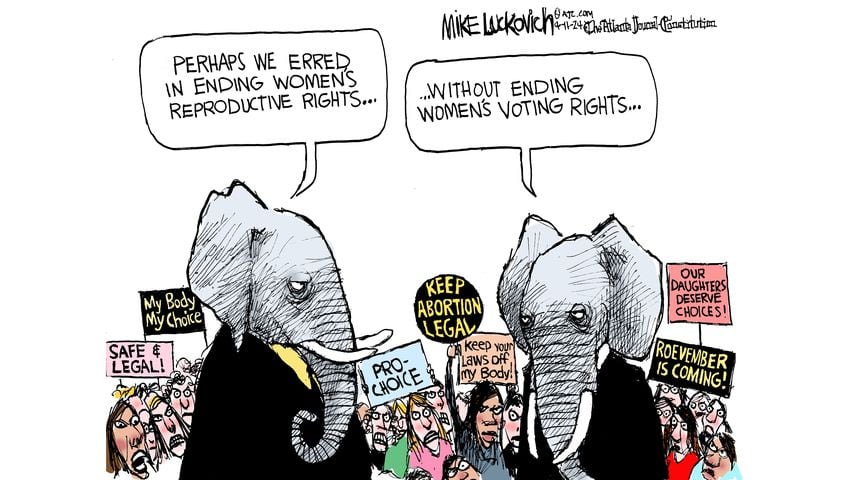

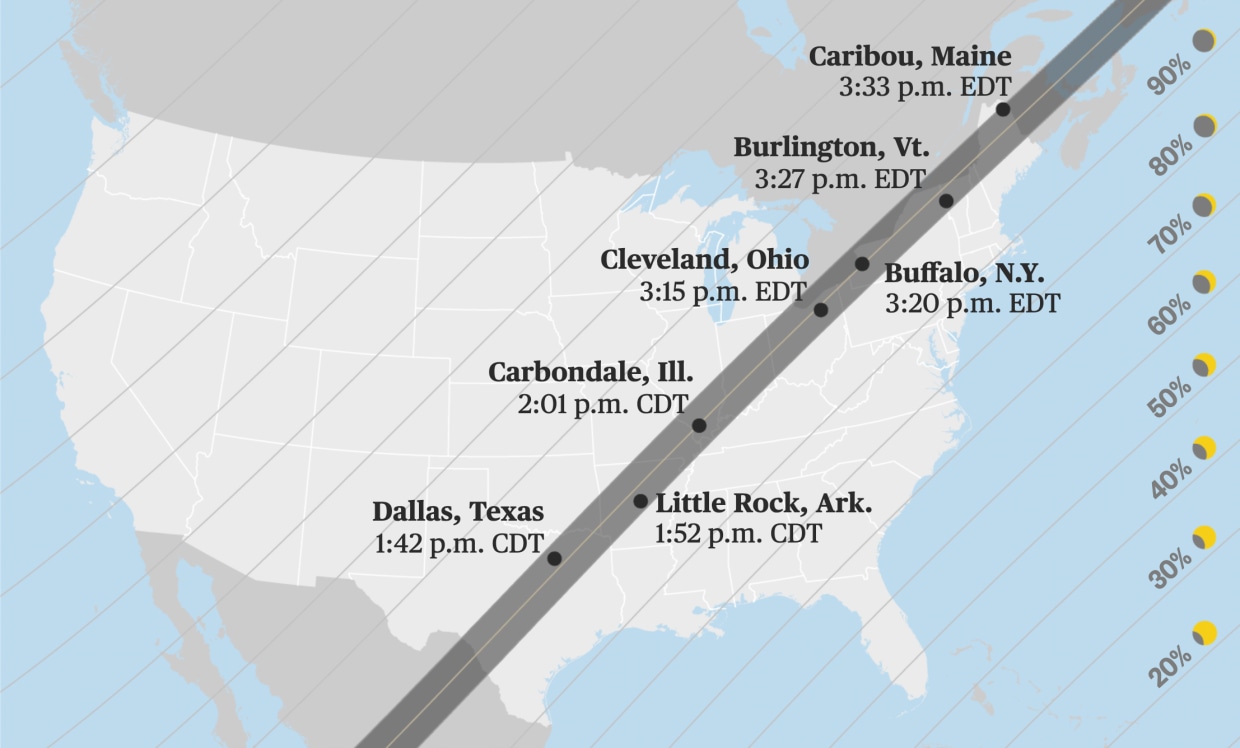





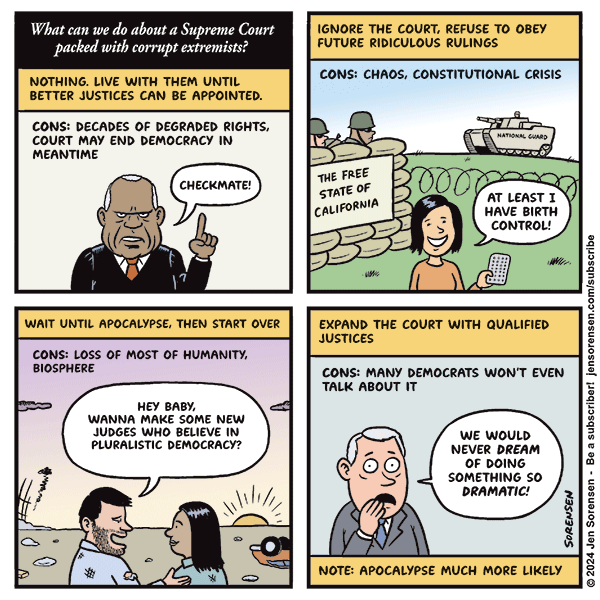

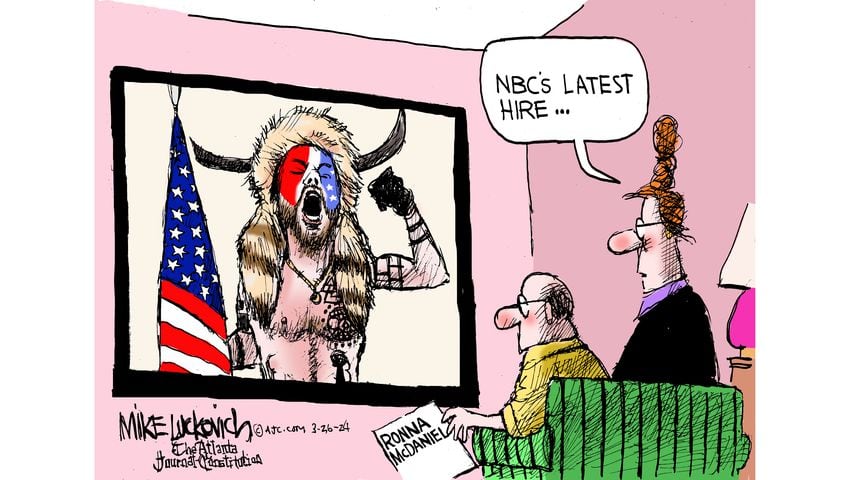





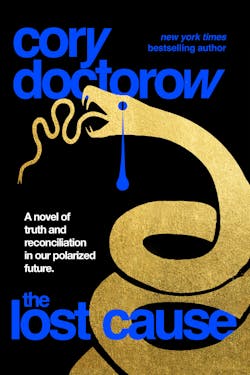


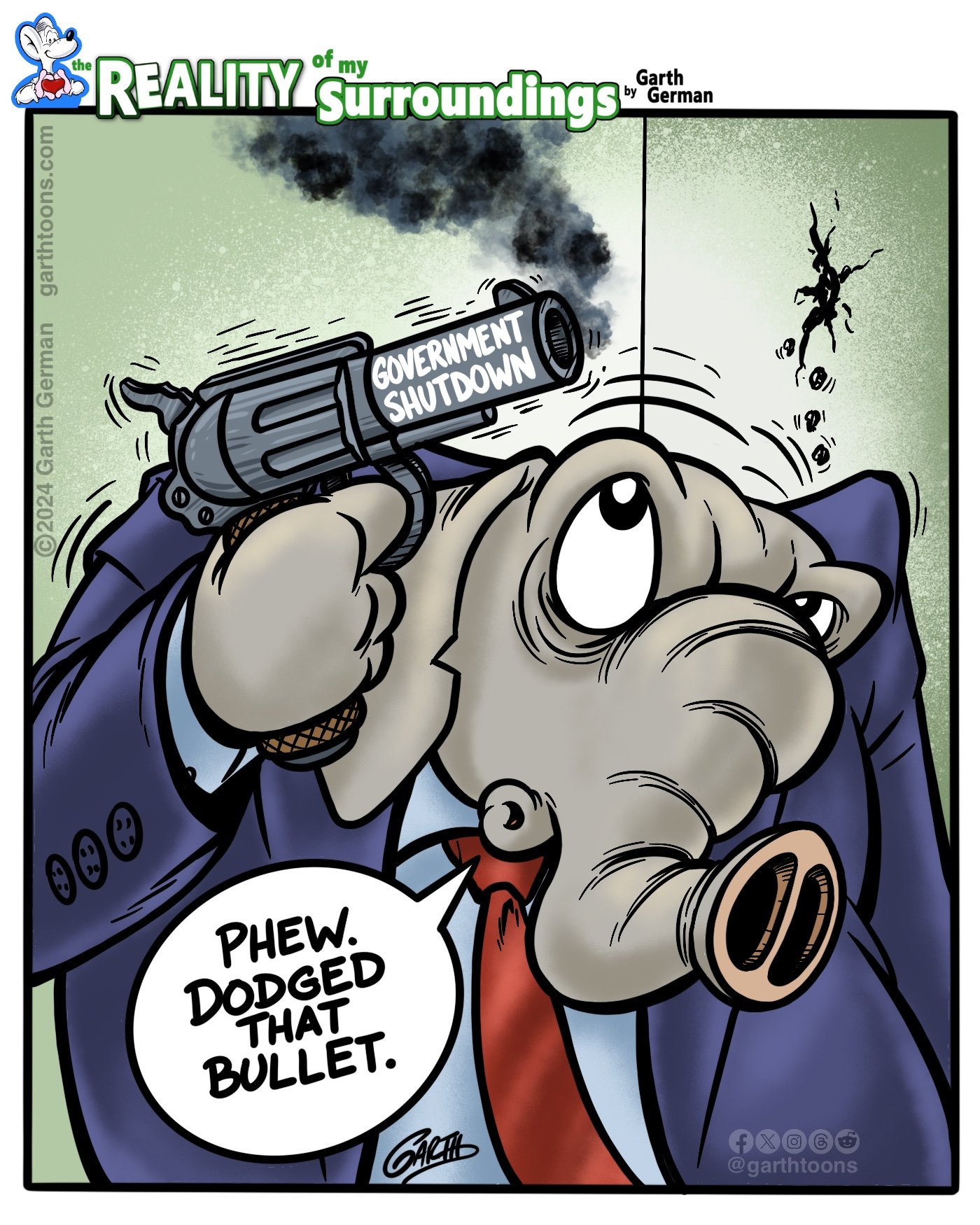
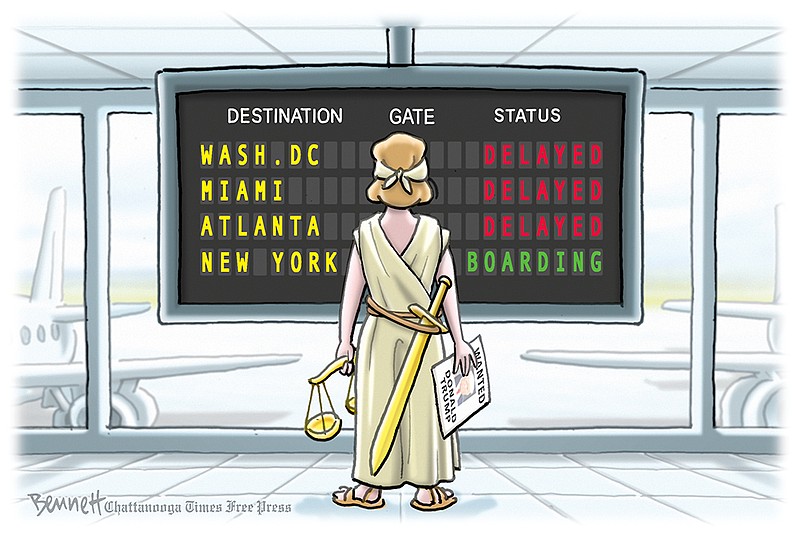
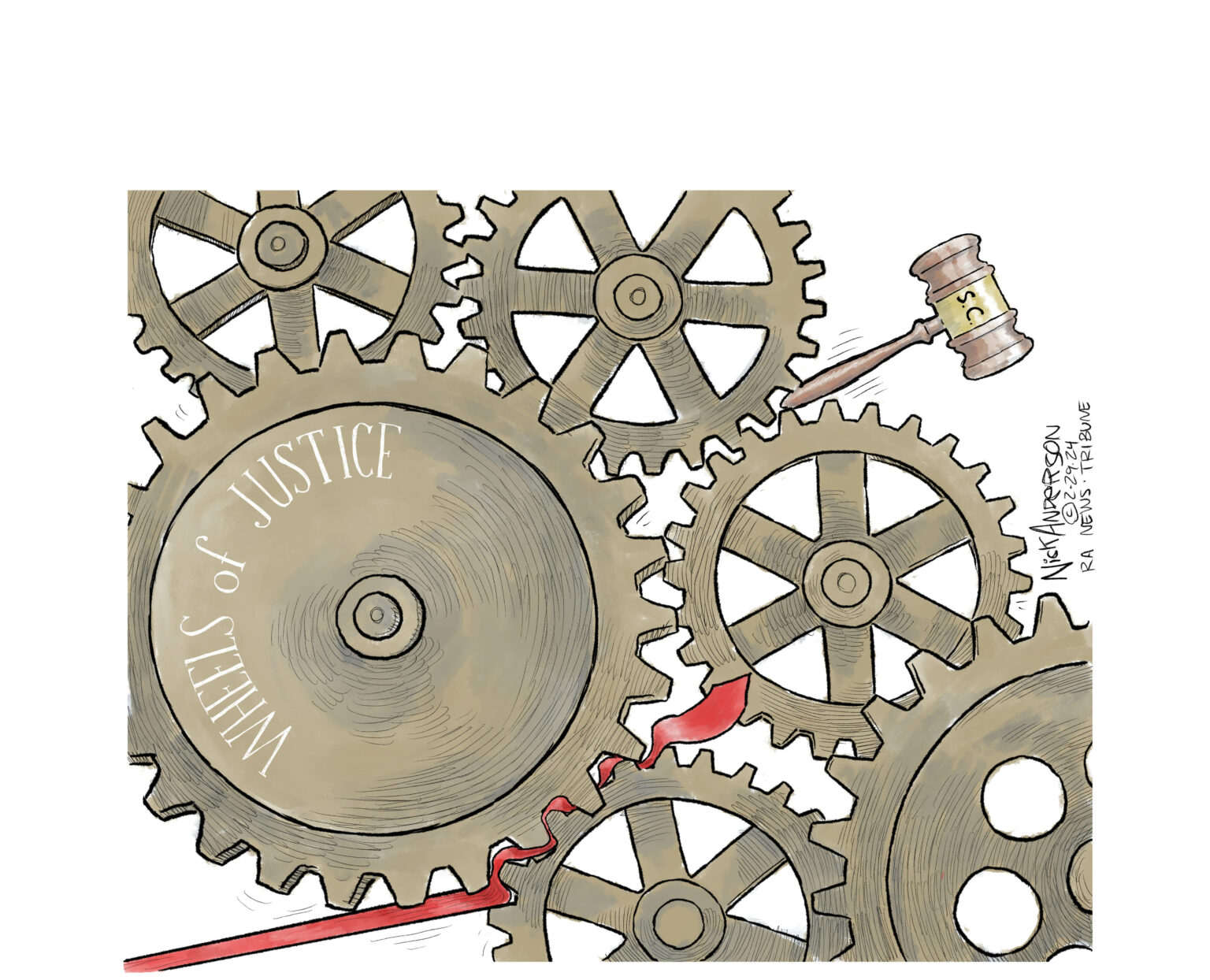





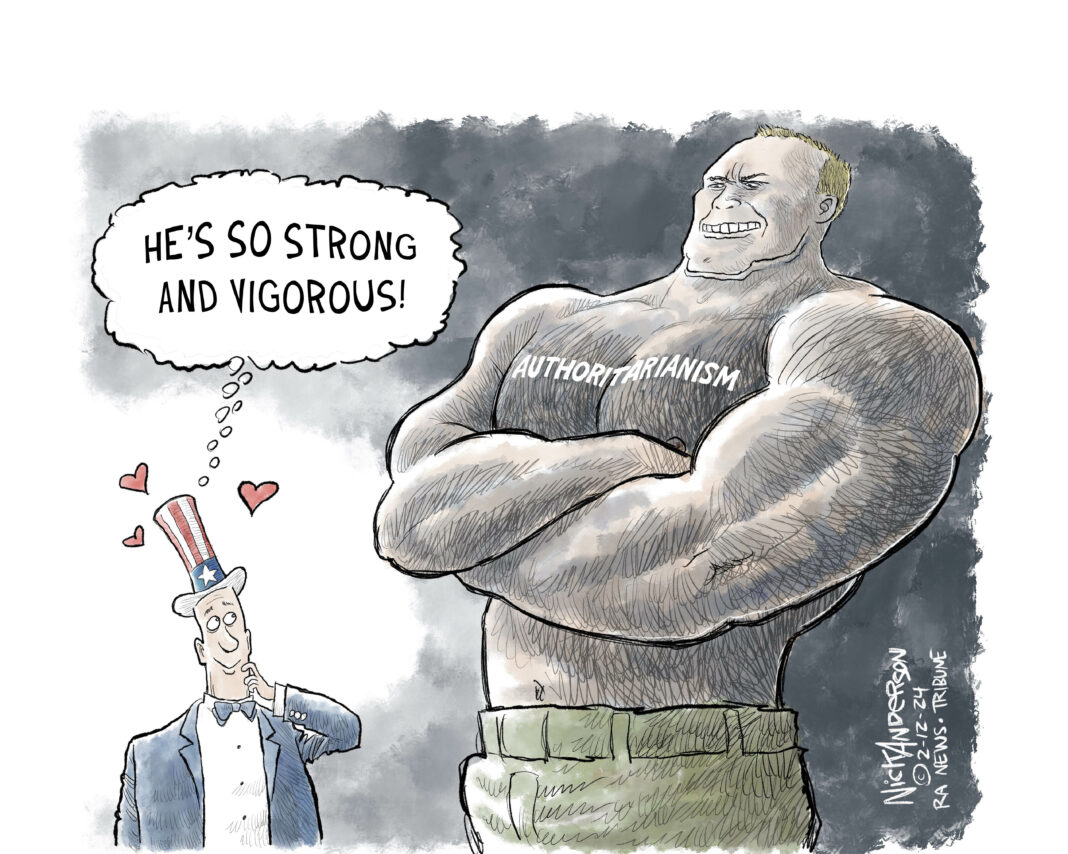
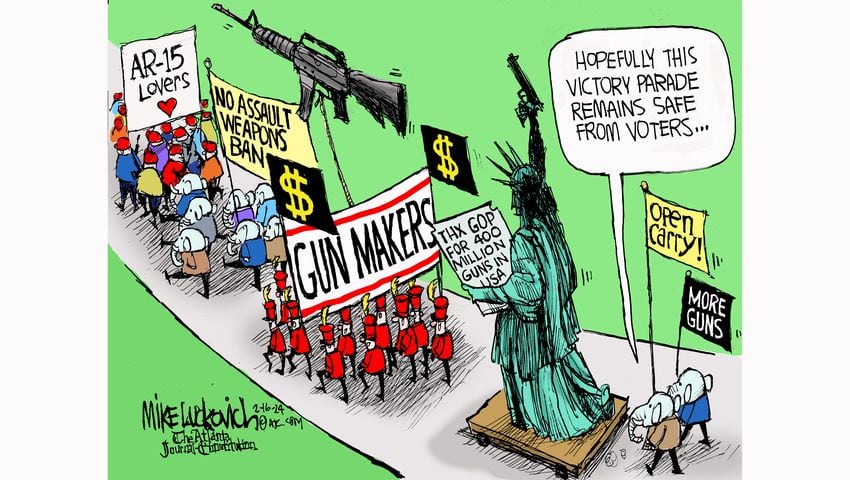

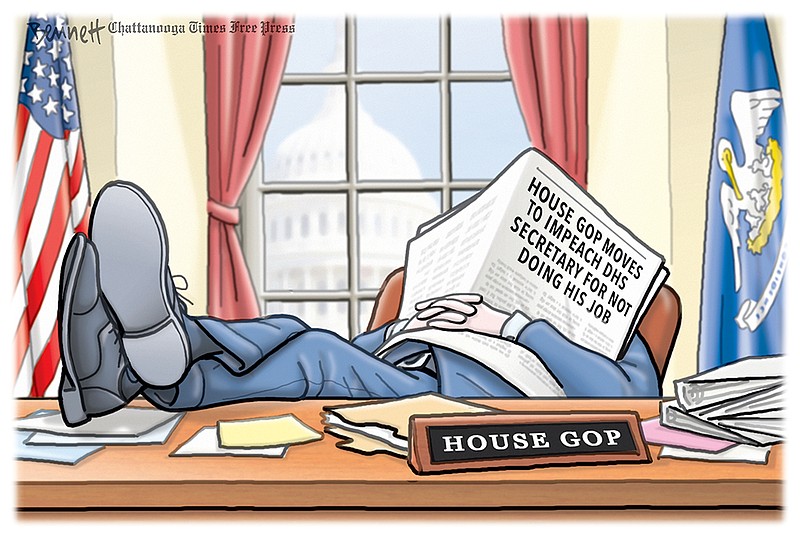
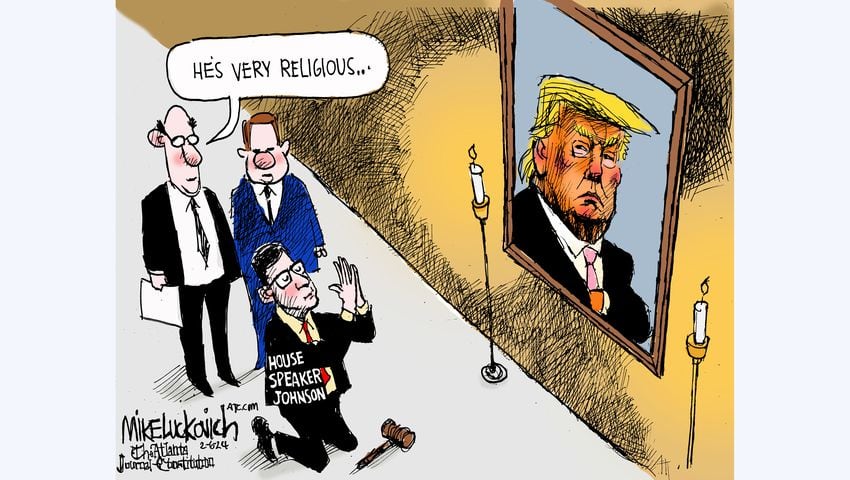




 The Weekly Sift