Category Archives: Weekly summaries

Each week, a short post that links to the other posts of the week.

Too Simple

The process by which banks create money is so simple that the mind is repelled. — John Kenneth Galbraith (1975)

This week everybody was talking about guns again

In an effort to save their party from its lunatic fringe, even Republicans were talking about gun control. Frank Luntz:

The Second Amendment deserves defending, but do Republicans truly believe that anyone should be able to buy any gun, anywhere, at any time? If yes, they’re on the side of less than 10 percent of America.

Mark McKinnon lists some of Mayor Bloomberg’s gun-control proposals, notes that they don’t affect “hunting, recreation, or self-defense” and then asks:

[I]f the ideas are reasonable and don’t limit legitimate activities, then why not consider them?

But gun-advocate rhetoric takes place in a binary frame where (1) no restrictions and (2) total confiscation are the only real options. So when Vice President Biden said that some action might happen through executive order, gun-nuts went nuttier: Obama was threatening confiscation by executive order! Alex Jones:

1776 will commence again if you try to take our firearms! It doesn’t matter how many lemmings you get out there in the street begging for them to have their guns taken. We will not relinquish them. Do you understand?

No, it won’t by 1776 again. It will be 1791.

I wonder if Luntz and McKinnon have noticed something that the NRA hasn’t: The binary frame used to work in the NRA’s favor, because the NRA would win an all-or-none choice. But maybe we’ve hit a tipping point, where if you force the public to choose between the status quo and confiscation, confiscation might win. Maybe the NRA should be the side looking for reasonable compromise.


The most extreme part of the gun debate isn’t about hunting or home-defense at all. It’s about the right of the People to overthrow the government by force — even if it’s the government the People just elected. As Kevin Williamson put it in National Review:

There is no legitimate exception to the Second Amendment for military-style weapons, because military-style weapons are precisely what the Second Amendment guarantees our right to keep and bear.

This was Myth #6 (“The Second Amendment Allows Citizens to Threaten the Government”) in Garrett Epps’ recent constitutional law book Wrong and Dangerous. The Economist’s “Democracy in America” column characterized it as “the right to commit treason” and noted that

Popular militias are overwhelming likely to foster not democracy or the rule of law, but warlordism, tribalism and civil war. In Lebanon, Pakistan, the Democratic Republic of the Congo, Mali, Colombia, the Palestinian Territories and elsewhere, we see that militias of armed private citizens rip apart weak democratic states in order to prey upon local populations in authoritarian sub-states or fiefdoms. Free states are defended by standing armies, not militias, because free states enjoy the consent of the governed, which allows them to maintain effective standing armies.

Undeniably, this is not how the Founders expected history to play out. But that’s how it has played out. A popular militia resisting authoritarian takeover and restoring democracy

is a thing that happens in silly movies. It is not a thing that happens in the world.

Atlantic’s Conor Friedersdorf notes that the conservative movement that promotes this Second-Amendment myth shows no inclination to support rights that actually do deter tyranny.

If you were a malign leader intent on imposing tyranny, what would you find more useful, banning high-capacity magazines… or a vast archive of the bank records, phone calls, texts and emails of millions of citizens that you could access in secret? Would you, as a malign leader, feel more empowered by a background check requirement on gun purchases… or the ability to legally kill anyone in secret on your say so alone? The powers the Republican Party has given to the presidency since 9/11 would obviously enable far more grave abuses in the hands of a would be tyrant than any gun control legislation with even a miniscule chance of passing Congress. So why are so many liberty-invoking 2nd Amendment absolutists reliable Republican voters, as if the GOP’s stance on that issue somehow makes up for its shortcomings? And why do they so seldom speak up about threats to the Bill of Rights that don’t involve guns?

In reality, the greatest threat to our democracy are the Alex-Jones and Sharron-Angle types who want to take up arms because their candidate lost the election.


Jon Stewart characterized the attitude blocking reasonable gun control as the fear of “imaginary Hitlers”. Gun-nuts’

paranoid fear of a possible dystopic future prevents us from addressing our actual dystopic present.


Like climate change and voter fraud, the gun-policy debate takes place largely in Bizarro World, as gun-rights advocates freely make up whatever facts they need and cite each other as references for them. Here are two debunking articles to keep bookmarked:

  • The Hitler Gun Control Lie (Salon). No, Hitler did not take away the German people’s guns. Actually, the Nazi regime weakened the gun restrictions it inherited from the Weimar Republic. (Stalin wasn’t big into disarming the public either.)
  • Mythbusting: Israel and Switzerland are not gun-toting utopias (WaPo). Gun advocates point to Israel and Switzerland as “societies where guns are reputed to be widely available, but where gun violence is rare”.  In non-Bizarro-World, American gun-control advocates would love to have the laws of Israel or Switzerland.

The NRA’s Wayne La Pierre says, “The only thing that stops a bad guy with a gun is a good guy with a gun.” I guess he never saw Witness.


And let’s give the last word to The Onion:

Following the events of last week, in which a crazed western lowland gorilla ruthlessly murdered 21 people in a local shopping plaza after escaping from the San Diego Zoo, sources across the country confirmed Thursday that national gorilla sales have since skyrocketed.

… and trillion-dollar coins

This idea has been bouncing around since before the last debt crisis (and I’ve linked to explanations of it several times), but this week it crossed over from a fringy what-if to a policy option that Serious People need to have an opinion about.

I collect a number of those opinions in The Trillion-Dollar Coin Hits the Big Time. (Most boil down to: It’s nutty, but it’s better than defaulting.)

A side-effect of this discussion is that more and more of the public is coming to understand how money really works. Long-time Sift readers have had cause to remember my review of Warren Mosler’s book in the summer of 2011.


James Fallows suggests The Two Sentences That Should Be Part of All Discussion of the Debt Ceiling:

  1. Raising the debt ceiling does not authorize one single penny in additional public spending.
  2. For Congress to “decide whether” to raise the debt ceiling, for programs and tax rates it has already voted into law, makes exactly as much sense as it would for a family to “decide whether” to pay a credit-card bill for goods it has already bought.

An analogy I’ve used before: It’s like eating out when you don’t have cash, but then refusing to pay with your credit card because you’re taking a principled stand against running up more debt. The time to take the principled stand is when you decide what you’re going to do, not when the bill comes.

… which once again brings up the issue of unraveling social norms

The coin and the debt-ceiling hostage crisis it’s supposed to avert are both examples of something I’ve tried (and mostly failed) to describe before: unraveling the norms that make society governable. Maybe Chris Hayes expresses it better:

Behavior of individuals within an institution is constrained by the formal rules (explicit prohibitions) and norms (implicit prohibitions) that aren’t spelled out, but just aren’t done. And what the modern Republican Party has excelled at, particularly in the era of Obama, is exploiting the gap between these two. They’ve made a habit of doing the thing that just isn’t done.

He goes on to give examples: filibustering everything the Senate does, refusing to confirm qualified candidates to positions because you think the position shouldn’t exist, and now “using the debt ceiling as a bargaining chip with which to extract ransom”.

He might also mention the proposal that Republicans should rig the Electoral College in states where they control the legislature. The point, pretty clearly, is to be able to win presidential elections even if the People vote for the other guy. (That’s what would have happened in 2012 under at least one plan: Obama gets 5 million more votes, but Romney becomes president.) It’s all perfectly legal, but this is the United States. We don’t do things like that. Or at least we didn’t used to.

The meta-question of the trillion-dollar coin is whether Democrats should strike back with their own inside-the-rules-but-outside-the-norms actions, recognizing (as Chris puts it) that “There is no way to unilaterally maintain norms.”

We need to get a handle on this trend somehow, because it doesn’t go anywhere good. That’s one of the themes in Colleen McCullough’s Masters of Rome series: Ultimately, even respect for the written law is just a norm. At some point you start to think, “Why shouldn’t I stick my enemies’ heads on spikes and display them in the Forum?”

… and racism

Republicans hate it when you point to the implicit racism in the intensity of their hatred for Obama and all his works. But Colin Powell went there Sunday on Meet the Press, talking about the “dark vein of intolerance” in the Republican Party. He pointed to voter suppression, to racial code phrases like “shucking and jiving” applied to Obama, and to Birtherism.

But racism is also part of the willingness to violate previously accepted norms (that I was just talking about). Republicans feel justified in doing things that just aren’t done because (until now) electing and re-electing a black president just wasn’t done. Racism is the ultimate root of the Tea Party certainty that we are in uncharted waters that require unprecedented means of resistance. Just voting and campaigning and giving money to your favored candidates isn’t enough any more. We need to arm ourselves and prepare for “Second Amendment solutions” because … because why, exactly?

If you doubt the racial subtext here, think about how different it would sound for a black CEO to threaten that if a white president’s policy “goes one inch farther, I’m gonna start killin’ people.” Fox News would play that clip 24/7 for weeks.

… and you also might be interested in

Mitch McConnell might face a primary because of the fiscal cliff deal. Good news for Democrats? An Aiken/Mourdock Tea Party wacko is much more likely to lose this otherwise safe Kentucky senate seat to a Democrat (Ashley Judd?). Or bad news? If the minority leader goes down in a primary, no Republican will ever again compromise or negotiate.


The Greek economic crisis has taken on symbolic importance in this country; in any discussion of the deficit conservatives are bound to say that overspending is turning us into Greece. But Foreign Policy provides a seldom-mentioned tidbit:

the [Greek] state is facing a revenue crisis, in part because of rampant tax evasion. In 2012, the European Commission estimated the size of Greece’s shadow economy to be 24 percent of GDP, resulting in an annual $13 billion loss in revenue.

And the Center for American Progress amplifies:

when Greece is properly placed in the context of its EU partners and neighbors, it becomes clear that its spending is very much in line with European norms. … In fact, total government spending for the European Union as a whole equaled 50.7 percent of GDP, actually a bit higher than Greece.

So Greece spends less of its national income on government programs than its sensible cousin Germany. And the Greek people work more. Maybe the lesson for the U.S. to learn from Greece isn’t that the safety net is unsustainable. It’s that you’ve got to collect taxes.


No matter how many disastrous gaffes they suffer, Republicans just can’t stop talking about rape. This Democrat is no feminist prize either.


Remember Roy Moore, the “ten commandments judge” who lost his job as Chief Justice of the Alabama Supreme Court by defying federal court orders? He’s back. The people of Alabama elected him chief justice again in November, and he was sworn in Friday. Remind me why we didn’t let Alabama secede.


The White House’s We the People project promises that if an online petition gets enough support

White House staff will review it, ensure it’s sent to the appropriate policy experts, and issue an official response.

Well, 34,000 people signed a petition asking for construction of a Death Star to begin by 2016. So the head of OMB’s Science and Space Branch responded with these criticisms: The Death Star project would increase the deficit. It has a fatal design flaw exploitable by a one-man ship. Plus “The administration does not support blowing up planets.”


Preparations

I have, already, spent far too much of my life preparing for violence. — Ta-Nehisi Coates, “On Living Armed

This week everybody was talking about the fiscal cliff deal

and where it all goes from here as we approach the debt ceiling. My take is here: Avoid the cliff, hit the ceiling. Short version: Who you think got the better of the fiscal cliff deal depends on what you think happens next. Republicans think the debt ceiling gives them the leverage now, and Obama disagrees. We’ll know by March.

… but I wrote about guns

Remember guns? It was all anybody could talk about a couple weeks ago. Let’s hope the issue hasn’t faded by the time Biden’s recommendations come in. One Nation, Under Guard: fantasy, reality, and Sandy Hook

… and you also might be interested in …

More and more it looks like Rick Perlstein was right: Right-wing media is as much about conning the sheep as it is about politics. This week’s evidence: Dick Armey says FreedomWorks paid Glenn Beck $1 million to say “nice things about FreedomWorks on the air”. Nice things that Beck’s listeners were supposed to believe he believed.


OK, cable news networks, here’s the political infotainment I really want to see: Pundit Wars. A politically diverse collection of pundits each starts with a stake of, say, $10,000. Each week the host presents a list of things that might or might not happen in near future, and each pundit quotes a likelihood. (“I think there’s a 30% chance we won’t get a debt-ceiling deal in time to prevent the government shutting down.”) Having all announced their numbers, they are then free to make bets with each other, quoting odds if necessary. (“I’ll give you 2-1 odds that we do get a debt-ceiling deal.”) If nobody takes initiative, the host may suggest some bets. (“You two have radically different expectations for a debt-ceiling deal. Why don’t you each put some money behind it?”) Then next week we see how everybody’s bets are doing.

Each week, we’ll see who really believes their own rhetoric. (If you’re just trying to get attention with your predictions, like Dick Morris with his “Romney landslide” nonsense, it’ll be obvious once the betting phase starts.) And over the course of a season, we’ll see who really knows what they’re talking about.

It’s kind of a reality-TV version of Intrade.


When violent crime started going down in the 90s, everybody had an explanation. Most of them would have predicted the crime rate to increase again by now, which hasn’t happened. But one explanation keeps gathering more and more evidence: changing to unleaded gasoline in the 1970s. Lead in a child’s bloodstream, it turns out, inhibits the growth of the part of the brain that controls aggression.

Remember this example the next time somebody tells you about the “cost” government regulations impose on the economy. That’s not just lost money. We bought something with it.


It’s looking like the election debacle has taken a long-term toll on Fox News.


Let’s end with something pretty: New Years in Dubai.

The Yearly Sift: 2012

For last year’s words belong to last year’s language
And next year’s words await another voice.

— T. S. Eliot, Four Quartets

review all the Sift quotes of 2012

This week everybody was talking about …

The last two weeks will get a very abbreviated treatment so that I can use the space to review the year. I’m sure the gun debate will still be going on next Monday — probably the stand-offs on the fiscal cliff and the debt limit too — so I’ll catch up then. But I wanted to share this Clay Bennett cartoon.

There were also countless end-of-the-year top ten lists. The most ambitious is Time’s Top Ten Everything of 2012. Time’s #8 Viral Video of the Year was the best marriage proposal ever:

But let’s get on with reviewing the year.

This year, everybody was talking about the election

Like my imaginary typical reader, I struggled not to obsess and not to let my fears get ahead of the facts. But just about every week, something election-related was a major focus.

Looking back, I feel like the Sift mostly got the election right. True, the weakness of the Republican field surprised me. (So much for my April, 2011 prediction that Romney wouldn’t be nominated.) And I also failed to predict Obama’s sleep-walk through the first debate, which let Romney get back into the race. But I decided early to trust Nate Silver’s poll-consolidation model, which turned out to be right. All in all, I think a regular Sift reader went through the campaign focused on the right things: the right issues, the right narratives, the right swing states.

The election also turned out more-or-less the way I wanted, which has left me feeling more relieved than triumphant. Watching congressional Republicans run scared from the most extreme part of their base, I can only imagine what we’d be looking at if President Romney and a Republican Senate were about to take office. So I’m not seeing the dawn of a new era, but we did dodge a bullet.

A more detailed look at the Sift’s election coverage is in Looking Back at the 2012 Election: Relief, not Triumph.

… and I kept writing about privilege

The Theme of the Year always sneaks up on me; I never start out with one in mind. But all year, the news kept pushing me to write about various sorts of discrimination and/or prejudice: against blacks, Hispanics, women, Muslims, gays, students, retireesthe working class … almost everybody, when you total it up.

In each of those apparently separate stories, I kept finding the same thing: a privileged group so oblivious to its privileges and so clueless about what life is like for everyone else that it imagines itself as the true victim. So the rich feel “punished” by the prospect of paying Clinton-era tax rates or admitting that their businesses are built on the foundation of a healthy public sector. Christians feel “persecuted” when they aren’t allowed to control the public square or dictate how their employees use health insurance. The Trayvon Martin case caused whites to obsess about violence by blacks. And countless Americans believe that we are the great unappreciated benefactors of the countries we invade or bomb or exploit for cheap labor. (Why aren’t the Iraqis grateful for all we’ve done?)

Like most liberals, my first impulse was to write this off as posturing — meaningless noise meant to drown out any discussion of genuine unfairness. But the deeper I looked, the more sincere these voices sounded. And if you listen to them, you’ll hear reasons: examples where change has robbed them of privileges they had come to expect, or inflicted inconveniences on them that (in their minds) loom as large as Jim Crow or the Trail of Tears.

Eventually I came to the conclusion that you can’t just ignore their distress, because it feels so real to them. If you do, they conclude that “empathy” is some kind of pan-handler’s con — because here they are, suffering, and you don’t care. So my new strategy is to acknowledge their distress, and then put it in context. As in: “I’ll bet that sunburn really hurts. Hey, look — that guy over there is bleeding out. You think maybe the doctor should see him first?”

In September all that came together for me in a post that has become the most popular Weekly Sift article of all time: The Distress of the Privileged. (172,000 page views and still going.)

… and some other stuff

The Sift reviewed, recommended, or based an article on 21 different books this year. I’ve collected the links. (In general, if you’re ever looking for a Sift book review and can’t remember where it is, check the Yearly Sifts at the end of each December.)


Religion is one of the lesser themes just about every year. I’ve always paid attention to the bad public policy pushed by the Religious Right, but this year I started taking the battle to them rather than just responding to their latest outrage: The Religious Right isn’t just bad policy, it’s bad religion. They do a bad job following their own holy book.

So, for example, if they’re going to take Leviticus seriously on social issues, why don’t they also promote The Economics of Leviticus, which is decided liberal? How about a Jubilee Year, where we cancel all the debts?

In a related post, I pointed out how incompatible certain conservative philosophies are with the message of Jesus in Jesus Shrugged: Why Christianity and Ayn Rand Don’t Mix.

I addressed abortion from a personal point of view in What Abortion Means to Me, and I honored Natural Family Planning Awareness Week by reading the papal encyclical at the root of Catholic condemnation of contraception, Humanae Vitae. I concluded:

So yes, Catholics, use this week to educate yourself about the Church’s teaching on contraception. You will find it based on shoddy thinking. To attribute these ideas to God is blasphemous.

And I responded to Senate-candidate Richard Mourdock’s opinions about rape and God’s will by explaining the vision of the Founders in Government Theology is Un-American.

If Congressman Mourdock wants to interpret the will of God to the People, he should move to a country where government officials do that, and leave my country alone.

Both that post and Five Takeaways from the Komen Fiasco wound up talking about ensoulment, noting that ensoulment-at-conception is not at all Biblical. Sometime in 2013 I plan to focus an article on this point rather than have it in footnotes of other posts: Ensoulment-at-conception has zero Biblical support; it’s a theological interpretation invented purely for political reasons.


Economics is another perennial theme. This year I made the personal political in What Shaving Taught Me About Capitalism, corrected previous mistakes in Peak Oil? Maybe not, made a liberal case for capitalism in Take a Left at the Market, and filled in a piece of the puzzle I had previously been missing in Monopoly’s Role in Inequality.


A new issue I started covering this year is food policy: See Food-eaters are not a special interest group, When the food industry inspects itself, and my review of Bet the Farm.


A few articles didn’t fit into any larger theme, but I want to call them to your attention anyway:

I went out on a limb with a long-range prediction: Everybody Will Support Same-sex Marriage by 2030.

If you came out of Lincoln wondering why the Republicans were the Northern progressive party then, but the Southern conservative party now, it’s all laid in A Short History of White Racism in the Two-Party System.

And finally, the best post nobody read was The Republic of Babel.

And what do the numbers look like?

Not much different from last year, but the blog weathered a storm to get there. The lack of viral posts (explained below) made for dismal numbers in the spring.

Last year, the Sift received 137K page views in the 6 months after I moved it to weeklysift.com. This year it got 240K in a complete year. Once again, it was a story of viral posts. Last year, five posts got over 2,500 views each, totaling 107K — everything else split the remaining 30K page views. This year, only one post (The Distress of the Privileged) went over 2,500, but it’s gotten 172K views and counting, with everything else splitting 72K views.

On the other hand, this year 8 posts got 1000-2000 views, compared to none last year. The difference seems to have more to do with changes at Facebook (which I don’t completely understand) than anything I’m doing differently. This year, not everything you “like” is seen by all your friends; last year it was. So it’s now much harder for a post to go viral. Last year, 800 views was a launching point; if a post got there, it stood a good chance of running to 5K or 10K. Not so this year.

Other numbers: The Sift’s Facebook page has 183 Likes and its Twitter feed has 123 followers. The blog has 504 followers via WordPress, and 280 subscribers via Google Reader. I wish I had recorded those numbers last year so I could give some context, but I believe they are all significantly up.

Enough?

As a country we have been through this too many times. 

— President Barack Obama responding to the Newtown school shooting

This week everybody was talking gun violence

We had two mass shootings: the Clackamas Town Center Mall shooting just outside of Portland, Oregon on Tuesday, and the Sandy Hook Elementary School massacre in Newtown, Connecticut on Friday.

I’m not going to compile my own account of either event; that’s something the mainstream media has done at great length. I do want to make a few one-step-back comments.

1. Don’t put too much stock in early accounts and explanations. A review of Dave Cullen’s book Columbine. observes:

Cullen goes into extensive detail about just how wrong the news reports were, not only in the immediate aftermath but for months and years afterward. … [M]ost of the inaccuracies sprung from the nature of on-the-spot, live, eyewitness reporting. The massacre itself lasted barely an hour, but news helicopters circled overhead with no information all day. That’s a lot of time to fill.

Already by Thursday, Slate’s William Saletan was debunking early Clackamas reports:

Thanks to mobile phones, Twitter, and instant publishing, you can read all about the latest mass shooting within minutes. But much of what you’re reading, even days afterward, is false.

There’s no shame in carrying a bunch of false information in your head. Everybody does. But before you use events like this to support your Big Theory of Everything, double-check that the details you’re relying on are real.

2. This is becoming normal.

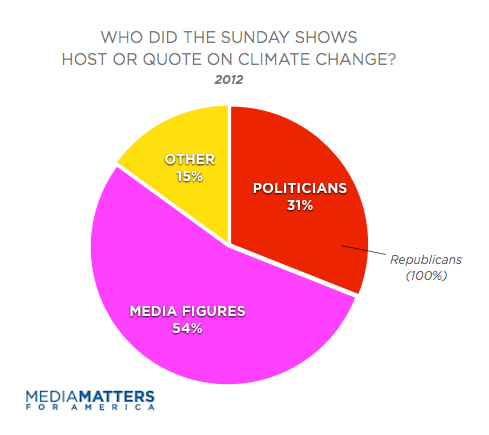
The Nation lists 16 mass shootings in 2012, about one every three weeks. That list includes the Dark Knight massacre in Aurora, Colorado and the Sikh Temple massacre outside of Milwaukee. Mother Jones provides a map, the graph above, and a list going back 30 years.

3. “Let’s not politicize this tragedy” is itself partisan rhetoric.

This point became a separate post. (And Ezra Klein made the same point: “Only with gun violence do we respond to repeated tragedies by saying that mourning is acceptable but discussing how to prevent more tragedies is not.”) Let me also combine it with the previous point: If we can’t discuss gun control in the wake of a shooting, and if shootings happen every three weeks, then we can never discuss it.

4. Gun violence isn’t just a legal problem, it’s a cultural problem.

Think about cigarettes. When I was a kid (in the Mad Men era), smoking had a glamorous, sophisticated image. Cigarettes never became illegal, but a considerable amount of effort went into making them unfashionable. It worked, and I think that has had a lot to do with smoking’s overall decline.

Now envision a future America where owning a military-grade arsenal isn’t considered manly. Even with the same laws, I’ll bet it would have a lot fewer guns and a lot less gun violence.

5. Gun violence is also a mental health issue.

Dave Cullen believes that about half of mass shooters have depression problems. (Literally true at Columbine: One shooter was a sociopath and the other depressed.) Screening high school students for depression and getting treatment for the ones who need it could prevent a lot of future violence.

Unfortunately, the cut-government-spending drumbeat pushes in exactly the opposite direction. Detecting and treating teen depression is easily branded a “nanny state” policy.

… and this is also is worth your attention

Jonathan Chait explains Why Republicans Can’t Propose Spending Cuts.

When the only cuts on the table would inflict real harm on people with modest incomes and save small amounts of money, that is a sign that there’s just not much money to save. It’s not just that Republicans disagree with this; they don’t seem to understand it. The absence of a Republican spending proposal is not just a negotiating tactic but a howling void where a specific grasp of the role of government ought to be. And negotiating around that void is extremely hard to do. The spending cuts aren’t there because they can’t be found.

They need Obama to propose the cuts, so they can accuse him of protecting all the real waste, which their propaganda says has to exist.


How can a humor magazine cover tragedy? By telling the unvarnished truth that the rest of the media varnishes, as the Onion did after the recent mall shooting: “Fuck Everything, Nation Reports: Just Fuck It All To Hell“. How many people do you think had that thought this week? And did anyone else report it?


A humanist cadet resigned to protest the unconstitutional Christian evangelism that West Point condones.


Dan Froomkin: The media missed “the biggest story of the 2012 campaign”:

the [Republican] party’s most central campaign principles — that federal spending doesn’t create jobs, that reducing taxes on the rich could create jobs and lower the deficit — willfully disregarded the truth.


A Unitarian Universalist minister responds to Lindsey Graham’s insistence that same-sex marriage should require a constitutional amendment:

The Constitution does not state that anyone has a right to marry. … Men and women have been marrying each other in this country for over 200 years without the Constitution saying a word about their right to do so.

… and finally

If you have a tradition of giving money away during the holidays, think about adding journalism to your list of good causes. I’m planning to send a donation to the Wikimedia Foundation, whose Wikipedia I use many times every day. Also Grist, where most of the Sift’s environmental coverage comes from.

Journalism’s broken business model means that a lot of advertising-accepting publications are essentially charities now, even if they look like businesses. The Nation is a consistent money-loser that couldn’t survive without Nation Builders, a voluntary association of its readers. Mother Jones is published by the Foundation for National Progress and accepts donations.

DailyKos, the largest liberal online community, is free to use and accepts advertising, but would also like to get voluntary subscriptions or donations.

If you want to promote a possible future for journalism, take a look at the Banyan Project, which was started by my friend (and former editor) Tom Stites.

The Weekly Sift itself falls on the hobby side of the job/hobby line I defined last spring, so I’m not looking for donations. It just costs me time, and I enjoy doing it.

Radical

People say that reducing inequality is radical. I think that tolerating the level of inequality the United States tolerates is radical.

— Thomas Piketty

This week everybody was still talking about the fiscal cliff

Personally, I’m bored with the conversation. I know the outcome is important, but the process is happening behind closed doors, so we don’t really know anything about it. Unfortunately, you can’t fill a news cycle with: “It’s important, but we don’t know anything”, even if that’s the Truth. So instead we’re treated to endless speculation and tea-leaf reading.

Ezra Klein thinks he can project the outlines of a deal. Paul Krugman hopes he’s wrong, because Obama ought to be able to do better than that. They’re both smart guys that I respect a lot, but neither of them actually knows anything about the negotiations.

I’m much more fascinated by something that’s not being talked about. If you watched Chris Hayes’ discussion of energy policy Saturday morning on Up — which was a whole lot more interesting and informative than a TV-talk-show discussion of energy policy has any right to be — you heard energy experts say this: Everybody in the industry takes for granted that eventually the government will put a price on carbon, either through a carbon tax or some kind of cap-and-trade system. (It makes sense: Climate change has very real costs — like storm damage — that you aren’t paying for when you buy gas or get electricity from a coal-fired plant. If you had to pay the real costs of fossil fuels rather than just the costs of mining, refining, and shipping, you’d see that renewable energy is actually cheaper.)

So: The government needs more long-term revenue. And a major market is working inefficiently because some of its products are unrealistically inexpensive. This is the perfect time to start phasing in a carbon tax.

But that’s not on either party’s wish list.

… and the debt ceiling

which isn’t technically part of the fiscal cliff, but winds up in the same conversation because it’s another part of the overall fiscal struggle between President Obama and the House Republican majority. The fiscal cliff was created by the agreement that resolved the debt ceiling stand-off in 2011.

The current debt ceiling will probably be sufficient until March or so, at which point House Republicans can hold the world economy hostage again.

I don’t think they’ve thought this out very well. The 2011 crisis wounded everybody involved. Obama, Congress — everybody’s poll numbers went down. Undoubtedly the public’s reaction will be even worse if it happens a second time. But here’s the difference: Obama never has to face the voters again.  He’s worrying about the judgment of history at this point, not the polls. Republicans who want to be re-elected in 2016 will blink first.

The most fun part of the debt ceiling speculation involves all the ways that Obama could try to defy the debt limit, including the trillion-dollar-coin gambit. Chris Hayes explains:

… and the Robot Menace

A series of posts about technological unemployment erupted on the liberal blogosphere, for not much apparent reason. I mean, it’s an important topic, but it’s not really … topical. Anyway, I summarize and add my two cents in Two Observations on the Robot Menace.

… and Republican reform

which really isn’t happening, no matter how many pundits wish it would. The example that sums it all up is the Senate’s rejection of the Convention on the Rights of Persons with Disabilities: Crazy grass-roots groups fabricated death-panel-like theories to stampede their members to pressure their senators. 38 Republican senators gave in to the pressure, so the treaty didn’t get the 2/3 majority it needed for ratification. See: Repainting the Bubble.

… and Jim DeMint

DeMint resigned from the Senate, even though he has four more years on his term and is popular in his home state. He isn’t facing a scandal or a health problem. He isn’t even claiming that he needs to spend more time with his family. He just got a better offer: President of the Heritage Foundation, a leading conservative think tank.

On the surface, that doesn’t seem to make any sense. It’s like resigning from the School Board to become president of the local PTA. You had a position of power, and you give it up for an outside position where you either support or nag people with power.

But it does make sense, and the sense it makes points out how big money has changed our political system: Elected office has become only part of a politician’s career path, the way the glass of orange juice is only part of the complete breakfast in the Cocoa Puffs commercials. Consequently, the voters are only one of the special interests a politician needs to please.

If you ever wonder why it’s so hard to pass laws that polls say are popular (like, say, taxing the rich), that’s the reason. If a congressman votes against what his constituents want, possibly money from rich special interests will get him re-elected anyway. And even if it doesn’t, he’ll just move on to the next (and more lucrative) phase of his career.

But if he votes against the big-money interests, he’ll face a well-financed primary opponent in the next election cycle. And after losing, his career won’t have a next phase. The million-dollar jobs in think tanks and lobbying firms won’t be available any more.

This has been true for a while, but DeMint’s move shows that the game reached a new level: Even senators are just pawns now. Steve Kornacki lays it out:

What DeMint has apparently figured out is that in today’s Republican universe there’s less of a relationship than ever between holding office and holding power. This is what the rise of insular conservative media has done. News is interpreted, talking points are developed and agendas are set on Fox News, talk radio and in the right-wing blogosphere. Republican members of Congress, by and large, take their cues from conservative media, rather than shaping it.

If they all met in the same room, which conservatives do you think would be calling the shots: officeholders like Mitch McConnell and John Boehner? or people who never face the voters, like Rupert Murdoch, David Koch, Karl Rove, Grover Norquist, and Rush Limbaugh?

DeMint is trying to move up in the real power structure, the one with no visible org chart. And that means leaving the Senate behind.

… and you might find this interesting

Beyond parody: Mitch McConnell just filibustered himself.


The same nonsense I talked about in Repainting the Bubble inspired AlterNet to compile The 5 Dumbest UN “Conspiracies”.


An open video-letter to President Obama about the high school physics curriculum.


Great moments in propaganda: The 2001 Heritage Foundation study predicting that if the Bush tax cuts were passed “the national debt would effectively be paid off by FY 2010.”


Thailand has the best anti-smoking ad ever:


Tis the season to celebrate the re-birth of Crist.


Repainting the Bubble: Republican reform isn’t all it’s cracked up to be

If you believe the respectable conservative pundits in the New York Times, the Republican Party is well on its way to learning the lessons of 2012 and setting itself right. David Brooks writes:

Over the past month, the Republican Party has changed far more than I expected.

Exhibit A is supposed to be Tuesday night’s Jack Kemp Foundation banquet, where both Mario Rubio and Paul Ryan spoke. They unveiled no new ideas or policies, but according the NYT columnist Ross Douhat, Rubio

[spoke] frankly about problems that too many Republicans have ignored these last four years — the “opportunity gap” opening between the well educated and the rest, the barriers to upward mobility, the struggles of the poor.

He also used the phrase “middle class” over and over, proving that Republican focus has shifted away from the very rich. And Brooks says

[Paul Ryan] didn’t abandon any of his fundamental beliefs, but he framed those beliefs in a more welcoming way and opened up room for growth and new thinking.

Problem solved.

Does anybody remember 2008? Republicans got an even worse drubbing then, so bad that they rebranded the party completely. The extreme Right stopped calling itself “Republican” and became “the Tea Party”. Did any ideas change? Well, no. If anything, the Party just got more extreme. The message was “You know that crazy-ass shit voters rejected in 2008? Well, we really mean it this time.”

The only lasting result of 2008 for Republicans was that George W. Bush became an un-person. He wasn’t at the 2012 convention, he didn’t campaign for anybody — it was like those eight years never happened.

Presumably Mitt Romney will have a similar fate. All those people who told us what a wonderful president he would be and how proud they were to have him on their ticket … they’ll just never speak his name again.

Because the future belongs to the re-re-branded Republican Party of Rubio and Ryan.

Unfortunately, Republicans who don’t work for the NYT seem not to have gotten the message. The Republicans who control state governments, for example, can’t move fast enough to defund contraception, make abortions even harder to get, and break unions.

But the real evidence that nothing has changed came Tuesday in the Senate when 38 Republicans (and zero Democrats) blocked ratification of the Convention on the Rights of Persons with Disabilities treaty Tuesday.

This is the kind of vote that used to be a bipartisan no-brainer. The point of the CRPD is to bring all countries up to the level of the Americans with Disabilities Act, which President Bush I signed in 1990 after the Senate had passed it 91-6. Since we are the model for the treaty, it would not change American law. By ratifying it, all we would be doing is approving of the world modeling its disabilities policies after ours. Bob Dole came to the Senate in his wheelchair to urge ratification.

Usually somebody makes at least a fig leaf of a rational argument before rejecting something like this. This time nobody did. Instead, a variety of organizations floated “ten problems with the CRPD“. They actually come from Michael Farris, founder of the Home School Legal Defense Association, but they were reposted by a variety of right-wing special-interest groups as if they were their own talking points. (Here is an identical post from ParentalRights.org.) The gist of the complaint is that the treaty would put the U.N. in charge of all sorts of areas of American life.

  • “every home owner would have to make their own home fully accessible to those with disabilities”
  • “the legal standard for the number of handicapped spaces required for parking at your church will be established by the UN”
  • “Article 7(2) means that the government—acting under UN directives—gets to determine for all children with disabilities what the government thinks is best.”
  • “spanking will be banned entirely in the United States”
  • “this convention is nothing less than the complete eradication of parental rights regarding the education of children with disabilities.”

The most prominent voice against the CRPD was Rick Santorum, who did his best to make opposition seem reasonable:

CRPD gives too much power to the U.N., and the unelected, unaccountable committee tasked with overseeing its implementation, while taking power and responsibility away from our elected representatives and, more important, from parents and caregivers of disabled persons.

I read the treaty. (It’s boring, but not that difficult.) The committee in question is the Committee on the Rights of Persons With Disabilities, described in articles 34-39. The treaty gives the Committee the awesome power to demand that member countries send it reports every two years, and to comment on those reports. In other words, if the Awesome U.N. Committee doesn’t like something about U.S. law, it can say so. That’s it’s whole power. Scary!

Any legislation to implement the treaty would have to be passed by Congress. Any legal challenge based on the treaty would go through American courts. The whole U.N. thing is a complete red herring.

In short, this is Death Panels all over again.

A second layer of paranoia comes from imagining what Congress could do to implement the treaty. The ten-problems document says:

This gives Congress total authority to legislate on all matters regarding disability law—a power that is substantially limited today.

Limited by what, you might ask? In reality, by nothing. Anything Congress could do after ratifying CRPD is stuff it could do now. But if you subscribe to bizarre right-wing constitutional theories that no one else believes, then the fact that no specific line in the Constitution says “Congress shall have the power to make laws concerning disabled persons” means that it can’t.

So how did Congress pass the ADA to begin with? Well, the ADA is unconstitutional under this theory, just like Social Security and Medicare are unconstitutional.

The truly scary thing is that none of the senators who voted against CRPD had any better arguments than the ones the home-schooling group was passing around. The NYT even made the treaty the subject of its Room For Debate series. They couldn’t get any legitimate people to argue against the treaty, so they were stuck with this guy, who among other ridiculous statements repeated this often-debunked myth:

When many nations (not including the U.S.) ratified the Convention on the Elimination of All Forms of Discrimination Against Women, they had no way of knowing that the U.N. would declare Mothers Day to be illegal

Where is that supposed to have happened? Belarus. The Monkey Cage explains: A committee similar to the one the CRPD would establish got a report from Belarus, and commented on it, criticizing Belarus for “continuing prevalence of sex-role stereotypes and by the reintroduction of such symbols as a Mothers’ Day and a Mothers’ Award, which it sees as encouraging women’s traditional roles.” This criticism had no legal effect on Belarus, where Mothers’ Day continues, because these committees don’t have that kind of power.

This is the kind of conspiracy-theory thinking that swayed 38 of the 47 Republican senators.

In short, the lunatics are still in charge of the asylum in the GOP. There are no grown-ups who can tell the kids to go to bed. There are only a handful of grown-ups who will even try to tell the kids to go to bed.

Facts don’t matter. People on the Right believe what they want to believe, and their leaders either give in to them or actively pander to them. Come 2015, a new set of presidential candidates will start campaigning for these crazy people’s votes, and will say whatever folks want to hear. Then they’ll have to take those positions into the 2016 fall election, just like Mitt Romney did.

Nobody has learned anything.

Where the Votes Are

The more Negroes who register as Democrats in the South, the sooner the Negrophobe whites will quit the Democrats and become Republicans. That’s where the votes are.

Kevin Phillips, Republican strategist (1970)

This week everybody was still talking about the fiscal cliff

President Obama apparently shocked Republicans: His opening proposal in the fiscal-cliff negoations is more-or-less the plan he ran on, which the voters endorsed by re-electing him last month.

I’m beginning to see what the lines-in-the-sand are: Democrats don’t want to cut Medicare or Social Security benefits (though they are willing to consider other spending cuts, including Medicare cost reductions that don’t affect benefits). Republicans don’t want to raise tax rates on the rich (though they are willing to consider other unspecified revenue increases).

Here’s the difference: The Democrats’ line is popular and the Republicans’ isn’t. Democrats will happily go to the mat defending Medicare. But if Republicans have to go to the mat defending low taxes for millionaires, they’re in trouble. That’s why Obama can make a proposal and Boehner can’t. No way Boehner can look into a TV camera and say, “These are the Medicare cuts I want.”

Still, Boehner won’t move forward without a majority of his caucus, even if there is a plan that a bipartisan majority could support. A majority of the Republican House caucus lives inside the Fox News bubble, so we’re probably going over the cliff, at least for a little while.

… and filibuster reform

OK, I’m lying. Geeky poly-sci types were talking about filibuster reform while everybody else either ignored us or rolled their eyes. But it’s an important topic. Fortunately, just about everything I want to say about it came up on Saturday’s Up with Chris Hayes.

Main points:

  • The filibuster isn’t in the Constitution, which just says: “Each House may determine the Rules of its Proceedings.”
  • Traditionally, though, the Senate has been a clubby place that gave its members a lot of rope, but kept them in line with social norms rather than rules. (That was easier back when there were just 26 senators.)
  • Filibusters were rare until recent decades. (In the Hayes clip, they discuss how President Johnson’s people didn’t even consider the possibility that Medicare would be filibustered.)
  • The rule changes on the agenda for new Senate in January are pretty tame: You’d have one point in the process where you could filibuster a bill rather than several, and you’d actually have to stand up in public and talk, rather than put an anonymous hold on a bill as can happen now.
  • But the parliamentarians on Up are still worried about the precedent: If 51 votes are enough to change the filibuster rules, then the way is paved for a later 51-vote majority to regiment the Senate in a way similar to the House.

… but I wrote about the history of racial politics in America

When the first two people I talked to about the Lincoln movie both commented on how jarring it was to see the Republicans as the party of racial justice, I knew I had a research project to do. The result is “A Short History of White Racism in the Two-Party System“. Even shorter version: After Reconstruction, only whites could vote in the South, and they were Democrats. The national Democratic Party started moving away from the Southern Democrats in 1948, and broke with them decisively in 1964-65. Republicans had a decade-long debate about whether to soft-pedal civil rights to appeal to Southern whites, which by 1980 they had decided to do.

… and you might find this interesting

For a view of life inside the conservative bubble, you can’t beat the election night liveblog that Kevin DuJan did on Hillbuzz. He’s watching the election on MSNBC because he can’t wait to see the liberal meltdown when Obama loses. All evening, he’s finding signs of panic in the demeanor of the liberal hosts and the Democrats they interview. He’s explaining away anything that smacks of reality, even if it comes from the Right — Drudge’s leak of the pro-Obama exit polls is “fear porn” meant to drive up his site traffic. Fox News is only saying Virginia and Ohio are close because they’re trying to increase the drama.

It isn’t until the networks call Wisconsin for Obama at 8:30 CST that the illusion starts to crack. Over the next two hours DuJan and his commenters struggle to keep their fantasy world together, until at 10:14 CST DuJan folds:

Barack Obama has won Ohio, and with it reelection.

This is stunning.  Absolutely stunning.

Yes, delusional people are often stunned when everything goes the way rational people said it would.

DuJan’s liveblog ends there, but his devoted commenters continue far into the night and the next morning, hanging on to the hope that the Ohio call is wrong, that Obama can be impeached over Benghazi, that Democratic vote fraud will be exposed (“Is it possible that Obama’s team is cheating again at this magnitude??”), or that finally Congress will look into Obama’s birth certificate and declare him ineligible to be president.

Then comes an eruption of anger at the country and the voters: “America is over as we know it.” “My country is finished.” “65% of this country feeds off the remaining 35% … it’s us against them” “There’s nothing worth saving. Nothing. I’m going to join the lefties and take as much as I can while it’s still there for the taking.” “Look, the bottom line is that this country is a piece of shit. I’ve spent 24 months in Iraq defending what I thought was the country of George Washington and Thomas Jefferson. But that country is gone. We gave it away because of white guilt.” And much more like it.


One of the week’s more remarkable pieces was the WaPo op-ed by Romney strategist Stuart Stevens, who demonstrated the kind of thinking that gets you beat by 4 1/2 million votes:

Romney carried the majority of every economic group except those with less than $50,000 a year in household income. That means he carried the majority of middle-class voters. While John McCain lost white voters younger than 30 by 10 points, Romney won those voters by seven points, a 17-point shift. … Yes, the Republican Party has problems, but as we go forward, let’s remember that any party that captures the majority of the middle class must be doing something right.

In other words: Everybody voted for us except the people who didn’t — mostly young non-whites and people who can’t even make $50K a year. And who cares about them? Why should their votes even count?

Good luck with that strategy. Don’t change a thing.


The New Yorker’s Hendrik Hertzberg compares how the Wall Street Journal’s editorial page characterized President Obama’s re-election (65 million votes at last count, 51.8%, 4 1/2 million vote margin, 332 electoral votes) to President Bush’s re-election in 2004 (62 million votes, 50.7%, 3 million vote margin, 286 electoral votes).

In 2004, the editorial board of the Wall Street Journal, conservatism’s Congregation for the Doctrine of the Faith, congratulated President Bush for “what by any measure is a decisive mandate for a second term” and exulted, “Mr. Bush has been given the kind of mandate that few politicians are ever fortunate enough to receive.” This year, examining similar numbers with different labels, the Journal came up with a sterner interpretation. “President Obama won one of the narrower re-elections in modern times,” its editorial announced.


The world needs a cardboard bicycle.


It’s time for your annual ego deflation: The NYT’s 100 Notable Books of 2012 is out. I thought this year might be different when the first book on the list (Alif the Unseen) was one I had actually read and enjoyed. But no. You are illiterate. We are all illiterate.


Rugged individualism:
https://i0.wp.com/sphotos-b.xx.fbcdn.net/hphotos-prn1/561741_553381734675532_1109226987_n.png

Absence of War

Of a commonwealth whose subjects are but hindered by terror from taking up arms, it should be said that it is free from war, rather than that it has peace. For peace is not mere absence of war, but is a virtue that springs from force of character.

Baruch SpinozaPolitical Treatise (1676)

This week everybody was talking about Gaza

But an unusual number of commentators couldn’t figure out what to say about it, including me. Since I was making Thanksgiving plans while the latest round of conflict was playing out, I was reminded of those old family arguments that come up year after year. The first year or two, you might be tempted to figure out who’s right and take a side. Then for several years you try to work out a middle position and get the combatants to compromise. And then, finally, everybody just shouts down whichever uncle tries to bring the old conflict up again.

Having passed into that third phase, Hullaballoo’s David Atkins explains why Gaza got so little coverage on progressive blogs:

The fact is that it’s impossible to say anything substantive about the Israel-Palestine conflict without being called a hateful anti-Semite, or a hateful bloodthirsty imperialist … often for the same post.

… There are no good guys here. Bibi Netanyahu is a horrible person, and Likud is filled with horrible people. They’re basically the Israeli version of Dick Cheney and John Bolton, but with a religious belief in their right to steal land that belongs to others.

Hamas, meanwhile, is a murderous organization of cutthroats who refuse to recognize Israel’s right to exist and want to drive every Jew out of the land they believe their God owes them.

I used to run into a lot of people who put forward a partisan timeline: Everything was fine until Deir Yassin Massacre in 1948 or the Hebron Massacre in 1929. Since then, the victimized side (whichever one you think that is) has done a series of perfectly reasonable things to try to defend itself from the greedy or bloodthirsty lunatics on the other side.

People are still making those arguments, but nobody I hang around with or read regularly. I’m also not hearing the legalistic arguments I used to hear all the time: The Balfour Declaration of 1917 or the U.N. partition of 1947 justifies Israel’s claims, or U.N. resolution 242 justifies Palestinian resistance by whatever means necessary. Or the argument that there are already so many Arab countries; why does the world need another one? Why can’t Israel have it’s little strip of land and the Palestinians go to some other Arab country?

Instead, I’m seeing much more of a willingness to look at the lives of individuals on both sides and say, “Life shouldn’t be this way.” Slate’s legal writer Dahlia Lithwick is in Jerusalem to visit her parents and finish a book that isn’t about Israel or Palestine:

You want to hear about what it’s like here? It’s fucking sad. Everyone I know is sad. My kids don’t care who started it and the little boys in Issawiya, the Arab village I see out my window, don’t care much either. I haven’t met a single Israeli who is happy about this. They know this fixes nothing.

Her advice is to stop justifying your side, stop writing those ten-point-plans-to-solve-everything, and just listen.

Counting and photographing and tweeting injured children on each side isn’t dialogue. Scoring your own side’s suffering is a powerful way to avoid fixing the real problems, and trust me when I tell you that everyone—absolutely everyone—is suffering and sad and yet being sad is not fixing the problems either.

One good lesson I am learning this week is to shut up and listen. Because the only way to cut through the mutual agony here is to find people who have solutions and to hear what they have to say. Bombing the other side into oblivion is no more a solution than counting your dead children in public. The best thing about shutting up and listening? You eventually lose the impulse to speak.

Please don’t judge. Work toward solutions. Because everyone on every side of this is desperate. This isn’t a way to live and we all know it.

I know that the-people-I-hang-out-with doesn’t constitute any kind of random sample or significant power bloc. But the shift in attitude seems significant to me, because it’s the only way these things ever eventually resolve: The old wrongs don’t get righted and the old wounds don’t get avenged, but eventually people get tired of hearing about them. The significant question stops being “What were we promised?” or “What do we deserve?” or “What was taken from us?” and instead becomes “What do we need to do to make the present tolerable and the future a place where we will want to live?”

And once you arrive in that tolerable present, with turkey on the table and pies cooling on the counter, you need a consensus that tells the bitter old uncles to shut up. Don’t start that again. Nobody wants to hear it.

… and the fiscal cliff

Back in the 19th century, a trader compared watching the fluctuations of the wheat market to watching a wrestling match that is happening under a blanket — you can see that something is going on, but you can’t tell what.

The fiscal cliff negotiation is like that. I haven’t said anything substantive about it because none of the publicly available information means anything. One day John Boehner sounds conciliatory; a few days later he takes a hard line. Ditto for President Obama.

It’s all posturing. Right now, polls say the public will blame the Republicans if no deal gets reached, and that makes President Obama’s negotiating position stronger. If the Republicans can defuse that by making reasonable noises in public while Obama sounds inflexible, then their position improves. That’s all that’s going on.

So far there’s been only one public concession: Republican have backed off the utterly ridiculous position they took in 2011 that tax reform should be revenue-neutral. (In other words: Any money generated by closing loopholes and eliminating deductions should go back to the tax-payers as rate cuts.) They’ve allowed that a fiscal-cliff deal might generate new revenue somehow. How much revenue? From where? Nobody’s saying.

All along, President Obama has allowed that a deal would include some spending cuts. But again, the specifics are a little sketchy. Is Social Security on the table? Medicare?

As soon as there’s something real to report, I’ll be all over it. But I’m not going to get excited about the posturing on either side. All I see is the blanket moving around. Something is happening, but saying any more than that is just speculation.

… and you might find this interesting

Compare two issues: the federal debt and global warming. Both involve predictions of a future apocalypse if we don’t change our ways. In the Debt Apocalypse, trust in the United States’ economy fails, people stop buying our government bonds, interest rates soar, inflation rages, and so on. In the Climate Apocalypse, storms get more violent and more frequent, droughts and heat waves ravage crops, more wildfires break out, glaciers and polar ice caps melt, rising seas inundate coastal cities, and so on.

Here’s the difference: The Climate Apocalypse stuff is starting to happen. The Debt Apocalypse stuff isn’t: Demand for government bonds is high, interest rates and inflation are low. And Paul Krugman points out that a Debt Apocalypse has never happened to a country like the U.S.:

Still, haven’t crises like the one envisioned by deficit scolds happened in the past? Actually, no. As far as I can tell, every example supposedly illustrating the dangers of debt involves either a country that, like Greece today, lacked its own currency, or a country that, like Asian economies in the 1990s, had large debts in foreign currencies.

So which problem is getting front-page coverage and eliciting daily comments from our leaders? The debt. There isn’t even a proposal on the table — from either Party — to do something about the climate.

One problem is that scientists hate to sound like Old Testament prophets, so they let themselves get diverted into detailed explanations and fail to sum up. So David Roberts sums up for them: “Our present course leads to certain catastrophe.”


Occasionally you hear about a “skills gap”. (President Obama has even talked about it.) The idea is that there are actually lots of unfilled jobs in America, but our workers don’t have the skills to fill them.

Adam Davidson looked at this in the NYT Magazine, and wasn’t impressed. Employers say they “can’t fill” jobs, when actually they just aren’t willing to pay the market wage.

The secret behind this skills gap is that it’s not a skills gap at all. I spoke to several other factory managers who also confessed that they had a hard time recruiting in-demand workers for $10-an-hour jobs. … In a recent study, the Boston Consulting Group noted that, outside a few small cities that rely on the oil industry, there weren’t many places where manufacturing wages were going up and employers still couldn’t find enough workers. “Trying to hire high-skilled workers at rock-bottom rates,” the Boston Group study asserted, “is not a skills gap.”

It’s like the “jobs Americans won’t do” that supposedly make it necessary to bring in workers from low-wage countries like Mexico. There are jobs Americans won’t do for a Mexican wage.

It’s exactly analogous to the importing-prescription-drugs-from-Canada phenomenon. Nobody says that there are “drugs American companies won’t sell”. Of course they’ll sell them; they just want a higher price.


Interesting bit of data: Even though Android smartphones and tablets have been outselling Apple products by a fairly wide margin for the last two years, Apple-users seem to do a lot more online. Many more Black Friday online purchases came over Apple’s iOS operating system than over Android. And it’s not just purchases: TPM notes that it gets almost four times as much iOS traffic as any other kind of smartphone or tablet traffic. Nobody has offered a compelling explanation yet, but you have to wonder if a bunch of Android devices are sitting in a drawer.


Nicholas Kristof observes that post-Sandy, back-up generators are the newest must-have device for the East Coast elite. And then he makes a very important point:

It would make more sense to invest those resources in the electrical grid so that it wouldn’t fail in the first place.

Public consumption is way more efficient than private consumption. A few rich people can have big yards, or the community can have a park. Everybody can buy their own books, or we can have a public library. A few kids can learn in expensive private schools, or we can fix the public schools for all kids. We can buy bottled water, or we can make the public water system clean and safe. What makes more sense?

But increasingly, we’re opting for private consumption.

Half-a-century of tax cuts focused on the wealthiest Americans leave us with third-rate public services, leading the wealthy to develop inefficient private workarounds. … I’m used to seeing this mind-set in developing countries like Chad or Pakistan, where the feudal rich make do behind high walls topped with shards of glass; increasingly, I see it in our country.


Republicans who don’t want their party to change have been arguing that they just need to turn out the base better. FreedomWorks’ Matt Kibbe wrote this in the NYT:

Possibly the most stunning number coming from the 2012 presidential election is the fact that Mitt Romney actually drew 3,488,911 less votes than John McCain in 2008, and a staggering 5,579,198 less than George W. Bush in 2004. Obviously fiscal conservative voters were not inspired to turn out on Election Day.

You can get stunning numbers when you compare one election’s partial returns to the final returns of the previous election. But as we get closer to having all the votes counted, that talking point dissolves. Romney has at least 350,000 more votes than McCain got. But he still lost to Obama by about 4.2 million votes.

That, BTW, is significantly bigger than President Bush’s 3 million vote margin in his 2004 re-election bid, the one that led him to say: “I earned capital in the campaign, political capital, and now I intend to spend it.”


The guy whose “un-skewed polls” predicted a 3% Romney victory has found a new way to avoid reality: Obama won Ohio, Pennsylvania, and Virginia by fraud. His evidence? Inner-city precincts in Cleveland and Philadelphia where Romney got zero votes. So it should be easy to go there, find some Romney voters, and get them to testify that they voted for Mitt, right? So why hasn’t anybody done that?


And I just can’t give President Obama a pass on this: Defending Israel’s bombing of Gaza, he said: “There’s no country on Earth that would tolerate missiles raining down on its citizens from outside its borders.”

As if he weren’t launching drone attacks on Pakistan or Yemen. Of all the meanings of “American exceptionalism” that I explored back in 2011, this is the one I deplore: We’re morally exceptional. Things that would be evil for other nations to do are OK for us.

Thoughts and Actions

It is human nature to think wisely, and to act in an absurd fashion.

— Anatole France

This week everybody was still talking about the election aftermath

Republicans spent this week ignoring the good advice I gave them.

Mitt Romney is working hard to insure that his political career is over. In a conference call to donors, he explained away his defeat like this:

The Obama campaign was following the old playbook of giving a lot of stuff to groups that they hoped they could get to vote for them and be motivated to go out to the polls, specifically the African American community, the Hispanic community and young people.

“Gifts” like: a cut in student loan interest rates, an executive order doing much of what the DREAM Act would have done if Republicans hadn’t blocked it, making contraceptive coverage part of ObamaCare, changing the rules so that 20-somethings could stay on their parents health insurance, and — worst of all — offering the working poor the prospect of health insurance once ObamaCare fully takes effect. CNN’s Paul Waldman translated:

During his first term, Obama craftily carried out policies that helped improve Americans’ lives, thereby tricking them into voting to re-elect him. Diabolical!

Some foolish people say this is the “real” Romney resurfacing after shaking the Etch-a-Sketch in October. But like Barbie, Mitt Romney is a creation of his audience. Speaking to big donors brought back 47% Romney. If he runs in Massachusetts again, Pro-Choice Romney will reappear. When no one is looking, Mitt Romney does not exist.

I heard this joke: Post-election, a conservative talk-radio show was envisioning the next Republican nominee as the 180-degree opposite of Mitt Romney. Romney called in to say: “I think I can be that candidate.”


Joking aside, Mike Huckabee really said: “I regret the Republican Party’s complete abandonment of Todd Akin.” Me too, Mike. I wish all Republican candidates had loudly defended Legitimate-Rape Akin. I wish Romney had flown down to Missouri and stood arm-in-arm with him for a photo op. The Obama campaign would have paid Mitt’s air fare and provided a film crew.

And also not joking (“You think I’m joking? Think again.”), the LA Times Charlotte Allen proposes Sarah Palin as the cure for what ails Republicans. She’ll win back those blue-collar whites in Ohio, and women will vote for her because she’s a woman. I guess Bobby Jindal’s plea to “stop being the stupid party” is too idealistic.


I spoke too soon about Party officials not embracing the Obama-won-by-vote-fraud lie. The chair of Maine’s Republican Party is investigating reports that “dozens of black people” voted in rural Maine communities where “nobody in town knew them” — because it’s always suspicious when black people vote. Obama won Maine by over 100,000 votes.

Romney’s Wisconsin co-chair claims that it “absolutely” would have made a difference in the election if Wisconsin’s voter-ID law hadn’t been blocked by the courts. Obama won Wisconsin by 200,000 votes.

Sean Hannity concludes that fraud is the only possible explanation for urban precincts where Romney got zero votes. In August, an NBC/WSJ poll — whose African-American sample was probably about the same size as an urban precinct — showed Romney had 0% support among blacks.


Ohio Republicans are resuming the War on Women. In a post-election session of the legislature, they’re pushing a defund-Planned-Parenthood bill and a “heartbeat” bill that would outlaw abortion at about the six-week mark.


An election-eve poll by Latino Decisions shows Republicans have bigger problems with Hispanics than Marco Rubio or a comprehensive immigration bill can solve. 66% say government should “play a role to ensure that all people have access to health insurance”. Only 12% want the deficit solved by “spending cuts alone”, and respondents oppose repealing ObamaCare 61%-25%.

I think I know what’s going on here, and it has little to do with race. Have you ever met one of those Soviet-bloc immigrants who is a diehard conservative because he’s seen what happens when government runs everything? Well, many Hispanics come from places where five families own everything and nobody else has a chance to succeed unless the government forces the rich to give them one. They look at Republican policies and say, “I know where that road goes.”

… and General Petraeus

I can’t convince myself that Petraeus’ sex life has any news value at all. But the way the story is shaking out is illuminating several interesting side issues (like how invasive the FBI can be or the bankruptcy of the Pentagon’s “spiritual fitness” program) which I explore in Shadows Cast By the Petraeus Scandal.

… but I decided to write about gerrymandering and sports

But not in the same article. I mentioned last week that Democratic candidates for Congress got more votes than Republican candidates, even as the Republicans retained control of the House by a wide margin. My one-word explanation was gerrymandering. This week I flesh out How Gerrymandering Painted the House Red by looking at specific states — like Pennsylvania, where Democrats got more votes than Republicans, but Republicans control the House delegation 13-5.

If you missed ESPN’s “Ghosts of Ole Miss”, you can still catch it on NetFlix. It inspired me to write Race, Sports, and a Doomed Civilization.

… and you might find this interesting

Just anecdotal evidence, but there sure seemed to be a lot of people out shopping Saturday.


Privatization in action: If you’re a private prison company looking for a way to cut costs, why not subcontract to a gang?


Washington Monthly’s Kathleen Geier goes off on John McCain’s charge that potential-Secretary-of-State Susan Rice is “not very bright”:

so love that they went there. It’s maddening that this country is more or less run by old, white, out of touch, sexist, racist men like McCain and Mitt Romney, whose accomplishments, intellectual and otherwise, are dubious, and who reaped enormous unearned benefits from the wealth and connections they were born into. And yet these same people, rather than being humble about their own modest abilities and respectful of others who have accomplished so much in the world despite facing far more formidable obstacles, have the unmitigated gall to question their credentials.

The right does this time and again. Women and nonwhites in the public eye constantly have their qualifications and competencies questioned in ways that those of white men never are. No matter how glittering a person’s resume is, how dazzling their accomplishments are, if a prominent person is nonwhite and/or female, he or she is treated as an unqualified usurper.


A music video reminds us not to forget the true victims of the Class War.

Symptoms and Causes

The beating heart of modern conservatism is its visceral appeal to anxieties and fears of white Christians. … Once you understand this, you can see that the Republican Party’s problems are deeper than, say, opposition to comprehensive immigration reform. … Policy opposition is a symptom of the problem, not the cause. The deeper issue is that for conservative politicians and conservative networks and conservative web sites, there is simply too much to be gained by feeding the sense of persecution and siege that many white Christians feel down to their toes.

— Chris Hayes,
Up with Chris Hayes, November 10

This week everybody was talking about the election aftermath

Democrats were happy with the election, but mostly we just got what the polls had promised us (plus toss-up senate races in North Dakota and Montana). Republicans, on the other hand, were shocked, because they had convinced themselves that the polls were biased (just like they’ve convinced themselves that climate scientists are part of some global leftist conspiracy).

So the really interesting thing to watch this week was how Republicans started dealing with this world they unexpectedly find themselves thrust into. That’s the subject of this week’s main article “W(h)ither the Republicans?“.

This week’s other article asks “Why Didn’t Money Talk?“. Citizens United was supposed to unleash an avalanche of money that would bury Democrats. It sort of did unleash that money, but Democrats won anyway. Does that mean it’s not a problem, or that Republicans just haven’t figured out how to take advantage yet?


One question lots of people have been asking: How did the Republicans hang onto the House? Answer: Gerrymandering. Democratic House candidates received more total votes than Republican House candidates, but the Republican state-legislature victories in 2010 allowed them to redraw the congressional districts to their advantage.

Incidentally, that points out how complicated it would be to make the Electoral College more fair. On the surface the Maine/Nebraska system of awarding each congressional district one electoral vote looks fairer than winner-take-all state elections. But that would raise the stakes on gerrymandering even higher. Romney might have won under such a system, even as he lost the popular vote by more than 3 million.


If you missed Karl Rove’s election-night craziness, watch Jon Stewart’s coverage of it. And if you missed President Obama’s thanks to his volunteers, watch it now:


All in all, I’m pleased with my hour-by-hour election guide. It anticipated states like Pennsylvania coming in faster than they did, but the overall story it told — Romney jumping out to an early electoral lead, but Obama pulling even around ten and winning by midnight — played out pretty well.

… and the fiscal cliff

Obama and Boehner fired their opening shots, but I’m not paying too much attention yet, because this is bound to stay unsettled for a month or more. Both sides want to sound reasonable while using codewords to reassure their supporters that they really aren’t compromising. It’s hard to tell what it all means or where it’s headed.

The liberal pundits and blogs are urging President Obama to call the Republicans’ bluff and let January 1 pass without a deal.


The Republican spin is that raising taxes for those making more than $250K will affect half of small business income. But on Face the Nation John Boehner had to admit that this comes from only 3% of “small” businessmen. In other words, they’ve miscategorized some big businessmen as small businessmen, and their income swamps the statistics. Your local florist or barber shop is not making its owner $250K.

Whenever conservatives defend low taxes for rich people, they always invoke the icon of small business, even though the real beneficiaries of their policies are the very, very wealthy.

I’m waiting for liberals to counter: The dire threat to small business isn’t government, it’s big business. It’s WalMart and Amazon crushing the shops on Main Street. It’s the giant seed corporations putting the squeeze on family farmers. It’s monopolized supply chains that give small businesses take-it-or-leave-it prices. It’s Apple and Microsoft defining a marketplace that funnels most of the profits on software to them. It’s a venture capital system that ends up owning 90% of any new idea before it gets to market.

To the extent that government is the problem, it’s government as manipulated by big business. I don’t care what their PR says, big business loves complicated regulations that you need a team of lawyers to understand. They already have a team of lawyers; small businesses don’t.

If Democrats come up with a program that favors real small businesses over big business, Republicans will block it.

… and General Petraeus

But I don’t know any more than you do about that.

… and you might find this interesting

So, Senate Republicans doing Wall Street’s bidding, you kept Elizabeth Warren from running the Consumer Financial Protection Bureau. How’d that work out for you?


Voter suppression hasn’t worked for Republicans, so it must be time for the Supreme Court to undo the Voting Rights Act.


National Organization for Marriage on its four losses: “We are not defeated.” Yes, you are. I stand by my long-term prediction.


Best web site I found this week: We Occupy Jesus.