This week everybody was talking about investigations
Last week’s Michael Cohen testimony was just the overture. This week House Democrats started the hard work of investigating the many irregularities of the Trump administration. The NYT runs down the various avenues of investigation.
Judiciary Committee (chaired by Jerry Nadler): obstruction of justice and abuse of power.
Oversight Committee (Elijah Cummings): hush money payments to Stormy Daniels and Karen MacDougal, and Trump’s over-ruling of the ordinary security clearance process to get clearances for Jared Kushner and Ivanka Trump.
Intelligence Committee (Adam Schiff): Russian interference in US elections, as well as undue influence over Trump wielded by Saudi Arabia or other nations.
Ways and Means (Richard Neal): Trump’s tax returns.
Foreign Affairs (Eliot Engel) (in concert with Intelligence and Oversight): the meetings Trump had with Vladimir Putin with no other Americans present.
Nadel announced a sweeping document request this week, sending letters out to 81 people or entities. However, this set of requests was not as onerous as it might otherwise sound: The Judiciary Committee has started by requesting documents that have already been turned over either to Mueller’s investigation or someone else.
Republicans, who investigated Benghazi eight times and would probably launch a ninth if Hillary Clinton seemed likely to run again, objected to Democrats’ overreach, obstructionism, and waste of time.
Various pearl-clutching folks worry about a public backlash against investigating Trump, similar to the backlash against the Bill Clinton impeachment. But I think that only happens if the investigations are perceived to be making a big deal about nothing, as Republicans often did when Obama was president. It looks to me like there’s so much Something to investigate that Democrats won’t get around to investigating Nothing for a long, long time.
Chair Bennie Thompson of Mississippi led off by citing the numerous false statements the president has made to justify his national emergency declaration, and said:
Today, the secretary can choose whether to be complicit in this administration’s misinformation campaign or she can correct the record.
Nielsen tried to do neither; she acknowledged facts (the number of people trying to cross illegally is down substantially since 2000, the great majority of drug smuggling comes through ports of entry rather than across the unwalled parts of the border) without admitting that she was contradicting the President.
Questioned about kids in cages, she got semantic about the definition of a cage. And the kids weren’t kids, they were UACs (unaccompanied minors). I’ll let WBUR’s Steve Almond sum up:
Her performance was among the most chilling spectacles of the Trump era. … What stood out was Nielsen’s robotic manner, her sheer bureaucratic heartlessness. …
Over and over again, legislators asked Nielsen to reckon with the effects of tearing young children away from their parents. Nielsen responded with the kind of bureaucratic doublespeak more commonly associated with fascist regimes — a rhetoric intended to eliminate the moral problem of her own conduct by dehumanizing the children her agency routinely traumatizes.
and Paul Manafort
Trump’s former campaign chairman was sentenced to 47 months in prison, drastically less than the sentencing guidelines (19-24 years, essentially a life sentence for a man about to turn 70) for the crimes he was convicted of. The best response I saw is in a New Yorker cartoon. A couple is in their living room and Trump is on the TV. “On the other hand,” the wife is saying, “four years can seem like a life sentence.”
This sentence results from only one of Manafort’s two trials, the one in Virginia where the judge has consistently seemed sympathetic to him. He still hasn’t been sentenced for his convictions in D.C. The Virginia sentence covers the eight felonies he was convicted of there: five counts of filing false tax returns, two counts of bank fraud (i.e., getting bank loans under false pretenses), and one count of failing to disclose a foreign bank account. According to reports, only one holdout juror prevented his conviction in ten more crimes. The Washington Post described the eight felonies in everyday English:
At a trial last year, Manafort was found guilty of hiding millions he made lobbying on behalf of Ukrainian politicians in overseas bank accounts, then falsifying his finances to get loans when his patrons lost power.
The comparatively light sentence raises three issues:
In general, courts treat white-collar criminals with more leniency than street criminals. Manafort is an example of the adage Mario Puzo put into the mouth of Don Corleone in The Godfather: “One lawyer with a briefcase can steal more than a hundred men with guns.” The lawyer will also go to prison for less time. There are a variety of reasons for this: The white-collar criminal has better lawyers, so the government is usually happy just to get a conviction. Also, judges identify more with educated suit-wearing criminals than with lower-class muggers or burglars. Judges find it harsh to put an educated professional in prison, which they see as an appropriate place for low-lifes.
The judge at times expressed resentment with what the prosecution was trying to do: convict Manafort of crimes that had nothing to do with Trump or Russia, in order to put pressure on him to talk about Trump and Russia. This is a common enough tactic in organized-crime cases, but Judge T. S. Ellis didn’t like it here. Manafort wasn’t being prosecuted for being close to Trump, but if he hadn’t been at the center of the Trump/Russia scandal, investigators probably wouldn’t have devoted enough resources to his case to prove his crimes, so he probably would have gotten away with all this. You have to wonder how many similar crooks are walking around free. Does that make you feel like Manafort is being treated unfairly, or not?
Beyond simple class affinity, Ellis seemed to have a bizarre personal identification with Manafort, crediting testimony that he has been “a good friend” and “a generous person”, and absurdly concluding that Manafort has “lived an otherwise blameless life”. (A person who had lived an otherwise blameless life wouldn’t be awaiting sentence for a different set of felonies in another jurisdiction.) In response, The Atlantic laid out how Manafort’s career has revolved around enabling bad people to do bad things. Even when he wasn’t breaking the law, he was happy to be paid in blood money from the tobacco industry; from Philippine dictator Ferdinand Marcos; from apartheid-funded Angolan generalissimo Jonas Savimbi; and from Putin’s client in Ukraine, Viktor Yanukovych. In short, Manafort is a dyed-in-the-wool villain. Villains may also have friends, and if they sometimes distribute their dubious profits more generously than people whose money comes from honest work, that doesn’t disprove their villainy.
Ellis is a Reagan appointee. It seems sad that we have to mention the political affiliations of judges, but that’s the point our legal system has reached. I don’t know how to explain this sentence without invoking political bias.
This week, Manafort faces another sentencing hearing in the District of Columbia, where he has pleaded guilty to witness tampering and conspiracy against the United States. Judge Amy Berman Jackson (an Obama appointee) has shown him far less sympathy. This is also where his cooperation agreement blew up because he continued lying to prosecutors and may have spied on them for Trump.
At the state level, [New York County District Attorney Cyrus Vance Jr.] is preparing an array of criminal charges. While their full extent isn’t clear, they would include evasion of New York taxes and violations of state laws requiring companies to keep accurate books and records, according to one of the people, who asked not to be identified because the investigation is confidential.
While we’re on this topic, I’m seeing all sorts of speculation about when the Mueller report will come out and what it will say. What if it has some smoking-gun evidence against Trump? What if it doesn’t? What if Trump has AG Barr try to suppress it? I just want to remind everybody: Speculation can be fun, but it doesn’t really matter. Mueller will produce something eventually. The House majority will figure out a way to see the significant parts of it. It will say what it says. At that moment, all the TV-hours and column-inches of speculation will instantly become irrelevant.
So if speculation is a fun game you play with your friends, go ahead. But if it’s making you nuts, you can stop. Reality can take care of itself.
A piece that skirts the edge of speculation, but has value anyway, is Quinta Jurecic’s in yesterday’s NYT. The headline “Will There Be Smoking Guns in the Mueller Report” teases speculation, but the value of the article is in organizing our thoughts about what questions still need answers.
Arizona Senator Martha McSally revealed that when she was in the Air Force, she had been raped by a superior officer. McSally retired as a colonel in 2014.
She joins another Republican senator, Joni Ernst, who said in January that she had been raped in college, and that her husband had assaulted her. Their divorce was finalized in January.
I wish I’d gotten to edit the New Yorker’s article about Fox News: It mixes really alarming stuff with the kind of stuff we’ve come to expect.
The most alarming thing is that Fox had the Stormy Daniels story before the election, and decided not to run it because “Rupert wants Donald Trump to win.” It’s also alarming the way that Fox has merged with the administration, so that sometimes it’s hard to tell who’s leading who. Did the Fox & Friends hosts get an idea from Trump, or did Trump get it from them?
Similarly, people go from Fox to the administration and back, with no clear change of loyalties. It’s all one big operation. “It’s the closest we’ve come to having state TV,” says the University of Virginia’s Nicole Hemmer.
Trump has taken over Fox the way he’s taken over the Republican Party: Both used to represent American conservatism, but there’s really no room in either any more for an anti-Trump conservatism. Reagan conservatism — free trade, pro-NATO, pro-immigration, willing to compromise — is pretty much dead.
Speaking of the Fox/Trump pipeline, former Fox executive Bill Shine is out as White House communications director.
The administration is trying to hassle reporters who tell the American people what’s actually going on at the border.
Customs and Border Protection has compiled a list of 59 mostly American reporters, attorneys and activists who are to be stopped for questioning by border agents when crossing the U.S.-Mexican border at San Diego-area checkpoints, and agents have questioned or arrested at least 21 of them, according to documents obtained by NBC station KNSD-TV and interviews with people on the list.
The collapse of a chain of for-profit colleges that leaves 26,000 students in the lurch illustrates the whole problem with for-profit colleges: They have no mission to educate. Rather than a duty to the students, they have a duty to make money for their stockholders.
The easiest way to extract profit from students who dream about having a college degree is to manipulate government programs: Sell the students a fantasy, get them to max out their student loan potential, and give them as inexpensive an education as will keep the scam going. If and when the whole thing goes belly-up, the scammers keep their profits and the kids are still on the hook for loans.
The wrinkle in this particular collapse is that the collapsing entity is technically non-profit: The Dream Center is a spin-off of a Los Angeles megachurch. It acquired the for-profit Education Management Corporation in 2017 in a transaction the Trump administration approved despite the church’s complete lack of experience in higher education. The original press release said:
As part of the acquisition, the Dream Center Foundation will be converting the EDMC schools into not-for-profit institutions with the intent of investing a percentage of revenue into humanitarian and charitable programs supported by the Dream Center Foundation in Los Angeles and throughout the United States.
In other words: profit by another name. The colleges would be cash cows for other Dream Center programs.
Dream Center showed little inclination to curb the tactics that got Education Management in trouble, like misleading students about their employment prospects. The executives it installed cultivated a high-pressure culture in which profit surpassed all other concerns, according to a report filed last year by Thomas J. Perrelli, the court-appointed monitor overseeing the schools’ compliance with their state settlements.
The students are left with nothing. They won’t get the degrees they were working for. Their credits probably won’t be accepted by any accredited institution. And they still owe on their loans for previous semesters, though this semester’s federal loans will be forgiven under a school-closure program.
Obama tried to shut these scams down, but the Trump administration has relaxed the regulations again.
and let’s close with something aetherial
I’ve been hearing for years that Iceland in winter is a great place to see the aurora borealis, but this display of a dragon and a phoenix are a bit much.
I’ll tip my hat to the new constitution
Take a bow for the new revolution
Smile and grin at the change all around
Pick up my guitar and play
Just like yesterday
Then I’ll get on my knees and pray
We don’t get fooled again
He accused the president of multiple crimes, offered documents to back up his claims, and gave names of people who were also involved.
Republicans on the committee did not rebut any of these claims. With only a few clumsy exceptions (see below) they did not even defend Trump’s character.
Republicans were right, of course, in the observation that Cohen’s word by itself shouldn’t count for much. But that’s not what Democrats are asking the country to believe. They’re going to use Cohen’s account as a road map to assemble supporting evidence. I want to know what Trump’s accountant, Alan Weisselberg, is going to say, and what’s in the tax returns of Trump himself and the Trump Organization.
To anyone outside the Fox New bubble, Republican Jim Jordan and Mark Meadows embarrassed themselves in the hearings. They made crystal clear what House Democrats have been saying for two years: If Trump has done anything wrong, House Republicans don’t want to know about it. [Another thing that’s apparently OK if you’re a Republican: witness intimidation.]
The SNL parody (with Ben Stiller as Cohen and Bill Hader as Jordan) wasn’t far from the truth.
I did the same thing you are doing now for 10 years. I protected Mr. Trump for 10 years … And I can only warn [that] people that follow Mr. Trump as I did, blindly, are going to suffer the same consequences that I’m suffering.
Cohen cleared up the question of whether Trump “directed” him to lie to Congress, as BuzzFeed reported and Mueller’s office rebutted: Before his testimony, he had a conversation with Trump in which the President spoke to him “in code“. [at 2:26 in the transcript]
He doesn’t tell you what he wants. Again: “Michael, there is no Russia. There’s no collusion. There’s no involvement, no interference.” I know what he wants, because I’ve been around him for so long.
Also, Cohen says Trump’s lawyers read and edited his prepared remarks for that hearing, which included the lie.
Many people (including James Comey and Andrew McCabe) have made this observation: In private, Trump talks like a mob boss. This kind of non-specific direction resembles dialog from The Sopranos.
Cohen started his prepared remarks by saying that Trump is a racist. That started a long and silly dispute, in which Rep. Mark Meadows attempted to “prove” that Trump is not racist by producing a black woman who works in his administration. (The woman in question had no background in public housing, but qualified for her position at HUD by working for the Trump family. She is reported to be angling for a role in reality TV.)
Sure, Trump is a racist, but that’s the wrong point to get hung up on, especially given the many definitions of racism and the fact that many people (like me, for instance) admit that we’re pretty much all racists in one way or another.
While we’re talking about racism, don’t miss this article by Robin DiAngelo, the author of White Fragility. She points to the “racial illiteracy” that is promoted by the notion that racism is an individual attitude (that nice people don’t have), rather than a problem in the very shape of our society.
If I don’t understand racism as a deeply embedded system that I have been shaped by and participate in, my inaction will uphold it.
Given his article, you can read the Mark Meadows episode as an example of her point: Meadows interprets racism as an individual hostility towards blacks, and is offended that anyone would accuse either Trump or Meadows himself of racism. After all, he has nieces and nephews who are people of color, and is friends with the black chair of the committee, Elijah Cummings.
But none of that really matters. Good for him as an individual for consciously accepting his nieces and nephews, but that doesn’t mean racism doesn’t affect his actions, or that his votes as a congressman don’t uphold a racist system.
and the Trump/Kim summit
I wasn’t surprised that nothing came of the summit, but it did surprise me that everyone admitted nothing came of it. Trump is now trying to paint the summit’s failure as an expression of his strength, but it really just reflected the fact that the whole Trump/Kim relationship has been a reality TV show.
In the early part of the week, Republicans and Democrats contrasted Cohen’s testimony with the approaching summit: Which was the news and which was the distraction? Don Jr. laid it out like this:
You got a President trying to deal with a major world issue, and to try to distract – or whatever it is – by bringing in a convicted felon and known liar. I mean, it’s pretty pathetic, but it really shows you how much the Democrats hate Trump.
I interpreted the summit as the distraction, because Trump’s whole approach to North Korea has been more theater than substance. He theatrically exaggerated the threat of war with his “fire and fury” remarks, and then he resolved the self-induced tension with his ridiculous claim that “There is no longer a Nuclear Threat from North Korea.” His statement that “we fell in love” should have made the whole US foreign policy team cringe, and probably did.
In reality, Kim did enough testing to establish North Korea’s nuclear threat, and then paused to play Trump for propaganda points, which Trump gave him. Kim’s people have now seen him meet the American president as an equal, and to refuse to be bullied into giving up his country’s nuclear status. Trump has scaled back military cooperation with South Korea and vouched for Kim’s innocence in the death of American Otto Warmbier (which his family disputes).
In return, Kim hasn’t given up anything. There never was a serious prospect that he would.
and the national emergency
The House passed a resolution voiding Trump’s declaration of national emergency on the southern border. The Senate has to vote on it, and four Republican votes are needed to pass it. This weekend, Rand Paul became the fourth to come out against the emergency, saying:
I can’t vote to give the president the power to spend money that hasn’t been appropriated by Congress. We may want more money for border security, but Congress didn’t authorize it. If we take away those checks and balances, it’s a dangerous thing
He joins Susan Collins, Lisa Murkowski, and Tom Tillis. The vote is expected next week. Trump is expected to veto the resolution after it passes, setting up a legal battle that undoubtedly will be decided by the Supreme Court.
I generally try to rein in my urge to speculate, but I don’t think John Roberts really wants this responsibility. I expect him to look for some way to drag the process out until the point becomes moot.
and the US government taking children from their parents
The House Oversight Committee is looking into the Trump administration policy of separating families at the border. The first hearing was Tuesday. Channel 3000 lists its takeaways:
There was no cross-agency mechanism to track children as they moved from the jurisdiction of Homeland Security into HHS.
No officials along the way objected.
There are thousands of complaints of sexual abuse against minors in custody.
Scott Lloyd from ICE (and now a senior advisor at HHS) kept track of pregnant minors in order to block them getting abortions.
The committee is now subpoenaing documents from the Departments of Justice, Homeland Security, and HHS.
and an unusual amount of hypocrisy and projection
Hypocrisy is constant in this administration, so I generally let it go. But this week stood out.
Ivanka Trump went straight from her inherited role in the family business to a job in her father’s White House (that she has no qualifications for). Here’s her comment on Alexandria Ocasio-Cortez’ idea for a federal job guarantee:
I don’t think most Americans, in their heart, want to be given something. I’ve spent a lot of time traveling around this country over the last 4 years. People want to work for what they get.
She is, I deduce, deeply envious of all those people who were born with nothing and have only the things they’ve earned.
Paul Krugman went on to look at the further claim Ivanka made: that people “want the ability to live in a country where there is the potential for upward mobility.”
Ms. Trump is surely right in asserting that most of us want a country in which there is the potential for upward mobility. But the things we need to do to ensure that we are that kind of country — the policies that are associated with high levels of upward mobility around the world — are exactly the things Republicans denounce as socialism.
Allies of President Trump are incredulous that anyone still listens to a person who has lied in the past. White House spokesperson Sarah Sanders:
It’s laughable that anyone would take a convicted liar like Cohen at his word, and pathetic to see him given yet another opportunity to spread his lies.
It’s worth noting that during Michael Cohen’s first opportunity to “spread his lies” to Congress, he was actually spreading Trump’s lies. Fact-checkers estimate that in 2018 Trump averaged 15 false claims per day.
After years of ranting about imaginary voter fraud by Democrats, Trump has nothing to say when an actual absentee-ballot scam by Republicans causes an election to be thrown out.
The same people who object strongly when Rep. Ilhan Omar’s tweets hint at anti-Semitism don’t care at all when she faces blatant Islamophobia.
and books you might want to read
Andy McCabe turns out to be a really good writer. His new book The Threat is worth reading for its content, of course. But McCabe also has a deft hand for including just enough scene-setting details to make his account come alive.
In addition to all the Trump-and-Comey stuff, he also tells the story of the FBI’s role in tracking down the Boston Marathon bombers.
Timothy Carney’s Alienated America is a frustrating book. The first half is really good: He seems to be the kind of conservative who was opposed to Trump (but voted for him over Hillary), and he’s pursuing the mystery of why Trump was attractive to so many other conservatives. He popularizes a lot of good sociology, cuts through some simplistic stuff about the white working class, and comes to a very interesting conclusion: The Trump base, the first supporters who picked him over Jeb Bush and Marco Rubio, were people who were doing well in places that were doing badly. Not the guys dying of opioid overdoses, but the neighbors of guys dying of opioid overdoses.
He then does some more good work to identify what’s wrong with those communities: Their civic institutions have been hollowed out. So when people hit misfortune, they feel like they’re on their own: no churches, no extended family, no union, nothing that anchors a supportive network. People lack social capital, so they respond to the Trump message that the American Dream is dead. (In places that still have social capital, it turns out, the chances for social and economic mobility are much higher, so the American Dream is alive.)
That was all fascinating. And then, very abruptly at Chapter 8, all the data goes away and we’re in Conservative Just-So-Story Land: Local civic institutions were killed off by centralization, and especially by government. Liberal government is hostile to churches, and to anybody but government doing anything for the community. There’s no need for data; just tell a couple of uncheckable anecdotes and rely on the fact that there’s no other way things could be.
A second culprit is hyper-individualism, which is embodied in the sexual revolution, but has nothing to do with the conservative push to replace public schools with voucher-supported private schools, or to turn public-policy decisions over to the market. (Upscale liberal communities, he believes, teach our kids the sexual abstinence we think is judgmental in school programs. He doesn’t know the same teens I know, and hasn’t talked to the people who teach UU sex education.) Mom-and-pop shops are being killed off by zoning rather than the market. The local diner is the kind of “third place” a community needs, but he never mentions the public library.
It’s like a very interesting and intelligent guy wrote the first seven chapters, and then turned the manuscript over to a yahoo to finish.
there is only the will to power. He is a remorselessly political creature, devoid of principle, who, more than any figure in modern political history has damaged the fabric of American democracy. That will be his epitaph.
The mainstream media loves Democrats-in-chaos stories like this one from the Washington Post. But nothing in this story sounds alarming to me: Moderate Democrats from swing districts sometimes vote with Republicans to amend bills that more liberal Democrats want. The progressive wing of the Party may challenge the notion that those districts really are that conservative, by running primary candidates who are more liberal than the current Democratic representative.
That’s all as it should be. Neither the moderate votes nor the threat of progressive primary challenges sound like betrayals to me. A healthy party has these kinds of debates.
No charges will be filed in the Stephon Clark case. Clark was an unarmed 22-year-old black man who was shot by Sacramento police in his grandmother’s back yard.
The officers fired their weapons 20 times in Mr. Clark’s direction within seconds of turning a blind corner. “Both officers believed that he was pointing a gun at them,” Ms. Schubert said. She added that police video showed Mr. Clark was “advancing” on the officers.
Mr. Clark was later found to be unarmed; his cellphone was found under his body. An autopsy released by the Sacramento County Coroner’s Office in May found at least seven bullets had hit Mr. Clark.
A comprehensive analysis of police video footage by The New York Times found that gunfire continued after Mr. Clark had fallen to his hands and knees. Six of the seven shots most likely hit Mr. Clark as he was falling or was already on the ground, according to The Times’s analysis. Three minutes passed after the shooting before police officers identified themselves to Mr. Clark, and he did not receive medical attention for six minutes.
So Clark was someplace he had every right to be, holding his phone and “advancing” towards a corner police had not turned yet. Whenever I hear about such cases, I imagine myself trying to raise a black teen-ager. What do you tell him to do or not do, so that he can avoid getting killed like this?
and let’s close with something we’ve seen far too often already
Before getting around to declaring the emergency, (There is no emergency, so what’s the hurry?) Trump talked about trade with China, demonstrating that he has no idea how international trade works.
We have been losing, on average, $375 billion a year with China. A lot of people think it is $506 billion. Some people think it is much more than that.
He doesn’t seem to know that this is not a guessing game; his own government actually keeps track of foreign trade. The US trade deficit with China in goods in 2018 was $382 billion. In services, we run a trade surplus with China — $38.5 billion in 2017 (I haven’t found a 2018 figure) — so the total trade deficit in 2018 was probably less than $350 billion.
The only person who says $500 billion or more is Trump himself. He has been saying it since 2015 and it has repeatedly been pointed out to him that this is wrong.
The more subtle but more important error in his statement is that we aren’t “losing” that $350 billion. We’re spending money and getting stuff for it.
“A bilateral balance doesn’t really tell you anything about what the economy is doing,” said Scott Lincicome, an adjunct fellow at the libertarian Cato Institute, “just like my bilateral deficit with my grocery store doesn’t tell you anything about whether I’m in debt.”
Trump continued:
We’re gonna be leveling the playing field. The tariffs are hurting China very badly. They don’t want them and frankly if we can make the deal, it would be my honor to remove them. But otherwise, we are having very many billions of dollars pouring into our Treasury; we have never had that before with China.
He also doesn’t understand how tariffs work. China doesn’t pay the tariffs; American importers do, and they pass the cost on to their customers. So if you bought anything made in China this year, you paid a tariff. The Chinese paid nothing.
Military Times asked 900 active-duty troops to rate a variety of threats. Each bar in this graph represents the percentage of troops who described the threat as either “significant” or “very significant”. Both “immigration” and “Mexico” ranked way down the threat list.
The conservative National Review has taken a very strong stand on the abuse of executive power:
Because executive power is awesome, and intended to be that way, certain abuses of it can be discouraged only by the credible threat that Congress will remove the president from power — or, if discouragement fails, can be remediated only by the president’s actual removal. That is why Madison believed that the inclusion of impeachment in Congress’s arsenal was “indispensible” to preserving the Constitution’s framework of liberty vouchsafed by divided power.
Of course, it took that stand in 2014, when the “executive overreach” in question was Obama’s decision to tell 5 million undocumented immigrants that he was not going to get around to deporting them. To it’s credit, NR isn’t happy about Trump’s seizure of power, but I haven’t noticed them talking about impeachment.
and anti-Semitism
Ilhan Omar, one of two Muslim women in Congress, got herself in trouble by tweeting six words. Glenn Greenwald had just tweeted:
GOP Leader Kevin McCarthy threatens punishment for @IlhanMN and @RashidaTlaib over their criticisms of Israel. It’s stunning how much time US political leaders spend defending a foreign nation even if it means attacking free speech rights of Americans.
If you’re not tuned in to the history of anti-Semitism, you might not get why this is anti-Semitic. If the issue under discussion were, say, guns or drugs, there would be nothing particularly out-of-bounds about tweeting “It’s all about the Benjamins” as a way of saying that McCarthy had been bought by the NRA or Big Pharma. But what makes it different when the subject is Israel is the long history (going back to the Rothschilds and even further) of conspiracy theories about Jewish money controlling events from behind the scenes.
Most recently, the Tree of Life shooting in Pittsburgh was motivated by the belief (widely held on the right-wing fringe) that Jews are plotting to dilute the US’s white majority by encouraging caravans of illegal Hispanic immigrants to come up from Central America. George Soros is supposedly financing the caravans. Soros himself was a target of the MAGA Bomber in October, who shared a social-media meme showing Soros at the top of the “Controlled False Opposition”.
So it’s playing with fire to imply without evidence that Jewish money has bought Kevin McCarthy, because irresponsible accusations like that have resulted in people getting killed, not just in Eastern Europe during the pogroms, but recently here in America. (If terrorists were attacking NRA conventions, I’d be more careful about how I talked about them, too. I wouldn’t stop disagreeing with them, but I’d be careful not to seem to endorse the violence.)
too often, my would-be allies against injustice on the left can easily stumble into anti-Semitic tropes and only sometimes realize quickly enough to reverse course. The most recent example happened on Twitter when Congresswoman Ilhan Omar, whose district in Minneapolis surrounds me as I write in my office, made a flippant tweet about Israeli money buying off Congress. She clearly meant it as a comment on the power of lobbyists, but it inadvertently invoked long-standing tropes of wealthy Jewish cabals exerting influence. The ensuing political firestorm revealed just how hard it is to maintain solidarity in the face of the oppressive forces that want to divide and conquer. The solution is this: Listen. Believe people when they reach out to you in good faith. Ignore bad-faith hypocrites. Apologize if necessary. Then we can move forward together.
There is nothing that this White House finds more offensive than a politician feeding into stereotypes about Jews, Jewish money, and controlling politicians, which is what Congresswoman Omar is accused of having done.
But instead of a clip of Omar doing this — there isn’t one, she just tweeted those six words — what rolled instead was Trump talking to the Republican Jewish Coalition in 2015:
You’re not going to support me, even though you know I’m the best thing that could ever happen to Israel. … You’re not going to support me because I don’t want your money. … You want to control your own politicians.
Tapper then apologized for showing the wrong clip, and began a mock struggle with his “rogue” control room. As Tapper kept asking for the Omar tape, what he got instead was
A Trump tweet showing Hillary Clinton on a backdrop of money, with “Most Corrupt Candidate Ever!” printed on a large red Star of David.
Trump lecturing the press that “very fine people” were “on both sides” of the marches in Charlottesville, where right-wing extremists chanted “Jews will not replace us.”
A Kevin McCarthy tweet: “We cannot allow Soros, Steyer, and Bloomberg” [three Jewish billionaires] “to BUY this election!”
The film features lurid shots of Wall Street and the Federal Reserve interspersed with images of three prominent Jewish people: Janet Yellen, who chairs the Federal Reserve, the progressive financier George Soros and the Goldman Sachs chief executive, Lloyd Blankfein.
“The establishment has trillions of dollars at stake in this election,” Trump is heard saying in the advert. “For those who control the levers of power in Washington and for the global special interests, they partner with these people that don’t have your good in mind.”
Instead, Tapper apologized and went to commercial, saying “We seem to be having some issues here sorting out which anti-Semitic tropes are offensive and which ones are not.”
I understand the arguments for and against boycotting Israel (or perhaps just products made in the occupied territories) over the Israeli treatment of Palestinians. For: The situation is frequently compared to apartheid in South Africa, where a boycott played a significant role in putting pressure on the white government. Against: Of all the countries that violate human rights in one way or another, Israel is being picked out because of anti-Semitism.
After that long public process about siting a second headquarters, Amazon has now changed its mind about building it in New York. Progressive politicians had begun to challenge the $3 billion in tax incentives that drew Amazon to New York.
There’s a broader conversation to be had about corporations playing communities off against each other. I’m sure Amazon will get the deal it’s looking for somewhere else. But should it?
Usually this issue comes up in the context of sports, when a city feels like it has to invest hundreds of millions in a sweetheart stadium deal in order to attract or keep a team. This is a situation where some federal rules might benefit everyone: Even the cities that “win” these competitions often wind up as losers.
Isn’t that weird? For every woman who runs for president, there’s some story that blocks out consideration of what she wants to do.
I think the video rolling out Mark Kelly’s campaign for the Arizona Senate seat that’s up in 2020 is one of the best political pieces I’ve ever seen. Kelly has been a Navy pilot in Desert Storm, an astronaut, and the husband of Congresswoman Gabby Giffords, who survived being shot in the head by a mass shooter. The video is a fabulous mix of themes: service, heritage, heroism, risk, family. He may be a man running against a woman (Martha McSally, who lost her race to Kyrsten Sinema, but got appointed to fill out John McCain’s term), but he’s a man who has supported his wife through a difficult recovery. I think that’s going to count for something.
To me, the most heart-breaking exchange is when Mark is sitting on a couch with Gabby, who apparently is still challenged to put together long sentences. “Do you remember when you entered Congress for the first time?” “Yes, so exciting.” “It was exciting. You know, I thought then that I had the risky job.”
Former FBI Director Andy McCabe isn’t an unbiased source, but his account of the days after James Comey was fired is worth a look. I’ll probably read his book when it comes out in a few weeks.
Cartoonist Jen Sorensen responds to Tom Brokaw’s suggestion (since apologized for) that “Hispanics should work harder at assimilation”.
Politicians put religion to the strangest uses. Wyoming recently came close to repealing the death penalty. The repeal bill passed the House and was unanimously approved by the appropriate Senate committee, only to lose 12-18 on the floor of the Senate. One senator explained her No vote like this:
Sen. Lynn Hutchings, R-Cheyenne, argued that without the death penalty, Jesus Christ would not have been able to die to absolve the sins of mankind, and therefore capital punishment should be maintained.
“The greatest man who ever lived died via the death penalty for you and me,” she said. “I’m grateful to him for our future hope because of this. Governments were instituted to execute justice. If it wasn’t for Jesus dying via the death penalty, we would all have no hope.”
That’s what she learned from the story of Jesus.
What kind of woman has a late-term abortion, which the far right calls a “partial-birth” abortion? This kind.
In December 2014, I had an abortion at 29 weeks, after my first baby was diagnosed with a brain abnormality called lissencephaly. The early diagnosis—lissencephaly is sometimes not diagnosed until after birth—meant her case was severe and her prognosis was grim: We could expect her to live for two to six years while suffering from frequent respiratory infections and intermittently choking on her own saliva. Her cognitive development would be arrested or even reversed by painful seizures. She might have been able to smile socially and/or track motion with her eyes, but maybe not. Eventually, one of the bouts of pneumonia or choking episodes or complications from one of the surgeries needed to sustain basic life functions would have killed her.
The author, Margot Finn, eventually got involved with a support group for women who have gone through late-term abortions. None of them fit the anti-abortion stereotype of an irresponsible woman who just whimsically decided to kill her baby after procrastinating for six months.
I’m not sure I’ll ever understand how incurious some pro-life people seem to be about the reasons people seek abortions. In response to the version of my story I posted recently on Facebook, I’ve had people confidently claim that no one’s talking about people like me, that what I did was between me and my doctor. They say they’re talking about people who “just change their minds” at 24-plus weeks of pregnancy about whether they want the presumably healthy fetus cresting today’s fulcrum of “viability” inside them.
Oh, those people. Has anyone ever met one?
and let’s close with some stupidity
Some would-be hi-tech thieves in Silicon Valley stole a shipment of GPS tracking devices. Within hours, police had tracked the devices, some of which were in the thieves’ storage locker and the rest in their car. The storage locker also contained other stolen property, as well as some drugs.
And that’s not all they did wrong.
Before making off with about $18,000 worth of the devices, the thieves grabbed a beer out of the fridge and cut themselves in the process, leaving fingerprints and blood evidence.
Clearly these guys need to spend time in prison, where they can meet more accomplished thieves and begin to educate themselves in their chosen profession.
The politics of eternity requires and produces problems that are insoluble because they are fictional.
– Timothy Snyder, The Road to Unfreedom
Every day he designs a false threat, steps in to the nonexistent battlefield, and declares himself victorious to a group of now emotionally dependent human beings, whose internal story and well-being depends on him winning. That’s the only way their world makes sense anymore, it is the only outcome they can conceive of.
My point (that Democrats need to define a forgiveness process for past incidents of racism, sexism, and homophobia) was improved on by Rev. William Barber (famous for leading the Moral Monday protests in North Carolina): Forgiveness has to begin with repentance. Repentance, for Barber, means more than just a verbal apology; it means taking action to restore the balance.
Whether we are talking about Northam or President Trump — Democrats or Republicans — restitution that addresses systemic harm must be the fruit of true repentance.
If Northam, or any politician who has worn blackface, used the n-word or voted for the agenda of white supremacy, wants to repent, the first question they must ask is “How are the people who have been harmed by my actions asking to change the policies and practices of our society?” In political life, this means committing to expand voting rights, stand with immigrant neighbors, and provide health care and living wages for all people. In Virginia, it means stopping the environmental racism of the pipeline and natural gas compressor station Dominion Energy intends to build in Union Hill, a neighborhood founded by emancipated slaves and other free African Americans.
Barber made one important point very clearly: It does no good to force out people who did racist things years ago, if their power will then pass to people who are sponsoring racist policies today.
we cannot allow political enemies of Virginia’s governor to call for his resignation over a photo when they continue themselves to vote for the policies of white supremacy. If anyone wants to call for the governor’s resignation, they should also call for the resignation of anyone who has supported racist voter suppression or policies that have a disparate impact on communities of color.
Barber’s article doesn’t revisit the 2017 gubernatorial election, but it’s worth thinking about. Northam was a candidate with a decades-old racist secret. But the Republican candidate in the race (Ed Gillespie) ran a race-baiting campaign, focused on raising fears about “sanctuary cities” (of which Virginia has none) and defending Confederate monuments (of which it has many).
While we’re talking about Confederate monuments, Smithsonian Magazine has an excellent long article “The Costs of the Confederacy“.
A century and a half after the Civil War, American taxpayers are still helping to sustain the defeated Rebels’ racist doctrine, the Lost Cause. First advanced in 1866 by a Confederate partisan named Edward Pollard, it maintains that the Confederacy was based on a noble ideal, the Civil War was not about slavery, and slavery was benign.
The authors traveled all over the South, and found lots of tax-supported Lost Cause propaganda.
We went on many tours of the homes of the Confederacy’s staunchest ideologues, and without exception we were told that the owners were good and the slaves were happy.
At the home of Confederate Secretary of State Robert Toombs, a question about his slaves (otherwise barely mentioned) elicited a quote (from a Depression-era oral history of slavery) from a slave about how proud he was to work for “Marse Robert Toombs”.
A more revealing, well-documented story is that of Garland H. White, an enslaved man who escaped Toombs’ ownership just before the Civil War and fled to Ontario. After the war erupted he heroically risked his freedom to join the United States Colored Troops. He served as an Army chaplain and traveled to recruit African-American soldiers. We found no mention at the Toombs memorial of White’s experience. In fact, we know of no monument to White in all of Georgia.
And that’s a point I wish got more attention: In addition to well-celebrated figures like Robert E. Lee and Stonewall Jackson, the South had real Civil War heroes like White, people who risked their lives for freedom rather than for slavery. Their monuments are nowhere.
and the possibility of another government shutdown
I’m wondering who at the National Enquirer said: “Let’s threaten the richest man in the world. That always works out well.”
At the moment, the Bezos/AMI story is great gossip, with nude selfies and claims of extortion and so on. It could turn into much more if some of Bezos’ accusations and implications turn out to be true.
Because deep down, we’re all still in middle school.
Let’s recap: The Enquirer ran a story on January 9 about Bezos’ extramarital affair, the day after Bezos and his wife MacKezie announced that they were getting a divorce. I haven’t heard whether the prospect of the story played any role in the timing or the fact of the divorce. The Enquirer story included “intimate texts” between Bezos and his mistress.
Bezos decided he wanted to know how the Enquirer got those texts, and what motivated them to go after him to begin with, so he hired investigators. You can hire a lot of investigators if you’re worth $100 billion.
In particular, Bezos wanted know if the motive was political. He owns The Washington Post, which makes him an enemy of AMI CEO David Pecker’s friend Donald Trump, and of the Saudi government, with whom AMI is seeking a lucrative alliance. The Post has been relentless about exposing Trump’s lying and corruption, and it refuses to let the Saudi government get away with murdering one of its journalists, Jamaal Khashoggi.
That implication of a political motive apparently unhinged Pecker. According to Bezos’ blog post on the subject, Pecker’s people made Bezos “an offer I couldn’t refuse”. (This is a Godfather reference.) Bezos should stop investigating and instead release a statement that his people “have no knowledge or basis for suggesting that AMI’s coverage was politically motivated or influenced by political forces.” And in exchange, AMI wouldn’t release the texts and photos they had of him, including a naked selfie and revealing photos of his mistress.
Bezos instead decided to make the whole email exchange public and dare AMI to do its worst. (As Bobby Axelrod says on the TV show Billions: “What’s the use of having fuck-you money if you never say ‘Fuck you.’?”) Since going public, Bezos has picked up support from other people who claim to have been threatened by AMI.
Federal prosecutors on Friday began looking into the accusation to see if American Media’s alleged conduct might violate the company’s agreement to cooperate with a government investigation of Trump, according to people familiar with the matter. If so, it could expose American Media and Enquirer Publisher David J. Pecker to prosecution for campaign-finance violations related to the McDougal payoff.
So it’s Amazon’s founder vs. the National Enquirer, with the possibility that the story might spill over and implicate Trump or the Saudi government. Pass the popcorn.
and the State of the Union
Usually, I treat the State of the Union as major news. For presidents of both parties, I’ve been known to do a featured article attempting to read between the lines. But this is another way in which this administration is different: Trump’s speeches are just not that serious, not even the SOTU. (Stacey Abrams’ Democratic response is here.) He says things that he thinks will sound good, but there is unlikely to be any follow-through.
Like all Trump speeches, this one was full of lies and misleading statements. It slandered undocumented immigrants, using the same propaganda techniques Hitler pioneered on the Jews. (Specifically: Highlighting crimes by the targeted group as if they were somehow different than other crimes. I’m sure someone could compile an list of crimes by German-Americans — people like Trump and me — that is just as horrifying as Trump’s litany of crimes by undocumented immigrants.) He segued directly from Iranian threats against Israel to the 11 Jews murdered at the Tree of Life Synagogue in Pittsburgh, as if the murderer had been a Muslim motivated by Iranian propaganda rather than a white supremacist who blamed Jews for the migrant caravans that Trump had been rabble-rousing about.
To the extent that the speech laid out an agenda, it’s hard to take that agenda seriously. Once again, for example, he called for an infrastructure plan.
I am eager to work with you on legislation to deliver new and important infrastructure investment, including investments in the cutting edge industries of the future.
He said something similar last year (“Tonight, I am calling on the Congress to produce a bill that generates at least $1.5 trillion for the new infrastructure investment we need.”), and delivered a poorly-thought-out proposal that his own party shelved.
The next major priority for me, and for all of us, should be to lower the cost of healthcare and prescription drugs — and to protect patients with pre-existing conditions.
But of course, the main threat to people with pre-existing conditions has been Trump himself, and his eagerness to undo ObamaCare without caring what replaces it.
I am asking the Congress to pass legislation that finally takes on the problem of global freeloading and delivers fairness and price transparency for American patients. We should also require drug companies, insurance companies, and hospitals to disclose real prices to foster competition and bring costs down.
In any previous administration, that would mean that he had a piece of legislation drafted and ready to go. I sincerely doubt that Trump does. He has stated his good intentions, so now it’s up to somebody else to craft a plan that manifests them, which he will feel no obligation to support.
I want people to come into our country in the largest numbers ever, but they have to come in legally.
So far, his policy has been the exact opposite: Not only has he demanded substantial reductions in legal immigration, but he has also tried to expel people who came here legally under the Temporary Protected Status program, and has been violating American laws and treaties by refusing to let refugees legally request asylum at the border. So is this new love of legal immigration an about-face, or did he just say something that sounded good in the moment, which we’ll never hear about again? I’ll bet on the latter.
The one statement in the speech I take seriously is this one:
If there is going to be peace and legislation, there cannot be war and investigation. It just doesn’t work that way!
In other words, if Congress starts getting serious about oversight on this historically corrupt administration, Trump is going to take it personally. Unlike, say, Bill Clinton, who continued to work with Newt Gingrich’s House Republicans while they investigated him constantly — because that was his job — Trump intends to hold the country hostage. If Congress passes legislation that would benefit America, Trump reserves the right not to sign it out of personal pique.
Democrats immediately called his bluff on that. A variety of House committees are gearing up for investigations of Trump’s foreign business activities, possible violations of the Constitution’s emolument clause, family separations at the Mexican border, and other issues. But Democrats are planning to proceed methodically.
“We’re going to do our homework first,” said House Oversight Committee Chairman Elijah E. Cummings (D-Md.), whose panel is scheduled to receive testimony from Commerce Secretary Wilbur Ross next month. “What [Republicans] would do is, they would go out and make headlines a week or two before the hearing and then look for some facts to prove the headlines. We’re not doing that.”
The difference, IMO, is that Republicans investigating the Obama administration suspected there was nothing to find, so their biggest bang would be in the insinuations they could make as hearings were looming. But Democrats investigating Trump believe the corruption and illegal activity is really there. The payoff will come when they find it.
The main thing was to ask Whitaker a small list of questions and get his answers on the record. So here’s the content of the whole six hours: He denies telling Trump or other “senior White House officials” anything he learned about the Mueller investigation. He says he hasn’t interfered in Mueller’s investigation. He refused to say whether or not he thinks the Mueller investigation is a “witch hunt”.
I think it’s important that investigating House Democrats project an image of calm determination: They won’t be stopped, but they’re in this for the good of the nation rather than to get on TV. Trump needs to tell his base a story of Us Against Them, while Democrats need the story to be Truth Will Out. The Whitaker hearing turned into Us Against Them, so in that sense I don’t think it was a good start.
and abortion
So Louisiana has passed an anti-abortion law that requires doctors in clinics that provide abortions to get admitting privileges in a local hospital. That may look reasonable at first glance, but I explained why it’s not when Alabama had a similar law challenged in 2014.
The history of violence against abortionists in Alabama, and the continuing harassment and intimidation of doctors and their patients, makes it unsafe for an abortion-clinic doctor to live in large parts of Alabama. In the three clinics likely to close, most doctors have their primary practice and residence elsewhere. (One doctor drives to the clinic from another state, using a diverse series of rentals cars rather than his own car, in hopes that he won’t be spotted by potential assassins.) That lack of local presence makes them ineligible for admitting privileges at local hospitals. The clinics could stay open if they could recruit new doctors who live and practice nearby, but that is impossible because they would not be safe.
So in passing this provision, the Alabama legislature was, in essence, conspiring with violent terrorists. Clinics would be shut down by the confluence between the law and predictable outside-the-law violence. That wasn’t some unfortunate but unforeseen side effect; that was the point.
Eventually, a Texas version of the law reached the Supreme Court, where it was struck down. (Justice Breyer wrote the 5-4 majority opinion. The provision did not confer “medical benefits sufficient to justify the burdens upon access”.) Courts are supposed to respect precedent rather than continuing to re-examine the same arguments, so that should have been the end of such laws.
It wasn’t. Louisiana passed its own admitting-privileges law, which is expected to make two of the three abortion clinics in Louisiana close. Anti-abortion activist judges refused to cite the binding precedent and illegitimately pushed the case up the line, figuring that with Kavanaugh replacing Kennedy, maybe the balance of power on the Court had changed. They were right about Kavanaugh, but Chief Justice Roberts cast the deciding vote to block enforcement of the Louisiana law until the Court can rule on its constitutionality.
When Susan Collins blessed Kavanaugh’s appointment to the Court, she took at face value his pledge to respect precedents like Roe v Wade. Charles Pierce explains how that is playing out.
[Kavanaugh’s] dissent relies on, along other things, the transparently phony notion that Louisiana officials will be judicious in using the law they’ve already passed. He writes:
…the State’s regulation provides that there will be a 45-day regulatory transition period before the new law is applied. The State represents, moreover, that Louisiana “will not move aggressively to enforce the challenged law” during the transition period.
You’d have to be as big a sap as Susan Collins is to believe that one. It’s impossible that even Kavanaugh believes it. What the defenders of the right to choose feared—and of which they still remain wary—is that upholding the Louisiana law will send a clear message to state judges that the federal system will not defend its own rulings. Thus would Roe v. Wade essentially die from a thousand cuts.
during the 45-day transition period, both the doctors and the relevant hospitals could act expeditiously and in good faith to reach a definitive conclusion about whether those three doctors can obtain admitting privileges.
Kavanaugh trusts the good faith of anti-abortion forces, when bad faith is the whole point of this law. That’s what we can expect from Kavanaugh. Maybe he won’t seek to reverse Roe immediately, but in every case that comes before him, he will concoct some reason not to enforce it quite yet.
but ultimately, the Green New Deal might turn out to be the most important thing that happened this week
Rep. Alexandria Ocasio-Cortez and Senator Ed Markey released a proposed nonbinding congressional resolution calling for a Green New Deal.
It’s hard to know how to think about this. On the one hand, no one expects this plan for a “ten-year national mobilization” to be carried out as written. It may not even be possible, even if the country and its government had the political will to do so. (For example: “to achieve net-zero greenhouse gas emissions through a fair and just transition for all communities and workers” in ten years.)
In addition to the call for massive infrastructure spending to create an environmentally sustainable economy (that anything calling itself a “Green New Deal” would have to have), it also includes (in the words of New York magazine’s Eric Levitz) “damn near every item on progressives’ policy wish list”: national health care, union rights, racial justice, and so on.
So if your definition of a “serious proposal” includes an expectation that it might become law sometime soon and succeed in achieving its stated goals, this is not a serious proposal. There’s no negotiation with Mitch McConnell that starts here and winds up anywhere. (Mitch wouldn’t even agree to massive infrastructure spending on roads and bridges when the leader of his own party called for it.) And even if Democrats win all the open Senate seats on 2020, it’s still not going to happen, because there’s the whole question of possibility.
Maybe that bothers you, or maybe see the Green New Deal serving another purpose. Slate’s Mike Pesca is bothered.
Well, call me a tired old watchdog, or fuddy-duddy fact finder—I do not assess policies through the lens of the charismatic and compelling Ocasio-Cortez, who has become the perfect distillation of the Trumpian, big swing, mega-MAGA hashtag, nonconstrained by literalism, post–reality-to-accuracy politics age. I tend to judge ideas by considering the opinions of experts who know more than I do. And when it comes to the Green New Deal, almost none of these people think that the United States can achieve its goal of 100 percent renewable energy by 2030.
… Perhaps I am naïve when it comes to the way the world works, and I should realize that knowingly unrealistic, which is to say dishonest, goals and proposals that will not work are the best ways to steer us to a better future. Instead, I worry that having impossible goals might dissuade the public and discredit those proposing them.
Levitz, though, sees something else, “so long as you take the Green New Deal seriously, but not literally.”
AOC’s decision to append a wide variety of progressive goals — each with its own influential constituency — to her climate plan is tactically sound: If the entire Democratic agenda is rebranded as the “Green New Deal,” a future Democratic government will be less likely to ignore the central importance of climate sustainability to all of its other policy goals; which is to say, a future Democratic government will be less likely to de-prioritize preventing ecological catastrophe.
… As a mechanism for raising expectations for what qualifies as a progressive climate policy — and increasing the probability that Congress passes such a policy within the next decade — the Green New Deal is politically realistic. As a blueprint for a climate bill that is both legislatively viable, and commensurate with the scale of the ecological threat humanity faces, it is not.
But neither is anything else. … There is simply no way to mount a realistic response to climate change without changing political reality. And for now, the Green New Deal is the most realistic plan we’ve got for doing the latter.
If you ever doubted that the conservative version of “religious freedom” only applies to Christians, the conservative majority on the Supreme Court just made it clear. Thursday, the Court voted 5-4 (on party lines, a phrase we didn’t used to use for Supreme Court votes) to allow Alabama to execute a Muslim prisoner without honoring his request to have an imam present. The prison employs a Christian chaplain.
The chaplain kneels and prays with inmates who seek pastoral care, the officials said. After considering Mr. Ray’s request, prison officials agreed to exclude the chaplain. But they said allowing the imam to be present raised unacceptable safety concerns.
Under that policy, a Christian prisoner may have a minister of his own faith accompany him into the execution chamber to say his last rites. But if an inmate practices a different religion—whether Islam,Judaism, or any other—he may not die with a minister of his own faith by his side. That treatment goes against the Establishment Clause’s core principle of denominational neutrality.
While we’re talking about religion and the law, the Masterpiece Cakeshop case (where the Supreme Court sided with the baker against the gay couple that wanted a wedding cake) was decided on such narrow grounds that it didn’t really settle the underlying issues: How do anti-discrimination laws interface with a business-owner’s freedoms of speech and religion? So now new cases are rising through the system.
As people start completing their tax returns, many of them are realizing that the Trump Tax Cut didn’t do much for them. Some are actually paying more tax, due to changes in deductions. And even people who are paying less tax in total are being surprised that they owe money rather than have a refund coming. That’s because withholding guidelines were changed, possibly with the intent to make the tax cut temporarily look bigger than it actually was.
Finland ran an experiment in giving people a guaranteed basic income. The government picked 2,000 unemployed Finns at random and promised them $635 a month for two years, no strings attached. Find a job, don’t find a job, you get to keep the money.
How you view the results depends on whether you’re a glass-half-full person or not. The GBI turned out to have no effect on whether or not people got jobs. So it didn’t turn their lives around, but it also didn’t encourage idleness. The recipients became slightly more entrepreneurial, and they reported feeling much less stressed.
OK, I admit that “Trump supporter says something stupid” isn’t news any more. I think we see way too much coverage of stuff like that already. But this …
Candace Owens … is one of the president’s best-known black supporters. The 29-year-old activist and social media aficionado regularly appears on Fox News imploring black Americans to leave the Democratic Party. … At a December event in London, Owens said:
“I actually don’t have any problems at all with the word ‘nationalism.’ I think that the definition gets poisoned by elitists that actually want globalism. Globalism is what I don’t want, so when you think about whenever we say nationalism, the first thing people think about, at least in America, is Hitler. … He was a national socialist. But if Hitler just wanted to make Germany great and have things run well, okay, fine. The problem is that he wanted, he had dreams outside of Germany. He wanted to globalize.”
So basically, as long as Hitler just wanted to annihilate the Jews in Germany, that was “okay, fine”. He didn’t get out of line until he started to go after the Jews in Poland and Holland. National death camps good; international death camps bad.
Candace Owens of Turning Point USA is having a big impact on politics in our Country. She represents an ever expanding group of very smart “thinkers,” and it is wonderful to watch and hear the dialogue going on…so good for our Country!
And “Trump is a hypocrite” isn’t exactly news either, but this story similarly takes things to a new level. The Washington Post describes “a long-running pipeline of illegal workers” between Trump National Golf Club in Bedminster, New Jersey and the village of Santa Teresa de Cajon in Costa Rica.
Over the years, the network from Costa Rica to Bedminster expanded as workers recruited friends and relatives, some flying to the United States on tourist visas and others paying smugglers thousands of dollars to help them cross the U.S.-Mexico border, former employees said. New hires needed little more than a crudely printed phony green card and a fake Social Security number to land a job, they said.
Why did the Trump Organization do this? In a word, money.
There was also seeding, watering, mowing, building the sand traps and driving bulldozers, mini-excavators and loaders — all while they earned about $10 an hour or less, they said. Around that time, a licensed heavy equipment operator in central New Jersey would have received an average of $51 to $55 per hour in wages and benefits, according to union officials at the International Union of Operating Engineers Local 825 in the nearby town of Springfield.
In The Atlantic, Richard Parker explains why Trump’s wall will never be built: The people who own that land now have enough clout to protect it from being taken by the federal government.
There will be no “concrete structure from sea to sea,” as the president once pledged. Taking this land would constitute an assault on private property and require a veritable army of lawyers, who, I can assure you, are no match for the state’s powerful border barons.
Elizabeth Warren officially announced her candidacy, during a week when the Native American issue refused to die. I’m sad about that. To me, Warren is the most authentic candidate in the race. She went into politics because she felt that the big banks and corporations were rigging the system against ordinary people, so that the path she had taken from the working class to the professional class was now much, much harder to travel. That’s what her career has been about ever since.
Warren would like to have a debate about economic policy with Trump. Trump would like everyone to fall back on racial identity instead. You, as a citizen or a journalist or whatever else you are, are allowed to choose whether or not to take the bait on his provocations.
Amy Klobuchar is in the race. My impression is that Klobuchar is the Democrats’ most likeable candidate other than maybe Biden. She’s also the candidate I would feel most confident of in a race against Trump. She radiates a Midwestern decency that I think Trump would have a hard time countering.
But I recall another Minnesota candidate, Republican Tim Pawlenty. It’s hard to remember now, but at the beginning of the 2012 cycle, a lot of pundits were projecting Pawlenty as the candidate the party would ultimately settle on, because he was the one who would be most acceptable to all the major Republican factions.
The problem with that strategy was that Pawlenty turned out to be nobody’s first choice, so he was out of the race before a single vote was cast. That’s going to be Klobuchar’s challenge: How is she going to become people’s first choice, rather than just somebody they like?
If you’re mad as hell and you’re not going to take it any more, other candidates will express that anger better for you. But if you’re tired of being angry all the time and you long for a politics that’s more than the Outrage of the Day, you might want to look at Amy. (Or Cory Booker.)
QUESTION: So you don’t need congressional approval to build the wall?
TRUMP: No, we can use — absolutely. We can call a national emergency because of the security of our country, absolutely. No, we can do it. I haven’t done it. I may do it. I may do it, but we could call a national emergency and build it very quickly.
This week everybody was talking about the budget negotiations
But nobody was saying anything terribly insightful about them. The government is funded through February 15, so the conference committee has until then to make a deal. Maybe they’ll succeed and maybe they won’t. But whatever deal does or doesn’t happen, it won’t be negotiated in public. The way these things usually go is that there appears to be no deal until suddenly there is one. Speculation is always titillating, but we’re in a phase where we just have to wait and see.
The answer (from Science Alert) is that there’s been a weird airflow pattern, not that the planet as a whole is actually colder than usual. The North Pole was having a heat wave, relatively speaking, after sending much of its cold air south. (It’s like when you stand in front of an open refrigerator door. You’re not eliminating warmth, you’re just reshuffling it.)
A condensed version of Science Alert’s explanation: Melting ice in the Arctic is causing it to reflect less sunlight and absorb more heat. This lowers the temperature differential between the Pole and lower latitudes. Ordinarily, the polar vortex is a high-altitude “river of wind” that is more-or-less circular around the Pole. But the lower temperature differential slows that river down and makes its course more erratic. So occasionally it dips south, carrying polar cold into lower latitudes.
So yes, strange as it sounds, this week’s record cold across the northern and eastern US was in fact evidence of global warming. (This kind of weather will probably happen more often as climate change continues.) And even as the weather was far colder than usual where I live, it was still warmer than usual when you look at the whole Earth.
and Governor Northam
One of this week’s featured posts compares Northam to past Democratic figures like Robert Byrd and George Wallace, both of whom were allowed a measure of redemption.
But a second issue concerns double standards for Democrats and Republicans. Florida Secretary of State Michael Ertel had to resign last week because of blackface photos: He wore blackface to make fun of victims of Hurricane Katrina in 2005. That case didn’t arouse my sympathy. So am I applying different standards to Republicans?
The answer is: Yes I am, and I don’t apologize for it.
Here’s why: Questions of racism get raised by standard Republican positions on issues that come up every day. When you denounce “amnesty” for the undocumented, are you concerned about the rule of law, or are you really thinking that there are already too many brown people in the US? (I mean, why can’t we have more immigration from Norway?) Is it an unfortunate coincidence that your anti-voter-fraud measures suppress the black and Hispanic vote, or is that the point? Are you really supporting your local police, or do you just not care when officers kill young black men? Do you think the government spends too much, or just that it spends too much on people who don’t look like you?
When a politician’s positions on current issues already raise questions about racism, then evidence of racism in his or her past ought to have increased significance.
and national emergencies
The concept of a national emergency is simple: Congress moves more slowly than the Executive Branch. Recognizing that, Congress pre-authorizes the President to take timely actions in situations that are moving too fast for a congressional response.
A national emergency formalizes what President Lincoln did at the beginning of the Civil War: take immediate necessary actions and ask Congress for its approval some other time. (From Lincoln’s message to a special session of Congress assembled on July 4, 1861: “It was with the deepest regret that the Executive found the duty of employing the war power in defense of the Government forced upon him. He could but perform this duty or surrender the existence of the Government.”)
I haven’t read the national emergency laws, so I can’t say for sure what they do or don’t allow. But I do know this: What Trump is proposing (to declare a national emergency so that he can build his Wall without the approval of Congress) invalidates the whole justification of national emergencies.
The situation at the border is largely unchanged since Trump took office, except for humanitarian problems he has caused himself by mistreating refugees. (He could solve those problems without declaring an emergency, just by reversing his own policies.) Events are not moving too fast for Congress to react. In fact, Congress has acted; it just hasn’t done what Trump wanted.
To declare an emergency under these circumstances would be an authoritarian act, an abuse of power that could well be impeachable. The President would not be getting out in front of Congress, he would be circumventing Congress.
He would also be defying the will of the American people. Trump is a minority president, elected with 46% of the vote, nearly 3 million fewer votes than his main opponent. He has remained unpopular throughout his administration; his approval rating has never hit 50%. More recently, Democrats won a majority in the House of Representatives with 53% of the vote. It is Pelosi, not Trump, who has a popular mandate.
and Venezuela
I confess to not paying a lot of attention to South America over the years, so I’ve been looking for background articles that can help me make sense of the current crisis. The BBC has a fairly good one, which I’ll summarize:
Venezuela has a lot of oil, and the potential to be a fairly prosperous country. But in the 1990s it had massive inequality. It sounds like the usual Latin American thing, but moreso: A few families controlled everything and a lot of people were desperate. The new oil wealth just made that worse.
Democracy and inequality on this scale can only coexist for so long, and so Hugo Chávez got elected president as a socialist in 1999. A lot of his reforms were poorly thought out and backfired on the general economy. (The BBC article mentions his price controls, which pushed a lot of the controlled items onto the black market.) But he also spent oil money on programs that improved health care, literacy, and quality of life among the poor. He remained popular for most of his era in power — he died as president in 2013 — but at the same time had very powerful enemies among the upper classes. He consolidated power and became a virtual dictator.
Things started to get really bad late in his administration, when the global price of oil collapsed. The oil revenues had put a blanket over a lot of unsustainable policies, which started to unravel. By now, the country is a mess. About 3 million of the country’s 32 million people have left. US intelligence services estimate that another 2 million refugees will leave soon.
Chávez was succeeded by the current president, Nicolás Maduro, who has not managed to turn things around. He was re-elected last May to a 6-year term that started a few weeks ago. His re-election, though, was rigged, so the opposition says the presidency is vacant now. The Venezuelan Constitution says that when the presidency is vacant, it falls to the head of the Assembly, who is Juan Guaidó. Guaidó has declared himself acting president, which Maduro disputes.
The United States, the EU, and most of Latin America recognizes Guaidó as president. Maduro has the support of Russia, China, and a few other countries. So far the Venezuelan military is sticking with Maduro.
The immediate problem is that legitimacy has broken down. Nobody has a clear claim to be in charge. The Maduro government is clearly not good for the country, but would a Guaidó government be better? A Venezuelan might wish for things to go back to normal, but when was that exactly? In Latin America, “normal” is often a desperate condition for the lower classes.
That’s why the suggestion that American troops might get involved is so worrisome. It’s not that the Maduro government deserves to survive, but that we could easily wind up fighting to help plutocrats keep the common people down. In Tuesday’s Senate Intelligence Committee hearings, Senator Marco Rubio listed the misdeeds of the Venezuelan government and raised the question:
Is it not in the national interest of the United States of America that the Maduro regime fall?
Senator Angus King of Maine responded with caution:
[Senator Rubio] listed refugee flows, human rights abuses, and corruption. There are lots of countries in the world that meet that description, and our right or responsibility to generate regime change in a situation like that, I think, is a slippery slope. I have some real caution about what our vital interests are, and whether it’s our right or responsibility to take action to try to change the government of another sovereign country. That same description would have led us into a much more active involvement in Syria, for example, five or six years ago.
An additional problem from the US perspective is that Venezuela has taken on symbolic meaning for American conservatives: It’s a cautionary tale illustrating why you should never elect socialists. Whenever an American progressive proposes Medicare for All, a conservative will start talking about Venezuela, as if no other country in the world had universal health care, and as if American progressives look to Venezuela as a model rather than Denmark or Sweden or Canada, which were the top three countries in US News’ 2018 best-quality-of-life ratings.
Venezuela’s symbolic significance makes it harder to see what is actually happening there.
but maybe we shouldn’t have been talking about Howard Schultz
OK, he’s rich and he wants to be president. But so far, as best I can tell, he doesn’t have a base or a signature issue or a poll showing that any measurable number of people would vote for him. So I can’t figure out why his potential candidacy is worth all this attention. Why is he getting so much free media?
The Schultz media rollout has been eye-popping, with the billionaire sitting down for interviews with not only 60 Minutes, but CBS This Morning, CNBC, Goop, the New York Times, ABC’s The View, MSNBC’s Morning Joe, and NPR’s Morning Edition.
Last Monday, a Trump tweet endorsed the “Biblical Literacy” legislation that has been proposed in a number of states, including Missouri, North Dakota, Virginia, and West Virginia. Arizona, Arkansas, Georgia, Kentucky, Oklahoma, Tennessee and Texas already have such laws. The point is to require public schools to offer elective courses that teach about the Bible.
To be clear, the classes are not per se unconstitutional. But Bible classes must be taught in accordance with constitutional requirements set out by courts. These courses must be taught in a nondevotional manner with no attempt made to indoctrinate students as to either the truth or falsity of biblical accounts. The courses should not be taught from the perspective that the Bible is a literal historical record, and such courses must expose students to critical perspectives on the Bible and a diversity of scholarly interpretations.
In other words, you can teach that the Gospel of John says Jesus rose from the dead. But you can’t teach “Jesus rose from the dead” as a historical fact, citing John as your authority. The same thing applies to any other religion. Students should learn what Muslims believe about the origin of the Quran: The Archangel Gabriel recited it to Muhammad. But that’s different from teaching them that this recitation actually happened.
Similarly, there’s nothing wrong with a high school class reading the Book of Job or the Song of Solomon and discussing them the same way they would discuss The Odyssey or any other ancient text. (Though probably most high schools would consider Song of Solomon too racy.)
It’s not that hard a distinction to understand, if you want to understand it. Unfortunately, a lot of Christian fundamentalists would rather not understand it or observe it.
Texas passed one of these bills in 2009, and the resulting classes offered in many districts have been very problematic. Six years ago, Mark Chancey, a religious studies professor at Southern Methodist University, surveyed courses in 60 districts around the state. Only 11 districts, Chancey found, were “especially successful in displaying academic rigor and a constitutionally sound” approach. The other 49, he found, “were a mixed bag, some were terrible.” Chancey singled out 21 districts as offering “especially egregious” instruction. According to Chancey’s research, public school students in these courses were taught that “the Bible is written under God’s direction and inspiration,” Christians will at some point be “raptured,” and that the Founding Fathers formed our country on the principles of the Holy Bible. (Kentucky passed one of these laws as well and has had similar problems.)
In fact, a properly taught Biblical Literacy course would probably horrify the very people who are pushing to create such courses, because it would teach students that over the centuries the Bible has been read and interpreted many different ways. Whatever your pastor told you is not the only way to think about it.
What Project Blitz and other backers of Biblical Literacy courses want instead is to have the government endorse their particular theology, and to force non-believers to pay taxes that promote fundamentalist Christian views. That has been illegal at least since my friend Ellery Schempp (he’s still alive and belongs to my church) won his Supreme Court case in 1963.
The first priority of House Democrats, H.R. 1, is a bill to curb corruption and make it easier to vote. Among other things, it would make Election Day a national holiday, so that workers would have an easier time making it to the polls. It would also expand early voting, require the president and vice president to publish the last 10 years of their tax returns, force SuperPACs to reveal where their money comes from, make government contractors report their political contributions, provide federal matching funds to encourage small donations to political campaigns, make voter registration an opt-out system rather than an opt-in system, reduce gerrymandering, and do many other things to make elections a truer gauge of the will of the People.
Mitch McConnell, of course, is against it and will not bring it to the floor of the Senate after it passes the House. The bill, he says, is a “power grab“. And he’s right, it is. It is an attempt to grab power for the American people. McConnell’s GOP, which represents a minority of the American people but a majority of the super-rich, would have some of its power taken away. GQ’s Luke Darby has it right:
What McConnell calls a “power grab” is common practice in most functioning democracies. But building and maintaining a functioning democracy has never been his priority.
Trevor Noah: The black community has been saying for years that the police have too much power to wreck people’s lives, and Trump has paid no attention. But now the President is outraged when that power is used against his henchmen, as when Roger Stone was hauled to jail in a predawn raid on his home.
These guys are genuinely shocked when the police use the same force on them that they’ve been using on so many other people in the country, unchecked.
Gizmodo’s Kashmir Hill is cutting the big internet companies out of her life and chronicling what changes. This week it’s Google, and it affects a lot more things than you’d think.
Texas Secretary of State David Whitley has been circulating “a list of 95,000 registered voters who were matched with people flagged by the Texas Department of Public Safety as being noncitizens … 58,000 of whom have voted in TX elections”. The Atlantic explains why you shouldn’t take this claim seriously, even if Trump does.
Several years ago I looked at a similar claim about dead people voting in South Carolina. The state attorney general was claiming that his computer search showed that 900 dead people had voted. His claim fit the right-wing narrative, so he made the talk-radio circuit and got interviewed on Fox News.
As soon as the election boards started investigating his list, though, the whole thing unraveled. It turned out there were a bunch of legitimate ways a name might end up on that list, from mistaken identity to clerical error to having a heart attack two seconds after you dropped your absentee ballot into the mailbox. Eventually the state police got pulled into the investigation, and when they were done the number of unexplained cases was down to three, with no clear evidence of election fraud even for those three.
This is part of the media’s evolving strategy for dealing with a White House whose communications include more disinformation than information. Finally, news networks are realizing that they are not obligated to give the White House a open channel to lie to the American people. That doesn’t serve the country and doesn’t serve their viewers.
That gradual evolution started early on, when a lot of news hosts stopped inviting Kellyanne Conway for interviews, since it is virtually impossible to get any useful information out of her. A few weeks ago, CNN’s Chris Cuomo had Conway on, and Don Lemon shook his head sadly as he and Cuomo had their nightly handoff conversation. I agreed with Lemon: The Cuomo/Conway fencing match was entertaining for people who are into that kind of thing, but no one learned anything from it.
The people who parrot Trump’s fake-news denunciations of CNN saw hypocrisy here: CNN criticized the White House for not have briefings, and then didn’t cover the one they had. But I don’t buy it. What journalists are asking for is the kind of news briefings they got during every other administration of the television era: A chance to ask the press secretary questions and get answers that may be slanted, but were mostly reliable. Previous press secretaries often didn’t know answers to questions, but made a good-faith effort to get them. Sanders offers fake briefings that are full of outright lies, and if she doesn’t know the answer to a question, that’s the end of it; she’s not going to put any effort into finding out.
Meanwhile, I’m trying not to get too excited about Sarah Sanders saying that God wanted Trump to be president. Her interview with CBN is one of those shiny objects that is supposed to distract us from Trump’s disastrous shutdown and the increasing likelihood that he’s a Russian asset. But I do have to point out that God denied Sanders’ claim on Facebook.
What? You don’t think that’s the real God? Maybe not, but I think whoever owns that Facebook page has as much right to speak for God as Sarah Sanders does.
and let’s close with something for the birds
About 10,000 people in a mountainous part of Turkey speak “bird language“, a whistle-based system of communication.
This week everybody was talking about the end of the shutdown
The featured posts look at the shutdown from two perspectives: One is news-oriented; it summarizes the events and looks ahead to the possibilities. The other takes a more long-term view: If extortionist tactics are considered legitimate, eventually democracy will unravel. Someday a leader will point to the chaos of a shut-down government and blame not the other party, but democracy itself. He’ll offer to make it all go away, and people will listen.
It’s minor in the long run, but Nancy Pelosi won her staredown with Trump regarding the State of the Union. I like the way Amanda Marcotte summed it up:
Typical. A woman offers a soft no. The man pretends not to understand her and presses his case. And she is forced to resort to a forceful no.
and Roger Stone’s indictment
The indictment itself is here, and a good summary of what it means is at Lawfare. The essence of the 7-count indictment doesn’t concern what Stone did, but how he lied about what he did, both to Congress and to investigators. Also, he tried to influence other witnesses, including telling one to “do a Frank Pentangeli”. (Pentangeli is a character in The Godfather II who claims not to remember anything when it comes time to testify before Congress.)
Trump defenders are once again claiming that an indictment for anything other than conspiracy with the Russians shows that Mueller doesn’t have evidence of conspiracy with the Russians. But that doesn’t follow logically, and they still have no answer to the question: Why did so many of Trump’s people feel that they had to lie about their Russian contacts, even in situations where lying was illegal?
but I’m fascinated to see what’s making it into the public discussion
Maybe I’ll write about this more next week. (There was already so much to cover this week.) But I’m being amazed at the ideas that are being talked about lately.
Last Monday, the head of the flight attendants union called for a general strike to end the government shutdown. The general strike — when workers of all kinds stop working, rather than just workers at a particular place or in a particular industry — is a tactic seldom mentioned these days. But it makes a certain amount of sense as a response to a government shutdown. That speech (as best I can tell) didn’t make the NYT or the WaPo, but Atlantic mentioned it. Teen Vogue gave its readers a primer on the whole idea of a general strike.
And this week, Elizabeth Warren came out with an “ultra-millionaire” tax that is on wealth rather than income. Net worth higher than $50 million would be taxed at 2%, and over a billion at 3%.
Not so long ago, all these ideas would have been dismissed and ignored by the mainstream media.
and you also might be interested in …
The US and the Taliban have announced agreement on a framework for peace in Afghanistan. The pieces are that the Taliban will not allow its territory to be used as a staging ground for terrorists, the US will withdraw its troops, and the Taliban will begin negotiating directly with the Afghan government amid a general ceasefire.
A framework is a long way from actual peace, as we have seen with North Korea. But this is hopeful.
Slate’s Mark Joseph Stern foresees a consequence of Brett Kavanaugh replacing Anthony Kennedy on the Supreme Court (and indirectly of Neil Gorsuch taking the seat that should have gone to Merrick Garland): Concealed carry of firearms may soon be legal everywhere.
The immediate case before the Court simply asks that the right to a handgun in the home be extended to a right to transport a firearm between homes. But a national right to concealed carry or even open carry may be the ultimate result. Once you have a constitutional right to possess a gun outside of your home, it’s hard to come up with any obvious boundary.
Russell Baker died at the age of 93. People under, say, 40 may not remember him (except possibly as a host of Masterpiece Theatre), but he was a long-time New York Times columnist who won two Pulitzers, one for his columns and one for the story of his Depression-era childhood, Growing Up.
I haven’t read Growing Up since shortly after it came out in 1983, but I imagine it would hold up well. In the introduction Baker explains why he wrote it: His mother had just died, and as she faded to the point where she couldn’t converse any more, he thought about all the questions he would still like to ask. Then he thought about his own children, and how they probably wouldn’t be curious about his life until it was too late to ask him about it. He wrote Growing Up in anticipation of their future curiosity. The book is full of memorable characters, including Uncle Harold, whose engaging stories of family history were often interrupted by his wife yelling from another room: “Harold, quit telling those lies!”
The fight over whether Trump should be removed from office is already raging, and distorting everything it touches. Activists are radicalizing in opposition to a president they regard as dangerous. Within the government, unelected bureaucrats who believe the president is acting unlawfully are disregarding his orders, or working to subvert his agenda. By denying the debate its proper outlet, Congress has succeeded only in intensifying its pressures.
For about 24 hours, it looked like we were headed there sooner rather than later. BuzzFeed apparently had a scoop that showed Trump to be guilty of the same sort of crime that brought down Nixon. Then the Special Counsel’s Office released a cryptic statement casting doubt on that article. The featured post examines where that leaves us.
I never said there was no collusion between the campaign, or between people in the campaign. I have no idea. I said “the President of the United States”. There is not a single bit of evidence the president of the United States committed the only crime you can commit here, conspired with the Russians to hack the DNC.
So the denial is down to this: The President himself wasn’t personally involved in hacking the DNC. They used to claim that the whole Mueller investigation was a witch hunt. Now they’re just denying that Trump was responsible for one particular act of witchcraft.
and Brexit
The March 29 deadline for the United Kingdom to leave the European Union keeps getting closer, but Parliament is no closer to approving a plan for what happens then. If March 29 arrives without any action from Parliament, the UK faces what is called a “hard Brexit“: The European Union views it as a foreign country with hardly any special privileges. For example, thousands of flights between British and European airports might have to be cancelled. UK citizens could only come into the EU if they had at least six months left on their passports.
Prime Minister May’s plan for Brexit got crushed in Parliament, 432-202, with opposition both from pro-EU MPs and from those who don’t think her planned break with the EU is sharp enough. She’s expected to present her Plan B today, but moves in either direction may lose as many votes as they gain.
The EU’s highest court has ruled that the UK can unilaterally cancel Brexit and stay in the EU on the same terms as before. But it’s not clear that plan could pass Parliament either.
Lesson for the future: Never hold a referendum where the choices are (1) something as specific as staying in the EU under the current agreement, and (2) a vague “do something else”. A more rational process would have been to authorize the PM to negotiate a leave-the-EU agreement, without making any commitment to go through with that plan until it went up for a referendum against staying in the EU under the current agreement. Two choices, equally specific.
and the shutdown
Four weeks into the shutdown, Trump made his first offer to Democrats. (Up until then, he’d issued nothing but demands.) The offer isn’t much: In exchange for $5.7 billion for his Wall,
participants in the DACA and Temporary Protected Status programs get three more years of protection from deportation. These deportations are already on hold until court cases play out, so it’s not clear how much of an improvement three years is over whatever will happen anyway.
an additional $800 million would go to humanitarian services at the border.
Trump would allow Central American minors to apply for asylum without leaving their home countries, at the cost of making them easier to deport if they come here.
These are all examples of Trump partially undoing damage he has caused since taking office. Trump is the one who announced the end of DACA and removed hundreds of thousands of refugees from TPS. His family-separation and zero-tolerance policies created the humanitarian crisis on the border. And Central American minors only lost the ability to apply for asylum from home when Trump cancelled an Obama program.
So basically, he’s just offering to sell back a bunch of hostages he has taken, with the option to take them again if he gets re-elected. A real concession would be something that moved the ball from where it was when he took office, like offering DACA recipients some kind of permanent legal status. (I am undecided about whether such a concession would be enough to make a deal. But at least it would be a concession.)
Meanwhile, Democrats are making their own offer: more money to do border security right, rather than build a giant monument to xenophobia and racism. The next open-the-government bill in the House will include more money for ports-of-entry (where illegal drugs really come in), and to hire more immigration judges (to drive the case backlog down). Offering asylum to those in danger in their home countries, after all, is a treaty commitment backed by our own laws (laws which the President is sworn to faithfully uphold). If the length of the processing backlog is creating problems, let’s address that directly.
The basic problem is that Trump is living in his own reality. He thinks keeping the government closed gives him leverage, and that he should be able to extort some real price to open it again. Democrats, meanwhile, see Trump’s poll numbers falling and don’t understand why they should pay to make that stop.
Trump has complained that he’ll “look foolish” if he ends the shutdown without getting anything for it. But he WAS foolish. He can’t expect Democrats to cover that up for him.
The humanitarian crisis at the border didn’t just happen, it was planned. NBC News reports:
Trump administration officials weighed speeding up the deportation of migrant children by denying them their legal right to asylum hearings after separating them from their parents, according to comments on a late 2017 draft of what became the administration’s family separation policy obtained by NBC News.
The draft also shows officials wanted to specifically target parents in migrant families for increased prosecutions, contradicting the administration’s previous statements. In June, Department of Homeland Security Secretary Kirstjen Nielsen said the administration did “not have a policy of separating families at the border” but was simply enforcing existing law.
I think Nancy Pelosi’s suggestion that Trump delay the State of the Union (which is traditionally delivered in the House chamber) was brilliant. Trump is unmoved by the strains on the country that his shutdown is producing, but if he has to forgo his biggest TV extravaganza of the year, that hits him where he lives.
and more people running for president
Kamala Harris and Kirsten Gillibrand are in. Along with Tulsi Gabbard and Elizabeth Warren, that makes more women candidates than any party has ever fielded. It will be interesting to see what difference that makes in the process.
In 2016, Hillary Clinton and Carly Fiorina were each “the woman” in their party’s race. In some symbolic sense, they were women entering a men’s club, so how the men would treat them was up in the air. When Trump made sexist comments about Fiorina’s looks, for example, no other women were in a position to call him on it. But when the numbers are more equal, men may not get away with the same behavior.
It will also be harder to use sexist stereotypes while implying that they refer to something specific about a particular candidate. If there’s just one woman in a race, maybe she really does dress funny or have a screechy voice or disappoint in some other way that coincidentally matches a stereotype. But if all the women are counted out for reasons like that, it’ll be pretty clear what’s going on.
but we should be talking about Martin Luther King this weekend
The group outnumbered us and enclosed our small group, chanting ‘build the wall’ and other trumpisms. The group was clearly looking for ANY opportunity to get violent and they consistently infringed upon our space, inching closer and closer, bumping into us and daring us to get physical. They surrounded us, screaming, cajoling, and mocking the elder singer with intentionally disrespectful dancing and attempting to chant/sing louder than him.
Then a much longer video became available, and conservative media started claiming it vindicated the Covington kids. It’s an easy claim to make, because who’s going to watch two hours of video to check you?
I haven’t. But here’s the impression I’m getting from people who have. A handful of Black Hebrew Israelites, the kind of street preachers who like to bait passers-by into debates, started baiting the Covington Catholic kids “using aggressive, provocative and sometimes offensive language to engage, as they usually do.”
The kids could have walked away, which is what most people do when street preachers try to engage them. But instead they responded with their own hostility. This is where the Native American elder, Nathan Phillips, entered the scene. He was on the Capitol Mall for an indigenous people’s rally, and thought the Covington kids were about to get violent against he Black Hebrew Israelites, who they greatly outnumbered. So he walked into the space between the two groups, trying to drum and sing them apart.
Phillips then tried to get to the steps of the Lincoln Memorial, so he could do his song from the top, but the kids blocked his way. That’s where the viral video starts.
and you also might be interested in …
Of all the ways that Trump has profited off his presidency, the most obviously illegal has been the Trump International Hotel in Washington DC. The hotel is housed in the Old Post Office, which is owned by the federal government and managed by the General Services Administration. The Trump Organization’s lease with the government says
No member or delegate to Congress, or elected official of the Government of the United States or the Government of the District of Columbia, shall be admitted to any share or part of this Lease, or to any benefit that may arise therefrom
Also, the Hotel does business with foreign governments (even moreso now that dealing with the Hotel is a way of bribing the President), which raises the issue of the Constitution’s emoluments clause.
No Title of Nobility shall be granted by the United States: And no Person holding any Office of Profit or Trust under them, shall, without the Consent of the Congress, accept of any present, Emolument, Office, or Title, of any kind whatever, from any King, Prince, or foreign State.
Those both seem pretty clear, but in March, 2017 the GSA ruled that its new boss could continue to benefit from the lease, without regard to the emoluments issue. This is literally the definition of self-dealing: As head of the government, Trump was overseeing the lease that he was holding as a private businessman.
This week the GSA inspector general issued a report on this decision. The IG doesn’t get into a legal analysis of either issue, but makes it clear that GSA didn’t even consider the constitutional issue. (The word “punted” comes up.)
the decision to exclude the emoluments issues from GSA’s consideration of the lease was improper because GSA, like all government agencies, has an obligation to uphold and enforce the Constitution
The report ends by making recommendations about future leases. Apparently the IG expects the current issues to play out in the courts.
A clear example of why the Trump International Hotel shouldn’t be owned by the President came up Wednesday. T-Mobile had a big merger deal brewing with Sprint, and it needed approval from the administration. So what did it do? It had its executives repeatedly stay at the Trump International.
These visits highlight a stark reality in Washington, unprecedented in modern American history. Trump the president works at 1600 Pennsylvania Ave. Trump the businessman owns a hotel at 1100 Pennsylvania.
Countries, interest groups and companies such as T-Mobile — whose future will be shaped by the administration’s choices — are free to stop at both, and to pay the president’s company while also meeting with officials in his government. Such visits raise questions about whether patronizing Trump’s private business is viewed as a way to influence public policy, critics said.
Vicious cycle: climate change plays a key role in a wave of destructive fires in California. Responsibility for the fires sends Pacific Gas & Electric into bankruptcy. In bankruptcy, it can renegotiate the terms of contracts it signed with providers of renewable energy, possibly sending them into bankruptcy, and making climate change worse.
Republicans in Congress have just noticed that Rep. Steve King from Iowa is a racist. I wonder how long it will take them to figure out that Trump shares the same views? Trevor Noah makes fun of just how apparent King’s racism has been for many years.
I can’t believe we’re all talking about a Gillette ad. This one.
First off, I can’t see what there is here for anybody to get upset about. Whoopi Goldberg on The View summed up the message as “Don’t be a jerk”, which is pretty much the way I saw it.
And second, I’m never going to be a Gillette fan anyway, for reasons I outlined in a 2012 article “What Shaving Taught Me About Capitalism“. For generations, Gillette has used its advertising moxie and market power to drive up the cost of shaving. I think if a young man learns how to use either an old-fashioned double-edged safety razor or an even more old-fashioned straight razor, within a week or two he won’t be cutting himself any more, and he’ll save many thousands of dollars over his lifetime. Or he could skip the whole thing and grow a beard as soon as he could.
So I think it’s ridiculous to boycott Gillette over a commercial that tells you not to be a jerk. But I couldn’t boycott the company if I wanted to, because I stopped buying their products a long time ago.
This week’s featured post is “My Wife’s Expensive Cancer Drug“. Because in America, medical stories are never just about medicine. They’re also about money.
This week everybody was talking about the same stuff as last week
Namely: the partial government shutdown and the Wall that is the central bone of contention.
It’s important not to lose the context of this battle:
In February, Trump’s original budget asked for “$1.6 billion to support the construction of 65 miles of new border wall system.”
On December 19, the Senate passed a continuing resolution with $1.6 billion for border security, but stipulated that it not be used to build walls in places that did not already have them. This was a bipartisan compromise that went through by voice vote, and Senate Republicans believed Trump would sign it.
Trump then demanded an additional $5.6 billion for the Wall, offered Democrats essentially nothing in exchange, and the government shut down on December 22.
The latest way Trump is upping the tension is by threatening to declare a national emergency and repurpose funds that Congress has already approved for dealing with real emergencies, like hurricane recovery in Texas, Florida, and Puerto Rico. Friday, he backed off a little, saying he wouldn’t do that “so fast“. To which MSNBC’s Ari Melber tweeted:
If you can delay it, schedule it, or decide later whether or not it exists … it’s probably not an emergency.
I said last week that I thought using an emergency declaration to circumvent Congress’ constitutional powers would be an impeachable offense. Frank Bowman discusses that possibility on Slate. It’s complicated.
Usually, the emergency declaration is presented as a way that Trump can allow the government to re-open without seeming to have “lost”. (The conflict would then move to the courts, where Trump would probably lose.) But Friday White House officials were floating the idea that Trump might declare an emergency to build the wall and then keep the government closed.
Trump’s allies say the president is reluctant to hand Democrats a “win” by reopening the government after he’s invoked emergency powers. They claim that in such a scenario, Trump’s political opponents would avoid making a single concession and potentially score a major victory if the administration were to lose in federal courts as many legal experts predict.
“He could say, ‘Look, I’m going to get what I want and then I’m still going to screw you,’” a former White House official told POLITICO. “It’s making Democrats feel pain instead of declaring a national emergency, opening the government up, and making it so they don’t have to give anything,” the former official added.
Because it’s never about what’s best for the country. It’s about winning and making your enemies feel pain.
Everybody’s wondering how this ends, and the only possibility I can see is that Trump’s support in the Senate crumbles. I can’t guess how long it will take for that to happen.
An important side issue is why and how the major networks covered Trump’s Oval Office speech on Wednesday. Nothing in Trump’s speech constituted news, and much of it was false. So why did it deserve live coverage? Before the speech, James Fallows laid out the case against. Afterwards he tweeted: “The networks’ decision to air this presentation looks worse after-the-event than it did before.”
There is precedent for networks refusing a president’s request for airtime: They rejected Obama’s request to speak to the nation about immigration in 2014. I find it worthwhile, if a bit depressing, to compare Trump’s speech to Obama’s. Not so long ago, we had a president we could respect, who talked to us as if he and we were all adults.
Trump claimed Thursday that he had never said Mexico would literally pay for the Wall. “Obviously I never said this and I never meant they’re going to write out a check.” But in fact he did. CNN has the documentation from his campaign web site. And in an April 2016 interview with Sean Hannity, Hannity challenged whether the Mexico-will-pay claim was literal. “They’re not going write us a check…” Hannity challenged. And Trump replied: “They’ll pay. They’ll pay, in one form or another. They may even write us a check by the time they see what happens. They may.”
The steel-slat design for the Wall is maybe a little less impenetrable than Trump lets on. This hole was made with an industrial saw.
In the days after President Trump fired James B. Comey as F.B.I. director, law enforcement officials became so concerned by the president’s behavior that they began investigating whether he had been working on behalf of Russia against American interests
Apparently, Robert Mueller inherited that counter-intelligence investigation when he got appointed special counsel.
President Trump has gone to extraordinary lengths to conceal details of his conversations with Russian President Vladimir Putin, including on at least one occasion taking possession of the notes of his own interpreter and instructing the linguist not to discuss what had transpired with other administration officials, current and former U.S. officials said.
… As a result, U.S. officials said there is no detailed record, even in classified files, of Trump’s face-to-face interactions with the Russian leader at five locations over the past two years. Such a gap would be unusual in any presidency, let alone one that Russia sought to install through what U.S. intelligence agencies have described as an unprecedented campaign of election interference.
… Senior Democratic lawmakers describe the cloak of secrecy surrounding Trump’s meetings with Putin as unprecedented and disturbing.
I can’t think of any innocent explanation for this. Saturday, Fox News’ Jeanine Pirro asked Trump whether he is or ever has been working for Russia, he replied “I think it’s the most insulting thing I’ve ever been asked.” That, you may note, is not a denial.
Max Boot lists 18 reasons to think that Trump might be a Russian asset.
Thursday, Treasury Secretary Steve Mnuchin gave a classified briefing to Congress about his department’s decision to relax sanctions against companies owned by Russian oligarch Oleg Deripaska.
Speaker Nancy Pelosi of California called the presentation “one of the worst classified briefings we’ve received from the Trump administration” and accused Mr. Mnuchin of “wasting the time” of Congress. She said Mr. Mnuchin was unresponsive to important questions.
… Representative Brad Sherman, another California Democrat, said he opposed easing the sanctions because it would only increase the wealth of Mr. Deripaska. He said Mr. Mnuchin had no response to that argument except that lawmakers should trust the administration.
and 2020
Julián Castro is running. Tulsi Gabbard is running. Kamala Harris is saying “I might“, which sounds a lot like “I will” at this stage.
The media continues to cover Trump’s insults as if they were news. Just today, the Washington Post made a headline of Trump’s “trash heap” comment on Joe Biden, and of his “Wounded Knee” reference in a tweet about Elizabeth Warren. I can’t find any other coverage of Biden or Warren in the WaPo today. Apparently, journalists learned nothing from 2016.
but there are some articles I’m trying to ignore
Here’s one typical of the type, from Politico: “Exasperated Democrats try to rein in Ocasio-Cortez“. Guess what? Not all Democrats are as liberal as Alexandria Ocasio-Cortez, and the ones who don’t agree with her wish she’d get less attention. She got her seat by beating an incumbent Democrat in a primary, and she thinks other progressives should try to do the same thing, particular if (like her) they come from a district that is more liberal than the Democrat representing it. Democrats who aren’t as liberal as their districts hope she doesn’t support their challengers.
None of that should be surprising, and it’s hard for me to see why it’s newsworthy. But I think we’re going to see a lot of articles like that, for a simple reason: Conflict is easier to cover than governing. Reporters at places like Politico would rather write Democrats-are-fighting-each-other stories than Democrats-are-working-on-legislation stories.
Politico reporters and their ilk are like the village gossip, who gets attention by asking “Did you hear what so-and-so said about you? What do you think about that?” and then taking your response back to so-and-so and doing the same thing. That kind of reporting doesn’t require the reporter to learn anything about climate change or immigration or any other substantive issue. The resulting article doesn’t have to make government or the legislative process interesting to its readers.
Instead, political reporters get to write about conflict and manipulate their readers’ outrage. If you don’t like AOC, you read the Politico article and think “Who does she think she is?” If you do, it’s “Why can’t jealous Democrats do their own jobs and get off her back?” Meanwhile, you’ve learned nothing about the country’s problems or how Democrats in Congress are trying to address them. Later, reporters will talk to the same citizens they have failed to inform, and write about how people don’t think Democrats are doing anything.
I think we should ignore them.
and you also might be interested in …
Christians never stop trying to use tax money to promote their religion. In Florida and North Dakota, the legislature is considering bills to force school districts to offer courses on the Bible. In Kentucky, such a bill has already passed, but the curriculum hasn’t been implemented yet.
This is yet another example of the hypocrisy in the conservative value of “local control”. Why can’t communities decide for themselves whether or not to offer such courses?
Constitutionally, the line is pretty clear for people who want to understand it: It’s legal to teach about religion in public schools, but illegal to teach religion. The difference is simple. If the teacher says, “Most Christians believe that Jesus rose from the dead”, that’s OK. If the teacher says “Jesus rose from the dead”, that’s not OK.
“Trackdown” aired on CBS between 1957 and 1959 and took place in Texas following the Civil War. The series followed Texas Ranger Hoby Gilman, played by Robert Culp, on his adventures protecting the people of the Lone Star State. The 30th episode of the show, titled “The End of The World,” premiered on May 9, 1958, and saw a con man named Walter Trump, played by Lawrence Dobkin, attempt to scam the entire town.
The fictional Trump warned the Texans that apocalyptic meteors would strike the town at midnight, but he could protect everyone. … His solution was to build a wall made of magical metal that would repel the meteors and keep everyone safe.
He’s changed his demand from time to time and he’s changed the amount of money he’s asking for dramatically from 2 billion to 5 billion to 11 billion to 25 billion even to 70 billion dollars. And when we asked for specifics, how are you going to spend this money? What are you going to do with it? He basically says we’ll shut down the government till you agree on it.
This week everybody was talking about the new Congress
The Congress that we elected in November took office on Thursday. This Congress isn’t just philosophically different from the previous one, it’s visually different. Here, the gavel passes from a blue suit to a red dress.
At her request, she is being sworn on a law book that contains the Constitution, rather than on a religious text. (President John Quincy Adams did the same thing in 1825.) She’s the first openly bisexual member of the Senate, and she’s exercising her right to bare arms. Meanwhile, Rashida Tlaib, who (along with Ilhan Omar) is the first Muslim women to enter Congress, was sworn in on Thomas Jefferson’s Quran, provoking sputtering rage from Christian bigots.
There is a woman of color back there somewhere, but finding her is a where’s-Waldo exercise. Meanwhile, here’s just a part of the class photo for the House’s entering freshman members this year. Not interns, members.
The new Congress makes the country’s political situation clear at a glance: There is one party that wants to preserve the white Christian patriarchy, and another party for everybody else. The Everybody Else Party just came to power in the House.
In addition to voting to reopen the government, House Democrats introduced HR 1, an anti-corruption bill. Its three planks address campaign finance (including a 6-to-1 government matching for small donations to candidates who agree not to take large donations and a requirement that SuperPACS disclose their donors), government ethics (including requiring presidential candidates to disclose their last ten years of tax returns), and voting rights (opt-out voter registration, election day becomes a holiday, plus anti-gerrymandering, and anti-voter suppression measures).
BTW, Rashida Tlaib also made headlines by telling a group of Move On supporters that “Bullies don’t win” because “we’re going to impeach the motherfucker.”
Conservatives were apoplectic about this violation of political decorum, to which I reply, “Oh, now you have standards.”
But my my policy on this blog is that until Robert Mueller provides clear evidence that Trump had carnal relations with his mother, calling him a motherfucker is premature. I will restrain myself.
and the shutdown and the Wall
On its first day, the House passed bills to fund the government through the end of the fiscal year, except for the Department of Homeland Security, which got a continuing resolution through Feb. 8, with no funding for Trump’s Wall. The funding is on the same terms that the Senate passed by acclamation before Christmas, but now Mitch McConnell is refusing to bring it up for a vote.
What this makes clear is that, under McConnell and Trump, the Senate is no longer an independent institution. The Republican majority is under Trump’s thumb, so as long as he’s not happy, the Senate won’t pass anything. McConnell isn’t even involved in trying to negotiate a solution.
For his part, Trump continues to lie about the Wall and why Democrats might oppose it. No, it’s not because we want open borders and it’s not because we want to deny him a “win”. It’s because the Wall is a stupid idea, as congressmen who have represented border areas know. Democrat Beto O’Rourke tweeted this video. Republican Rep. Will Hurd said, “Building a 30 foot high concrete structure from sea to shining sea is the most expensive and least effective way to do border security.” He also described the $5 billion Trump wants for the Wall as “a random number”.
A 2000-mile border wall didn’t arise in border-security circles, it was just a line that made Trump’s crowds cheer. It’s still not much more than that, which is why Trump can change the height or material from one tweet to the next. Nobody would ever appropriate billions for “a dam” or “a highway” without any more detail than that, but taxpayers are supposed to pony up $5.6 billion as a downpayment on “a wall” whose future costs are unknowable.
The president still says ‘wall’ — oftentimes, frankly, he’ll say ‘barrier’ or ‘fencing.’ Now he’s tended toward steel slats. But we left a solid concrete wall early on in the administration when we asked people what they needed and where they needed it.
In other words, they discovered that real border-security people had no use for the make-crowds-cheer idea. Lindsey Graham has described the Wall as “a metaphor for border security”. Does that sound like a plan to you? Would you vote to spend billions on a bridge, knowing that it might just be “a metaphor for crossing water”?
BTW, with so few details about how the wall money would be spent, what assurance do we have that a chunk of it won’t wind up in Trump’s pocket?
Trump doesn’t appear to be offering Democrats much of anything, preferring to pile on threats. (Mainly, he’s offering to mitigate some of the suffering he has caused at the border, as if partially undoing a negative were a positive.) Recently he’s been claiming he can declare a national emergency and build the wall without congressional appropriations. If he tries, that actually would be a national emergency: a tyrannical abuse of power.
Last June, I wrote down my thinking about impeachment, precisely to avoid the temptation to reshape my interpretation of “impeachable offense” to match whatever Trump did or Mueller found. My fourth justification for impeachment was “Congress has no other way to protect itself or the judiciary from presidential encroachment.” That would be the case here: If Trump tries to build his wall without Congress, in my mind that would be an impeachable offense.
I still don’t see how this shutdown ends, unless Republicans in the Senate start defecting. That could take months, during which people will get evicted from government-subsidized housing, unpaid TSA employees will stop showing up to work, and the IRS will stop issuing tax refunds.
and Mitt Romney
The commentariat got very excited by Mitt Romney’s op-ed in Wednesday’s Washington Post. Just before entering the Senate, Mitt actually criticized President Trump. He followed up with an interview with CNN’s Jake Tapper.
To a great degree, a presidency shapes the public character of the nation. A president should unite us and inspire us to follow “our better angels.” A president should demonstrate the essential qualities of honesty and integrity, and elevate the national discourse with comity and mutual respect. As a nation, we have been blessed with presidents who have called on the greatness of the American spirit. With the nation so divided, resentful and angry, presidential leadership in qualities of character is indispensable. And it is in this province where the incumbent’s shortfall has been most glaring.
Well, good for him, but I’m not too excited yet. It’s good to know that all Republican criticism of Trump in the Senate didn’t end when Bob Corker and Jeff Flake left. But while they might occasionally speak out, Corker and Flake seldom did much to get in Trump’s way. Will Romney? It’s not clear.
If the Mueller Report ends up containing as much evidence of impeachable offenses as I suspect it will, most likely Trump will act out somehow and we’ll find ourselves in a constitutional crisis. The question then will be whether Republicans in Congress stand up the way that Barry Goldwater stood up to President Nixon in 1974. Does Romney have that in him? History will want to know.
but you should pay attention to …
In The Atlantic, Elizabeth Goitein examines the various emergency powers Congress has granted the President over the years, and how a president with authoritarian tendencies might take advantage of them. It’s a scary list of stuff, and the article ends with a fantasy of how Trump could use emergency powers to hang on to the presidency. Ultimately, the only defense against this kind of action is if key actors up and down the line refuse to cooperate.
and you also might be interested in …
Climate change can be mapped in a variety of ways. The tropical zone is advancing 30 miles a decade. The boundary between the humid Eastern U.S. and the dry Western U.S. has shifted 140 miles to the east since 1980. Plant hardiness zones in the U.S. are moving north at more than a mile a year.
The Guardian has a worthwhile article on exercise. The basic problem is that humans evolved to have active lives, but in modern society most of us have inactive lives. Sit-all-day-and-then-go-to-the-gym is better than just sitting all day, but it’s not a perfect fix either.
In my conversation with [longevity researcher Gianni] Pes, he repeatedly stressed that while diet and environment are important components of longevity, being sedentary is the enemy, and sustained, low-level activity is the key that research by him and others has uncovered: not the intense kinds of activity we tend to associate with exercise, but energy expended throughout the day. The supercentenarians [110-year-olds] he has worked with all walked several miles each day throughout their working lives. They never spent much time, if any, seated at desks.
And it’s not just the sitting:
He discovered one group of women who had spent their working lives seated, but nonetheless reached a great age. They had been working treadles (pedal-powered sewing machines), which meant they had regularly burned sufficient calories to derive the longevity benefits of remaining active.
What we really need is to make our daily lives active.
What is needed are the kinds of strategies that would make exercise unnecessary. Urban planning that better addresses the outdoor experience and encourages movement would be a key part of this change. But on an individual level, we can think about returning a little of the friction that technology has so subtly smoothed out for us, and make it easy to get things done. Exercise becomes physical activity when it is part of your daily life.
The tradition on this blog (lapsed last year when both Christmas and New Years were Mondays and I decided not to post) is to do an annual lookback near New Years. The Yearly Sift picks out themes that have played out through the year, collects links to some noteworthy posts, and looks at the blog’s popularity and readership.
And I also do an abbreviated weekly summary, because the news never stops.
The story that dwarfed all others this year
For the last two years we’ve had a president who fundamentally does not believe in democracy, and who has no loyalty to either the Constitution or the traditions of American governance that have built up around it. That hasn’t happened in a long, long time, or maybe ever. (You can argue about Nixon or maybe Jackson, but no one else comes close.)
So this has been a time of unique danger to the American Republic. And although we’ve been taking some damage, we’ve also been hanging on.
In my view, the main thing that has restrained Trump so far has been his need to maintain Republican support in Congress. And the main thing that has restrained Republicans in Congress has been fear of what might happen in the midterm elections. If, after everything we’ve seen these last two years, 2018 had gone in their favor, I think Trump would be off to the races. Mueller would be fired, laws on the books would be more openly violated, and courts that tried to get in the way could be defied.
We dodged that bullet. Democracy is far from out of the woods — it won’t be until Trump is safely out of office, and maybe not even then — but we’re still on a path that has a hope of emerging from the woods. I make that case in more detail in the featured post “The Story that Really Mattered This Year“.
Additional comments on 2018
Little by little, the media has been figuring out how to deal with Trump’s lying, which is a different thing entirely than the spinning of previous administrations of either party. Greg Sargent explains:
The key point here is that Trump is not engaged in conventional lying. He’s engaged in spreading disinformation.
Previous administrations would emphasize favorable facts and cast them in the best possible light, even if less favorable facts were more relevant and a less rosy frame made more sense. Trump, on the other hand, repeats blatantly false statements, in hopes of wearing down the fact-checkers. Eventually you get tired of debunking what he says about voter fraud or immigrant crime or the Wall, and he keeps saying it.
At the beginning of the Trump administration, the media arguably helped his disinformation campaigns. Trump would make an outrageous claim, and the headlines would repeat it: “Trump claims X” or “Trump accuses X of Y” or something similar. Even if the text of the article explained that the charge was baseless, the damage was done; it would stick in people’s minds that X had something to do with Y.
We saw how last year’s tax cut played out. At the time, the Republican argument was that it would stimulate growth across the economy, create good-paying jobs, and eventually pay for itself. The Democratic argument (and mine) was that it would raise the deficit, the increase in growth would simply be the ordinary pop that comes with a big deficit, and most of the money would go to stockholders with very little for workers.
I think about the influence of the Sift in two ways: Its breadth is the number of people who read a Sift post sometime during the year, whether the name of “The Weekly Sift” sticks in their heads or not. Its depth is the number of regular readers, especially the ones who read it faithfully every week.
Neither number is something I can directly measure, but some of the things I can measure provide some indications. For the last several years, those arrows have pointed in opposite directions: Measures of breadth are down and measures of depth are up.
Breadth measures include the number of hits the most popular posts get, and the total number of hits at weeklysift.com. Those measures peaked in 2014-2015. The two most popular Sift posts (together amounting to just under 1 million of the 2.5 million hits the blog has gotten since I moved it to weeklysift.com in 2011) are 2014’s “Not a Tea Party, a Confederate Party” (545K) and 2012’s “The Distress of the Privileged” (432K). By contrast, the most popular new posts in 2018 were “Speaking in Code: Two phrases that no longer mean what they used to” and “The Media isn’t ‘Polarized’, it has a Right-Wing Cancer“, both of which got a little over 2.8K hits. In fact, “Not a Tea Party” continued to leave all new posts in the dust, getting 17.6K hits in 2018.
Total hits at weeklysift.com peaked at 782K in 2015 and have been down every year since: 352K in 2016, 248K in 2017, and 198K with a day to go in 2018. (If I have a good day, it could get over 200K.)
Those numbers make it look like the blog is in a death spiral, but the depth numbers point in the other direction. The number of people following the Sift through WordPress (most of whom read posts via email and don’t show up in the weeklysift.com figures) is up from 3820 at the end of 2015 to 5304 now. I assume there are other people who read the blog regularly via internet subscription services I don’t track. The Sift’s Facebook page has 978 followers.
The weekly summaries, I think, are read mainly by my regular readers, and their hit totals have been relatively stable, somewhere in the 300-400 range every week. Hits on the home page are a mixed measure of breadth and depth: They peaked at 100K in 2015 and 101K in 2016, then fell to 82K in 2017 and 71K in 2018. (All of those numbers are much higher than the 44K of 2014.)
From what I’ve read about other web sites (including nationally known ones like TPM), I’ve come to believe that this is a general phenomenon that doesn’t have much to do with me personally: The age of the non-commercial small blog that launches viral posts is over, killed off by algorithmic changes at the big social media platforms like Facebook. It is much harder for a post to go viral than it was in 2015. Facebook et al don’t want to popularize your blog for free; they want you to buy advertising. (I haven’t done that. Buying advertising would inevitably lead to selling advertising, and I don’t want to go there.)
In some ways, all of these numbers are ephemeral. When someone clicks on a viral post, there’s no way to know whether they actually read it. Similarly, I’m sure that some number of the people who “follow” the Sift are watching posts pile up in their Inbox and wishing they had the time to read them. The one measure whose meaning is clear is the number of comments, which is down, but not nearly as much as the hit numbers: They peaked at 1792 in 2016 and are down to 987 in 2018. (That stands to reason; fewer readers mean fewer comments, but regular readers are more likely to comment.)
As I’ve said in previous years, I’m not inclined to chase popularity by writing clickbait. Instead, my goal every week is to serve my regular readers by screening out the large quantity of meaningless hype in the news, and using the time gained by that to go a little deeper into the underlying themes and patterns. If they share my posts and their friends like them and so on, that’s great. But riling people up in ways that would produce a lot of clicks and comments runs exactly opposite to the mission of the blog. It was exciting to have posts that reached hundreds of thousands, but that’s not why I keep doing this.
The government has been shut down for more than a week, with no end in sight. (Rep. Louie Gohmert thinks it should stay shut down until either Congress funds a wall or “Hell freezes over”.) Trump continues to paint himself into a corner about the Wall, which Democrats don’t want to give him.
Mike Mulvaney has implied Trump will take less than the $5 billion that he demanded after the Senate had reached a bipartisan compromise (that Pence had told them Trump would sign). Republicans are selling this as a compromise, but it’s not. Suppose I walk up to you and say, “Give me $100” and you say no. If I respond with, “OK, give me $50”, that’s not a compromise. An actual compromise proposal would include Trump offering Democrats something they want in exchange for funding his Wall. (Opening the government is also not a concession; Trump would just be undoing damage he caused.) So far, Trump has offered nothing in exchange for what he wants.
My sense is that Trump or Senate Republicans won’t budge until their base starts seeing that government does important things other than fight wars. Until then, the Gohmerts sound really strong talking about Hell freezing over.
Elizabeth Warren is in the race for 2020. Of all the candidates, she is the one that raises the most hope and fear in me. I think she’d be the best president, because she is the one who best understands what working-class life is really like. But I also worry that we’ll spend two years dealing with the Pocahontas smear rather than talking about what’s important.
Trump visited troops in Iraq for a few hours the day after Christmas, his first visit to troops stationed in a combat zone.
One complaint that Fox News commentators often make is that in liberal eyes, Trump literally cannot do anything right, so he gets criticized for things that other presidents would be cheered for. (Last week, for example, I criticized Trump for the way he implemented a policy — disengaging from Syria and Afghanistan — that I agree with in the abstract. How horribly biased of me.)
The Iraq trip illustrates the reason for that apparent “bias” against Trump: He literally cannot do anything right, even comparatively simple stuff from bringing to our troops abroad the message that people at home appreciate what they’re doing to talking to a 7-year-old about Christmas. The Chicago Tribune’s Steve Chapman sums up:
Each day is a chance for Trump to expose his incompetence at every element of his job. Each day, he seizes the opportunity.
In Iraq, Trump held what was essentially a partisan political rally, complaining about the Democrats, signing MAGA hats, and lying about how much he had done for the troops. Previous presidents of both parties have avoided this kind of politicking, because (1) the military is supposed to be apolitical, and (2) when the President addresses troops abroad, he is supposed to represent all of the American people, not just the ones who support him.
As I have explained before, Trump doesn’t grasp that President is a role he fills, one that includes responsibilities as well as powers. Instead, he imagines that he is the President, and that all the powers and prerogatives of the role have become his personal powers and prerogatives. Combined with that, he is the Dunning-Kruger Effect personified: He doesn’t know or understand much of anything, but thinks he’s a “very stable genius“. This makes him unique (and uniquely dangerous) among the presidents of my lifetime.
On average, Republican sabotage of ObamaCare has raised premiums $580 per policy per year. The sabotage varies by state, with Massachusetts and New Jersey avoiding it entirely and correspondingly larger premiums falling on Trump-supporting states.
Foreign Policy gives the background of the Trump/Russia connection. After his Atlantic City casinos failed, no banks would lend Trump money, and he was all but finished as a real estate mogul, But then
Trump eventually made a comeback, and according to several sources with knowledge of Trump’s business, foreign money played a large role in reviving his fortunes, in particular investment by wealthy people from Russia and the former Soviet republics. … By the time he ran for president, Trump had been enmeshed in this mysterious overseas flow of capital—which various investigators believe could have included money launderers from Russia and former Soviet republics who bought up dozens of his condos—for a decade and a half.


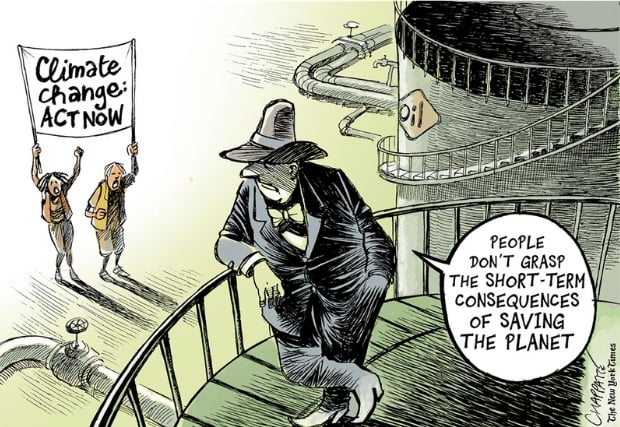



:no_upscale()/cdn.vox-cdn.com/uploads/chorus_asset/file/8312757/border_wall_wildlife.jpg)