During the stretch run of the presidential campaign, $37 million worth of Trump ads connected Kamala Harris to trans people, especially transwomen and transwoman athletes. It’s hard to know whether those ads decided the election, but it’s not crazy to imagine that they did. This has started a debate among Democrats about how to handle trans-rights issues going forward.
Republicans sense an advantage, so they will make sure those issues don’t go away any time soon. Congresswoman Nancy Mace (R-SC) responded to Delaware electing transwoman Sarah McBride to Congress by proposing a bill to keep her out of women’s bathrooms and locker rooms in the Capitol. [1] WaPo’s Matt Bai laid out how this political trick works:
First, you single out someone transgender for unprompted cruelty. … Then you sit back and wait for Democrats to do the decent thing, which is to stand up for the right of any American to be left alone. At which point, Republican leaders step in to say, as House Speaker Mike Johnson did, that they’re “not going to engage in silly debates about this,” as if it were Democrats and not Republicans who are so obsessed with trans rights that they can’t stop thinking about who’s in the next stall.
Talk about obsessed: Of the current posts on Mace’s X-timeline, 76 of the first 79 are about her bathroom bill. All since November 20.
Bai’s model certainly captures how the issue played out in the recent campaign, as M. Gessen (who identifies as trans) observed:
In the wake of an election in which Donald Trump stoked fear about trans people — as in the much-discussed ad that warned “Kamala is for they/them. President Trump is for you” — Democrats are now debating how much the issue of trans rights hurt them and how fast they should retreat from it. Which is remarkable, because throughout her brief campaign, Kamala Harris was all but silent on the subject. It’s not clear how much further Democrats could actually retreat.
Unfortunately, the answer to that question is obvious: Democrats could get on board the anti-trans train and start their own fear-mongering about trans people. My Congressman, Seth Moulton [2], is showing the way:
I have two little girls, I don’t want them getting run over on a playing field by a male or formerly male athlete, but as a Democrat I’m supposed to be afraid to say that.
This is a tactic I remember well from junior high: If kids are picking on you for looking gay, find some kid who looks gayer and beat him up. Don’t stand up to cruelty, just make sure you’re on the inflicting side rather than the suffering side.
But while you’re doing that, make sure you don’t look cruel. So Moulton, who (like me) enjoys almost every kind of privilege American culture offers, is the victim here: People like him are “afraid” of the Big Bad Trans Community. But Seth himself is one of the few Democrats courageous enough to join in the smear against transathletes. He knows that the number of transathletes in women’s sports is vanishingly small [3], that identified-male-at-birth kids who have taken puberty blockers don’t have significant physical advantages over identified-female-at-birth kids, and that the only way Trump managed to find an example in the news that he could use to smear transathletes was to lie about a female Algerian boxer in the Olympics. But never mind that. His little girls are in danger and require his protection.
That’s how the game is played: Don’t attack. Just invent a “threat”, pin it on the target group, and then “defend” against that threat. You know: “They’re eating the dogs, they’re eating the cats.“
So let’s not kid ourselves about what the choice is. Democrats can’t just “stop spending so much time talking about trans issues”, because we never did that. Whatever we say or do, Republicans are going to try to connect us to the trans community. The only way out of that box is to actively join the lynch mob.
Is that really what you want to do?
Josh Marshall offers a historical parallel: the 2004 election, when George W. Bush won reelection over John Kerry. Like 2024, 2004 was a very discouraging election for liberals. Bush had won in 2000 despite losing the popular vote, so it was easy to look on his administration — torture, war based on lies, etc. — as an aberration. America wasn’t really like that. But then he got over 50% of the vote in 2004 (the only Republican to do so in the 21st century), so Democrats had a lot of soul-searching to do.
There’s at least a decent argument that Democrats lost the 2004 election over gay marriage. It certainly wasn’t the biggest issue. But Republicans, cynically and shrewdly, got state ballot initiatives banning gay marriage on the ballot in a number of key states. Ohio seemed like the keyest. … Who knows whether it actually turned the election. But it’s not a far-fetched argument given how close the result was. There’s no question that substantial majorities of voters opposed same-sex marriage rights at the time, though of course support varied from more liberal to more conservative states. …
I don’t think you get to the Obergefell decision in 2015 without 2004 or the whole range of marriage equality activism in the first years of this century. In fact, I’m also certain you don’t. And I guarantee it was an albatross and super annoying to tons of Democratic elected officials. It’s possible it cost Democrats the 2004 election. It generated all sorts of agita and in many cases anger that LGBT activists were pushing the envelope so hard.
Marshall allows that the parallel isn’t perfect, but it’s also not totally off-base. Neither is the comparison to civil rights in the 1960s — Marshall didn’t go there — when there were literal race riots in cities all over the country. Nixon won in 1968 largely because he could pose as the law-and-order candidate who would stand up to Black activism.
Once in a while, there’s going to be a political price to pay for refusing to beat down on whatever group is unpopular at the moment. We can’t ignore that price, but going the other way has a price as well.
One thing the gay-marriage comparison suggests is that we have no idea how trans issues will play in 2028 and beyond. Most voters in 2004 based their same-sex marriage opinion on ignorance: They did not know any gay couples with a public long-term commitment, so they had no basis on which to judge claims that same-sex marriage would lead to “the fall of Western Civilization itself“. Same thing now: Most Americans don’t know any openly trans people, so they’re easy to demonize.
A few years down the road, most Americans probably will know at least one or two such people, plus a handful of trans celebrities. [4] The conversation may be very different by then.
[1] In the WaPo, Style (not Politics) columnist Monica Hesse wonders if Mace knows how women’s bathrooms work.
Just so we’re all on the same page, here’s how public bathrooms work for women: Each restroom is cordoned off into multiple private stalls. Each stall has its own door, which fully shuts and locks. Each door either goes all the way to the ground or — more commonly — stops approximately 12 inches from the floor. This is not an open-plan urinal situation, is what I’m saying. This is a situation in which the most flesh anyone typically sees is a scandalous, tawdry swath of … ankle.
If, somehow, a sex pest were to infiltrate a women’s room and do something creepy — like attempting to spy under a stall — then the women using the restroom would and should call security to have the sex pest removed. That would be true whether the culprit was a cis woman, a trans woman, a man or six koalas in a trench coat. Creepy behavior should be policed; mere existence should not.
If Mace’s bill passes, though, it becomes someone’s job to check up on the genitalia of restroom users. The government itself becomes the “sex pest”.
[2] If you’re a Democrat who believes in human rights, including trans rights, and you’re thinking of running against Moulton in MA-6, please put me on your mailing list. I’ve been a very reluctant Moulton voter ever since he challenged Nancy Pelosi for Speaker in 2018. Politico wrote that Moulton looked like “a mansplaining young punk taking down a vastly more experienced woman”, which is generally how I see him. (I understood why Pelosi faced criticism from the left, even though I disagreed with that criticism. But that’s not where Moulton was coming from. He just wanted to be important.)
Moulton’s anti-trans turn has to be about his larger ambitions, because it isn’t forced by any local political necessity. Republicans didn’t even bother to field a candidate in MA-06 this year, so Moulton won with 97% of the vote.
[3] Apparently, one of those rare transathletes is on the women’s volleyball team at San Jose State. The WaPo outlines the current controversy there, as some schools are refusing to play against the Spartans. The article notes that the player meets the NCAA requirements for transwomen athletes (one year of testosterone suppression treatment), and quotes a rival athletic director:
I do think it is important to note, we have played against this athlete for the past two seasons and our student-athletes felt safe in the previous matches. She is not the best or most dominant hitter on the Spartans team.
[4] Slowing this process down is the core reason Republicans want to ban books like Gender Queer, a memoir that I learned a lot from. If you read such books, or attend plays like Becoming a Man, you may begin to think of people with nontraditional gender identities primarily as people. That will make it harder for Republicans to use fear to manipulate you.
Some of Trump’s cabinet picks are merely unorthodox, but others are expressions of dominance.
The Roman historian Cassius Dio told this story about the Emperor Caligula and his horse Incitatus:
[Caligula] used to invite [Incitatus] to dinner, where he would offer him golden barley and drink his health in wine from golden goblets; he swore by the animal’s life and fortune and even promised to appoint him consul, a promise that he would certainly have carried out if he had lived longer.
Modern historians generally believe that if he made this promise at all, Caligula was joking.
Caligula once said that he would appoint his horse Incitatus consul, which was probably a joke intended to belittle the Senate’s authority.
In the old Roman Republic, the consulship had been the top executive office and was anything but a joke. When Caligula’s great-grandfather Augustus established the imperial system, he preserved the forms and rituals of the Republic and ruled from behind the scenes, not as consul or dictator (as his own uncle Julius Caesar had done) but as “First Citizen”. (In Latin, princeps, the origin of the word “prince”.) Caligula, on the other hand, had no patience with such niceties and wanted to rub senators’ noses in the emptiness of their formal titles. “You want to be consul? So does my horse.”
Matt Gaetz. The Incitatus story came to mind Wednesday after President-elect Trump announced that he would nominate Rep. Matt Gaetz to be attorney general, a possibility only slightly less absurd than Incitatus’ consulship.
Gasps were heard during a meeting of Republican lawmakers when the nomination for America’s top US prosecutor was announced, Axios reported, citing sources in the room.
Republican Congressman Mike Simpson of Idaho reportedly responded with an expletive.
“I don’t think it’s a serious nomination for the attorney general,” Alaska Republican Senator Lisa Murkowski said.
Gaetz has a law degree, but no experience in law enforcement or the judiciary. He has been dogged by persistent accusations of sex trafficking and relationships with underage girls, though the Justice Department declined to file charges. [1] The House Ethics Committee had been about to publish a report of their investigation into his sexual misconduct, but Gaetz has avoided this by resigning his House seat to accept Trump’s offer. (Typically, members of Congress who take cabinet seats wait to resign until after the Senate confirms them.) Republican Senators have said they’d like to see the report, but Speaker Johnson is against releasing it to them — something he would obviously do if it cleared Gaetz.
I’ll give you the truth why I’m not speaker. It’s because one person, a member of Congress, wanted me to stop an ethics complaint because he slept with a 17-year-old.
Like Incitatus, though, Gaetz knows who his master is. He has been abjectly loyal to Donald Trump, and has said his is “proud of the work we did” on January 6. [2]
This is the last chance we’re gonna have of saving this country. And if you wanna get in the way, fine. But we’re gonna try to get you out of the Senate, too if you try to do that.
As for the mainstream media, sanewashing is still the order of the day. The NYT describes the Gaetz nomination as a “loyalist” and WaPo characterizes Gaetz as “outspoken“.
Confirming Gaetz will verify that two significant American institutions have lost their independence: not just the Justice Department, but the Senate also. It will be a major step in the direction of autocracy. Democratic Senator Sheldon Whitehouse refers to this as “the crawl test“, and Ezra Klein writes:
Demanding Senate Republicans back Gaetz as attorney general and Hegseth as Defense Secretary is the 2024 version of forcing Sean Spicer to say it was the largest inauguration crowd ever. These aren’t just appointments. They’re loyalty tests. The absurdity is the point.
Pete Hegseth. And that brings us to our next horse, Pete Hegseth.
Let’s start with the good: He has a strong academic record, receiving a bachelors degree in politics from Princeton (where he wrote for the conservative Princeton Tory and played on the school’s varsity basketball team), and then a masters in public policy from the Kennedy School at Harvard. [3] He was an infantry officer in the Minnesota National Guard, volunteered to be posted to Baghdad, and received a bronze star. He also served in Afghanistan and was promoted to major.
From there things go downhill. He was at first chosen to be one of the 25,000 National Guard troops protecting Joe Biden’s 2021 inauguration (which needed protection given the post-January-6 threats of right-wing violence), but was removed as a possible “insider threat” in view of two tattoos: a Jerusalem cross and “Deus Vult” (“God wills it” an 11th-century Crusader battle cry). Either might be a simple expression of Christian devotion, but they are also associated with Christian nationalism and even neo-Nazism. [4]
Hegseth’s political positions have been described as Christian nationalist. In his book, American Crusade: Our Fight to Stay Free, he said he believes there are “irreconcilable differences between the Left and the Right in America leading to perpetual conflict that cannot be resolved through the political process”. He furthermore called for an “American crusade”, which he described as “a holy war for the righteous cause of human freedom”.
In short, the Crusades — a Christian war against infidels, particularly Muslims — figure prominently in his thinking.
His business career was undistinguished, and his time managing conservative political action groups raises more red flags without any proven wrong-doing. He ran a Minnesota PAC that spent 1/3 of its funds on Christmas parties, and as director of Concerned Veterans for America he hired his brother and paid him over $100K.
Hegseth was investigated for a sexual assault in 2017, but (like Gaetz) was not charged. [5]
But the reason he’s been nominated is that Trump liked him as a weekend contributor to Fox & Friends. He joined Fox News in 2014, and is best known for advocating pardons for war criminals, including Eddie Gallagher. (Gallagher was pardoned by Trump and had his rank restored, despite testimony against him from seven of his 21 platoon members, one of whom said “The guy is freaking evil.”)
Nothing in Hegseth’s background qualifies him to run a department with nearly three million employees and an $842 billion annual budget. But he does bring to the job an anti-LGBTQ and patriarchal zeal that fits well with Trump’s criticisms of the “woke” military.
Given his past pronouncements, and those of President-elect Trump, Hegseth is expected to end any diversity programs in the U.S. military, and perhaps retire or replace senior officers he sees as “woke” or who did not get the position through what he sees as merit alone.
His view of war crimes also aligns with Trump, who said after pardoning a different war criminal that “We train our boys to be killing machines, then prosecute them when they kill!”
How Trumpists see their team.
Tulsi Gabbard. This former Democratic congresswoman has been nominated to be Director of National Intelligence. The DNI is the primary liaison between the 17 US intelligence agencies and the President. The DNI’s office (ODNI) produces the Presidential Daily Brief, which integrates and distills reports from all the agencies.
Democratic Rep. Debbie Wasserman Schultz probably went too far by characterizing Gabbard as “likely a Russian asset“, but some hosts on Russian state TV appear to agree, referring to her as “our girlfriend Tulsi“. Gabbard has often echoed Russian propaganda about the Ukraine War. During her unsuccessful 2020 presidential campaign, she received favorable coverage from Russian state media.
Less than one month into her presidential campaign, there were at least 20 Gabbard stories on three major Moscow-based English-language websites affiliated with or supportive of the Russian government — all of which celebrated her candidacy.
She has also been a defender of the Assad regime in Syria, a Russian ally.
Our allies are reported to be alarmed by her nomination, and there is talk that the other Five Eyes countries — Australia, Britain, Canada, and New Zealand — may stop sharing information with us, for fear of where that information might go next.
Gabbard has no previous experience in intelligence. She has not worked for a US intelligence agency and was not a member of the Intelligence Committee when she was in Congress.
RFK Jr. It’s possible to describe RFK Jr. in glowing terms: He wants to Make America Healthy Again. He wants to take on the Big Pharma and Big Food oligopolies, and fight the forces that make Americans prone to chronic diseases.
Throughout the year, we observed an increasing trend in the prevalence of low-credibility news about vaccines. We also observed a considerable amount of suspicious YouTube videos shared on Twitter. Tweets by a small group of approximately 800 “superspreaders” verified by Twitter accounted for approximately 35% of all reshares of misinformation on an average day, with the top superspreader (@RobertKennedyJr) responsible for over 13% of retweets.
Then there’s the danger of fluoridated water, which is a John Birch Society conspiracy theory I remember from childhood. RFK would like to eliminate water fluoridation, due to various health problems that overexposure to fluoride can cause. But like so many of his causes, his anti-fluoride case is overstated and full of misinformation. Fluoridated water has proven cavity-prevention benefits, and local monitoring should be sufficient to prevent over-exposure.
Kennedy denies responsibility for a measles outbreak in Samoa that killed 83 people, but he did play a role.
Children’s Health Defense, the nonprofit anti-vax outfit he led until becoming a presidential candidate, had helped spread misinformation that contributed to the decline in measles vaccination that preceded the lethal eruption. And during his trip to Samoa, Kennedy had publicly supported leading vaccination opponents there, lending credibility to anti-vaxxers who were succeeding in increasing vaccine hesitation among Samoans.
That, in a nutshell, is the main thing to fear about Kennedy heading HHS: He’ll encourage public doubts about vaccines that have all but eliminated various once-common diseases. If vaccination levels fall below what is necessary to maintain herd immunity, those disease can make a comeback.
The U.S. is already seeing an uptick in some vaccine-preventable childhood diseases, says Dr. Adam Ratner, a pediatric infectious disease specialist in New York City and author of a forthcoming book about the resurgence of measles and the growing anti-vaccine movement.
Measles outbreaks and cases of chickenpox and pneumococcal disease are on the rise in the U.S., he notes.
“When we see children in the hospital with complications of these things that we can prevent or at least decrease the risk of by using vaccines, it’s very frustrating,” he says.
As vaccine hesitancy continues to spread, Alissa and other pediatricians worry that other devastating childhood diseases like polio could re-emerge.
As for sticking it to Big Pharma and Big Food, I have a theory about that: I deeply disbelieve in Trump’s populism, and think that fundamentally he is on the side of Big Whatever. But RFK Jr. could still be useful to him by creating a threat Trump could use to shake the big companies down.
What’s next? These particular picks were so outrageous that many other nominees are passing without comment, like Mike Huckabee as ambassador to Israel, Steven Miller as deputy chief of staff for policy, and Kristi Noem as Secretary of Homeland Security. And I’ve seen many people use the Simpsons’ worst [blank] SO FAR meme. (We’re still waiting for a Treasury secretary.)
It’s been hard to parody Trump’s team, because anything you suggest could become tomorrow’s reality. (Last week, Gaetz becoming attorney general might have gotten a good laugh.) The only real way to stay ahead of the game is to propose fictional characters:
Donald Trump picks Baltimore based developer Russell “Stringer” Bell as Secretary of Housing and Urban Development.
But to repeat a previous point: The question is what the Senate will do. It’s encouraging that Republican senators stuck by their own choice (John Thune) for majority leader, and didn’t give in to Trump’s choice (Rick Scott). Maybe that means the Senate will play the role the Founders intended, checking and balancing the President. At least sometimes.
[1] Not filing an indictment isn’t actually a ringing endorsement. It means only prosecutors didn’t think they could convince a jury beyond a reasonable doubt. But according to Gaetz’ defenders, if there’s not enough evidence to send you to jail, you might as well be attorney general.
[2] Trump’s tweet announcing Gaetz calls him “a Champion for the Constitution and the Rule of Law”, which is the kind of up-is-down statement we’re going to see a lot of.
The rest of the new DoJ management team will also be compromised: Trump has nominated his personal attorneys, Todd Blanche and John Sauer, as Deputy Attorney General and Solicitor General. At least they have some relevant experience: Blanche was once a federal prosecutor and Sauer was solicitor general for Missouri.
[4] At a minimum these are anti-Islam symbols. The Jerusalem Cross goes back to the Crusades, and is also known as the Crusaders’ Cross. If I were a senator vetting Hegseth, I’d point to Deus Vult and ask him precisely what he thinks God wills in the 21st century.
[5] The Washington Post published more details about the assault Saturday, including that Hegseth paid the accuser to sign a nondisclosure agreement.
[A] detailed memo was sent to the Trump transition team this week by a woman who said she is a friend of the accuser. The memo, a copy of which was obtained by The Post, alleged he raped the then-30-year-old conservative group staffer in his room after drinking at a hotel bar. … The accuser, whose identity has not been made public, filed a complaint with the police alleging she was sexually assaulted days after the Oct. 7, 2017, encounter in Monterey, California, but the local district attorney did not bring charges. Police confirmed that they investigated the incident. After she threatened litigation in 2020, Hegseth made the payment and she signed the nondisclosure agreement, his attorney said.
Once again, not being formally indicted for a crime seems to be the gold standard for Trump nominees.
Heller begins with an observation I keep banging my head against: All those accounts where Harris lost because she didn’t do something — almost invariably she did do the thing they’re claiming she didn’t do. She talked about kitchen-table issues, she had detailed policy proposals, she gave interviews, she reached out to every kind of voter, and so on. She raised money, she advertised, she had a great ground game. But for some reason the things she said and did didn’t register with some large chunk of the electorate.
This seems to me like the central problem for Democrats to wrestle with. Sure, work on the Party’s message, work on the outreach to Latino men, come up with more popular policies. But none of that is going to matter if your great message describing your great policies goes in one ear and out the other.
But why would it do that?
On the other hand, Trump seemed to do everything wrong. His campaign speeches were boring and largely unwatchable. He didn’t have a ground game to speak of. Any policy ideas — there weren’t many of them — were vague. (Does he want a 10% tariff or 20%? It seems like that should matter.)
Trump’s speeches at rallies, many people noticed, had a curious background-music quality: they went on forever, aimlessly, and people would come and go at will. The actual speeches didn’t seem to matter; they existed simply to set a vibe and keep certain broad suggestions (immigration big problem! Biden Administration so corrupt!) drifting into the ether. … Planting ideas this way isn’t argument, and it’s not emotional persuasion. It’s about seeding the ambience of information, throwing facts and fake facts alike into an environment of low attention, with the confidence that, like minnows released individually into a pond, they will eventually school and spawn. Notions must add up to a unified vision but also be able to travel on their own, because that’s how information moves in a viral age.
… The communications researcher Pablo Boczkowski has noted that people increasingly take in news by incidental encounter—they are “rubbed by the news”—rather than by seeking it out. Trump has maximized his influence over networks that people rub against, and has filled them with information that, true or not, seems all of a coherent piece. This is the opposite of micro-targeting. The goal is for voters to meet ideas coming and going so often that those notions seem like common sense.
So when Harris described policies (or even Biden administration accomplishments) that benefit the working class, it didn’t register, because people “know” (from having run into the notion over and over again) that Democrats are elitists who look down on the working class. They didn’t listen, because they “knew” that Harris wasn’t talking to people like them.
Conversely, when Trump said immigrants were “eating the dogs … eating the cats”, maybe people eventually heard that this story was false. (Or maybe they didn’t.) But the idea that immigrants are causing problems all over the country was seeded. When you heard it again, you’d heard it before.
That’s how you wind up with a result like this: Harris won handily among people who were paying attention, but got clobbered among voters who just “knew things” without checking them out.
Heller points out that if you’re trying to seed the world with ambient information, it helps to have your own dedicated media organizations like Fox News, Truth Social, and ultimately X/Twitter, where your factoids can be repeated endlessly without contradiction. Democrats have the so-called “liberal” media, but the message discipline just isn’t there. As often as not, “liberal” outlets like the New York Times and Washington Post would pass along Trump-oriented ambience: Biden’s too old, the economy feels bad, Harris’ campaign doesn’t have enough substance, and so on.
In the old days, campaigns imagined that even fairly uninformed voters had an issue checklist: abortion, inflation, immigration, climate change, education, and so on. Just before the election, they’d find out which candidate agreed with them on those issues, and then vote for that candidate.
Tuesday was traumatic. How do we recover, as individuals and as a country?
There’s a lot for all of us to process here. About the outside world, the emotions roiling around inside, what we need to be preparing for, and so on. This post is a very quick and incomplete response.
One important thing I’ll say up front: This is a secure-your-own-mask-first situation. We’ve all been knocked off balance, and we need to get our balance back before we go charging out into the world. So do what you need to do and don’t feel guilty about it: gather friends around you, sit in a dark room alone, make art, play solitaire, binge on some silly TV show, whatever. Things are happening deep down, and we need to let those processes do their work. Whatever you decide to do next will benefit if you take care of yourself now.
Me. The hardest thing for me right now is re-envisioning my country. It’s been many years since I have seen America as a “city upon a hill” or the “last best hope of Earth“. But still, I’ve gone on believing that the great majority of Americans aspire to be better and do better. A lot of my commitment to writing has come from my belief that if I work to understand things and explain them clearly, then other people will understand those things too, and most of them will do the right thing, or at least do better than they otherwise would have.
This election demonstrates how naive that belief is. Some Americans were fooled by Trump’s lies about the economy or crime or history or whatever, but many weren’t. They saw exactly what Trump is, and they chose him. Many of the people who believed him weren’t fooled into doing it. They chose to believe, because his lies justified something they wanted to do.
Oddly, though, I am continuing to write, as you can see.
I am reminded of a Zen story: A man meditated in a cave for twenty years, believing that if he could achieve enlightenment, he would rise to a higher state of being and attain mystical powers. One day a great teacher passed through a nearby village, so the man left his cave to seek the sage’s advice. “I wish you had asked me sooner,” the great teacher said sadly, “because there is no higher state of being. There are no mystical powers.”
Crestfallen, the man sat down in the dust and remained there for some while after the sage had continued on his way. As the sun went down, he got up and went back to his cave. Not knowing what else to do with himself, he began his evening meditations. And then he became enlightened.
So far, no enlightenment. But I’ll let you know.
Something similar happens in Elie Wiesel’s recounting of a trial of God he witnessed as a boy in a Nazi concentration camp. (I haven’t recently read either his account or the play it inspired, so I might not have the story exactly right.) After a lengthy and spirited argument, this makeshift Jewish court finds God guilty of violating his covenant and forsaking the Jewish people. And then they move on to their evening prayers.
Election night. Despite everything I’ve said in this blog about avoiding speculation and being prepared for whatever happens, by Election Day I had become fairly optimistic. That all went south very quickly.
I had made myself a list of early indicators, beginning with how Trump Media stock performed that day. (It was way up, a bad sign.) Next came how easily Trump carried Florida. (It was called almost immediately, another bad sign.) Things just got worse from there. I briefly held out some hope for the Blue Wall states (Wisconsin, Michigan, Pennsylvania) until early reports showed Harris underperforming Biden’s 2020 results (when Biden just barely won those states). So I was in bed by 11 and never got up in the night to see if some amazing comeback had started.
I had expected to be deeply depressed if Harris lost, but in fact I haven’t been. I’m disappointed, but I’ve been oddly serene.
No doubt part of my serenity is ignoble. Due to a variety of privileges — I’m White, male, heterosexual, cis, English-speaking, native-born, Christian enough to fake it, and financially secure — I am not in MAGA’s direct line of fire. So whatever trouble I get into will probably come from risks I choose to take rather than brownshirts pounding on my door. Many people are not in my situation, and I am not going to tell them they should be serene.
But there’s also another factor — I hope a larger factor — in how I feel, and I had to search my quote file until I found something that expressed it. In Cry, the Beloved CountryAlan Paton wrote:
Sorrow is better than fear. Fear is a journey, a terrible journey, but sorrow is at least an arrival. When the storm threatens, a man is afraid for his house. But when the house is destroyed, there is something to do. About a storm he can do nothing, but he can rebuild a house.
It’s not a perfect metaphor, because we could in fact vote or contribute or volunteer to influence the election. But the scale of the election dwarfed individual action. The closer it got, the more it seemed like a storm. In spite of my propensity to latch onto hopeful signs, in the days and months leading up to the election, I was filled with a very painful dread.
That dread is gone. The hammer has fallen. My faith in the American people was misplaced, so I can now get on with reconstructing that important piece of my worldview.
What happened. As always, we should start with the undeniable facts before making a case for this or that interpretation.
Trump won. He carried the Electoral College 312-226, and also won the popular vote by around 3 1/2 million votes, which is not quite the margin that Obama had over Romney (5 million), and well below the margin Biden had over Trump (7 million) or Obama had over McCain (9 1/2 million).
So it was not a historic landslide, but it was a clear win. Trump had appeared to be ready to try to steal the election if he didn’t win it, but that turned out not to be necessary. Coincidentally, all online talk of “voter fraud” evaporated as it became clear Trump was winning legitimately. The whole point of the GOP’s “election integrity” issue was to provide an excuse not to certify a Harris victory. But with Trump winning, fraud was no longer a concern.
Republicans also won the Senate. Ted Cruz and Rick Scott retained their seats, and no seats flipped from Republicans to Democrats. Democrats lost Joe Manchin’s West Virginia seat, something everyone expected as soon as Manchin announced he wouldn’t run. In addition, Democratic incumbents Sherrod Brown in Ohio, Bob Casey in Pennsylvania, and Jon Tester in Montana were defeated. The new Senate looks to have a 53-47 Republican majority. (Casey is still holding out hope that uncounted provisional ballots will overcome McCormick’s lead. But few think that’s likely.)
How did it happen? At the simplest level, it happened because too many people voted for Trump and not enough for Harris. Because the US has secret ballots, there’s no way to know for sure who those people were. But we do have exit polls.
It’s important to phrase things correctly here, because it’s way too easy to scapegoat groups of people unfairly. For example, you’ll hear that Trump won because of the Latino vote (which is true in a sense that we’ll get in a minute). But if you look at the news-consortium exit poll, Harris won the Hispanic/Latino vote 52%-46%, while Trump won the White Evangelical/Born-Again vote 82%-17%. So if you’re looking for someone to blame, look at Evangelicals, not Latinos.
However, most analysts are using the 2020 election as a baseline: Harris lost because she didn’t do as well as Biden did in 2020. And that brings a second exit poll into the conversation. Biden won the Hispanic/Latino vote 65%-32% in 2020, and lost the White Evangelical/Born-Again vote 24%-76%. So if you’re looking for Democratic slippage from 2020 to 2024, you’ll find it in both groups, but the Hispanic/Latino vote stands out; the Democratic margin among Latinos dropped from 33% to 6%.
The Latino vote also stands out because it’s puzzling, at least to non-Latinos like me. Trump ran largely on hostility to non-White immigrants and a promise to deport millions of people, many of whom are Latino. Again, it’s important to nuance this correctly: Latino voters are citizens — non-citizen voting was one of Trump’s lies — and Trump’s prospective deportees are not. Many Latino voters are solidly middle class, speak English with an accent that is more regional than foreign-born, and are well along the immigrant path traveled in the 20th century by Italians and Greeks. It shouldn’t be surprising, then, that as Latinos assimilate into America, they begin to vote more and more like other Americans. After all, Polish Americans may still value their Polish heritage, but they typically don’t base their votes on an agenda of Polish issues.
Still, I have a hard time believing that MAGA racism will respect legal, social, or economic boundaries. Puerto Ricans have been citizens since 1917, and they are still fair game for racist insults. Native Americans are sometimes told to “Go back where you came from”, which is probably Siberia many thousands of years ago. When the racial profiling starts, your skin color and family name may matter more than your legal status. Also, I would suspect that Latino citizens are much more likely than Anglos to know somebody at risk of deportation. I don’t understand why that wasn’t a bigger consideration.
There was also slippage — not much, but some — among Blacks. Biden won the Black vote 87%-12%, while Harris won it 85%-13%. Harris actually improved slightly on Biden’s performance among Black women (91% to 90%), but did worse among Black men (77% to 79%). (I assume that round-off errors account for the math anomaly in those numbers.)
Meanwhile, the White vote barely changed: Harris and Biden each got 41%.
Finally, there’s turnout. Total voter turnout was 65% in 2024 compared to 67% in 2020. However, by American historical standards 65% is high, not low. You have to go back to 1908 (66%) to find another election with turnout this high. The 2020 adjustments to the Covid pandemic made it easier to vote then than at any other time in US history. So it’s unfair to fault the Harris campaign for not matching that turnout.
Why did it happen? I want to urge caution here. After any political disaster, you’ll hear a bunch of voices saying basically the same thing: “This proves I was right all along” or “This wouldn’t have happened if only people had listened to me.”
So Bernie Sanders thinks this election proved Democrats need a more progressive agenda to win back the working class. Joe Manchin says Democrats ignored “the power of the middle”, which implies the party should move right, not left. Others blame the liberal cultural agenda — trans rights, Latinx-like language, defund the police — for turning off working-class voters. Or maybe Harris’ outreach to Nikki Haley conservatives wasn’t convincing enough, and the problem was all the progressive positions she espoused in her 2020 campaign. Josh Barro suggests the problem is that blue states and cities are not being governed well.
The gap between Democrats’ promise of better living through better government and their failure to actually deliver better government has been a national political problem. So when Republicans made a pitch for change from all this (or even burn-it-all-down), it didn’t fall flat.
Basically, whatever you believe, you can find somebody telling you that you are right, and Harris would have won if she had done what you wanted.
I want to encourage you to resist that message — and I’m going to try to resist it myself — because none of us will learn anything if we just insist we’ve been right from Day 1. We should all bear in mind that the US is a very big, very diverse country, and (whoever you are) most voters are not like you. It’s easy for me to imagine positions or messages or candidates that would have made me more enthusiastic about voting Democratic. But we need to be looking for an approach that inspires a broader coalition than showed up for Harris last week. That coalition is going to have to include people you don’t understand, the way I don’t understand the Latinos who voted for mass deportation, the women who voted to give away their own rights, or the young people who voted to make climate change worse.
This is exactly the wrong time for I-was-right-all-along thinking. Back in 1973, Eric Hoffer wrote:
In a time of drastic change it is the learners who inherit the future. The learned usually find themselves equipped to live in a world that no longer exists.
So much of what passes for “obvious” or “common sense” right now only sounds that way because it is well grounded in a worldview that no longer applies. This is a truth that is easy to see in other people, but hard to see in ourselves.
We’re going to be in a weird position for the foreseeable future: Trump is going to try to run over a lot of legal, cultural, and political boundaries, and we need to be prepared to resist. It would be great to be able to resist from a place of rock-solid certainty. But if we’re going to turn this around in the long term, we also need to be humble and flexible in our thinking. Fairly often, we’re going to have to think thoughts like: “I don’t really don’t understand a lot of what’s happening, but I’m pretty sure I need to put my body here.”
Explanations we can eliminate. You don’t have to have the right explanation to recognize wrong ones.
Harris ran a bad campaign.Josh Marshall puts his finger on the statistic that debunks this.
In the seven swing states, the swing to Trump from 2020 to 2024 was 3.1 percentage points. In the other 43 states and Washington, DC the swing was 6.7 points.
Both candidates focused their ads, their messaging, and their personal appearances on the swing states. If the Trump campaign had been running rings around the Harris campaign, this arrow would have pointed in the other direction. In short: If you were a 2020 Biden voter, the more you saw of Harris and Trump, the more likely you were to vote for Harris.
I live in a typically liberal Boston suburb. Massachusetts is about as far from a swing state as you can get, so no national figures ever showed up here. Occasionally we’d see some ads aimed at New Hampshire, but we didn’t get nearly the blitz that Pennsylvanians got. And guess what? Harris slipped behind Biden’s performance here too.
Harris should have picked Josh Shapiro as her VP. This would be a good argument if Harris had won the national popular vote, but failed in the Electoral College because she lost Pennsylvania. But she also lost Wisconsin, where Walz probably helped her.
Also, Harris won the Jewish vote by a wide margin: 78%-22%. So Shapiro’s Judaism probably wouldn’t have helped the ticket.
Harris should have moved further left. We can never say what would have happened if a candidate had delivered a completely different message from the beginning. But I think it’s pretty clear that simply shifting left down the stretch, i.e., emphasizing the more liberal parts of Harris’ message and record, wouldn’t have helped.
The best evidence here comes from comparing Harris to Democratic Senate candidates. Candidates who are perceived as more liberal, like Bernie Sanders and Elizabeth Warren, generally did slightly worse than Harris in their states, while candidates perceived as more conservative (Tim Kaine and Bob Casey, say) did somewhat better.
I’m ignoring a bunch of the Senate races because I don’t see much to be gleaned from them. Jon Tester ran to Harris’ right in Montana and did 7% better, but Harris was never going to be conservative enough to win Montana — and as it turned out, Tester wasn’t either. Maryland’s Angela Alsobrooks ran almost 8% behind Harris (and won anyway), but that’s more a reflection on her opponent, former governor Larry Hogan, one of the few non-MAGA Republican candidates. (It suggests that a moderate Republican could have won a landslide on the scale of Nixon in 1972 or LBJ in 1964.)
If you saw much election advertising, you know that Republicans worked hard to paint Harris as part of the “radical left”. I don’t think they’d have done that if they thought moving left would help her.
Things I think I know. I don’t have a sweeping theory, but I’ll offer a few tentative pieces of a theory.
We lost the information war. The aspect of this campaign I found most personally frustrating was how much of the pro-Trump argument centered on things that simply aren’t true. Our cities are not hellholes. There is no migrant crime wave. Crime in general is not rising. Most of the countries that compete with us would love to have our economy. Inflation is just about beaten. America was far from “great” when Trump left office in 2021. Trump has no magic plan for peace in Ukraine and Gaza. The justice system has favored Trump, not persecuted him.
I hate to say this, but it’s true: Ignorance won. And it will keep winning until we realize that we can’t win by playing politics as usual. This isn’t the same world. Knocking 100 doors is a personal connection that might win a small race — I don’t know that it can change the larger races. Trump’s folks weren’t knocking doors. They were lying to the masses through an extreme right-wing reality that most of us can’t conceive.
This is the year in which it became obvious that the right-wing media has more power than the mainstream media. It’s not just that it’s bigger. It’s that it speaks with one voice, and that voice says Democrats and liberals are treasonous elitists who hate you, and Republicans and conservatives love God and country and are your last line of defense against your son coming home from school your daughter. And that is why Donald Trump won.
It’s hard to know how important the pervasive misperception of facts really was. Did people believe Trump’s nonsense because it was actually convincing? Or did they want to support Trump for some other reason and latched onto whatever pro-Trump “facts” they could find? (Birtherism was like that. People who didn’t want to admit that a Black president scared or angered them instead claimed to be convinced that Obama was born in Kenya, despite clear evidence to the contrary.)
Past presidential campaigns have included some misinformation, but they revolved much more around philosophical disagreements not easily reduced to facts, like the significance of the national debt, or how to balance the public and private sectors.
One of the big questions going forward is whether Democrats want to continue being the reality-based party. I hope we do, just for the sake of my conscience. But if so, how do we make that work in the current information environment?
Harris had a steep hill to climb. Around the world, countries went through a period of inflation as their economies reopened after the pandemic. And around the world, the governments in power got thrown out. Here’s how Matt Yglesias put it just before the election:
The presumption is that Kamala Harris is — or at least might be — blowing it, either by being too liberal or too centrist, too welcoming of the Liz Cheneys of the world or not welcoming enough or that there is something fundamentally off-kilter about the American electorate or American society.
Consider, though, that on Oct. 27, Japan’s long-ruling conservative Liberal Democratic Party suffered one of its worst electoral results. In late September, Austria’s center-right People’s Party saw an 11-percentage-point decline in vote share and lost 20 of its 71 seats in Parliament. Over the summer, after being in power for 14 years, Britain’s Conservative Party collapsed in a landslide defeat, and France’s ruling centrist alliance lost over a third of its parliamentary seats.
… It is not a left-right thing. Examples show that each country has unique circumstances. Center-left governments from Sweden to Finland to New Zealand have lost, but so have center-right governments in Australia and Belgium. This year the center-left governing coalition in Portugal got tossed out. Last year the People’s Party for Freedom and Democracy, the incumbent center-right governing party in the Netherlands, finished third in an election dominated by far-right parties.
I’m reluctant to give this explanation too much credit, because it says this election was a one-off and there’s nothing really to learn, other than to avoid being in power at the end of a pandemic. So in that sense it’s too easy. But it’s also a real thing that is an important part of the picture.
Harris’ outreach to Republican women came up empty. I’m not going to say it was a bad idea, but it didn’t work. I haven’t seen an exit poll that specifically breaks out Republican women, but the overall slippage among women in general makes it unlikely that many Liz Cheney Republicans crossed over.
After Trump’s 2016 win, big-city journalists trying to figure out Trump voters made countless trips to small-town diners. This time, I’d like to see them hang out in upscale suburban coffee shops and talk to women in business suits. Why did so many of them stay loyal to their party’s anti-woman candidate?
Democrats need a utopian vision. If Democrats had complete control and could remake America however we wanted, what would that look like? I honestly don’t know.
It’s not like Democrats don’t stand for anything. I can list a bunch of things an unconstrained Democratic administration would do, like make sure everyone gets the health care they need, raise taxes on billionaires, ban assault weapons, cut fossil fuel emissions, and make states out of D. C. and Puerto Rico. Maybe it would also reform the food system and break up the tech monopolies, though the details on those two are fuzzy.
But a list of policies doesn’t add up to a vision.
Whatever you think of it, libertarianism provided pre-MAGA conservatives with a utopian vision for decades. Republicans didn’t usually run on an explicitly libertarian platform, but libertarian rhetoric and libertarian philosophy was always in the background. (Reagan in his first inaugural address: “Government is not the solution to our problem; government is the problem.”) Trump mostly turned away from that, and slogans like “America First” and “Make America Great Again” may be vague, but they also evoke something sweeping.
I can’t think of anything comparable on the left. The communist vision collapsed with the Soviet Union, and I don’t know anybody who wants to revive it. But in the absence of a political vision, we’re left with a technocracy: Do what the experts think will work best.
This is a problem a new face won’t solve. Gavin Newsom or Gretchen Whitmer or even AOC is not a vision.
What happens next? It’s Trump’s move. We don’t know yet who he’s going to appoint to high office or what the agenda of the new Congress will be. Establishing authoritarian government is work, and he may not have the energy for it. Maybe he’ll get so distracted by seeking his revenge against individuals that he won’t get around to systematically destroying democracy. We’ll see.
I’m reminded of a story Ursula le Guin told decades ago, repeating something from another woman’s novel: A female character discovers her baby eating a manuscript.
The damage was not, in fact, as great as it appeared at first sight to be, for babies, though persistent, are not thorough.
Trump has many babyish traits. We can hope that he won’t be thorough enough to do as much damage as we now fear.
This Adam Gurri article is full of good advice, but I especially appreciate this:
The biggest weakness of The Women’s March was its lack of strategic objective or timing. It simply demonstrated mass dissatisfaction with the Trump administration the day after it began. The best use of mass protest is in response to something specific. It does not even need to be an action, it can be as simple as some specific thing that Trump or a member of his administration says. But it has to have some substance, some specific area of concern. Perhaps it is about prosecuting his enemies. Perhaps it is about mass deportations. No one doubts there will be a steady supply of choices to latch onto. Those seeking to mobilize protests need to make sure they do pick something specific to latch onto, and be disciplined in making opposition to it the loudest rhetoric of the protest.
This time around, I don’t expect protesting against Trump himself to get very far. His followers expect it; they will just roll their eyes and talk about “Trump Derangement Syndrome”. But protesting something Trump does will at least draw attention to that thing. We have to wait for him to do something objectionable. Unfortunately, it probably won’t be a long wait.
In the meantime, prepare. Take care of yourself. Regain your balance.
What the Washington Post and Los Angeles Times aren’t saying speaks volumes.
Newspaper endorsements seldom garner much attention. (The New York Times endorsed Harris almost a month ago. Did you notice?) It’s debatable whether such endorsements move many votes, though I think they used to. As a 12-year-old in 1968, one of my first political actions was to stand near my hometown’s central square, where Lincoln once debated Douglas, and hand out copies of the Times’ editorial endorsing Hubert Humphrey. Clearly the Humphrey campaign thought the newspaper’s voice might have some influence, even a thousand miles from Manhattan.
The problem here isn’t that newspapers are obligated to make endorsements. Whether news organizations should endorse candidates or show a public face of neutrality is a question journalists can debate in good faith. Earlier in their history, both the WaPo and the LAT had periods where they didn’t endorse presidential candidates. Rival news organizations CNN and NPR still don’t. I’m on the editorial committee of the hyperlocal Bedford Citizen, which serves the 14 thousand people of Bedford, Massachusetts. We don’t endorse candidates, or even take positions on controversial local issues (despite the fact that members of the editorial committee are often fairly unified in our opinions).
Changing policies is also not the problem. Individual news organizations should be free to change their endorsement policies (whatever they are) whenever they want, or to decide in some election cycle that neither candidate deserves their support. But both the process and the timing of these particular decisions augur badly for the future of American democracy.
WaPo’s Publisher Lewis put a principled spin on the paper’s non-endorsement, framing it
as a statement in support of our readers’ ability to make up their own minds on this, the most consequential of American decisions — whom to vote for as the next president.
However, both the LAT and the WaPo have endorsed senate candidates this year, so the principle here escapes me. And if readers can make up their own minds, why have an editorial page at all? If you have an editorial department and a decision process for making endorsements, why not trust it? And after your editorial department comes to a decision, what valuable new insight does an owner bring to the table?
That last question is what makes these non-endorsements so disturbing: The owner brings a business point of view. An owner can see how a new administration, particularly a corrupt and vengeful new administration, might use the power of government to attack either the paper itself or the owner’s unrelated businesses. Conversely, such an administration might also rain benefits on a supportive media-company-owner’s businesses, like Bezos’ Blue Origin or Elon Musk’s Starlink. (LAT owner Patrick Soon-Shiong has a variety of business interests in pharmaceuticals, energy, and biotech. I could not easily guess which carrots or sticks a second Trump administration might use to influence him. Compared to Bezos or Musk he is a mere pauper, with a net worth just over $7 billion.)
During the first Trump administration, Bezos (whose much larger business is Amazon) saw what can happen when his newspaper becomes too annoying.
In 2019, Trump found his lever. Amazon was due to receive a $10 billion cloud-computing contract from the Pentagon. The Pentagon suddenly shifted course and denied Amazon the contract. A former speechwriter for Defense Secretary James Mattis reported that Trump had directed Mattis to “screw Amazon.”
This is the context in which the Post’s decision to spike its planned endorsement of Kamala Harris should be considered.
In other words, the owners of one (or maybe two) major American newspapers appear to be giving in to intimidation/bribery. Their actions (or non-actions) are teaching Donald Trump that intimidation/bribery works. So if he is elected next week, they will see more.
The WaPo’s and LAT’s silence illustrates what fascism expert Jason Stanley calls “anticipatory obedience“, a primary pattern in democracies that surrender to autocrats: Don’t wait for the lash to fall. Anticipate what the autocrat will require of you and obey in advance. (Stanley himself makes the connection with the newspaper non-endorsements here.)
Roots are important, of course. As recently as the 1970s, The Post did not endorse a candidate for president. As recently as centuries ago, there was no Post and the country had a king! Go even further back, and the entire continent of North America was totally uninhabitable, and we were all spineless creatures who lived in the ocean, and certainly there were no Post subscribers.
But if I were the paper, I would be a little embarrassed that it has fallen to me, the humor columnist, to make our presidential endorsement. I will spare you the suspense: I am endorsing Kamala Harris for president, because I like elections and want to keep having them.
A friend who works for #WaPo marketing dept says there’s a #WaPoMeltDown in their business unit following the news as digital subscriptions cancellations have hit 60k barely 8 hrs after decision not to endorse. Cancellation rate is unprecedented and we’re barely 24 hours into it.
But as damaging as this might be to the WaPo business model, it’s hard to imagine it having a noticeable impact on Bezos-scale wealth.
The impact Bezos’ decision is having on American democracy is easier to see. Norman Rockwell famously illustrated Freedom of Speech by painting a man wearing working-class clothes standing up at a public meeting. All eyes are on him, and he seems to be about to speak his mind. His own eyes tilt upward, as if he were being inspired by a high ideal. Maybe he what he says will change minds and convince his fellow citizens to take some worthy action.
But picture, for a moment, a different way that scene might play out: Some rich employer or local political boss might shoot him a dirty look, causing the man to think better of speaking and sit back down. His refusal to speak also would have an influence on fellow citizens, but a less positive one.
That’s what has happened here.
The Post’s slogan is “Democracy Dies in Darkness”. But democracy also dies in silence, particularly if those moments of silence happen when everyone is looking at you and waiting for you to speak.
If you can’t see any sense in the pro-Trump case, you’re looking at the wrong level.
“How can this election be close?”
It’s a cry of frustration I hear almost every day in one way or another, not just from Substack bloggers and TV talking heads, but also on social media and from personal friends.
Sure, there are about as many Republicans as Democrats in the country, and as many conservatives as liberals. But one of the two candidates is Donald Trump. I could easily imagine someone like Nikki Haley winning. But the case against Trump should be both obvious and compelling.
How is this election close? How is it still possible that he could win? Is half the country as far gone as Ruben Bolling’s version of Snoopy?
If you feel this frustration, imagine what it’s like for bloggers like me. Day after day, I motivate myself with this myth: If I could only explain things clearly enough, people would understand; and once they understood, the great majority of them would do the right thing. So the prospect of another Trump presidency doesn’t just make me fear for my country, it undermines my identity.
More and more it becomes apparent that the problem isn’t that half the country doesn’t understand. Many of them actively want a fascist government that will implement the cruelty they feel in their hearts. Many who aren’t openly rooting for that cruelty refuse to understand what Trump is, and no one can make them understand against their will. They will accept any excuse for his behavior, even excuses that shift from month to month and contradict the previous excuses.
Thank you for letting me get that out of my system. Now I can try to go back to being calm and reasonable.
A few weeks ago I took a long, leisurely driving trip from my home in Massachusetts out to west-central Illinois, where I grew up. I led a church service there, and then took a long, leisurely drive back. Along the way, I saw the lawn signs in neighborhoods very different from mine, and I heard campaign ads not just for the national race, but for a variety of close Senate races.
I think I understand something now.
Fantasies of crime. In the northwest neck of Pennsylvania, road closures threw me off of I-90 and sent me through a small town that sits between Cleveland and Buffalo, but is outside the orbit of either city. In a peaceful middle-class neighborhood I saw numerous yard signs that said
Trump safety Kamala crime
I doubt the people who live in those houses are recent victims of crime or live in any realistic state of fear. I also doubt that they have looked very deeply into the crime problem nationally. If they had, they would know that crime has been dropping for decades, and was no better under Trump than under Biden and Harris. Crime briefly blipped upward during both the Trump and Biden years of the Covid pandemic, but in recent years the long-term decline has resumed.
Unlike many of the fantasy problems Trump presents in his speeches, he at least has proposed fantasy solutions to this one: deport all those brown people with criminality in their DNA, and stop making the police follow rules.
The trans “threat”. Trans people figure prominently in several of the ads I saw. One purported to compare the Trump military to the “woke” Harris military. The scenes representing Trump were of a drill sergeant screaming abuse at recruits. The ones representing Harris showed dancers of indeterminate gender. We are supposed to draw the “obvious” conclusions that these images are typical of Trump and Harris military policies, and that the abused recruits will perform better on the battlefield than the gender-fluid recruits.
An attack ad directed at Sherrod Brown said that he voted to allow men to compete in women’s sports. An anti-Harris ad said she supported paying for the sex-change operations of criminals in prison. It concluded “Kamala is for they/them. Trump is for you.” During the Olympics, Trump falsely said that a gold-medal-winning female boxer was a man who had “transitioned”, and implied that women competing against her were in danger. Republicans often attack the inclusion of transwomen in women’s sports by invoking the image of men beating up on women.
Again, these ads seem directed at people whose lives are not affected by the issues being raised. The Algerian boxer Trump attacked was not trans. The actual number of transwomen athletes in school sports is tiny — about 40 out of 500,000 NCAA athletes, according to one report — and no women’s league in any sport in the country is dominated by trans stars. The real stars of women’s sports — Caitlin Clark, for example, or Serena Williams — were identified as female at birth. Transwomen who have taken puberty-blocking drugs have only minor advantages over other high-school or college-age women. The problem of transwomen beating down “real” women is itself not real.
Similarly, the number of trans soldiers in our military or trans inmates in our prisons is tiny. Kicking out the one or making the other pay for their own surgery is not going to perceptibly improve the daily lives of MAGA voters.
Immigrants “destroying our country”. The third major argument, which I hear more from Trump himself than in TV ads, is that immigrants are “destroying our country“. The examples Trump offers are horrifying: In Springfield, Ohio “They’re eating the dogs. They’re eating the cats.” Aurora, Colorado is a “war zone”, occupied by “an army of illegal alien gang members and migrant criminals from the dungeons of the third world”.
But none of that is true, and even local Republican officials push back against Trump’s false claims. Such lies can’t be aimed at winning votes in the communities he’s talking about, because local people can simply open their eyes and see that the world he’s describing isn’t real.
So the target audience must be elsewhere.
Something similar is going on in Trump’s rhetoric about American cities, especially major cities in key swing states: Milwaukee is “horrible”. Philadelphia is “ravaged by bloodshed and crime”. If Harris is elected, he claims, “the whole country will end up being like Detroit.” (Harris and Detroit struck back with this ad, about how the city has rebuilt itself: America will be like Detroit? “He should be so god damn lucky.”)
“These cities,” Trump said in a 2020 town hall. “It’s like living in hell.”
Those comments aren’t intended to earn votes in Milwaukee, Philadelphia, and Detroit — Democratic strongholds where people can simply open their eyes and see that on the whole life is not particularly hellish. Rather, they’re aimed at suburban and rural voters who never go to the cities because they believe terrible things about them.
What’s going on? I set out to explain how this election can be close, and so far I haven’t. If you think of politics as being about problems and solutions, none of the arguments Trump and other MAGA Republicans are making add up. They are offering to solve problems their voters don’t have, and to protect them from people who do them no harm. (Trans people, for example, have issues with their own genders, not yours. Crime in Atlanta hurts Atlantans, not people in Marjorie Taylor Green’s district, where the largest city, Rome, has 37,000 people. If undocumented immigrants affect your life, it’s probably by picking the vegetables you eat or washing the dishes in your favorite restaurant.)
So how do all these arguments work? Why doesn’t it matter that so many of them are easily debunked? And how do they coalesce into a coherent whole? Fortunately, we don’t have to figure this out for ourselves, because we can call in a MAGA expert: Tucker Carlson. Speaking at a Trump rally in Georgia Wednesday, Tucker pulled it all together:
If you allow people to get away with things that are completely over the top and outrageous, if you allow your 2-year-old to smear the contents of his diapers on the wall of your living room and you do nothing about it, if you allow your 14-year-old to light a joint at the breakfast table, if you allow your hormone-addled 15-year-old daughter to, like, slam the door of her bedroom and give you the finger, you’re going to get more of it, and those kids are going to wind up in rehab. It’s not good for you and it’s not good for them.
No. There has to be a point at which Dad comes home. [loud cheering] Yeah, that’s right. Dad comes home, and he’s pissed. Dad is pissed. He’s not vengeful; he loves his children. Disobedient as they may be, he loves them, because they’re his children, they live in his house. But he’s very disappointed in their behavior, and he’s going to have to let them know: “Get to your room right now and think about what you did.”
And when Dad gets home, you know what he says? “You’ve been a bad girl. You’ve been a bad little girl and you’re getting a vigorous spanking, right now. And no, it’s not going to hurt me more than it hurts you. No, it’s not. I’m not going to lie. It’s going to hurt you a lot more than it hurts me. And you earned this. You’re getting a vigorous spanking because you’ve been a bad girl. And it has to be this way. It has to be this way, because it’s true. And you’re only going to get better when you take responsibility for what you did.”
That’s not said in the spirit of hate. It’s not said in the spirit of vengeance or bigotry. Far from it. It’s said in the spirit of justice, which is the purest and best thing there is. And without it, things fall apart. …
Not only do I think Donald Trump’s going to win, I think that the vibe shift has been so profound. … What you smell around you is the return of freedom, it’s the return of the country you grew up in. …
[The Democrats] need to lose. And at the end of all that, when they tell you they’ve won: No! You can look them straight in the face and say, “I’m sorry. Dad’s home. And he’s pissed.” [1]
How does that pull it all together? Most of us don’t parent teen-age girls we wish we could spank, so how does this little vignette capture why we should vote for Trump?
Let me explain: If you’re looking for the problems of ordinary American life, you’re looking in the wrong place. Trump is not talking about how you’re going to pay for college or find a job or afford a house or get healthcare or retire without starving. The problem his campaign is all about is on a different level altogether: You feel dislocated in today’s world.
What we found is that, whether they’re 30 or 70 years old, the typical RNC attendee thinks America was “great” when they were kids. They believe America lost its way coincidentally right at the time they were maturing into adulthood.
For whatever reason, they now find themselves living in a world very different from “the country you grew up in”. Maybe it’s all the people chattering in languages they don’t understand. Maybe it’s being told that it’s racist or sexist to talk the way they’ve always talked. Maybe it’s having to deal with people who don’t look like either men or women to them, and being told that they’re the problem when they can’t keep track of which name or pronoun to use. Maybe it’s not being able to assume that everybody’s Christian or heterosexual, or not knowing what’s funny now, or hearing music that doesn’t sound like music. Maybe it’s not being able to get a real person on the phone, or receiving 100 pieces of junk mail for every letter they actually want, or dealing with women who earn more than men. Maybe it’s not recognizing half the countries on the globe or being reminded about George Washington’s slaves or hearing “land acknowledgements” about the Native Americans who once occupied the property where they live.
The core MAGA message is that all these problems are really one problem: The world feels wrong now, because people don’t know how to behave.
All the apparent problems Trump talks about are just symbols, just ways to get his hands around this larger, more ineffable problem. Illegal immigrants, terrorists, criminals, transsexuals, women who get abortions — they’re all just people who don’t know how to behave. And that’s why it doesn’t matter if he’s making up his facts or that some particular thing never really happened. People don’t know how to behave, and they make the whole world feel weird and scary That’s real.
Similarly, all the solutions he talks about are really just symbols of one solution: We need to put somebody in charge who will be strong enough to make people behave.
That’s what Tucker spelled out: Dad needs to come home, the old-fashioned kind of Dad who yells and judges and punishes. He’ll tell the bad kids they’re bad, and he’ll keep spanking them hard until they learn to be good.
And then America will be great again, like it was when all of us were children.
[1] This clip got a lot of play on social media and elsewhere, but most of the response focused on the spanking-little-girls aspect and ignored the fascist threat at the end: Even if Kamala Harris wins, MAGA will try to install its strongman.
In the final weeks before an election, a candidate is supposed to focus like a laser on some closing message that sums up why he or she should be elected rather than the opponent. Whether by mysterious design or simple inability, Donald Trump is doing something else.
But OK, you might think, that was two months out from the election. When you get down the final weeks, though, candidates start to focus on their closing arguments and the particular voters they think are persuadable. Kamala Harris, for example, is zeroing in on wavering Republicans, and gathering endorsements from former Trump administration officials. She’s centering that pitch on a Trump-is-unfit attack, and she’s also seeking working-class voters by promising to raise rather than cut billionaire taxes.
But we’re in the home stretch now, and Trump is still all over the place, doing weird and crazy stuff almost every day. Maybe this is some four-dimensional strategy only a stable genius can understand, or maybe the stress of the campaign is aggravating his dementia, so that he simply can’t focus or control himself.
In the last eight days, Trump has
threatened to use the military against political opponents like Adam Schiff and Nancy Pelosi, who he described as “the enemy within” [1]
praised legendary golfer Arnold Palmer by telling a lengthy anecdote about his penis size [2]
ended the Q&A portion of an appearance early and spent the final 40 minutes playing his Spotify playlist and doing some kind of old-man dance [3]
“answered” a question about breaking up Google by ranting about a Justice Department suit to stop Virginia from purging its voter rolls, then attacked the interviewer for asking questions he can’t answer about how his proposals would run up the national debt [4]
warned his audience about hydrogen cars (which most of us wouldn’t even know how to buy) blowing up and leaving your unidentifiable corpse hanging in a tree [5]
told Univision’s Latino viewers that January 6 was “a day of love” [6]
expressed his amazement that “Harvey Weinstein got schlonged”, as if Harvey were the victim in his story [7]
staged a fake media event at a closed McDonalds, where he served preselected supporters through the drive-up window [8]
I’ve relegated the details of these incidents to the footnotes, because I want you to appreciate the larger view: This guy has come unhinged.
This is a point that I think is worth making to the maybe-Trump voters you know, the people who may have voted for him before and don’t see why they shouldn’t do it again: He’s getting worse.
You can look at any of the incidents above and say, “Trump’s always said and done things other politicians wouldn’t. That’s part of his charm.” But not like this, not every day. You may have liked him in 2016 or even 2020, but he’s not that man any more. [9]
Father Time is undefeated, and he gets us all eventually. What we’re seeing here is exactly how dementia works: It takes our little quirks and exaggerates them until they become serious dysfunctions.
Look at Trump’s deterioration from 2015 to today and project it forward four more years. Now think about 2028 Trump wielding all the power of the President of the United States.
[1] A week ago Sunday, in an interview with Fox News’ Maria Bartiromo, Trump started talking about “the enemy within”, who he defined vaguely as “radical left lunatics”. He suggested they be “handled by, if necessary, by National Guard, or if really necessary, by the military.”
Later in the interview, Trump said the “enemy from within” is “more dangerous than China, Russia, and all these countries,” declaring, “The thing that’s tougher to handle are these lunatics that we have inside, like Adam Schiff.” Schiff, of course, is a prominent California Democrat running for Senate, who served as the lead prosecutor in Trump’s first impeachment trial and has therefore been attacked by Trump for years.
[2] Saturday, Trump spoke at the Arnold Palmer Airport in Latrobe, PA, where the late great golfer was born. Like any politician would, Trump decided to say something nice about the local hero. So he rambled about Palmer for 12 minutes, leading up to praising Palmer’s penis.
Arnold Palmer was all man. I mean no disrespect to women, I love women, but he was all man. And I refuse to say it, but when he took showers with the other pros they came out of there saying ‘Oh my God. That’s unbelievable.’ I had to say it. I had to say it. I had to tell you the shower part because it’s true. … He was really something special.
In response, there’s something I have to say: One dementia symptom is called “disinhibition“. It’s when you start saying and doing things your mind would have stopped you from saying and doing, if it were still working properly.
South Dakota Governor Kristi Noem wound up in that embarrassing position where sycophants in authoritarian systems (like North Korea or the Republican Party) often find themselves: She had to pretend that what Trump was doing made sense. So she spent 40 minutes up there in front of the crowd, imitating his dance moves and spelling out YMCA.
[4] Tuesday at the Economic Club of Chicago Trump was asked whether the Justice Department should break up Google. Apparently, the phrase “Justice Department” set off something in his brain, and he went into a totally irrelevant rant against DoJ filing suit to stop Virginia from purging its voter rolls so close to an election. (DoJ is right in this suit, BTW. Late purges are a prime voter-suppression tactic that violates the National Voter Registration Act.) After the questioner, Bloomberg editor John Micklethwait, reminded him that the question was about Google, Trump aired his personal grievances with Google and said he would “do something” to the company without ever pointing to a genuine antitrust issue.
Later, when Micklethwait asked whether his policy proposals would drive up the national debt (they would), Trump went on a personal tirade: “You’re wrong. You’ve been wrong. You’ve been wrong all your life on this stuff.”
[5] The hydrogen car rant also happened Tuesday. Here’s how Vox’ Zack Beauchamp covered it:
[6] This was Wednesday. He not only gaslit Latino voters at a Univision event, claiming that January 6 was a “day of love”, but also dodged a question about what will happen to food prices after he deports the majority of our farm workers.
[8] Sunday he staged a weird media event: He went to a closed McDonalds, put on an apron, and served food through the drive-up window to pre-selected supporters who pretended to be customers. (If you somehow got the impression that he actually worked a shift at a McDonalds, even for a few minutes, you’ve been fooled.)
[9] Don’t believe me? Look at this clip from 2015. He’s answering questions from the crowd, and one comes from Maria Butina (who later turned out to be a Russian agent). Butina asks about how he’ll deal with Russia after he becomes president. Trump listens to her question, puts it in a broader context, and then answers it. That never happens any more.
Maybe you loved 2015 Trump or maybe you hated him, but it doesn’t matter, because he’s not that man any more.
A previous lawsuit to ban the drug used in about half of all US abortions failed at the Supreme Court for technical reasons. But a new suit fixes those problems. It also introduces some truly weird and creepy arguments. Is it really a problem if a state’s teen pregnancy rate gets too low?
Back in June, a lawsuit asking federal courts to ban the abortion drug mifepristone was thrown out unanimously by the Supreme Court on technical grounds: The plaintiffs (mainly physicians who don’t prescribe the drug) were not sufficiently affected by mifepristone’s availability to have standing to sue. So the Court never got to the heart of the case: whether the FDA was right to declare the drug safe to use.
Naturally, that couldn’t be the end of the story, so the anti-abortion forces are back with a new suit. This time three states — Kansas, Missouri, and Idaho — are suing the FDA, attempting to reverse the FDA’s approval of mifepristone for pregnancies of 7-10 weeks. And of course the suit has been filed in Amarillo, Texas (which has no connection to either the FDA or the plaintiff states) because that’s where the plaintiffs can be guaranteed to get the most anti-abortion federal judge: Matthew Kacsmaryk, who somehow failed to see the problems with the first suit. (Anti-abortion radicals Sam Alito and Clarence Thomas could see the standing issue, but not Kacsmaryk.)
The current suit has a much better standing argument: Missouri and Idaho have “almost completely banned” abortion, but their residents sometimes get mifepristone from another state. (Abortion is legal up to 22 weeks in Kansas, so I’m not sure why it joined the suit.) They then return home to use the drug, and if there are complications they may wind up in some home-state emergency room, where Medicaid may wind up paying the bill. This costs the states money, so they have suffered an injury the courts can redress.
But in addition to that reasoning, the lawsuit also includes some weird and creepy stuff, if you read deep enough into it.
Defendants’ [i.e., the FDA’s] actions are causing a loss in potential population or potential population increase. Each abortion represents at least one lost potential or actual birth. … Defendants’ efforts enabling the remote dispensing of abortion drugs has caused abortions for women in Plaintiff States and decreased births in Plaintiff States. This is a sovereign injury to the State in itself [due to] “diminishment of political representation” and “loss of federal funds”.
OK, we get it: Missouri and Idaho have reasons to want to increase their populations, and the FDA is interfering with their power to force unwilling women be their brood mares. How dare the Feds violate states rights like that?
And then it gets even a little creepier: A study has shown that birth rates increase the further that a woman has to drive to get an abortion, and that teen-age women (15-19) should be especially affected by this. (I suspect that’s because the younger ones can’t drive and the older ones probably don’t have their own cars.) But the recent bans are not raising the teen birth rate the way they ought to.
When data is examined in a way that reflects sensitivity to expected birth rates, these estimates strikingly “do not show evidence of an increase in births to teenagers aged 15-19,” even in states with long driving distances despite the fact that “women aged 15-19 … are more responsive to driving distances to abortion facilities than older women.” The study thus concludes that “one explanation may be that younger women are more likely to navigate online abortion finders or websites ordering mail-order medication to self-manage abortions. This study thus suggests that remote dispensing of abortion drugs by mail, common carrier, and interactive computer service is depressing expected birth rates for teenaged mothers in Plaintiff States, even if other overall birth rates may have been lower than otherwise was projected.
So in particular, the FDA is interfering with the states’ right to make teenage girls be their brood mares. I can’t emphasize this enough: One “injury” Missouri and Idaho complain about is that their teen birth rates are too low.
And there’s one set of girls the suit calls special attention to: those in the foster care system, who might be able to sneak out and get mifepristone somehow or have it mailed to them.
As a result of Defendants’ actions, Plaintiffs have suffered injury to their sovereign interests in enacting and enforcing their laws. Defendants … seek to displace and nullify the States’ state-law parental rights of notice and consent for abortions for teen girls in foster care.
Just picture this for a second: A girl for one reason or another has lost her birth parents. Maybe they died, or maybe they misparented in some way that caused the state to take the girl away. Either way, there’s bound to be some trauma involved.
Traumatized girls sometimes take foolish risks, and it’s also possible they might be sexually abused by a foster parent or by some other adult their foster parents didn’t watch closely enough. So unwanted pregnancies happen, and Missouri’s abortion ban has no rape or statutory rape exception. But the girl is so desperate and so determined to end the pregnancy that she might figure out how to do something about it. Being such a loving parent, however, the state wants to thwart that desire, make her carry a pregnancy for nine months, and then give birth to a child she doesn’t want.
I think if I had gone through something like that, I might be a serial killer.
What lovely, God-fearing states you’ve got there, Missouri and Idaho. (And I still can’t figure out what Kansas is doing.)
Hamas’ October 7 attacks on Israel were a horrifying beginning to a horrifying year of violence and death.
One year ago today, Hamas fighters from Gaza crossed into Israel, killing 1,139 people, including 695 Israeli civilians. Often, war produces civilian casualties because unfortunate people are in the wrong place at the wrong time, but here the civilians seem to have been specifically targeted. More than half the civilians were killed while attending a music festival. Another 250 Israelis, including 38 children, were taken back to Gaza as hostages.
The attack was both tactically brilliant and a moral atrocity. It succeeded largely because Israel had not imagined Hamas could pull off such a thing. Afterwards, the world wondered how anyone could do such a thing.
Immediate reactions. For a time, Israel was the object of more worldwide sympathy than perhaps at any moment since its founding, and certainly since its victory in the 1967 war. Many Americans remembered the aftermath of 9-11, when Le Monde’s top headline was “Nous sommes tous américains“. (“We are all Americans”.) We recalled both the rush of feeling that the world was behind us, and the regret of recognizing how badly we had screwed that up by launching wars we had no idea how to end. To the extent that we supported Israel — and how could we not on October 8? — Americans hoped Israelis would learn from our bad example.
On October 10, Thomas Friedman raised the exact question somebody should have asked George W. Bush on 9/12: “What do my worst enemies want me to do — and how can I do just the opposite?”
The October 7 attack had little military value. Rather, the monstrous attack was designed to provoke a response in kind, one that would show the world — especially the Arab world — what monsters the Israelis can be. Friedman’s advice: Don’t give them that response.
What Israel’s worst enemies — Hamas and Iran — want is for Israel to invade Gaza and get enmeshed in a strategic overreach there that would make America’s entanglement in Falluja look like a children’s birthday party. We are talking house-to-house fighting that would undermine whatever sympathy Israel has garnered on the world stage, deflect world attention from the murderous regime in Tehran and force Israel to stretch its forces to permanently occupy Gaza and the West Bank.
The wider war. But a year later, that’s where we are. Neighborhood-by-neighborhood fighting in densely populated Gaza, plus bombing that the Israelis claim is intended to minimize civilian casualties, has resulted in over 41,000 Gazan deaths, and 1.9 million displaced people. More than 300 aid workers have been killed. No one knows how many of the dead Gazans were Hamas fighters, but the estimated 14,000 dead children clearly were not. Israeli attacks have tapered off recently, but still continue. Yesterday:
For the first time in months, Israel sent a column of tanks into northern Gaza and launched major operations there, surrounding Jabalia, the largest of strip’s eight historic refugee camps, as strikes hit a mosque and a school in attacks that killed 24 and wounded nearly 100, according to the local Hamas-controlled government. … Sunday, Israel issued a new blanket evacuation order for all of the northern Gaza Strip, where hundreds of thousands of civilians remain, as a military spokesperson declared a “new phase of the war” against Hamas.
The Biden administration repeatedly has tried to broker a ceasefire-for-hostages deal. 105 hostages were released during a brief ceasefire and prisoner exchange in November, and each side blames the other for why further negotiations broke down. A few additional hostages have been rescued by Israel, some have died, and the fate of the rest is still unknown.
Meanwhile, the war continues to widen. Israel has been bombing Lebanon to target Hezbollah, and now has ground troops in southern Lebanon in what is described as “the largest military operation there since 2006”, killing an estimated 2,000 people so far. Iran has responded by firing ballistic missiles at Israel, the vast majority of which were shot down with help from the US.
Israeli fire has killed at least 722 Palestinians in the West Bank since Oct. 7, Palestinian health officials say.
Victory? The Israeli military operations have had successes, killing top leaders of both Hamas and Hezbollah. Much of the Hezbollah leadership was lost in an imaginative pager attack. Vox’s Robert Greiner puts a triumphal spin on the current situation:
What this means is that we can stop fearing a wider regional war because it is already being fought, and Israel has largely won it. And with it, the relative deterrence Israel sought has been restored. … As for Palestine, its future is a question no more. Diplomats from the US, Europe, and the Arab world can save themselves the effort: There will be no negotiations worthy of the name and no solutions in Gaza or the West Bank, other than those unilaterally imposed by Israel and tacitly permitted by the US.
… Israel’s 40-year program of inexorable dispossession of Palestinians through land seizures and settlement, a process long slow and implicit, has become increasingly rapid and explicit since October 7. Even if occupied Palestinian lands aren’t formally annexed, a unitary Israeli state from the river to the sea is all but inevitable.
The Guardian’s Andrew Roth views Israel’s situation less favorably, arguing that the inexorable economics of missile/anti-missile struggles works against it: Offensive missiles are cheaper and easier to replace. If Iran keep firing, it can wear down the Iron Dome. At that point, protecting Israel’s cities would require not just an occasional raid, but a persistent and widespread bombing campaign against Iran.
Pushing my earlier 9-11 analogy a little further, I wonder if Israel is at its “Mission Accomplished” moment, paralleling where the US was in 2003, when resistance in both Afghanistan and Iraq seemed to have been crushed.
As The Economist puts it: “Israel has succeeded at hammering its enemies, but has not yet worked out how to end its wars.” Hamas and Hezbollah losses are significant, but in the long run should be easy to replace, now that a whole new generation has been given deeply personal reasons to hate Israel.
Contrary to Israeli claims that force will beat Palestinians into submission, survey after survey shows the reverse since Israel invaded Gaza. In a poll conducted in the West Bank by the Jerusalem Media and Communication Centre, support for “military resistance” grew from 40% in May this year to 51% in September, whereas support for “peaceful political action” fell from 44% to 36% in the same period.
Polling Gaza is probably impossible at the moment, but I would imagine that the swing in sentiment is even larger there.
The long view. I approach this conflict through the lens of an essay I wrote in 2004: Terrorist Strategy 101: a quiz. The quiz assumes you are a violent extremist, and its first two question presage where it’s going: “What is the first and biggest obstacle between you and victory?” and “Who is your best ally?”
The first and biggest obstacle to your victory is that the vast majority of the people who sympathize with your issue are not violent extremists. … Most people on both sides of your issue just wish the issue would go away. If you’re not careful, those apathetic majorities will get together and craft a compromise. And where’s your revolution then? So your first goal as a violent extremist is not to kill your enemies, but to radicalize the apathetic majority on your side of the issue. …
In radicalizing your apathetic sympathizers, you have no better ally than the violent extremists on the other side . Only they can convince your people that compromise is impossible. Only they can raise your countrymen’s level of fear and despair to the point that large numbers are willing to take up arms and follow your lead.
The picture the essay presents is of opposing pairs of extremists with a common interest in radicalizing the center. (“Inverting the Bell Curve” is how the quiz frames it.) The two extreme factions are trying to kill each other, but they also depend on each other. At the time, I was pointing out the symbiotic relationship between George W. Bush and Osama bin Laden. But I used Hamas/Israel as an example in a paragraph that looks eerie today:
Naive observers frequently decry the apparent counter-productivity of extremist attacks. Don’t the leaders of Hamas understand that every suicide bombing makes the Israelis that much more determined not to give the Palestinians a state? Don’t they realize that the Israeli government will strike back even harder, and inflict even more suffering on the Palestinian people? Of course they do; they’re not idiots. The Israeli response is exactly what they’re counting on. More airstrikes, more repression, more poverty — fewer opportunities for normal life to get in the way of the Great Struggle.
The cycle of violence may be vicious, but it is not pointless. Each round of strike-and-counterstrike makes the political center less tenable. The surviving radical leaders on each side energize their respective bases and cement their respective holds on power.
In this respect, both Hamas’ October 7 attacks and Netanyahu’s response have been enormously successful. Pre-10/7, the Palestinian situation was drifting towards irrelevance. In the October 10 article quoted earlier, Thomas Friedman flashed back to a picture that appeared in the Israeli press on October 3, of an Israeli government official visiting Saudi Arabia for a conference “wearing a traditional Jewish prayer shawl and yarmulke while holding up a Torah scroll with the Riyadh skyline in the window beyond.”
For Israeli Jews, that picture is a dream come true — the ultimate expression of finally being accepted in the Middle East, more than a century after the start of the Zionist movement to build a modern democratic state in the biblical homeland of the Jewish people. To be able to pray with a Torah in Saudi Arabia, the birthplace of Islam and the home of its two holiest cities, Mecca and Medina, is a level of acceptance that touches the soul of every Israeli Jew.
But that same photo ignites a powerful and emotional rage in many Palestinians, particularly those affiliated with the Islamist Muslim Brotherhood, including Hamas and Palestinian Islamic Jihad. For them, that picture is the full expression of the Israeli prime minister Benjamin Netanyahu’s supreme goal: to prove to all naysayers, indeed to rub their noses in the fact, that he can make peace with all the Arab states — even Saudi Arabia — and not have to give the Palestinians a single inch.
As far as diplomacy goes, that has been Netanyahu’s life’s mission: to prove to everyone that Israel can have its cake — acceptance by all the surrounding Arab states — and eat the Palestinians’ territory, too.
But Netanyahu was also facing political disaster: October 7 was not just a daring Hamas plan, it also pointed to security lapses on the Israeli side. The prime minister’s popularity plummeted. Simultaneously, his trial on corruption charges was crawling forward. An end to the war would also end the war cabinet Netanyahu headed, leading to elections that he would most likely lose.
But he has not brought the war to a conclusion, and so has not had to face either elections or jail. He continues to have no plan for what happens after the war. Now Israel’s tactical successes have redounded to his benefit, and it appears possible that he could even win another round of elections.
A world renewed by violence. Like Bush before him, Netanyahu is now offering visions of a military victory that reshapes the entire Middle East. A week ago, in a speech he gave in English so that it would be understood in Iran, Netanyahu said:
Our two ancient peoples, the Jewish people and the Persian people, will finally be at peace. Our two countries, Israel and Iran, will be at peace.
How will this happy day come to pass? Through regime change in Iran. Israel will change nothing, but Iran will change into a form Israel will find more congenial. And so there will be peace.
When Iran is finally free, and that moment will come a lot sooner than people think — everything will be different.
I can imagine no message better designed to prop up the Iranian regime. Going forward, every Iranian protester, every Iranian dissenter, can be cast as an agent of the Jews. Every critic of the regime shares responsibility for whatever bombs Israel decides to drop.
Does Netanyahu understand this? Of course he does. He’s not stupid. He understands that he needs the mullahs in Tehran as much as they need him. Otherwise, people across the region might get on with their lives and peace might break out. Then where would either flavor of extremist be?
In the US. Sadly, the processes at work in Israel and Palestine have also been playing out here. For the most part, Americans are exchanging words and possibly threats rather than bombs, but here also the Bell Curve has been inverting. If you criticize Netanyahu, you must be antisemitic and support Hamas. If you criticize Hamas, you must support genocide against Palestinians.
Louisiana Senator John Kennedy’s grilling of Maya Berry, the executive director of the Arab American Institute, was far too typical. Ostensibly, the hearing was about hate crimes in the US, which victimize Jews and Muslims alike. But Kennedy would not listen to testimony about Muslim victims. “You support Hamas, do you not?” he asked Berry, and refused to hear her clear denials.
“Hamas is a foreign terrorist organization that I do not support, but you asking the executive director of the Arab American Institute that question very much puts the focus on the issue of hate in our country,” Berry responded.
“I got your answer and I appreciate it. You support Hezbollah, too, don’t you?” Kennedy continued. … “You just can’t bring yourself to say no, can you? You just can’t do it.”
The exchange ended with Kennedy telling Berry “You should hide your head in a bag.”
Attacking Israel is a losing political issue in the US (at least for now; Netanyahu risks changing that), so I can’t think of any parallel example where elected officials mistreat Jewish spokespeople. But what happens on college campuses, where Israel is much less popular, can be another story.
I find this trend very sad. There is no reason to bring the war to America. American Jews are not responsible for Netanyahu. American Palestinians are not responsible for Hamas. The suffering of either side does not justify victimizing the other.
America’s hands are not clean, and that needs to be discussed. But such a discussion does not benefit from demonization. There needs to be room for both sides to say, “I know this is wrong, but I don’t know how to fix it.” That common confession seems to me to be a necessary first step towards moving forward.
And if we can’t talk across our differences here, how can we expect them to do it over there, where people are dying?
The press often complains that Kamala Harris doesn’t answer enough questions. Here are some unanswered questions for Donald Trump.
Kamala Harris faces frequent criticism from from news media sites like The New York Times and CNN for not doing more interviews or providing more details about the plans she would pursue if she becomes president. This week, she released a 82-page economic plan and gave a 24-minute interview to MSNBC’s Stephanie Ruhle, but her critics were not satisfied.
The NYT’s Reid Epstein, for example, dismissed Ruhle (the host of MSNBC’s nightly The 11th Hour) as a “friendly interviewer” and compared the interview to Trump talking to Fox News’ Sean Hannity. [1] He wrote that Ruhle
avoided posing tricky questions about positions Ms. Harris supported during her 2020 presidential campaign or what, if anything, she knew about Mr. Biden’s physical condition or mental acuity as his own campaign deteriorated. [2]
and said that “A hard-hitting interview is yet to come.” [3]
Most of the specific questions Epstein accused Harris of “evading” are questions no politician ever answers, like why her opponent out-polls her on certain issues, or how she will pursue her plans if Democrats lose the Senate. (When was the last time you heard a candidate give a forthright answer to “What if your party loses?”) And as for the more general criticism, how are voters served by “tricky” questions that aim to “hit hard” rather than elicit information?
Yesterday the NYT pounded again on its Harris-needs-to-answer-questions theme by publishing Ashley Etienne’s essay. Etienne asserted that Harris needs to explain why she wants to be president (as if every previous campaign had communicated some unique and memorable reason). In general, people run for president because they think they can do a good job for the country. Why does Harris need a better reason?
I have written before about how the corporate media’s approach to this campaign fails to serve voters. CNN’s Jake Tapper often equates doing press interviews with “answer[ing] some of the questions that voters have about her policies”, but such questions are plainly not what interviewers ask. Dana Bash’s interview with Harris and Walz mostly confronted them with Trump-campaign talking points. In June, while he was still a candidate, Joe Biden sat with ABC’s George Stephanopoulos for 22 minutes, most of which Stephanopoulos spent trying to get Biden to describe the circumstances under which he would withdraw from the race (another question no politician has ever answered). I sincerely doubt that an undecided voter would have wasted the President’s time like that.
It seems clear to me that the demand for “hard-hitting interviews” is not about getting voters the information they need. Instead, critics seek the theater of an interviewer fencing with Harris and trying to trap her with “tricky questions”.
With that distinction in mind, I pose a challenge for the talking heads complaining that Harris isn’t sitting down with them: Tell us what questions you think Harris still needs to answer. If the point is to get voters the information they need, why does it matter that you (or someone from your organization) be in the room when it happens?
The double standard. I have also often complained that the press wants to hold Harris (like Biden before her) to a standard that they don’t apply to Trump. For example, whenever Biden would say the wrong word or call someone by the wrong name, the press would largely ignore whatever he had been trying to say (even if it was perfectly clear) and instead write a story highlighting the mistake and using it to question the President’s mental capacity. But Trump often makes similar mistakes, and regularly goes off on incoherent rambles that are arguably insane. Subsequent press reports do not highlight these moments, and Trump’s mental acuity is rarely questioned. Instead, reporters do their best to read sense into Trump’s words and report what they divine he meant rather than what he said.
Trump also gets credit for being more accessible to the press than Harris, even if he does not actually answer their questions, or answers with a transparent lie. Often, Trump responds to a “hard-hitting” or “tricky” question — or even just a question he has no good answer for — by calling the questioner “nasty” or accusing him or her of representing “fake news“. This vitriol has trained many reporters not to ask Trump difficult questions.
How well do you think that tactic would work for Harris?
Taking my own advice. So what I’m going to do below is follow the advice I’ve just given: I’m going to list the questions that I believe Trump still needs to answer. In my opinion, these are all questions voters might wonder about, and nothing in them is the least bit “tricky”. I have not tried to frame them in a hostile manner. Whenever possible, I have quoted Trump directly rather than put my own interpretation on his words. I have provided references for any facts that I claim, and in several of them I ask him to point to sources he considers more trustworthy. I have tried to focus my questions on positions he holds now, without comparison to differing positions he may have taken many years ago.
I believe that Trump has not given adequate answers to any of these questions. (If you know that he has, please leave a comment with a link referencing his answer.) Further, I don’t care how Trump provides this information, as long as it results in actual answers. To satisfy me, he doesn’t have to sit down with an interviewer I like or trust. If he wants to work his answers into speeches without being interviewed at all, or even without acknowledging that anyone has asked, that would be fine too.
Unlike The New York Times, I am looking for information, not theater.
Questions about the economy. Trump’s economic proposals can be summed up as tariffs, tax cuts, and increased fossil fuel production. Since energy is an input into almost every other product, Trump is counting on increased oil production from his “drill baby drill” policy to drive down prices across the board. Meanwhile tariffs are supposed to simultaneously protect American industries from foreign competition while generating “trillions” in revenue that will bring down the deficit and pay for income tax cuts as well as some undetermined number of additional programs (like childcare, apparently). But he has provided very few specifics that can be tested and analyzed.
So here are my questions:
You have described tariffs as “a tax on another country“, even though the money is actually collected from the American importer, not the foreign exporter. What convinces you that the tax will ultimately be paid by foreign exporters (who would have to compensate by cutting their prices) rather than American consumers (who would have to pay higher prices)? Can you point to an economic analysis that supports your view?
If tariffs result in American companies facing less price competition from imports, won’t they just raise their prices? Does anything in your plan prevent this?
In some speeches you have suggested across-the-board tariffs of 10%, but in others it’s 20%, with rates up to 200% on specific products like electric cars. Can you be more specific about your tariff rates and how much revenue you expect to collect?
Many American industries depend on exports. What will you do if other countries retaliate with tariffs against American products?
Questions about the environment. During his four years in office, Trump rolled back regulations designed to protect the environment, pulled out of the Paris Accords , and repeatedly minimized the effects of climate change.
Do you believe that warmer ocean temperatures contribute to destructive storms like Hurricane Helene?
Should the federal government be doing anything to decrease the use of fossil fuels in the US?
Questions about foreign policy. Trump’s first answer to questions about almost any foreign policy problem is that the problem wouldn’t exist if he were still president: Putin wouldn’t have invaded Ukraine, Hamas wouldn’t have attack Israel on October 7, and so on. Whatever you think of those claims, such answers are not adequate. The 47th president will have to deal with the situations that currently exist, independent of what might have happened in some alternate timeline.
In 2020, you proposed a modified two-state peace plan for Israel and Palestine, in which the Palestinian state would be fragmented and considerably smaller than territory Israel acquired in the 1967 war. But this year, you said that achieving two-state solution of any sort would be “very, very tough“. Do you currently have a vision of a future peace in that region? What long-term goals should US policy be working toward?
You have said you could end the Ukraine War in one day by talking to Presidents Putin and Zelenskyy, but you haven’t said what you would try to get them to agree to. J. D. Vance has described the process like this:
Trump sits down, says to the Russians, Ukrainians, and Europeans: ‘You guys need to figure out what does a peaceful settlement look like.’ And what it probably looks like is something like the current line of demarcation between Russia and Ukraine. That becomes like a demilitarized zone. It is heavily fortified so that Russians don’t invade again. Ukraine retains its independent sovereignty. Russia gets a guarantee of neutrality from Ukraine. It doesn’t join NATO. It doesn’t join some of these allied institutions.
Is that accurate?
Should the United States try to promote democracy in other countries?
You have said that Russia can do “whatever the hell they want” to NATO countries that don’t spend enough on their own defense. Which NATO nations does that currently leave vulnerable?
Questions about immigration. The issue Trump talks about most often and most passionately is immigration. But there is still much he hasn’t told us.
Earlier this year, Republican Senator James Lankford negotiated a bill to increase border security. Mitch McConnell said it didn’t pass because “our nominee for president didn’t seem to want us to do anything at all”. Is that an accurate description of what happened? Why did you oppose the bill?
You have proposed “mass deportation” of all undocumented immigrants, and have estimated that 20 million or more such people are currently in the United States. Could you describe in detail how that deportation operation would be carried out? How long do you expect this operation to take, and how much do you expect it to cost?
Given that many American citizens and legal residents have brown skin, common Hispanic names, and speak Spanish as their first language how will you protect them from being swept up in the mass deportation operation by mistake?
The US Chamber of Commerce claims we already have a labor shortage, with 8.2 million job openings but only 7.2 million job seekers. If we deport millions of workers, how will the US economy replace them? In particular, won’t deporting low-wage workers increase inflation?
Should the United States continue to honor its treaty obligations to offer asylum to refugees who face persecution in their home countries?
Is Christianity just one religion among many in America, or should the government treat Christians differently? For example, should Christian immigrants be favored over immigrants who practice Islam or some other religion?
Questions about social issues.
You have said that crime is “rampant and out of control“, and that the FBI statistics that show crime falling are “fake numbers“. Why do you base these claims on? Why is your source (whatever it is) more credible than the FBI?
You have said you would not sign a national abortion ban, and that you want the issue left to the states. But some abortion issues necessarily are made at the federal level. The drug mifepristone, used in about half of all abortions, is subject to FDA approval, which it currently has. You said in June that your FDA would not revoke access to the drug, but a subsequent comment in August was less clear. [4] Can you state a definite position on mifepristone?
In February, you told the NRA that “nothing happened” on gun control during your administration, and emphasized “We did nothing.” Can you offer any hope to Americans who worry about mass shootings?
Questions about his indictments. In the summer of 2022, Trump complained that the January 6 Committee hearings were “one-sided“. But with regard to the claims made in the indictments against him, we don’t know Trump’s side of the story because he has never told it. Instead, he has refused to let himself be pinned down to any one account, and has thrown up multiple contradictory defenses, or simply claimed “I did nothing wrong” with no further details.
Sometimes, for example, he blames Antifa for the January 6 violence, sometimes he denies or minimizes the violence, and at other times he valorizes the violence by claiming that the convicted rioters are “warriors“, “hostages“, or “patriots“. Similarly, he has never explained exactly why he took classified documents to Mar-a-Lago or what he intended to do with them.
The press has simply accepted that he’s not going to provide these answers and has stopped asking the questions. That’s wrong. Voters deserve to know this information. Trump’s legal maneuvers have prevented the answers from coming out in court, but not even the Supreme Court can grant him immunity from the press or the voters. He should be asked the following questions, and criticized if he evades them.
When you asked the crowd to go to the Capitol on January 6, what did you expect them to do there? If you had gone to the Capitol yourself, as you told the crowd you would do, what did you intend to do?
The people who fought with police (and injured more than a hundred of them) on January 6 — were they your supporters?
At what point (if any) do you think the January 6th march to the Capitol started to go wrong? When did you become aware that the marchers had turned violent? Why didn’t you ask the crowd to go home at that point?
When people from your own campaign (like Bill Stepian) or your own administration (like Attorney General Bill Barr and CISA Director Chris Krebs) told you that you had lost the 2020 election and there was no significant fraud, why didn’t you believe them?
If you still believe the 2020 election was decided by fraud, how do you think the fraud was carried out? Please be specific.
Were any of the documents you brought to Mar-a-Lago after your presidency still classified? If not, when and how were they declassified?
On many occasions you have said that the Presidential Records Act gave you the right to possess the classified documents. I have looked for a legal expert who shares your interpretation of the PRA and I have not found one. Who is advising you on this? Is there a particular section in the law that you think gives you this right?
Did you understand that Mar-a-Lago had not been approved as a secure site for storing classified documents, and that you no longer had a security clearance?
Why were you interested in keeping those particular documents? What did you intend to do with them?
Why didn’t you return the documents when the National Archives asked for them?
When your lawyers told the government that all classified documents had been returned, were they carrying out your instructions? Did you believe that claim to be true?
When the FBI’s search discovered classified documents at Mar-a-Lago, were you surprised, or did you already know the documents were there? Some of your supporters believe the FBI planted the documents. Do you?
Were you aware that your employees at Mar-a-Lago were moving boxes of documents from room to room? Did you instruct them to do so? Was the purpose to hide the documents from someone?
Conclusion. The New York Times and corporate media in general are fond of “both sides” framing, a tendency the Pitchbot often parodies:
Whether it’s Kamala Harris celebrating Diwali or Donald Trump celebrating one really rough and nasty day of police violence, both candidates have embraced controversial holidays.
But on the unanswered-questions theme, coverage has been bizarrely one-sided: Only Harris needs to answer more questions or provide more information, and only Harris is criticized for “evasion” if her answers are unsatisfactory.
I hope the list above has made obvious that Trump also has a lot of questions to answer. The fact that the press has stopped asking does not mean that he has answered.
[1] The Ruhle/Hannity comparison is a false equivalence.
After the 2020 election, Hannity (like several other Fox News hosts) said one thing to his viewers about Trump’s allegations of voting-machine fraud, but said something quite different to colleagues in text messages. He was not the whole problem, but he certainly played a role in Fox needing to pay $787 million to settle Dominion’s defamation lawsuit. Ruhle has not been associated with any comparable journalistic wrongdoing. Hannity has repeatedly participated in Republican fund-raising, including for Trump’s 2020 campaign. Such partisan activity is a firing offense at MSNBC — and virtually any news organization other than Fox.
We know how [Stephanie Ruhle is] going to vote—she has told us, and explained why. But she is not like Sean Hannity—nor Fox’s Jesse Watters or the now-exiled Tucker Carlson. She differs in that she respects the boundaries of established fact and won’t lie or pander to help “her side.” (If you disagree: Please send me an example of her doing so.)
[2] Harris has made it clear that she believes President Biden retains the physical and mental capacity to do his job, so there is no further question for her to answer. Prior to Biden withdrawing his candidacy, worries within the Democratic Party centered on whether Biden could turn the presidential race around and govern effectively until January, 2029 — not whether he could govern effectively until January, 2025.
[3] It’s striking how perfectly the satirical New York Times Pitchbot anticipated Epstein’s commentary:
Kamala Harris gave an interview, but not the right kind of interview.
[4] “Less clear” is kind. TNR described Trump’s answer as “gibberish“.





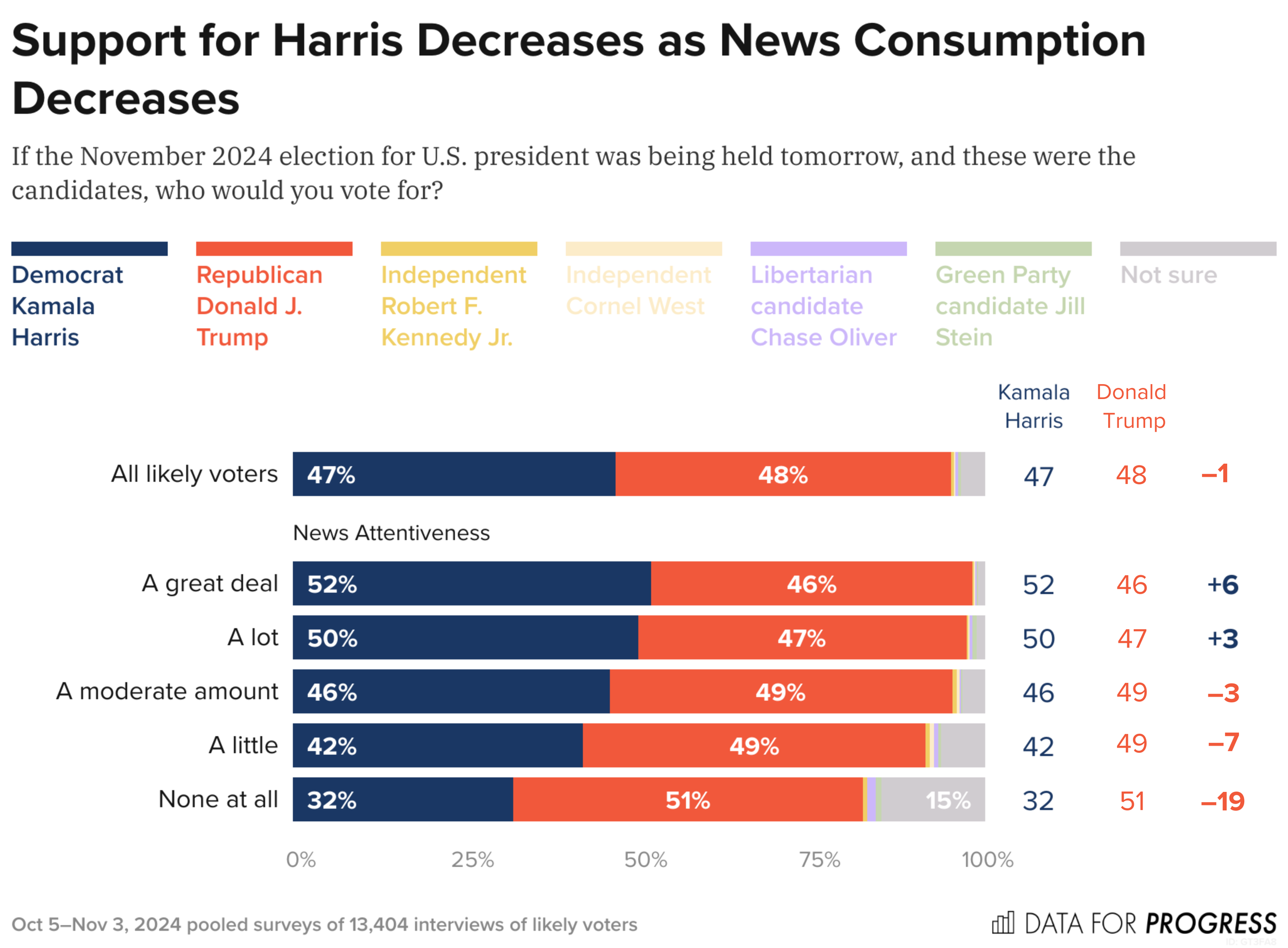


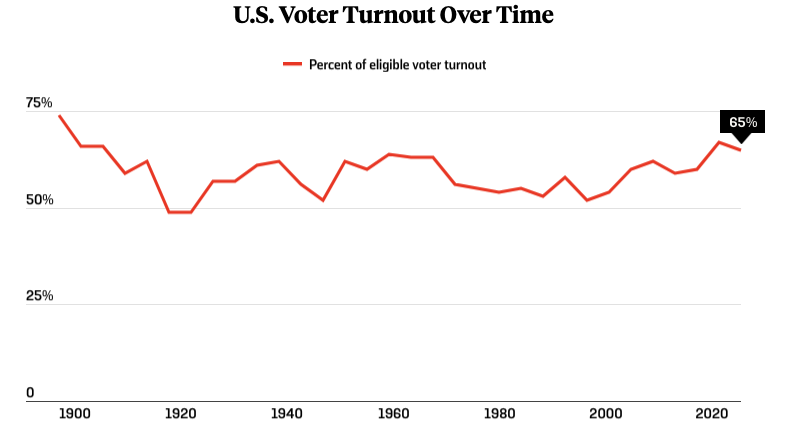


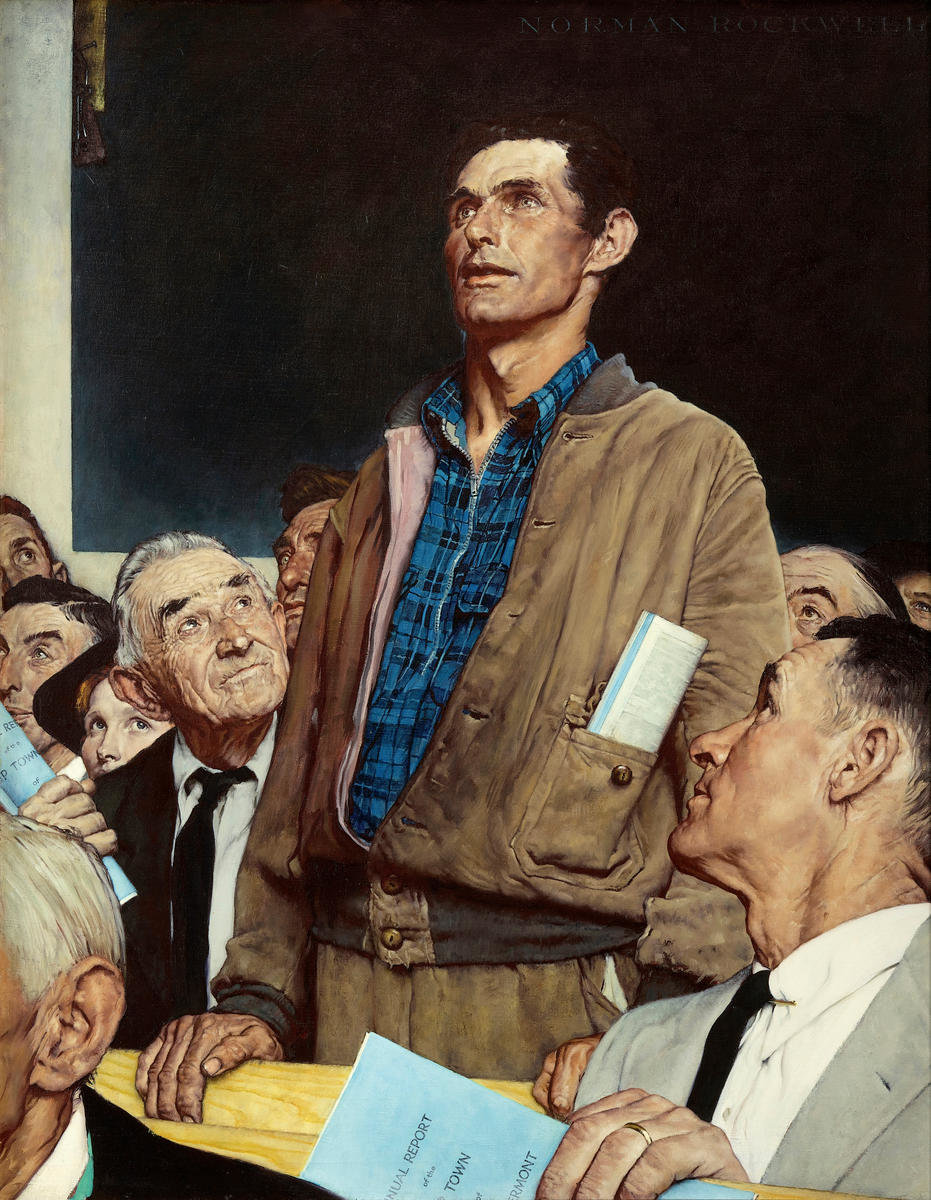



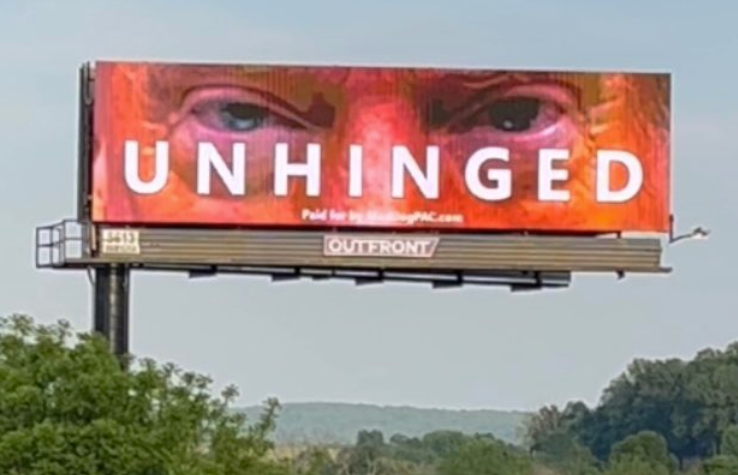
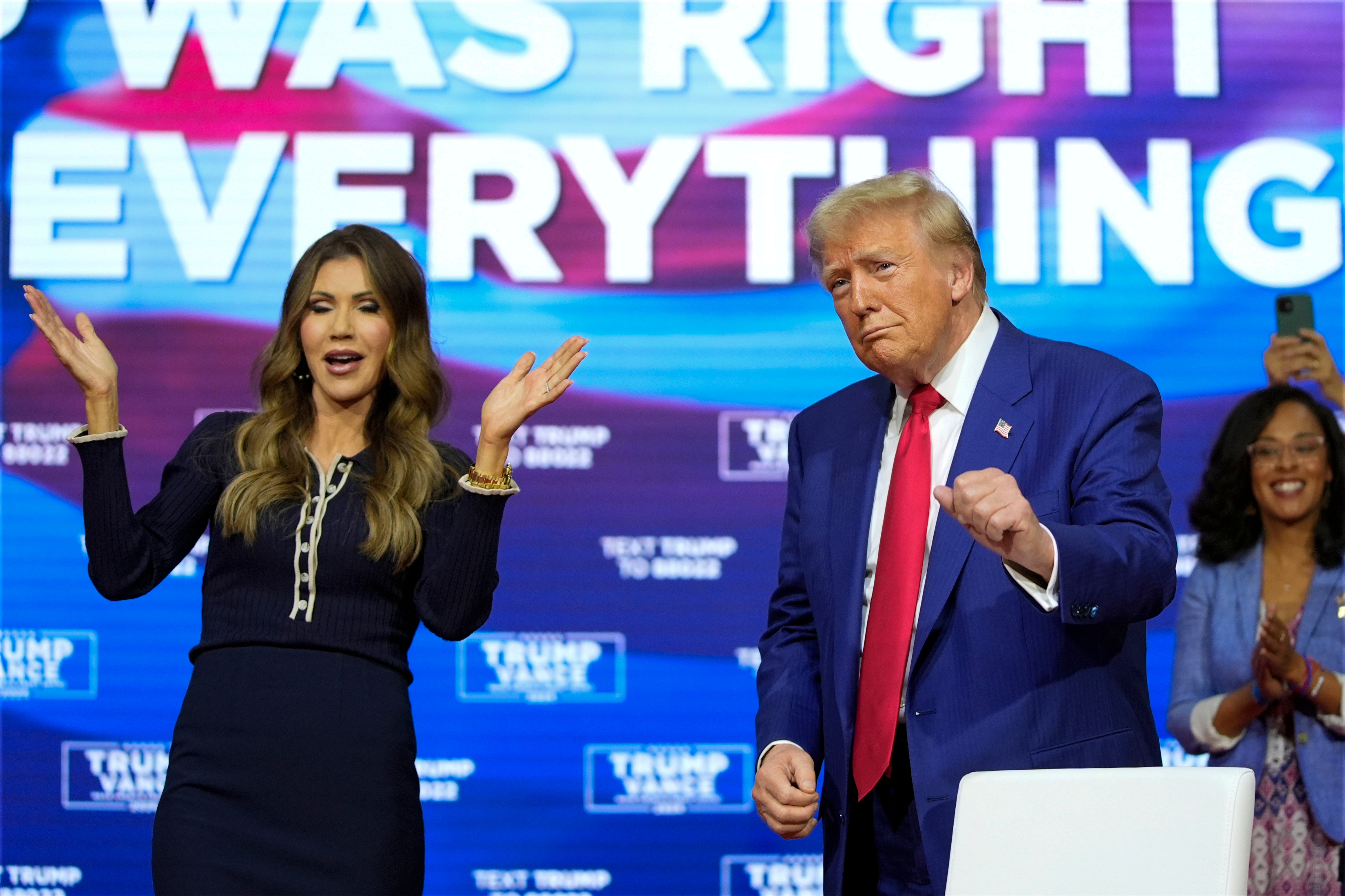

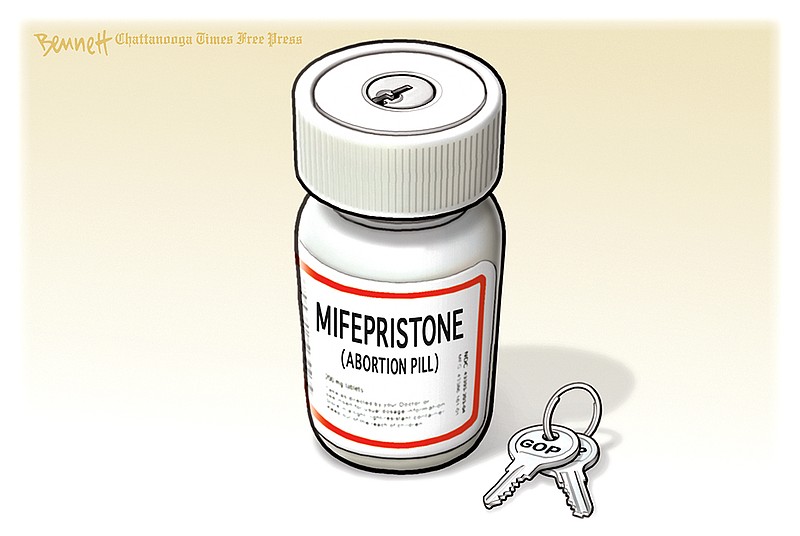




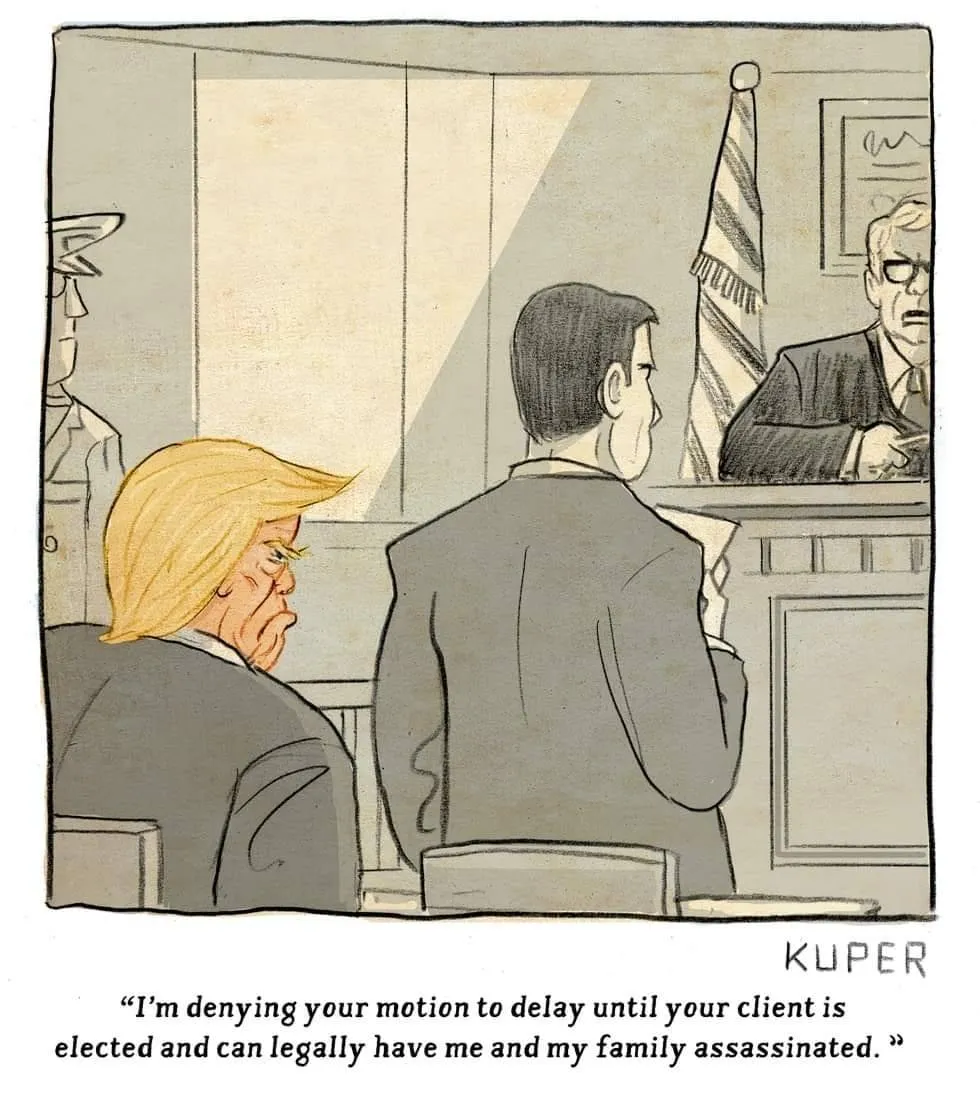
 The Weekly Sift