The last week in June always has an obvious news theme: It’s the final week of the Supreme Court’s term, so the news is dominated by a flurry of controversial decisions. Last year the Court went out with a bang, eliminating abortion rights, striking down a century-old gun control law, and blowing a big hole in the wall between Church and State. In each case, the boundaries of the decision were unclear; the logic of the majority invited future cases that could be even more consequential.
This year the Court also went out with a bang, but none of the decisions are likely to strike as live a wire as last year’s anti-abortion ruling. The targets of this year’s attacks — LGBTQ people, Blacks hoping to go to college, and young people drowning under student debt — may be outraged, but the vast mass of the electorate will probably shrug and move on. Most of the Court’s victims probably weren’t going to vote Republican anyway, so politically, what difference will it make?
So I decided to shift my coverage in a more abstract direction. Even if you are unaffected by the specific cases decided this week, the Court’s behavior should bother you, because it is systematically blowing through all the traditional restraints on its power. Aspects of the law that the general public considers arcane (like standing and precedent) are being cast aside. And new interpretative principles (like the major questions doctrine) are being instituted. The result is to give the Court’s conservative majority the power to intervene anywhere it wants and come to any conclusion it desires.
That’s a problem, and I’ll try to explain why in “The Court Unleashed”, which should be out between 9 and 10 EDT.
Reading the nearly 400 pages of the week’s three major decisions took up an inordinate amount of my time this week, so the weekly summary should be short. I’ll try to get it out by noon.
The crisis in Russia erupted Friday when [Wagner mercenary group leader Yevgeny] Prigozhin accused Russia’s military of attacking a Wagner camp and killing his men – and vowed to retaliate by force.
Prigozhin then led his troops into Russia: He occupied Rostov-on-Don and claimed to have taken control of key military facilities in the Voronezh region, where there was an apparent clash between Wagner units and Russian forces.
The crisis was apparently resolved by a deal: Prigozhin has gone to Belarus and treason charges against him have been dropped. (Though no one has actually seen him in Belarus yet. For that matter, no one has seen Putin in the last couple days either.)
Rep. Elissa Slotkin (D-MI) makes an analogy (which I’ve fleshed out a little): Imagine if an American military contractor (Blackwater, say) turned its troops toward Washington, marched a considerable distance, and only stopped when its leader (Erik Prince, in this analogy) was given asylum in Canada.
WTF indeed.
I won’t say nobody saw this coming, because I remember seeing a prediction last summer — I wish I remembered where — that the Ukraine War would end when unrest in Russia caused the various factions to bring their troops home.
That scenario seemed far-fetched to me at the time, but it’s looking a lot more credible now.
BTW: Be wary of any American pundit who claims to know what’s going to happen next. This New Yorker article is as good as anything I’ve seen. David Remnick talks to Russian emigre journalist Mikhail Zygar:
“Putin is weaker. I have the feeling he is not really running the country. Certainly, not the way he once did. He is still President, but all the different clans”—the factions within the government, the military, and, most important, the security services—“now have the feeling that ‘Russia after Putin’ is getting closer. Putin is still alive. He is still there in his bunker. But there is the growing feeling that he is a lame duck, and they have to prepare for Russia after Putin.”
But everybody is just guessing. There’s a broad consensus that Putin’s hold on power is weaker than anyone previously thought. How much weaker? Nobody really knows.
Also, Putin is evil, but that doesn’t mean Prigozhin is good. His Wagner mercenaries have committed atrocities in Ukraine, and if Putin doesn’t get him first, he’ll probably be tried for war crimes someday.
Remember when Trump had Bill Barr appoint John Durham to uncover “the crime of the century“? You know, stuff that was “far bigger than anybody thought possible”? Like how the FBI conspired with Hillary Clinton to invent “the Russia hoax” out of nothing and smear Trump with it in an attempted coup?
Well, never mind. Wednesday Durham testified to the House Judiciary Committee about the dense and headline-free 300-page final report he submitted in May. Republicans on the committee desperately wanted Durham to verify their conspiracy theories exonerating Trump, and to flesh out their dark fantasies of a Deep State conspiracy against him, but he did not do so.
Instead, he said that Russian election interference was real, (“[O]ur report should not be read to suggest that Russian election interference was not a significant threat. It was.”), that Robert Mueller is “a patriot”, and that Merrick Garland didn’t interfere with his investigation.
He admitted that the reason that former President Obama and former Secretary of State Hillary Clinton still walk free, no matter how much Trumpworld wants them behind bars, is that there’s simply no evidence of wrongdoing.
He criticized how the FBI handled the Trump/Russia investigation, but found a series of individual errors, not a vast conspiracy. In the end, Matt Gaetz accused Durham of being “part of the cover-up”. Because that’s what you do after you give a guy 3+ years and millions of dollars to investigate something, and he can’t tell you what you want to hear.
Gaetz is applying the usual conspiracy-theory rule: The complete lack of evidence is the surest proof that the conspiracy is working.
Hunter Biden is pleading guilty to two tax misdemeanors, has paid his previously unpaid taxes, and has struck a deal with DoJ to resolve a federal gun charge. He’ll serve two years probation. All the unsubstantiated rumors Republicans have been spreading about multi-million-dollar bribery schemes that implicate his father have come to nothing.
The US attorney in charge of the Hunter investigation is David Weiss, who was appointed by Trump and left in place by the Biden administration. The plea deal now goes to a Trump-appointed judge for approval.
Through a spokesperson, Joe Biden commented as a father, not as the prosecutor’s boss.
The President and First Lady love their son and support him as he continues to rebuild his life. We will have no further comment.
Did Weiss cut Hunter a sweetheart deal? Republicans, of course, claim he did. But most legal experts say no.
“If Hunter Biden’s name was John or Jane Doe, no criminal tax prosecution would have ever been contemplated and he would have almost certainly been slotted into a pre-trial diversion program, saving the government the time and expense of a trial,” said Martin Sheil, a former supervisory special agent in the IRS Criminal Investigation.
“So if Hunter has paid all of his taxes, albeit delinquently, arguably Uncle Sam has suffered no harm and justice was done,” Sheil said.
And as for the weapons charge, CNN legal analyst Elie Honig says:
[T]he vast majority of federal gun crimes involve somebody who either used the gun in some sort of violent crime or somebody who’s a prior convicted felon. … So it’s rare to even see someone prosecuted at all under the law that Hunter Biden was prosecuted for, which is possession of a gun by an addict.
and the Supreme Court
Supreme Court stories come in two flavors: rulings they’ve made and new insight into the corruption of the conservative justices. This week we had one of each: The Biden administration won an immigration case against two red-state attorneys general, and this time it was Sam Alito who got caught with his hand in the cookie jar. (I cover Alito in a featured post.)
First the immigration case: Under Trump, any immigrant without legal status was subject to deportation. When Biden took over, he issued a new order prioritizing three classes of the undocumented: suspected terrorists, criminals, and those recently caught at the border. In effect, this meant that most of the country’s 11 million undocumented immigrants could live their lives without fear. (One consequence of this policy was that the woman who had been in sanctuary at my church for three years could finally leave.)
Texas and Louisiana sued to stop this change, but Friday the Court ruled 8-1 that they lack standing. Brett Kavanaugh wrote the majority opinion.
Kavanaugh framed the dispute as an effort by the two states to obtain a court order that would require DHS to “alter its arrest policy so that the Department arrests more noncitizens.” But there is no history of courts “ordering the Executive Branch to change its arrest or prosecution policies so that the Executive Branch makes more arrests or initiates more prosecutions.”
This week ends the Court’s term, so we’re expecting decisions in several major cases:
whether universities can use affirmative action in their admission decisions
the legality of Biden’s student-loan forgiveness program
whether a state supreme court can overrule gerrymandering by the legislature
yet another religious “freedom” vs. minority rights case
My guess is that Roberts has manipulated the calendar so that the Court’s most controversial decisions will come last. The cases decided recently have been divided between liberal and conservative wins, building up Roberts’ “centrist” credibility.
But there’s no point in speculating, because by Thursday we’ll know.
and you also might be interested in …
For several days, the media obsessed over the fate of the Titan, a small submarine carrying tourists to the site of the Titanic wreck on the floor of the Atlantic Ocean. For days, a global audience imagined the five people on board stranded and running out of oxygen, but it’s now believed that the sub imploded around the time contact was lost, killing everyone instantly.
A ticket to visit the Titanic went for $250,000. Because the Titanic is in international waters, no country’s safety regulations applied. Wikipedia says: “The vessel was not certified as seaworthy by any regulatory agency or third-party organization.”
Your social media feed may not have blown up with discussions of whether vaccine researcher Dr. Peter Hotez should debate vaccine denier Robert Kennedy Jr. on Joe Rogan’s podcast. But mine did. Rogan has offered $100K to the charity of Hotez’s choice, and Hotez has turned him down.
There’s been a lot of back-and-forth about whether this is the right decision or not. (I think it is.) I think David Roberts has the most thoughtful take on the subject: What makes science science is that it’s not two individuals trying to sway a crowd. It’s a social process through which a community of well-trained researchers checks and rechecks each other’s work.
If you put evidence & empiricism aside at the beginning, then charisma is your only guide, & if charisma is your only guide, getting taken in & conned by glib charlatans is 100% inevitable. There’s no squaring that circle.
… Over time, science has stumbled in the direction of reliable truth, because it hasn’t relied on brilliant or charismatic individuals, but rather on a *social* process of mutual checking & re-checking, covering each other’s blind spots. The thing about science, as I said, is that it tacks directly against some strong human instincts. That’s why it requires specialized training & specialized institutions, and even then it falls short repeatedly. You have to actively push/support it to keep it alive.
Anyway, what I see — not only in conservative religious communities like evangelicals but in today’s reactionary politics — is a kind of pre-scientific understanding of truth in which there are nothing but competing tribes with contesting claims, and the way to decide between them basically comes down to aesthetics or identity. It’s who talks best, who has the best rap. You see this in how they approach, eg, journalism: the demand that media must print the claims of each side, because there are *only* claims, only tribes, nothing beyond.
… And at long last this brings me back around to “debate me, bro.” If you understand science & the scientific method, you understand the very obvious reasons that live debate is a terrible, terrible way to seek truth. It is a format that strips away everything *except* charisma.
Truth-seeking is slow, incremental, & above all *social*. Live debate is all about big dramatic claims & facility with language. It selects for charisma, not truth. But! If you have this pre-scientific, evangelical conception of truth, then there is *only* charisma and so it follows that live debate is the perfect way to settle claims. Who can give the best rap? Who can dazzle the audience? Who’s funny or charming or has good anecdotes? Who can talk faster?
This week’s shooting-fish-in-barrel target comes from Nikki Haley:
Do you remember when you were growing up, do you remember how simple life was, how easy it felt? It was about faith, family, and country. We can have that again, but to do that, we must vote Joe Biden out.
That tweet went viral, and lots of people, particularly those who experienced abuse or discrimination or violence while growing up, reacted with hostility. And I get that response, but it’s probably what Haley wanted: She trolled them, because defending a nostalgic myth of America against angry people who know better is a good look for a Republican presidential candidate.
Nikki, it’s possible that when you were growing up, like me, you just weren’t aware of much of what was going on in the country. It’s important that, as adults, we try to inform ourselves, instead of trying to recreate our own ignorance.
After all, the point isn’t to school Nikki Haley, who probably knows exactly she’s doing. The point is to address people who read Haley’s tweet and long for the feeling she’s describing. Striking back at Haley makes them feel like you’re striking at them (and increases their identification with Haley).
So here’s what I’ll add to Poundstone’s tweet: When you’re growing up, good parents will try to shield you from trauma and horror. If you’re lucky they’ll succeed, and you’ll reach your teen years with a deep inner conviction that life makes sense and the world is tractable.
But if, as an adult, you want a leader to recreate that feeling for you now, you are looking for an authoritarian personality cult, a Big Daddy or Big Mommy who can reassure you that everything is going to be OK. And Haley is right: Biden won’t do that for you.
and let’s close with something deep
The search for the Titan sub points out something we slide over in common language: We talk about “the bottom of the sea” as if it were a specific place. But what you’re really talking about depends on where you are. This animation makes it clear why the site of the Titanic is very different from the places where scuba divers or submarines typically go. (The Titanic shows up at about the 3:30 mark.)
I can imagine showing Trump mercy, but only if he changes his behavior, which I don’t expect him to do.
It shouldn’t be surprising that many Republican presidential candidates are promising (or at least considering) a pardon for Donald Trump if the electorate entrusts them with that power. Some Republicans go so far as to suggest that Biden should pardon Trump in order to “heal the country”. But what is surprising, at least to me, is that apparently a significant fraction of Democrats agree. [1]
So let’s think this through. There are two standards you might use to judge a pardon: justice and the national interest. They don’t necessarily point in the same direction: You might imagine that even if Trump is guilty as sin, the United States will be a better place in the long run if he gets off. (Or you might not.)
Justice. To me, it’s pretty clear that sending Trump to jail would be just. He has broken numerous laws over his lifetime, and has manipulated the justice system to escape accountability again and again.
In both of the criminal cases, it’s worth observing that almost none of Trump’s defenders are challenging the fact of his guilt: The 34 business records in the New York case really are false, he really did violate the Espionage Act, and he really did obstruct the government’s attempt to recover the documents he stole.
But the bottom line is that he did the things he’s been charged with. Everyone knows it.
And then we get to the indictments still pending, which most likely will cover even worse behavior: Later this summer, Georgia is likely to indict him for his fake-elector scheme and his attempt to pressure Georgia officials into cheating for him in the 2020 election. And Jack Smith is still investigating the larger conspiracy the fake-elector scheme was part of: Trump lost the 2020 election, knew he had lost, but schemed to stay in power through illegal means, including inciting violence against Congress. [2]
That was undeniably the worst breech of faith any American president has ever committed. If he had succeeded, all future elections would be meaningless, and the American experiment in democracy would be over.
So does he deserve to be in jail? Does he deserve to stay there until he dies?
Yes. Unquestionably.
The Trump distortion field. That said, we need to be careful not to get caught in the Trump distortion field. In Trump’s mind, everything is about him. There is no right or wrong, just for-him or against-him. No one has principles, they just love him or hate him. [3]
What we saw for four years was the nation being run in his personal interest. The Covid pandemic, for example, was bad for his image, and a lockdown would slow the economy and hurt his reelection chances. So he told the country Covid was no big deal. It was just another flu; there weren’t that many cases; it would all clear up on its own; and so on.
The result was that the US government was slow to react, and probably hundreds of thousands of Americans died unnecessarily. (If we had the same death rate as Canada, about 700,000 dead Americans would still be alive. An opinion piece in Scientific American labeled Trump’s response to the pandemic “incompetent and malevolent”. ) But so what? Minimizing the pandemic was good for Trump, and what else matters?
If you stand too close to Trump, or let your eyes fix on him for too long, you can get caught in the same mindset: All that matters is what happens to him. If you like him, he should be president again, probably forever. If you don’t, he should die in jail.
In order to think about the national interest, you need to consciously wrench your mind out of that distortion field: It’s not all about him. It’s about us. It’s about the country. What’s best for the United States of America?
I just said I think he deserves to die in jail. But personally, I don’t need to see that happen. He did terrible things to this country and set terrible forces in motion. But our top priority should be to stop those forces. What happens to him is secondary.
The national interest. So what’s the national-interest case for Biden to pardon Trump? In the Washington Post, American Enterprise Institute fellows Marc Thiessen and Danielle Pletka claim that such a pardon would “heal the country”, “spare the country the ordeal of a trial”, and make Biden “a true statesman”.
The central problem, they claim, is that the public is not convinced of Trump’s guilt or that the law is being applied fairly to him.
Selective prosecution is not a defense in a court of law, but the court of public opinion is another matter. Millions will see Trump’s prosecution as illegitimate, and any conviction as unjust. That will further erode public confidence in our judicial system and the principle of equal justice under law.
In addition, prosecuting a political rival sets a bad precedent. It “opens Pandora’s box”.
A Trump trial would be one of the most divisive events in the history of our republic. It would set a new precedent — and create enormous pressure on the next Republican president to go after President Biden, his family and other Democrats.
Let’s take these points one by one.
Pandora’s box. Biden did not open this box and nothing he can do will shut it.
If Trump becomes president again, does anyone really believe he won’t abuse his power in the same ways he did last time? Will Biden’s pardon fill him with gratitude? Will he slap his forehead and say, “Oh, now I get it. I’m supposed to use my power in the country’s interest!”?
Of course not. Whether he is pardoned or not, if he has a second term President Trump will seek revenge on everyone who has crossed him. Someone like Jeffrey Clark will be his attorney general, and then we’ll learn what a weaponized Justice Department really looks like.
If some other MAGA-friendly Republican is elected, we can expect him or her to abuse power in whatever ways present themselves, independent of what Biden does now. [4] The MAGA base will expect no less.
The second problem with the Pandora’s-box point is that it ignores the difference between guilt and innocence. Remember: Trump is guilty of the things he’s been charged with. That matters.
If Biden is actually committing crimes — as Trump did and does and will do in the future — then by all means the next administration should prosecute him. But if he isn’t, then he shouldn’t be prosecuted.
Is that really so hard to understand?
Apparently it is, because we’re already seeing House Republicans abuse their impeachment power. Trump was impeached twice because he committed impeachable offenses. MAGA Republicans are now seeking to impeach Biden because … well, it’s tit-for-tat. They have nothing on him, but they want revenge for Trump’s impeachments. [5]
Public opinion. Back when I was in high school, one of my friends was paranoid. He was sure the rest of us were talking behind his back and making plans we didn’t tell him about. Almost anything could set him off and derail what would otherwise be a fun event. So avoiding any appearance of conspiracy became an important part of any plan.
In short, his paranoia caused us to talk behind his back and work out strategies for handling him. In retrospect, that probably wasn’t the best response.
It’s not the best response here either.
The idea that Trump is a victim of selective prosecution, and that the charges against him are unjust and illegitimate — those notions didn’t arise spontaneously. They’ve been carefully cultivated by the right-wing media and by Trump himself. [6]
If the Biden administration gives in to that point of view by reading the polls and letting Trump walk, then it winds up doing precisely what Trump is accusing it of doing: selectively enforcing the law to satisfy political considerations.
In the long run, the best way to maintain the appearance of justice is to act justly. It’s not a perfect solution — people can still lie about you or view you through the lens of paranoia — but at least you can defend yourself with integrity.
The ordeal of a trial. For the moment, let’s grant the assumption that Trump’s multiple trials will be national ordeals, and may even result in riots, shootings, bomb threats, and other political violence from the same kind of people who have been violent in his name in the past.
How should the nation avoid that trauma? Thiessen and Pletka put the onus on Biden: He should preempt a federal trial by pardoning Trump. (However, there’s not much Biden can do about the New York or potential Georgia prosecutions.)
But Steve Benen points out that there’s another way to avoid a trial: Trump could plead guilty. In the wake of the Hunter Biden plea, it would be hard for the government not to offer him a pretty sweet deal. Maybe he gets a year or two of house arrest at Mar-a-Lago, where he can continue to host parties and work on his golf game.
And I could be OK with that. As I said above: He may deserve to die in jail, but I don’t need to see it happen. I could accept compromising on justice if it accomplishes something for the nation.
And what would a Trump plea deal acquire for the nation? Resolution.
The two realities. Political polarization is indeed a serious national problem. But it arises out of a deeper problem: Trump’s supporters have created their own reality, which they work hard to maintain.
In MAGA reality (which Rachel Maddow has dubbed “Earth-2“, following a trope from the DC superhero universe), Trump has done nothing wrong, but is being persecuted by the Deep State, which is afraid that he will “drain the swamp” if he returns to power. This is all nonsense, but it is very persistent nonsense that can justify any level of political shenanigans, including violence.
The problem with a Thiessen/Pletka unconditional pardon is that it does nothing to resolve the gap between Earth-1 and Earth-2. They admit as much: “Trump wouldn’t have to admit he did anything wrong.”
Quite the opposite, in fact. It’s pretty easy to predict how Trump would crow: His immense popularity and the weakness of the government’s case had forced Biden to back down. On Earth-2, compromise is a sign of weakness, and that’s how they’d frame it: Trump is strong; Biden is weak.
Rather than depolarize the situation, a pardon would ramp up pressure to also release the other “political prisoners” — those convicted of January 6 offenses. After all, Biden would have admitted his prosecution of Trump was all political. So weren’t the prosecutions of Trump’s supporters political too?
An unconditional pardon would encourage a larger political trend on the Right: the belief that laws should not apply to them. For example, look at Texas Governor Greg Abbott’s support for pardoning convicted murderer Daniel Perry. Perry murdered a man protesting police brutality in Austin; the stand-your-ground argument Abbott favors was offered by Perry’s defense and rejected by the jury.
But Perry is a right-winger who killed a left-winger, so let him go. Ditto for Kyle Rittenhouse, who didn’t just get off — he’s become a hero because he killed a couple leftists. Go team!
This is how the Weimar Republic fell; it gradually lost the will to defend itself against right-wing violence. The Beer Hall Putsch of 1923 had no chance of overthrowing the government. Much like January 6, it was an almost comical collection of errors and exaggerated expectations. For his leading role in the putsch, an obscure and funny-looking politician named Adolf Hitler was found guilty of treason. He was leniently sentenced to a mere five years in prison, and then let go after nine months, which he had spent writing Mein Kampf.
As we all remember, he and his followers were so grateful for the government’s mercy that they never caused a problem again.
What should happen. The virtue of a Trump plea deal is that the case reaches resolution: Trump admits he committed crimes. To that extent at least, Earth-2 rejoins Earth-1, where the rest of us live.
But suppose he doesn’t want to do that — which I’m sure he doesn’t. [7] Well, then, there’s still something to be resolved, and that’s what trials are for.
At the conclusion of the trial, maybe some MAGA fanatic will ignore the evidence and hang the jury, but for the moment let’s assume not. Then there’s a result: not a he-said/she-said, but a verdict. Trump is guilty.
What then? Again, there’s a chance for mercy — a light sentence — but only if Trump accepts the verdict. On the other hand, if he stays his course, if he denounces the judge, the jury, and the entire American justice system, then he needs to go to jail.
If he wants to keep maintaining his alternate reality — and encouraging his followers to join him there — no one can stop him. But showing him mercy in that situation accomplishes nothing for the nation. As far as I’m concerned, in that scenario he can stay in prison until he dies. It’s only just.
[1] 30% of Democrats in one poll, though I find myself suspicious. A number of the questions in the poll frame issues in a Trump-friendly way — like asking people if they think Joe Biden or Hillary Clinton also mishandled classified documents before asking their opinion of the Trump indictment. So I wonder if the poll didn’t so much measure public opinion as talk people into something, a technique known as “push polling“.
I’ll bet if you pushed in the other direction, preceding the pardon question with ones framing the situation against Trump (“Should former presidents be above the law?”), you’d get very different results.
Nonetheless, I’m sure the number of Democrats supporting a pardon is not zero, because I know one personally.
[3] That’s why he keeps getting surprised by the people he appoints to office. Jeff Sessions, John Kelly, Bill Barr, Pat Cipollone — they were on his side, so why did they stop doing what he asked them to do? Neil Gorsuch, Brett Kavanaugh, Amy Coney Barrett — they were supposed to be Trump-lovers, so why didn’t they give him the presidency after he lost the 2020 election? How did they become Trump-haters so quickly?
[5] The two parties are not the same in this regard. Republicans “opened Pandora’s box” by impeaching President Clinton on flimsy grounds, and Democrats could have fired back by targeting his successor (George W. Bush) for his torture policies (which would not have been so flimsy). But the day after the 2006 election that made her speaker, Nancy Pelosi announced that impeachment was “off the table”.
[6] There’s an echo here of the Big Lie. On January 6, when Ted Cruz argued against Congress certifying Biden’s election, he called for appointing an electoral commission “to conduct a 10-day emergency audit, consider the evidence, and resolve the claims [of fraud]”. (It’s a mystery to me what he thought could be accomplished in those ten days. If the commission came back and said, “We haven’t found any evidence of fraud, so Biden won”, would Trump have said “Well, OK then”?)
In his argument for delaying certification, Cruz did not point to any evidence of fraud, but to polls that said large numbers of Americans believed there might be fraud.
Recent polling shows that 39% of Americans believe the election that just occurred, “was rigged.” You may not agree with that assessment. But it is nonetheless a reality for nearly half the country. … Tens of millions of Americans will see a vote against the objection as a statement that voter fraud doesn’t matter, isn’t real and shouldn’t be taken seriously.
Why did “tens of millions of Americans” believe the 2020 election was rigged? Because Trump and his supporters had lied to them. Delaying certification would have rewarded Trump for lying so successfully.
Same thing here. Trump’s done a very good job of fooling his supporters into thinking he’s being persecuted. But he isn’t; he’s being prosecuted because he committed crimes. The government should deal with reality rather than shadow-box with the effects of Trump’s lies.
[7] No one ever argues that Trump should do something he doesn’t want to do because it would be good for the country. Such considerations only apply to Biden.
This week, Pro Publica reported that Justice Samuel Alito accepted a flight on billionaire Paul Singer’s private jet, so that the two of them could go on an outing at a thousand-dollar-a-day Alaskan fishing lodge. (Another rich conservative donor covered the cost of the lodge. Since he owned the lodge, this was — arguably, but also debatably — “personal hospitality”, which is allowed.) The outing was organized by the Federalist Society’s Leonard Leo, who also suggested Singer provide Alito’s transportation.
Alito did not report the trip as a gift, and later voted with a 7-1 Supreme Court majority that ruled in Singer’s favor in a dispute with the government of Argentina. Singer’s hedge fund made billions as a result.
Pro Publica says it would have cost $100K for Alito to charter a similar jet himself, though it’s hard to say what that number means. If he had been forced to find his own transportation, Alito would undoubtedly have found something cheaper, so it’s hard to estimate the value of the ride to him. (Imagine that a rich friend drives me to the airport in his Rolls Royce. It might cost me thousands to duplicate that experience on my own. But if he hadn’t offered, I’d probably have just spent $100 on a cab. Would I have spent $300 on a Rolls Royce cab, were such a deal available? Probably not.)
Anyway, ProPublica quotes law professor Charles Geyh, who gets to the heart of the matter:
If you were good friends, what were you doing ruling on his case? And if you weren’t good friends, what were you doing accepting this?
The Wall Street Journal printed Alito’s response to the article before the article itself came out, which strikes me as a blight on the reputation of the WSJ. ProPublica’s editor commented: “We’re curious to know whether the Journal fact-checked the essay before publication.” (Several observers wonder if this level of access is payback for Alito leaking secret court information to the WSJ. Or, as the Above the Law blog comments: “Sam Alito just went out of his way to confirm for everyone that he’s talking directly to the WSJ editors — who were as deep in the Dobbs leak as any publication except Politico.”)
Alito’s defense is a technical (and self-serving) reading of the rules on recusal and disclosure. The recusal rules say “There is an appearance of impropriety when an unbiased and reasonable person who is aware of all relevant facts would doubt that the Justice could fairly discharge his or her duties.” Alito boldly declares:
No such person would think that my relationship with Mr. Singer meets that standard.
[C]an anyone say with a straight face that no “unbiased and reasonable person” would question the justice’s impartiality when he votes for someone who gave him a valuable gift? Isn’t there at least the appearance that something other than the strict application of the rule of law is at work?
I’m reminded of a quote often attributed to Jesse Unruh, a mid-20th-century California legislator of somewhat dubious reputation: “If you can’t take their money, drink their liquor, fuck their women, and then come in here the next day and vote against them, you don’t belong here.”
However, even discussing the technical legality of Alito’s actions and disclosures misses the point: If the rules say that it’s OK for justices to receive expensive gifts and favors from billionaires and then rule in their favor, then the rules are wrong.
The WaPo’s Ruth Marcus applies some common sense to Alito’s self-justification:
The game here isn’t — at least it shouldn’t be — to figure out how much you can take in the way of freebies and keep that hidden. It should be to behave in a way that is above reproach and comply with the spirit of the ethics rules. Justices scouring the code for loopholes that seem to shield their bad behavior is not a good look.
Defenses of the current Supreme Court ethics policy rely on a very narrow definition of corruption: quid pro quo. In other words, we make an explicit agreement that you’ll pay me money and I’ll rule in your favor. TPM’s David Kurtz admits we’re not seeing that kind of deal-making:
The reporting so far isn’t revealing sketchy quid pro quos. The justices aren’t for sale. They’re not crafting opinions based on these freebies.
What’s actually going on is a much more subtle and insidious: The Right, under the guidance of Leonard Leo, has created an environment in which conservative justices can live the high life of free yacht cruises and luxury resort vacations, as long as they remain conservatives in good standing. If, however, they should follow the path of former Republican appointees like David Souter and John Paul Stevens and stray into liberalism, all those invitations from billionaires would dry up.
Of course Alito and Thomas know that. And it can’t help but influence their thinking. They’re in a position similar to a mega-church pastor who can’t let himself examine his doubts about God too closely. There may not be any quid-pro-quos here, but it’s corruption all the same.
It’s hardly a new observation that the Right engages in projection: What they accuse the Left of doing is usually little more than a confession of what they’re doing themselves. But even knowing how common the pattern is, this Leonard Leo statement is striking:
We all should wonder whether this recent rash of Pro Publica stories questioning the integrity of only conservative Supreme Court Justices is bait for reeling in more dark money from woke billionaires who want to damage this Supreme Court and remake it into one that will disregard the law by rubber stamping their disordered and highly unpopular cultural preferences.
I took a week off — to fly a kite, among other things — so I’ve got some catching up to do.
I don’t know about you, but “mercenary army marches on Moscow” wasn’t on my Bingo card. I totally didn’t see that coming.
It’s also been a bad couple of weeks for Republican conspiracy theories: John Durham was supposed to blow the lid off the Deep State conspiracy to smear Trump with Russia collusion, but his testimony to Congress went so badly for MAGA Republicans that Matt Gaetz accused him of being “part of the cover-up”. And a Trump-appointed prosecutor worked out a plea deal with Hunter Biden that includes none of the salacious things he’s supposed to have done — and also doesn’t include any jail time. The most reasonable interpretation is that Hunter really is accountable to the law, but he just hasn’t done that much.
But the featured posts look elsewhere. One of them is about Sam Alito, the latest conservative Supreme Court justice to be exposed living the high life on the dimes of billionaires who have business before his court. Alito defended himself by claiming that “no reasonable person” would find that suspicious.
I’m not the only person who disagrees with that judgment. The article should be out shortly.
The other featured post is somewhat longer and more detailed. I’ve been surprised to discover that some measurable fraction of Democrats believe that Biden should pardon Trump in order to “heal the country” and “reduce polarization”. So I did some thinking about the circumstances under which I’d be willing to show Trump mercy. There are some, but only if he does a few things I don’t expect him to do, like admit wrongdoing.
Anyway, I end up agreeing that we should suppress our desire to see Trump suffer if mercy works to the nation’s benefit, and I speculate about what kind of benefit we might hope for. But I question how likely those circumstances are.
I’ll try to get that out by around 10 EDT, and the weekly summary by noon.
No Sift next week. The next new articles appear on June 26.
One of the saddest lessons of history is this: If we’ve been bamboozled long enough, we tend to reject any evidence of the bamboozle. We’re no longer interested in finding out the truth. The bamboozle has captured us. It’s simply too painful to acknowledge, even to ourselves, that we’ve been taken. Once you give a charlatan power over you, you almost never get it back.
Jeff Sharlet takes a deep dive into the fascist codewords in Trump’s first post-federal-indictment speech. Among other things, Sharlet has the only coherent interpretation I’ve heard of “Jack Smith. Does anyone know what his name used to be?” Sharlet reads this as an implication that Smith is Jewish, and hence part of the conspiracy of “globalists” and “Marxists”, which are also fascist codewords for Jews.
Jack Smith, claims Trump, “caused” the IRS to “go after evangelicals, Christians, great Americans of faith.” Get the antisemitism? Jack Smith, who must have changed his name must be a Jewish enemy of Christianity.
Sharlet also has a principle I will have to keep in mind: You can’t fact-check a myth, but you can interpret it.
What he seems to mean by that is that it does no good to point out that what Trump (or some other fascist) says is untrue. His followers probably already know that it’s untrue, or they don’t care. The point of saying such things is to communicate something. Decoding the communication is more important than challenging the fact.
I believe he referenced the following Sartre quote somewhere, but I can’t find the link:
Never believe that anti-Semites are completely unaware of the absurdity of their replies. They know that their remarks are frivolous, open to challenge. But they are amusing themselves, for it is their adversary who is obliged to use words responsibly, since he believes in words. The anti-Semites have the right to play. They even like to play with discourse for, by giving ridiculous reasons, they discredit the seriousness of their interlocutors. They delight in acting in bad faith, since they seek not to persuade by sound argument but to intimidate and disconcert. If you press them too closely, they will abruptly fall silent, loftily indicating by some phrase that the time for argument is past.
and wildfire smoke
We usually associate wildfires with the West, and mostly with sparsely populated areas. But this week smoke from wildfires in Canada blanketed the densely populated Northeast, including New York, Boston, and Philadelphia.
Most of the time, climate change seems abstract, but scenes like the one below bring it home.
and the other Republicans running for president
There’s a type of self-fulfilling prophesy that always drives me nuts: Because everyone believes “You can’t do X”, nobody even tries to do X. And then the fact that X doesn’t happen is taken as evidence for “You can’t do X.”
One case in point is the belief among Republicans that “You can’t stand up to Trump.” So again and again we’ve seen some senator like Jeff Flake or Bob Corker or Ben Sasse criticize Trump in some fairly mild way, and then not seek reelection. At each impeachment trial, Mitch McConnell had it in his power to remove Trump from office and make him ineligible to run again, but he backed down both times. Trump was almost untouchable for a few weeks after January 6, but then Kevin McCarthy made a pilgrimage to Mar-a-Lago to kiss his ring.
For six years now, Republicans who are secretly anti-Trump have been hoping that someone else — the Democrats, the courts, more courageous Republicans — would take Trump out, absorb the anger of his cult, and leave them to pick up the pieces. But it hasn’t happened.
Liz Cheney and Mitt Romney are the most visible Trump critics who did not voluntarily walk into the sunset. Cheney was expelled from the party, but Romney still seems to be doing fine. For the most part, though, the Republican Party has surrendered without putting up a fight. It’s hard to blame Republican voters for believing there’s no case against Trump, when none of their elected leaders are willing to make that case.
The first few candidates to challenge Trump for the 2024 Republican nomination continued the pattern. Listening to Nikki Haley or Tim Scott raises an obvious question: “Why are you running?” If the front-runner in the race was such a great president and you have no signature issue you would handle differently, why go to all the bother?
Mike Pence’s timid criticisms inspired this parody from Josh Marshall:
Pence: I should have been hanged. Trump couldn’t get it done. I will.
For a long time Ron DeSantis seemed to think he could handle Trump without confronting him, but that resulted in a collapse of the strong position he held in the polls after the midterm elections, where DeSantis did well and Trump-endorsed candidates did badly. But key Republican constituencies — White working-class men, Evangelical Christians — are looking for a fighter who will stand up to the cultural forces working against them. Every time DeSantis takes a punch from Trump without punching back, he convinces more voters that he’s not that guy.
Well finally somebody has entered the race to go after Trump: Chris Christie, who has a CNN town hall tonight.
The grift from this family is breathtaking. It’s breathtaking. Jared Kushner and Ivanka Kushner walk out of the White House, and months later get $2 billion from the Saudis. You think it’s because he’s some kind of investing genius? Or do you think it’s because he was sitting next to the president of the United States for four years doing favors for the Saudis? That’s your money. That’s your money he stole and gave it to his family. You know what that makes us? A banana republic.
He has almost no chance to be the nominee himself, but maybe he can wound Trump badly enough to give someone else a shot at the nomination.
and the voting-rights decision
Chief Justice Roberts has been chipping away at the Voting Right Act for years, so it was a surprise Thursday when Roberts wrote a majority opinion preserving what is left of the VRA. Roberts and Brett Kavanaugh joined the court’s three liberals (Kagan, Sotomayor, and Jackson) in a 5-4 decision rejecting Alabama’s congressional map, which is drawn so that only one of the seven districts has a non-white majority.
Decades of precedent have interpreted the VRA as requiring the creation of majority-minority districts when a state’s voters are racially polarized, the current map results in a congressional delegation where minorities are under-represented, and the districts can be drawn without violating other principles of sound redistricting, like forming compact and contiguous districts that don’t split cities and counties unnecessarily. This has become known as the Gingles test, after the 1986 case where it was spelled out.
Alabama could easily have created a second majority-minority district, bringing its congressional delegation closer to racial parity. But it chose not to, inviting the Court to replace Gingles with a less rigorous test. Justices Alito, Thomas, Gorsuch, and Coney Barrett agreed with Alabama.
So the current decision preserves the status quo. It doesn’t represent an advance in minority voting rights.
This decision concerns an injunction, not a final resolution of the case. But the injunction is based in part on the Court’s assessment that Alabama is likely to lose on the merits.
Personally, I remain skeptical of Roberts’ intentions. Like Ed Pilkington in The Guardian, I think Roberts plays a long game. Whenever he is about to push hard in one direction, he first makes a head fake in the opposite direction to give himself cover.
Any day now, I expect the Court to strike down affirmative action in college admissions. When that happens, the media will reference this voting-rights decision to frame Roberts as a “moderate”. Taken as a whole, though, the two decisions will represent a continued whittling down of minority rights, and Roberts can continue destroying the VRA in some later decision.
and the Right shutting down the House
The resolution of the debt-ceiling crisis showed that the far-right House “Freedom” Caucus has less power than they like to think. Naturally, they have to do something to strike back.
Originally, everyone expected they would exercise the concession they got when Kevin McCarthy needed their votes to become speaker: Any single member can introduce a resolution the “vacate the chair” and reopen the speaker election.
Apparently that didn’t suit their purposes, though, so they have struck back at the House as a whole rather than just McCarthy. They have been withholding their support on the procedural motions that bills need to progress towards passage, so the House is essentially shut down.
So far, this is just affecting Republican priorities, like a bill to stop the completely imaginary threat that Biden might ban gas stoves. But the federal fiscal year ends on September 30, so if new appropriation bills aren’t passed by then, the government will have to shut down.
and golf
Corporate PR efforts have expanded our language in so many ways. Many of the new terms spin off of whitewashing, a metaphor for putting a deceptively bright sheen on something rotten. For example, the NRDC has defined greenwashing like this:
Greenwashing is the act of making false or misleading statements about the environmental benefits of a product or practice. It can be a way for companies to continue or expand their polluting as well as related harmful behaviors, all while gaming the system or profiting off well-intentioned, sustainably minded consumers.
This year, Saudi Arabia’s sponsorship of a new golf league, LIV, popularized a new -washing term: sportswashing, which Greenpeace defines:
Sportswashing is the act of sponsoring a sports team or event in order to distract from bad practices elsewhere. This tactic is often used by companies and governments with poor environmental or human rights records, exploiting people’s love of sport to ‘wash’ their image clean.
Saudi Arabia’s image desperately needs washing. They’re a repressive feudal monarchy with a wasteful and corrupt royal family. They export a dangerous strain of Islam. 15 of the 19 9-11 hijackers were Saudi, as was Osama bin Laden. They sponsor war crimes in Yemen. Their crown prince, Mohammed bin Salman, ordered the killing and dismemberment of journalist Jamal Khashoggi, who was residing in Virginia and working for The Washington Post at the time of his death. Currently, they are working with Russia to keep oil prices high, which helps Putin finance his war in Ukraine.
But on the plus side, they have oil and a huge amount of money: Their sovereign wealth fund is sitting on more than $600 billion. So the fund created the LIV golf tour and started writing nine-figure checks to secure the participation of big-name golfers.
This presented a moral challenge to golfers, and the words “blood money” came up fairly often. The previously dominant PGA tour capitalized on that. PGA Commissioner Jay Monahan challenged golfers by invoking the families of 9-11 victims:
I would ask any player who has left or any player who would consider leaving: “Have you ever had to apologize for being a member of the PGA Tour?”
Anti-abortion Republicans have been pushing 12-week bans as a “compromise”, citing similar bans in Europe. The Atlantic’s Julie Suk comments: Not only do Republicans offer far fewer and stricter exceptions than European countries do, but
Republicans are interested in only one part of the European approach to protecting life—the abortion restrictions. They seem to forget that every European country that protects unborn life by restricting abortion after the first trimester protects born life too, through prenatal health care, paid maternity leave, and a public infrastructure for child care and preschool. If Republicans are sincere in invoking Europe as a model, Democrats and other proponents of abortion access should seize this chance to find common ground on policies that would substantially improve the lives of mothers and children in this country.
After months of speculation, the Ukrainian counter-offensive has started. Ukraine reports some advances, but so far it’s hard to tell from the outside whether the offensive is going well or not.
Pat Robertson died at the age of 93. I mark his passing by remembering two moments in his career:
Robertson called feminism a “socialist, anti-family political movement that encourages women to leave their husbands, kill their children, practice witchcraft, destroy capitalism and become lesbians”. … [O]n his TV show The 700 Club, he agreed emphatically with his fellow evangelist Jerry Falwell’s theory that the 9/11 attacks were caused by “pagans, abortionists, feminists, gays, lesbians, the American Civil Liberties Union, and [the progressive advocacy group] People for the American Way”.
I am a Universalist, so I don’t believe in a vengeful God. If there is an afterlife, I picture it as a place of mercy and compassion rather than retribution.
Sometimes that belief is unsatisfying.
A novel lawsuit is going to trial today: 16 young residents of Montana are invoking a clause in the Montana constitution committing the state to “maintain and improve a clean and healthful environment in Montana for present and future generations”. The suit claims that the state’s energy policy, which encourages fossil-fuel production, is unconstitutional.
I’ll be shocked if any Montana laws are thrown out, but the suit will raise local awareness of climate change and frame it in generational terms. Similar cases are pending in Hawaii, Florida, Utah, and Virginia.
I can’t think of an easy way to check this claim, which is almost too good to check anyway: The LA Times article about newsroom layoffs at the LA Times is illustrated with a photo taken by one of the photographers they laid off.
Mike Pence also promises to restore the name of Fort Bragg. What’s up with that? Is the idea that the US Army should honor people who take up arms against the United States in defense of White supremacy?
and let’s close with a public service
As the summer vacation season kicks off, countless articles will tell you where you should go and where to stop along the way. But Explored Planet tells you something just as important: where not to go. What famous places are either over-priced, over-crowded, full of chain franchises you could find at home, or not worth the effort it takes to get there?
Legally, Jack Smith has Trump dead to rights. Now we get to see whether facts and the law still matter.
Thursday night, we heard (at first via Trump himself) that a Florida grand jury convened by Special Counsel Jack Smith had returned an indictment in the Mar-a-Lago documents case. At first, most observers expected that we wouldn’t see the indictment itself until tomorrow, when Trump will be officially processed. But Friday the indictment was unsealed. In all there are 37 charges against Trump:
31 counts of “willful retention of national security information”. This is one fundamental crime applied to 31 documents, some classified at the very highest levels.
one count of “conspiracy to obstruct justice”
one count of “withholding a document or record”
one count of “corruptly concealing a document or record”
one count of “concealing a document in a federal investigation”
one count of “scheme to conceal”
one count of “false statements and representations”
Trump’s valet Walt Nauta is also named as a co-conspirator in counts 32-36, plus has his own count of “false statements and representations”.
If you add up the maximum sentences of all the charges, Trump could theoretically be sentenced to hundreds of years. By that’s a pointless exercise, because sentencing seldom works that way. It’s enough to point out that (if convicted and jailed) Trump, who will turn 77 on Wednesday, faces a strong likelihood of dying in prison.
Special Counsel Jack Smith made his first public appearance Friday. His statement was short and made a few simple points:
Trump was indicted “by a grand jury of citizens in the Southern District of Florida”. In other words, while Trump may rail against Smith himself or Merrick Garland or President Biden, the ultimate decision was made by ordinary American citizens with no political ax to grind. Given that Trump carried Florida in 2016 and 2020, and that Republicans swept the state in 2022, it’s quite likely that many of the jurors are Republicans who have voted for Trump in the past. [1]
If you want to “understand the scope and the gravity of the crimes charged”, you should read the indictment.
“Our laws that protect national defense information are critical to the safety and security of the United States and they must be enforced. Violations of those laws put our country at risk.”
“Adherence to the rule of law is a bedrock principle of the Department of Justice. And our nation’s commitment to the rule of law sets an example for the world. We have one set of laws in this country, and they apply to everyone.”
The narrative. Smith has written an indictment that is more revealing and readable than the 34-count indictment Manhattan DA Alvin Bragg produced for the hush-money case in April. It tells the following story:
While he was president, Trump collected souvenirs (“newspapers, press clippings, letters, notes, cards, photographs, official documents, and other materials”) that he jumbled together in cardboard bankers’ boxes (like the ones in my storage space). When he left the presidency, he had “scores” of those boxes transported from the White House to Mar-a-Lago.
Beginning in May, 2021, the National Archives and Records Administration (NARA) made a series of fruitless requests that Trump turn over the official documents, which belong to the US government. [2]
Meanwhile, stacks of Trump’s boxes were being shuttled from place to place inside Mar-a-Lago. In addition to being Trump’s residence, Mar-a-Lago was a club which (during the period in question) had more than 100 employees and tens of thousands of guests who were not cleared to see classified documents. Many of these locations (a ballroom, a bathroom) were highly insecure. On one occasion a stack of boxes tipped over, spilling the contents — including classified documents — onto the floor of a storage area.
In January of 2022, 15 boxes were shipped to NARA. These boxes included 197 classified documents, including 30 top secret documents, some of which had the additional markings of SCI (special compartmented information) and SAP (special access program), indicating that they were particularly sensitive, even compared to other top-secret documents. [3]
The indictment notes two occasions when Trump showed classified documents to someone without clearance to see them. In one conversation, which was taped, Trump showed a plan to invade “Country A” to an author, saying “When I was president I could have declassified it. … Now I can’t.”
NARA told the Department of Justice about these documents in February, 2022, and a criminal investigation was opened in March. A federal grand jury began investigating in April. On May 11, the grand jury subpoenaed “all documents with classification markings in the possession, custody, or control of TRUMP or The Office of Donald J. Trump”.
In conversations with two of his lawyers (one of whom appears to be Evan Corcoran), Trump suggested a variety of illegal strategies: simply not responding to the subpoena, saying there were no documents, or getting rid of the documents. He hinted that Corcoran should dispose of the documents for him, so that he could deny doing it. (These conversations are reminiscent of Michael Cohen’s descriptions of his conversations as Trump’s lawyer. “He doesn’t give you orders. He speaks in a code … much like a mobster would do.”)
When it became clear that Corcoran would not commit one of the crimes Trump was suggesting, Trump schemed with Nauta to circumvent Corcoran: He knew when and where Corcoran would search for documents subject to the subpoena, and he had Nauta move boxes around so that Corcoran wouldn’t find them.
After Corcoran found 35 classified documents, Trump made a nonverbal suggestion that Corcoran not turn them all over to the government.
He made a funny motion as though – well okay why don’t you take them with you to your hotel room and if there’s anything really bad in there, like, you know, pluck it out. And that was the motion that he made. He didn’t say that.
Corcoran had the 35 documents turned over, and drafted a certification (which he had another lawyer sign) saying that a diligent search had been done and these were all the documents the subpoena sought.
In July, the FBI acquired Mar-a-Lago surveillance video showing the boxes being moved. In August, they returned with a search warrant and found 102 classified documents Corcoran had missed — 27 from Trump’s office and 75 from the storage room Corcoran had searched. 17 of the documents were top secret.
The 31 documents in the indictment. In his public statements, Trump has made fanciful claims that he could declassify documents by thinking about them, or that there was a standing order declassifying any documents he took up to the White House residence. [4] As anyone who has ever had a security clearance should understand, these claims are not just false, they are absurd; the system couldn’t work that way. [5]
The indictment faces a problem that shows up whenever someone is prosecuted under the Espionage Act: It can’t just tell us what information the defendant revealed or risked, because then the indictment itself would reveal that information. (It’s a problem similar to one in the stoning scene from Life of Brian, where the priest can’t specify the accused’s blasphemy without himself saying the forbidden name of God.)
This problem will only get worse when the case goes to trial: The judge will need access to the 31 documents, and large parts of them (possibly redacted, with the judge’s approval) will have to be made available to Trump’s lawyers.
But the indictment includes only terse summaries. Document 17, for example, is top secret with something about its special markings redacted. (I’d guess the markings included a code word.) The summary says only: “Document dated January, 2020 concerning military capabilities of a foreign country.”
The indictment also lists the intelligence services that classified the documents, which includes all the major ones: CIA, NSA, DoD, NRO, and several others.
From the list, and the fact that the totals in the indictment indicate that not all the top-secret documents are listed, we can make two deductions:
The most sensitive documents Trump compromised are not listed at all. So whatever you think after reading the listed summaries, the real security breach is worse than that.
All the intelligence agencies would have liked to leave their documents off the list and out of the trial, but they must have gotten together and agreed that they would each pony up something.
Assessing the damage. From the early days of the Trump administration, it was clear that Mar-a-Lago posed a security problem. He had not even been in office for a month when North Korea launched a missile test while Trump was entertaining Japanese Prime Minister Shinzo Abe at Mar-a-Lago (and making a profit off the entourages of both leaders).
In previous administrations, the leaders would be ushered away into the White House situation room or the nearest secure location by their aides. The documents and advice they receive at such moments are often some of the nation’s most closely guarded secrets. … As CNN reported and the Facebook photos later illustrated, Abe, Trump and their parties stayed at their tables as their aides passed them bits of paper, lighting them up with their mobile phones so they could be read, while the keyboard vocalist hired for the night sang on and Mar-a-Lago guests huddled around to get a better view.
So foreign intelligence services have had years to place agents at the club, as members, guests, employees, or even gate-crashers. It seems likely that some have succeeded. (Picture this cover story for a spy: Some foreign friend or business associate of Jared Kushner has a nephew who just flunked out of Florida Atlantic and needs a job.)
WAGNER: Republicans in Congress have sort of been hiding behind the fact that the intelligence community assessment regarding the implications, the fallout from the retention of these documents — that assessment is not complete. And they’re saying “We don’t know yet what damage, if any, has been done to national security.” You’re suggesting that that assessment is quite complicated. Is your outside guess that this is going to take quite some time longer? …
BRENNAN: Quite frankly, I don’t think that the intelligence community will ever be able to determine conclusively what might have been compromised.
In addition to whatever our enemies may have found out, Trump has done incalculable damage to our relationships with our allies. Allied intelligence services (say, Israel’s Mossad or the UK’s GCHQ) risk revealing their own spies and capabilities when they share secrets with the US. What might they start holding back, now that they have seen how badly the US protects such information?
Likely defenses. Normally, when we talk about an indicted person’s possible defenses, we mean legal defenses — arguments or testimony or evidence that can be presented in court to undermine the prosecution’s case and convince either the judge or the jury to let the defendant off.
That’s not what we’re going to see from Trump, though, because he’s just guilty. Smith has him dead to rights. If this were an ordinary trial, any competent lawyer would be negotiating a deal to minimize his jail time.
But Trump’s hopes lie outside the courtroom. If he can stall long enough, the 2024 election might happen before he’s convicted. And if the economy is in bad enough shape — say, because Trump’s friends in Russia and Saudi Arabia engineer a huge run-up in gas prices — he could win it. Then he could fire Smith and pull the plug on any federal prosecution. And if New York or Georgia find him guilty of something, he can hole up in the White House and dare them to come get him.
Trump’s previous run-ins with the legal system have proceeded on two tracks: an in-court track where his lawyers present theories that are bizarre but are at least coherent, and an in-public track where Trump presents wild, baseless, contradictory arguments that are persuasive to his followers, but would get his lawyers sanctioned if they brought them into court.
That split was clearest in the 55 lawsuits he filed (and lost all but one inconsequential one) to overturn his defeat in the 2020 election. In public, Trump and his lawyer Rudy Giuliani were alleging all kinds of fraud for which they had no evidence. In front of judges, however, Trump’s lawyers said nothing of the kind, instead arguing that technical details about how small numbers of ballots were handled should invalidate elections in entire states.
We are already seeing the same kind of split in this case. Trump and his followers howled with rage after the indictment came out, but none of what they’ve said challenges the evidence in the indictment or the laws he is accused of violating. Instead, Trump issues blanket denials (“I am an innocent man“), attacks Jack Smith (“deranged”, “lunatic”, and most bizarrely suggesting that Jack Smith is not his real name, whatever that is supposed to imply), engages in whataboutism regarding the Bidens or the Clintons, and says that indicting a leading presidential contender makes the US a “banana republic“. [6]
None of that can be brought into court, where his lawyers will have to stick to this case and the evidence against him.
Worst of all, Trump and many of his allies are broadly hinting at violence. On stage at Trump’s Saturday rally in Georgia, election-denier Kari Lake said:
I have a message tonight for Merrick Garland and Jack Smith and Joe Biden — and the guys back there in the fake news media, you should listen up as well, this one is for you. If you want to get to President Trump, you are going to have go through me, and you are going to have to go through 75 million Americans just like me. And I’m going to tell you, most of us are card-carrying members of the N.R.A. [7]
Needless to say, Trump’s lawyers would be disbarred if they went into court and threatened violence. They probably also will not mention obviously false interpretations of law, like the notion that the Presidential Records Act gives Trump the right to do “whatever I want” with highly classified documents [see endnote 2 again], or that he could declassify documents with his mind.
Trump also will not testify in his own defense, because Donald Trump is a terrible witness. He can lie proficiently when he monologues to a sympathetic crowd or is interviewed by a journalist he can talk over. But when he faces cross-examination, the penalty of perjury, and a judge with authority to hold him in contempt, he is unconvincing and likely to reveal (or even brag about) facts that hurt his defense.
A recent case in point is his deposition in the E. Jean Carroll lawsuit. (There is no Fifth Amendment right in civil lawsuits, so he had to submit to an interview.) Trump’s lawyers did not put him on the stand in his own defense, and his taped deposition was cited by Carroll’s lawyers, not Trump’s.
That will leave Trump’s legal team without much to argue, which is what happens when the evidence clearly says that a defendant is guilty.
The judge. Given that Trump’s main hope is to stall and hope that he (or some sympathetic Republican) wins the presidency in 2025, it was very disturbing to hear the case assigned to Judge Aileen Cannon, who was clearly in the tank for Trump when she oversaw his lawsuit challenging the FBI’s search of Mar-a-Lago and trying to get the seized documents back.
In issuing a series of rulings favorable to him, Judge Cannon, a Trump appointee, effectively disrupted the investigation until a conservative appeals court ruled she never had legitimate legal authority to intervene.
Her rulings were not just bad, they were outrageous. A three-judge panel of appeals court judges (two appointed by Trump) reversed her decisions unanimously.
The NYT went on to explain that the choice of Cannon was random, but weighted by various factors that made her a more likely choice than any of the six other eligible judges.
Cannon may be shy about showing such blatant favoritism again, but she doesn’t have to. She can just slow-walk the trial until after the 2024 election. If Republicans win, the case will likely go away.
People who are not worried about this possibility give two reasons for their calm:
The same appeals court that reversed Cannon the first time might keep Cannon in line or sympathize with a DoJ motion to assign the case to a different judge.
Jack Smith had to know Cannon was a possibility when he sought the indictment in Florida rather than DC. He must have had some reason to accept that risk.
We’ll see. The first hints will come tomorrow.
Endgame. But assume for a minute that a trial (either here or somewhere else) actually takes place and results in a prison sentence. Several people have remarked on the logistical difficulties of imprisoning an ex-president — like, does his secret service detail go to prison too?
But I don’t see Trump voluntarily submitting to demeaning restrictions, even if it’s just long-term house arrest. My opinion, based on very little, is that he’ll wind up in either Russia or Saudi Arabia.
People I’ve raised this possibility to are way too confident in the government’s ability to prevent it. “Take away his passport,” they say. But suppose Trump sees the writing on the wall while he’s still campaigning. He schedules a rally in Alaska, but his campaign plane passes the airport and just keeps flying towards Russia. What’s the government going to do, shoot it down?
[1] I wasn’t able to find the number of jurors on this specific grand jury, but by law a federal grand jury has 16-23 members, and 12 votes are required to approve an indictment. The exact number of votes for the Trump indictment is unknown, which is typical.
[2] Trump has tried to muddy up people’s understanding of the PRA, but it’s actually quite clear.
Upon the conclusion of a President’s term of office, or if a President serves consecutive terms upon the conclusion of the last term, the Archivist of the United States shall assume responsibility for the custody, control, and preservation of, and access to, the Presidential records of that President.
While he is still in office, a president can go back-and-forth with the Archives over what is a presidential or a personal record. But that negotiation ends when he leaves office. And much as I hate to agree with Bill Barr, he’s right about this:
Battle plans for an attack on another country or Defense Department documents about our capabilities are in no universe Donald J. Trump’s personal documents.
[3] I used to have a top-secret clearance, but never saw an SCI or SAP document. I know someone who was additionally cleared into at least one SCI compartment, but never saw an SAP document. I am personally appalled by the idea of such documents sitting in cardboard boxes in a Mar-a-Lago bathroom, and being moved about by Mar-a-Lago employees with no clearances whatsoever.
People with clearances — there are millions of us — routinely endure all sorts of hassles to secure their documents. For example, I used to have a safe in my office where the classified documents in my possession were supposed to be kept whenever I wasn’t using them. If I was reading a classified document, I couldn’t go to the bathroom without either taking a document with me, finding some other cleared person to babysit it, or putting it back in the safe. And I couldn’t write down the safe’s combination, because if I did, that note would become a classified document and belong inside the safe.
If you’ve jumped through such hoops for years, it is deeply offensive to read about Trump’s cavalier treatment of documents far more sensitive than anything I came into contact with.
[4] These defense are not just absurd (see next note), but they’re also largely irrelevant, because the Espionage Act is older than the classification system.
The World War One era law predates classification of documents but makes it a crime to willfully retain national defense information that could be useful to foreign adversaries.
A document’s classification is an indication of how useful it could be to foreign adversaries. But under the Espionage Act, the utility is the legal standard, not the classification.
[5] Trump talks as if pieces of paper are classified, and so their status can be changed by moving them from here to there. Actually, information is classified. So if a document is classified or declassified, all copies of it share the same status.
Suppose that a dozen people have copies of the same top-secret document. When Trump (while still president) looks at his copy and thinks “declassified” or takes it up to the White House residence, invoking his fantasized automatic declassification order, the other 11 copies would be instantaneously declassified as well, without their possessors being notified in any way. If any of them should happen to choose that moment to send a copy to The New York Times or the Russian embassy, that presumably would be OK.
It’s appalling that Trump would even imagine such a system. Documents are classified for reasons, which might include sources (i.e., protecting the lives of spies) or methods (i.e., not letting our enemies know how much our surveillance systems can see or what our analysts can deduce from that information). It would be ridiculously irresponsible to declassify a document without knowing those reasons and weighing the costs and benefits.
So the idea that anyone would declassify a document purely for personal convenience — because I want to read it here rather than there — should strike horror into the heart of any loyal American citizen.
[6] Apparently Scotland is a banana republic too, since Nicola Sturgeon, who was First Minister as recently as March, was arrested for questioning in a corruption investigation Sunday.
Current or former political leaders facing legal troubles is not not uncommon in countries that bear no resemblance to the stereotypical “banana republic” — a term which Latin Americans understandably find offensive. Israeli Prime Minister Netanyahu has been charged. Former Italian Prime Minister Silvio Berlusconi (who died this morning at 86) was convicted of several crimes. Former French Presidents Nicolas Sarkozy and Jacques Chirac have been convicted. Former German President Christian Wulff faced trial for corruption, but was acquitted.
Healthy democracies recognize that their laws apply even to leaders and former leaders.
[7] Lake’s numbers don’t work. The NRA has only 4.3 million members, so they can’t constitute “most” of the 74.2 million who voted for Trump in 2020.
When the latest Trump indictment got unsealed Friday, I took it as a personal favor. Otherwise, we wouldn’t see it until tomorrow, when Trump makes his first court appearance. And since I’m planning not to do a Sift next week, it would be two weeks before I got a chance to comment.
So this week’s featured post is “The Mar-a-Lago Documents Indictment”. The indictment is getting plenty of coverage, so I assume you’ve already seen the pictures and heard the basics. The purpose of my article is to pull it all together, filter out the nonsensical Trump defenses and baseless speculations, and make a few personal observations based on my own experience (decades ago) of having a top-secret clearance. That should be out shortly.
The weekly summary has a few other things to cover: the smoke cloud that covered the Northeast earlier this week, the growing number of Republicans running for president, the Supreme Court’s surprising refusal to keep chipping away at the Voting Rights Act, the revolt of Kevin McCarthy’s right wing, the golf merger, and a few other things, leading up to an amusing article about where not to stop on your summer vacation. I’ll try to get that out by noon.
This week everybody was talking about the debt ceiling
Saturday, President Biden signed a bill resolving the debt ceiling crisis and pushing the next possible confrontation off to 2025, by which time the American people will have had a chance to weigh in. I discuss this in detail in the featured post.
and the Trump indictment watch
The grand jury considering the Mar-a-Lago documents case last met in early May, prompting speculation that Jack Smith had all the evidence he needed and was now writing an indictment. NBC News claims it’s meeting again sometime this week, prompting speculation that Smith has an indictment for the grand jury to approve.
It’s not clear whether this indictment would just be about the Mar-a-Lago documents, or also include the more complicated January 6 investigation.
and LGBTQ issues
The Sift usually doesn’t take much notice of June as Pride Month, but this year seems different, because the whole concept is under increased right-wing attack. (Target, Bud Light, Kohl’s, Starbucks, Lego, Adidas, and North Face are all facing pressure for stocking Pride merchandise or marketing to transfolk.)
I’m straight, cisgender, and — come next March — I will have been married to the same woman for 40 years. But from time to time I have attended Pride parades or seen drag shows. I’ve always found such events uplifting and life-affirming. I’ve never felt like anyone was telling me I should be gay or trans or anything else. The point is that we can all be what we are, and maybe even what we want to be.
I see LGBTQ Pride as a little like “Black Lives Matter”; it’s a response to a negative. So often our society sends the message that Black lives don’t matter, or that being anything other than heterosexual is shameful or sinful. Simply saying “I’m not ashamed of what I am” doesn’t seem nearly strong enough, so I fully support people expressing pride in themselves.
Friday, a federal judge found that Tennessee’s anti-drag-performance law, the Adult Entertainment Act, is unconstitutional.
The 70-page ruling makes dense reading, because most of it discusses technical issues of whether the plaintiff has standing to sue (i.e., must drag performers wait for the law to be enforced first), and what standard of legal scrutiny (strict or intermediate) applies.
But the judge’s ruling hangs on a few points that aren’t hard to grasp:
Targeting “male and female impersonators” focuses the law on suppressing a particular viewpoint, rather than the law’s ostensible purpose of protecting children. If it’s harmful for a child to view some sexually suggestive act, it shouldn’t matter whether the actors are portraying characters of their own gender.
Banning drag performances anywhere that a child “could” be present is both vague and overbroad, because a child could sneak in just about anywhere. The law offers no “affirmative defenses”, like “We carded everyone at the door” or “The parents approved.”
The harmful-to-children standard is too broad, given how different five-year-olds are from 17-year-olds.
The debate in the legislature focused on drag performances, not on harm to children, suggesting that the legislature had the “impermissible purpose” of suppressing drag rather than protecting children.
The AEA uses text from previous laws, but significantly changes the context: The previous laws targeted businesses that host adult entertainment, while the AEA criminalizes performers. That raises the stakes on First Amendment issues.
Here’s the hypothetical example I would have brought up had I been arguing the case: What if a woman does a double impersonation, and pretends to be a male performer in drag? Her drag persona would then match her birth-certificate gender, so her act should be legal under the AEA, even if the audience (and especially any children in the audience) can’t tell the difference between her and a male drag performer.
I think a law is very suspect if I don’t show my genitalia in a performance, but police have to know what kind of genitalia I have to say whether my act is legal.
People who are worried about drag queens harming children may be looking in the wrong direction. In Texas, a school superintendent was arrested for online solicitation of a minor. He was caught in a sting operation where police officers posed as children aged 13-15.
June is the final month of the Supreme Court term. As usually, the big cases are waiting until the end: affirmative action at universities, whether student debt relief is legal, what kind of racial gerrymandering is allowed, and when “religious freedom” trumps anti-discrimination laws, just to name a few.
I can’t decide whether to take this graphic at face value. Maybe people really do have a lot fewer friends than they used to. But it’s also possible that the definition of friend has gotten stricter over three decades. Suppose I run into someone regularly and have pleasant interactions. Is that a friend, or is more intimacy required? I wonder how my parents would have answered that question, or how many friends they would have claimed to have.
Something cultural makes me take the decline of friendship a little more seriously, though. I’m seeing more and more fantasy series on TV where, when you strip away the supernatural and pseudo-science trappings, the real fantasy is about having friends, in spite of how uncool or fundamentally unlikable you are. Stranger Things is about having friends. Wednesday is about having friends.
Another poll result I don’t know how to interpret is the one where college students, especially conservatives, say they censor themselves on campus. Conservative politicians frequently quote such surveys to justify pushing universities to the right, as Ron DeSantis is doing in Florida.
But what does self-censorship mean in this context? If it means “I won’t say that I oppose abortion” or “I won’t express my doubts about affirmative action”, that’s concerning, because college students ought to be debating such issues and convincing each other via argument rather than shutting their fellow students up through peer pressure.
OTOH, if self-censorship means “I’ve stopped saying the N-word”, well, that’s the virtue known as tact. Mature adults learn to stifle the gratuitous insults that may pop into their minds.
One thing I hope all students are learning is what words other students take offense at. I was in high school before I discovered that Jews took offense at using Jew down to mean bargaining for a lower price. I had to censor myself until I lost the habit of saying it. I was out of college before I learned that gyp (cheating someone) is a slur on the Roma (i.e., Gypsies), or that welshing on a bet insults people from Wales.
The Atlantic writes a lengthy account of how Chris Licht tried to change CNN, and wound up with the debacle of Trump’s recent townhall meeting. David Roberts boils Licht’s mistake down to one paragraph.
CNN can’t be what he wants it to be as long as Trump & the GOP are what they are. It simply doesn’t work. You can’t report “just the facts” AND have a better relationship with Trump & his base. The two are incommensurate! It simply doesn’t work. The right is going to accuse CNN of being biased for the left unless & until it becomes Fox. That’s how the right has worked for decades now. You can’t report “just the facts” AND escape right-wing accusations of bias.
For reference, the Dominion lawsuit showed us how it works at Fox News. Here’s one producer texting another:
We can’t make people think we’ve turned against Trump. Yet also call out the bullshit. You and I see through it. But we have to reassure some in the audience.
If CNN wants to serve that audience, it will have to make the same choice not to call out the “bullshit” the audience wants to believe.
A study just published in the PNAS journal says that police stops of Black drivers that escalate from minor traffic violations to searches, handcuffings, and arrests diverge from other stops in the first few seconds. If the officer’s first statement is a command (“Keep your hands on the wheel.”) rather than a question or an explanation (“Do you know how fast you were going?”), the encounter is much more likely to escalate, even if the driver is cooperative.
The extreme example here is George Floyd.
We analyzed the first 27 seconds of Floyd’s encounter with police on that day. And we found that Floyd apologizes to the officers who stand outside his car window, Floyd requests the reason for the stop, he pleads, he explains, he follows orders, he expresses fear. Yet every response to Floyd is an order.
The study is based on police body-cam videos.
[The researchers] initially set out to look at patterns related to traffic stop escalation for white drivers too, but realized that it happened so infrequently for white drivers that there just weren’t sufficient numbers to even include them in the analysis.
The WaPo ordered the same takeout from the same restaurant four times, but did it four ways: through DoorDash, UberEats, GrubHub, and the restaurant itself. It then figured out how much money went to the restaurant, the driver, and the apps.
I found this to be discouraging reading: IMO the apps take way too much of the money, and yet the app companies are all posting losses. Meal delivery looks like an everybody-loses phenomenon.
and let’s close with something honest
June is wedding month, so you’re going to hear a lot of the same songs you hear at every wedding reception. (Or not. One reception I attended started with “All in Love is Fair”, which made me wonder what they were suggesting.) But what if you could change the lyrics to be more honest? The Holderness Family demonstrates.
The peaceful resolution of the debt-ceiling confrontation is the latest example of a pattern: Unlike his predecessor, President Biden doesn’t brag and exaggerate. He just gets stuff done.
Saturday, President Biden signed a bill that suspends the debt ceiling for the rest of his presidency, ending a crisis that threatened to cause a global economic catastrophe. I’ve explained previously why the debt ceiling shouldn’t exist at all, so I’d have been happier if it were eliminated completely. But by pushing the next crisis off until at least 2025, Biden has ensured that the American people will have a chance to remove Republicans from the levers of power before they can hold the US economy hostage again.
How we got here. Some kind of debt-ceiling showdown became likely last November when the 2022 elections gave Republicans a narrow majority in the House. It seemed almost certain in January when Kevin McCarthy had to make big concessions and promises to the far-right “Freedom” Caucus in order to become Speaker. [1]
This left Biden in a tricky position. On the one hand, he didn’t want to pay ransom (in the form of budget cuts and policy concessions) to McCarthy in response to what was basically a terrorist threat. [2] On the other, the Republican House majority has a legitimate role to play in working out future budgets. So Biden did need to negotiate with McCarthy, he just didn’t want to negotiate over this. Above all, he didn’t want to pay ransom in exchange for a debt-ceiling increase that would run out before the end of his term, setting up a second ransom payment later. [3]
The political implications of the federal budget are also tricky: Polls regularly show that the American people believe the federal government spends too much. But they also dislike cuts to the big-ticket programs the government spends almost all the money on — Social Security, Medicare, Medicaid, and defense — as well as many other programs. [4] So politically, the ideal position is to demand spending cuts in general without totaling up the numbers or targeting any specific programs.
Biden began fencing McCarthy in almost immediately. During his state of the union address in February, he baited Republicans into yelling out against his claim that they wanted to cut Social Security and Medicare. Rather than argue, Biden deftly accepted their nationally televised pledge not to make such cuts. “As we all apparently agree, Social Security and Medicare is off the books now, right?”
Biden’s second tactic was to insist that McCarthy put his demands on paper and prove that his caucus supported them. After all, Biden could hardly be expected to compromise with House Republicans if they couldn’t compromise among themselves.
This almost worked, but in April, by a 217-215 vote, McCarthy managed to get House approval of a bill to extend the debt ceiling until March, 2024, while rolling federal spending back to 2022 levels and imposing a 1% per year cap on total spending growth, which would be less than inflation. [5]
But while McCarthy succeeded in the task Biden had set him, the bill gave Democrats a target to shoot at. The White House responded by listing programs that Republicans hadn’t exempted from cuts. McCarthy’s bill would
strip away health care services for veterans, cut access to Meals on Wheels, eliminate health care coverage for millions of Americans and ship manufacturing jobs overseas.
Then Biden and McCarthy started negotiating directly. Biden had a clear strategy:
In pursuit of an agreement, the Biden team was willing to give Republicans victory after victory on political talking points, which they realized Mr. McCarthy needed to sell the bill to his conference. … But in the details of the text and the many side deals that accompanied it, the Biden team wanted to win on substance.
The result was an agreement that in essence paid no ransom for the debt ceiling; it was more-or-less the deal that might have been expected from a pure budget negotiation after a clean debt-ceiling increase. Vox summarizes:
Neither party got everything it wanted. Domestic spending will effectively be held at something close to the status quo in nominal terms, which means a cut when accounting for inflation. It’s still at a much higher level than Republicans wanted, and lower than Democrats would have preferred (though they do not see the cuts as devastating).
On a set of other policy issues where Republicans made big demands, Democrats granted only some limited concessions — for instance, on work requirements for some food stamp recipients, and on agreeing to restart student loan repayments in August, the latter of which the Biden administration had already said they’d do.
“[O]ne of the things that I hear some of you guys saying is, ‘Why doesn’t Biden say what a good deal it is?’” President Joe Biden said to reporters yesterday afternoon before leaving the White House on the Marine One helicopter. “Why would Biden say what a good deal it is before the vote? You think that’s going to help me get it passed? No. That’s why you guys don’t bargain very well.”
After the bill had made it through both the House and Senate, but before he signed it, Biden did make a statement [video, transcript]. In it he did two things: outlined what was good about this agreement,
We averted an economic crisis, an economic collapse. We’re cutting spending and bringing the deficits down at the same time. We’re protecting important priorities, from Social Security, to Medicare, to Medicaid, to veterans, to our transformational investments in infrastructure and clean energy.
and shared credit for it.
I want to commend Senator — Speaker McCarthy. You know, he and I, we — and our teams — we were able to get along and get things done. We were straightforward with one another, completely honest with one another, and respectful with one another. Both sides operated in good faith. Both sides kept their word.
And I also want to commend other congressional leaders: House Minority Leader Jeffries, Senate Majority Leader Schumer, Senate Minority Leader McConnell. They acted responsibly and put the good of the country ahead of politics.
The final vote in both chambers was overwhelming, far more bar- — bipartisan than anyone thought was possible.
I am reminded of a famous Harry Truman quote: “It is amazing what you can accomplish if you do not care who gets the credit.”
The mess he inherited. The one negative consequence of Biden’s refusal to tout himself (as President I-Alone-Can-Fix-It ceaselessly did, often by lying) is that he doesn’t get nearly enough credit for a remarkable economic performance.
On Inauguration Day, the country was bottoming out from the disruption of the Covid pandemic. Unemployment was at 6.3% and many businesses were still closed, many schools were holding classes remotely, the FY2020 budget deficit was a record $3.1 trillion, and more than 23 thousand Americans were dying of Covid every week.
Today, unemployment stands at 3.7%, with more Americans working than ever before. The FY 2023 deficit is coming in around $1.5 trillion, and weekly Covid deaths are down to 2,216.
The cost of creating 12 million jobs has been inflation, which the Federal Reserve has countered by raising interest rates from barely above zero to 5%, which has inflation falling from a peak of 9.1% a year ago to 4.9% last month. Ordinarily, that would lead to a recession, but it increasingly looks like the Fed and the Biden administration may engineer a soft landing for the economy.
Some kind of recovery was probably inevitable. Unemployment was going to drop as businesses reopened, and Covid deaths were going to drop as people got vaccinated. But the speed and smoothness of the recovery has been amazing, and Biden’s policies have a lot to do with that.
Partisan and bipartisan accomplishments. Biden has never had the big congressional majorities President Obama enjoyed in his first two years, or that LBJ and FDR had in their transformational eras. And yet he has gotten a lot done, finding bipartisan support for bills like infrastructure, the CHIPS Act, and the debt ceiling, but not being afraid to push bills like his Covid stimulus plan and the Inflation Reduction Act through on party-line votes (which required all fifty of the Democratic votes in the Senate).
In an era when everyone says Washington is broken, Joe Biden has made it work better than many presidents with much more support in Congress.
On the world stage, Biden has deftly repaired the NATO alliance Trump had left frayed, and mobilized it to help Ukraine defend itself against the Russian invasion.
Age? Biden’s age, combined with a lifelong stutter that often causes him to stumble over words, has made him vulnerable to being smeared as senile. Fox News hosts often reference Biden’s “dementia” as if it were an established fact. Last summer, Tucker Carlson said this on the air:
Everybody watching, everyone in the media, that would include Barack Obama’s former advisers, is now in agreement that Joe Biden is senile and cannot govern the United States.
And yet, whenever Biden needs to perform, he does. At the state of the union address, he didn’t just mumble through a teleprompter speech, he engaged the audience and recognized when his Republican hecklers had dug themselves a hole he could take advantage of. He baited the likes of Lauren Boebert and Marjorie Taylor Greene, and then sprung a trap on them.
That’s quite a trick for a dementia sufferer.
House Freedom Caucus member Nancy Mace of South Carolina inadvertently called attention to the contradictions in Republican talking points when she responded to the debt ceiling deal by saying: “Republicans got outsmarted by a President who can’t find his pants.”
We don’t know for sure whether Biden was wearing pants during the 90-minute phone call with McCarthy that firmed up the debt-ceiling deal. But if “everybody watching” is honest with themselves and looks at the record of accomplishment over the last 2 1/2 years, I think they’ll have to admit that somebody in the Biden administration is pretty sharp. My best guess is that it’s Joe Biden.
Contrast with The Former Guy. Starting with his pre-presidential best-seller The Art of the Deal, Donald Trump has always touted himself as a great negotiator, and has made amazing claims about what his deal-making prowess can accomplish in the presidency. He’s still doing it today, claiming that he can settle the Ukraine War in “one day, 24 hours” and negotiate a compromise on abortion “so that people are happy“.
His actual record in deal-making, though, is full of failure. He tore up Obama’s nuclear deal with Iran, claiming that once sanctions were reimposed, Iran’s leaders “are going to want to make a new and lasting deal.” But that deal never emerged, and today Iran is on a path to getting nuclear weapons.
He said he would get North Korea to give up its nuclear weapons (and even claimed Kim Jong Un had agreed), but that never happened either.
When he pulled the US out of the Paris Climate Accords, he said he’d negotiate “something that we can do that’s much better than the Paris Accord. And I think the people of our country will be thrilled, and I think then the people of the world will be thrilled.” That also never happened.
Biden’s bipartisan infrastructure bill represents success in an area where Trump repeatedly failed. The Trump administration’s many attempts to declare an “infrastructure week” eventually became a joke. Even when his party controlled Congress, he couldn’t make a deal.
Likewise, his promise to repeal-and-replace ObamaCare fell apart despite unified Republican control of Congress, because Trump couldn’t lead his party to agree on a replacement plan. (During the 2016 campaign, he claimed to have a plan that would “save $’s and have much better healthcare!” During his four years in office, he never revealed it.) Democrats were willing to give him $25 billion to build his wall (another major 2016 campaign promise) in exchange for a path to citizenship for the Dreamers, but Trump couldn’t take “yes” for an answer.
Trump’s lousy deal-making ability comes down to two shortcomings
His zero-sum worldview leaves no room for a win/win outcome. He can only win if the other guy loses.
His playbook only has one tactic: Make big demands, and then keep ratcheting up the pressure until his opponent gives in. This works fine if he holds all the cards, but in any more equal situation the other side eventually walks away.
2024. If we really do have a Biden/Trump rematch in 2024, it will be a test of the American electorate: Can a majority of voters tell the difference between hype and reality? Will they vote for a guy who puffs himself up and makes exaggerated claims of accomplishments he didn’t achieve and abilities he doesn’t have? Or will they recognize the guy who has been working hard for them and getting results?
If we can’t make that choice correctly, then I would claim it’s the American public that has suffered a severe cognitive decline.
The emerging agreement also addresses the looming need to raise the debt ceiling indirectly, declining to commit conservatives to supporting any hike without other budgetary austerity they have insisted on.
[2] When I use loaded terms like hostage, ransom, and terrorist, I feel obligated to explain why they’re justified.
In a negotiation, it’s normal and acceptable to threaten actions the other side won’t like if they don’t give you what you want. What tips that tactic over into hostage-taking is if you’re threatening actions that nobody wants and nobody benefits from.
That’s what happens when kidnappers threaten to kill their hostage, or a terrorist threatens to blow up the plane he’s on. Killing the hostage doesn’t benefit the kidnappers in any way, but they’re counting on the hostage’s loved ones to dislike that option even more than they do.
Same thing here. Sending the United States into default wouldn’t accomplish any purpose for Republicans, and would in fact harm the constituents they represent. But they assume that Biden and the Democrats like that option even less than they do.
[3] If Biden is reelected, he’ll face the debt ceiling again in 2025. But by then, McCarthy may no longer be speaker.
[4] If you force voters to resolve this contradiction, they’ll usually grossly exaggerate the amount of money the government spends on something they don’t like, such as foreign aid, or subsidies for art they find offensive, or welfare payments to able-bodied adults who don’t want to work. In truth, you could zero out these kinds of payments without making much of a dent in the budget deficit.
[5] The narrowness of his margin is why McCarthy can’t let the House expel indicted fraudster George Santos. If Santos had been expelled and replaced by a Democrat, McCarthy’s bill would have failed.




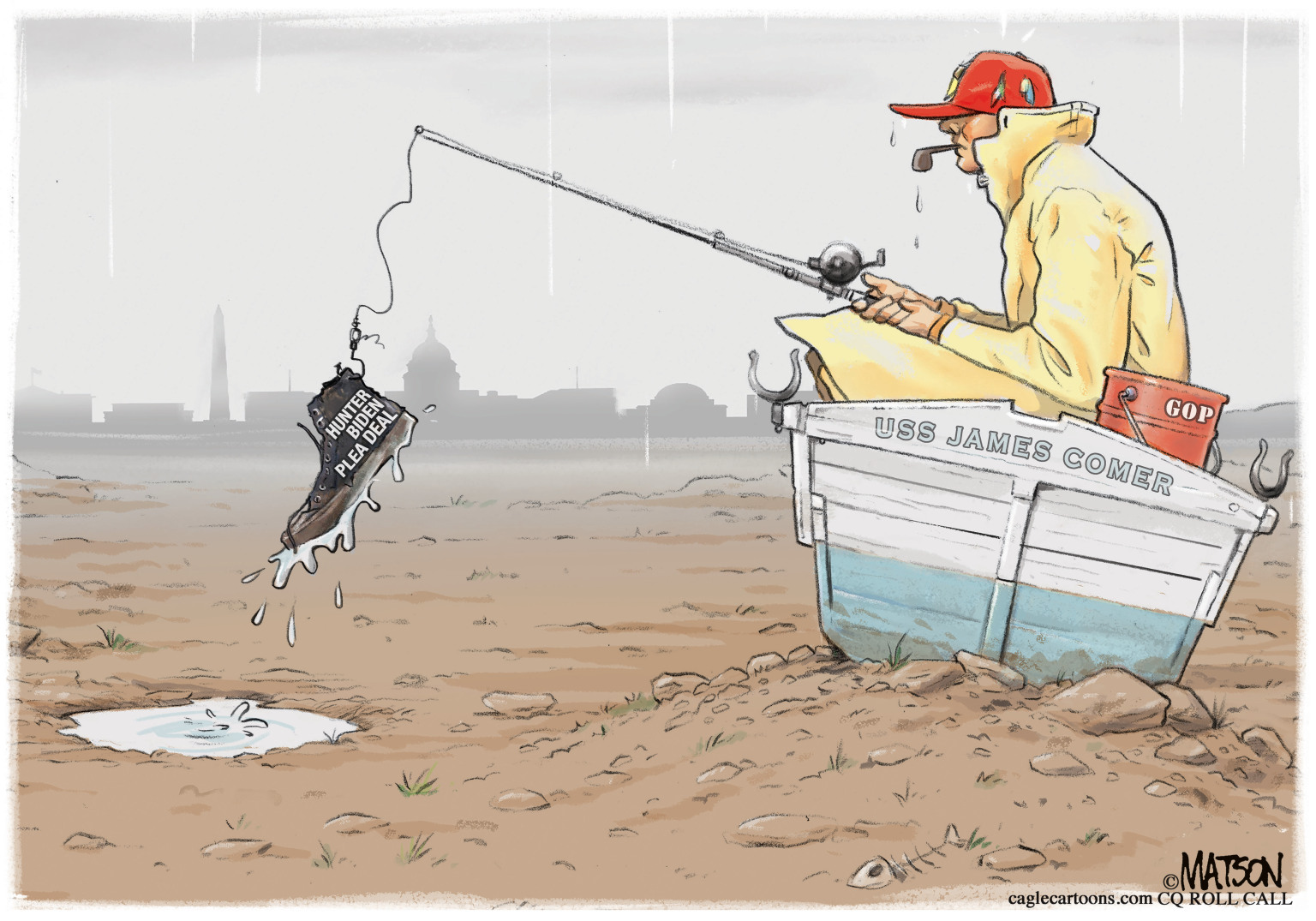

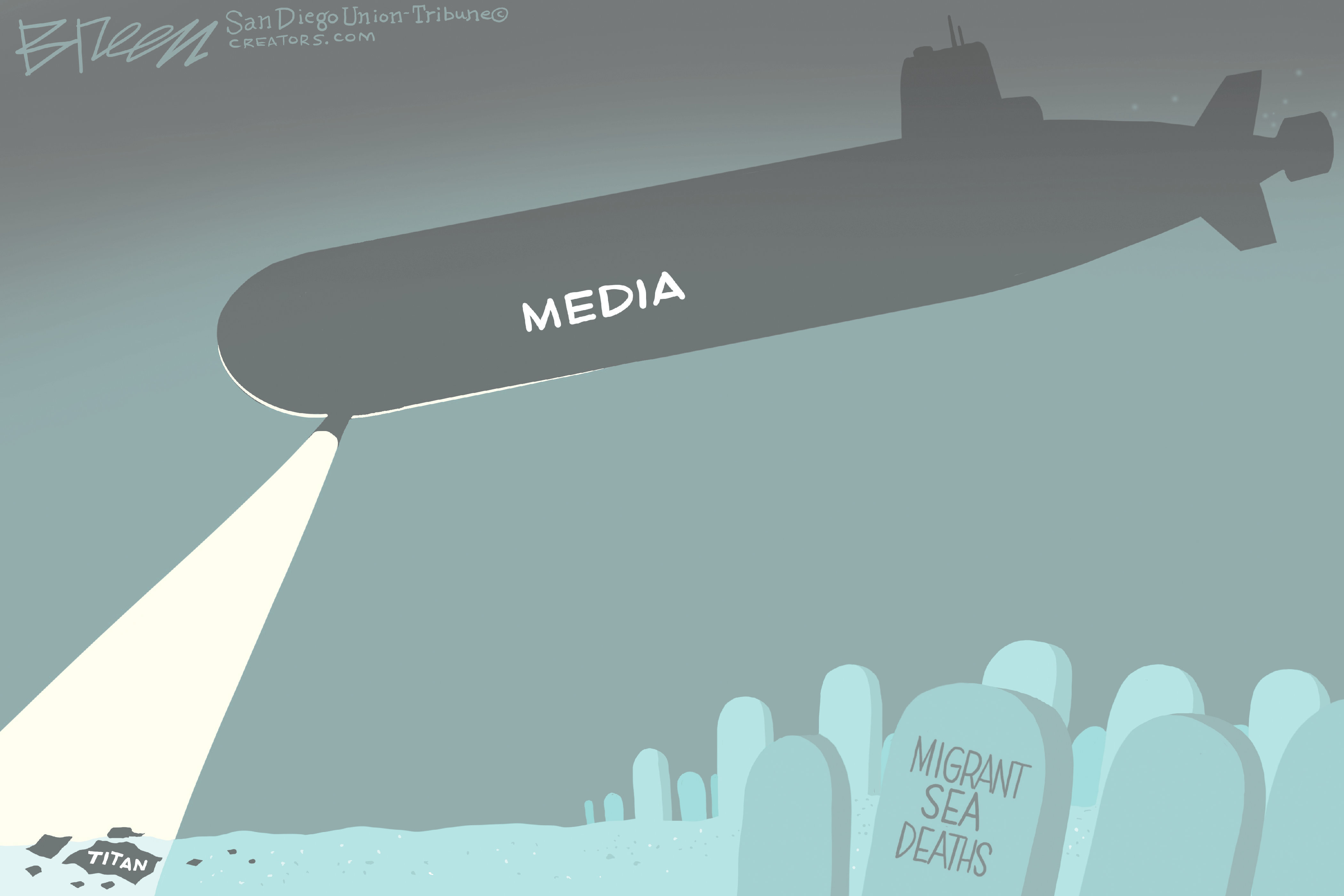
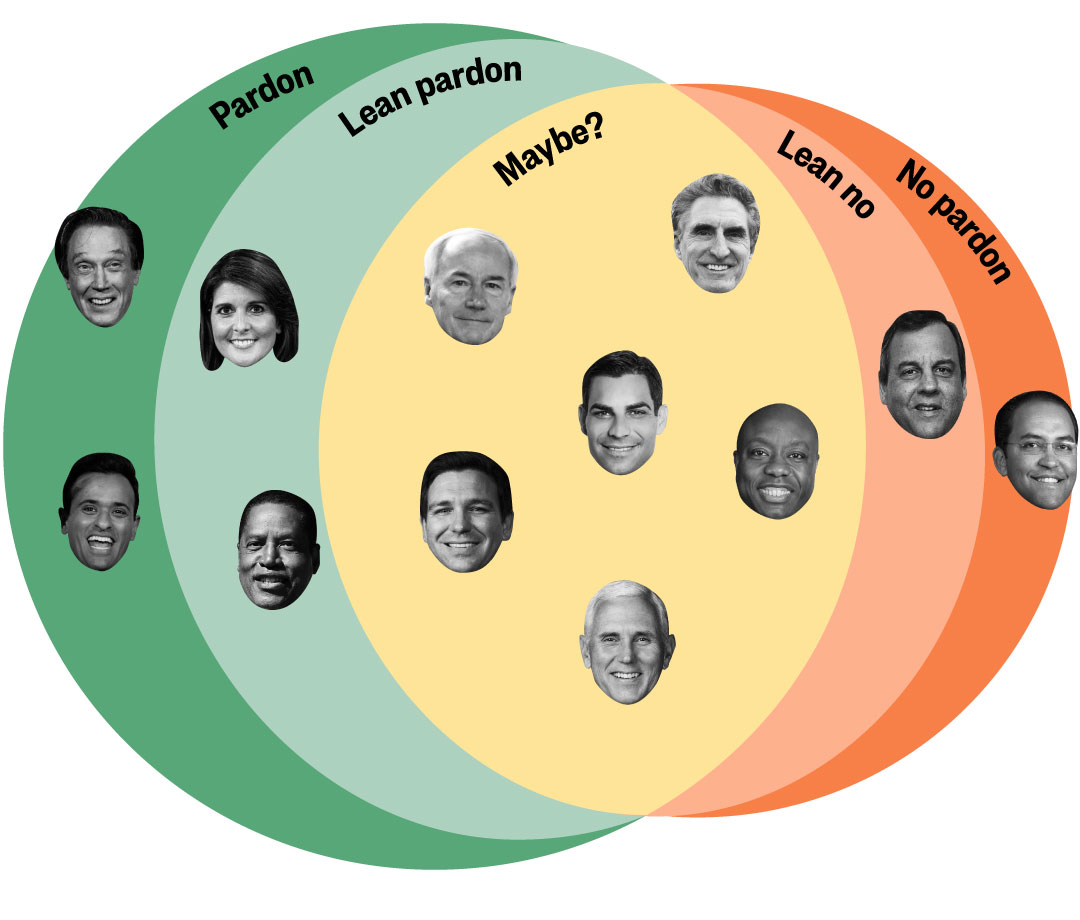
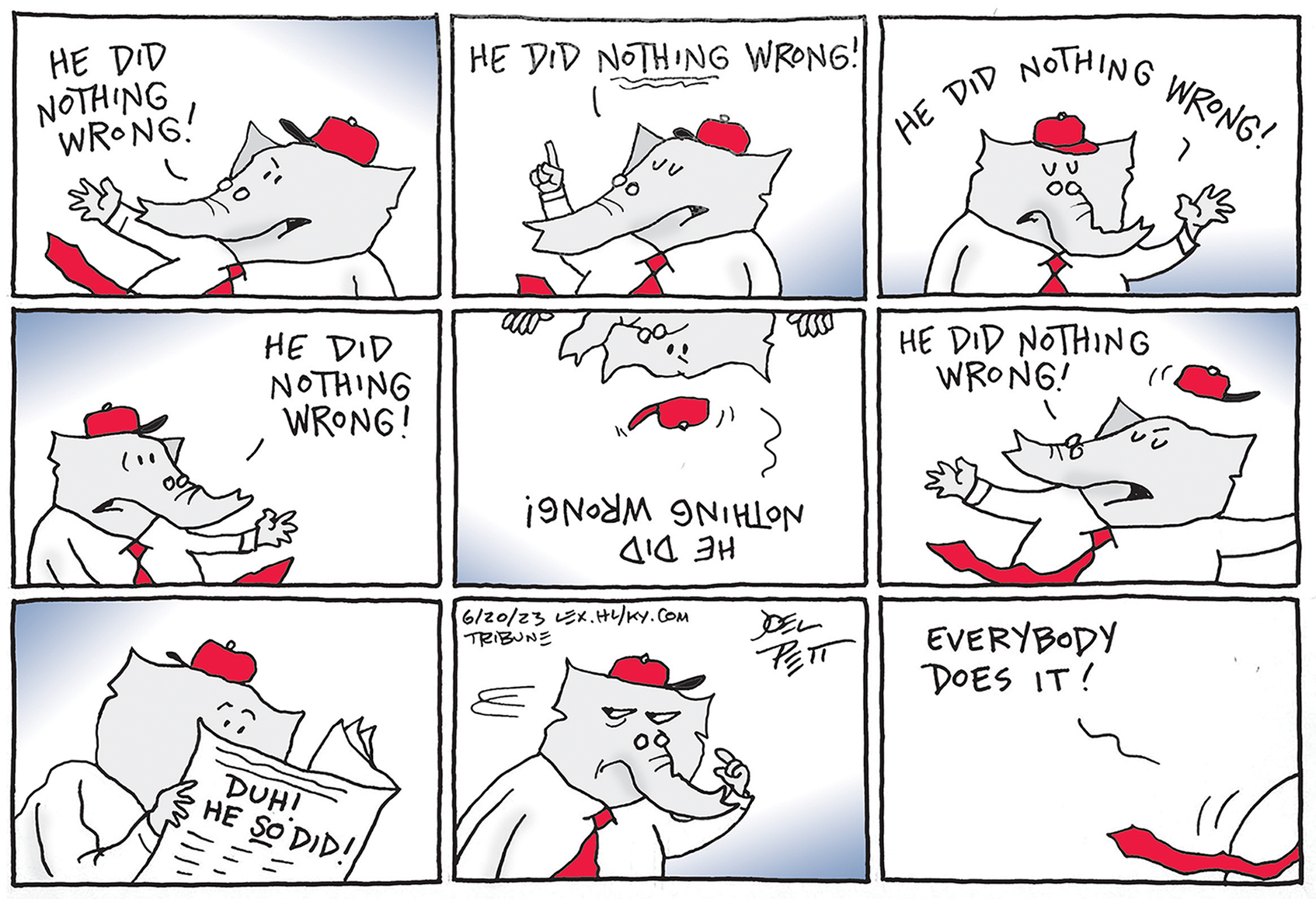
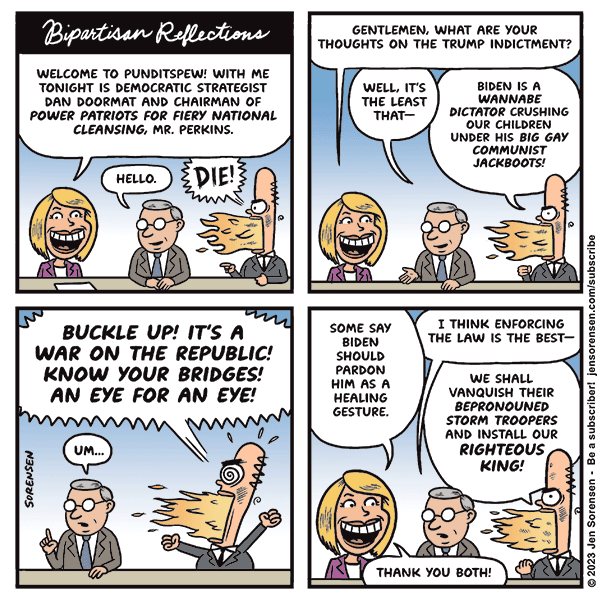
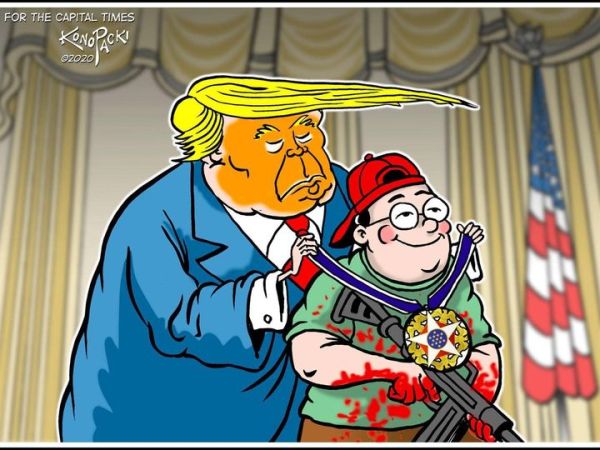
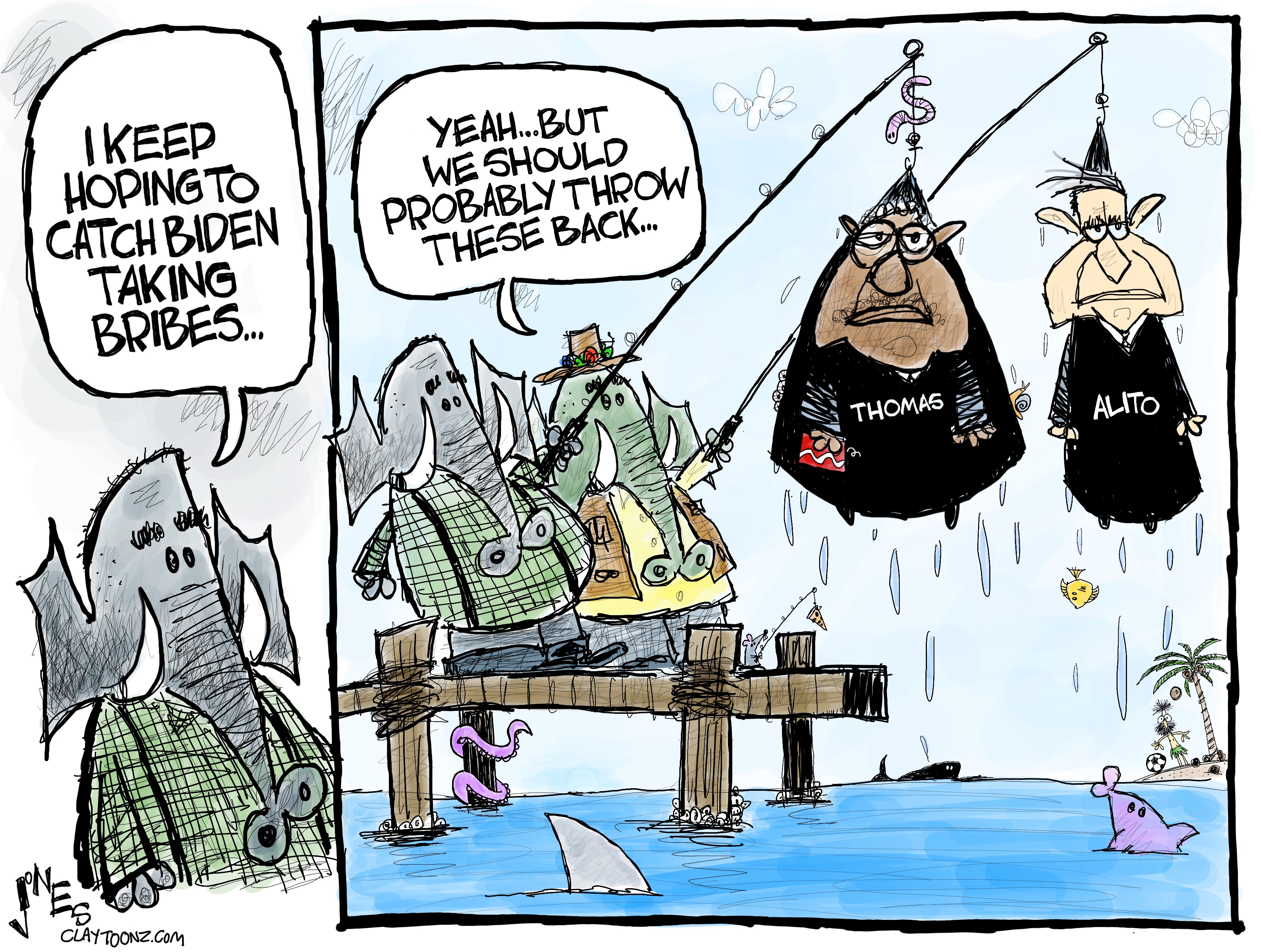


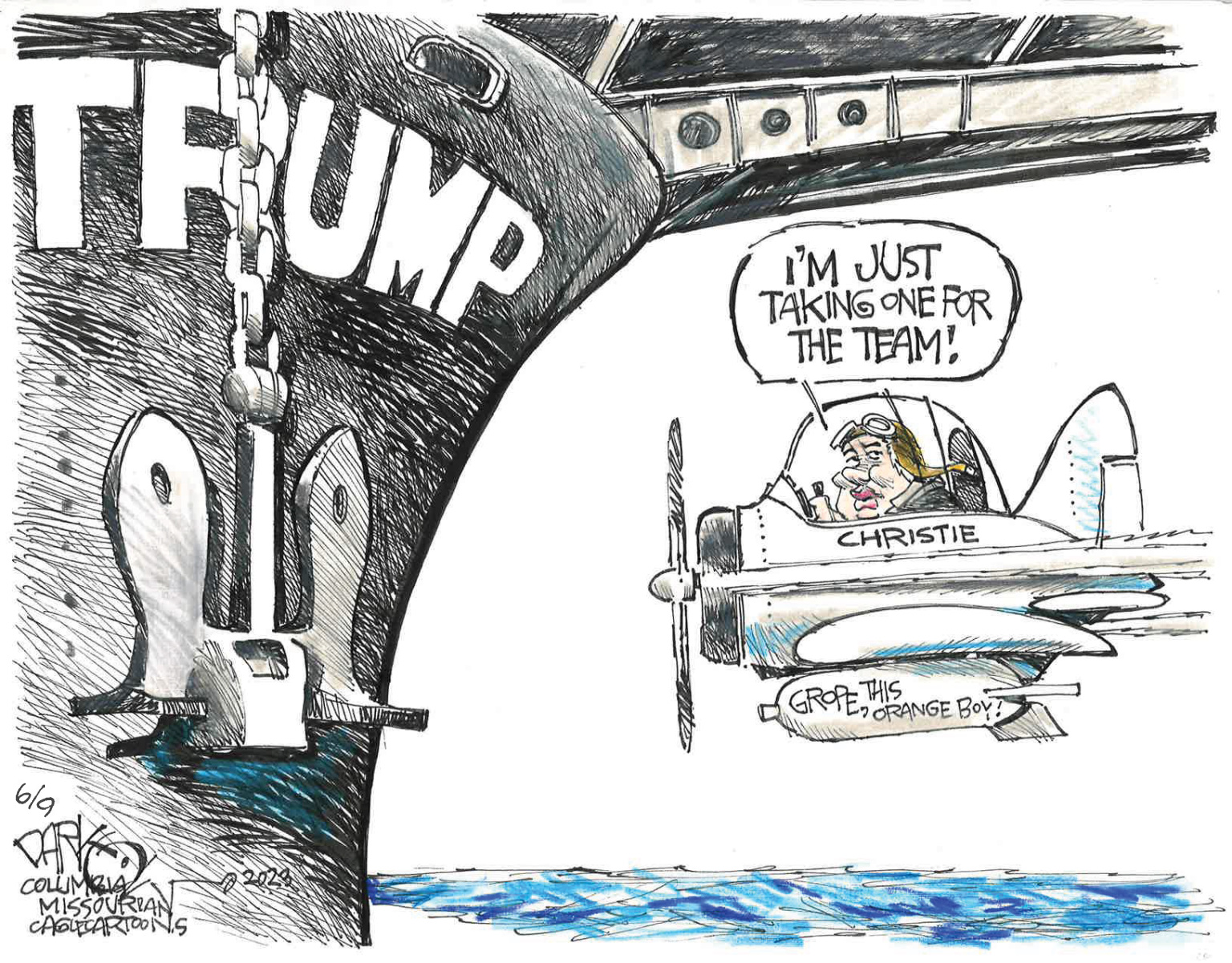
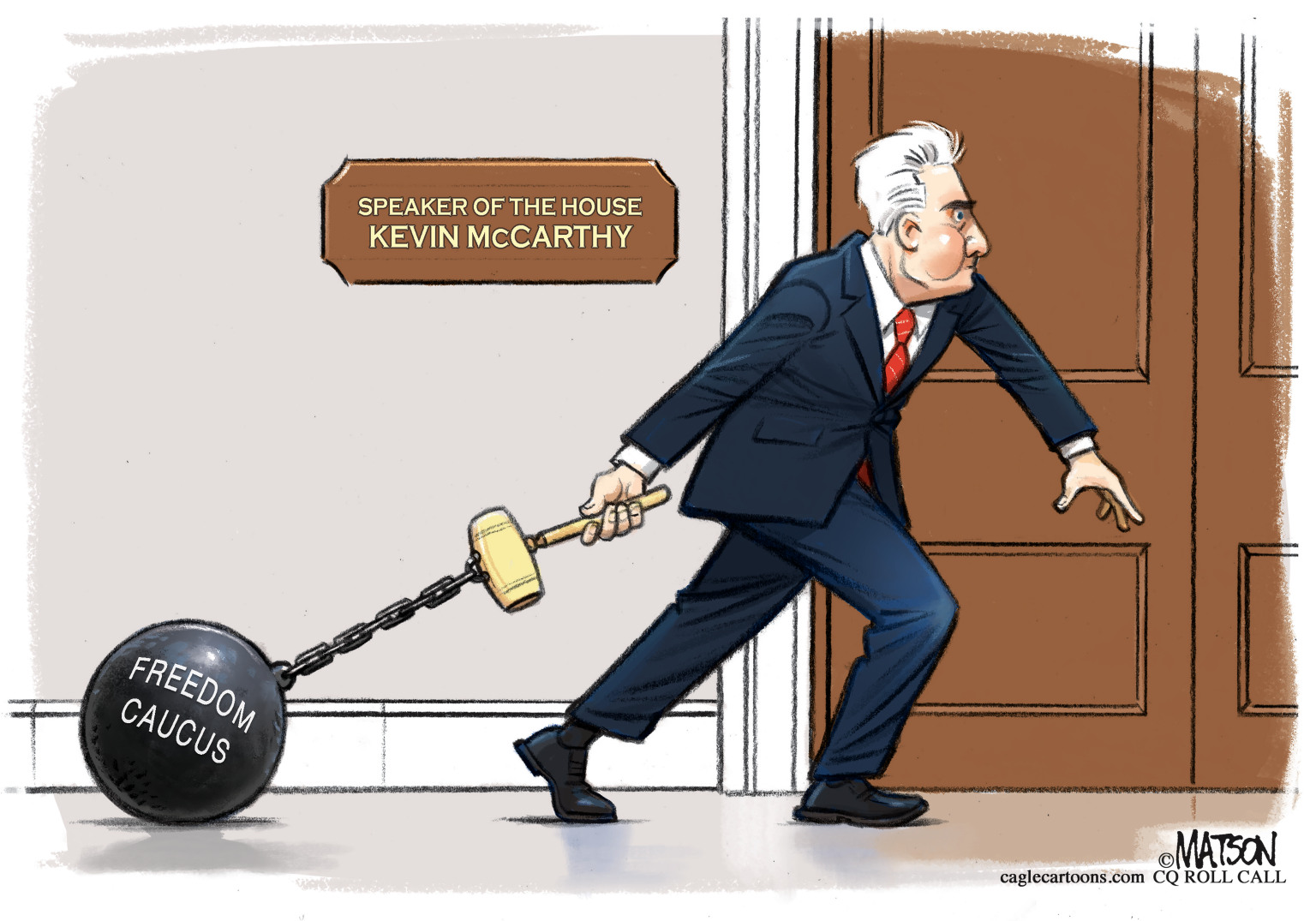
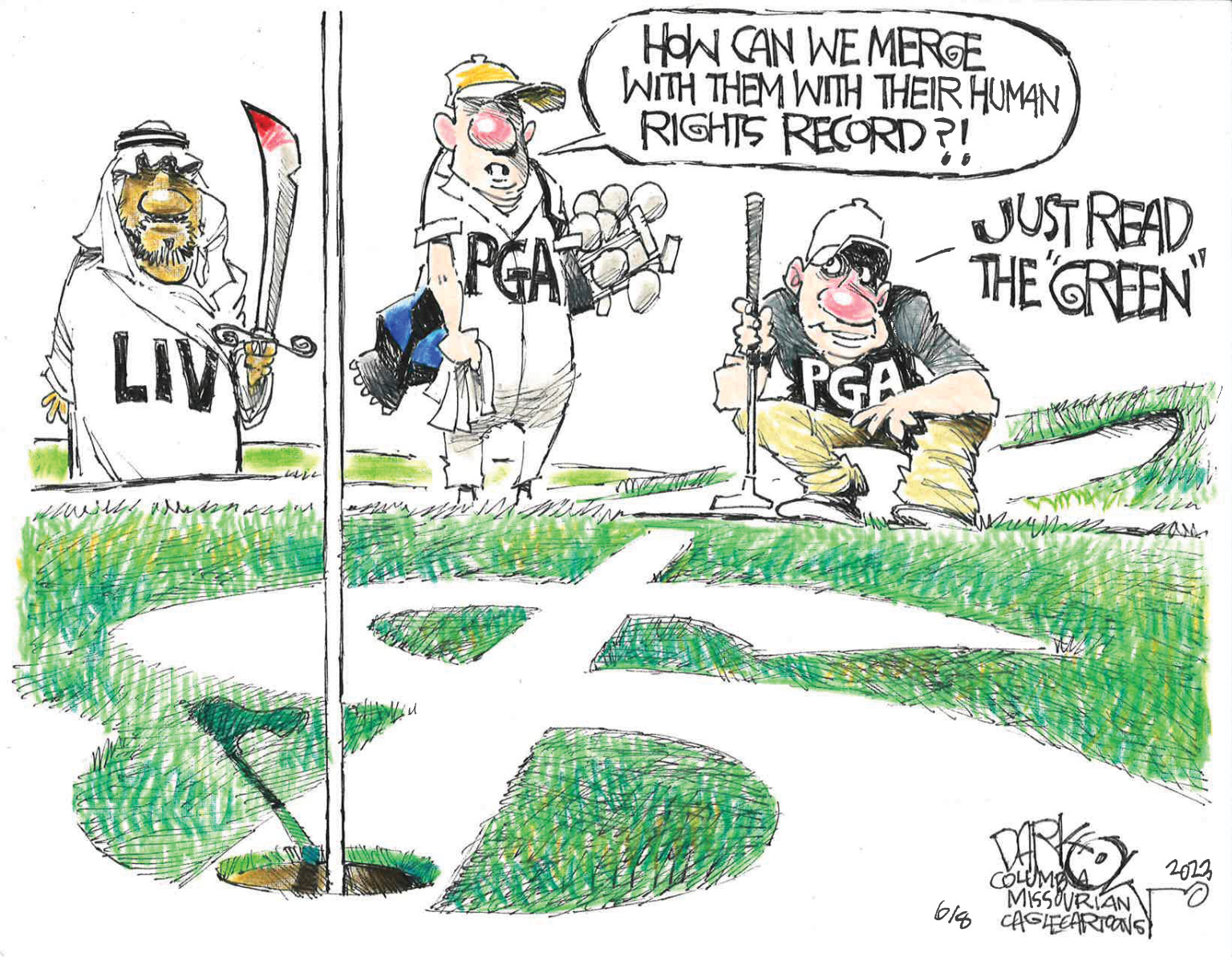


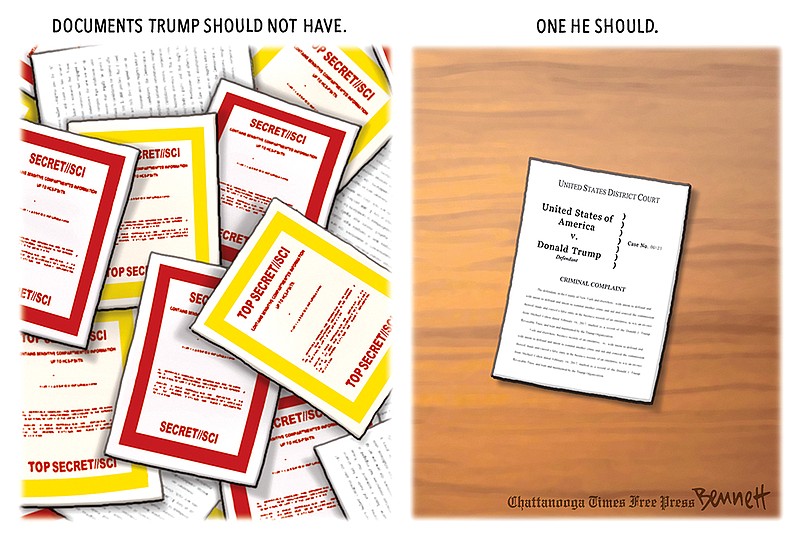
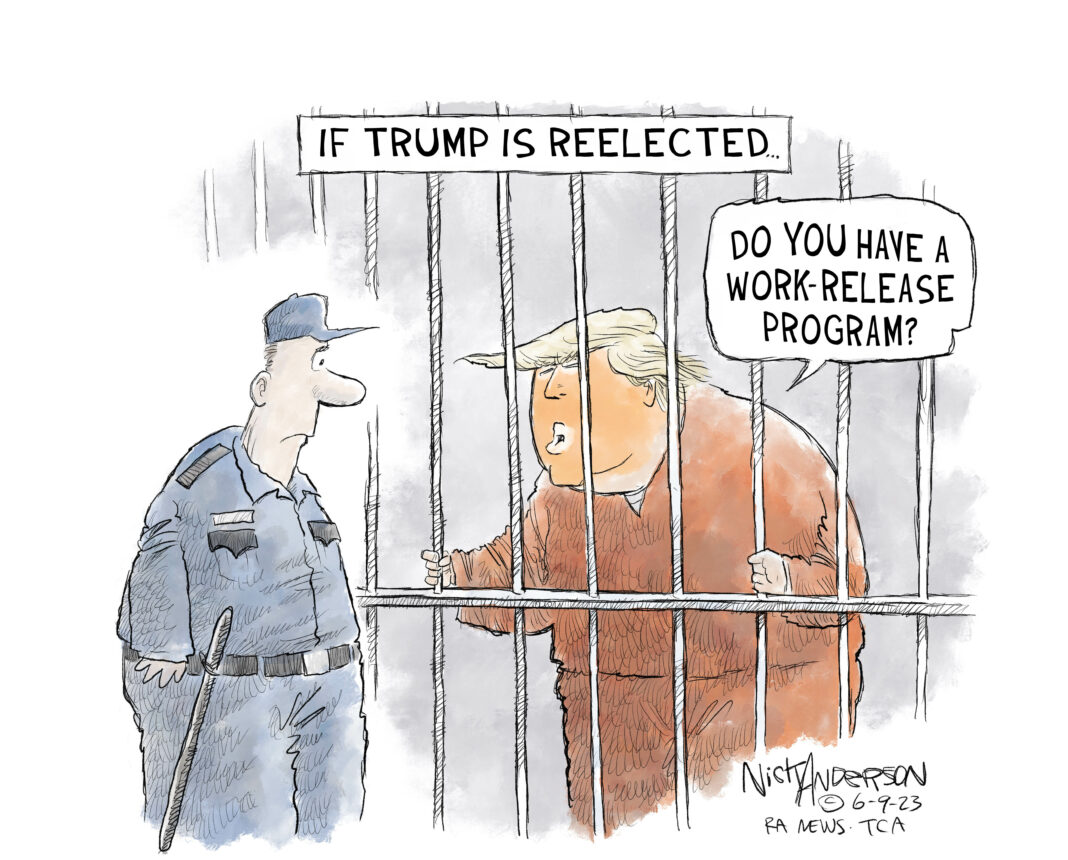



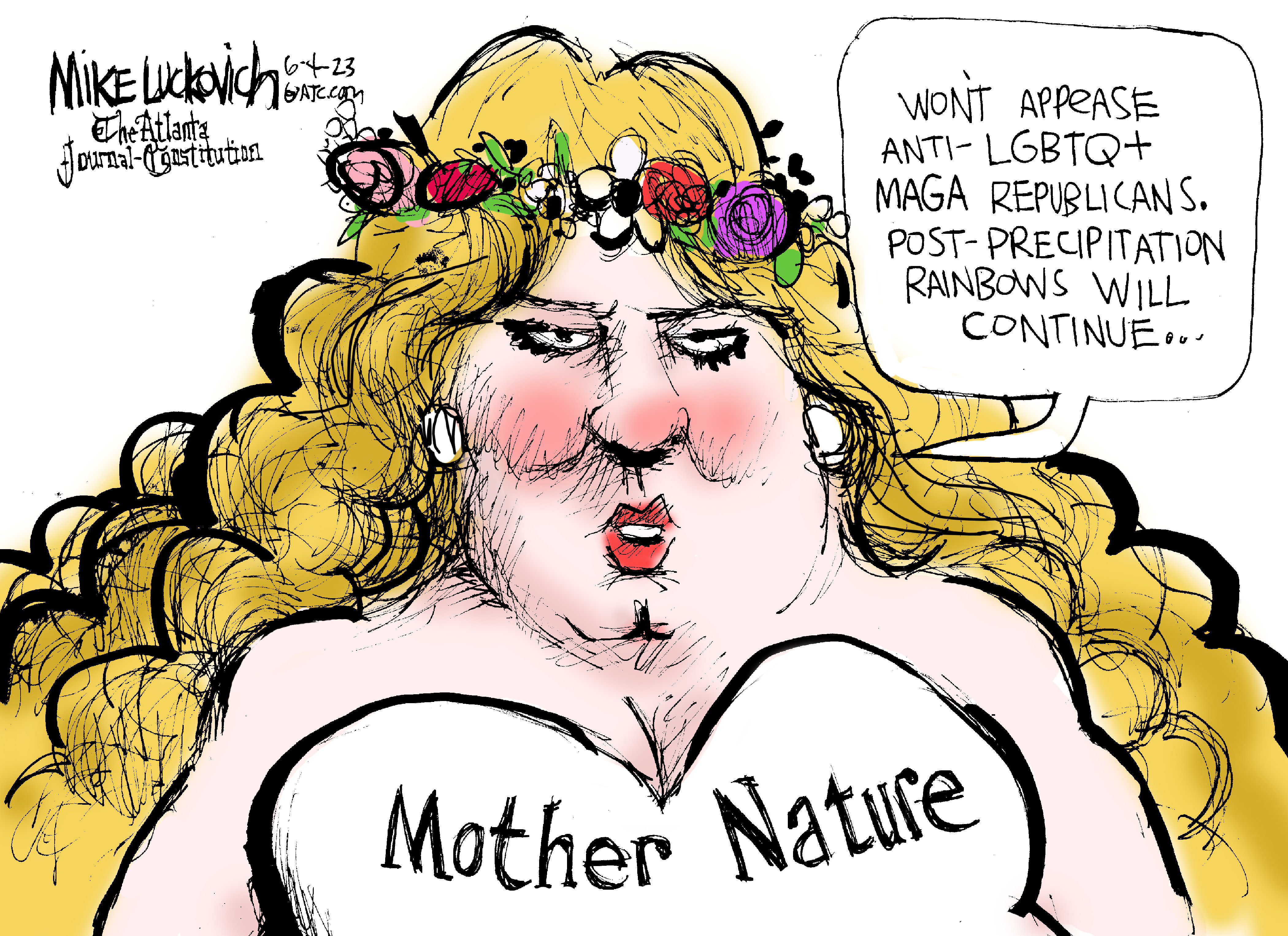
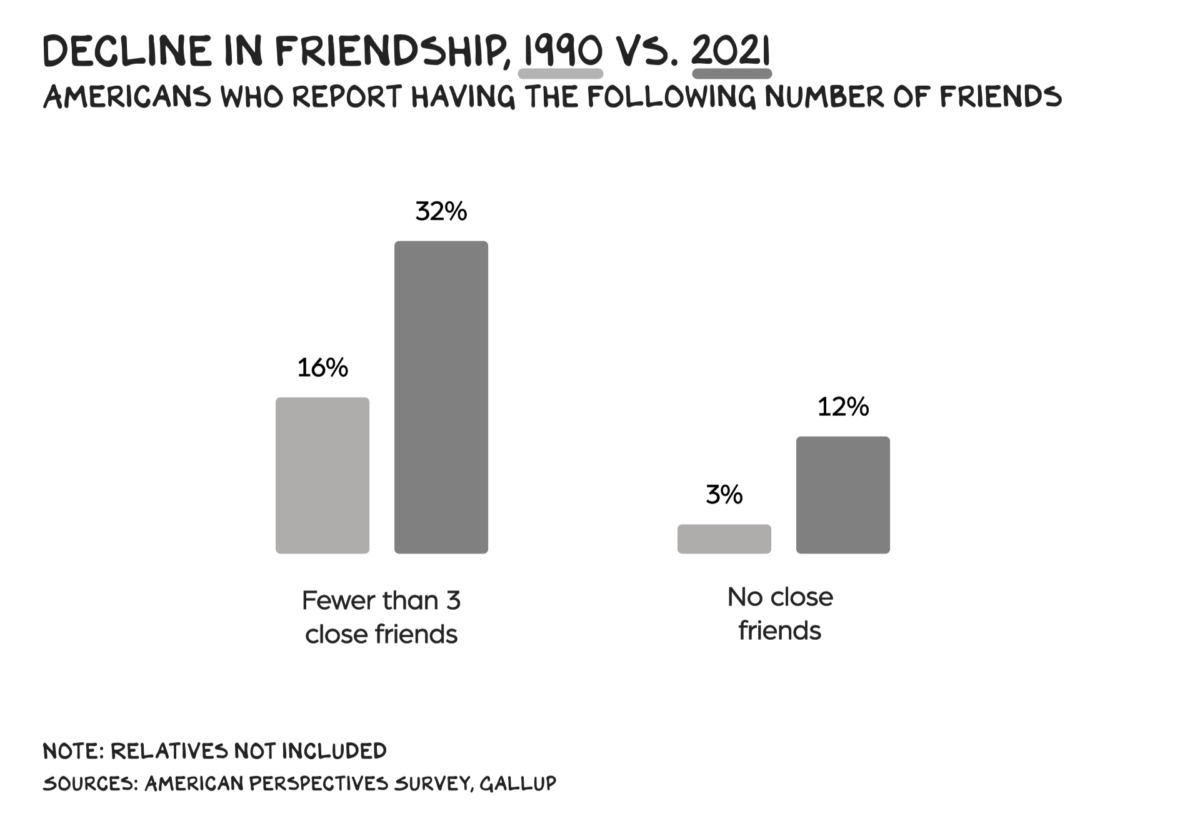


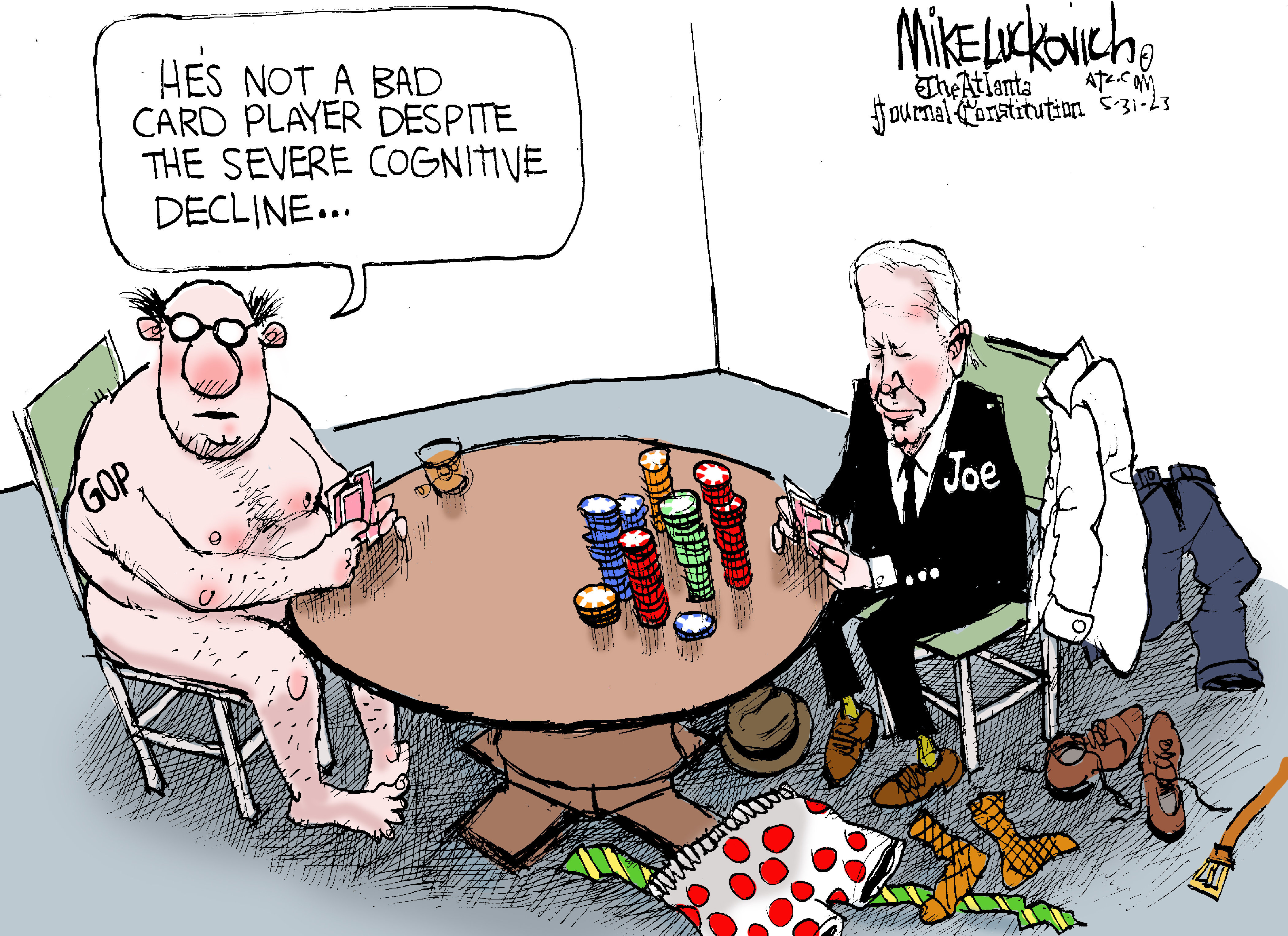
 The Weekly Sift