

The Trump administration has suffered a series of defeats in court recently. Will that matter?
It’s been a bad week or two for Trump in court. Jay Kuo counts the ways:
- A major ruling from the Federal Circuit invalidating most of Trump’s “Liberation Day” tariffs;
- A long weekend emergency ruling stopping planeloads of unaccompanied children from being deported to Guatemala;
- Trump’s big loss after a bench trial in California over his unlawful use of federal troops in that state; and
- The Fifth Circuit smackdown of Trump’s invocation of the “Alien Enemies Act” to justify summary deportation of alleged gang members.
After Kuo’s post, Trump suffered another loss in court:
A federal judge on Wednesday ruled Donald Trump’s administration unlawfully terminated about $2.2bn in grants awarded to Harvard University and can no longer cut off research funding to the Ivy League school.
The judges in these cases have been sending a clear message: The law still counts for something, and it doesn’t change just because Trump says so.
But for that message to stick, two things have to happen: The Supreme Court has to back up the lower-court decisions, and the Trump administration has to obey the court orders once they become final. Will those things happen? I’ve seen both optimistic and pessimistic views.
Kuo is the optimist.
There’s an understandable tendency to hear about a big court victory for the good guys but then cynically dismiss it, claiming either that the Supreme Court will overturn it, or that the Trump White House will simply ignore the courts’ orders.
I want to encourage readers to not fall into this trap. True, the Supreme Court has intervened in a few cases to lift a few injunctions imposed by lower courts, and that admittedly has been awful to see. But it hasn’t ruled substantively on much of anything yet. And that has allowed court victories by the good guys to produce some real progress.
He points to blue-state attorneys general suing to claw back CDC grants the Trump administration had frozen. Red states, with their Trump-worshipping AGs, have taken the loss.
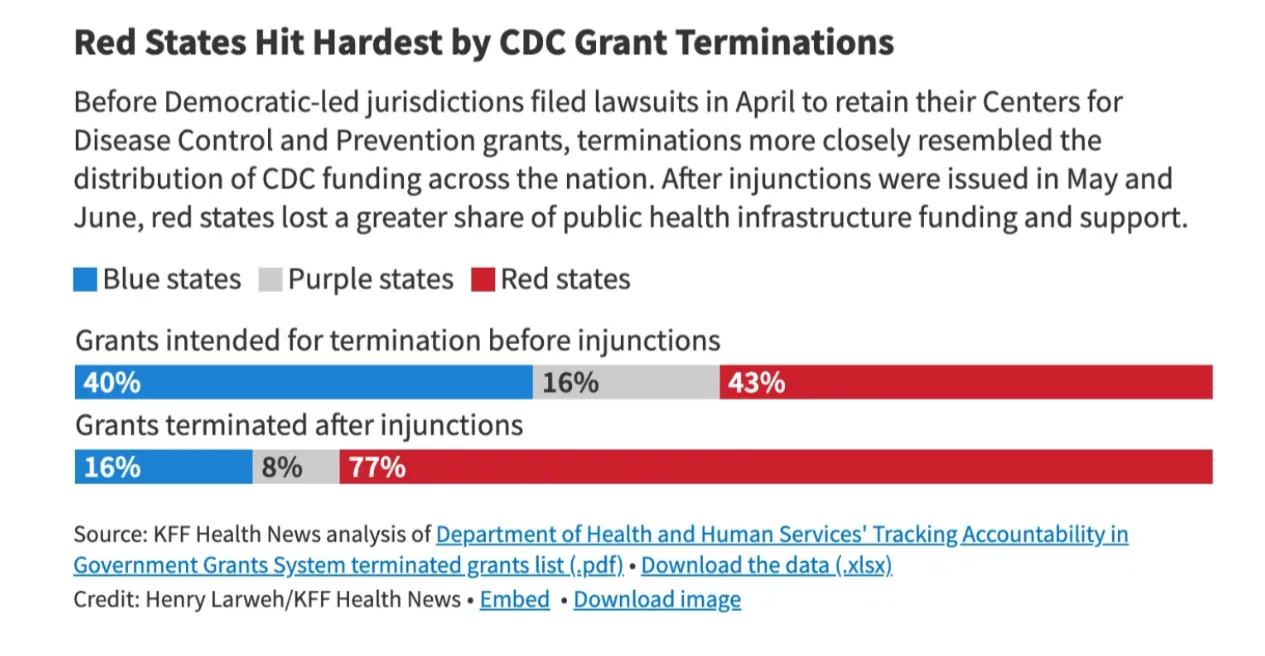
The Department of Justice wants the American public to assume that none of the orders granted by federal judges are being heeded. They want us to believe that they, and not the judiciary, are in control. But this is simply not the case.
Kuo points to the Guatemalan-children case, where (unlike in an earlier case with adults) planes in the air really did turn around, because “this time the government wasn’t up to playing more games with the courts”.
The pessimist side is represented by Vox’ Ian Milhiser, who summarizes “The overwhelming evidence that the Supreme Court is on Donald Trump’s team“.
The Court’s Republican majority now hands Trump several victories every month, only explaining themselves when they feel like it. When they do explain those decisions, they are often incomprehensible. The Republican justices exempt Trump from rules that apply to every other litigant, including the most recent Democratic president. Their decision permitting Trump to commit crimes doesn’t even attempt to argue that presidential immunity can be found in the Constitution — instead making a policy argument that Trump should not be chilled from taking “bold and unhesitating action” for fear of prosecution.
Nor is Trump the only litigant who receives this Court’s special treatment. The Republican justices favor religious conservatives so much that they will make up fake facts to bolster Christian conservative litigants. Meanwhile, they hate abortion providers so much that they once handed down an anti-abortion decision that, if taken seriously, would permit every state to neutralize any constitutional right.
If any other government official behaved this way, it would be obvious they were placing partisanship ahead of the law. It is no less obvious when these six specific government officials do so. The most reasonable explanation for the Republican justices’ behavior is that they are acting in bad faith.
It’s possible that even the most well-reasoned lower-court decisions against Trump will be reversed based on some gobbly-gook reasoning that we can expect to conveniently vanish should a Democrat ever again assume the presidency. That’s certainly what happened in the Trump immunity ruling.
But it’s worth noting that although the Court has thrown procedural hurdles in the way of those who would stop Trump’s lawlessness, and has sometimes reversed injunctions without much explanation, so far it has given Trump very few outright victories on the underlying merits of the cases. Birthright citizenship, for example, still stands.
The people caught in the middle are the lower-court judges themselves, ten of whom took the unusual step of talking anonymously to NBC News. Their problem is simple: When you do your best to apply the law as it was written and has always been interpreted, and then the Supreme Court reverses your decision in a shadow-docket ruling with little or no explanation, what do you do with the next case? You can’t apply the Court’s new reasoning, because that reasoning was never published.
In late July, the Constitution Daily Blog listed five Trump executive orders that are likely to hit the Supreme Court soon:
- reversing birthright citizenship.
- invoking the Alien Enemies Act to deport immigrants
- using emergency powers to impose tariffs
- firing heads of agencies protected by Congress
- banning transgender people from serving in the military
I could imagine (but not agree with) the Court siding with Trump on the last two. But if any of the first three get the Court’s blessing, something is seriously wrong.
 The Weekly Sift
Comments
The Courts rule on cases before them, not on general principles that might have guided the actions being litigated and appealed from. As such, in its long summer vacation and its Shadow Docket in fulsome use, SCOTUS is leaving the status quo in place while the merits of the cases are pending argument before the court.
Worse, in many of the important cases, the court is treating the status quo as the situation after Trump has acted. This is freezing major changes in place for the months it will take for briefing, oral argument, conferences amongst the justices, the decision processes with everyone having a say …
Thanks for putting this in perspective and timely given ACB interviews this week. I am just struck by the fact that the conservatives on the court believe we need to go back to original language. The framers clearly feared a strong executive and thus the check and balances and yet consistently this court is inconsistent. They shoot down administrative interpretation of laws by Congress but then say the President can rescind funding approved by Congress or simply ignore terms of various Boards created by Congress on a whim. I do not find the reasoning consistent. And perhaps that is the scary part.
Trackbacks
[…] week’s featured posts are “Will the courts hold the line?” and “The Democrats’ Shutdown […]
[…] Will the courts hold the line? […]
[…] Doug Muder at The Weekly Sift: “Will the courts hold the line?“ […]