The worst news this week is personal: My wife Deb died unexpectedly during the night between Thursday and Friday. She had survived three different cancers over the past 28 years, but they were all undetectable at this point, and her death seems to have had little to do with any of them. For a few days she had complained of intestinal discomfort, but none of her symptoms seemed out of the ordinary or hinted at being life-threatening, so she was taking a wait-and-see approach before involving her doctor. Friday morning I decided to let her sleep in, and when I finally went to wake her, I couldn’t.
I can anticipate the thought in most of your minds: “Why are you putting out a Sift this week at all?” It’s a really good question. My only answer is that it feels right; sometimes keeping going is easier than stopping. I want to assure you that I am paying attention to my emotions, and that a group of loyal friends are watching me like hawks. I am being well taken care of, and if I need a break in the future, I’ll take one.
If you have a personal connection to me or Deb and are reading the news here for the first time, I apologize for not reaching out to you in some less public way. There’s nothing that you need to be attending this week. I expect to hold an event to celebrate her life sometime after the holidays.
Meanwhile, the world has kept on turning. The weekly summary will discuss the fall of the Assad regime, the murder of a health-insurance CEO, martial law in South Korea, reactions to the Hunter Biden pardon, Pete Hegseth’s promise that he will stop drinking if we give him one of the world’s highest-stress jobs, and a few other things. As usual, I’m going to try to get that out around noon EST.
The featured post is another in my series of meditations on what went wrong in the 2024 election. This time I’m looking at pre-existing narratives in the public mind, and how they can protect misinformation against debunking. After reading even the most thorough debunking, too many voters are left with the impression that while this particular event may not have happened, this kind of thing happens all the time (even if it doesn’t). It’s hard to guess when I’ll get that posted, but probably not before 10.
I have admired the quote above for years, but it wasn’t until yesterday that I looked up the larger context. Often, well-loved quotes are taken out of context, and were never really intended to say what we hear in them today, so reading the whole paragraph or page or chapter can ruin the effect. But the context of this quote makes it even more relevant to the present moment:
Power worship blurs political judgement because it leads, almost unavoidably, to the belief that present trends will continue. Whoever is winning at the moment will always seem to be invincible. If the Japanese have conquered south Asia, then they will keep south Asia for ever, if the Germans have captured Tobruk, they will infallibly capture Cairo; if the Russians are in Berlin, it will not be long before they are in London: and so on. This habit of mind leads also to the belief that things will happen more quickly, completely, and catastrophically than they ever do in practice. The rise and fall of empires, the disappearance of cultures and religions, are expected to happen with earthquake suddenness, and processes which have barely started are talked about as though they were already at an end.
This week’s featured post is “Resisting, eventually“. It describes my election hangover, and a corresponding unwillingness to commit to a resistance strategy, or even research one adequately.
This week everybody was still talking about Trump’s nominations
Now that Matt Gaetz is gone, the next nominee likely to fall is Pete Hegseth, chosen by Trump to run the Pentagon. We’ve known for two weeks that he paid a woman to drop her accusation of sexual assault in 2017, but a single episode of sexual assault is almost a badge of honor in TrumpWorld, so his nomination was still viable.
You are an abuser of women — that is the ugly truth and I have no respect for any man that belittles, lies, cheats, sleeps around, and uses women for his own power and ego. You are that man (and have been for years) and as your mother, it pains me and embarrasses me to say that, but it is the sad, sad truth. … … On behalf of all the women (and I know it’s many) you have abused in some way, I say… get some help and take an honest look at yourself
Sunday, The New Yorker detailed a history of Hegseth’s alcohol abuse and financial impropriety in addition to a pattern of sexual harassment. He headed two veteran-focused political groups, and each time was dismissed after overspending the organization’s funds for drunken staff parties. Hegseth’s drunken exploits include trying to get up on stage with the dancers at a strip club, and on several occasions being carried up to his room by co-workers.
The Republican senators whose votes Hegseth needs are probably impervious to sexual-assault claims, since they’ve already had to make so many excuses for Donald Trump’s behavior. “Don’t believe women” could be the party motto at this point. But a Defense Secretary who is often drunk and out-of-control is a different problem. From the New Yorker article:
Senator Richard Blumenthal, a Democrat from Connecticut and the senior member of the Senate Armed Services Committee, described the report of Hegseth’s drinking as alarming and disqualifying. In a phone interview, Blumenthal, who currently leads the Senate committee that will review Hegseth’s nomination, told me, “Much as we might be sympathetic to people with continuing alcohol problems, they shouldn’t be at the top of our national-security structure.” Blumenthal went on, “It’s dangerous. The Secretary of Defense is involved in every issue of national security. He’s involved in the use of nuclear weapons. He’s the one who approves sending troops into combat. He approves drone strikes that may involve civilian casualties. Literally life-and-death issues are in the hands of the Secretary of Defense, and entrusting these kinds of issues to someone who might be incapacitated for any reason is a risk we cannot take.”
It would be bad enough if Hegseth were the kind of drunk who just quietly falls asleep. But the stories about him point to a drunk who loses inhibitions and does stupid things.
The hits keep coming. Trump’s nominee for FBI director is Kash Patel, whose main qualification is a slavish devotion to Trump.
The pattern here is something we often see from the Right: Democrats are falsely accused of something so that Republicans can “respond” by actually doing that very thing. In this case, the “something” is weaponizing the Justice Department. (The archetypal example is Fox News, whose right-wing bias parallels a grossly exaggerated notion of left-wing media bias. A completely different example is the Florida education system, which Governor DeSantis is turning into the indoctrination program he falsely claimed it already was. “DeSantis’s anti-education crusade is doubly authoritarian – most obviously in its use of state power to suppress ideas and information, but also in its more subtle assumption that teaching is ultimately about imposing doctrines of one sort or another.”)
The Biden Justice Department was not weaponized. Every Trump investigation began with probable cause for suspecting an actual crime, and every indictment was backed by evidence that probably would have led to convictions if Trump-favoring judges had allowed the cases to go to trial. That’s law enforcement, not weaponization.
But a Patel-led FBI and a Bondi-led Justice Department won’t bother with niceties like probable cause and proof beyond reasonable doubt. Look for people to be investigated because they are Trump critics, and for rumors of wide-ranging conspiracies to regularly leak to Fox News. Most of these investigations won’t lead to indictments, or even identification of the specific laws supposedly violated. Those that do will produce show trials that juries quickly dismiss with not-guilty verdicts.
The Durham investigation from Trump’s first term is the model here. Trump claimed it would uncover “the crime of the century“, and right-wing media regularly gave credence to Durham-inspired conspiracy theories that led to Hillary Clinton or Barack Obama. But only minor figures went to trial, and they were charged with minor offenses falling far short of the vast conspiracies Durham was supposed to reveal. Only two went to trial, and they were quickly acquitted.
Such prosecutions have three goals: generating a series of enraging headlines inside the right-wing echo chamber, making targets spend vast sums of money on lawyers, and intimidating people who fear falling out of Trump’s favor.
It’s hard to sort out the pluses and minuses of Biden’s pardon of his son Hunter. Undoubtedly, we will hear about this every time Trump makes a self-interested pardon, which he will do often, beginning with the January 6 rioters and seditionists.
But it’s also clear that a Bondi/Patel Justice Department would never leave Hunter alone. His father let the Trump-appointed prosecutor do whatever he wanted, with the result that Hunter was prosecuted far more intensely than an ordinary person who committed the same offenses would have been.
Biden is anticipating injustice from the Trump administration and acting to avert it. It would be better to wait for the injustice to begin, so that it’s obvious to everyone, but by then his power to mitigate it would have evaporated. He had to act now or not at all.
The larger cause of democracy probably would have been better served if Biden had been willing to sacrifice his son to it. (I’ll let you decide whether there’s a Christian metaphor worth inserting here.) But I don’t blame him for not letting that happen.
This account of budget-director-nominee and Project 2025 author Russell Vought is genuinely scary. Basically, he believes we’re in a “post-constitutional” situation. Our government has drifted so far from what he thinks the Constitution calls for that extra-constitutional presidential authority is needed to pull us back.
and Russia and its ally Syria
The Biden administration imposed a truly biting sanction on Russian banks two weeks ago, leading to this:
Against a backdrop of high inflation and fears over the value of the currency, Russia’s central bank has already lifted interest rates to 21% this year.
We’ll learn a lot about the state of the world in January, when we see whether Trump starts relaxing Russian sanctions. If he does, and he doesn’t get some major concession in return, we can be pretty sure that the rumors of kompromat are true.
It also looks like a bad time to be a Russian ally. Rebels in Syria have taken Aleppo, the country’s second-largest city, with surprising ease. The Assad regime, which was propped up by Russian intervention when it seemed to be falling over a dozen years ago, now has few allies it can count on: Russia pulled its troops out to fight in Ukraine, while Iran and its various proxy groups have their hands full dealing with Israel.
This week included a major reminder of what a Trump administration is like. Trump will troll us by threatening to do something, get some kind of response from the targets of his threats, falsely claim that the response is a concession, and do a victory lap for “winning” the exchange. Nothing has actually happened, but he has exhausted his opponents and given his followers a fake “victory” to crow about.
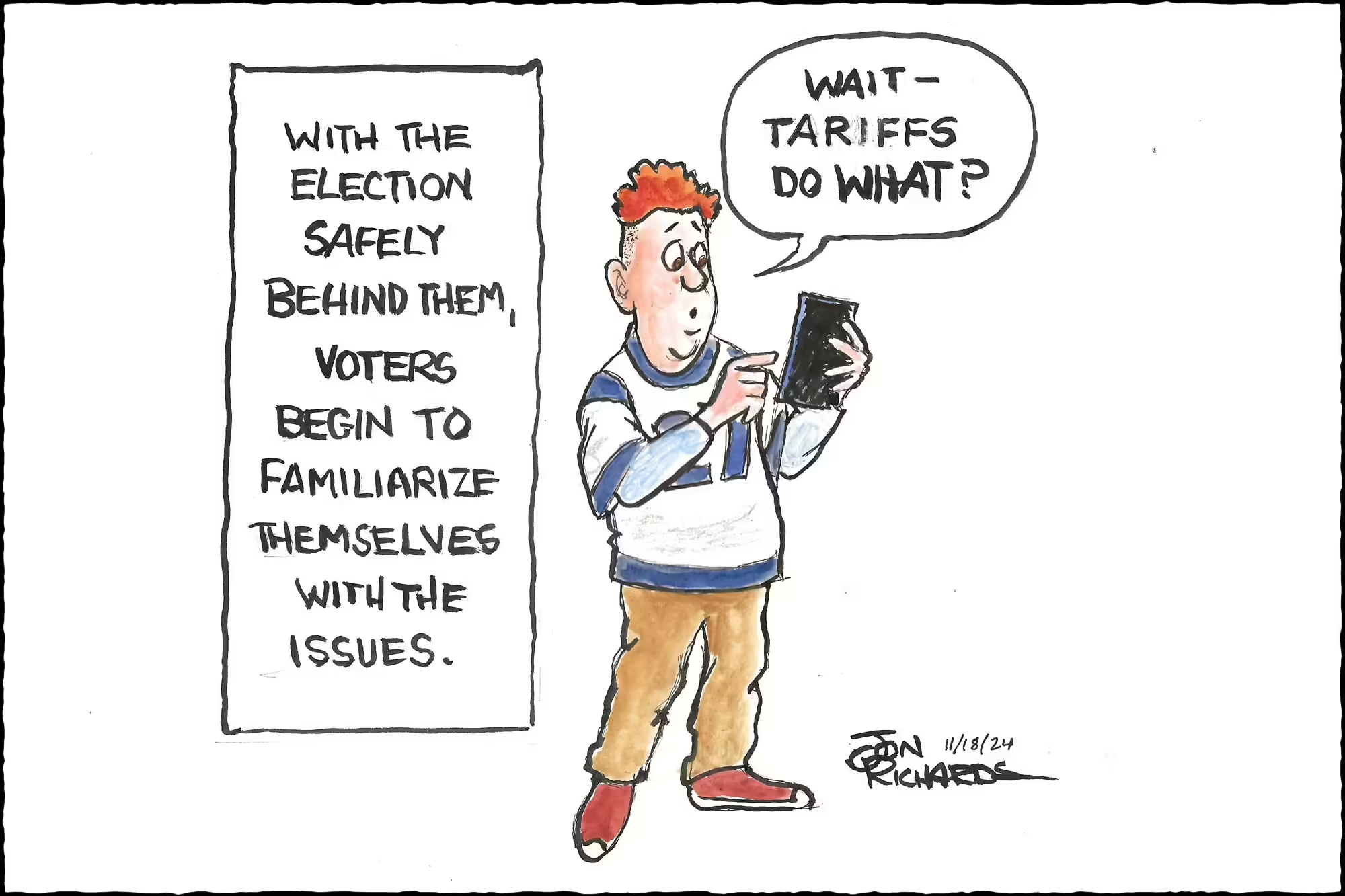
Trump loves tariffs, because this is the area where presidential power is its most authoritarian. Congress has largely delegated this part of its taxing power to the President — something the Supreme Court should (but won’t) look at in view of its emerging non-delegation doctrine — so he really can just decree something and see it happen.
Past presidents have used the tariff power for economic purposes: If we don’t like how a country treats our exports, we’ll put a tariff on their exports to us. Most of the time this has been a warning shot to induce another country to negotiate. But Trump views tariffs in a far more expansive way: If we don’t like anything another country does, we can punish them by taxing their goods. (Of course, the tax will be paid by the American consumer, but it should hurt the targeted country’s sales.)
So last Monday Trump tweeted that he would impose 25% across-the-board tariffs on imports from Mexico and Canada unless they solve our immigration and drug problems.
This Tariff will remain in effect until such time as Drugs, in particular Fentanyl, and all Illegal Aliens stop this Invasion of our Country!
He then had a conversation with the Mexican president, who told him that Mexico is already doing what he asked for (as part of an agreement negotiated by Biden). Trump then claimed victory. Does that mean the tariffs won’t happen? Who can say?
ProPublica has been reporting on women with problem pregnancies who have died because state abortion bans delayed their emergency treatment. (In general, life-of-the-mother exceptions are too narrow. Problems that don’t seem immediately life-threatening can go south faster than doctors can react.) You might think that the states would respond by issuing new treatment guidelines to keep similar deaths from happening in the future, but their response is going in a different direction entirely: They’re making it harder for the public to learn about such cases.
In other words, dead women is bad optics, not bad policy.
Paul Waldman points out something that’s been bugging me too: Critiques of Kamala Harris’ campaign or the Democratic message in general don’t have much to do with the actual campaign or message. He’s not arguing that everything was great and no changes are needed,
But if you want to alter your strategy in effective ways, you have to begin with a clear understanding of reality. Which is why it’s important to puncture some of the myths that keep getting repeated.
Short version: The election was very close, and not a groundswell repudiation of everything the Democrats stand for. Harris ran a centrist campaign rather than an identity-politics campaign. She focused her message on kitchen-table issues rather than culture-war issues. People can legitimately argue about why her message didn’t get through to enough voters, but they shouldn’t distort what her message actually was.
I continue to be skeptical of carbon-capture as a solution to climate change, but this piece of research does look promising.
A constant turnover of new teachers because of the pay rate. No science lab. No band. No track. No real cafeteria, just a warming center for pre-packaged foods. No school nurse. A lack of bus drivers and AP/dual credit classes.
Ask me how I know…
Oklahoma and Texas can mandate that schools teach the Bible, but to get the results Christian nationalists are aiming for, eventually they’re going to have to specify who teaches the Bible and how.
and let’s close with something colorful
In my father-in-law’s final days, my wife was managing his affairs, so his mail came to us. He died years ago and we’ve moved twice since, but somehow we still get fund-raising letters from a few of the bizarre-to-us Catholic organizations he supported. The mailings, when we don’t just toss them unopened, can offer a glimpse into a different world.
At the most basic level, fund-raising letters are all the same no matter who they come from. Whether the bogeyman is Trump, the Deep State, or the Elders of Zion, somebody is doing something terrifying that there is still time to head off if you send money.
Recently a mailing from America Needs Fatima in Hanover, PA warned us about “the growth of Satanism and its expanding legion of followers” — who never contact me despite all the weird web sites I wander through while I’m doing research for this blog. My wife collects Tarot decks, which seems like it should have put the Mark of the Beast on our mailbox a long time ago. But nothing.
Anyway, the growth of Satanism in general is too vague a development for a truly scary mailing, so ANF found something more specific: WalMart is helping the Satanists target America’s children.
“How?” you might ask. Well, the WalMart web site (not the stores, apparently) offers a “Satanist” coloring book: Let’s Summon Demons: A Creepy Coloring & Activity Book.
My first thought was that ANF was making this up, but journalism requires fact-checking, so I went to the WalMart web site and found it: available for $12.04.
HOME ALONE? PART OF AN OTHERWORLDLY CULT? Whether coloring alone or having fun together with others equally versed in the occult, paranormal, and witchcraft, this is the PERFECT coloring and activity book to pass the time until the great [your chaotic primordial god here] descends.
Sounds pretty serious, don’t you think? It’s also at Amazon, for the same $12.04, whose numerological significance escapes me. (BTW: I question the author’s magical technique: The boy in the cover drawing is breaking the summoning circle.)
Might your unsuspecting-but-curious child happen across this by accident while browsing for other kinds of indoctrination? Not likely. I scrolled through many screens worth of WalMart-offered coloring books and didn’t find it. Technically WalMart classifies it under “Other”. Amazon says it’s “Novelty”.
However, if your child is already versed in summoning the occult via Google (as I just did), anything can happen.
And once they find it, they will know the name Steven Rhodes, through which they can conjure the Threadless marketing site, full of t-shirts, posters, and other products spawned by the same dark-and-twisted sense of humor. This would be a totally inappropriate place to look for Christmas gifts for your friends, so I recommend you stay away from it.
Don’t thank me for that warning. Thank America Needs Fatima.
Recovering from the disillusionment of the election is taking longer than I expected.
Many articles are being written about how best to resist the incoming Trump administration and its expected assault on democracy and human rights. I had planned to write a post curating those articles for you, picking out the best ones and summarizing their advice. Unfortunately, I’ve bookmarked more of them than I’ve read, and I haven’t given the ones I’ve read enough serious thought.
That lack of motivation has forced me to admit something about myself: I’m not ready to resist yet. I hope I will be soon.
Everybody’s absorbing the reality of the election at their own pace and in their own way, I suppose. Prior to the election, I advised my readers over and over again not to speculate about what would happen. Like many advice-givers, I almost listened to myself. I refused to anticipate and dwell on either the thrill of victory or the agony of defeat. (I’m dating myself: When I was growing up, “the thrill of victory and the agony of defeat” was the well-known catch-phrase of ABC’s Wide World of Sports.) And yet, deep down, I stubbornly refused to believe the American people would do this. Even at the lowest points, like after Biden’s disastrous debate, I would think about a second Trump administration and think, “No. That can’t happen.”
In retrospect, my faith in the good judgment of the American electorate looks like the faith of a wife who is certain that her husband won’t ever cheat on her, or a child who is sure Dad will never go back to drinking, because it led to so much pain the first time.
But here we are.
I had imagined I was living in an early British detective novel, where Sherlock Holmes or Miss Marple would eventually figure everything out and justice would triumph. Instead, I woke up in an American detective novel by Dashiell Hammit or Raymond Chandler, where the Powers That Be have known all along who the murderer is, but see no reason to do anything about it.
Here we are.
Many of my friends have reported periods of anger, which I haven’t experienced yet. Maybe that’s still coming or maybe I’m just not built that way. Instead, I’ve been living with a deep sense of disappointment. I don’t anticipate any satisfaction coming when Trump voters lose their health insurance or see his tariffs reignite inflation in their grocery stores. When Trump-supporting Hispanics have their naturalization revoked or see their birthright citizenship denied, I don’t expect “I told you so” to taste delicious in my mouth. It will be a sad day, even if they did it to themselves. They are my countrymen, even if my country tells me otherwise.
But I’m still not ready to construct my resistance strategy. I hope I will be soon. Andrea Pitzer is right about this much: Most countries that experienced a fascist takeover didn’t enjoy the luxury of three months to plan. But one of those months is gone already. The clock is ticking.
I can tell I’ll eventually come around. One weird aspect of my psychology is that I’m aware of a subconscious personality who communicates with me — and occasionally critiques my behavior — through my brain’s musical soundtrack. (I noticed it my senior year in college, when I was trying to keep a relationship from getting too serious because I anticipated it ending with graduation. All spring I unaccountably found myself humming “Frosty the Snowman”.)
Lately it’s been playing a song I haven’t heard in years, maybe decades: Graham Nash’s “Chicago“, which he wrote in response to the Chicago 7 trial. It’s aimed at someone Nash wants to “come to Chicago” to protest, and hopes that the listener isn’t like Jack, who won’t help “cause he’ll turn the other ear”. And he envisions this:
We can change the world. Rearrange the world. It’s dying to get better.
I wonder.
In my uninspired wanderings through resistance articles, I have noticed a few things, which I’ll pass on in lieu of a better post in some future week.
The simplest advice has been repeated by many people, so you’ve probably heard it already: Timothy Snyder says “Don’t obey in advance.” In their formation phase, authoritarian regimes wonder what they can get away with. When people anticipate the regime’s demands and comply before they’re asked, they teach the government what it can do. We’ve seen simple examples already: When the Washington Post and LA Times owners torpedoed their editorial departments’ Harris endorsements, they signaled to Trump that he can control the press through the government’s influence on the owners’ other businesses. Seth Moulton — my congressman, sadly — has already offered that many Democrats are willing to surrender trans rights without a fight.
Other examples are more local, like libraries that remove LGBTQ memoirs or non-White fiction before anyone demands it, or sociology departments that voluntarily pare back their programs to avoid discussing White supremacy.
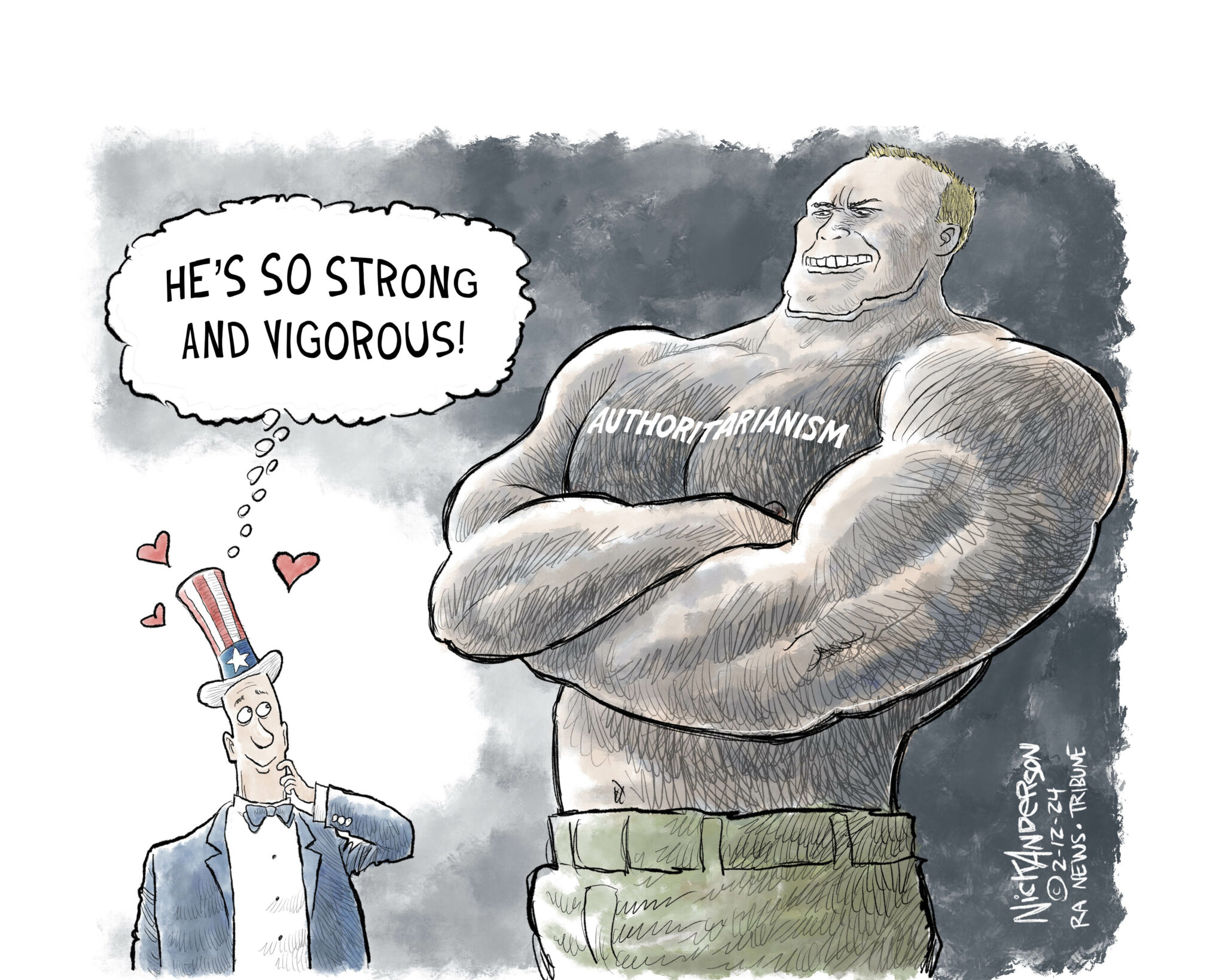
The other thing I’ve been struck by is the importance of perception. The power of an authoritarian regime rests more on belief than on institutional power or even guns. No one resists because everyone believes that (in the words of Star Trek’s Borg Collective) “resistance is futile”. But if enough people believe resistance isn’t futile, then it’s not.
That’s why Trump and his people are working so hard to assert that his sub-50% showing in the election is a “mandate” or even a “landslide“. But if you voted for someone other than Trump, you belong to the majority. And there’s certainly no mandate for implementing Project 2025 policies, which he explicitly denied during the campaign.
Similarly, we can expect a Day One shock-and-awe campaign, where it will seem as everything is happening at once: mass deportation, attacks on abortion rights and trans rights, tariffs, oil drilling on public lands, rolling back environmental regulations, firing civil-service workers, and so on. Trump and his people will make it sound as if these are all done deals — it’s happened already, get over it.
But in fact it won’t have happened. Most of his Day One moves will be challenged in court or require agreement from Congress, either of which will (at a minimum) take time, and may result in significant revisions or even reversal. Every delay means that less gets done, and the secret to saving American democracy is making sure that Trump doesn’t finish it off before the next elections.
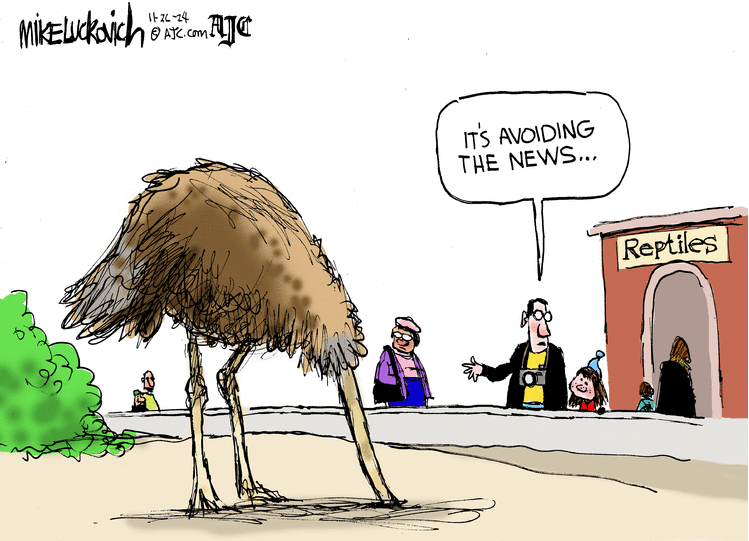
So one of the worst things we can do is be defeatist, and claim that democracy is already lost. That does Trump’s work for him.
Power worship blurs political judgement because it leads, almost unavoidably, to the belief that present trends will continue. Whoever is winning at the moment will always seem to be invincible. If the Japanese have conquered south Asia, then they will keep south Asia for ever, if the Germans have captured Tobruk, they will infallibly capture Cairo; if the Russians are in Berlin, it will not be long before they are in London: and so on. This habit of mind leads also to the belief that things will happen more quickly, completely, and catastrophically than they ever do in practice. The rise and fall of empires, the disappearance of cultures and religions, are expected to happen with earthquake suddenness, and processes which have barely started are talked about as though they were already at an end.
Trump’s overthrow of democracy has barely started. We can’t let him pretend that it has already succeeded.
Perry Bacon‘s list of things to do or avoid doing is well chosen. The gist: Get involved in something beyond electoral politics, like union, a local issue-oriented group, or a politically committed liberal church. (After initial skepticism, Perry is a UU now. Welcome!) Don’t obsess over political news or Democratic strategy.
I started the week with the intention of reading and summarizing some of the many articles that have been appearing about how to resist the incoming Trump administration and its expected attacks on democracy. But in the last few days I’ve discovered something about myself: I still haven’t fully recovered from the profound disillusionment of the election. I still can’t find in myself the hard base of determination that a principled resistance requires, or even the fire of anger. I’m still processing my feelings of disappointment in my countrymen and sorrow for what my country will soon face. I hope to get past this phase soon, and do pass on a few resistance tips I’ve gleaned from the limited research I’ve done.
So I decided to write about that instead. The featured post “Resisting, eventually” should be out before 10 EST.
The weekly summary will cover the new Trump appointees, plus what we’re learning about one of the previous ones: Pete Hegseth, whose own mother has called him “an abuser of women”. Then there’s the collapse of the ruble, and what Russia’s problems might mean for their allies, particularly the Assad regime in Syria and the ruling party in the nation of Georgia. Then there are Trump’s tariff threats against Mexico, Canada, the BRIC countries, and practically everyone else. A few other things are buried in my bookmarks somewhere, and then I’ll tell you about the “Satanist coloring book” a Catholic organization warned me about in a fund-raising letter, and how it led me to a dark-humor marketing site you definitely should NOT use to get amusing Christmas gifts for your friends. (I refuse to be responsible for any demons your friends’ kids might accidentally set loose.)







 The Weekly Sift