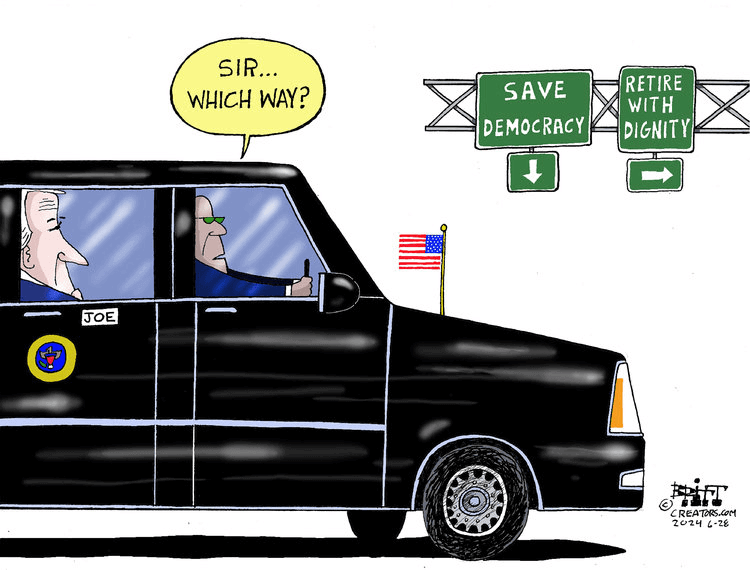
Tag Archives: joe-biden

Questions for Donald Trump

The press often complains that Kamala Harris doesn’t answer enough questions.
Here are some unanswered questions for Donald Trump.


Kamala Harris faces frequent criticism from from news media sites like The New York Times and CNN for not doing more interviews or providing more details about the plans she would pursue if she becomes president. This week, she released a 82-page economic plan and gave a 24-minute interview to MSNBC’s Stephanie Ruhle, but her critics were not satisfied.

The NYT’s Reid Epstein, for example, dismissed Ruhle (the host of MSNBC’s nightly The 11th Hour) as a “friendly interviewer” and compared the interview to Trump talking to Fox News’ Sean Hannity. [1] He wrote that Ruhle

avoided posing tricky questions about positions Ms. Harris supported during her 2020 presidential campaign or what, if anything, she knew about Mr. Biden’s physical condition or mental acuity as his own campaign deteriorated. [2]

and said that “A hard-hitting interview is yet to come.” [3]

Most of the specific questions Epstein accused Harris of “evading” are questions no politician ever answers, like why her opponent out-polls her on certain issues, or how she will pursue her plans if Democrats lose the Senate. (When was the last time you heard a candidate give a forthright answer to “What if your party loses?”) And as for the more general criticism, how are voters served by “tricky” questions that aim to “hit hard” rather than elicit information?

Yesterday the NYT pounded again on its Harris-needs-to-answer-questions theme by publishing Ashley Etienne’s essay. Etienne asserted that Harris needs to explain why she wants to be president (as if every previous campaign had communicated some unique and memorable reason). In general, people run for president because they think they can do a good job for the country. Why does Harris need a better reason?

I have written before about how the corporate media’s approach to this campaign fails to serve voters. CNN’s Jake Tapper often equates doing press interviews with “answer[ing] some of the questions that voters have about her policies”, but such questions are plainly not what interviewers ask. Dana Bash’s interview with Harris and Walz mostly confronted them with Trump-campaign talking points. In June, while he was still a candidate, Joe Biden sat with ABC’s George Stephanopoulos for 22 minutes, most of which Stephanopoulos spent trying to get Biden to describe the circumstances under which he would withdraw from the race (another question no politician has ever answered). I sincerely doubt that an undecided voter would have wasted the President’s time like that.

It seems clear to me that the demand for “hard-hitting interviews” is not about getting voters the information they need. Instead, critics seek the theater of an interviewer fencing with Harris and trying to trap her with “tricky questions”.

With that distinction in mind, I pose a challenge for the talking heads complaining that Harris isn’t sitting down with them: Tell us what questions you think Harris still needs to answer. If the point is to get voters the information they need, why does it matter that you (or someone from your organization) be in the room when it happens?

The double standard. I have also often complained that the press wants to hold Harris (like Biden before her) to a standard that they don’t apply to Trump. For example, whenever Biden would say the wrong word or call someone by the wrong name, the press would largely ignore whatever he had been trying to say (even if it was perfectly clear) and instead write a story highlighting the mistake and using it to question the President’s mental capacity. But Trump often makes similar mistakes, and regularly goes off on incoherent rambles that are arguably insane. Subsequent press reports do not highlight these moments, and Trump’s mental acuity is rarely questioned. Instead, reporters do their best to read sense into Trump’s words and report what they divine he meant rather than what he said.

Trump also gets credit for being more accessible to the press than Harris, even if he does not actually answer their questions, or answers with a transparent lie. Often, Trump responds to a “hard-hitting” or “tricky” question — or even just a question he has no good answer for — by calling the questioner “nasty” or accusing him or her of representing “fake news“. This vitriol has trained many reporters not to ask Trump difficult questions.

How well do you think that tactic would work for Harris?

Taking my own advice. So what I’m going to do below is follow the advice I’ve just given: I’m going to list the questions that I believe Trump still needs to answer. In my opinion, these are all questions voters might wonder about, and nothing in them is the least bit “tricky”. I have not tried to frame them in a hostile manner. Whenever possible, I have quoted Trump directly rather than put my own interpretation on his words. I have provided references for any facts that I claim, and in several of them I ask him to point to sources he considers more trustworthy. I have tried to focus my questions on positions he holds now, without comparison to differing positions he may have taken many years ago.

I believe that Trump has not given adequate answers to any of these questions. (If you know that he has, please leave a comment with a link referencing his answer.) Further, I don’t care how Trump provides this information, as long as it results in actual answers. To satisfy me, he doesn’t have to sit down with an interviewer I like or trust. If he wants to work his answers into speeches without being interviewed at all, or even without acknowledging that anyone has asked, that would be fine too.

Unlike The New York Times, I am looking for information, not theater.
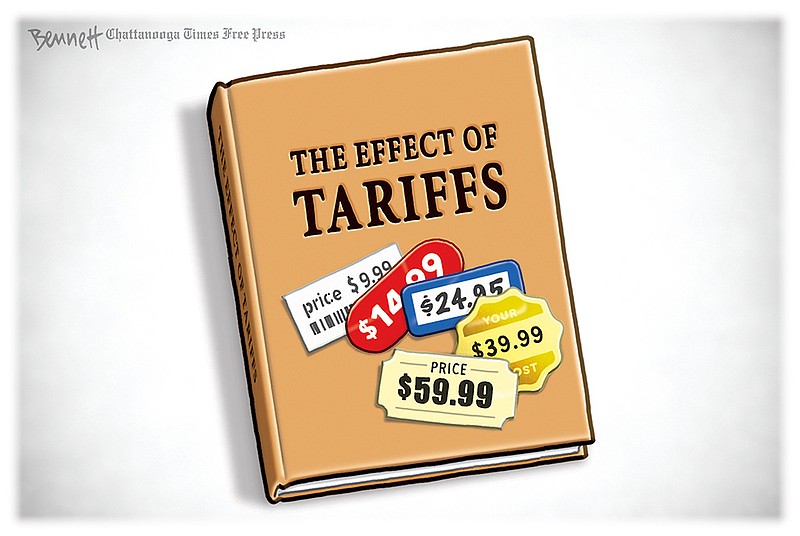
Questions about the economy. Trump’s economic proposals can be summed up as tariffs, tax cuts, and increased fossil fuel production. Since energy is an input into almost every other product, Trump is counting on increased oil production from his “drill baby drill” policy to drive down prices across the board. Meanwhile tariffs are supposed to simultaneously protect American industries from foreign competition while generating “trillions” in revenue that will bring down the deficit and pay for income tax cuts as well as some undetermined number of additional programs (like childcare, apparently). But he has provided very few specifics that can be tested and analyzed.

So here are my questions:

You have described tariffs as “a tax on another country“, even though the money is actually collected from the American importer, not the foreign exporter. What convinces you that the tax will ultimately be paid by foreign exporters (who would have to compensate by cutting their prices) rather than American consumers (who would have to pay higher prices)? Can you point to an economic analysis that supports your view?

If tariffs result in American companies facing less price competition from imports, won’t they just raise their prices? Does anything in your plan prevent this?

In some speeches you have suggested across-the-board tariffs of 10%, but in others it’s 20%, with rates up to 200% on specific products like electric cars. Can you be more specific about your tariff rates and how much revenue you expect to collect?

Many American industries depend on exports. What will you do if other countries retaliate with tariffs against American products?

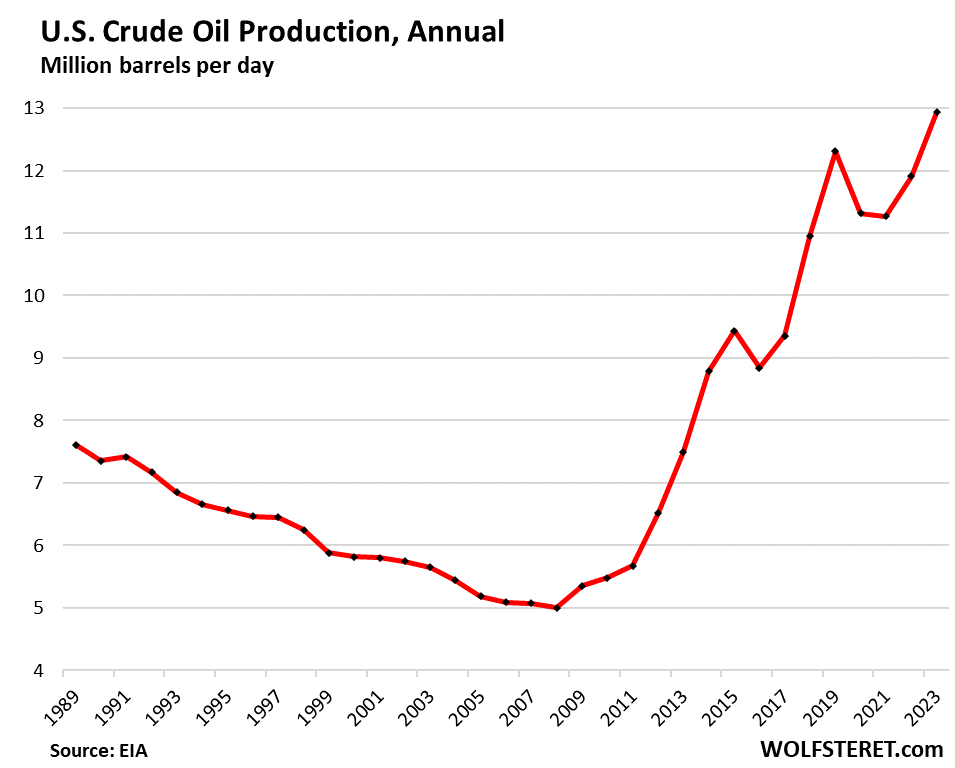
Oil production in the US has been rising steadily since 2008, and is now higher than in any other nation. The price of oil is currently lower than at any time since 2021, and at $68 per barrel is below the estimated break-even price of new wells in the Permian Basin. How much more production do you think we can get, and how low do you think the price of oil can go?
Questions about the environment. During his four years in office, Trump rolled back regulations designed to protect the environment, pulled out of the Paris Accords , and repeatedly minimized the effects of climate change.

You have said the climate change will increase sea level “one-eighth of an inch over the next 400 years“. Where did you get this information? Why do you find that source’s estimate more reliable than the EPA’s estimate that sea level is rising about an eighth of an inch every year?

Do you believe that warmer ocean temperatures contribute to destructive storms like Hurricane Helene?

Should the federal government be doing anything to decrease the use of fossil fuels in the US?

Questions about foreign policy. Trump’s first answer to questions about almost any foreign policy problem is that the problem wouldn’t exist if he were still president: Putin wouldn’t have invaded Ukraine, Hamas wouldn’t have attack Israel on October 7, and so on. Whatever you think of those claims, such answers are not adequate. The 47th president will have to deal with the situations that currently exist, independent of what might have happened in some alternate timeline.

In 2020, you proposed a modified two-state peace plan for Israel and Palestine, in which the Palestinian state would be fragmented and considerably smaller than territory Israel acquired in the 1967 war. But this year, you said that achieving two-state solution of any sort would be “very, very tough“. Do you currently have a vision of a future peace in that region? What long-term goals should US policy be working toward?

You have said you could end the Ukraine War in one day by talking to Presidents Putin and Zelenskyy, but you haven’t said what you would try to get them to agree to. J. D. Vance has described the process like this:

Trump sits down, says to the Russians, Ukrainians, and Europeans: ‘You guys need to figure out what does a peaceful settlement look like.’ And what it probably looks like is something like the current line of demarcation between Russia and Ukraine. That becomes like a demilitarized zone. It is heavily fortified so that Russians don’t invade again. Ukraine retains its independent sovereignty. Russia gets a guarantee of neutrality from Ukraine. It doesn’t join NATO. It doesn’t join some of these allied institutions.

Is that accurate?

Should the United States try to promote democracy in other countries?

You have said that Russia can do “whatever the hell they want” to NATO countries that don’t spend enough on their own defense. Which NATO nations does that currently leave vulnerable?

Questions about immigration. The issue Trump talks about most often and most passionately is immigration. But there is still much he hasn’t told us.

Earlier this year, Republican Senator James Lankford negotiated a bill to increase border security. Mitch McConnell said it didn’t pass because “our nominee for president didn’t seem to want us to do anything at all”. Is that an accurate description of what happened? Why did you oppose the bill?

You have proposed “mass deportation” of all undocumented immigrants, and have estimated that 20 million or more such people are currently in the United States. Could you describe in detail how that deportation operation would be carried out? How long do you expect this operation to take, and how much do you expect it to cost?

Given that many American citizens and legal residents have brown skin, common Hispanic names, and speak Spanish as their first language how will you protect them from being swept up in the mass deportation operation by mistake?

The US Chamber of Commerce claims we already have a labor shortage, with 8.2 million job openings but only 7.2 million job seekers. If we deport millions of workers, how will the US economy replace them? In particular, won’t deporting low-wage workers increase inflation?

Should the United States continue to honor its treaty obligations to offer asylum to refugees who face persecution in their home countries?

Is Christianity just one religion among many in America, or should the government treat Christians differently? For example, should Christian immigrants be favored over immigrants who practice Islam or some other religion?

Questions about social issues.

You have said that crime is “rampant and out of control“, and that the FBI statistics that show crime falling are “fake numbers“. Why do you base these claims on? Why is your source (whatever it is) more credible than the FBI?

You have said you would not sign a national abortion ban, and that you want the issue left to the states. But some abortion issues necessarily are made at the federal level. The drug mifepristone, used in about half of all abortions, is subject to FDA approval, which it currently has. You said in June that your FDA would not revoke access to the drug, but a subsequent comment in August was less clear. [4] Can you state a definite position on mifepristone?

In February, you told the NRA that “nothing happened” on gun control during your administration, and emphasized “We did nothing.” Can you offer any hope to Americans who worry about mass shootings?
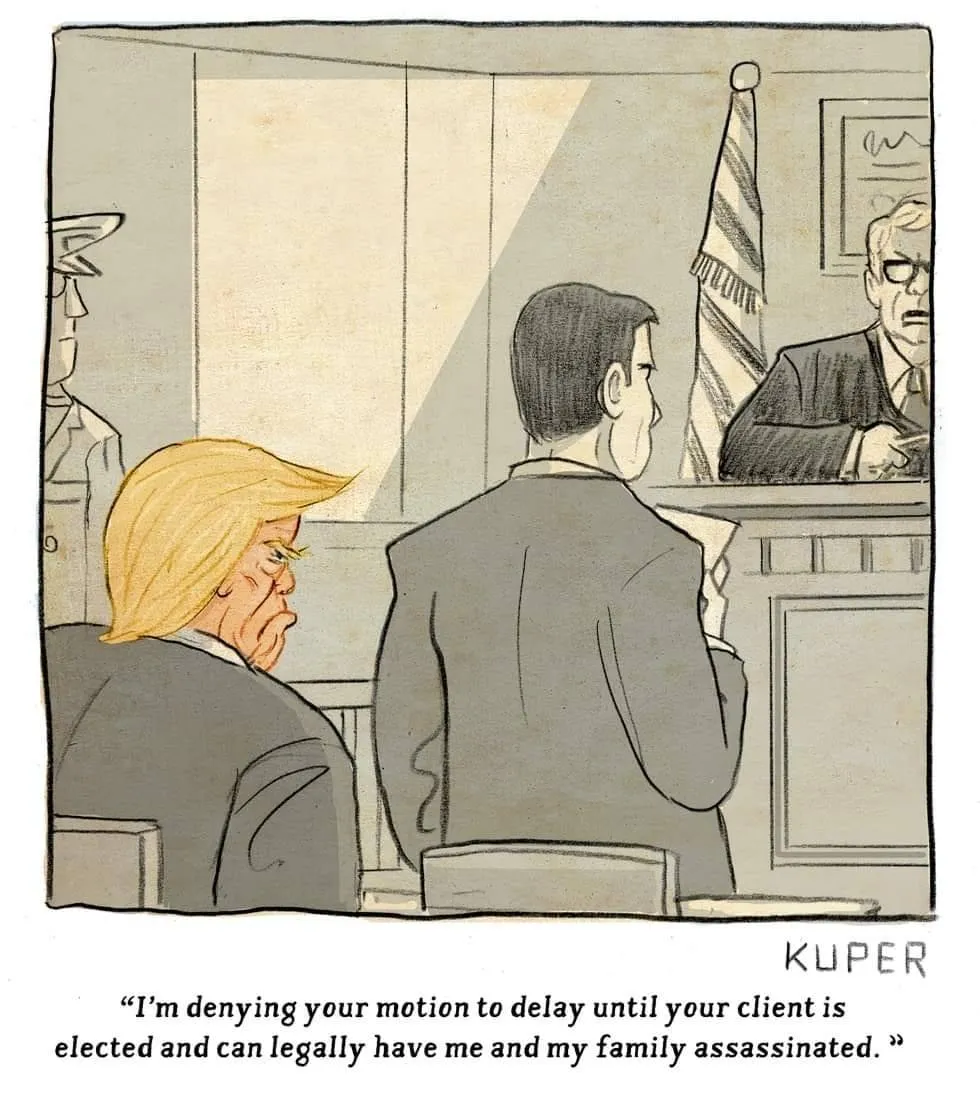
Questions about his indictments. In the summer of 2022, Trump complained that the January 6 Committee hearings were “one-sided“. But with regard to the claims made in the indictments against him, we don’t know Trump’s side of the story because he has never told it. Instead, he has refused to let himself be pinned down to any one account, and has thrown up multiple contradictory defenses, or simply claimed “I did nothing wrong” with no further details.

Sometimes, for example, he blames Antifa for the January 6 violence, sometimes he denies or minimizes the violence, and at other times he valorizes the violence by claiming that the convicted rioters are “warriors“, “hostages“, or “patriots“. Similarly, he has never explained exactly why he took classified documents to Mar-a-Lago or what he intended to do with them.

The press has simply accepted that he’s not going to provide these answers and has stopped asking the questions. That’s wrong. Voters deserve to know this information. Trump’s legal maneuvers have prevented the answers from coming out in court, but not even the Supreme Court can grant him immunity from the press or the voters. He should be asked the following questions, and criticized if he evades them.

When you asked the crowd to go to the Capitol on January 6, what did you expect them to do there? If you had gone to the Capitol yourself, as you told the crowd you would do, what did you intend to do?

The people who fought with police (and injured more than a hundred of them) on January 6 — were they your supporters?

At what point (if any) do you think the January 6th march to the Capitol started to go wrong? When did you become aware that the marchers had turned violent? Why didn’t you ask the crowd to go home at that point?

When people from your own campaign (like Bill Stepian) or your own administration (like Attorney General Bill Barr and CISA Director Chris Krebs) told you that you had lost the 2020 election and there was no significant fraud, why didn’t you believe them?

If you still believe the 2020 election was decided by fraud, how do you think the fraud was carried out? Please be specific.

Were any of the documents you brought to Mar-a-Lago after your presidency still classified? If not, when and how were they declassified?

On many occasions you have said that the Presidential Records Act gave you the right to possess the classified documents. I have looked for a legal expert who shares your interpretation of the PRA and I have not found one. Who is advising you on this? Is there a particular section in the law that you think gives you this right?

Did you understand that Mar-a-Lago had not been approved as a secure site for storing classified documents, and that you no longer had a security clearance?

Why were you interested in keeping those particular documents? What did you intend to do with them?

Why didn’t you return the documents when the National Archives asked for them?

When your lawyers told the government that all classified documents had been returned, were they carrying out your instructions? Did you believe that claim to be true?

When the FBI’s search discovered classified documents at Mar-a-Lago, were you surprised, or did you already know the documents were there? Some of your supporters believe the FBI planted the documents. Do you?

Were you aware that your employees at Mar-a-Lago were moving boxes of documents from room to room? Did you instruct them to do so? Was the purpose to hide the documents from someone?

Conclusion. The New York Times and corporate media in general are fond of “both sides” framing, a tendency the Pitchbot often parodies:

Whether it’s Kamala Harris celebrating Diwali or Donald Trump celebrating one really rough and nasty day of police violence, both candidates have embraced controversial holidays.

But on the unanswered-questions theme, coverage has been bizarrely one-sided: Only Harris needs to answer more questions or provide more information, and only Harris is criticized for “evasion” if her answers are unsatisfactory.

I hope the list above has made obvious that Trump also has a lot of questions to answer. The fact that the press has stopped asking does not mean that he has answered.


[1] The Ruhle/Hannity comparison is a false equivalence.

After the 2020 election, Hannity (like several other Fox News hosts) said one thing to his viewers about Trump’s allegations of voting-machine fraud, but said something quite different to colleagues in text messages. He was not the whole problem, but he certainly played a role in Fox needing to pay $787 million to settle Dominion’s defamation lawsuit. Ruhle has not been associated with any comparable journalistic wrongdoing. Hannity has repeatedly participated in Republican fund-raising, including for Trump’s 2020 campaign. Such partisan activity is a firing offense at MSNBC — and virtually any news organization other than Fox.

James Fallows commented:

We know how [Stephanie Ruhle is] going to vote—she has told us, and explained why. But she is not like Sean Hannity—nor Fox’s Jesse Watters or the now-exiled Tucker Carlson. She differs in that she respects the boundaries of established fact and won’t lie or pander to help “her side.” (If you disagree: Please send me an example of her doing so.)

[2] Harris has made it clear that she believes President Biden retains the physical and mental capacity to do his job, so there is no further question for her to answer. Prior to Biden withdrawing his candidacy, worries within the Democratic Party centered on whether Biden could turn the presidential race around and govern effectively until January, 2029 — not whether he could govern effectively until January, 2025.

[3] It’s striking how perfectly the satirical New York Times Pitchbot anticipated Epstein’s commentary:

Kamala Harris gave an interview, but not the right kind of interview.

[4] “Less clear” is kind. TNR described Trump’s answer as “gibberish“.
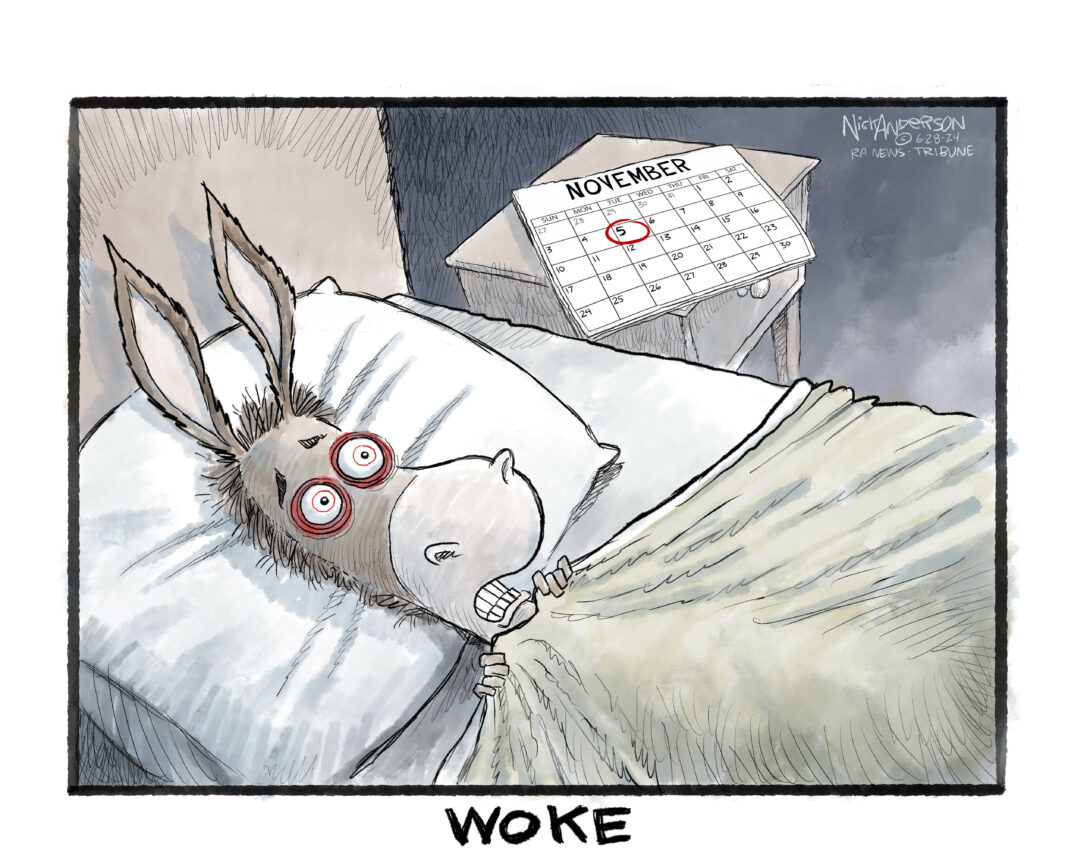
The Biden Situation

Last week, I covered the Biden debate fiasco and discussed what the next steps should be. The gist of what I said was that as an aging person myself (67) and having watched a number of other people age, what I saw in Biden — stumbling over words, not remembering names, and getting unfocused when he’s sick or tired — did not necessarily bother me all that much. Those symptoms seemed (to me, at least) unrelated to dementia or more worrisome problems of aging.

But other people, I pointed out, are in a position to see much more, and we should pay attention to what they have to say. As of last week, they weren’t saying much, and those who were talking were standing by Biden.

This week, though, some of the reports I wasn’t seeing last week started to come in. Some elected Democrats — though none of the heavyweights (Jeffries, Schumer, Pelosi, Obama …) — called on Biden to withdraw from the race. And reports from insiders started to leak, saying that the symptoms we saw during the debate have happened often in the past. (Though they’re not reporting anything worse than we saw in the debate, and they’re not telling me what I really want to know: When Biden loses focus, how long does it take him to snap back? Does a five-minute break and a cup of coffee do the trick, or is he done for the day?)

Also, polls have come in measuring the post-debate slippage: Biden has gone from more-or-less even to about 3 points behind in the polling averages (though individual polls show better or worse results). Also, where early polls had shown other Democrats running far behind Trump, more recent ones show them in more-or-less the same position as Biden: behind, but close. Michelle Obama actually clobbers Trump 50%-39%, but she has shown no interest in running. (It’s common for candidates to look good when they show no interest, only to lose support when they eventually run.) Kamala Harris trails by only 1%, belying the claim that she can’t win. Other Democrats trail by 3-6%.

Friday, Biden did something critics were insisting he needed to do: Sit down for a one-on-one interview with an independent journalist. He talked to ABC’s George Stephanopoulos for 22 minutes, an interview that I found frustrating to watch because it told me so little. Basically, Biden was the guy we elected in 2020: He occasionally had to hunt for the words he wanted, and sometimes he started one sentence and finished another (something I’ve been known to do), but nothing seemed fundamentally wrong with his thinking processes.

But 22 minutes isn’t that impressive, and I was disappointed in Stephanopoulos. Yes, the point of the interview was to test Biden’s sharpness. But couldn’t that purpose have been better accomplished, and the public better served, by asking him difficult questions about inflation, immigration, climate change, and so on? Instead, Stephanopoulos spent 22 minutes asking different versions of the same question: What would have to happen for you to quit the race?

No one should expect any politician to answer that question forthrightly. Quitting a political campaign is like asking for a divorce: You don’t talk about it until you’re ready to do it. In every election cycle, primary candidates swear they’re “in it to win it” right up until the moment they tell their staffs to go home. If Biden were to admit he was thinking about quitting, that would freeze his campaign, stop donors in their tracks, and start a chain reaction that would inevitably lead to him leaving the race. If he’s not ready to do it, he shouldn’t talk about it. No politician would.

Weirdly, commentators seemed not to understand this basic fact of politics, so a common response was that Biden is “in denial” about his situation.

For what it’s worth: CNN offered Trump a similar interview, and he refused. Trump only does interviews on friendly venues like Fox News or Newsmax, and often those are edited before the public sees them. And although Trump complained constantly about how his Manhattan trial was keeping him off the campaign trail, he isn’t actually campaigning that hard now that he can. His schedule for this week shows only two events, one tomorrow and one Saturday. In short, far from showing the youthful vigor Biden is said to lack, Trump has a less rigorous campaign schedule than Biden does — and Biden has a day job.

On the question of whether Biden should be the candidate, I’m less certain than I was last week. I continue to think switching candidates is a messier process than many commentators — I’m looking at you, Ezra Klein — imagine. Switching to anybody but Harris would be suicidal if Harris wasn’t all-in on the plan. And why should she be? Josh Marshall raises an important point in that regard: Who are the convention delegates who would be making that decision, and what small-d democratic legitimacy do they have?

[T]his process [where Harris is skipped over] simply has no legitimacy. And what angers me about these columnists is just the lack of humility. What are they talking about? On what basis and with what legitimacy or authority are they coming up with this fantasy process? We’re way, way off the rails of democratic legitimacy here. In a case like this it behooves us, both politically and far more substantively, to search for sources of legitimacy where we can and make our choices accordingly. And the obvious and clear ones all point to Kamala Harris. The American people chose her as Biden’s replacement in 2020. And while she wasn’t technically nominated for VP during this year’s primary process, in effect she was since Democrats chose Biden again fully knowing she was part of the package. Her name is literally in the name of the campaign.

Finally, it’s hard to discuss what Biden and his party should do next without acknowledging the overwhelming media stampede trying to push him out of the race. I don’t know where this is coming from, but I can’t remember anything quite like it. Monday, the Supreme Court’s decision on presidential immunity — which (as I covered in the previous post) isn’t quite the End of the Republic by itself, but could be a significant step in that direction — barely got air time because speculation about Biden crowded it out. Tuesday, USA Today published a topsy-turvy article that framed the immunity decision as a distraction from Biden’s troubles.

So here’s where I am at the current moment, understanding that new information keeps coming in: I don’t yet see anything in Biden that would keep him from continuing to do the good job he’s been doing these last several years. Going forward, he may have to work less and rest more, but I suspect that even then he would be working far harder than Trump ever did when he was president.

Politically, the question is closer: Biden has something to prove now, and he may not be a skilled enough politician to prove it. At a minimum, he needs more exposure like the Stephanopoulos interview, and he needs to go without any public senior moments, even minor ones, for the rest of the campaign. Can he do that? I’m not sure.

I’m particularly unsure he can prove what he needs to prove in the face of intense opposition from the likes the the NYT, CNN, and other mainstream media outlets. Maybe Obama had the skills to turn something like this around, or maybe Bill Clinton in his prime. But Biden has never been in that class.

No one should minimize the risks in either direction.

I often hear the suggestion that if Biden would just do X, that would put the controversy to bed. So why doesn’t he? Isn’t he just admitting he can’t? (A few days before the Stephanopoulos interview, X was “sit down for a one-on-one interview”. During it, X was “undergo an independent medical evaluation that included neurological and cognitive tests and release the results to the American people.”) But when has such a strategy ever worked? Does anyone ever do X and get the response, “Thank you. We can move on now.”? I have never seen it. Doing X just leads to an explanation of why X wasn’t good enough, followed by a demand that you do Y.

Similarly, the Democratic Party is now hearing that we can move on to talk about the substantive issues of this campaign (democracy vs. authoritarianism, climate change, abortion, Gaza, Ukraine, competition with China, immigration, all the ways Trump will abuse the Supreme Court’s newly invented presidential immunity …) once we do X, namely, replace Biden as our candidate.

Is that true? I doubt it. So does Michelangelo Signorile:

Don’t fall for trap. If Democrats listen to the New York Times and try to replace Biden, NYT will have a new narrative: Democrats in chaos. And they will then have 347 stories a week about whoever is the candidate, all focused on how inexperienced and unprepared that person is.

David Roberts is even more blunt:

So, say Biden stepped aside in favor of Harris tomorrow. How long until the vapid gossips we call political reporters find something wrong with her, some alleged flaw they just have to write 192 stories about? How long until the hopped-up mediocrities we call pundits find some “counter-intuitive” reason that the new Dem ticket is flawed after all? How long until the irredentist left gets over the temporary thrill of its new Harris memes & remembers that she’s a cop & turns on her? How long before the ambient racism & misogyny in the US lead center-leftists to conclude that, sure, they’d support a black woman, just not *this* black woman? In other words: how long before everyone reverts to their comfortable, familiar identity & narratives? About 30 f’ing seconds, is my guess.

Is that take too pessimistic, too cynical? We may soon find out.

They Both Lost. What Now?

Biden and Trump each needed to reassure the small flock of undecided voters that the country would be safe in his hands for the next four years. They failed in different ways, but they both failed.


The headlines Friday morning summed things up pretty well: Biden stumbled, while Trump lied. If you were worried that Joe Biden is too old to do the job, he did nothing to give you confidence in his vigor. But if you were worried that Donald Trump can’t be trusted to respond to the real problems America faces, rather than issues spawned by his dark imagination, he also did nothing to ease your mind.

The news coverage has tended to make more of Biden’s failings, stoking talk of replacing him on the Democratic ticket (which we’ll get to down the page), but it’s not clear that Trump’s were any less significant. It’s too soon to see much post-debate polling, but while most observers said Trump won the debate, the first post-debate head-to-head Morning Consult poll showed Biden gaining a point, leading Trump 45%-44% after being tied pre-debate. I wouldn’t count on that result holding up as more data comes in, but it does indicate that few minds were changed.

Overall, Biden was low energy and not sharp. His voice was raspy and he frequently had to clear his throat. (His people afterwards said he had a cold.) His lifelong trouble finding words was worse than usual, leading to occasional incoherent statements like this:

For example, we have a thousand trillionaires in America – I mean, billionaires in America. And what’s happening? They’re in a situation where they, in fact, pay 8.2 percent in taxes. If they just paid 24 percent or 25 percent, either one of those numbers, they’d raised $500 million – billion dollars, I should say, in a 10-year period.

We’d be able to right – wipe out his debt. We’d be able to help make sure that – all those things we need to do, childcare, elder care, making sure that we continue to strengthen our healthcare system, making sure that we’re able to make every single solitary person eligible for what I’ve been able to do with the COVID – excuse me, with dealing with everything we have to do with.

Look, if – we finally beat Medicare. [time’s up]

Trump, meanwhile, seemed incapable of simply telling the truth. Here’s CNN’s post-debate fact checker:

Trump made more than 30 false claims at the Thursday debate. They included numerous claims that CNN and others have already debunked during the current presidential campaign or prior.

Trump’s repeat falsehoods included his assertions that some Democratic-led states allow babies to be executed after birth, that every legal scholar and everybody in general wanted Roe v. Wade overturned, that there were no terror attacks during his presidency, that Iran didn’t fund terror groups during his presidency, that the US has provided more aid to Ukraine than Europe has, that Biden for years referred to Black people as “super predators,” that Biden is planning to quadruple people’s taxes, that then-House Speaker Nancy Pelosi turned down 10,000 National Guard troops for the US Capitol on January 6, 2021that Americans don’t pay the cost of his tariffs on China and other countries, that Europe accepts no American cars, that he is the president who got the Veterans Choice program through Congress, and that fraud marred the results of the 2020 election.

Trump also added some new false claims, such as his assertions that the US currently has its biggest budget deficit and its biggest trade deficit with China. Both records actually occurred under Trump.

Sadly, that kind of fact-checking was totally absent during the debate itself, as the moderators showed no interest in whether candidates answered their questions truthfully, or even answered them at all.

Democratic panic. Republicans seemed to worry not at all about Trump’s lies, just as they have not worried about his criminality. They long ago decided to nod their heads to whatever he says or does rather than worry about whether he’s talking about anything real. Some of them actually believe claims like the nonsense listed above. Those votes are not up for grabs, but I think it’s a mistake for Democrats to worry about them. They’re not a majority and Trump can’t win with the MAGA cultists alone.

Democrats, meanwhile, were shocked and saddened by Biden’s performance. Former Democratic Senator (and frequent MSNBC contributor) Claire McCaskill’s response was typical:

I have been a surrogate for some presidential candidates in my time, and I know what the job is after a debate for a surrogate. And I’ve never wanted to be a surrogate more than I do right now. Because when you’re a surrogate, you have to focus on the positives. But, as I have said very clearly and very plainly — and my job now is to be really honest — Joe Biden had one thing he had to do last night, and he didn’t do it.

The president had to reassure America that he was up to the job at his age. And he failed. … Based on what I’m hearing from a lot of people, some in high elected offices in this country, there is a lot more than hand-wringing going on. I do think people feel like we are confronting a crisis.

This debate felt like a gut punch to most people in this country, especially to those who are paying close attention and know how dangerous Trump is. And I think it’ll take a couple of days for people to recover from that punch.

From months now I’ve been chronicling the New York Times anti-Biden slant. So naturally they picked this moment to pile on. Their editorial board called on Biden to “leave the race“, and were echoed by NYT columnists Thomas Friedman, Frank Bruni, Nicholas Kristof, Maureen Dowd, and Lydia Polgreen. Jamelle Bouie, Michelle Goldberg, Bret Stephens, and Patrick Healey had a round-table discussion, with only Bouie expressing any doubt about the advisability of replacing Biden on the ticket. Ezra Klein, Michelle Cottle, and Ross Douthat had an even more one-sided conversation on Klein’s podcast. The NYT had to go to a guest essayist, Lincoln Project’s Stuart Stevens, to make the don’t-panic case.

The Times, of course, was not the only source of Biden-needs-to-quit thinking, which at times seemed to hit panic levels. I got up Friday morning feeling like something needed to happen right now. But then the voice of experience spoke up: For most of my life, decisions that I’ve made out of that sense of panic haven’t turned out very well.

We need to think about this.

Excuses for Biden. Hardly anybody is denying that the debate went badly for Biden. But the people who think it wasn’t that bad make a number of points.

  • The appearance was worse than the substance. Despite occasional moments like the one I quoted above, where words didn’t come together for Biden and he ran out of time, reading the transcript leaves me with a very different impression than watching the video. In the video, Biden’s voice is soft and raspy, he has to keep stopping to clear his throat, and he fails to deliver his lines with the proper force. In the transcript, he often does the things it seemed like he wasn’t doing: calling out Trump’s lies and countering with the appropriate examples. There was a problem, but it wasn’t with his mind.
  • He had a bad night. It happens. (In particular, it happened to Obama in his first debate with Romney in 2012.) But Biden did much better the next day at a rally in North Carolina, where (despite still needing to clear his throat) he forcefully delivered the sound bite I think his campaign needs to center on: “I know I’m not a young man, to state the obvious. I don’t walk as easy as I used to. I don’t speak as smoothly as I used to. I don’t debate as well as I used to. But I know what I do know: I know how to tell the truth. I know right from wrong. And I know how to do this job. I know how to get things done.”
  • He had a cold. This sounds like a lame excuse, but it does match what we saw and heard: raspy voice, low energy, etc.
  • There’s time to fix this. Obama came back from his debate failure, which happened after the convention in early October.

But that last point raises an important question: Is Biden’s problem fixable? Did he indeed just have a bad night, or did the debate reveal who he really is now?

How I’m thinking about this. Three weeks ago, I wrote a piece called “To Stop Fascism, Unite Around the Old Guy” in which I argued against the view that Biden should withdraw from the race. Much of what I said then is still true: Biden has a good record to run on, there’s no obvious savior waiting in the wings to replace him, and an open convention would risk splintering the party. [1]

But the first point I made is now open to question: “Biden is fine.” Is he? I was basing my analysis on the idea that the Biden-is-losing-it theory was a right-wing construction equivalent to Hillary’s emails. I had been impressed by the State of the Union address, and believed that he would continue to rise to the occasion whenever he needed to. I urged people to watch the upcoming debate: “If you’re expecting Biden to be a doddering old man, I think you’ll be surprised.”

That prediction doesn’t look so good now. The debate was an occasion, and Biden didn’t rise to it. Going forward, is that the exception or the rule? If we can count on Biden having a good second debate, a good convention speech, and a bunch of rallies like Friday’s, then the first debate will be a distant memory by the time people vote in November. In short, we’re fine if this is the real Biden, and not the man we saw Thursday night.

But is that true?

And this is a point where I have to admit that I’m not in a position to know. Other people are. Jill is, obviously. The White House staff is, and probably most of the cabinet. So are major elected Democrats like Kamala Harris, Chuck Schumer, Hakeem Jeffries, Nancy Pelosi, and several others.

What I’m noticing is that, after reacting with uncertainty Friday morning, those people are circling the wagons around Biden. The Biden-should-quit voices are mainly coming from outside his circle, people who probably don’t know any more than I do.

You might say, “Of course the party leaders and his staff have to say that.” But (other than Harris, who would hurt her own prospects by appearing disloyal) they don’t, really. Party leaders could be non-committal, saying things like “I trust President Biden. I think he’ll make the right decision now the way he always does, and I’m going to support him either way.” [2] They could be converging on the White House to do an intervention, but that doesn’t seem to be happening.

Similarly, staffers can’t express their doubts in live interviews, but they could leak. We could be seeing Washington Post stories about “informed sources in the White House” getting increasingly worried about Biden. But we’re not.

You might suppose that the insiders have an affection for Biden and don’t want to hurt his feelings. And I might believe that about Jill (though I suspect even she would rather see him avoid humiliation, if that’s what’s coming). But picture Nancy Pelosi for a moment. Do you think she’d sacrifice an election because she didn’t want to hurt somebody’s feelings? That’s not the woman I’ve been watching all these years.

In short, I think I have to trust the insiders here. That’s not a comfortable position to be in. But it’s the one that makes sense to me.


[1] Replacing Biden with Harris could happen fairly cleanly: Biden endorses her and his convention delegates follow his lead. Done right, Biden’s exit could generate a wave of positive emotion that he could transfer to Harris, who would be stepping up to answer the call of History.

But Harris also has a low approval rating and didn’t run a great primary campaign in 2020, so many Democrats don’t feel confident in her beating Trump. Those people call for Biden to endorse no one and let an open convention choose among many candidates.

Jamelle Bouie spelled out the problem with that plan:

There is a real risk that the process of choosing a new nominee could tear open the visible seams in the Democratic Party. I have noticed that only a handful of calls for Biden to leave are followed by “and Vice President Harris should take his place.” More often, there is a call for a contested convention. But why, exactly, should Harris step aside? Why should Harris not be considered the presumptive nominee on account of her service as vice president and her presence on the 2020 ticket? And should Harris be muscled out, how does this affect a new nominee’s relationship with key parts of the Democratic base, specifically those Black voters for whom Harris’s presence on the ticket was an affirmation of Biden’s political commitment to their communities?

Elie Mystal put it more bluntly:

Listening to white folks blithely talk about pushing Biden off a cliff, skipping over Harris, and trotting out some white person like ain’t nobody gonna notice that is some *hilarious* shit. Some of y’all need to phone a friend. A black one.

The nominee is going to be Biden. And if he doesn’t want to run anymore (and I don’t think he thinks a bad 90 minutes is career altering, even if others do) it’s going to be Harris. And that is the sum total of viable options. Send your Aaron Sorkin script back for editing.

And race is only one issue. If multiple candidates ran, they would face pressure to differentiate themselves from each other. So, for example, we might have the pro-Israel candidate and the anti-Israel candidate. Picking either one would alienate a slice of the party the nominee would need in November.

[2] Friday morning, a few were making those non-committal statements. But by Saturday they had gotten behind Biden. Hakeem Jeffries, for example, made a classic non-commitment statement on Friday:

I’m looking forward to hearing from President Biden. And until he articulates a way forward in terms of his vision for America at this moment, I’m going to reserve comment about anything relative to where we are at this moment, other than to say I stand behind the ticket.

Yesterday, though, he described the debate as “a setback”, but

A setback is nothing more than a setup for a comeback. And the reality is, Joe Biden has confronted and had to come back from tragedy, trials, from tribulations throughout his entire life.