
Depressed consumers and record-setting stock markets don’t usually go together.
Why are they both happening now?
I recently came across these two facts:
- The stock market hit an all-time high on October 29 (for the S&P 500) or November 12 (for the Dow Jones average).
- Consumer sentiment is near an all-time low.
Those two puzzle pieces are hard to fit together. Naively, you might think the S&P 500 and the Index of Consumer Sentiment measure the same thing: optimism about the economy. But apparently the economy looks very different depending on where you stand: Investors are optimistic, consumers pessimistic.
Statistics. Government statistics paint a mixed picture: GDP growth for the first half of 2025 was 2.1%, which is about what it’s been averaging for years now, and is neither good nor bad. At 4.4%, unemployment is higher than it’s been lately, but relatively low by historical standards. (It was more than twice that high during the Great Recession of 2008-2009, and briefly peaked at 13.2% early in the Covid lockdown.) Inflation is running at about 3% — rising somewhat recently and higher than the Fed target of 2%, but well below the 7% of 2021, not to mention the 13.3% of 1979. Interest rates are in similar territory: A 30-year mortgage is running around 6.11%, which is neither exceptionally high nor exceptionally low, compared to, say, 3.15% in 2021 and 7% in 2023, not to mention 16% in 1982.
For a few years now, economists have been scratching their heads and talking about the “vibecession“, an economy that feels worse than the data justifies. (Paul Krugman has written several paywalled articles on this, beginning here.) In 2024, the Biden administration was fighting consumers’ pessimistic vibes, and now the Trump administration is. (The public’s assessment of Trump’s handling of the economy is deeply negative: 40% approval vs. 57% disapproval, according to the RCP polling average.)
Stocks. The stock market’s euphoria is somewhat easier to square with the ho-hum economic numbers: The record gains don’t represent a broad optimism about the economy, but instead are concentrated in a handful of stocks that have something to do with artificial intelligence (AI). For example, a flagship consumer company like Proctor & Gamble that has little to do with AI has seen its stock fall this year, from 180 in January to about 150 now. Pepsi was at 165 early this year and is at 146 now. Target is down from 145 to 87.
Understand that I have cherry-picked those companies to make a point; most stock prices have increased somewhat this year. But a J. P. Morgan analyst wrote in September:
AI related stocks have accounted for 75% of S&P 500 returns, 80% of earnings growth and 90% of capital spending growth since ChatGPT launched in November 2022.
The poster child for the AI boom is Nvidia, which you may not realize has recently become the most valuable corporation in the world, with a market capitalization (i.e., stock price per share times number of shares) that briefly topped $5 trillion at the end of October. Even more impressive: It didn’t cross the $1 trillion mark until sometime in 2023. The stock (adjusted for splits) was below $15 at the beginning of 2023 and hit $212 a few weeks ago.
Other AI heavyweights include Microsoft, Google, Amazon, Broadcom, IBM, Oracle, and a few other corporations. Not all of their stocks have soared as far and as fast as Nvidia’s, but their investors have been doing quite well.
Why don’t consumers identify with this boom? It’s simple: AI hasn’t really affected everyday life much yet, so it doesn’t feel like we’re in the middle of a generation-defining revolution. I know lots of people who have played with ChatGPT or some other AI app, and I’ve gotten used to the AI summary at the top of Google searches (though I don’t trust it yet). But I know very few people who either buy significant AI-related products or use AI tools to produce products they couldn’t produce otherwise.
At the moment, AI’s significance in the economy doesn’t justify its significance in the stock market. We’re at a point with AI similar to where we were with the internet in 2000: Most of us could check weather.com or order a cheap book from Amazon, but our lives had not yet significantly changed. Like the Internet stocks in 2000, AI stock valuations are based on visions of a future that is still to arrive.
Is AI in a bubble? That gap between investor’s visions and current reality raises a question: The Internet bubble popped, with great losses to many investors and an impact on the broader economy. Is AI also a bubble, and what will happen if it pops?
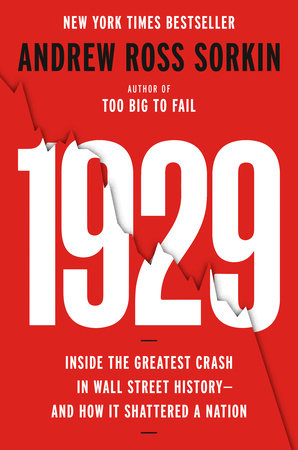
I’m currently reading 1929: Inside the Greatest Crash in Wall Street History by Andrew Ross Sorkin. I’ve also lived through the internet bubble of 2000-2001 and the subprime-mortgage real estate bubble of 2008. One common characteristic of bubbles is that accounting departments get a bit creative near the end. Everyone is convinced the market will keep going up, and a rising market can hide a lot of corner-cutting. (As legendary investor Warren Buffet once put it: “It’s only when the tide goes out that you discover who’s been swimming naked.”)
That kind of questionable accounting is happening inside the big AI-related companies today. This post by Shanaka Anslem Perera is a bit wonky, but puts the puzzle pieces together, focusing on Nvidia.
Wednesday evening, Nvidia reported its third-quarter earnings, which were up and looked excellent. The stock surged. And then a combination of human and (ironically) machine intelligence started digging into the footnotes of that report: Nvidia was booking sales that its customers were slow to pay for. In short, it was delivering chips, but not raking in a corresponding amount of cash. Second, its inventories were growing, which contradicts the common belief that Nvidia benefits from insatiable demand.
A third tell-tale sign is the incestuous flow of capital among the various AI corporations.

Perera writes:
The structure extends throughout the AI ecosystem. Microsoft invested $13 billion in OpenAI. OpenAI committed $50 billion to Microsoft Azure cloud services over five years. Microsoft uses those committed dollars to purchase Nvidia GPUs for Azure datacenters. Nvidia books the GPU sales as revenue.
Oracle announced a $300 billion, five-year cloud infrastructure partnership with OpenAI. This partnership requires Oracle to deploy Nvidia GPUs. Oracle has pre-ordered $8 billion in Blackwell architecture chips from Nvidia. OpenAI’s ability to fulfill its $300 billion Oracle commitment depends on OpenAI generating revenue that currently runs at $3.7 billion annually—a gap of $56.3 billion per year.
The total network spans $610 billion in circular commitments, according to an analysis of SEC filings, venture capital deal databases, and disclosed partnerships. The money flows in loops: Nvidia invests in AI startups, startups commit to cloud spending, cloud providers purchase Nvidia hardware, Nvidia recognizes revenue, but the cash never completes the circuit because the underlying economic activity—AI applications generating profit—remains insufficient.
That’s a complicated diagram, and AI is an intimidating subject. But a parallel example from a more mundane industry makes the pattern easier to grasp: How Boston Chicken went broke in the 1990s.
In a nutshell, the Boston Market formula worked like this: the company raised money in the stock market and then loaned it to large, sophisticated franchisees (known as “area developers”), who used the funds to open lots of Boston Market stores in a short time.
These developers then paid the company a franchise fee for each new store, royalties on food sales and interest on the loans. So right away, the Boston Market operation looked hugely profitable. That boosted the stock, which gave the company yet more cheap capital to lend to developers, to open yet more stores.
Even if the individual Boston Market franchisees were hemorrhaging money, that would have no impact on the parent company’s bottom line. The franchisees’ costs and losses were their own problem.
As a whole, the Boston Market corporate/franchisee operation wasn’t profitable, but the corporate side of it looked profitable by pushing its losses off on the franchisees. Ultimately, the loans the corporation had made to the franchisees couldn’t be repaid, and the whole scheme unraveled.
Something similar is happening with Nvidia: It raises money on the stock market and invests it in companies like Open AI and Coreweave, who send it to Microsoft or Amazon, who in turn use it to buy Nvidia’s products. Eliminate the middlemen, and Nvidia is essentially buying its own products. You can’t make money doing that, no matter what your earning statements say. What’s missing here is the consumer: Who’s going to buy enough AI-related products to make everyone involved profitable?
Patterns like this can resolve in one of two ways: Either the industry as a whole starts making money, i.e., the AI-to-consumer link suddenly develops in ways that produce boatloads of cash to pay for Nvidia’s chips, or the whole thing collapses on itself.

For historical perspective on this kind of thing, one classic read is Only Yesterday by Frederick Lewis Allen. The book is 1931’s view of the roaring 1920s. By 1931, the Depression was deepening and all the investment booms of the 20s had gone bust. But the striking thing about them (from our point of view, which Allen could not foresee) is that the narratives behind those booms were not wrong: The story of the Florida land boom was that Northerners were going to start retiring to Florida. Suburban real estate bubbled because automobiles would make it possible to move away from the crowded cities. Even the stock market boom that ended in the crash of 1929 had good narrative sense behind it: The Nvidea of the late 1920s was RCA, because radio was going to change everything. Also: chains like Sears and Montgomery Ward were going to out-compete the Mom-and-Pop stores. The automobile market still had a lot of growth in it. Aviation was a field with a big future. And so on.
The visions that inspired the booms of the 1920s nearly all came true, but not until the 1950s, long after the original investors were bankrupt. That happened again in the internet bubble: The internet did change everything, but not as fast or as easily as the boom companies needed it to. Something similar could happen with AI. The seers of an AI-dominated future don’t have to be wrong, they could just be too optimistic about timing.
What happens then? The larger economy is always harmed when a bubble pops, because a large quantity of capital appears to suddenly vanish. Actually, it went away gradually over a period of time as people made investments that weren’t going to pay off within the time horizons they needed. But the bubble obscured that reality, so when it pops the loss seems instantaneous. Loans that seemed to have adequate collateral suddenly don’t, and companies that had seemed healthy are suddenly insolvent. Bankruptcies lead to other bankruptcies like falling dominoes — I can’t pay you back because I was counting on other people to pay me back.
Because I’m losing money in one area, I need to sell my investments in other areas to raise cash. So the losses spread. (Tech investors also tend to be cryto-currency fans, expect to see Bitcoin prices collapse first, before a widespread banking crisis. That’s already started.)
Even people and businesses that are solvent stop spending, just from the sheer uncertainty of everything. Eventually governments have to step in, both by spending to prop up demand and as a lender of last resort to keep the banking system from collapsing.
None of that is inevitable. But it looks increasingly likely.
 The Weekly Sift