Last week, I covered the Biden debate fiasco and discussed what the next steps should be. The gist of what I said was that as an aging person myself (67) and having watched a number of other people age, what I saw in Biden — stumbling over words, not remembering names, and getting unfocused when he’s sick or tired — did not necessarily bother me all that much. Those symptoms seemed (to me, at least) unrelated to dementia or more worrisome problems of aging.
But other people, I pointed out, are in a position to see much more, and we should pay attention to what they have to say. As of last week, they weren’t saying much, and those who were talking were standing by Biden.
This week, though, some of the reports I wasn’t seeing last week started to come in. Some elected Democrats — though none of the heavyweights (Jeffries, Schumer, Pelosi, Obama …) — called on Biden to withdraw from the race. And reports from insiders started to leak, saying that the symptoms we saw during the debate have happened often in the past. (Though they’re not reporting anything worse than we saw in the debate, and they’re not telling me what I really want to know: When Biden loses focus, how long does it take him to snap back? Does a five-minute break and a cup of coffee do the trick, or is he done for the day?)
Also, polls have come in measuring the post-debate slippage: Biden has gone from more-or-less even to about 3 points behind in the polling averages (though individual polls show better or worse results). Also, where early polls had shown other Democrats running far behind Trump, more recent ones show them in more-or-less the same position as Biden: behind, but close. Michelle Obama actually clobbers Trump 50%-39%, but she has shown no interest in running. (It’s common for candidates to look good when they show no interest, only to lose support when they eventually run.) Kamala Harris trails by only 1%, belying the claim that she can’t win. Other Democrats trail by 3-6%.
Friday, Biden did something critics were insisting he needed to do: Sit down for a one-on-one interview with an independent journalist. He talked to ABC’s George Stephanopoulos for 22 minutes, an interview that I found frustrating to watch because it told me so little. Basically, Biden was the guy we elected in 2020: He occasionally had to hunt for the words he wanted, and sometimes he started one sentence and finished another (something I’ve been known to do), but nothing seemed fundamentally wrong with his thinking processes.
But 22 minutes isn’t that impressive, and I was disappointed in Stephanopoulos. Yes, the point of the interview was to test Biden’s sharpness. But couldn’t that purpose have been better accomplished, and the public better served, by asking him difficult questions about inflation, immigration, climate change, and so on? Instead, Stephanopoulos spent 22 minutes asking different versions of the same question: What would have to happen for you to quit the race?
No one should expect any politician to answer that question forthrightly. Quitting a political campaign is like asking for a divorce: You don’t talk about it until you’re ready to do it. In every election cycle, primary candidates swear they’re “in it to win it” right up until the moment they tell their staffs to go home. If Biden were to admit he was thinking about quitting, that would freeze his campaign, stop donors in their tracks, and start a chain reaction that would inevitably lead to him leaving the race. If he’s not ready to do it, he shouldn’t talk about it. No politician would.
Weirdly, commentators seemed not to understand this basic fact of politics, so a common response was that Biden is “in denial” about his situation.
For what it’s worth: CNN offered Trump a similar interview, and he refused. Trump only does interviews on friendly venues like Fox News or Newsmax, and often those are edited before the public sees them. And although Trump complained constantly about how his Manhattan trial was keeping him off the campaign trail, he isn’t actually campaigning that hard now that he can. His schedule for this week shows only two events, one tomorrow and one Saturday. In short, far from showing the youthful vigor Biden is said to lack, Trump has a less rigorous campaign schedule than Biden does — and Biden has a day job.
On the question of whether Biden should be the candidate, I’m less certain than I was last week. I continue to think switching candidates is a messier process than many commentators — I’m looking at you, Ezra Klein — imagine. Switching to anybody but Harris would be suicidal if Harris wasn’t all-in on the plan. And why should she be? Josh Marshall raises an important point in that regard: Who are the convention delegates who would be making that decision, and what small-d democratic legitimacy do they have?
[T]his process [where Harris is skipped over] simply has no legitimacy. And what angers me about these columnists is just the lack of humility. What are they talking about? On what basis and with what legitimacy or authority are they coming up with this fantasy process? We’re way, way off the rails of democratic legitimacy here. In a case like this it behooves us, both politically and far more substantively, to search for sources of legitimacy where we can and make our choices accordingly. And the obvious and clear ones all point to Kamala Harris. The American people chose her as Biden’s replacement in 2020. And while she wasn’t technically nominated for VP during this year’s primary process, in effect she was since Democrats chose Biden again fully knowing she was part of the package. Her name is literally in the name of the campaign.
Finally, it’s hard to discuss what Biden and his party should do next without acknowledging the overwhelming media stampede trying to push him out of the race. I don’t know where this is coming from, but I can’t remember anything quite like it. Monday, the Supreme Court’s decision on presidential immunity — which (as I covered in the previous post) isn’t quite the End of the Republic by itself, but could be a significant step in that direction — barely got air time because speculation about Biden crowded it out. Tuesday, USA Today published a topsy-turvy article that framed the immunity decision as a distraction from Biden’s troubles.
So here’s where I am at the current moment, understanding that new information keeps coming in: I don’t yet see anything in Biden that would keep him from continuing to do the good job he’s been doing these last several years. Going forward, he may have to work less and rest more, but I suspect that even then he would be working far harder than Trump ever did when he was president.
Politically, the question is closer: Biden has something to prove now, and he may not be a skilled enough politician to prove it. At a minimum, he needs more exposure like the Stephanopoulos interview, and he needs to go without any public senior moments, even minor ones, for the rest of the campaign. Can he do that? I’m not sure.
I’m particularly unsure he can prove what he needs to prove in the face of intense opposition from the likes the the NYT, CNN, and other mainstream media outlets. Maybe Obama had the skills to turn something like this around, or maybe Bill Clinton in his prime. But Biden has never been in that class.
No one should minimize the risks in either direction.
I often hear the suggestion that if Biden would just do X, that would put the controversy to bed. So why doesn’t he? Isn’t he just admitting he can’t? (A few days before the Stephanopoulos interview, X was “sit down for a one-on-one interview”. During it, X was “undergo an independent medical evaluation that included neurological and cognitive tests and release the results to the American people.”) But when has such a strategy ever worked? Does anyone ever do X and get the response, “Thank you. We can move on now.”? I have never seen it. Doing X just leads to an explanation of why X wasn’t good enough, followed by a demand that you do Y.
Similarly, the Democratic Party is now hearing that we can move on to talk about the substantive issues of this campaign (democracy vs. authoritarianism, climate change, abortion, Gaza, Ukraine, competition with China, immigration, all the ways Trump will abuse the Supreme Court’s newly invented presidential immunity …) once we do X, namely, replace Biden as our candidate.
Don’t fall for trap. If Democrats listen to the New York Times and try to replace Biden, NYT will have a new narrative: Democrats in chaos. And they will then have 347 stories a week about whoever is the candidate, all focused on how inexperienced and unprepared that person is.
So, say Biden stepped aside in favor of Harris tomorrow. How long until the vapid gossips we call political reporters find something wrong with her, some alleged flaw they just have to write 192 stories about? How long until the hopped-up mediocrities we call pundits find some “counter-intuitive” reason that the new Dem ticket is flawed after all? How long until the irredentist left gets over the temporary thrill of its new Harris memes & remembers that she’s a cop & turns on her? How long before the ambient racism & misogyny in the US lead center-leftists to conclude that, sure, they’d support a black woman, just not *this* black woman? In other words: how long before everyone reverts to their comfortable, familiar identity & narratives? About 30 f’ing seconds, is my guess.
Is that take too pessimistic, too cynical? We may soon find out.
Biden and Trump each needed to reassure the small flock of undecided voters that the country would be safe in his hands for the next four years. They failed in different ways, but they both failed.
The headlines Friday morning summed things up pretty well: Biden stumbled, while Trump lied. If you were worried that Joe Biden is too old to do the job, he did nothing to give you confidence in his vigor. But if you were worried that Donald Trump can’t be trusted to respond to the real problems America faces, rather than issues spawned by his dark imagination, he also did nothing to ease your mind.
The news coverage has tended to make more of Biden’s failings, stoking talk of replacing him on the Democratic ticket (which we’ll get to down the page), but it’s not clear that Trump’s were any less significant. It’s too soon to see much post-debate polling, but while most observers said Trump won the debate, the first post-debate head-to-head Morning Consult poll showed Biden gaining a point, leading Trump 45%-44% after being tied pre-debate. I wouldn’t count on that result holding up as more data comes in, but it does indicate that few minds were changed.
Overall, Biden was low energy and not sharp. His voice was raspy and he frequently had to clear his throat. (His people afterwards said he had a cold.) His lifelong trouble finding words was worse than usual, leading to occasional incoherent statements like this:
For example, we have a thousand trillionaires in America – I mean, billionaires in America. And what’s happening? They’re in a situation where they, in fact, pay 8.2 percent in taxes. If they just paid 24 percent or 25 percent, either one of those numbers, they’d raised $500 million – billion dollars, I should say, in a 10-year period.
We’d be able to right – wipe out his debt. We’d be able to help make sure that – all those things we need to do, childcare, elder care, making sure that we continue to strengthen our healthcare system, making sure that we’re able to make every single solitary person eligible for what I’ve been able to do with the COVID – excuse me, with dealing with everything we have to do with.
Trump made more than 30 false claims at the Thursday debate. They included numerous claims that CNN and others have already debunked during the current presidential campaign or prior.
Trump also added some new false claims, such as his assertions that the US currently has its biggest budget deficit and its biggest trade deficit with China. Both records actually occurred under Trump.
Sadly, that kind of fact-checking was totally absent during the debate itself, as the moderators showed no interest in whether candidates answered their questions truthfully, or even answered them at all.
Democratic panic. Republicans seemed to worry not at all about Trump’s lies, just as they have not worried about his criminality. They long ago decided to nod their heads to whatever he says or does rather than worry about whether he’s talking about anything real. Some of them actually believe claims like the nonsense listed above. Those votes are not up for grabs, but I think it’s a mistake for Democrats to worry about them. They’re not a majority and Trump can’t win with the MAGA cultists alone.
Democrats, meanwhile, were shocked and saddened by Biden’s performance. Former Democratic Senator (and frequent MSNBC contributor) Claire McCaskill’s response was typical:
I have been a surrogate for some presidential candidates in my time, and I know what the job is after a debate for a surrogate. And I’ve never wanted to be a surrogate more than I do right now. Because when you’re a surrogate, you have to focus on the positives. But, as I have said very clearly and very plainly — and my job now is to be really honest — Joe Biden had one thing he had to do last night, and he didn’t do it.
The president had to reassure America that he was up to the job at his age. And he failed. … Based on what I’m hearing from a lot of people, some in high elected offices in this country, there is a lot more than hand-wringing going on. I do think people feel like we are confronting a crisis.
This debate felt like a gut punch to most people in this country, especially to those who are paying close attention and know how dangerous Trump is. And I think it’ll take a couple of days for people to recover from that punch.
The Times, of course, was not the only source of Biden-needs-to-quit thinking, which at times seemed to hit panic levels. I got up Friday morning feeling like something needed to happen right now. But then the voice of experience spoke up: For most of my life, decisions that I’ve made out of that sense of panic haven’t turned out very well.
We need to think about this.
Excuses for Biden. Hardly anybody is denying that the debate went badly for Biden. But the people who think it wasn’t that bad make a number of points.
The appearance was worse than the substance. Despite occasional moments like the one I quoted above, where words didn’t come together for Biden and he ran out of time, reading the transcript leaves me with a very different impression than watching the video. In the video, Biden’s voice is soft and raspy, he has to keep stopping to clear his throat, and he fails to deliver his lines with the proper force. In the transcript, he often does the things it seemed like he wasn’t doing: calling out Trump’s lies and countering with the appropriate examples. There was a problem, but it wasn’t with his mind.
He had a bad night. It happens. (In particular, it happened to Obama in his first debate with Romney in 2012.) But Biden did much better the next day at a rally in North Carolina, where (despite still needing to clear his throat) he forcefully delivered the sound bite I think his campaign needs to center on: “I know I’m not a young man, to state the obvious. I don’t walk as easy as I used to. I don’t speak as smoothly as I used to. I don’t debate as well as I used to. But I know what I do know: I know how to tell the truth. I know right from wrong. And I know how to do this job. I know how to get things done.”
He had a cold. This sounds like a lame excuse, but it does match what we saw and heard: raspy voice, low energy, etc.
There’s time to fix this. Obama came back from his debate failure, which happened after the convention in early October.
But that last point raises an important question: Is Biden’s problem fixable? Did he indeed just have a bad night, or did the debate reveal who he really is now?
How I’m thinking about this. Three weeks ago, I wrote a piece called “To Stop Fascism, Unite Around the Old Guy” in which I argued against the view that Biden should withdraw from the race. Much of what I said then is still true: Biden has a good record to run on, there’s no obvious savior waiting in the wings to replace him, and an open convention would risk splintering the party. [1]
But the first point I made is now open to question: “Biden is fine.” Is he? I was basing my analysis on the idea that the Biden-is-losing-it theory was a right-wing construction equivalent to Hillary’s emails. I had been impressed by the State of the Union address, and believed that he would continue to rise to the occasion whenever he needed to. I urged people to watch the upcoming debate: “If you’re expecting Biden to be a doddering old man, I think you’ll be surprised.”
That prediction doesn’t look so good now. The debate was an occasion, and Biden didn’t rise to it. Going forward, is that the exception or the rule? If we can count on Biden having a good second debate, a good convention speech, and a bunch of rallies like Friday’s, then the first debate will be a distant memory by the time people vote in November. In short, we’re fine if this is the real Biden, and not the man we saw Thursday night.
But is that true?
And this is a point where I have to admit that I’m not in a position to know. Other people are. Jill is, obviously. The White House staff is, and probably most of the cabinet. So are major elected Democrats like Kamala Harris, Chuck Schumer, Hakeem Jeffries, Nancy Pelosi, and several others.
What I’m noticing is that, after reacting with uncertainty Friday morning, those people are circling the wagons around Biden. The Biden-should-quit voices are mainly coming from outside his circle, people who probably don’t know any more than I do.
You might say, “Of course the party leaders and his staff have to say that.” But (other than Harris, who would hurt her own prospects by appearing disloyal) they don’t, really. Party leaders could be non-committal, saying things like “I trust President Biden. I think he’ll make the right decision now the way he always does, and I’m going to support him either way.” [2] They could be converging on the White House to do an intervention, but that doesn’t seem to be happening.
Similarly, staffers can’t express their doubts in live interviews, but they could leak. We could be seeing Washington Post stories about “informed sources in the White House” getting increasingly worried about Biden. But we’re not.
You might suppose that the insiders have an affection for Biden and don’t want to hurt his feelings. And I might believe that about Jill (though I suspect even she would rather see him avoid humiliation, if that’s what’s coming). But picture Nancy Pelosi for a moment. Do you think she’d sacrifice an election because she didn’t want to hurt somebody’s feelings? That’s not the woman I’ve been watching all these years.
In short, I think I have to trust the insiders here. That’s not a comfortable position to be in. But it’s the one that makes sense to me.
[1] Replacing Biden with Harris could happen fairly cleanly: Biden endorses her and his convention delegates follow his lead. Done right, Biden’s exit could generate a wave of positive emotion that he could transfer to Harris, who would be stepping up to answer the call of History.
But Harris also has a low approval rating and didn’t run a great primary campaign in 2020, so many Democrats don’t feel confident in her beating Trump. Those people call for Biden to endorse no one and let an open convention choose among many candidates.
Jamelle Bouie spelled out the problem with that plan:
There is a real risk that the process of choosing a new nominee could tear open the visible seams in the Democratic Party. I have noticed that only a handful of calls for Biden to leave are followed by “and Vice President Harris should take his place.” More often, there is a call for a contested convention. But why, exactly, should Harris step aside? Why should Harris not be considered the presumptive nominee on account of her service as vice president and her presence on the 2020 ticket? And should Harris be muscled out, how does this affect a new nominee’s relationship with key parts of the Democratic base, specifically those Black voters for whom Harris’s presence on the ticket was an affirmation of Biden’s political commitment to their communities?
Listening to white folks blithely talk about pushing Biden off a cliff, skipping over Harris, and trotting out some white person like ain’t nobody gonna notice that is some *hilarious* shit. Some of y’all need to phone a friend. A black one.
The nominee is going to be Biden. And if he doesn’t want to run anymore (and I don’t think he thinks a bad 90 minutes is career altering, even if others do) it’s going to be Harris. And that is the sum total of viable options. Send your Aaron Sorkin script back for editing.
And race is only one issue. If multiple candidates ran, they would face pressure to differentiate themselves from each other. So, for example, we might have the pro-Israel candidate and the anti-Israel candidate. Picking either one would alienate a slice of the party the nominee would need in November.
[2] Friday morning, a few were making those non-committal statements. But by Saturday they had gotten behind Biden. Hakeem Jeffries, for example, made a classic non-commitment statement on Friday:
I’m looking forward to hearing from President Biden. And until he articulates a way forward in terms of his vision for America at this moment, I’m going to reserve comment about anything relative to where we are at this moment, other than to say I stand behind the ticket.
Yesterday, though, he described the debate as “a setback”, but
A setback is nothing more than a setup for a comeback. And the reality is, Joe Biden has confronted and had to come back from tragedy, trials, from tribulations throughout his entire life.
Democracies fall to fascism when the opposition fails to unite until it’s too late. It’s getting late.
Nothing sums up the psychological difference between the two major parties quite like this fact: In the week-and-a-half after Donald Trump was convicted of 34 felonies, it was the Democrats who fretted about whether they were nominating the right candidate.
Democracies fall to fascism when the opposition fails to unite until it’s too late. It’s getting late.
Big-name Republicans were quick to circle the wagons around their felonious leader: If a jury found him guilty, then the jury system must be to blame. Anybody and everybody — judges, prosecutors, witnesses, the Biden administration, the FBI, the jurors — must be corrupt, because Trump can’t possibly be corrupt. Only he can be trusted, and just wait until he’s back in power and can turn the power of government against Democrats!
Meanwhile, the latest collective Democratic shiver started, oddly enough, with an article in Rupert Murdoch’s Wall Street Journal: “Behind Closed Doors, Biden Shows Signs of Slipping“. These “signs” of fading mental acuity had been noticed by such unbiased and reliable sources as Kevin McCarthy and Mike Johnson, causing CNN to comment:
Republicans accusing their political foe of lacking the mental fitness to hold office is nothing surprising. Such accusations are made every night on Fox News. And Donald Trump, who at 77 years old has also shown plenty of signs of waning mental faculties, including repeatedly falling asleep at his own high-stakes hush money trial, has made the accusation a centerpiece of his campaign. In other words, these accusations from the right aren’t exactly news.
The WSJ article was followed by Mark Leibovich in The Atlantic making a headline out of an insult from cheap-shot artist Bill Maher: “Ruth Bader Biden“, “the person who doesn’t know when to quit and so does great damage to their party and their country.”
If my social media is typical, we then saw yet another round of young progressives suggesting Biden should withdraw and let the Democratic Convention choose someone else, or perhaps that left-of-center folks should all vote for Cornell West or Jill Stein in November.
It’s hard to know where to start. There are so many wrongheaded notions floating around that by addressing one in detail I can seem to covertly accept the others. So let’s keep this short and simple:
Biden is fine. Yes, Joe Biden is 81, arthritis causes him to walk stiffly, and he’s never going to be an Obama-class orator. But whenever there’s a big test and he needs to be at the top of his game, he is. Watch either of the lasttwo state of the union addresses, where he didn’t just deliver a good speech, he bantered with Republicans in the audience and ate their lunch. (If that seems like ancient history to you, watch his D-Day speech from this week.) He got the better of both McCarthy and Johnson in budget negotiations. He has brilliantly used the Strategic Petroleum Reserve to stabilize the oil market. A debate with Trump is coming up two weeks from Thursday (if Trump doesn’t come up with some excuse to drop out). Watch it. If you’re expecting Biden to be a doddering old man, I think you’ll be surprised. (Also, if it’s so obvious that he’s fading into senility, why do his critics need to post doctored videos to make that point?)
This would have been a worthwhile discussion to have a year ago, or maybe even six months ago. But not now. The Democratic Party held its ordinary primary process this year. If support had coalesced around some other candidate, that candidate could be the nominee. But none of the white knights people hope to nominate instead of Biden made that challenge then, and they’re still not making it. Maybe you should respect their judgment.
A chaotic Democratic Convention is not going to help defeat Trump. Competitive conventions tend to get nasty, and people come out of them with hard feelings. (For example, I can easily picture Black voters getting miffed if the Convention passes over Kamala Harris to nominate a White candidate like Gavin Newsom or Gretchen Whitmer.) That wonderful Biden-replacement nominee you’re imagining will have to spend most of the fall reuniting the base rather than reaching out to persuadable swing voters.
Any Democratic nominee will have to run on the Biden record. Pushing Biden aside more-or-less ratifies Trump’s assertion that Biden has been a terrible president. Certainly most of the public will interpret it that way. I don’t see how we then turn around and convince them to vote for another Democrat.
Whoever you imagine nominating to beat Trump, that candidate can be smeared too. Whenever the right-wing noise machine turns its power against someone, that candidate develops “baggage”. Before Biden’s supposed mental decline, it was Hillary’s emails and Obama’s birth certificate and Kerry’s swiftboat. There’s always some reason why this was the wrong person to nominate. We often picture our favorite alternative candidate remaining unsullied through November. But by election day, he or she would have baggage too. No one is so perfect that they can’t be lied about.
Biden has been a good president and has a good story to tell. We need to stop wasting time and start telling that story. Biden didn’t inherit the rosy pre-Covid America Trumpists get nostalgic about. He inherited a mess — high unemployment, a stagnant economy, huge budget and trade deficits, a high murder rate, and thousands dying of Covid every day. He has done a remarkable job cleaning that up. Job-creation is off the charts. We’ve finally started the transition to a sustainable economy, even if there’s still a long way to go. Crime has fallen significantly. Looking ahead, Biden will protect your personal autonomy, your voting rights, and American democracy — all of which are threatened if Trump returns to power. The longer we compare Biden unfavorably to some ideal alternative, the less time we’ll have to make that case.
I know it’s frustrating that the polls remain close, and that so many Americans fail to see what Trump is or what Biden has accomplished. But believe me, bickering among ourselves is not going to solve that problem. In every democracy that falls to fascism, the story is always the same: The opposition fails to unite until it’s too late. Let’s not make that mistake here.
Until recently, though, Trump himself had said little to directly validate those worries, beyond occasional threats to “go after” the people he thinks have done him wrong. Mostly that’s because he’s been preoccupied with other topics: complaining about how persecuted he is, lying about Joe Biden and the Biden administration, painting a false rosy picture of how wonderful things were four years ago, and claiming that none of the world’s current problems would exist if he were still president. For the most part, that last point short-circuits any attempt to talk about his future policies: Why should he have to tell us how he would handle Ukraine or Gaza when those problems wouldn’t exist if he were president?
How to interview Trump. Interviewing Donald Trump presents unique challenges, because he won’t simply answer questions. To Trump, a question is an invitation to go on a long ramble which may or may not have anything to do with what he was asked. Along the way he will launch attacks, invent stories, exaggerate, make false insinuations, and sometimes lie outright.
In a live TV interview, this is a journalistic disaster. If you ignore all his false claims, you’re letting him use your platform to spread misinformation to your viewers. But if you challenge him, which false statement do you pick, understanding that you’ll probably never get back to all the others? Meanwhile, he hasn’t answered your question.
Time’s National Politics Reporter Eric Cortellessa took advantage of the print-media format to implement a unique strategy: He let Trump ramble, fact-checked in a separate article, kept returning to his questions, and then wrote a summary article focused on the answers to his questions. If you don’t read the transcript of the interview, you never see all the misinformation.
For example, the interview starts like this:
Let’s start with Day One: January 20, 2025. You have said that you will take a suite of aggressive actions on the border and on immigration—
Donald Trump: Yes.
You have vowed to—
Trump: And on energy.
Yes, yes. And we’ll come to that, certainly. You have vowed to launch the largest deportation operation in American history. Your advisors say that includes—
Trump: Because we have no choice. I don’t believe this is sustainable for a country, what’s happening to us, with probably 15 million and maybe as many as 20 million by the time Biden’s out. Twenty million people, many of them from jails, many of them from prisons, many of them from mental institutions. I mean, you see what’s going on in Venezuela and other countries. They’re becoming a lot safer.
Well, let’s just talk—so you have said you’re gonna do this massive deportation operation. I want to know specifically how you plan to do that.
Trump: So if you look back into the 1950s, Dwight Eisenhower, he’s not known for that, you know, you don’t think of him that way. Because you see, Ike, but Dwight Eisenhower was very big on illegal immigration not coming into our country. And he did a massive deportation of people. He was doing it for a long time. He got very proficient at it. He was bringing them just to the other side of the border. And they would be back in the country within a matter of days. And then he started bringing them 3,000 miles away—
What’s your plan, sir?
But what shows up in the summary article is just the eventual answer:
To carry out a deportation operation designed to remove more than 11 million people from the country, Trump told me, he would be willing to build migrant detention camps and deploy the U.S. military, both at the border and inland.
That answer, if you read the transcript, comes wrapped in a lot of fantasies: Trump doesn’t think the camps will be necessary, because the deportation operation will function smoothly and get people out quickly. He expects local police to do most of the work, because so many migrants are criminals that police “know by name”. (The statistics showing that there is no migrant crime wave are “fake news”.) The Posse Comitatus Act (which sharply limits the use of the US military inside the country) won’t constrain him because “these aren’t civilians. … This is an invasion of our country.”
If you accept all of Trump’s fantasies, he seems to be saying that Cortellessa is worrying about nothing: no detention camps, no military involvement, no long delays as courts decide the constitutionality of his plans. He’ll just collect the 15-20 million people he thinks are in the country illegally and ship them out (to somewhere) without incident.
So from the MAGA point of view, this is a hostile interview that results in a slanted article. But my own point of view is similar to Cortellessa’s: Trump’s plans often don’t go smoothly, and when they get blocked, he doesn’t calmly accept defeat. Take, for example, his Mexican wall: When Congress wouldn’t fund it, he shut down the government. And when that didn’t work, he declared a state of emergency that allowed him to take money from the defense budget. How far he’s willing to go when things don’t work out is a question well worth asking.
The answers. Contellessa’s summary of his interview continues:
He would let red states monitor women’s pregnancies and prosecute those who violate abortion bans. He would, at his personal discretion, withhold funds appropriated by Congress, according to top advisers. He would be willing to fire a U.S. Attorney who doesn’t carry out his order to prosecute someone, breaking with a tradition of independent law enforcement that dates from America’s founding. He is weighing pardons for every one of his supporters accused of attacking the U.S. Capitol on Jan. 6, 2021, more than 800 of whom have pleaded guilty or been convicted by a jury. He might not come to the aid of an attacked ally in Europe or Asia if he felt that country wasn’t paying enough for its own defense. He would gut the U.S. civil service, deploy the National Guard to American cities as he sees fit, close the White House pandemic-preparedness office, and staff his Administration with acolytes who back his false assertion that the 2020 election was stolen.
Each one of those sentences is the result of a back-and-forth similar to the one about migrant detention camps. Trump was especially cagey about abortion, saying that it wasn’t a federal matter any more, now that the Supreme Court has moved it to the states. He refused to discuss the possibility of vetoing a federal abortion ban, saying that it wouldn’t happen because it would need 60 votes to pass the Senate. (Contellessa doesn’t raise the possibility that a Republican Senate majority might do away with the filibuster precisely so that it could ban abortion.)
Contellessa then focused in on whether there was anything states couldn’t do, and Trump’s reluctant answer was no. Monitor women’s pregnancies to make sure they weren’t getting abortions? “I think they might do that. Again, you’ll have to speak to the individual states.” He dodged an issue he will have to address: how the federal government regulates the abortion drug mifepristone. He said he would have a statement out about that in the next week, but in the follow-up two weeks later that statement hadn’t appeared. (It still hasn’t.) And he refused to say how he planned to vote on Florida’s upcoming referendum about its six-week abortion ban.
His comment on being a dictator only on his first day? A joke. (Nobody has a sense of humor any more.) And Trump denied that he would seek to change the two-term limit. “I wouldn’t be in favor of it at all. I intend to serve four years and do a great job.”
He sees “a definite anti-white feeling in this country” that is “very unfair”.
Transactional government. Something Contellessa didn’t cover is Trump’s very wide-open notion of transactional government. Thursday (after the Time interview) the WaPo published an article about his meeting with oil executives at Mar-a-Lago.
As Donald Trump sat with some of the country’s top oil executives at his Mar-a-Lago Club last month, one executive complained about how they continued to face burdensome environmental regulations despite spending $400 million to lobby the Biden administration in the last year.
Trump’s response stunned several of the executives in the room overlooking the ocean: You all are wealthy enough, he said, that you should raise $1 billion to return me to the White House. At the dinner, he vowed to immediately reverse dozens of President Biden’s environmental rules and policies and stop new ones from being enacted, according to people with knowledge of the meeting, who spoke on the condition of anonymity to describe a private conversation.
Giving $1 billion would be a “deal,” Trump said, because of the taxation and regulation they would avoid thanks to him
This is far from the only example. In March, Trump abruptly reversed himself on banning TikTok. The change happened shortly after a meeting with Jeff Yass, a Trump donor who owns billions in TikTok-related stock. During his first administration, Amazon lost a valuable defense contract because Trump thought Jeff Bezos’ Washington Post wasn’t covering him favorably enough.
Summing up. It’s easy to take these issues one-by-one and feel like they wouldn’t be that big a deal. He’ll tell the Justice Department who to prosecute. He’ll deport at least 11 million people, some of whom have been in the country for decades. Ukraine may fall, leaving NATO countries to wonder whether the US will support them against Russia. He’ll establish that committing violence in his name is OK; you can count on a pardon. The civil service will lose its independence, making the federal government one big political machine. He’ll use emergency powers to circumvent Congress’ power of the purse. Companies that want a break on regulations just need to do something in return.
Now picture it all happening at once. The America we’re describing is a very different and much darker place than any we have lived in so far.
“My goal today is to convince you that this court is not comprised of a bunch of partisan hacks,” the conservative Barrett said, according to the Louisville Courier Journal. She said the high court is defined by “judicial philosophies” instead of personal political views. “Judicial philosophies are not the same as political parties,” Barrett said.
Most of the legal experts who have appeared on MSNBC or CNN since then have more-or-less given that view the benefit of the doubt. Sure, some things have been hard to explain. In particular, the Court’s “originalist” rulings — “originalism” being one of the philosophies Barrett cited — have been suspiciously selective about the “history” that informed their majority opinions, and overall the originalist justices have shown little interest in history as it is taught by professional historians. On its shadow docket, the Court was far more responsive to the Trump administration’s requests to move quickly than it has been to the Biden administration. And then there’s Clarence Thomas, who takes six-figure gifts from billionaire “friends” he had never met before he ascended to the Court.
But hackery? No. Surely not. This is the Supreme Court we’re talking about.
These talking-head legal experts are almost entirely institutionalists: ex-prosecutors, retired judges, law professors, and even one ex-Acting-Solicitor-General. They’re deeply invested in the idea that the legal system works.
They’ve had a tough week.
Thursday, the Court heard oral arguments on Donald Trump’s claim that he has “absolute immunity” for anything he did as president. That claim is holding up his federal prosecution in the January 6 case.
Partisan delay. It’s already been clear that the Court has been shading the process in Trump’s favor. The original purpose of this immunity claim was to delay Trump’s trial past the election, so that he can order the Justice Department to dismiss the case if he becomes president again. Both the district court and the appellate court found no legal merit in “absolute immunity” — or in any kind of immunity that would cover this case — and the Supreme Court didn’t have to hear the appeal at all.
But instead, the Court has dragged its feet. Back in December, Jack Smith asked the Court to hear the appeal immediately, skipping the appeals court, so that Trump’s trial could get under way. They refused, waited for the appellate ruling, and then spent weeks deciding whether to review that ruling. When they finally did decide to hear the case, they scheduled oral arguments on the last day of the term for hearing arguments, burning as much time as possible.
But still, the institutionalist commentators told us, while the conservative majority might manipulate the calendar in a partisan fashion, it wouldn’t distort the law to favor Trump. Surely it would find, as both lower courts did, that there was no legal merit in this claim.
After Thursday’s hearing, though, that outcome is seriously in doubt. The conservative justices gave Trump’s attorney a far more sympathetic hearing than he deserved.
Breaking faith. Slate’s Dahlia Lithwick expressed a disillusionment I heard from many professional commentators:
As a blinkered institutionalist, I’m getting blowback along the lines of: “I told you so. They’re a bunch of partisan hacks.” I truly believed that at least seven members of the court would take the potential failure of democracy as a proposition seriously enough that the partisan valence of this case went away. That didn’t happen.
Former Assistant US Attorney Andrew Weissmann said, “Big picture: I’m in a very, very depressed mode.” And his podcasting cohost Mary McCord (a former Assistant Attorney General) replied “It’s been a rough several weeks of listening to Supreme Court arguments.”
Weissmann characterized the justices’ discussion of presidential immunity as “almost like a policy debate in Congress”. (It’s worth listening to this part, because you can hear the heartbreak in his voice.)
What was missing from that [discussion] was the text of the Constitution, the intent of the Framers, the history of the United States. I mean, it so belied the originalism/textualism credo of the so-called conservative justices. … And then, even within that policy debate, what was missing from the conservative justices was any record support, in terms of 200 years of history. …
It was remarkable to me the antipathy towards the actual criminal justice system that you were hearing from Alito and Gorsuch. Which was Alito saying, “You know, you can indict a ham sandwich.” I mean, this is our criminal justice system! … It was remarkable to me that you had people sitting in the Supreme Court denigrating the entire infrastructure of and edifice of our criminal justice system that they are a huge part of creating.
Alito had [Michael] Dreeben [representing the special prosecutor’s office] walk through the layers that protect a president from a frivolous or vindictive prosecution. Then he dismissed each one out of hand. So Dreeben said: First, you need a prosecutor who’s willing to bring charges; then you need a grand jury to indict; then there’s a criminal proceeding in open court where a jury of his peers decides whether he’s been proved guilty. And Alito just laughs it off as though it’s a big joke. Because we all know Justice Department attorneys are hacks who’ll do whatever they want, right? And a grand jury will indict a ham sandwich—nobody believes a grand jury will do anything worthwhile. And then, oh, sure a jury of his peers, like that’s going to do anything. [1]
This is the justice who is, by far, the most friendly to prosecutors and hostile to criminal defendants in case after case. Who could not for the life of him find a violation of the right to trial by jury or due process. But when the defendant is Trump, he suddenly thinks this entire system of criminal prosecution is such a bad joke that the Supreme Court has to step in and essentially quash this prosecution, because we can’t trust the system to work. The system that is incarcerating so many other people whose convictions Sam Alito just rubber-stamps.
And Lithwick replied:
I felt like that was the turn for me—it was Alito winking to Dreeben, saying, in short, “We both worked in the Justice Department; we know what a racket that crap is.” This was another one of those moments when I thought, sorry: Did one of the justices of the United States Supreme Court just imply that everything that happens at the Justice Department is hackery and rigged prosecutions? …
For his part, bribe-taking Clarence Thomas said little, but his very presence in the room said much: His wife Ginny traded texts with Mark Meadows in the lead-up to January 6. She probably won’t be called as a witness, but she could be. Under any sane system of ethics, he should have recused himself from this case.
But this is Clarence Thomas. He has no ethics. And this is the Supreme Court, where ethical standards have no enforcement mechanism. So there he sat. He will presumably vote on this case and perhaps even write a self-serving opinion.
Restraint? Another longstanding principle of conservative jurisprudence is judicial restraint: A court should decide the case brought before it, and not make wide-ranging rulings that are not needed to decide that case.
But Thursday, the conservative justices could not be bothered to discuss the actual case — Trump’s attempt to stay in office despite losing the 2020 election. Kavanaugh said as much: “I’m not as concerned about the here and now, I’m more concerned about the future.” Gorsuch echoed: “I’m not concerned about this case, but I am concerned about future uses of the criminal law to target political opponents based on accusations about their motives.” And Alito added: “I want to talk about this in the abstract.”
These justices seemed to take for granted that this case is precisely the kind of vindictive prosecution Trump’s lawyers warned about, and to discount entirely that a president might abuse his power to stay in office illegally, as a grand jury has indicted Trump for doing. These prior assumptions are entirely political assessments of the situation. They cited no facts of the case that would point in this direction, and no legal problems with the indictment.
What happens next? What seems likely to come out of these arguments is a ruling — probably on the very last day of the term in June, continuing to burn as much time as possible — that attempts to define a doctrine that is not really needed in this case, and has not been needed in the two centuries of American history so far: drawing a line between presidential acts that are immune from subsequent prosecution and those that are not. Having drawn this line, the Court can remand the case to Judge Chutkan with instructions to apply the new doctrine. Her ruling, whatever it is, can then be appealed back up the ladder, pushing the trial well past the election.
Fly free, Mr. Trump!
Jay Kuo, however, finds hope in an ironic place: Amy Coney Barrett. Barrett, Kuo reports, actually seemed to be paying attention to the case at hand, and might be looking for a way for the legal system to do its job, rather than grind its gears until the case is moot. So perhaps it will fall to her to fashion a way around the partisan hacks whose existence she denied in 2021.
As I remarked in my piece yesterday, so much of our future, and indeed even the plight of the world, has depended on just one or a few traditional conservatives still managing to do the right, principled thing. It might happen again here, who knows?
Barrett was interested in drawing a line between a president’s private acts and his officials acts.
Okay. So, in the Special Counsel’s brief, on pages 46 and 47, he urges us, even if we assume that there’s—even if we were to decide or assume that there was some sort of immunity for official acts, that there was sufficient private acts in the indictment for the trial to go, for the case to go back and the trial to begin immediately.
Barrett outlined scenarios that included much of Trump’s indicted conduct, such as the conspiracy to present false electors to Congress. Kuo speculates that Barrett might convince Roberts and the three liberal justices to support a majority opinion along these lines.
Another possible way forward consists of Judge Chutkan taking the remand and getting creative with it. In deciding which of Trump’s acts might fit the Court’s brand-new definition of immunity, she might have to hold an evidentiary hearing — not a trial — in which much of the prosecution’s case could be presented. It would not result in a jury verdict, but at least testimony from witnesses like Mike Pence and Mark Meadows could get onto the record.
This is decidedly a second-best (or third- or fourth-best) result. In a nation with an uncorrupted Court, a full trial would be completed and a jury verdict reached before the election. But we don’t live in such a nation. At least until Democrats can win enough elections to rebalance the Court — hopefully naming honest jurists with liberal philosophies rather than just more partisan hacks who lean left rather than right — we’re stuck with the corrupt Court we have.
[1] It’s worth pointing out that juries were the difference between the legitimate performance of Special Counsel Robert Mueller and the politically motivated Barr-Trump special counselship of John Durham. Mueller obtained convictions of a number of Trump associates like Paul Manafort and Roger Stone. But Durham’s drawn-out expensive investigation resulted in only two jury verdicts, both unanimous acquittals.
Juries are in fact what Trump is afraid of in his current cases. If his indictments were indeed the political witch hunts he claims, he should want a jury to expose this fraud to the voters. Instead, he seeks every delay possible, so that if a jury rules at all, it will come to late to inform the electorate.
Trump’s let-the-states-decide statement looked clever until Arizona actually decided.
All across the country, the abortion issue has been helping Democrats and hurting Republicans.
For decades it worked the other way: Pro-choice women were confident the Supreme Court would protect their rights, so they mostly ignored the extreme positions Republican politicians took and based their votes on other issues. But since the Dobbs decision reversed Roe v Wade last year, the intentions of elected officials matter again.
After taking their lumps in the 2022 elections, Republican politicians have been trying to figure out how to finesse the issue. How do they avoid the ire of female voters without alienating their personhood-at-conception base? Last fall, Virginia Governor Glenn Youngkin thought he had the formula: a “compromise” abortion ban at 15 weeks. But that idea went down in flames as Republicans lost control of the Virginia legislature.
Trump also has been searching for an answer. For a while he also toyed with a 15-week ban, but then last week he stalled for time, saying he’d make a statement this week. I was skeptical about this, because Trump often says he’s going to do something and then doesn’t. But in fact he did make a statement on Monday.
I don’t usually post Trump videos, but I think you need to see this to appreciate just how far off-the-rails this guy has gone. To start with, his make-up is comical; he almost looks like he’s wearing blackface. Then there are the obvious, how-stupid-do-you-think-we-are lies about how “all legal scholars, both sides, wanted and in fact demanded” the end of Roe, and Democrats “support abortion up to and even beyond the ninth month”. (In fact, Biden supports restoring the pre-Dobbs status quo, which drew a line at viability, i.e. 24-28 weeks. More radical people, like me, want the government to butt out completely and let women decide how to handle their own problem pregnancies. But describing that view as “support” for abortion is dishonest. I, for one, am neutral on abortion; I have never tried to persuade a woman to get one.)
He’s also proud of being opportunistic on the issue.
You must follow your heart on this issue. But remember: You must also win elections.
That let-the-states-decide position looked clever for about a day. But then a state decided: Tuesday, Arizona’s Supreme Court reinstated an 1864 law banning all abortions that aren’t necessary to save a woman’s life. (In the previous post, I explain why I believe this is a correct reading of a horrible legal situation. It’s the legislature, not the court, that should never have allowed this to happen.)
Then Trump had to scramble: He said Arizona went too far, and predicted the situation would be “straightened out”. Arizona’s mini-Trump, Senate candidate Kari Lake, completely reversed her position. Previously, she had specifically endorsed the 1864 law (by its number in the legal code). But now she says
I oppose today’s ruling, and I am calling on Katie Hobbs and the State Legislature to come up with an immediate common sense solution that Arizonans can support.
But Lake hasn’t said anything. As of this moment, neither Lake nor Trump (nor any other Republican who either has real power or is running to get it) has made an actual proposal to fix Arizona’s draconian abortion law. When it comes time to govern — and not just posture — that’s what you need to do: put a real proposal on paper and vote it up or down, knowing that you’ll make some people unhappy.
Are any Republicans, at either the state or national levels, ready to govern? That’s what the coming weeks will tell us.
Today we’ll find out whether Trump can raise half a billion dollars.
Today is the deadline for Trump paying an appeal bond that would put his $464 million civil fraud judgment on hold while his appeal plays out. All week news outlets have been speculating about what might happen.
Trump’s lawyers have claimed that posting the bond is “a practical impossibility” because they’ve been turned down by 30 bonding companies. Trump himself then contradicted his lawyers by claiming on Truth Social that he does have the money (more about that below), but that the judgment was “rigged and corrupt”, as if saying that absolves him from paying what he owes. All Trump spokespeople claim that he’s worth far more than the bond, but that he’s having trouble raising the money because his assets are mostly in illiquid real estate that bonding companies don’t want to take as collateral.
That explanation doesn’t make a lot of sense, for a number of reasons. First, while bonding companies may not like to hold real estate, banks make real-estate loans all the time. So if he’s really worth the money, he should be able to get a bank loan that he can either use to pay the money himself, or to show to a bonding company as evidence that he can pay it.
Trump’s lawyers also cited the time it would take to raise this much money. They were writing a week before the bond was due, which does sound like a tight timeline. But NY Attorney General James filed the lawsuit almost a year and a half ago. Judge Engoron issued a summary judgment against Trump in September, and the recent trial was just to determine the penalty.
So Trump has had plenty of time to make a what-if-I-lose plan. If he didn’t, that isn’t anybody else’s problem now.
I only see two explanations that make sense:
Trump can raise the money, and his lawyers were lying to the court. Maybe this was a negotiating tactic to pressure the appeals court to lower the bond. Or maybe he wanted an impending crisis to fund-raise with. Or maybe he actually wants Tish James to start seizing his properties, because that would underline his claims to the voters about how persecuted he is.
Trump can’t raise the money, because he’s not worth that much. Everyone agrees that the assets of the Trump Organization are worth considerably more than what the court demands. But we don’t know how much he has already borrowed against those properties, so there may not be much equity left. The Trump Organization claims its properties are “among the most valuable and prized office towers anywhere in the world“, but the value of such buildings has plummeted post-Covid. Maybe he can’t get a half-billion-dollar loan on them because the numbers just don’t add up.
One possible deus ex machina in this situation is that Truth Social is about to go public. In theory, Trump’s shares in the company would be worth billions — possibly more than he has ever actually been worth. Currently, he’s not supposed to sell the shares or use them as collateral for six months. (That’s a fairly standard IPO lockup provision.) But the board, which Trump controls, could waive the lockup.
As Jay Kuo points out, though, there’s something hinky about this whole situation: Truth Social shouldn’t be worth much at all, and certainly not billions.
Truth Social is not a successful company, at least not yet. It had only about $5 million last year in revenue, and it had lost over $30 million through the third quarter of 2023. Its user base is paltry at just 8.9 million registered users, and it’s not very likely to grow into anything like the next Facebook or Twitter.
For comparison, X/Twitter has 335 million users and is estimated to be worth a little over $12 billion (after Musk paid over $40 billion for it).
Kuo classifies Truth Social (which will trade under the name Trump Media and the symbol DJT, Trump’s initials) as a “meme stock”, one that has few institutional investors, but is owned by individuals who hype it on social media. Such stocks typically collapse at some point. So the odds are low that Truth Social will be worth billions when Trump’s six-month lockup period runs out.
Truth Social is a speculative investment bubble that will reward those who can cash out at the high and punish those who are left holding the bag at the end. Trump is quite adept at this scam. He once sold NFT Trump “trading cards” to his base that went sky high before sales dropped 99 percent.
Ditto for Trump’s $399 gold sneakers.
In short, Trump Media is “the biggest grift of his life”. We’ll see if he pulls it off.
Trump’s lawyers talk as if nothing has been decided yet, because he can still appeal. But he lost the case. Losing in court actually means something, and courts require appeal bonds so that losers don’t abuse the appeal process just to delay paying.
The thing you have to keep in mind when Trump or his lawyers whine about the hardship of having to sell at “fire sale prices” is that paying your debts is often painful. Most Americans already understand that fact of life, and it shouldn’t change just because your name is Trump.
Through hard work, talent, and luck, I currently have almost five hundred million dollars in cash, a substantial amount of which I intended to use in my campaign for president. The often overturned political hack judge on the rigged and corrupt A. G. case, where I have done nothing wrong, knew this, wanted to take it away from me, and that’s where and why he came up with the shocking number which, coupled with his crazy interest demand, is approximately $454,000,000. I did nothing wrong except win an election in 2016 that I wasn’t expected to win, did even better in 2020, and now lead, by a lot, in 2024. This is communism in America!
The remarkable thing about this post is that almost every piece of it is false.
He got rich by inheriting hundreds of millions from his Dad, possibly in violation of tax laws. That could be seen as a combination of luck and fraud, but not hard work or talent.
As for whether Judge Engoron is “frequently overturned”, I’ll have to see some evidence of that. “Political hack”, “rigged”, and “corrupt” are standard Trump insults that he throws at anyone standing in his way.
The size of the judgment against Trump is large, but doesn’t come out of thin air: It’s the difference between the interest rate he was offered without needing to make personal guarantees, and the interest rate he actually paid. Since the personal guarantees were backed up with fraudulent statements, the difference constitutes an ill-gotten gain which the state has demanded he disgorge. The total includes no punitive damages or anything else subjective.
The “crazy” 9% interest rate he’s being charged is set by law, and would apply to anyone.
What he did wrong was submit fraudulent financial statements.
Due to the Electoral College, he did unexpectedly win an election in 2016, despite Hillary Clinton getting 2.9 million more votes. And while he did get more votes in 2020 than in 2016, he lost to Joe Biden by seven million votes, which is a strange definition of doing “even better”.
He currently leads in some polls but not others, and never by “a lot”. The latest Economist polling average has Biden up by 1%.
“Communism” is another meaningless Trump insult. His situation has nothing to do with public ownership of the means of production.
So what are the odds that ” I currently have almost five hundred million dollars in cash” is true?
Trump’s predicament has given Biden a biting joke to tell on the campaign trail.
Just the other day a defeated-looking man came up to me and said, “Mr. President, I have crushing debt, and I’m completely wiped out.” And I had to look at him and say, “Donald, I’m sorry. I can’t help you.”
The week’s most hotly debated line was Trump’s prediction of “a bloodbath … for the country” that will happen “if I don’t get elected”. Biden and others saw this as a call for political violence, while Trump apologists said the statement wasn’t really so bad “in context“.
Let’s unpack all that.
What he said, in context. First off, the reason we’re having a discussion over what Trump meant is that what he actually said is incoherent.
China is now building a couple of massive plants where they’re going to build the cars in Mexico and think, they think, that they’re going to sell those cars into the United States with no tax at the border. Let me tell you something to China. If you’re listening, President Xi — and you and I are friends — but he understands the way I deal. Those big monster car manufacturing plants that you’re building in Mexico right now, and you think you’re going to get that, you’re going to not hire Americans and you’re going to sell the cars to us? No. We’re going to put a 100% tariff on every single car that comes across the line, and you’re not going to be able to sell those cars if I get elected.
Now, if I don’t get elected, it’s going to be a bloodbath for the whole — that’s gonna be the least of it. It’s going to be a bloodbath for the country. That will be the least of it. But they’re not going to sell those cars. They’re building massive factories.
If Biden said something this disjointed, it would be taken as evidence of cognitive decline, because Biden typically makes way more sense than this. But OK, let’s play the what-did-he-mean-by-that game.
Immediate background. Chinese automakers like BYD build some really cheap cars, especially cheap electric cars, that haven’t been marketed widely in the US yet. Apparently there are plans to build such cars in Mexico, and the current trade agreement (which Trump negotiated and bragged incessantly about, remember) might allow those cars to come into the US without a tariff. NHK World (a Japanese news source) says:
A growing number of Chinese automakers have been constructing production plants in Mexico. The trade deal currently in place in North America allows tariff-free vehicle shipments from Mexico to the US if they meet strict conditions.
So at least at the outset, Trump is talking about not letting that happen: He’ll impose a 100% tariff if they try that. [1] The most generous construction to put on Trump’s words (and the one he now says he meant) is that the “bloodbath” is a metaphor describing what will happen to the US auto industry if it has to compete with those cars.
But he also said “that’s going to be the least of it”. It’s an open-ended expansion of the “bloodbath” in the auto industry to “the country”. Is it still metaphoric, referring to large job losses across all US manufacturing, or has it become literal, presaging the “civil war” that many of Trump’s supporters say they want?
Larger background. In his January 6 speech, Trump repeatedly urged his listeners to “fight”, which is a common thing to say metaphorically in a political speech. However, a mob of his listeners then did literally fight, attacking the Capitol and injuring over 100 police with bear spray and flagpoles they used as clubs.
Trump still defends those people. In the same speech where he made the “bloodbath” comment, he called them “hostages”. He has repeatedly promised to pardon them if he’s elected.
So like “fight”, Trump’s “bloodbath” is arguably metaphorical and arguably not. But in any case, it happens in the “context” of Trump’s large number of violent supporters. He knows they’re out there, just as he knew that some of the people listening to him on January 6 were armed. His promise of pardons for the January 6 rioters suggests that people who do violence for him in this election will also be pardoned.
Convenient ambiguity. Trump could, of course, clear this all up. He could give a speech where he unambiguously denounces political violence and disowns supporters who commit crimes in his name — including the January 6 rioters who are not “hostages” or political prisoners, but criminals who have been convicted by juries of their peers of breaking real laws (like assaulting police officers). He could echo what Biden said in the state of the union, that “political violence has absolutely no place — no place in America. Zero place.”
He won’t do that. Instead, he will keep doing what he did Saturday in Ohio: using violent rhetoric as part of a word salad that has no single obvious interpretation, while defending and offering aid to those who have committed crimes on his behalf. When called to account, he will howl about the biased media taking him out of context, and claim that his word salad should receive the most benign possible interpretation.
But he doesn’t deserve that kind of generousity. Voters and the media should apply a principle that lawyers call contra proferentem: If you write something ambiguous into a contract, a court will resolve the ambiguity against you.
Same thing here. Trump repeatedly and knowingly creates ambiguity about whether or not he is rallying his supporters to commit violence after he loses in November. Until he stops, that ambiguity should be resolved against him.
So yes, he did call for violence on Saturday.
[1] There’s a whole other issue here: One of Trump’s big criticisms of Biden is over inflation. But just about every economic proposal Trump has would make stuff more expensive. This is just one example.
Biden is on the right side of many issues the public cares about, like abortion, gay rights, gun violence, Ukraine, climate change, and democracy itself.
The economy has been improving long enough that the public has started to notice.
The Biden administration’s legislative accomplishments validate his view that government can do good things for the American people, like rebuild our roads and bridges, lower the cost of prescription drugs, or bring broadband internet to rural communities. (Trump’s primary legislative accomplishment was to give the wealthy a big tax cut.)
The electorate continues to change in Biden’s favor, as older MAGA voters die off and are replaced by younger, more liberal voters. [1]
But there is one more reason I’m optimistic — not a positive thing about Biden but a negative thing about Trump: He has fallen into the Autocrat Trap.
Trump has declined since 2016. Before I explain what that trap is, let me point out that I’m not the only one to notice that Trump is off his game. In a recent TPM newsletter, Josh Marshall started with a blunder Trump made in an interview (“there is a lot you can do in terms of entitlements in terms of cutting”, which sounds an awful lot like a threat to Social Security and Medicare), and expanded to a more general point, that Trump is “rusty” and has “lost his touch”.
Marshall paints a picture of how Trump’s rhetoric has changed since 2016.
Trump’s 2016 campaign’s success stemmed in large part from channeling the cultural and social grievance of middle aged white American men. His 2024 agenda is heavily focused on his personal grievances and doing away with all the restraints on the presidency that hobbled him and led to ego injuries in during his first term
2016 Trump communicated that your resentments were his resentments, but 2024 Trump has turned that identification around: He wants his resentments to be your resentments. 2016 Trump got upset that “the elites” weren’t giving ordinary people a fair shake. But 2024 Trump wants ordinary people to get upset that “the Deep State” isn’t giving him a fair shake.
2016 Trump literally crowd-sourced his message. “Build a wall” and “Lock her up” started as throw-away lines, but when his crowds responded to them they became the center of his campaign. But 2024 Trump’s relationship to the crowd has changed.
Even in Trumpian terms his speeches these days are disjointed, weird, discordant. And again — not by the standard of who you might want within a mile of the Oval Office. I mean even in terms of Trumpian politics. He’s not the same.
Marshall doesn’t assign a definite cause to this “rustiness”, but suspects age might be a factor, together with the sting of his 2020 defeat (which he knows was a defeat, no matter what he says), and panic about the legal peril he faces.
Whatever the precise mix, it also impacts his political agility and feel for the popular mood. It leads to stuff like this wholly unforced entitlements goof. This probably won’t be the only example. It hasn’t gotten much attention yet because even though Trump gets coverage, he hasn’t been in the mix of an actual campaign in years. We’ll see more of it because, again, he ain’t the same.
Actually, it’s already not the only example: Trump gave away his best issue by telling Speaker Johnson to torpedo the border bill that Congress was ready to pass. Now Biden has an answer to criticism on that issue: I tried to solve it, but Trump had his allies stop me. The inaction on the border is now arguably Trump’s fault, not Biden’s. [2]
And while I agree that Trump is showing some decline from aging, I don’t think that’s the main source of his recent (and future) mistakes. I think he’s fallen into what we might call the Autocrat Trap: His successful purge of his inner circle, together with his complete intimidation of the Republican Party, means that he is surrounded by sycophants. Absolutely no one is in a position to tell him “You can’t do that. That’s a bad idea.”
Even a great leader needs such people. George Washington had them. Lincoln had them. FDR had them. Trump doesn’t.
How the Autocrat Trap works. I’m going to make a Hitler comparison here, but not so that I can smear Trump by using his name in the same paragraph as one of history’s most hated people. If you want to object that Trump hasn’t started a world war or set up death camps, that’s fine; it doesn’t affect the point I’m making.
I’m mentioning Hitler because he is a well known and extreme example of an autocrat. If there were some dysfunction typical of autocrats, we’d expect to see it in Hitler. And we do.
By 1936, Hitler had eliminated public political dissent, but he still had to face behind-closed-doors resistance from his general staff (the 1930s German equivalent of “the Deep State”). In a nutshell, Hitler was a risk-taker and the generals were more cautious. The military men recognized Germany’s rearmament was incomplete, and understood that the Fatherland would lose any rematch with France and/or Britain. But Hitler grasped just how traumatized the British and French people still were by the Great War of 1914-1918, and bet that their elected leaders would avoid restarting that war, even if they would surely win it again.
So over the generals’ protests, Hitler ordered one audacious move after another: advancing into the Rhineland demilitarized zone bordering France (1936), Austria (spring of 1938), the western section of Czechoslovakia (fall of 1938), and the rest of Czechoslovakia (spring of 1939). As Hitler had foreseen, the Western Powers did nothing. The invasion of Poland (fall of 1939) brought declarations of war, but no counterattacks. Denmark and Norway (April, 1940) fell with little opposition.
By then, rearmament was complete and Germany was ready to reverse the outcome of the Great War: France, Belgium, and the Netherlands fell in May of 1940, and the air war against Britain began.
Picture Hitler at that point. He was a gambler with hot dice. He had proved again and again that when cautious people tried to hold him back, they were wrong and he was right. So why should he listen to them at all? Events had shown that he was a genius. He had a destiny.
That’s when the big mistakes started. He attacked Russia before he had finished off Britain. He let the Greek campaign delay the Russian campaign. And then, rather than postpone until the next spring, he launched his attack in late June of 1941. Due to the late start, and despite initial military successes, German forces were still short of Moscow when the fall rains turned Russia’s roads to mud. In winter, the Russians counterattacked. Hitler’s generals advised pulling back to a more defensible position and restarting the advance in spring. But why would he listen to them? They had always advised more caution, and they had always been wrong. So: no retreat, not a single inch.
German losses that winter were horrific, turning the Russia campaign into a war of attrition that put Germany at a disadvantage. And though the German advance was able to restart when the weather changed, those first-winter casualties contributed to the decisive defeat at Stalingrad in early 1943. The Allies launched D-Day from the still unconquered British Isles in 1944, and the war was soon lost.
Trump 2024 vs. Trump 2016. When Trump ran in 2016, the Republican establishment was against him. As he won one primary after another, they slowly got on board. But many got off again after the Access Hollywood tape leaked a month before the election. Some even called for him to withdraw. (Luckily for Trump, he managed to keep Stormy Daniels’ story from getting out and making things worse, and his allies at WikiLeaks were able to muddy the news cycle by releasing a batch of Democratic emails hacked by his allies in Russia.)
Thanks to the Electoral College, he won anyway, proving that he was right and the naysayers were wrong. But even as he took office, many power players in Washington had no particular loyalty to him, like Speaker Paul Ryan and Majority Leader Mitch McConnell.
A new president has to appoint thousands of executive branch officials. But who? TrumpWorld had never been that big, and McConnell’s Senate was unlikely to confirm Trump yes-men with no relevant experience. So initially, the Trump administration was staffed with veterans of the Bush administration or Congress, CEOs, and military men who saw themselves as Republican or conservative, but not necessarily MAGA. Again and again, such appointees got in Trump’s way: Attorney General Jeff Sessions (the first senator to endorse Trump’s candidacy) appointed Special Counsel Bob Mueller and refused to interfere in his investigation. National Security Advisor H. R. McMaster and Defense Secretary James Mattis repeatedly stopped him from withdrawing from Afghanistan. White House Counsel Don McGahn refused Trump’s order to fire Mueller and regularly warned him that things he wanted to do were illegal.
By 2020, many of the Trump officials more loyal to the law or the nation than to Trump had either been fired or left in frustration. But apparently not enough of them, so Trump appointed John McEntee to conduct a purge of his insufficiently loyal subordinates, many of whom were replaced with “acting” officials the Senate never confirmed.
Even so, after Trump lost the 2020 election, his effort to stay in office anyway was repeatedly hindered by members of his own administration. Vice President Mike Pence refused to cooperate in the January 6 plot. Joint Chiefs Chair Mark Milley made it clear the military would not intervene in his favor. Acting Attorney General Jeff Rosen wouldn’t sign Jeff Clark’s bogus letter telling the Georgia legislature that the Justice Department had “identified significant concerns that may have impacted the outcome of the election”, and also led a department-wide threat to resign if Trump named Clark to replace him. The previous attorney general, Bill Barr, publicly denied that the Department had found any evidence of the election fraud Trump was claiming.
All those people are gone now. They have been branded as turncoats and banished from any future Trump administration. Even Ivanka and Jared have withdrawn. [3]
In the meantime, the MAGA cult has expanded. Much of the attention this has gotten has focused on a potential second Trump administration: The Heritage Foundation has launched Project 2025 to collect resumes of loyalists hoping to staff the next administration.
Unlike previous presidential transition teams, this one is focused on personal loyalty, not experience or other qualifications. (A question from the application: “The president should be able to advance his/her agenda through the bureaucracy without hindrance from unelected federal officials. Agree/Disagree/Neither.”) So when Trump-47 decides to overthrow democracy, the only question he’ll face is “How do you want us to proceed, sir?”
But something similar has happened elsewhere, and the consequences have gotten less attention. Trump’s lawyers have become little more than mouthpieces for what he wants the public to believe about his trials, whether that strategy helps or hurts him inside the courtroom. (Judging from the size of the civil judgments against him, it hurts.) On the political side. Trump has made his daughter-in-law head of the RNC and started a purge of the staff.
So across the board, anybody who might have the independent stature to say, “I know you’re the boss, but this is dumb” is long gone. Even after a mistake is in motion, nobody is going to point it out to him.
So far, his blunders haven’t hurt him much, largely because he hasn’t been getting that much attention. He stayed away from mass-viewer events (like debates) during the primary campaign, and the mainstream media has all but stopped covering his rallies. Most voters have barely seen the 2024 version of Trump, and have barely paid attention to his pronouncements on major issues.
That has started to change, and will change more and more as the election approaches. This summer’s Republican Convention, I predict, will be a major disaster for Trump, because he will have complete control of it. And day after day, all the way to the election, a sycophant-supported Donald Trump on the campaign trail will be Joe Biden’s greatest asset.
[1] The replacement-by-illegal-immigrants story Trumpists tell is nonsense, but the fact that they are being replaced — by their children and grandchildren — is true. Trumpists helped this trend along by refusing to be vaccinated during the pandemic.
[2] Whether or not Trump’s prediction of a “bloodbath” if he doesn’t get elected is such a mistake was a point of contention this week. I’ll cover that in detail in the next post, the weekly summary.
[3] In the 2017-2021 administration, Ivanka and Jared were believed to have the ability get Trump to see reason. That’s why Susan Collins called Ivanka during the January 6 riot.
In his State of the Union address, President Biden claimed credit for his accomplishments, drew the contrast with “my predecessor”, announced goals for his second administration, and demonstrated a mental stamina and dexterity that he’s not supposed to have. By contrast, Senator Britt’s Republican response was creepy, dishonest, and insubstantial.
Where was that addled, feeble old man I’ve been hearing so much about?
If that’s who you were expecting to see at the State of the Union, you got a shock: While President Biden did occasionally stumble over his prepared text (the way he has since the beginning of his career), he was focused, coherent, and energetic. After standing and speaking for an hour, he was still smartly getting the best of his Republican hecklers (just as he did last year).
It’s hard to overstate how important that demonstration of mental acuity was. For years, Fox News has been selectively editing Biden to make him look confused (and ignoring all the comparable Trump moments). Fox talking heads (like Britt Hume) have been claiming — based on neither personal interactions nor expert medical analysis — that Biden is senile. And Trump has been telling his crowds that Biden “barely knows he’s alive“. More recently, the NYT and other mainstream sources have been echoing lesser versions that talking point, looking for every opportunity to highlight Biden’s verbal stumbles and emphasize Democrats’ anxiety over an issue that they themselves had been fanning.
Biden has had a hard time breaking through this negative narrative, because every story becomes a story about his age — similar to the way that every Hillary Clinton story became a story about her bogus email scandal in 2016.
Finally, though, the American people got a chance to see Biden in his entirety, rather than edited to fit some preconceived frame. They saw Joe Biden as he has always been: a politician not terribly skilled in oratory, but possessing a clear mind, a straightforward manner, a record of practical accomplishments, and a basic decency that contrasts well with the self-centered dishonesty of his general election opponent (a contrast Senator Britt’s response unintentionally emphasized with an outright lie).
As important as the optics of the speech were, it also had significant content, both in how it discussed issues of the present as well as an appealing vision of the future.
So let’s talk about that content, before going on to discuss the unintentionally revealing response given by Alabama Senator Katie Britt. (Like the speech itself, the summary is lengthy. Feel free to skip ahead.)
What he talked about. The early part of Biden’s speech was devoted to issues where large majorities of the American people agree with him, but Trump and congressional Republicans don’t: Ukraine, January 6, and reproductive rights. He linked the three as “freedom and democracy”, which are “under attack at home and overseas”.
Ukraine was the “overseas” part. Biden took credit for making NATO “stronger than ever”, and said that the aid Ukraine needs to defend itself from Russia’s invasion was being “blocked by those who want to walk away from our world leadership”.
I say this to Congress: We have to stand up to Putin. Send me a bipartisan national security bill. History is literally watching. History is watching. If the United States walks away, it will put Ukraine at risk. Europe is at risk. The free world will be at risk, emboldening others to do what they wish to do us harm.
January 6 was democracy under attack at home. He accused “my predecessor” (in the entire speech he never said Trump’s name) and “some of you here” of “seeking to bury the truth about January 6”. Here, he didn’t call for legislation, but for a more subtle kind of bipartisan action.
Many of you were here on that darkest of days. We all saw with our own eyes the insurrectionists were not patriots. They had come to stop the peaceful transfer of power, to overturn the will of the people. … I ask all of you, without regard to party, to join together and defend democracy. Remember your oath of office to defend against all threats foreign and domestic. Respect free and fair elections, restore trust in our institutions, and make clear political violence has absolutely no place — no place in America.
The rollback of reproductive rights Biden framed as “another assault on freedom”, and he challenged Republicans to guarantee access to in vitro fertilization. (A bill to do that is being blocked by Republicans in the Senate.) He pointed to state bills banning abortion and to Republican proposals for a national ban after some number of weeks.
My God, what freedom else [see footnote 1] would you take away? … If you, the American people, send me a Congress that supports the right to choose, I promise you I will restore Roe v. Wade as the law of the land again.
The second chunk of the speech was Biden’s telling of the story of his administration, beginning with what a shambles the country was when Trump left office. [2]
Four years ago next week, before I came to office, the country was hit by the worst pandemic and the worst economic crisis in a century. Remember the fear, record losses? Remember the spikes in crime and the murder rate? A raging virus that took more than 1 million American lives of loved ones, millions left behind. A mental health crisis of isolation and loneliness.
He described the comeback from those lows as “the greatest story never told”.
Folks, I inherited an economy that was on the brink. Now, our economy is literally the envy of the world. [3]
He listed his administration’s economic accomplishments:
15 million jobs created
unemployment at 50-year lows
16 million new small businesses
800,000 new manufacturing jobs
more Americans have health insurance than ever before
the smallest racial wealth gap in 20 years
billions of private-sector investment in high-tech manufacturing and clean energy
rebuilding infrastructure around the country (repairing roads and bridges, replacing lead pipes, extending rural broadband, …)
He segued from the past to the future by talking about prescription drug costs: Insulin now costs Medicare patients at most $35 per month, down from as much as $400. Medicare has started to negotiate down the prices of several drugs, a number that will rise to 500 drugs over the next ten years. He has capped total prescription drug costs at $2,000 per person under Medicare, and wants to extend that cap to everyone. He has outlawed a number of hidden fees and wants to get rid of more of them.
He proposed a number of plans to lower housing costs, both for buyer and renters; also education costs and the burden of student loans.
Biden recognizes that none of that is possible without the wealthy and corporations “paying their fair share” of taxes. He pointed to Trump’s budget-busting tax cut, and to Republican plans to give the wealthy more tax breaks. [4] The current tax rate on the nation’s 1,000 billionaires, he claimed, is 8.2%, “far less than the vast majority of Americans pay”. He proposed a minimum billionaire tax rate of 25% that he said would raise $500 billion over the next ten years, and invited America to imagine what could be done with that money: affordable childcare, paid leave to take care of family members, home care that keeps the elderly and disabled out of nursing homes.
Then he got to Republicans’ favorite issue, the border.
In November, my team began serious negotiations with a bipartisan group of senators. The result was a bipartisan bill with the toughest set of border security reforms we’ve ever seen.
This, of course, is the bill Republicans asked for, supported, and then turned against when Trump told them that he would rather run on the border problem than let Biden do something to improve the situation. Biden listed what the bill would have provided:
That bipartisan bill would hire 1,500 more security agents and officers, 100 more immigration judges to help tackle the backload of 2 million cases, 4,300 more asylum officers, and new policies so they can resolve cases in six months instead of six years now. [To catcalling Republicans] What are you against?
One hundred more high-tech drug detection machines to significantly increase the ability to screen and stop vehicles smuggling fentanyl into America that’s killing thousands of children.
This bill would save lives and bring order to the border. It would also give me and any new president new emergency authority to temporarily shut down the border when the number of migrants at the border is overwhelming. [5]
When Biden began to explain how Trump instructed Republicans in Congress to tank the bill, Marjorie Taylor Greene (apparently seeing the effectiveness of the point Biden was making) broke in with a yell of “Say her name” about Georgia nursing student Laken Riley, who allegedly was murdered by an undocumented immigrant. Biden took the challenge, but pronounced her name wrong before pointing out that thousands are killed by people who are here legally. [6] He went on to explain that making our system for evaluating asylum claims more efficient (as the proposed bill would do) would lower the incentives for people without legitimate claims to cross the border in the first place.
Biden challenged Trump to join him in urging passage of the law, but then drew a contrast.
I will not demonize immigrants, saying they are “poison in the blood of our country.” I will not separate families. I will not ban people because of their faith. … Look, folks, we have a simple choice: We can fight about fixing the border or we can fix it. I’m ready to fix it. Send me the border bill now.
Like most SOTU’s the end of the speech was full of a list of proposals too long to go into here, leading up to this conclusion:
I see a future where [we’re] defending democracy, you don’t diminish it. I see a future where we restore the right to choose and protect our freedoms, not take them away. I see a future where the middle class has — finally has a fair shot and the wealthy have to pay their fair share in taxes. I see a future where we save the planet from the climate crisis and our country from gun violence.
Above all, I see a future for all Americans. I see a country for all Americans. And I will always be President for all Americans because I believe in America. I believe in you, the American people. You’re the reason we’ve never been more optimistic about our future than I am now.
So, let’s build the future together. Let’s remember who we are. We are the United States of America. And there is nothing — nothing beyond our capacity when we act together.
Senator Britt’s response. Republicans choose 42-year-old freshman Senator Katie Britt of Alabama to make their official response. [video, transcript] I’m sure this seemed brilliant to them in a high-concept way: Britt is young and female, while Biden, Trump, and most of the Republican base are old and male. They want to paint Biden as a creature of Washington out of touch with American families, so it made sense to choose a newcomer to Congress who has no previous national profile, and to place her at a typical-family’s kitchen table.
But then she opened her mouth and it all fell apart. As with Biden’s speech, it’s possible to comment at length about either the form or the substance. The form has gotten a lot of criticism elsewhere, most notably from SNL’s cold open, where Biden cuts his remarks short because “I caught a glimpse of the Republican senator’s response to my speech, and I think she’s going to help me more than anything else I can say here.” Then Scarlett Johansson does a spot-on Britt impersonation, saying “tonight I’m going to be auditioning for the part of Scary Mom”.
Lots of people saw Britt’s performance as scary, including Kat Abu, who closed her weekly stories-you-missed-on-Fox summary with
I hope all of you stay safe, and when you go to sleep, make sure to check under your bed for the Alabama junior senator.
Others described her as a Stepford wife, and many women took offense at Republicans placing a female United States senator in a kitchen, as if to say that’s where women really belong, regardless of their accomplishments. You can find lots of such criticism if you look for it.
But I’d like to focus on the content of her remarks, because it epitomizes something basic about Republican politics: She emphasized identity and emotion without any hint of how Republican policies might help the people she supposed cares so much about.
For example, she said:
We strongly support continued nationwide access to in vitro fertilization.
But she did not address the fact that Republican-appointed judges are the ones who put IVF in jeopardy, and a Republican senator is blocking consideration of a bill to guarantee IVF access. So what does the GOP’s “support” mean in any practical sense?
Or consider this guy:
I’ll never forget stopping at a gas station in Chilton County one evening. The gentleman working the counter told me that after retiring, he had to pick up that job in his 70s so he didn’t have to choose between going hungry or going without his medication. He said, “I did everything right, everything I was told to do — I worked hard, I saved, I was responsible.”
Much of Britt’s response focused on the border. I’ll let Rachel Maddow provide the proper context:
She was one of the senators who was involved in the negotiations to create a border bill. She helped create the bill. And then voted against it when Trump called on Republicans to pull the plug on the bill that they themselves negotiated
So again: Britt appears to care deeply about the situation at the border. She just doesn’t want to do anything about it. And then she tossed the Republican base some red meat with an egregiously dishonest anecdote that the WaPo fact-checker rated as a four-Pinocchio lie:
She told the story of a woman who “had been sex trafficked by the cartels starting at age 12”. Britt made it sound like her deal was a consequence of “Joe Biden’s border crisis”, a phrase that she used both before and after the story.
The woman is real enough (her name is Karla Jacinto Romero) and there’s no reason to doubt that she was trafficked and repeatedly raped. But those events had nothing to do with Biden or US border policies: They happened in Mexico during the Bush administration.
WaPo goes on to explain that Britt’s lie is part of a bigger lie:
When Donald Trump was president, he regularly decried human trafficking that he claimed was happening at the border, including that “thousands of young girls and women” were being smuggled across the border for prostitution. In 2019, we investigated that claim and found no evidence to support it. Most human trafficking prosecutions generally involve legal border crossings, visa fraud and travel into the United States on airplanes. Victim organizations say there are relatively few cases that involve forced kidnapping across the border. This might be one reason Britt regularly cites a case that happened long ago and did not involve crossing the border.
In other words, while the problem might be real at some level, building a wall or shutting down the border would have no effect on it.
Britt closed with a message for “my fellow moms”:
We see you, we hear you, and we stand with you.
But apparently we’re not going to do a damn thing for you. Because that’s not how Republicans see Congress: It’s a place to strike poses and make outrageous statements that you hope will go viral and get mentioned on Fox News. It’s not for passing legislation that might help Americans deal with real problems.
[1] “what freedom else” is typical of a number of small manglings in this speech, and demonstrates the kind of verbal mistakes Biden has been prone to his entire career. I guarantee you “what freedom else” never appeared on a speechwriter’s computer screen.
As someone who occasionally speaks in public from a prepared text, I recognize this type of mistake, because I make a lot of them during my rehearsals. (I’m a little better than Biden at getting words out, so I’ve usually ironed these glitches out before the public presentation.) Mistakes on this level are not evidence of some larger cognitive decline, as Biden’s critics would have you believe.
[2] Trump and his supporters like to forget 2020 happened at all. For example, Tim Scott bragged about Trump’s economic record by quoting 2019 unemployment statistics.
[3] “Envy of the world” is a phrase we’ll hear a lot during this campaign, because while US economic situation is not perfect, the problems our economy faces are global problems that America is handling better than just about any other country.
Every country’s economy tanked during the pandemic, and every government (including the US under Trump) spent massively so that people who couldn’t go to work wouldn’t starve, and businesses that had to close their doors temporarily would have the resources to reopen. When the vaccine did allow economies to reopen, prices rose everywhere, and every central bank raised interest rates to try to rein inflation in.
But the US is virtually alone in pulling off a “soft landing”: getting inflation down while continuing to create jobs. It’s a major accomplishment and Biden is right to take pride in it.
[4] This provoked exactly the kind of protests from Republicans that Biden was probably counting on, and allowed him to ad lib the way he did last year on Social Security and Medicare cuts.
We have two ways to go. Republicans can cut Social Security and give more tax breaks to the wealthy. I will — [shouts from the audience]
That’s the proposal. Oh, no? You guys don’t want another $2 trillion tax cut? I kind of thought that’s what your plan was. Well, that’s good to hear. You’re not going to cut another $2 trillion for the super-wealthy? That’s good to hear.
[5] This led to another back-and-forth with Republicans.
Oh, you don’t think so? Oh, you don’t like that bill — huh? — that conservatives got together and said was a good bill? I’ll be darned. That’s amazing.
One of the most satisfying clips from the speech was Senator James Lankford of Oklahoma, the lead Republican senator negotiating the bill, saying “That’s true” as Biden listed the bill’s virtues. To his credit, Lankford didn’t deny it afterward.
Trump’s decision to tank the border bill was a major blunder that gives Biden a way out of an issue that otherwise worked against him. Now he can say something like: “I tried to solve the problem, but my opponent had his Republican allies in Congress block me. They would rather have a talking point than any real progress.”
[6] The larger point is that while the undocumented (like every other segment of the population) do occasionally commit crimes, on the whole there is no discernible “migrant crime problem”. Cities with a large population of undocumented immigrants do not have more crime than other comparable cities.

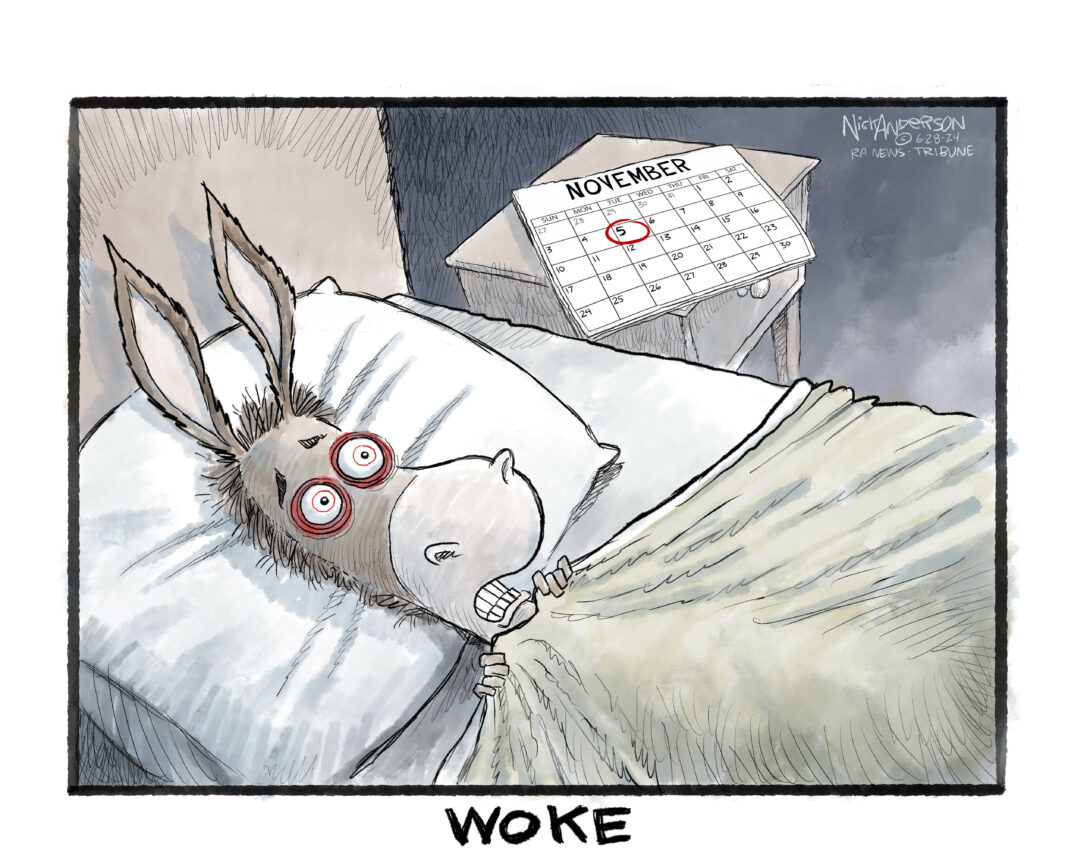
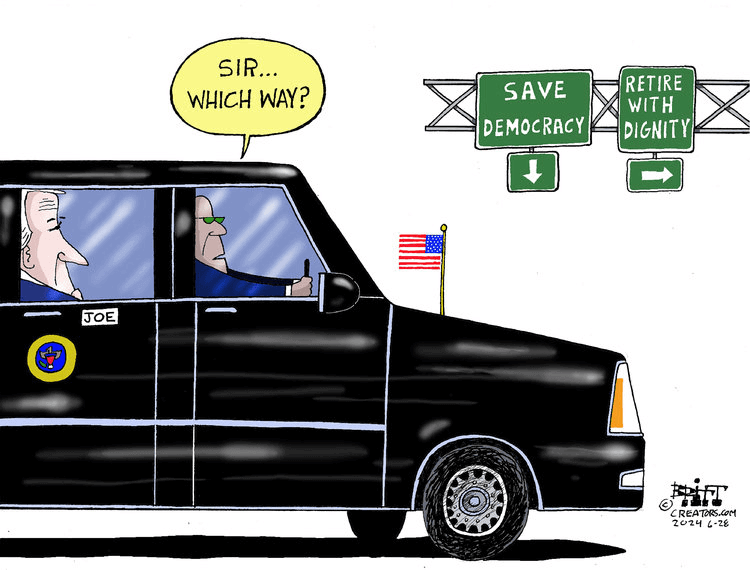
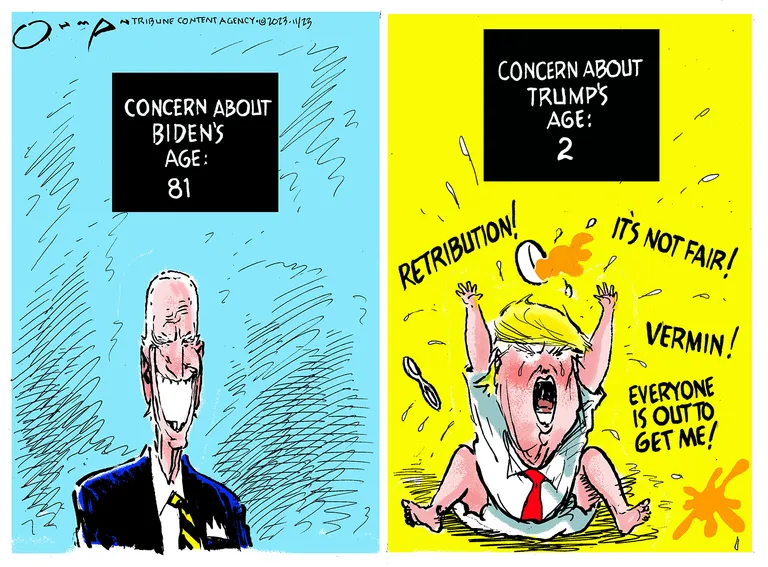
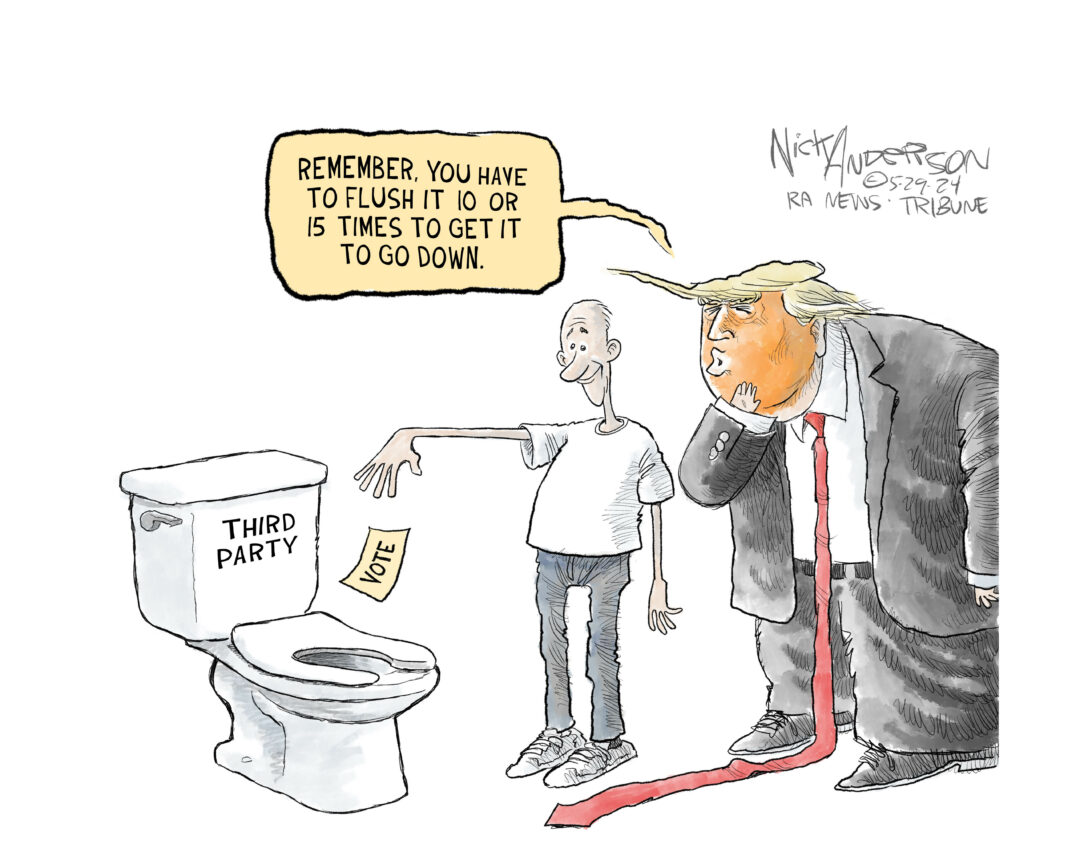
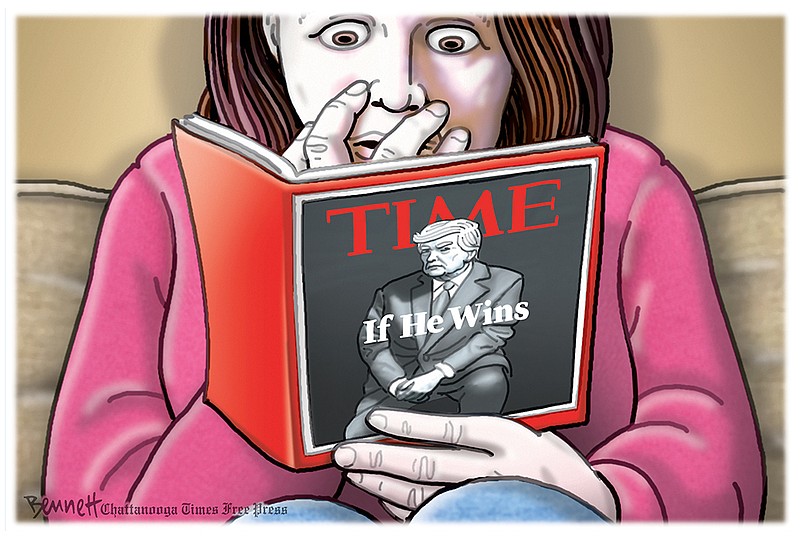


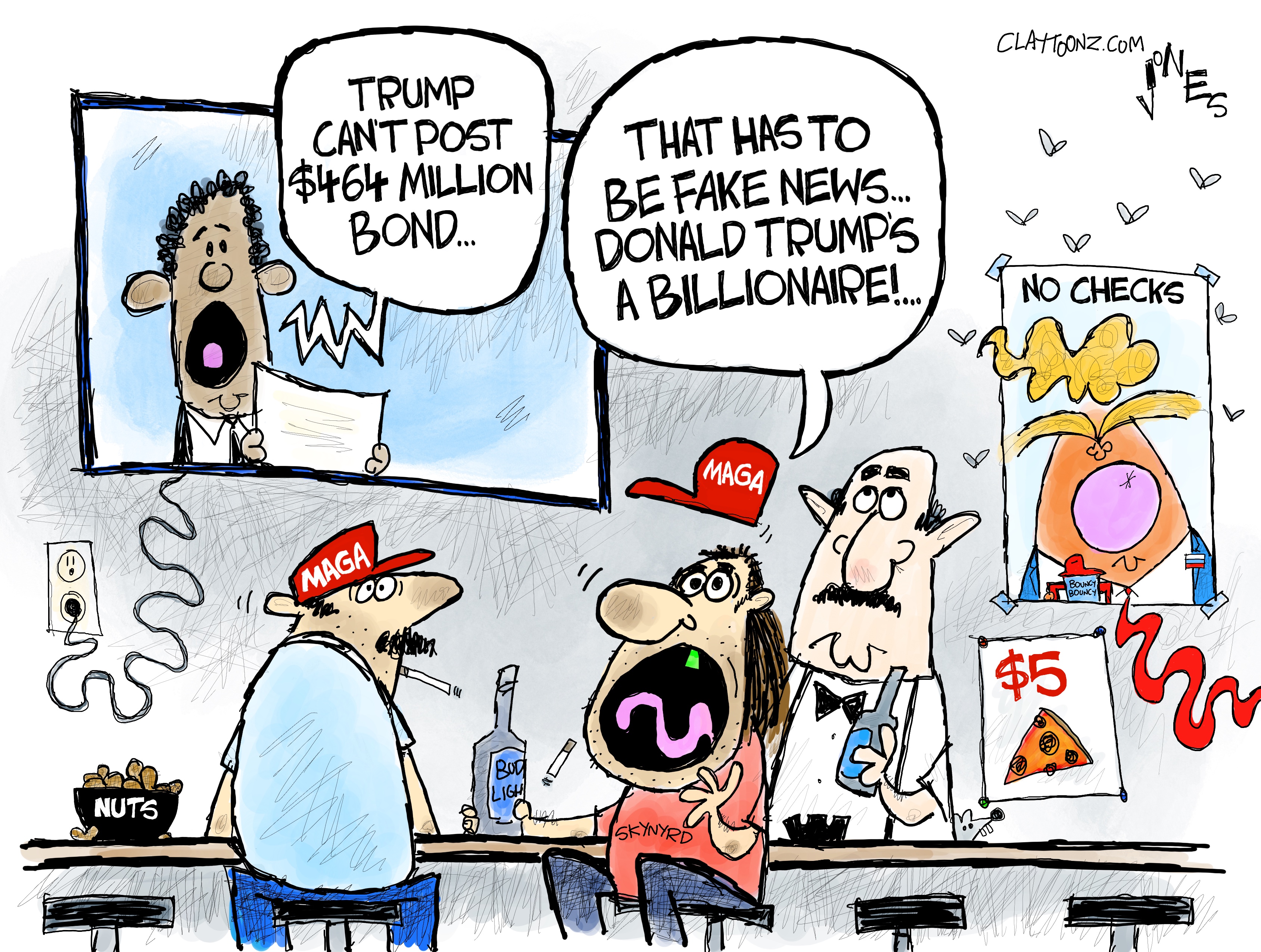

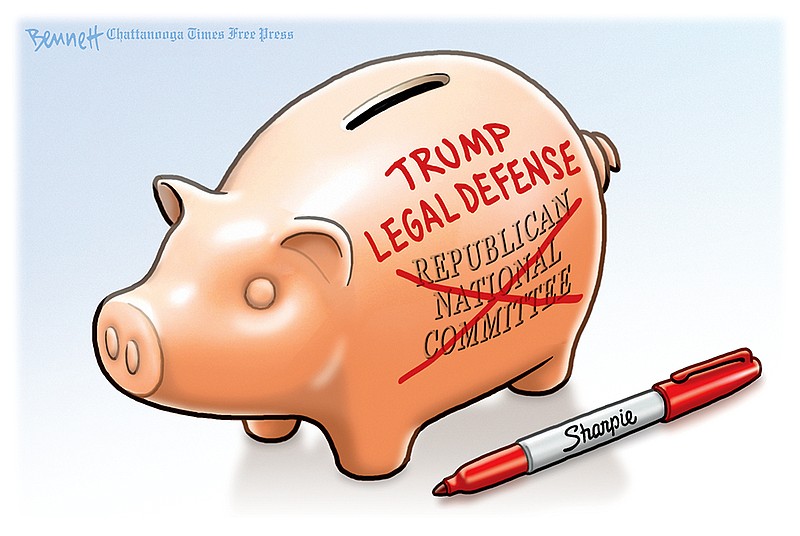


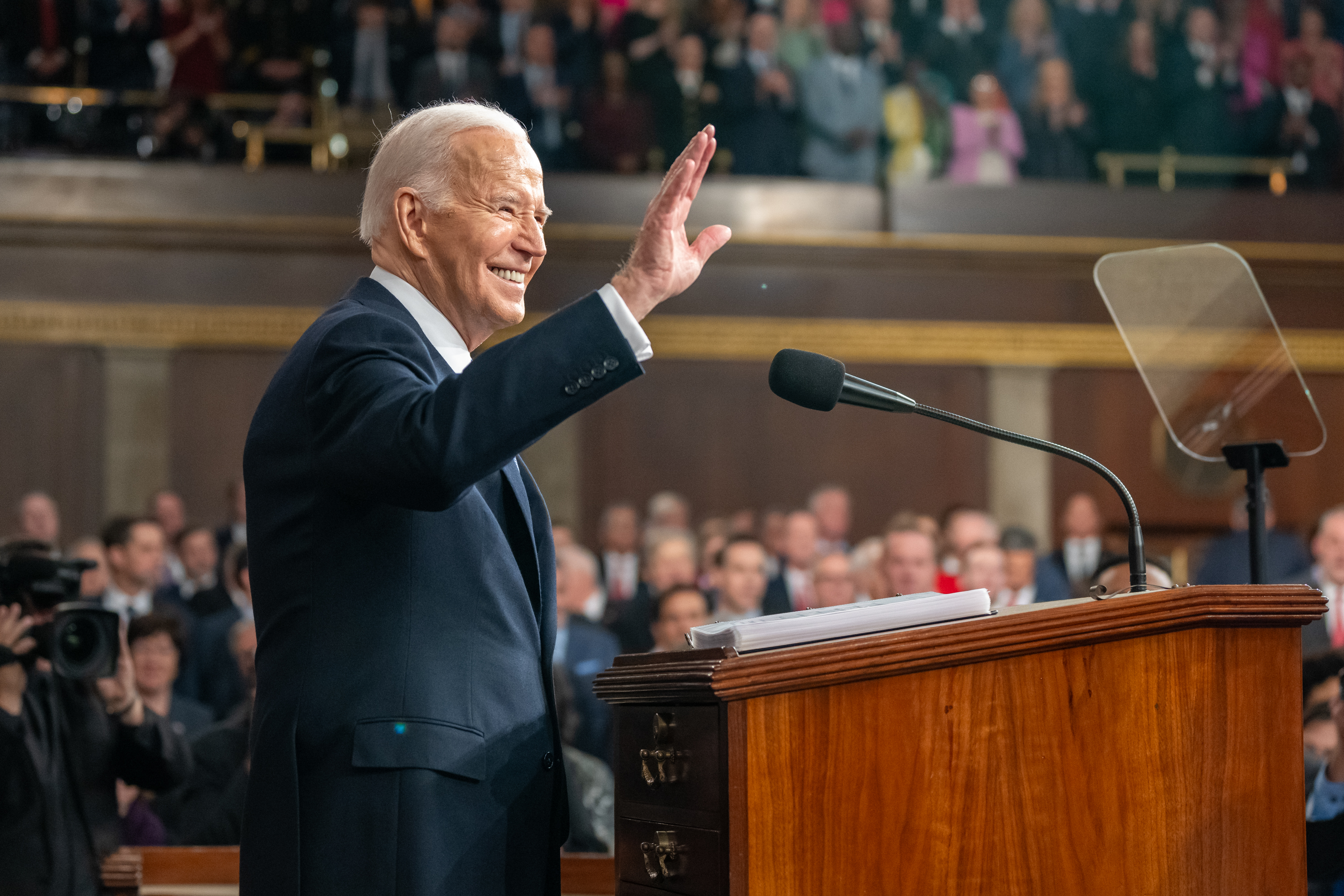
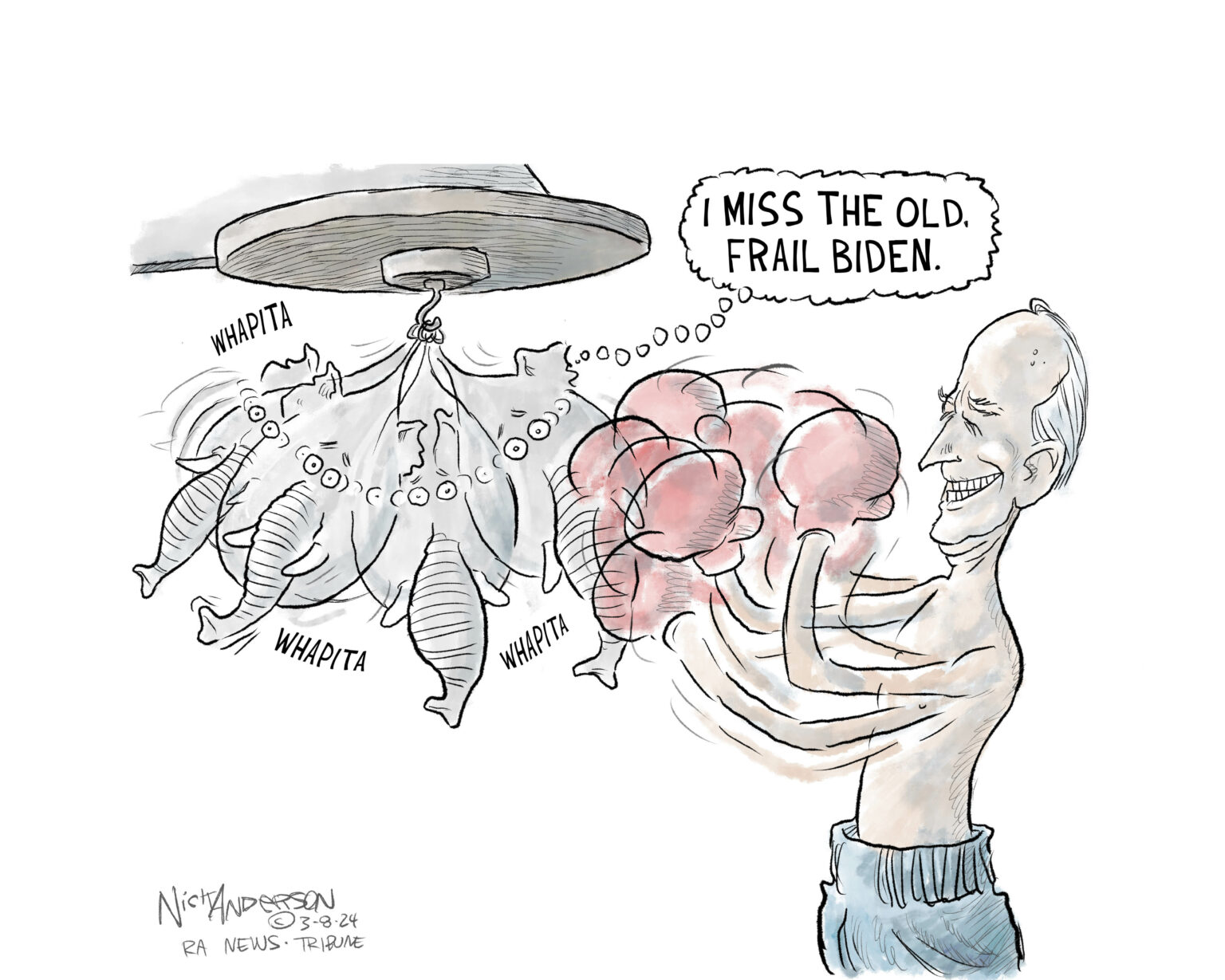

 The Weekly Sift