Author Archives: weeklysift

Doug Muder is a former mathematician who now writes about politics and religion. He is a frequent contributor to UU World.

Simple Propositions

You guys, the UAW — you saved the automobile industry back in 2008 and before. You made a lot of sacrifices. You gave up a lot. And the companies were in trouble. But now they’re doing incredibly well. And guess what? You should be doing incredibly well too. It’s a simple proposition.

President Joe Biden,
on a picket line in Belleville, Michigan on Tuesday

This week’s featured posts are “MAGA and the Swifties” and “When should public officials resign?

This week everybody was talking about the close call on a government shutdown

McCarthy’s sudden reversal made all this week’s cartoons obsolete.

The government did not shut down Sunday morning, and will not shut down until at least November 17.

The shutdown, which had appeared nearly inevitable, was avoided when House Speaker Kevin McCarthy changed his position Saturday morning: He allowed a vote on a short-term continuing resolution. Once the resolution came to the House floor, it passed easily, 335-91. It then went to the Senate, where it passed 88-9. The bill was signed by President Biden Saturday evening with an hour to spare.

The resolution was opposed almost entirely by Republicans: 90 representatives and nine senators. Rep. Mike Quigley of Illinois was the lone Democrat in opposition. Two House Democrats, Rep. Katie Porter of California and Rep. Mary Peltola of Alaska, did not vote. The Republican opposition came mostly from the party’s right wing, the likes of Rep. Matt Gaetz of Florida and Senator Ted Cruz of Texas.

The resolution continues funding government departments at the same levels as fiscal 2023, which ended on September 30. It also added $16 billion for disaster relief, but included no additional aid to Ukraine. (A similar bill in the Senate had $6 billion for Ukraine, but the House bill got through first.)

President Biden believes he has a promise from Speaker McCarthy to allow a separate vote on Ukraine aid soon. However, Biden also believed McCarthy had committed himself to funding the government back when the debt-ceiling deal was reached in June. McCarthy ultimately came through, but not without considerable drama.

It also remains to be seen if McCarthy will continue as speaker. Gaetz and his right-wing allies in the “Freedom” Caucus had threatened to withdraw their support from McCarthy if he made a deal to get Democratic votes, as he did Saturday.

McCarthy has clearly been frustrated by the nihilism of his party’s right wing, which never proposed a government-funding deal it could support. McCarthy told reporters after the vote:

If you have members in your conference that won’t let you vote for appropriation bills, [don’t] want an omnibus and won’t vote for a stopgap measure, so the only answer is to shut down and not pay our troops: I don’t want to be a part of that team.

The next question is whether Gaetz and his allies will carry out their threat to submit a motion to vacate the chair, which would remove McCarthy from the speakership unless Democrats decided to save him. (They say they won’t without getting something in return.) Over the weekend he said he would submit the motion sometime this week. McCarthy responded with bravado: “Bring it on. Let’s get this over with.”

Also: Will anything be different as we approach November 17? McCarthy bought himself (or his successor) some time, but if he has some plan for achieving a less chaotic outcome, he hasn’t revealed it yet.

One final point: The fact that McCarthy’s change-of-mind resolved the issue so quickly is pretty convincing evidence that Republicans were causing the problem.

and the Trump trials

The New York Attorney General’s lawsuit against the Trump Organization won a big victory Tuesday: Judge Arthur F. Engoron issued a partial summary judgment on the case, declaring that Trump had committed fraud by inflating his net worth when applying for bank loans. Because Trump Organization’s fraud is ongoing, the judge

cancelled all of the business licenses for the Trump Organization and its 500 or so subsidiary  companies and partnerships after finding that Trump used them to, along with his older two sons, commit fraud.

His gaudy Trump Tower apartment, his golf courses, his Boeing 757 jet and even Mar-a-Lago could all be disposed of by a court-appointed monitor, leaving Trump with not much more than his pensions as a one term president and a television performer.

Under the New York General Business Law you can only do business in your own name as a sole proprietor or with a business license, which the state calls a “business certificate.”  All of Trump’s businesses were corporations or partnerships that require business certificates.

The judge’s ruling found that a trial was unnecessary to determine fraud, because all the arguments Trump’s lawyers presented in his defense were beside the point.

[The Office of the Attorney General] need only prove: (1) the [statements of financial condition] were false and misleading; and (2) the defendant repeatedly or persistently used the SFCs to transact business.

The instant action is essentially a “documents case”. As detailed [elsewhere in this ruling], the documents here clearly contain fraudulent valuations that defendants used in business, clearly satisfying OAG’s burden.

Trump’s attorneys instead argued a number of legally irrelevant points, like that the banks in fact did not lose money, or that the SFCs contained a clause warning the banks to do their own valuations, or that property valuations are subjective. Their stubbornness in repeating arguments the judge had already rejected as frivolous led the judge to sanction the attorneys $7500 each. (David Cay Johnston notes that this ruling could be cited in some future disbarment hearing.) University of Michigan business law professor Thomas elaborates:

What we’ve seen with Donald Trump over and over again is that often arguments that gain traction with his supporters are flatly inconsistent with the law.

Underlining that point, Trump has continued making the irrelevant arguments rather than addressing the actual ruling.

I’ve heard a number of analogies capturing why the nobody-lost-money argument fails. Here’s my favorite: What if as you were closing up at your job, you stole $100 from the till, then went to the racetrack and bet it on a horse that won? In the morning you could replace the $100, so your employer didn’t lose money. But you’re still a thief.
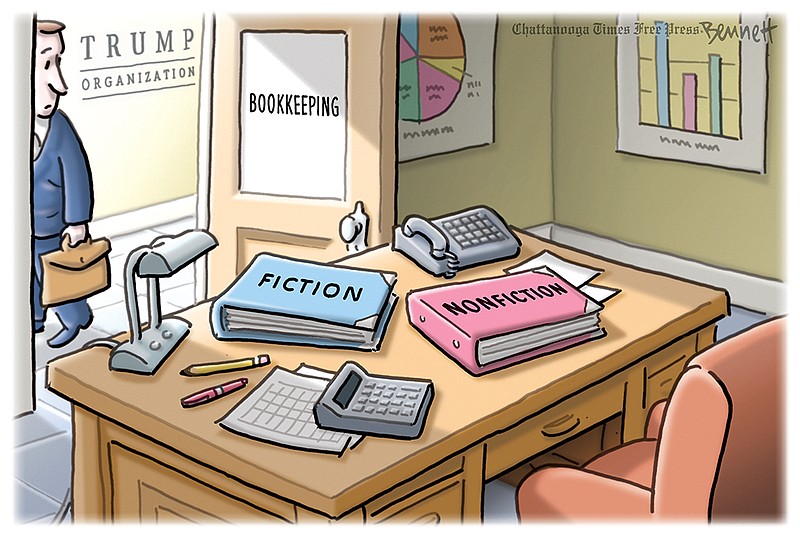
Probably the most egregious overvaluation was of Trump’s apartment in Trump Tower, which he claimed was three times its actual size and valued accordingly. The judge comments:

In opposition, defendants absurdly suggest that “the calculation of square footage is a subjective process” … A discrepancy of this order of magnitude, by a real estate developer sizing up his own living space of decades, can only be considered fraud.

Of course Trump will appeal, but an appeal is not just a do-over. He’ll have to support an argument that the judge did something wrong. The judge’s reasoning is simple and doesn’t seem to rely on esoteric points of law, so an appeal doesn’t seem to have much to work with.

Meanwhile, a trial on the rest of the state’s charges, including insurance fraud, will begin today. Thursday, the appeals court refused to delay that trial pending a ruling on Trump’s appeal. The trial will also determine the fines Trump will have to pay. The state is asking for $250 million.

Trump has said he’s going to appear in court today, though it’s not clear what he plans to do there, since it’s not time for him to testify, if he intends to do that at all (which I doubt). Trump says a lot of things, so I’ll believe he’s coming when I see him.


In political terms, one consequence of this decision isn’t getting the attention it deserves: Like sexual assault, Trump’s involvement in fraud is no longer just an accusation: It is a finding of a court of law. Trump is no longer just “alleged” to have committed fraud. He committed fraud.


Fani Willis got the first guilty plea from one of her 18 RICO defendants. (It’s kind of amazing this isn’t even the lead story under “Trump trials”.) Scott Hall pleaded guilty to five misdemeanors and was sentenced to five years of probation. He is also committed to testify in future proceedings, and if he doesn’t testify truthfully, the deal is revocable.

Hall’s role in the Georgia election-stealing scheme is both low-level and easily established: When Trump allies were trying to assemble (or invent) evidence of voter fraud in Georgia, they illegally accessed voting machines in Coffee County.

The security breach in the county about 200 miles southeast of Atlanta is among the first known attempts by Trump allies to access voting systems as they sought evidence to back up their unsubstantiated claims that such equipment had been used to manipulate the presidential vote. It was followed a short time later by breaches in three Michigan counties involving some of the same people and again in a western Colorado county that Trump won handily.

… Authorities say Hall and co-defendants conspired to allow others to “unlawfully access secure voting equipment and voter data.” This included ballot images, voting equipment software and personal vote information that was later made available to people in other states, according to the indictment.

In a RICO case, specific crimes like these are used to establish the existence of a corrupt organization that other defendants belong to. Hall’s guilty plea raises the question of whether it will start a stampede to make a deal with Willis before the other defendants do. A defendant’s only leverage in such a deal is if s/he can testify to something Willis can’t already prove.


In other Georgia-election-case news, former Justice Department official Jeffrey Clark and three of Trump’s fake electors lost their bid to move their cases to federal court. Mark Meadows’ similar motion had already been denied, and Trump surprisingly announced he will not try to shift his case to federal court.


Sidney Powell and Kenneth Chesebro are the first of the 18 (now 17) RICO defendants facing trial. They requested a speedy trial, which will begin October 23. CNN has speculated that they will be offered plea deals to avoid this trial, which would preview the state’s evidence to the other defendants.

and the sham impeachment hearing
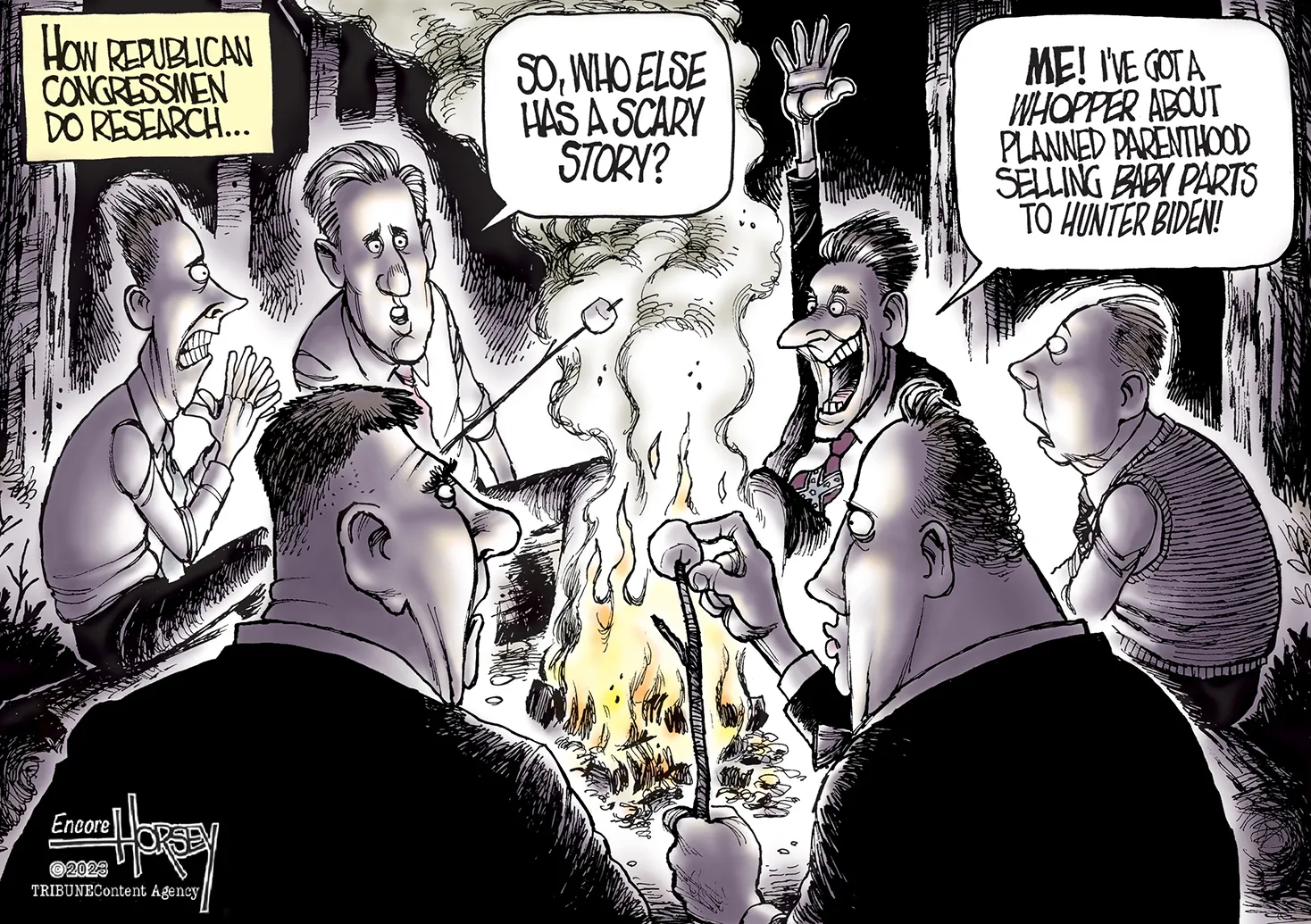
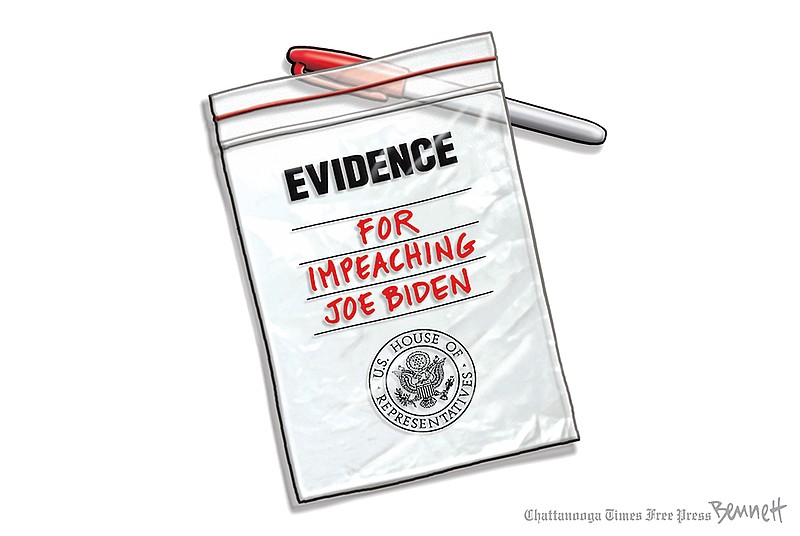
Like the rest of the House Republican investigations of Joe Biden, the opening session of their impeachment inquiry did not live up to its billing. None of the witnesses called were “fact” witnesses, i.e., none of them saw or heard President Biden doing anything impeachable. The witnesses also made much weaker claims than the Republican congressmen did.

Forensic accountant Bruce Dubinsky: “I am not here today to even suggest that there was corruption, fraud or wrongdoing. More information needs to be gathered before I can make such an assessment.”

Law professor Jonathan Turley: “I do not believe that the current evidence would support articles of impeachment. That is something that an inquiry has to establish.”

That’s a far cry from the claim House Oversight Chairman Rep. James Comer made, that the GOP probes have “uncovered a mountain of evidence revealing how Joe Biden abused his public office for his family’s financial gain.”


A rule of thumb: Investigations that are going somewhere get more and more specific. For example, the Manhattan case about Trump’s Stormy Daniels payoff — widely considered the weakest of the four Trump indictments — has come down to this: 34 Trump Organization documents are fraudulent business records.

The longer the Republican investigation of Biden stays at the level of “Hunter did shady things and Joe must have been involved somehow”, the more likely it is to go nowhere.


A tip on interpreting headlines: When a headline attributes some wrong-doing to “the Biden family“, that means the article contains no new information about President Biden himself. If they had anything on Joe, that would be the headline.

and the rain

Climate Change Summer has turned into Climate Change Fall. Friday, as much as 8 inches of rain fell on parts of New York City, shutting down the subways and producing flash floods. The storm was not due to a hurricane or tropical storm. Instead, seemingly innocuous systems came together unexpectedly to produce a hurricane-like rainfall. The NYT explains:

It has been raining a lot in New York, which hasn’t seen a September this wet in over a century. Climate change is very likely stoking more ominous and lengthy downpours because as the atmosphere heats up, it can hold more moisture, said Andrew J. Kruczkiewicz, a senior researcher who specializes in flash floods at Columbia Climate School at Columbia University.

Scientific American gives the larger context:

The 2018 National Climate Assessment (a new version of which is due sometime this year) found that the amount of rain that fell during the heaviest 1 percent of rain events had increased by 55 percent across the Northeast since 1958, with most of the increase happening since 1996. That trend will only get worse as global temperature rise, causing more evaporation from oceans and lakes and giving storms more water to fuel deluges.

and Taylor Swift

The right-wing attacks against Swift are the subject of one of the features posts.

and two speeches aimed at workers

Biden and Trump each talked to auto workers, but in very different ways. Biden went out on the picket line with UAW strikers and addressed them with a bullhorn. In addition to the quote at the top of this post, he said:

Wall Street didn’t build the country. The middle class built the country, and unions built the middle class.

Biden handed the bullhorn to UAW President Shawn Fein, who said:

These CEOs sit in their offices, they sit in meetings, and they make decisions. But we make the product. They think they own the world, but we make it run. 

Whether we’re building cars or trucks or running parts distribution centers; whether we’re writing movies or performing TV shows; whether we’re making coffee at Starbucks; whether it’s nursing people back to health; whether it’s educating students, from preschool to college — we do the heavy lifting. We do the real work. Not the CEOs, not the executives.

The next day, Trump was invited by management to speak at a non-union auto parts shop.

About 400 to 500 Trump supporters were inside a Drake Enterprises facility for the speech. Drake Enterprises employs about 150 people, and the UAW doesn’t represent its workforce. It wasn’t clear how many auto workers were in the crowd for the speech, which was targeted at them.

One individual in the crowd who held a sign that said “union members for Trump,” acknowledged that she wasn’t a union member when approached by a Detroit News reporter after the event. Another person with a sign that read “auto workers for Trump” said he wasn’t an auto worker when asked for an interview. Both people didn’t provide their names.

In other words, Biden lent his support to an event workers started on their own, while Trump staged a event for the cameras, complete with extras playing phony roles. His support for working people is about as authentic as his property valuations or his marriage vows.

and Cassidy Hutchinson’s book

I read Cassidy Hutchinson’s new book Enough. A lot of what’s in it is stuff you already know if you watched her testimony and followed the news about her.

But it does make it easier to understand how she could fall under Trump’s spell: She had a psychologically abusive father whose approval she valued but could never secure. He was a head-of-the-household type who had big plans, but was never wrong. It was up to Cassidy’s mother to make the details of those plans work, and to take the blame if things fell apart. So that role was already in Cassidy’s head, waiting for Trump to slide into it.

Her description of the Trump White House resembles an abusive family in a lot of ways. Hutchinson and her boss Mark Meadows lived in fear of Trump’s temper. And if he did erupt, the explanation that he’s an over-coddled asshole wasn’t available to them. Instead, they believed they should have foreseen and prevented whatever set him off.

The book also underlines a problem in our justice system: It’s expensive, even if you did nothing wrong. When Hutchinson got her first subpoena from the January 6 Committee, everyone told her she needed a lawyer. She was driven to use a TrumpWorld lawyer when an independent lawyer quoted her a six-figure price. Only after she got disgusted with herself and wanted to change her testimony did she ask Liz Cheney for help. Cheney gave her a lead on a firm that took her case for free.

This raised a question in my mind: If you’re a witness and not a target of an investigation, and if you intend to answer all questions truthfully, why do you need a lawyer? All the coverage I’ve seen takes the necessity of counsel for granted, so I asked a lawyer I know to spell it out.

He made three points:

  • You don’t always know for sure that you won’t eventually be a target, even if you’re innocent.
  • A lawyer can negotiate about how you’ll testify, to minimize how much the investigation will disrupt your life.
  • If you’re not familiar with all the relevant laws, you may not realize that you violated one. If you did, you may need to negotiate a plea deal or a cooperation agreement.

With Trump and his allies threatening retribution if they ever get back in power, both sides need to think about this problem. Merely witnessing a suspected crime shouldn’t bankrupt you.

and you also might be interested in …

Senator Dianne Feinstein died at the age of 90. Politico looks back at her career.

Governor Newsom is wasting no time in naming her successor: Laphonza Butler, the president of Emily’s List. The official announcement is expected later today.

Newsom had made two pledges, both of which this appointment fulfills: He said he would appoint a Black woman, and that he would not give any of the candidates already running for this seat in 2024 an advantage by naming them as the interim.


I didn’t watch the second Republican presidential debate. In reading accounts of it, nothing made me feel like I missed out.

Ron DeSantis is a terrible strategist. He was riding high immediately after last fall’s midterm elections for a simple reason: He won his race handily, while Trump’s favorite candidates almost all lost. His potentially winning message against Trump was obvious: I can win and Trump will lose again. (If Trump wanted to respond by claiming he didn’t lose, let him. It makes him sound like a whiner. Ask: “So are you living in the White House now or not?” When that sets off another rant, respond with an eye roll and “Whatever.”)

DeSantis’ policy positions should have sounded conservative while remaining vague, giving a wide range of Republicans room to fantasize about the wonderful things he might do after he won.

Instead, he committed to very specific and not very popular policies, like a six-week abortion ban, taking books out of libraries, and seizing control of universities. It’s been all downhill from there.


and let’s close with something out of this world

In 2024, NASA is planning to launch a probe to study Europa, a moon of Jupiter where scientists hope to find an ocean of salty water under a thick crust of ice. The presence of water, kept in a liquid state by friction-producing tides powered by Jupiter’s gravity, opens up the possibility of finding extra-terrestrial life for the first time.

The probe, which NASA is calling the Europa Clipper, would go into orbit around Jupiter in 2030.

Over several years, it will conduct dozens of flybys of Jupiter’s icy moon Europa, gathering detailed measurements to determine if the moon has conditions suitable for life.

“OK,” I imagine you thinking, “but what’s that got to do with me?”

NASA is offering a variety of ways for you to engage with the mission. Inspired by the thought of Europan life, U.S. Poet Laureate Ada Limón has written a poem for the mission “In Praise of Mystery: a Poem for Europa“. NASA’s “Message in a Bottle” campaign invites you to cosign Limón’s message.

The poem will be engraved on the Clipper, along with participants’ names that will be etched onto microchips mounted on the spacecraft. Together, the poem and participant’s names will travel 1.8 billion miles on Europa Clipper’s voyage to the Jupiter system.

Other suggested activities have a more educational flavor: NASA provides material that might nudge you to write your own space poetry. Or you can download a line-drawing of the Clipper and Europa suitable for coloring. The coloring can get even more interesting if you put textured surfaces under the paper.

When should public officials resign?

When is it reasonable for an official (and his party) to hold on in the face of suspicion?


Last week, Senator Robert Menendez of New Jersey was indicted for bribery. He immediately resigned as chairman of the Foreign Relations Committee, as the bylaws of the Senate Democratic caucus mandate. Almost as quickly, big-name Democrats — like New Jersey Governor Phil Murphy — began calling for him to resign his seat in the Senate, which nothing in the rules requires him to do. Other Democrats, like Rep. Andy Kim, announced they would run against him (if necessary) in 2024.

As I noted last week, though, senators were slower to comment. John Fetterman of Pennsylvania appears to have been the first senator to call for Menendez’ resignation. But since then the floodgates have opened. At least 30 senators — all Democrats, including New Jersey’s other senator, Cory Booker — are asking him to resign.

The Constitution’s Article I, Section 5 allows the Senate to expel a member, but that requires a 2/3rds vote. And even if Democratic senators were willing to go that far, Republicans are unlikely to cooperate, because they would have to recognize that indictments — like Donald Trump’s indictments, say — are serious matters. So Menendez is not going to be expelled.

New Jersey’s constitution allows for the recall of federal officials, but no senator has ever been recalled, and it’s not even clear such laws are consistent with the US constitution. But 25% of New Jersey’s registered voters would have to sign a recall petition, and even if that Herculean goal could be achieved, it’s not obvious how much sooner the special election would be than the 2024 election when Menendez’s seat comes up anyway.

In practical terms, then, nobody is going to force Menendez to leave office early if he doesn’t want to go. So we’re left with the more abstract question: When should a public official resign or be removed?

The fundamental tug-of-war is between two principles: First, that an indictment is not a conviction. US law says that accused people are innocent until proven guilty beyond a reasonable doubt. If the question is whether he will go to jail, Menendez deserves his day in court just like anybody else.

But whether he should stay in the Senate is a different question. Public office is a privilege, not a right. If we’re debating whether someone should hold a position of power, maybe very-credible-suspicion is a high enough standard. Julius Caesar famously divorced his wife Pompeia after a scandal, even though he also held that she was innocent, saying “Caesar’s wife must be above suspicion.”

Maybe that’s the right principle here, too: If the citizens of New Jersey have good reason to doubt that their senator is serving their interests rather than the interests of whoever can bribe him, maybe he shouldn’t be a senator any more. Maybe they shouldn’t have to wait for a jury verdict or for his term to end naturally.

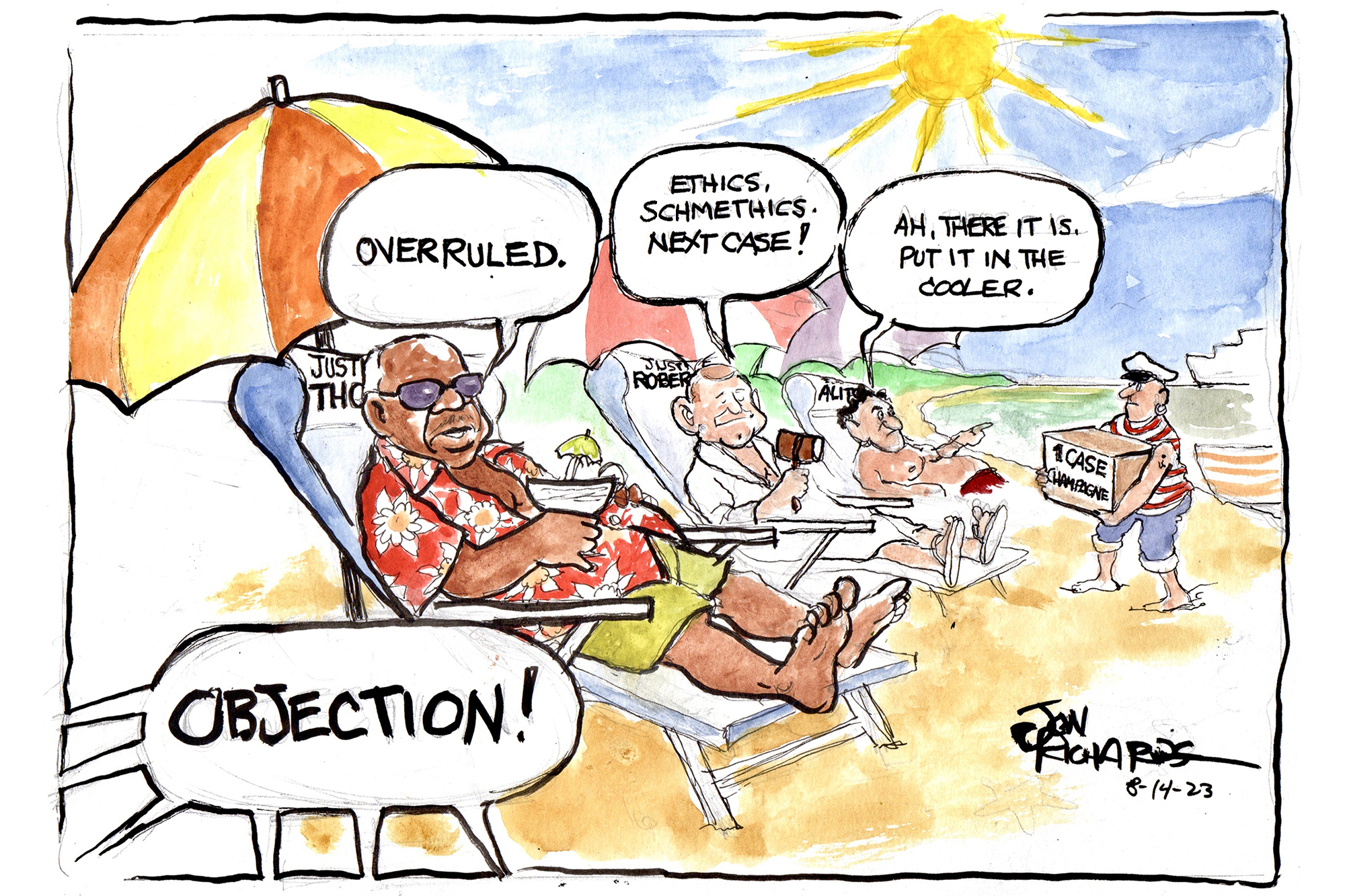
If you believe that, then someone like Menendez should resign. Arguably, so should Supreme Court Justice Clarence Thomas, who appears to have a long history of accepting expensive gifts from rich men who may or may not have specific cases before the Court, but who clearly want to influence the general direction the Court takes. And while Donald Trump currently holds no office (except in the imagination of the Qanon faithful), he also should step aside and let the GOP nominate someone not facing multiple felony indictments.

Obviously, Menendez, Thomas, Trump, and many others in recent history don’t see it that way. And while Democrats would like to be free of Menendez’ baggage, the great majority of Republicans are unwilling to ask their tainted leaders to step aside.

So why don’t more people do that? And to what extent is their reasoning justifiable?

The big reason to step aside, or to hope someone from your party steps aside, is that otherwise the individual’s battles take center stage and distract attention from the issues that person is supposed to be dealing with on behalf of the People.

To me, the only justifiable reason not to step aside is that you have already become individually important. That’s the case, for example, if your resignation means that you will be replaced by someone of the opposite party — possibly flipping control of some house of Congress or changing the partisan make-up of the Supreme Court. Such partisan considerations shouldn’t be absolute — at some point, people just have to go, whatever the consequences — but a change in the government’s partisan balance does raise the bar.

A second possible reason is if the charges against you really are the kind of “witch hunt” Trump is always talking about. If the same partisan machinery can target your replacement just as easily as it targets you, then you might as well stand and fight.

This is how I think these considerations apply to current cases: If Menendez leaves office, his replacement will be named by New Jersey’s Democratic Governor Murphy. So the seat will stay in the Democratic column. Further, I don’t know of anything that makes Menendez unique among Democrats. If, say, he were the lone crusader on some issue, I could see him wanting to stay on. But none of that is true, so he should go.

Clarence Thomas’ case is trickier, because President Biden would want to appoint someone far more liberal. At some point, though, even Republicans should want him gone, because defending his corruption taints their whole party. In a better-functioning political system, Mitch McConnell would go to President Biden and say, “We could support removing Thomas if you’d pledge to replace him with someone on this list.” Biden would push back with his own list, and eventually they’d come to an agreement.

What makes Donald Trump’s case special is that the Republican Party is dominated by his personality cult. So he is already personally unique. For many in the MAGA movement, politics amounts to Trump or not Trump, and is only tangentially connected to the issues that used to motivate the GOP, like taxes, abortion, national defense, or protecting businesses from government regulation. Agreeing to let Trump go is defeat in itself, not a strategic move that lets them fight on better ground.

So we can expect Trump to fight on until he is either decisively defeated or dies by natural causes. His cult will fight alongside him, independent of what crimes he has committed or what evidence is revealed. Individual Republicans need to decide whether they are part of that cult or not.

And finally, I’ll consider Joe Biden, who is facing an impeachment inquiry in the House. So far, though, that inquiry has revealed nothing of substance, and looks like a pure fishing expedition. It is not hard to imagine a similar quantity of Nothing being raised against Kamala Harris not long after Biden resigned.

So pending any substantive evidence of wrongdoing, Democrats should stick by Biden. In the unlikely event that something really convincing is found against him, though, I’d ask him to step aside, because Biden is not unique. Unlike the GOP, the Democratic Party is not a personality cult, and should respond to evidence.

MAGA and the Swifties

Attacks on Swift demonstrate a more general truth:
Conservatives actually don’t admire people who succeed
through talent and hard work.


I barely follow contemporary music, so I know little about Taylor Swift, beyond recognizing her picture and appreciating that she has a lot of fans. [1] During the summer, though, she was hard to ignore: Along with the Barbie movie, Swift’s Eras Tour was the big cultural event. Both were identity-affirming experiences for women that, as a man, I could only envy. [2]

Recently, though, she really caught my attention when MAGA-world decided to take on her fans, the Swifties. God knows what they were thinking. I always thought politics was about connecting with popular movements, not daring them to run over you.

The backstory is that early in her career Swift was resolutely non-partisan, to the point that many people speculated that she was a Republican. But in 2018 she decided to come out against Republican Senate candidate Marsha Blackburn. In this video (I think from a documentary about Swift) she’s telling her reluctant Dad why she needs to do this:

She votes against fair pay for women. She votes against the reauthorization of the Violence Against Women Act, which is just basically protecting us from domestic abuse and stalking. [Points to herself] — stalking! She thinks that if you’re a gay couple, or even if you look like a gay couple, you should be allowed to be kicked out of a restaurant. It’s really basic human rights, and it’s right and wrong at this point. And I can’t see another commercial and see her disguising these policies behind the words “Tennessee Christian values”. Those aren’t Tennessee Christian values. I live in Tennessee. I am a Christian. That’s not what we stand for.

Her father doesn’t argue with any of those points, but he worries that violent right-wingers will target her.

But recently Swift did something the ticked off MAGA-world even worse: She encouraged people to register to vote. And it worked.

On Tuesday morning, the singer posted a short message on Instagram encouraging her 272 million followers to register to vote. Afterward, the website she directed her fans to — the nonpartisan nonprofit Vote.org — recorded more than 35,000 registrations, according to the organization.

Not so long ago, encouraging people to vote was non-partisan, but that was before one major party turned against democracy. [3] Now Swift (and her new boyfriend, football star Travis Kelce) are being roundly denounced online. The august Federalist magazine took time from its regular projects of corrupting the Supreme Court and inciting panic about transfolk to label Swift’s popularity as “a sign of societal decline“. One of the magazine’s founders then got to the heart of the matter in a tweet:

Taylor Swift is dumb and her music sucks.

Here, I’d say: Go back and read her reasons for opposing Marsha Blackburn. Rather than dumb, she sounds pretty well informed. But “dumb” wasn’t insulting enough, so American Greatness writer Roger Kimball took it a step farther.

Also, she is homely.

As if none of the rest of us have eyes, and women like Swift should care whether Kimball finds them attractive. (Did I mention she’s dating a football star?) And famous “alpha male” Nick Adams retweeted what he thought was an apt comparison. [4]

Raise your daughters to be classy like Lauren Boebert, not trashy like Taylor Swift.

Salon’s Olivia Luppino pointed out what a pointless exercise this is:

This next-level success she has today she accomplished after navigating a polarized political climate. When she speaks up, people listen.

More importantly, there’s nothing the right could do that could meaningfully affect Swift. She has an incredibly devoted fanbase, a sold-out tour that lasts until November 2024, which again, is going to make her a billionaire, and maybe even has a hot new boyfriend. You can’t convince a Taylor Swift fan that she’s ugly or untalented, and these days, they seem to run the world.

And another Salon writer, Amanda Marcotte, hit back, claiming the anti-Swift venom comes from incels whose worship of established-in-court-sexual-assaulter Donald Trump has made them even less appealing to women.

GOP propagandists have learned that a great way to get their mostly male audiences fired up is to indulge their grievances about women these days. Modern chicks, the gripe goes, have been spoiled by feminism, and that’s why it’s so damn hard for a Trump voter to get a date. … Indeed, the irony of all this is that, in appealing to young men through grievance, the right is only making men’s problems worse. If you’re having trouble with the ladies, going MAGA intensifies your unlikeability. But isn’t that what cults always do? Sell their members “solutions” that actually compound their existing problems. 

Those are the kinds of points that other people are much bettered positioned to make than I am. But I do have one thing to add that I don’t think is getting enough attention: American conservatives often praise capitalism as a system where anybody who has talent and works hard can rise to the top. So in theory, they should love people who make that climb. In fact, though, they hate those people, especially the ones who remember where they came from and try to help other people rise too.

The heroes of conservatism are almost invariably folks who were born rich: Donald Trump, the Koch brothers, Elon Musk.

Have you ever wondered why conservatives demonstrate such hatred for “the Hollywood elite” and athletes who get political like Colin Kaepernick? That’s because entertainment and athletics are industries where poor and working class people can hit it big if they work hard and have talent. People like Stephen King or Ben Affleck or Eminem are villains, even though they are White men who have lived genuine Horatio Alger stories. And if you’re Black like LeBron James or female like Barbra Streisand, forget about it. You’ll never have the right to an opinion of your own.

Swift is not the best example here, because she was raised in the professional class and never had to wonder if she’d be able to afford college. But her parents didn’t have yacht-and-mansion money, like she does now. She had talent and worked hard, and it paid off for her. But she doesn’t support the billionaire class politically, so she should “stay in her lane“, just like LeBron should “shut up and dribble”.

The point of the Horatio Alger myth is to keep the masses content: We may not have much now, but we could someday. We should admire the billionaires because maybe, just maybe, we’ll be one ourselves someday.

But that fantasy is never supposed to come true. Conservatism is all about keeping the rich on top, not opening their ranks to admit climbers.


[1] This isn’t unusual for me. Back in the 70s, I remember being amazed that so many songs I recognized from the radio were all by the same artist — some guy named Elton John.

[2] Male identity is a tricky thing to affirm these days, and people who try are usually more embarrassing than inspiring.

[3] When I was reading the Washington Monthly article in that link before citing it, I unexpectedly discovered that it quotes me.

But the most prescient analysis of what has recently become more obvious came from Doug Muder back in 2014 in an article titled, “Not a Tea Party, a Confederate Party.”

[4] I have to insert a caution: There is a raging and unsettled debate over whether Nick Adams is a parody, based on the optimistic theory that no one can be that consistently clueless. But he has fans who appear to take him seriously, including Trump.

The Monday Morning Teaser

In a week full of big news events, probably the biggest is the one that didn’t happen: The government didn’t shut down yesterday, and will stay open for at least another six weeks. There’s a lot to say about how that transpired and what comes next, as the MAGA wing of the House Republican caucus comes after Kevin McCarthy’s speakership.

But the government-that-didn’t-shut-down had a lot of competition for our attention: A New York judge issued summary judgment on one part of the state attorney general’s civil suit against Trump. He ruled that Trump committed fraud by inflating the value of his properties to get bank loans, and he cancelled the Trump Organization’s licenses to do business. Also, one of Trump’s co-defendants in the Georgia RICO trial pleaded guilty, New York flooded after massive rains, Joe Biden walked a picket line, and House Republicans opened their impeachment investigation against Biden.

So of course I’m going to write about Taylor Swift. This week I couldn’t help being amused by right-wingers’ ridiculous attempts to go after her online: She’s dumb, her music sucks, she’s homely, and so on. Other people know far more about Swift, her fans, and her music than I do, but this story is a hook for making a point that’s been on my mind for a while: Conservative rhetoric lauds Horatio Alger types, whom the capitalist system allows to rise to the top through talent and hard work. But in practice, right-wingers actually hate those people. How dare they have opinions of their own, or remember where they came from?

I’ll put more detail into that point in “MAGA and the Swifties”, which should by out around 9 EDT.

I’ll also contrast Democrats asking for Bob Menendez to resign from the Senate with Republicans who stay loyal to their own corrupt leaders like Donald Trump and Clarence Thomas. That piece, “When should public officials resign?” should be out a little after 10. And I’m shooting to get the weekly summary out by 11 this week.

Strange Behavior

So a Democratic Senator is indicted on serious charges, and no Democrats attacking the Justice Department, no Democrats attacking the prosecutors, no Democrats calling for an investigation of the prosecution, and no Democrats calling to defund the Justice Department. Weird, huh?

Joe Walsh

This week’s featured post is “About the Polls“.

This week everybody was talking about the looming government shutdown

Typically, a government shutdown happens because the House, Senate, and Presidency aren’t all controlled by the same party, and one party wants something the other doesn’t want to give. Attempts to work out a compromise fail, so the new fiscal year starts and big chunks of the government close for lack of money.

So in 1995, Speaker Newt Gingrich wanted major cuts in spending that President Clinton wouldn’t agree to. In 2013, Republicans wanted to defund ObamaCare. Those shutdowns resulted from a dysfunctional inability to negotiate a compromise, but they at least represented a coherent clash of policy goals.

The 2018 shutdown was a bit strange, because during the post-midterm-election session, Republicans still controlled all three power centers, pending a Democratic takeover of the House when the new Congress would be seated in January. In December, Republicans had worked out a deal to fund the government that didn’t include more money for Trump’s Wall. But when he saw how badly that deal played with his base, Trump reneged.

The government was shut down for 35 days, during which time the Democrats took control of the House, ending the possibility of passing a wall-funding bill. So Trump relented, reopened the government, and then declared a national emergency that allowed him to divert money appropriated for other purposes into wall-building.

This year is stranger yet, because the Republican majority in the House can’t even agree on a set of demands, much less negotiate a compromise with the Democratic Senate and White House.

Here’s how everyone expected the process to work: Speaker McCarthy would placate the far-right “Freedom” Caucus by passing what is know as a “messaging bill” — a bill that everyone knows has no chance to become law, but which includes provisions that express what the MAGA base really wants. Of course the messaging bill would be rejected by the Senate, and then the real negotiating could begin.

The problem is that the House GOP can’t even get its messaging bill together, so negotiations with the Senate and the White House can’t start. The WaPo examines the possibilities, none of which resolve the situation in time to avoid a shutdown.

and corruption

There’s a Democratic corruption story this week: New Jersey Senator Bob Menendez got indicted for accepting bribes. New Jersey Democrats reacted the way a sane party would to such serious allegations.

Calls for his resignation mounted from ethics groups, Republicans and even longtime Democratic allies who stood by him last time, including the governor, state party chairman and the leaders of the legislature. And party strategists and elected officials were already openly speculating that one or more of a group of ambitious, young Democrats representing the state in Congress could mount a primary campaign against him.

Three-term Congressman Andy Kim has already announced his candidacy, posting:

Not something I expected to do, but NJ deserves better.

Joe Walsh comments on all the things that didn’t happen.

So a Democratic Senator is indicted on serious charges, and no Democrats attacking the Justice Department, no Democrats attacking the prosecutors, no Democrats calling for an investigation of the prosecution, and no Democrats calling to defund the Justice Department. Weird, huh?

Also: No calls for violence in the streets or civil war.

The one bad sign from Democrats is that the Democratic Senate caucus seems to be standing by Menendez. He had to resign as chair of the Foreign Relations Committee, but Majority Leader Schumer is not asking for his resignation from the Senate.


And if there’s corruption in the air, there must be a Clarence Thomas story. Pro Publica has been ahead of everybody else on Thomas scoops, and they published a new one Friday: In 2018, Thomas rode on somebody’s private jet — he never reported the trip, so we don’t know whose — to attend the winter donor summit of Stand Together, the Koch-led network of high-roller conservative money men.

During the summit, the justice went to a private dinner for the network’s donors. Thomas has attended Koch donor events at least twice over the years, according to interviews with three former network employees and one major donor. The justice was brought in to speak, staffers said, in the hopes that such access would encourage donors to continue giving.

That puts Thomas in the extraordinary position of having served as a fundraising draw for a network that has brought cases before the Supreme Court, including one of the most closely watched of the upcoming term.

Political fund-raising violates the code of ethics that applies to lower-court judges. But the Supreme Court has no formal code and is expected to police itself.

In 2021, Thomas sided with the Kochs in a 6-3 ruling allowing dark money groups to keep their donors secret. The court will soon hear a Koch-backed case that could sharply curtail the ability of government agencies to issue regulations. Pro Publica claims Thomas has flipped his position to support the Koch view.

Rep. Ted Lieu sums up:

Clarence Thomas secretly accepted millions in lavish gifts from billionaires. He secretly shows up at a fundraiser for billionaires to help raise money for a super PAC. And he votes on cases to help billionaires. This isn’t the appearance of corruption, this is corruption.

and Rupert Murdoch

While Fox News has been focusing attention on Joe Biden’s age issues, Rupert Murdoch has continued to run both Fox and News Corp at the age of 92. This week he announced he will turn the empire over to his son Lachlan, sparking a series of retrospectives about his career.

but we should be paying attention to a court case that hasn’t gotten much coverage yet

I’m becoming dangerously complacent about Supreme-Court-considers-triggering-Armageddon stories. Remember Moore v Harper and the “independent state legislature” theory? The upshot of ISL is that once you get control of a state legislature, you can gerrymander to make your control permanent, and then leverage that power to determine all the other elections in your state. “Independent” means “unchecked by the courts”, which means that if your power grab violates the state constitution, no one can call you on it.

Anyway, that was decided in June, and the Court did not in fact opt to make it easier to end democracy. It was a 6-3 decision, which means that we’re still safe from permanent minority rule, at least until John Roberts and either Brett Kavanaugh or Amy Coney Barrett change their minds. So rest easy, everybody.

Now we’ve got another end-of-the-world-as-we-know-it case coming up: Consumer Financial Protection Bureau v Community Financial Services Association, which will be argued next week and probably decided sometime in 2024.

The origin of this dispute is fairly trivial in the grand scheme of things: CFPB issued regulations cracking down on the payday-lending industry, which could use some cracking down on, because it exploits people who live paycheck-to-paycheck. CFSA represents payday lenders who would rather operate without government interference. So it sued. In the course of that lawsuit, it made an atomic-bomb-scale argument: The whole CFPB is unconstitutional.

Now, you wouldn’t expect mortgage bankers, home builders, and realtors to be fans of federal regulation, but those associations filed a brief warning that striking down all of CFPB’s rules simultaneously could cause the real estate market to seize up, disrupting some large portion of the entire economy, and possibly setting off a Depression.

But it’s actually worse than that, because of course there’s no line in the Constitution saying “Congress shall establish no consumer financial protection bureau”. So CFSA had to make a broader argument: The way CFPB is funded is unconstitutional. Congress doesn’t appropriate a specific amount of money for CFPB each year. Instead, it gets whatever funding it needs up to some cap, and the funding is perpetual until Congress says otherwise.

Here’s the problem, as described by Vox’ Ian Milhiser: If funding something without approving a specific sum each year is unconstitutional, there goes Medicare, Medicaid, Social Security, and a whole bunch of other stuff.

Under this interpretation of the Constitution, moreover, many key federal programs simply could not exist. Medicare, for example, is a health insurance program that pays for beneficiaries’ health costs as those costs arise. It is impossible for Congress to determine, in advance, the specific dollar amount that Medicare will spend in any given year. To do so, Congress would need to precisely predict which health services would be provided to every senior in the United States, and how much each one of those services would cost.

Imagine it: I recently had a fairly expensive medical test. (It came out well. Thank you for wondering.) We’re near the end of the fiscal year, so under a specific-sum appropriation system, Medicare might say, “I’m sorry, but we can’t pay for your test because medical expenses nationally ran a little high this year and we’ve already spent all the money Congress appropriated.” Every year, millions of Americans like me would game the system to get our medical care done in October rather than September. Some number of people would take their chances without care, and some of them would die.

Oh, and all those programs would be vulnerable to government shutdowns — not that we ever have to worry about that.

The hyper-conservative Fifth Circuit appeals court agreed with CFSA.

Consumer Financial reveals just how deeply delusional thinking has penetrated into the post-Trump federal judiciary. The plaintiffs’ arguments in Consumer Financial have no basis in law, in constitutional text, in precedent, or in rational thought. And they risk the sort of economic catastrophe that the United States hasn’t experienced for nearly a century.

And yet a federal appeals court bought these arguments. So now it’s up to the Supreme Court to save the United States from calamity.

It’s a safe bet that Justices Thomas and Alito will vote to blow up the system. (Alito, IMO, is the most predictable judge on the Court. You don’t need to know anything about the facts of the case or the relevant law, just who stands to benefit. He will consistently vote for Republicans over Democrats, corporations over working people, and Catholics over secularists. The CFPB protects working people from corporations, so he’ll be against it.) So we’ll need to count on two of Roberts, Kavanaugh, Gorsuch, and Barrett to save us.

and you also might be interested in …

A deal has been announced, so the writer’s strike may end soon.


Worth reading: the Atlantic article subtitled “How General Mark Milley protected the Constitution from Donald Trump.


The NYT has a disturbing article about China claiming sovereignty over the South China Sea, and how little can be done about it short of war.


Another week of Fox News, summarized by Kat Abu.


This week’s scandal: John Fetterman wears hoodies and shorts. It’s technically a violation of the Senate dress code, but when he’s dressed like that he votes from the doorway.


In the Handmaid’s-Tale dystopia known as Nebraska:

A Nebraska woman who acquired abortion pills that her teenage daughter used to end her pregnancy last year was sentenced on Friday to two years in prison.


Last week, I wondered how conservative media would erupt if AOC were caught doing something like Lauren Boebert’s lewd behavior while watching a musical. Turns out AOC was wondering the same thing.


Jimmy Carter has been in hospice for seven months, but he still enjoys peanut butter ice cream and plans to celebrate his 99th birthday this coming Sunday. Saturday he was spotted at the Plains Peanut Festival.

And while we’re talking about family values (i.e., Boebert), Jimmy and Rosalynn Carter are facing death together after 77 years of marriage.


In the silly-but-amusing category, conservative podcaster Clay Travis tweeted about Kansas City Chief tight end Travis Kelce:

Travis Kelce is doing Bud Light and covid shot commercials. He needs to fire all his marketing agents. Or he needs to just go ahead and cut his dick off, become a chick, and endorse Joe Biden.

And Ron Filipkowski replied:

He scored a touchdown today in a 41-10 win and left the game with Taylor Swift. Seems to be doing ok.


Elon Musk said he wants users to pay a monthly fee to use Twitter.

I’ve used X/Twitter for years now. I use it to cast a wider net for points of view than I’ll find in my usual news sources. I don’t often post content other than links to this blog.

Since Musk took over, I’ve thought about leaving X. And I’ve checked out Mastodon as an alternative. But inertia is powerful, so I’ve stayed.

If they start charging a fee, though, I’ll have to take positive action to stay on X. I’ll have to give them a credit card number or something. Just by doing nothing, I could quit.

I would do nothing, and see how long it took them to turn off my account. I suspect the vast majority of users would do the same. Charging a fee will probably complete Musk’s destruction of the platform, setting fire to the remainder of his $44 billion investment.

and let’s close with something uplifting

The FamilyThis web page has an article about times kids surprised their parents and older siblings with their kindness and compassion. Like this one:

had lunch with my son at school for his birthday. he can pick 2 kids to sit with him and one I had never met. i asked afterward who he was and he said “oh, i don’t really know him but no one had picked him for birthday lunch before”

About the polls

Yes, I’d enjoy seeing polls showing Biden way ahead of Trump. But it’s too soon to worry about such things. There’s more than a year of campaigning still to come.


I haven’t wanted to write about the 2024 general election polls, because I don’t think they mean much at this stage, and they’re part of the horse-race framing that I think gets way too much attention in our politics. I mean: Why talk about democracy or climate change or abortion or Ukraine or the economy or the completely senseless government shutdown that will probably start next week — or even about the issues conservatives focus on like the border — when TV’s talking heads could be discussing who’s up and who’s down? Or they could talk about image problems like Biden’s age (but not Trump’s).

But anyway, polls have been getting so much attention in the news that I know you’re thinking about them. It’s hard not to: Just about all the polls show Biden and Trump tied, with one outlier giving Biden a 6% lead and another showing Trump up by 10%. The Trump-favoring polls get more headlines, because they amount to a man-bites-dog story: A guy under multiple indictments who could well spend the rest of his life in jail is the candidate some large number of Americans want as their president.

I know: It’s crazy. Trump lost in 2020 by seven million votes, and that was before he tried to break American democracy, before the justices he appointed to the Supreme Court took away American women’s reproductive rights, and before the summer of weather disasters proved to any reasonable person that climate change is real and serious. How can this race even be close?

The case for Biden. Biden, meanwhile, has been an excellent president. He succeeded in achieving a number of things Trump promised but never accomplished: getting us started rebuilding our roads and bridges and bringing manufacturing back to the US, just to name two. The process of withdrawing our troops from Afghanistan was ugly, but the end result is that we are out of Afghanistan — another thing Trump promised but never delivered.

Trump had left NATO in tatters, with our allies wondering if the US could be counted on to fulfill its treaty obligations. But under Biden’s leadership, NATO has proved resilient against Russian aggression in Ukraine.

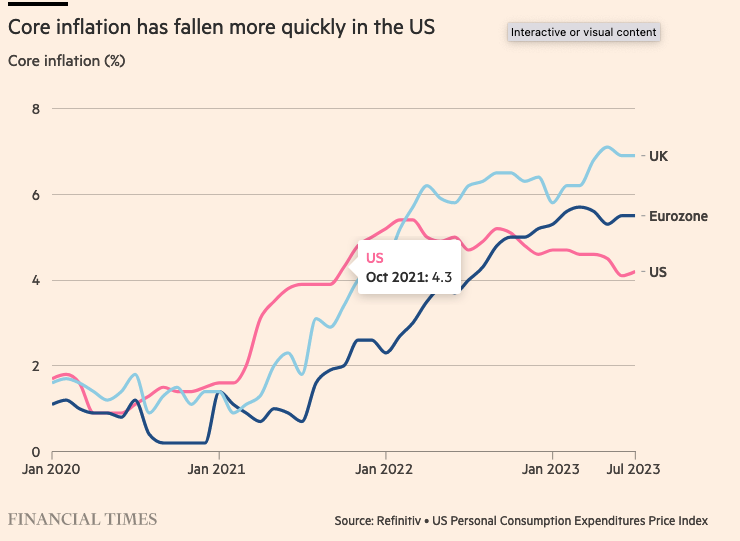
After the Covid shutdowns, when governments paid people not to produce — a policy of both the Trump and Biden administrations — inflation has been an issue around the world. But even there, under Biden the US is doing better than comparable economies.

And Biden has accomplished all this without the constant drama of the Trump administration. No nasty tweets. No demeaning nicknames for his opponents. No statements implying that his critics deserve to die or inviting his supporters to get violent. In short: as president, Trump was a constant embarrassment to the United States of America. Biden is not.

Polls. But OK, the polls: Why isn’t this case for Biden resulting in a polling lead? The short answer is that I don’t know, and the news coverage about the polls isn’t helping me figure it out. I’ve seen countless interviews with people who supported Trump in 2020 explaining why they’re standing by him. But he lost in 2020. The only way he can win in 2024 is if people who didn’t vote for him have changed their minds. The news media ought to be searching out those people, but so far they’re not.

Meanwhile, MAGA politicians failed badly in 2022, losing states Trump needs to win back, like Pennsylvania and Georgia. And that trend has continued into 2023: a liberal won a state supreme court election in Wisconsin by a wide margin, and MAGA candidates have continued to lose special elections.

So why hasn’t that trend shown up in the Trump/Biden polls? I have two tentative answers: The first is that so far hardly anyone has been making the case against Trump. You would ordinarily expect the people running against him for the Republican nomination to make that case, but with the exception of Chris Christie, they’re really not.

I have two windows into the primary campaign: My local TV stations are from Boston, and cover much of southern New Hampshire, so if you’re running in the New Hampshire primary, your ads appear in Boston. Also, as a Michigan State graduate, I follow Big Ten football, which means I’ve watched a number of University of Iowa games on the Big Ten network. Those games always include a number of political ads.

So far I have not seen a single attack ad against Trump. Maybe if you do a YouTube search you can find one — I didn’t — but whatever candidate made it is not airing it much.

Meanwhile, Biden has been standing aside while the justice system prosecutes Trump’s crimes. So far, then, the case against Trump has not entered the 2024 campaign. That won’t last. Trump is a very vulnerable candidate, and when those attack ads get made, they will have an effect.

Age. The second thing affecting the polls is that so far, Biden’s age has become the “but her emails” story of 2024.

Yes, Trump may be a felon who tried to stay in power in spite of the voters, and yes, his happy talk at the outset of Covid may have gotten over 100K Americans killed unnecessarily, and yes, reelecting him might lead to the end of American democracy … but Biden is old.

There is almost nothing political reporters can’t turn into a story about Biden’s age. When his campaign rolled out a new wave of TV ads and public appearances, The New York Times described the initiative this way: “As Democratic Jitters Grow, Biden Campaign Tries to Showcase His Vigor.” The paper’s story Monday on Biden’s recent trip to Asia — which even Fox News described as an “all-nighter” — was nevertheless titled, “‘It Is Evening, Isn’t It?’ An 80-Year-Old President’s Whirlwind Trip.” The next day, The Wall Street Journal ran a story headlined, “Is Biden Too Old to Run Again? We Asked People Born on His Exact Birthday.” If he shows signs of aging, it makes the front page; if he doesn’t, it’s the occasion for a discussion of how he and his advisers are working to defuse the issue. 

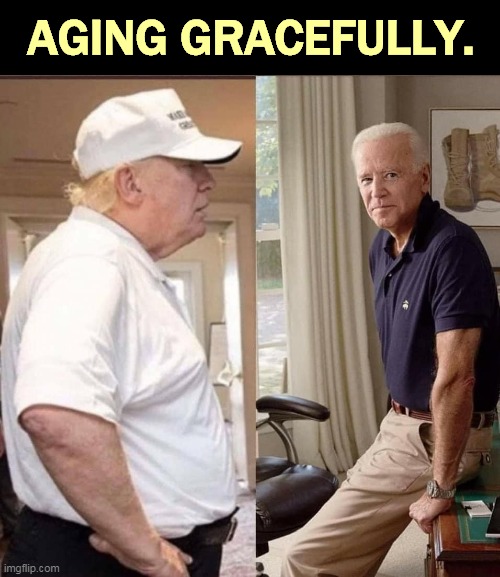
And yes, Biden is three years older than Trump. But he is fit and takes care of himself, while Trump is fat, avoids exercise, and reportedly lives on junk food. [1] Which one do you think is more likely to run into health issues in the next five years? I’d say Trump.

When it comes to stamina, Trump was never a hard worker. He famously started his White House days at 11, and his schedules included lots of down time that he mostly spent watching TV and tweeting.

Cognitively, Biden tends to stumble over words, which he has done all his life. Trump meanders aimlessly, shifts every conversation to his hobby-horse grievances, produces word salads that mean nothing at all, and seems helpless to control his anger issues. If you don’t think Trump has declined, watch this video from the 2015 campaign: Russian spy Maria Butina asks him about Obama’s Russia sanctions, and Trump gives an answer that is both complex and coherent. When was the last time you saw him do anything like that?

Looking forward. So do I think those factors will continue to prop Trump up until the election? No, I don’t. Eventually, Trump attack ads will get made and aired. Having seen what happened in 2016, the public will object to the but-her-emails coverage of Biden’s age. (For now, we should all be adding comments calling out the most egregious articles.) As the campaign goes forward, it will be harder to maintain the myth of Biden’s senility. And as Trump goes to trial, the public will see that the charges against him are more than just politics.

And a year from now, when the fall campaign is really happening, voters will tune in. A lot of them will want to know what these candidates intend to do for them. Biden has a vision and a record of accomplishment. Trump does not. Ultimately, that’s going to count.


[1] A frequent topic of discussion on my social media feeds is whether pictures like this are “fat shaming” Trump, which is a no-no. But if we’re honestly talking about longevity issues, weight is relevant. And we have to use pictures, because Trump lies about the numbers.

The Monday Morning Teaser

I don’t want to talk about polls this early in the campaign. One reason I began blogging in the first place was to fight the news media’s fixation with horse-race coverage of political campaigns. News reports ought to be giving voters the information they need to make their decisions, but instead they create a hall-of-mirrors effect where voters learn about what voters think, rather than about the underlying situation or the candidates’ plans, visions, and records.

But this week an outlier poll came out showing Trump with a ten-point lead over Biden — most polls show a neck-and-neck race — and it seemed to be all the weekend news shows could talk about. At a moment when Trump is pushing House Republicans to shut down the government and impeach President Biden, nobody is talking about that. Instead they talk about polls. It’s crazy.

Anyway, though, I sense that we’re all worrying, so we might as well talk: What about those polls? Should we be anxious? Is there any point to fretting over them? That’s the topic of this week’s featured post: “About the polls”, which should be out around 10 EDT.

The weekly summary has substantive issues to cover: the looming shutdown, new corruption stories about Senator Menendez and Justice Thomas, Rupert Murdoch’s retirement, and a new opportunity for the Supreme Court to crash the country. That should be out around 11.

Pride and violence

I envied the arrogant when I saw the prosperity of the wicked. Pride is their necklace; a garment of violence covers them. From their prosperity proceeds iniquity; the imaginations of their hearts run wild. They mock and speak with malice; with arrogance they threaten oppression. They set their mouths against the heavens, and their tongues strut across the earth.

Psalm 73

This week’s featured posts is “Don’t just connect the dots“. It sets the Biden impeachment in a larger context of conspiracy theory reasoning.

This week everybody was talking about the looming government shutdown

As always, the federal government’s fiscal year ends on September 30, i.e. a week from Saturday. So unless Congress passes and President Biden signs some new appropriation bills in the next two weeks, the government will shut down on Monday morning, October 2.

If the budget process were working the way it’s designed, funding the government would mean passing 12 separate appropriation bills, each covering some set of government activities, like defense. That seems extremely unlikely at this point. The Senate is more-or-less on track, but Kevin McCarthy’s Republican majority in the House can’t unite on a set of proposals, much less get together with the Senate and work out something both houses can pass.

Failing at 12 appropriation bills, the next option is one big omnibus bill, which has happened in recent years, and which House Republicans have been railing against. That doesn’t seem very likely at the moment either.

The third option is a continuing resolution, which allows the government to keep spending money at the same rate as last year, until Congress can get its act together to pass an omnibus. Currently, Kevin McCarthy is trying (and mostly failing) to build support for a continuing resolution.

The far-Right “Freedom” Caucus has made a series of demands for what any continuing resolutions would have to include, such as ending the Trump prosecutions. (Anything to avoid a trial in front of a jury, which would see the evidence and find Trump guilty.)

So we seem headed for a shutdown. The main issue in the shutdown is whether or not McCarthy will fulfill the deal he made with Biden in May to resolve the debt ceiling crisis. The “Freedom” Caucus thinks the spending targets in that deal are too high, so they want to renege.


When McCarthy agreed to open an impeachment inquiry targeting President Biden (without any evidence of wrongdoing), some speculated that he had bought himself credit with the far Right, which would give him some room to maneuver on the spending bills. But, as CNN analyst Stephen Collinson observed, “That narrative barely lasted a day.” Apparently any concession these people get only whets their appetite for more.

and Ken Paxton

Ken Paxton is the corrupt attorney general of Texas.

Even in the long, sordid history of Texas political scandals, Paxton stands out. The accusations leveled against him in 21 years of public life ranged from felonious to farcical: that he duped investors to whom he sold stock, profited from inside information on a land deal, made false claims in court about the 2020 presidential election, and purloined another lawyer’s expensive pen.

Other episodes gave grist to criticism that Paxton considered himself above the law, like when he fled his home last year, in a truck driven by his wife, to avoid being served a subpoena.

In March, the Republican Texas House overwhelmingly voted to impeach him on 16 counts, with 70% of Republicans voting against him. But Saturday, only 2 of 19 Republican senators voted to convict on any charge, and so he was acquitted and returns to office.

What changed? The politics, not the evidence. National Republican groups stirred up the grass roots.

It was made clear to Texas GOP senators that they’d face a very well-funded primary opponent in their next election if they voted to impeach.

“Christian” organizer Nate Fischer argues

I judge politicians on their effectiveness against the left. In an existential war, you do not remove an effective officer—much less cede his position to the enemy—because an affair or gambling problem comes to light. We are in a war for our civilization. Paxton and Boebert have been effective in important battles. But if God could use Samson as his instrument to deliver Israel, I’m skeptical of calls to toss one of our fighters out because he doesn’t meet some standard of conduct that is anything but a uniform rule across the political aisle.

And of course, any conspiracy-theory allegation against a Democrat is evidence that no standard of conduct is “a uniform rule across the political aisle”. So this “Christian” applies no moral standards at all to the conservatives he supports.

Matt Yglesias responds:

This is how corrupt people use culture war hysteria to bait you into sacrificing your interests to advance theirs; it’s the ultimate logic of Trumpism — he may be a thief, a liar, and a scumbag but at least he’s *our* scumbag.

the Hunter Biden indictment

Hunter was indicted on federal firearms charges Thursday. You’d think this would settle questions about the independence of the Justice Department from White House interference, but no.

Hunter could wind up at the center of a legal question that cuts across partisan lines. A federal appeals court representing a different district has found that the law he’s accused of violating conflicts with new Supreme Court precedents and so is unconstitutional. So people on all sides have to ask themselves what’s more important: getting/saving Hunter or gutting/preserving federal gun laws?

and the Trump interviews

Two female journalists did televised interviews with Donald Trump recently: Kristen Welker, as her inaugural broadcast as host of Meet the Press, and Megyn Kelly on her XM Radio show.

It’s hard to say what the point of doing either interview was. Conde Nast Legal Affairs Editor Luke Zaleski summarizes the problem:

Trump doesn’t do interviews. He tells long fake stories that provide an alternate reality in which he’s the hero and allow his audience to conflate themselves with him as he pretends to vanquish imaginary enemies like “Sleepy Joe” “Crooked Hillary” “the Deep State” & “Fake News”

The traditional power of the press comes from its ability to publicly shame a politician for lying or hypocrisy. But Trump has no shame. NYU journalism Professor Jay Rosen describes Welker’s approach as “zero innovation”, meaning that she treated Trump like a typical, shameable public figure.

Everything was predictable, nothing was surprising, and new host Kristen Welker did nothing to justify going to the well again with another Trump Q & A.

So Trump got a platform to spread his usual disinformation, and NBC got to publish a separate fact check, which (as we know) accomplishes little. Unlike a Cronkite-era politician, Trump is not shamed to be caught lying, and his cultists will brush off any fact-checking as “fake news”. Worse, traditional fact-checking is meant for correcting simple lies and misstatements. It can’t cope with a complete alternate reality.

“Pinning Trump down”, as Welker did when she got him to say he would testify under oath that he never ordered a subordinate at Mar-a-Lago to delete security video, is also useless. Making that statement serves Trump’s purposes now — it makes him sound determined and resolute — but when Trump does not testify at all in any of his trials, he will not feel shame for having said that he would.

The end result of this interview is that viewers are more poorly informed about Trump-related issues than they were before they watched. I have to agree with Rosen’s conclusion:

I would love to hear what [MSNBC’s Rachel Maddow] thought about NBC’s interview with Trump. She is the one who said on air: “There’s a cost to us as a news organization of knowingly broadcasting untrue things.” NBC willingly paid that cost today.

Tonight we’ll see a test of Maddow’s integrity: Will she call out her sister network?


Welker also asked Trump: “Is there any scenario by which you would seek a third term in office?” In other words, “Do you intend to ignore the Constitution?”

Trump said “No.” But again, he’s not going to feel bound by that answer, so what’s the point of asking? All Welker did was put into viewers’ minds the idea that seeking a third term (in defiance of the Constitution) is an option.


One upside of Kelly’s interview is that Trump said some things that Jack Smith will probably use against him in court.

I’m allowed to take these documents, classified or not classified. And frankly, when I have them, they become unclassified.

Aside from being nonsense legally, Trump’s statement sounds an awful lot like a confession that he did take classified documents.


It’s a mystery to me why Biden’s mental capabilities are being questioned, but not Trump’s. There could be a story like this every day:

Trump says Joe Biden is “cognitively impaired” and then accuses him of getting us into World War TWO.

Or consider this part of the Welker interview:

You talk about Kim Jong Un, right? I got along great with Kim Jong Un after the first month or two when we were sparring. But I got along great with him. We were in no danger. There was — President Biden said, and he felt even now, and President Obama told me when we sat down, Obama told me, and Biden still to this day, except I don’t think he knows, he’s only — he can’t put two sentences together. But President Obama told me, “Our biggest threat is from North Korea. We’re going to end up in a war.”

Yep. It’s Biden who can’t put two sentences together.

David Roberts raises a worthwhile question:

How would we even know if Trump’s age was affecting his mental acuity? He’s done nothing but ramble sub-literate nonsense since he came on the public stage. Could you even tell if he got dementia?

and Mitt Romney

I’ve always been of two minds about Mitt Romney, an ambivalence that comes through in “The Tragedy of Mitt Romney” which I posted during his primary campaign way back in 2012. At his best, Mitt is a conservative version of Joe Biden: a basically decent person who can listen to members of the other party, define common goals, and occasionally get something important done. RomneyCare, the Massachusetts health insurance program that became the model for ObamaCare, is a prime example.

Mitt’s tragic flaw is that he’s never had quite enough courage to be that person consistently. So he’s been a truth-teller, but only sometimes. Other times, he has pandered to the worst elements in his party. Two examples stand out: His 2012 presidential campaign ran away from his record as governor of Massachusetts, to the point of promising to repeal the same ObamaCare his program had inspired. And he bowed down to Trump during the 2016 transition, hoping to become secretary of state.

This week he announced that he’s not running for reelection in 2024. As a result, he is free from future political considerations and can be a truth-teller again. And so we have “What Mitt Romney Saw in the Senate“, a preview of an upcoming biography by McKay Coppins. The biography comes from long conversations with Romney, as well as access to his papers and journals.

And so we find out:

  • The Republican Senate caucus gave Trump a standing ovation, and then laughed at him after he left.
  • “A very large portion of my party really doesn’t believe in the Constitution.”
  • During Trump’s first impeachment, Mitch McConnell told Romney: “You’re lucky. You can say the things that we all think. You’re in a position to say things about him that we all agree with but can’t say.”
  • “No one has been more loyal, more willing to smile when he saw absurdities, more willing to ascribe God’s will to things that were ungodly than Mike Pence.”
  • Some Republicans wanted to vote for Trump’s second impeachment or conviction, but were intimidated by the prospect of right-wing violence against themselves and their families. At that time, Romney was paying $5K a day for security.

In return for this openness, Romney is being lauded as a man of principle and integrity. And he has been, up to a point and some of the time.

You know what I long for? Republicans who not only speak out against the MAGA usurpation of their party, but take that message to the voters rather than meekly slip out the Capitol’s side door like Romney and Jeff Flake and Lamar Alexander. Maybe such a race is hopeless — it was for Liz Cheney — but people of real principle would make a charge-of-the-light-brigade anyway. To paraphrase the MAGA god himself: If you don’t fight like hell, you’re not going to have a party anymore.

and you also might be interested in …

Climate Change summer is continuing as we approach fall. The worst catastrophes happen when natural disasters cause failures in human infrastructure.

More than 5,000 people are presumed dead and 10,000 missing after heavy rains in northeastern Libya caused two dams to collapse, surging more water into already inundated areas.

Meanwhile, Hurricane Lee spent most of its energy over the Atlantic, but was just 4-mph short of hurricane status when it hit Nova Scotia Saturday. Places like Halifax and Bar Harbor, Maine don’t usually have to worry about tropical storms.


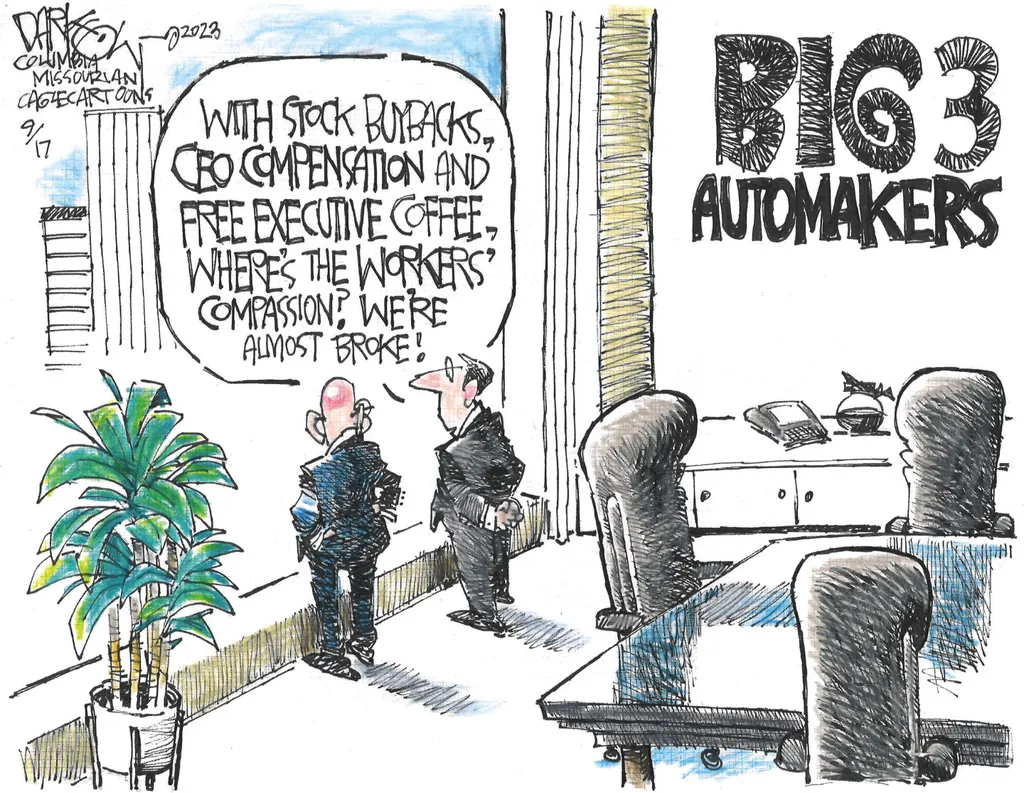
The United Auto Workers are striking against the Big Three American automakers. The Atlantic explains that this is about more than just the usual wages and benefits: Government-subsidized investments in electric vehicle plants are being used to shift production to states that make it hard for workers to unionize.


As you may have heard, Saturday night Rep. Lauren Boebert was escorted out of a production of the musical “Beetlejuice” for vaping, taking flash pictures of the performance, and “creating a disturbance”. Afterwards, she denied vaping, said she didn’t realize she couldn’t take pictures, and admitted “laughing and singing too loud”. Unfortunately for her, the vaping is on video, along with some mutual groping with her date (Boebert’s divorce is still pending), as well as Boebert giving theater employees the finger on her way out the door.

In response to the clear evidence that her denial was a lie, Boebert apologized for the vaping (claiming she “genuinely did not recall” doing it), but did not comment on the public groping.

The incident provoked a stream of what-if comparisons on social media: How would conservative politicians and media personalities erupt if some prominent liberal woman like AOC behaved the same way? Or a woman of color? Or a gay or lesbian politician with a same-sex date? What if Biden did something inappropriate in public, denied it, and then explained away his denial by claiming he didn’t remember?

Who better to comment on Boebert’s “trashy” behavior than fellow “trash monster” Trae Crowder? Boebert’s “vaping and hollering stuff” in the theater doesn’t alarm him:

My fellow Trailer Americans, I ask you: Who among us? Right? I mean, we do that. We do. Get a little too excited at a public event, start cussing in front of the 8-year-olds, then act indignant when the bouncer shows up. “Oh, what? Is it illegal to have a good time now?”

What’s wrong with Boebert, according to Crowder, isn’t that she comes from the underclass, because “some of the most genuine, kindest, most empathetic people I’ve ever known were trailer babies”. We’d do well, he says, to have a Congress full of such people. But Boebert is a “ladder-puller”, who tries “to take away the same government benefit programs that kept her alive as a child”.

Boebert … somehow took all the wrong lessons away from her life and now spends her time spewing misplaced rage and making us all look bad.

BTW: If you want a view of how the world looks to the White rural underclass, I can recommend this year’s Pulitzer-Prize-winning novel Demon Copperhead by Barbara Kingsolver.


While we’re talking about the Party of Family Values, The New York Post claims South Dakota Governor (and rumored Trump VP candidate) Kristi Noem has been having an affair with former Trump advisor Corey Lewandowski. Both are married. All together, the two couples have seven children.


Remember Kim Davis, the county clerk in Kentucky who refused to issue marriage licenses for same-sex couples back in 2015? That case is still percolating through the system. Two couples sued her for damages, and a judge ruled in March 2022 that she had violated their rights. Wednesday, a jury awarded one couple $100K and the other nothing. (I’m not sure what distinction the jury saw between the two couples.)

Davis plans to appeal, on grounds that the current Supreme Court might find tempting:

We will argue religious accommodation under the First Amendment, and other state and federal laws. We will also argue that Obergefell v. Hodges was wrongly decided and should be overturned.

She previously had moved to have her case dismissed, on the grounds that she had immunity for acts performed in her official capacity. But the plaintiffs argued that official immunity doesn’t apply when the official is doing something clearly outside the law. An appellate court refused to dismiss, and in 2020 the Supreme Court decided not to hear her appeal. But this time around could be different, if the current Court is looking for an opportunity to reverse Obergefell.


Two thousand South African rhinos are looking for new homes.


A line too good not to repeat: After Mitch McConnell froze up a couple weeks ago, fellow Kentucky Senator Rand Paul was not all that supportive. Among other comments, he disputed the Capitol doctor’s claim that McConnell had not suffered a seizure, but only the effects of concussion recovery and dehydration.

Afterwards I heard a comment that Rand Paul is “nasty and brutish and short”.

and let’s close with something sentimental

In 1950, Oswald Laurence recorded a message telling patrons of the London underground to “mind the gap”. After Laurence died in 2003, his widow Margaret McCollum began going to the nearby Embankment tube station whenever she wanted to hear his voice.

Eventually, though, the transport company replaced Laurence’s recording with an artificially generated voice. Margaret then asked the company for a recording. But they did her one better: They restored Laurence’s announcement for exactly one station, Embankment.

Don’t just connect the dots

Connecting the dots is meaningless if you’ve never established that the dots really happened.


I remember, almost to the minute, when I became a Democrat. As a teen-ager, I had libertarian leanings that I don’t like to talk about now. In my 20s and 30s, I was a left-leaning independent, but it wasn’t hard for a moderate Republican to charm me. I spent one afternoon of 1980 on a Chicago street corner, handing out pamphlets for John Anderson. In the early 90s, I was comfortable with William Weld as my governor.

And then in 1998-99 the Clinton impeachment happened.

I watched just about every minute of the televised trial in the Senate. I had voted for Clinton twice, and had been rooting for him all through the Lewinsky scandal. But still I watched the case against him unfold, because … what if the Republican impeachment managers had something? They seemed so sure that they did.

There were two counts. The first was perjury, and what it boiled down to was a he-said/she-said conflict over precisely which sex acts Bill and Monica had performed. Was Bill telling the truth? Maybe, maybe not. But in any case it seemed like a thin reed to hang an impeachment on.

The second count was obstruction of justice, and it hinged on why Monica Lewinsky had lied to the grand jury investigating Clinton’s harassment of Paula Jones. Monica had denied that she was having an affair with Bill, which everyone now agreed was perjury. But why?

There were a number of plausible explanations. Maybe she was embarrassed to have her sex life become a matter of public record. Maybe she still had some affection for Bill and wanted to protect him from a political scandal.

But there was a more nefarious explanation: Maybe Bill had asked her to lie, and had offered to find her a good job in exchange. Quid pro quo. Conspiracy to obstruct justice.

And this much was clearly true: One of Clinton’s top advisors, Vernon Jordan, was a director of the Revlon Corporation. Jordan got Lewinsky an interview at Revlon, which then hired her.

But the theory that this was a quid-pro-quo had a problem: Everyone up and down the line denied it, even the people who had no motive to lie. Clinton denied it, of course, and so did Jordan. Jordan claimed he often helped out White House interns, and Clinton would not be the first powerful man to do a favor for a young woman after an affair. So you didn’t have to assume obstruction to make the story work.

Lewinsky denied it, even though she had immunity, and so the only way she could get in trouble now was if she lied again. And the folks at Revlon denied that Jordan had put any undue pressure on them; he just sent Lewinsky over, and she got the job on merit.

What the Republican prosecutors did in their presentation was establish a timeline: They very meticulously proved that all the people who would have needed to conspire did indeed have communication with each other during the time period when the conspiracy would have needed to take place.

In other words, they connected the dots. They firmly established that the obstruction-of-justice scenario could have happened. They presented not a shred of evidence that it actually did happen. But it could have.

That was enough for 50 Republican senators to vote to remove the President of the United States.

I’ve been a Democrat ever since.

Conspiracy theorizing. Here’s what I didn’t realize at the time: The Lewinsky obstruction presentation was a preview of the conspiracy-theory culture of the 21st century.

Just before Biden’s inauguration, the NYT published a profile of QAnon “meme queen” and “digital soldier” Valerie Gilbert. It was supposedly a moment of crisis for the movement, because none of their predictions of a Trump victory or a “storm” of arrests of high-ranking Democrats and leading celebrities had come to pass. Trump really had lost the presidency, and Biden was about to take over. Q himself had gone silent.

But Ms. Gilbert isn’t worried. For her, QAnon was always less about Q and more about the crowdsourced search for truth. She loves assembling her own reality in real time, patching together shards of information and connecting them to the core narrative. (She once spent several minutes explaining how a domino-shaped ornament on the White House Christmas tree proved that Mr. Trump was sending coded messages about QAnon, because the domino had 17 dots, and Q is the 17th letter of the alphabet.)

When she solves a new piece of the puzzle, she posts it to Facebook, where her QAnon friends post heart emojis and congratulate her.

This collaborative element, which some have likened to a massively multiplayer online video game, is a big part of what drew Ms. Gilbert to QAnon and keeps her there now.

“I am really good at putting symbols together,” she said.

But think about what she’s not doing, which is any of the traditional work of investigation. She’s not finding and interviewing witnesses to key events. She’s not checking their stories against the kind of facts that can be nailed down. She’s not tailing suspects to see where they go and who they meet.

Instead, she’s connecting the dots. She’s coming up with ever more satisfying (to her QAnon online community) stories that pull together the high points of events that they assume happened. Did they happen? Hardly anyone seems to be working on that. The dots are the dots. What’s important is weaving them into a story.

Real investigating. Real investigations are laborious and involve large chunks of time devoted to tedious activities. TV dramas tend to skip that part. You learn, say, that the police have traced an earring found at the crime scene to the shop that sold it, and you don’t see the dozens or hundreds of conversations with shops that didn’t sell it. You don’t see all the interviews with neighbors who slept through the break-in and didn’t hear the gunshot.

Investigators endure that tedium because real investigations work from the bottom up. They establish tiny little factoids, in the hope that eventually those atoms of truth will start to fit together like Lego blocks. You may have your suspicions about what the eventual answer will be, but you hold them lightly as you wait to see whether the facts will take you there.

Connecting the dots turns that process upside down. The “dots” are a collection of plot points that your audience either already believes or wants to believe. A real investigator would first drill down on those dots to make sure they’re actually true. (Like, is that really a “suitcase of illegal ballots” in the Georgia video? Turns out it isn’t.)

But a dot-connector works the other way around: Assuming the dots are real, what story can you tell to weave them together? In the end, it is the overall appeal of the story that validates the dots. That’s why dots keep coming back no matter how many times they’re debunked: They work so well in the larger narrative.

That’s also why it’s so hard to argue with a dot-connector: They have a good story to tell, and all you have are the messy details. Here’s a bit of Trump’s recent Meet the Press interview:

FMR. PRES. DONALD TRUMP:

We have thousands of essentially motion pictures of people stuffing the ballot boxes. Tens of thousands.

 KRISTEN WELKER:

But, Mr. President, they’re not stuffing the ballot boxes. And you’ve been told that by your top law enforcement officials. But let’s stay on track, because we have so much ground to cover. We have policy ground to cover, Mr. President. 

 FMR. PRES. DONALD TRUMP:

You have people that went and voted in one place, another place, another place, as many as, I understand, 28 different places in one day with seven, eight, nine ballots apiece. They can’t do it anymore, because it would look too phony. These were professional people. They were stuffing the ballot boxes. It’s there. 

 KRISTEN WELKER:

Mr. President — 

 FMR. PRES. DONALD TRUMP:

I mean, it’s there to see. A lot of people don’t like looking at it.

 KRISTEN WELKER:

 — you took your case to court in 60 different cases all across the country. You lost that. But let’s stay on track because we have so many —

 FMR. PRES. DONALD TRUMP:

We lost because the judges didn’t want to hear them.

 KRISTEN WELKER:

Mr. President, we have so many topics to cover.

Doing any actual debunking of Trump’s claims would involve going into those tedious details, and Welker doesn’t have time for that. Viewers would tune out. So she has to let the lies stand and move on to other topics.

Connecting the Biden impeachment dots. The Biden impeachment investigators in the House have little evidence, but they have a good story to tell: Biden used his political power to protect his son Hunter, and Hunter in turn used his businesses to collect bribes for his father Joe. Put it all together, and throw in Joe’s brother James, and you have “the Biden crime family”.

The problem is that no piece of that story holds up to scrutiny, except that Hunter leveraged his name to make business connections that were almost certainly unethical, though probably not illegal (and nowhere near as corrupt or lucrative as Jared Kushner’s $2 billion from the Saudi sovereign investment fund). Some of the dots were debunked years ago, while others just lack any supporting evidence.

But if you want to believe that story — and a lot of people do — then the story itself validates the dots, even the ones that have repeatedly been shown to be false. That’s what reality-oriented people will be up against in the coming months.

The Monday Morning Teaser

It’s hard to know where to start. House Republicans are moving towards impeaching President Biden for something-or-other, but they don’t seem to be moving towards funding the government, which looks increasingly likely to shut down in two weeks. The Justice Department indicted Hunter Biden, but apparently that just proves that it’s not independent, because Republicans hold that it’s not indicting Hunter for the right things — the things that implicate his father, and which they have no evidence to support.

Texas Attorney General Ken Paxton is back in office, having escaped his impeachment trial without being removed. NBC gave Trump a major platform to spew his lies, and demonstrated the complete helplessness of Cronkite-era interviewing tactics when confronting a subject who can’t be shamed.

Mitt Romney is retiring, and getting in a bunch of parting shots at his party before he goes. He’s being lauded for his courage, but I can’t help thinking that a truly courageous man wouldn’t wait until he had nothing to lose before telling the truth. And while we’re talking about character, there’s Lauren Boebert and Kristi Noem. But other than just salacious gossip, those would be stories about hypocrisy, which no one is ashamed of any more.

And then there are natural disasters: a hurricane affecting New England, an earthquake in Libya. The auto workers are striking.

You know: Just another week.

In the featured post, I take a step back from the Biden impeachment effort and look at a thought pattern we’ll undoubtedly see a lot of if it proceeds: connecting the dots. Connecting the dots is about telling a story that weaves together a collection of plot points your audience already believes or wants to believe. A true investigation would begin by drilling down on the dots themselves, to see if they’re real. Only after the dots are solidly established would the investigator begin turning them into a story.

But connecting the dots flips things around. The overall appeal of the story — the “stolen election”, the QAnon “storm”, the “Biden crime family”, the worldwide plot to unleash Covid on us and then trick us into taking vaccines that do something nefarious to our bodies or souls — is what establishes that the dots must be true.

So the featured post “Don’t just connect the dots” should post around 10 EDT. The weekly summary will be out somewhere around noon.